
A tropical cake can carry fresh island style and still look like a wedding cake, as long as the base stays disciplined. The colour and drama come from leaves, flowers and fruit; the flavours come from coconut, mango, passion fruit, guava and lime. What these cakes demand from me is different from a ballroom cake, because they usually end up in heat, humidity and sea air. Each idea below comes with the practical side: what the decoration is made of, how the filling behaves and where I’d make it safer.
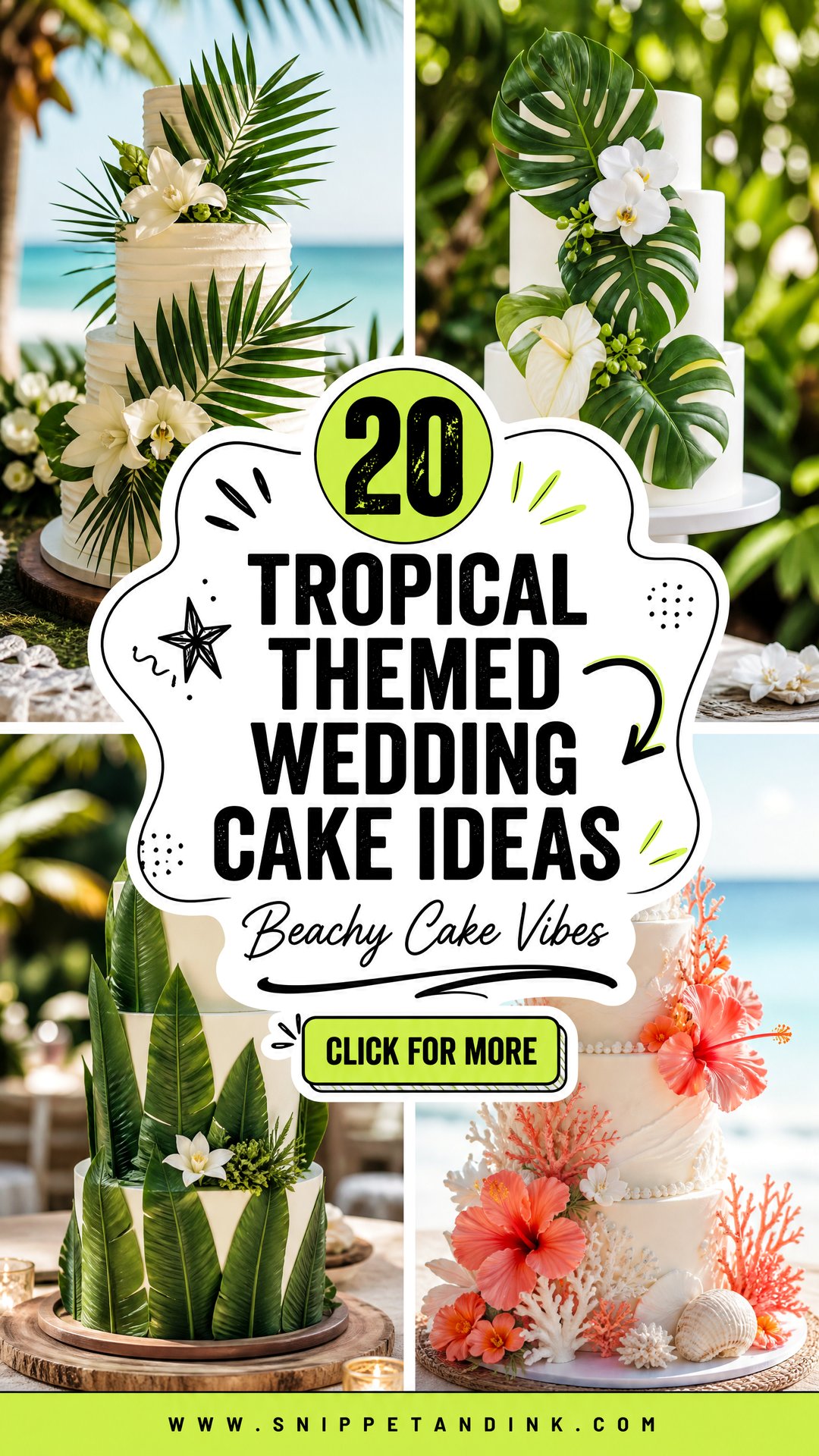
Tropical Fillings and the Fruit Enzymes Most Couples Never Hear About
Some tropical fruits contain enzymes that break down proteins. Raw pineapple, kiwi and papaya are the main ones. In a cake, that means a raw fruit layer can turn a gelatin-set mousse to liquid and make cream-based fillings taste bitter after a few hours.
The fix is heat. Cooking the fruit into a curd, jam or compote switches the enzymes off, which is why I always cook pineapple and papaya fillings. Mango and passion fruit are easier, but I cook them too, mainly so they set firmly enough not to soak the sponge.
- Fruit curds hold well but need refrigeration until the cake goes out.
- Whipped cream and cream cheese fillings are delicious and the first to fail in heat.
- A thin dam of buttercream around each layer keeps juicy fillings from bulging out the sides.
1. Tropical Wedding Cake With Palm Leaves
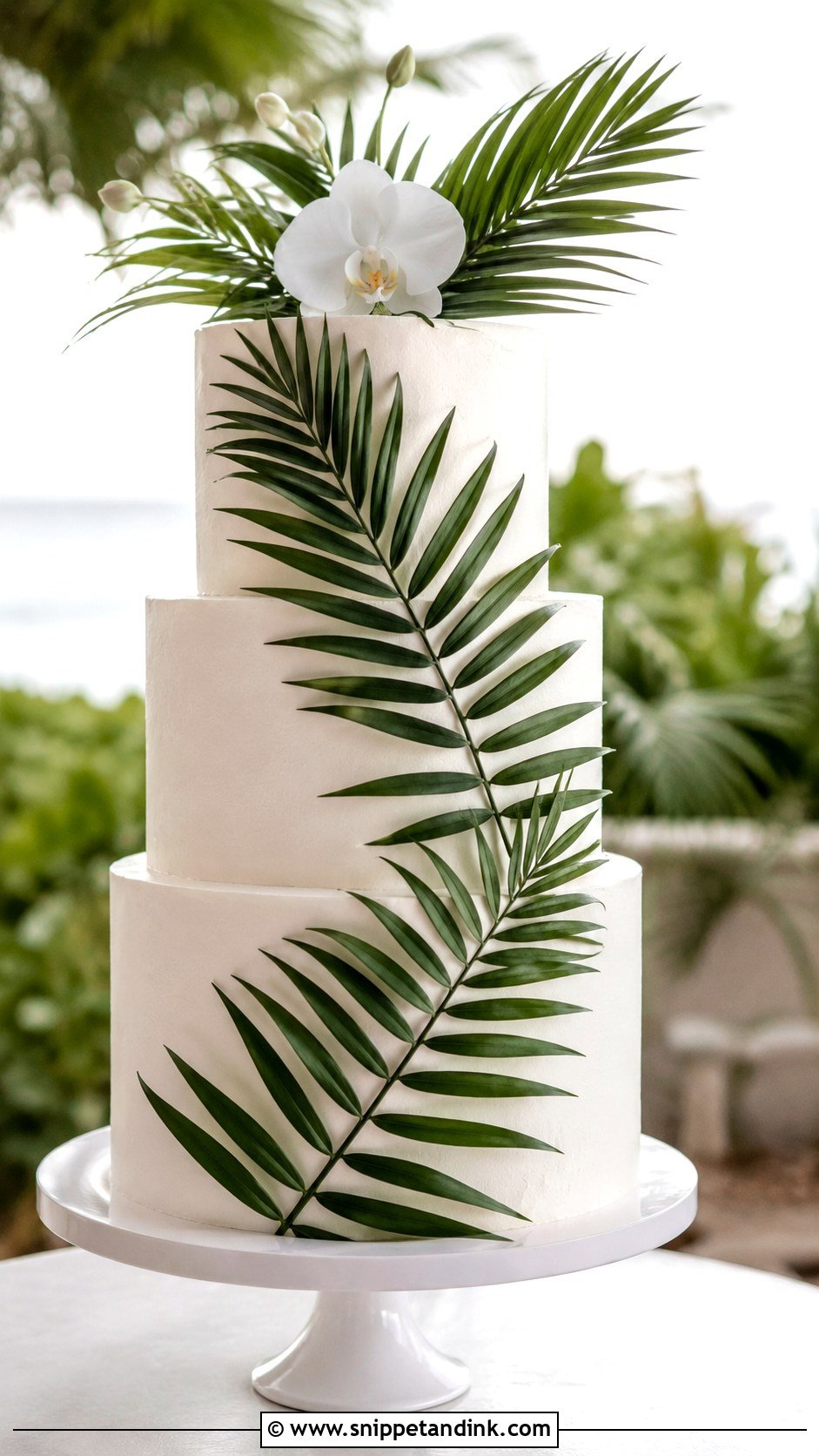
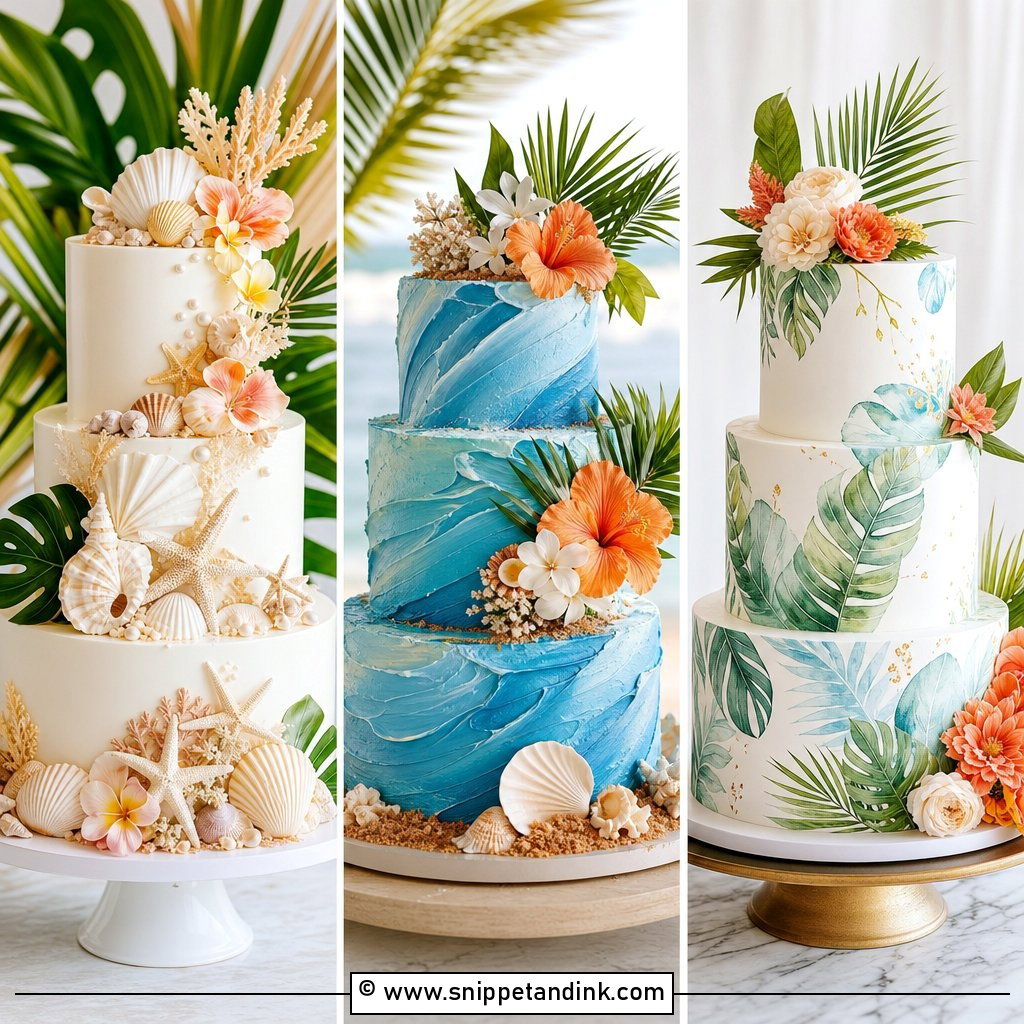
Palm fronds give the strongest green-and-white contrast of any tropical decoration, and they need almost nothing else around them. I cut most of mine from wafer paper or fondant, because a real frond has to be scrubbed, dried and kept from touching the frosting directly. Wafer paper curls slightly in humidity, which actually looks natural on a palm. Smooth white buttercream or fondant suits this best. Coconut sponge with passion fruit filling or lime buttercream keeps the inside in the same mood.
2. Tropical Wedding Cake With Hibiscus Flowers
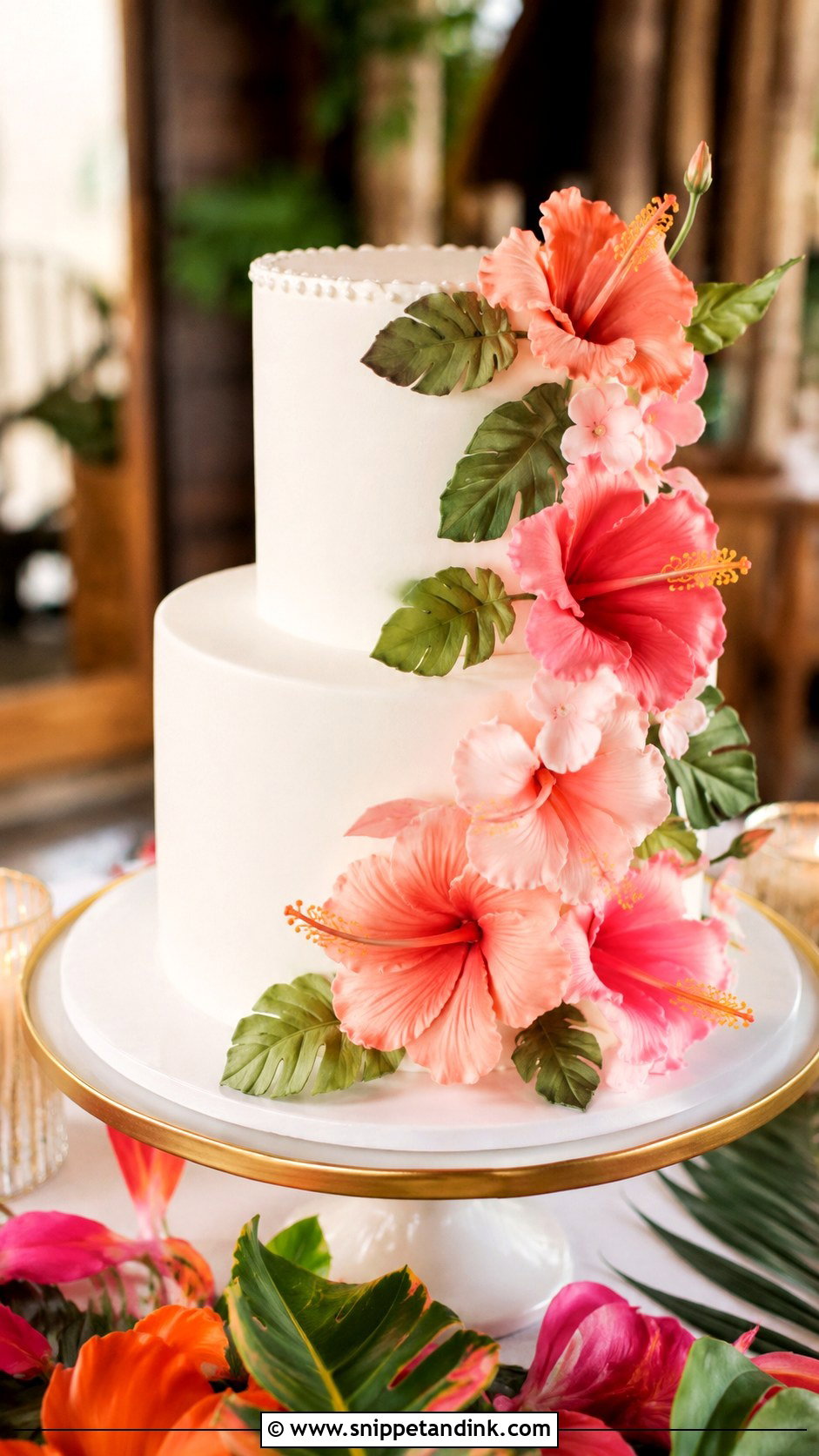
Hibiscus is one of the few tropical flowers that is genuinely edible, so it is a safer pick than most when real blooms are wanted. The catch is that a hibiscus flower lasts barely a day once cut, wilting fast in heat, which is why I usually make them in sugar for anything displayed more than an hour or two. Coral, red and pink read most island-like. A white tier makes them pop; a pastel ombre base softens the look for a resort reception.
3. Tropical Wedding Cake With Orchids
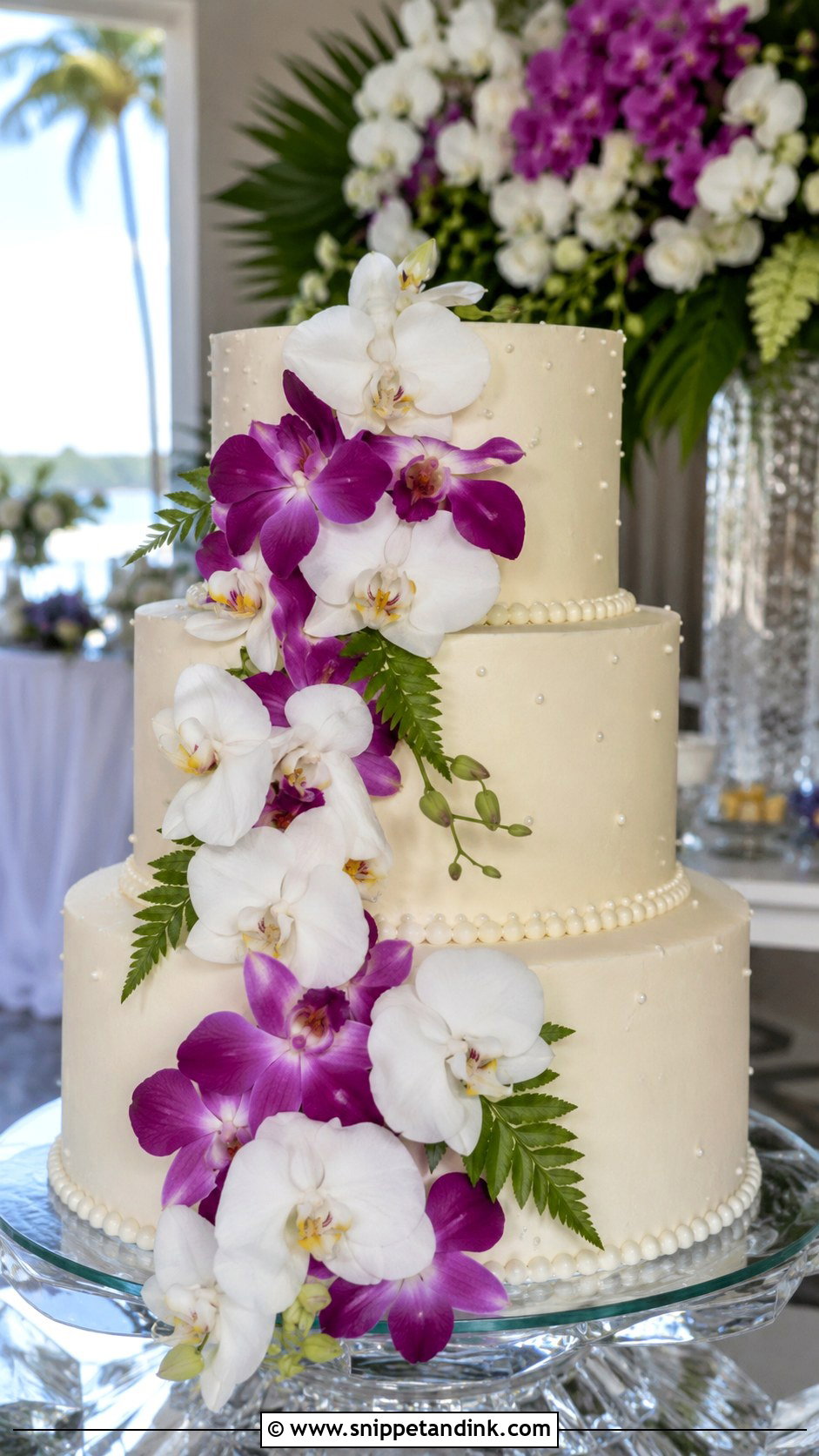
Orchids are the calm option here. Dendrobium orchids are widely used on cakes, though I still wrap each stem in floral tape before it touches buttercream. White orchids feel refined; purple or yellow bring more personality. They suit tall tiered cakes, where a single spray can trail from top to bottom without crowding. Keep greenery to a few leaves. Lychee or guava filling with coconut sponge is the pairing I suggest most with orchids.
4. Tropical Wedding Cake With Monstera Leaves
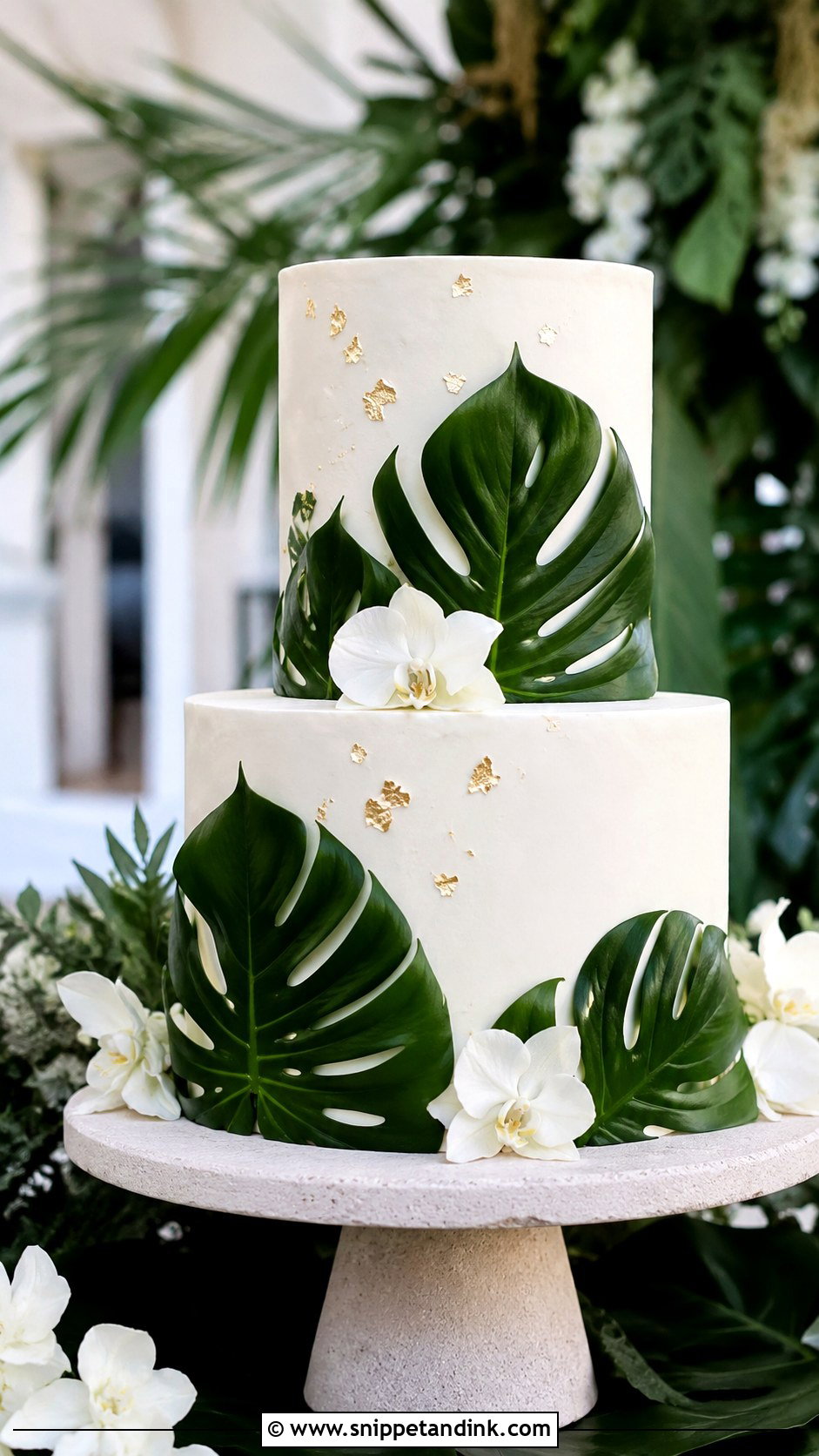
Monstera leaves look graphic and modern, but real monstera is not food-safe, so on my cakes these are always fondant, wafer paper or a printed edible sheet. A single oversized leaf per tier works better than a cluster. The split shape looks sharp against white, sage or pale beige frosting, which makes it a strong minimalist option. Key lime or mango filling keeps the flavour bright under such a clean outside.
5. Tropical Wedding Cake With Fresh Fruit
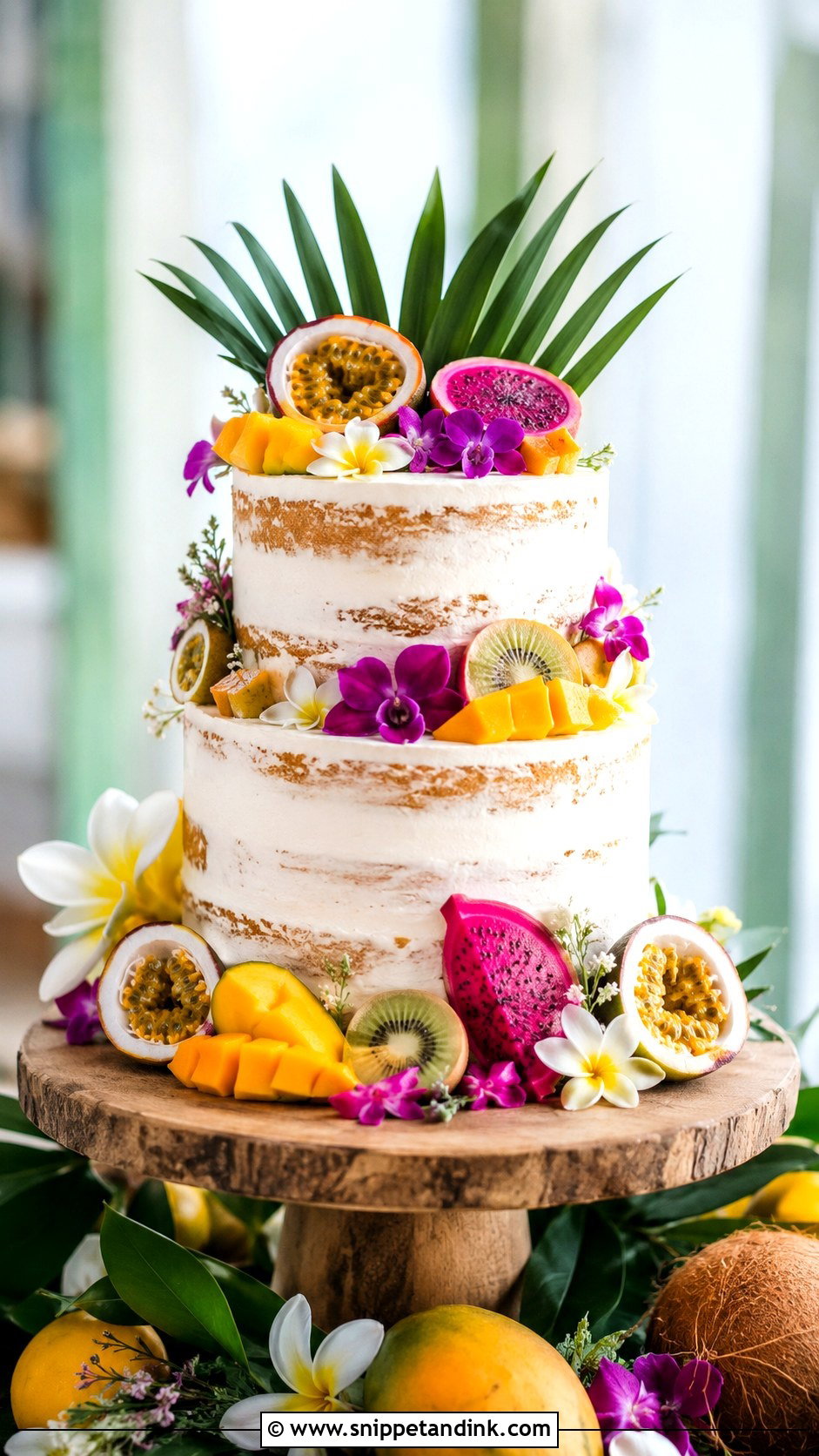
A tropical wedding cake with fresh fruit is the most delicious idea on this list and the most fragile. Cut mango, kiwi and papaya weep juice as soon as they’re sliced, so I place them on site, as close to display time as possible, and brush them with a thin glaze. Semi-naked and buttercream finishes take fruit better than whipped cream, which slides in the heat. Dragon fruit and berries hold their shape longest. Keep everything chilled until the last moment.
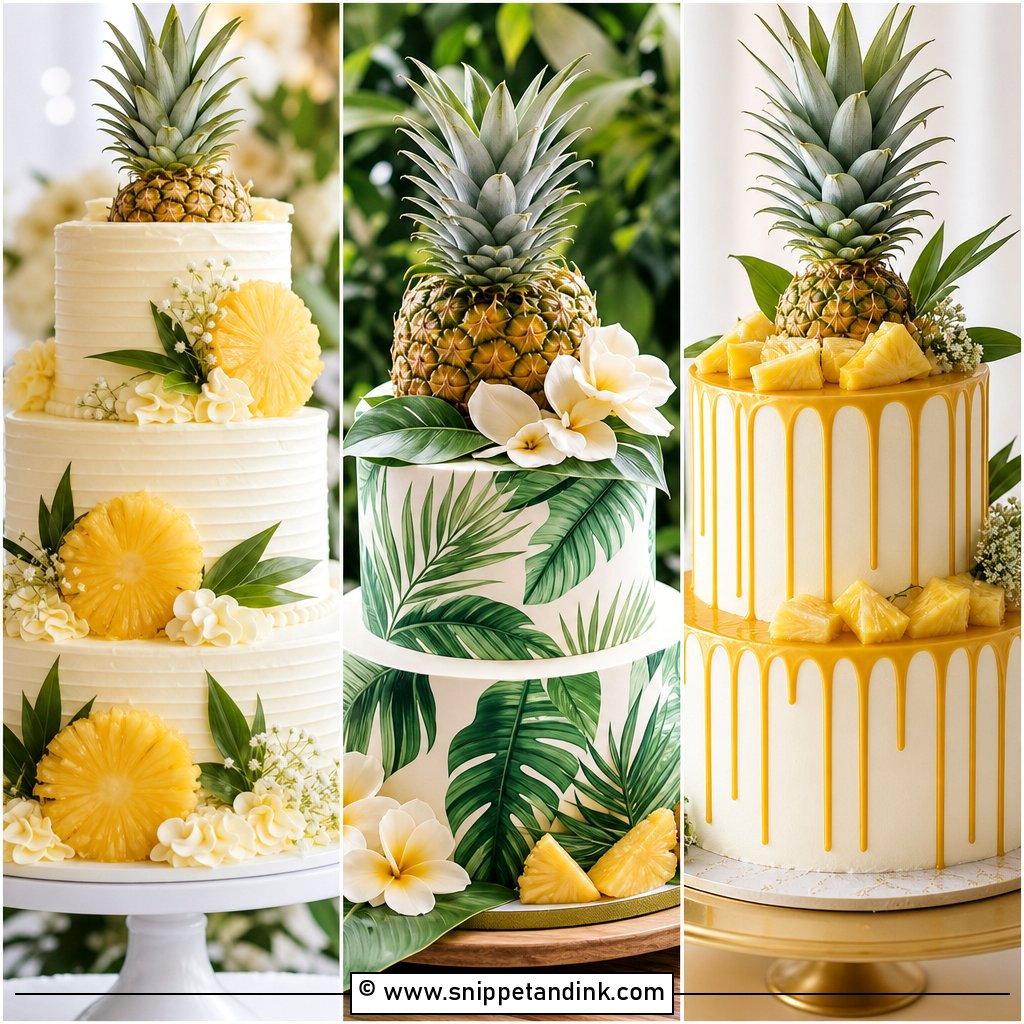
6. Tropical Wedding Cake With Pineapple
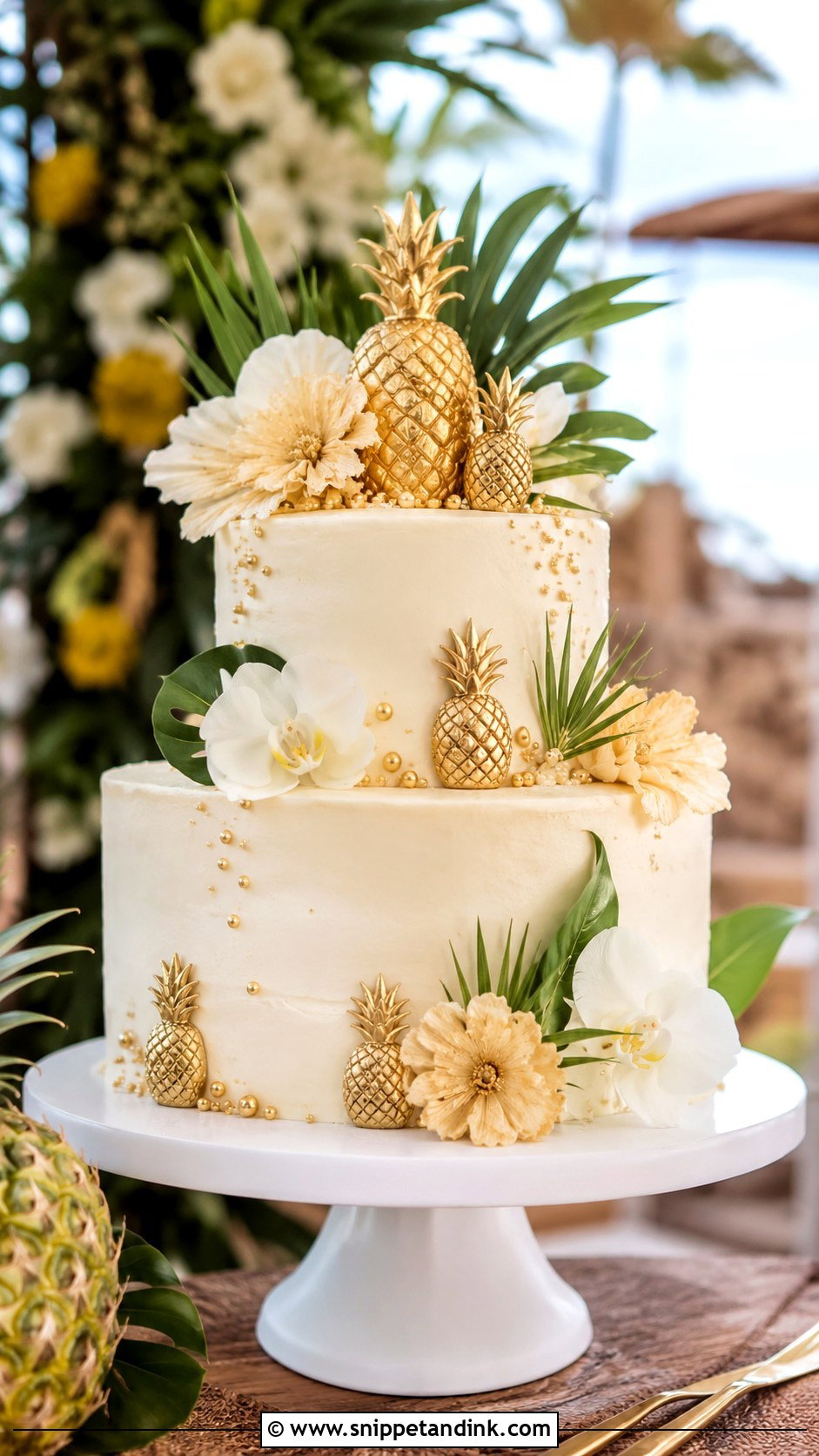
Pineapple works on the outside and inside at once. Coconut sponge with cooked pineapple curd is a classic pairing, and dried pineapple slices baked low until they curl make pretty flowers that hold up far better than fresh fruit. Small sugar pineapples look fun without becoming childish, especially with white frosting and a little gold. Orchids or palm leaves keep it looking like a wedding cake rather than a party cake.
7. Tropical Wedding Cake With Coconut
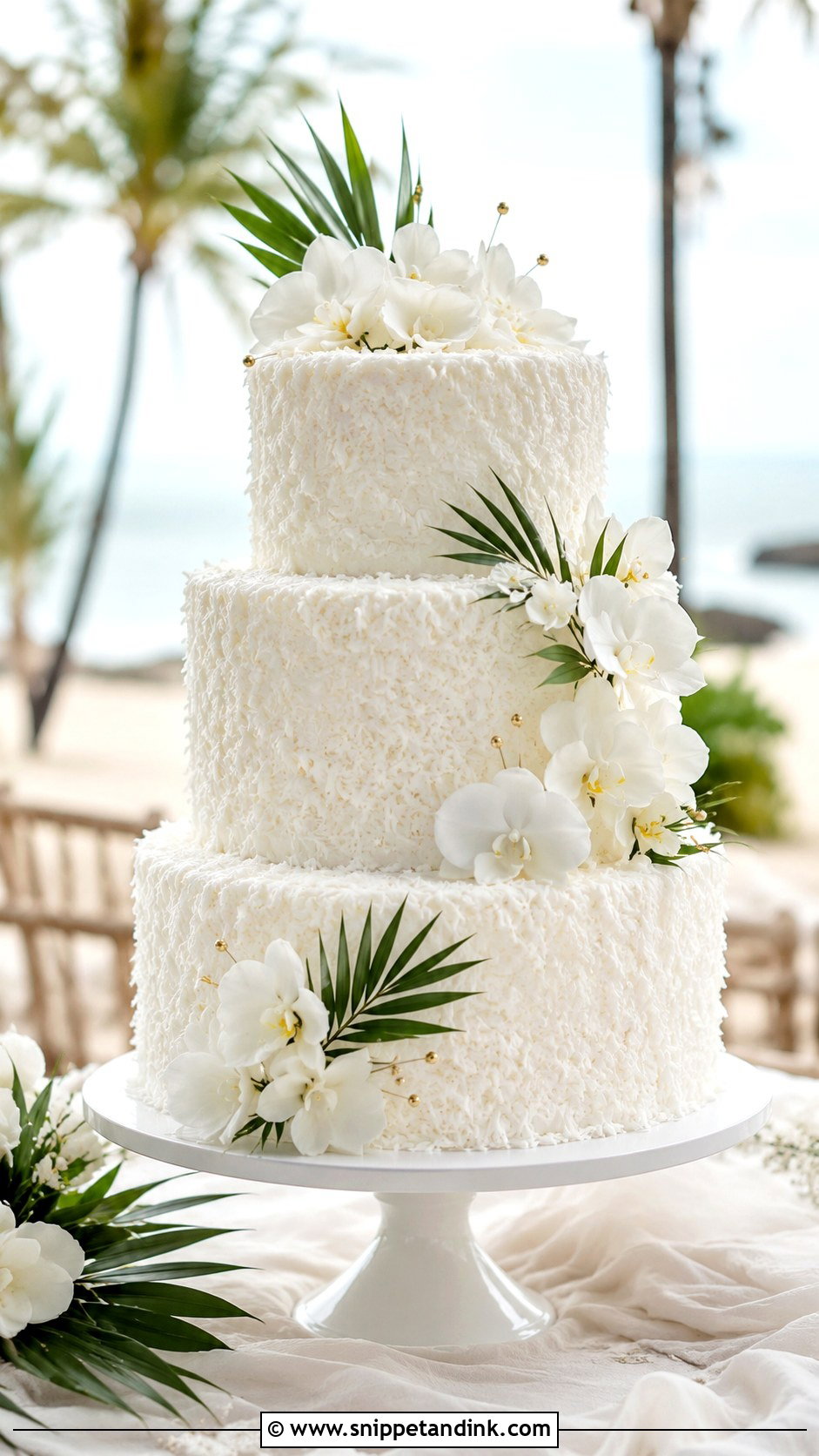
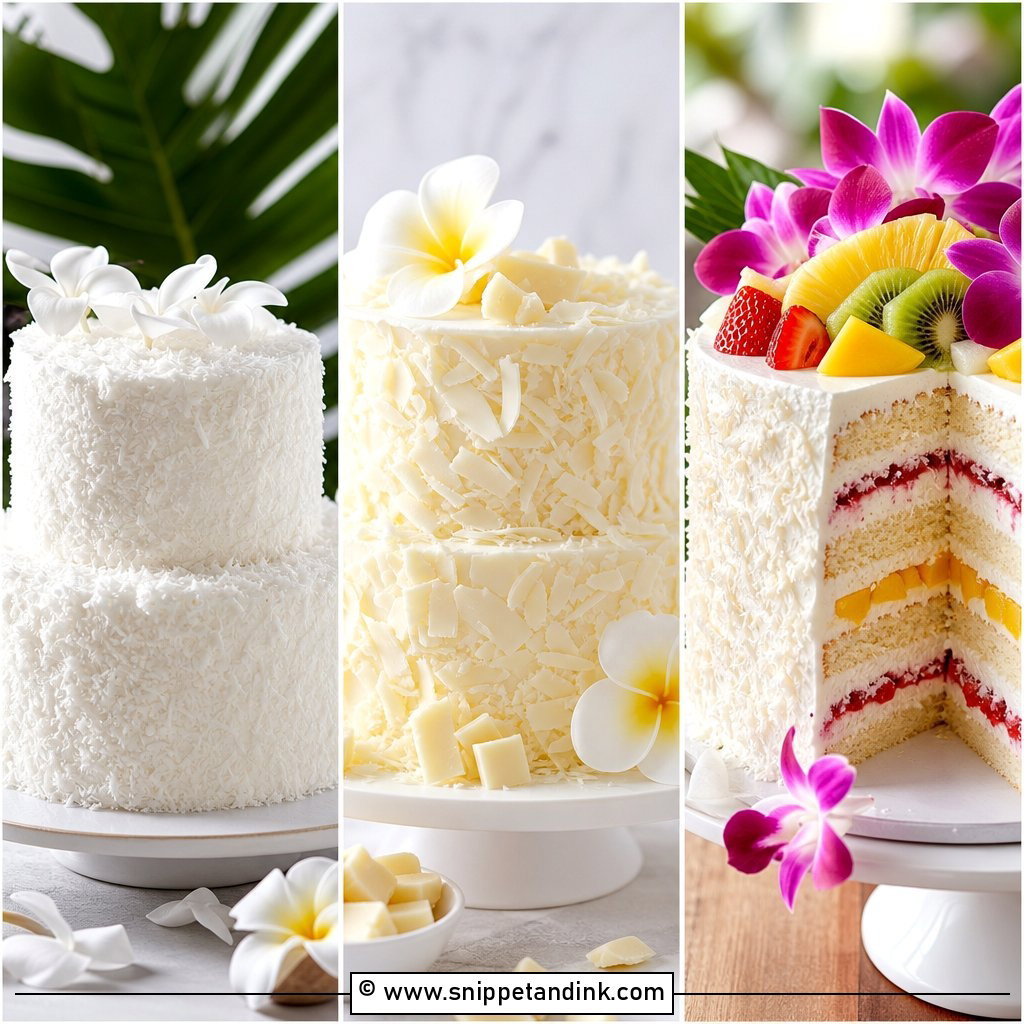
A tropical wedding cake with coconut is the safest flavour to serve a mixed crowd, because it reads as tropical without being sharp. Toasted or pressed shredded coconut on the sides hides small marks and gives texture, which is handy for a cake travelling to a beach. Fluffy coconut frosting tastes wonderful but softens quickly in heat. Mango, passion fruit or raspberry fillings all suit it, and white orchids with palm leaves finish it simply.
8. Tropical Wedding Cake With Mango Filling
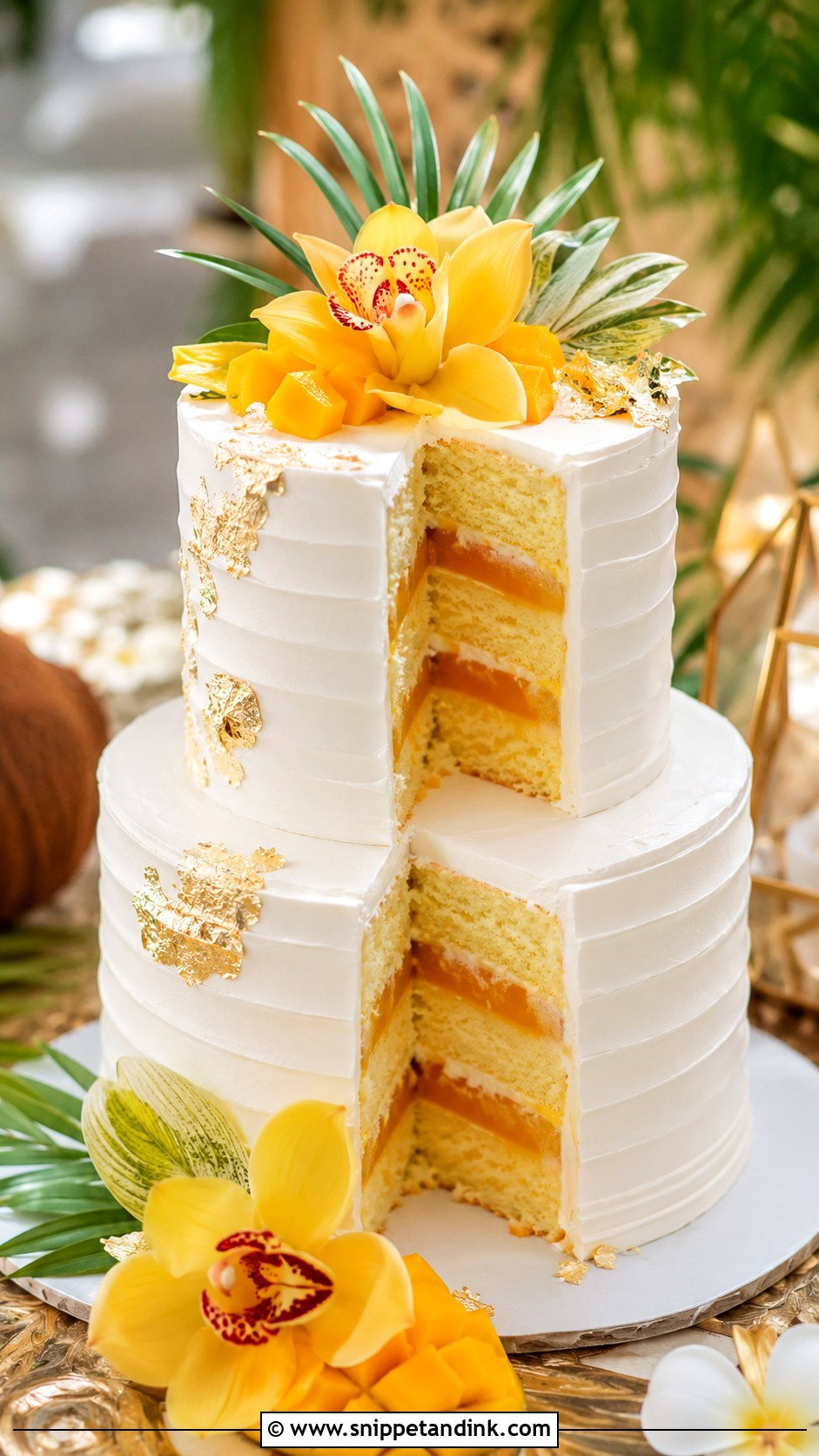
This is how I give a formal-looking cake a tropical heart: a plain white outside and a bright mango layer that only shows when it’s cut. I cook the mango into a curd or compote so it sets firmly and doesn’t soak the sponge. Vanilla chiffon and almond sponge both suit it. Yellow orchids or a touch of edible gold on the outside hint at what’s inside. It fits a resort dinner and a backyard party equally well.
9. Tropical Wedding Cake With Passion Fruit
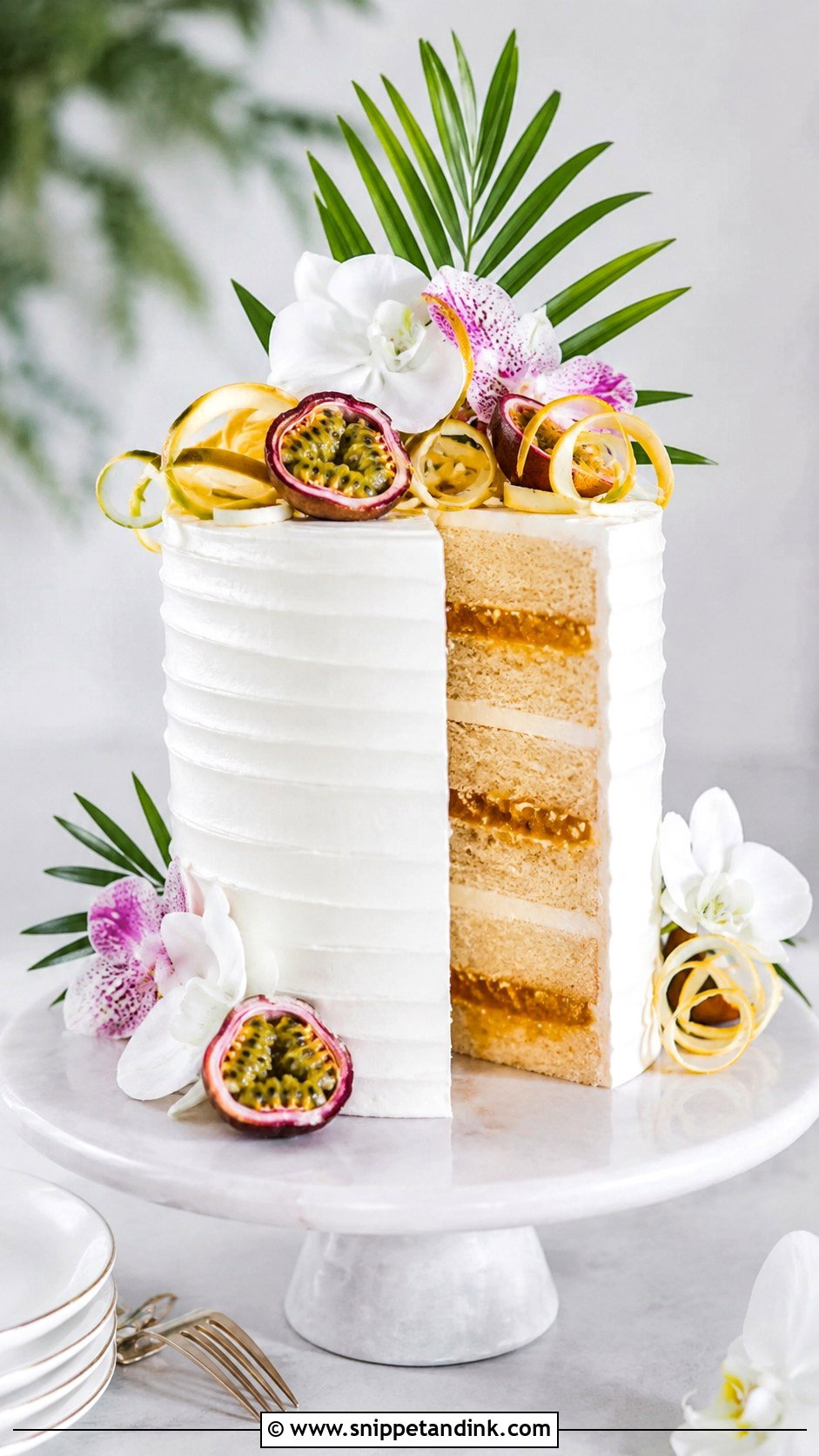
Passion fruit curd is my favourite filling for hot weddings because its sharpness cuts through a sweet frosting after a big meal. It’s cooked, so it sets well, but like any curd it needs refrigeration until the cake is set out. The yellow-orange layer shows well in a slice. Halved passion fruit on top look dramatic, though they dry and wrinkle within hours, so I’d use them only on a cake served soon after display.
10. Tropical Wedding Cake With Banana Leaves
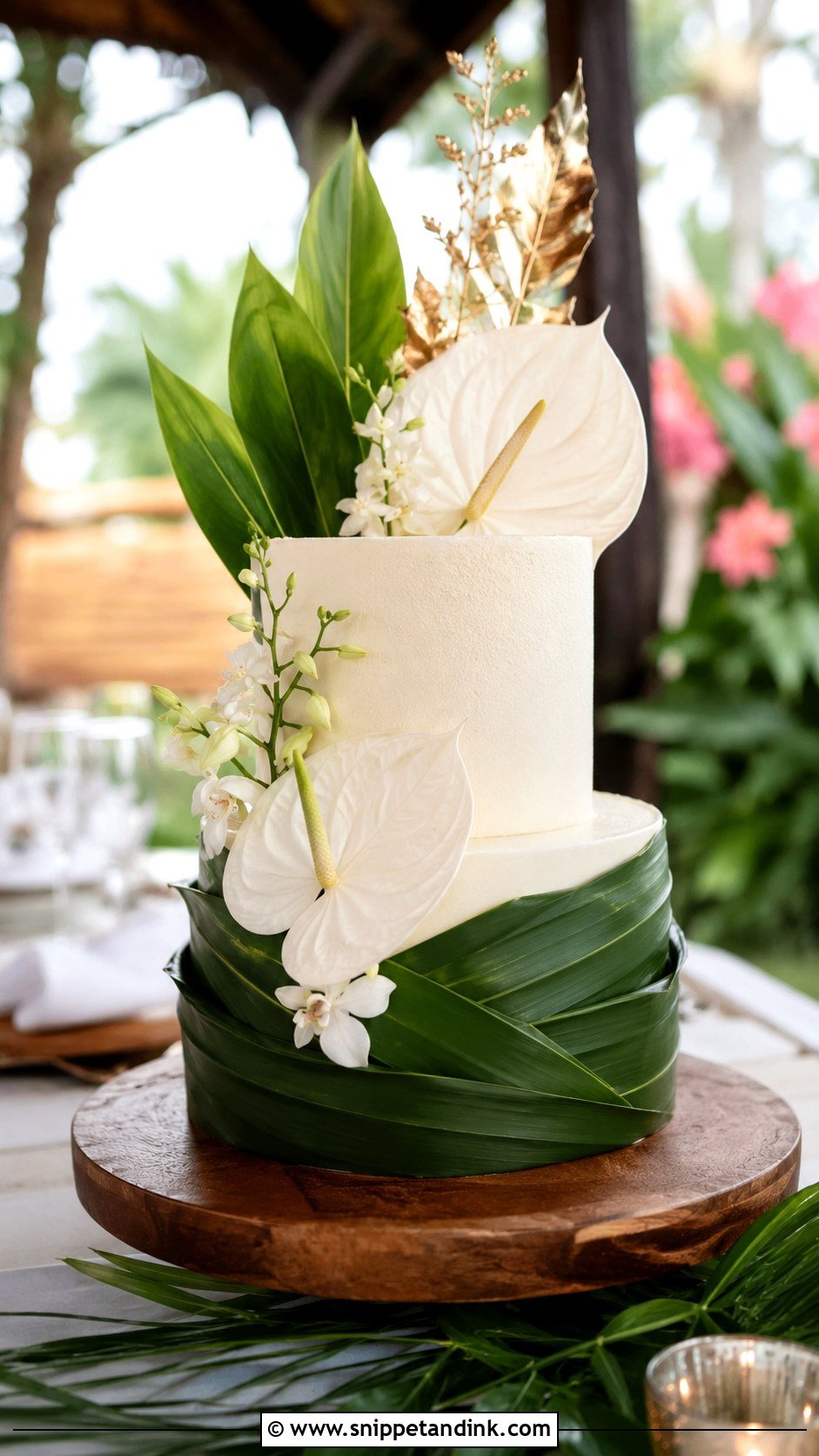
Banana leaves are the one big tropical leaf I’m happy to use real, because they are food-safe and are used to wrap food in many cuisines. I still wipe them clean and lay a strip of parchment or acetate between leaf and frosting so the cake doesn’t taste green. They can wrap a tier, frame the base or sit behind flowers. Ivory or pale yellow buttercream shows the leaf colour best. Banana cake with caramel or coconut sponge with lime keeps the flavour on theme.
11. Tropical Wedding Cake With Flamingo Topper
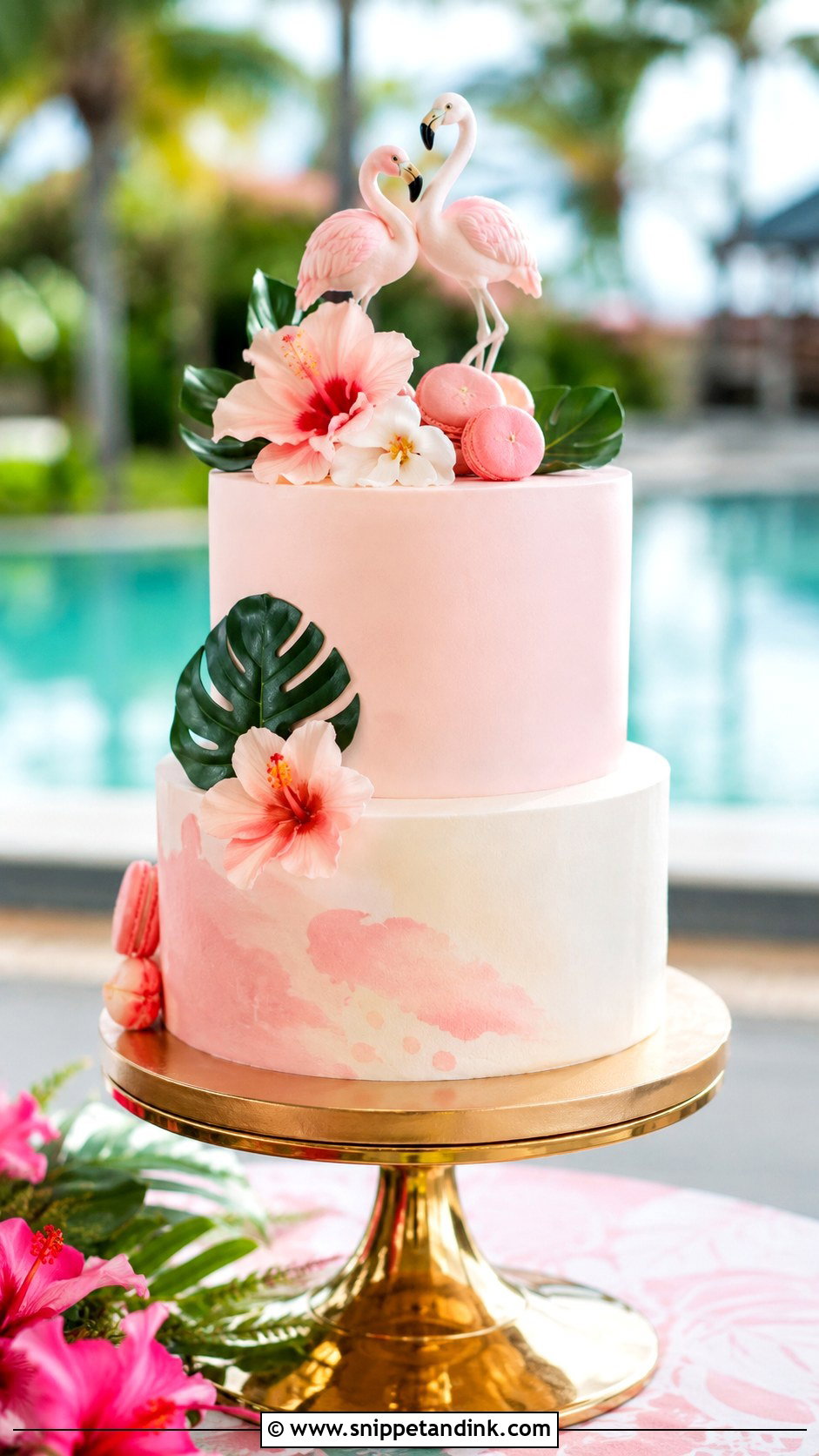
A flamingo topper is fun, and the trick is giving it a grown-up cake to stand on. Blush or white buttercream, a few palm leaves and a single hibiscus keep the base wedding-like, so the birds read as charm rather than costume. I prefer sugar or acrylic flamingos to plastic party toppers. This style suits poolside receptions and destination parties best. Strawberry guava or vanilla passion fruit sponge carries the pink through to the slice.
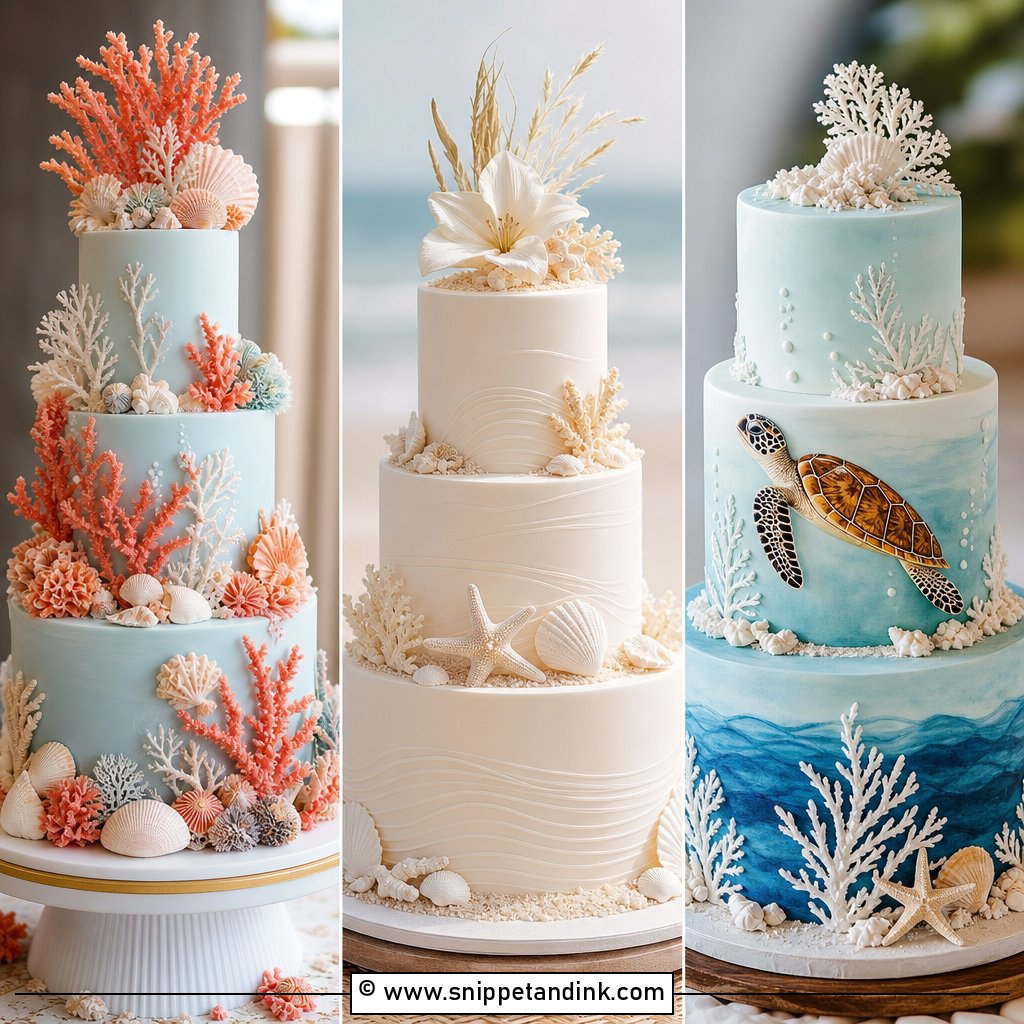
12. Tropical Wedding Cake With Seashells
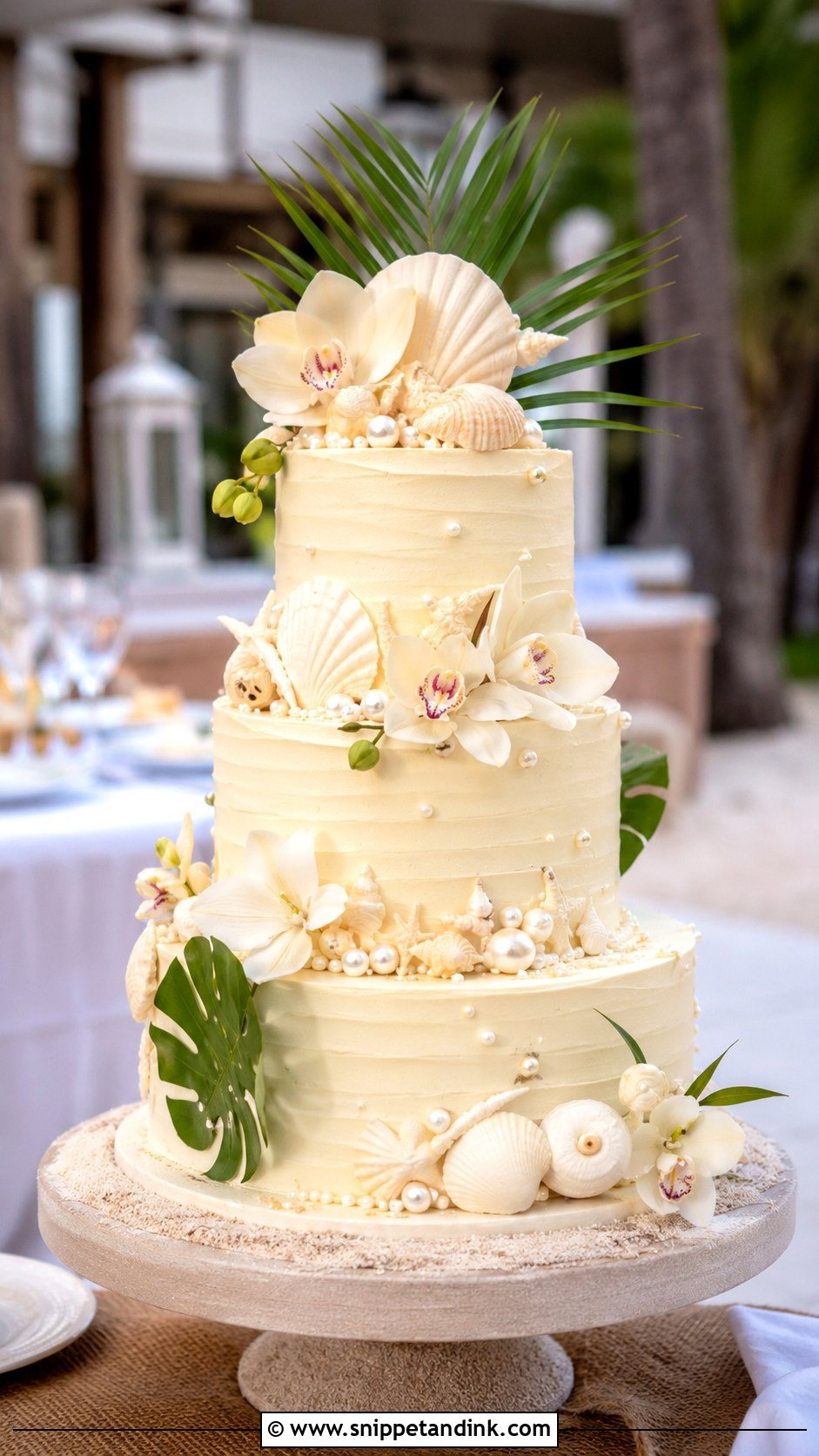
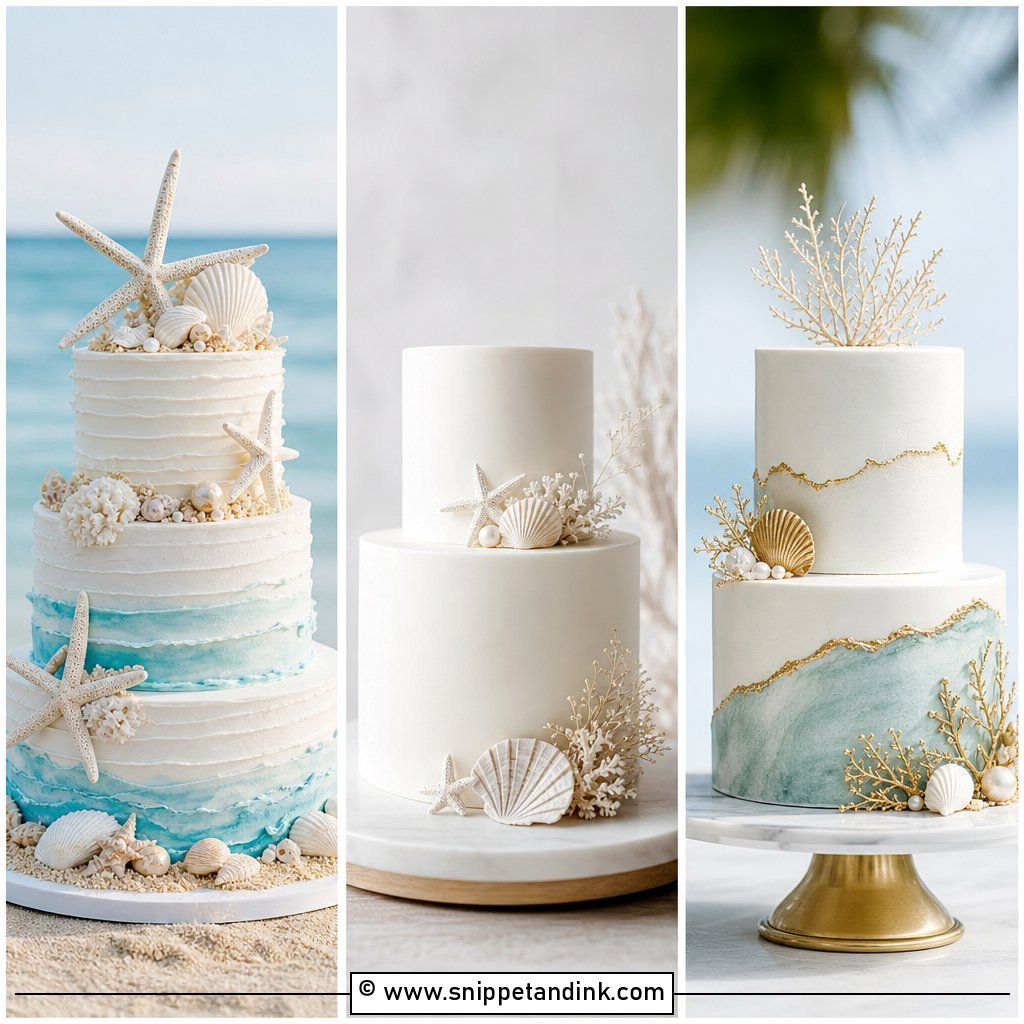
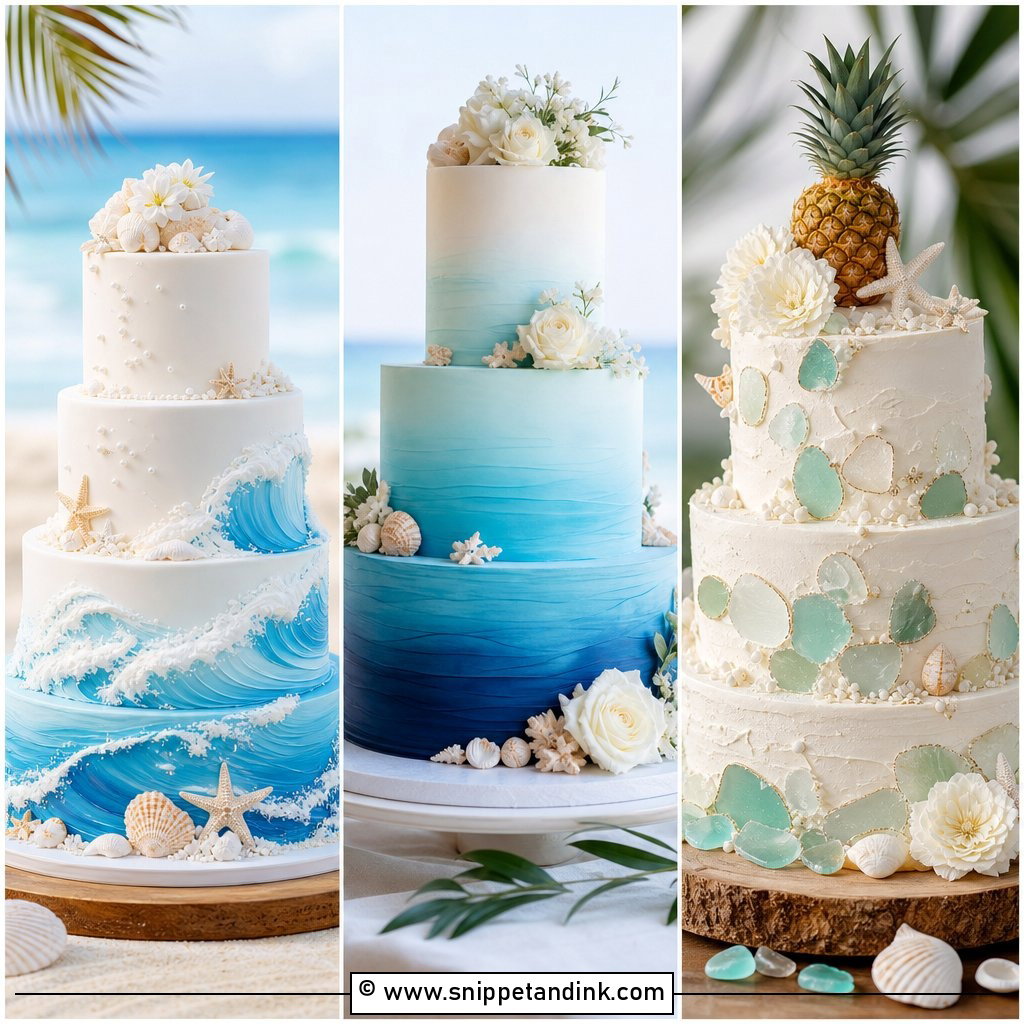
A tropical wedding cake with seashells looks best when the shells are small and few. I mould mine in white chocolate or fondant, and white chocolate shells soften in direct sun, so this cake needs shade on an oceanfront table. Edible pearls and a light sand texture from crushed biscuit add to the beach story. Key lime, coconut or pineapple sponge suit it, and soft colours keep it elegant.
13. Tropical Wedding Cake With Gold Leaf
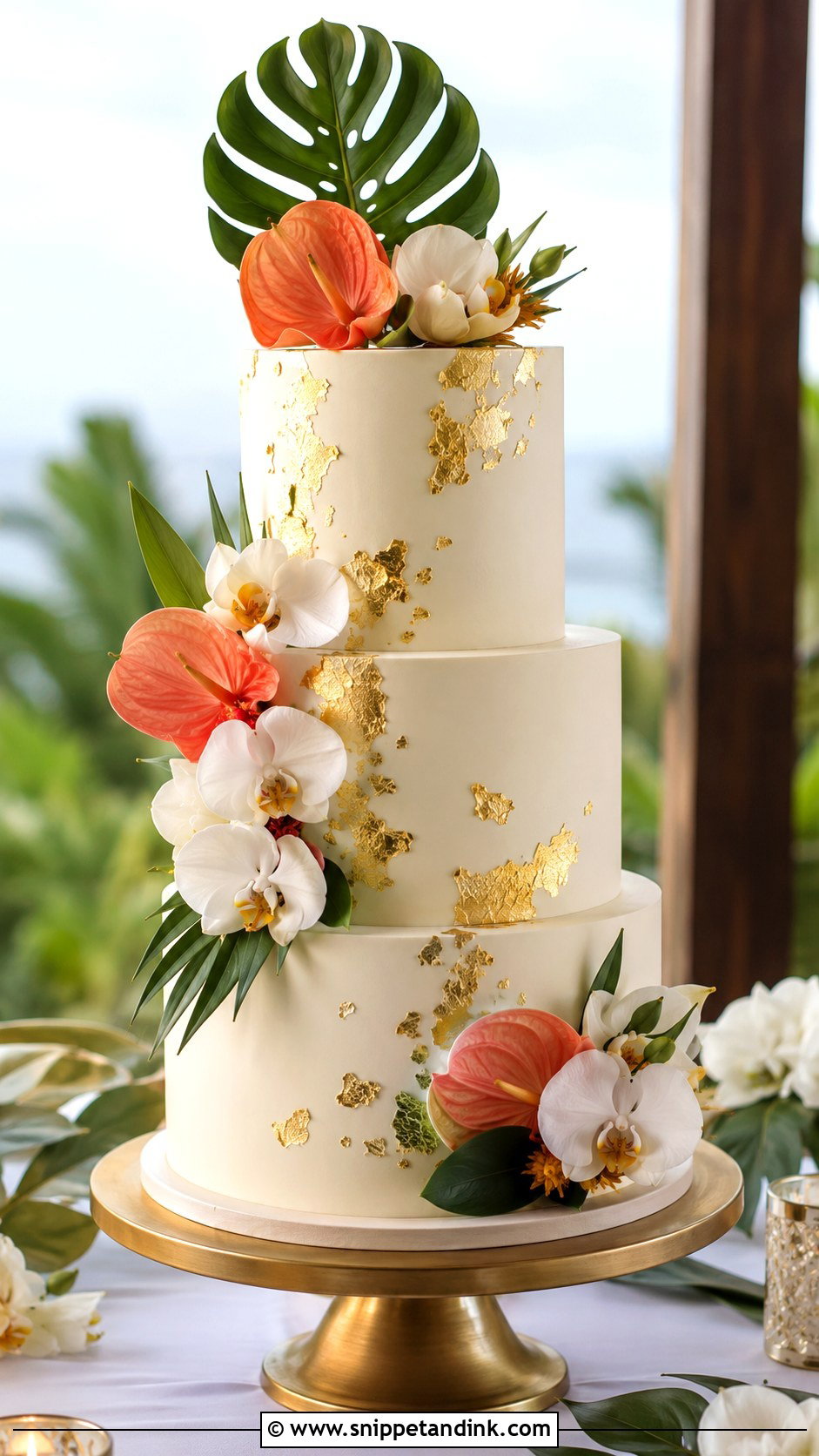
Gold leaf is extremely thin, so I apply it with a soft brush and a light tackiness on the cake rather than with fingers, which would tear it. A little goes a long way: tier edges, a patch near flowers or a broken band around textured buttercream. Too much and the cake looks like a trophy. It warms up coral, blush and pale green frostings. Mango or guava filling keeps the inside as rich as the outside.
14. Tropical Wedding Cake With Watercolor Flowers
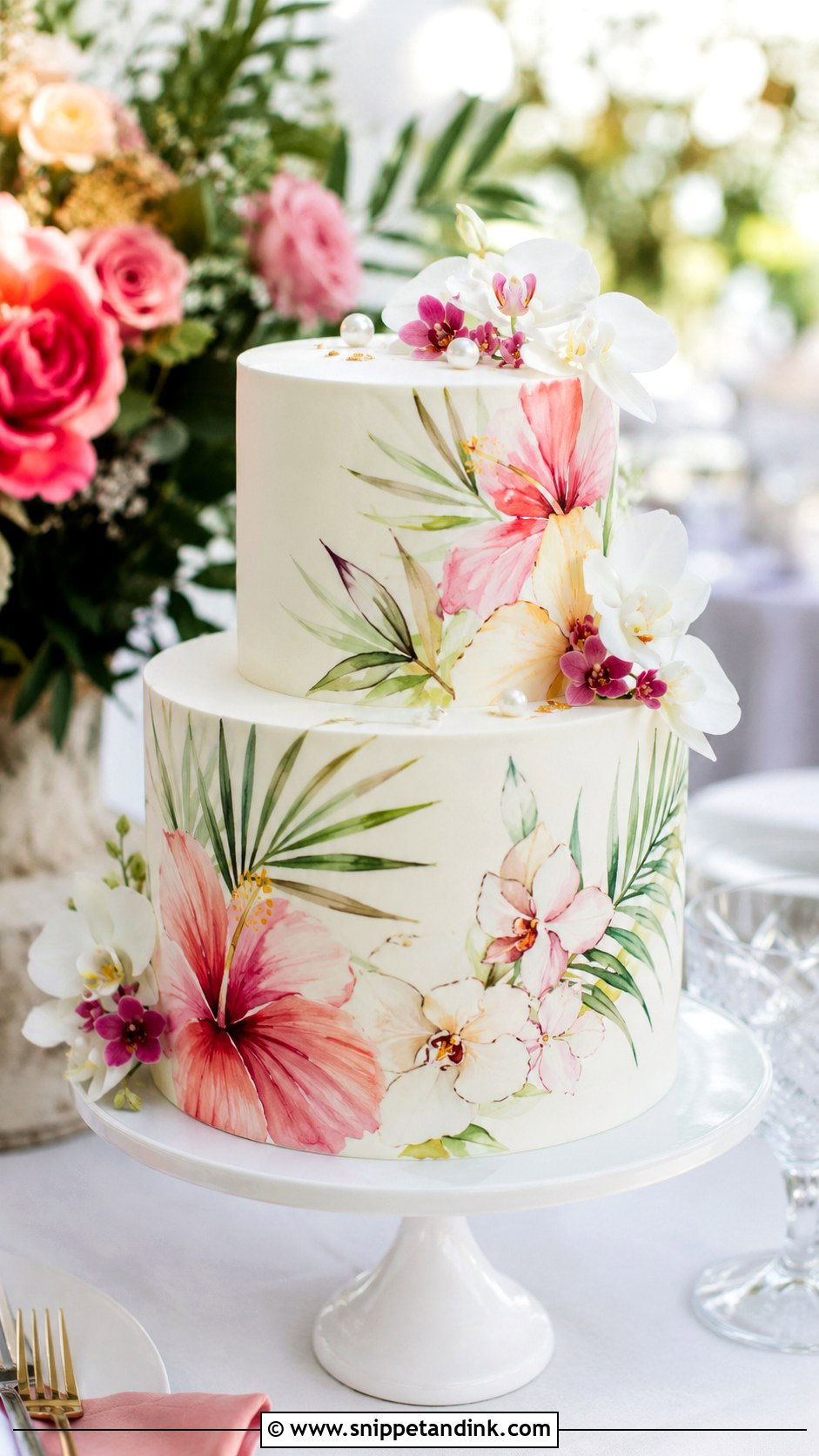
Hand-painted watercolor flowers give colour without the fragility of real blooms, which makes them a smart choice for a hot destination. I paint them with thinned food colour on fondant, since buttercream doesn’t take a crisp brushstroke. Hibiscus, orchids and loose palm shapes all work. A couple of real blooms add depth, but the painting should stay the hero. Passion fruit or coconut sponge pairs well with the soft palette.
15. Tropical Wedding Cake With Coral Flowers
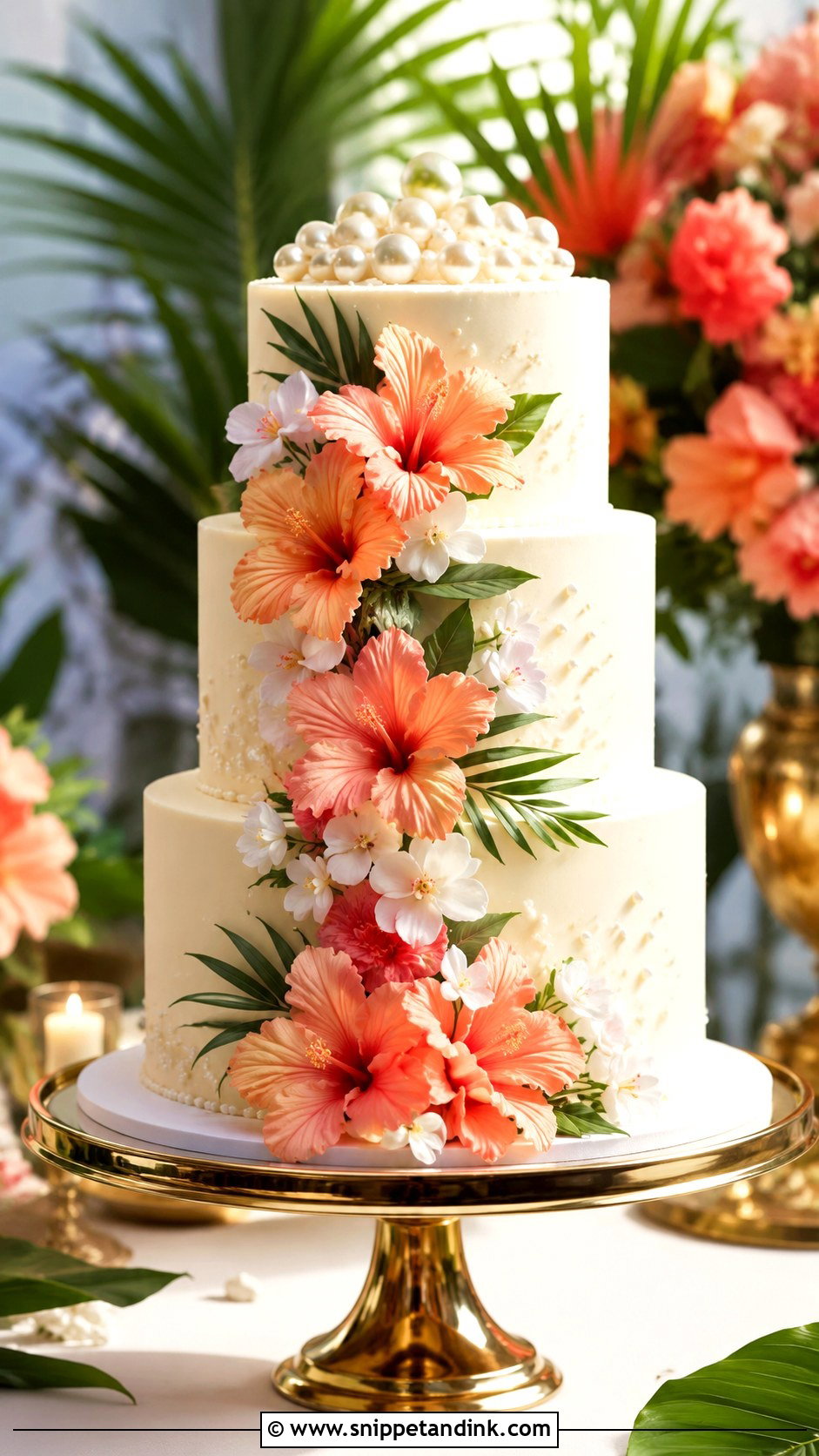
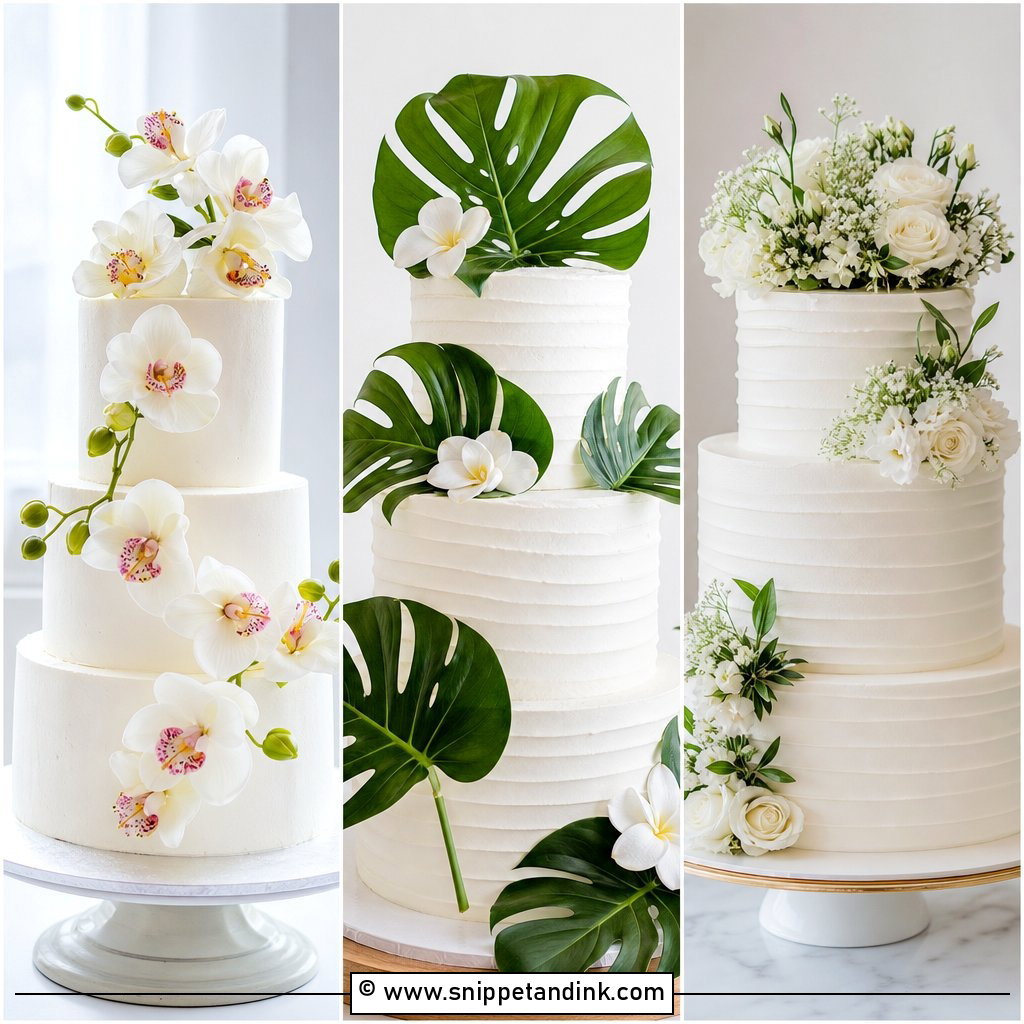
Coral sits between pink and orange, which makes it easy to match to tropical flowers and hard to match by name alone, so I always ask for a fabric or flower sample. It looks warm against ivory and deep green leaves. A cascade of coral sugar roses, hibiscus and orchids down the tiers photographs well in outdoor light. Coconut with guava or almond with mango filling suits it. A few palm or monstera shapes make the theme obvious.
16. Tropical Wedding Cake With Lime Flavor
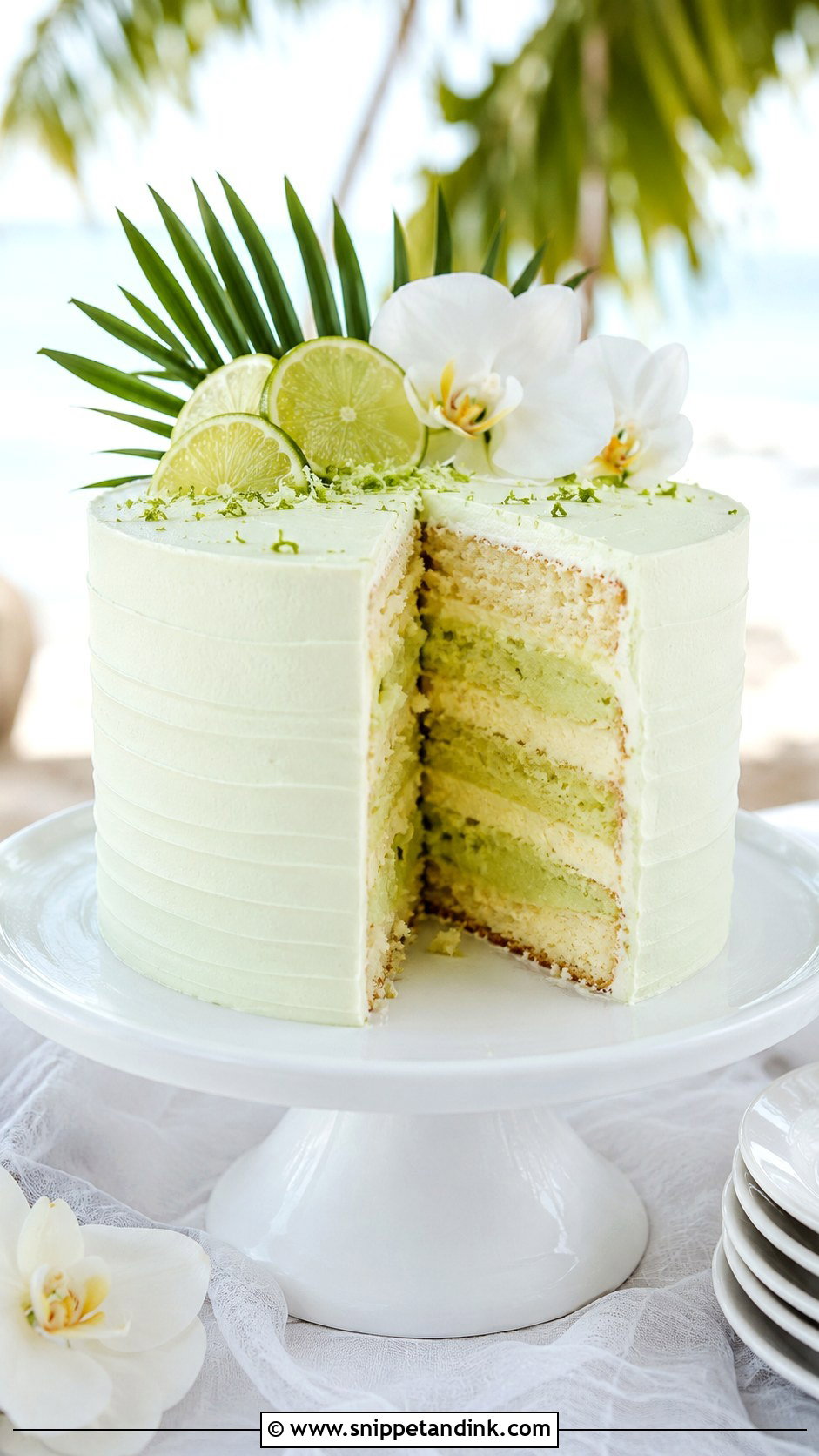
Lime is the flavour I recommend most for a reception in serious heat, because it tastes light even after dinner. Lime curd, key lime filling or a lime buttercream can lift a plain white cake. On the outside, keep it crisp: white frosting, a few pale green accents, thin citrus slices and tropical leaves. Lime partners well with coconut or raspberry if you want more depth. Fondant gives a sharp finish; textured buttercream feels more casual.
17. Tropical Wedding Cake With Guava Filling
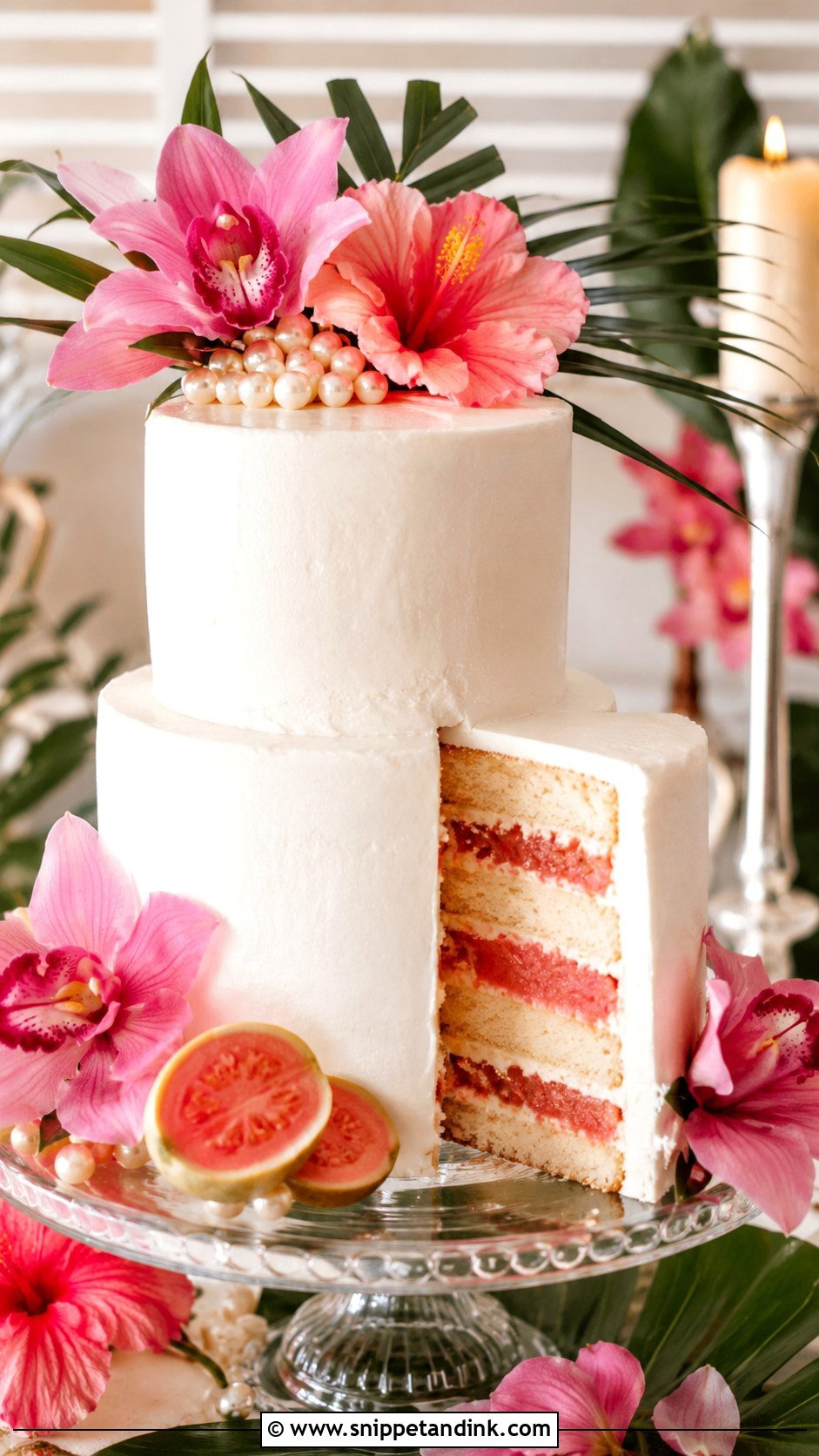
Guava gives a rosy pink filling that surprises guests when the cake is cut. I make it from guava paste or pulp, cooked down so it holds, and it pairs particularly well with cream cheese frosting, though cream cheese needs to stay cool and shouldn’t sit out long in heat. The outside can stay smooth and white, finished with pink orchids, small hibiscus or edible pearls. Guests who’ve had a lot of vanilla wedding cake usually remember this one.
18. Tropical Wedding Cake With Anthurium Flowers
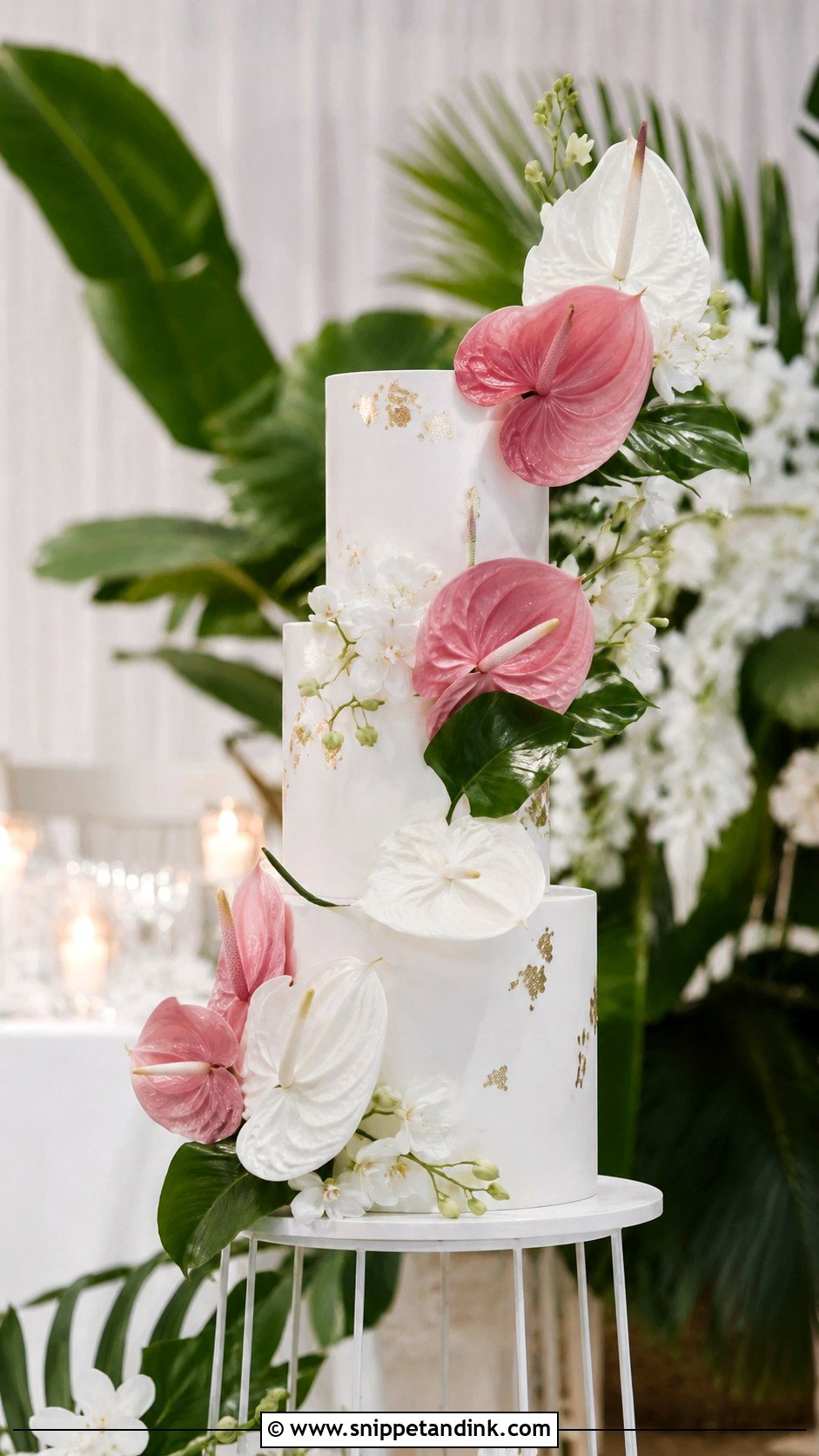
Anthuriums have a striking waxy shape, but they’re toxic, so on a cake I make them in sugar or keep real ones entirely on a separate stand beside it. Sugar anthurium flowers look almost identical and survive heat without drooping. White anthuriums feel chic; red or coral feel dramatic. Tall, smooth tiers suit them, with a few banana leaves or small orchids for texture. Coconut lime or mango passion fruit flavours complete it.
19. Tropical Wedding Cake With Naked Layers
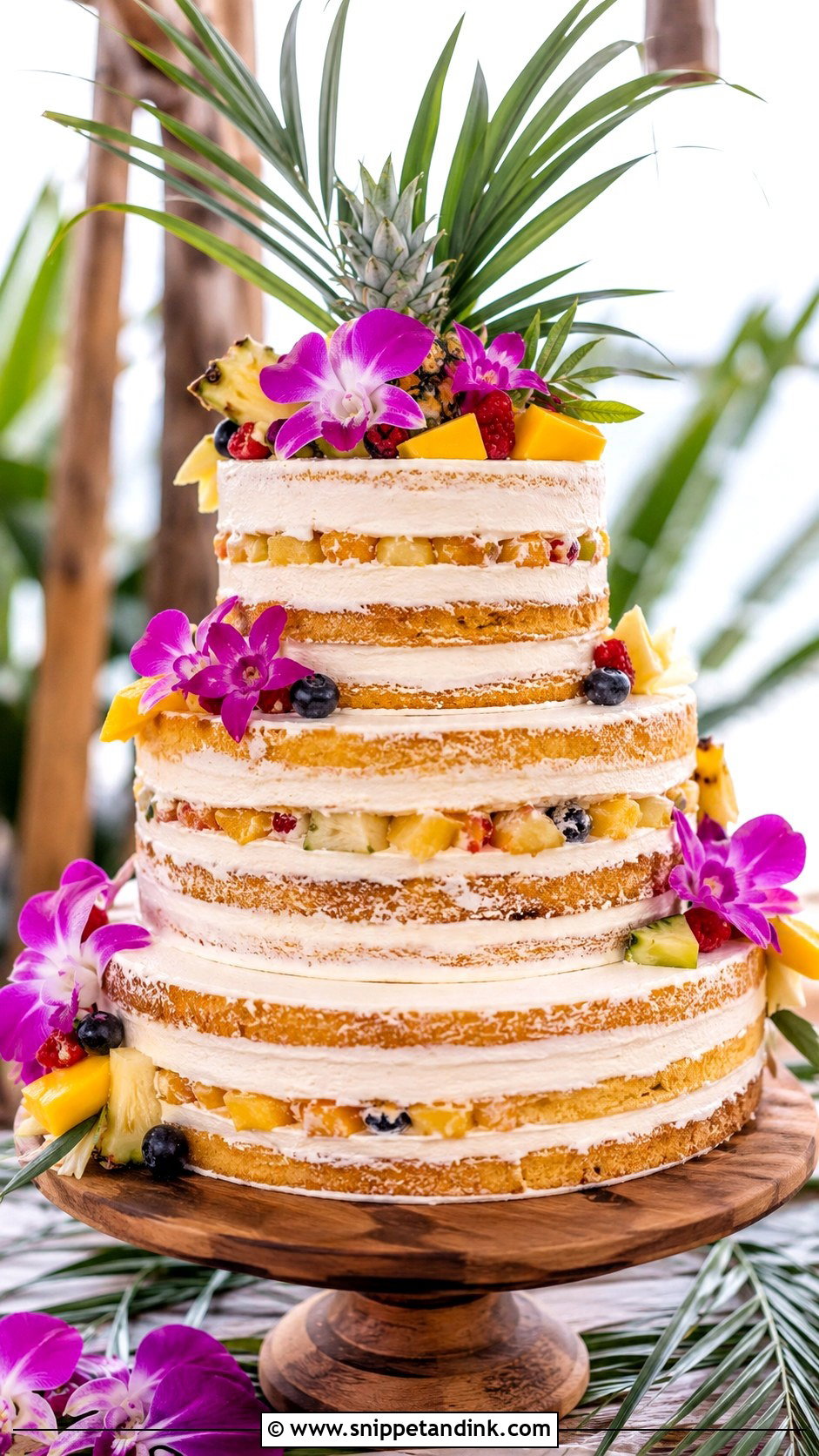
Naked cakes look relaxed, but they dry out faster than any other style because the sponge is exposed. I brush the layers with syrup and keep the cake wrapped until shortly before display, which matters even more outdoors. Banana, coconut or citrus sponge with mango, guava or passion fruit filling all suit it. Orchids, pineapple pieces and a few palm leaves finish it. A warm, welcoming dessert table needs little more.




20. Tropical Wedding Cake With Macarons
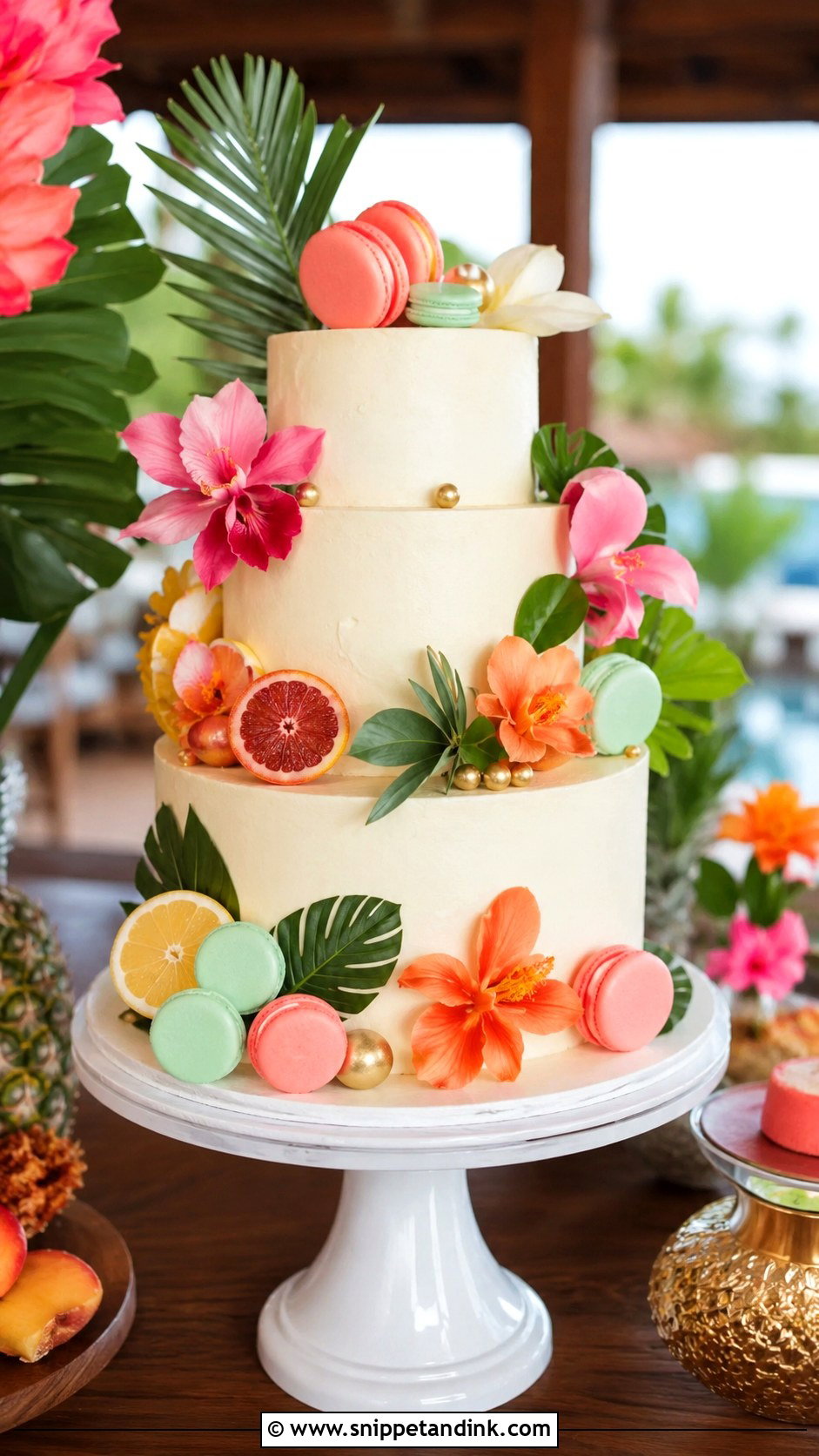
Macarons add height and colour, and they can repeat your cake flavours: coconut, mango, guava or lime. They don’t like humidity, though, and turn chewy or sticky in damp sea air, so I attach them to the cake as late as I can. Coral, mint and yellow shells look bright among orchids and palm leaves. Keep the frosting smooth so the macarons have room to stand out.
Monstera, Anthurium and Other Plants That Shouldn’t Touch the Icing
Tropical arrangements are full of plants that look like they belong on a cake and don’t. Monstera leaves and anthuriums both contain irritating crystals and aren’t safe to eat. Many florist stems have also been sprayed. My rule is simple: if I can’t confirm a plant is edible and grown without pesticides, it either becomes sugar or stays on the table, not on the cake.
- Generally safe with a barrier: banana leaves, hibiscus, dendrobium orchids from an edible supplier.
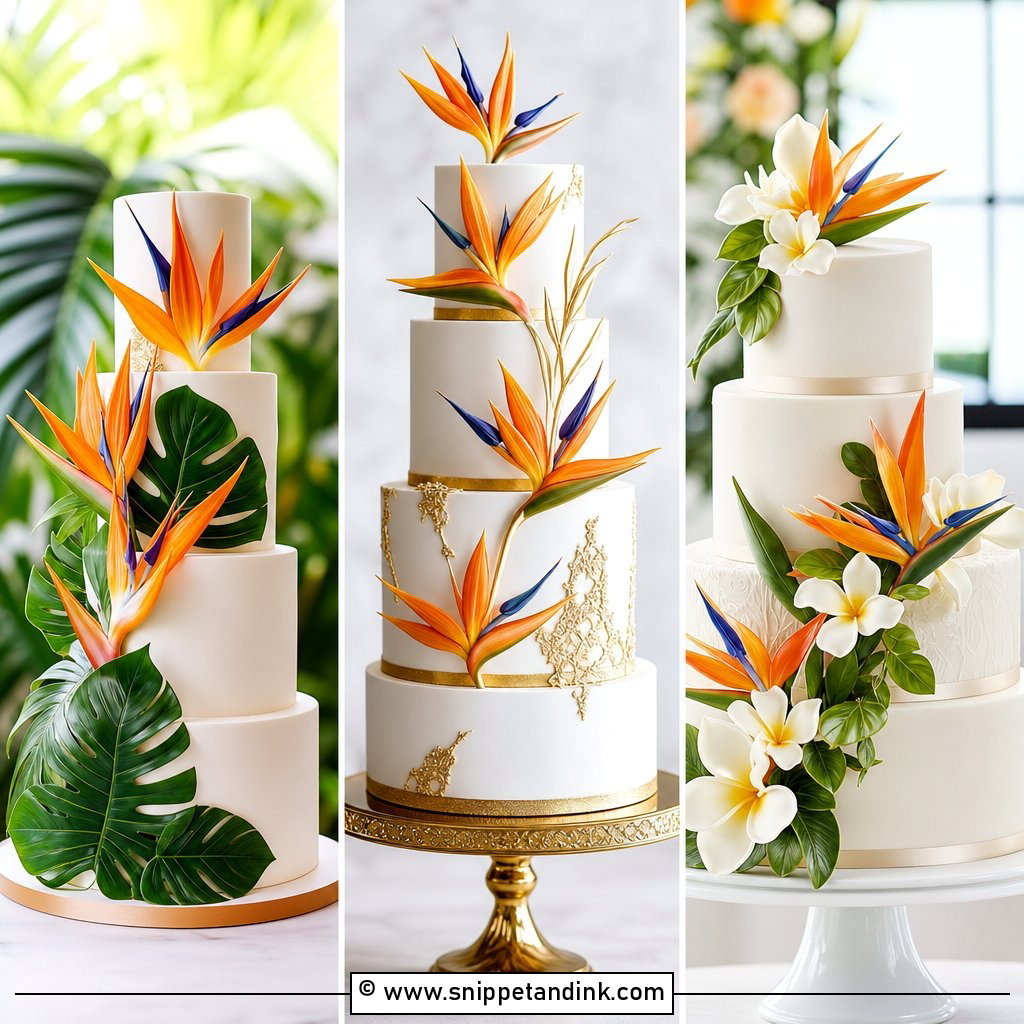
- Make in sugar or wafer paper: monstera, anthurium, bird of paradise.
- Ask your florist which stems are spray-free, and keep cut ends wrapped.
Ordering a Cake for a Destination Venue
Carrying a tiered cake on a plane or a long drive is risky, so for most destination weddings I’d book a baker local to the venue. Send them photos early and ask how they handle the local climate. A baker who works in that heat every week knows which frostings stand up to it. If you love a particular design, ask whether they would adapt it in fondant or ganache for stability.
On the day, the cake table matters as much as the recipe. Ask the venue for a spot in permanent shade, away from the bar’s ice machines and the band’s lights, and keep the cake indoors or in a cool room until after the ceremony. A light mesh dome over the table keeps insects off on an open terrace.
Let the Ocean Do the Loud Part
The tropical cakes I’m proudest of usually do one bold thing and keep the rest quiet. Pick one strong decoration, such as palm leaves, orchids, hibiscus or a fruit crown, and let a sharp, fruity filling carry the theme inside. If your venue already has ocean views or bright flowers, a calmer cake complements the setting instead of competing with it. And tell your baker early how hot the room will be: that single fact shapes every other decision.
You'll Like These Ideas:





Leave a Reply