
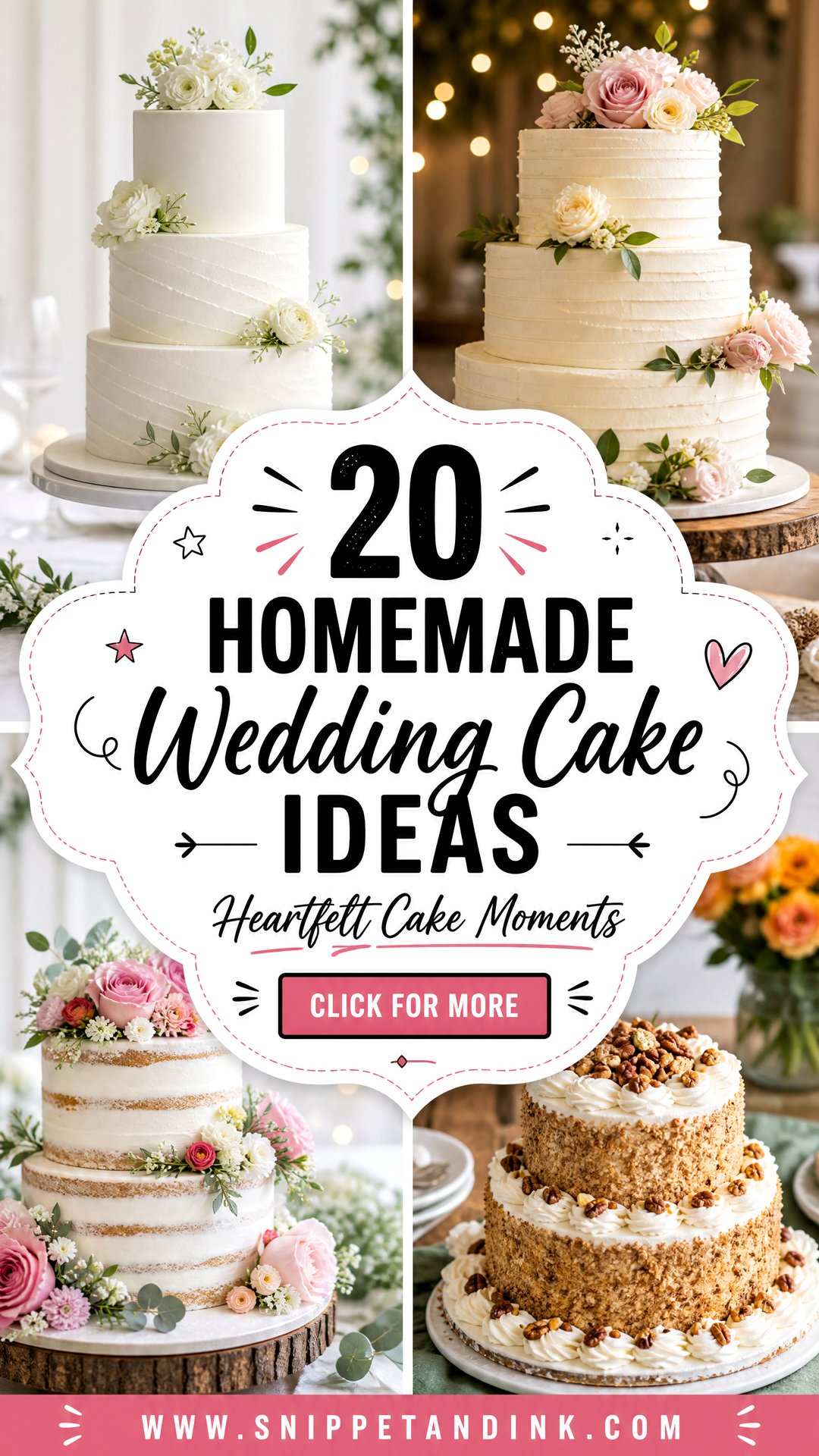
A homemade wedding cake works when the design matches the baker, not the other way round. The cakes I point home bakers toward lean on simple shapes, stable frosting and one strong detail, like fresh fruit, textured buttercream or a cluster of flowers, rather than hours of sugar work. A small two-tier, a rustic naked cake or a single tall cake can all hold their own on a wedding table. Below are twenty ideas, each with notes on what’s hard about it, what travels well and what I’d do differently in a home kitchen than in a bakery.
A Home Baker’s Countdown to the Wedding Weekend
The cakes that go wrong at home are rarely the hard designs. They’re the ones baked, filled and decorated in a single panicked day. Spread the work out and a home kitchen copes fine.
- One to two months out, bake a full practice cake in the real flavor and size, and time every stage.
- Two to four weeks out, bake the layers, cool them completely, wrap them tightly in plastic and freeze them. Frozen layers are easier to level and fill.
- A week out, make the buttercream. It keeps in the fridge for several days and just needs re-whipping at room temperature.
- Two days out, thaw, level, fill and crumb coat each tier, then chill.
- The day before, put on the final coat, add supports and chill again. Flowers and fruit wait for the day itself.
Measure your fridge before you choose a size. A boxed tier needs a clear shelf with headroom, and moving shelves around at midnight is no fun.
How many people a cake really feeds
Wedding slices are smaller than party slices, roughly one inch wide and two inches deep on a cake about four inches tall. Cut that way, a six-inch round gives around twelve servings, an eight-inch around twenty-four and a ten-inch close to forty. Counts vary with how generous the person cutting is, so add a few spare servings or a sheet cake in the kitchen.
1. Two Tier Wedding Cake
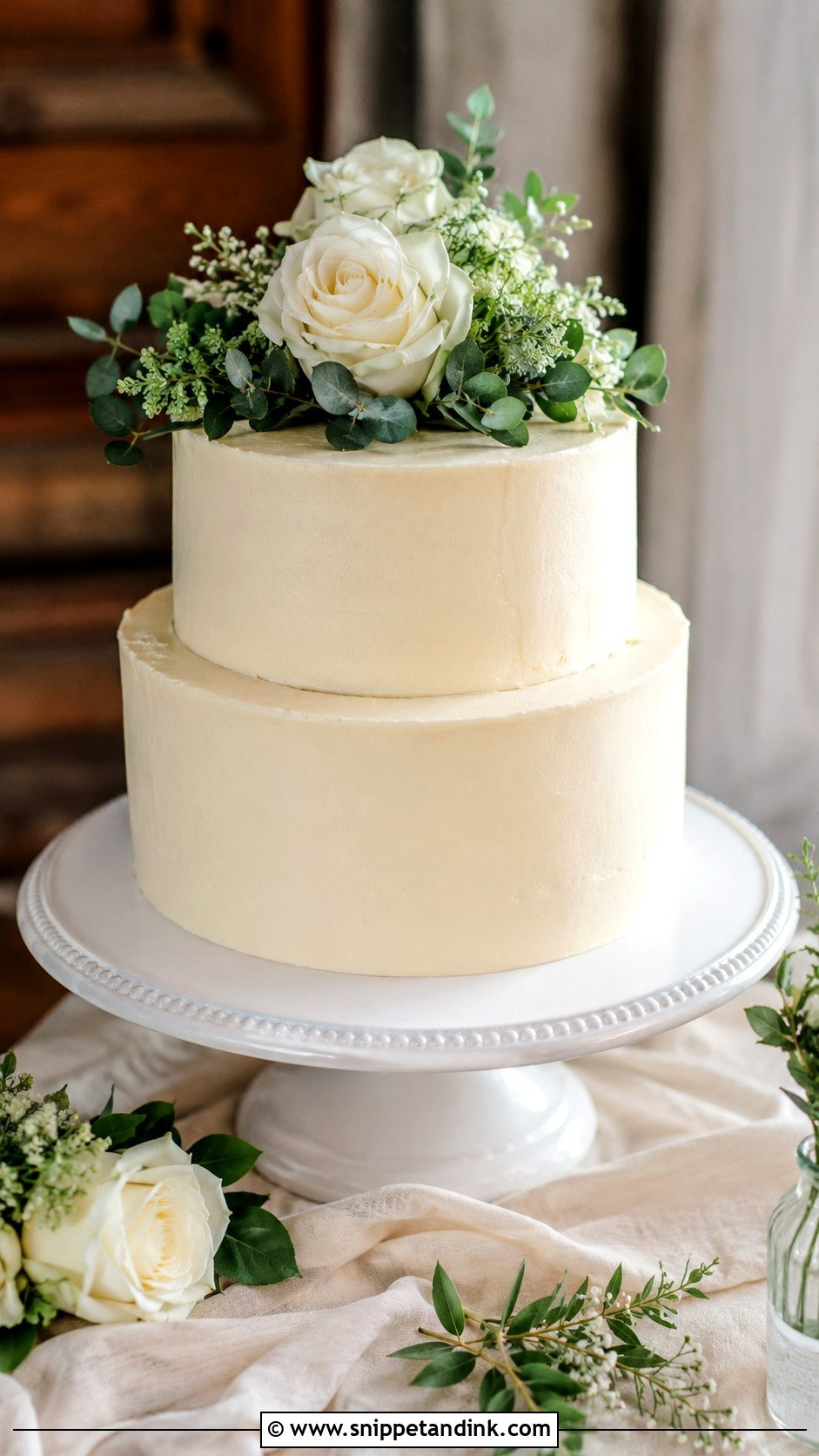
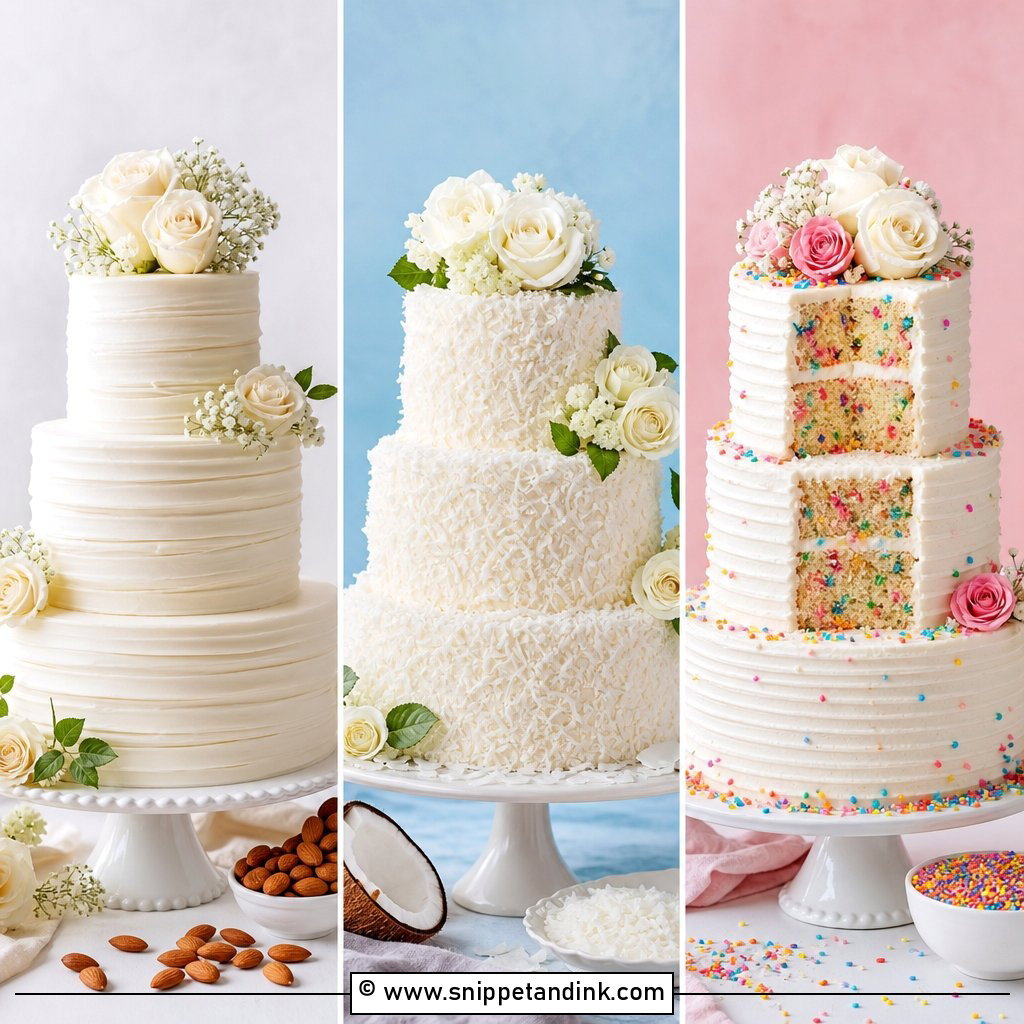
Two tiers give you real height while keeping the job within reach of a home oven. The part home bakers skip is support. The top tier needs its own cake board, with straws or dowels cut level in the bottom tier, or it slowly sinks into the cake beneath it over the afternoon. Chill both tiers firm before stacking. Vanilla, almond, lemon or chocolate all work under smooth buttercream; keep the bottom tier plain and let a small cluster of flowers sit on the top one.
2. Simple Wedding Cake
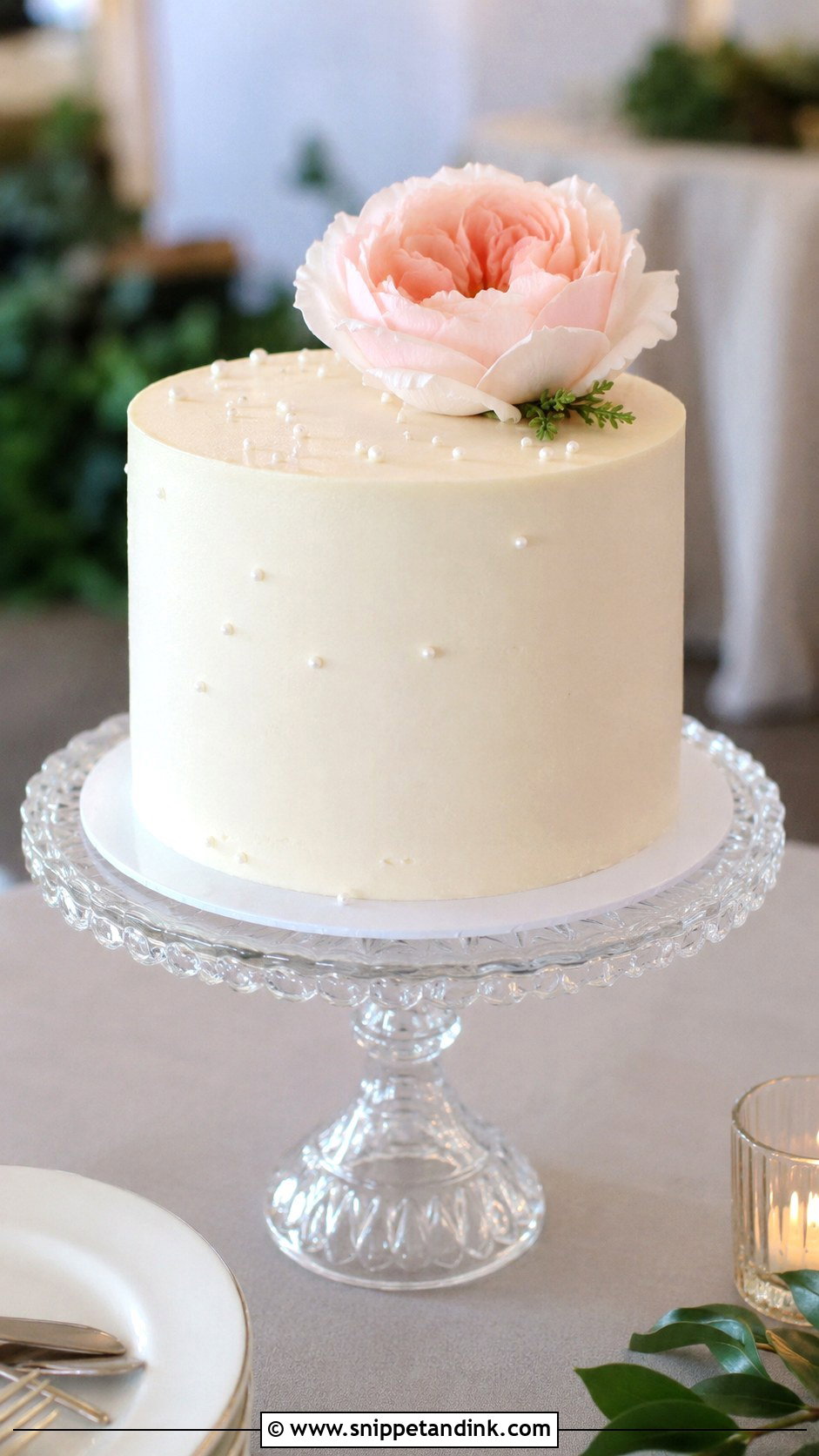
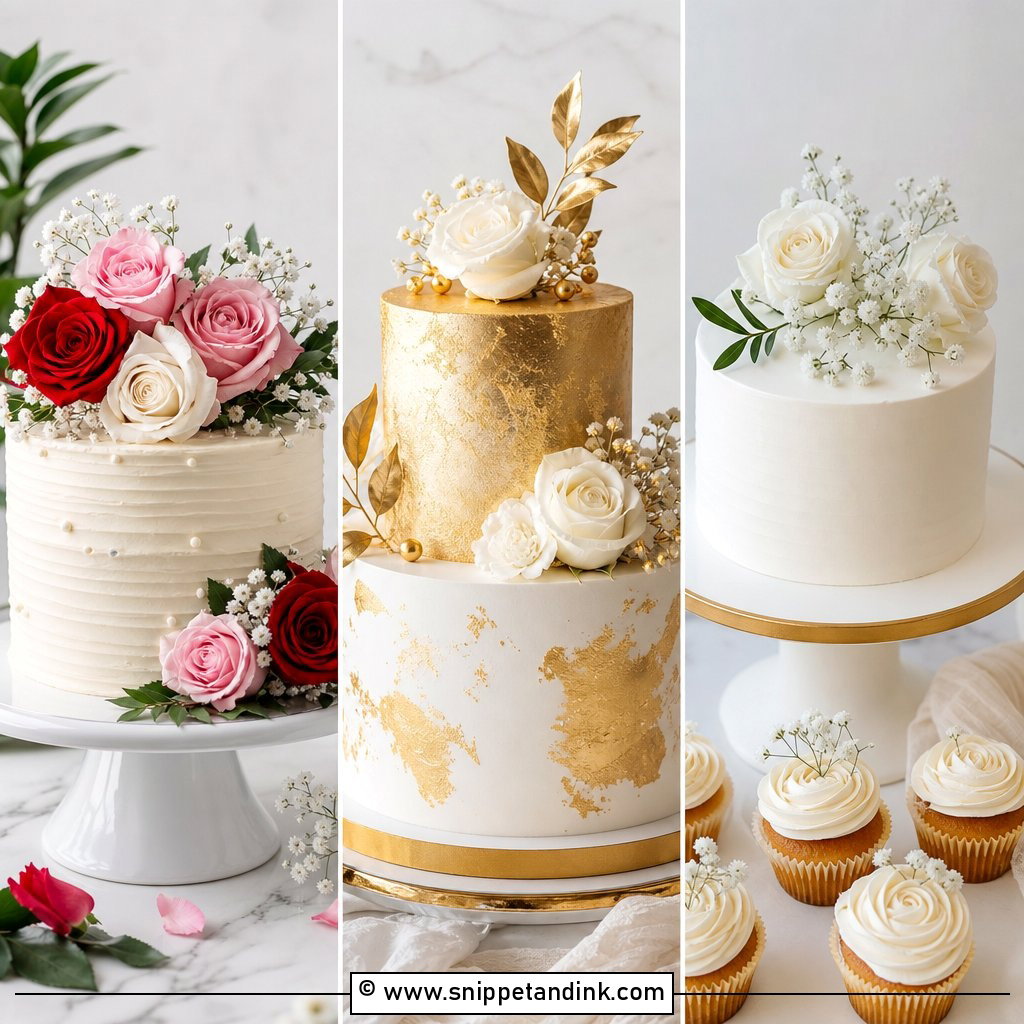
Plain is the hardest cake to fake, because a smooth finish has nowhere to hide a lean or a bulge. Get it right and one or two tiers in clean buttercream with a few fresh flowers, some pearl sprinkles or a piped border at the base can look expensive. My method for a sharp finish at home is a bench scraper, a turntable and a cold cake: chill the crumb coat until it’s firm before the final layer goes on. Vanilla bean with raspberry filling, or lemon with buttercream, keeps the flavor light and familiar.
3. Rustic Wedding Cake
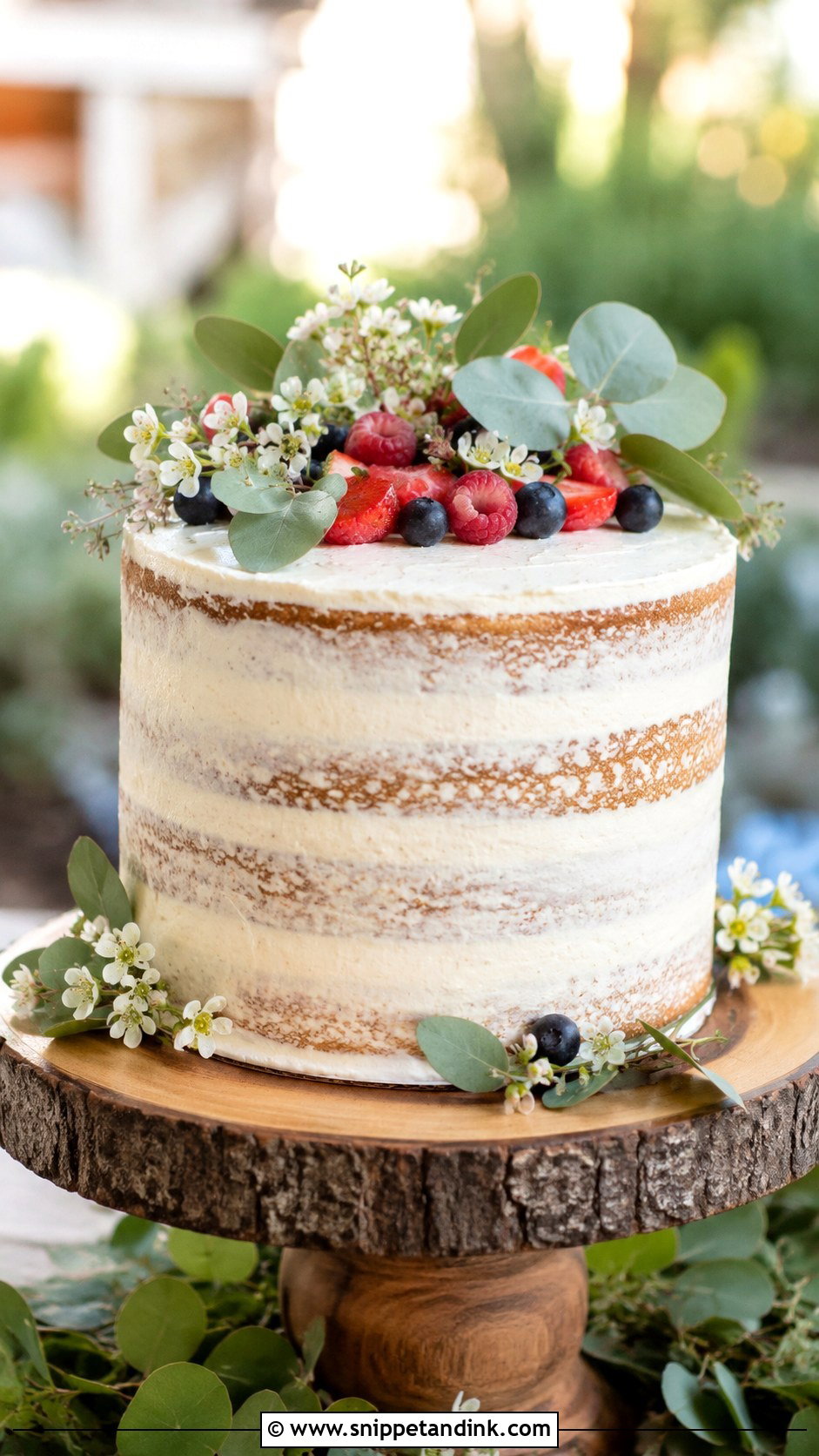
Rustic forgives a lot. A semi-naked finish, a thin scrape of buttercream with the layers showing through, doesn’t need to be smooth, which is why I suggest it for first-time wedding bakers. Berries, small flowers, herbs or greenery go on loosely. Vanilla or spice cake with cream cheese or Swiss meringue buttercream suits barns, backyards and tables full of wood. The one thing rustic won’t forgive is uneven layers, so level each one before stacking.
4. Naked Wedding Cake
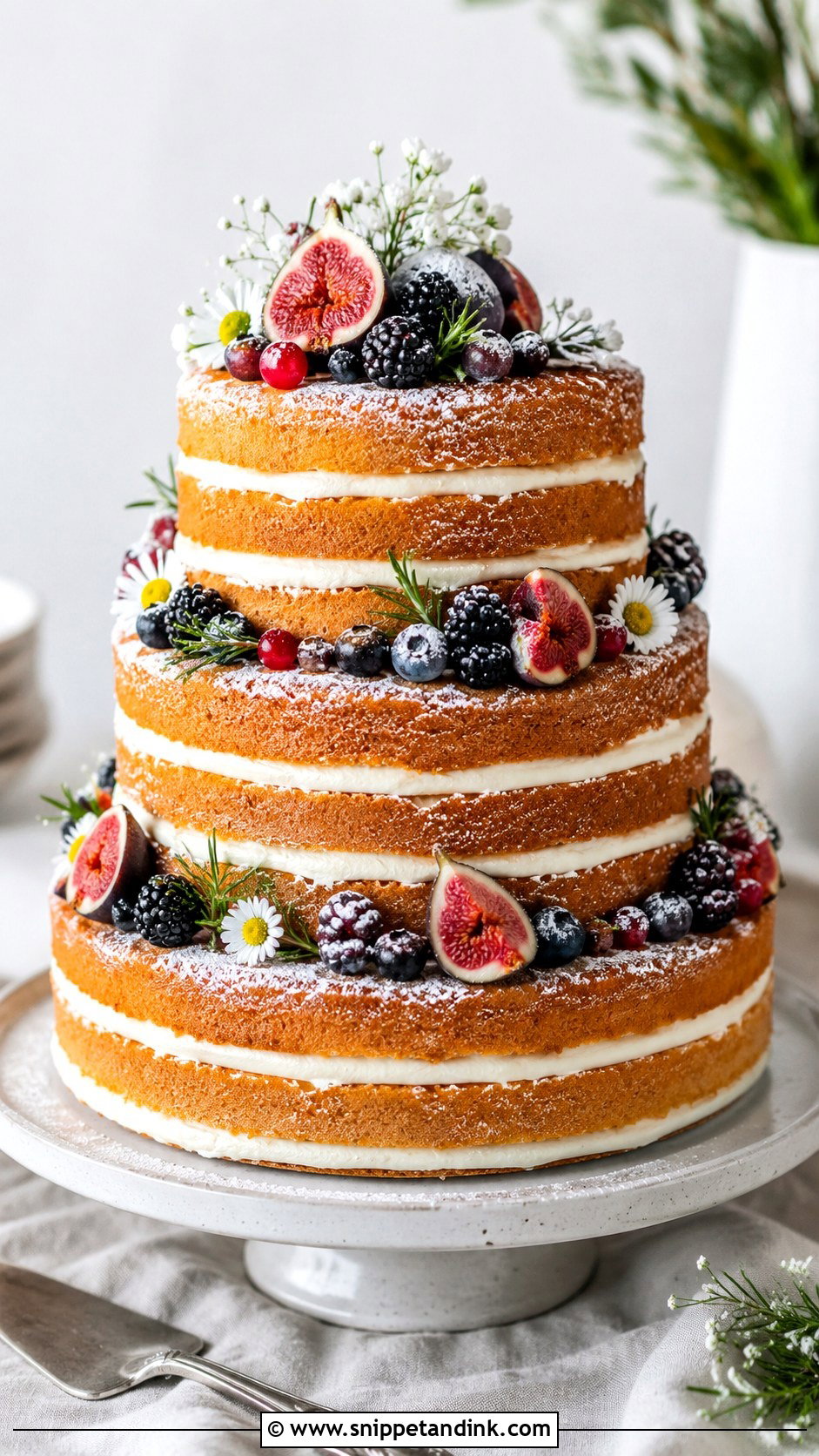
A naked wedding cake shows every layer, so I trim off the domes and any browned edges before stacking. The fillings do the decorating: vanilla buttercream, lemon curd, berry jam or cream cheese frosting, with a ring of stiff buttercream piped around the edge first so softer fillings can’t squeeze out. Berries, figs, flowers or a dusting of powdered sugar finish it. Exposed sponge dries quickly, so wrap the layers as soon as they’ve cooled and keep the finished cake covered and cool until serving.
5. Buttercream Wedding Cake
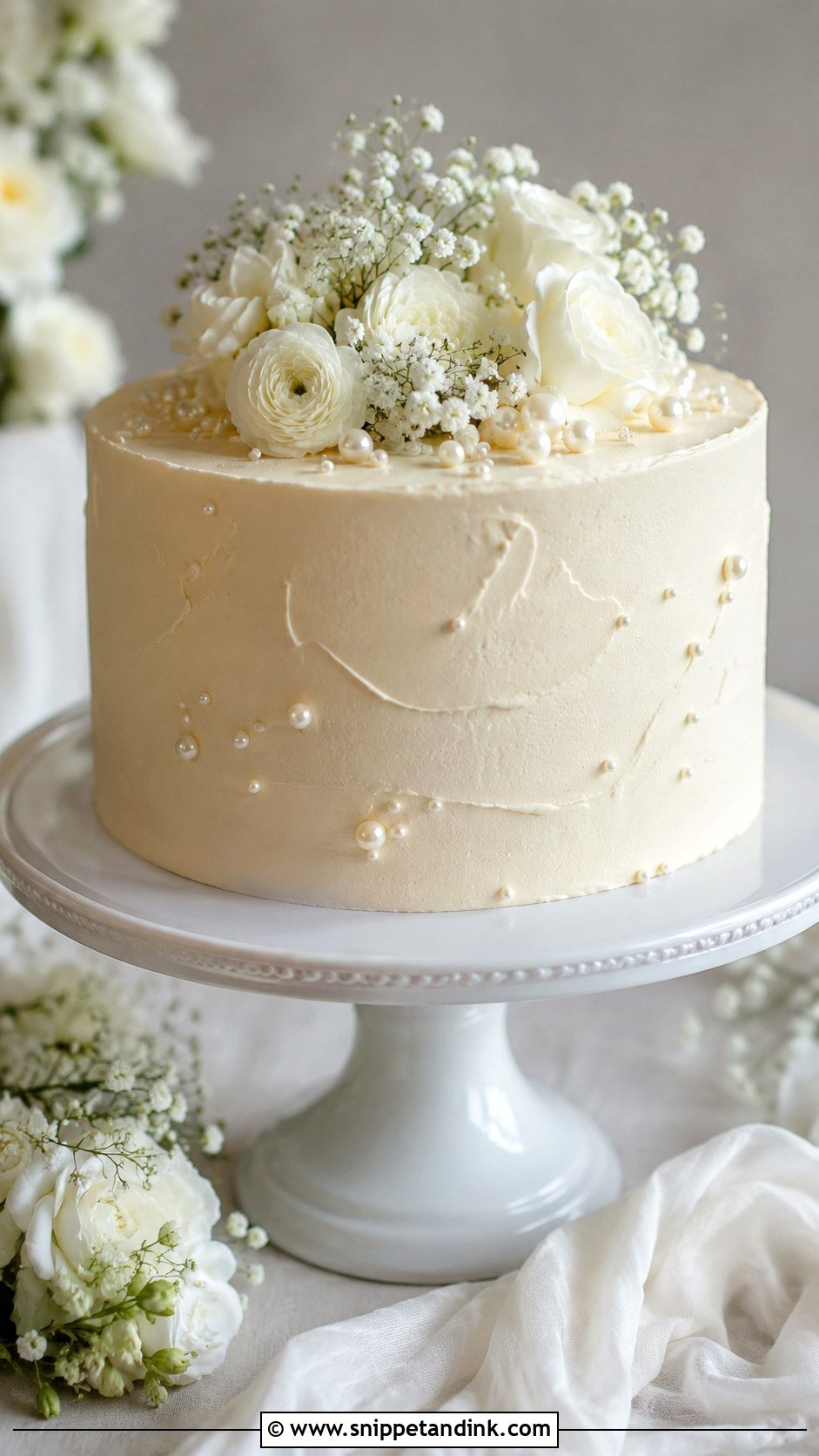
Which buttercream you make decides how the cake behaves. American buttercream is sweeter and sturdier and forms a light crust, so it’s the friendlier one for a beginner. Swiss meringue is silkier and less sweet, but it softens faster in heat and takes more care to make. Either hides small flaws better than fondant. Pairings that rarely miss: vanilla with strawberry, chocolate with mocha, almond with raspberry preserves. In warm weather, keep the cake chilled until shortly before serving.
6. Small Wedding Cake
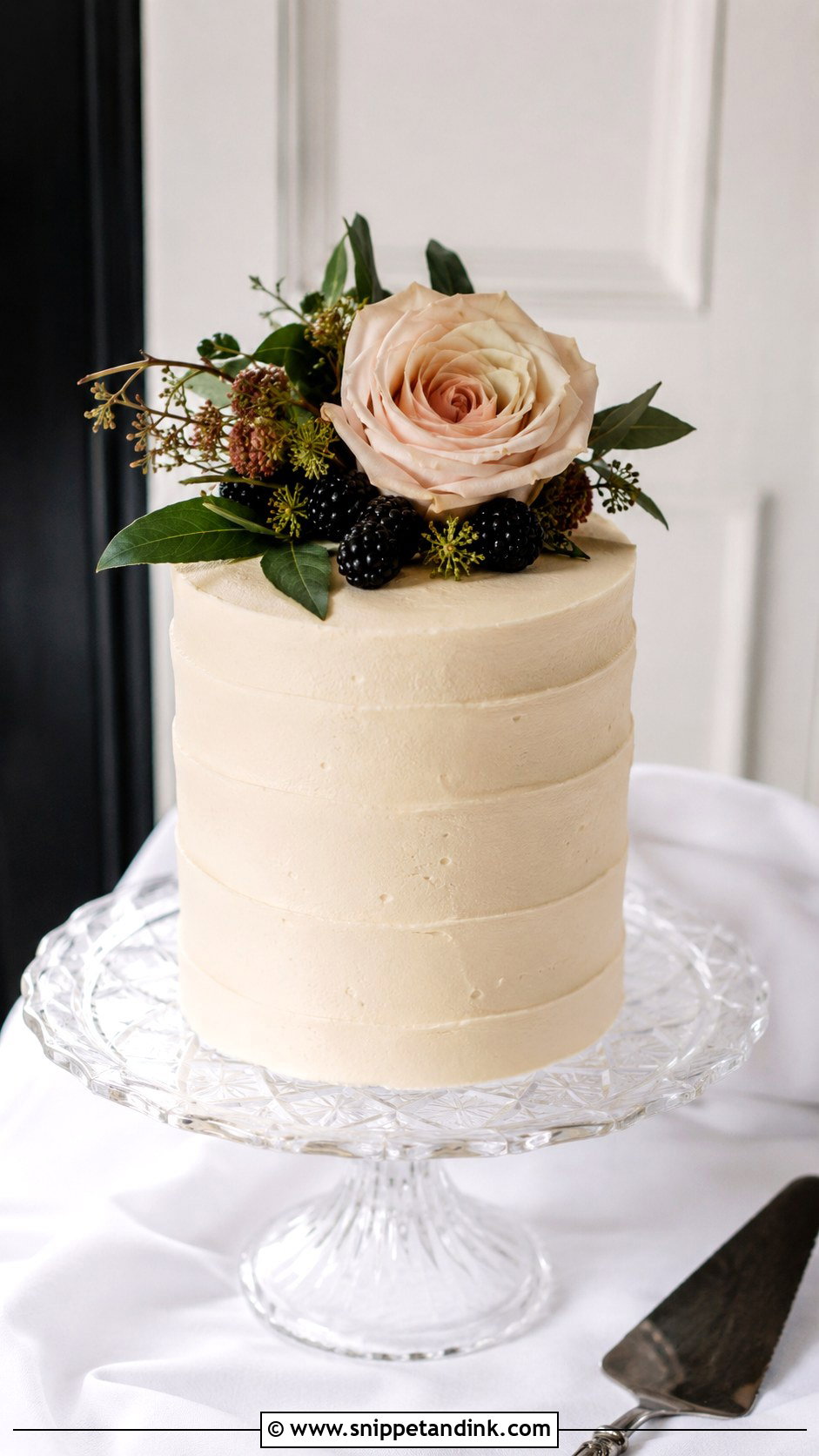
A small cake lets you spend your effort on what’s inside. One tall six-inch round, three or four layers high, or a petite two-tier feeds an intimate wedding or sits alongside other desserts. Because the quantity is small, you can afford better fillings, such as lemon curd, raspberry compote or chocolate ganache. Once a narrow cake passes four layers, add a dowel and a thin board halfway up, or it will start to lean. A raised stand gives it presence on the table.
7. Cupcake Wedding Cake
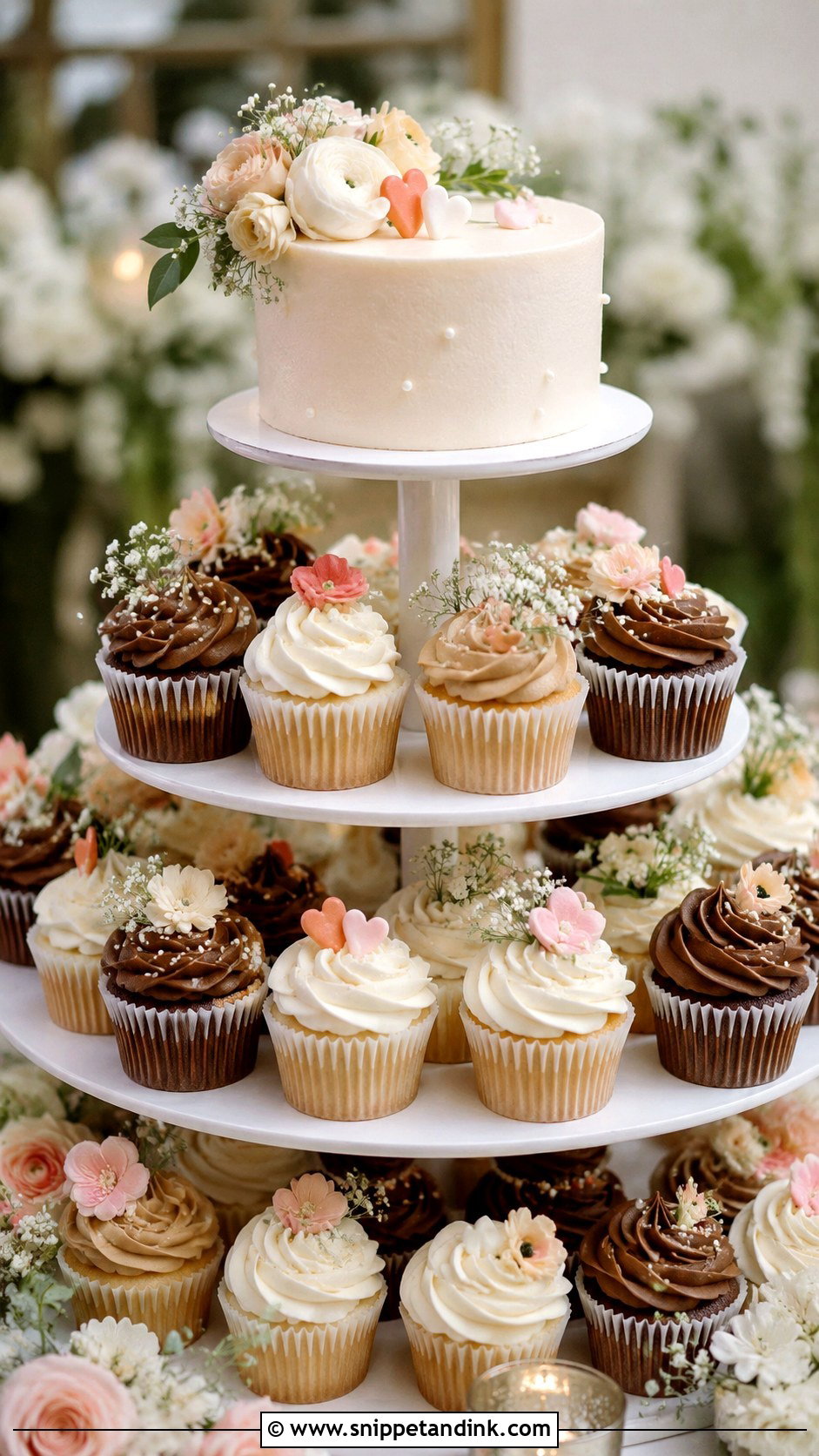
A cupcake wedding cake is the easiest way to feed a crowd from a home kitchen, since nobody has to cut and plate a tiered cake. Arrange them on a tiered stand with a small cutting cake on top for the couple, and mix vanilla, chocolate, lemon, red velvet and carrot so guests can choose. What makes the display look professional is consistency: the same tip, the same amount of frosting, the same swirl on every one. Bake them no more than a day ahead, because cupcakes dry out faster than a large cake.
8. Sheet Wedding Cake
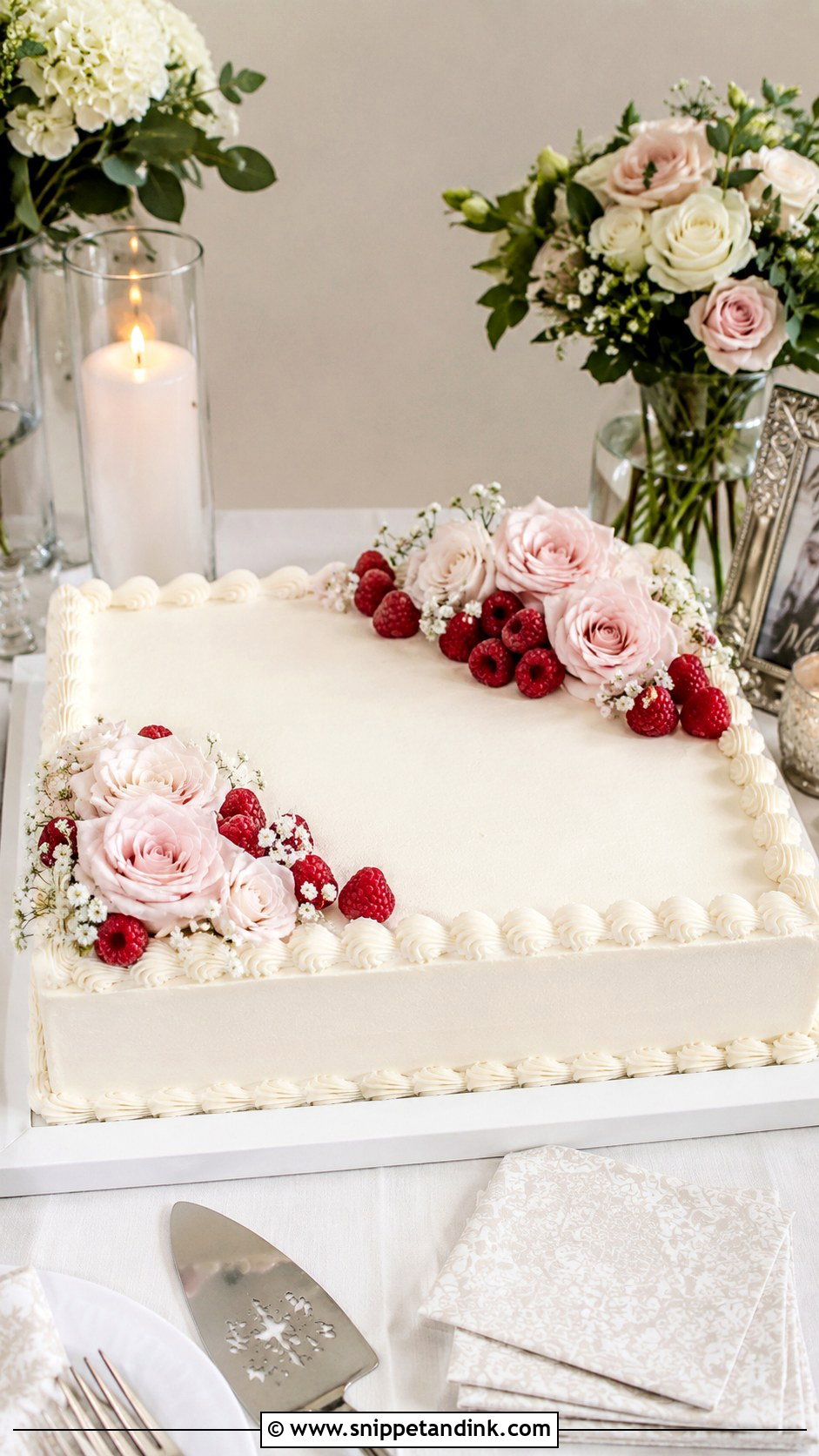
A sheet wedding cake is the workhorse. It bakes in one pan, cuts into neat squares and costs far less than tiers. Smooth buttercream on top with piped borders or rosettes, plus flowers or berries gathered in one corner, makes it look deliberate. A setup I often suggest is a small decorated cake on the main table and sheet cakes in the kitchen for serving. Large sheet pans bake unevenly, so use a heating core in the middle of the batter or bake in two smaller pans.
9. Vintage Wedding Cake
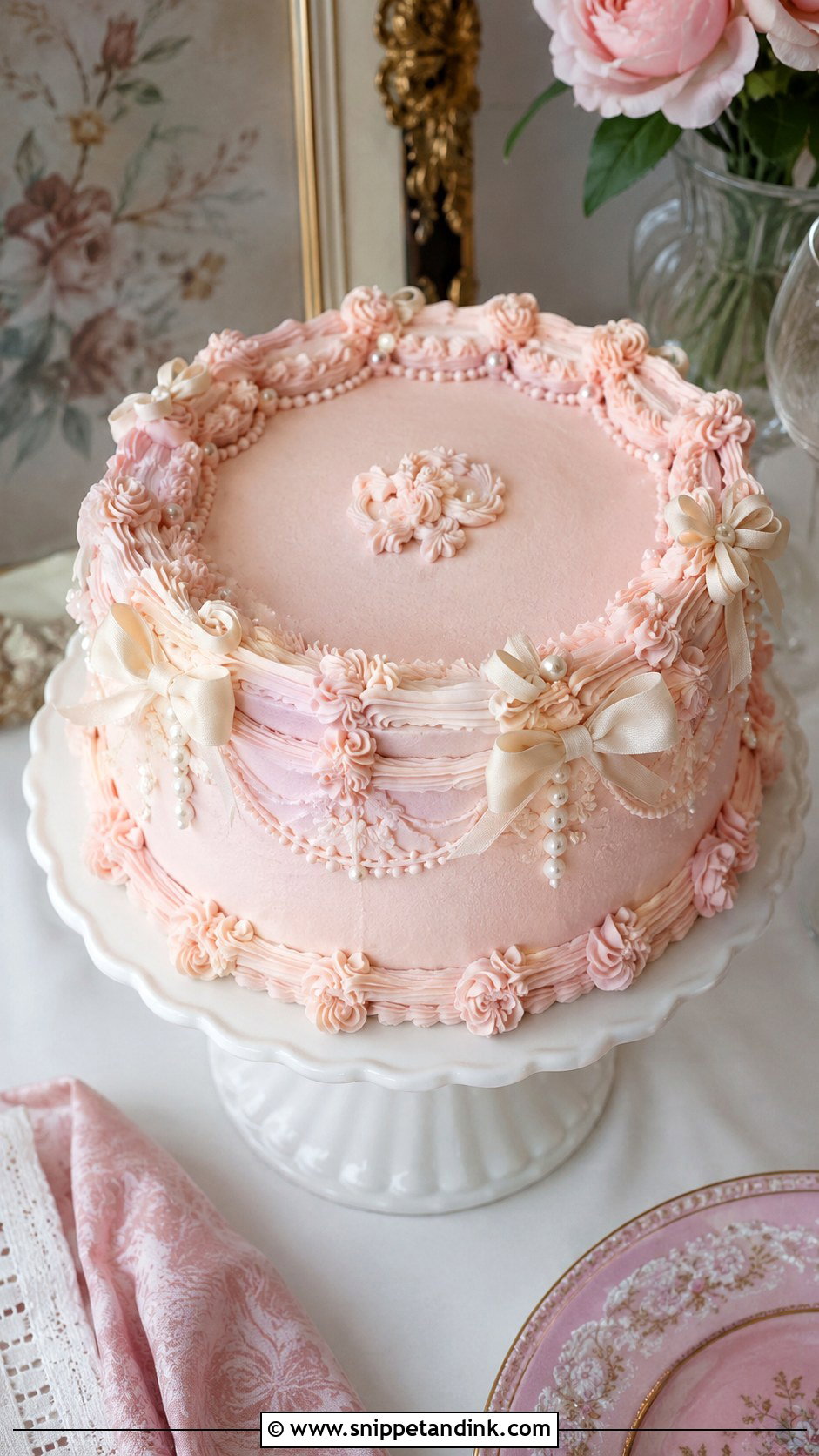
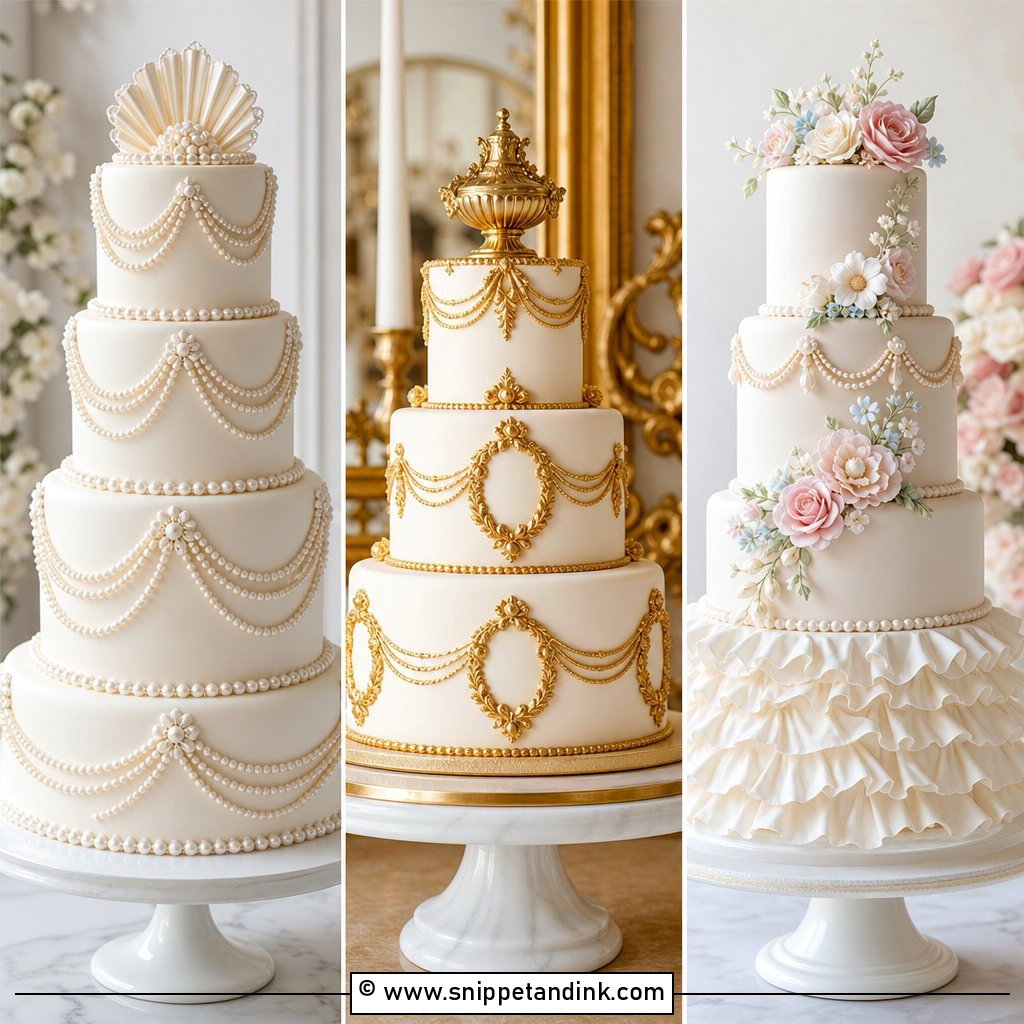
Vintage is the one style that celebrates piping instead of hiding it. Lambeth-style overpiping, shell borders, small rosettes and pearl accents build that old bakery look in blush, ivory, pale blue or butter yellow. It suits a baker who already pipes well. Practice on an upturned cake pan first, and use a stiff buttercream so the shells keep their ridges. Vanilla, almond or red velvet keep the flavor as classic as the look.
10. Floral Wedding Cake
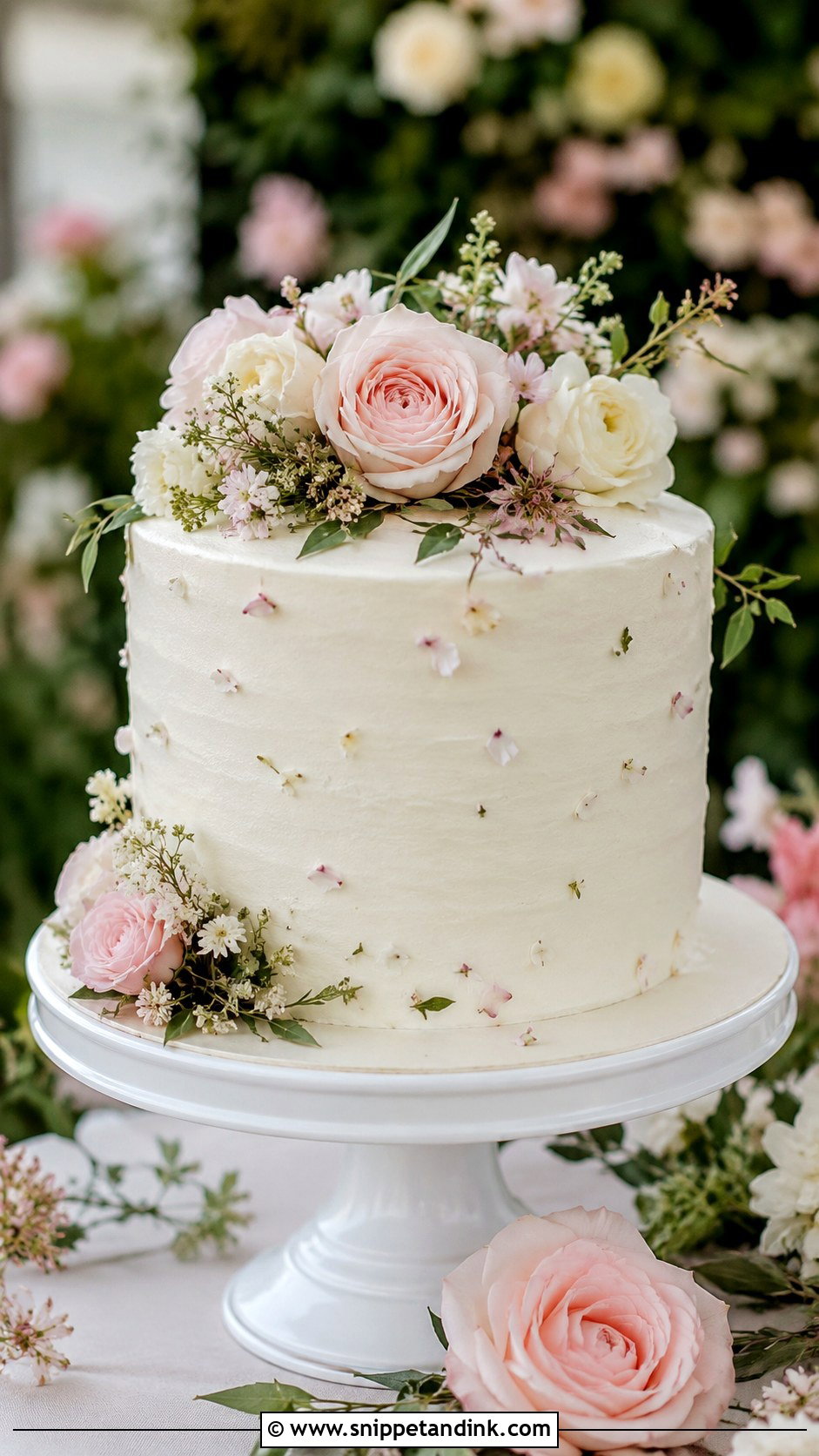
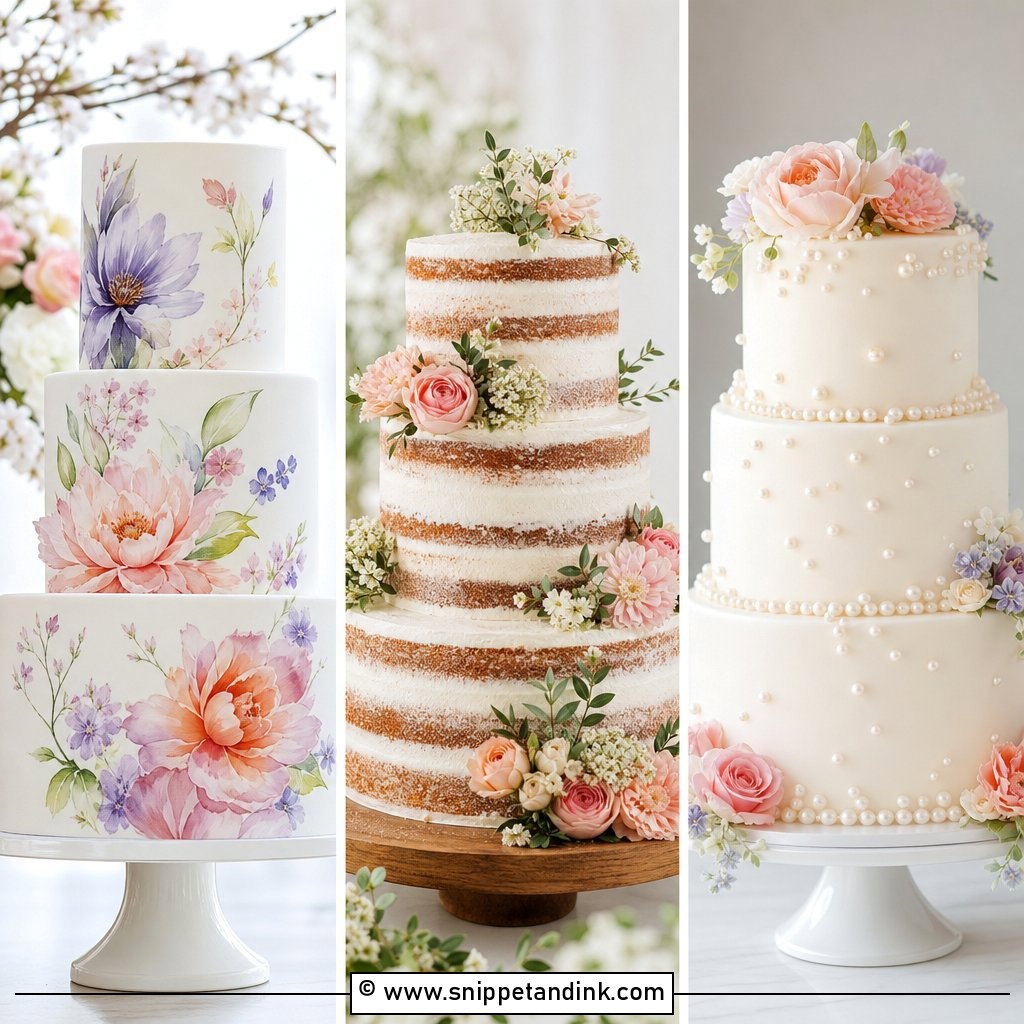
Fresh flowers make a homemade cake look wedding-ready faster than anything else, and they’re also where home bakers take the biggest risk. Many popular blooms aren’t food-safe, ranunculus among them, and florist flowers are often sprayed. Use flowers grown without pesticides, wrap every stem in floral tape or push it into a straw, and rest flower heads on small discs of parchment rather than directly on the frosting. Place them in small clusters instead of covering the cake. Lemon, vanilla and almond sponges suit the fresh look.
11. Pressed Flower Wedding Cake
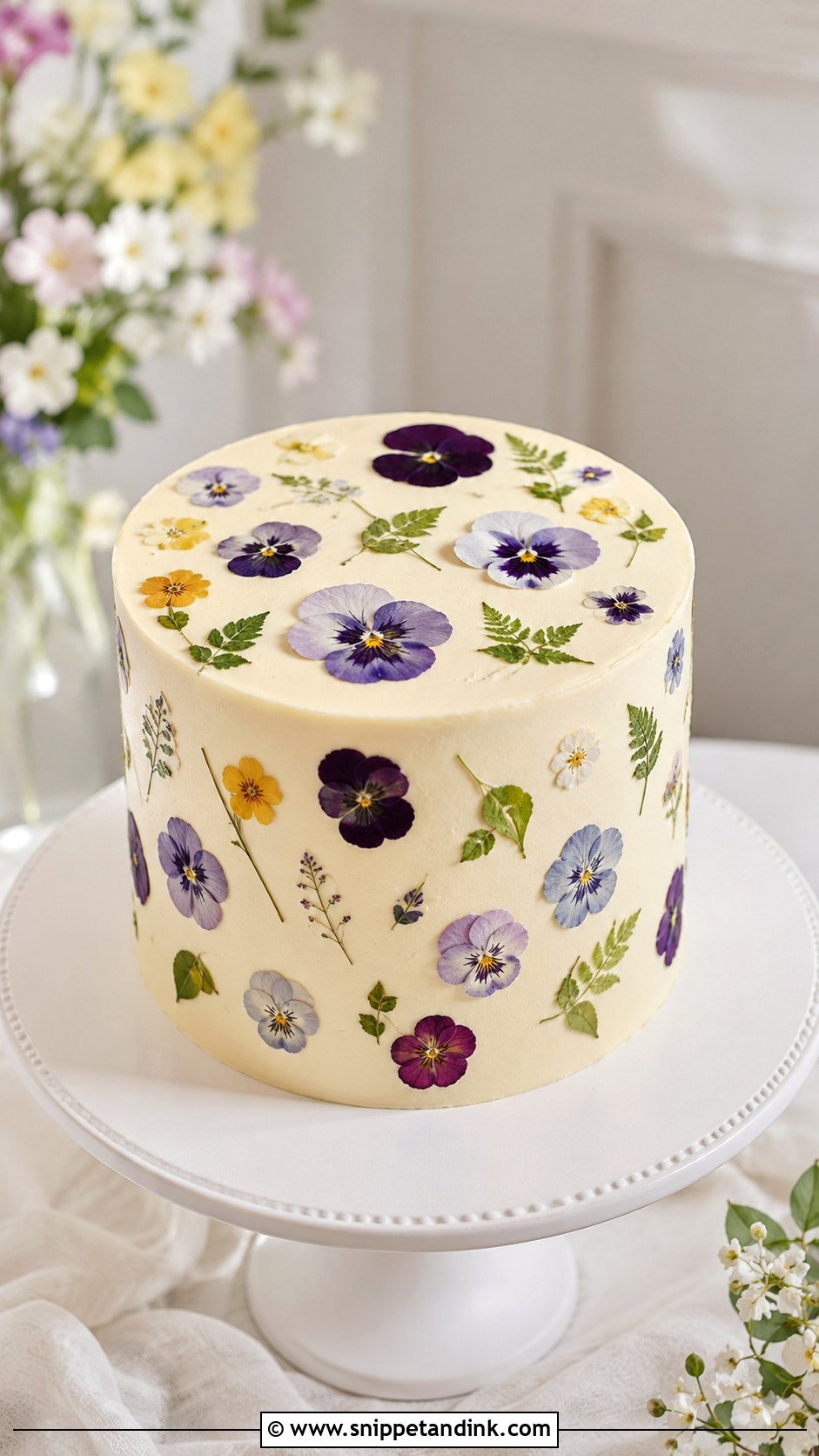
Pressed flowers look harder than they are. They show best against smooth white or ivory buttercream. Buy edible pressed flowers from a supplier who sells them for food rather than pressing garden flowers yourself, and press them onto the sides while the buttercream is still slightly tacky so they stick without glaze. A scattered pattern also hides small finishing flaws. Vanilla bean, lemon, honey or lavender keep the flavor as light as the look, on one tier or two.
12. Fresh Fruit Wedding Cake
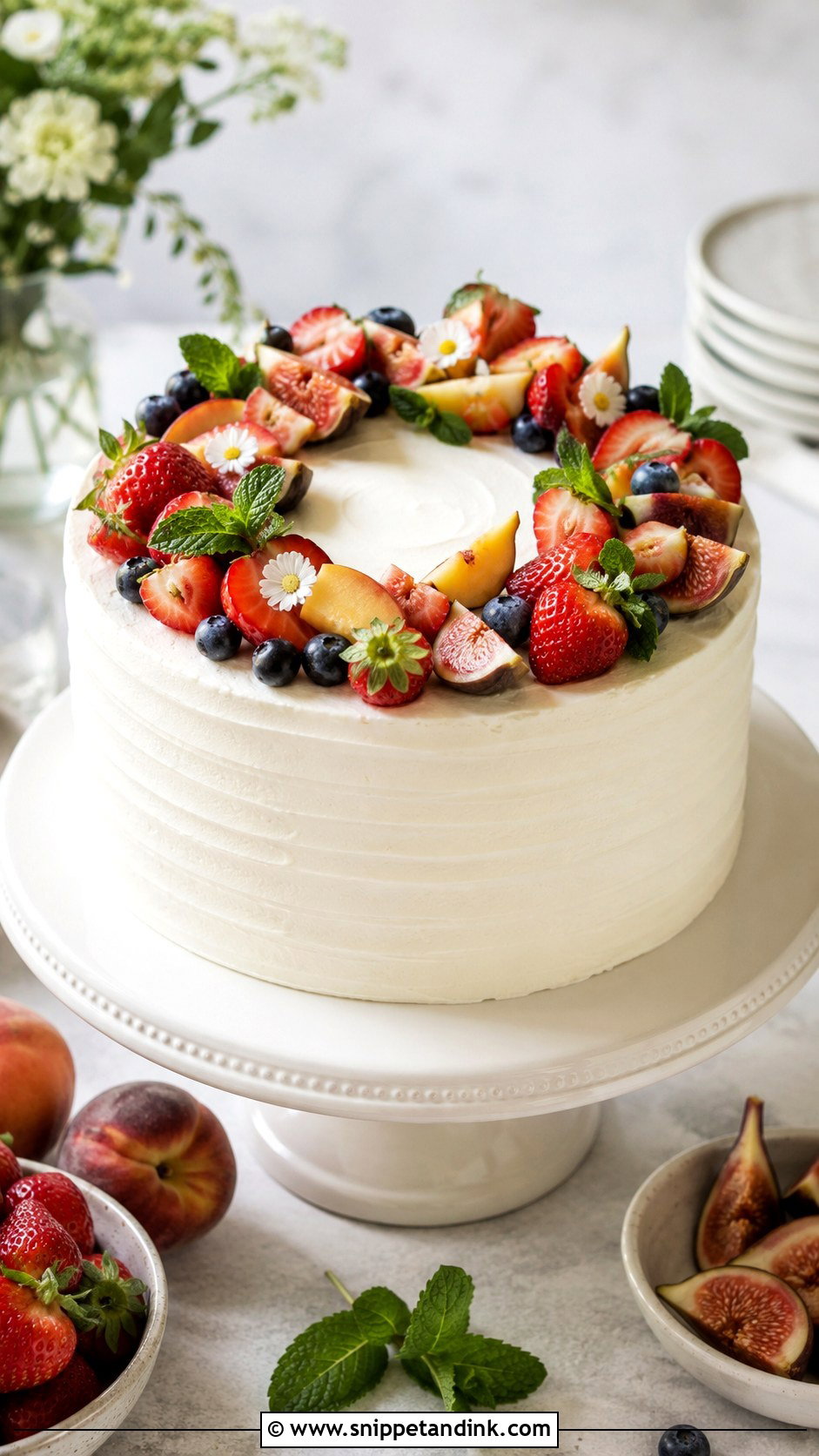
Fruit makes a cake look generous without special tools. Berries, figs, peaches, citrus, cherries and grapes all work, chosen for the season and for how well they hold up. Cut fruit weeps juice into frosting within a few hours, so I use whole berries and halved figs where I can and add any sliced fruit at the venue. A thin brush of warmed apricot jam keeps fruit glossy and slows browning. Echo the topping in the filling with jam, curd or whipped frosting, and save this cake for summer, brunch or a garden party.
13. Lemon Wedding Cake
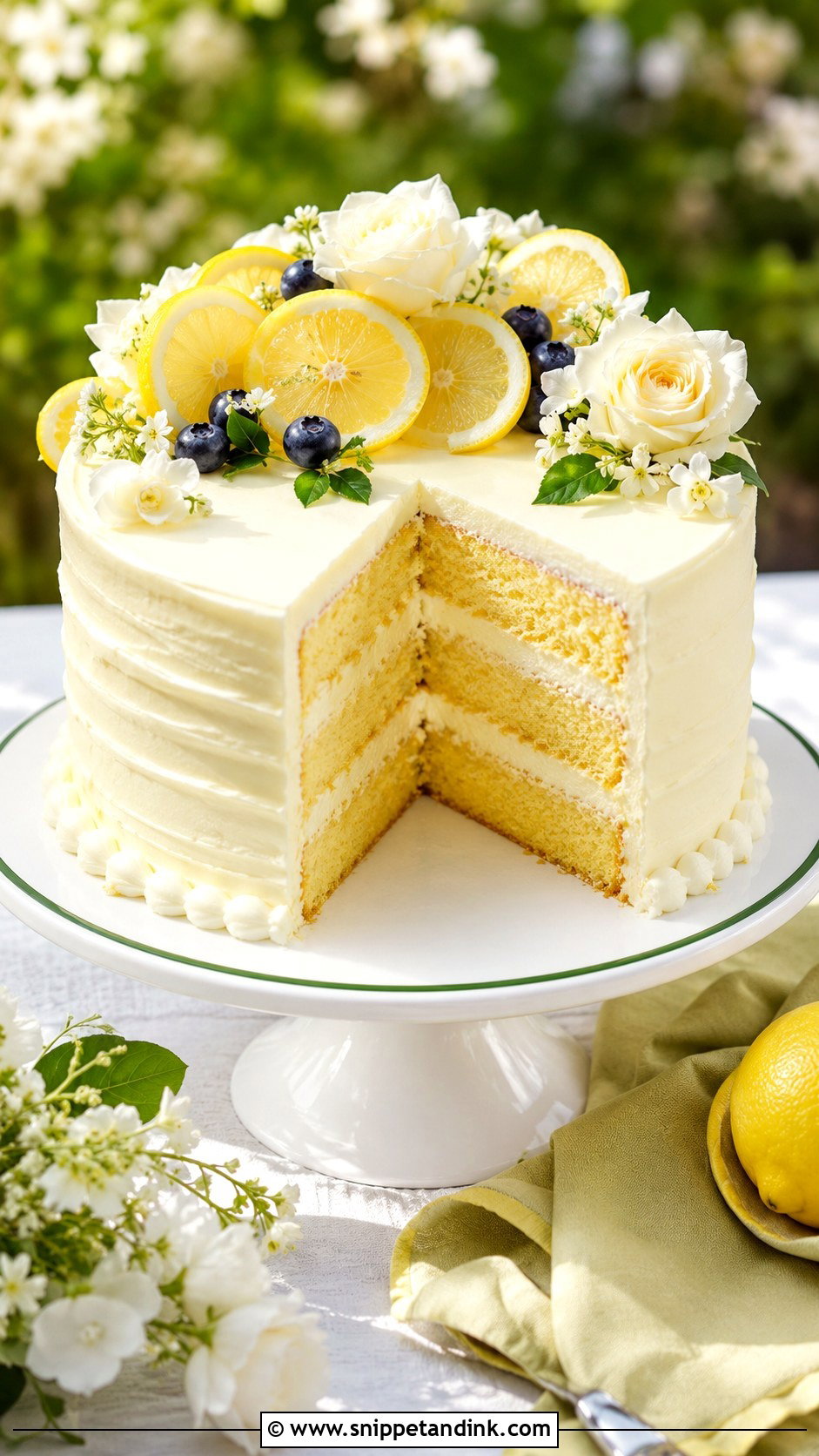
A lemon wedding cake tastes light after a big meal, and it’s forgiving at home because zest and curd carry plenty of flavor without fussy technique. Pair it with vanilla buttercream, cream cheese frosting or a stabilized whipped frosting, and decorate with thin lemon slices, white flowers, berries or small mint leaves. One caution: curd is soft. Pipe a buttercream ring around each layer before spooning it in, or the tiers can slide.
14. Chocolate Wedding Cake
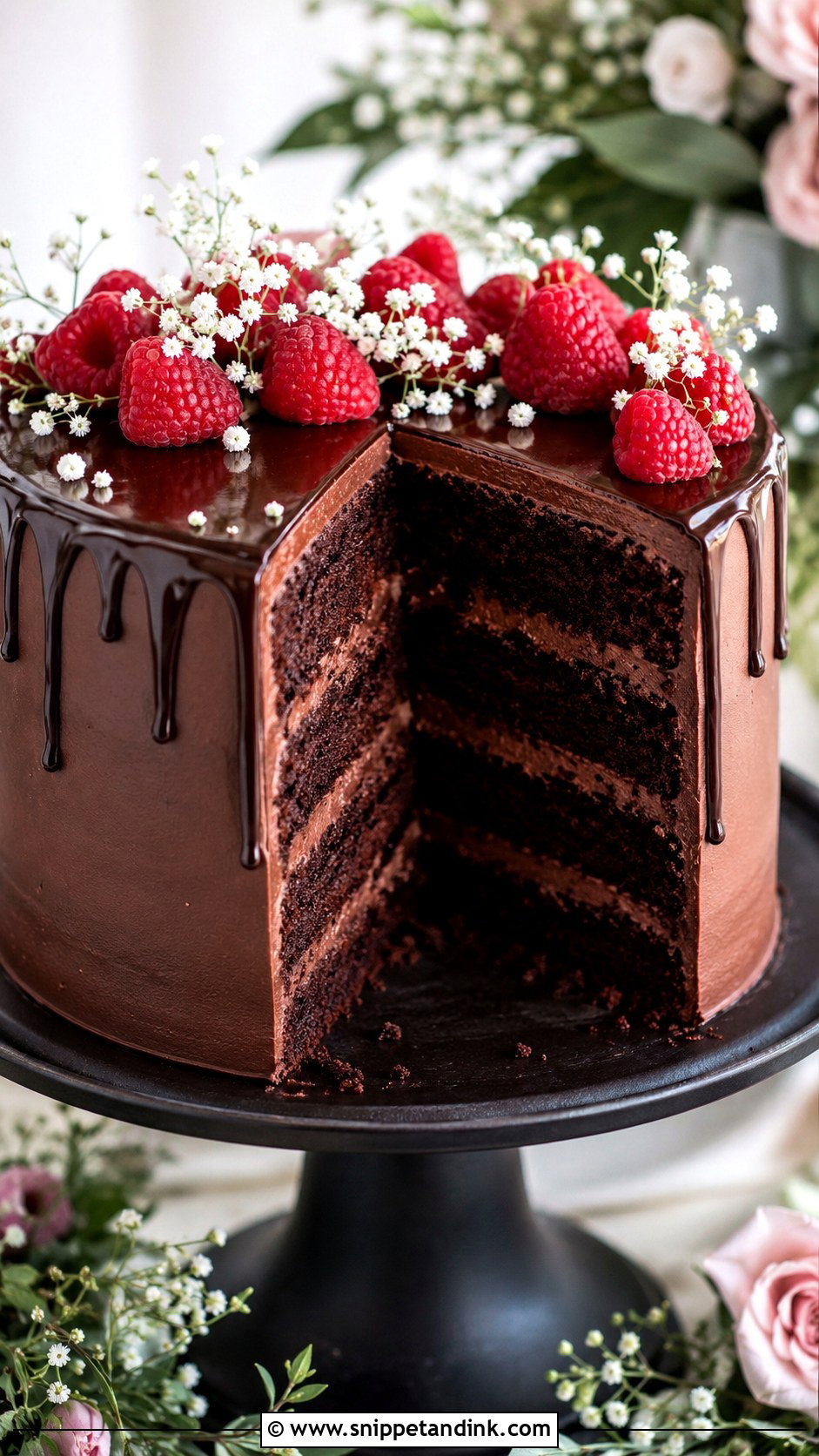
Chocolate cake is the crowd pleaser, and its moist crumb is also its problem, since soft chocolate layers tear easily when you move them. I chill or briefly freeze them before handling. Fill with ganache, vanilla buttercream or raspberry preserves, then cover in chocolate or white buttercream. A drip, fresh berries and small flowers make it look formal rather than like a birthday cake, and dark chocolate sits well against ivory plates and greenery.
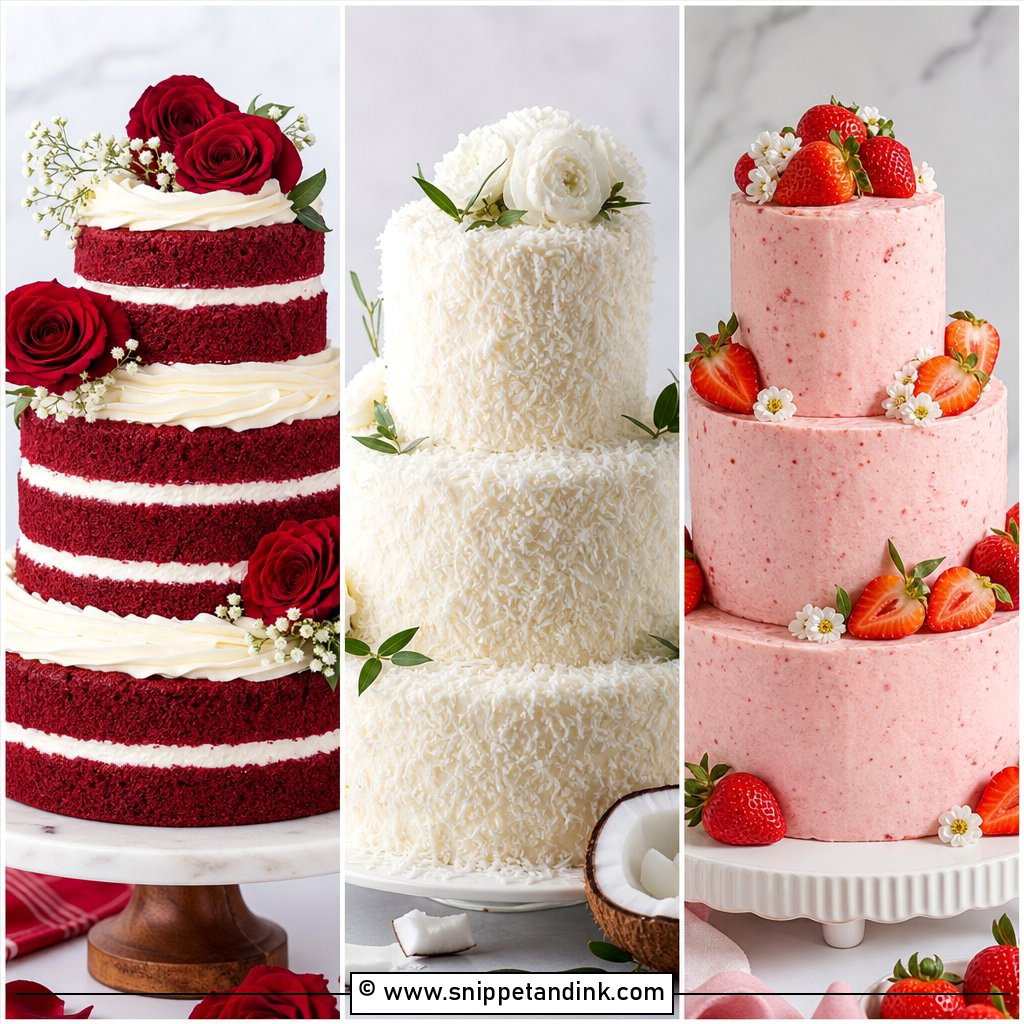
15. Red Velvet Wedding Cake
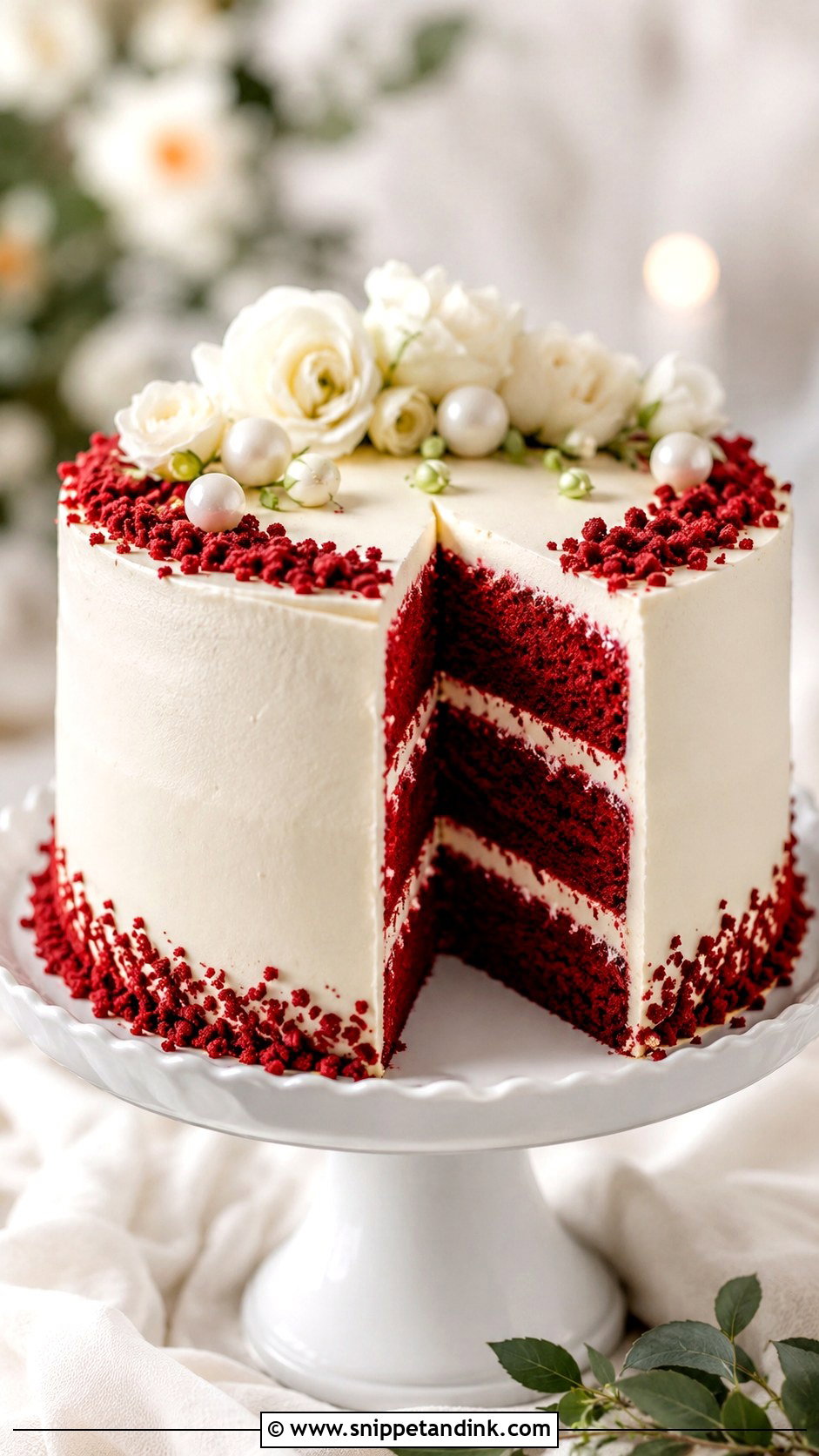
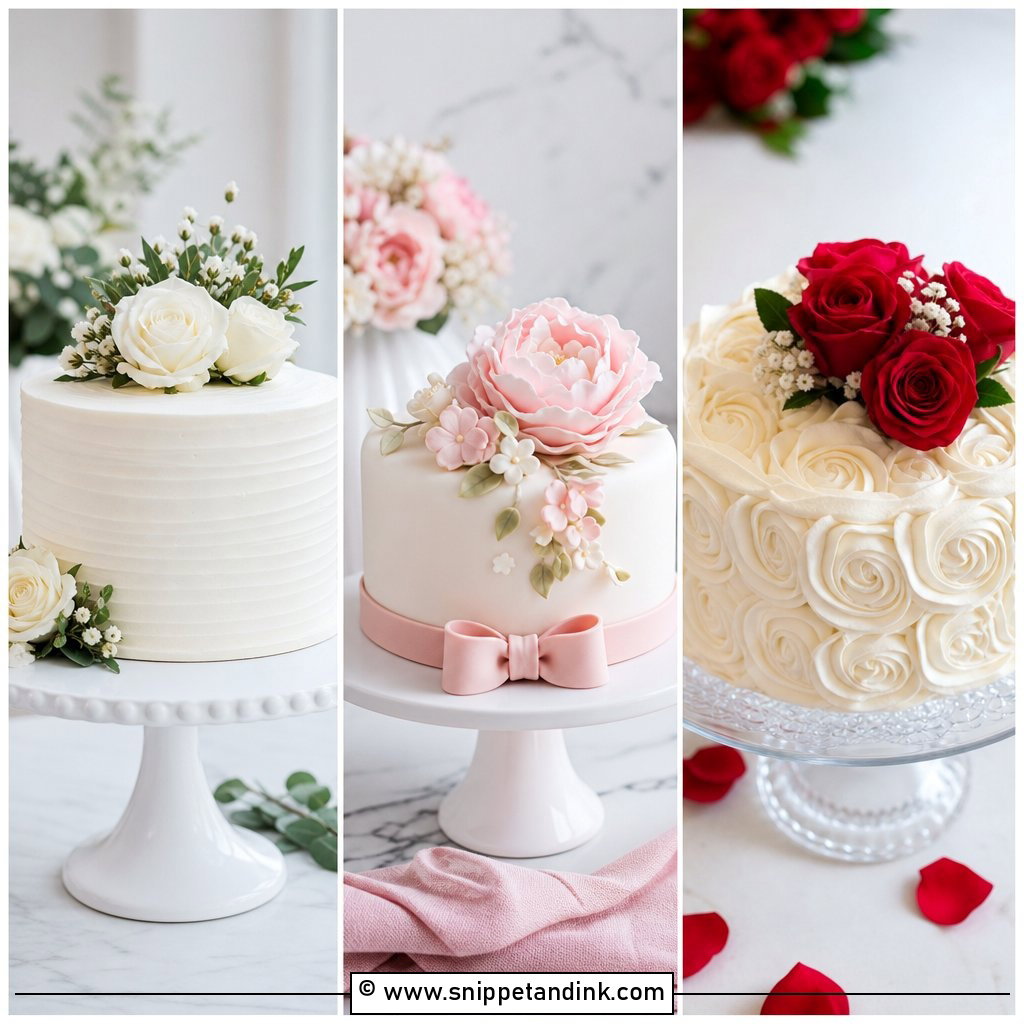
Red velvet keeps its drama for the slice. The deep red crumb stands out against white frosting, so the outside can stay plain, with pearls or a few white flowers. The trouble is classic cream cheese frosting: it’s soft and needs refrigeration, so for a stacked or outdoor cake I switch to a firmer cream cheese buttercream or plain vanilla buttercream outside. Gel coloring gives a deeper red with less liquid than a liquid dye. Chill the cake well before it travels.
16. Carrot Wedding Cake
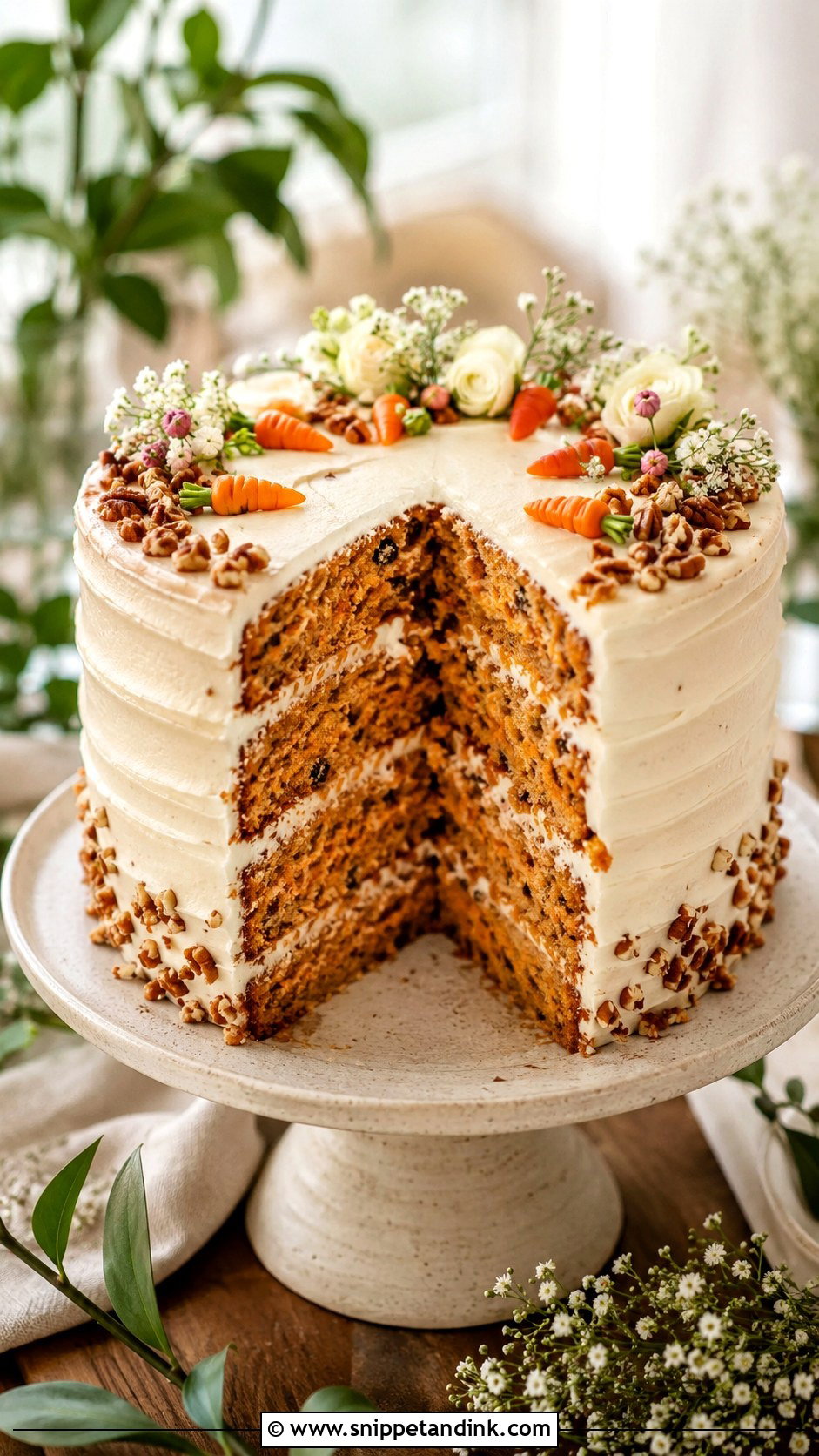
Carrot cake is the most forgiving cake on this list. The grated carrot and oil keep it moist for days, so it can be baked earlier than a light sponge, and it’s dense enough to stack. For tiers I’d use a firmer cream cheese buttercream instead of the soft classic frosting. Pecans, walnuts, tiny piped carrots or simple flowers decorate the top, with a smooth or lightly textured finish. Put a small sign out mentioning the nuts. Autumn and garden weddings suit it especially well.
17. Almond Wedding Cake
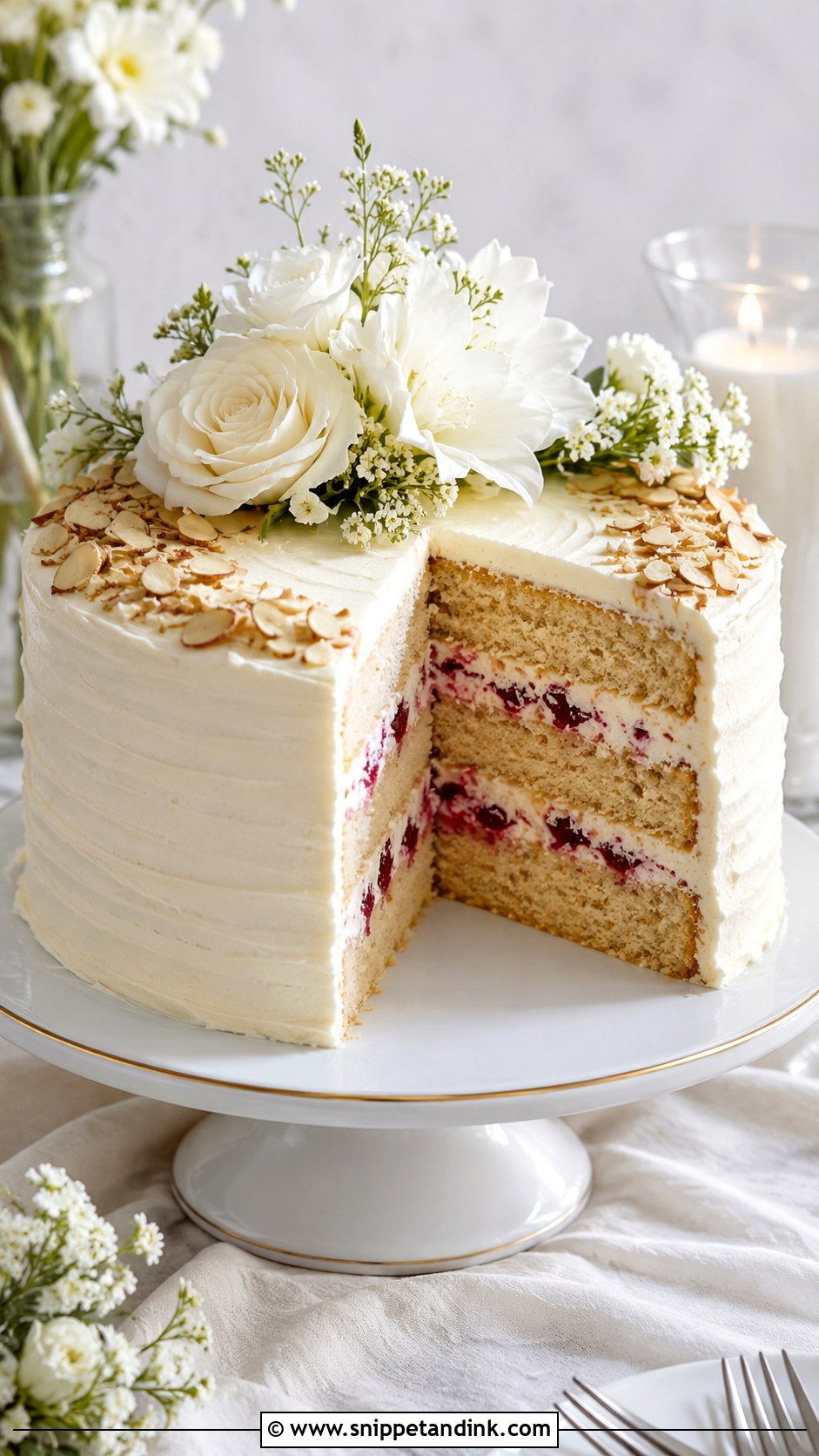
Almond is the flavor that makes a home cake taste like it came from a bakery. The extract is strong, though, so measure it carefully, because a little too much turns bitter. Raspberry, cherry or apricot fillings suit it, as does plain vanilla buttercream. Smooth ivory frosting with sliced almonds pressed around the base, or a few flowers on top, is enough decoration. Label it for guests with nut allergies, the same as carrot cake.
18. Marble Wedding Cake
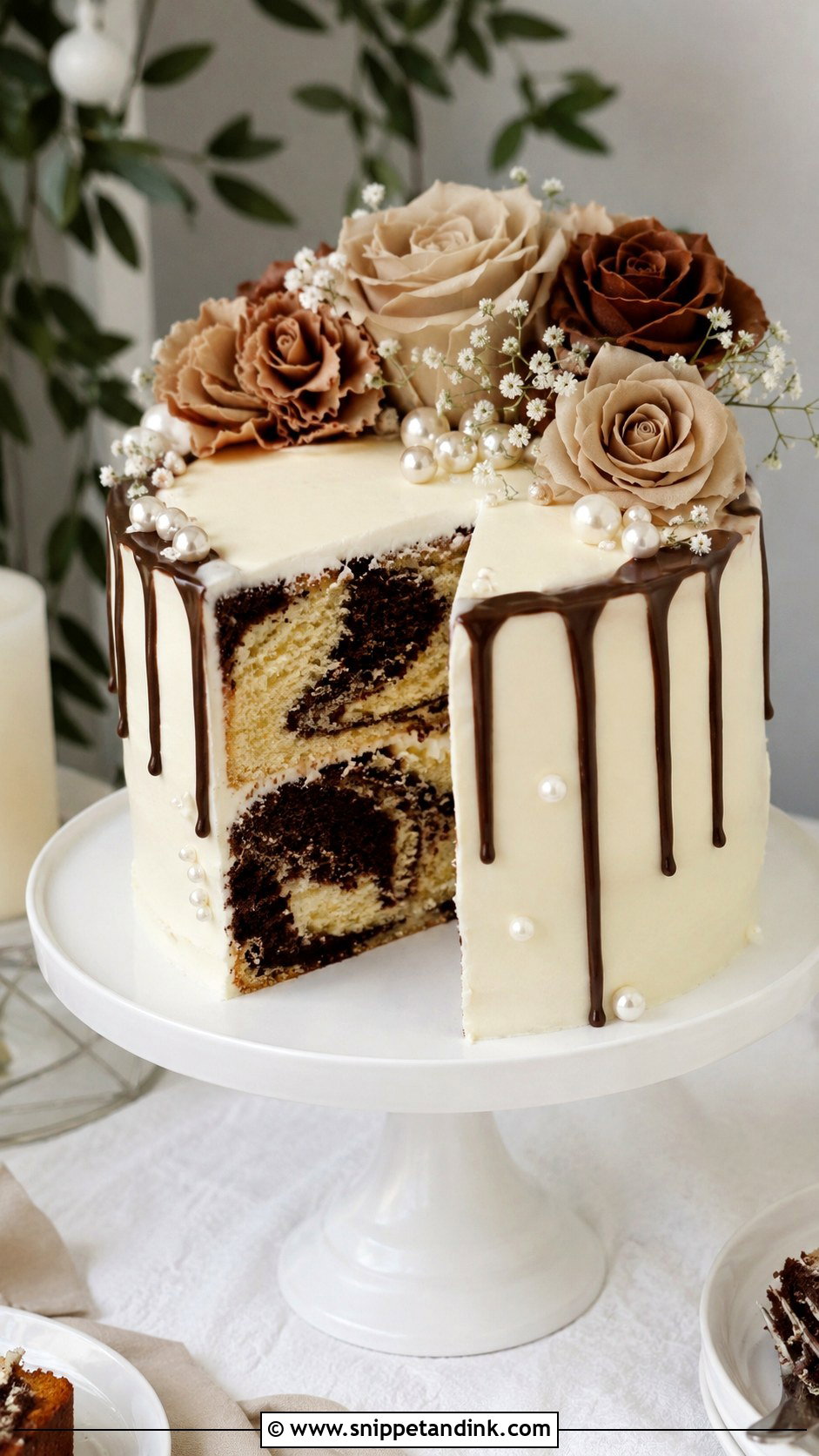
Marble gives guests vanilla and chocolate in one slice, and the swirl does the decorating once it’s cut. The skill is restraint while swirling. Drag a knife through the two batters only a few times; overdo it and they blend into a muddy brown. Frost the outside in vanilla buttercream, with a subtle chocolate drip if you want contrast, and keep the layers even. It settles the argument for couples who can’t agree on a flavor.
19. Garden Wedding Cake
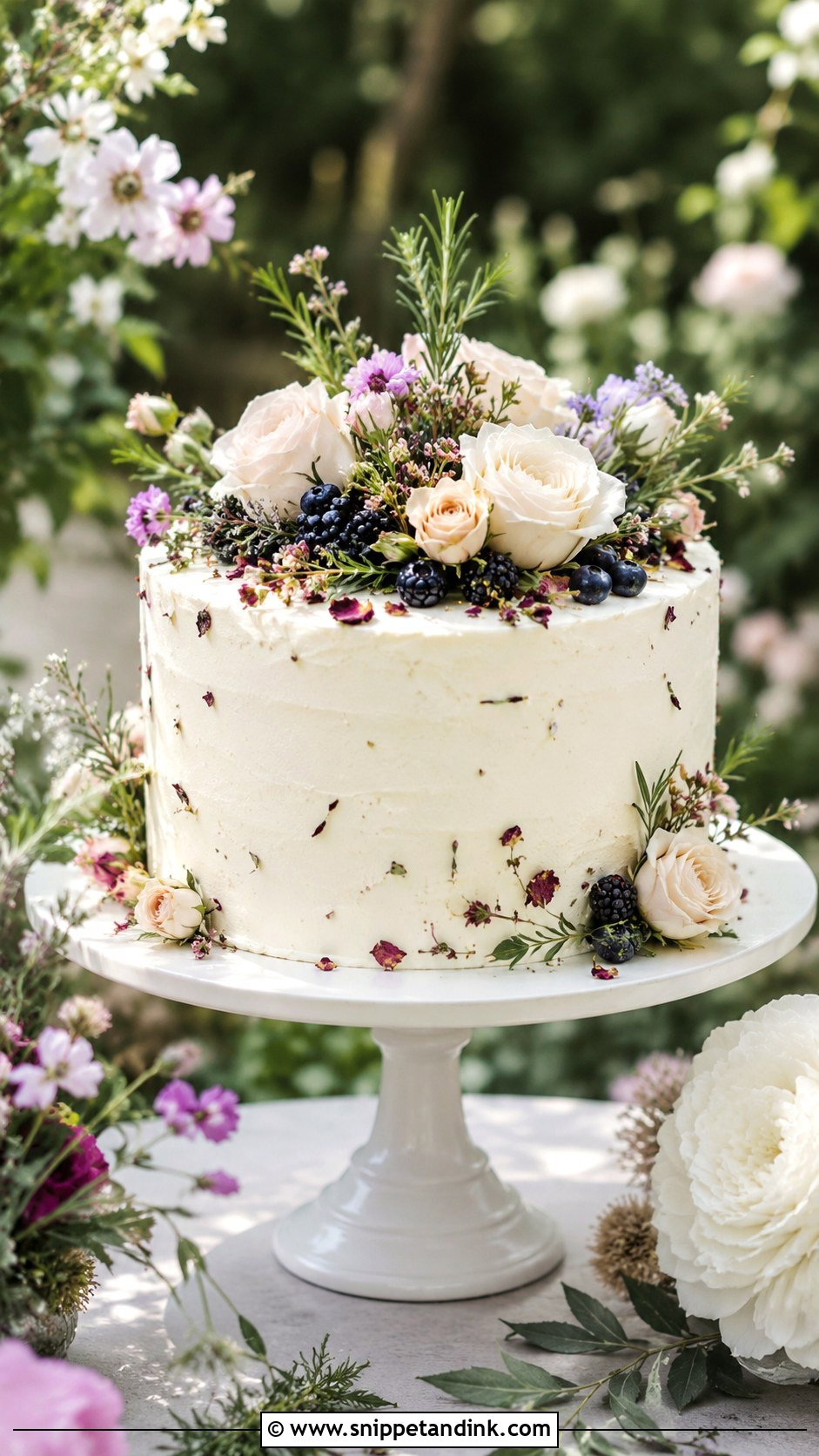
A garden wedding cake should look as if it was gathered from the setting. White or ivory buttercream takes greenery, small flowers, berries or herbs in a loose pattern, with space between clusters so it never looks crowded. Rosemary, thyme and lavender are edible, easy to find and hold up out of water far better than most flowers. Lemon, vanilla, honey, almond and strawberry all fit. A white, glass or wood stand, matched to the tables, finishes it.
20. One Tier Wedding Cake
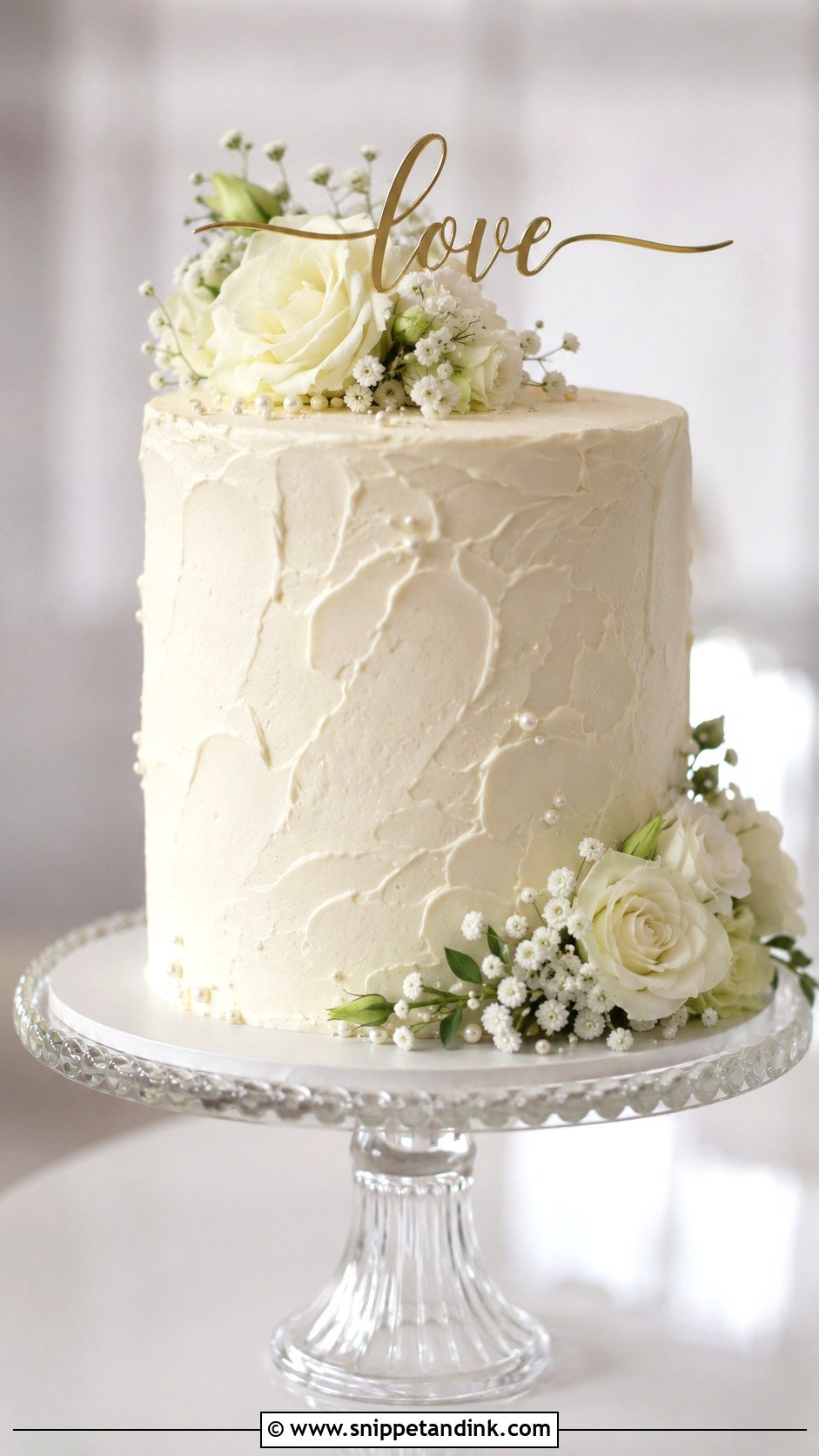
A single tier needs height to read as a wedding cake. I build it with three or four layers rather than two, so it stands five to six inches tall, then finish it smooth, swirled or with palette-knife strokes. Fresh flowers, fruit, pearls or a small topper make it feel ceremonial. It’s the easiest cake to transport and it fits in a home fridge, which matters more than people expect. Elopements, micro weddings and dessert tables full of cookies and cupcakes suit it.
Hand Over the Cake to Someone Who Isn’t the Baker
When the baker is a friend or relative, they’re also a guest, and nobody should spend the reception guarding frosting. Agree in advance who drives the cake, who sets it up and who cuts it.
- Transport tiers separately if you can, flat on a non-slip mat in a cool car, and stack at the venue.
- Cream cheese, whipped and curd fillings shouldn’t sit out on a warm afternoon for hours. Bring the cake out close to the cutting.
- Pack a repair bag: a piping bag of spare buttercream, an offset spatula, a few extra flowers and paper towels.
- Show the person cutting where the supports are. The top tier comes off first, the dowels are pulled, and only then is each tier sliced.
Write these notes on one card and tape it to the cake box. It saves a lot of guessing in a busy venue kitchen.
Bake the Practice Cake Before the Real One
A homemade wedding cake doesn’t need to be flawless. It needs a plan, a stable structure, fresh ingredients and a calm person with time on the day. Pick the design for your skill, the weather, the guest count and the couple’s taste. If stacking feels risky, a small cake, a cupcake display or a sheet cake does the same job. If decorating feels hard, let fruit, flowers or textured buttercream carry it. Bake one practice version, serve it to friends, and you’ll know exactly what to change.
You'll Like These Ideas:






Leave a Reply