
Most of the cakes I dress never get a single bloom on the icing. The flowers live on the table, in a ring around the stand, and that is where they do the most work: a plain white three-tier on a full wreath reads as a finished centerpiece, while the same cake on a bare cloth looks like it’s still waiting for someone. The hard part is balance. A ring that’s too tall swallows the bottom tier, and one that’s too sparse looks like leftovers from the centerpieces. Below are twenty ways I build flowers around a wedding cake, from a tight rose ring to a full cascade, with notes on which stems hold up out of water and which ones need help.
Who Sets the Flowers, and How They Stay Off the Icing
Settle the logistics before you fall for a bloom, because most cake-table problems come from two vendors each assuming the other one has it covered. The cleanest order is this: the baker delivers and levels the cake, then I arrive to dress the base. Flowers set out before the cake goes down nearly always get knocked when the tiers are lifted into place.
What I ask the baker before ordering stems
- The stand’s diameter and height, so the ring is sized to the stand and not guessed.
- Whether the cake sits on a board wider than the bottom tier, which leaves less room for flowers.
- Delivery time and whether the room will be warm, since that decides which flowers survive.
- Whether any flowers will touch the cake, or only the table.
- Who removes flowers from the cake before it’s cut and served.
For a ring that stays on the table, the barrier is simple: the foam wreath or water tubes sit on a tray or plate, so damp foam never rests against the cake board. If stems go onto the cake, I wrap the cut ends in floral tape and push them into plastic picks, or set the heads on small discs of parchment. Untreated stems leak sap and farm residue straight into the icing, and that’s the one mistake nobody can fix on the day.
1. Rose Wreath Wedding Cake
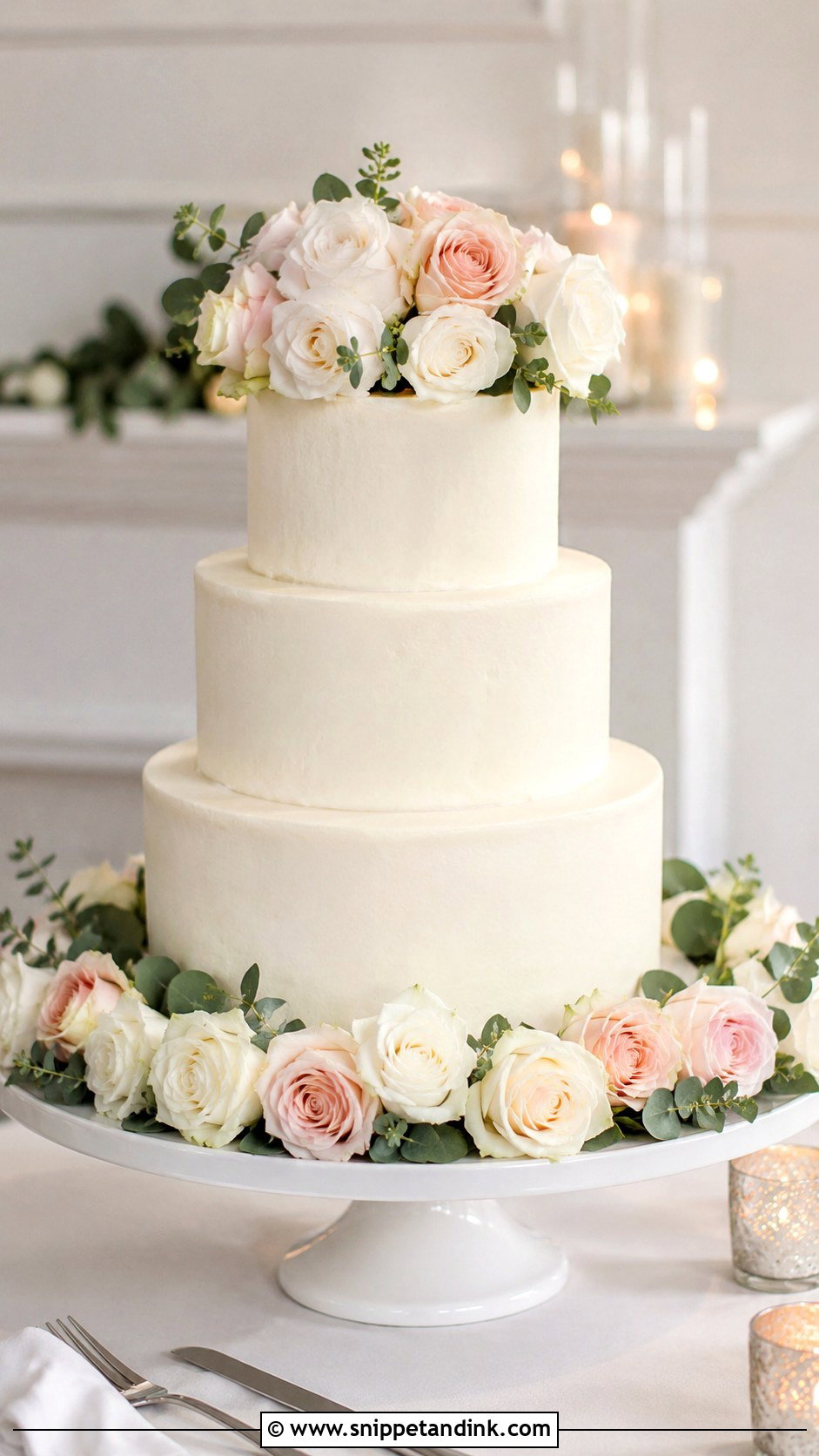
A rose wreath wedding cake is the arrangement I build most often, and for good reason: roses sit out of water for hours and still look fresh at the cutting. I make the ring on its own base, either a soaked foam wreath form or a circle of stems in water tubes, so nothing wet touches the cake board. White and blush read classic, while peach and mauve feel warmer. Keep the ring lower than the bottom tier and tuck a few short greenery sprigs between the round heads so it doesn’t look like a row of buttons.
2. Peony Wedding Cake With Flowers Around Base
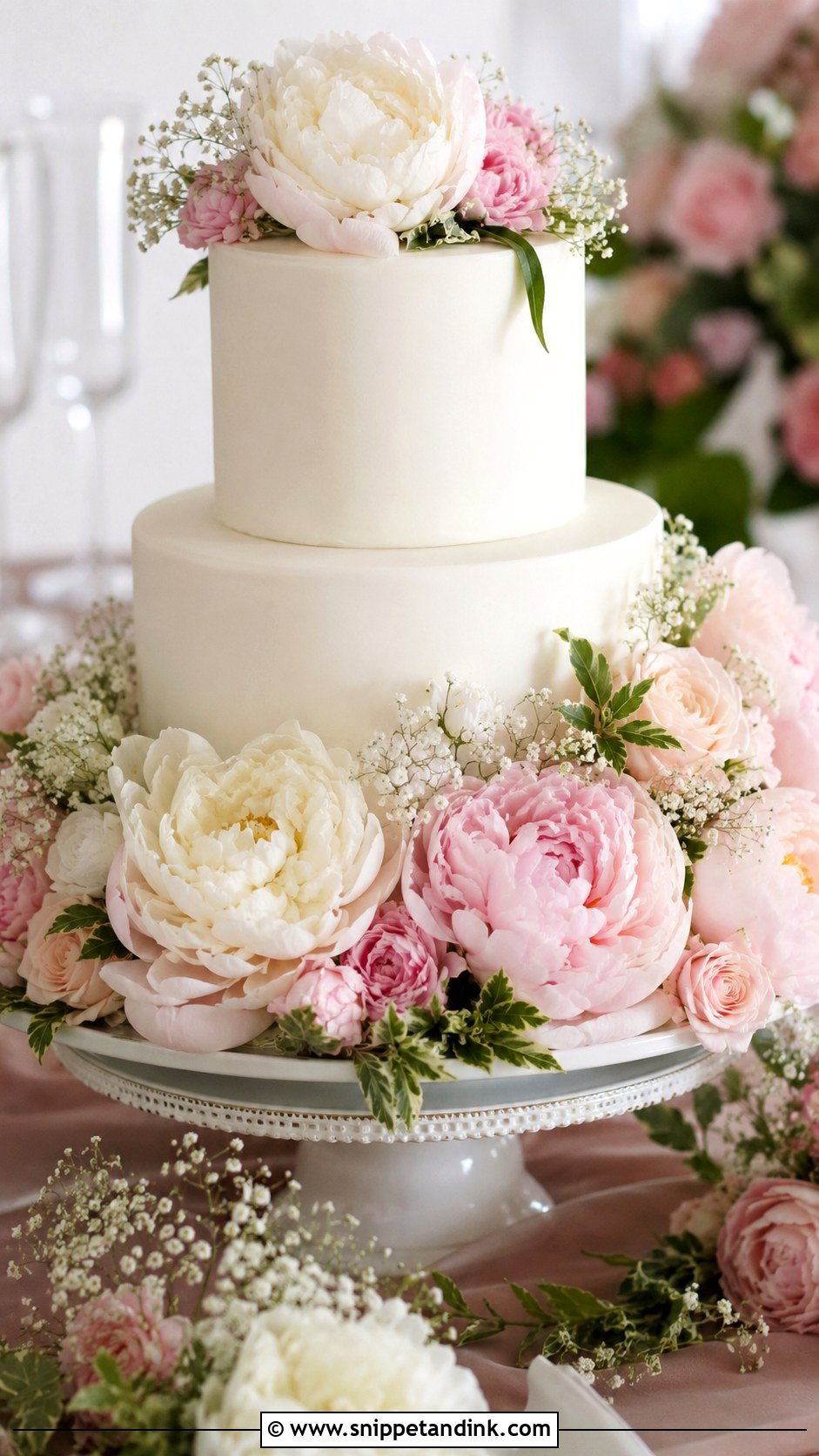
Peonies are a timing gamble. Their natural season runs from late spring into early summer, and imported stems outside that window can be expensive and inconsistent, so I only promise them for May and June weddings. The upside is size: one open peony covers what three roses would, so a base ring around a two or three-tier cake needs surprisingly few heads. I buy them a few days ahead in tight bud and bring them into warmth to open on schedule, then fill the gaps with spray roses. Out of season, garden roses give a similar ruffled shape.
3. Wildflower Wedding Cake
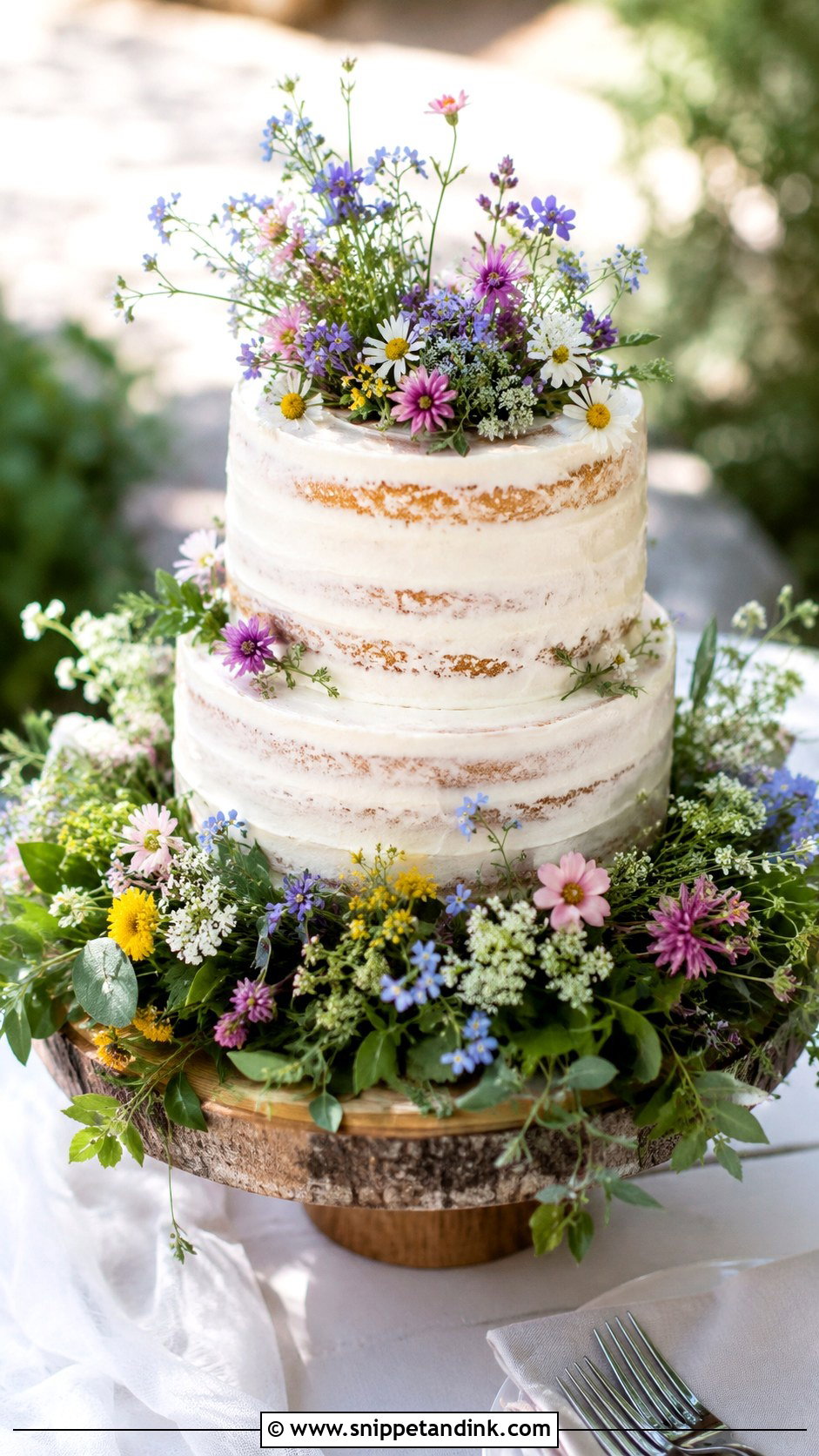
The meadow look is harder to fake than it seems. Truly wild-picked flowers often collapse within an hour out of water, so for a base ring I use farm-grown stems with a loose shape: cosmos, scabiosa, feverfew, cornflower, a little yarrow. Set them at uneven heights on purpose and let some lean outward. A semi-naked buttercream suits it, because the exposed sponge has the same unpolished texture. Herbs like rosemary add movement and scent, but I keep anything tall or floppy a hand’s width from the frosting so it doesn’t stick when someone brushes past the table.
4. Baby Breath Wedding Cake
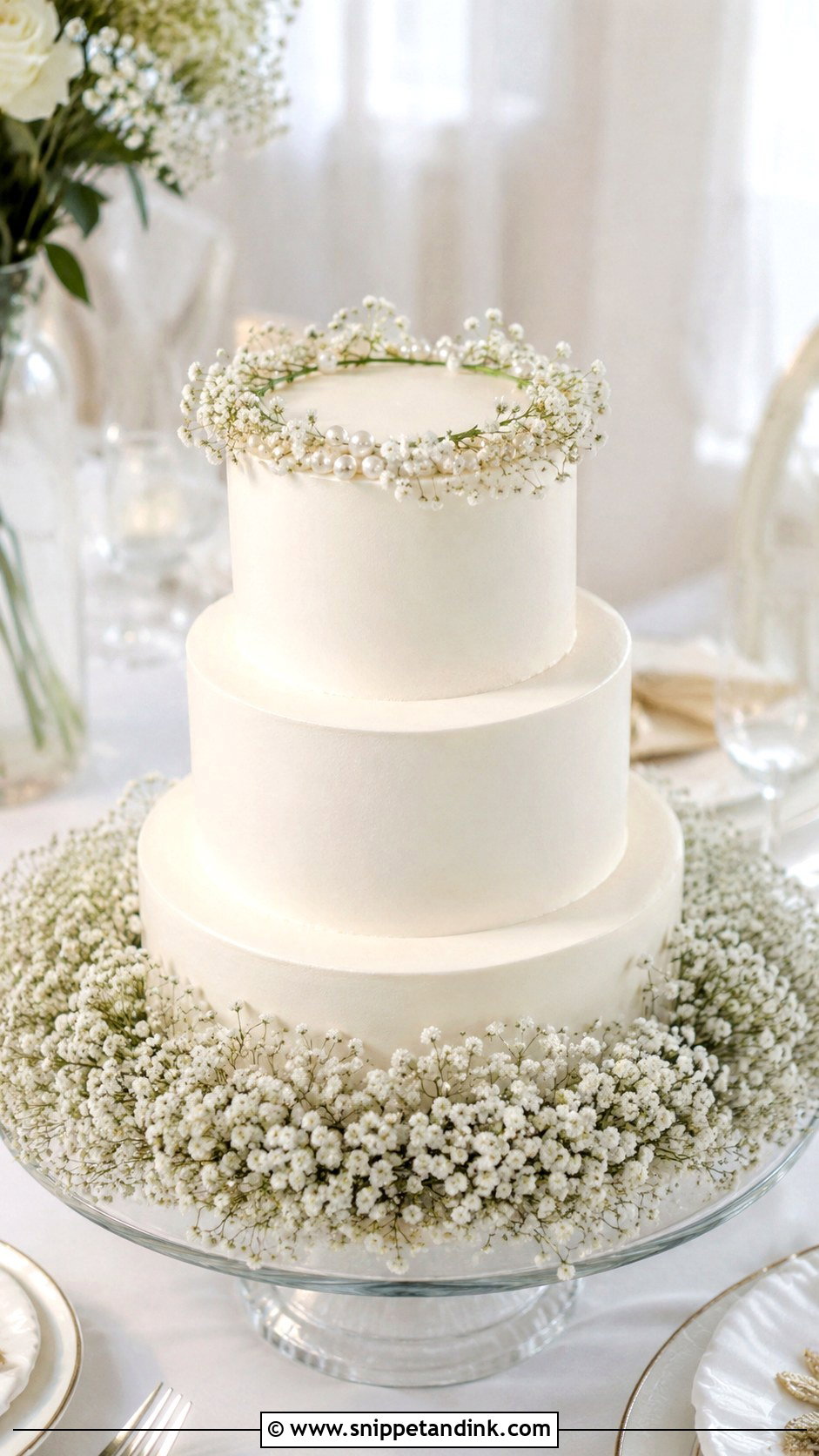
Baby’s breath is the cheapest way to make a cake table look full, and it holds up out of water better than almost anything else here. I bunch it tightly in small clusters rather than using single sprays, because loose stems look scraggly in photos. One honest note: gypsophila isn’t food-safe and it sheds tiny petals, so I keep it on the table and away from the edge of the cake board. A clean white cake with pearl piping and a cloud of it around the stand makes a monochrome table on a small budget.
5. Orchid Wedding Cake
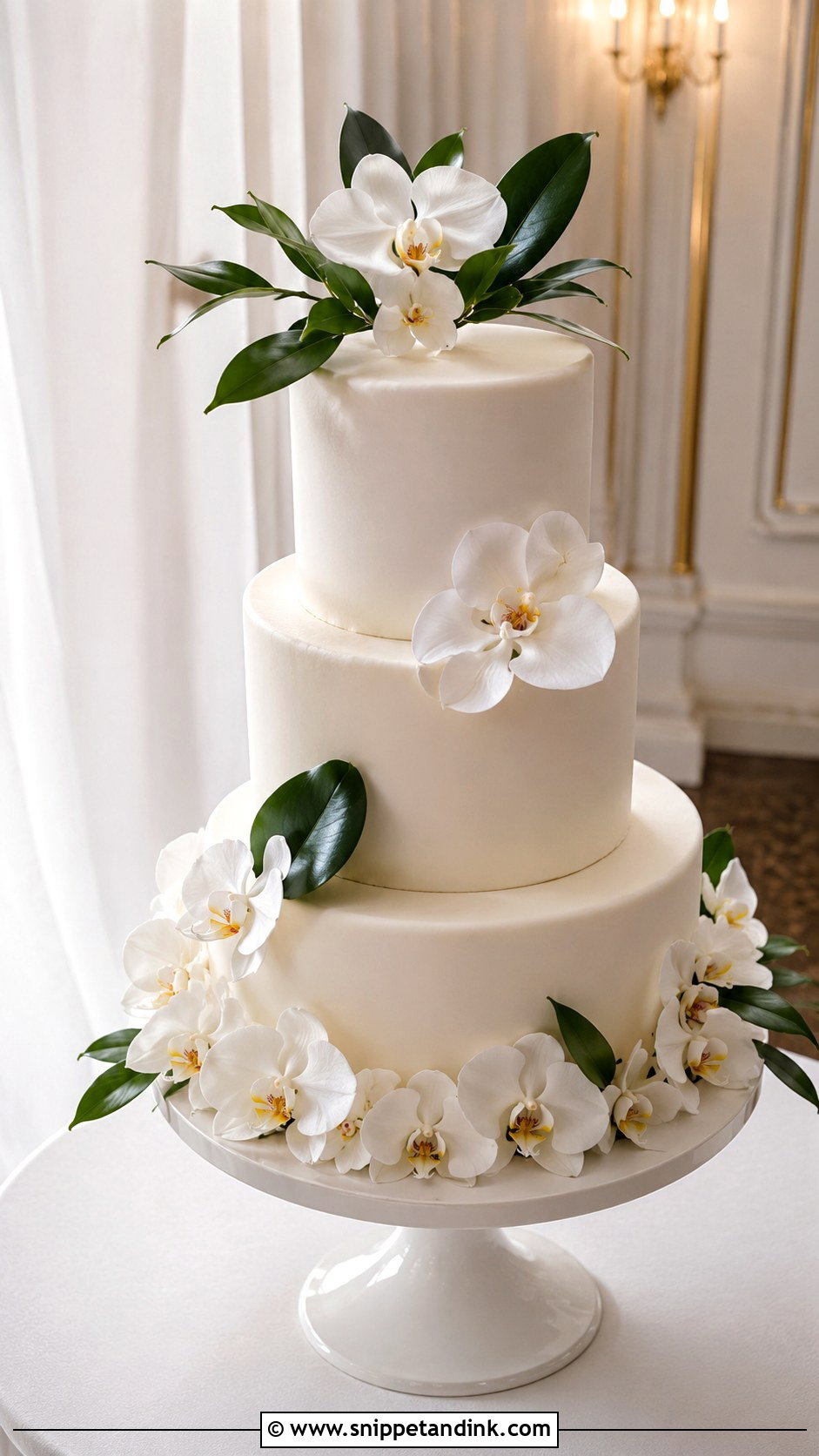
Orchids are my pick for a hot room. Phalaenopsis and dendrobium tolerate warmth far better than roses or hydrangea, which is why they turn up so often at beach and tropical receptions. Their sculptural shape means you need almost no filler; a loose curve of five or six stems around the base, with one or two echoed on the tiers, is plenty. White on a sharp fondant cake looks modern. Pink or purple brings color without any fuss.
6. Hydrangea Wedding Cake
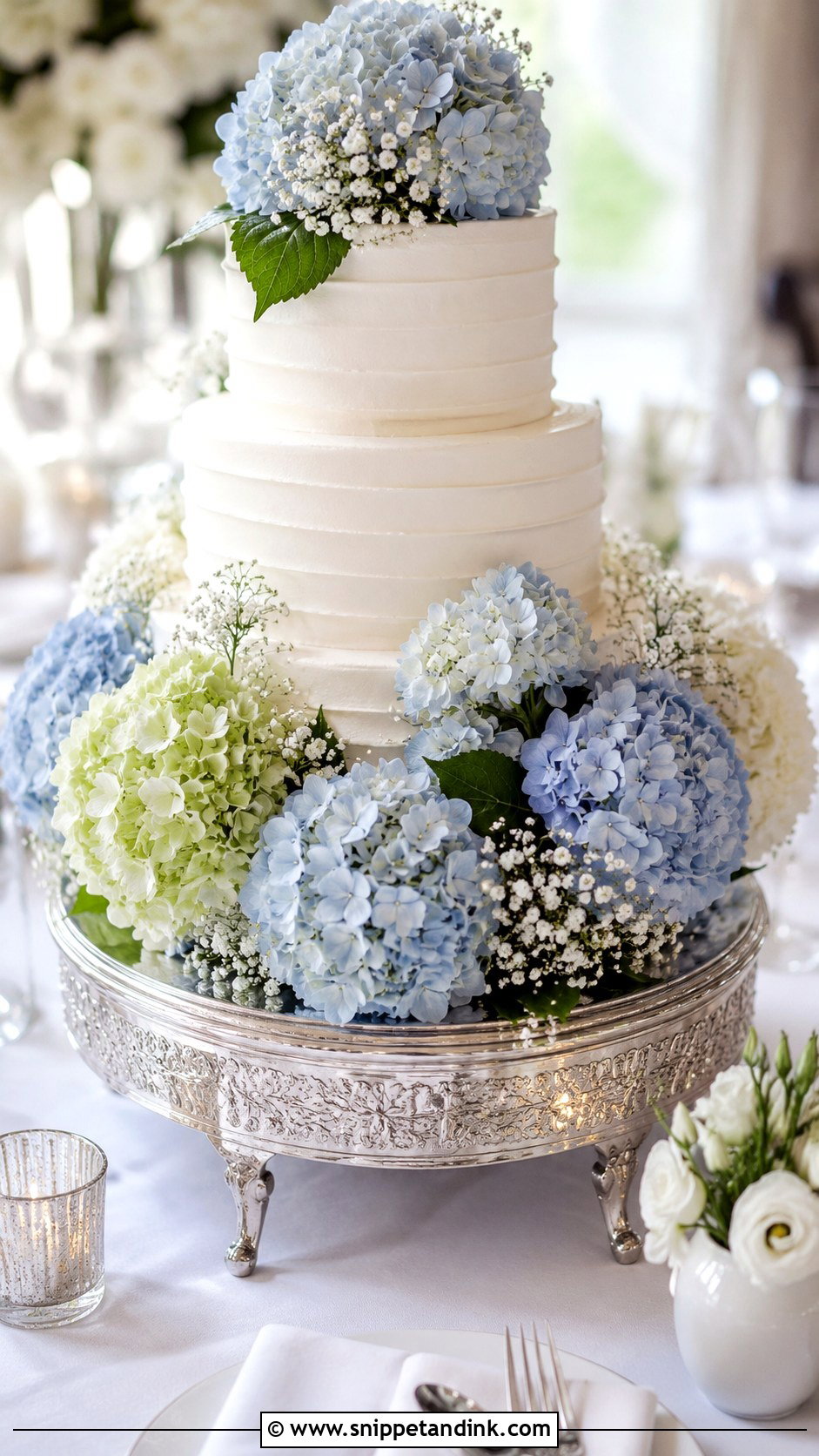
Hydrangeas give the most volume per stem of anything on this list, but they’re thirsty. Out of water, the heads can flop within an hour or two in a warm room, so I never lay them on the table dry. Each stem goes into a water tube or a soaked foam ring, and I give the heads a cool soak before delivery. They are also mildly toxic if eaten, which is one more reason they belong around the stand and not on a tier. Low clusters of white or pale green heads frame a simply iced cake without competing with it.
7. Garden Rose Wedding Cake
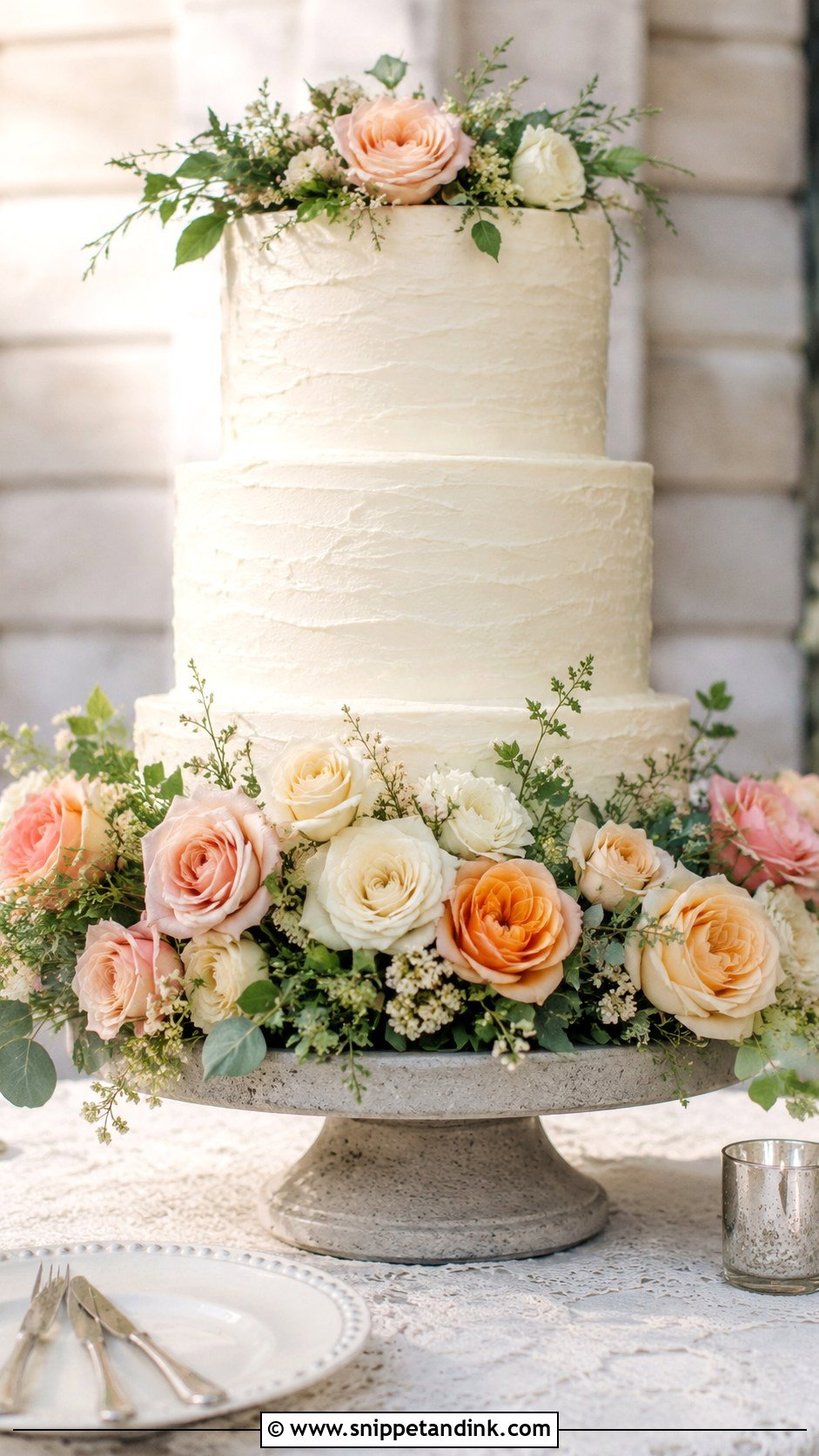
Garden roses have more petals and a looser shape than standard roses, and they open fast. That’s the catch. In a warm marquee, a perfectly cupped bloom at two in the afternoon can be fully blown by the first dance, so I buy them slightly tighter than I’d like and keep them cool until the last moment. Around the base, I place the big heads first and tuck spray roses between them, letting the ring look gathered instead of evenly spaced. Apricot and champagne tones sit nicely against ivory buttercream.
8. Ranunculus Wedding Cake
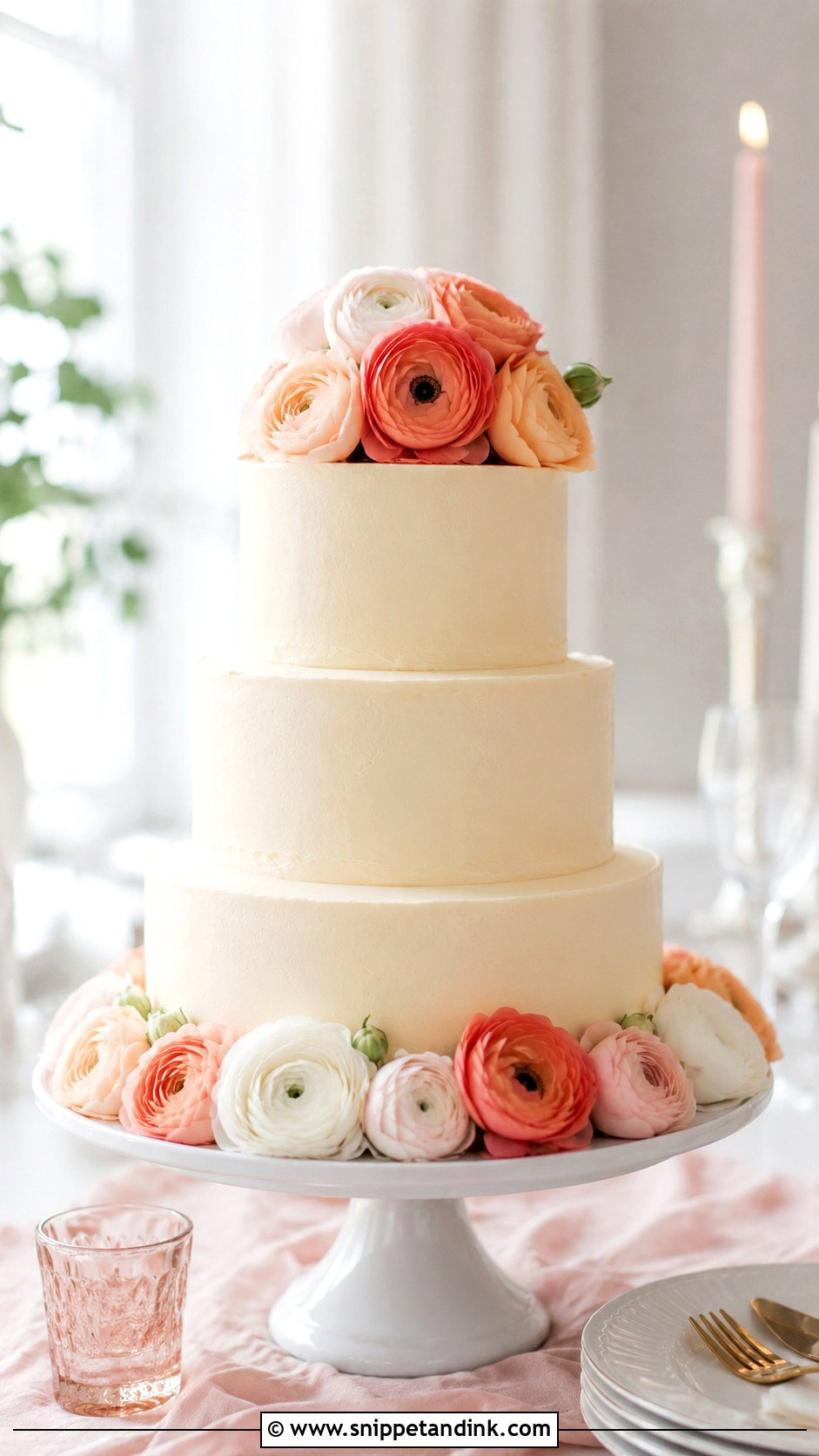
A ranunculus wedding cake suits a small or medium cake, because the blooms are compact. They’re tougher than they look and last well out of water, which makes them reliable for a tight ring right against the stand. The stems are hollow and bend easily, so I cut them short and wire the weak ones before placing them. White and blush stay classic; coral and yellow push it toward spring. Close-up shots are where these earn their place, since the layered petals read clearly at short range.
9. Daisy Wedding Cake
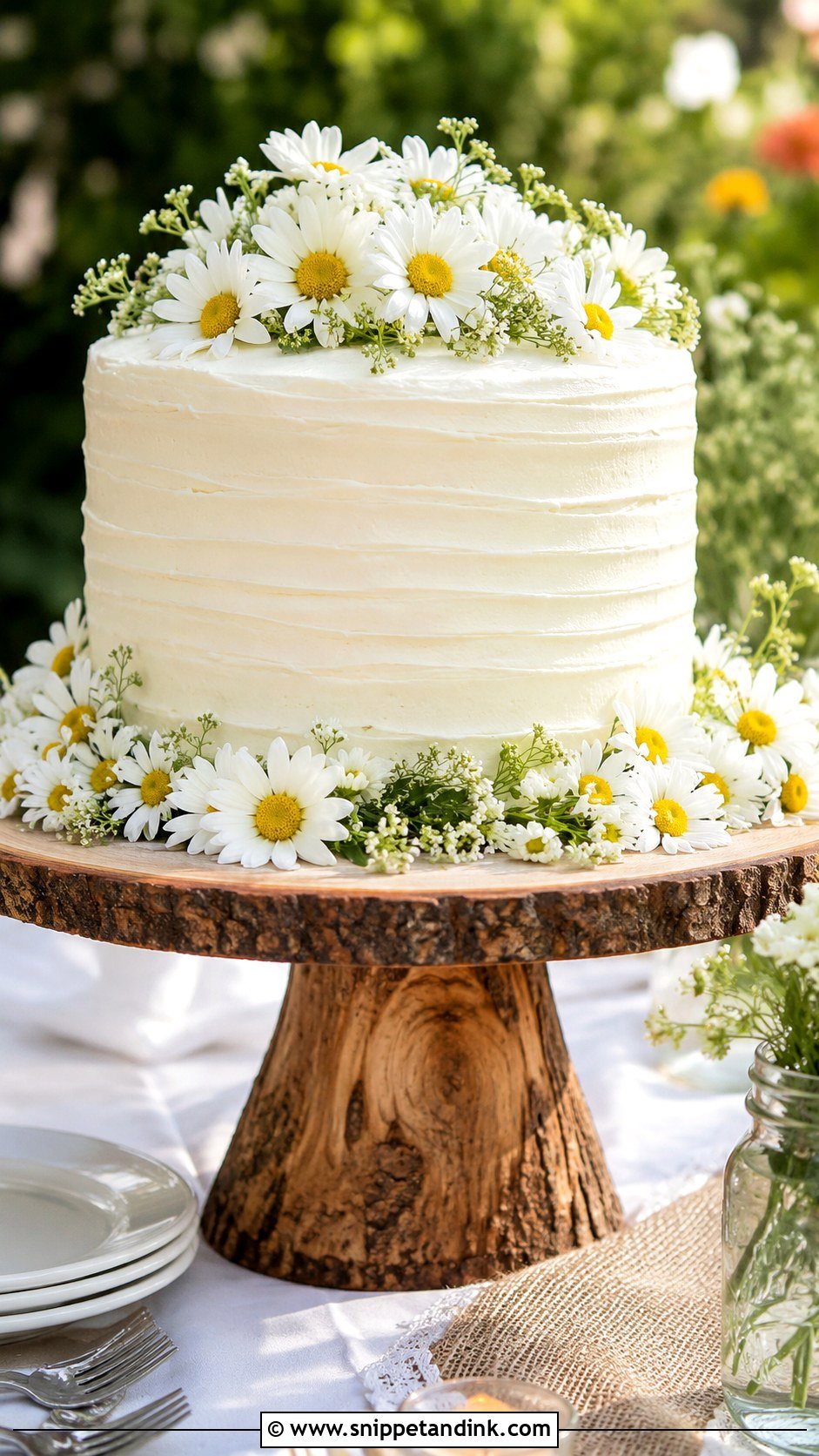
A daisy wedding cake belongs at a casual garden or backyard reception, and it’s one of the most forgiving designs to build. Daisies, chamomile and feverfew cope with summer heat reasonably well once they’ve been conditioned overnight. Keep the cake simple, a small buttercream cutting cake or semi-naked tiers. A daisy ring around something heavily piped or metallic tends to look mismatched. The centers can drop pollen, so I keep the faces turned outward and off the icing.
10. Lavender Wedding Cake
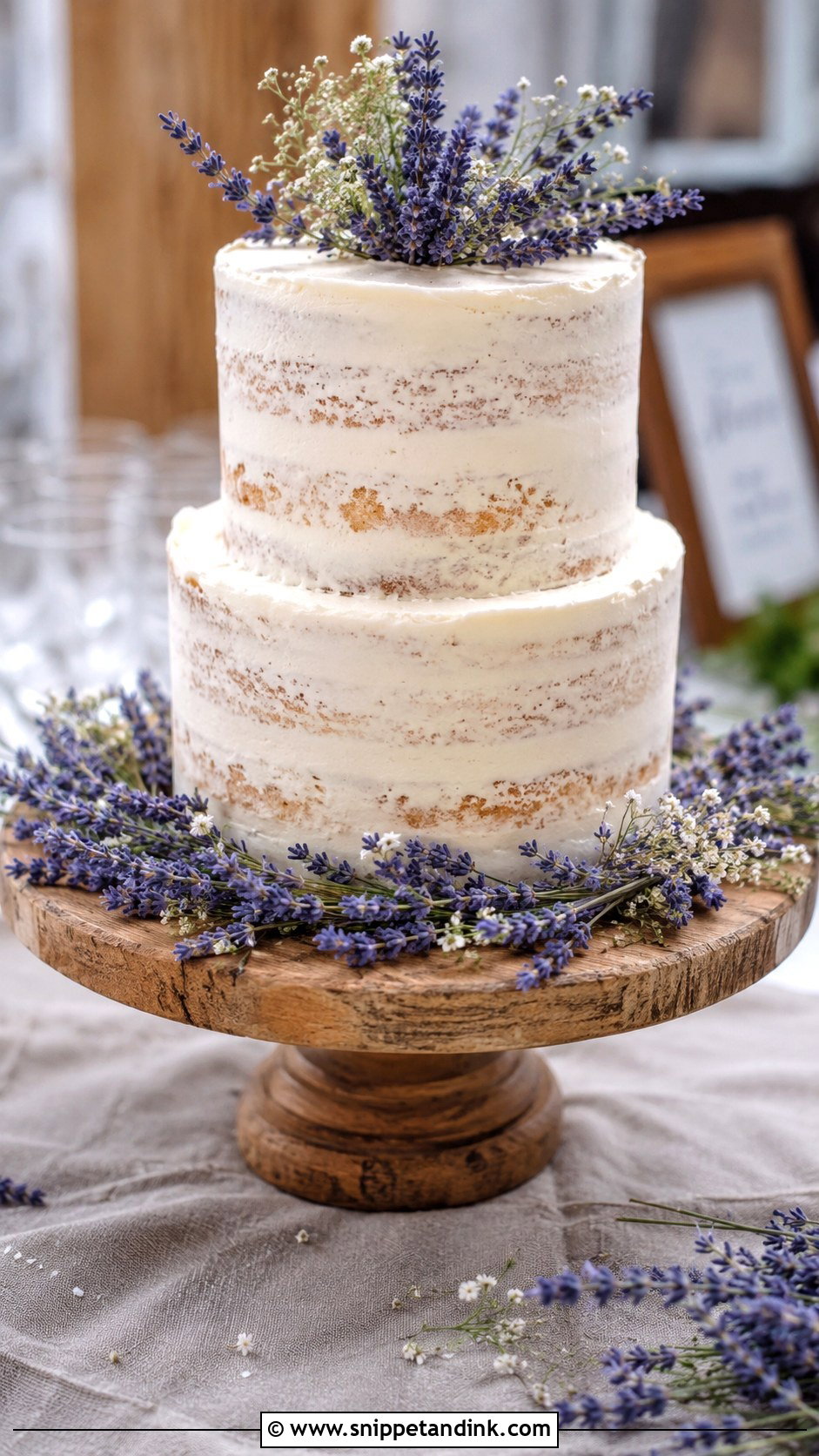
Lavender gives the table scent as well as color, and guests notice it when they gather for the cutting. Fresh lavender sheds tiny buds and its stems dry quickly, so I often mix fresh and dried bundles in the base ring; the dried ones look the same in photos and won’t droop. It suits a vanilla, lemon or honey cake on a wooden stand. Space the bundles loosely and add a little white filler if the ring looks thin. Culinary lavender is edible, but the florist bunches around the base are decorative and should stay away from the slices.
11. Sunflower Wedding Cake
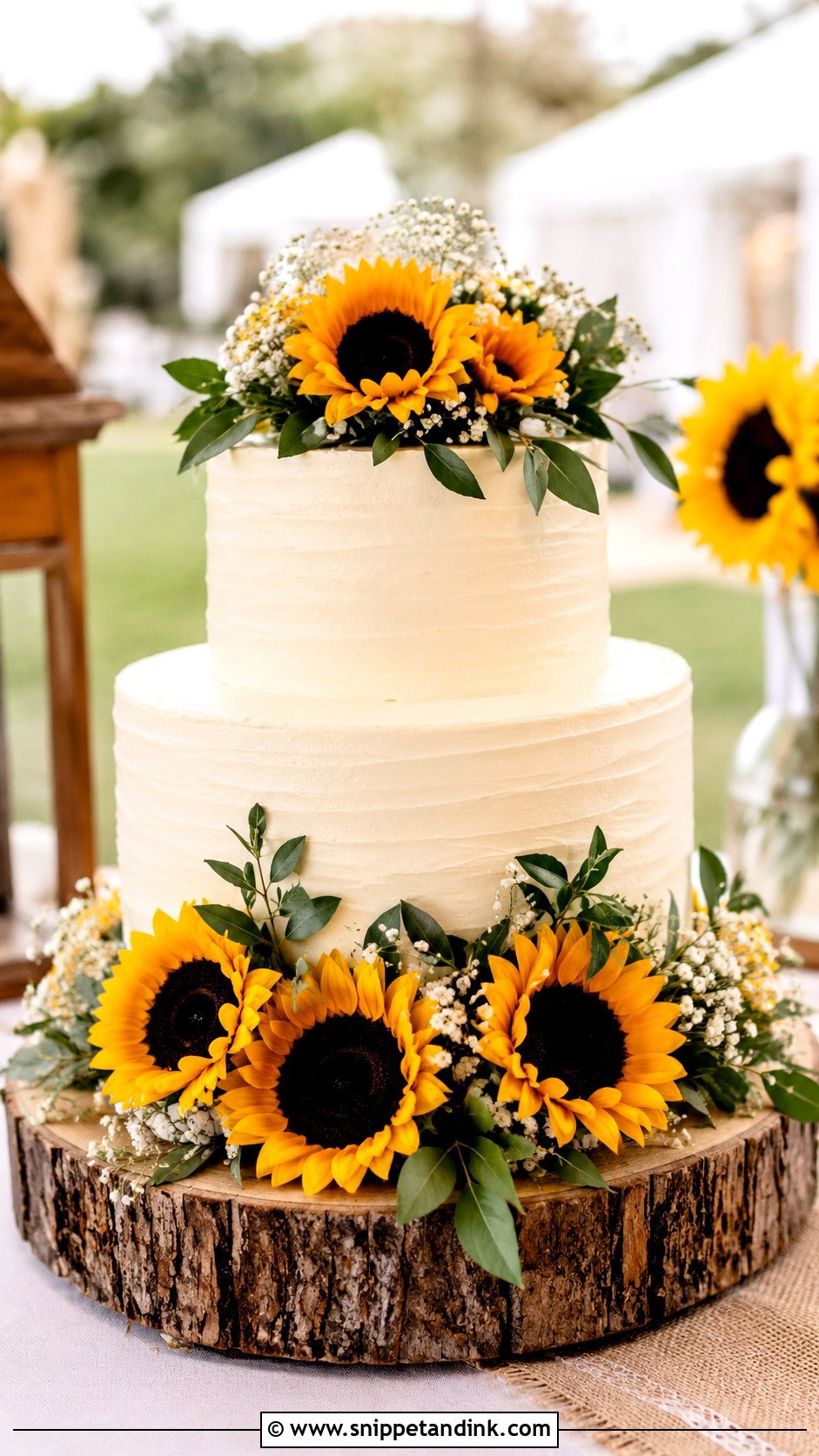
A sunflower wedding cake makes sense in late summer and early autumn, when stems are plentiful and strong. They’re heavy, though. A big head will tip over unless it’s secured, so I cut the stems short and anchor each one in foam or a weighted tube. I use fewer than people expect, four or five large heads spaced around a cream cake, then fill between them with smaller yellow blooms. Ask for pollen-free varieties; ordinary sunflowers drop yellow dust on white linens.
12. Tropical Flower Wedding Cake
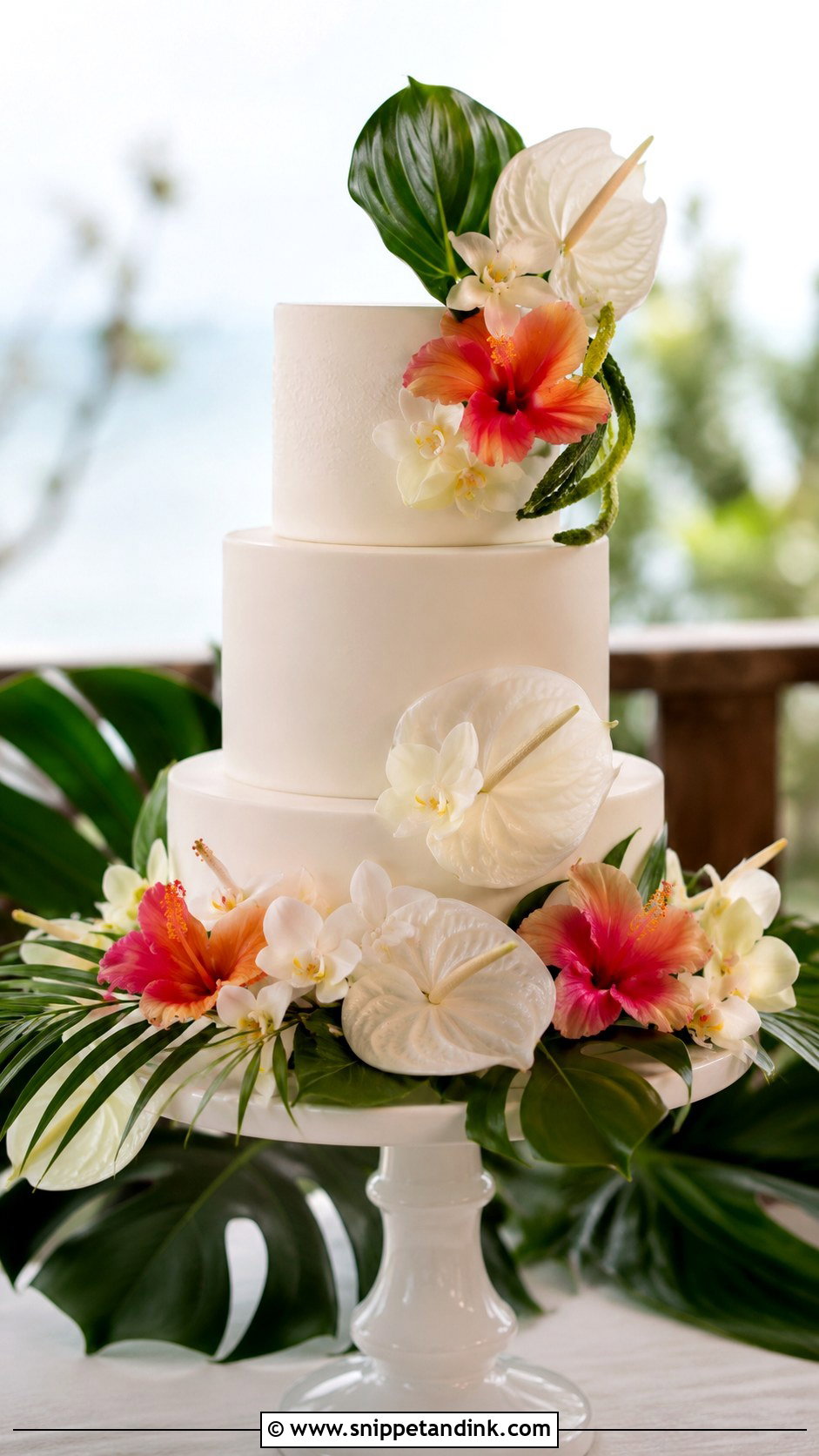
A tropical flower wedding cake carries a lot of strong color, so I keep the cake itself sleek, usually smooth white fondant. Anthurium, orchids and tropical leaves handle heat and humidity better than most temperate flowers, which suits beach and destination receptions. I lay the biggest leaves lowest around the stand first, then add the coral or fuchsia blooms in small groups. Real hibiscus lasts about a day once cut, so I’d only use it if it was picked that morning.
13. Greenery Wedding Cake With Flowers Around
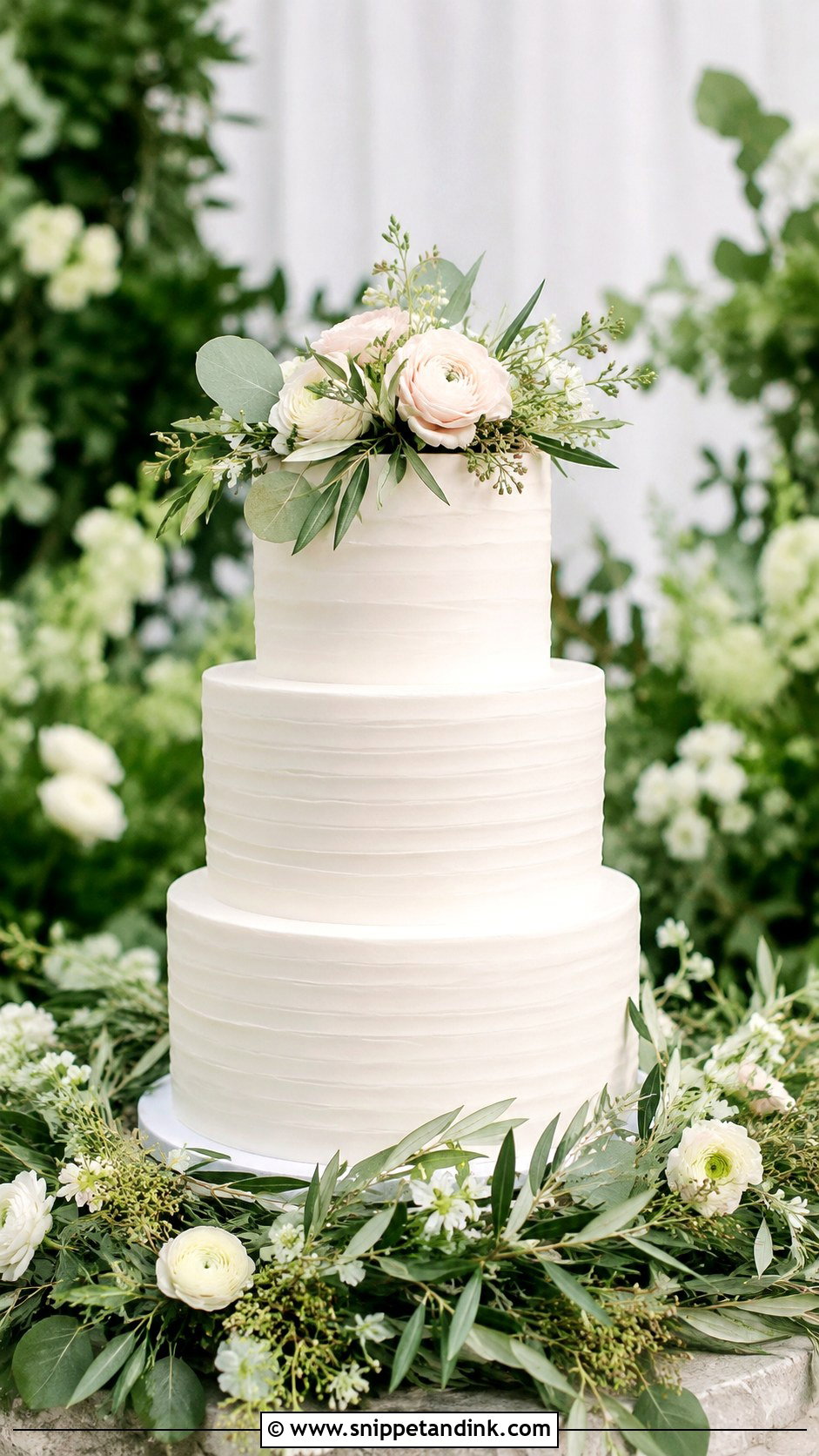
Greenery-first rings are the most practical design here. Eucalyptus, olive, ruscus and pittosporum survive hours out of water and barely change between setup and cutting. I build the low ring first, then add a handful of roses or ranunculus in the wedding palette. It works in nearly any venue. Watch the trimming: eucalyptus looks shaggy if left long, so I clip the tips back until the ring reads as a frame. It isn’t food-safe either, so it stays on the table side of the board.
14. White Flower Wedding Cake
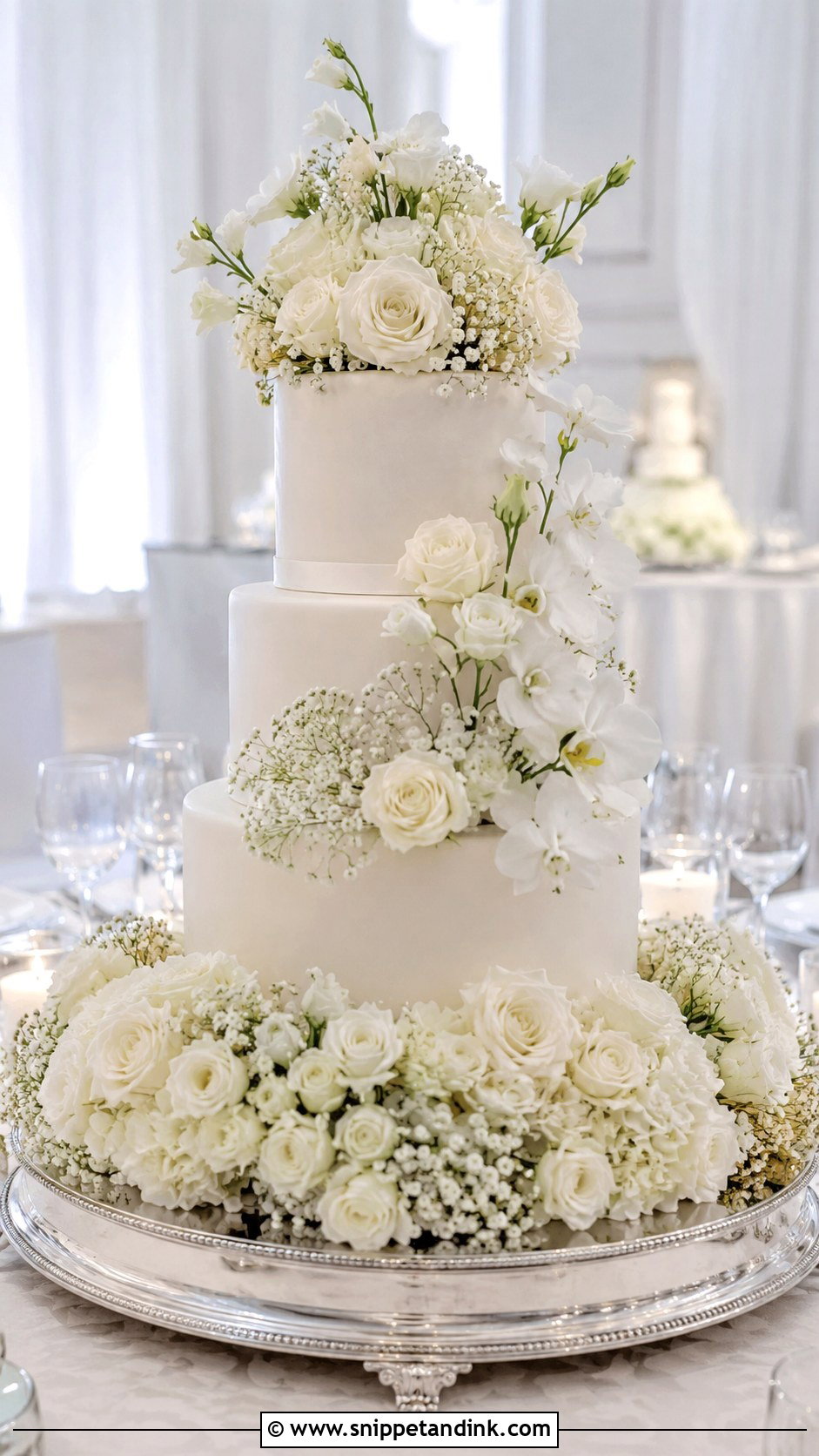
An all-white base depends on texture, since color won’t do any of the work. I mix bloom sizes and petal shapes on purpose: open roses beside tight ranunculus, a few orchids for an angular line, lisianthus for a ruffled edge, small baby’s breath clusters to fill. One thing I check every time is the shade. Pure white flowers can make an ivory cake look yellowed, and an ivory cake can make bright white flowers look blue, so match the cake’s white to the blooms or go fully ivory.

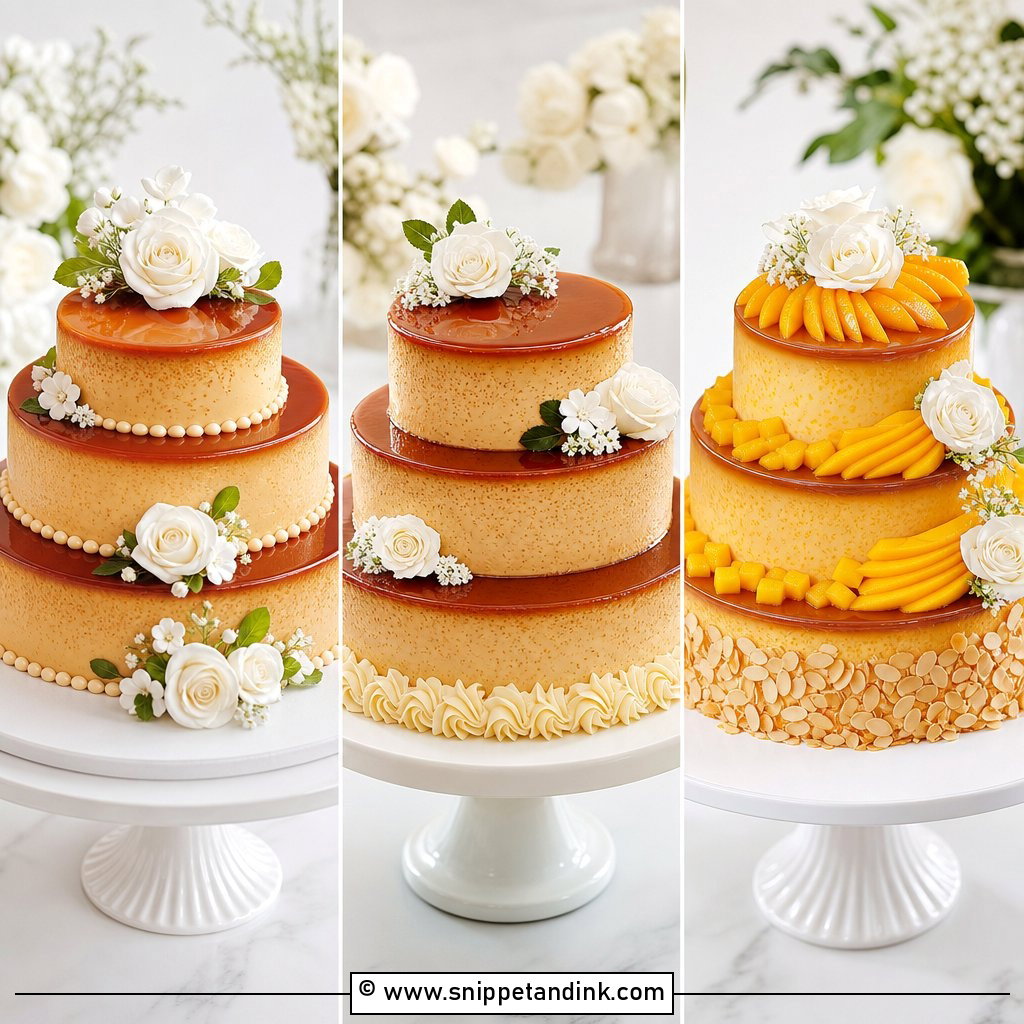

15. Blush Flower Wedding Cake
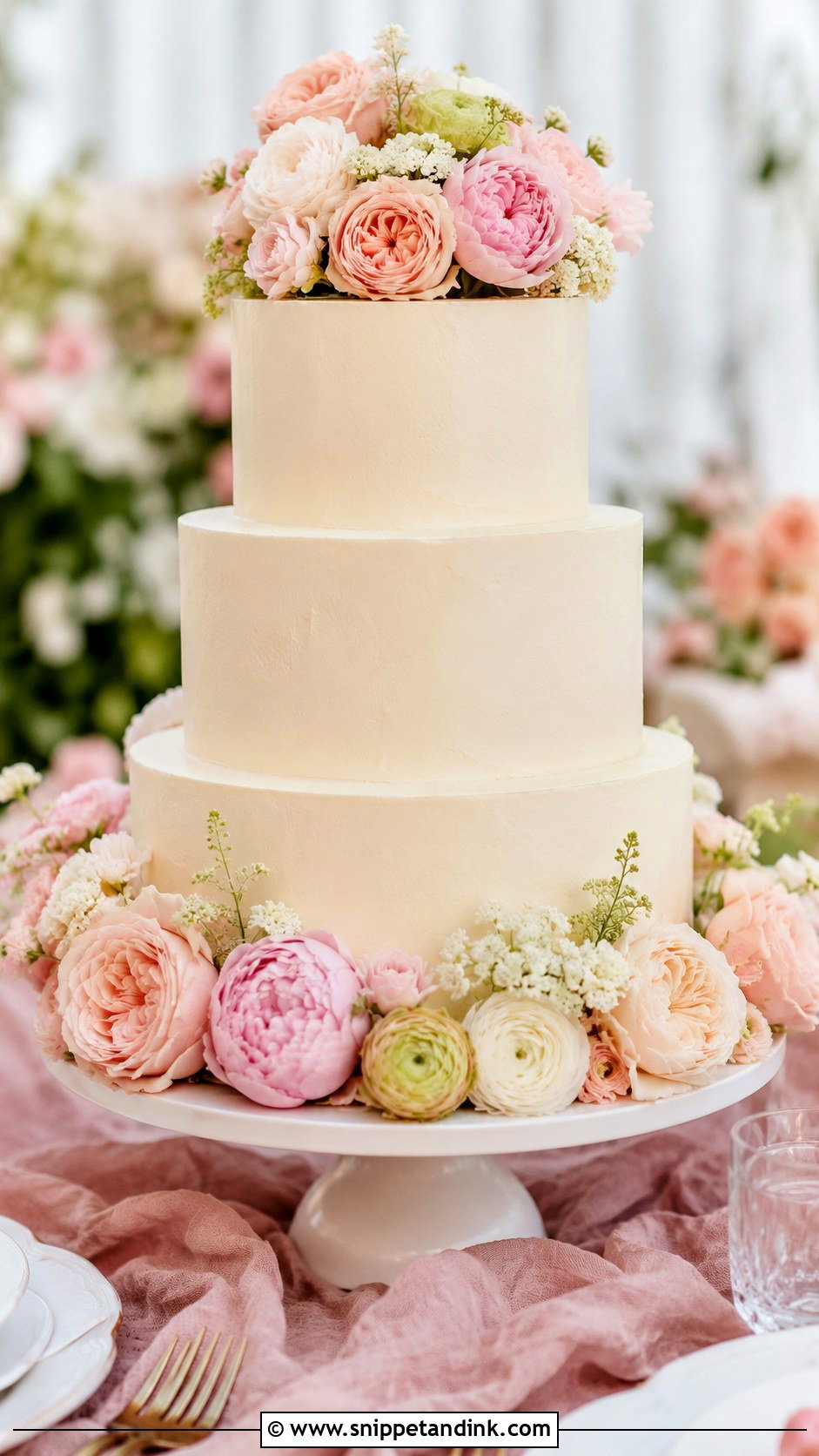
Blush is the easiest palette to match with linens and bridesmaid colors, which is why couples ask for it so often. I set blush roses and pale peonies against ivory icing rather than bright white, because the warmer base keeps the pink from looking candy-bright. A few champagne or dusty rose stems add depth. Pale pink also tends to read lighter in photos than in person, so I lean one shade deeper than the swatch the couple brings me.
16. Blue Flower Wedding Cake
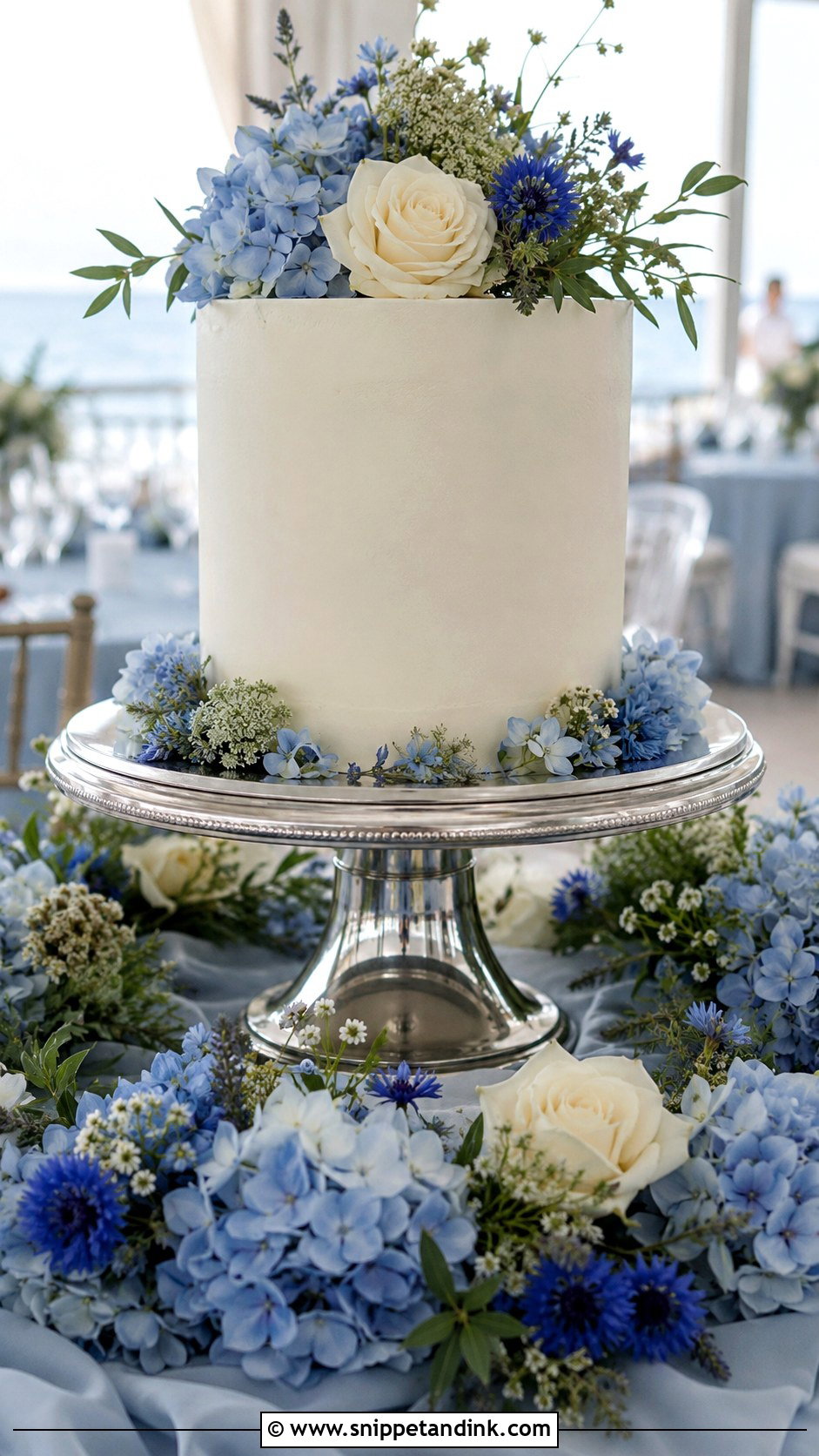
True blue is rare in flowers, so this palette takes planning. Delphinium, cornflower and some hydrangea varieties give the clearest blues, and I avoid dyed stems anywhere near food. Blue is strong against white, so the cake stays plain, with smooth buttercream or a pearl border. A few white blooms between the blue soften it. Delphinium drops florets as it ages, so I place it last and check the board for fallen petals before guests come in. Silver stands and blue linens sit well with it.
17. Pressed Flower Wedding Cake With Flower Border
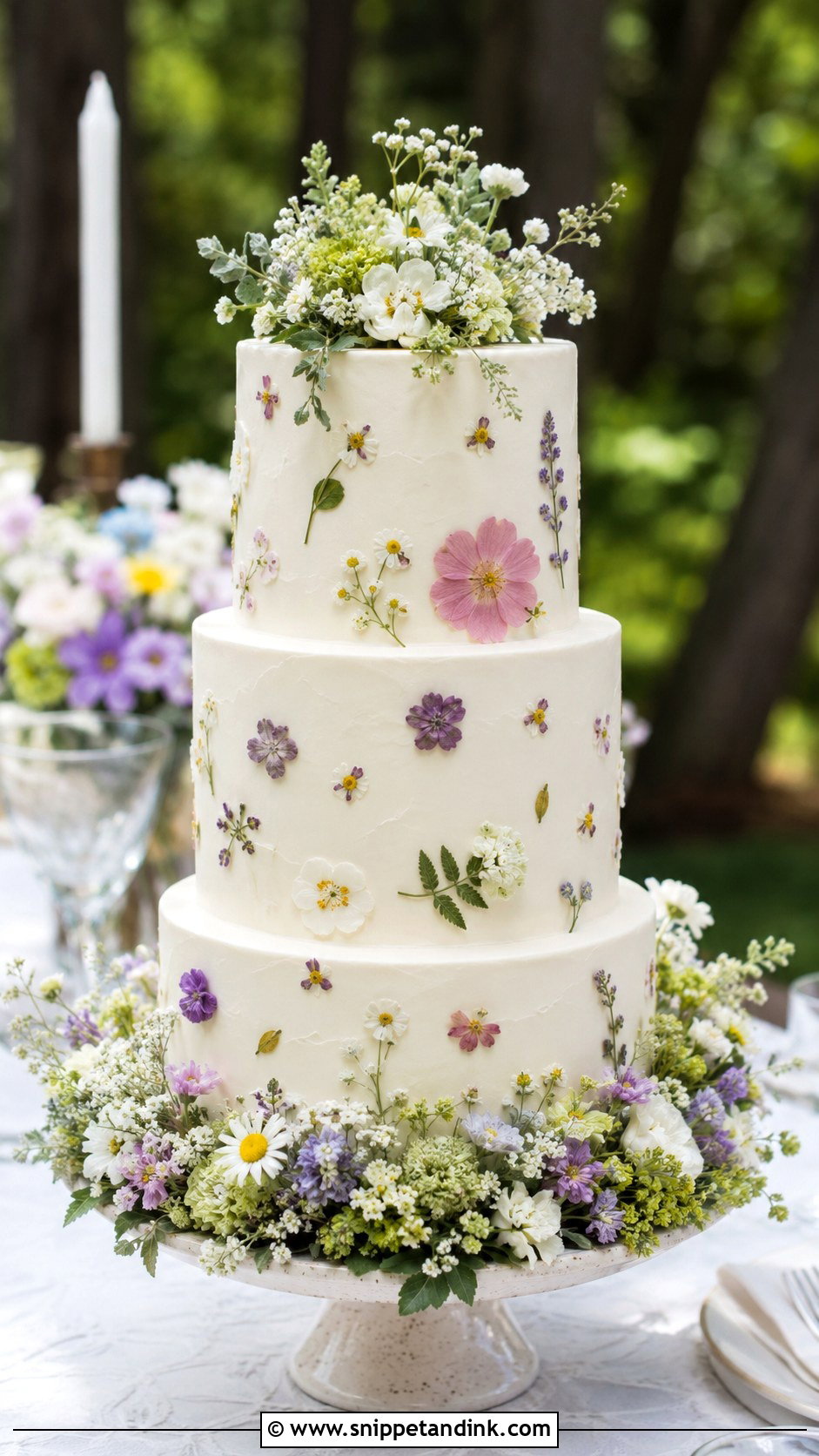
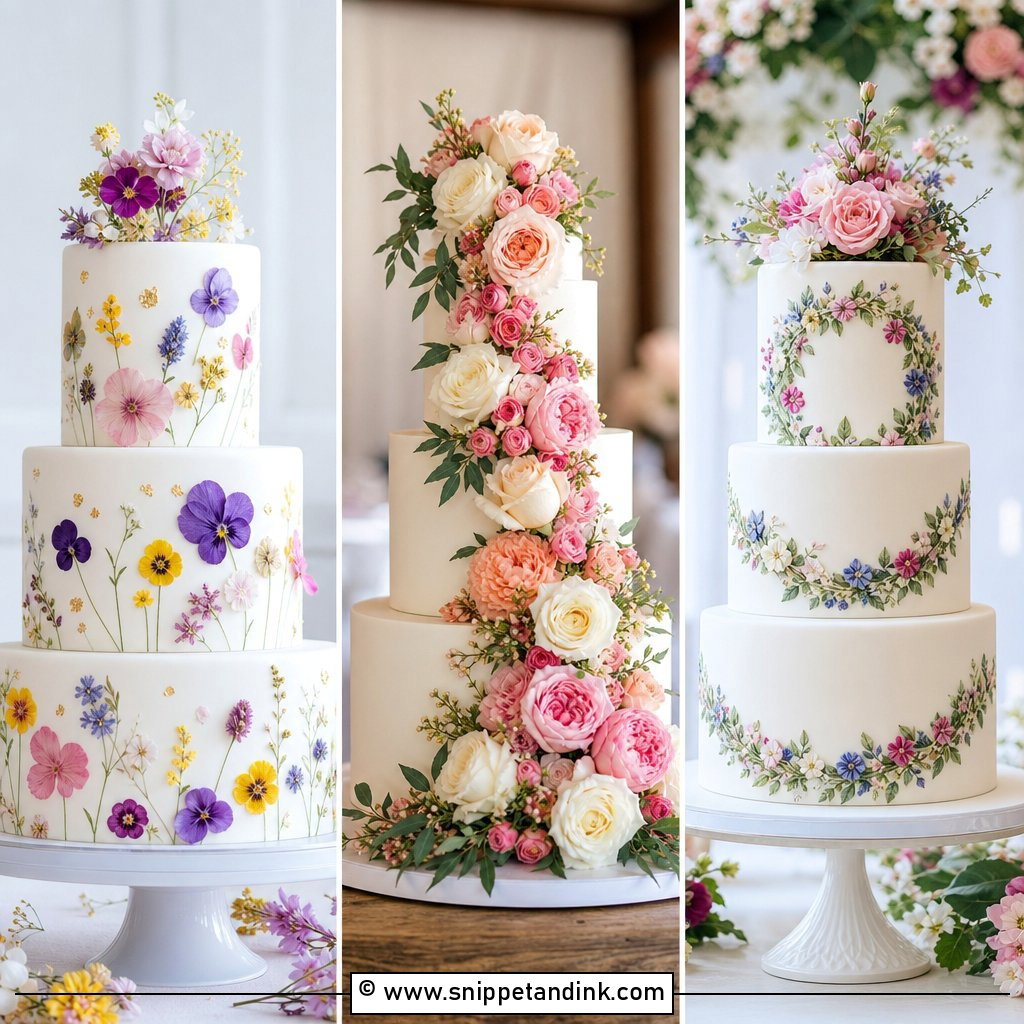
This design puts flowers in two places. The pressed edible flowers go on the sides of the cake, and those must be genuinely edible varieties grown without pesticides, such as pansies, violas or cornflower petals. The fresh ring at the base is separate and can use ordinary florist stems. I keep both in the same small-scale palette so the cake doesn’t look busy, and white buttercream shows the pressed petals best. Your baker usually applies the pressed flowers, so agree on colors with them before I order the base.
18. Cascading Flower Wedding Cake
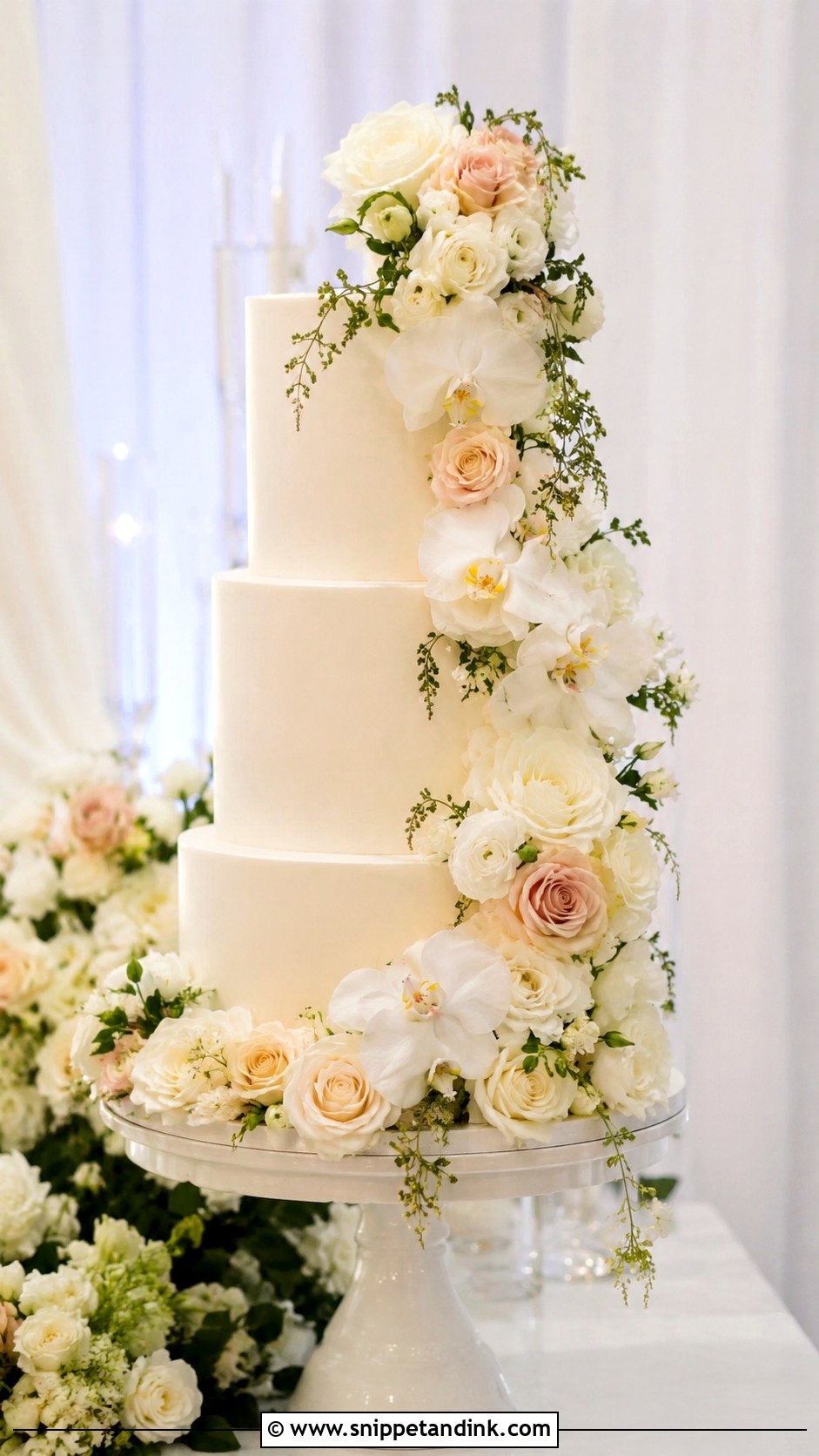
A cascade is where the baker and florist have to plan together, because now the flowers touch the cake. Every stem going onto the tiers gets wrapped in floral tape or set into a food-safe pick, and nothing toxic goes in that part of the design. The flow starts as a cluster near the top or middle tier, runs down one side and lands in a fuller arrangement at the base, with the other side left clean. Roses, orchids and ranunculus handle this well. I build it on site after the cake is placed; a cascade can’t travel already attached.
19. Minimal Flower Wedding Cake
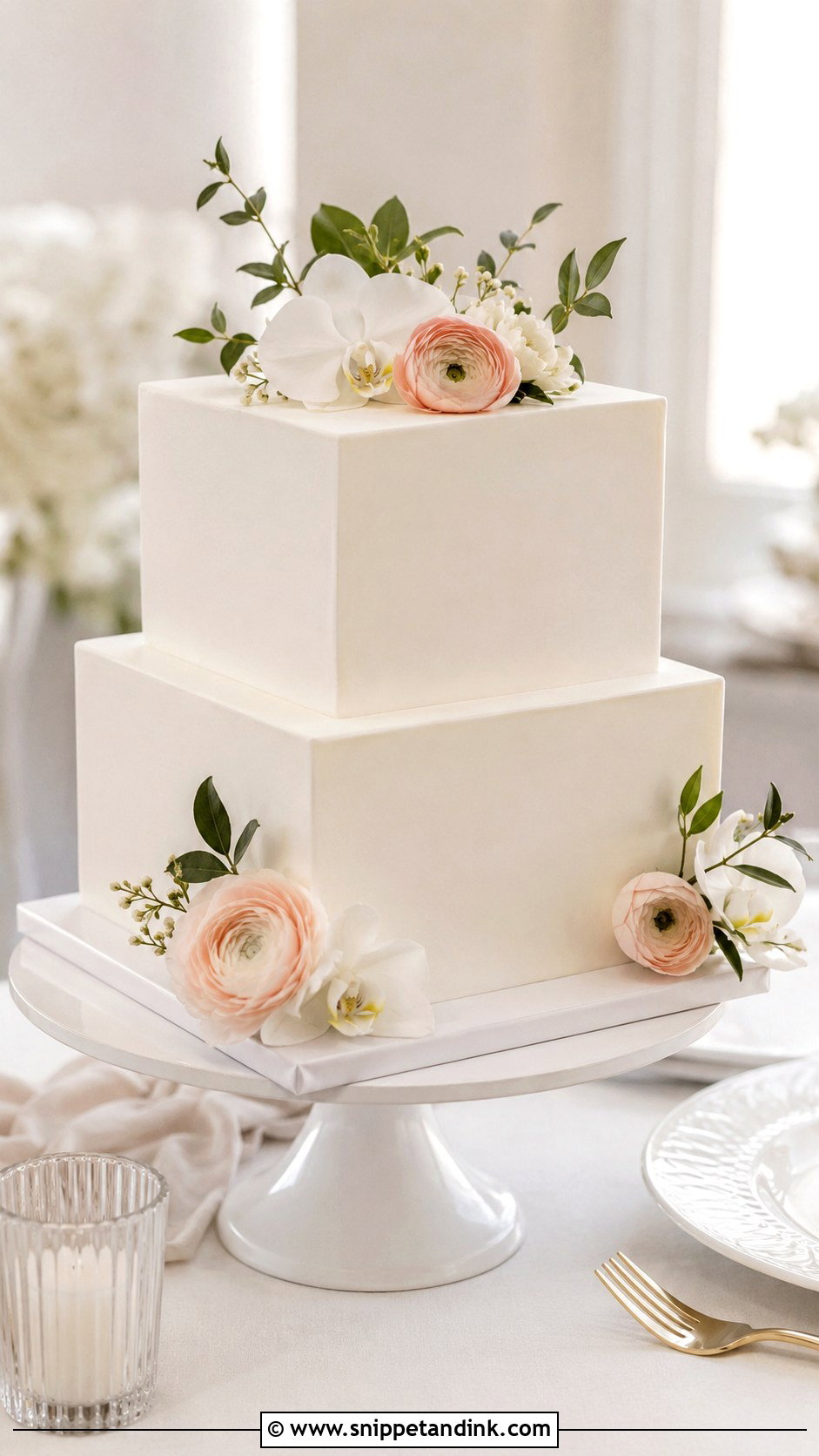
Minimal is harder than full, because every stem shows. A few blooms placed deliberately around the stand, maybe white roses with two orchid stems, can look very modern beside sharp-edged fondant. The mistake I see is too few flowers spaced too evenly, which looks like something was forgotten. Group them in two or three clusters with real space between. This one suits an intimate reception, where people see the cake from a couple of feet away.

20. Vintage Wedding Cake With Flowers Around
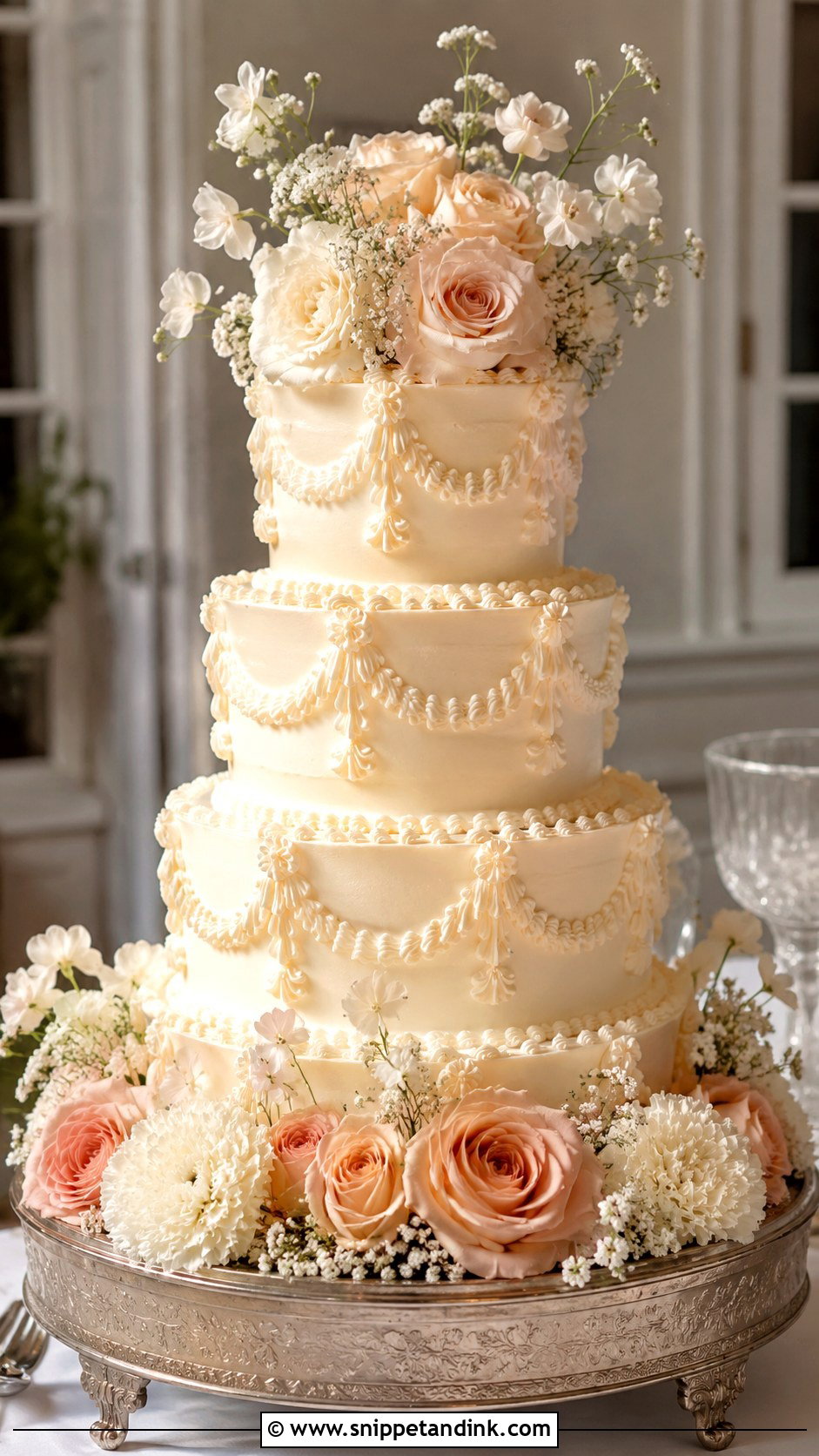
Vintage cakes already carry a lot of detail in the piping, with swags, shell borders and pearl dots. So the flowers at the base should be quieter than the cake, not louder. Spray roses, carnations and sweet peas in loose clusters work, with a little baby’s breath. Carnations are underrated here; they last for days and look properly old-fashioned. Sweet peas are fragile and their seeds are toxic, so they stay on the table and never on the tiers. Cream and blush blooms against ivory frosting keep the piping readable.
Flowers I Leave Off a Cake Table Entirely
Florist flowers are grown with pesticides and kept in preservatives, so none of them should be treated as edible. A few go further than that, and I keep them away from food altogether, even at the base.
- Lily of the valley: every part of the plant is toxic, and it’s often requested for spring.
- Daffodils and other narcissus: their sap irritates and can taint whatever it touches.
- Foxglove and oleander: both are seriously poisonous and have no place near dessert.
- Lilies: the pollen stains white icing permanently, so if they’re nearby I remove every anther first.
- Hydrangea and sweet pea: fine in a ring around the stand, never pressed into the tiers.
If you love one of these, it can almost always move to the centerpieces or your bouquet, where nobody is eating next to it.
How a Base Ring Holds Up Until the Cutting
A cake often sits on display for three or four hours before it’s cut, sometimes longer, and the flowers age the whole time. Out of water, roses, orchids, carnations, ranunculus and most greenery keep their shape. Hydrangeas, garden roses and fresh wildflowers go soft first, especially near a sunny window or under hot lighting.
To slow that down, I condition every stem the day before, keep the finished ring cool until it goes out, and ask for the cake table to be placed out of direct sun. If a bloom wilts halfway through the evening, pulling it is easier than fixing it, so I leave a few spare stems with the coordinator for a quick swap before the cutting photos.
A Floral Ring Should Frame the Cake, Not Hide It
Whatever flowers you pick, the cake should still be the first thing people see when they walk up to the table. A rose ring reads classic, wildflowers feel relaxed, orchids look modern and greenery stays fresh for hours. Get your baker and florist talking at least a month out, so the stand size, the barrier and the setup time are agreed, and decide who lifts any flowers off before the cutting. Do that, and a plain cake looks finished in every photo from the reception.
You'll Like These Ideas:



Leave a Reply