
Blue is the color couples ask me about most after white, and it’s more varied than people expect. Powder blue reads romantic in a garden, dusty blue is calm, navy and cobalt make the cake table formal. Blue sits comfortably with ivory flowers, pearls, silver, gold leaf, watercolor painting, vintage piping and coastal textures. It’s also one of the trickier colors to get exactly right in buttercream, which I’ll come to. Below are my notes on thirty Blue Cake Aesthetic Ideas for the reception table.
Why Blue Buttercream Turns Green, and How I Stop It
Blue is the color most likely to disappoint in buttercream, and almost always for the same reason. Butter is yellow. Add blue to a yellowish base and you get a faint green, especially in the pale shades couples love most.
Starting from a whiter base
I whip butter for longer to lighten it, use Swiss or Italian meringue buttercream, which is paler, and sometimes add a tiny dot of violet to cancel the yellow before any blue goes in. Fondant starts white, so it gives truer blues straight away.
Light fades blue faster than you think
Blue and purple food colors are sensitive to light. A cake left near a sunny window or under strong lights for a few hours can fade noticeably, sometimes unevenly on the side facing the light. Ask your venue to keep the cake out of direct sun, and keep it boxed until setup.
Bring a fabric swatch or a bridesmaid dress sample to your tasting. Matching blue on a screen is guesswork; matching it to fabric under the room’s lighting isn’t.
1. Dusty Blue Wedding Cake
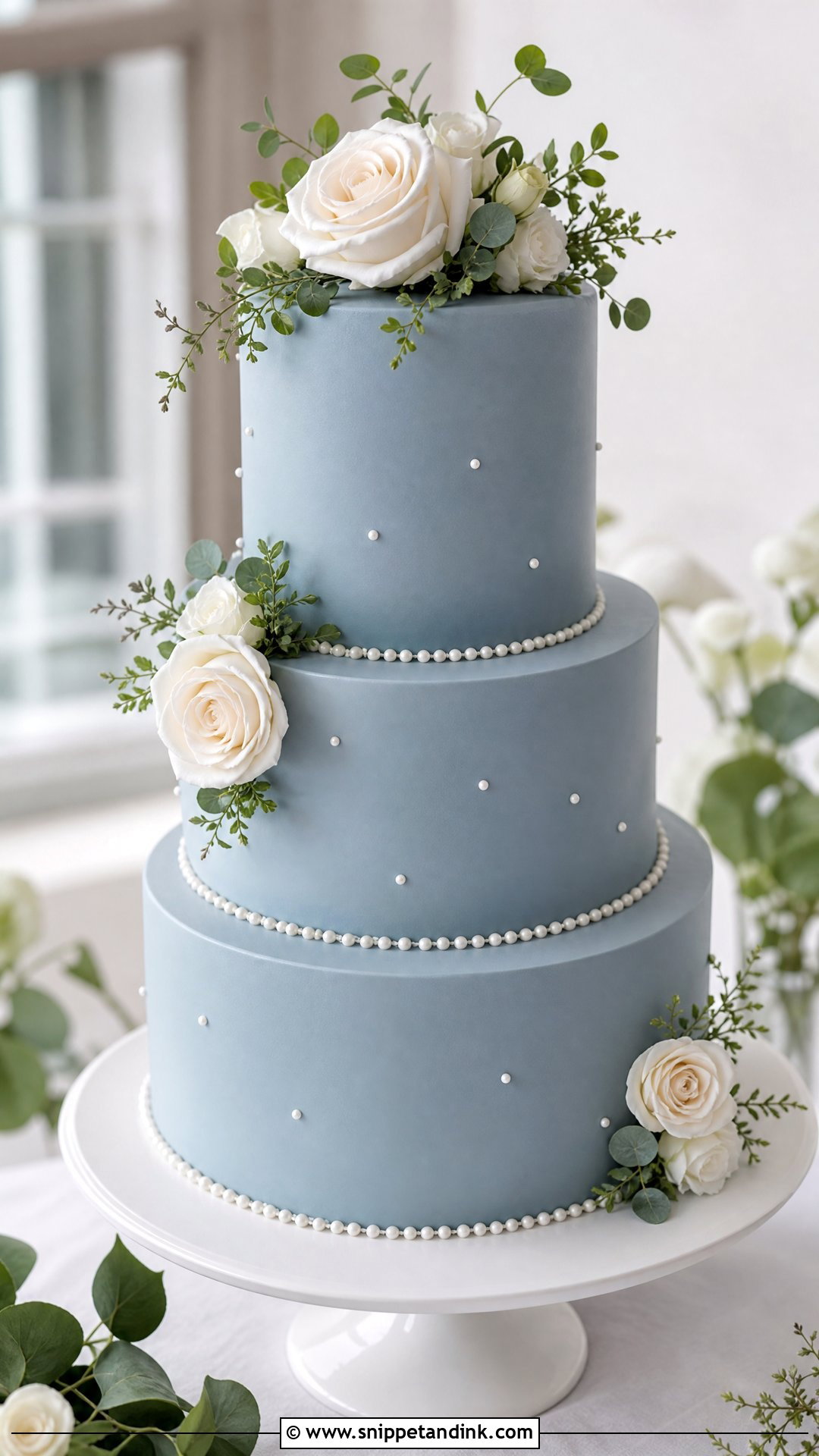
Dusty blue is the quiet option: it adds color without making the dessert table loud, and it sits well with ivory, cream, sage, blush and soft gold. Smooth buttercream or matte fondant over two or three tiers keeps it classic, with white roses, small sugar blossoms or pressed flowers. The grey in dusty blue is what makes it muted, and I mix it with a drop of black or a touch of the complementary orange rather than just using less blue; pale blue on its own just looks baby blue. Garden, estate and barn venues suit it.
2. Navy Blue Wedding Cake
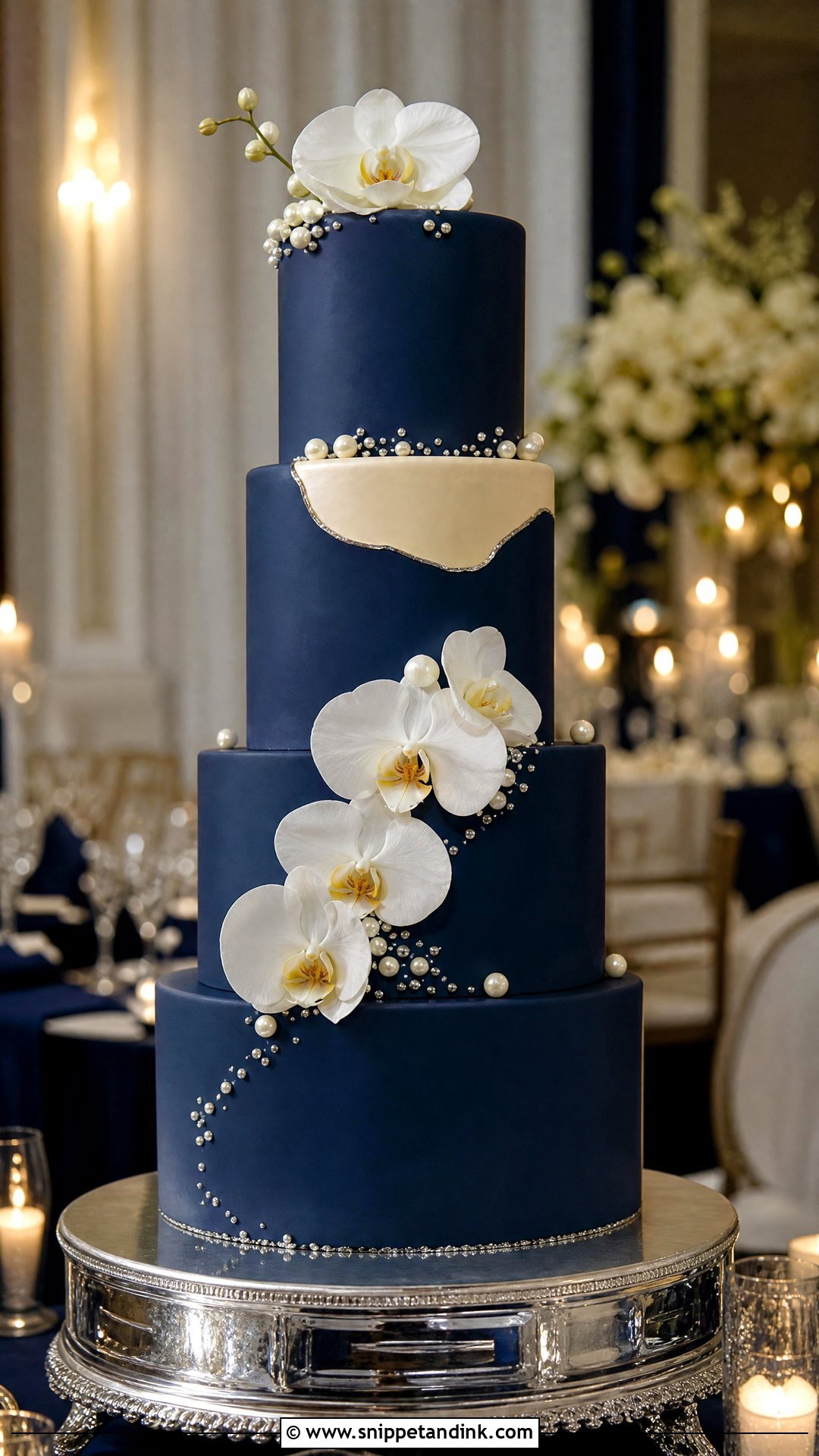
Navy turns the cake formal. Smooth fondant, textured buttercream or a clean ganache finish all carry the depth well, paired with white sugar flowers, pearl beading, silver leaf or brushed gold. Navy needs a lot of coloring to reach, which can taste bitter and stain mouths, so on buttercream I’d limit it to one statement tier and keep the rest ivory. On fondant, I buy it pre-colored. It matches navy suits, bridesmaid dresses and invitations, and it suits evening and black-tie receptions.
3. Blue Ombre Wedding Cake
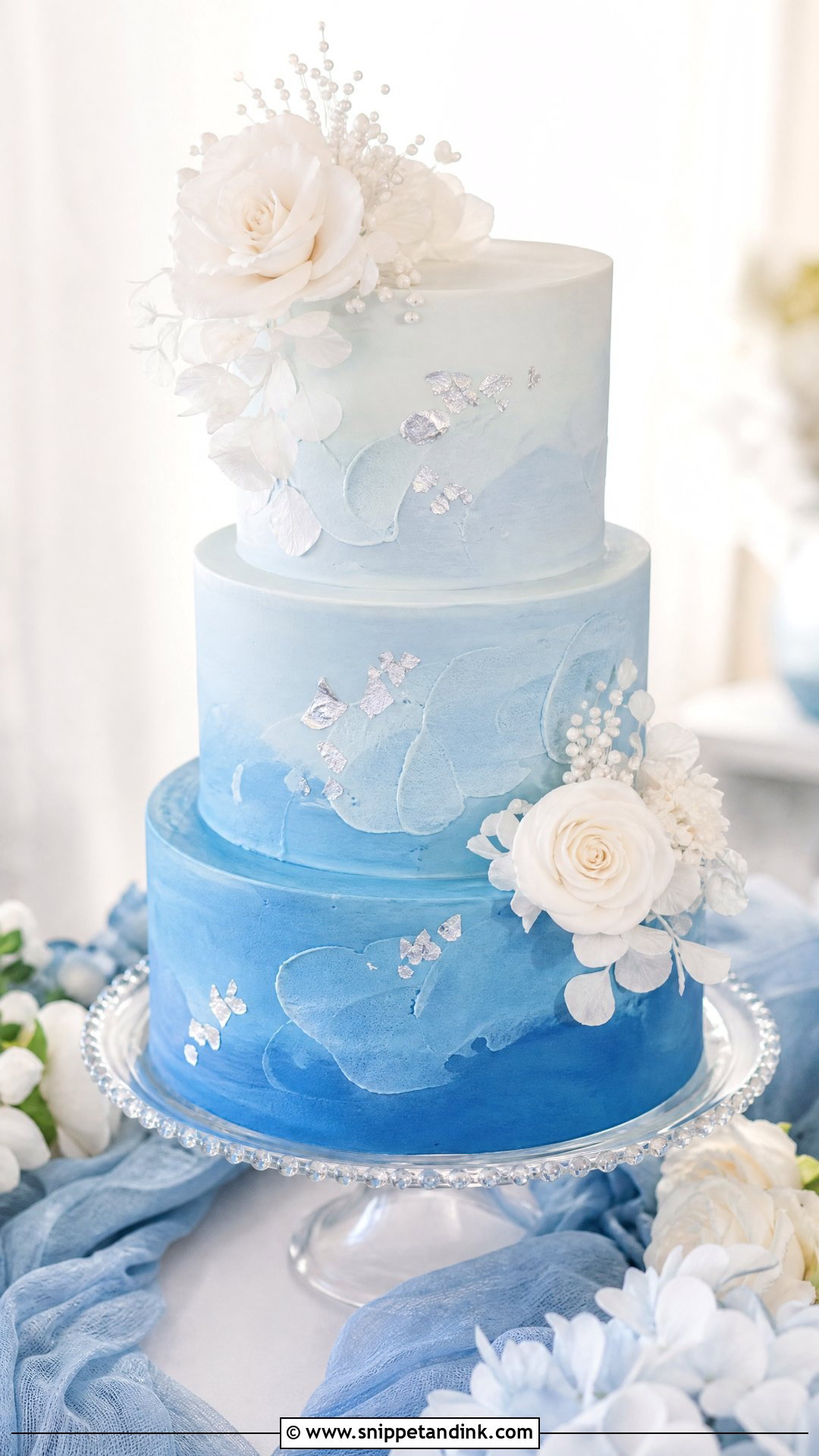
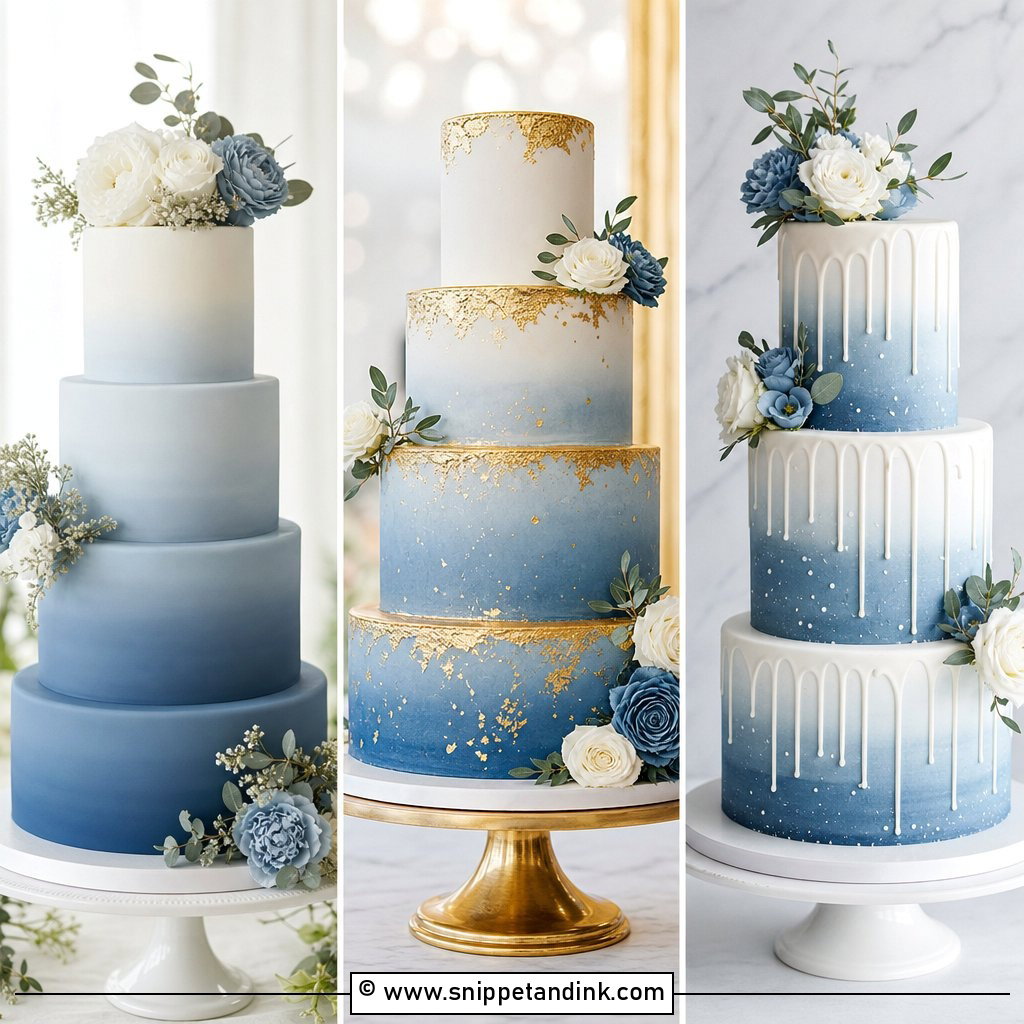
An ombre usually starts deep at the bottom and fades into pale sky blue or ivory at the top, which gives movement without decoration. I mix four or five shades from one batch of buttercream, so every step shares the same undertone, then blend them on the turntable with a scraper. White florals, silver leaf, clear sugar shards or fine piping finish it. Coastal, summer and garden weddings suit it best.
4. Blue And White Wedding Cake
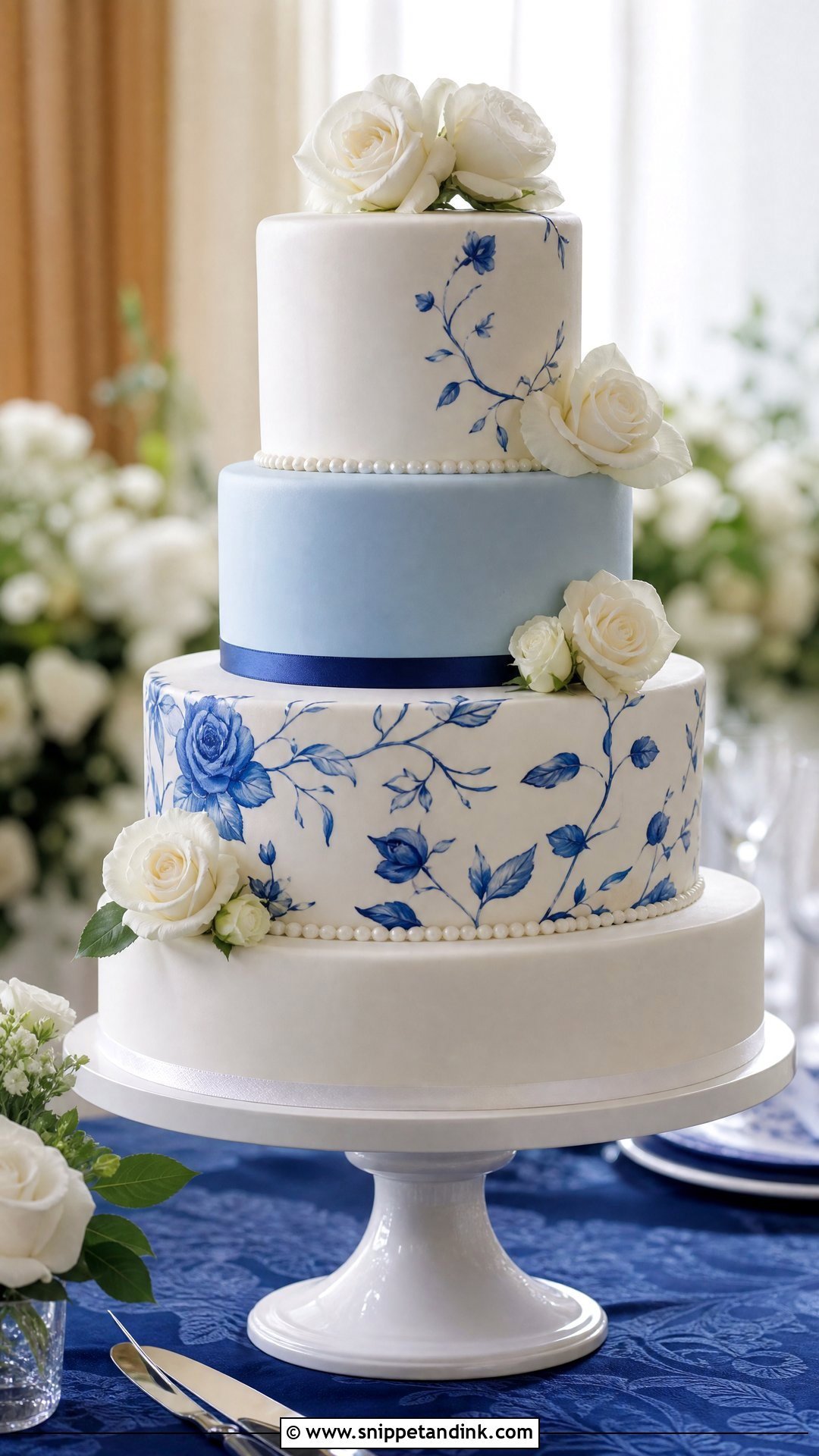
Blue and white is clean and classic. The white keeps it bridal, the blue adds contrast, in painted florals, piping, chinoiserie patterns, watercolor washes or one colored tier. White roses, orchids, hydrangeas or small sugar flowers sit well against it, and blue linens, white candles and silver serving pieces tie the table together. It’s the answer I give couples who want “something blue” without a fully blue cake.
5. Powder Blue Wedding Cake
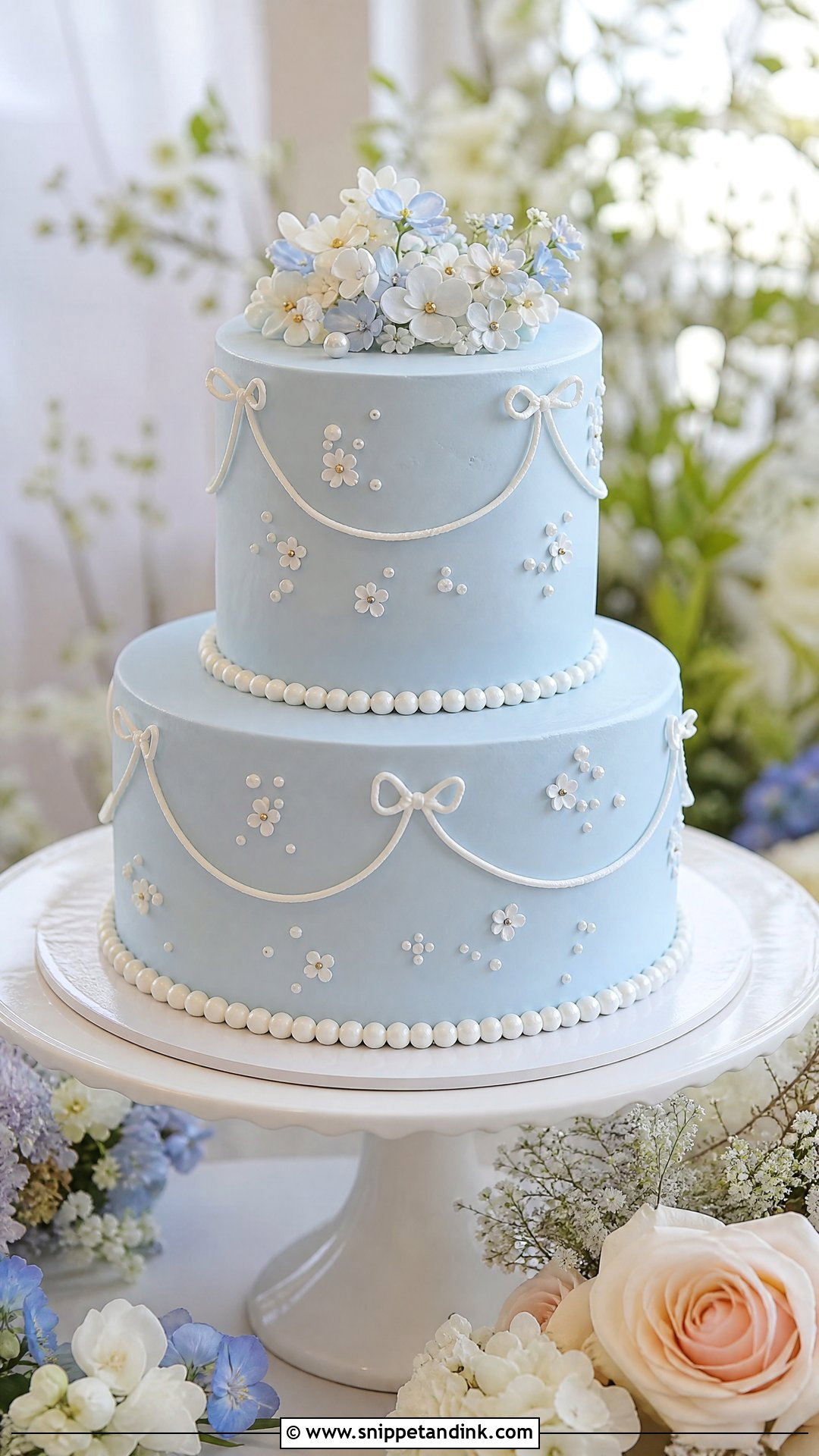
Powder blue is lighter than dusty blue and brighter than navy, which makes it a daytime color for spring and summer. Smooth buttercream, fondant or Swiss meringue frosting all take it well. Pair it with pearls, white piping, tiny bows, fresh blooms or delicate sugar flowers. A pale blue is where butter’s yellow tint shows most, so I whip Swiss meringue longer to lighten it before adding color. For a modern finish, keep the tiers clean with just a few statement flowers.
6. Royal Blue Wedding Cake
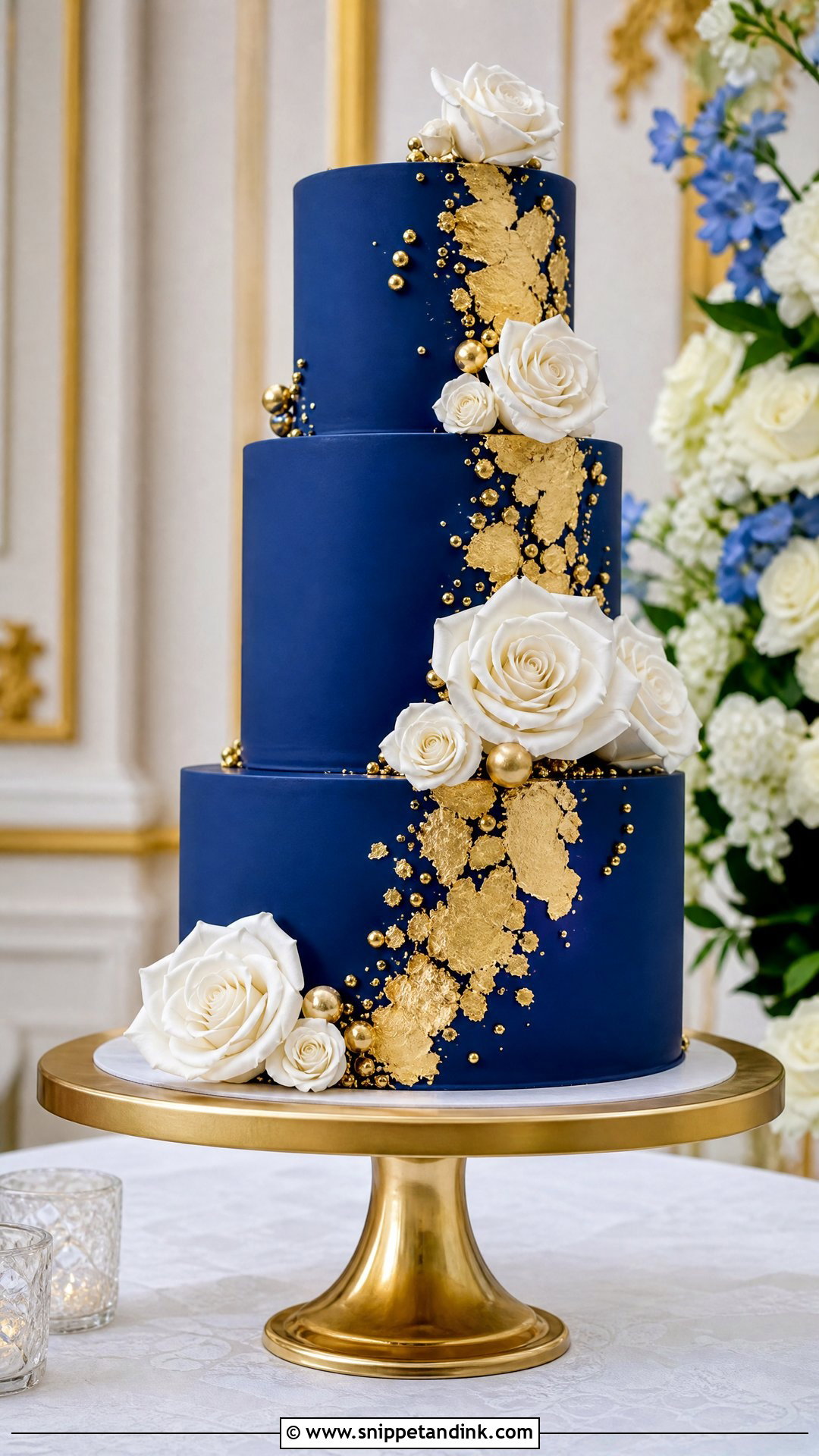
Royal blue is the strongest blue here, brighter and louder than navy, so the rest of the palette has to be able to carry it. I’d use it on one or two tiers and balance with ivory, white, gold or silver. Smooth fondant keeps it refined; metallic details add luxury. White sugar roses, edible pearls and clean piping soften it. Royal blue is also the shade most prone to fading in bright light, so keep the cake out of sun and away from windows until it’s cut. Glamorous receptions and cultural celebrations with strong color suit it.
7. Blue Floral Wedding Cake
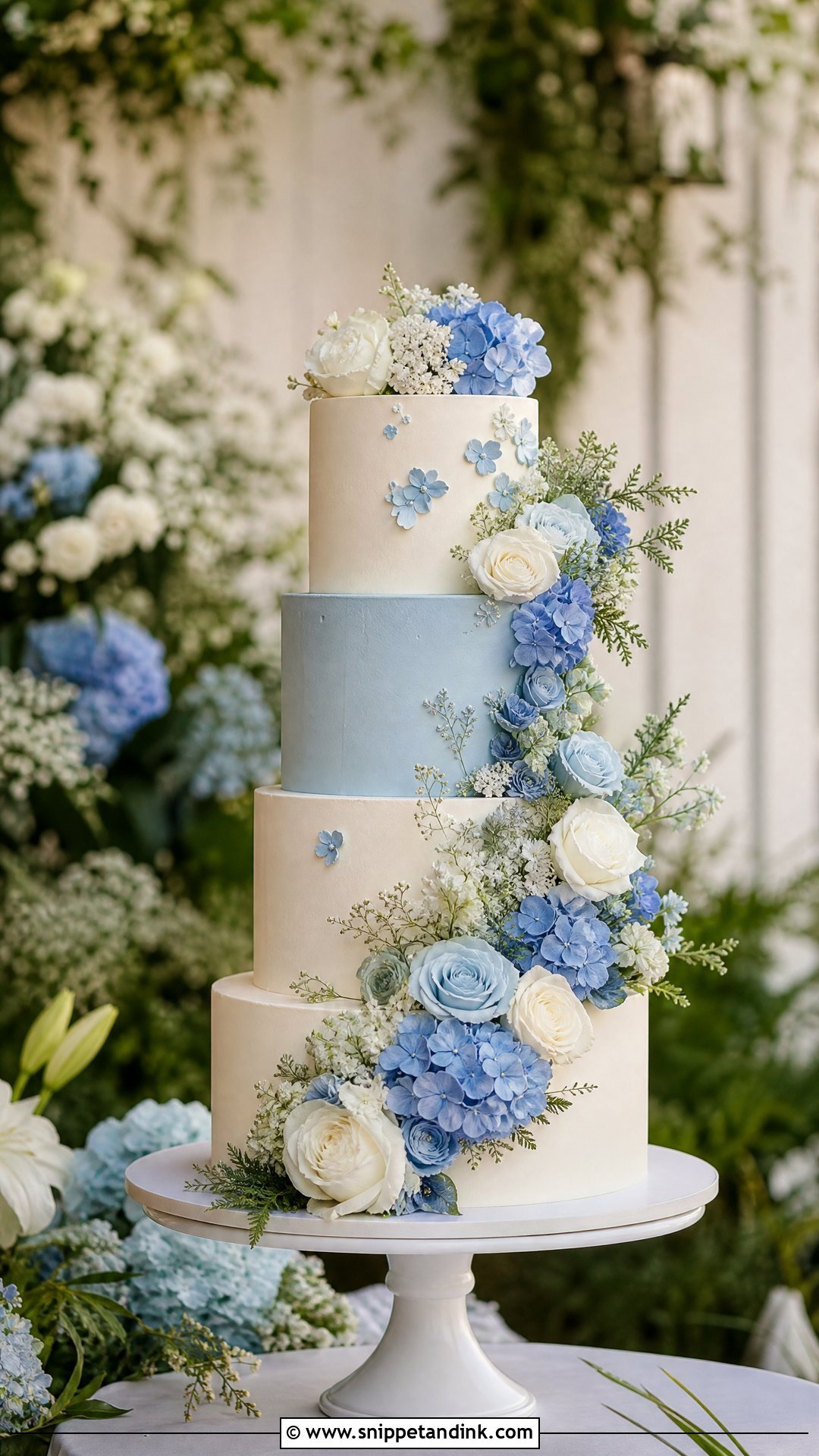
Blue florals on a cake can be fresh, sugar, painted, piped or pressed into buttercream. Hydrangeas, delphinium, cornflowers and blue sugar roses all work visually, though not all of them are safe to touch food; I cover that further down. Placement should look natural, like a cascade or a cluster at the base. Keep the frosting ivory or pale blue so the flowers stand out, and mix in white and greenery for softness. Garden, spring and outdoor weddings suit it.
8. Blue Watercolor Wedding Cake
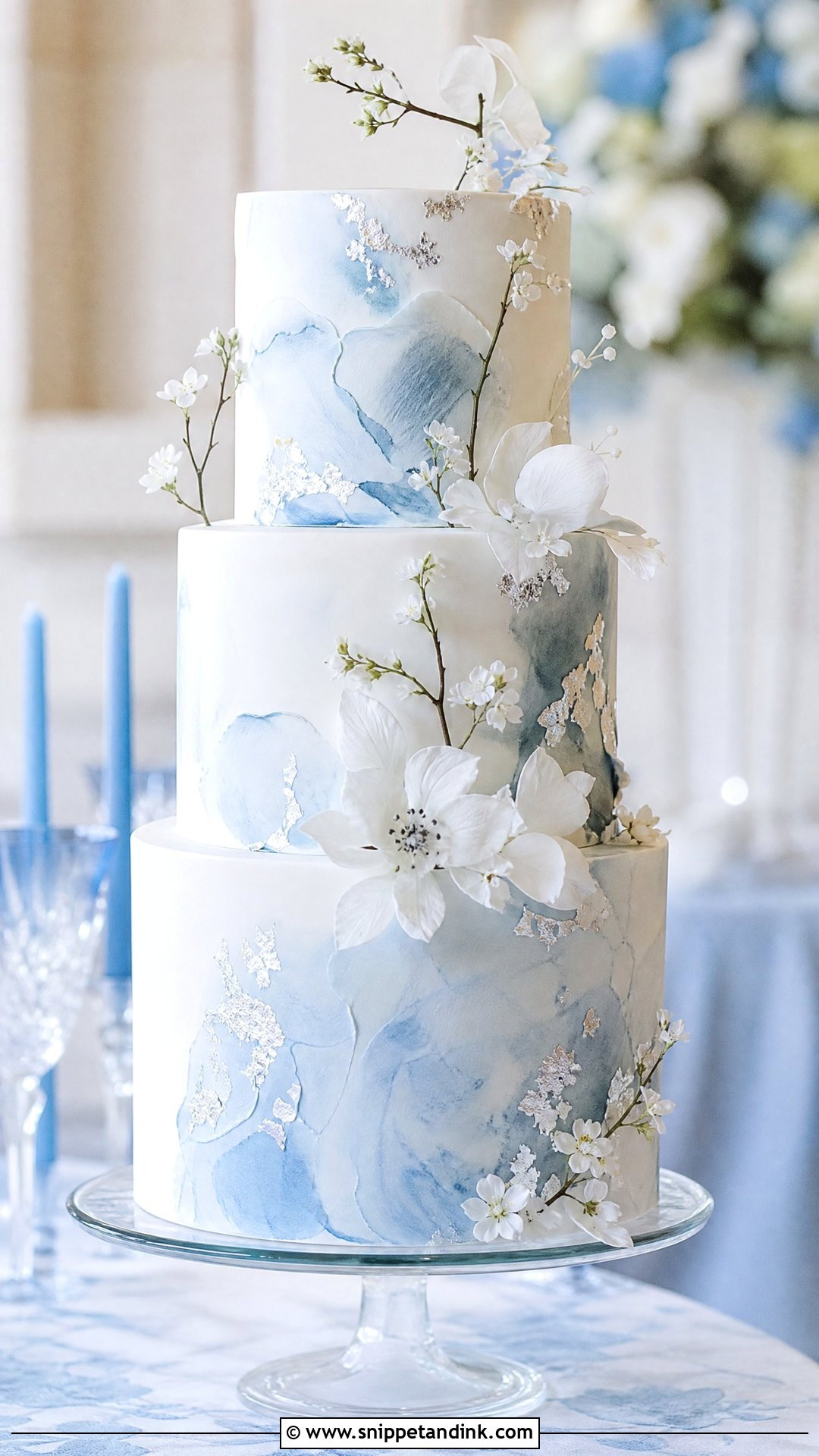
Watercolor blends pale blue, dusty blue, navy and ivory in soft strokes across fondant or buttercream, giving a hand-painted look. I paint with gel thinned in a little clear alcohol on chilled buttercream, building from the palest shade up. It’s the best option if your palette uses several blues, since it blends them instead of matching one exact color. Silver leaf, gold flecks, wafer paper flowers or white blooms finish it.
9. Blue And Gold Wedding Cake
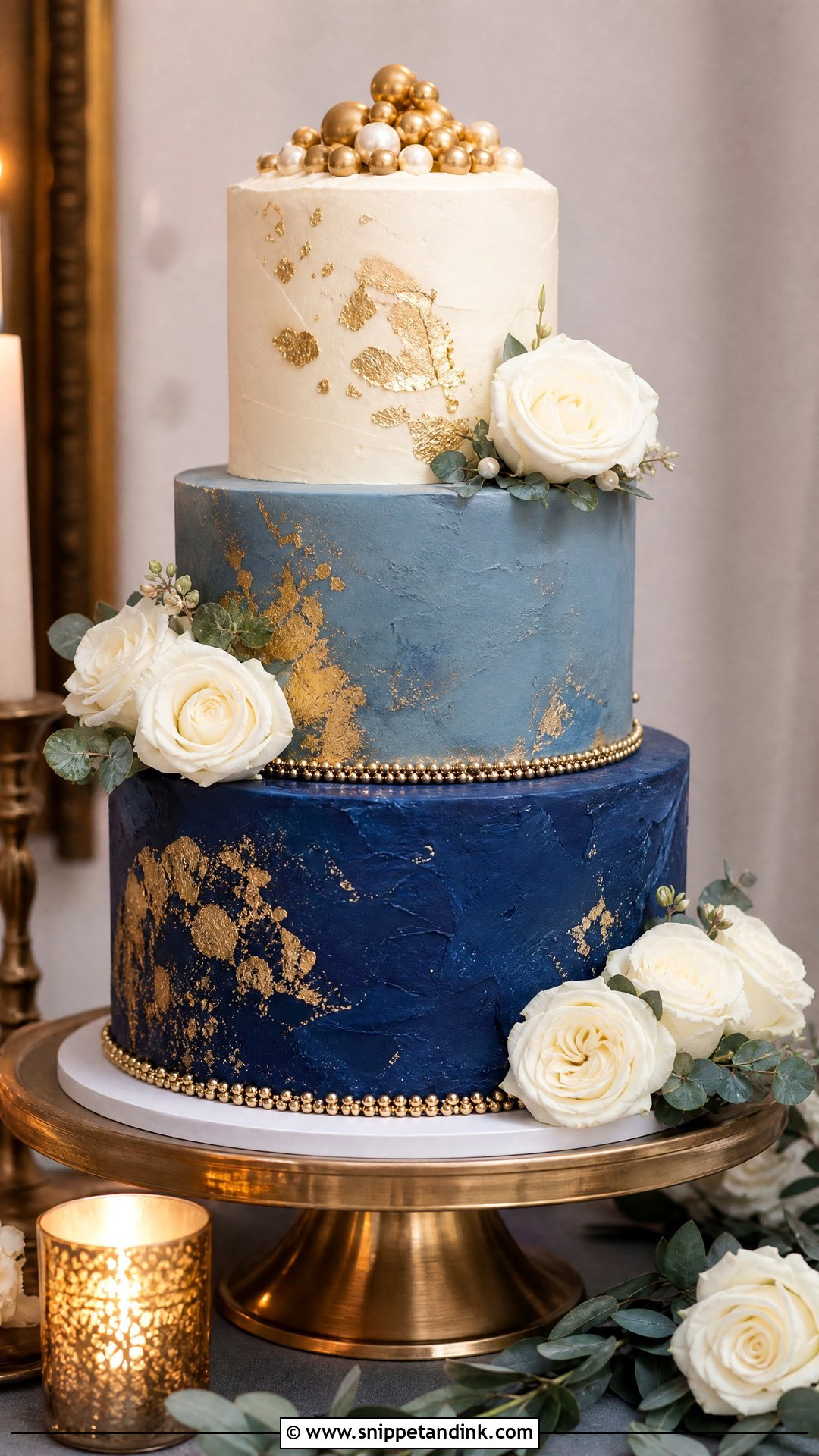
A blue and gold wedding cake feels warm and a little luxurious. Gold leaf adds shine without making the cake busy, against navy, dusty blue, royal blue or powder blue. Smooth fondant with gold leaf along the tier edges is the classic route; textured buttercream with scattered metallic flecks is more relaxed. Gold leaf sticks best to a very slightly tacky surface, so I apply it to fondant brushed with a little water, not to dry or chilled icing. White roses, orchids and sugar pearls keep it bridal. Evening receptions with warm lighting suit it.
10. Blue And Silver Wedding Cake
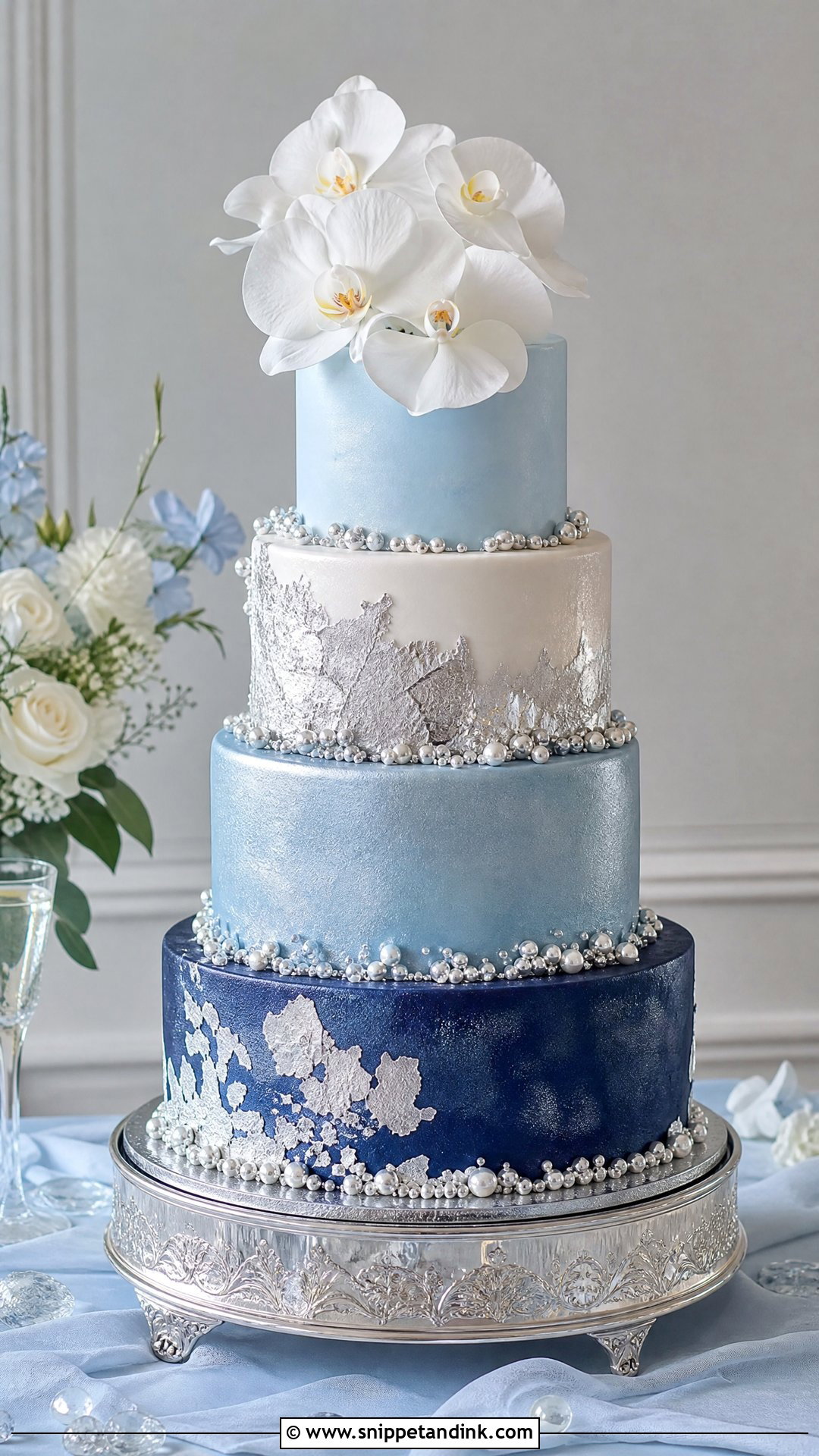
Silver has a cooler, cleaner look than gold, and it suits navy, icy blue, slate blue and powder blue. Silver leaf, metallic piping, sugar pearls, edible glitter or a mirrored acrylic topper all work. Keep the shine controlled. Smooth fondant gives the sharpest finish, buttercream a softer one. White flowers and crystal-style sugar details make it feel bridal. Use edible silver, as many silver dusts sold in craft shops are decorative only. Winter and evening weddings suit it.
11. Blue Lace Wedding Cake
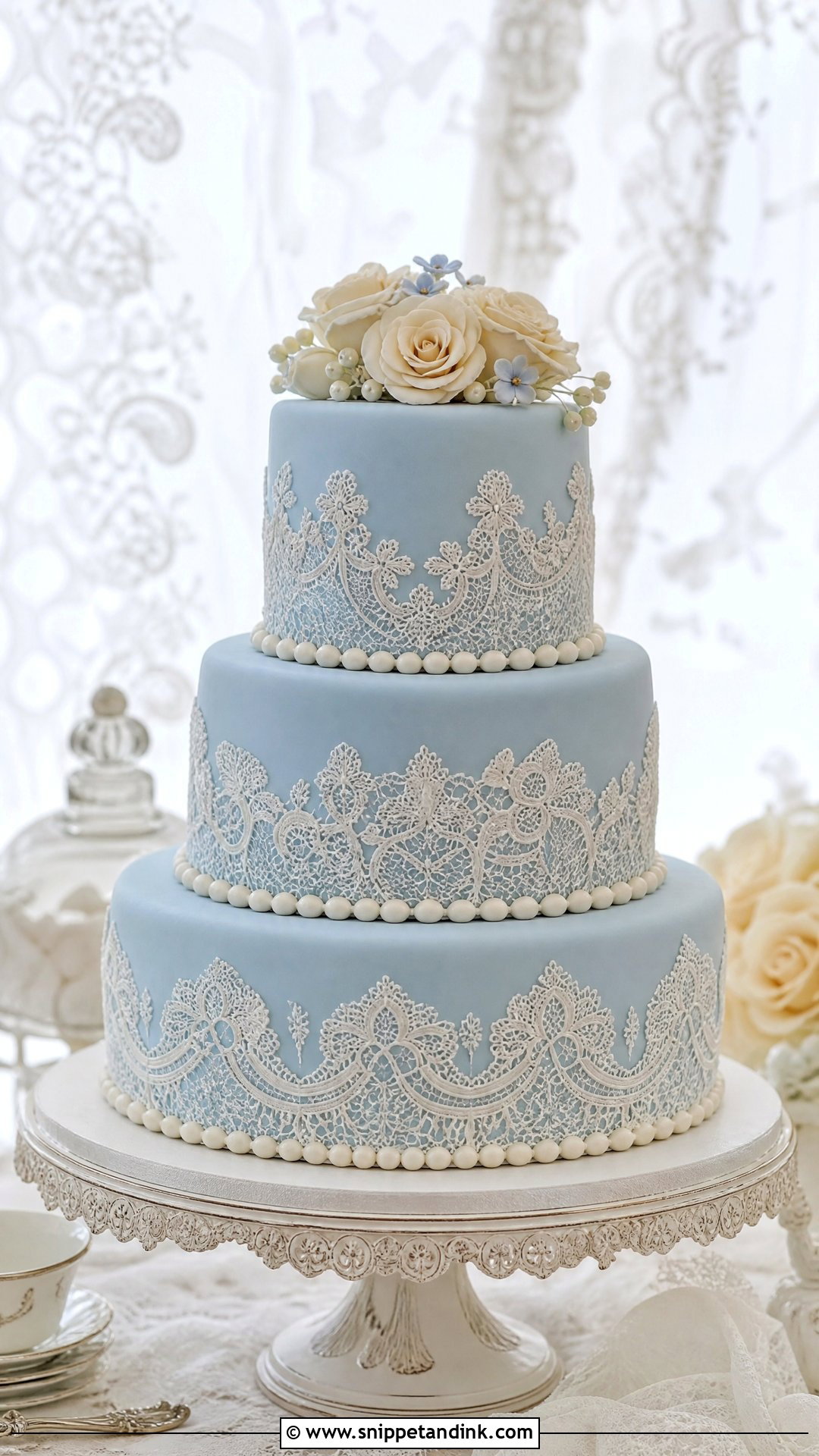
Lace on blue shows up best on powder or dusty blue, where the white pattern has enough contrast. I pipe it, use edible lace, or emboss it into fondant for a fabric-like effect. Pearl borders, small sugar flowers or a satin ribbon at each tier’s base finish it. Edible lace softens in humidity, so in summer I’d rather pipe or emboss. It suits church weddings, estates and lace gowns or heirloom details.
12. Blue Pearl Wedding Cake
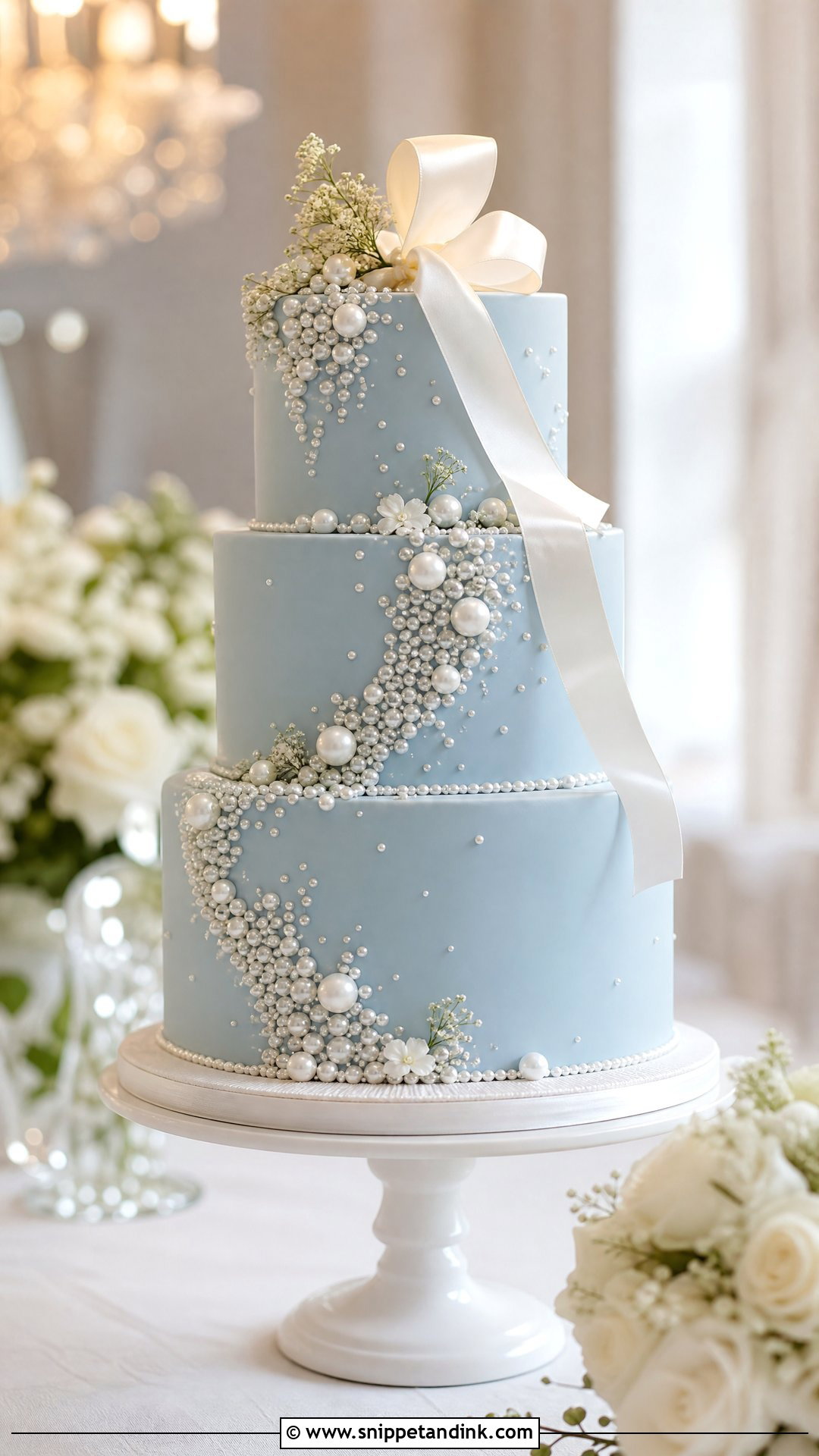
Pearls add softness without large flowers. They go around each tier, scattered like beads, or in a pattern on smooth blue fondant. Dusty blue, powder blue and pale sky blue all pair well. A tall simple cake with one pearl-covered tier looks modern; piped borders and white sugar roses look classic. Under soft reception lighting the pearls catch light gently. Placing hundreds of pearls takes hours, which shows up in the price, so a single pearl tier is a good compromise.
13. Blue Vintage Wedding Cake
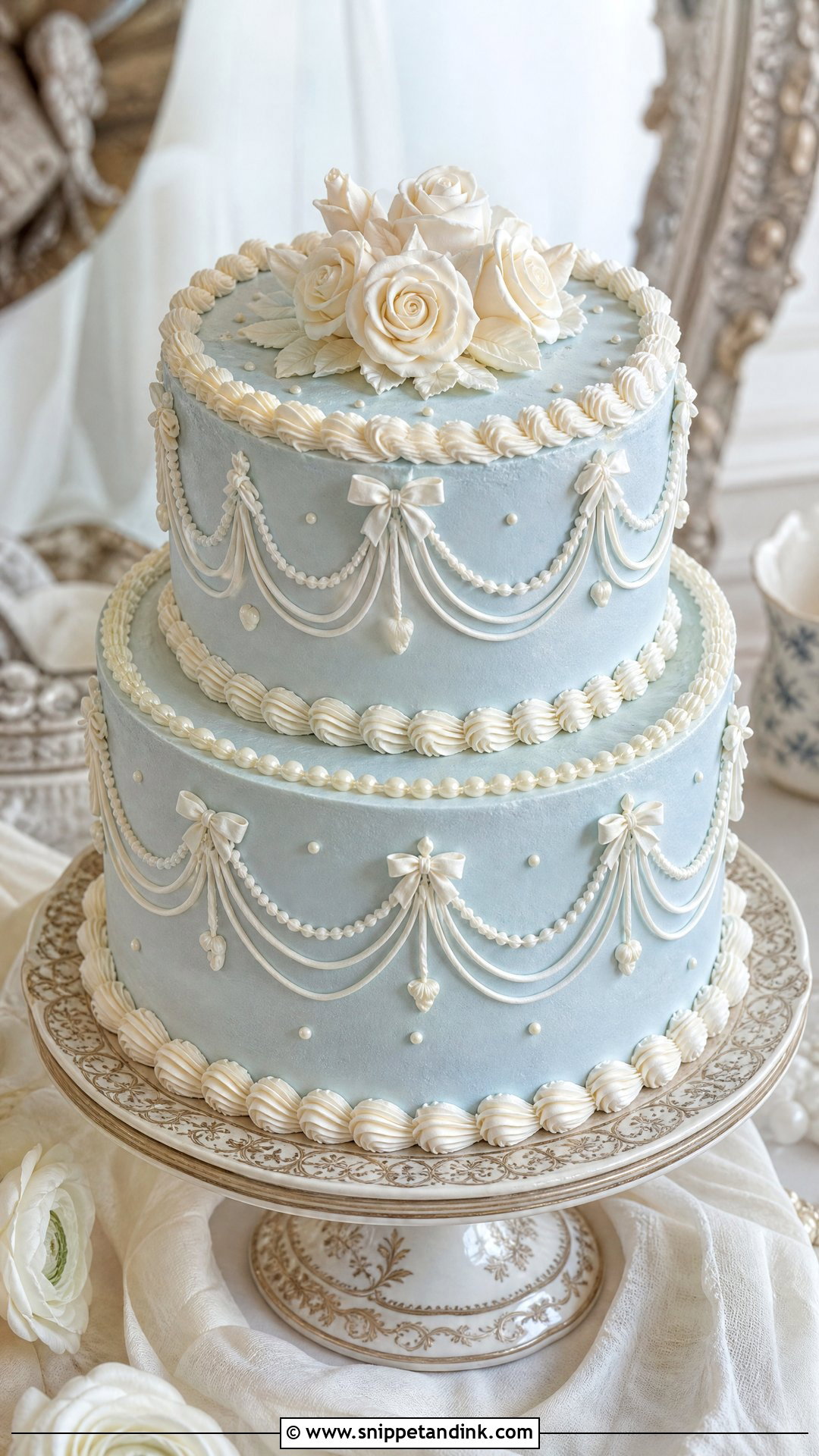
Vintage piping in powder or baby blue buttercream, with shell borders, ruffles, swags and small piped flowers, is a strong trend right now. Cherries often appear on vintage cakes, but pearls, tiny bows, sugar roses or white piping feel more bridal. One tall tier or a stack with different piping on each layer both work. Piping holds best in a stiffer buttercream, so I make it slightly firmer than for smooth icing, which also helps in warm rooms. Antique plates, lace linens and candlelight finish the table.
14. Blue Lambeth Wedding Cake
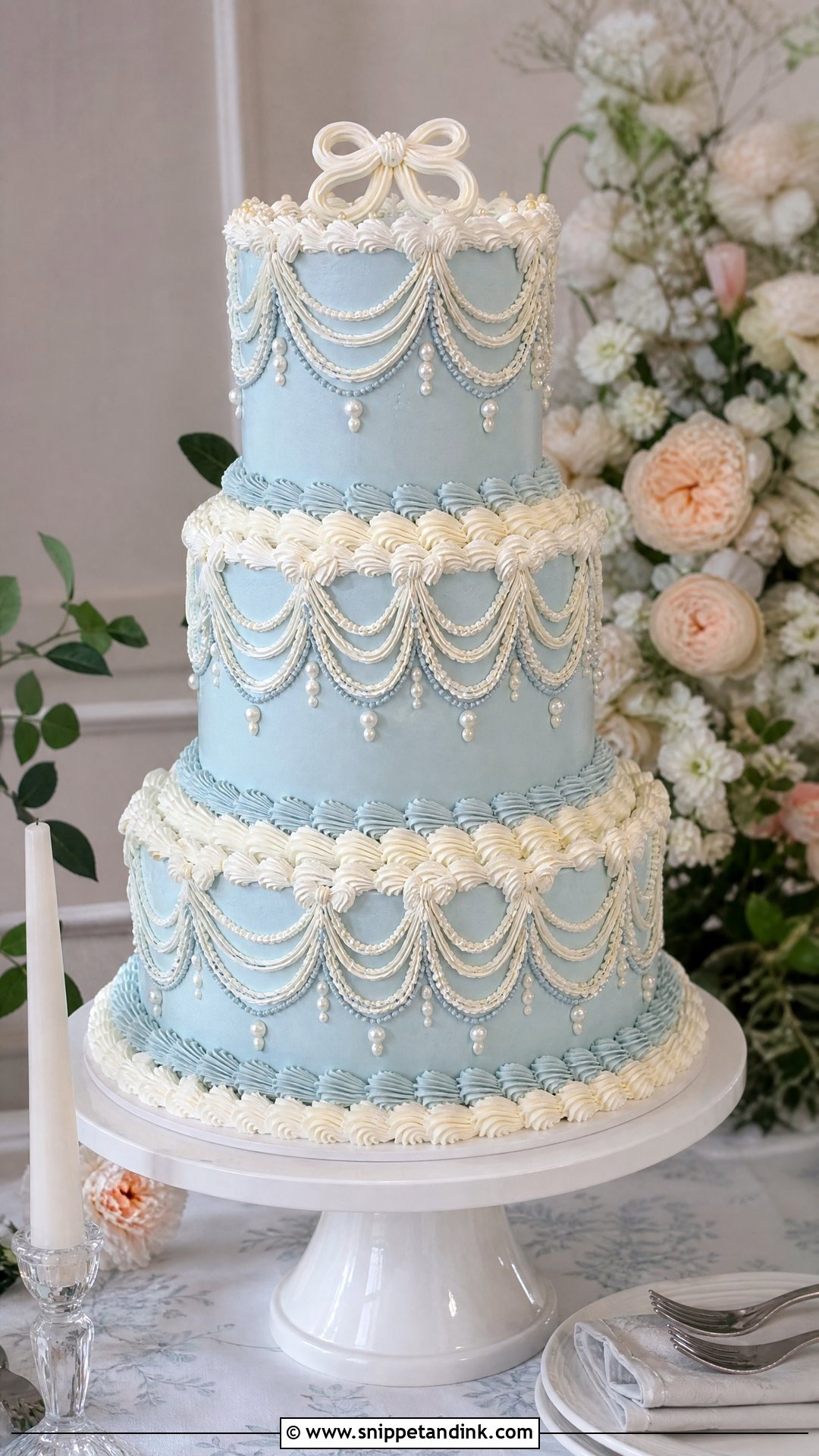
Lambeth is the most elaborate vintage piping: layered swags, shells, dots and borders built over each other. In baby, powder or dusty blue with white piping it stays sweet rather than heavy, and pearls and tiny sugar bows make it bridal. Lambeth takes hours of piping, and it’s fragile; borders crack if the cake is moved carelessly, so I deliver it fully assembled and set it in place myself. Close-up photos show every layer. It suits a playful, nostalgic reception.

15. Blue Ruffle Wedding Cake
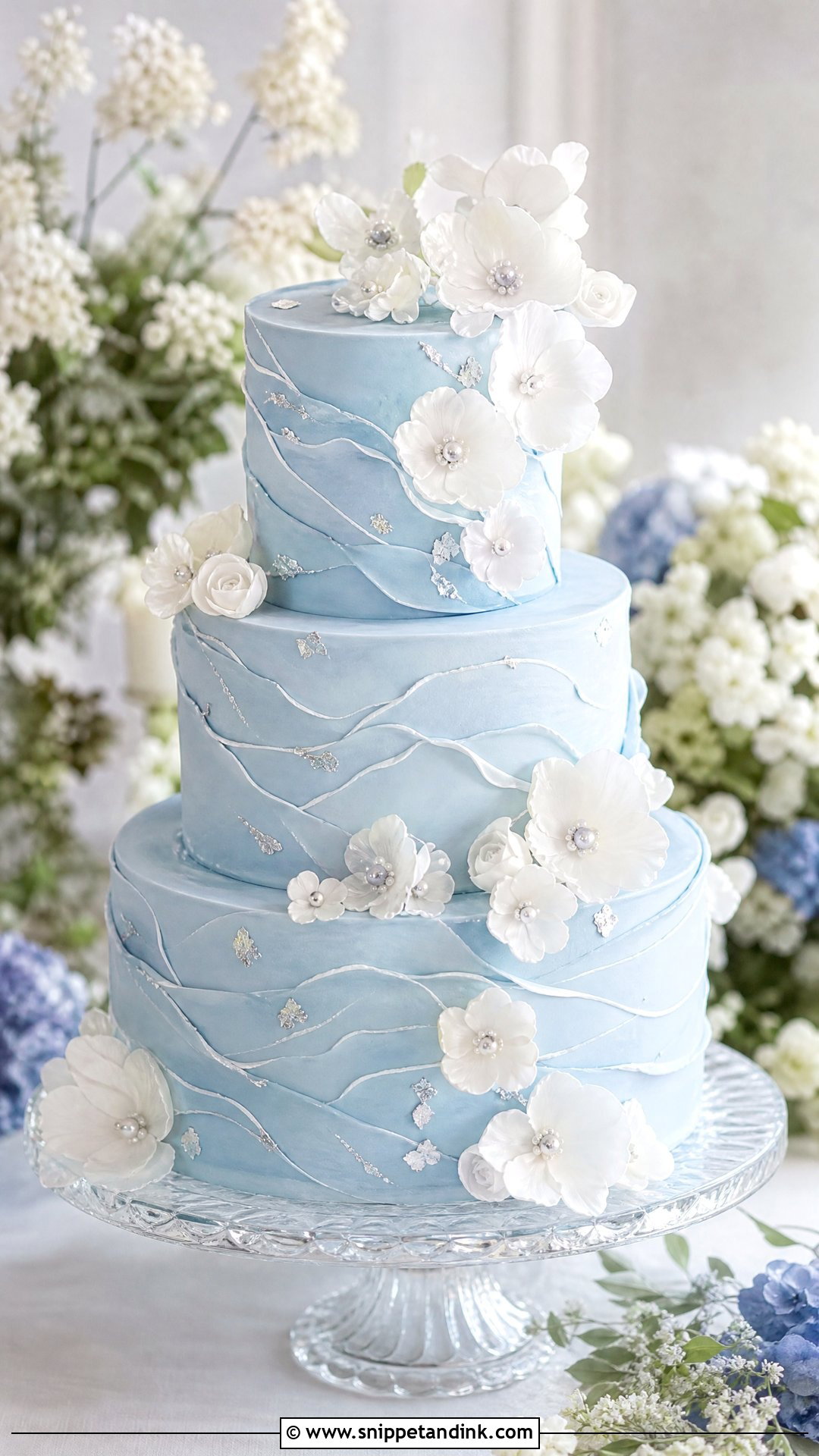
Ruffles add movement and softness. They can be fondant, wafer paper or buttercream. Pale blue ruffles look airy; deeper blue ones are more dramatic. A single ruffled tier or the whole cake both work, and since the texture is the feature, decoration stays light: a few white flowers, pearls or touches of silver leaf. Wafer paper ruffles are very light but go limp in humidity, so for outdoor summer weddings I’d choose fondant or buttercream. Coastal and garden venues suit it.
16. Blue Marble Wedding Cake
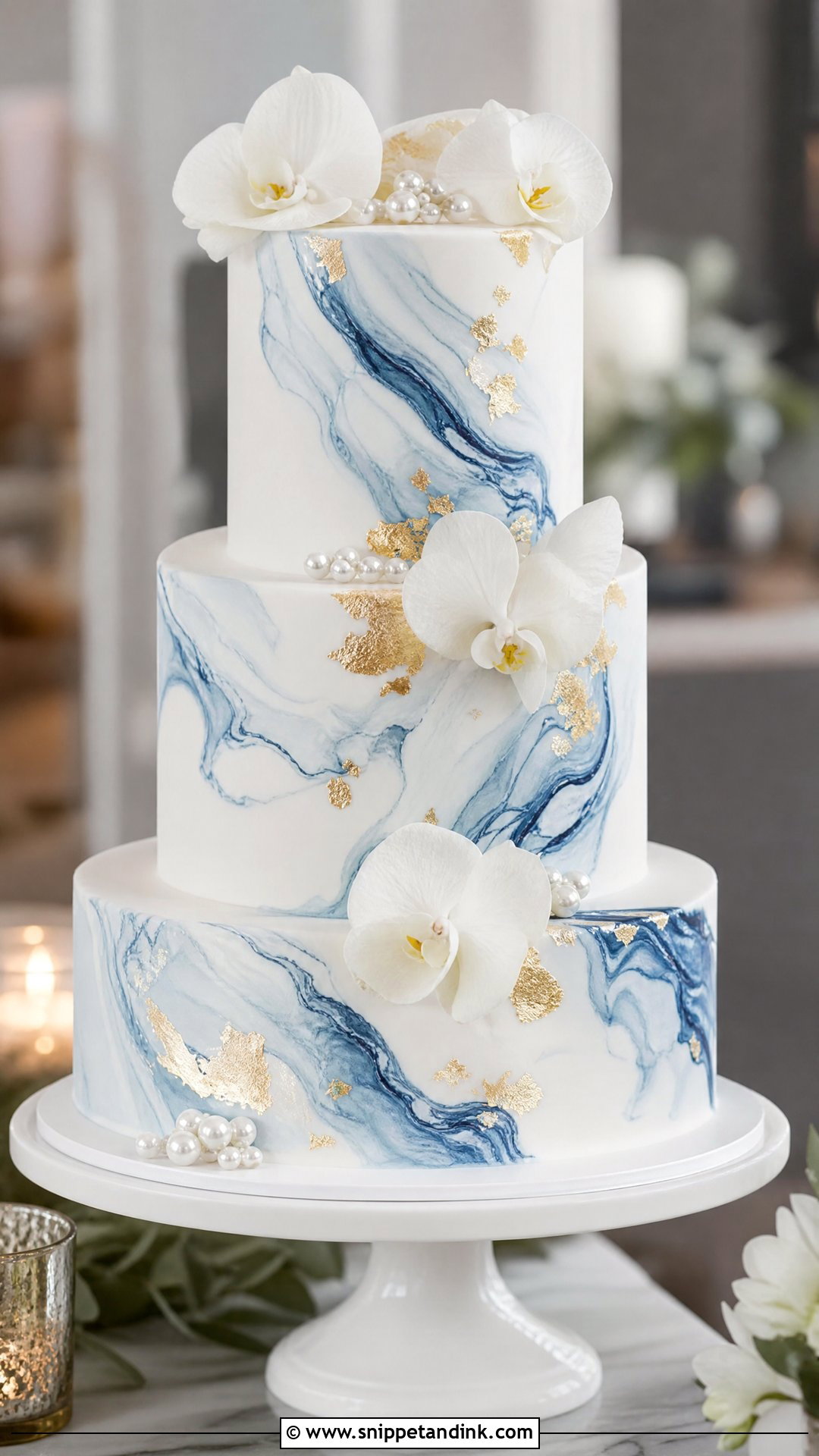
Marble swirls white, pale blue, navy or grey-blue into a stone-like pattern. It looks cleanest on fondant, where the lines stay sharp. Gold leaf warms it, silver cools it, white flowers soften it. It suits contemporary venues, galleries and rooftops, and couples who want blue without flowers or lace. I marble the fondant before rolling, so no two tiers come out identical; expect the same feel as your inspiration photo rather than an exact copy.
17. Blue Geometric Wedding Cake
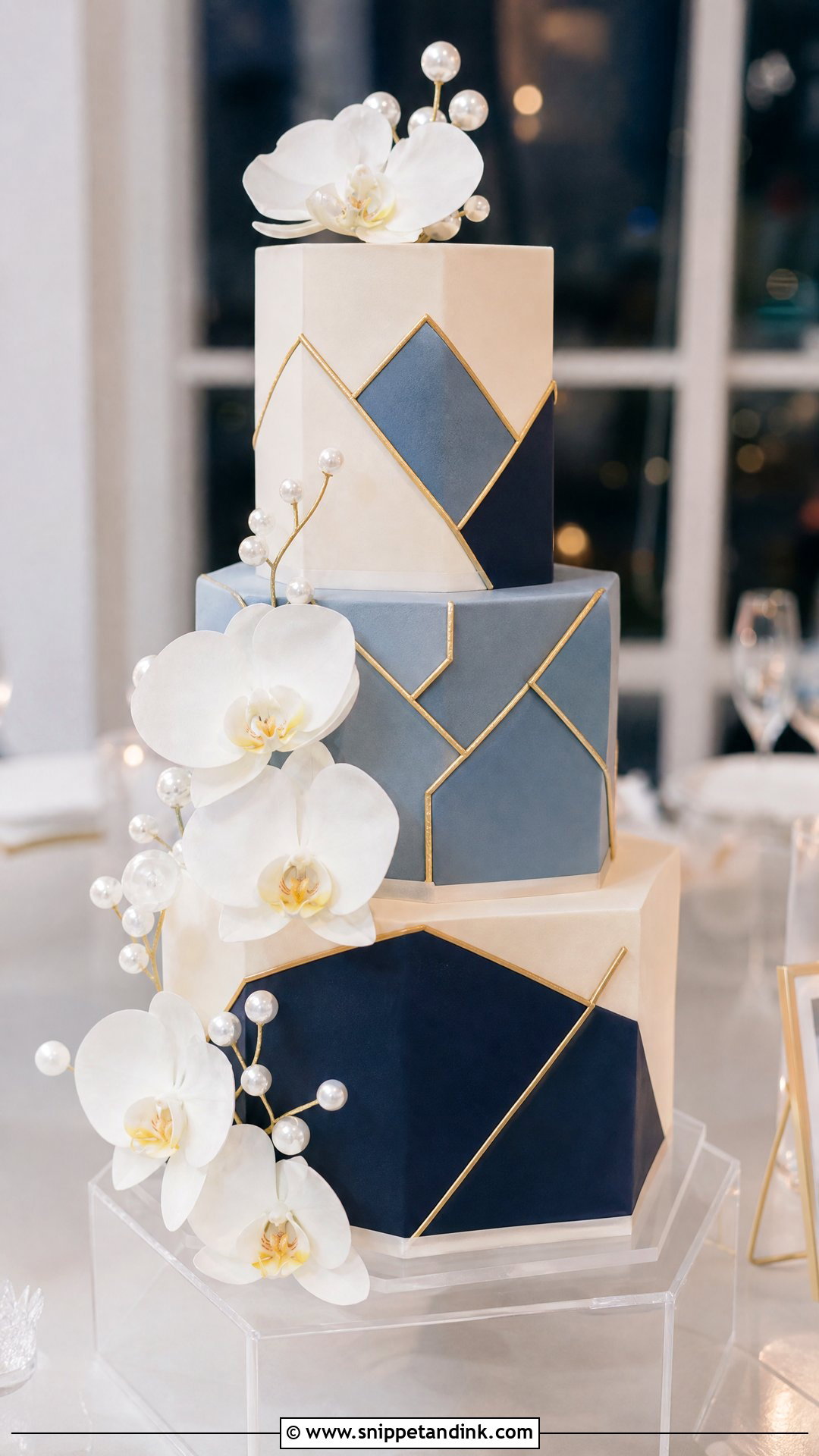
Geometric cakes swap florals for clean lines, hexagon tiers, angular patterns or metallic accents. Navy, royal and slate blue carry the look. A white orchid, small sugar flowers or one ivory tier soften it, and gold or silver lines define the edges. Sharp shapes need fondant over very firm, well-supported tiers; a slight lean is visible on a hexagon in a way it isn’t on a round cake. Modern venues and city weddings suit it.
18. Blue Coastal Wedding Cake
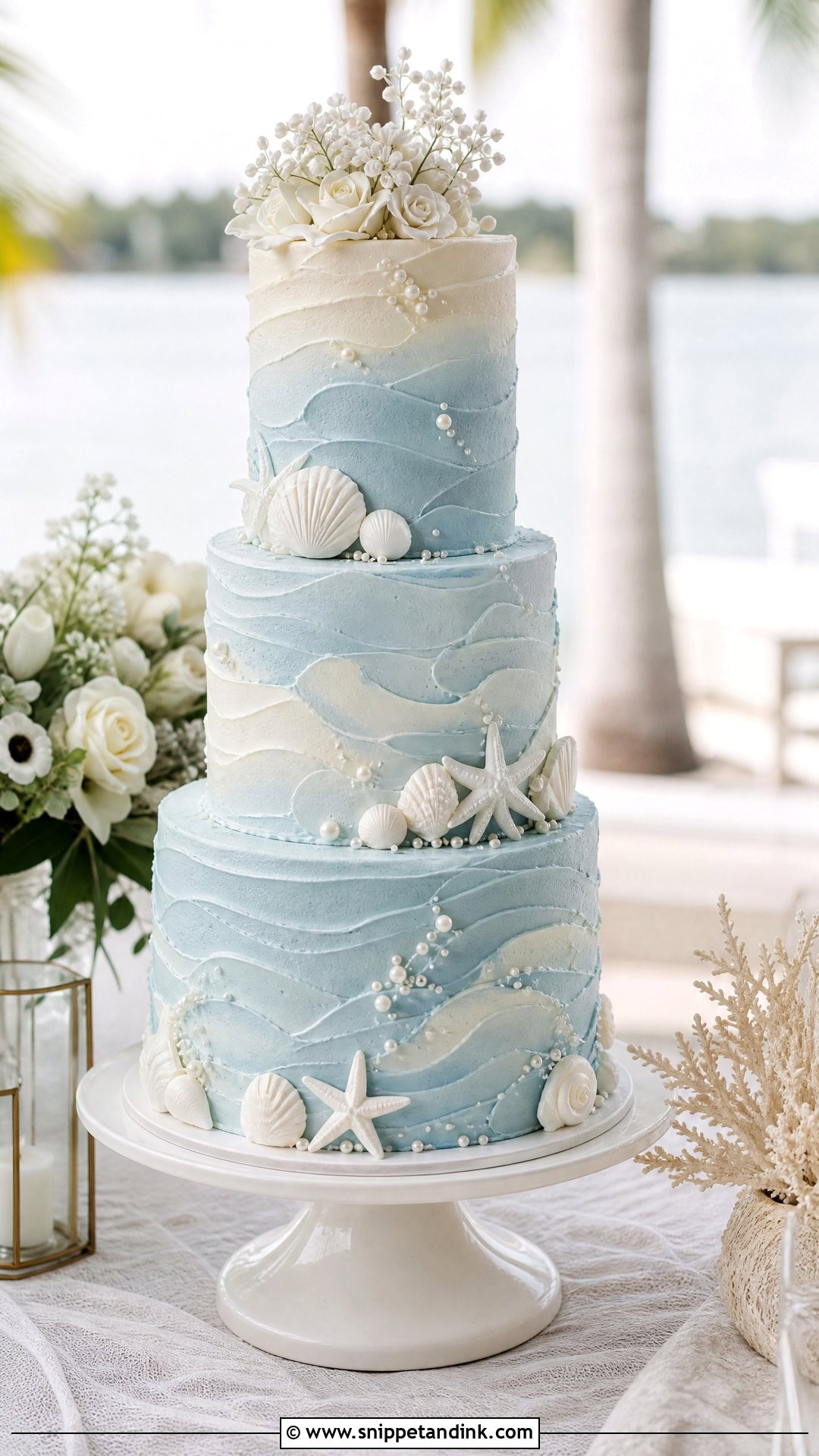
A coastal cake should feel fresh rather than themed. Soft blue buttercream, watercolor waves, pearls and white sugar shells suggest the beach while staying bridal. Aqua, sea blue and powder blue all work. Textured frosting can suggest water, with white flowers or subtle shells at the base. I’d avoid real shells and sand-effect brown sugar in quantity; they read casual quickly. Outdoor beach receptions also mean heat and wind, so I’d keep this cake in shade until it’s cut.
19. Blue Hydrangea Wedding Cake
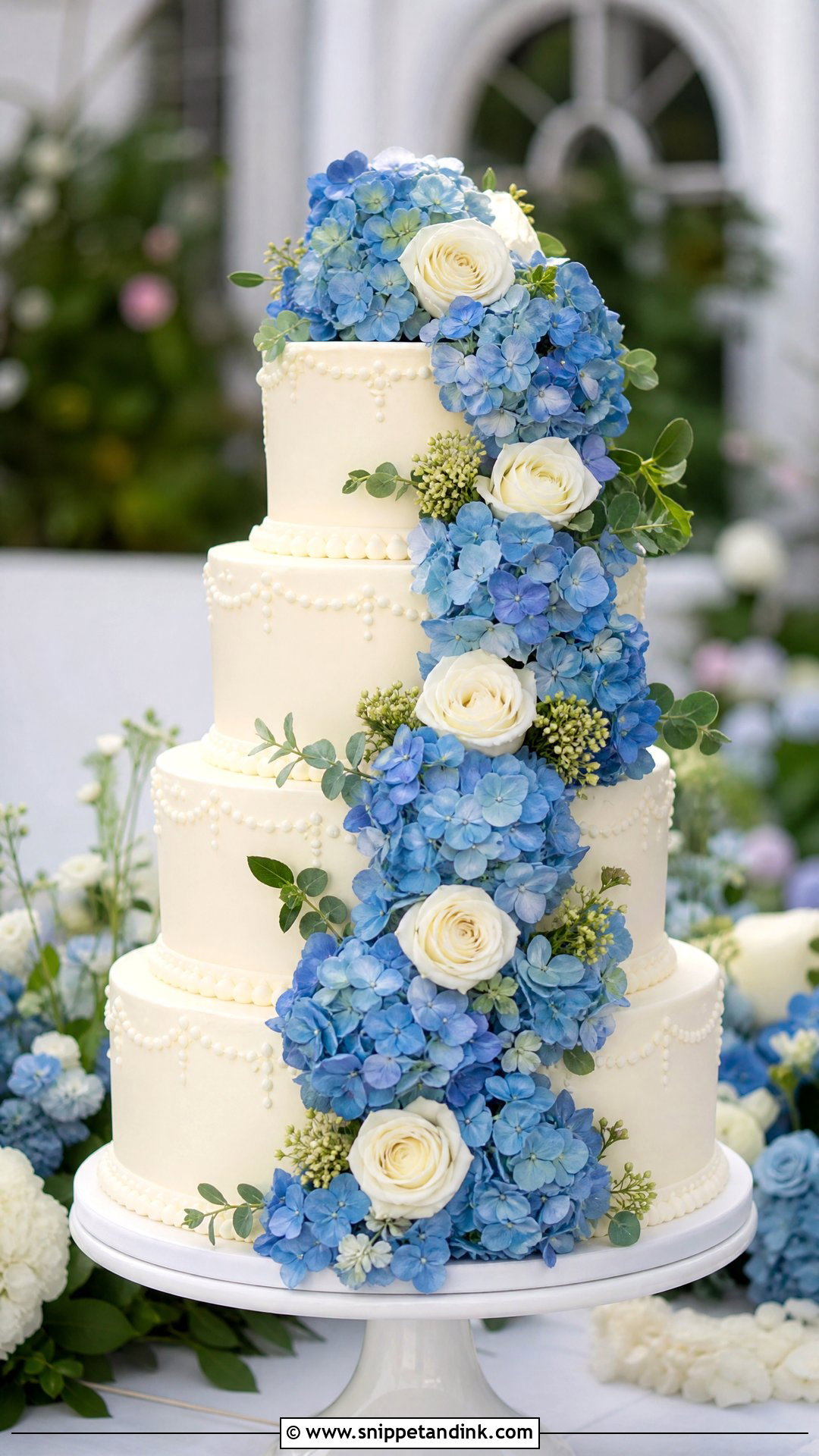
Hydrangeas come in rich natural blues, which makes them an obvious match. They can be fresh, sugar or painted on ivory or pale blue frosting, cascading down the tiers or mixed with white roses, greenery or baby’s breath. Fresh hydrangeas are thirsty and wilt within an hour or two out of water, and they’re not food-safe, so on a cake I’d use sugar hydrangeas or have the florist add fresh heads in a barrier just before guests arrive. Spring and summer garden weddings suit it.

20. Blue Rose Wedding Cake
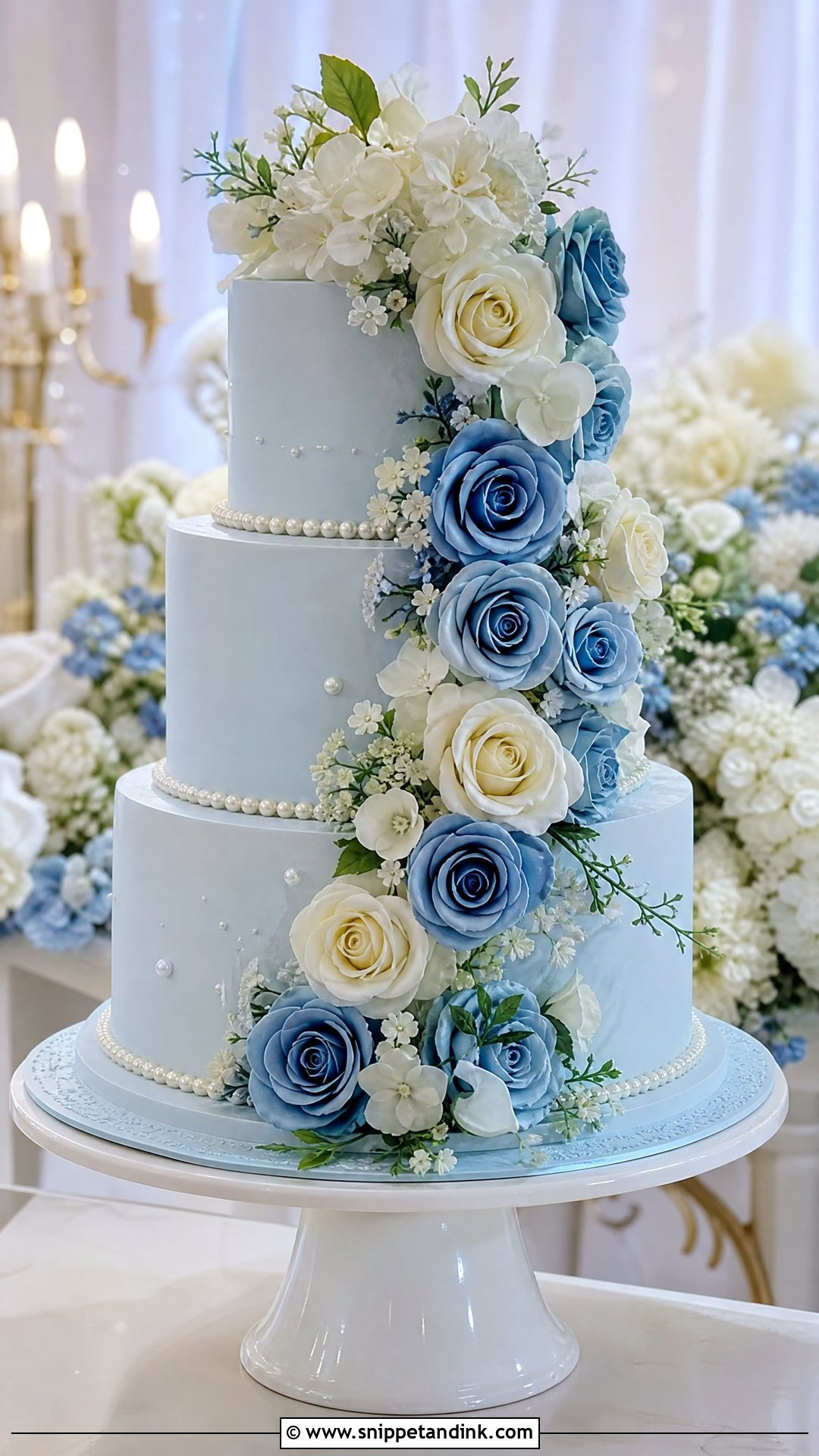
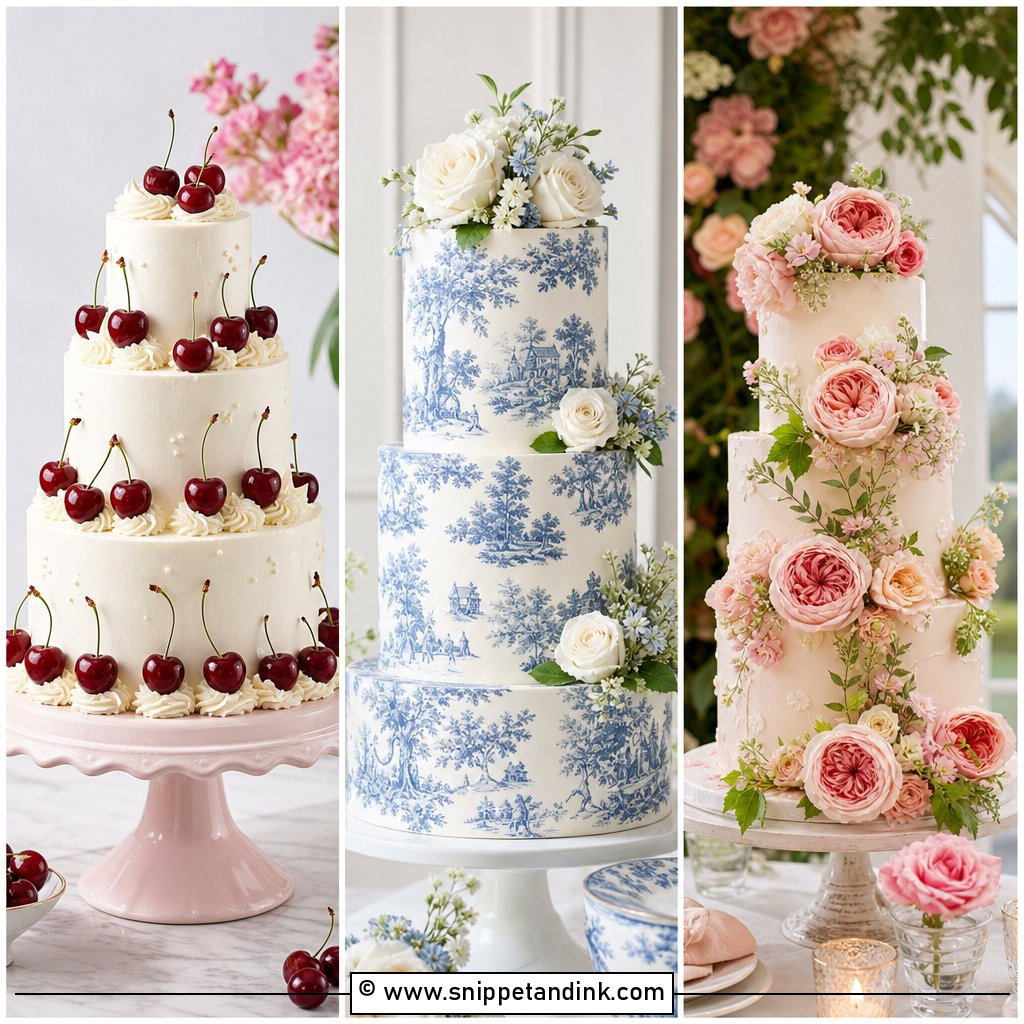
True blue roses don’t exist in nature; they’re dyed or made from sugar. So this design works best with handcrafted sugar roses, painted buttercream roses, or fresh white roses with blue accents. Dusty or powder blue frosting keeps it soft. A cascade of blue and ivory roses can make a simple tiered cake feel special. Pearls or metallic edges suit a formal wedding; greenery and small filler flowers suit a garden. Dyed fresh roses can bleed color onto icing, which is another reason I lean toward sugar.
21. Blue Butterfly Wedding Cake
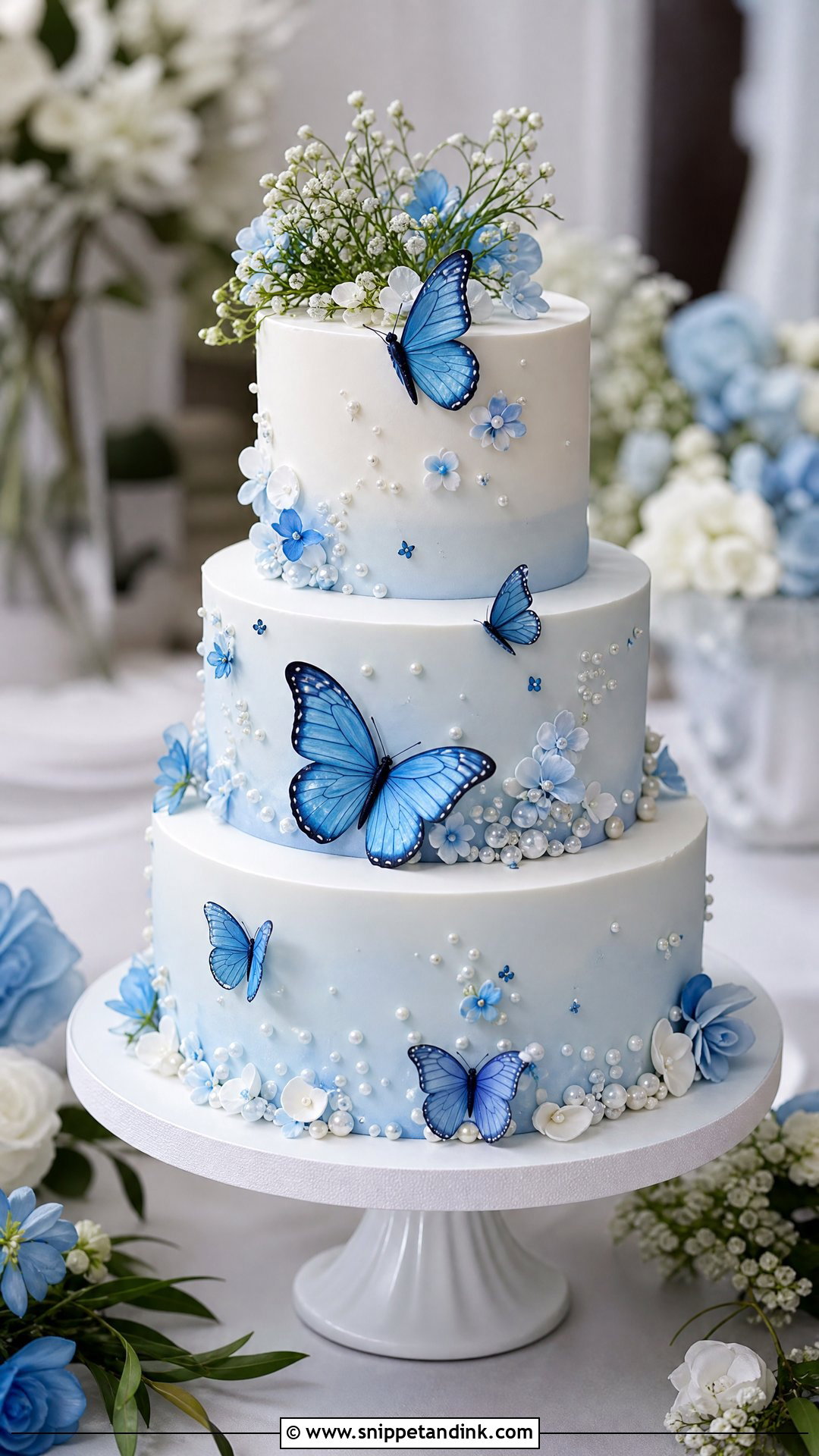
Butterflies add a whimsical touch, and the trick is keeping them delicate. I make them from wafer paper or thin chocolate, set them as if floating up pale blue, dusty blue or white tiers, and add small sugar flowers or pearl dots. Wafer paper butterflies are fragile and curl in humidity, so I add them on site. Keep the rest of the cake simple. Spring and garden weddings suit it.
22. Blue Celestial Wedding Cake
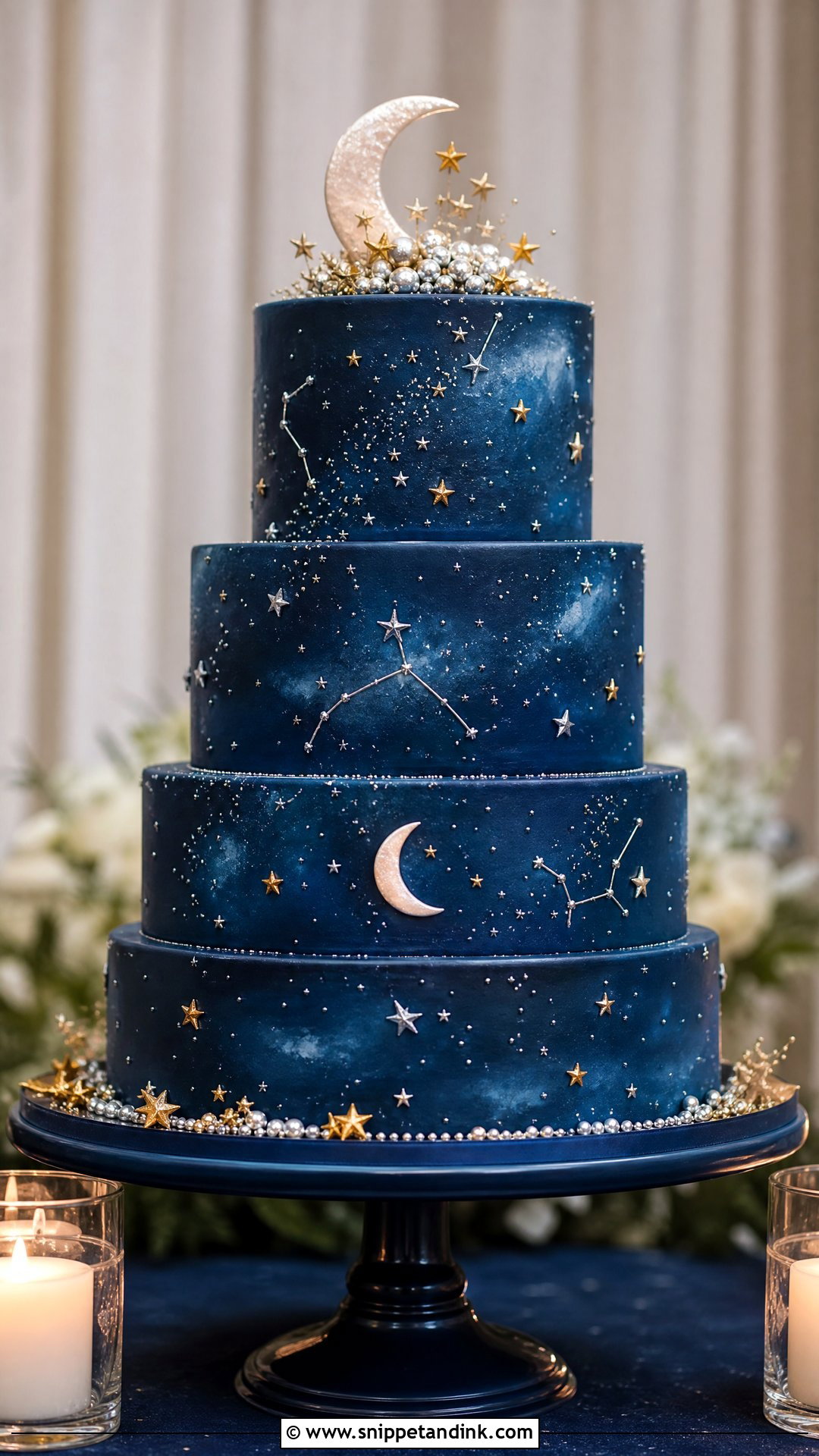
Celestial cakes use navy or midnight blue as a night sky with edible gold stars, silver constellations, pearl planets or tiny white dots. Smooth fondant keeps it polished; a little texture makes it more artistic. I paint the stars by hand with edible metallic paint so they look scattered, not stamped. It works for rooftop weddings and evening ceremonies, and it turns the dessert table into a focal point without being bright.
23. Blue Chinoiserie Wedding Cake
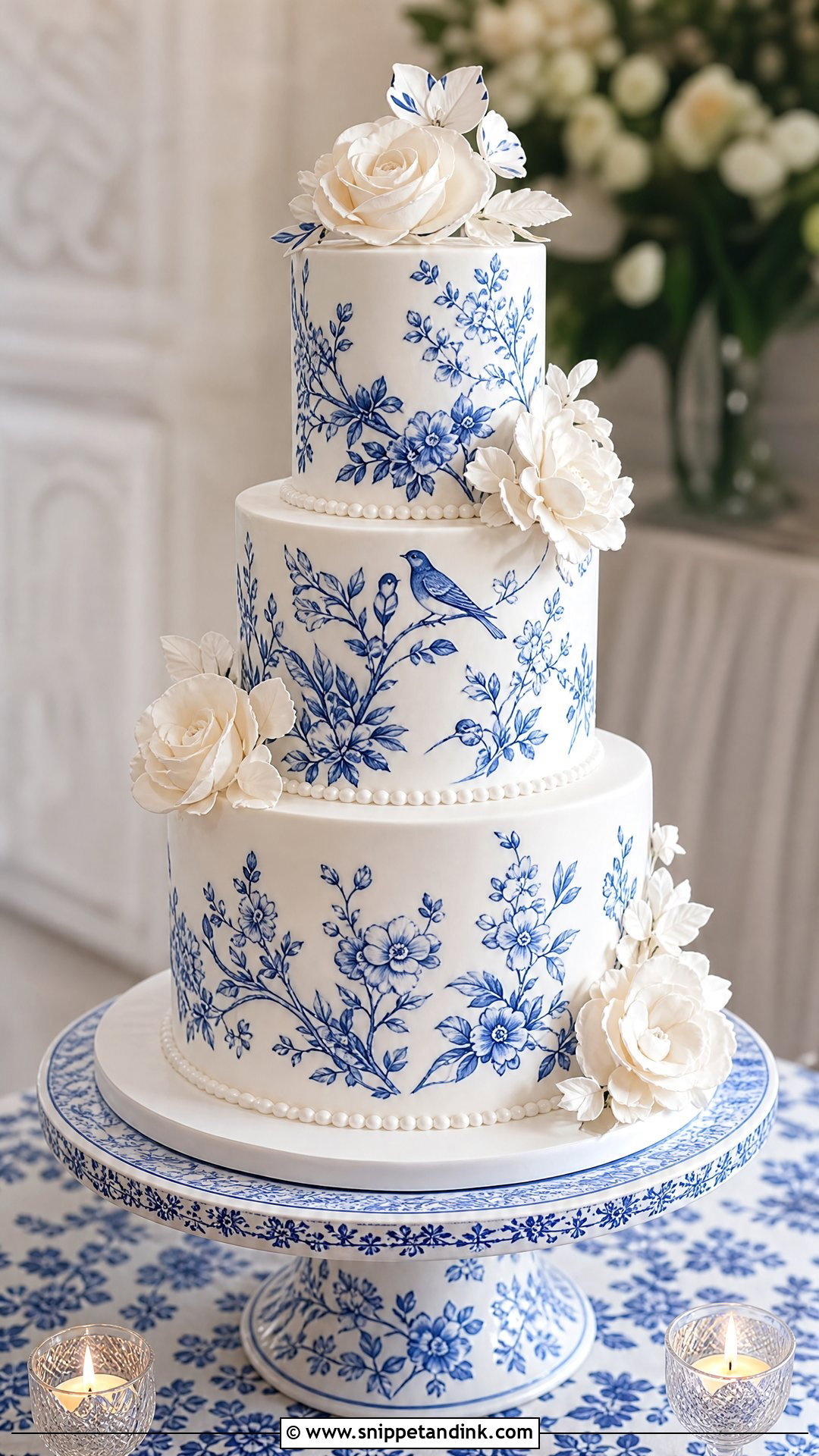
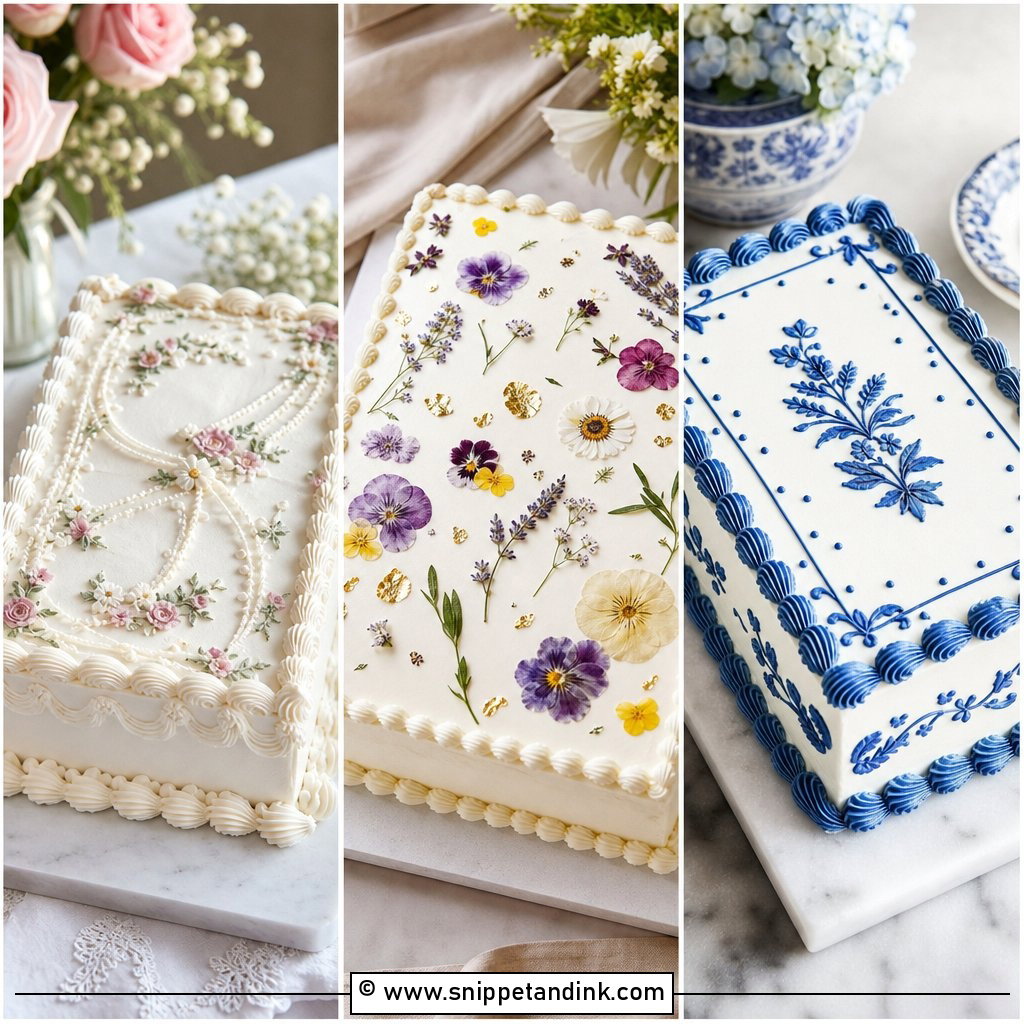
Chinoiserie borrows from blue and white porcelain: hand-painted floral branches, birds and vines on white fondant, in navy, cobalt or soft dusty blue. The shape should stay simple so the painting has room. White sugar flowers, a ribbon edge or a few fresh blooms finish it. The painting is slow, detailed work, so allow your baker extra lead time and expect it in the price. Estate weddings and elegant indoor venues suit it.
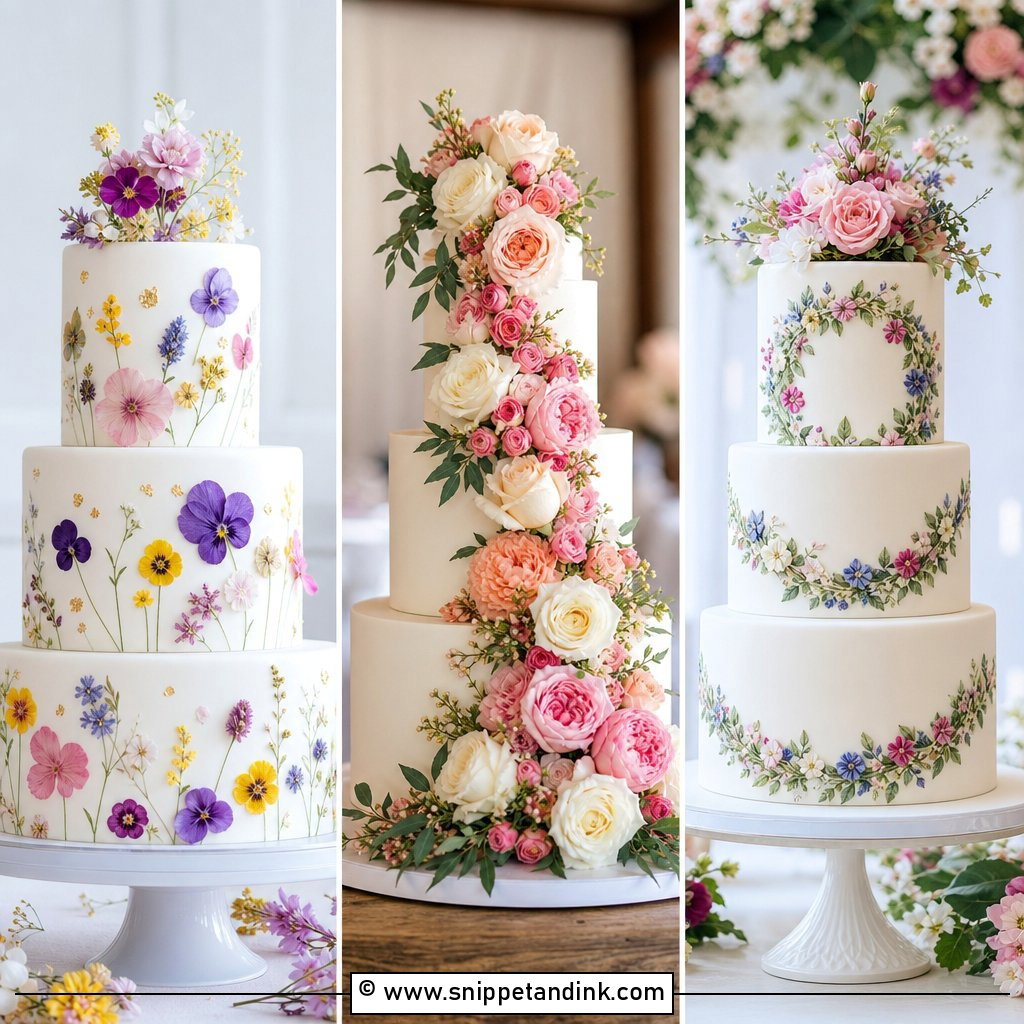
24. Blue Pressed Flower Wedding Cake
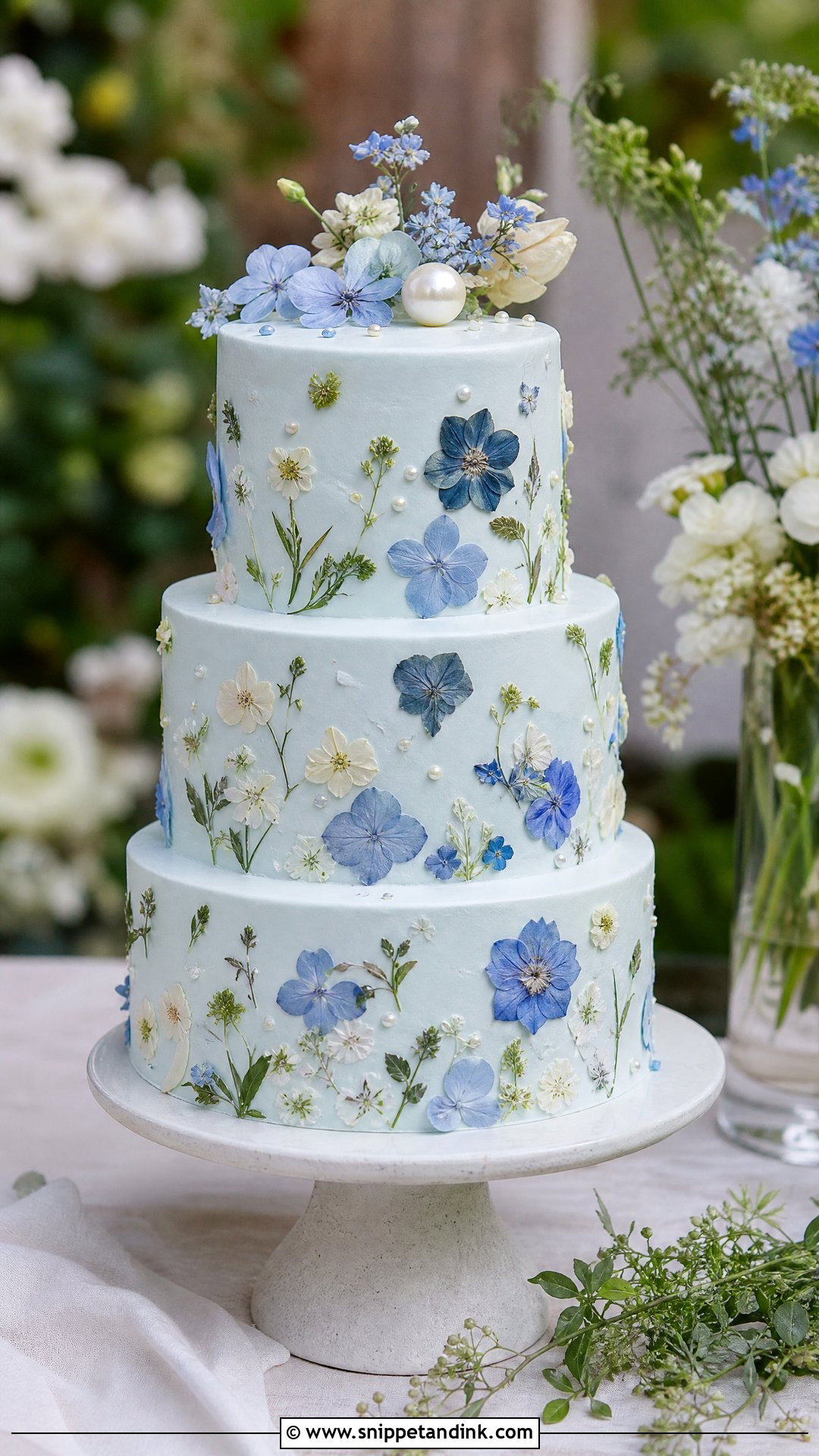
Pressed flowers feel natural and handmade. The flowers can be edible blue blossoms, small white blooms, or a mix of greenery and petals, set into white or pale blue buttercream. Edible pressed flowers must be grown for eating, without pesticides; cornflowers, violas and borage are common blue options. Placement should be deliberate, not scattered. Garden weddings, intimate receptions and spring celebrations suit it.
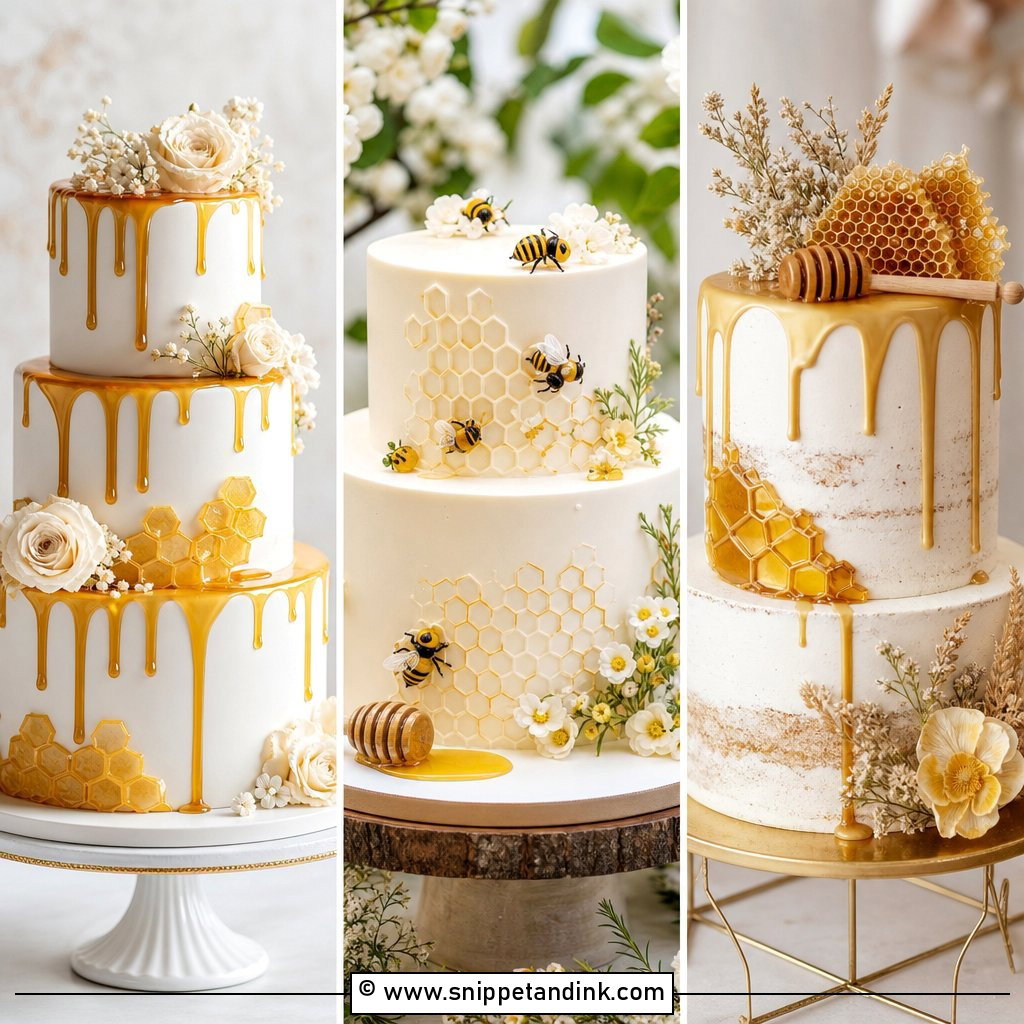
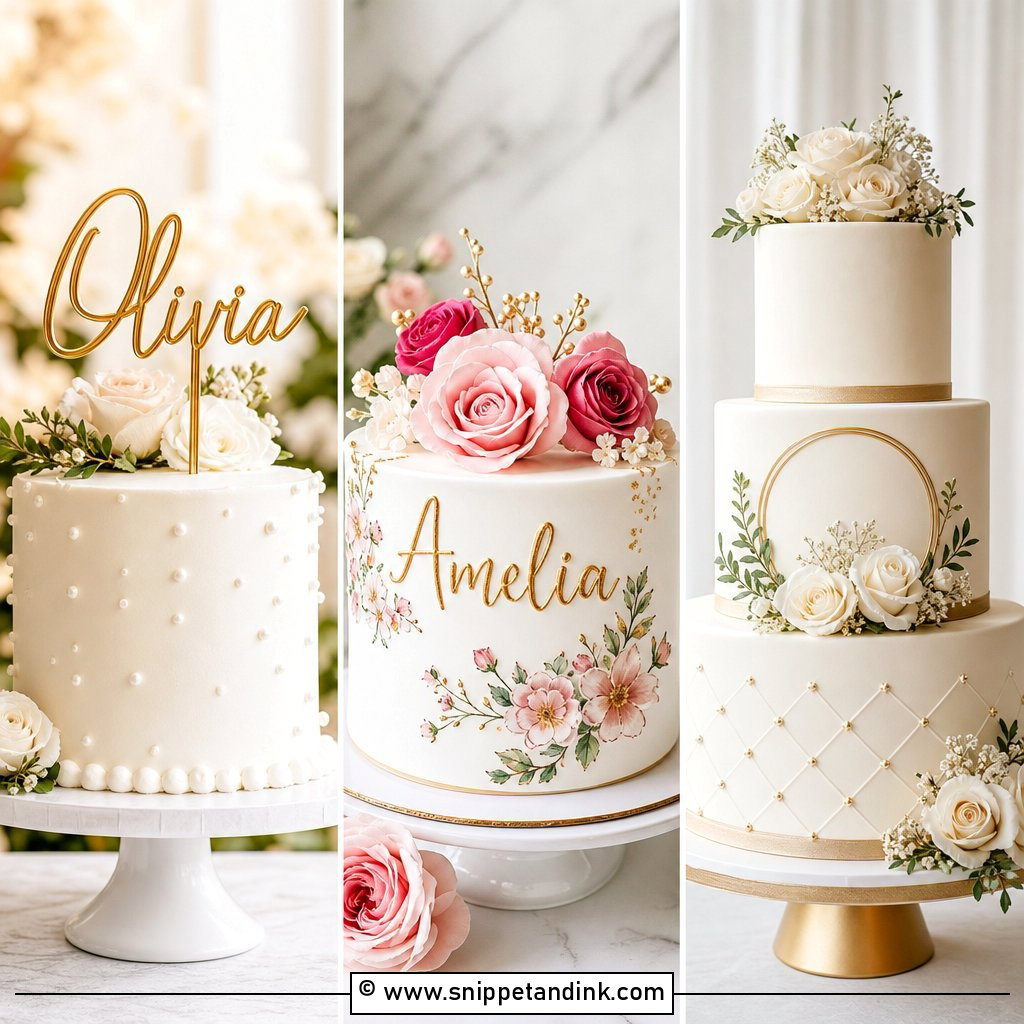
25. Blue Minimalist Wedding Cake
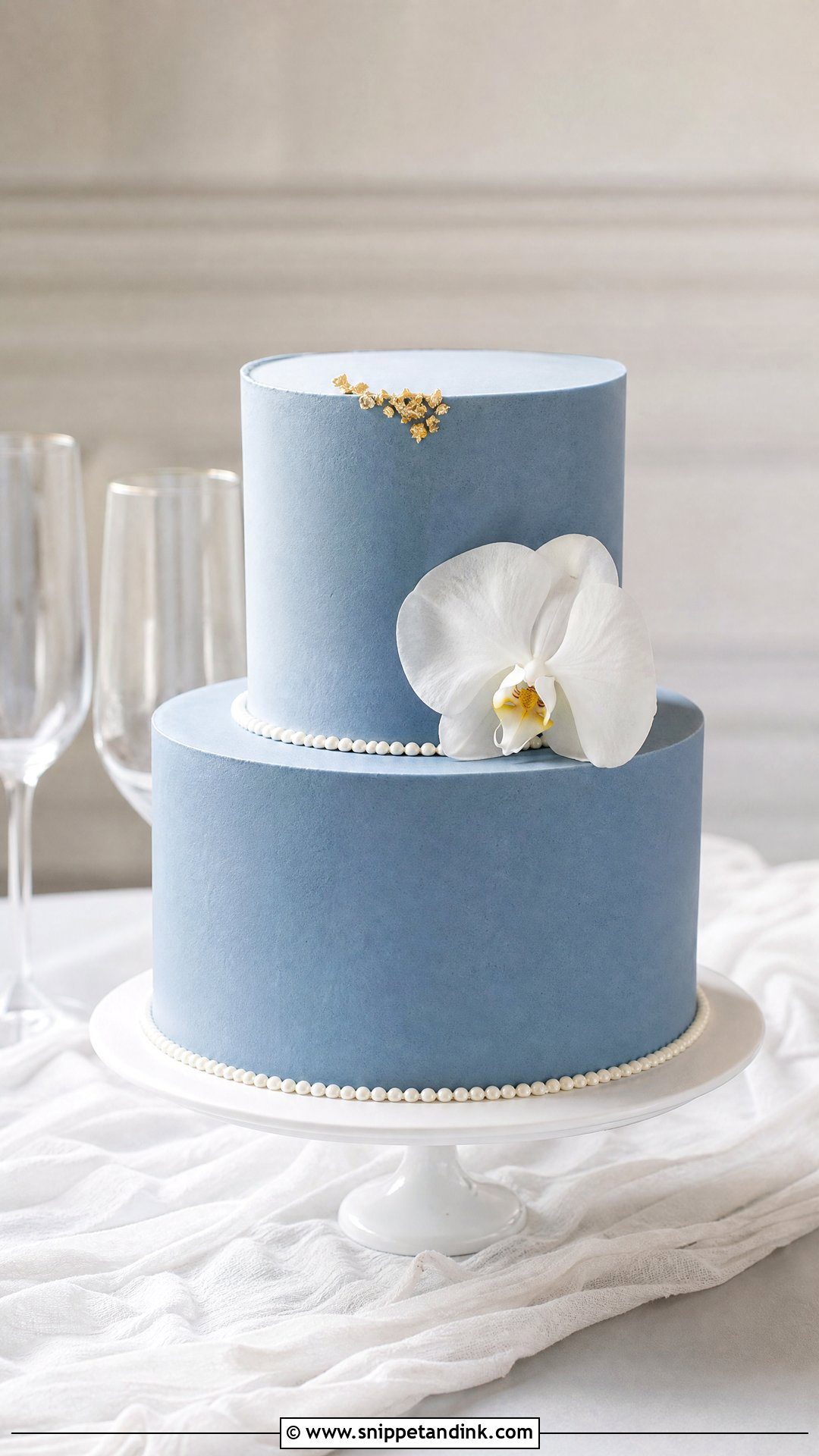
Minimalism shows the cake’s shape and finish. One clean shade, such as dusty, slate or powder blue, with smooth tiers and one strong detail: a single white orchid, a thin pearl border, a small gold accent or a crisp ribbon. Minimal cakes show every flaw, so the icing has to be smooth and the edges sharp. Modern weddings, courthouse receptions and small ceremonies suit it.
26. Blue Textured Buttercream Wedding Cake
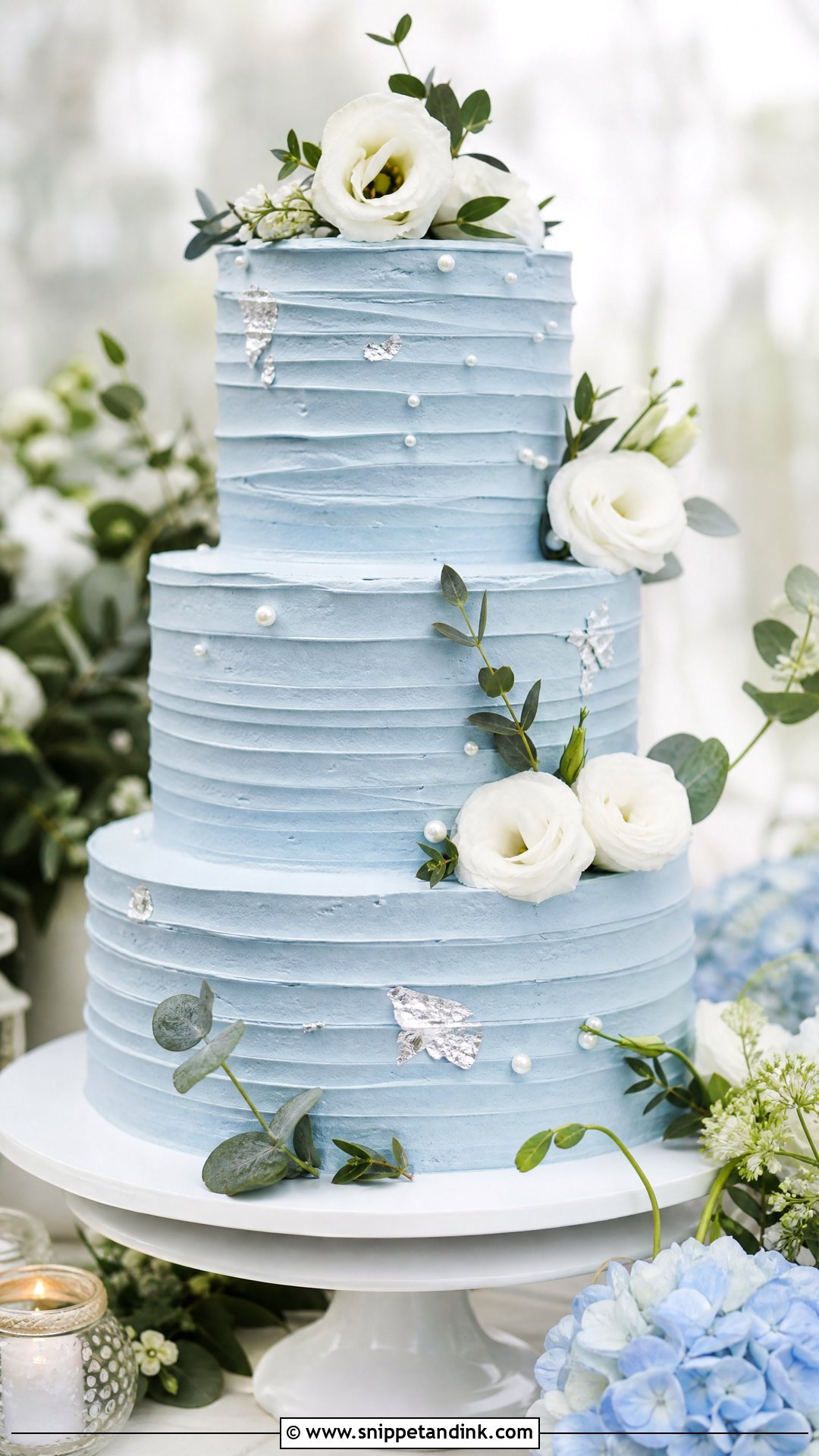
Textured buttercream looks handmade and approachable. Waves, horizontal lines, palette-knife strokes or ridges all show well in dusty or sky blue. White flowers, greenery, pearls or a little silver leaf finish it. Texture also hides small imperfections and holds up better to transport than ultra-smooth icing. It reads from across the room, which makes it a good choice for garden, rustic, coastal and semi-formal receptions.
27. Blue Drip Wedding Cake
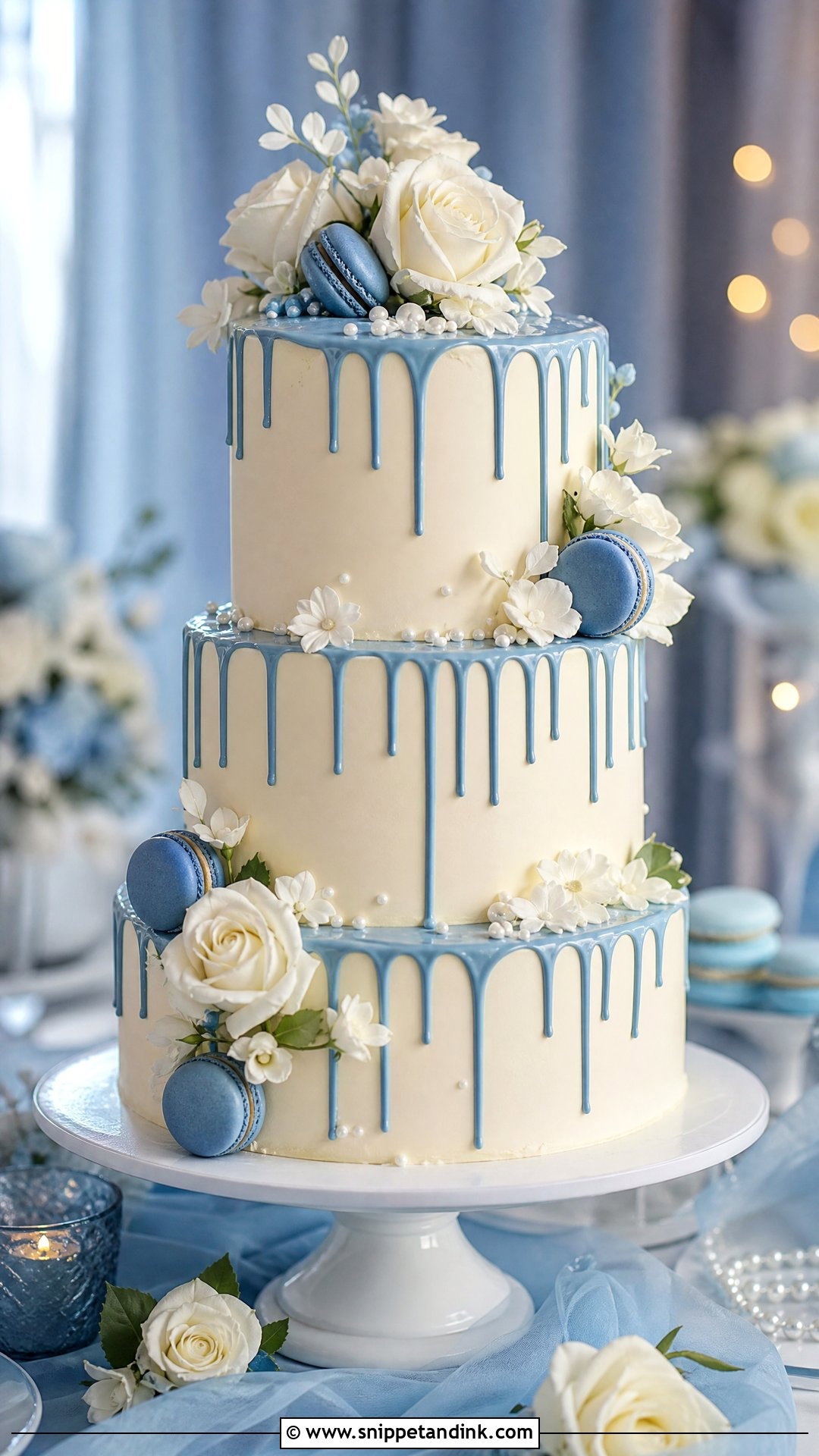
A drip can be pale blue, navy, white chocolate tinted blue, or metallic blue over ivory frosting. A light blue drip with fresh flowers and pearls is soft; navy drip over white or dusty blue is bolder. I tint white chocolate ganache with oil-based color, since water-based gel can make chocolate seize. The drip has to be neat and controlled. It suits modern receptions and dessert tables with personality.
28. Blue Square Wedding Cake
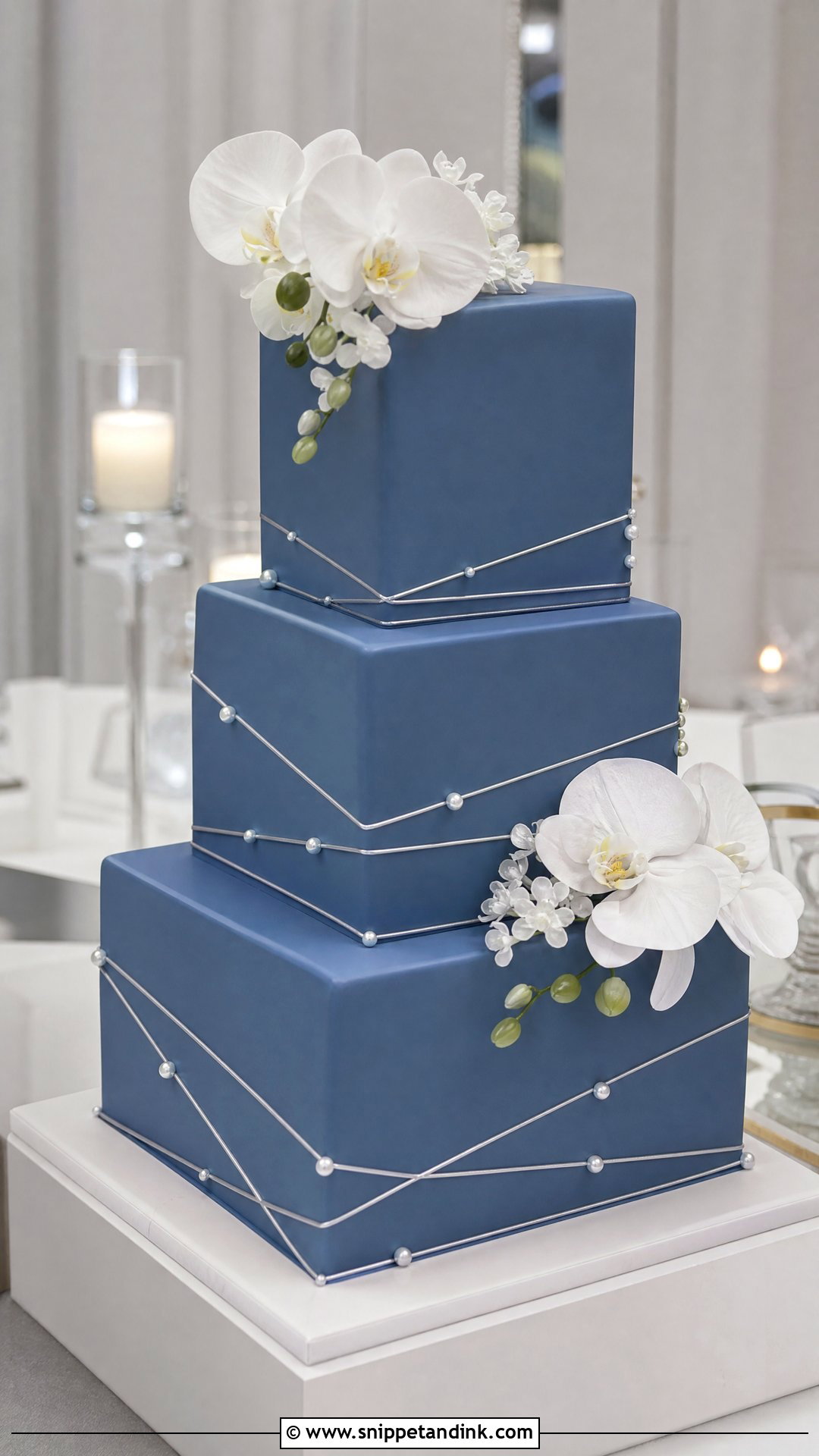
Square tiers give a clean, architectural shape, especially in smooth fondant or polished buttercream. Dusty blue, navy and slate blue all suit them. White flowers on the corners, thin metallic lines or pearl details soften the structure. They can be stacked evenly or slightly offset. Square cakes are harder to ice cleanly than round ones, as corners tend to tear or round off, so check your baker has done them before. Contemporary and formal venues suit them.
29. Blue Single Tier Wedding Cake
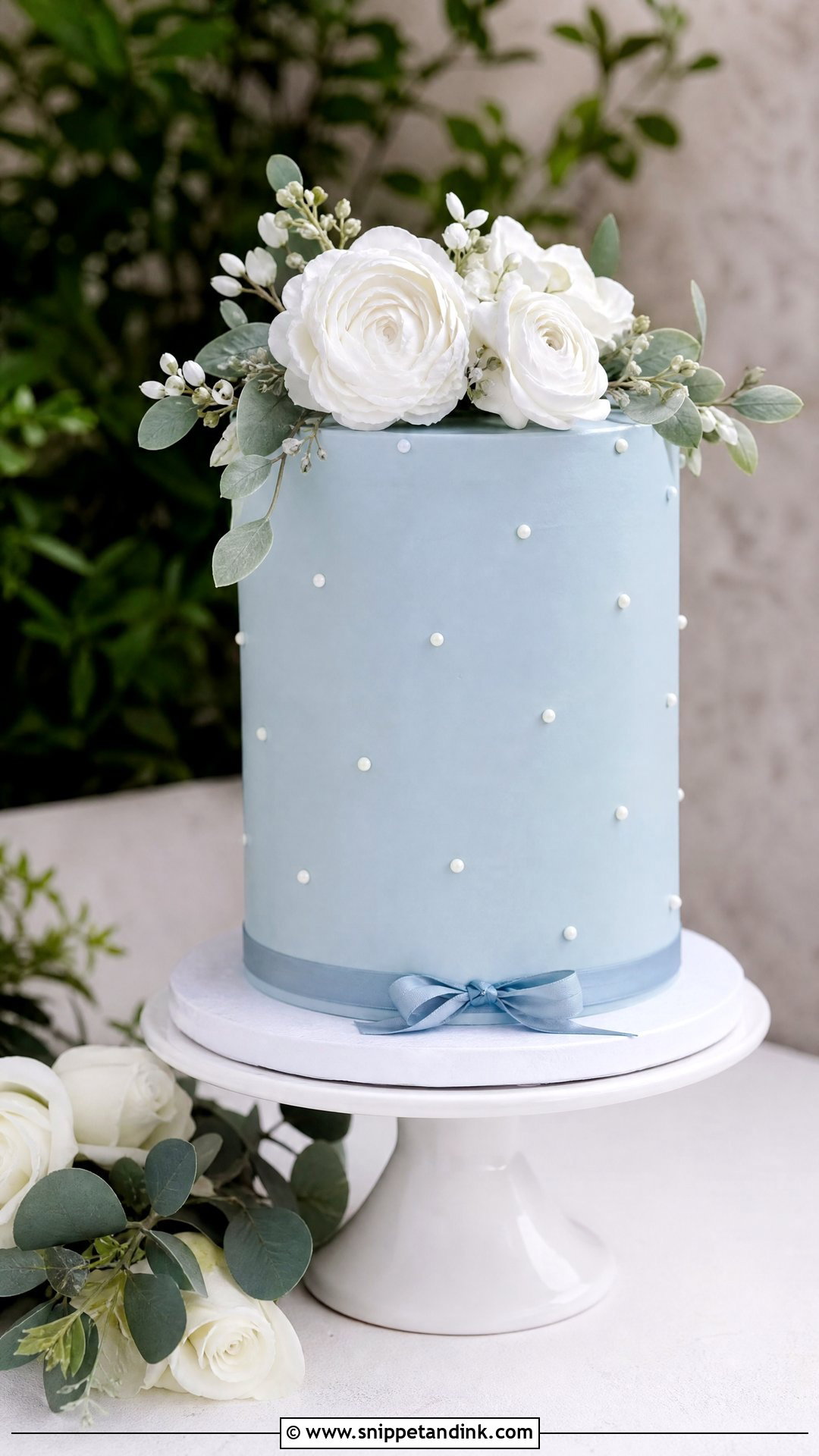
A single tier suits elopements, micro weddings and dessert tables with several sweets. Powder blue buttercream, dusty blue fondant or a textured finish all work, with white blooms, pearls, mini sugar flowers or a small topper for height. I make single tiers taller than a standard cake, usually a double-height tier, because a short one looks lost on a table. It’s easy to display and kinder to the budget. For a small celebration, it’s often all you need.
30. Blue Two Tier Wedding Cake
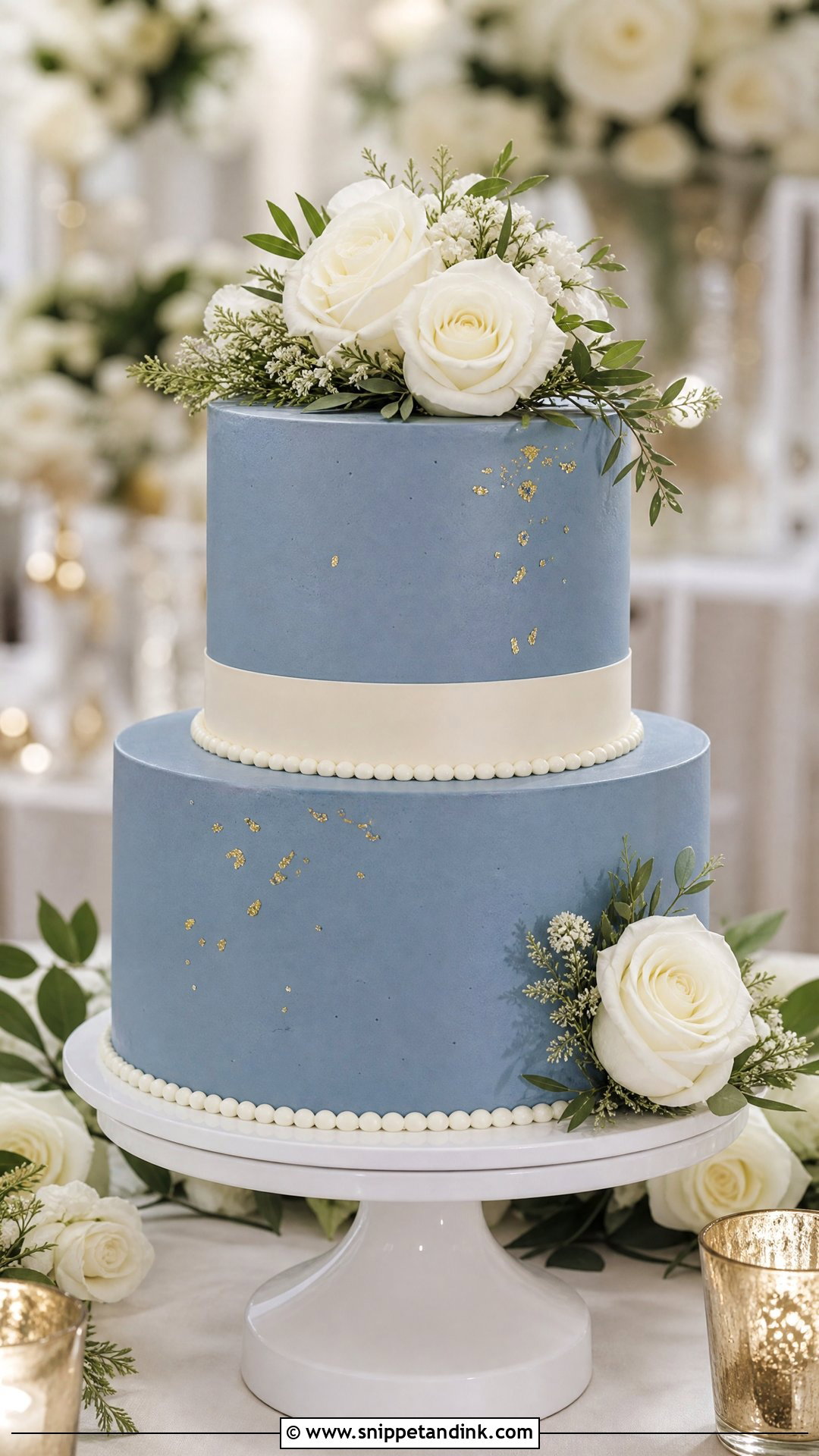
Two tiers give enough height for a centerpiece without overwhelming the table, which makes them practical for many guest counts. Dusty blue on both tiers looks clean; one blue and one ivory tier gives contrast. Florals between tiers, a pearl border or a soft metallic accent add detail. Buttercream, fondant, watercolor, lace or texture all work. If you need more servings, a two-tier display cake with sheet cake in the kitchen is a common and sensible approach.
Blue Flowers That Can Sit Safely on a Cake
Blue flowers are some of the prettiest on a cake, and some of the riskiest. Several popular blue blooms are toxic, and many florist flowers are treated with chemicals not meant for food. This is how I sort them.
- Edible when grown for eating: cornflowers, borage, violas and pansies. They’re small but bring true blue.
- Decorative only, kept off the icing: hydrangea and delphinium. If they’re used, they sit on a barrier or in sealed picks.
- Dyed blue roses and orchids: the dye can bleed onto icing, especially as the room warms.
- Sugar flowers: any blue at all, safe, and they last the whole reception.
Whoever adds fresh flowers, me or the florist, they go on as late as possible. Stems are wrapped, and nothing goes directly into the cake.
If your bouquet is built around hydrangea or delphinium and you want the cake to echo it, I’d copy those flowers in sugar rather than borrow them from the florist’s bucket. A sugar hydrangea head takes time to make, but it holds its color under lights, it won’t wilt by the speeches, and nobody has to pick petals off a slice before serving it.
Matching the Shade of Blue to the Room It Will Stand In
Blue can be soft, bold, vintage, modern, coastal or minimal, which is why it’s so useful. Dusty blue is calm, powder blue sweet, navy dramatic, watercolor artistic. The right cake suits your venue, flowers, season and palette, and it should feel like you. Look at your favorites, compare the details, and notice which fit your reception table. Once the shade, frosting and decoration are right, blue gives you a cake that’s both bridal and unmistakably yours.
You'll Like These Ideas:




Leave a Reply