
A carousel cake is a tiered cake lifted on pillars so you can see air between the layers, the way a fairground carousel lifts its horses on poles. I love building them because the gaps do half the decorating: they give flowers somewhere to sit and make a three tier cake read as tall as a five tier one. Tall tiers, old-school piping and decorative spacers are all back in demand, so pillared cakes no longer look dated. Below are the versions couples ask me about most, with what each one needs from your baker and where it tends to go wrong.
What Actually Holds a Pillared Cake Up
Every carousel cake is really a set of separate cakes standing on plates. Each tier sits on its own board or separator plate, and that plate is held up either by legs that pass straight through the tier below to its board, or by columns resting on dowels hidden inside that tier. Either way, the sponge carries almost none of the weight. That’s why these cakes can look so tall without slumping, and why the details of your order matter more than the photos.
Questions I’d want you to ask at the tasting
- Will the tiers travel separately and be assembled at the venue? For any cake with visible gaps, they should.
- Are the columns plastic, acrylic or decorative metal, and are they hired or yours to keep? Hired sets often carry a deposit.
- Who sets the cake up, and how long do they need at the table before guests come in?
- How level is the cake table? A pillared cake shows a slope far more than a stacked one, so a wobbly trestle is a real problem.
I also ask for the cake table to sit away from doors, the dance floor and any heater. Pillars magnify every knock, and a buttercream tier beside a radiator softens on one side, which can make the whole cake lean.
1. White Carousel Wedding Cake
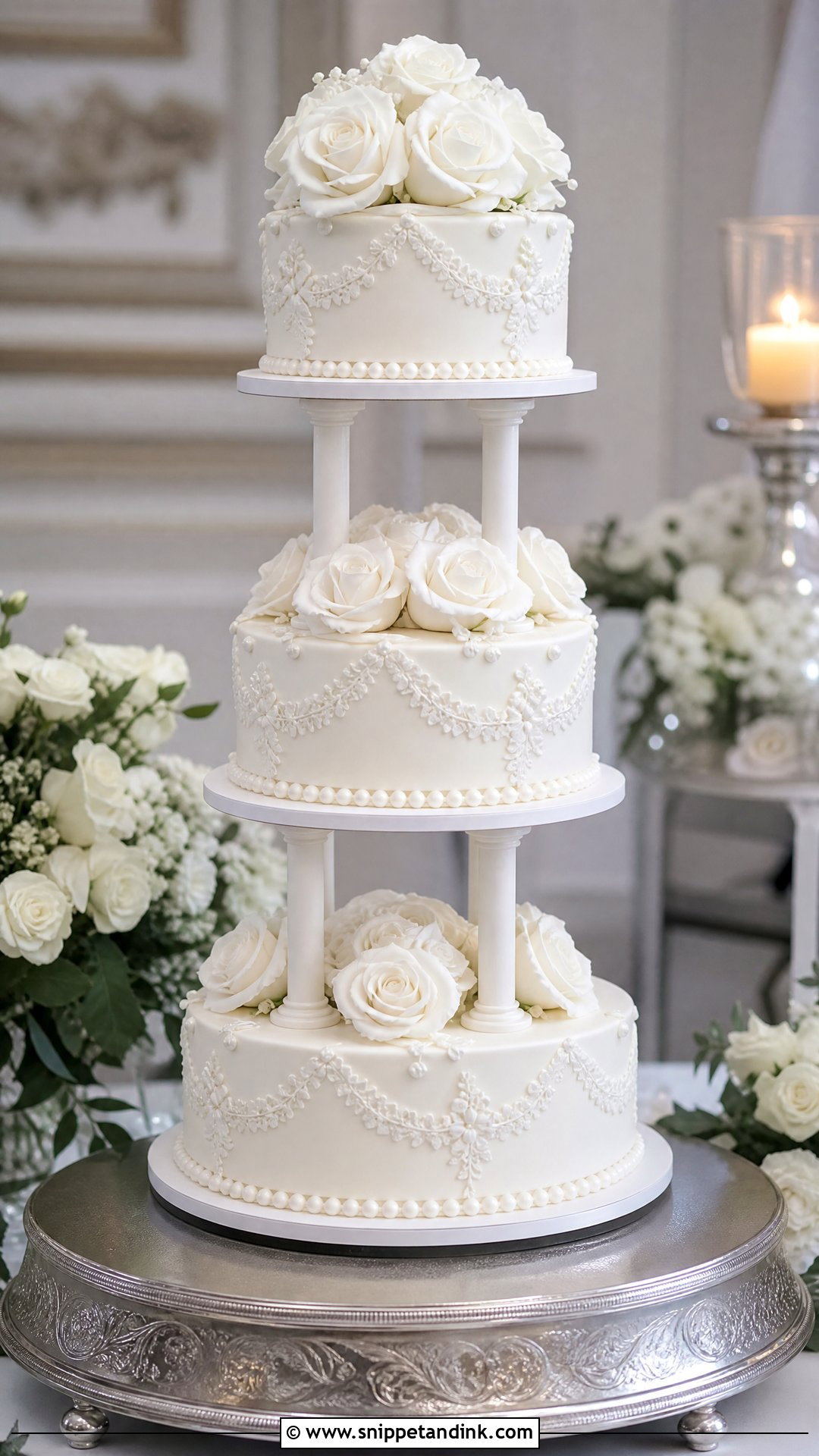
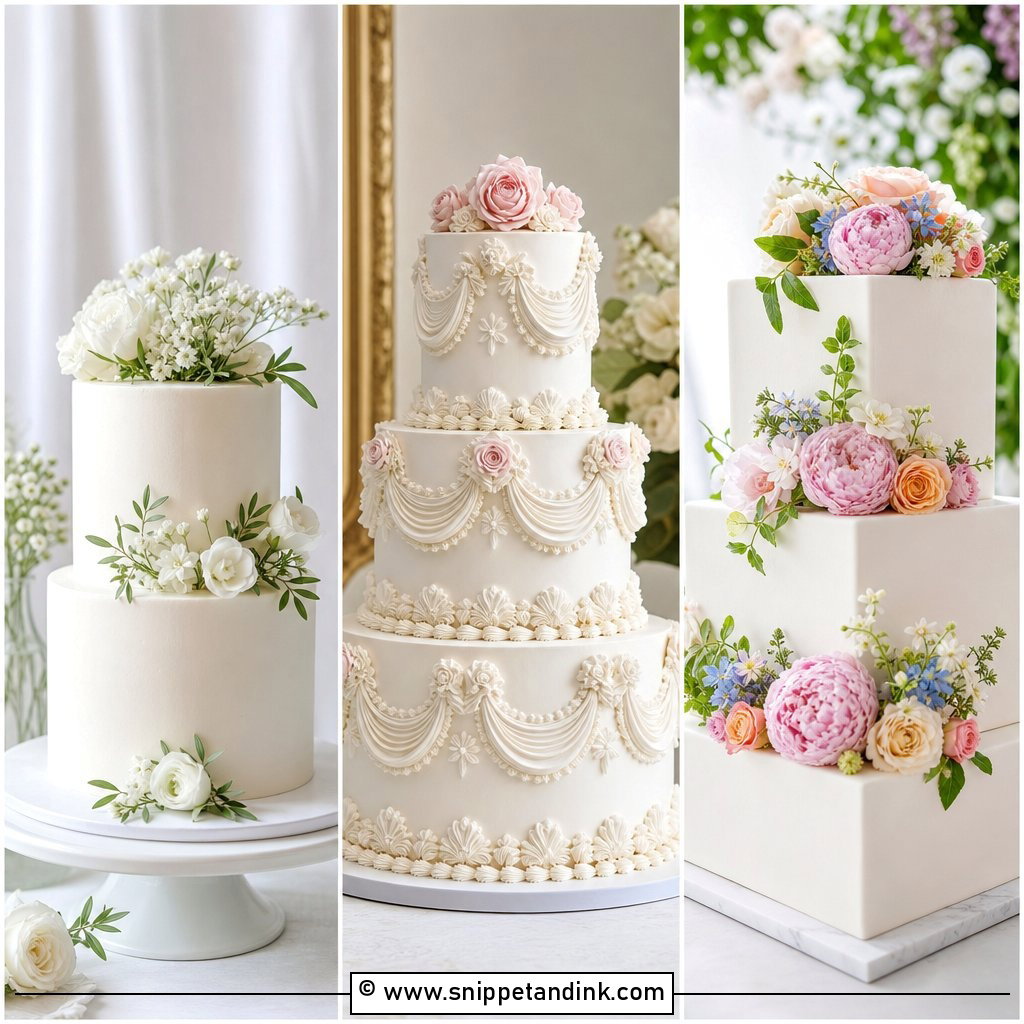
White is where most carousel cakes start, and it’s harder than it sounds. Buttercream made with real butter is naturally ivory, so a bright white usually means fondant or a whitened frosting, and I always ask which white the bride has in mind before quoting. Stacked tiers on open pillars suit ballrooms, gardens and hotel rooms because they don’t fight any flower colour. Sugar roses, a pearl border or a single bow are enough. For more drama, I raise only the middle tier on taller columns and keep the others close, which reads as deliberate rather than busy.
2. Vintage Carousel Wedding Cake
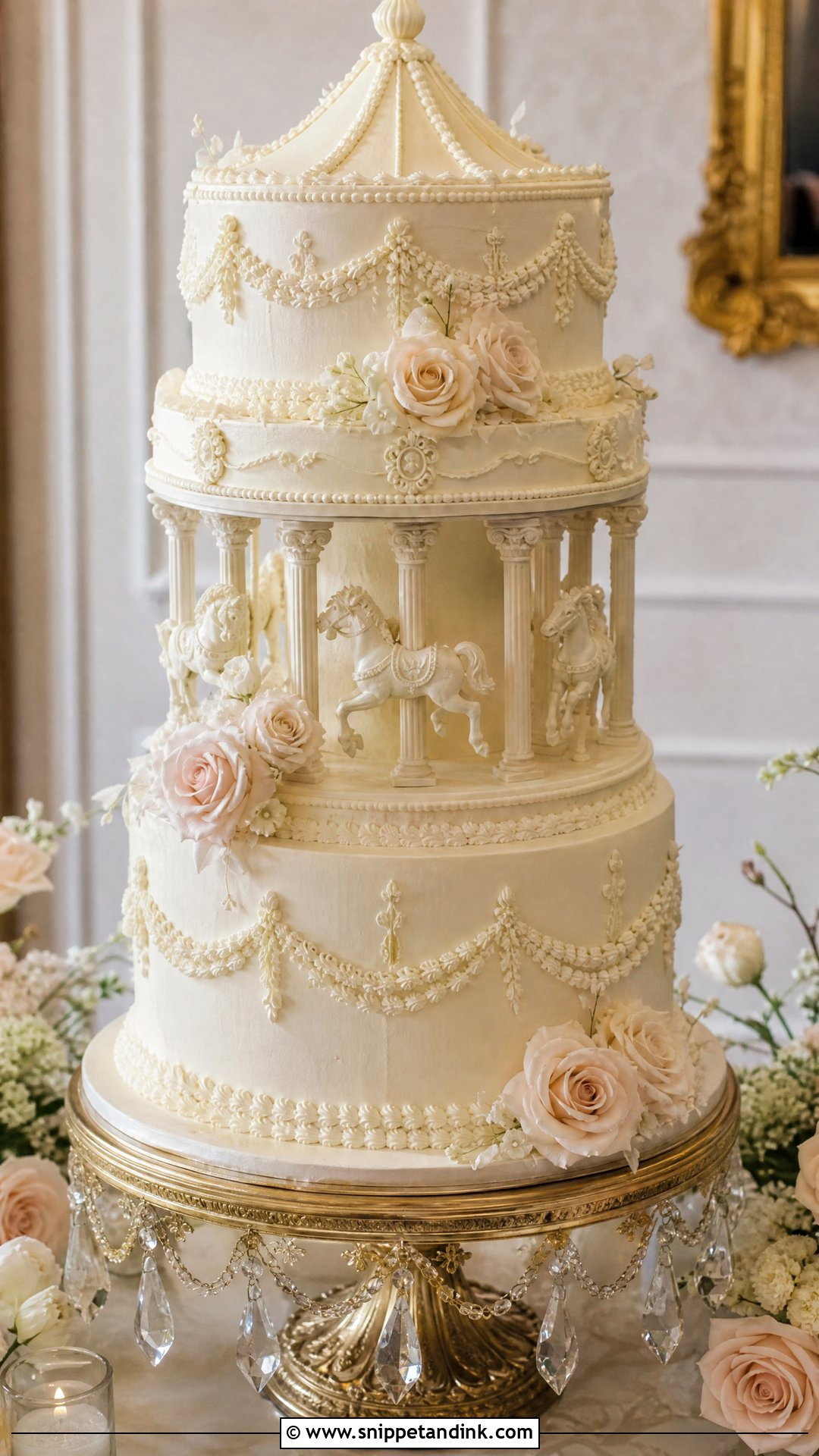
Heavy overpiping is what makes a carousel cake look vintage, and it’s slow work. Lambeth-style borders are built up in layers of royal icing or stiff buttercream, each one setting before the next goes on, so book a baker who actually pipes this way and can show you photos of their own work. I’d choose ivory over white here; it softens the scrollwork and looks like it came out of an old album. Three or four tiers with visible pillars is plenty. Past that, the piping starts to crowd the gaps that make the shape worth having.
3. Floral Carousel Wedding Cake
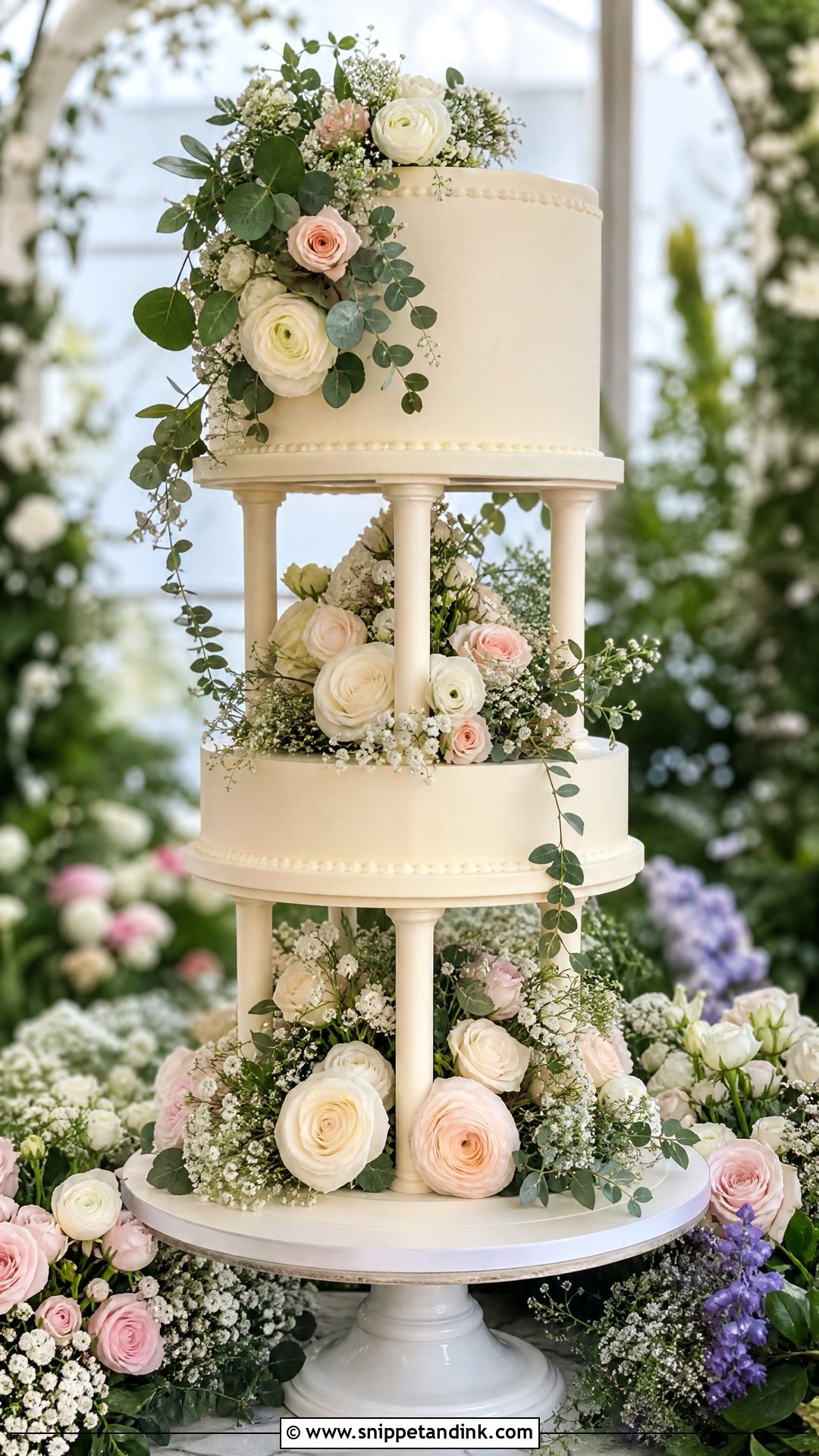
The open spaces between tiers are made for flowers, but fresh blooms on a cake need a florist and baker who talk to each other. Roses, ranunculus, orchids and peonies are the usual picks. I keep stems out of the sponge by wrapping them or setting them in food-safe picks, and I won’t put anything toxic or heavily sprayed near the frosting. Smooth buttercream or ivory fondant is the right base, because textured icing and a full ring of flowers compete. Ask your florist for a few extra stems from the bouquet so the cake is genuinely matched, not just close.
4. Pink Carousel Wedding Cake
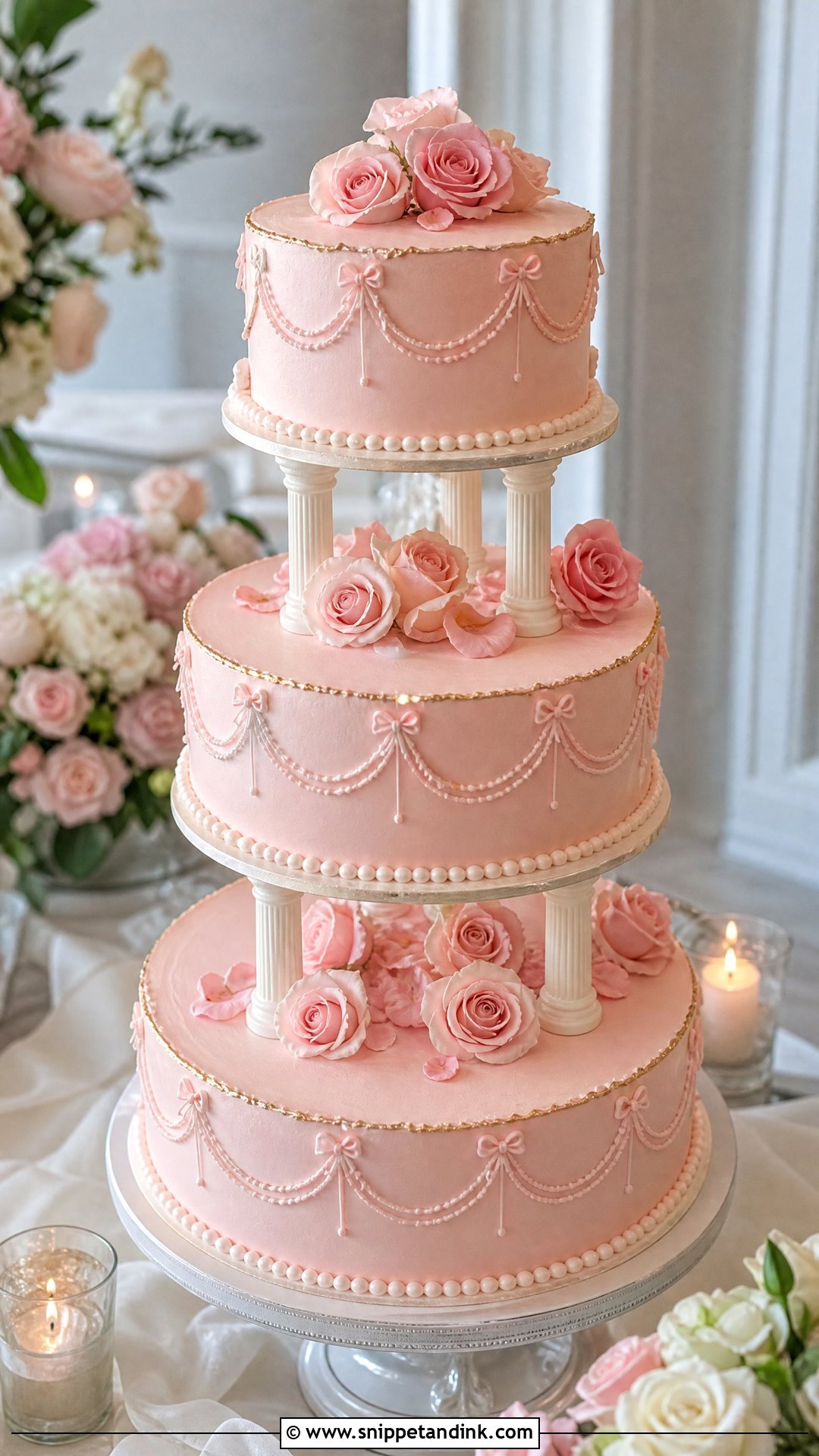
Pink is one of the easier colours to get right in frosting. Blush holds well in daylight and candlelight, while deep rose can turn slightly purple under cool LED uplighting, so I test a swatch in the venue’s light when I can. Pink buttercream on every tier, pale pink fondant, or white tiers with pink sugar roses all suit the pillared shape. Gold trim and pearls sit naturally beside it, and blush linens carry the colour across the dessert corner.
5. Gold Carousel Wedding Cake
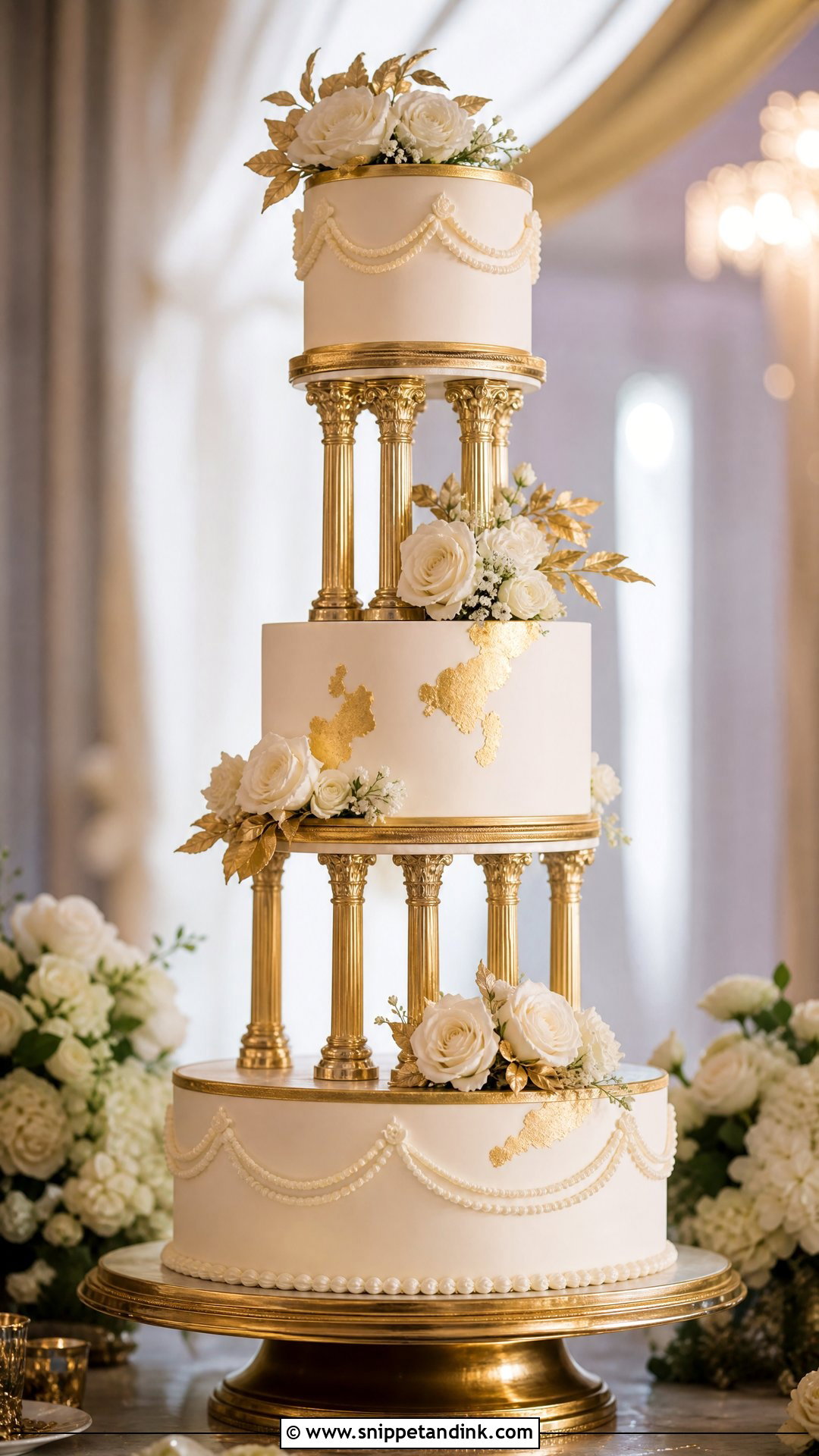
Gold on a cake is usually edible gold leaf, lustre dust mixed into a paint, or gilded columns that aren’t food at all, and each one looks different in photos. Leaf catches light in flakes; painted gold reads flatter and can turn brassy if it goes on too thick. I keep the tiers white, ivory or champagne so the metal has something calm behind it. Gold belongs in ballrooms and evening receptions with warm lighting. Add one soft element, like white roses or draped sugar, or the cake starts to look like a trophy.
6. Fairytale Carousel Wedding Cake
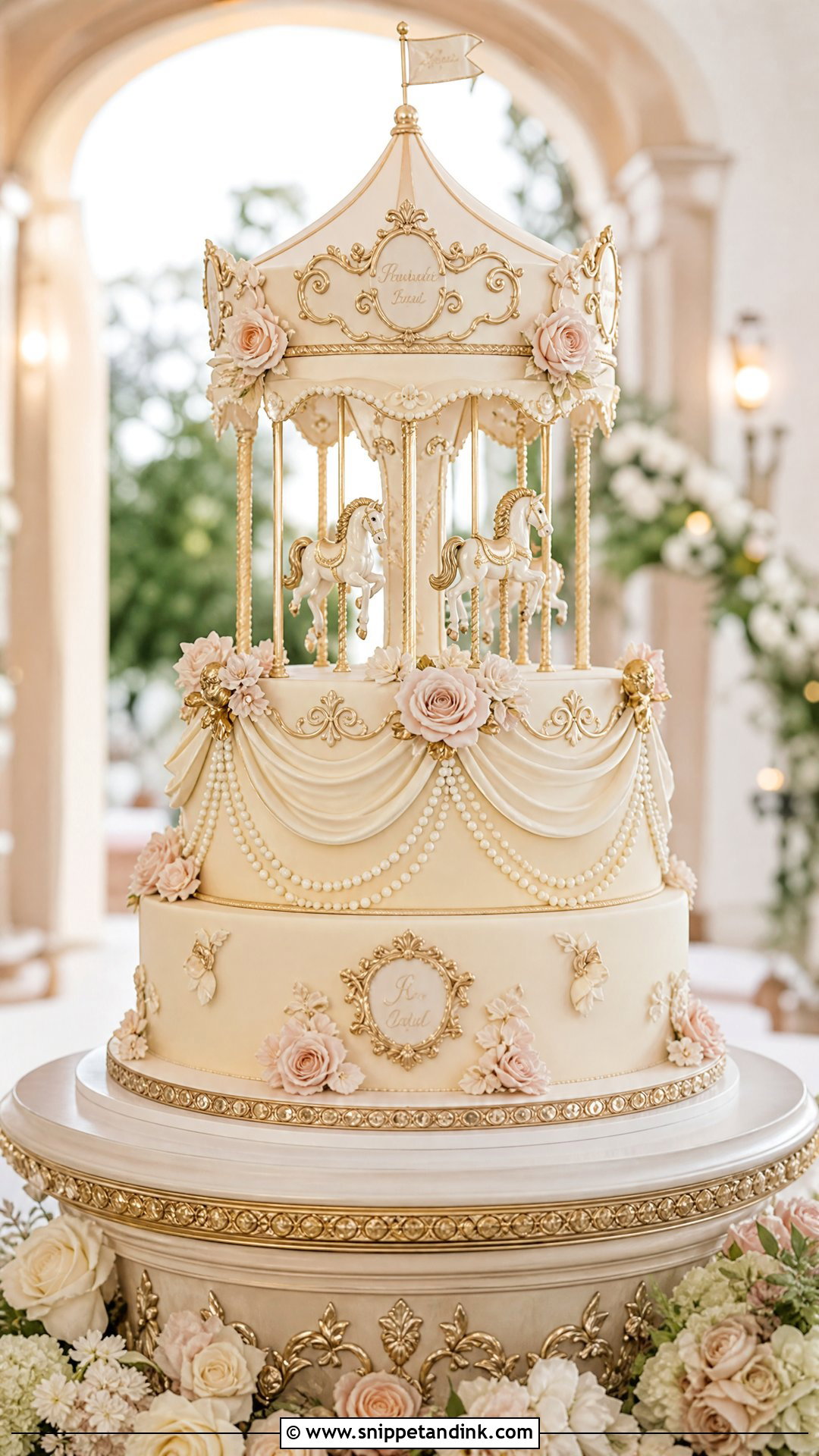
Fairytale cakes go wrong when they tip into a child’s birthday. My rule is no characters and no glitter castles: height, symmetry and soft colour do the storytelling. Pale ivory, blush, champagne and soft blue all work, with pearl swags, gentle scroll piping or a small carriage motif on one tier at most. I build these symmetrically so they look right from wherever guests stand. A raised stand ringed with flowers at the base finishes it without adding more sugar.
7. Simple Carousel Wedding Cake
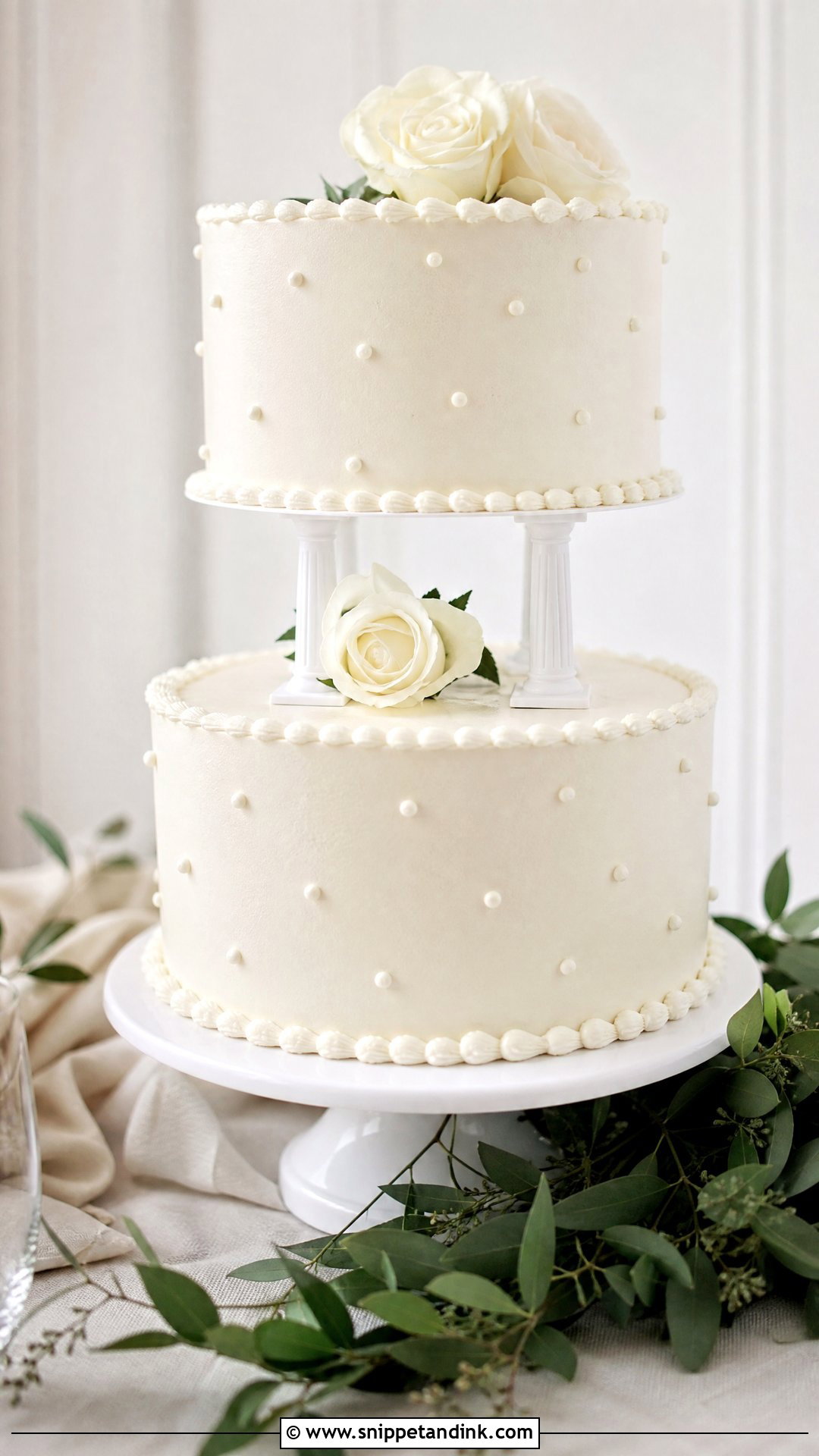
Two or three clean tiers on slim columns is my favourite carousel for a smaller wedding. The gap adds the height a short cake otherwise lacks, so you get presence without paying for servings you won’t use. A pearl border or a few fresh flowers is enough. Smooth buttercream keeps it relaxed; fondant gives sharper edges for a formal room. With so little decoration, proportion carries everything, so I size each tier to step down by the same amount and keep every column the same height.
8. Buttercream Carousel Wedding Cake
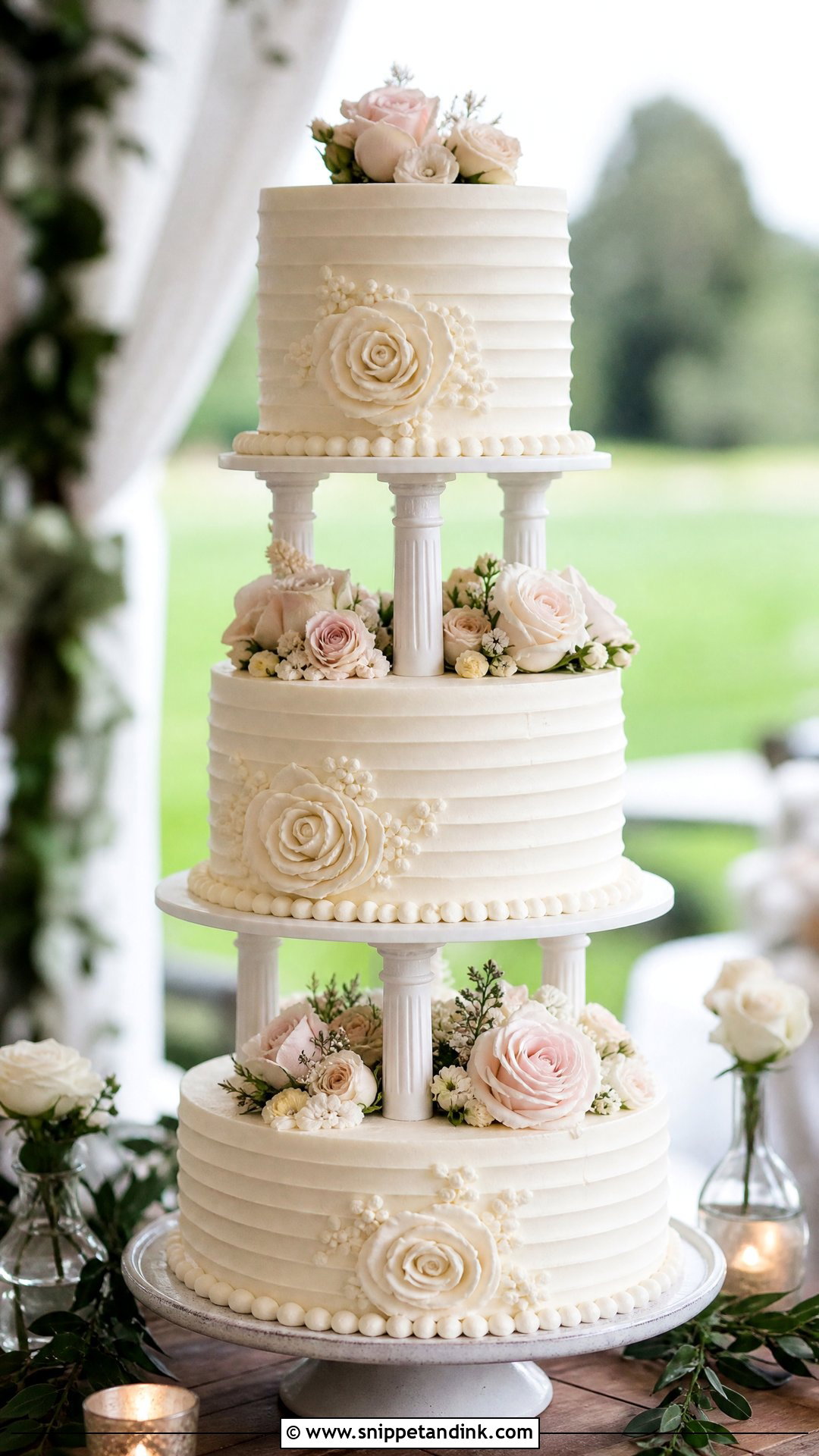
Buttercream is what most couples want to eat, and it’s the frosting I worry about most on a pillared cake. It softens in a warm room, and every tier edge is exposed once the cake is lifted on columns. A smooth finish, light ribbing or soft swirls all suit the style, and piped borders or small buttercream blooms help the tiers feel connected across the gaps. I chill each tier before transport and ask the venue to keep the cake out of direct sun and away from heaters until it’s cut. In a cool room it’s my first recommendation; in a hot marquee it’s my last.
9. Fondant Carousel Wedding Cake
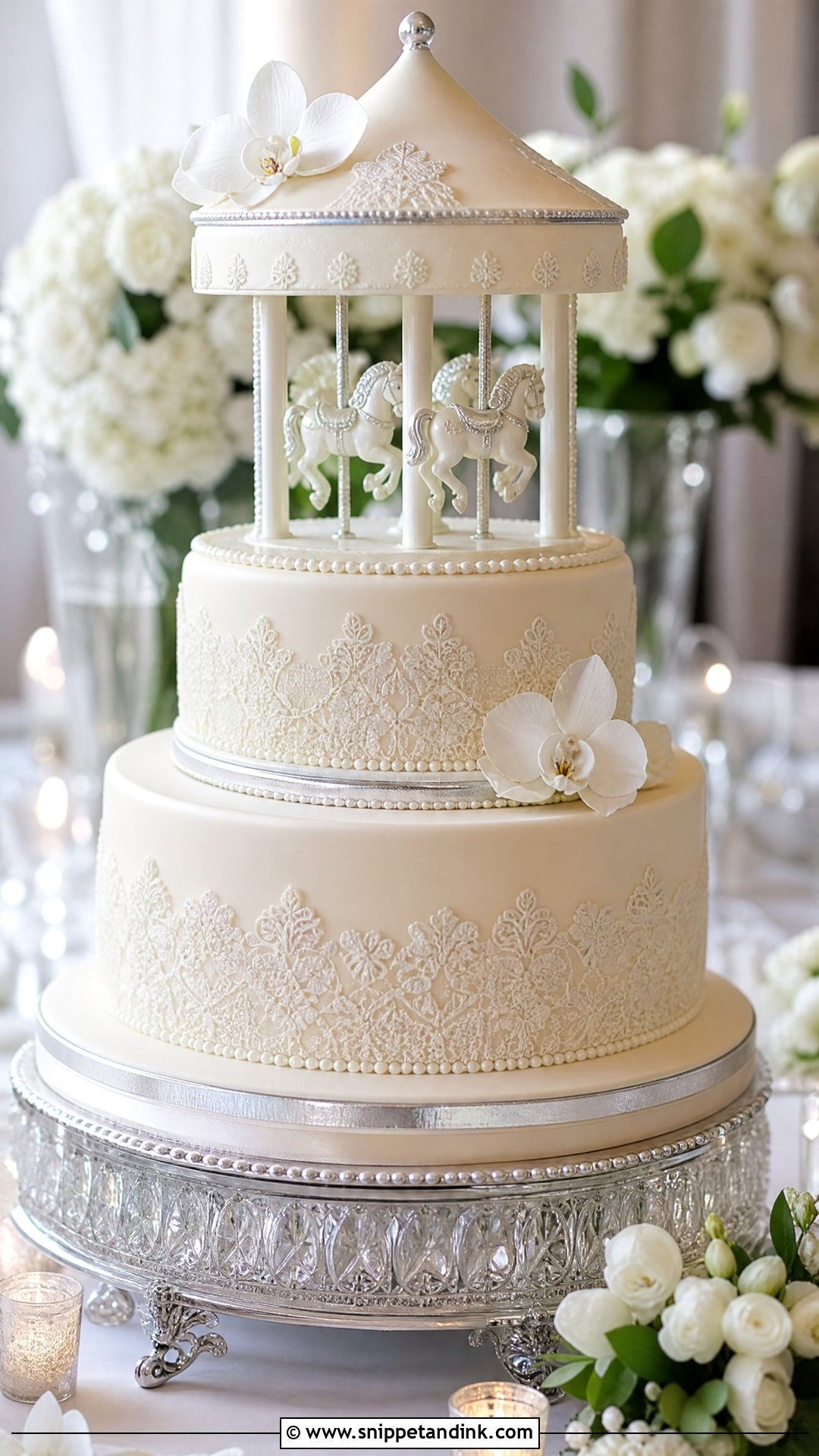
Fondant is the reason pillared cakes look so crisp in old wedding albums. It gives sharp edges and a surface you can emboss, paint or press with lace, and on a carousel those details have to line up because guests see every side. White with pearls is the classic version; blush, champagne or pale blue feels newer. One thing to know: fondant moved from a fridge into a warm, humid room beads with condensation, so I let tiers come up to temperature in their boxes before unboxing. Plenty of guests peel it off, so ask for a filling with real flavour underneath.
10. Royal Carousel Wedding Cake
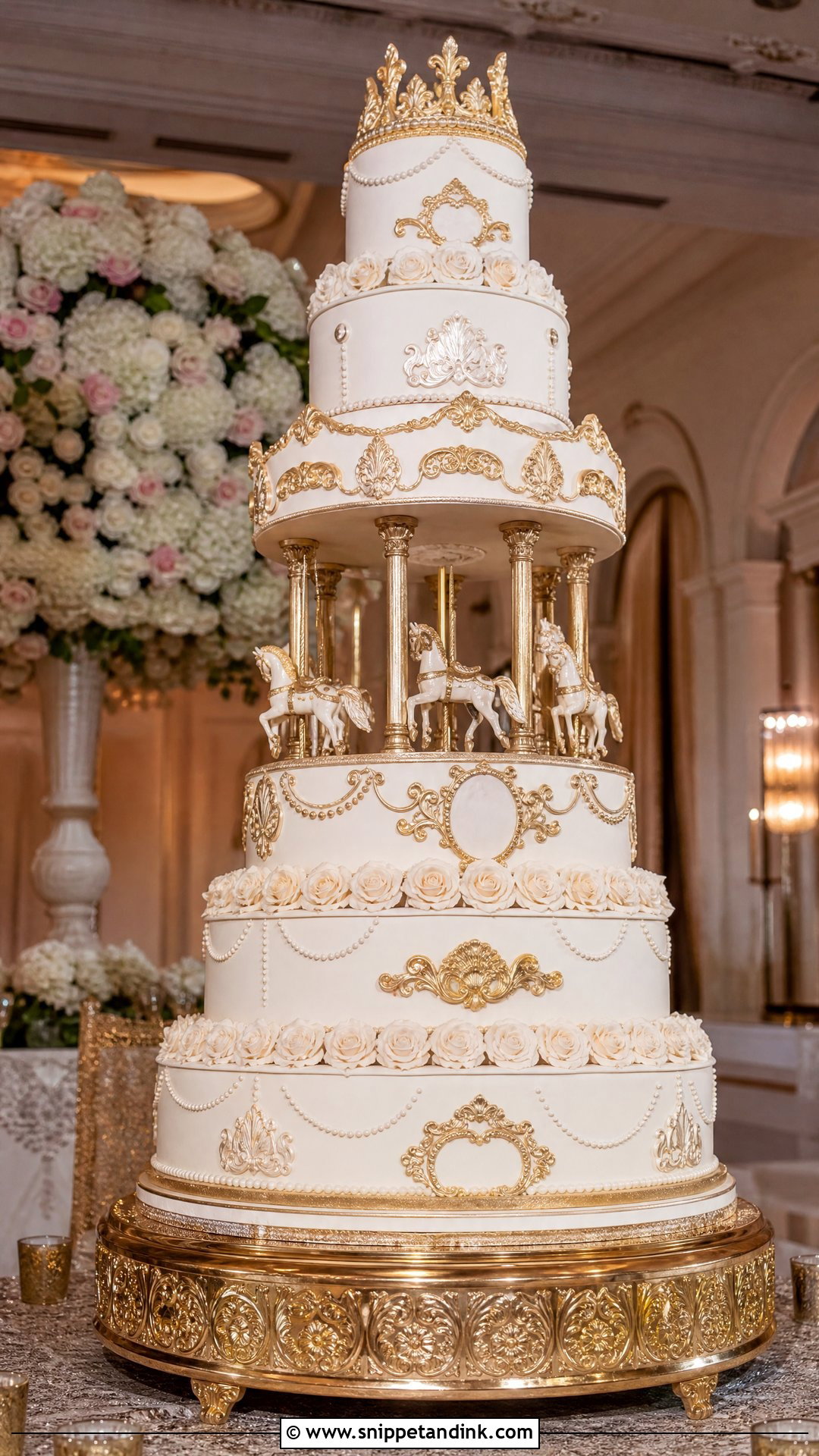
Four or more tiers, tall pillars and formal ivory, white, gold or champagne: this one needs a big room to make sense, and under a low ceiling it looks cramped. Some upper tiers can be dummy tiers made of styrofoam if you don’t need the servings, which also takes weight off the columns. Pick one motif, maybe sugar roses, a crown accent or pearl garlands, and repeat it at the same point on every tier. Repetition looks regal. Four different motifs look like a sample board.
11. Garden Carousel Wedding Cake
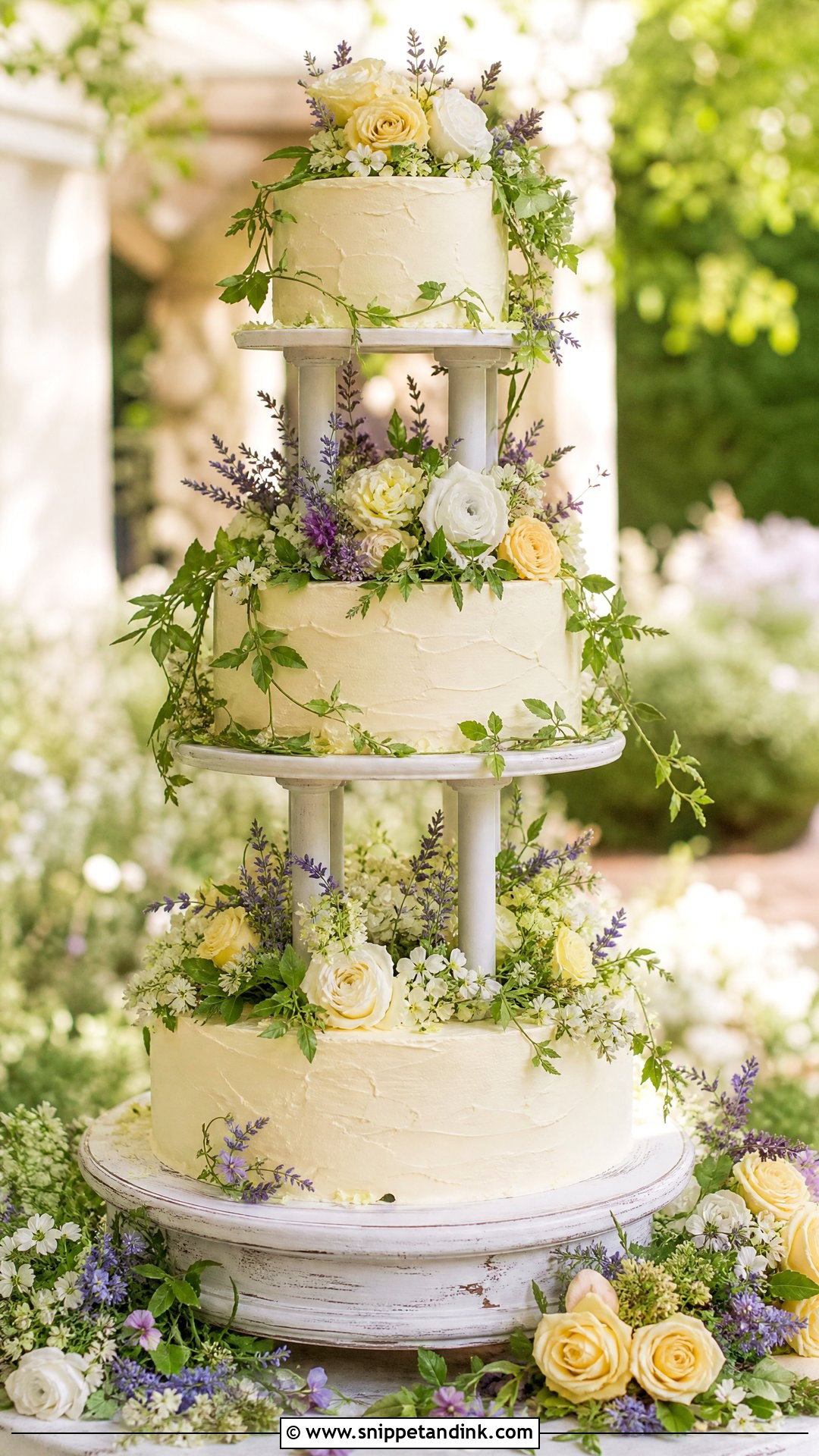
Garden carousels use the gaps for greenery: vines wound down the columns, small blooms tucked onto separator plates, leaves trailing off the edges. Vanilla, lemon, almond or berry fillings fit the season. I keep the palette to ivory plus one or two soft colours, such as sage with blush. Outdoors, the cake needs shade and a cover until the cutting, because insects and sun are the real threats here, not the design. A wooden table or a vintage stand suits it far better than a mirrored plinth.
12. Pearl Carousel Wedding Cake
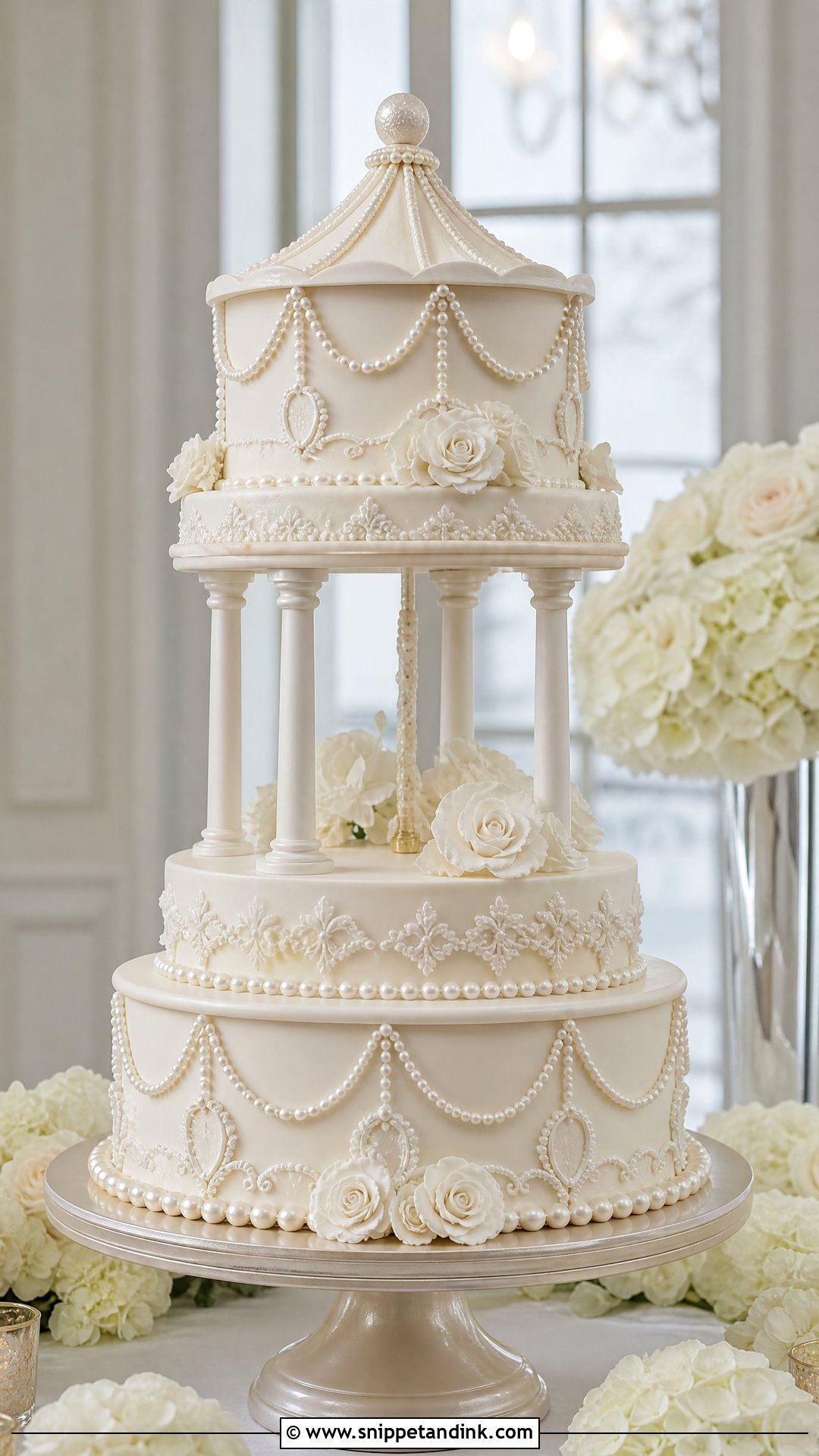
Pearls add texture without volume, which is why they sit so well on pillared tiers. Edible pearls come as hard sugar dragées or softer sugar beads, and the hard kind can be rough on teeth, so I tell couples which type I’m using and keep them to borders that are easy to scrape off a slice. A sparing line on smooth tiers looks modern. Mixed with shell piping, lace and sugar flowers, the effect turns vintage. Formal and coastal receptions both carry it well.
13. Lace Carousel Wedding Cake
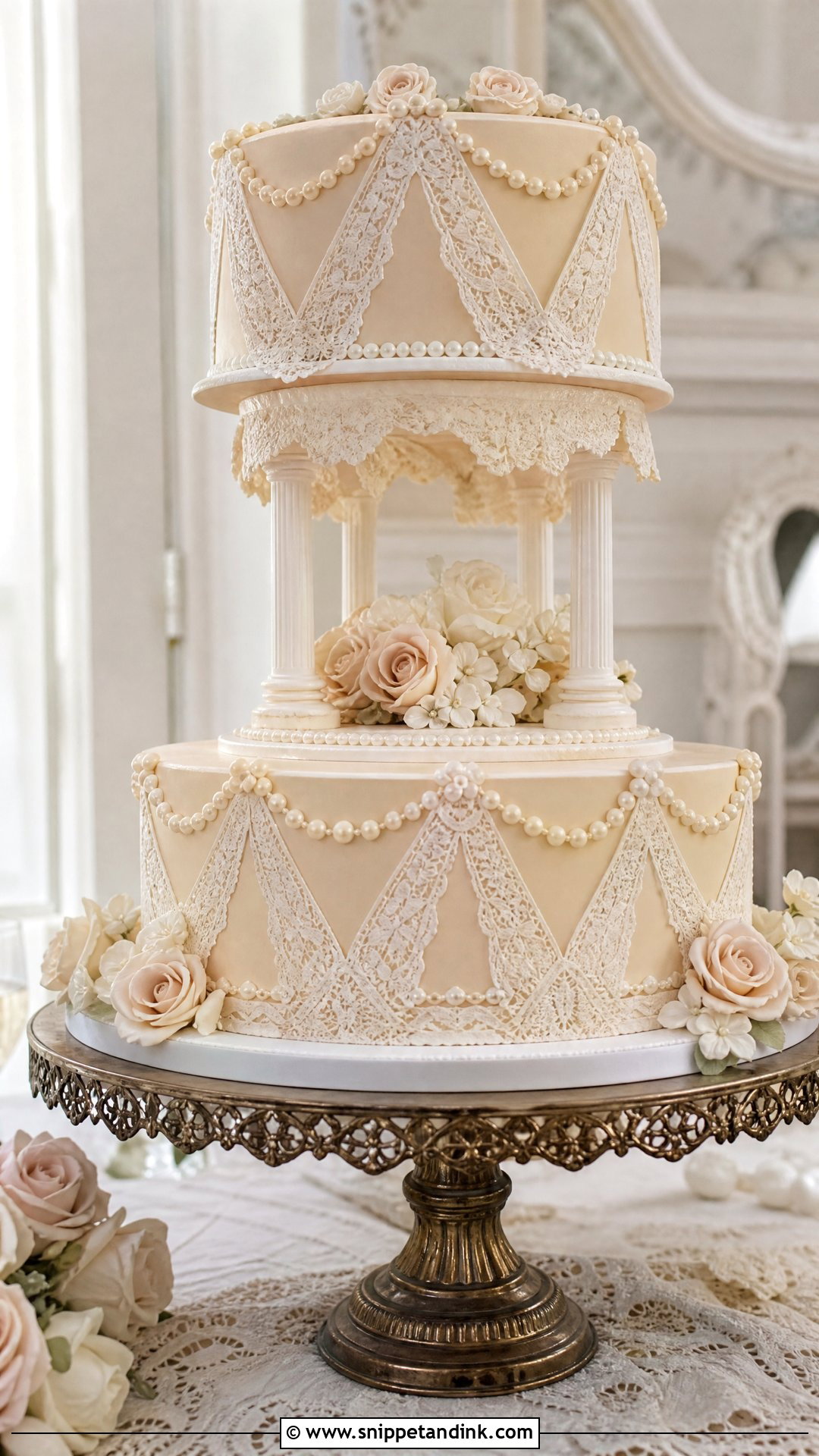
Lace is how brides tie the cake back to the dress, and I ask for a close-up photo of the gown’s lace at the first meeting. It can be cut by hand from fondant, piped in royal icing, set in a mould as an edible lace sheet, or embossed straight into fondant. Each method copies a different kind of lace, which is why that photo matters. Ivory on ivory is the safest. White lace over blush or champagne tiers shows the pattern more clearly, and the space between pillared tiers keeps dense lace from looking heavy.
14. Blue Carousel Wedding Cake
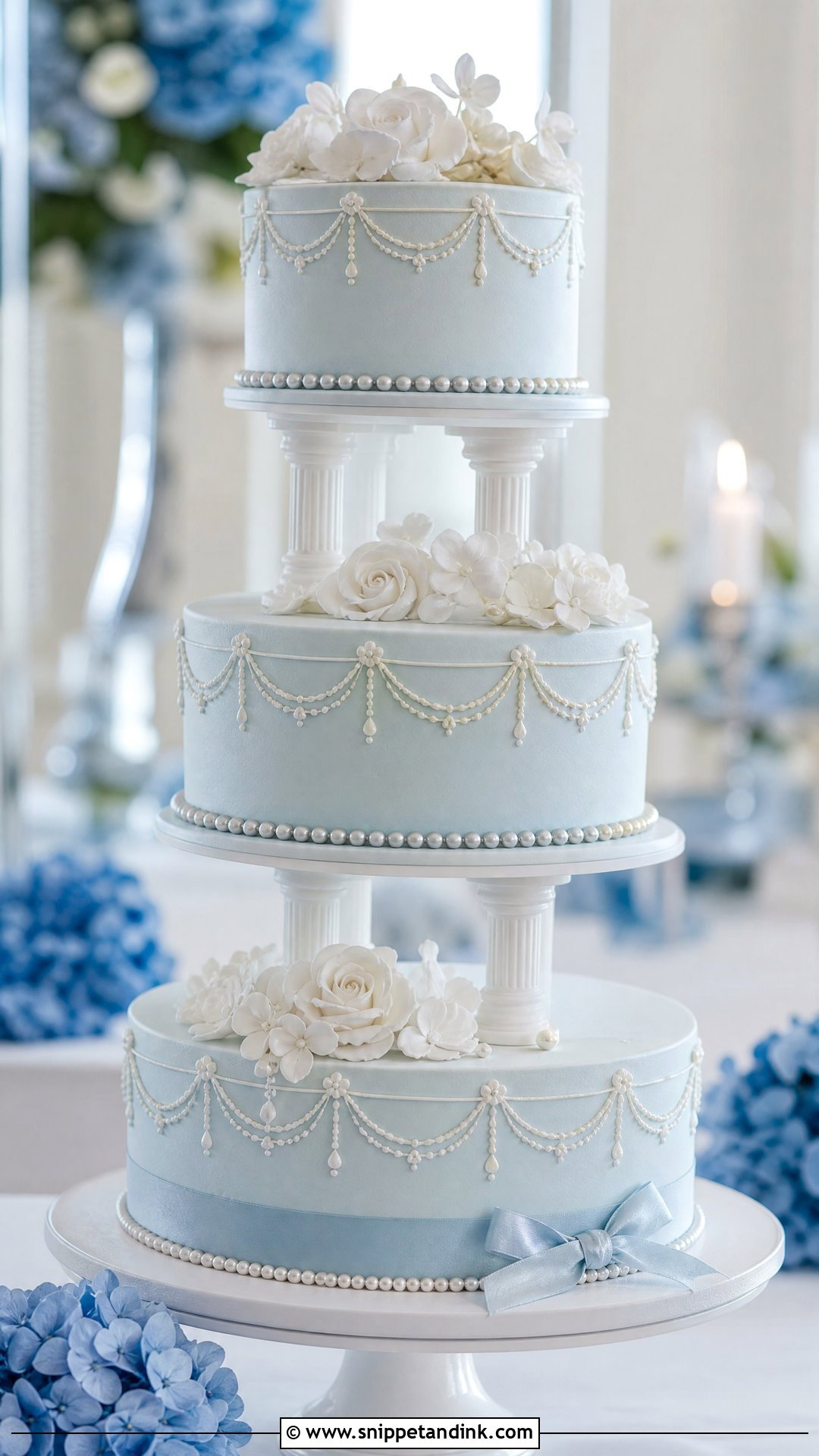
Blue is the colour I warn couples about. Butter gives buttercream a yellow tint, and blue mixed into it can drift toward green, so for a true powder or dusty blue I use a whitened base or fondant and check the shade in daylight. Pale blue looks soft and vintage on columns; dusty blue reads more current. Silver and pearl details suit it better than gold. If your bridesmaids wear blue, bring a fabric swatch to the tasting so the tiers are matched rather than guessed.


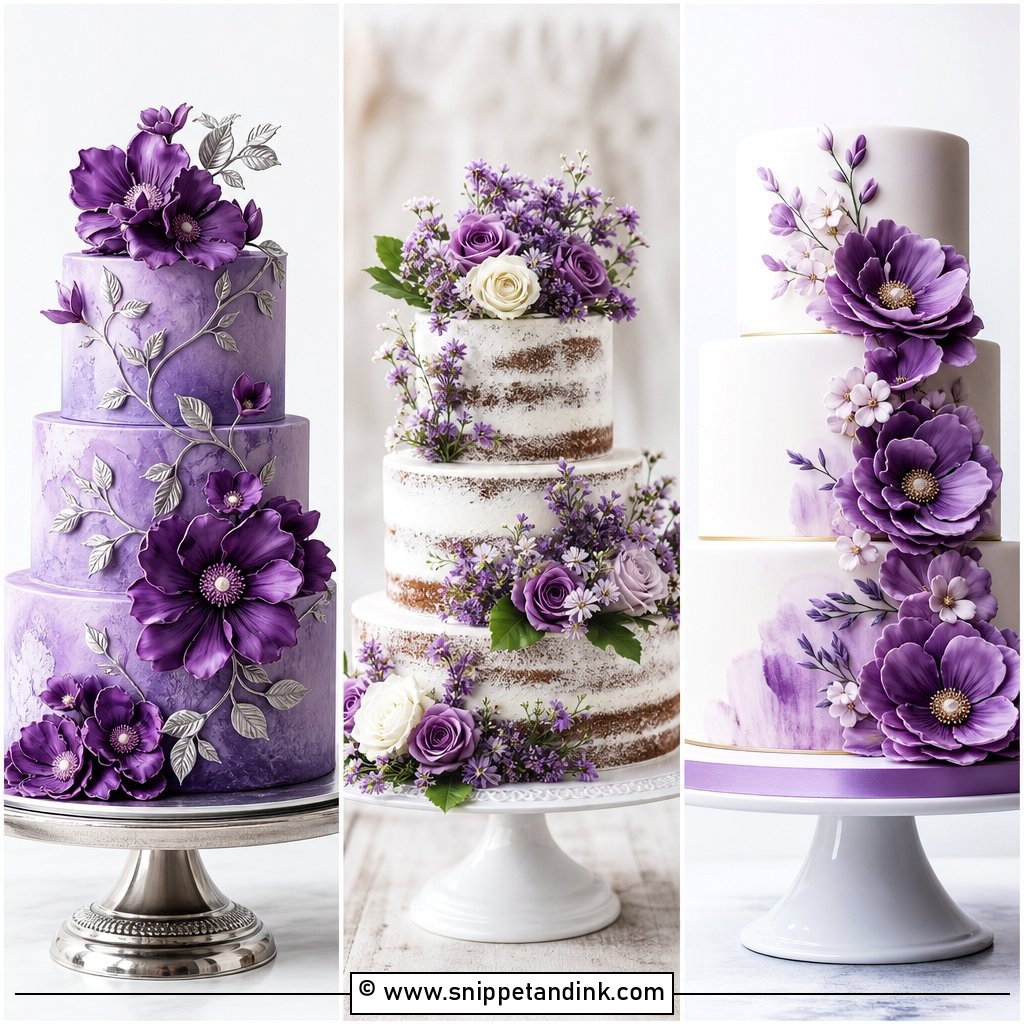
15. Lavender Carousel Wedding Cake
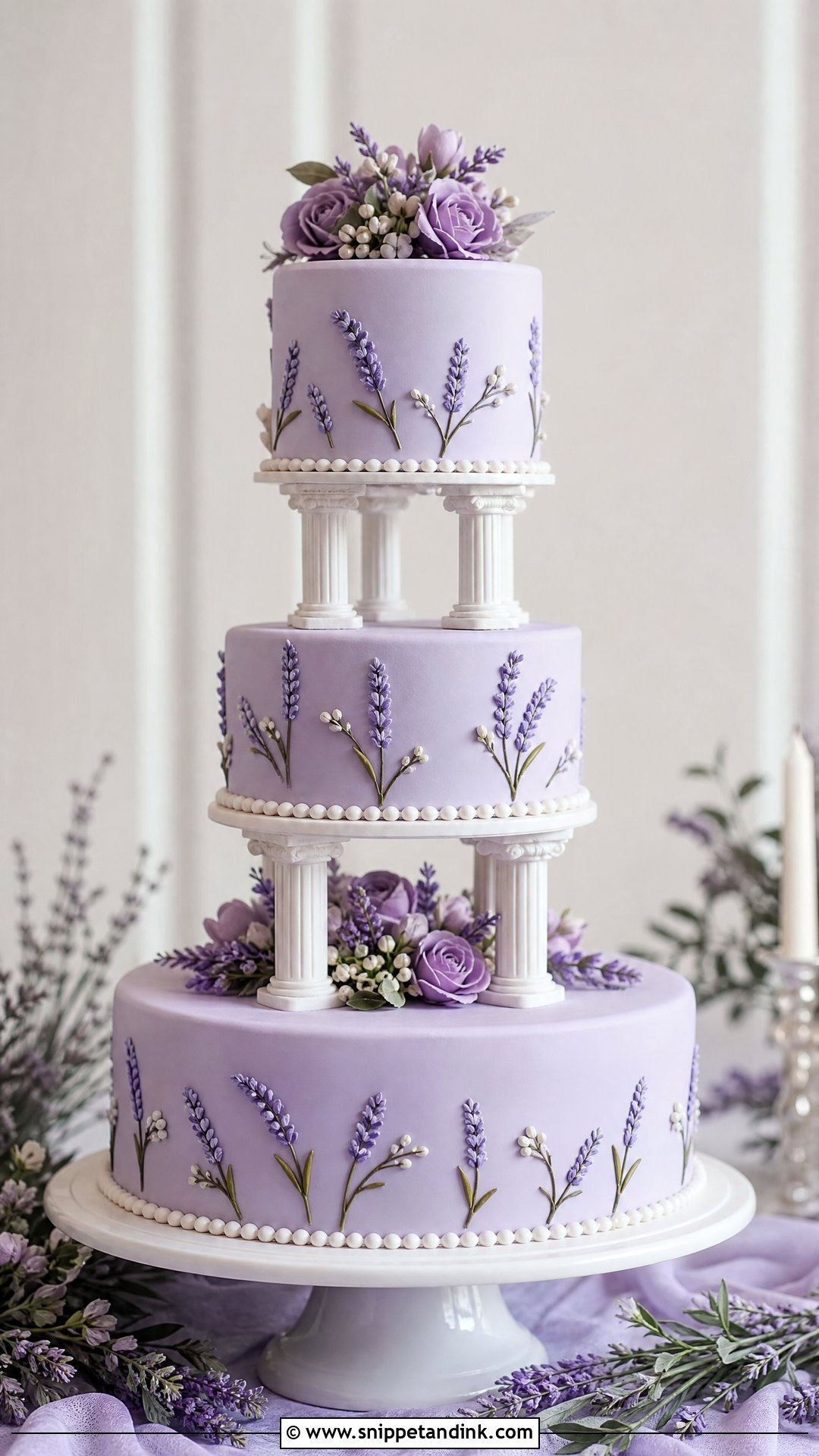
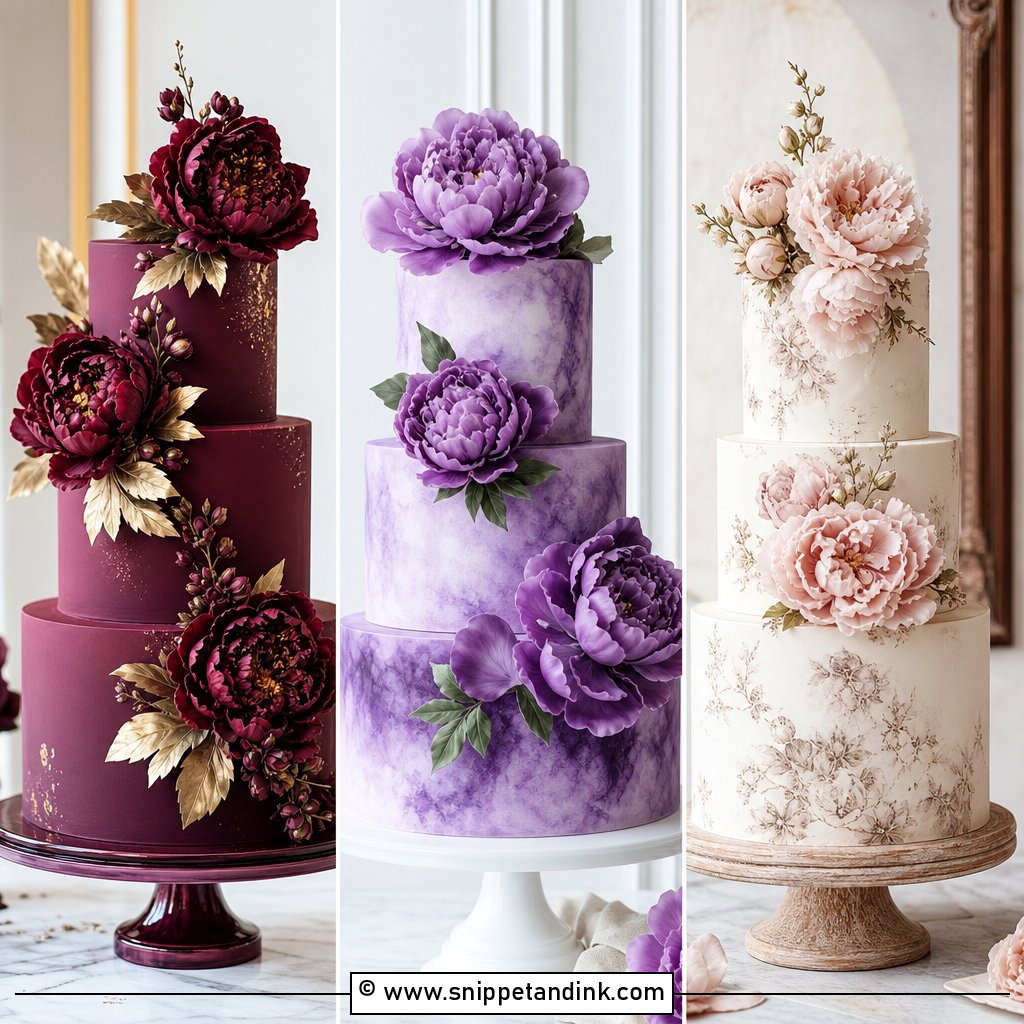
Purple colouring fades in strong light faster than most shades, sometimes toward grey or blue, so a lavender cake should stay out of sunlight and harsh display lights until it’s cut. Pale lavender frosting, purple sugar flowers or culinary lavender sprigs from a food-safe supplier are the usual routes. Pair it with ivory, sage or soft silver; lemon, honey and vanilla flavours go well with it. Keep the tone muted. Bright violet on a pillared cake tips into party territory.
16. Heart Carousel Wedding Cake
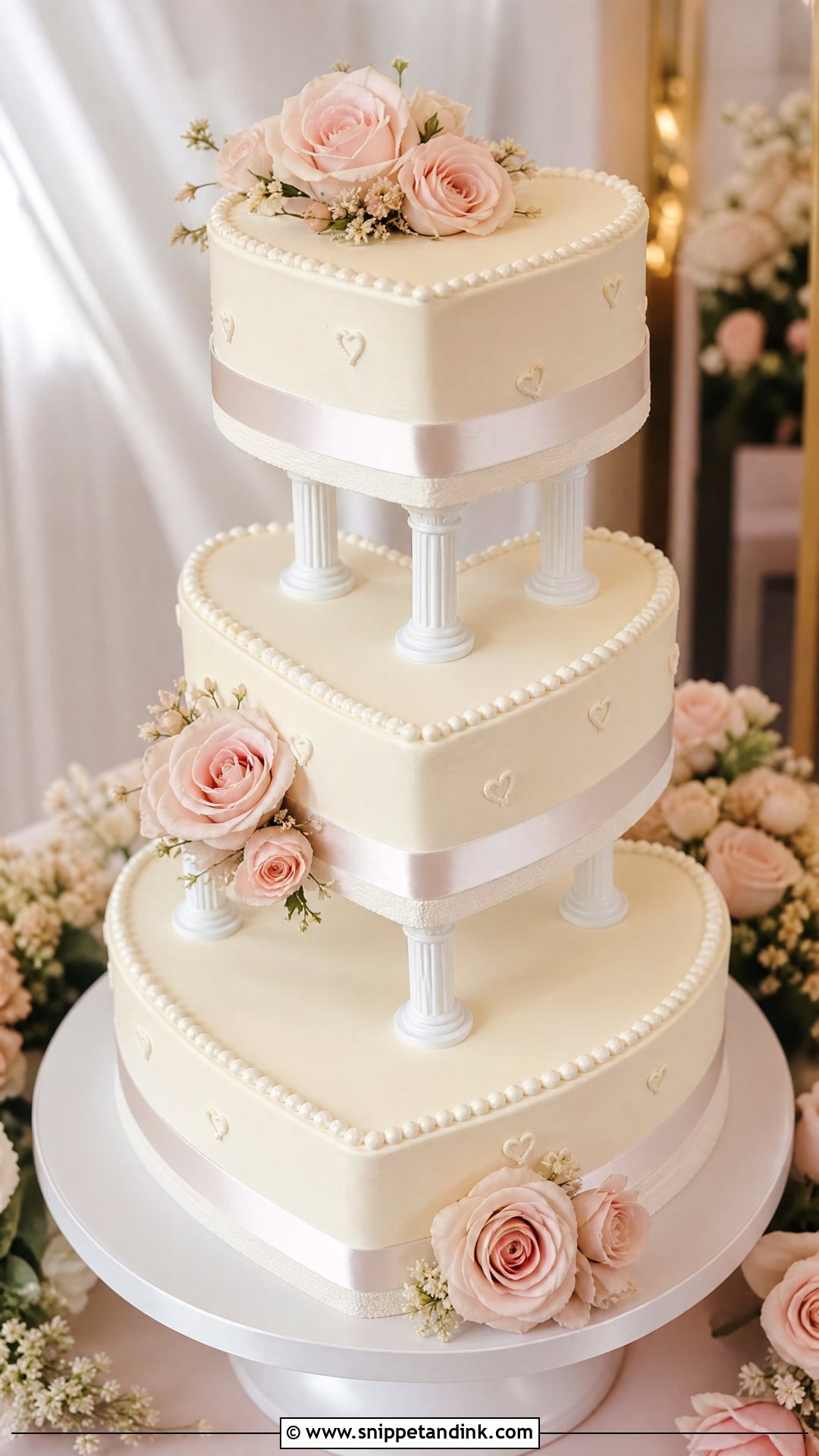
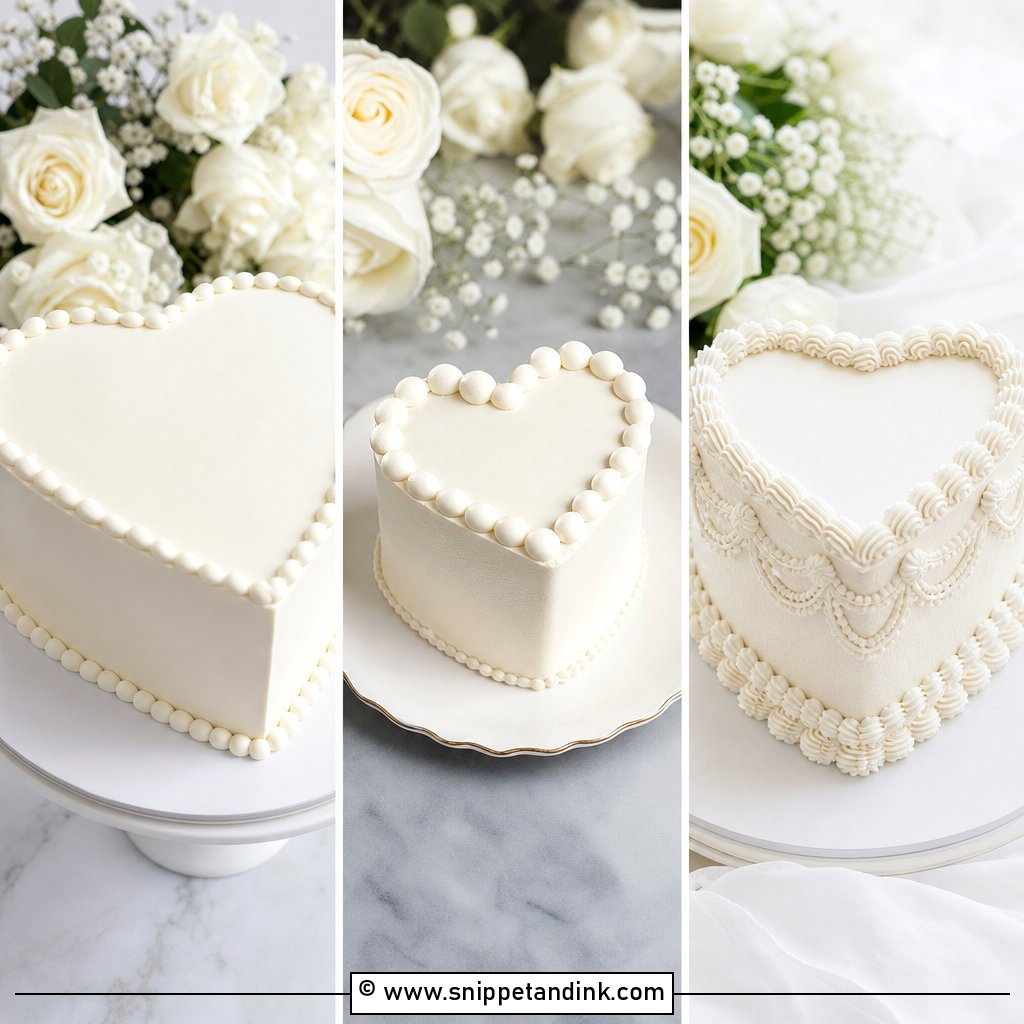
Heart tiers on short columns are sweet and a little nostalgic, but they’re awkward to cut neatly, and the point of each heart needs careful support. I often suggest round lower tiers with a single heart on top, which gives you the shape without the serving headache. White buttercream, pearl piping and pink flowers keep it bridal. Use one simple topper or a few piped hearts, not both.
17. Round Carousel Wedding Cake
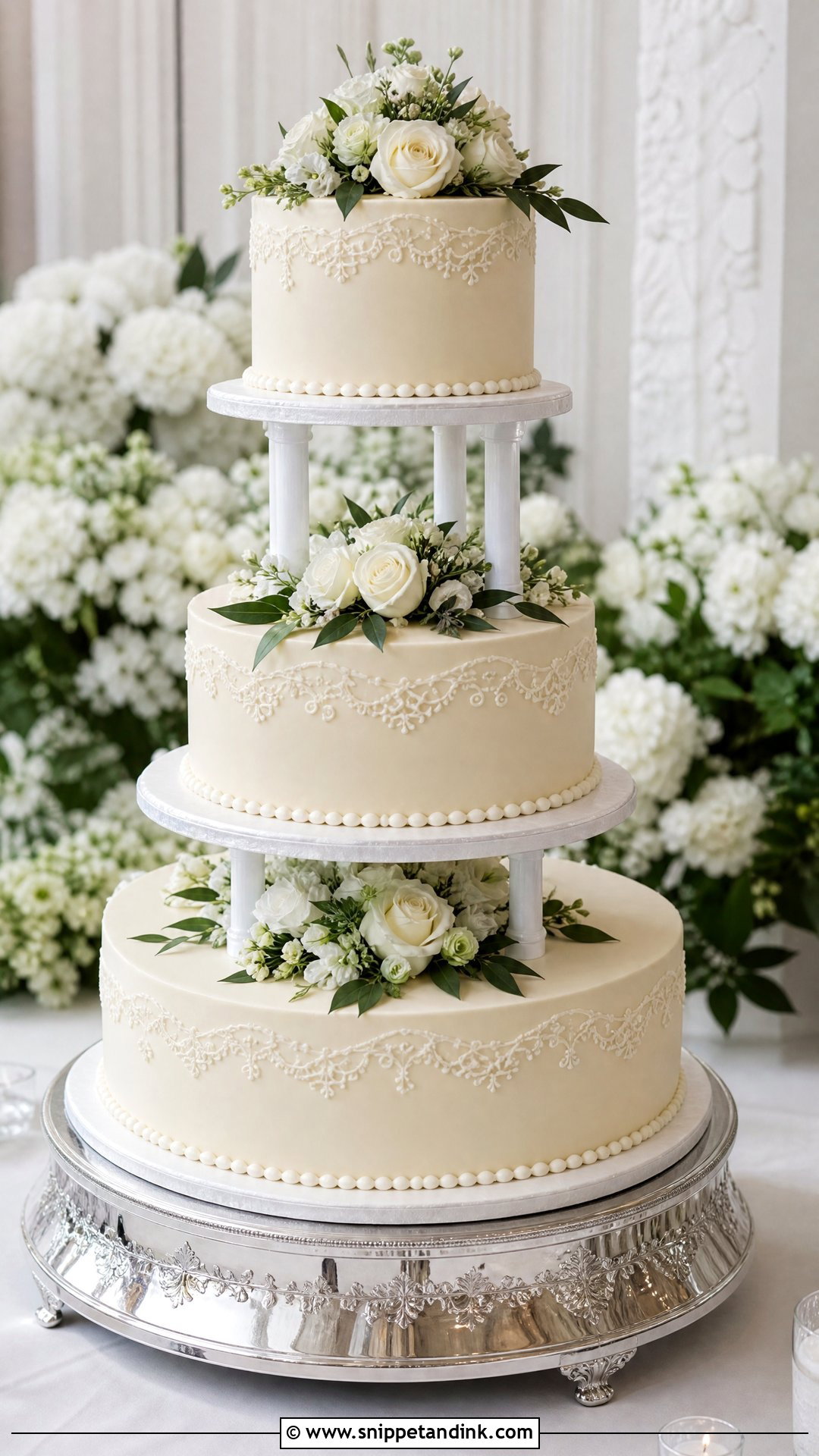
Round tiers are the most practical carousel. They sit predictably on separator plates, they’re quick to cut, and every decorating style works on them, from pearls to flowers to plain smooth icing. Most portion charts are written for rounds, so planning servings is easier too. What makes or breaks the look is spacing: I step the tier sizes down evenly, often two or three inches per tier, and keep the column heights equal so the gaps match.
18. Square Carousel Wedding Cake
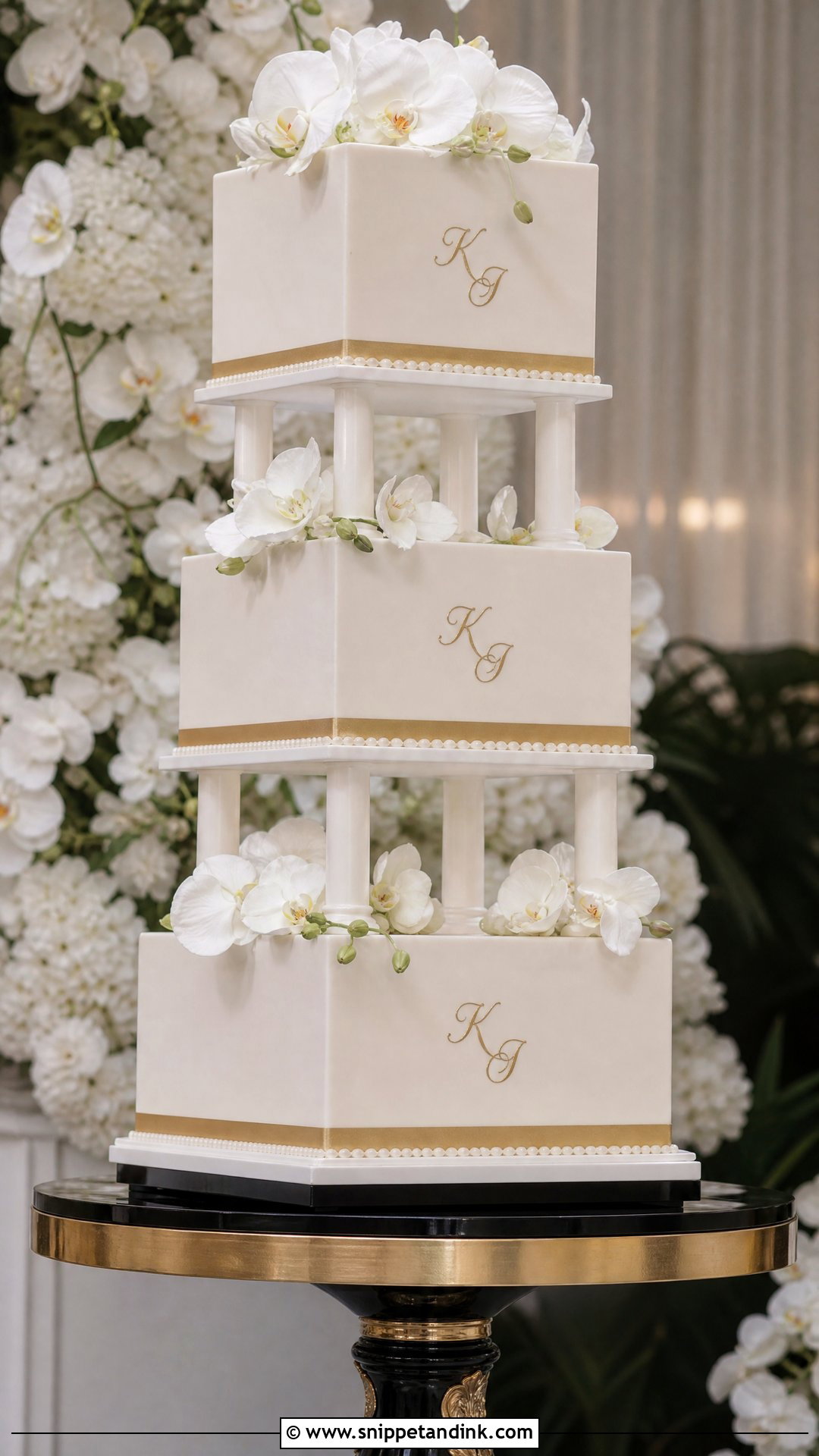
Square tiers give a sharper, more architectural silhouette that suits city venues and formal rooms. They’re also less forgiving. Corners show every bump in buttercream, so I usually cover squares in fondant or set the buttercream over ganache for crisp edges. Thin ribbon bands, orchids or painted floral panels soften the shape, and the flat faces are good for monograms. A square tier also serves more guests than a round of the same width, which helps when servings are tight.
19. Tall Carousel Wedding Cake
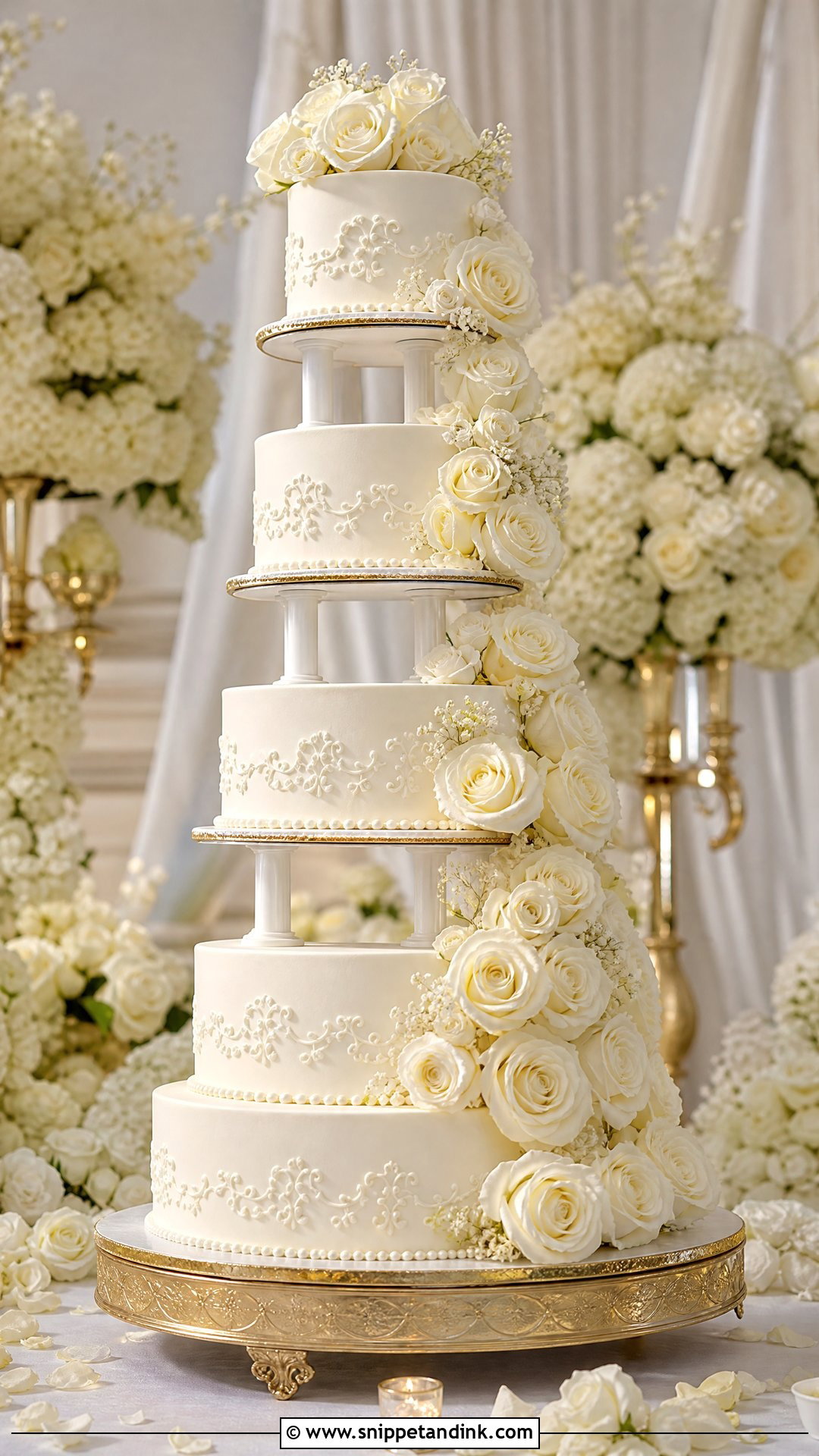
Four or more tiers on visible spacers or pillars is the version that fills a high-ceilinged room. Because height already does the work, I keep decoration repetitive: one flower cluster, one border, one accent, repeated. Ask your baker exactly how the internal supports work, because tall cakes rely on dowels and separator plates carrying each tier’s weight down to the board, not on the sponge. I assemble these at the venue rather than driving them stacked. Done properly, it reads clearly from the back of the room and frames the cake-cutting shot.

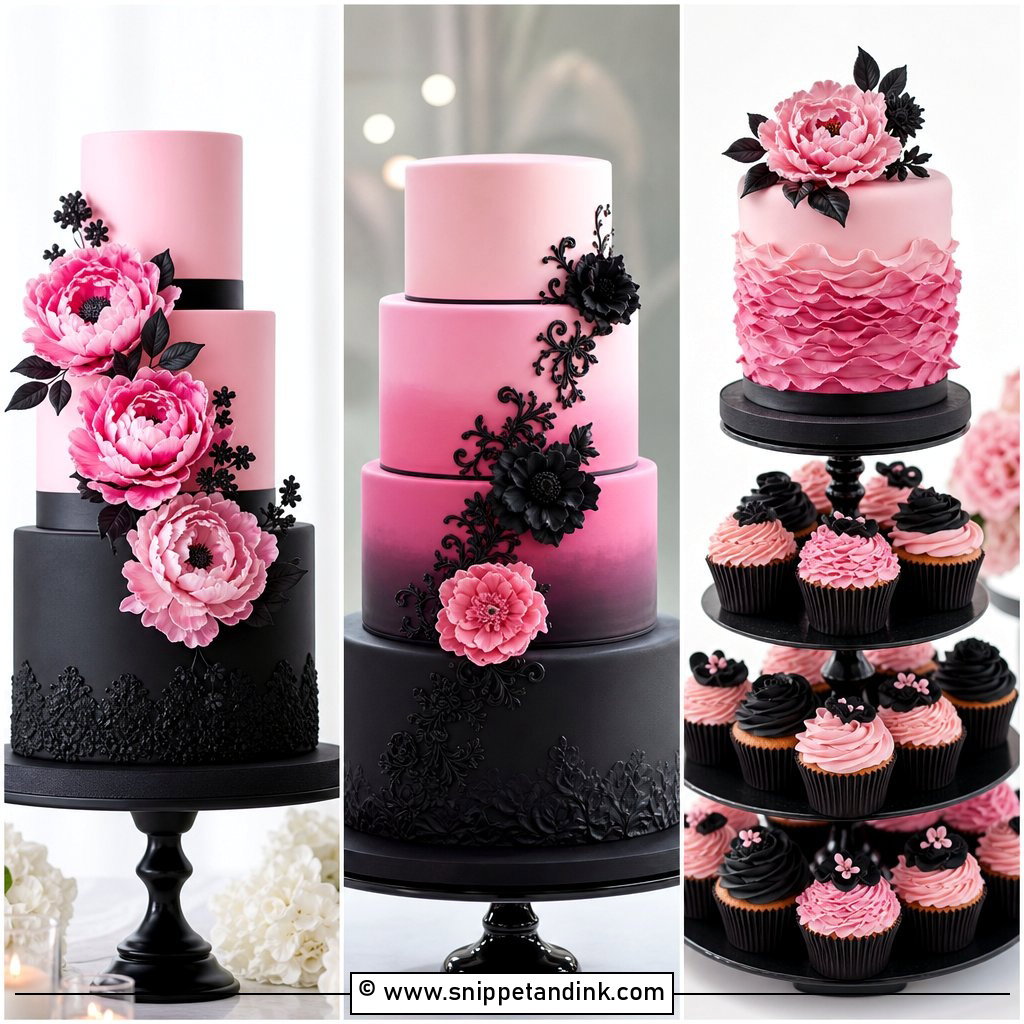
20. Mini Carousel Wedding Cake
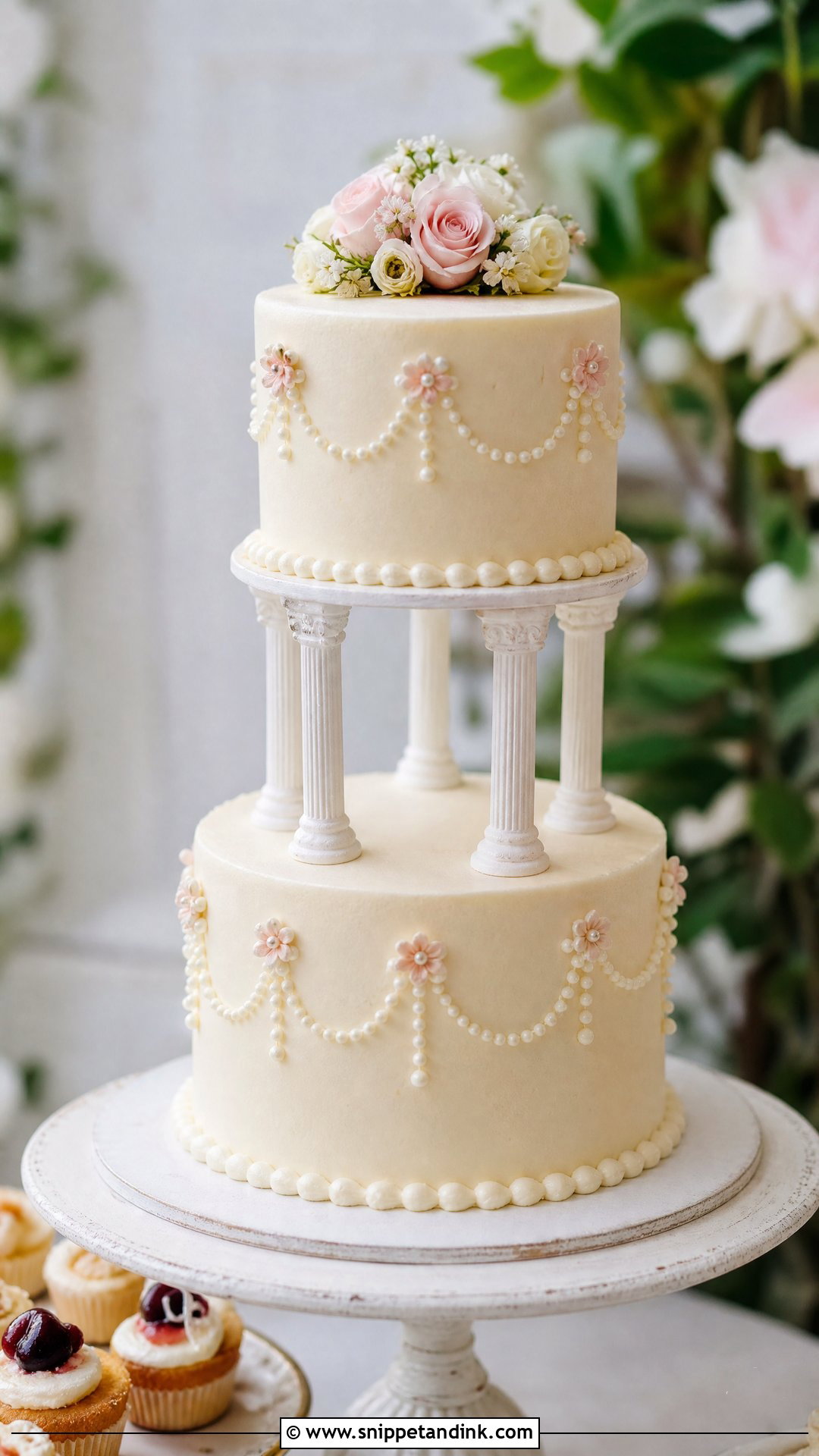
A mini carousel is usually two small tiers on short columns, sized for elopements and dinners of twenty or so. The trap is proportion. Standard pillars look like scaffolding under a small tier, so I use shorter, slimmer separators. Pearl dots, tiny flowers or a small topper are plenty. If you need more servings, set it on a vintage stand surrounded by cupcakes or pastries instead of growing the cake.
21. Cupcake Carousel Wedding Cake
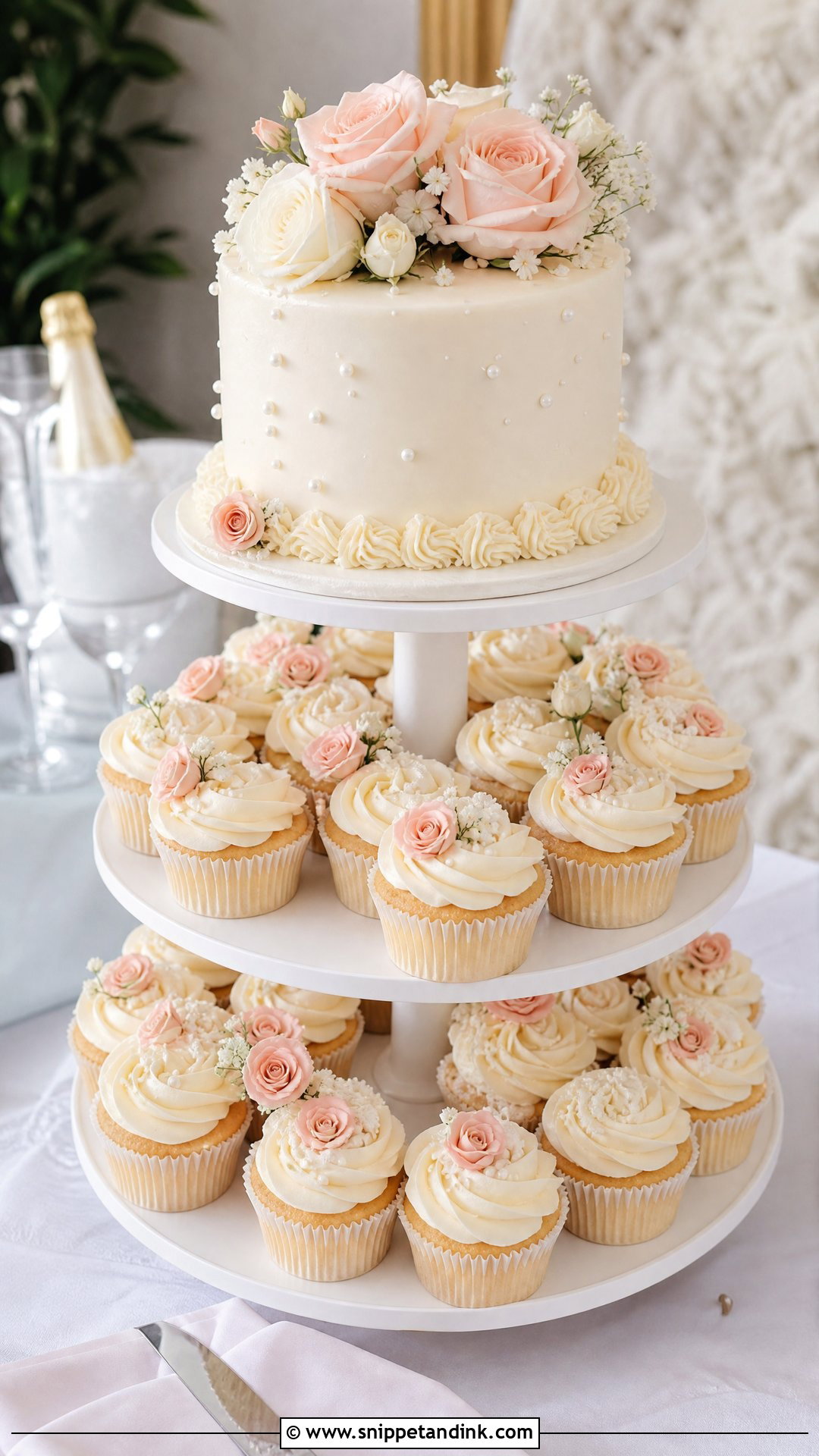
Cupcakes on a display tower with a small cutting cake on top give you the moment of a cut and the speed of grab-and-go servings. I match the cupcake frosting to the top tier so it reads as one piece, and ivory buttercream with floral toppers or pearl sprinkles keeps it bridal. One practical point: cupcakes on an open stand dry out faster than a whole cake, so I fill the stand as late as possible and keep spares boxed in the kitchen.
22. Macaron Carousel Wedding Cake
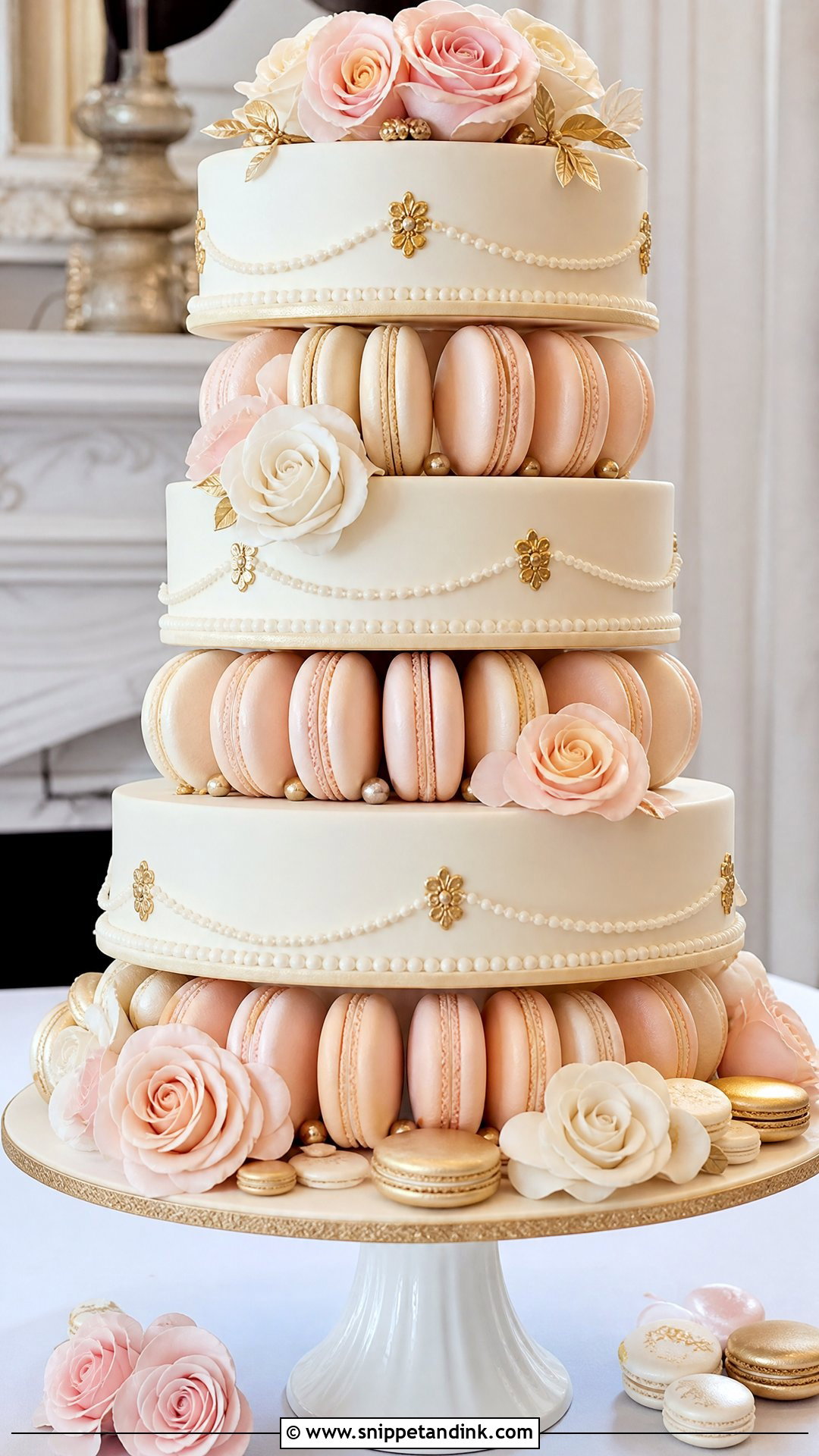
Macarons fill the gaps between tiers with colour and give guests something small to pick up. They’re touchy, though. They soften in humid air and turn soggy pressed against moist buttercream, so I attach them with a dab of ganache or royal icing at the last stage and keep extras in an airtight box. Blush, lavender, champagne and pale blue shells all work, and they sit naturally with French-inspired menus and garden receptions.
23. Rustic Carousel Wedding Cake
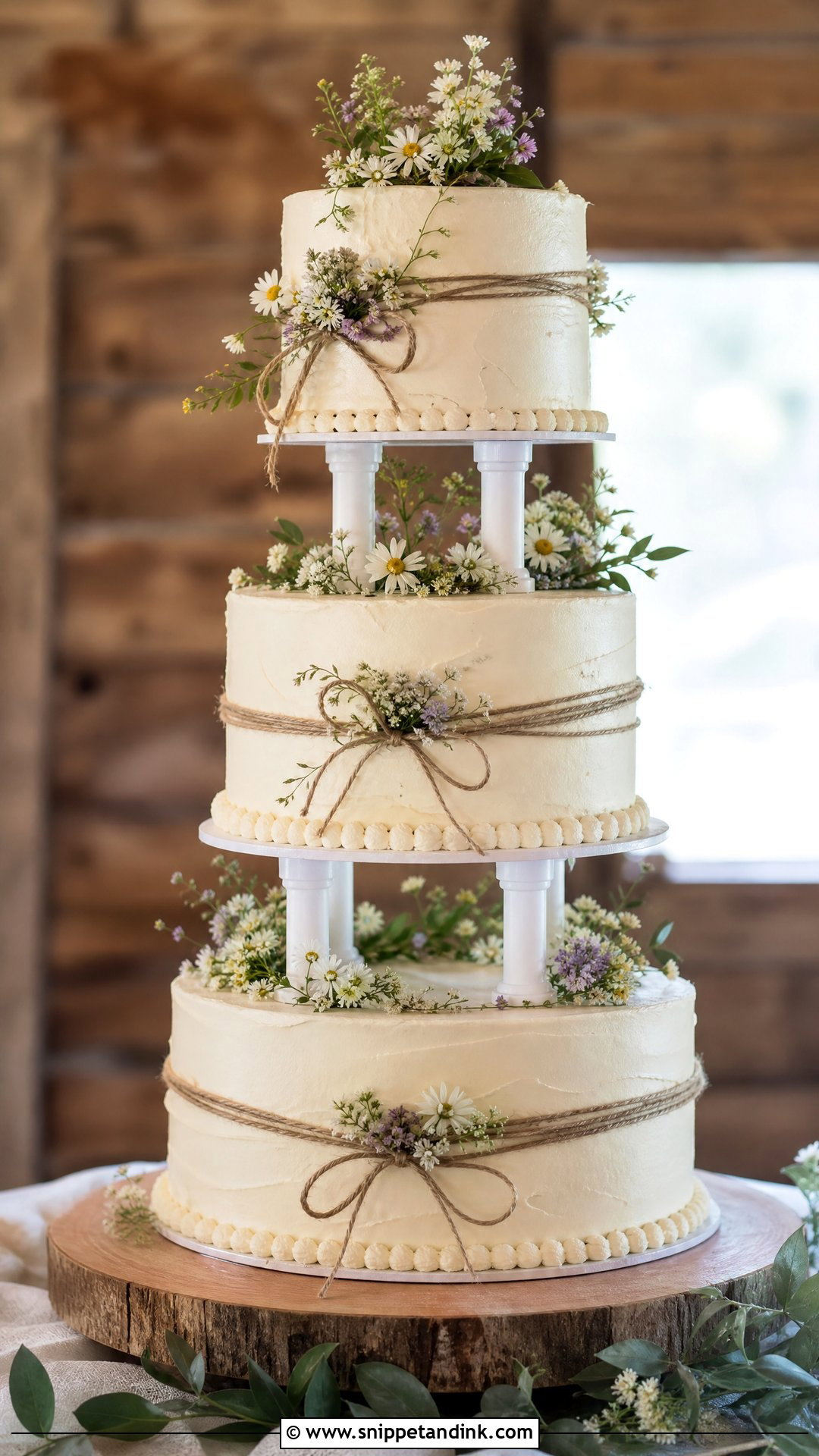
Rustic carousels swap shiny fondant for semi-smooth buttercream or a thin semi-naked coat. Exposed sponge dries quickly in open air, so I wrap semi-naked tiers until the last moment and keep them away from fans and air-conditioning vents. Wooden stands, greenery and neutral ribbon suit barns and vineyards, and carrot, spice, vanilla bean or lemon flavours fit the mood. Plain columns are better here than ornate ones, which look borrowed from a ballroom.
24. Beach Carousel Wedding Cake
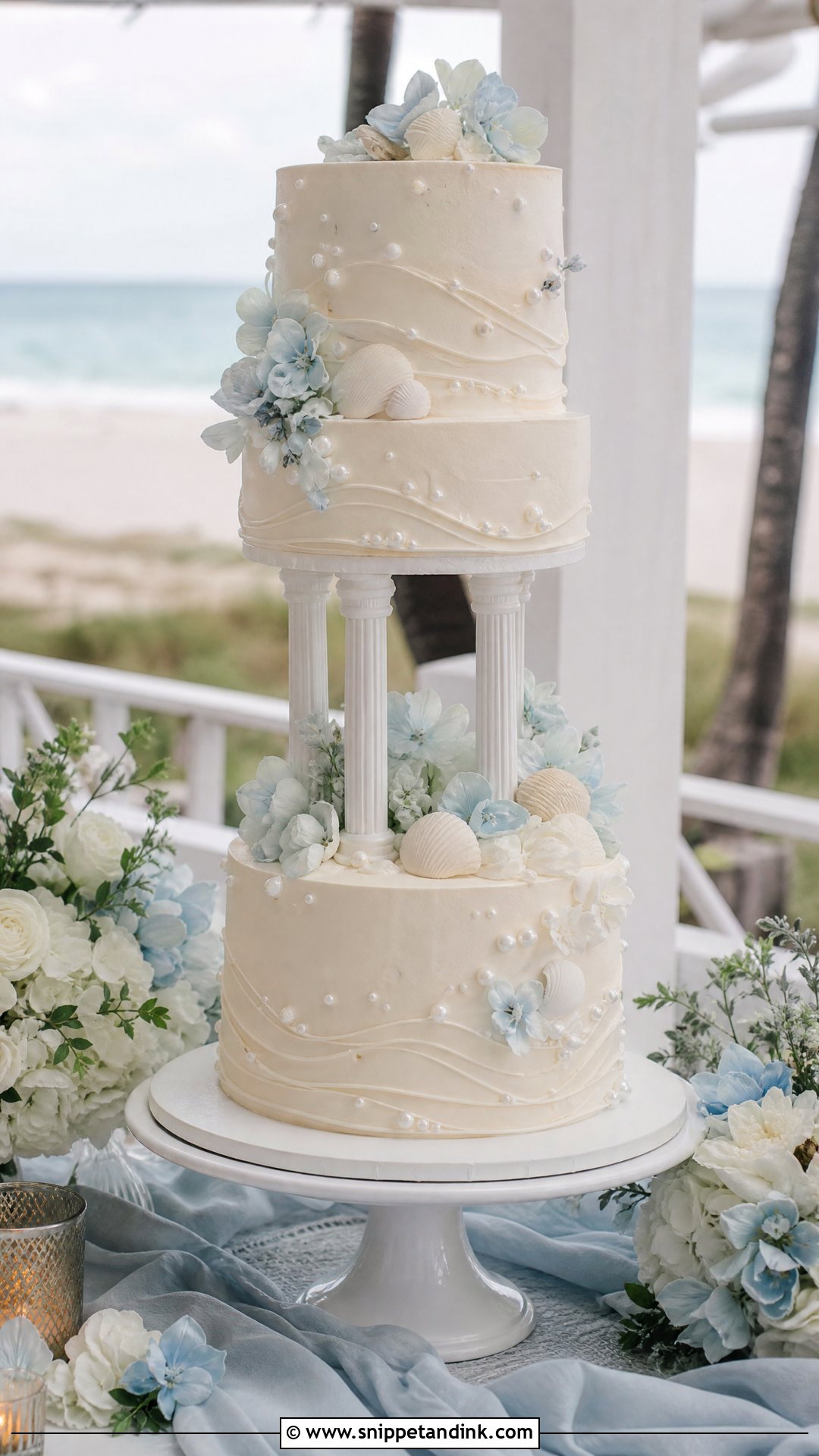
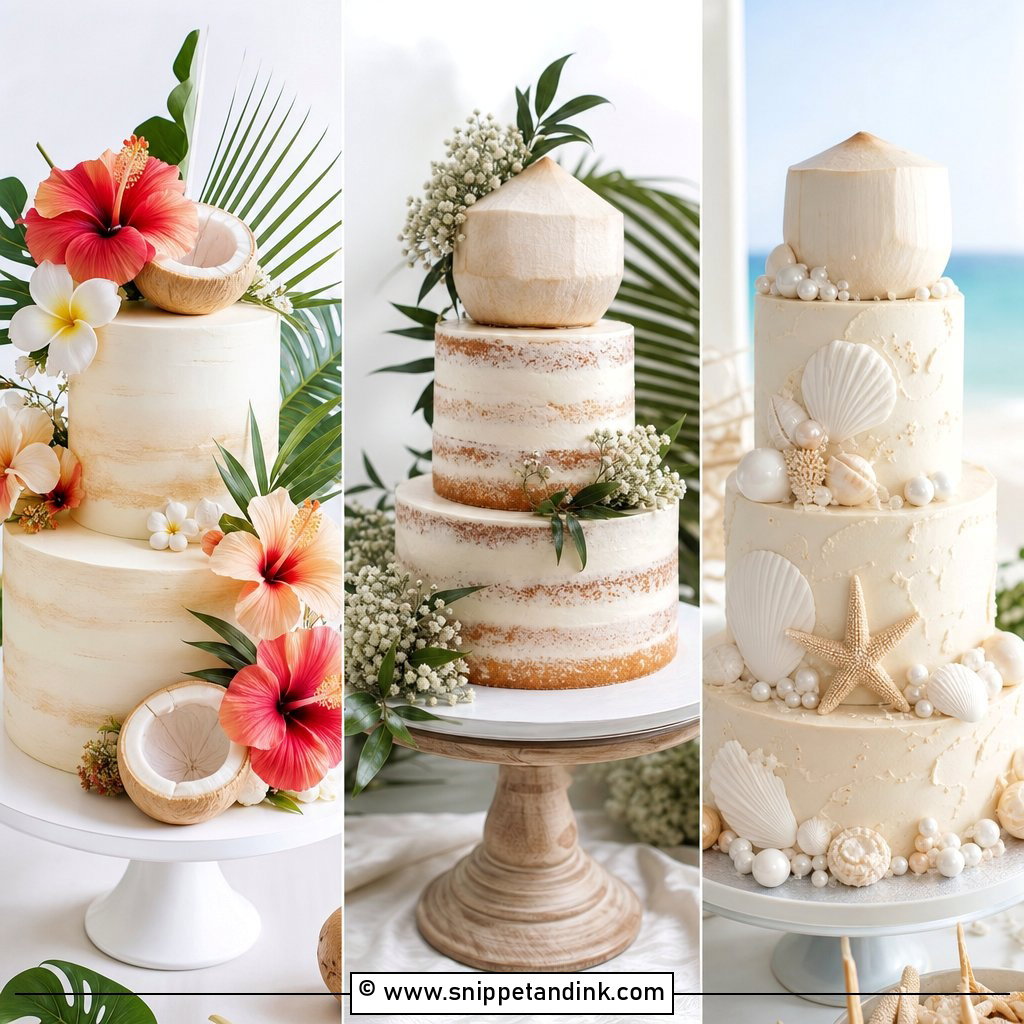
On a beach, heat and wind decide what’s possible before style does. I’d avoid buttercream in direct sun and keep the cake under cover until cutting; a fondant or ganache-covered cake holds up far better. Soft white, ivory, pale blue and sand tones work, with clear or white columns for a light look. Sugar shells, edible pearls or a subtle wave texture are enough decoration. Skip the props. Coconut, lemon or key lime suit the setting.

25. Modern Carousel Wedding Cake
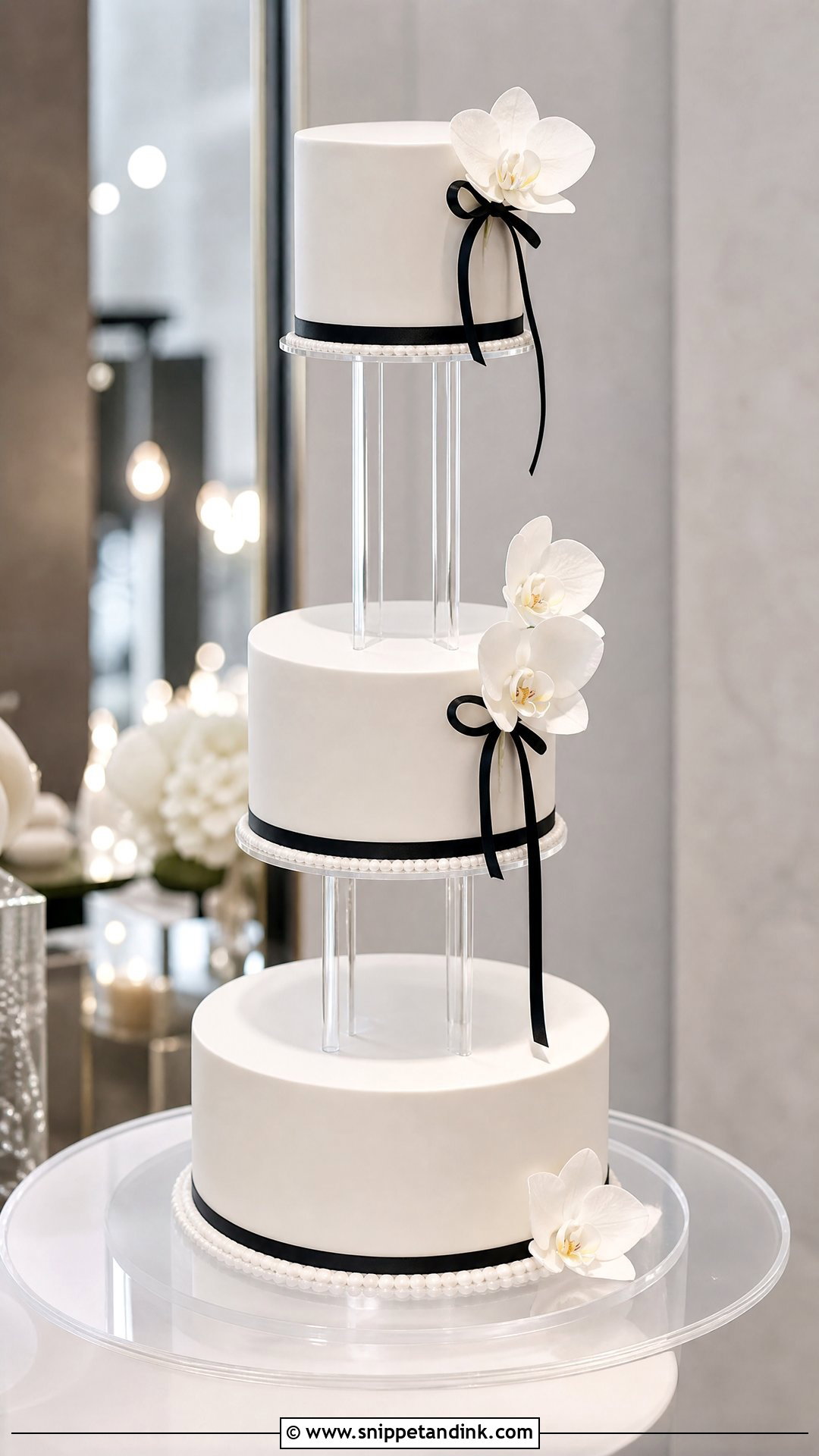
The modern version keeps the raised tiers and drops the fuss: smooth buttercream or fondant, sleek columns, sharp edges. Sharp edges take longer than people expect, usually with ganache under the covering, so factor that into your baker’s timeline. A single colour, black accents or brushed metallic separators make it feel editorial. One sculptural sugar piece or a few orchid stems beats several small accents. I’d pick this for gallery spaces and rooms with clean architecture.
26. Blush Carousel Wedding Cake
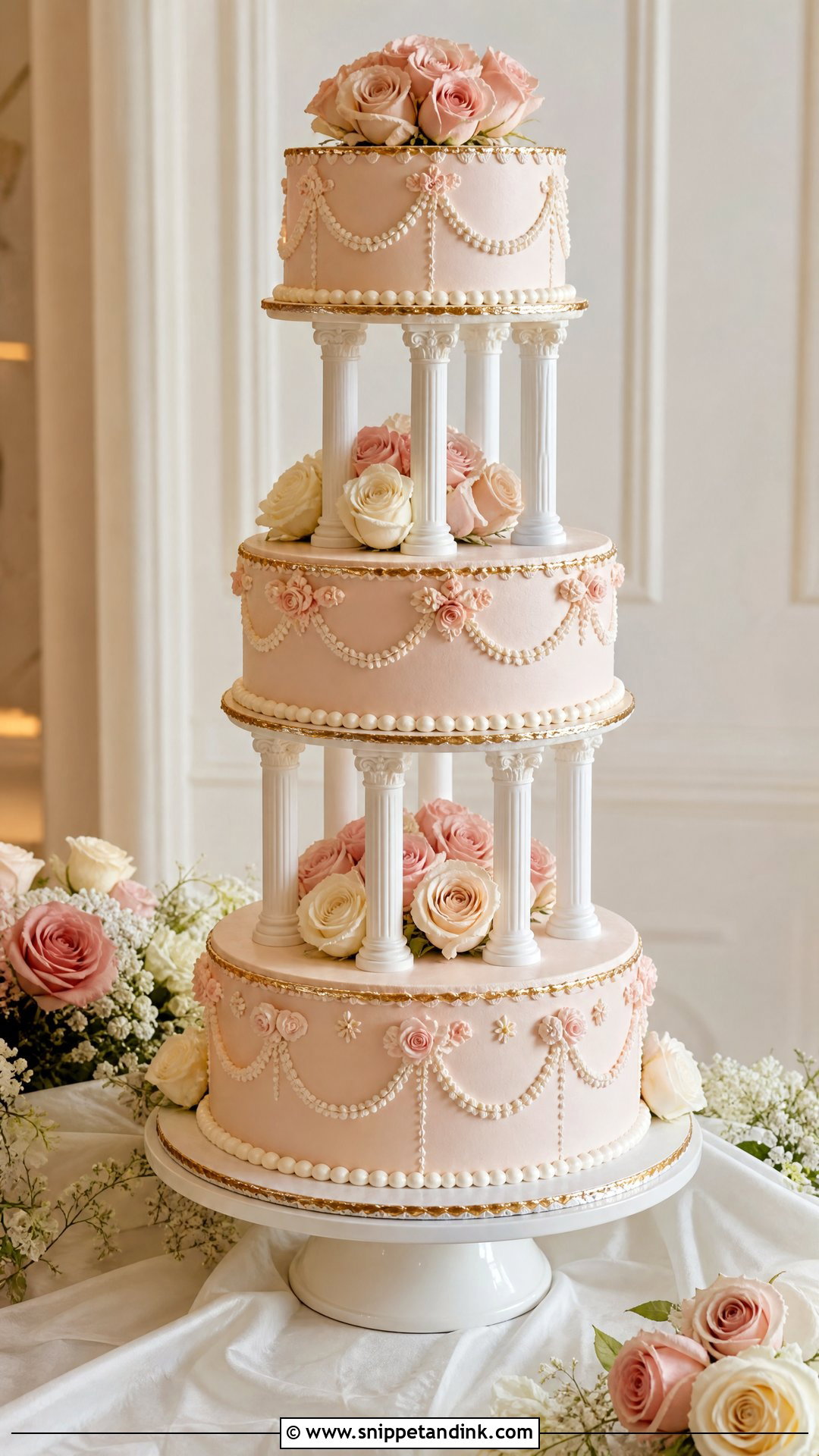
Blush differs from pink mostly in restraint. It should be the colour you notice second. I usually tint the frosting very lightly, or keep the tiers ivory and bring blush in through sugar roses and ribbon bands, with champagne accents and pale flowers alongside. Spring gardens and classic ballrooms are an easy fit. If you add gold edges or pearls, choose one, so the softness survives.
27. Champagne Carousel Wedding Cake
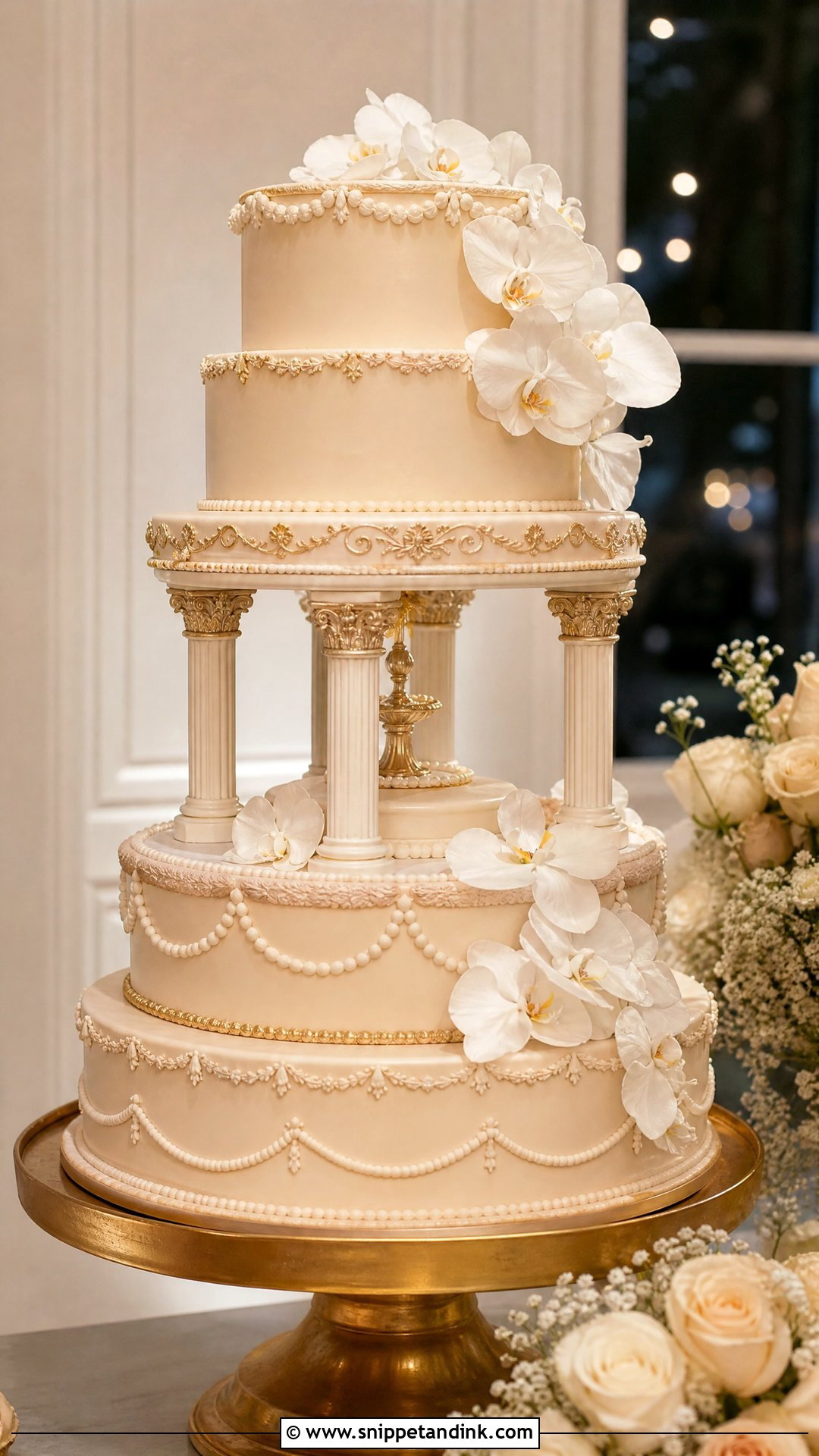
Champagne sits between gold and ivory, and I usually get it with pearl lustre brushed over an ivory base or a satin-finish fondant. It warms up nicely under candlelight and evening lighting. Pair it with white orchids, sugar roses, pearl trim or fine piping. It fits a palette that already includes beige, taupe or soft gold. In cold daylight it can look slightly flat, so check it against the room you’re actually using.
28. Orchid Carousel Wedding Cake
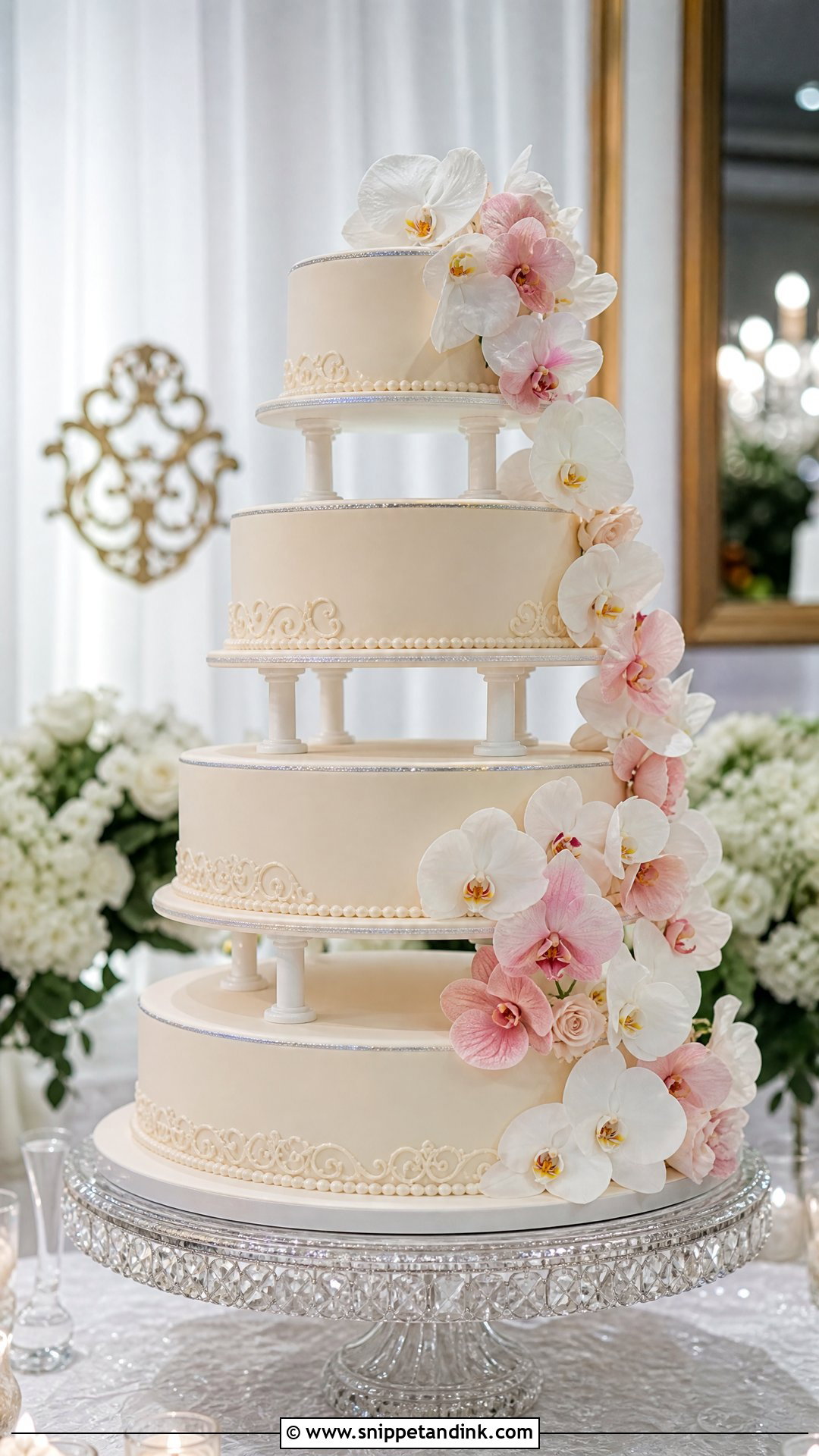
Orchids drape down the sides of raised tiers in a way few flowers do, which is why florists reach for them on pillared cakes. If the cake will sit out for hours in heat, I prefer sugar orchids: cut orchids wilt, and their stems should never go straight into the sponge. White keeps it bridal, while blush, lavender or pale yellow adds colour. Smooth frosting keeps the focus on the flowers, on round or square tiers alike.
29. Rose Carousel Wedding Cake
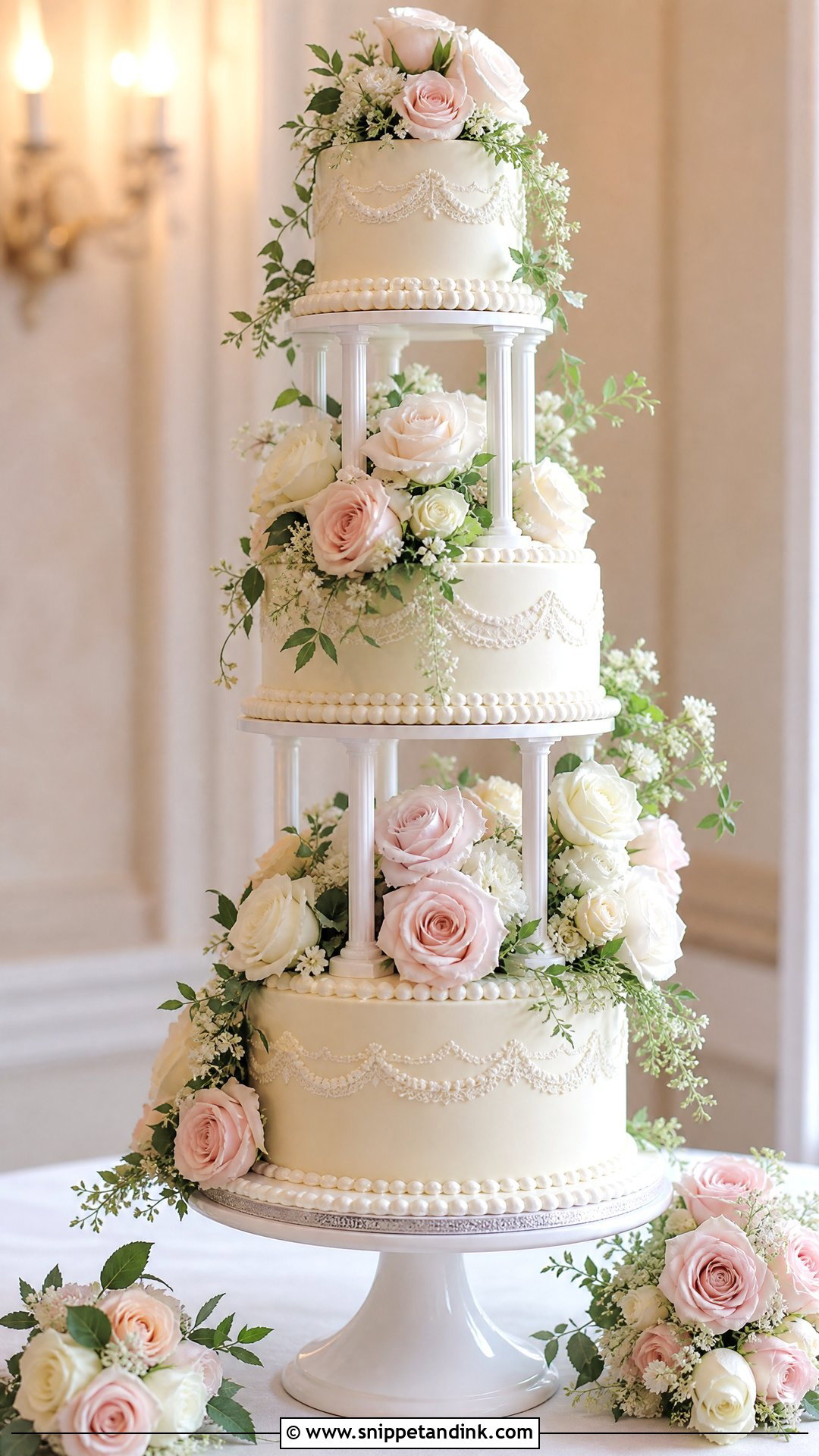
Roses can be fresh, sugar or piped in buttercream, and that choice changes the cake more than the colour does. Florist roses are often treated with chemicals, so I ask for unsprayed stems or keep them off the frosting with a barrier. Sugar roses last and can be kept afterwards. White reads classic, blush soft, red or mauve richer. Let them cascade between the columns rather than hide the tiers, and match them to the bouquet so the table comes together.
30. Swan Carousel Wedding Cake
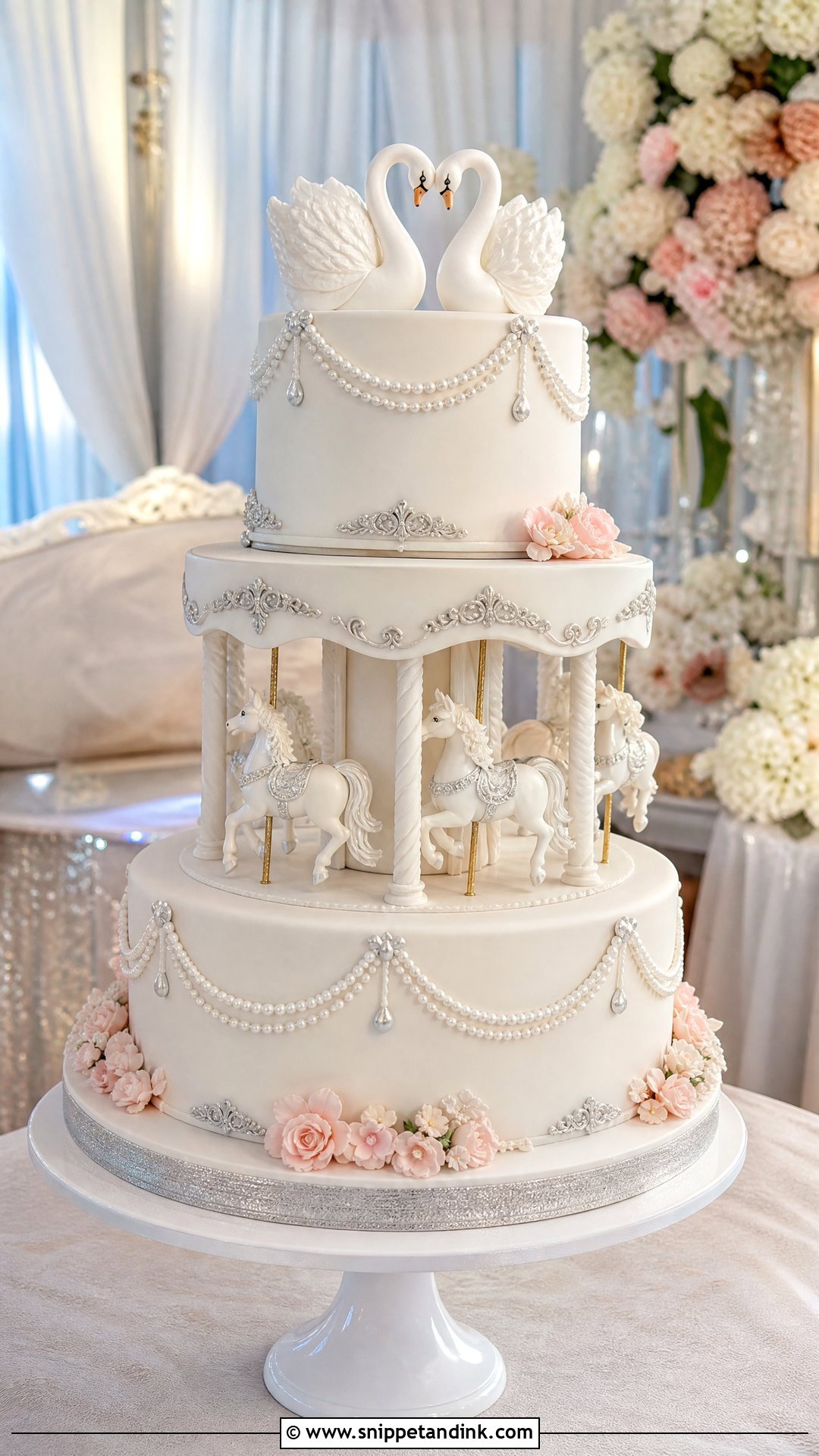
A swan carousel wedding cake works when the swans are few. A pair on the top tier or a soft painted motif is usually enough; a flock on every tier looks themed. Sugar swans are fragile, especially the necks, so I make them well ahead, let them dry completely and pack them separately for the trip. Blush flowers, silver trim or lace piping add softness. Lakeside and garden venues suit it best.
Cutting a Cake With Air Between the Tiers
Pillared cakes are taken apart before they’re served. After your ceremonial cut, the caterer lifts each tier off its plate, pulls the supports and slices in the kitchen. Make sure whoever is cutting knows this, because a tired server trying to slice a top tier still standing on its columns is how cakes topple.
Servings, dummy tiers and the top layer
Gaps don’t add servings, so a carousel always looks bigger than it feeds. When a design needs more height than your guest list needs cake, I make one or two dummy tiers and send a plain kitchen cake for the extra portions. Many couples also keep the small top tier. It should come off before the cutting starts, be wrapped well and go into the freezer within a day.
A Summer Afternoon Plan for Buttercream Tiers
A buttercream carousel on a hot afternoon is the scenario I plan around most. I ask for delivery as close to display time as the venue allows, a spot in the coolest part of the room and nothing in the path of sun through a window. If the reception is outdoors or the room has no air-conditioning, I’d steer you toward ganache under fondant, which holds its shape far better, and add fresh flowers at the last moment so they don’t wilt onto the icing.
Matching the Pillars to the Room You Have
A carousel cake earns its place when the shape fits the room: tall columns in a high ballroom, short ones for a supper of twenty, buttercream only where the air stays cool. Start with your guest count and venue, then let colour and decoration follow. Bring your baker photos of the room and the bouquet, and ask how the cake will be assembled on site. Those two conversations settle most of the decisions on this list.
You'll Like These Ideas:



Leave a Reply