
Honey earns its place in a wedding cake through flavor first. It runs through lavender honey sponge, almond honey layers, lemon honey buttercream and spiced fillings, and it suits a spring garden ceremony as well as a barn in October. On the outside, current wedding cake trends favor textured buttercream, pressed flowers, fruit, soft metallics, vintage piping and clean tiers, and honey sits comfortably with every one of them. Here are twenty designs, with my notes on how each flavor and finish behaves once it’s actually built.
Which Honey Goes Into the Sponge Changes the Whole Slice
Honey varies far more than most couples expect, and the jar tells you a lot about how the cake will taste. Light honeys fade into the background once baked; dark ones keep their character through the oven. At a tasting I like to set a few out on spoons before we talk about decoration at all.
- Orange blossom: floral with a citrus edge, a natural partner for lemon or almond sponge.
- Acacia: very mild and pale, for honey sweetness without a strong flavor.
- Wildflower: changes by region and season, so taste the actual jar your baker plans to use.
- Chestnut or buckwheat: dark, malty and slightly bitter, wonderful with spice or chocolate and too strong for a delicate floral cake.
Some honey flavor bakes away, so I put it in three places: the sponge, a honey syrup brushed onto each layer, and the buttercream. That way the slice tastes of honey rather than just faintly sweet. If the couple has a local beekeeper they love, that honey goes into the syrup, where it isn’t cooked and keeps the most character.
1. Honeycomb Wedding Cake
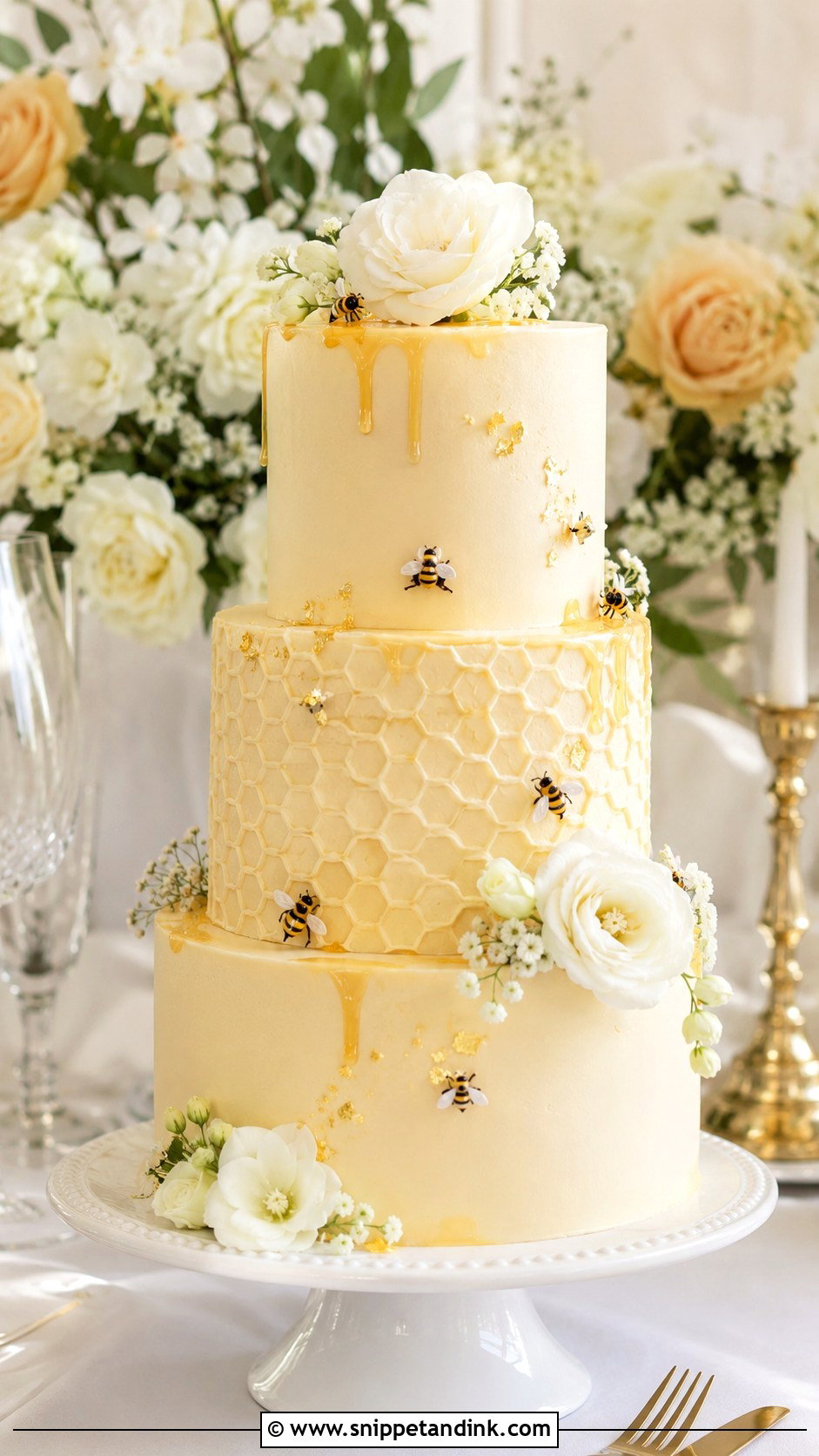
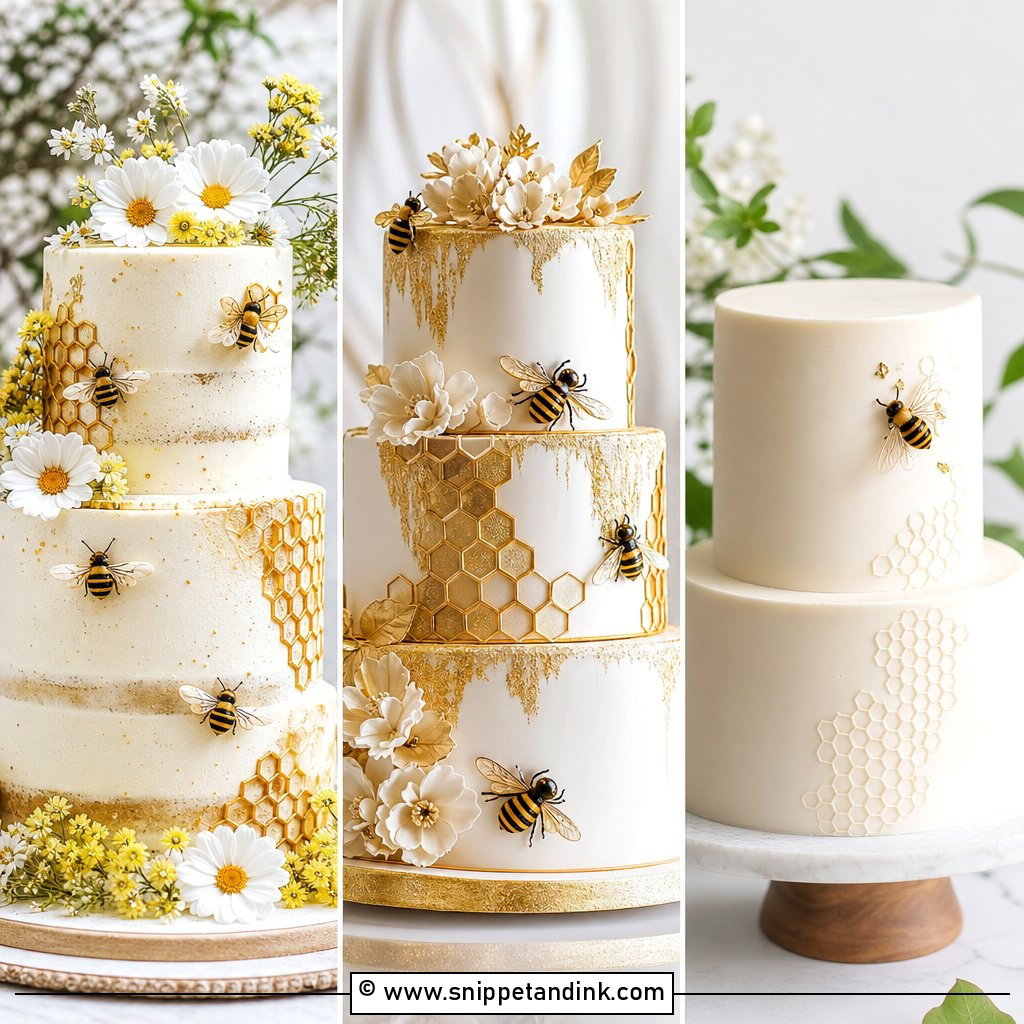
Raised honeycomb is the clearest signal of the theme and the easiest to overdo. On a honeycomb wedding cake I wrap the texture around one or two tiers only, in ivory or pale golden buttercream, and leave the rest smooth so the pattern has something to stand against. A light drip and a few flakes of edible gold finish it. Bees are optional; two or three at most. Vanilla honey sponge with honey mascarpone, or lemon honey buttercream, keeps the flavor bright.
2. Lavender Honey Wedding Cake
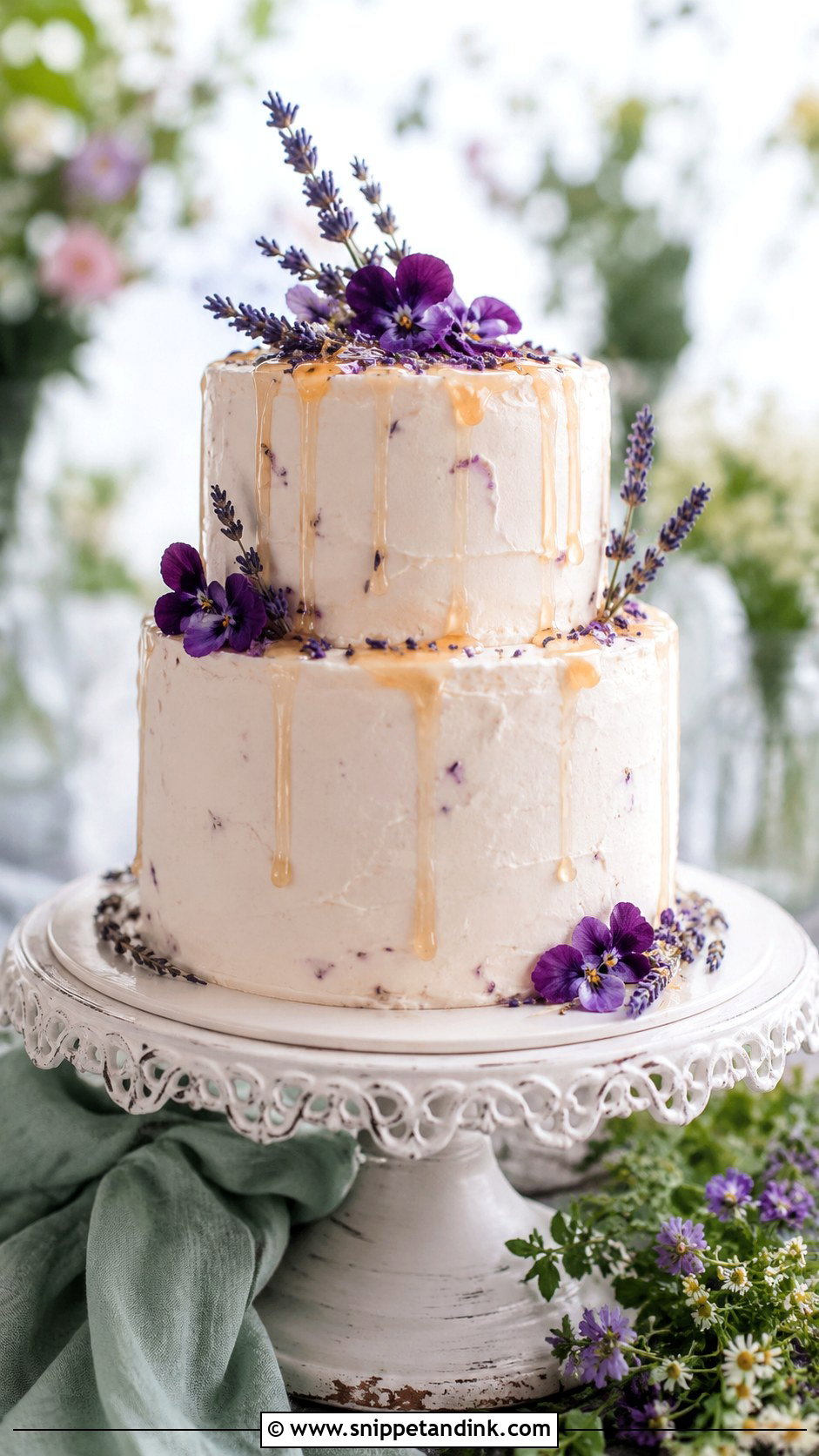
Lavender is the strongest flavor in this list and the quickest to go wrong. I infuse it into the buttercream by steeping culinary lavender in warm cream and straining it out, rather than folding in buds, which leave a gritty, soapy bite. Smooth ivory with pale lavender at the edges, a few dried buds and tiny edible flowers is all the decoration it needs. A quiet palette of ivory, lilac, sage and champagne suits it, and lemon curd in the filling keeps the floral notes fresh instead of perfumed.
3. Rustic Honey Wedding Cake
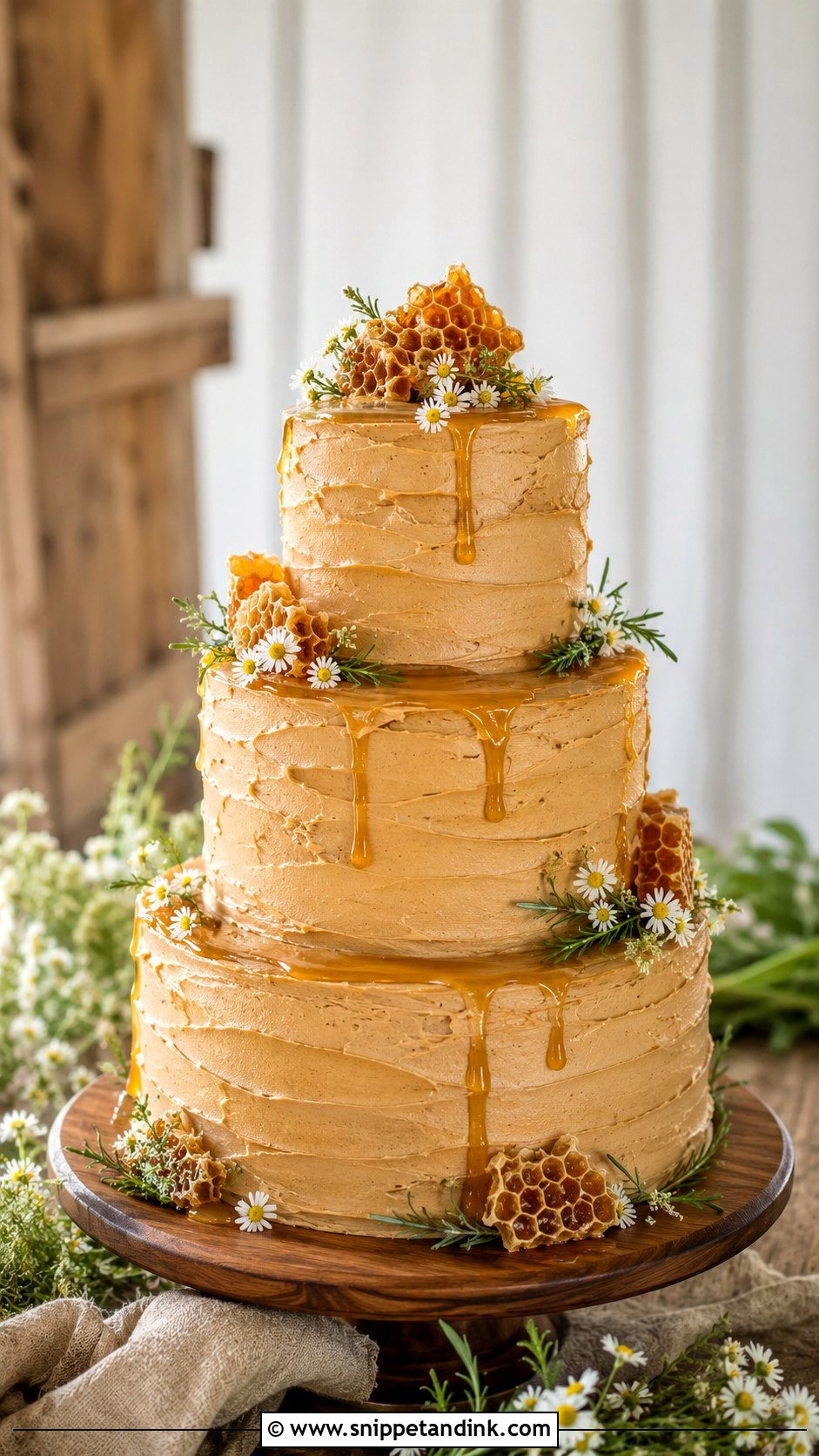
Rustic honey cakes come alive in barns and vineyards, against wood, linen and wildflowers. I finish them in lightly textured buttercream, let a golden drip soften the tier edges, then add herbs, small white flowers and honeycomb candy. Two things tip rustic into party cake: too many bees and bright yellow frosting, so skip both. Brown butter honey is my favorite flavor for this one, since nutty butter and dark honey taste as if they were made for each other. A wooden stand finishes the look.
4. Elegant Honey Drip Wedding Cake
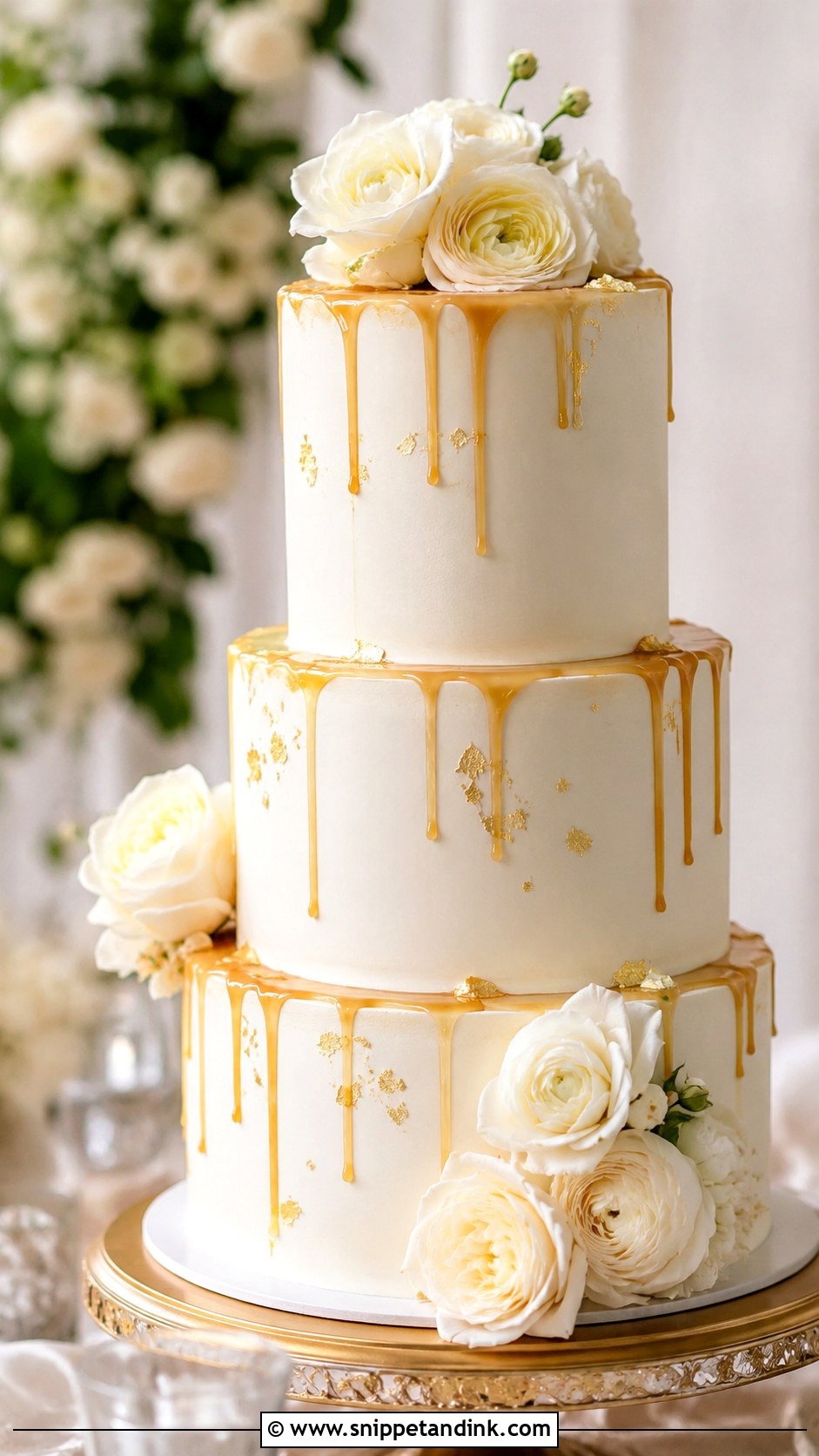
Can a drip cake be formal? Yes, if the drip is thin. A smooth white or champagne buttercream base with a fine amber drip that stops at uneven lengths partway down looks deliberate, while a thick drip pooling on the board looks like a birthday. I chill the cake hard before dripping so each line sets the moment it touches. White roses or edible flowers down one side balance it, and under evening lighting the amber catches every candle. Honey vanilla cake with Swiss meringue buttercream keeps the flavor clean.
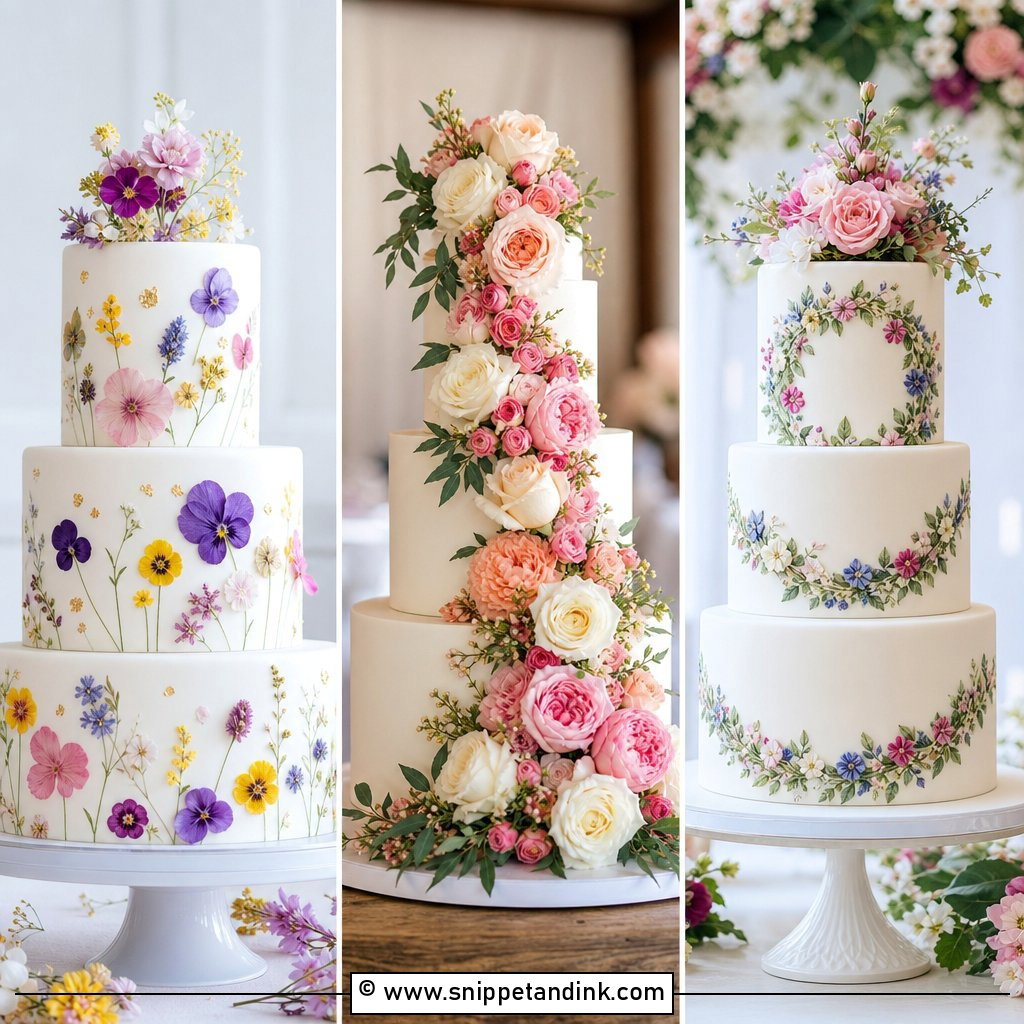
5. Pressed Flower Honey Wedding Cake
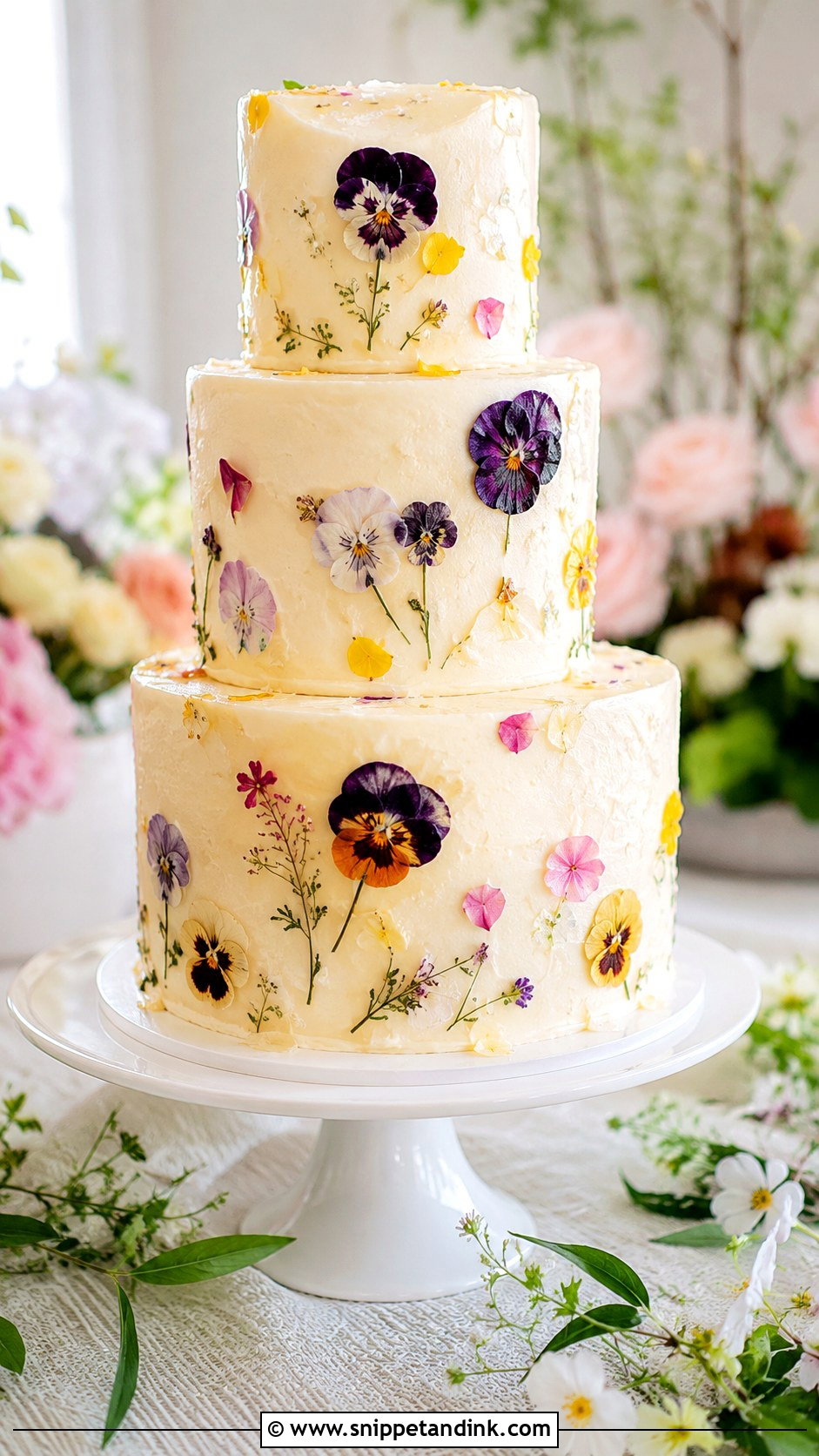
This one reads like a botanical print. Edible pressed flowers, such as chamomile, pansies, violas and small petals, are laid in a loose pattern over smooth buttercream or fondant in ivory, cream or soft yellow. Pressed petals can lose color in strong sunlight, so I keep the cake out of direct sun and add the flowers as late as I practically can. Matching a few blooms to the bouquet ties it to the rest of the day. A thin honey glaze brushed between the layers adds flavor without disturbing the clean outside.
6. Wildflower Honey Wedding Cake
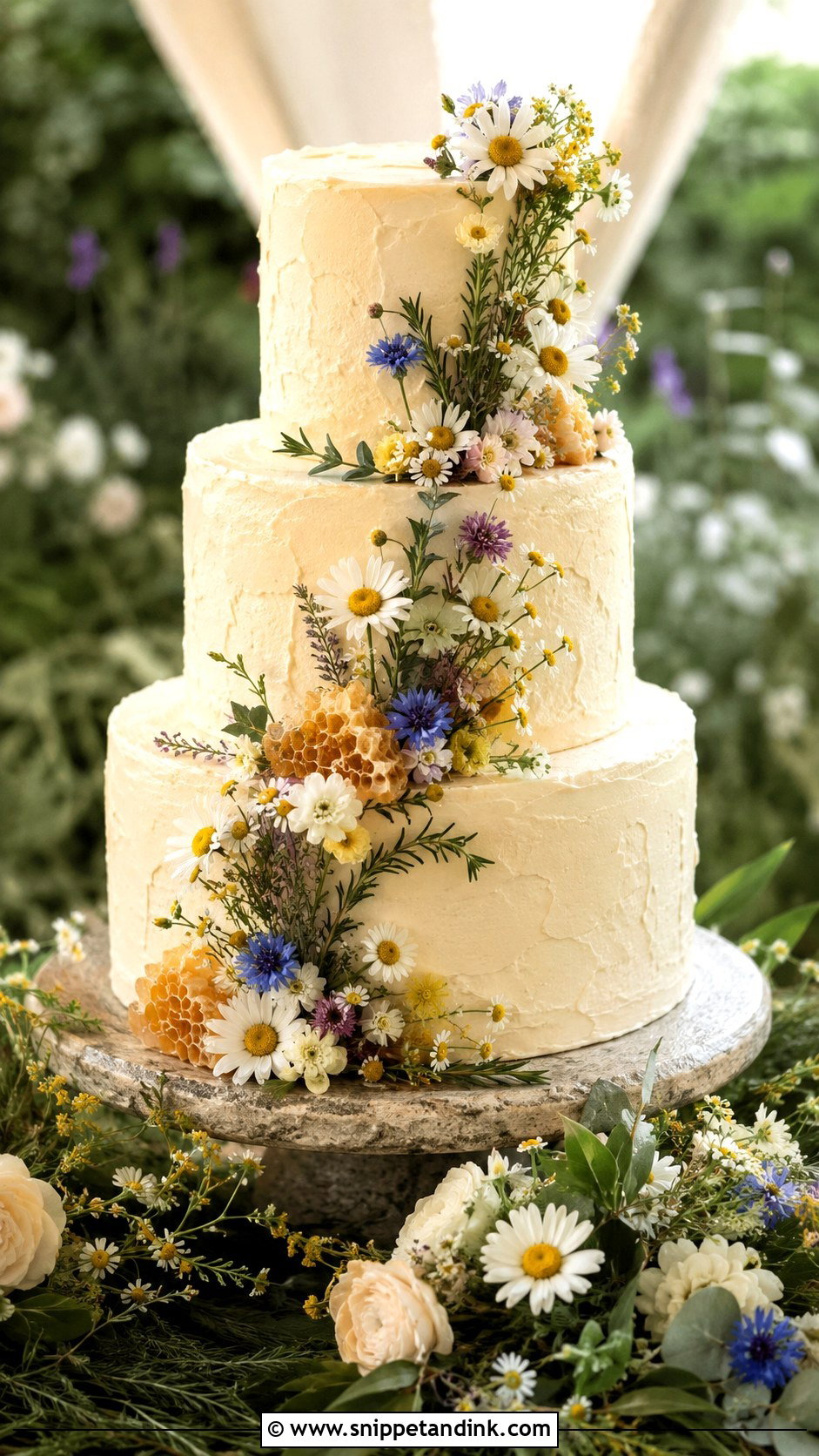
Unlike pressed flowers, these sit fresh and three-dimensional on the cake. Two or three tiers in textured buttercream take small clusters of daisies, chamomile, edible blooms and greenery, with gaps between them so the whole thing looks airy. Flowers picked from an actual field don’t belong on food, since you can’t know what’s been sprayed or which plants are toxic. I order edible blooms grown for the purpose and arrange them loosely so they look freshly picked. Honey sponge with lemon buttercream or vanilla bean filling keeps it light for a summer reception outdoors.
7. Gold Honey Wedding Cake
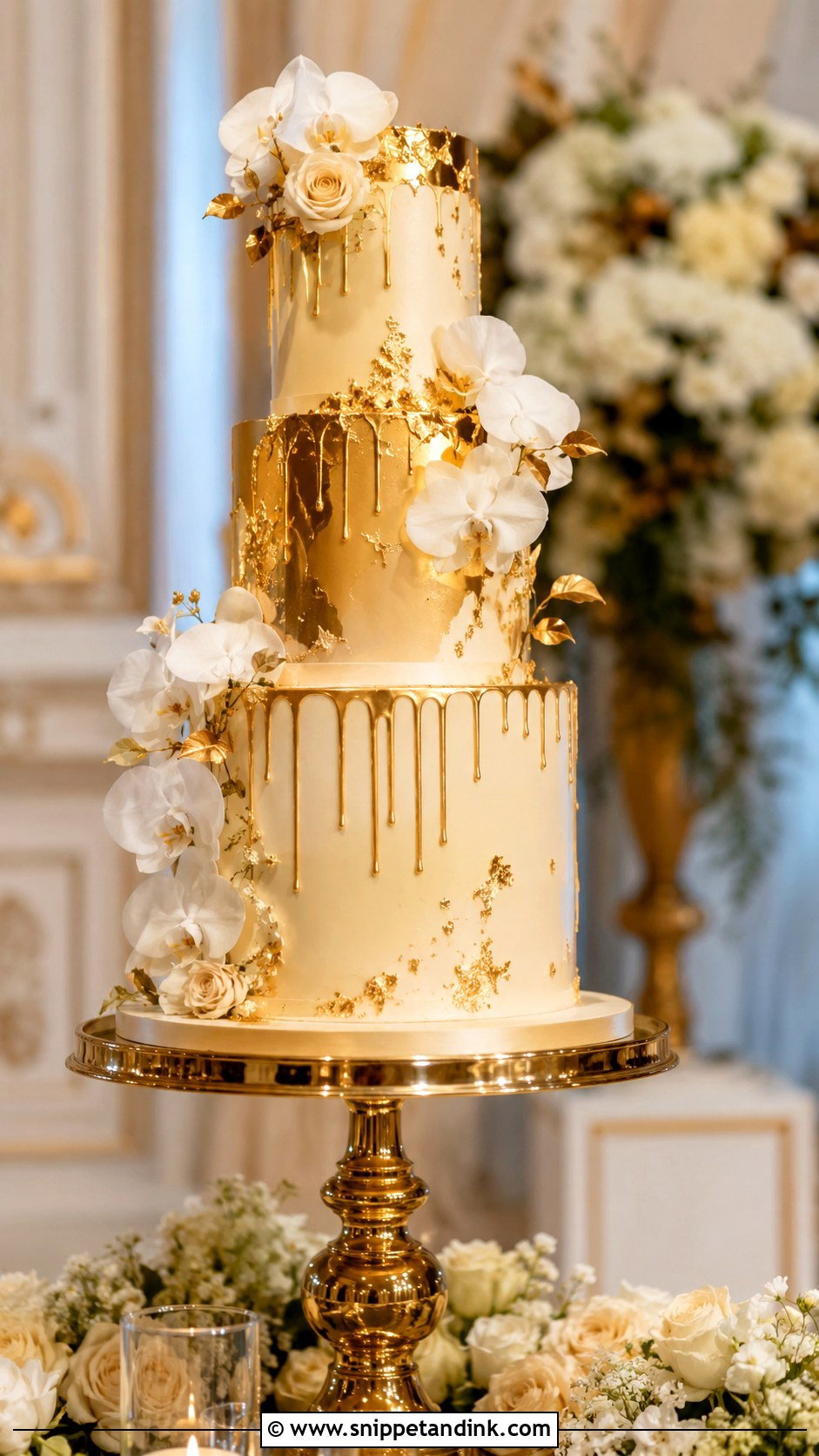
Gold works when it replaces yellow rather than joining it. Champagne, ivory, warm gold and amber read luxurious; add bright yellow and the cake starts to look themed. Gold leaf goes on along the tier edges with a dry brush, and it only grips a slightly tacky surface, so I apply it before the buttercream fully sets. A honey drip and white flowers complete it for a ballroom or hotel reception. Honey almond with vanilla buttercream, or honey cake with salted caramel, carries the richer mood.
8. Naked Honey Wedding Cake
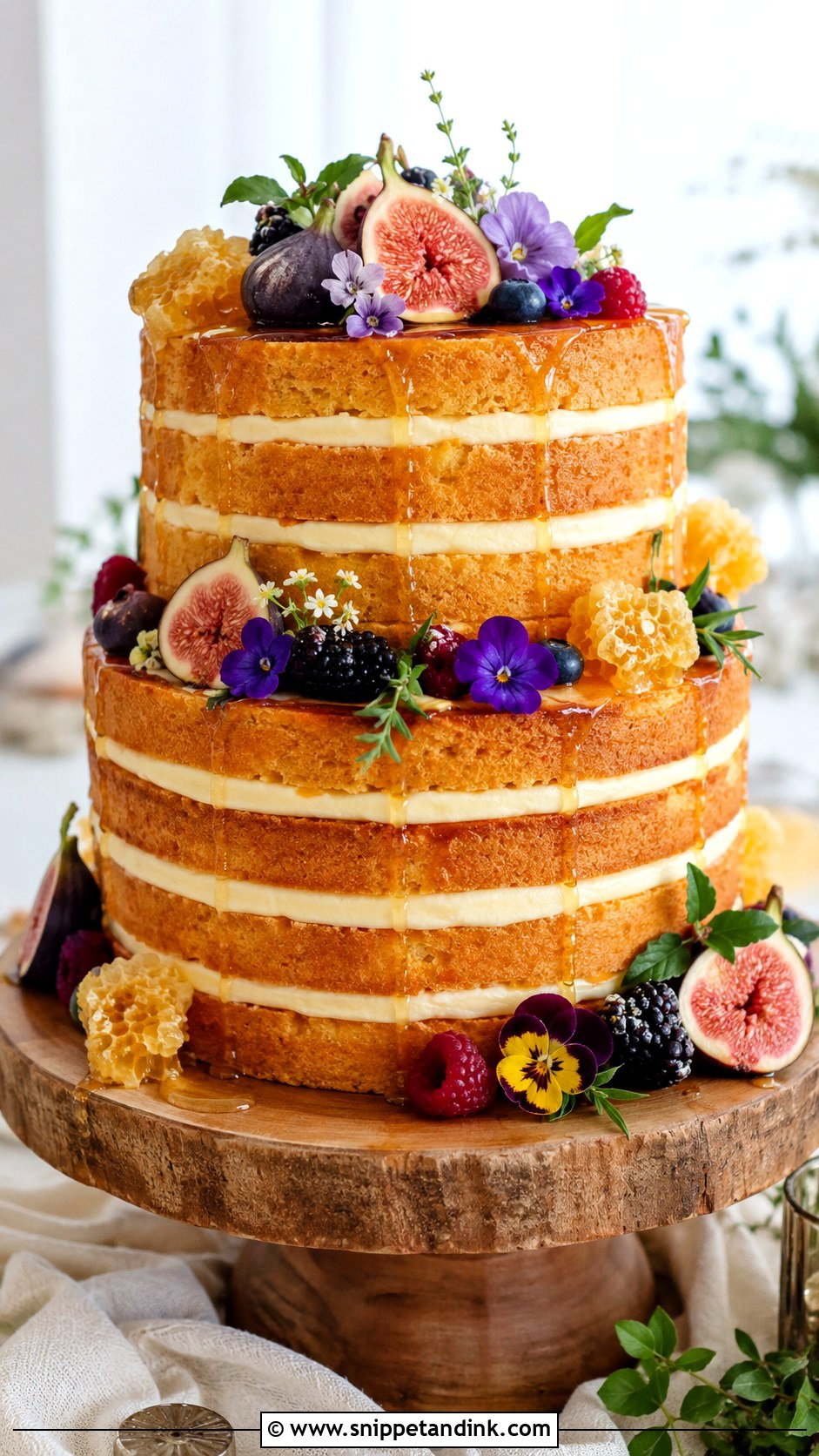
A naked honey cake shows the flavor before anyone tastes it, because honey sponge bakes to a deeper gold than plain vanilla. That darker crust is exactly what sits on the outside, so I trim it neatly or bake at a slightly lower heat to keep the color even. Honey buttercream goes between the layers, with figs, berries, edible flowers or honeycomb pieces on top. It suits couples who don’t want much sweet frosting, at a boho, backyard or farm wedding. Neat edges keep it looking intentional.
9. Semi Naked Honey Wedding Cake
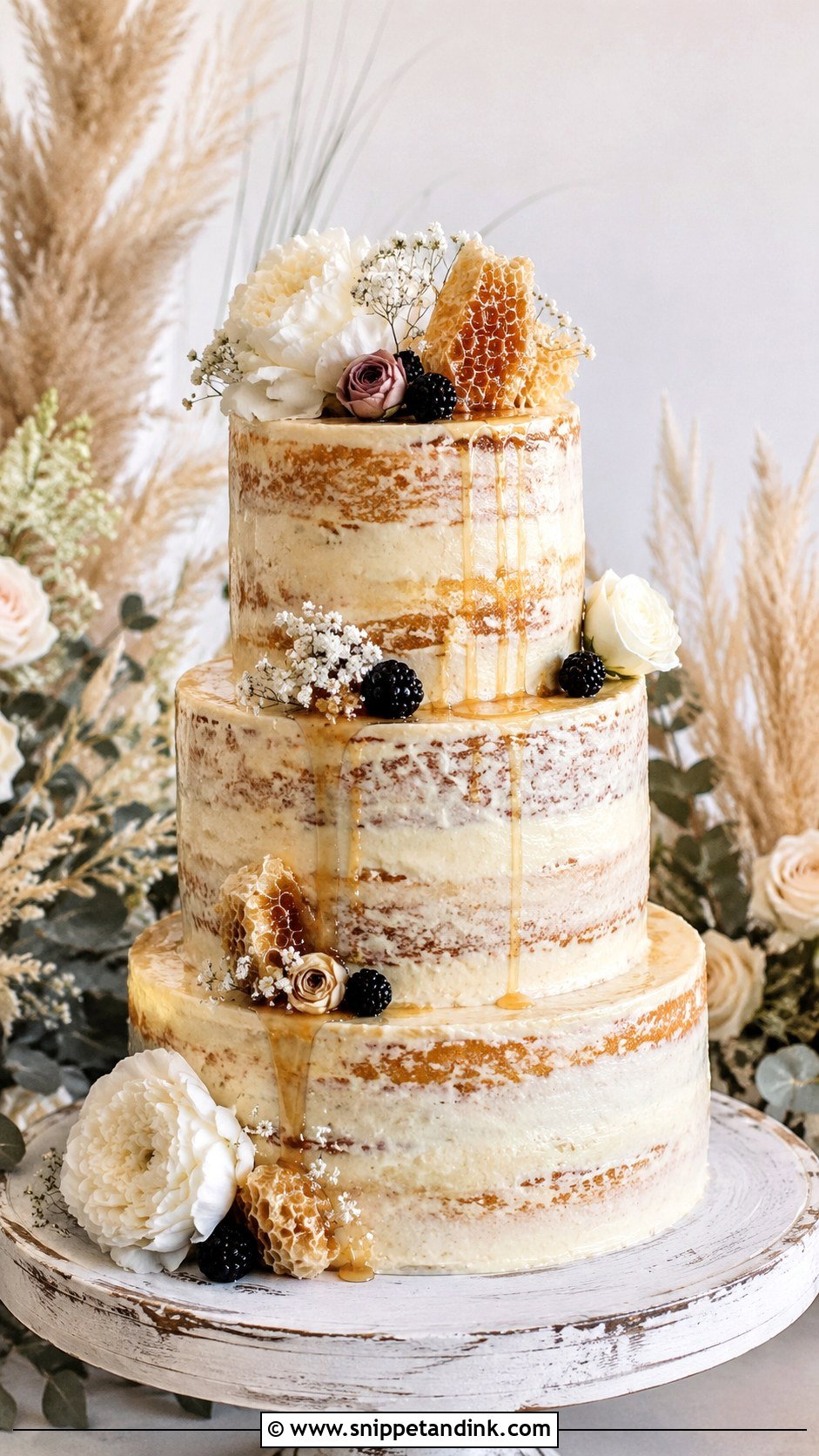
Semi-naked is my compromise for couples who like the naked look but worry about dry sponge. A thin coat scraped around the outside seals the layers better while still letting the golden cake show. It also hides small differences between tiers, which is why I prefer it to fully naked on tall cakes. Decorate with a light honey drizzle, fresh flowers, berries or honeycomb candy. Honey vanilla, cinnamon honey and almond honey layers all suit the finish.
10. Honey Bee Wedding Cake
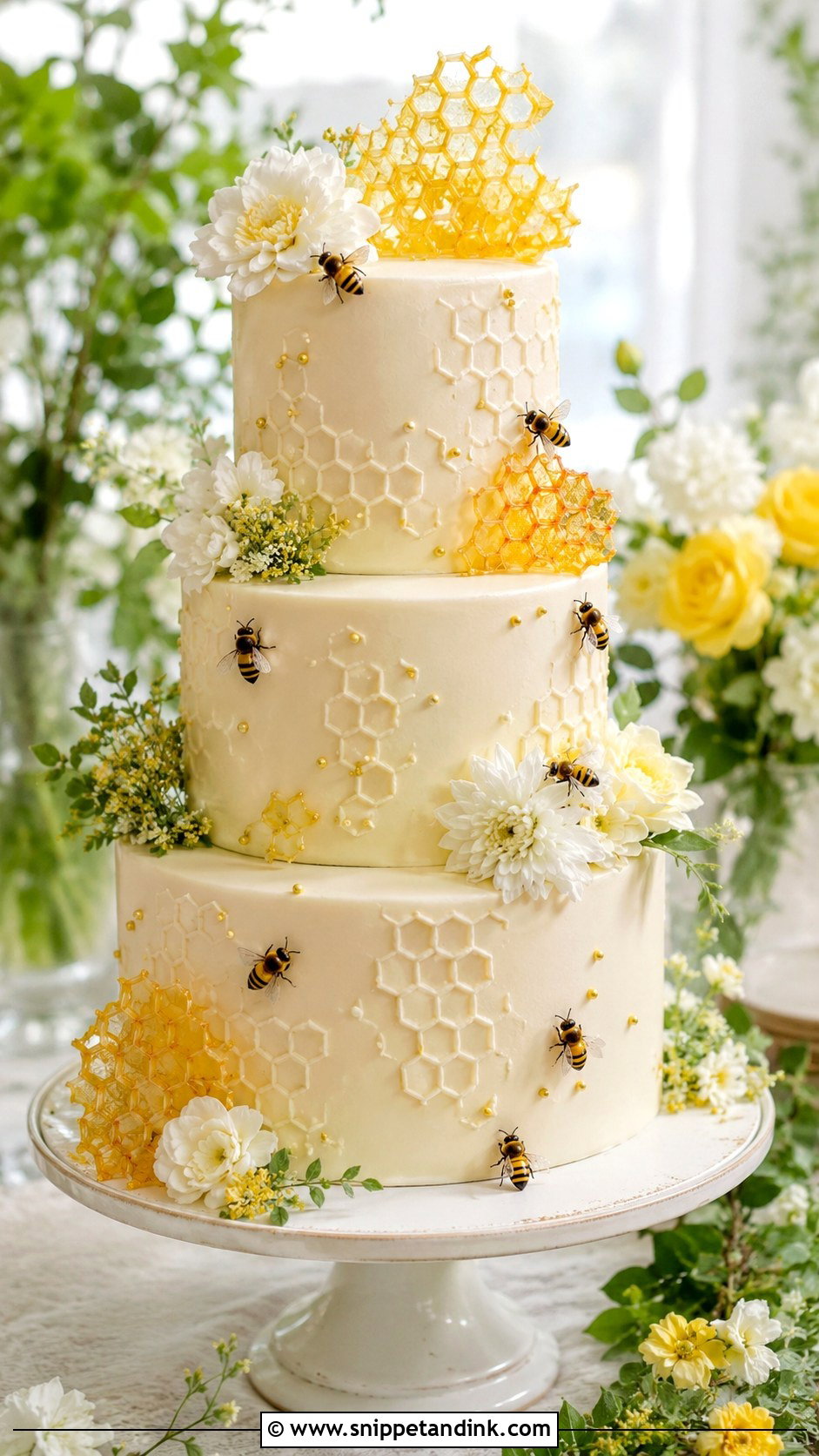
Bees belong on a honey bee wedding cake only if they’re small and few. A smooth ivory or pale gold cake with tiny sugar bees, faint honeycomb texture and a few flowers suggests nature and good luck without becoming a party theme, whereas cartoon bees with big eyes undo a formal mood instantly. I model the bodies from gum paste so they keep their shape if the room warms up. Couples who keep gardens or care about pollinators tend to love the meaning. Honey lemon cake with cream cheese frosting or honey buttercream keeps it bright.
11. Lemon Honey Wedding Cake
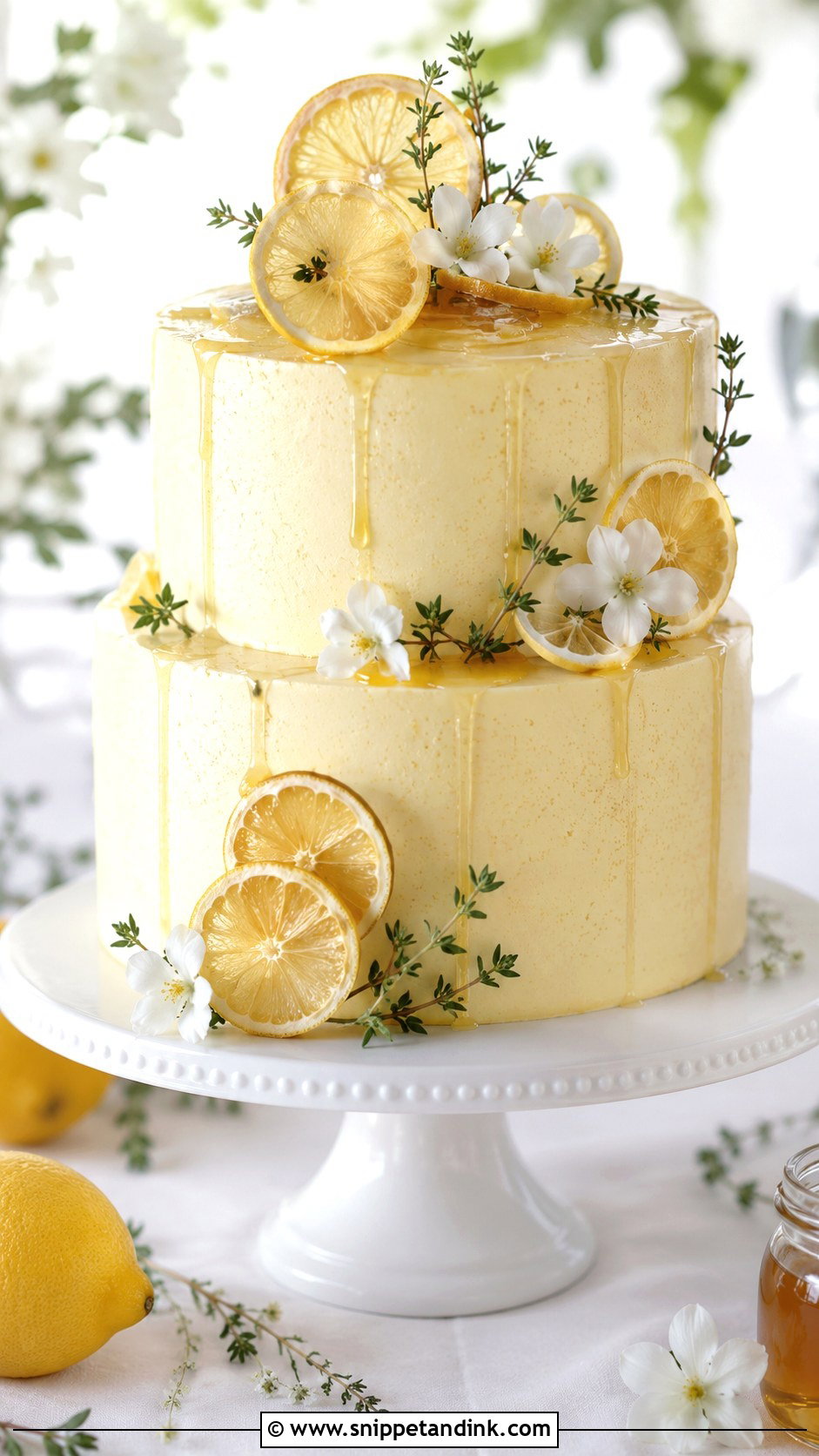
Balance is the point of this cake. Honey brings round warmth, and lemon cuts through it so the slice never feels cloying. Pale yellow buttercream, smooth sides and a soft honey drizzle keep the design clean. I use dried lemon slices rather than fresh, which weep juice into the frosting within hours, plus white flowers and tiny sprigs of thyme or rosemary. For a sharper citrus note, spread lemon curd between the honey layers. Garden receptions and summer brunches suit it best.
12. Almond Honey Wedding Cake
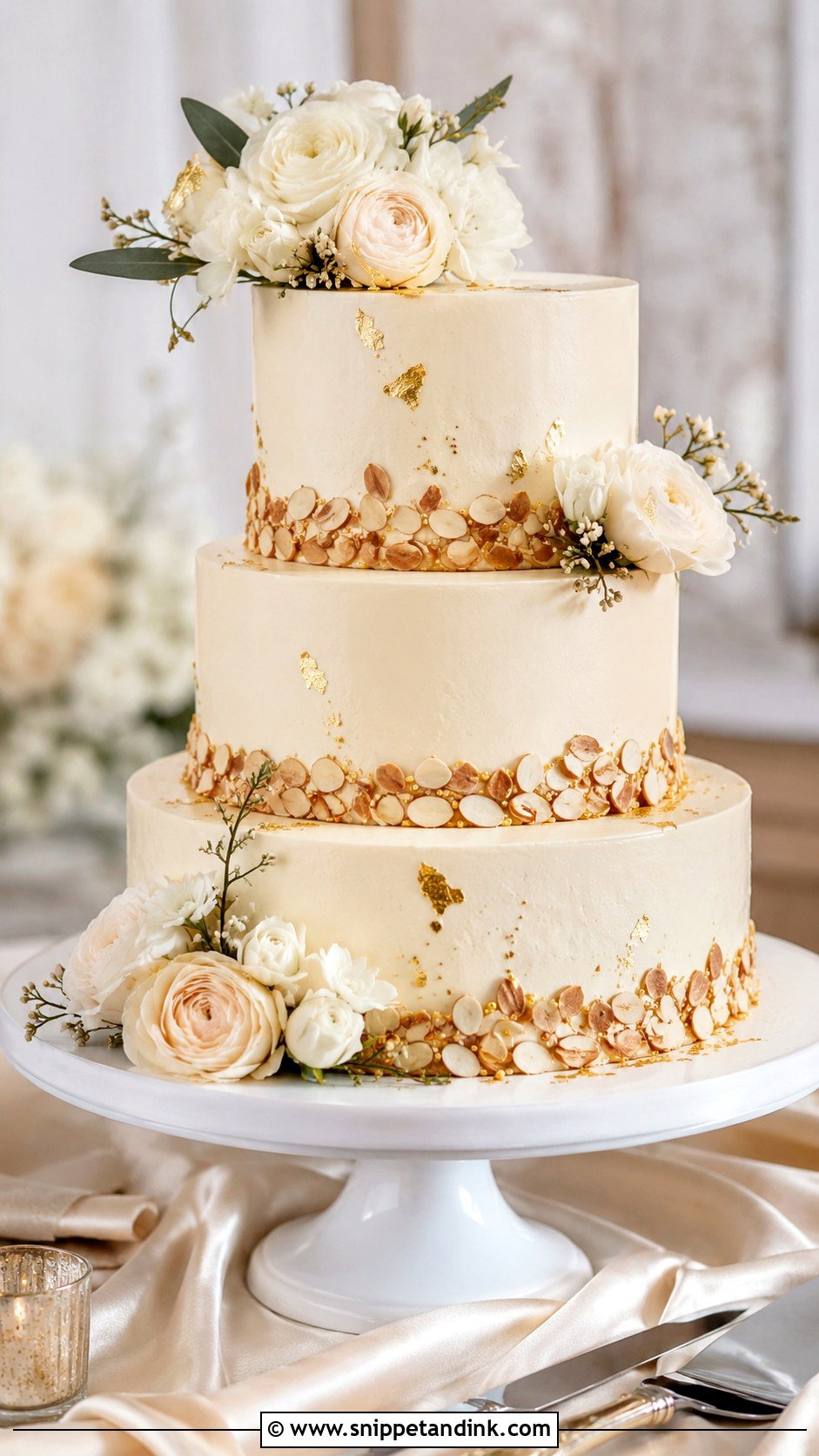
Almond and honey together taste faintly European, close to nougat, which makes this a good suggestion for couples who want something familiar but more interesting than vanilla. Smooth ivory buttercream, soft gold details and a few flowers keep it formal. Toasted sliced almonds pressed around the base add texture, but they soften overnight against buttercream, so they go on the day of the wedding. Pair honey almond sponge with vanilla bean buttercream, mascarpone or a thin apricot layer, and label it for guests with nut allergies.
13. Spiced Honey Wedding Cake
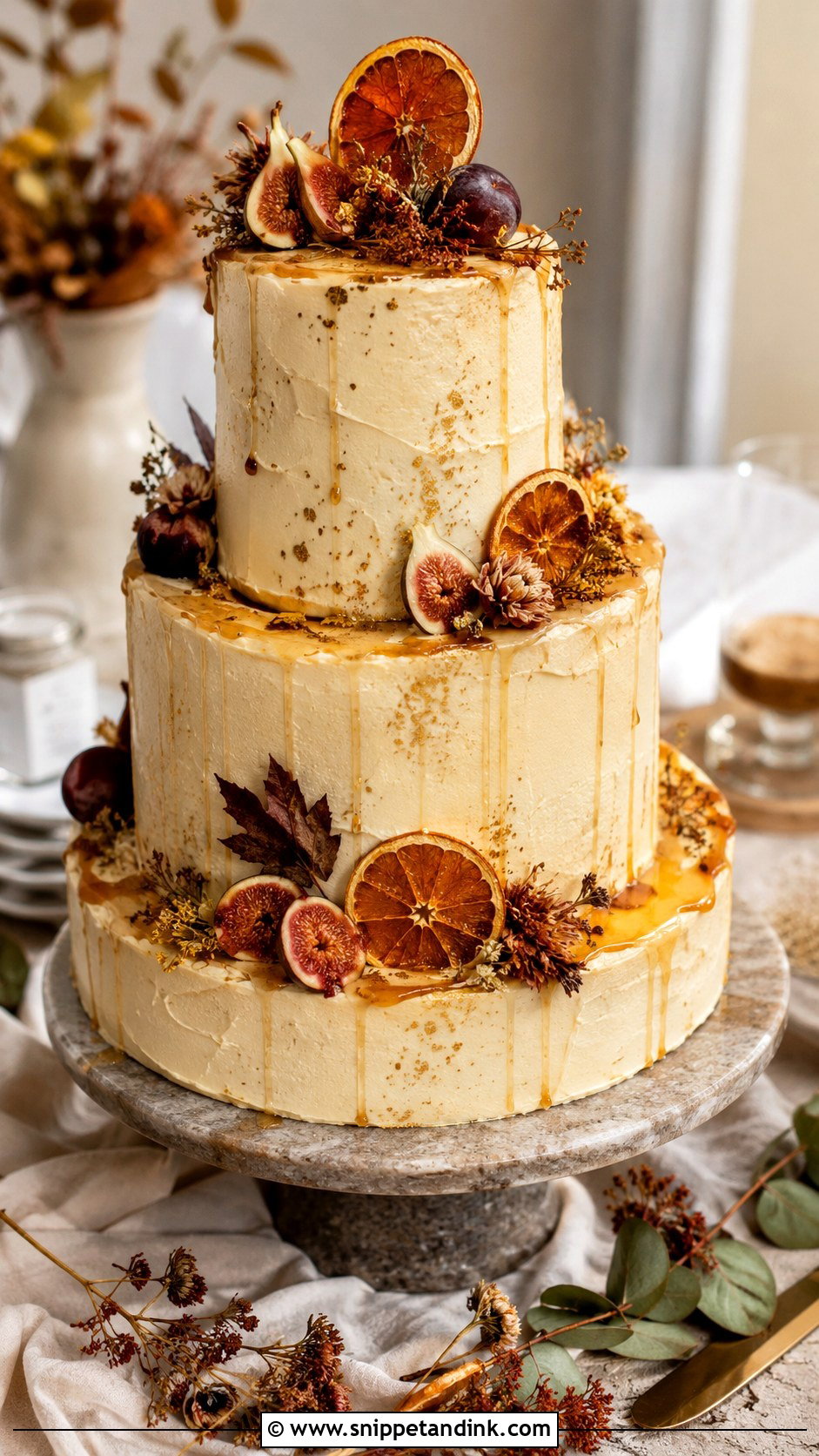
Spice and honey make a cool-weather cake that stays out of Christmas territory as long as the styling is restrained. Cinnamon, cardamom, ginger and nutmeg go into the sponge with a deep golden honey. Cardamom is the one to measure carefully, because it takes over fast. Outside, textured buttercream in ivory or warm beige with dried orange slices, figs, pears or a touch of bronze keeps it autumnal. Cream cheese frosting or brown butter buttercream pairs best, on a stone, ceramic or wooden stand.
14. Fig Honey Wedding Cake
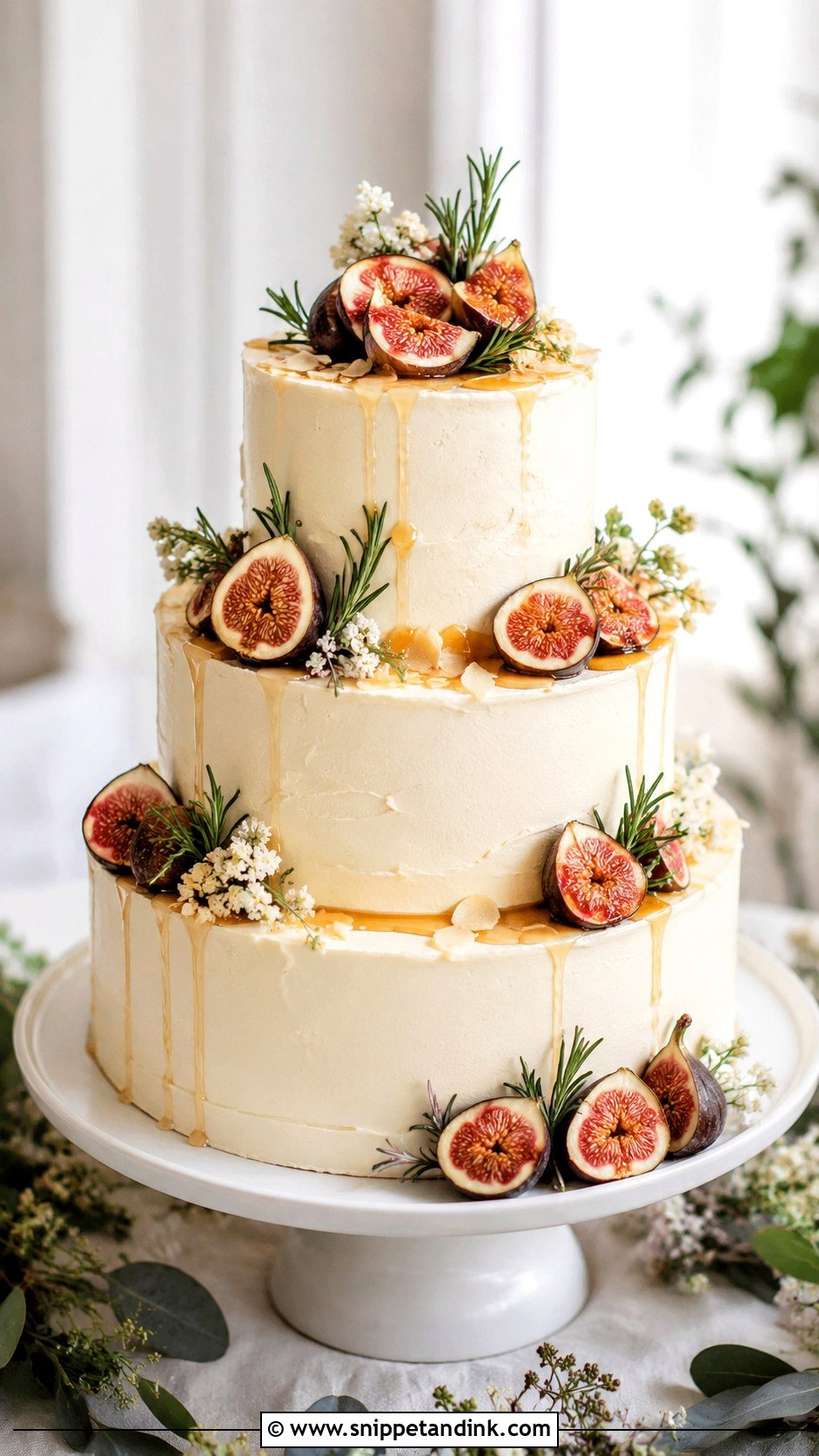
Cut open, figs look like jewels against pale frosting, deep purple skin around a pink center. Halved figs go along the tier edges and the top, softened with small flowers or herbs, over smooth or lightly textured ivory buttercream. They’re delicate and start to weep once cut, so I halve them at the venue and brush them with a little warmed honey, which also ties them back to the flavor. Figs are at their best from late summer into early autumn, and that’s when this cake makes sense. Honey sponge with mascarpone, almond or vanilla buttercream suits it.

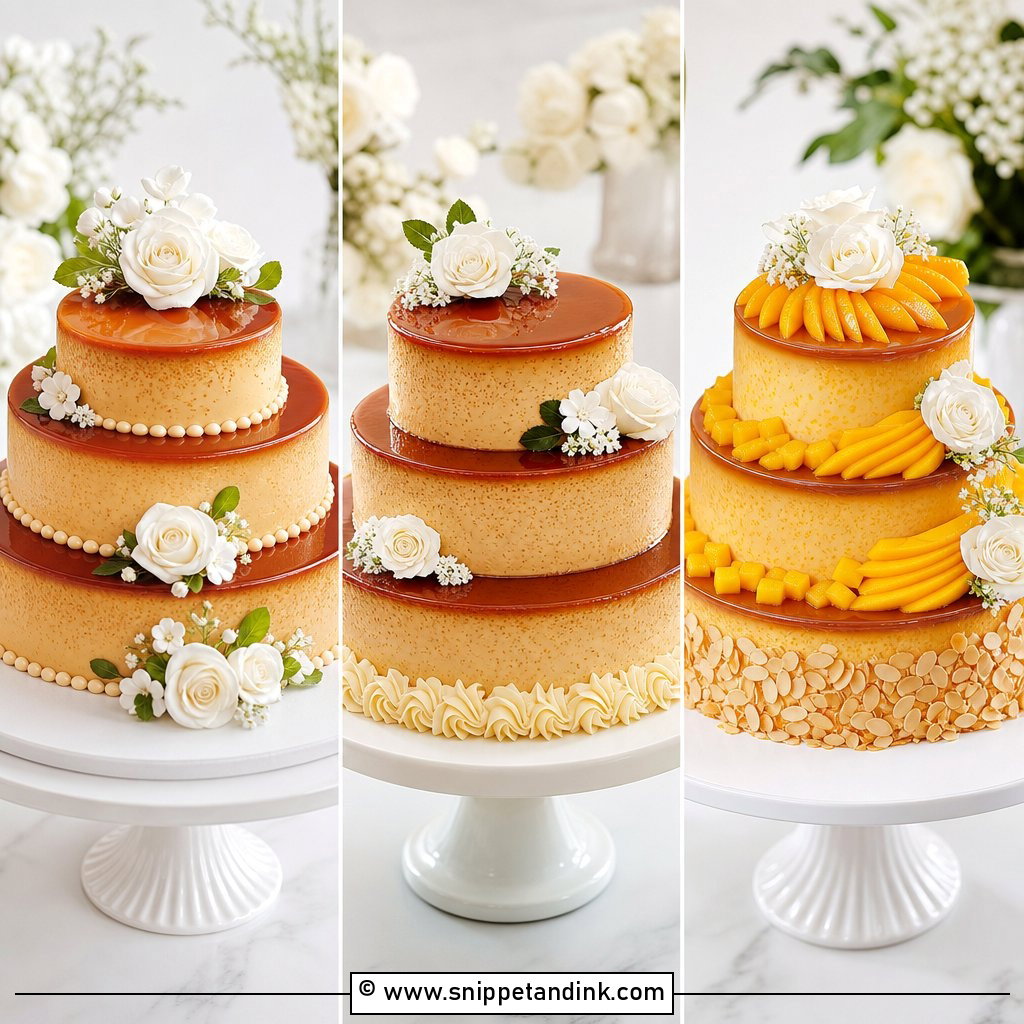
15. Modern Honey Wedding Cake
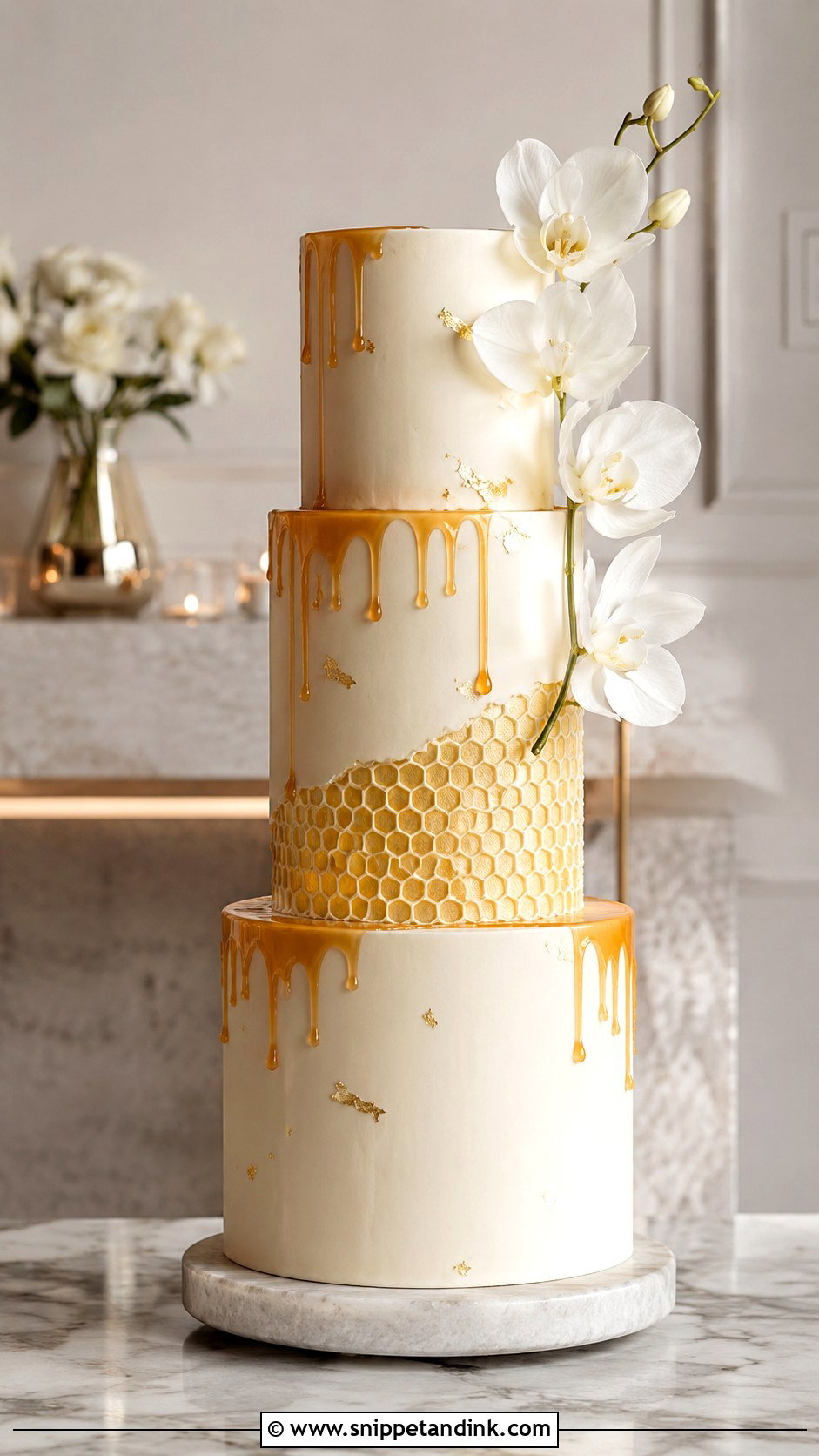
Modern means choosing one detail and stopping there. That might be a sharp honey drip, a single gold-edged tier or one sculpted buttercream texture, on simple tiers in ivory, warm beige, amber or muted gold. Keep flowers sparse and architectural, a single stem rather than a cascade. Honey olive oil cake is an underused flavor that fits this look, moist and slightly grassy. Lofts and gallery spaces suit it.
16. Vintage Honey Wedding Cake
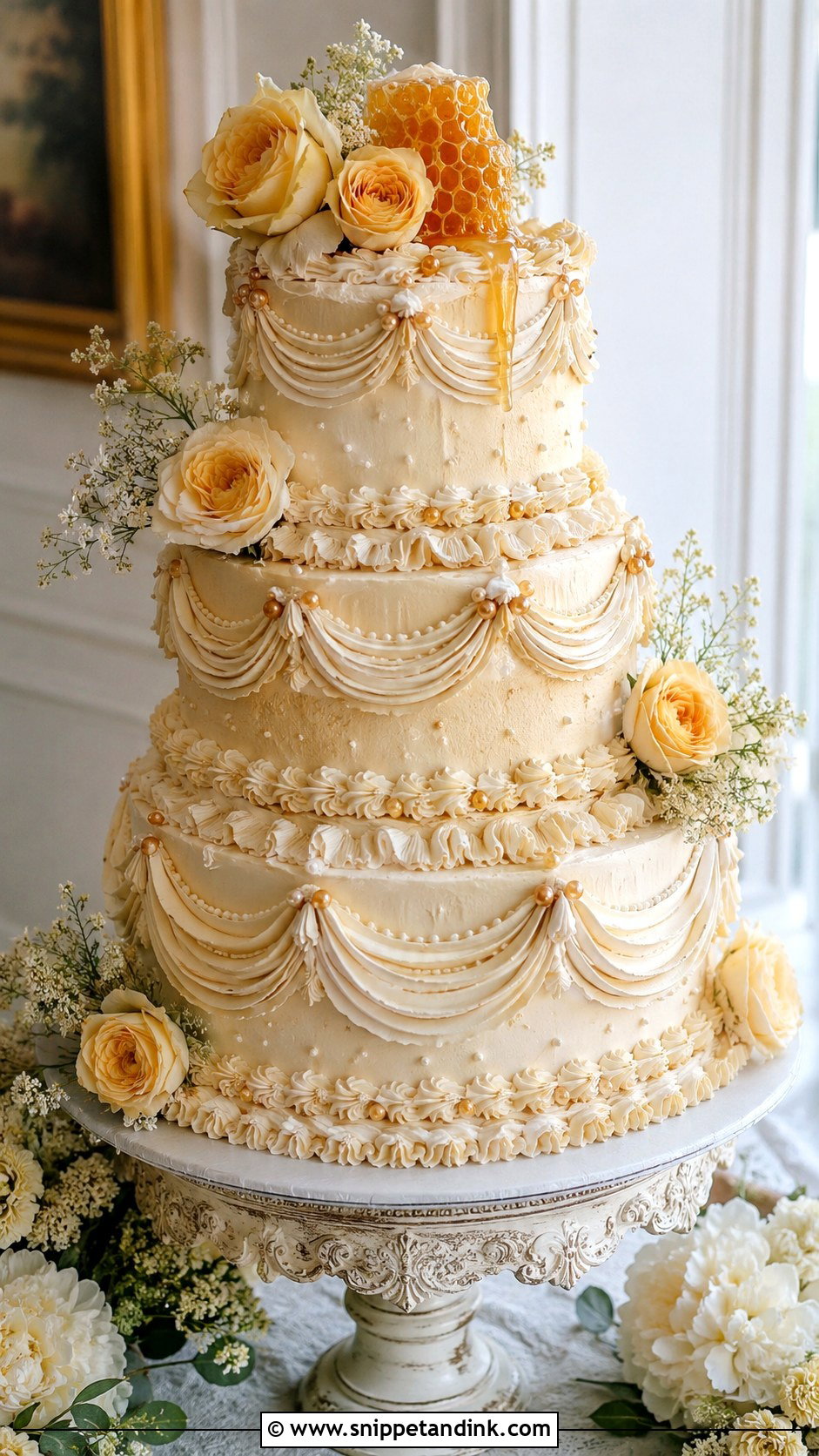
Piping carries this cake, and honey simply warms it. Buttercream swags, shell borders, pearl piping and ruffles on round tiers in ivory, champagne or pale butter yellow give the nostalgic look. I keep any honey drizzle to a minimum, since it runs into the piped grooves and blurs them. Swiss meringue buttercream pipes with crisp edges but softens in heat, so in summer I chill the cake between piping stages. Honey vanilla sponge or honey cake with a light cream filling suits a traditional reception room.
17. Honey Buttercream Wedding Cake
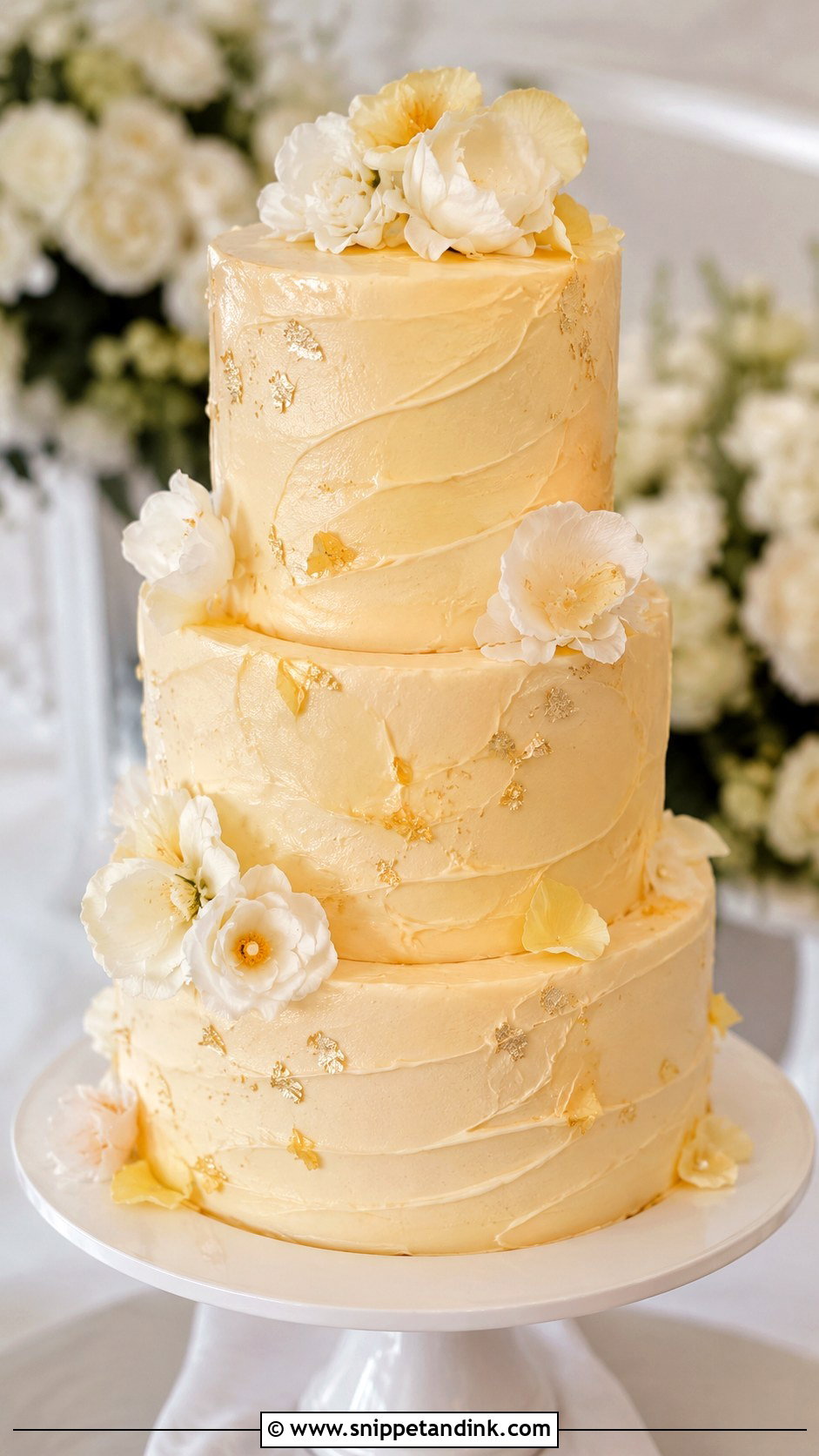
Honey buttercream comes out a warm cream color on its own, so it needs no coloring to look golden beside white flowers, gold leaf or pale yellow petals. It’s sweeter than plain buttercream, so I cut back the sugar to compensate. The finish decides the style: swoops and palette-knife strokes feel romantic, ridges feel modern, loose waves feel rustic. Aim for smooth enough to photograph cleanly but textured enough to show movement. Vanilla, almond, lemon or spice layers all sit happily underneath.
18. Chamomile Honey Wedding Cake
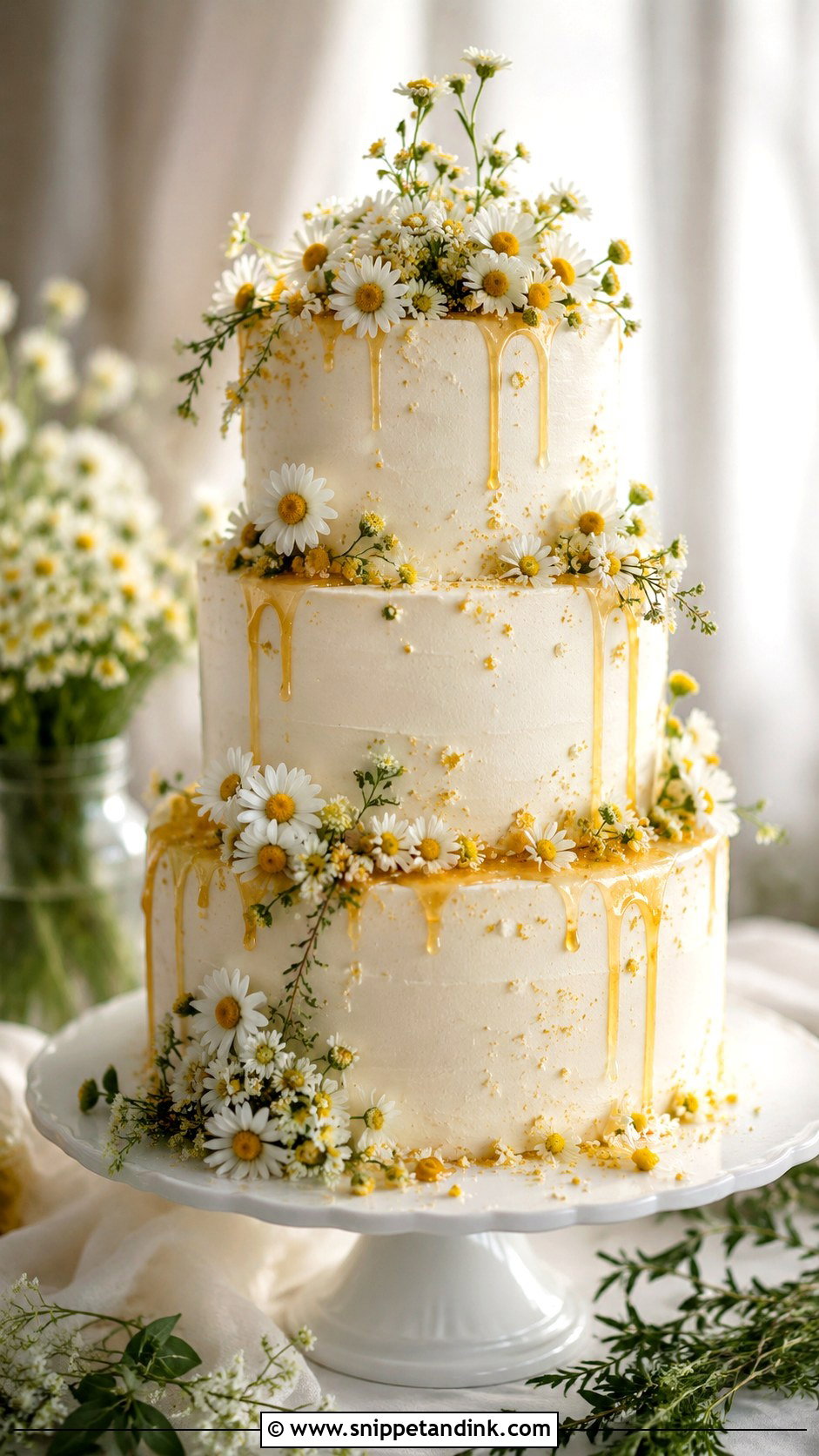
Chamomile honey wedding cake works because flower and flavor match: the yellow centers echo the honey, and the white petals keep it bridal. I steep chamomile into the soaking syrup or the buttercream for flavor, then place tiny flowers in small clusters around creamy white tiers instead of a full blanket. Chamomile belongs to the daisy family, so note it on the menu for guests with ragweed allergies. Lemon, vanilla and almond all pair with it for a spring or outdoor reception.
19. Honey Cake With Fresh Fruit
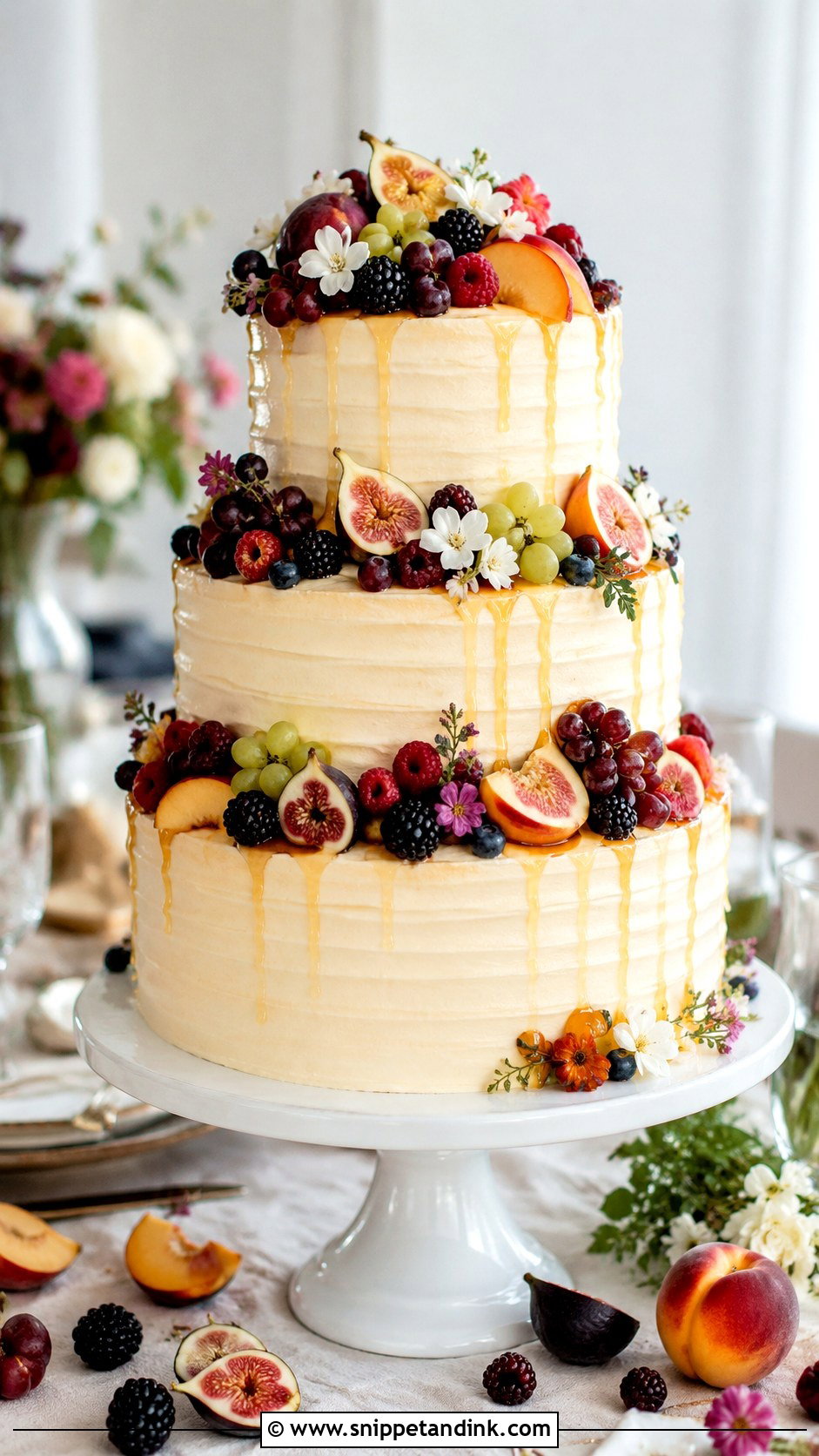
Fruit lets the same honey cake follow the season: berries, peaches or apricots in summer, figs, pears or grapes in autumn. The cake can be smooth buttercream, semi naked frosting or a light whipped finish. A thin honey drizzle over the fruit gives it shine and makes the arrangement look finished. Whipped frosting is the least stable under heavy fruit, so for a tall arrangement I put buttercream underneath. Spread the fruit across the tiers rather than piling it all on top.

20. Small Honey Wedding Cake
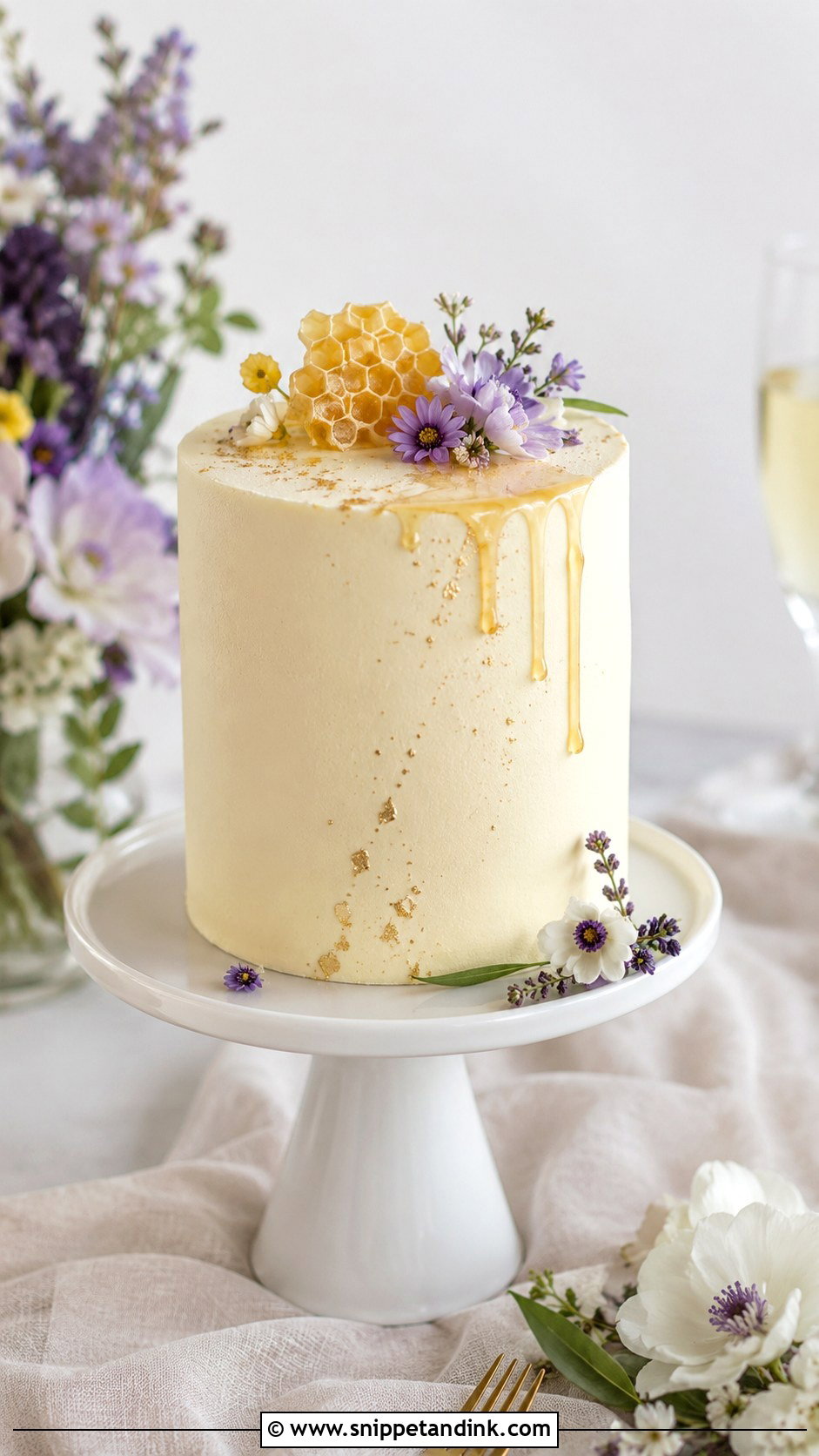
Intimate weddings, elopements and courthouse celebrations rarely need more than one or two tiers. With so little surface every detail shows, so smooth honey buttercream with a delicate drip, a few edible flowers or one honeycomb accent is enough. A tall single tier looks especially modern on a plain stand. Small cakes are also the place for bolder flavors, like lavender honey, lemon honey or almond honey, because you aren’t trying to please two hundred guests.
Medovik and Other Honey Cakes That Improve Overnight
Honey cakes have an advantage most wedding cakes don’t. Many taste better on the second day, because honey draws in moisture and the sponge softens while the flavors settle. The extreme example is medovik, the Eastern European layered honey cake built from eight or more thin, biscuit-like layers spread with a sour cream or dulce de leche cream. Straight after assembly it’s firm. After a night in the fridge the layers turn tender.
Medovik makes a lovely second dessert or cutting cake, but it’s soft and creamy, so it won’t stack into tall tiers and it has to stay chilled until it’s served. I’d make it as a single tall round, or as a rectangle sliced in the kitchen.
Saving the top tier
Honey sponge freezes well. Take off any fresh flowers and fruit, chill the tier until the frosting is firm, then wrap it tightly in several layers of plastic and a layer of foil. Frozen cake tastes best within a few months rather than a full year, so plan an earlier celebration than your first anniversary if you can.
Match the Honey to the Room, Then Taste Again
Honey adapts to almost any design while the flavor stays warm and familiar. Start with the venue, the season and the flowers. A garden wedding points to lavender, chamomile or pressed blooms. A formal reception suits gold leaf, smooth buttercream and a fine drip, and a rustic one can lean on honeycomb texture, fruit and semi-naked tiers. Then taste a few honeys side by side before you settle on the sponge.
You'll Like These Ideas:





Leave a Reply