
Apricot nectar cake started life as a Southern church-supper Bundt: a tender, oil-based crumb with canned nectar in the batter and a lemon glaze soaked in while it was still warm. That history is exactly its charm at a wedding. The flavor is sunny and mild, with enough citrus to cut through frosting, and it sits as comfortably on a brunch table as in a ballroom. Bringing it to wedding scale takes some adjustment, though, because the very softness people love makes it tricky to stack. Below are twenty ways to serve it, from the original Bundt to full tiers, with my notes on what each one asks of the baker.
Can the Original Recipe Survive Being Stacked?
Short answer: not without changes. The traditional apricot nectar cake is built for a Bundt pan. It’s oil-based and very tender, which keeps it moist for days but means a layer crumbles and compresses once another tier sits on top. Here is how I adapt it when a couple wants the flavor in a tiered cake:
- Switch to a butter-based sponge with a tighter crumb for any tier that carries weight; oil-based layers can stay in the top tier.
- Reduce the nectar on the stove to concentrate the flavor, so the batter doesn’t need extra liquid that weakens it.
- Brush each layer with an apricot-lemon syrup to recreate the soaked-glaze taste of the original.
- Pipe a firm buttercream dam on every layer before adding preserves or curd.
- Support every tier with dowels and its own board, even at two tiers.
If you love the original exactly as it is, keep it as a Bundt or a sheet cake and use a small stacked cake for the cutting moment. Nobody is disappointed by that compromise.
1. Apricot Nectar Wedding Bundt Cake
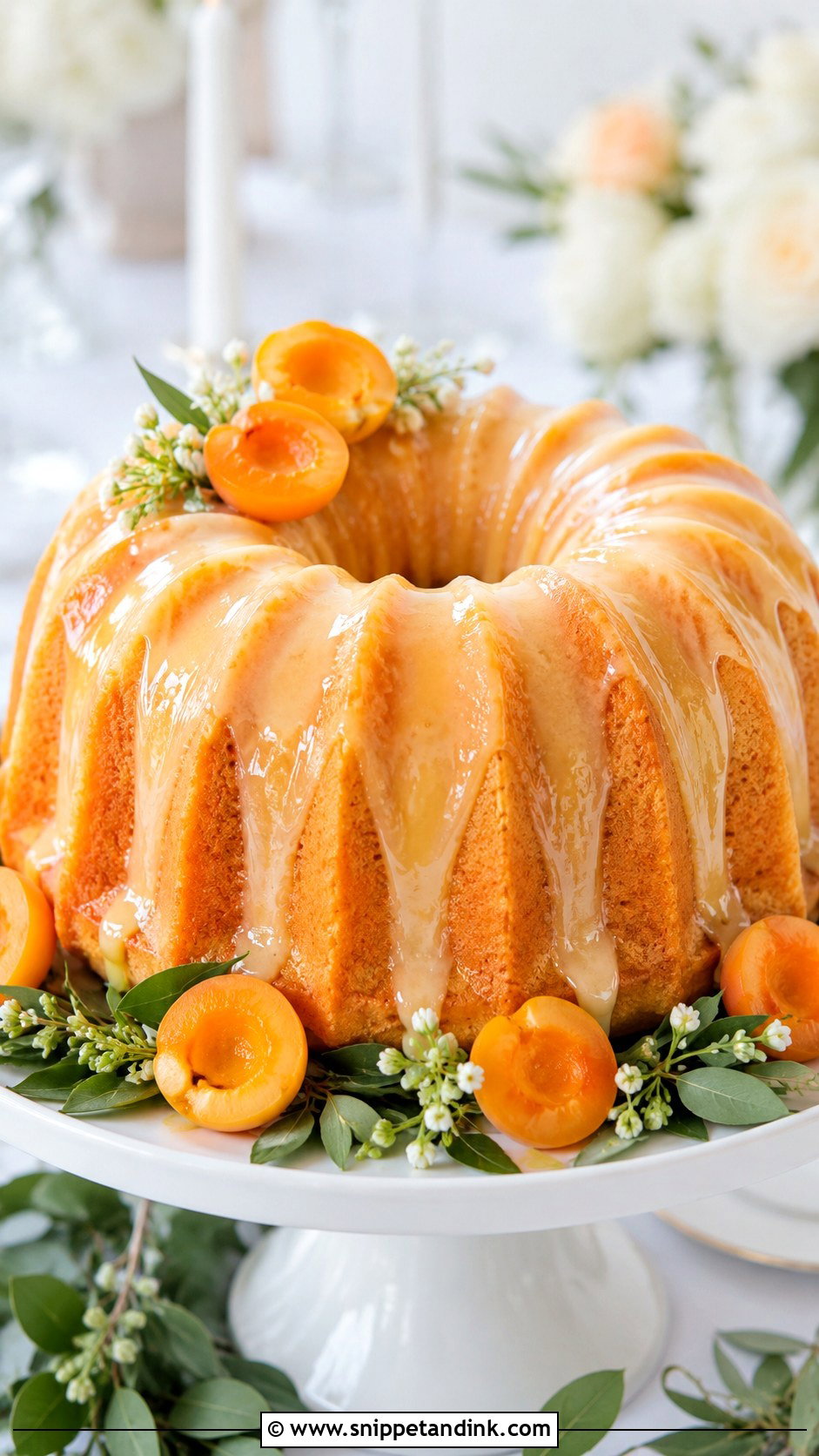
The Bundt is the honest version and, for a relaxed wedding, often the best one. A pale golden crumb under a lemon-apricot glaze that settles into the ridges looks right on a raised white pedestal, with apricot halves, tiny ivory blooms and greenery in the center well. The glaze goes on while the cake is warm so it soaks in, then a second thin coat once cool gives the shine. Release is where Bundts fail; I grease every ridge with a brush. It belongs at a brunch wedding, a backyard reception or with other dessert bars.
2. Apricot Nectar Layer Cake
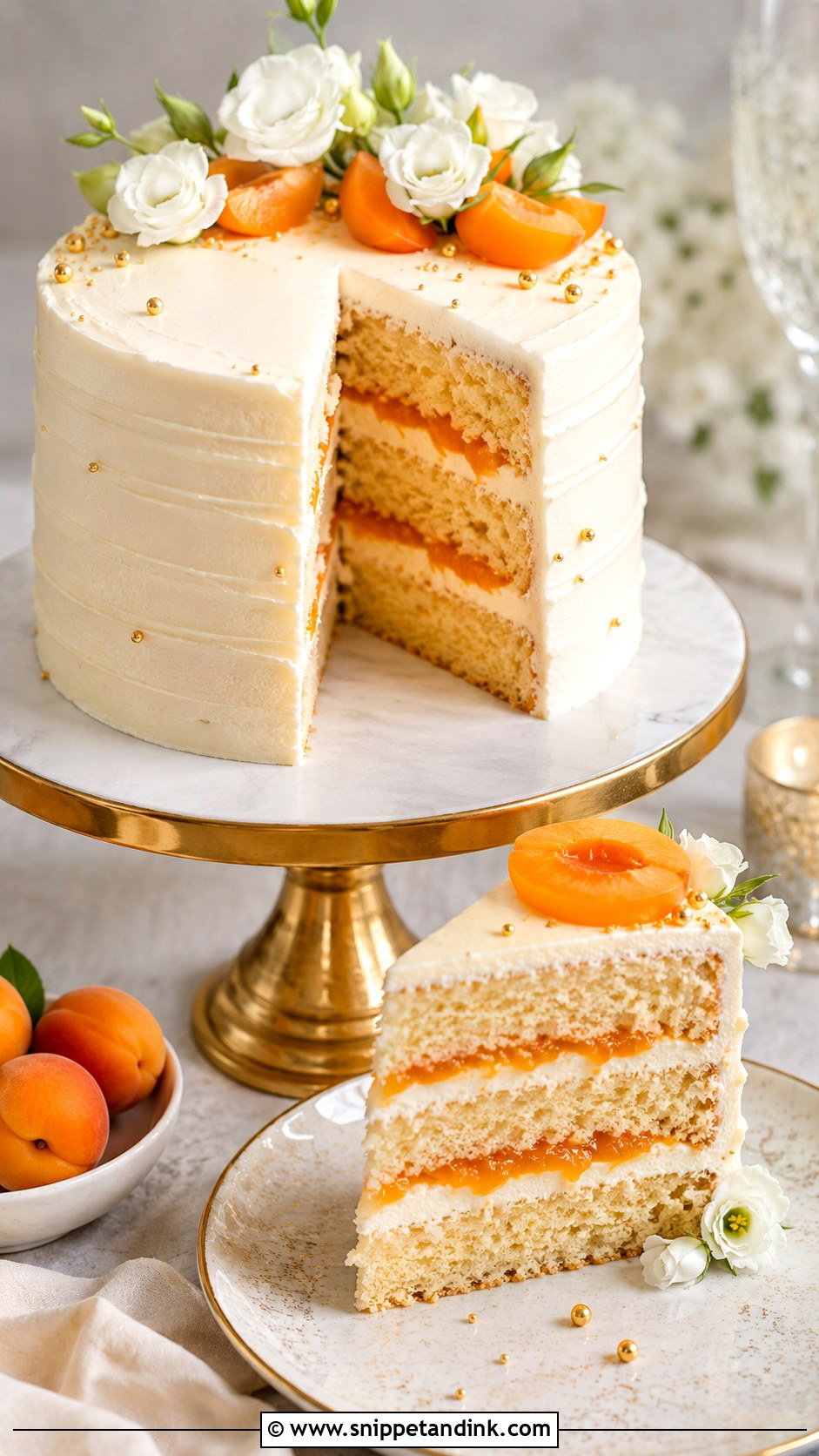
Layers make the flavor formal. I bake apricot nectar layers a little firmer than the Bundt recipe, then fill them with apricot preserves, vanilla buttercream or whipped cream cheese frosting. A brush of thin apricot syrup on each layer keeps it moist without making it fragile. Outside, keep it smooth so the pale peach tone of the cut slice is the surprise. Fresh apricot slices, white flowers and small gold accents finish it, and two or three tiers suit a small or medium wedding.
3. Apricot Nectar Sheet Cake
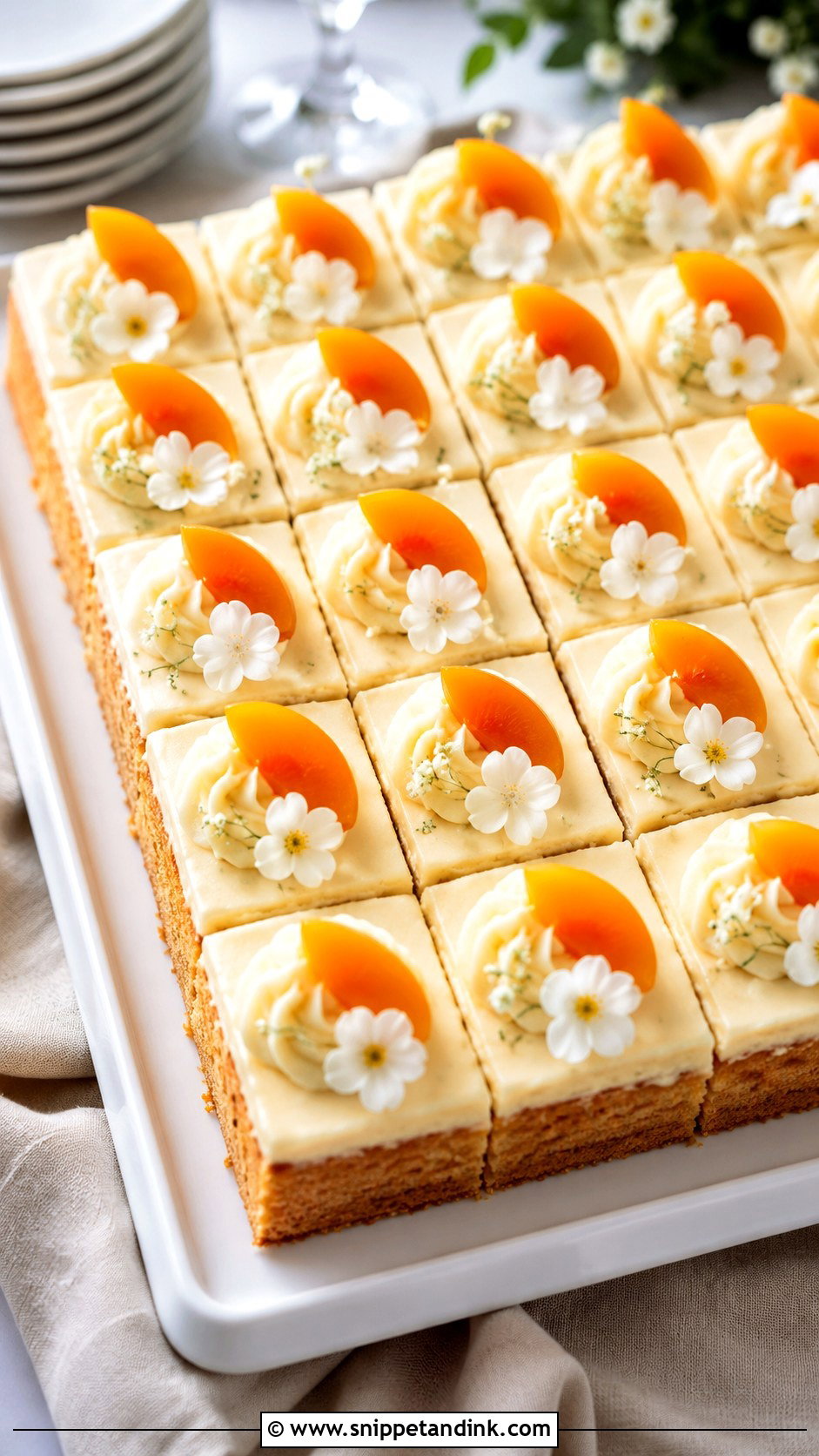
Sheet cakes are the quiet workhorse of wedding catering, and this flavor bakes beautifully in one. A moist golden cake with apricot-lemon glaze or a thin cream cheese frosting cuts into clean squares in the kitchen while a smaller display cake gets the cutting moment. Each square can take a tiny rosette, a sliver of apricot or one edible flower. Guests get the same flavor, the budget stretches further, and service is quick. I’d recommend this to almost any couple feeding a large crowd.
4. Apricot Nectar Tiered Wedding Cake
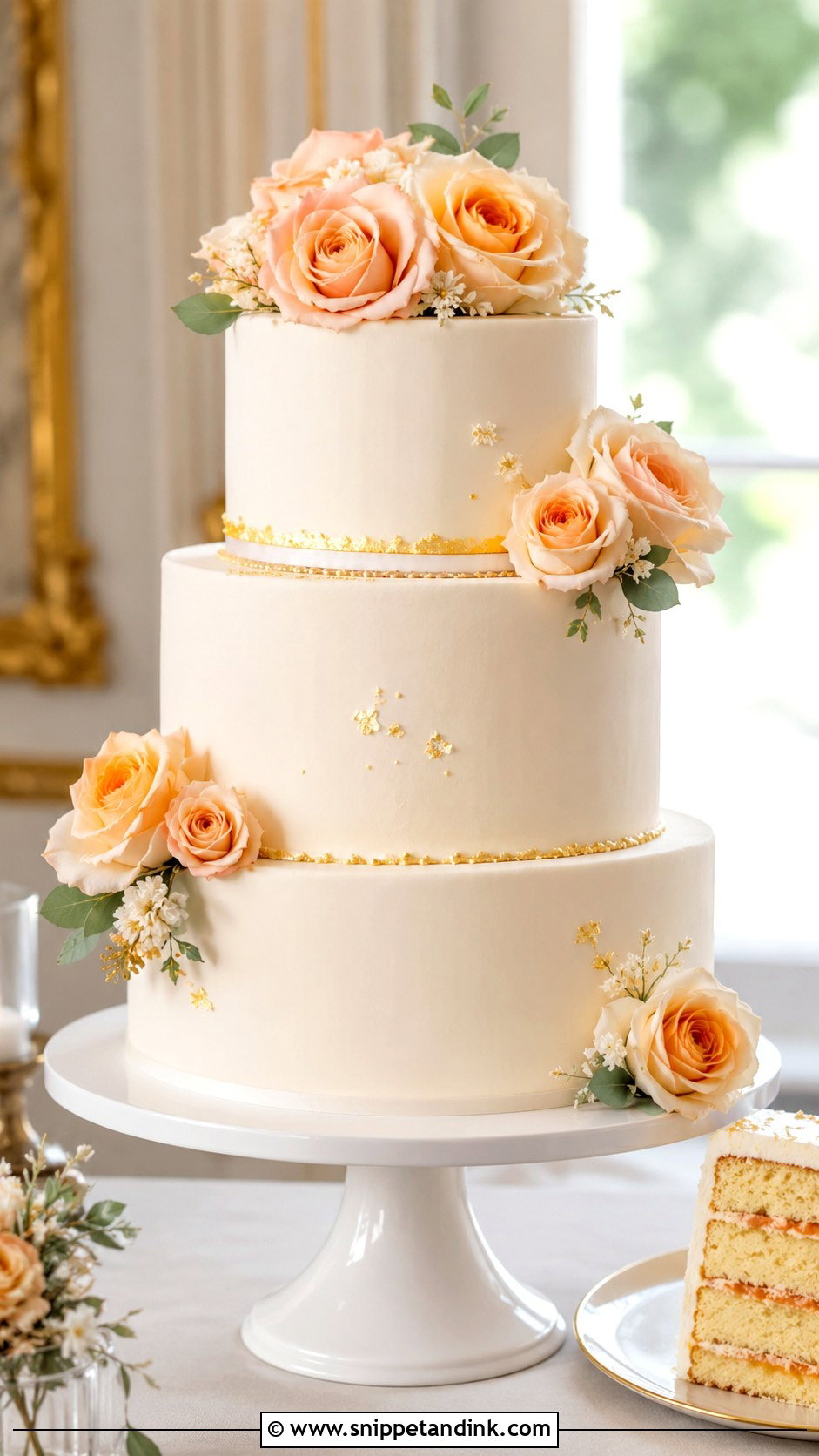
A tiered apricot nectar cake is where structure matters most. The classic oil-based recipe is too tender to carry weight, so for tiers I use a sturdier butter-based sponge with concentrated nectar for flavor, a firm buttercream dam on every layer and fillings that won’t run. Apricot preserves, lemon curd, almond buttercream or vanilla cream all pair well. Smooth ivory buttercream or fondant, pale peach flowers and a little gold complete it. The warm color suits spring and summer without ever looking bold.
5. Apricot Nectar Naked Cake
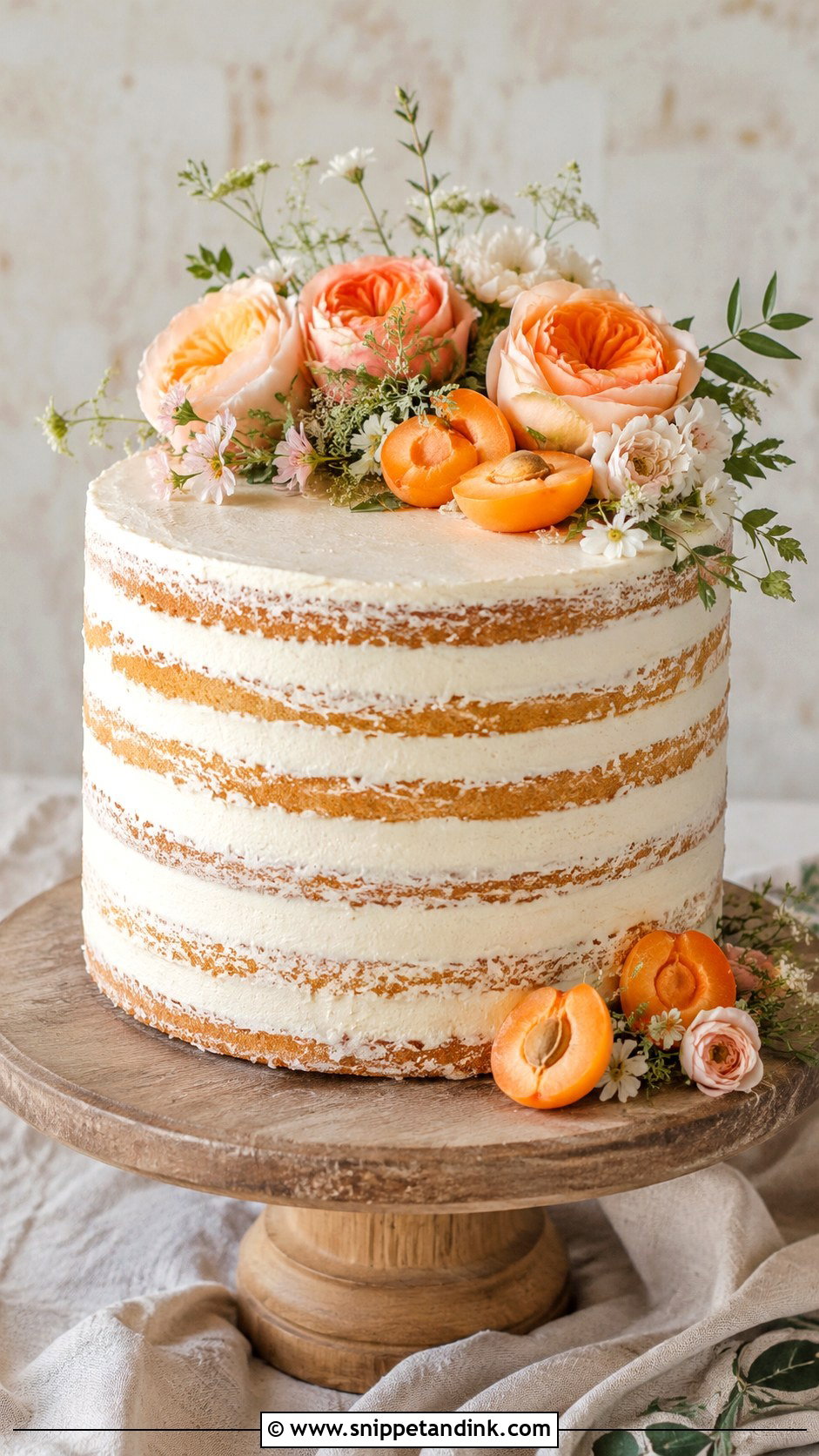
A naked finish shows off the golden layers, and apricot jam with lightly sweetened vanilla buttercream between them makes a pretty stripe. The risk is drying: exposed sponge loses moisture fast in open air, so I brush each layer with apricot syrup and the cake comes out as late as possible. Top it with fresh apricots, garden roses and a few herb sprigs. It fits a barn, a garden or a summer lawn, ideally in shade.
6. Apricot Nectar Semi Naked Cake
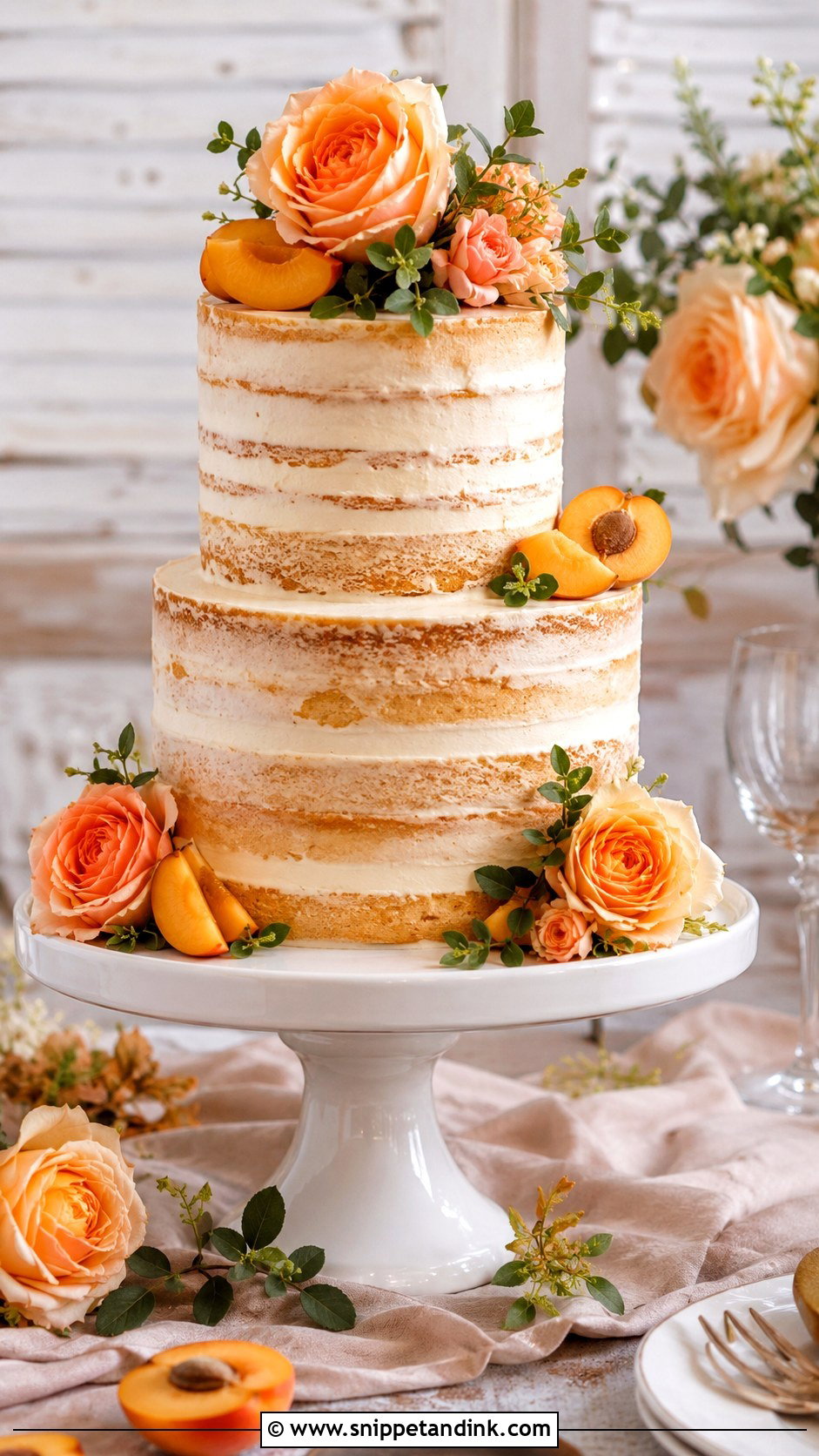
Semi naked sits between rustic and polished: thicker frosting than a naked cake, with hints of golden crumb showing at the edges. Apricot nectar layers with cream cheese buttercream and a light apricot filling give a fresh, balanced bite. Peach roses, apricot slices and a few sprigs of greenery are plenty. Cream cheese buttercream softens faster than plain buttercream, so I’d keep it cool until shortly before serving. It reads as a modern wedding cake that still feels homemade.
7. Apricot Nectar Drip Cake
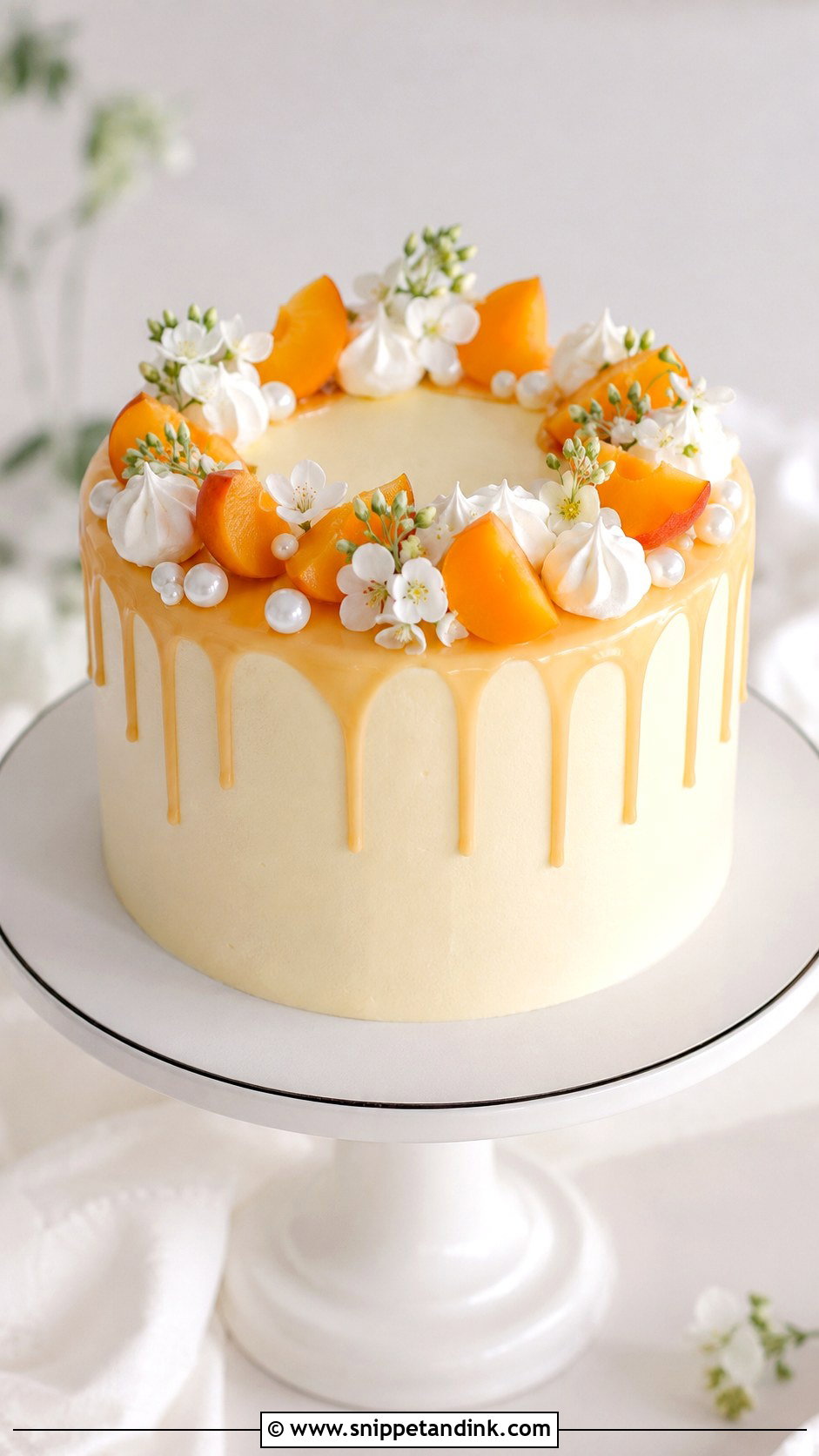
Drips work on this flavor if the color stays pale. Over smooth ivory buttercream, a sieved apricot glaze or a white chocolate drip tinted soft apricot runs down in short, even lines. The cake must be cold first, or the drips keep going to the board. Apricot wedges, tiny meringues, pearl sprinkles and small flowers decorate the top; meringues pick up moisture, so they go on last. It’s the most playful version here, and still suits a wedding dessert table.
8. Apricot Nectar Cream Cheese Cake
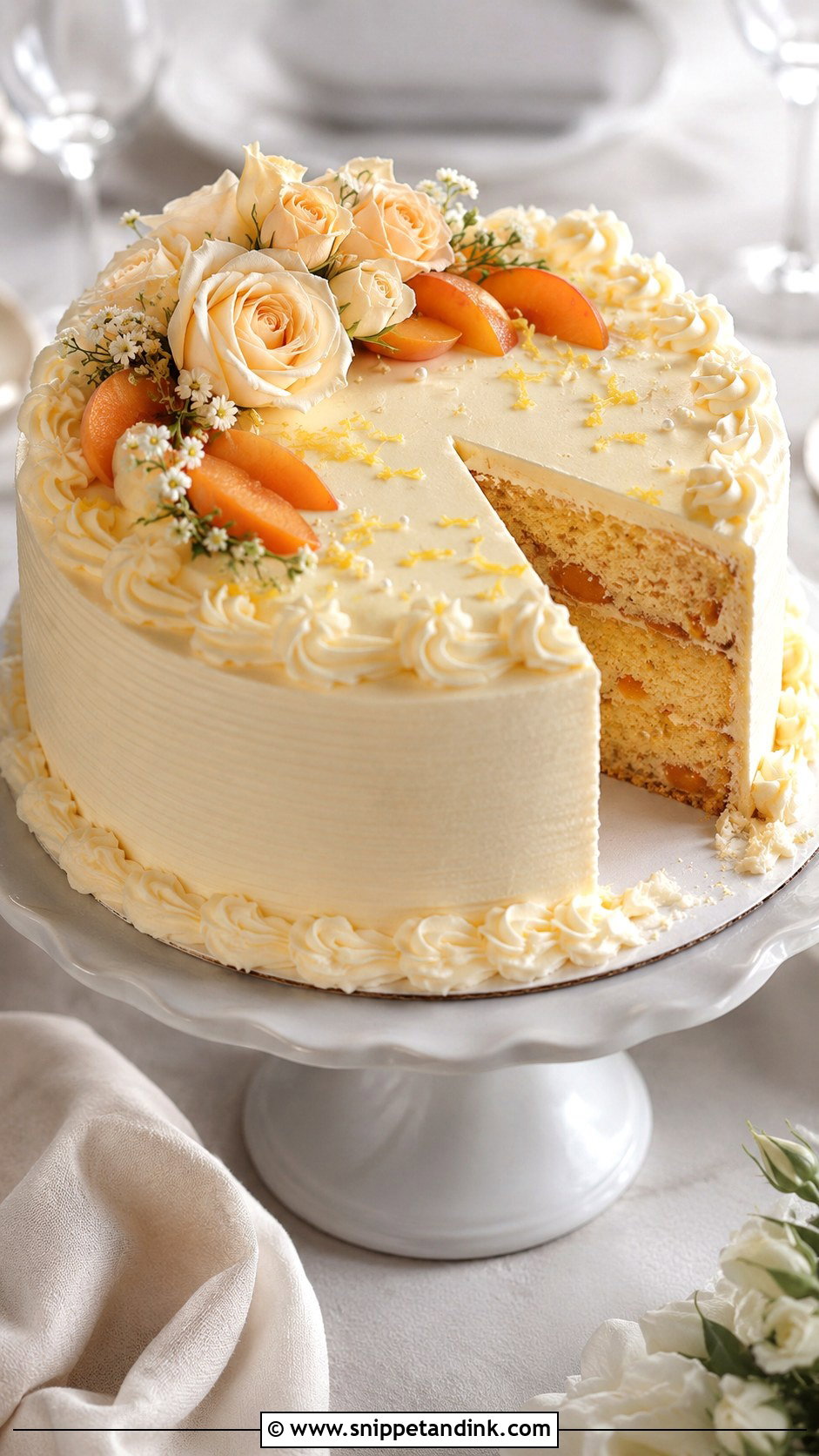
Cream cheese frosting is the classic partner for this cake because its tang balances the sweetness of the nectar. A moist apricot sponge under smooth cream cheese buttercream, with piped borders, apricot slices and ivory flowers, keeps the Southern roots but dresses them up. A little lemon zest in the frosting brightens the fruit. Pure cream cheese frosting is too soft to stack, so I use a cream cheese buttercream for tiers. It slices neatly and tastes rich without being heavy.
9. Apricot Nectar Lemon Cake
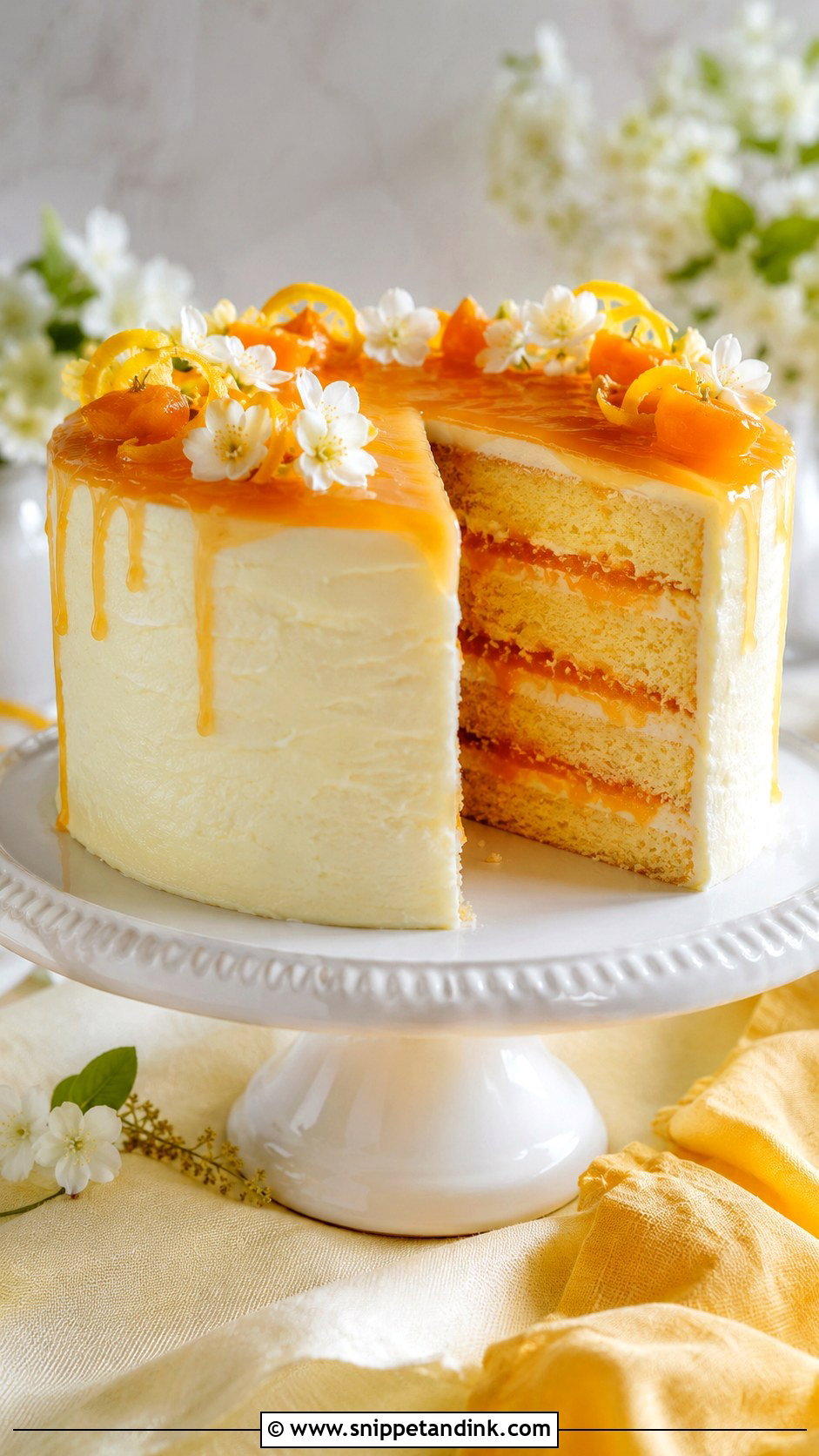
Lemon is already in the original recipe, usually through the glaze, so leaning into it is natural. For a wedding I add zest to the batter and fill with lemon buttercream or a thin layer of lemon curd, then cover in smooth white frosting with candied lemon peel, apricot glaze and fresh flowers. Curd layers stay thin, otherwise they slide in heat. It tastes light after a big dinner, which makes it a strong pick for a warm-weather reception.
10. Apricot Nectar Almond Cake
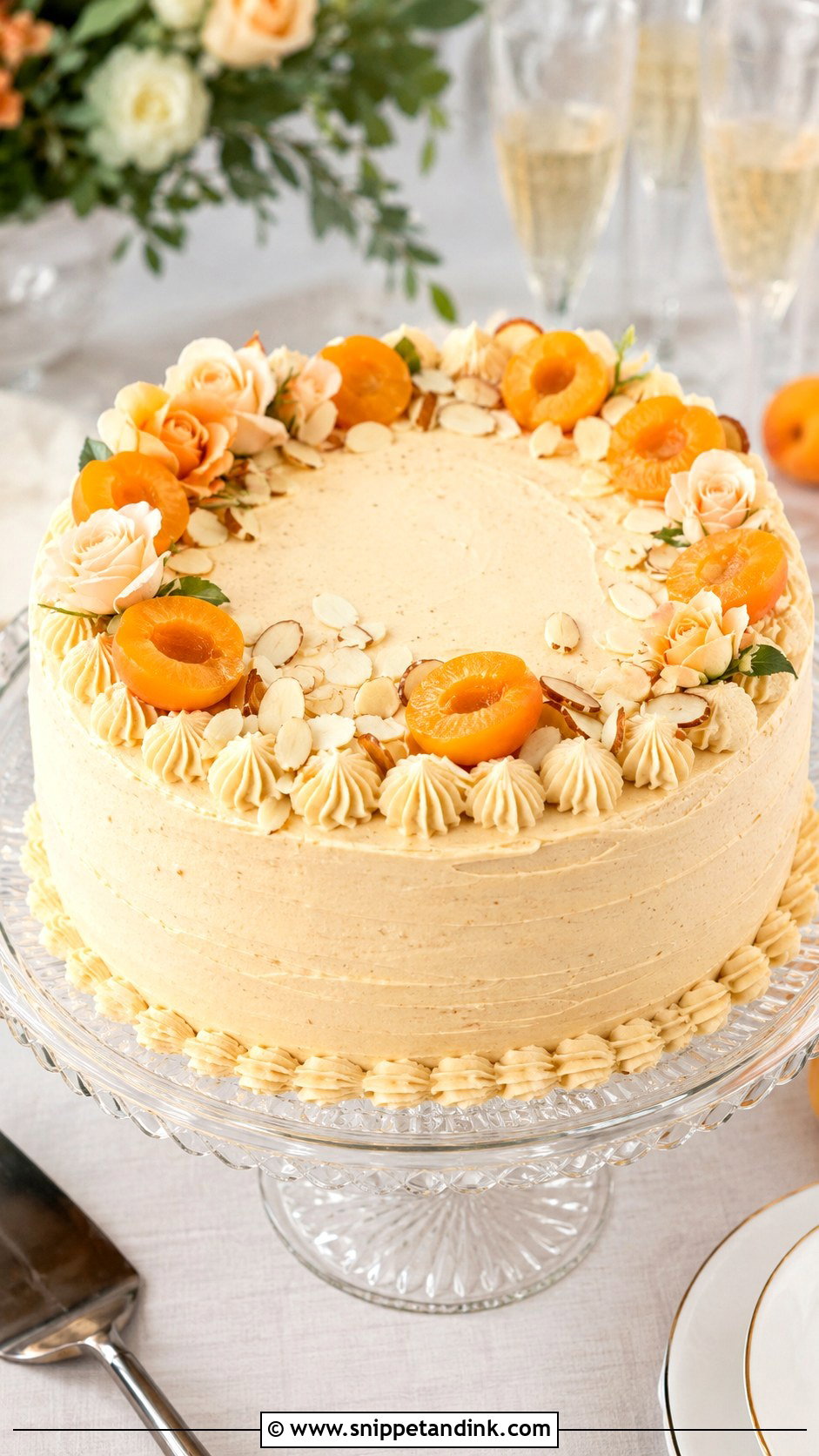
Apricots and almonds are botanical cousins, which is probably why the flavors sit so naturally together. Almond extract in the batter or almond buttercream between layers adds a bakery fragrance and keeps the cake from tasting too sweet. Go gently: almond extract is strong, and too much tastes medicinal. Sliced toasted almonds, fresh apricots and simple ivory piping decorate it, with pale peach flowers for a formal table. Check for nut allergies among guests before choosing this one.
11. Apricot Nectar Pound Cake
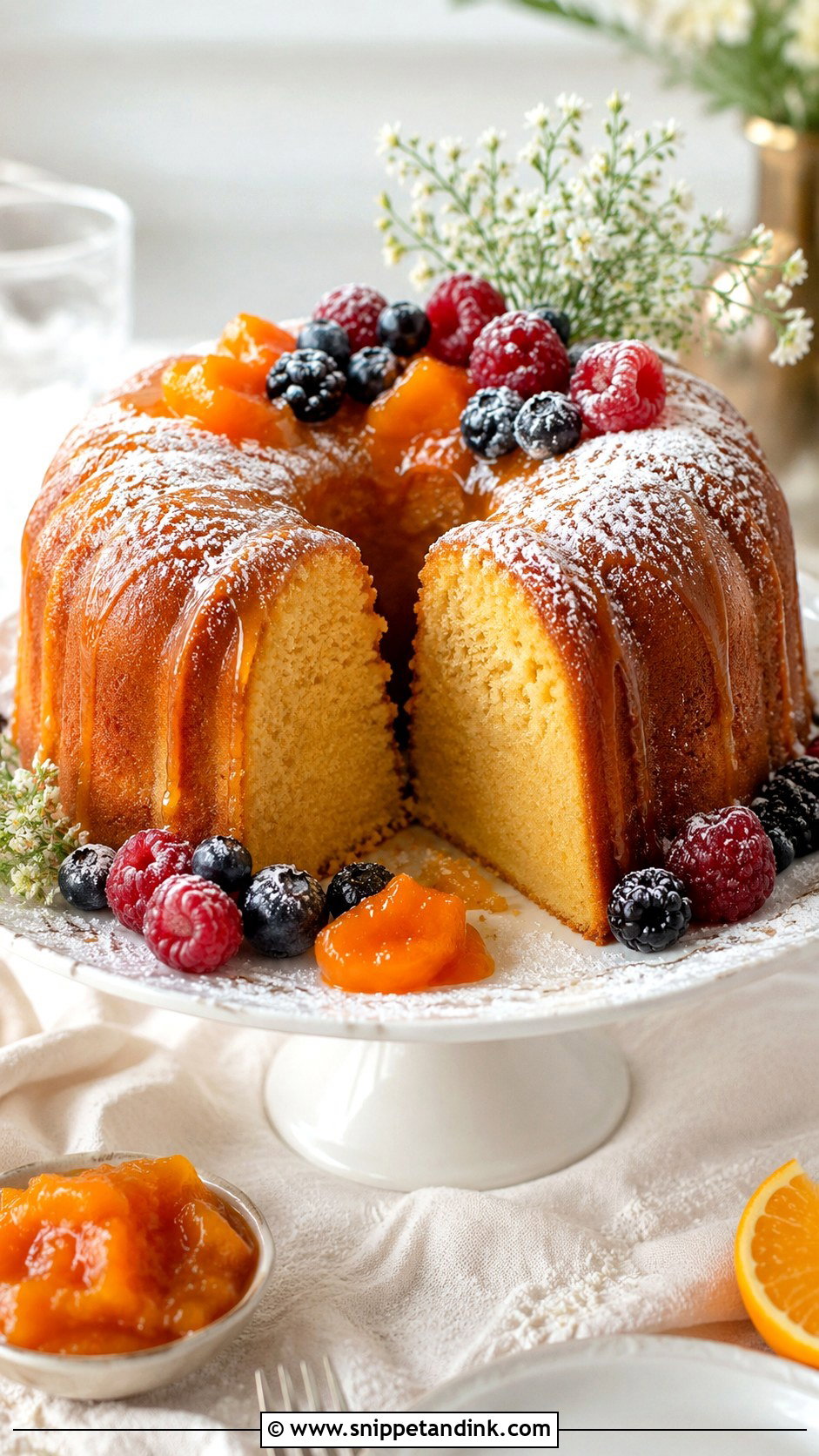
Pound cake gives a denser, buttery slice, and nectar in the batter keeps the crumb tender. Bake it in a loaf, a tube pan or a tall round, and finish it with a shiny apricot-lemon glaze. I’d serve thick slices on the dessert table with whipped cream, berries or apricot compote, and keep one whole glazed cake on a pedestal for display. Pound cakes improve a day after baking as the crumb settles, so this is a friendly option for a daytime or brunch wedding.
12. Apricot Nectar Cupcake Wedding Display
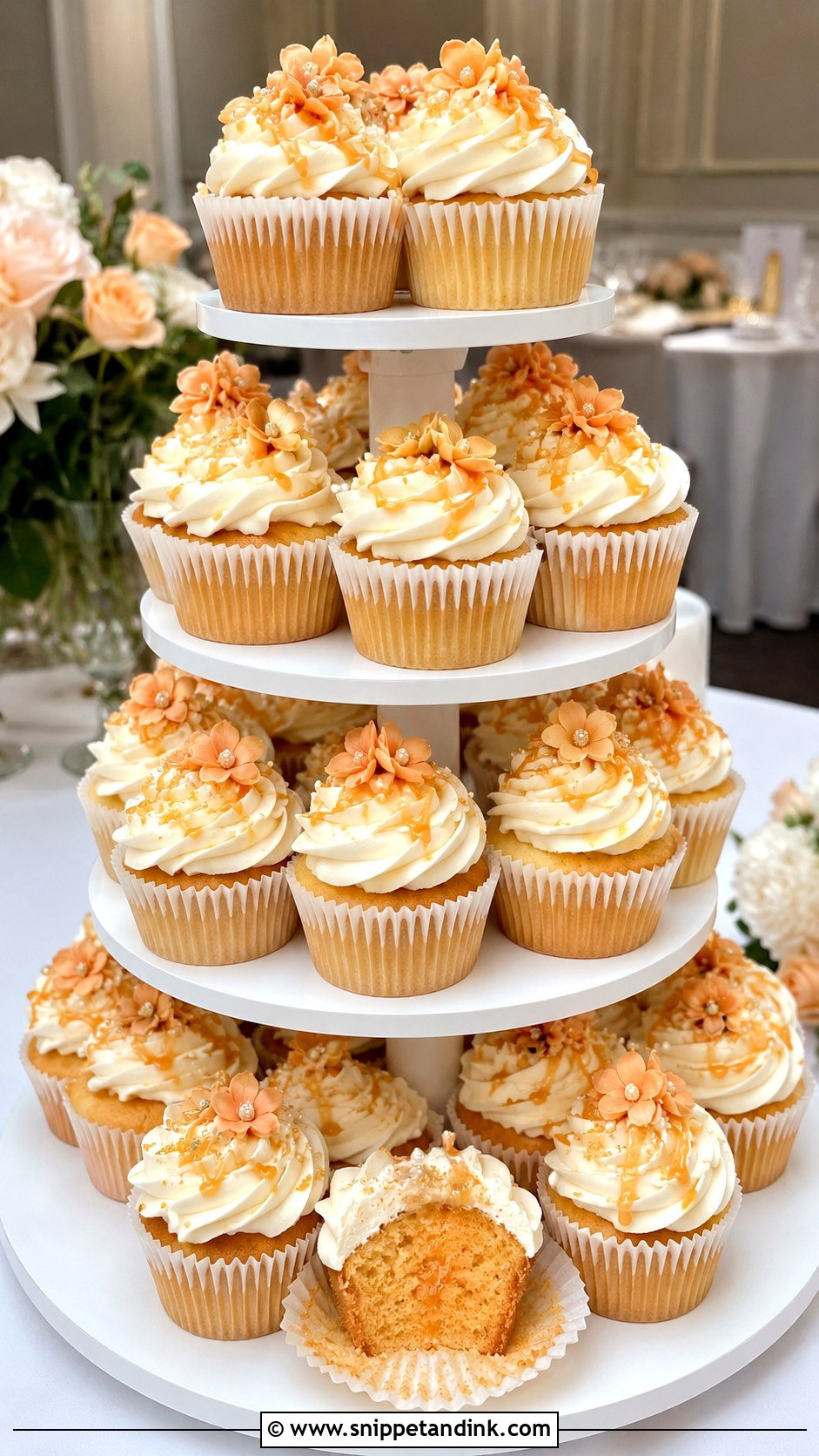
Cupcakes put the flavor in guests’ hands without any cutting service. Pale golden apricot nectar cupcakes topped with vanilla, lemon or cream cheese buttercream, a thread of apricot glaze, a few edible pearls and a tiny peach flower look delicate on a tiered stand. Bake them a little less than you’d think; small cakes dry out faster than layers. They suit receptions with dancing and mingling, where nobody wants to sit for a plated slice.
13. Apricot Nectar Mini Cakes
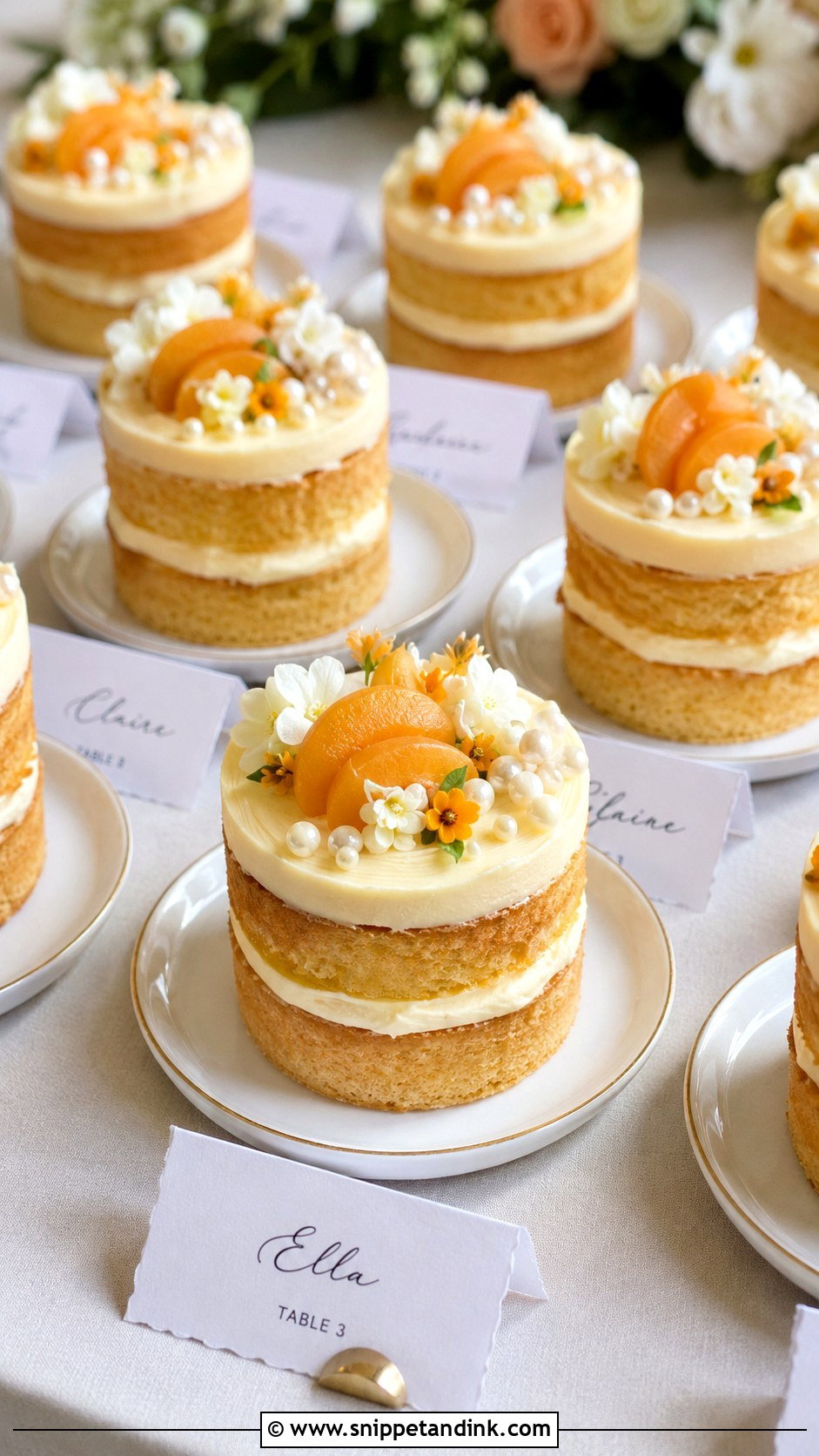
Mini cakes take patience to make, since every one has to be leveled, filled and frosted by hand. Two or three small layers of apricot nectar cake under smooth vanilla buttercream or cream cheese frosting, with an apricot slice, a flower or a pearl on top, look luxurious at each place setting or in neat rows on a dessert table. Expect them to cost more than a single cake of the same servings. For an intimate wedding, they make each guest feel looked after.
14. Apricot Nectar Cake With Fresh Apricots
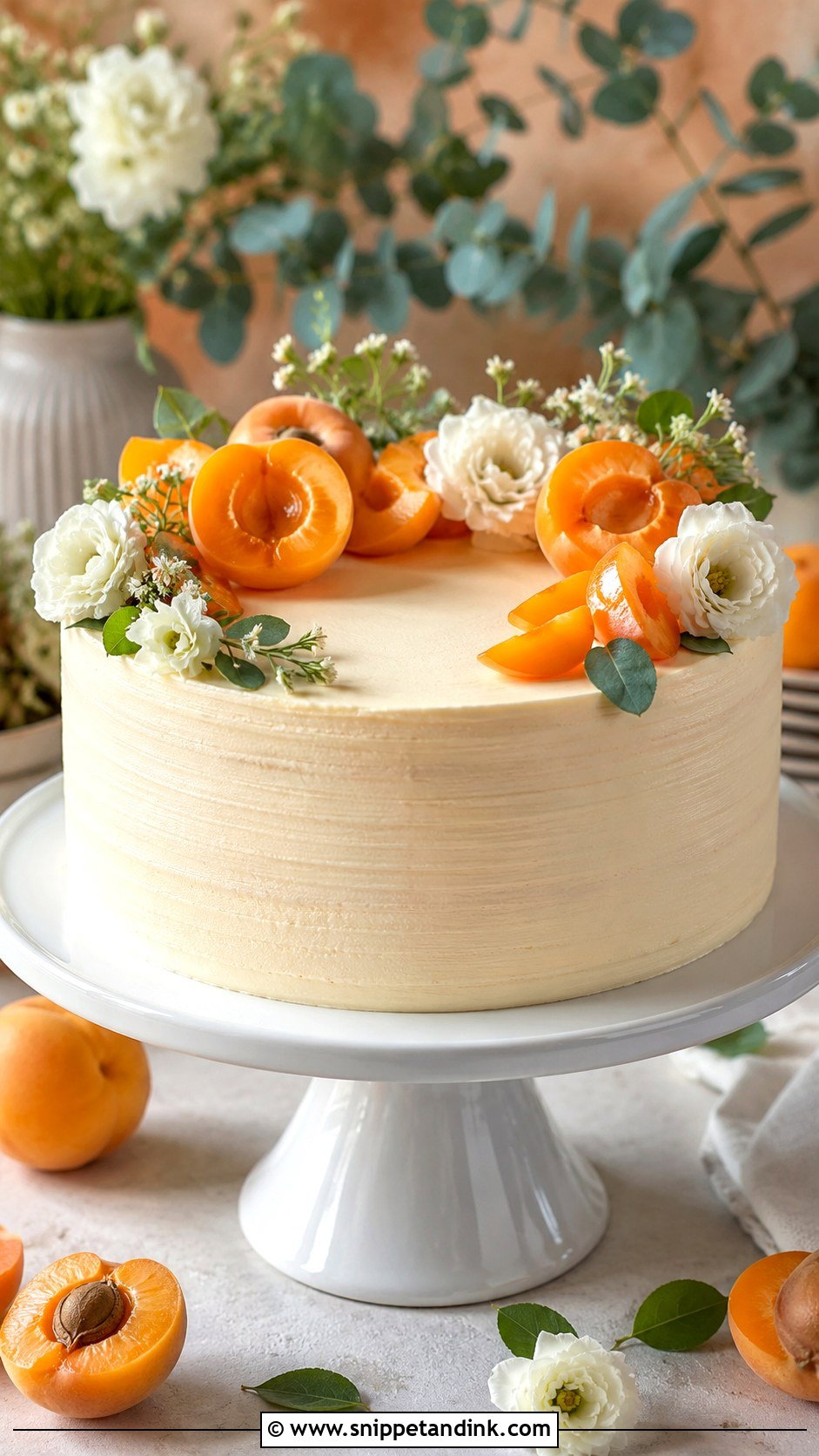
Fresh apricots on the finished cake look sunny and seasonal, but their season is short, roughly late spring into midsummer in most northern climates. Out of season, poached or dried apricots are the better choice. Sliced or halved fruit on a smooth buttercream base looks best brushed with a light glaze, which stops it drying and dulling. White flowers and a few green leaves round it off. Cut fruit goes on within a few hours of serving, never the night before.


15. Apricot Nectar Cake With Apricot Glaze
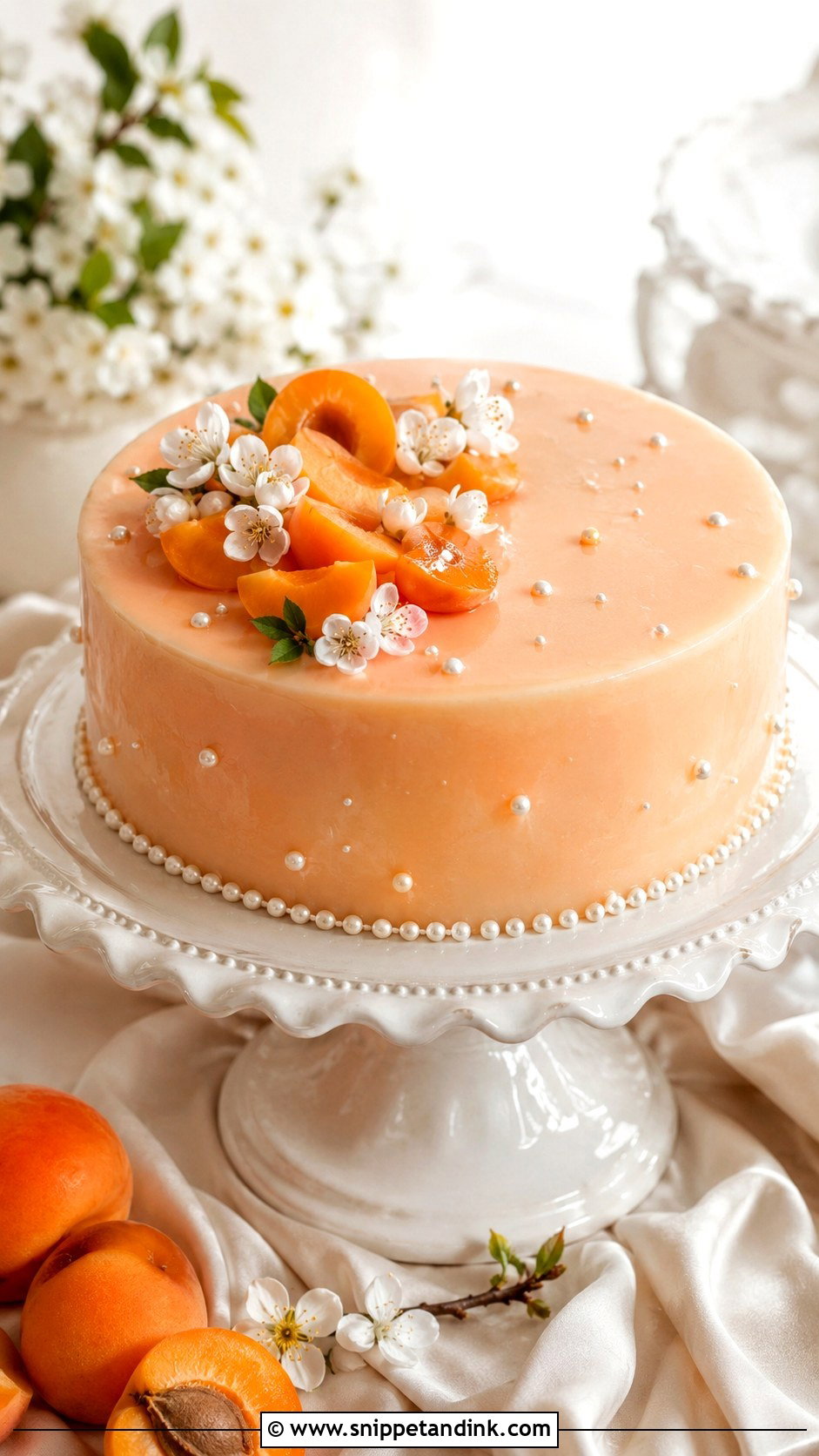
Apricot glaze is one of the oldest finishing tricks in a pastry kitchen: warmed apricot jam, sieved and thinned, brushed over fruit and cake to seal and shine them. Over a Bundt, a simple round or a tiered buttercream cake it gives a soft gloss and an extra hit of fruit. Keep it thin and pale peach, or it starts to look sticky. Fresh apricots, white blossoms and a few pearls finish it. It’s the right route if you want the cake to look light rather than heavily frosted.
16. Apricot Nectar Cake With Buttercream Flowers
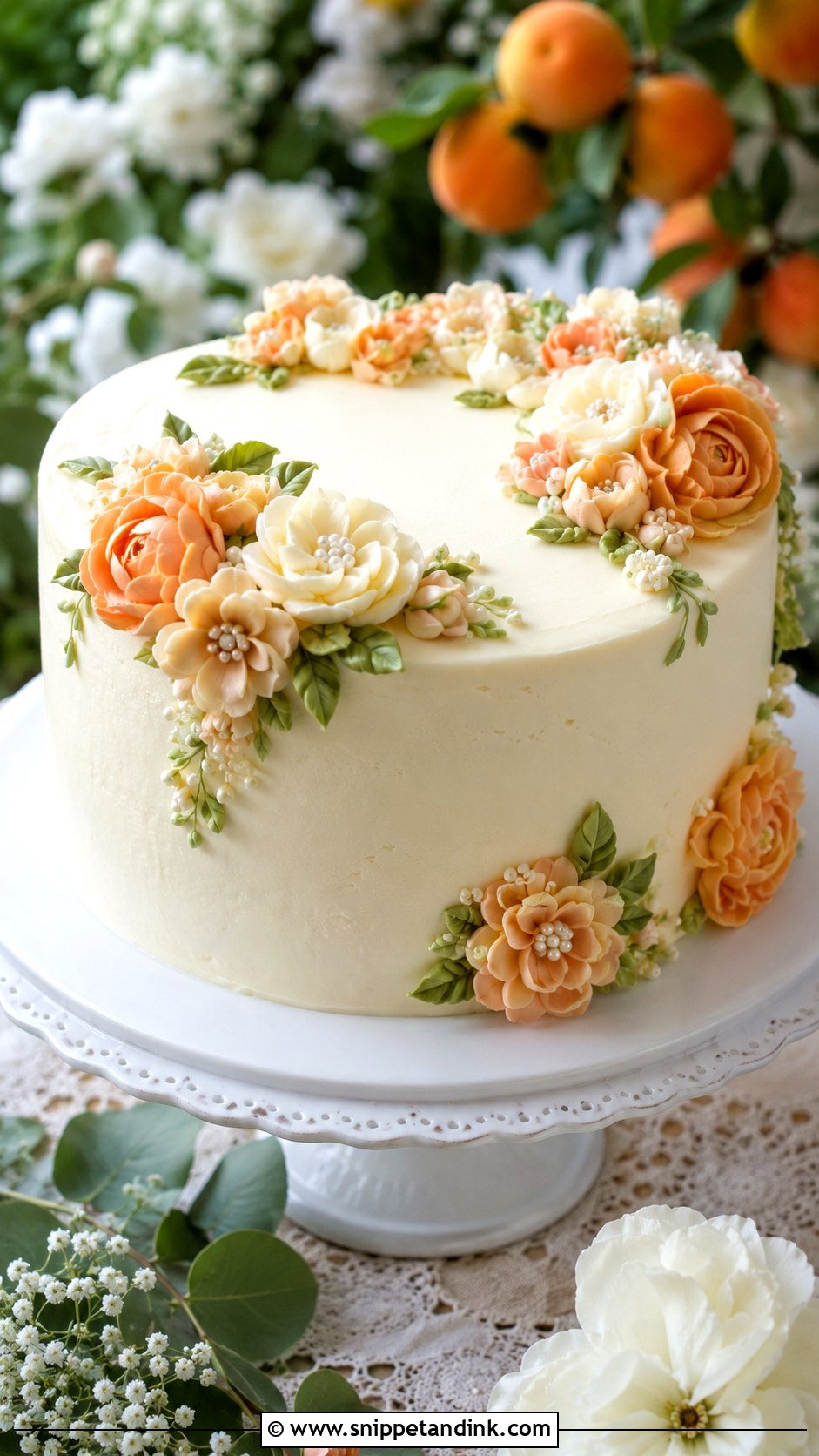
Piped buttercream flowers keep every part of the cake edible. On apricot nectar layers with smooth ivory buttercream, I pipe peach, cream and blush blooms around the top or down one side in a cascade, with a thin apricot filling inside so the flavor matches the colors. Piped flowers soften in warm rooms, so for a summer garden wedding I’d keep the cake inside until cutting. It suits a bridal brunch or a spring reception.
17. Apricot Nectar Cake With Edible Flowers
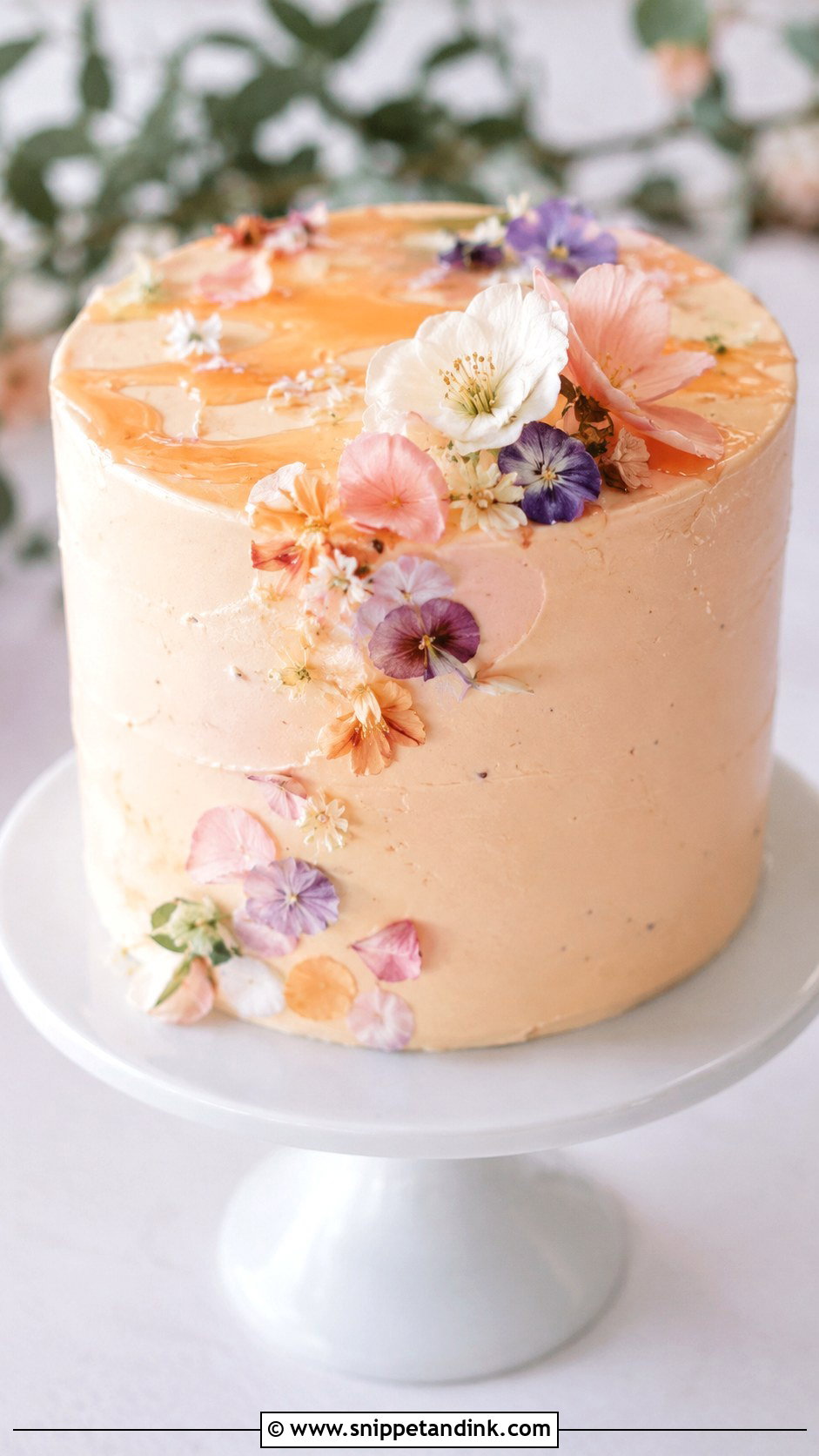
Edible flowers look modern on a white or pale peach frosting. Violas, pansies, rose petals and cornflowers in ivory, blush, lavender and peach keep the palette soft, and a thin apricot glaze or filling ties the flavor to the decoration. They must be grown for eating, without sprays, which means buying from a specialist grower rather than a florist. Most wilt within a few hours, so I place them on the day. It’s at its best at an outdoor ceremony or a tea-style reception.
18. Apricot Nectar Cake With Gold Accents
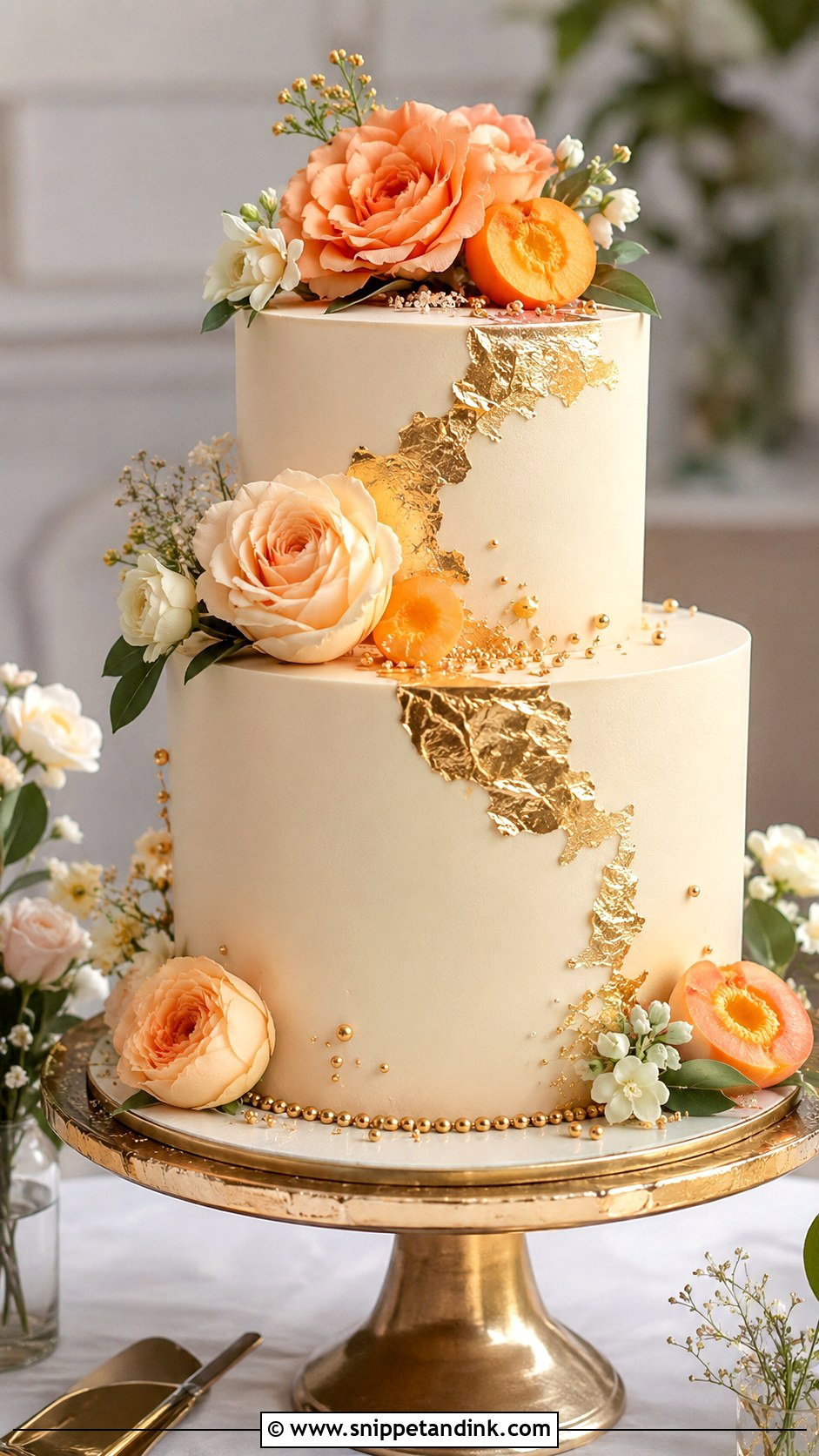
Gold turns this homely flavor formal. Smooth ivory buttercream or fondant with edible gold leaf, gold pearls or a thin gold edge, plus apricot filling, soft peach flowers and a pale apricot glaze, sits naturally in a ballroom or at an evening reception. Gold leaf sticks best to a slightly tacky surface and tears on very cold, wet frosting, so timing matters. Restraint keeps it from looking flashy; the apricot color does the warming.
19. Apricot Nectar Cake With White Chocolate
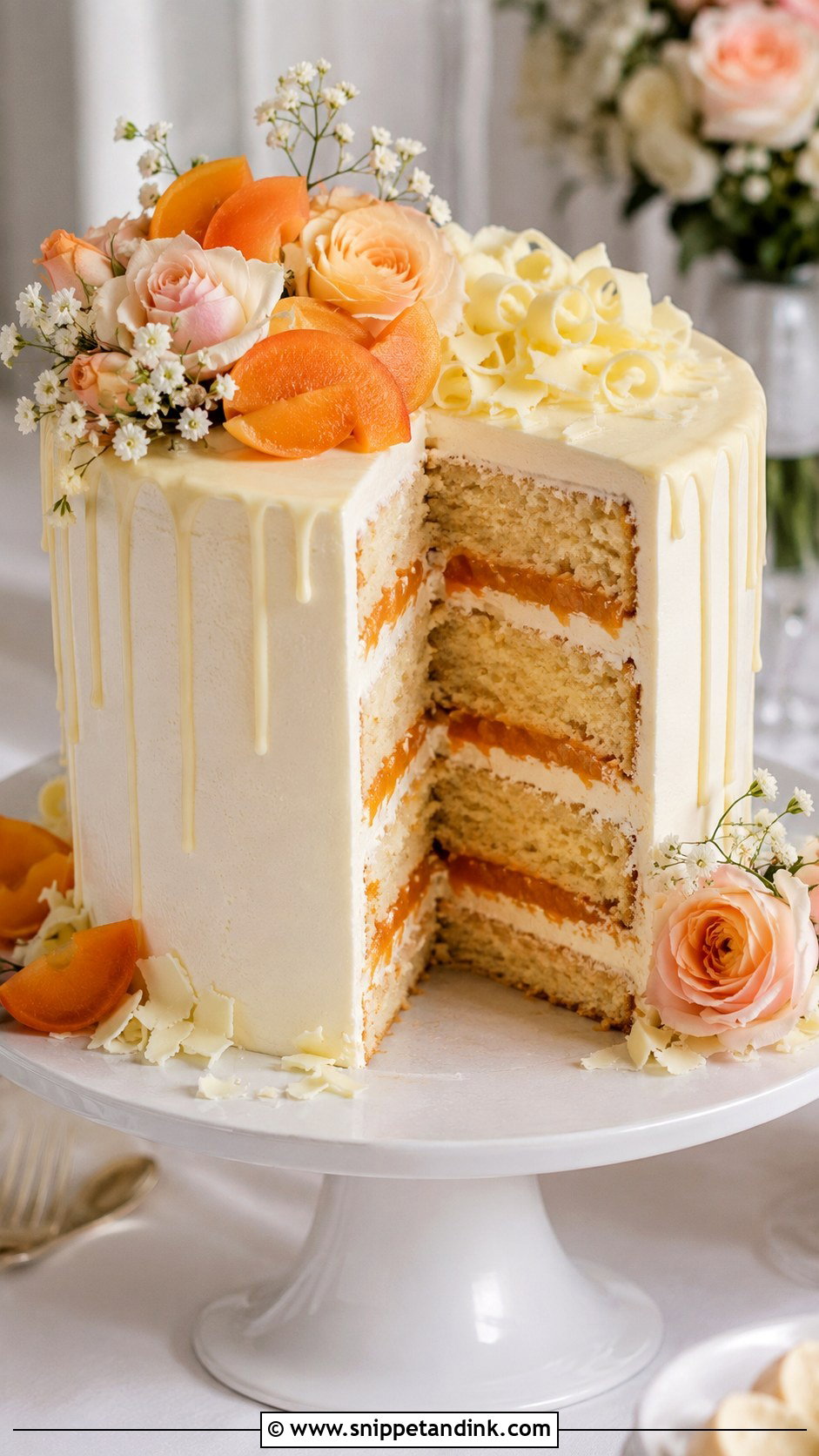
White chocolate rounds out the apricot without hiding it. Layers with white chocolate buttercream, apricot preserves or a white chocolate drip, decorated with peach flowers, white chocolate curls and fresh slices, give a creamy, gentle flavor. White chocolate is very sweet, so I balance it with a tart preserve and a pinch of salt in the buttercream. It’s richer than plain vanilla but far lighter than dark chocolate, and the pale finish suits most reception styles.


20. Apricot Nectar Dessert Table Cake
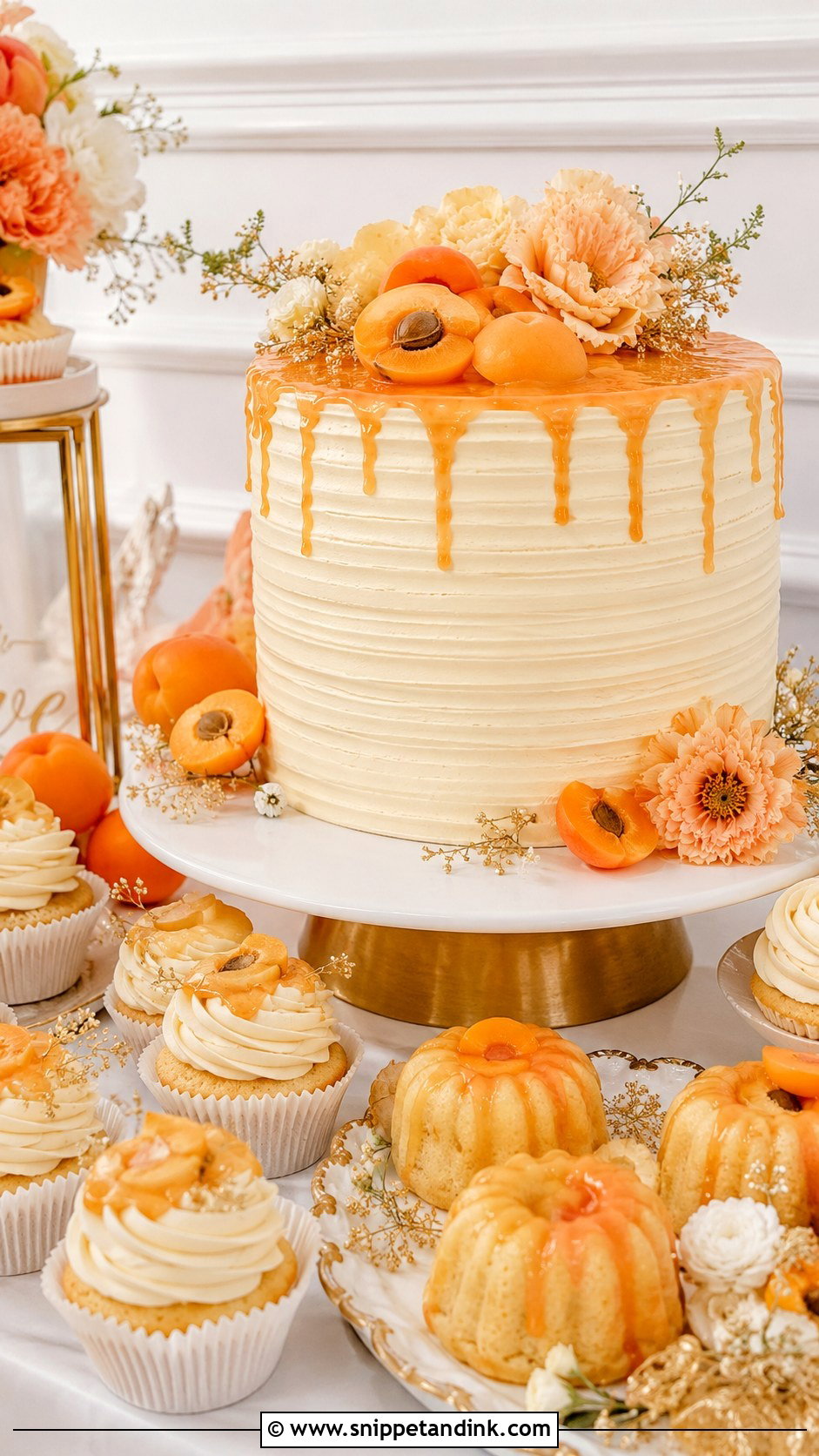
A full dessert table lets one flavor appear in several forms. A medium apricot nectar layer cake takes the center, surrounded by matching cupcakes, mini Bundts, slices or glazed petit fours. Keep the palette to ivory, peach, soft gold and fresh apricot so the table reads as one idea. Guests get different textures within the same sunny flavor, and smaller items are easier to replenish than a single cake. Plan the layout so the cutting cake stays reachable for the photographer.
Baking Ahead and Keeping the Crumb Moist
This flavor is one of the friendlier ones for planning, because nectar-soaked cakes hold their moisture well.
- Unglazed layers and Bundts freeze well for a few weeks if wrapped tightly in plastic and then foil. Thaw them still wrapped, so condensation forms on the wrapping rather than the cake.
- Glaze and syrup go on after thawing, never before freezing.
- Assemble and frost tiered cakes a day ahead at most, and keep them cool.
- Cream cheese fillings and frostings need refrigeration; plain buttercream and glazed Bundts are happy at cool room temperature for the day.
- Fresh apricot decoration is the last job of all, on the day.
For an outdoor summer reception, a glazed Bundt or sheet cake copes with heat far better than a frosted tier, since there is no buttercream to slump. If you want the tiered look in July, ask for a cake that stays indoors until the cutting and goes back to the kitchen straight after.
At your tasting, try the cake at room temperature. A slice straight from the fridge tastes flat and dense, and that’s not how your guests will eat it.
A Southern Bundt Classic, Dressed for the Reception
Apricot nectar cake is familiar enough to comfort and unusual enough to get noticed. It can be a glazed Bundt, a tiered buttercream cake, or a table of cupcakes and minis, and it plays well with lemon, almond, cream cheese, vanilla and white chocolate. Ask your baker to keep it moist with syrup, the colors soft and the decoration linked to the fruit. Get those right, and a recipe born at church suppers holds its own at any reception.
You'll Like These Ideas:










Leave a Reply