
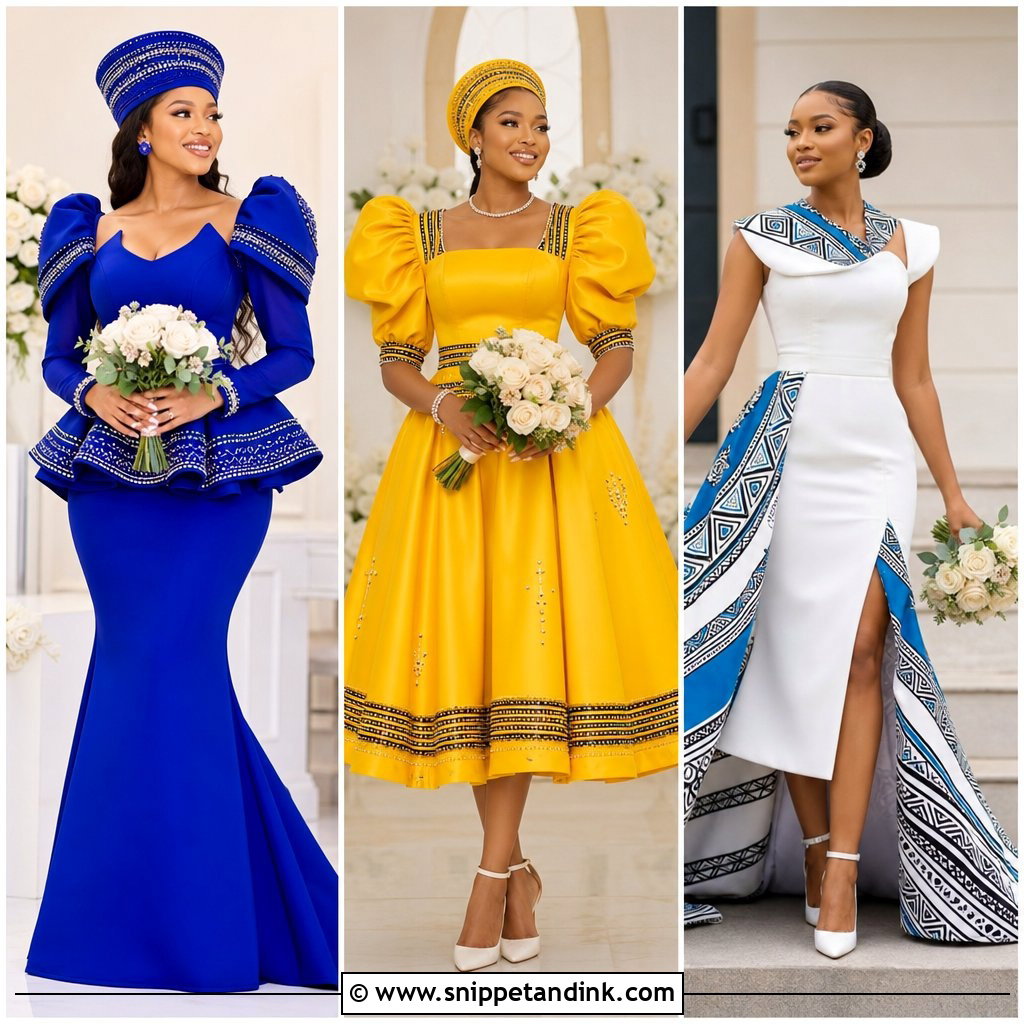
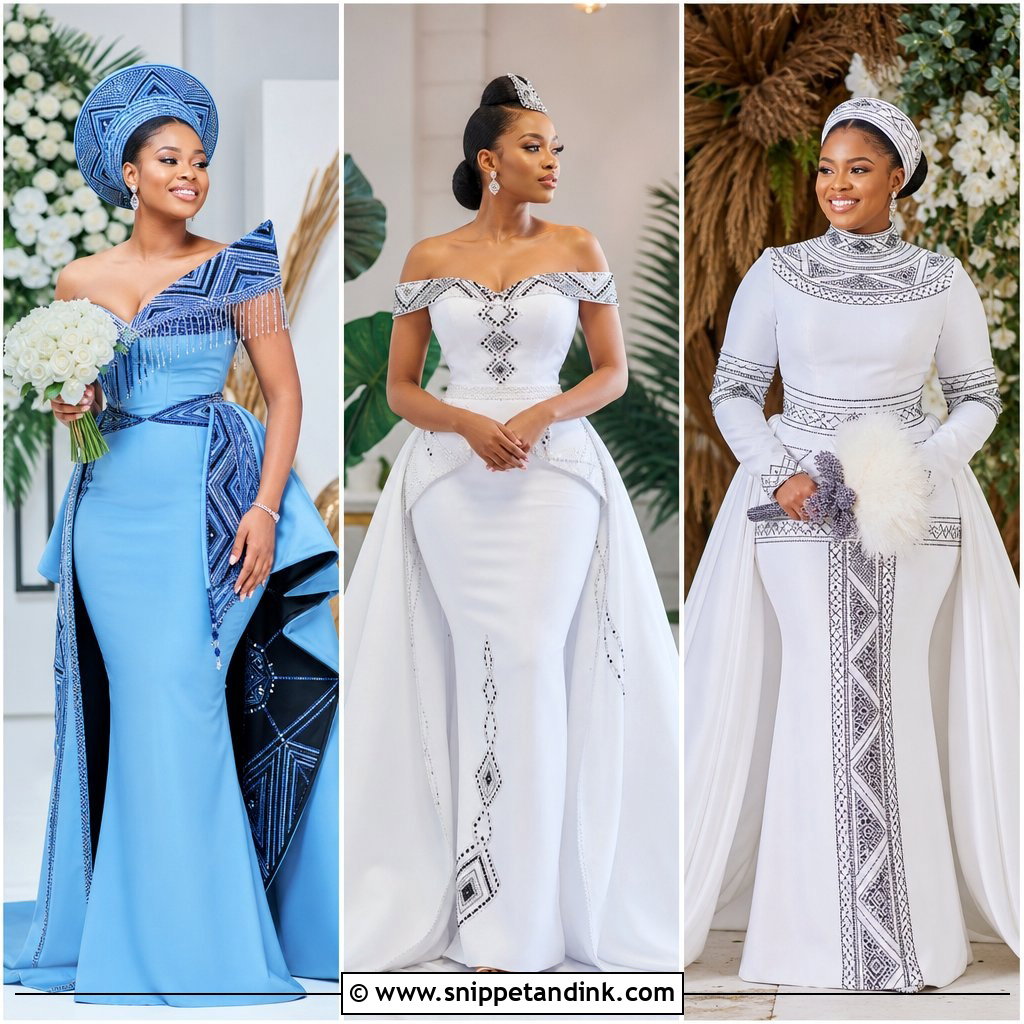
There’s no single African wedding dress, and any stylist who works with African brides learns that on the first consultation. A Yoruba bride may need aso oke and a gele for the engagement, a white gown for church and something lighter for the party, all on one weekend. Nigerian aso oke, Ghanaian kente, East African kitenge, South African shweshwe, the Ethiopian habesha kemis and North African kaftans each come with their own fabrics, ceremonies and family expectations. Below are 30 looks, from fully traditional to modern fusion, with notes on how the fabric behaves, what the tailor needs from you and where I’d suggest caution.
Commissioning a Custom Outfit From Your Tailor
Most of the looks below are made to measure, not bought off a rack, so the timeline and the fabric are your responsibility as much as the tailor’s.
Buy the fabric early and buy extra
Handwoven aso oke and kente can take weeks to weave if you’re ordering custom colors, and lace or wax print bought in one batch is the only way to guarantee every piece matches. Ask your tailor how many yards they need for the style before you shop, then add a little for a matching gele, purse or the groom’s accents. Running short in the middle of the cutting is a common and expensive problem.
Give the tailor real time
A beaded or corseted gown needs several fittings, and good tailors are fully booked in wedding season. Book months ahead rather than weeks, and plan for at least two fittings plus a final try-on with shoes, gele and jewelry together.
- Pre-wash cotton prints like Ankara, kitenge and shweshwe before cutting, since they can shrink and bleed.
- Bring the heels you’ll wear to every fitting so the hem is set at the right height.
- Kneel, sit and raise your arms at each fitting. Traditional ceremonies involve all three.
- Get a sample of the lining you’ll be wearing next to your skin, especially under cord lace and beading.
1. Aso Oke Bridal Gown
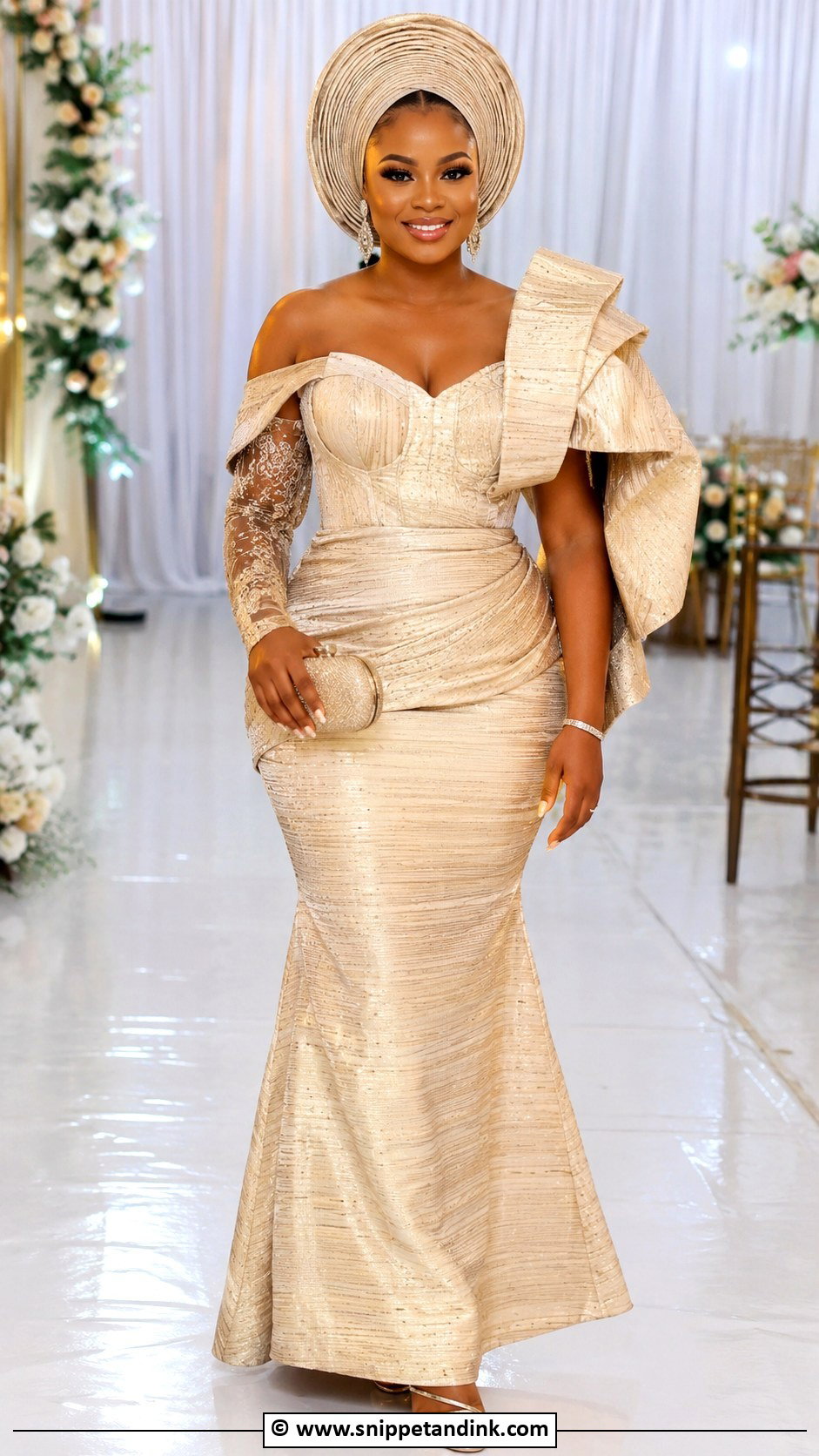
Handwoven aso oke is stiffer than most bridal fabric, which is exactly why it suits a sculpted gown. It holds a fitted bodice and a dramatic skirt without needing much underneath. Ivory, champagne, blush, gold and deep wine are the classic bridal shades, often finished with beading or embroidery and a matching gele. Mermaid, basque waist and ball gown cuts all work. Because the strips are woven narrow and joined, I ask the tailor to plan where the seams fall so the pattern lines up across the bodice. Metallic heels, statement earrings and a matching clutch complete it.
2. Kente Wedding Dress
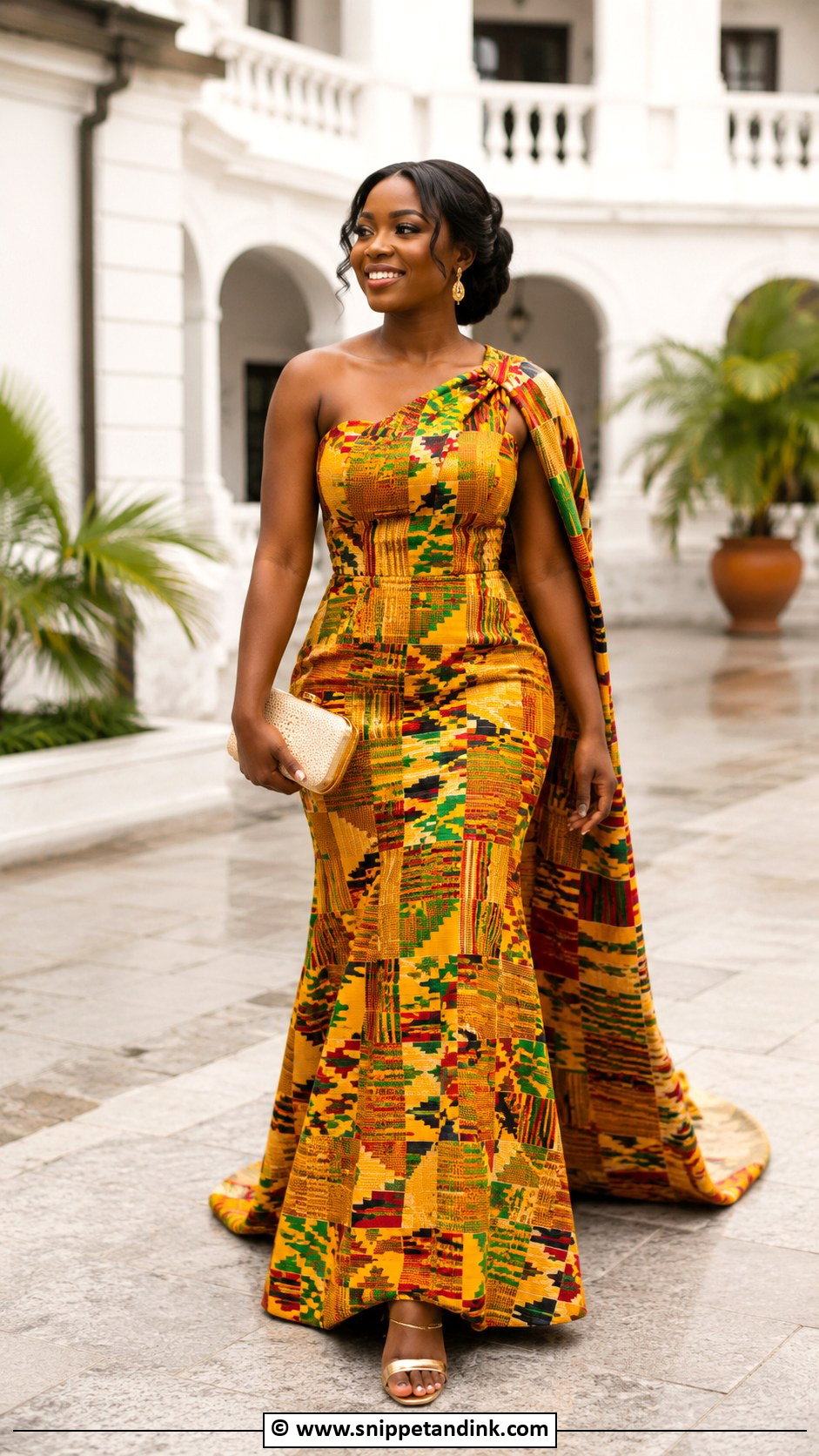
A kente wedding dress carries meaning in its patterns and colors, so I always ask the bride’s family which designs they want before we cut anything. Kente can be wrapped, cut as a one-shoulder or corset gown, or made into a full ball gown. Like aso oke, it’s woven in strips, so pattern placement across the bust and down the center front needs planning. Gold jewelry suits the bright tones, simple heels keep it grounded, and clean makeup with neat hair lets the cloth lead.
3. Ankara Ball Gown
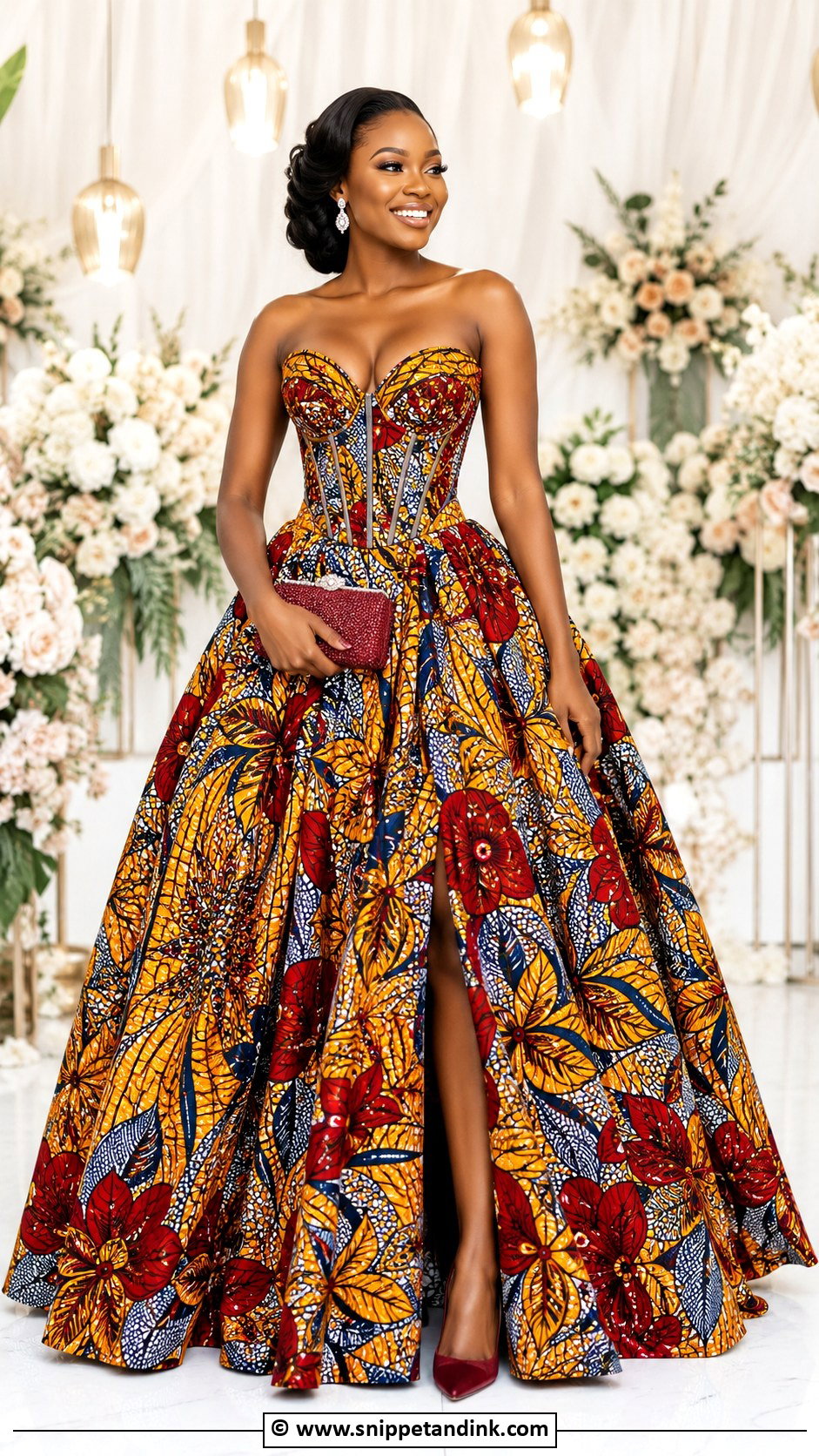
Ankara ball gowns are pure joy, but wax print is a cotton, and cotton alone won’t hold a big skirt. The volume comes from layered tulle or a petticoat underneath, or from pairing the print with lace, satin or organza. A sweetheart, off-shoulder or illusion neckline softens a bold print. Pull your heel color from one shade in the fabric and keep earrings simple. It suits traditional weddings, second looks and colorful receptions.
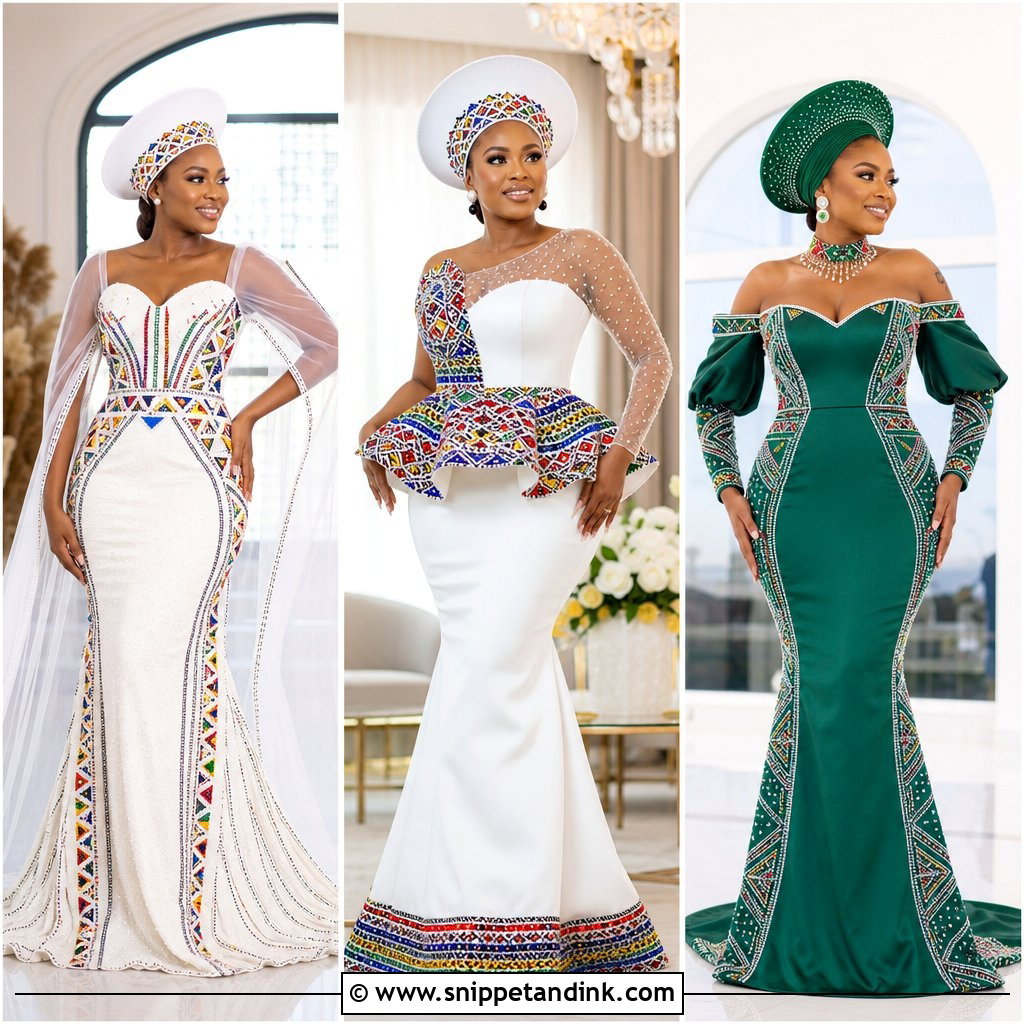
4. African Lace Mermaid Dress
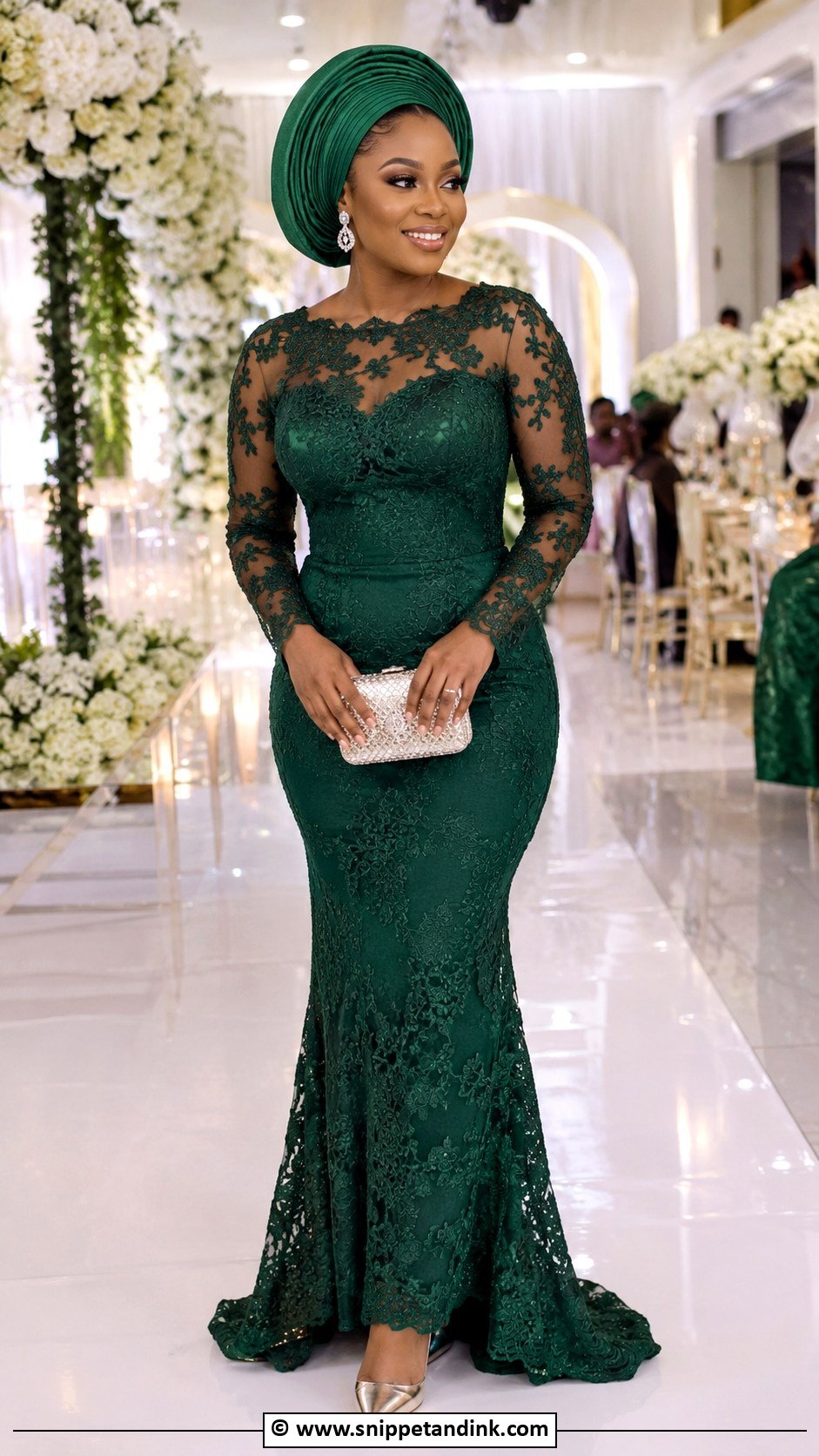
The mermaid shape hugs the waist and hips, then flares at or below the knee. Nigerian lace, cord lace, French lace and beaded lace in ivory, emerald, blue, burgundy, silver or champagne all work. My first check is the flare point: set it too low and you’ll shuffle all evening. Have the bride climb a step and sit at the fitting. The lining needs to be smooth against the skin, since heavy cord lace can scratch. Add a gele, beaded headpiece or veil to suit the ceremony, with pointed heels and a structured clutch.
5. George Wrapper And Blouse
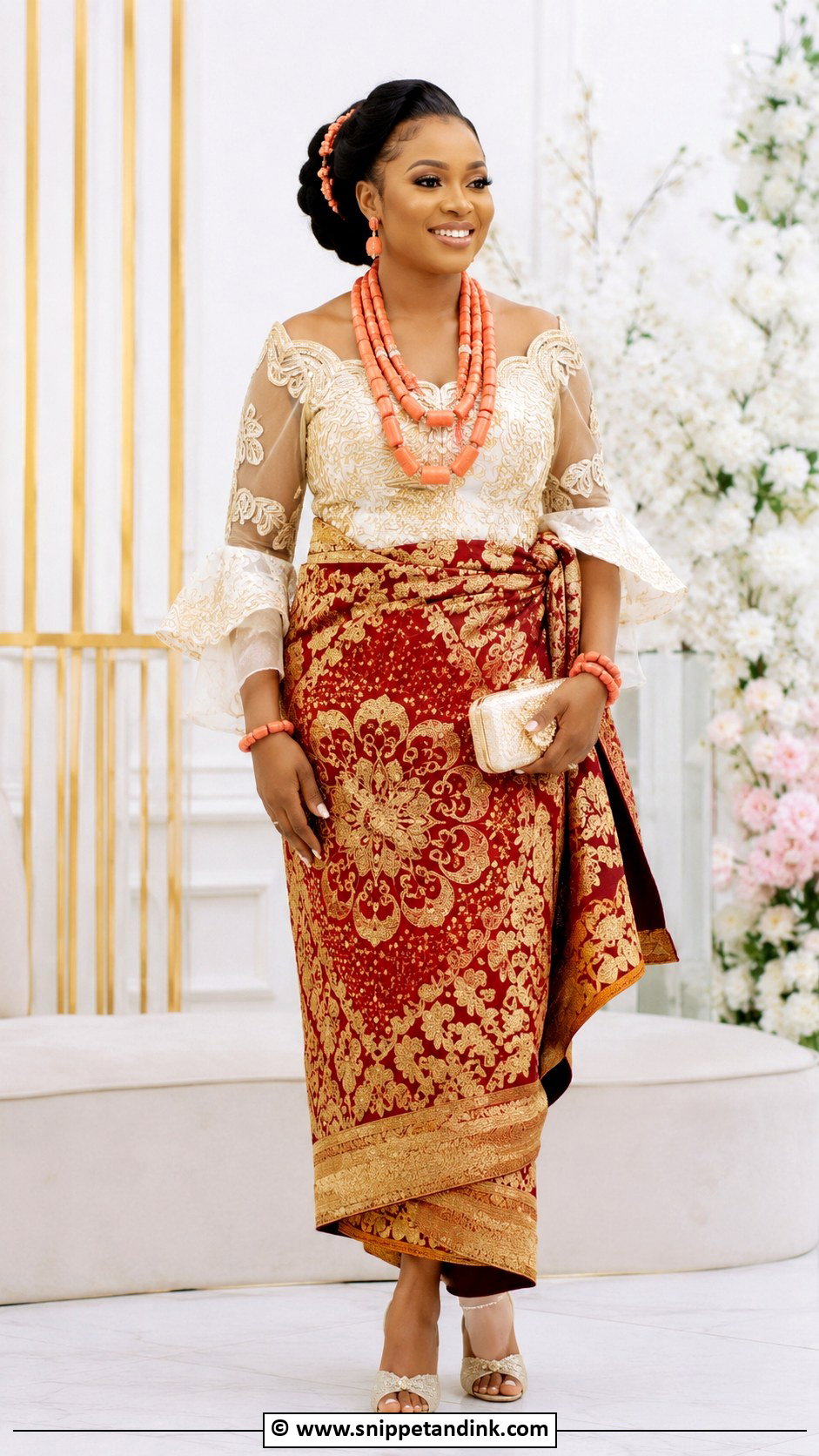
A George wrapper and blouse is a classic look for Igbo traditional weddings. The full look usually includes a richly embroidered blouse, wrapper, coral beads, heels and a head tie or styled hair. George has a heavy, glossy surface that catches light indoors and out. The wrapper must be tied firmly at the waist and checked after dancing, since a loose tie slides. Blouses range from dramatic sleeves to peplum or a modest neckline. Coral beads are heavy, so I’d try the full set on with the blouse to make sure the neckline sits right under them.
6. Shweshwe Wedding Dress
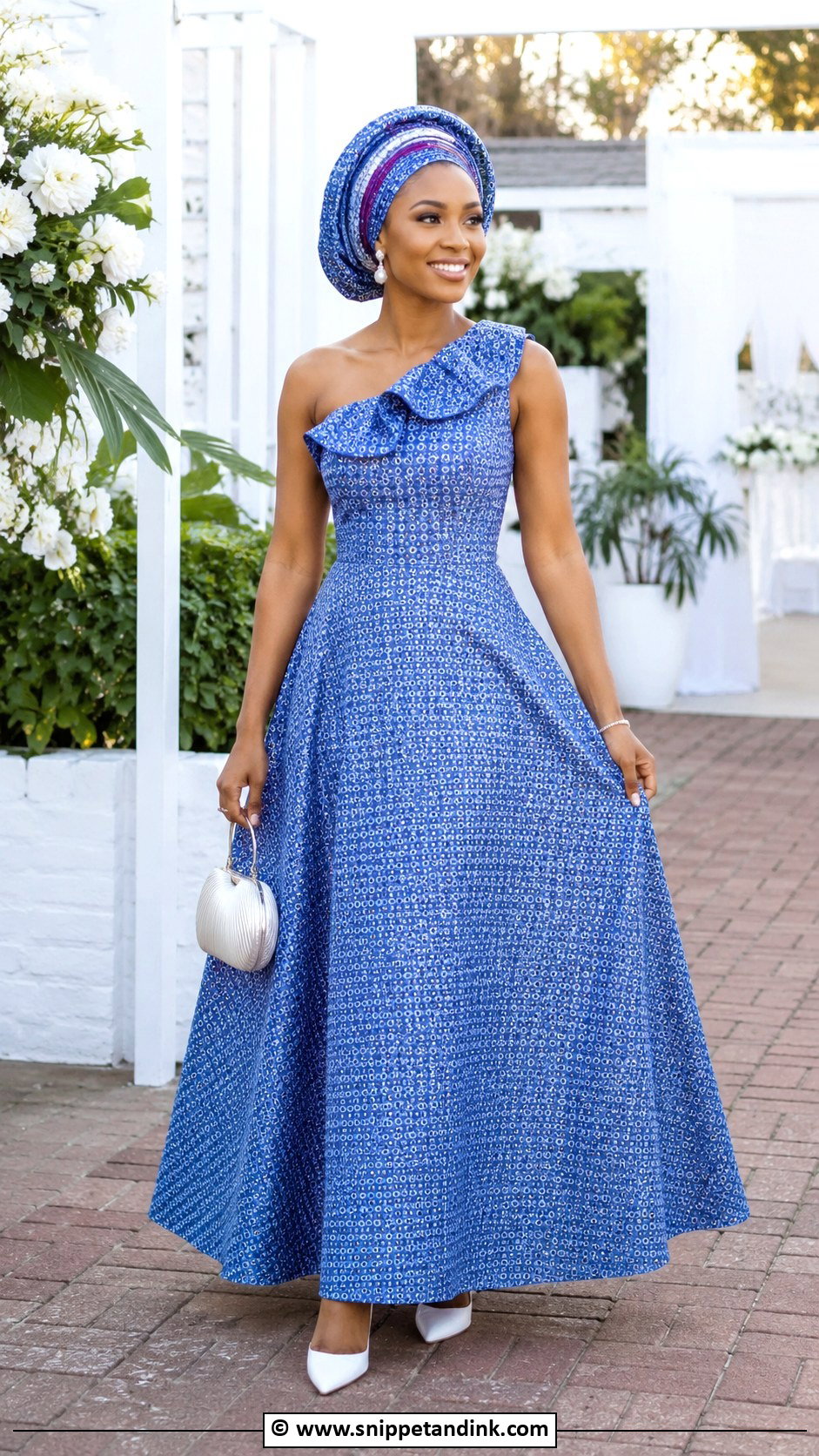
Shweshwe has a crisp, almost papery hand when new, thanks to the starch used in finishing it, and that crispness gives clean, structured lines. Classic prints come in indigo blue, brown, red and black-and-white. For a wedding, it can be cut as an A-line, high-low, fitted midi with overskirt or a full gown. Shweshwe shrinks, so I always have it pre-washed before cutting; the stiffness softens after washing. A matching headwrap, pearl earrings and clean heels finish it.
7. Habesha Kemis Wedding Dress
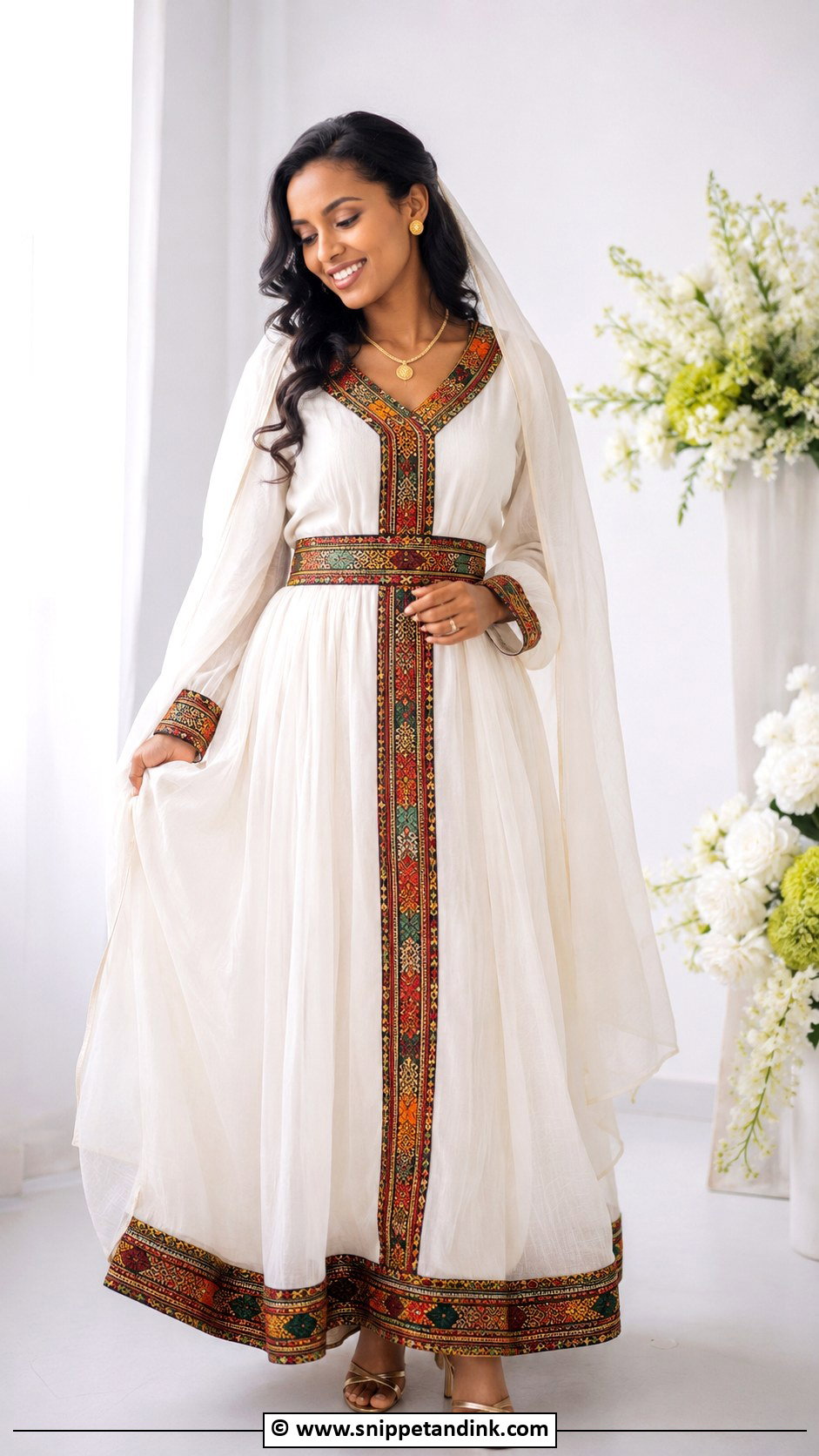
The habesha kemis is worn across Ethiopian and Eritrean celebrations: usually a white or ivory handwoven cotton dress with tibeb, the colored woven border, at the neckline, sleeves and hem. It’s long, flowing and comfortable for a full day of ceremony and family gatherings. Embroidery in green, red, gold, blue or multicolor can reflect region and taste. Gold jewelry, braids or soft curls, and a delicate netela shawl over the shoulders complete it. Handwoven cotton creases, so I’d hang it overnight and steam it lightly before dressing.
8. Kitenge Wedding Dress
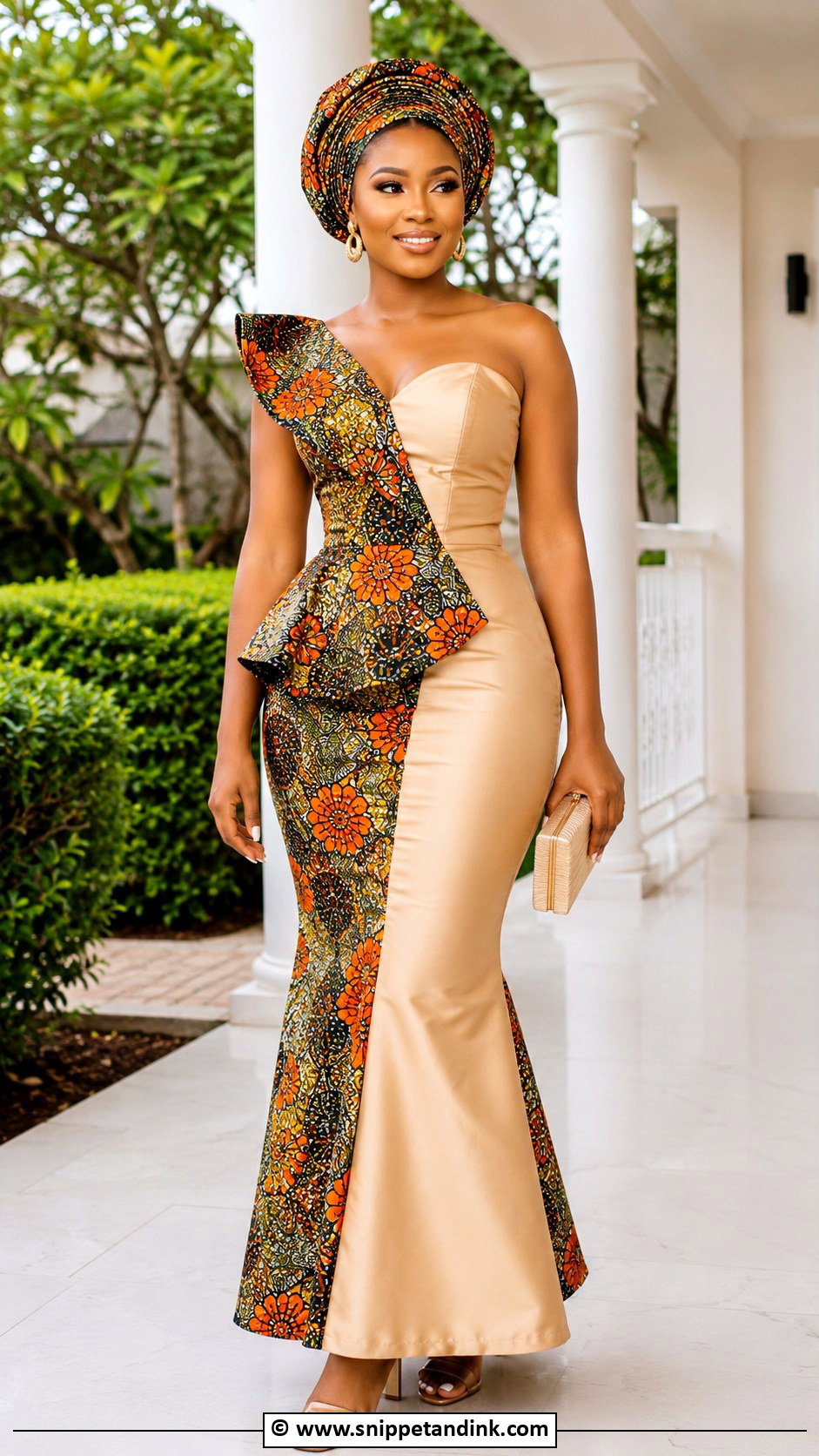
Kitenge suits East African brides and anyone who loves custom tailoring with bold print. It can be cut as a fitted gown, wrap dress, peplum gown or two-piece. Combining it with plain satin, lace or tulle in a matching shade makes it read as bridal rather than everyday. A structured bodice and a clean, even hem are where the tailoring shows; a wavy hem on a cotton print looks casual immediately. Simple heels, gold hoops, a slim clutch and neat hair suit it.
9. African Print Wedding Dress
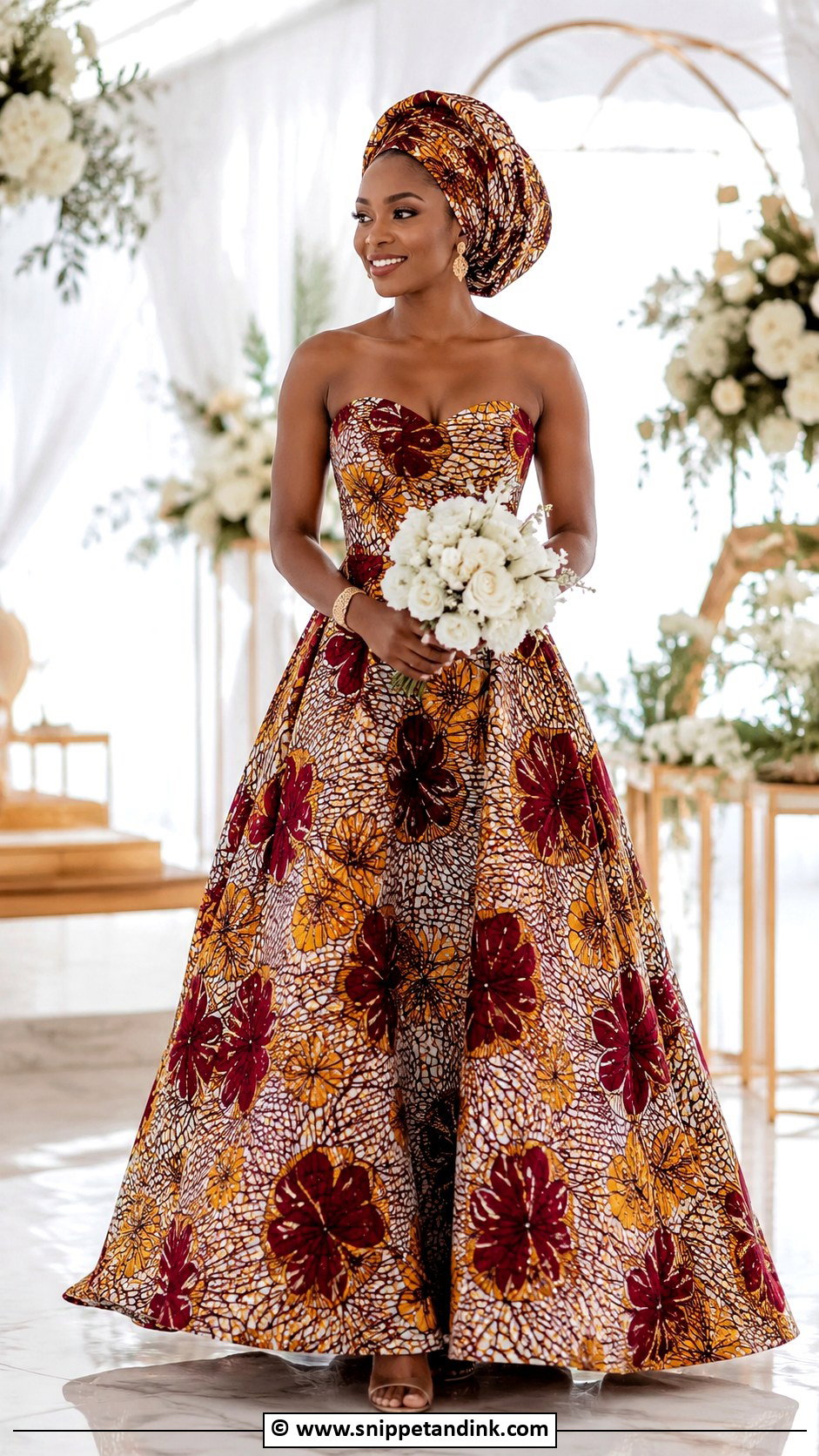
African print is the broadest category on this list. Ankara, kitenge, wax print or a custom heritage fabric can all be used. The silhouette is what makes it bridal: A-line, corset, wrap and detachable overskirt all work. If the print is busy, balance it with a plain bodice, solid sleeves or neutral shoes. If it’s quiet, add beadwork, lace or a dramatic headwrap. Buy all your fabric from one batch, since a second order of the same print can come in a slightly different shade.
10. White Wedding Dress With Ankara Detail
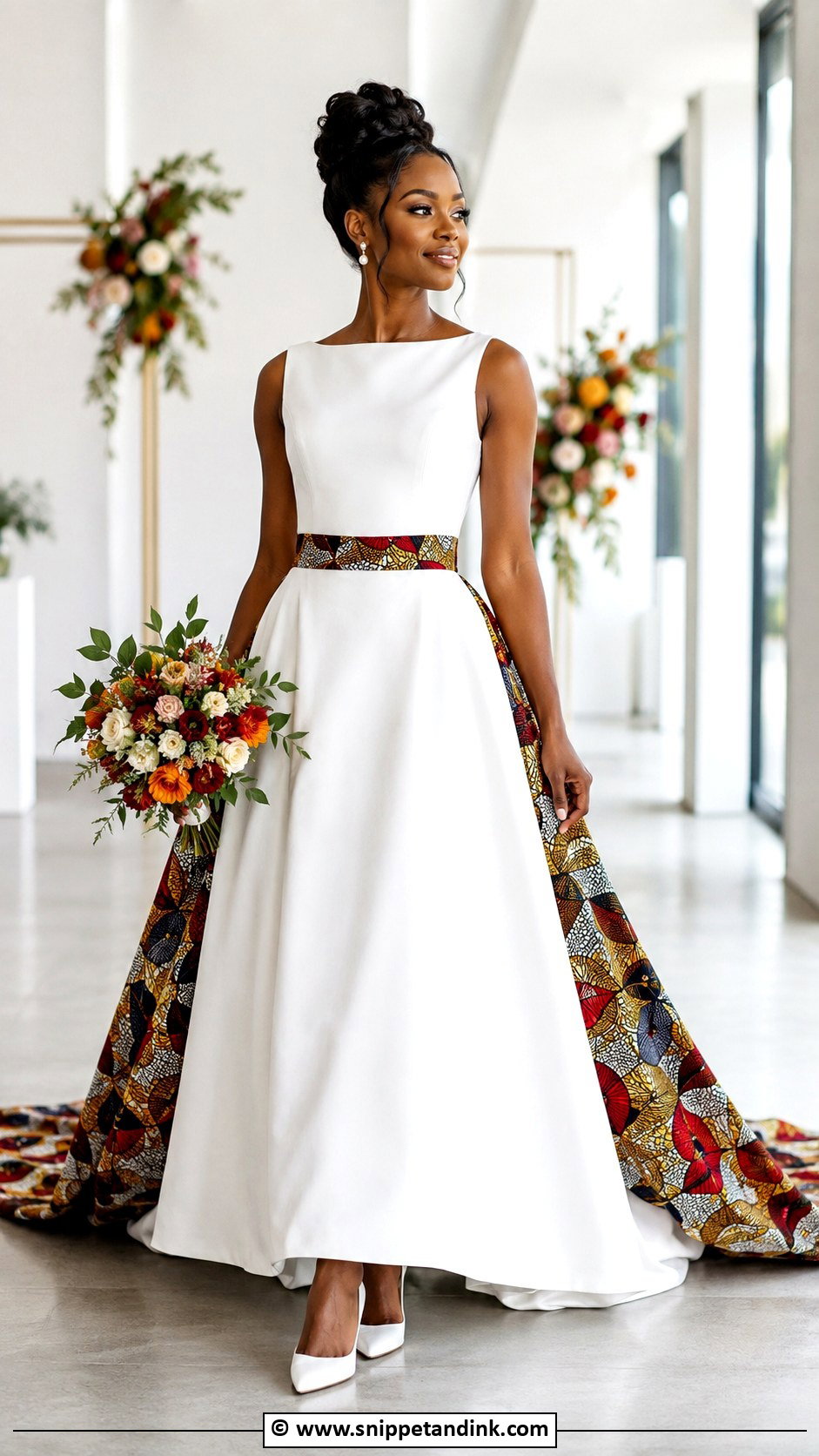
A white gown with Ankara detail is how many brides blend a Western church ceremony with their heritage. The base can be a white A-line, sheath, mermaid or ball gown, with Ankara on the sleeves, waistband, train, bodice or a detachable overskirt. Bright wax prints can bleed if they get wet, so I’d have the print pre-washed in cold water and test that the dye holds before it’s sewn next to white. White heels, pearl earrings and a bouquet pulled from the print colors tie it together.
11. Aso Oke Iro And Buba
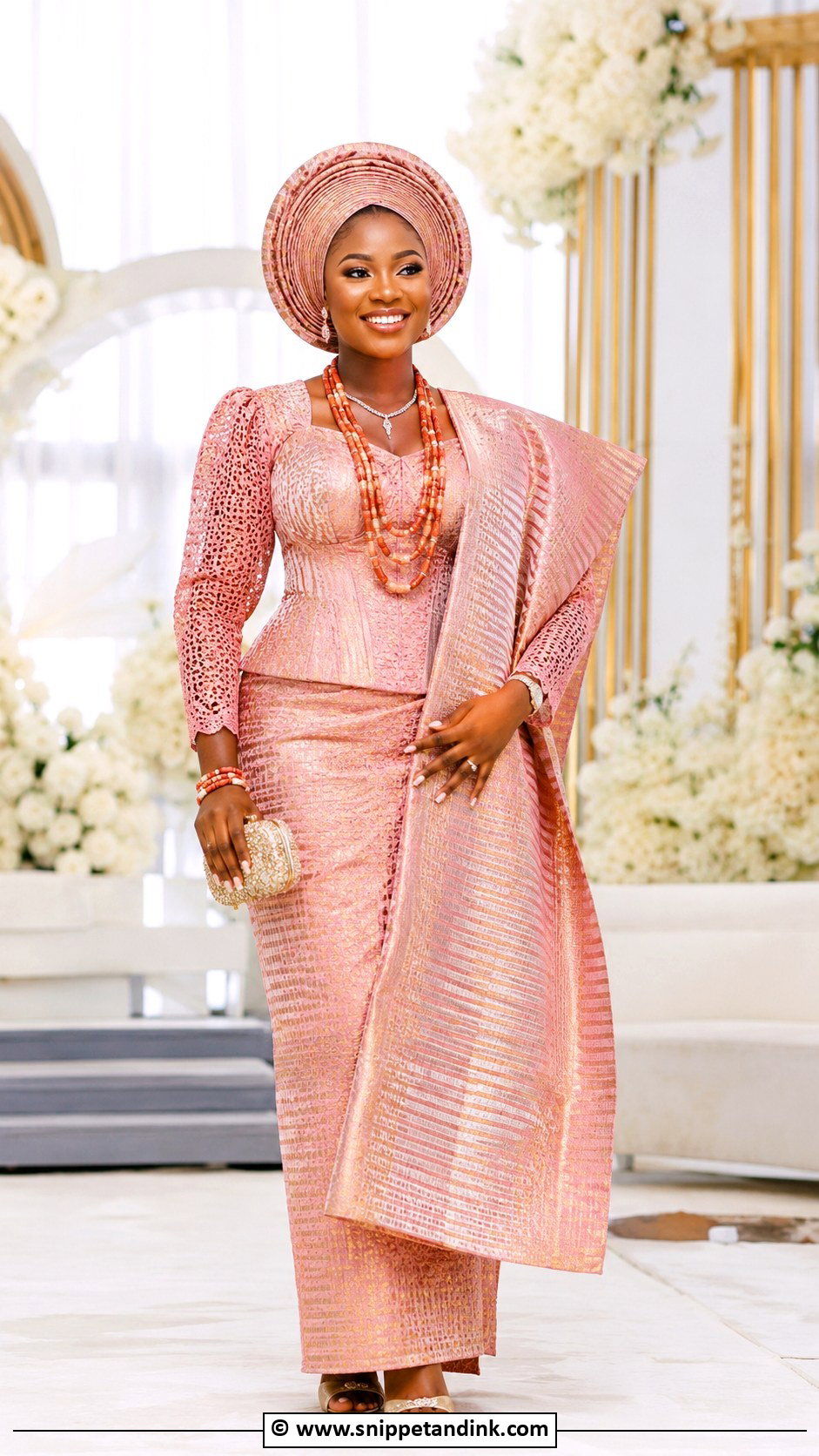
An aso oke iro and buba is a respected bridal look with deep Yoruba roots: wrapper, blouse, gele and sometimes an ipele over the shoulder. Modern versions use fitted blouses, sculpted sleeves, beaded necklines or softer draping. The iro needs a secure tuck or hidden hook, because aso oke is stiff and springs open if it’s only folded. Metallic heels and a matching purse complete it. It allows the bride, groom, parents and party to coordinate in shared colors.
12. African Wedding Jumpsuit
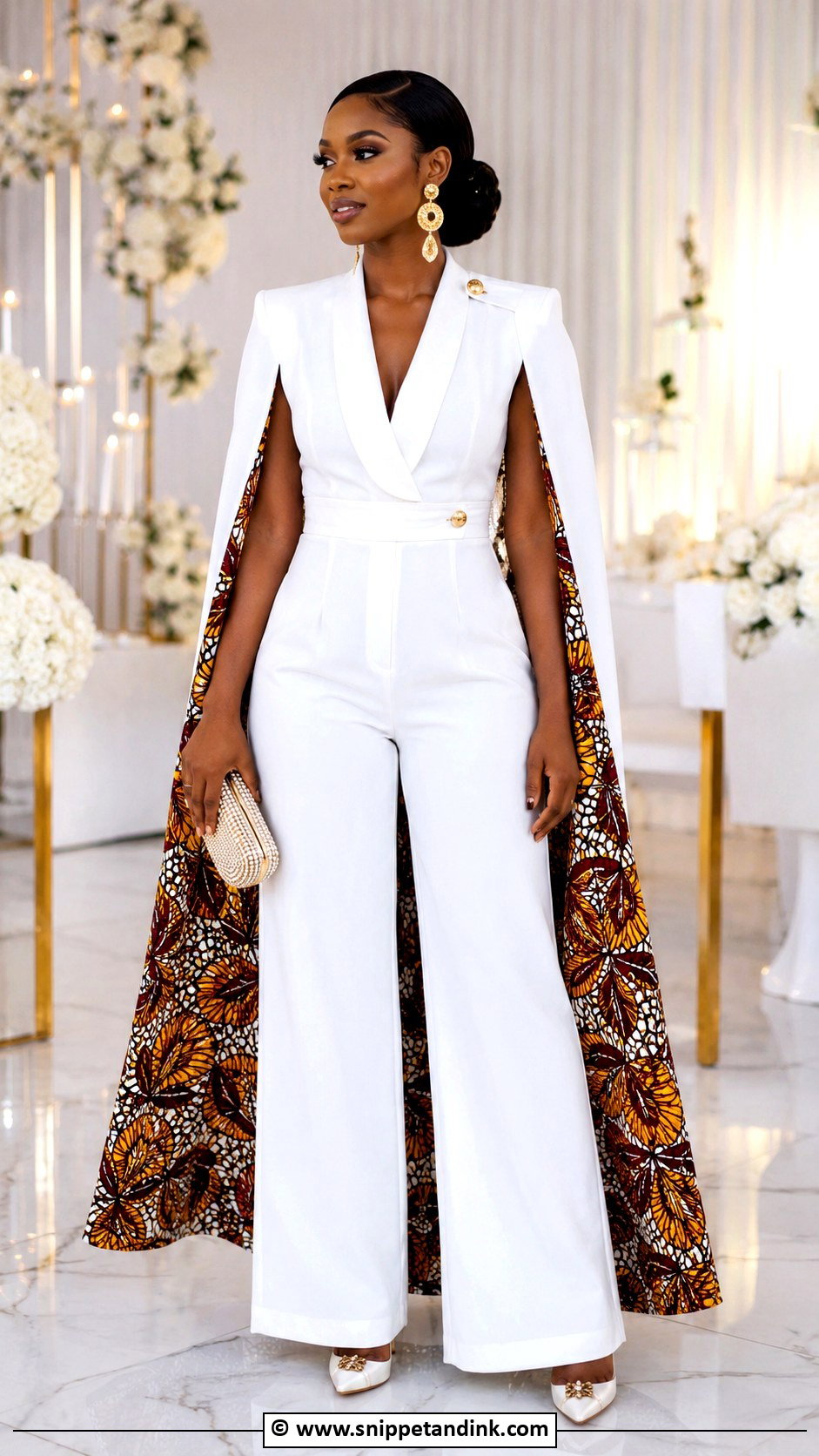
A jumpsuit lets a bride move and dance freely. Lace, Ankara, crepe, satin or plain fabric with print panels all work. Wide-leg trousers read formal; a corset bodice, cape sleeve or detachable train brings the drama. Get the rise right at fittings: too short and it pulls when you sit, too long and the crotch sags. Heels lengthen the leg line, and earrings should frame the face. It also works as a reception change.
13. African Bridal Two Piece
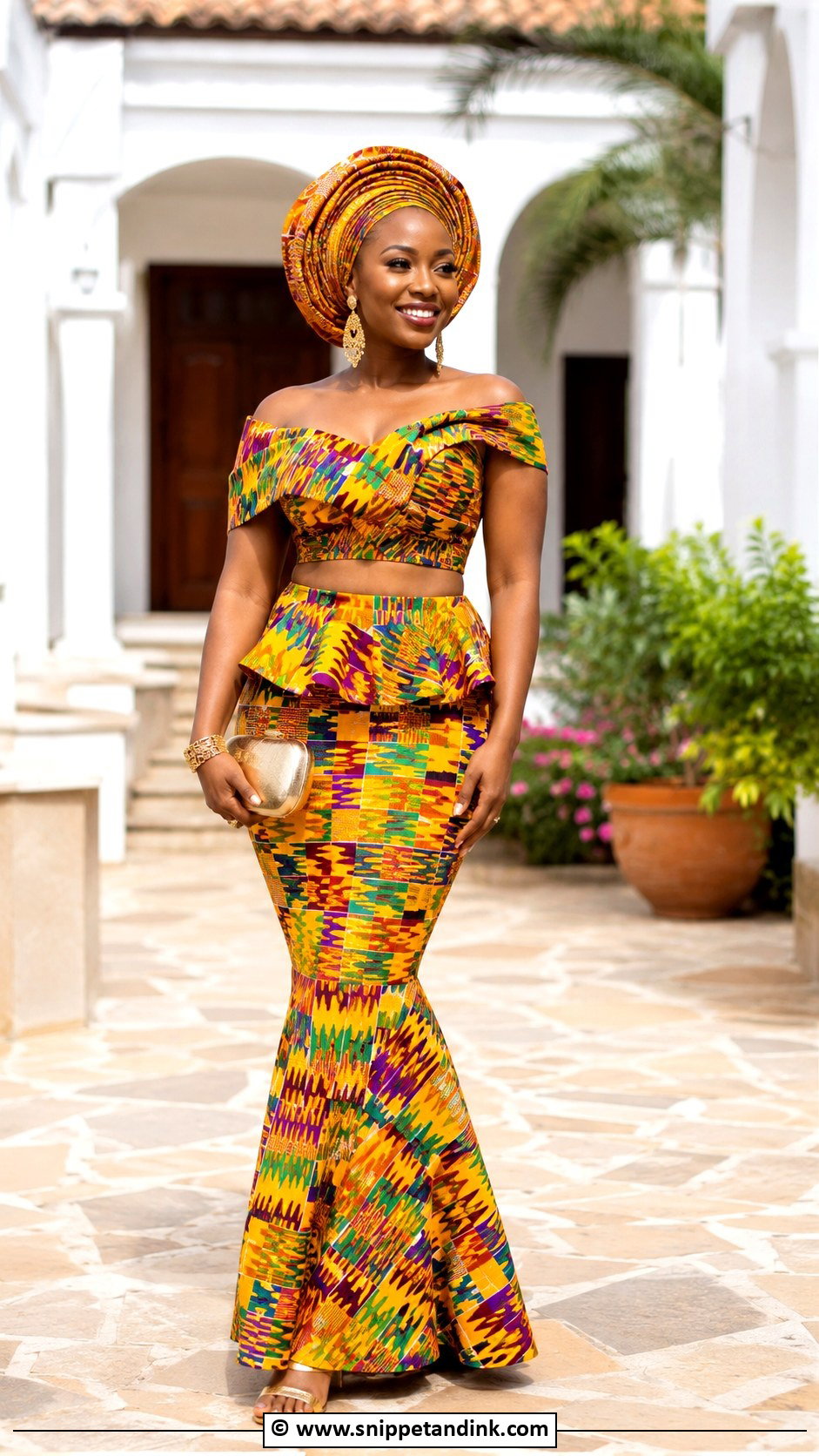
Two pieces give flexibility. A fitted crop or peplum blouse over a high-waist mermaid, wrap or ball skirt is the usual pairing, in aso oke, lace, Ankara, kente or George. Separate pieces are easier to alter, which helps if your weight changes in the months before the wedding. A matching headwrap or gele finishes it. For a traditional ceremony with lots of dancing and kneeling, it’s less restrictive than a one-piece gown.
14. African Wedding Dress With Cape
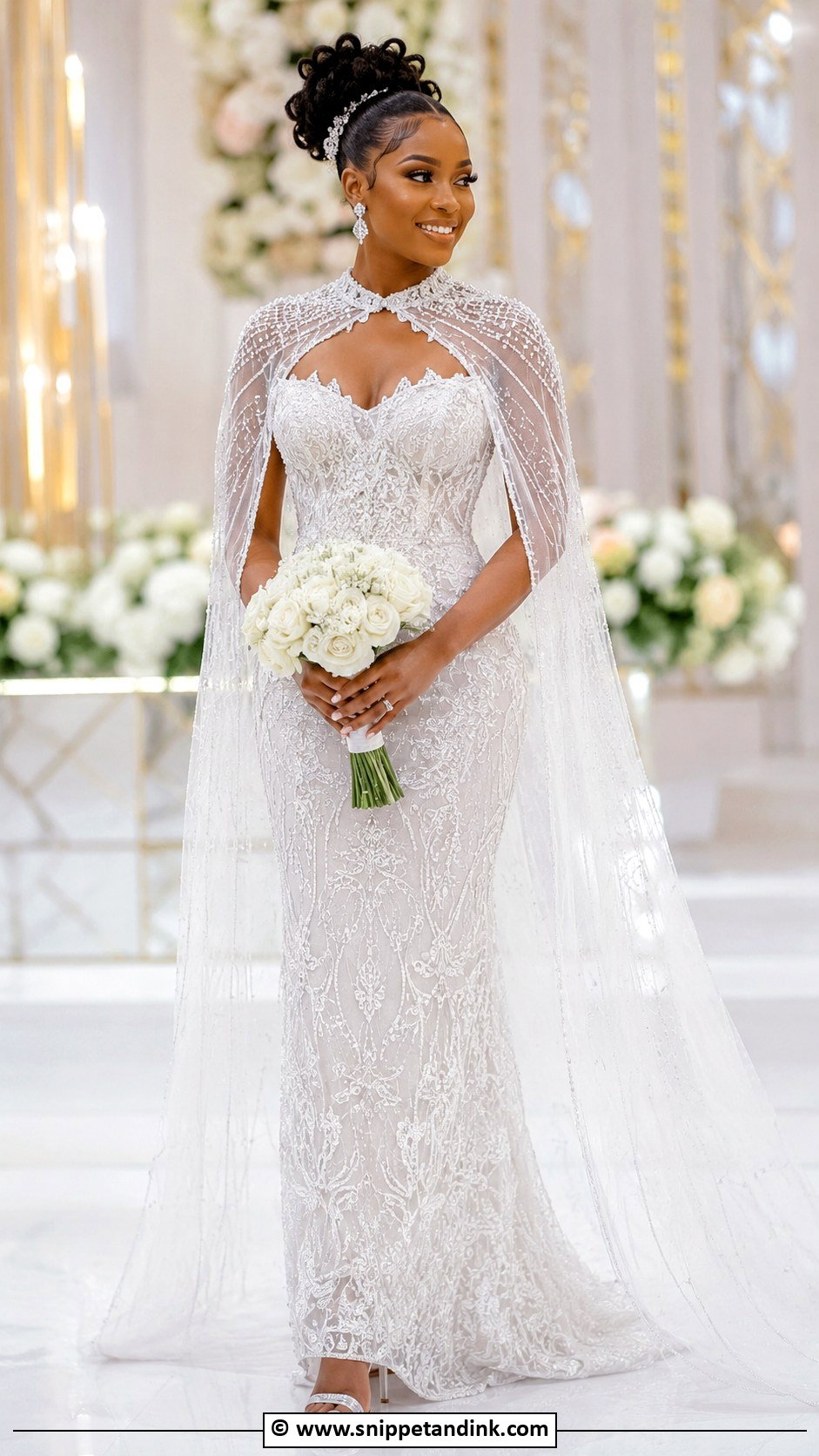
A cape gives drama without a heavy veil or long train. Sheer, beaded, lace-trimmed or matching print capes all work over a mermaid gown, sheath, jumpsuit or lace dress. A cape also covers the shoulders and arms when the ceremony calls for modesty. Keep the neckline simple so the cape sits flat; a cape over a busy neckline bunches. Sleek heels, a neat clutch and earrings that don’t fight the shoulder line complete it.
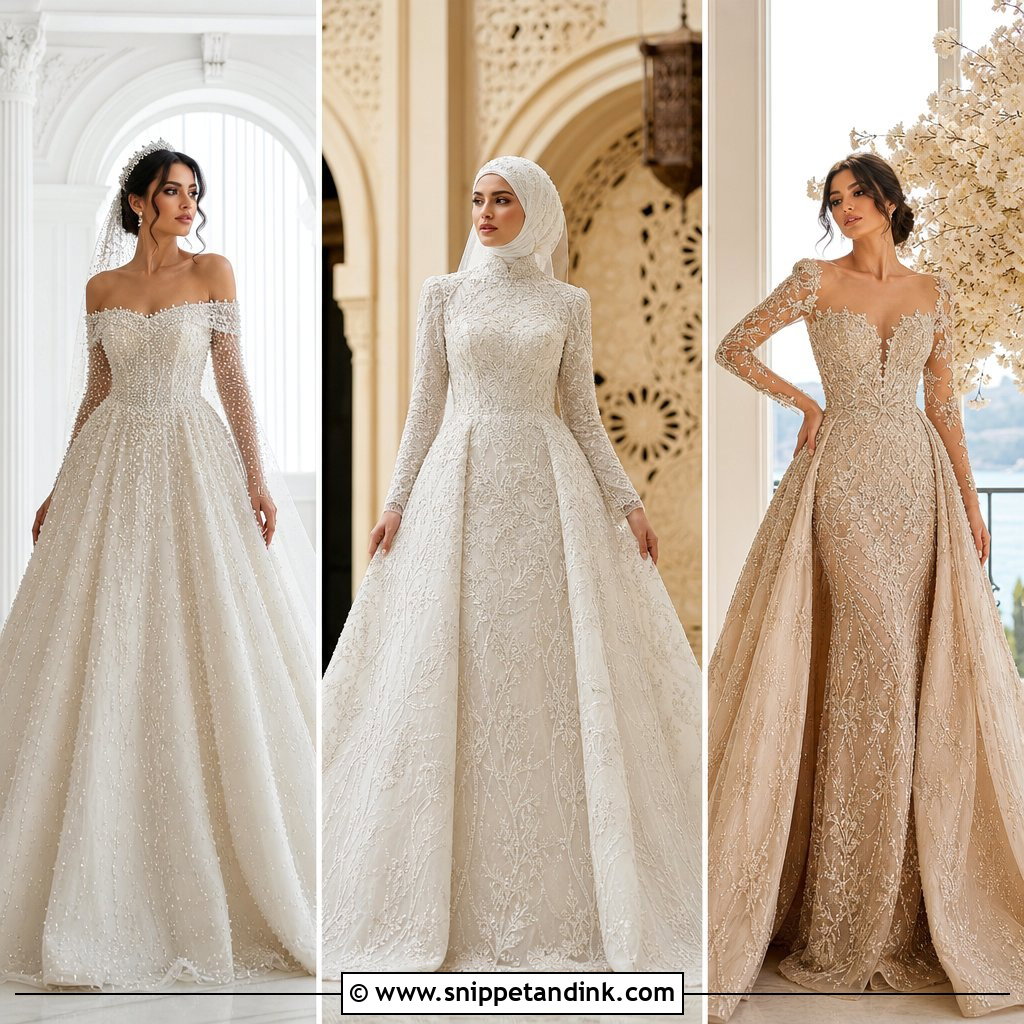
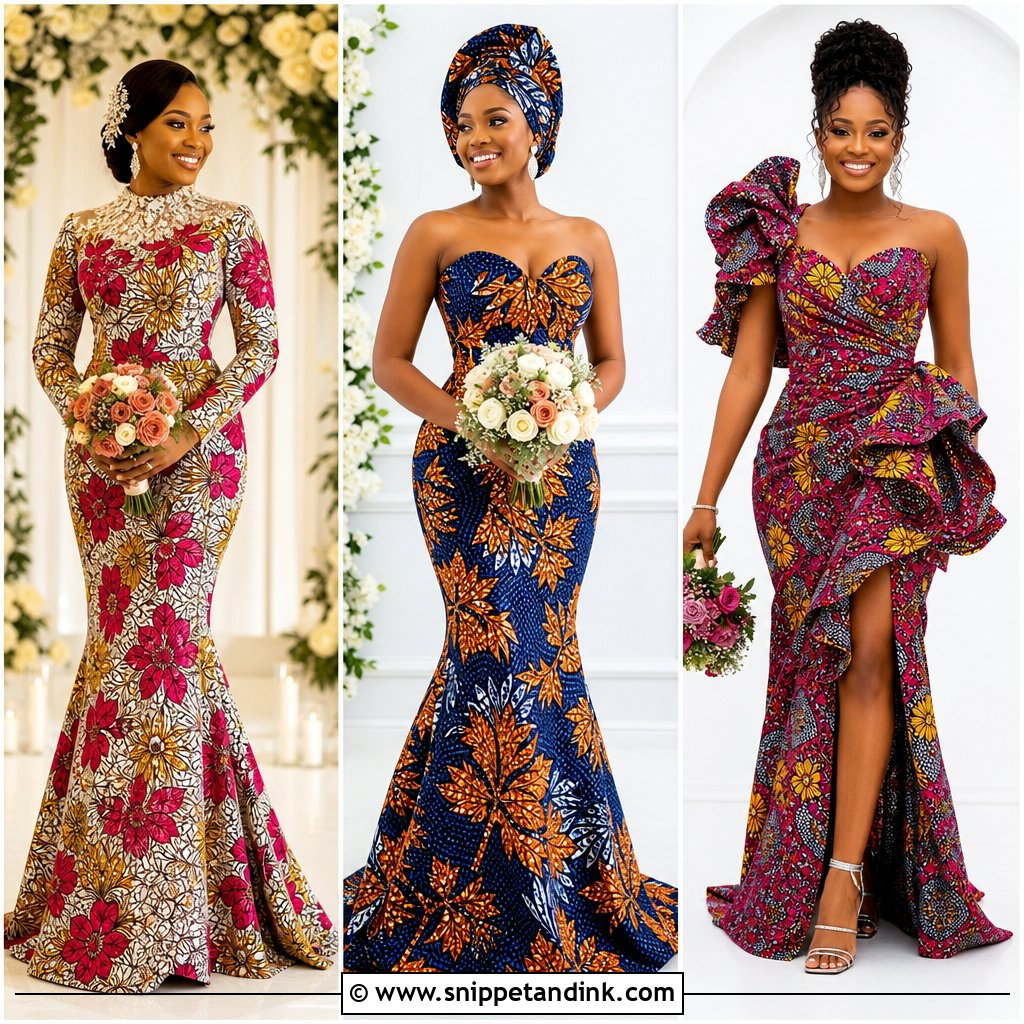

15. African Wedding Dress With Detachable Skirt
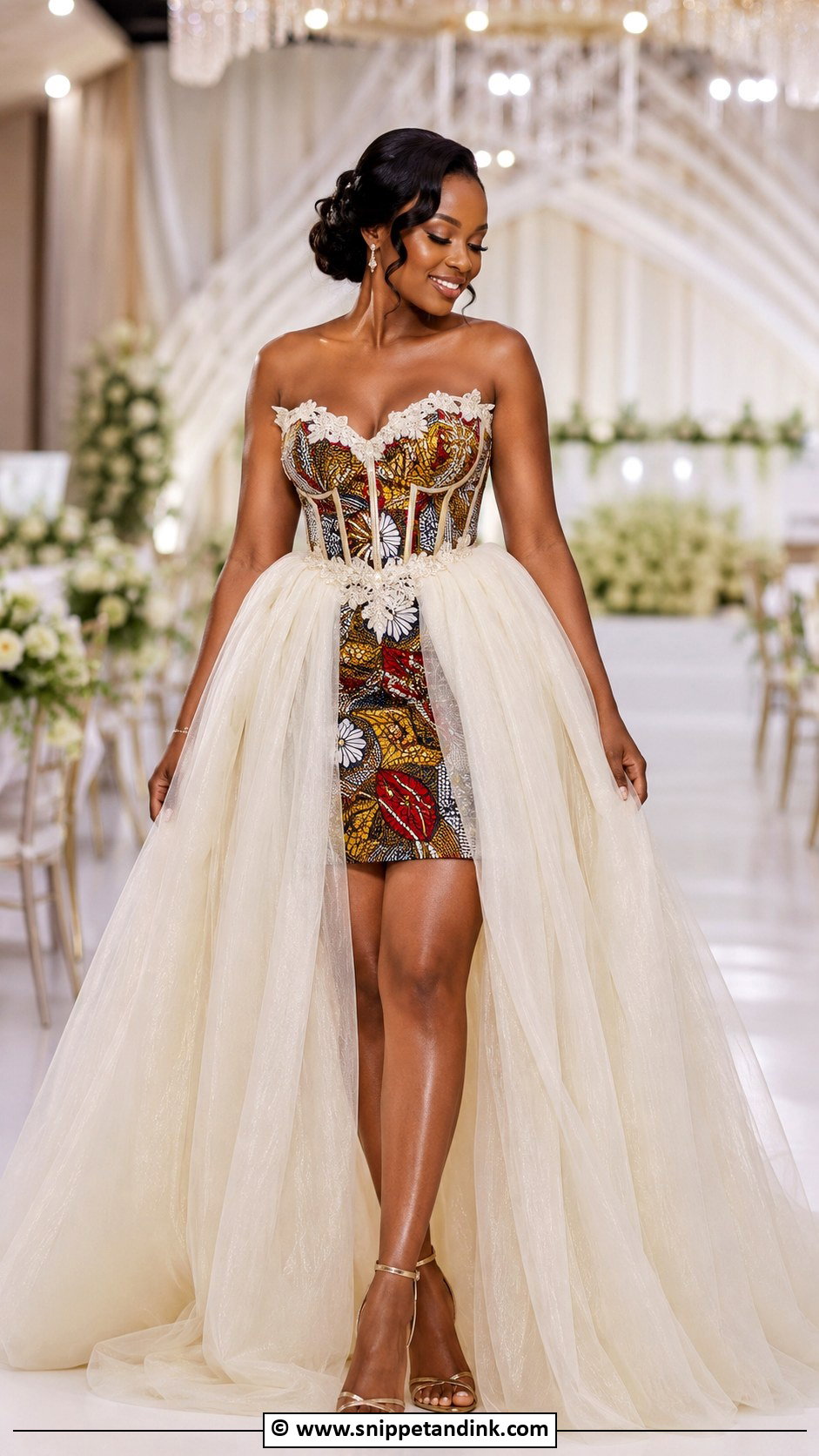
A detachable skirt gives two looks in one. Wear the overskirt for the ceremony and remove it for dancing. It works over a fitted lace gown, an Ankara corset dress, a kente bodice or an aso oke mermaid. Plain satin, printed fabric, tulle or organza each give a different level of drama. Ask for hidden hooks or snaps so the join can’t be seen in photos, and practice taking it off before the day. It saves buying a second complete outfit.
16. Beaded African Wedding Dress
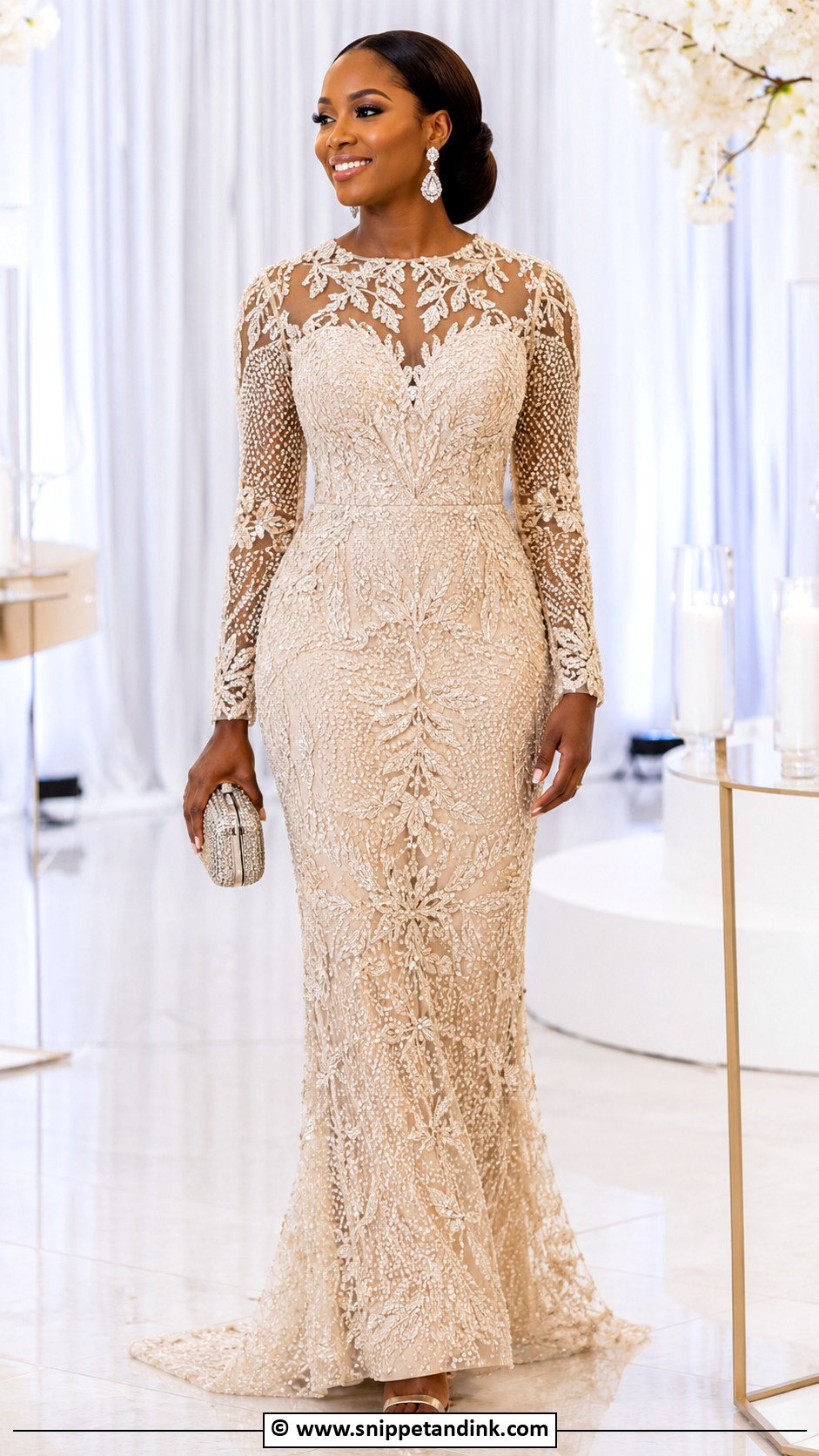
Beading on the bodice, sleeves, neckline, waist or hem gives a couture finish on lace, tulle, satin or traditional fabric. Gold and crystal feel regal; pearl feels softer. Heavily beaded lace adds real weight, so the gown needs internal support and well-anchored straps or it drags down by the evening. I also check the inside of the arms for beads that rub. Keep shoes and accessories plain, with sleek hair or a wrapped headpiece.
17. Off Shoulder African Wedding Dress
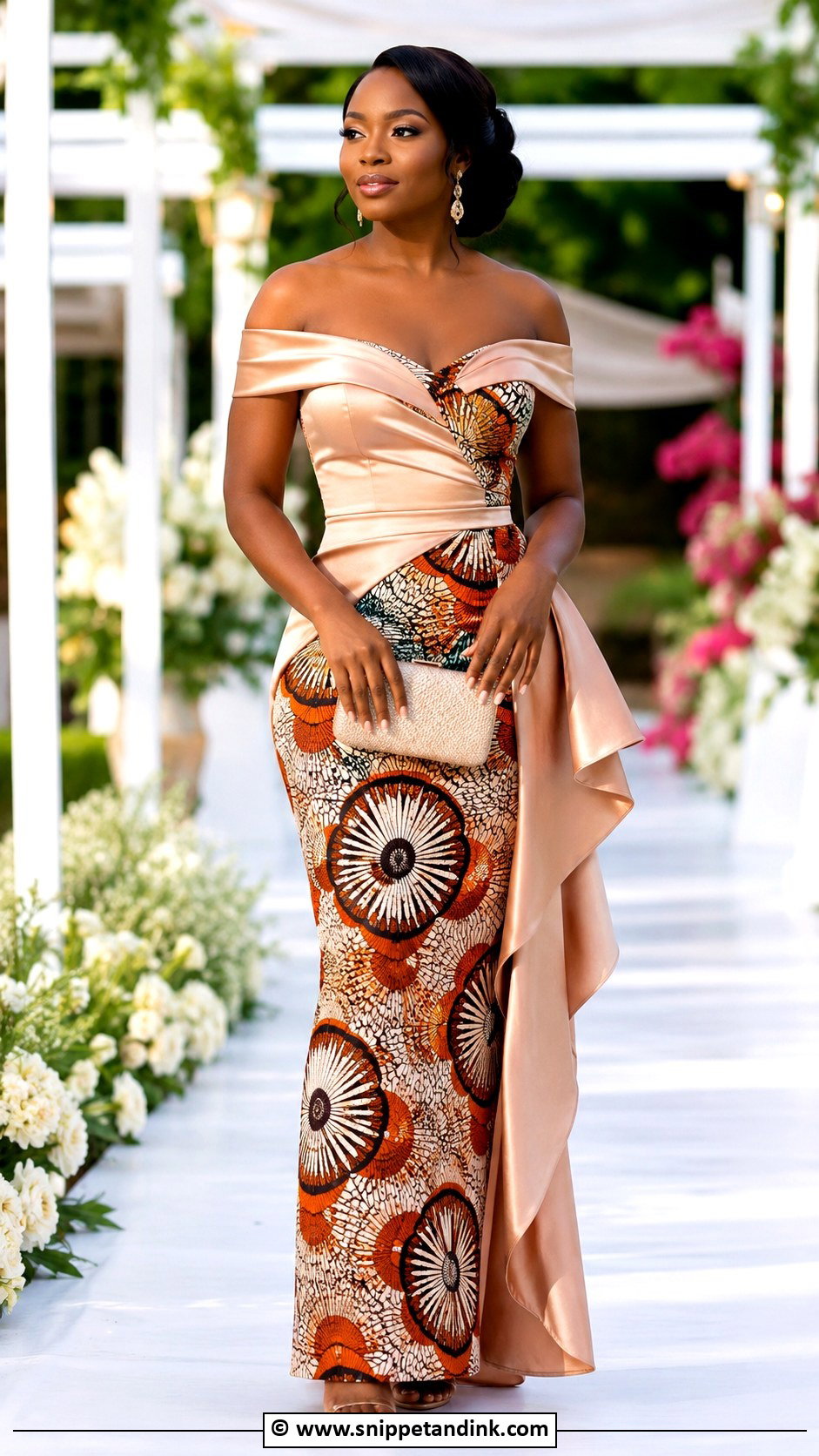
Off shoulder necklines show the collarbone and suit lace, Ankara, kente, shweshwe, satin or aso oke. Structured off-shoulder sleeves, ruffles or sheer lace give arm coverage. The band has to be attached to a boned bodice, or it slides down every time you raise your arms to dance. Pair it with statement earrings or layered beads and skip a necklace, with a fitted bodice and flared skirt below.
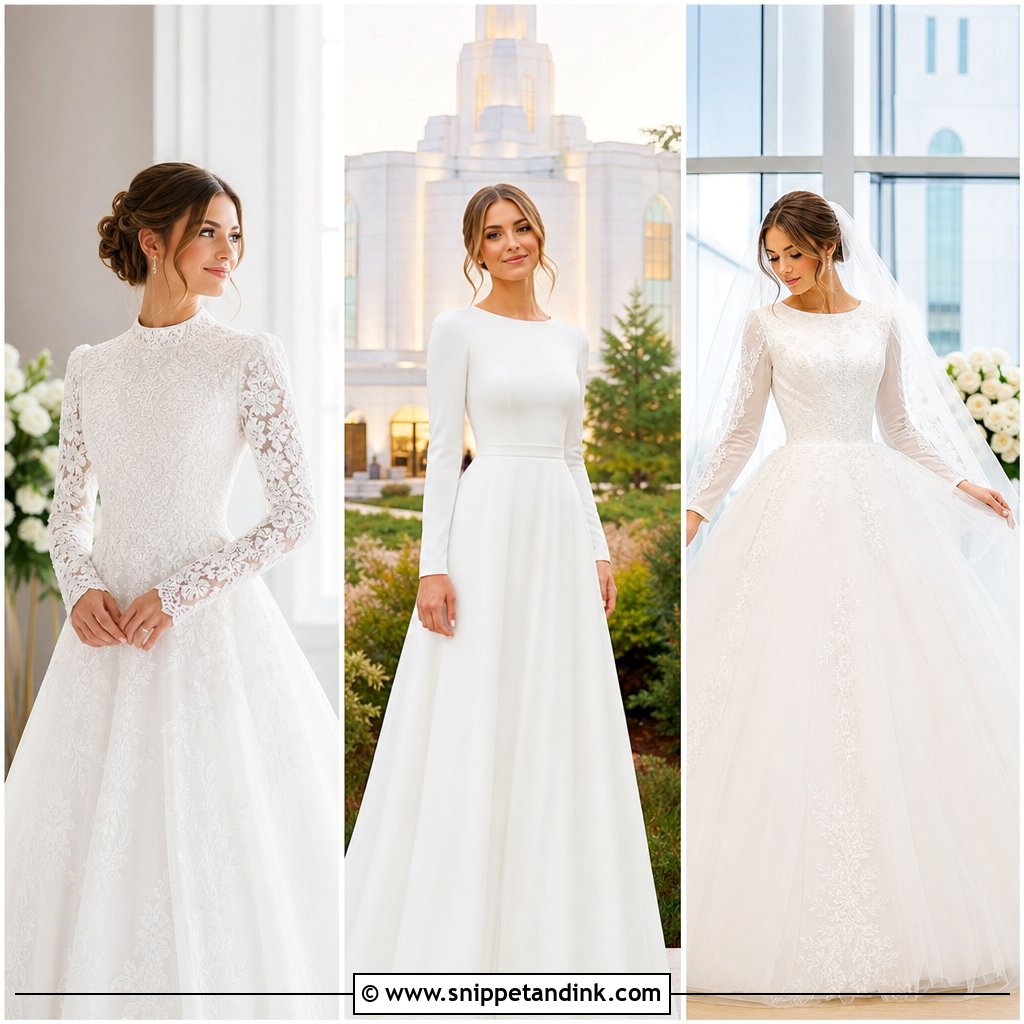
18. High Neck African Wedding Dress
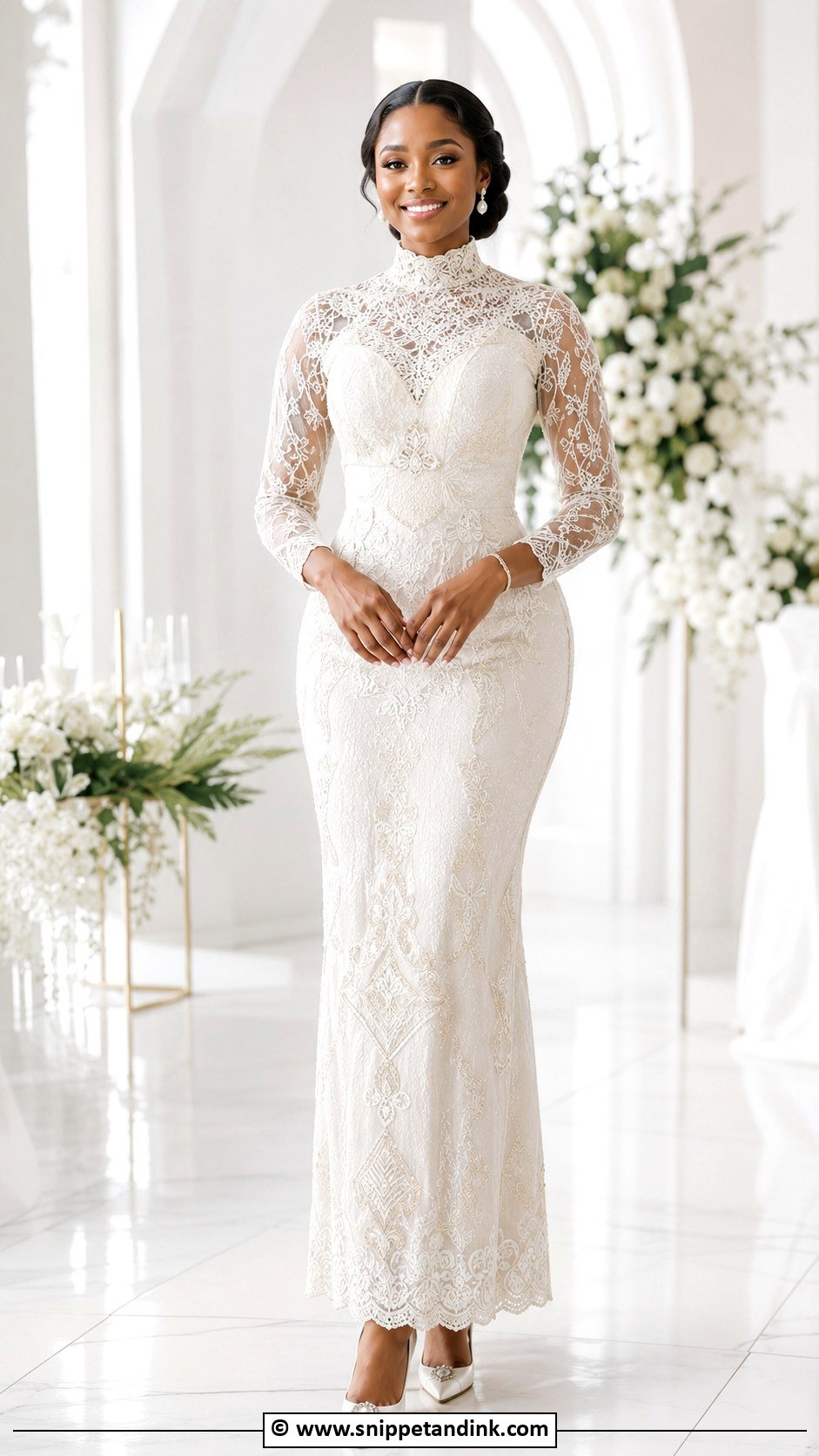
A high neck looks polished and modest. Lace, beaded mesh, embroidered fabric or a clean crepe base with print accents all suit it. Long sleeves, a fitted waist and flowing skirt complete the shape. With the neck covered, focus on earrings, bracelets and hair accessories. If you’ll wear a gele, keep the collar slightly lower so the two don’t crowd your face. It works for formal ceremonies and cooler weather.
19. Long Sleeve African Wedding Dress
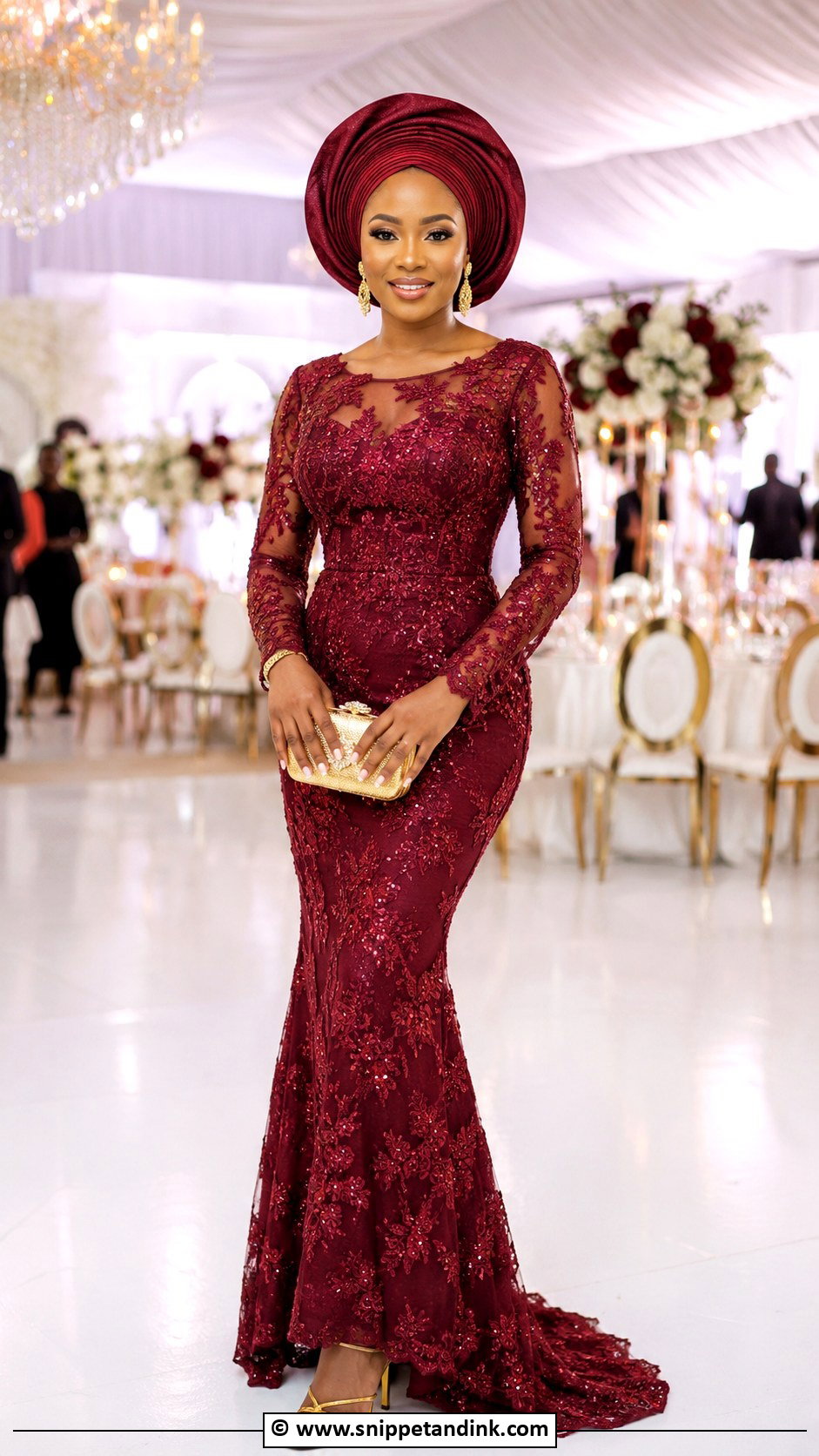
Sleeves change the mood: sheer lace is soft, satin is sleek, puff sleeves are playful, embroidered sleeves are festive. They work with mermaid, A-line and ball gowns, and they give structure to bold Ankara or kente. Have the tailor check the sleeve at the elbow, because many traditional ceremonies involve kneeling and raising your hands, and a tight sleeve can split. Pointed heels, a small clutch and soft makeup finish it.
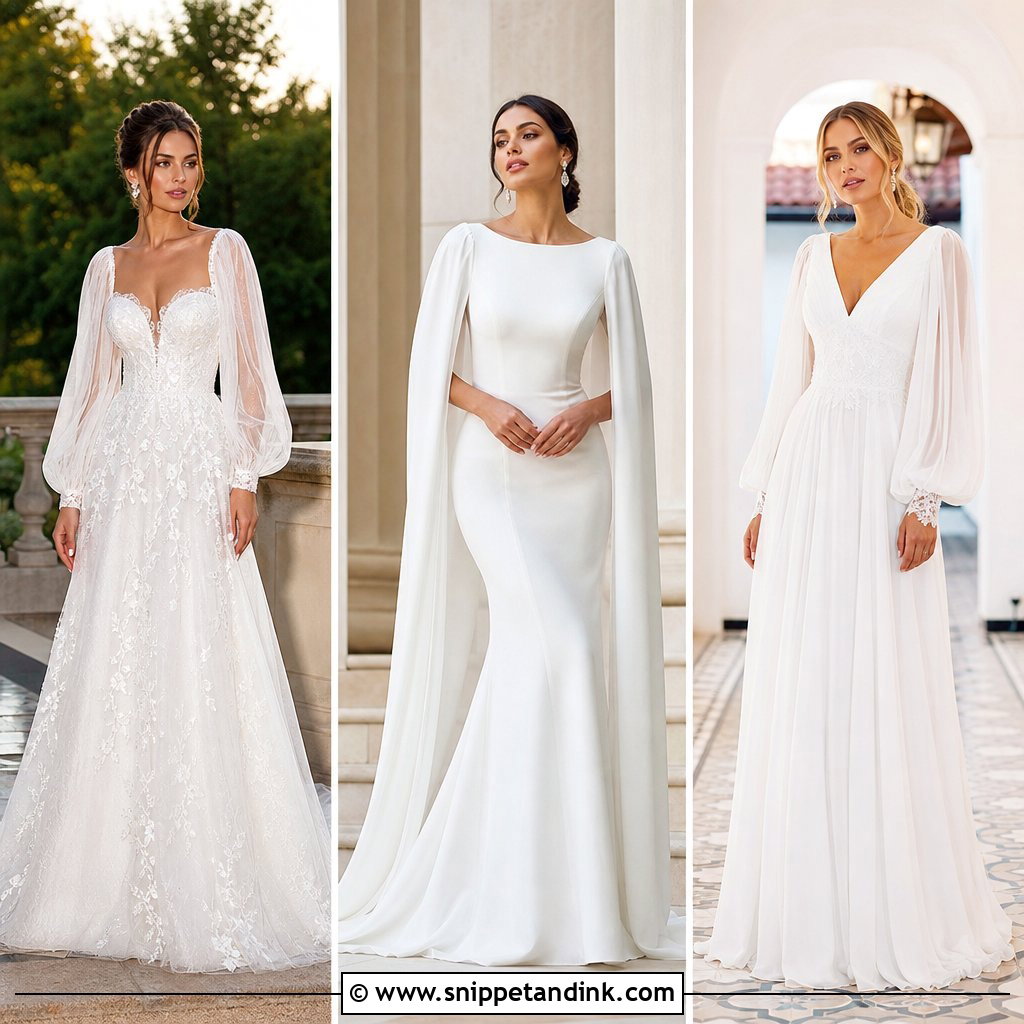
20. African Wedding Dress With Headwrap
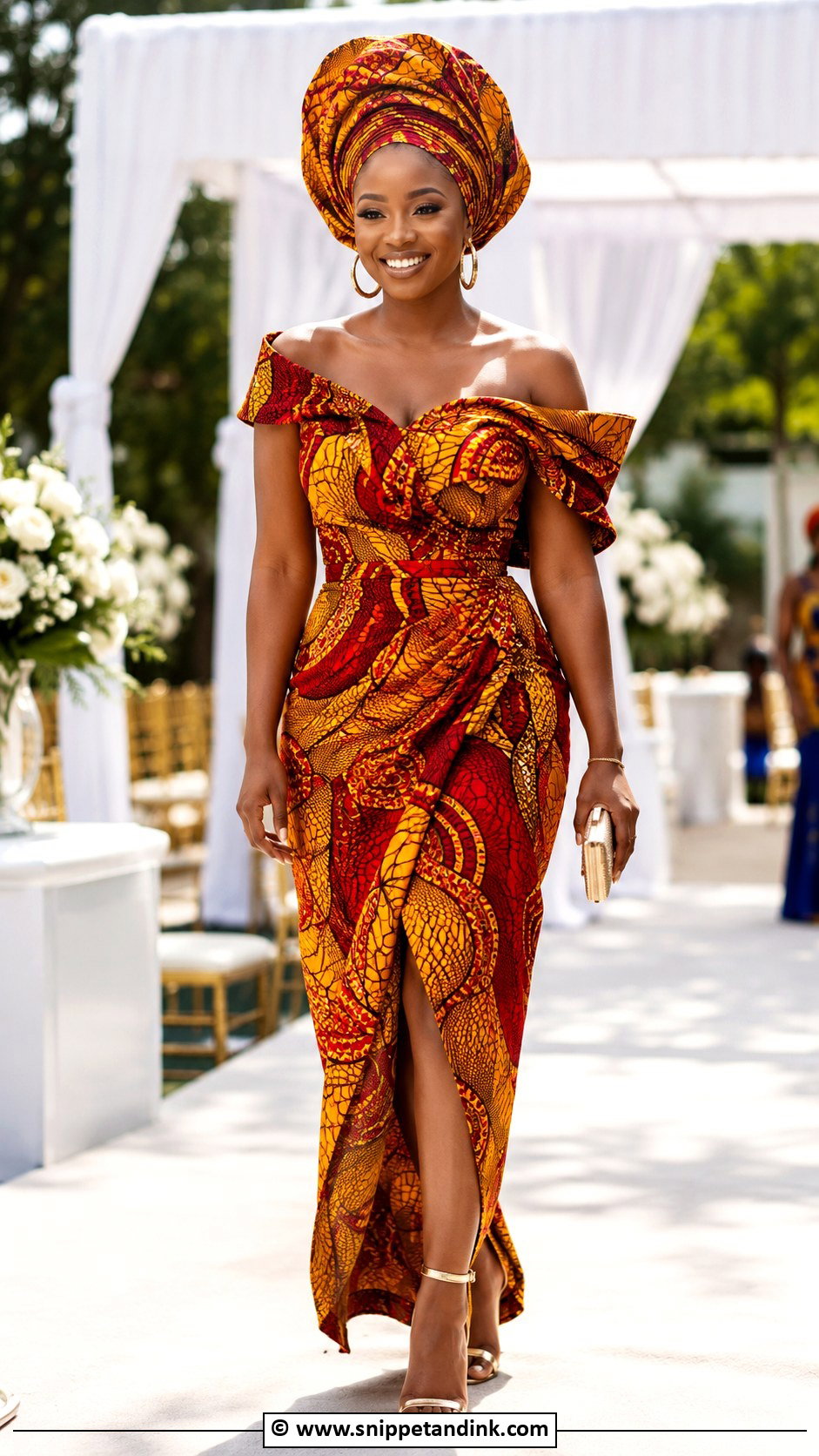
A headwrap can match the dress exactly or pick one color from the fabric. It suits Ankara gowns, lace dresses, kente, shweshwe and white gowns with print accents. A tall wrap is dramatic; a low, neat wrap is softer. Wrap it over a smooth base, like flat braids or a low bun, so it sits level all day. Earrings should be visible but light. It’s a strong cultural accessory if you don’t want a veil.
21. African Wedding Dress With Gele
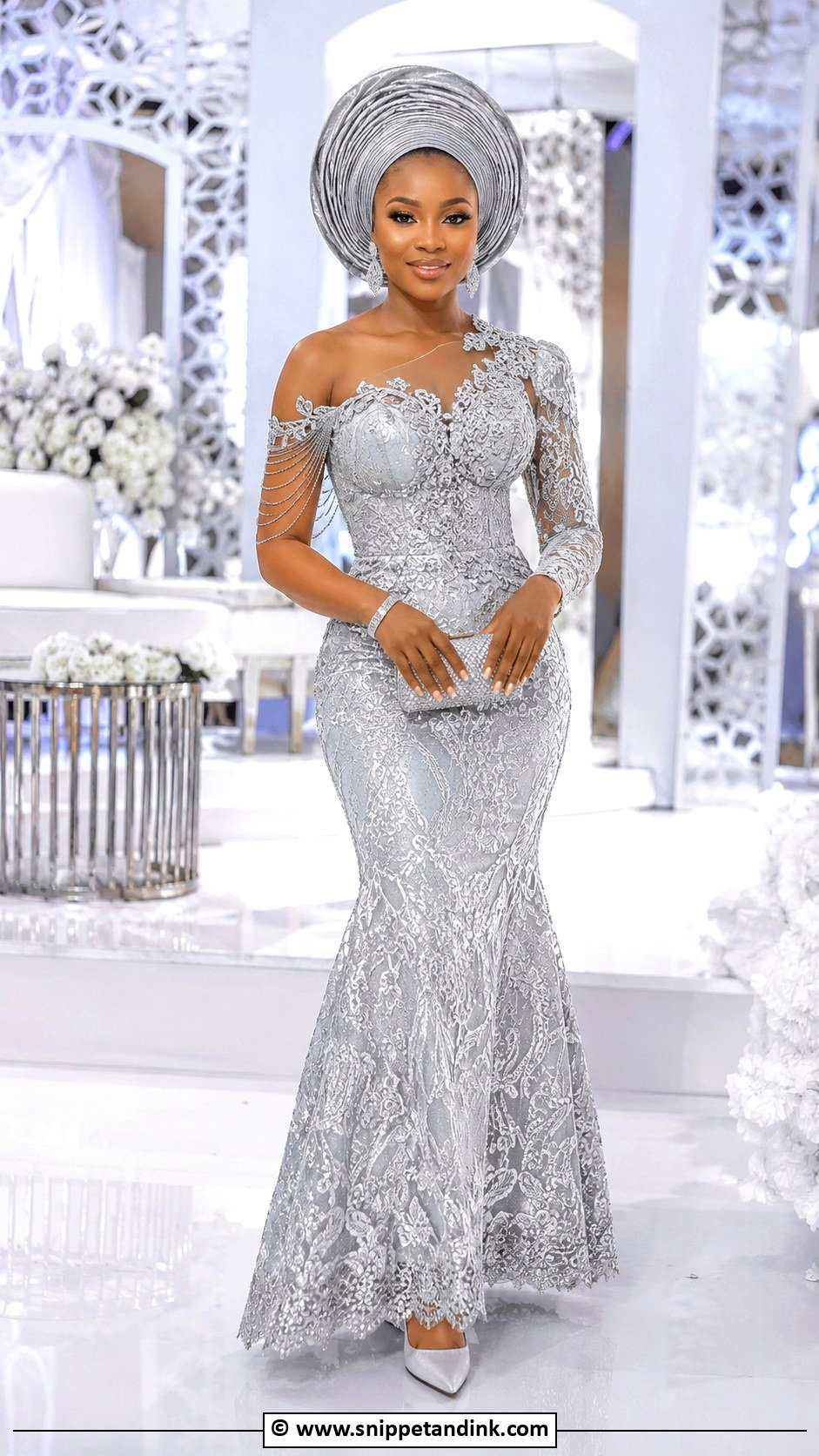
The gele is the most recognizable accessory in Nigerian wedding fashion. It adds height and ceremony and pairs with aso oke gowns, lace mermaids, iro and buba, George wrappers and beaded gowns. Match it to the dress or contrast it, gold with burgundy or champagne with emerald. A gele is tied tightly, so I’d have it tied by someone experienced and keep earrings light; heavy drops plus a tight gele can cause a headache by the afternoon.
22. African Wedding Dress With Train
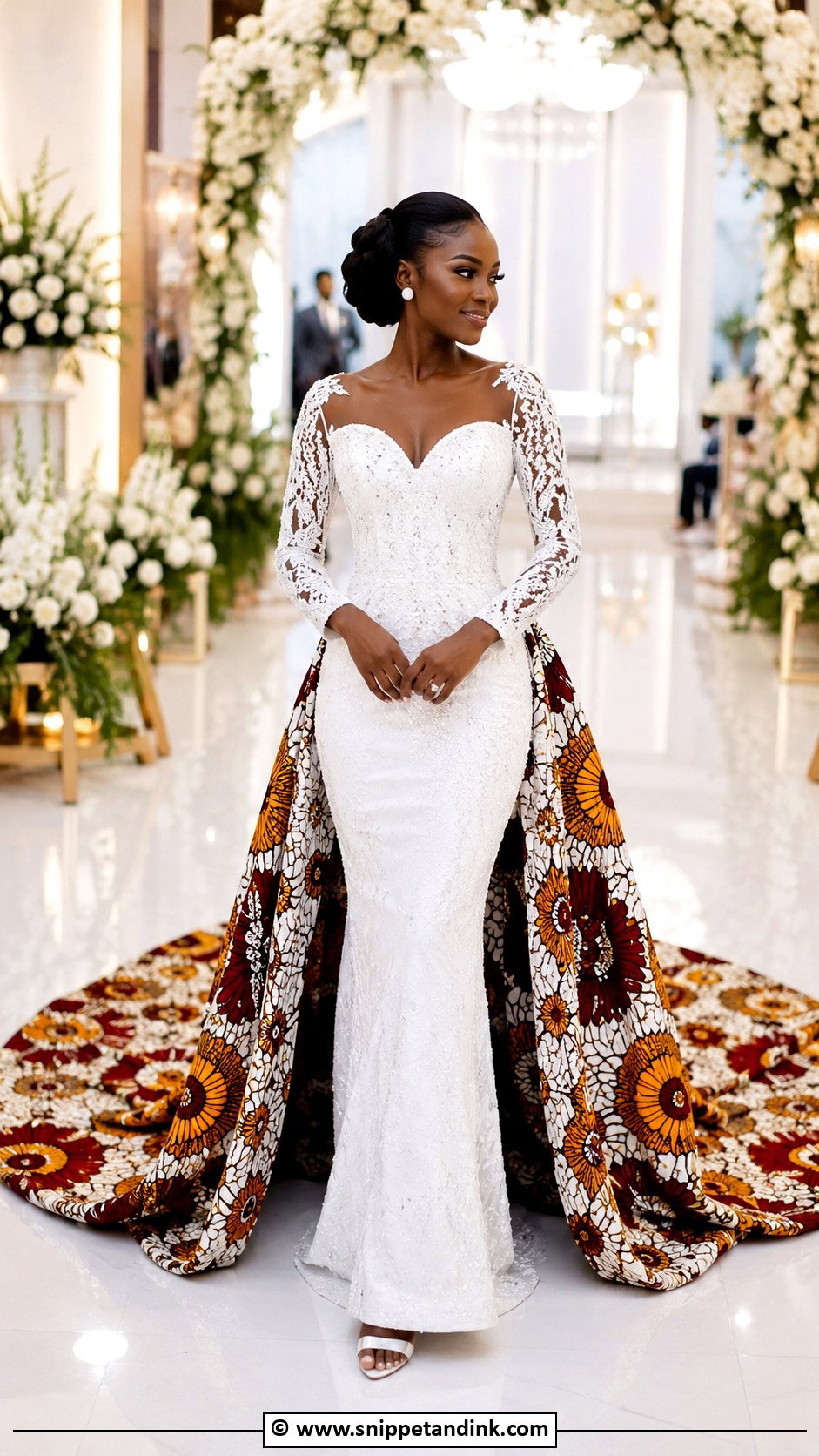
A train gives a dramatic entrance. It can be lace, tulle, organza, satin, kente, Ankara or aso oke, attached, draped from the waist or detachable. Woven fabrics like aso oke and kente are heavy as trains, so they need a strong bustle or a detachable option for dancing. Keep the front of the dress fitted and clean so the outfit doesn’t feel bottom-heavy. Large halls suit it best.
23. African Wedding Dress With Corset
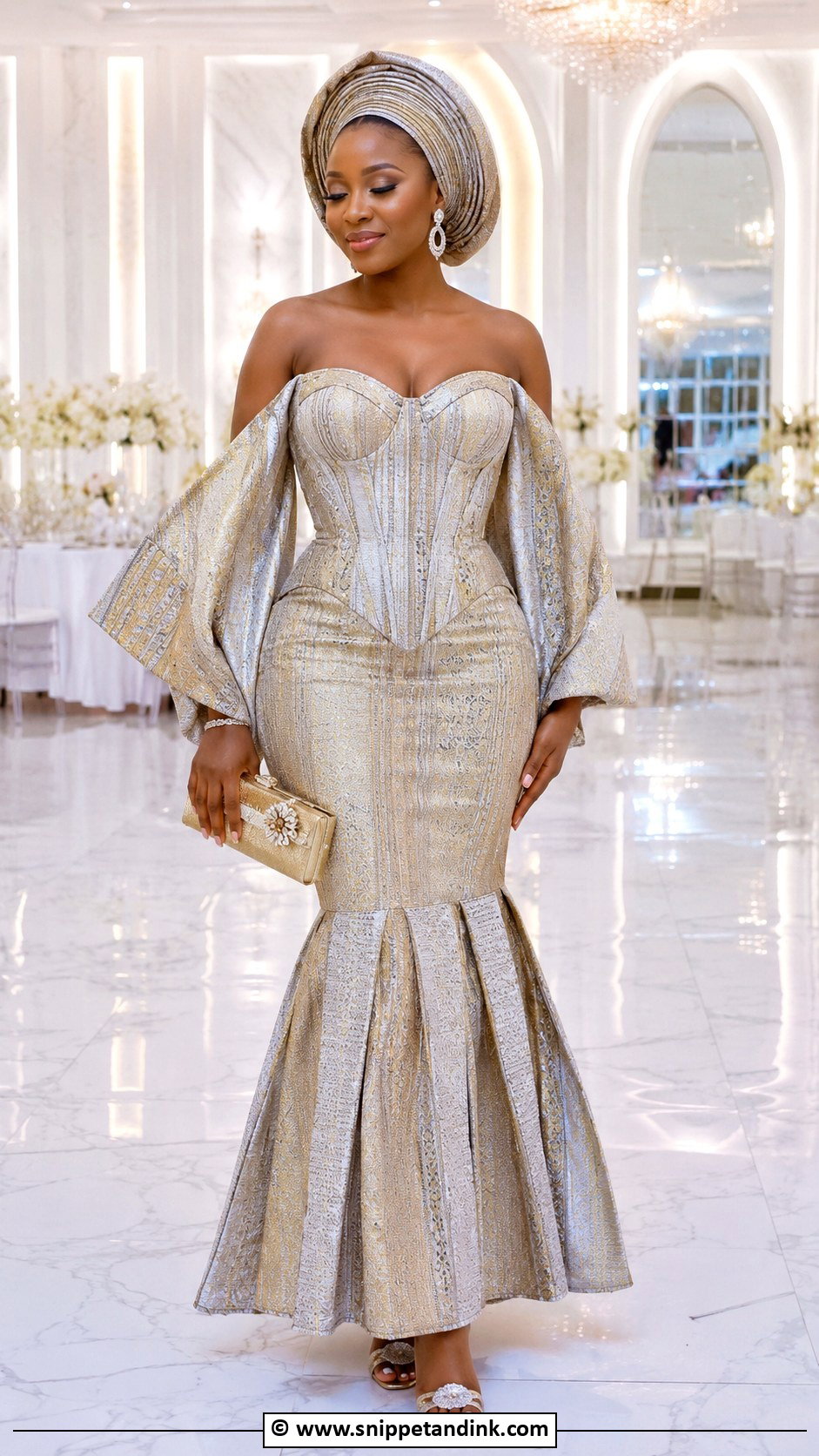
A corset gives shape and support, either visible with boning or covered in lace, aso oke, kente, Ankara or satin. It works with ball gowns, mermaid skirts, high-low hems and detachable overskirts. A corset should define the waist, never hurt. Choose a tailor who has built bridal corsetry before and sit, eat and dance at the fitting. Secure heels and simple jewelry keep the focus on the silhouette.
24. African Wedding Dress With Peplum
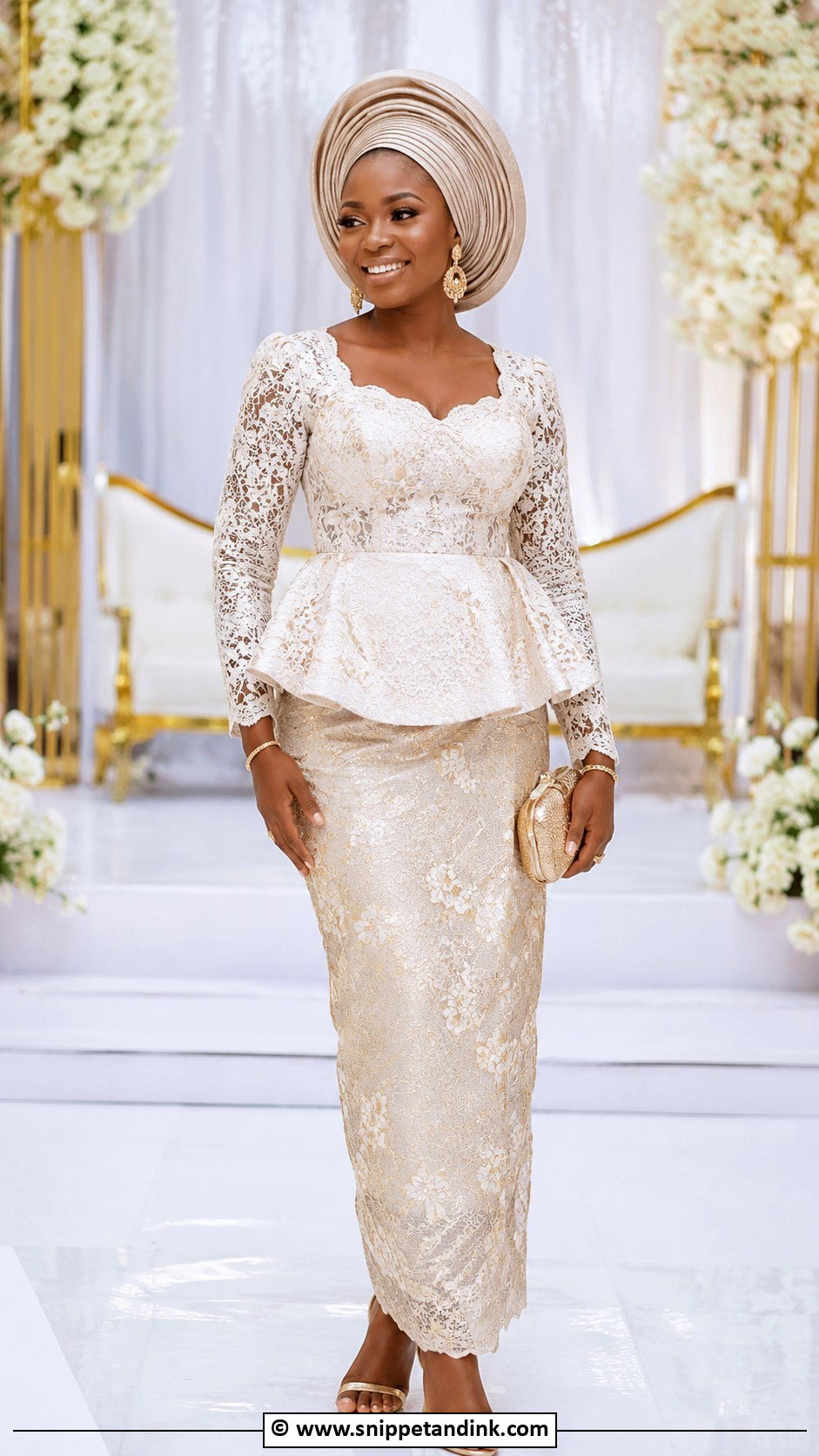
Peplum sits over a fitted skirt, mermaid skirt, wrapper or column gown. It adds shape at the waist and gives structure without a full ball gown. Lace, George, Ankara and aso oke all work. Where the peplum starts matters: placed at your natural waist it narrows; placed too low it widens the hips. A peplum blouse with a long skirt feels traditional yet current. Finish with a gele or headwrap, metallic heels and a clutch.
25. African Wedding Dress With Beaded Neckline
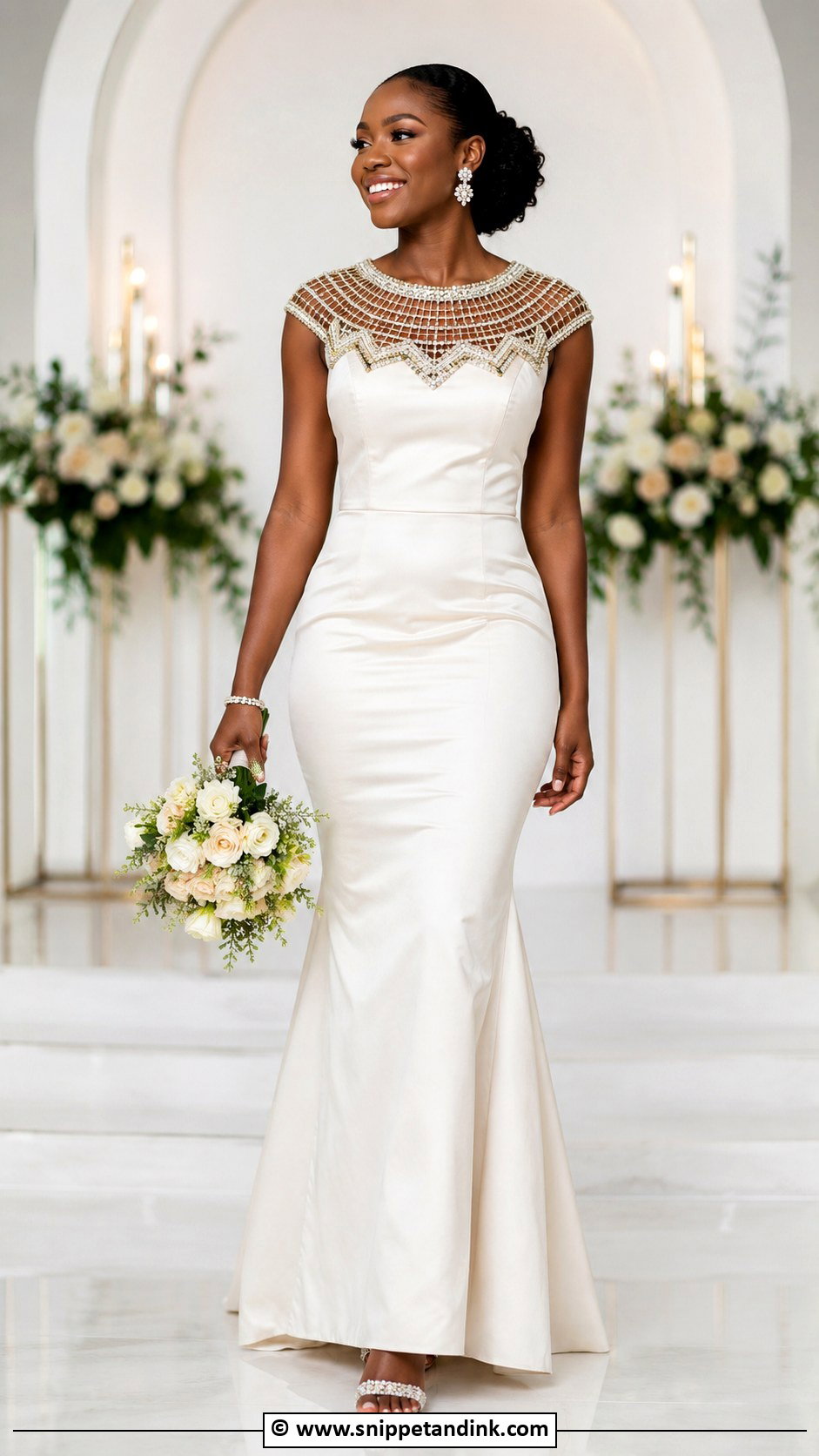
A beaded neckline gives detail without covering the whole gown. The beading can follow a high neck, sweetheart, off-shoulder or illusion yoke, on lace gowns, white dresses with print accents or simple satin. Match the beads to the fabric: pearls on ivory, gold on kente, crystal on champagne lace. Since the neckline already acts as jewelry, skip the necklace. Earrings, a bracelet and heels are enough.
26. African Wedding Dress With Tulle Skirt
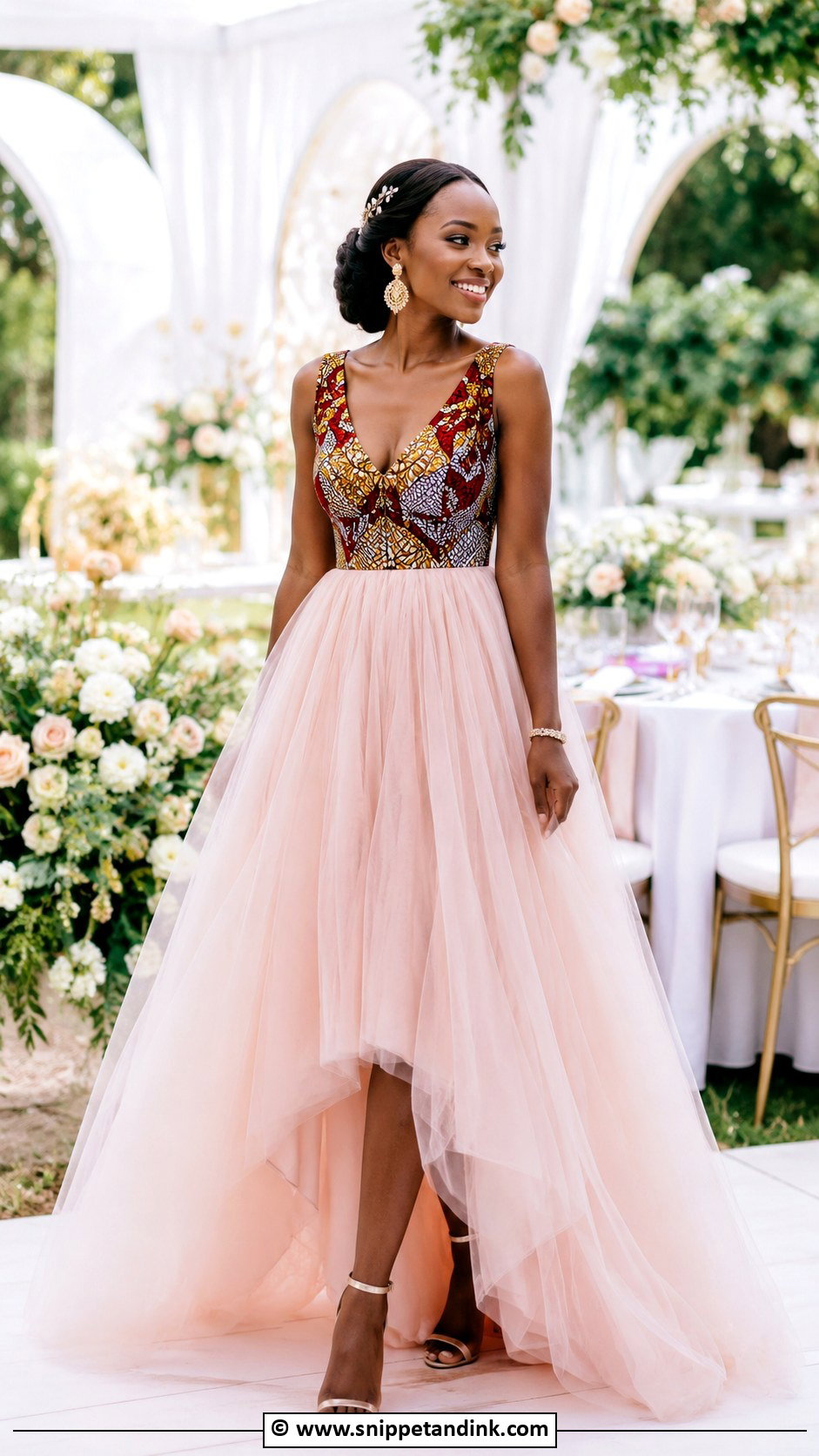
Tulle is the softest skirt option here. It adds volume without weight, so it pairs well with a structured bodice in Ankara, kente, lace, aso oke or beaded fabric. Keep the skirt in ivory, blush, champagne or a color matched to the bodice. Tulle snags on coral beads and beaded bracelets, so watch your jewelry. Delicate heels and soft earrings suit it, with a simple veil or headpiece. It suits receptions and outdoor ceremonies.
27. African Wedding Dress With Gold Detail
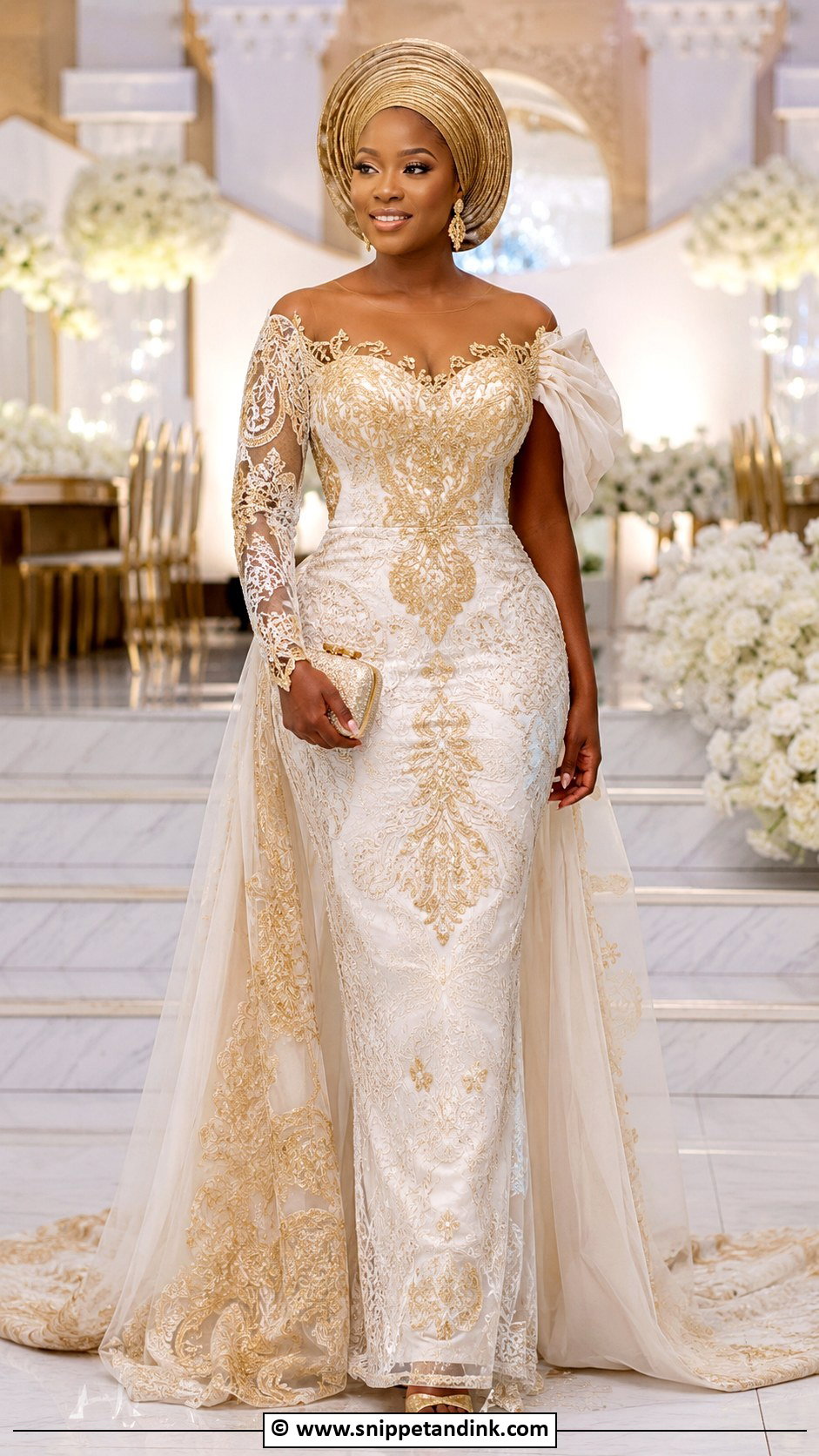
Gold says celebration in many African bridal traditions. It can come through embroidery, metallic thread, beading, jewelry, fabric borders, gele or shoes, and it sits well with white, ivory, emerald, navy, burgundy, royal blue, purple and deep brown. Choose one or two gold focal points, not gold everywhere: a gold-trimmed bodice, matching earrings and metallic heels are enough. Metallic thread can scratch, so I check the lining under any gold embroidery. It shines under evening reception lights.
28. African Wedding Dress With Red Detail
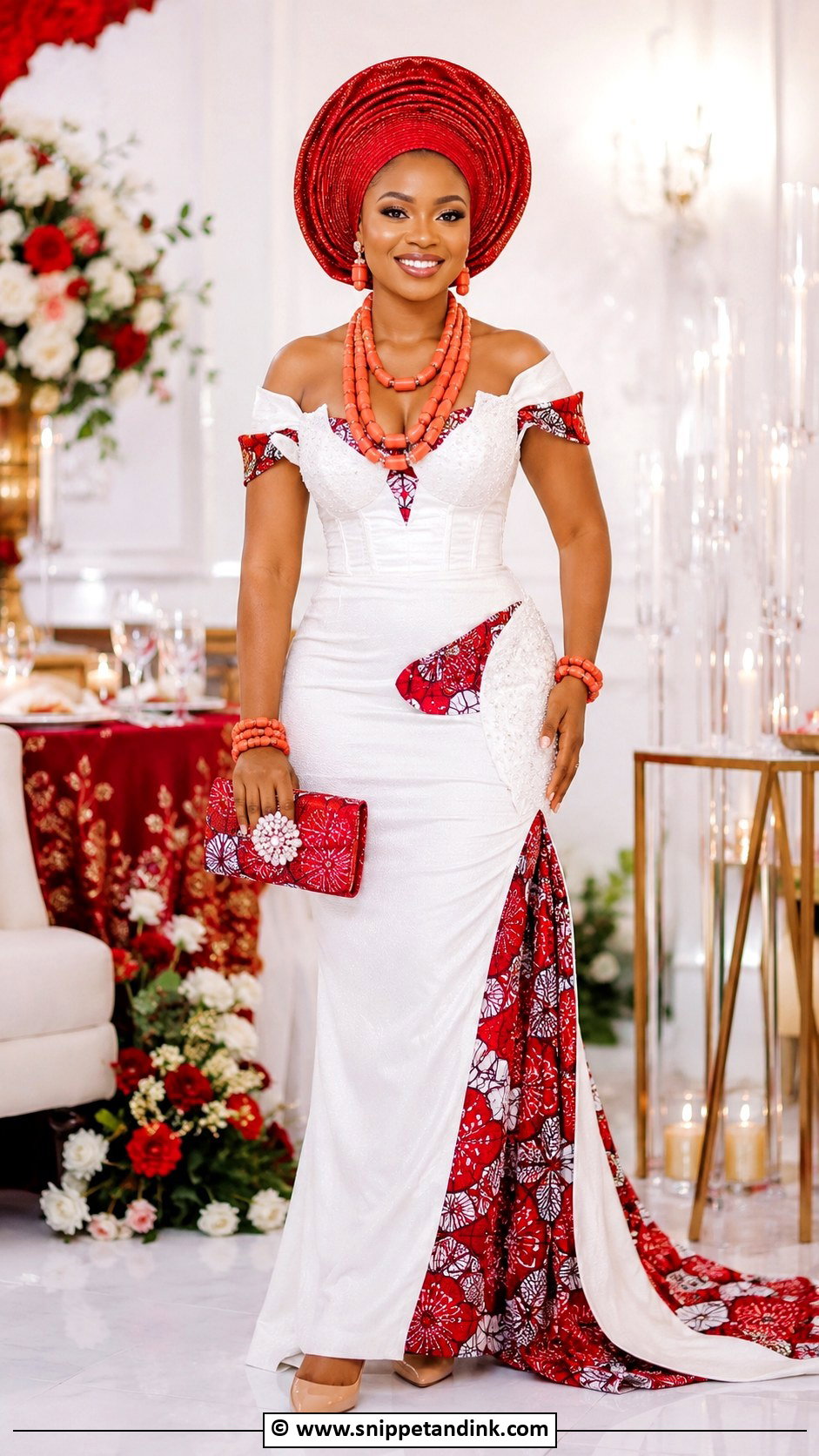
Red is bold and, in many cultures, meaningful. It can come in through kente, Ankara, coral beads, embroidery, gele, sash or floral appliqué, alongside white, gold, black, champagne and deep green. Use it only in accessories for a softer look, or go for a red lace gown or printed overskirt. Pick either a bold red lip or a strong red dress, not both at full strength. Red dye can transfer in heat, so wear the red pieces with care over white fabric.
29. African Wedding Dress For Reception
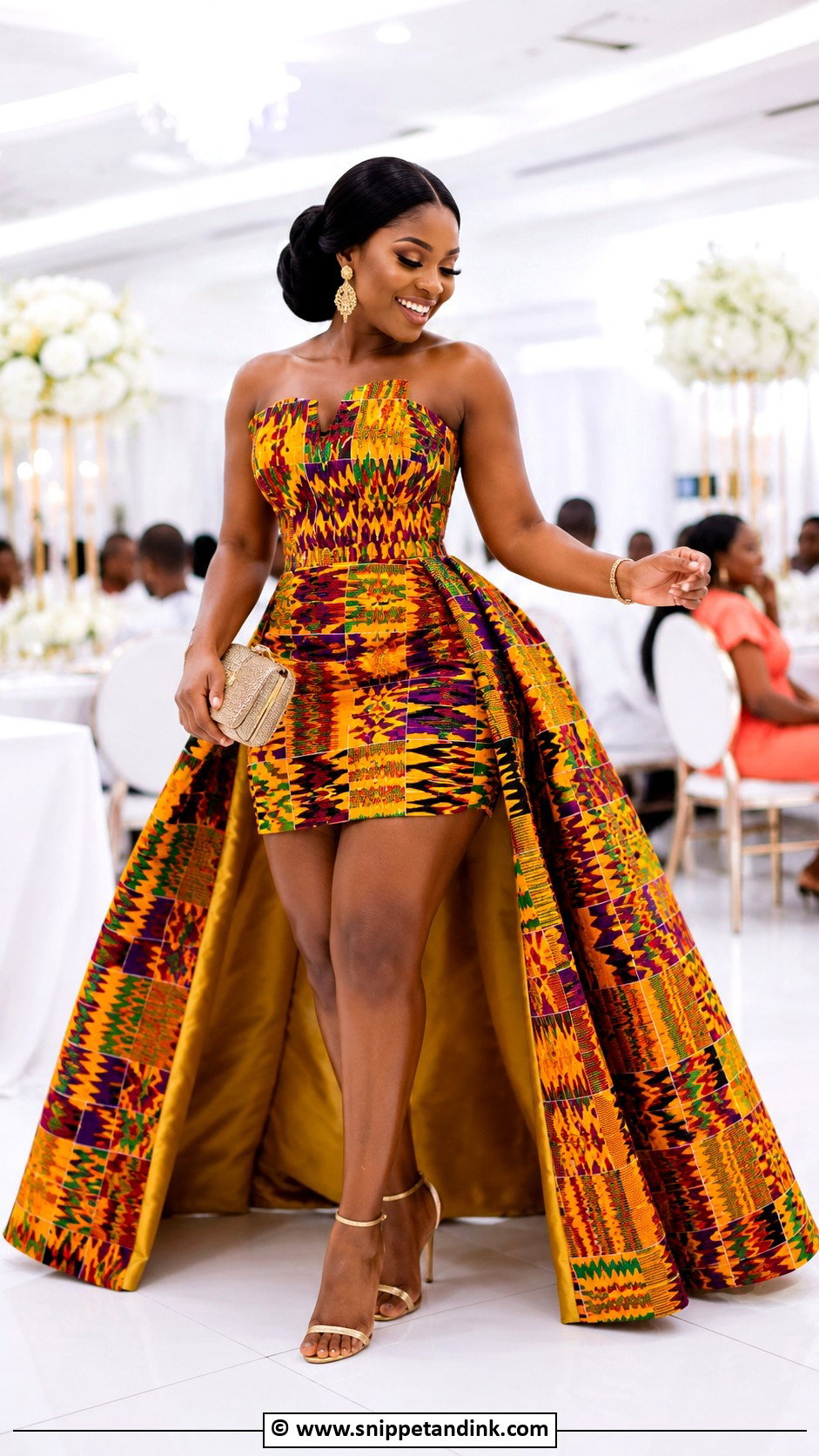
The reception outfit should let you dance and greet guests for hours. A fitted Ankara midi, lace jumpsuit, kente mini with overskirt, beaded sheath or simple aso oke dress all work. Lighter fabric, secure straps and shoes you can stand in for hours are the priorities. A headwrap, small gele or sparkly hair piece keeps it festive. This is the outfit to try brighter colors or a more relaxed shape.
30. Modern African Wedding Dress
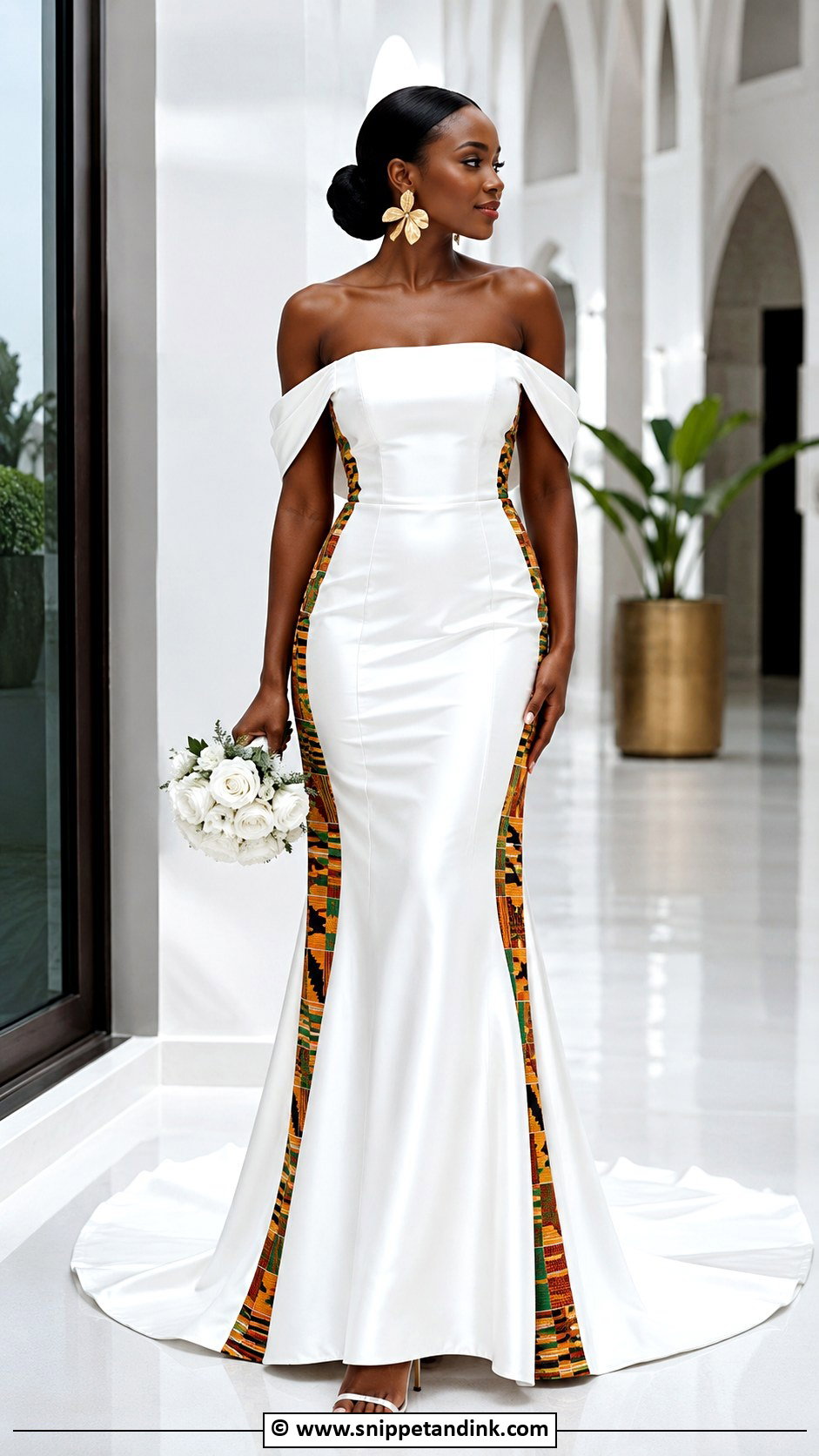
Modern fusion blends cultural fabric with contemporary cuts: corset gowns with kente panels, white dresses with Ankara trains, aso oke basque waist gowns, lace jumpsuits, or minimalist satin with beaded African motifs. My rule is one strong cultural element and everything else supporting it; mixing three fabrics and a gele plus heavy beading usually looks crowded. Sleek heels, refined jewelry and polished hair keep it current for traditional, civil or destination weddings.
Two or Three Outfits in One Day
Many African weddings include an outfit change, and some brides change twice: traditional attire, a white gown, then a reception look. Each change takes longer than people expect, so plan it into the schedule.
Allow a proper window for every change, and longer if a new gele has to be tied, since a well-shaped gele takes skill and patience. Book a private room near the hall, lay each outfit out in order with its shoes and jewelry, and choose one person whose only job is helping you dress. Tell your photographer and MC the times, so the grand entrance isn’t announced before you’re ready.
After the wedding, give heirloom pieces some care. Roll aso oke and kente around a tube or lay them flat with acid-free tissue rather than folding them hard, since sharp creases can weaken the weave over time. Store them dry and away from sunlight. Wipe coral beads with a soft cloth and keep them away from perfume and hairspray, which can dull them.
Heritage, Fit and a Tailor Who Knows the Cloth
The right outfit is the one that feels true to your family and comfortable enough to celebrate in. Aso oke, kente, lace, George, shweshwe, kitenge, Ankara and fusion gowns all have their place, whether you wear fully traditional dress, a white gown with cultural accents or a reception jumpsuit. Fit, fabric quality, movement and well-chosen accessories matter most. With a tailor who understands both the fabric and the ceremony, your outfit will carry your heritage with confidence.
You'll Like These Ideas:




Leave a Reply