
A wedding dress on a Black bride is judged by three things I check before anything else: how the white or ivory sits next to her skin, whether any mesh or lining matches her, and how the fabric behaves under the venue’s light. Get those right and almost any silhouette works. Get them wrong and even an expensive gown can make warm brown skin look grey in photos. The gowns below cover current shapes I see brides asking for, from corset bodices and drop waists to lace sleeves and short second looks, and for each one I’ve added what I’d watch for in the fitting room.
Testing Ivory, Champagne and White Against Your Own Skin
Bridal shops name their shades differently, so one brand’s ivory is another’s soft white. I ignore the labels and test in a way any bride can copy. Ask for small fabric swatches or hold the hem of each sample right under your chin, with no makeup on, by a window. Then step under the shop’s lights and look again. The right shade makes your skin look clear and even; the wrong one leaves the area around your mouth and eyes looking dull or ashy.
As a starting point, warm golden and red undertones usually do well in ivory, champagne and soft gold. Cool or neutral deep skin can carry diamond white and silver beautifully. Very bright optic white is the one I test most carefully, because on camera it can overexpose and make the face look darker than it is.
Asking for a lining that actually matches
Illusion panels, sheer sleeves and nude linings are made in a narrow band of shades. Most good shops and seamstresses can replace a lining or sleeve mesh with tulle closer to your skin, but it takes time, so raise it at your first appointment, not your last. Bring a photo of your bare arm in daylight to the seamstress so she matches against the real thing.
- Check the mesh at the neckline, back and sleeves, not just one area.
- Look at it under flash: some nude tulles turn grey when photographed.
- If the shop can’t change it, an opaque lining in ivory often looks better than a mismatched nude.
1. Ivory Ball Gown Wedding Dress
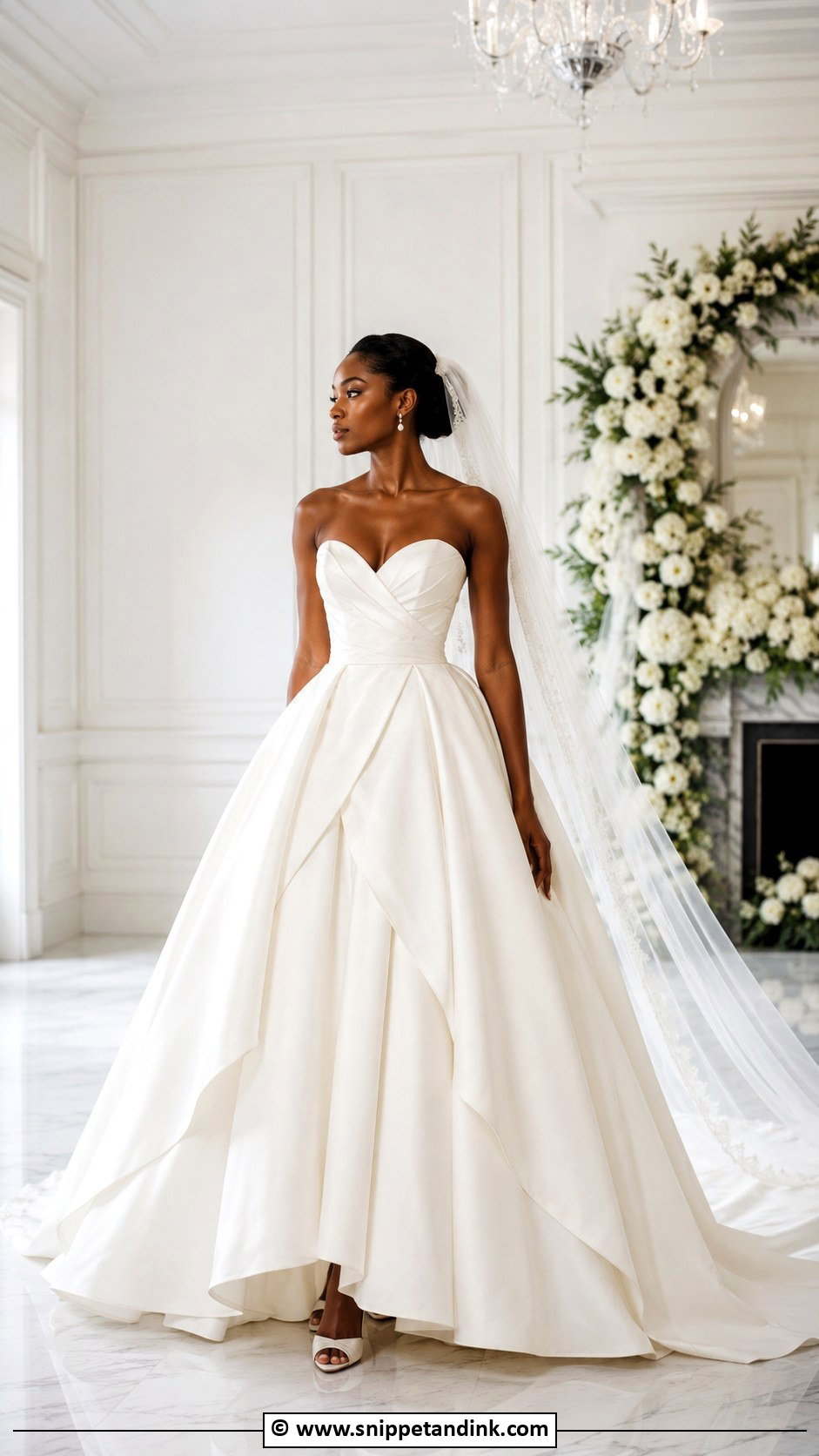
An ivory ball gown gives you the big entrance, and ivory is usually kinder than optic white on deep and golden skin because it doesn’t throw a blue cast back onto the face. The real work happens in the bodice. A full skirt carries a lot of weight, so the boning and waist stay have to hold it up, not your shoulders. I always ask a bride to sit and lift her arms during a fitting; if the bodice shifts, it needs taking in before the hem is touched. Pearls, a low bun and a cathedral veil suit this shape, and it reads best in a ballroom or a large formal room where the skirt has space.
2. Champagne Mermaid Wedding Dress
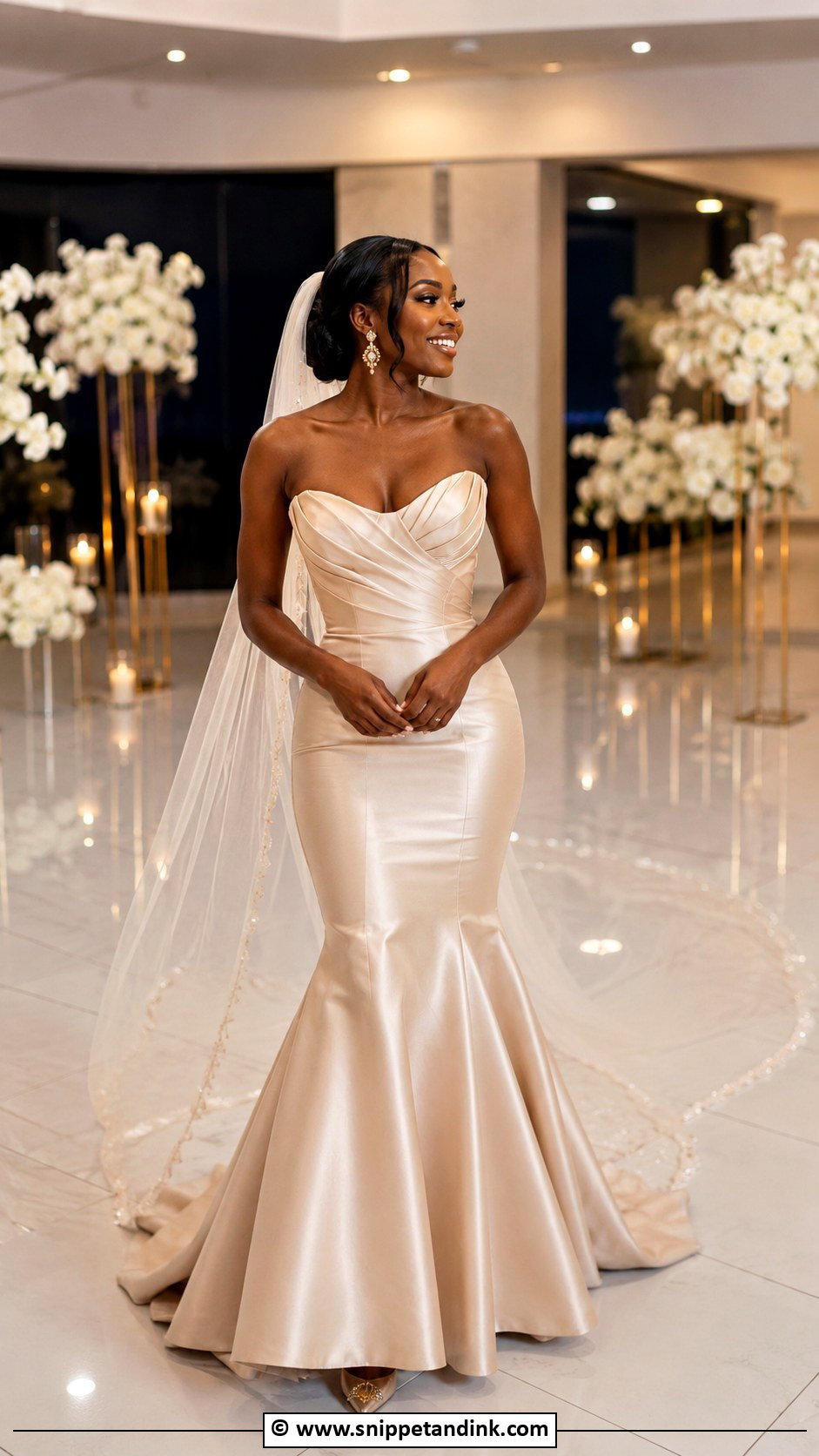
Champagne is one of the most flattering shades I pull for brides with golden or red undertones, especially for late-afternoon portraits. The mermaid cut is less forgiving, though. The flare point decides everything: too high and you can’t walk, too low and you can’t climb steps. Stretch crepe moves with you, while satin shows every seam, so I steer curvy brides who want a smooth line toward crepe with good shapewear underneath. Side-part waves and gold jewelry finish it, and a long veil softens how fitted it is from behind.
3. White Satin A Line Wedding Dress
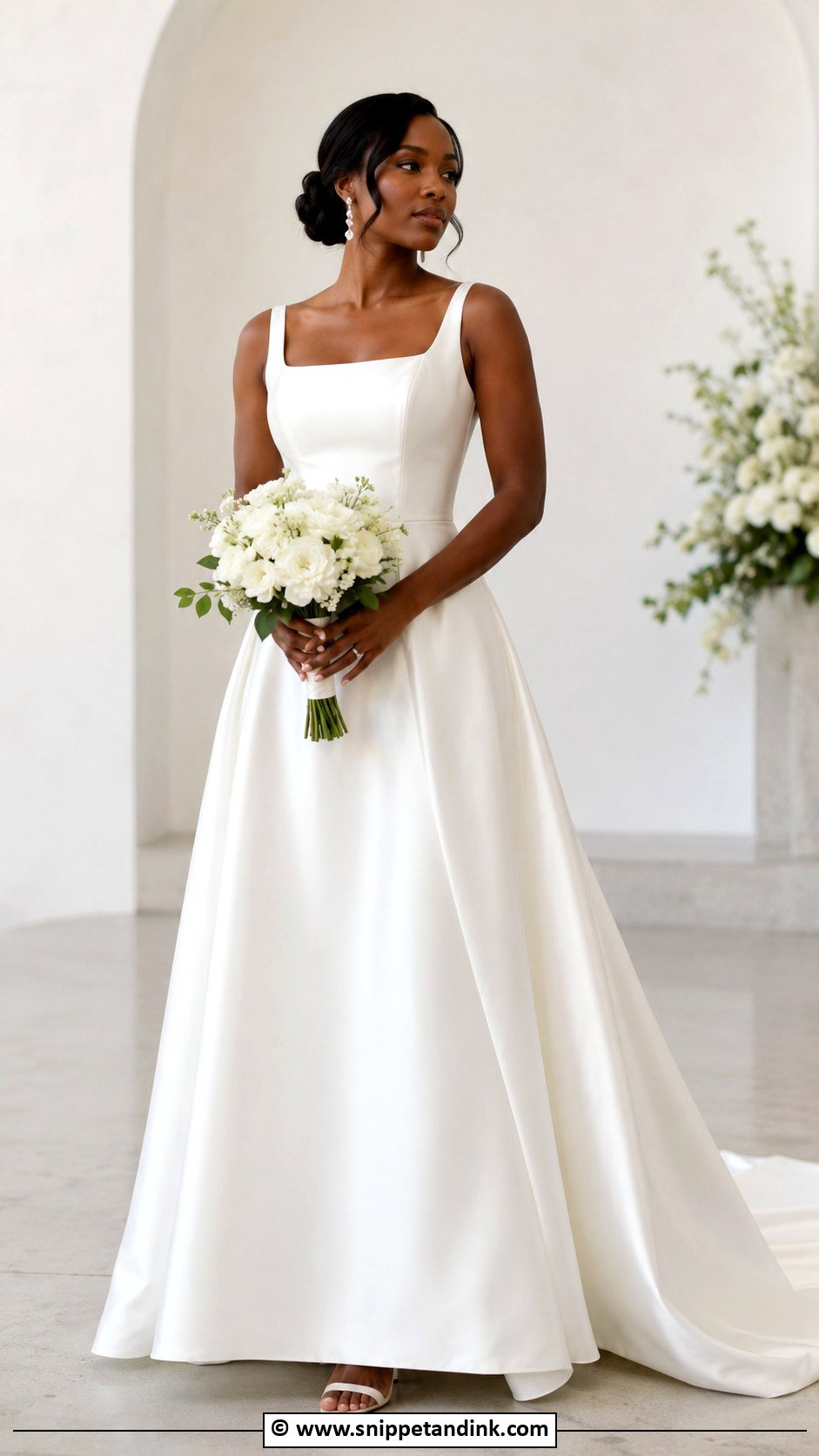
White satin in an A-line is the easiest dress to personalize, which is why I start many first appointments here. The skirt skims the hips instead of gripping them, so it sits well on most figures. My one caution is the shade: pure bright white satin can look chalky against very deep skin, so I’ll hold a soft white and a diamond white swatch side by side at her collarbone before she commits. Natural hair, braids, locs, a silk press or a short cut all work with it; the veil comb just needs to be placed for that texture.
4. Long Sleeve Lace Wedding Dress
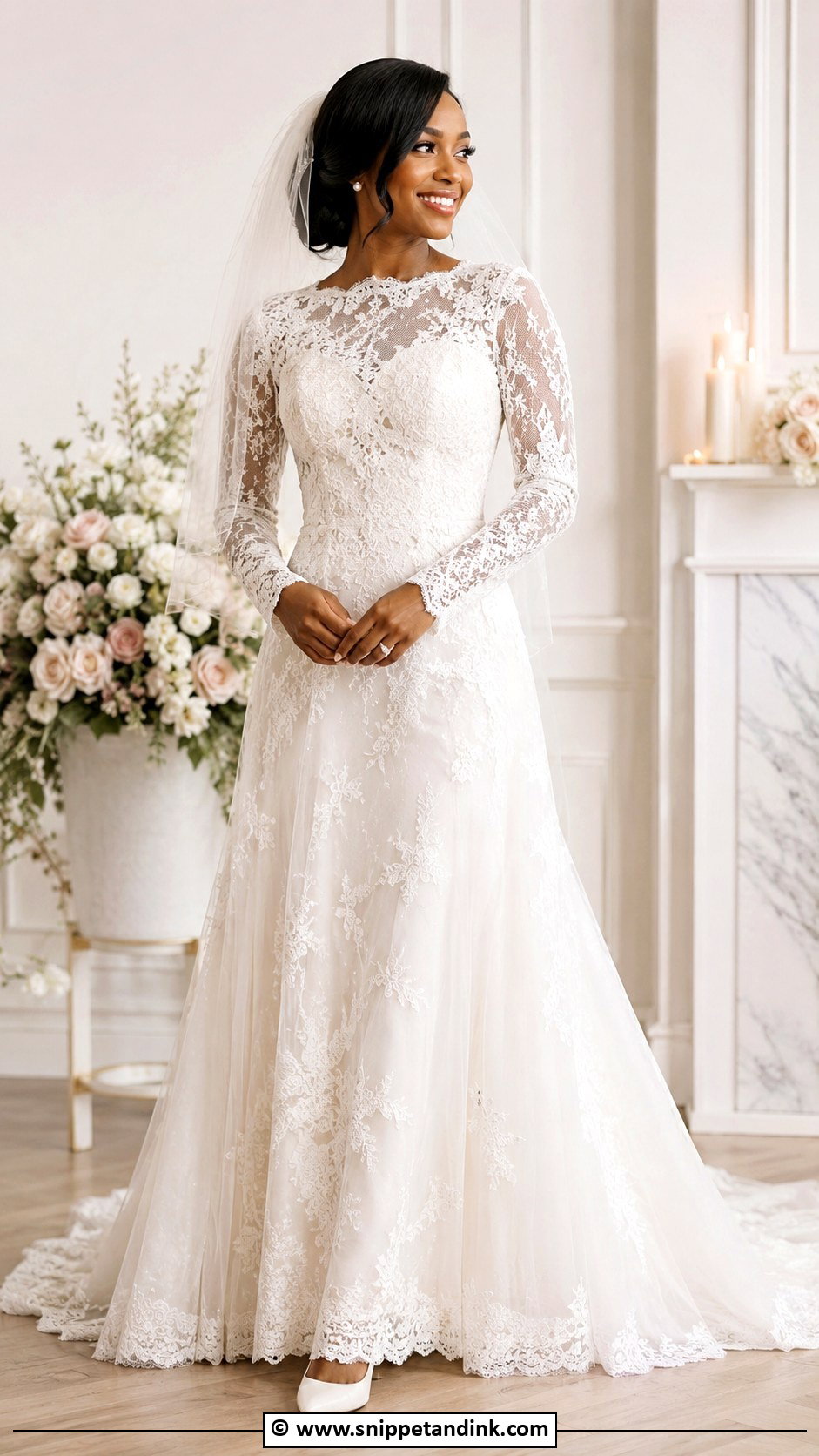
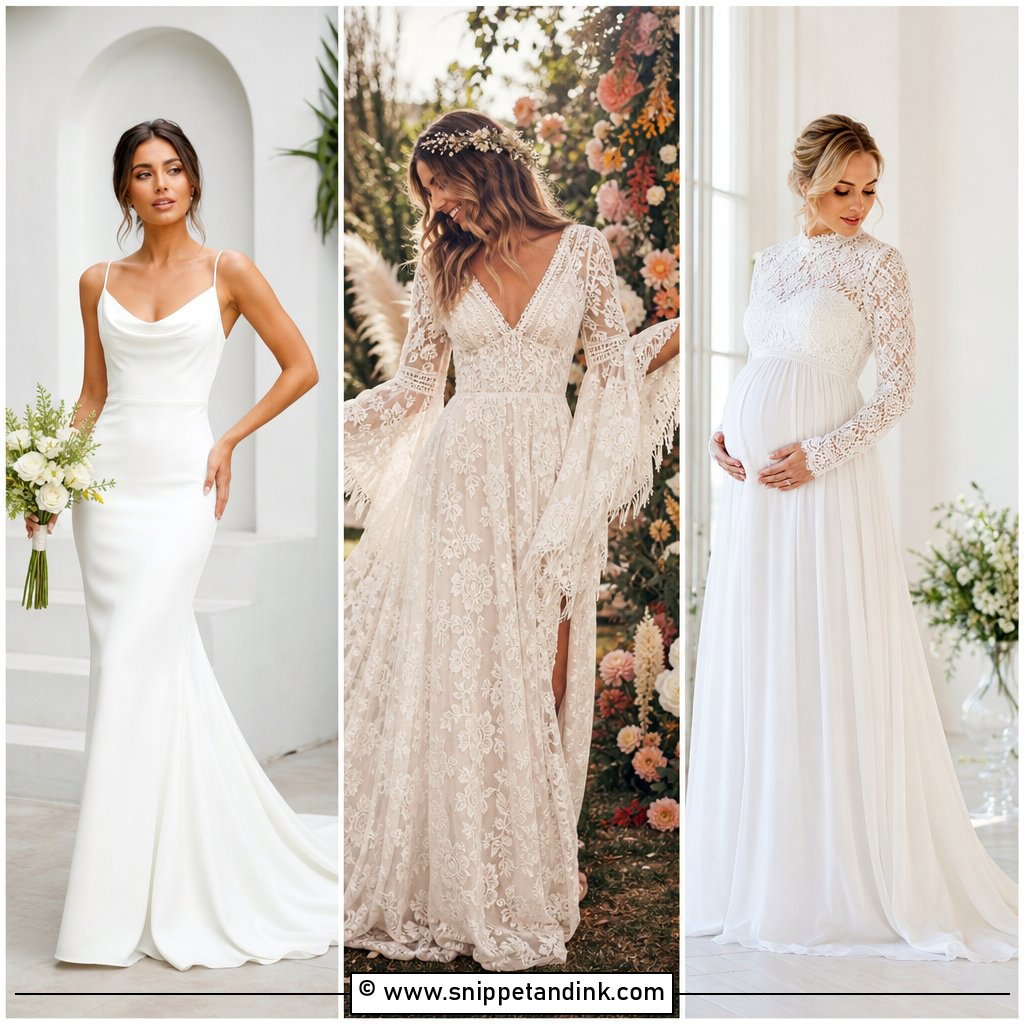
Long lace sleeves give coverage without bulk if the lace sits on a sheer, skin-matched base. That base is where I see most mistakes: a nude mesh designed for lighter skin shows up as a pale patch on a brown arm. Ask whether the shop can line the sleeves in a matched tulle. A lace bodice over a soft skirt feels classic, while an all-lace sheath is more vintage. With detailed sleeves, skip the bracelets. This is my first suggestion for cool-season and indoor ceremonies.
5. Off Shoulder Wedding Dress
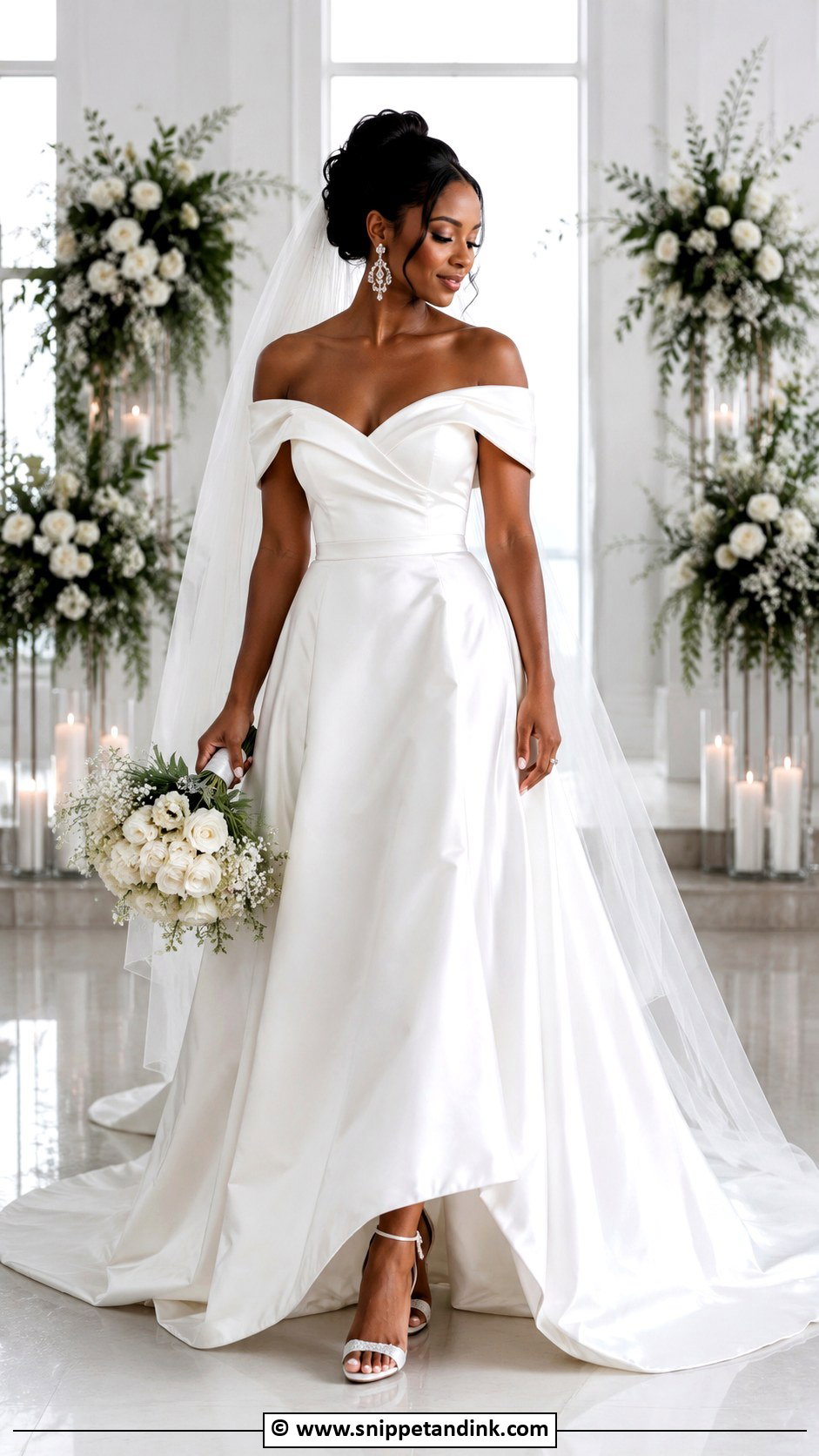
Off-shoulder necklines frame the collarbones and shoulders, and on melanin-rich skin a little body highlight there catches light in a way the camera loves. The fit problem is the band around the upper arm. If it’s too tight, you can’t hug anyone; too loose, and it slides all evening. I have brides reach forward as if for a hug during every fitting. Statement earrings work better than a necklace here, and a bun or sculpted natural style keeps the neckline open.
6. Strapless Corset Wedding Dress
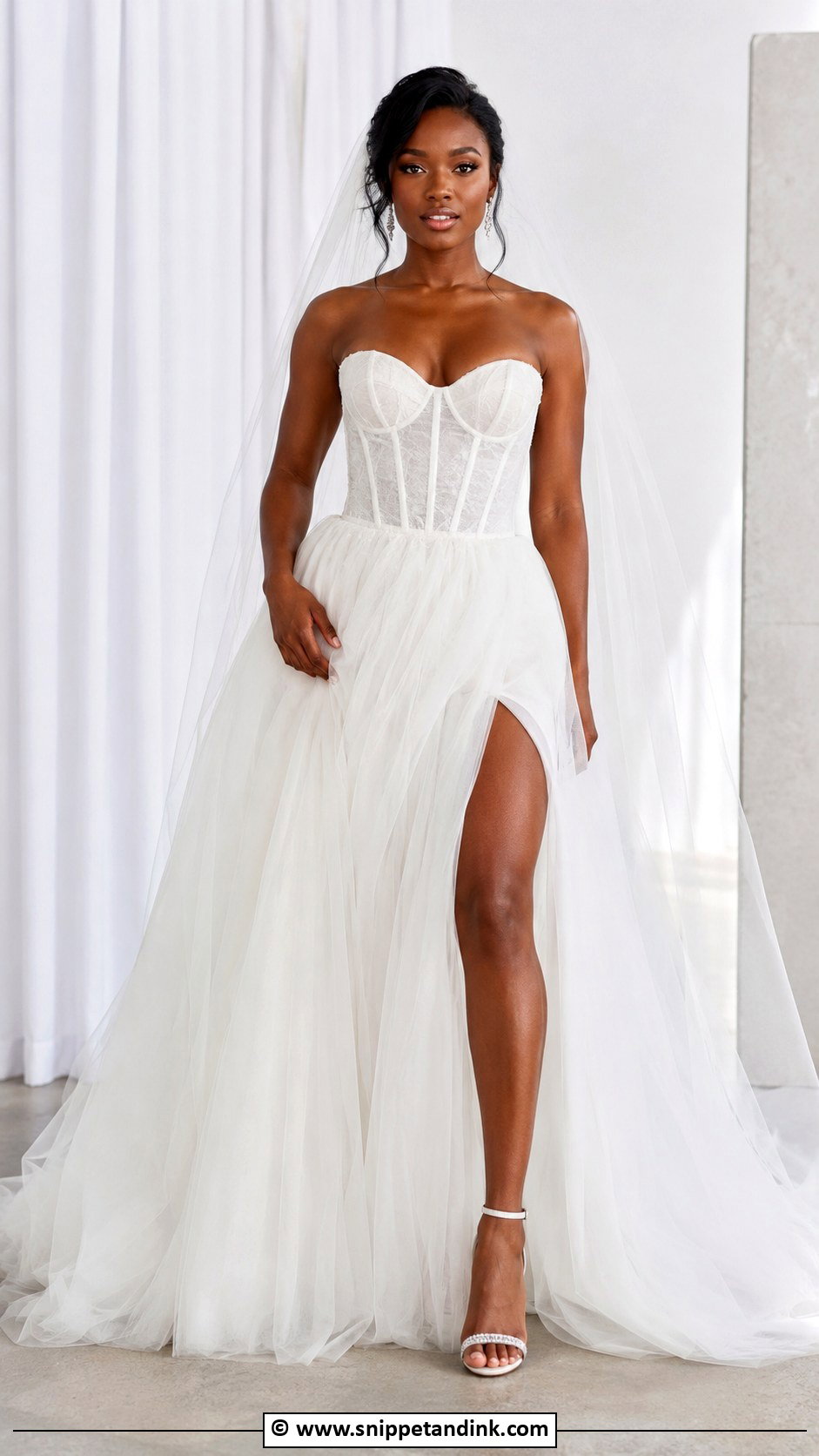
A strapless corset wedding dress gives a very defined waist, but only if the corset is fitted to you rather than pulled tight. A properly made one sits on the ribs and stays put when you breathe out; if it digs into the underarm or leaves marks after ten minutes, it needs adjusting. Satin reads clean, lace softer, tulle airier. Keep the neckline bare or wear a choker, and buy block heels you can stand in for hours, since nobody sees them under the skirt anyway.
7. Pearl Beaded Wedding Dress
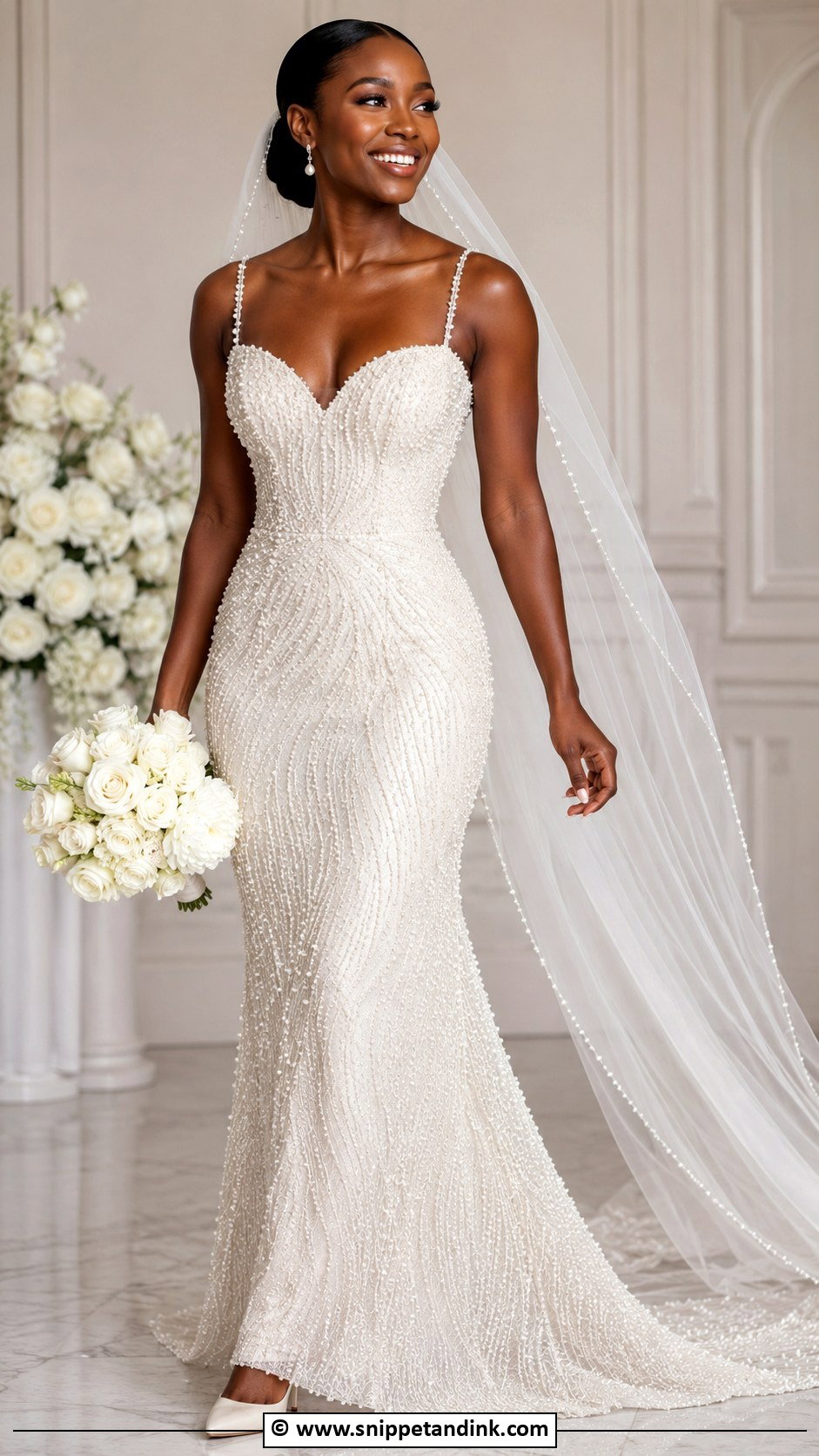
Pearl beading gives a soft sheen instead of sparkle, and the warmth of pearl tends to sit nicely against brown skin. The trade-off is weight. A fully beaded bodice can be surprisingly heavy, and beads on the inner arm snag on lace and rub skin over a long day. Lightly beaded bodices or sleeves are easier to live in. If the gown is already heavily embellished, I keep the necklace off and the hairpiece small. Evening light is where pearls really show.
8. Blush Pink Wedding Dress
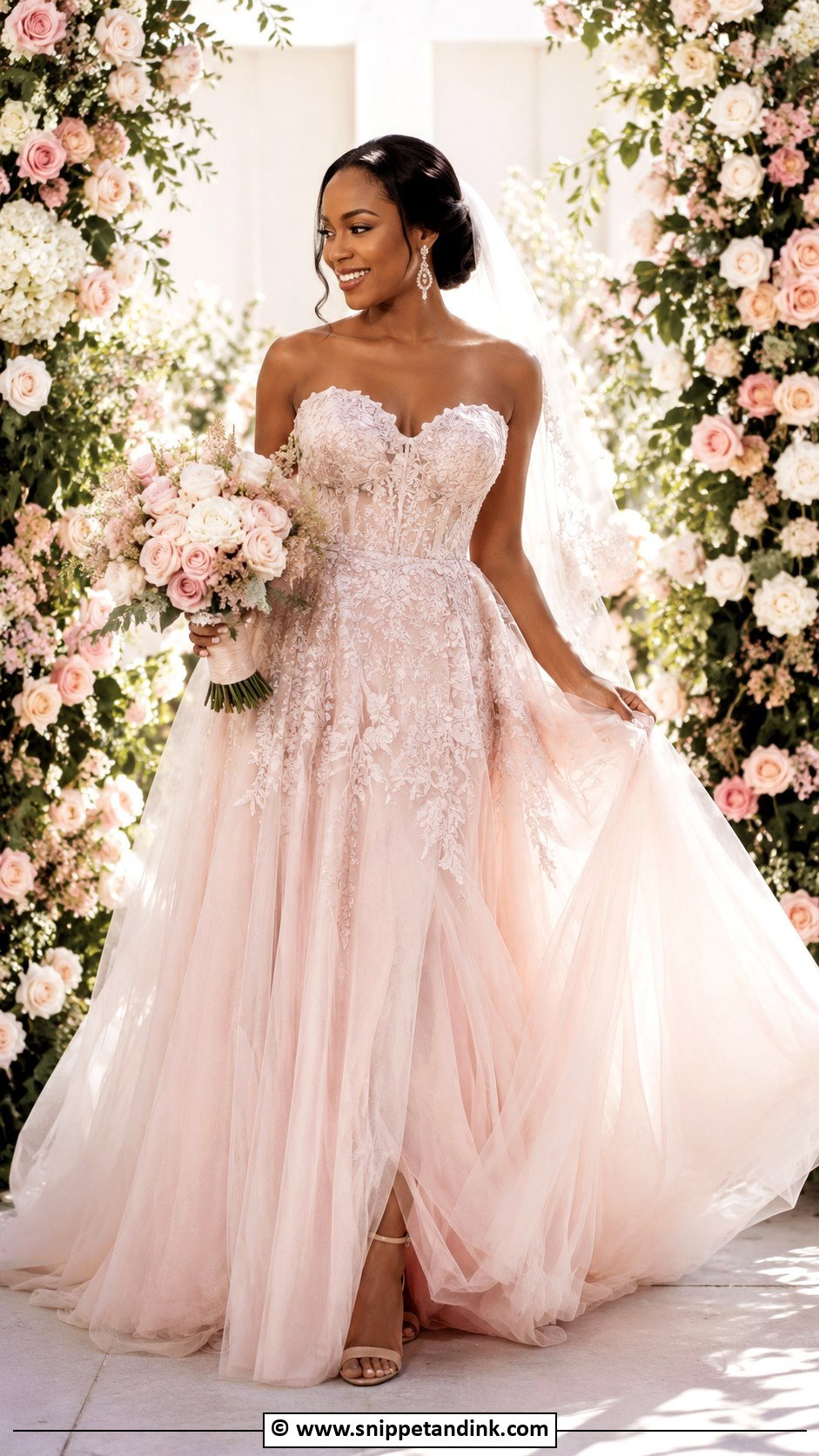
Blush is tricky because it shifts so much with undertone. A peach or nude-leaning blush often glows on warm brown skin, while a cool, grey-pink can look washed out next to it. I always test it in daylight by a window, not just under shop lights. A blush ball gown feels storybook; a blush slip feels modern. Rose gold jewelry and an ivory or matching veil pull it together, and gardens and bright rooms suit the color best.
9. Gold Embroidered Wedding Dress
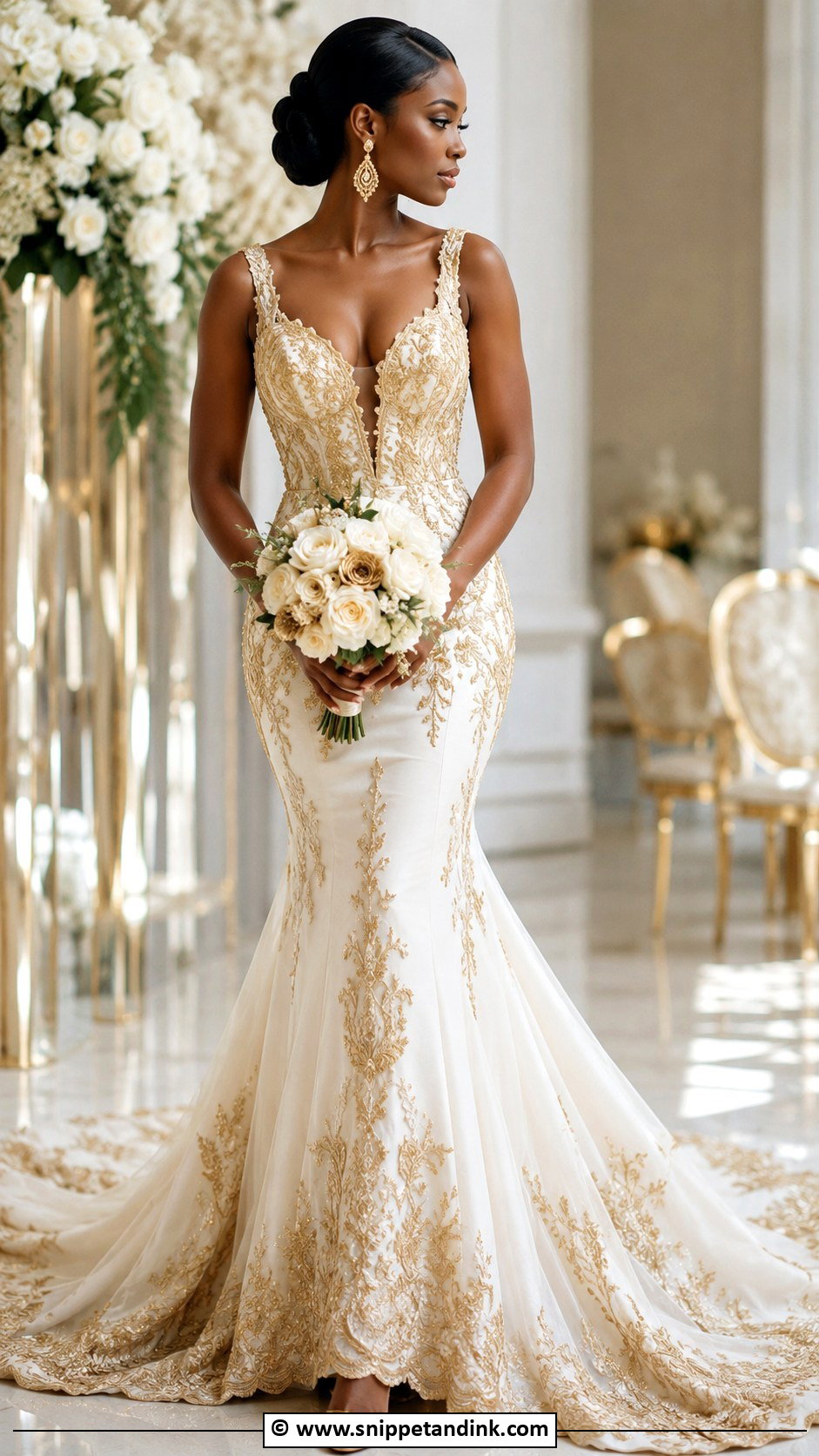
A gold embroidered wedding dress brings warmth up to the face, and on deeper skin tones the gold thread tends to glow rather than compete. My rule is one focal area. If the embroidery is on the bodice and sleeves, keep the skirt quiet, and the reverse. Embroidery with metallic thread can scratch, so check the inside of the sleeves and underarms. A smooth updo, gold earrings and metallic heels are enough. Many brides choose this to nod to family or cultural traditions, and it looks especially rich at an evening reception.
10. Minimal Crepe Wedding Dress
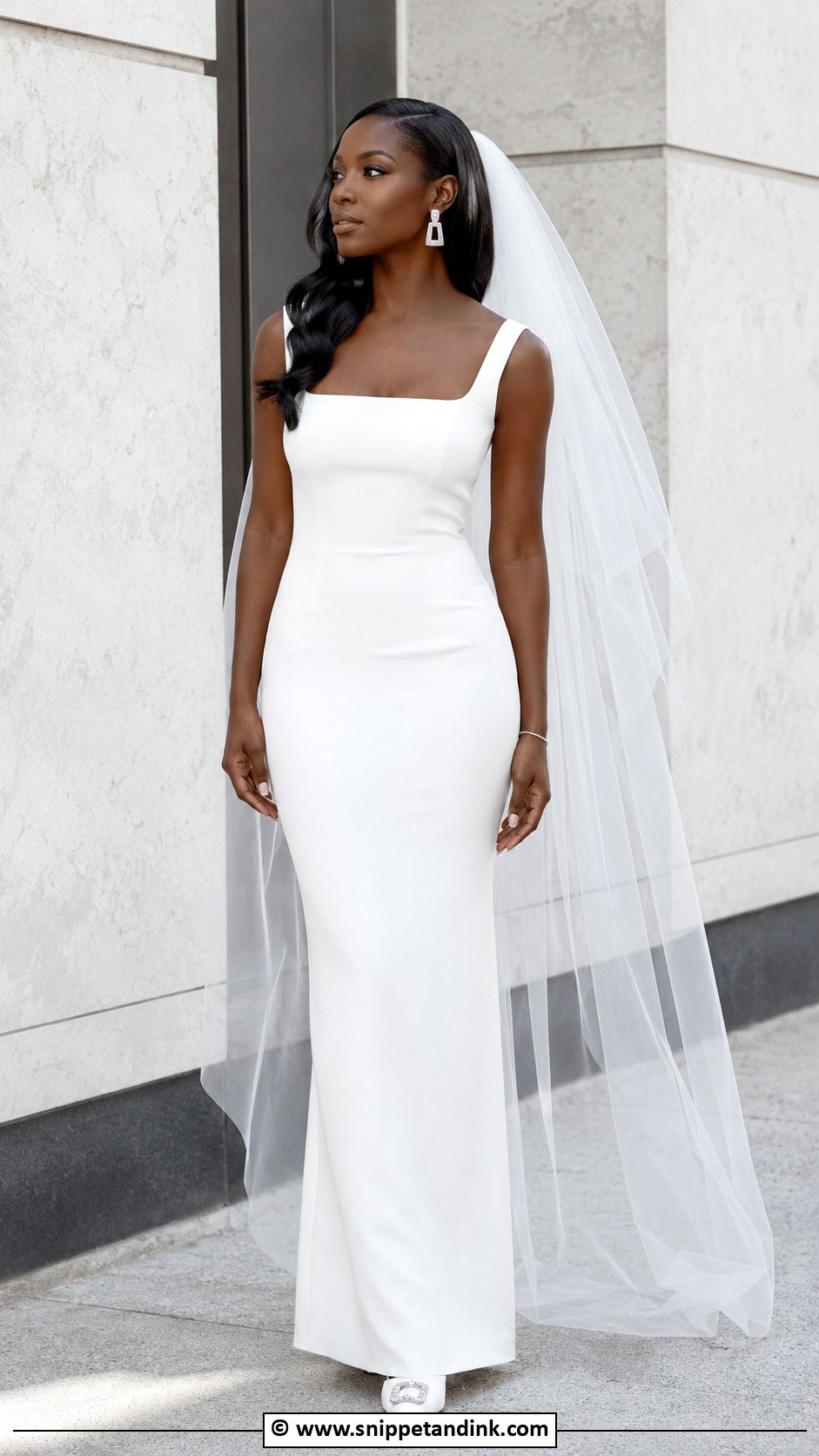
Minimal crepe is my favorite dress to style because it hides nothing and needs no help. Crepe has enough weight to smooth over the body, but that also means a poorly cut seam or the wrong underwear will show, so bring your actual undergarments to every fitting. A square, bateau or high neckline makes it feel architectural. Sculptural earrings, a sleek bun and a long plain veil finish it. City venues, courthouses and modern rooms suit it.
11. Tulle Princess Wedding Dress
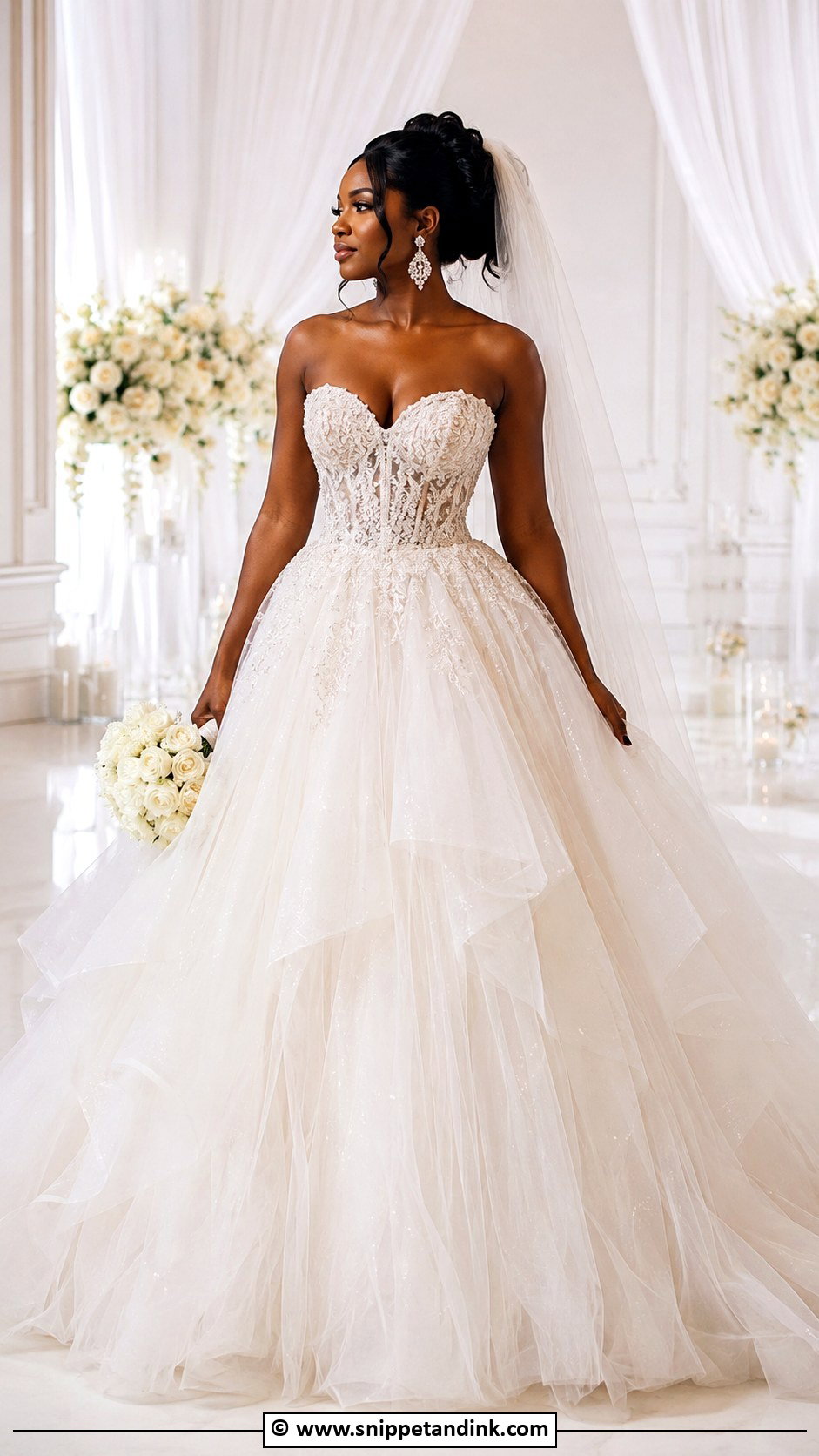
Tulle gives volume without much weight, so a princess skirt that looks enormous can feel surprisingly light. The catch is that tulle crushes, snags on heels and picks up everything at an outdoor venue. Layers of ivory or nude-lined tulle create depth against deep skin in photos. Keep the bodice detail to beading or appliqué and stop there. A pearl comb or crystal pins read more current than a tiara for most brides, though a tiara is lovely if it’s genuinely you.
12. Square Neck Wedding Dress
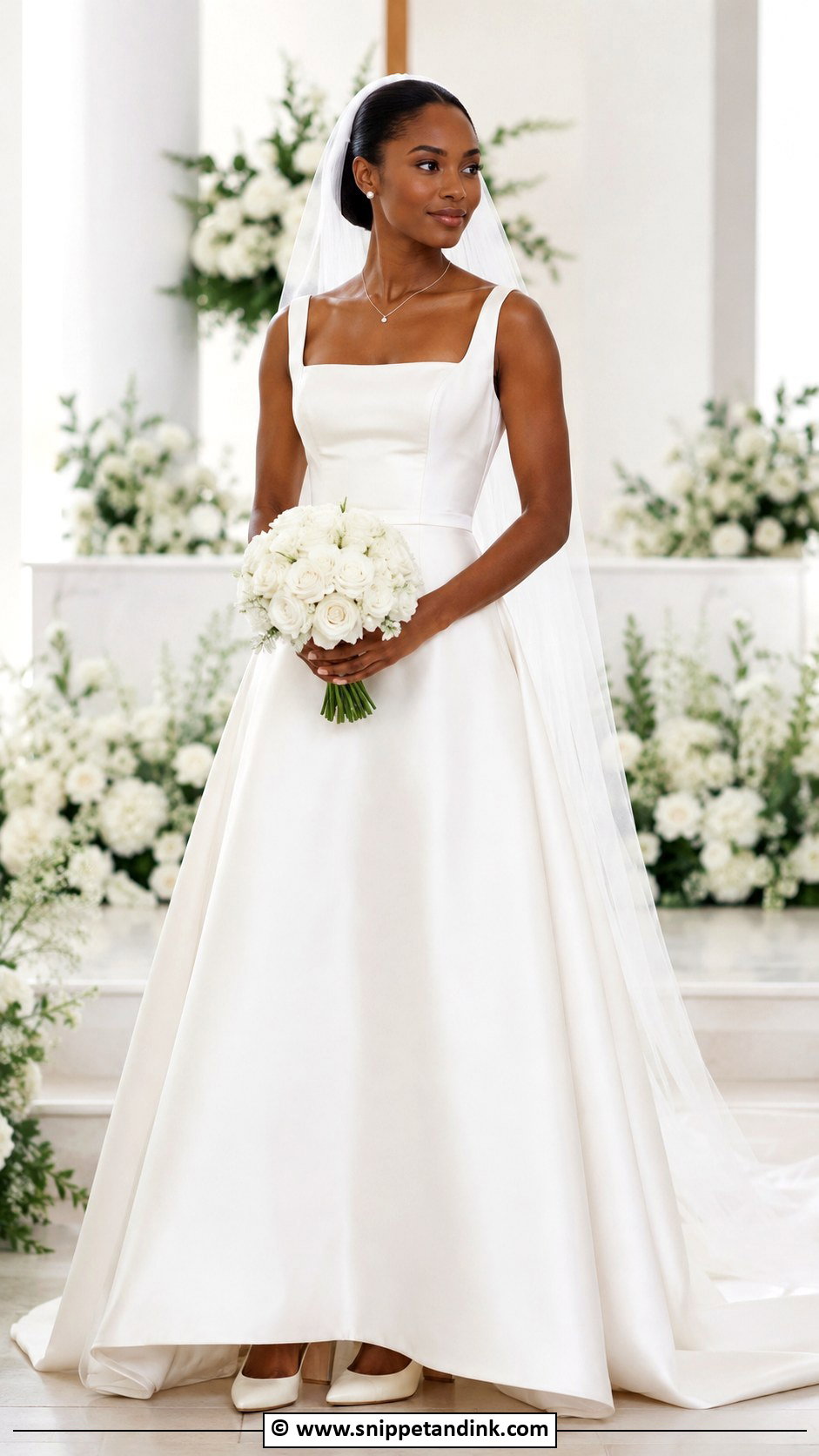
The square neckline is one I recommend often because it supports most bust sizes and still opens the chest. It also frames natural hair and loc updos well, since the straight line balances the shape of the hair above it. Satin gives the classic version, crepe the modern one, lace the romantic. A small pendant or pearl studs is plenty. Check that the corners of the neckline lie flat when you lean forward; gaping corners are a quick alteration but easy to miss.
13. High Neck Wedding Dress
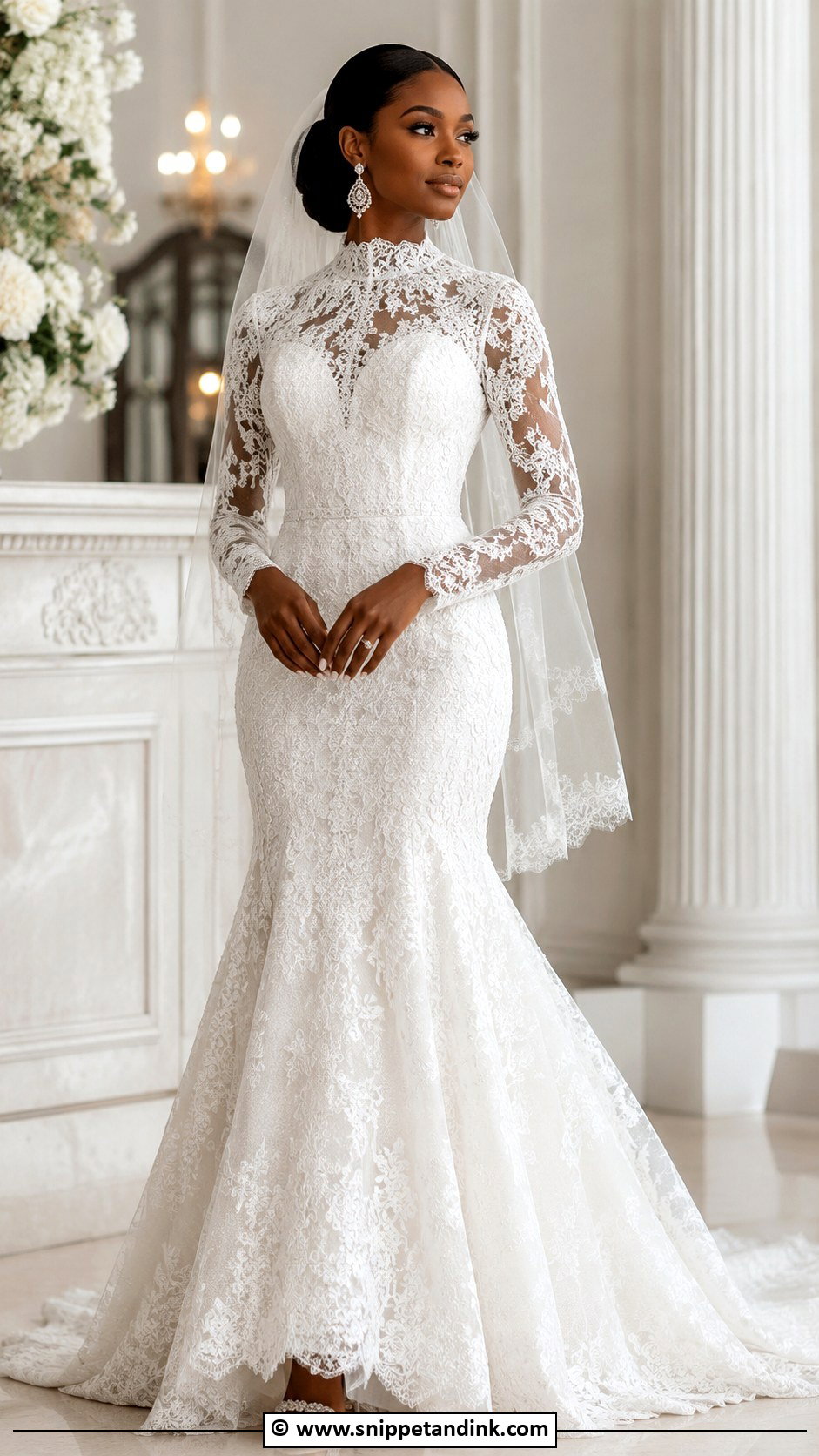
A high neck reads modest and quietly dramatic at the same time. It looks best with hair pulled back, which shows off the face and lengthens the neck. Skip the necklace entirely and let earrings do the work. Fitted skirts make it statuesque; an A-line softens it. Luminous skin and warm-toned jewelry stop it from feeling severe. Watch the collar height at your trial: if it touches your jaw when you look down, ask for a few millimeters to come off so your makeup doesn’t transfer onto it.
14. One Shoulder Wedding Dress
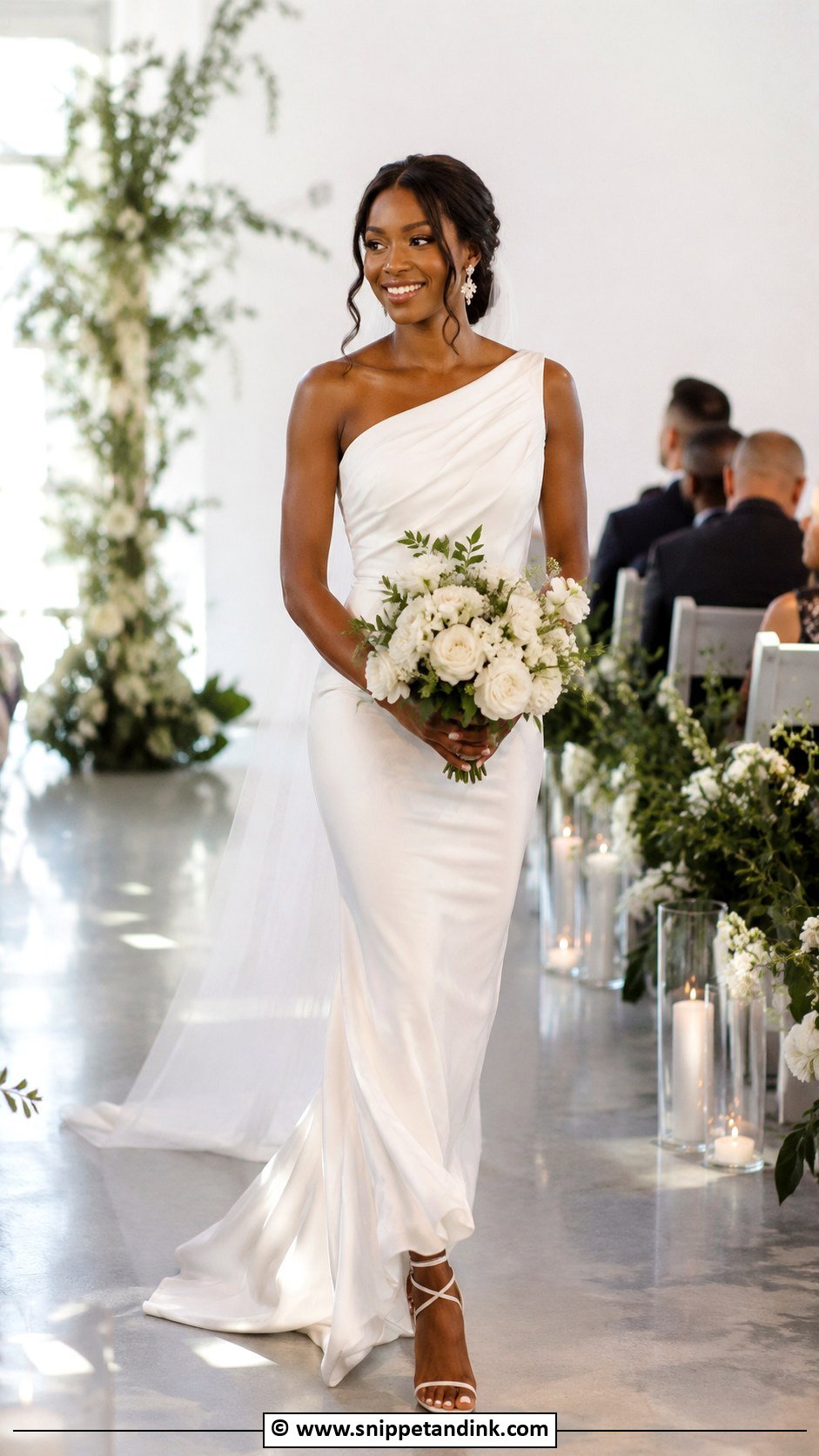
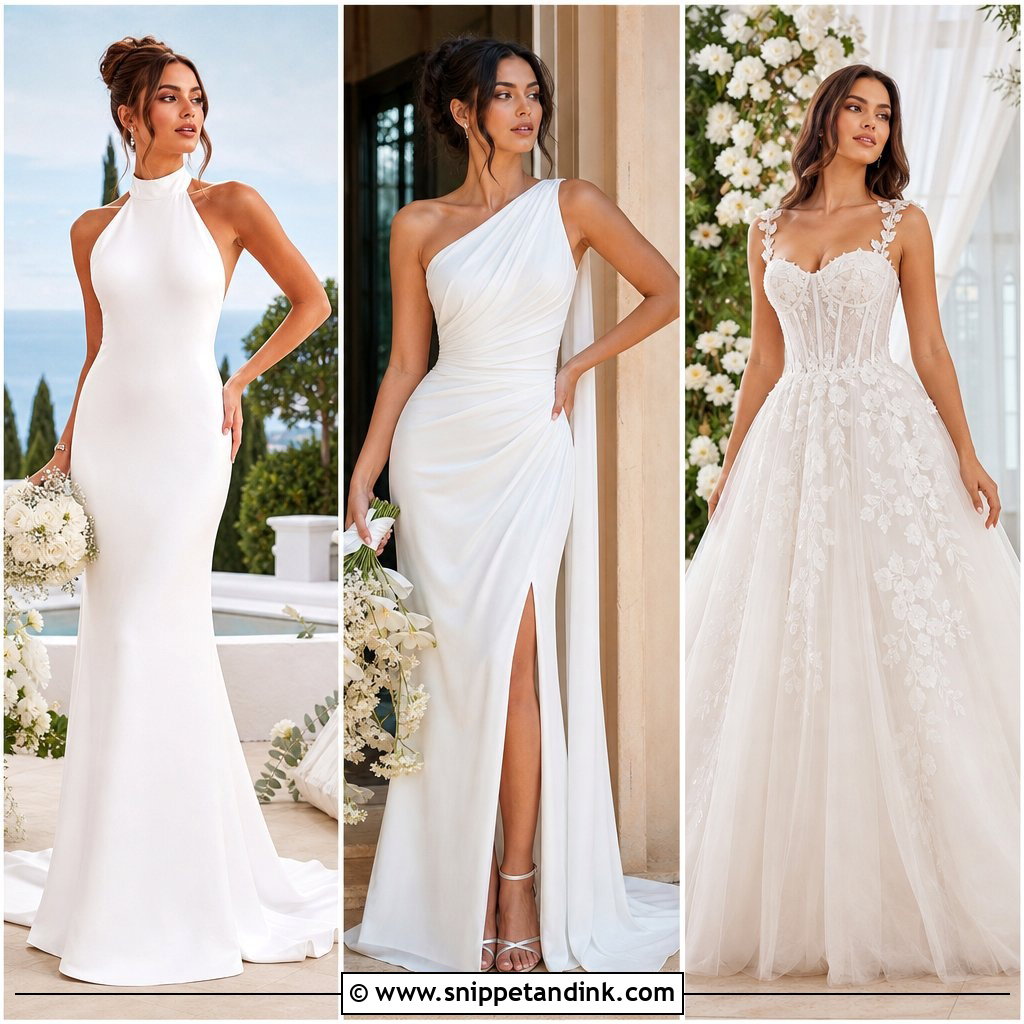
One-shoulder dresses get their interest from the asymmetry, so they need very little else. Satin looks sleek; draped tulle or chiffon softer. The strap has to be anchored properly into the bodice or the whole dress drifts toward the bare side as you dance. I’d keep jewelry to one bold earring on the open side or small studs. A smooth bun, soft waves or a short natural cut all suit it, and strappy heels keep the line light.
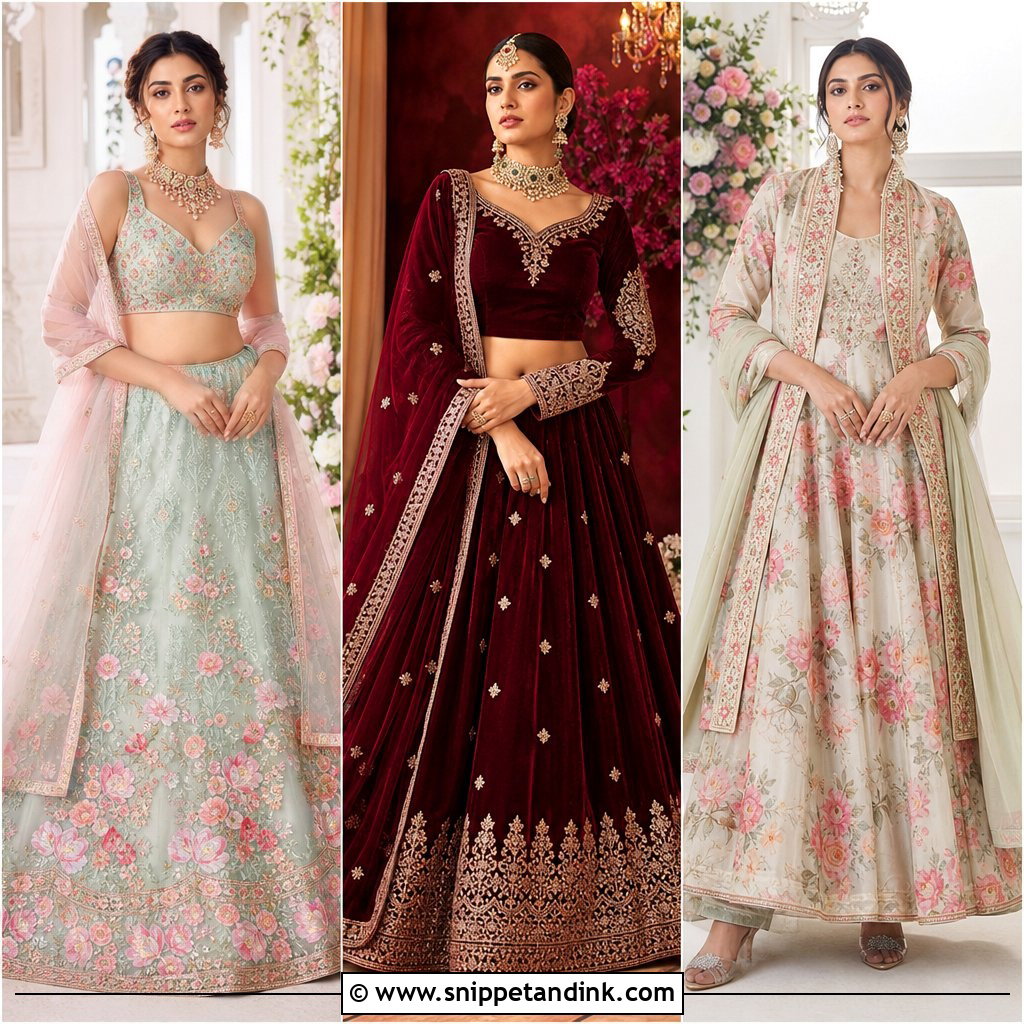

15. Floral Applique Wedding Dress
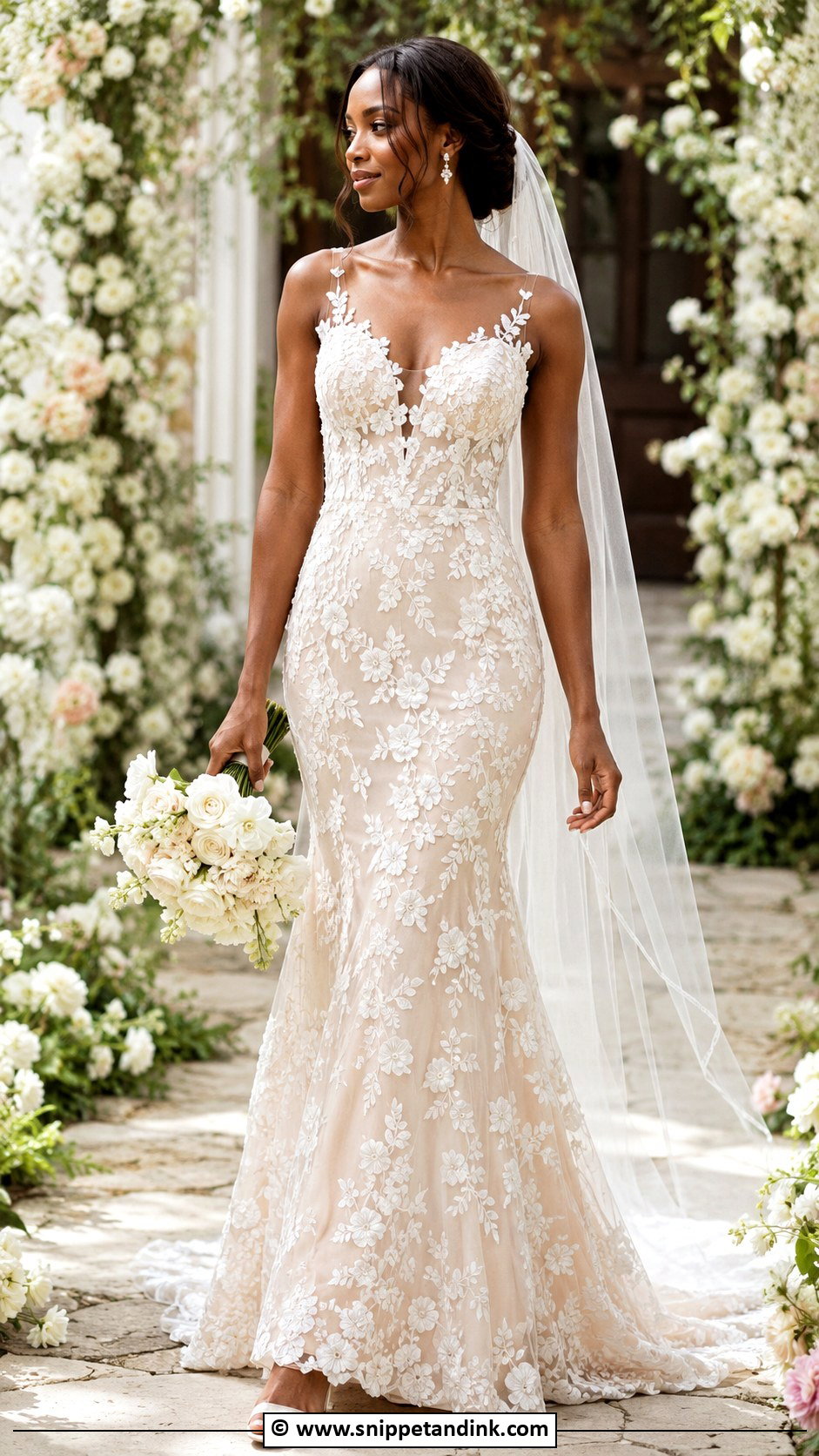
Floral appliqué makes a gown feel made by hand, and up close it gives the photographer something to shoot. Placed over a nude lining that actually matches your skin, the flowers look as if they sit directly on you; with the wrong lining the effect falls apart. If the appliqué is bold, keep the shoes plain and the bouquet small. Raised flowers on the train do catch grass and gravel, so at an outdoor ceremony plan for someone to lift the train between photos.
16. Basque Waist Wedding Dress
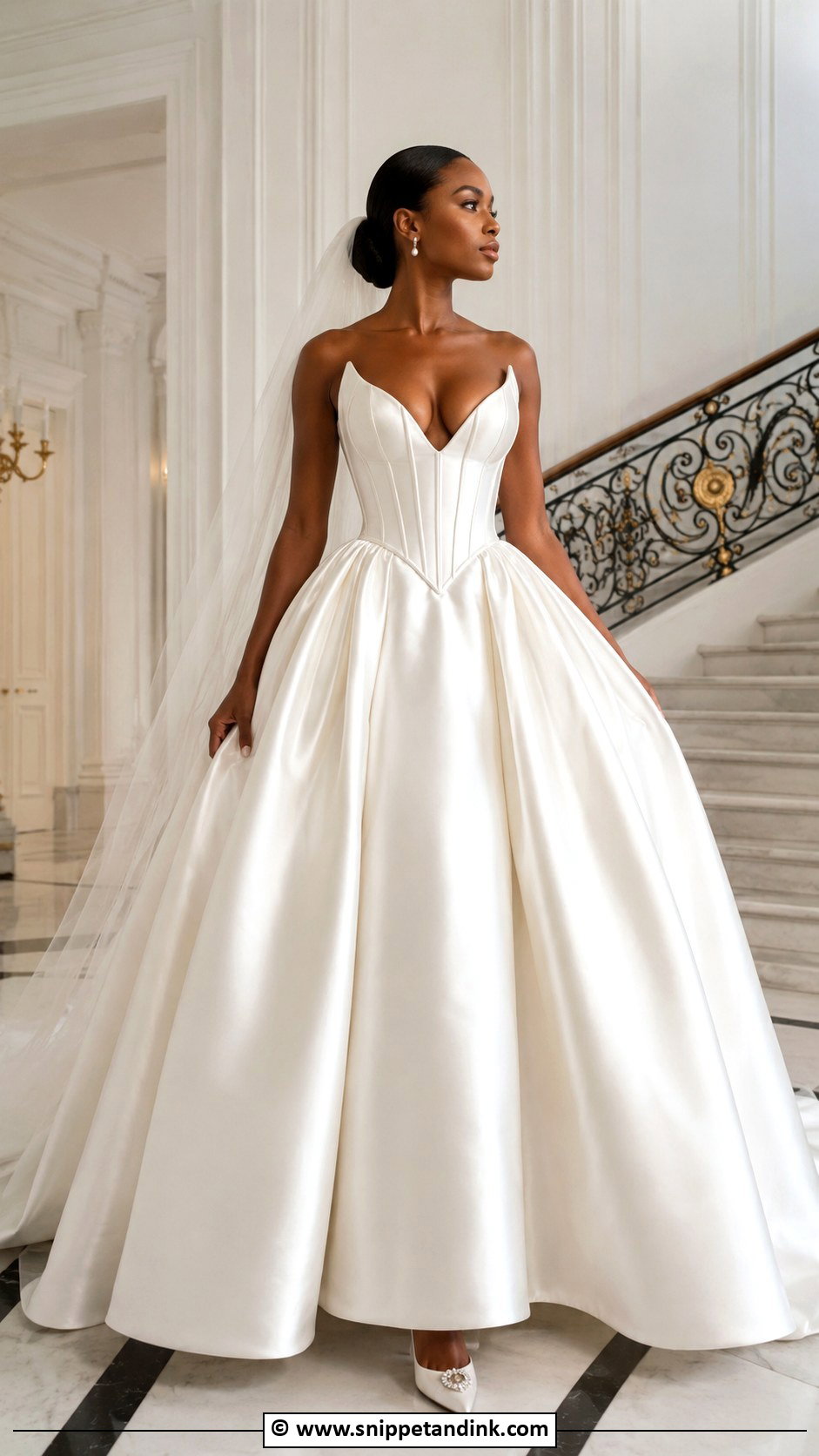
A Basque waist dips below the natural waist into a V or U, which lengthens the torso and gives a full skirt a sharp starting point. It suits many brides, but if you’re short-waisted, the point can make your legs look shorter, so I try it alongside a natural waistline before deciding. Satin gives a clean princess shape, lace a vintage one, and mikado a crisp, sculpted finish. Warm ivory keeps the structure from looking stark against deep skin.
17. Drop Waist Wedding Dress
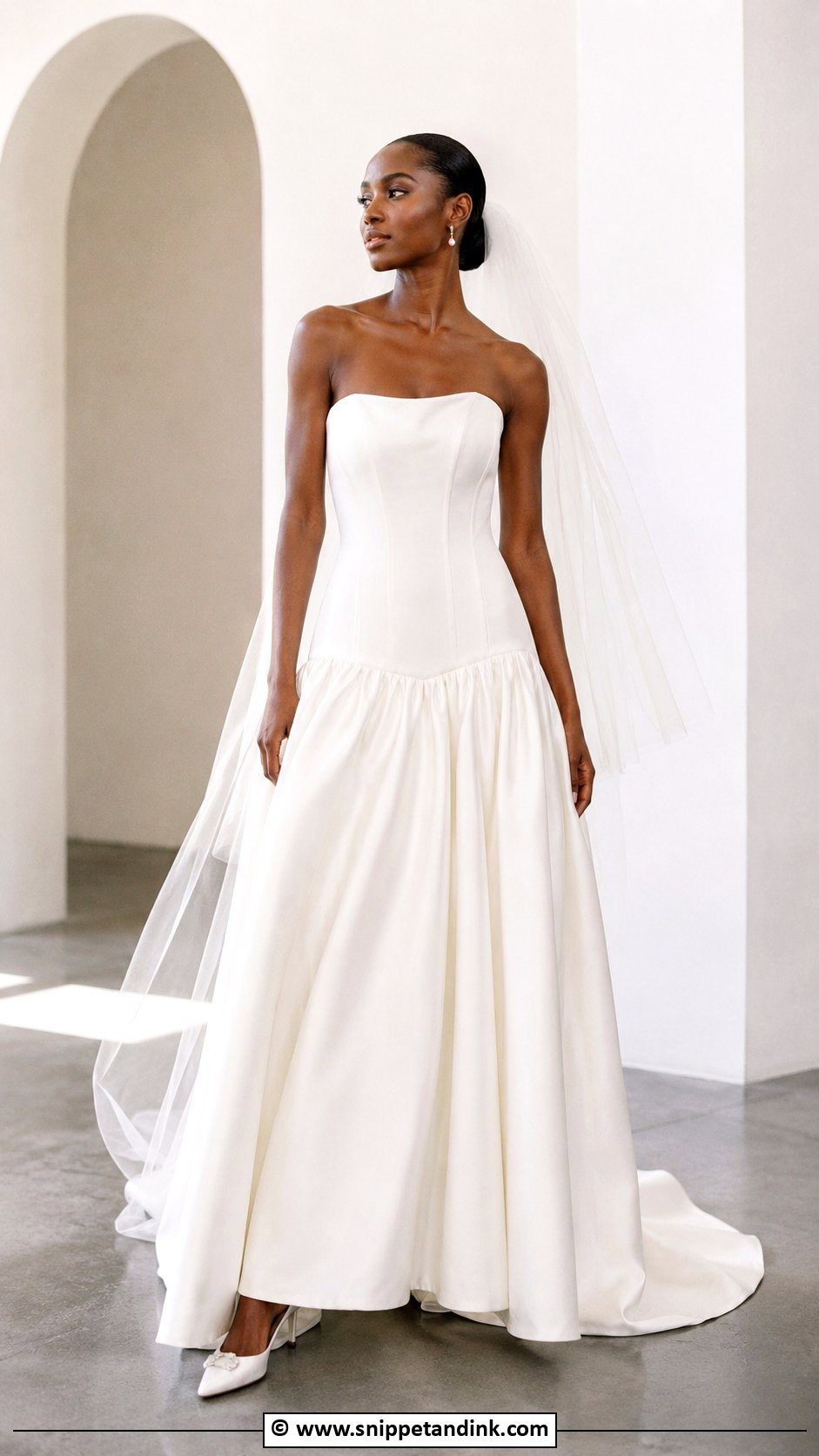
The drop waist is one of the more fashion-led silhouettes right now. The bodice runs down over the hips before the skirt opens, which creates a long, sleek line but also shortens the leg. A slightly higher heel and a veil that falls past the hips restore balance. Satin, organza and structured lace hold the shape better than soft fabrics. Brides who love editorial bridal looks tend to gravitate here; if you want a defined waist, look elsewhere.
18. Short Reception Wedding Dress
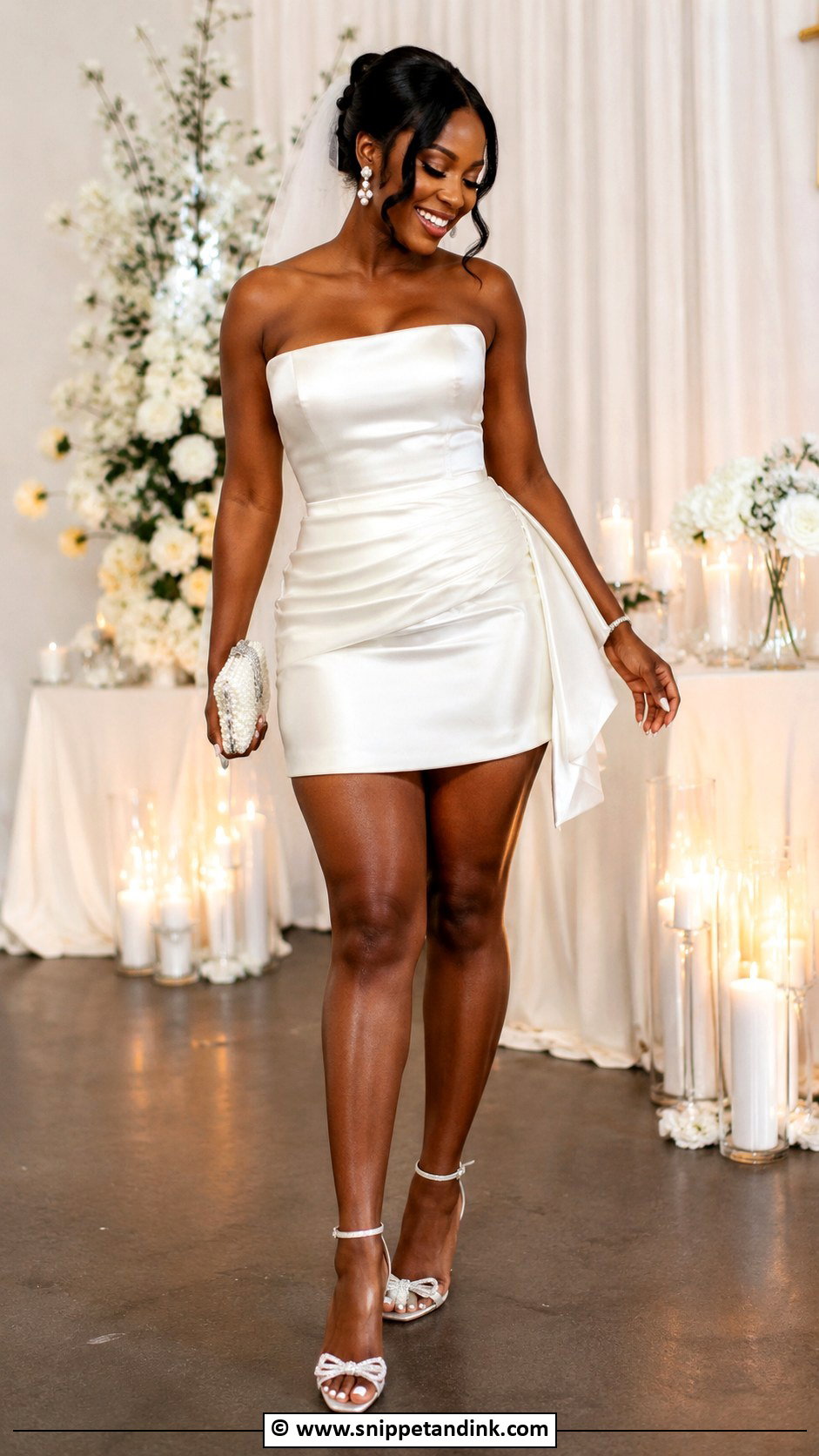
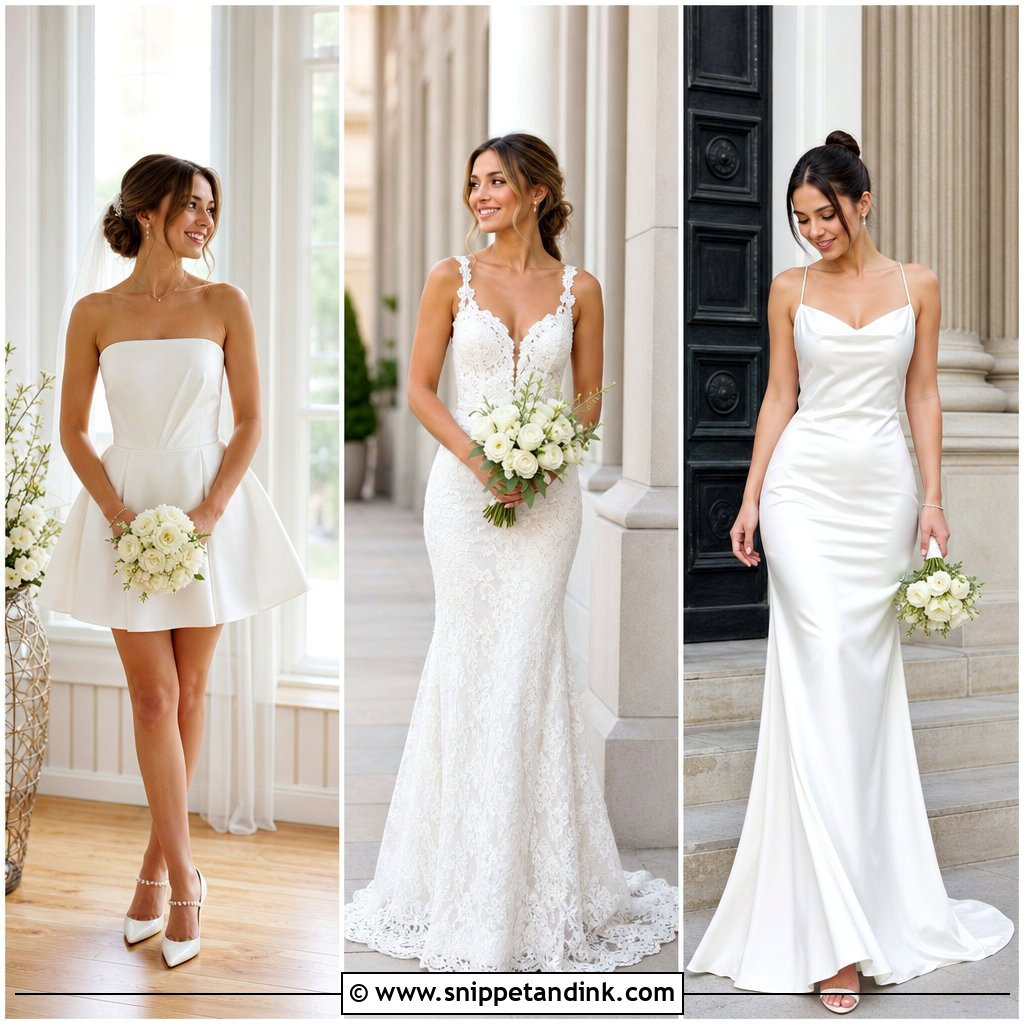
A short reception dress is the one I push brides to consider if they’re planning a long dance floor. Feathers, structured satin, a lace shift or a tulle party dress all work, as long as fabric and fit still say bride. Crystal heels, pearl earrings or a hair bow help. As a second look after a formal gown it gives you two distinct sets of photos, and on its own it’s a smart pick for a courthouse wedding or a city elopement. Change during cocktail hour so you don’t miss your own reception.
19. Bridal Jumpsuit Wedding Dress
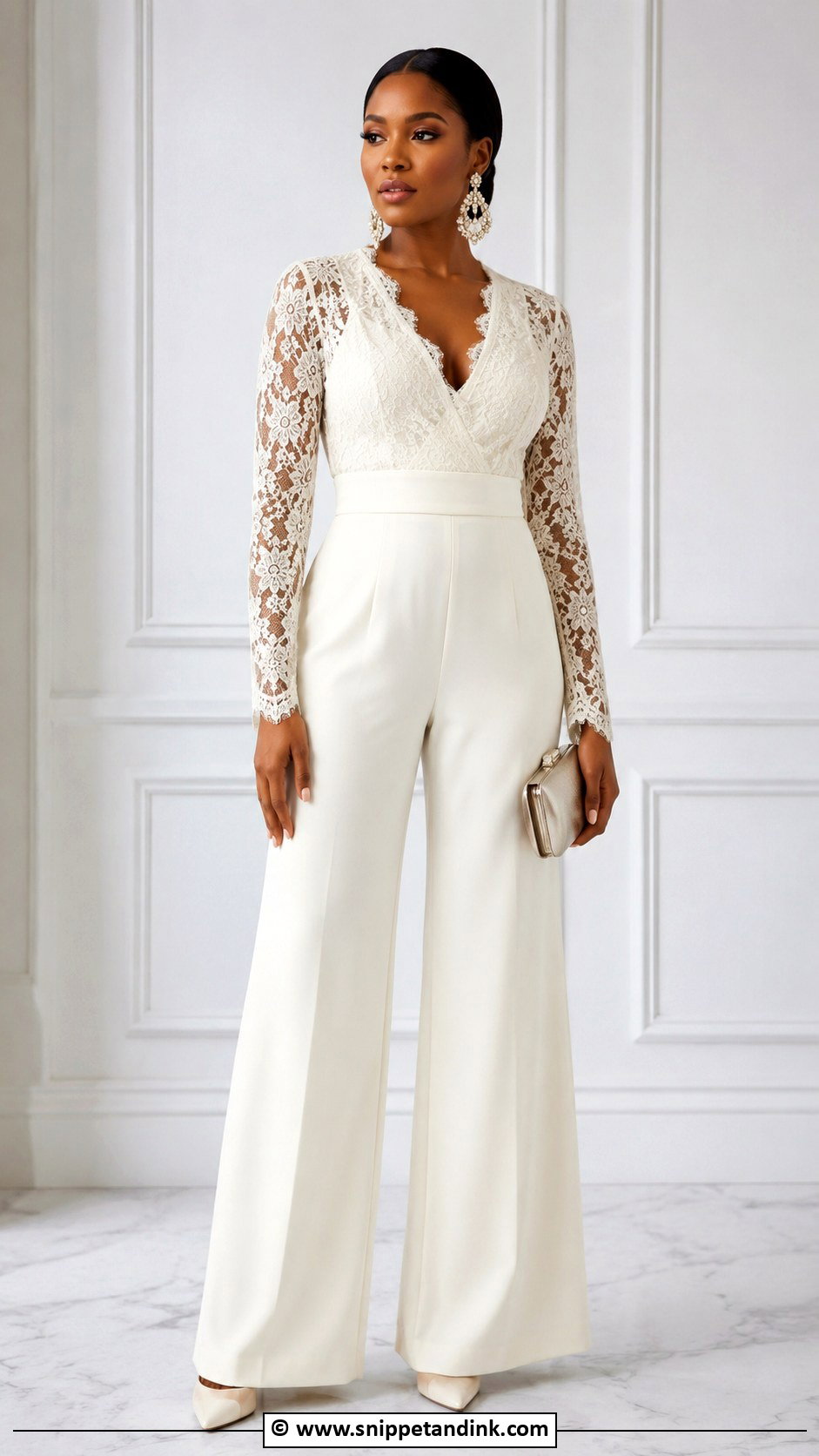
A bridal jumpsuit is a real alternative, not a compromise. Wide-leg pants move like a skirt when you walk, while a fitted bodice keeps the shape. Lace sleeves, a cape, pearl buttons or a detachable overskirt make it feel bridal. The hem is the alteration that matters: hem it in the exact shoes you’ll wear, or the pants will either drag or flap above the ankle. Crisp ivory or champagne looks strong and clean on Black brides in photos, and it’s ideal if you simply feel more yourself in trousers.

20. Detachable Train Wedding Dress
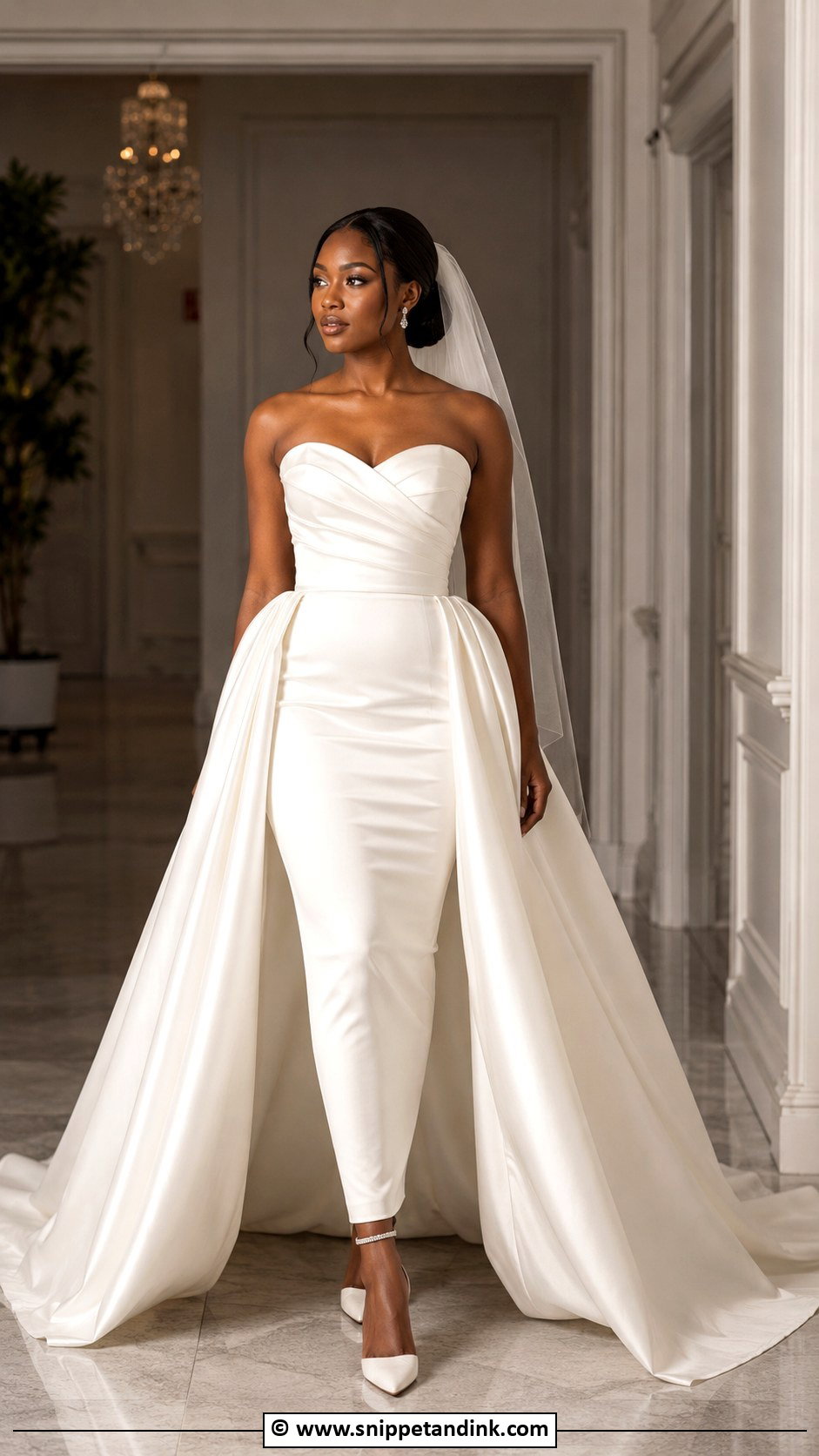
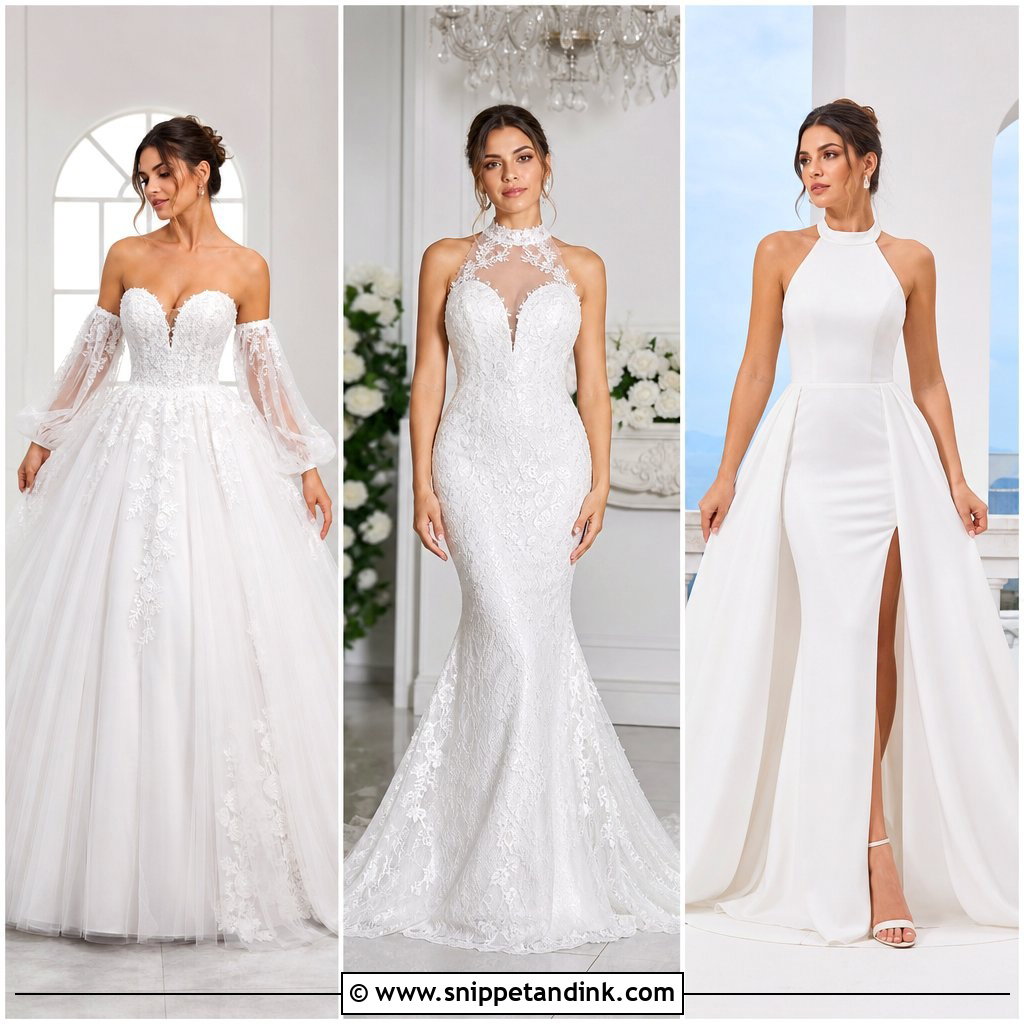
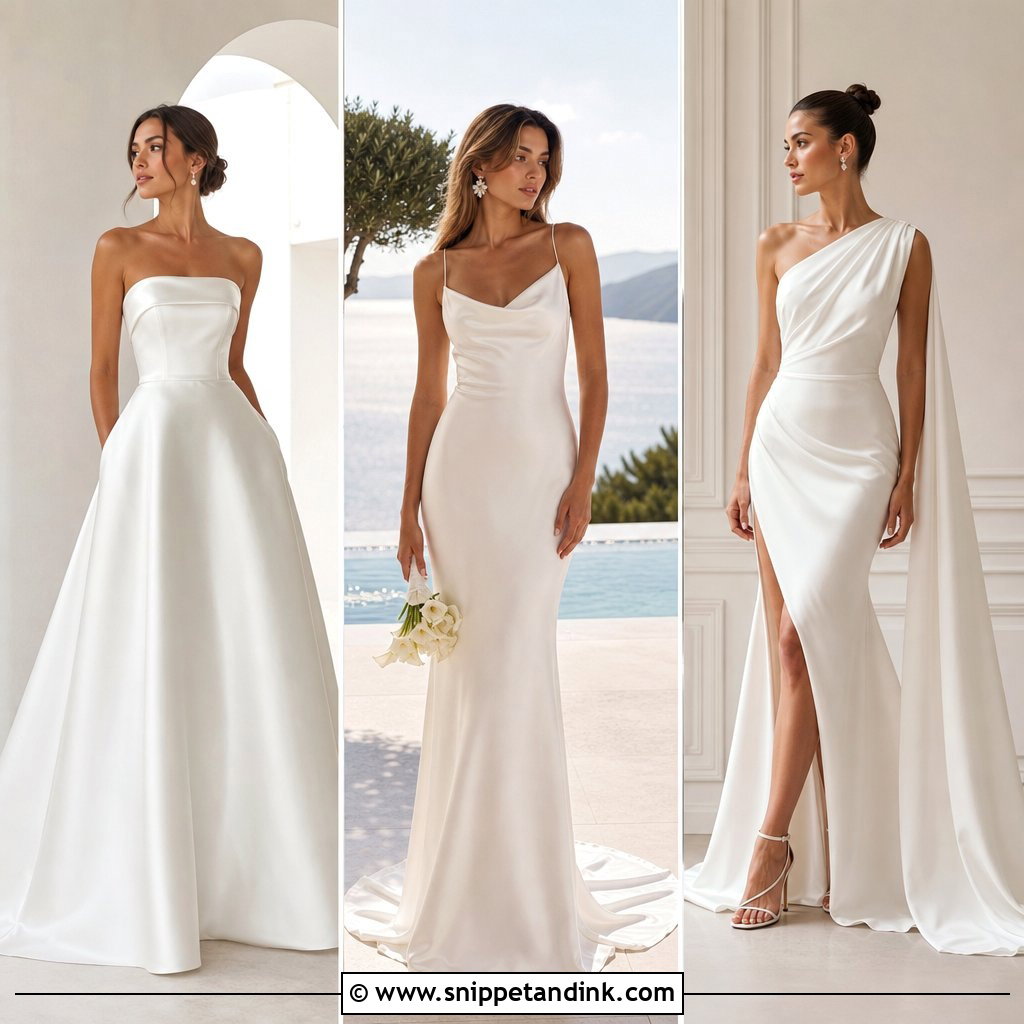
A detachable train wedding dress lets you have the drama for the aisle and freedom for the party without buying two outfits. Ask how it fastens. Hidden snaps and hooks are quick; dozens of tiny buttons are not, and someone has to undo them in a hurry. Practice taking it off at your final fitting with whoever will help on the day. Simple earrings and classic heels work both ways, so nothing else needs changing.
21. Cape Sleeve Wedding Dress
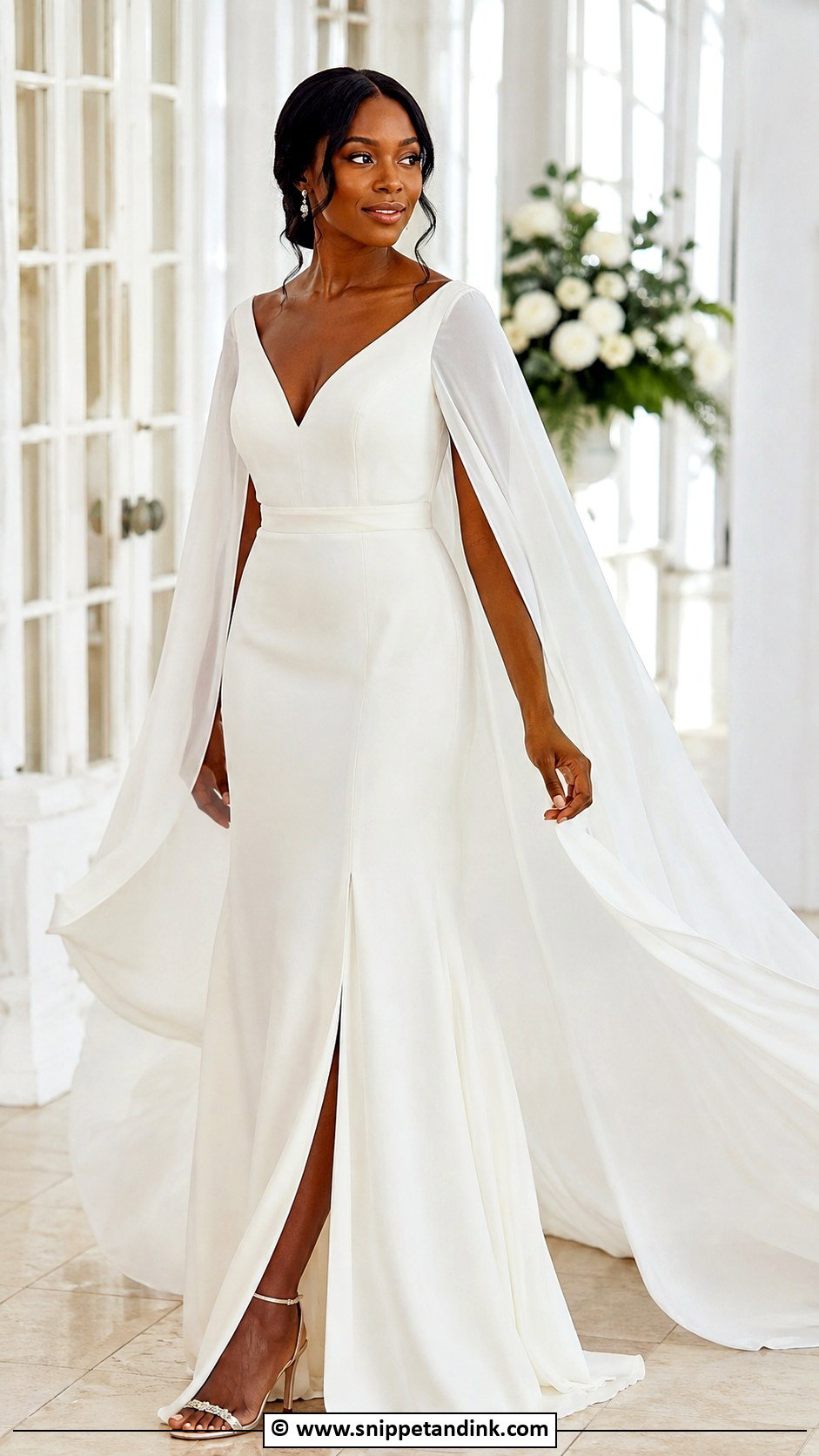
A cape gives you the movement of a veil without anything pinned into your hair, which is helpful if you’re wearing a protective style or a fresh silk press you don’t want disturbed. It can attach at the shoulders, fall from the back or drape like sleeves, in chiffon, tulle, lace or sheer organza. Because the cape adds drama, the jewelry should stay simple. On a windy outdoor day it can wrap around you, so I add a small hand loop or weight at the hem.
22. Black Wedding Dress
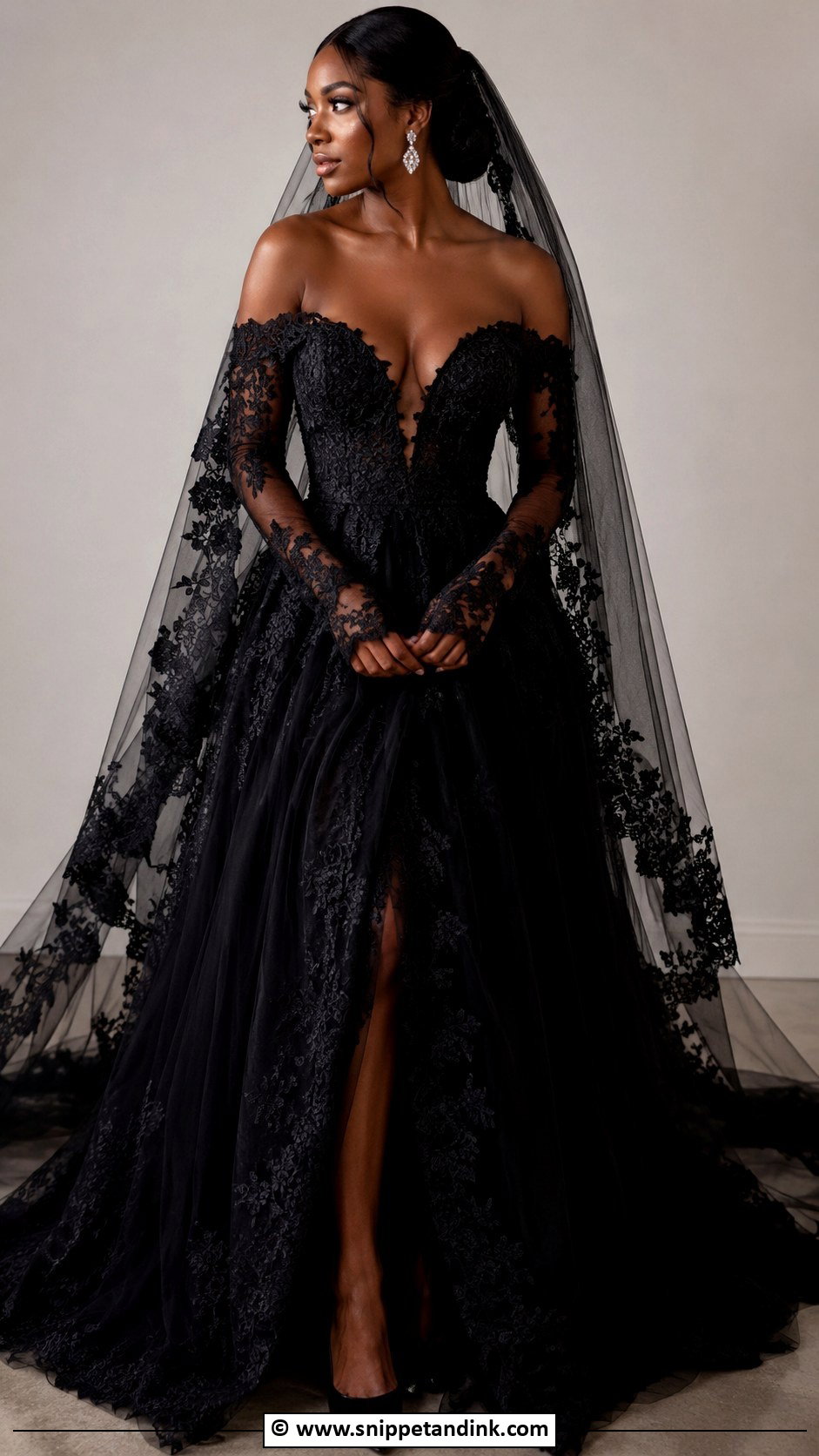
A black wedding dress isn’t for everyone, and I’d only suggest it to a bride who already loves wearing black. When it’s chosen with intent, black lace, satin, tulle or velvet looks dramatic and personal. Velvet absorbs light and can look flat in dim rooms, so lace or satin photographs more easily. An ivory veil or neutral bouquet keeps it reading as bridal. Makeup can lean glowing with a defined eye or rich lip, and it suits an evening wedding far better than a bright daytime one.
23. Silver Sequin Wedding Dress
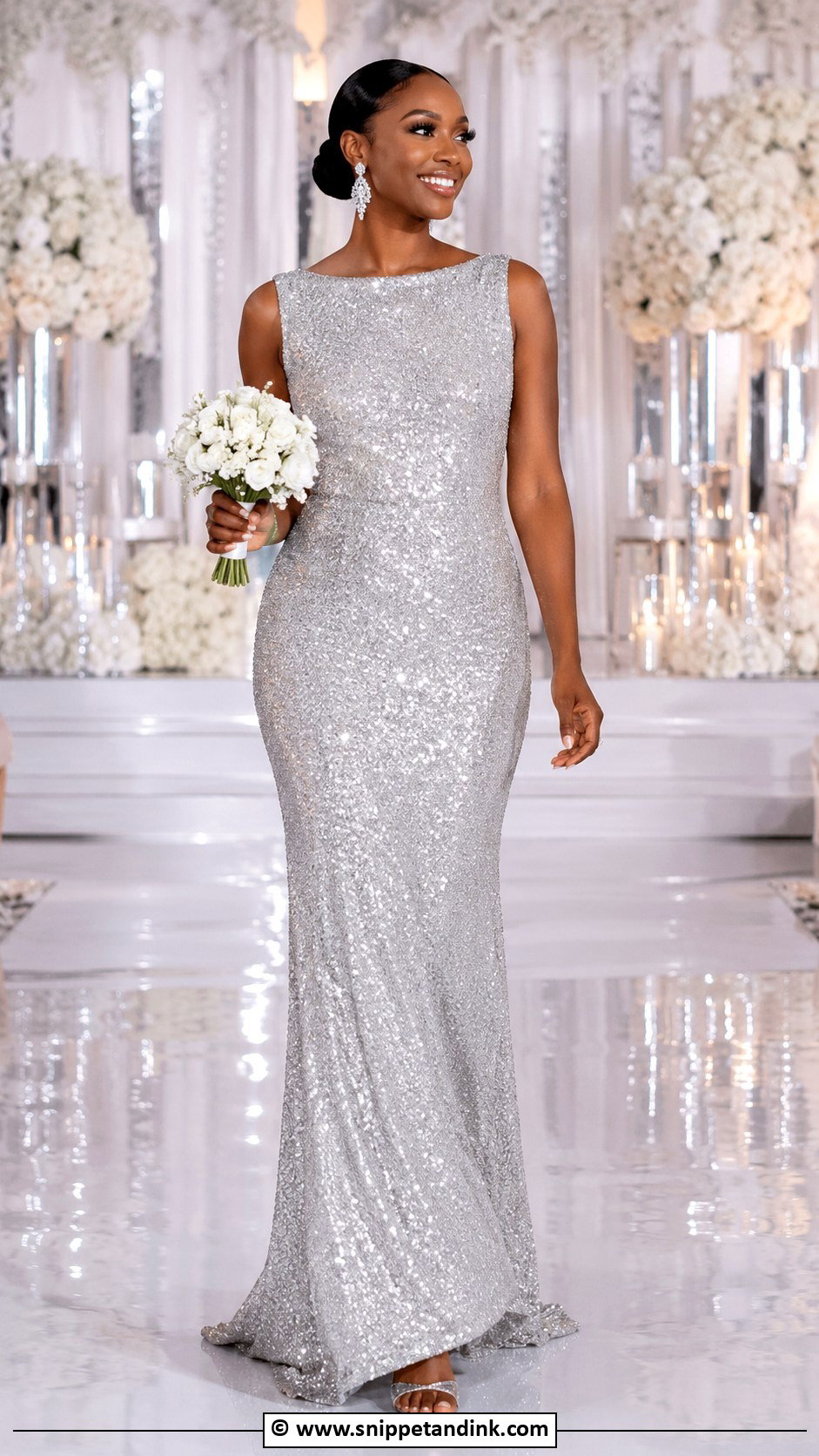
Silver sequins throw light from every angle, which makes them fun for a reception and difficult for a long day. Sequins scratch the inside of the arms and the person you’re dancing with, so look for a gown with a smooth lining at the underarm. Silver creates a cool, clear contrast against deep skin. A fitted shape is dramatic; a relaxed column is comfortable. With this much shine, keep everything else plain: small crystal earrings, silver heels, sleek hair.
24. Tea Length Wedding Dress
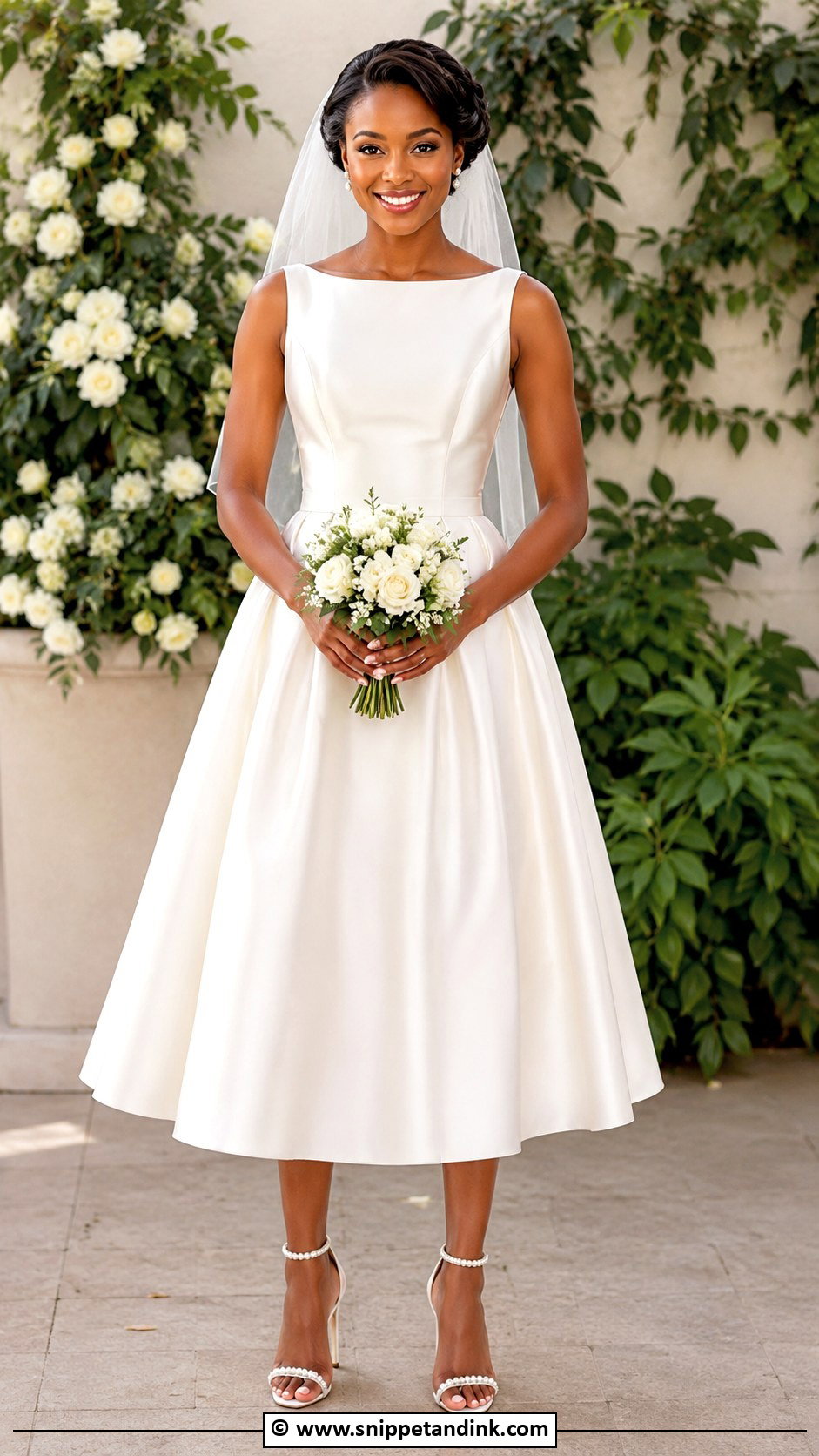
A tea length wedding dress falls between knee and ankle, so your shoes become part of the outfit in a way they never are under a floor-length gown. Satin pumps, embellished heels or pearl ankle straps all work. Hem length is the detail I fuss over most; an inch too long and it looks like a dress that didn’t fit. A fitted bodice with a full skirt is the vintage version, a sleek shape the modern one. Ivory and champagne tea lengths look fresh for daytime and garden ceremonies.


25. Halter Neck Wedding Dress
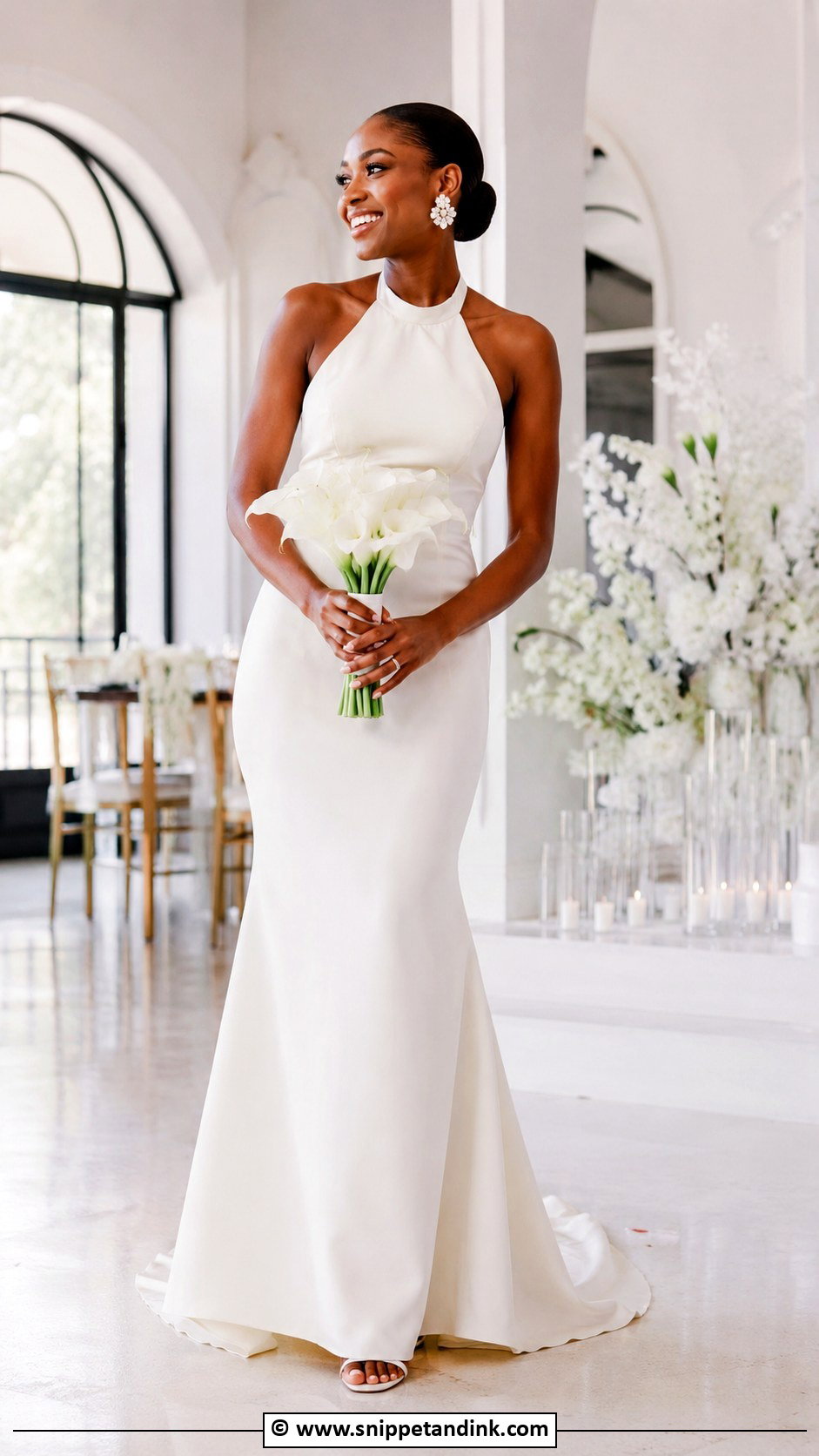
Halter necks show off the shoulders and give the upper body solid support without a strapless bodice. The weight hangs from the neck, though, so a heavy beaded halter can feel tiring by the evening. Satin keeps it minimal; lace or beading adds detail. Skip the necklace and frame the face with earrings. A low bun, braided updo or smooth ponytail keeps the back visible. It’s a favorite for beach and warm-weather weddings.
26. Plunging Neckline Wedding Dress
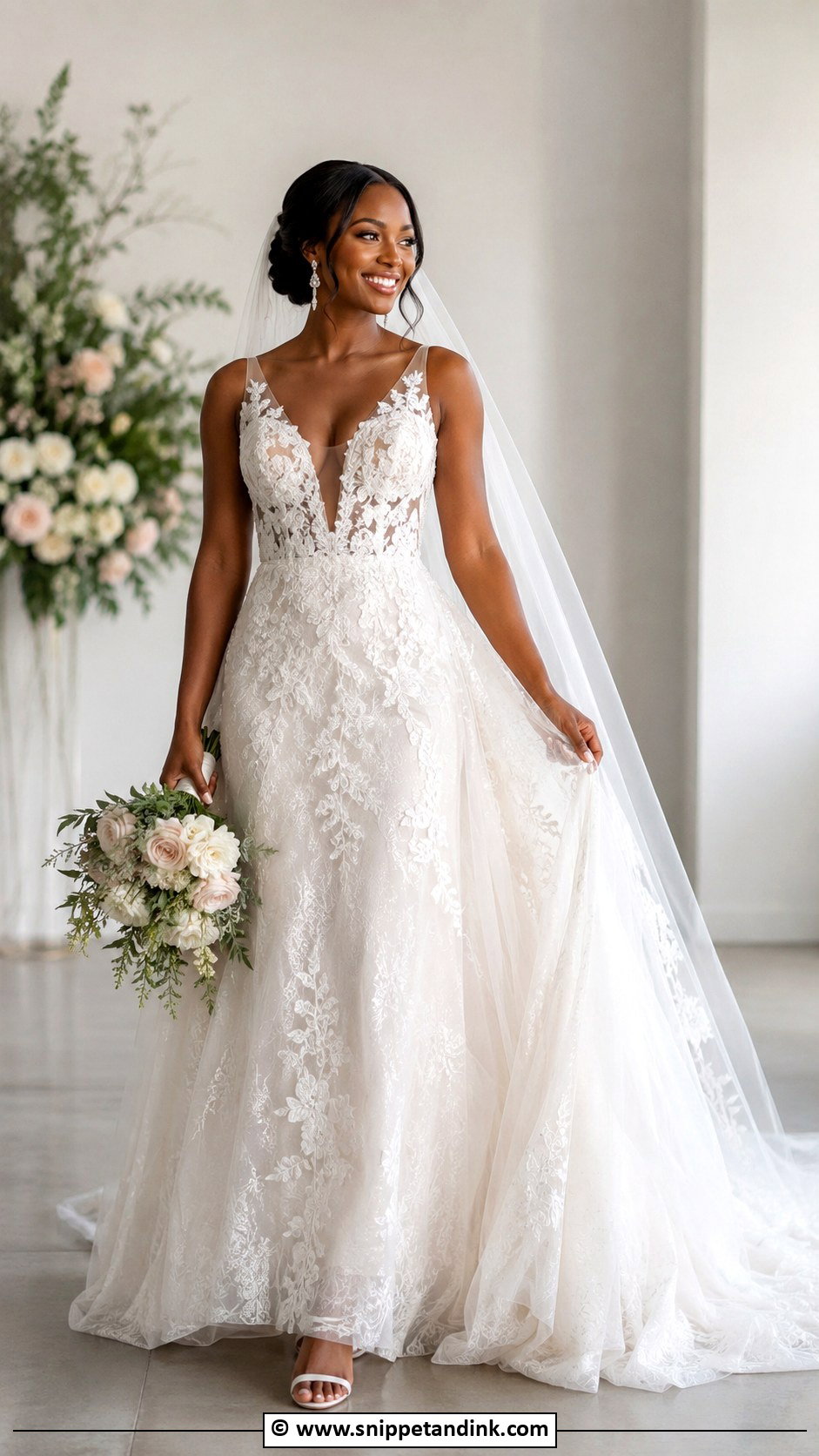
A plunging neckline can look refined when the fit and lining are right. Illusion mesh gives support and coverage, but for Black brides the mesh must be matched to your skin, or it turns into a visible panel down the chest. Ask your shop to source a tulle that matches, and look at it in daylight. The deep V lengthens the upper body over a full, fitted or A-line skirt. I’d also have fashion tape on hand for the day, even with a well-fitted bodice.
27. Two Piece Wedding Dress
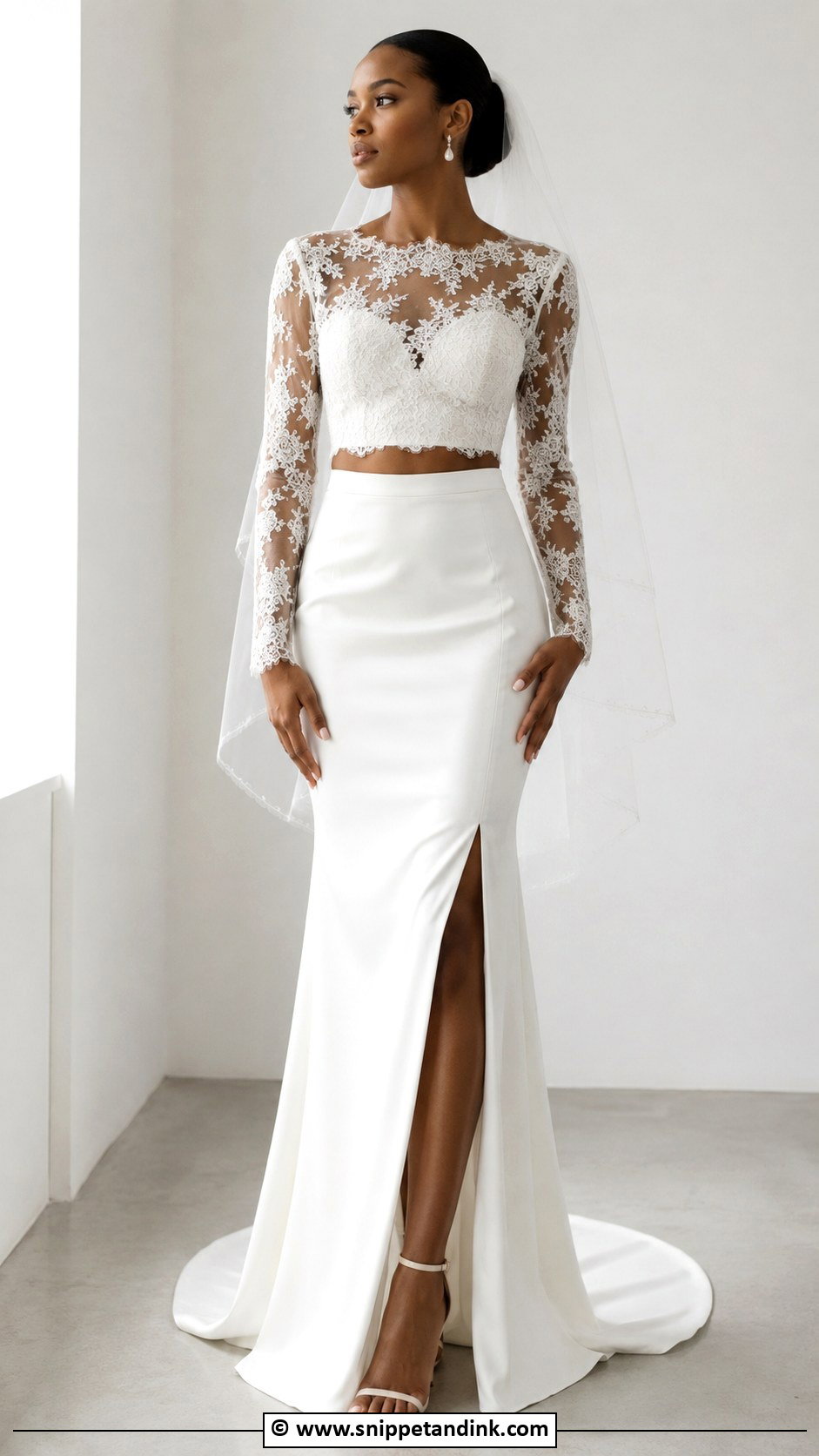
Two-piece dresses are easy to customize: a crop bridal top with a high-waist skirt, a lace blouse over satin, or a structured bodice with a detachable skirt. The gap between pieces can be a sliver or none at all. I make brides sit, raise their arms and dance at the fitting, because the top tends to ride up when you lift your arms. Matching fabrics or tones keep it cohesive. It suits destination weddings and receptions, and you can often wear the top or skirt again.
28. Ruffle Skirt Wedding Dress
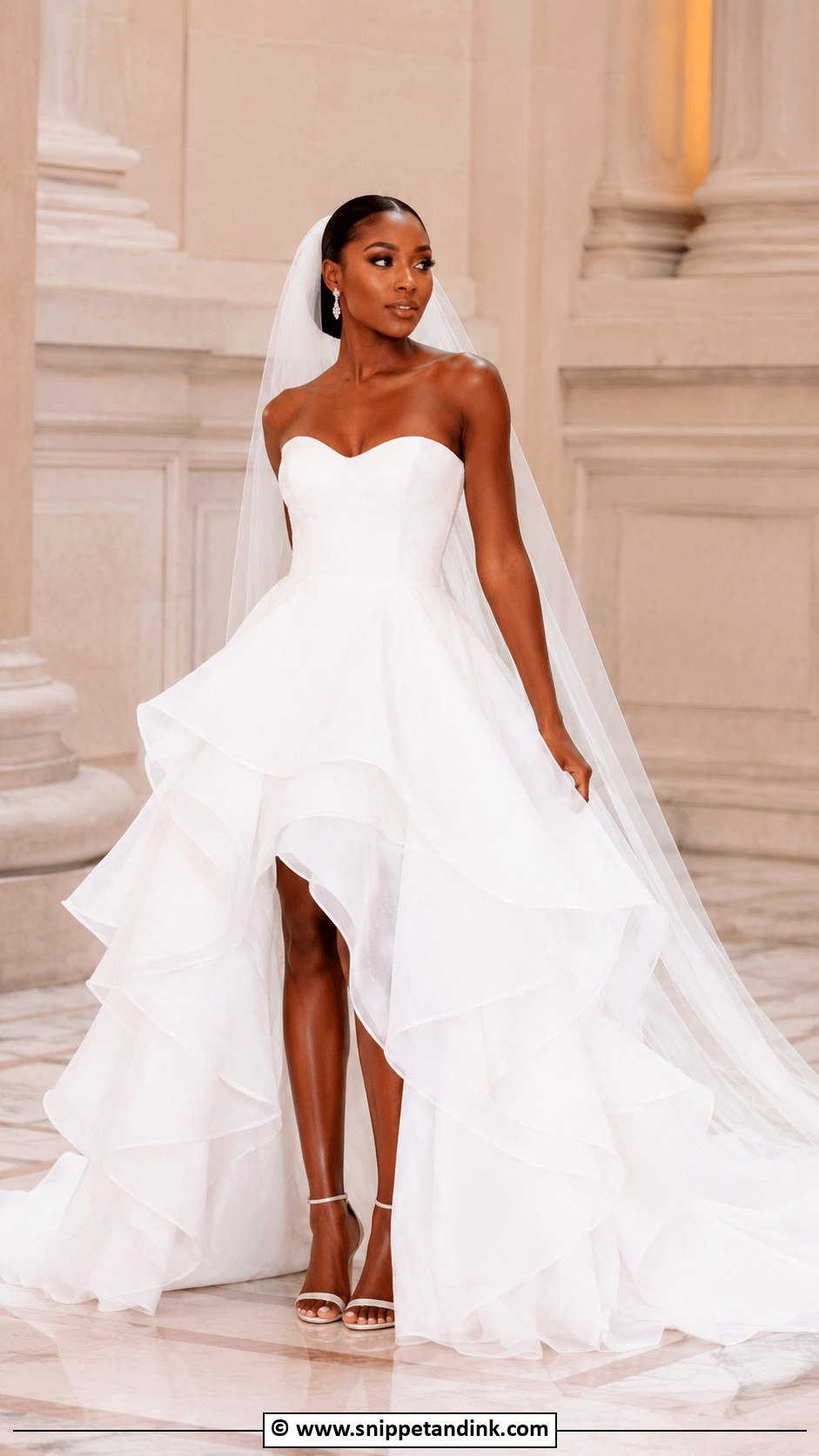
Ruffles add volume and texture, and the fabric decides the mood. Organza and tulle make airy layers; satin ruffles are heavier and more sculpted. I balance a ruffled skirt with a plain bodice: strapless, corset or a clean V. Every layer catches light and shadow, which photographs with real depth against deep skin. Practically, ruffled skirts take up room, so check the aisle width and the car you’re arriving in.
29. Sheer Sleeve Wedding Dress
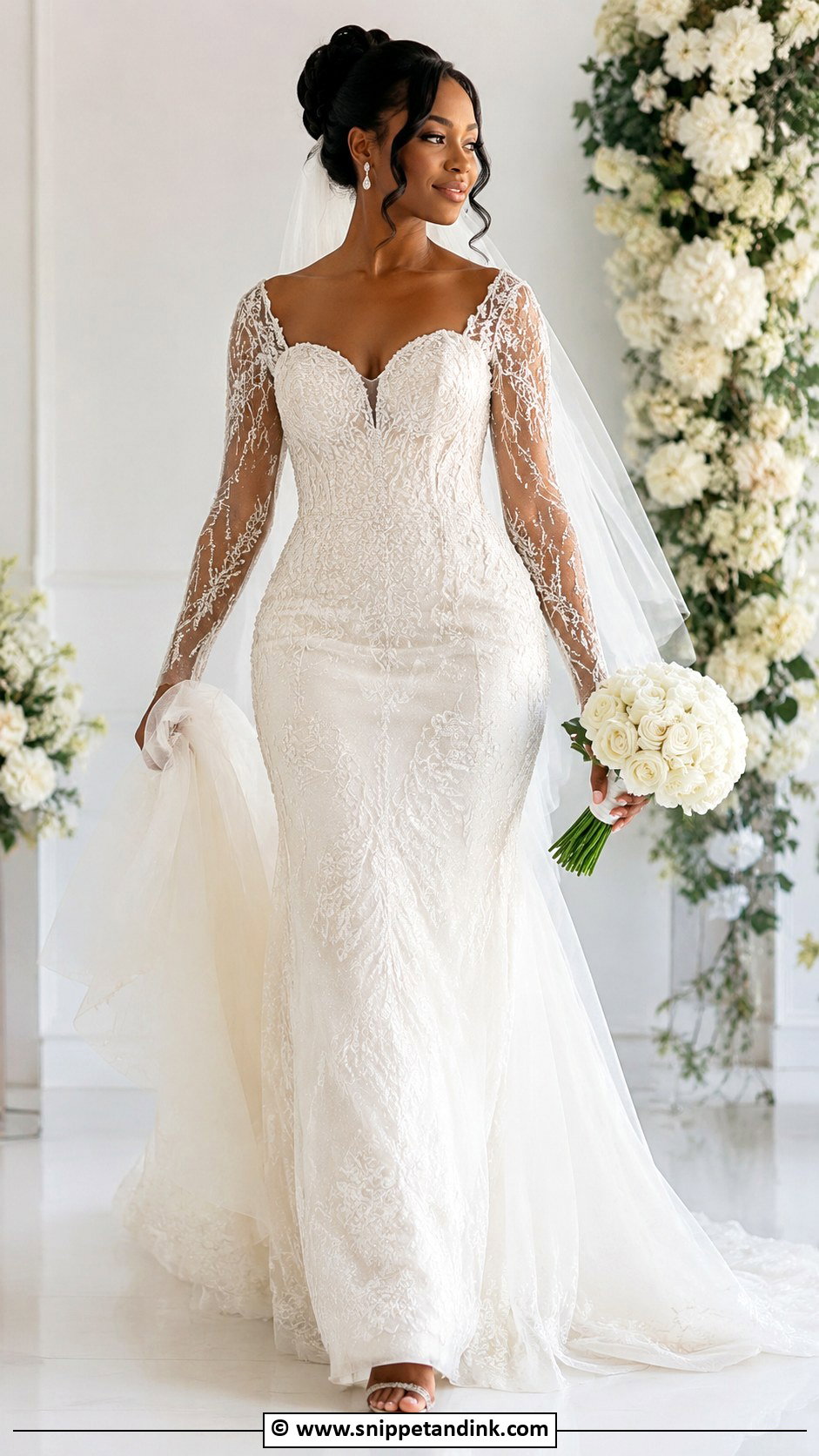
Sheer sleeves give arm coverage that still feels light. They can be plain, lace, beaded, puffed or fitted, and on Black skin a well-matched sheer base lets the detail stand out on its own. Have the sleeves fitted with your arms bent, not straight, or they’ll pull at the elbow when you hold your bouquet. Avoid bracelets with beaded sleeves, since they catch. Simple earrings and a smooth veil complete it.
30. Simple Slip Wedding Dress
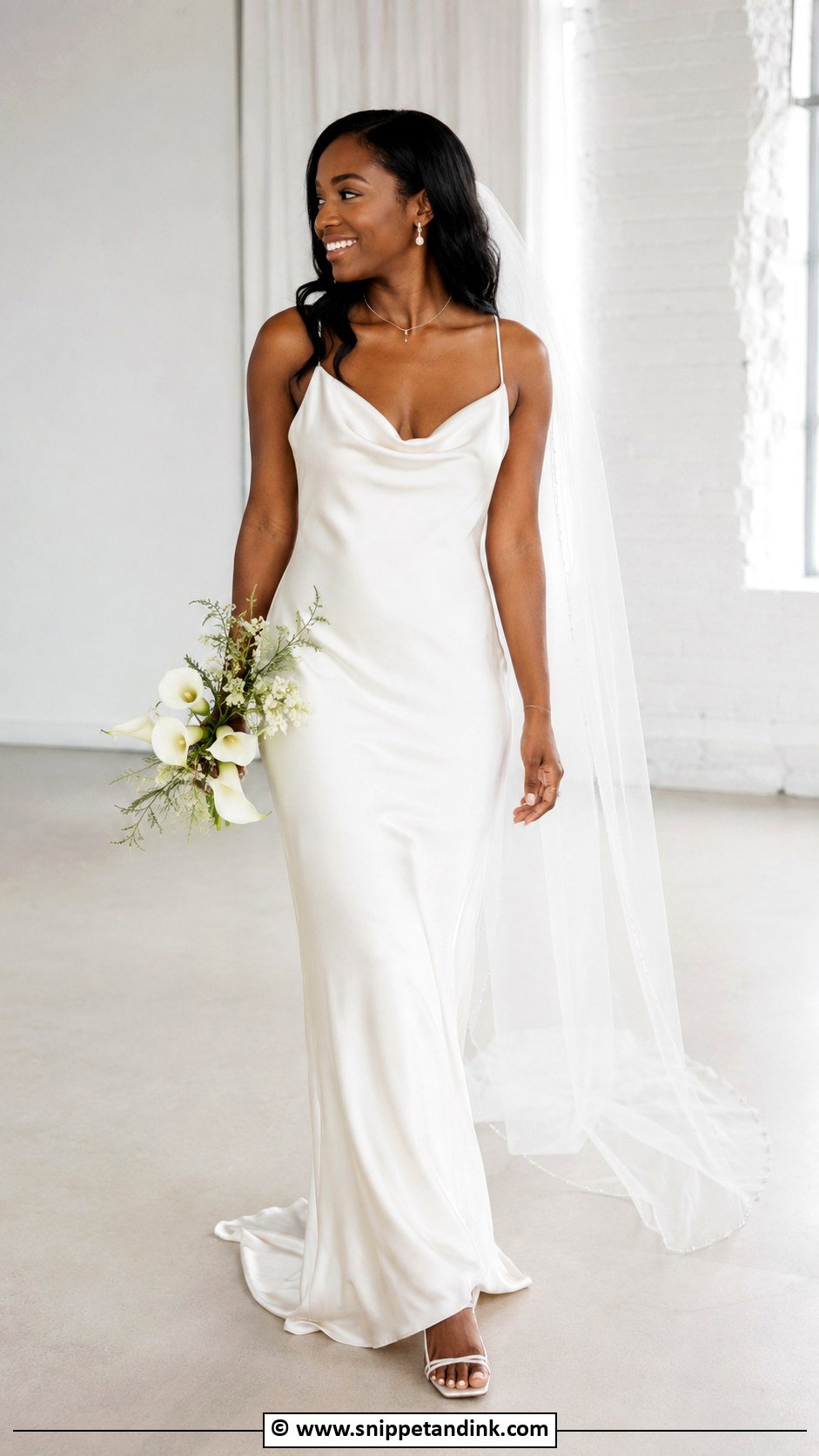
A slip dress relies on fabric and fit more than any other gown here. Silk, satin or charmeuse drapes softly, but bias-cut satin shows every line underneath, so smooth, no-line underwear or a built-in slip is essential. Warm ivory, pearl or champagne glows against brown skin; bright white can look cold. Strappy heels, delicate jewelry and a clean veil, or none, are all it needs. A shawl, cape or tailored blazer adds coverage for the ceremony. Intimate and destination weddings suit it best.
Ordering Early and Planning Two or Three Fittings
Made-to-order gowns commonly take four to six months to arrive, sometimes longer for heavy embroidery or custom colors, so I suggest ordering around eight to ten months out if you can. Rush options exist, but they cost more and narrow your choices.
Alterations usually start about two to three months before the wedding and need two or three appointments. Bring the exact shoes and undergarments every time, plus any hair accessory you plan to wear, because heel height sets the hem and the bra or shapewear changes how the bodice fits. If your weight is changing, tell your seamstress; she’ll leave the final take-in until closer to the date.
What to test at the last fitting
- Sit, stand and climb a step to see how the hem behaves.
- Hug someone and lift your arms to check the bodice holds.
- Have your helper bustle the train and practice it twice.
- Walk in your shoes for ten minutes to find any rubbing seams.
Hair, Veil and Neckline Working Together
Many of the brides I dress wear natural hair, braids, locs or a fresh press, and that affects the gown more than people expect. Big, voluminous styles balance a full skirt but can crowd a high neck or cape. A sleek bun suits strapless and halter shapes. Veil combs grip textured hair well when your stylist anchors them into a braid or a small pinned base, so book your hair trial before your final fitting and bring photos of it so the veil length can be set against your real hairstyle.
Shade, Lining and Fit Matter More Than the Trend
When brides leave my fitting room happy, it’s rarely because of the trend they arrived with. It’s because the shade suited their undertone, the lining disappeared against their skin and the bodice held without being pulled tight. From ball gowns and lace sleeves to slip dresses, jumpsuits and a black gown, these wedding dresses for Black women give you plenty of directions to try. Try on shapes you didn’t expect to like, trust a good seamstress and let your accessories support the dress rather than fight it.
You'll Like These Ideas:




Leave a Reply