
Brides usually arrive at an appointment with a dress in mind and leave having learned that the dress is only half the decision. The other half is the ceremony, the venue floor, the weather, how long you’ll be on your feet and what you can comfortably move in for twelve hours. Below are 25 bridal looks, from ball gowns and sheaths to pantsuits, courthouse outfits, reception changes and lehengas. The current mood favors personal style over rules: clean silhouettes, pearls, lace, sculptural bows, detachable pieces, short dresses and gowns you can actually dance in. Use them to picture the whole outfit, veil, shoes, hair and jewelry included, before you book your first fitting.
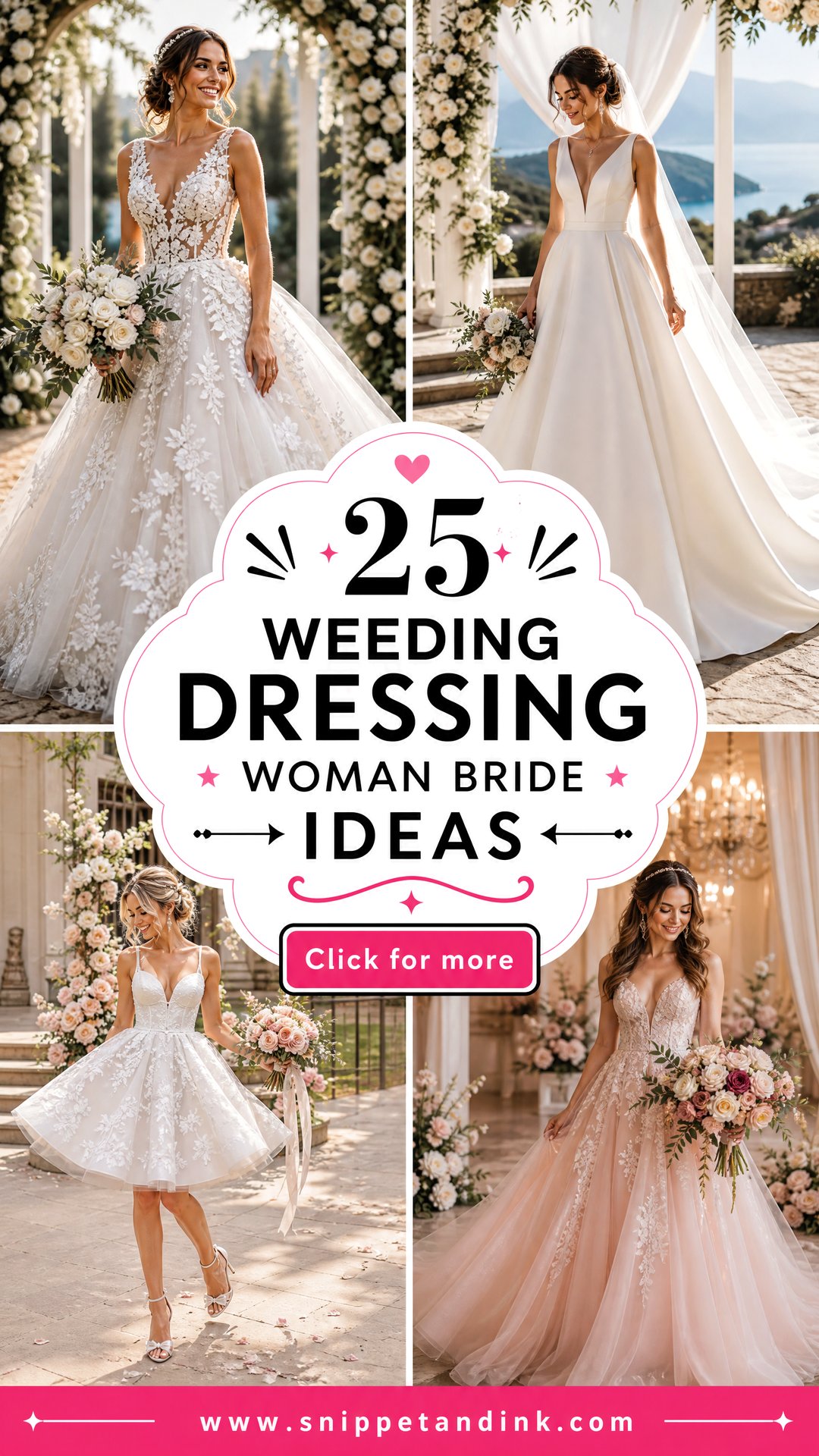
Ordering the Dress on a Calendar That Leaves Room for Alterations
The first thing I ask a new bride isn’t her style, it’s her date. Most made-to-order gowns take several months to produce, and alterations need their own block of time after that. When I plan backwards from the wedding, it usually looks like this:
- Nine to twelve months out: shop and order. Sample sizes and shop timelines vary, so ask each boutique for its delivery window in writing.
- Four to six months of production for most designer gowns; some arrive sooner, some later.
- Eight to ten weeks before the wedding: first alterations fitting, with your real shoes and underwear.
- Two or three fittings in total for most dresses. Heavily beaded or lace gowns can need more.
- One to two weeks before: final fitting, bustle practice and pick-up.
Short on time? Off-the-rack gowns, ready-to-wear separates and many of the courthouse and reception styles below can be bought and fitted within a few weeks. Rush fees for made-to-order gowns exist, but they vary a lot and aren’t always possible.
1. Classic Ball Gown Wedding Dress
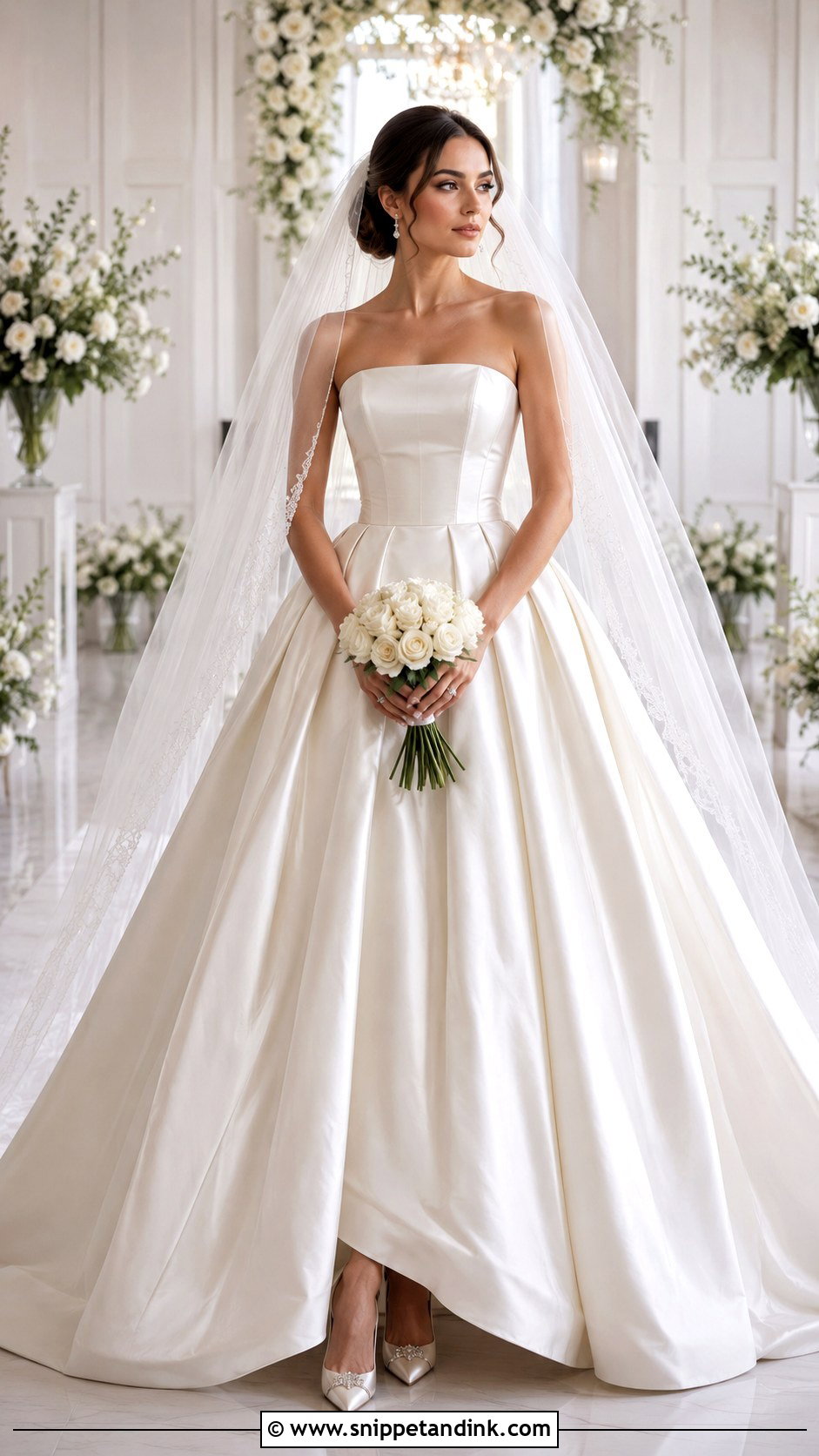
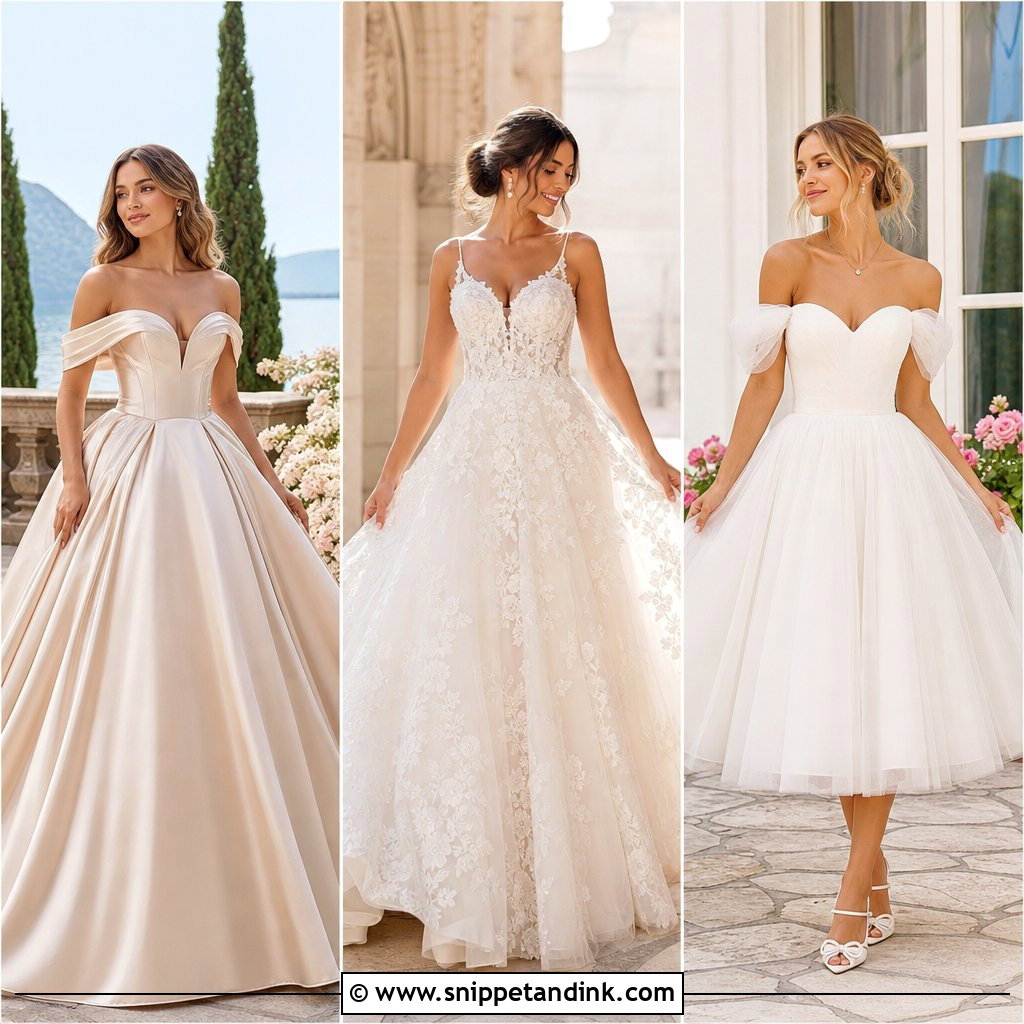
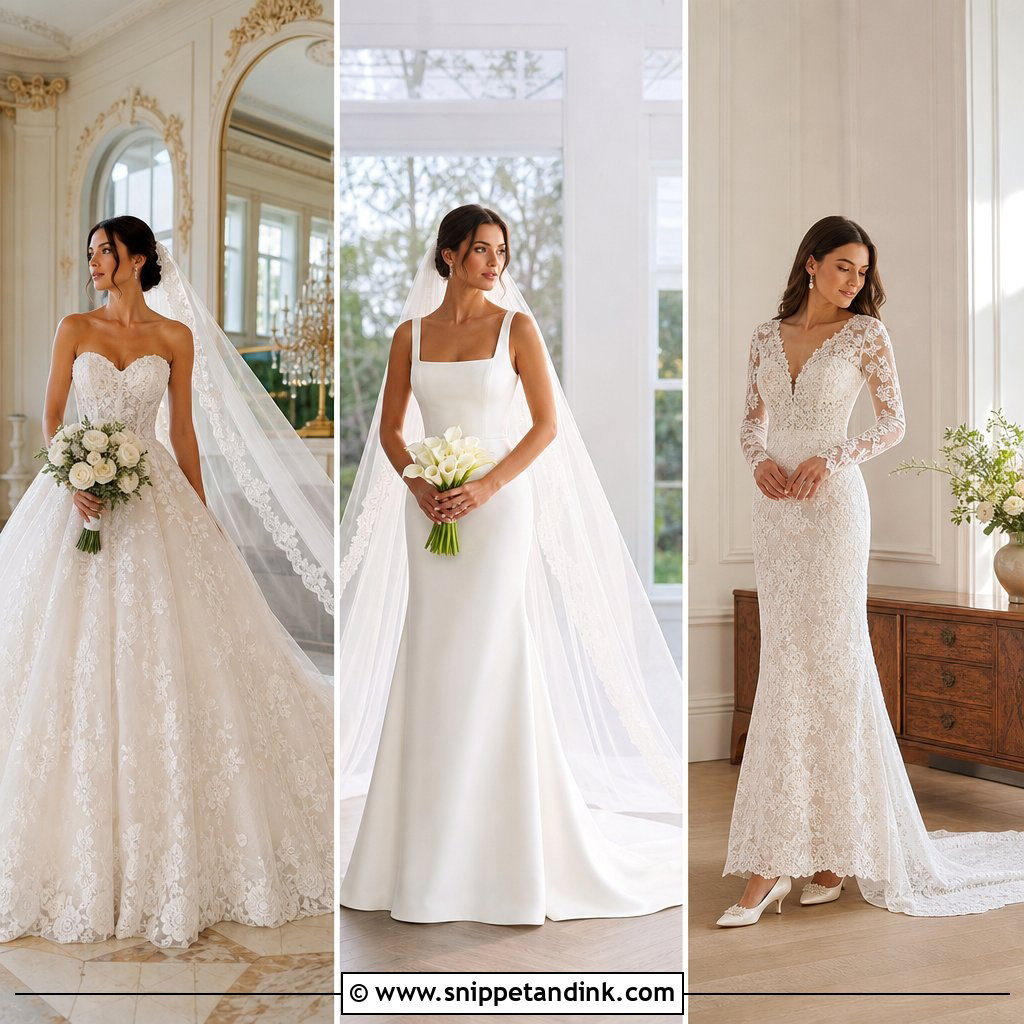
A classic ball gown wedding dress gives you the grand entrance, but I make every bride who wants one sit, climb a step and walk through a doorway in the sample first. A structured bodice and full skirt need a fabric that holds volume on its own, which is why satin, mikado and organza are the usual choices; tulle alone often needs a hoop or layers of petticoat. Pair it with a cathedral veil, pearl drop earrings and pointed heels hidden under the hem. Keep the bouquet soft. Formal venues and large celebrations suit it, though a narrow aisle or a small car will test it.
2. Simple Satin Wedding Dress
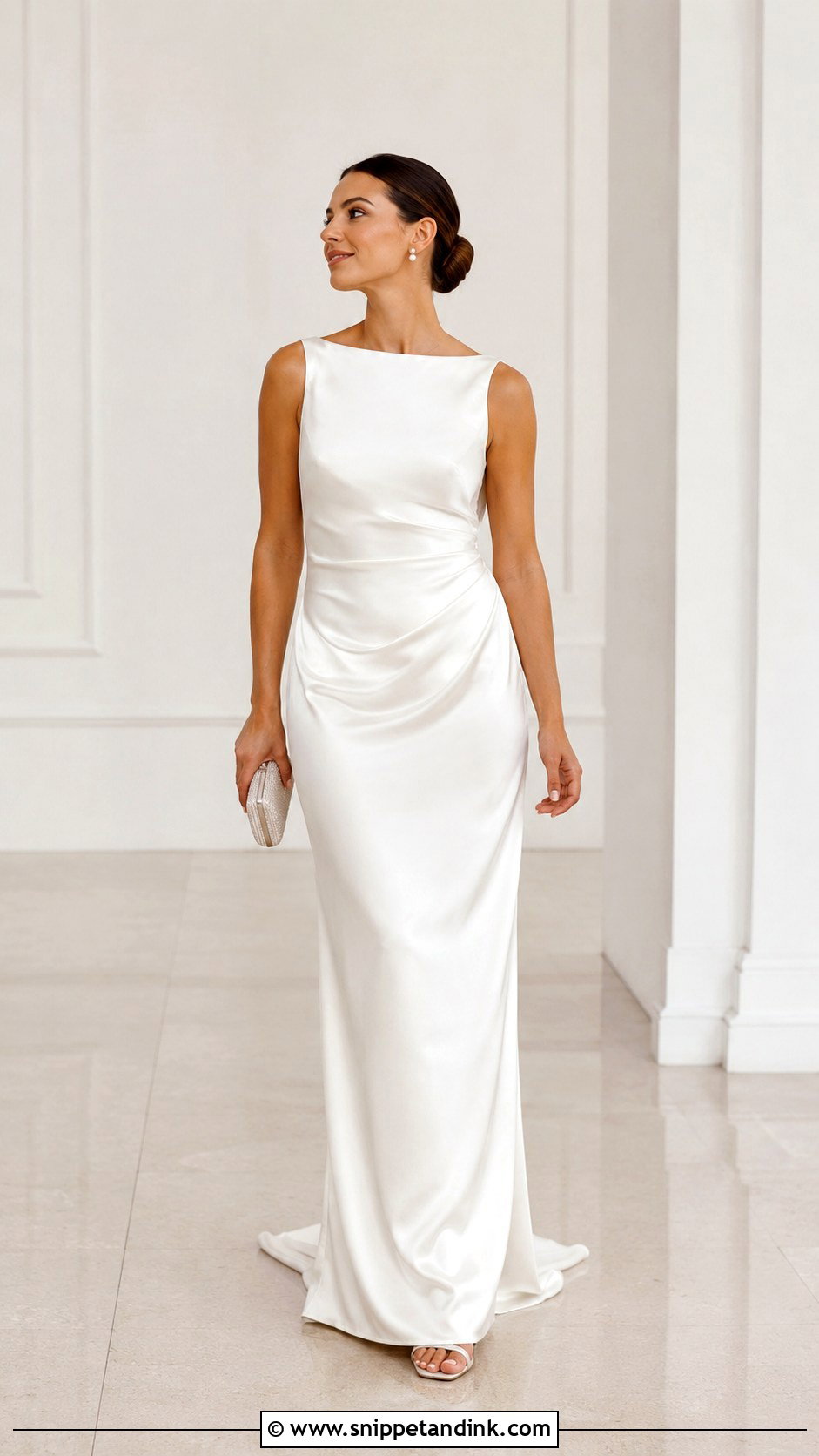
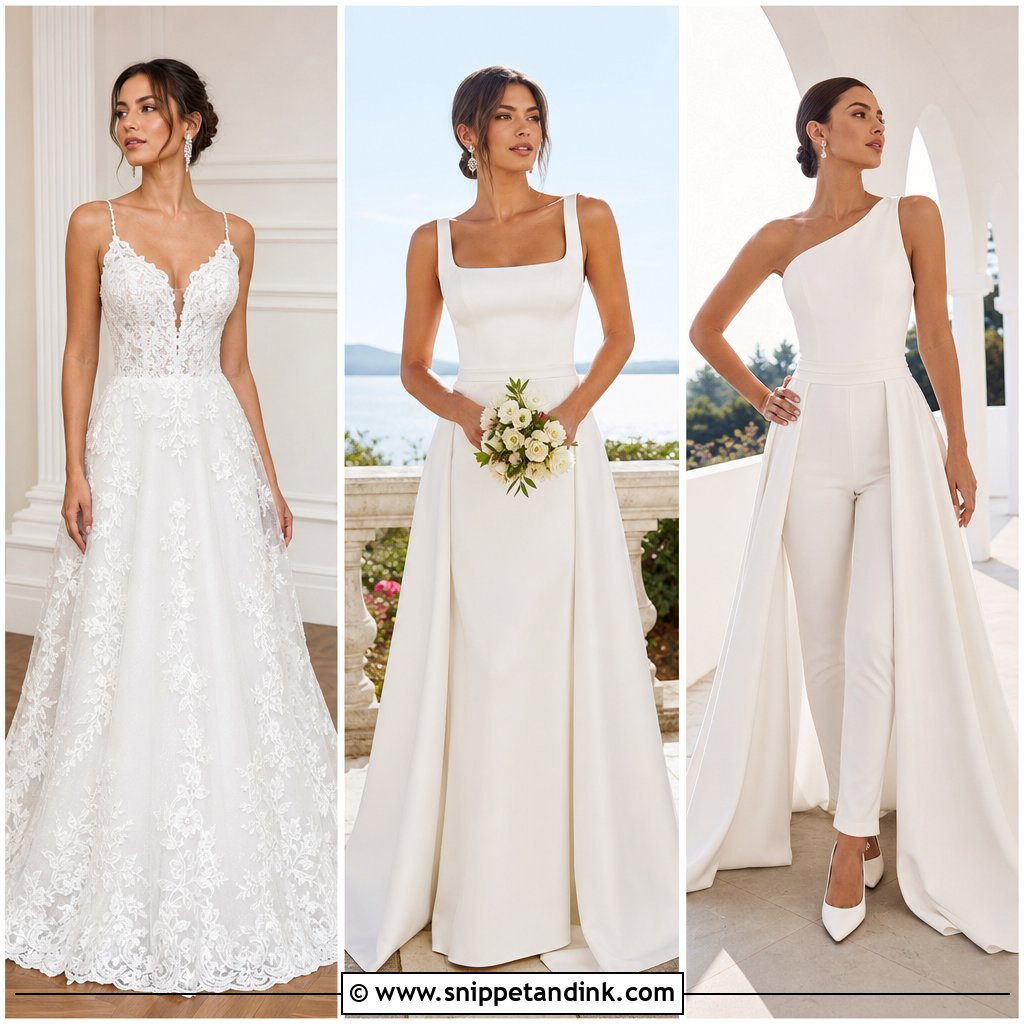
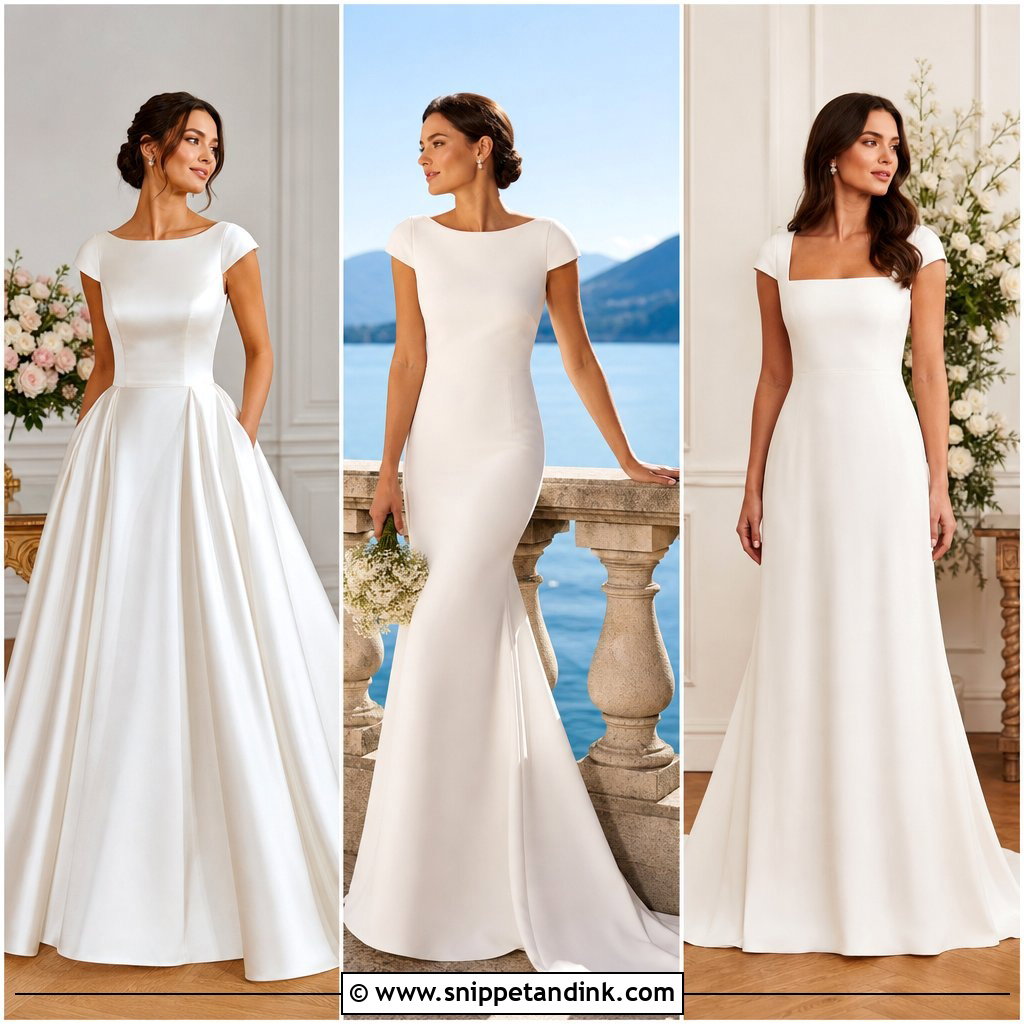
Satin hides nothing, so a simple satin dress is all about the fit and what’s underneath. I ask brides to bring their actual shapewear to the first fitting, because heavy satin shows a seam or a line that a lace overlay would hide. A slip shape, an A-line satin gown or a fitted column all look refined. The neckline should flatter you and the skirt should skim rather than pull across the hips. Pearl studs, a sleek low bun and strappy heels finish it for hotel weddings, rooftop venues and intimate ceremonies. Plan a steamer for the morning; satin creases in the car.
3. Lace Long Sleeve Wedding Dress
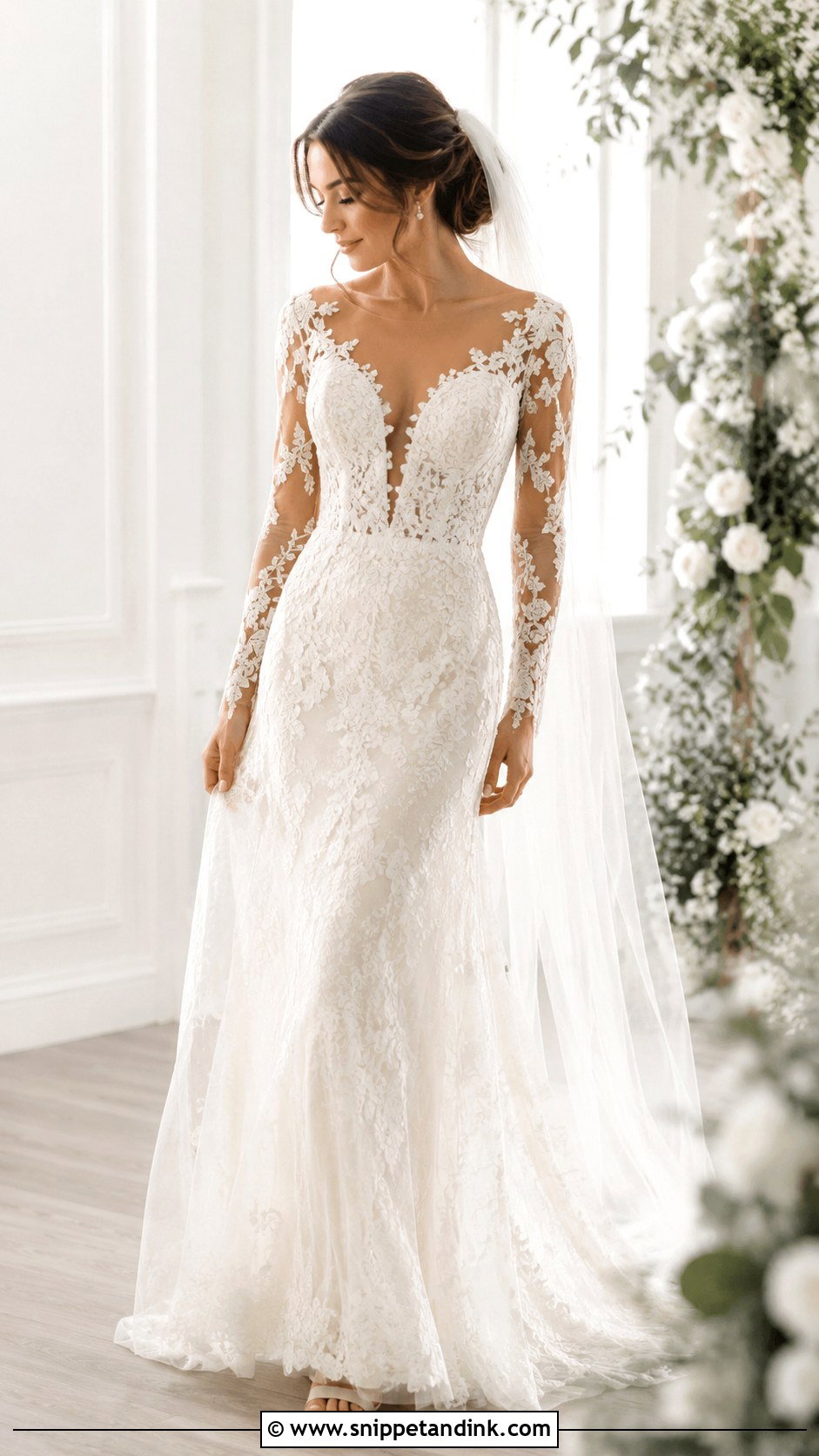
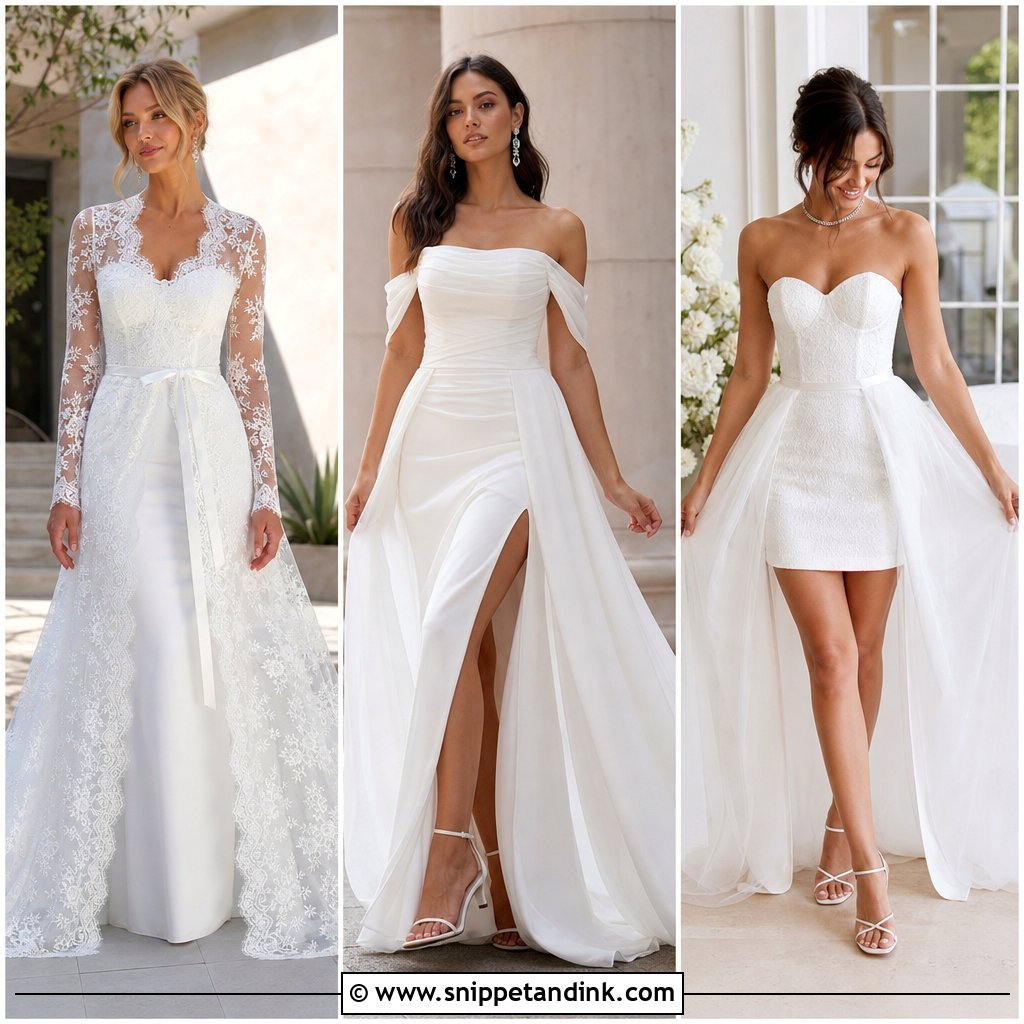
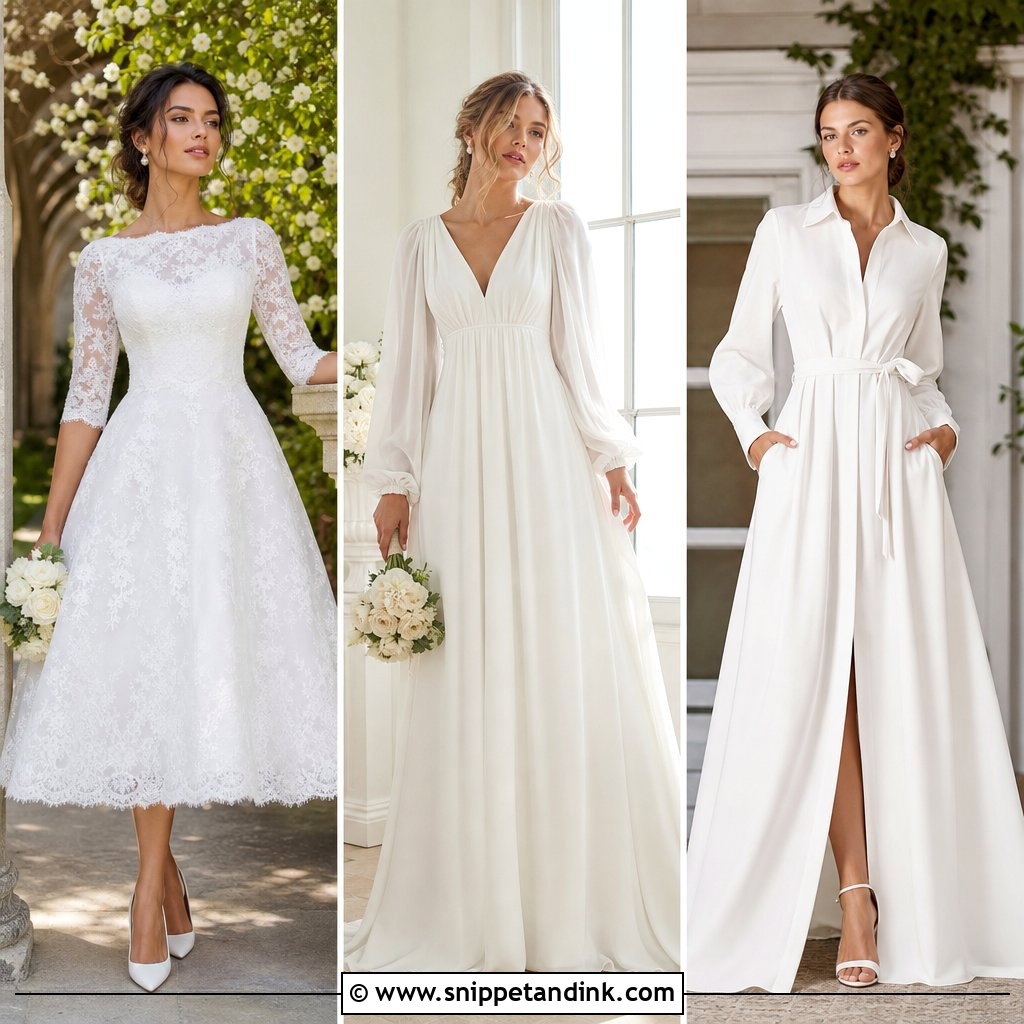
Lace sleeves give coverage without weight, which is why they suit cooler seasons and churches with a modesty rule. The thing I check first is the sleeve fit at the elbow and the armhole. Sheer lace sleeves cut too close restrict your arms when you hug or reach up, and they can tear at the seam during the first dance. Over a fitted bodice and a flowing skirt, the lace carries enough detail, so keep accessories small: a plain veil, small earrings, neutral heels. A soft updo keeps the sleeves and neckline clear for indoor or vintage-feeling outdoor ceremonies.
4. Off Shoulder Wedding Dress
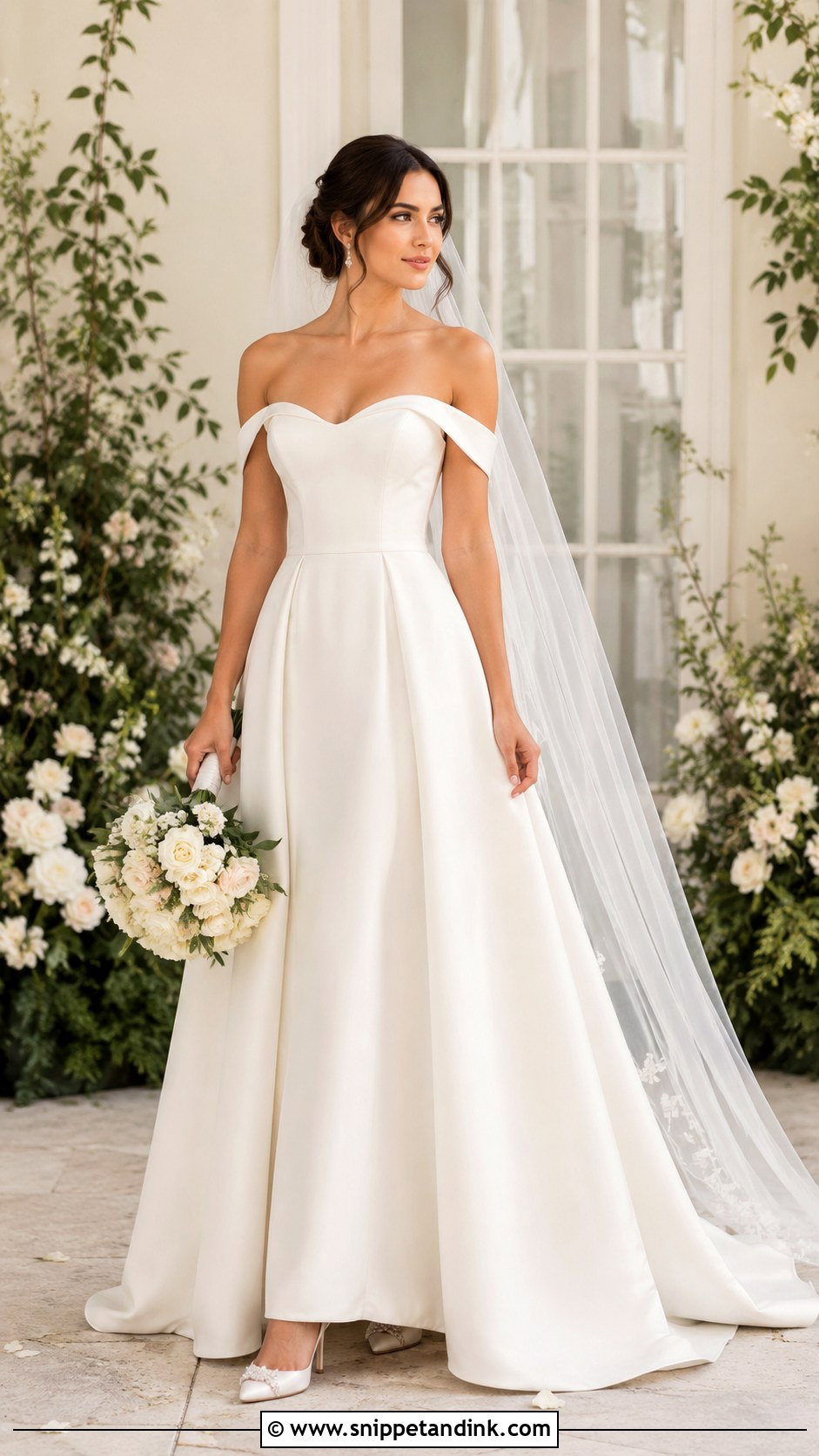
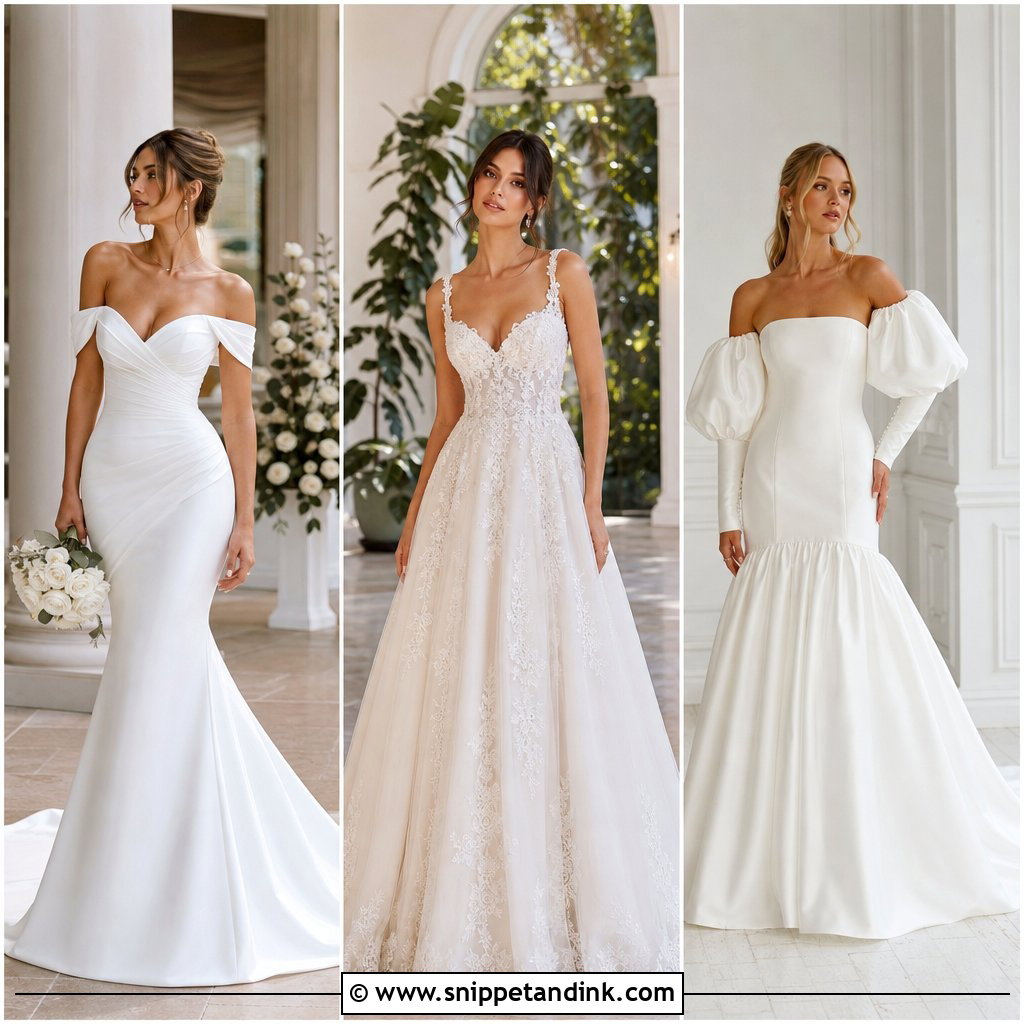
An off shoulder neckline frames the collarbone and suits brides who want romance without straps. Before buying, I check two things: whether the dress is boned firmly enough to stay up without the arms pinned, and whether you can lift your arms to shoulder height. Many off shoulder bodices can’t, which matters for hugs and the bouquet toss. A fitted bodice with an A-line skirt looks classic; a sleek column looks modern. Wear a delicate necklace only if the neckline is plain, otherwise earrings and a smooth veil. Hair up or pushed back shows off the line in ballroom, garden or formal venues.
5. Corset Wedding Dress
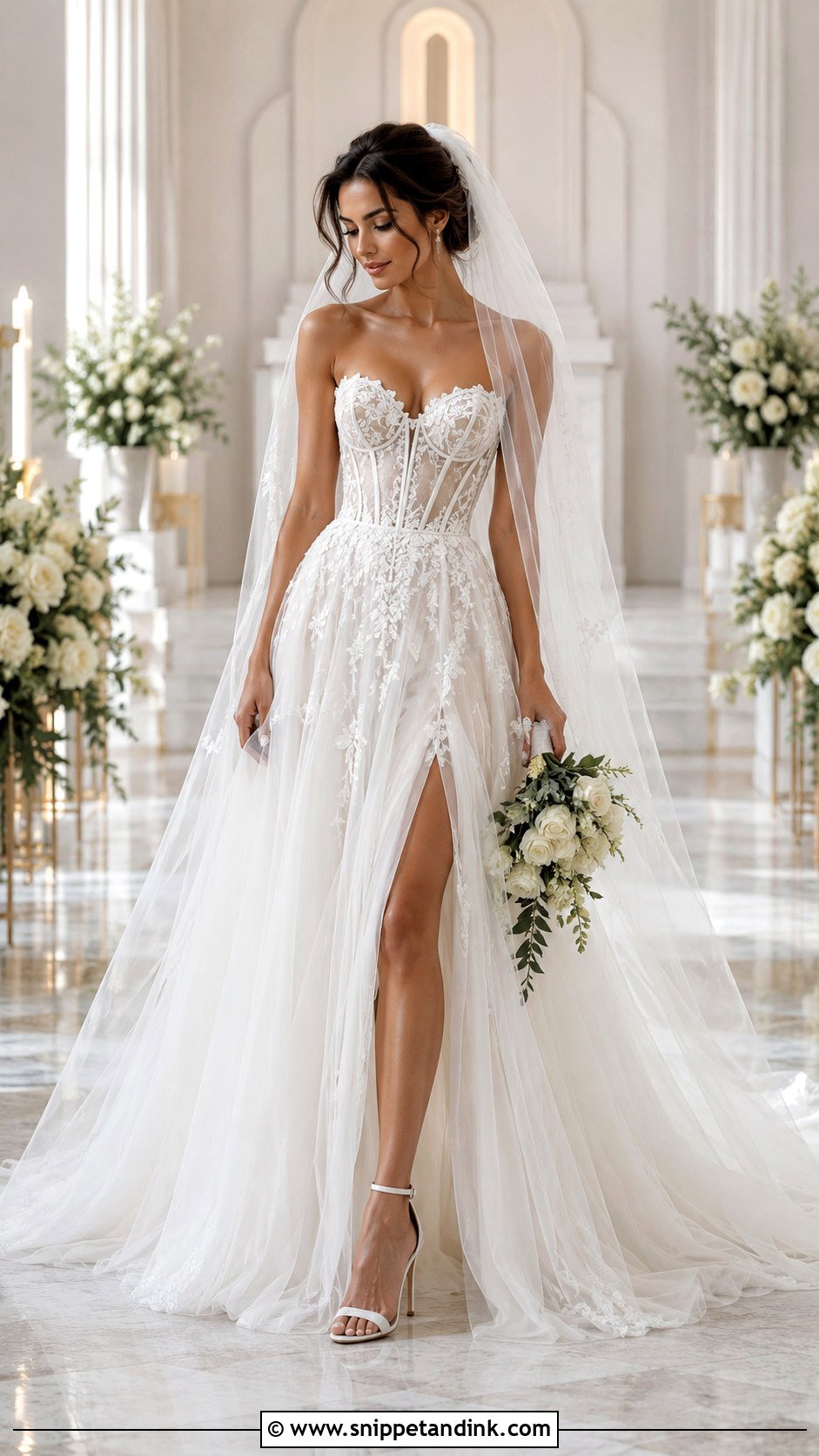
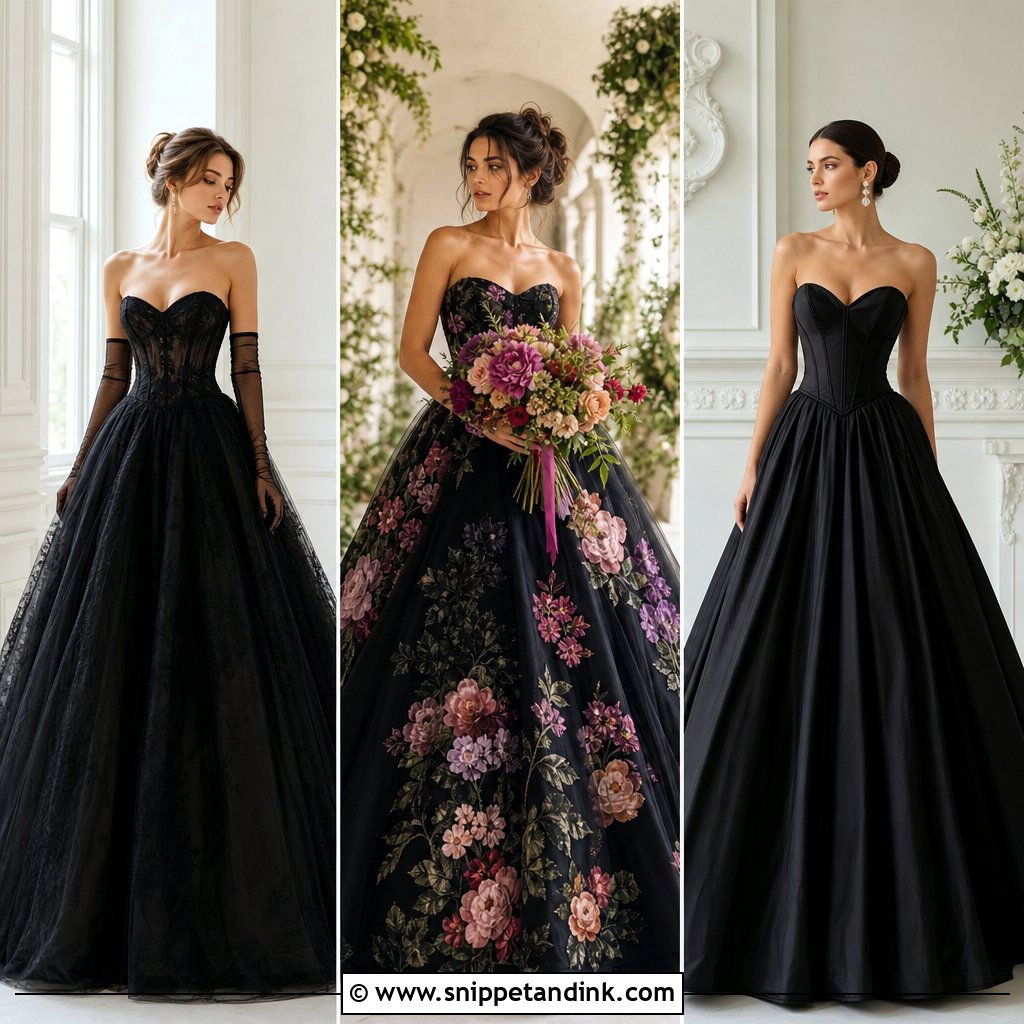
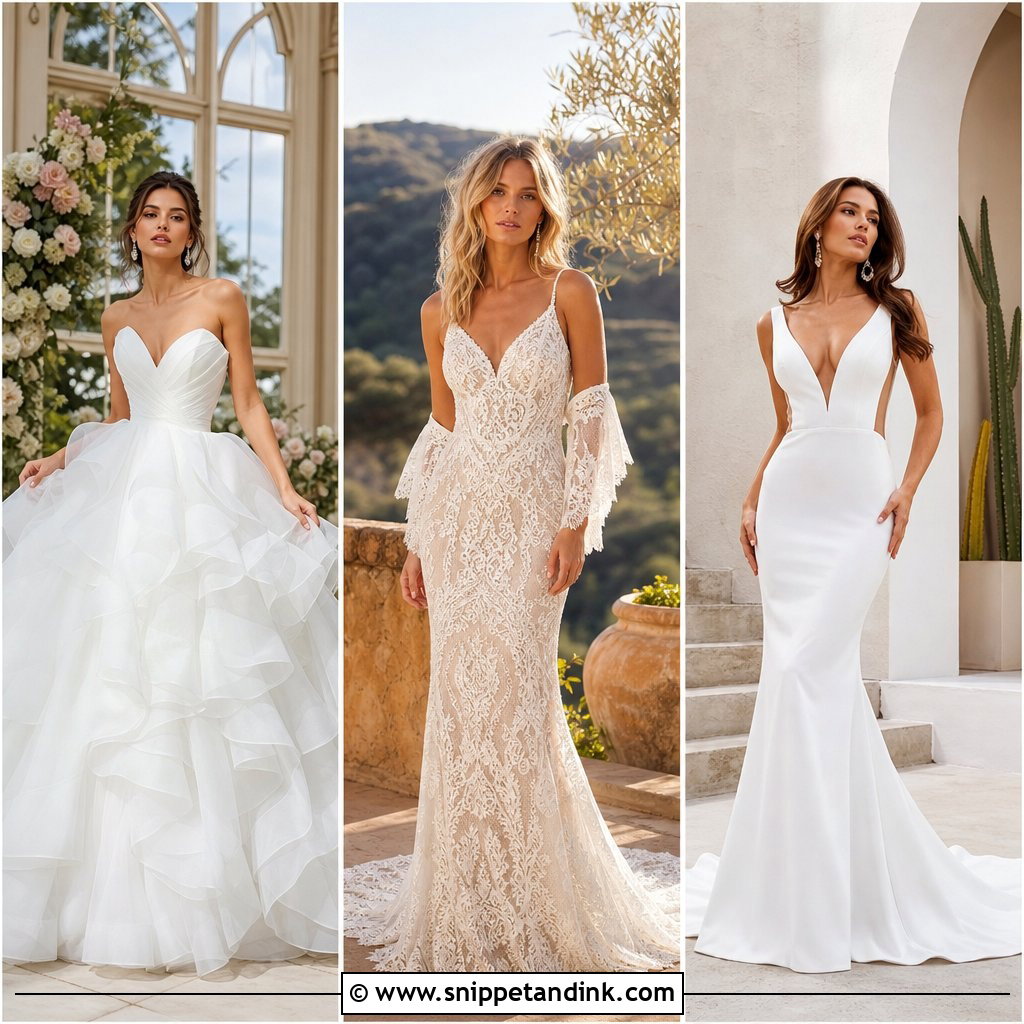
A corset bodice should feel supportive, not stiff. The boning is what gives that sculpted waist, and a well-made corset distributes the pressure so you can still breathe through dinner. I always ask the bride to sit and eat something at the final fitting, because a corset fitted while standing can dig in once you sit. Pair it with a flowing tulle skirt for romance or a satin column for a sharper look, and add a long veil, simple earrings and clean heels. If the boning or lace is visible, keep the accessories minimal.
6. Pearl Wedding Dress
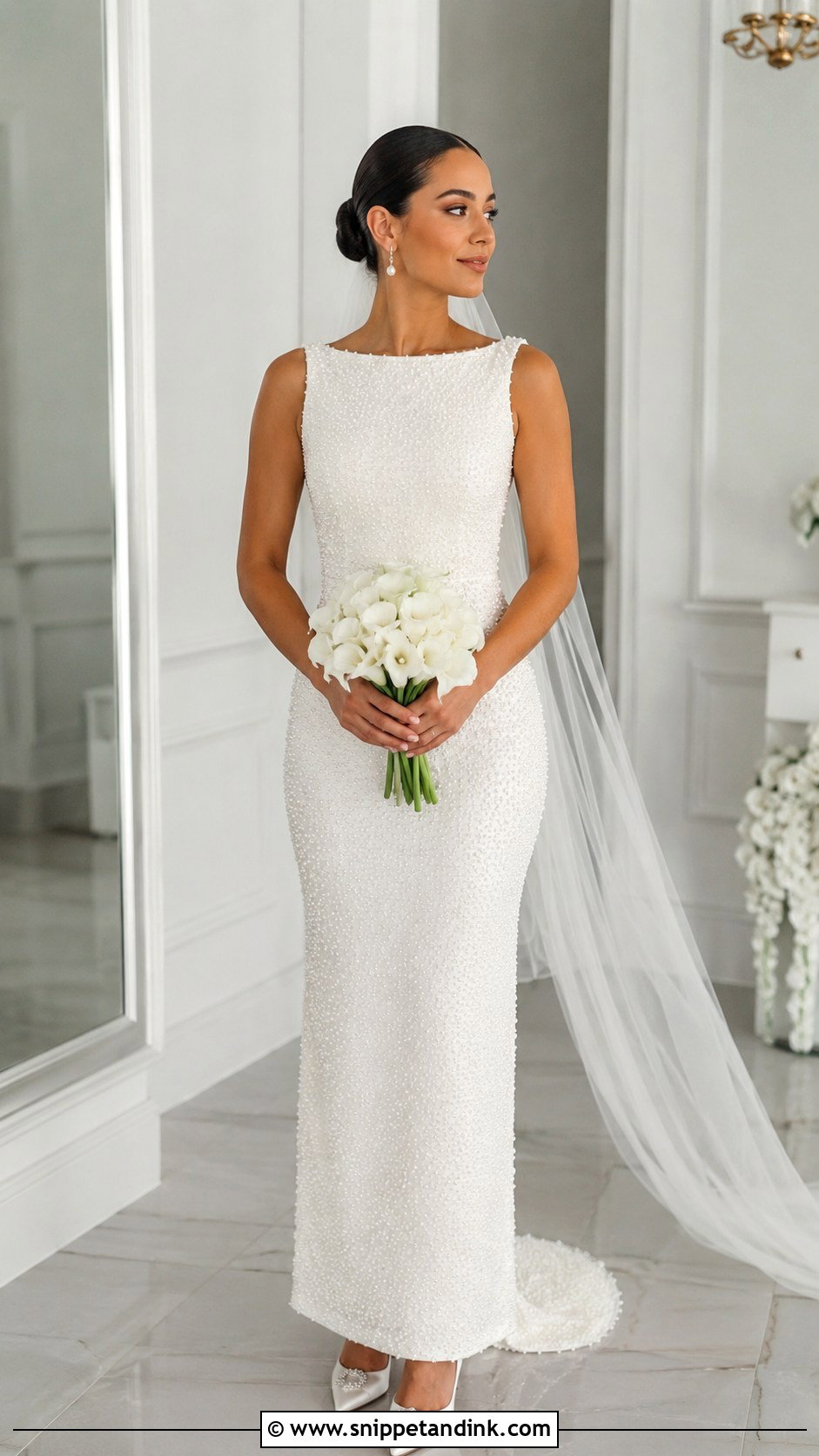
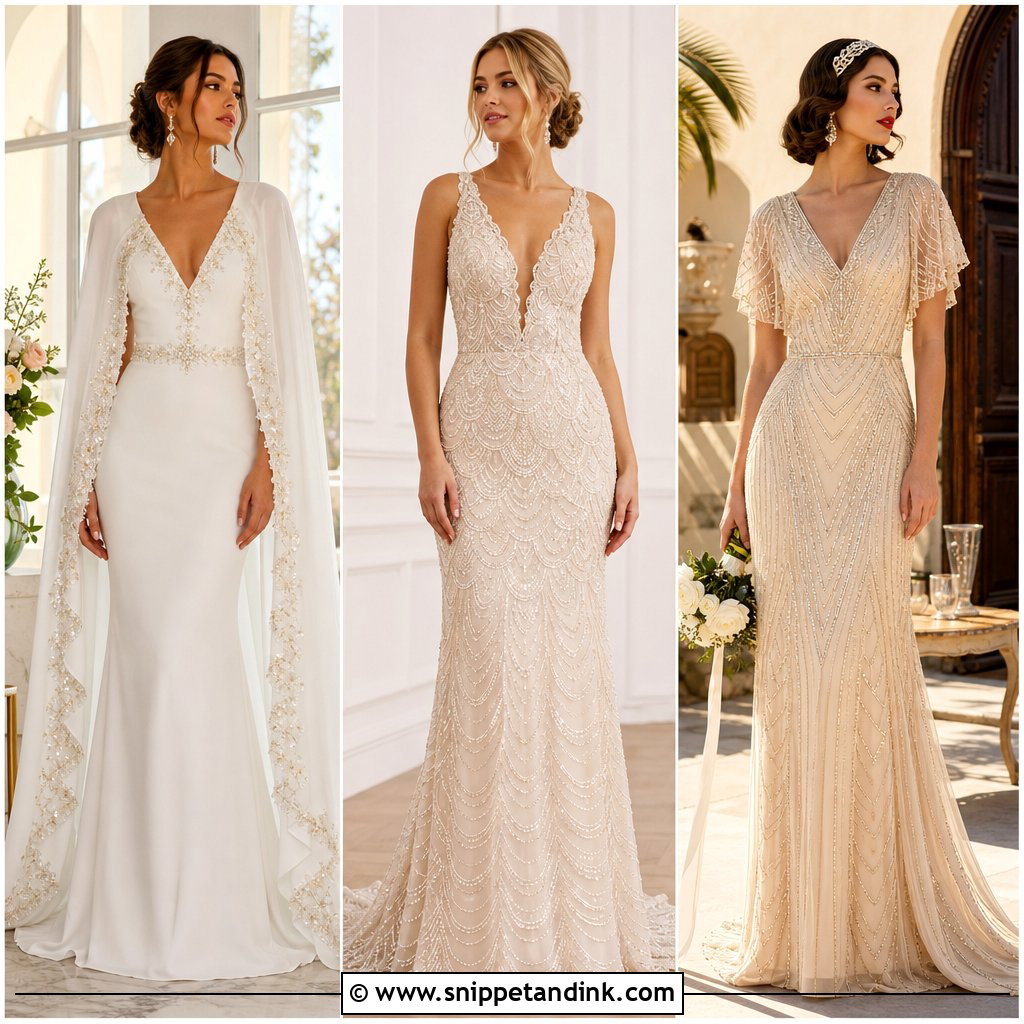
Pearls give texture and a soft glow without the hard flash of crystals. The styling rule I follow is one main pearl area: the bodice, the sleeves, the veil or the skirt, not all of them. A pearl-embellished sheath with pearl earrings and satin heels looks modern; a fuller pearl tulle gown feels romantic. Sewn pearls add real weight, so heavily beaded sleeves can pull the shoulder seams forward by the evening; check that the bodice is supported. Keep the bouquet plain and skip a necklace if the bodice already has detail. Formal weddings and evening receptions suit it.
7. Floral Applique Wedding Dress
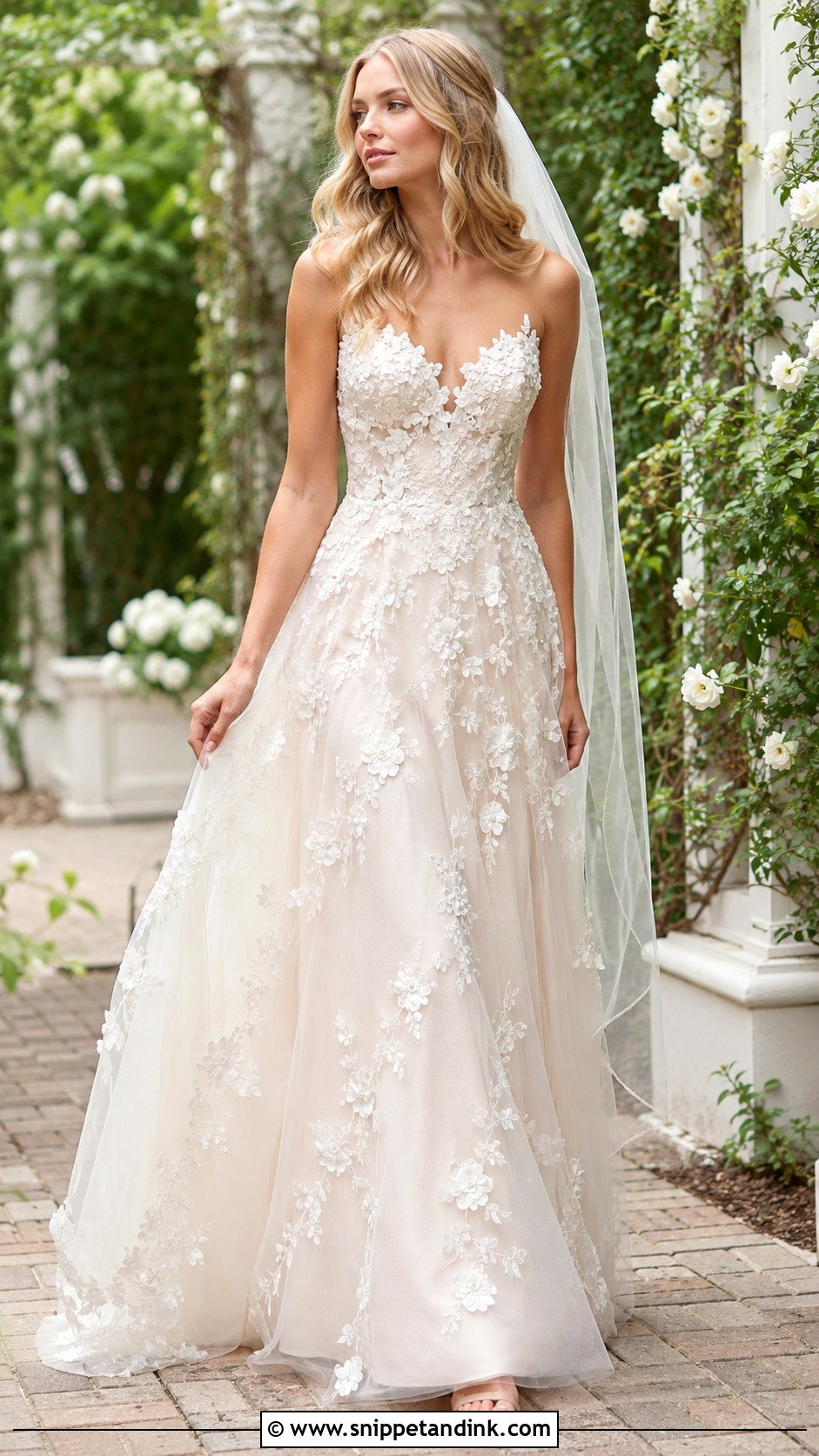
3D petals, lace flowers and embroidered vines bring visible detail, and they do best where the light is good: garden weddings, spring ceremonies, outdoor estates and bright rooms. A fitted bodice with a flowing skirt balances the texture. The thing brides don’t expect is how easily raised petals snag on a veil comb or a hug, so I suggest a veil with a clean cut edge rather than a lace one. Barely-there heels, soft waves and a simple veil keep the florals in front. The appliqué moves with you, which shows in candid shots.
8. Mermaid Wedding Dress
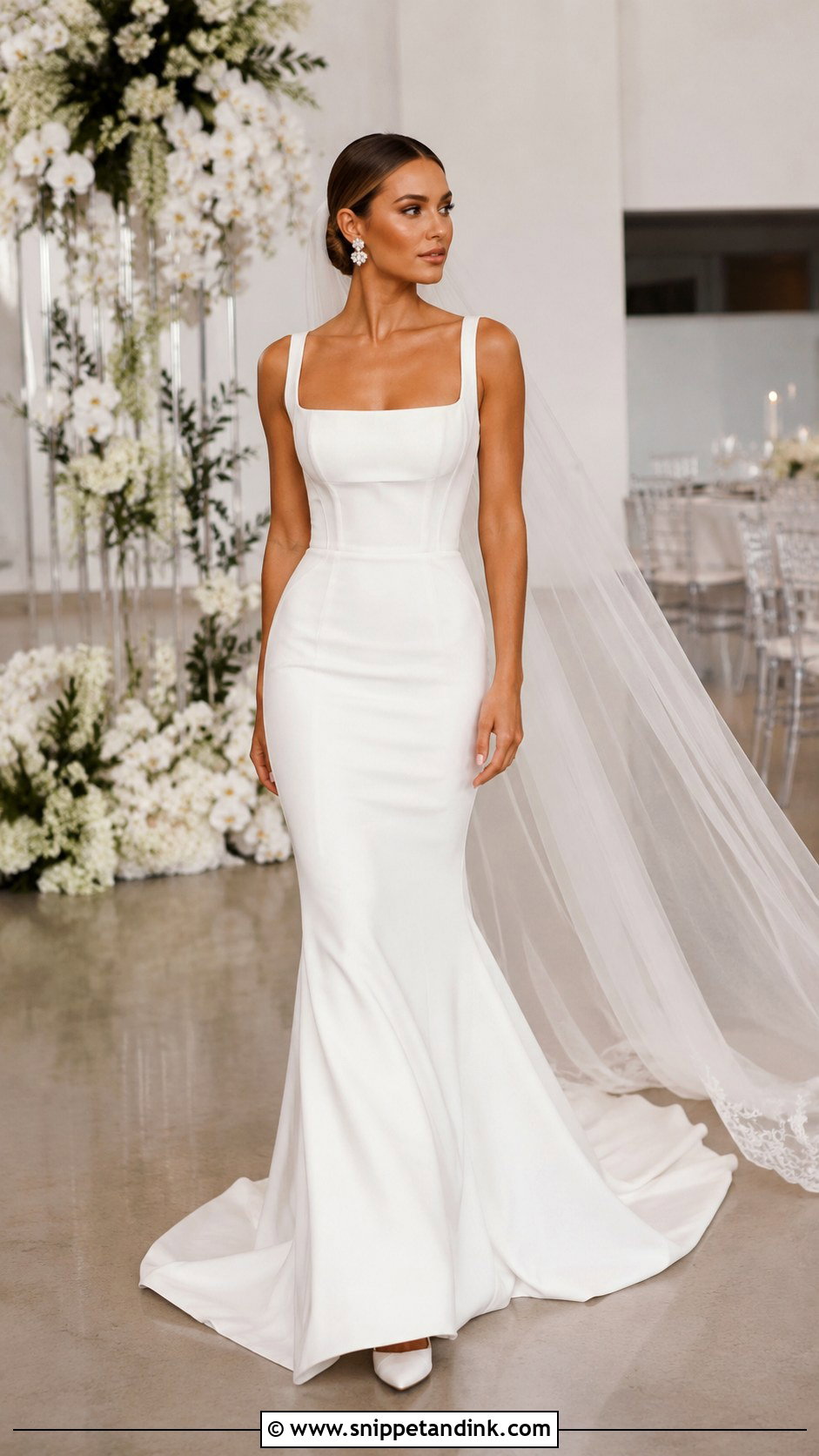
Mermaid gowns hug the waist and hips, then flare near the knee. The flare point is the decision: a true mermaid flares at or below the knee and limits your stride; a trumpet flares mid-thigh and walks much more easily. I always have a bride climb stairs in the sample. Stretch crepe, satin, lace or mikado change the feel from soft to structured. Sculptural earrings, sleek heels and a long veil give height. It needs a bustle that lifts the train cleanly, and it suits formal venues and evening celebrations.
9. A Line Wedding Dress
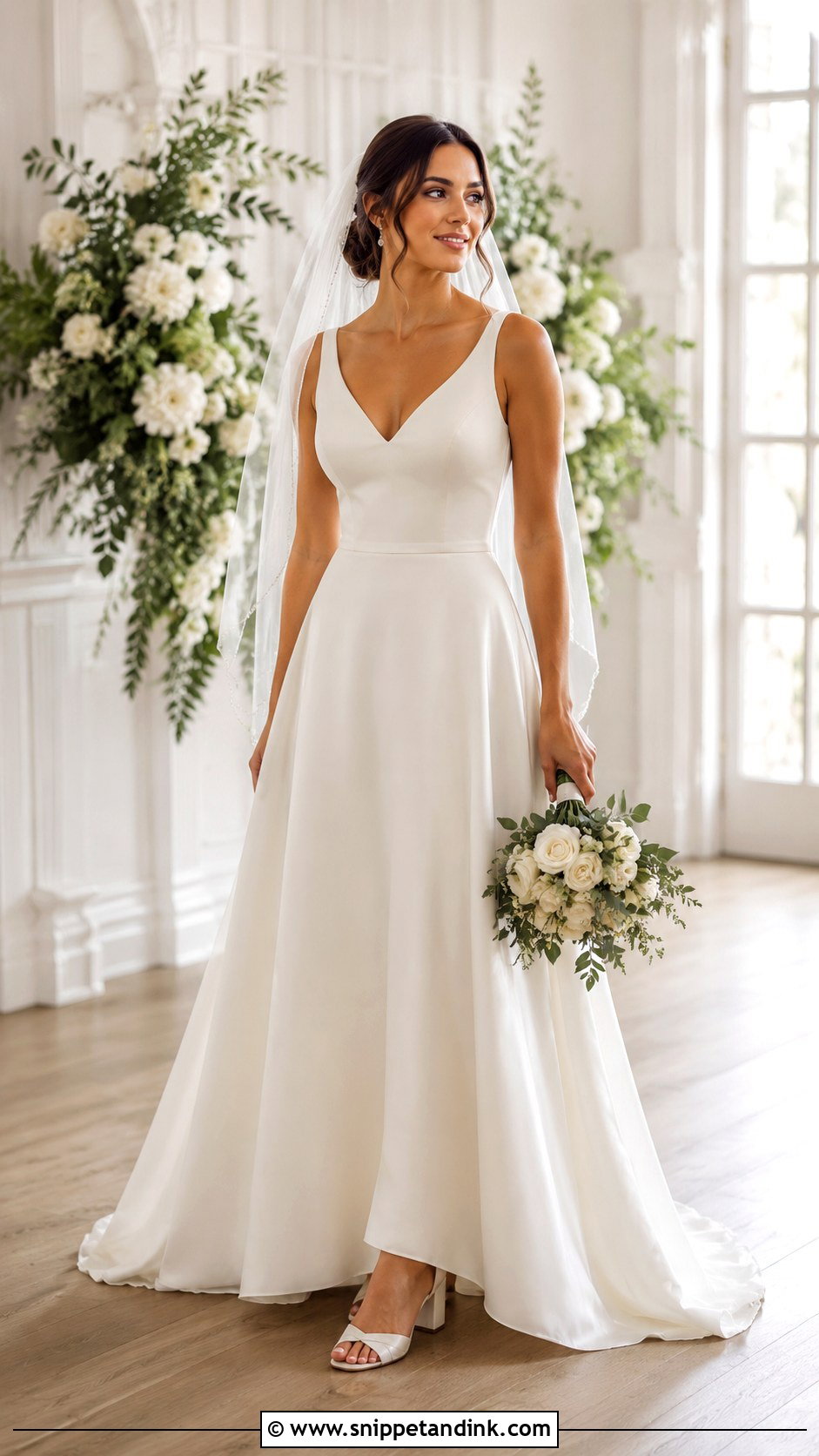
If a bride can’t decide, I put her in an A-line. The bodice fits through the waist and the skirt opens gradually, so it suits most body shapes and most venues, from indoor ceremonies to beaches and destination weddings. Satin reads clean, lace reads romantic and tulle reads soft. A fingertip veil and classic earrings complete it. Choose comfortable block heels if you’ll be standing or walking a lot. It’s the shape that holds up best in real life, through car rides, dinners and dancing.
10. Sheath Wedding Dress
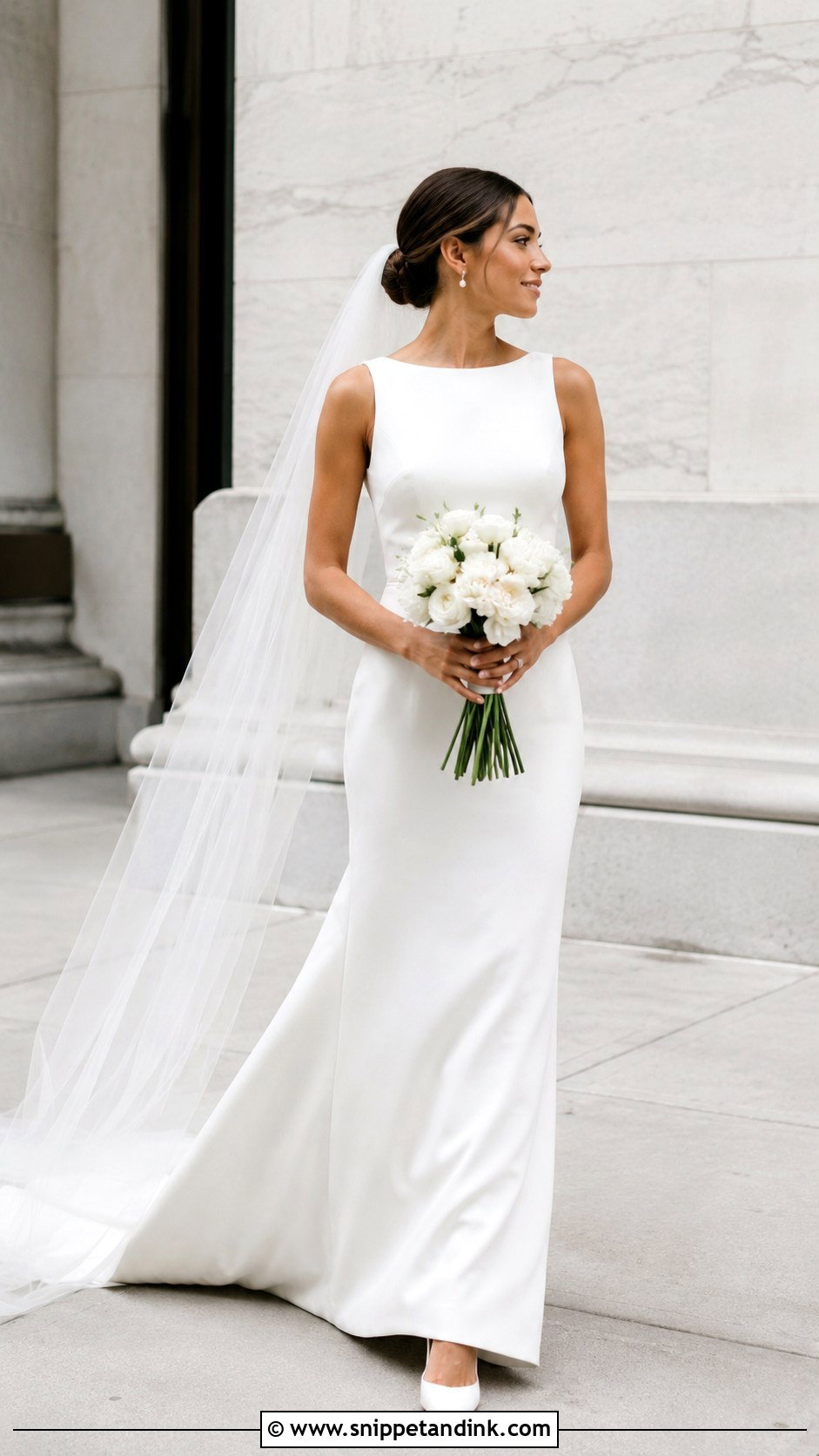
A sheath follows the natural line of the body without volume or flare. That makes it easy to move in and pack, but it also shows everything, so the fabric has to be good. Crepe, satin and silk give the smoothest finish. A sheath also needs a little walking ease: a narrow hem with no slit makes steps tiny, so ask the seamstress about a small back slit or a kick pleat. Pointed heels, a low bun, pearl earrings and a slim veil suit modern venues, intimate ceremonies and courthouse weddings.
11. Wedding Dress With Bow
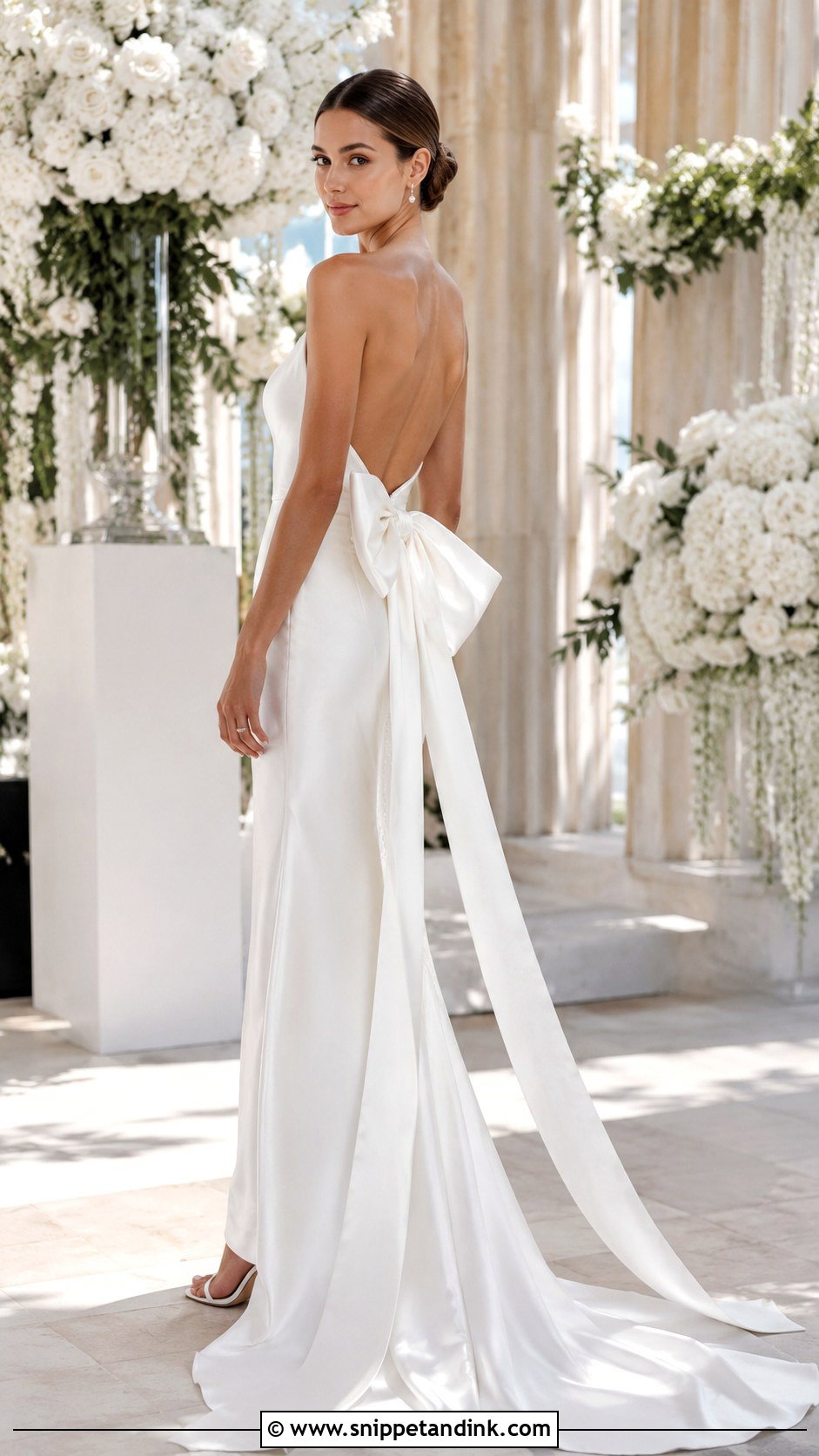
A bow gives you one memorable detail, and where it sits changes the whole mood. A large back bow on a satin column looks dramatic and shows best in walking-away shots; a small waist bow on an A-line looks classic. Big satin bows lose their shape when crushed against a chair back, so I ask for interfacing or a light stiffening inside the loops. Simple heels, smooth hair and minimal jewelry keep the bow from competing with anything else. Ceremony portraits and the walk back up the aisle are where it pays off.
12. Wedding Dress With Detachable Sleeves
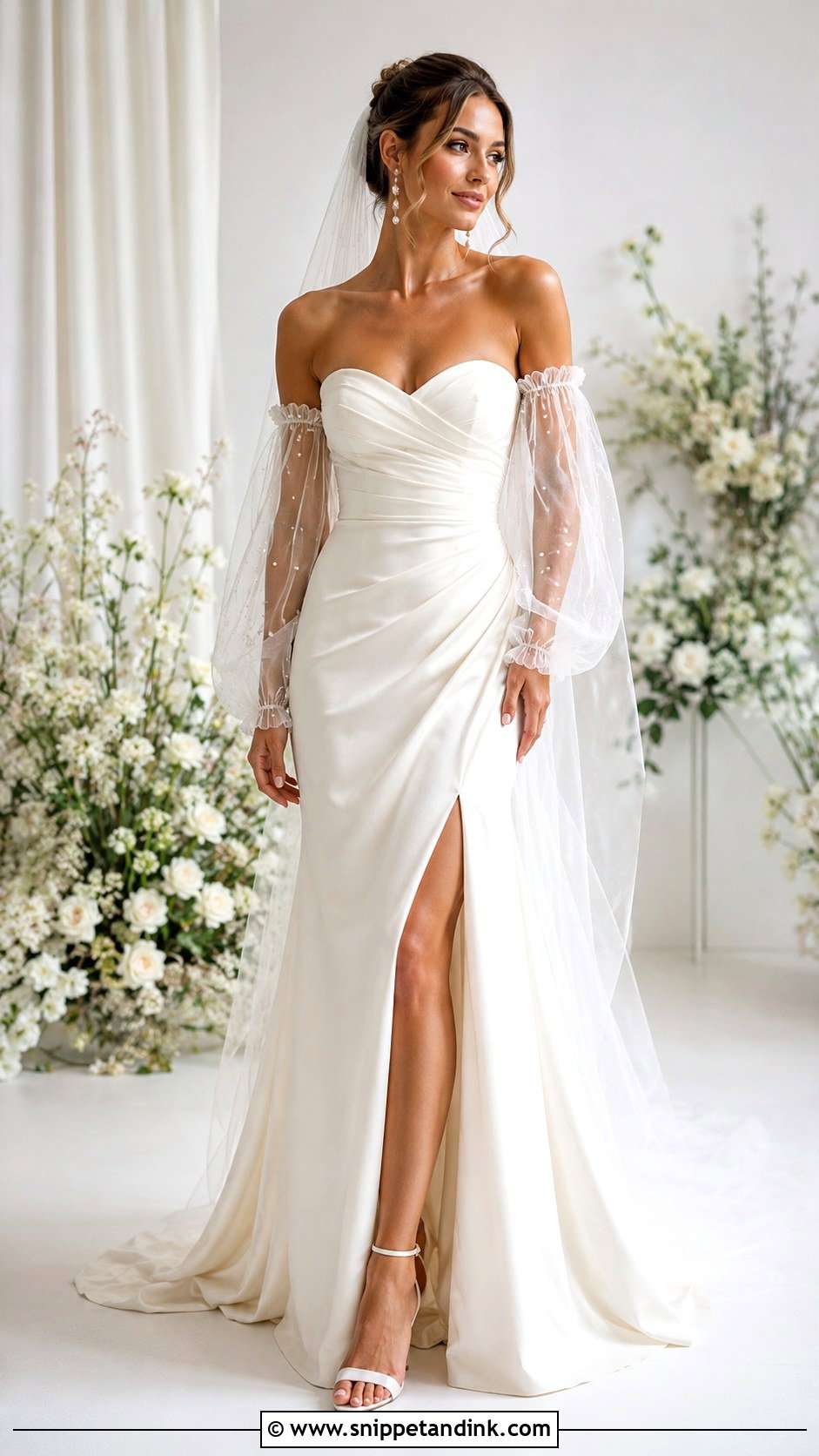
Detachable sleeves give you two looks without a second dress. Sheer tulle, lace or off shoulder puff sleeves add coverage for the ceremony, then come off for dinner and dancing. I make sure the attachment is snaps or hidden buttons rather than ties, and that someone in the bridal party practices taking them on and off before the day. Pearl earrings, a sleek veil and comfortable heels work with both versions. The sleeves frame the upper body in ceremony photos, then the simpler dress takes over for the reception.
13. Wedding Dress With Overskirt
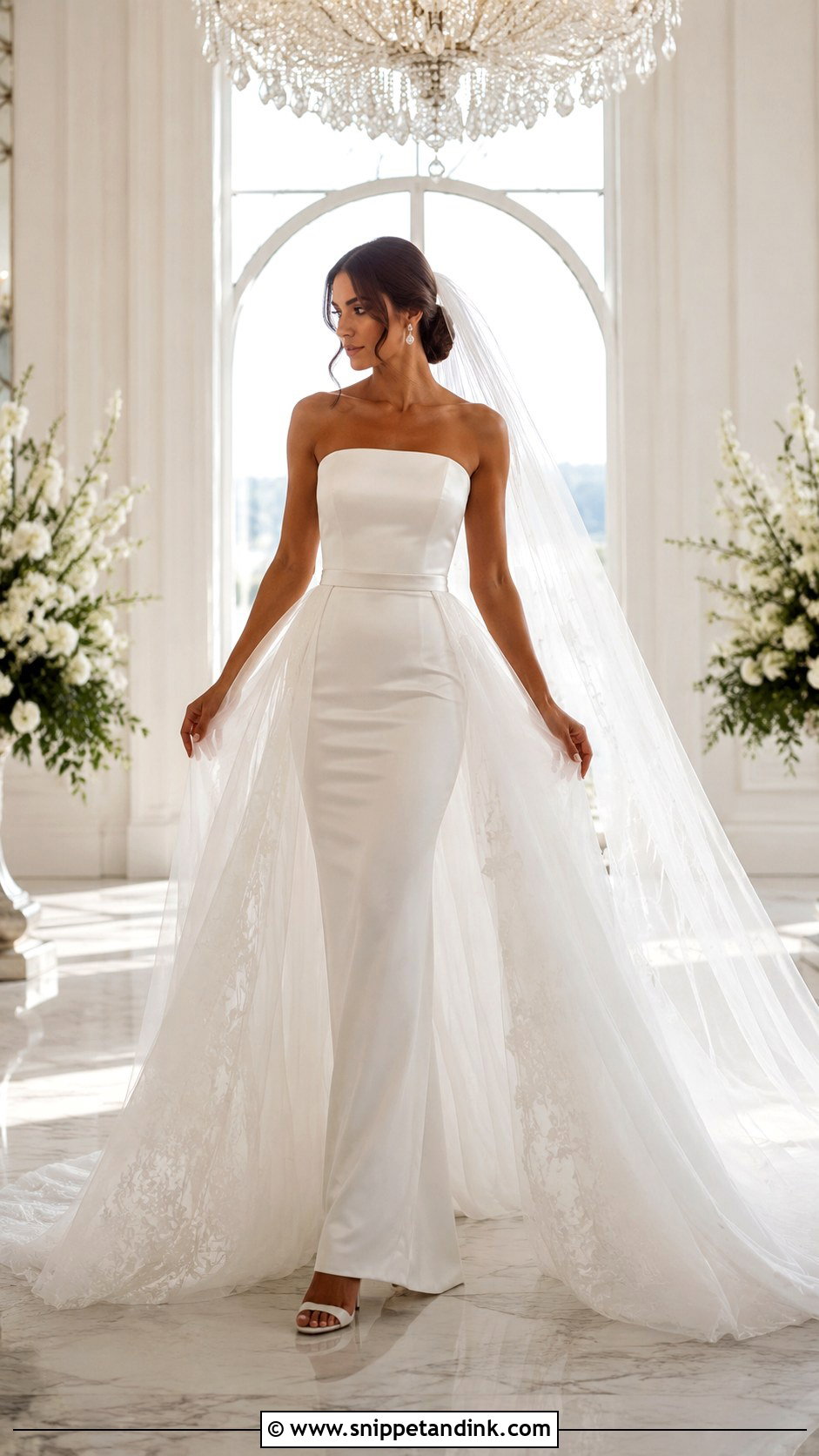
An overskirt gives you the volume for the aisle and a lighter dress for the party. The base can be a fitted sheath, mermaid or sleek satin column, and the removable tulle, organza, or mikado overskirt adds drama for the ceremony. Remove it before dinner for easier dancing. Ask for a hook-and-bar or hidden snap fastening, and have the seamstress mark the hem so both versions fall at the same length in your shoes. A long veil and clean earrings finish it.
14. Short Wedding Dress
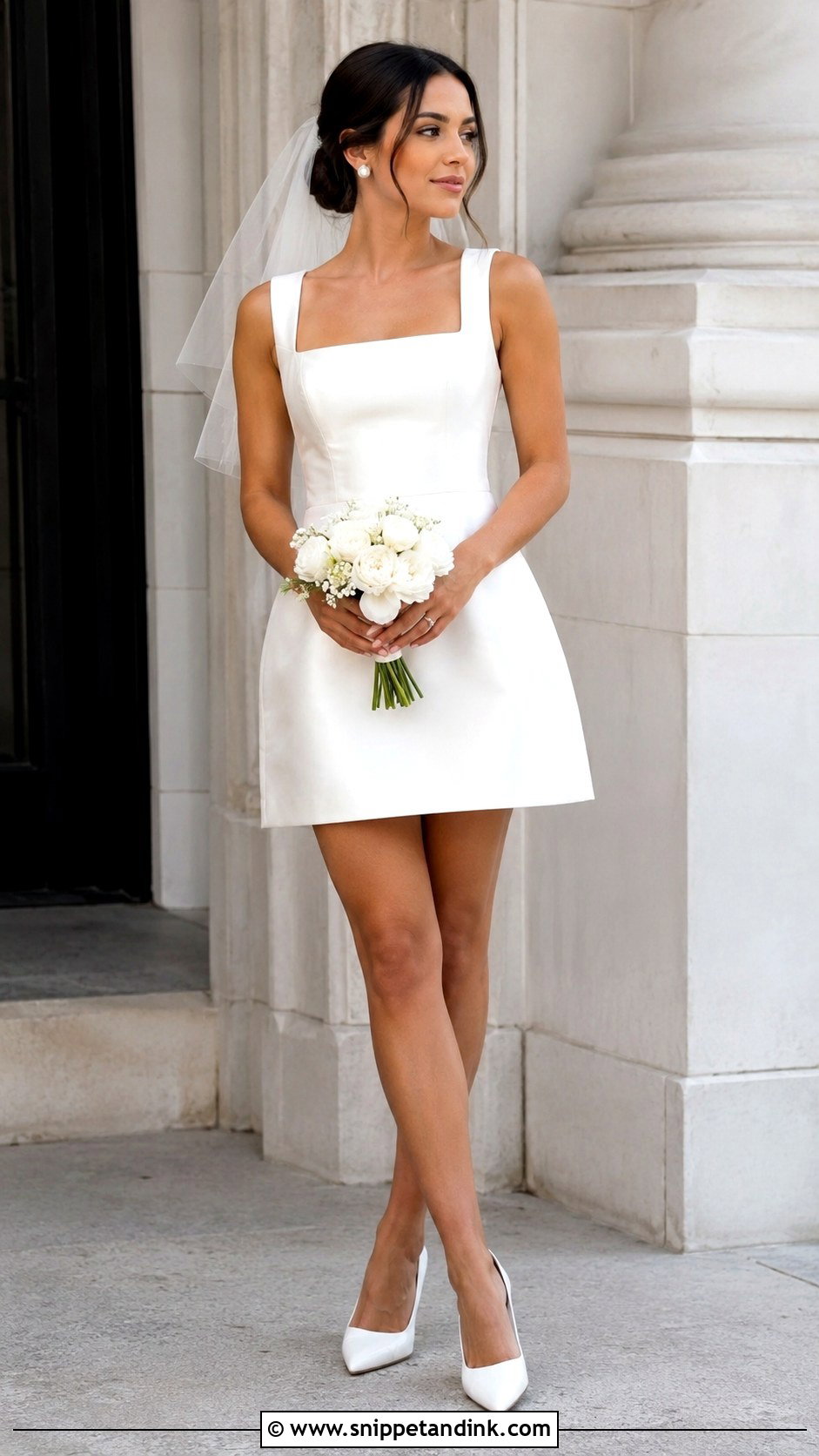
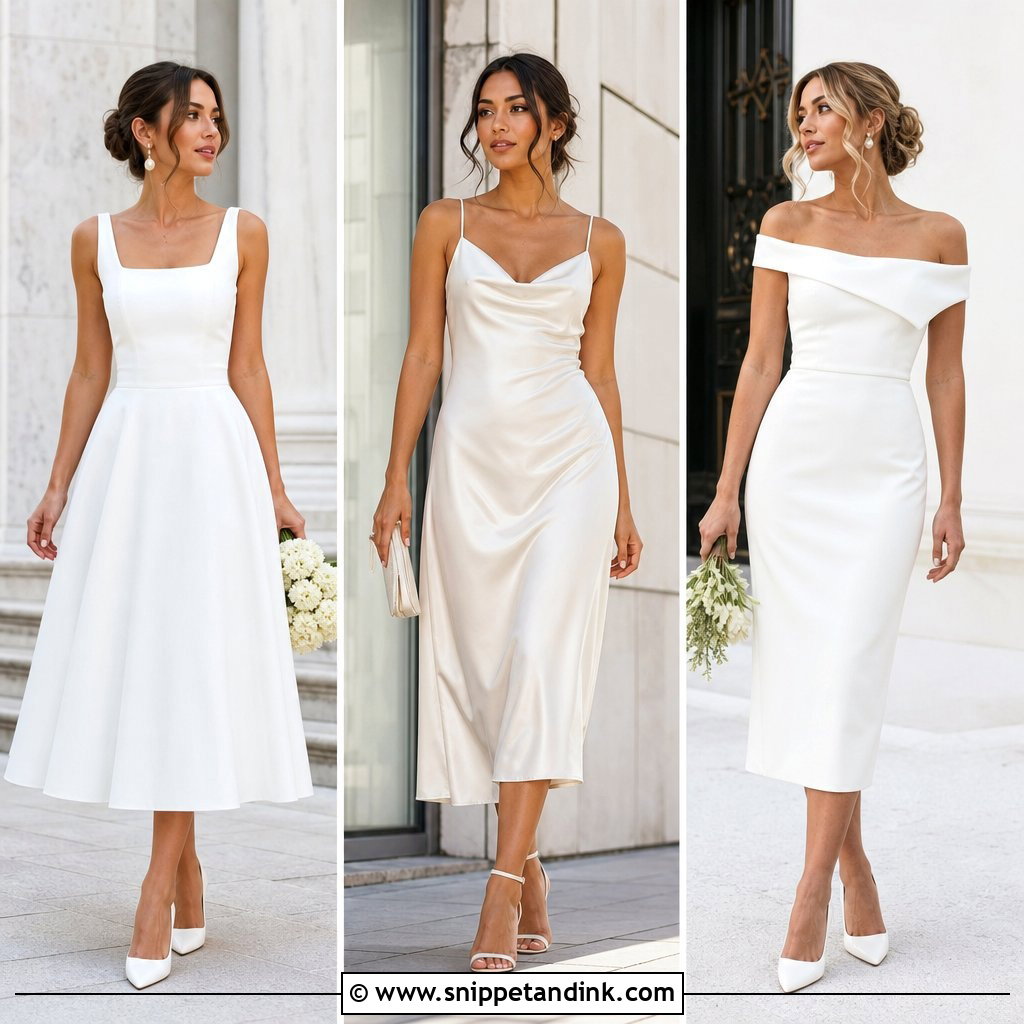
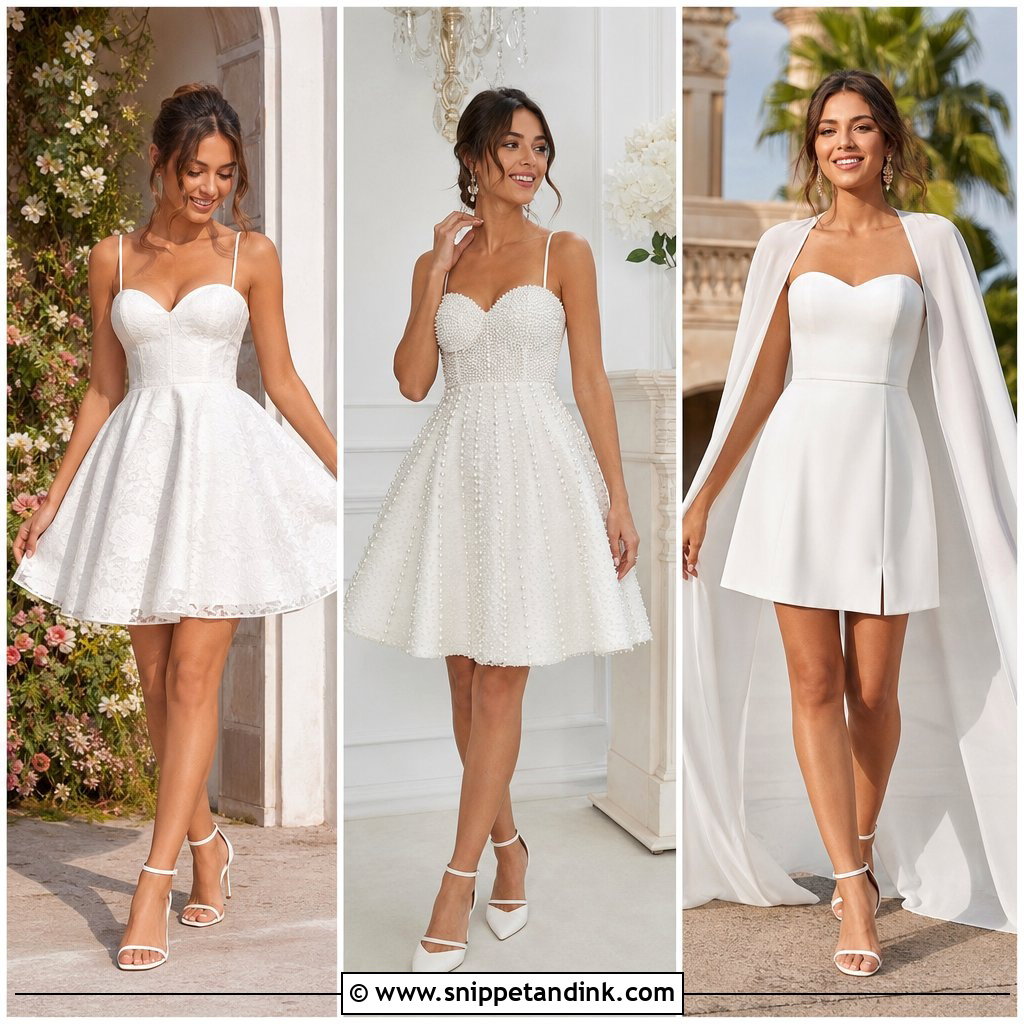
Short wedding dresses suit courthouse weddings, city ceremonies, after-parties and casual receptions. A structured mini, a tea length or a tailored short gown all work. With a short hem, the fabric and fit have to look deliberate: a crepe or mikado mini holds its shape; a thin chiffon one can look like a party dress. Pointed pumps, sheer gloves, pearl earrings and a short veil finish it. For more coverage, choose a long-sleeve mini or a high neckline. It’s easy to move in and the shoes become part of the outfit.
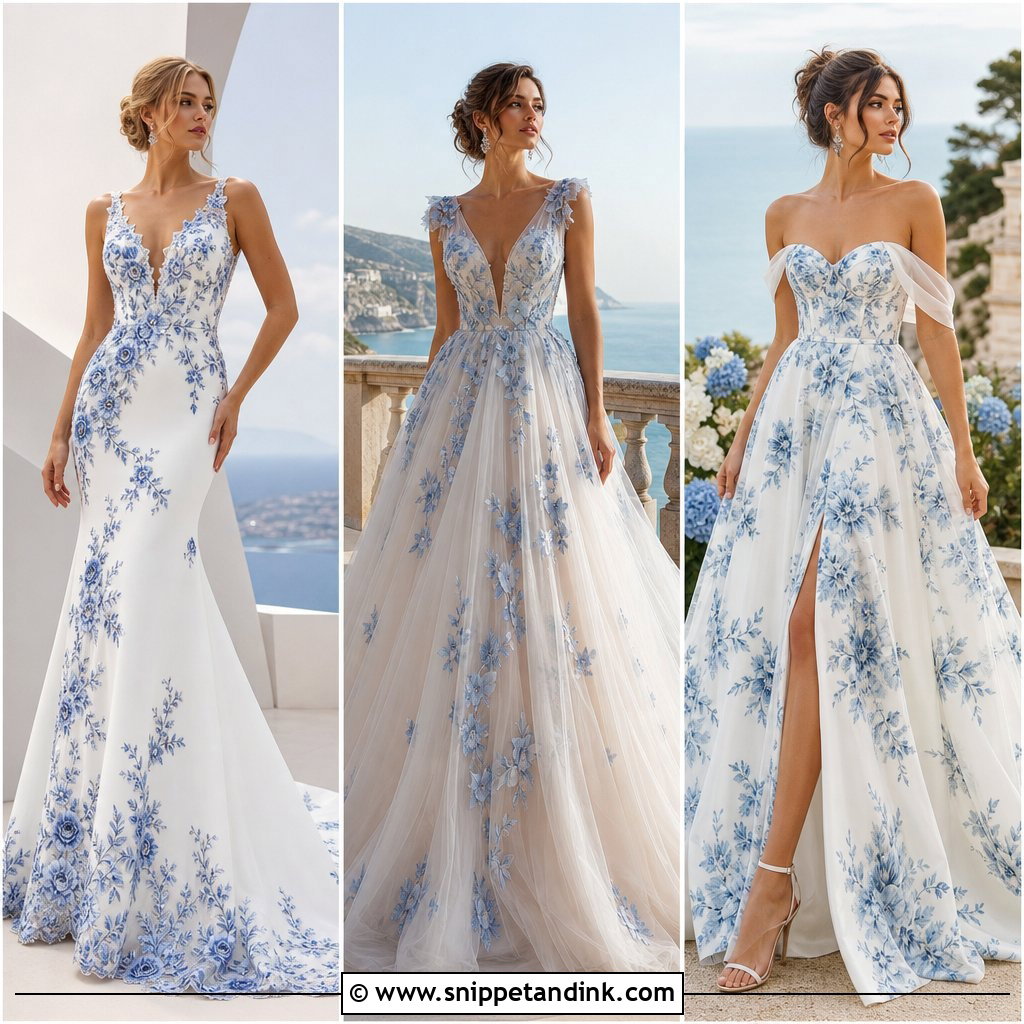


15. Tea Length Wedding Dress
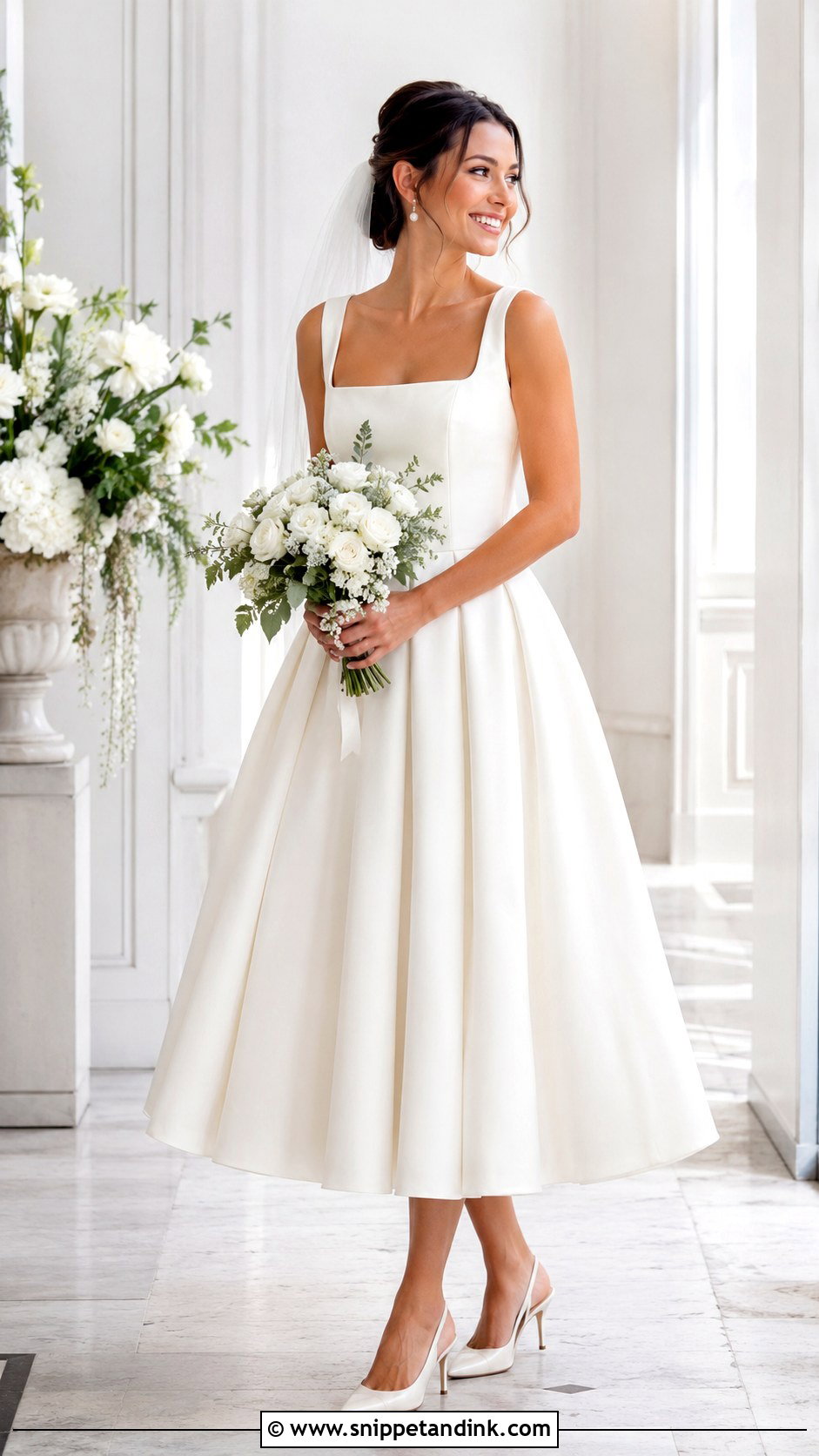
Tea length falls between the knee and the ankle, so your shoes are on show the whole day. Satin pumps, embellished heels or classic slingbacks look complete. A fitted bodice with a softly flared skirt flatters most figures, and lace or organza adds the vintage feel. I adjust the hem with the bride standing in her actual shoes, because an inch of difference changes the proportion of the whole look. A birdcage veil or a simple headband finishes it for courthouse weddings, garden ceremonies and brunch receptions.
16. Bridal Pantsuit
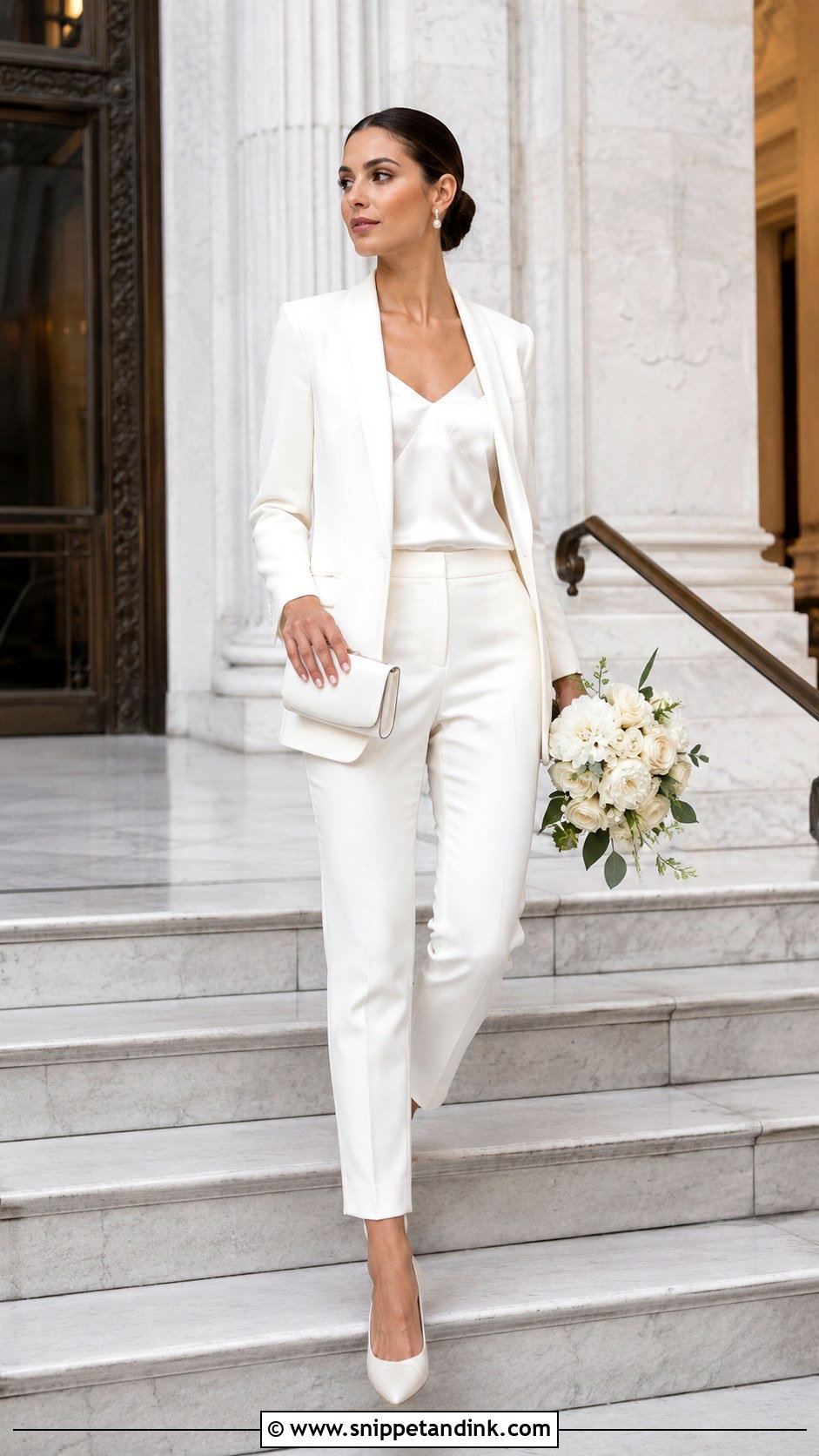
A bridal pantsuit suits a bride who wants something sharp and modern instead of a gown. White or ivory tailored trousers with a fitted blazer, silk camisole or structured vest are the core. The tailoring matters more than with a dress: trousers should break just over the shoe, and the jacket should button without pulling. Pointed heels add length, and pearl earrings and a sleek clutch keep it bridal. A veil over a suit looks striking; a clean hair accessory looks minimal. Courthouse ceremonies, city weddings and reception changes suit it.
17. Bridal Jumpsuit
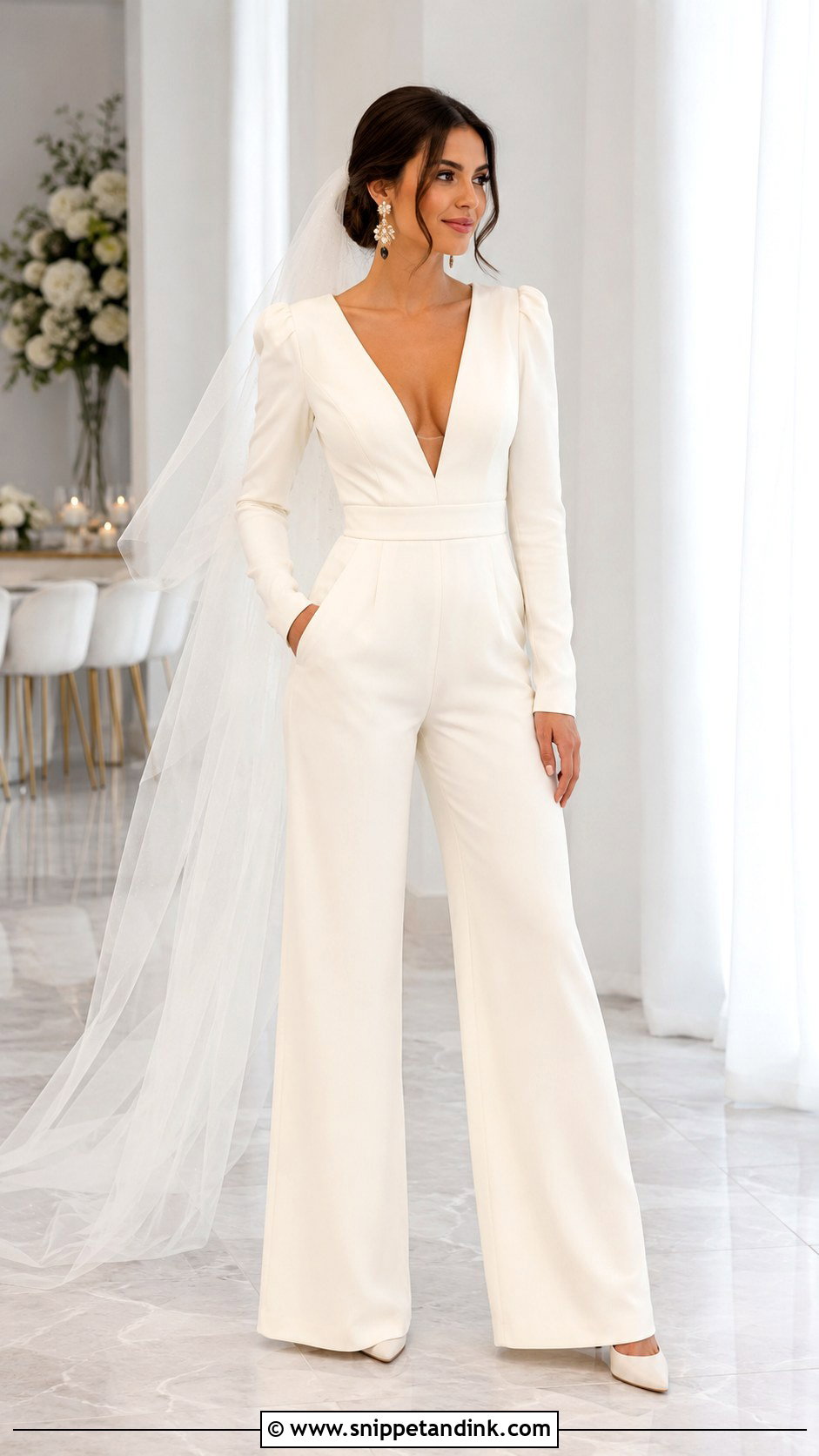
A bridal jumpsuit gives comfort and movement in one piece. A wide-leg cut with a defined waist and a clean neckline in crepe or satin looks polished; thinner fabrics can look casual. The practical question every bride forgets: how do you use the restroom? A back zip you can’t reach alone is a problem, so I look for a side zip or plan for help. Heels, statement earrings and a soft veil or cape finish it for civil ceremonies, second looks and reception outfits. Add an overskirt, bow or cape sleeves for more drama.
18. Courthouse Wedding Dress
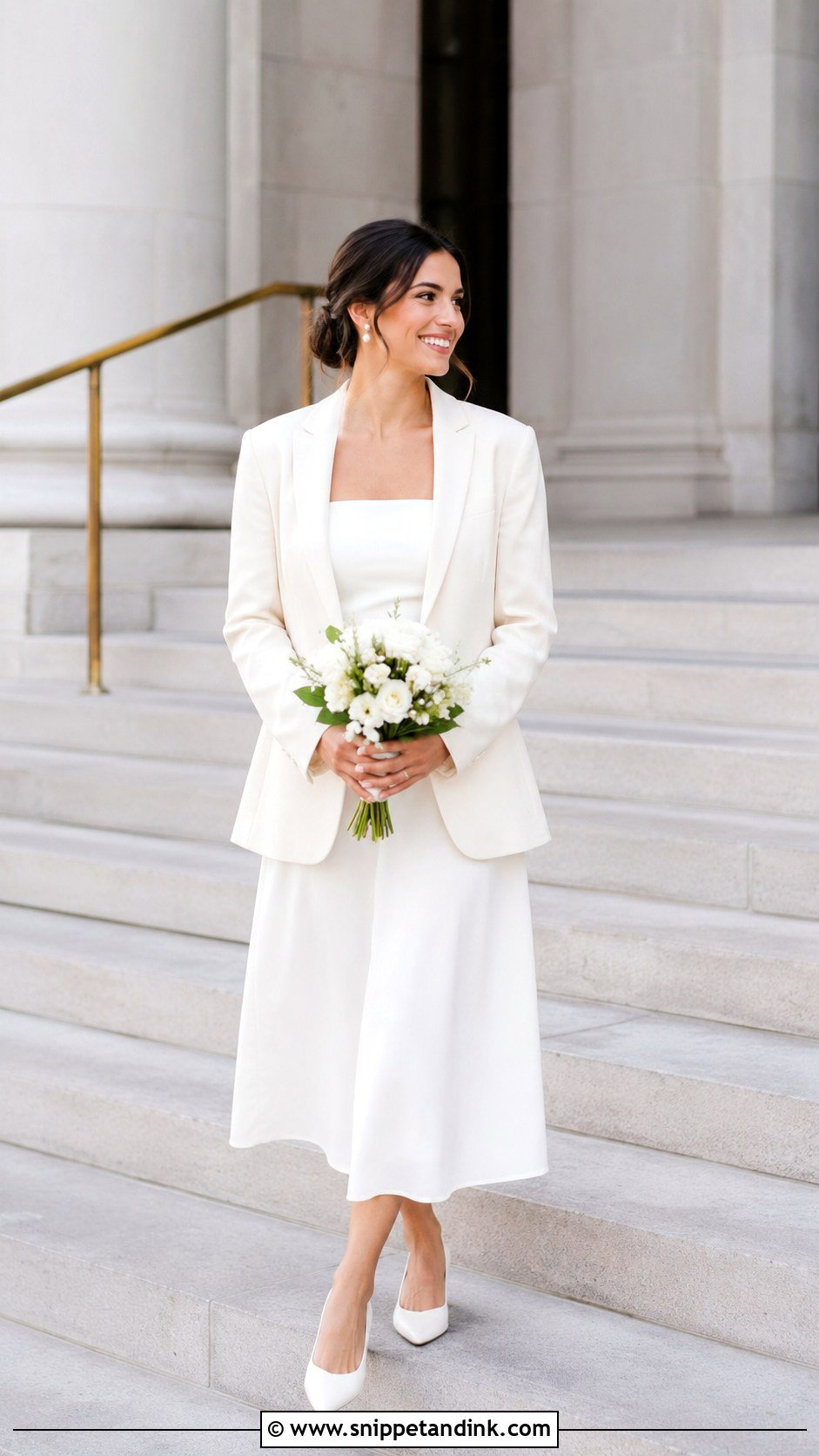
A courthouse wedding dress should feel special but easy to wear standing in line, climbing courthouse steps and walking to lunch afterward. A white midi, a tailored mini, a satin slip or a structured sheath all work. Low heels, a small bouquet, pearl earrings and a blazer for a formal setting finish it, and a short veil or bow clip makes it read bridal. Courthouse light is often harsh and fluorescent, so I avoid shiny satins in pale colors there; a matte crepe photographs more evenly.
19. Beach Wedding Dress
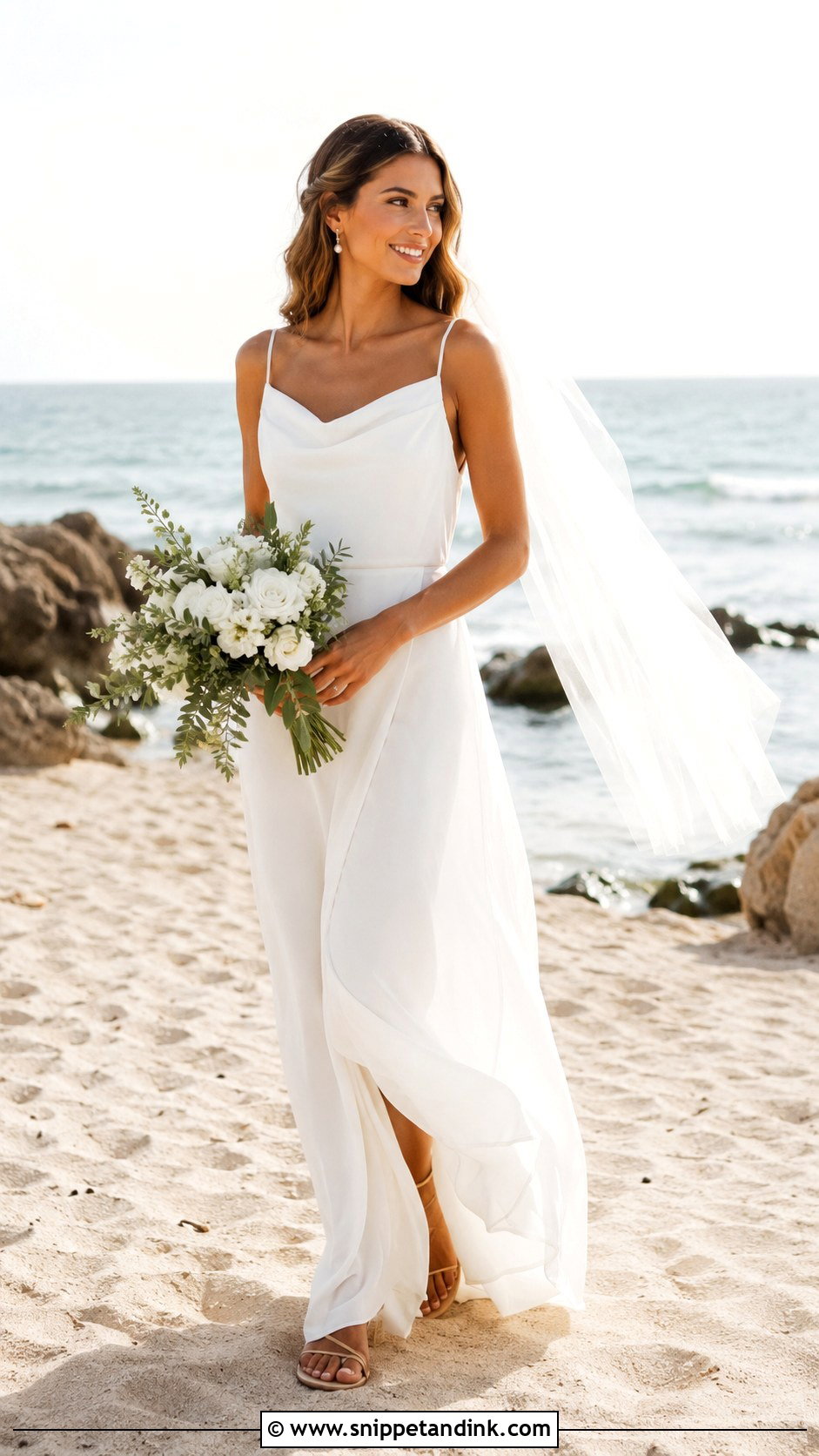
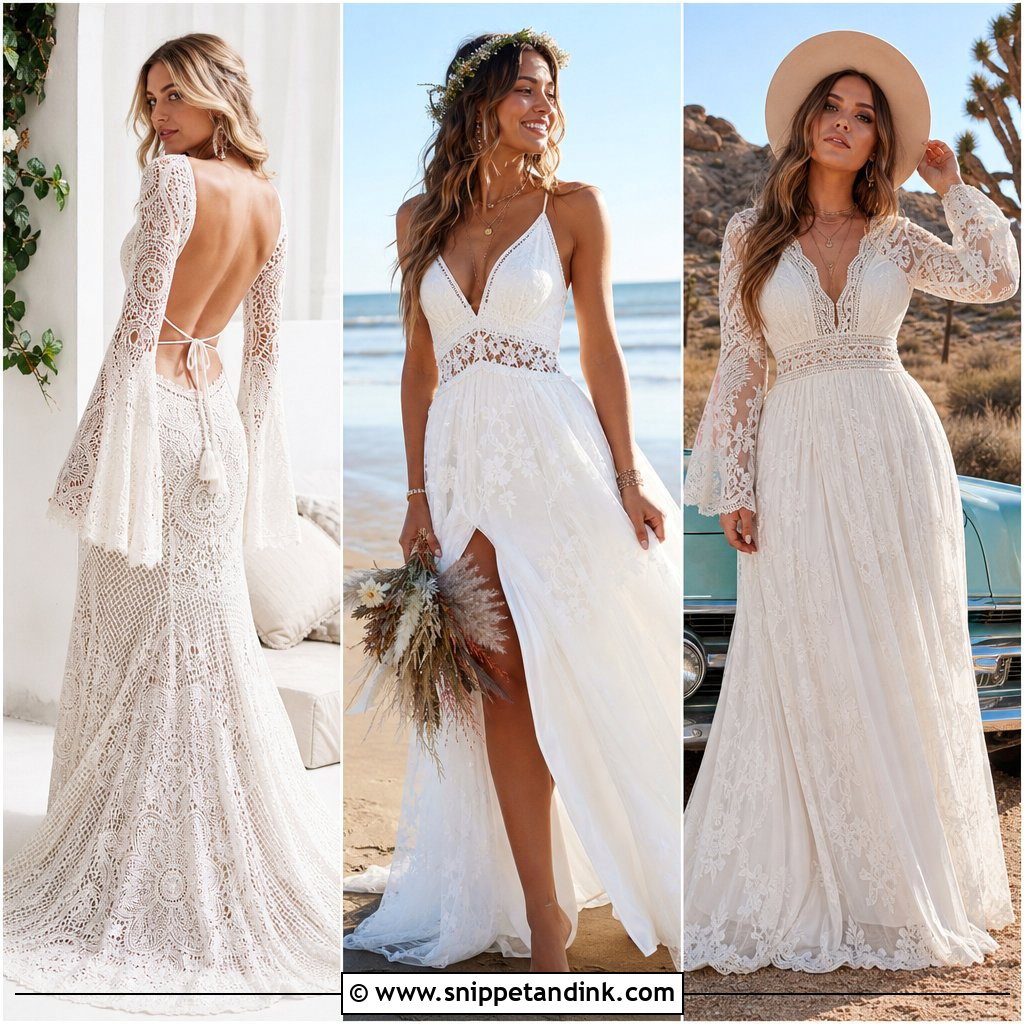
On a beach, the dress has to move with the wind and survive sand. Chiffon, crepe, soft lace or silk breathe well and float in the breeze. A sheath, slip or relaxed A-line works better than layers of tulle, which catch sand and get heavy if they get wet at the hem. Skip a long train unless there’s a walkway. Flat sandals or bare feet, pearl earrings, loose waves and a simple veil or hair scarf suit the setting. Have the hem cut a little shorter than you would for a hard floor, since sand lets the feet sink in.
20. Garden Wedding Dress
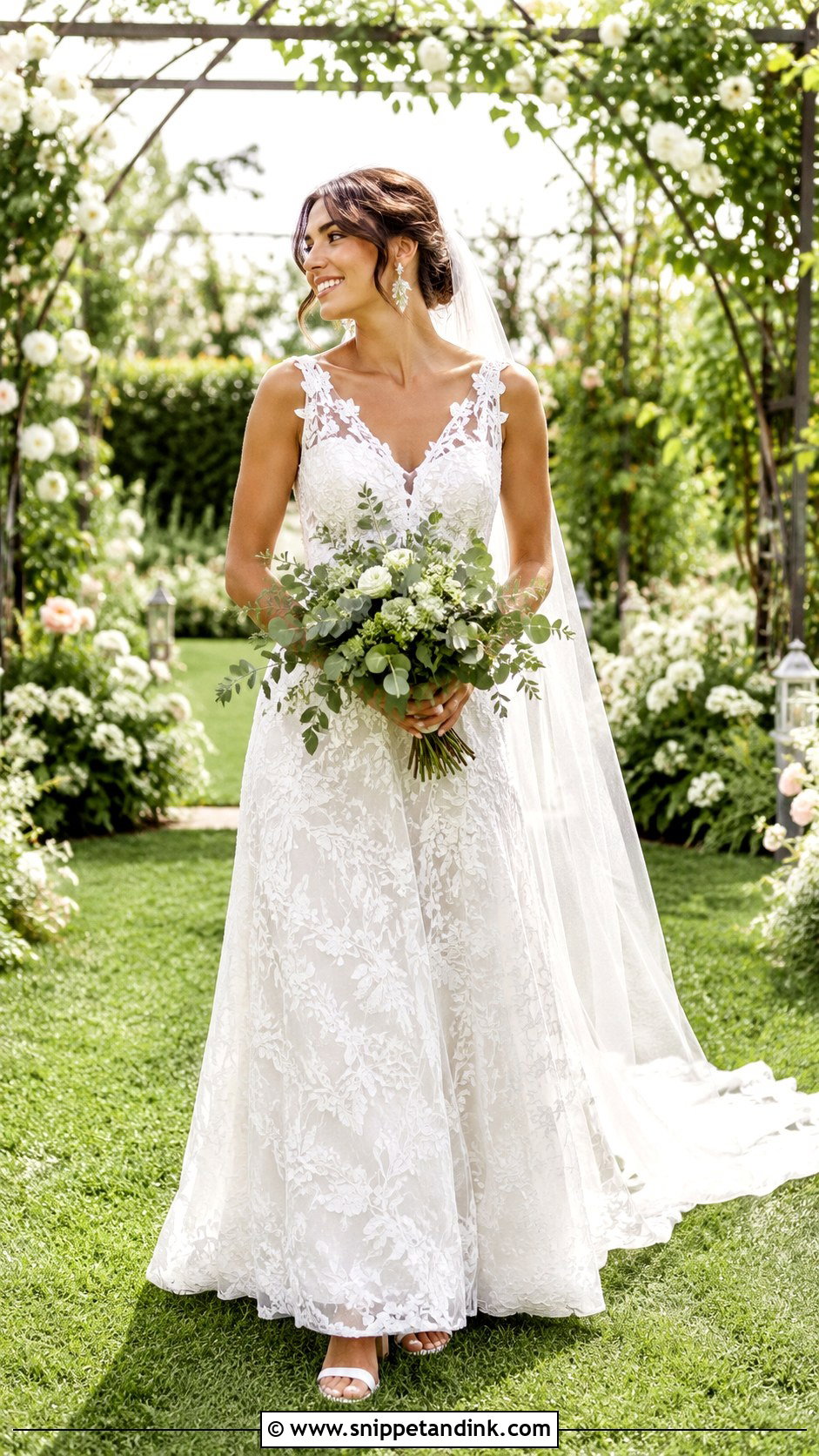
Gardens are hard on hems and heels. Soft tulle, floral lace, organza and embroidered details suit the setting; an A-line gown, a floral appliqué dress or a lace midi all work. Choose block heels or heel protectors so you don’t sink into the lawn, and keep the train short or bustled for the reception, as grass stains and dew soak into tulle quickly. A delicate veil, soft curls and floral-inspired earrings finish it, with a bouquet heavy on greenery. Spring, summer and early fall weddings suit it.
21. Plus Size Wedding Dress
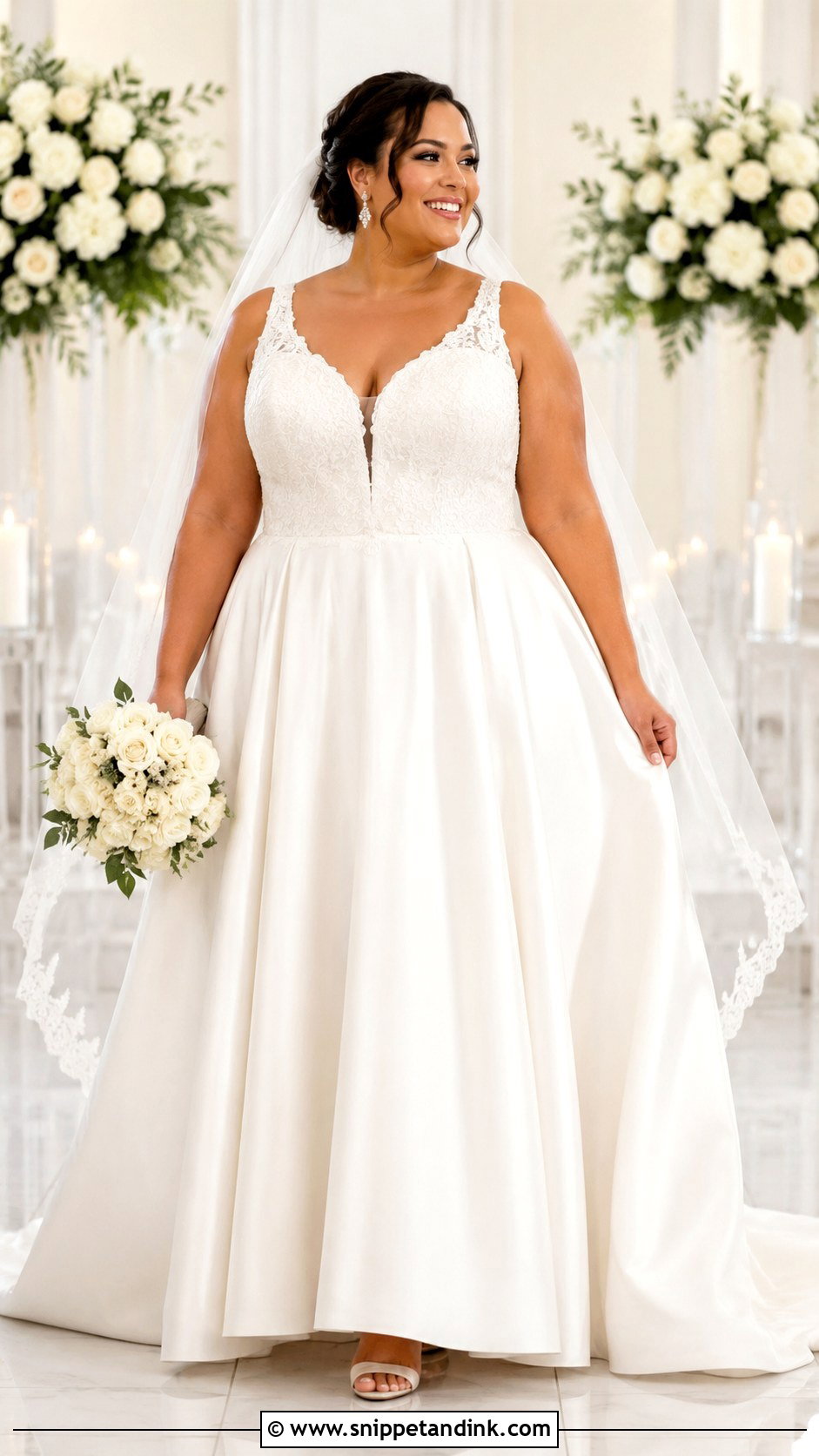
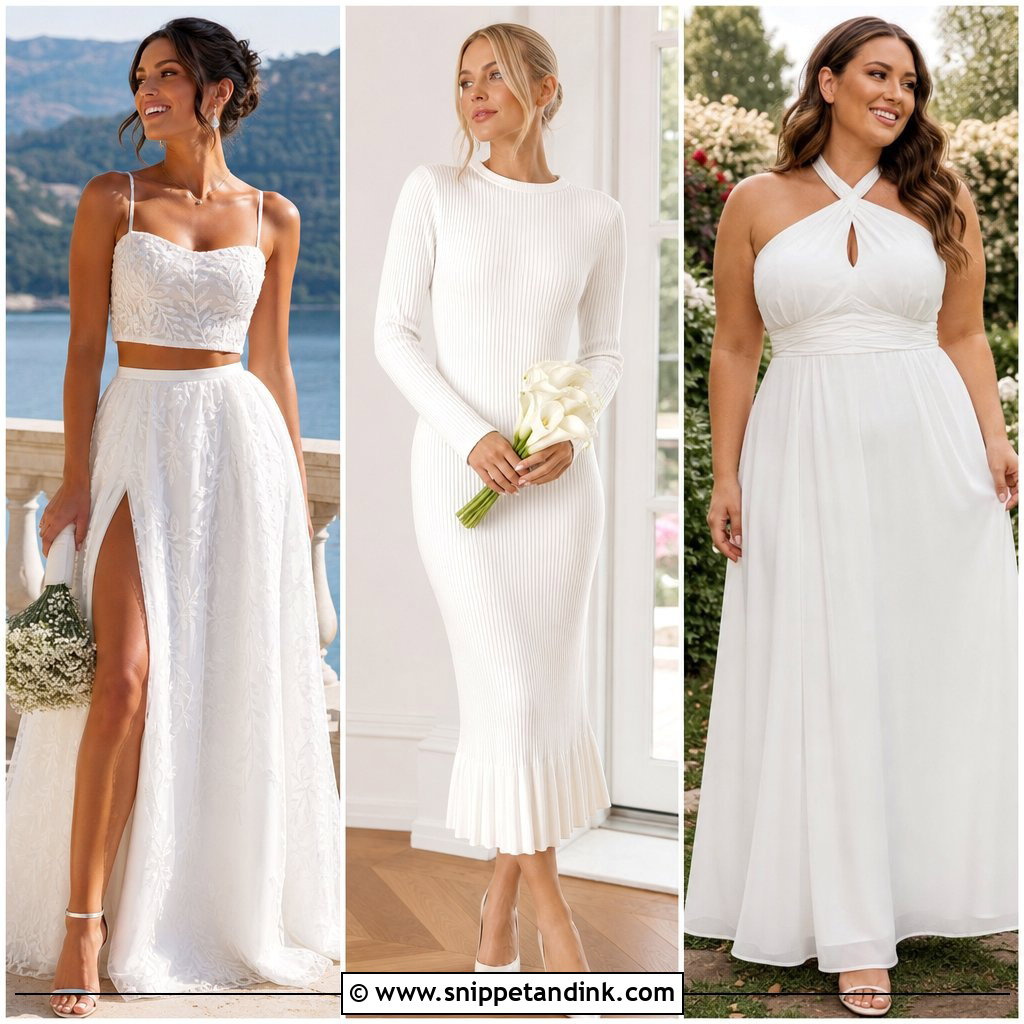
For plus size brides, the starting point is support, then silhouette. A-line gowns, structured ball gowns, wrap-style bodices, corset dresses and fitted crepe gowns all look good when they’re tailored well. I pay most attention to the bodice: built-in cups, wide or adjustable straps and a waist seam placed at your natural waist do more than any amount of draping. Choose a fabric with enough body to hold shape without stiffness. The aim isn’t hiding the body but getting proportion and comfort right, so you can stand, move and smile with ease.
22. Maternity Wedding Dress
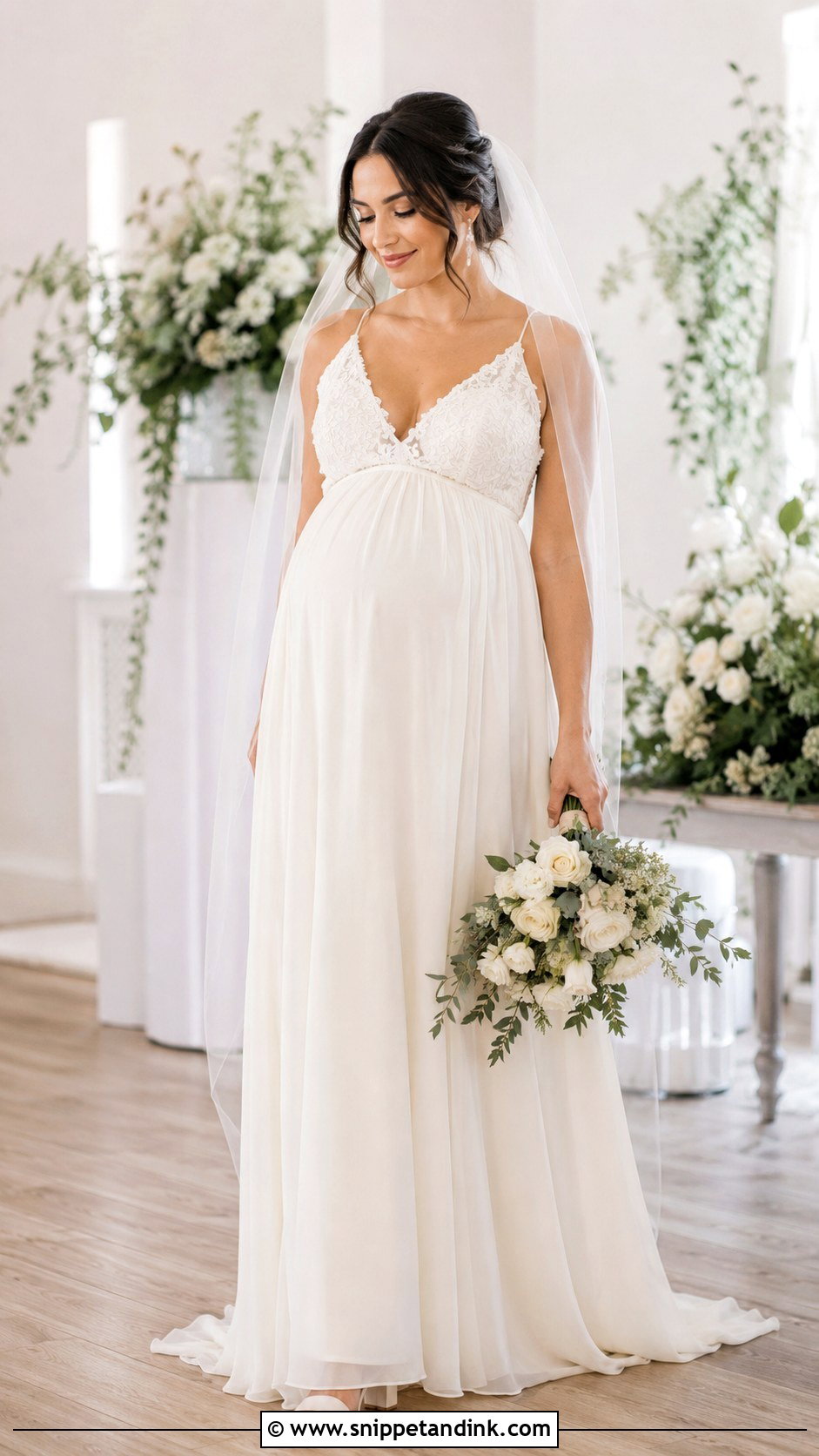
A maternity wedding dress needs to accommodate growth between the fitting and the wedding day, so I schedule the final fitting as close to the date as the seamstress allows. Empire waists, stretch crepe, wrap styles and flowing A-lines give room without losing shape. Choose a breathable fabric and avoid anything that presses tightly at the waist. Feet often swell by evening, so block heels or flats are kinder than stilettos. Soft sleeves or a draped cape add coverage, and delicate earrings with a lightweight veil finish it.
23. Reception Wedding Dress
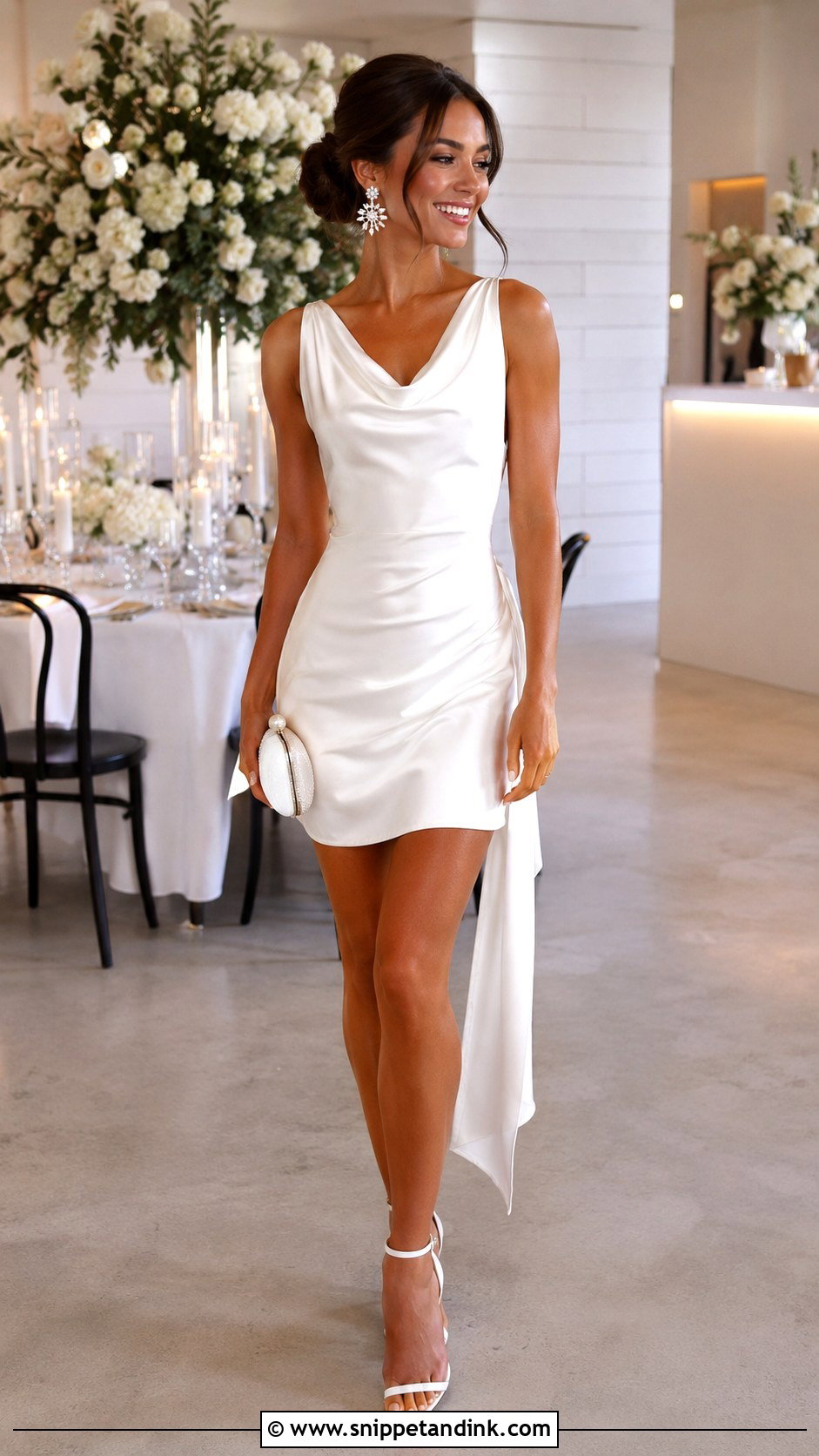
A reception dress is the change you make when the ceremony gown gets heavy. A satin mini, feather-trimmed midi, sleek slip or fitted crepe gown all work. I plan the change for a natural break, such as after photos or before the first dance, and assign someone to help with the buttons and to bag the ceremony gown properly. Shoes you can stand in, a small clutch and earrings that feel more fun than the ceremony jewelry finish it. If the ceremony dress is dramatic, keep the reception one lighter and simpler.
24. Bridal Lehenga
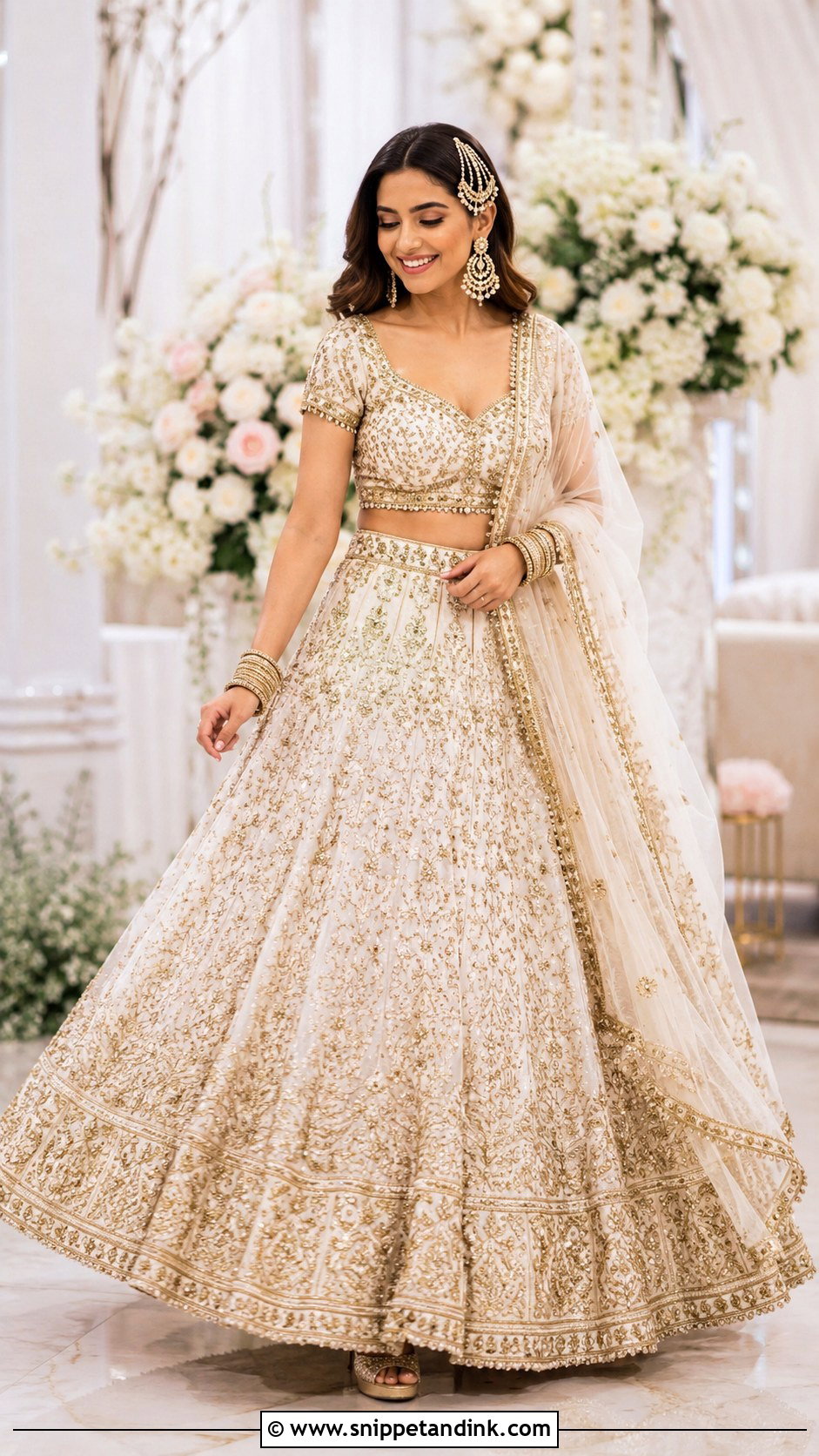
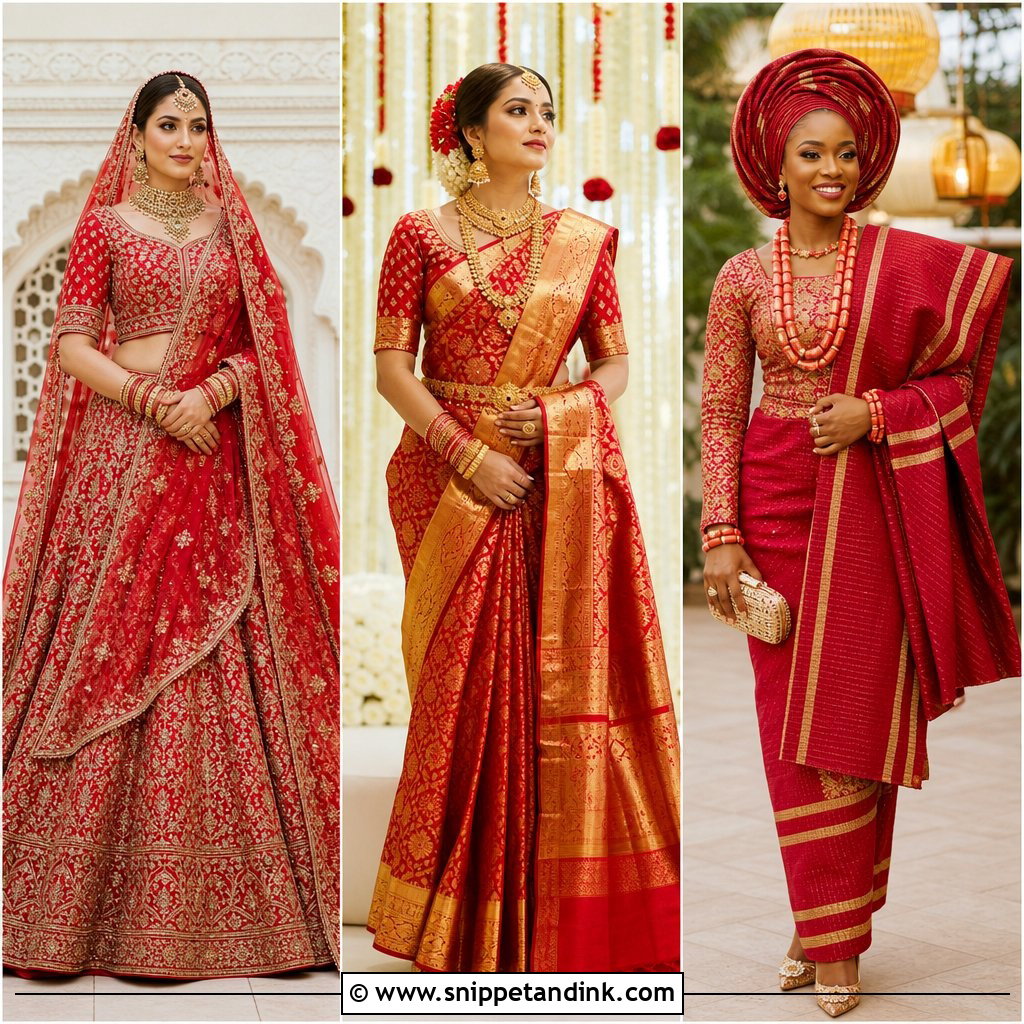
A bridal lehenga carries rich color, embroidery and movement, and its weight is the thing I talk about first. A heavily worked bridal lehenga can be very heavy, and the ceremony can last hours, so for long rituals I suggest lighter embroidery or a can-can that holds the flare without extra layers. Ivory, blush, champagne, red, gold or pastels depend on tradition and taste. A fitted blouse, a matching dupatta pinned securely to the hair and shoulder, statement earrings, bangles and embellished heels complete it for cultural, fusion and multi-day weddings.
25. Blush Wedding Dress
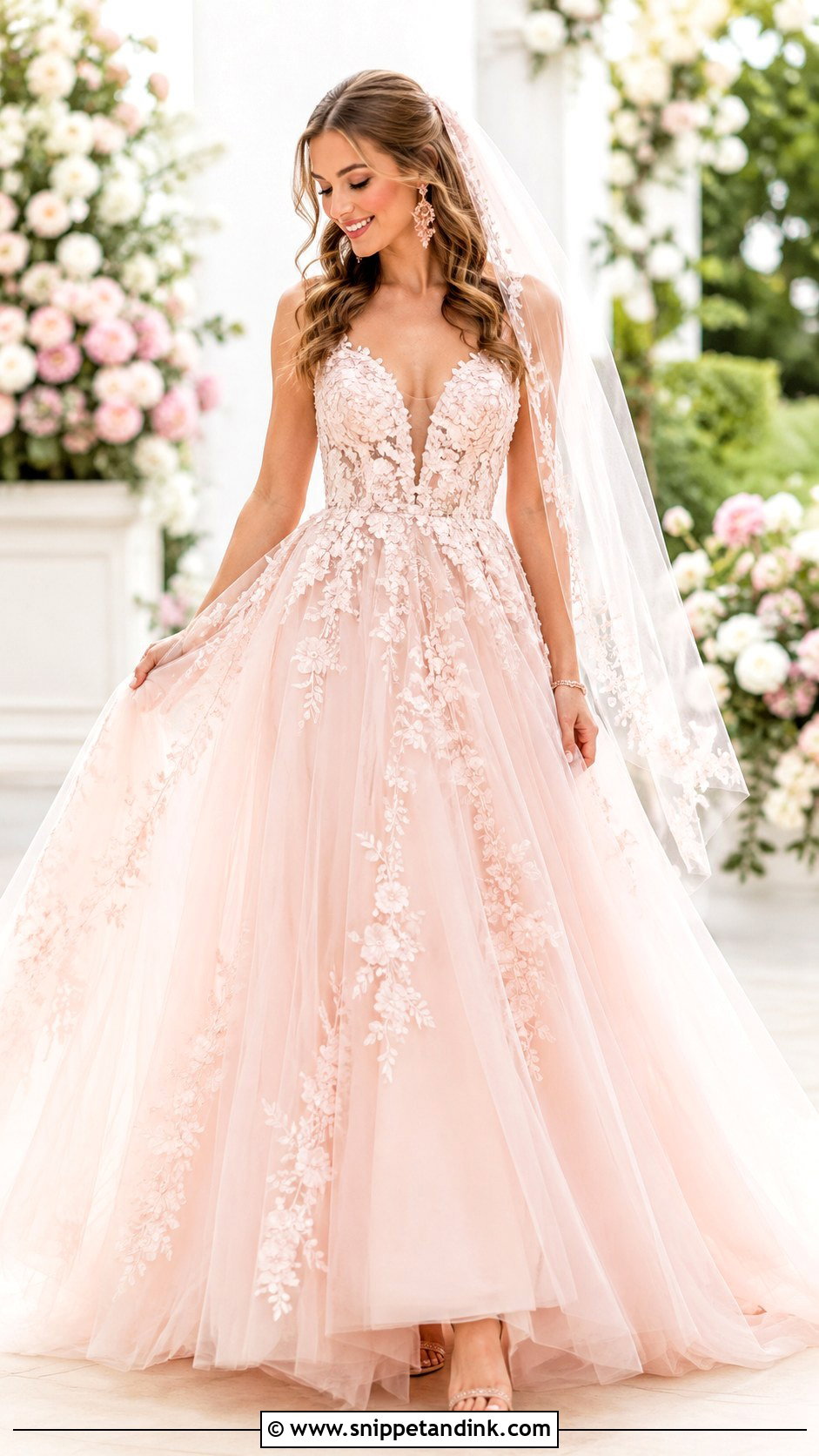
Blush gives a soft alternative to white or ivory, from barely pink to nude, champagne pink or rosy beige. It looks good in tulle, lace, satin and floral appliqué. The thing to test is skin tone: the palest blushes can wash out fair skin in daylight, so I hold the fabric near the face by a window before deciding. Neutral heels, rose gold jewelry, soft makeup and a veil in a matching tone keep it cohesive. It adds warmth to photos at garden weddings and indoor venues.
Bustles, Trains and the Moment Dinner Starts
Any train longer than a sweep needs a plan for the reception. I ask the seamstress which bustle suits the fabric and then make sure a bridesmaid learns it at the final fitting, with a photo on her phone.
- Over bustle: the train hooks up onto the back of the skirt. Quick to do and suits satin and mikado.
- French bustle: the train tucks under and ties with numbered ribbons. It creates soft tiers and suits tulle and lace.
- Ballroom bustle: the train lifts up to the waist all around, so the dress looks floor-length, and suits ball gowns.
Fragile lace or a very heavy train can pull a hook out by the end of the night, so I always pack a few spare safety pins in matching colors in the emergency kit.
What Happens to the Gown the Monday After
A wedding dress should be cleaned within a few weeks, not left in the bag until the first anniversary. Sugar from champagne, cake and sweat dries invisible, then turns yellow or brown months later. I send gowns to a specialist cleaner who handles bridal fabrics, beading and glued embellishments, then store the dress folded in acid-free tissue inside an acid-free box, somewhere cool and dark. Avoid plastic bags, which trap moisture, and avoid hanging a heavy gown by its straps for years; the weight pulls the bodice out of shape.
A Gown Is Only Finished at the Last Fitting
The right bridal outfit lets you feel like yourself and still move freely at hour ten. The looks above cover traditional gowns, modern suits, short dresses, destination outfits, reception changes and culturally rich bridal wear. Before you commit, think about your venue, the weather, how much you’ll move and what the photos need. A simple gown can still be unforgettable, a pantsuit can be bridal, and a second dress can be practical as well as stylish. Plan the whole outfit, not just the dress, so every piece works together.
You'll Like These Ideas:


Leave a Reply