
Sleeves are the part of a wedding dress brides underestimate most. They change the neckline, the temperature you’ll feel at four in the afternoon, and how freely you can throw your arms round someone. Modern sleeved wedding dresses run from sheer illusion and puff sleeves to detachable, satin, cap, bishop and off-shoulder styles. I’ve written up 25 that I’d put a bride in, with the fit point I’d look at on each, because a sleeve that’s slightly wrong is the one detail you notice in every single photo.
Three Points on the Arm Where a Sleeve Succeeds or Fails
Brides judge a sleeve by its look. I judge it by three points on the arm, because that’s where a sleeve either works or quietly ruins your day.
The armhole
A higher, closer armhole actually gives you more lift, which surprises people. A low, loose armhole looks roomy but drags the whole bodice up when you raise your arms. If the dress lifts at the waist when you reach forward, the armhole is the culprit.
The bicep
Standard patterns are often narrow here. You should be able to pinch a little fabric on a fitted sleeve. Any tighter and it marks your arm and restricts hugs.
The wrist
A long sleeve should end at or just past the wrist bone with your arm bent, not straight. Measured straight, it rides up the moment you hold your bouquet. Lace sleeves are often finished with a point over the back of the hand, which hides the problem and adds length.
1. Long Sleeve Lace Bridal Gown
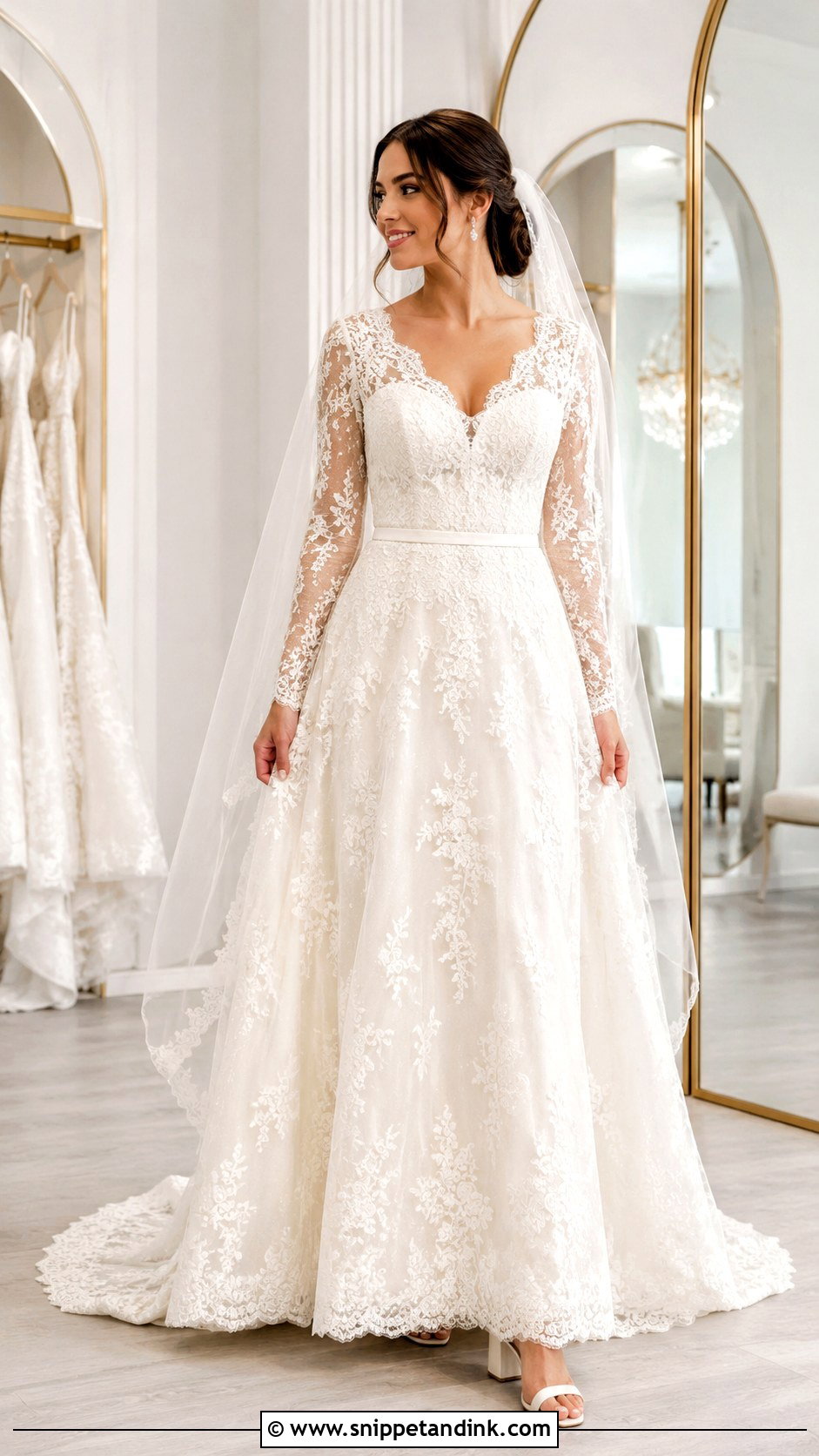
Lace sleeves are the request I hear most, and they suit an A-line, a fitted mermaid or a ball gown equally well. The neckline is where you set the coverage: sweetheart for more skin, V-neck in between, high illusion for the most. My first check is whether the lace pattern lines up at the shoulder seam. On good gowns the motifs are cut and appliqued across the seam so it disappears; on cheaper ones a straight seam slices through the flowers. Fall, winter and formal indoor weddings suit it best.
2. Satin Bridal Gown With Long Sleeves
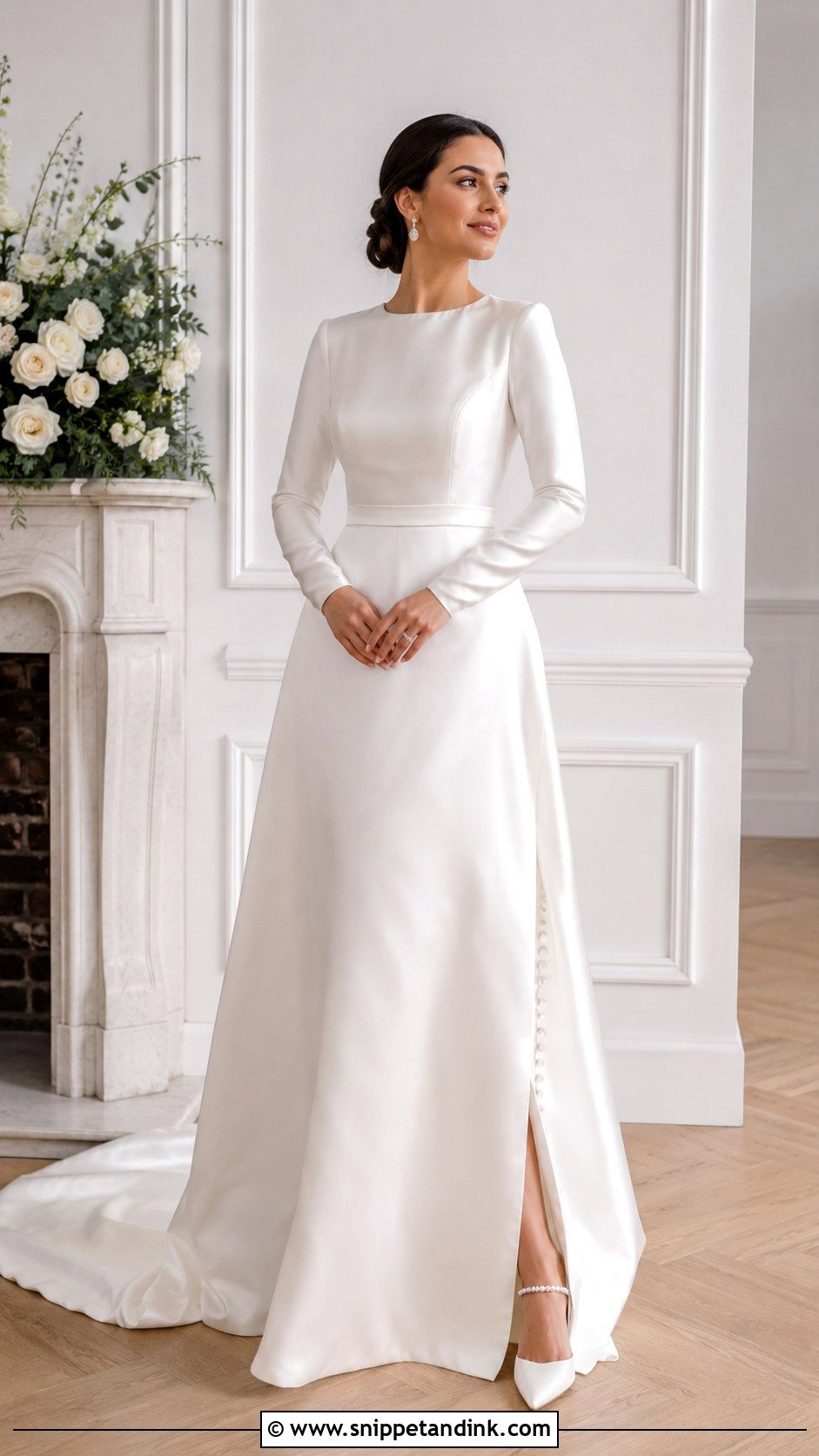
Satin sleeves look sharp and simple, and the fabric bounces daylight around the face. They pair well with a boat neckline, a square neck or a deep V. Here’s the honest catch: satin has no stretch, so a fitted satin sleeve has to be cut with enough ease at the elbow or it pulls when you bend your arm. A column skirt keeps it modern, and a sleek bun with drop earrings is all it needs.
3. Illusion Sleeve Bridal Gown
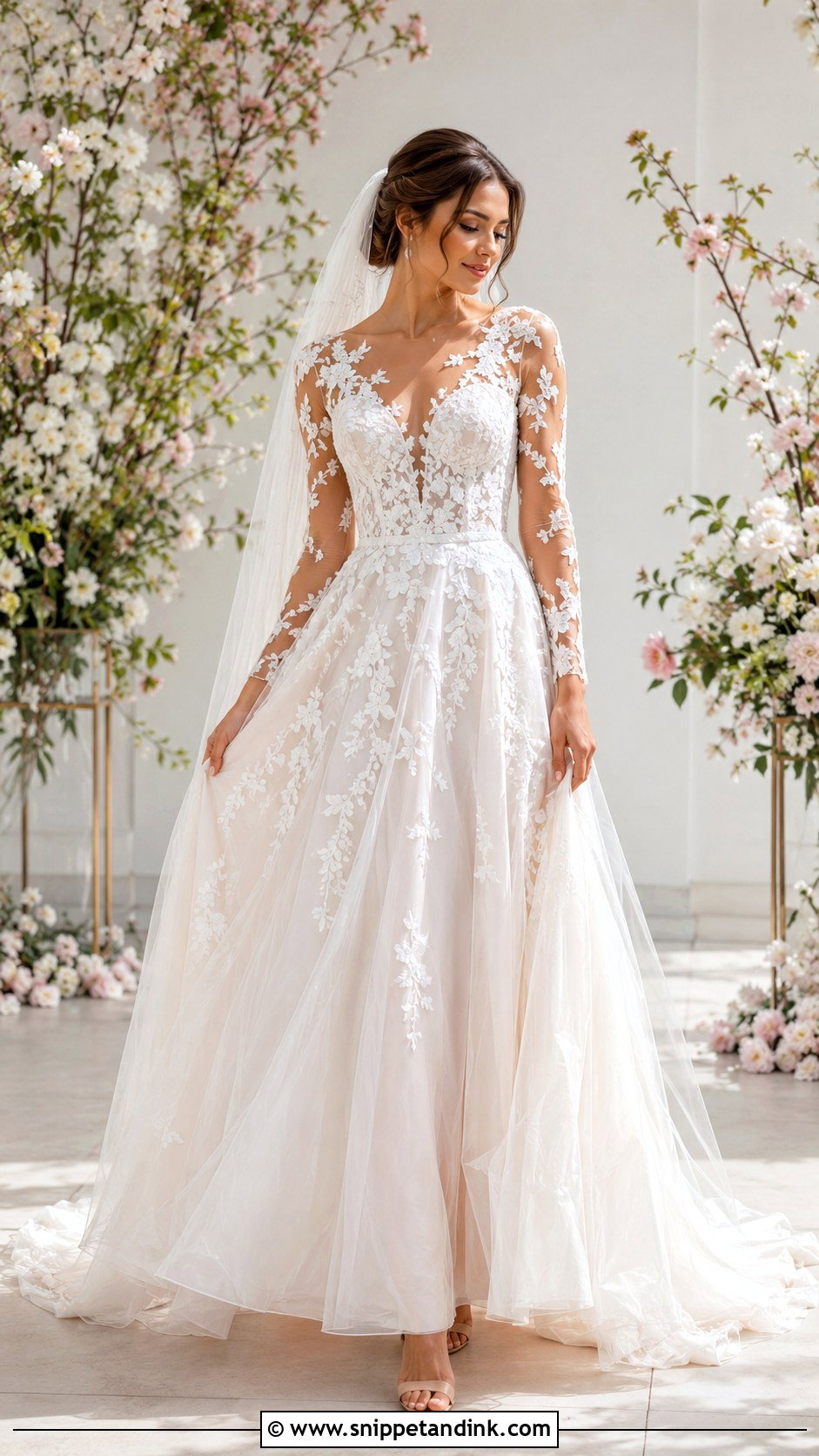
Illusion sleeves are sheer mesh with lace, beading or embroidery applied on top, so the detail seems to float on your skin. They give coverage without weight, which is why I suggest them for spring and summer. Match the mesh to your skin tone. Ivory or white tulle on deeper or olive skin can look chalky up close, and most bridal shops can order a nude or toned mesh if you ask early enough.
4. Off Shoulder Bridal Gown With Sleeves
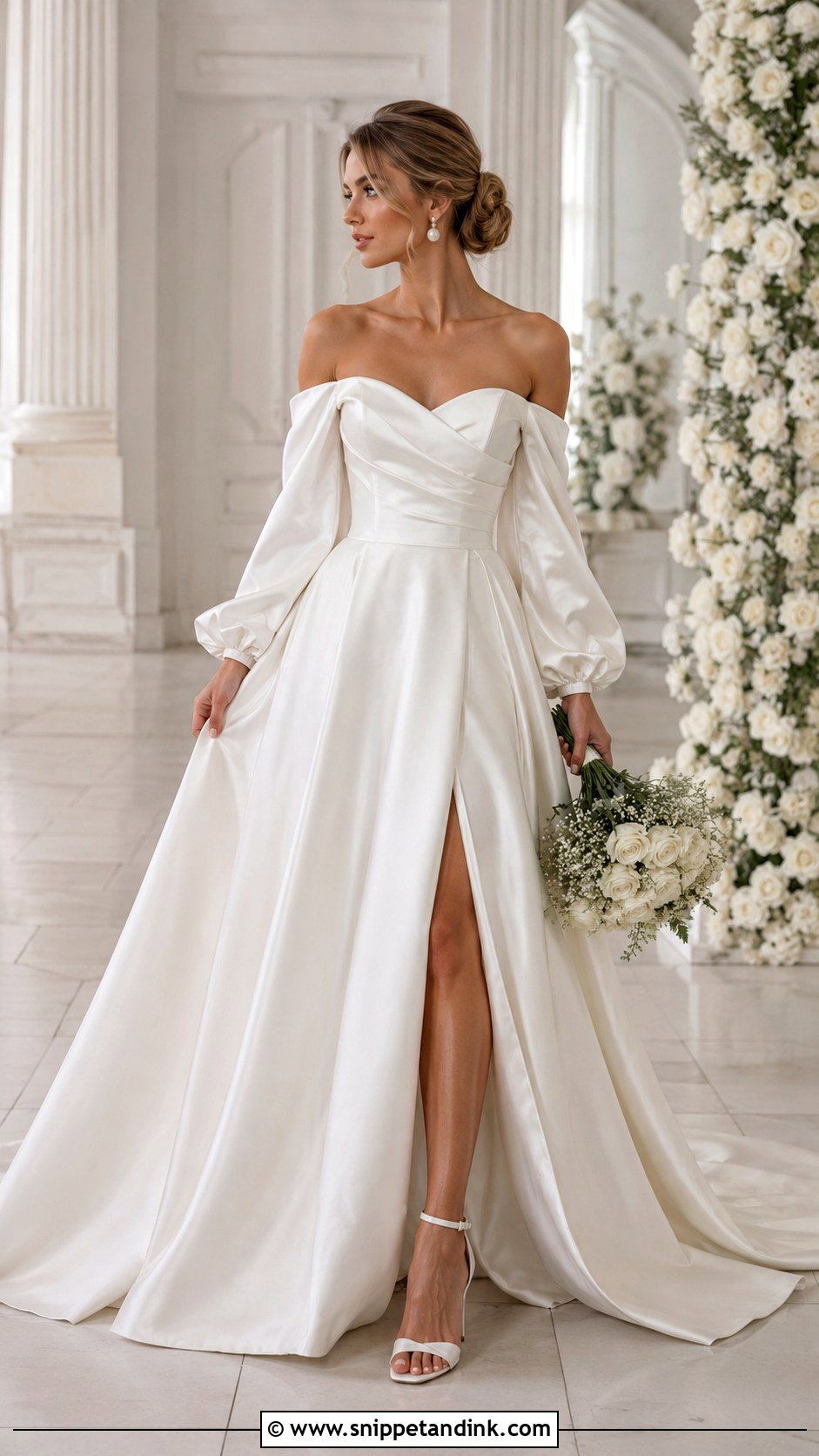
Off-shoulder sleeves frame the collarbone and wrap the upper arm. Satin, lace, crepe and tulle all work, over a full princess skirt or a slim one. Off-shoulder sleeves are the ones that most often limit your arms. They act like a band across the biceps, so if they’re snug you can’t lift your hands above chest height. I always ask brides to raise their arms in the sample before buying. A low bun and a fine necklace finish it.
5. Puff Sleeve Bridal Gown
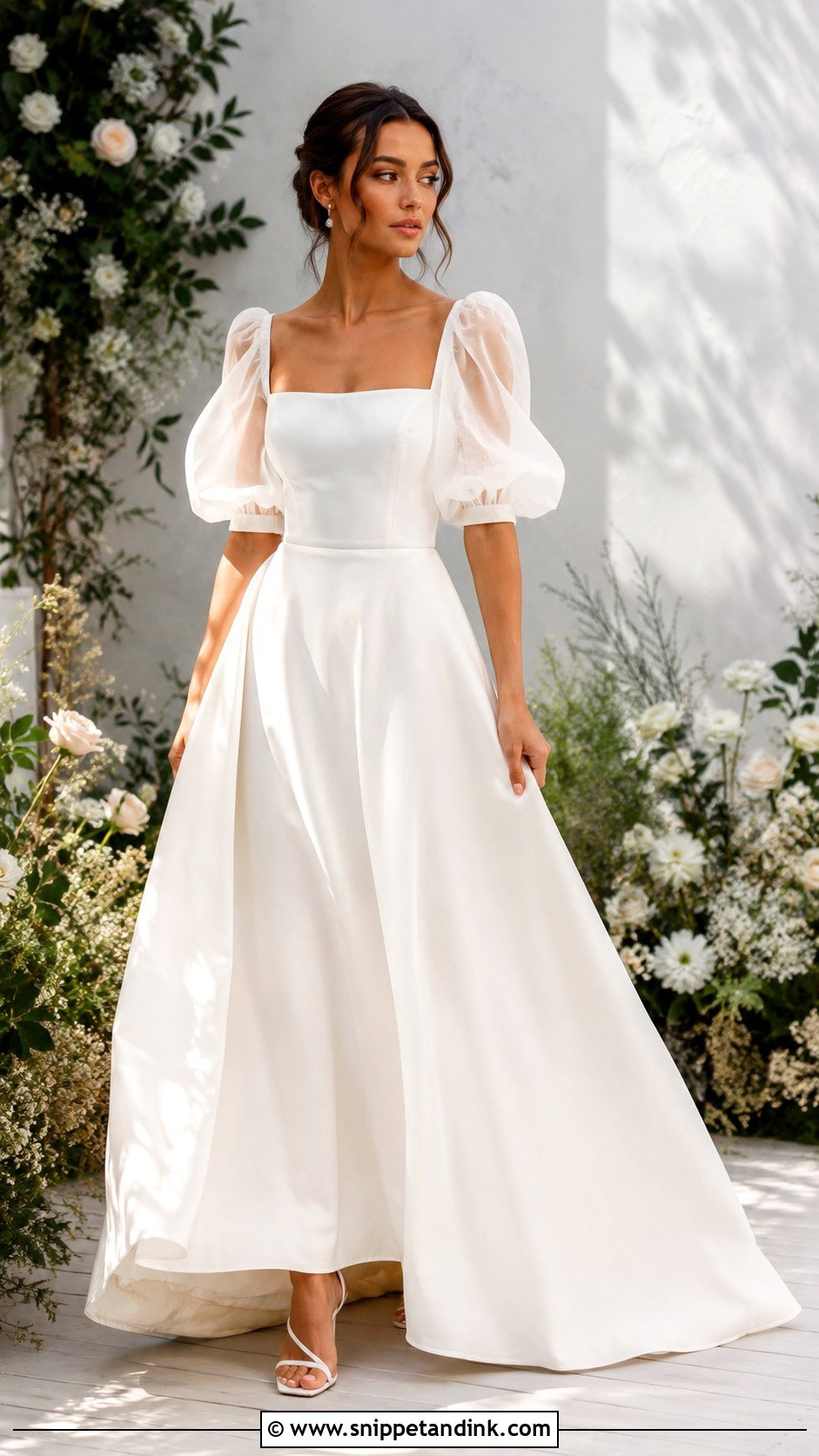
Puff sleeves add volume at the shoulder, which balances a full skirt or gives a plain gown a clear point of interest. Sheer, satin, organza and lace all puff differently: organza holds its shape all day, lace and chiffon soften as the day goes on. Keep the hair smooth and the earrings small, because the shoulders already sit close to your face. They’re a confident choice for a garden wedding or an editorial-style shoot.
6. Bishop Sleeve Bridal Gown
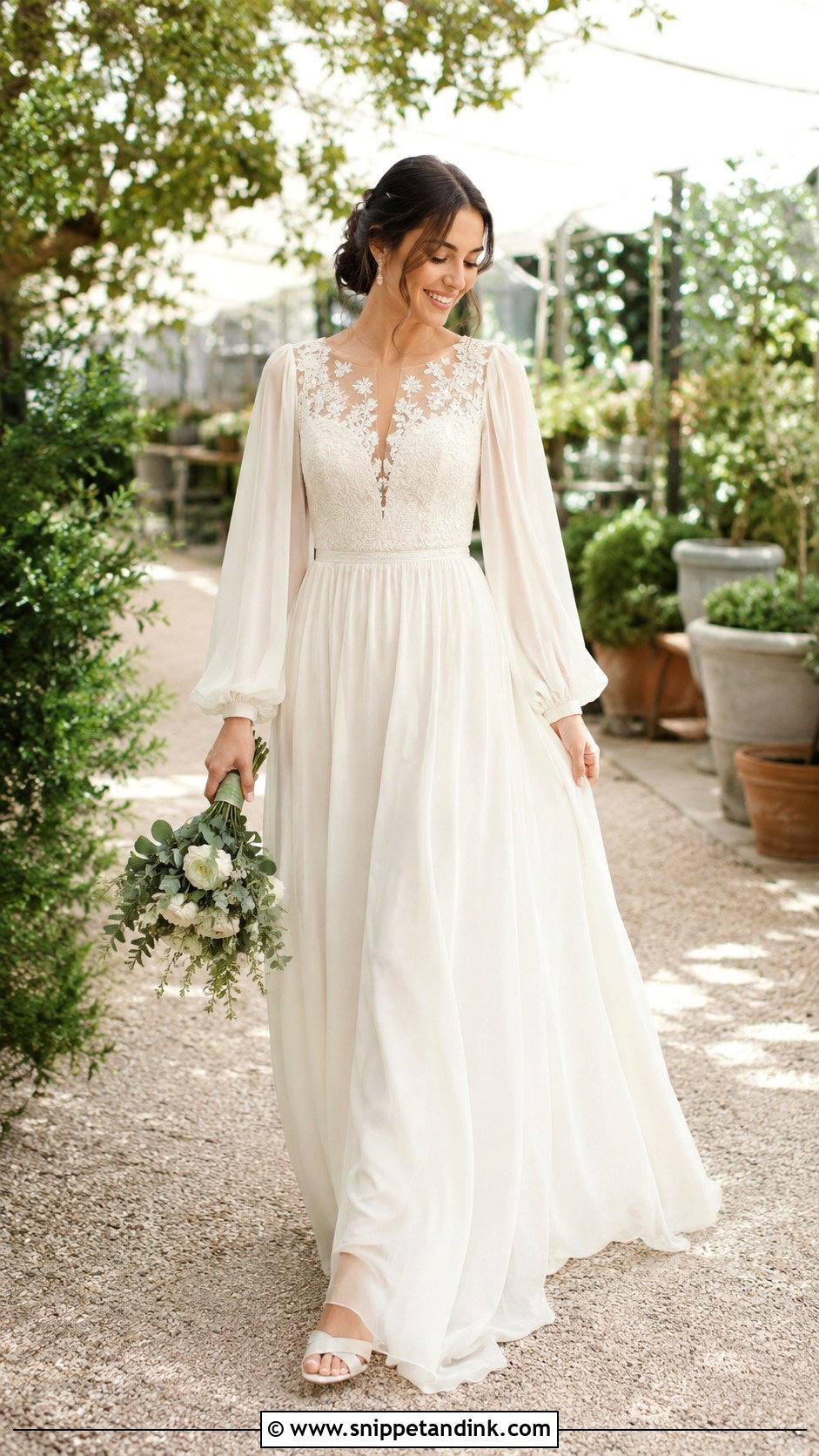
A bishop sleeve bridal gown has long, loose sleeves gathered into a cuff at the wrist, so the fullness billows below the elbow. Chiffon, tulle, lace and light crepe drape best. Because nothing grips the upper arm, it’s one of the most comfortable sleeves I fit. Watch the cuff when you eat, though. A loose sleeve dips into sauces and drags across a table, which is why I suggest a narrow cuff with a button you can push up if needed.
7. Crepe Bridal Gown With Sleeves
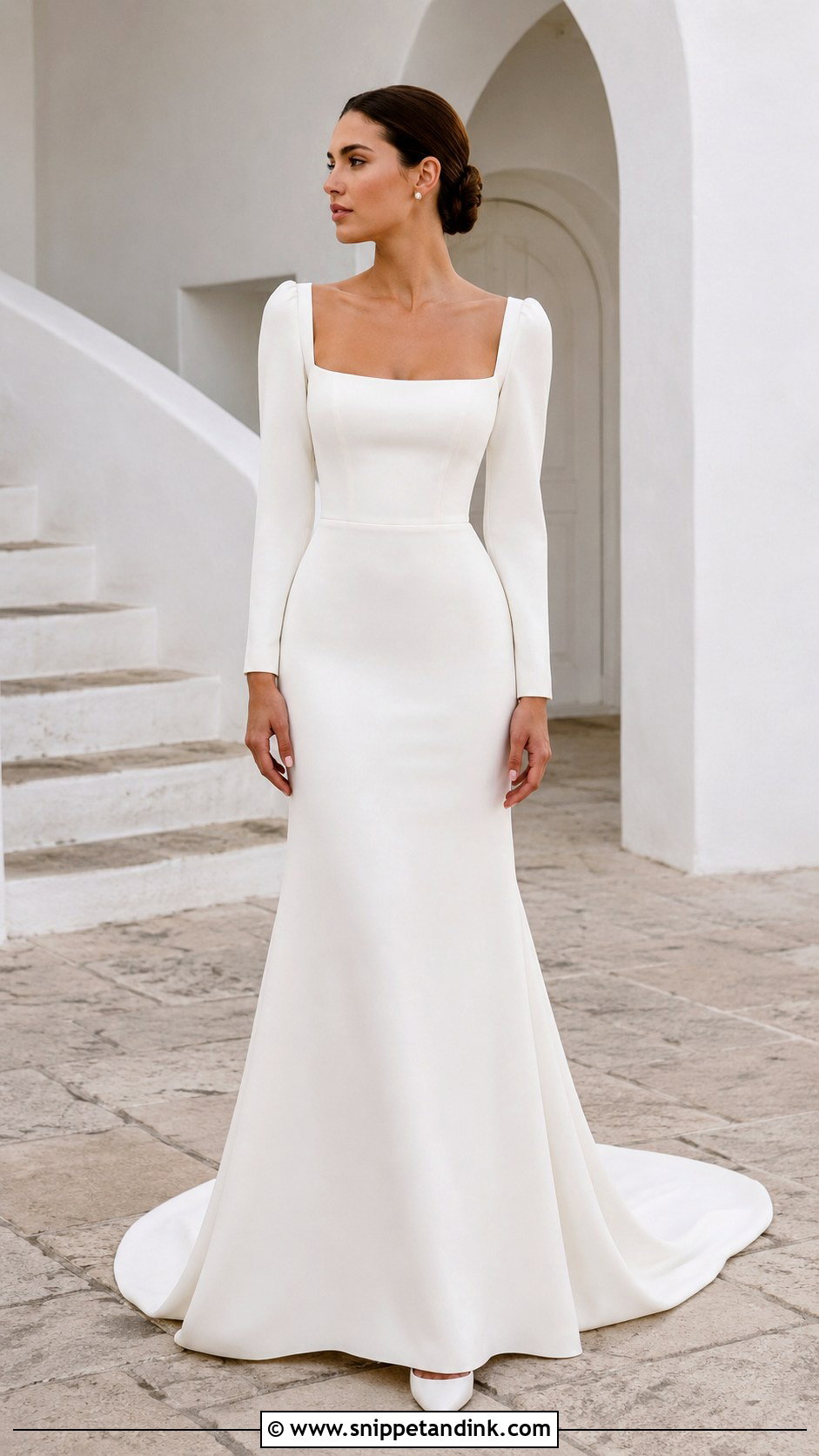
Crepe skims the body and has a matte finish, so a sleeved crepe gown is all about the cut. Long fitted sleeves with a square or bateau neckline give it structure. Minimalists suit it best, but crepe shows everything underneath, from bra lines to the edge of shapewear. Seaming at the waist or a short train adds shape if the plain version feels too spare. A long veil and pearl studs finish it.
8. Ball Gown Bridal Gown With Sleeves
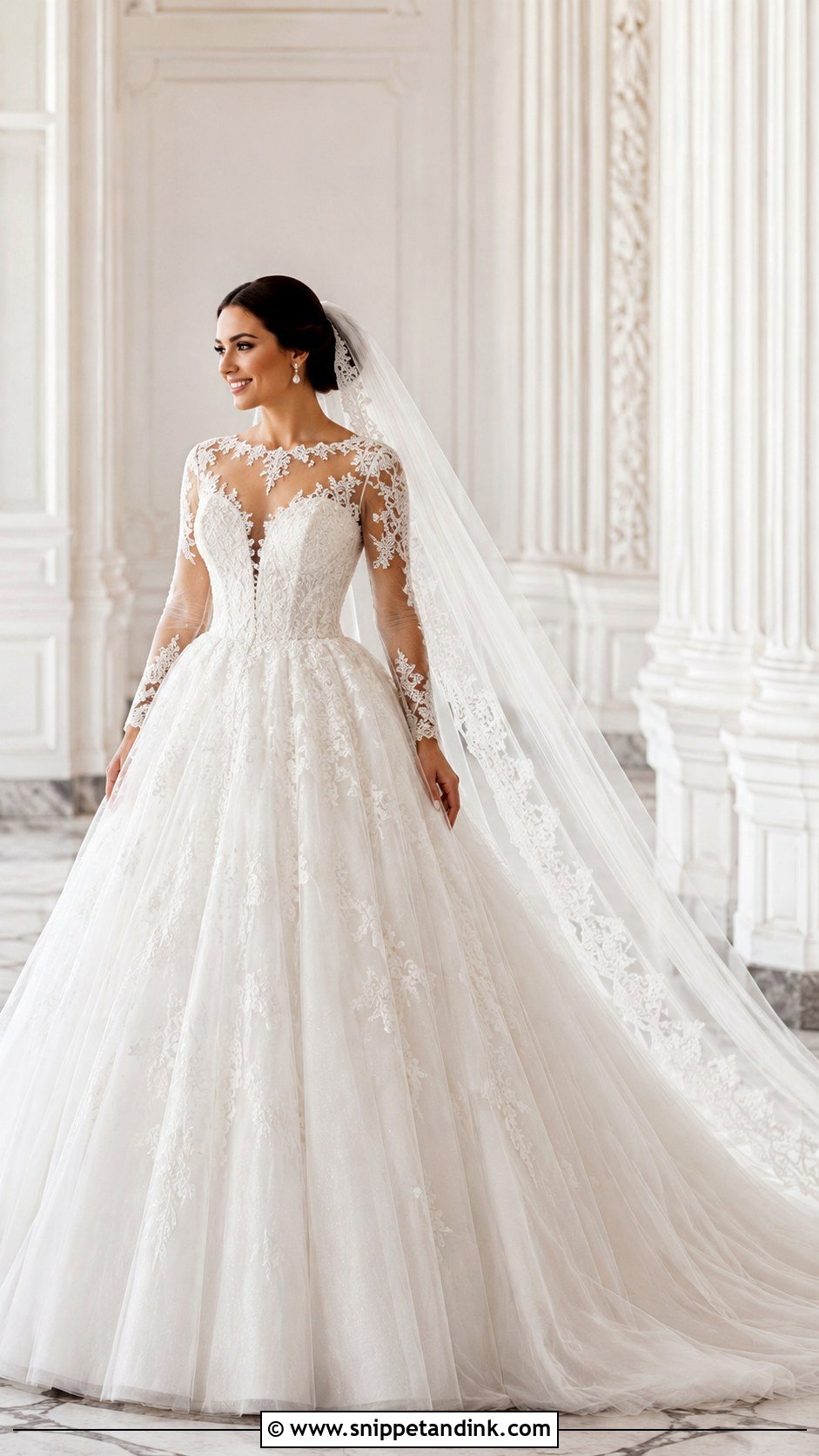
A ball gown already has a lot of fabric in the skirt, and sleeves bring the top half up to match. Lace sleeves feel romantic, satin crisper, illusion lighter. My concern with this combination is heat. A full skirt traps warmth, and long sleeves add to it, so for summer I’d steer you toward illusion sleeves rather than lined lace. Comfortable shoes matter here too, because a full skirt has real weight by evening.
9. A Line Bridal Gown With Sleeves
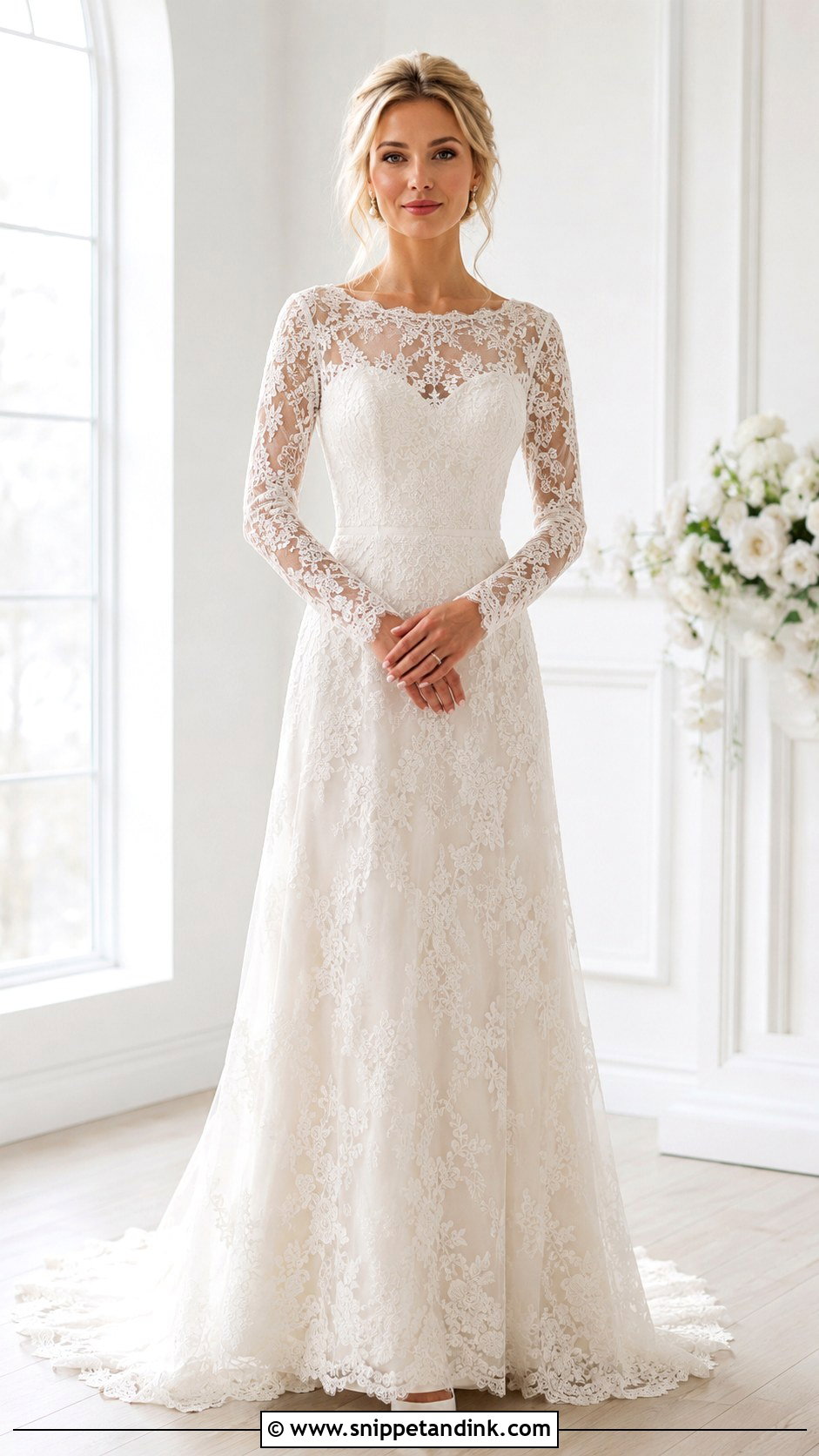
An A-line suits a wide range of bodies because the skirt falls away from the hip, and sleeves add balance up top. Lace, sheer and satin sleeves all suit it. I’d match the sleeve weight to the skirt: a heavy lace sleeve on a floaty chiffon skirt looks top-heavy. A fingertip veil and block heels make it easy to wear from ceremony to the last song.
10. Mermaid Bridal Gown With Sleeves
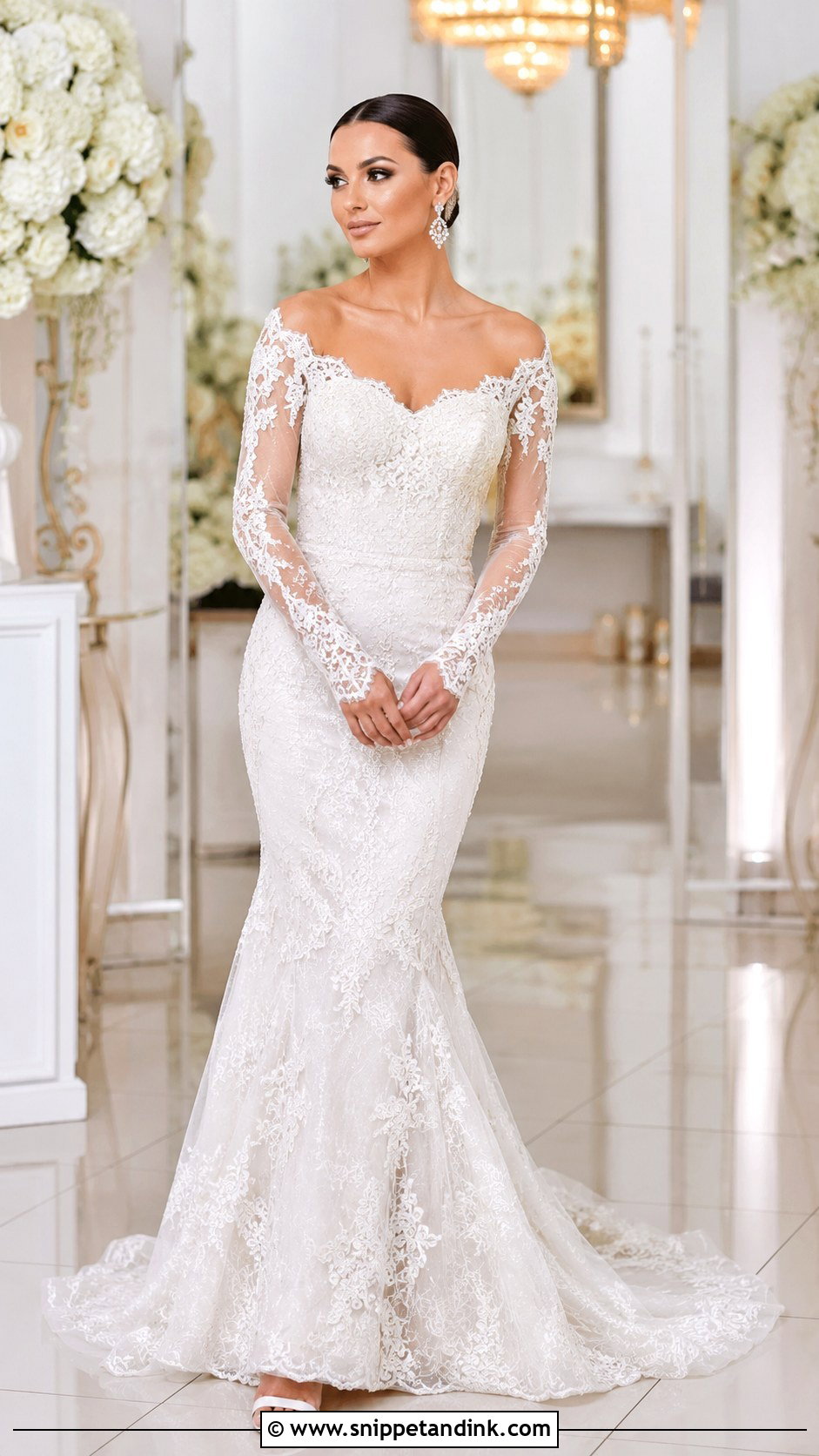
Mermaids fit through the body and flare near the knee, and sleeves calm the silhouette so it reads more formal than sexy. Lace, beading or a long train pair well with a V-neck, illusion or off-shoulder top. Sit, walk and climb a step at every fitting. A fitted body plus fitted sleeves leaves very little give anywhere, so the sleeve needs a touch more ease at the elbow than it would on a looser gown.
11. Boho Bridal Gown With Sleeves
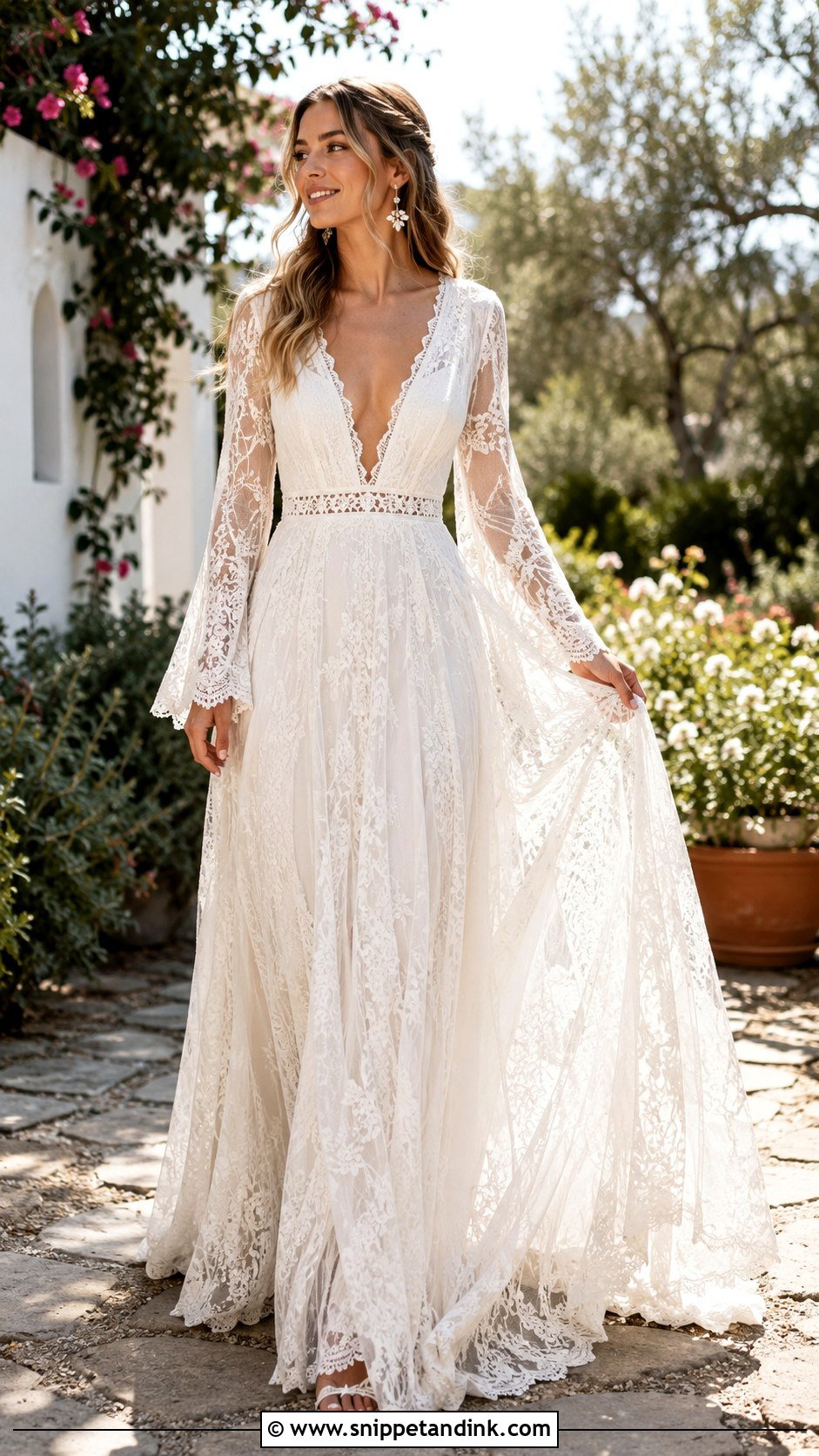
Boho dresses use light lace, chiffon, soft tulle or crochet-style trims with sleeves that move. Bell sleeves, bishop sleeves and sheer lace sleeves suit it, usually with a deep V, an open back or a soft A-line. On a beach or in a field, wide sleeves catch wind. That looks great in motion and a little chaotic during vows, so I’d hold a small hair tie or ribbon in your kit to gather a cuff if needed. Loose waves and low sandals finish it.
12. Modest Bridal Gown With Sleeves
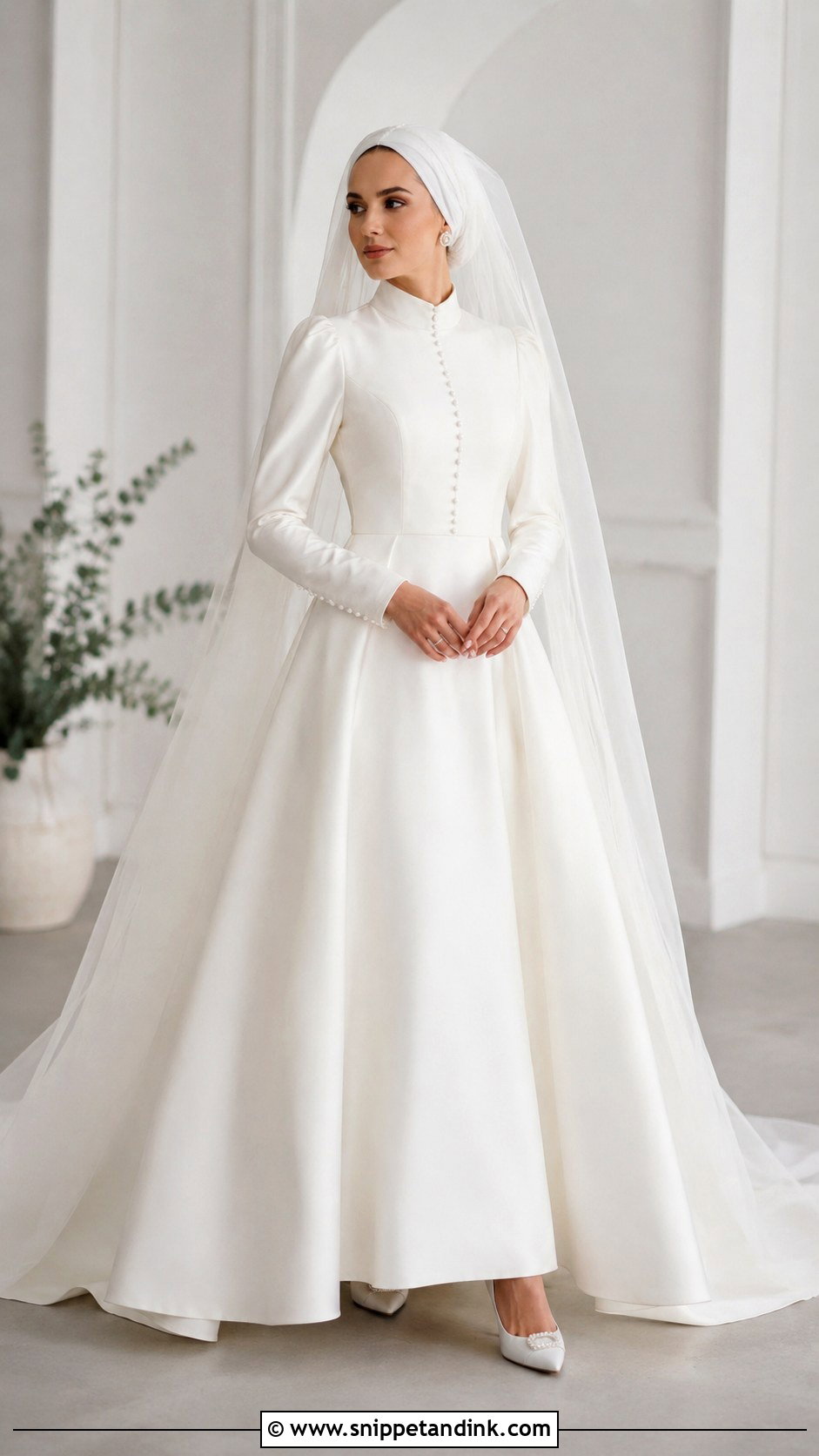
A modest gown covers shoulders, arms and chest, typically with a high or bateau neckline, long sleeves and a full skirt. Covered doesn’t have to mean plain: lace applique, satin buttons down the sleeve, structured seams and a soft train all add interest. If you need coverage for a religious ceremony, tell your consultant at the start, so she pulls gowns with lined bodices rather than sheer ones that only look covered in photos.
13. High Neck Bridal Gown With Sleeves
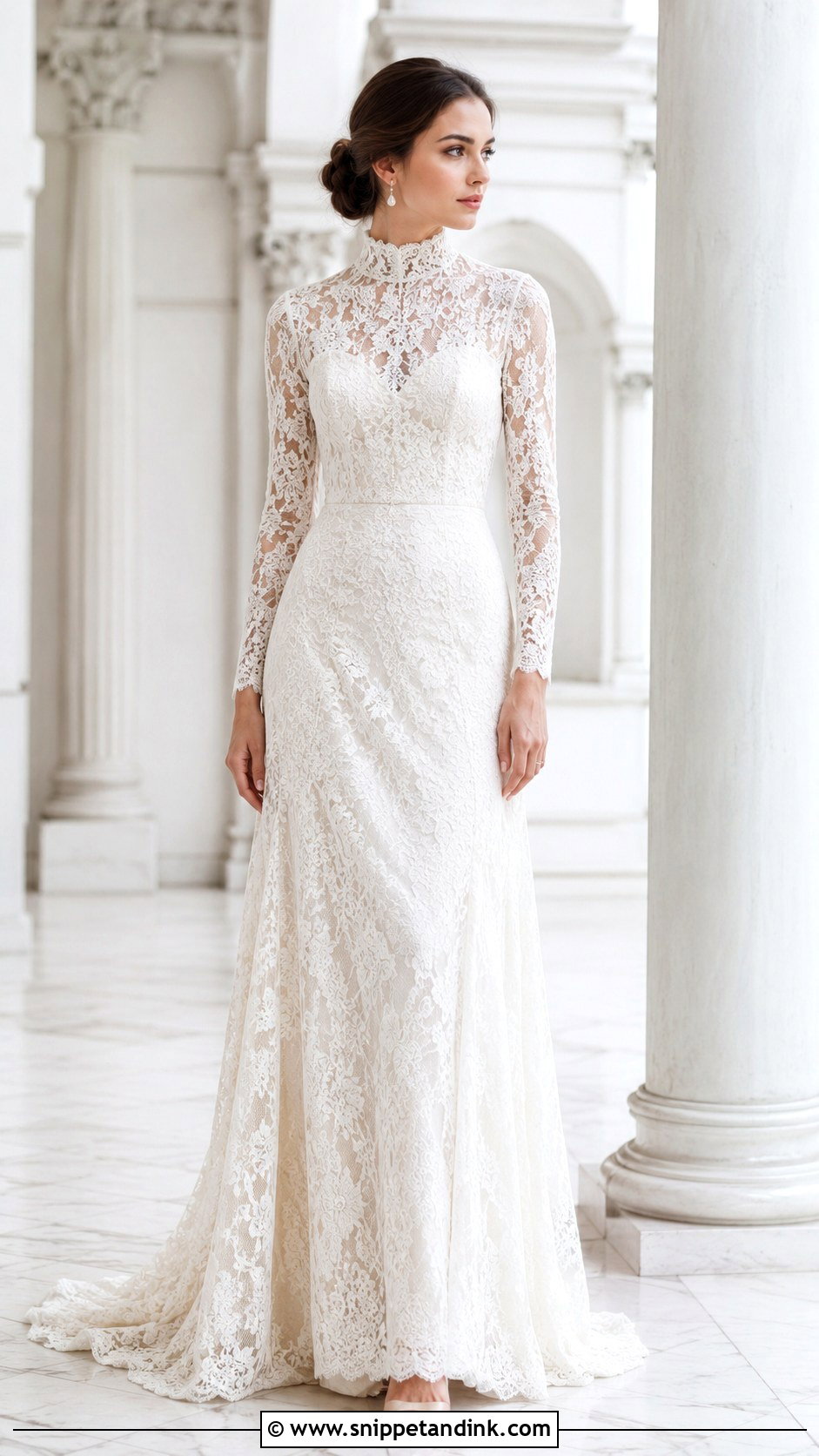
High necks draw attention upward, toward the face. In lace they feel vintage; in crepe or satin, current. Paired with long sleeves, the dress becomes one continuous line, which is why I’d skip the necklace and keep the hair swept back. Test the collar while turning your head. A stiff high collar with a tight neck fastening rubs by the end of the day, so ask for a little room or a softer facing inside.
14. Square Neck Bridal Gown With Sleeves
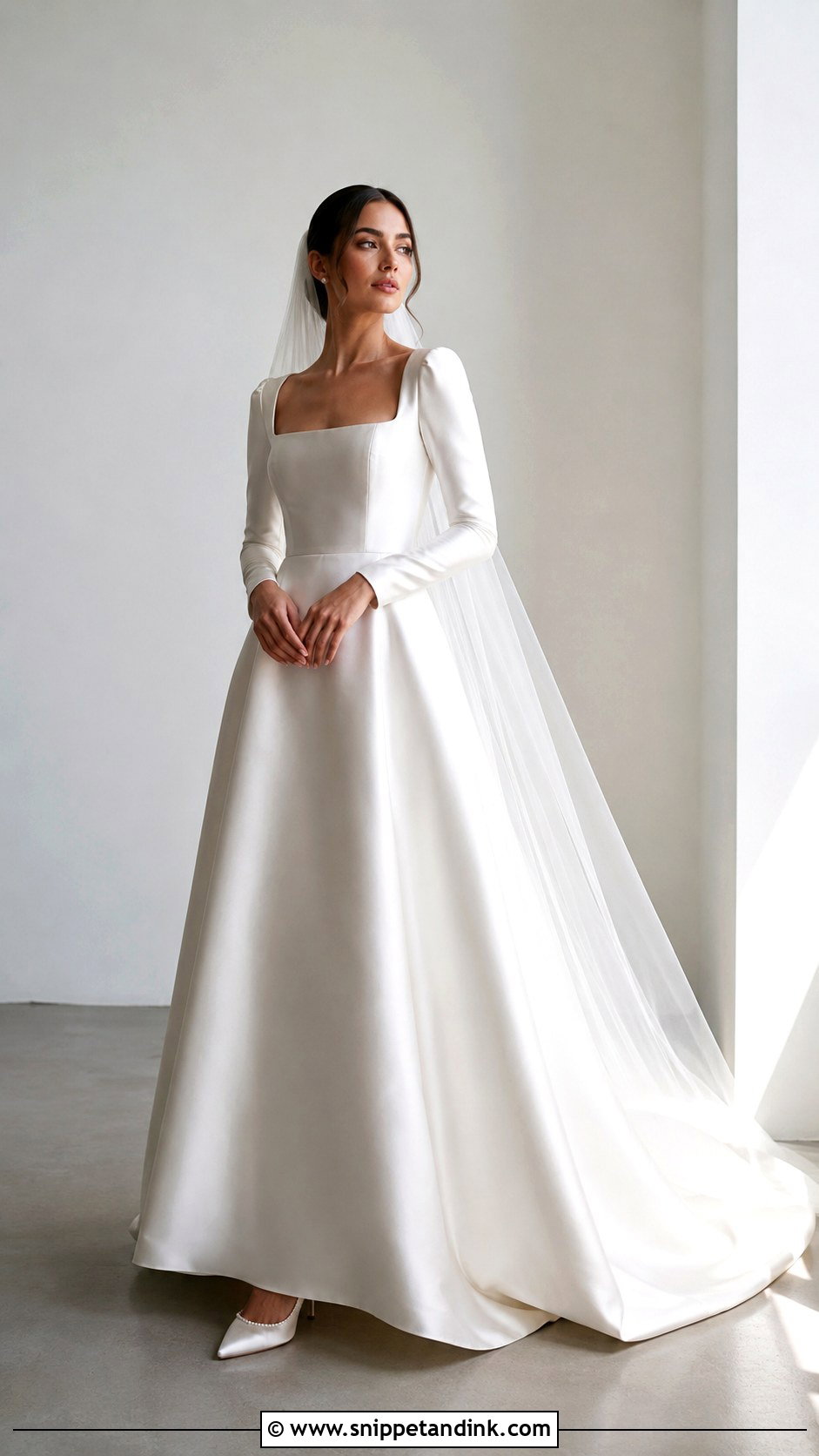
A square neckline opens the chest while still feeling secure. It pairs well with puff sleeves, long fitted sleeves or sheer ones. Satin, mikado, lace and crepe all carry it. Leave the neckline bare and wear pearl studs. The corners of a square neck should sit flat against your chest; if they lift when you lean forward, the bodice needs taking in at the top edge.
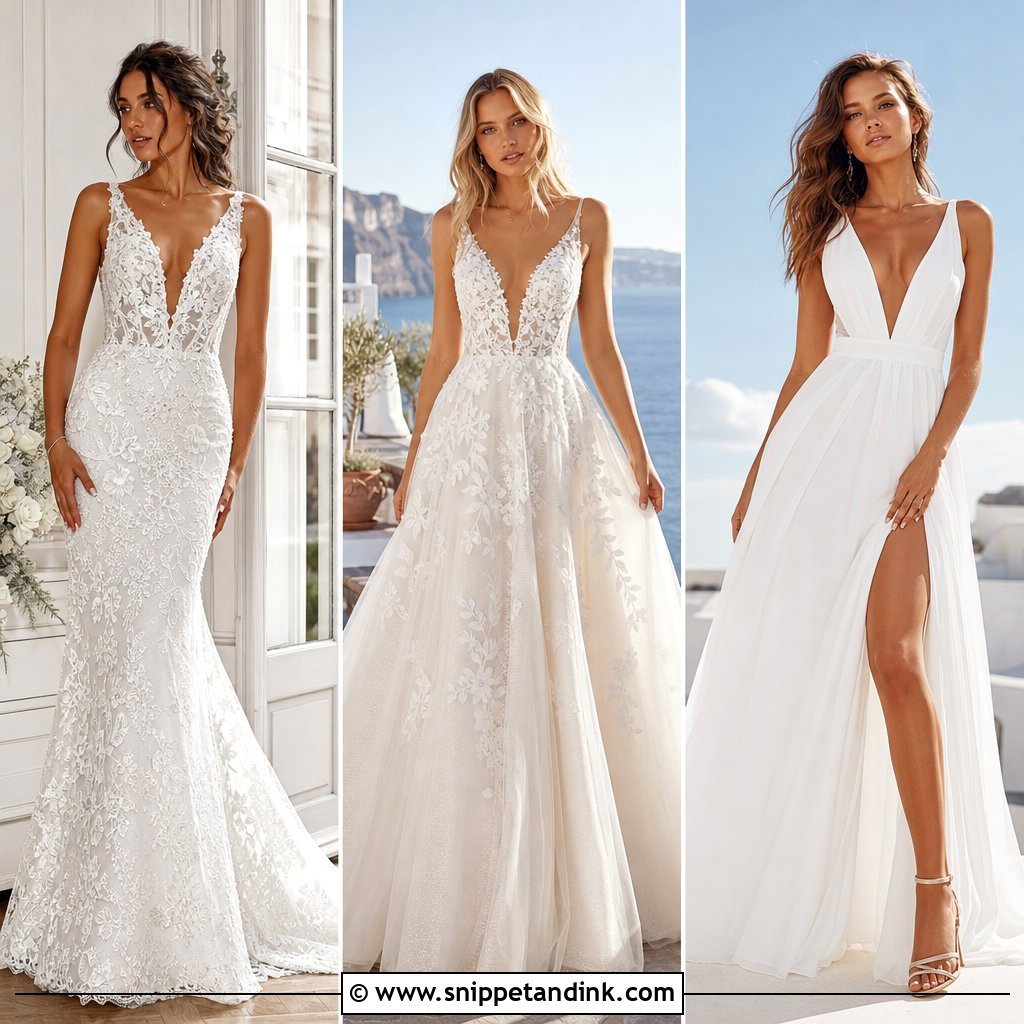
15. V Neck Bridal Gown With Sleeves
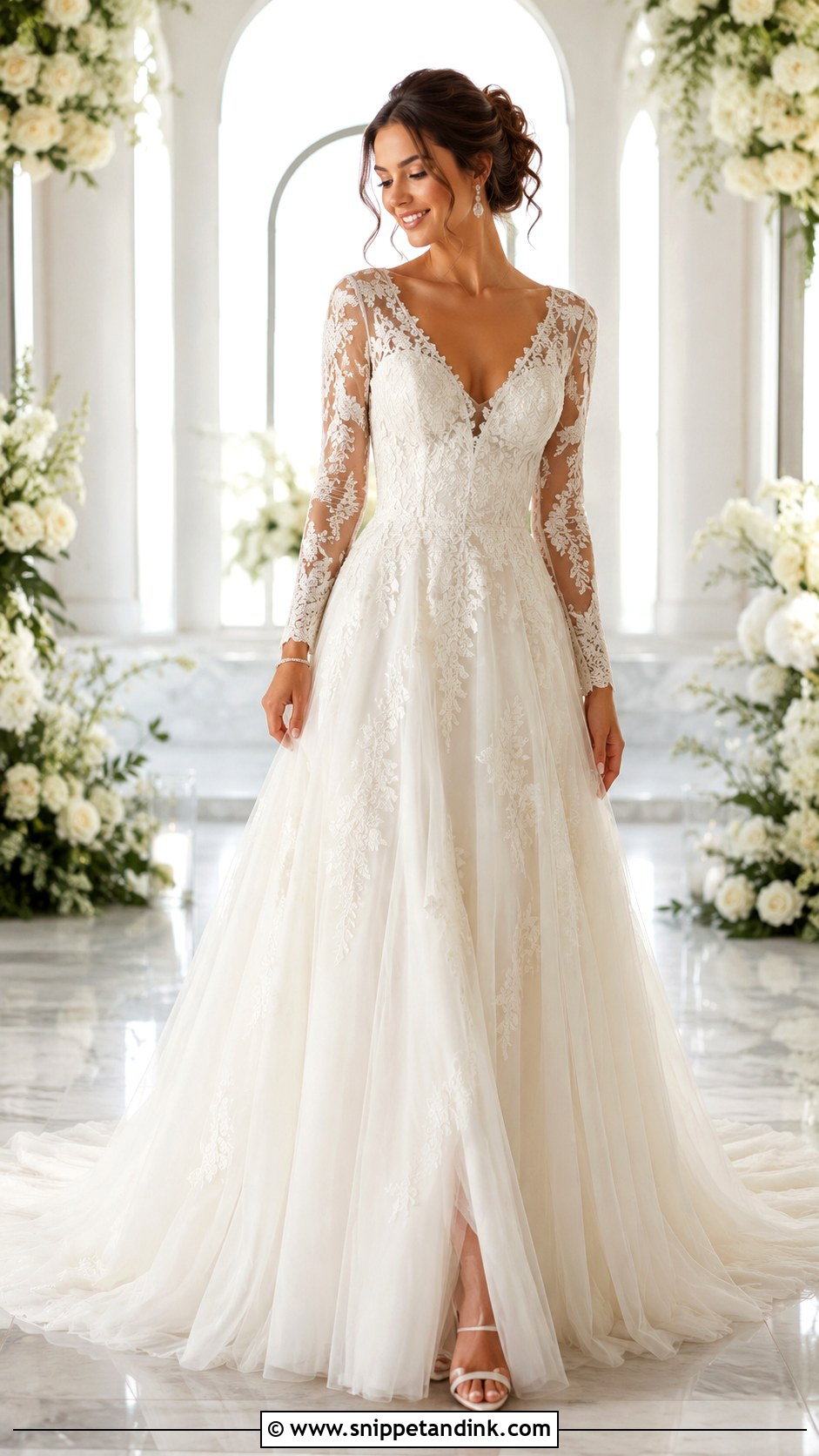
A V-neck lengthens the torso, and sleeves add balance so a deep V doesn’t feel bare. Lace sleeves soften it, crepe sharpens it. A plunge needs support, so I’d ask for illusion mesh across the gap or fashion tape at the fittings, never on the morning itself. It suits fitted, A-line and flowing shapes, with drop earrings and a fine bracelet.
16. Detachable Sleeve Bridal Gown
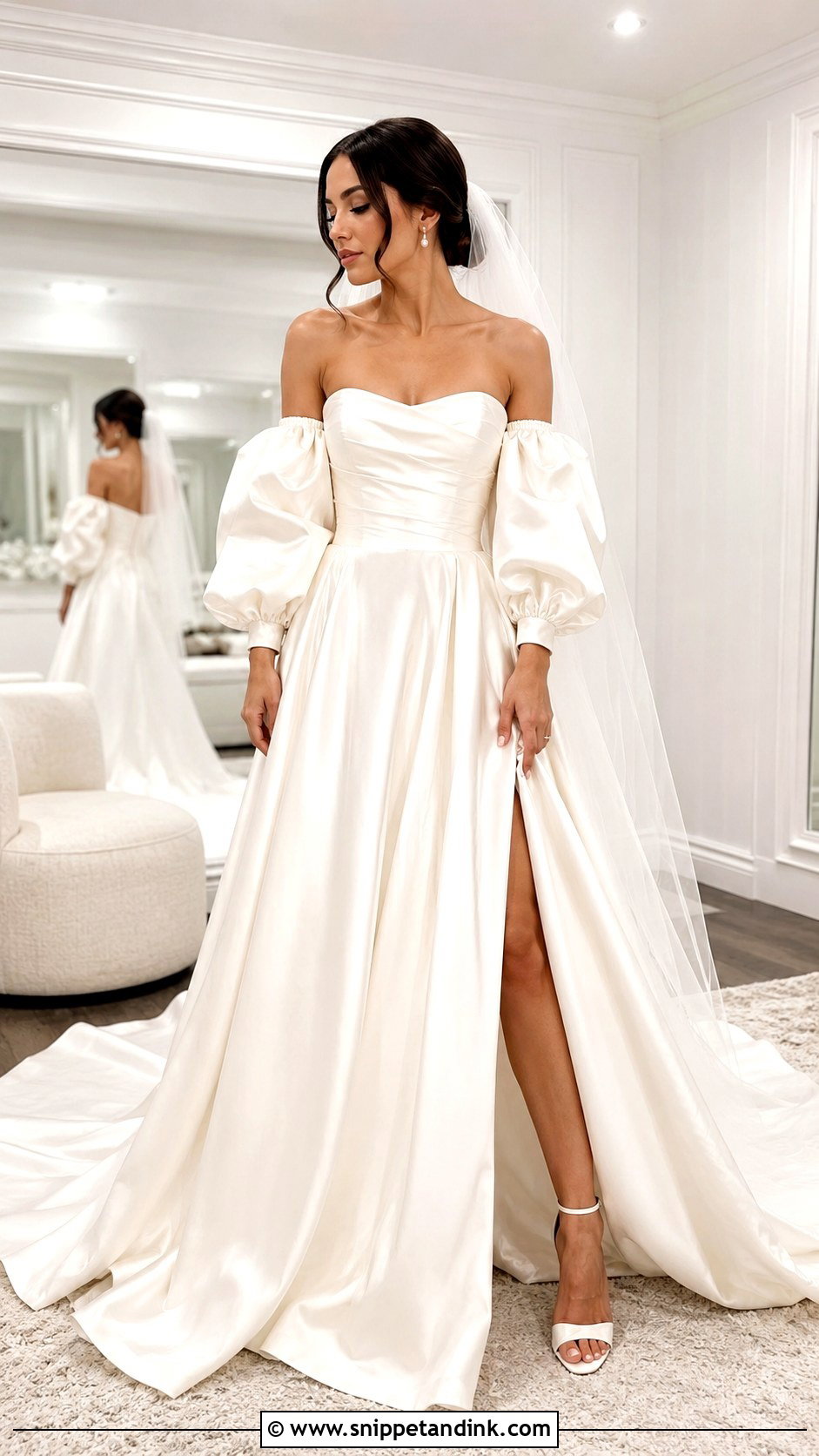
Detachable sleeves let you wear one dress two ways: covered for the ceremony, lighter for dancing. They come as puff, off-shoulder, lace or long sheer pieces. Look at how they fasten. Snaps or tiny hooks inside the armhole are secure; ties look sweet but loosen. Make sure the sleeve fabric came from the same dye lot as the gown, because ivories that don’t match look obvious in daylight. Practise taking them off once with whoever helps you change.
17. Cap Sleeve Bridal Gown
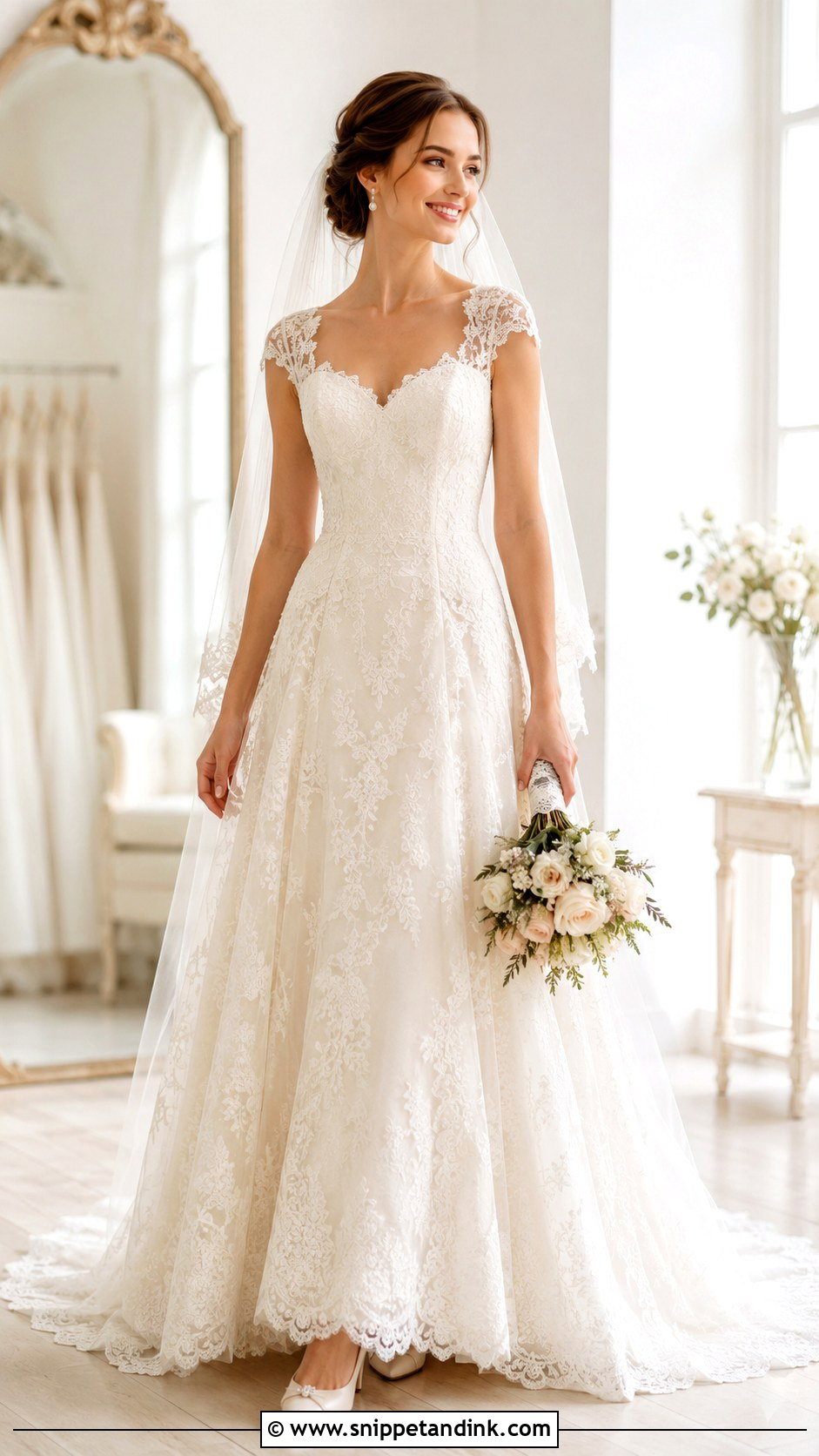
Cap sleeves cover just the top of the shoulder. Lace keeps them delicate, satin or crepe neater. They suit A-line, sheath and vintage shapes, and stay cool in warm weather. I’d look closely at the edge of the cap against your arm: if it’s tight, it cuts in when you raise your arms and leaves a visible dent. A soft updo and small earrings complete a quiet middle ground between sleeveless and long.
18. Short Sleeve Bridal Gown
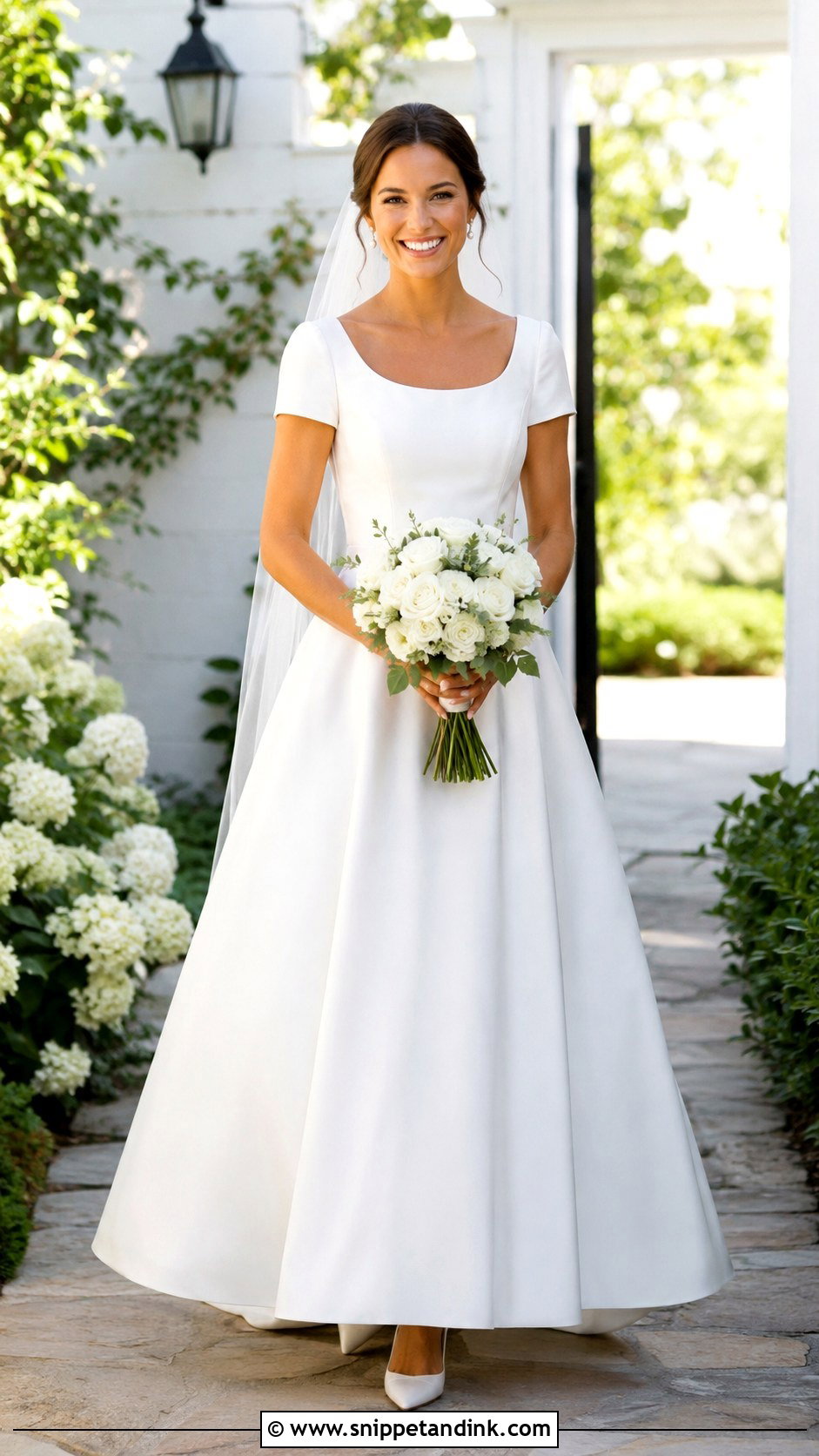
Short sleeves stop above the elbow and come fitted, slightly puffed, sheer, lace or structured. Spring, summer and daytime weddings suit them. Pair one with a tea-length skirt for a vintage line or a floor-length A-line for something traditional. They breathe better than any long sleeve, and you won’t spend the reception pushing them up.
19. Bell Sleeve Bridal Gown
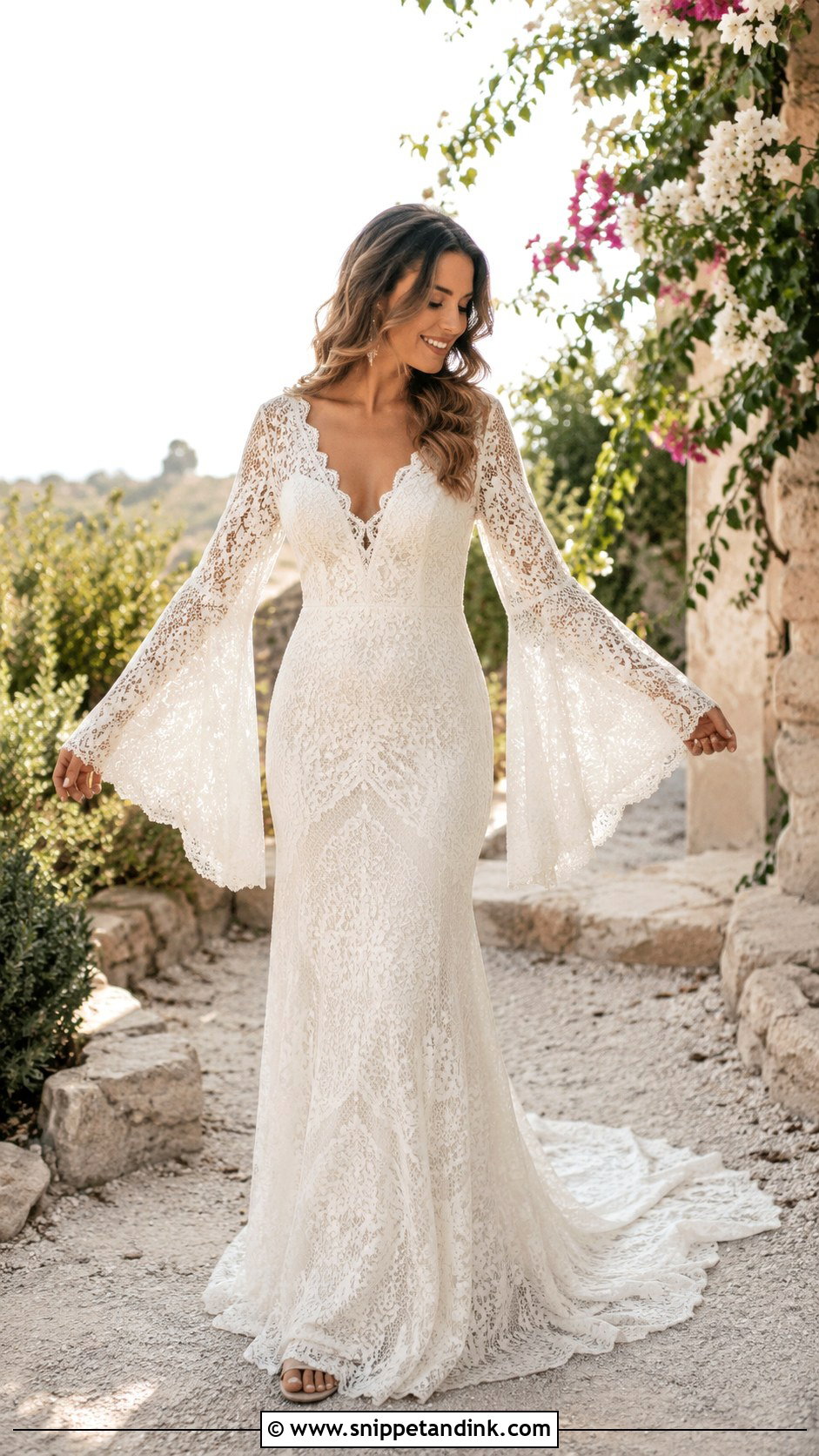
Bell sleeves flare out near the wrist or lower arm, and lace bell sleeves show their pattern more as the sleeve widens. They lean artistic and boho. A slim gown balances the volume; a soft A-line makes the whole look floatier. Wide cuffs catch on bouquet stems and chair backs, so I’d keep the bouquet compact and the jewelry minimal so the sleeves stay the focus.
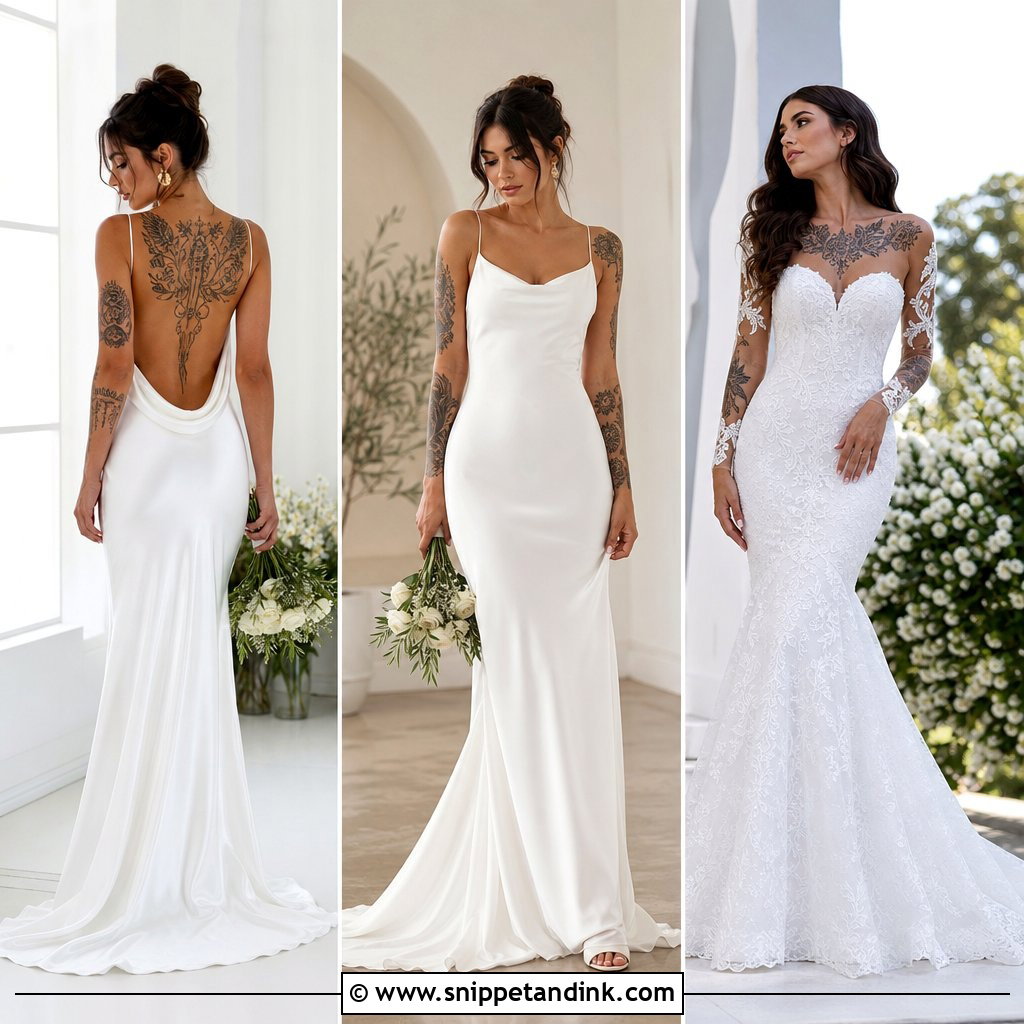
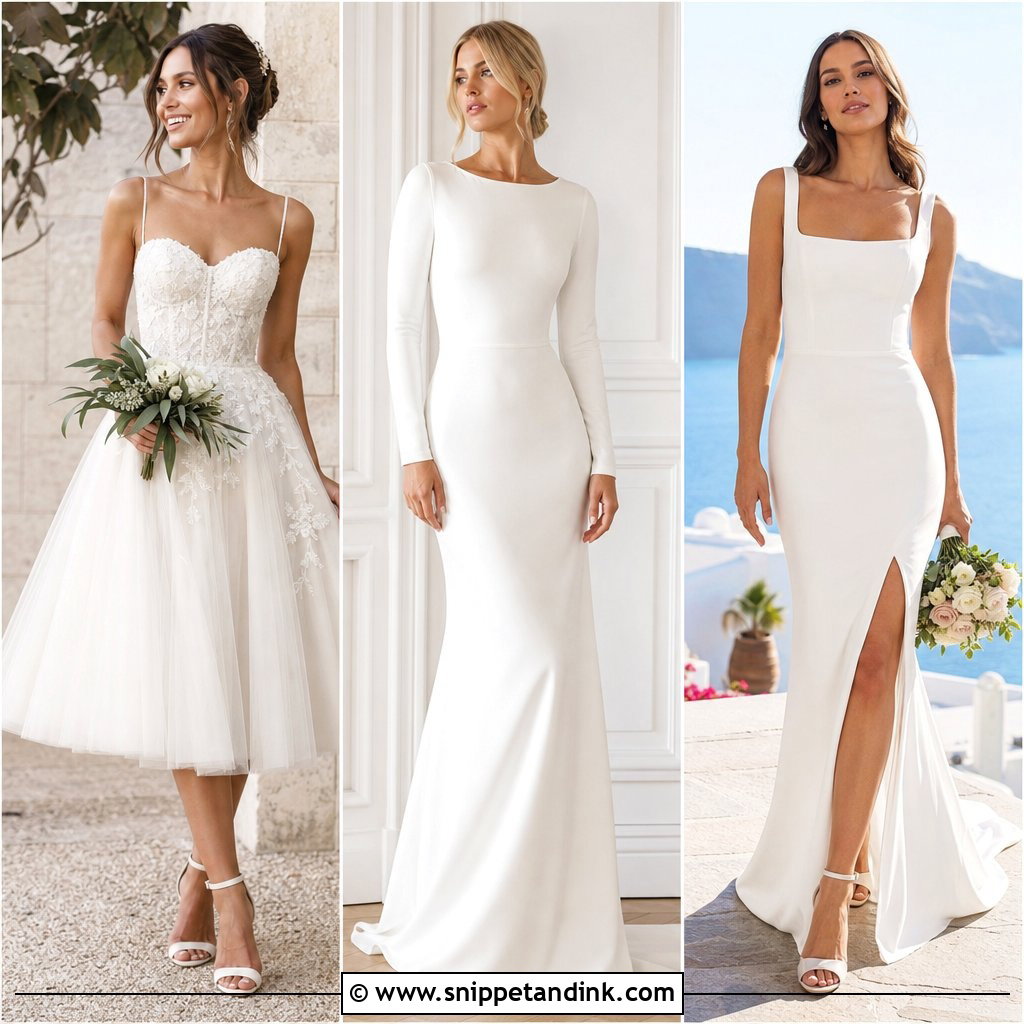
20. Beaded Bridal Gown With Sleeves
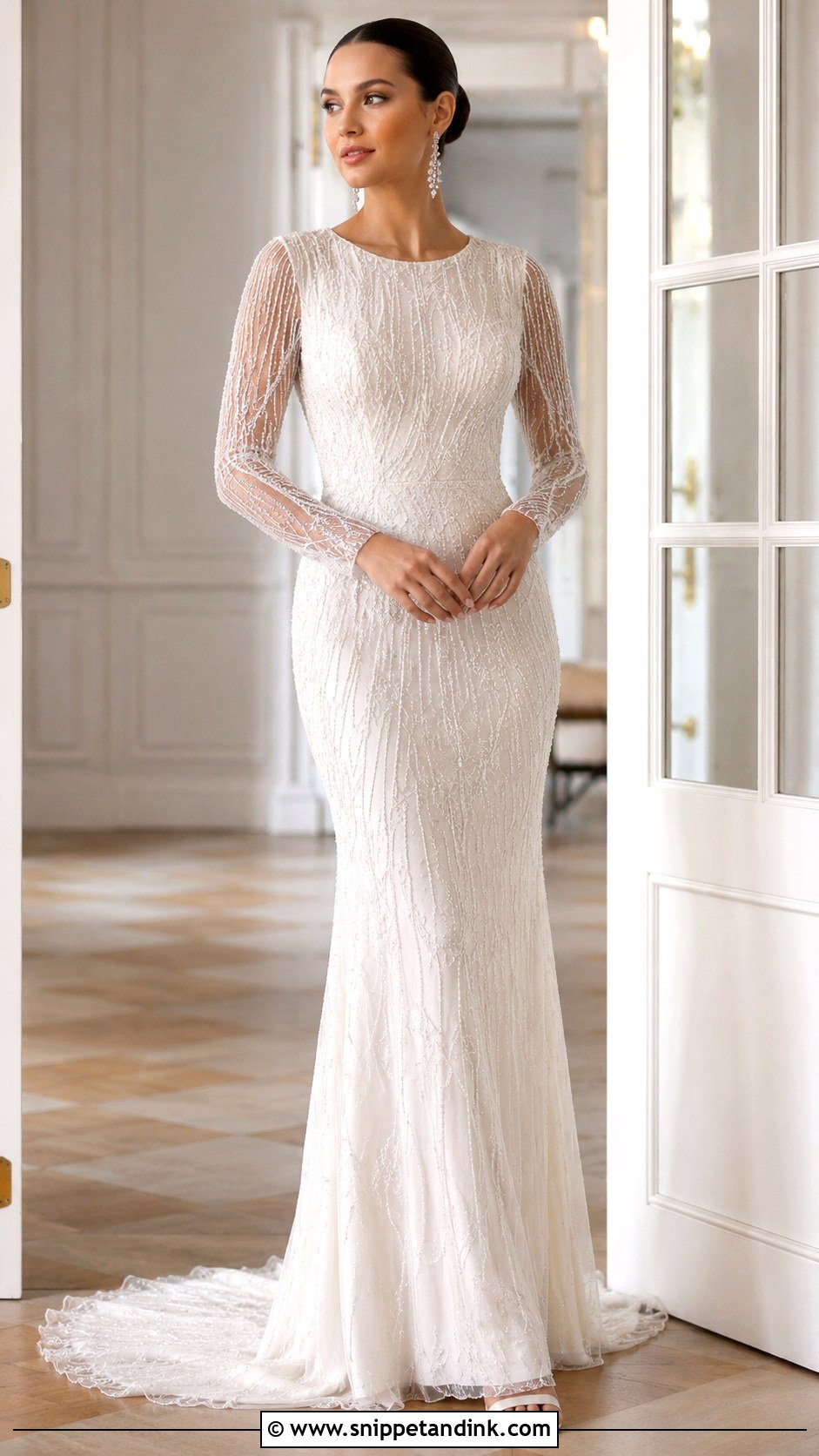
Beaded sleeves catch light every time you move your arms, which is why they’re so good for evening weddings and indoor venues. The beading can be fine and scattered or dense and glamorous. Heavy beading adds real weight to a sleeve and can pull the shoulder seam down over a day, so ask how the sleeve is lined and supported. Simple earrings and a veil that doesn’t compete with the beadwork.
21. Tulle Bridal Gown With Sleeves
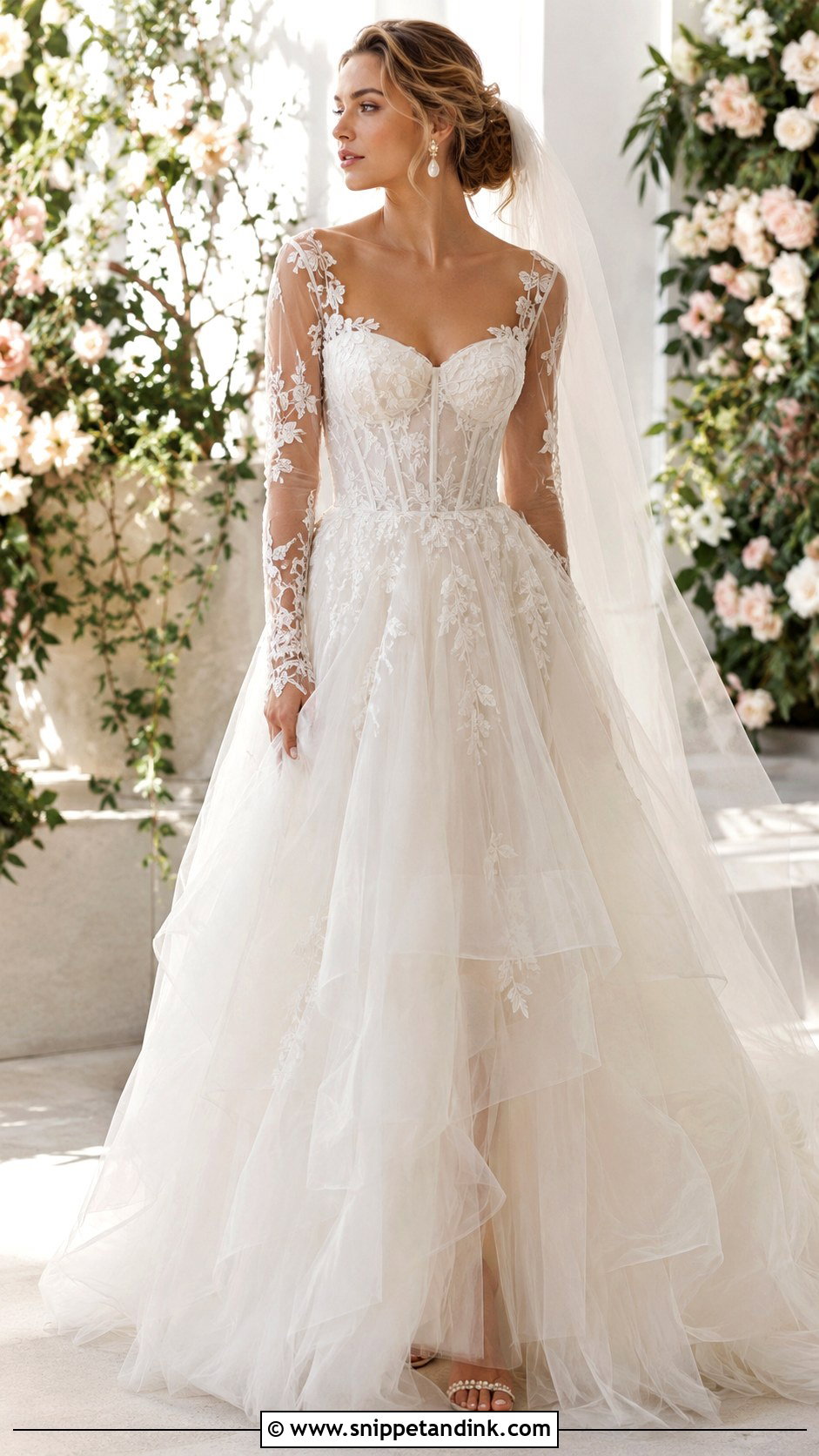
Tulle sleeves are light and sheer, plain or dotted, embroidered or covered with lace applique. They suit soft A-lines, layered ball gowns and floaty silhouettes. Tulle catches on rings and rough nails, so do your manicure before your final fitting and avoid big claw-set stones. Spring and garden weddings suit it best.
22. Vintage Bridal Gown With Sleeves
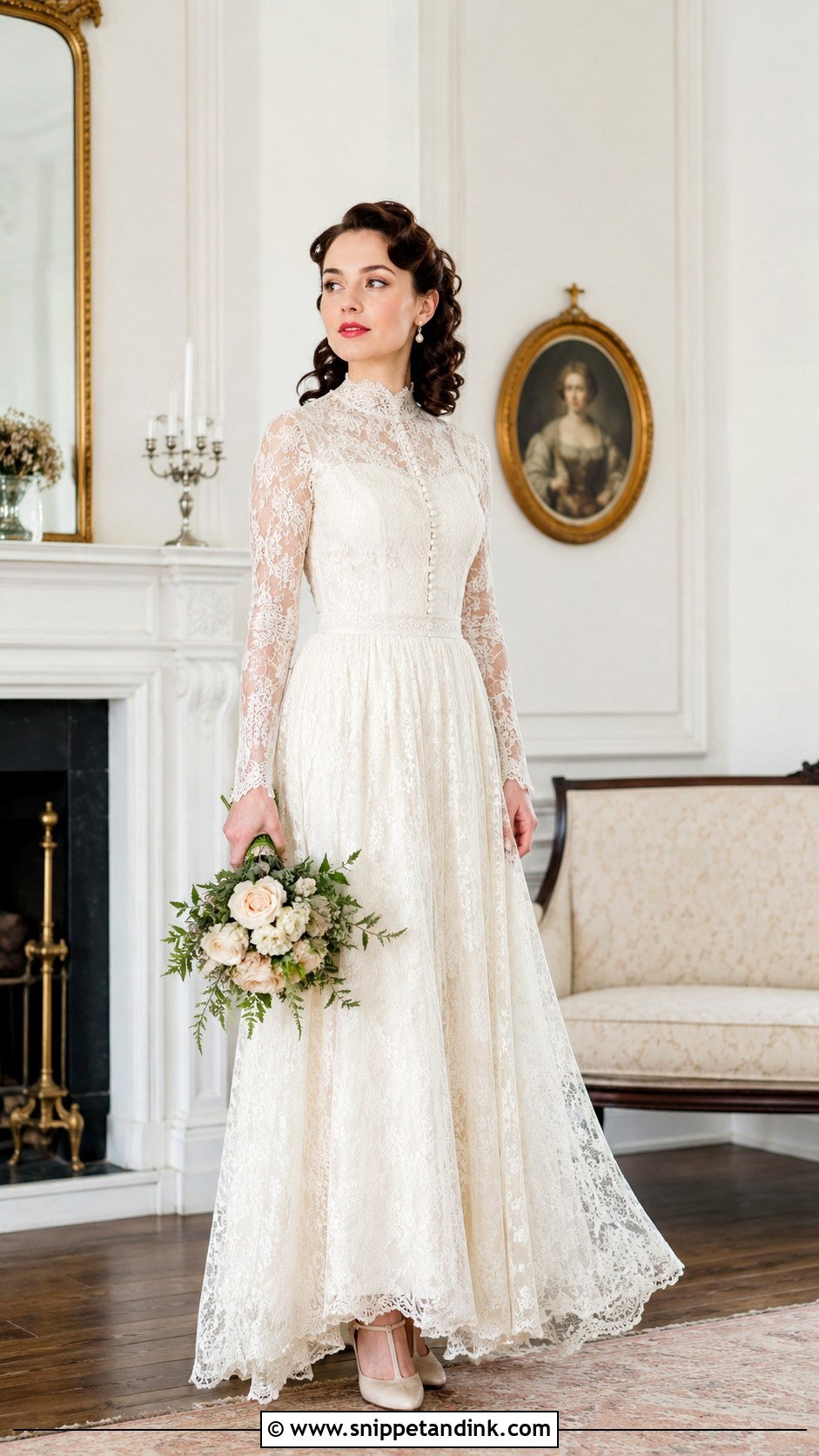
Lace collars, covered buttons, tea lengths, high necks and long fitted sleeves all signal vintage, and the overall mood can lean 1920s, 1950s or royal. My rule is one vintage feature per outfit: lace sleeves with a simple skirt, or a high neck with clean satin. Stack too many and it reads as fancy dress. Pearl earrings and soft curls suit it.
23. Plus Size Bridal Gown With Sleeves
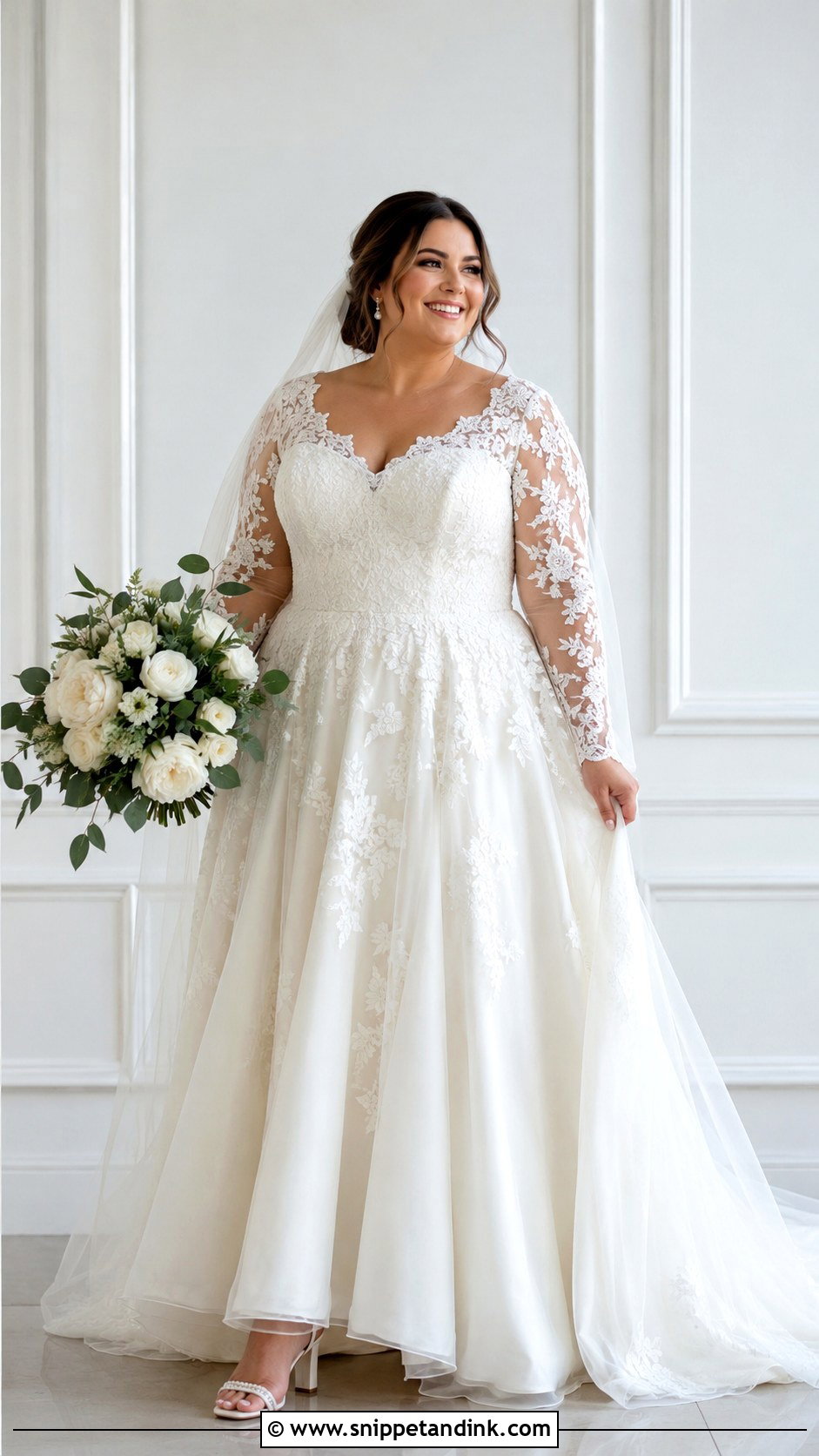
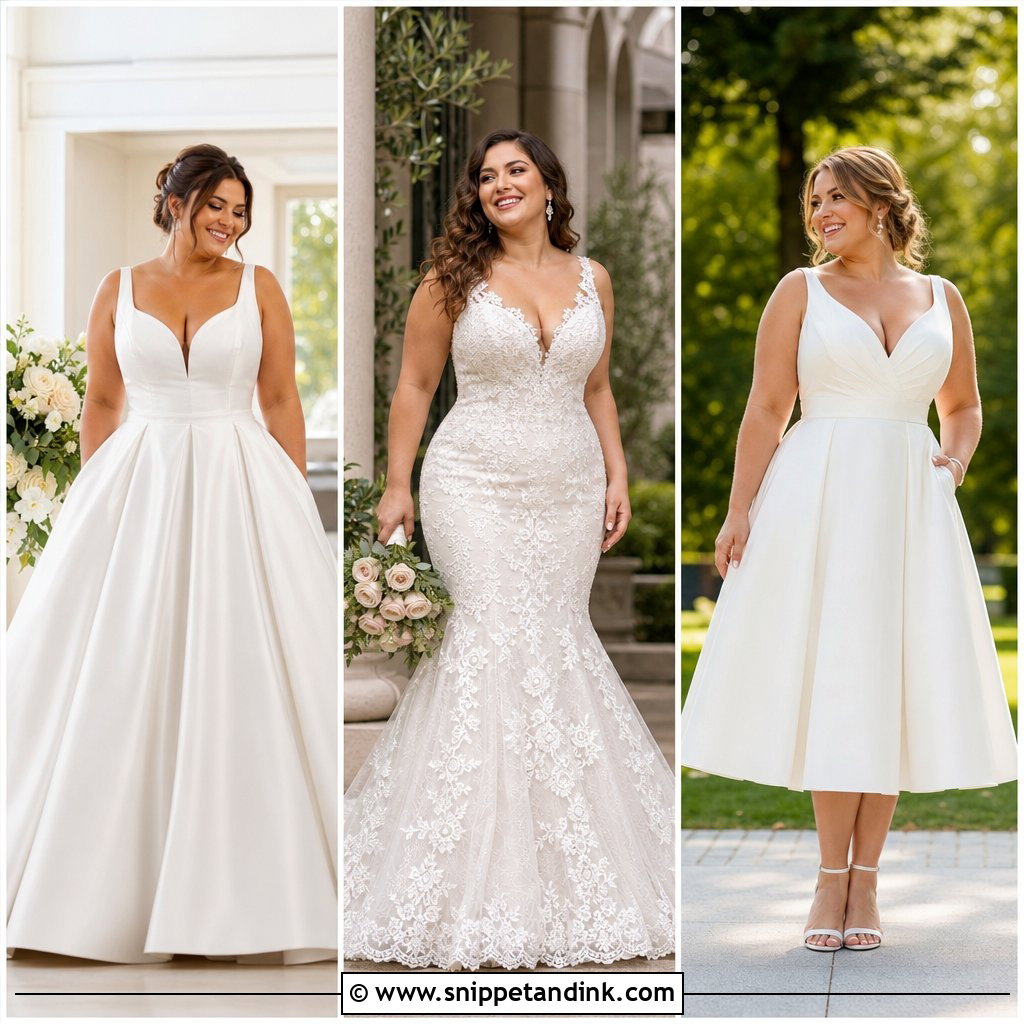
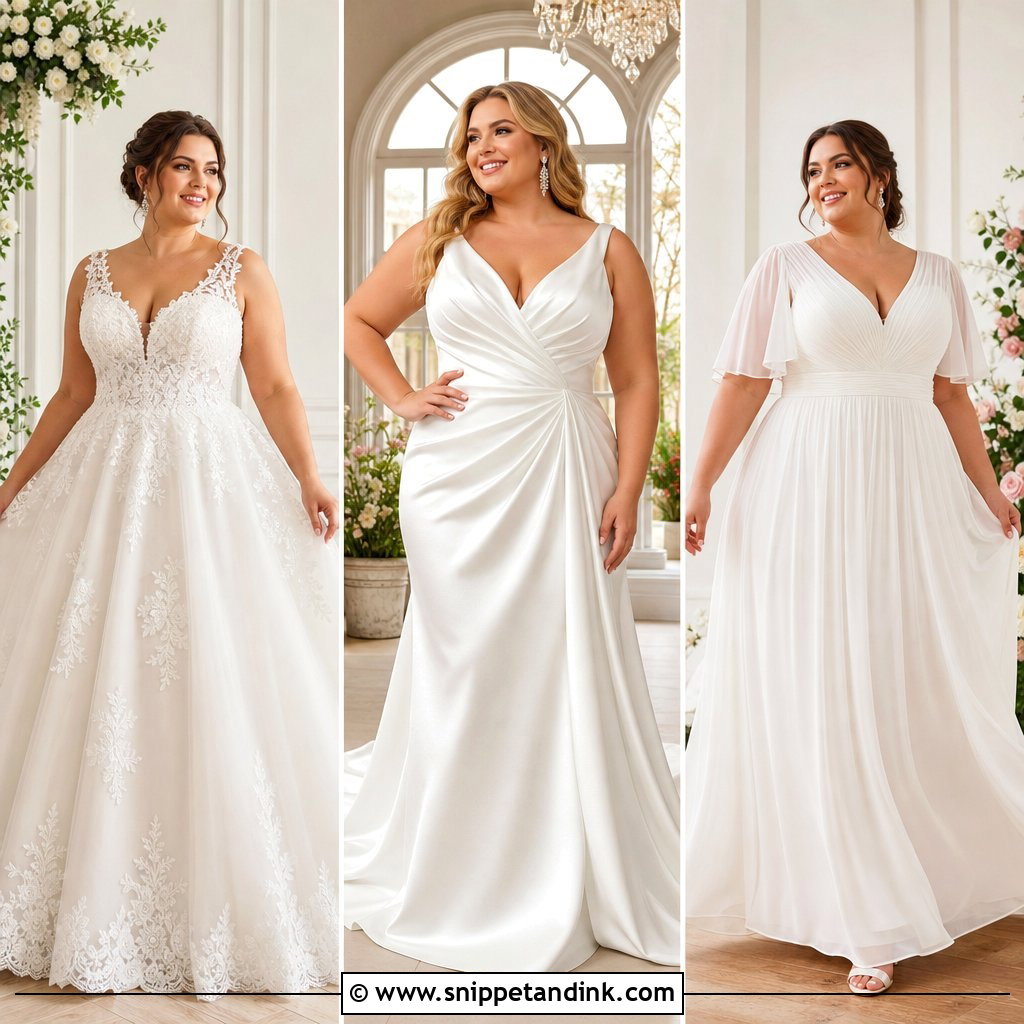
With a plus-size gown, sleeves aren’t about hiding anything. Structure, fabric and fit are what make you feel good in it. A-line, ball gown and fit-and-flare all work well with sleeves, and lace, illusion or crepe adds detail without bulk. The upper arm is the measurement I take most care with: a sleeve cut from a standard pattern often fits at the wrist but binds at the bicep, so ask the seamstress to adjust it rather than you having to keep your arms still all day. Choose shoes you can stand in for hours.
24. Winter Bridal Gown With Sleeves
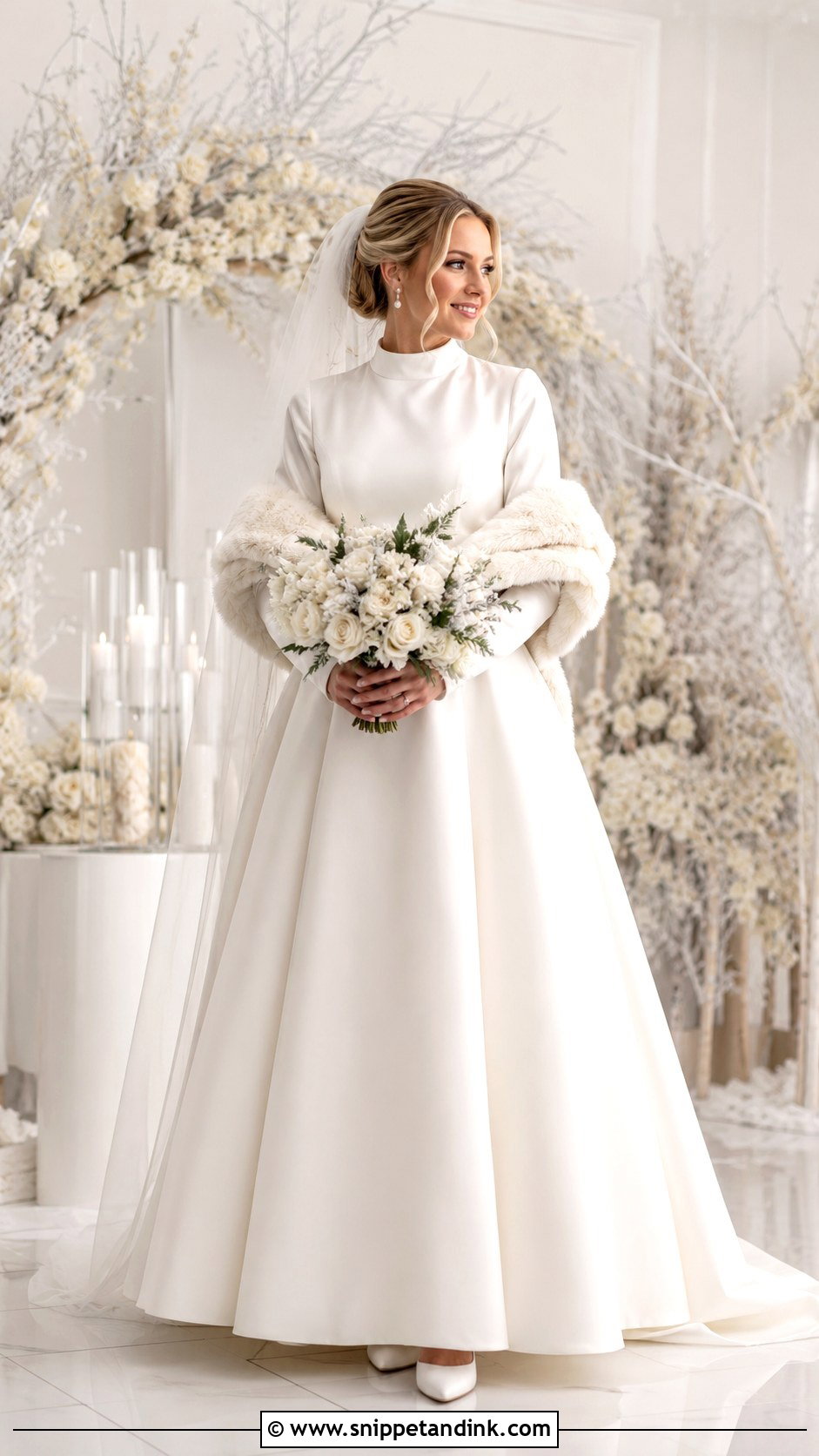
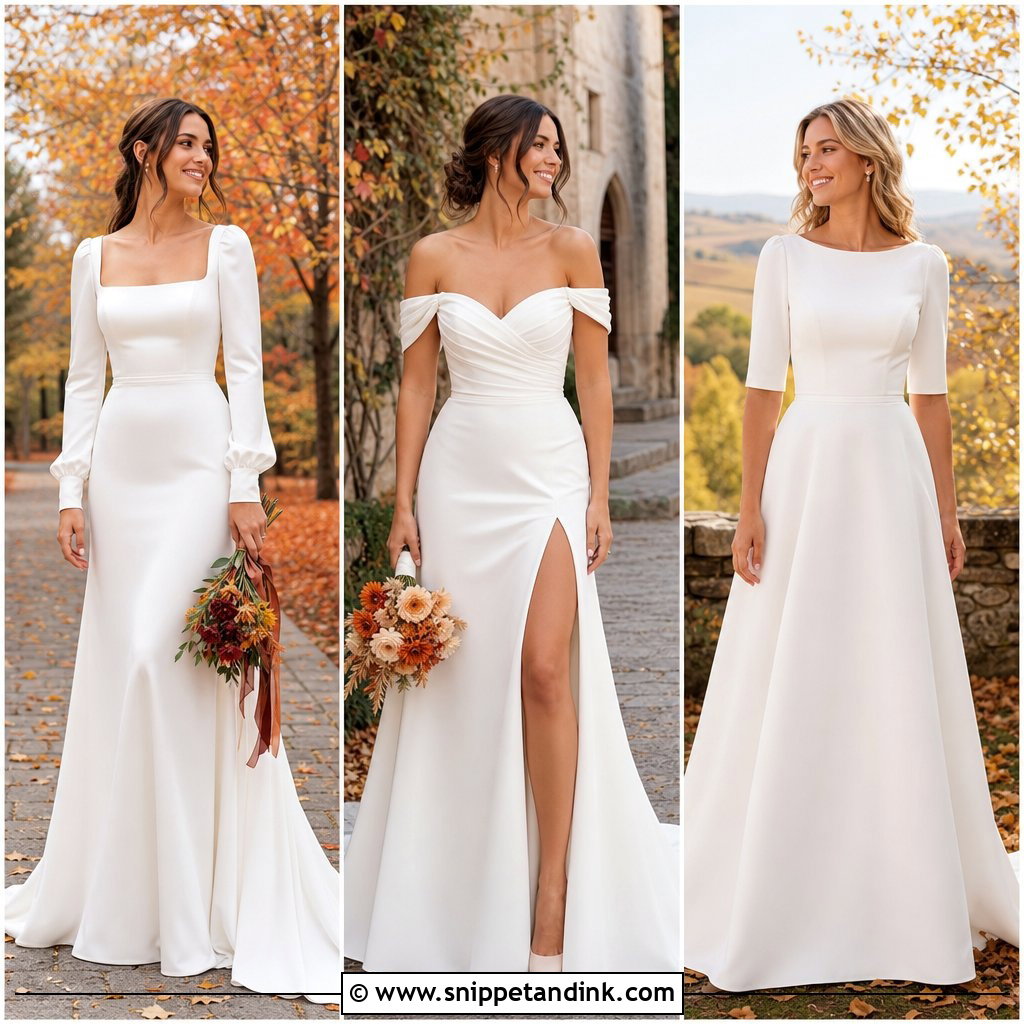
Long sleeves are the obvious winter choice, and heavier fabrics like satin, mikado, crepe, lace and dense tulle hold up to cold venues. A high or bateau neckline adds a little warmth. For outdoor photos, a bridal cape, faux fur wrap or a structured coat helps, but make sure the coat sleeve fits over your gown sleeve without crushing it. Closed heels or boots if the ground is wet.
25. Minimalist Bridal Gown With Sleeves
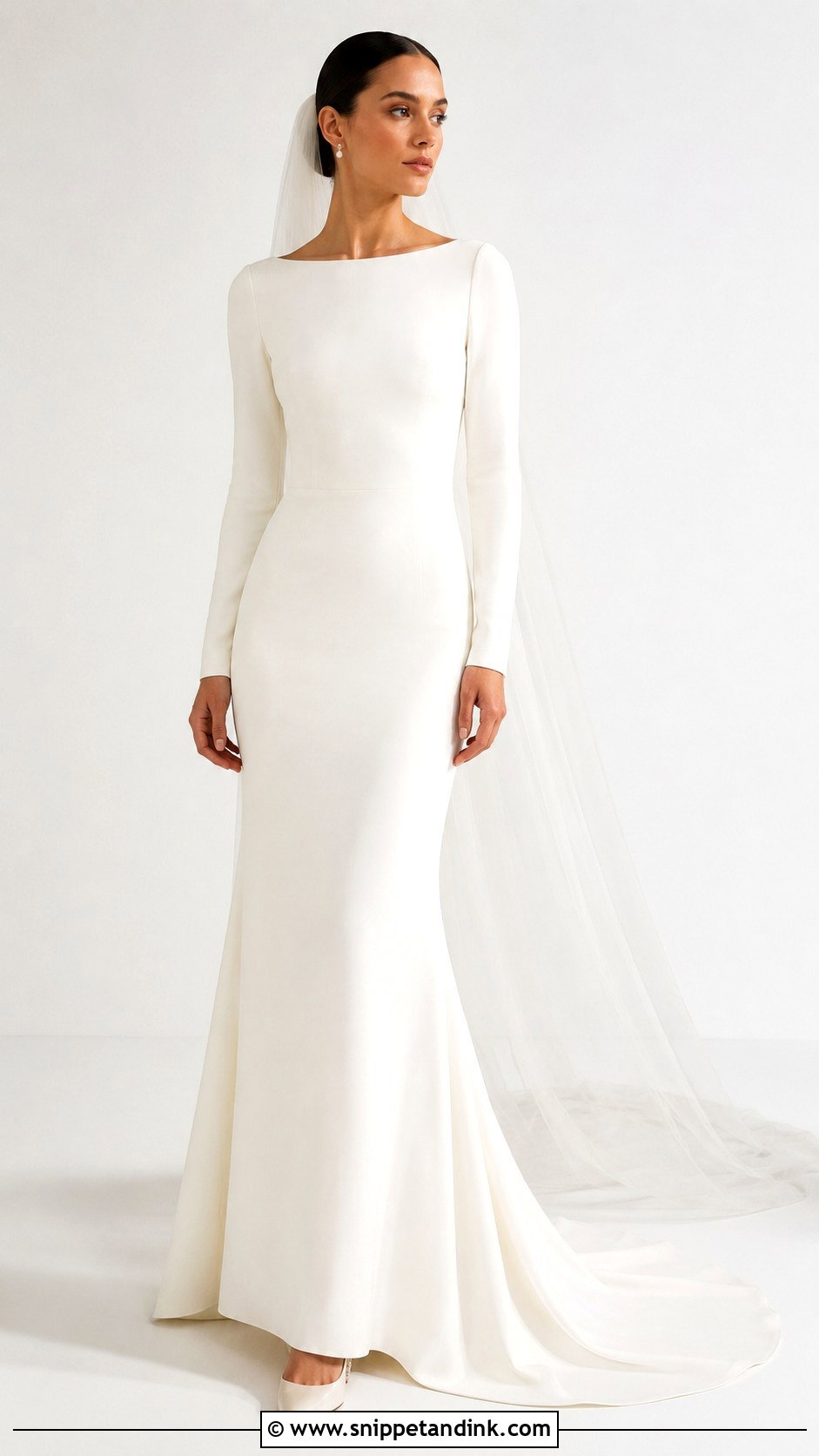
In a minimal gown, the tailoring is the decoration. Crepe, satin and mikado hold their shape without embellishment, and long fitted sleeves with a square or boat neckline give a clean, modern line. This is the dress where I spend the longest at the fittings, because every small pull at the armhole shows. Pearl studs, a sleek veil and polished heels are enough.
Hot Venue, Long Sleeves: Picking the Right Weight
Sleeves and summer can work together if the fabric is right. Unlined illusion tulle or open lace breathes, and you’ll barely notice it after an hour. Lined lace, satin and crepe sleeves trap warmth, which is lovely in a cold church and miserable on an exposed lawn in July.
Sweat is the other thing nobody mentions. Fitted sleeves in a non-stretch fabric show damp patches at the underarm, so ask your seamstress about sewing in dress shields at the final fitting. They’re cheap, invisible and save the lining.
Can Sleeves Be Added to a Gown You Already Love?
Often, yes. A skilled bridal seamstress can add illusion, lace or off-shoulder sleeves to a strapless or sleeveless gown, especially if the shop can order matching lace or tulle from the designer. Detachable sleeves are the easier route, since they don’t change the bodice at all.
- Ask early. Matching fabric can take weeks to arrive, and it needs to come before your first fitting.
- Bring the gown so the seamstress can check whether the bodice has room for an armhole seam.
- Expect it to cost more than a hem, and get the price in writing before work starts.
Sleeve Length Changes the Whole Dress
Sleeve length, fabric and neckline together decide whether a gown feels formal, light, modest or dramatic. Lace, satin, crepe, tulle, beading or a plain cut can all work. What matters is how freely you can move in it for ten or twelve hours. Try at least one short sleeve and one long, raise your arms in both, and see which version you forget you’re wearing.
You'll Like These Ideas:






Leave a Reply