
A smaller chest opens up more silhouettes than it closes, from bias slips to full ball gowns. The question I ask first at an appointment is what you want the bodice to do. Some brides want a little more fullness; some want to show a slim, sleek frame exactly as it is; others would rather pull attention to their shoulders, waist or back. Sweetheart necklines, raised appliqués, ruching and shaped cups add definition. Halters, high necks, square necks and plunging designs lean into clean lines. Either way, tailoring does as much as the neckline, and good built-in support usually means you can leave the bra at home.
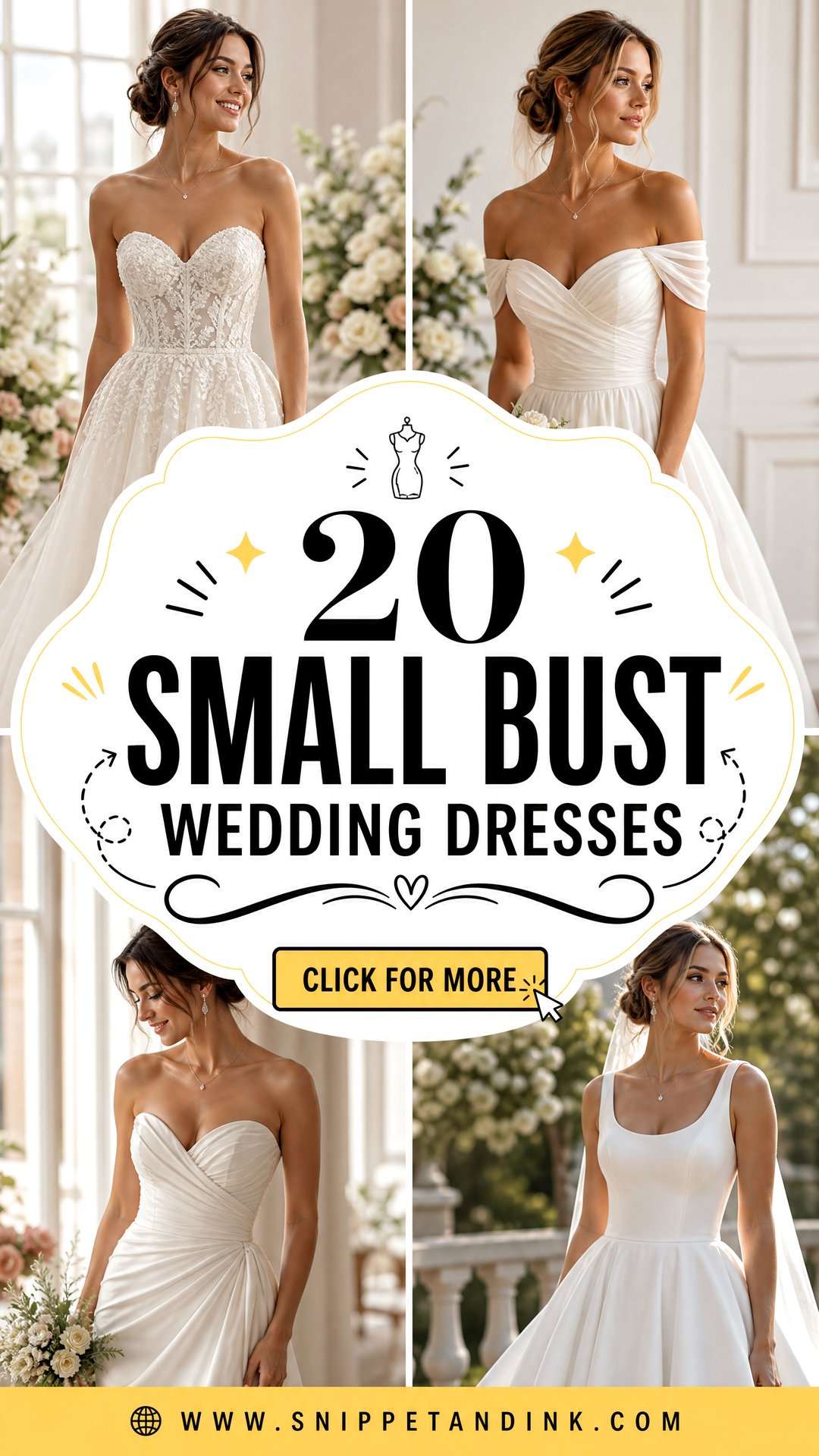
Three Things a Small-Bust Bodice Can Do for You
Before trying on anything, I find it helps to sort the necklines by the job you want them to do. Most brides know which of these they’re after the moment they hear them.
Add a little shape
Sweetheart, cowl, ruched and appliquéd bodices build curves through fabric rather than padding. Folds, gathers and raised flowers catch light and shadow, and that alone reads as fullness. These suit you if you’d like the bust to look rounder without anything feeling fake.
Show off a slim frame
Plunges, halters, high necks and bias slips look their best on a small chest. They lie flat where a fuller bust would pull them open, so you can wear necklines that other brides need serious engineering for.
Move the focus elsewhere
Off-the-shoulder, boat necks and puff sleeves put the attention on your shoulders and collarbones, while a Basque or empire waist pulls it to the middle. An open back takes it behind you altogether. Pick these if you’d rather not think about the bust at all.
1. Sweetheart Neck Wedding Dress
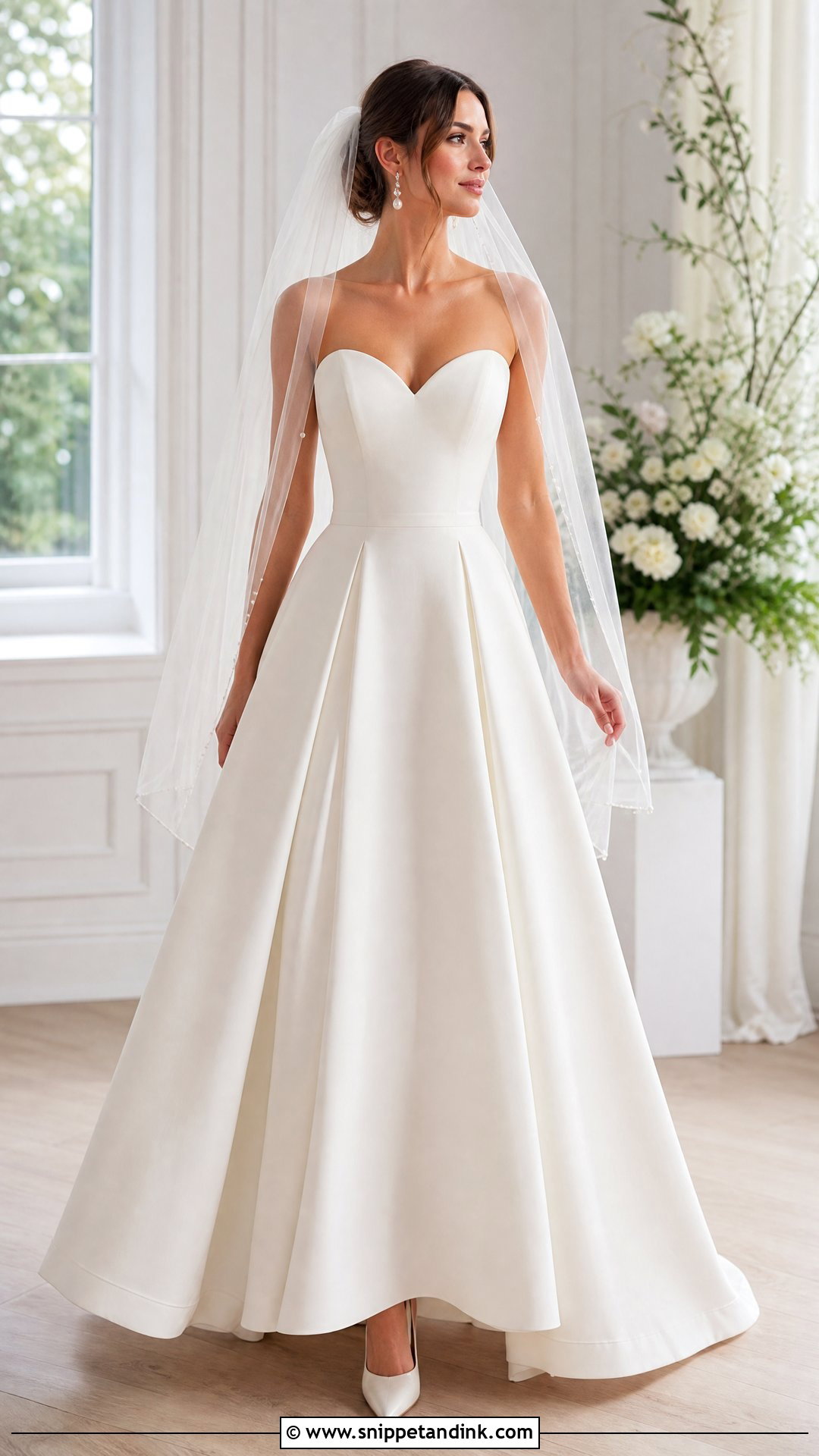
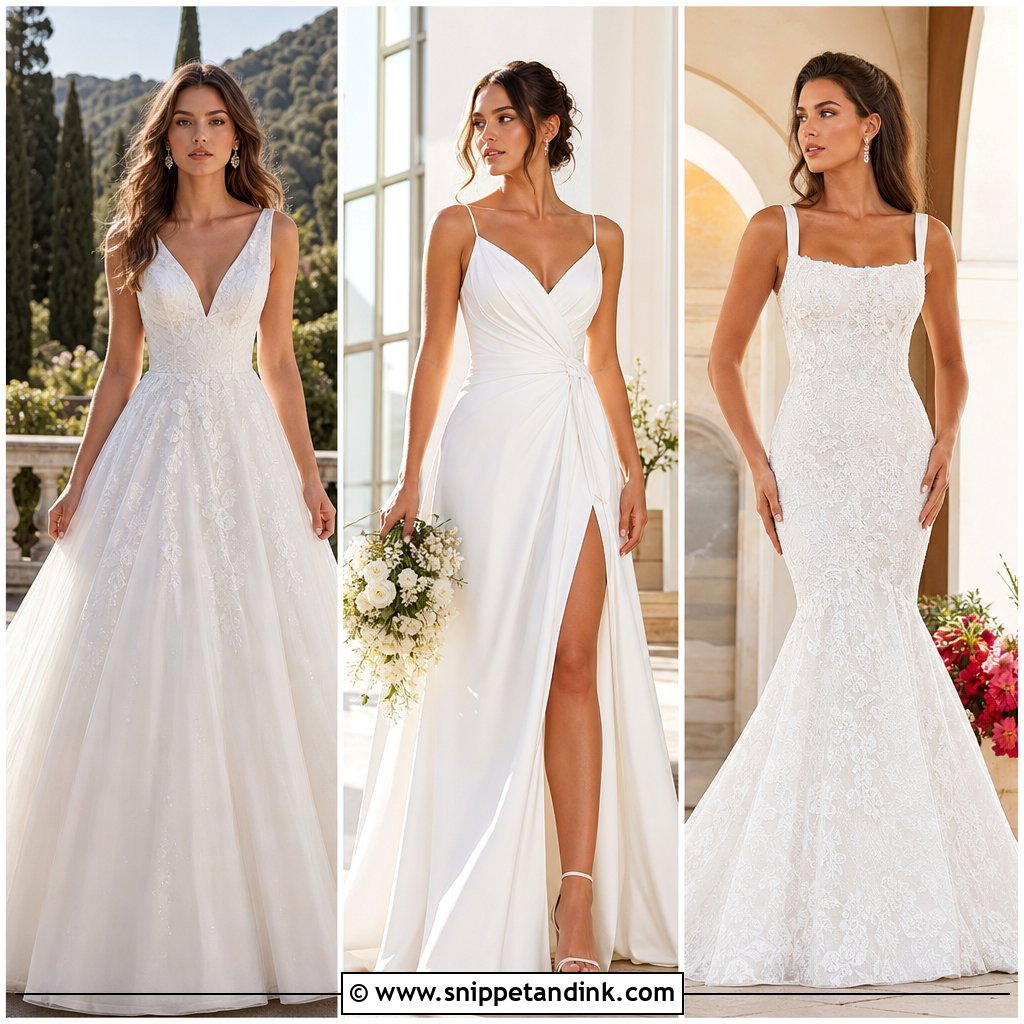
Sweetheart necklines draw soft curves across the chest and open the neckline in the most traditional way. On a small bust, I want a structured bodice with shaped cups, a little padding and boning underneath, never a loose, unstructured strapless top. Draped satin, embroidered lace or small appliqués on the cups add dimension. An A-line skirt, pointed heels, pearl drops and a fingertip veil keep it classic; add a fine necklace only if the bodice is plain. Most of us are slightly uneven, so ask the seamstress to fit each cup separately rather than taking in both by the same amount.
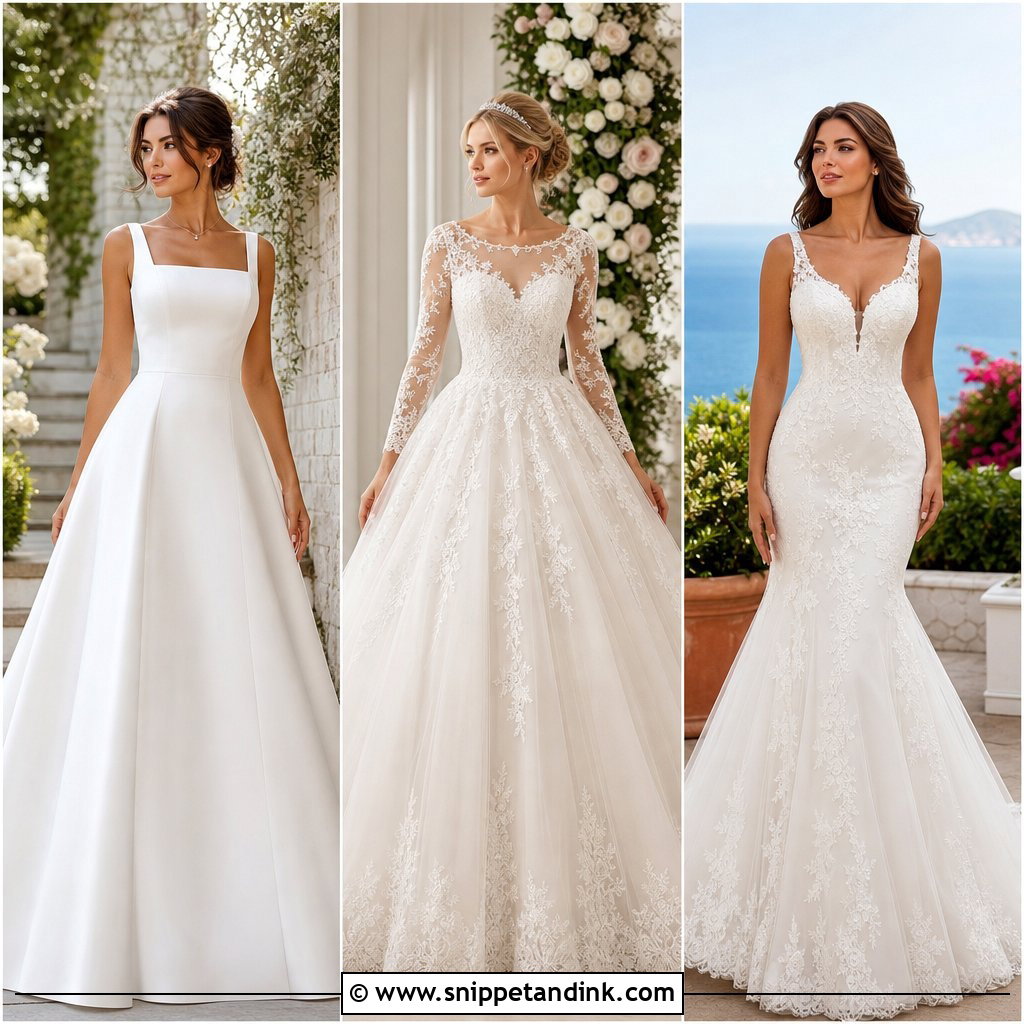
2. Square Neck Wedding Dress
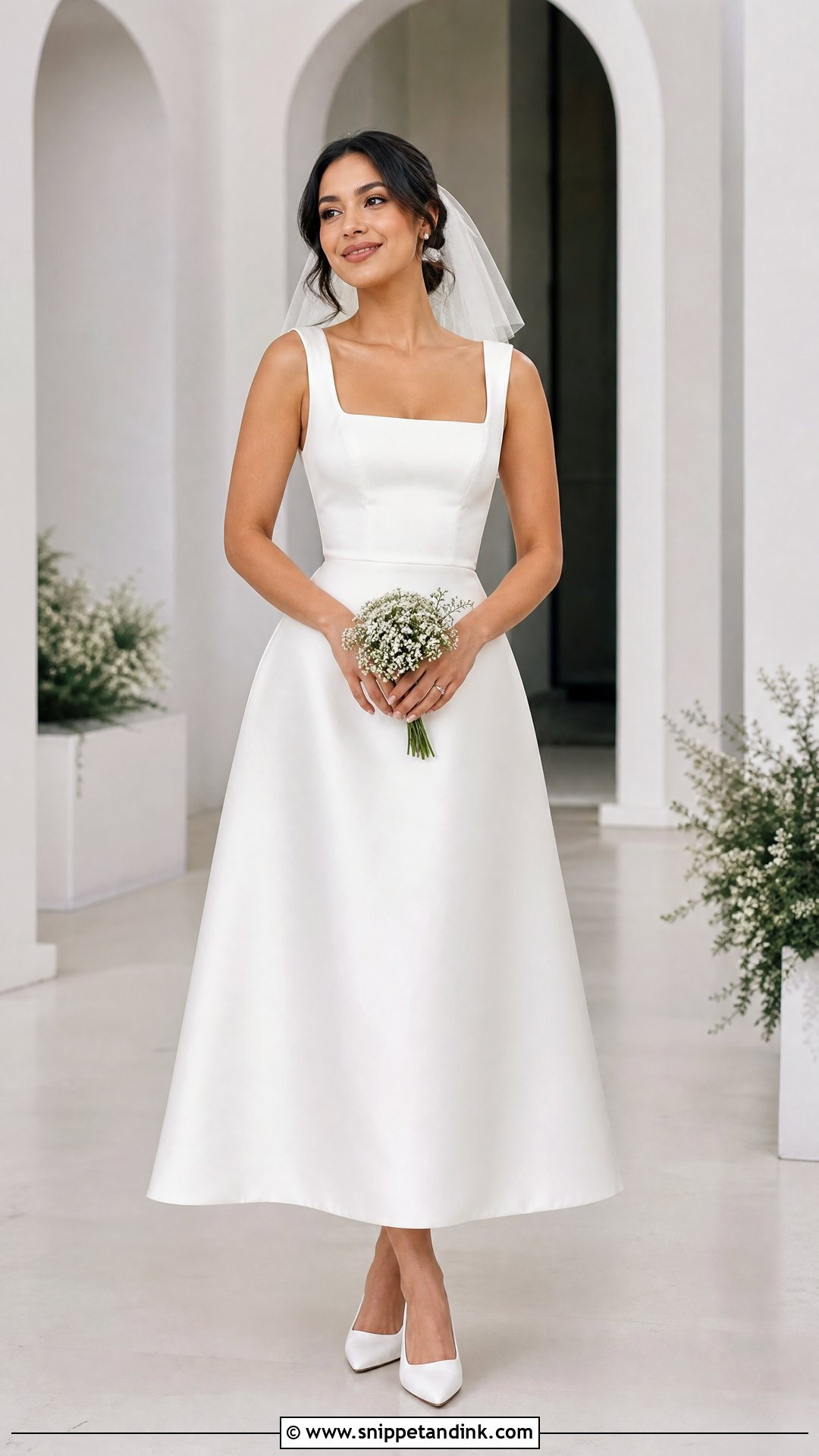
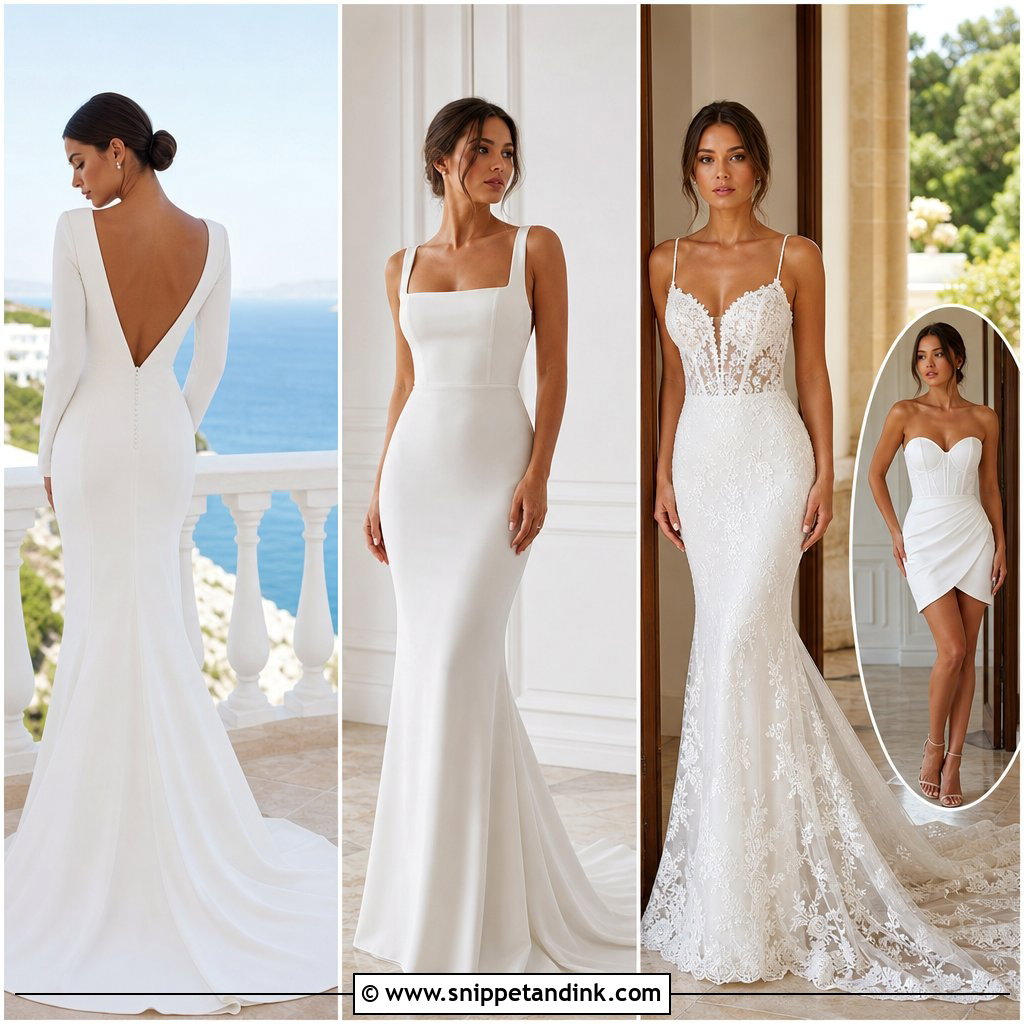
A square neck defines the chest with a straight edge, and wide-set straps frame the collarbones. Crepe, satin or mikado give the bodice enough body to hold the line, over an A-line or column skirt. Style it with a smooth low bun, pearl studs, a short veil and closed-toe pumps. The mistake I see is cups cut bigger than the bride’s natural shape; when she moves, the empty space dents inward at the corners. A closely tailored neckline that lies flat beats padding every time. Finish the back with a matching square or a row of covered buttons.
3. Plunging V-Neck Wedding Dress
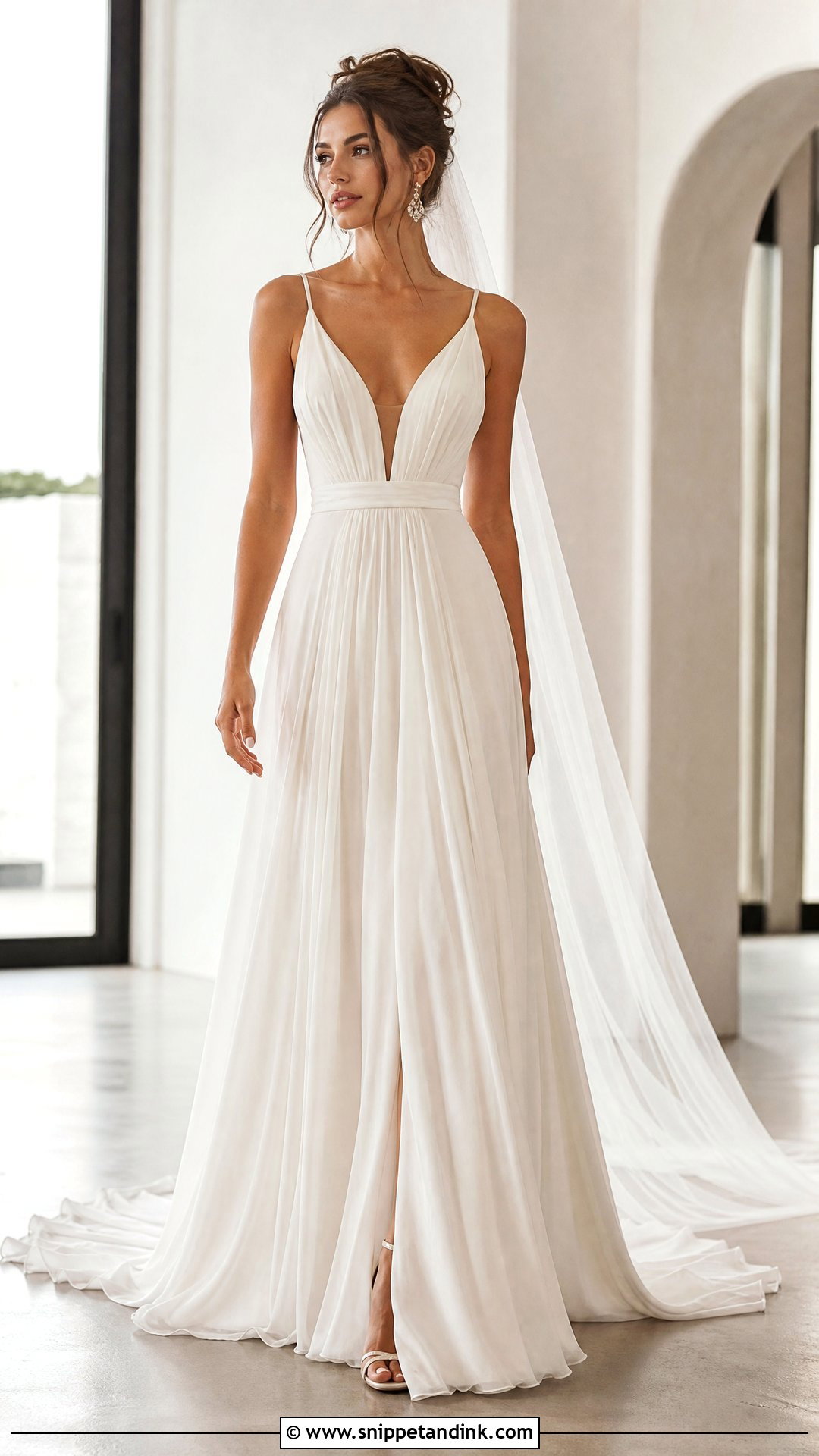
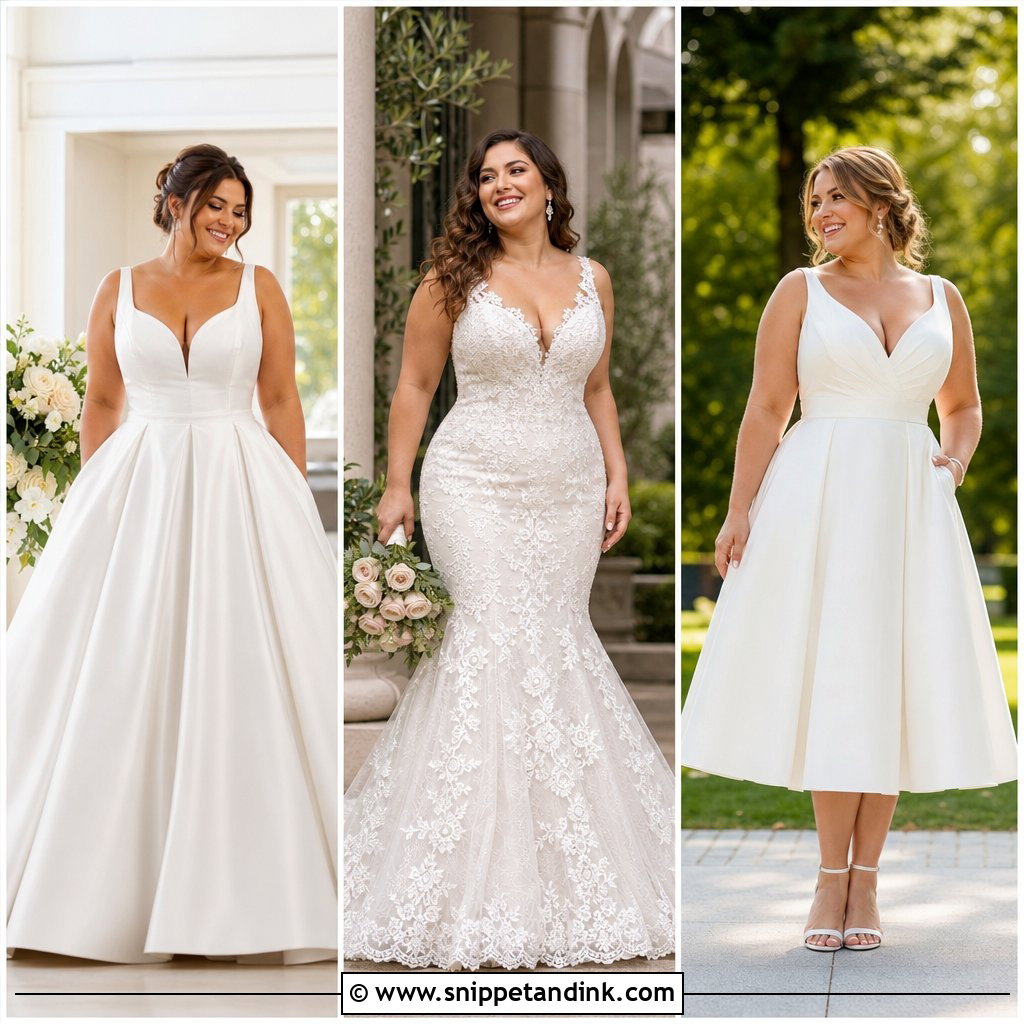
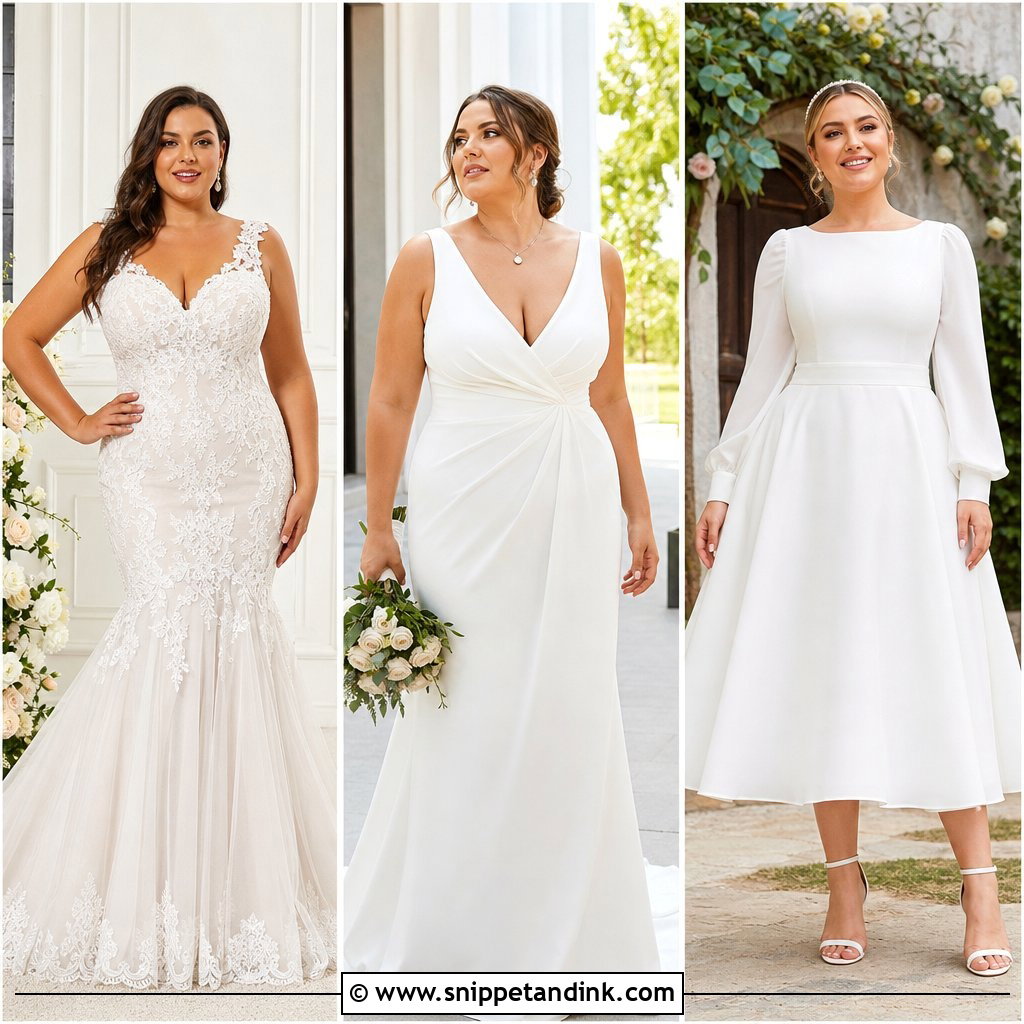
Want a daring neckline that still looks polished? A plunge is one of the most flattering choices for a smaller bust, because nothing pushes the edges apart and the line runs long and unbroken. Illusion mesh between the edges adds security while keeping the deep V. A flowing chiffon, crepe or tulle skirt keeps it graceful. Slim heels, statement earrings and a plain veil; little or no necklace. Fashion tape will hold for photos, but over ten hours of hugging and dancing it lets go. Sewn-in stays along the edge are what I’d rely on.
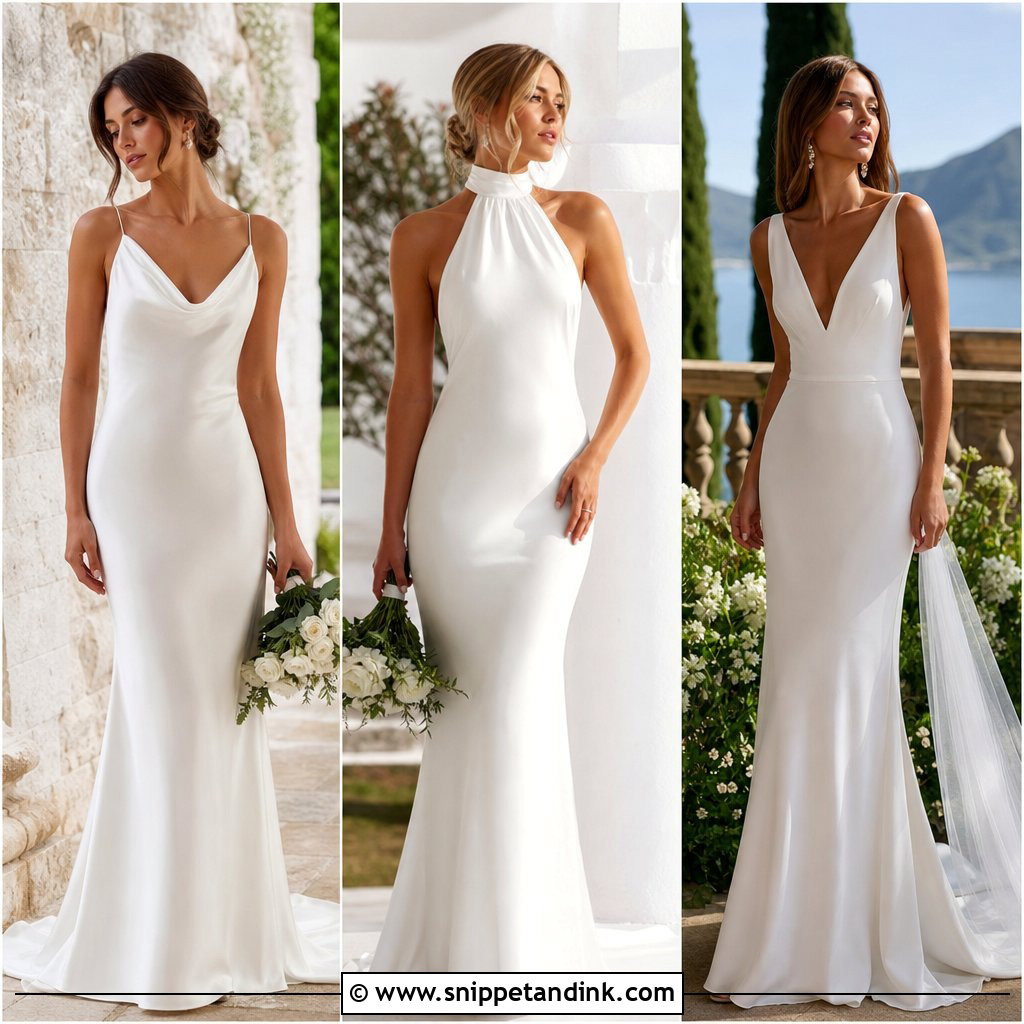
4. Cowl Neck Slip Wedding Dress
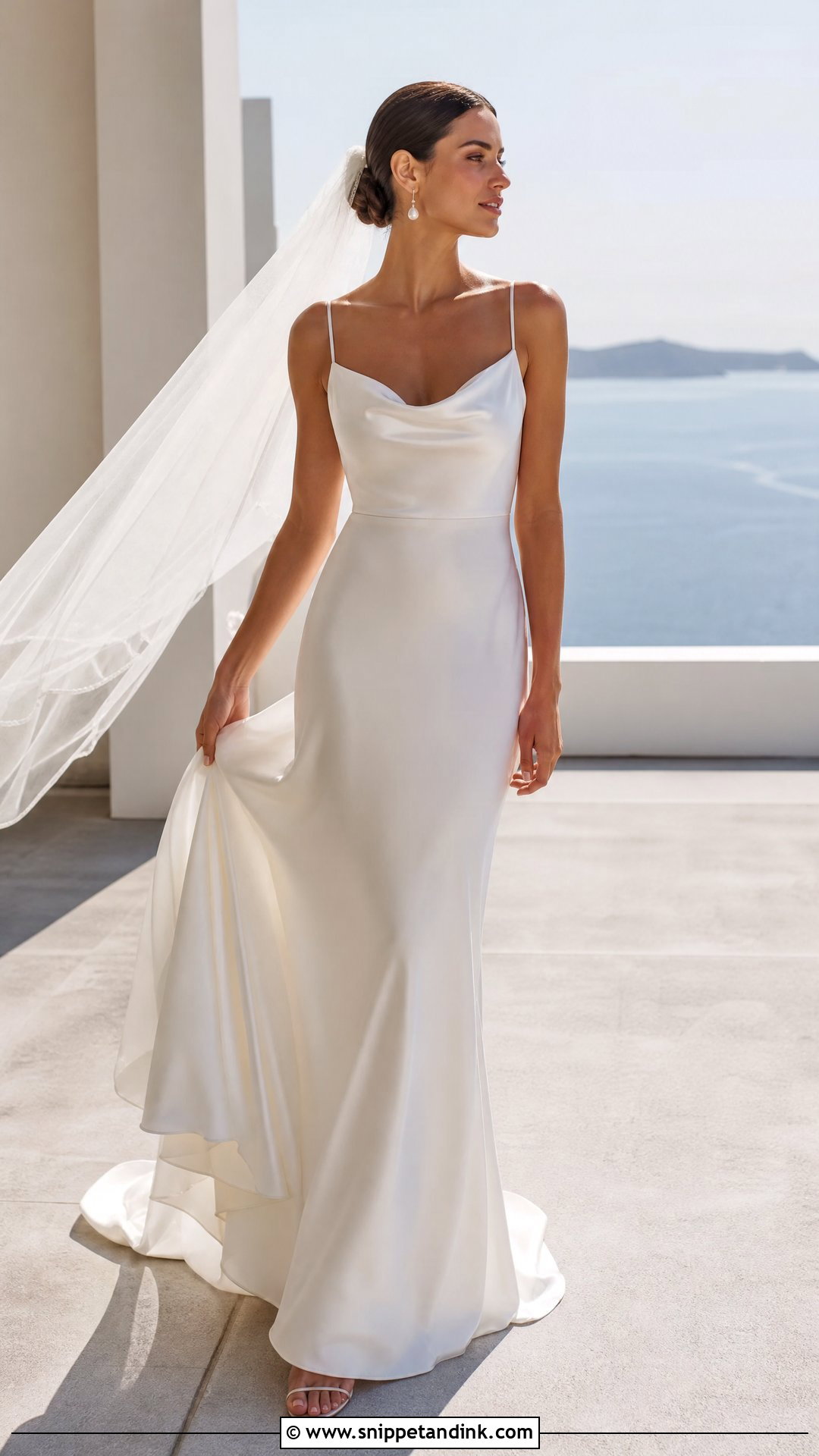
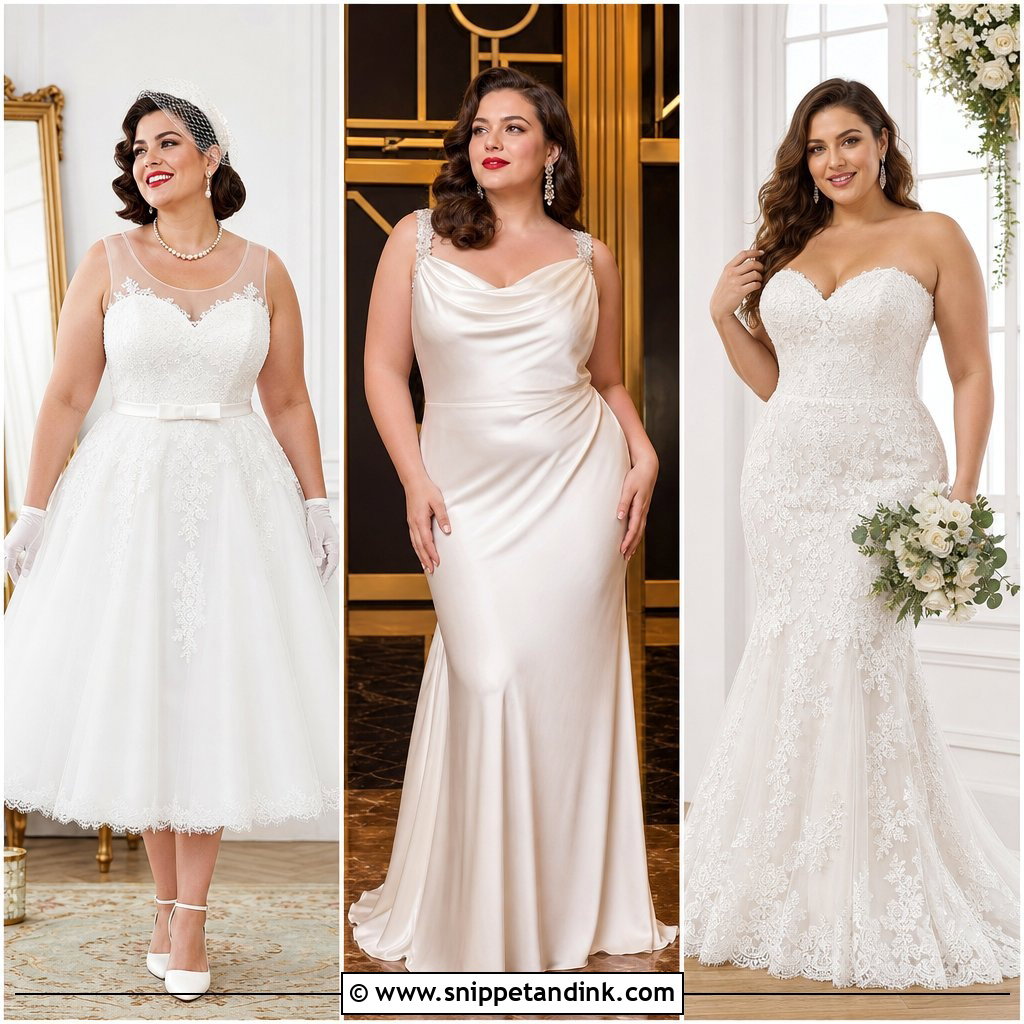
Silky fabric falling in folds across the chest is what gives a cowl-neck slip its easy, expensive feel, and those folds add fullness without padding. Bias-cut satin or charmeuse follows the body and moves with you. Barely-there sandals, pearl earrings, a sleek bun and a long sheer veil keep it understated, and a low back adds interest behind. Slippery fabric shows a bad fit within seconds, so choose a tailor who can stabilise the straps and neckline; a light lining or discreet sewn-in cup can help. It’s a natural fit for modern venues and destination weddings.
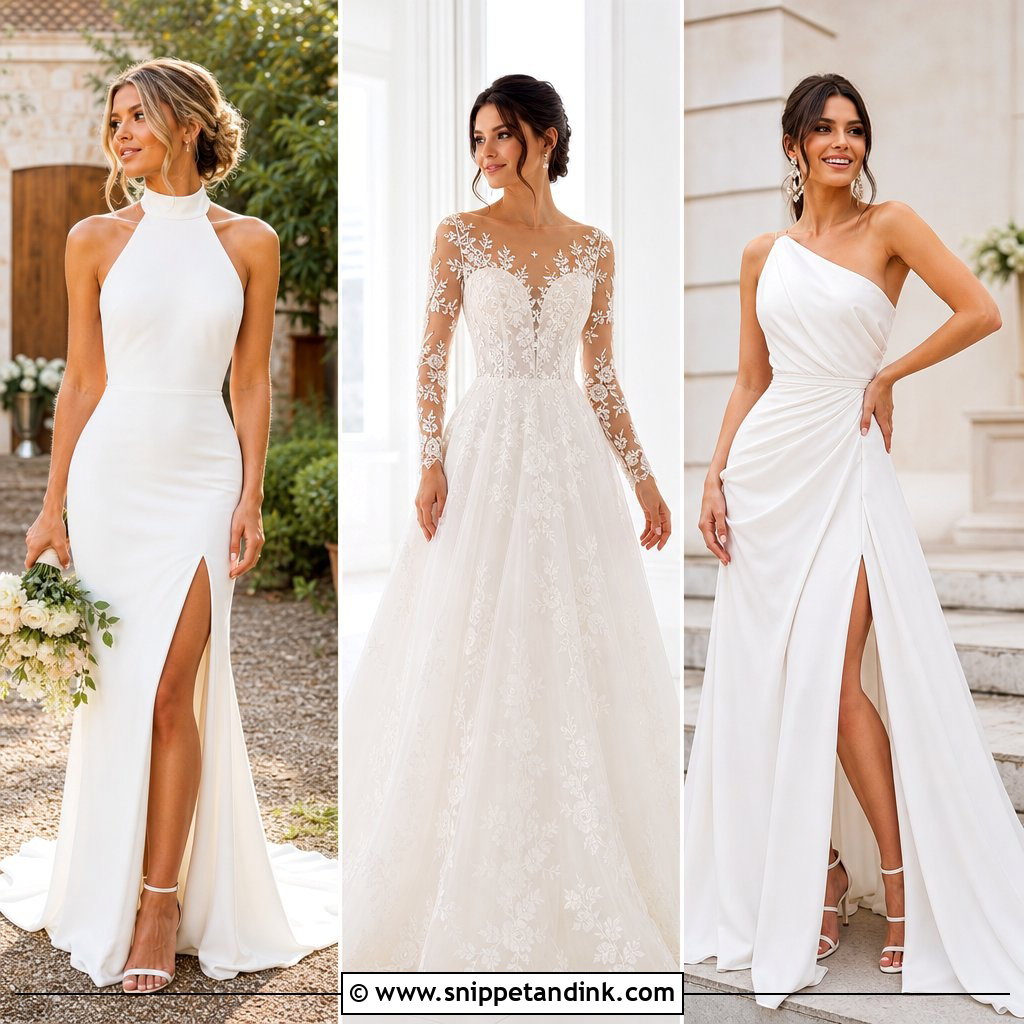
5. Halter Neck Wedding Dress
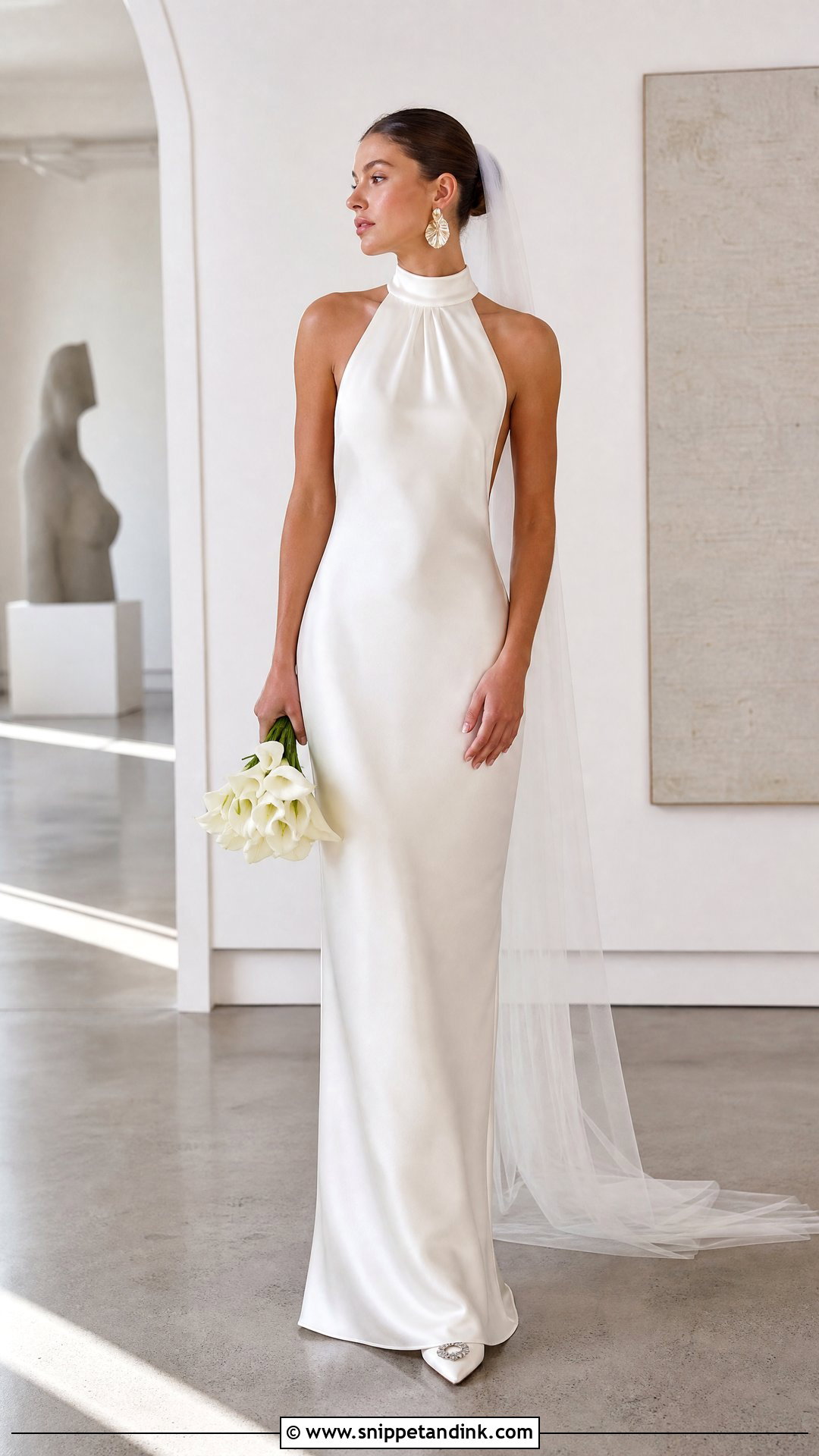
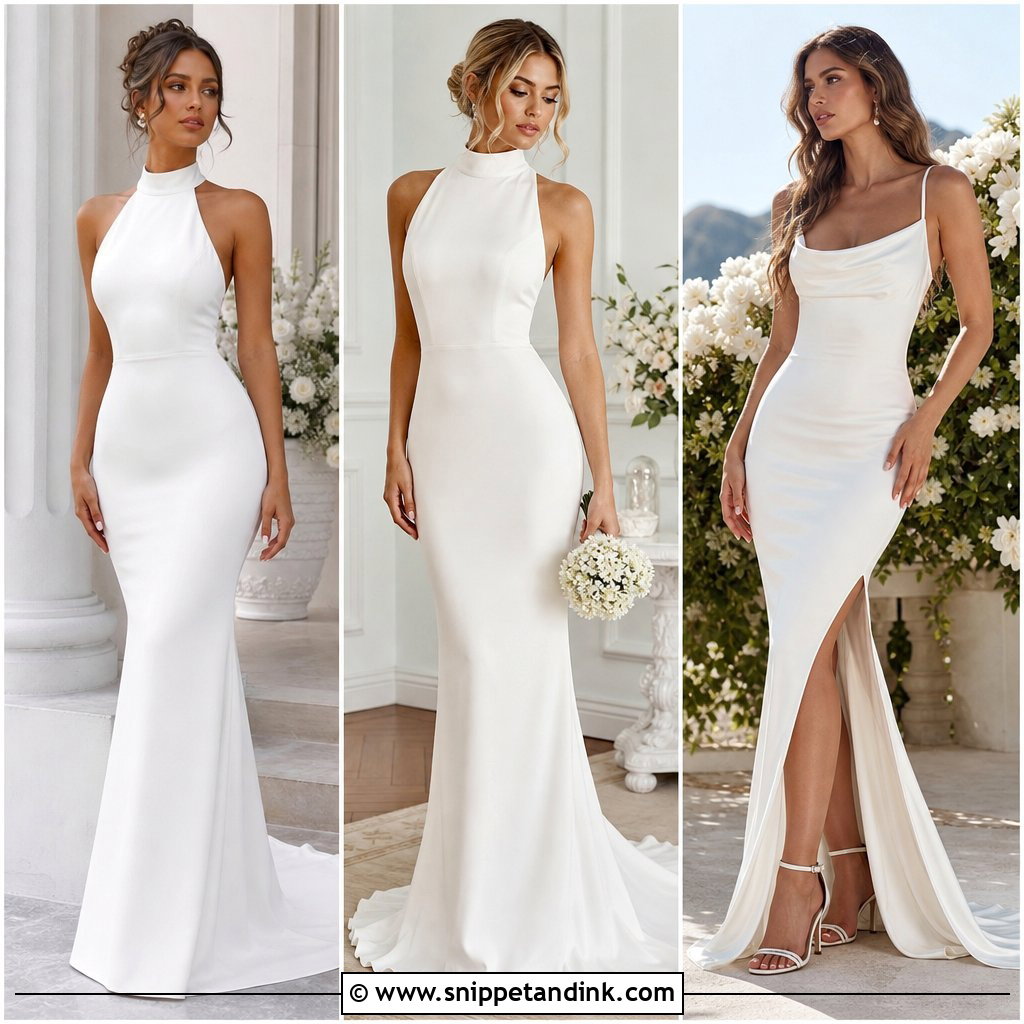
Halters steer the eye to your shoulders, face and upper back, so bust size barely comes into it. A high halter feels sleek; a lower one feels softer and more open. Fluid satin, stretch crepe or light chiffon over a column or fit-and-flare skirt all suit it. Wear an updo, sculptural earrings, pointed heels and a veil fixed below the bun, and leave the necklace off. On a slim frame, loose fabric tends to collect at the sides of the chest, so ask about hidden side support. A trailing neck tie or open back adds movement down the aisle.
6. Off-the-Shoulder Wedding Dress
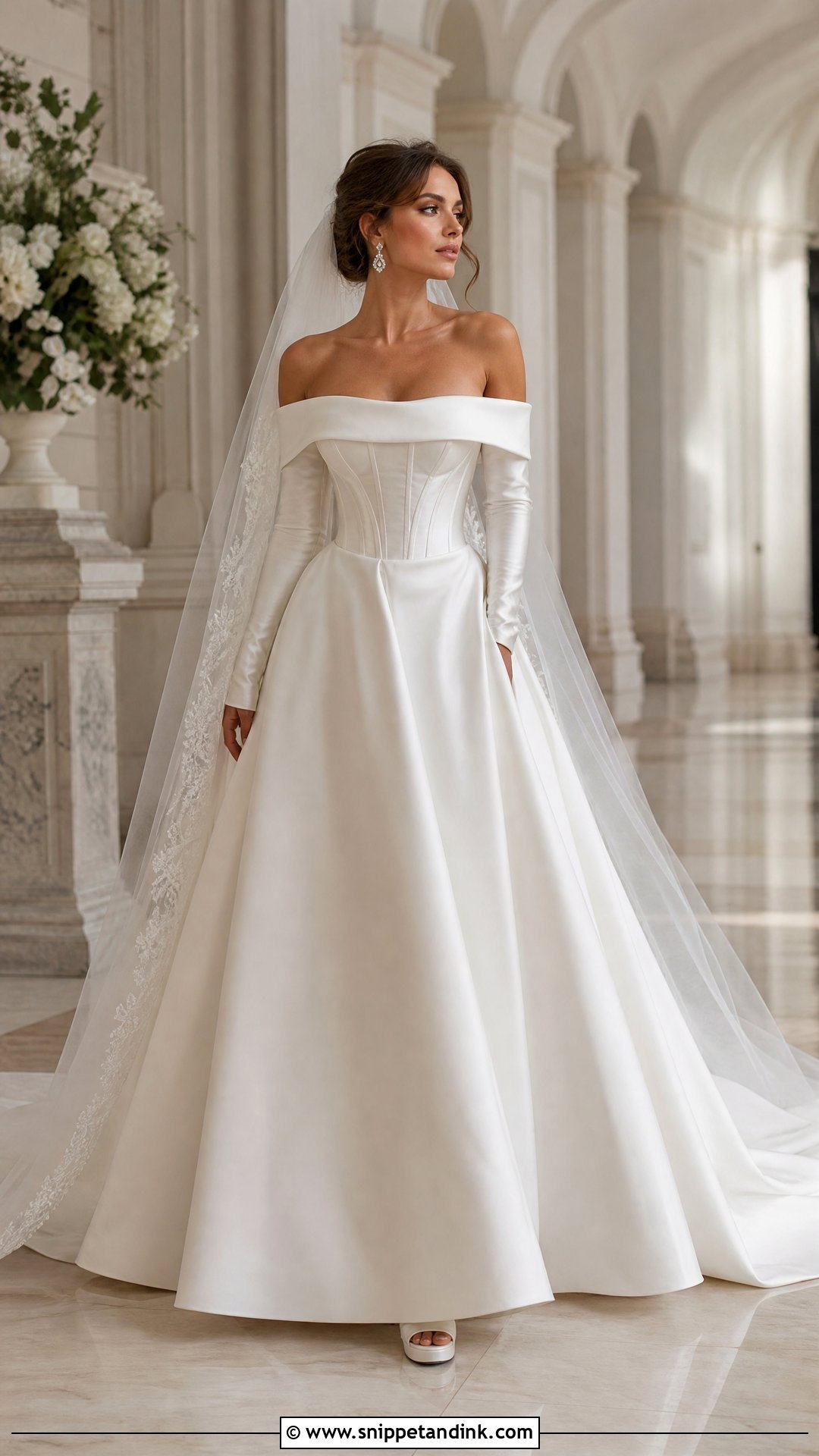
Off-the-shoulder necklines draw a graceful horizontal line across the collarbones and widen the upper body a little, which balances a small bust nicely. Folded satin, gathered tulle or lace-trimmed sleeves all do this. Underneath, a corset bodice should hold the gown up so the sleeves aren’t carrying it. A full A-line, block heels, fine earrings and a cathedral veil make a classic combination, with hair swept back. Lift your arms and sit before committing. Detachable off-the-shoulder straps give you a structured ceremony look and a freer one for dancing.
7. Ruched Bodice Wedding Dress
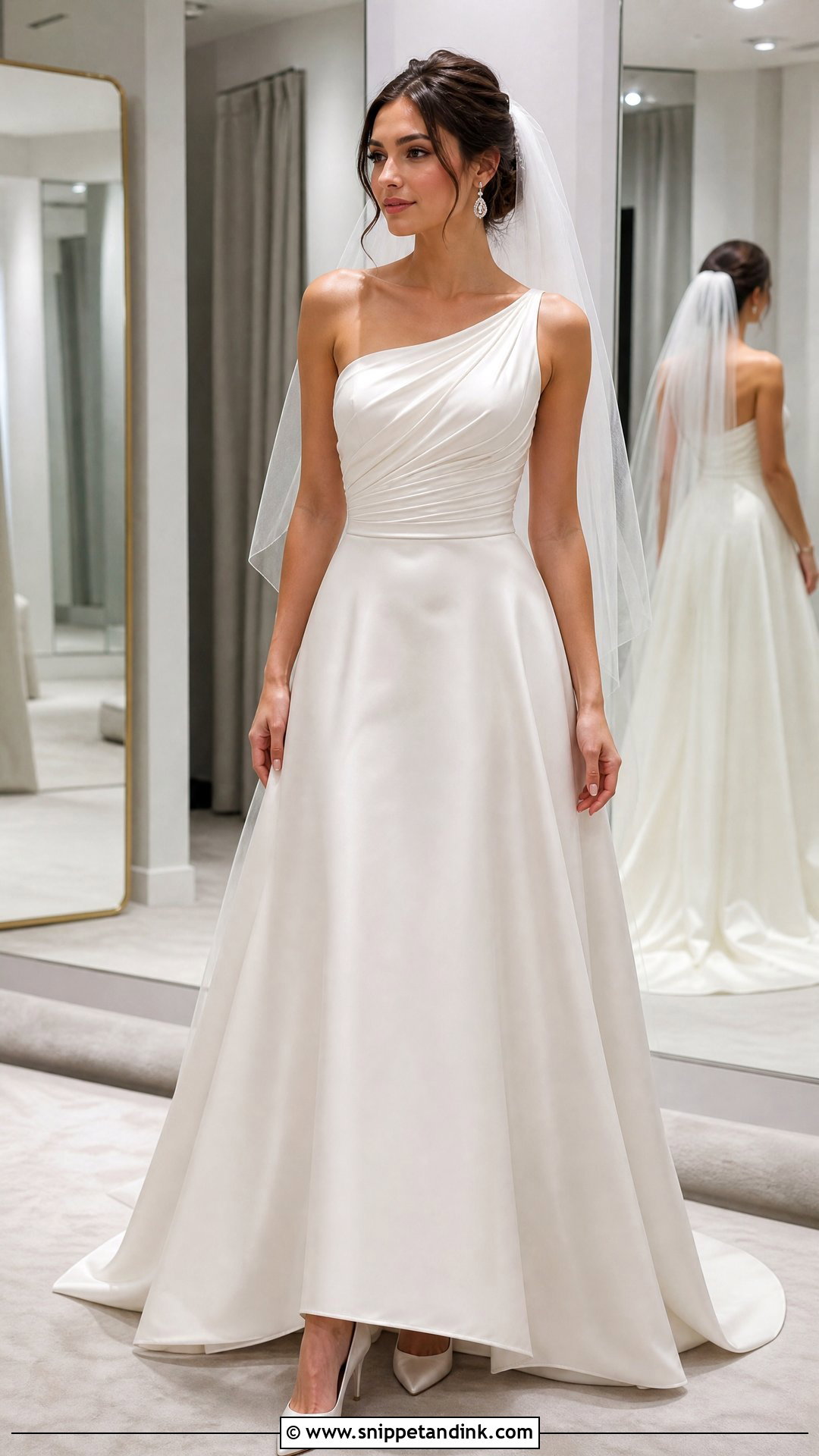
Ruching gives a bodice texture and a little extra fullness, and diagonal gathers lead the eye down to a defined waist. Choose a sweetheart, asymmetric or gently curved neckline with a structured interior so the gathers have something to sit on. A clean A-line lets the fabric work stand out, with satin pumps, a structured clutch, crystal earrings and a light veil. Gathers forgive small fit changes, but they also hide empty cups until you look from the side. Check the profile in a mirror; the cups should sit close, with no wrinkles or air between fabric and skin.
8. Corset Wedding Dress
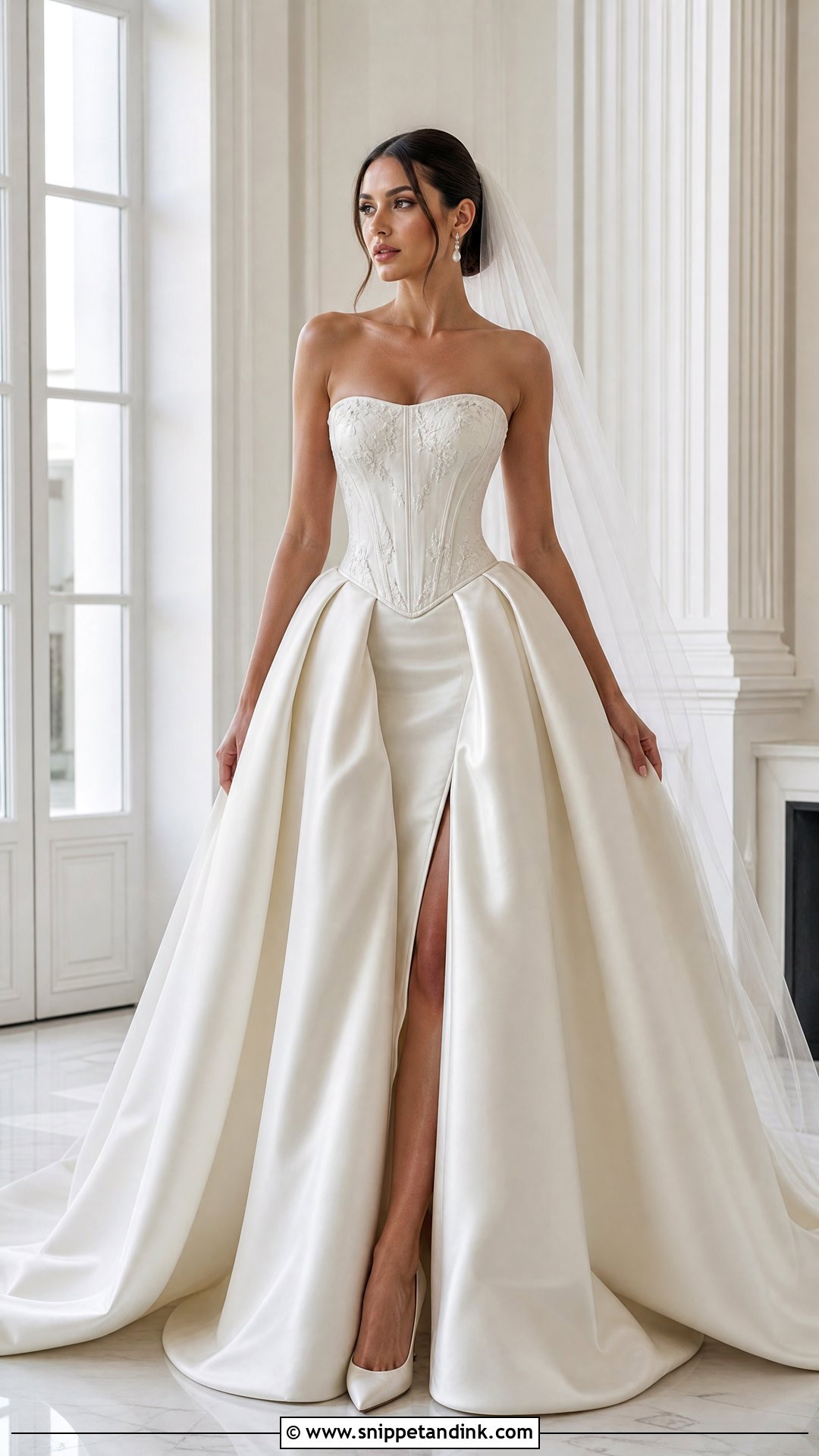
Visible boning and shaped seams give a corset dress real structure. For a smaller bust, the right corset follows your proportions rather than relying on oversized cups. A lace-up back adjusts a little on the day, while a hidden zip gives a cleaner finish. I’d style it with a satin ball gown skirt, pointed pumps, drop earrings and a plain chapel veil, softened with embroidery or pearls if you want romance. Sit, bend and raise your arms at each fitting. If the top edge pops away from your chest when you bend, custom cup work is worth paying for; it makes the gown look far more expensive.
9. One-Shoulder Wedding Dress
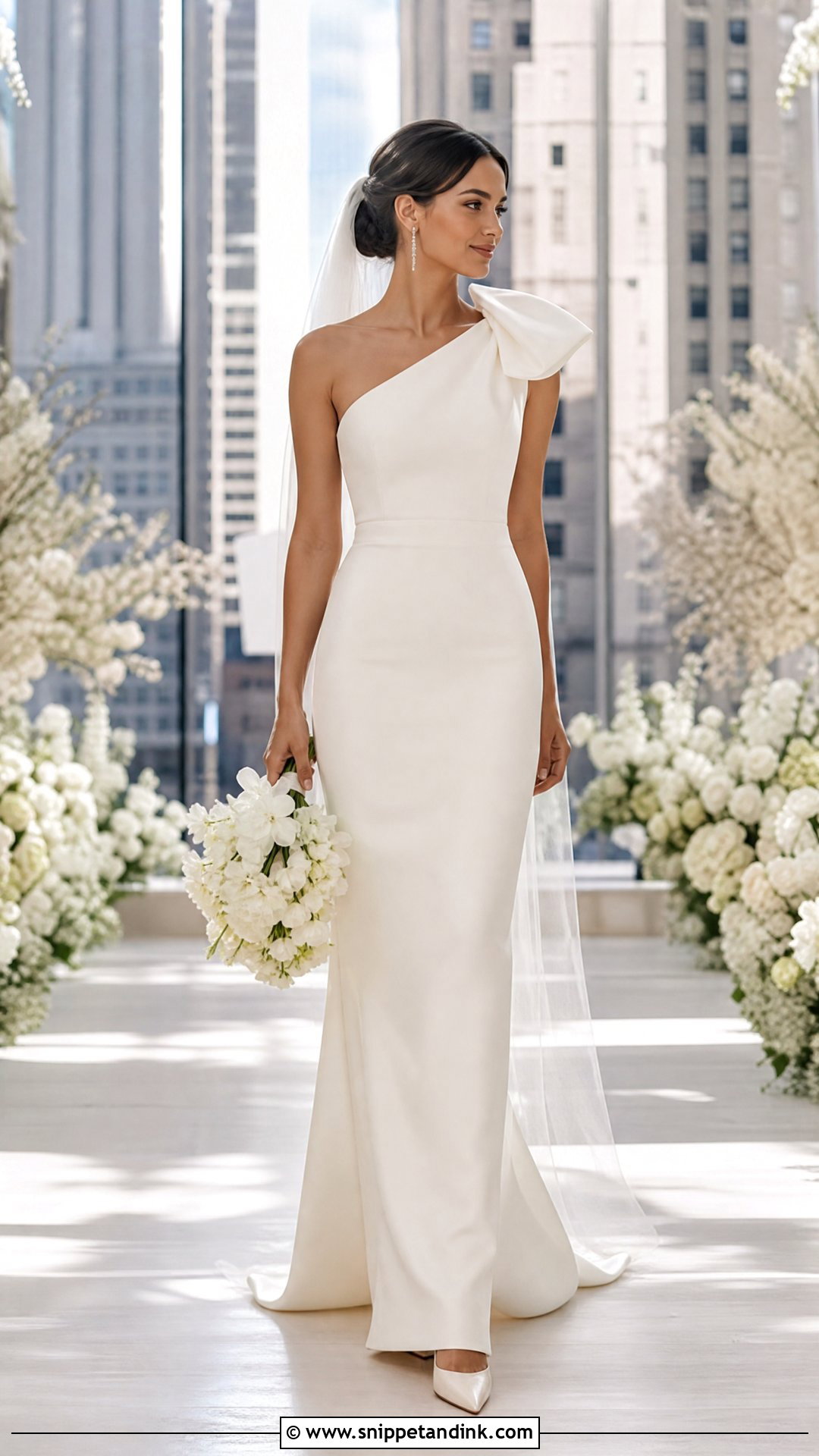
A draped shoulder panel, a sculptural bow or one fitted long sleeve pulls attention upward and balances the chest. Keep the rest of the bodice streamlined when the shoulder detail is big. Crepe in a column shape looks modern; a softly flared satin skirt reads more formal. An updo, one statement earring or a matched pair, pointed heels and a minimal veil finish it. The single strap shouldn’t carry the gown’s weight; internal construction should. Check the underarm on the bare side, where a slim frame often shows a gap. Solid, clean fabrics show off the asymmetry best.
10. High Neck Lace Wedding Dress
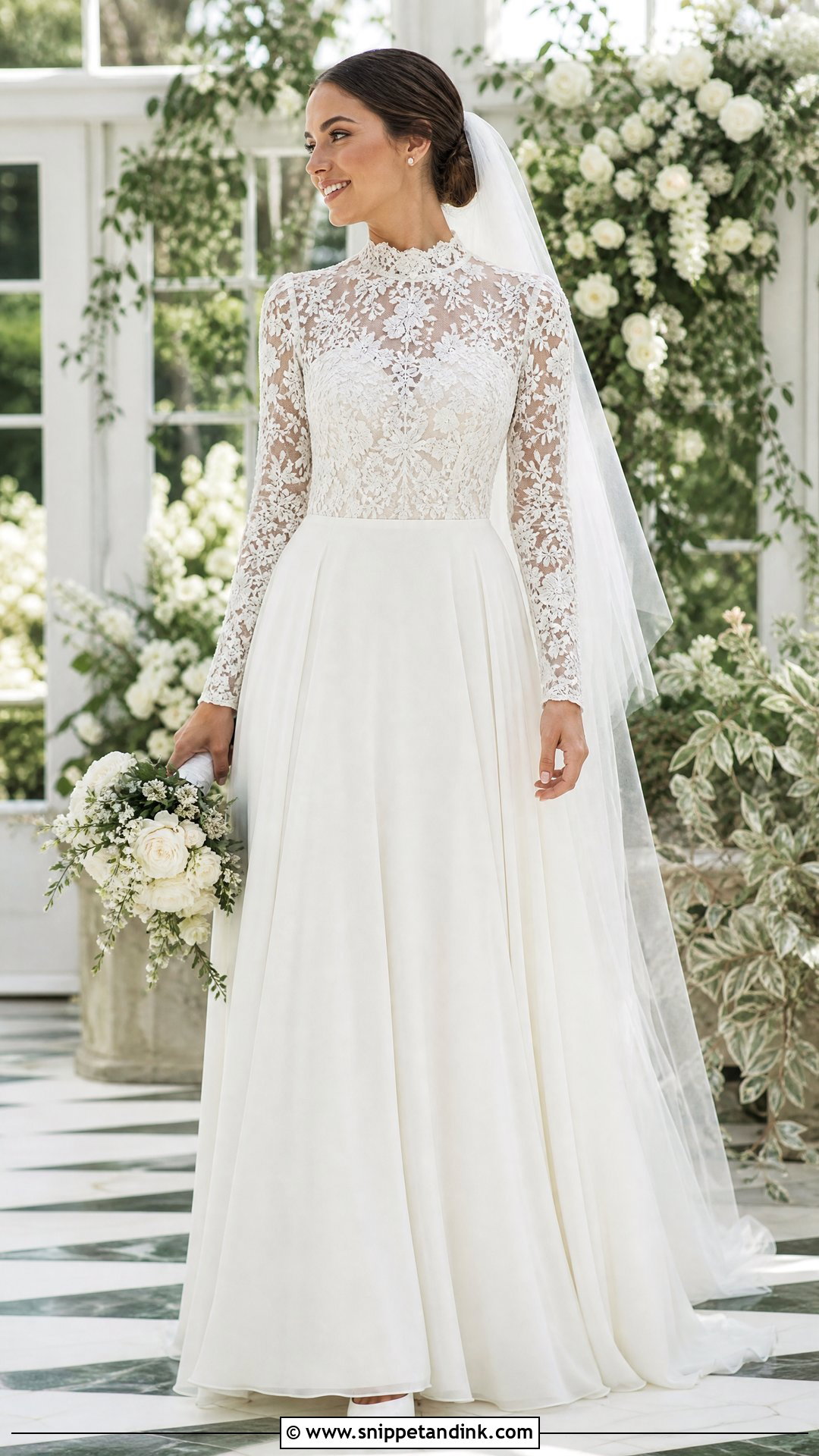
Lace that climbs to the collar gives coverage without swamping a small chest, as long as it stays light. Open patterns, a sheer lining or appliqués placed with thought keep the bodice airy. Fit the high neck closely, define the waist and let the skirt flow. Wear a low bun, small earrings and closed-toe heels, and set the veil below the hair. No necklace. Run a finger round the collar and armholes; scratchy lace edges there are a common complaint by the evening. Floral motifs over the bust add dimension, while fine geometric lace over a crepe or satin skirt keeps it minimal.
11. Strapless Ball Gown Wedding Dress
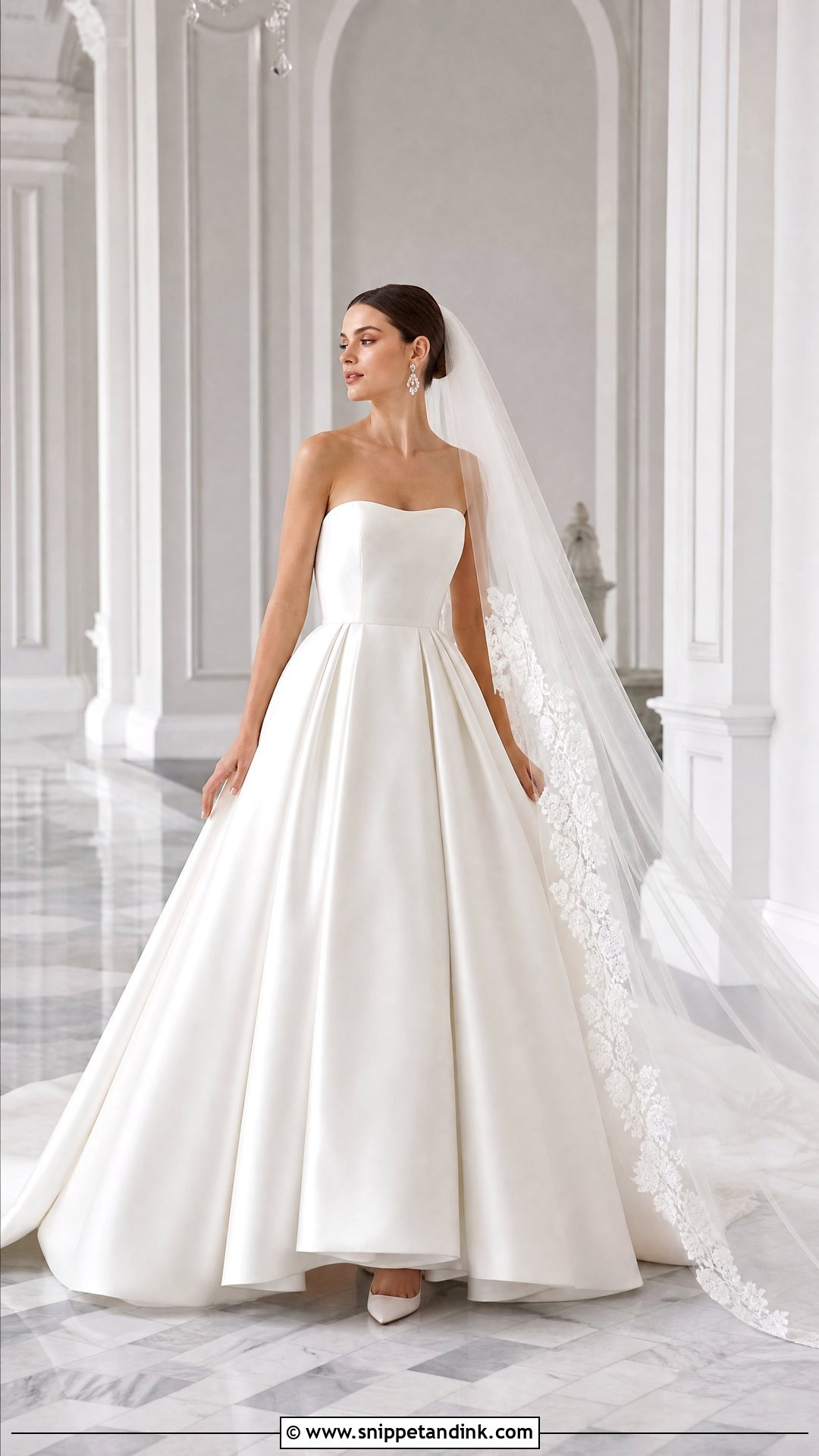
A fitted strapless bodice above a big skirt makes the waist and upper body look sharply defined by contrast. Pick a straight, softly curved or shallow sweetheart neckline with internal boning and cups fitted to your real measurements. Mikado and structured satin hold the ball gown shape well. Classic pumps, crystal earrings, a cathedral veil and gloves if you want an editorial touch. With a heavy skirt, the bodice has more weight pulling it down, so grip at the ribcage matters more than anywhere else. Ask your tailor to check grip, waist support and cup depth as three separate things.
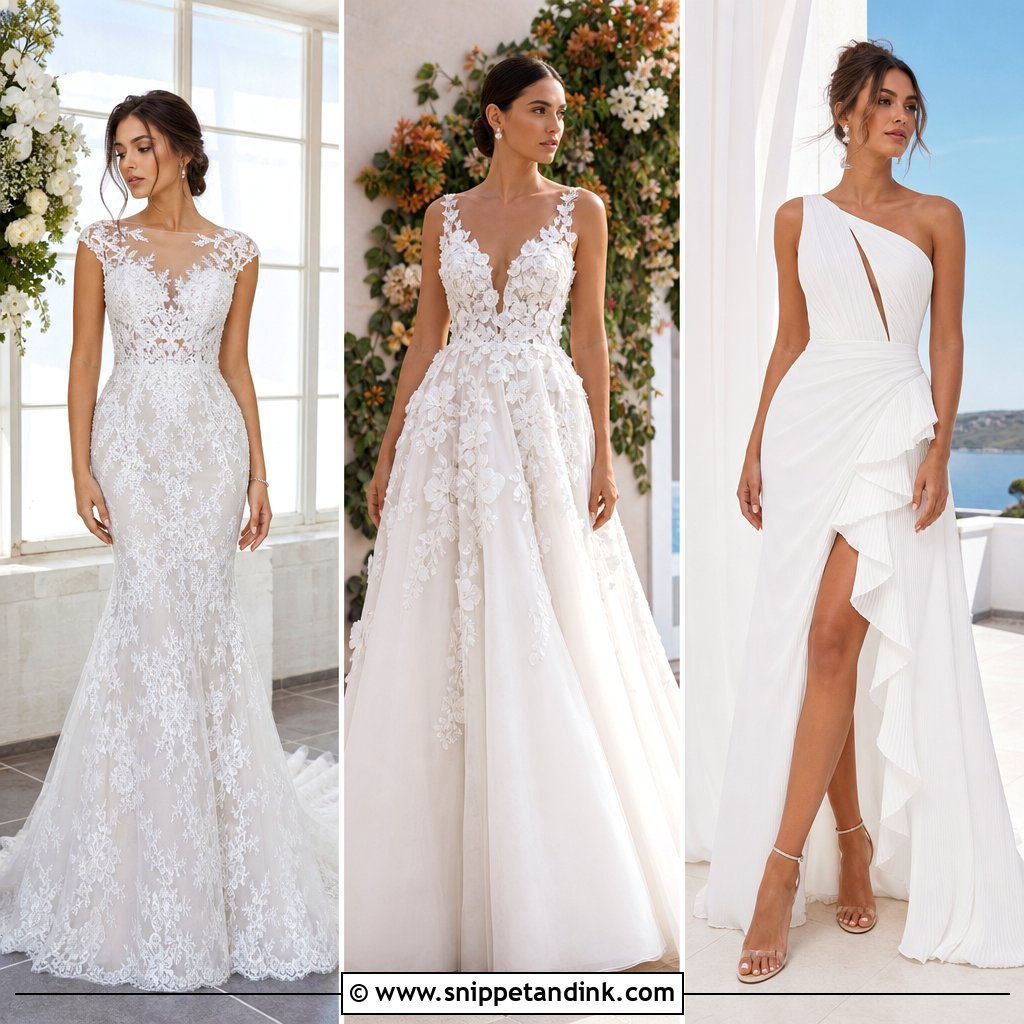
12. Floral Appliqué Wedding Dress
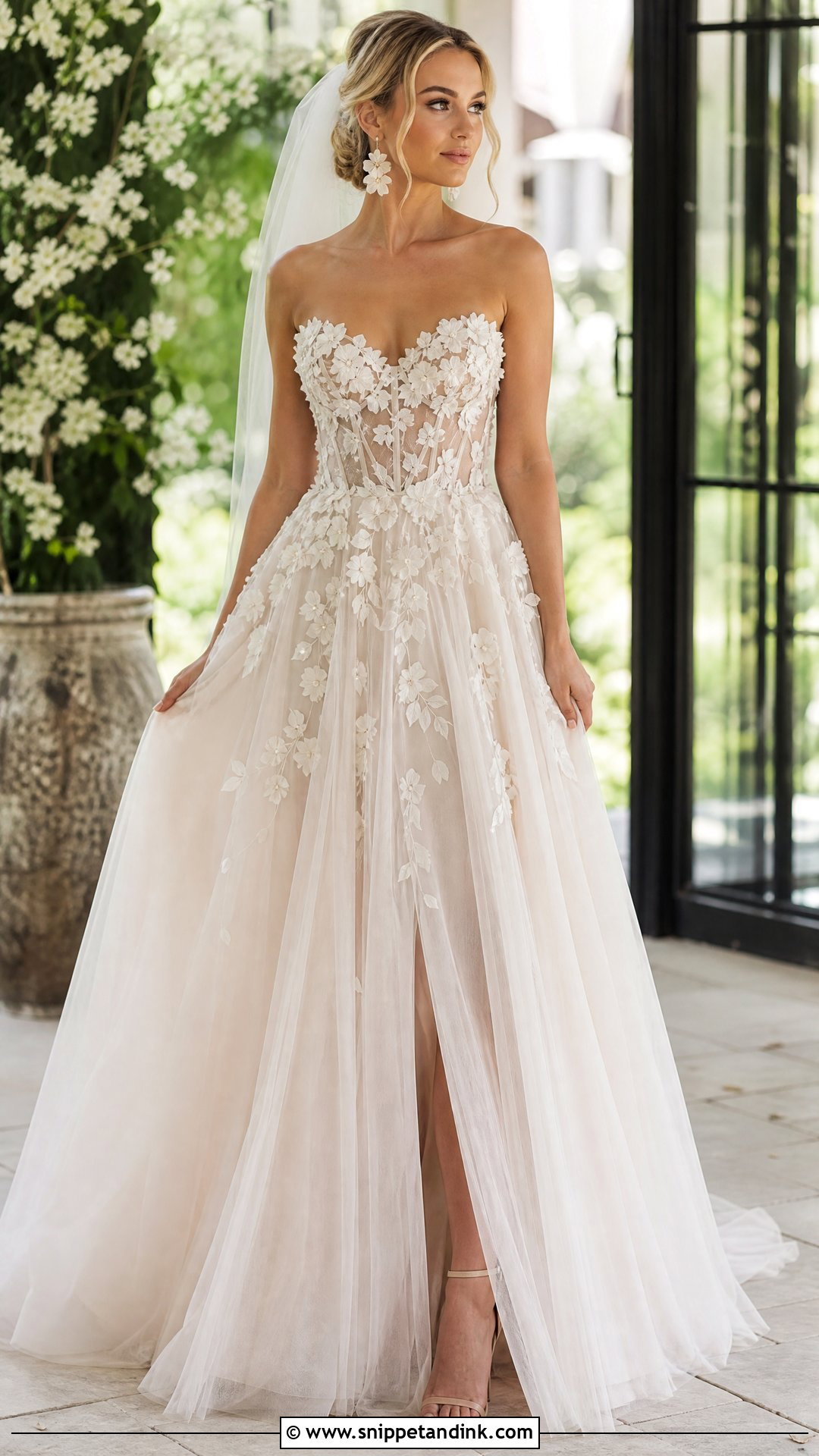
Raised flowers turn a simple dress into a textured one and add gentle volume over a smaller bust. I look for appliqués that carry on from the bodice into the waist or skirt instead of stopping in a hard line. A sheer square, scoop or sweetheart neckline keeps the flowers looking light. Neutral heels, botanical earrings, a soft veil and a loosely pinned updo suit it, with a slim bouquet that won’t cover the bodice. Small blossoms read delicate; oversized ones read runway. Look at the dress in daylight and indoor light, because raised flowers cast shadows that change how they photograph.
13. Scoop Neck Wedding Dress
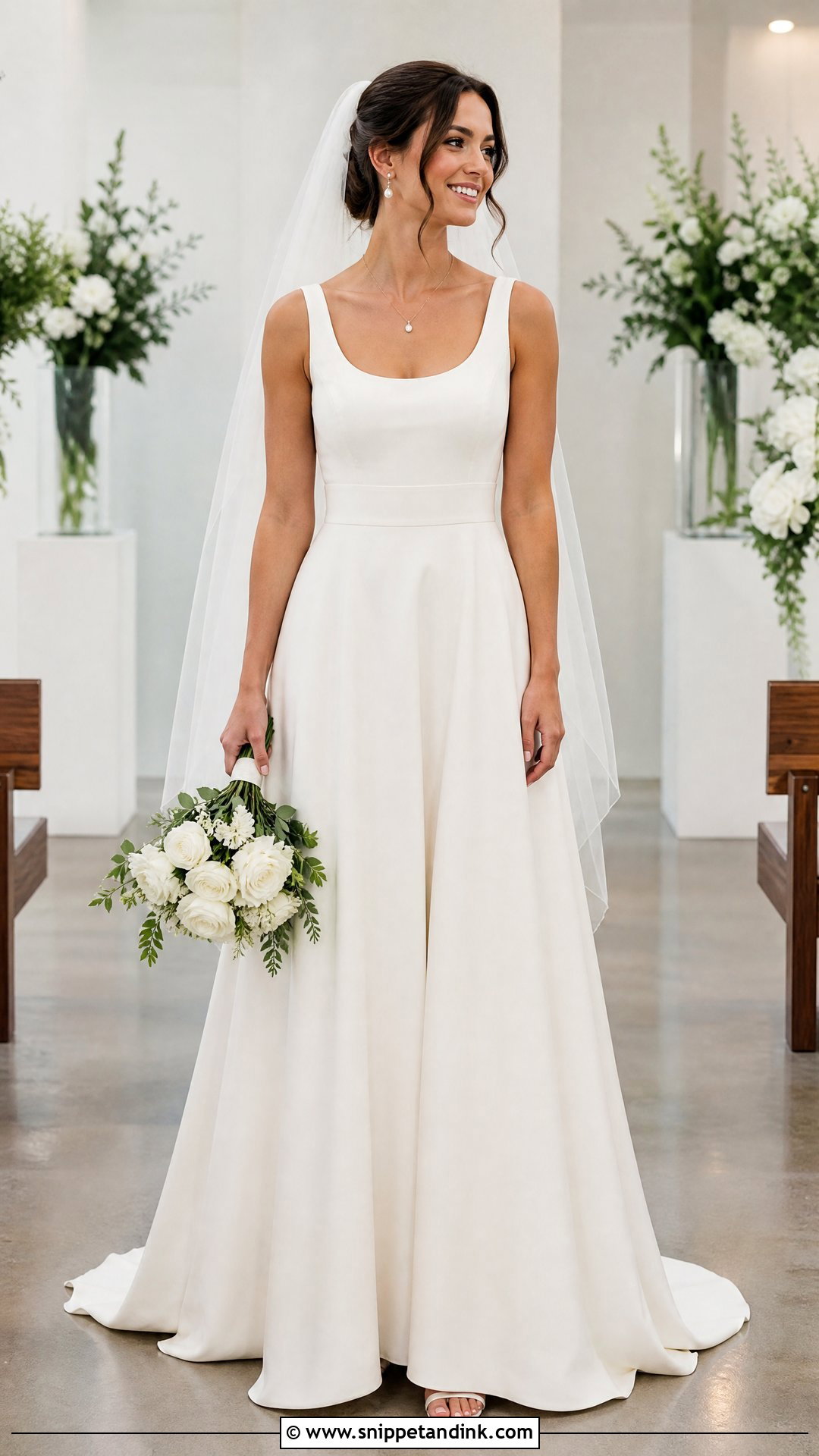
A scoop neck is the easiest neckline to wear all day. Its rounded line opens the chest gently, without the commitment of a deep plunge or the rigidity of a straight edge. A medium scoop with wide straps shows the collarbones and still covers. A fitted crepe bodice over an A-line is modern; satin with covered buttons is more traditional. Add a short pendant, pearl earrings, low heels and a soft tulle veil. Lean forward in the mirror. If it gaps, the fix is often at the shoulders or side seams, not the neckline itself. Piping or light beading around the scoop adds definition.
14. Boat Neck Wedding Dress
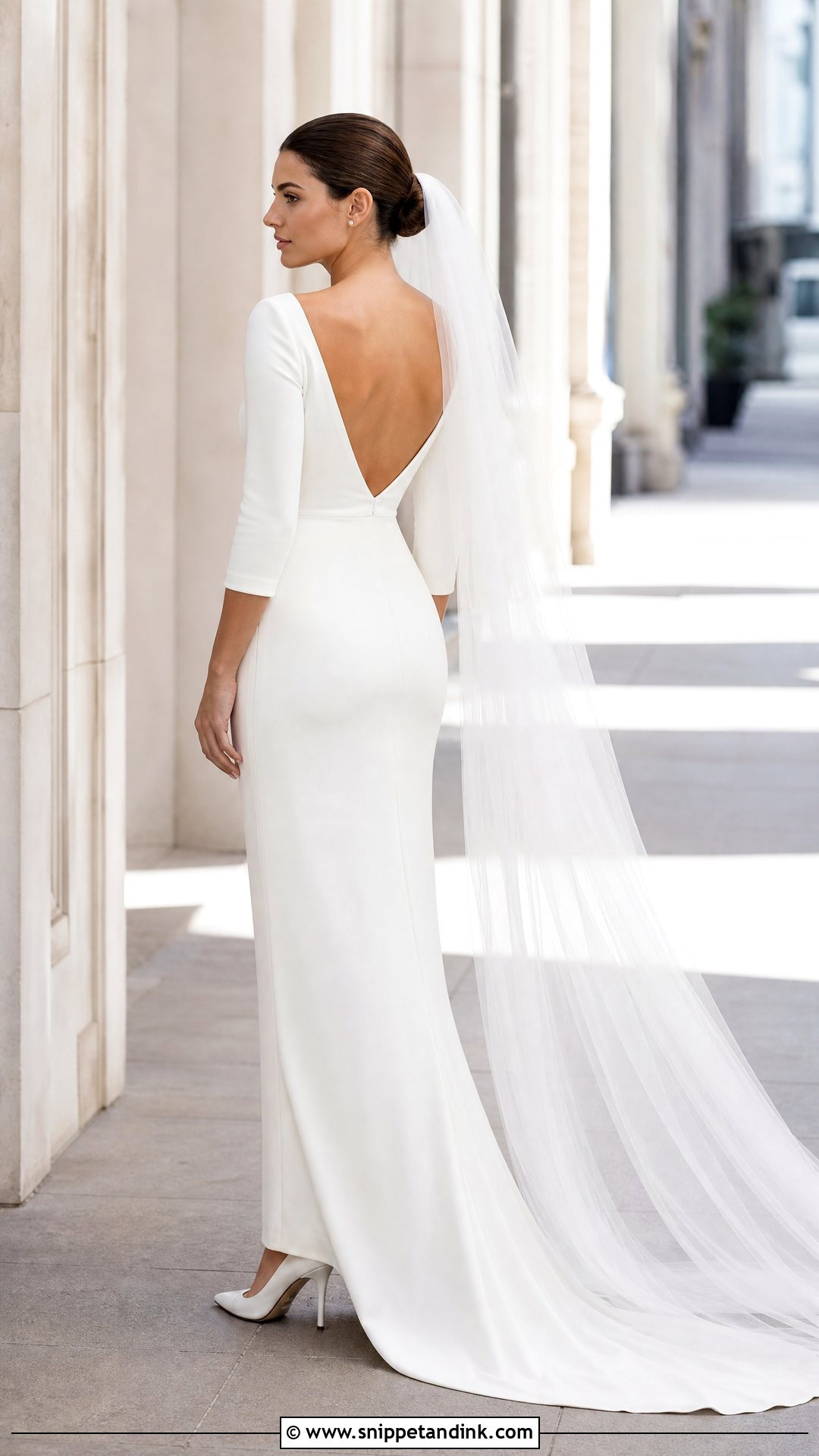
A boat-neck wedding dress runs wide from shoulder to shoulder and balances the upper body. Three-quarter, cap or no sleeves all work. Keep the fabric smooth: crepe, satin or fine lace. A slim sheath reads city chic; an A-line feels more traditional. Style it with a neat bun, studs, pointed pumps and a long veil fixed at the back of the head, and no necklace. The fabric should sit flat over the collarbones without dragging toward the armholes; on narrow shoulders that drag is common and easy to alter. A low V at the back adds contrast.
15. Empire Waist Wedding Dress
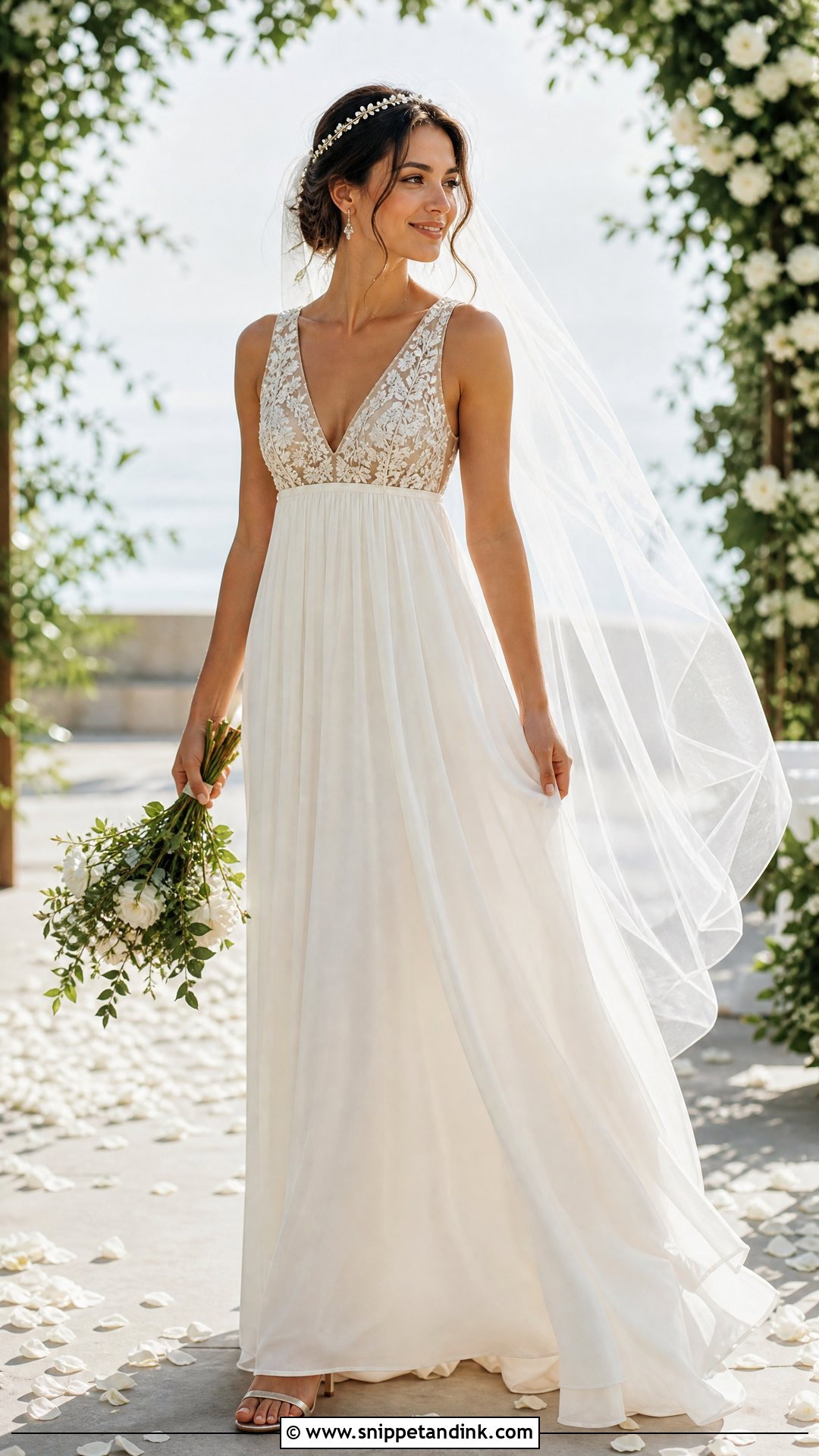
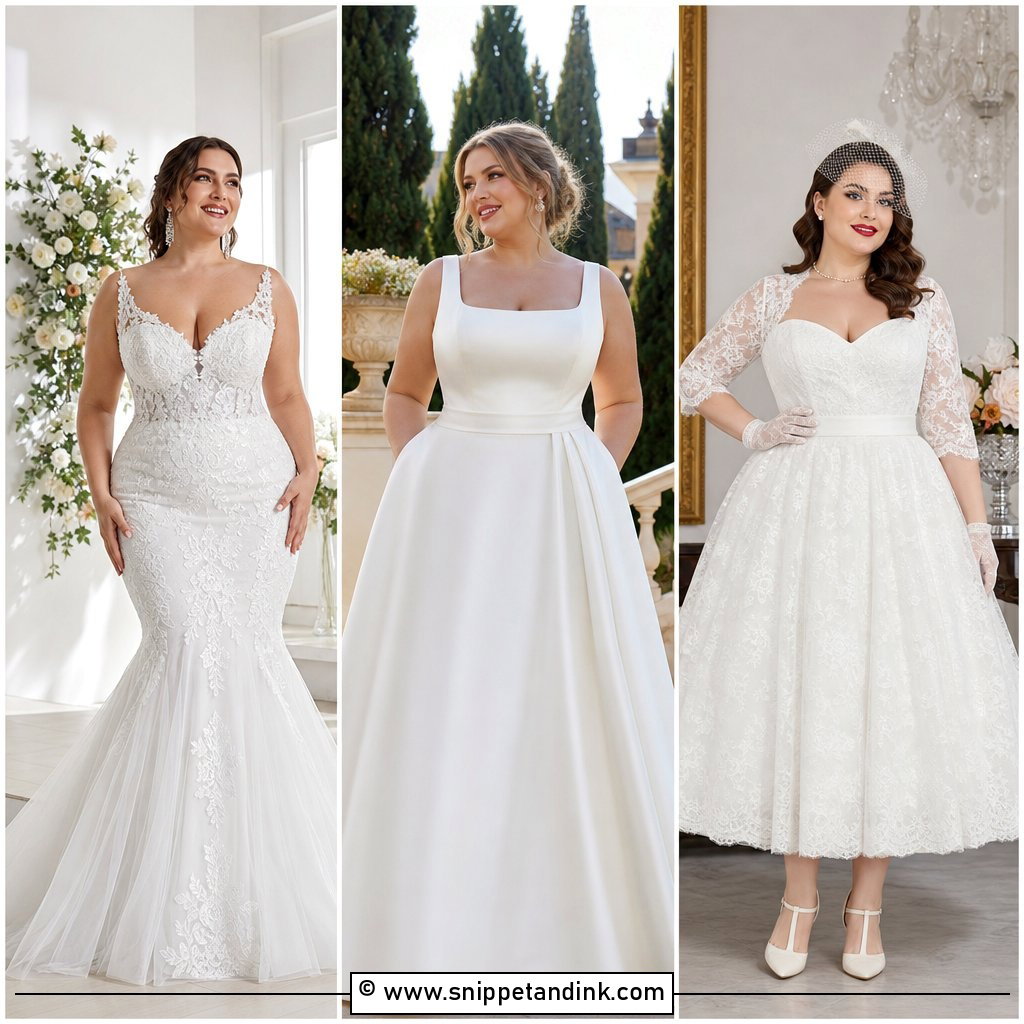
Light and flowing, an empire waist starts the skirt just under the bust and lets it fall. A gathered or embroidered bodice defines a small chest, and the raised waist makes a long line. Chiffon, silk georgette or light tulle move well; stiff fabric overwhelms it. Low sandals, delicate earrings, a fine headband and an airy veil keep it romantic. The seam under the bust has to sit exactly at the base of the bust. On a small chest it often lands too low on a stock dress, and then the shape looks muddled. Pick a V, square or ruched neckline to suit your coverage. It’s a cool, comfortable choice outdoors in summer.
16. Fit-and-Flare Wedding Dress
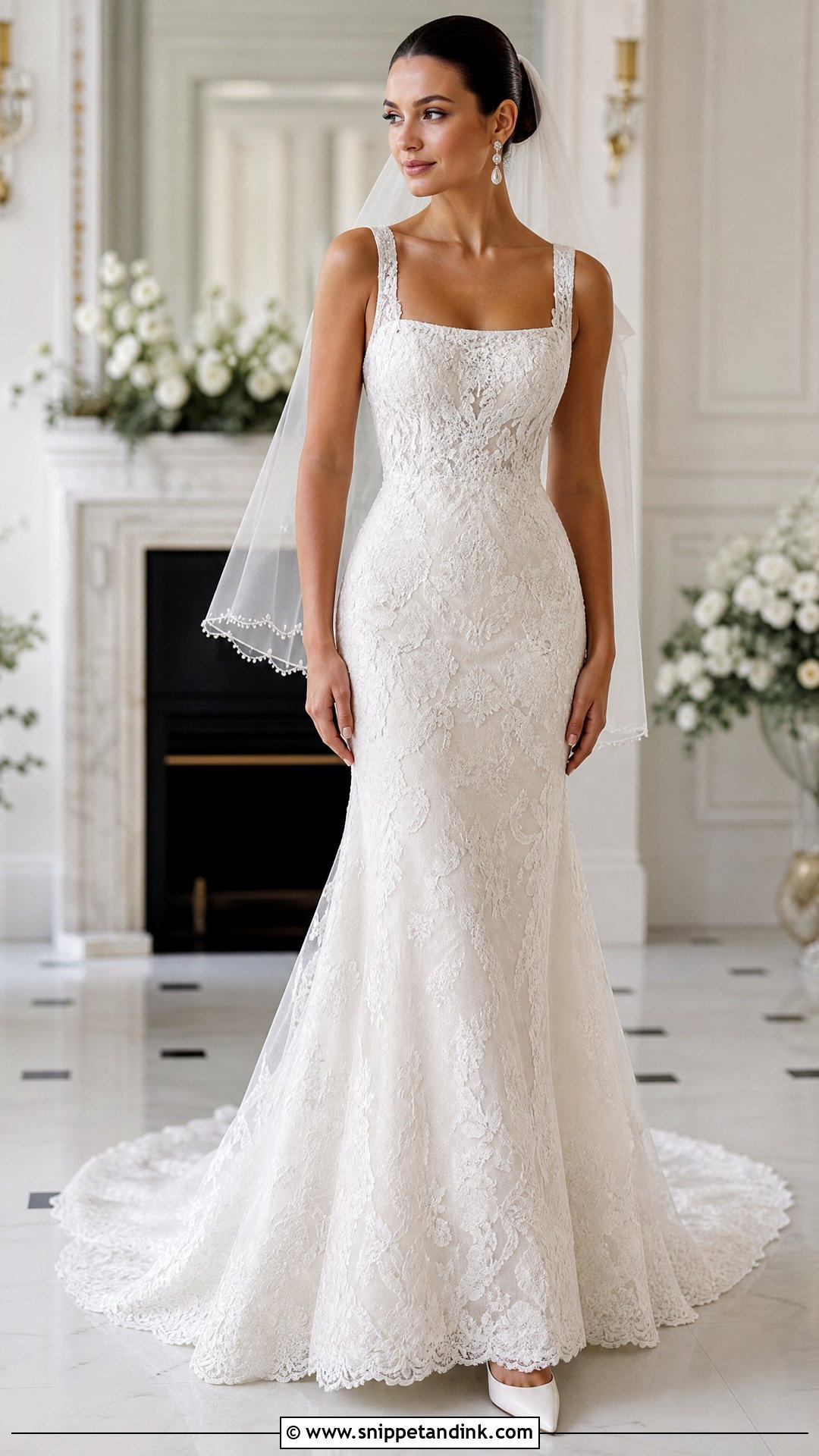
A fit-and-flare follows the torso and hips before widening low on the skirt, creating curves without a full ball gown. A structured square, sweetheart or plunging neckline balances the fitted body. Stretch crepe looks clean; lace looks romantic. Pointed heels, drop earrings, a mid-length veil and a sleek hairstyle complete it. The bodice should fit close without pressing the chest flat. Walk and sit to test the flare point; set too high or too tight, it shortens your stride. Good seam placement and side panels keep it balanced in full-length shots.
17. Sheer Bodice Wedding Dress
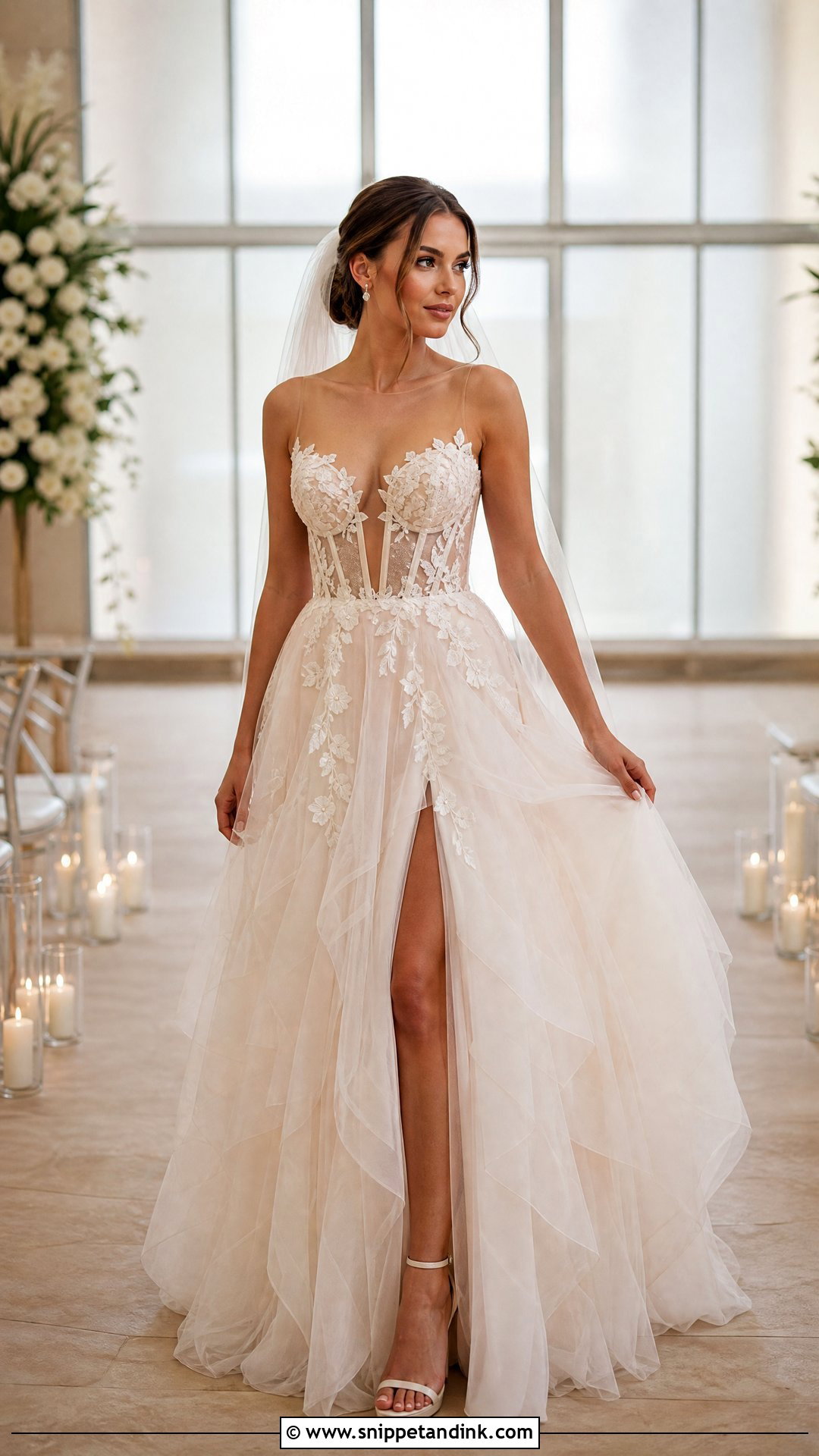
A sheer bodice shows off fine embroidery without a heavy solid top. Choose illusion mesh close to your skin tone and appliqués placed deliberately over the chest. Boning, cups and seams will be visible, so they should look like part of the design. A layered tulle or smooth satin skirt, elegant heels, small earrings and an unembellished veil keep it from looking busy. Mesh often looks more see-through under flash than in a mirror, so ask someone to take a flash photo on their phone at the fitting. If you want more coverage, a custom lining usually keeps the effect.
18. Puff Sleeve Wedding Dress
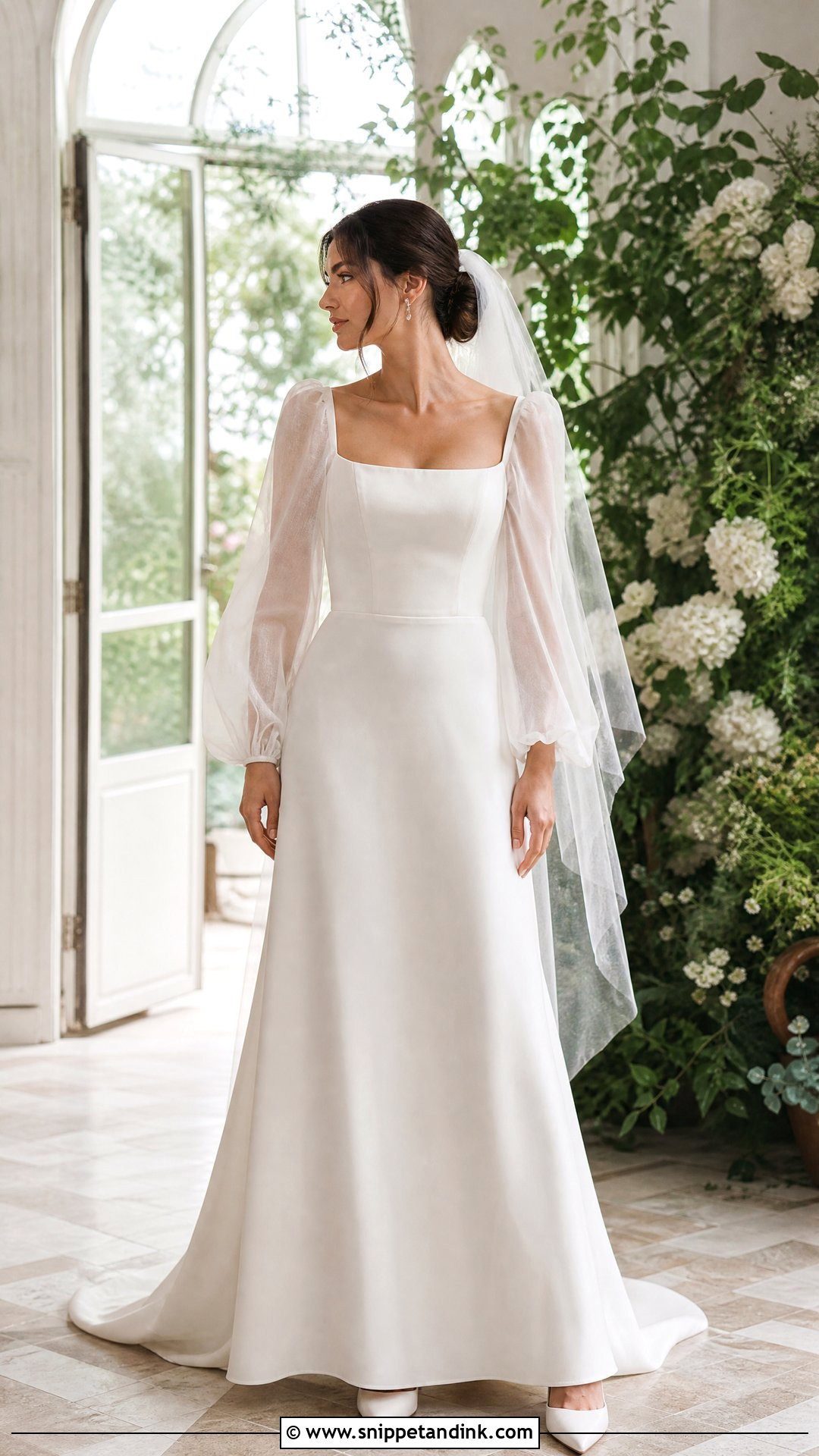
Puff sleeves add volume at the shoulders and balance a smaller bust. Soft organza feels airy; structured satin makes a statement. Pair them with a fitted square or sweetheart bodice and a slim A-line to keep the volume in one place. Simple pumps, a low bun, fine earrings and a veil that starts behind the sleeves. Detachable puffs give you two looks. Scale is the issue on a petite frame: very large sleeves can swallow you, so try two sizes if the designer offers them. The shoulder seam must sit right, and the elastic or cuff shouldn’t dig in.
19. Bow Detail Wedding Dress
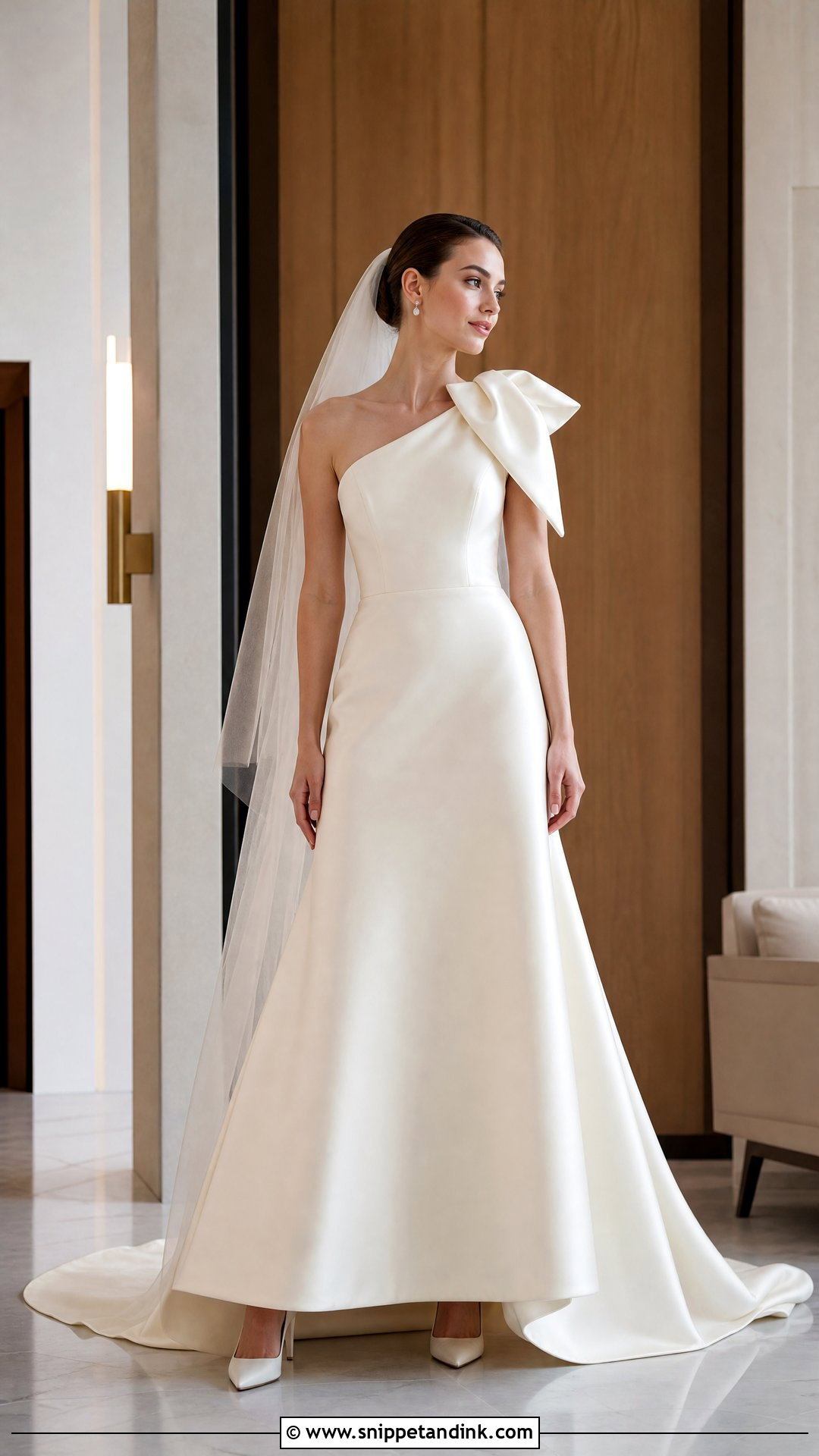
A bow gives shape and personality without any beading. On a small bust, a draped bow across a strapless neckline, a one-shoulder bow or a modest knot at centre front adds focus to the chest. Keep the skirt clean and structured so the bow looks intended. Satin or mikado holds a crisp bow; organza droops softly. Pointed pumps, sleek earrings, a smooth updo and a simple veil; no large necklace. If you’d rather keep the front quiet, choose a square-neck bodice with a statement bow at the back. Make sure it’s stitched firmly; bows get tugged and sat on.
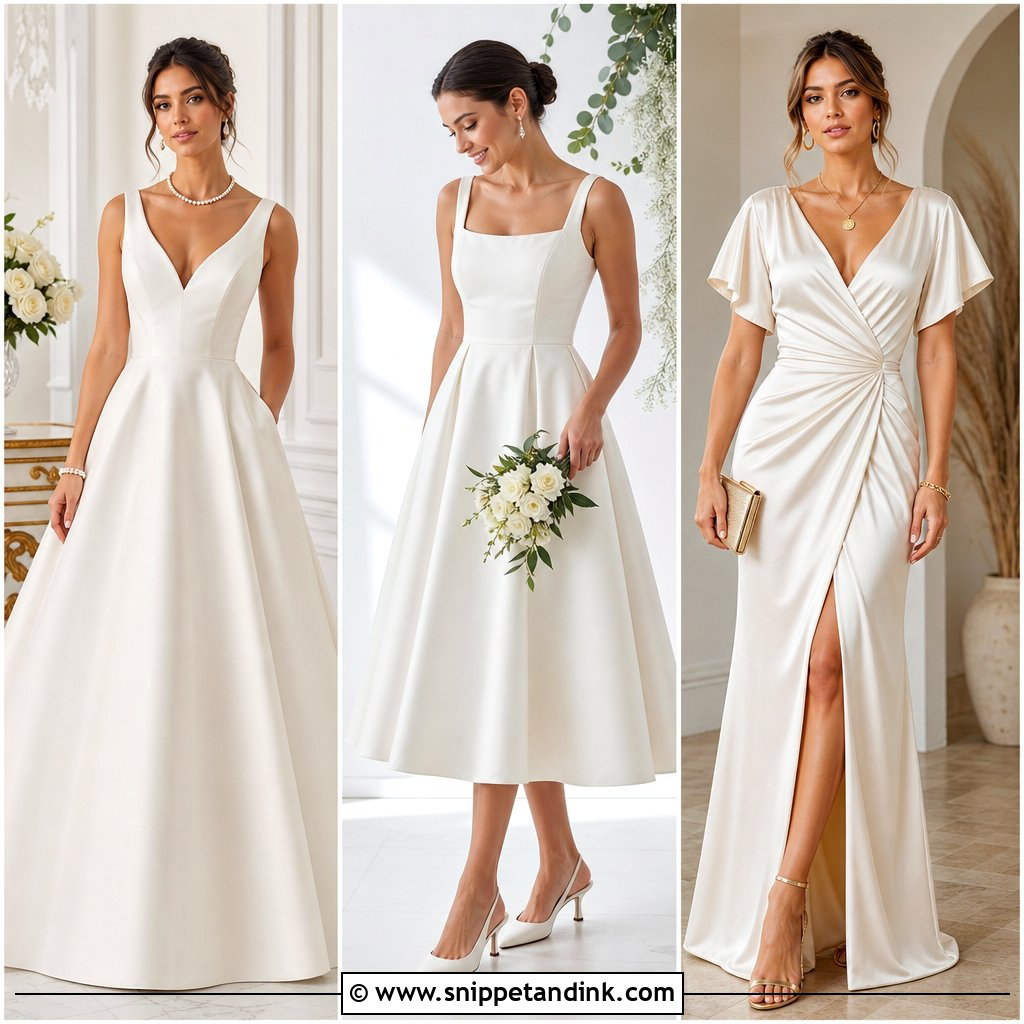
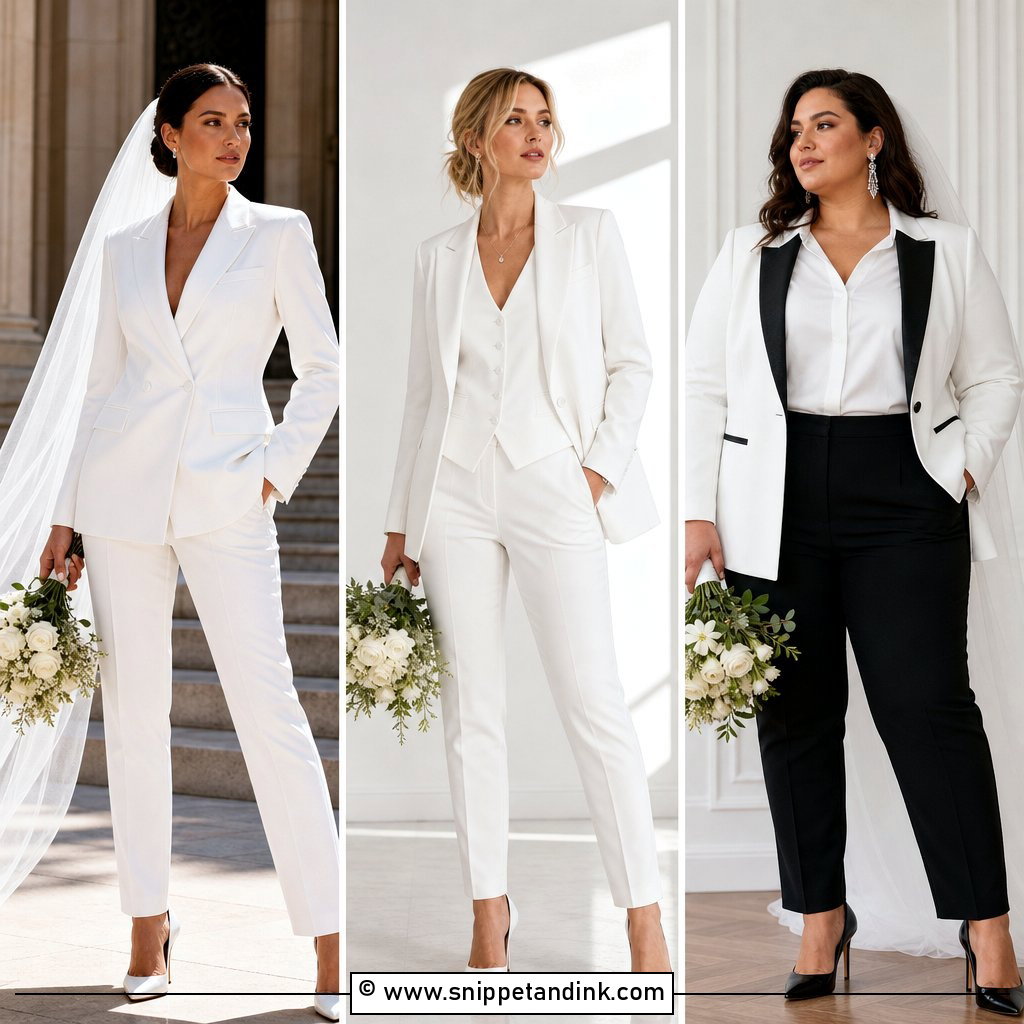
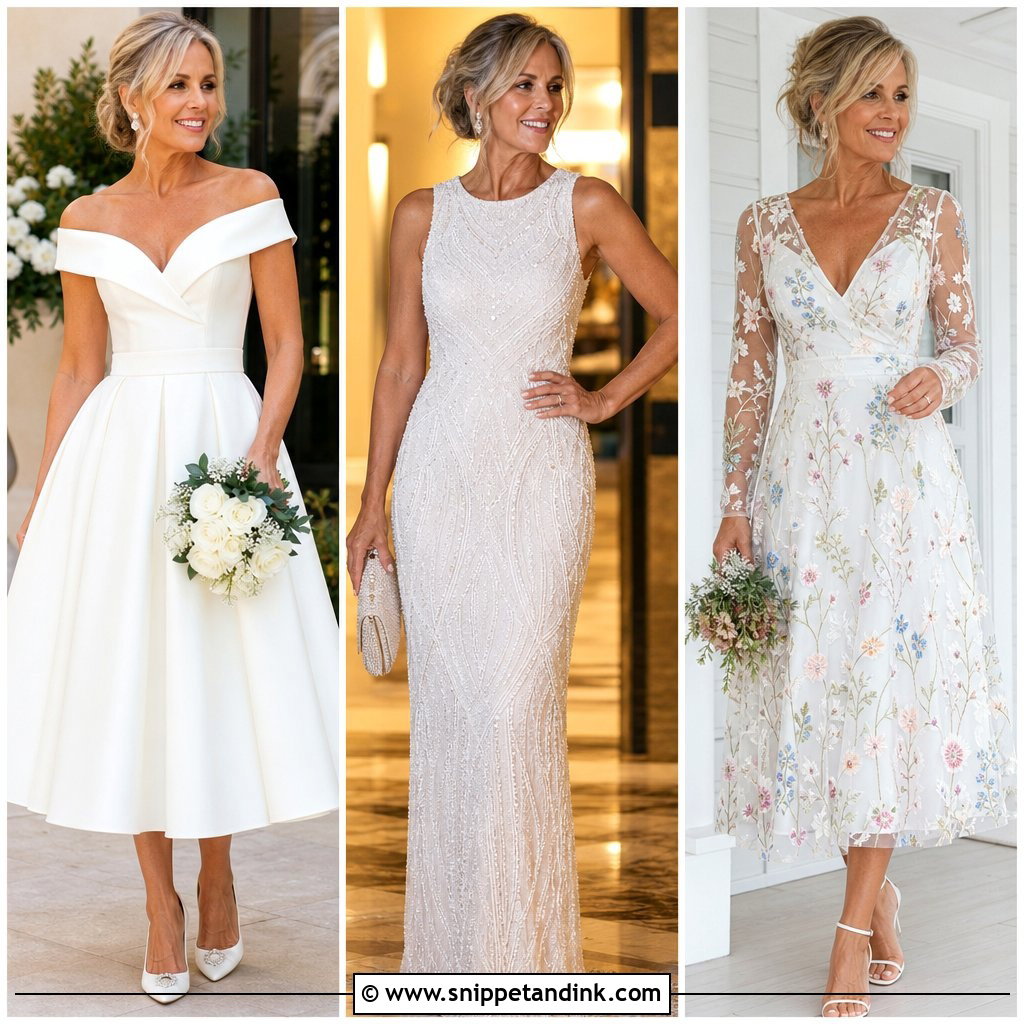
20. Minimalist Column Wedding Dress
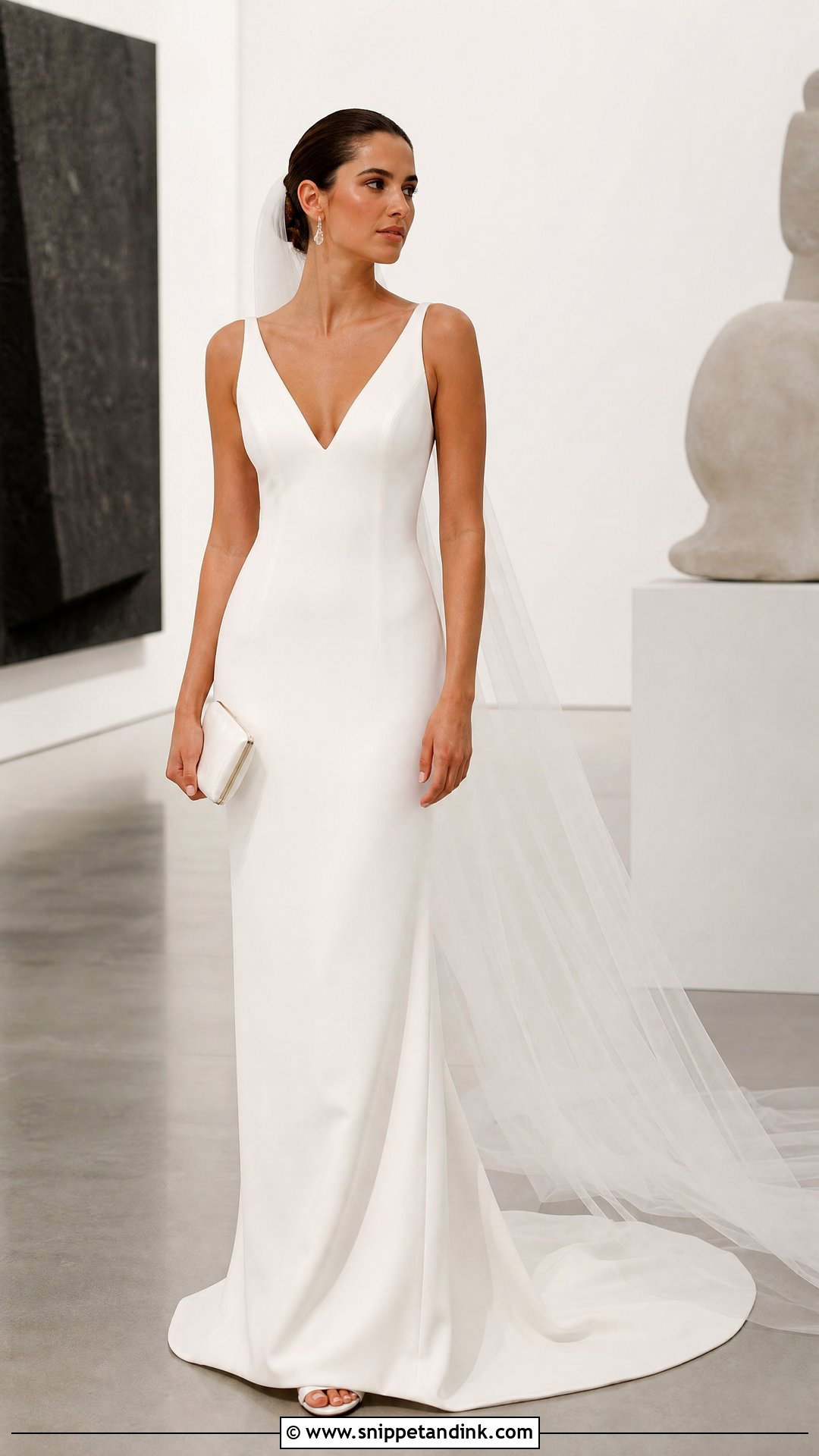
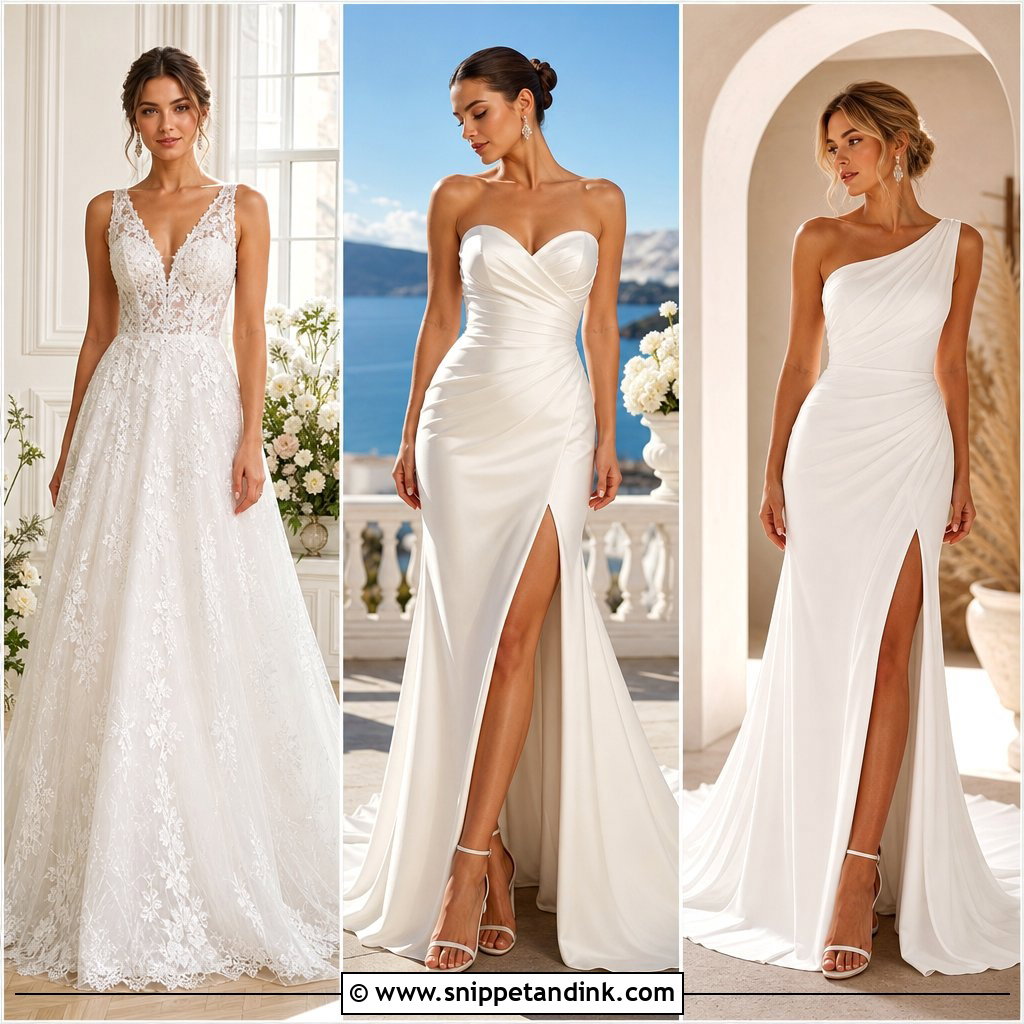
Sometimes the simplest gown makes the strongest impression. A plain column celebrates a slim upper body through tailoring instead of trying to manufacture volume. A high halter, square neck, gentle cowl or narrow V in silk satin or weighty crepe suits it, skimming the body rather than clinging. Sculptural earrings, sleek heels, a structured clutch and a long sheer veil; perhaps a low back, covered buttons or a small train. With nothing to disguise fit, check bust, waist, hips and hem standing, sitting and walking. Stand tall in it. Posture is half of how a column looks.
Small-Bust Fit Problems Your Seamstress Can Fix
Very few bodices fit a smaller chest perfectly off the rail, because most are cut around a mid-range cup. The good news is that the usual issues are well known and fixable if you raise them early.
- One side fits looser than the other. Almost everyone is slightly uneven. A seamstress can take in one cup more than the other, or add a thin shaped insert on one side only, so both sit flush.
- The top edge folds inward when you bend. The cup is too deep for you. Reducing cup depth, or adding a narrow stay along the top edge, keeps it standing.
- Air under a strapless neckline. Tightening the top edge rarely fixes this. Taking in the waist and ribcage so the bodice grips lower down usually does.
- Gaping at the armhole. Common on halters and one-shoulder gowns on slim torsos. A small dart or reshaped side seam closes it.
- Darts or seams pointing at the wrong place. If the shaping on the bodice sits above or below your bust point, it creates wrinkles. Moving it is fiddly but possible on simpler fabrics.
Mention these at your first alteration appointment instead of the last. Cup and bodice work is usually done before the hem, and once the bodice is finished, reopening it costs time you may not have.
Start From the Effect You Want, Then Let the Fit Decide
Forget rigid rules about what a smaller chest can or can’t wear. Structured sweethearts, plunges, halters, square necks, raised appliqués and clean minimal shapes all work when they fit properly. Decide whether you want texture, a defined waist, your shoulders on show or a sleek natural line, and shop for that. Bring more than one underwear option to fittings, move around in every gown, and set aside money for alterations. Then pick the dress you stand taller in.
You'll Like These Ideas:





Leave a Reply