
Some brides walk into a fitting room, look at rail after rail of ivory, and feel nothing. If that is you, the ideas below come from the other side of the shop floor: black satin, red chiffon, jumpsuits, capes, feathers and dresses that come apart halfway through the night. I’ve dressed brides in most of these, and each one has its own quirks with fabric, fit and styling. I’ll tell you where each idea shines, where it goes wrong, and what I check before I’d let someone order it.
Holding a Swatch Against Your Skin in Daylight Before You Commit
Colour is where non-traditional dresses go right or very wrong, and shop lighting hides the difference. Most boutiques use warm overhead lights that flatter everything. Before any bride orders a coloured gown from me, I ask for a fabric swatch or I take her to a window.
- Hold the swatch under your chin in natural daylight, without makeup if possible, and look at your skin rather than the fabric. If you look tired or sallow, the undertone is wrong.
- Photograph it with flash and without. Some blacks and reds shift noticeably on camera, and metallics can blow out to white.
- Check it beside your venue’s main colour. A blush gown against terracotta walls reads very differently from the same gown in a white marquee.
- Look at it from a few metres away. Prints, layered tulle and fine embroidery often blend into one tone at distance.
I also ask brides to think about the time of day. A dusty blue that looks soft at noon can go cold in evening shade, and gold sparkles under warm reception lighting in a way it never will outdoors at midday.
1. Black Wedding Dress
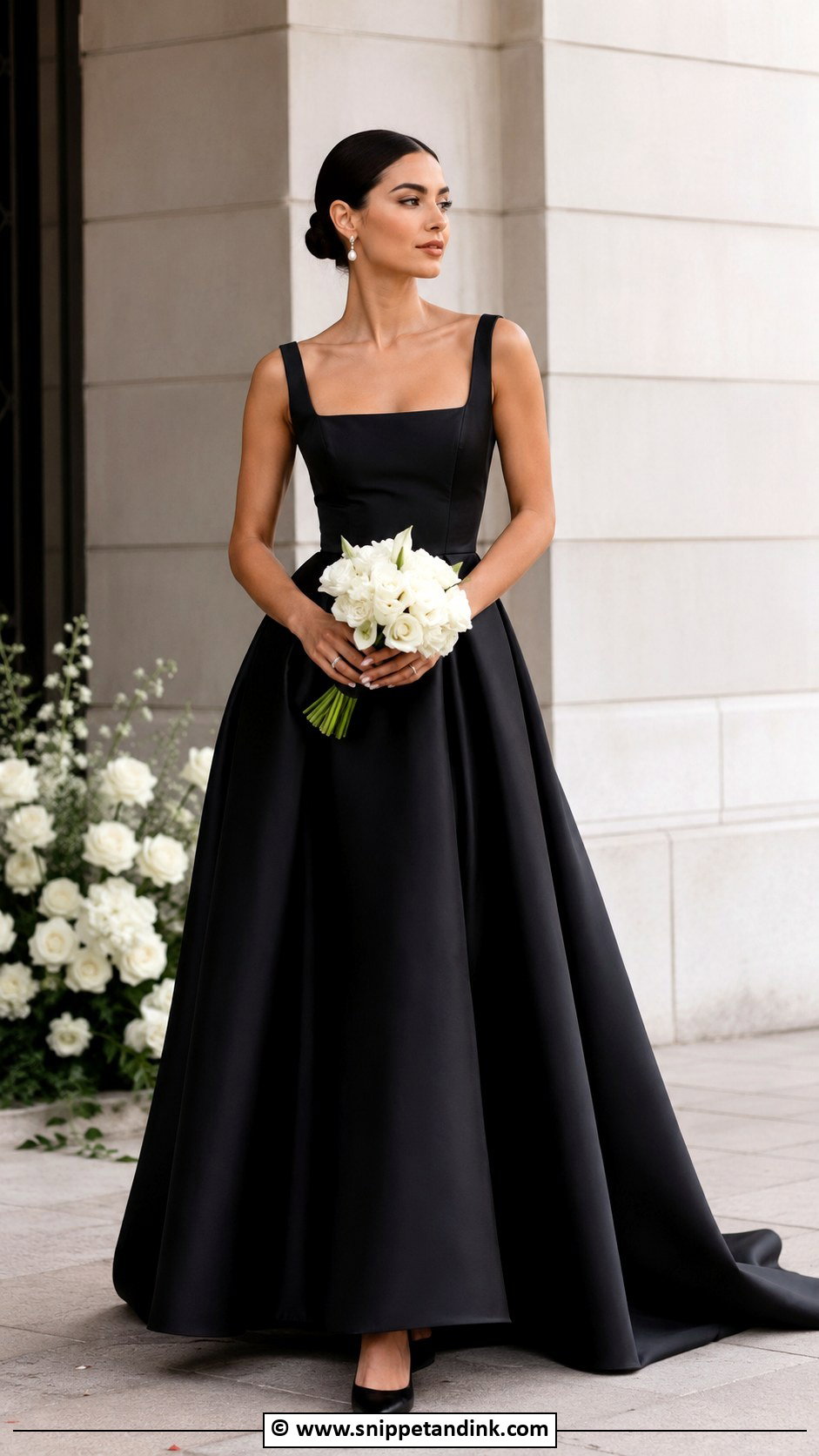
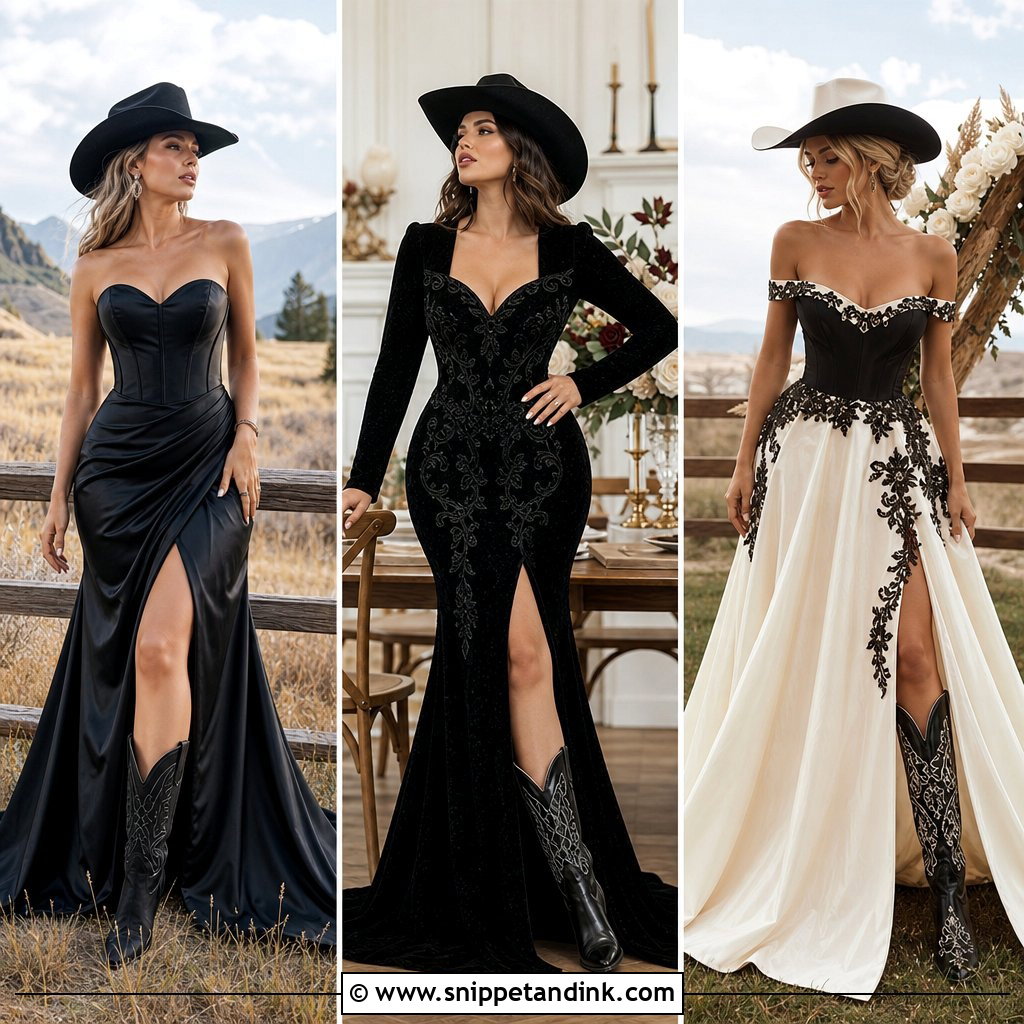
Black is the colour I get asked about most, and the fabric decides whether it looks bridal or like a gala guest. Satin, velvet and silk crepe have a depth that reads as considered; cheap polyester black goes flat and slightly grey under flash. A black slip suits a city ceremony, while a structured gown with a square neckline and full skirt holds its own in a formal room. One practical warning: black shows every fleck of lint, pet hair and deodorant, so I pack a lint roller and dress shields in the kit. Pearl earrings, a low bun and a small bouquet keep it soft, and sheer gloves or a white floral clip give the contrast some brides want.
2. Floral Wedding Dress
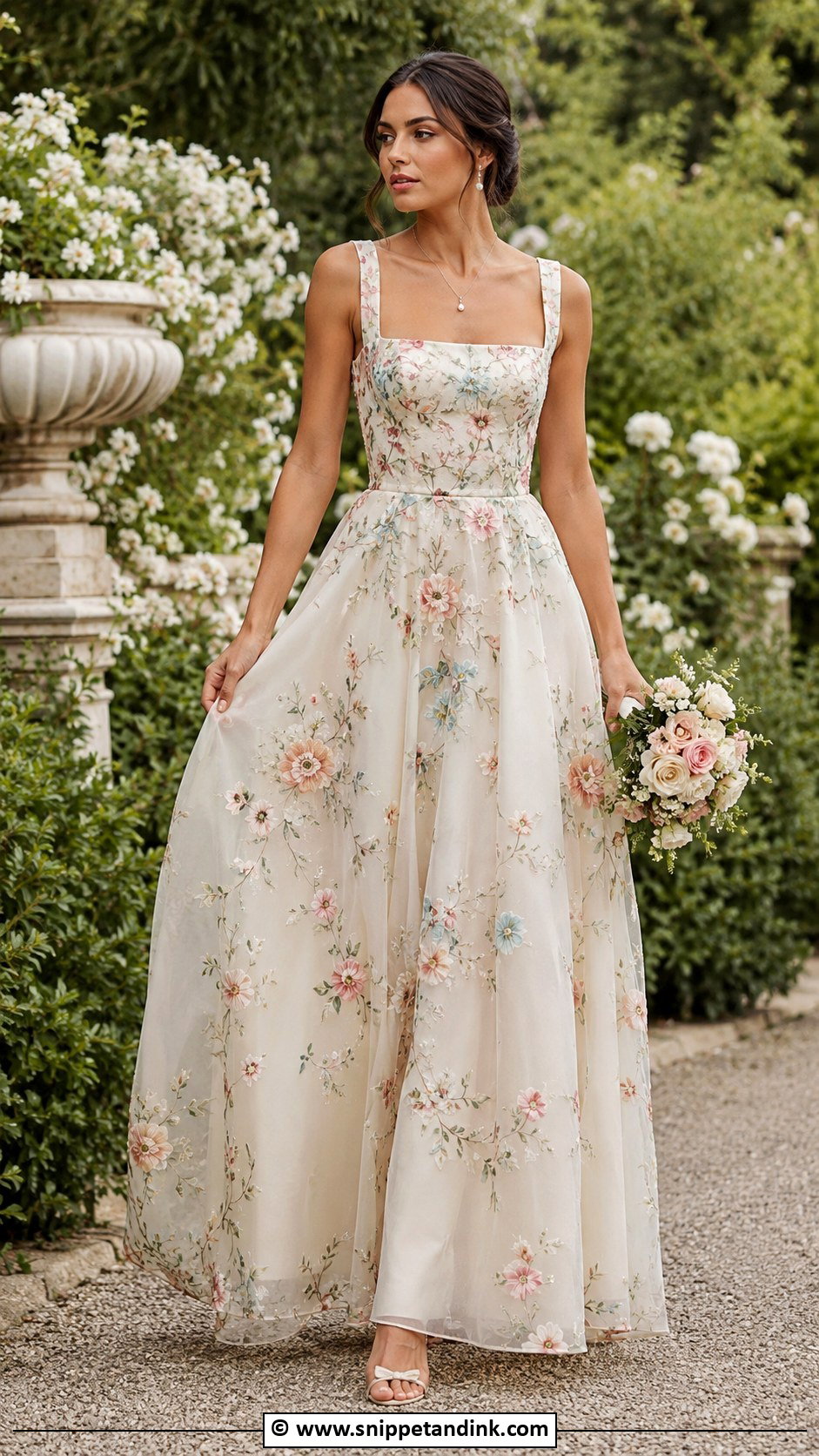
A floral wedding dress lets you bring in colour without committing to a fully non-white gown. Pastel embroidery stays delicate; oversized blooms printed on organza or woven into jacquard are much louder. The thing I look at first is scale against your height. Big prints can swallow a petite frame, while tiny ditsy florals blur into texture from more than a few metres away, which is where most guests and the camera will be. A fitted bodice and flowing skirt keep the shape bridal, and appliqués add depth when they sit on tulle. Keep hair and jewellery quiet, because the dress is already doing the talking.
3. Pink Wedding Dress
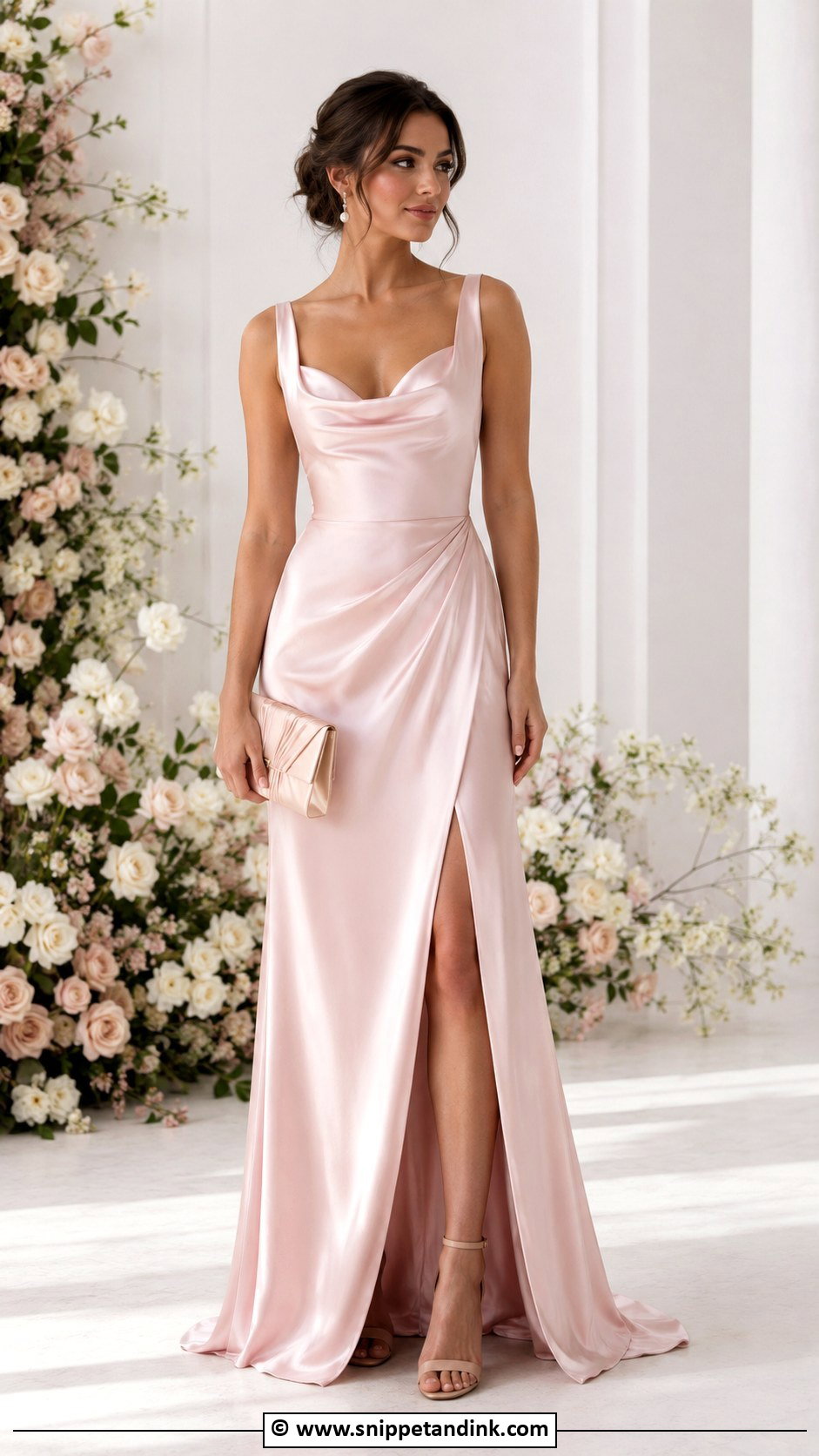
Pink is the easiest of the colours to wear, which is why I suggest it to brides who are nervous about leaving white. Blush, dusty rose and pale mauve sit kindly on most skin tones, but the undertone matters: blue-based pinks can make olive skin look sallow, and peachy blush can wash out very fair skin. I always hold the fabric under someone’s chin in daylight before they order. Chiffon or silk in a clean cut keeps it quiet; a ruffled ballgown or corset bodice pushes it into drama. Pearls, nude heels and a short ivory or blush veil finish it without fuss.
4. Blue Wedding Dress
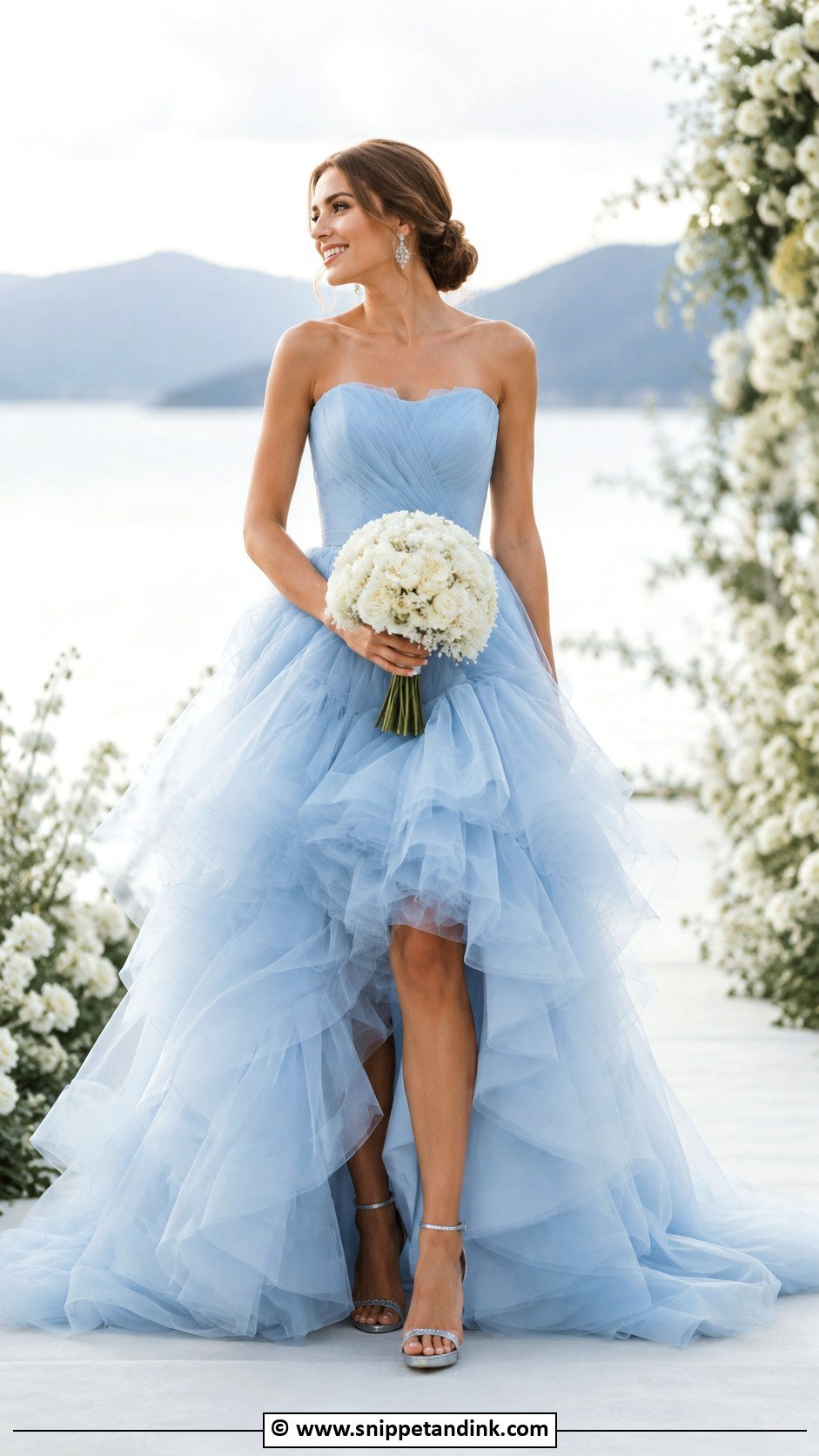
Blue works well for a bride who wants to surprise people gently. Powder blue, icy blue, slate and periwinkle all behave differently in fabric: satin and silk catch the light and look almost silver in sunshine, while layered tulle softens the colour into something closer to grey. That shift is worth seeing in person. A blue column dress reads modern, a tulle gown more whimsical. Silver heels and a sleek updo keep it polished, and a delicate veil or white bouquet pulls it back toward bridal. It also settles the “something blue” question in one go.
5. Red Wedding Dress
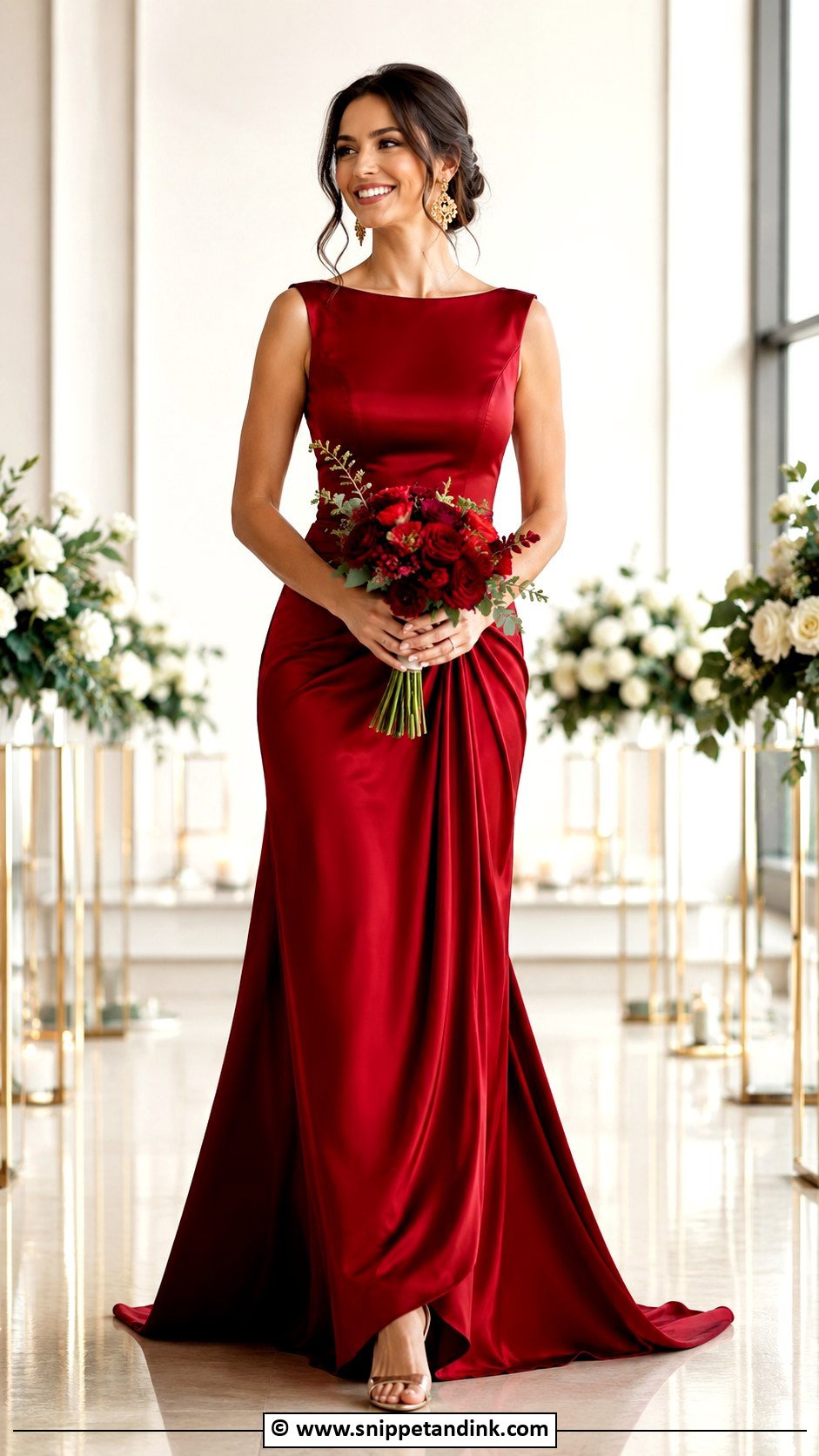
Red carries meaning in many cultures, so before styling it I ask whether the bride is wearing it for tradition, for drama, or both. Cherry and scarlet feel celebratory; burgundy and ruby read richer and work better in autumn or evening light. A sleek gown with a simple neckline is the modern route, while chiffon layers or a tea-length cut add movement. The colour does most of the work, so I keep jewellery to gold and the heels neutral. One thing to plan for: strong reds can bleed onto pale skin or a light lining if you sweat, so a test wear on a warm day is worth doing.
6. Gold Wedding Dress
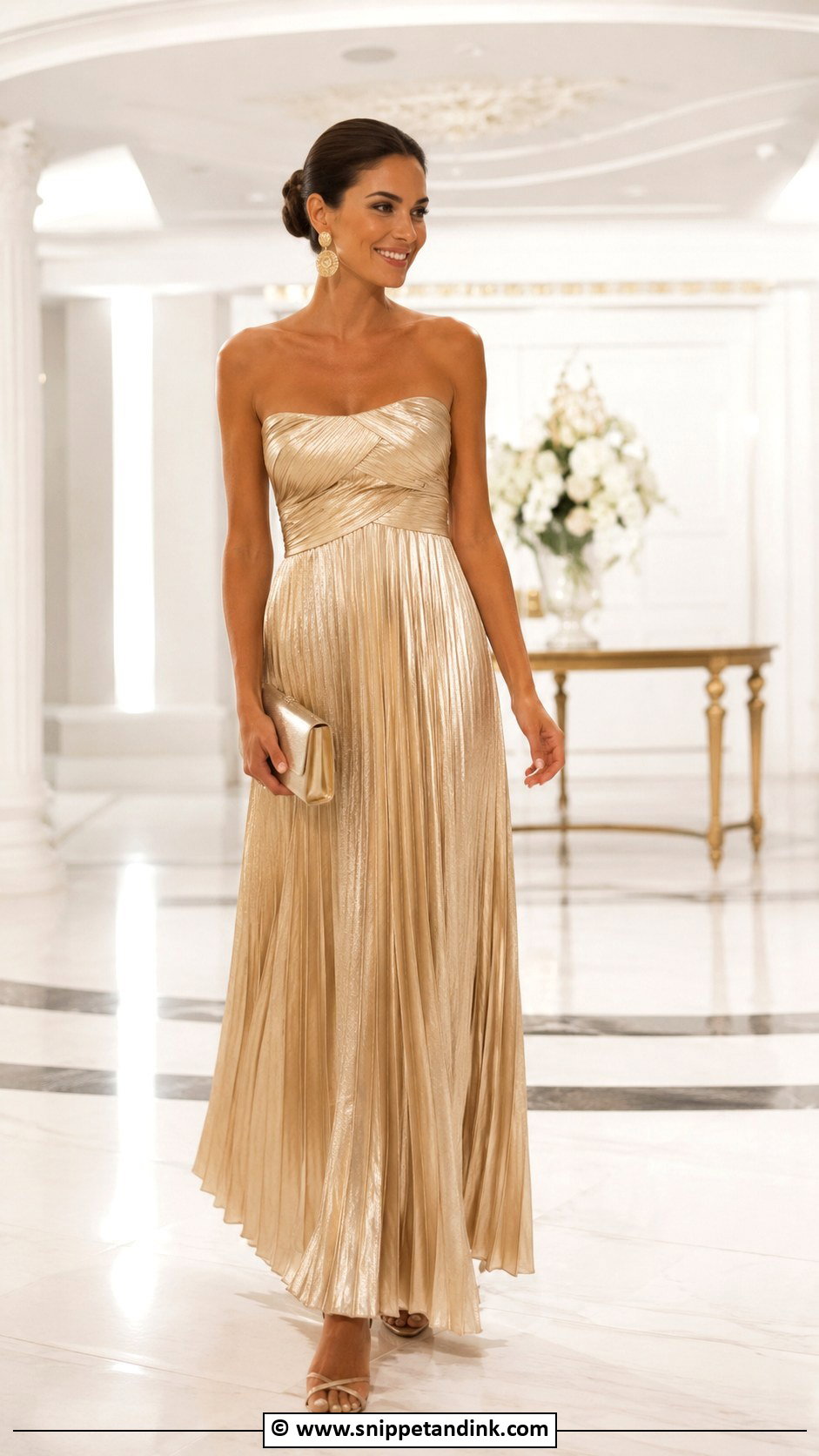
Gold ranges from barely-there champagne to full metallic, and I treat those as two different conversations. Pale gold satin with a simple silhouette is gentle and flatters warm skin. Beaded gowns, pleated lamé and shimmering wraps are statements, and they are heavy; a fully beaded dress can weigh far more than brides expect, so I make sure the straps and seams are built for it. Nude sandals, brushed gold earrings and smooth hair keep the look cohesive. Gold sits best at evening ceremonies and formal receptions where warm lighting makes it glow rather than look brassy.
7. Silver Wedding Dress
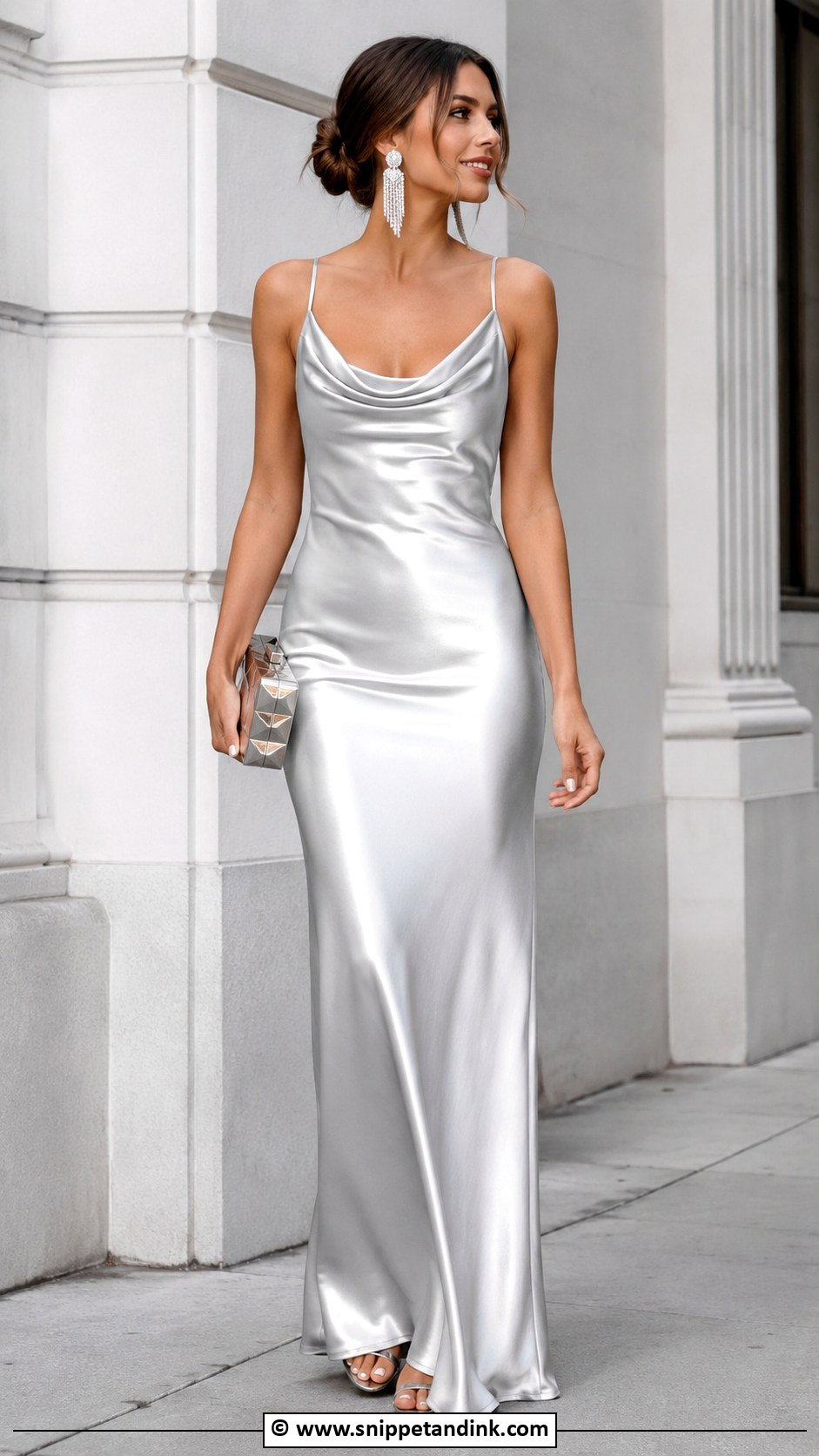
Silver is cooler and sharper than gold, and it suits brides who want glamour without anything sweet. Liquid satin, metallic crepe, sequins and beaded mesh all give a different finish, and I always check how the fabric moves when you sit, because liquid satin wrinkles across the lap quickly. A slip with strappy heels feels sleek; a long-sleeve column is more refined. Keep accessories in the same cool family with crystal earrings and a mirrored clutch. A neat bun or straight hair suits it better than loose curls. Bright, even lighting is where silver comes alive.
8. Tea Length Wedding Dress
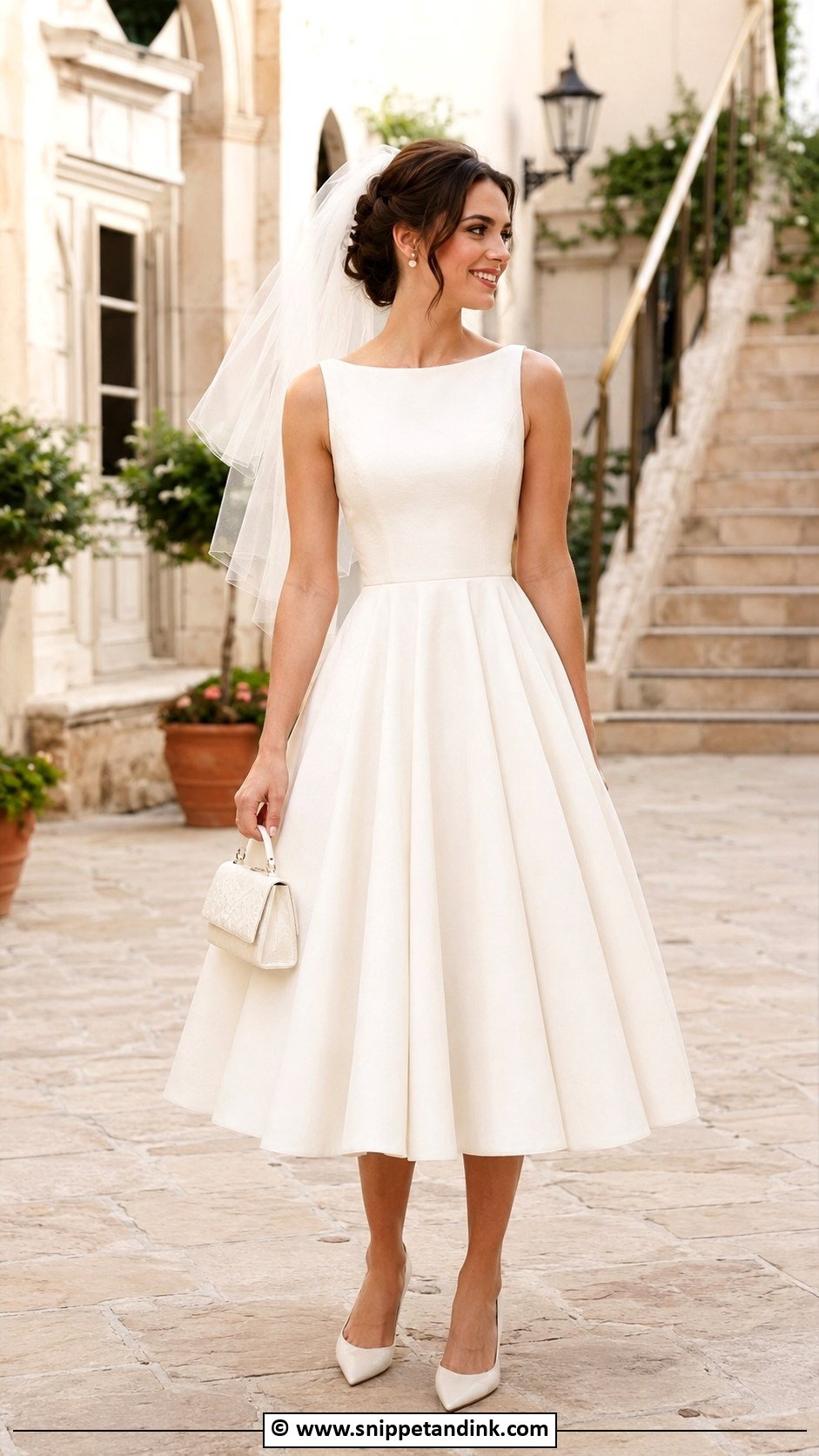
A tea length wedding dress has a hem that sits between the knee and ankle, and the exact point is where I spend time at fittings. Too long and it cuts the leg at the widest part of the calf; a couple of centimetres shorter and the whole proportion lifts. Because your shoes are on show, I steer brides toward pointed pumps, slingbacks or Mary Janes and away from chunky sandals. A fitted bodice with a flared skirt is the classic shape, and a square neckline modernises it. Satin keeps it clean, while lace or embroidered tulle brings the retro feel forward.
9. Mini Wedding Dress
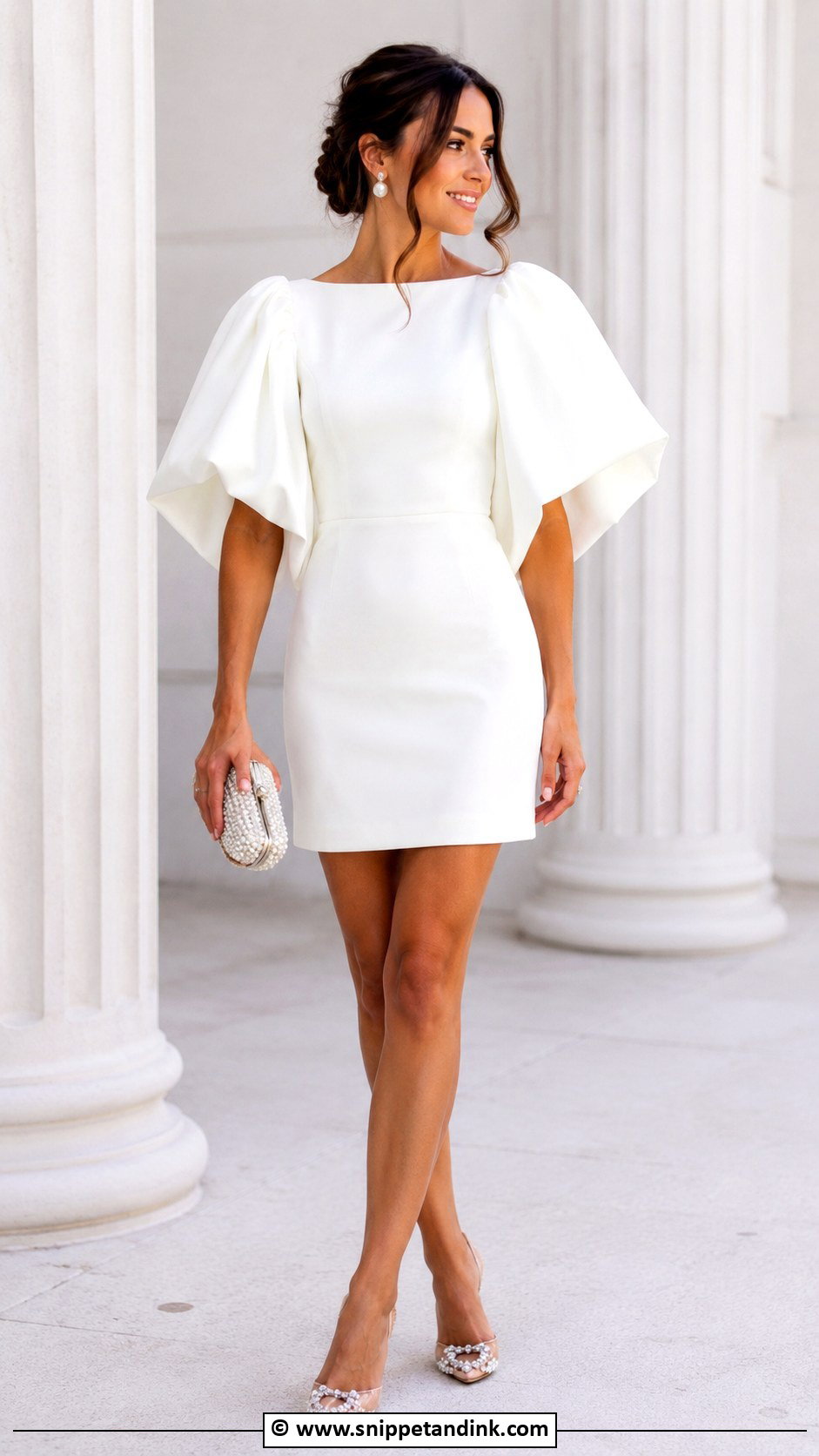
Minis are freeing, and they are less forgiving than people think. With so little fabric, every proportion shows, so I want the dress to have one deliberate detail: a sculpted sleeve, a bow, feathers, beading or a sharp corset. Before ordering, sit down in it and bend as if hugging a grandparent; hems ride up more than you’d guess. It suits courthouse ceremonies, rooftops, elopements and warm venues. Statement heels and a short veil or headband give it bridal weight, and sheer tights solve chilly evenings.
10. Bridal Jumpsuit
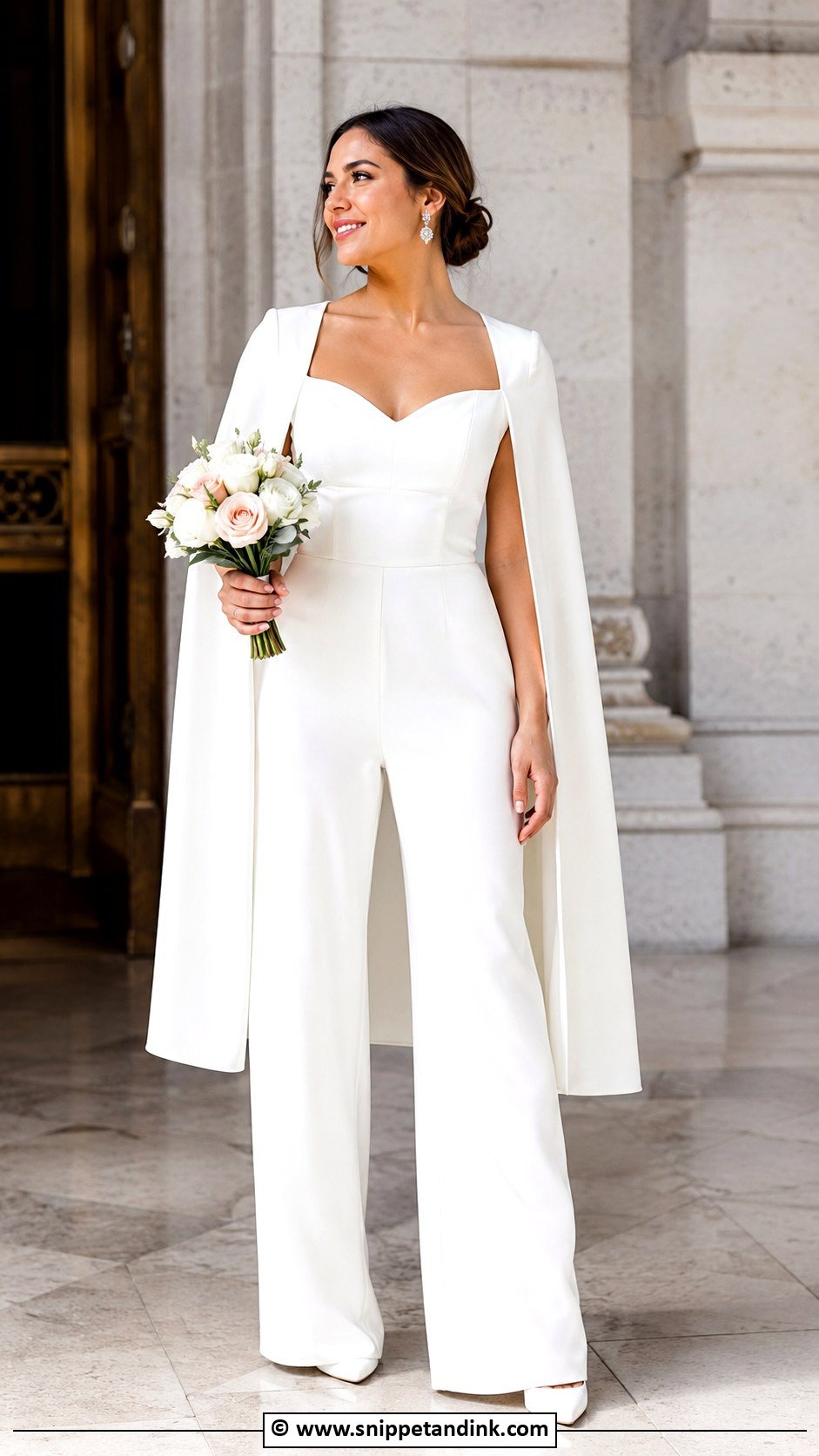
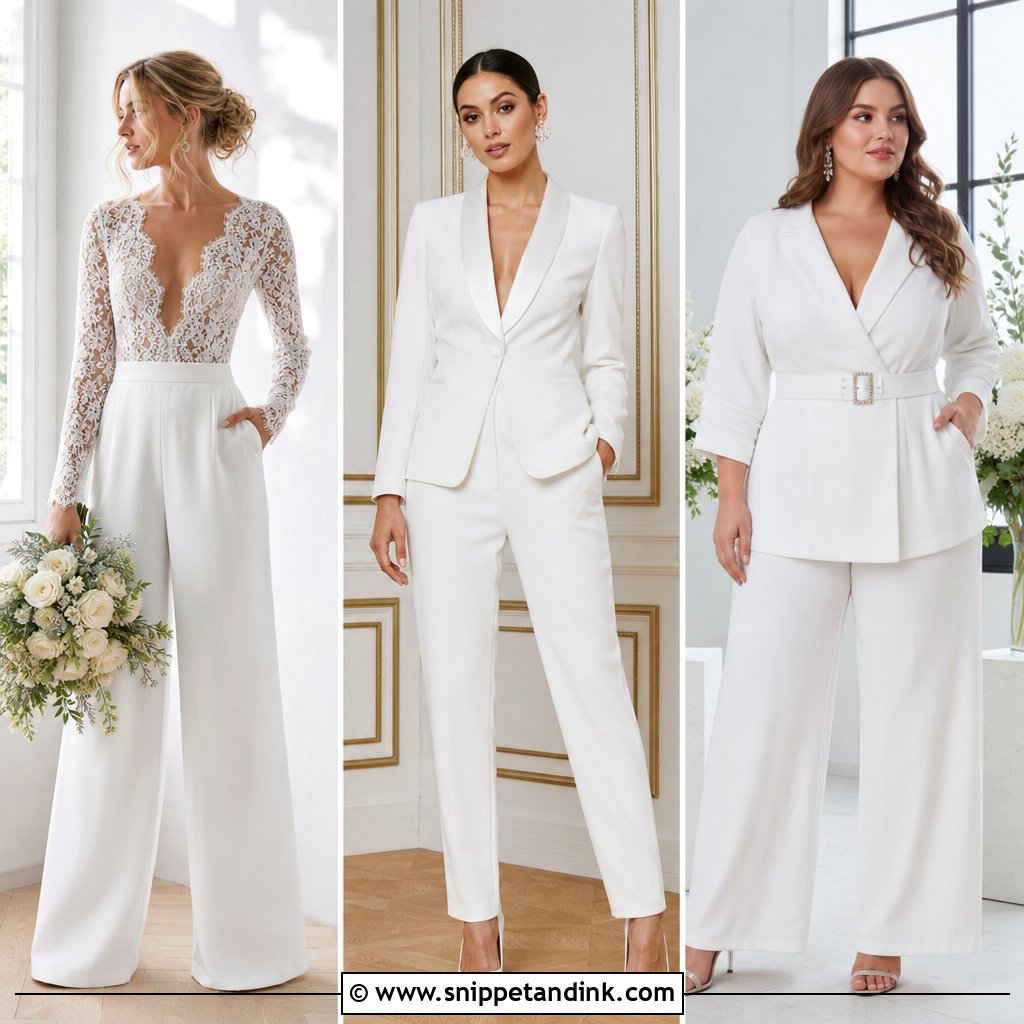
A bridal jumpsuit is the outfit I suggest to brides who hate fighting with a skirt. Wide legs move like a gown when you walk, and straight-leg tailoring looks sharp and minimal. The fit point I check carefully is the torso length: if it’s even slightly short, the crotch pulls and you’ll feel it every time you sit. Satin, a cape sleeve, pearl buttons or a big bow make it read as bridal. Pointed heels lengthen the leg, and a veil or hair comb softens the tailoring. Plan your bathroom trips, because a back zip means you may need help.
11. Bridal Pantsuit
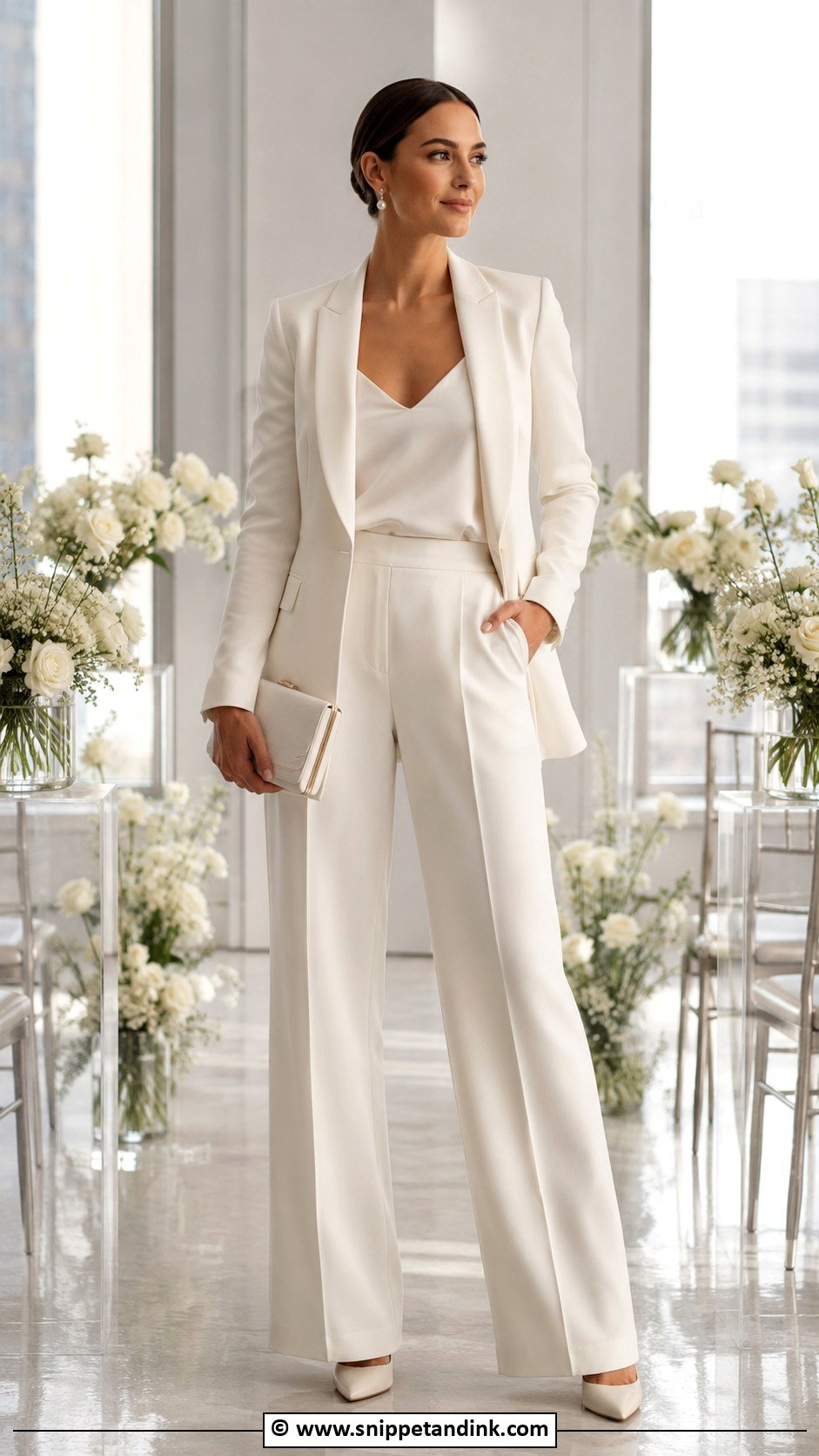
A bridal pantsuit lives or dies on tailoring, and I’d budget for alterations before anything else. Shoulders are hard to alter, so buy the jacket that fits there and have the sleeves and trousers taken in. White, ivory, champagne or pastel all work. Wide-leg trousers with a fitted blazer balance each other; a tuxedo jacket with satin lapels is sharper. Underneath, a silk camisole or structured bustier changes the mood completely. A veil over tailoring makes a lovely contrast, and you’ll wear the suit again, which few gowns can claim.
12. Two Piece Wedding Dress
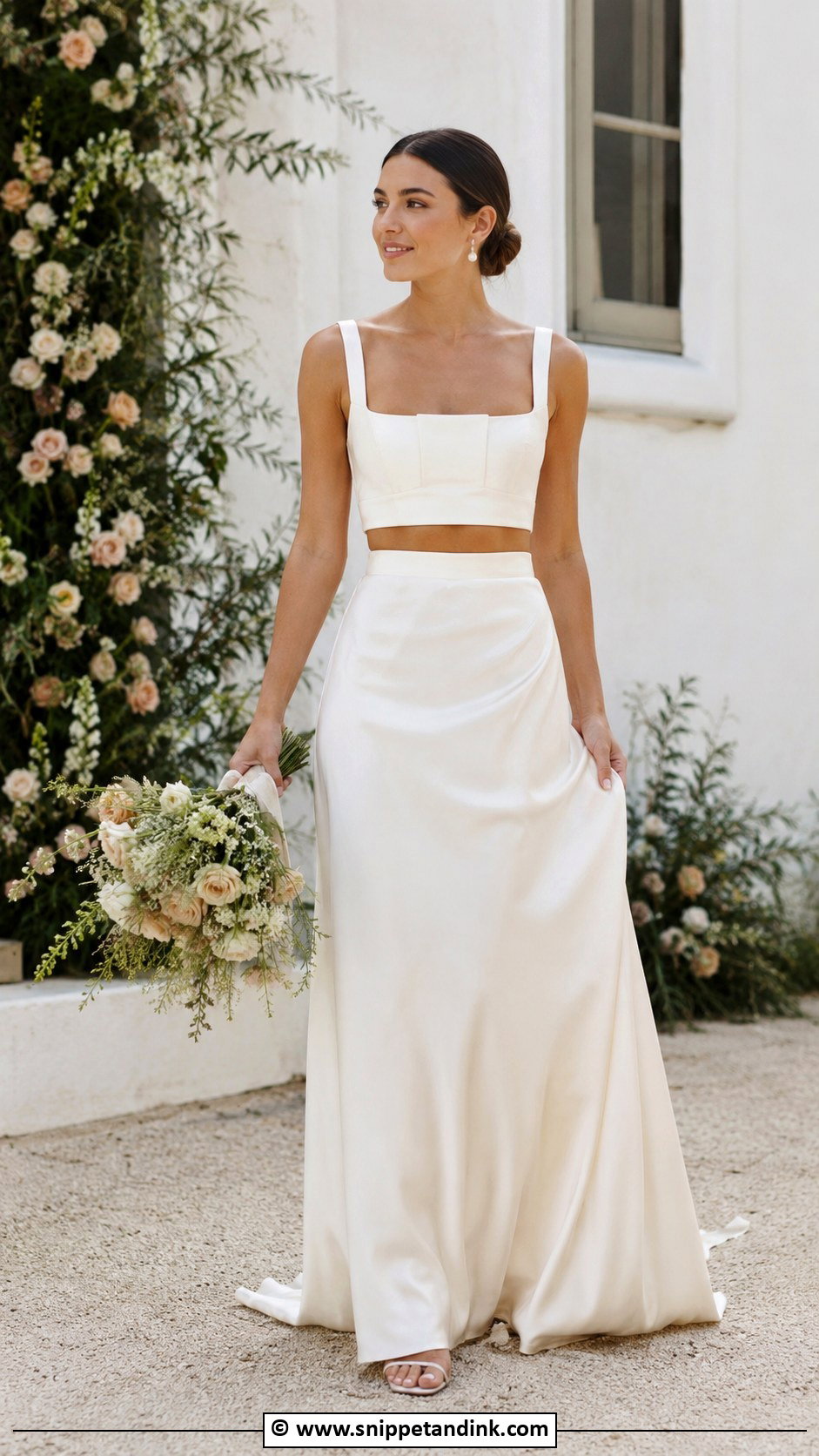
A two piece wedding dress might be a crop top and skirt, a corset with trousers, or a lace top over a satin maxi skirt. The fit advantage is real: brides whose top and bottom sizes differ can buy each piece separately instead of altering one dress heavily. I watch the gap at the waist. A high-waisted skirt with a fitted top shows a sliver of skin; if you’d rather not, ask for the top to overlap the waistband slightly. Tulle and lace feel softer, crepe and mikado more modern, and you can swap one half for the reception.
13. Corset Wedding Dress
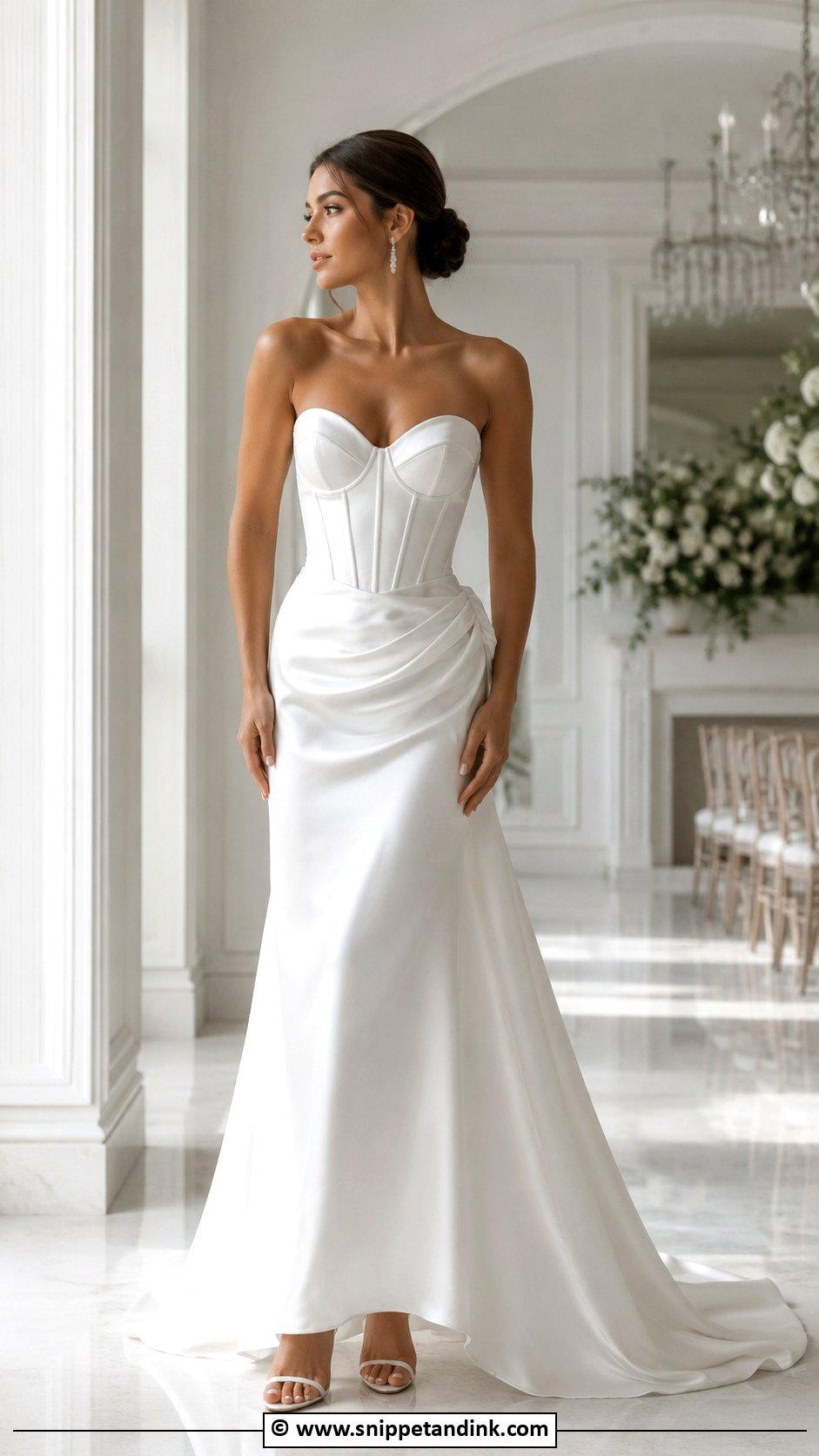
A corset bodice gives shape without needing heavy embellishment, but only if it’s built properly. I check for real boning and a waist tape inside, because a corset that relies on the zip alone will wrinkle and slip by mid-afternoon. A clean satin or draped crepe skirt keeps it modern; floral embroidery, lace panels or tulle sleeves soften it. Keep the rest calm, with simple heels, drop earrings and smooth hair, so it looks like fashion rather than costume. Do a full sit, eat and dance test at your last fitting.
14. Slip Wedding Dress
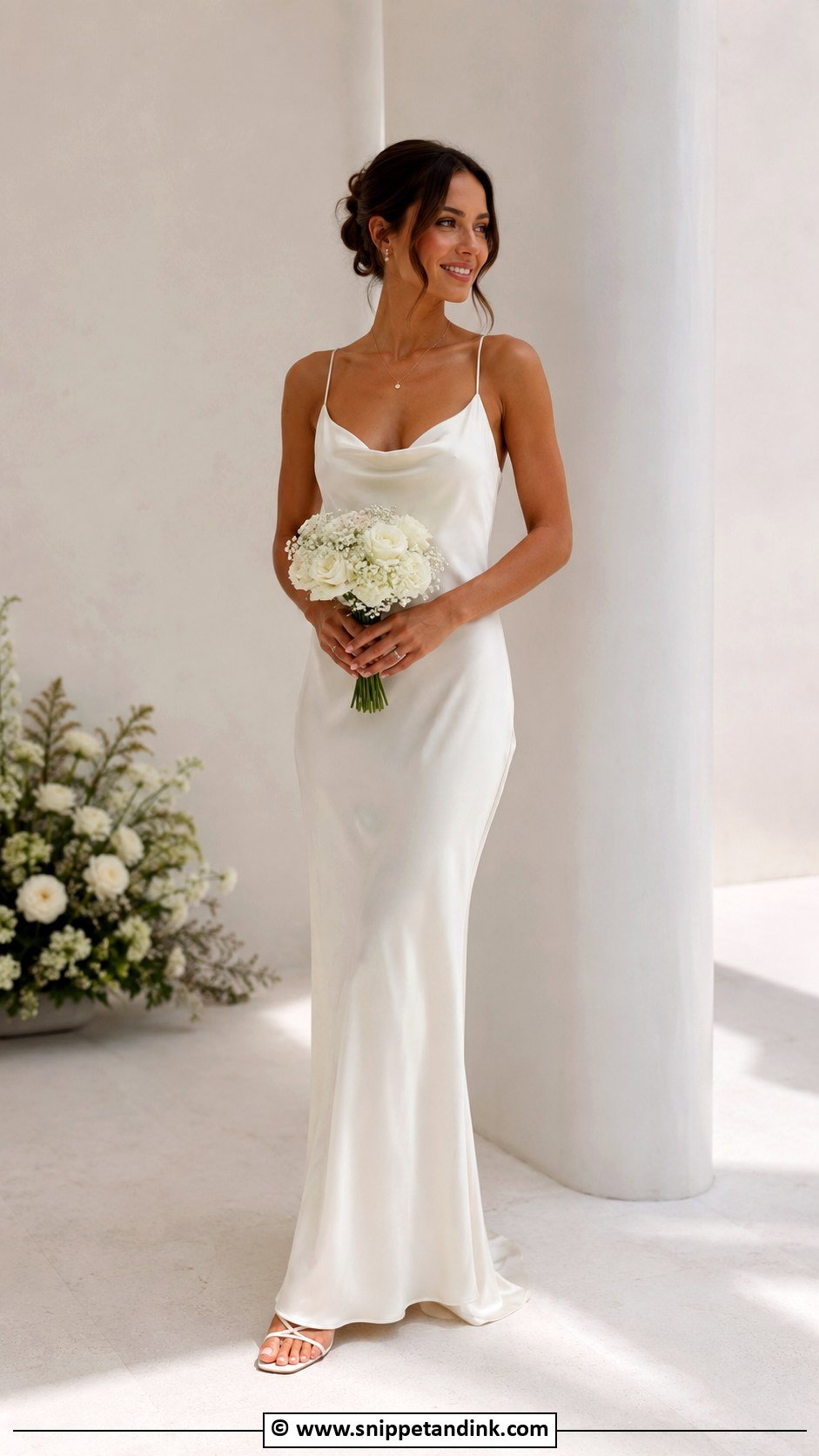
Slip dresses look simple on the hanger and are the hardest to fit. Bias-cut silk, satin and charmeuse skim the body, which means they show everything underneath, so I sort smooth, no-line underwear and shapewear before the first fitting, not after. A cowl neck, low back or bias cut gives it interest without extra detail. Strappy sandals, a fine necklace and a soft updo keep the line clean. For more coverage, a sheer cape, tailored blazer or long gloves all layer well. Be gentle sitting down; satin marks easily.
15. Cape Wedding Dress
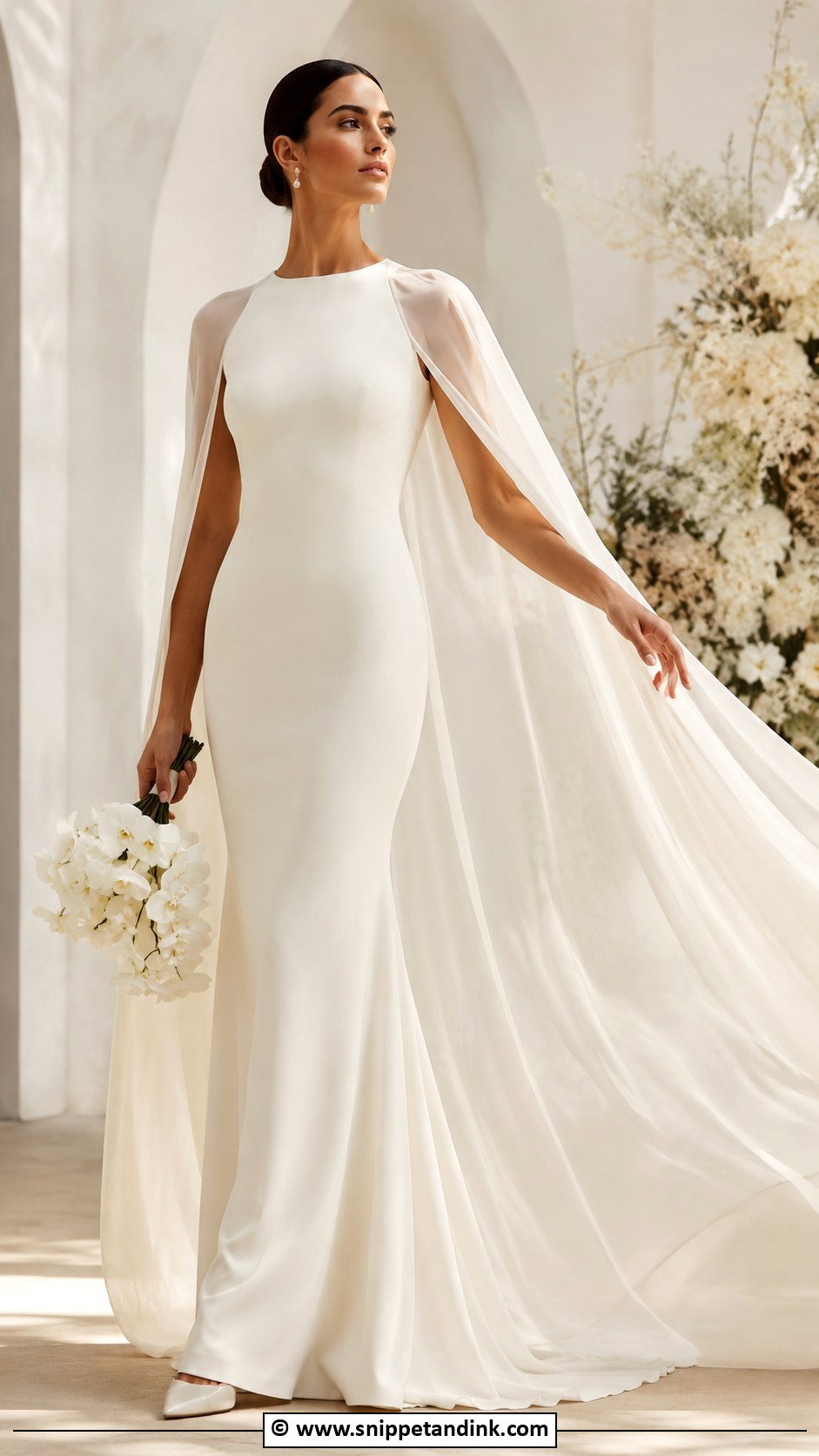
A cape gives drama without the weight of a train, and a detachable one is my favourite version because you get the walk-in moment and then free arms for hugging. Sheer, satin, lace and tulle capes all behave differently in wind; heavier fabrics hang, while chiffon and tulle lift and float, which is fun outdoors and fiddly in a gusty spot. I check how it fastens, since hooks at the shoulder can pull on a strapless dress. Keep shoes and jewellery understated so the cape stays the feature.
16. Feather Wedding Dress
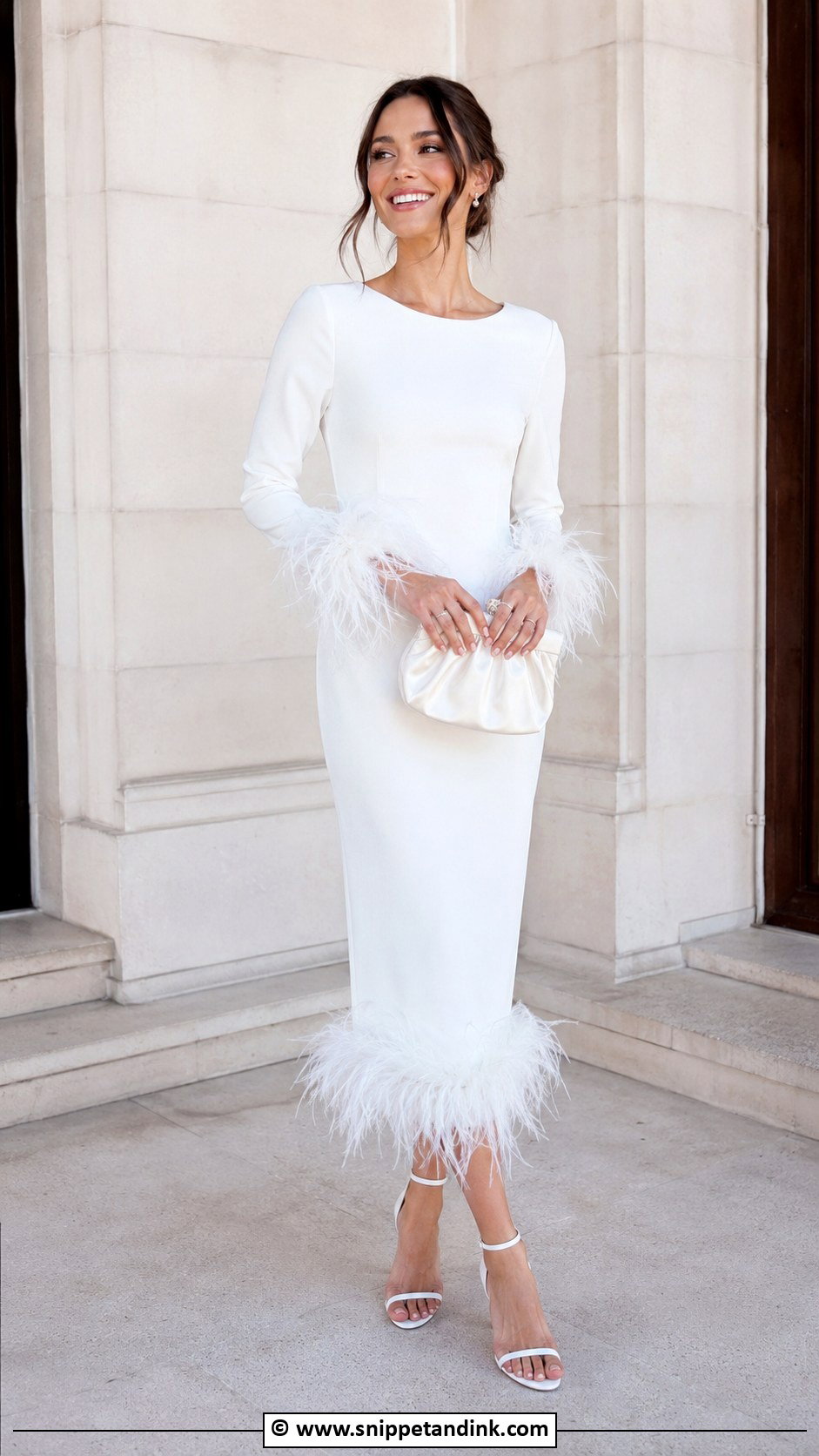
Feathers are joyful, and they shed. That is the part nobody mentions until there are white fluffs on the groom’s jacket. I’d pick one feather detail, at the hem, cuffs or neckline, rather than a full feathered skirt unless the venue is mostly standing. A feather-trimmed mini is party-ready; a feather-hem midi is more grown-up. Clean heels, simple earrings and polished hair keep it balanced. Store it hanging loosely, never crushed in a bag, or the feathers will flatten.
17. Bow Wedding Dress
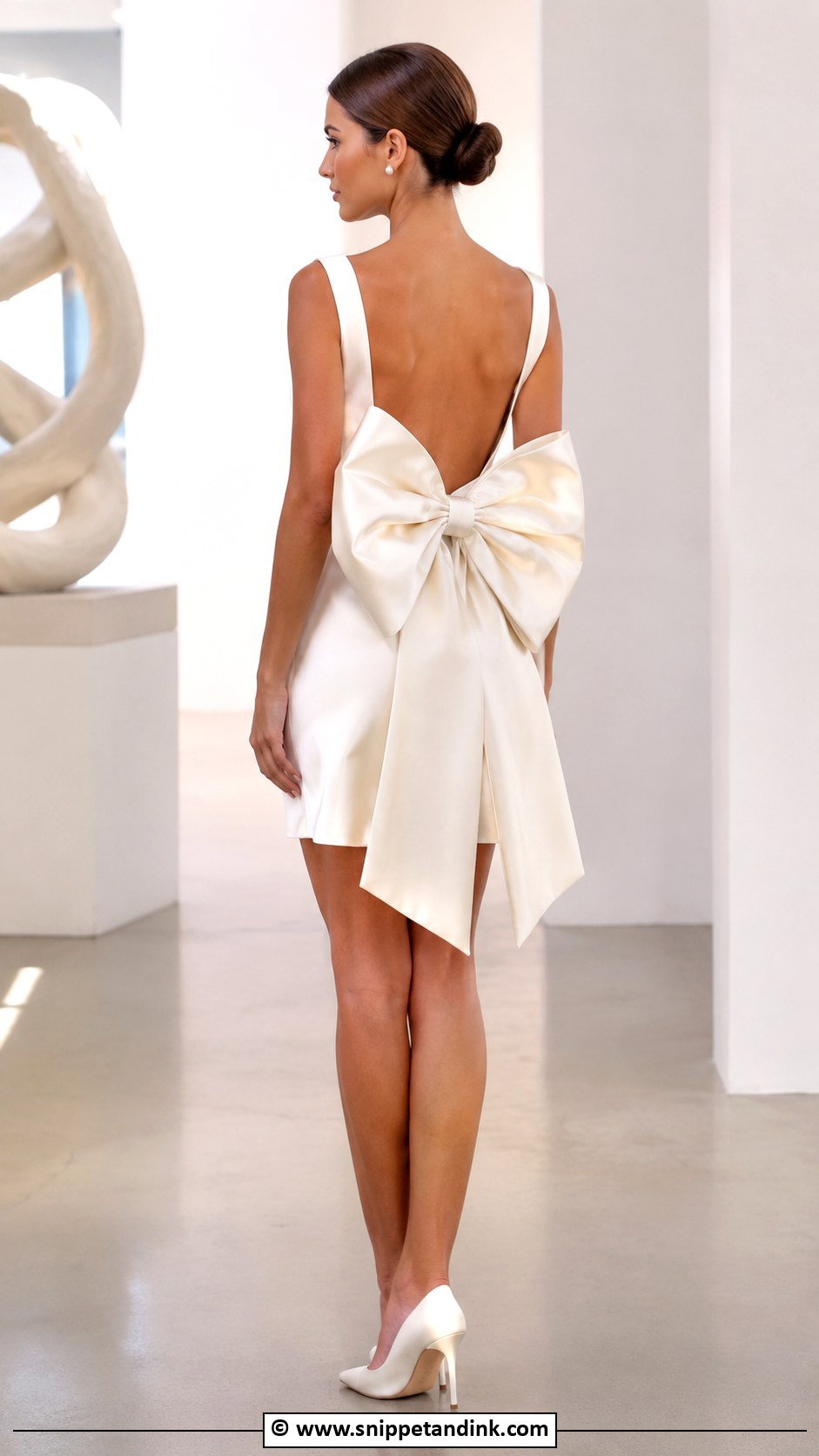
A bow changes character with its placement. A large back bow plays to the room during the ceremony; shoulder bows frame the face in portraits; a front bow on a mini is playful. My test is to sit the bride down, because a big back bow on a soft fabric can crush against a chair for hours. Crisp satin, crepe or mikado hold a bow’s shape better than anything drapey. Let it be the one detail, with pointed pumps, pearl studs and a smooth bun around it.
18. Bubble Hem Wedding Dress
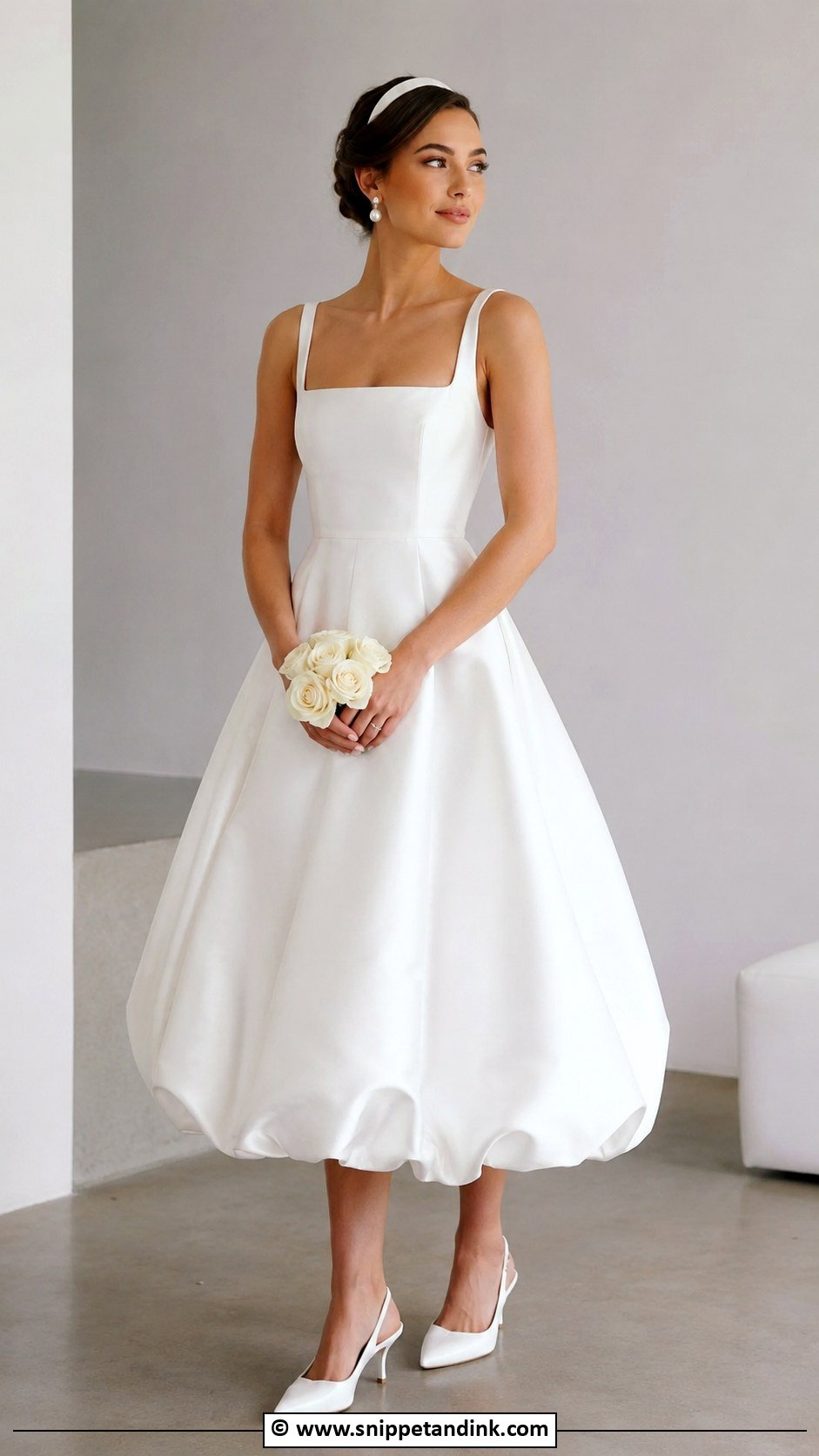
A bubble hem gives volume without the weight of a ballgown, and it works best on mini and midi lengths. Fabric is everything here. Taffeta, organza and mikado hold the rounded shape; softer fabrics collapse and just look baggy at the knee. I check how wide the hem sits, because a very full bubble makes sitting in a car awkward. Slingbacks or pointed pumps keep the silhouette clean, and a short veil or slim headband adds polish. It suits city ceremonies and art-gallery venues.
19. High Low Wedding Dress
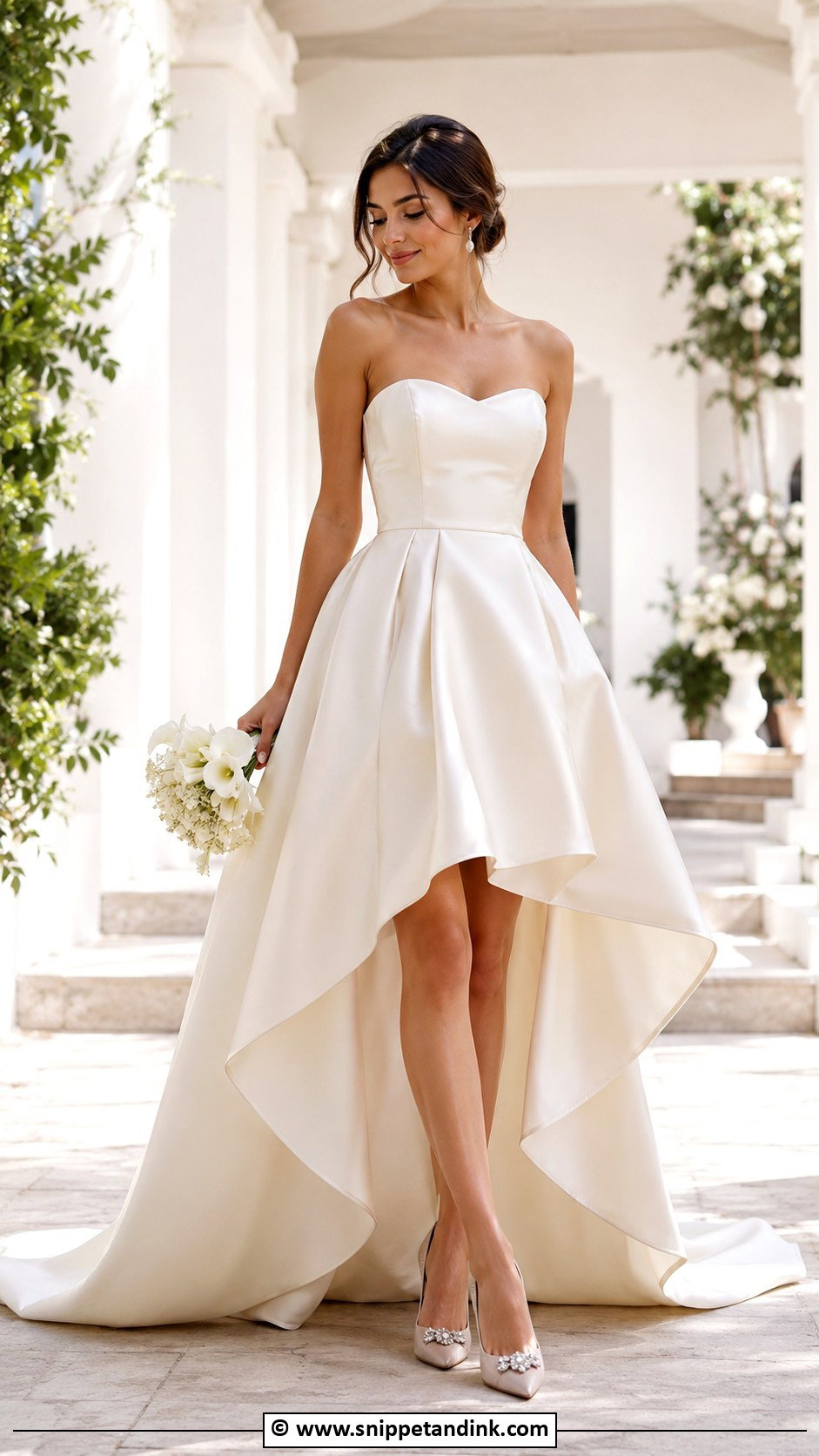
High low hems give you a train’s drama at the back and freedom at the front. The shorter front shows your shoes, so this is the dress where I’d spend money on them: embellished pumps, metallic sandals or a coloured heel. Satin, tulle, organza and layered chiffon all suit the cut. My one caution is the length of the front: too short and it looks like a mistake from the side, so I pin it at the fitting and check it walking. A structured bodice keeps it polished; a draped top relaxes it.
20. Sheer Overlay Wedding Dress
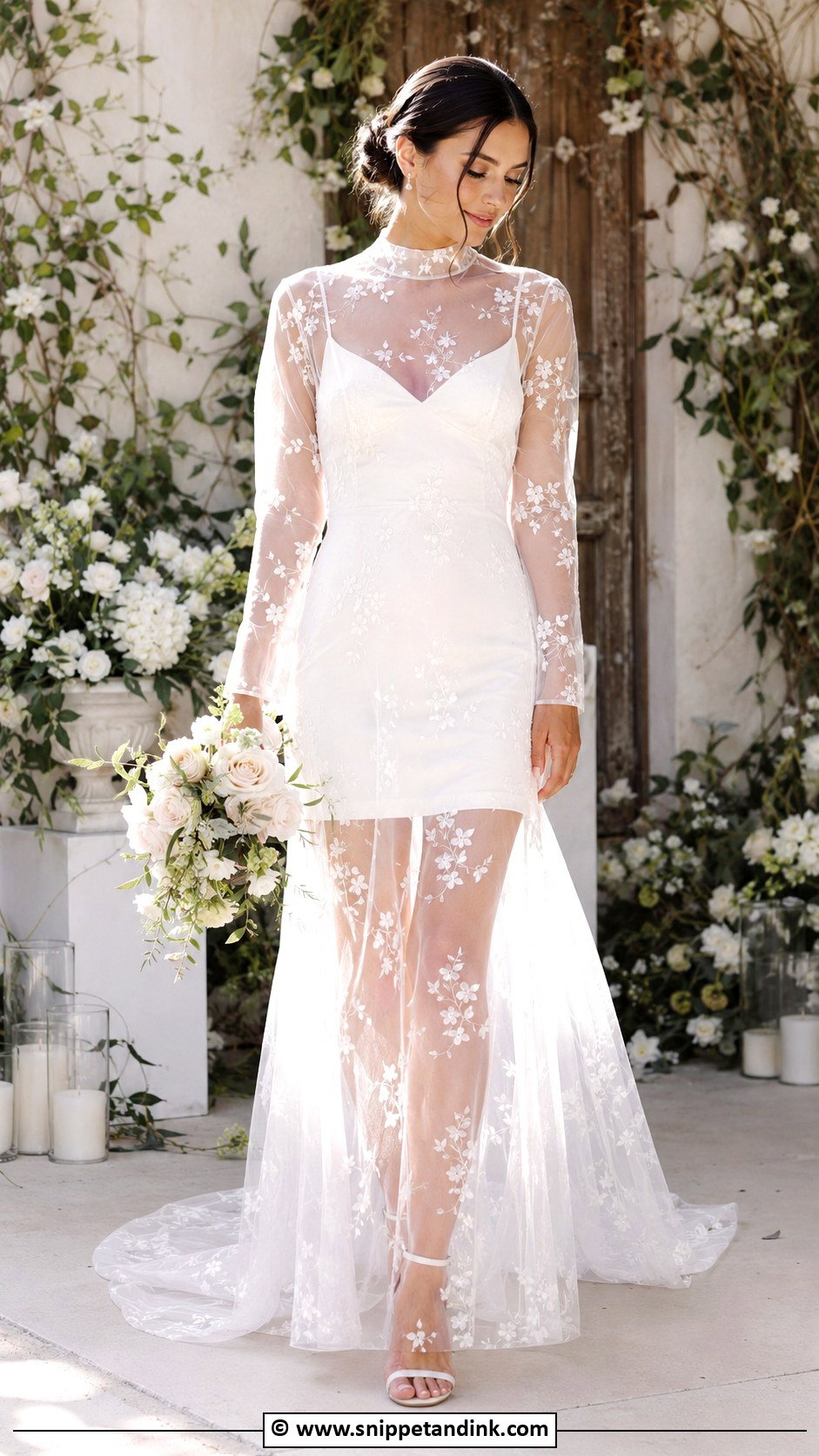
A sheer overlay sits over a mini, slip or column base and gives depth without weight. Embroidered stars, floral appliqués, pearls or a faint shimmer make it feel modern. The lining colour is what I fuss over: nude or ivory reads skin-like or bridal depending on your tone, and the wrong one makes the overlay look either bare or muddy in photos. I compare both against the skin before deciding. Delicate heels and simple jewellery let the texture show. It’s a good alternative for brides who like lace but not a full lace gown.
21. Vintage Wedding Dress
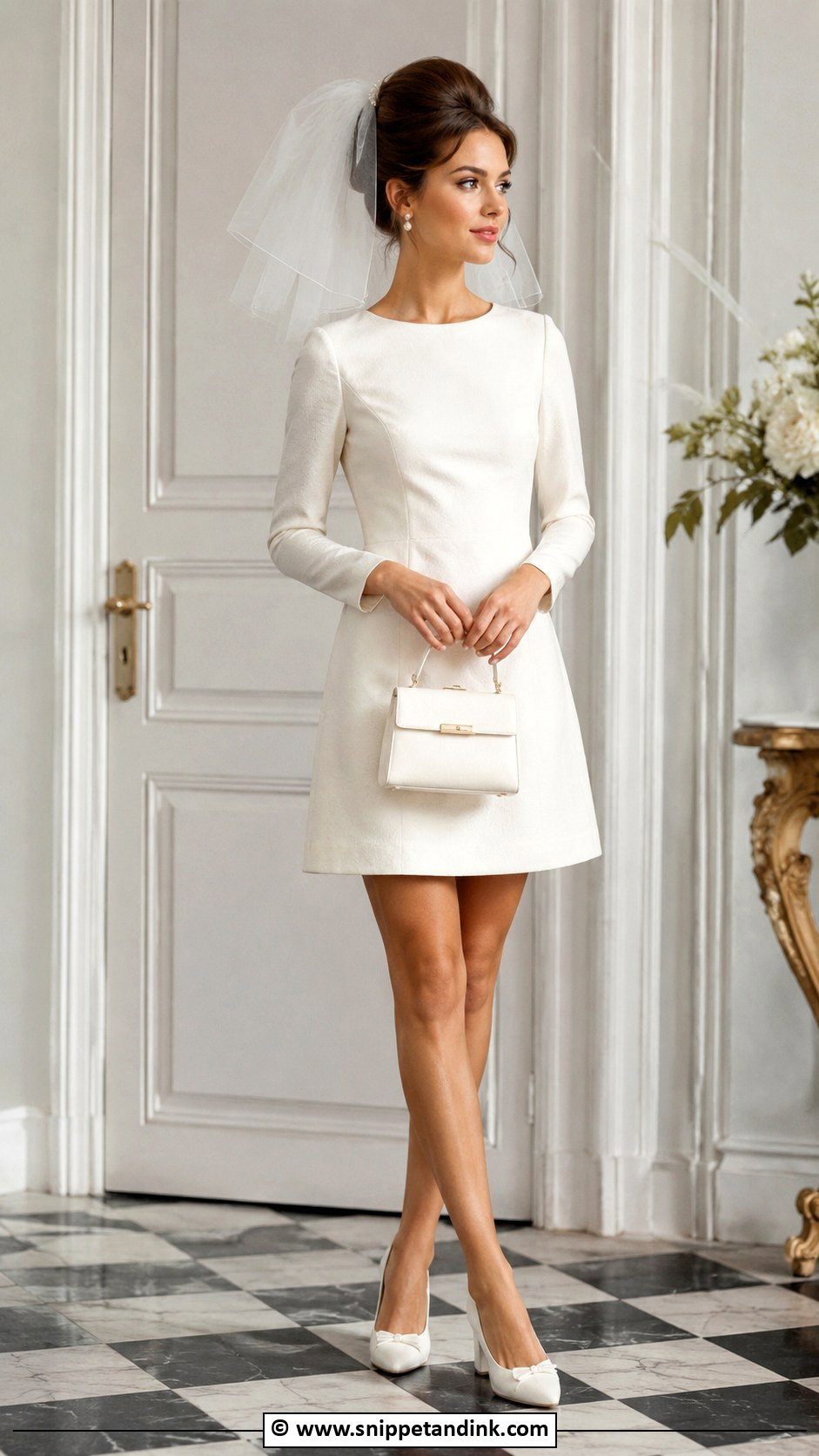
A vintage dress might be a true vintage piece, a family gown or a new dress inspired by the 1960s, 70s, 80s or 90s. True vintage needs time. Old fabric can be fragile, seams may have been altered before, and sizing from earlier decades runs small, so I’d bring it to a seamstress who handles older garments early on. Tailoring is what keeps it from looking dated. Modern shoes, fresh hair and clean jewellery bring it into the present, and you can shorten a hem, change sleeves or add a belt. Nobody else will be wearing it.
22. Printed Wedding Dress
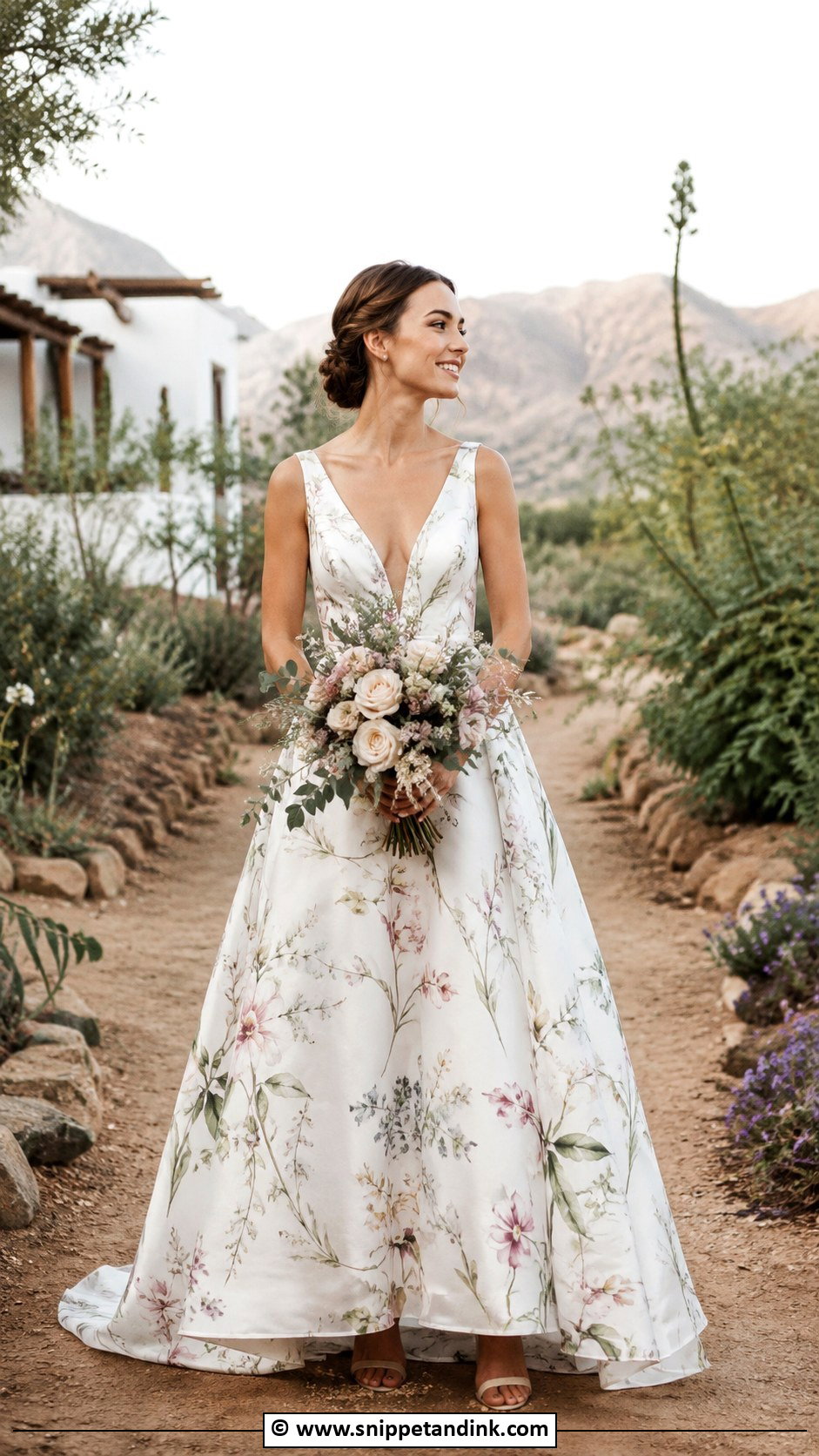
Pattern is easier to wear in a clean silhouette. An A-line, slip, midi or column lets the print breathe; ruffles and drapes on top of a busy pattern just look confused. Florals are the gentlest start, but watercolour prints, toile, abstracts and botanicals all work. I pull one colour from the print for the shoes and keep everything else neutral. Look at a print from across the room as well as up close, because some patterns turn into a blur in group shots. Garden venues and creative spaces suit this best.
23. Colorful Tulle Wedding Dress
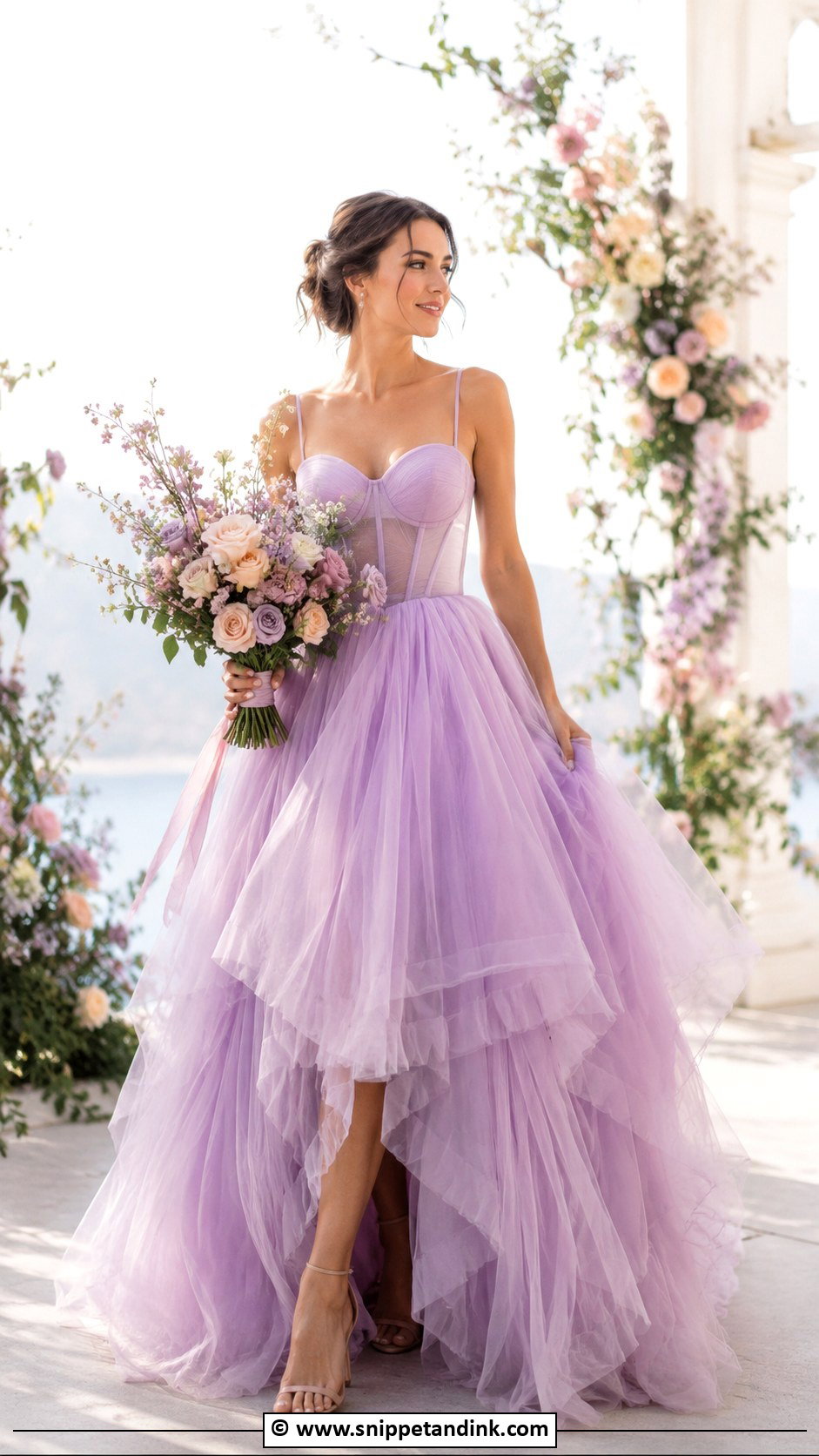
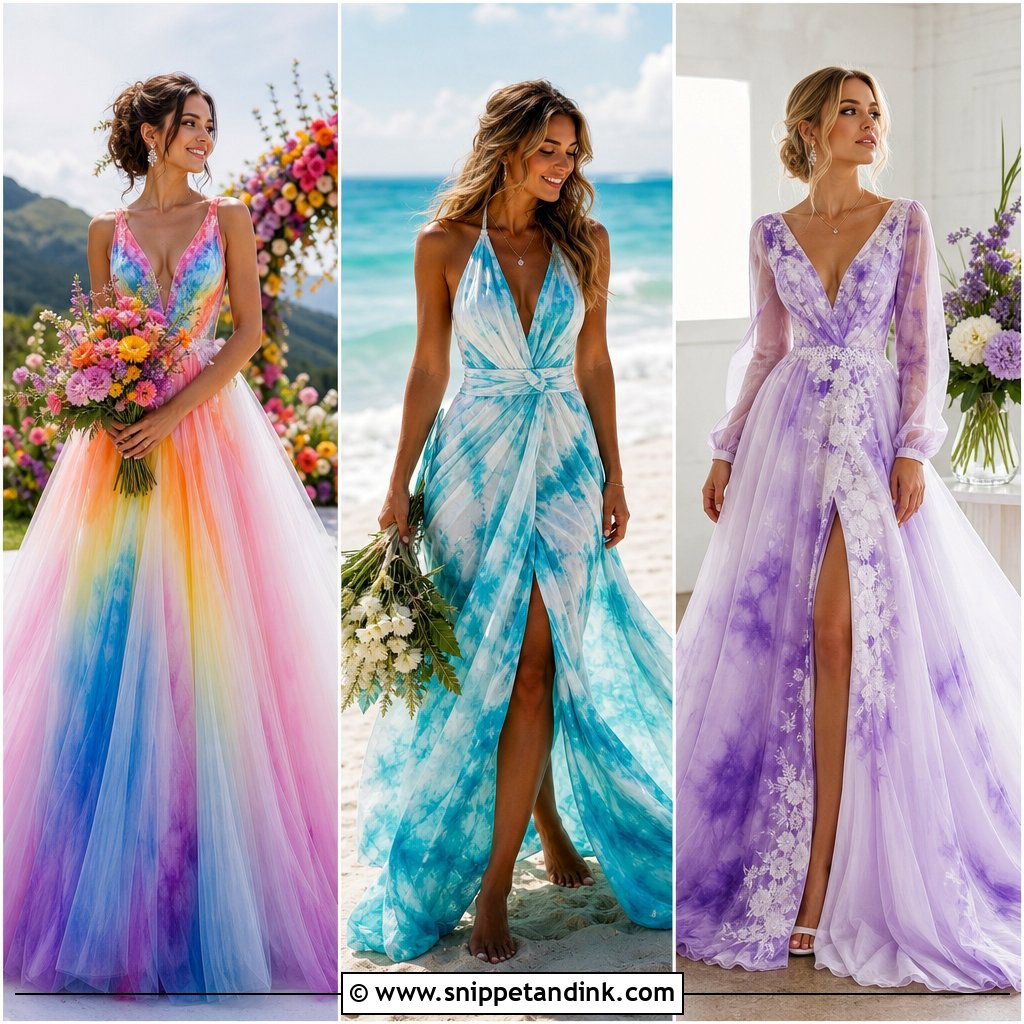
Coloured tulle is light and full, and it’s one of the friendliest ways into colour. Lavender, blue, blush, mint and peach feel soft; brighter shades are more artistic. Layered tulle blends colours, so a gown with three tones will often read as one mixed shade from a distance, which is worth seeing before you order. A fitted bodice gives the skirt structure. With several colours in the dress, I keep shoes neutral. Bring a steamer: tulle creases in transit, and steam brings it back fast.
24. Sequin Wedding Dress
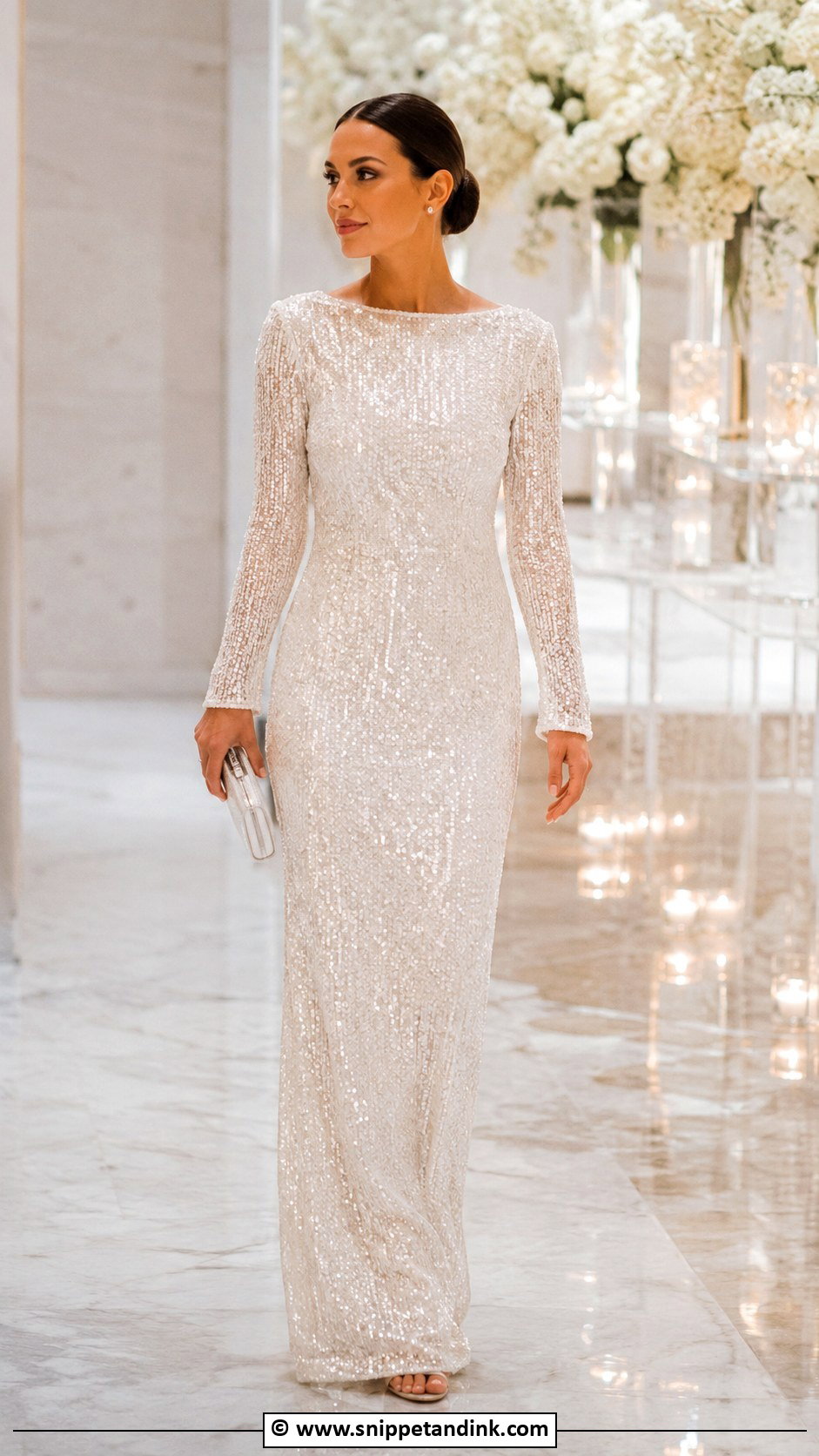
Sequins move and catch every light in the room, and they are heavier and scratchier than they look. I check the underarm seams, since sequins rubbing the inner arm all evening leave skin raw; a smooth lining there makes a real difference. Ivory reads bridal, silver modern, gold glamorous and blush romantic. A simple shape works best: a long-sleeve column, a slip or a clean midi. Minimal heels and small earrings keep it from tipping into costume. It belongs at evening weddings and city venues.
25. Convertible Wedding Dress
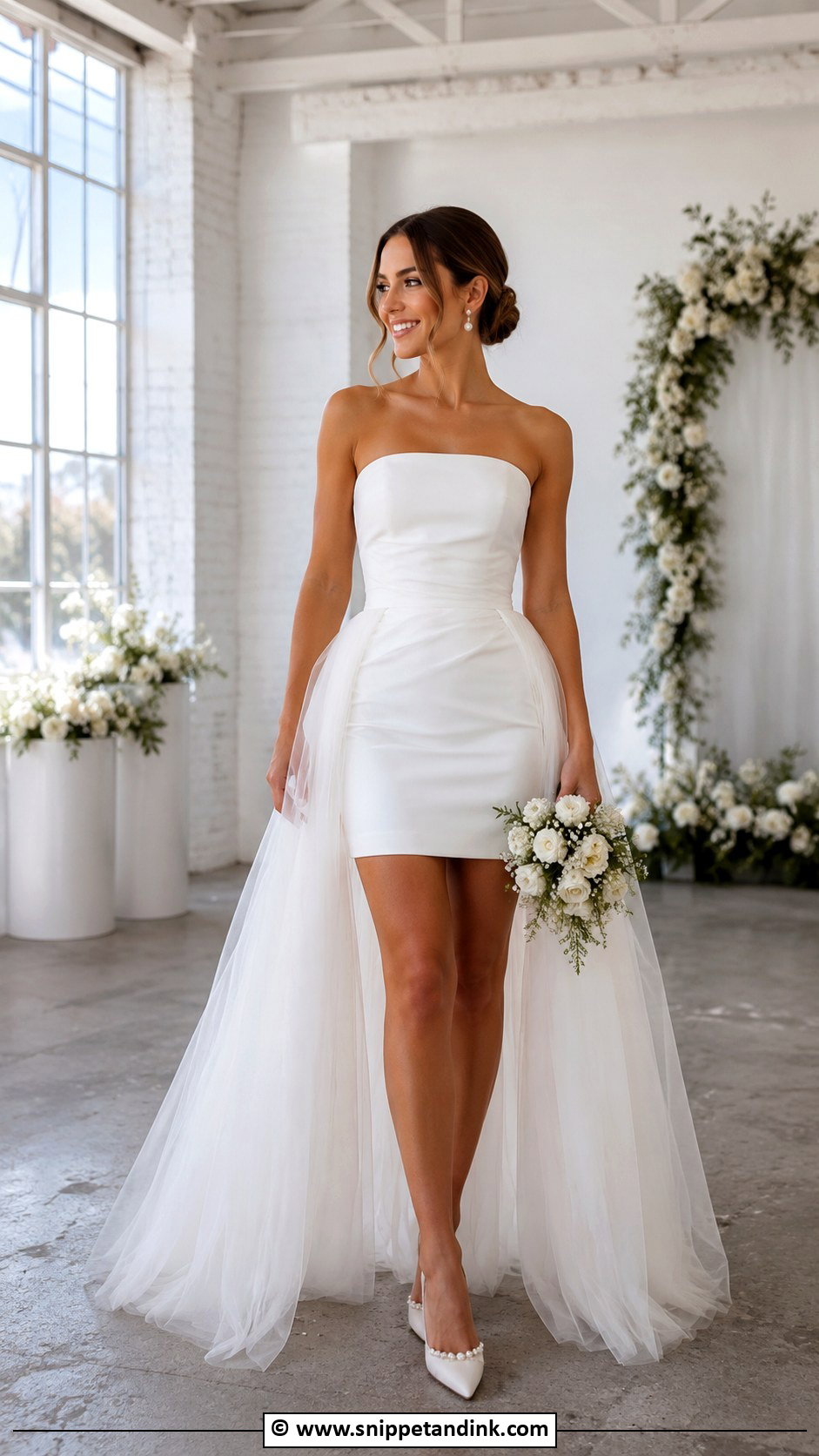
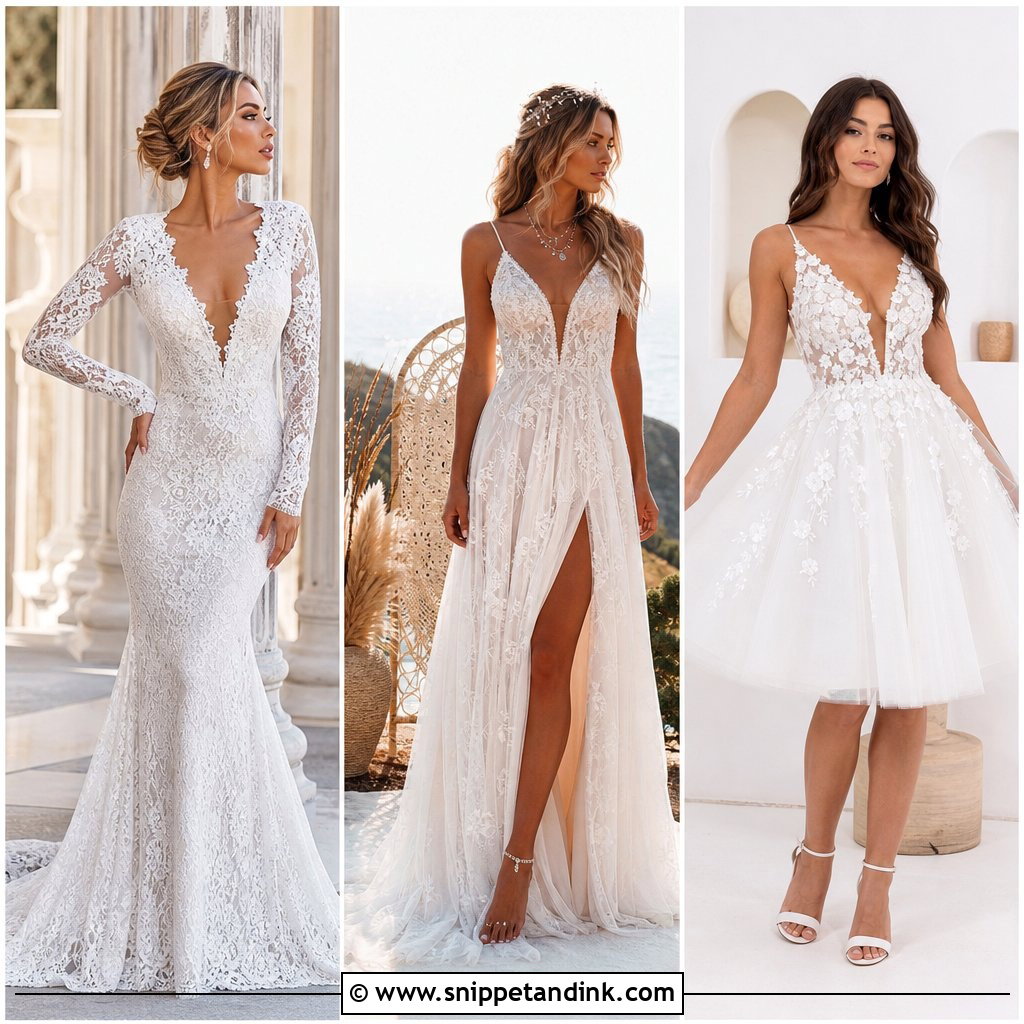
A convertible wedding dress might have a detachable skirt, removable sleeves, a cape, an overskirt or a jacket. The change itself is where I’d plan ahead. Find out how the pieces fasten, whether you need a second pair of hands, and where you’ll change. Snaps and hidden hooks are quicker than buttons, and a fitted mini under a tulle overskirt is the most popular setup for good reason. Practise the switch at your final fitting so it takes minutes, not half the reception.
Buying Off an Eveningwear Rail Changes Your Alteration Calendar
Plenty of these dresses don’t come from bridal salons at all. Coloured gowns, sequins, jumpsuits and suits often come from eveningwear or ready-to-wear designers, and that changes the timeline in ways brides don’t expect.
Bridal gowns are usually made to order with a long lead time, often several months, and fittings are built into the plan. Ready-to-wear arrives fast, sometimes within days, but it’s cut for a general body rather than yours, so I’d assume it needs more alteration, not less. Book a seamstress before you buy, and ask whether she’s comfortable with the fabric. Sequins and beading have to be removed and re-stitched at every seam that moves, and that is slow, careful work. Metallic and liquid satin show old needle holes, so let-outs can be impossible.
- Order early enough for two or three fittings, even if the dress ships in a week.
- Buy for the widest part of you, since taking in is easier than letting out.
- Bring your actual shoes and underwear to every fitting.
- Ask about return policies before alterations start; altered pieces are rarely returnable.
What Dark, Shiny and Textured Fabrics Need on the Morning
Untraditional fabrics bring their own small emergencies, and my kit changes depending on the dress. For black, I bring a lint roller and makeup wipes, because foundation and powder show on dark necklines instantly; dress the bride before her final powder, or drape a scarf over her. For sequins and beading, I carry a needle and matching thread for the odd loose bead, and I check the inner arms before she leaves. Feathers need a light brush and a spare hanging space so they aren’t crushed in the car. Satin and silk want a handheld steamer rather than an iron, held a few centimetres away. A ten-minute check like this saves the photos from showing marks you’d never notice in the mirror.
Wearing Colour, Tailoring or Feathers With Confidence
An unconventional dress doesn’t have to give up polish. Start with the mood you want, then work through silhouette, fabric, shoes and accessories in that order, and leave room in the timeline for alterations, because the less traditional the outfit, the more fitting it usually needs. Try every option sitting, walking and dancing, not just standing in front of a mirror. The dress you pick should feel like yours the moment it’s zipped, and still feel right ten hours later.
You'll Like These Ideas:






Leave a Reply