
Flowers on a wedding dress can mean very different things once you’re standing in a fitting room: lace with a floral repeat, 3D appliqués stitched on by hand, embroidered vines, a watercolor print, floral jacquard woven into satin, or a detachable overskirt you shed before dinner. Each of those behaves differently on the body and on a lawn, which is why I ask where the ceremony is before I pull a single gown. Soft tulle blooms make sense on grass under open sky, while a modern ballroom can carry sculptural flowers or a sleek floral satin. Below are the 25 directions I show brides most often, with what I’ve learned about how each one actually wears.
Where the Flowers Sit Changes How the Dress Wears
Two gowns can both be called floral and wear completely differently. The first thing I look at isn’t the type of flower but where it’s placed and how it’s attached. Flat lace and embroidery move with the fabric and survive almost anything. Raised 3D appliqués, especially petals tacked down only at the center, catch on bouquet stems, crush when you sit and snag on cufflinks during the first dance.
Four checks I run at every fitting
- Sit on a hard chair for a full minute, then stand and look at the hips and back skirt in the mirror.
- Hold a bouquet at your hip the way you will walking down the aisle and see what it rubs against.
- Lift both arms and hug someone; appliqués near the underarm scratch more than you’d expect.
- Ask whether the flowers are hand-stitched or glued. Glued pieces can lift with heat and steam.
For an outdoor ceremony, heavy floral detail at the hem is the riskiest spot. It drags through damp grass and picks up seeds and fallen petals, so I’d rather see the blooms concentrated at the bodice and fading out by the knee.
1. Floral Lace Wedding Dress
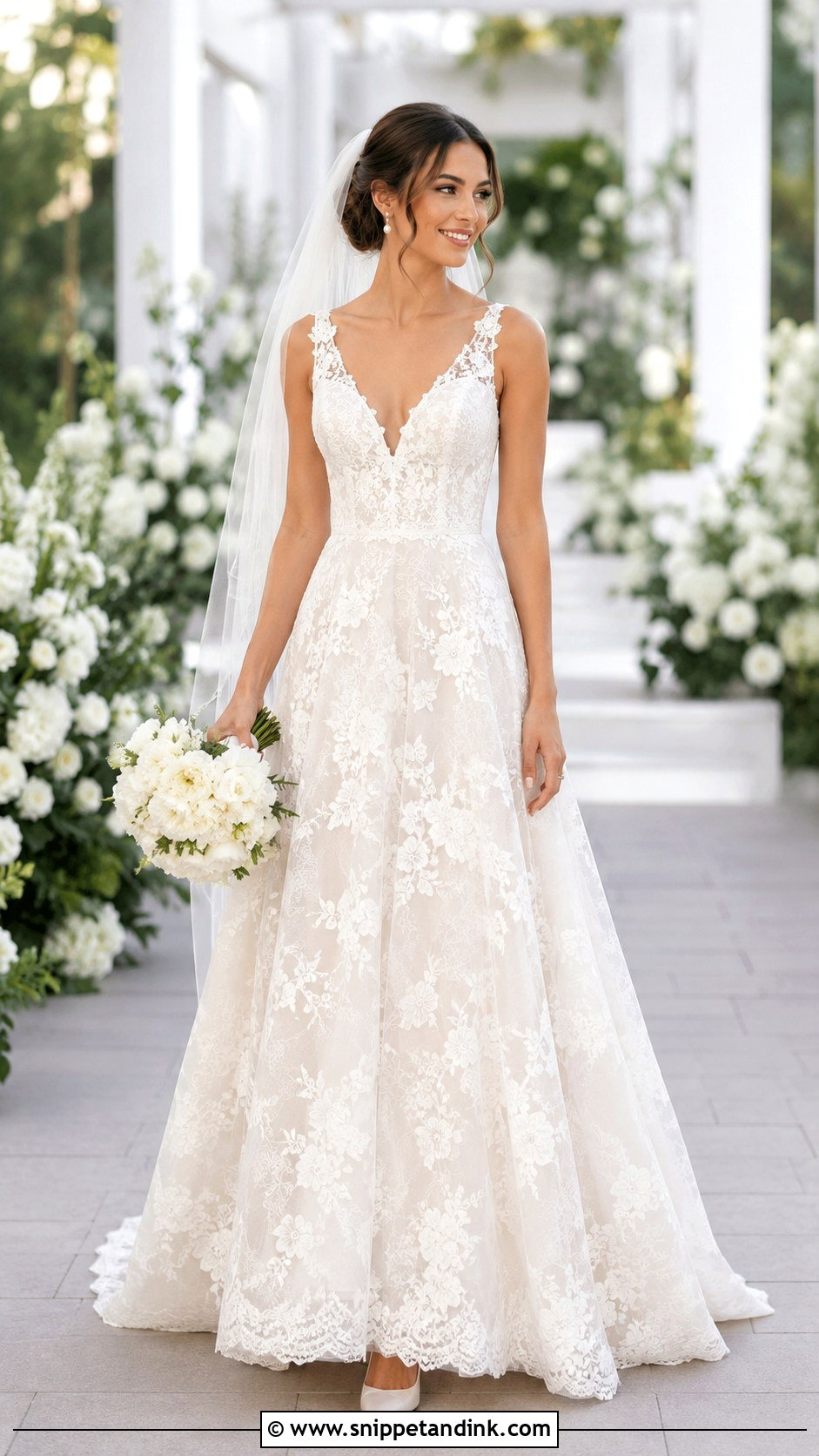
Floral lace is the gentlest way into this whole category, and it’s the one brides change their minds about least. Ivory or off-white reads classic; a blush lining under the lace warms it without dyeing anything. A fitted bodice into a soft A-line suits most figures because the waist seam does the shaping, not tight boning. One thing I check on every lace gown is whether the motifs are cut and appliquéd at the hem or simply serged, because that tells you how easily it can be shortened later. Pearl earrings, a sheer veil and pointed ivory heels are enough. Keep the bouquet plain so it doesn’t fight the pattern.
2. 3D Floral Applique Wedding Dress
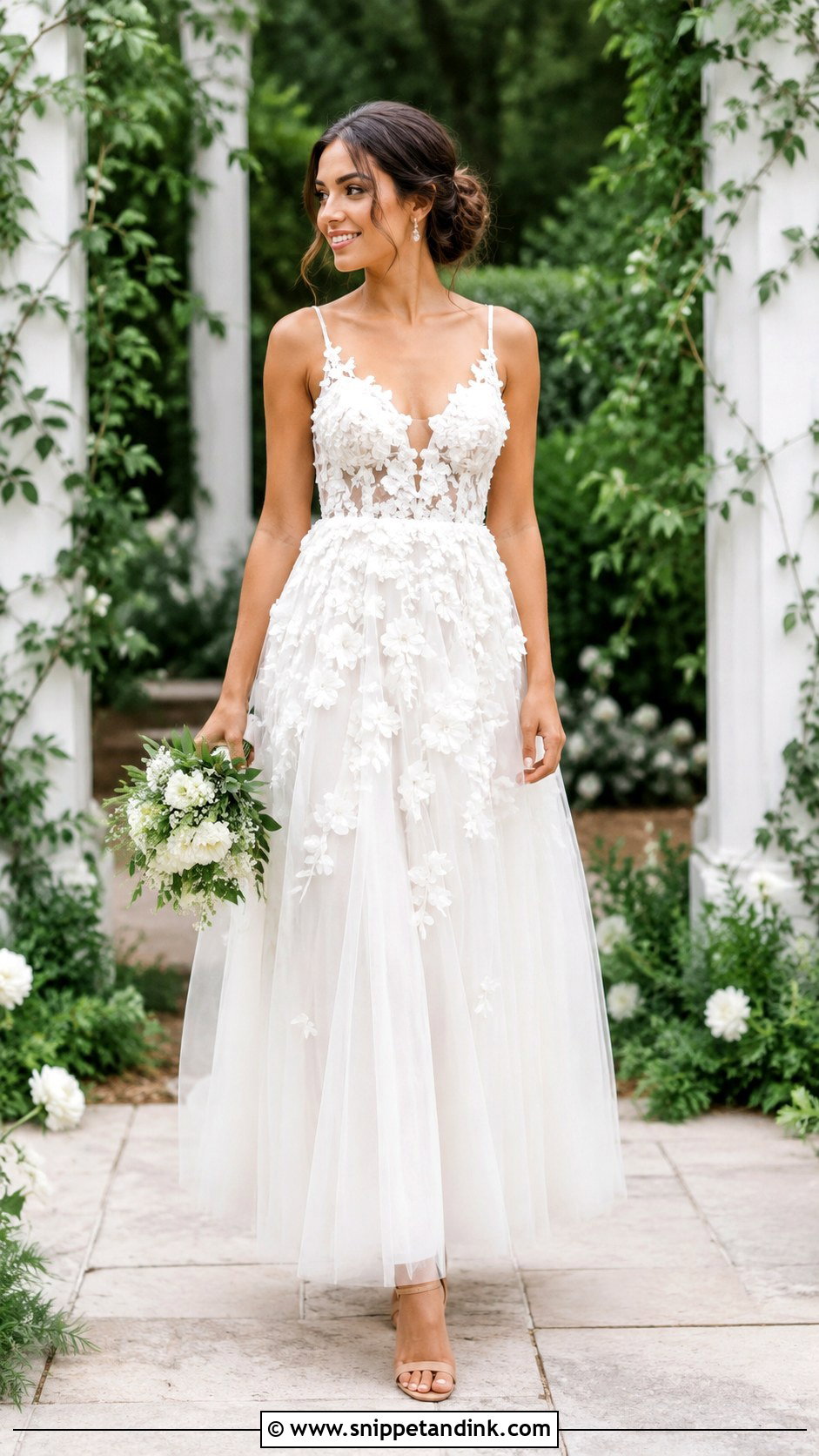
Small fabric flowers stitched onto the bodice, sleeves or skirt are what make a 3D floral applique wedding dress catch side light the way flat embroidery never does. Outdoors, they cast tiny shadows and look alive. The catch is the car ride: petals at the hip and seat get crushed, so I prefer appliqués concentrated at the neckline and thinning out down the skirt. Nude heels, fine drop earrings, a clean low bun and a simple veil keep the flowers as the point.
3. Floral Embroidered Wedding Dress
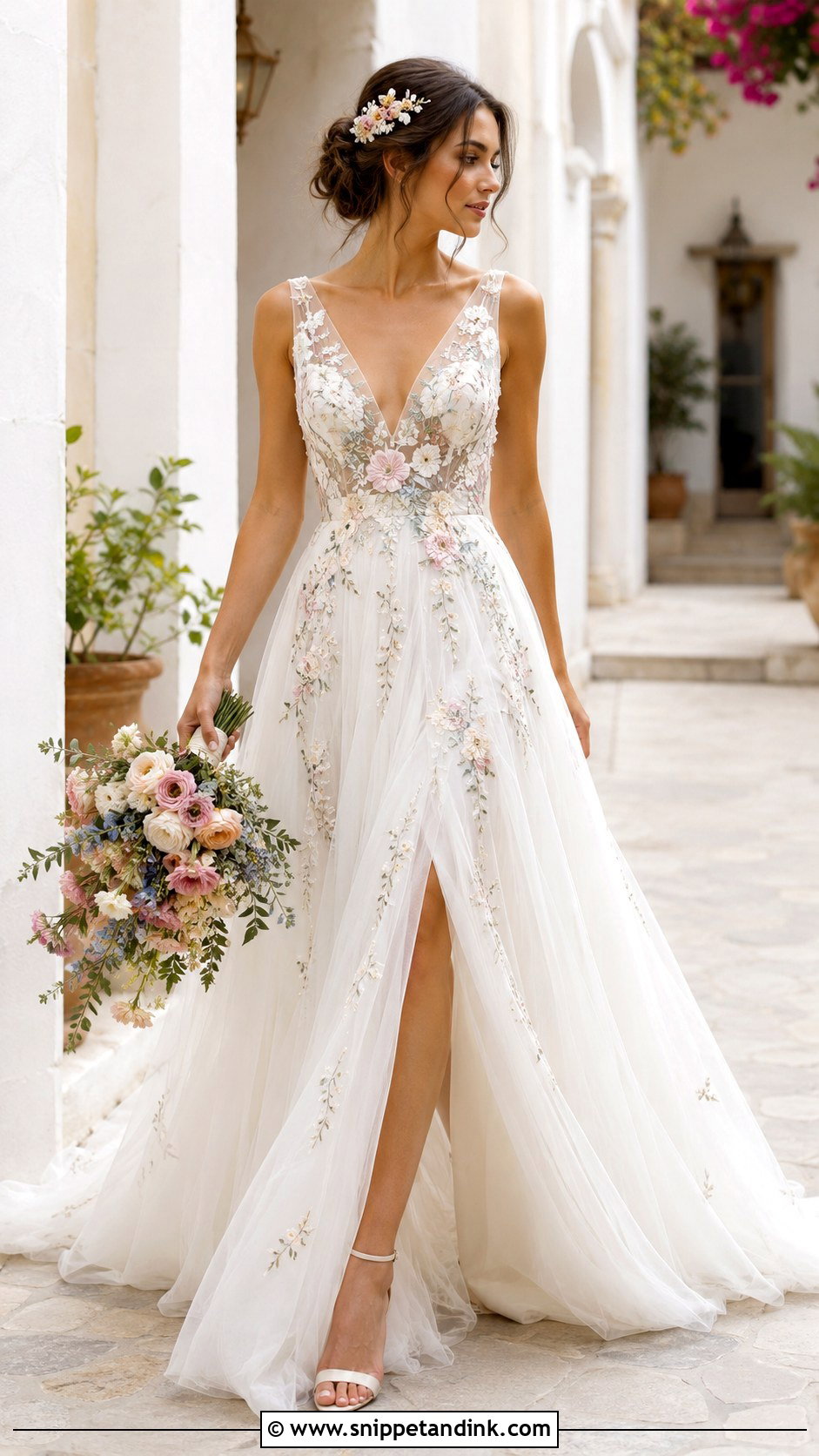
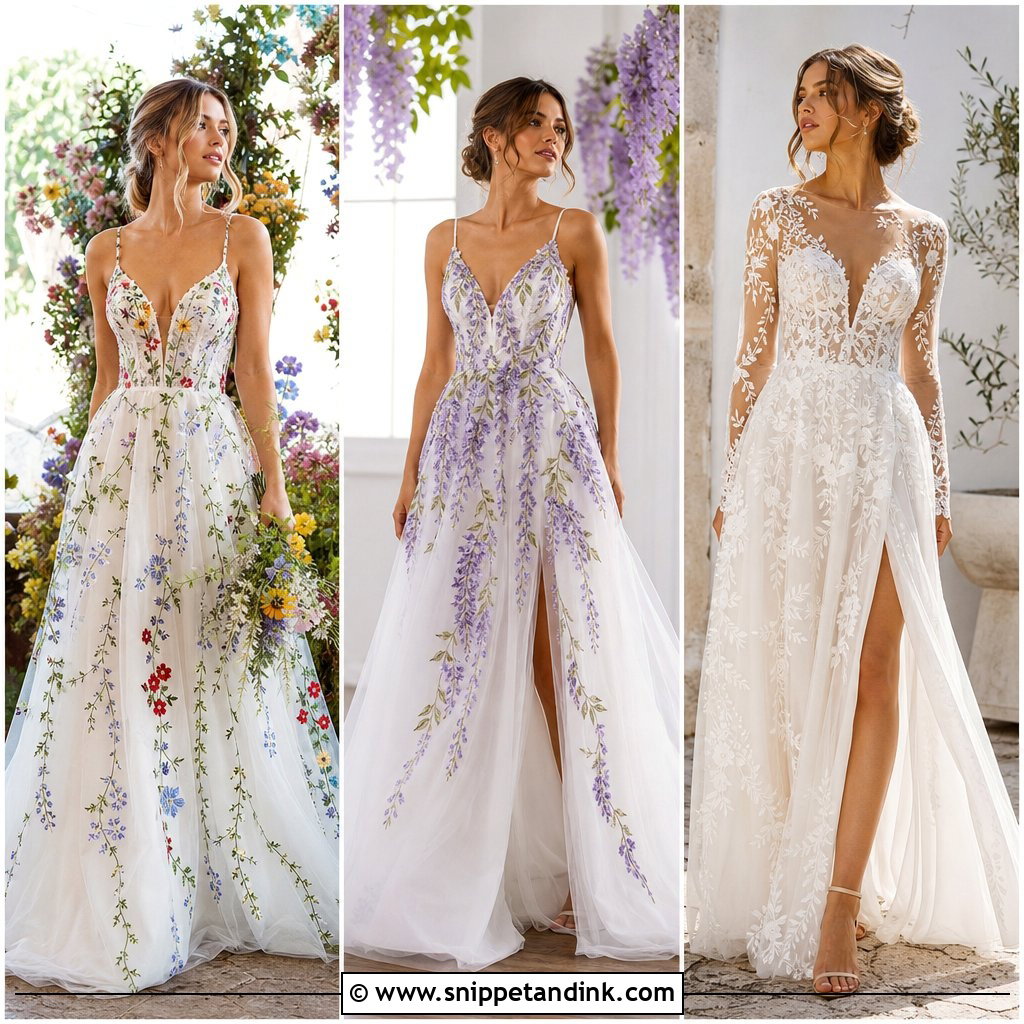
Threadwork is where a floral dress starts to feel personal. Embroidered flowers along the bodice or hem look handmade up close, and they suit a bride who loves detail but doesn’t want sparkle. White-on-white reads almost like texture from ten feet away, while sage, blue or lavender thread gives you a quiet color story. I’d pick one or two thread shades and repeat them in the bouquet and a small floral comb, no more. Match every shade and it starts to look like a costume. Satin heels finish it.
4. Watercolor Floral Wedding Dress
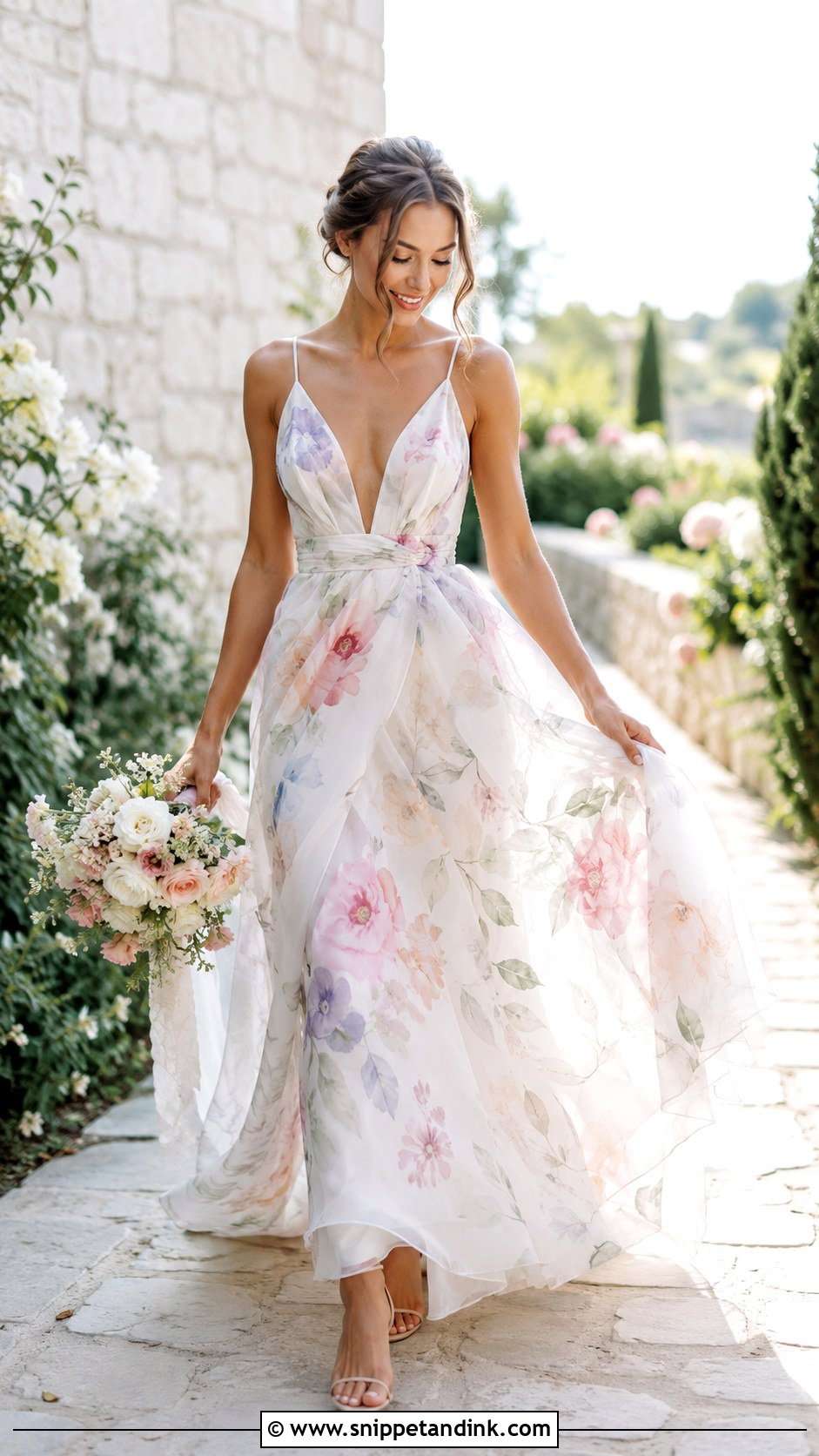
Painted-looking flowers can surprise you in person, so try a watercolor floral wedding dress in daylight before you commit. Printed on chiffon or organza, the colors soften as the skirt moves, which is why the style suits spring, summer and destination weddings. Under warm indoor bulbs, pale blues can drift toward grey. Barely-there heels, one bracelet and rosy, natural makeup are all it needs, plus a single shade from the print pulled into the bouquet.
5. Blush Floral Wedding Dress
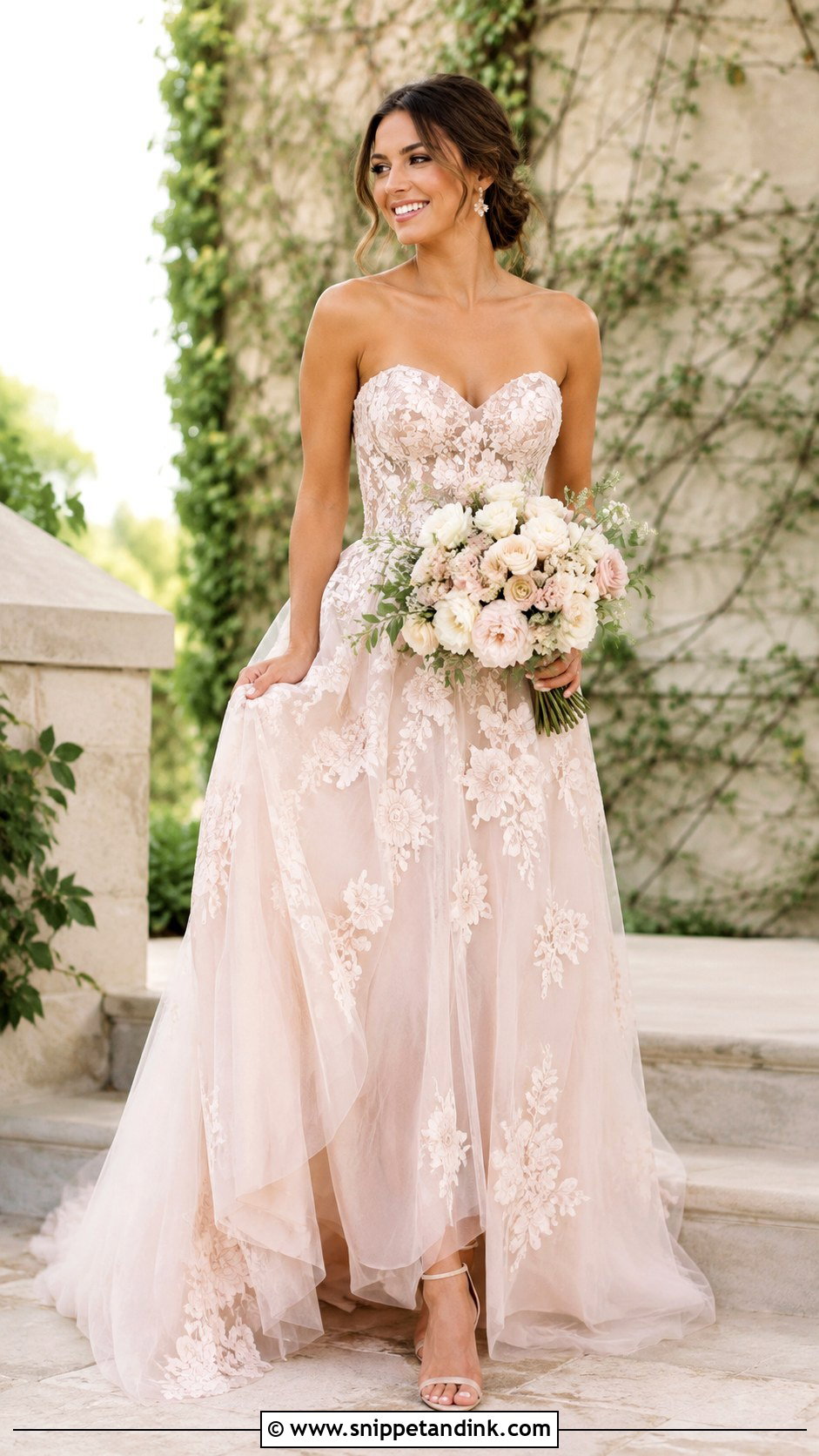
Blush is my usual answer for brides whose skin looks washed out next to bright white. A pink base under floral lace or appliqués warms the face, and at sunset it picks up gold light in a way stark white doesn’t. Hold the fabric against your bare inner arm at the appointment: some blushes turn peachy, some go pinkish-grey, and usually only one flatters you. Champagne heels, rose gold jewelry and a clean-edged veil are plenty. A loose updo and a bouquet of ivory, pale pink and greenery round it off.
6. Floral Tulle Wedding Dress
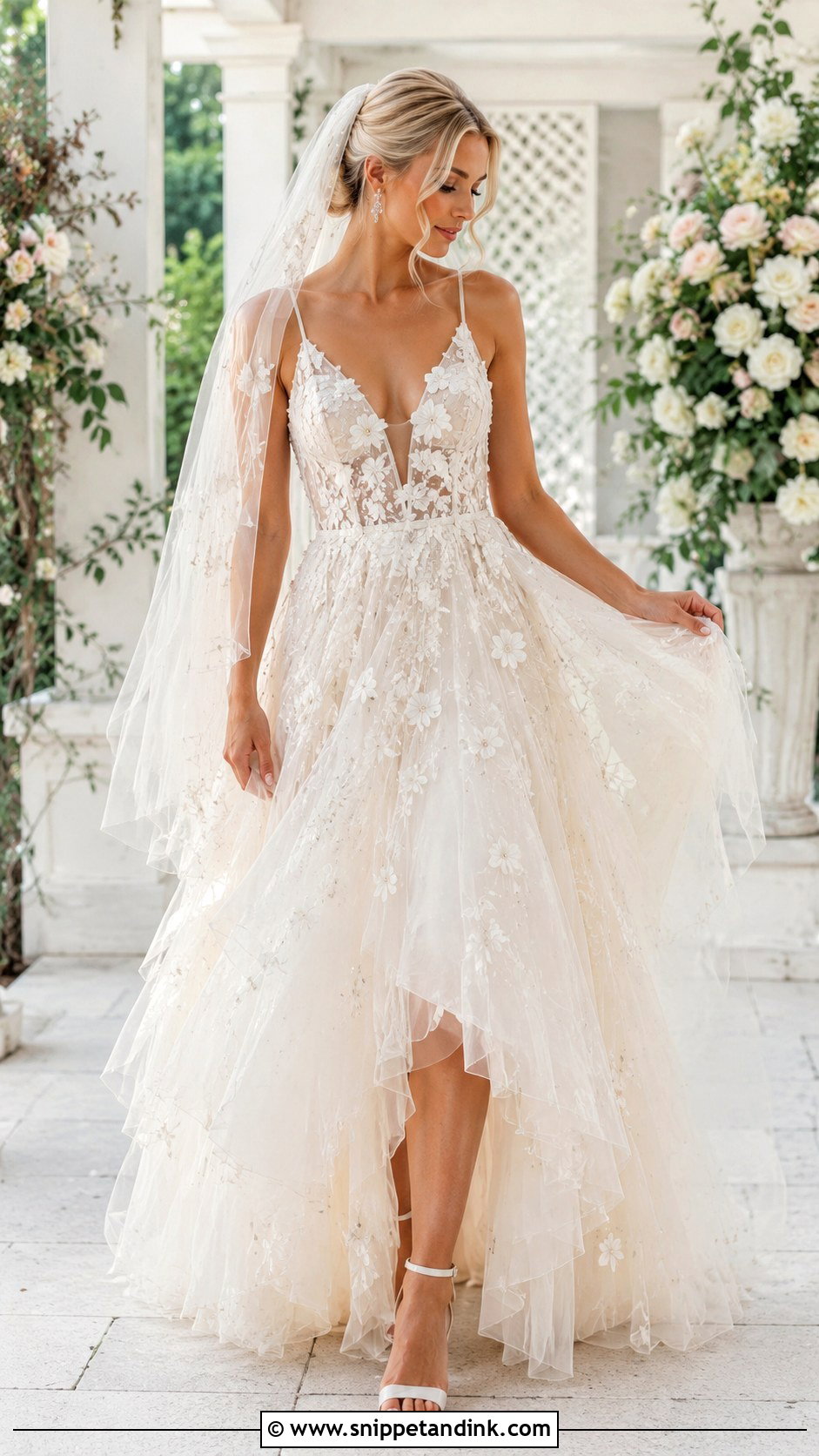
Flowers trapped between sheer layers of tulle give you a garden effect that floats. Tulle is light, but it has two weaknesses I always mention: it snags on rough stone and rose bushes, and it collects grass seed at the hem. For an outdoor ceremony I’d rather see a full skirt with a slightly shorter front hem than one that drags. Go fitted bodice and full skirt for the fairytale shape, or slimmer layers for something looser. Simple crystal studs, ivory ankle-strap heels and a veil matched to the dress length.
7. Floral Ball Gown Wedding Dress
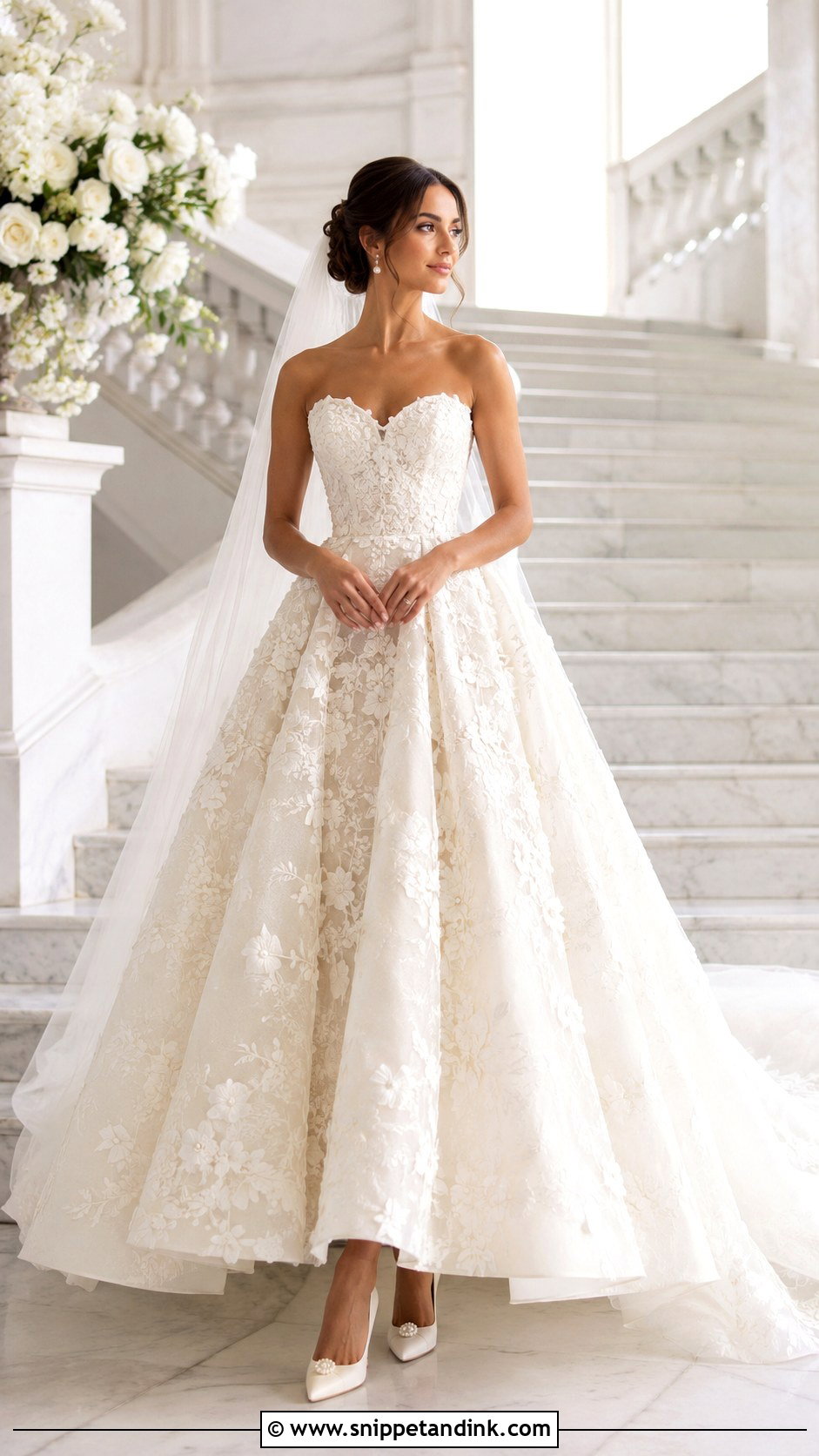
This is the entrance dress. The volume of a floral ball gown comes from layers and often a crinoline underneath, and floral lace or appliqués keep that much skirt from looking stiff. Before you fall for one, sit down in it and ask how you’ll manage the bathroom; a skirt this full usually means a helper. A structured bodice balances the width. Keep jewelry to pearl studs or a thin bracelet, wear a long veil, and carry a medium bouquet with clean lines, because a huge cascade on top of a huge skirt swallows you.
8. Floral A Line Wedding Dress
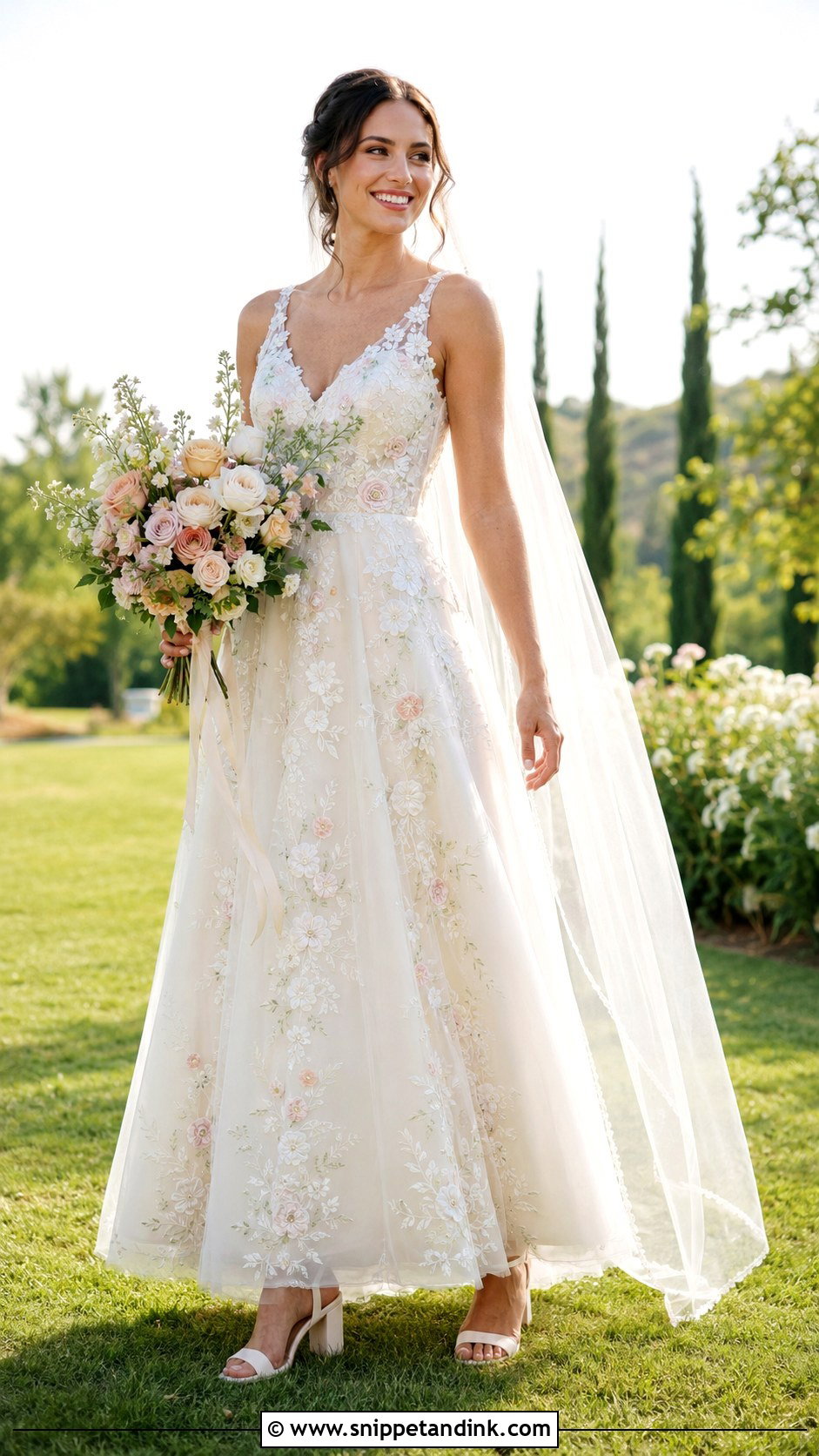
Of every shape here, the A-line is the one I’d send an undecided bride to first. The skirt falls away from the waist, so you can walk, dance and sit without fighting fabric, and floral lace or embroidered blooms keep it romantic. Block heels on grass, classic pumps indoors. A fingertip veil, small earrings and whatever flowers are in season will do the rest.
9. Floral Mermaid Wedding Dress
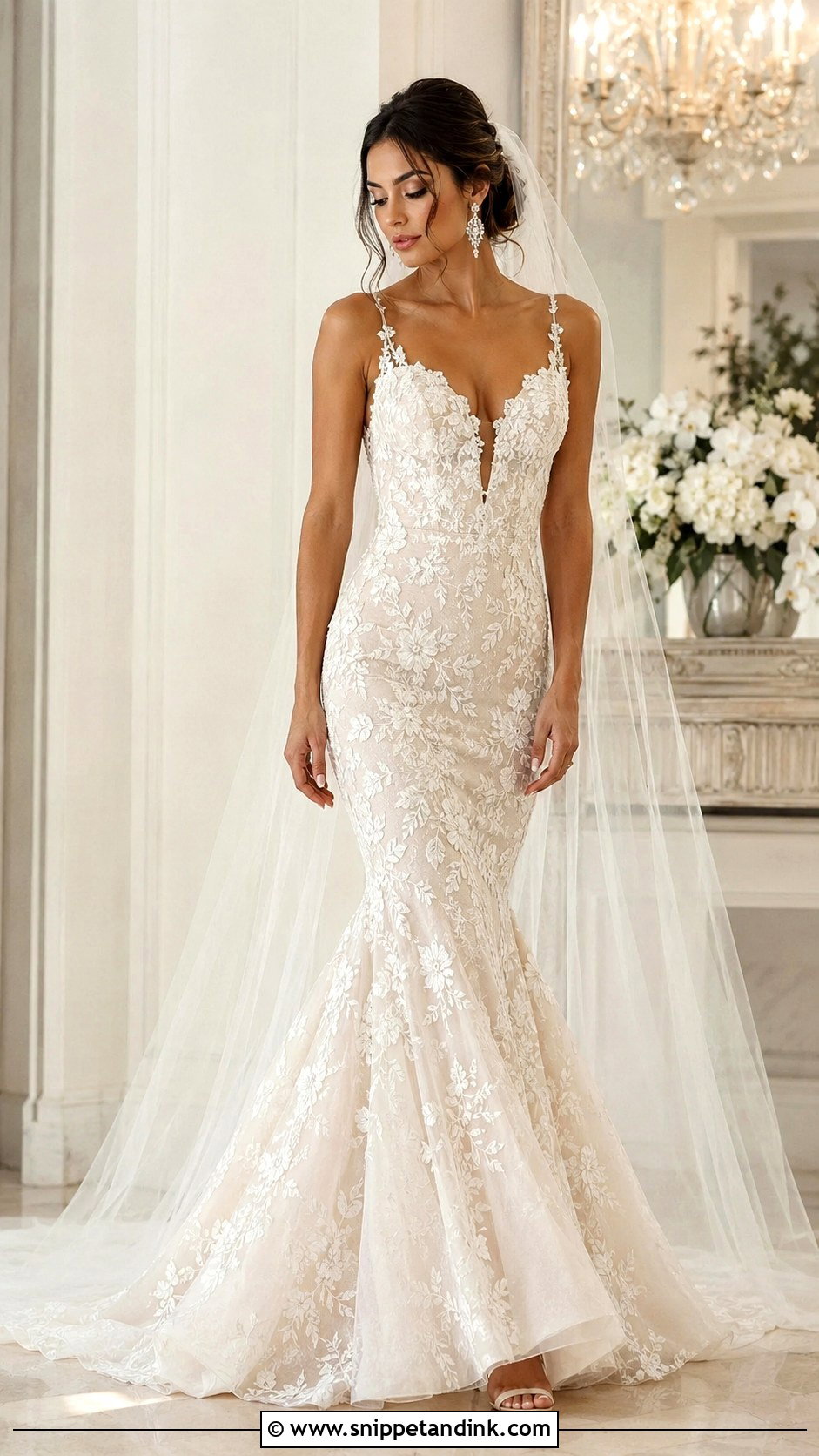
Mermaid cuts are the least forgiving shape on this list, and floral lace helps more than people expect. The pattern breaks up the line at the hips, so the fit looks sculpted rather than tight. The flare should start at or just below the knee; if it starts too low you’ll shuffle, so take a full stride in the fitting room before you sign anything. I like flowers concentrated at the bodice, hips or hem rather than scattered everywhere. Sleek heels, statement earrings, a smooth veil, and a low bun or soft waves so nothing competes with the silhouette. Evening weddings suit it best.
10. Floral Off Shoulder Wedding Dress
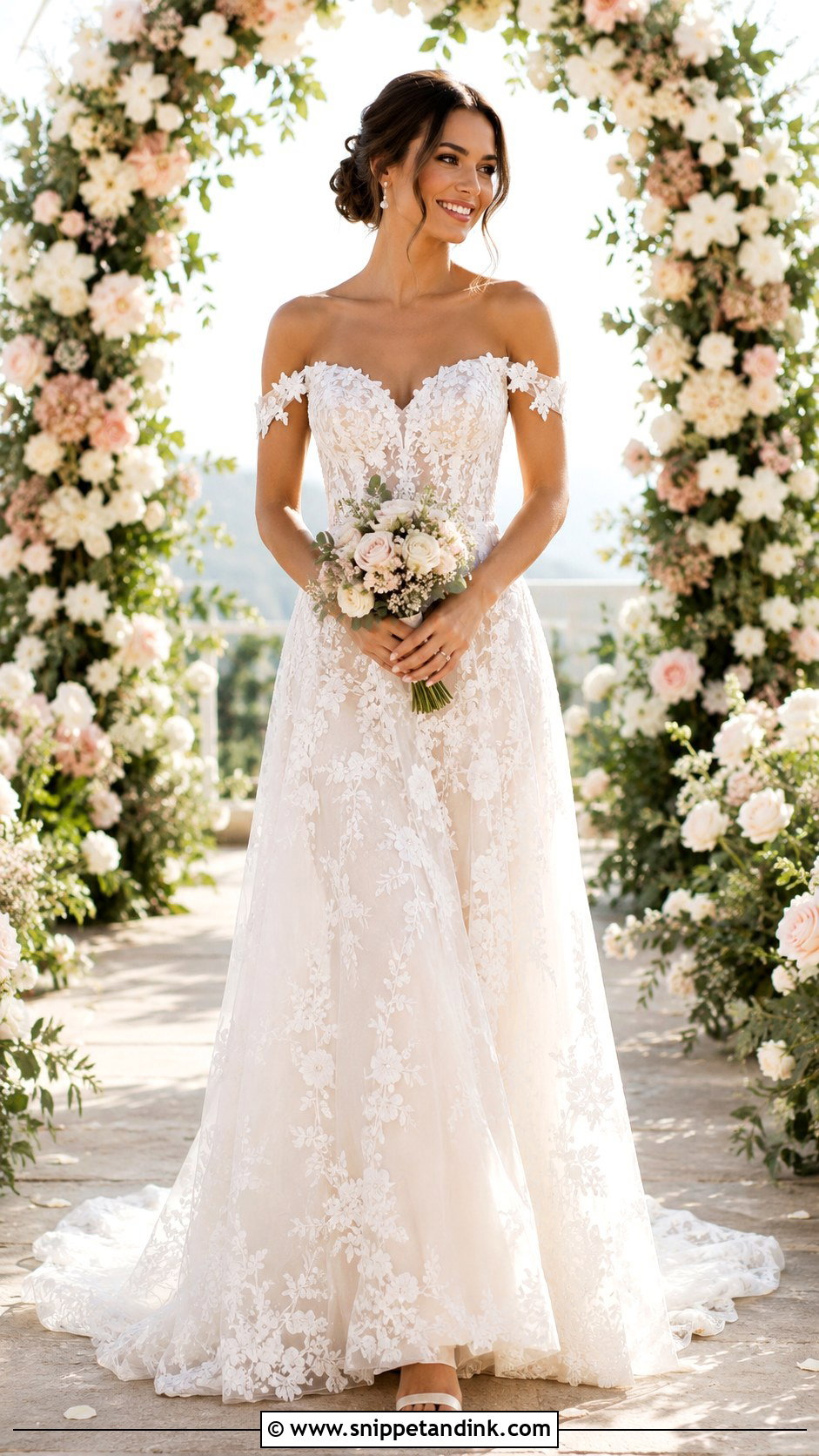
An off-the-shoulder neckline frames the collarbone, and floral lace across the bodice means you hardly need jewelry. My fitting question here is whether the straps stay put when you lift your arms to hug someone. Many need a small elastic gripper or silicone tape sewn inside. Fitted sleeves want a smooth hairstyle that shows the neckline, and soft draped ones can take loose waves. Pearl drop earrings, comfortable heels and a small bouquet are plenty.
11. Floral Long Sleeve Wedding Dress
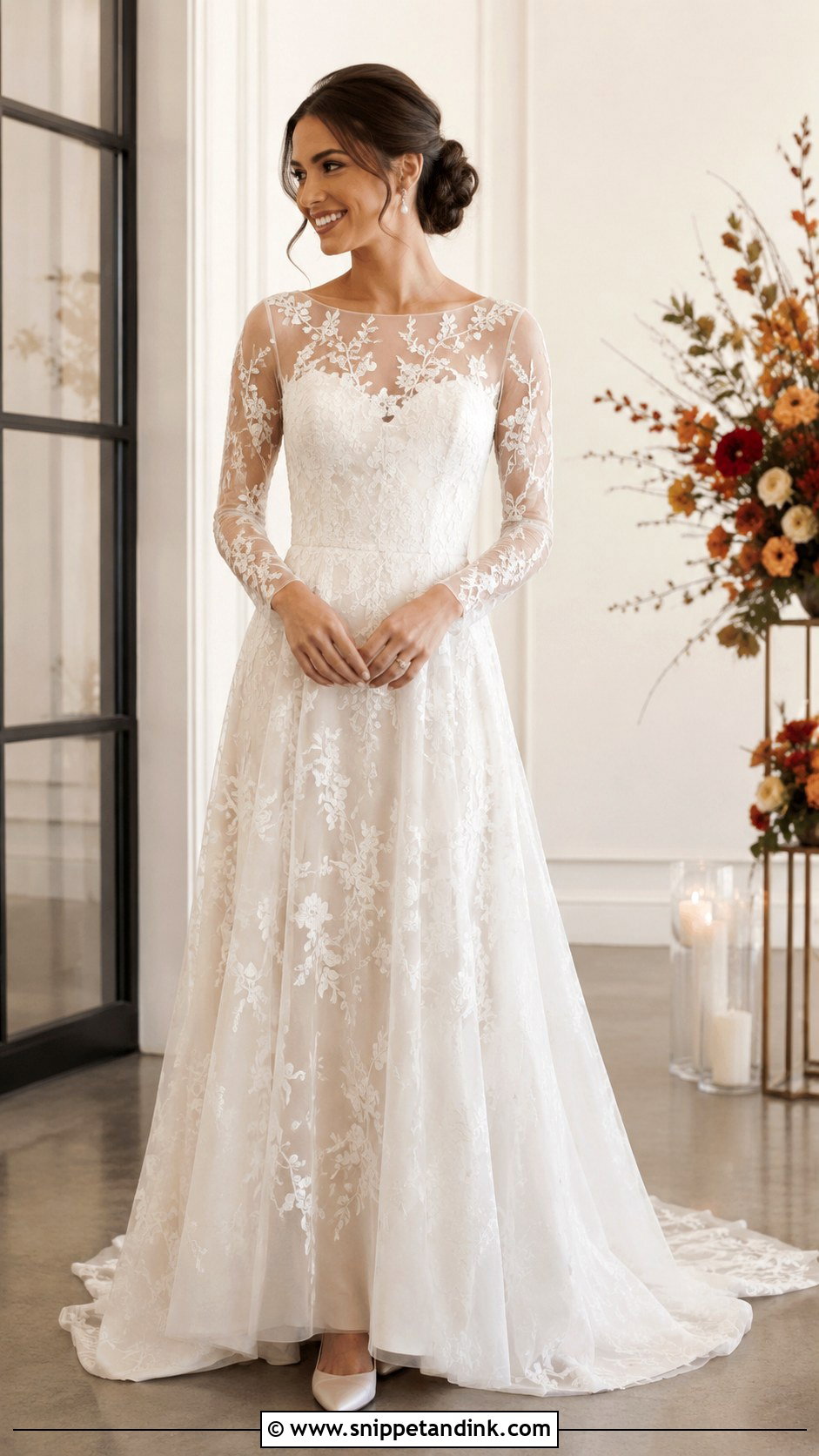
Sheer sleeves covered in embroidered vines or lace flowers give coverage without weight. I check two things at the fitting: that the armhole is cut high enough to let you raise your arms, and that the sleeve ends at the wrist bone instead of bunching over the hand. It’s an easy pick for fall, winter and formal indoor ceremonies, and a neat updo shows the sleeves off. Skip heavy bracelets, which drag on lace, and wear closed-toe heels with small pearl earrings.
12. Floral Corset Wedding Dress
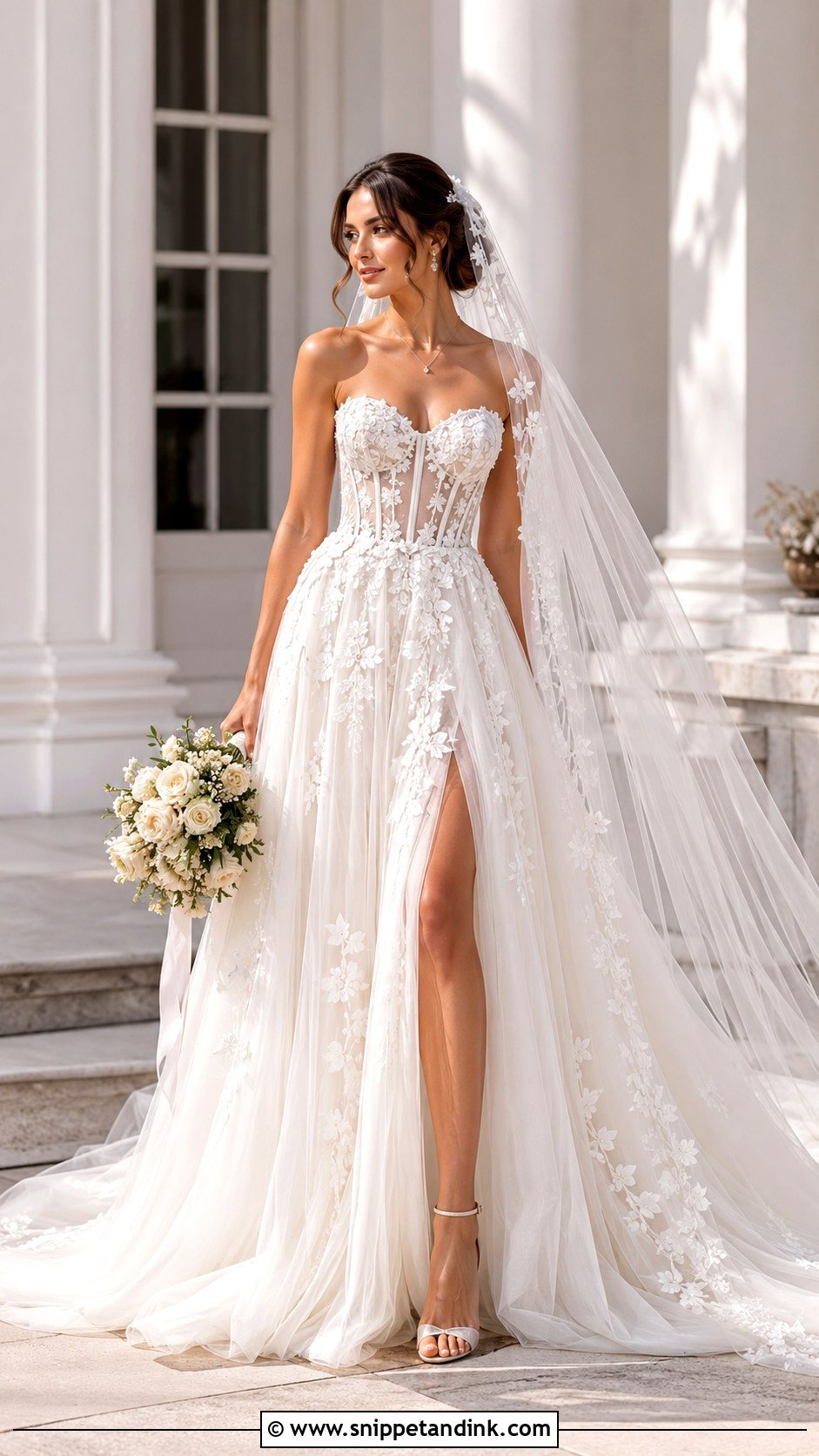
A corset bodice gives real support. The boning shapes the waist and holds the bust, so you can often skip a bra, and floral embroidery, lace or appliqués keep it from feeling severe. Breathe out fully when it’s laced at the fitting; a corset pulled tight on a nervous morning can feel very different by the time dinner is served. Tulle, organza or satin skirts all work depending on how much drama you want. A cathedral veil for formality or a shorter one for ease, delicate heels, soft makeup, and a necklace only if the neckline leaves room.
13. Floral Square Neck Wedding Dress
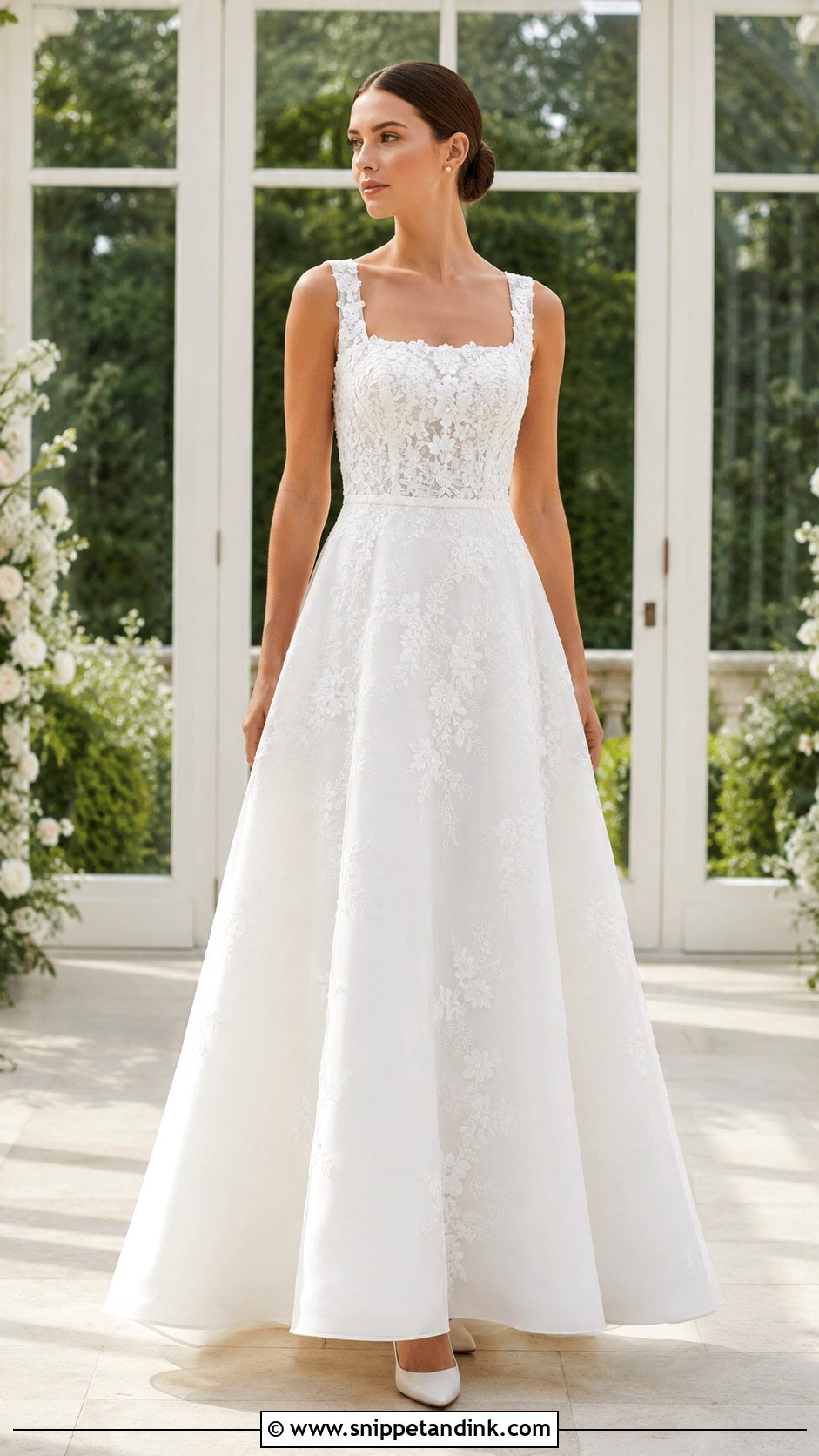
Square necklines are quietly modern. The straight edge frames the chest, sits between revealing and covered, and floral lace across the bodice fills the space so a necklace becomes optional. If you do want one, a small pendant sits neatly inside the square. I’d add pearl studs, satin pumps and a smooth low bun, and if the skirt is also floral, keep the veil plain.
14. Floral High Neck Wedding Dress
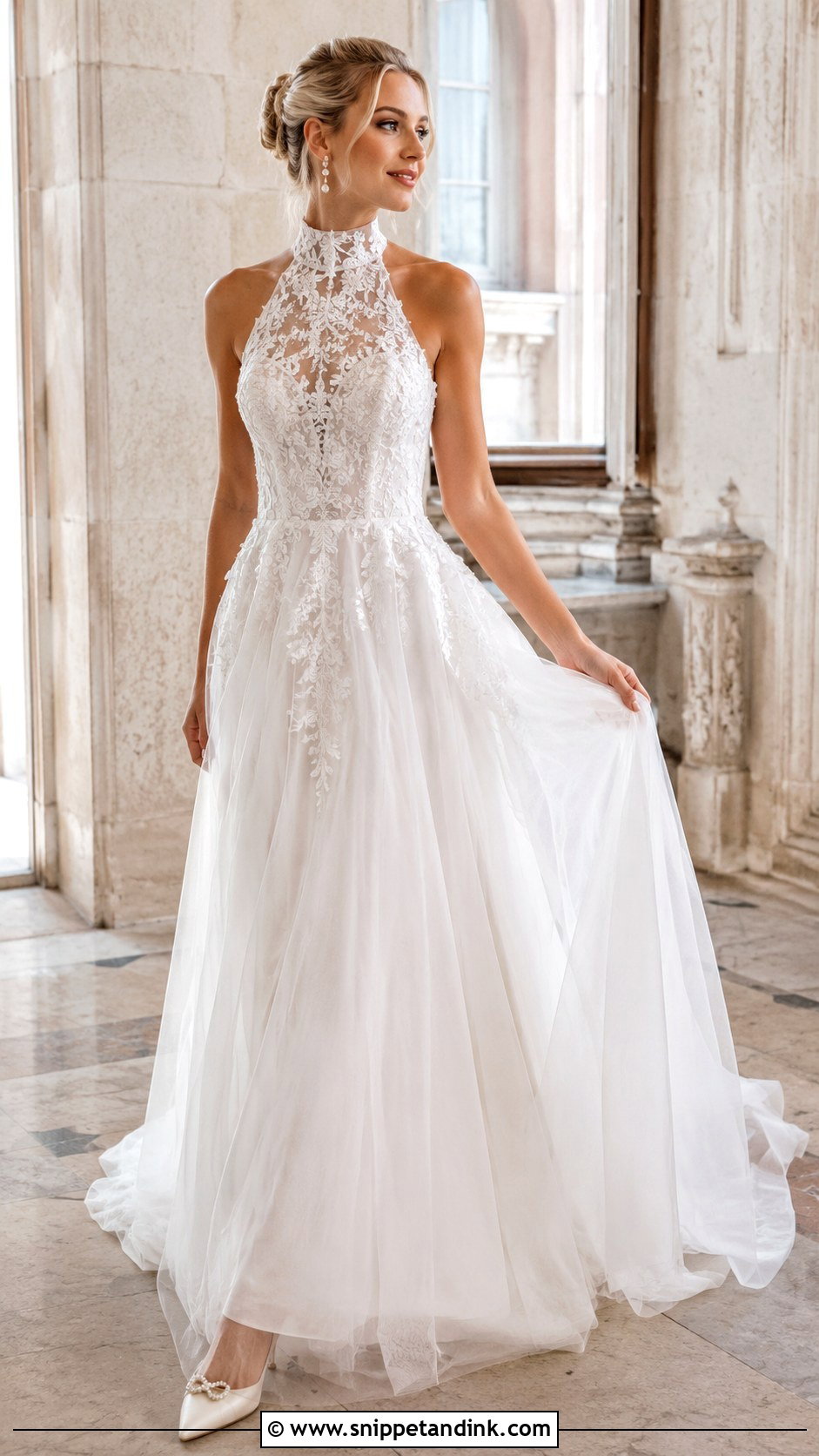
High necklines suit historic venues and brides who like modest detail. Floral lace or sheer embroidered tulle stops the neck from feeling heavy, but the fit at the collar matters more than anything: too tight and you’ll feel it every time you swallow, too loose and it buckles in profile shots. Skip a necklace and wear pearl drops with a sleek bun and pointed heels. A long veil falls cleanly behind the shoulders with this one.
15. Floral Slip Wedding Dress
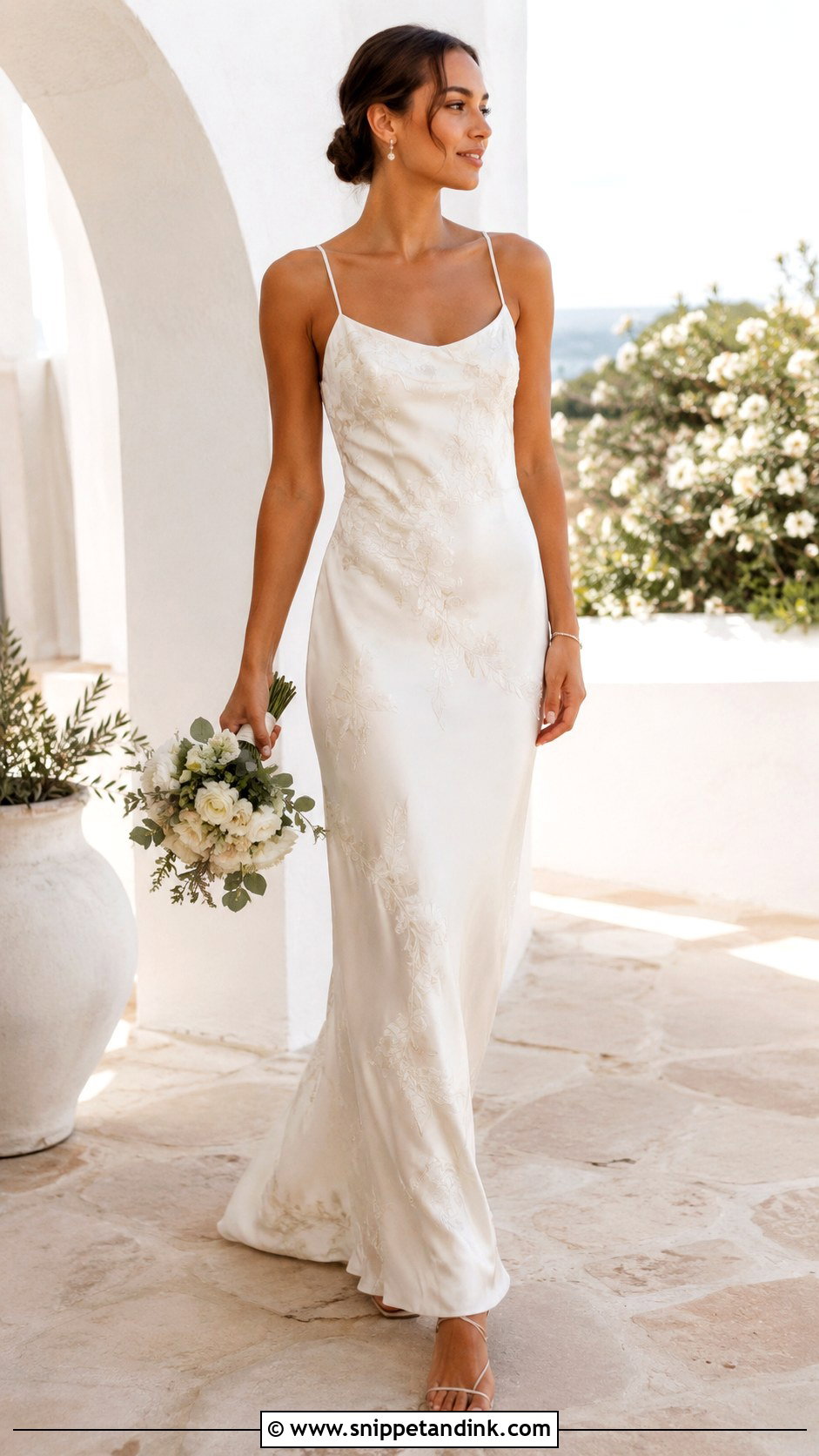
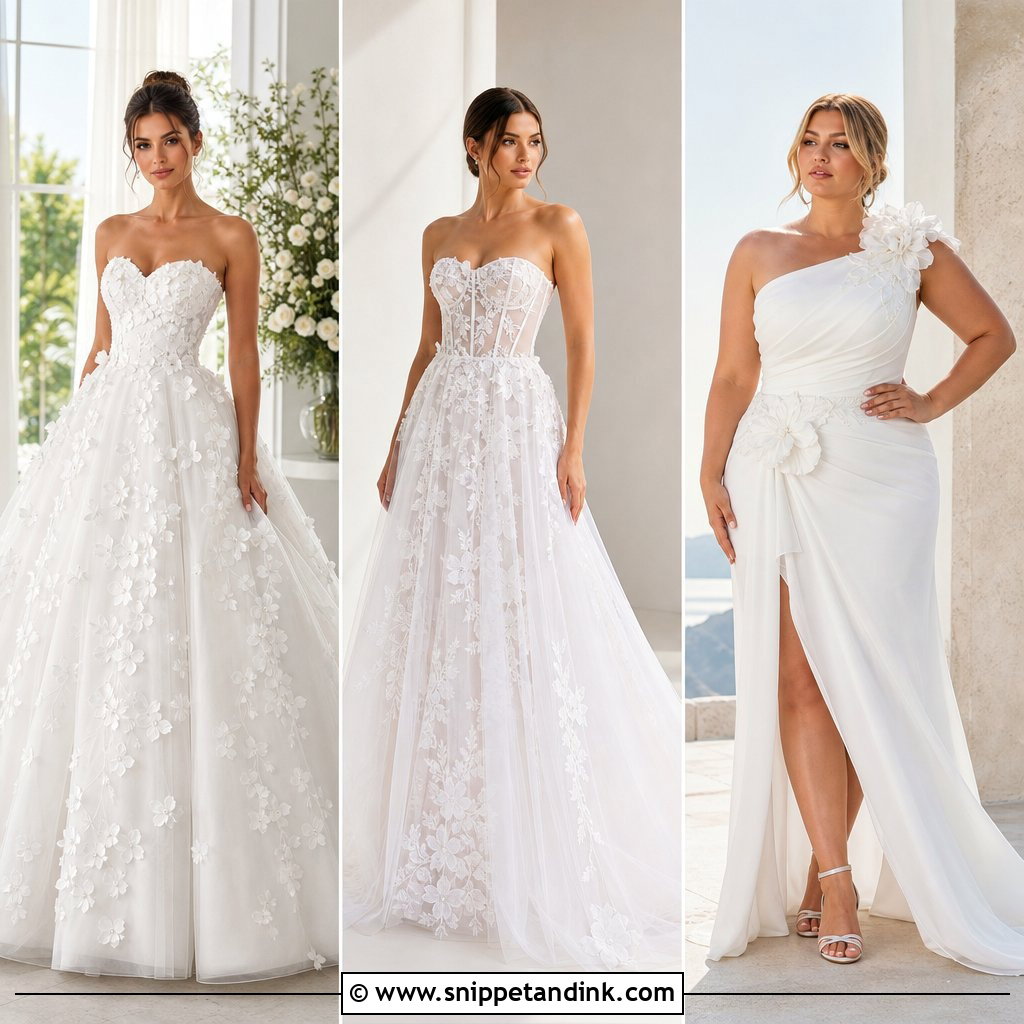
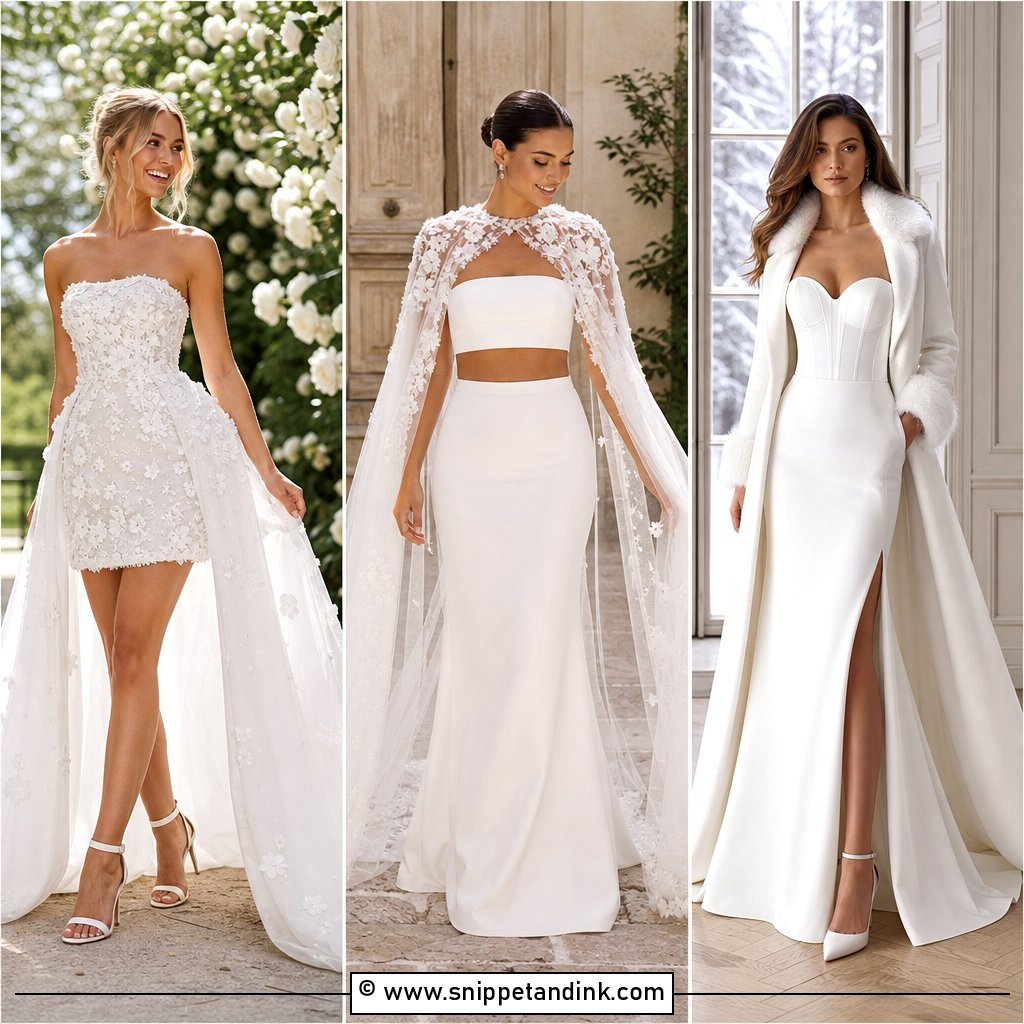
A slip dress puts very little between you and the day. The fabric is usually cut on the bias, which is why it drapes and moves, and floral embroidery, a subtle print or a lace overlay supplies the detail. The honest trade-off is that bias-cut satin shows every line underneath, so plan smooth, no-line underwear and try the dress on with it. Strappy heels, a small bouquet and minimal jewelry suit intimate weddings, beach ceremonies and courthouse vows. A sheer cape adds a ceremony moment and comes off for the reception.
16. Floral Mini Wedding Dress
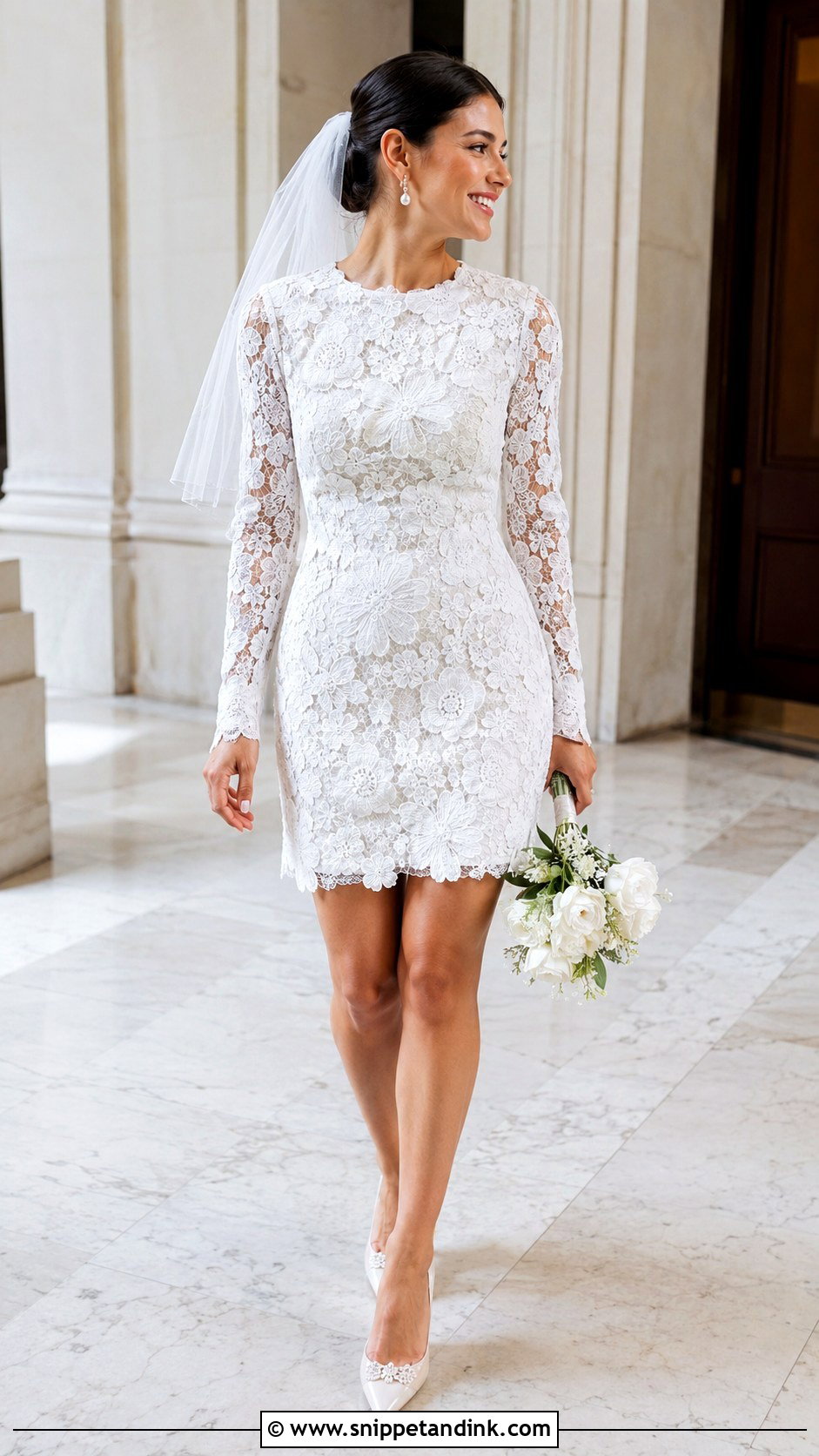
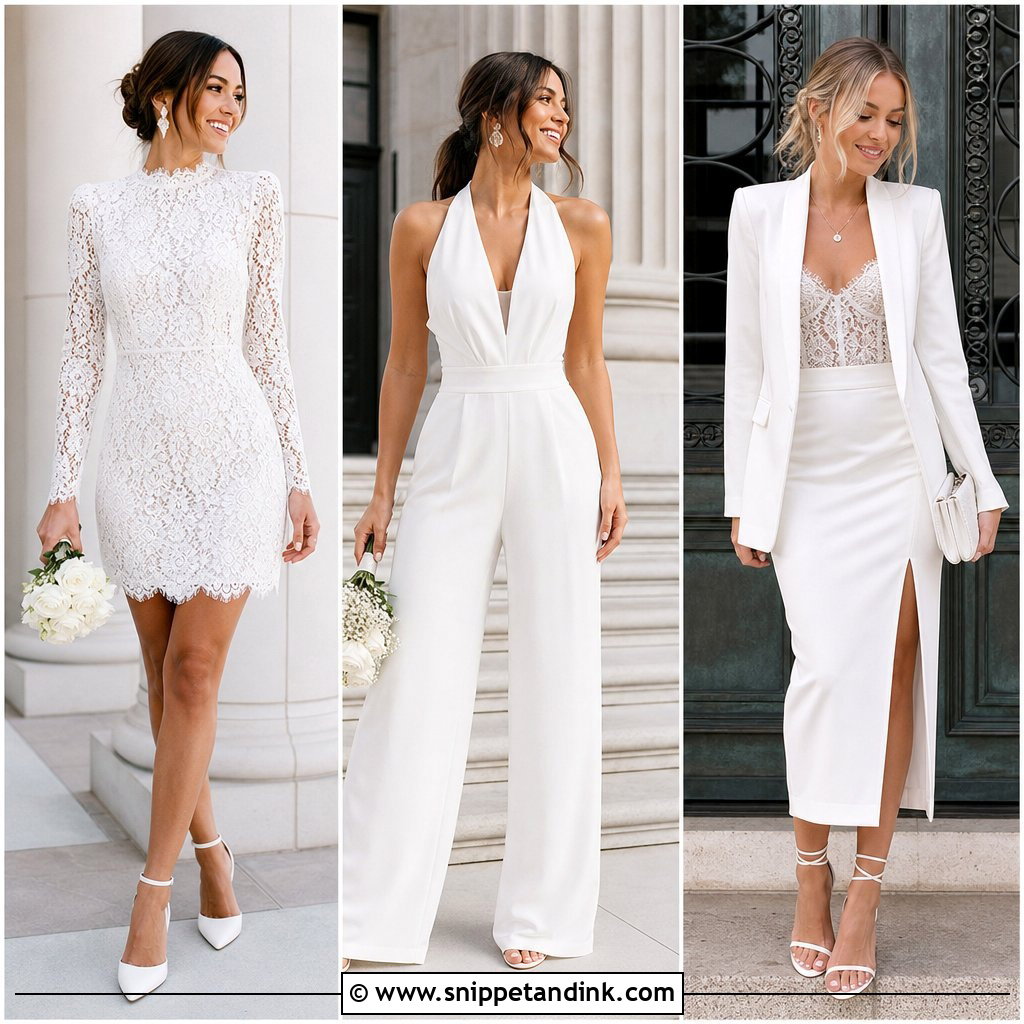
A floral mini is my favorite second look. A shorter hem makes dancing easy, and floral lace, organza or appliqués keep it reading as bridal at a courthouse, a brunch or a warm evening reception. Balance the leg with coverage elsewhere, such as long sleeves, a structured bodice or a high neckline. Pumps, block heels or bridal flats depending on the floor, plus a bow, pearl earrings or a short veil. Sit down in it once before you buy; some minis ride up far more than others.
17. Floral Tea Length Wedding Dress
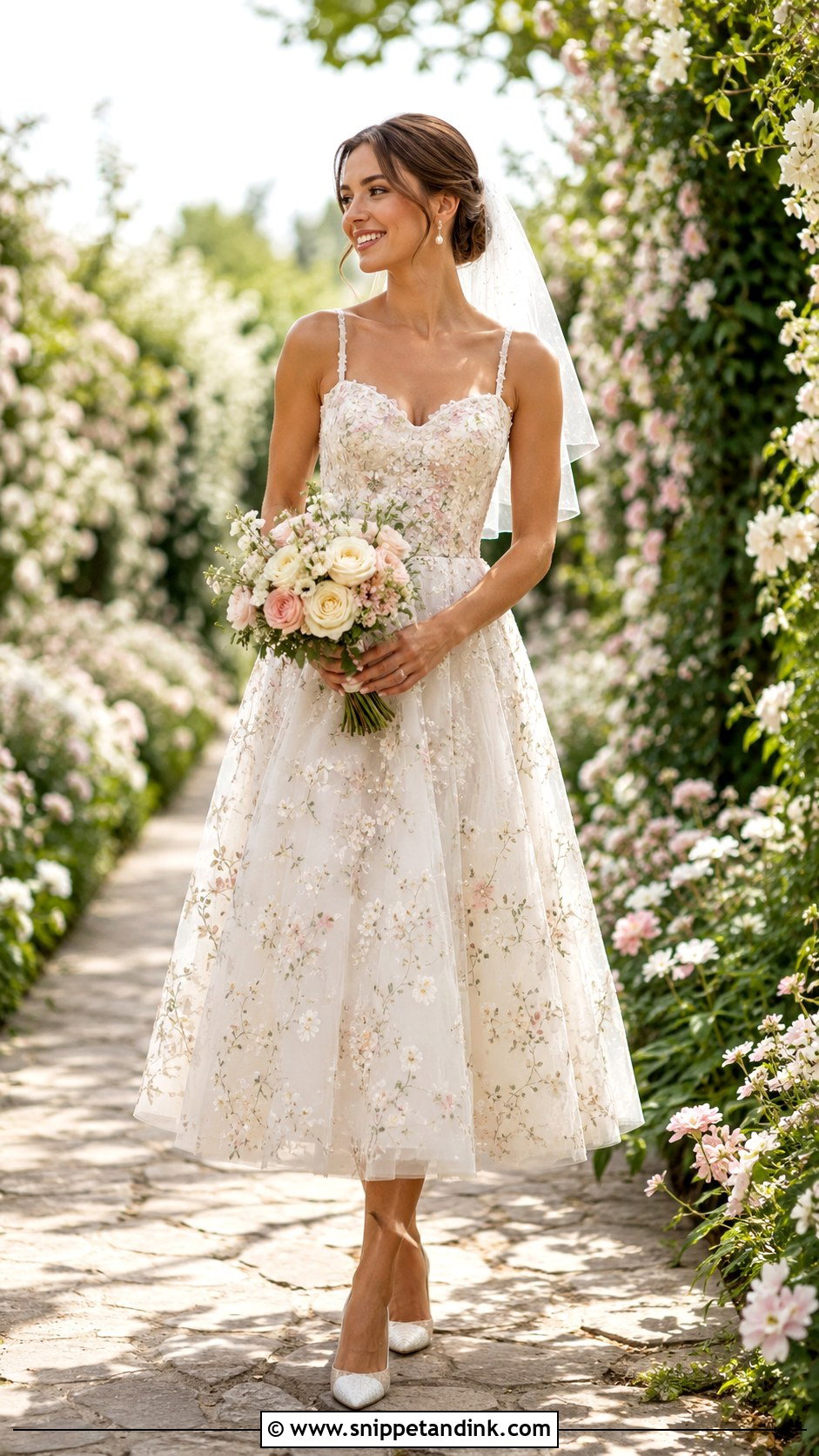
Tea length falls between the knee and the ankle, so your shoes become part of the dress. Floral lace or embroidered tulle on that shorter skirt has a vintage feel without looking like a costume, and it’s the most practical length for a garden because no hem touches wet grass. Wear ivory pumps, slingbacks or embellished flats with a short veil, pearl earrings and a neat bouquet. Have the hem pinned while you’re wearing the actual shoes; a two-inch heel change moves the line visibly.
18. Floral Satin Wedding Dress
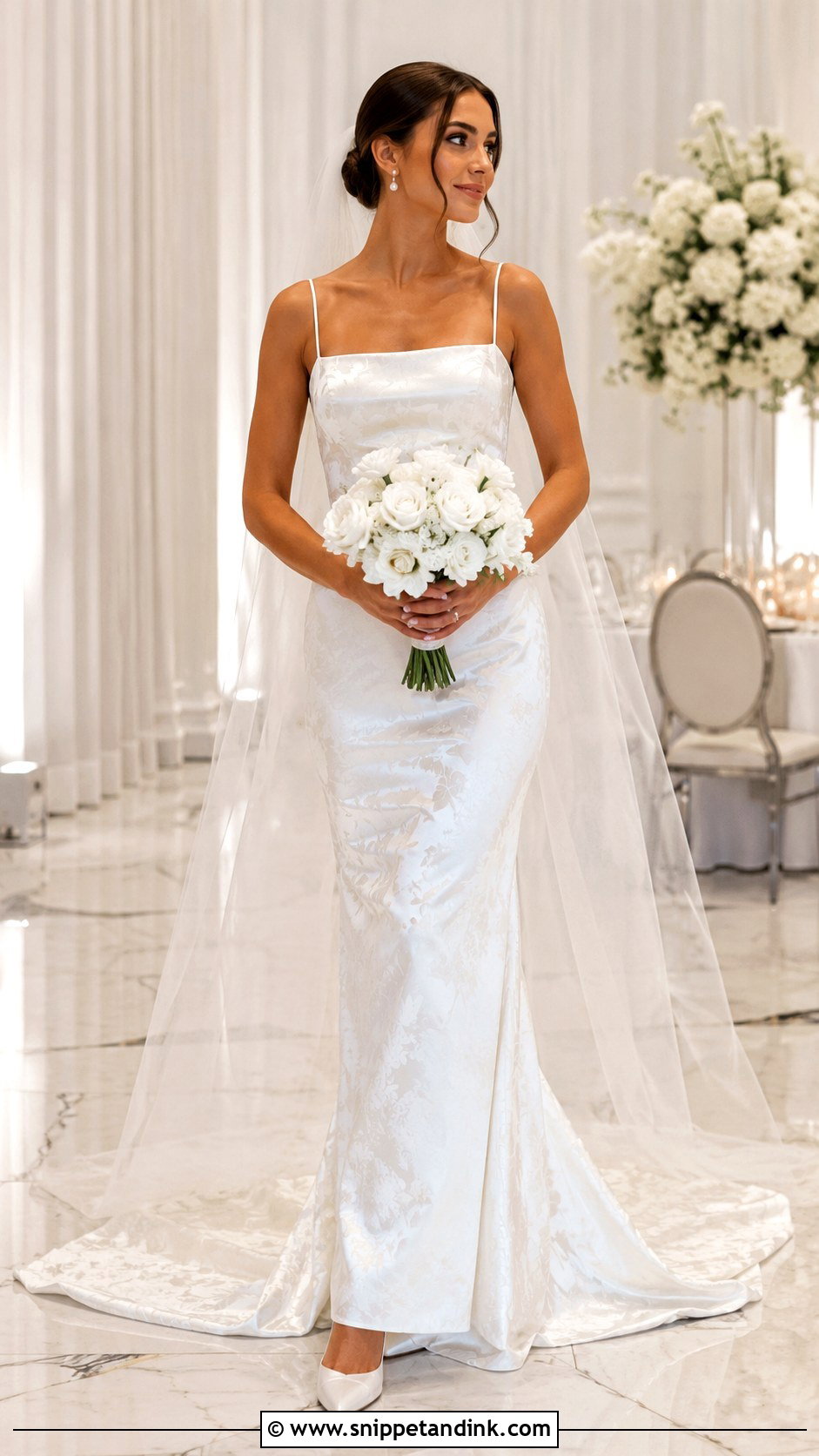
Satin with flowers worked into it, as floral jacquard, tonal embroidery or subtle embossed blooms, gives you depth without busy surface detail. What I warn brides about is creasing. Satin wrinkles across the lap after a seated ceremony, and heavier satins hold those creases, so a steamer in the getting-ready room is worth planning for. A fitted column, A-line or structured ball gown all suit it. Sleek pumps, pearl or crystal earrings, a smooth veil, and a restrained bouquet, since satin already reflects plenty of light.
19. Floral Organza Wedding Dress
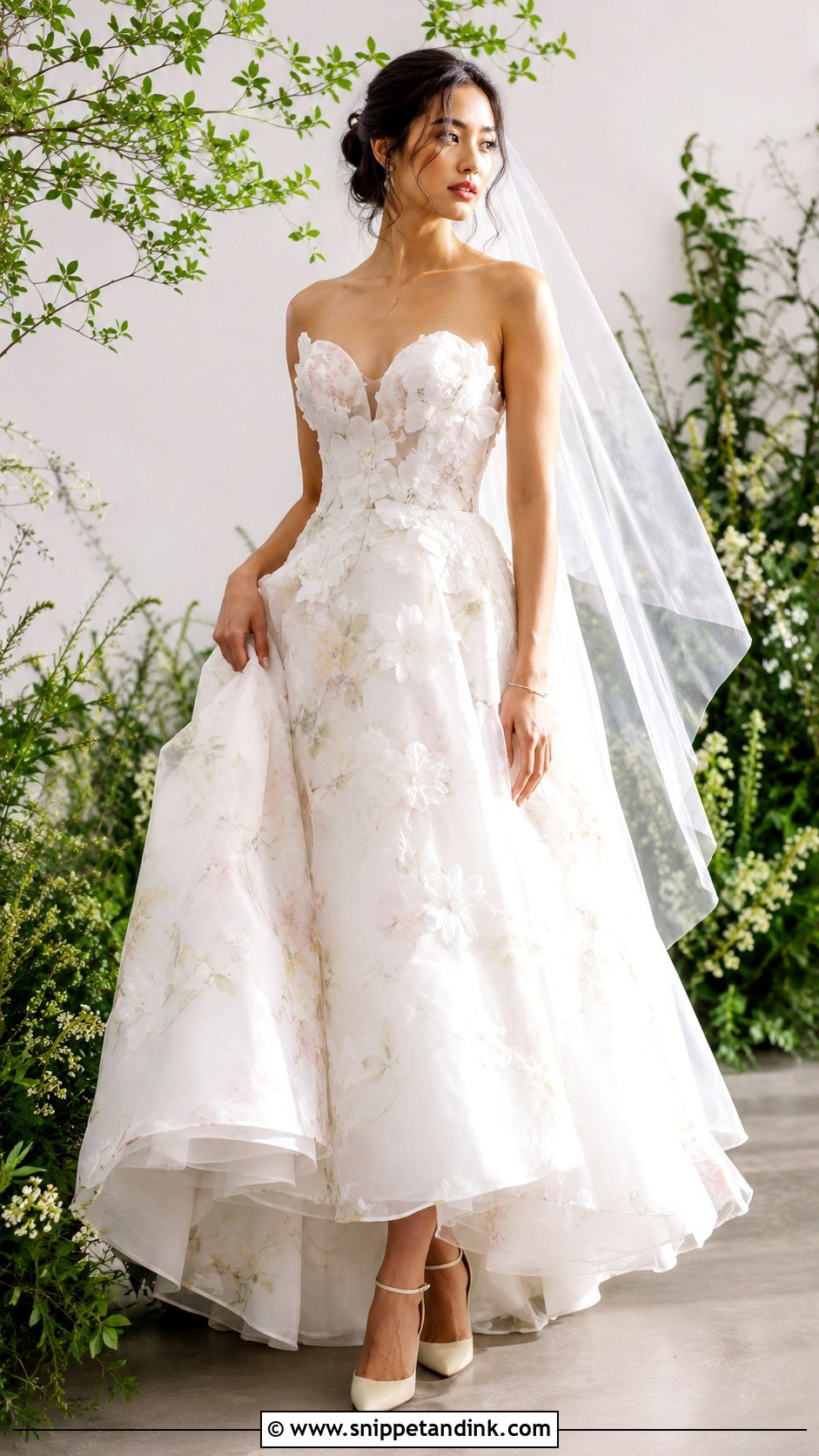
Organza holds its shape where chiffon collapses, so it supports fuller skirts, puff sleeves and layered appliqués without much weight. That crispness is why printed or appliquéd blooms on organza look so fresh for spring and summer weddings. It’s also noisy: organza rustles, and it can crush if you sit on it carelessly, so lift the back layers before you sit. Slim heels, a fine bracelet, a veil that doesn’t compete, and garden roses or seasonal blooms in the bouquet.

20. Floral Chiffon Wedding Dress
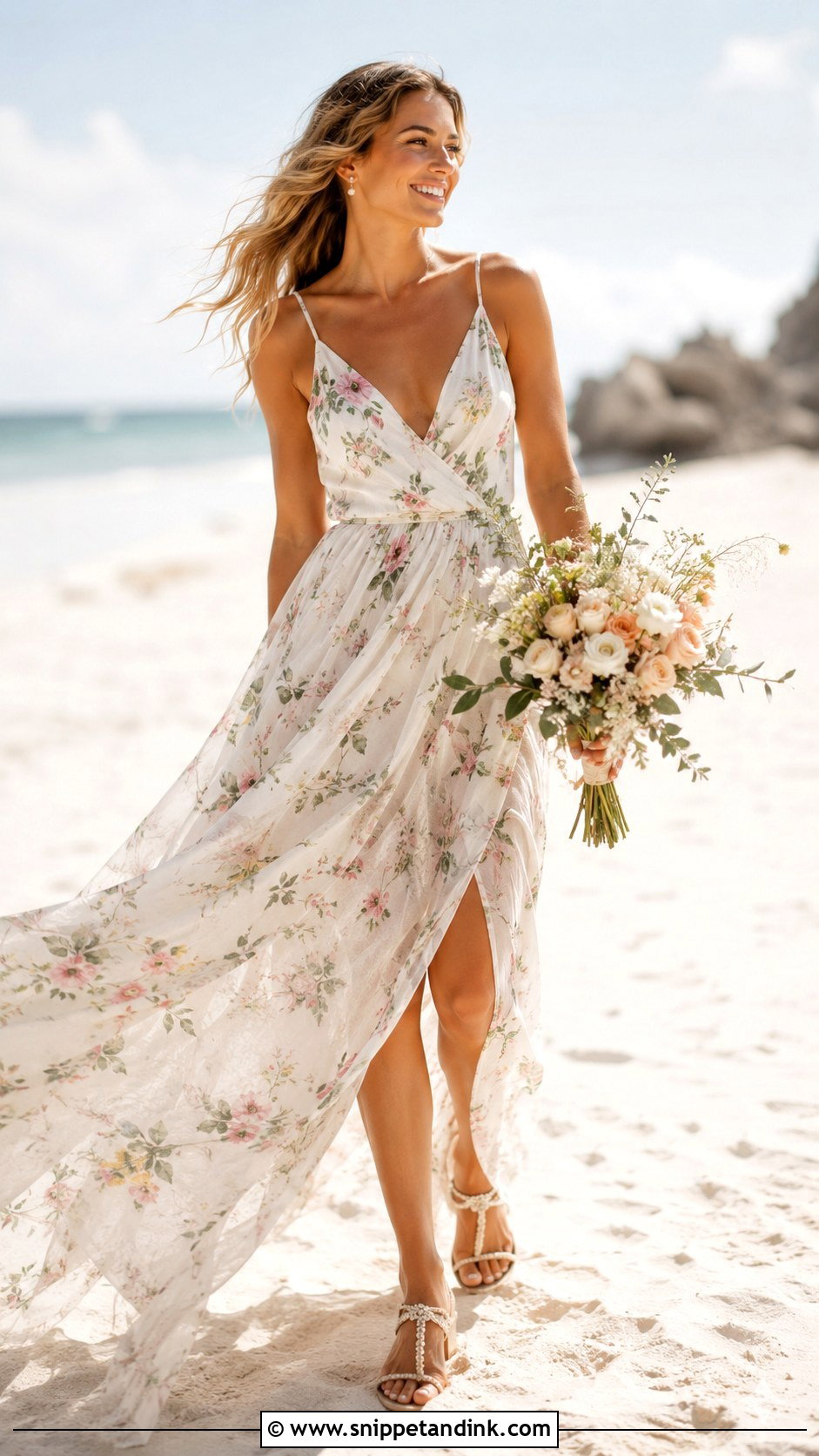
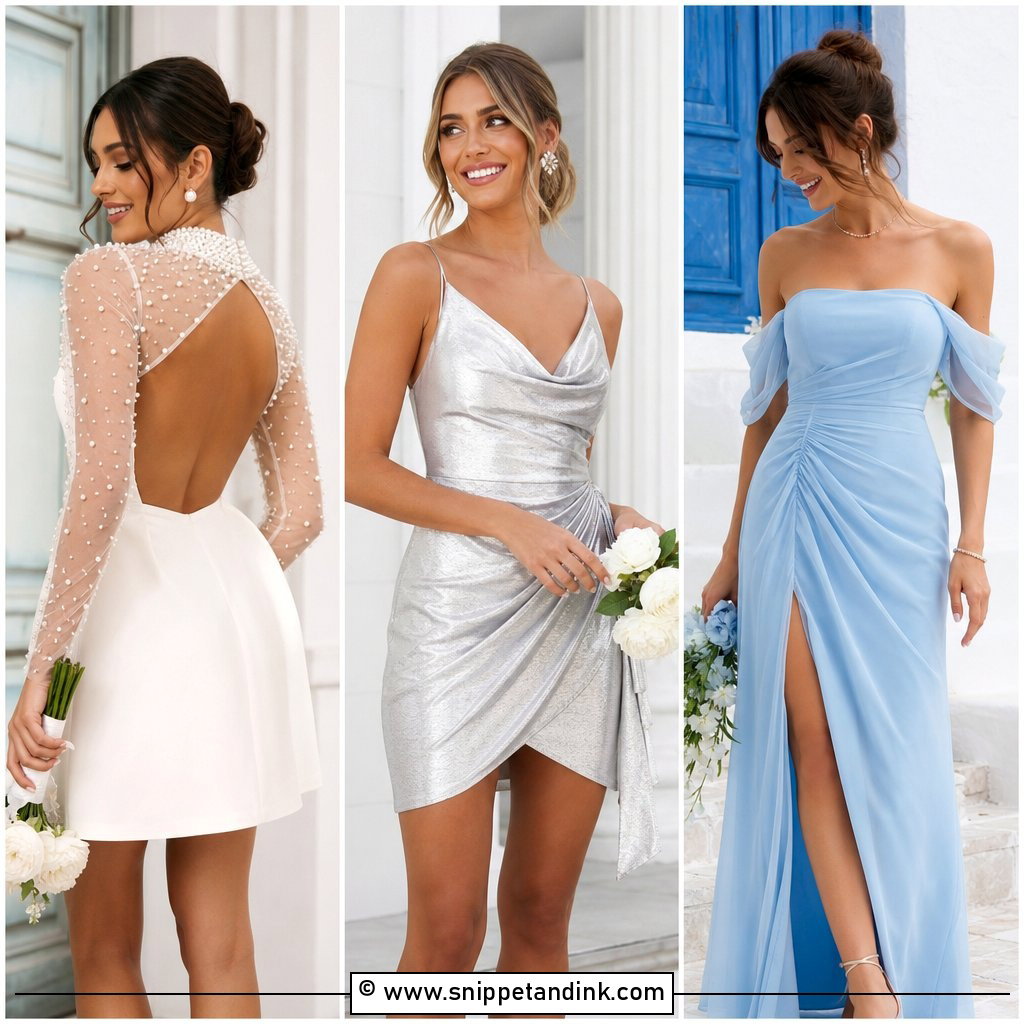
In heat, chiffon is the fabric I reach for. It’s light, it moves in a breeze and it breathes, which matters at beach, garden and destination weddings. Floral prints or soft embroidery add personality without weight. The weak spot is snagging: chiffon pulls easily on sandal buckles and bracelet clasps, so check what you’ll pair it with. A V-neck or wrap bodice feels relaxed, and an empire waist gives an easy shape. Comfortable sandals, pearl studs, loose waves and a bouquet with airy greenery.
21. Floral Cape Wedding Dress
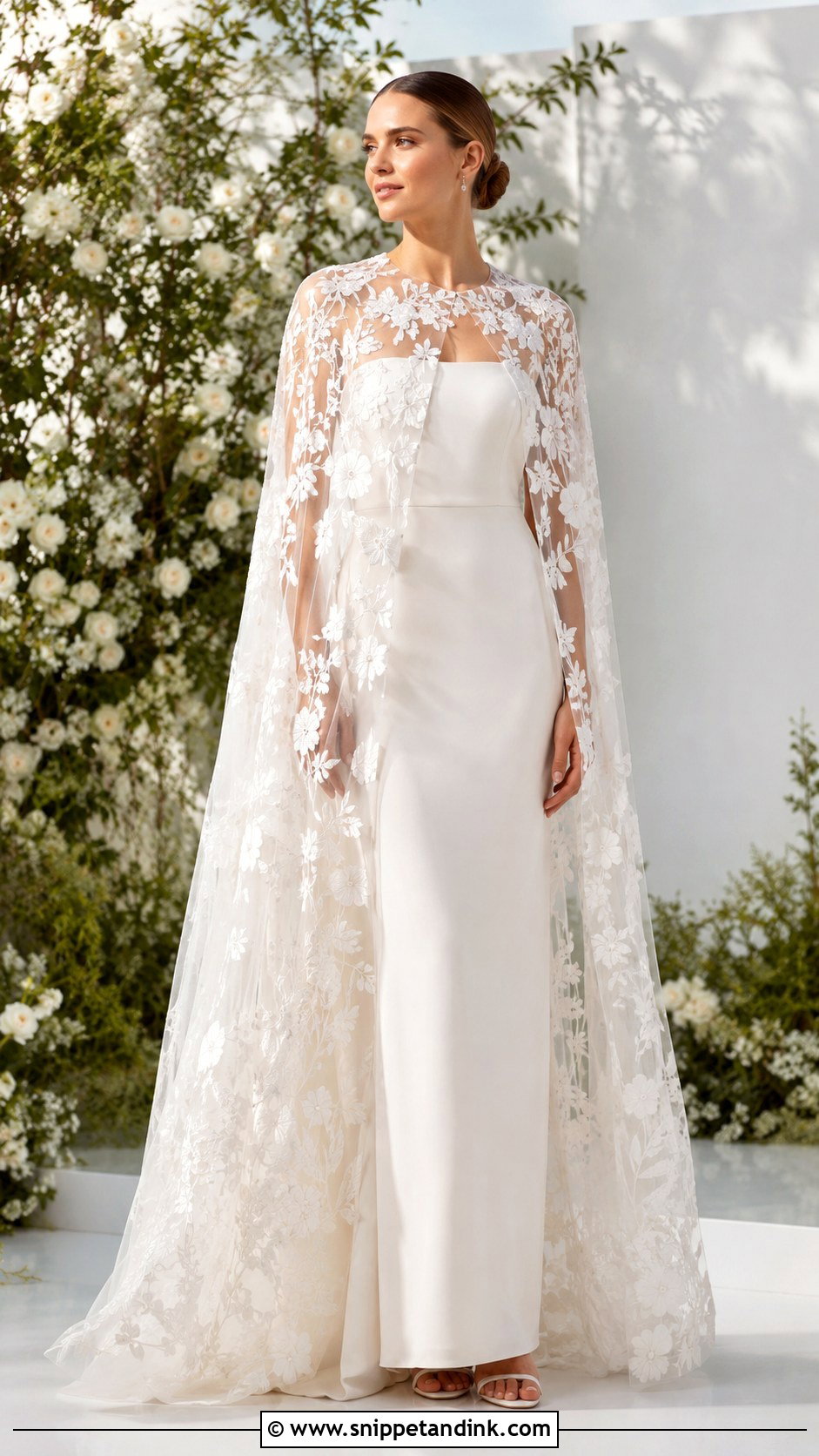
A cape gives you the drama of a train without the weight at your feet. Sheer, embroidered or scattered with appliqués, it moves behind you as you walk. Ask how it attaches: snaps or hooks at the shoulder let you take it off for the reception, while a sewn-in cape stays all night. A simple sheath or A-line underneath lets the cape be the feature. Clean heels, small earrings and a sleek hairstyle keep the neck and shoulders clear.
22. Floral Detachable Skirt Wedding Dress
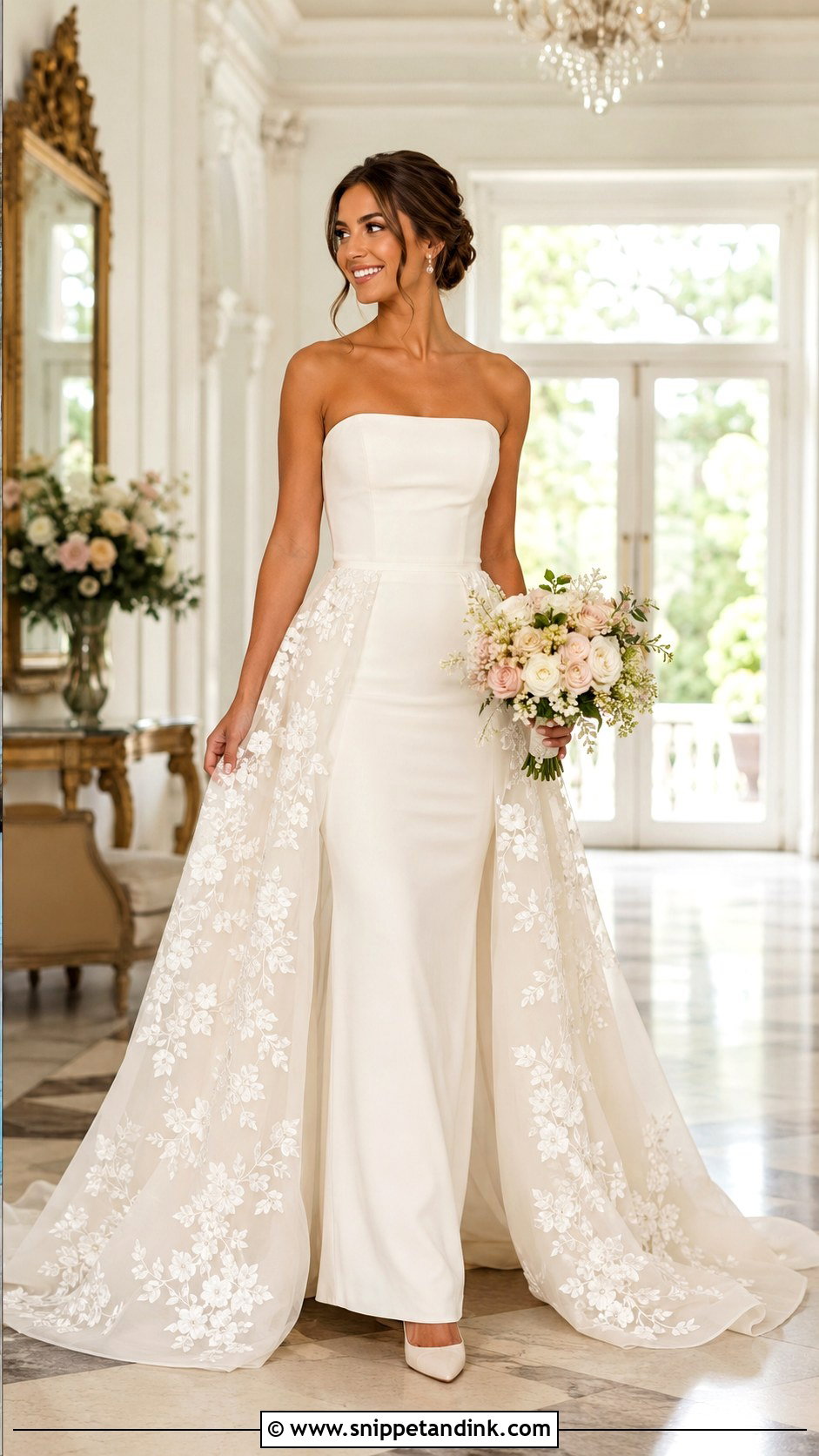
Two looks from one dress. A floral overskirt makes the ceremony feel full, and once it’s unhooked you have a lighter dress for the reception. It can sit over a fitted lace gown, a satin column or a simple strapless base. Practice removing it with whoever will help you on the day, because the hooks are often hidden at the back waist and fiddly under pressure. Pick shoes that work for both looks, ivory pumps or embellished sandals, and keep jewelry simple.
23. Floral Veil Wedding Dress
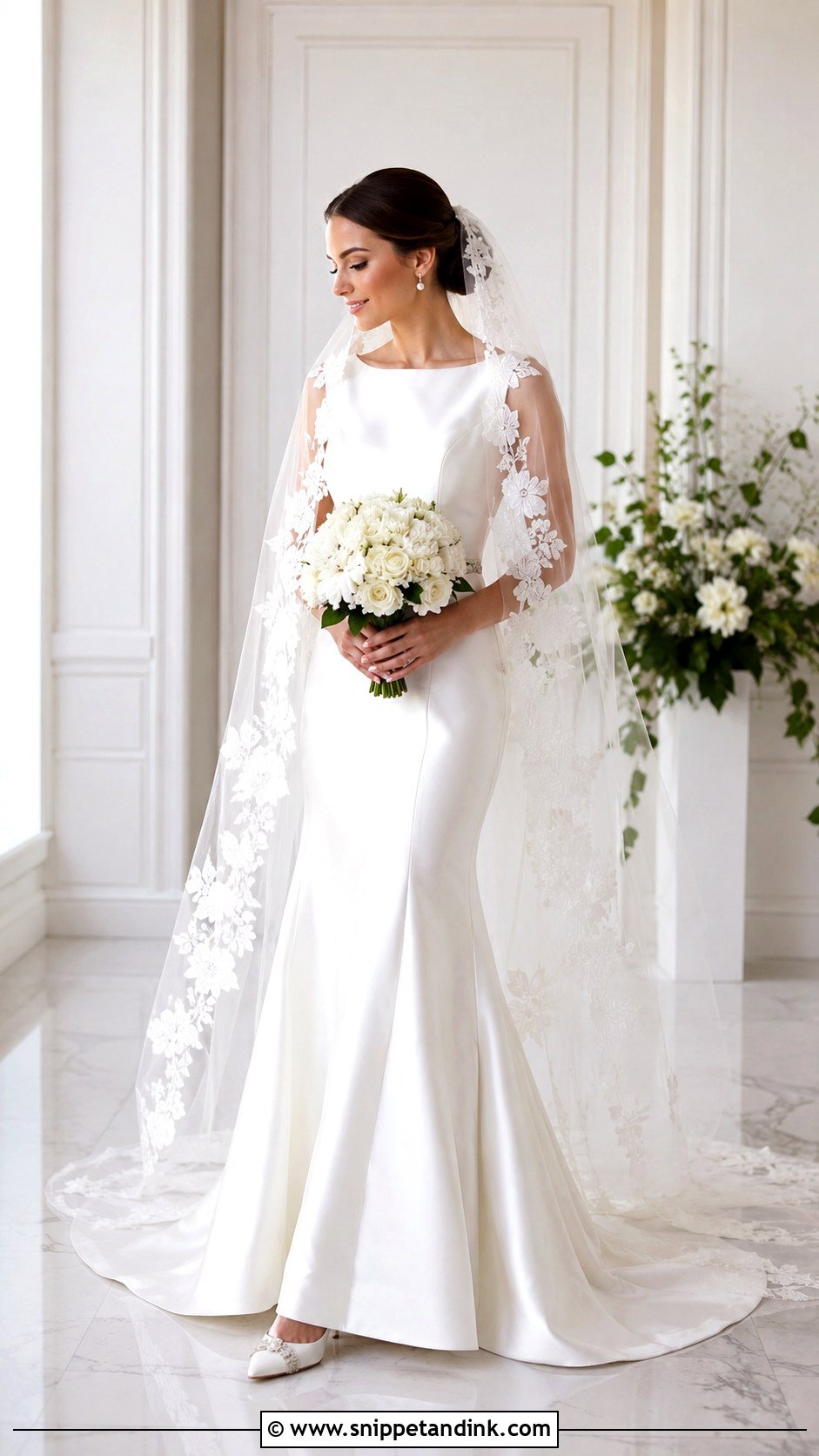
Sometimes the flowers don’t need to be on the dress at all. A clean satin, crepe or lace gown under a floral veil, embroidered along the edge or scattered across the tulle, gives you the garden feeling at the ceremony and an easy change afterward: take the veil off and the reception look is simpler. Embroidered edges add weight, so I ask for a sturdy comb and anchor it with pins under the hair. Classic heels, pearl earrings and a smooth bouquet.
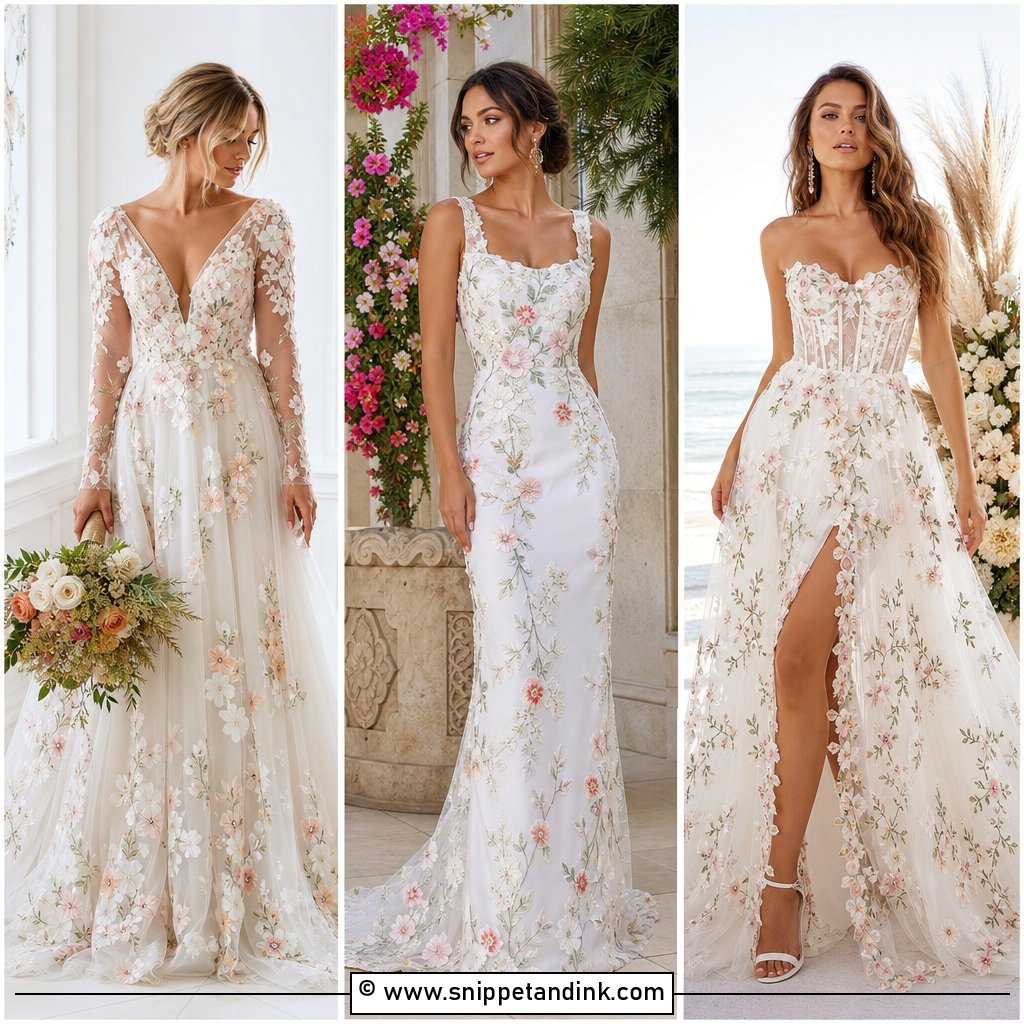
24. Colorful Floral Wedding Dress
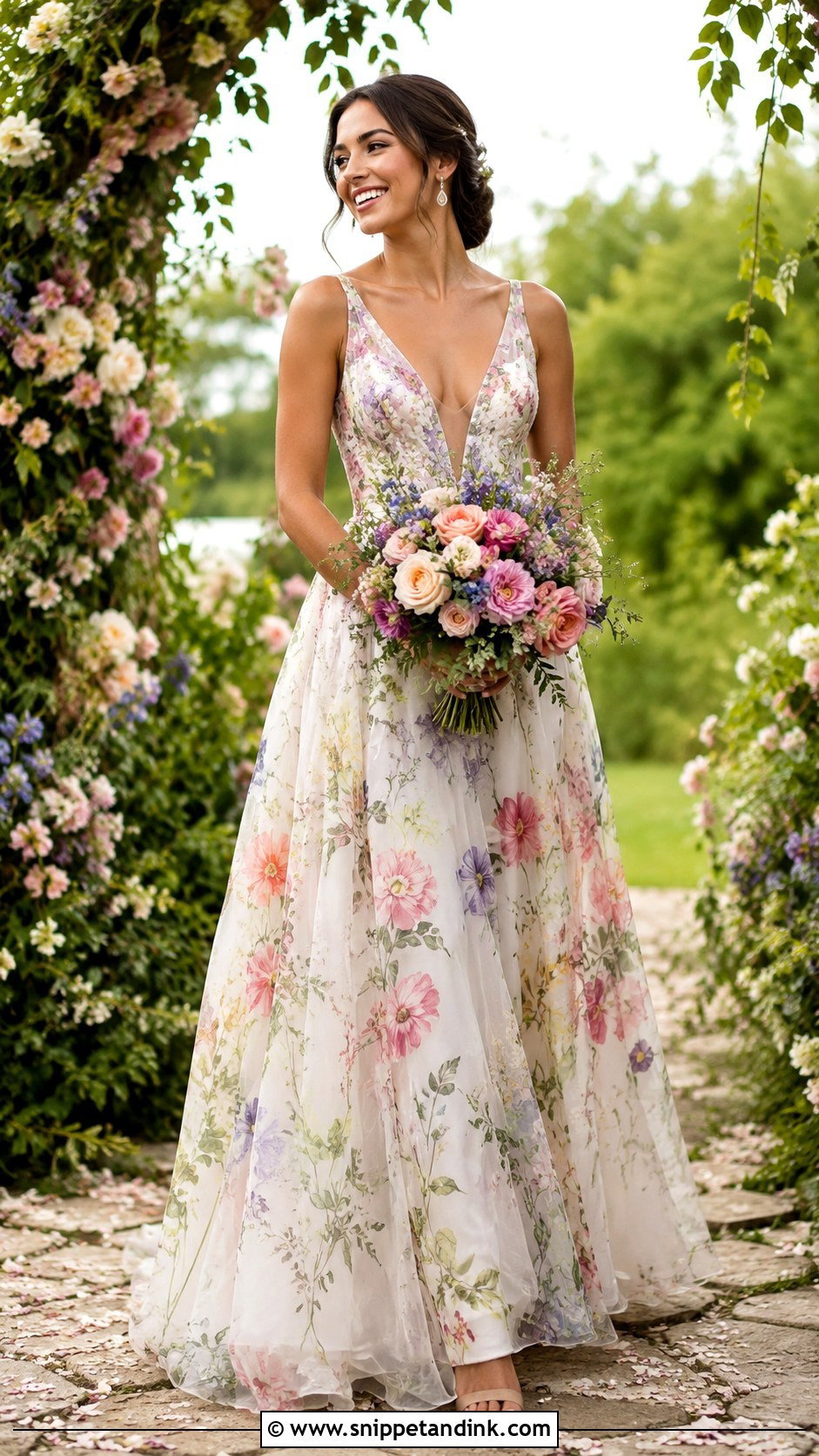
Real color on a wedding dress is joyful, and it takes more planning than anything else here. Pastel pink and blue read soft; greens, reds and purples read like a painted garden. To keep it bridal, start from a white, ivory or blush base, and choose a flowing A-line or ball gown so the print feels romantic rather than casual. Hold a swatch against your bridesmaids’ colors before ordering, because a clash shows up in every group photo. Neutral heels, simple earrings, a bouquet drawn from the dress and fresh, balanced makeup.
25. Black Floral Wedding Dress
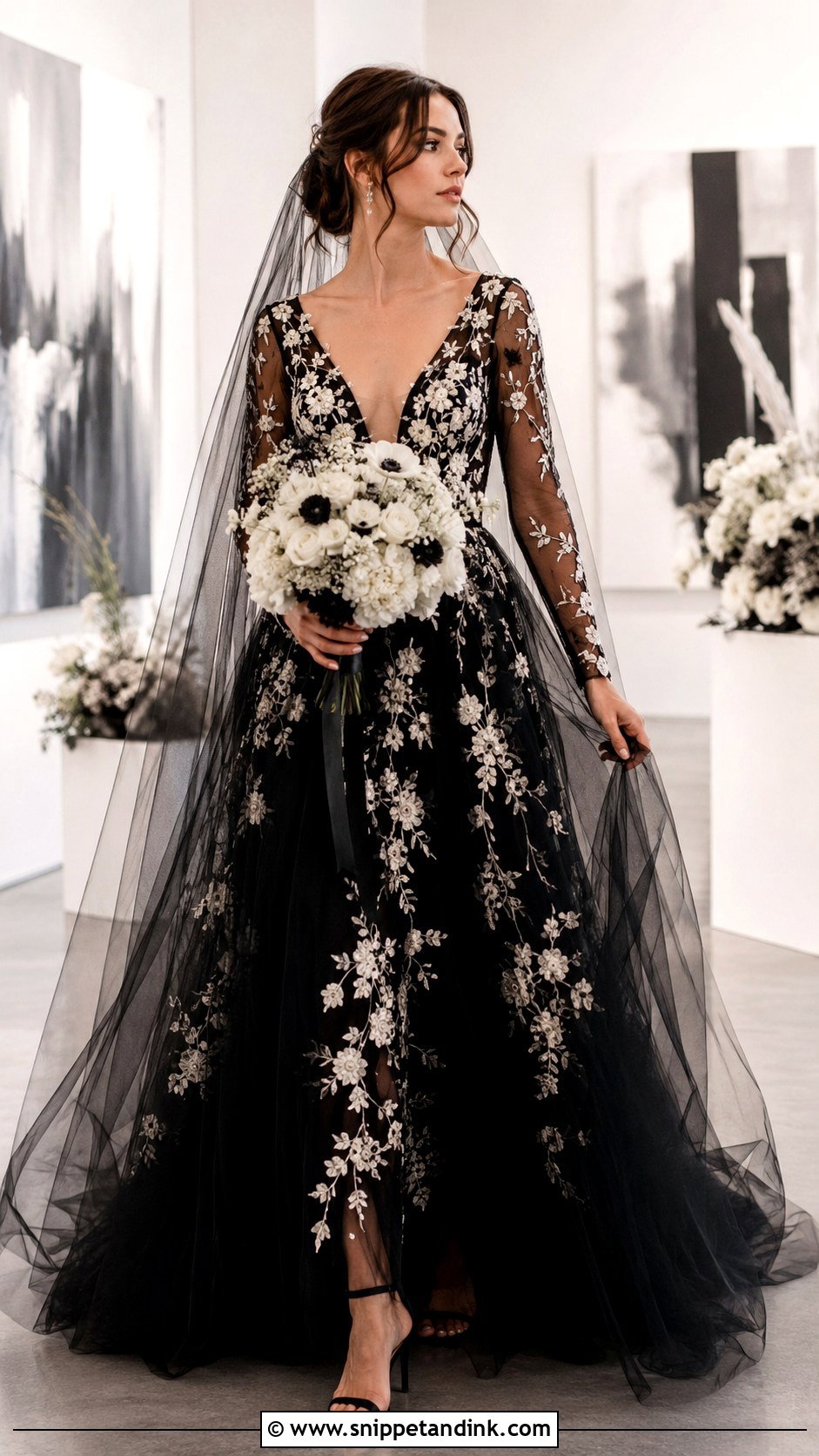
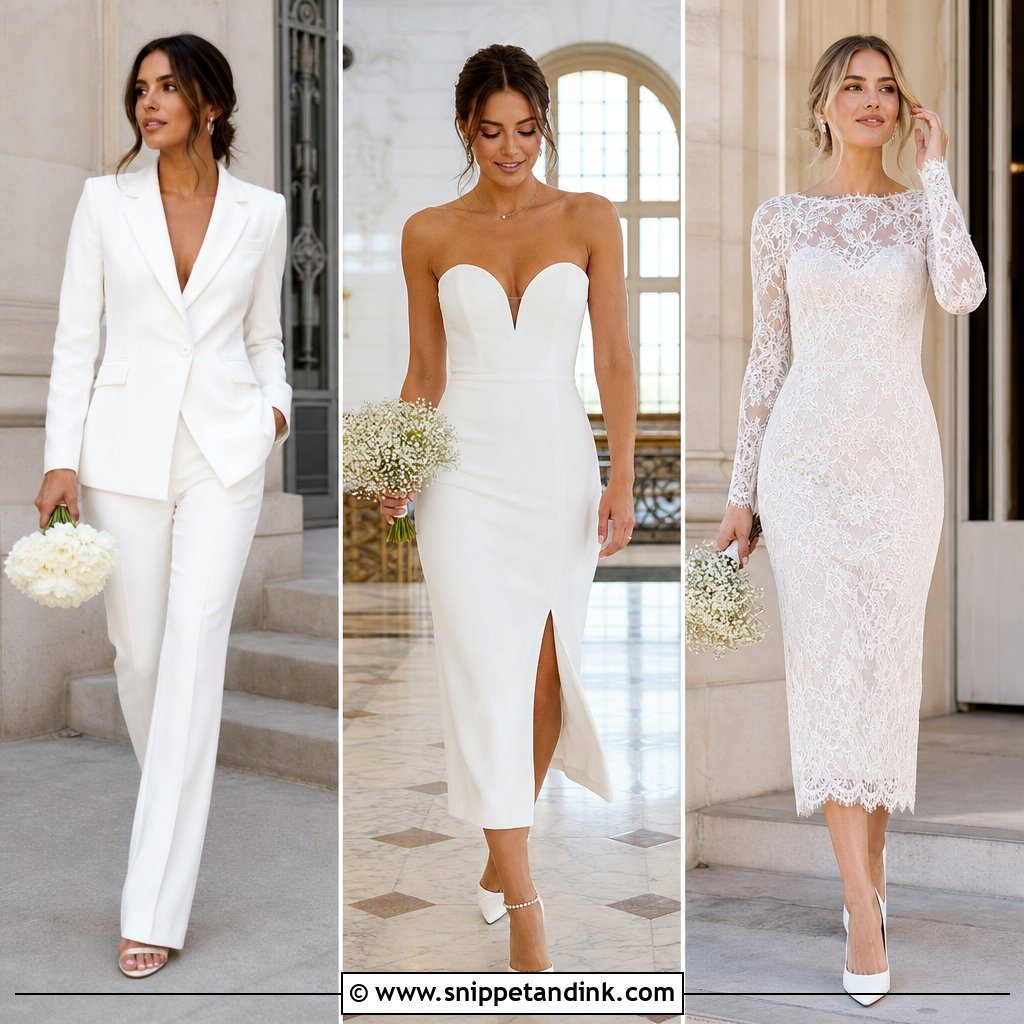
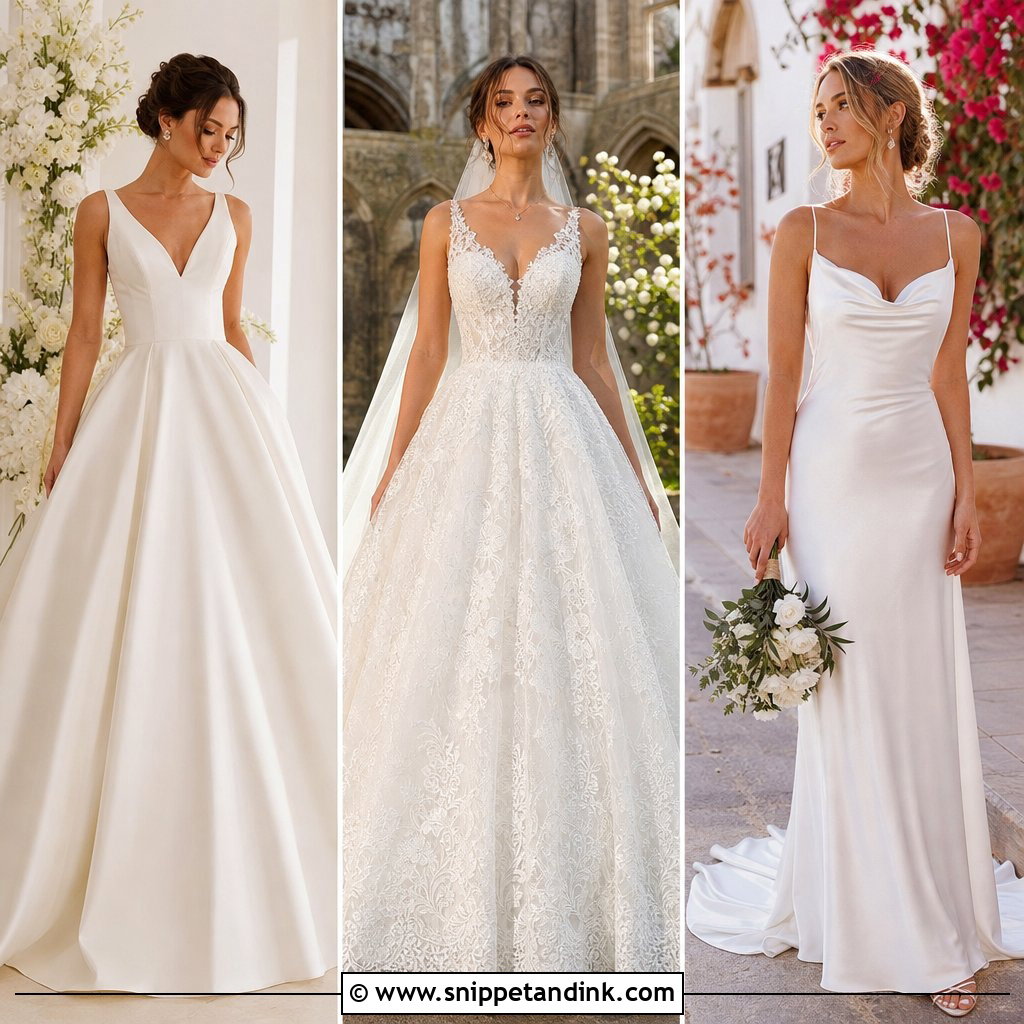
Black flowers on a wedding dress turn out surprisingly romantic when they’re handled with care. Black tulle with ivory flowers, a white gown with black embroidery, or a blush dress with dark botanical details all read differently, so try more than one. Dark thread on white shows every stitch, which makes the quality of the work very visible; look closely at the edges of each motif. Evening weddings and artful venues suit it best. Black or ivory heels, delicate earrings, a white or muted bouquet, and a sheer veil to soften it.
Hemming and Bustling a Gown Covered in Blooms
Alterations take longer on a floral gown, so plan for them. A plain hem gets cut and stitched. A lace or appliqué hem usually has to be lifted from the waist, or its motifs unpicked, moved up and sewn back on by hand. Most seamstresses want a first fitting roughly two to three months before the wedding, with two or three appointments after that, though lead times vary a lot with the season.
Bustles need thought too. Every bustle point is a hook or button sewn through the skirt, and on a floral train the seamstress has to tuck them behind motifs so they don’t pucker the pattern. Ask for a practice session with whoever will bustle you on the day and photograph each step. Colored ribbon ties on the inside make it far easier in a dim reception room.
Grass Stains, Pollen and the Morning After
A garden ceremony leaves its mark. Lily pollen in particular stains ivory fabric yellow, so I ask florists to pull the anthers from any lilies near the bride. If pollen does land on the dress, don’t rub it; lift the loose grains with sticky tape and leave the rest for a cleaner.
Get the gown to a specialist cleaner within a few weeks, before invisible sugar from spilled drinks oxidizes into brown marks. Then store it folded in acid-free tissue inside a breathable box rather than on a hanger, because the weight of 3D flowers and beaded lace slowly pulls on the shoulder seams. Keep it out of plastic and away from an attic’s swings in heat.
Your Garden, Your Hem, Your Flowers
Start from the ground you’ll be standing on. Grass, gravel, a terrace or a ballroom floor will tell you which hem length, fabric and flower placement will survive the day, and the list narrows itself from there. Some brides land on soft lace and a classic veil; others go for a colored print, 3D appliqués or black embroidery. Watch how the gown moves when you walk and sit, then let the shoes, veil, hair and bouquet support it rather than repeat it.
You'll Like These Ideas:


Leave a Reply