
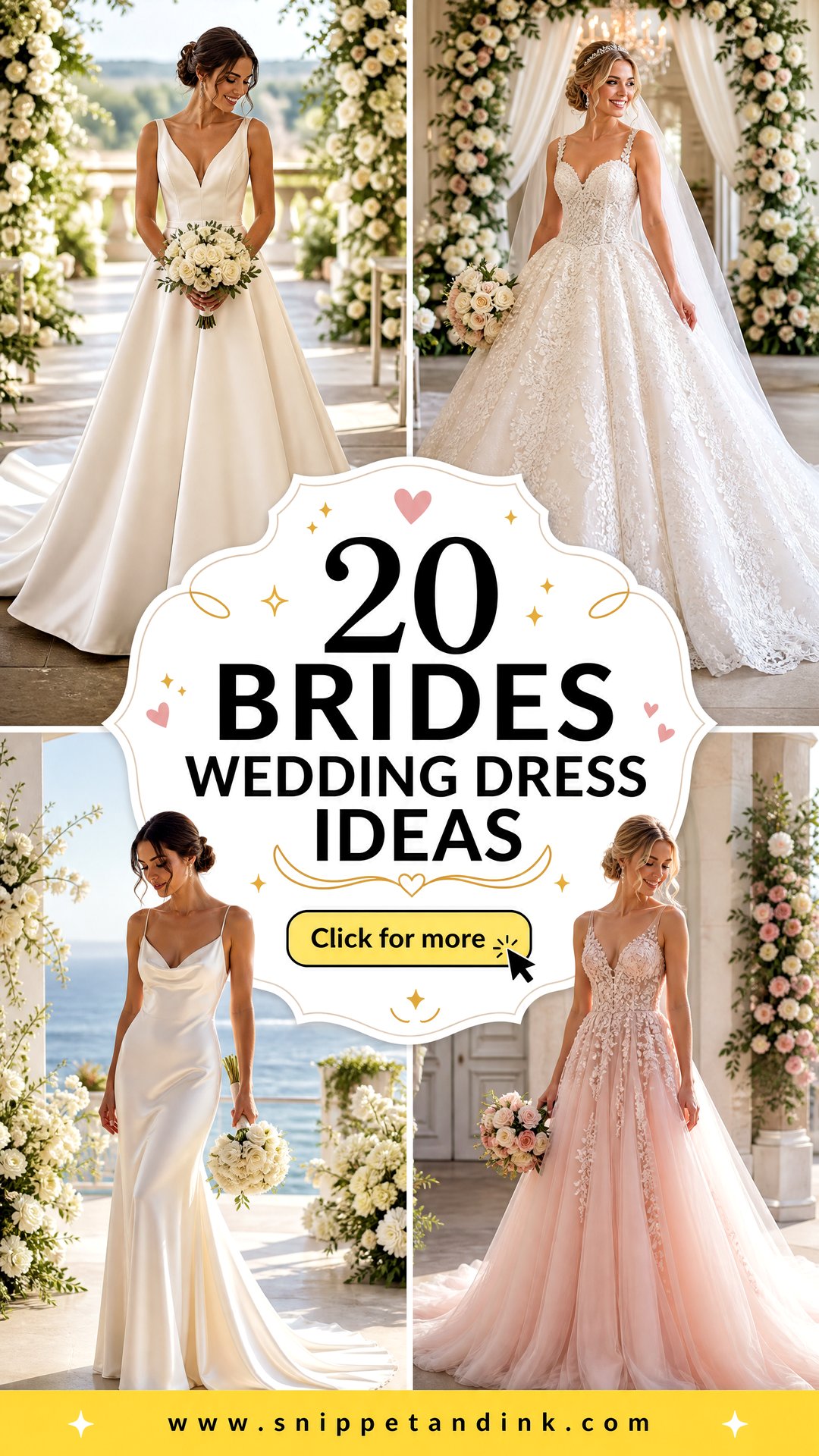
Brides often fall for one detail, a neckline or a sleeve, and then find the whole gown doesn’t suit them. I find it far more useful to look at complete outfits: dress, shoes, veil, jewellery and hair together. The ideas below run from classic silhouettes and modern necklines to soft fabrics and practical finishing touches for different venues, seasons and bodies. Lace, basque waists, sculptural necklines, clean fabrics and removable layers are all still strong in bridal collections. Treat these as starting points for your salon appointments, and keep three things above trend: whether you can move, whether the gown supports you, and whether a skilled seamstress can fit it to you.
Your First Gown Appointment and the Months After It
Most bridal gowns are ordered, not bought off the rail. The shop sends your measurements to the maker, and production often takes four to six months, sometimes longer. Alterations need two to three fittings after that. So I tell brides to start trying on around nine to twelve months out, and to treat the first appointment as research, not a deadline.
- Wear nude, smooth underwear and bring a strapless bra. You can’t judge a low back or a slip dress over a patterned bra.
- Bring shoes close to the heel height you plan to wear. Hem length and proportions change with every inch.
- Keep the group small. Two or three people whose taste you trust give clearer feedback than six opinions.
- Samples are usually one or two sizes and clipped at the back. Look at shape and fabric, not exact fit.
- Try one silhouette you’d never choose. It is the quickest way to learn what your body likes.
Before you sign, ask what alterations are included, how many fittings are typical and when the first fitting should be booked. Those answers matter as much as the price on the tag.
1. A-Line Satin Wedding Dress
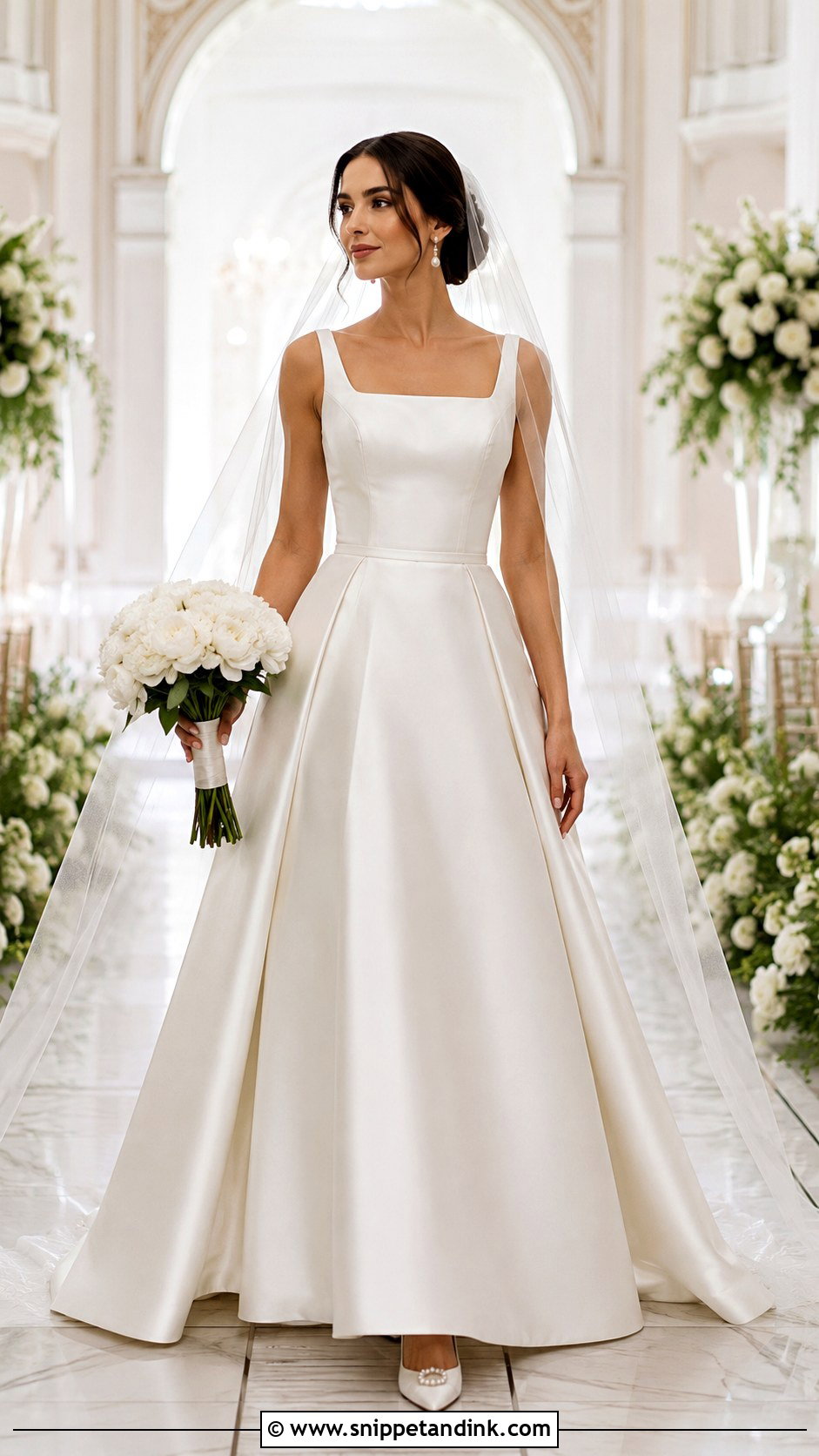
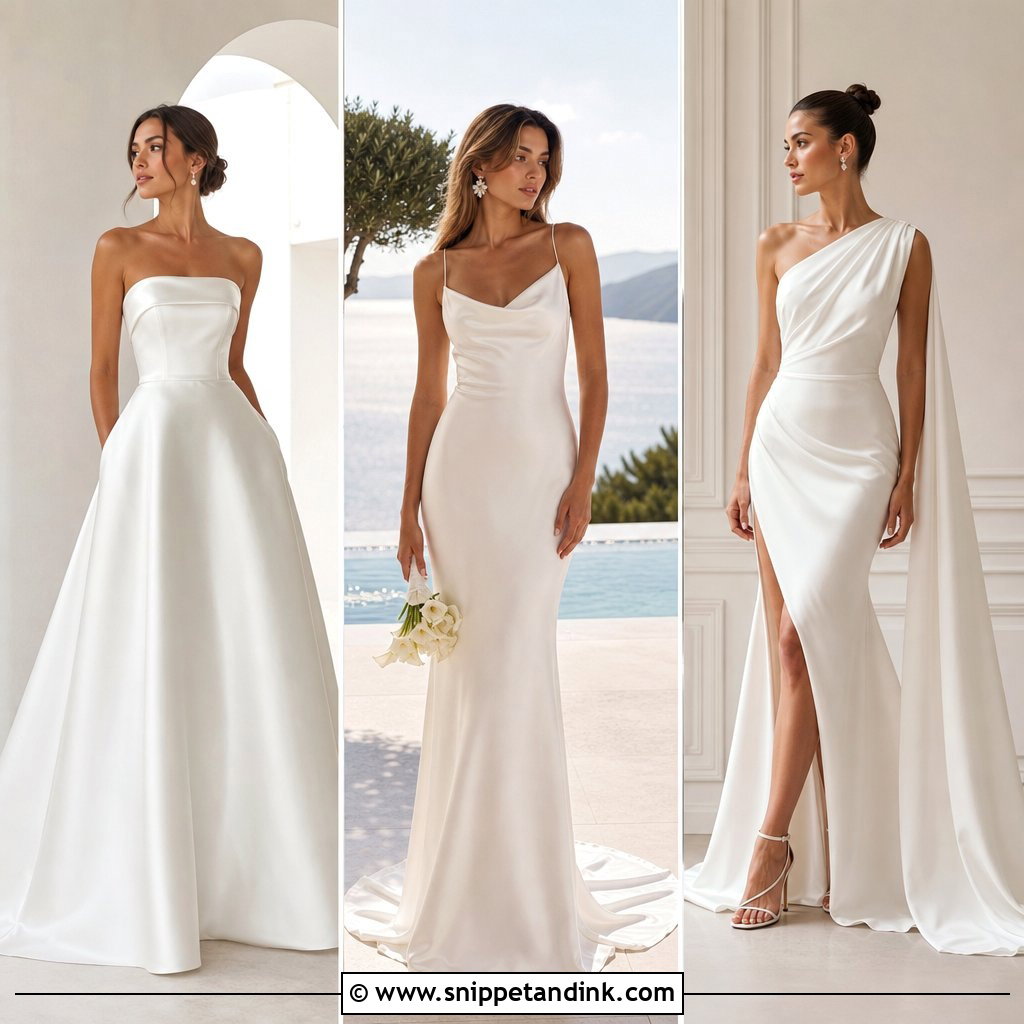
A-line satin is the shape I’d hand most brides first, simply to see how they react. A fitted bodice with wide straps or a soft curved neckline, a skirt that falls cleanly from the waist, and satin’s sheen doing the decorating. Pointed ivory pumps, pearl drops and a fingertip veil with a plain edge; a compact bouquet so the lines stay visible. For a cool evening, a cropped satin jacket or matching wrap. Satin marks easily, though. A drop of water or a sweaty palm leaves a spot, so hold the skirt by the lining when you lift it. Have the hem set while you’re wearing the exact wedding shoes, so it clears the floor without hiding them.
2. Lace Ball Gown Wedding Dress
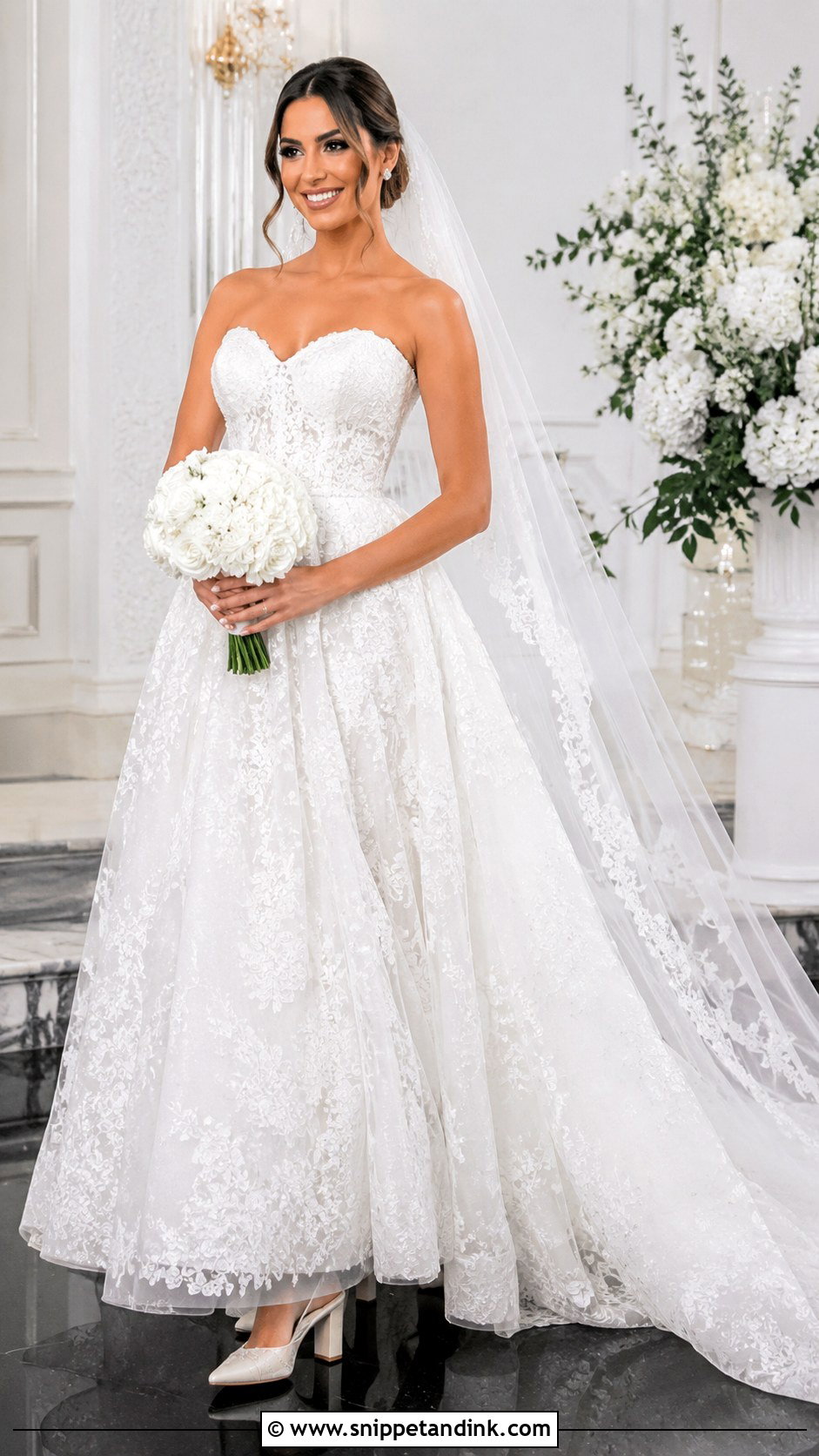
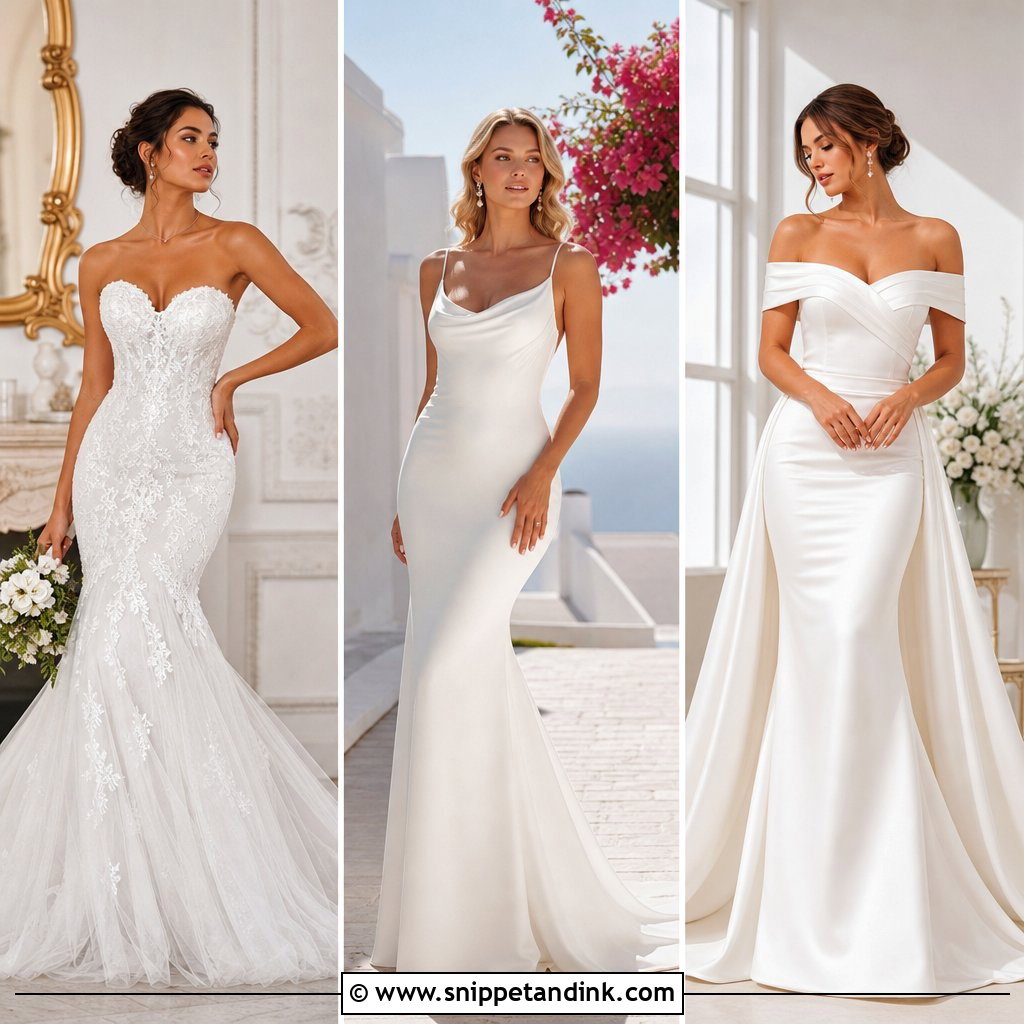
A grand ceremony can carry a lace ball gown. Look for a supportive bodice, a defined waist and a full layered skirt in lace or placed appliqués; a sweetheart or modest scoop neckline softens the volume around the face. Comfortable block-heel pumps, crystal studs and a cathedral veil that follows the train. With a detailed bodice, skip the necklace, and wear a low bun so neck and veil stay clear. Full skirts are heavier than they look; layers of tulle and lace can add real weight on the hips. Practise sitting, turning and walking in it at a fitting, and ask how the skirt is supported, whether with a built-in petticoat or a separate one.
3. Off-Shoulder Mermaid Wedding Dress
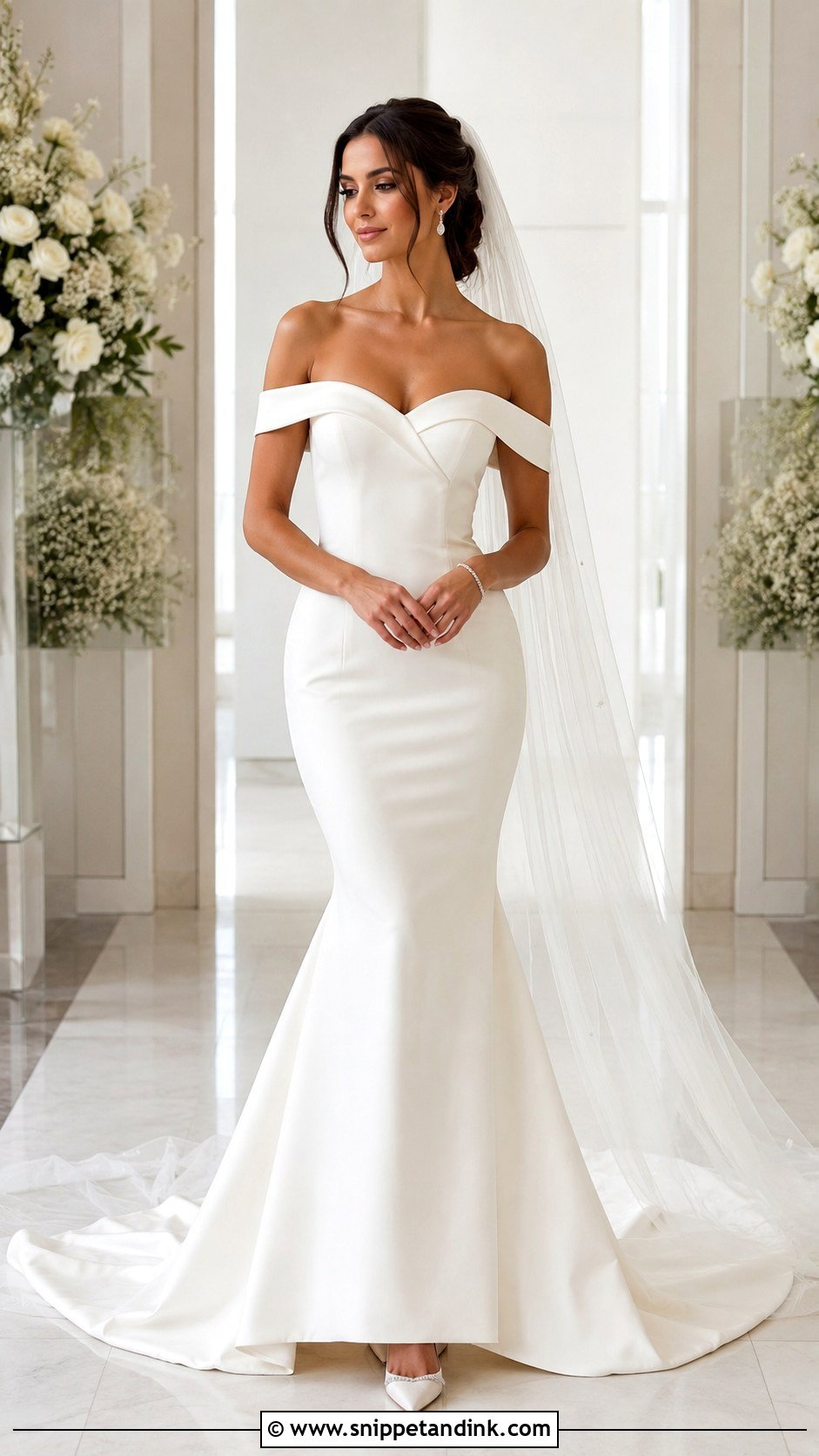
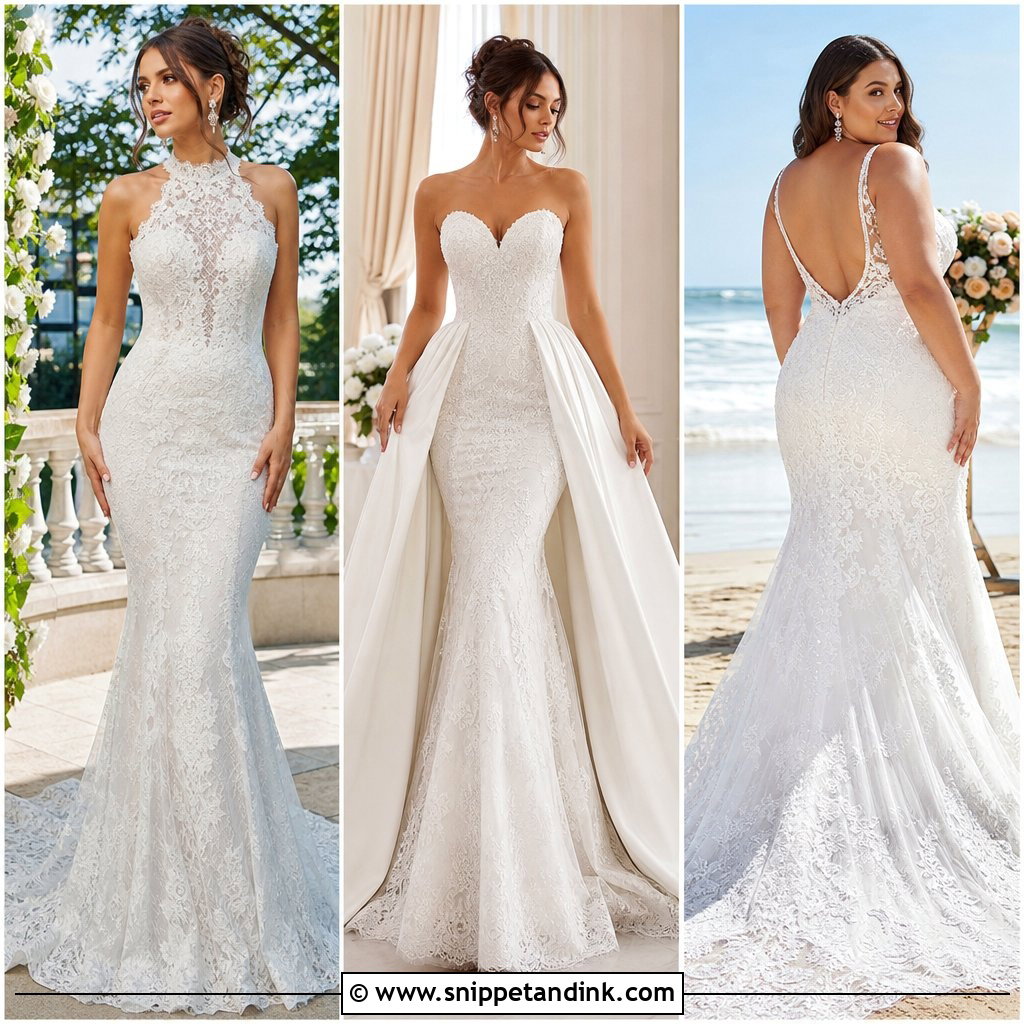
An off-shoulder mermaid shows the most shape of any silhouette here. The neckline draws the eye to the shoulders, and the skirt follows the body to the knee before flaring. Stretch crepe, lace or smooth mikado give structure while letting you move. Sleek pointed heels, delicate drops and a simple bracelet; a long veil for the ceremony, off for dancing. The flare point is everything. Set too low, it hobbles you on stairs; too high and the shape looks like a trumpet instead. I’d book careful alterations at the hips and hem, and if you want more coverage, detachable off-shoulder sleeves keep options open.
4. Long Sleeve Lace Wedding Dress
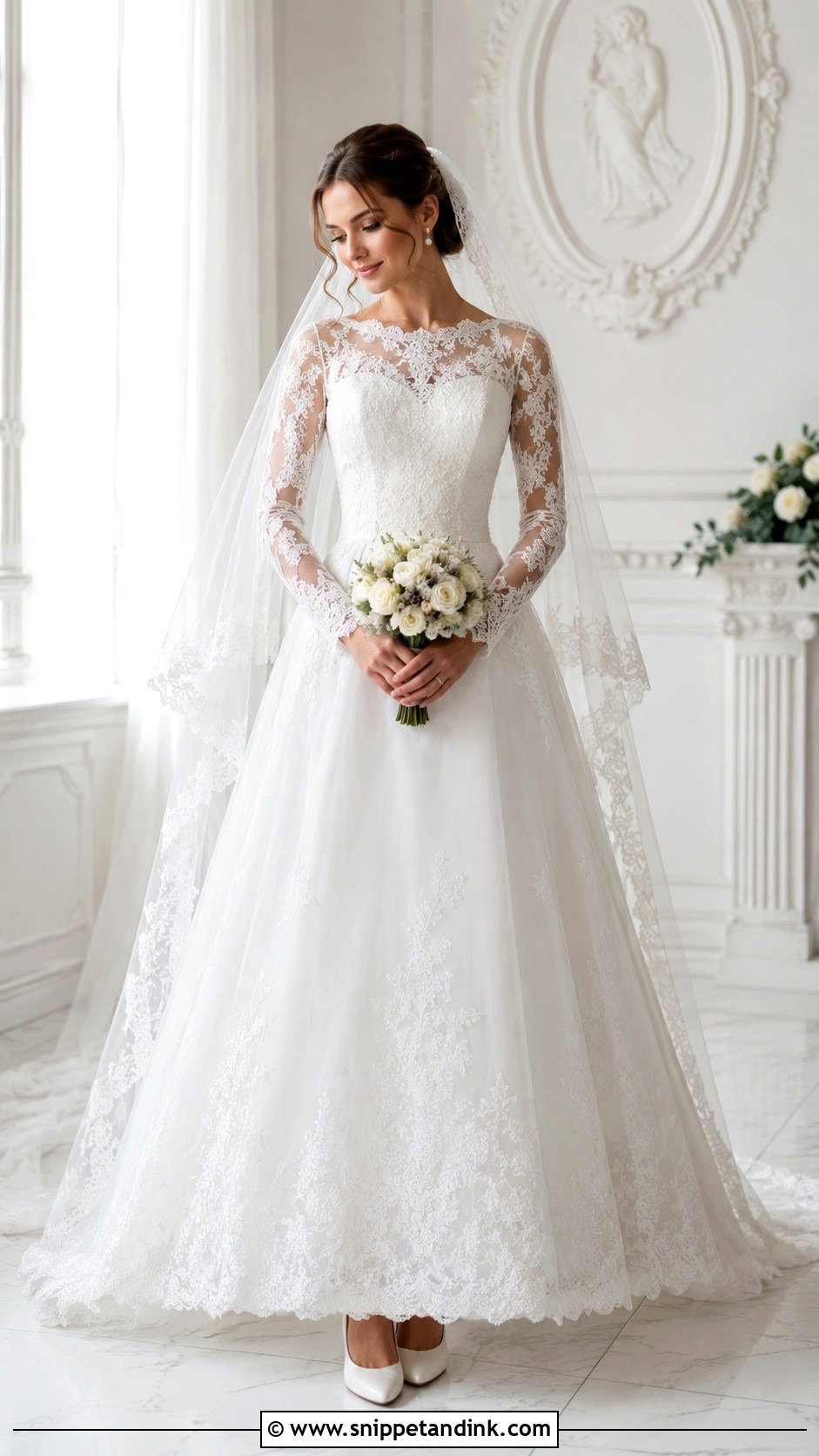
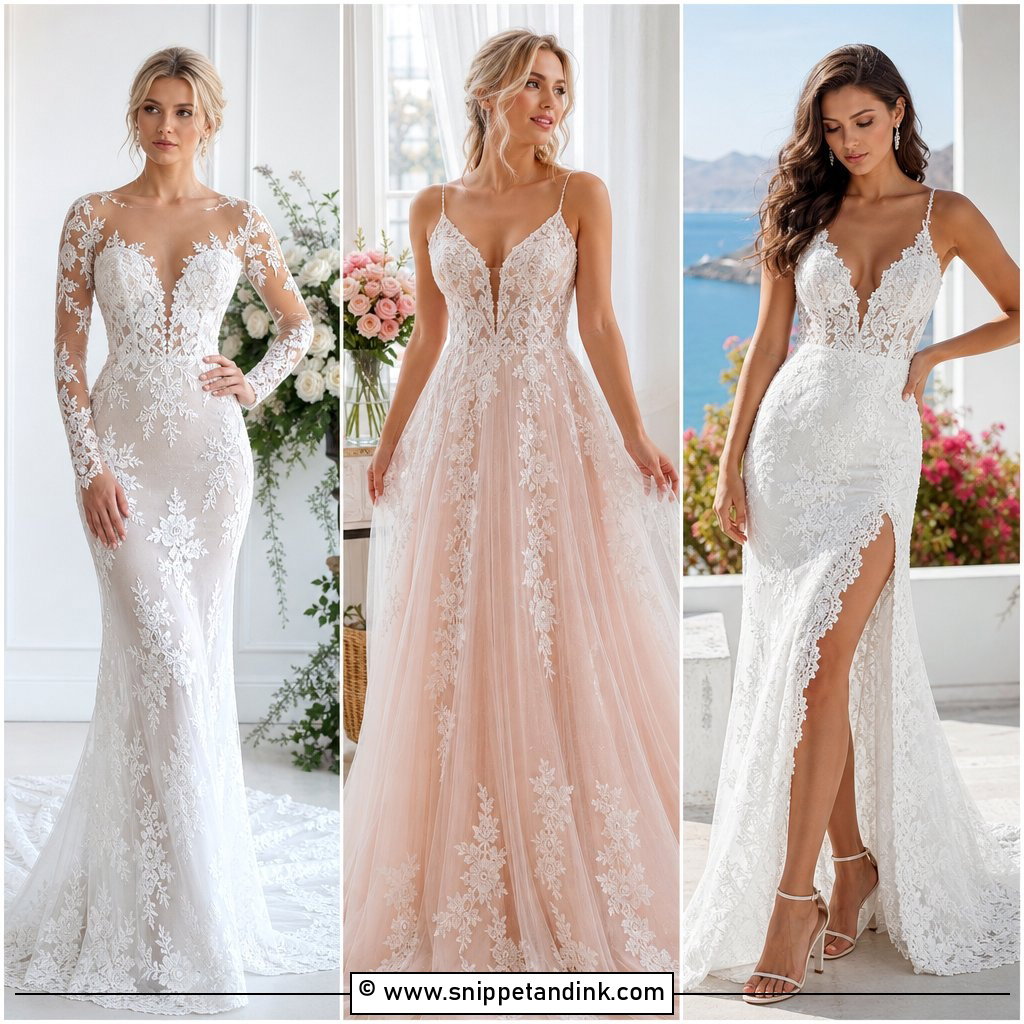
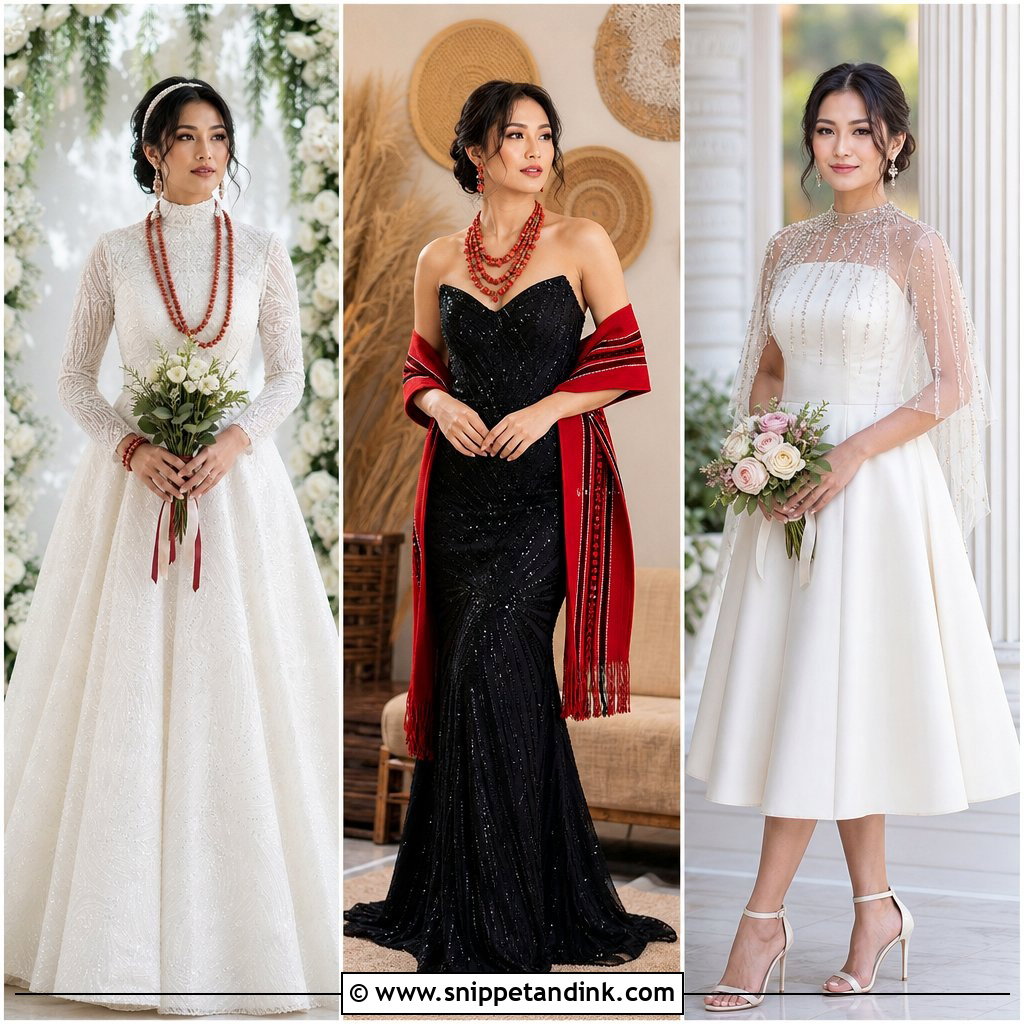
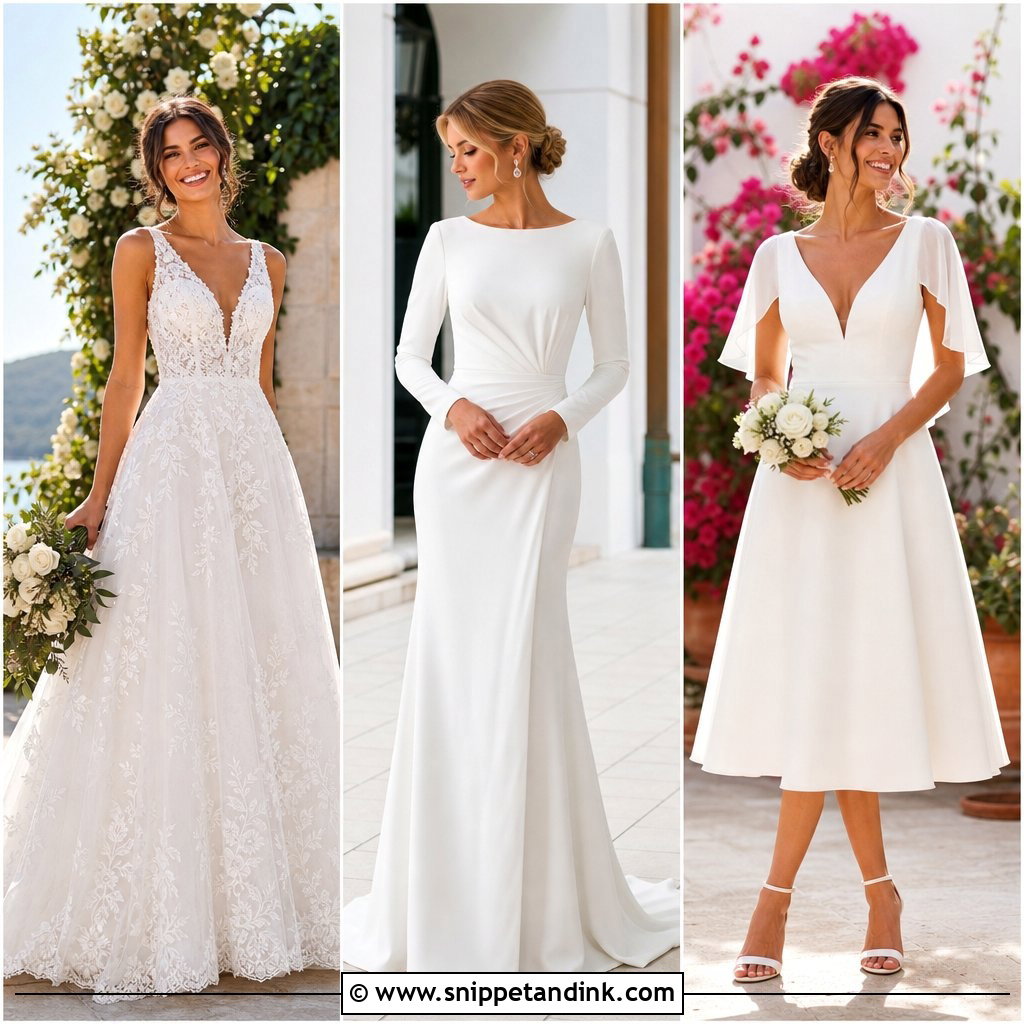
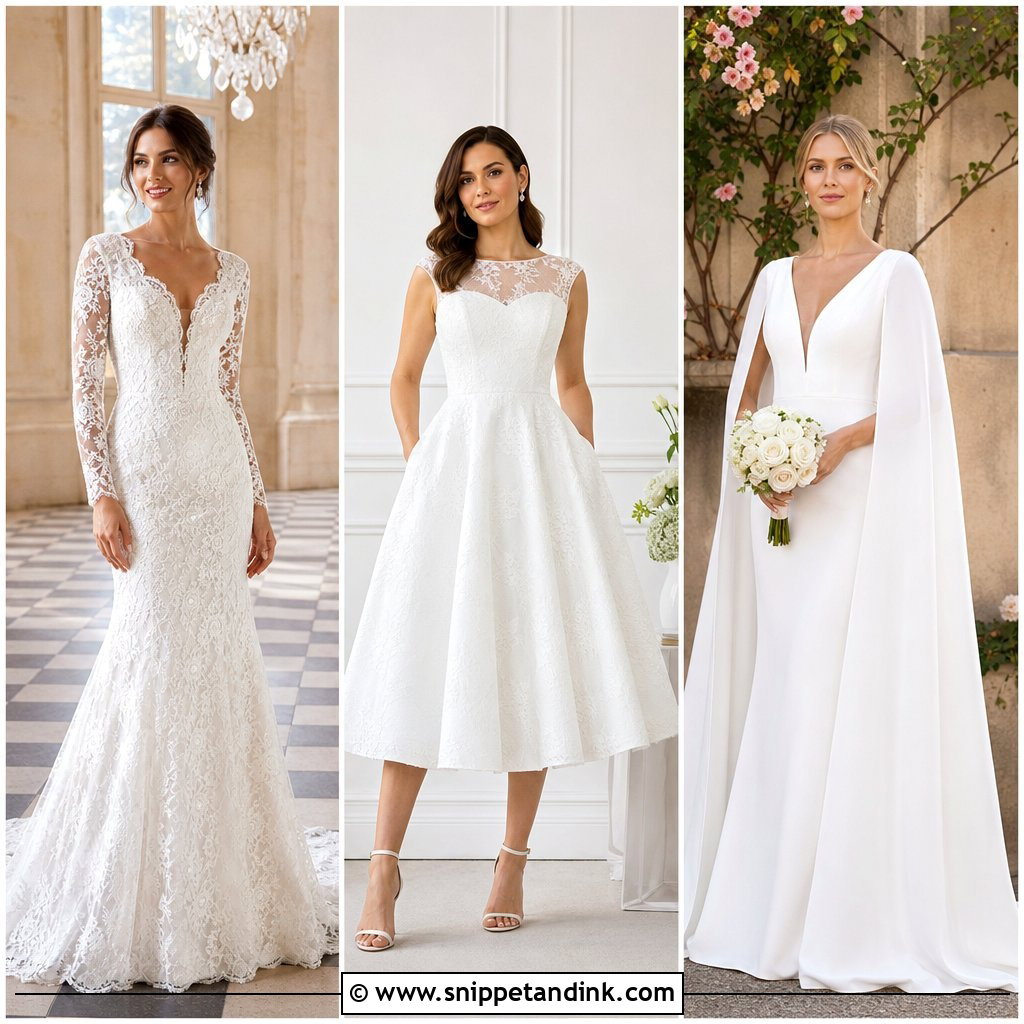
Long lace sleeves suit cool weather and brides who want a composed, romantic look. Illusion sleeves with lace motifs give light coverage; lined sleeves give more. An A-line or softly fitted skirt balances the detailed top and stays easy to walk in. Closed-toe pumps, pearl earrings and a sheer veil with a fine lace edge, plus a small comb rather than anything that fights the sleeves. Lift your arms in the fitting room. A tight lace sleeve with a low armhole pulls the whole bodice up when you hug someone, and you’ll hug a lot of people. Covered buttons at the cuff are a neat finish and make the sleeve easier to get on.
5. Square Neck Column Wedding Dress
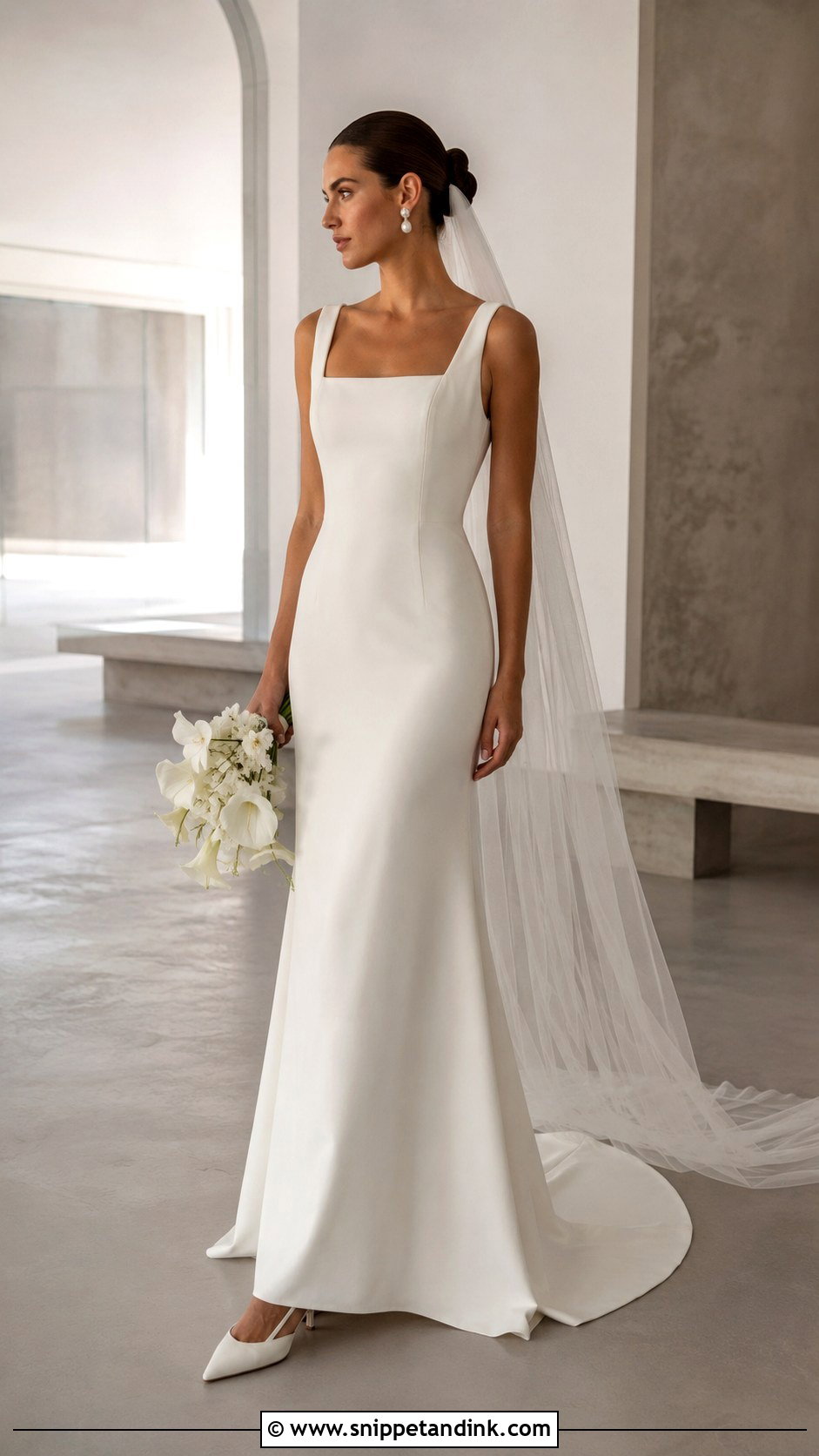
A square neck column is clean and architectural. The neckline frames the collarbone, and the narrow skirt follows the body without a mermaid’s flare. Choose a substantial crepe or satin that drapes smoothly. Low slingbacks, sculptural pearl earrings and a sleek bun or soft waves tucked behind the ears; a chapel veil adds ceremony drama without breaking the minimal mood. Ask about a removable train or a bustle. A plain column hides nothing, so I check the fit from the side and back as carefully as the front, especially the waist, side seams and where the back zip sits.
6. Strapless Basque Waist Wedding Dress
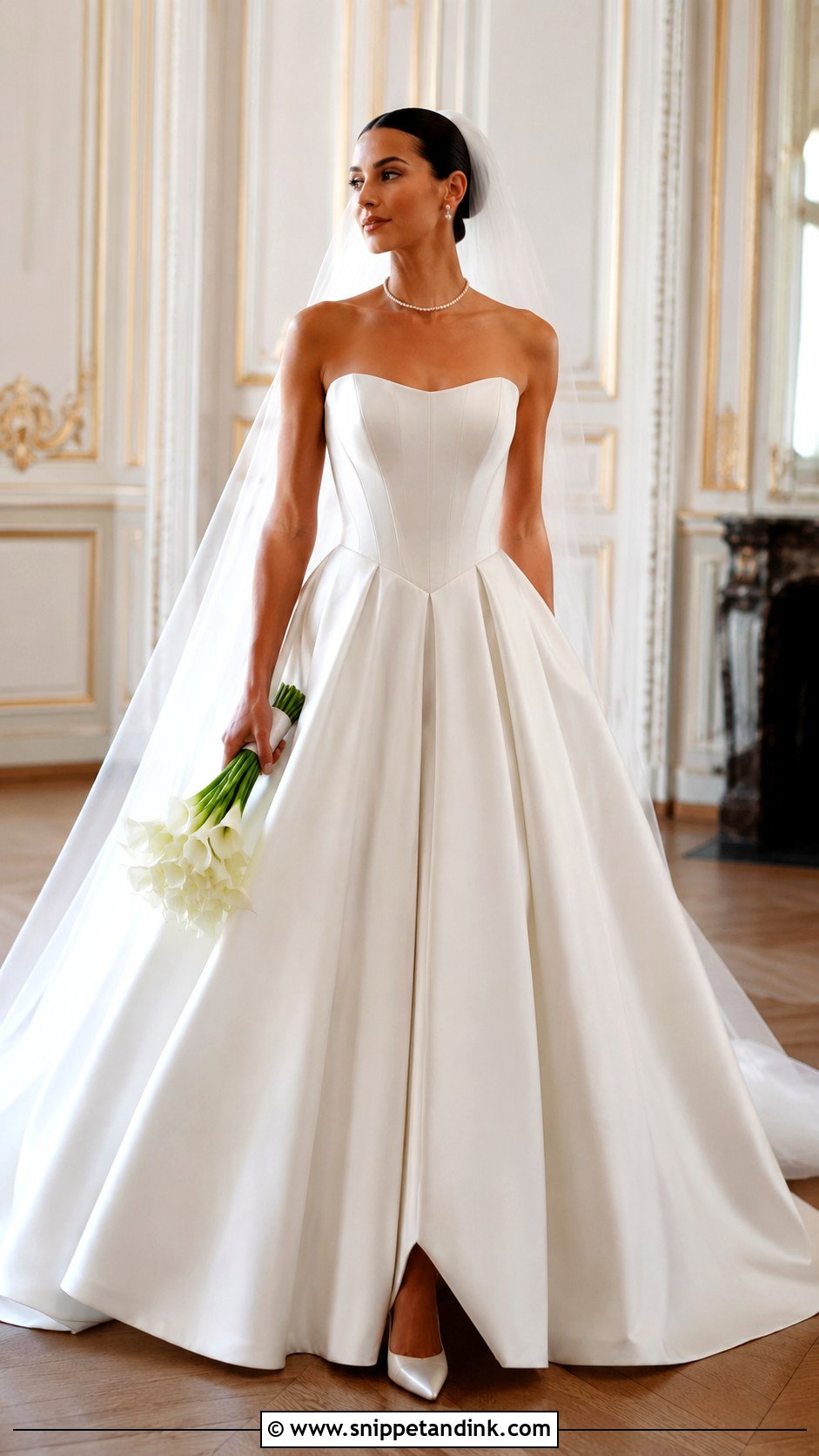
A strapless basque waist wedding dress pairs a structured neckline with a waist that dips into a soft V, then flows into a full A-line or ball gown skirt. Mikado gives crisp structure, satin a smooth finish, tulle more air. Pointed pumps, a short pearl necklace, small earrings and a long plain veil. The bodice has to stay up on its own, so look at the boning and ask whether there’s a waist stay inside; that inner band does most of the holding. The V-point should land just below your natural waist, and it’s an easy thing for a fitter to lower or raise. Detachable straps give a reception option, and a streamlined bouquet keeps the waistline visible.
7. Silk Slip Wedding Dress
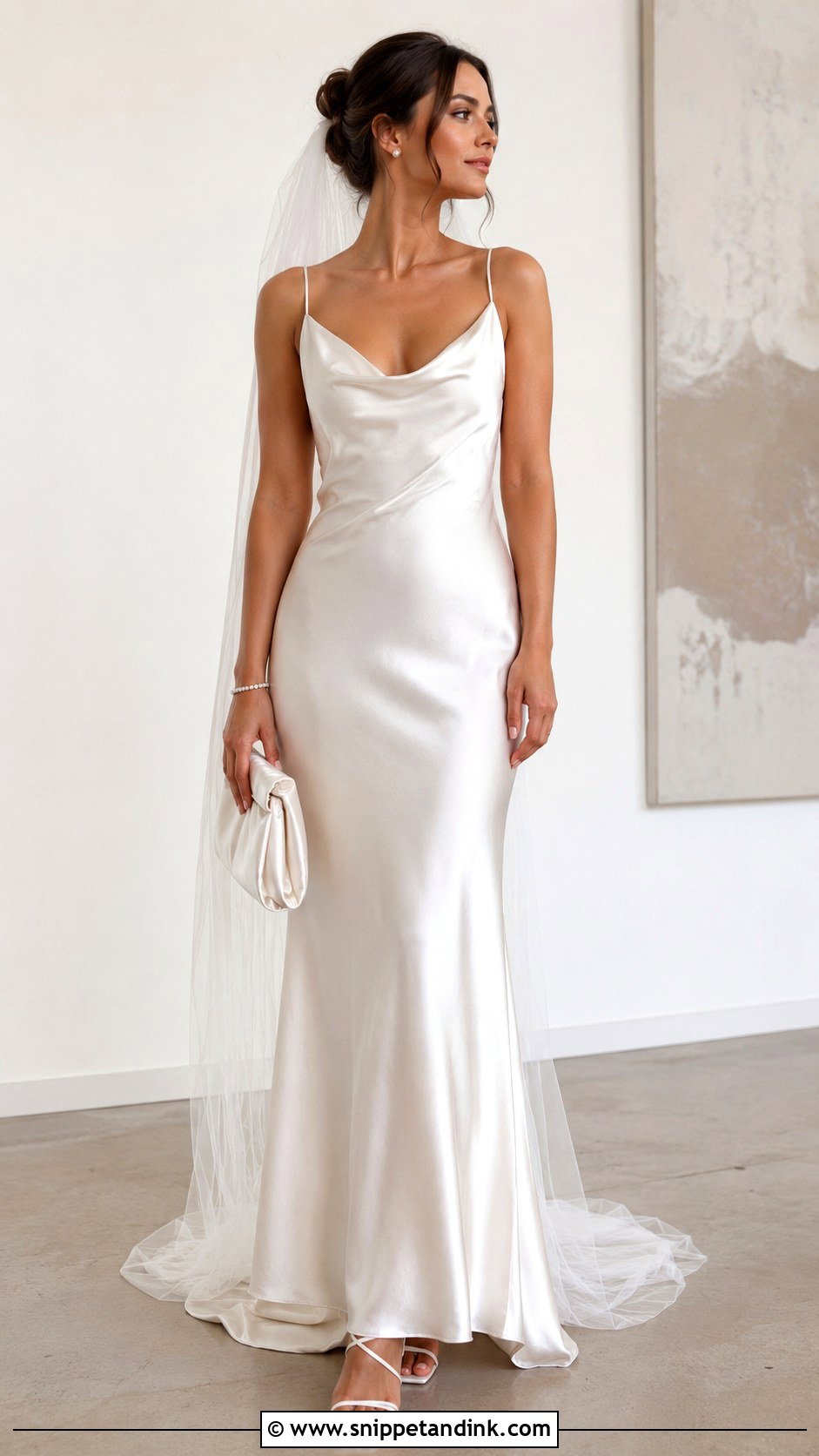
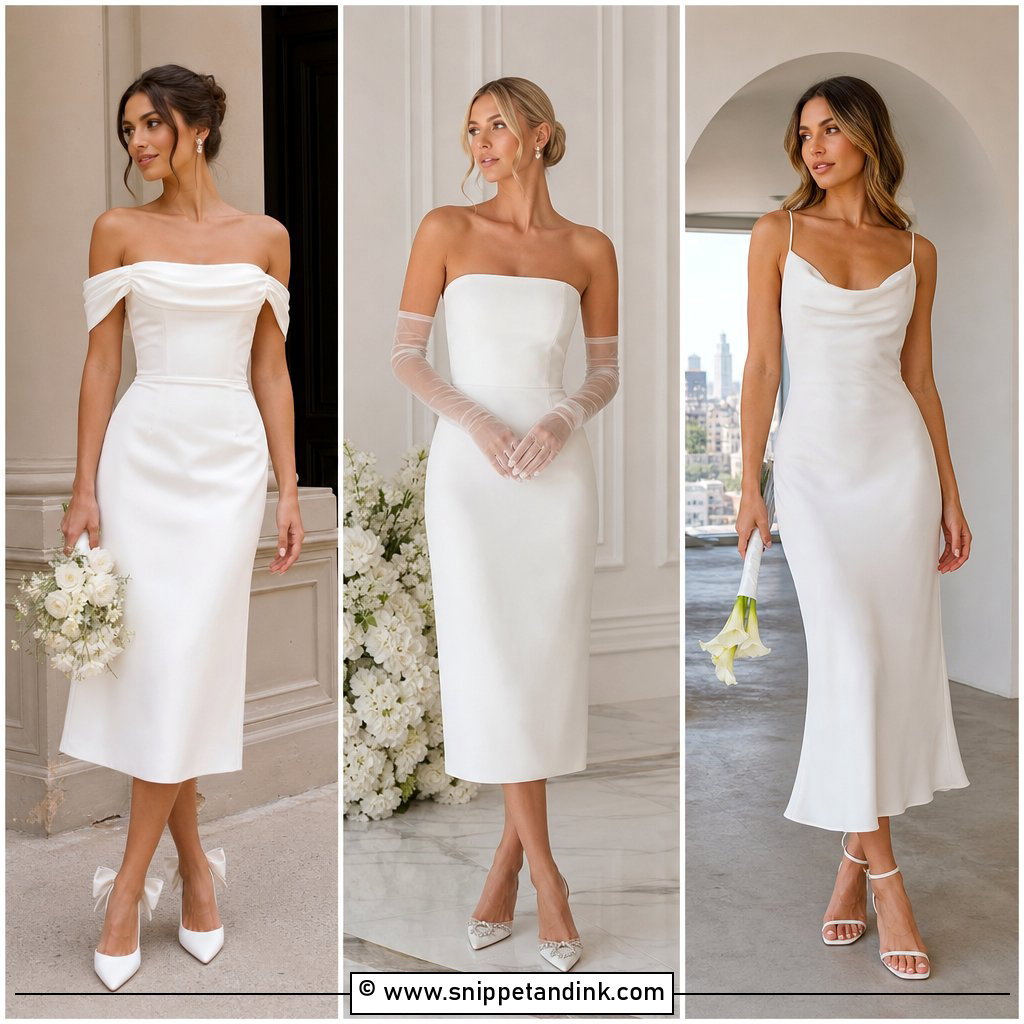
A slip dress is all about how silk moves. Choose a bias-cut silhouette with a cowl, square neck or simple V, depending on how much support you need. Delicate strappy heels, pearl studs, a fine bracelet and a sheer chapel veil; a low chignon and a small satin clutch. Bias-cut silk shows everything beneath it, so try several foundation options at fittings, in daylight if you can. It also creases where you sit, and those marks don’t fall out on their own over the evening. A tailored blazer, lace topper or light shawl adds coverage. Alter it to skim, never to cling, or the bias pulls into diagonal ripples.
8. Tea-Length Wedding Dress
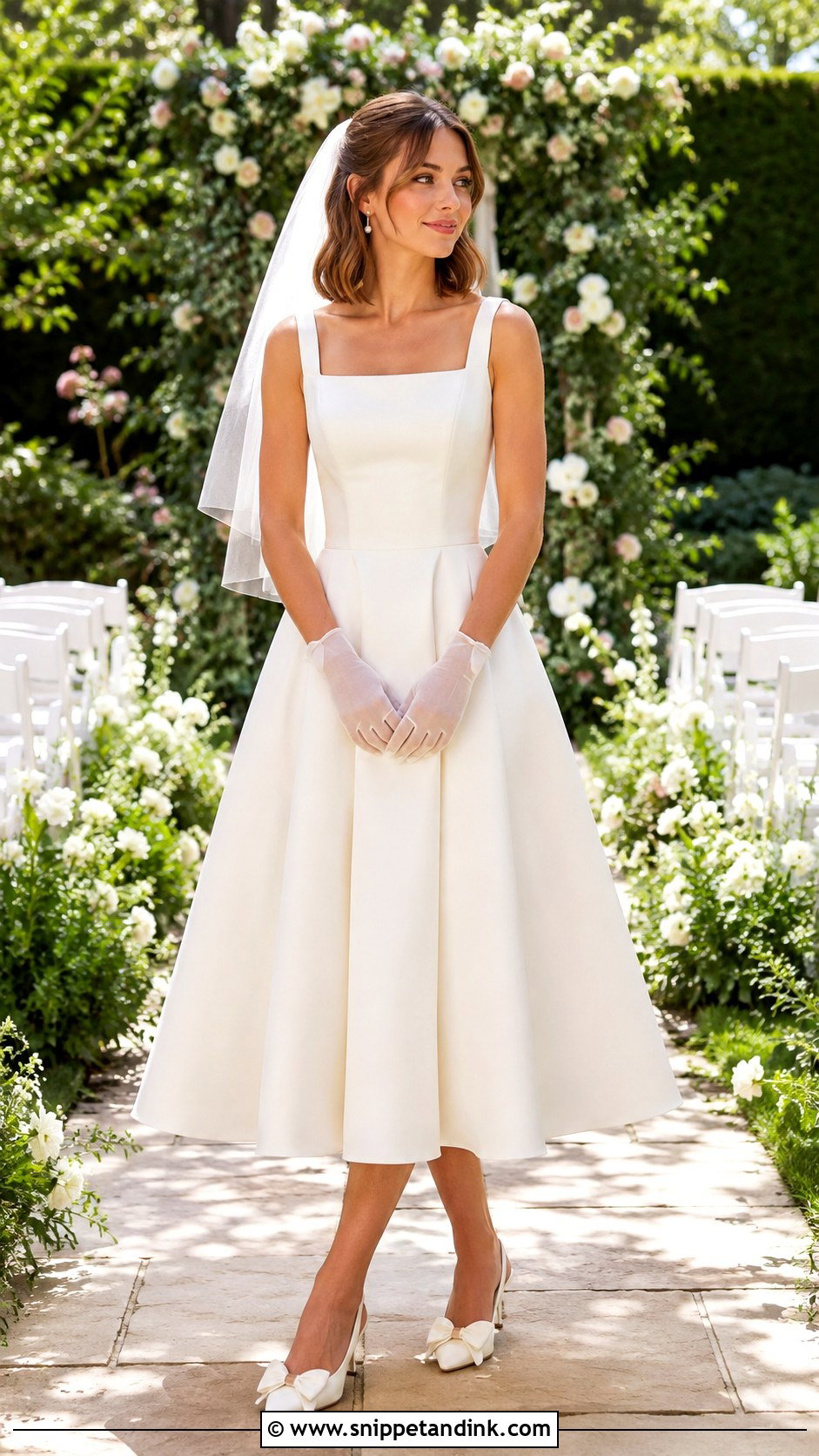
Tea length is cheerful and practical at a civil ceremony, garden or relaxed reception. The hem falls between knee and ankle, so the shoes are on show. A fitted bodice and flared skirt with pointed slingbacks, bow pumps or block heels; pearl earrings, short gloves and a shoulder-length veil for a vintage note, or a structured headband or small bow instead. The skirt moves a lot, so it needs fabric with body: organza, faille or a lined satin, not limp chiffon. I check the hem from behind as well as the front. A full skirt often dips at the back, and it shows in walking photos.
9. High Neck Wedding Dress
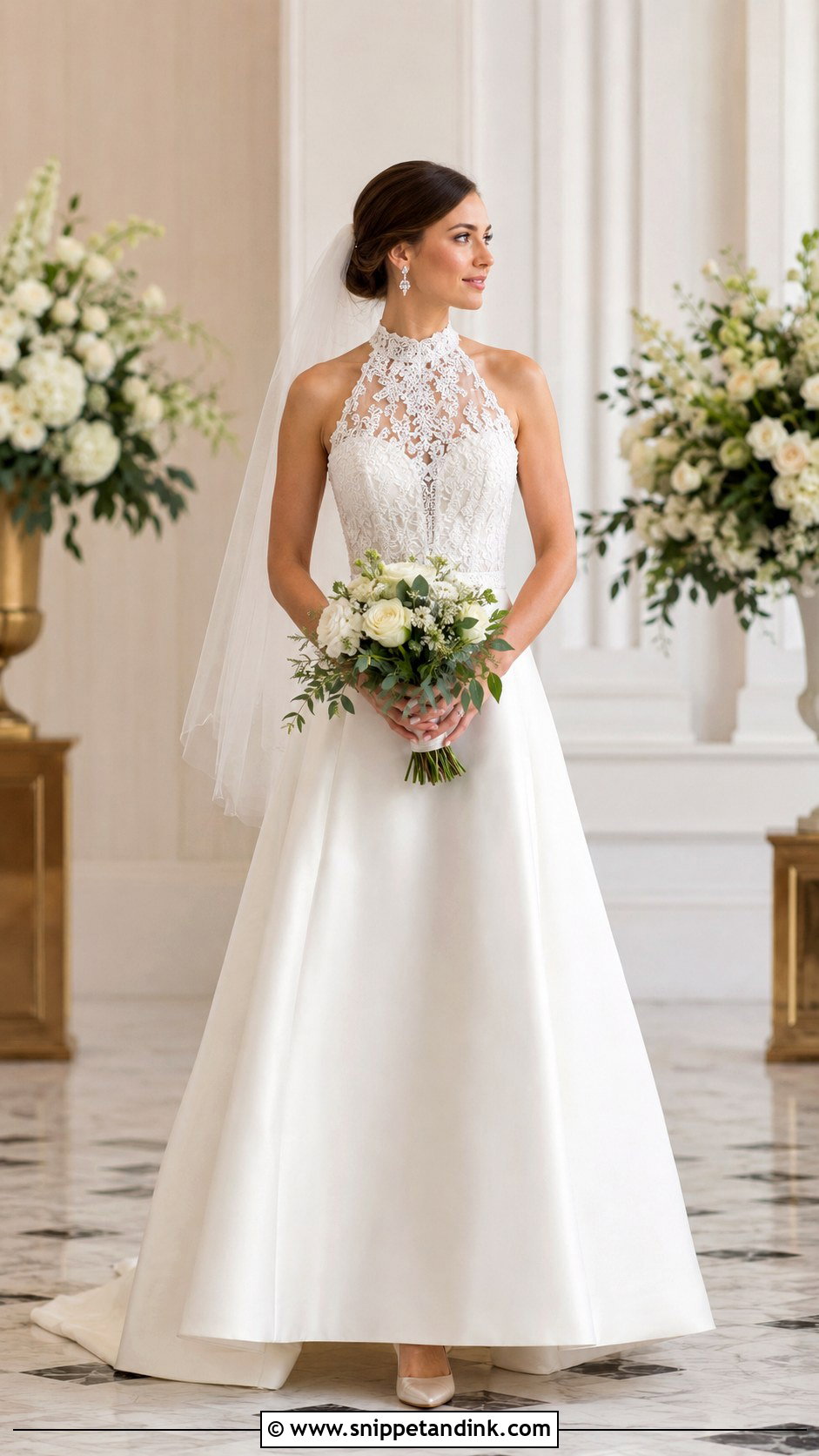
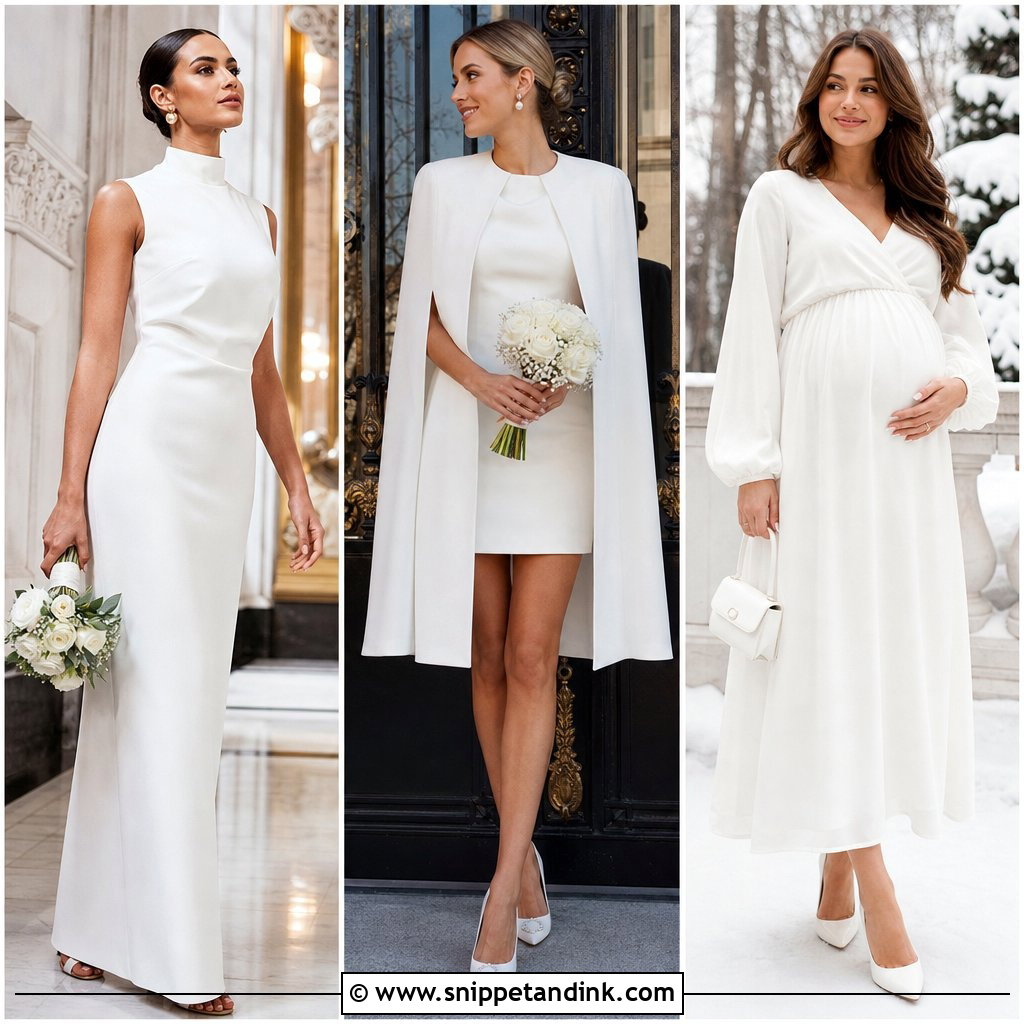
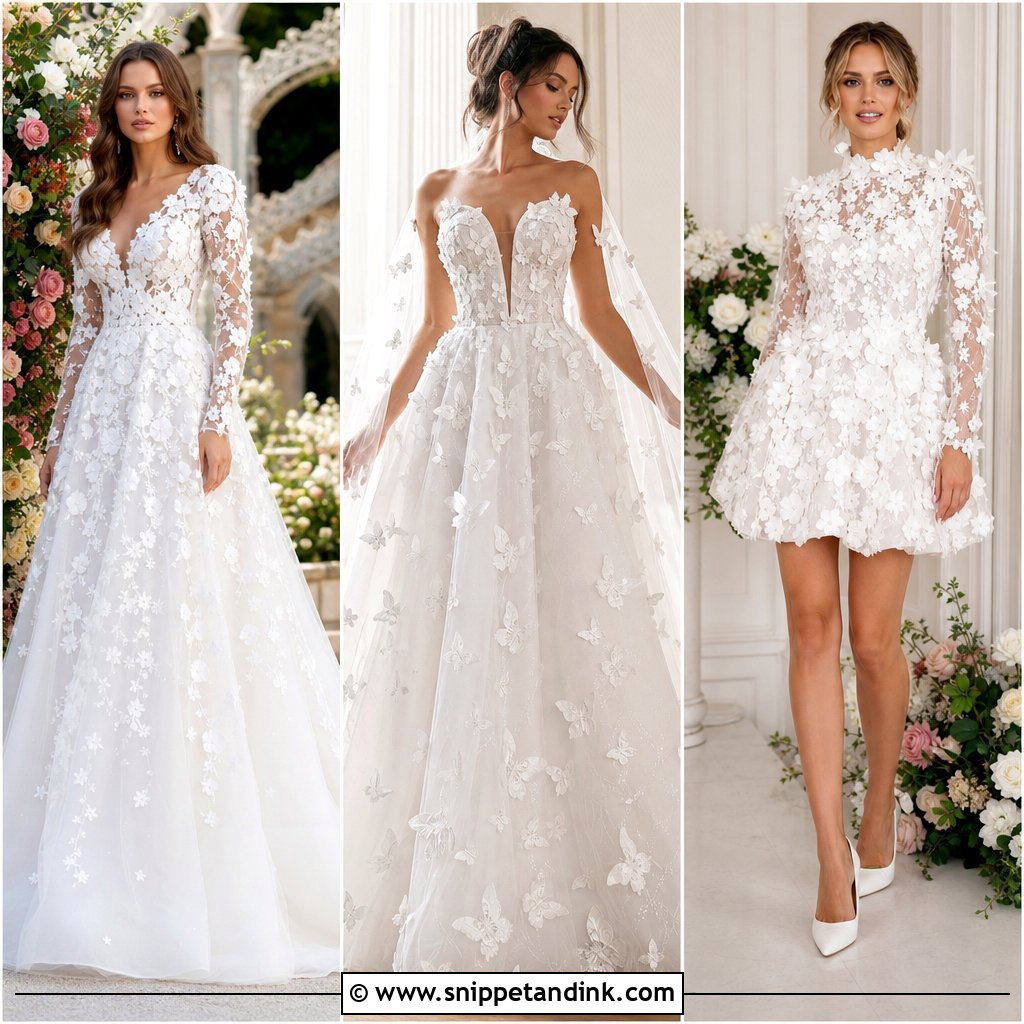
A high neck gives coverage and points everything toward your face. Solid crepe, embroidered lace or sheer illusion can make it minimal or richly detailed. Pair it with an A-line, sheath or column skirt depending on how much you want to move. No necklace; small crystal earrings, a low bun and a veil anchored beneath it. Closed-toe heels or refined ankle straps. Turn your head fully in the fitting room; a collar that’s comfortable facing forward can rub the jaw at the side. If the gown has a detailed back, choose a plain veil you can take off after the ceremony.
10. Corset Tulle Wedding Dress
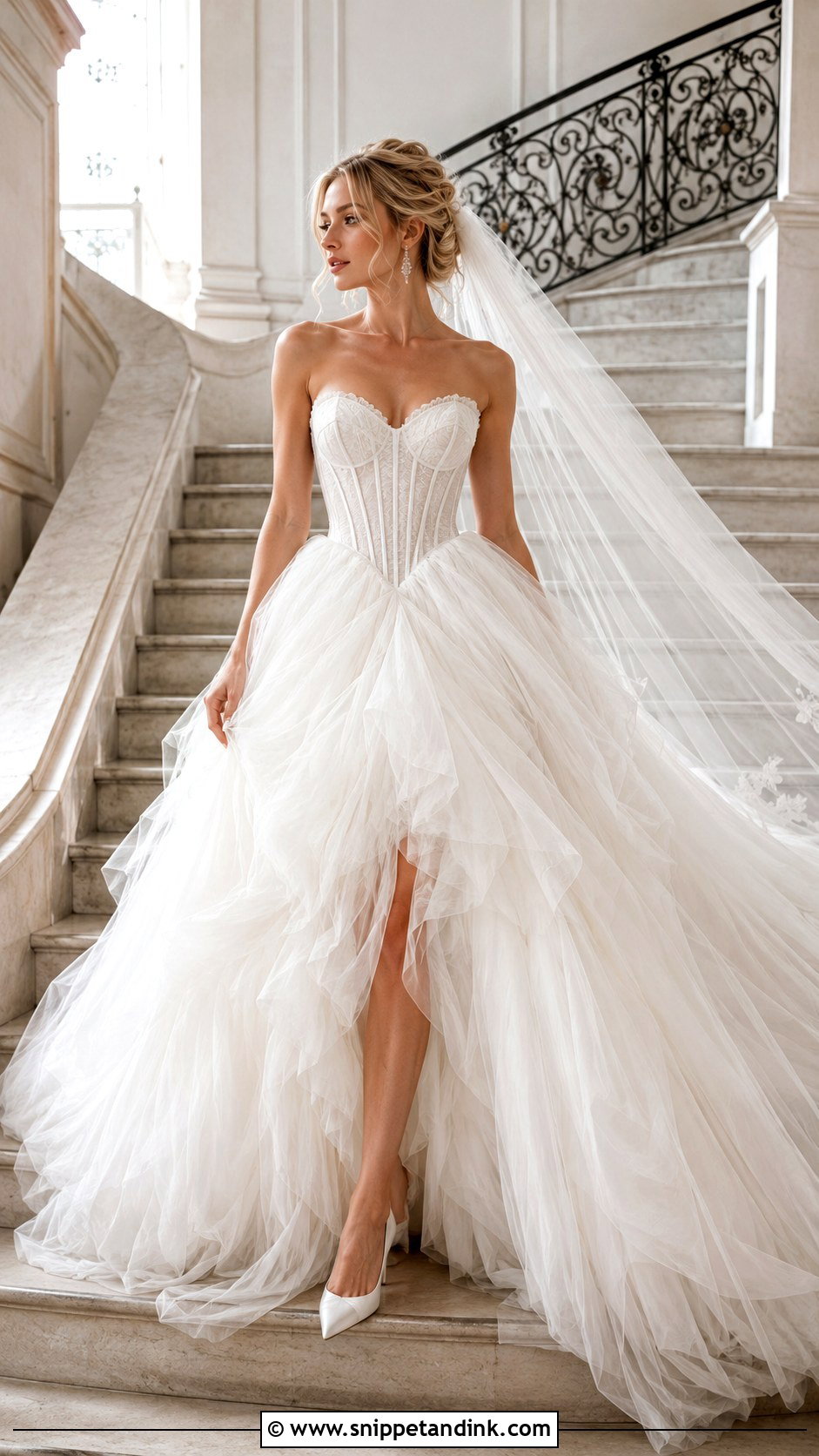
Tulle softens a corset. Choose a bodice with proper boning, secure cups and lined or slightly sheer panels, then a full tulle skirt from the natural waist or a gently pointed one. Crystal earrings, satin pumps and a long veil that floats past the train, with other jewellery kept quiet. At fittings, sit down and take a deep breath. A corset that’s right standing can dig in at the lower ribs when you sit for dinner. Tulle snags on heel tips and beaded bags, and it crushes in a car, so I tell brides to spread the skirt out flat on the back seat. A good bustle lifts the layers for the reception.
11. Boho Chiffon Wedding Dress
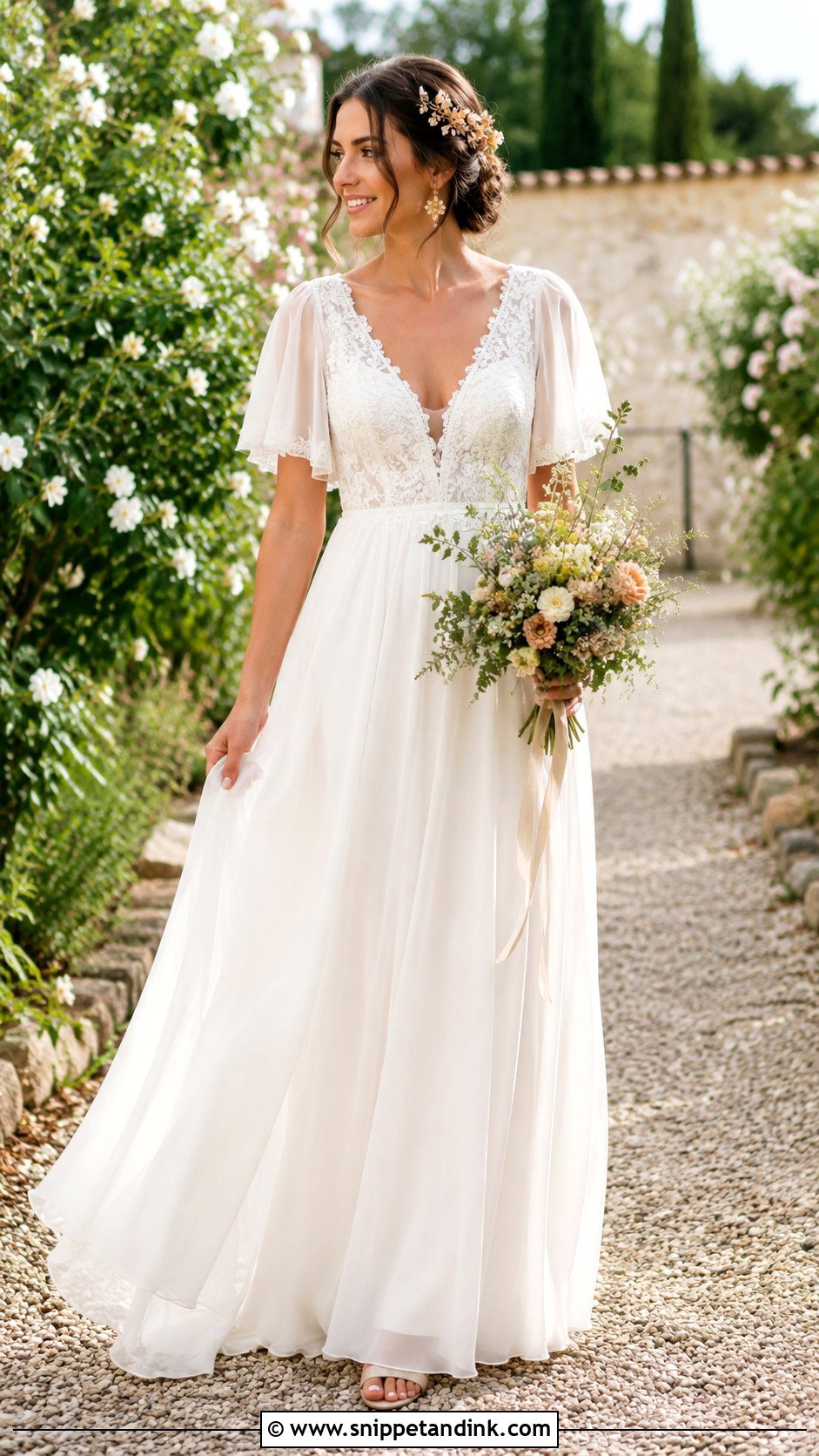
Chiffon belongs outdoors, where a bit of breeze moves it. A relaxed A-line skirt, a lace-trimmed bodice and soft flutter sleeves make a boho outfit that doesn’t look like costume. Low block-heel sandals, fine gold earrings and a light veil or floral comb, with loosely gathered hair. Check the skirt lining against bright light; a single chiffon layer over a thin lining can turn see-through in the sun. A long hem catches on grass and uneven ground, so keep the train short. Chiffon also frays at the hem, so ask for a rolled edge if it’s being shortened. Finish with a hand-tied bouquet and a small textured clutch.
12. Cape Sleeve Wedding Dress
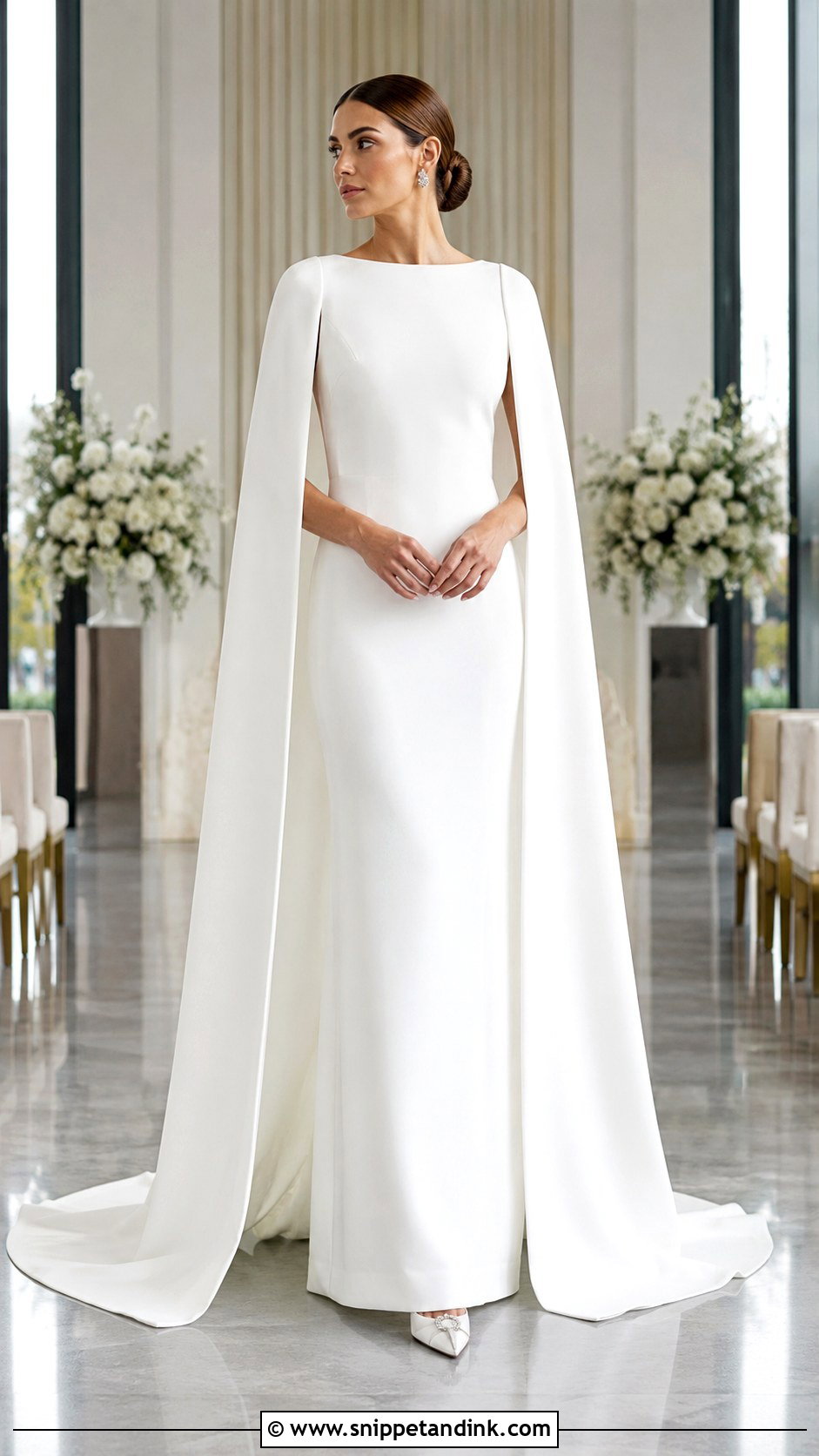
A cape sleeve gives movement and coverage at once. It might fall from the shoulders, fasten at the neckline or run off a streamlined gown like a built-in veil. Pair it with a simple crepe column or satin A-line so the cape can flow without competing with embellishment. Pointed heels, small statement earrings and a smooth low bun, and skip the veil if the cape already trails. Test the arm movement at fittings. A cape attached at the shoulders lifts with your arms, while one attached at the neckline stays put. If it’s detachable, have someone practise the fastenings; taking it off after the ceremony gives you a lighter reception look.
13. Floral Appliqué Wedding Dress
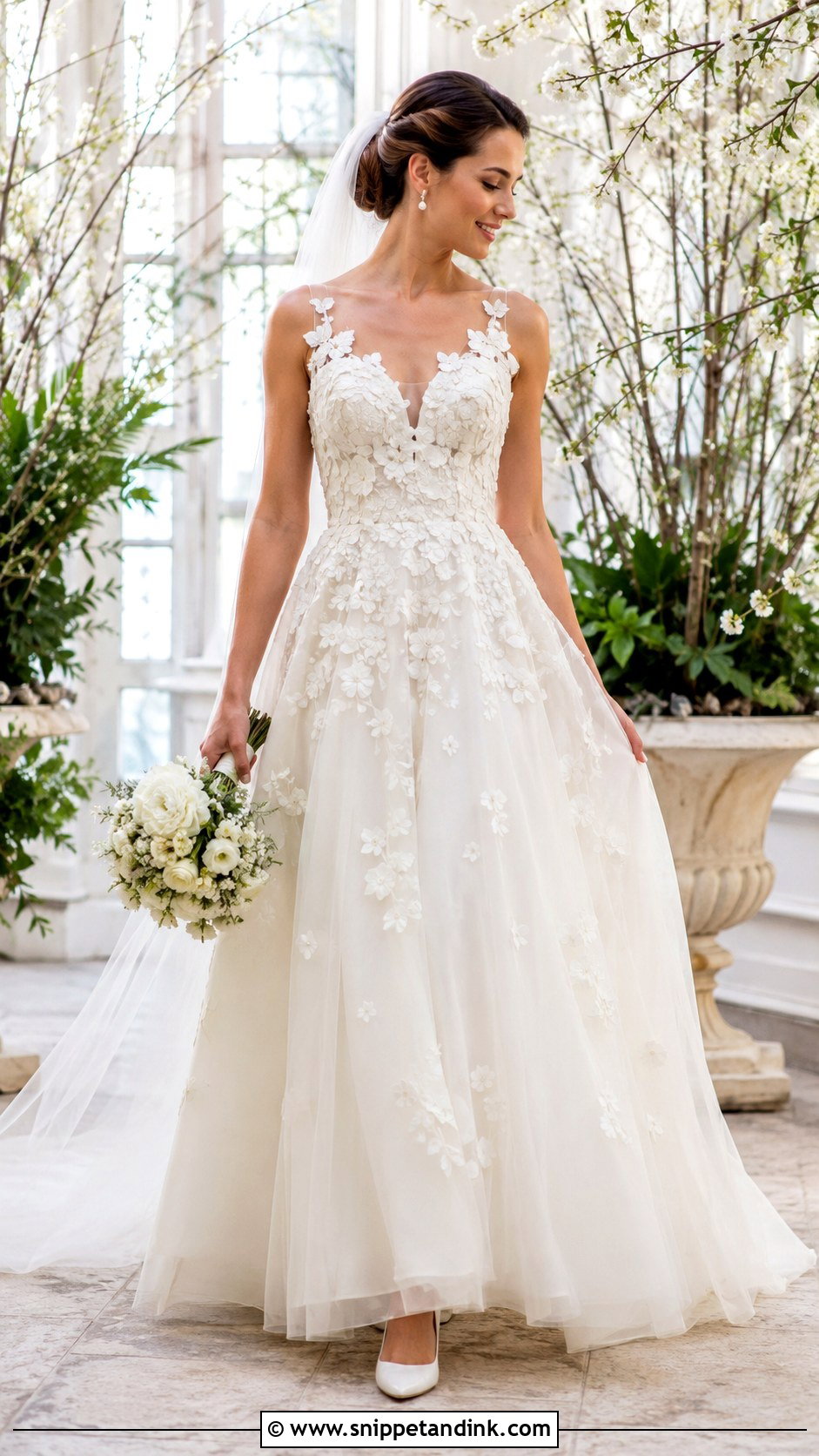
Floral appliqués add texture, and placement decides whether they look balanced or busy. I like them concentrated on the bodice and scattering lightly down the skirt. Simple ivory heels, small pearl earrings and a plain tulle veil that won’t fight the raised flowers; a soft pinned style or polished ponytail; a bouquet with restrained colour and shape. During alterations, watch where appliqués meet seams, straps and the hem. They usually have to be lifted and re-stitched when a seam is taken in, which adds time and cost, and a raised flower under the arm rubs all day.
14. Pearl Embellished Wedding Dress
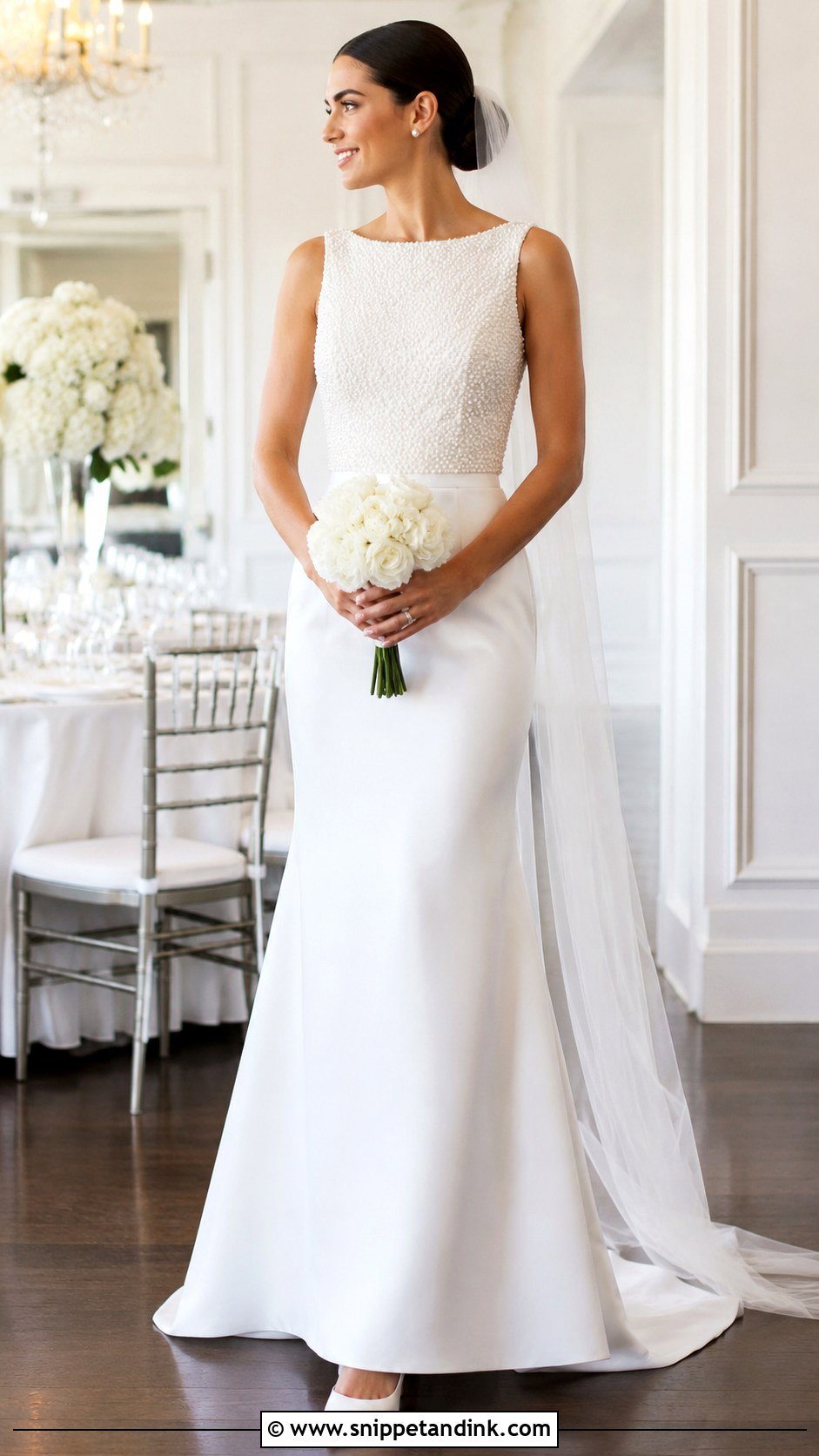
Pearls give a soft shine, quieter than crystals or sequins. Try a fitted bodice with scattered pearls over a clean satin, crepe or tulle skirt; it works in daylight and evening alike. Pearl studs, smooth ivory pumps and a plain veil with a narrow edge, and no piling on extra pearl jewellery. A sleek bun or waved bob lets the work show. Check that every pearl is stitched, not glued, especially at the back of the skirt and the lower bodice where you’ll lean against chairs. Glued pearls pop off, and loose ones end up all over the dance floor. A simple clutch and a compact bouquet finish it.

15. One Shoulder Wedding Dress
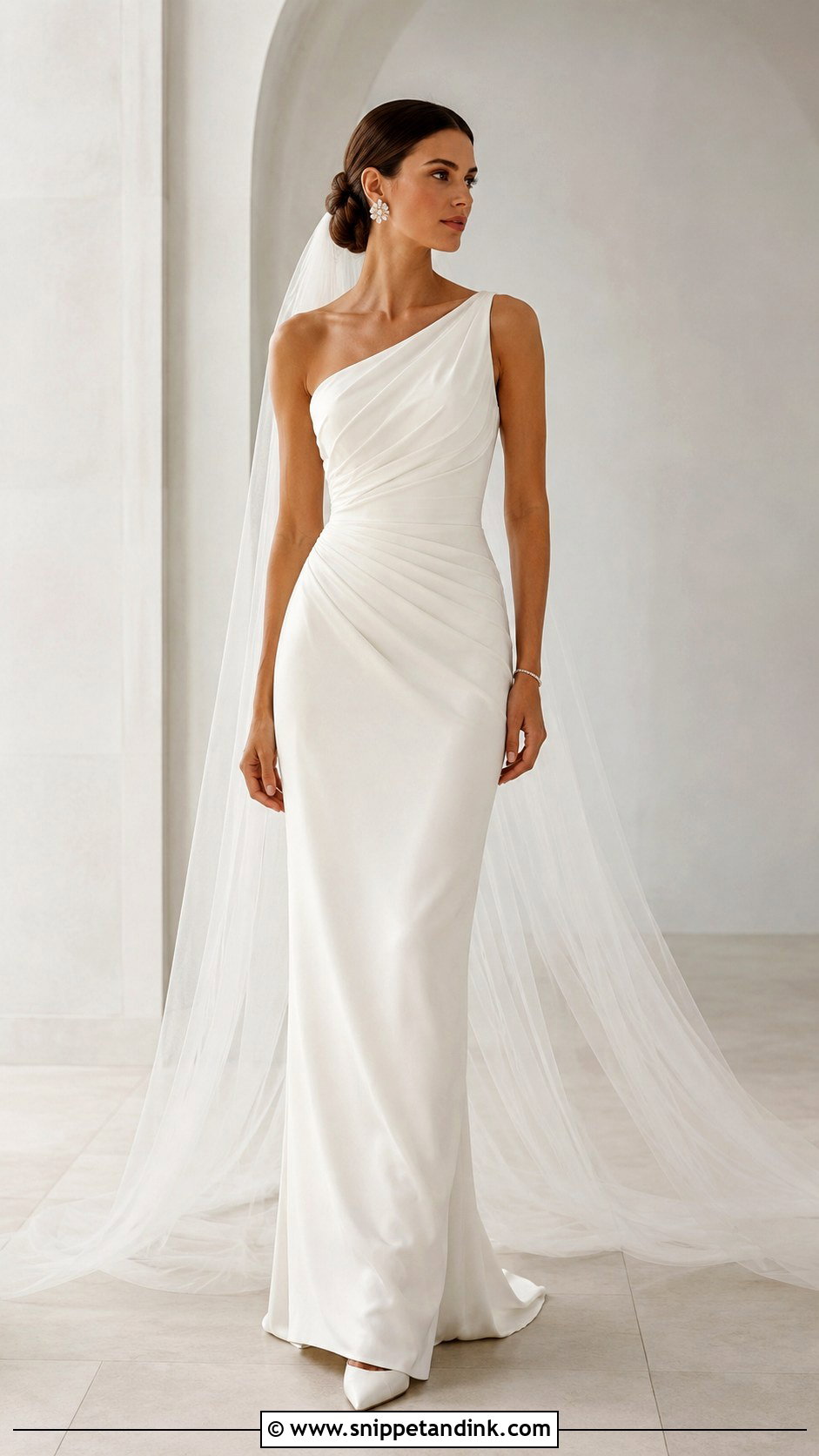
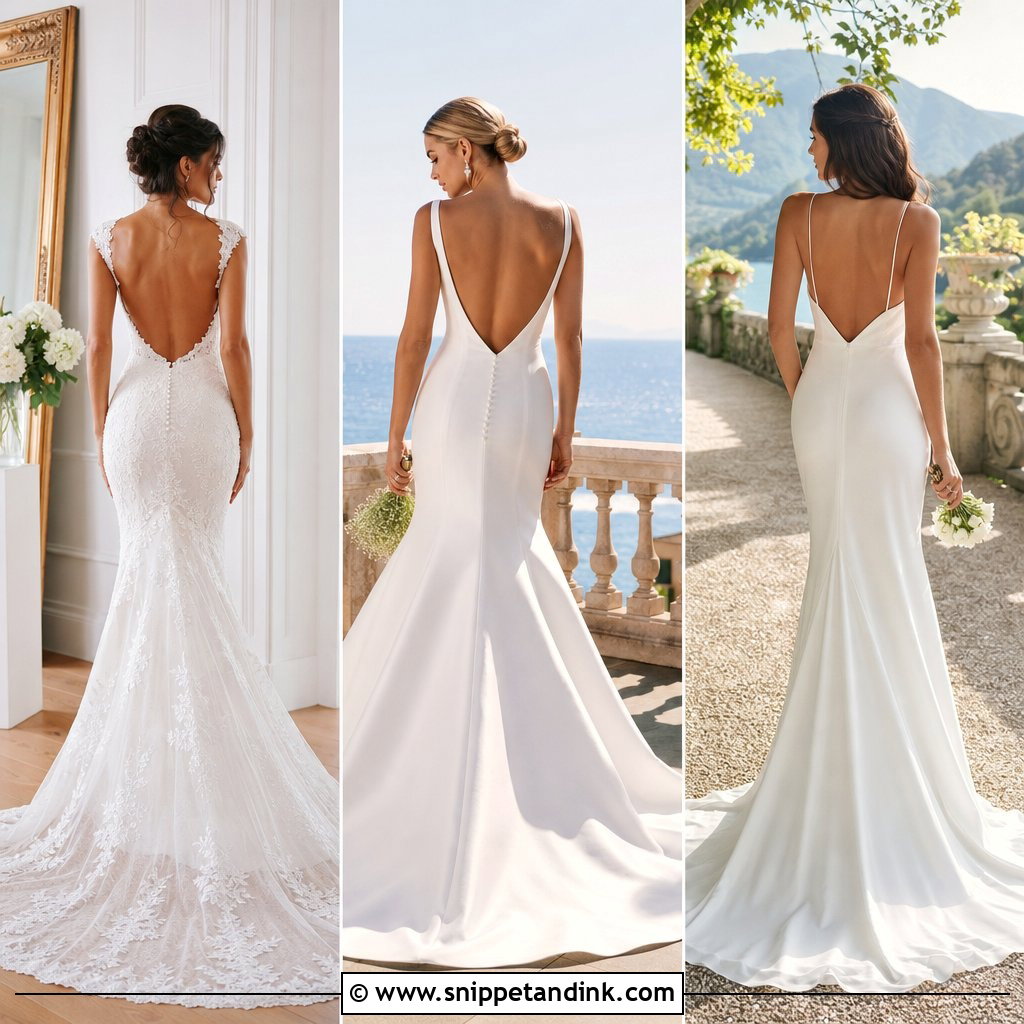
One shoulder brings asymmetry while keeping a formal look. A draped crepe column, a flowing chiffon A-line or structured satin, depending on venue and shape. Balance the neckline with statement earrings and leave the neck bare; add pointed pumps, a slim bracelet on the bare arm and a neat updo. A veil works if it’s anchored low under the hair, or try a dramatic hair piece instead. Support is the hard part. With only one strap, the bodice has to hold on its own, so I check for boning and a grip strip along the top edge on the bare side. If the shoulder has a bow or drape, let that be the only feature.
16. Detachable Overskirt Wedding Dress
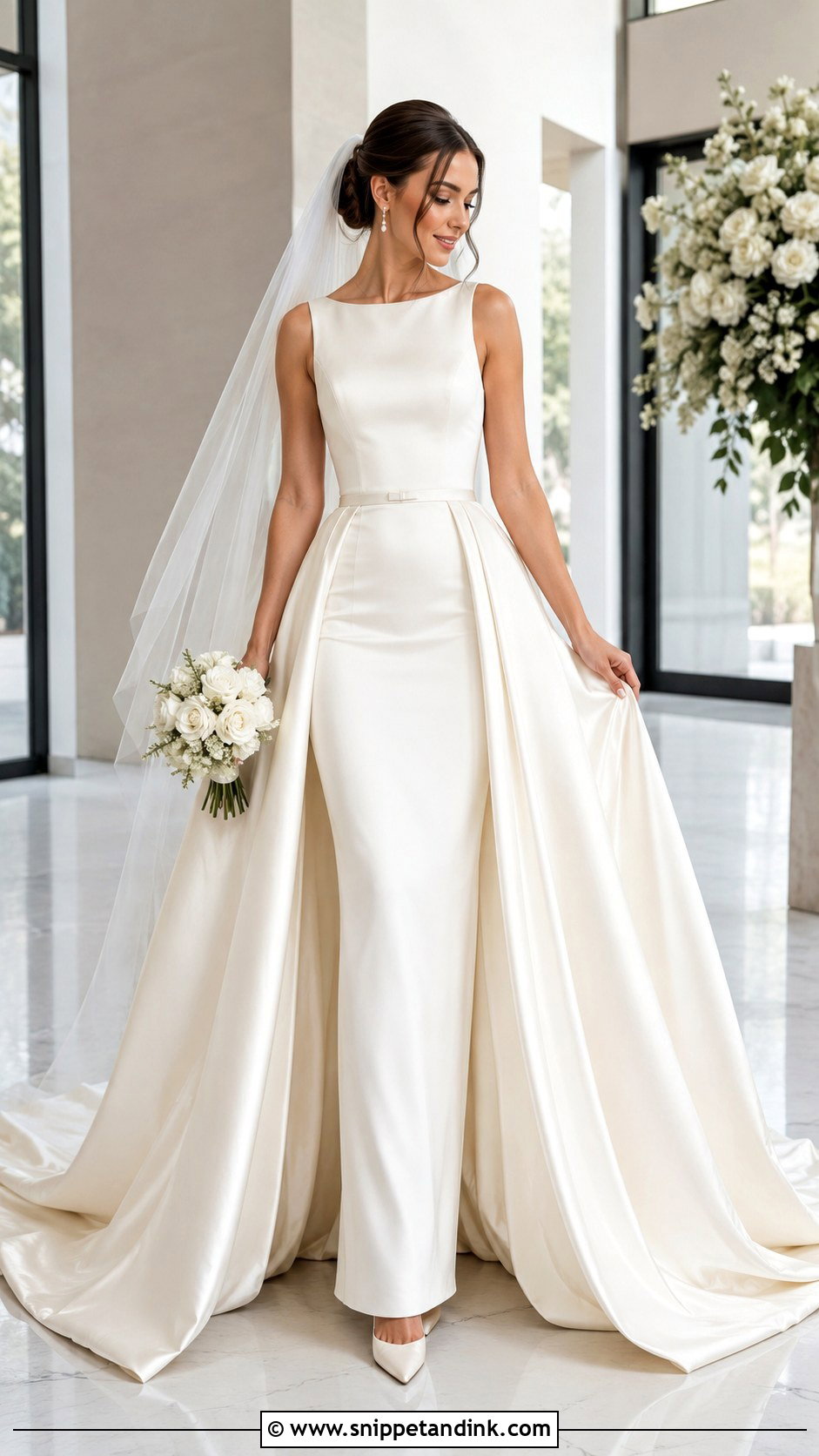
Ceremony drama and reception freedom, from one outfit: that’s the appeal of a wedding dress with a detachable overskirt. Start with a fitted column, sheath or mini, and add a full satin or tulle overskirt for the aisle. Classic pumps, drop earrings and a chapel veil for the ceremony; after photos, the overskirt and veil come off to reveal a lighter dress for dancing. The waistband and fastenings should be invisible from every angle and shouldn’t shift as you walk or sit. Match the overskirt fabric and shade exactly to the base dress; even a slightly different white looks like an add-on. Practise the change with whoever will help you, because it needs two hands and some room.
17. Minimal Crepe Wedding Dress
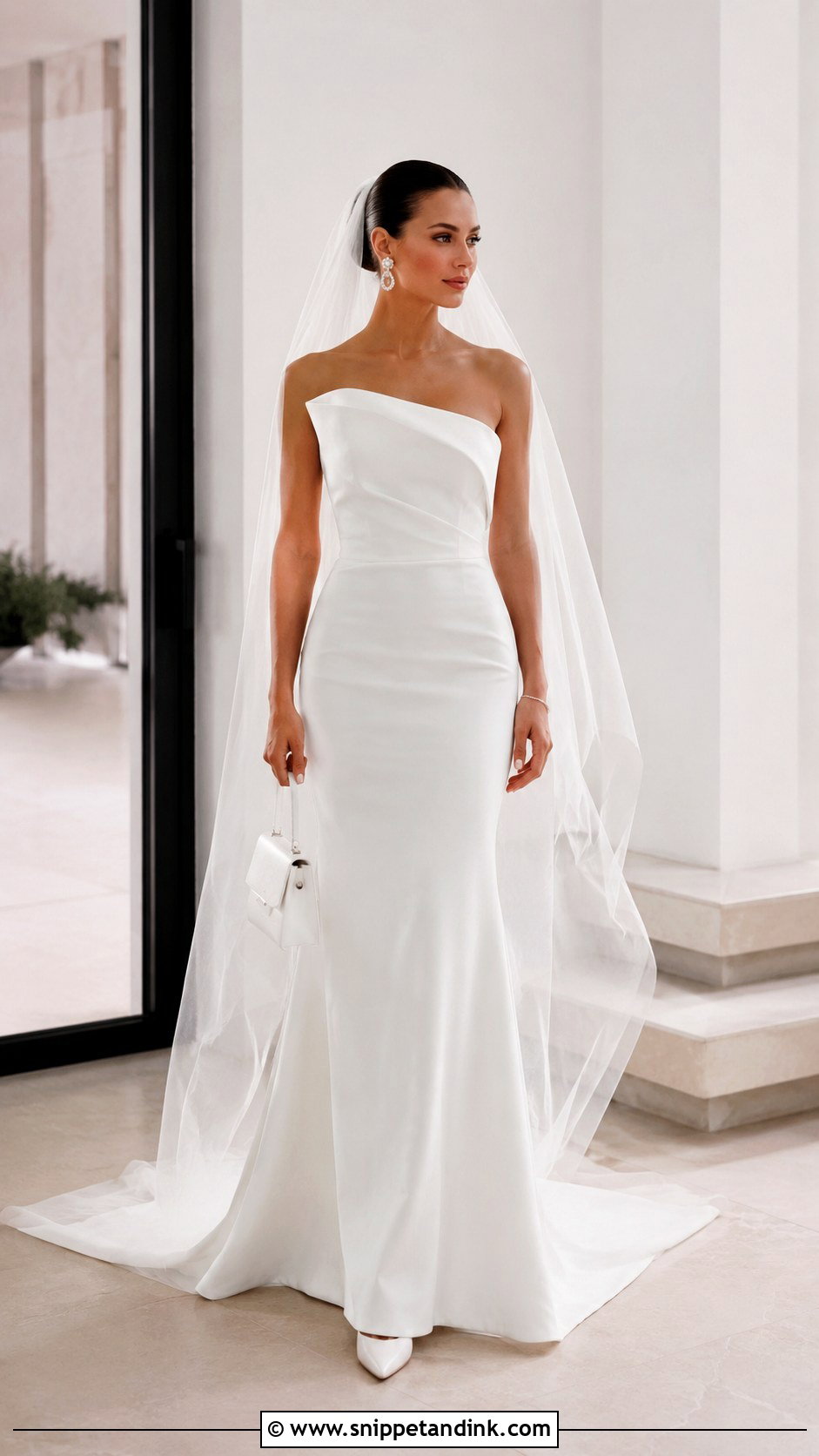
With almost no decoration, a crepe gown lives on cut and fabric. A well-cut sheath, fit-and-flare or A-line with a defined neckline and carefully placed seams. Sculptural earrings, pointed satin heels and a plain cathedral veil for contrast; a smooth bun, neat ponytail or polished waves; a structured mini bag for portraits. Good crepe is heavy enough to fall straight; thin crepe clings and shows every line. During fittings, look at the waist, hips and back under different lights. Smooth, edge-free underwear and precise alterations keep the line clean from neck to hem.
18. Empire Waist Wedding Dress
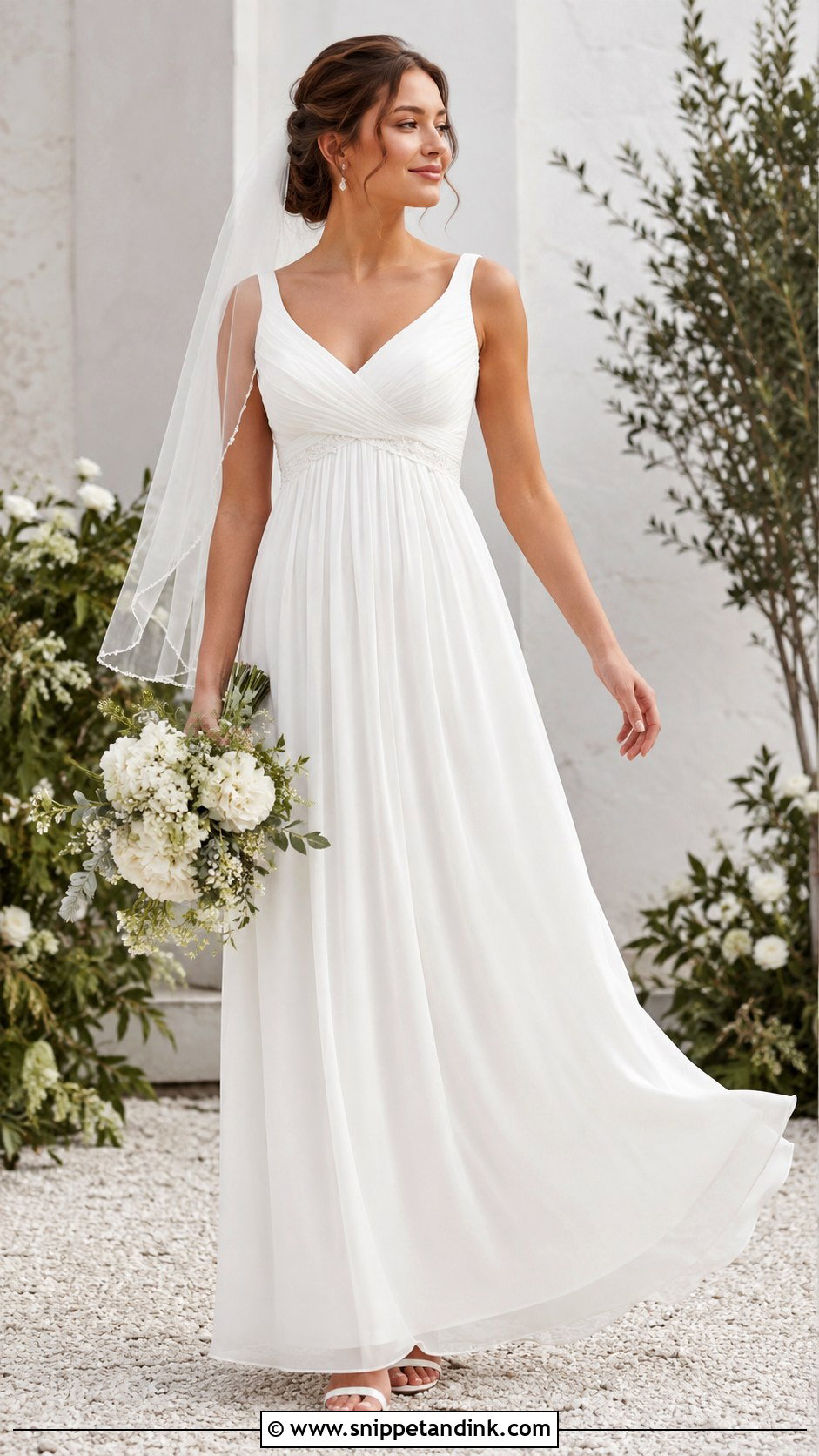
An empire waist fits under the bust and falls into a long, fluid skirt. It gives gentle structure without defining the natural waist, which suits brides who want room through the middle, and it’s often a good choice if you’ll be pregnant on the day. Chiffon for movement, satin for smoothness, lace for texture. Low block heels, delicate drops and a light fingertip veil, with a soft gathered hairstyle. Keep the hem from being too long; it should skim the floor and show a hint of shoe as you walk. The seam under the bust must sit on the ribcage, not across the bust, and supportive straps help it stay there.
19. Blush Wedding Dress
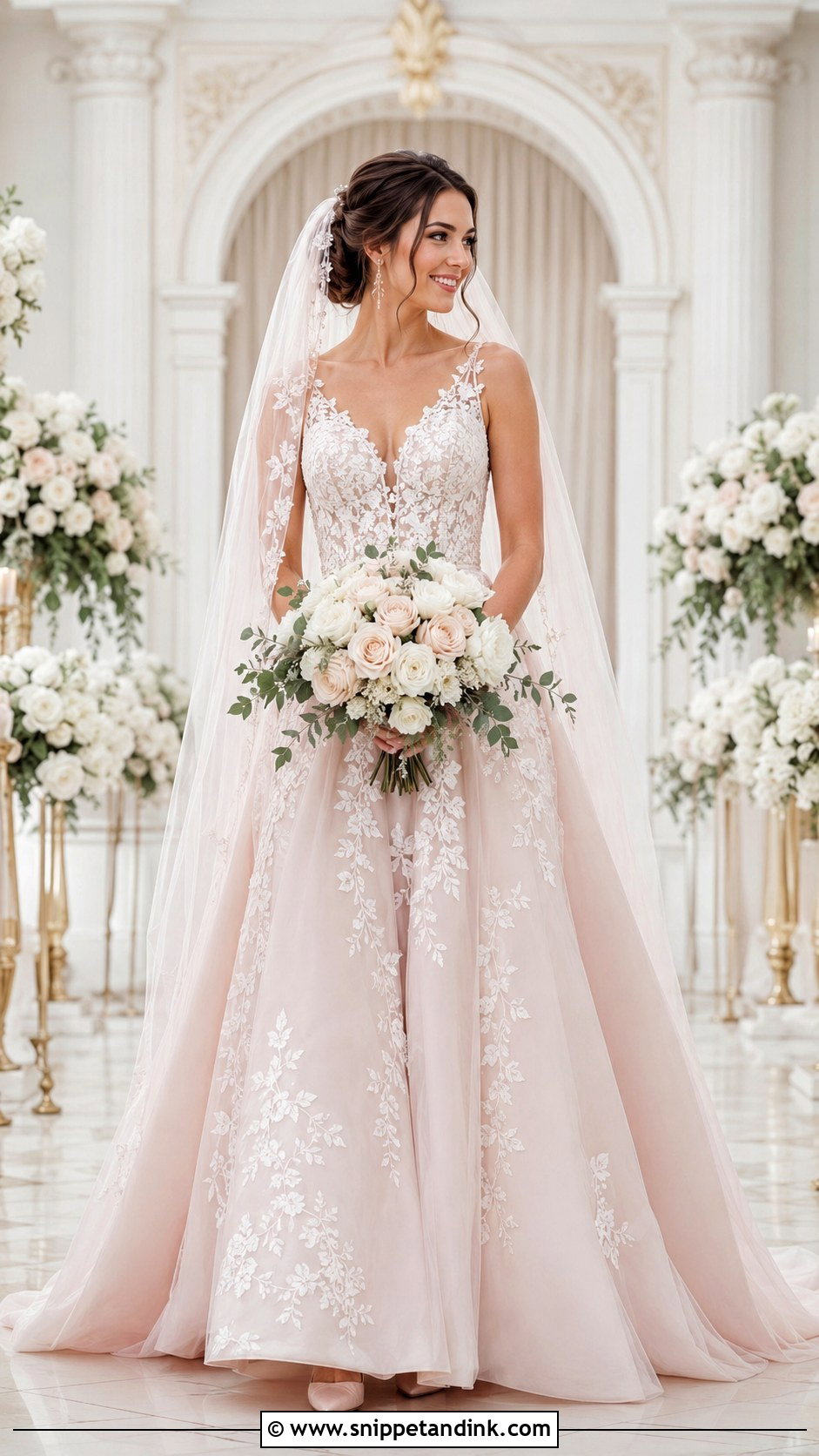
Blush is a soft alternative to bright white that still reads as bridal. It sits under ivory lace, floral appliqués or sheer tulle and gives depth, though it often shows more in person than in photos, where it can read almost ivory. Ball gown, A-line or fitted, depending on how much drama you want. Blush pumps, rose-gold earrings and an ivory or matching veil. Keep makeup balanced so the dress doesn’t tip toward pink. Bring a fabric swatch when you shop for accessories, because blush varies from peach to mauve. Ivory flowers and muted greenery in the bouquet finish it without fighting the colour.
20. Beach Wedding Dress
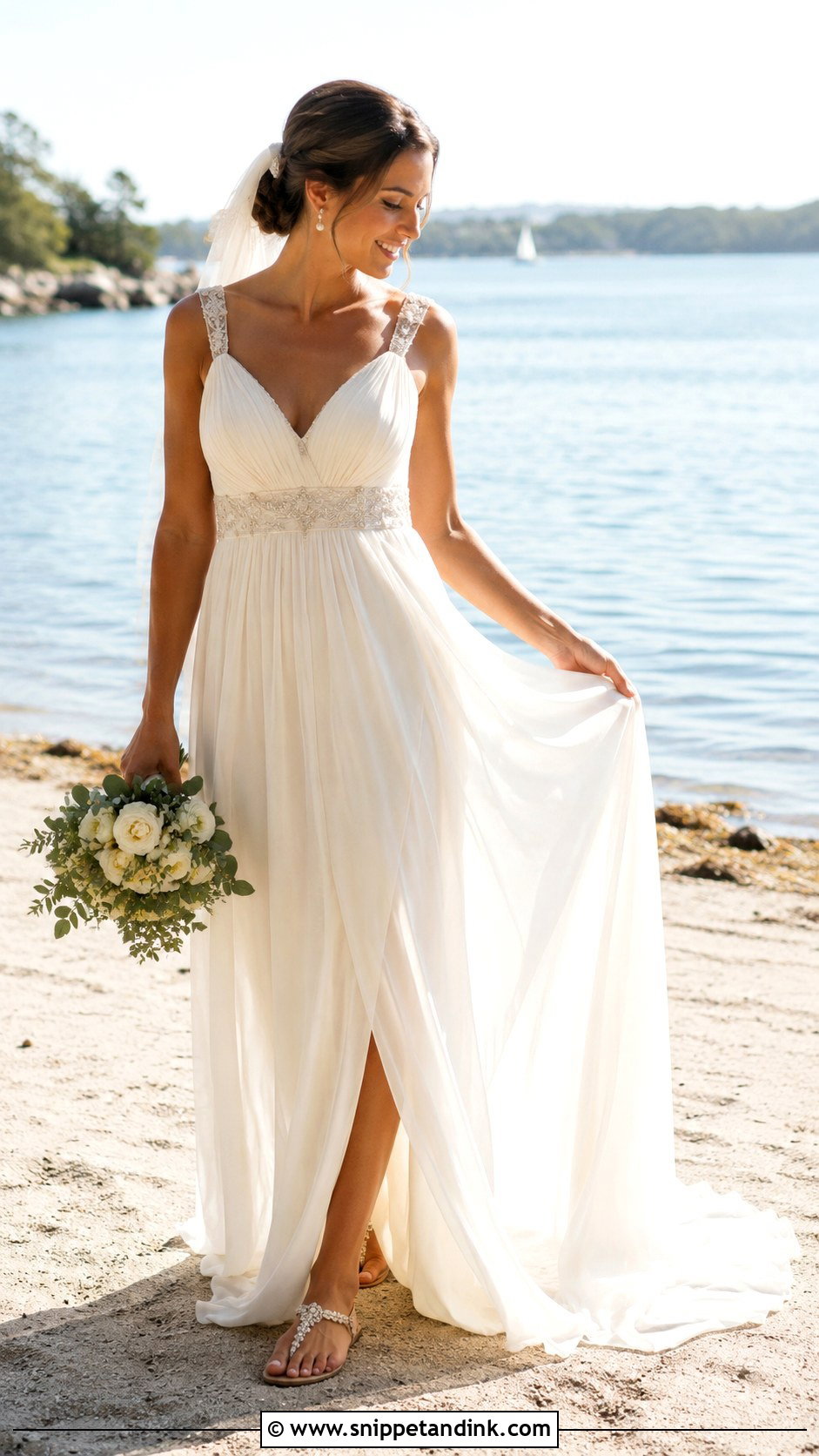
On sand or a breezy waterfront setting, a dress has to be light, secure and easy to move in. Chiffon, lightweight crepe or soft lace in an A-line, sheath or slip. A short train and real straps beat heavy layers and complicated fastenings. Flat embellished sandals, pearl earrings and a short veil that won’t drag; a low bun or braided updo to manage wind. A light wrap for after sunset. Good lining matters because strong daylight makes thin fabric sheer. I’d walk on sand or grass in the full outfit before the wedding. Sandals that are fine indoors can rub raw on a beach.
How Each Fabric Behaves by the Last Dance
A gown looks different at hour ten than it did in the mirror. Knowing what your fabric does lets you plan for it instead of being surprised.
Satin and mikado
Mikado holds its shape and resists creasing. Softer satins wrinkle across the lap after the ceremony and the dinner, and both show water spots, so keep a clean napkin over your lap and hold glasses away from the skirt.
Crepe and silk
Heavy crepe recovers well from sitting. Silk and thin crepe crease and show perspiration, so take a quick break during the reception to air out if it’s warm.
Tulle, lace and chiffon
These are light but fragile. Tulle catches on heels, bracelets and bouquet wire; lace snags on rough chair backs; chiffon frays at the hem if it drags. The bustle protects all three once the dancing starts.
Learn your bustle in advance
There are a few bustle styles: an over bustle hooks the train up on top, while a French or under bustle tucks it beneath with ribbons. Ask your seamstress which yours is, and have the person who will do it on the night come to the last fitting to practise.
Try the Shape You’d Never Pick Off the Rail
The gown that’s right for you looks good, lets you move and fits the feel of the day. Ball gowns, beach dresses, minimal columns, lace, modern necklines and removable layers all have a place. Save complete looks instead of locking onto one shape before you’ve tried anything. Try different fabrics, waistlines, sleeves and skirt volumes in person. Bring your shoes and underwear to later fittings, and look at each gown standing, sitting and walking. Pick the dress you feel secure and recognisable in, then let good tailoring and the right accessories pull the whole outfit together.
You'll Like These Ideas:






Leave a Reply