
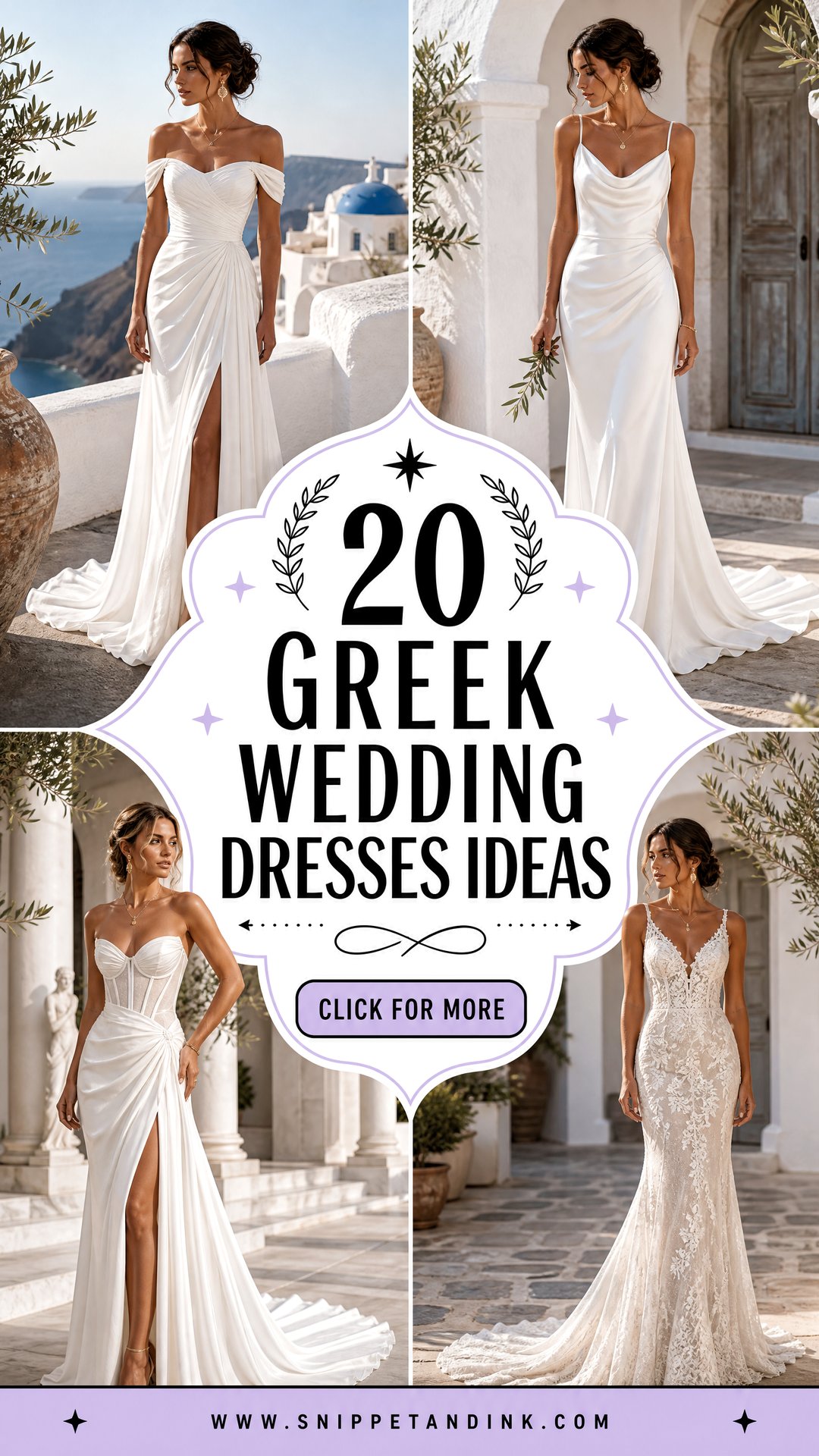
The appeal of a Greek wedding dress is that the fabric does the decorating. Instead of lace or beading carrying the look, it’s the way chiffon or satin is folded across the body: gathered at one shoulder, pleated under the bust, wrapped at the waist. Today’s Grecian-inspired gowns run from airy one-shoulder chiffon to sculpted satin columns, pleated sheaths and cape gowns, and most designers now cut them in petite, tall, maternity and extended sizes too. Below are twenty dresses I’d consider, each with the shoes, hair and finishing pieces I’d pair with it, whether the wedding is on an island terrace or in a ballroom.
Draped Samples Rarely Fit, So Read Them Differently
Most bridal boutiques carry one sample of each gown, often in a single size, and a consultant clips the back to make it fit you. That works on a structured ball gown. On a draped Greek dress it can be misleading, because clips pull the gathers sideways and the pleats no longer fall where the designer put them.
So when I take a bride to try draped gowns, I ask her to judge three things that clips don’t change much:
- Where the neckline and shoulder sit, since that rarely moves with alterations.
- How the fabric falls from the waist down when she walks across the room.
- Whether the color suits her skin in daylight, so stand near a window.
Wear heels close to your wedding height and a nude, smooth bra or none, depending on the style. Many draped gowns are ordered to your measurements and can take several months to arrive, so begin shopping early enough to leave room for two or three fittings afterward.
1. One Shoulder Greek Wedding Dress
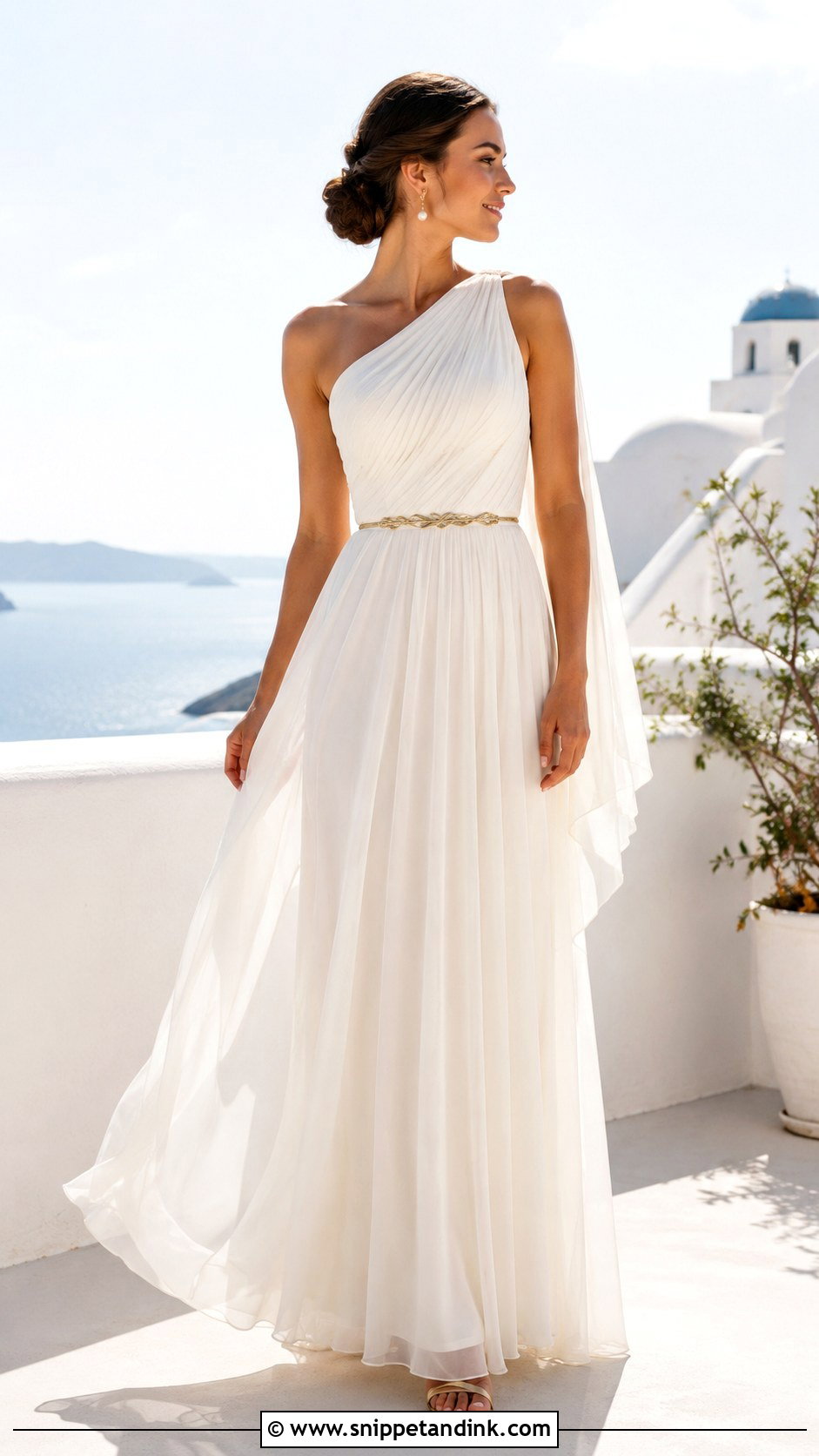
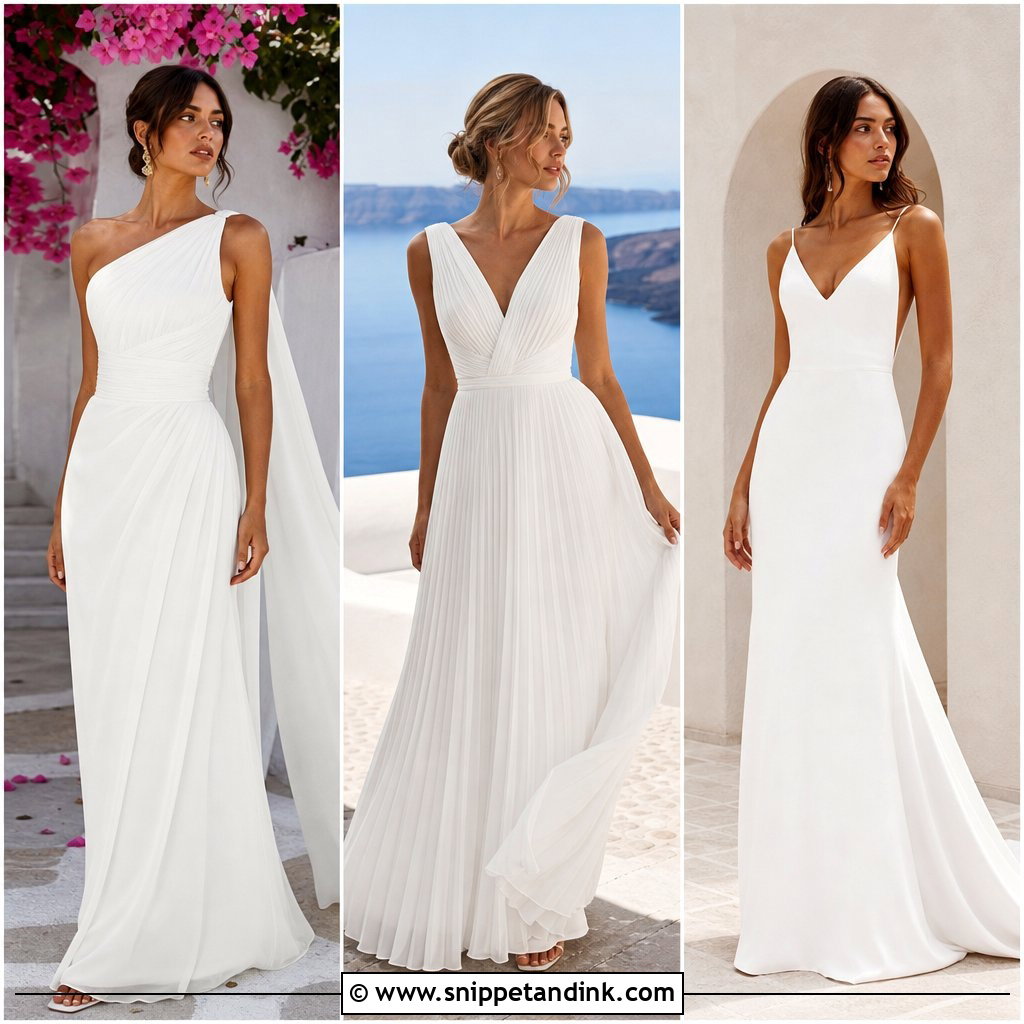
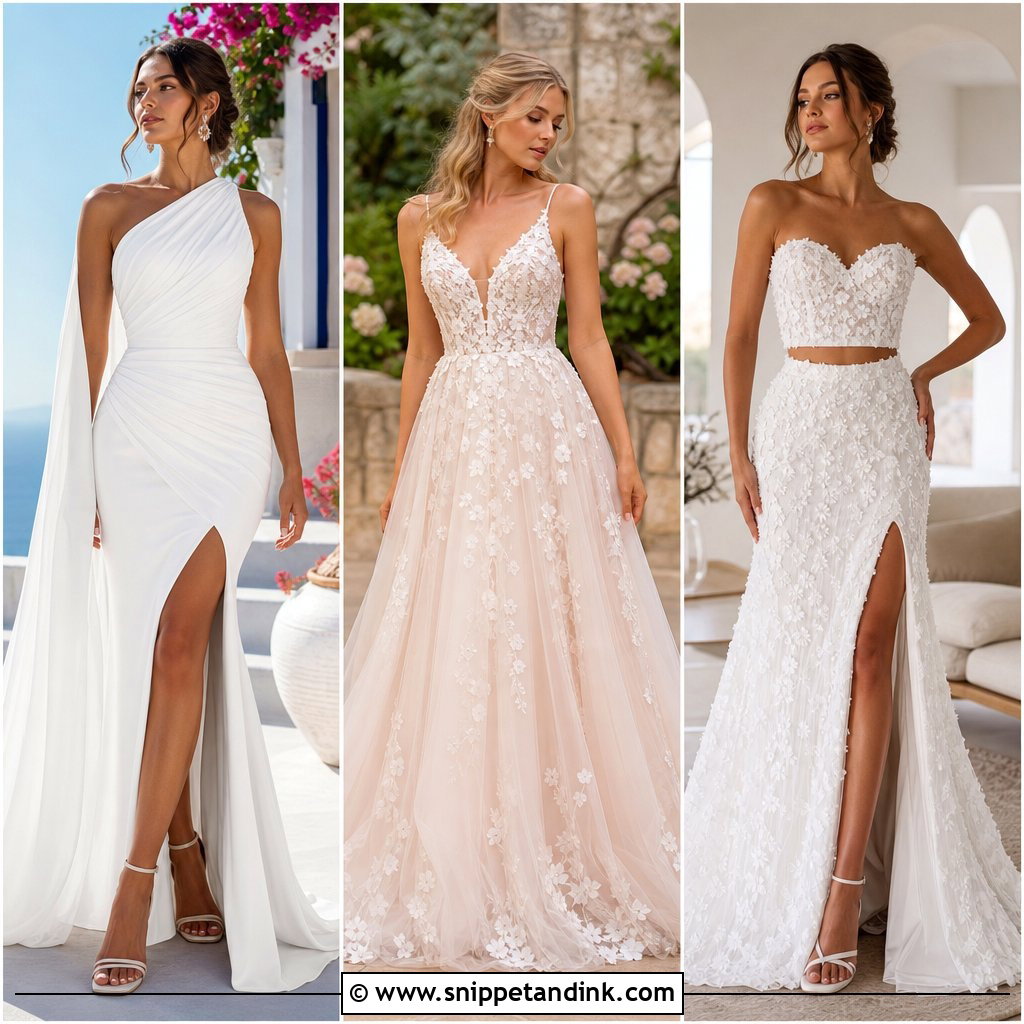
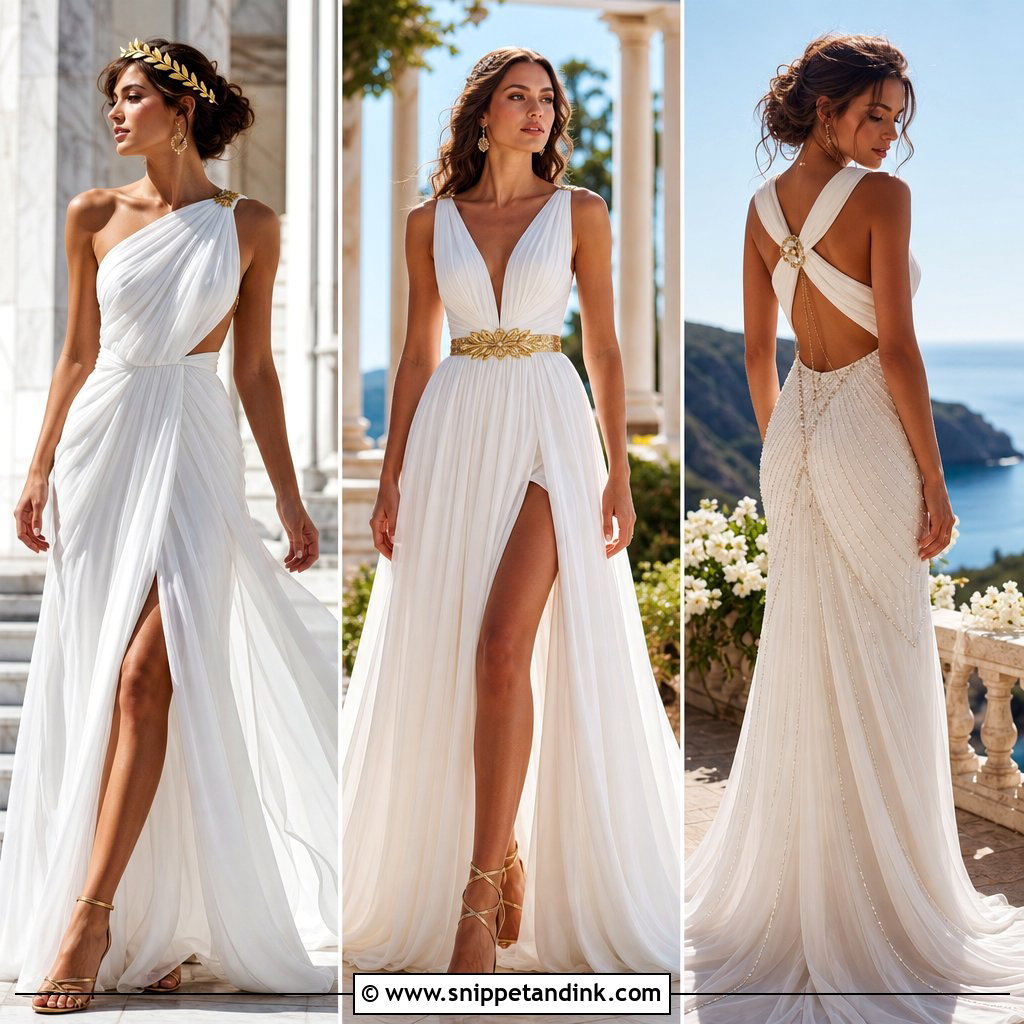
If you picture a Greek bridal gown, you probably picture this one. Chiffon or silk gathered diagonally across the bodice from a single shoulder, then released into a floor-length skirt. The thing I watch at fittings is the strap: it carries the weight of the whole bodice, so it has to be firmly anchored or the neckline drifts toward the arm through the day. Metallic sandals, pearl drops and a low twisted bun keep it clean. Brides wanting a little more coverage can look for a version with a long panel falling from the shoulder down the back.
2. Chiffon Greek Wedding Dress
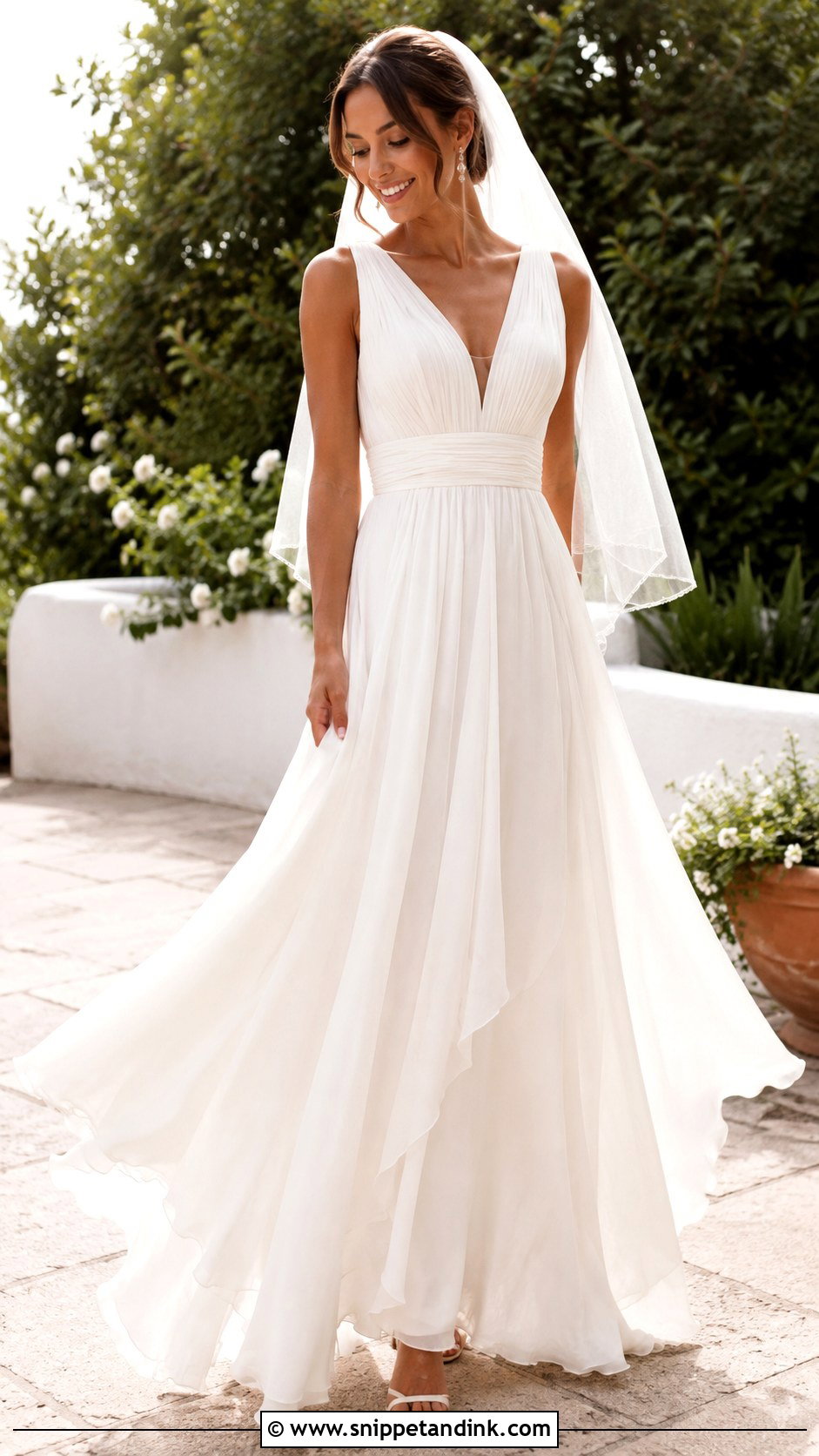
Chiffon is what gives a romantic Greek goddess look its float. Several sheer layers over an opaque lining move independently, which is why the skirt seems to drift when you walk. The lining is where I’d focus. Under boutique lights it looks fine; outdoors at noon, or under a photographer’s flash, a thin lining can show your legs right through. Take the gown to a window before you commit. A loose updo with fine pins and a fingertip veil keep it as light as it looks.
3. Satin Greek Wedding Dress
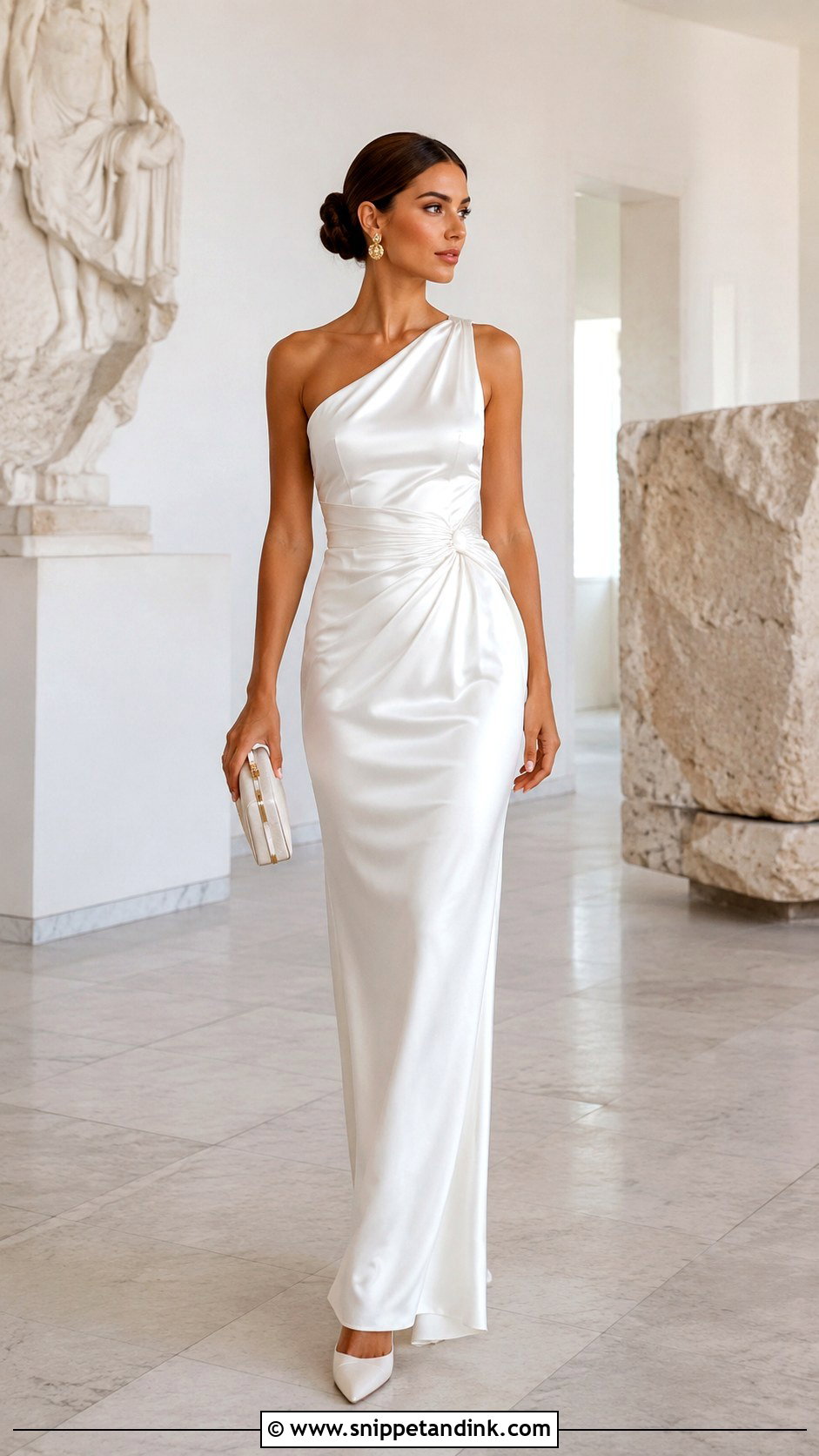
Satin turns draping into sculpture. The folds hold their shape instead of collapsing, so a satin column with gathering at the waist reads modern and architectural. That same quality makes it honest about fit: satin reflects light along every ripple, and a seam that pulls slightly at the hip shows as a bright streak in photos. I always want the bride in her final undergarments for satin fittings. A soft cowl or folded bodice, pointed ivory pumps and a sleek bun suit a museum or hotel ballroom.
4. Empire Waist Greek Wedding Dress
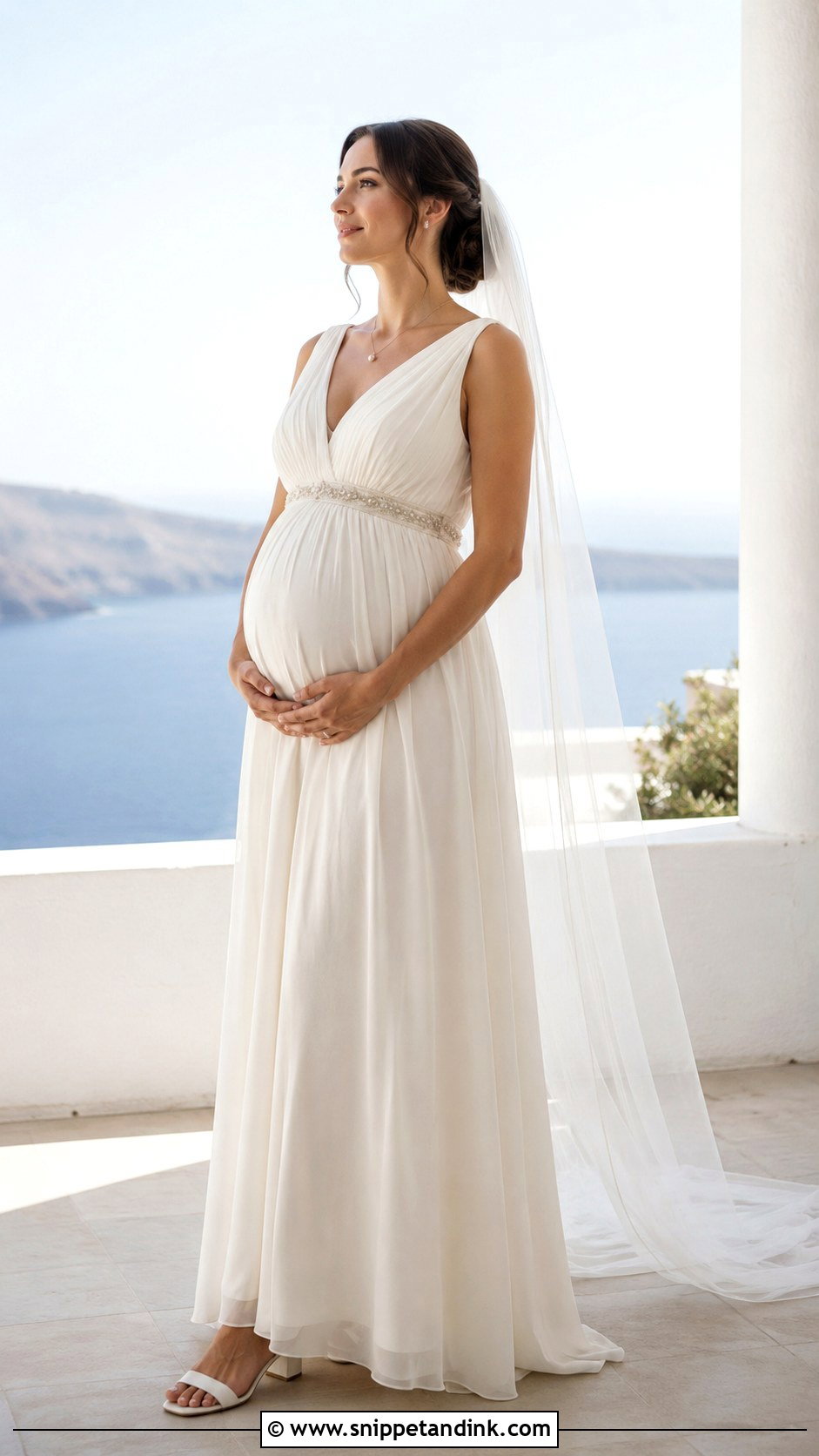
An empire waist sets the seam just under the bust and lets the skirt fall untouched from there, which gives a long vertical line and plenty of breathing room. Chiffon or silk georgette with a lightly pleated bodice and a narrow embellished band is the classic version. It’s also the shape I most often recommend to pregnant brides, though the band placement and bodice support need to be fitted close to the date. Keep the waistband slim; a wide one breaks the line it was meant to create. Low block heels and a half-up curl finish it.
5. Off Shoulder Greek Wedding Dress
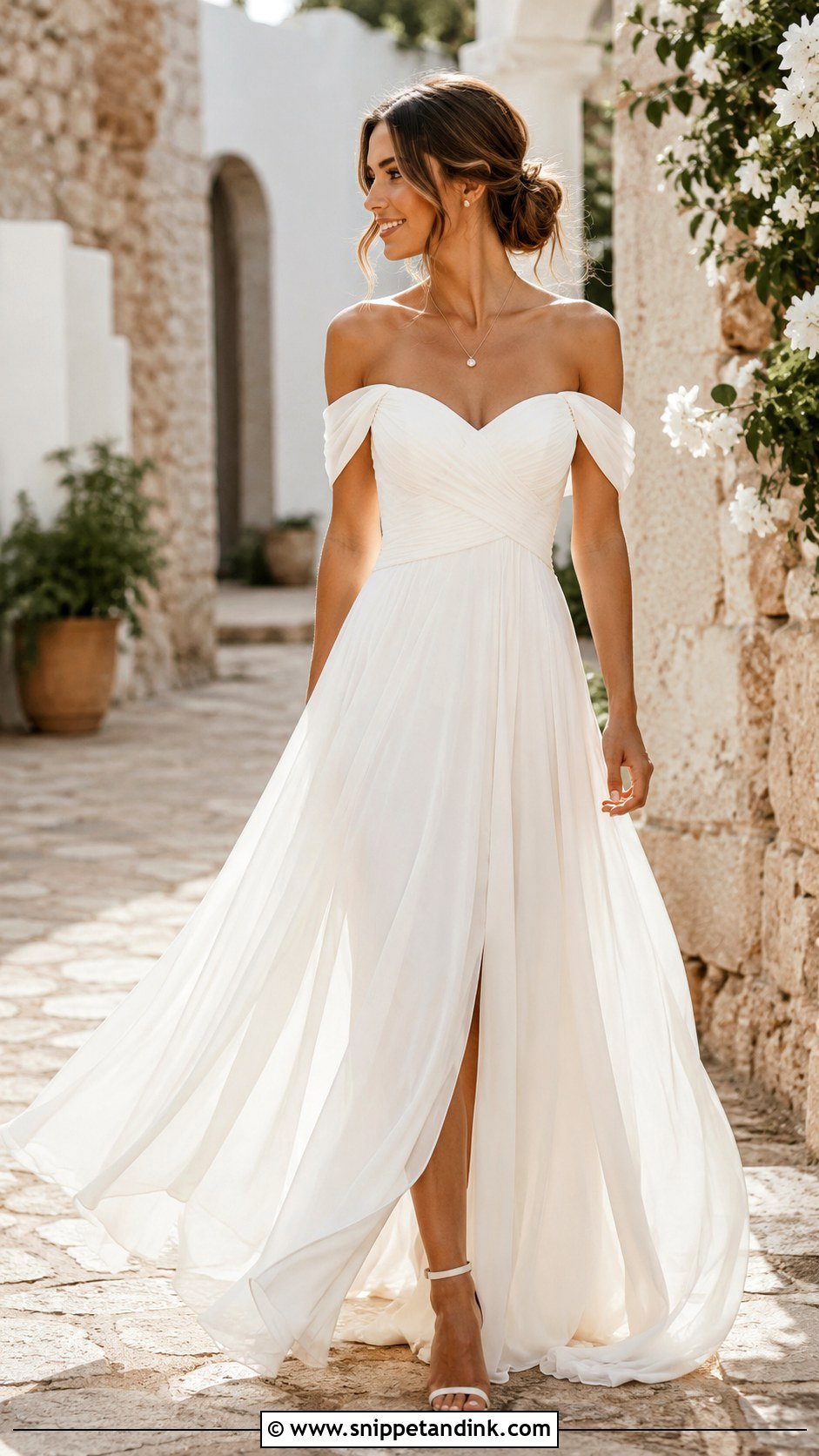
Off-the-shoulder Greek gowns frame the collarbones and need more engineering than they let on. Without straps over the shoulder, the ruched bodice has to grip the ribcage firmly enough to stay up for hours, so I always ask about boning and silicone grip tape along the top edge. Loose chiffon sleeves around the upper arm give coverage without bulk. A relaxed chignon keeps the shoulder line open. If you plan to dance hard, ask about removable clear straps for the reception.
6. Halter Neck Greek Wedding Dress
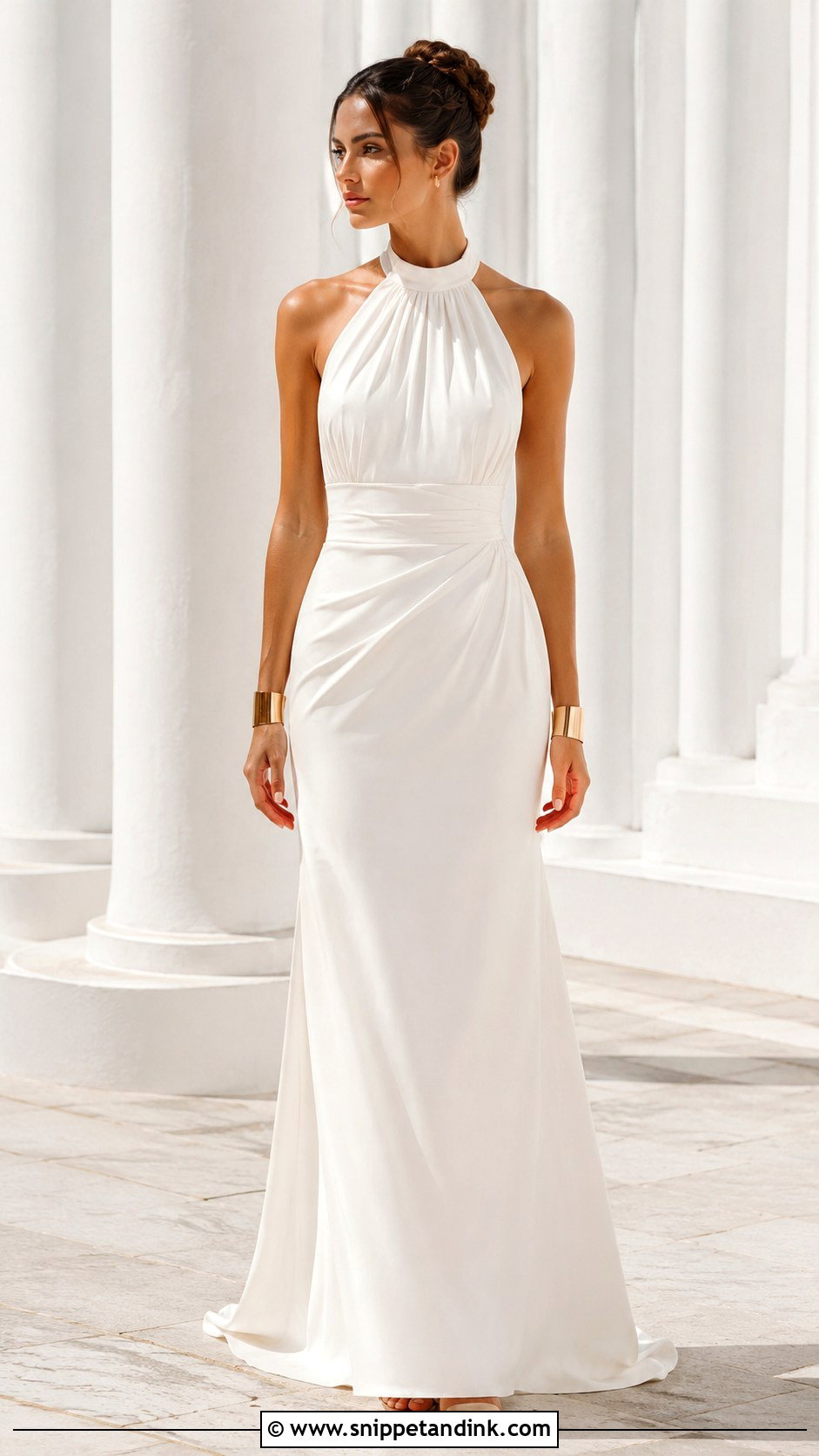
Halters look statuesque because they draw a straight line from the neck to the hem. In chiffon, the effect is relaxed and suits a destination wedding; in crepe, it’s sharper and more urban. Bust support has to be built into the bodice, not borrowed from a bra, since the straps don’t sit where bra straps do. Gold cuffs and small earrings rather than a necklace, and a high braided bun to show the shoulders. Against a modern building or a stone terrace, it looks completely at home.
7. Pleated Greek Wedding Dress
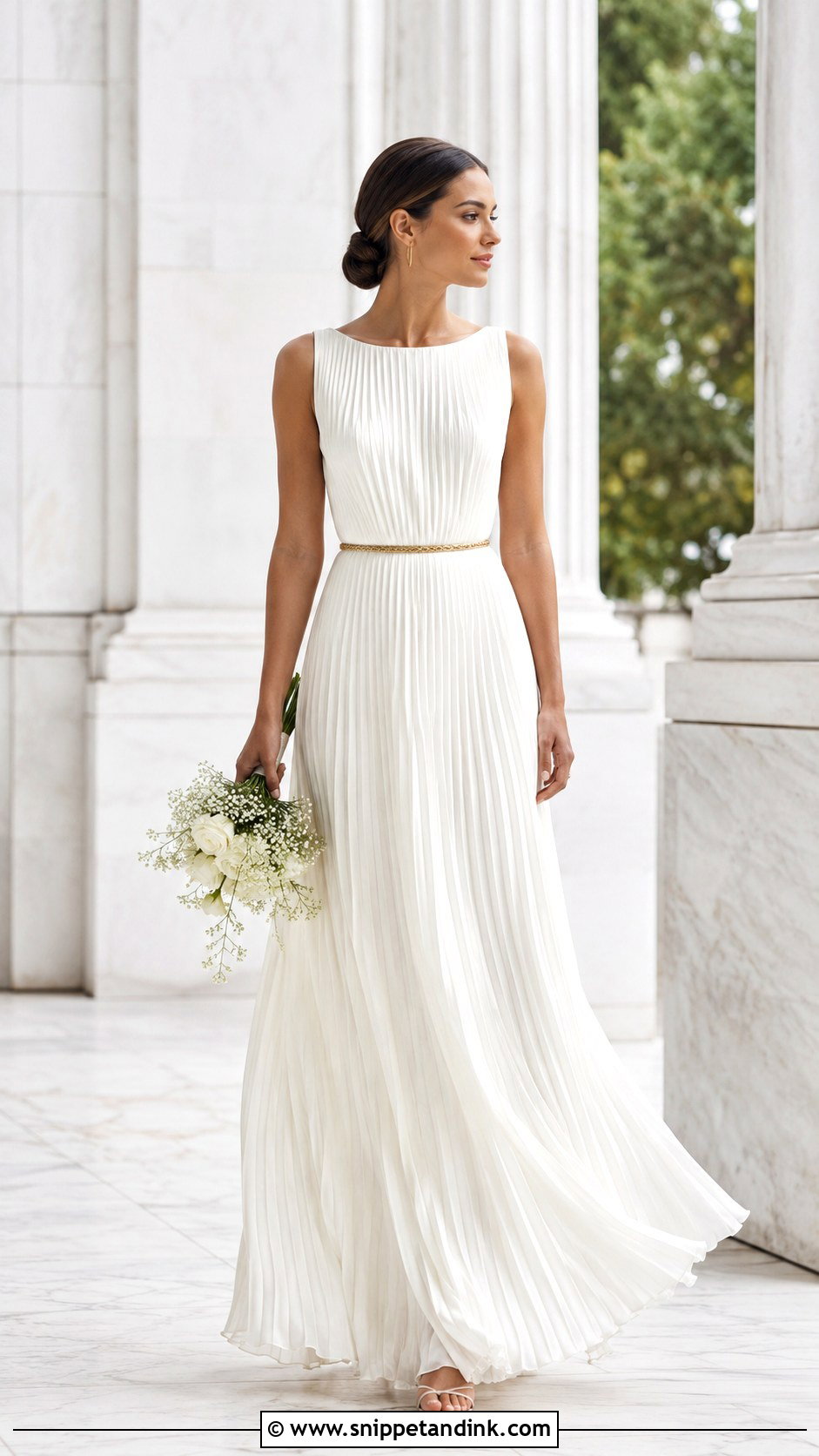
Fine pleating gives a gown the texture of a classical Greek garment without a single bead. Ivory, soft white and pale champagne show the pleat shadows best. What I check is whether the pleats hang straight from every angle. Uneven pressing or a tight hip will make them splay open when you sit, so I walk the bride around the fitting room and have her sit on a low chair. Thin gold hoops and a smooth low bun keep it contemporary. A light veil softens the strong vertical lines.
8. Cape Sleeve Greek Wedding Dress
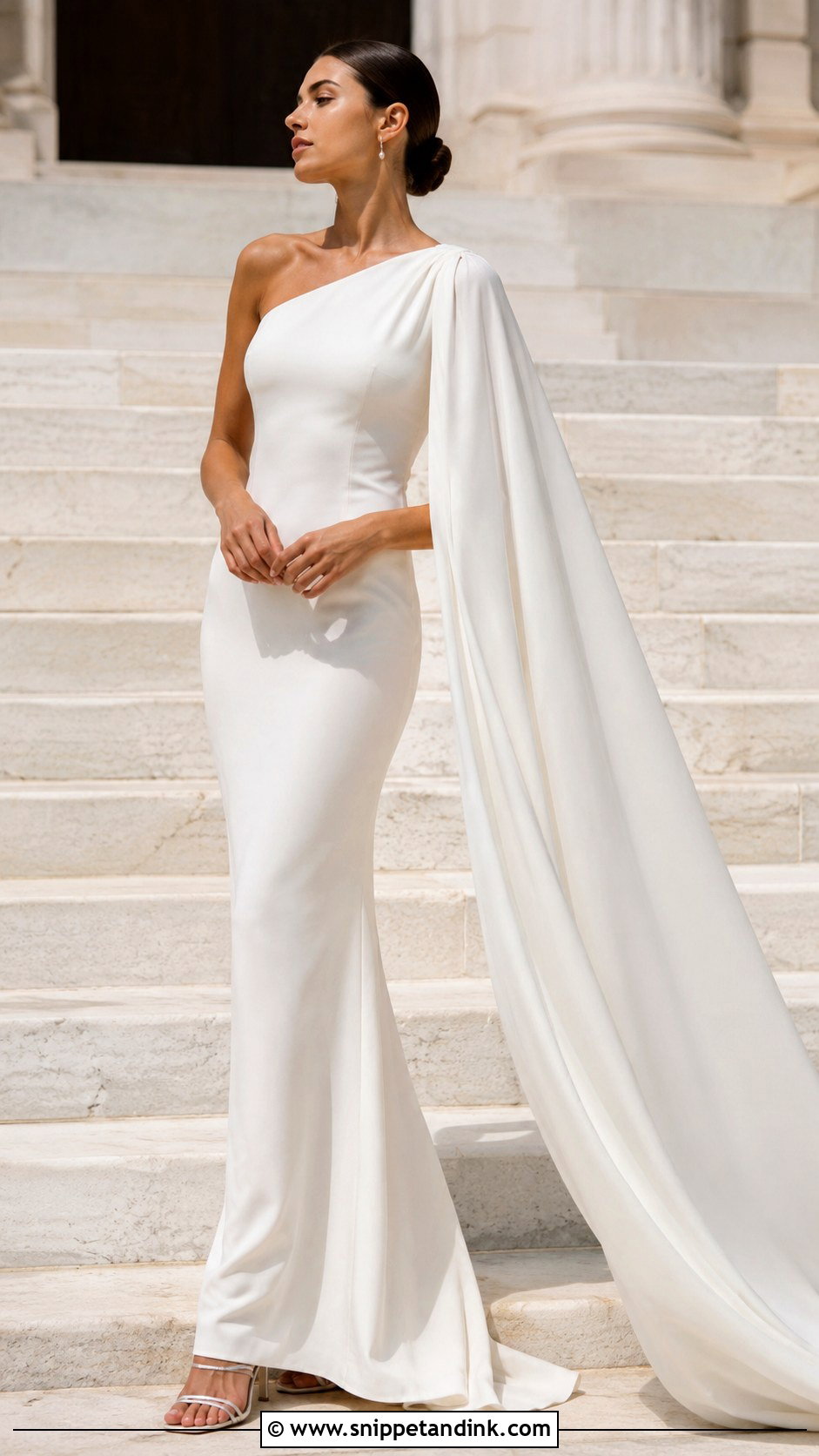
A cape sleeve gives a plain column drama without needing a veil at all. It can fall from one shoulder, both, or the back of the neck, and the dress underneath should stay narrow so the cape has room to move. Chiffon capes ripple; crepe and satin capes hang heavier and more formal. Outdoors, a long cape catches wind like a sail, so ask whether it can be shortened, bustled or detached. Understated earrings, strappy heels and a smooth bun or waved ponytail work best.
9. Long Sleeve Greek Wedding Dress
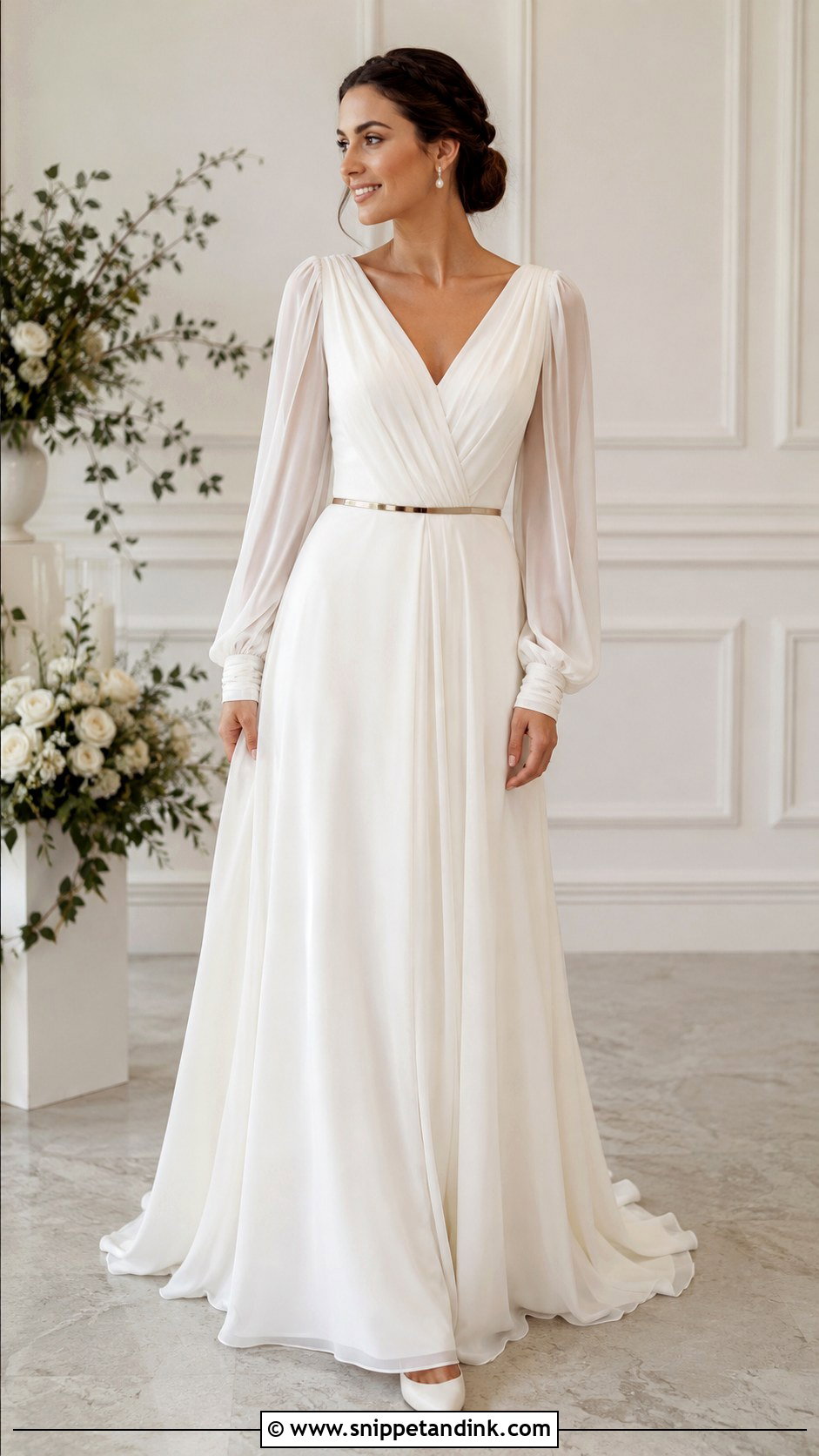
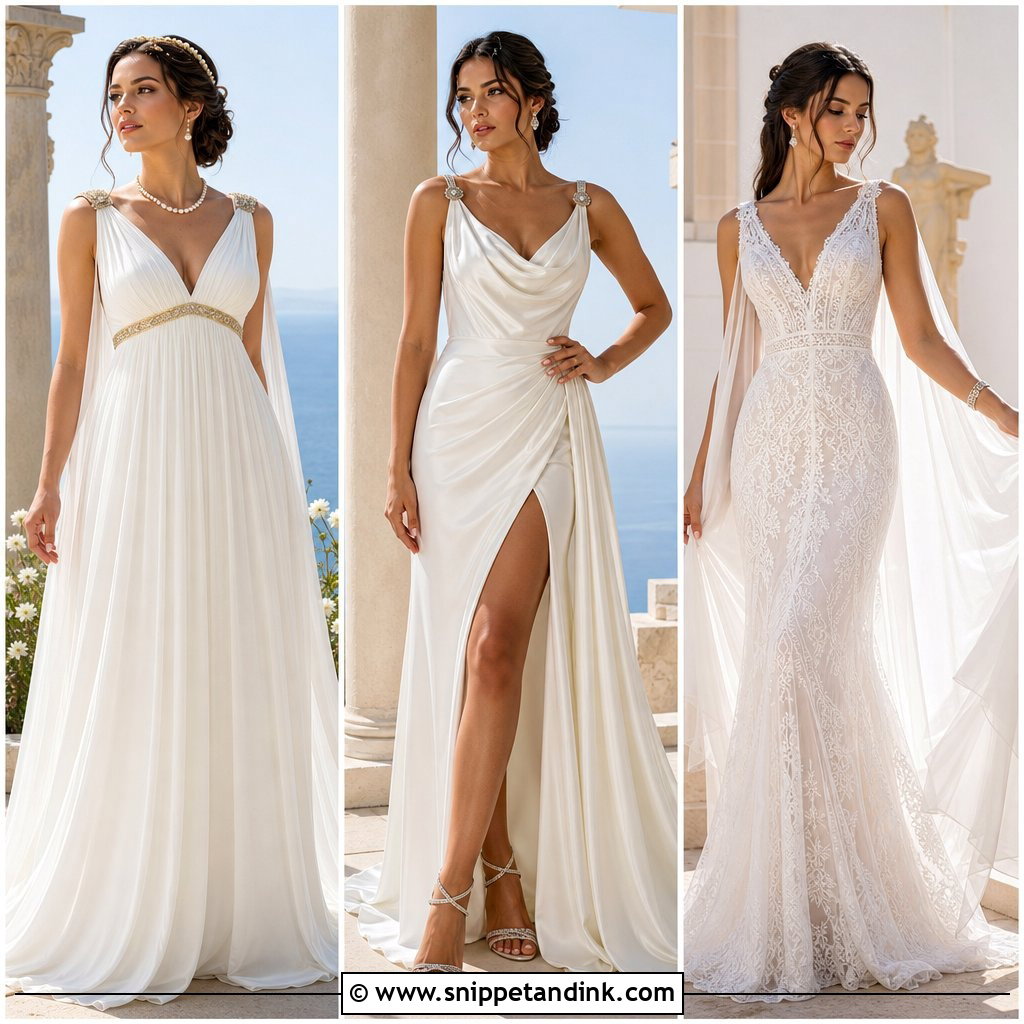
Long sleeves add coverage without losing the softness of a Grecian gown, provided the sleeves are sheer. I look for gathered shoulders and a draped V-neck with an empire or natural waist so the skirt balances the sleeves. Sleeve openings are worth testing with your arms raised; a sleeve set too tight at the armhole restricts the bouquet hold and the first dance. For a cool evening, a matching wrap looks better than a contrasting jacket. A braided low bun and pearl earrings keep it polished.
10. V Neck Greek Wedding Dress
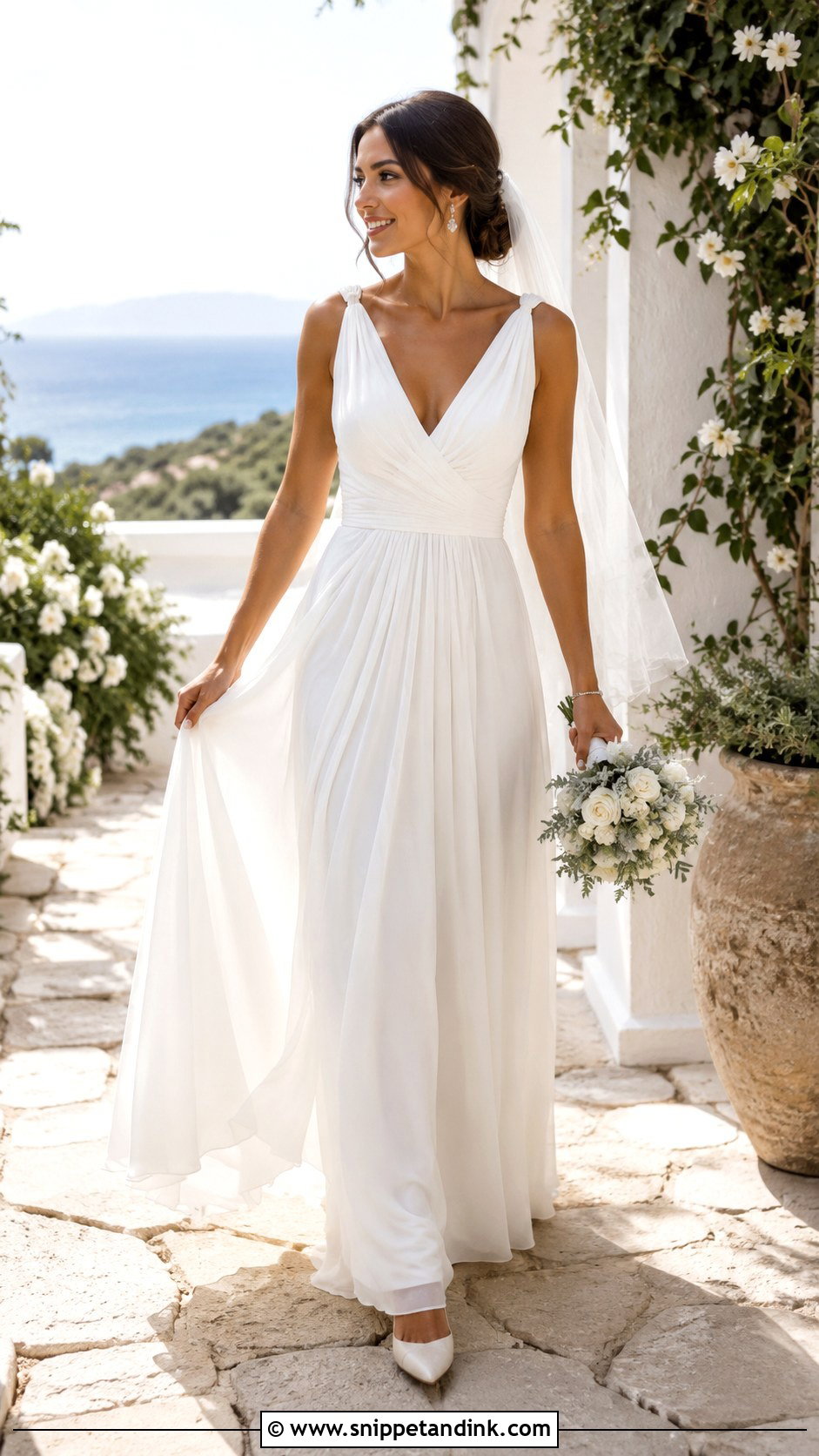
V-necks lengthen the torso, and in a Greek gown the gathered shoulder panels frame them neatly. A moderate V gives classic coverage. A deeper plunge needs a strip of skin-tone mesh hidden inside, or it will gape when you lean in for a hug. The tailoring goal is a neckline that lies flat against the chest. If the bodice is already pleated, skip any large necklace and choose crystal drops instead. Loose waves or a textured low bun suit the shape.
11. Cowl Neck Greek Wedding Dress
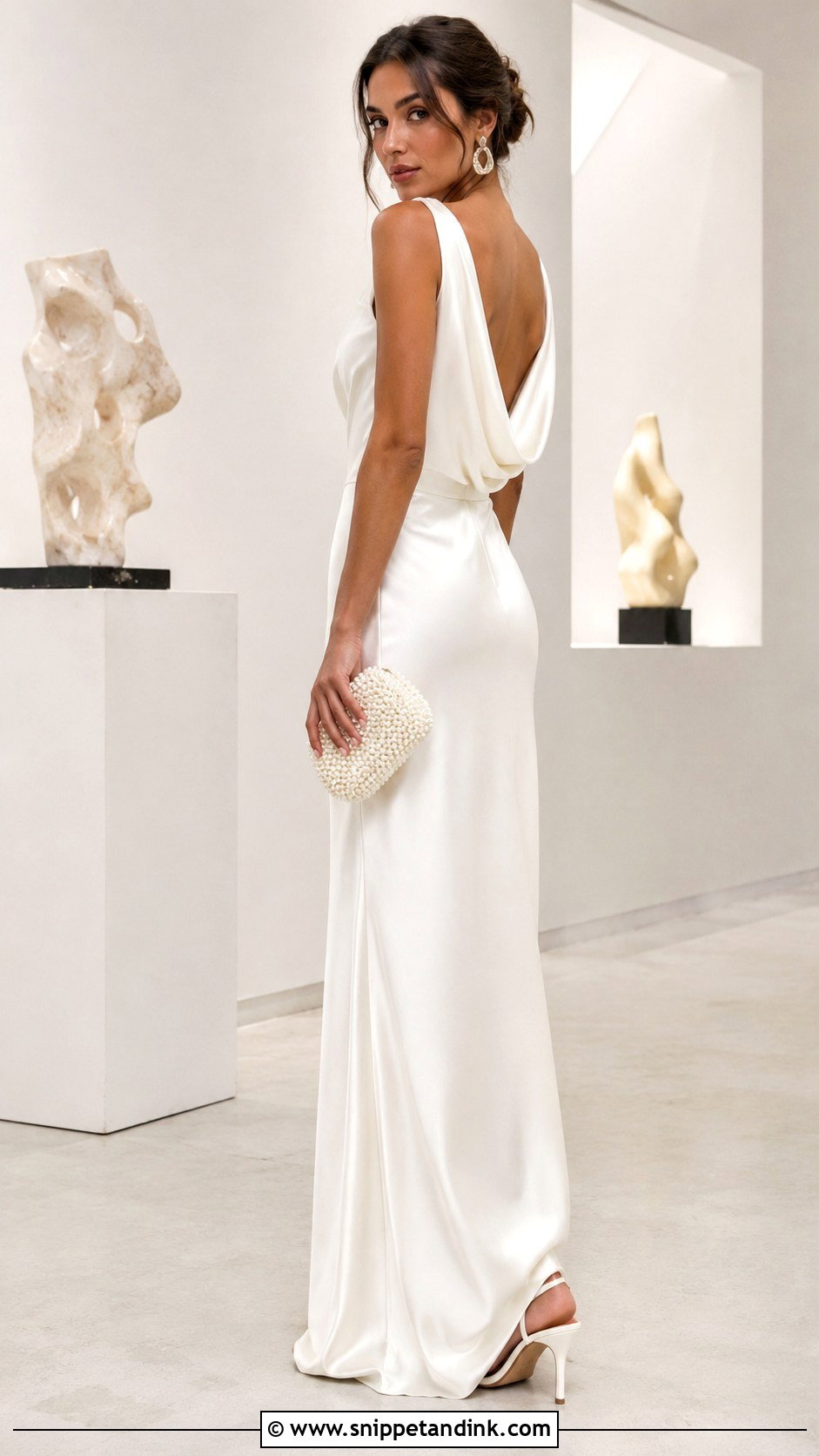
A cowl neckline only works in fabric that falls: silk, satin or fluid crepe. Anything stiffer holds the folds up like a collar. Because the front is meant to sit loose, the waist and side seams carry the fit, and those are what I’d have the seamstress perfect. Hair goes up so it doesn’t sit in the folds. A low back or draped back panel continues the effect. Slingback heels and a satin clutch keep it minimal and modern, with the classical influence there but understated.
12. Draped Corset Greek Wedding Dress
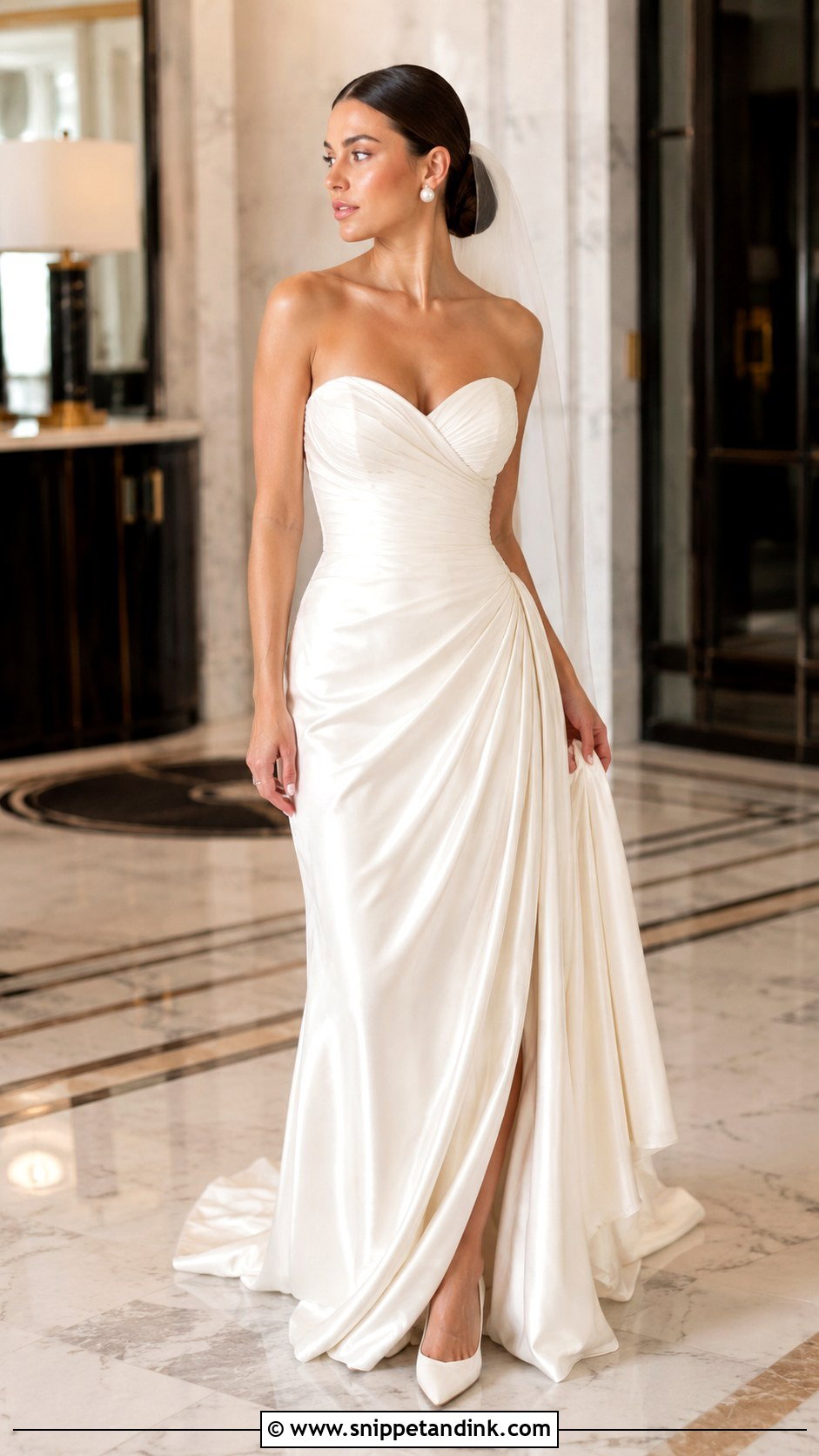
Loose empire gowns can feel insubstantial on some figures. A hidden corset under an artfully draped outer layer gives both. The boning shapes the waist; the satin or chiffon over it stays soft. Straight, sweetheart or asymmetric necklines all work. Skip the belt, as the wrap already marks the waist. At fittings, I watch the draping as she sits and lifts her arms, because a corset that is too tight pushes the outer folds out of line. Pointed pumps, a short veil and a clean low bun complete it.
13. Plus Size Greek Wedding Dress
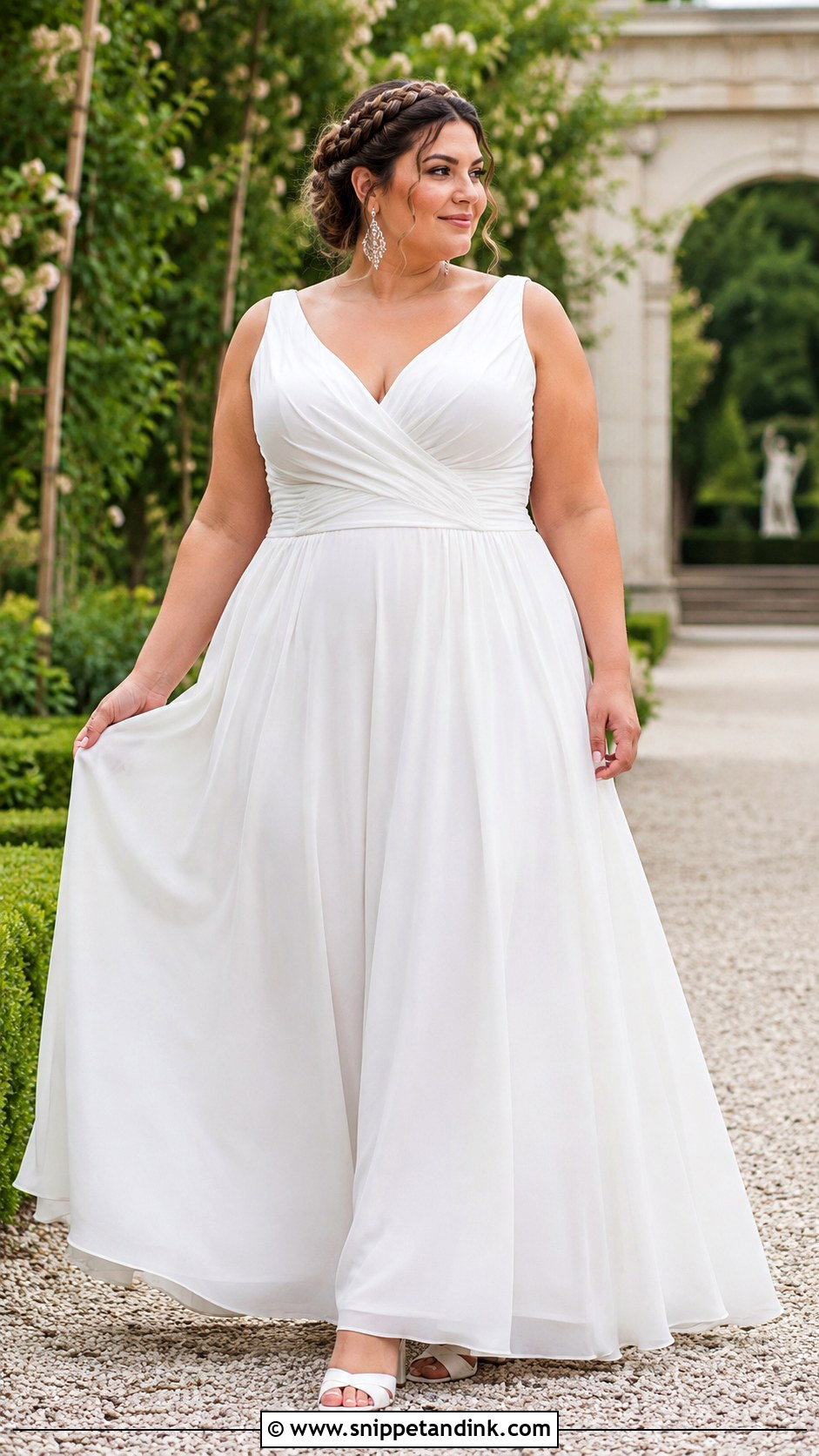
Plus-size Greek gowns need support that doesn’t flatten the movement. I look for a wrapped V-neck, wide shoulder panels, internal boning and an A-line skirt; soft ruching at the waist shapes without squeezing. One practical frustration: many boutiques stock samples in one small size, and a sample that can’t close tells you nothing about the drape. Call ahead and ask which samples are close to your measurements. Block heels, statement earrings and a low braided updo suit it, and tonal draping often defines the waist better than a belt.
14. Petite Greek Wedding Dress
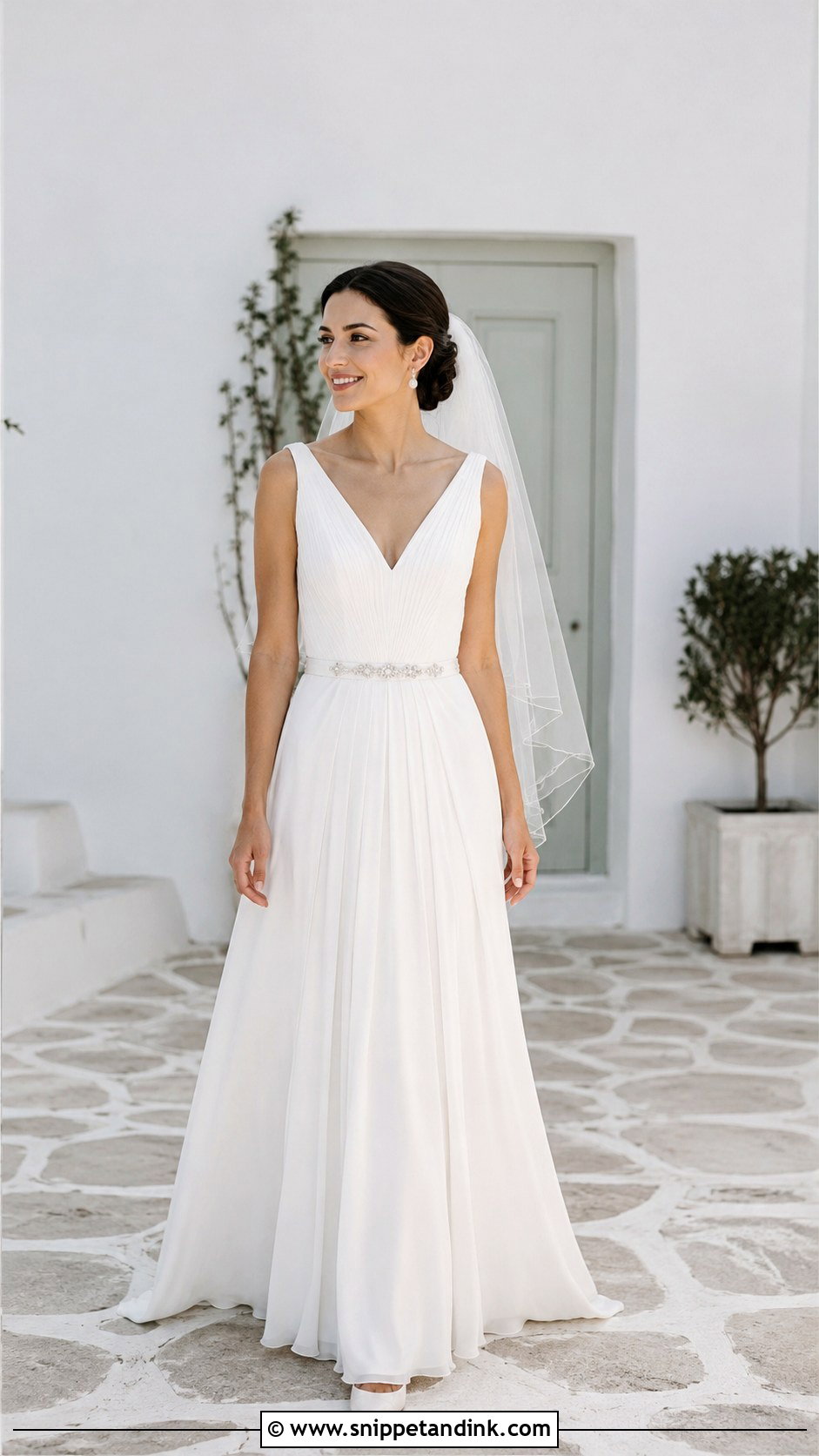
Volume is the enemy on a petite frame, not the Greek style itself. A slim A-line or column with smaller pleats and a well-placed waist keeps the fabric in proportion, and a one-shoulder or V-neck draws the eye upward. Hemming a draped gown is where things go wrong. Taking several inches off the bottom can cut the skirt’s flare and shorten the train awkwardly, so ask the seamstress to remove length at the waist seam where possible. A fingertip veil scales better than a full cathedral.



15. Minimalist Greek Wedding Dress
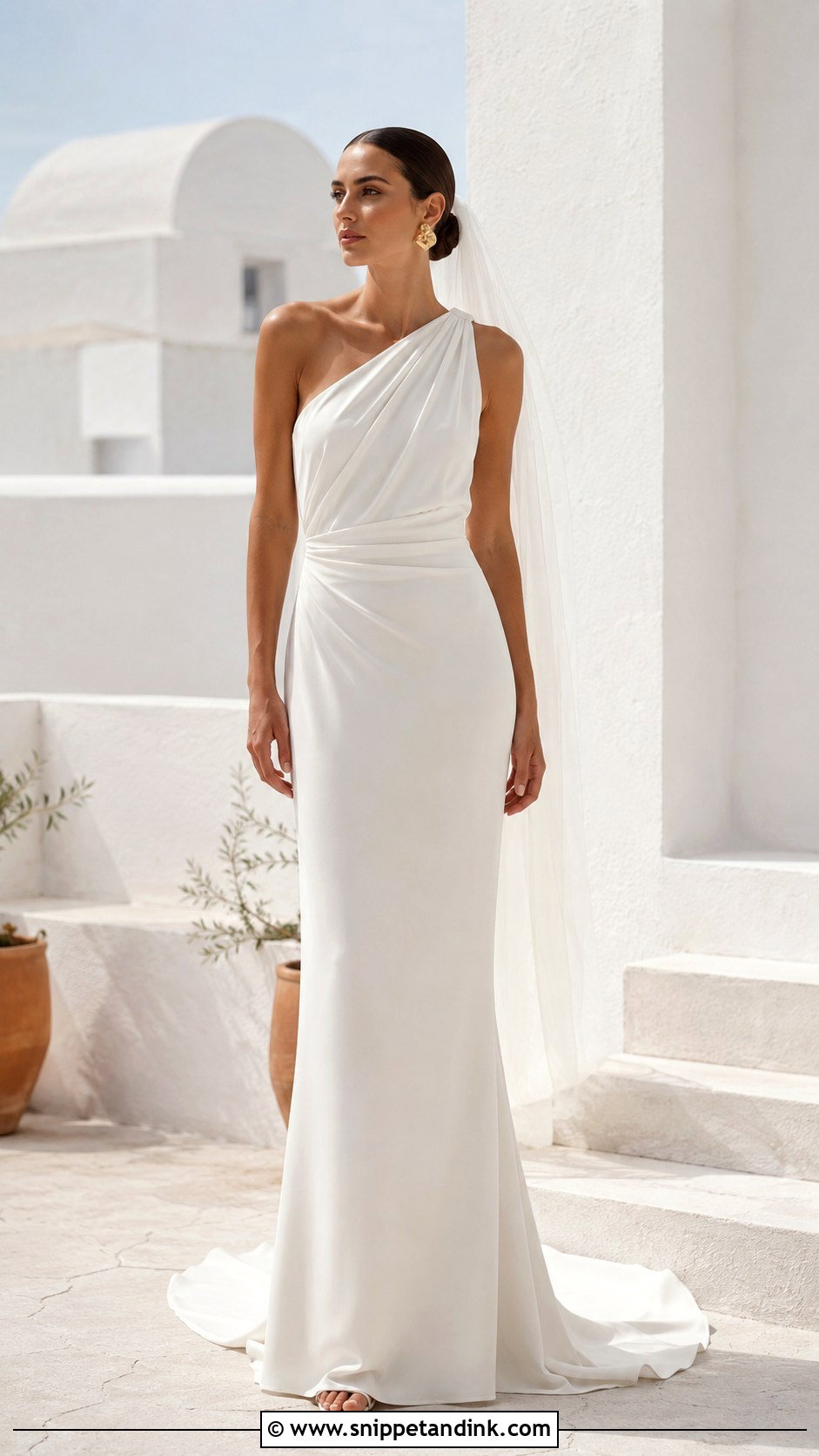
A minimalist crepe column with one gathered shoulder, a softly wrapped waist and a sweep train hides nothing, so fit and fabric quality decide everything. Inspect the seams and lining up close; on a plain gown, a puckered zip is the first thing a camera finds. Geometric gold earrings and a sleek center-parted bun suit the clean lines. A plain tulle veil adds ceremony without changing the mood. It also makes a quiet backdrop for an heirloom piece or a dramatic bouquet.
16. Beaded Greek Wedding Dress
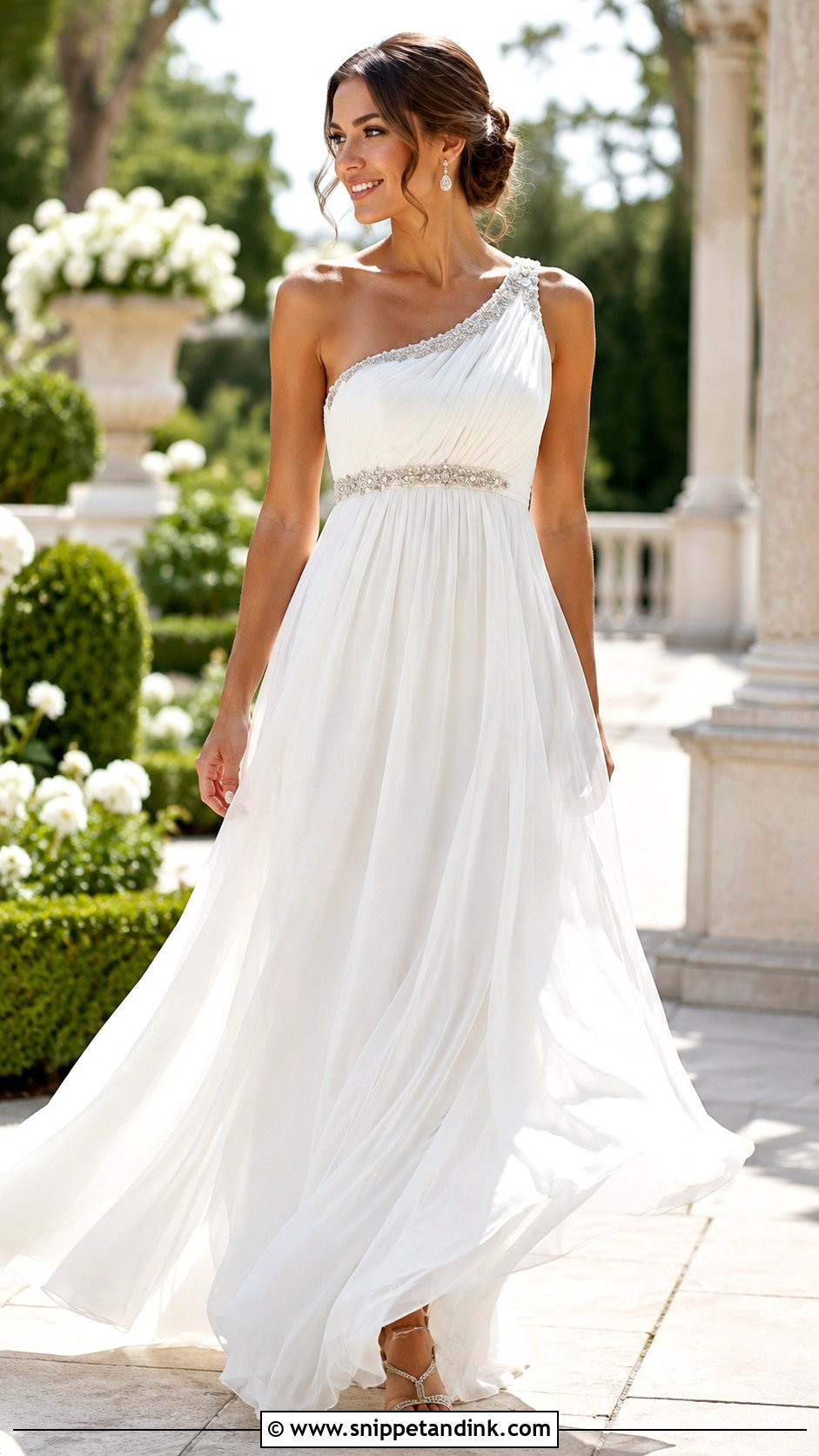
Beading on a Greek gown should sit where light hits the face: neckline, shoulders or the empire band. Spread across the whole skirt, it fights the drape and weighs the chiffon down. The practical check before buying is whether beads are hand-sewn and secure; loose crystals catch on chiffon layers and pull threads. Pair it with simple metallic sandals and a softly twisted updo. A sheer, plain veil, or none, keeps the sparkle in one place.
17. Lace Greek Wedding Dress
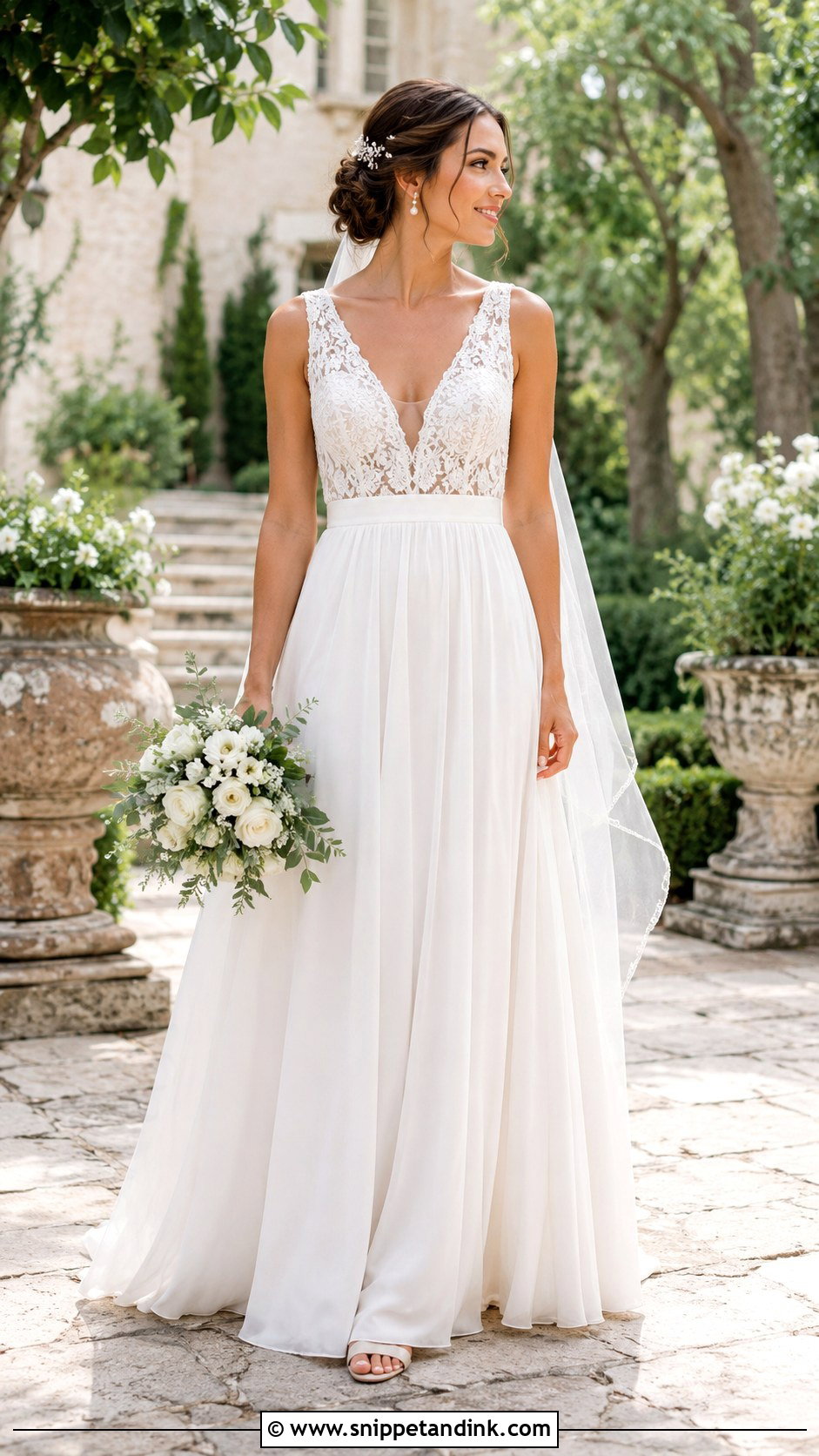
Lace and Greek draping can clash if the lace is dense. I look for an open, delicate pattern on the V-neck bodice only, or appliqué scattered across the shoulders and upper back, with a gathered chiffon skirt below. A narrow waistband bridges the two textures. Check that the lace and chiffon are the same ivory in daylight, because they’re dyed separately and can differ. Pearl earrings, ivory block heels and a loose chignon with a small comb finish it, along with a plain veil.
18. High Slit Greek Wedding Dress
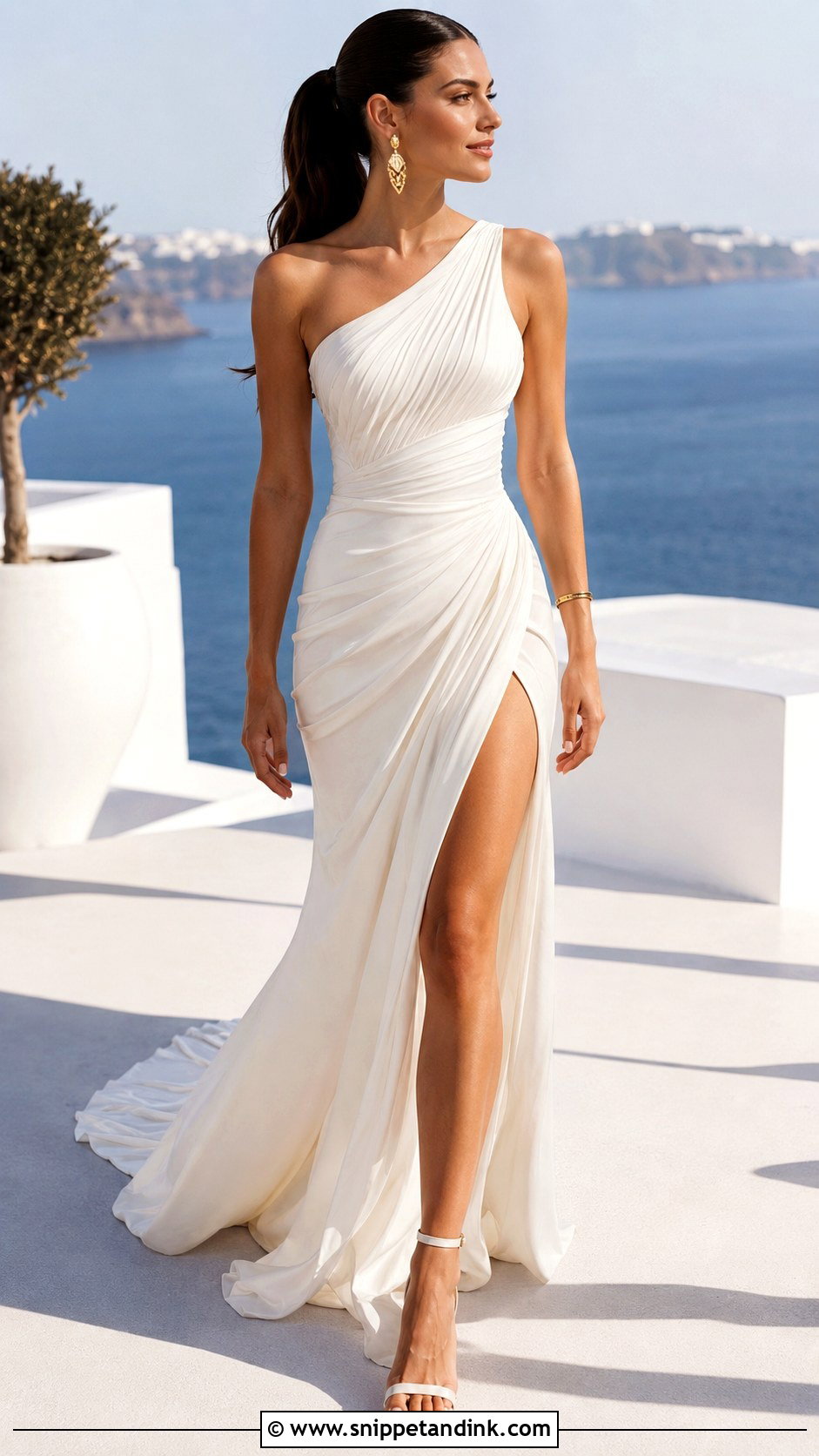
A high slit modernizes a draped Greek wedding dress quickly, and it needs a secure wrap skirt with enough lining to keep the opening where it belongs. During alterations, I have brides climb a few steps, because stairs open a slit far more than flat walking does. A one-shoulder or halter bodice balances it. Ankle-strap sandals, a slim gold bracelet and statement earrings, with nothing at the neck. A sleek ponytail or low bun keeps it modern.
19. Greek Wedding Dress With Gold Belt
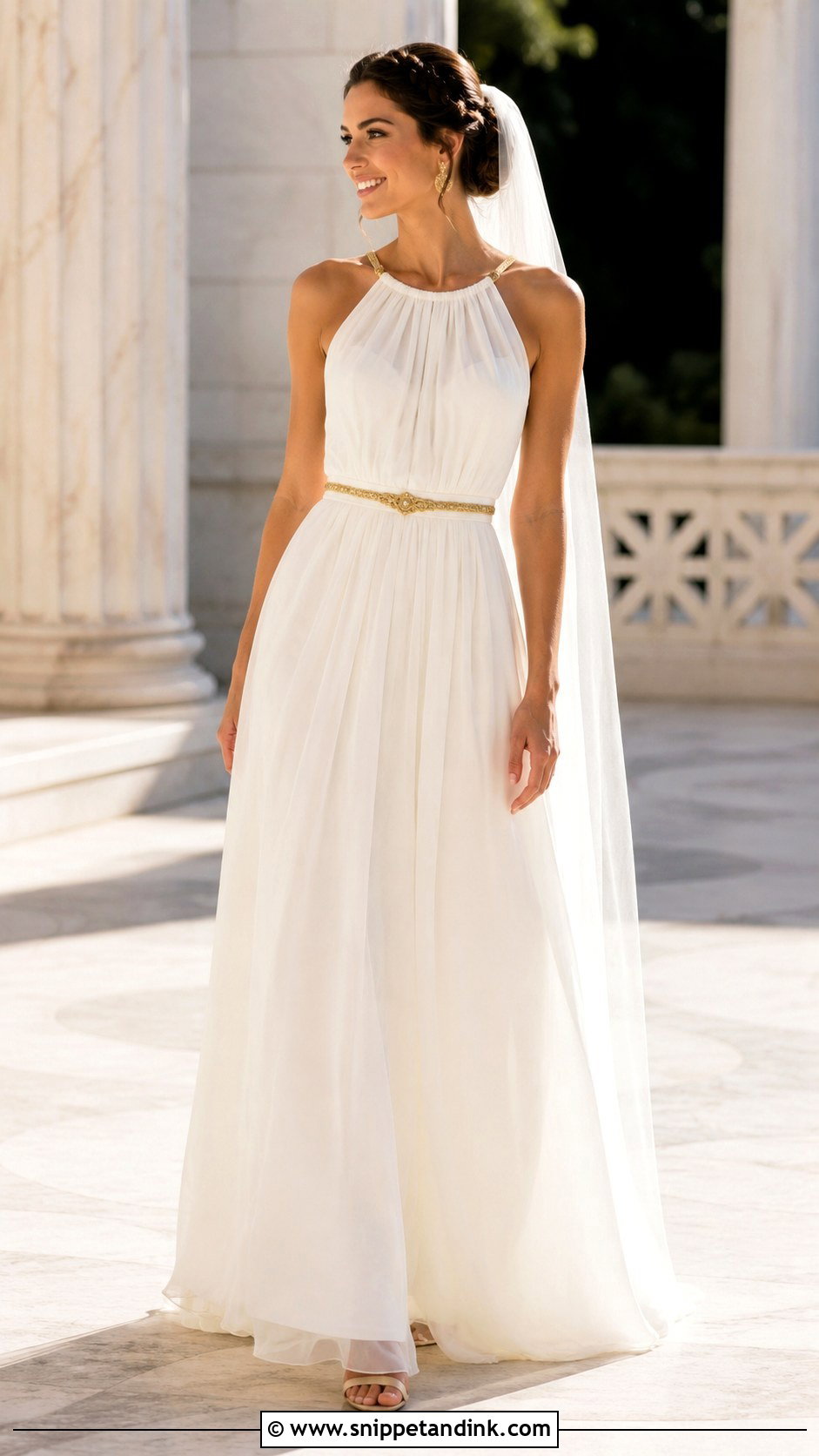
The gold belt is the most literal classical reference here, so it has to be restrained. A narrow brushed-gold band over a simple ivory chiffon or crepe gown with a gathered bodice is enough. Match the gold to everything else metallic: earrings, hair pins, shoe buckles. Yellow gold beside rose-gold hardware looks accidental. If bright gold feels too strong, champagne, antique gold or tonal metallic embroidery is softer. A softly braided updo and a plain veil leave the belt as the one accent.
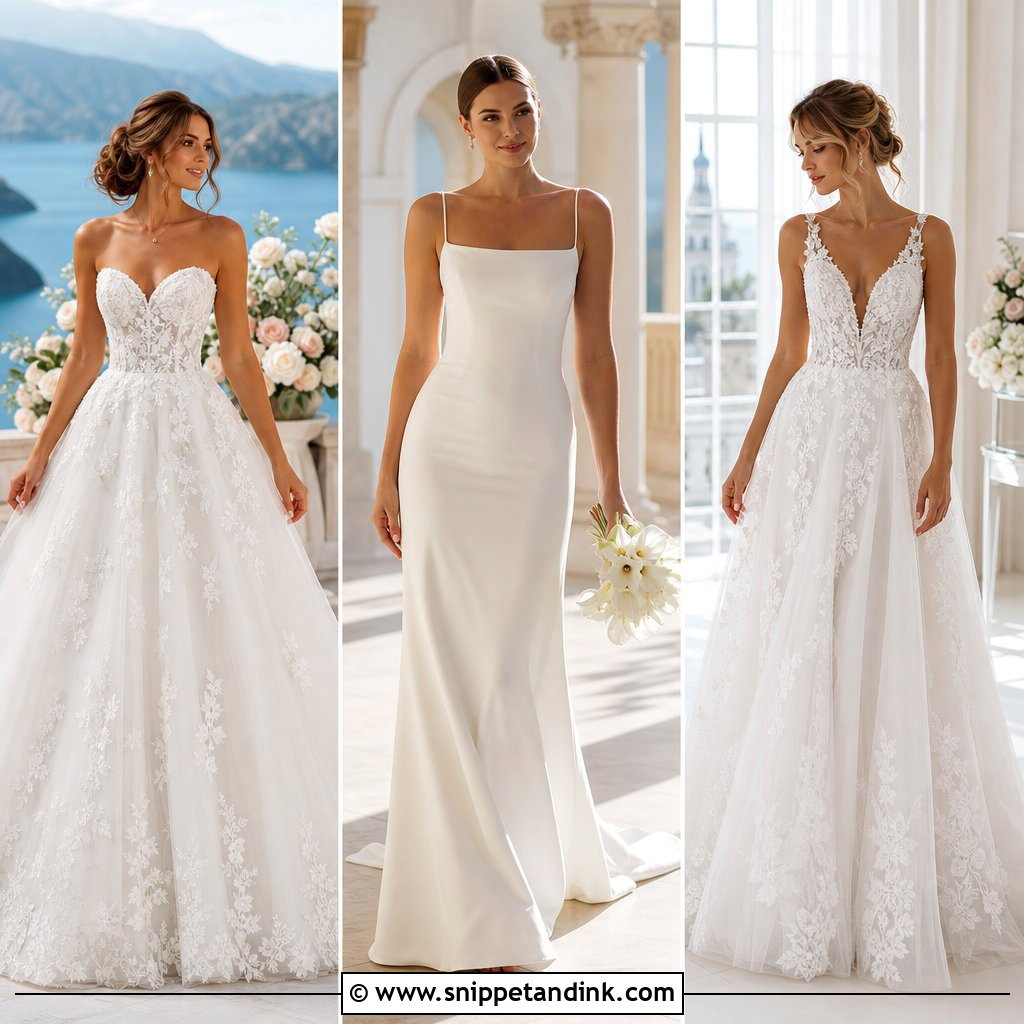
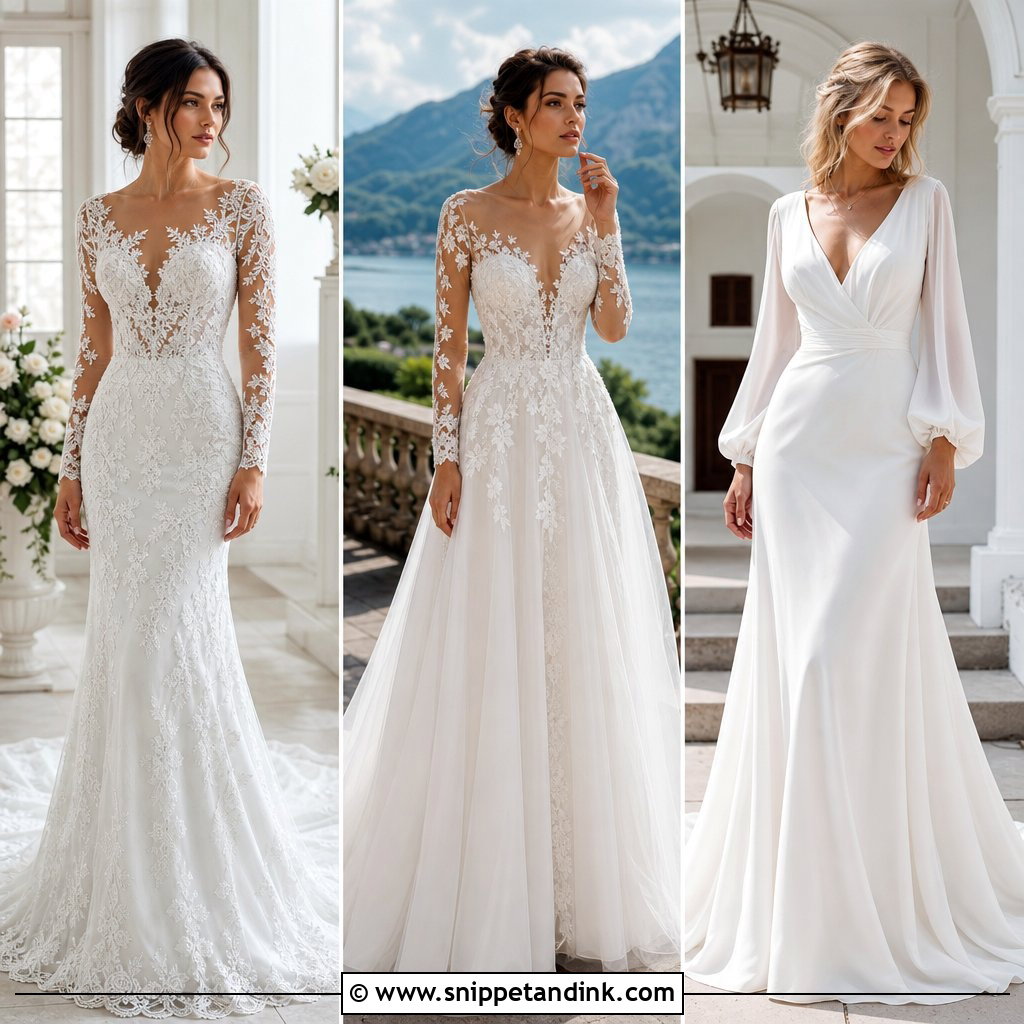


20. Greek Wedding Dress With Flowing Train
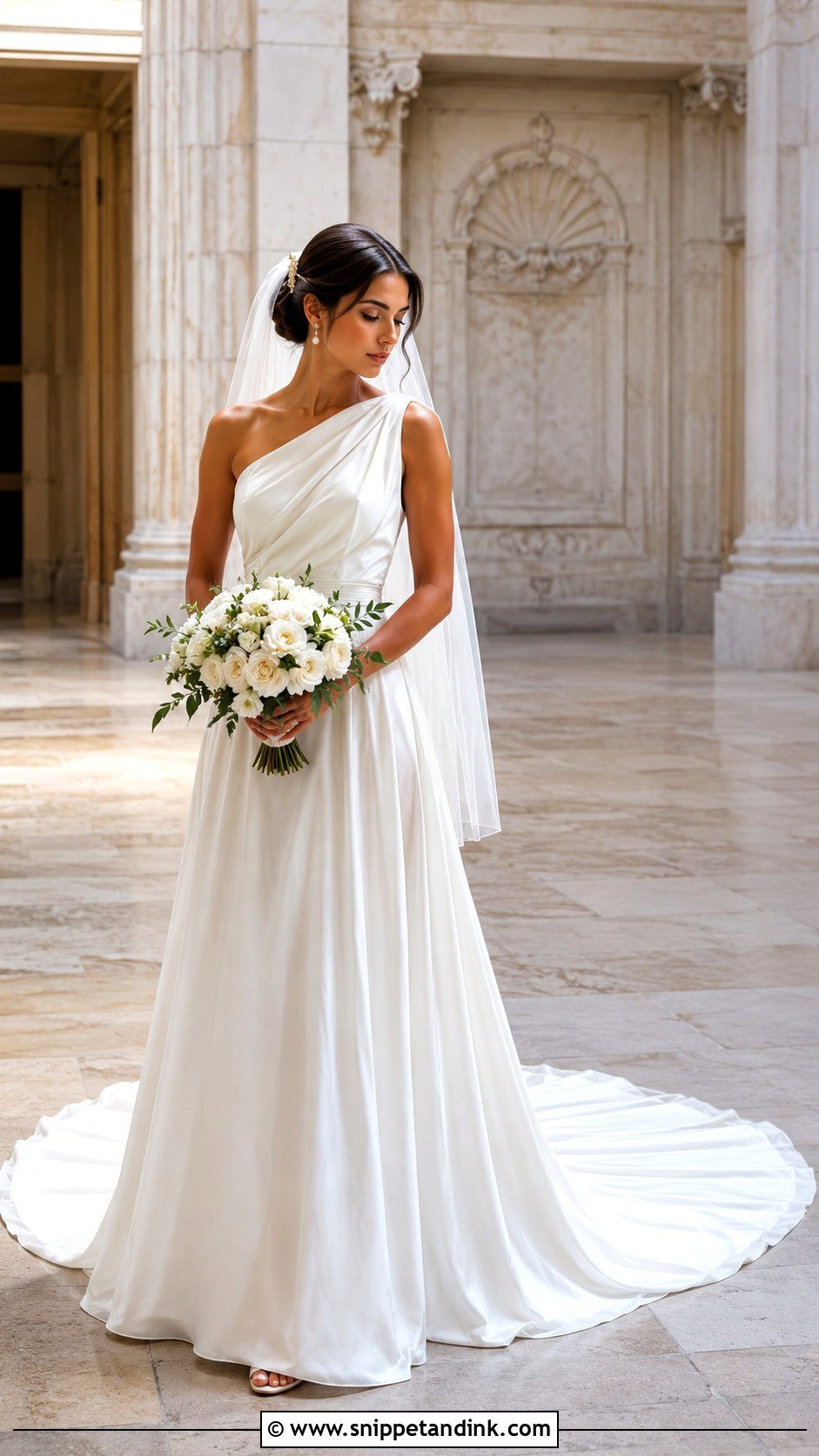
A train turns the processional into a moment. With chiffon, silk or light crepe, the best trains continue the draping from the bodice rather than looking sewn on afterward. Chapel length gives drama and is much easier to handle than a cathedral. Ask for a bustle built for the fabric; on light chiffon, a few hidden ribbon ties hold better than heavy hooks. A shoulder-length or fingertip veil leaves the train visible from behind. It shines in an open venue where the train has room to spread.
What Goes Underneath a Draped Greek Gown
Thin fabric and asymmetric necklines leave very little room for ordinary lingerie. A few combinations I rely on:
- One-shoulder and halter: sewn-in cups are far more reliable than a convertible bra, whose straps rarely line up with the neckline.
- Open back: a low-back body or adhesive cups, ideally tested on a long day before the wedding to see how they hold in heat.
- Crepe and satin columns: laser-cut, seam-free underwear in a shade close to your skin, not white, which can show through ivory.
- Layered chiffon: a slip is usually built in, but if the lining is thin, a fitted skin-tone slip under it fixes transparency.
Flying a Chiffon Gown to an Island Wedding
For a destination wedding, I wouldn’t let the dress out of your sight. Ask the boutique to pack it in a breathable garment bag with tissue between the layers, and carry it on board. Some airlines will hang it in a closet if you ask kindly at boarding; otherwise, fold it loosely into the overhead bin on top of everything else.
Chiffon recovers well. Hang it on arrival in a bathroom while the shower runs, then use a handheld steamer from the inside of the skirt, keeping the nozzle moving. Satin and crepe are fussier and are better pressed by a local dry cleaner or seamstress. Pack a small sewing kit and a spare length of the bustle ribbon in case a tie works loose.
Test the Drape Standing, Sitting and Halfway Up a Staircase
Greek gowns reward patience in the fitting room. One-shoulder chiffon is the most recognizable goddess look; satin columns, halters, cape sleeves and corseted drapes are the more contemporary routes. Think about your venue, the climate and how much support you want before falling for a silhouette. Then look at the gown from every side and move in it the way you will on the day. The dress that still hangs right after you’ve sat, climbed and raised your arms is the one to order.
You'll Like These Ideas:




Leave a Reply