
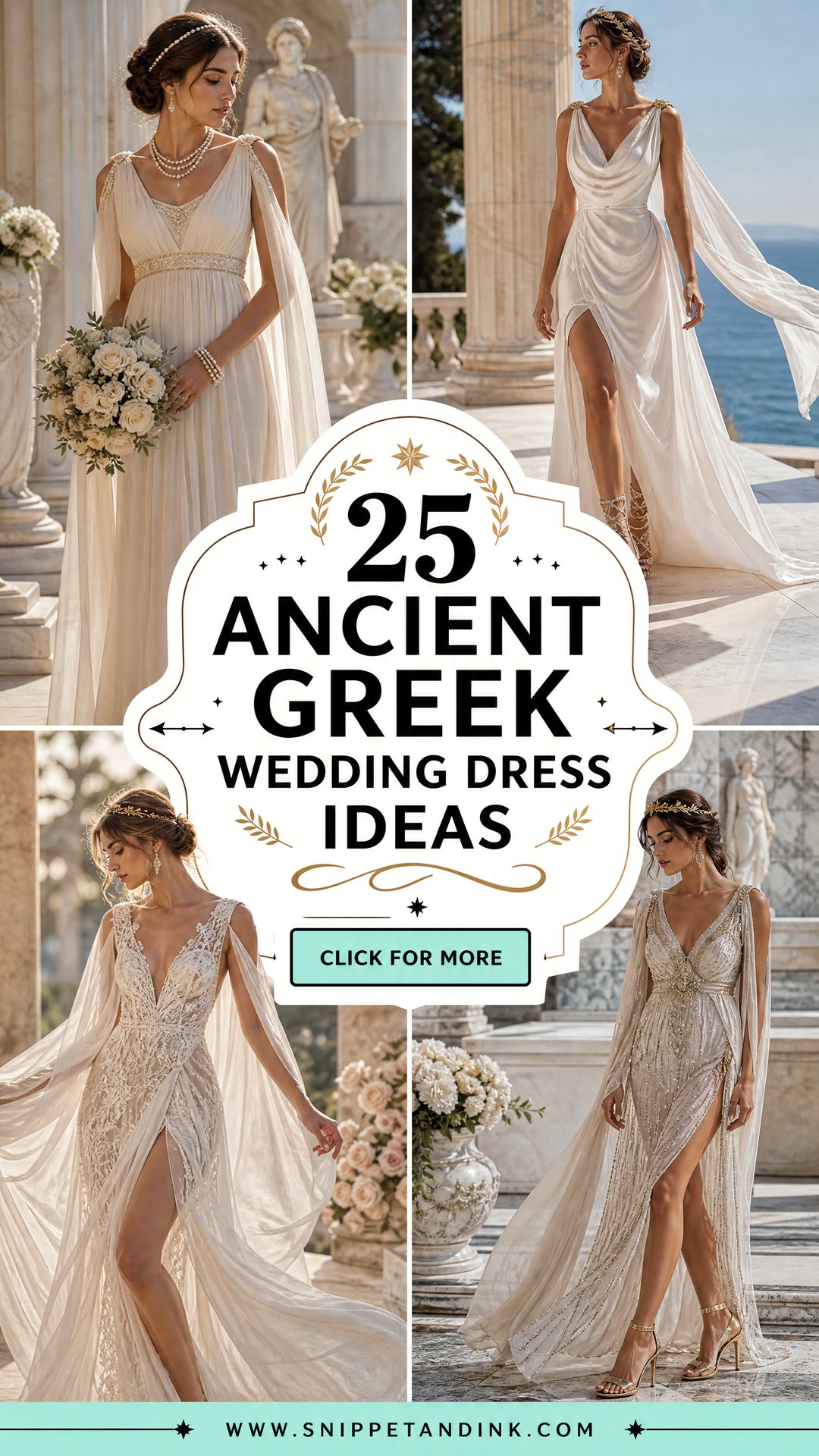
Ancient Greek bridal fashion comes down to fabric that hangs from the shoulders and moves when you walk. Modern gowns borrow from the chiton, the peplos, the high empire waist, the one-shoulder line and fine pleating rather than copying historical clothing, and that borrowing is what keeps them bridal instead of theatrical. In my fittings the difference between goddess and costume is almost always the accessories: gold kept small, sandals that are actually walkable, hair that looks lived in. Below are the silhouettes I’d suggest, with the honest notes on fabric, support and setting that a photo can’t give you.
Chiffon, Crepe or Jersey? How Each Grecian Fabric Behaves on You
Every gown below is really a decision about fabric, because drape is just fabric reacting to gravity and to your body. Before I show a bride a single silhouette, I put three swatches on her shoulder and ask her to walk.
- Chiffon: light and airy, moves in the faintest breeze and forgives a lot. It is sheer, so it is always layered, and in strong backlight the legs can show through unless the lining is opaque.
- Crepe: heavier with a matte surface, holds folds and pleats in place and smooths over the body. The best choice for structured drapes, capes and column shapes.
- Silk jersey: stretchy and fluid, very comfortable, but it clings. Good underwear and good posture matter.
- Silk satin cut on the bias: luminous and sculptural, and the least forgiving of the four. It shows every seam beneath it and creases where you sit.
If you sweat easily or the wedding is in high summer, I’d lean to chiffon or crepe in a natural fiber blend. Satin and jersey both show damp patches at the back and underarms, and that is hard to hide in photos.
1. One Shoulder Ancient Greek Wedding Dress With Gold Sandals
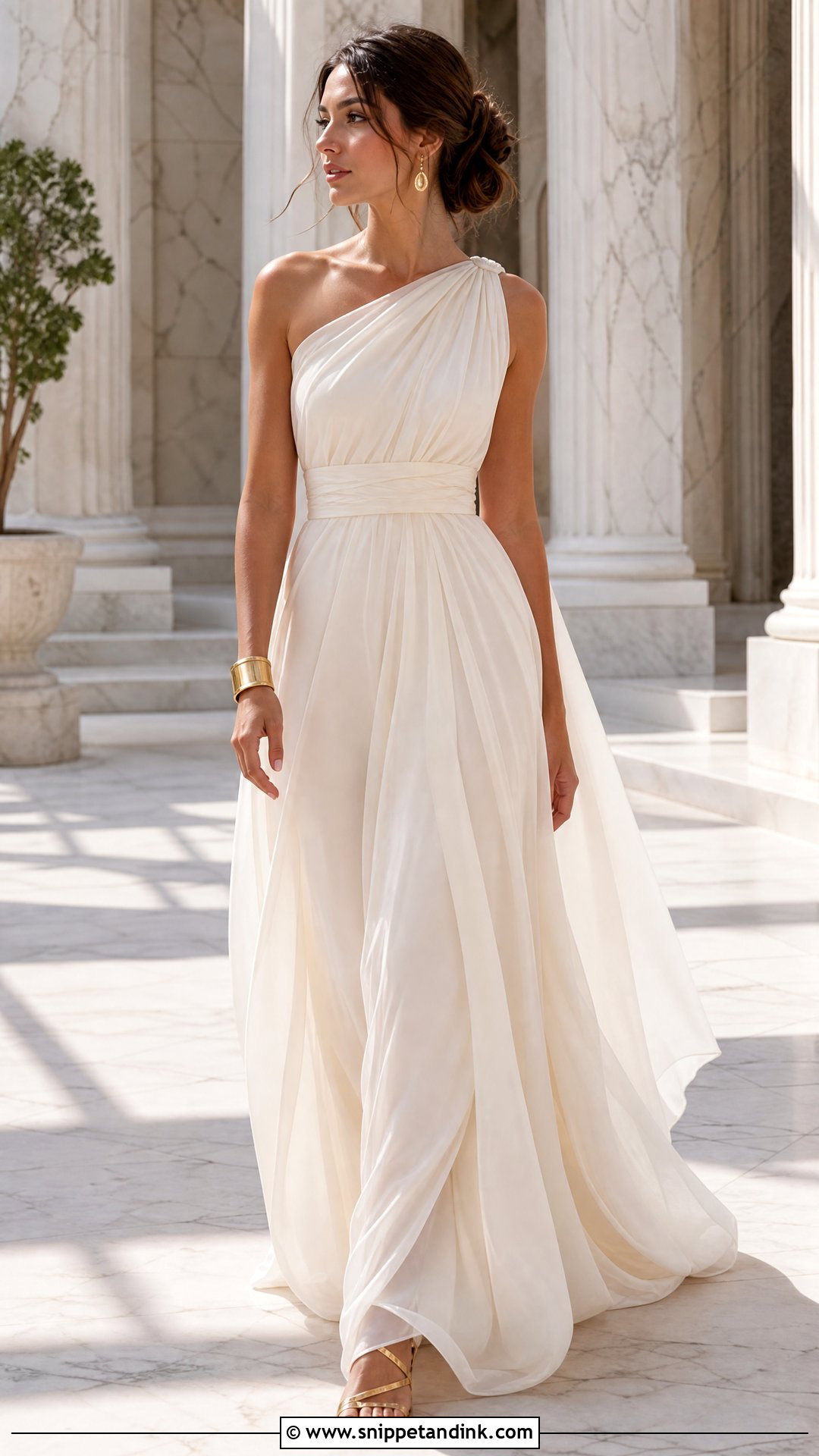
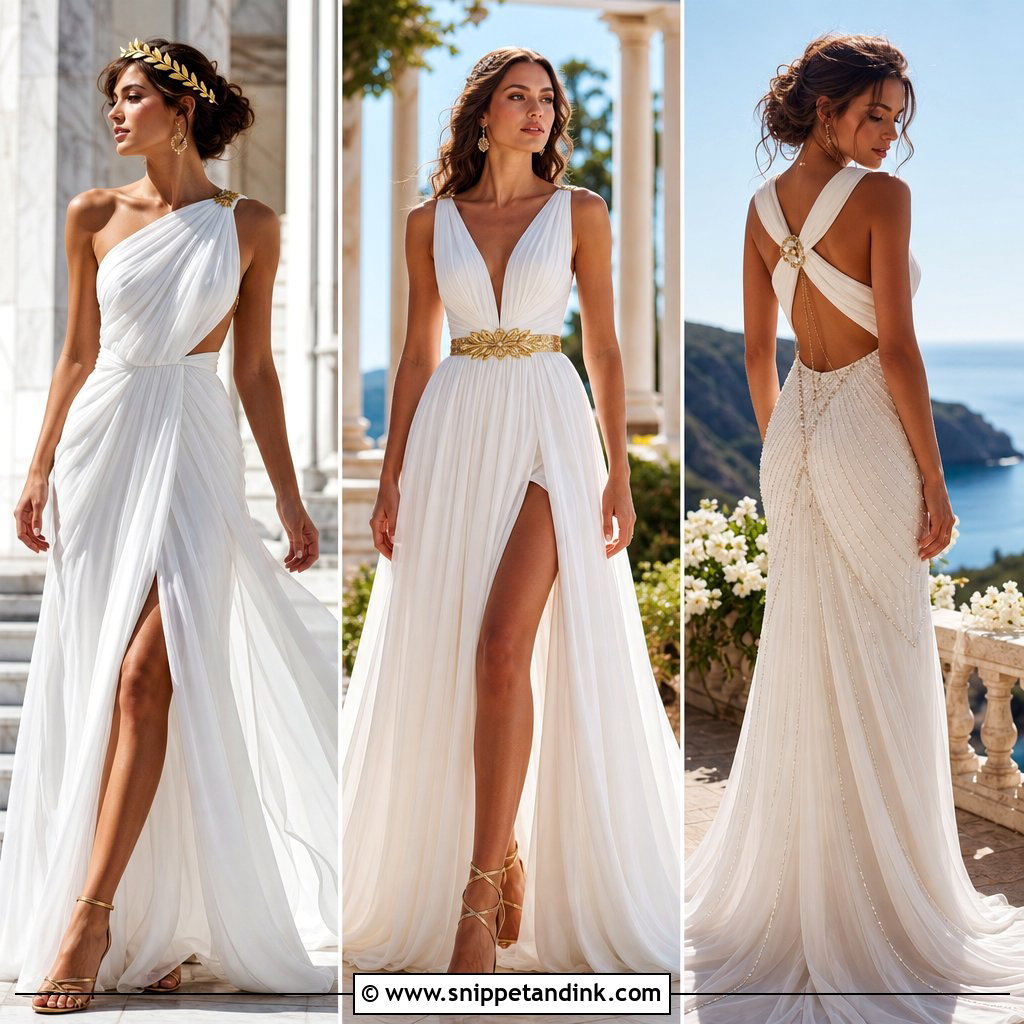
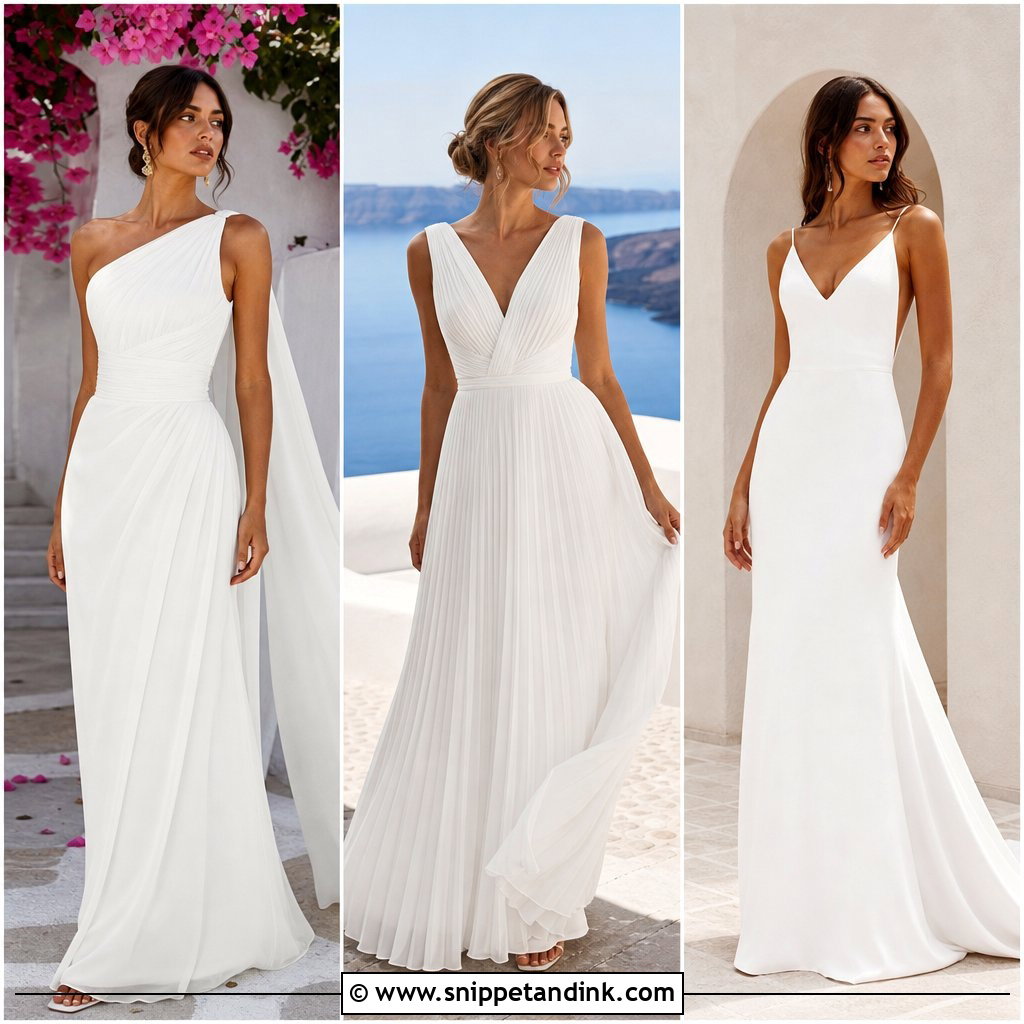
Asymmetry is the whole point of a one-shoulder gown, and it only works if the strap is anchored properly. I look for a shoulder seam with a hidden elastic or silicone grip inside, because chiffon and silk georgette are slippery and a bare-shoulder design will creep toward your neck when you raise your arms. Get that right and the fabric falls cleanly into an A-line skirt that swings around the legs. Slim metallic gold sandals, an ivory clutch and one hammered cuff on the bare arm balance it. Keep earrings small, and wear a loose low bun with a few face-framing pieces. It suits outdoor ceremonies, where a breeze shows off the drape.
2. Empire Waist Ancient Greek Wedding Dress With Pearl Accessories
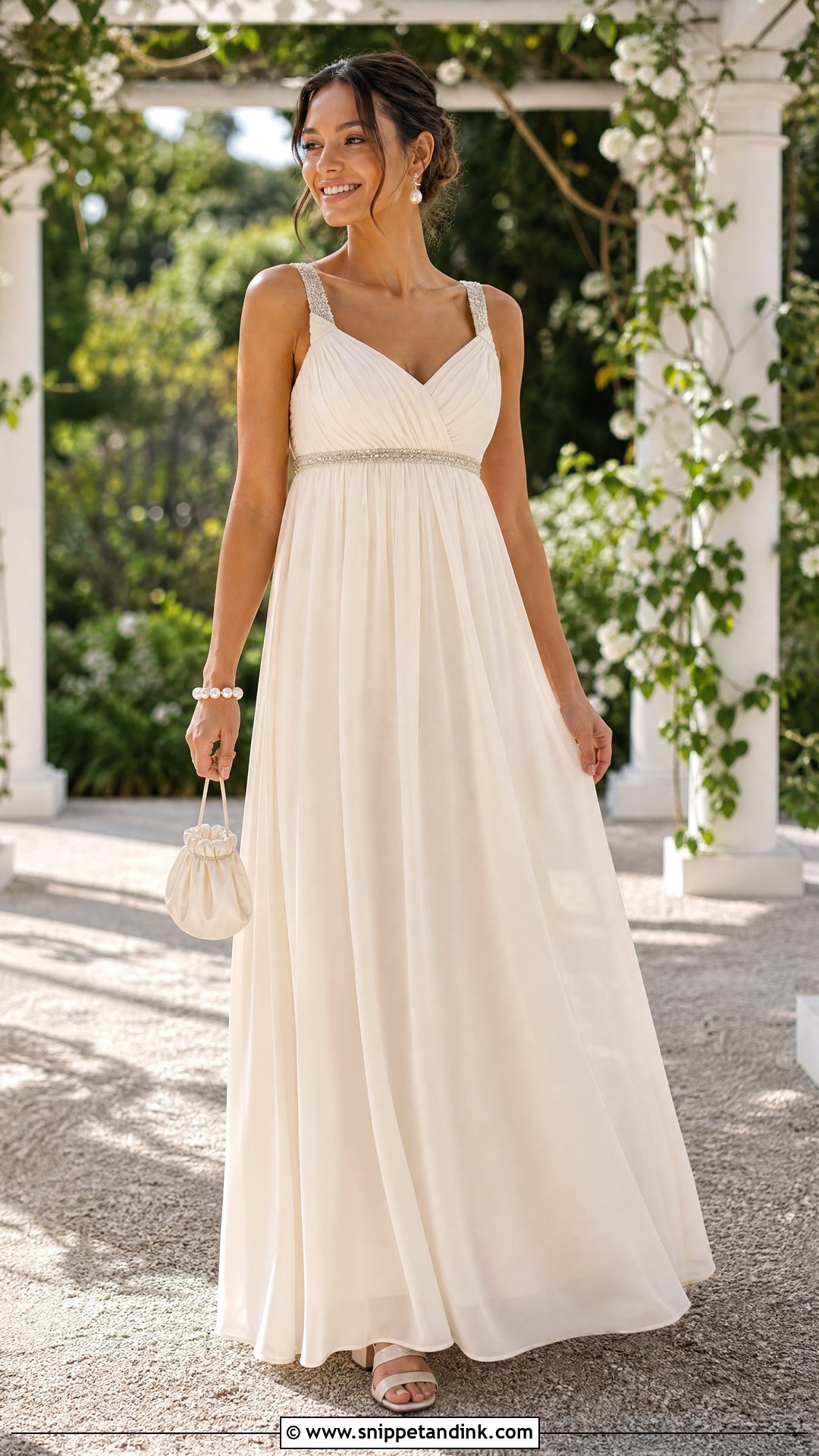
An empire seam sits just under the bust, so the skirt falls in one long line without touching the waist or hips. That makes it the most forgiving Grecian shape I fit, and the coolest in hot weather. What I check is the bust support: with a high seam, everything depends on the bodice, so look for an ivory chiffon gown with a gathered bodice, real straps and a built-in cup or a properly fitted bra. Pearl drop earrings, a pearl bracelet, a small satin bag and low block-heel sandals keep it comfortable. A loose braided updo draws the eye up toward the raised seam and your face.
3. Pleated Chiton Wedding Dress With a Gold Waist Belt
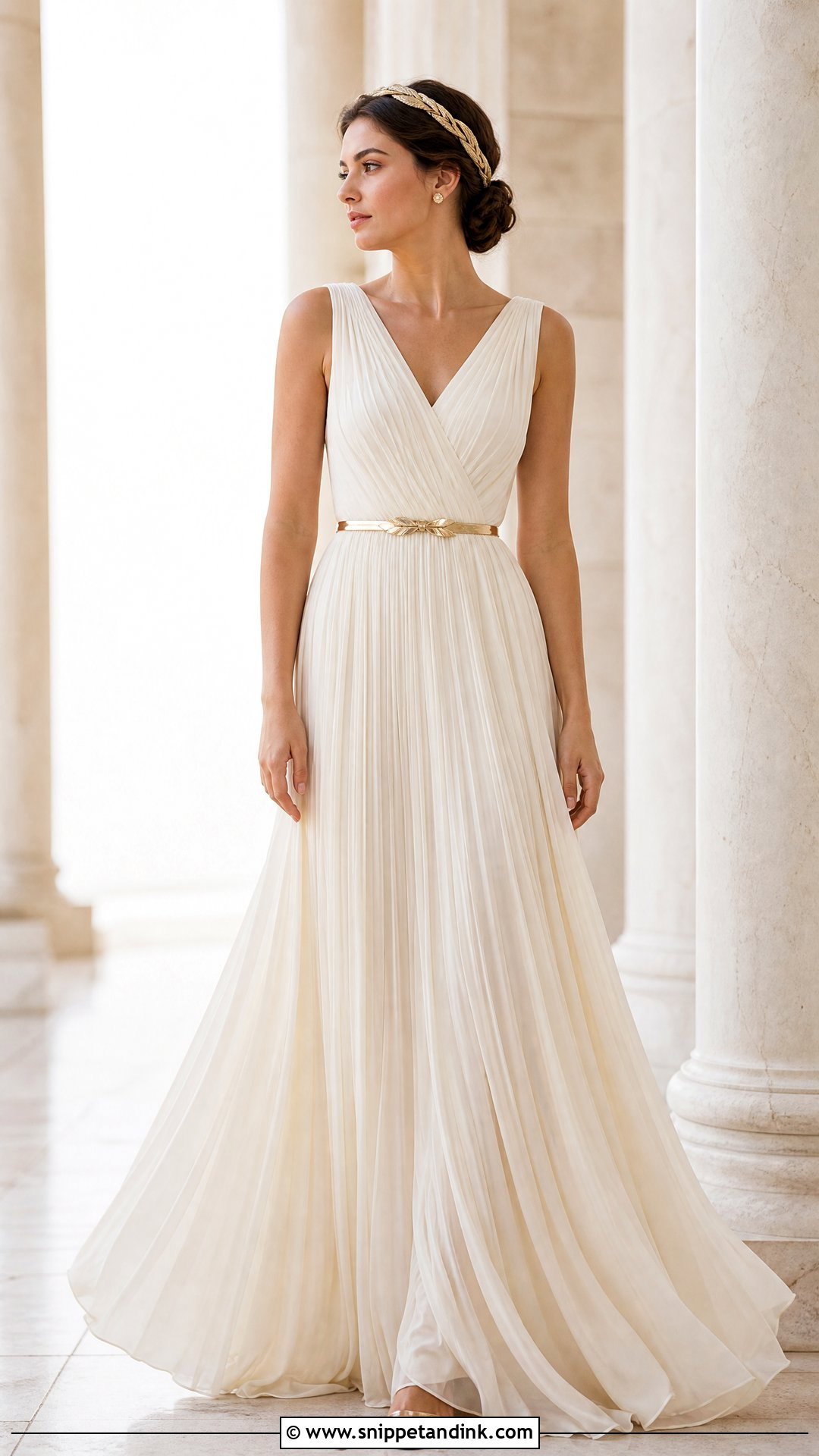
Fine vertical pleats are what give a chiton-inspired wedding gown its movement, and they are fussy to care for. Machine-set pleats in polyester chiffon hold through a long day; pleated silk relaxes as you sit and needs a gentle steam. A slim gold belt breaks the long column and gives shape without weight. Wear it with plain gold leather sandals, a small cream pouch and, if you like, a twisted gold headband. Stud earrings are plenty. Narrow pleating that runs neckline to hem lengthens a petite frame, which is why I often suggest this cut to shorter brides.
4. Peplos Wedding Dress With Draped Shoulder Pins
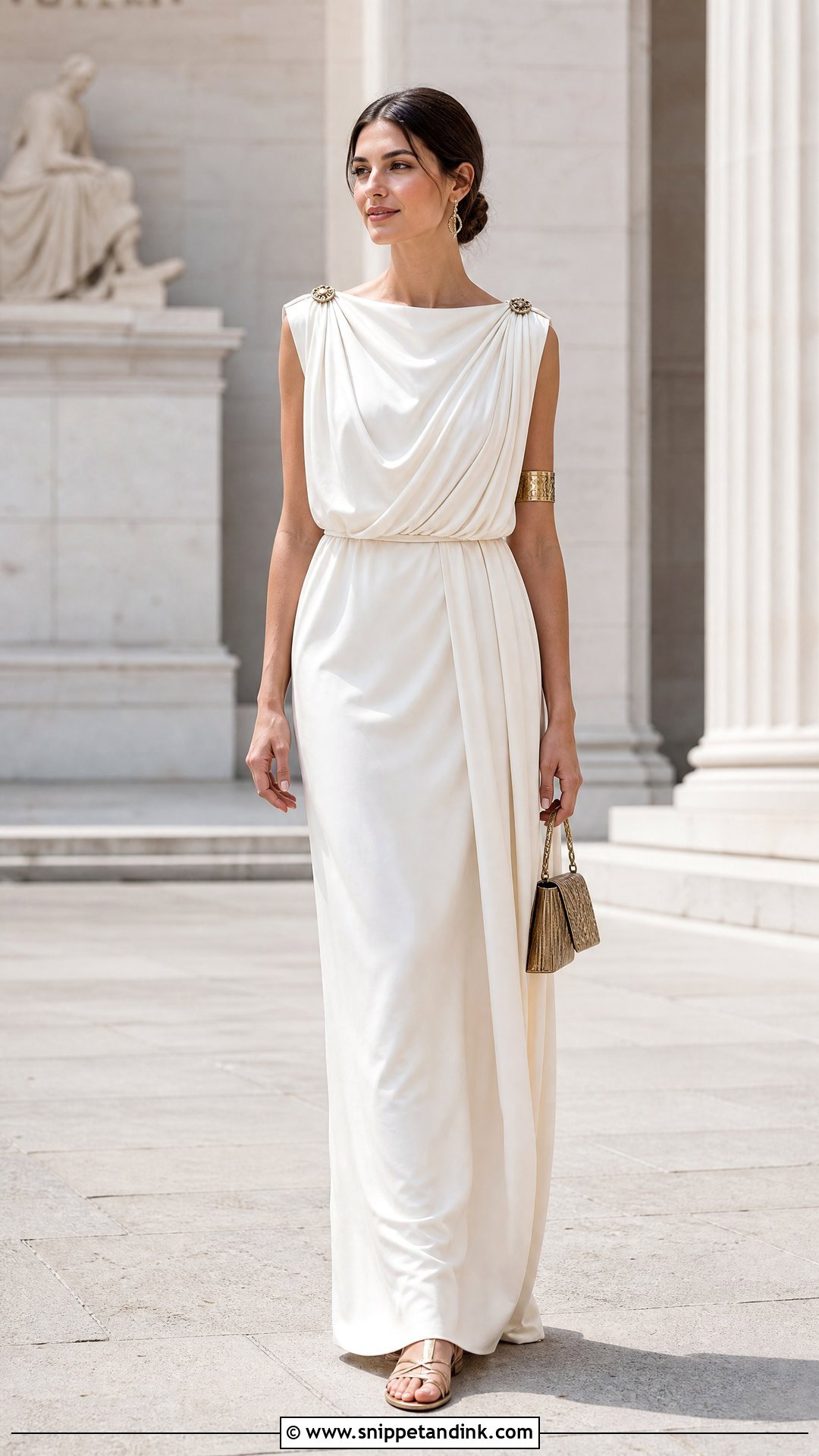
The peplos was a folded overlayer, and in a modern gown that fold sits across the bust and shoulders like a short cape. I like it in matte crepe or a heavier silk because those fabrics hold a structured drape without puffing out. Brushed gold shoulder pins fix the folds in place and give an authentic-looking detail; ask for them to be stitched through, not just clipped, so they don’t drag the fabric forward. Flat gold sandals, a narrow arm cuff and a compact bag complete it, with delicate earrings and a center-parted low bun. Marble courtyards, museum venues and pared-back modern rooms suit this one.
5. Draped Cape Ancient Greek Wedding Dress With Ivory Heels
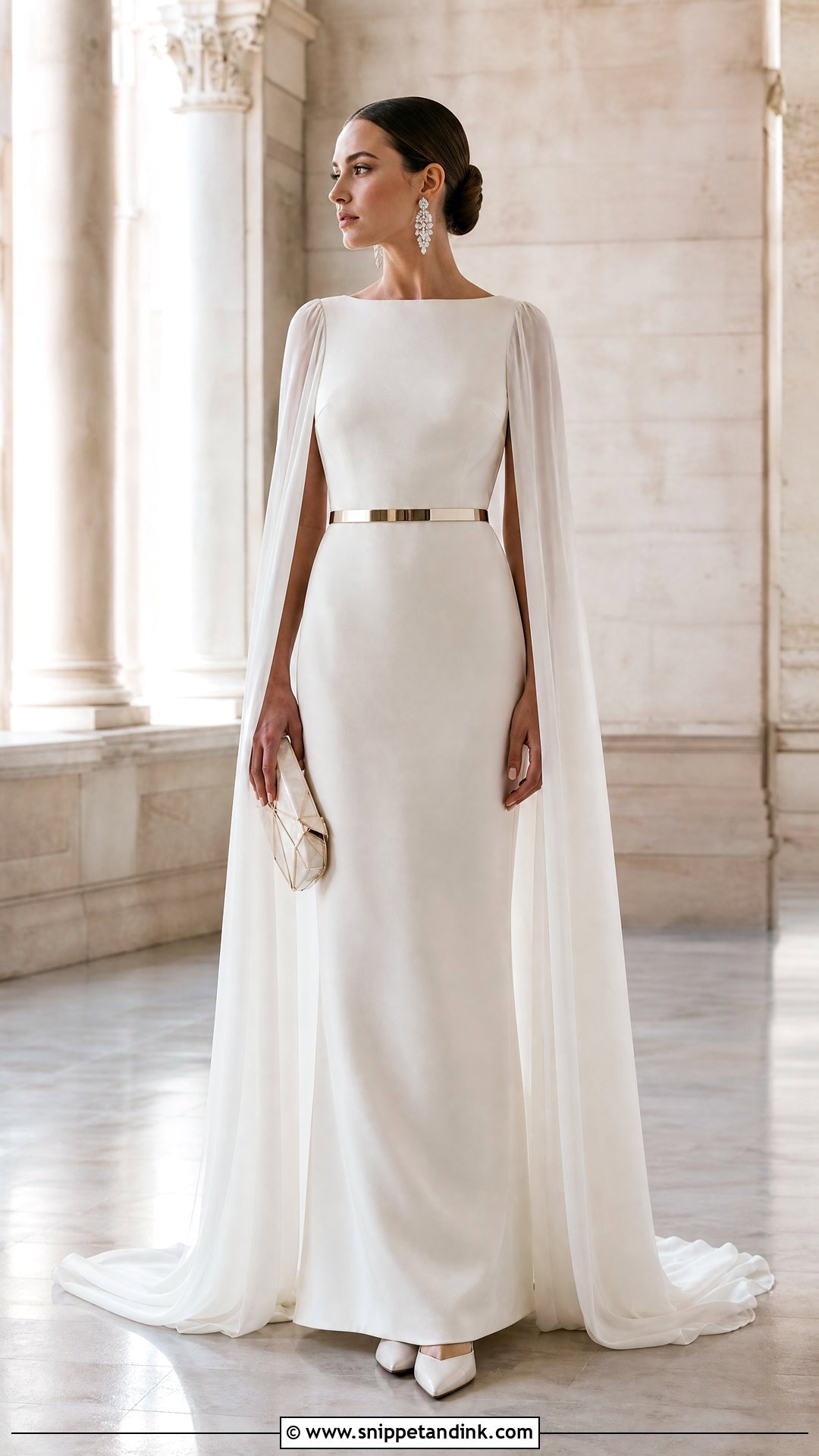
A long sheer cape turns a plain column gown into an entrance. Choose an ivory crepe dress with a clean neckline and a chiffon cape attached at the shoulders that reaches the floor or slightly beyond, so it trails behind you like a veil without the weight on your head. The practical question I always ask is how it comes off. Snap or hook attachments let you remove it for the reception in seconds; a cape sewn into the shoulder seams stays all night. Pointed ivory heels, crystal drop earrings, a small structured clutch and a sleek bun keep the line clean, with a narrow metallic belt if you want more waist.
6. Gold Belt Ancient Greek Wedding Dress With Laurel Headband
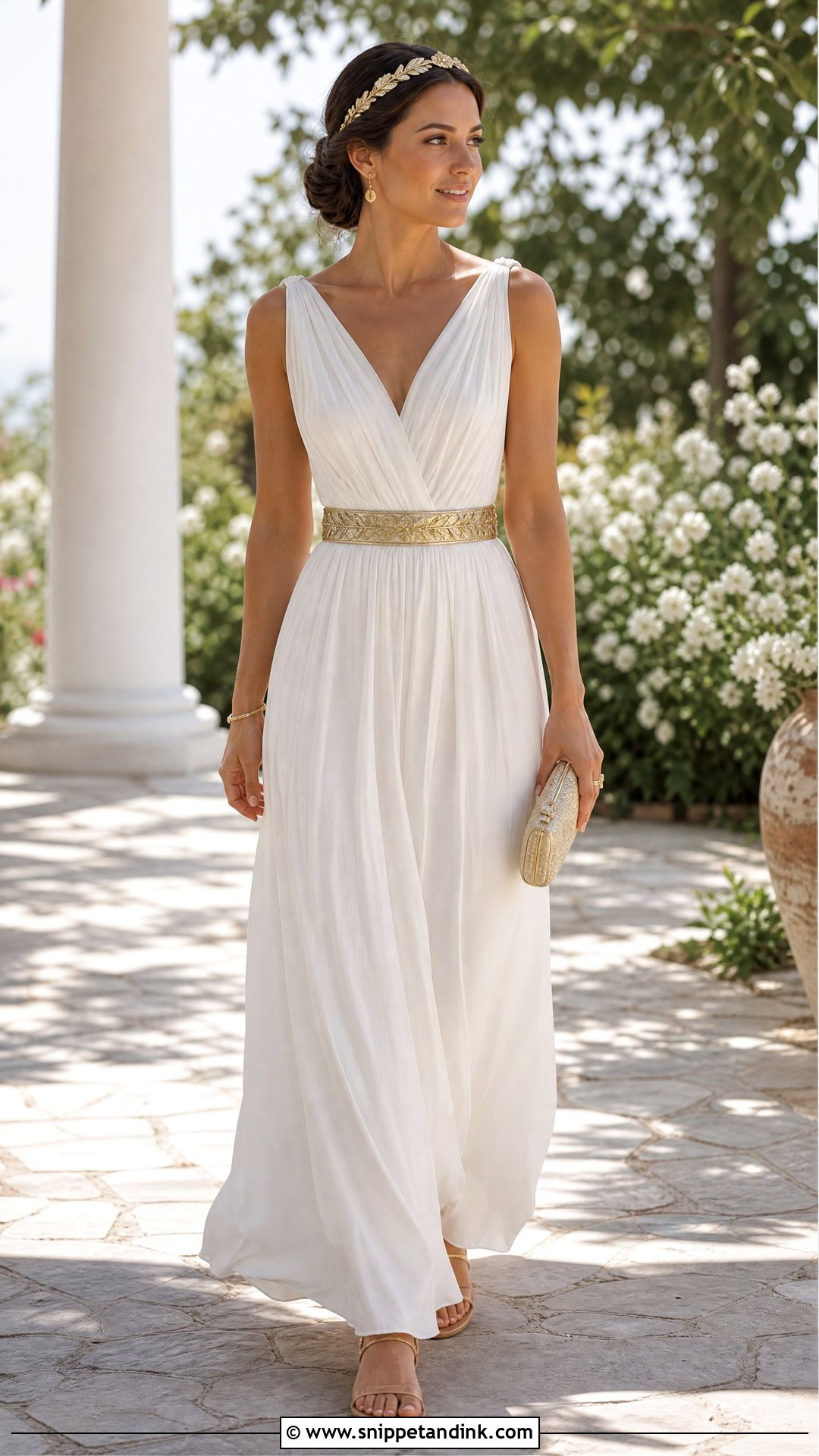
A gold belt is the simplest way to push an ordinary flowing gown toward a Grecian feel. Start with a soft white or ivory A-line in gathered fabric with a modest V-neck, and set a slim embossed belt at the natural waist. Watch the belt’s back fastening: a rigid buckle digs in when you sit, so I prefer belts with a flexible chain or ribbon tie at the back. A gold laurel headband works if the leaves are small; big leaves tip into fancy dress quickly. Neutral leather sandals, tiny gold earrings and a cream clutch finish it, with a textured low bun under the headband.
7. Cowl Neck Ancient Greek Wedding Dress With Crystal Sandals
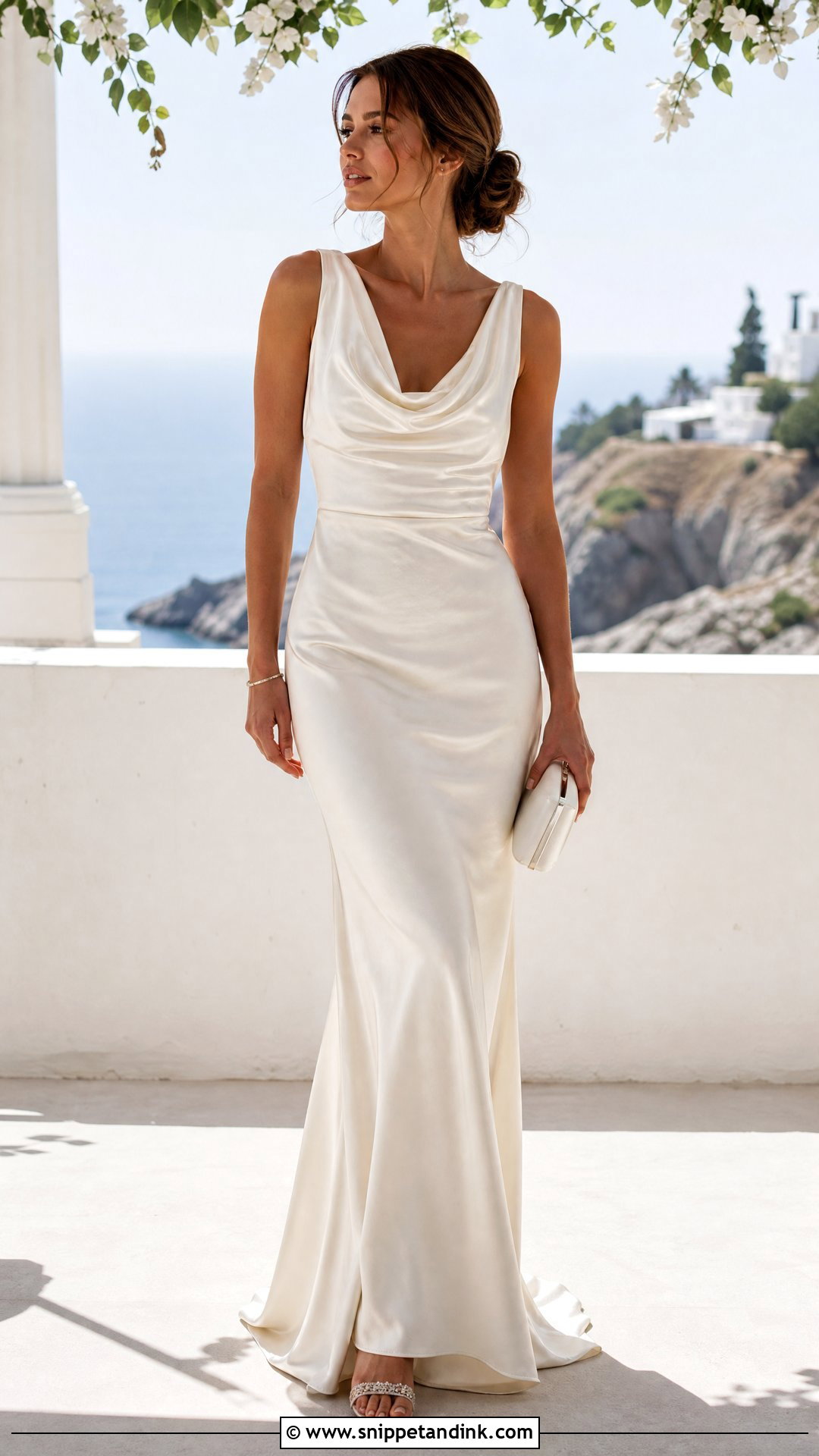
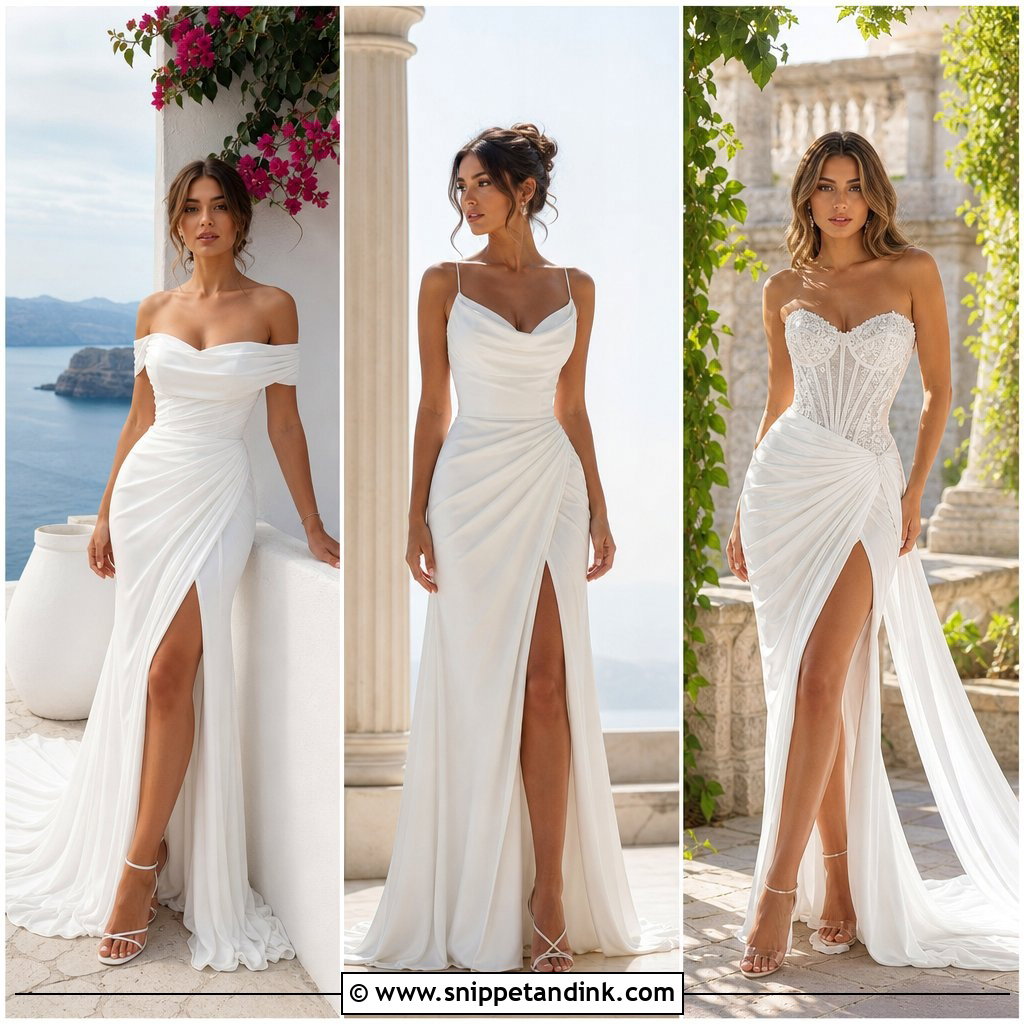
A cowl neck is fabric cut on the bias so it falls into soft folds at the neckline, and it needs weight to do that. Silk satin or crepe-backed satin hangs into proper folds; a cheap thin satin just collapses. Watch two things. A deep cowl gapes when you lean forward, so a discreet fashion-tape stitch at the center can help, and satin shows every bump, so plan smooth underwear. Crystal sandals, a thin tennis bracelet, small crystal earrings and a satin box clutch add sparkle. A loose side bun shows off the neck, and a sheer cape veil can cover a low back during the ceremony.
8. Halter Ancient Greek Wedding Dress With Statement Cuffs
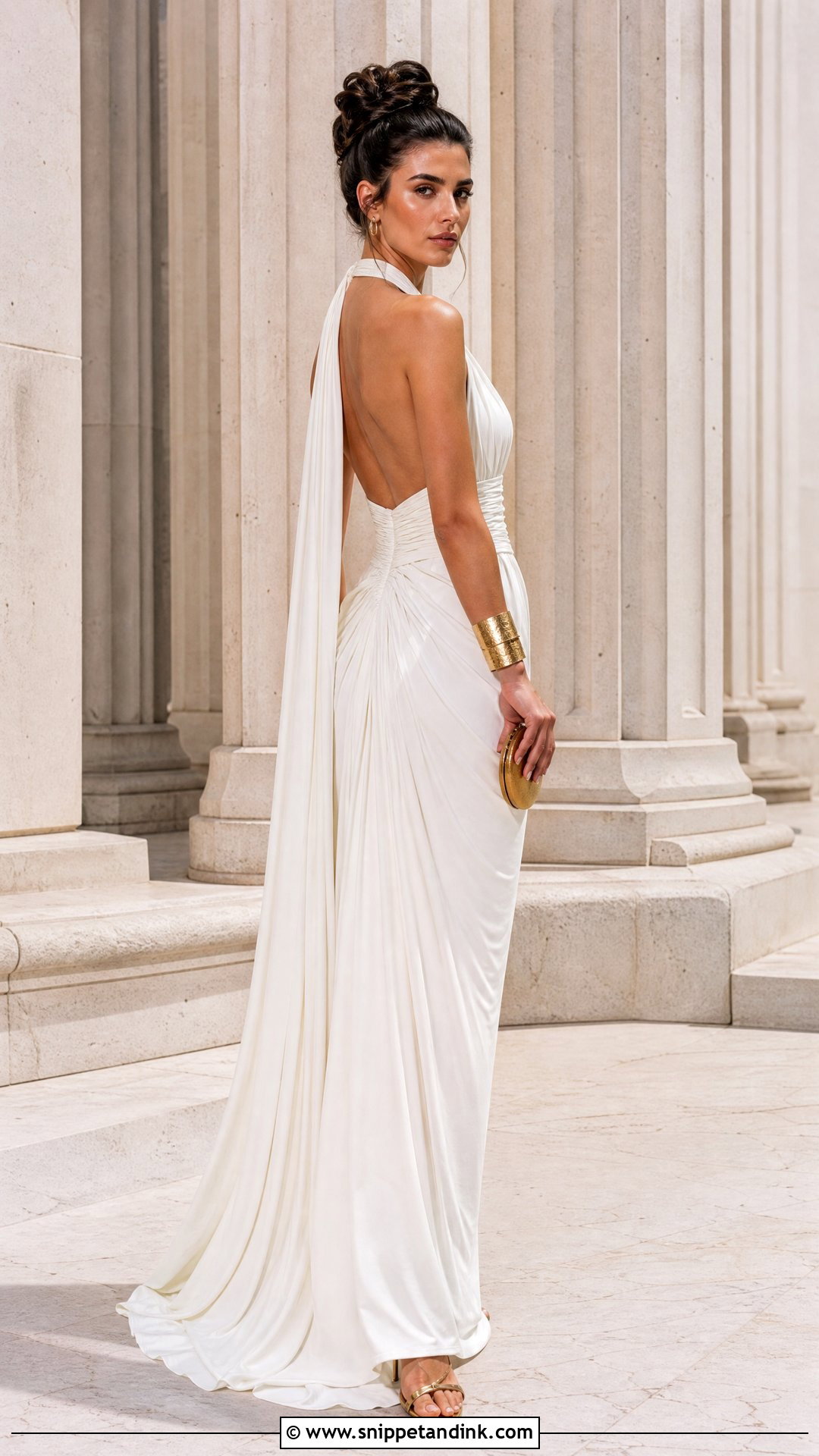
A halter puts all the support at the back of your neck, and on a fuller bust that strap can pull after a few hours. I steer those brides toward a halter with a built-in bra or a wider neck band. Otherwise, the shape is wonderful: fabric gathered at the throat, an open or partly open back and a softly cinched waist in ivory silk jersey or lightweight crepe. Leave the neck bare and wear one wide hammered cuff on each wrist instead, with metallic sandals and a compact gold clutch. A high braided bun shows off the shoulders and balances the strong neckline.
9. Off Shoulder Ancient Greek Wedding Dress With a Draped Veil
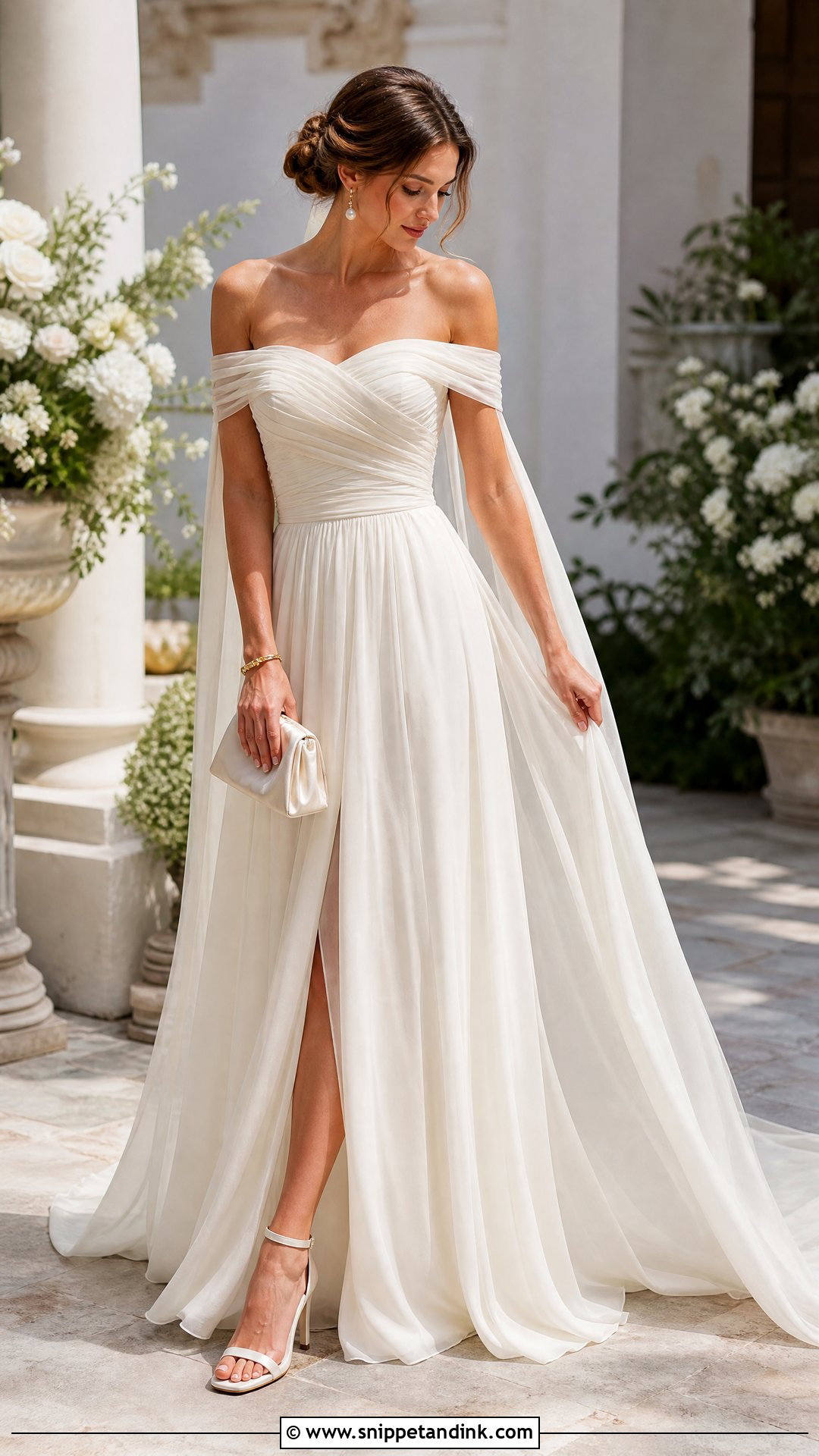
An off-the-shoulder gown gives a softer take on the Greek goddess aesthetic. I’d choose a bodice of folded fabric over a rigid corset, joined to a fluid chiffon or silk skirt. The test I make every bride do is lift both arms as if hugging someone: dropped sleeves can pin your arms to your sides, and that’s the moment you’ll find out on the day. A long plain tulle veil set under a low bun drapes behind without hiding the neckline. Pearl drop earrings, ivory ankle-strap heels, a satin clutch and a fine gold bracelet finish it, with more support than a strapless design.
10. Column Ancient Greek Wedding Dress With a Detachable Train
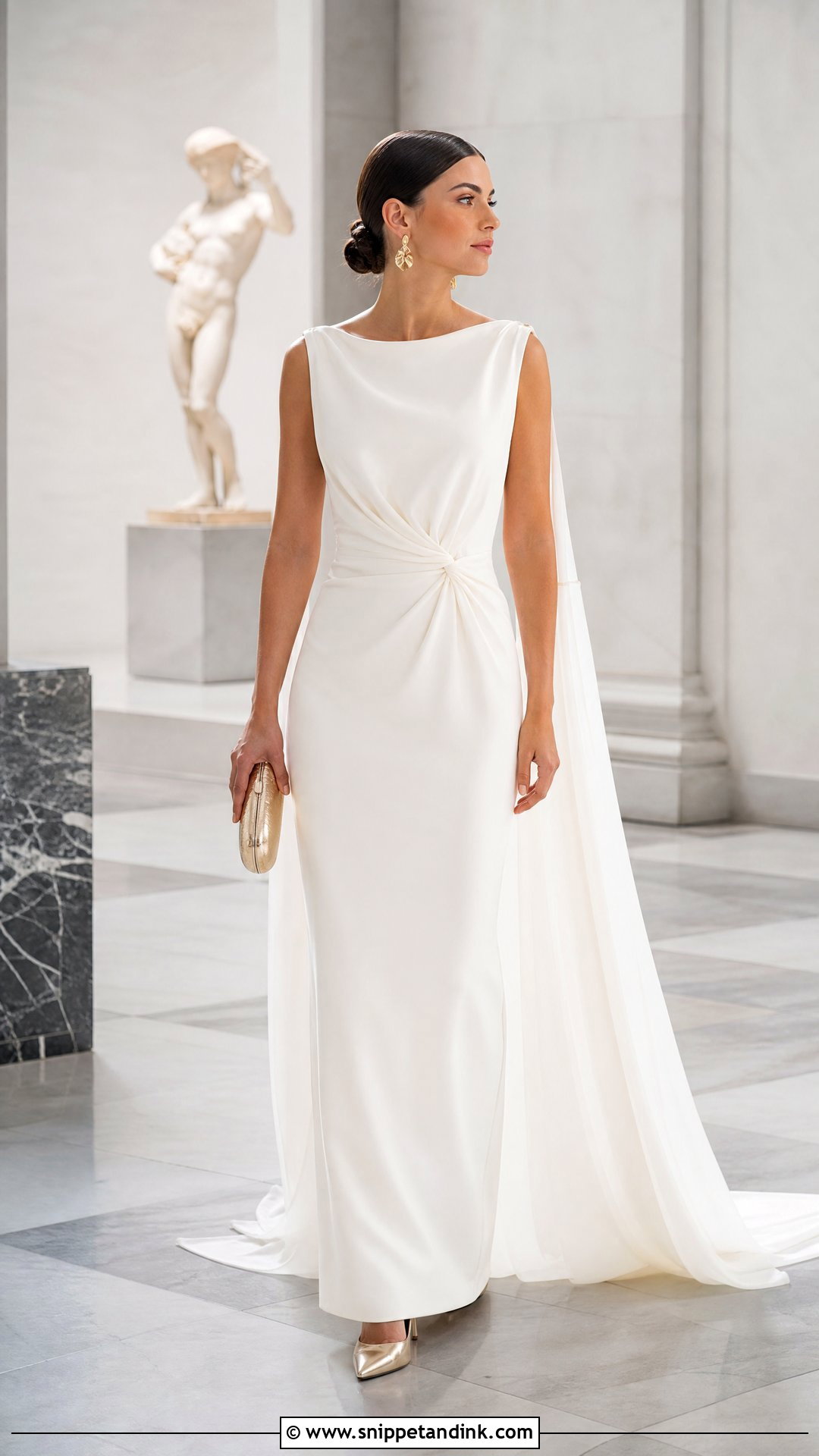
Classical statues are basically columns, and a column gown copies that long straight line. Go for ivory crepe with light gathering at the waist and a straight skirt that follows your body without restricting your stride; check you can climb a step without hitching it. A detachable chiffon or organza train gives the ceremony its drama and comes off for dancing. Pointed metallic heels, sculptural gold earrings, a slim ivory clutch and a sleek low knot reinforce the vertical line. Because there’s nothing to hide behind, precise tailoring at the hip and hem is where your alteration budget should go.
11. Silk Ancient Greek Wedding Dress With Barely There Sandals
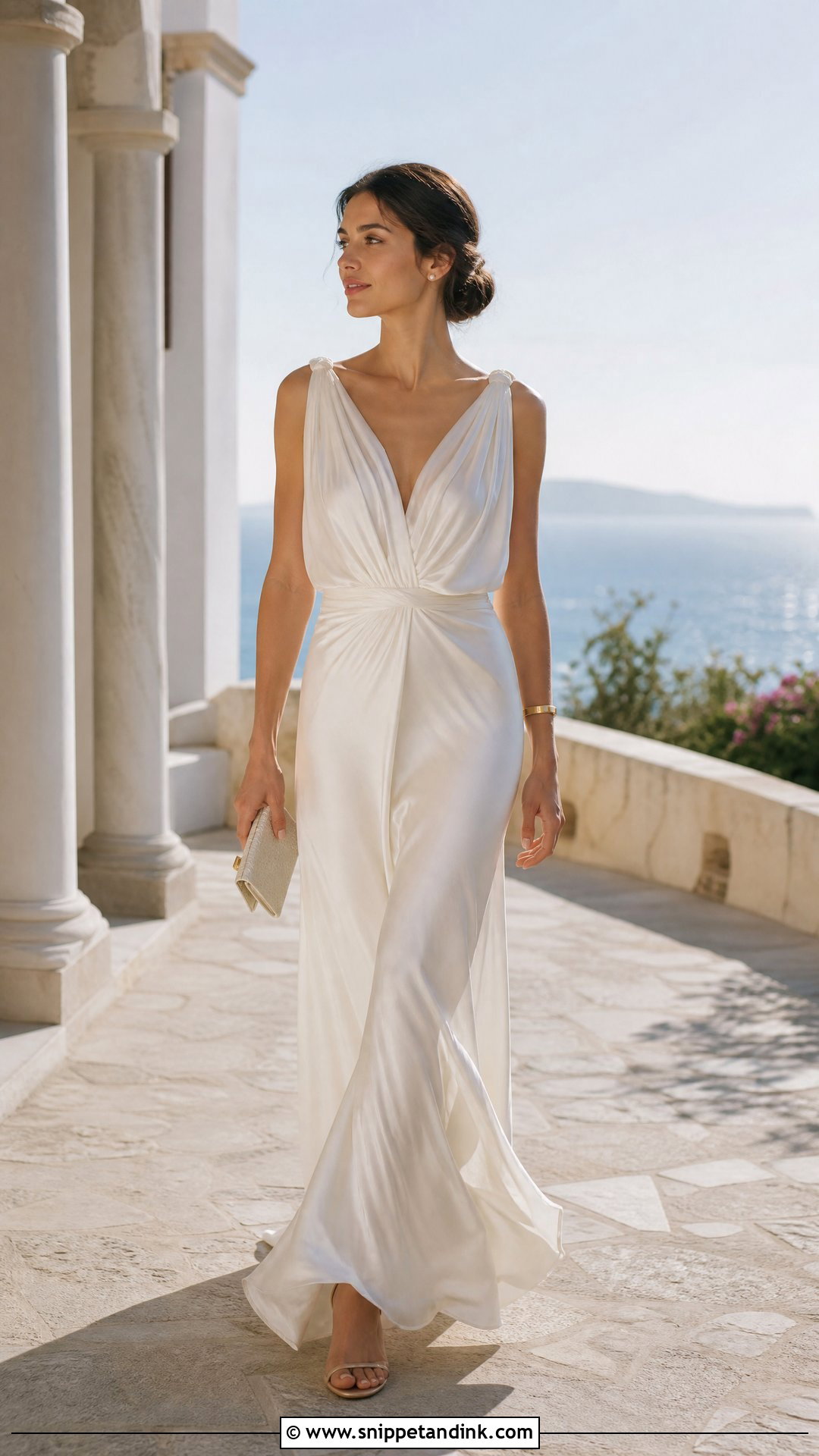
Bias-cut silk is the most luminous fabric in this list and the least forgiving. Cut diagonally across the grain, it stretches and clings, so it follows every curve and every seam beneath it. I always ask for smooth, skin-toned underwear at the first fitting rather than the last. When it fits, a gathered waist and draped shoulders give that statue-like sheen in natural light. Barely there metallic sandals keep the outfit light, with a single gold bangle, pearl studs and an ivory silk clutch. Polished waves or a relaxed low bun suit intimate ceremonies and seaside terraces.
12. Lace Ancient Greek Wedding Dress With Chiffon Draping
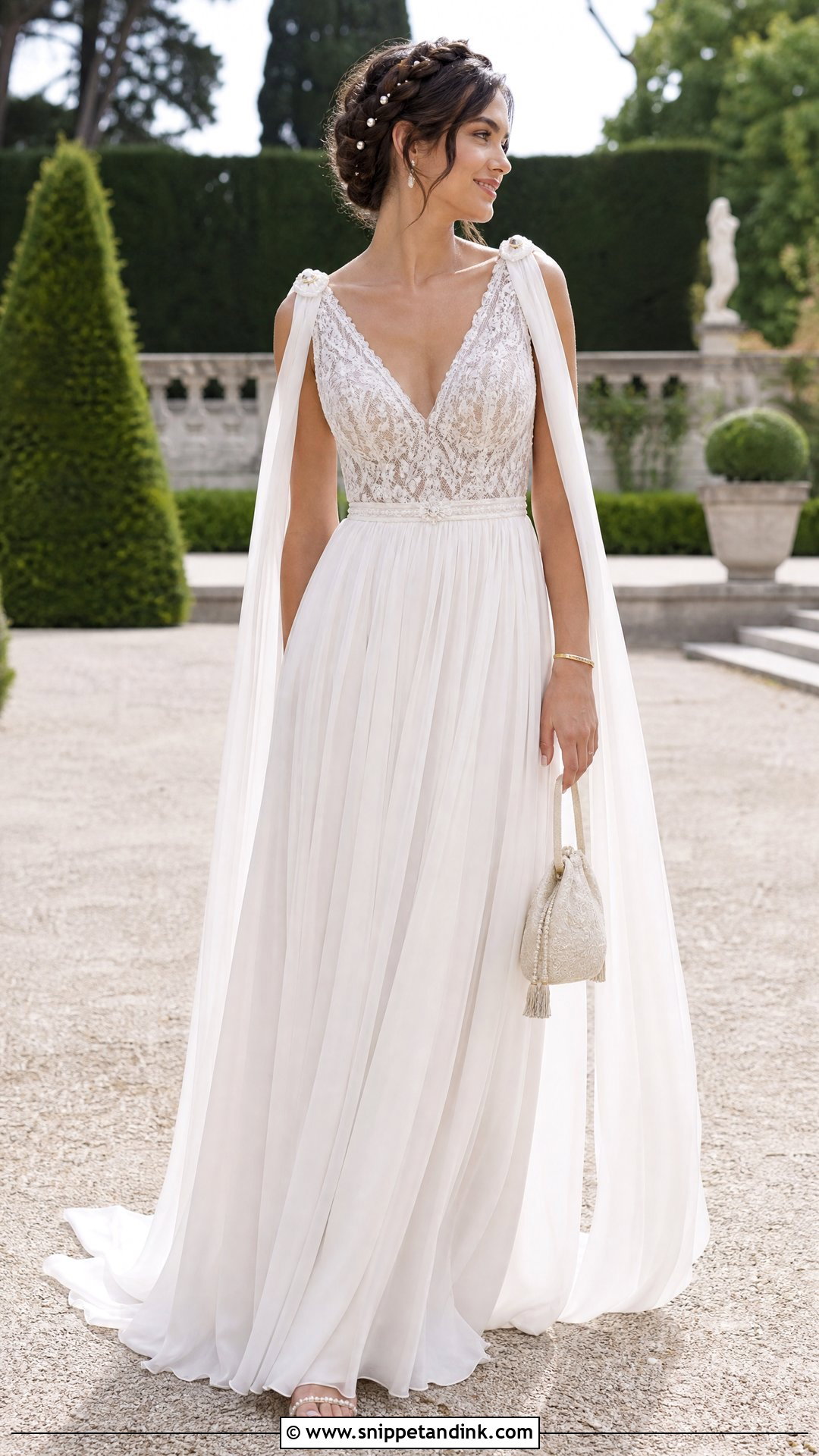
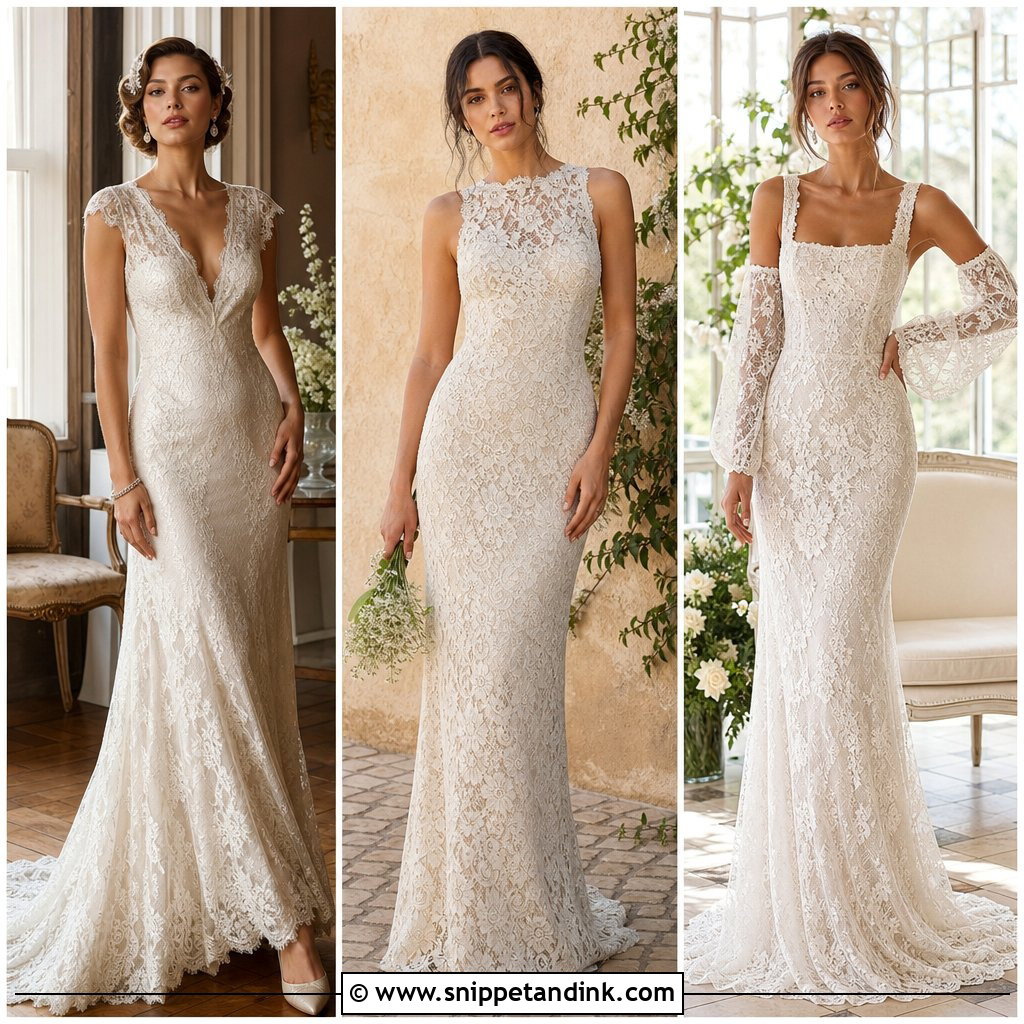
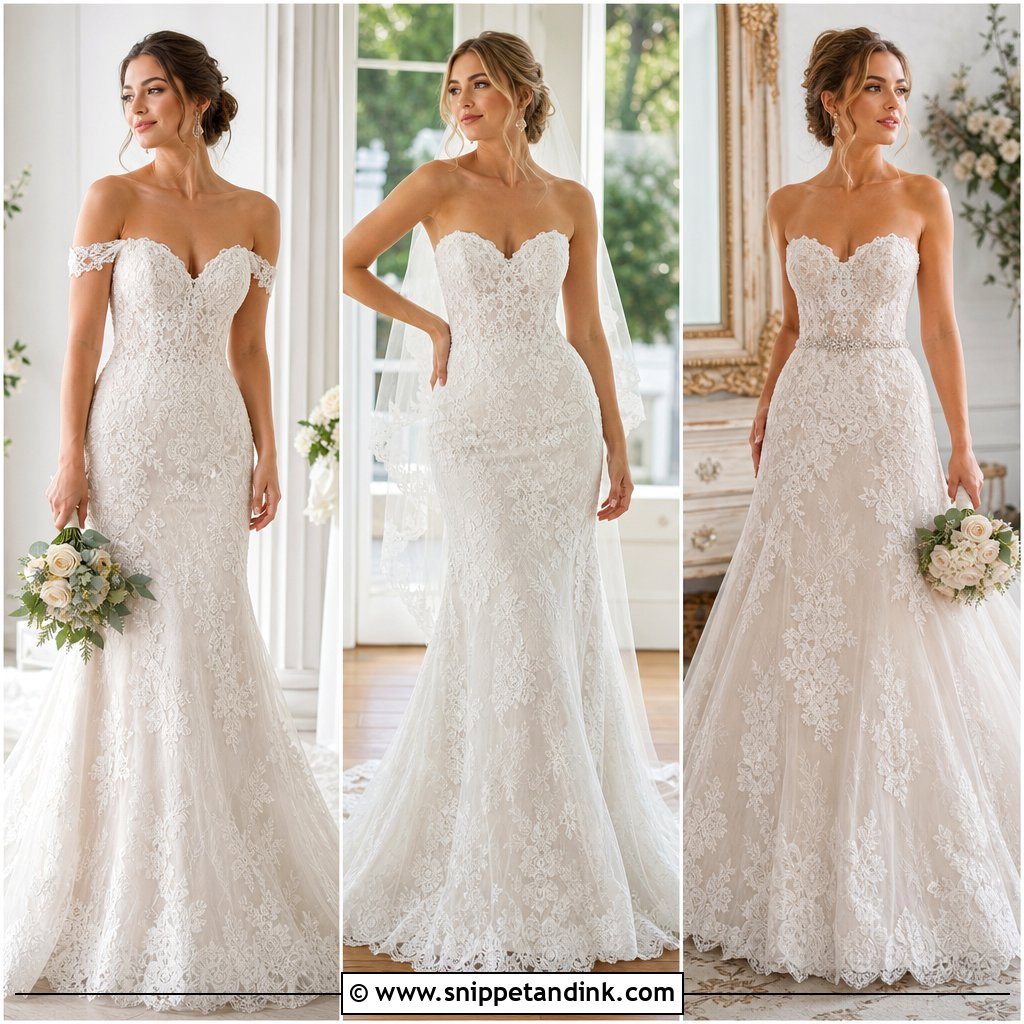
Lace and Grecian draping can live together if the lace stays small. I’d put it on a fitted bodice with a soft V-neck and keep the skirt in flowing chiffon, never an all-over lace gown. Draped chiffon panels over the shoulders tie the texture back to the classical theme. Pearl sandals, a narrow gold bracelet, a small ivory bag and a soft braided updo with a few pearl pins work well. A plain fingertip veil stops three textures competing. Corded lace can catch on chiffon where the two meet, so check that seam is finished cleanly.
13. Long Sleeve Ancient Greek Wedding Dress With Gold Earrings
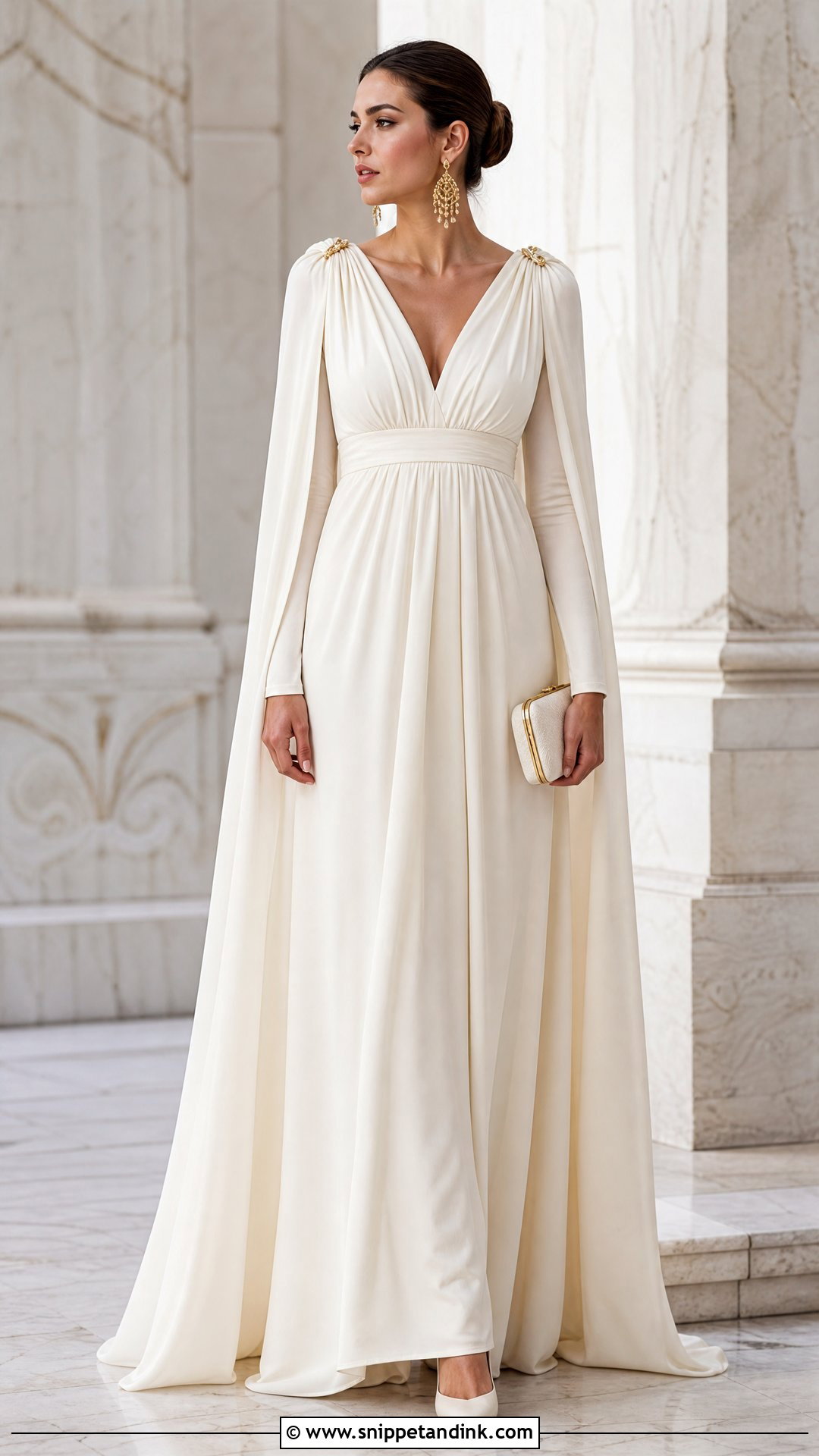
Cold-weather brides don’t have to give up the drape. Lightweight crepe sleeves gathered at the shoulder look far more Grecian than tight lace sleeves, and they let you raise your arms. A V-neck and soft empire waist keep the top open. I’d add a long chiffon cape for outdoor photos rather than a coat, closed-toe ivory heels, bold gold drop earrings and a structured cream clutch. A smooth low bun keeps the line neat, and because the sleeves already frame the upper body, leave the stacked necklaces and bracelets at home. Fall ceremonies, winter venues and breezy coastal days all suit it.
14. Backless Ancient Greek Wedding Dress With a Shoulder Veil
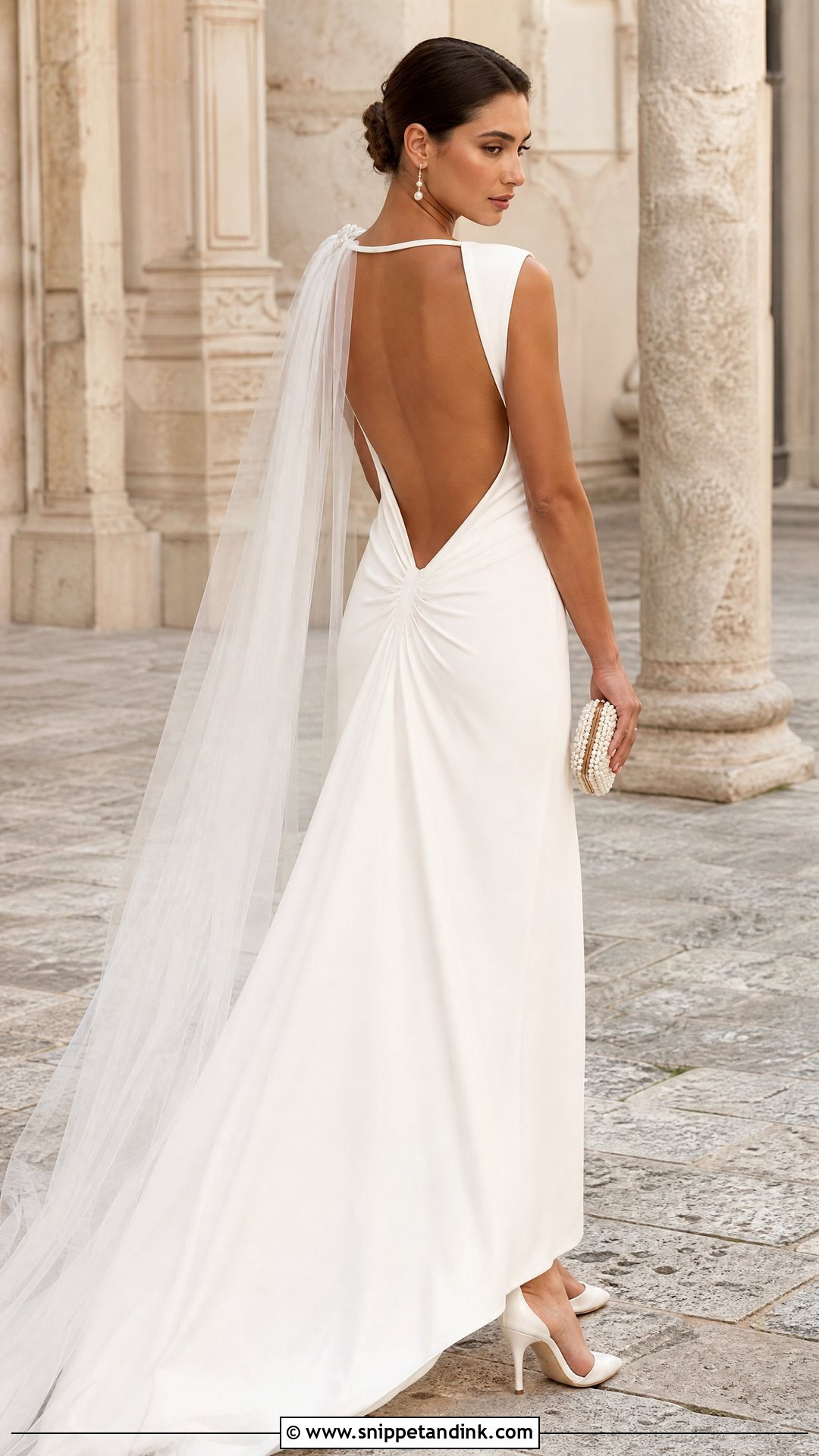
A low back makes the most sense when the front is calm, so look for a floor-length silk crepe gown with a high bateau neckline, light waist gathering and secure straps across the back. Support is the real issue. Built-in cups, a backless adhesive bra or a fitted low-back bodysuit should be chosen before the first fitting, because the tailor adjusts the bodice around them. Add a sheer shoulder veil or removable cape for the ceremony, fine gold chain earrings, ivory heels and a small pearl clutch. A polished updo keeps the back on show, which is the view guests get for the whole ceremony.
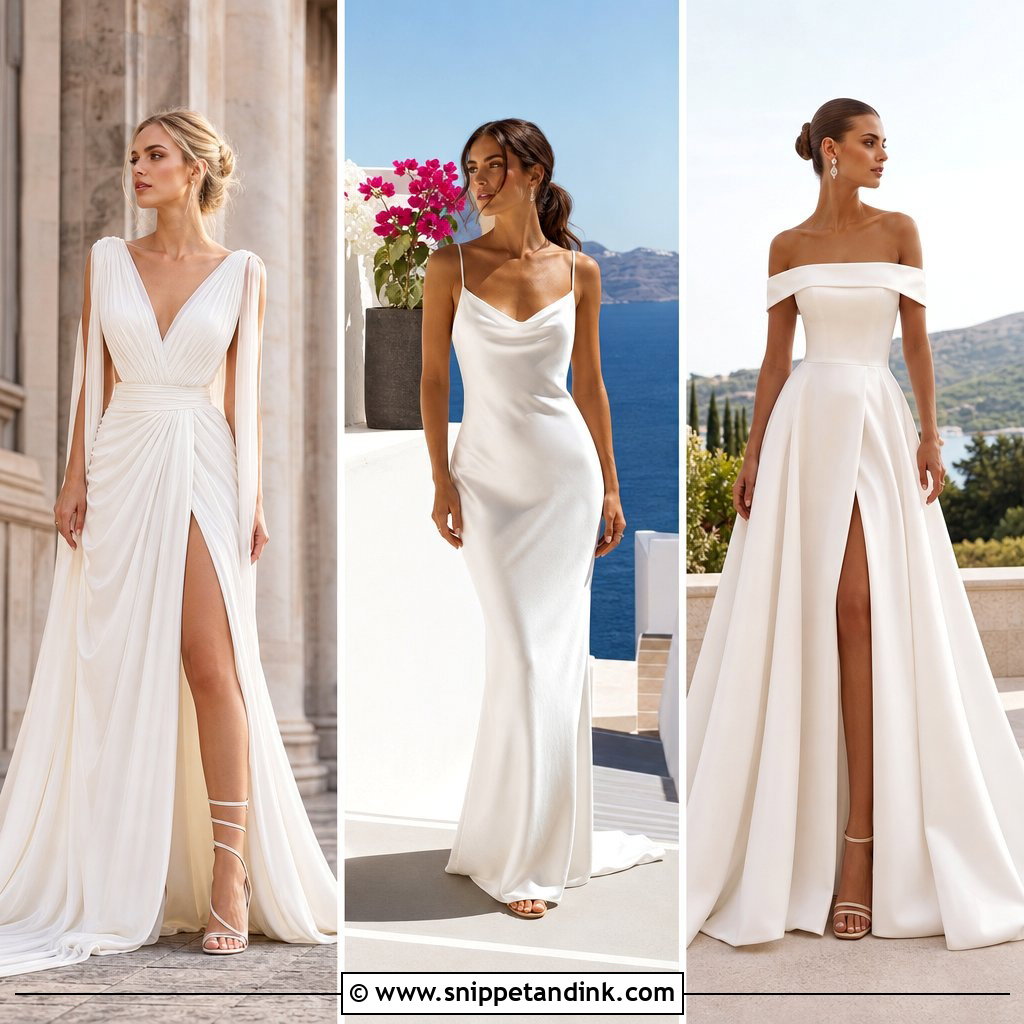
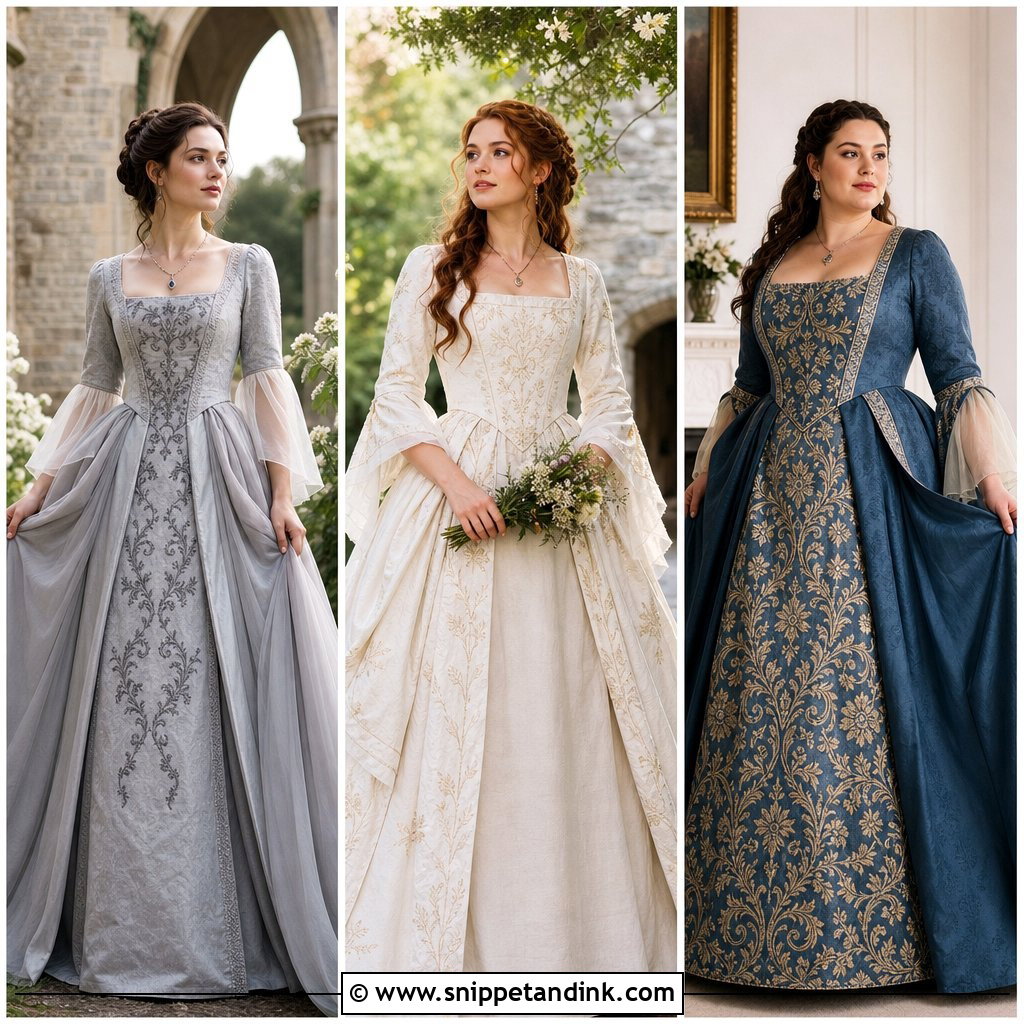
15. Beaded Ancient Greek Wedding Dress With Metallic Heels
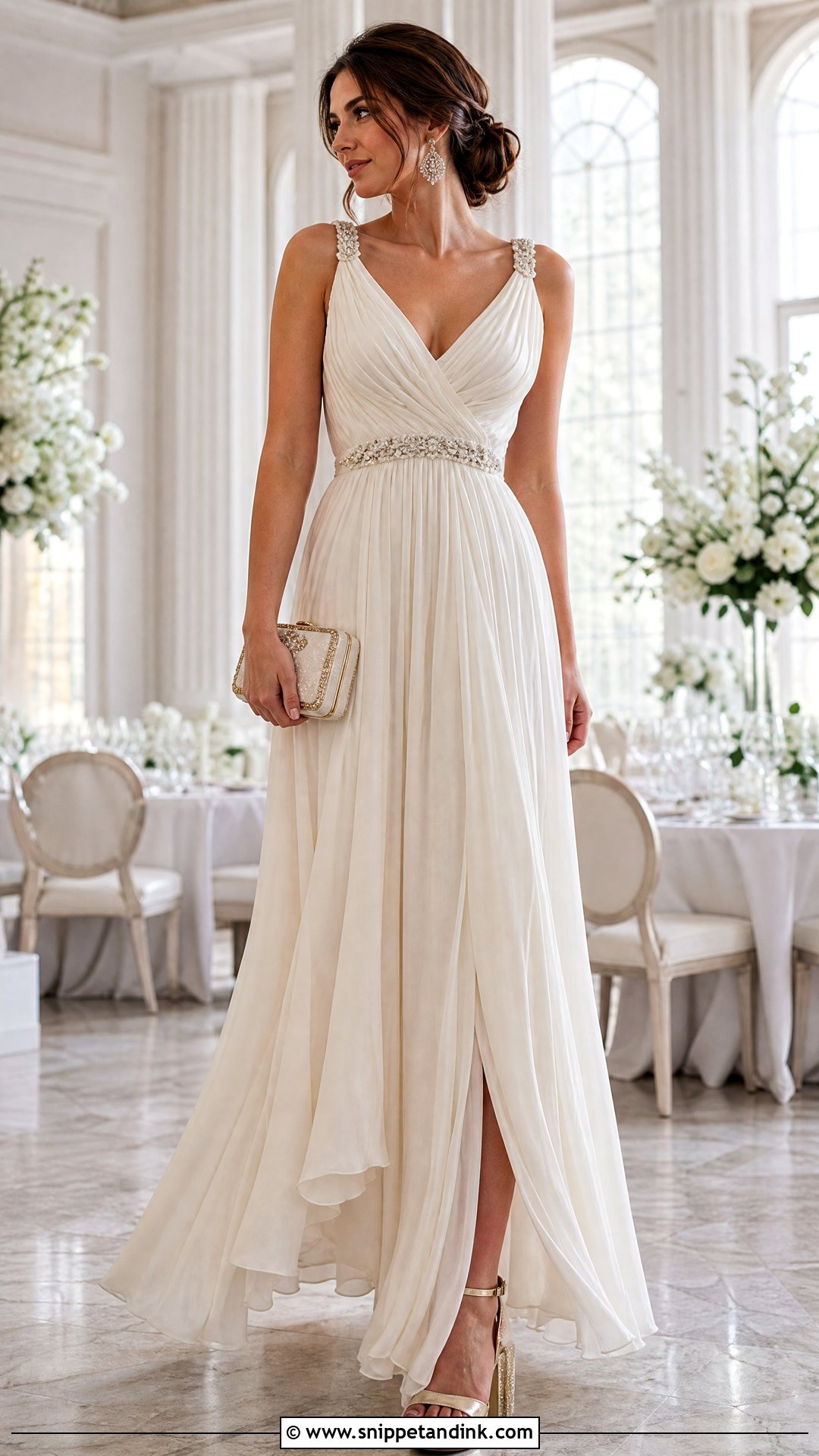
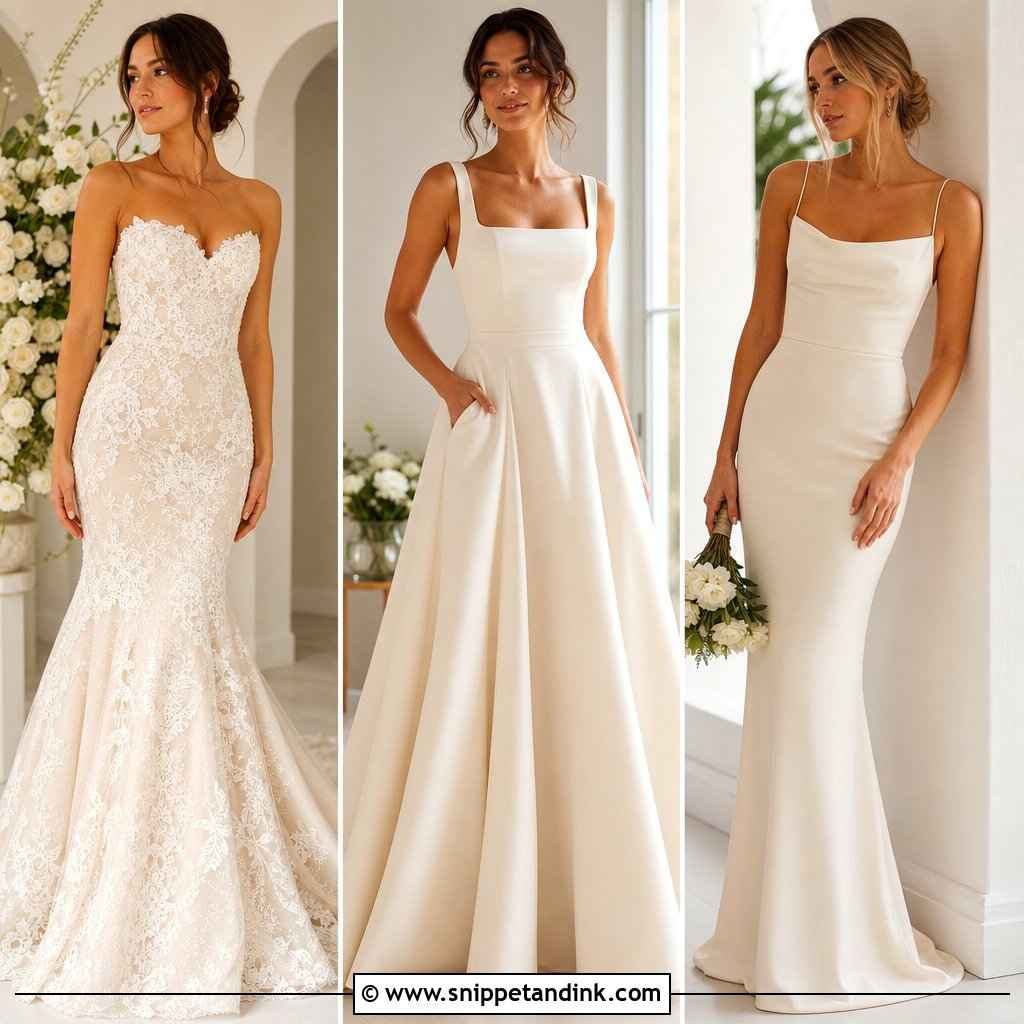
Beading is the gown’s jewelry here, so keep it where real ancient jewelry would sit: the shoulder straps, neckline and waist. Concentrated beading leaves the chiffon skirt light; scattered beads all over add weight and catch on each other. I also check the inside of beaded straps, because rough backing chafes bare shoulders after hours of dancing, and a strip of soft lining fixes it. Metallic block heels, small crystal earrings and an ivory clutch with gold trim go with it. Side-swept waves soften the shine, and an evening reception lets the beads catch candlelight.
16. Plus Size Ancient Greek Wedding Dress With Draped Sleeves
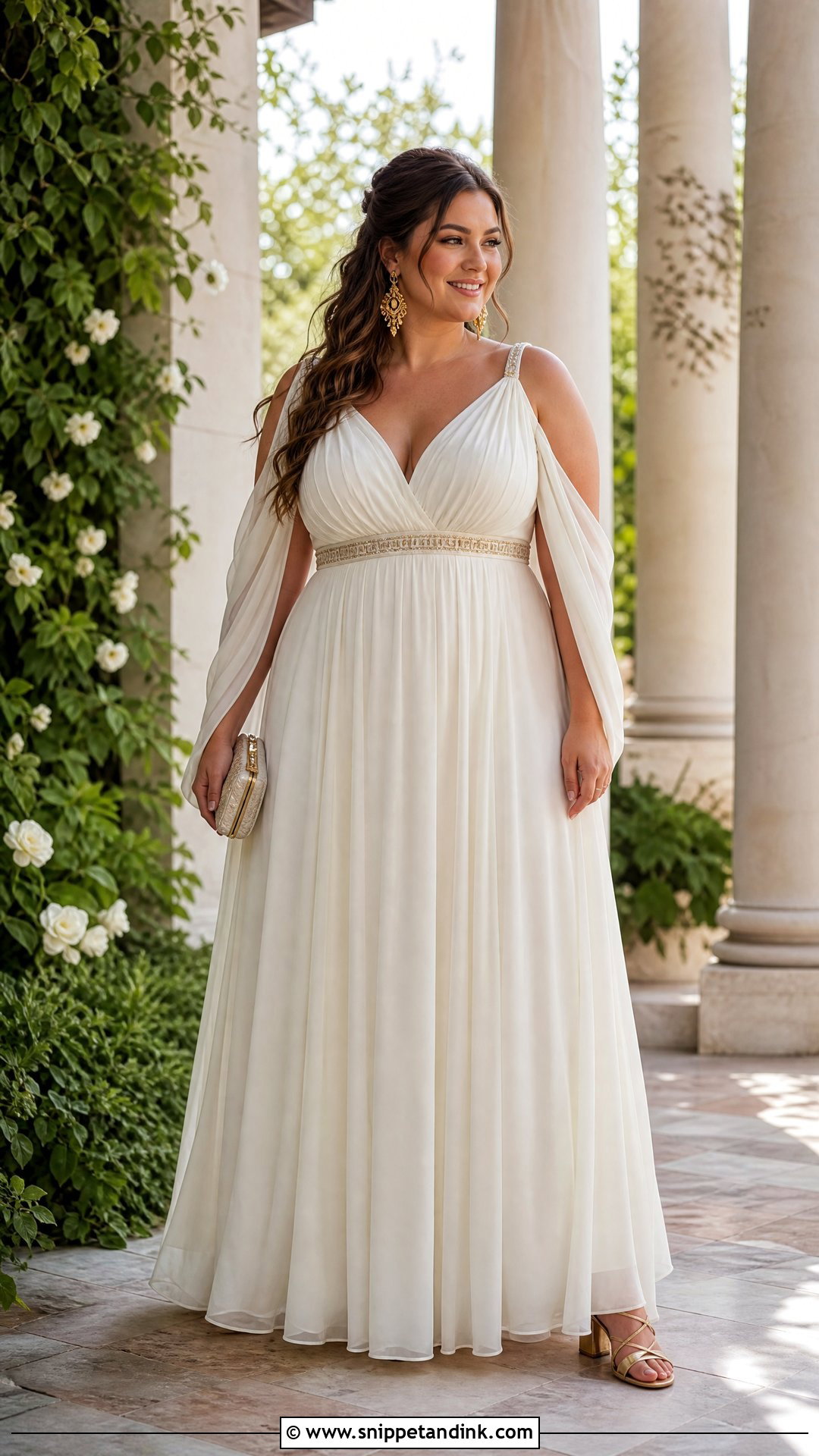
Grecian draping suits curvier brides well, but only when the drape is built over structure. I look for a gown with a firm inner bodice, a V-neck and chiffon laid over wide, supportive straps, so the fabric drapes over a frame instead of hanging off the bust. A natural or slightly raised waist marks the narrowest point, and an A-line skirt moves freely over the hips. Sheer draped sleeves give arm coverage without bulk. Gold block-heel sandals, statement earrings, a medium ivory clutch and half-up waves complete it. Sizing up for coverage is the mistake I see most; tailoring and support do that job far better.
17. Petite Ancient Greek Wedding Dress With a Slim Gold Belt
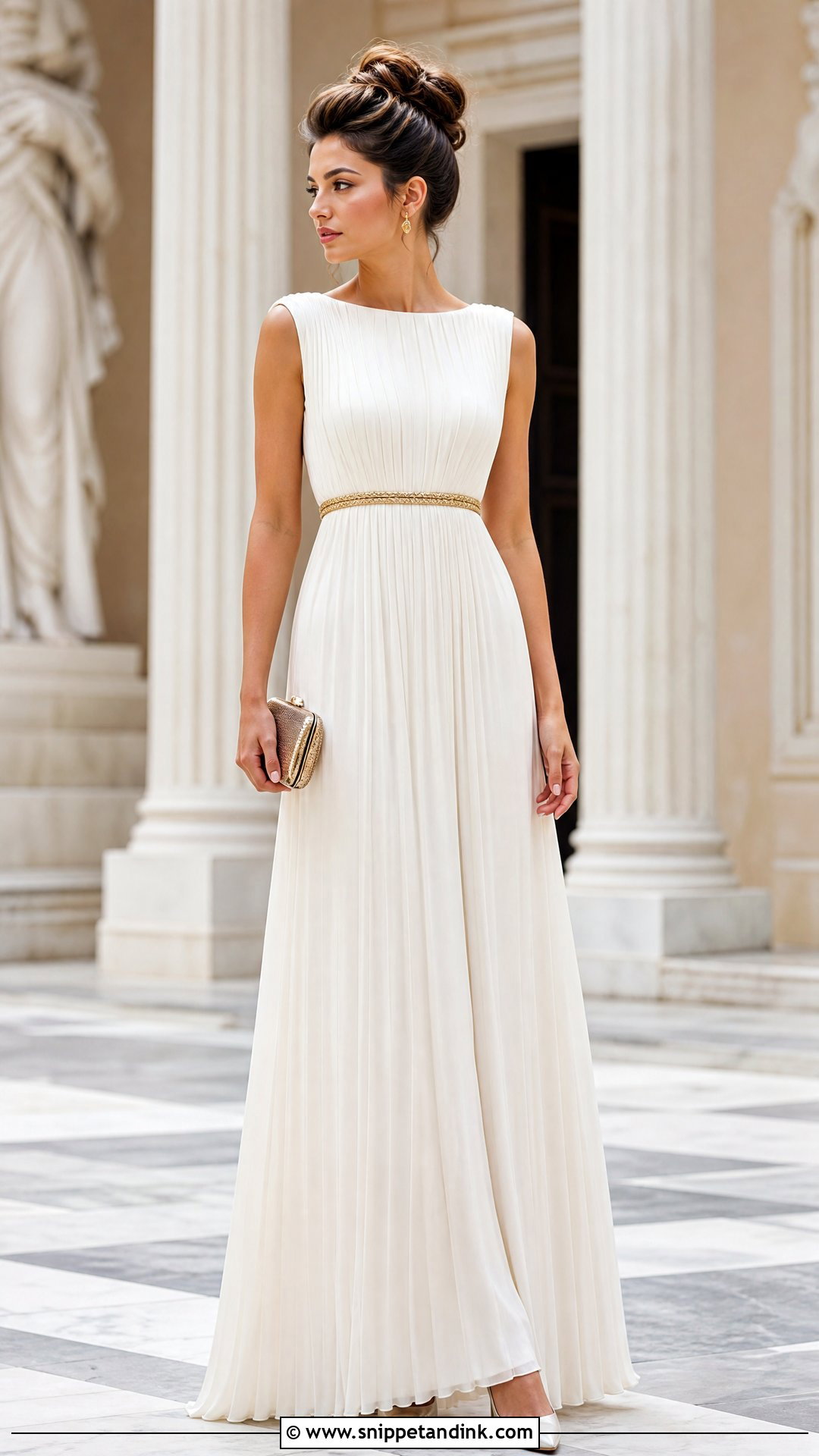
On a petite frame, the risk with Grecian draping is drowning in fabric. A narrow A-line or column with small pleats and a clearly defined empire waist keeps the proportions right, and the hem must be cut to your exact shoes. A slim gold belt gives shape without chopping you in half. I’d skip wide cape panels, oversized sleeves and layered skirts entirely. Ivory platform sandals or pointed heels add a little height, with small gold earrings and a compact clutch. A high bun or lifted updo extends the vertical line.
18. Maternity Ancient Greek Wedding Dress With Flat Sandals
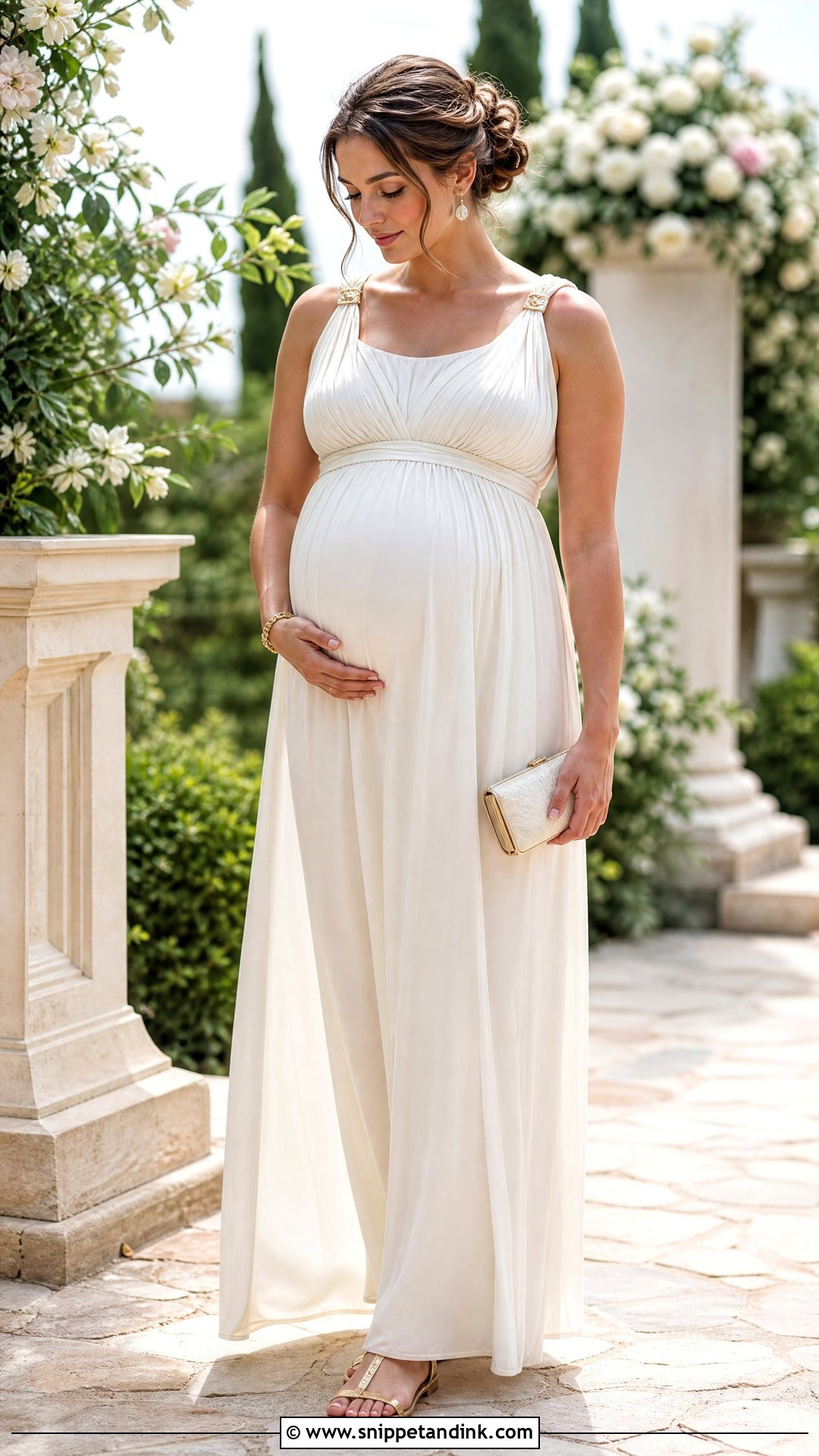
An empire waist is the obvious maternity shape because the skirt starts under the bust and leaves the bump free. Look for a gathered, supportive bodice, wide straps and chiffon falling straight from the seam without heavy layers or beading. Timing is the real challenge: bodies change fast in pregnancy, so I schedule the final fitting as close to the date as the dressmaker will allow, often within the last week or two, and ask for extra seam allowance at the bust. Flat gold sandals make standing easier, with a light bracelet, small pearl earrings and a practical ivory clutch. A loose braided bun stays comfortable all day.
19. Beach Ancient Greek Wedding Dress With Flat Gold Sandals
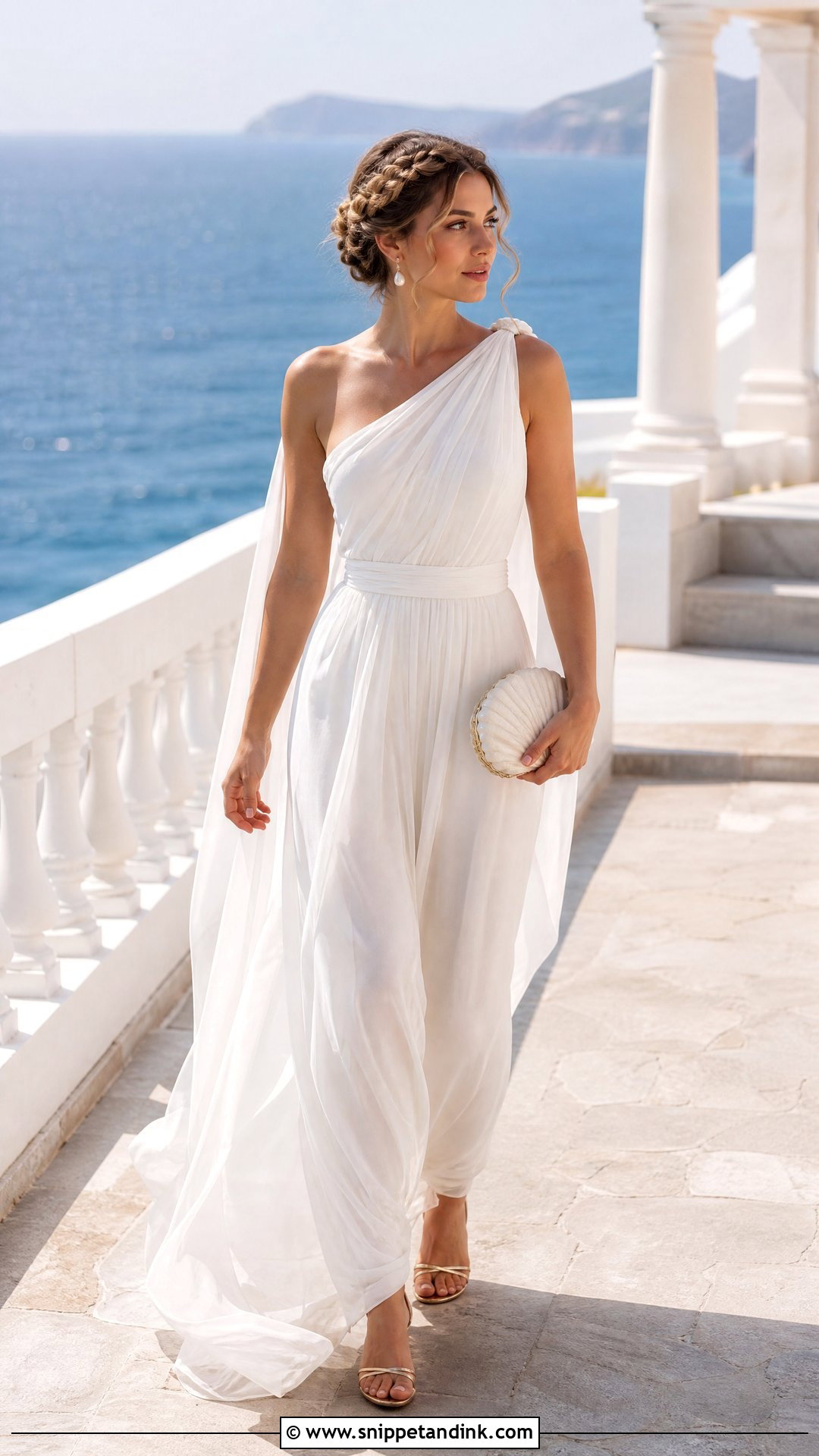
Sand, wind and sun change every choice for a beach wedding. I’d go ankle-length or floor-length with almost no train, a one-shoulder neckline and a softly elasticated or fitted waist, in lightweight chiffon. Flat gold sandals beat narrow heels, which sink. A loose braided updo survives a sea breeze far better than loose waves, and a fingertip veil or removable chiffon cape moves without dragging through wet sand. Skip thick satin, heavy beadwork and multiple underskirts. A shell-inspired clutch and pearl earrings keep the coastal mood light.
20. Winter Ancient Greek Wedding Dress With a Draped Cape
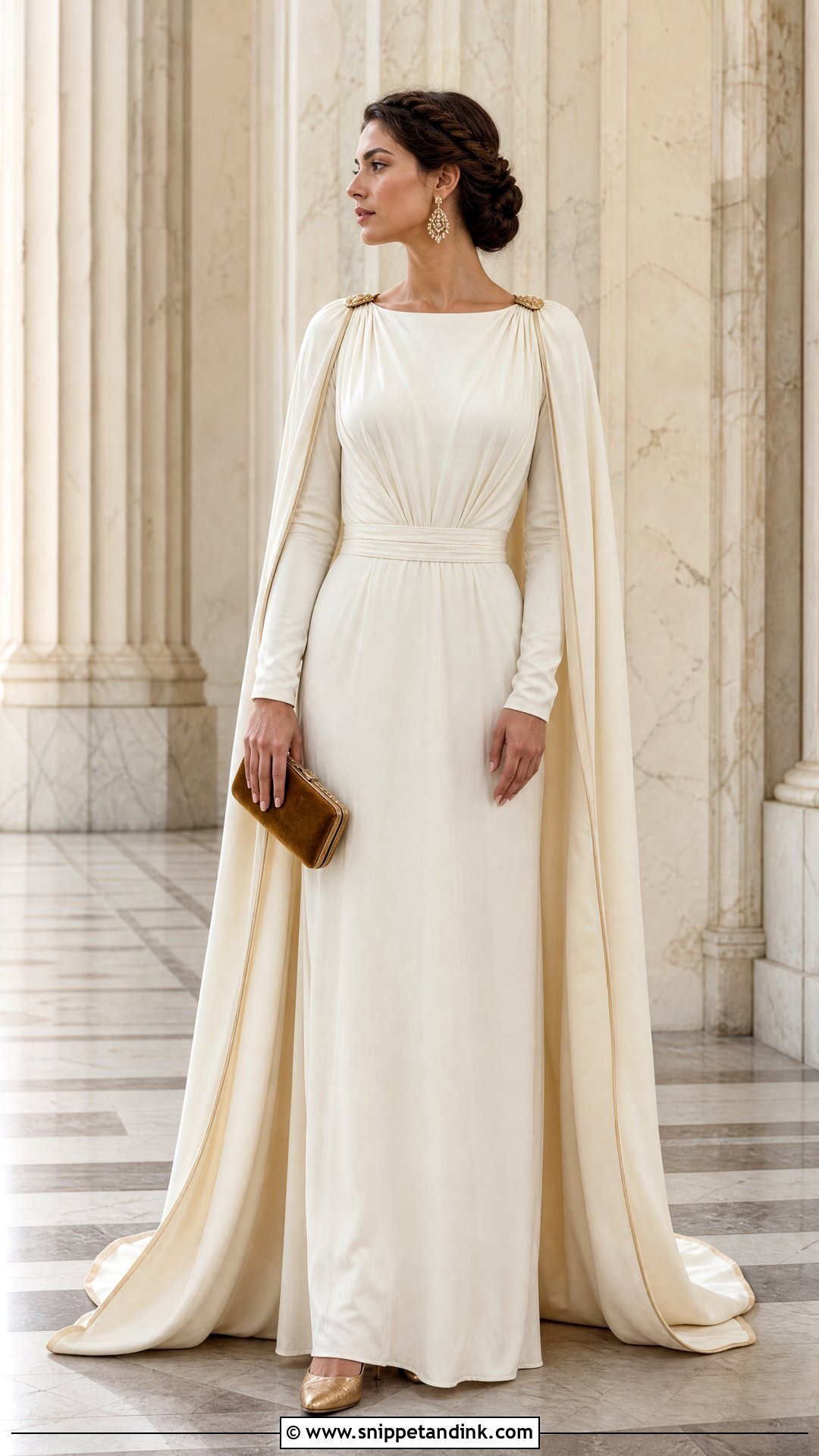
Warmth comes from layers and fabric weight, not from giving up the silhouette. Start with a long-sleeve ivory crepe gown with gathered shoulders, a defined waist and a full skirt, then add a lined draped cape fastened at the collarbone. Heavier crepe still drapes, and it hides discreet thermal layers underneath. I check the cape fastening against the hairstyle: a low braided bun sits comfortably under it, a big chignon gets crushed. Closed-toe gold heels, statement earrings and an ivory velvet clutch add seasonal texture. In outdoor photos the cape stands in for a coat.
21. Boho Ancient Greek Wedding Dress With Braided Hair
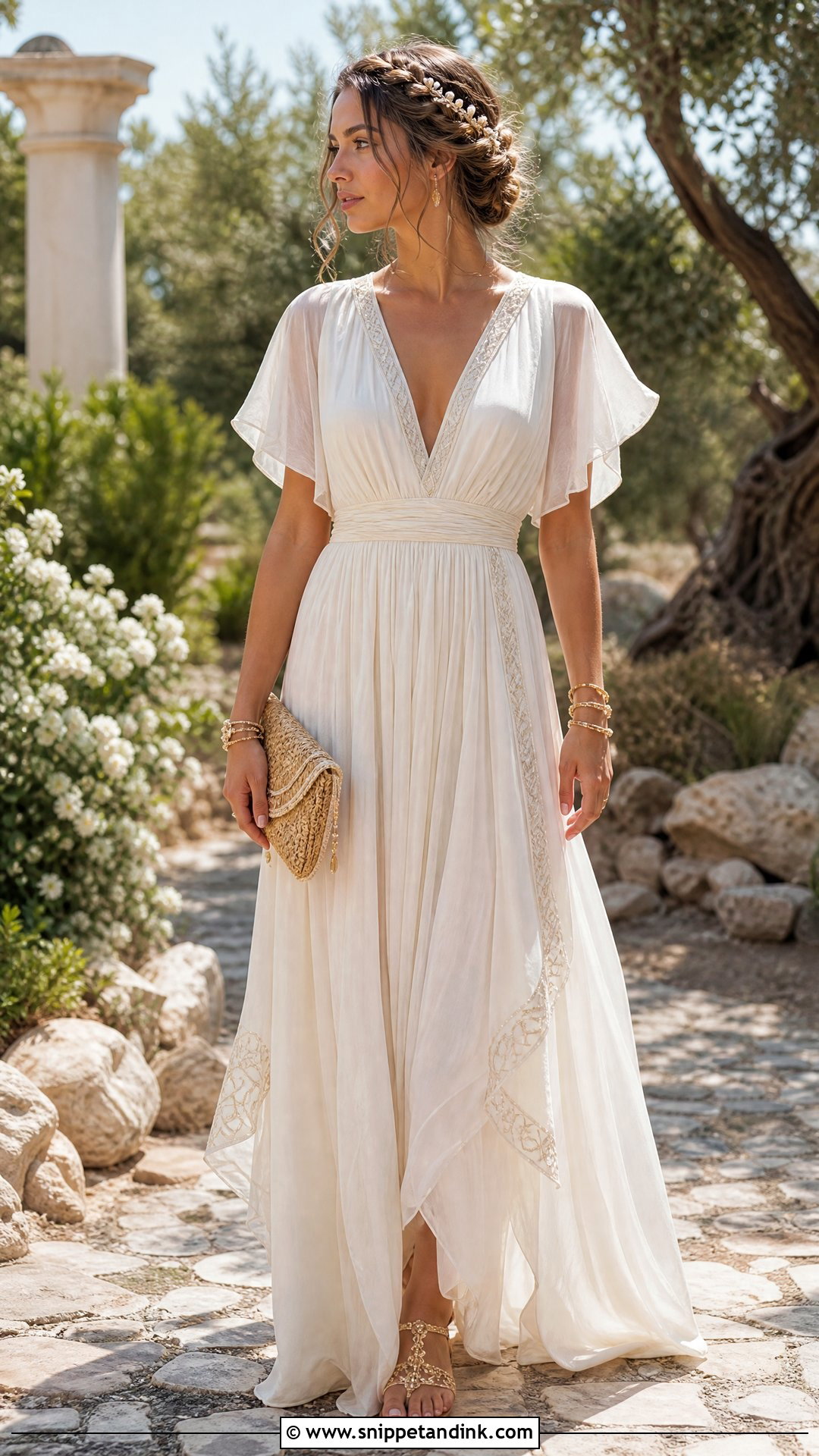
Boho and Grecian share the same love of loose fabric, so they combine easily. Look for an ivory chiffon gown with a V-neck, fluttering sleeves and a gently gathered waist. Keep any embroidered border subtle, because dense patterns break the flow of the skirt. Flutter sleeves are easy to wear but catch on bouquets and chair backs, so I’d do a sit-and-hold test with flowers in hand. Flat soft-gold leather sandals, layered fine bracelets and small drop earrings suit it, with a braided crown or loose side braid dotted with a few pearl pins. A woven ivory clutch fits gardens and open-air venues.
22. Minimalist Ancient Greek Wedding Dress With Sculptural Jewelry
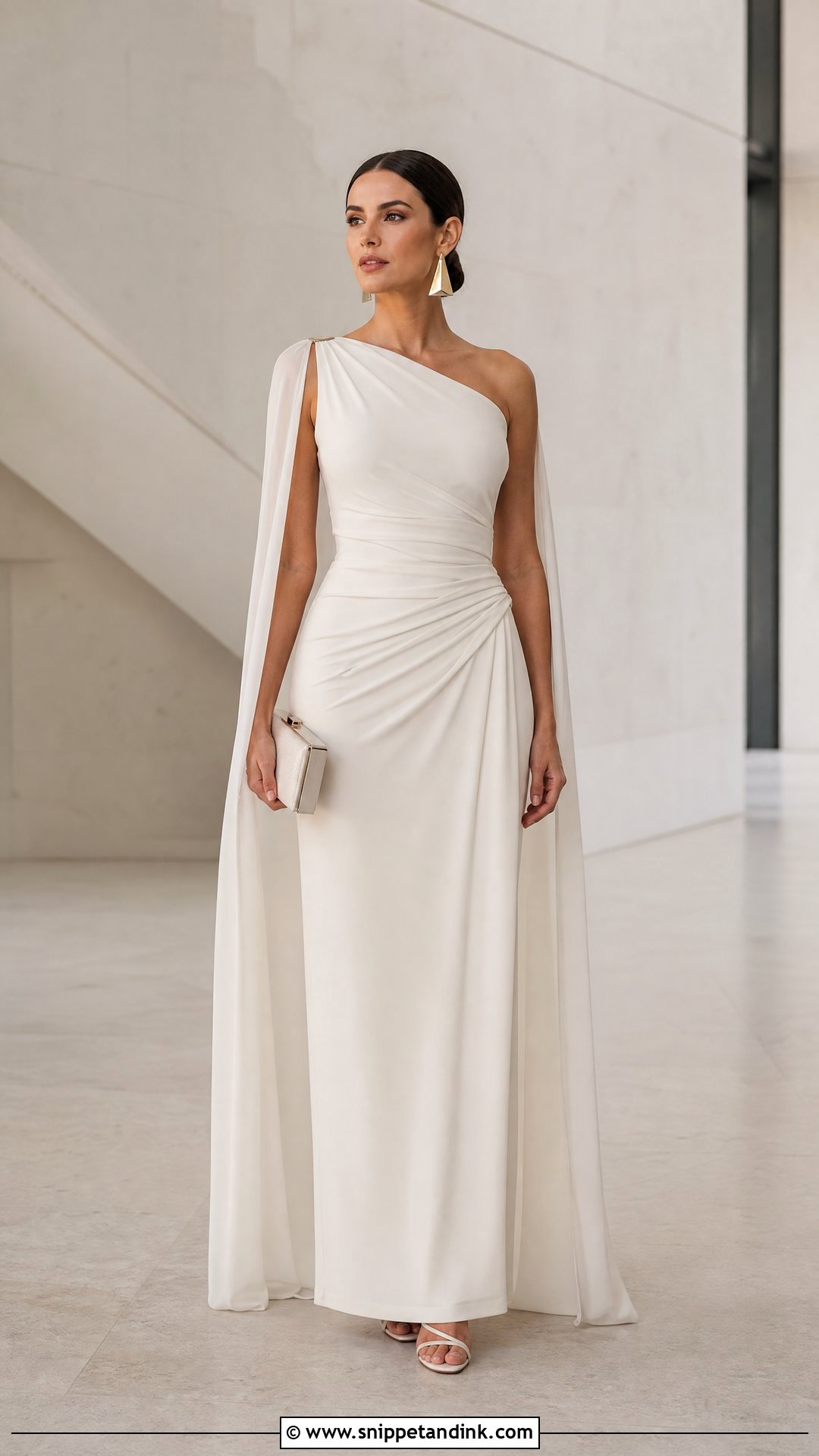
Without decoration, shape has to carry everything. Choose a matte ivory crepe gown with an asymmetric neckline, clean waist draping and a long column skirt, and skip lace, crystals and embroidery. My advice is to spend on fabric before anything else: good crepe has a dense, slightly heavy hand and hangs straight, while thin crepe shows every seam and wrinkles when you sit. One pair of sculptural gold earrings, slim ivory heels and a smooth box clutch are enough, with a center-parted low bun. A plain sheer cape can come off after the ceremony. Architectural venues and city celebrations suit it.
23. Athena Inspired Wedding Dress With a Structured Cape
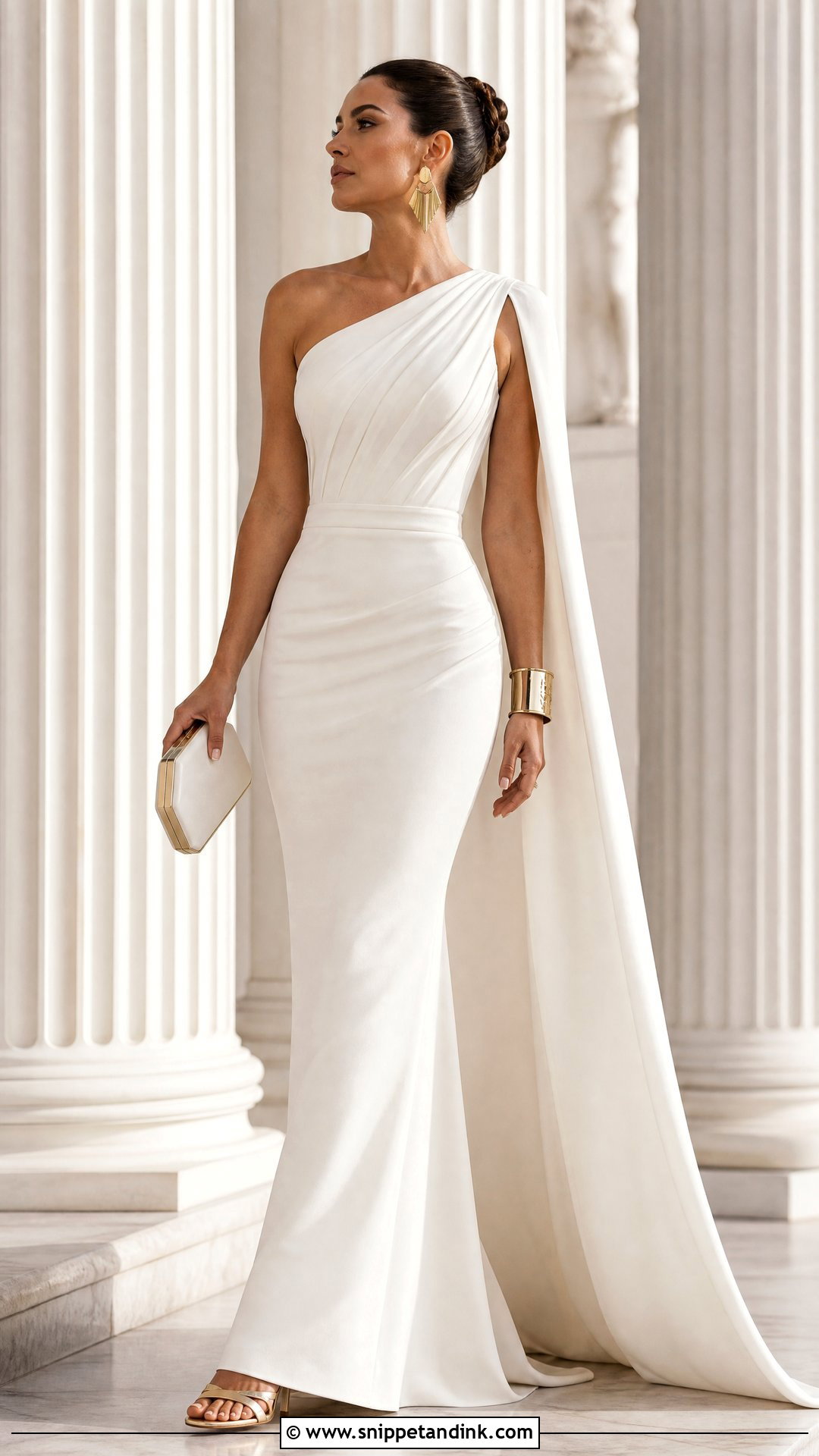
Athena was the strategist, so this version swaps soft and floaty for sharp and composed. A structured one-shoulder crepe gown with clean draping and a defined waist sets the tone, and a floor-length cape attached at the shoulder or neckline makes the silhouette commanding. The cape adds weight on one side, so I ask the dressmaker to balance the attachment or add a small hidden strap on the bare side. Brushed gold heels, geometric earrings and a metallic cuff fit the mood; an angular ivory clutch beats a sparkly one. A sleek braided bun and a palette of only ivory and muted gold keep it disciplined.
24. Aphrodite Inspired Wedding Dress With Pearl Details
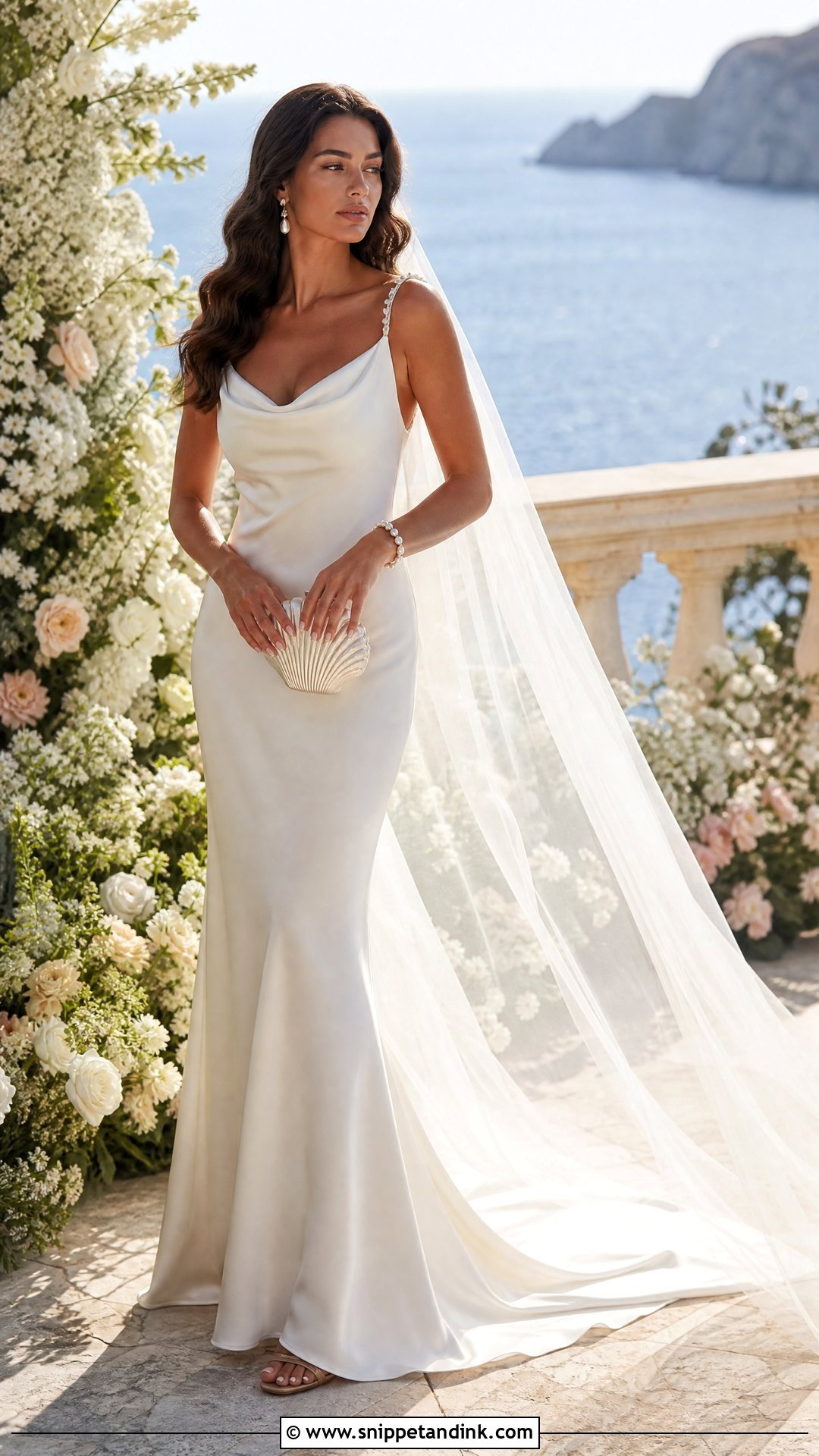
Pearls and soft draping make an Aphrodite-inspired bridal look. I’d choose an ivory silk gown with a cowl neck, fine straps and a bias-cut skirt, then repeat the pearl theme in drop earrings, a fine bracelet and a few individual pins in glossy waves or a loose low bun. Barely there gold sandals keep everything light. Pearls are soft and scratch easily, so put them on after hairspray and perfume, not before. A sheer cape veil can float behind the dress, and fresh, softly defined makeup suits a coastal terrace or summer garden.

25. Ivory and Gold Ancient Greek Wedding Dress With a Cape Veil
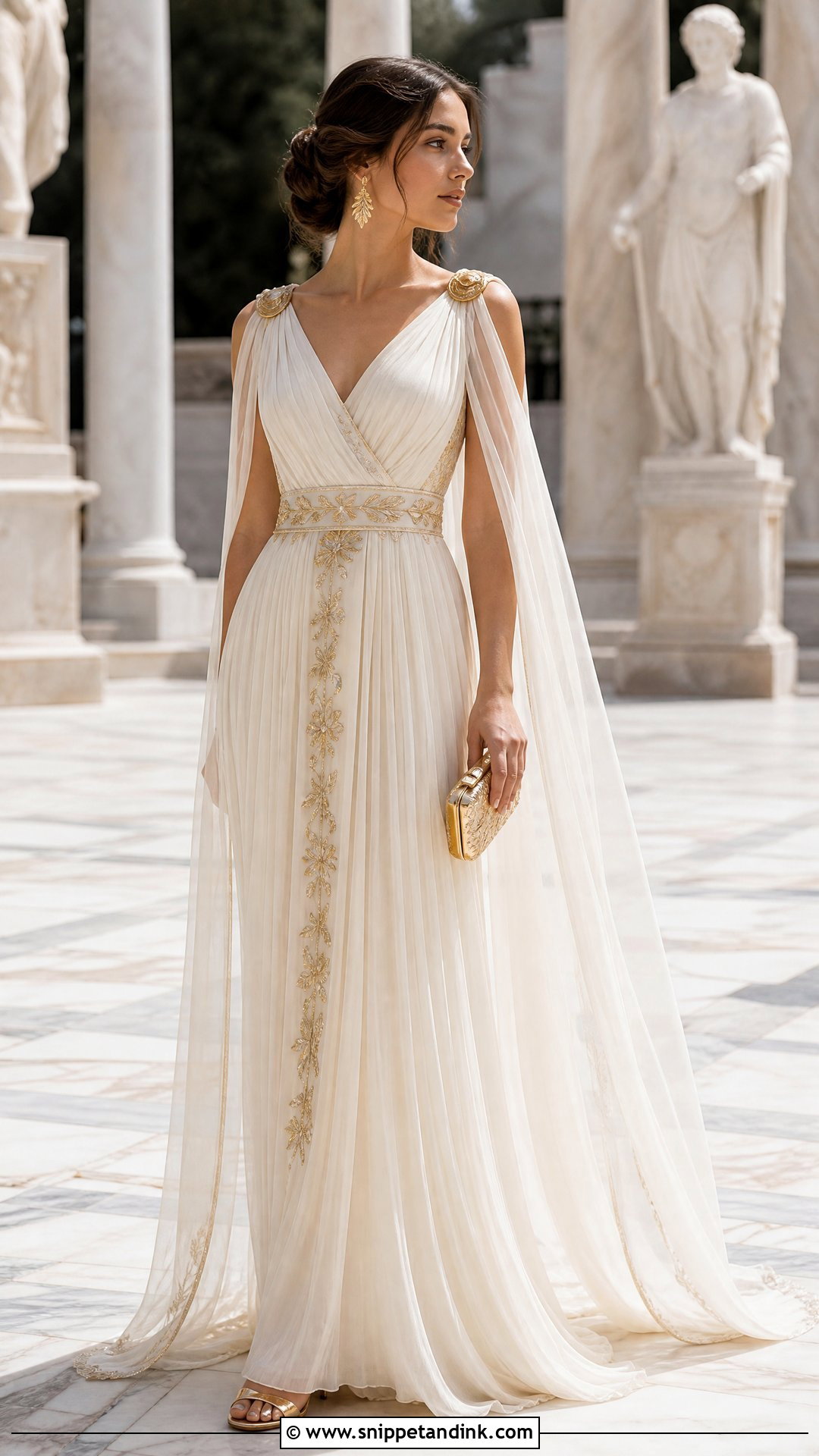
Ivory with gold is the most classic palette in this list. Choose a flowing ivory chiffon gown with pleated shoulders, a softly fitted waist and subtle gold embroidery on the belt or neckline, then add a sheer cape veil fastened with small gold clasps. I always match the metal tone across clasps, belt, sandals and earrings, because warm yellow gold next to a pale rose gold looks accidental in close-up photos. A low twisted bun keeps the cape attachments visible. With draping, pleating, metallic accents and flowing fabric all in one gown, keep embellishment to a few placed accents so it stays modern.
Sit, Kneel, Climb: Testing a Draped Gown Before the Final Fitting
Draped gowns look easy to wear standing still, so the mirror tells you very little. I run every Grecian dress through the movements the day will actually ask of it, and I’d suggest you do the same in the shop.
- Sit on a hard chair for a couple of minutes, then stand. Check whether the drape returns or leaves a crease across the lap.
- Raise both arms as if hugging someone. Straps should stay put and folds should not slide off the bust.
- Climb two or three steps without lifting the skirt. If you trip on the hem, it needs shortening.
- Kneel or crouch if your ceremony includes a blessing or a ring moment at a low table.
- Stand with a light directly behind you, or ask a friend to photograph you against a window, to see what the lining is hiding.
Wind, Sun and Sand on a Floating Hem
Outdoor Grecian weddings are where these dresses look best and misbehave most. Wind lifts chiffon and tangles long capes, so I ask the dressmaker to sew small weights or a slightly heavier hem tape into capes and long panels, which keeps them floating rather than flapping. A cape veil also needs a secure attachment point, ideally hooks at the shoulders, not just pins in the hair.
Pack a handheld steamer if the dress travels, because chiffon creases in a suitcase but releases quickly. On sand, a hem that just clears the ankle stays clean far longer than one that brushes the ground, and a little talc on the feet stops sandals rubbing by the time the sun goes down.
Where Classical Ends and Costume Begins
A Grecian gown works when the fabric does the talking and the classical details stay few. One-shoulder necklines, empire waists, fine pleats, flowing capes and gold accents set the theme; stacking all of them at once is what makes a bride look costumed. Think about the season, the venue floor and how much support you need before falling for a silhouette, and budget properly for alterations, since draped gowns live or die by proportion and a clean hem. Walkable sandals or heels, restrained jewelry and a hairstyle that shows the neckline will finish whichever version feels like you.
You'll Like These Ideas:




Leave a Reply