
Roman style borrows ancient draping and finishes it like a modern gown: long column lines, raised waists, a bare shoulder, a little gold. Done with restraint it looks classical; overdone, it looks like a toga party. Fabric decides a lot. Chiffon and silk float for an outdoor ceremony, while satin, crepe and beaded tulle hold their shape in a formal room. Accessories matter just as much, and a leaf headpiece, metallic sandals or a long veil can carry most of the theme on a plain dress. The twenty looks below each come with the pieces I’d pair and the fitting notes I’d give.
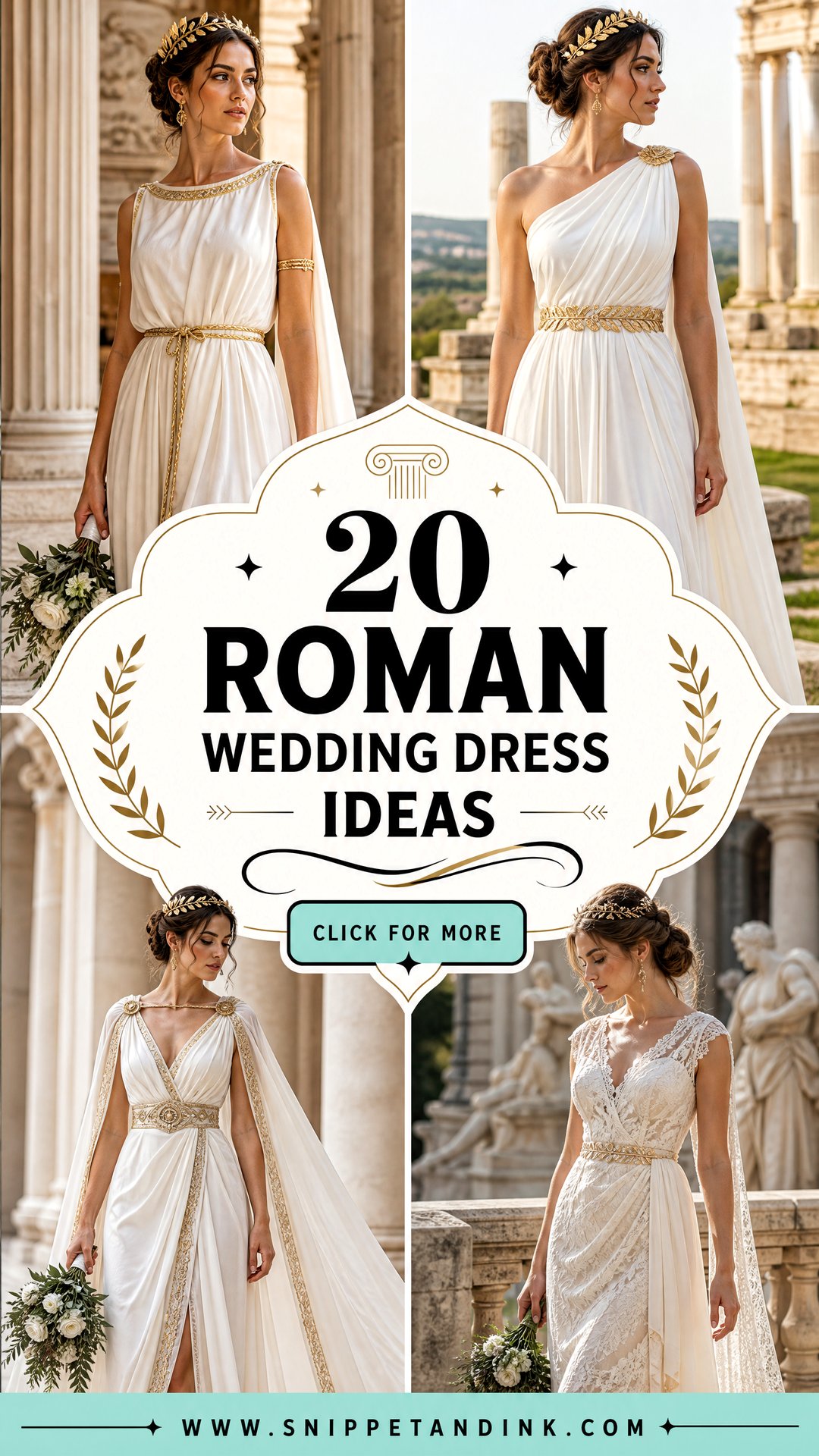
What a Roman Bride Wore, and What to Borrow
A bride in ancient Rome wore a plain white tunic woven in one piece, tied at the waist with a woollen belt fastened in a special knot that her husband untied later. Over her head went the flame-coloured veil, and her hair was dressed in a particular parted style under a wreath of flowers. Very little of it was decorative; the drama came from colour and the way the fabric hung.
That’s useful when I’m styling a modern version. Borrow the ideas, not the costume:
- The single tie at the waist becomes a thin cord or gold belt.
- The coloured veil becomes a sheer saffron or warm-toned tulle, or just a gold edge on ivory.
- The flower wreath becomes a narrow leaf crown or a few leaf pins.
- The plain woven tunic becomes a matte column or softly draped chiffon with no lace.
Pick one or two. Gladiator sandals laced to the knee, wide arm cuffs and a laurel crown together read as a fancy-dress party.
1. Classic Roman Tunic Wedding Dress
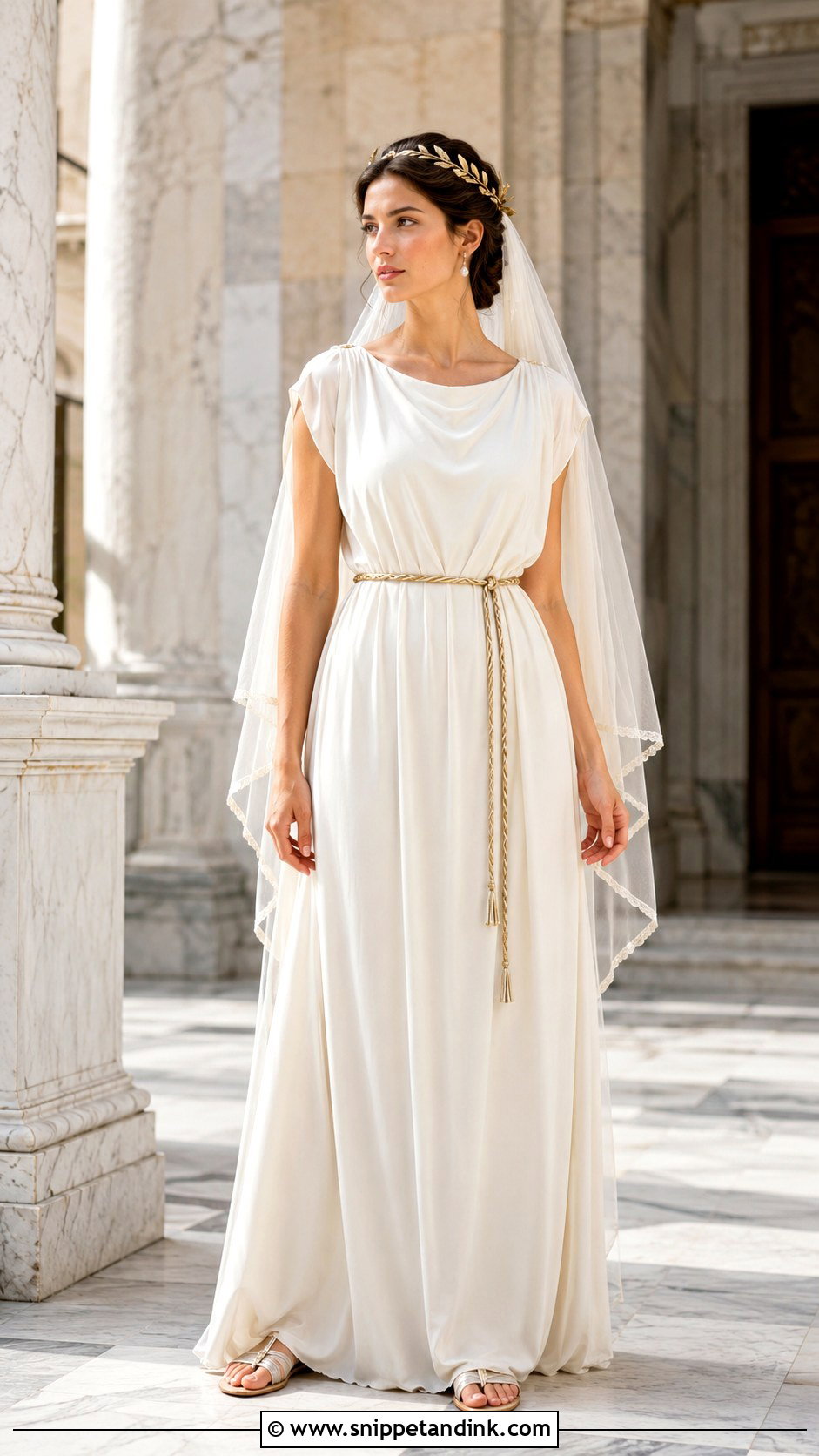
Start here if you want the simplest version of the idea. A floor-length ivory column with soft cap sleeves and folds falling from the shoulder, cinched at the natural waist with a narrow gold cord. I’d keep the cord thin; a wide belt chops the drape in half. Flat metallic sandals, small pearl drops, a delicate leaf headband and a fingertip veil finish it, with a loose bouquet of white flowers and greenery. Courtyards, museums and gardens suit it.
2. Roman Empire Waist Wedding Dress
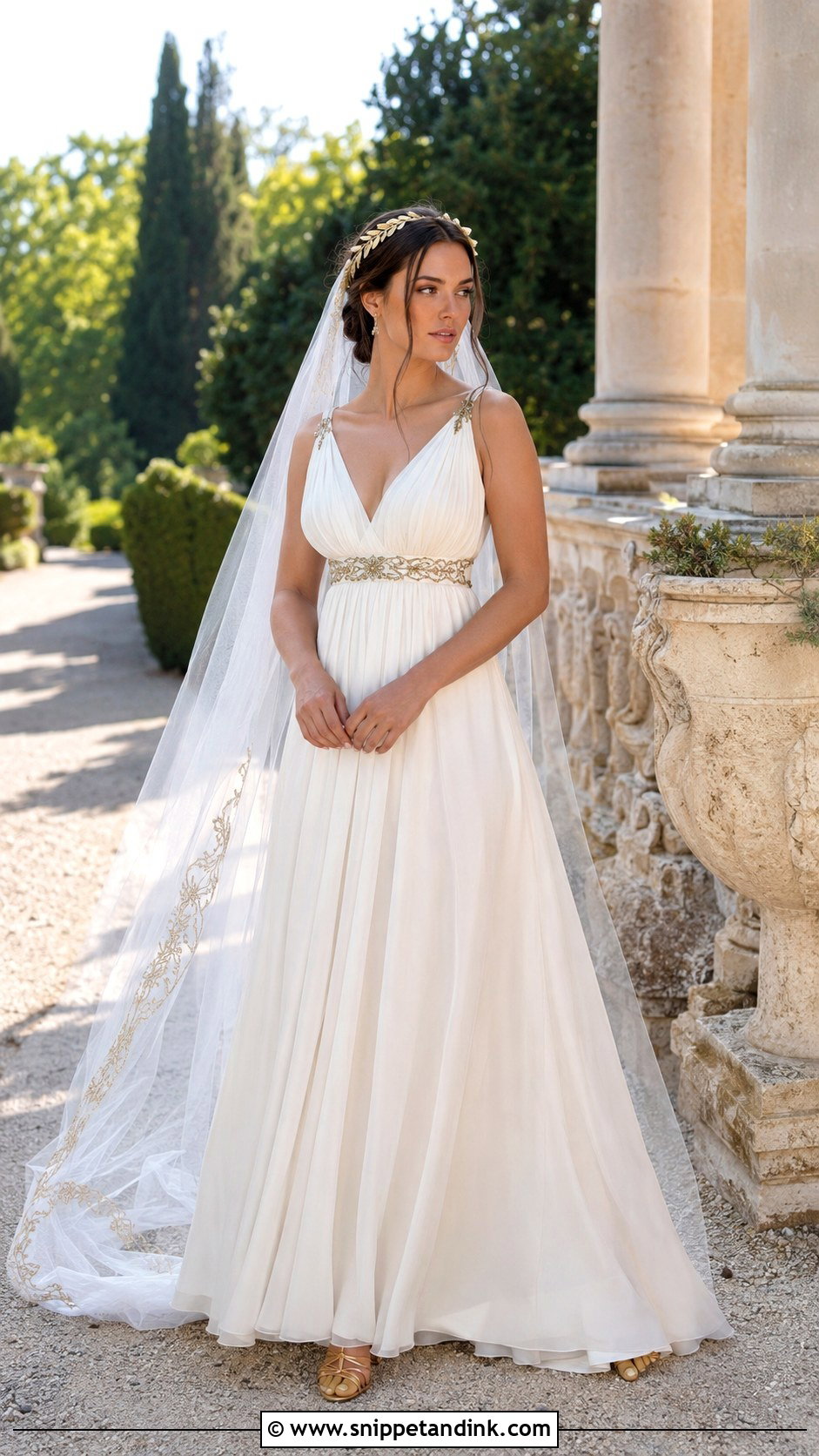
The raised seam under the bust lets the skirt fall straight from there, which is what gives an empire gown its long, statue-like look. Chiffon, silk georgette and light crepe move best. A square or curved neckline, a slim gold belt along the seam and low block-heel sandals keep the proportions. Add a structured updo, gold leaf hairpins and a cathedral veil fixed beneath the hair. The seam must sit right at the base of the bust, not on it or a finger-width below, so I’d have it checked wearing the exact bra or cups you’ll use. Because the skirt skims the waist and hips, it’s comfortable on most figures.
3. One Shoulder Roman Wedding Dress
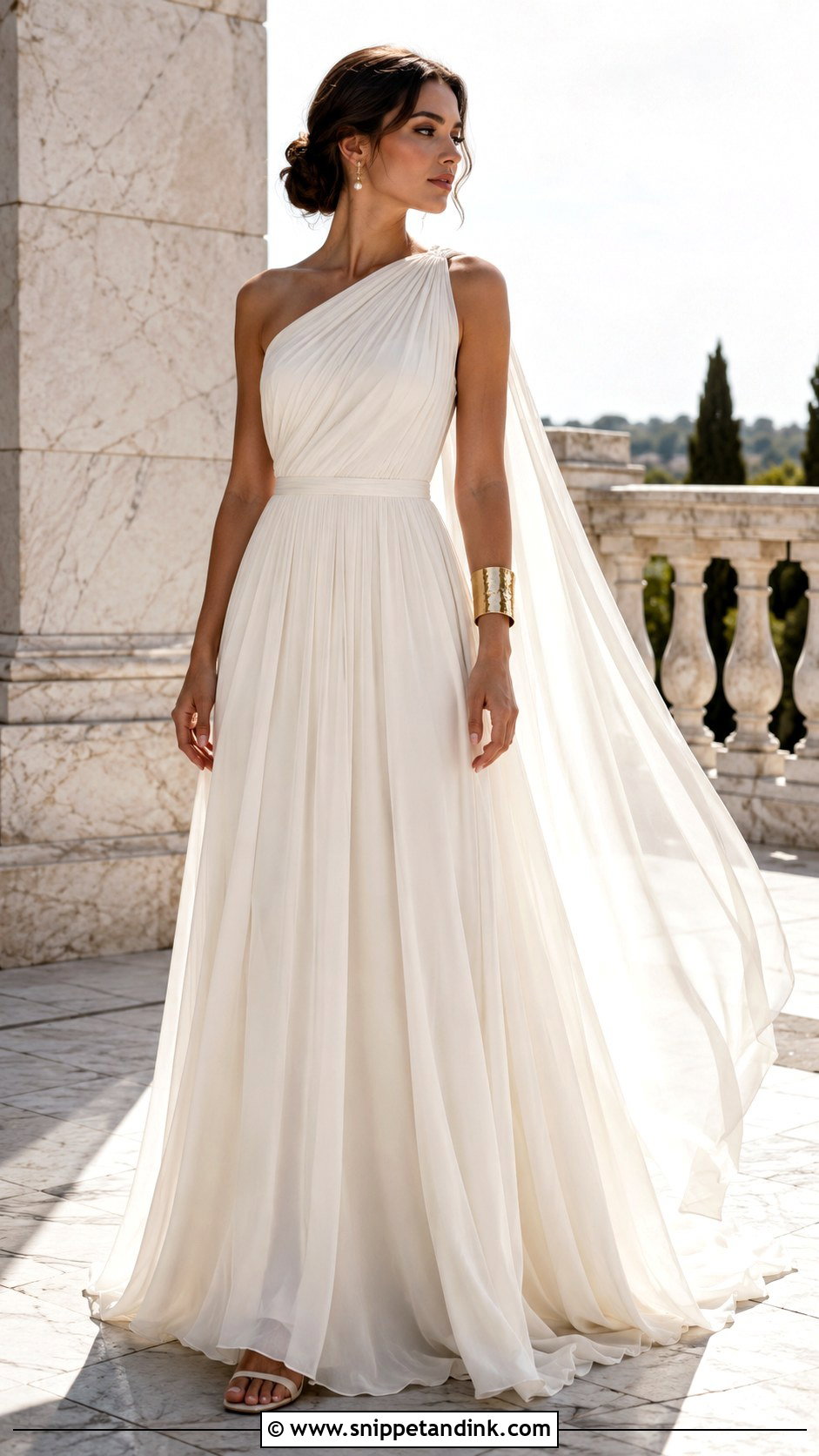
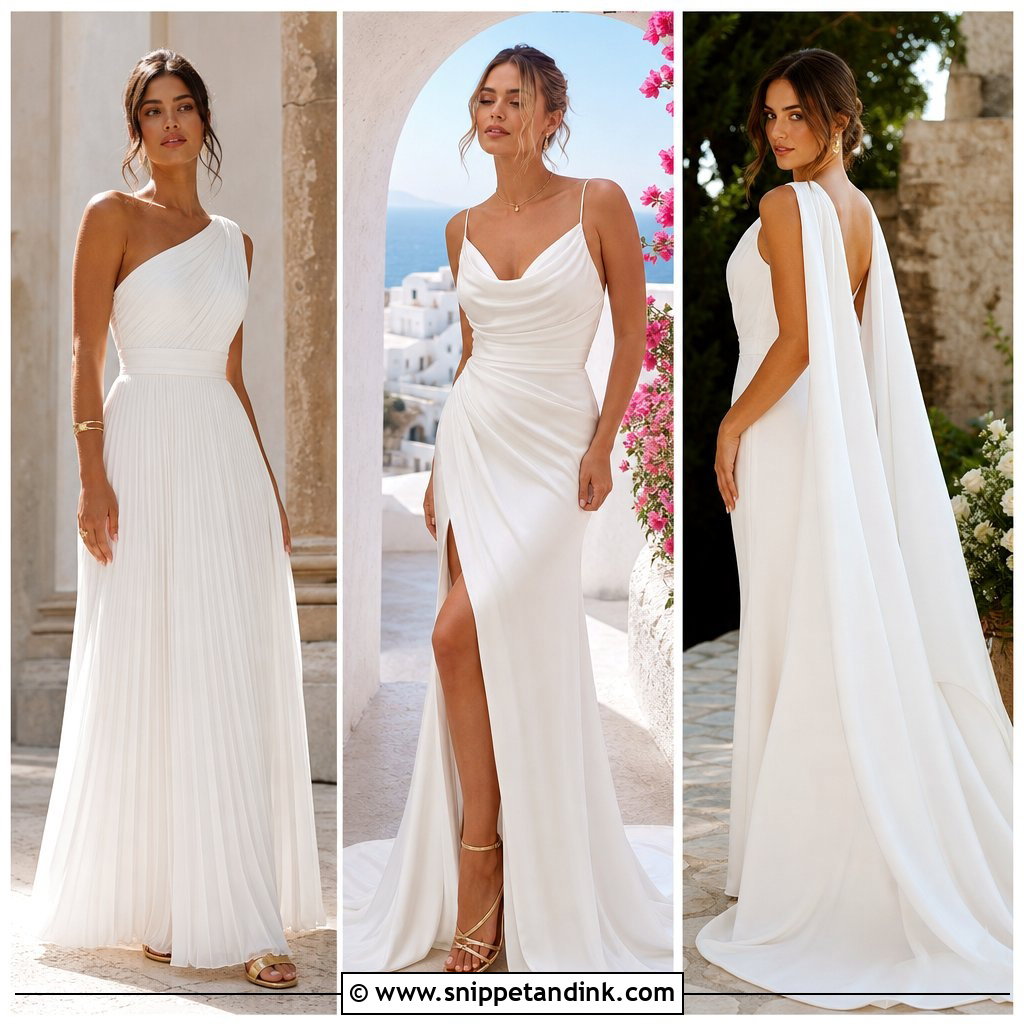
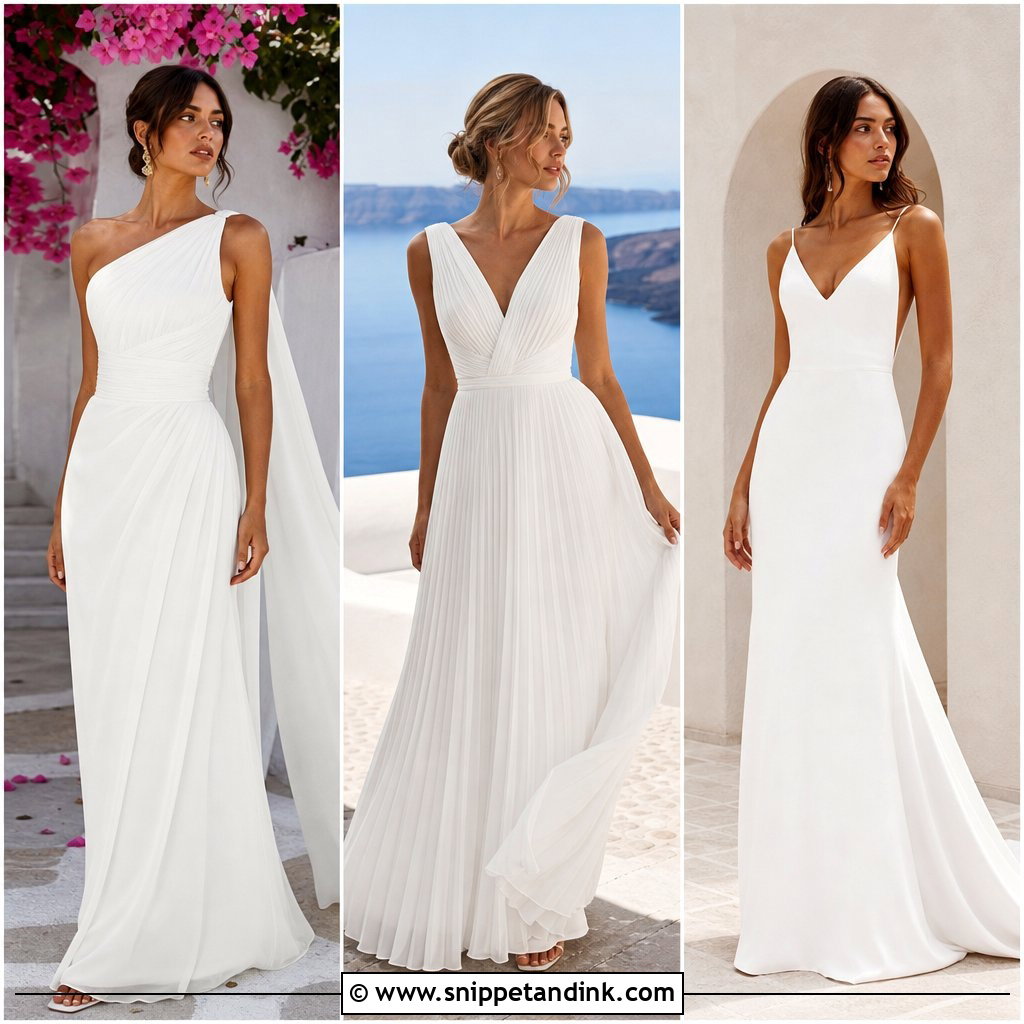
The bare shoulder is the most recognisably Roman line in this list. Look for an ivory gown with a gathered shoulder and diagonal draping across the bodice, a fitted waist and an A-line skirt. Minimal gold earrings, a slim cuff and ivory strappy sandals; hair in a low bun on the bare side. A sheer cape attached at the back can stand in for a veil. Before you commit, lift both arms at the fitting. The single shoulder takes all the strain, and without internal boning or a silicone strip the bodice drifts down on the open side by the speeches.
4. Draped Chiffon Roman Wedding Dress
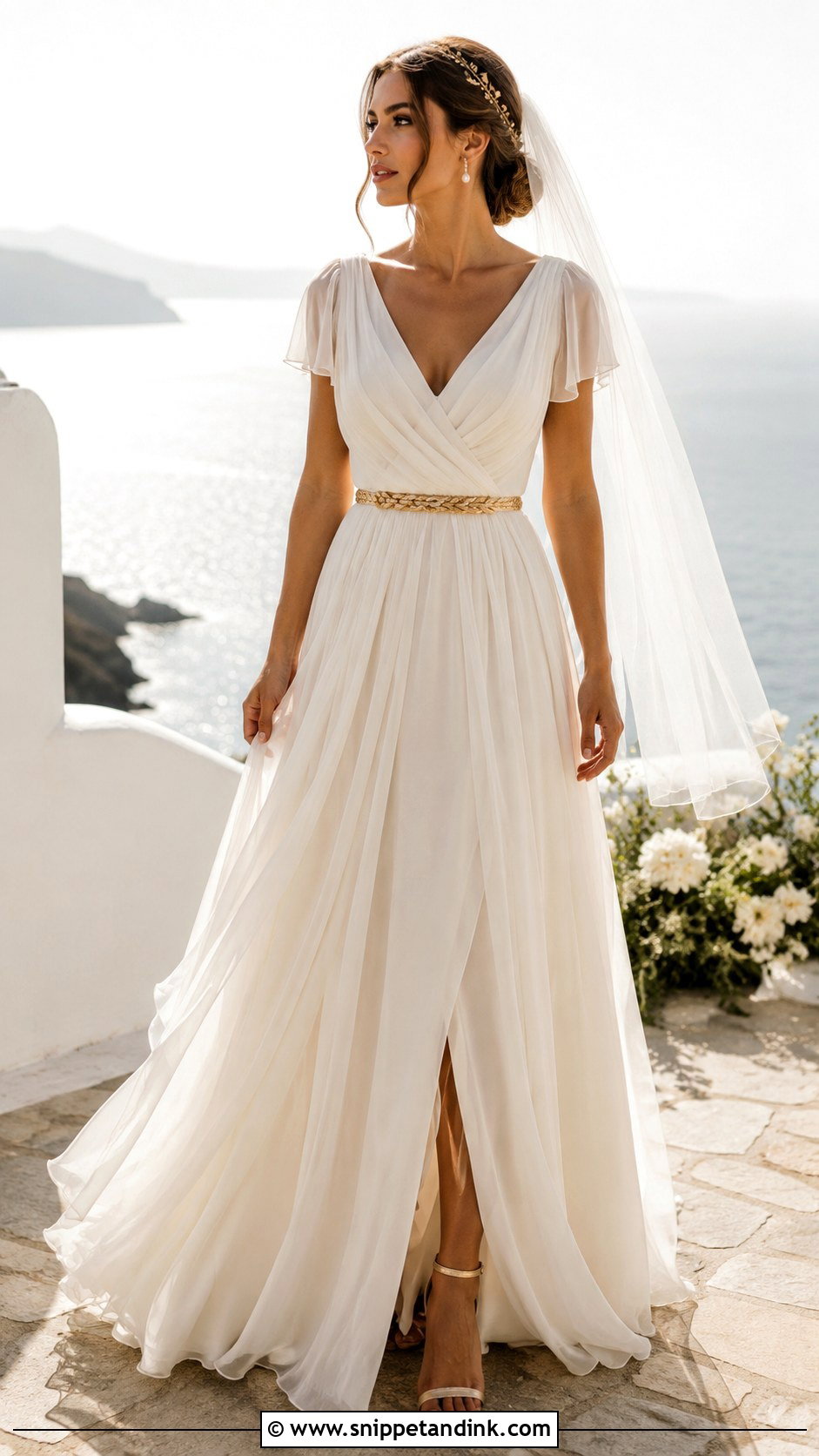
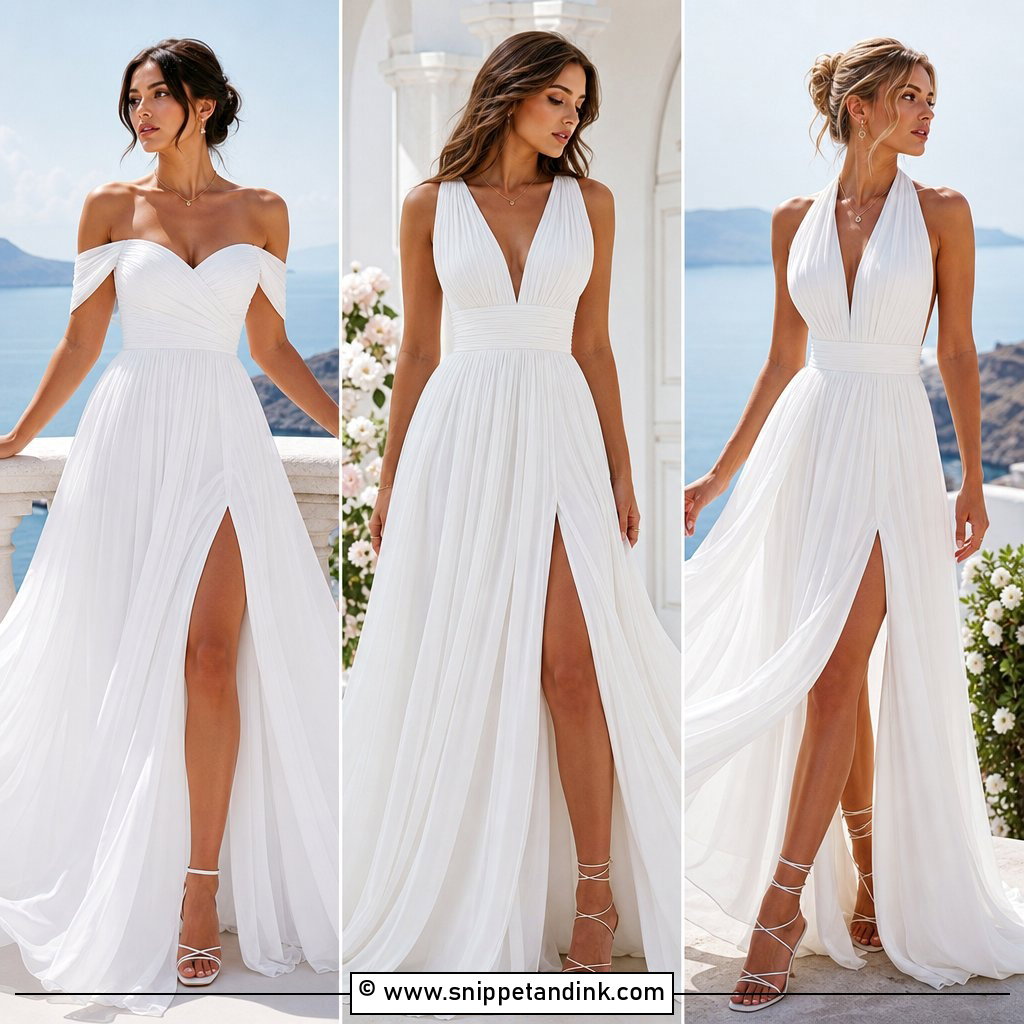
Draped chiffon floats as you walk, but too many layers turn it bulky, so count them. Three or four light layers over a lining usually look airy; more and the skirt starts to puff. A wrapped bodice, a gathered waist, a V-neck and short draped sleeves give coverage. Pearl and gold earrings, ankle-strap heels, a thin braided belt, a half-up style with small leaf pins and a long, barely-there veil complete it, with white roses and olive branches in the bouquet. For coastal terraces and summer heat, nothing in this list breathes better.
5. Roman Column Wedding Dress
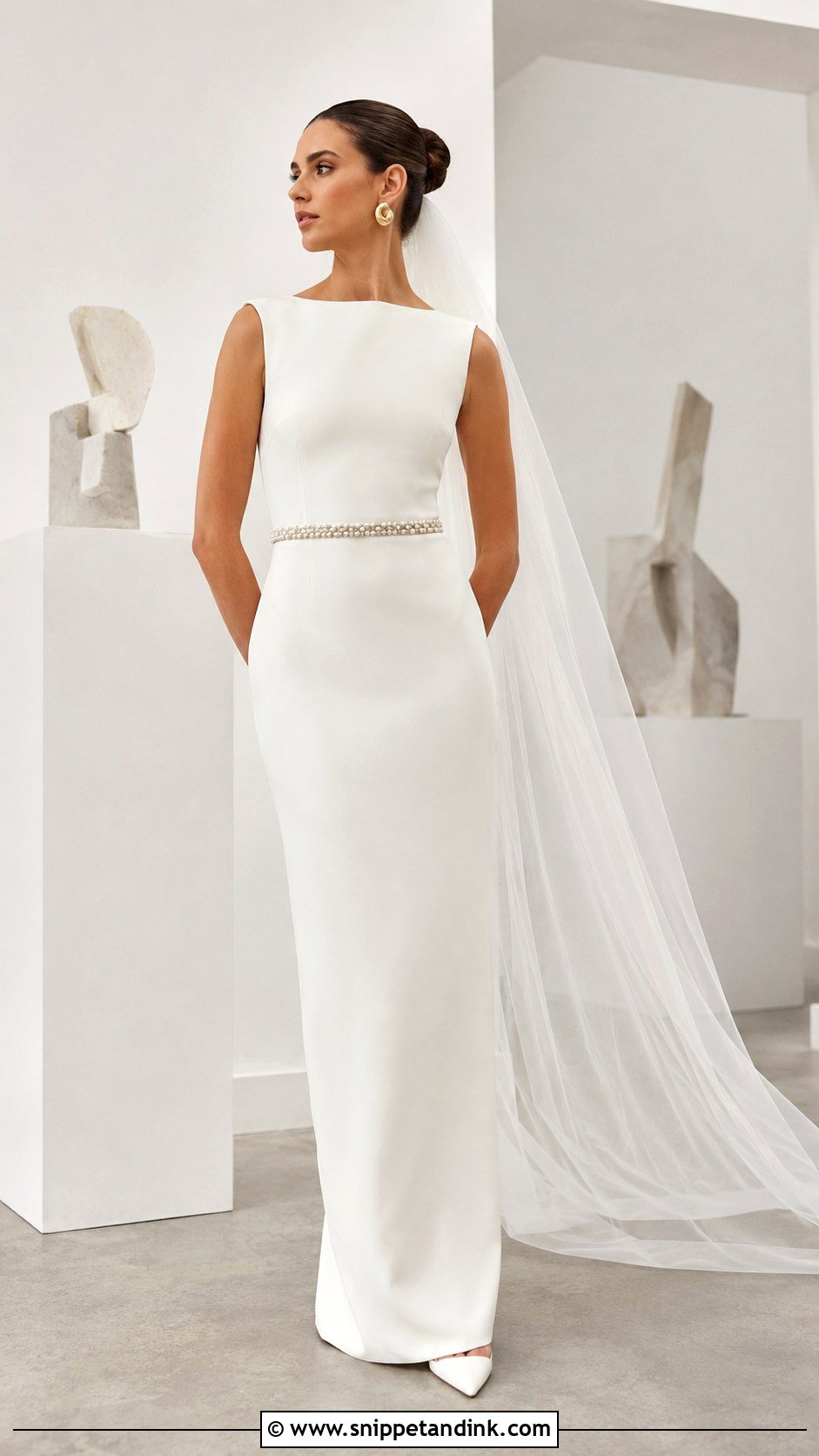
Crepe or satin cut straight and close, with a high bateau neck and clean shoulder seams, recalls a carved statue more than any draped piece. Add a removable gold belt or a pearl-trimmed sash for waist definition, plus pointed ivory flats or low heels, sculptural earrings and a smooth low bun. A floor-length veil puts movement behind the narrow gown. I’d make sure there’s a walking slit or kick pleat at the back; a true column with no ease at the hem limits your stride to a few inches. Galleries and minimalist ballrooms suit it.
6. Roman Wedding Dress With Gold Trim
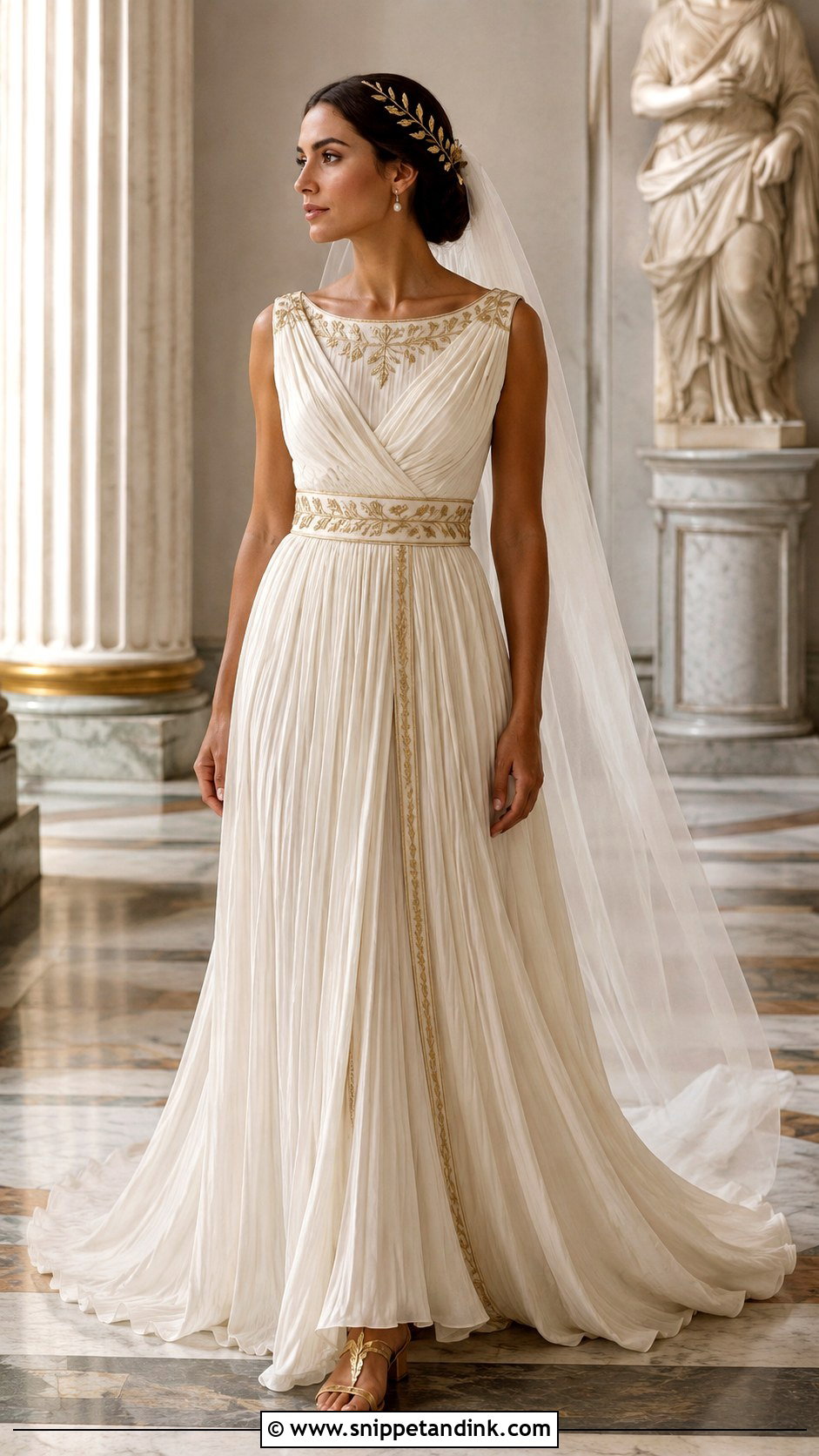
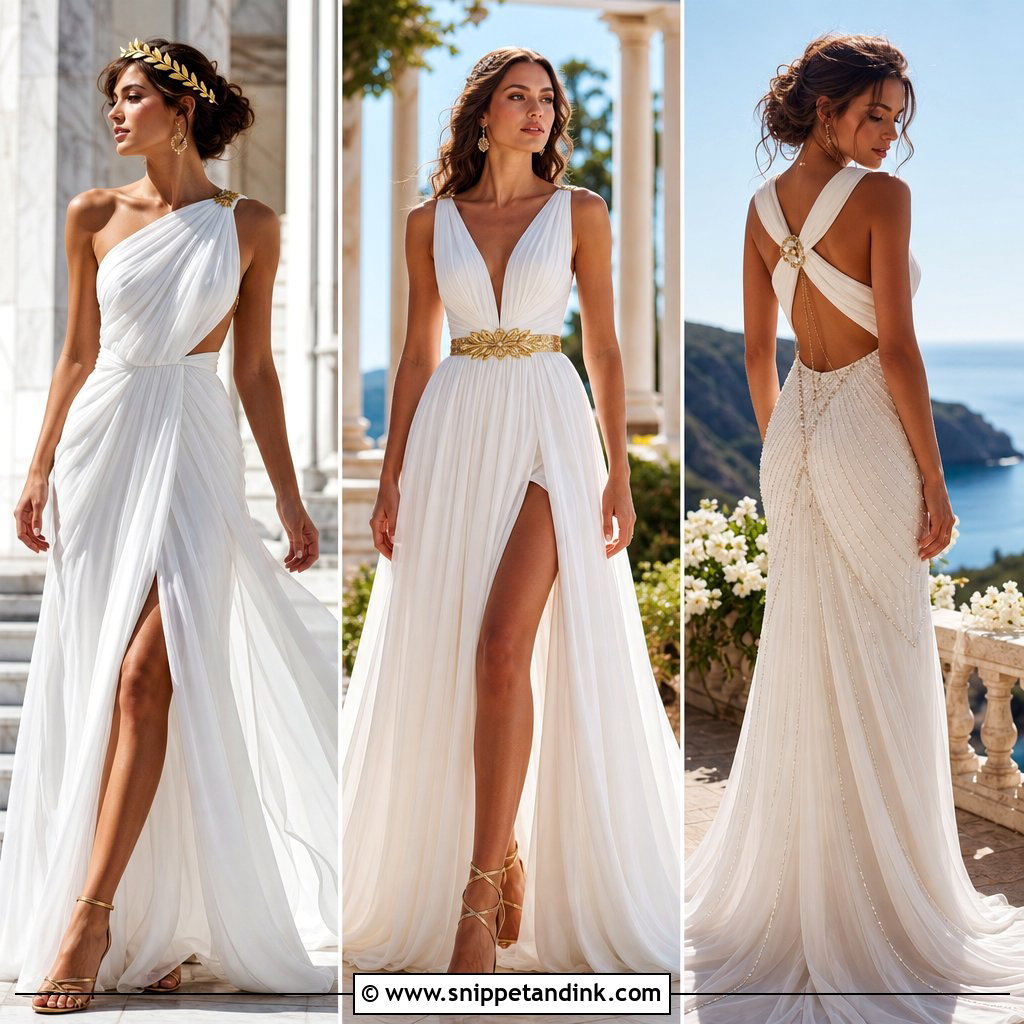
Gold trim works when it follows the construction: neckline, waist, straps. Scattered elsewhere it starts to look ornate. Choose a floor-length ivory dress with narrow metallic embroidery, a softly pleated skirt and a wrap bodice. Brushed-gold sandals, small hoops and a leaf comb over a low chignon go with it, plus a bouquet of white flowers and deep green foliage. Keep the veil plain. Metallic thread can tarnish or scratch skin at the underarm, so I check the inside of the trim is backed with soft fabric before the hem is touched.
7. Roman Wedding Dress With Cape
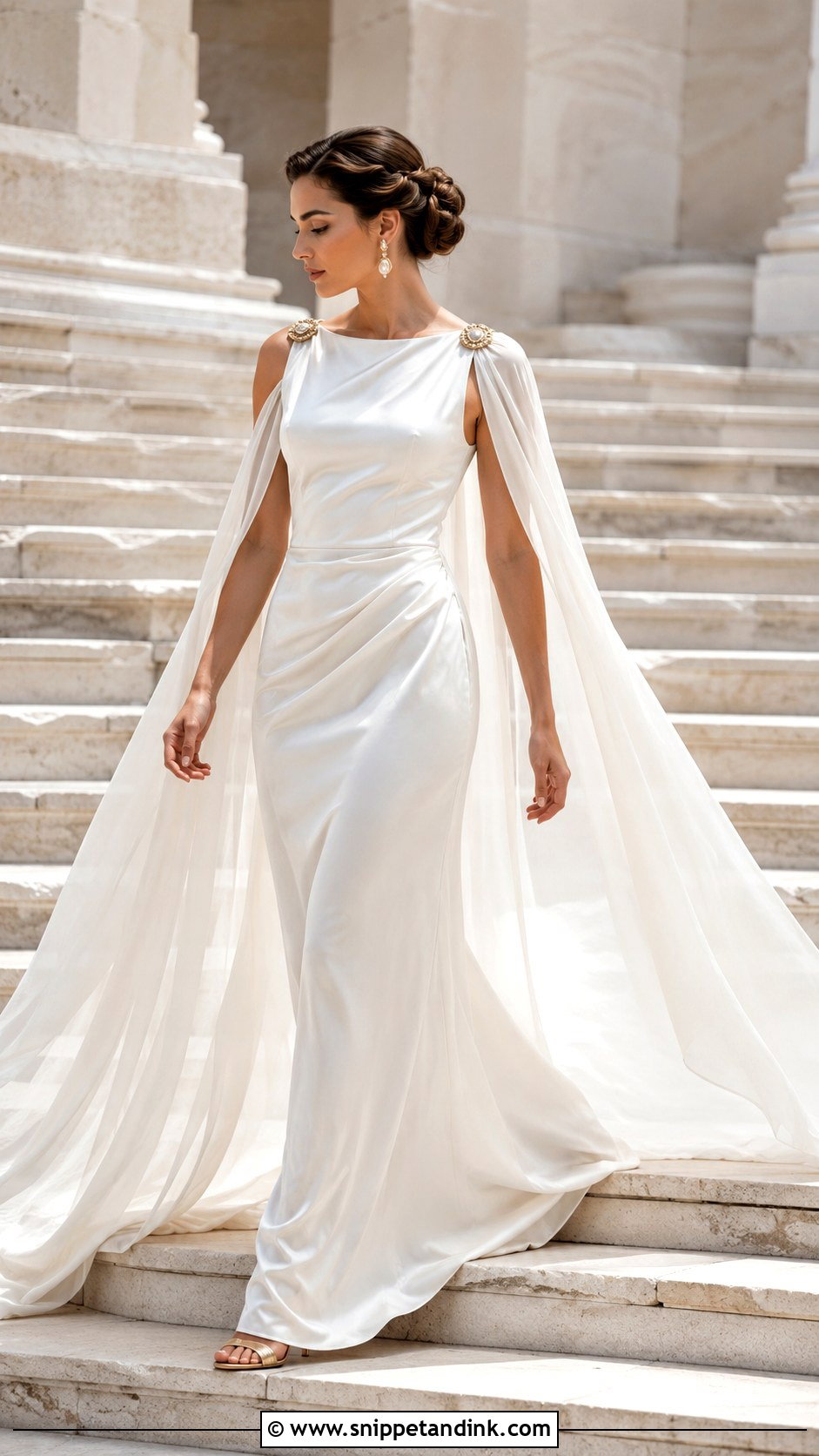
A floor-length chiffon cape clasped at the shoulders gives the ceremonial robe effect without any weight on the dress itself. Start with a sleeveless crepe or silk gown, a narrow column or gentle A-line, and leave the cape plain or lightly embroidered at the edge. Metallic low heels, drop earrings and a braided bun complete it. I’d skip the veil so the cape has room to move. Ask for the clasps to be sewn through to the dress straps, not just pinned, because a long cape pulls backwards with every step. It comes off easily for dinner and dancing.
8. Roman Wedding Dress With Flammeum Veil
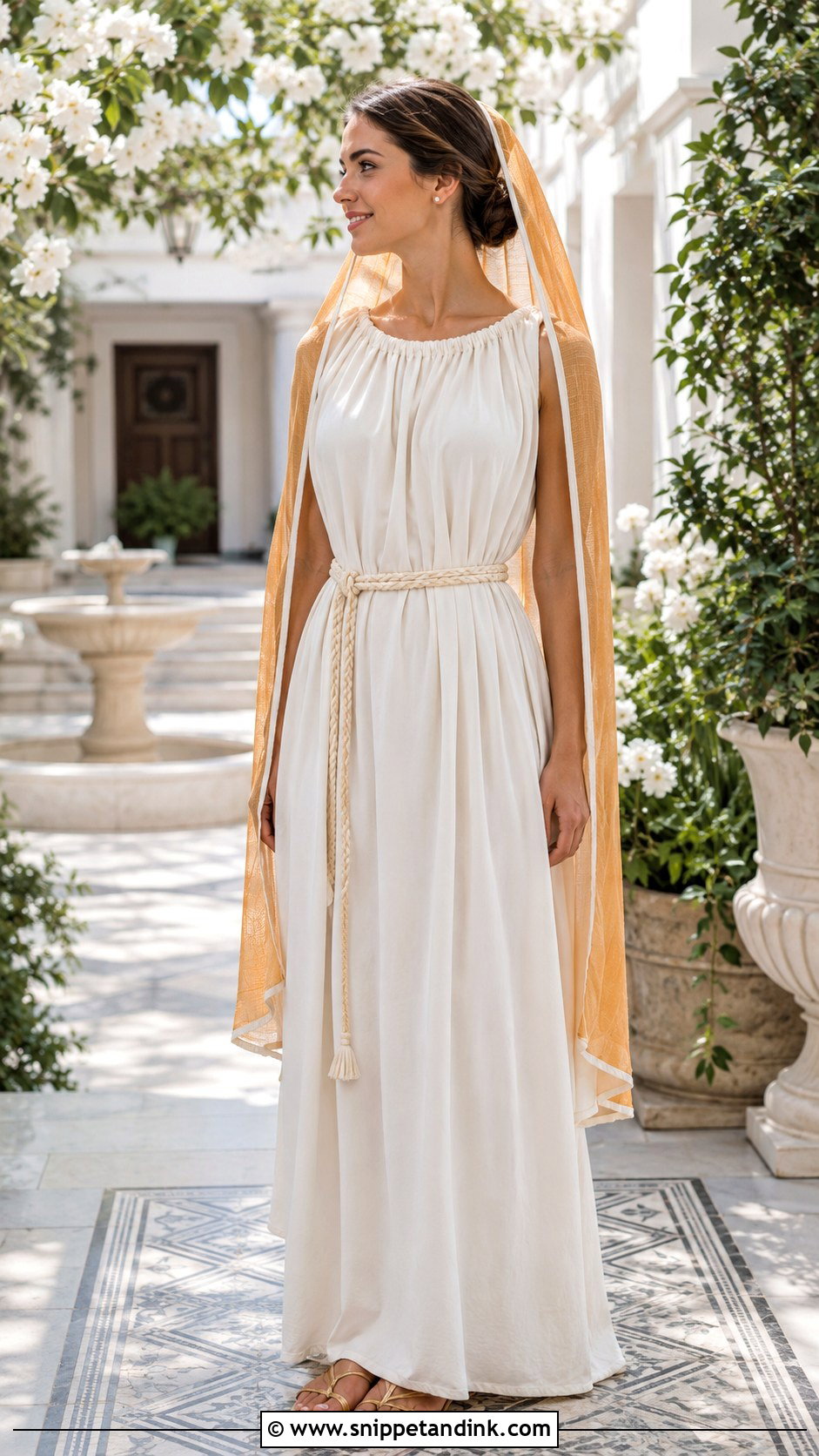
Roman brides wore a flame-coloured veil, the flammeum, and borrowing it is the boldest historical nod you can make with ancient Roman bridal clothing. Keep it sheer, in pale saffron, soft marigold or muted orange, over a simple white tunic-style dress with a gathered neck and fluid skirt. Gold sandals, tiny pearl studs and a slim braided belt are enough. I’d secure the veil to a structured low bun with several pins, since coloured tulle shows every slip. Hold the veil against your face before ordering. Orange can make some skin tones look sallow, and a more golden saffron is easier to wear. Keep other colours out of the outfit and the bouquet white.
9. Roman Wedding Dress With Laurel Crown
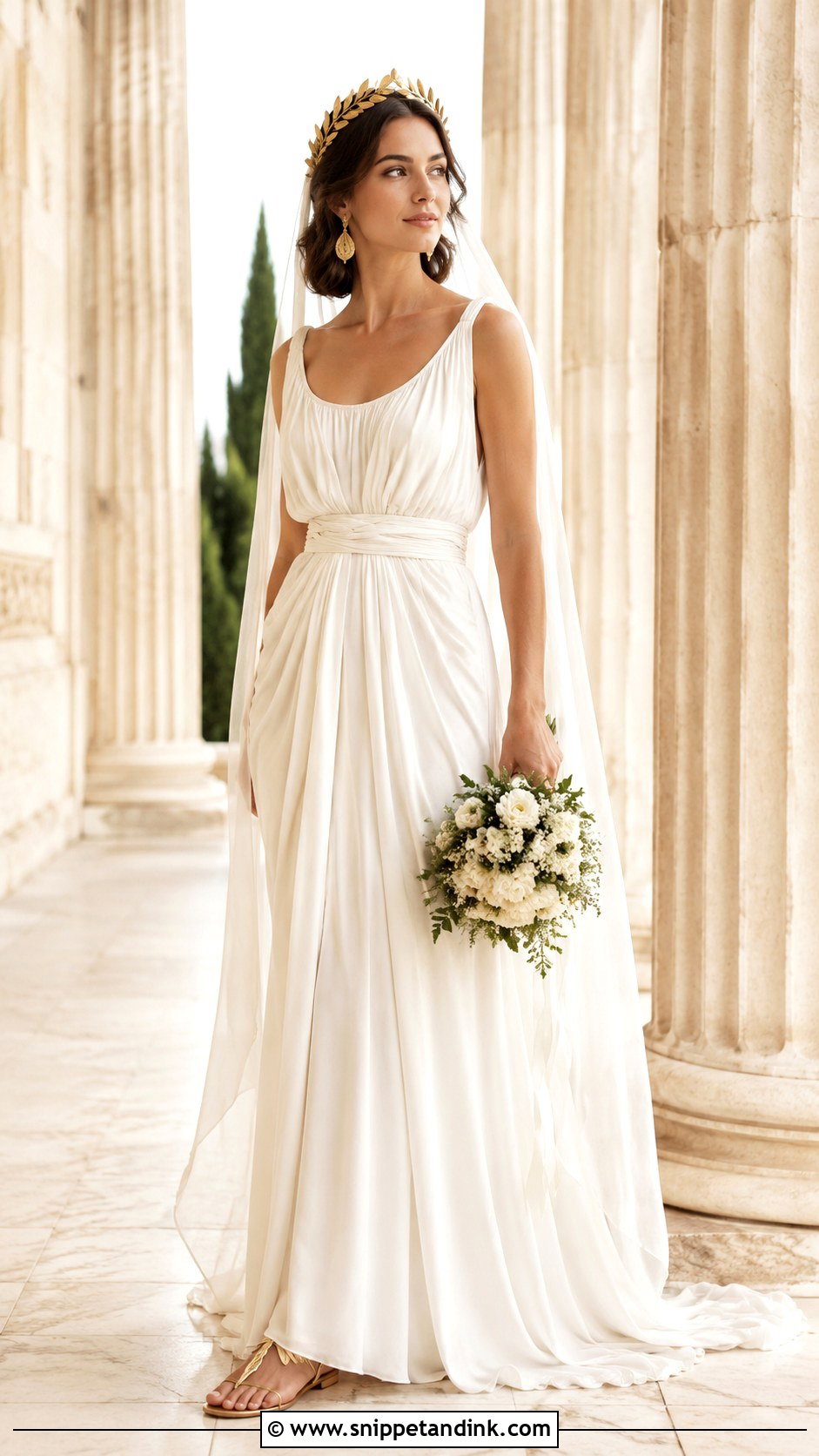
A crown of brushed gold leaves gives a plain draped dress a regal finish. Pick a narrow one; wide costume crowns sit high and slide. A scoop or delicate V neckline and a softly fitted bodice frame it well. Small gold earrings, flat leather-look sandals and a shoulder-length veil attached behind the crown complete the look, and loose curls or a low textured bun soften the metal. Olive branches in the bouquet tie it to the headpiece. Metal crowns press on the scalp after a few hours, so I’d ask your hairstylist to build a little padding into the style underneath.
10. Long Sleeve Roman Wedding Dress
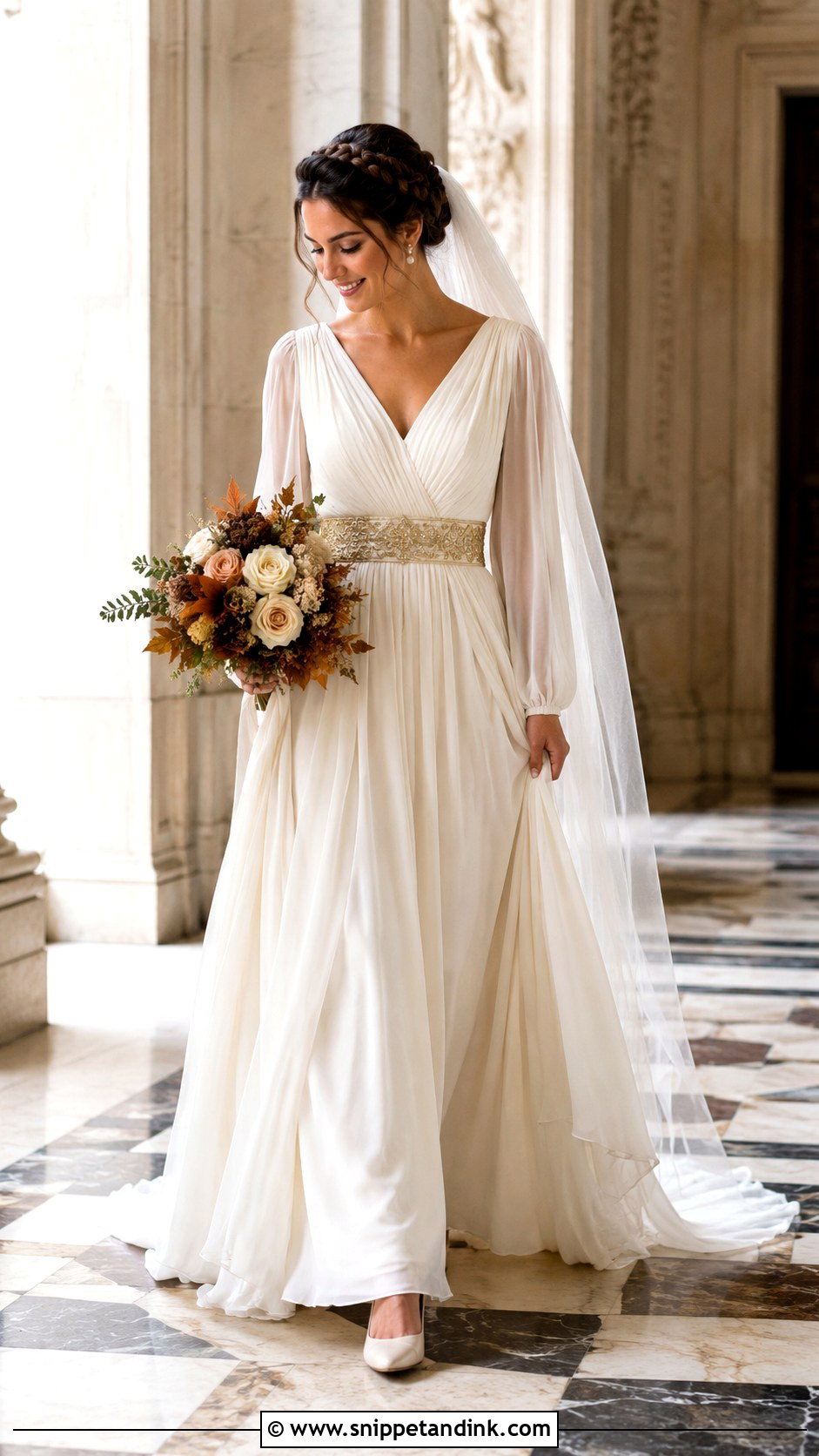
Long sleeves in sheer chiffon add coverage without losing the drape, especially when they gather softly at the cuff. Pair them with an empire waist, a fitted lining, a wrapped V bodice and a layered skirt. I’d choose subtle pleating on the sleeve over heavy lace, which fights the classical line. Closed-toe ivory flats, pearl drops, a thin gold belt under the bust, a braided updo and a long plain veil finish it. It works for autumn, air-conditioned rooms and ceremonies that ask for covered arms. Check the cuff isn’t tight; chiffon has no stretch, and you need to slide a ring on.
11. Off Shoulder Roman Wedding Dress
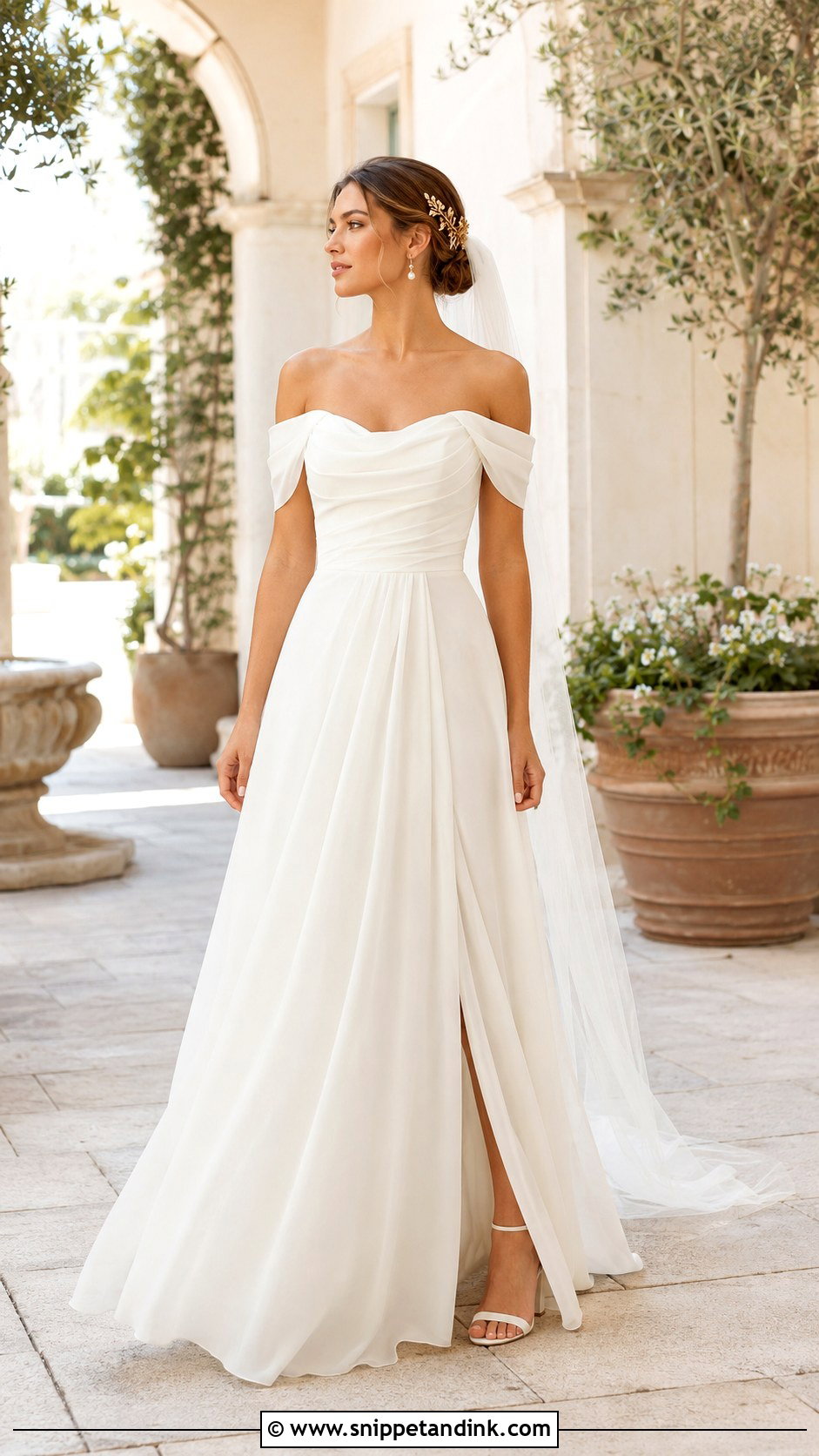
Folded chiffon or satin across the upper arms softens the drape. The structure underneath matters more than the fold. A boned bodice should hold the dress up, so the panels just rest on your arms. A natural or slightly raised waist lengthens the line. Wear a low bun with a gold leaf comb and pearl earrings, ivory block-heel sandals and a veil that starts below the hair, without a necklace. Trailing greenery in the bouquet echoes the folds. This neckline limits how high you can lift your arms, so practise the bouquet toss in it.
12. Pleated Roman Wedding Dress
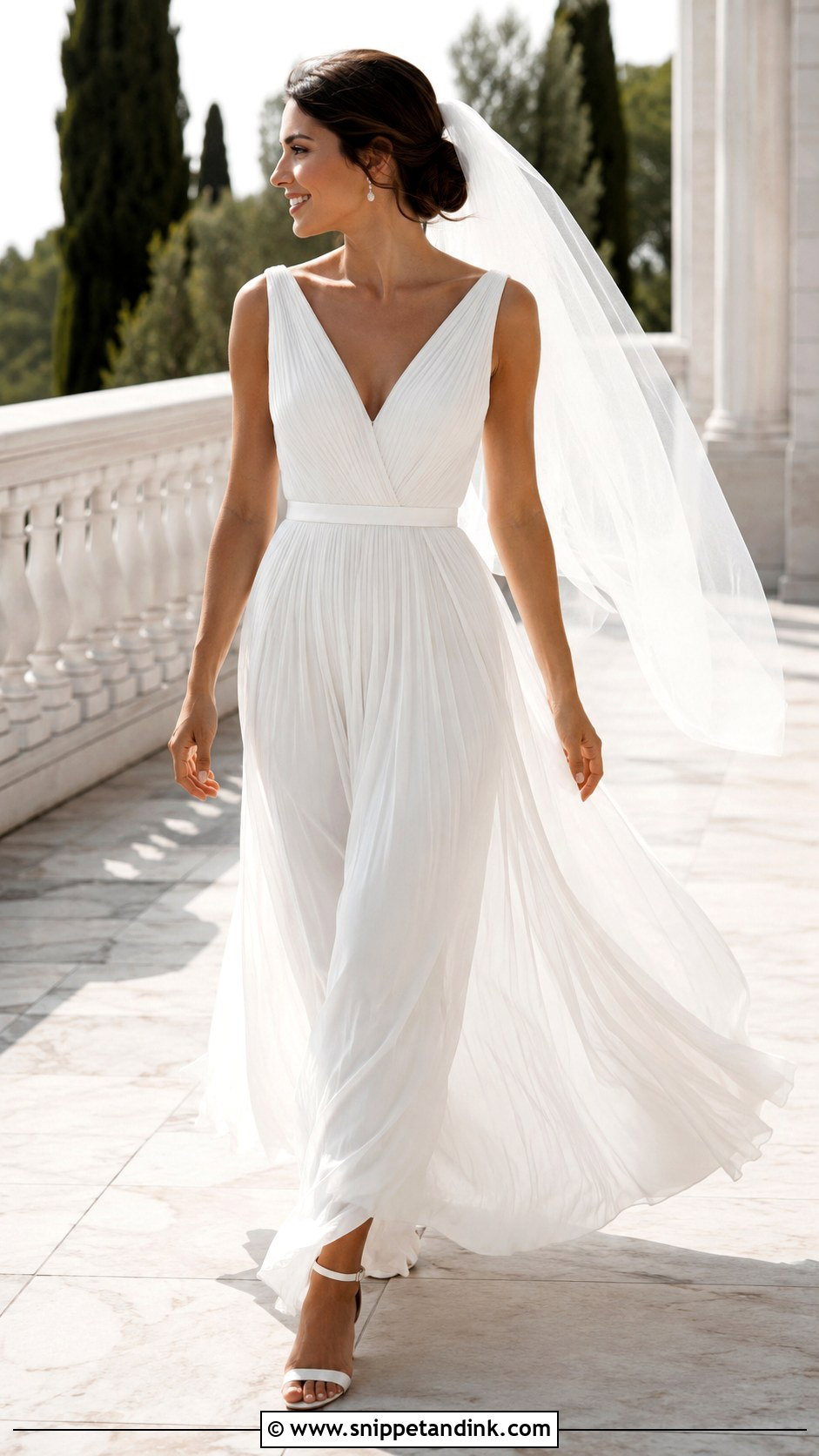
Fine pleats run vertically, so they lengthen the body and catch light as you move. An ivory chiffon gown with a pleated bodice and a skirt that gradually opens out is the classic version, with a halter, V or one-shoulder neck. Define the waist with a narrow satin band or a plain metal belt. Ankle-strap heels, small gemstone earrings, a low braided bun and a plain tulle veil leave the pleats in view. Pleated chiffon is stitched or heat-set, and I’d never let anyone steam it hard on the day, since high heat can relax the pleats. A cool steamer held at a distance is safer.
13. Silk Roman Wedding Dress
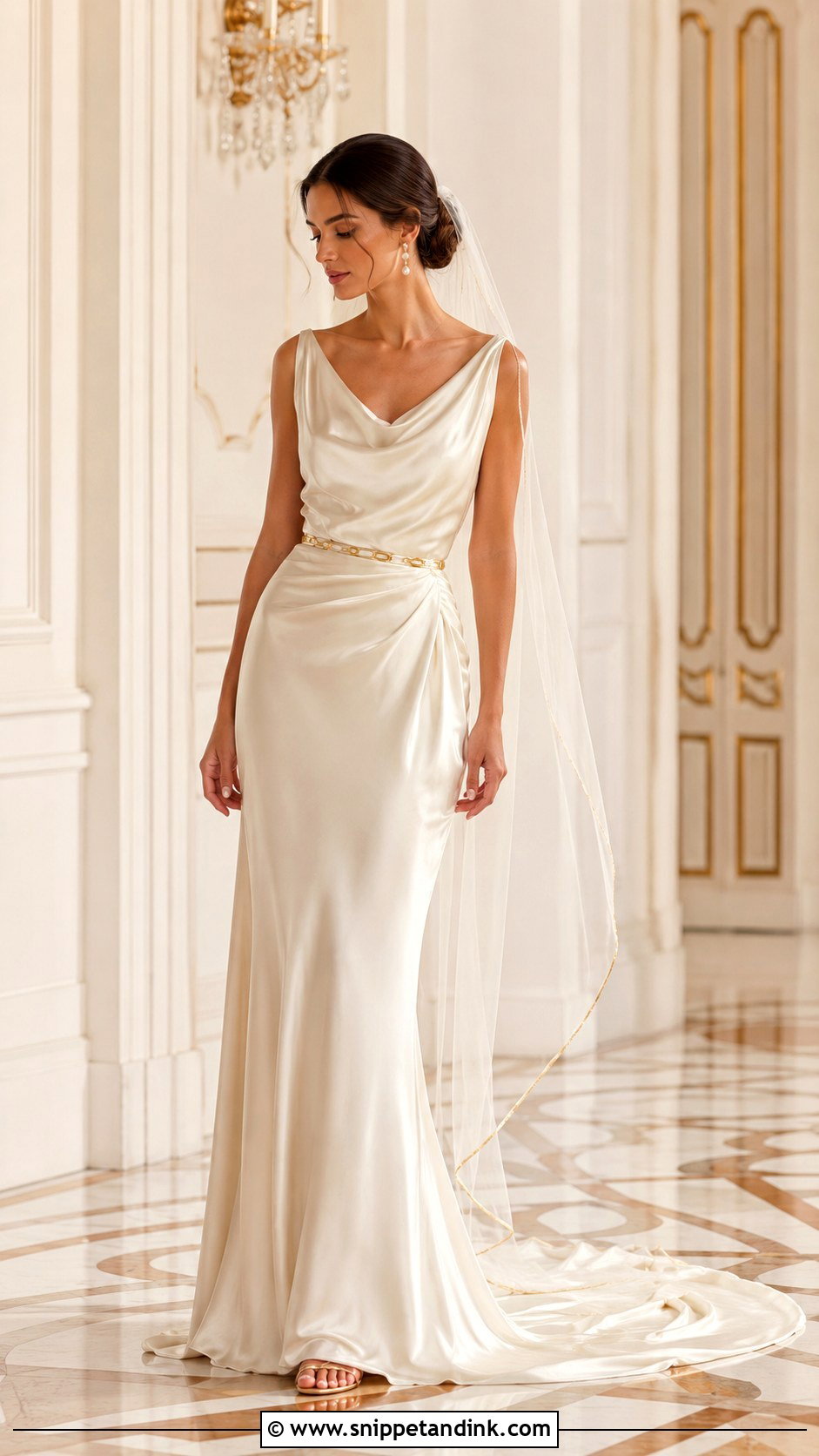
Silk drapes heavier and more liquid than synthetic chiffon, which is why the folds look so natural. A silk charmeuse or silk crepe gown with a cowl neck, gathered waist and fluid skirt is the base; bias cut skims, a looser A-line gives more room at the hip. A fine gold waist chain or fabric sash adds the Roman detail. Slender ivory sandals, pearl earrings, a clean low knot and a silk-edged veil suit it. Silk charmeuse marks with water and sweat, so I’d keep tissues and a small fan in the bridal kit and keep jewelry matte. It shines best in an indoor evening venue.
14. Lace Roman Wedding Dress
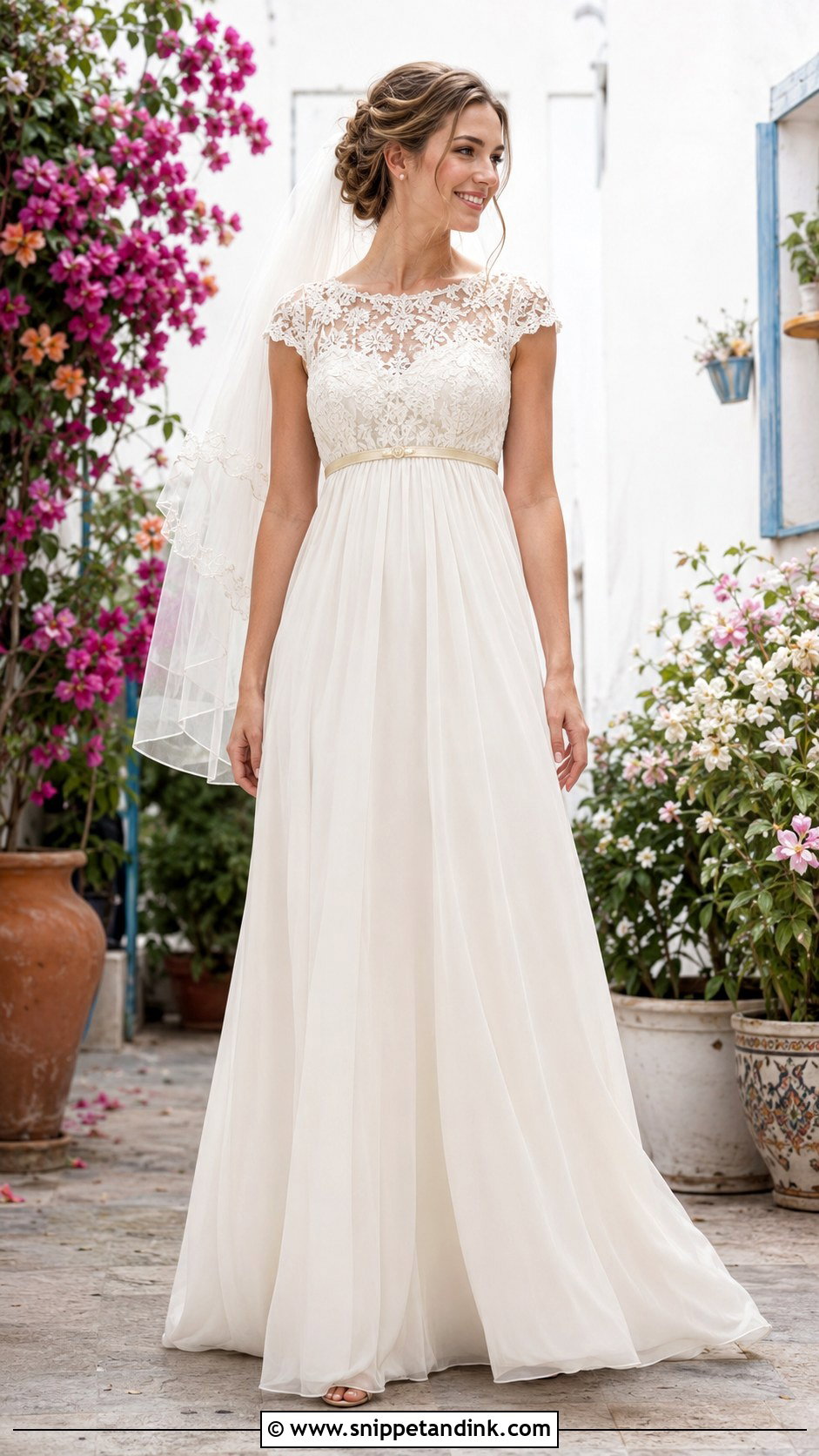
Lace can sit inside a Roman look if it stays on the bodice. Choose a lace-covered bodice, empire waist and a plain chiffon or crepe skirt, with fine botanical lace rather than stiff, dense patterns. Cap sleeves or a sheer lace neckline add coverage. Pearl studs, ivory low heels and a slim gold ribbon under the bust, with a loose chignon and a soft fingertip veil, keep it light. For a bride who wants the classical shape but still feels most like herself in lace, this is the middle ground. A compact white bouquet suits it.

15. Beaded Roman Wedding Dress
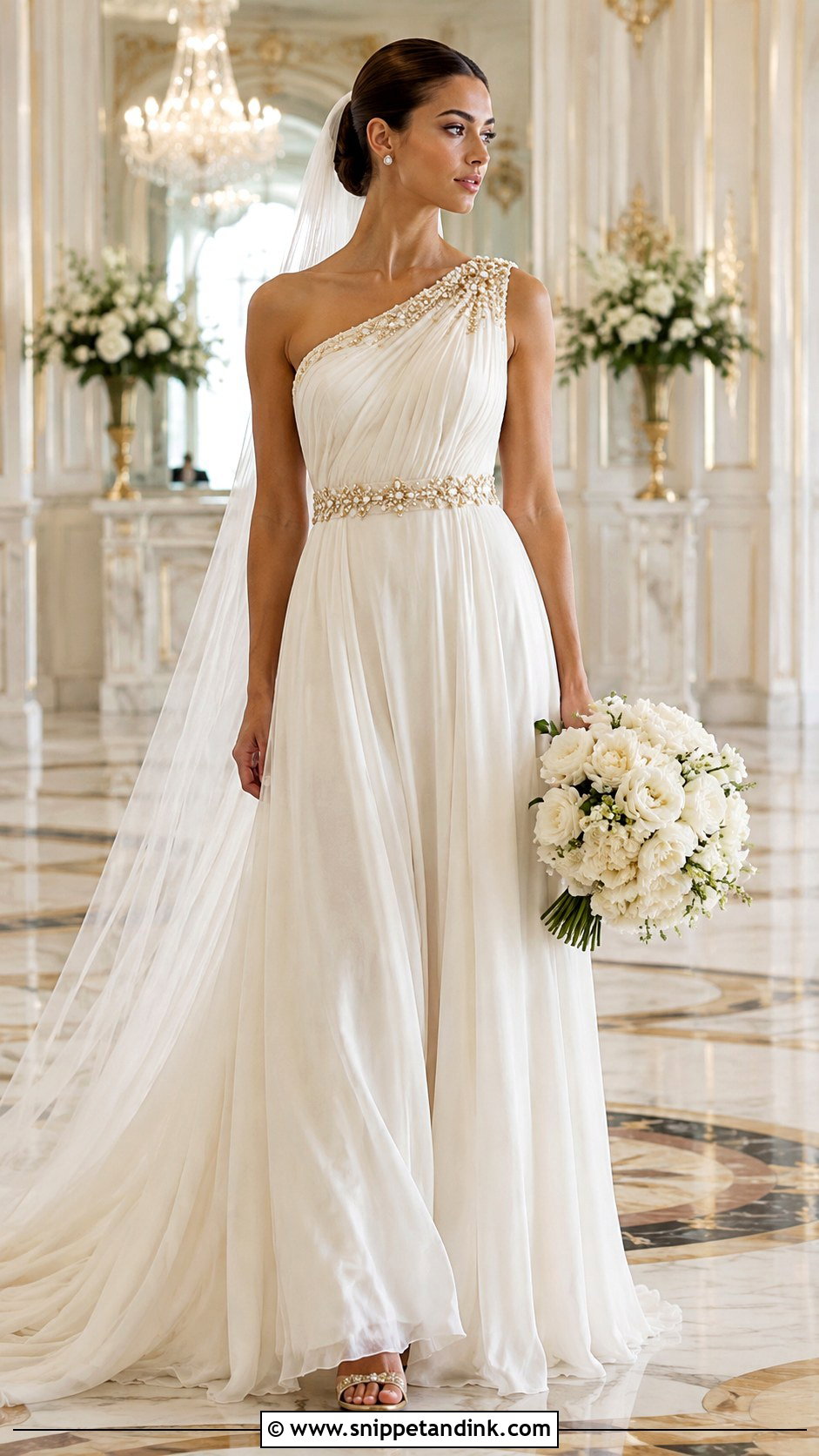
Beads should follow the drape: along the shoulder, the neckline, the waist. That gives the eye a direction instead of a scatter. Gold, pearl and clear crystal all suit ivory chiffon or tulle, and a one-shoulder or wrapped V bodice works naturally. Simple metallic sandals, small studs, a smooth updo and a plain veil keep the rest controlled, with a structured bouquet of white roses and green leaves. Beads add weight to light chiffon, so I check the shoulder seam doesn’t sag forward. Ballrooms and evening light suit it best.
16. Minimalist Roman Wedding Dress
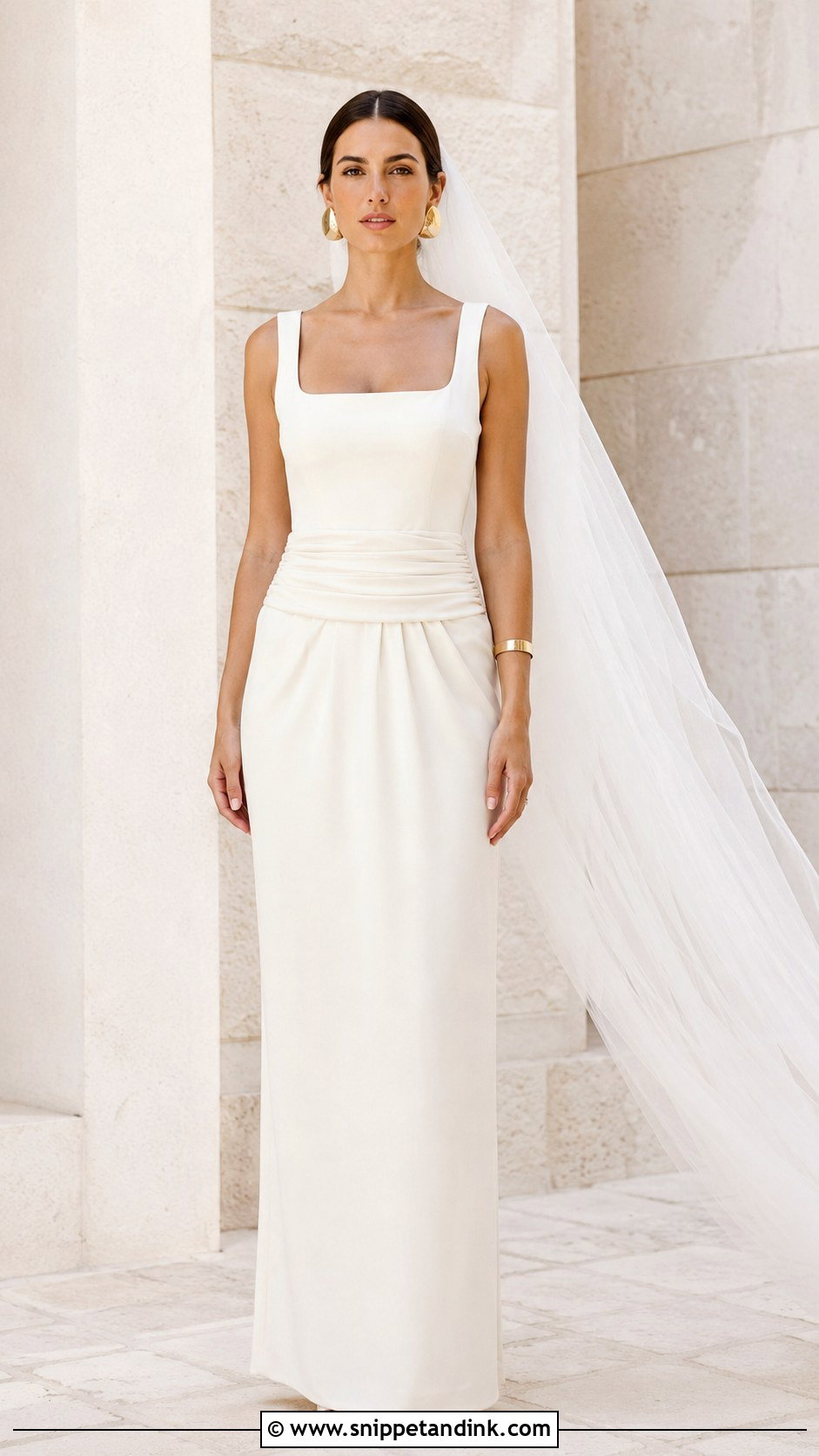
Strip it back to proportion and fabric. A matte crepe gown with a square neckline, wide straps and a straight skirt, plus one gathered panel at the waist or shoulder, is enough to read as Roman. Plain ivory sandals, sculptural earrings, a narrow gold cuff and a centre-parted bun keep the composed line, with a long sheer veil and a small bouquet. Minimal gowns show every alteration, so I’d use a seamstress who works with crepe regularly. It suits a city ceremony, and you can change the mood entirely with accessories later.
17. Plus Size Roman Wedding Dress
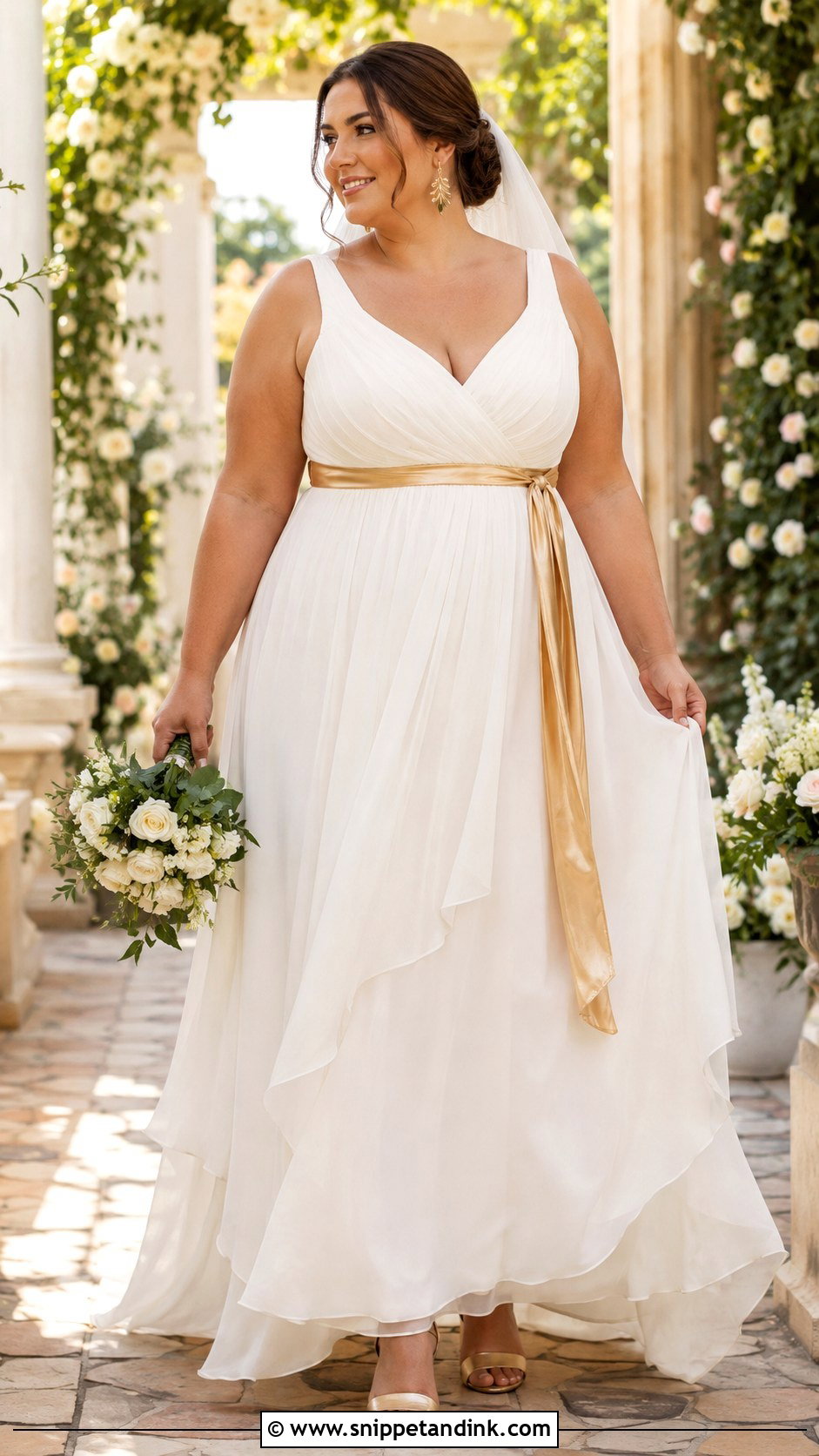
Draping is one of the most forgiving styles for plus size brides, as long as there’s real support underneath. I’d look for a wrapped bodice over a structured lining, wide straps that can take a supportive bra, and an empire or natural waist defined with a satin belt or narrow gold sash. The chiffon skirt should flow over the hips in soft layers without extra volume. Comfortable block heels, leaf earrings, a secure low updo and a chapel veil add length at the back. Tailoring at the bust and straps is where the fit is won or lost, so allow for an extra fitting.
18. Modest Roman Wedding Dress
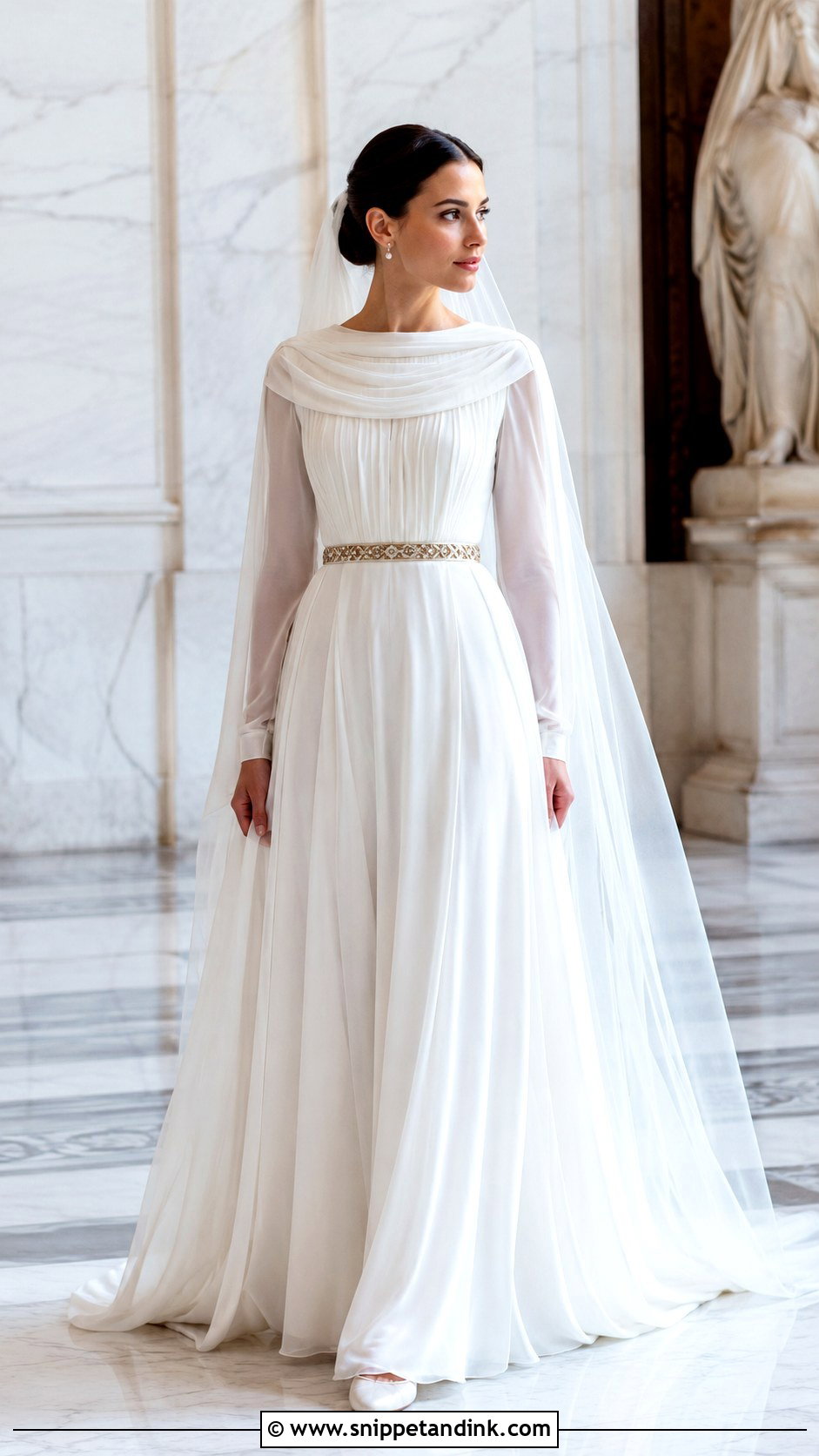
Roman draping can cover everything and still look light. Choose a floor-length gown with a high bateau neck, long chiffon sleeves and a softly defined waist, and add gentle pleating through the bodice so it doesn’t look stiff. A light capelet or a wrap inspired by the palla, the Roman woman’s mantle, adds a classical layer for the ceremony. Closed-toe flats, pearl earrings, a narrow metallic belt, a low bun and a long sheer veil from the crown complete it. If the venue is warm, ask for a lighter lining in the sleeves; full coverage in two layers of chiffon gets hot.
19. Short Roman Wedding Dress
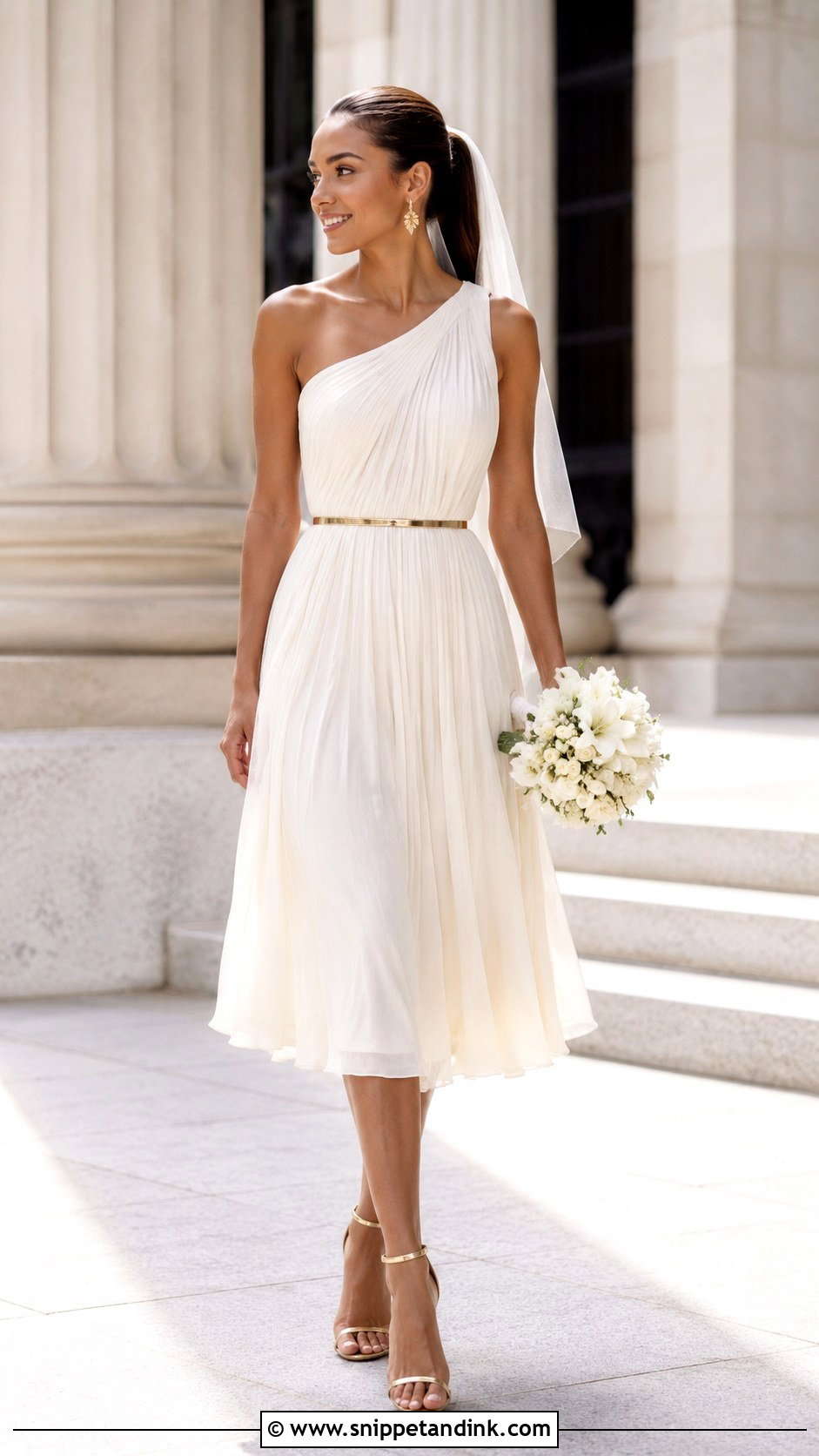
A knee or tea-length chiffon dress with an empire waist and pleated skirt makes a light Roman option for a civil ceremony, a reception change or a summer party, and a one-shoulder neck keeps the reference clear. Gold ankle-strap sandals, small leaf earrings, a slim metal belt and a short veil or bow, with a ponytail or compact braided bun. Keep the bouquet small so it doesn’t swamp the shorter shape. Short chiffon blows up easily outdoors, so I’d ask for a slightly heavier lining layer in the skirt.

20. Roman Wedding Dress With Train
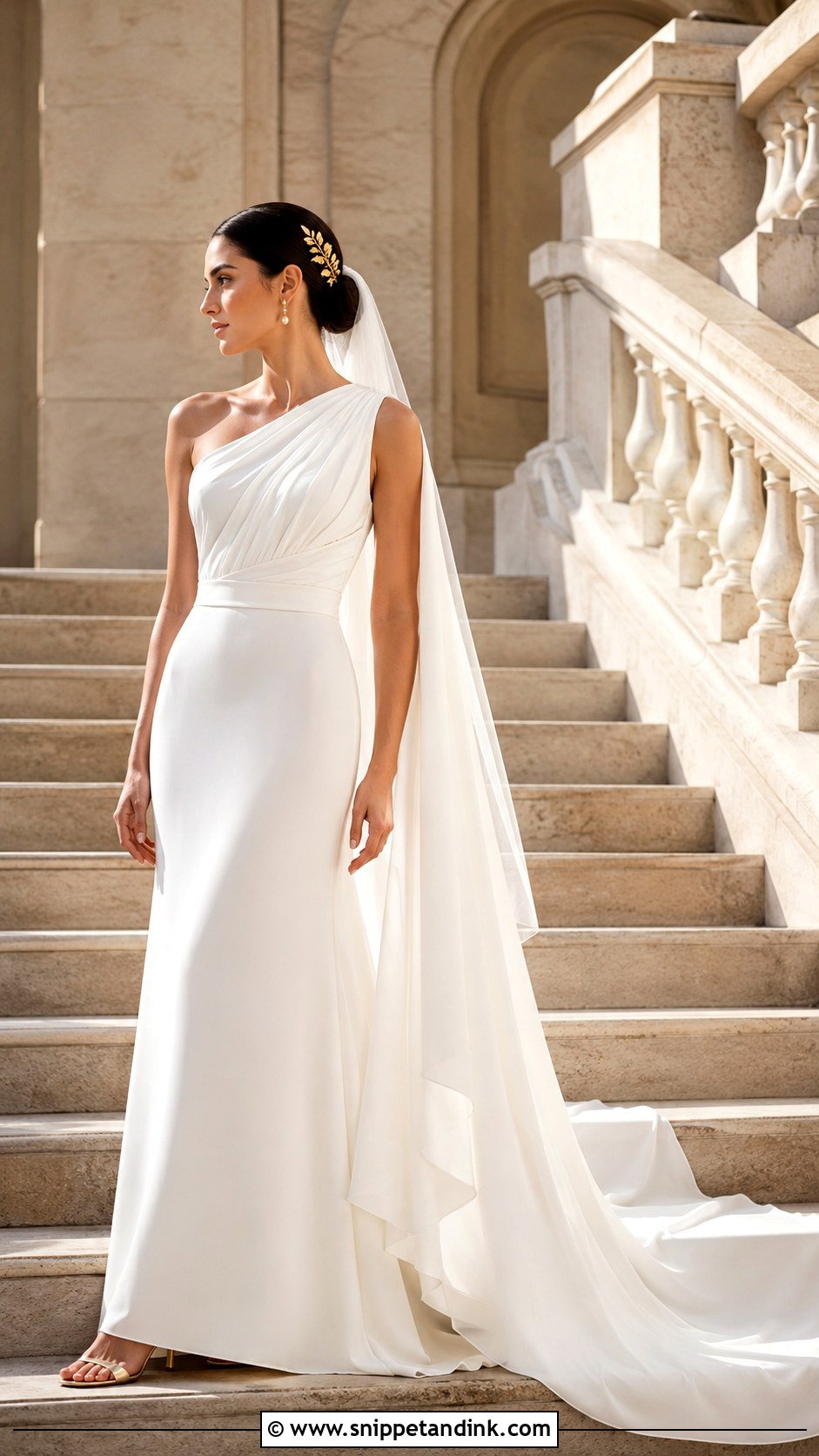
A train gives the drape a grand finish. A fitted wrapped bodice, defined waist and smooth skirt running into a chapel or cathedral train; crepe looks architectural, chiffon softer. A one-shoulder cape panel flowing into the train ties it together. Low metallic heels, pearl and gold earrings, a leaf comb and a neat bun keep the back visible. With this much fabric behind you, I’d use a short or plain veil. A train in light chiffon also needs arranging before every photo, so give someone the job, and plan a bustle for the reception.
Will Chiffon Drape Hold Up Outdoors?
Most of these dresses are chiffon, and it behaves well outdoors if you plan for a few things.
- Wind: light layers lift and wrap around your legs. A weighted lining or a tiny hem weight at the side seams keeps them down.
- Static: synthetic chiffon clings to tights and slips in dry weather. Anti-static spray on the lining, not the outer fabric, fixes it.
- Snags: open sandals with buckles catch fine hems. Turn buckles inward or choose a smooth strap.
- Uneven ground: hem the dress a little shorter for gravel, grass or old stone floors, so it doesn’t collect dirt.
Sandals for a Long Day
Flat sandals look right with Roman draping, but brand-new straps rub. Wear them in for a few weeks and put blister plasters on in the morning, before anything hurts. If you’ll stand for hours, a cushioned insole or a small block heel helps more than you’d think, and nobody sees it under a floor-length skirt.
Two Roman Details Are Usually Enough
Flowing skirts, raised waists, a bare shoulder, gold, capes and the right veil can all point to Rome. The trick is editing: choose two or three and let them guide the outfit, because a full set of historical references tips into costume. Think about your venue, the season and how much you’ll be moving, then fit the dress properly and keep the accessories in the same metal. A well-draped gown with one leaf comb and good sandals will look right from the aisle to the last dance.
You'll Like These Ideas:






Leave a Reply