
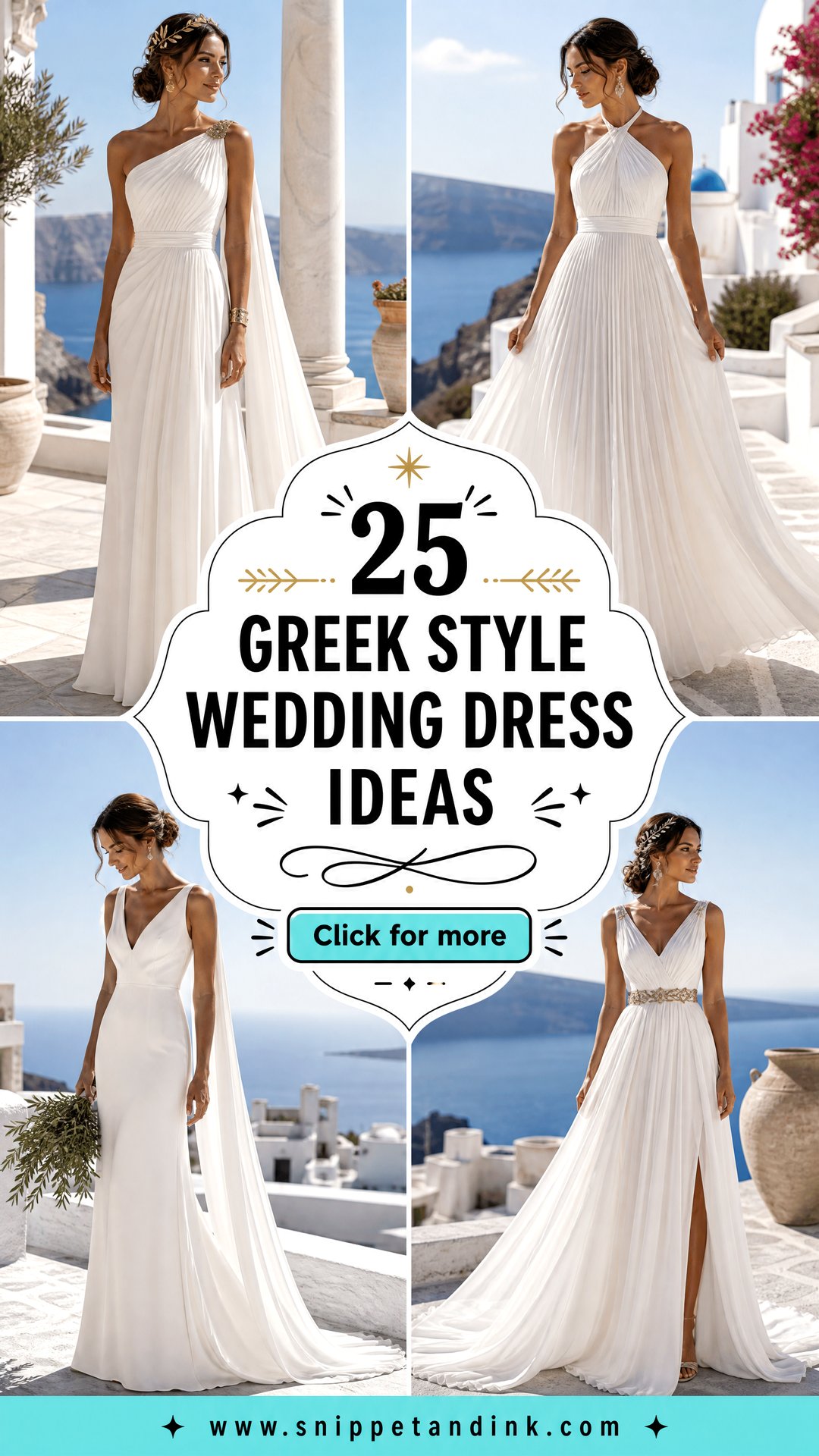
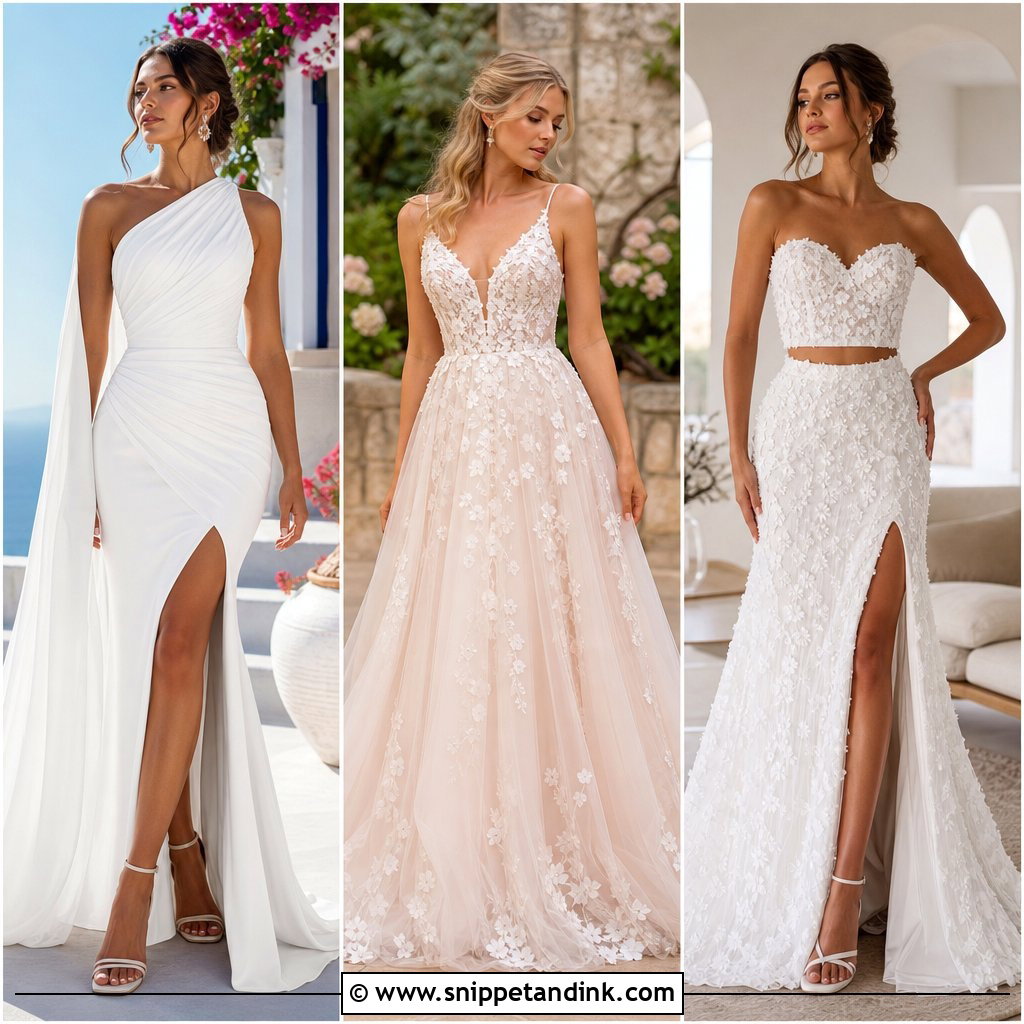
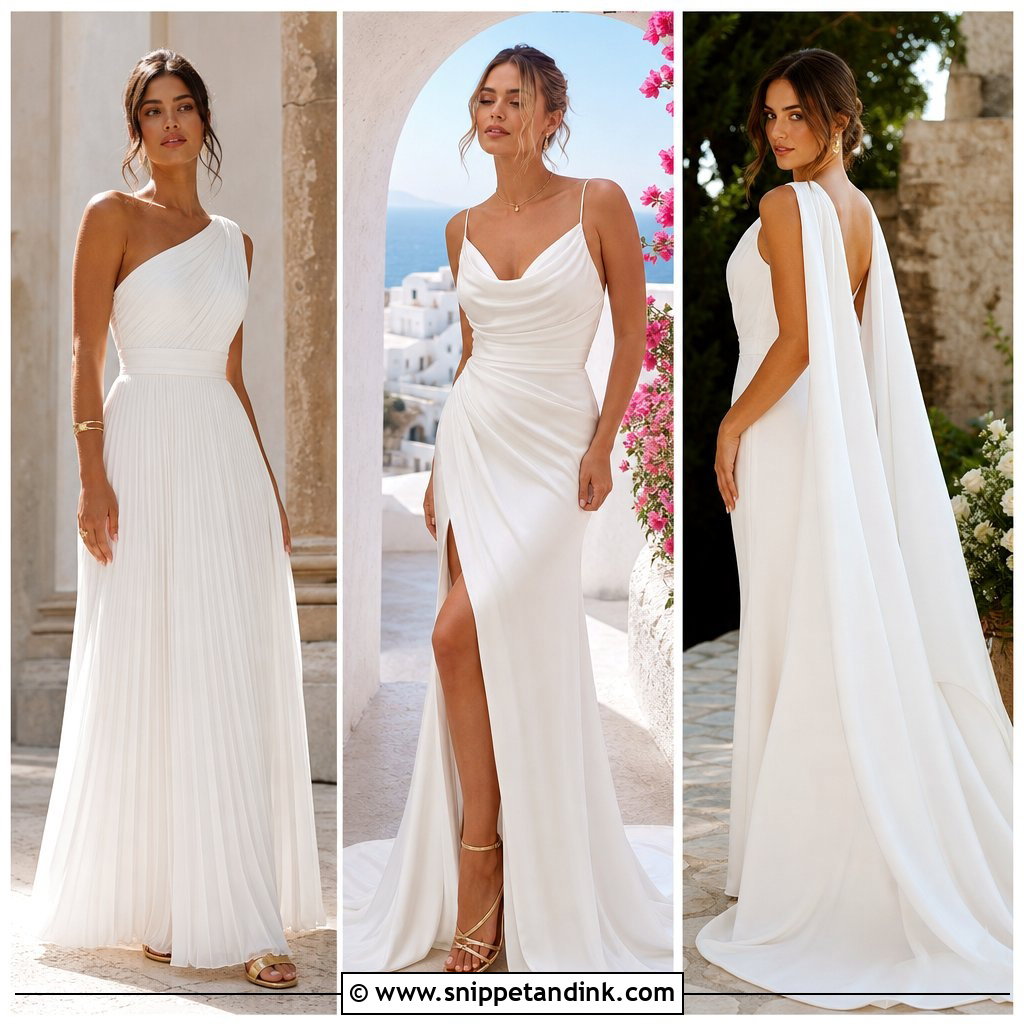
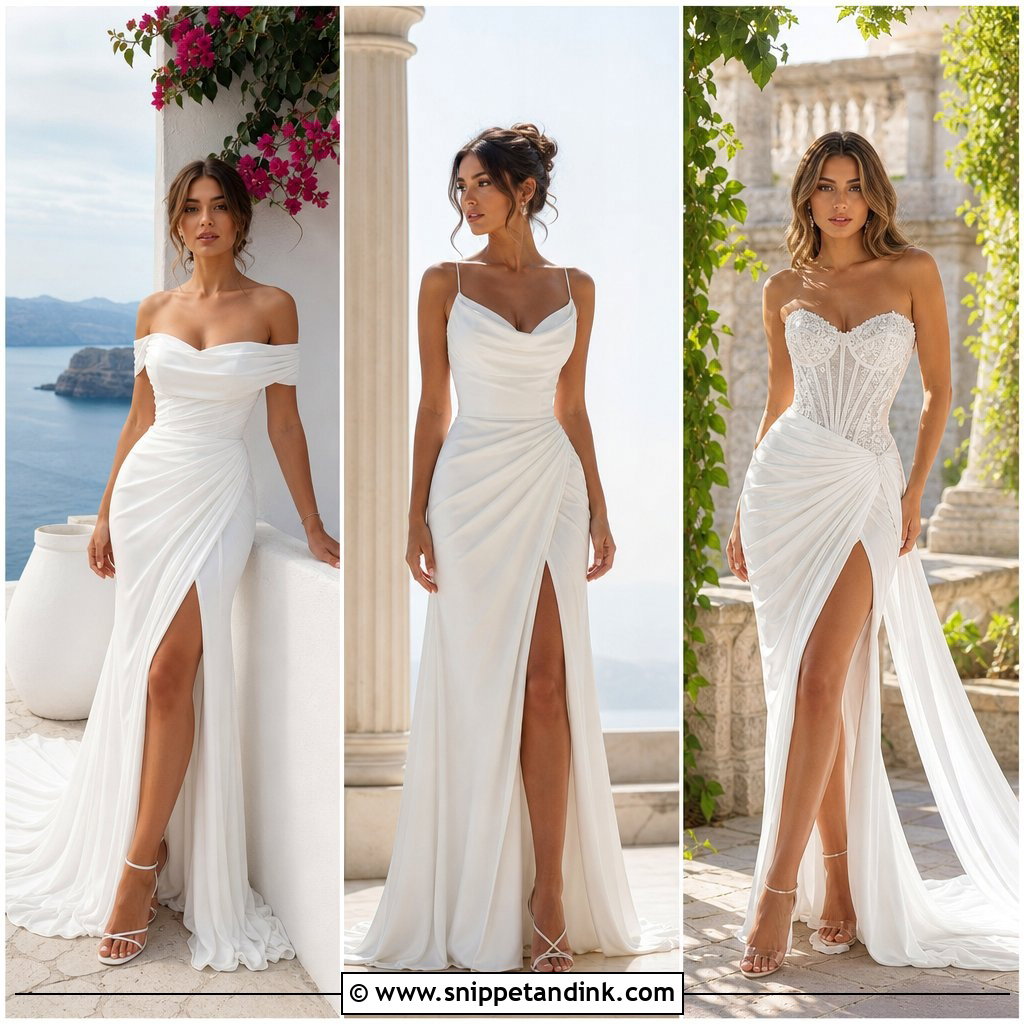
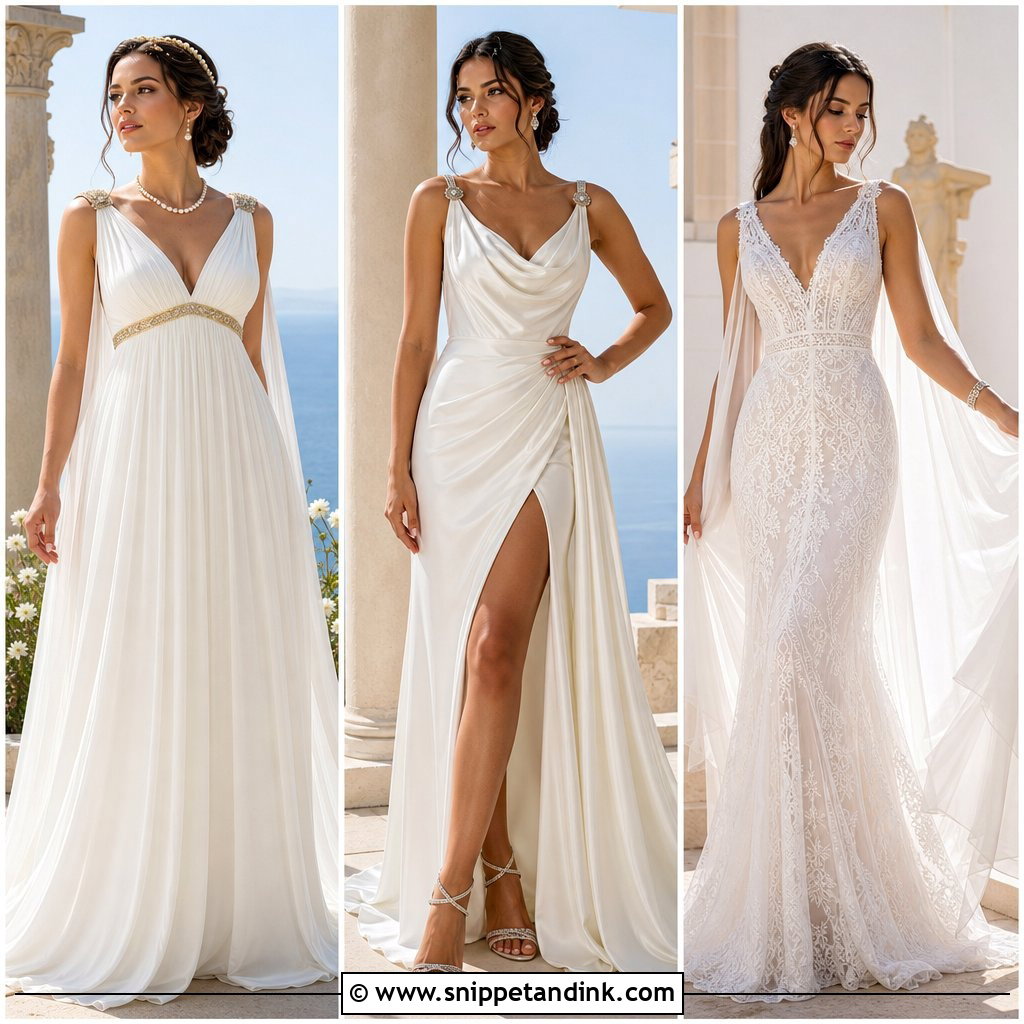
Grecian bridal dressing is really about one thing: fabric that is allowed to fall and fold on its own instead of being forced into shape. When I style a bride in this direction, I’m looking at pleating, draped necklines, raised waists and skirts that move a beat behind her as she walks. The one-shoulder gown is still the classic, but sculpted satin columns, lace-topped chiffon, corseted drapes and soft capes all sit in the same family. What keeps it from tipping into costume is restraint with everything around the dress: quiet jewelry, shoes you can stand in for hours, and hair chosen for the neckline. Below are the cuts I’d actually put a bride in, from pared-back to glamorous to modest. You can also browse these 25 Greek Style Wedding Dress Ideas.
Reading Chiffon, Crepe and Satin Before You Fall for a Drape
Grecian dresses live or die on fabric, and the sample on the rail rarely tells you how it will behave on you. Before I let a bride fall for a particular drape, I have her move in it.
- Chiffon is the lightest and moves the most, but it’s sheer, frays at raw edges and shows every seam underneath. Ask what the lining is made of and hold it up to daylight.
- Crepe has a matte, slightly grainy surface that hangs straight and hides minor lumps well. It’s my first choice for columns and halters, and it doesn’t crease much in a car.
- Satin holds folds firmly and reflects light, so draping looks sculpted. It also shows creases and water marks, and it’s heavier, which matters on a hot day.
- Silk georgette sits between chiffon and crepe, with a little more weight and grip. It drapes over the bust without sliding.
At the try-on, walk quickly, sit down, stand up and turn around. Then look at the back of the skirt in a mirror. If the folds settle back in place, the fabric and the cut are working together. If they bunch at the hip or cling between the legs, that drape isn’t right for your body, however good it looks on the hanger.
1. One-Shoulder Greek Style Wedding Dress
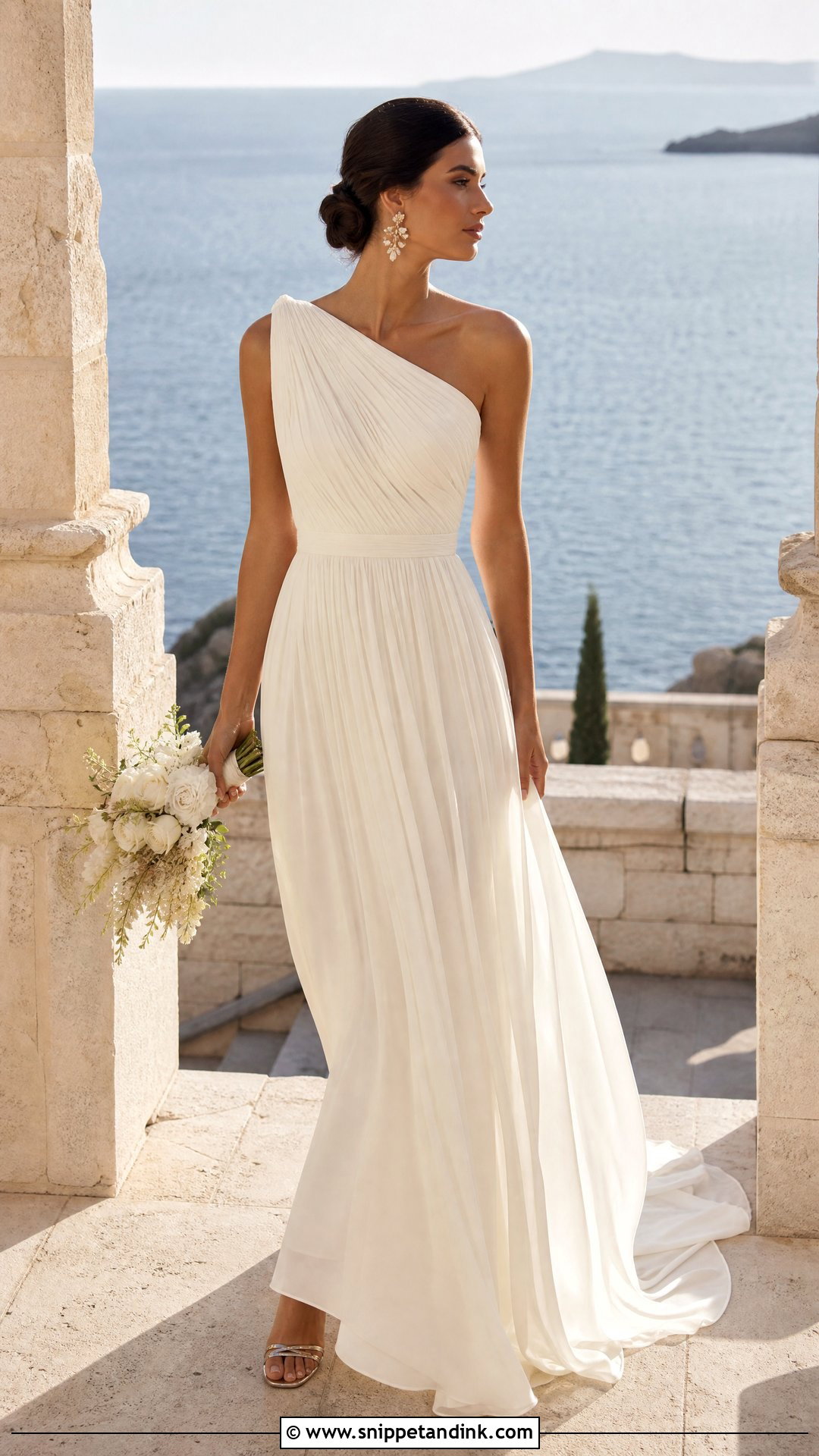
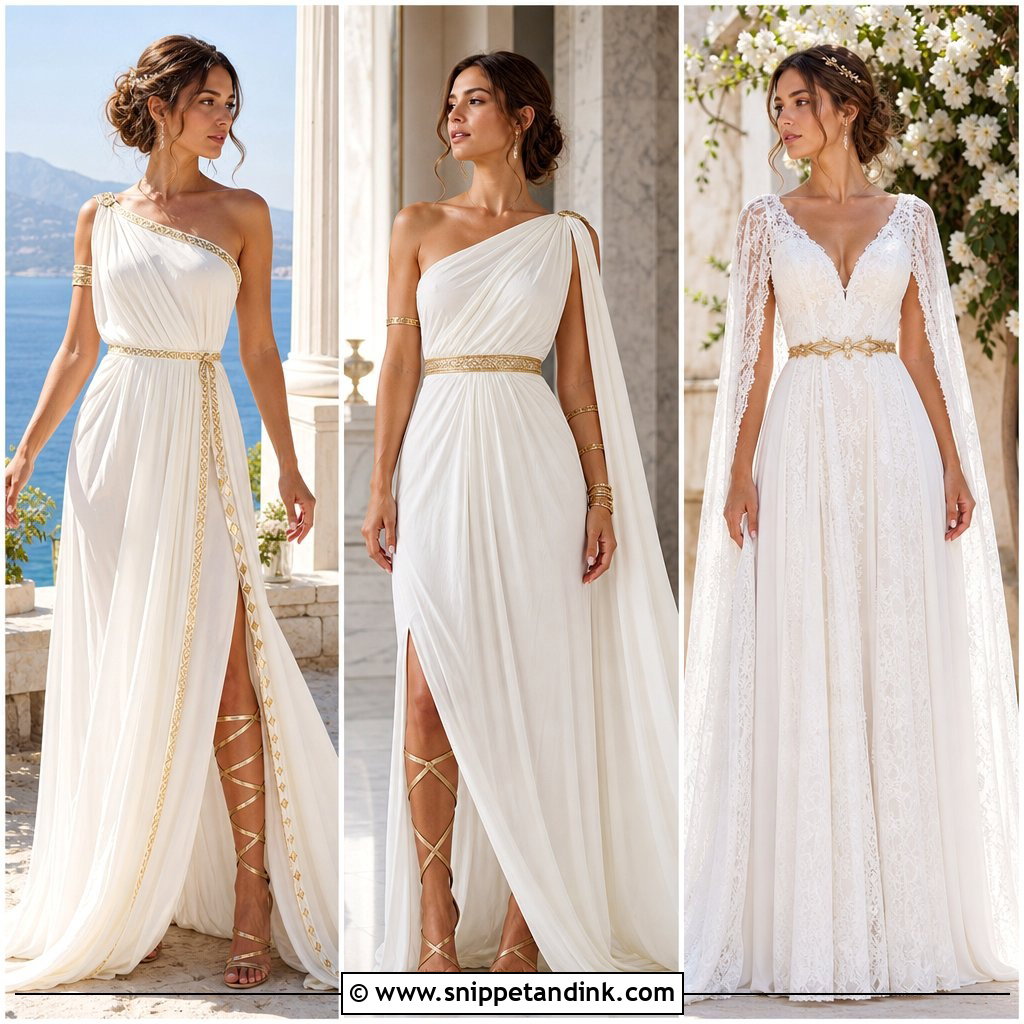
The asymmetric neckline is the whole story here, so I build everything else to stay out of its way. Look for soft pleats gathered across the bodice into a long chiffon skirt, with a fitted inner foundation doing the real holding so the outer drape can stay light. The single strap needs a stay or a hidden silicone strip on the inside; without one, it creeps toward the neck every time you lift your arm to hug someone. I pair it with metallic strappy heels, a small ivory clutch and one earring on the bare side. A low bun keeps the shoulder line clean, and I’d skip a necklace entirely. Seaside and destination ceremonies suit it best because the breeze does half the styling for you.
2. Empire Waist Greek Style Wedding Dress
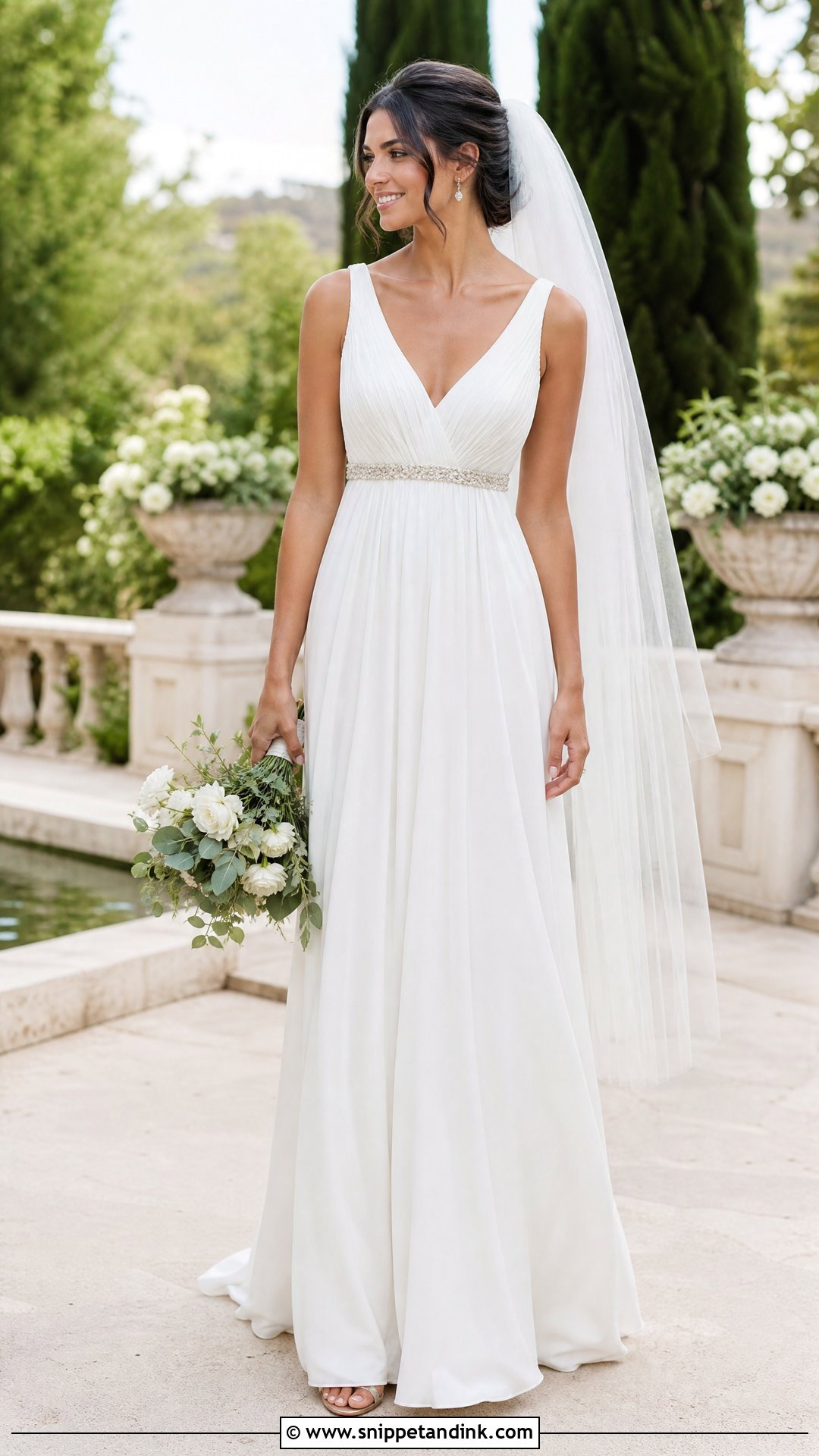
Placing the seam right under the bust lengthens everything below it, which is why I reach for the empire waist so often with brides who want comfort through a long day. A structured bodice over a georgette or silk chiffon skirt gives shape without anything pressing on the stomach at dinner. Gathering at the center front should be soft; too many gathers and the skirt balloons over the tummy instead of skimming it. A narrow beaded band under the bust adds definition, though a plain band reads more current. I finish it with drop earrings, low block heels and a fingertip veil anchored under a loose updo, and it moves from a garden ceremony to an indoor reception without a change.
3. Draped Satin Greek Style Wedding Dress
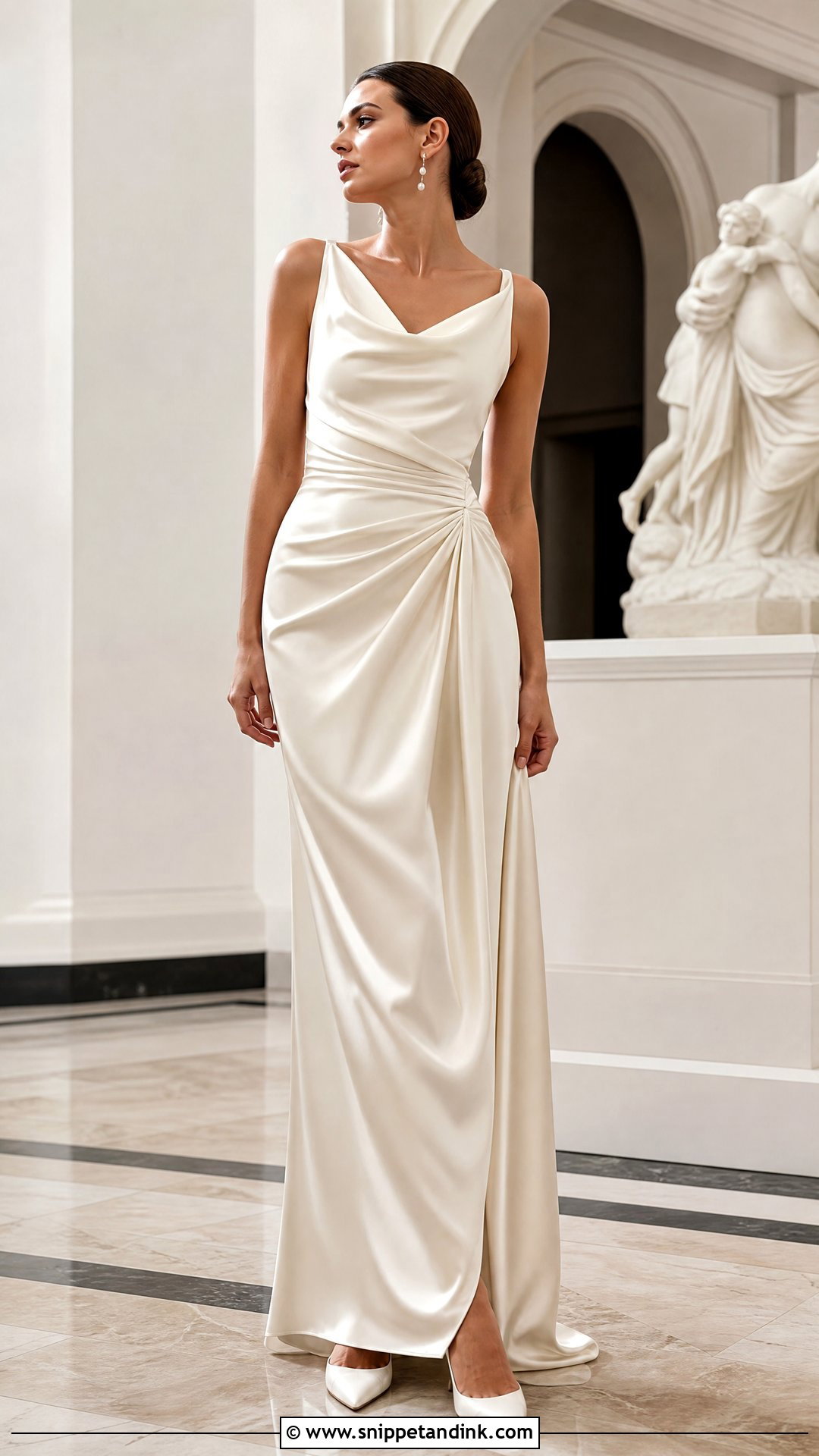
Satin drapes heavier than chiffon, so the folds hold their shape and catch light along every ridge, almost like carved stone. Choose a floor-length cut with a gathered waist and a skirt that falls close to the body without gripping the hips. Ivory or pearl tones show the folds best; bright white satin can flatten them in flash photography. My one warning: satin marks easily, so I tell brides to sit carefully in the car and smooth the skirt behind them every time they sit. Pointed satin pumps, pearl drops and a sleek low chignon are all it needs. I keep sparkle to one item because the fabric is already reflective, and it belongs in a hotel, museum or modern ballroom.
4. Chiffon Greek Style Wedding Dress
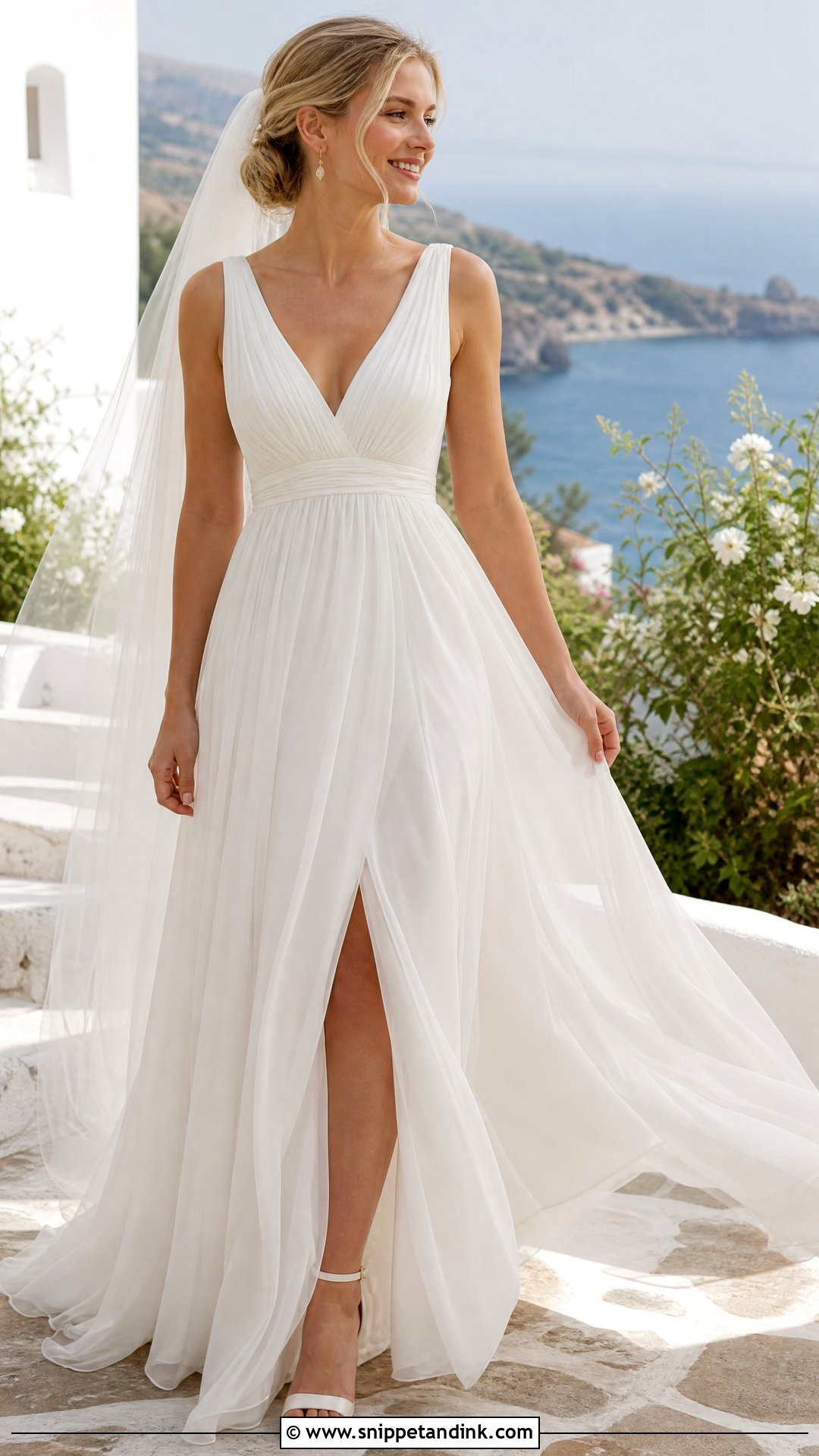
Picture a light skirt lifting slightly as you reach the end of the aisle. A chiffon Greek style wedding dress is the easiest version to wear in spring and summer because it barely weighs anything. I always check the lining first: unlined chiffon goes see-through in direct sun, and that only shows up in photos afterward. A softly pleated bodice, a defined empire waist and several sheer skirt layers give the movement people expect. Block-heel sandals keep you steady on grass, and a plain tulle veil won’t fight the floating fabric. If the neckline plunges, hidden mesh and built-in cups are worth asking for at the first fitting, not the last.
5. Off-the-Shoulder Greek Style Wedding Dress
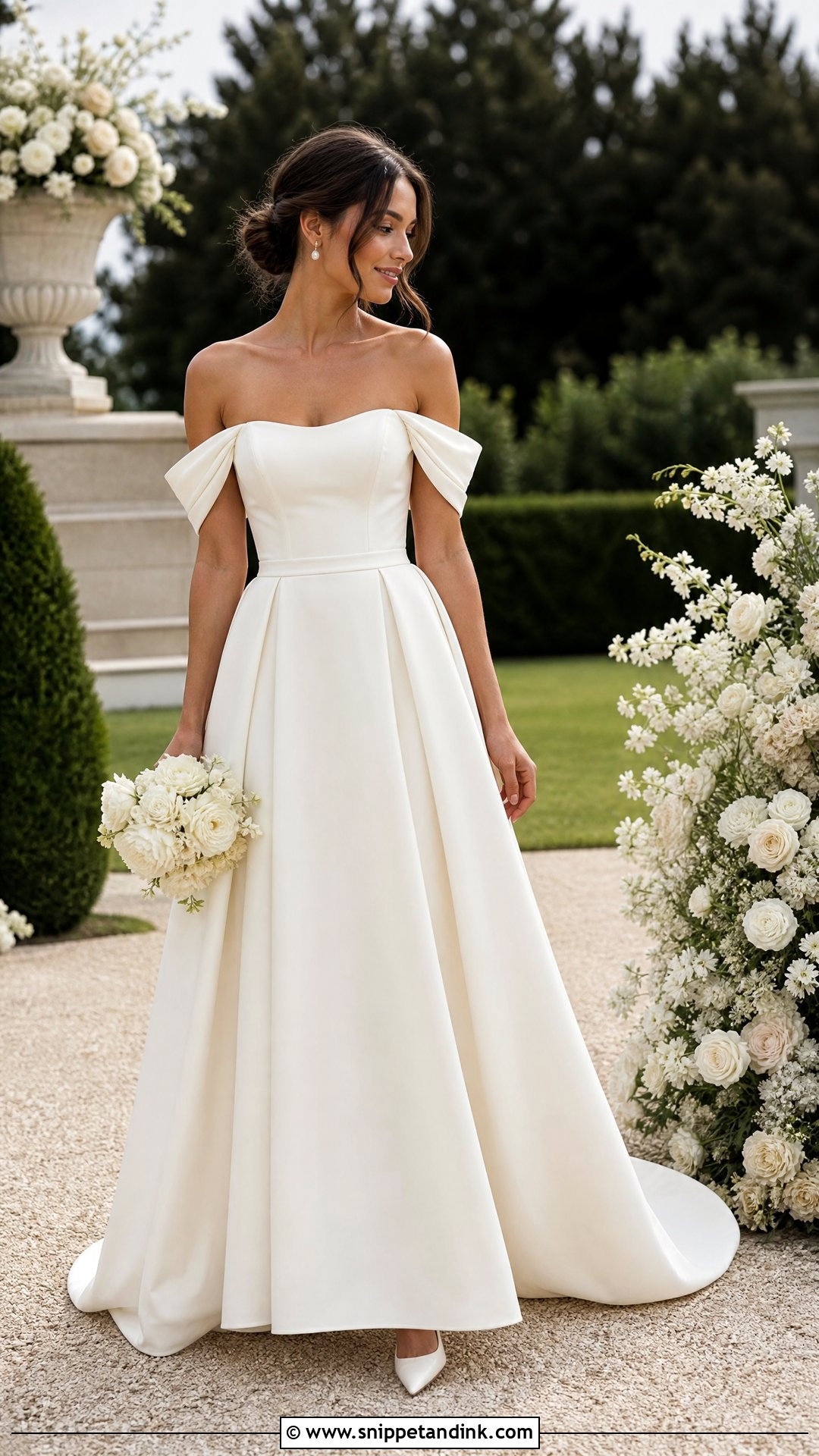
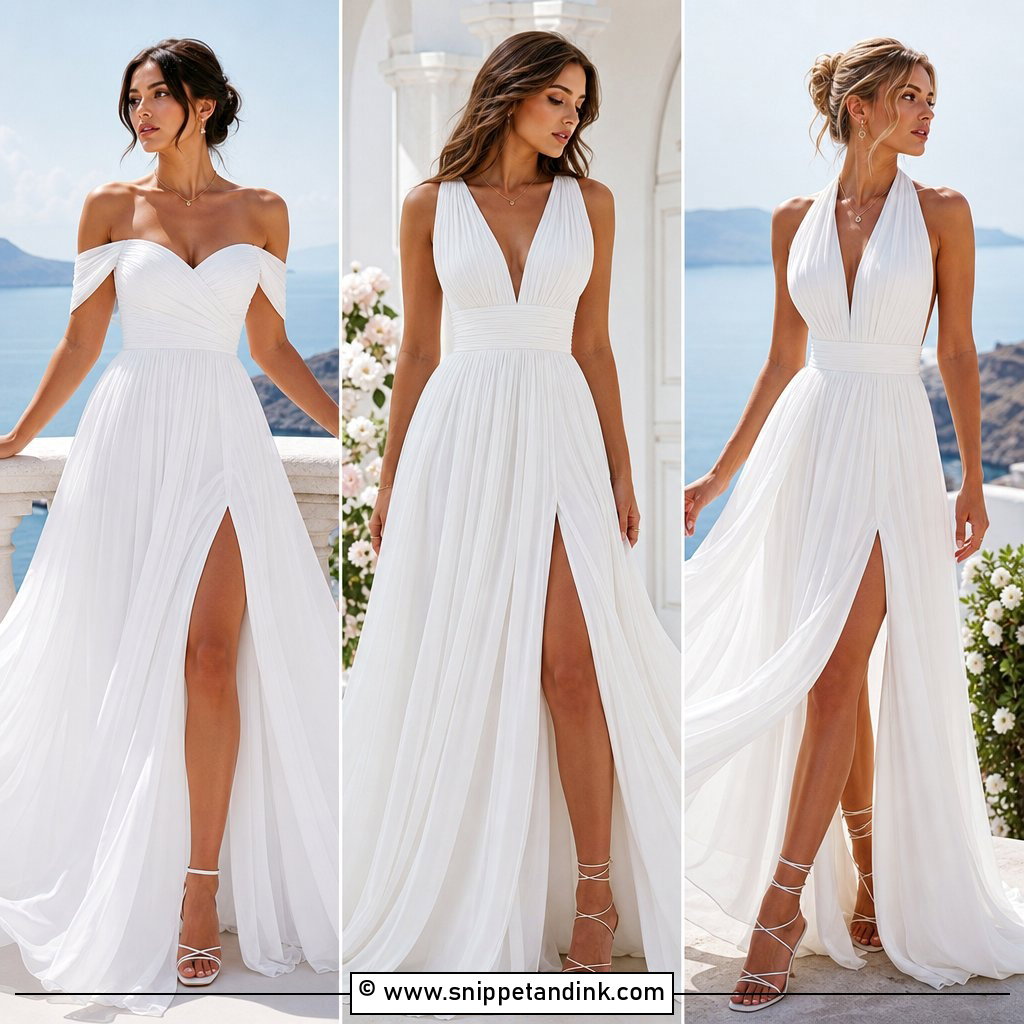
An off-the-shoulder drape only works if something underneath is holding it, because the fabric itself has nothing to grip. I insist on a structured inner bodice so the neckline stays put when you raise your arms for the first dance. A long A-line skirt with vertical pleats balances the width across the shoulders. Pearl studs, a fine bracelet and pointed kitten heels finish it, with hair in a low textured bun so the drape stays visible. Removable draped sleeves are a smart request if you plan to dance hard later, since they can come off without touching the bodice. It suits a formal garden or a candlelit reception.
6. Halter Neck Greek Style Wedding Dress
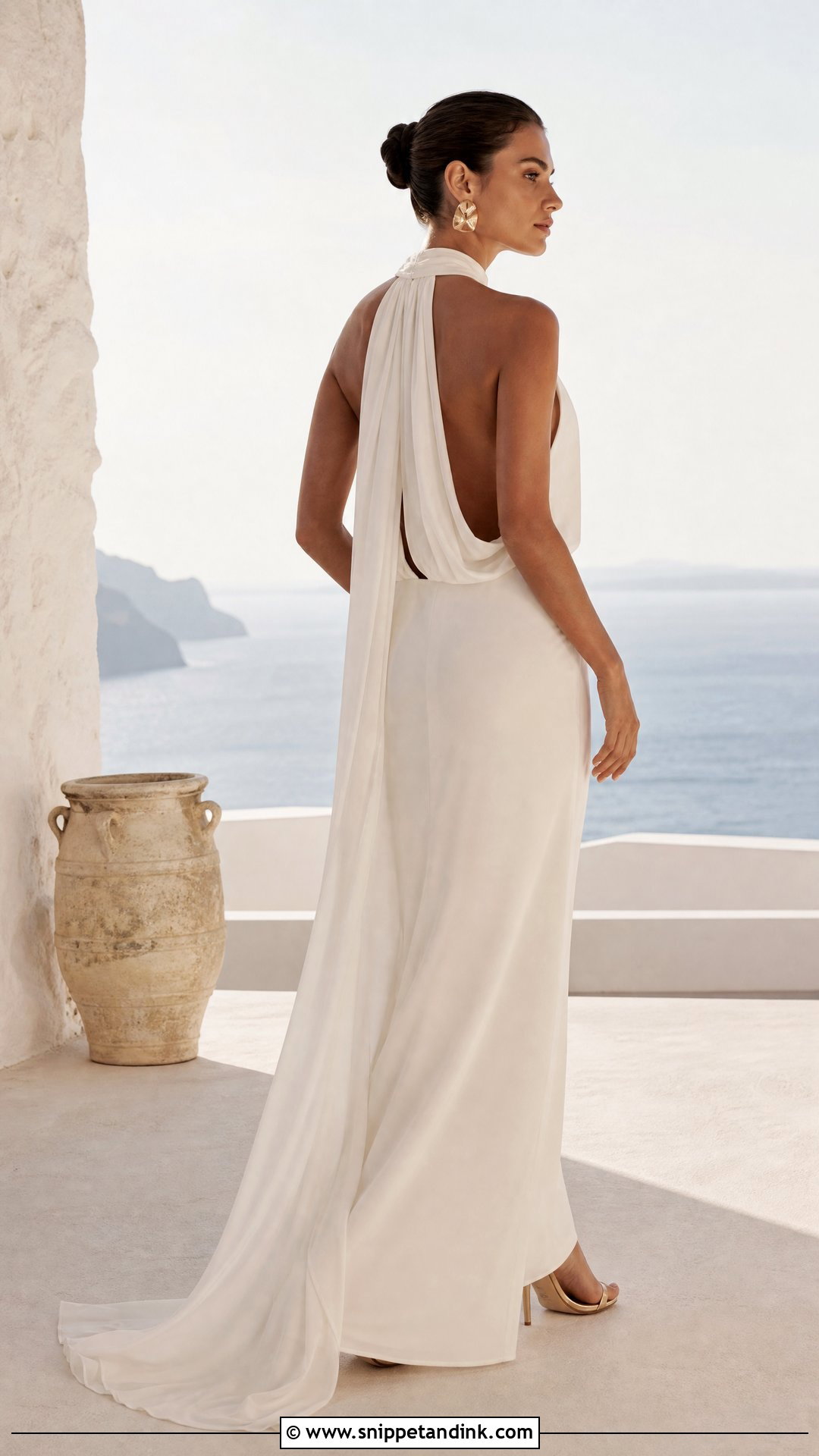
A halter takes the drape in a cleaner, more modern direction. Fabric gathers at the neck, the back opens or falls in soft folds, and the skirt drops as a fluid column. Crepe is my favorite here because it hangs straight and resists the static cling chiffon sometimes gets. The halter tie or clasp carries a surprising amount of weight, so I check that it isn’t pulling on the back of the neck after an hour of wear. Slim metallic sandals, sculptural earrings and no necklace at all. Hair goes up to show off the back, and a detachable veil gives the ceremony drama that you can take off for a city reception.
7. Pleated Greek Style Wedding Dress
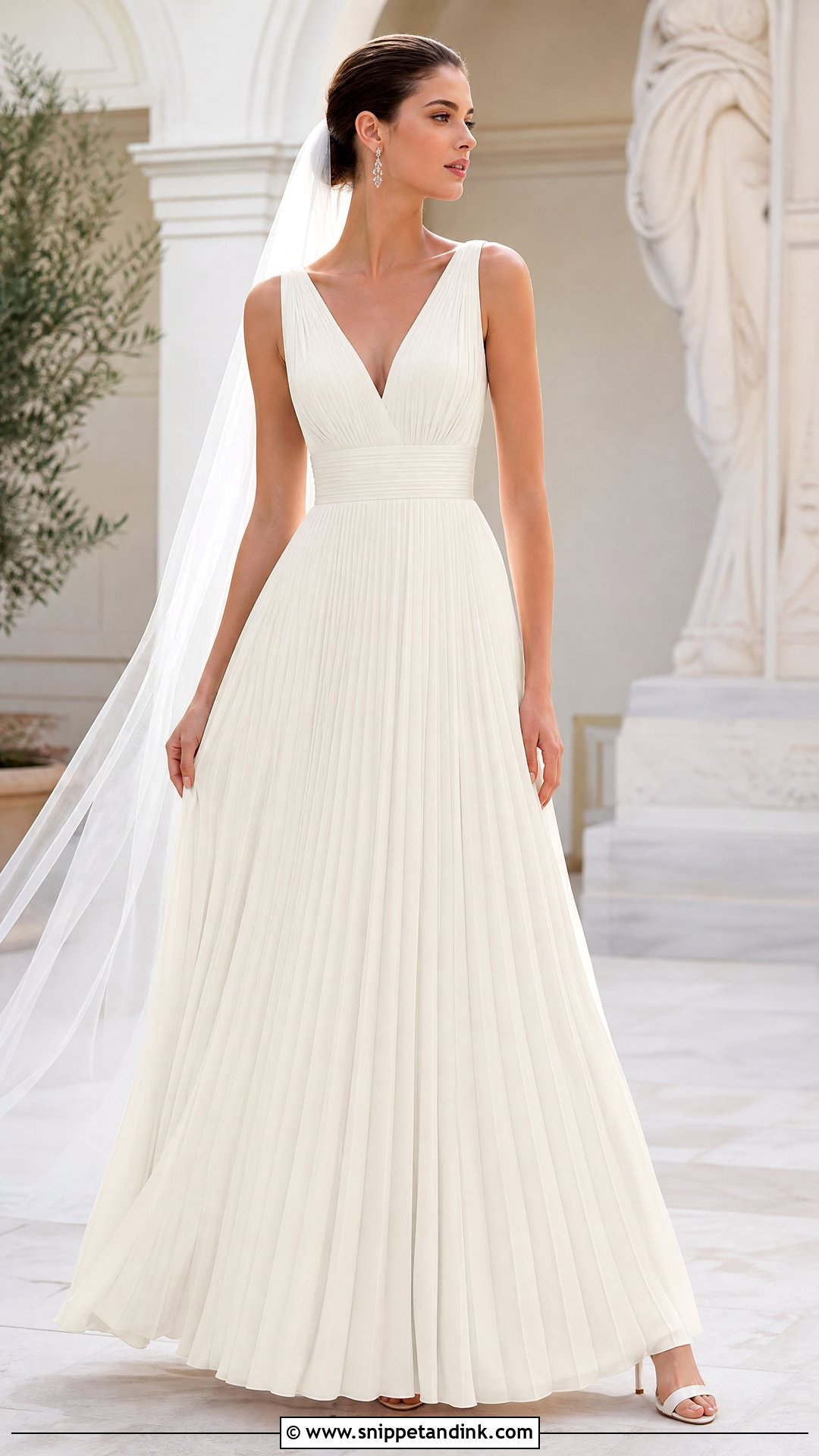
Fine vertical pleats add texture without a single bead. A defined waistband stops the pleating from looking loose, and a V-neck or one-shoulder top keeps the Grecian line. Here’s what most people don’t expect: pleats are pressed in, and heat plus moisture can relax them. I ask the bridal shop exactly how the gown should be steamed, because a steamer held too close can flatten a pleat for good. Clean ivory heels, small crystal earrings and an unembellished veil suit it, with a polished bun or a softly waved ponytail. I’d choose this for a bride who wants detail but would never wear sequins.
8. Minimalist Greek Style Wedding Dress
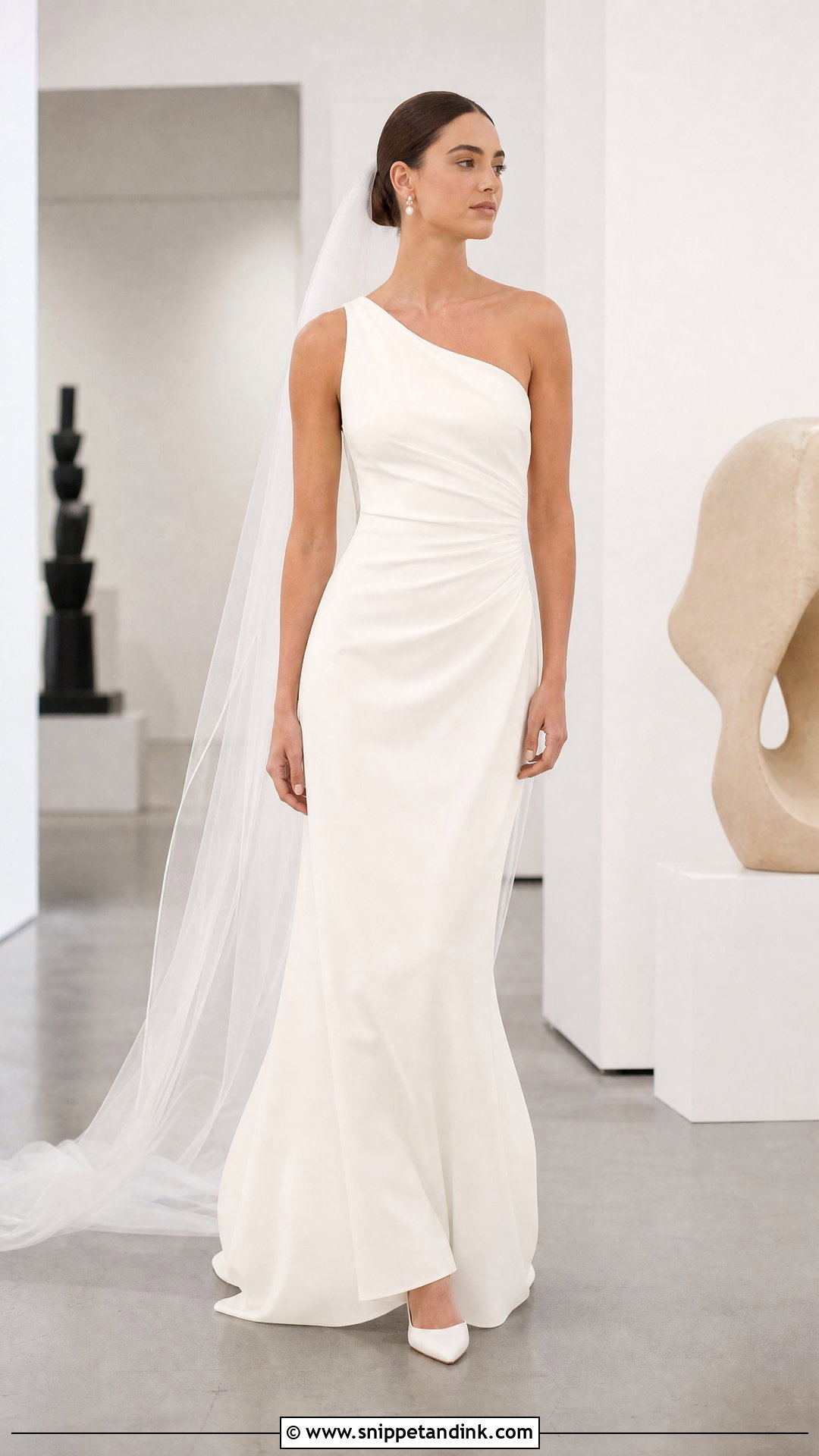
A plain crepe gown hides nothing, so I’m stricter with tailoring on this one than on any other dress in the list. A softly asymmetric neckline and a fitted waist reference the Greek line without looking theatrical, but only if the drape sits flat from every angle. The hem has to be set with the exact shoes you’ll wear, and seam allowances must lie smooth or they’ll show as ridges through thin crepe. Clean slingbacks, small pearls and a modern cathedral veil are enough. A sleek bun and natural makeup keep it quiet. Galleries, rooftops, courthouses and contemporary ballrooms all suit it.
9. Lace Greek Style Wedding Dress
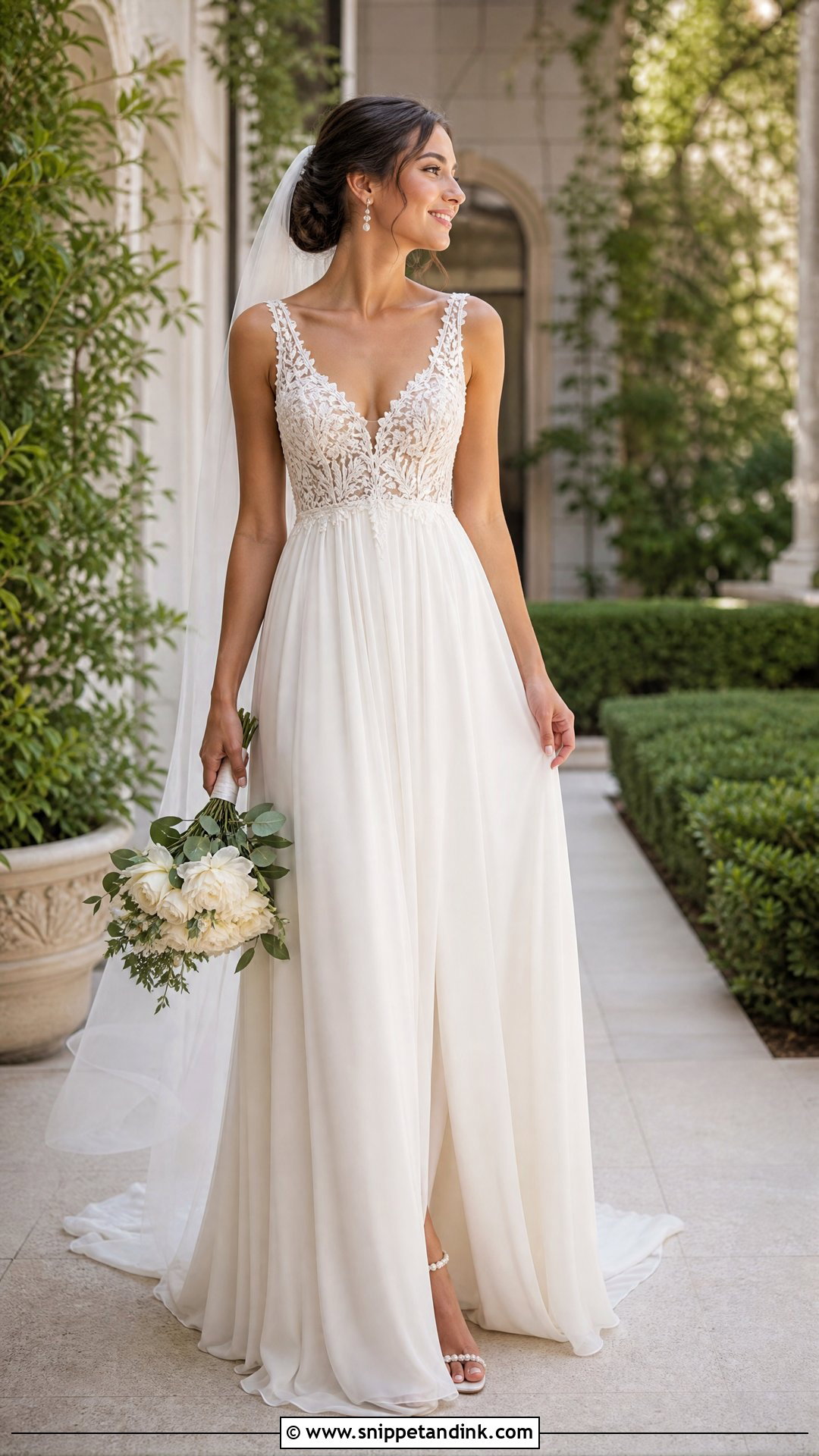
Lace on a Grecian gown needs restraint, or it starts to fight the drape. I usually suggest lace on the bodice, straps or upper back only, with the chiffon skirt left plain so it can still move. Botanical lace reads softer; geometric lace reads more modern. The catch is color: lace is often a shade warmer than the chiffon beside it, so I hold the veil and shoes against the bodice in daylight before committing. Pearl-accented sandals and a plain veil let the pattern show. A low twisted bun suits the classical influence without tipping into formal. Estates, gardens and historic homes are its natural setting.
10. Long-Sleeve Greek Style Wedding Dress
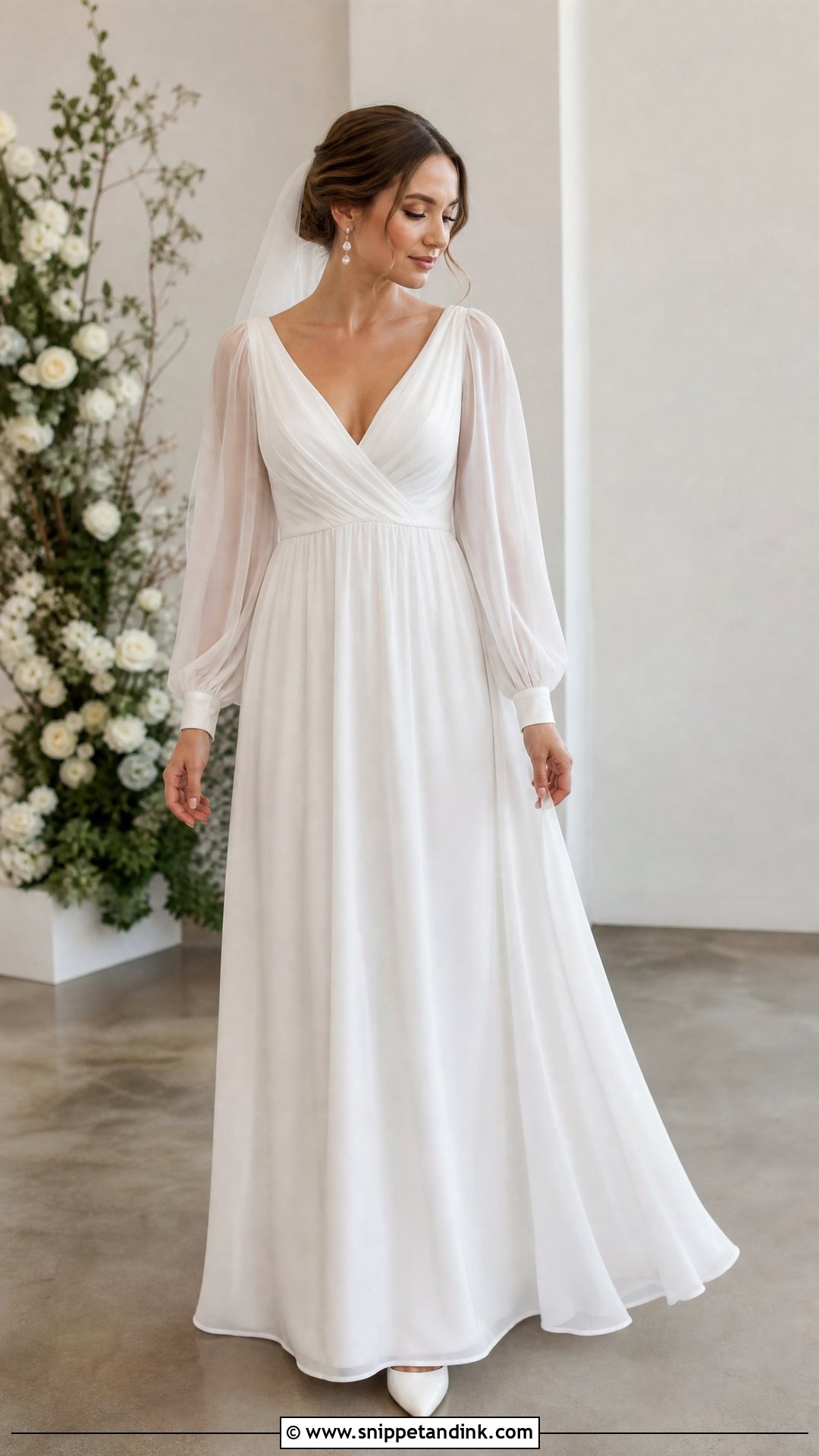
Sleeves add coverage, but they also add weight, and heavy sleeves kill the movement that makes this style Greek. That’s why I look for sheer chiffon with gathered cuffs, paired with a draped V-neck bodice and a flowing empire or natural-waist skirt. Raise your arms fully at the fitting; a sleeve set too tightly at the armhole will pull the whole bodice up when you reach for a hug. Closed-toe pointed heels, drop earrings and a simple veil under a low bun complete it. Skip bracelets, as they snag fine cuffs. It’s my pick for cooler months and evening ceremonies, and a breathable lining keeps it wearable when the weather warms.
11. Cape Greek Style Wedding Dress
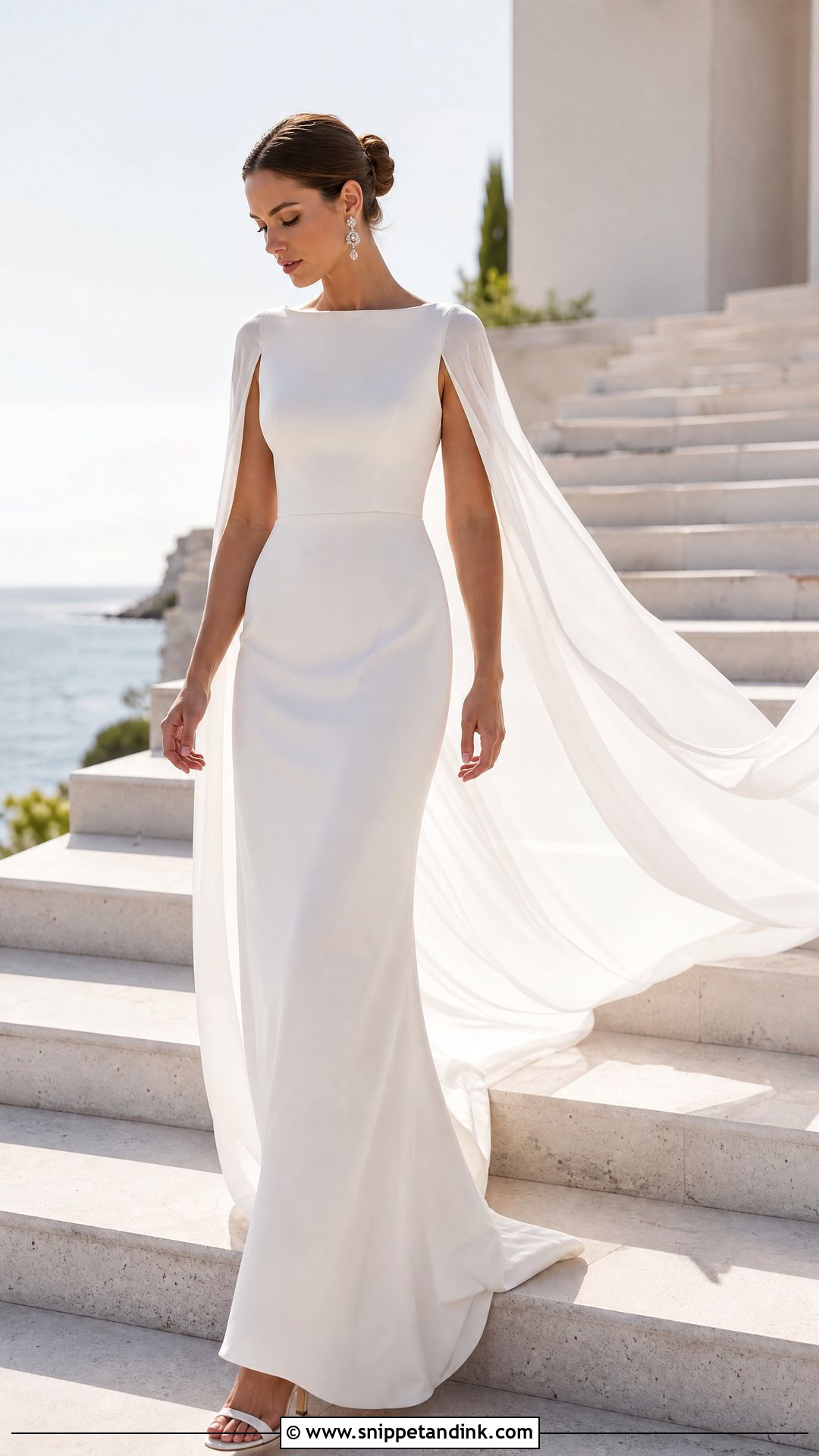
A cape is the quickest way to turn a simple gown into a ceremony moment. Start with a clean column or A-line, then attach a lightweight chiffon cape at the shoulders so it falls behind the arms and leaves the bodice visible. I check the attachment points closely, because a cape tugs backward on the neckline every time you walk, especially outdoors in wind. With a cape this long, I usually skip the veil. Minimalist heels, small crystal earrings and a sleek low bun are all you need. Make it detachable and you get a lighter reception look in seconds. Wide stone steps and coastal backdrops give the fabric room to move.
12. Column Greek Style Wedding Dress
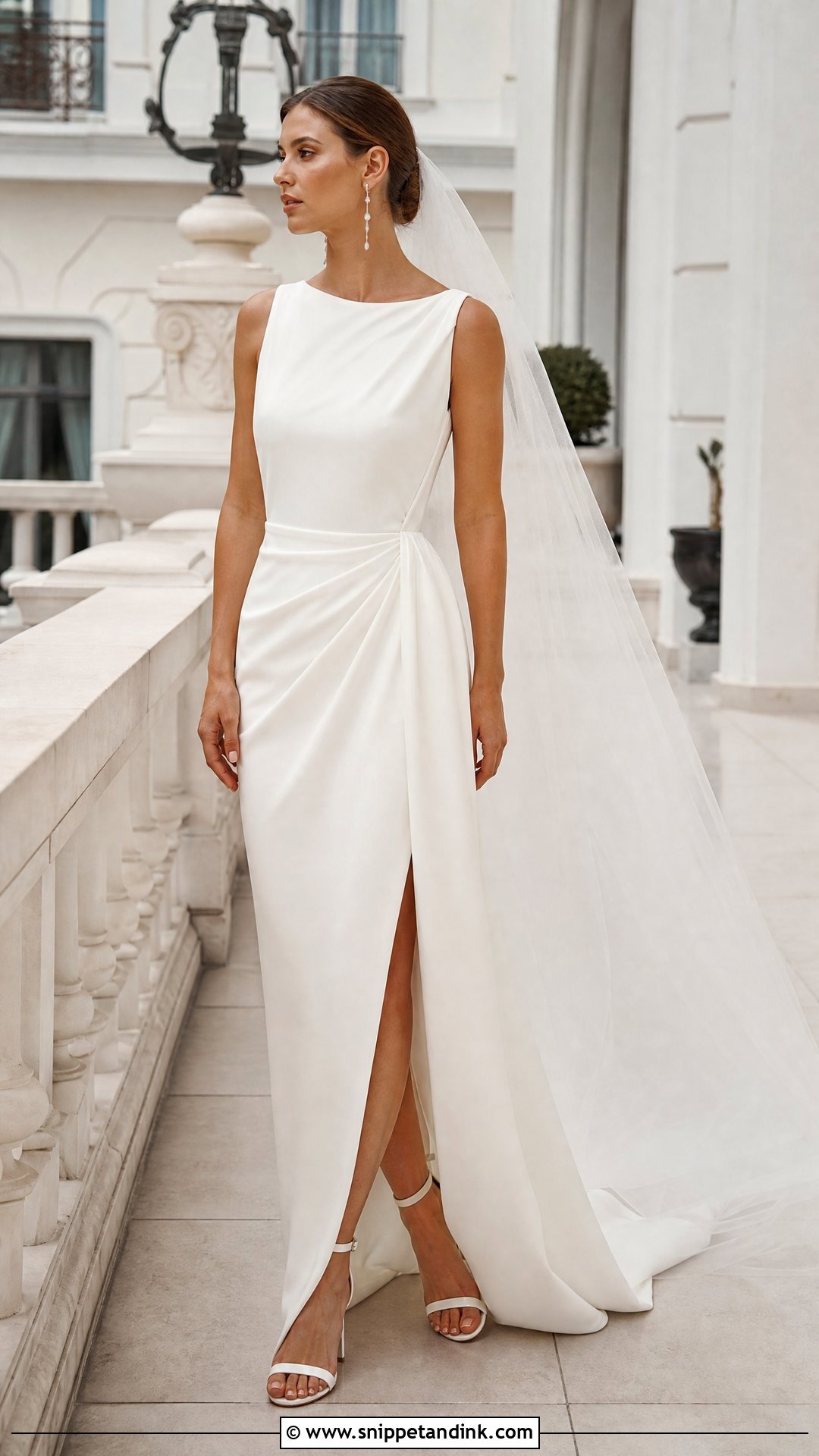
The column is the most statuesque version and also the least forgiving. Fluid crepe or satin, draping across the waist and a skirt that drops straight to the floor will show every line underneath, so proper undergarments matter more than any accessory. A side slit helps you walk, but I want it reinforced at the top with a bar tack or it will tear the first time you take a big step onto a curb. Narrow ankle-strap heels, long earrings and a sheer veil on a smooth bun suit it. A small train adds ceremony impact without much weight. It’s made for formal terraces and evening receptions.
13. A-Line Greek Style Wedding Dress
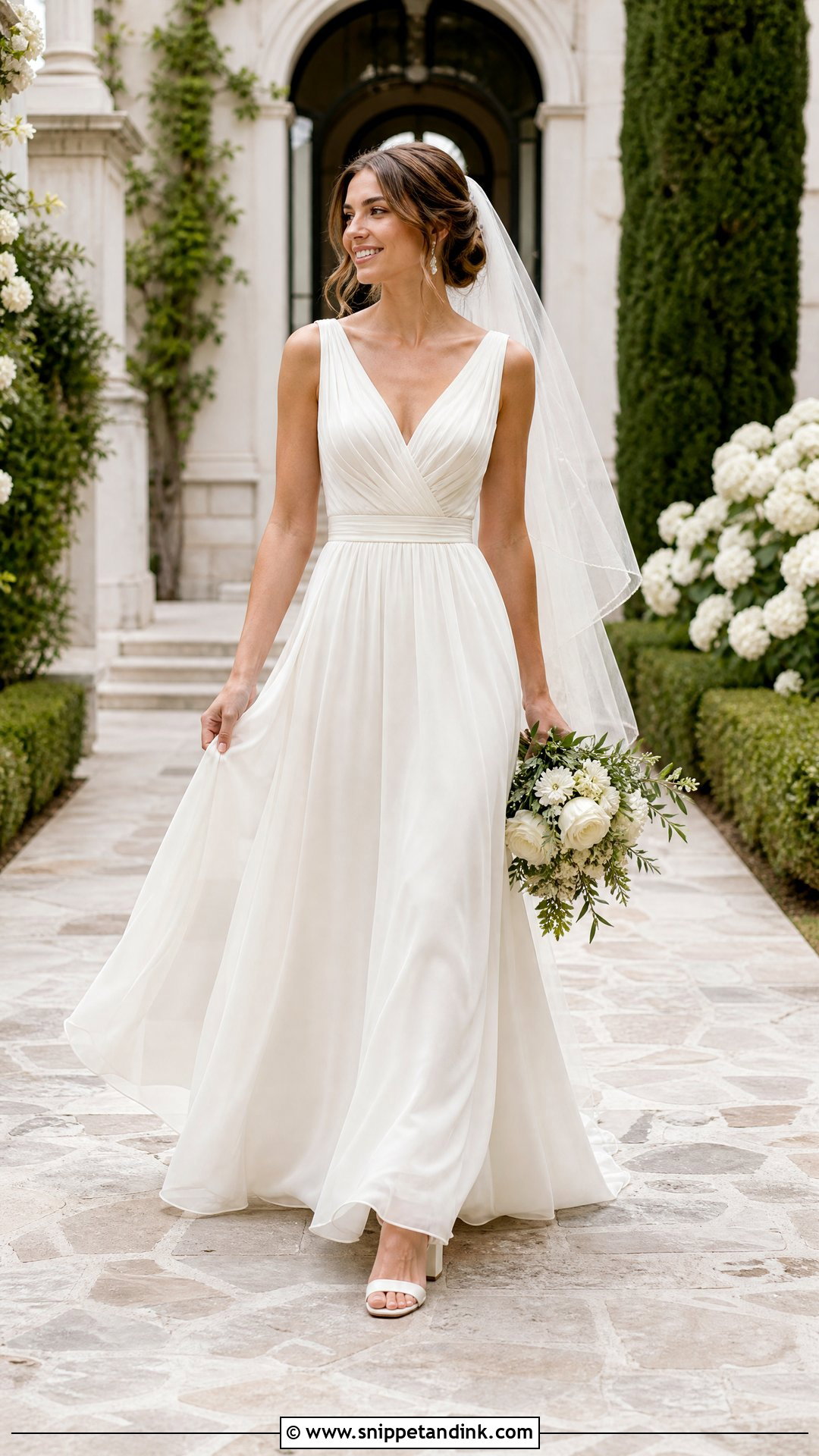
If you want something recognizably bridal with a Greek accent, the A-line is the safe bet, and I mean that kindly. A fitted or gently gathered bodice opens into a skirt with controlled volume, and pleating at the waist keeps it defined. Chiffon over a light lining gives fluidity without bulk. It’s also the shape that flatters the widest range of bodies I dress, because the skirt clears the hips and lets the waist do the work. Block heels, delicate earrings, a medium veil and a soft updo with a few face-framing pieces finish it. A small train sits well on it. Gardens, resorts, estates and ballrooms all suit it.
14. Strapless Greek Style Wedding Dress
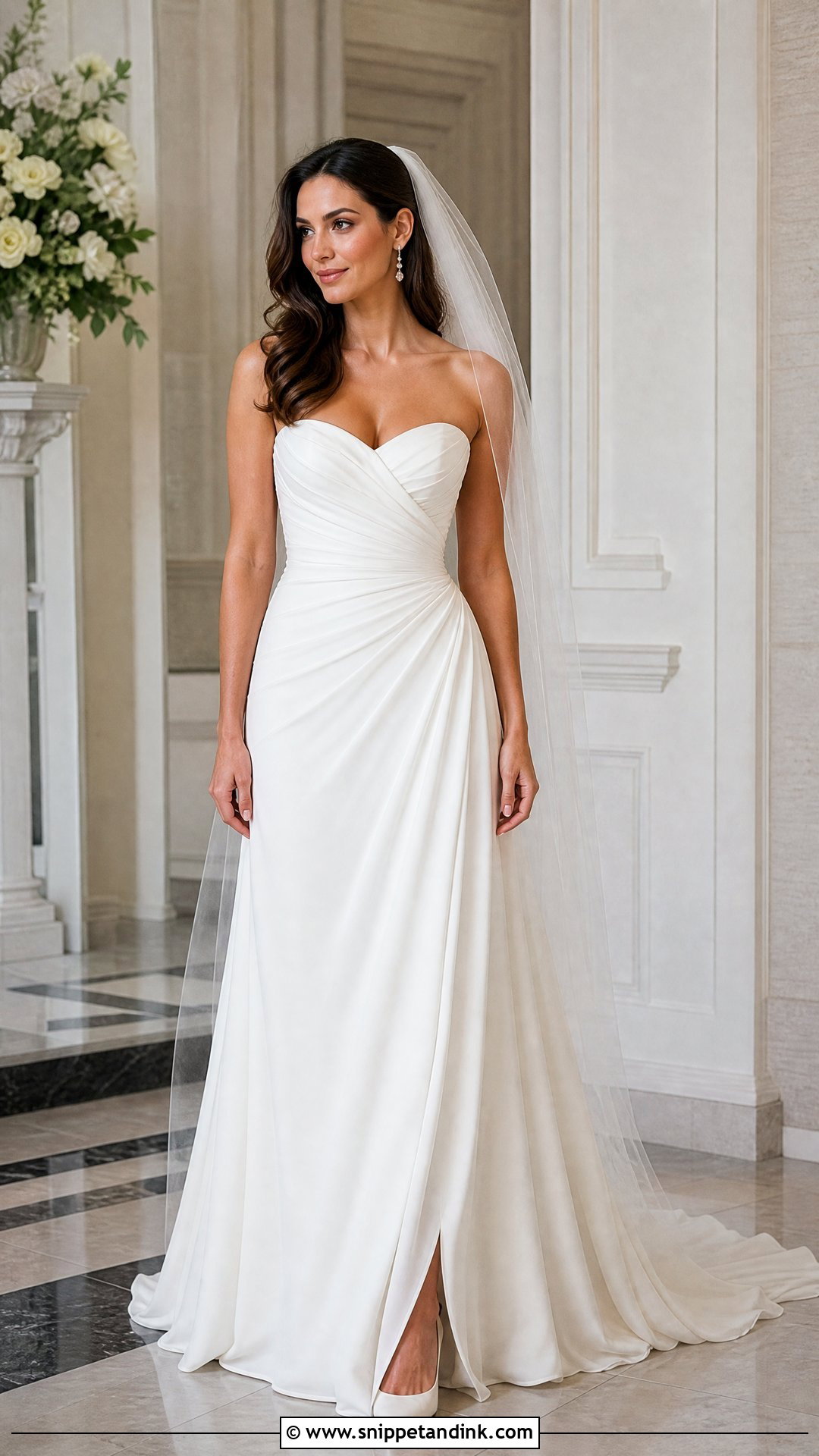
Strapless draping looks simple and is the hardest to get right. All the holding is done by boning and a well-fitted inner bodice; the draped fabric on the outside is purely decorative. At fittings I make brides sit, walk, bend and lift both arms, because a strapless bodice that’s fine standing still often slips the moment you reach for a glass. A flowing A-line or column skirt keeps it soft. Finish with a sheer shoulder veil, drop earrings and pointed heels, with hair up for a clean line or in polished waves for something softer. It’s a strong summer choice for formal ceremonies.

15. Cowl Neck Greek Style Wedding Dress
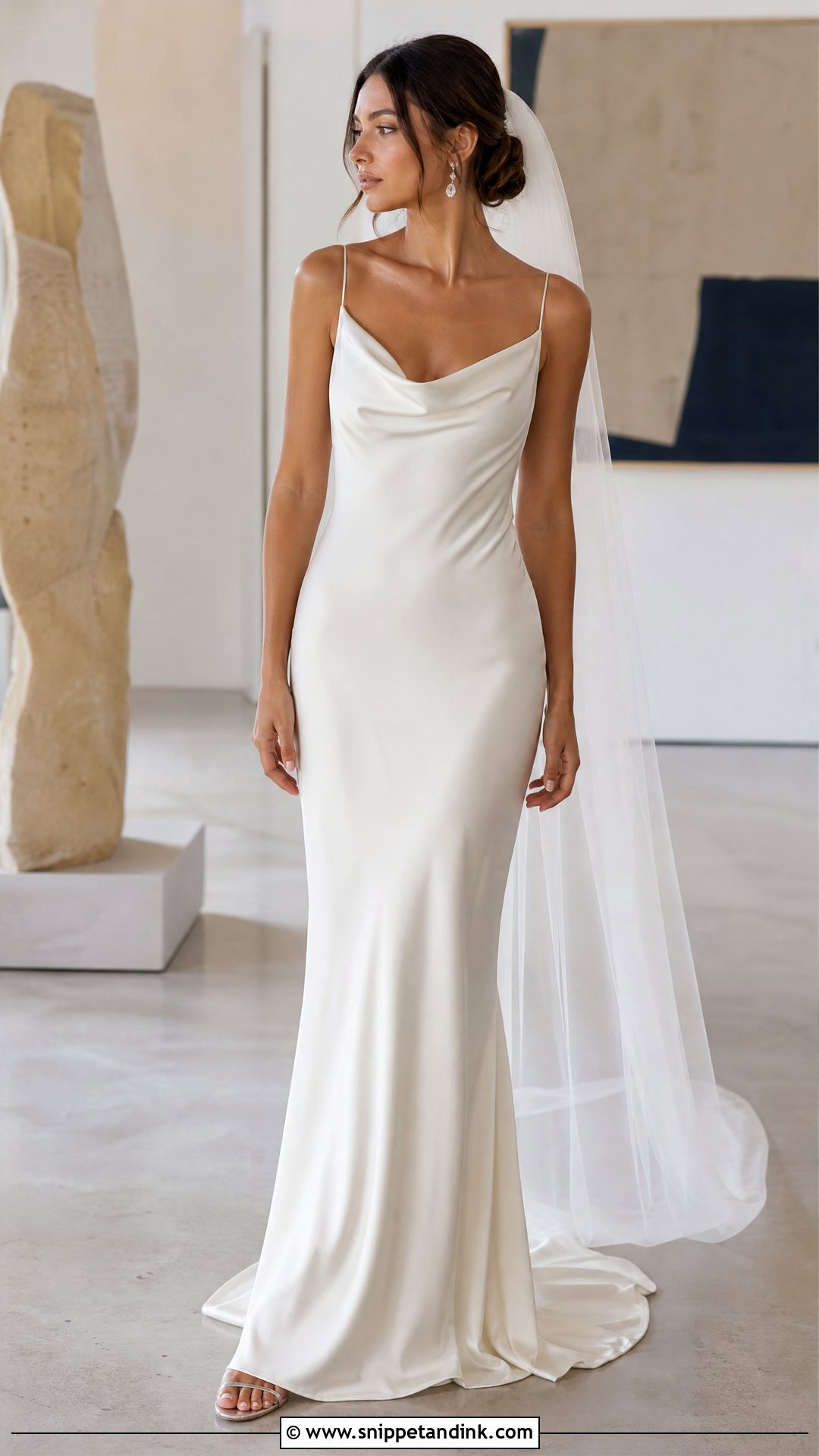
A cowl neckline brings a quieter sensuality to the drape. Look for a bias-cut satin or silk dress with slim straps, a gently defined waist and a fluid floor-length skirt. Bias cut stretches and clings, so it shows everything underneath; I usually recommend smooth, edge-free shapewear in a tone matched to your skin rather than to the dress. The cowl should fold naturally and never gape when you lean forward, and a seamstress can tack it discreetly if it does. Fine metallic sandals, small gemstone earrings and a light veil. I’d keep accessories smooth and unembellished. It suits an intimate destination ceremony or an evening reception.
16. Basque Waist Greek Style Wedding Dress
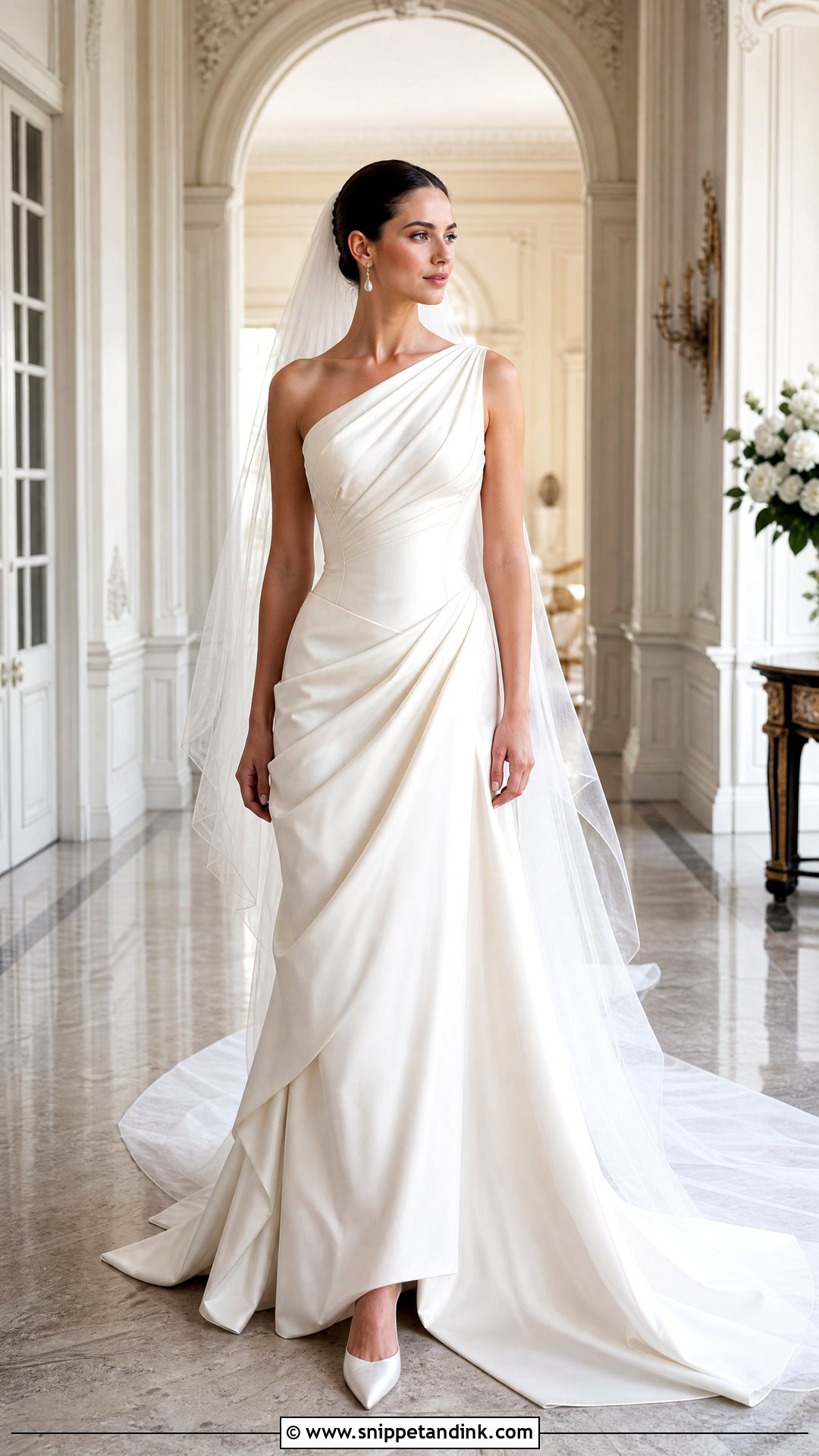
A Basque waist dips into a point below the natural waistline, and that point adds structure the softer Greek cuts lack. Fabric gathered diagonally across the bodice keeps the drape, while a chiffon or silk skirt softens the architectural shape. It works best when bodice and skirt share one fabric and color, so the eye reads one continuous line. The point also lengthens the torso, which is why I suggest it to shorter-waisted brides. Simple pointed pumps, medium earrings and a plain cathedral veil keep it balanced, with a sleek updo so nothing competes. Formal estates and grand halls suit this more fashion-forward cut.
17. High-Neck Greek Style Wedding Dress
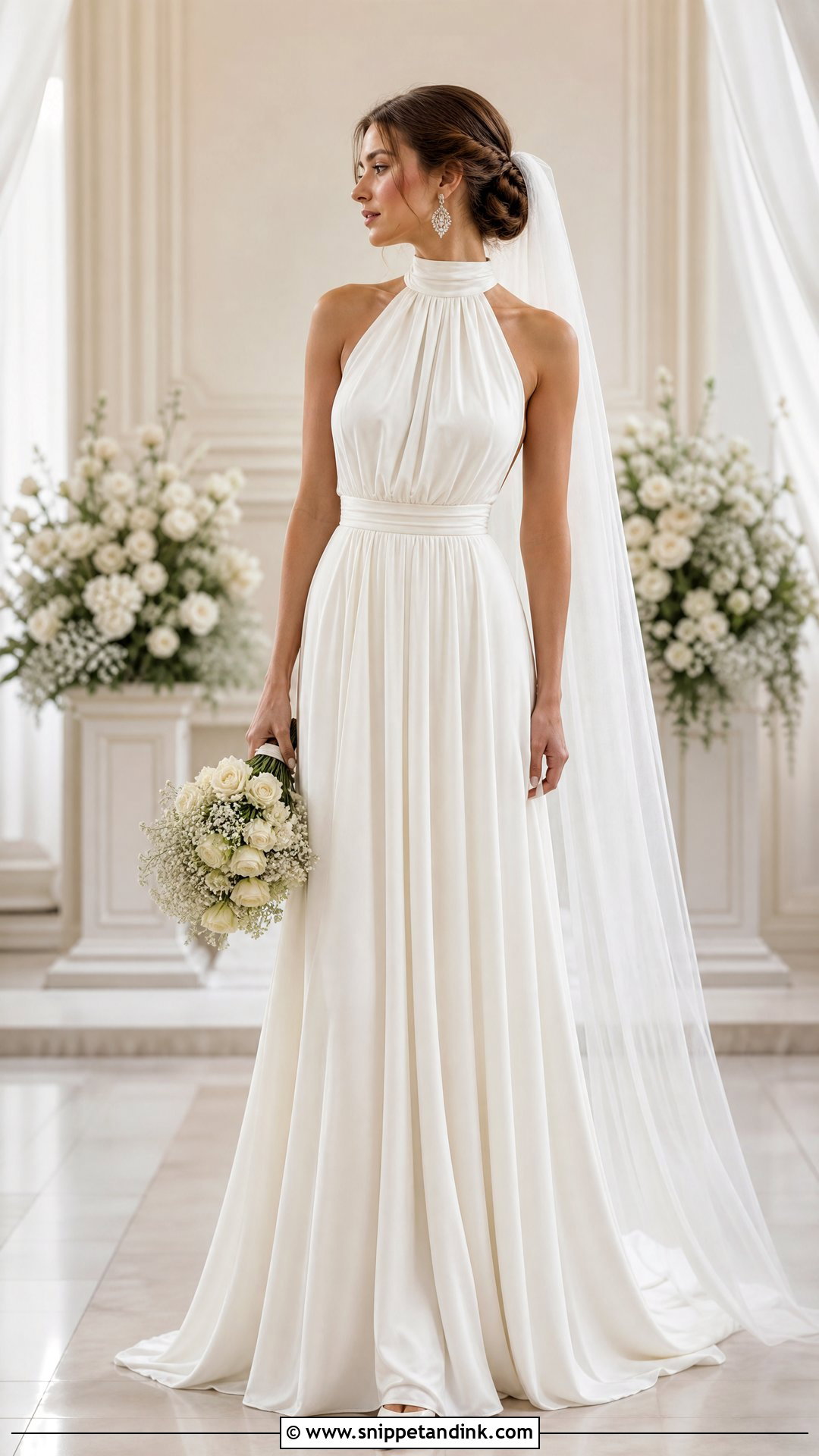
A high neck reads regal and modest, and it pairs well with the Greek line if the rest of the dress stays light. A gathered halter or draped bateau neckline works best with an open back or a fluid skirt, otherwise the gown can feel heavy from top to bottom. Crepe and chiffon give movement, and a fitted waistband adds definition. With the neck covered, earrings become the jewelry, so I go bolder there and leave the neckline alone. Closed-toe heels and a veil secured low under the hair suit it. A neat bun or a braided updo underlines the classical feel. It’s my go-to for cooler seasons and ceremonies where coverage is expected.
18. Backless Greek Style Wedding Dress
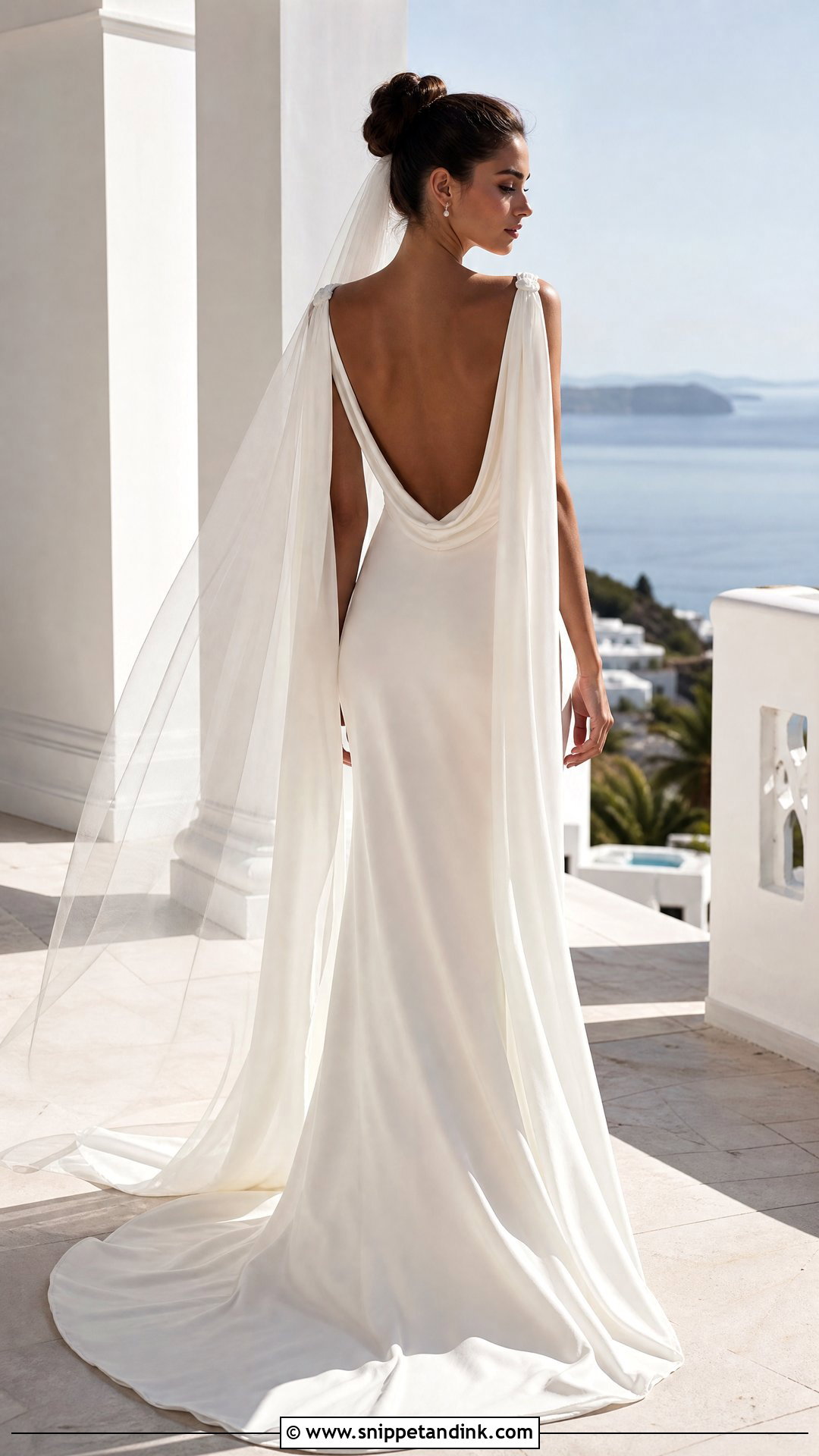
The back is the reveal in this one, so plan your hair and veil around it. A draped bodice needs secure straps and supportive side panels, because with no back to anchor it, all the support comes from the sides and the bust. I always send brides to an experienced alterations professional for built-in cups or a low-back bra solution; visible straps ruin the line instantly. A flowing chiffon or satin skirt balances the open design. Wear your hair up, high or low, and pick a veil you can remove after the ceremony. Slim heels and small earrings are enough. Seaside venues and summer celebrations are where it shines.
19. Beaded Greek Style Wedding Dress
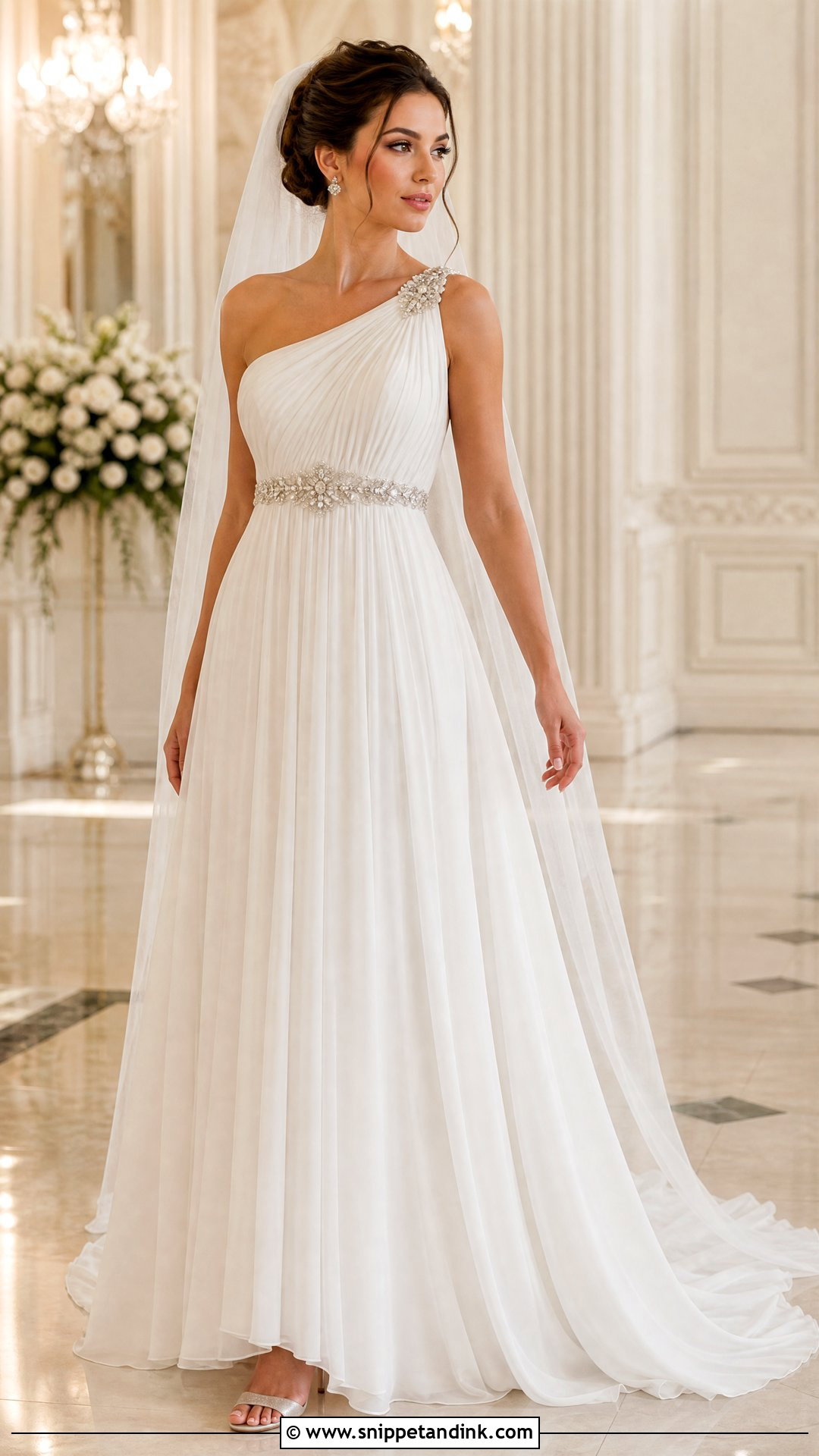
Beading on a Grecian gown should accent the drape, not bury it. I like crystal, pearl or metallic work kept to one shoulder, the empire band or a softly pleated bodice, with the skirt left plain so it can swing. Heavy beading also weighs a bodice down and can pull a single strap out of place over a long day, so I check how the weight is distributed at the fitting. Match your jewelry and hair accessories to the beads’ metal tone. Simple satin heels, small studs and a plain tulle veil keep it clean. Evening ballrooms show the sparkle best.


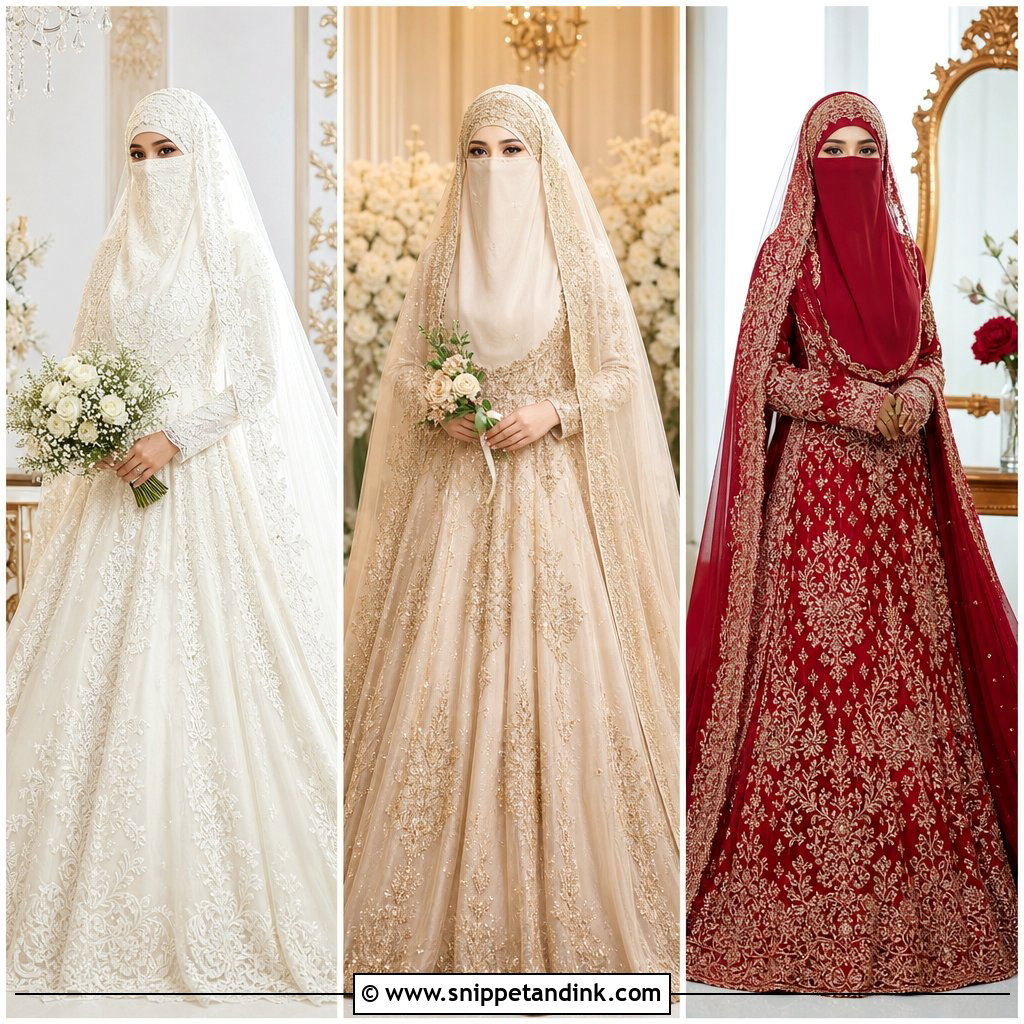

20. Plus-Size Greek Style Wedding Dress
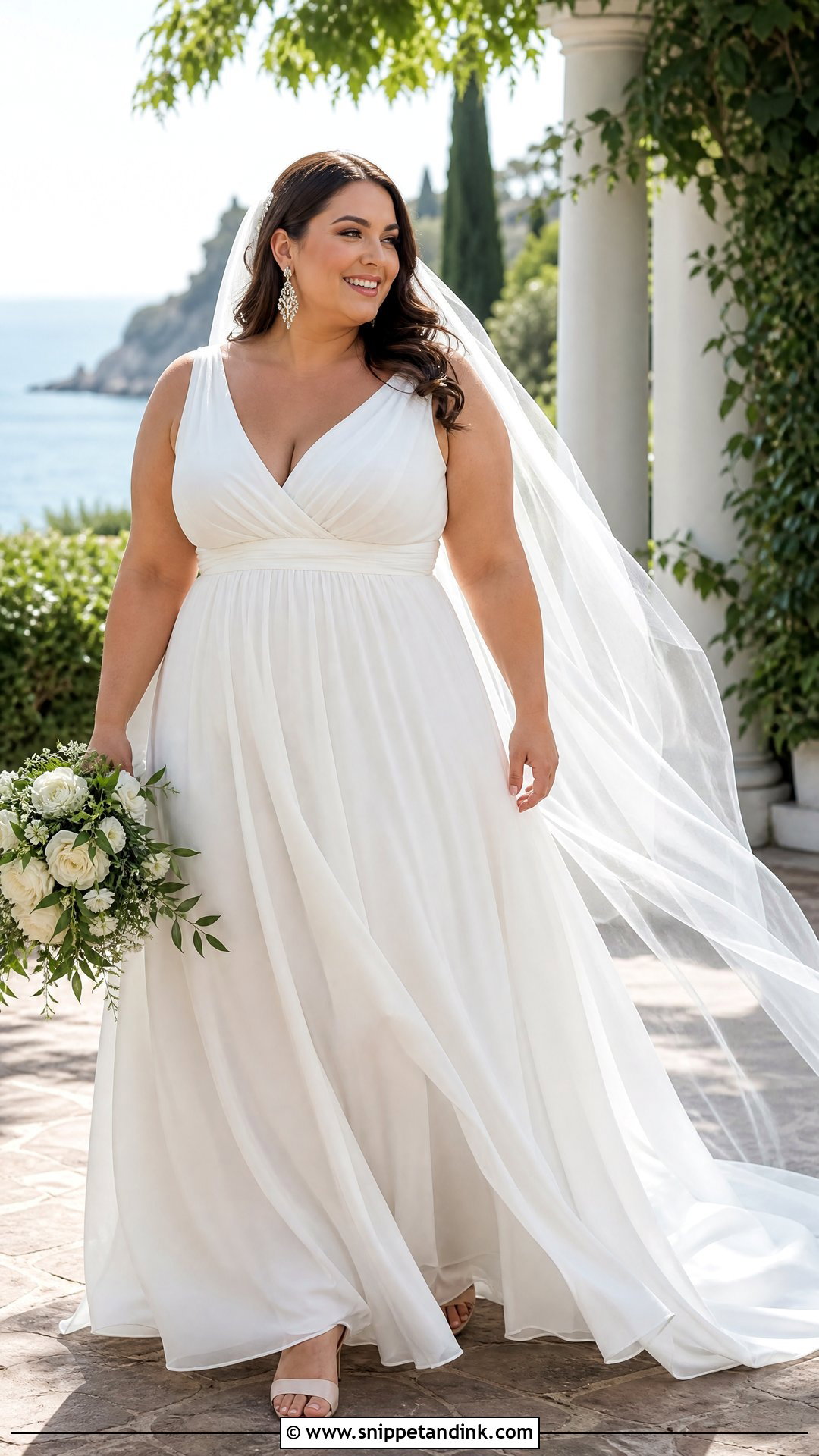
A Grecian gown for a plus-size bride should be built, not just cut bigger. I look for a structured wrap bodice, wider straps and a defined empire or natural waist, because draping that hangs loose only adds bulk. Internal boning, secure cups and careful strap placement can all be added during alterations, and they make the dress feel steady without changing how soft it looks. A lined chiffon skirt keeps the movement while giving smooth coverage. The drape should follow the body on purpose. Supportive block heels, statement earrings and a veil length matched to the venue finish it, and it works from a coastal ceremony to a formal reception.
21. Petite Greek Style Wedding Dress
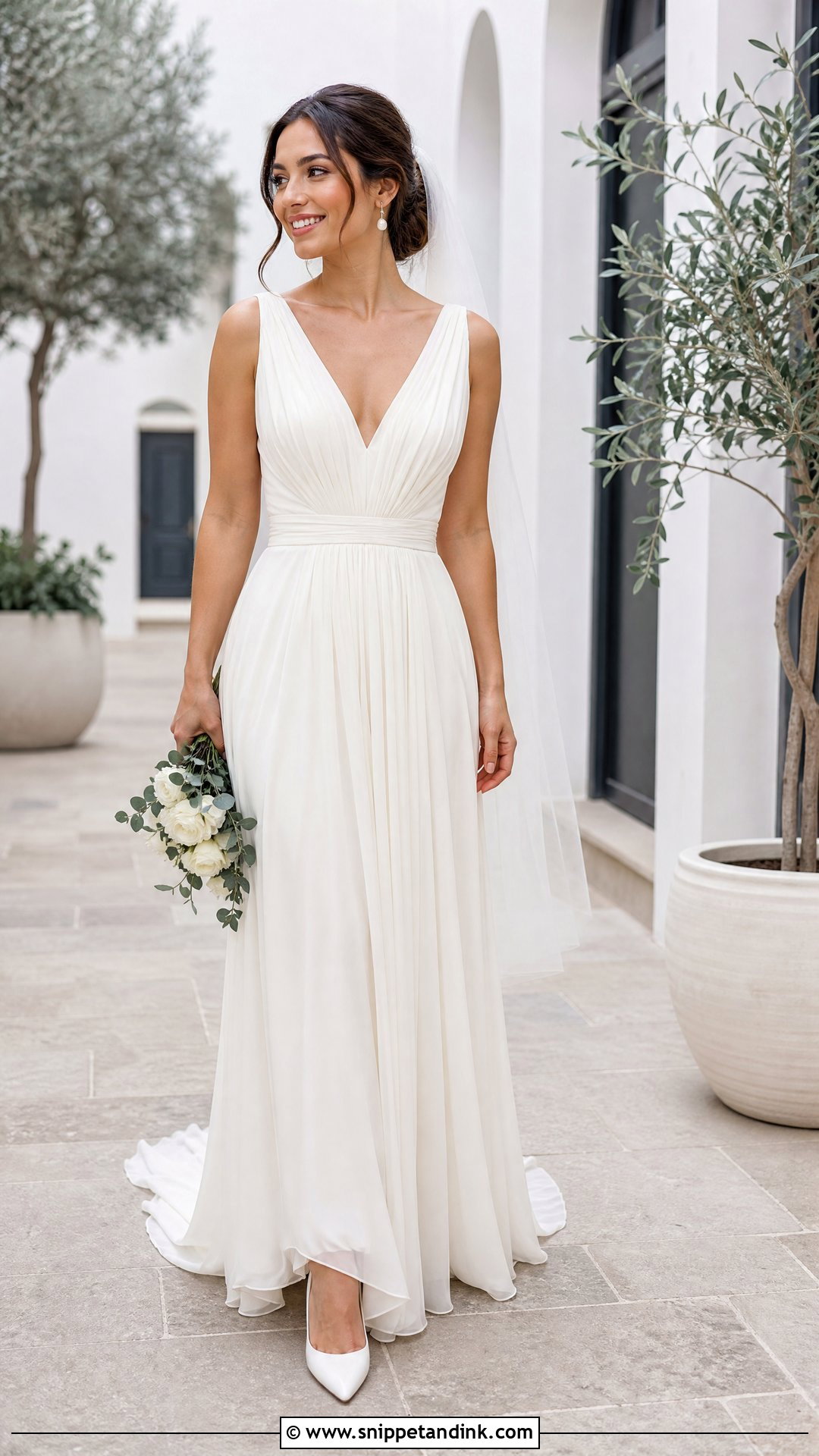
Petite brides can absolutely wear Greek draping; the trick is scale. Narrow pleats, a raised waist and a skirt with controlled volume keep the proportions right, while several heavy layers will swallow a smaller frame. A V-neck or one-shoulder bodice draws a long vertical line. When I fit petite brides, the bodice, straps and pleat placement need adjusting too, not just the hem, or the waist ends up sitting in the wrong place. Pointed heels, small drop earrings and a narrow veil help, along with a short train for drama. Keep any waist embellishment slim, and a softly lifted hairstyle adds height. Gardens and modern interiors both suit it.
22. Maternity Greek Style Wedding Dress
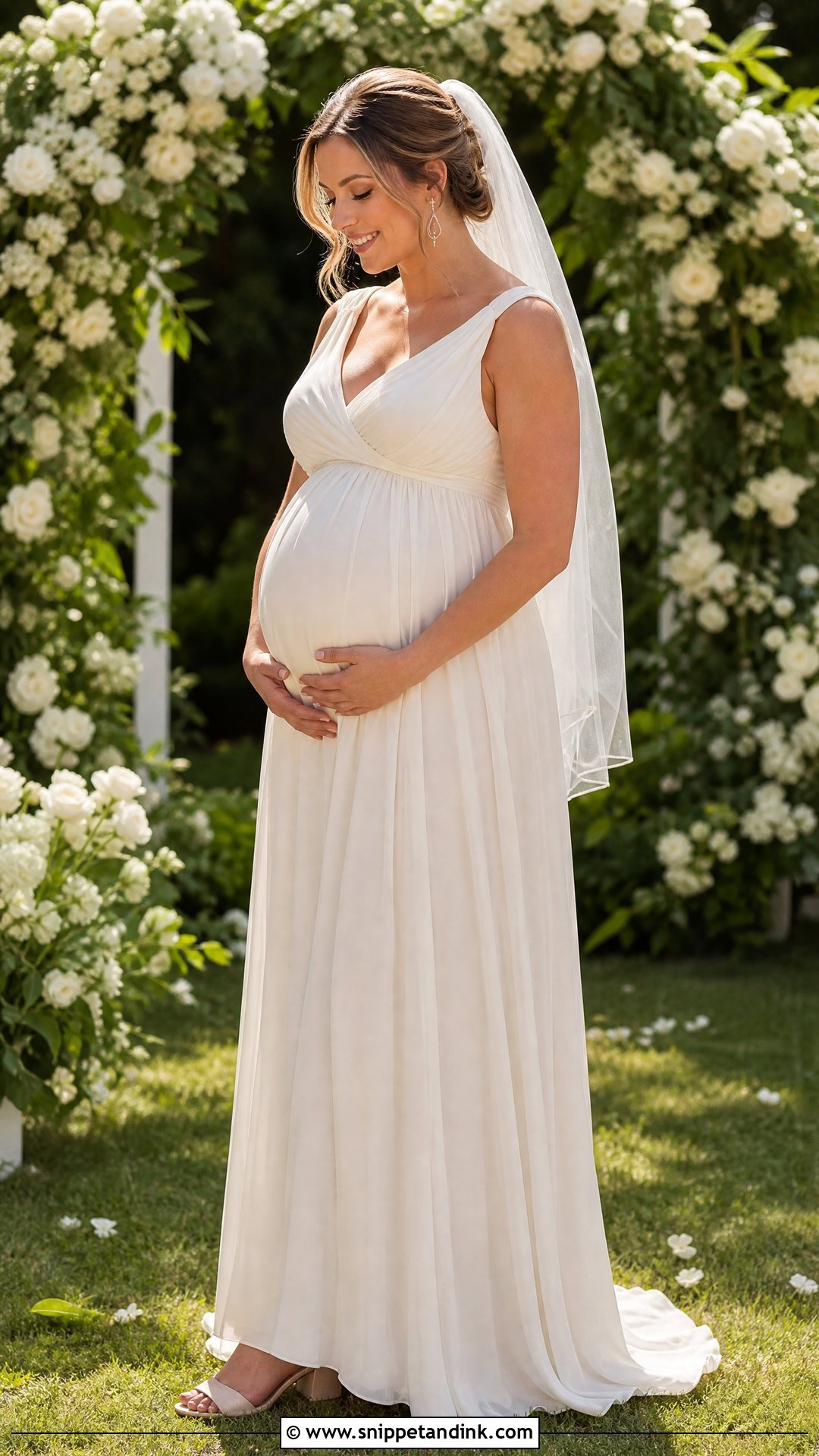
The empire waist was practically made for maternity bridal wear, since the skirt falls freely from just below the bust. I suggest soft chiffon or stretch crepe with a supportive bodice, wider straps, a wrap neckline and a flexible lining that can take some change. Measurements can shift quickly in the last weeks, so I schedule the final fitting as close to the date as the seamstress will allow. Leave rigid waistbands and heavy beading off the midsection. Low block heels or polished flat sandals are kinder on swollen feet late in the day, with light earrings and a soft veil. It suits a beach, a garden or a relaxed indoor ceremony.
23. Tea-Length Greek Style Wedding Dress
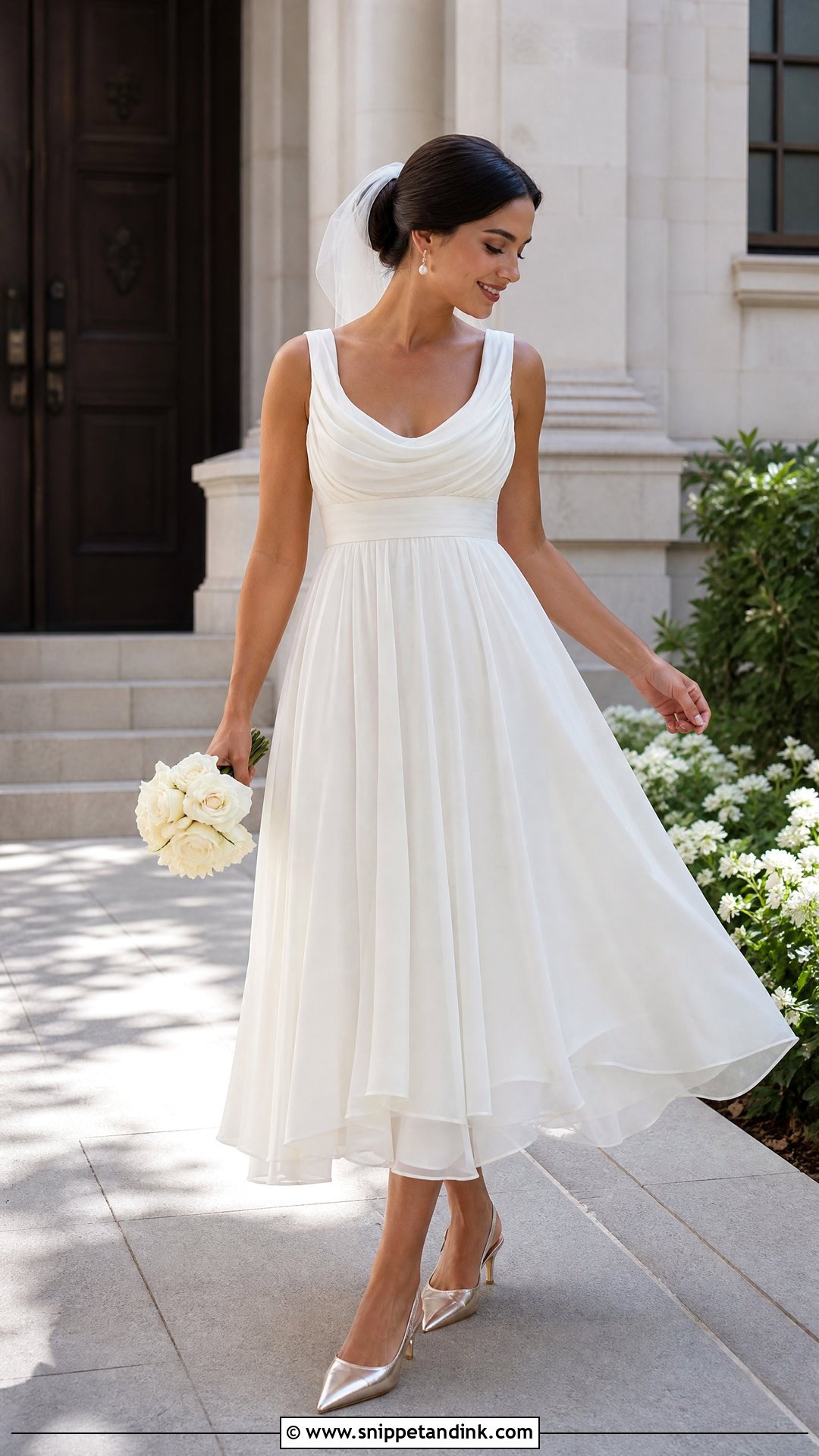
Tea length is the playful one, falling between knee and ankle so your shoes become part of the outfit. A softly draped bodice, empire waist and chiffon skirt keep it Grecian. Because the shoes show, I treat them like jewelry: elegant slingbacks, embellished flats or metallic block heels. Short chiffon is more likely to look sheer, so the lining has to be right; hold the skirt up to a window at the fitting and you’ll see straight away. Pearl earrings, a short veil and a polished low bun finish the look. Courthouse ceremonies, small receptions and warm-weather destinations all suit it, and you’ll dance far more freely.
24. Slit Greek Style Wedding Dress
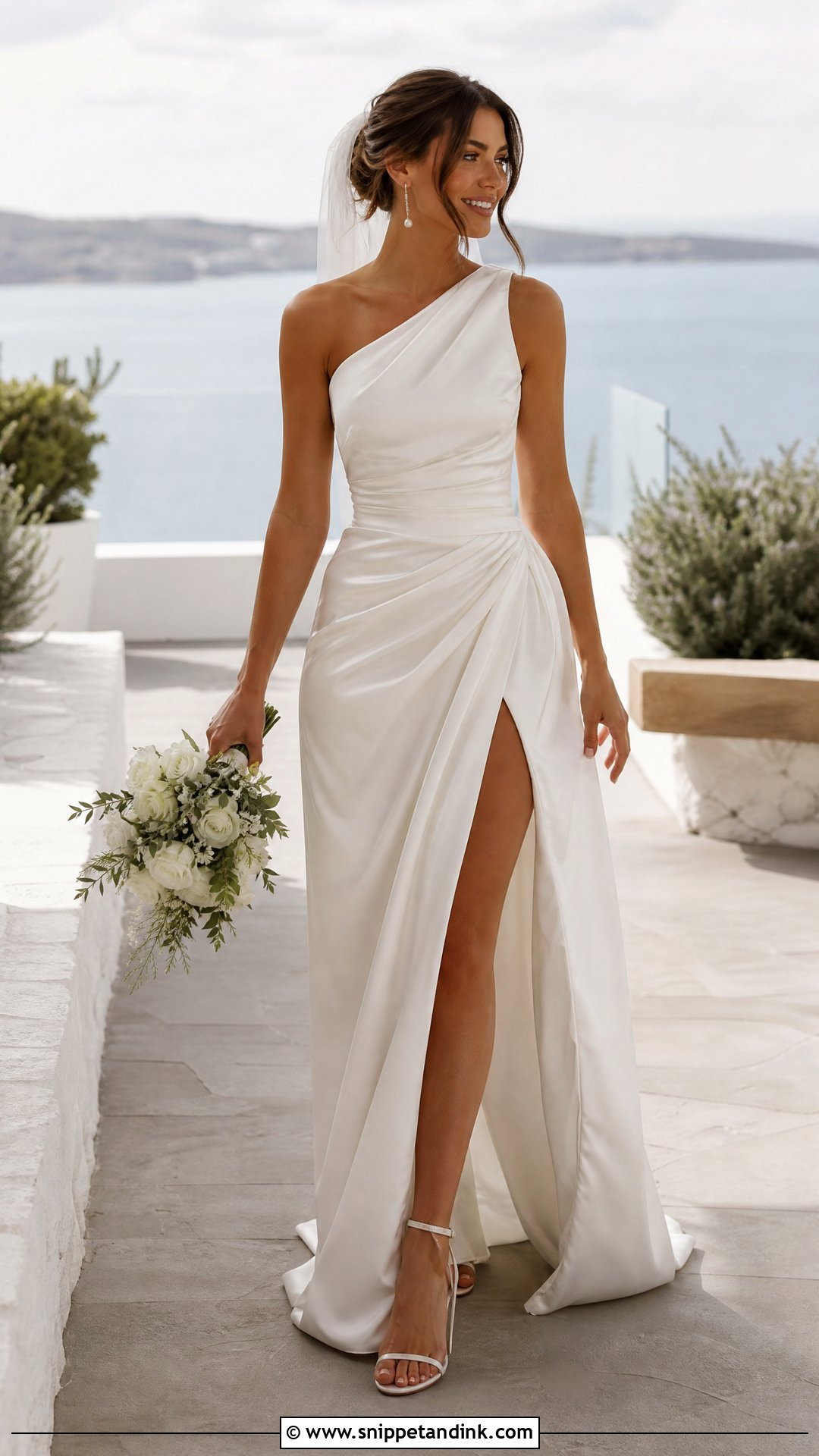
A side slit gives graceful Grecian draping a confident, modern edge. I prefer chiffon, crepe or satin with secure pleating at the waist and a slit placed for walking, so the leg shows in motion rather than sitting exposed all evening. The height matters more than people think; I mark it while the bride is seated, because a slit that looks right standing can open far too high once you sit. A one-shoulder or cowl bodice balances the long skirt line. Strappy heels, streamlined earrings and a light veil complete it. Practice stairs and uneven ground at fittings. Coastal and evening weddings suit it.
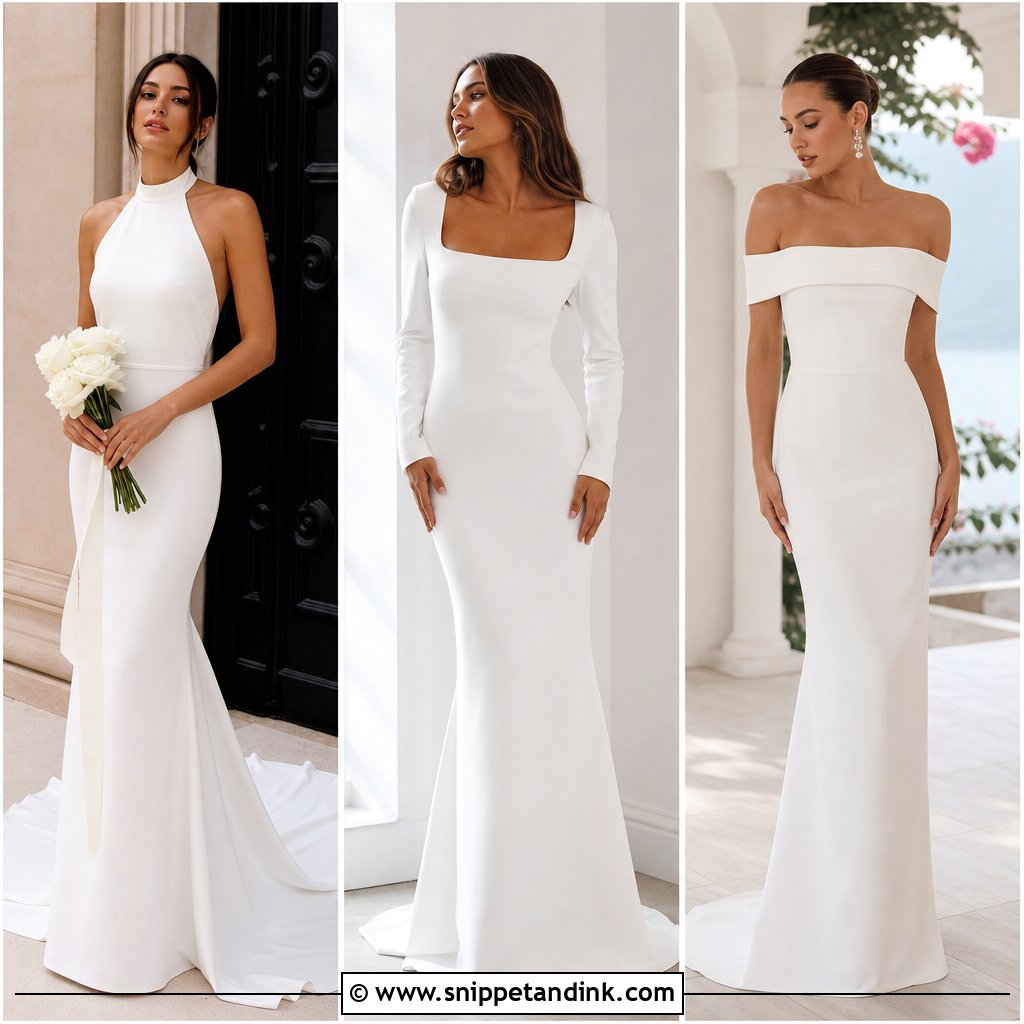


25. Gold-Trim Greek Style Wedding Dress
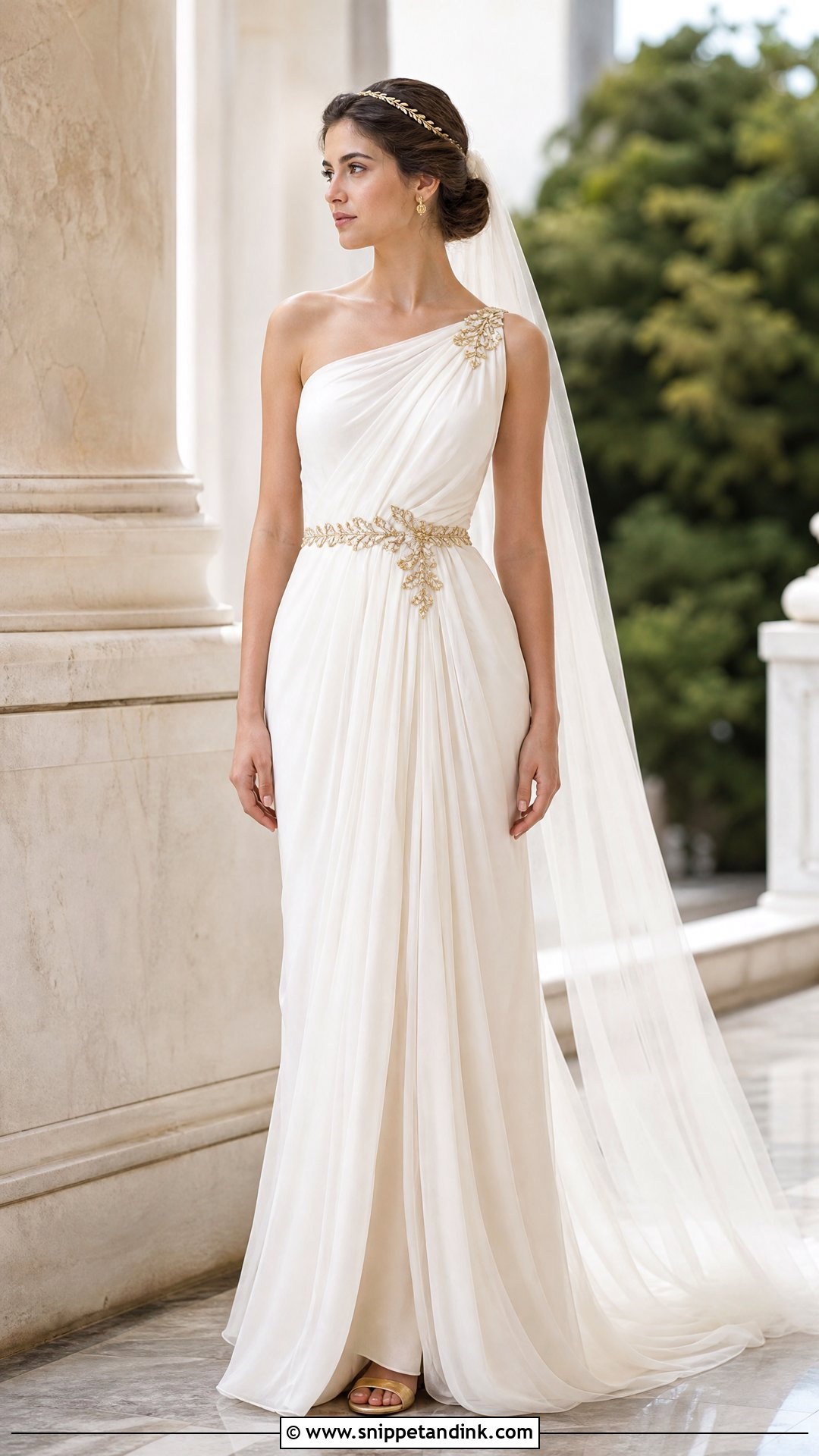
Gold trim is the most direct nod to classical Greek dress, so it pays to use it sparingly. I steer brides toward an ivory gown with metallic embroidery at the shoulders, waist or neckline only. Flowing chiffon, matte crepe or soft silk keeps it bridal. Gold thread can look brassy against a stark white base, which is another reason I prefer ivory. Pale gold sandals, small gold earrings and a plain ivory veil finish it, and a thin metallic headband with a low bun works if you skip every other statement piece. Match all the gold to one tone. Pale stone architecture and coastal scenery suit it well.
What Goes Under a Gown This Thin
Grecian fabrics are unforgiving about underwear. Bra lines, shapewear edges and even the seam of a slip show through chiffon and bias-cut satin. Bring the exact undergarments you plan to wear to every fitting, because the seamstress pins the dress around them.
For one-shoulder, halter and backless styles, I prefer cups sewn into the dress over any stick-on solution. Adhesive bras lose grip in heat and on skin that’s been moisturized that morning. Choose shapewear in a shade close to your skin, not white. White shows through ivory chiffon in flash photos far more than nude does.
Getting Pleats and Chiffon to a Destination Without a Crease
So many of these dresses end up at beach and island weddings, and the journey does more damage than the day. Carry the gown on the plane in a breathable garment bag, never in the hold. Ask the boutique to pack the bodice with acid-free tissue so folds don’t set in transit.
- Hang the gown the moment you arrive, in a bathroom away from direct sun, and let gravity release light creases overnight.
- Steam chiffon from inside the skirt with the nozzle held a hand’s width away. Pressed pleats should be steamed only if the shop confirms it’s safe, since direct heat can relax them for good.
- Never iron satin directly. A cool iron through a pressing cloth on the inside is the most I’d risk, and a hotel iron is a gamble.
- Keep a white chalk stick and a small steamer in your emergency kit for last-minute marks.
Salt air and humidity soften chiffon and make it cling, so plan a quick steam an hour before you dress if you’re marrying by the sea.
Which Drape Will Carry You From Aisle to Dance Floor?
Every gown here shares the same thing: fabric that moves, folds that look intentional and a fit that holds through a long day. One-shoulder chiffon is the familiar version, while satin columns, high necks, capes, lace bodices and structured waists offer more modern routes. What separates a good Grecian dress from a disappointing one is mostly invisible: the inner structure, the lining and the alterations. Keep accessories quiet so the drape stays the focus. And treat the Greek influence as a starting point for your own taste, not a theme you have to follow.
You'll Like These Ideas:



Leave a Reply