
A Grecian gown lives or dies on how the fabric moves. Draping, empire waists, one-shoulder necklines and fine pleats all rely on cloth that falls and swings rather than holds a shape, which is why this style suits island, garden and beach ceremonies so well. Designers such as Maggie Sottero have kept goddess draping in their collections for years, and it now sits alongside crochet texture, quiet satin and short structured minis. Below are thirty versions I’d happily put a bride in, with notes on fit, fabric and where each one can catch you out.
Chiffon, Silk Jersey or Crepe for a Draped Gown in Heat and Wind
Before I look at necklines, I put the fabric options in a bride’s hands, because the same draped design behaves completely differently in each. The Grecian look relies on cloth that falls under its own weight, and that’s exactly what makes some fabrics a joy outdoors and others a struggle.
Chiffon
Light, sheer and the classic choice. It moves at the slightest breeze, which is what you want in photos, and it breathes in heat. The trade-off is that it snags easily on rough stone, rattan chairs and bouquet wire, and it shows every crease from packing. It always needs a lining.
Silk jersey
My favorite for travel. It drapes beautifully, recovers from creases quickly and stretches slightly, so it’s comfortable for long days. It clings more than chiffon, though, so it shows underwear lines and suits brides who like a closer fit.
Crepe
Matte, weightier and more structured. It holds a clean line and stays put in wind, which is useful on a cliff-top or a rooftop. It doesn’t float the way chiffon does, so the look is more sculpted than airy.
If your ceremony is exposed to wind, I’d test the fabric outdoors before buying. Hold a sample at arm’s length on a breezy day: if it whips around wildly, plan for a weighted hem or hair pinned well back.
1. Greek Goddess Wedding Dress
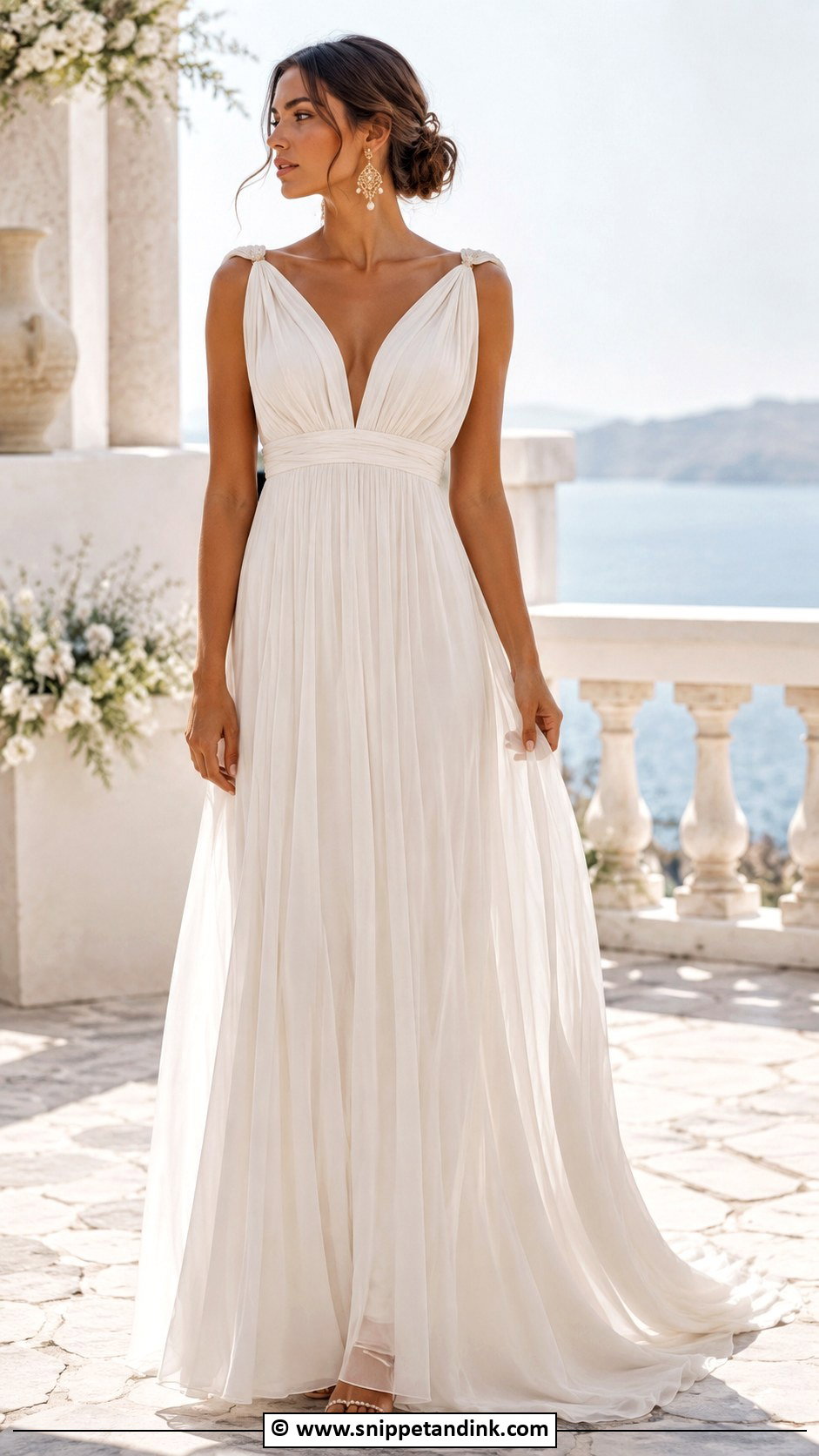
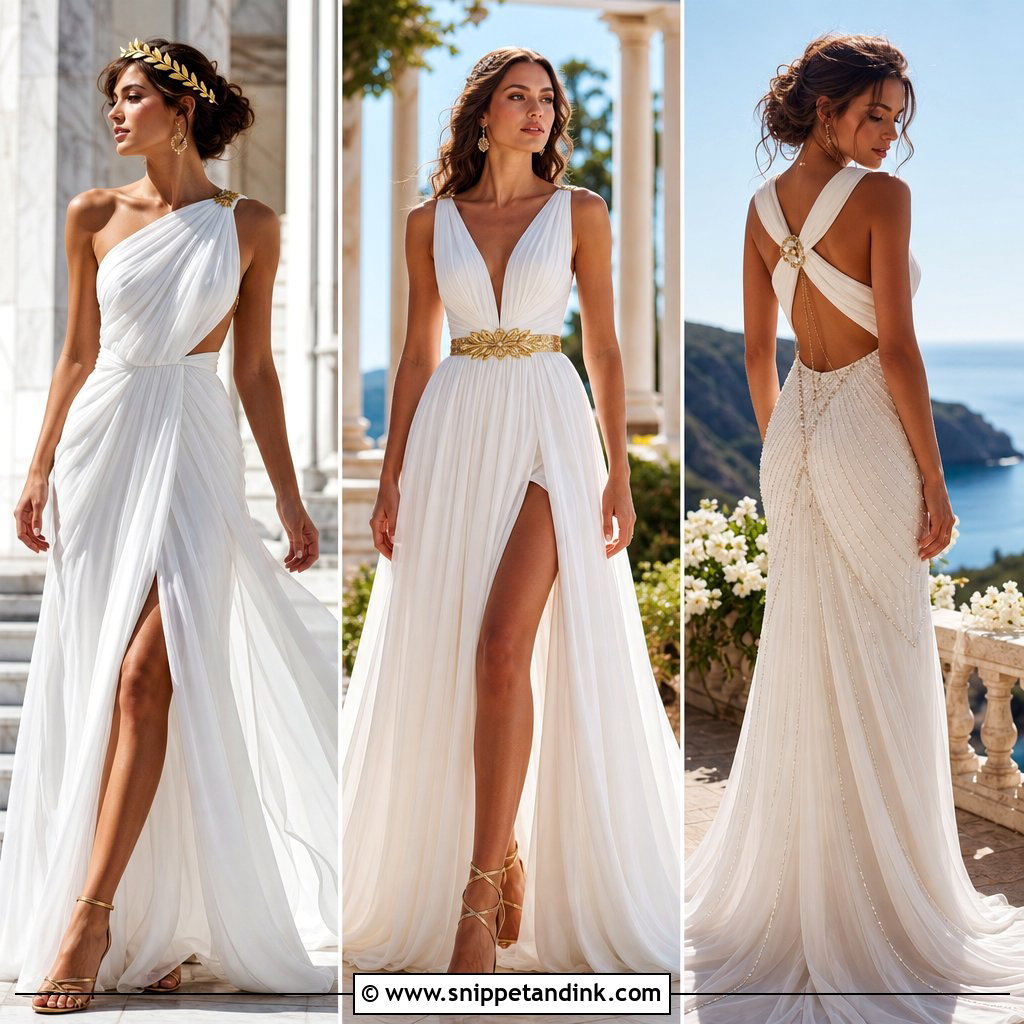
This is the classic: chiffon or silk, soft gathers across the bodice, an empire waist and a skirt that ripples when you walk. It gives drama without volume, so it travels well and suits warm-weather ceremonies. The fitting point I watch is the bust seam. On an empire gown it should sit flat against the ribcage; if it floats even slightly, the whole dress looks borrowed. Flat pearl sandals or a low block heel, gold drops and a loose low bun finish it, with either a sheer veil or a simple hair vine.
2. One Shoulder Greek Wedding Dress
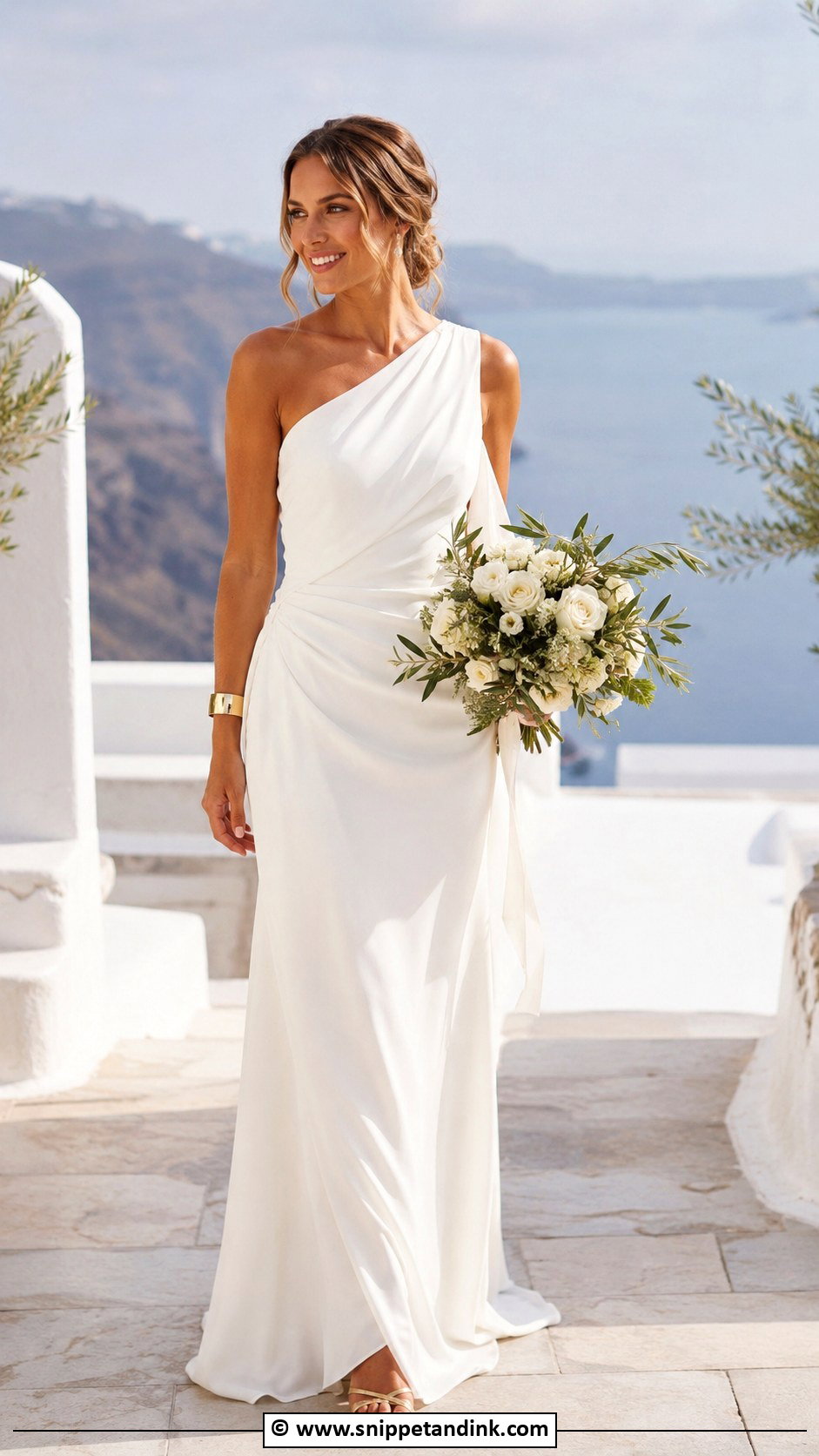
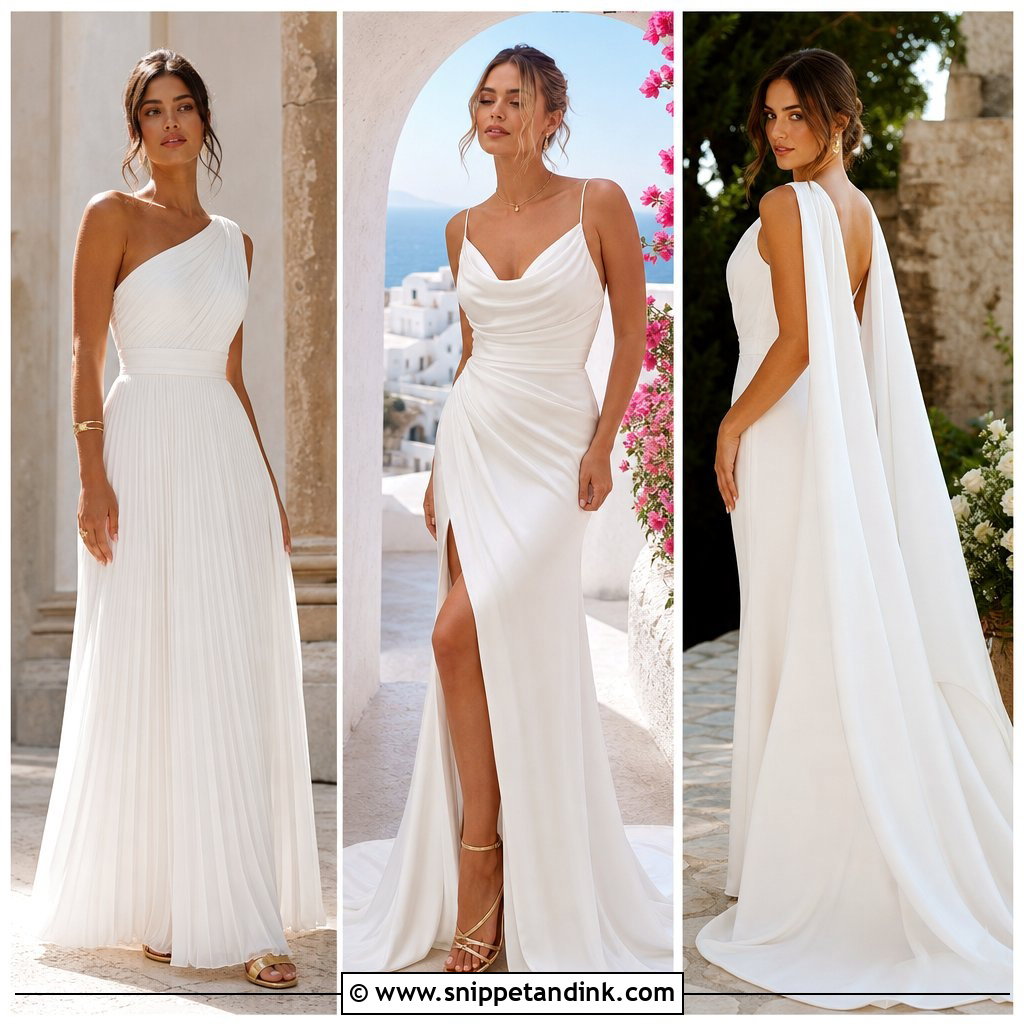
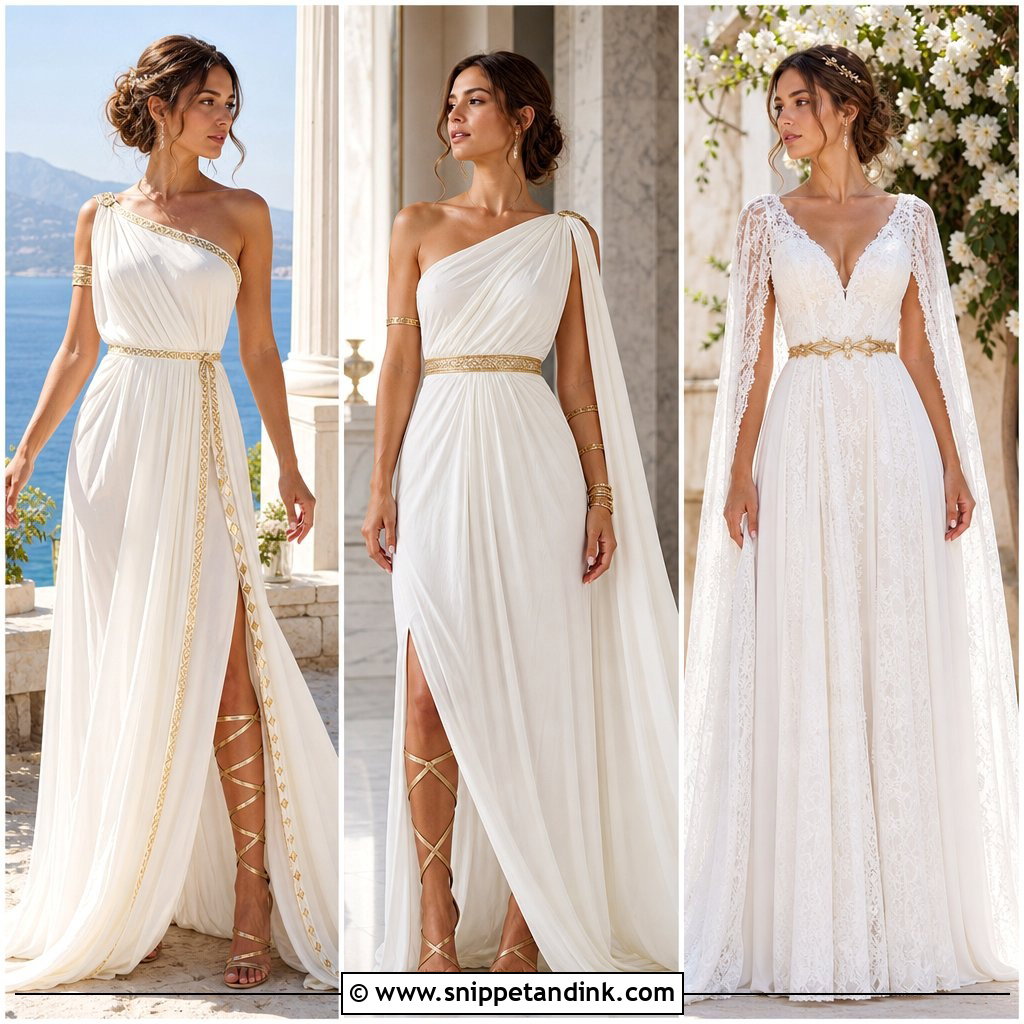
One shoulder is the most sculptural of the Grecian necklines, and also the one that needs the most engineering. A good version has a hidden silicone strip or a stay inside the strap so it doesn’t creep toward the neck when you raise your arm. Crepe, chiffon or satin that drapes rather than clings, a fitted waist or a little side ruching, and then very little else: pulled-back hair, metallic sandals, a slim cuff and white flowers with olive leaves.
3. Empire Waist Greek Wedding Dress
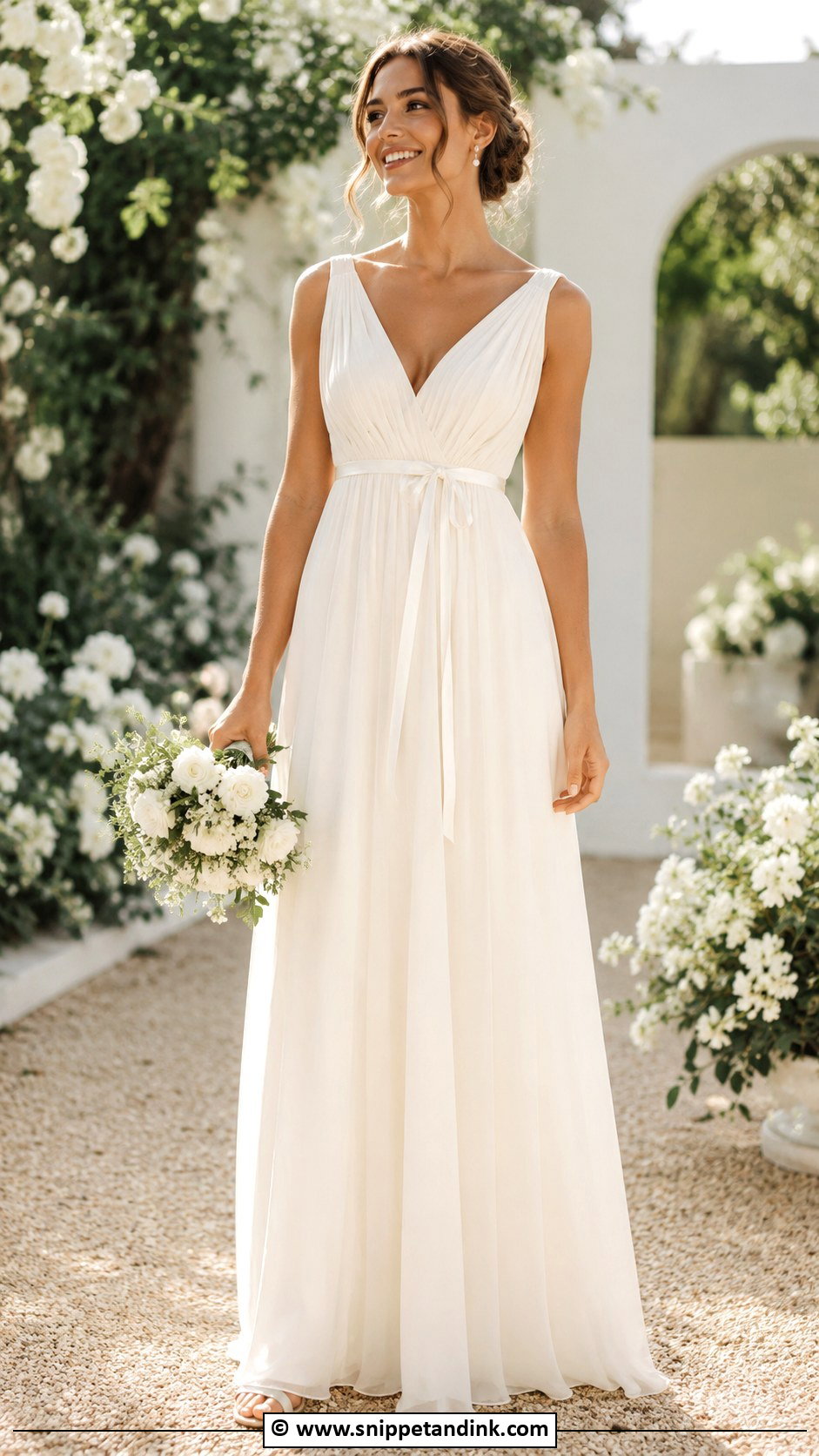
The empire waist is the shape I suggest most often to brides who want ease through the tummy and hips. The seam sits just under the bust and the skirt skims down from there. Chiffon, georgette and lightweight silk all float well. One honest caveat: a very full bust can push an empire seam forward, making the skirt tent outward, so a bride with a larger cup size usually needs a slightly lower seam or a wrapped bodice. A narrow ribbon or tiny pearl trim can mark the waist, with soft waves and low sandals for outdoor ceremonies.
4. Draped Greek Wedding Dress
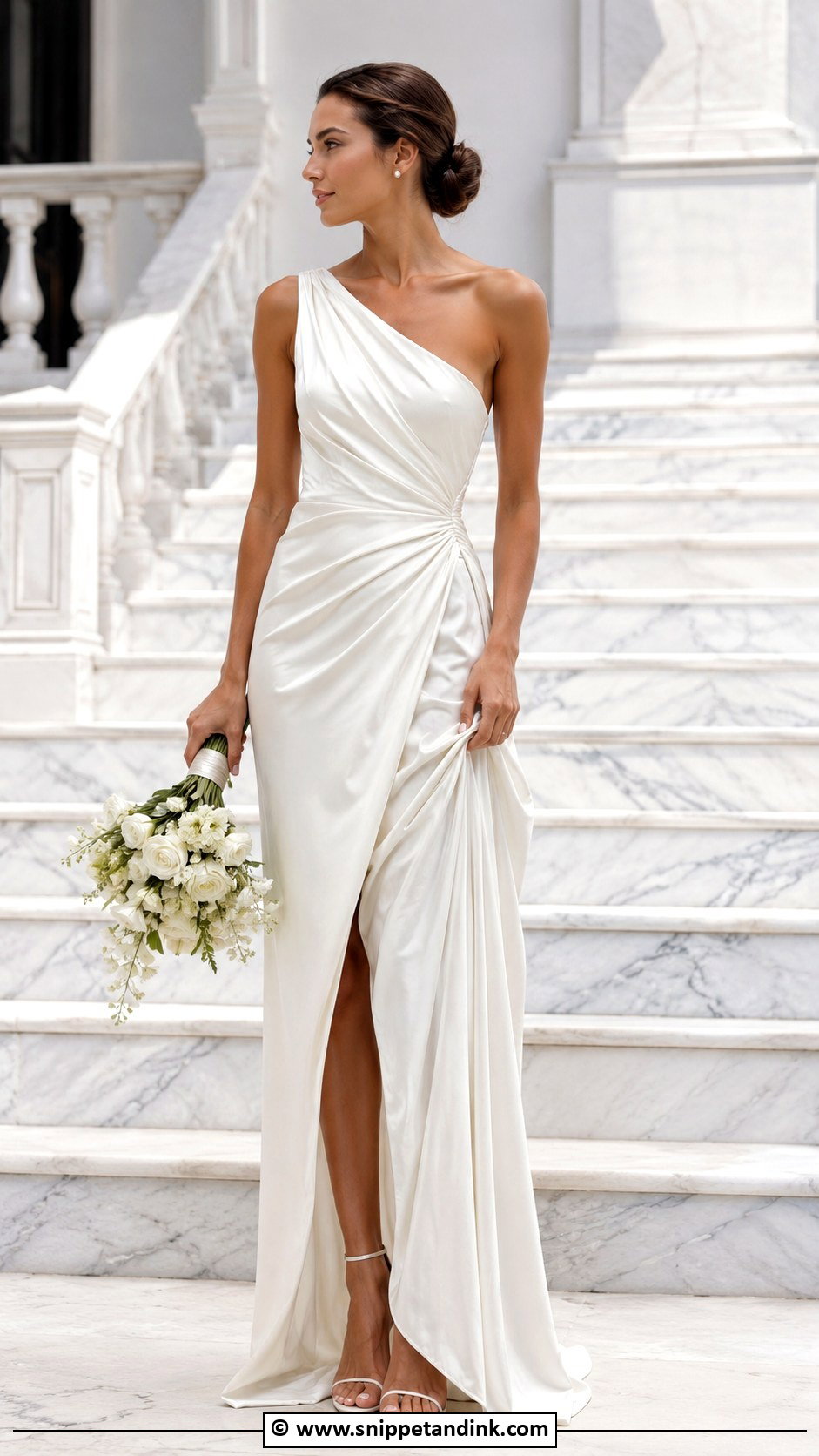
Draping is fabric doing the work that boning does in other gowns. Gathered shoulders, a wrapped bodice, side draping or a panel cascading down the skirt create shape without structure. Matte satin, silk jersey and chiffon all fold well, but silk jersey is the one I trust in heat because it doesn’t hold creases. Because the folds are the decoration, I keep jewelry to pearl studs and the hair in a smooth low chignon. Against stone steps or whitewashed walls, those folds catch side light and read clearly in photos.
5. Pleated Greek Wedding Dress
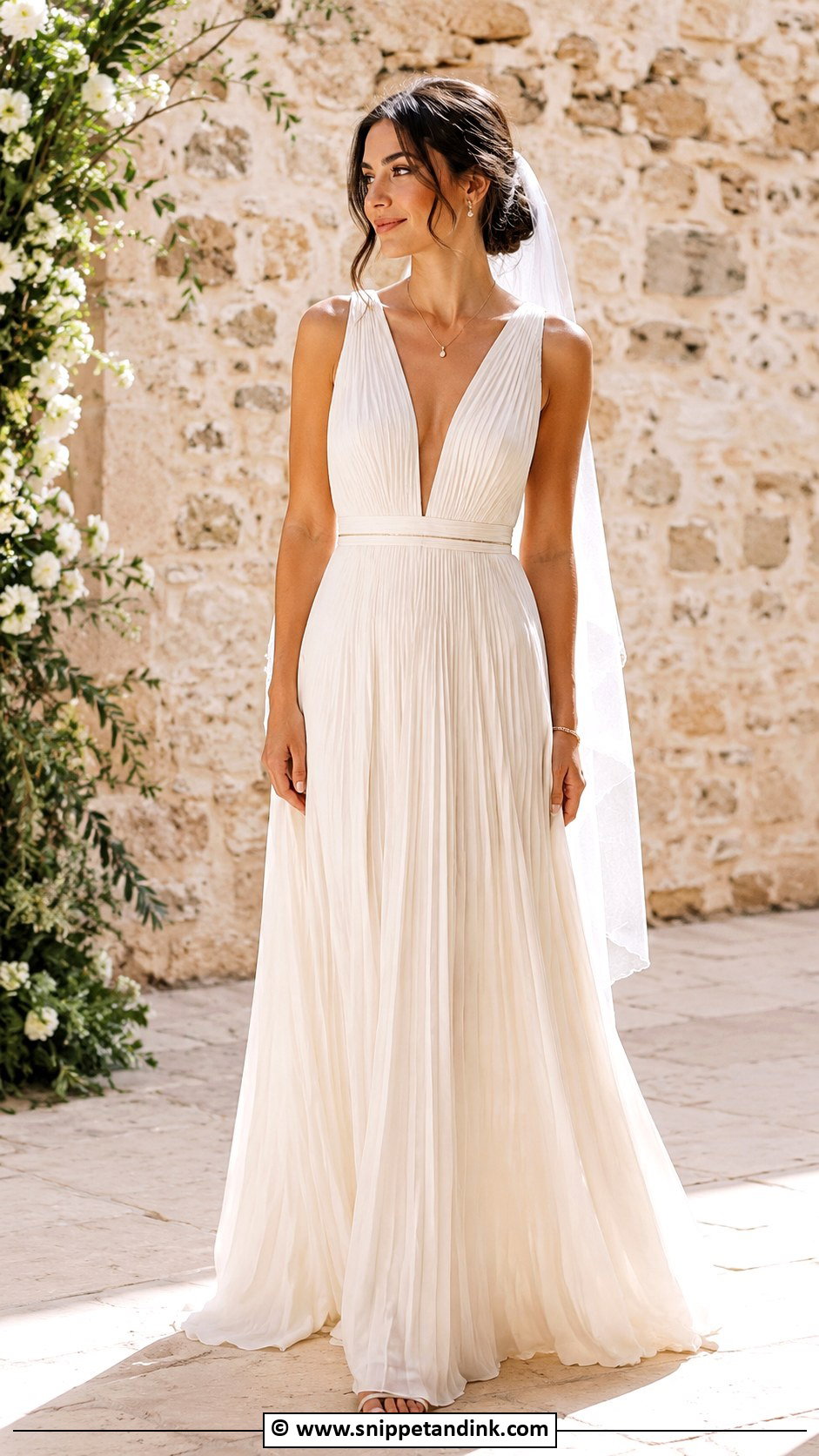
Fine pleats make a plain gown look considered without adding sparkle. A pleated chiffon skirt, a pleated bodice or a column of vertical pleating all lengthen the body, which is why I often suggest this one to petite brides. The pleats are usually heat-set, so ask before steaming: too much direct steam can soften them. Barely-there sandals, a soft veil and fine gold jewelry suit it, and a slim waistband or empire seam adds definition if you want it.
6. Off Shoulder Greek Wedding Dress
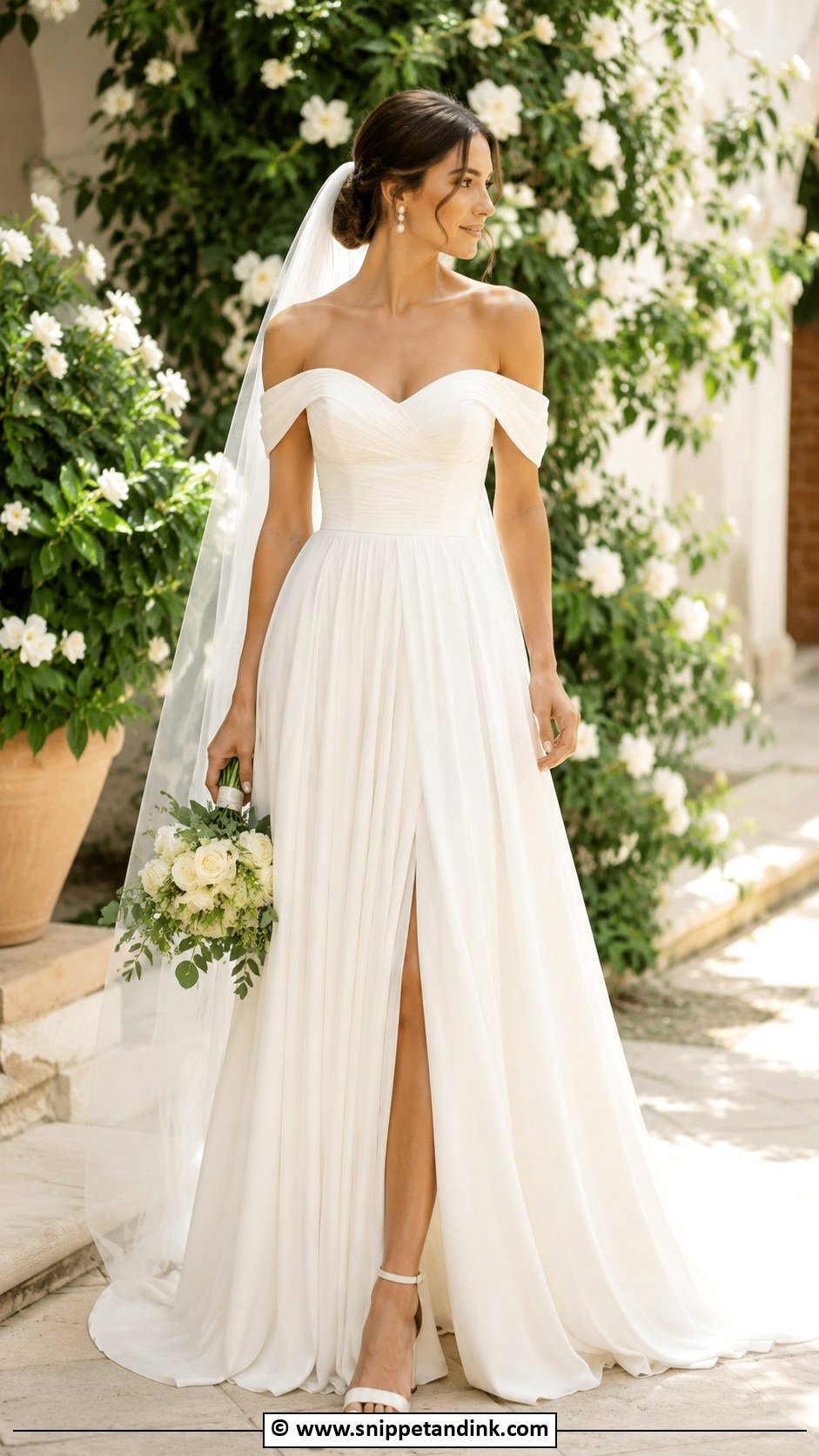
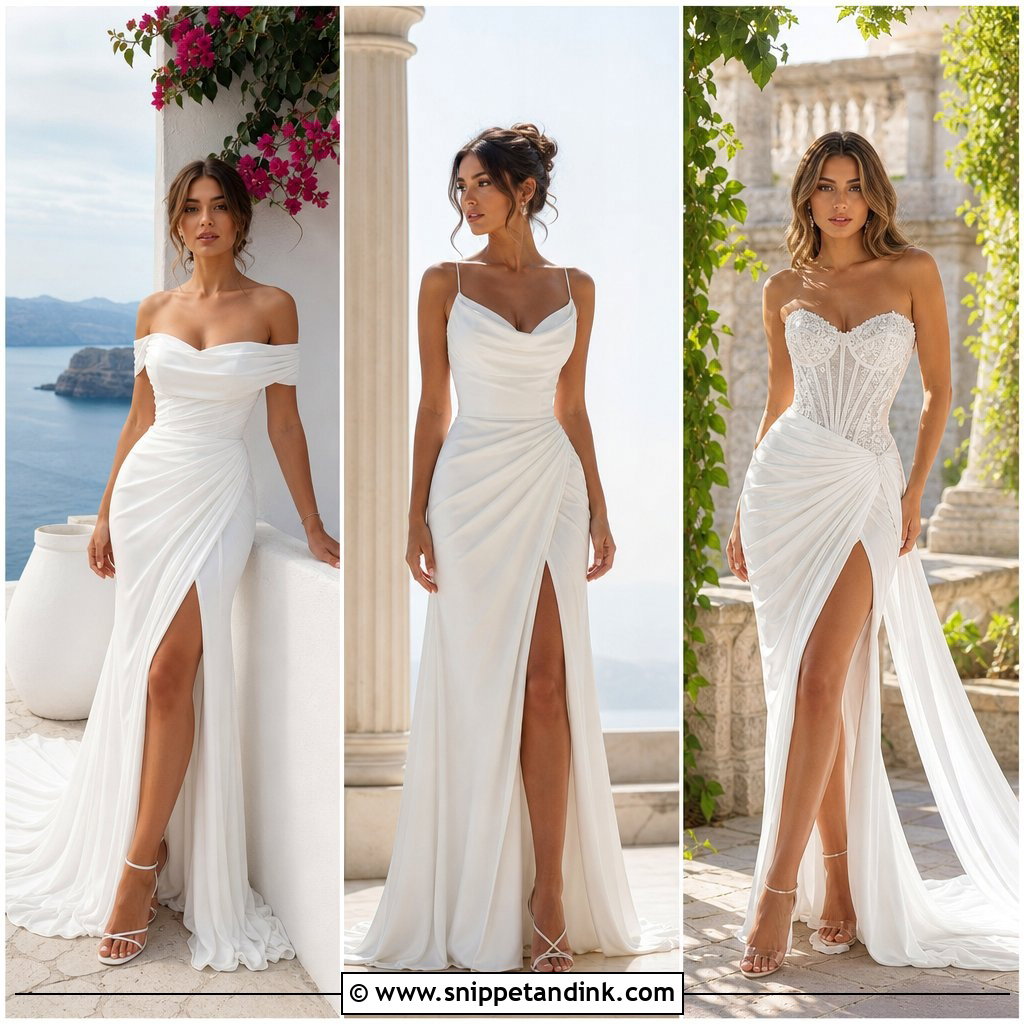
An off-shoulder neckline frames the collarbone, and a softly draped bodice ties it back to the Grecian look. The thing to test is arm movement. Off-shoulder sleeves sit on the upper arm, so lifting your arms to hug people pulls the neckline down unless there’s an elastic or boned edge inside. Pair it with a low bun, pearl drops and a sheer veil falling behind the shoulders, plus ivory block heels or flats. It reads well at villas, gardens and sunset ceremonies by the water.
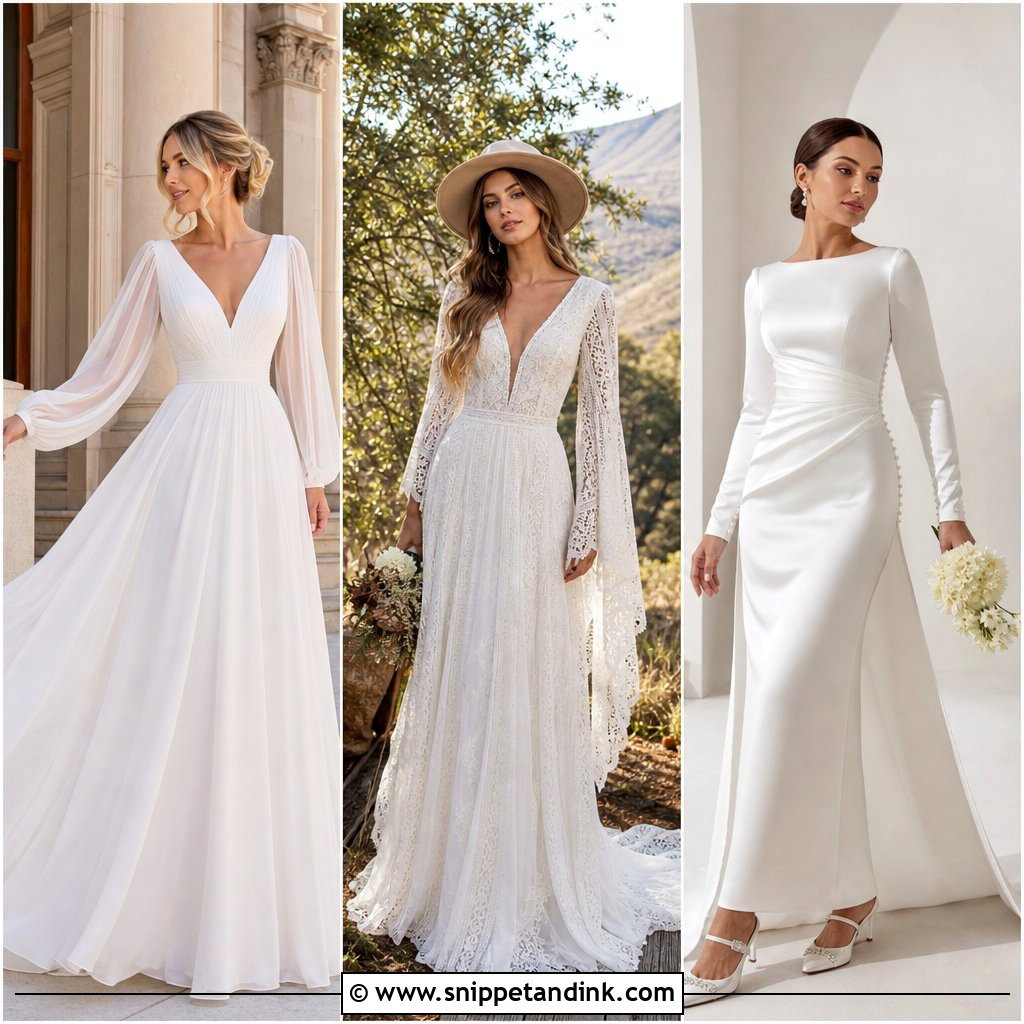
7. Long Sleeve Greek Wedding Dress
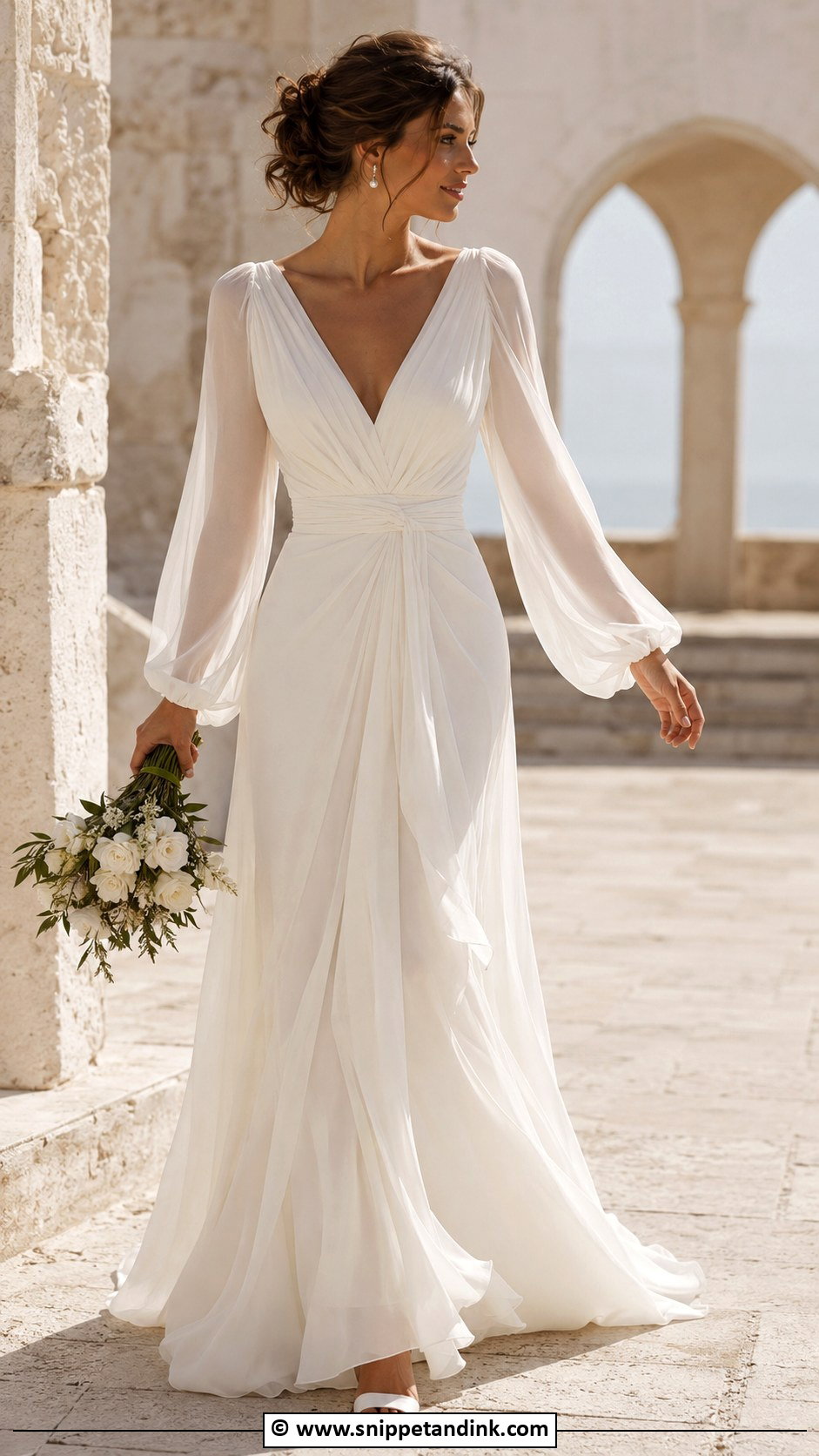
Long sleeves on a Grecian gown need to stay light or the whole effect sinks. I look for soft bishop sleeves, sheer chiffon or slim lace, paired with a draped waist or an empire cut. This works for spring, autumn and breezy seaside weddings where evenings turn cool. If the sleeves carry detail, I leave the neck bare. A loose updo, small pearl earrings and a simple bouquet are enough, and the result feels modest without looking heavy.
8. Greek Wedding Dress With Cape
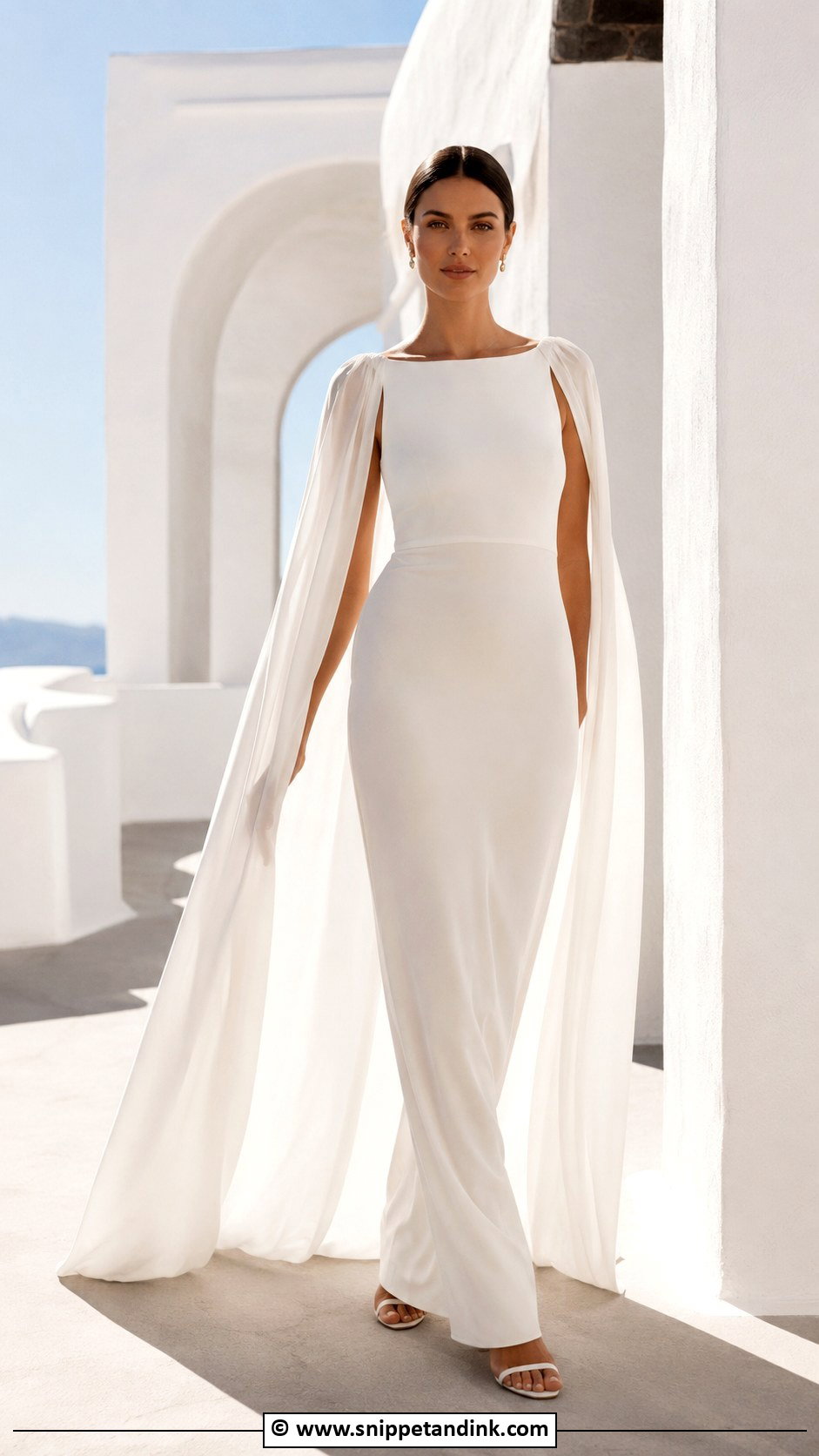
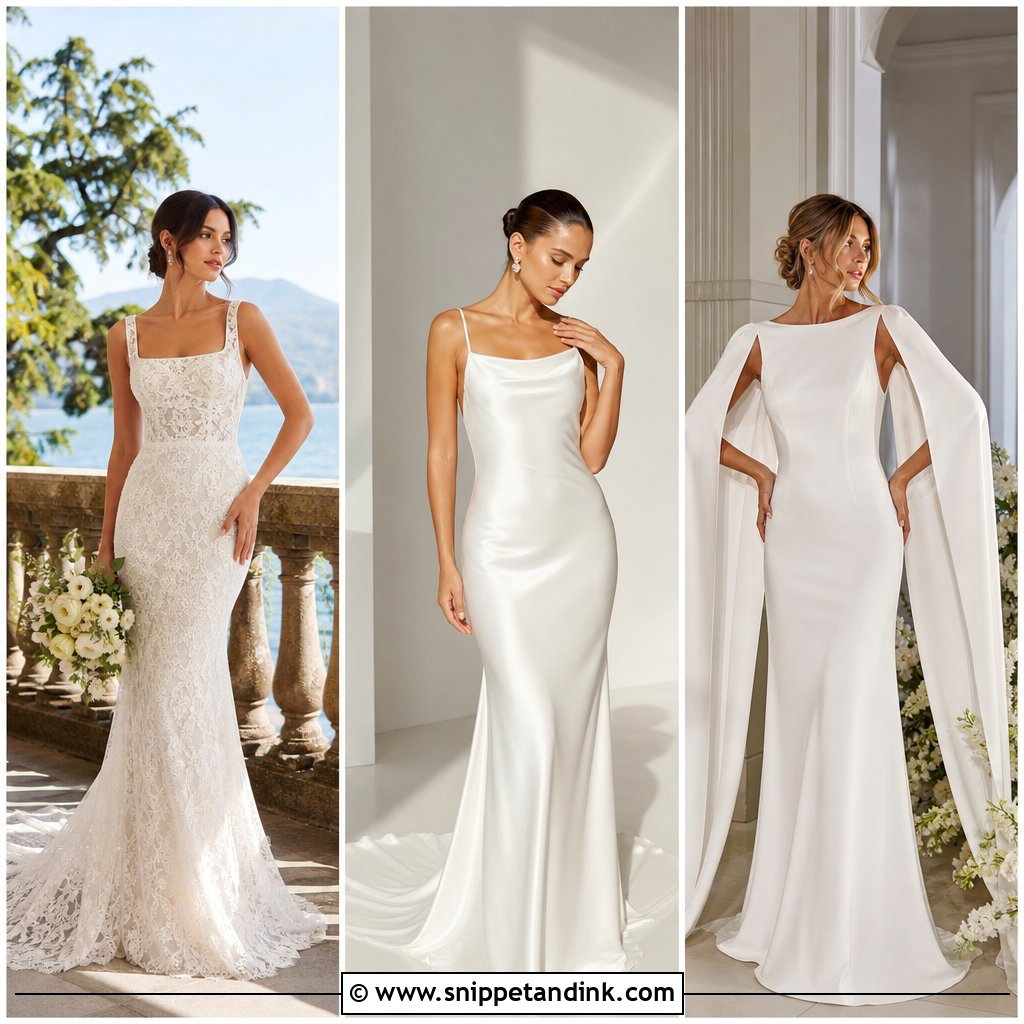
A sheer cape attached at the shoulders gives the movement of a veil with a cleaner line, and outdoors it catches the wind in a way a veil can’t. Tulle, chiffon or organza keep it floating. I pair it with a plain sheath, an empire dress or a one-shoulder gown and leave the front of the dress simple. Do check how it’s attached: snap fastenings let you remove it for dinner, while a sewn-in cape is yours for the whole night. Sleek hair, small earrings and ivory heels finish it.
9. Greek Wedding Dress With Gold Belt
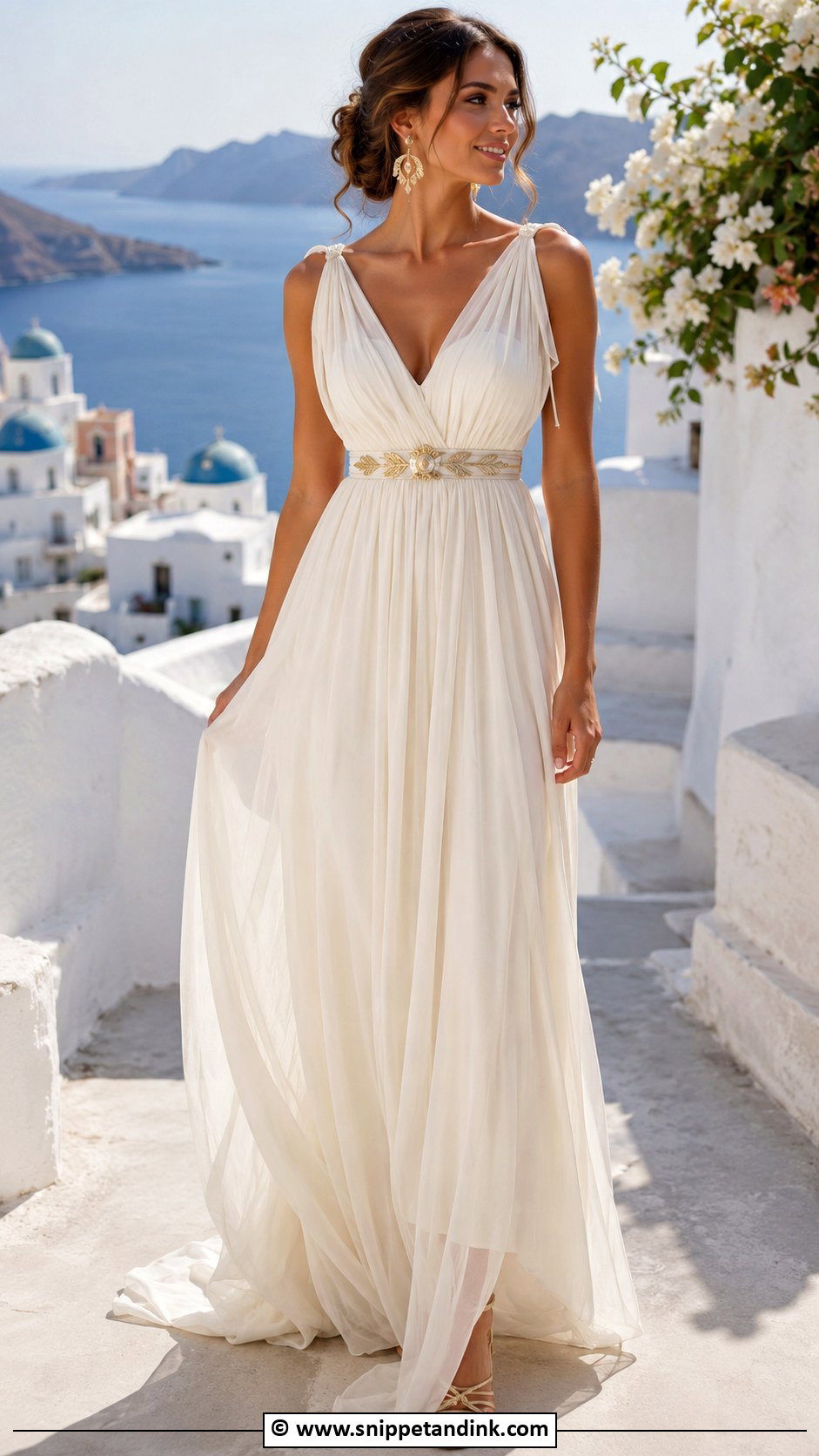
A gold belt is the simplest way to bring an ancient reference into a white or ivory gown. It can be thin, braided, leaf-shaped or brushed metal. I fit it at the narrowest point of the ribcage on an empire dress, not at the natural waist, or it cuts the line in half. Gold earrings, metallic sandals and dewy skin go with it; anything else shiny dilutes it. It sits well on an empire waist, a draped sheath or a soft chiffon A-line.
10. Greek Wedding Dress With Lace
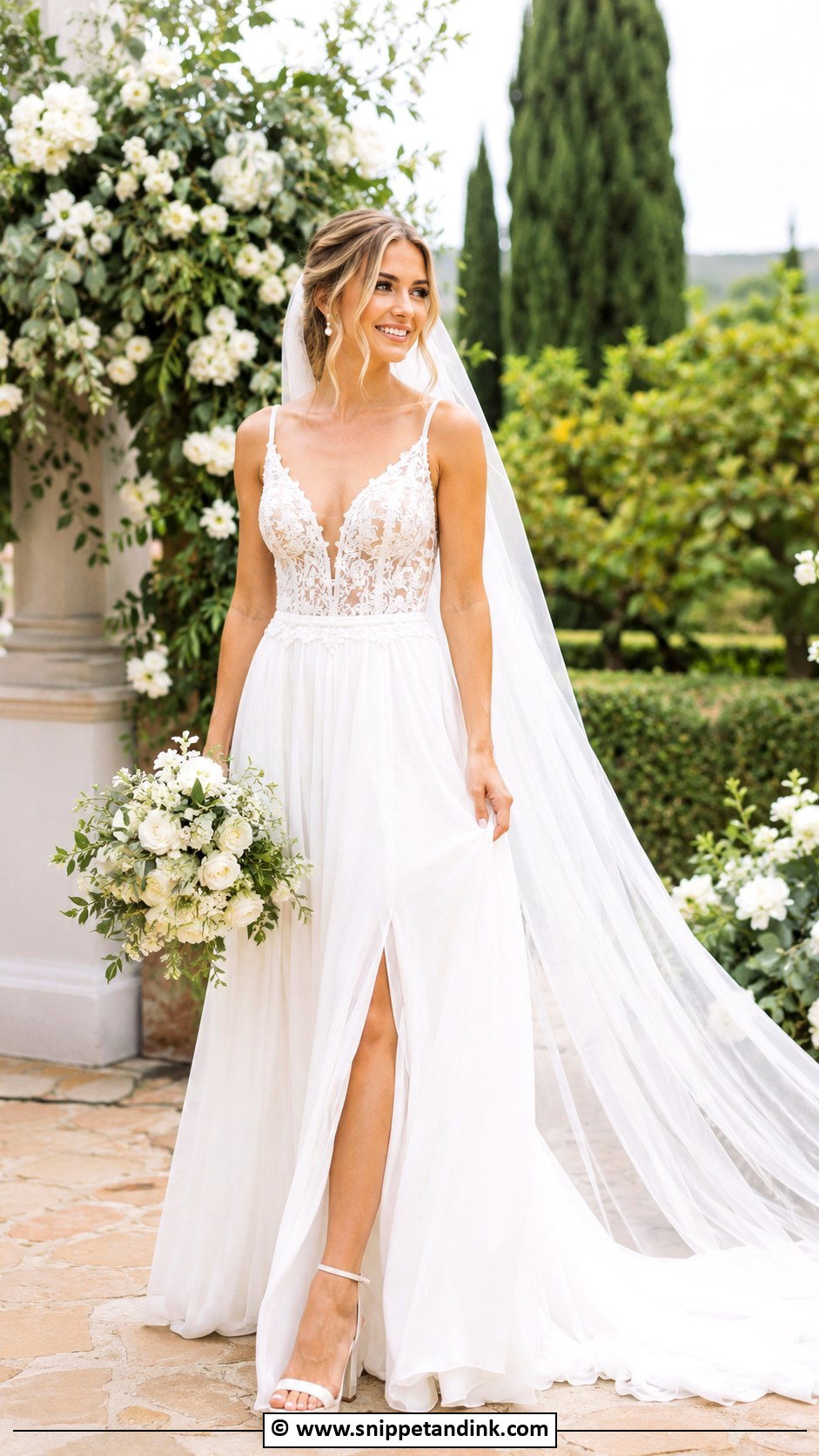
Lace adds romance, but full lace from neck to hem fights the lightness of a Grecian silhouette. I prefer it placed: on the bodice, the sleeves, the waist or the back, with a chiffon skirt below. That balance of texture and flow is the reason this combination is so popular. A soft veil, pearl earrings and ivory heels or sandals suit it, with loose waves or a low bun. In a courtyard or historic venue the lace gives a vintage note while the skirt keeps it fresh.
11. Greek Wedding Dress With Slit
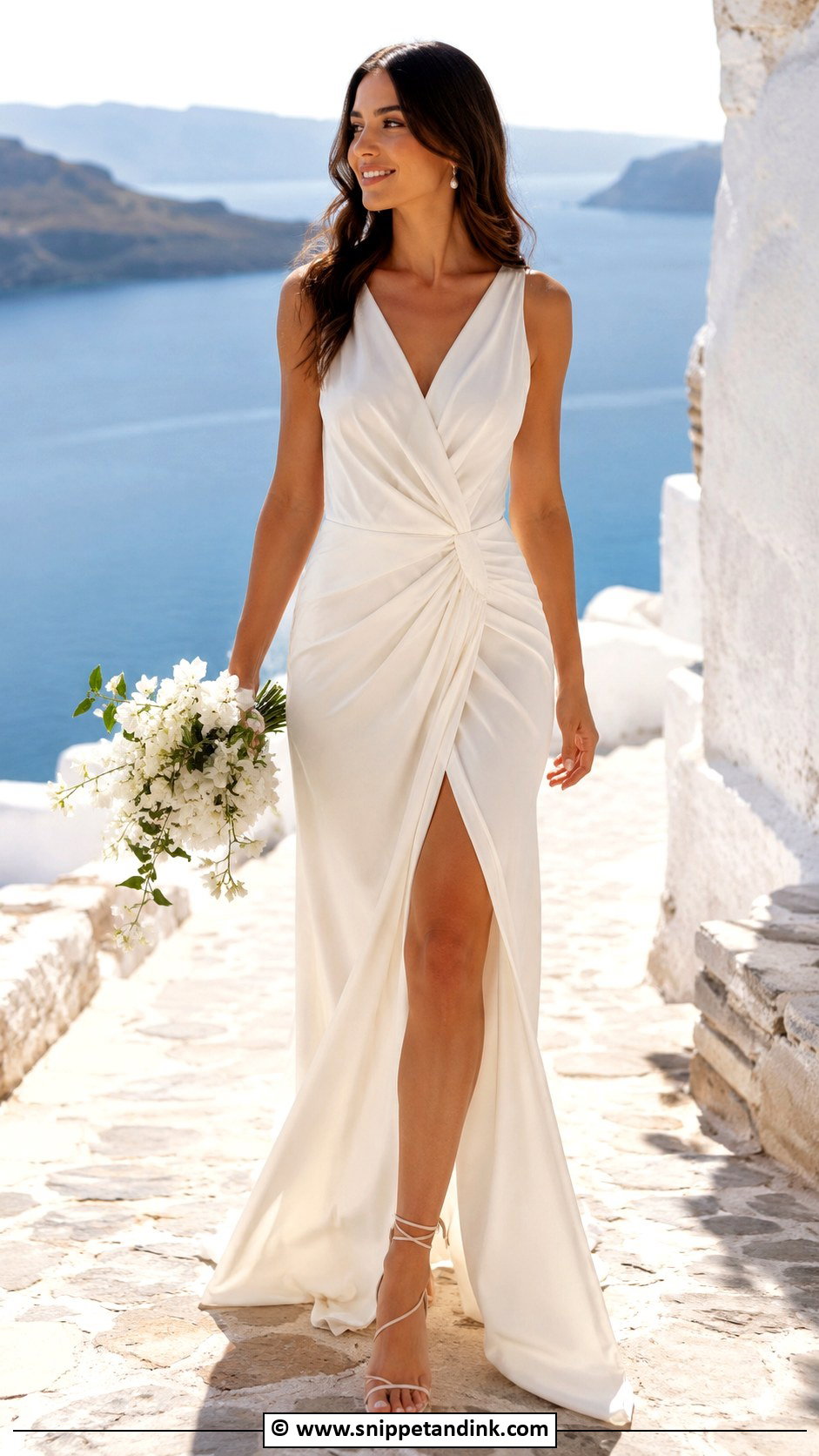
A slit should show only when you walk. On a soft, flowing skirt it opens naturally with each step, which looks far more relaxed than a slit cut into a stiff fabric. Draped fabric, a wrapped bodice or an empire waist keep it balanced. I always ask the bride to sit and climb a step in the fitting room; a thigh-high slit that is fine standing can open much further when seated. Strappy heels or embellished flat sandals work for island and summer ceremonies.
12. Simple Greek Wedding Dress
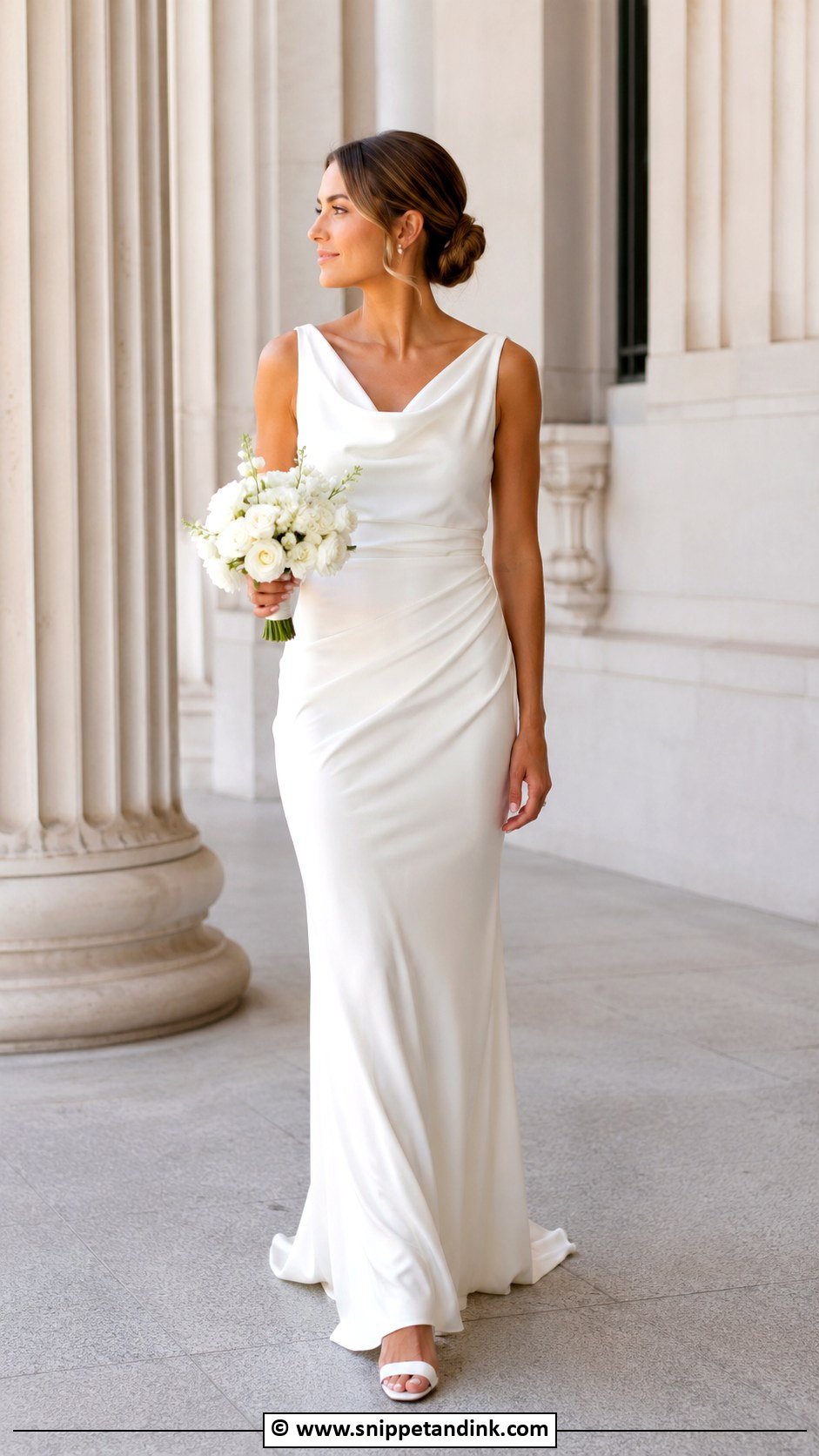
With a simple gown, every flaw in fit shows, so this is where I spend the most time on alterations. Soft ivory, a flattering neckline, gentle draping and a skirt that falls straight: silk crepe, satin or chiffon all do it well. No beading, no heavy lace, no train needed. Pearl studs, a low bun and a small white bouquet with greenery are enough, with ivory heels or metallic sandals. It suits courthouse weddings, elopements and destination ceremonies.
13. Beach Greek Wedding Dress
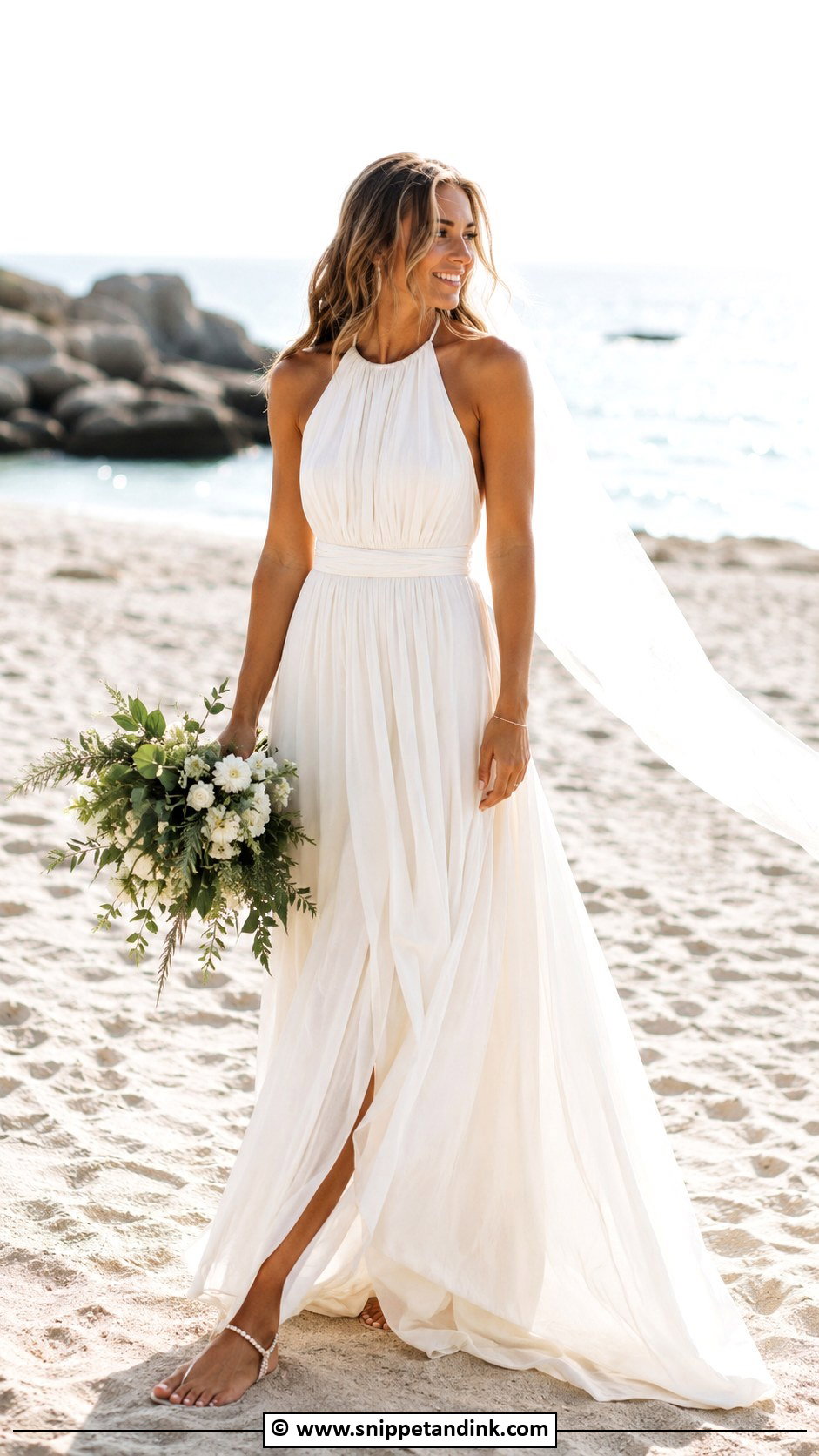
Sand is heavy on a hem. Satin and layered skirts collect it, so for the beach I stick to chiffon, silk or soft tulle, with an empire waist, halter or one-shoulder neckline. Keep the train short or choose a sweep train that lifts easily. Flat sandals or barefoot sandals with a pearl anklet suit a casual ceremony, plus loose waves, a soft veil and light makeup. Bring a lint roller and a clean towel; damp sand comes off chiffon far more easily once it’s dry.
14. Greek Wedding Dress For Summer
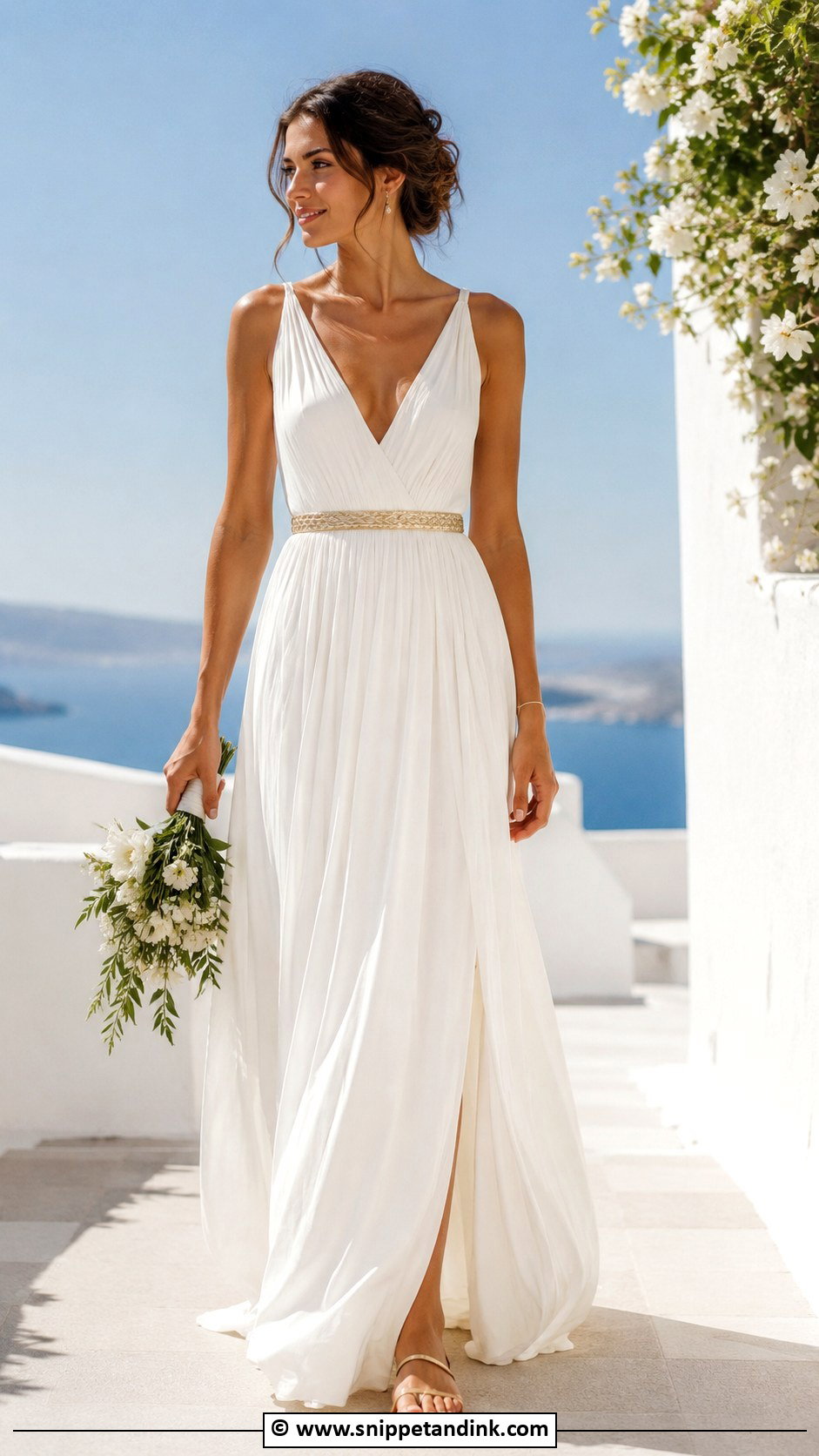
Heat changes how you feel in a dress by the second hour. For summer, fabric matters most, so look for chiffon, silk, georgette or airy crepe. Sleeveless, one shoulder, halter and strapless styles all keep you cooler, and a flowing skirt lets air move. Breathable underwear matters more than people expect; I avoid full shapewear in high heat. Metallic flat sandals or low block heels handle terraces and gardens, with pearl hair pins or a gold belt for detail.
15. Greek Wedding Dress For Plus Size Bride
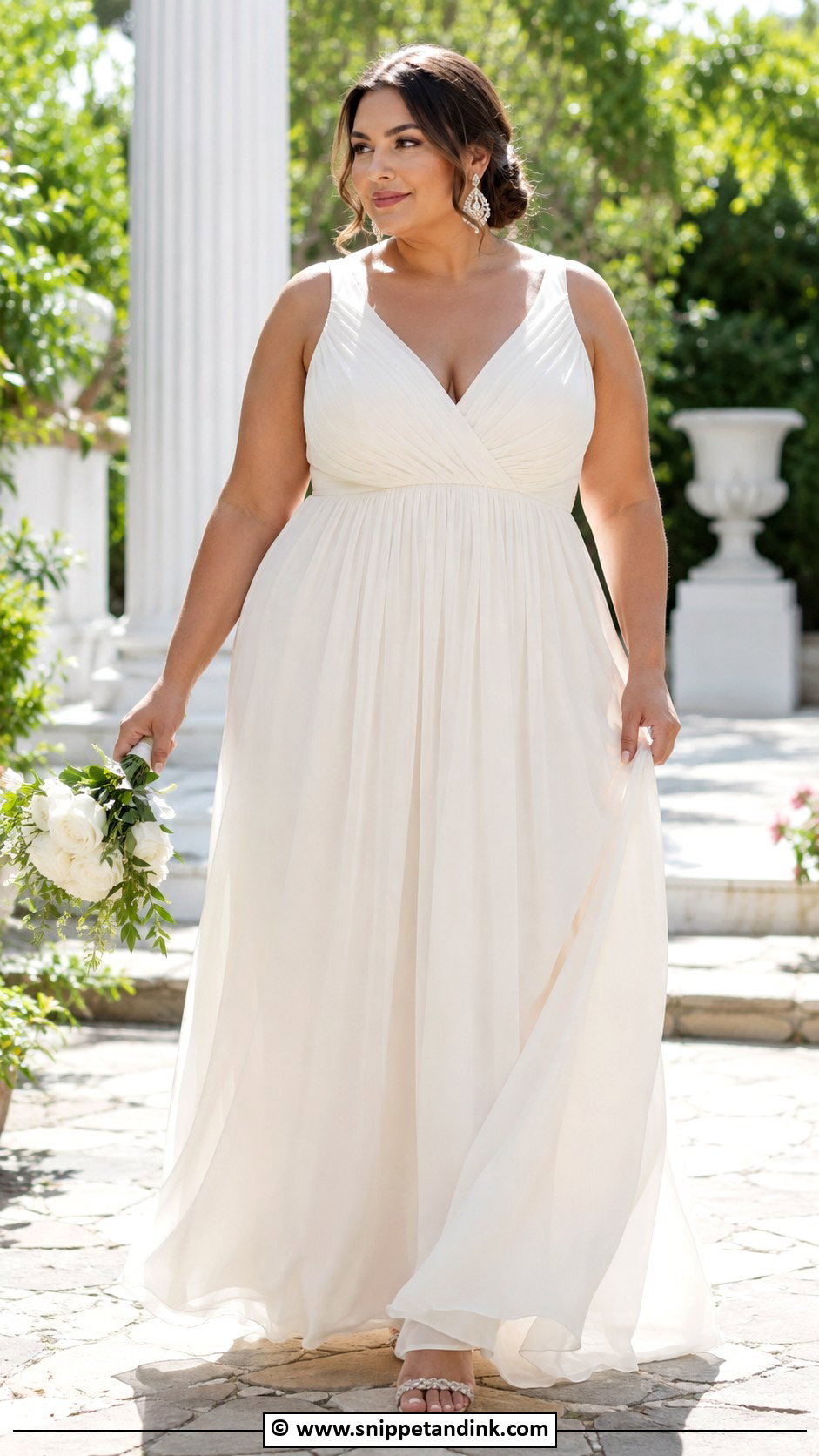
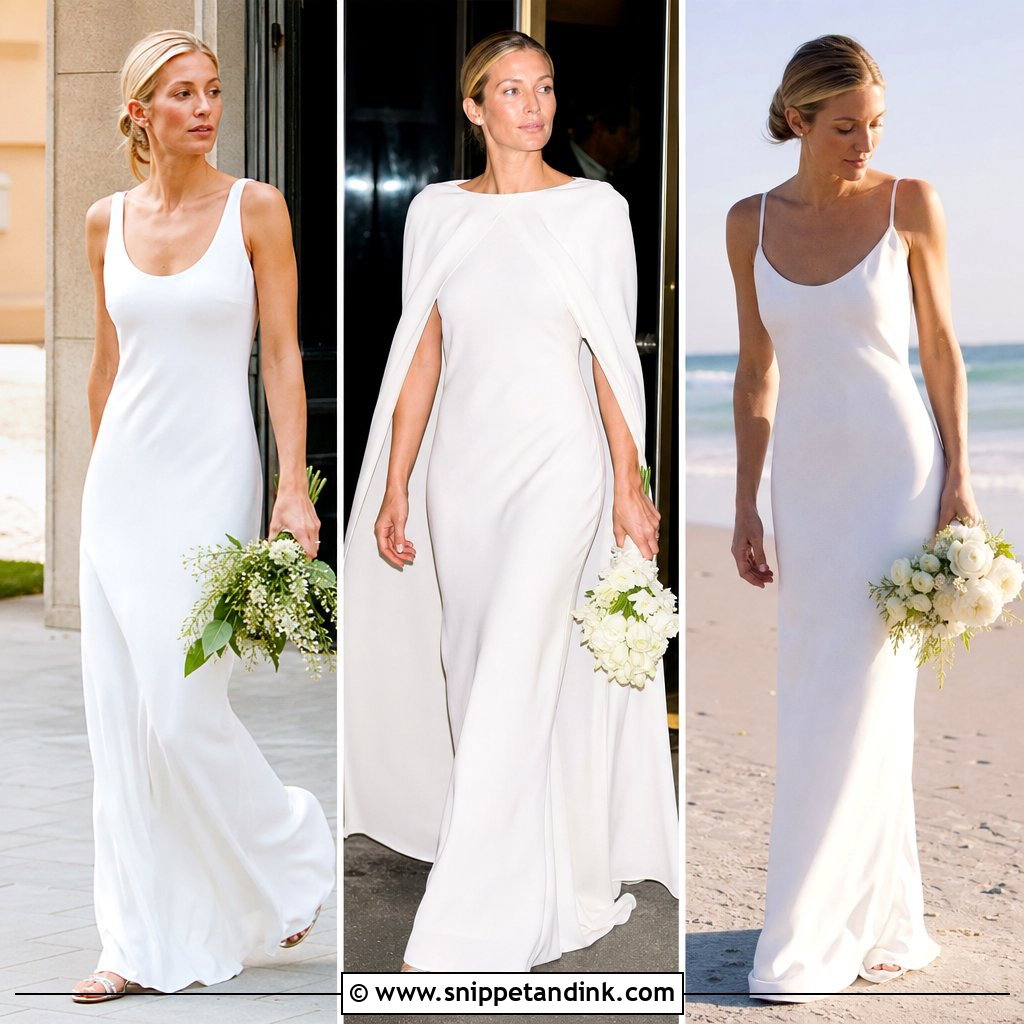
Grecian draping can be very flattering on a fuller figure, but only if the dress is built properly underneath. Look for an empire waist, structured draping, a V-neckline or a soft A-line skirt, which define the bust and let the fabric fall without clinging. I always check for a supportive inner bodice and wide enough straps; unlined chiffon has no shape of its own and collapses. Chiffon over lining, crepe or well-constructed satin hold up through a long day. Statement earrings and a smooth veil suit it.
16. Greek Wedding Dress For Petite Bride
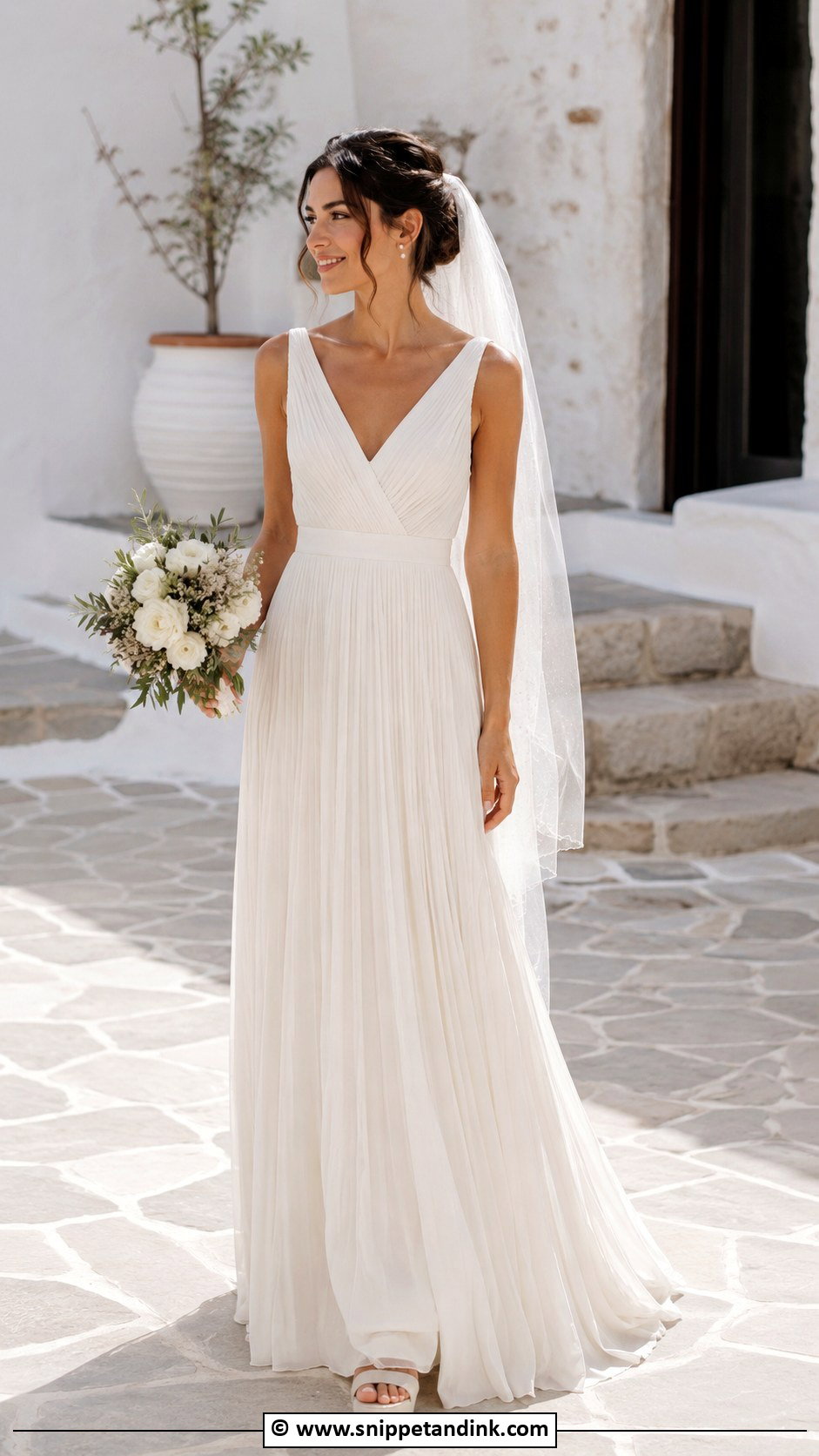
On a petite frame, the danger is fabric swallowing you. Vertical pleats, a high waist, a slim A-line and a clean neckline all add length, while big trains, heavy layers and oversized sleeves shrink you. A one-shoulder gown or a V-neck empire dress usually works best. If you want height, platform sandals are steadier than stilettos on stone. Keep accessories small: pearl studs, a narrow veil and a fine bracelet. I’d also hem petite gowns a touch shorter than usual so the skirt doesn’t pool.
17. Greek Wedding Dress With Sleeves
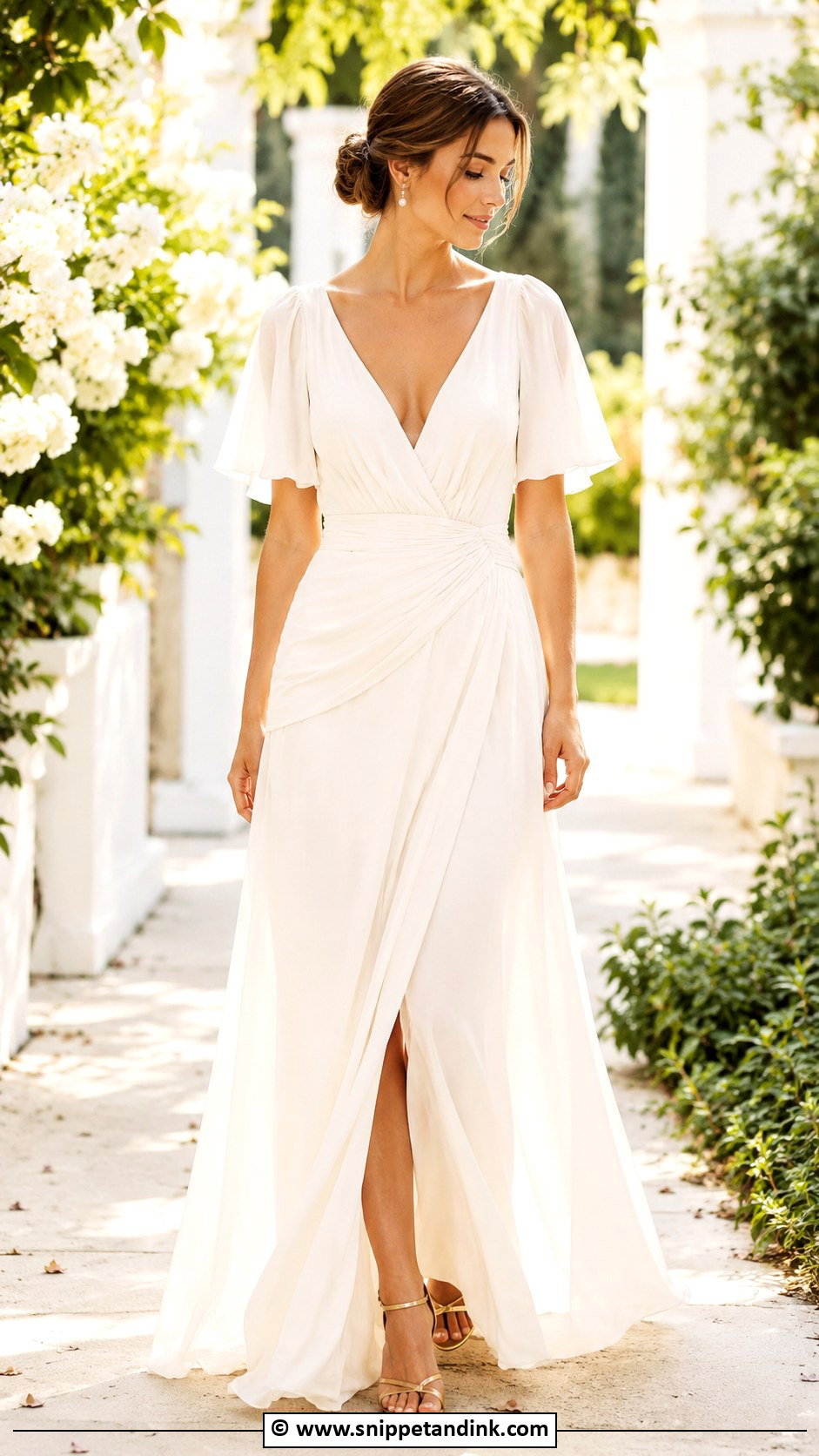
Sleeves on a Grecian dress are about movement as much as coverage. Sheer flutter sleeves, draped cap sleeves, bishop sleeves or loose chiffon all move with the skirt. Outdoors, they also help if the weather turns. I balance them with a V-neckline and draped waist so the upper body stays open. Skip heavy bracelets if the sleeves are full, since they catch. A low bun, simple earrings and ivory or gold shoes complete it.
18. Greek Wedding Dress With Train
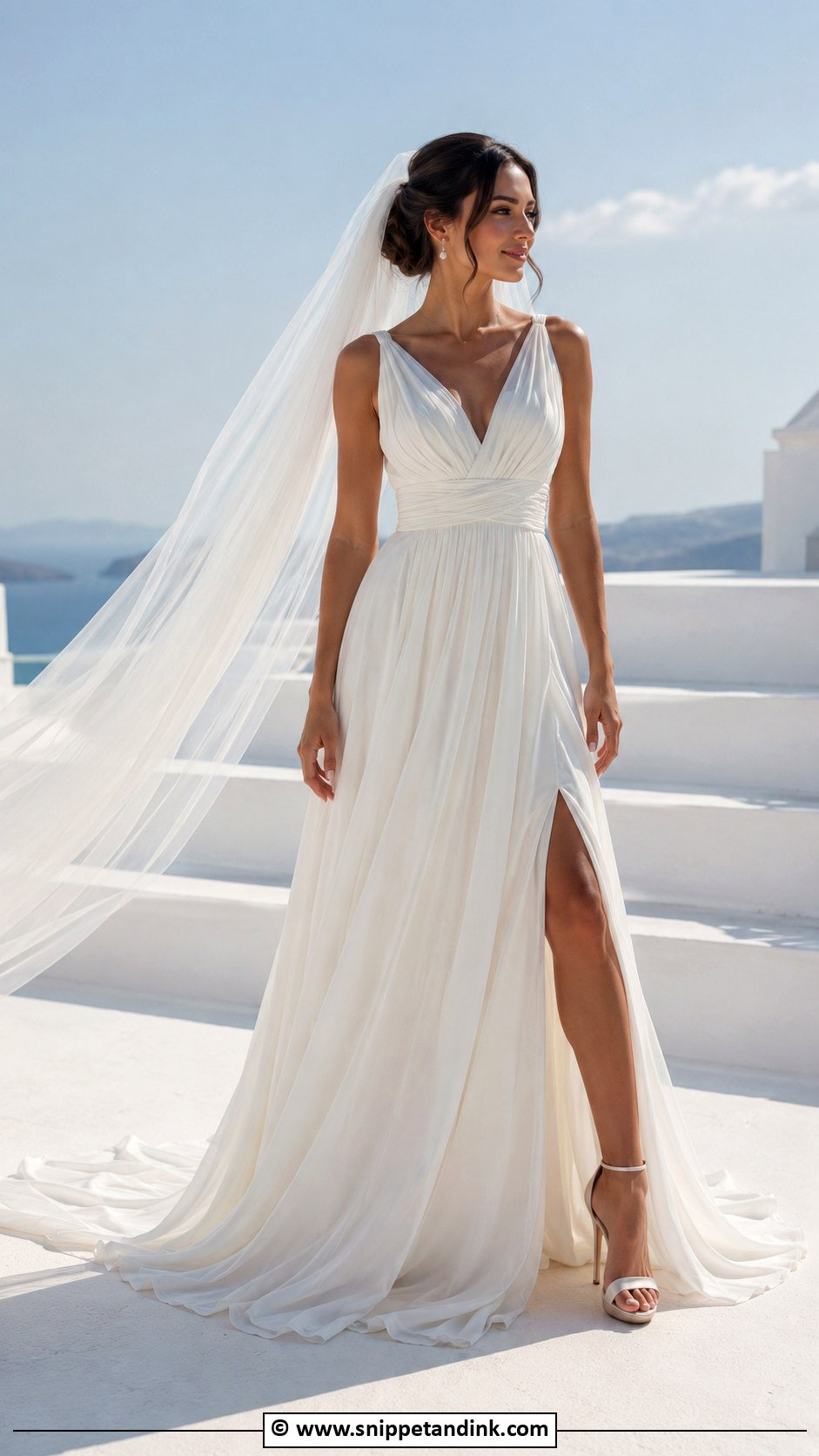
A soft train trails rather than drags. Chiffon, tulle or silk lies lightly behind you, unlike a stiff cathedral train that needs constant arranging. It pairs well with a simple bodice, a one-shoulder neckline or a draped empire waist. Ask your seamstress for a bustle if you’ll dance; chiffon trains are easy to tread on, and a torn train at midnight is a common fitting-room story. Wear it with a long veil for formality or let it stand alone.
19. Greek Wedding Dress With Veil
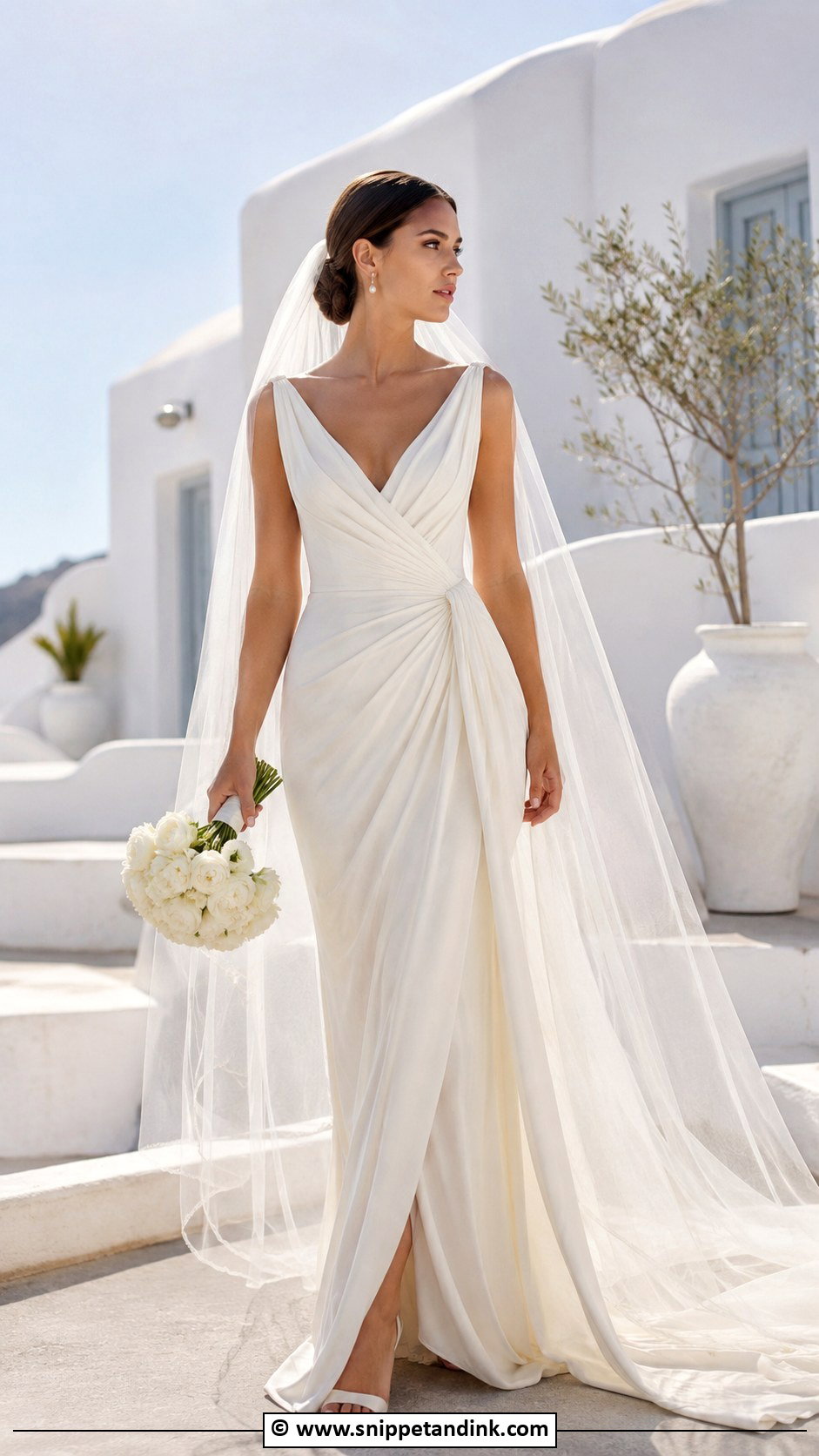
With a Grecian gown, the veil should be as light as the dress. A fingertip, chapel or plain tulle veil works with draped skirts. My rule is to match detail to detail: a busy gown gets a plain veil, a plain gown can take pearl edging or light embroidery. Comb placement matters with this style, because a veil set too high fights a low bun; I anchor it just above or beneath the bun. Keep jewelry minimal so the two pieces work together.


20. Greek Wedding Dress With Pearl Details
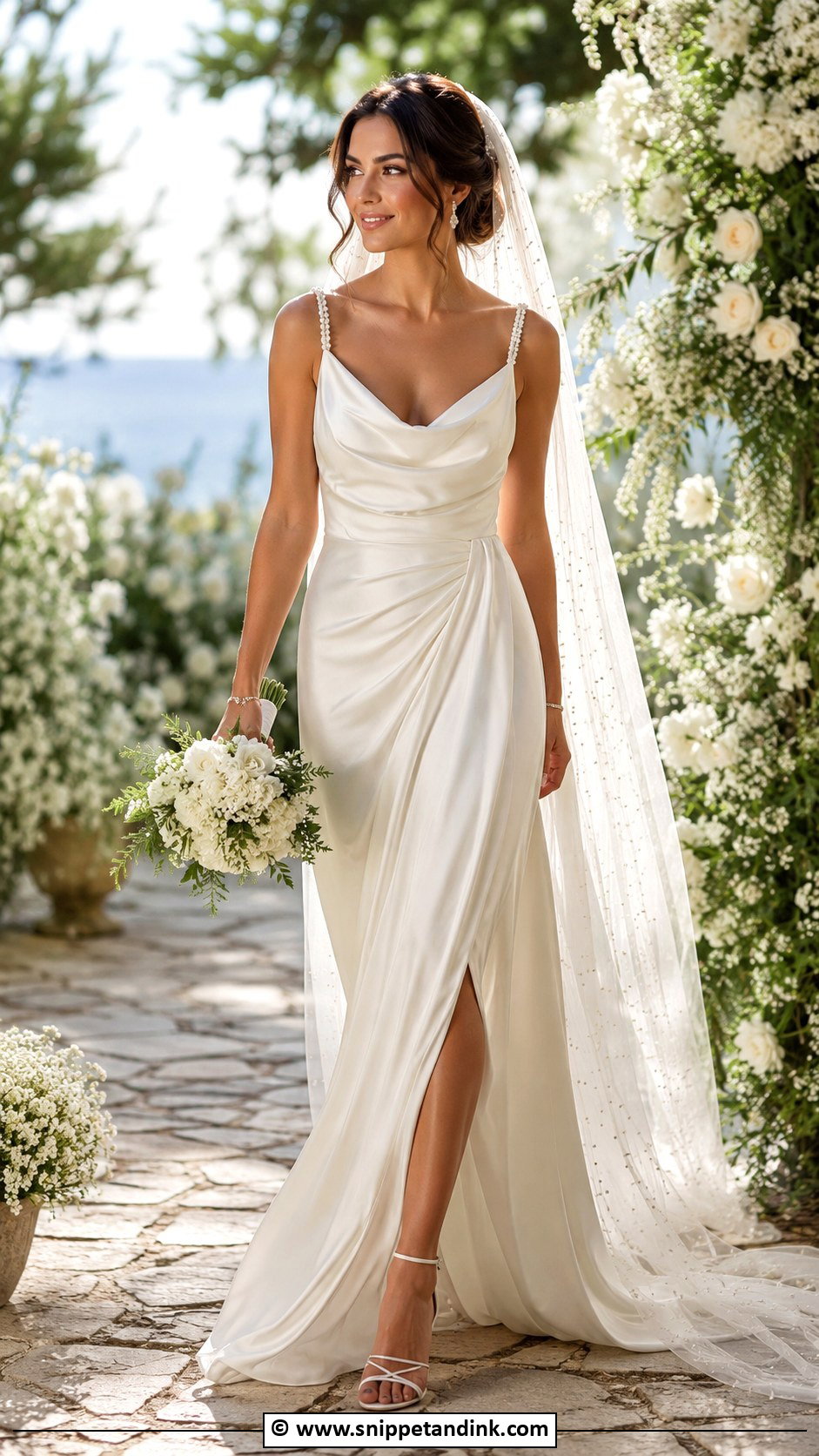
Pearls suit Grecian dresses because they add texture without glitter. They can sit on the straps, bodice, veil, belt or in the hair, but not everywhere at once. Pearl straps on a plain draped gown give quiet detail, or a pearl veil over a clean chiffon dress. Note that sewn pearls add weight; on thin straps I check they don’t drag the shoulder line down. Pearl earrings and satin heels or fine sandals finish it.
21. Greek Wedding Dress With Open Back
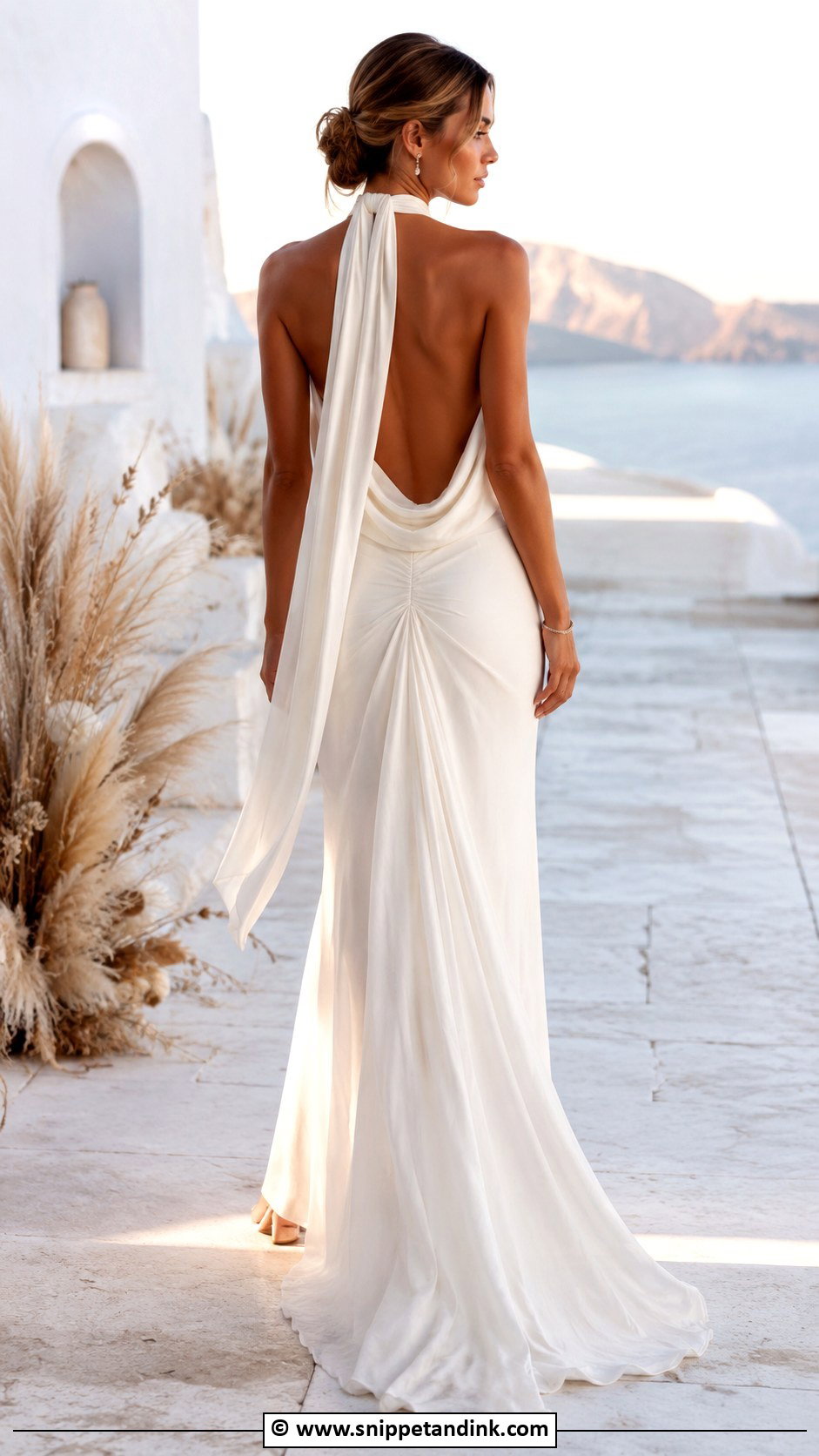
An open back turns the view from behind into the main event, so the front should be quiet: a high neck, a halter or a simple bodice. Soft draping, crossed straps or a cowl back give it a Grecian feel. Support is the question I raise early. Most open-back gowns need cups sewn into the bodice, and I’d confirm that before you fall for one. Wear an updo so the back shows in photos, with small earrings and simple shoes.
22. Greek Wedding Dress With Halter Neck
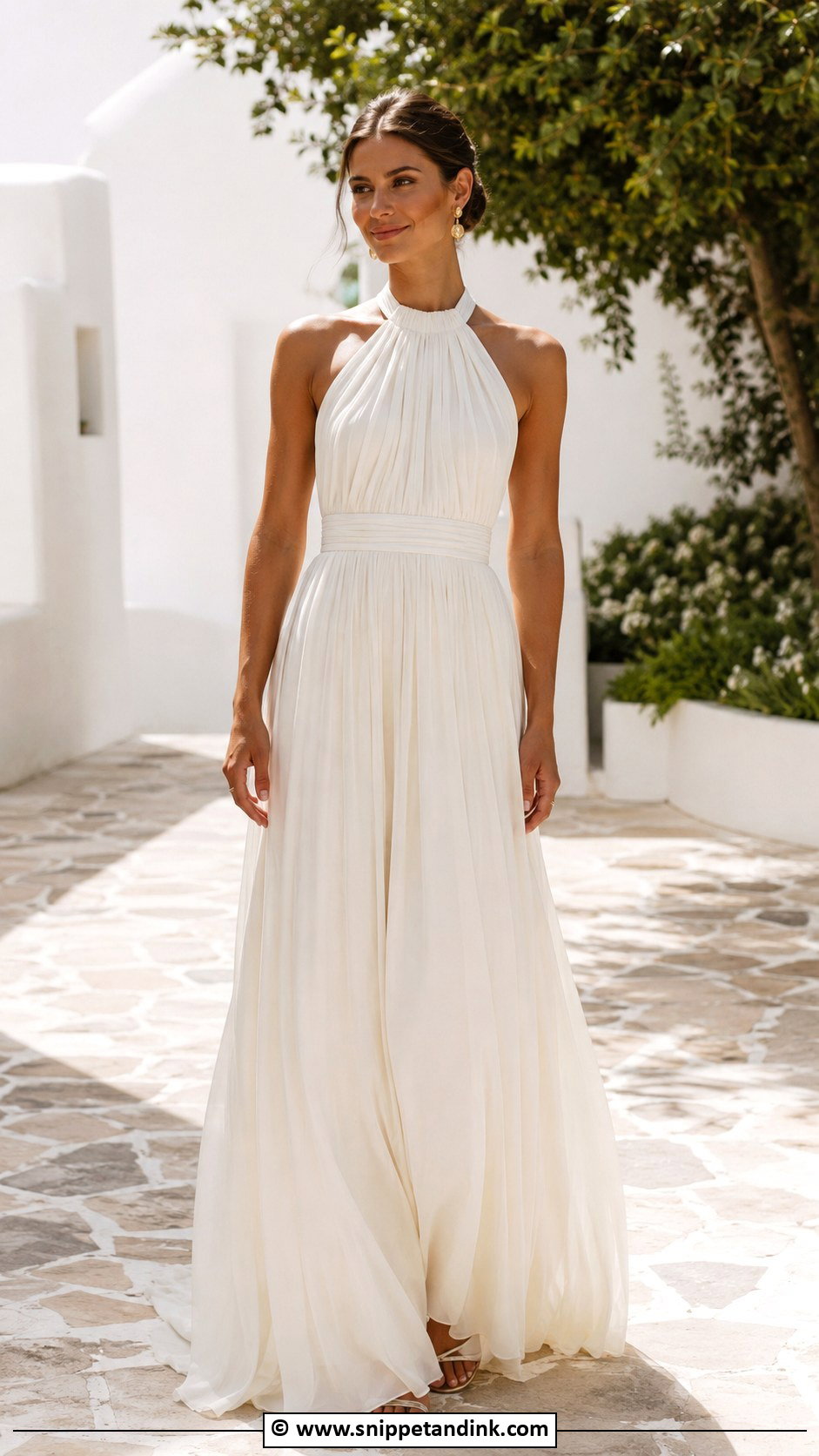
The halter neckline draws the eye upward and holds everything securely at the neck, so it rarely needs adjusting during the day. Gathered fabric, a clean high neck or a draped tie behind the neck all work. One fitting note: a halter tie sits on the back of the neck, and a heavy one can ache by evening, so I test it for an hour if possible. Pulled-back hair, gold earrings and metallic sandals or ivory heels suit it, and it’s a good choice for summer.
23. Greek Wedding Dress With Corset Bodice
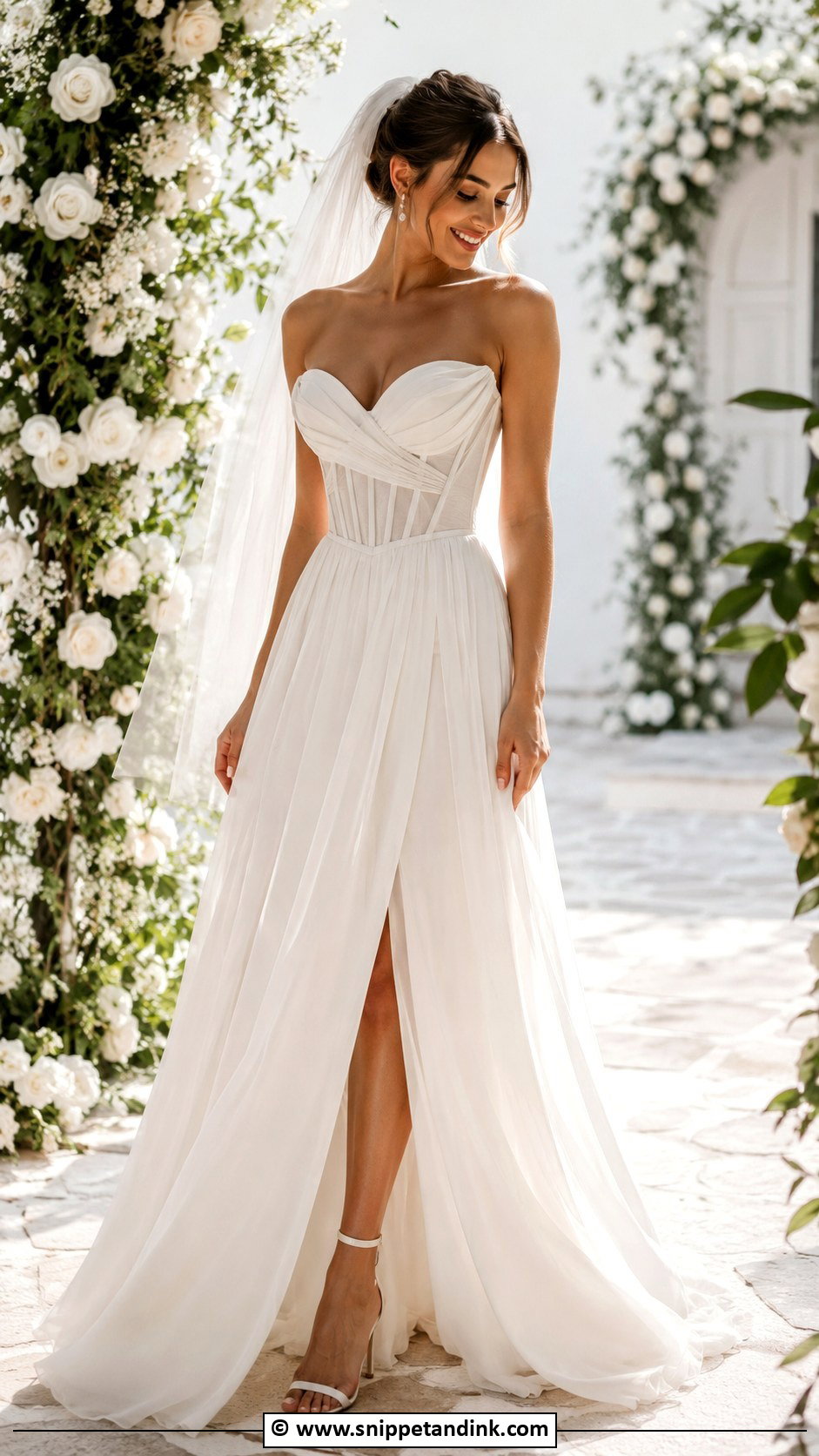
A soft corset bodice gives support and a defined waist while a chiffon or tulle skirt keeps the Grecian feel below. I lean toward a draped corset with light, flexible boning rather than a rigid one, because rigid boning and floaty chiffon can look like two different dresses stitched together. Sit down in it at the fitting; boning that digs in at the hip will bother you through dinner. A sheer veil, pearl earrings and simple heels suit it.
24. Greek Wedding Dress With Floral Applique
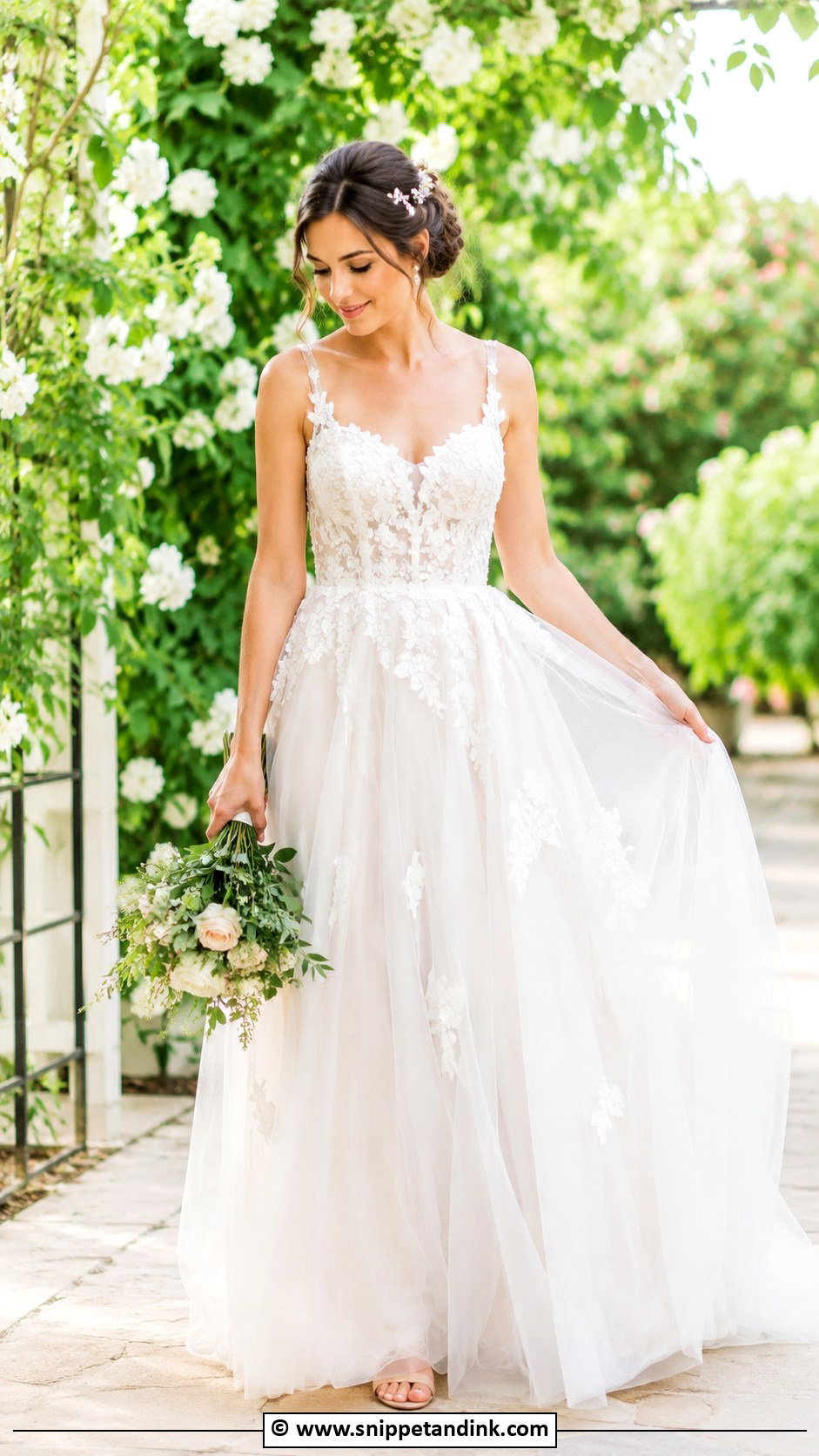
Appliqué gives dimension, but on a Grecian gown less is more. I like it placed on the bodice, straps, sleeves or train rather than scattered everywhere. White or ivory flowers sit well against chiffon, tulle or lace. Raised 3D flowers are prone to crushing in a suitcase, so they need careful packing. A plain veil keeps the look uncrowded, with floral hair pins, pearl earrings and simple shoes. It suits garden weddings and spring ceremonies.

25. Greek Wedding Dress With Blue Detail
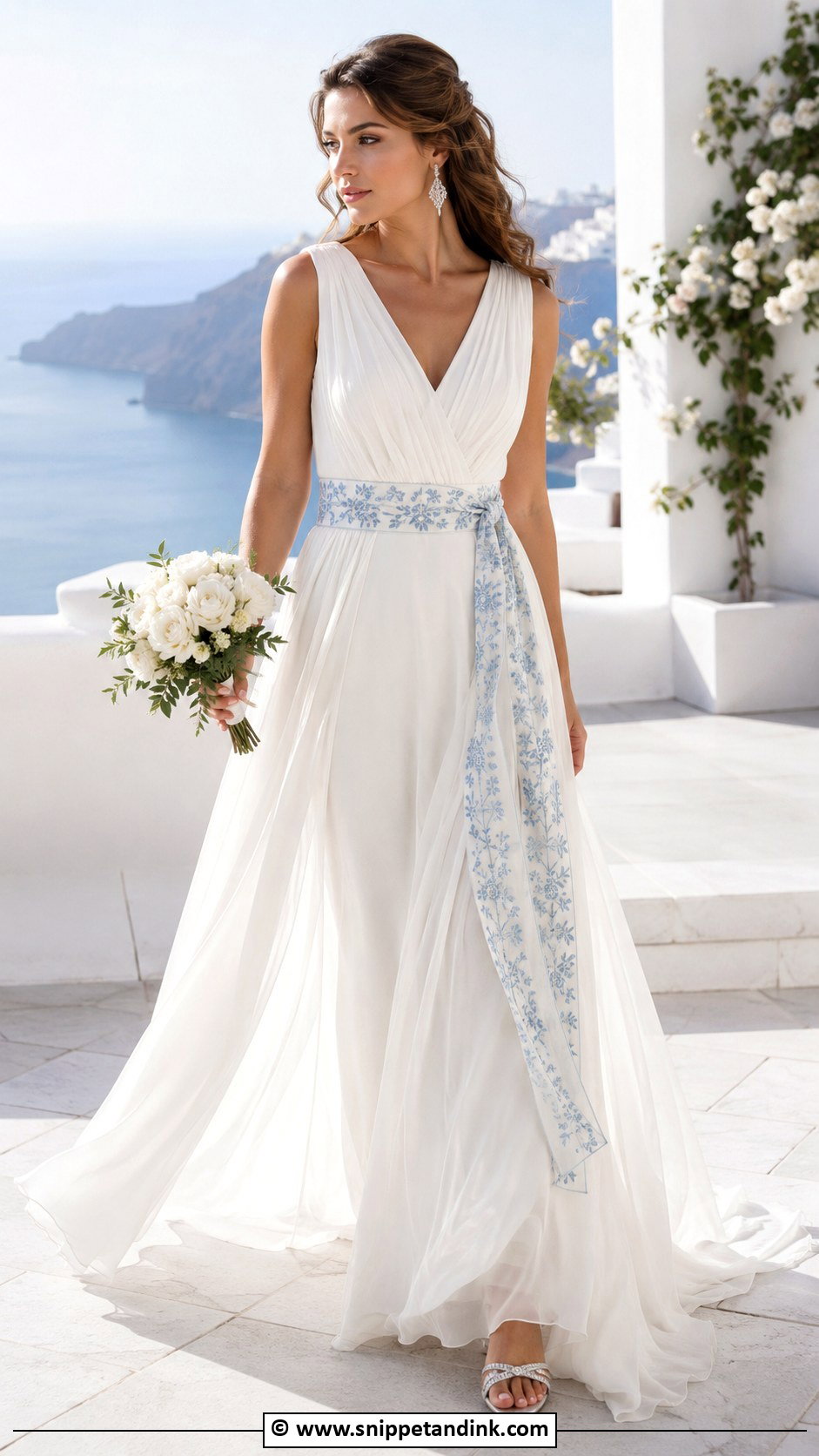
Blue is a quiet nod to Greece. Think pale blue embroidery, a soft blue sash, blue floral accents or tiny blue stones in your earrings, always on a white or ivory gown so the blue stays an accent. It sits well on an empire dress, a flowing chiffon gown or plain satin. Silver or white gold keeps it cool; gold makes it warmer. It’s also an easy way to fold in ‘something blue’ without anyone noticing until you point it out.
26. Greek Wedding Dress With Detachable Skirt
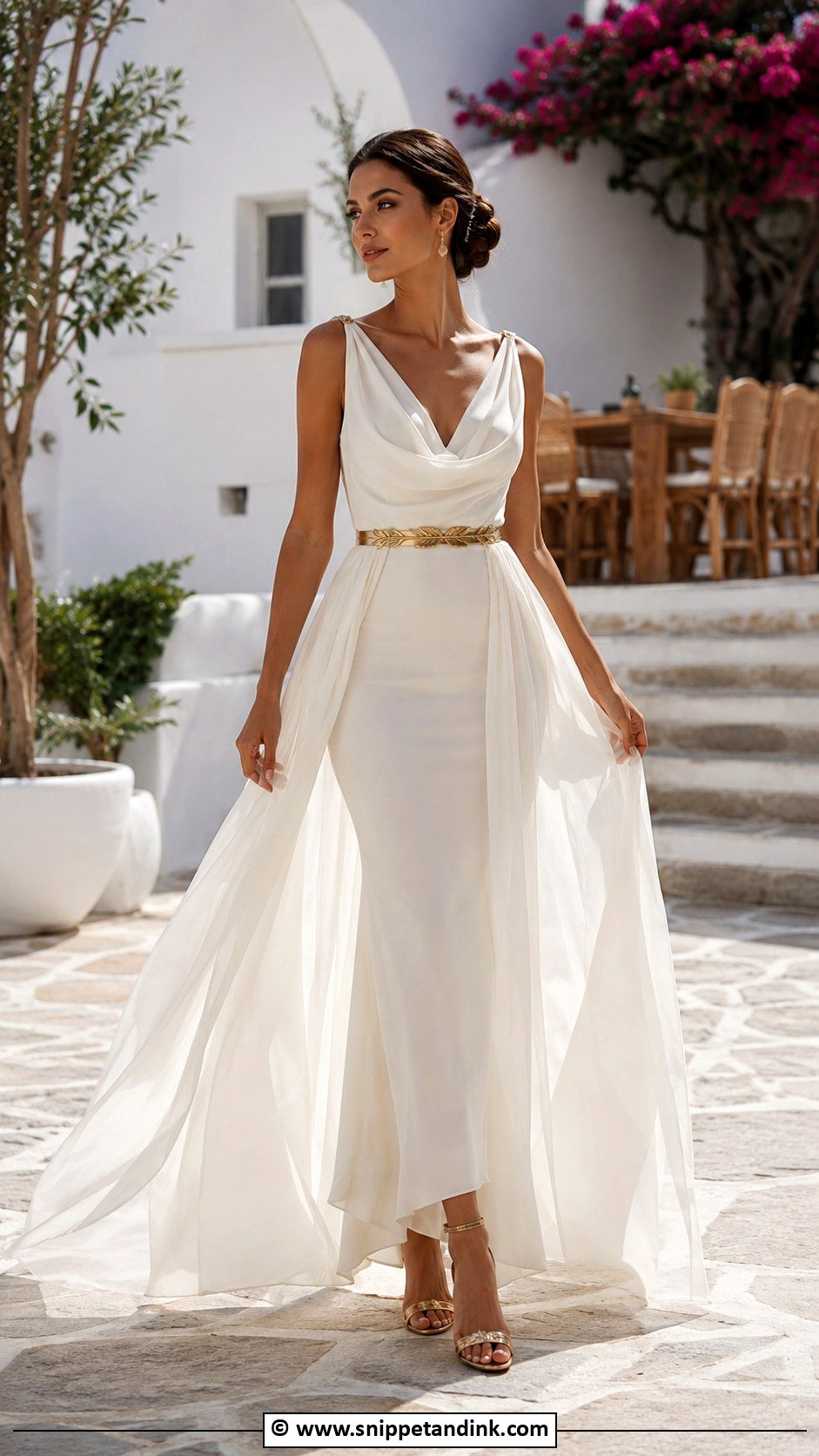
A detachable skirt gives you a ceremony look with volume and then a lighter sheath or slip for dancing. For a Grecian feel, choose a soft tulle or chiffon overskirt, never a heavy structured layer. I always rehearse the change with whoever will help on the day: hidden hooks and snaps are fiddly in a rush, and the bridesmaid who’s practiced once will do it in two minutes. Pair it with a draped bodice, a gold belt or a one-shoulder neckline.
27. Greek Wedding Dress With Minimal Satin
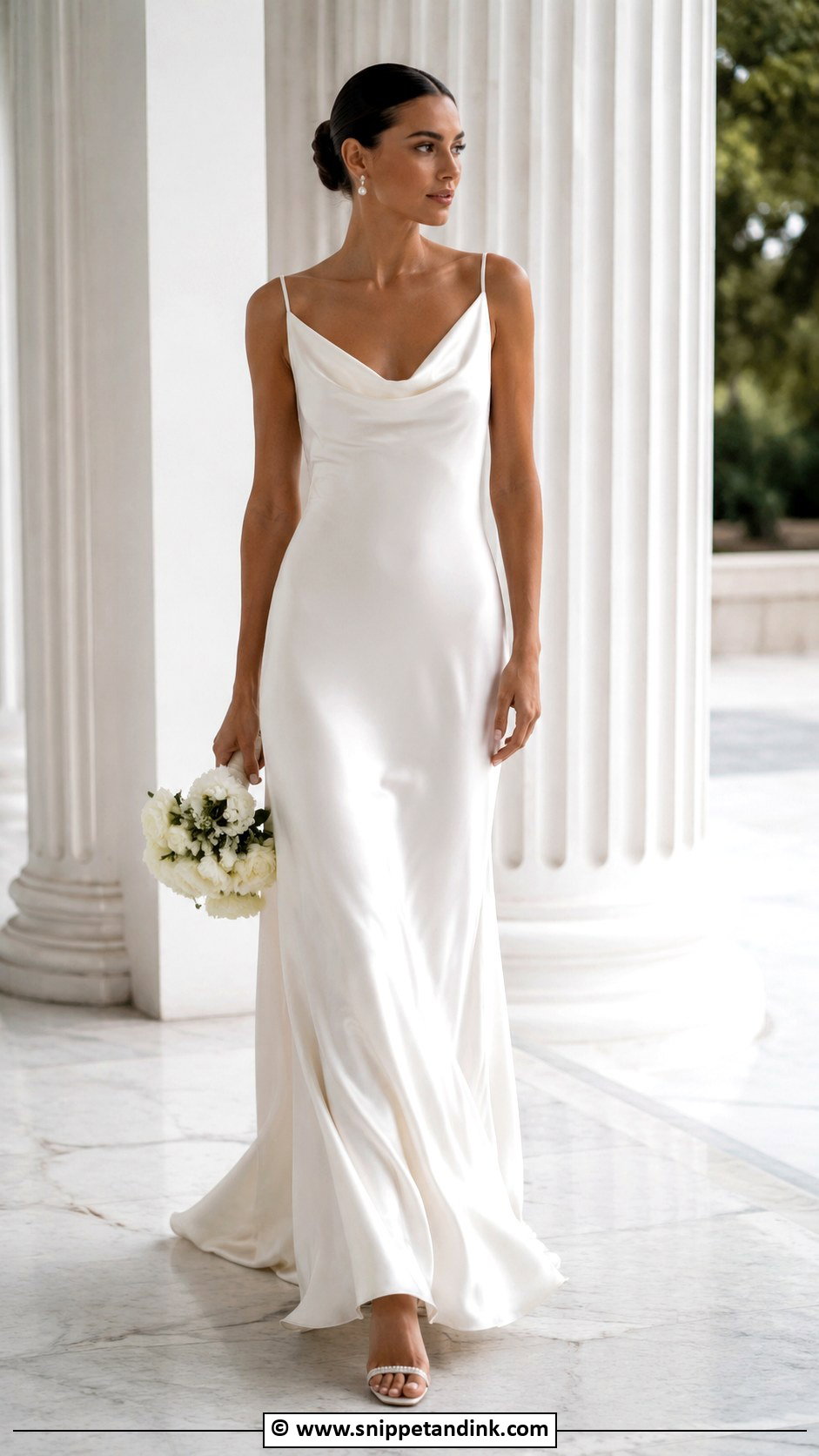
Satin shows everything, so a minimal satin gown depends on cut and weight. I look for a heavier satin with a soft glow over a thin, shiny one. A bias-cut gown, draped cowl or relaxed empire dress all work. Bias-cut satin skims the body closely, so smooth, no-line underwear is non-negotiable. It suits indoor weddings, evening ceremonies and more formal destination venues. Add a gold hair vine or a fine waist detail for a Grecian touch, with pearl earrings and sleek hair.
28. Greek Wedding Dress With Crochet Detail
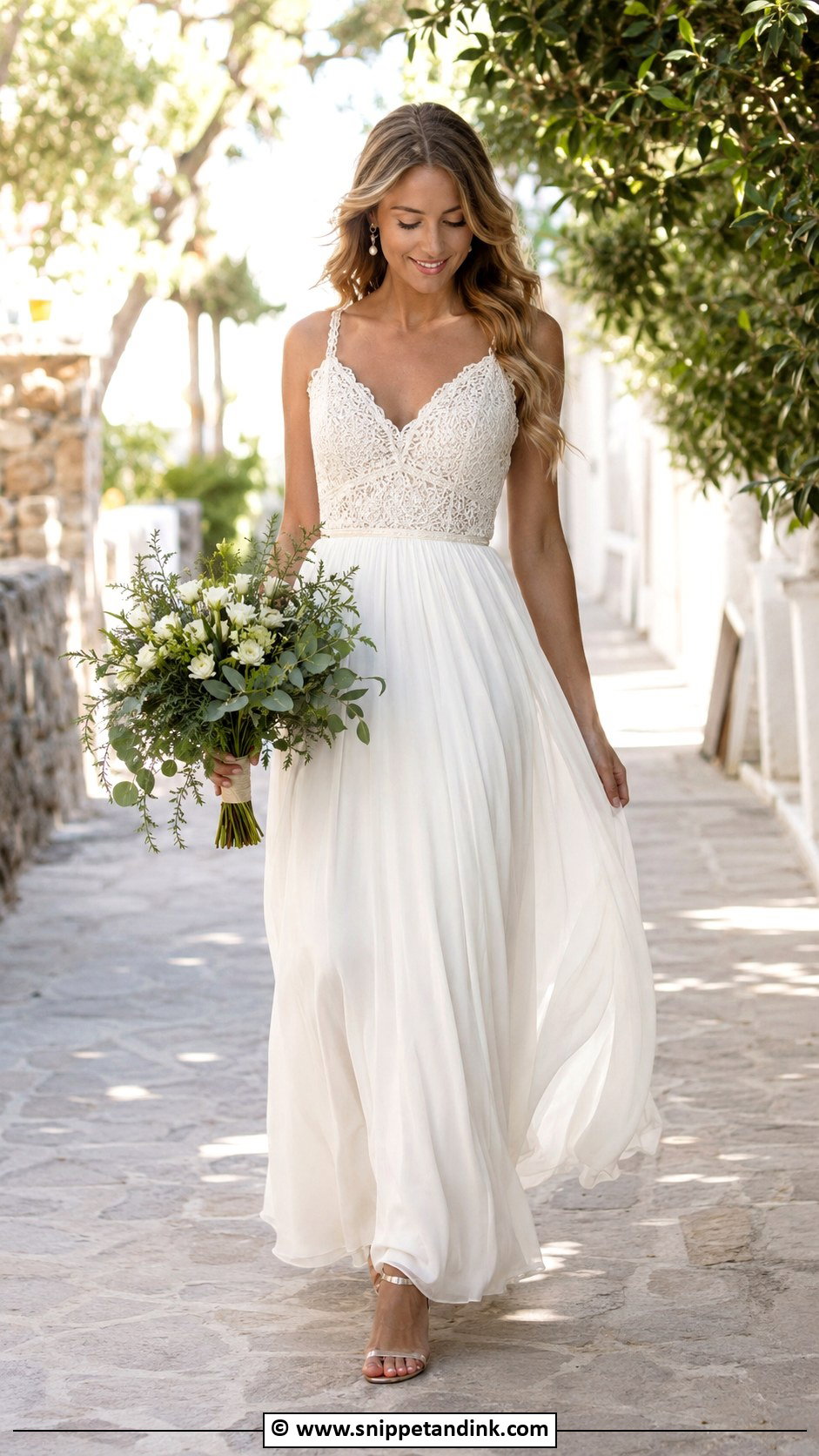
Crochet brings craft and texture, but it can tip into beach cover-up if the construction is loose. I want a clean lining underneath and crochet placed with intent: bodice, sleeves, hem or a back panel. A crochet bodice over a flowing chiffon skirt is the easiest balance. Crochet stretches when wet or heavy, so hang it as little as possible before the day. Soft waves, pearl earrings and leather or metallic sandals suit it for island and bohemian ceremonies.
29. Greek Wedding Dress With Short Hem
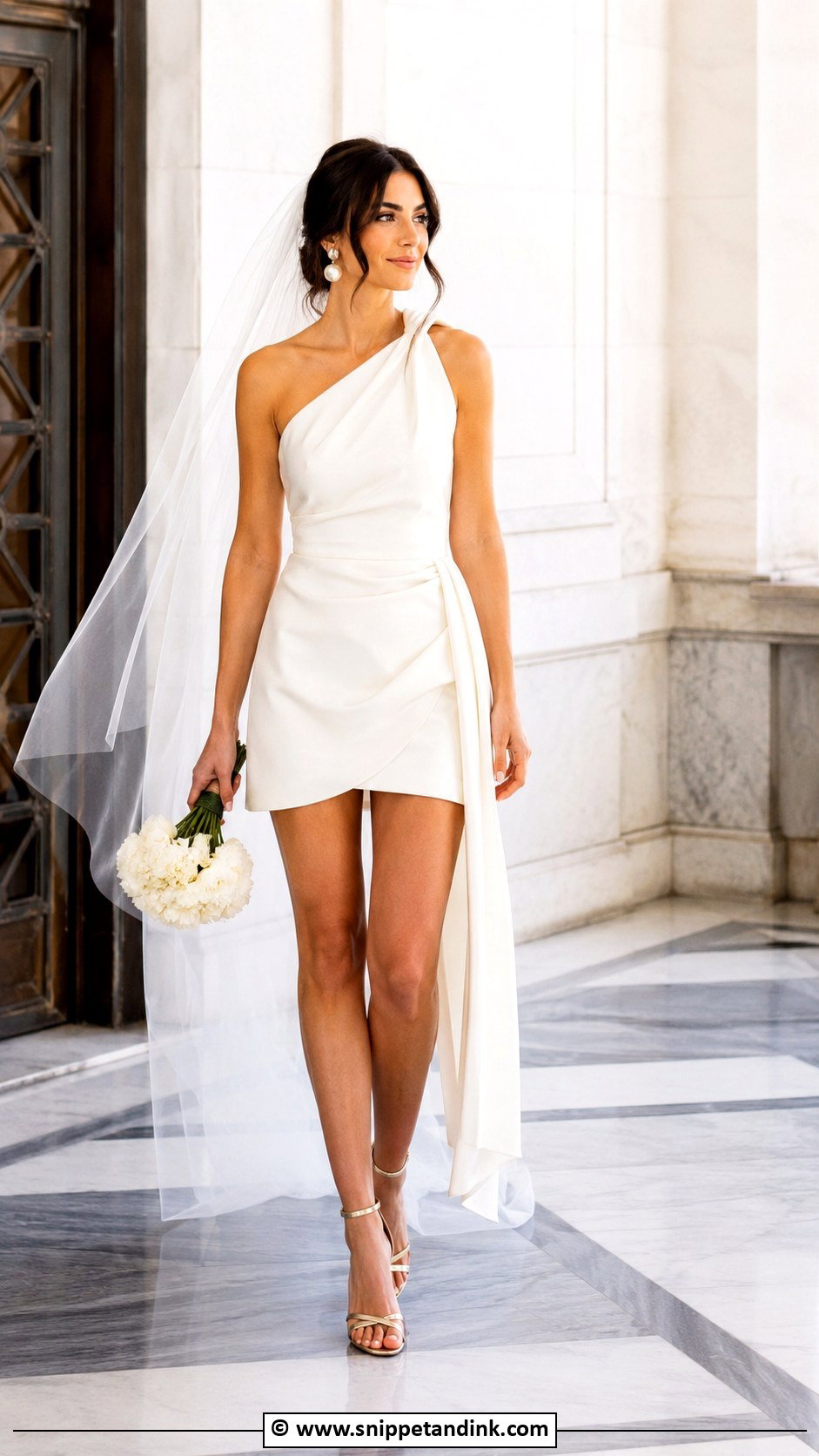
A short Grecian dress suits a civil ceremony, an elopement, a reception change or an after-party. A structured mini with draped fabric, a one-shoulder neckline or a cape keeps the reference clear, or try a short pleated dress with metallic heels and a pearl headband. It’s practical for dancing in heat. For more drama, wear a long veil with the mini; the contrast is striking in photos. Statement earrings and a small bouquet complete it.
30. Greek Wedding Dress With Bridal Sandals
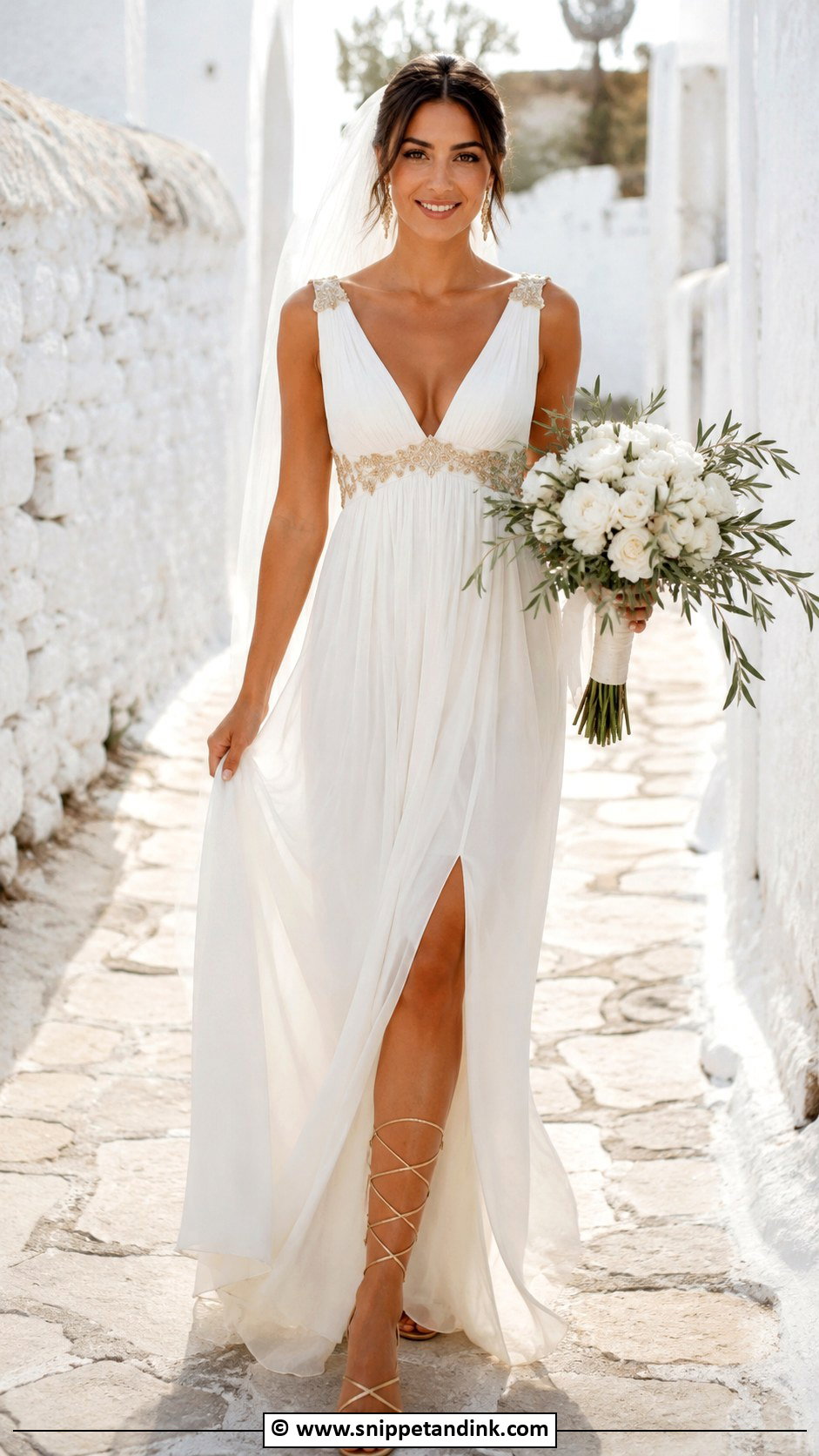
Sandals make sense on sand, stone, grass and island paths. Flat lace-ups, pearl sandals, metallic gold or low block sandals all suit flowing gowns. The step people skip is hemming to the exact shoe: I ask brides to bring the sandals to every fitting, because a chiffon hem set for heels will drag in flats and look sloppy within an hour. Pair them with an empire gown, one-shoulder dress or draped sheath, plus gold earrings, a soft veil and a natural bouquet.
Flying a Draped Gown to an Island Ceremony
Grecian gowns are often worn far from home, so I talk through the journey with every destination bride. Check your airline’s rules before you fly; many allow a gown as carry-on, and some cabin crews will hang it if there’s space, but this varies and is never guaranteed.
- Fold the gown with acid-free tissue paper between every fold, especially at pleats and draped shoulders.
- Pack it in a breathable garment bag, never plastic, which can trap moisture in humid climates.
- Ask your hotel or venue in advance whether they offer professional steaming, or bring a small travel steamer.
- Steam chiffon from the inside, holding the nozzle a few centimeters away and never touching the fabric.
- Hang the dress the moment you arrive, away from direct sunlight, which can yellow ivory silk.
I’d also leave room for a final small adjustment on arrival. Heat and travel can change how a gown sits, and a local seamstress or a hotel tailor can make a quick fix. Pack a small emergency kit with needles, matching thread, safety pins and fashion tape, because a loose strap or a dropped hem is far easier to fix with your own kit than with whatever you can find in a hotel drawer.
Let the Fabric Lead and the Theme Follow
Every gown here shares one quality: the fabric moves with you. Start with comfort, fabric and proportion, then add the detail that matters to you, a cape, pearls, lace sleeves or a gold belt. A Grecian dress should look right from every angle without tipping into costume. Let the venue and season guide the weight of the cloth, and you’ll have a dress that feels like yours rather than a theme.
You'll Like These Ideas:





Leave a Reply