
Modest bridal wear has never offered more choice. Lace A-lines with matching hijabs, embroidered kaftans, satin abayas and full ball gowns are all open to today’s Muslim bride, and none of them asks her to give up coverage. What separates a good modest gown from a disappointing one is rarely the design on the hanger. In my fittings it comes down to lining, sleeve length when the arms move, how the neckline meets the hijab, and whether the fabric suits the season. The 25 dresses below cover classic, cultural and modern styles, with notes on what I’d check before you commit to each one.
Fabric Weight for a July Garden or a January Hall
A modest bride wears more fabric than most: long sleeves, a lined skirt, an underscarf and a hijab, often with a veil on top. That’s why the season matters more for her dress than for almost anyone else’s. I ask about the venue and the month before we look at a single gown.
Warm weather and outdoor venues
Choose fabrics that breathe and move: chiffon, georgette, light crepe and fine organza. Ask what the lining is made of. A polyester lining traps heat under long sleeves, while a cotton or viscose blend feels noticeably cooler. Keep the hijab light too, and save heavy satin or velvet for indoors.
Cold months and large halls
Mikado, duchess satin, brocade and velvet hold their shape and keep you warm through photos outdoors. Be careful with heavy fabrics in a crowded reception, though. Halls full of guests get hot quickly, and a heavy gown plus a wrapped hijab can be overwhelming by the evening. A lighter reception outfit solves that.
1. White Lace Islamic Wedding Dress
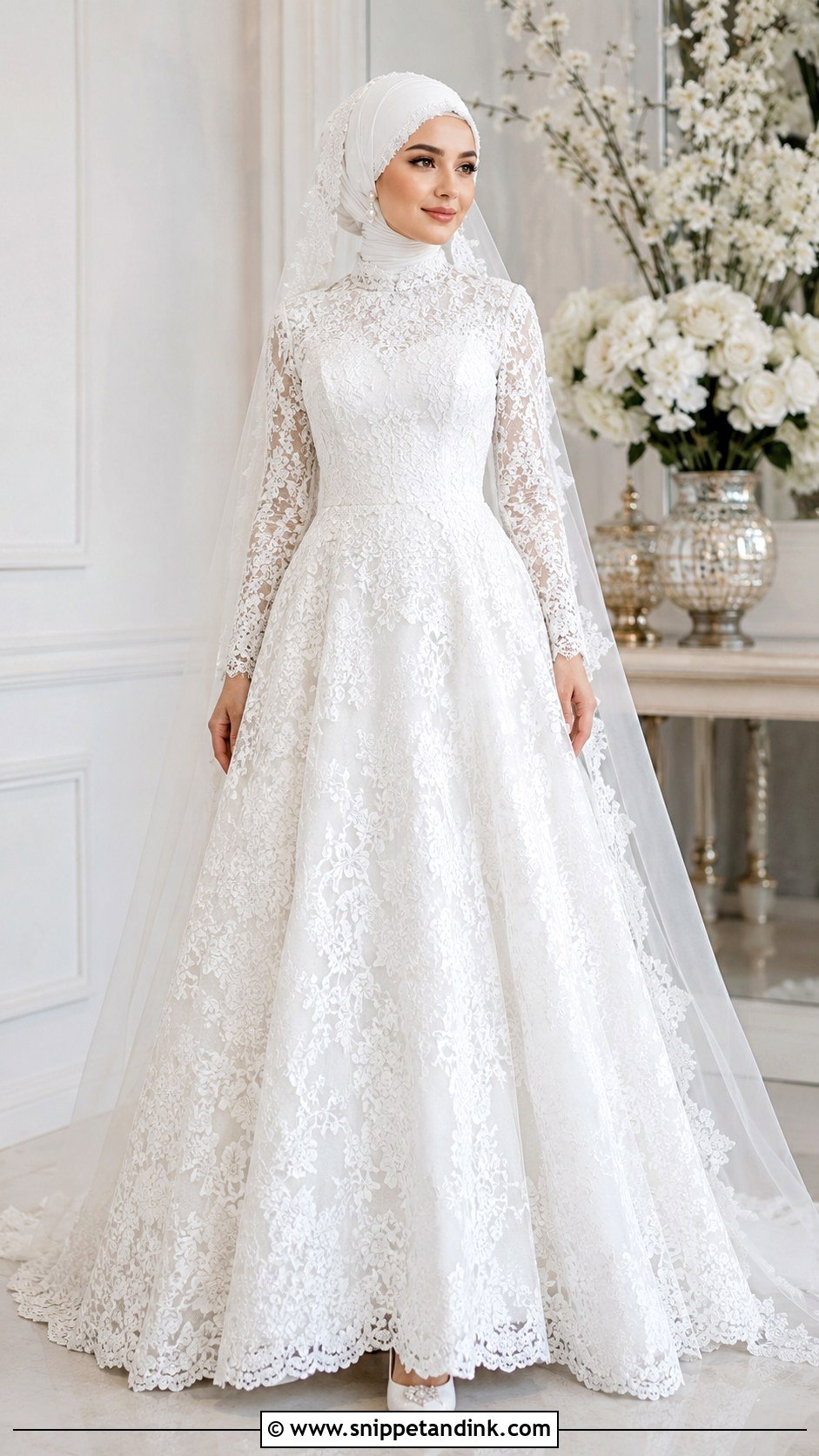
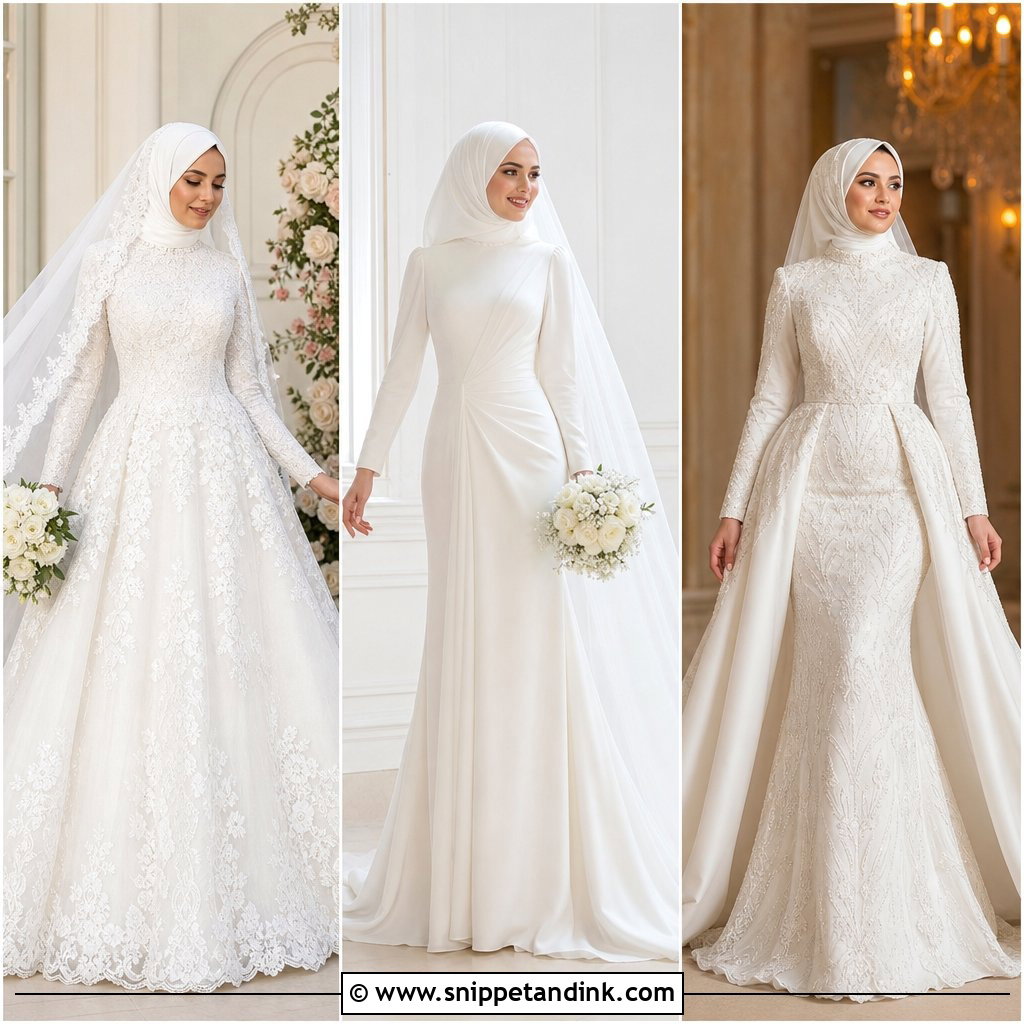
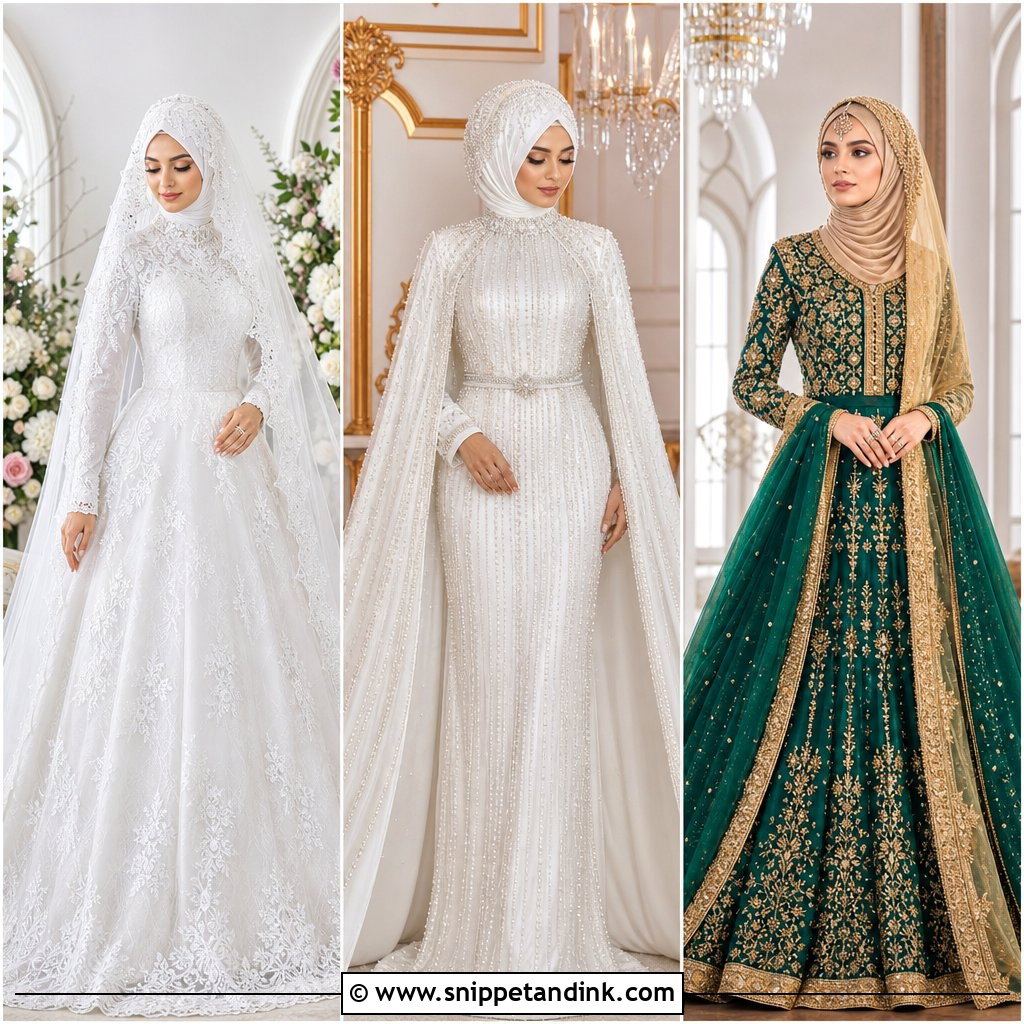
White lace is the classic for good reason: long sleeves, a high neck and a full skirt give coverage, and lace keeps it from looking severe. Lace sleeves are often unlined on standard gowns. I ask the tailor to line them in nude or white mesh, and I choose the shade with the bride’s arm under the fabric, because the wrong lining looks like a bandage. A matching white hijab under a lace-trimmed veil keeps the head and dress in one tone. Pearl earrings, a fine bracelet and closed-toe heels are enough for a ballroom, a formal hall or classic portraits.
2. Satin Islamic Wedding Dress
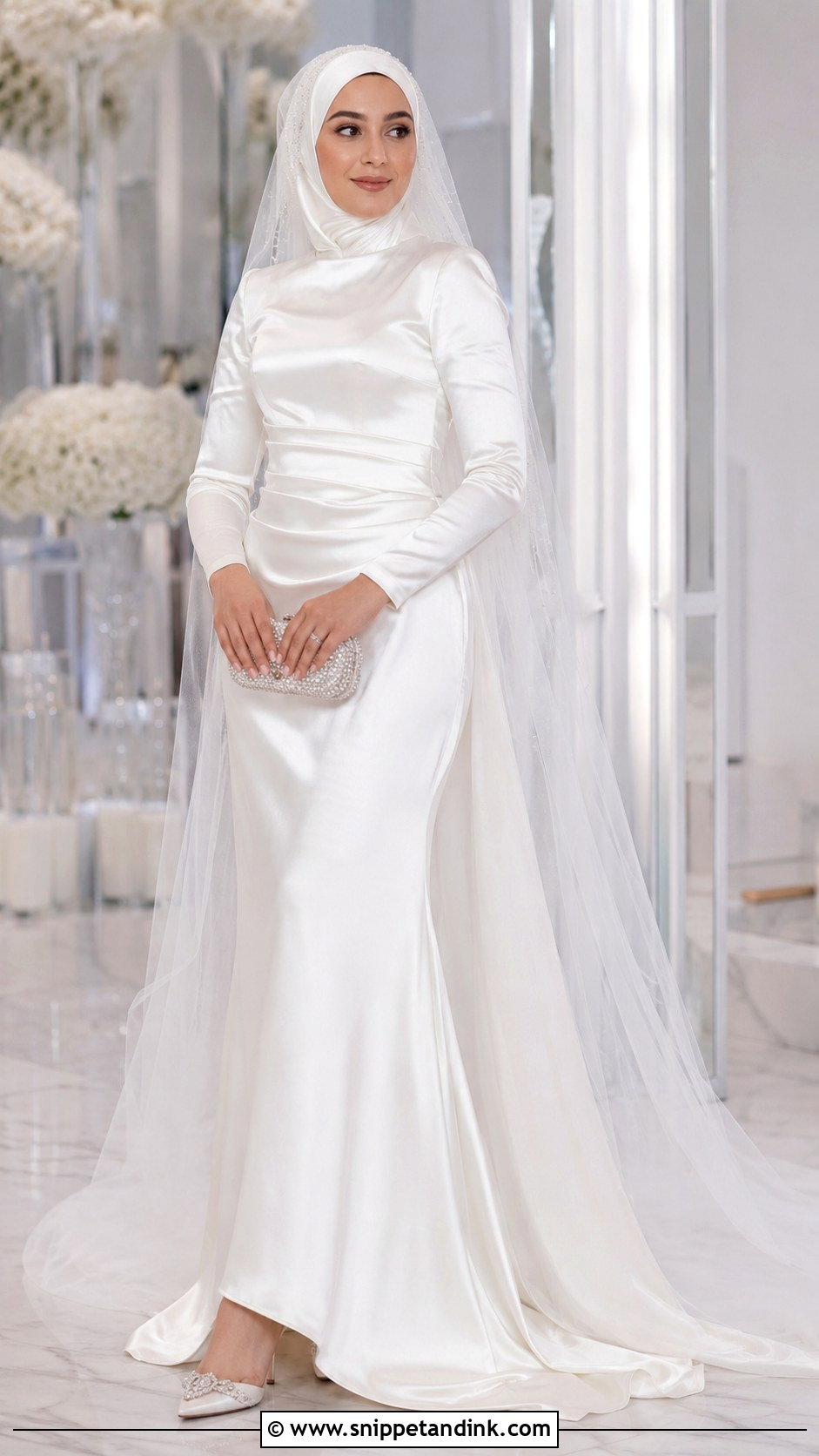
Satin does the decorating itself. A long-sleeve gown with a high neck, a defined waist and a flowing skirt in ivory, pearl white or soft champagne needs almost no embellishment. The catch is that satin shows everything: pressure marks from sitting, a lumpy seam, a bra line. I always check heavy duchess satin over lighter charmeuse for modest gowns, since it hides more and holds the skirt away from the body. Add a satin hijab in the same shade and a light veil for the ceremony. Pointed heels, a small crystal clutch and simple jewelry are plenty.
3. A-Line Islamic Wedding Dress
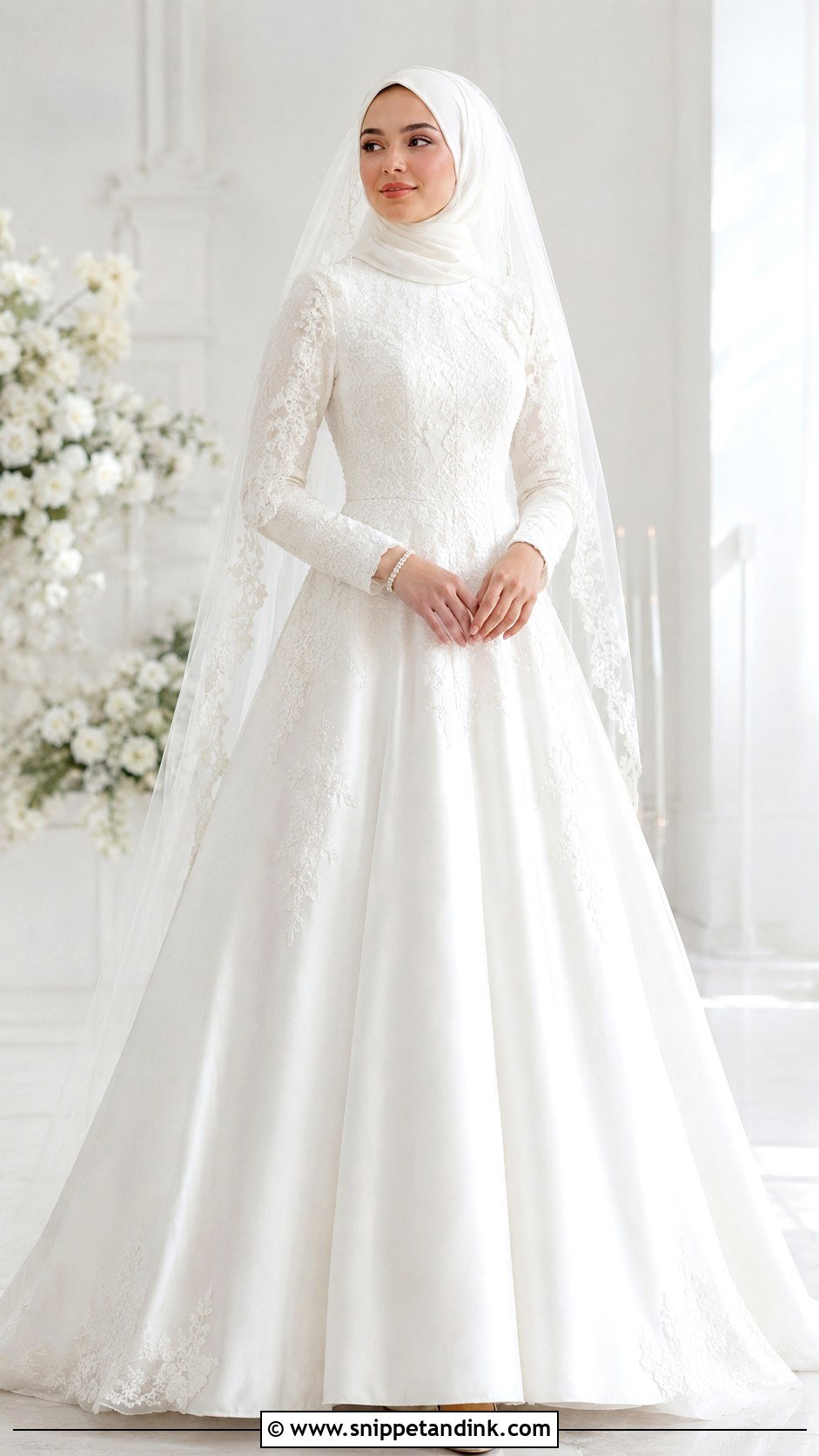
If you don’t know where to start, start here. The A-line fits through the bodice and widens gently, so it balances most figures without squeezing anywhere. Look for long sleeves, a higher neckline and a fully lined bodice. Lace, mikado, satin and chiffon all hold this shape. Tuck the hijab neatly into the neckline and add a soft veil for movement. Block heels or low pumps make sense for a long celebration. I like starting a modest bride’s first appointment in an A-line, because it shows us quickly whether she wants more volume or a slimmer line.
4. Ball Gown Islamic Wedding Dress
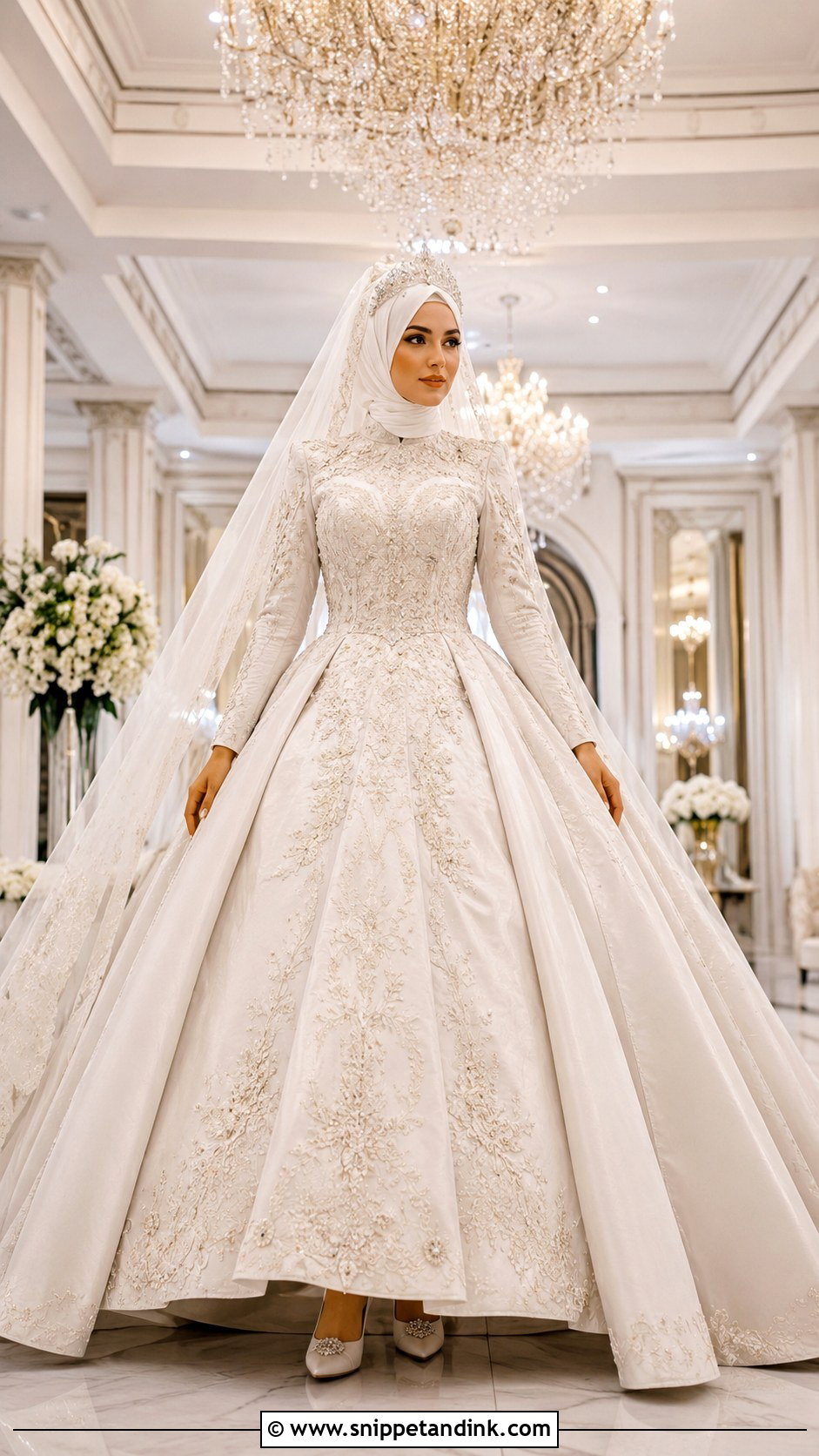
A ball gown makes a royal entrance, and it needs structure to carry it off. Long sleeves, a high neck and a stiff fabric such as mikado or layered organza keep the skirt holding its shape all evening. Embroidery, pearls or crystals add luxury, but on a skirt this large I keep embellishment to the bodice and hem. A very grand skirt calls for a smooth hijab and plain veil, and a tiara or jeweled headpiece can sit over the hijab for a regal finish. Plan the logistics: a full skirt needs a wide chair, a clear aisle and someone to help in the bathroom.
5. Chiffon Islamic Wedding Dress
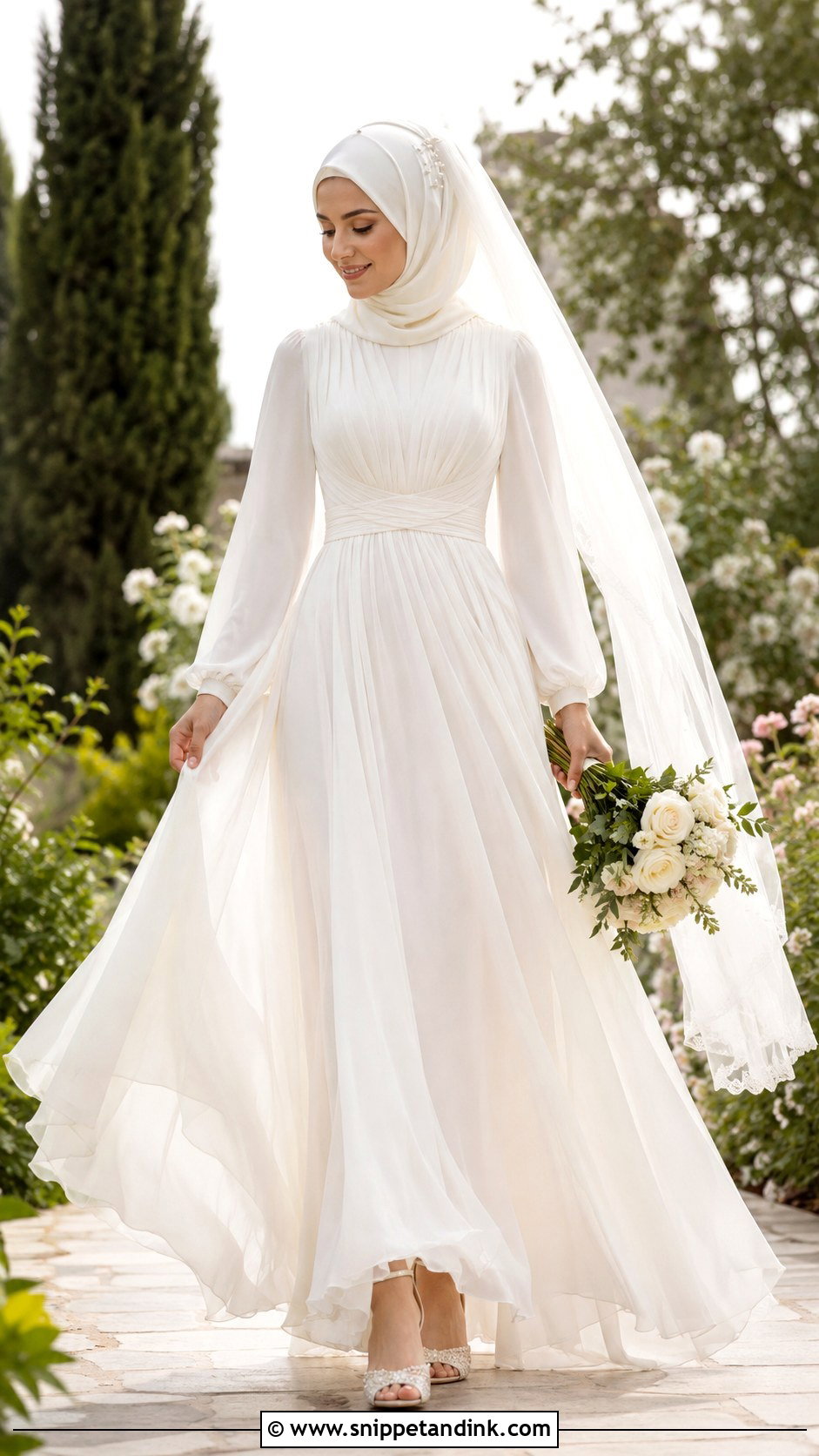
Chiffon moves with the slightest breeze, which is why it suits gardens, outdoor venues and warm weather. A gown with long sleeves, a gathered waist and a layered skirt feels light. Chiffon is also sheer and frays at the hem, so I check that there are enough layers to be opaque and that the hem is properly rolled before the dress leaves the shop. White, ivory, blush and champagne all work. A chiffon hijab in the same shade blends naturally and frames the face softly. Pearl pins, soft makeup and comfortable heels complete it.
6. Embroidered Islamic Wedding Dress
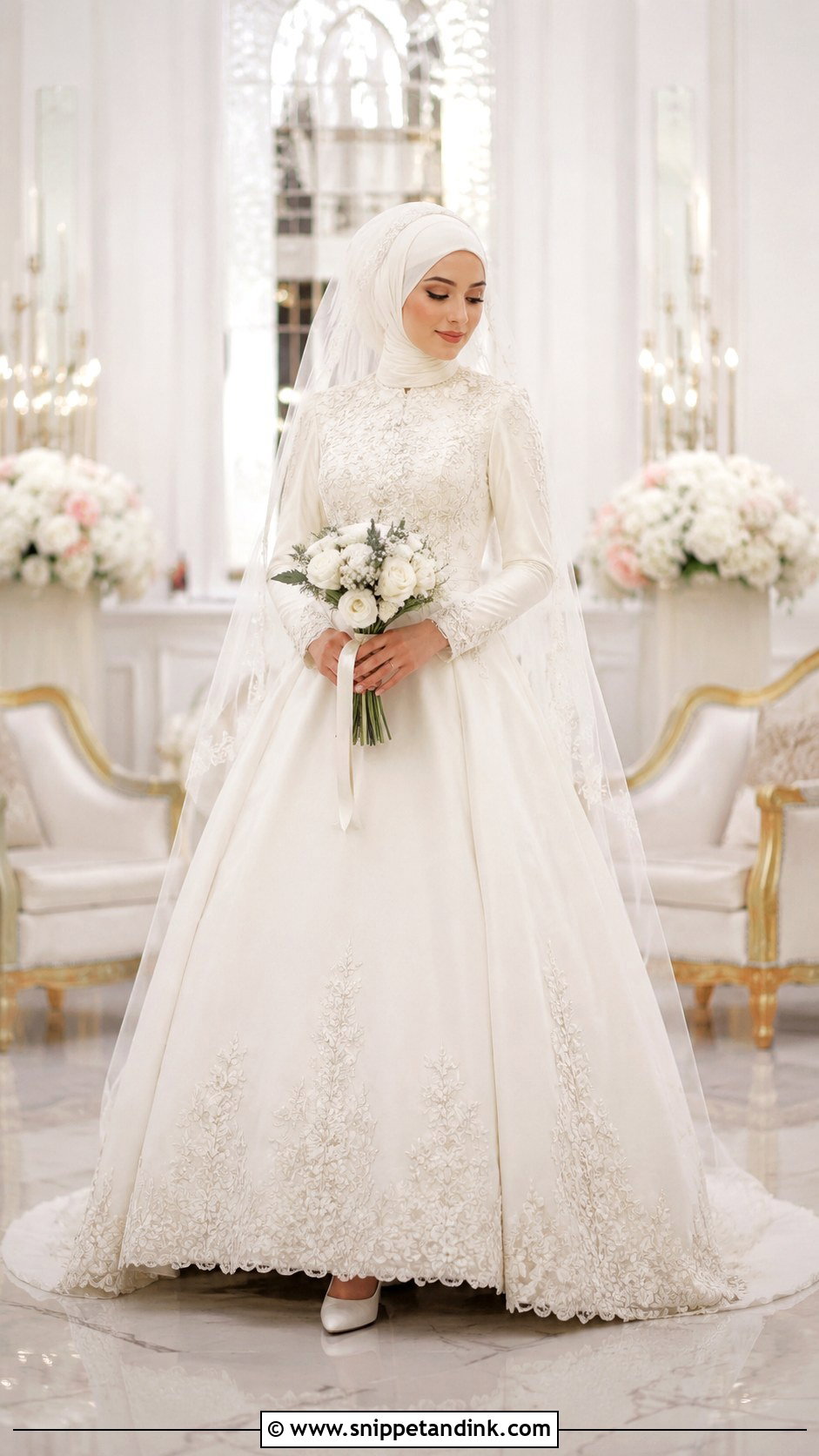
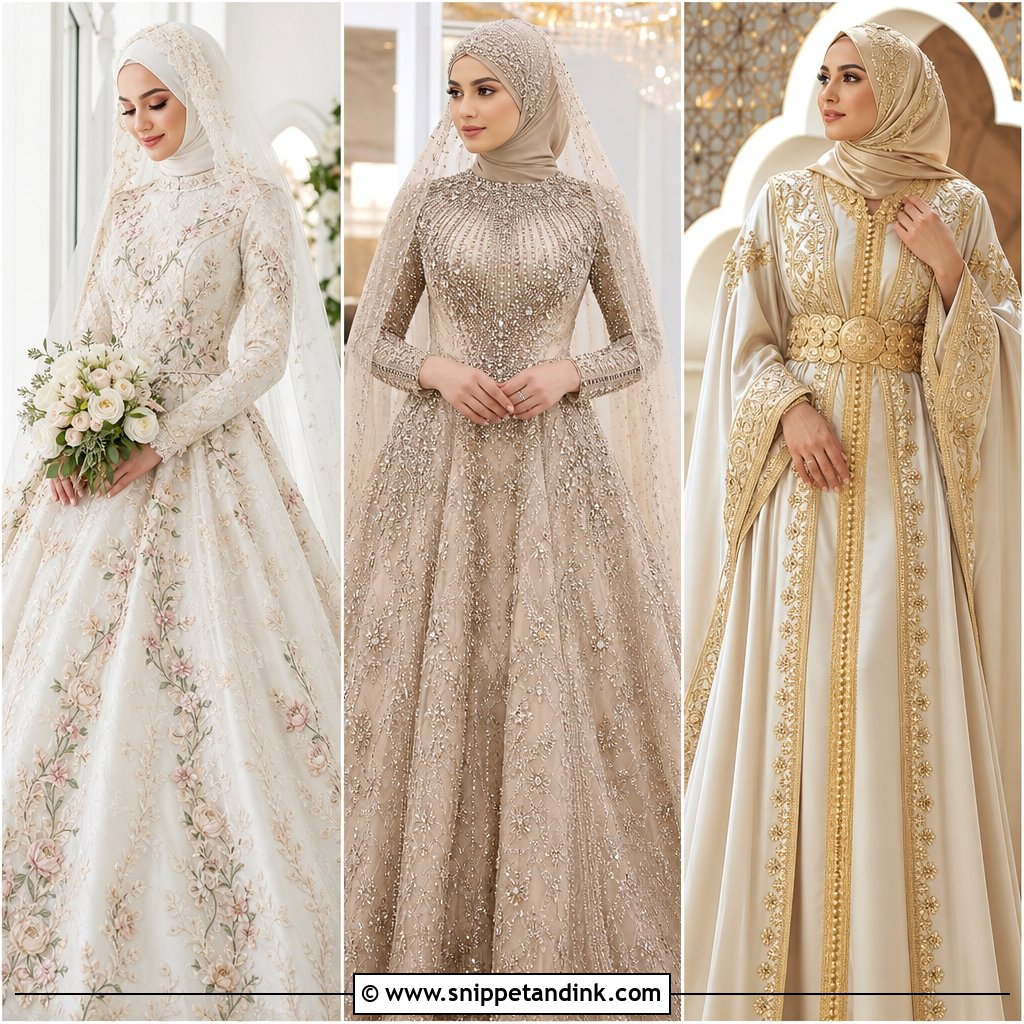
Embroidery is where a modest gown can carry real meaning, through floral vines, geometric motifs or patterns tied to a family’s heritage. The silhouette should stay calm so the work reads clearly: embroidery across the bodice, cuffs and hem of a long-sleeve gown is usually enough. I decide the hijab last. Over heavy embroidery it should be plain; over light embroidery, a hijab with a small matching motif connects the two. Closed-toe heels and a simple bouquet keep attention on the handwork, and this approach works across almost every cultural tradition.
7. Beaded Islamic Wedding Dress
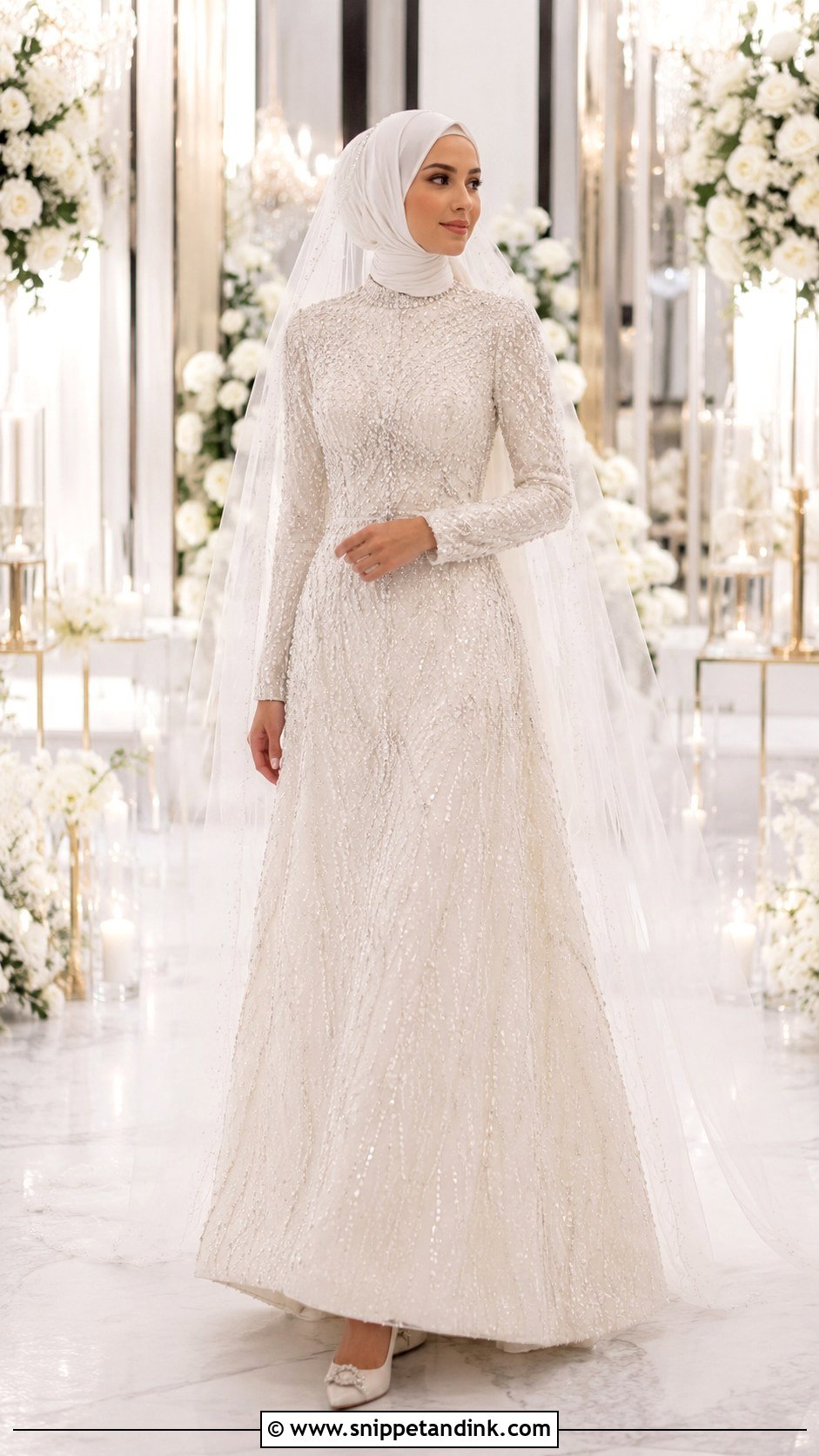
Beading gives sparkle without any need for a revealing cut. Tiny pearls, crystals or sequins can trace the sleeves, neckline, waist and skirt. I prefer beading that follows the lines of the gown rather than covering every inch, partly for looks and partly because fully beaded sleeves are heavy and scratch the inner arm by evening. A fully lined bodice keeps the coverage solid. A plain satin or chiffon hijab balances the shine near the face. A simple veil, fine heels and minimal jewelry let the beads do the work at an evening reception or formal indoor wedding.
8. Cape Islamic Wedding Dress
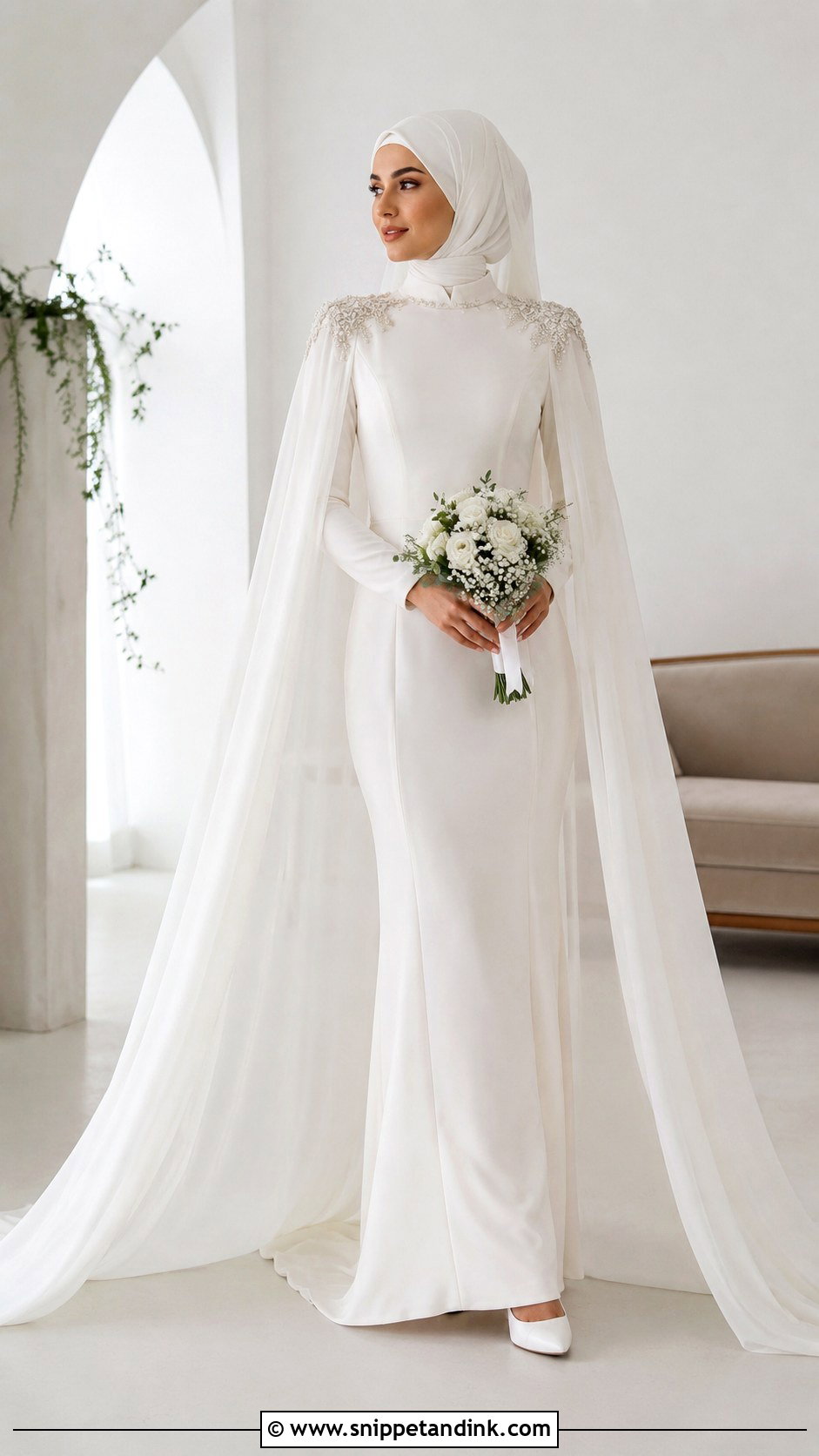
A cape gives drama without a heavy train. It can flow from the shoulders, the neckline or the back, over a fitted modest gown, an A-line or a straight column. Sheer organza looks airy, lace looks romantic, and soft crepe gives the most coverage. A sheer cape is styling, not coverage, so the dress underneath still needs its own sleeves and neckline. Wear a smooth hijab beneath it and skip the veil if the cape already reads bridal. I’d choose this for a bride who likes fashion and doesn’t want the weight of a cathedral veil.
9. High Neck Islamic Wedding Dress
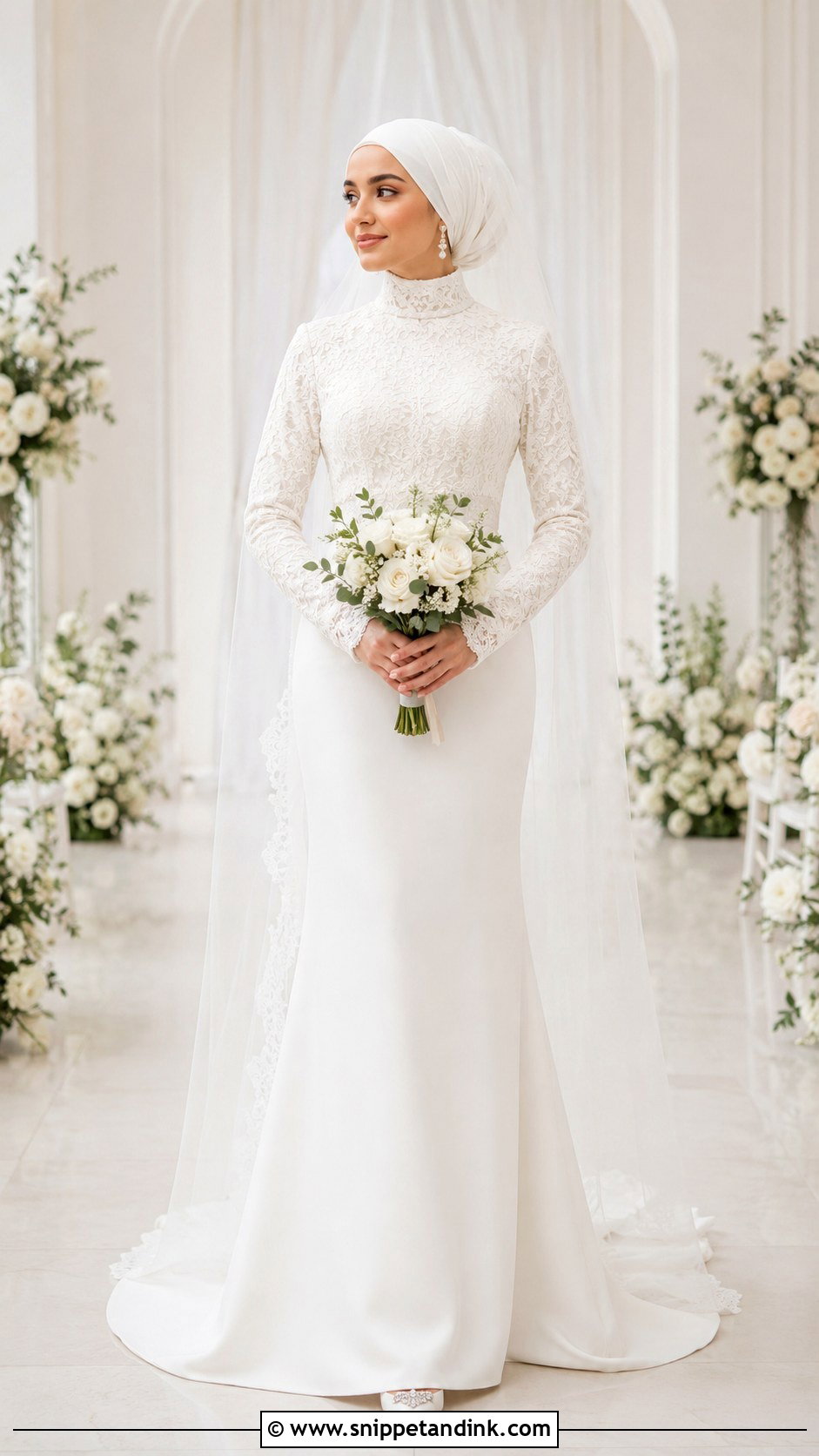
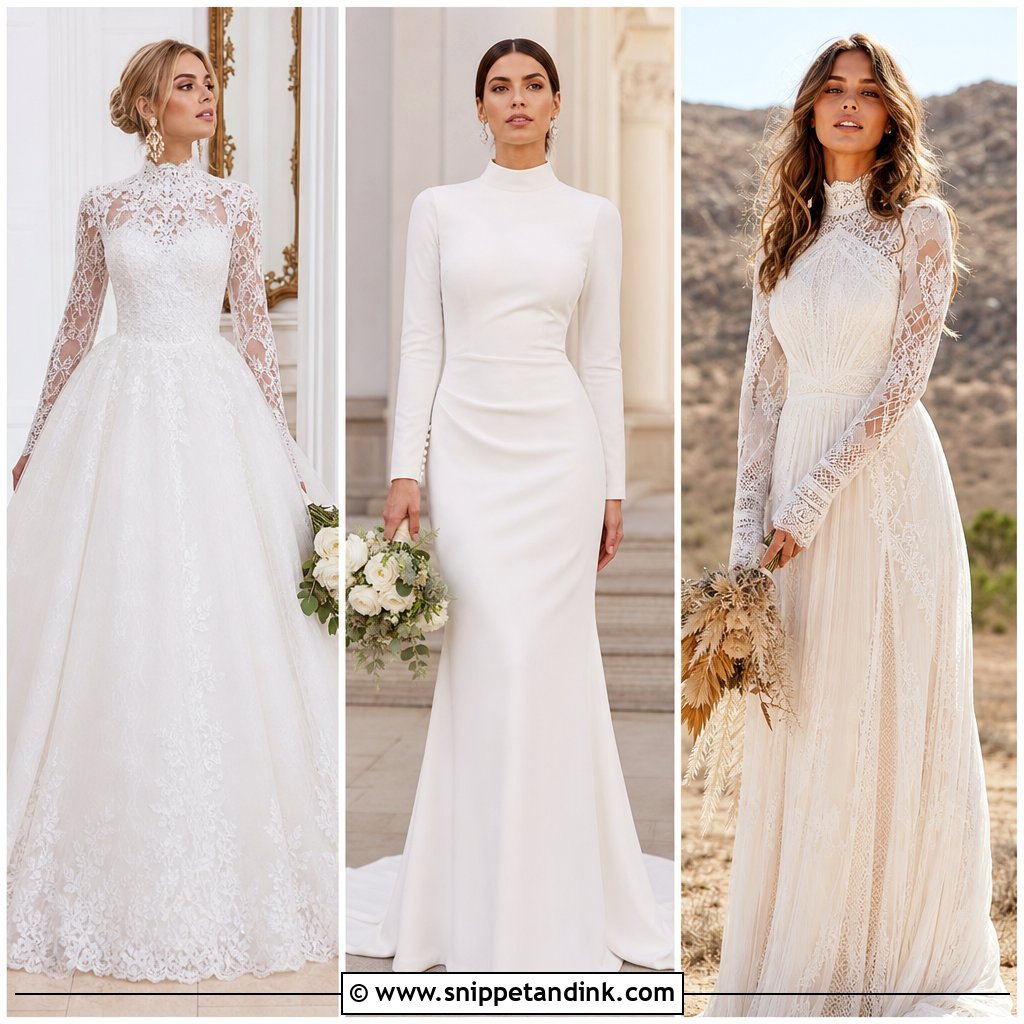
A high neck is the simplest route to a modest gown, because it covers the chest and collarbone so the hijab sits neatly without extra layers. It looks classic in lace, sleek in satin and romantic in tulle. A tight collar can feel choking under a wrapped hijab, so I’d often suggest a mock neck that stands slightly away from the throat. Long sleeves and a full-length skirt complete the shape. Pair it with a tucked hijab, pearl drops and simple pumps. Off-the-rack, it usually needs fewer alterations than any other modest style.
10. Long Sleeve Islamic Wedding Dress
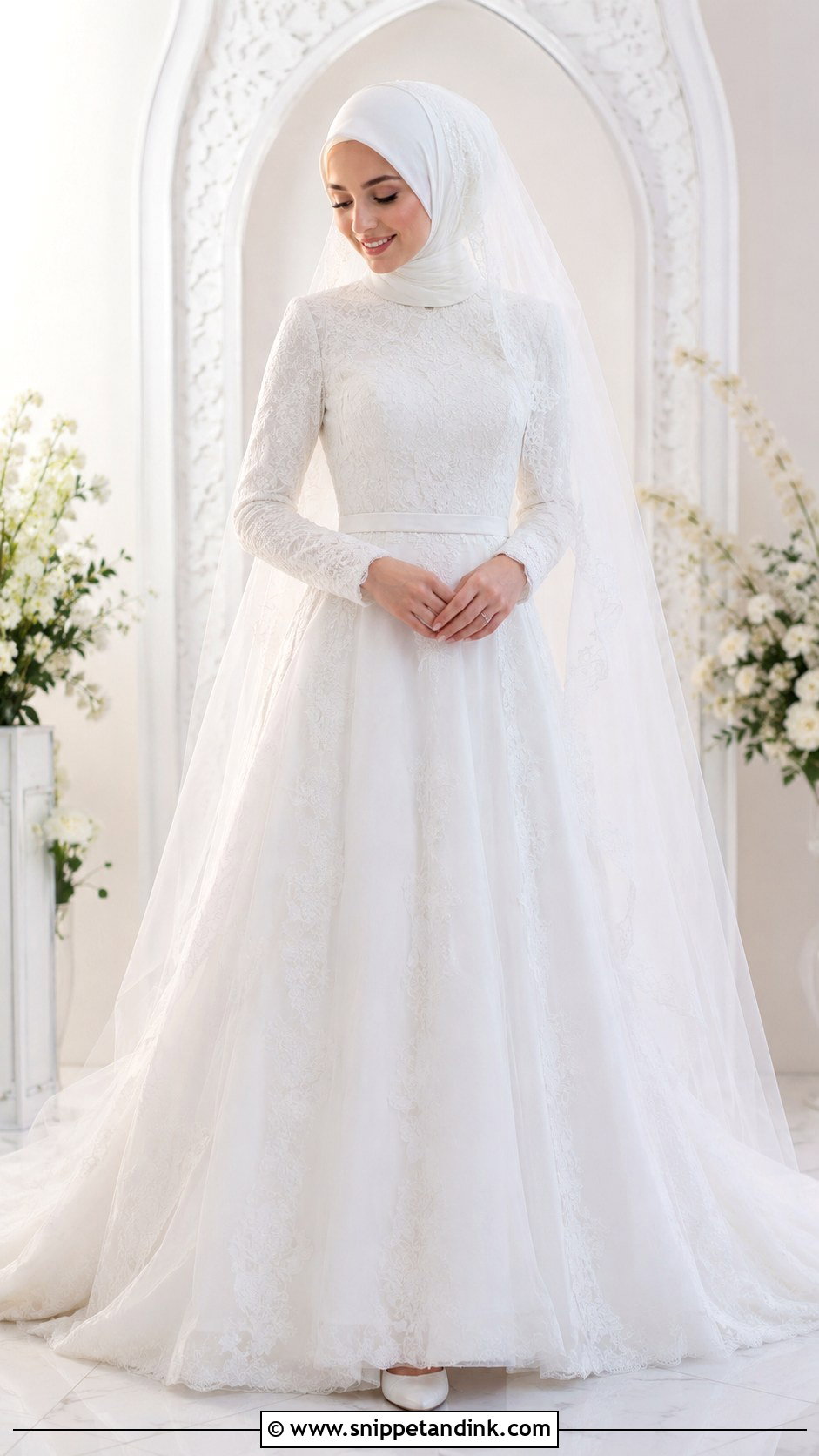
Sleeves come in many forms: fitted lace, loose chiffon, satin or structured crepe. What matters most is lining when the fabric is sheer, and length when the arms are raised. I measure sleeves with the bride’s arm bent, because a sleeve that ends at the wrist when straight will stop well short when she lifts a cup. A matching hijab makes the gown look intentional from head to toe. Add a waist belt for shape or leave the gown flowing. This is the most versatile modest option, workable at nearly any venue or season.
11. Modest Mermaid Islamic Wedding Dress
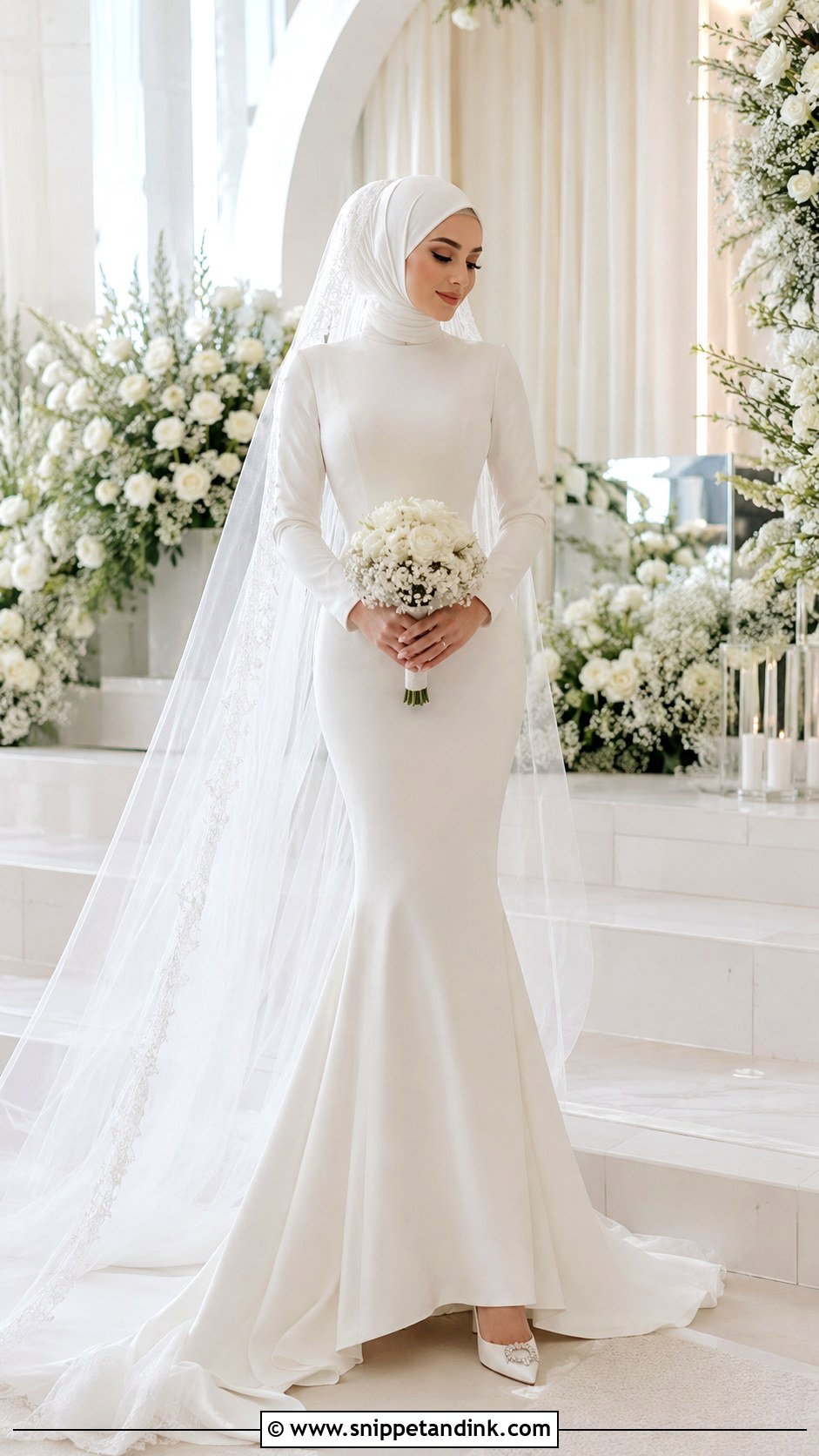
A modest mermaid needs a balanced fit. A softer cut that skims the body and flares below the knee looks elegant; one that grips the hips does not. Long sleeves, a high neck and thicker fabric keep it graceful, and crepe, mikado or lined lace hold the structure. Thin stretch fabrics are the mistake I see most often in this shape, since they cling in all the wrong places when you sit. A long veil softens the fitted line. Pair it with a neat hijab, pointed heels and a small bouquet if you like a defined, feminine silhouette.
12. Simple Islamic Wedding Dress
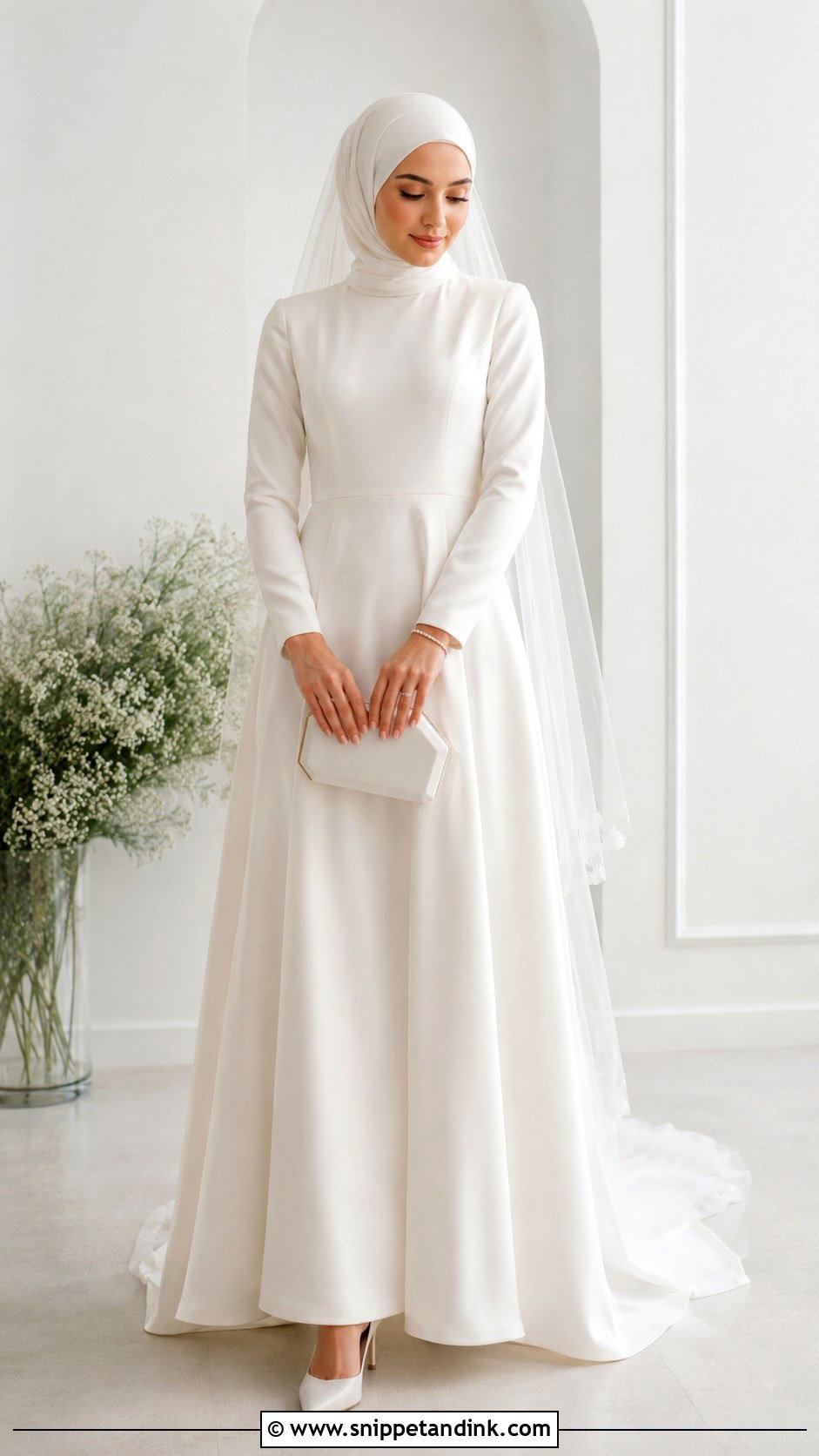
Plain dresses depend on fabric, fit and proportion, with nothing to hide behind. A long-sleeve crepe or satin gown with a high neck and a flowing skirt can look exceptionally refined, and it leaves room for a special veil, a pearl headpiece or an unusual bouquet. Put the money you save on embellishment toward a skilled tailor, because a simple dress that fits slightly wrong looks wrong from across the room. A plain hijab in the same shade keeps it unified. Sleek heels and a structured clutch finish a calm look for an intimate wedding or civil ceremony.
13. Luxury Islamic Wedding Dress
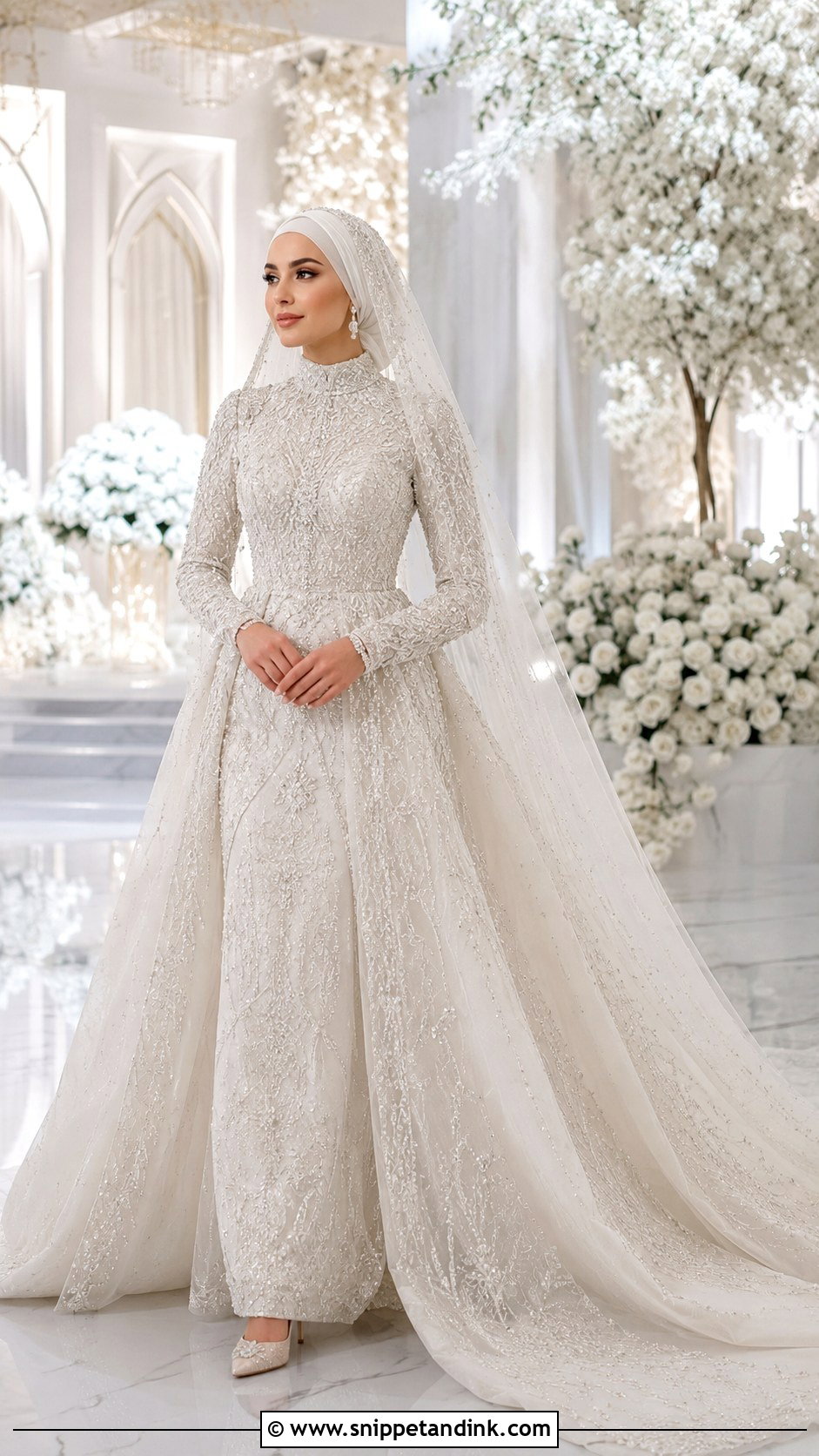
Luxury in a modest gown comes from construction more than sparkle: hand beading, layered lace, full lining, a long train and a hijab matched exactly to the dress. It still has to work for prayer, greeting guests and moving through a long evening. Ivory, pearl, champagne and soft gold look rich without being loud. A cathedral veil or embroidered cape adds presence. I’d hold jewelry to pearl earrings and a bracelet. One test I always run with a heavily worked gown: wear it for an hour at the fitting, because weight you barely notice in five minutes can be tiring by the end of a formal wedding.
14. Turkish Islamic Wedding Dress
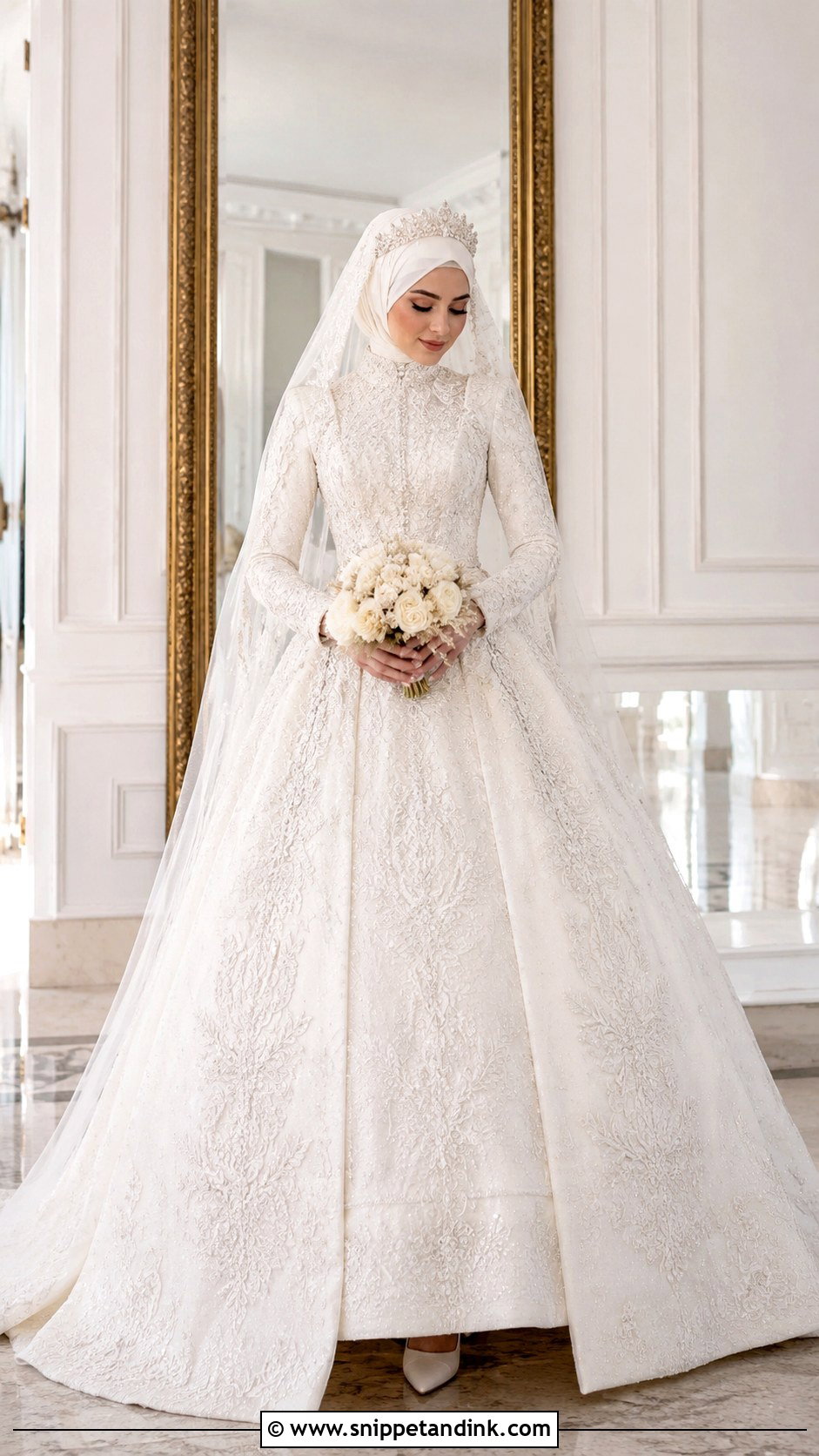
Turkish-style bridal gowns are regal and detailed, with high necklines, long sleeves, fitted bodices, full skirts and ornate embroidery. The structured shape gives a graceful line, and a matching hijab and veil complete the coverage. Many brides add a jeweled crown or fine headpiece over the hijab. I pin a crown through the underscarf at both sides so it doesn’t creep backward during the ceremony. White and ivory are the usual choices, and soft champagne looks rich in evening light. Elegant pumps and a neutral bouquet finish a polished look with clear cultural influence.



15. Pakistani Islamic Wedding Dress
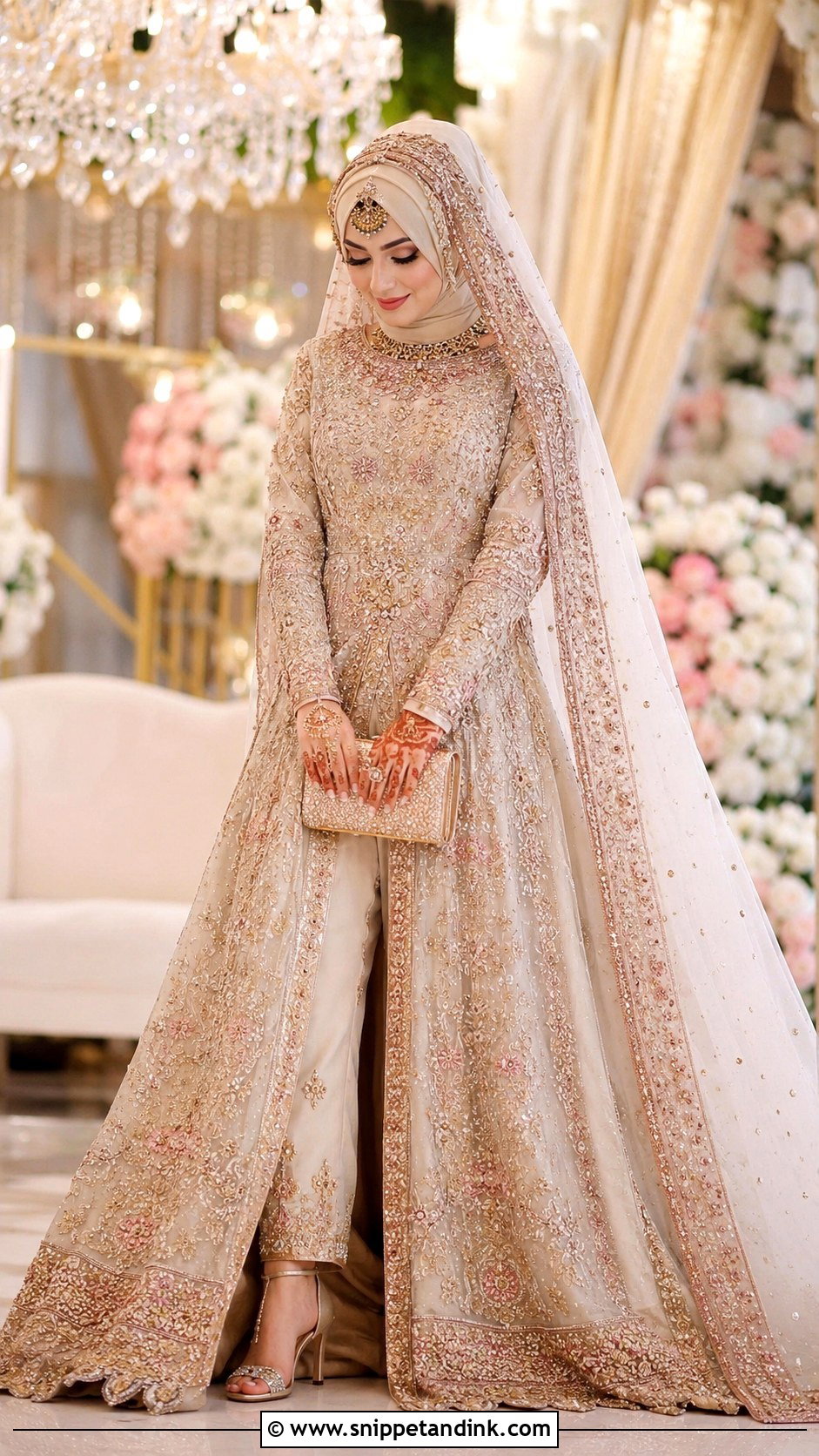
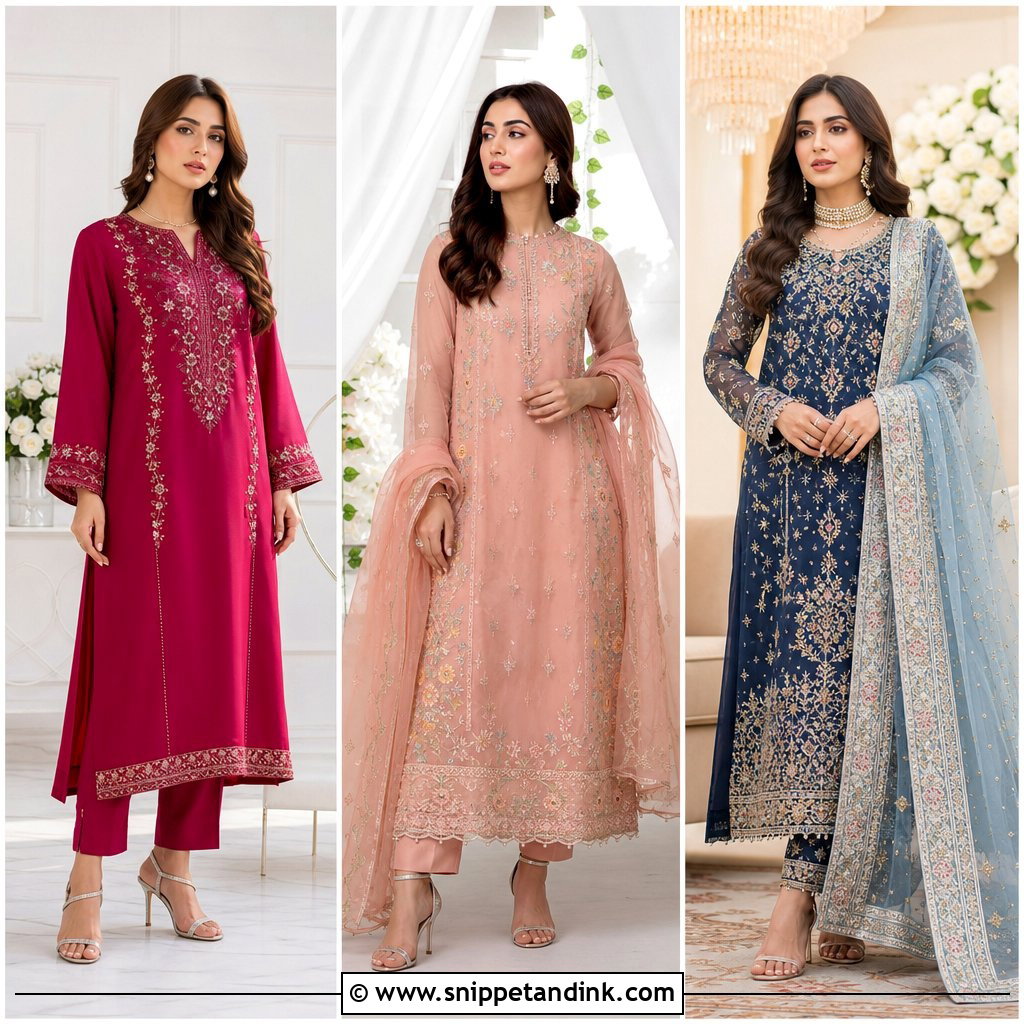
A Pakistani Islamic wedding dress is usually rich in color and embroidery: red, maroon, gold, ivory or blush, in a modest cut with layers. A long kameez or gown with full sleeves, wide-leg trousers or a full skirt, and a matching dupatta make the outfit. The dupatta can sit over the hijab or be arranged as a veil. Zari, pearls and sequins add festive detail. Heavy zari dupattas pull hard, so I anchor them with pins through the underscarf rather than the hijab itself. Traditional jewelry, embellished heels and a coordinated clutch complete it.
16. Moroccan Islamic Wedding Dress
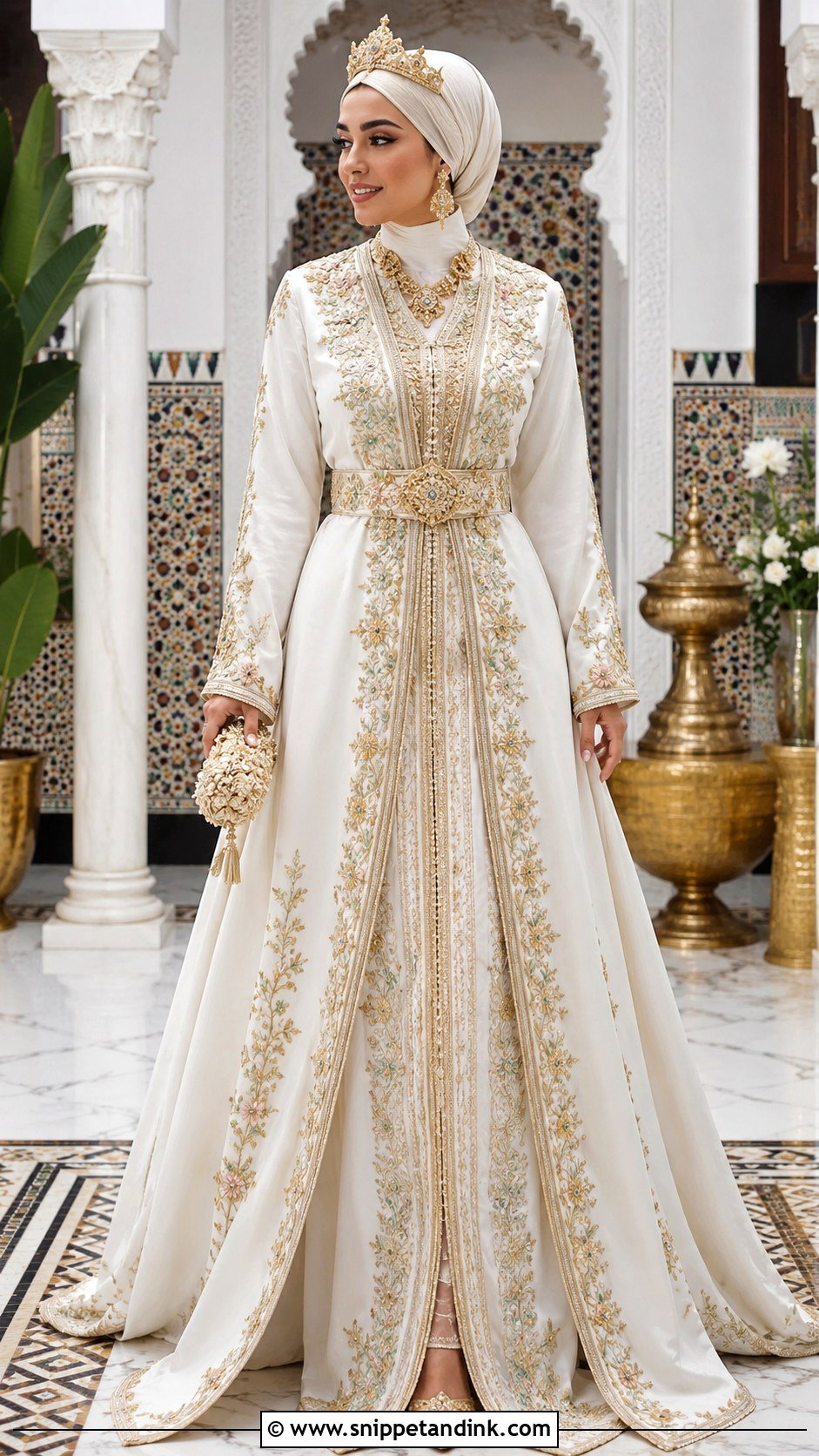
A Moroccan Islamic wedding dress is traditional and formal, usually a takchita or kaftan with long sleeves, ornate embroidery and a defined belt. White, ivory, gold, emerald and soft blush are all common. The belt shapes the waist while the flowing fabric stays comfortable and covered. A matching hijab can sit smoothly under a veil or an ornate headpiece. Moroccan weddings often include several outfit changes, so I plan the hijab style to stay in place through each one. Embellished shoes and gold jewelry finish it.
17. Abaya Islamic Wedding Dress
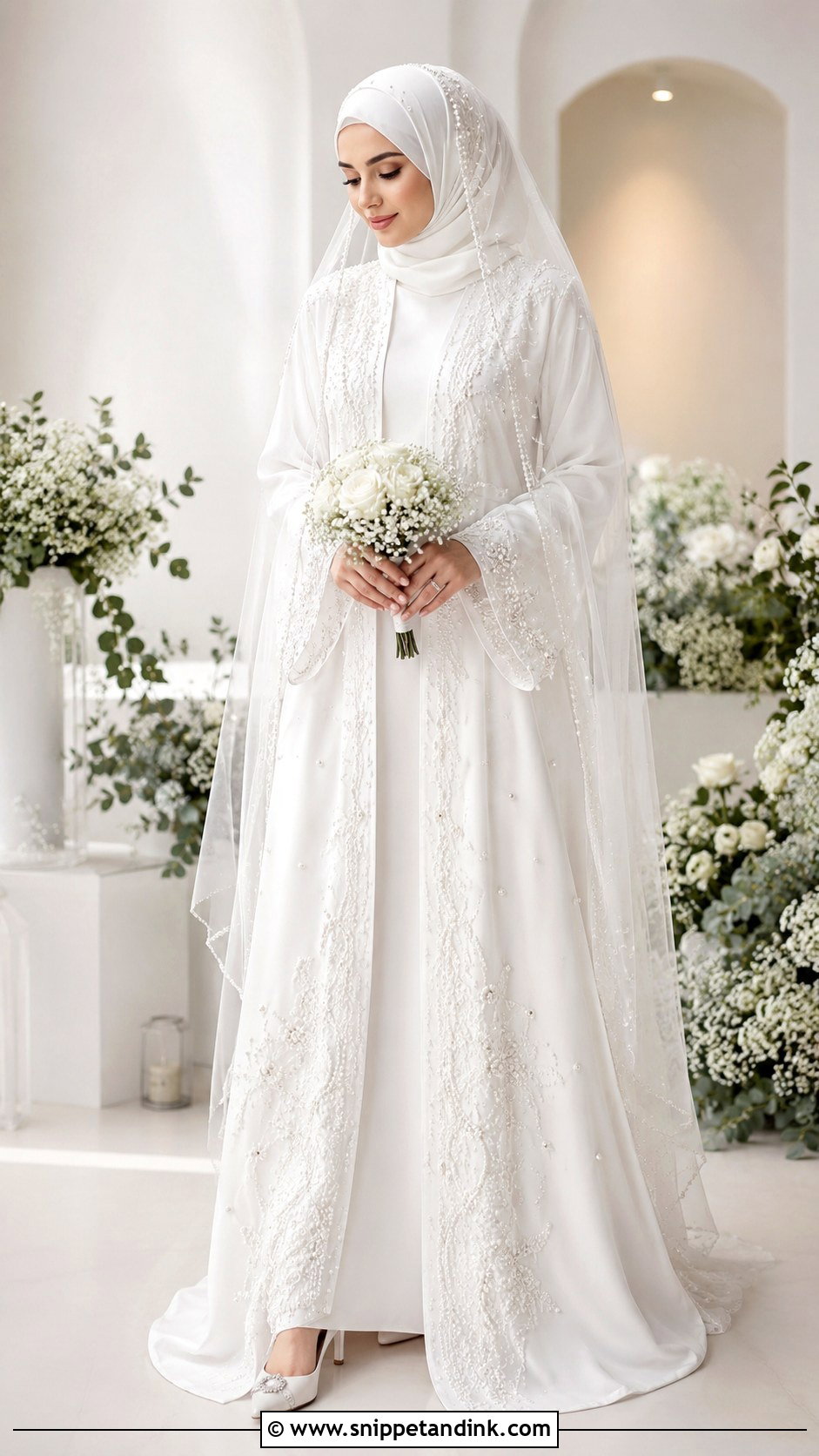
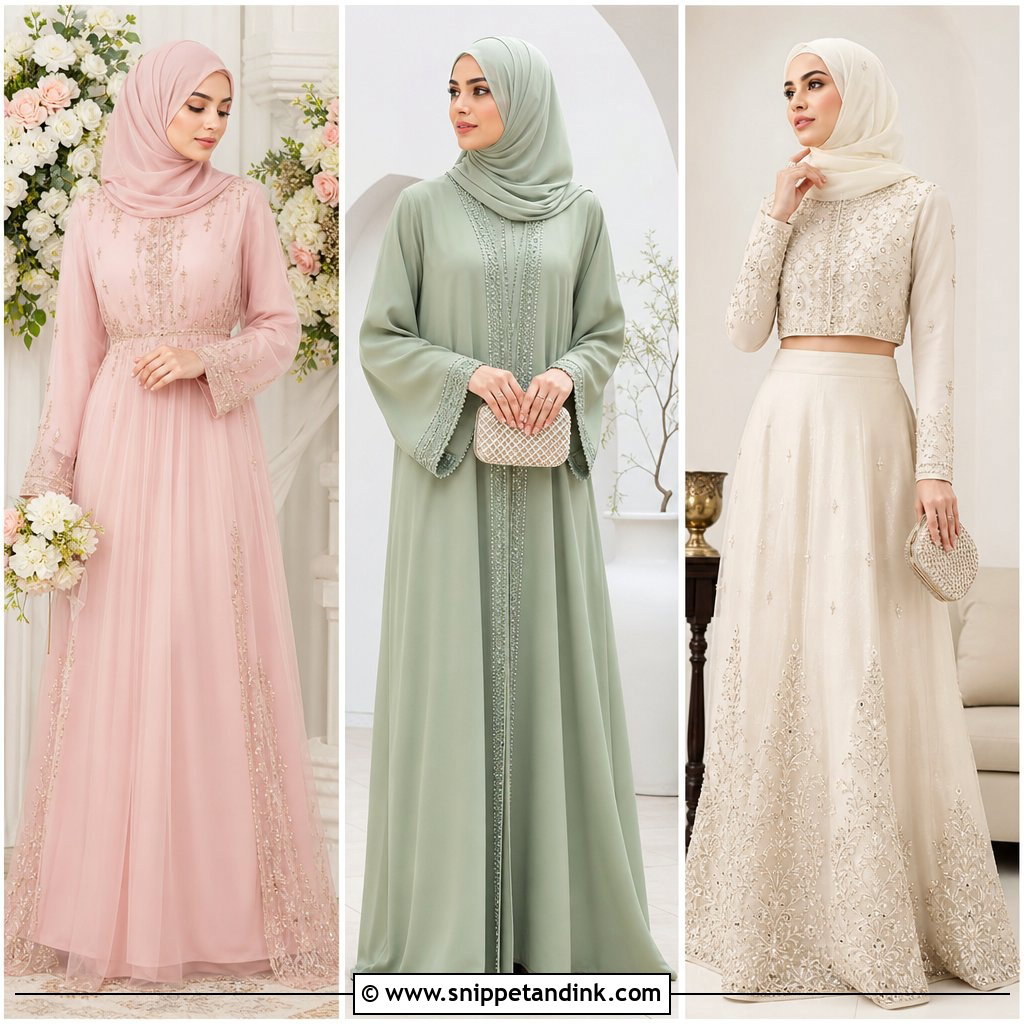
Abayas are loose and flowing, which makes them comfortable through a long ceremony. Bridal abayas come in satin, crepe, chiffon or organza with pearls, embroidery or lace trims. A white or ivory abaya with a matching inner dress gives full coverage and still looks bridal. The detail I check is the front opening: on an open abaya, hidden snaps keep it closed while walking. Style it with a matching hijab, a soft veil and fine jewelry. If the abaya is heavily embellished, keep the shoes and clutch plain. It suits an intimate nikah well.
18. Kaftan Islamic Wedding Dress
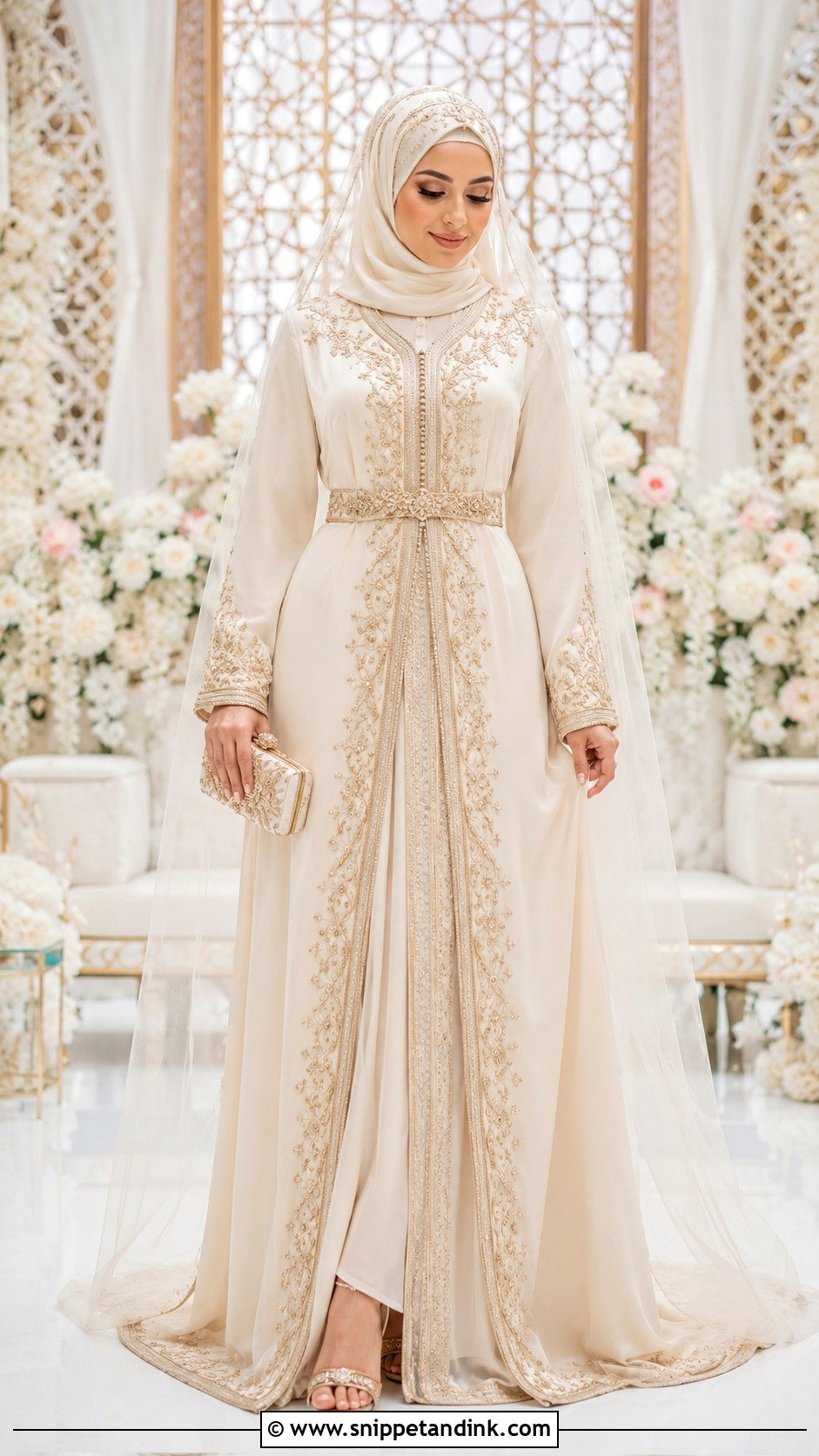
Kaftans give coverage and comfort, with no fitted waist at all, which is exactly why some brides choose one. Embroidery and luxe fabric keep it special. Ivory, champagne, gold or blush with a matching hijab and veil looks rich and calm. Choose long sleeves, a full-length hem and a soft waist detail if you’d like some structure. Metallic embroidery along the neckline, sleeves and front panel adds a regal finish. Check the sleeve width: very wide kaftan sleeves fall back to the elbow when you raise your hands, so an inner fitted sleeve can help. Embellished heels and a small clutch complete it.
19. Tulle Islamic Wedding Dress
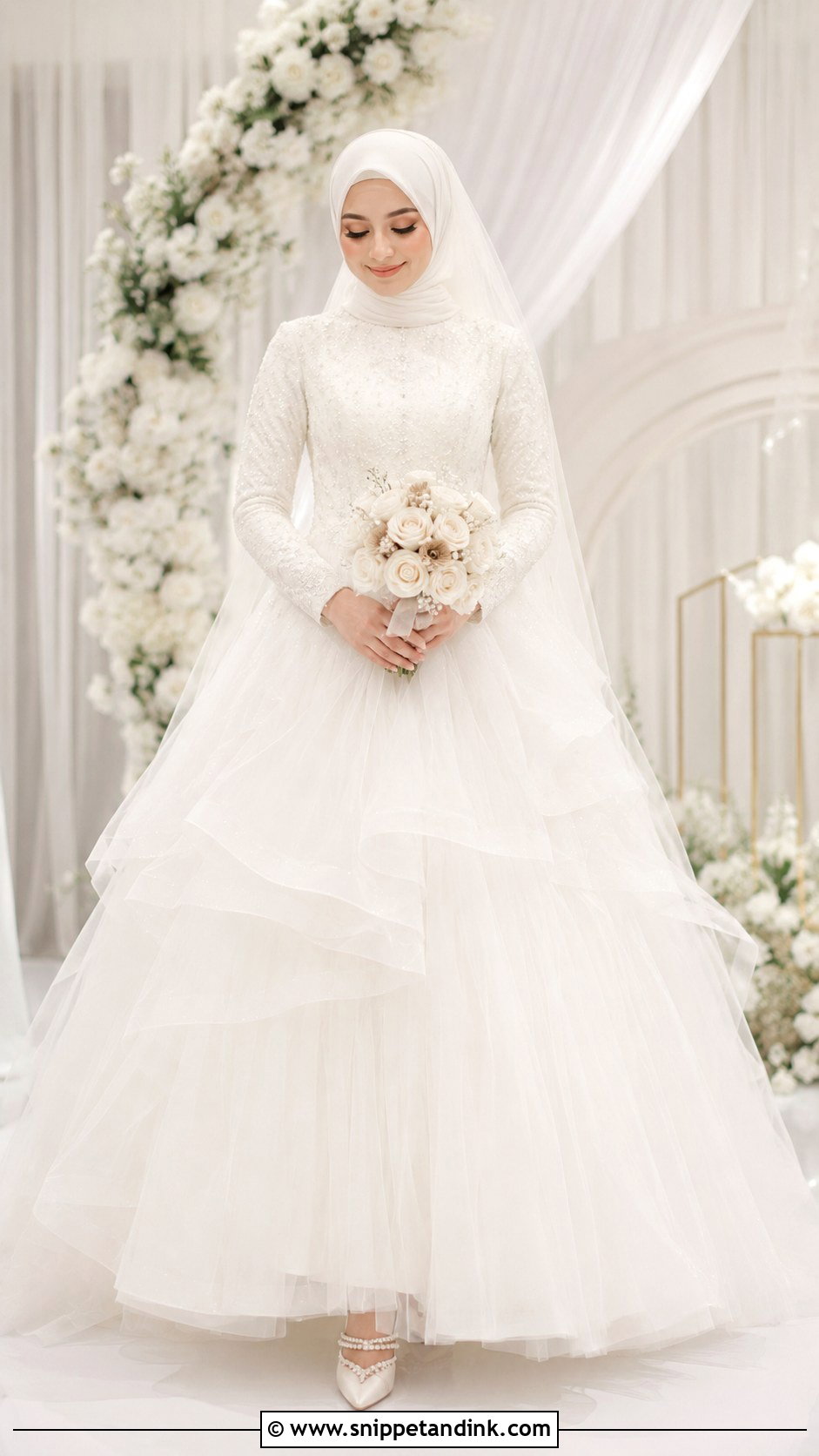
Tulle builds volume without much weight, so it suits A-line and ball gown shapes. Plain tulle looks soft and airy; embroidered tulle adds detail. A lined long-sleeve bodice keeps the coverage. Tulle snags on rings, bracelets and rough floors more than other fabrics, so I suggest smooth jewelry and a short walk around the venue at the fitting. A soft chiffon or jersey hijab balances the texture, and a veil that blends into the skirt keeps the outfit light. Pearl heels and a delicate bouquet complete a fairytale look.


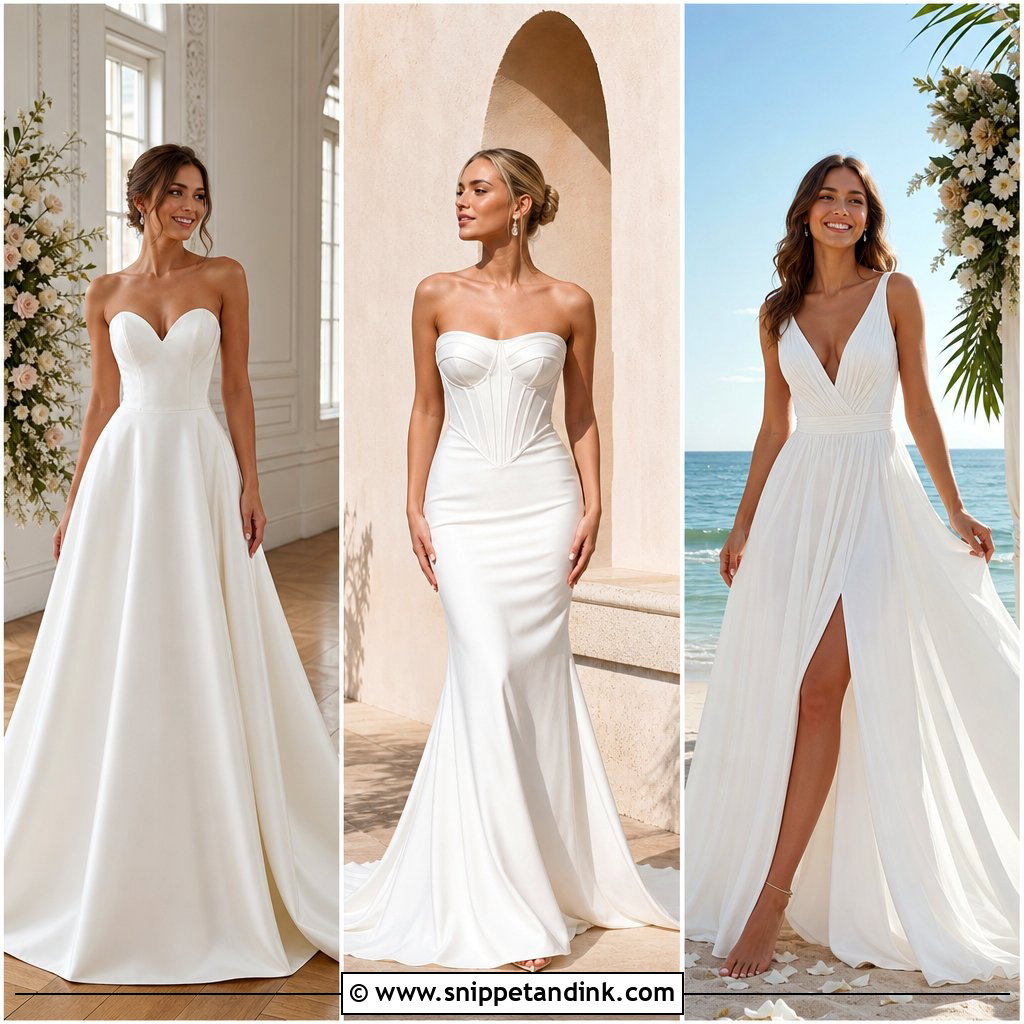
20. Pearl Islamic Wedding Dress
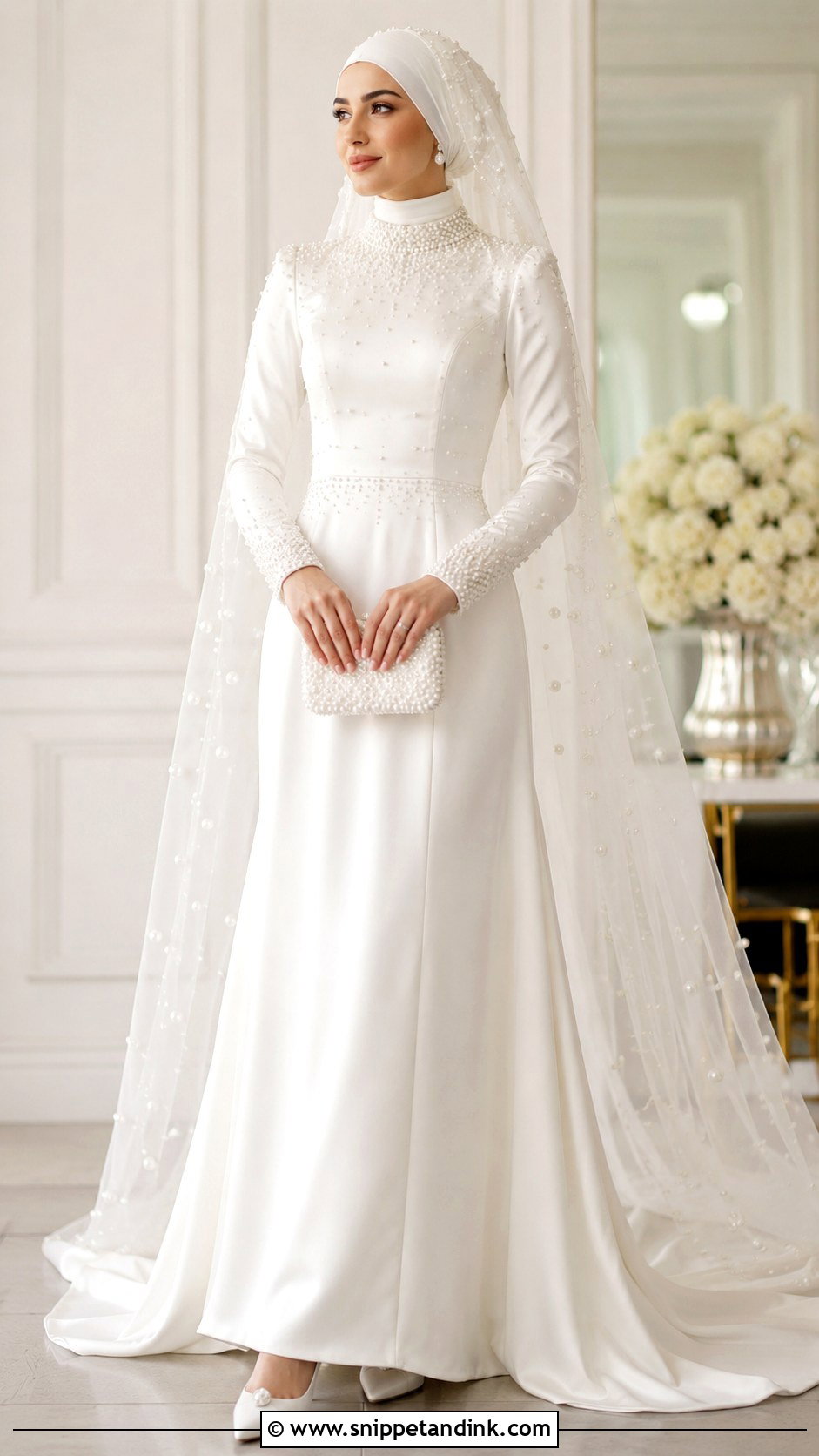
Pearls give soft shine and classic style. They can be scattered across the bodice, sleeves, veil or skirt, and they look best used with restraint, so the dress doesn’t feel heavy. A long-sleeve gown with a high neck and pearl-detailed cuffs is particularly pretty. Pearl cuffs are worth checking for one practical reason: they knock against tables and plates, and loosely sewn ones come off. Pair the gown with a plain hijab or one with tiny pearl pins. Satin heels, a small pearl clutch and simple earrings complete the styling.
21. Champagne Islamic Wedding Dress
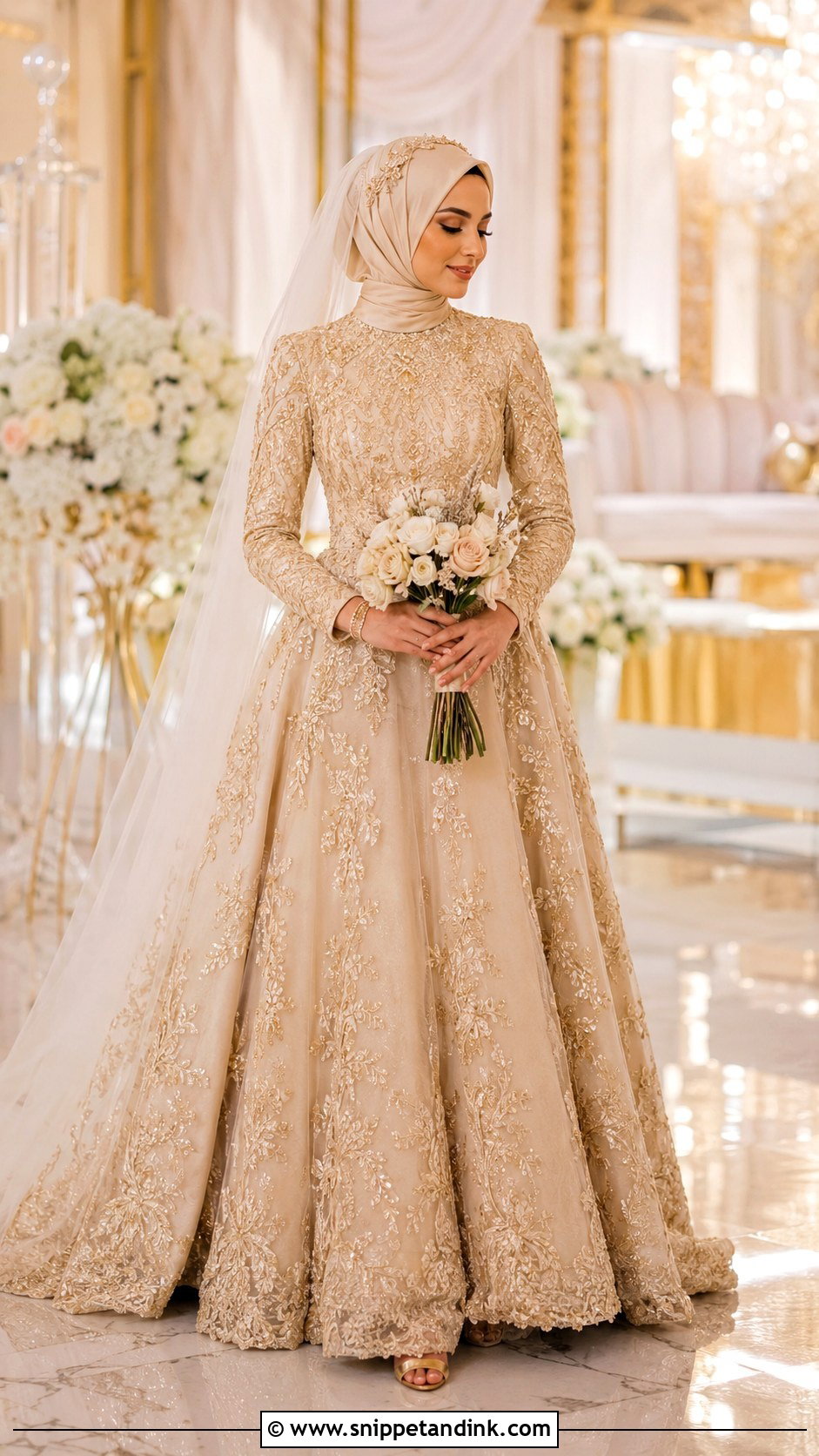
Champagne is a warm alternative to pure white, and it flatters many skin tones. It pairs well with gold embroidery, pearl beading and ivory veils. Choose a long-sleeve gown with a high neck, full lining and a flowing skirt. Undertones matter here more than anywhere else. I compare champagne fabrics in daylight, because a shade that looks peachy in the boutique can turn grey or yellow in the venue. A champagne hijab gives an unbroken line; ivory accessories brighten the outfit. Gold heels, fine jewelry and a neutral bouquet finish it.
22. Ivory Islamic Wedding Dress
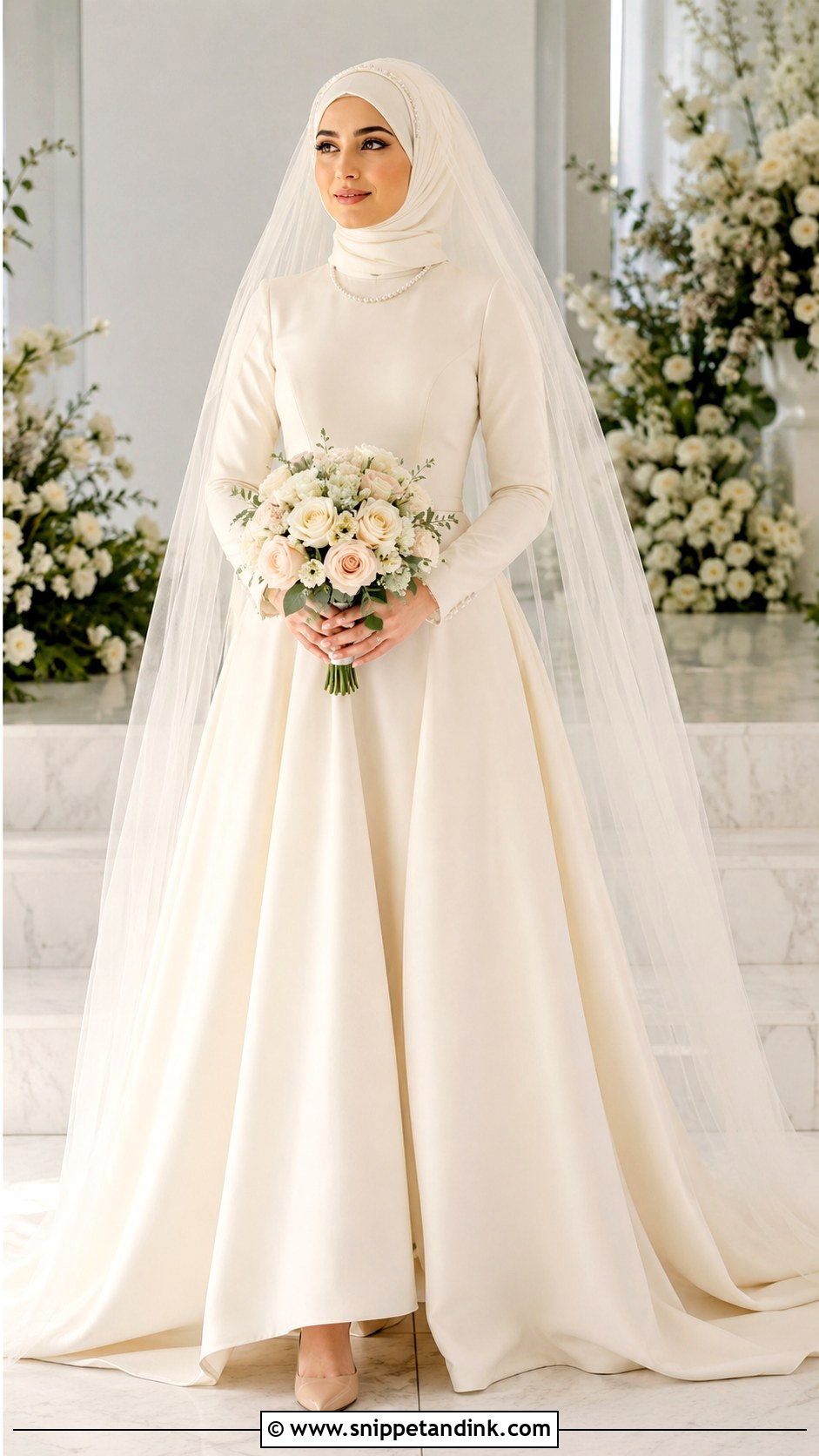
Ivory is softer than bright white and looks kinder against most skin tones in photographs. It works in lace, satin, crepe, chiffon and tulle. A long-sleeve ivory gown with a modest neckline feels classic without looking harsh. Pick the waist to suit your comfort: fitted, A-line or flowing like an abaya. A matching ivory hijab keeps the outfit together. Ivory shades vary a lot between makers, so I’d buy the hijab after the dress arrives, never before. Pearl jewelry, nude heels and a soft bouquet complete a polished choice.
23. Floral Islamic Wedding Dress
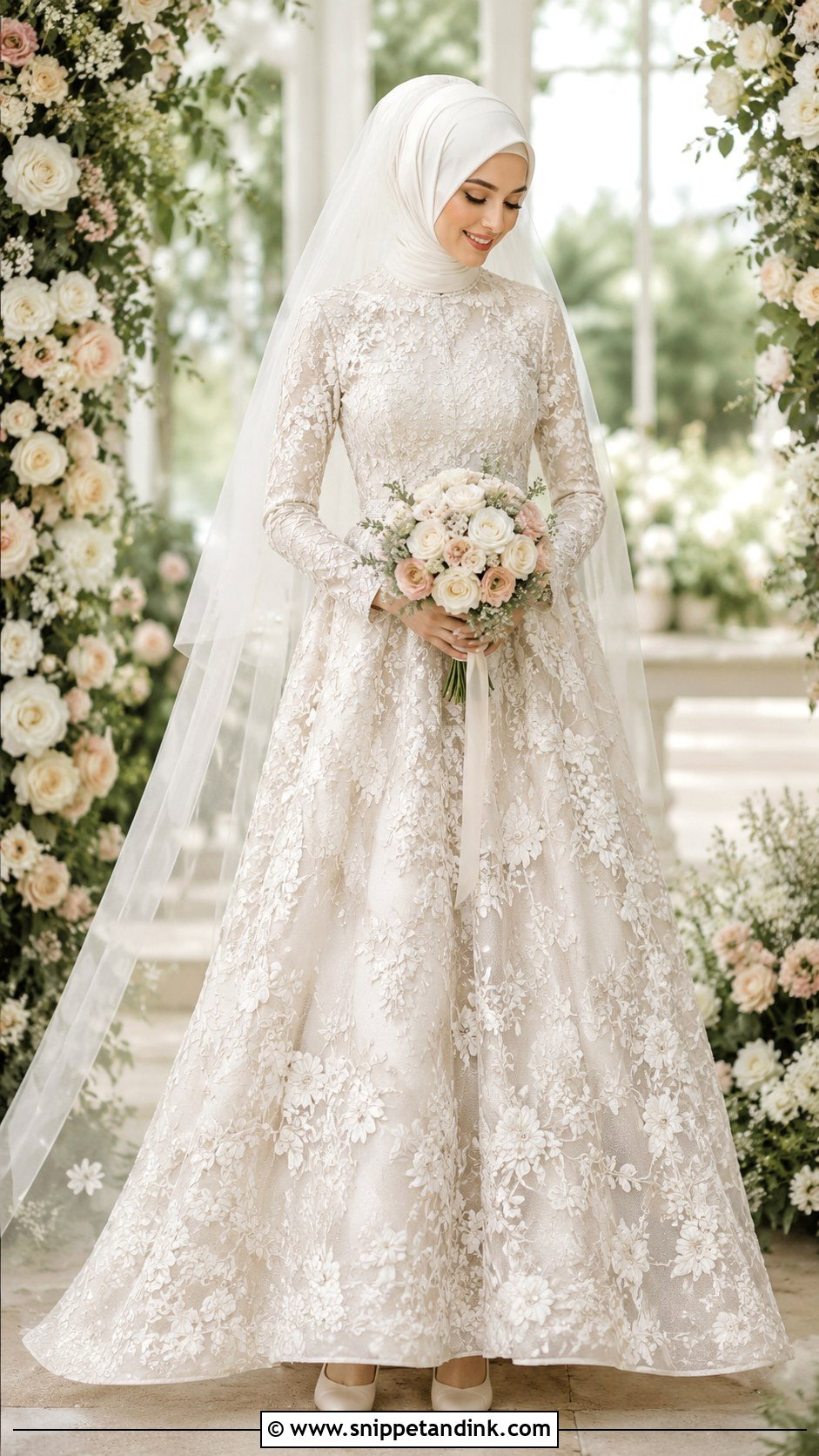
Flowers can be embroidered, appliqued or woven into lace, and each gives a different depth. White-on-white florals look classic; pastel embroidery is gentler and more modern. For modesty, choose long sleeves, a high neck and a fully lined skirt. A plain hijab balances the floral texture. If the flowers are colored, I pick one tone from them for the bouquet rather than trying to match every shade. Simple heels and light jewelry work best, and this gown suits spring weddings and garden venues.
24. Two Piece Islamic Wedding Dress
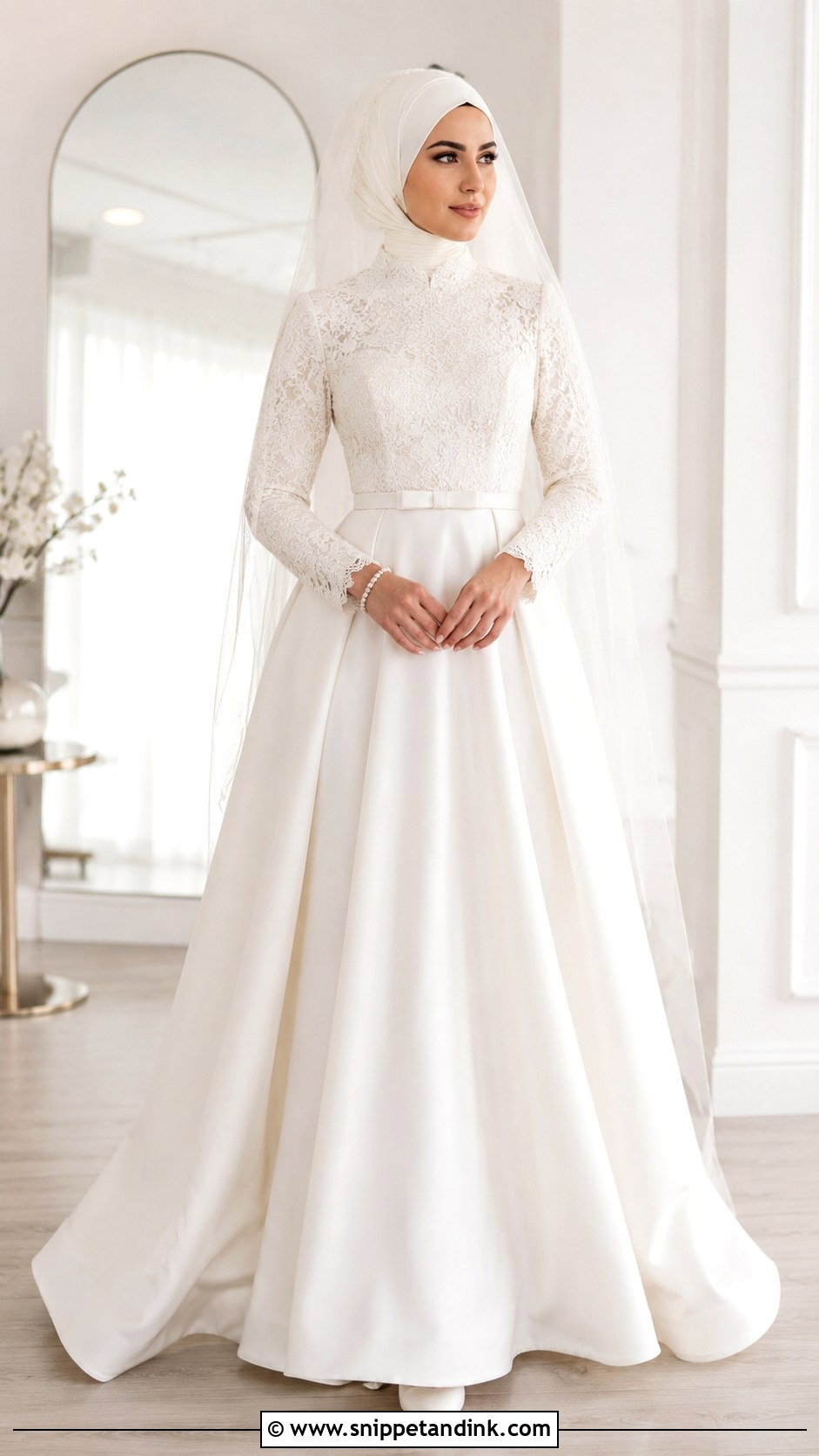
Separates solve a real fitting problem. A long-sleeve bridal top with a full skirt gives a modest silhouette, and because the pieces are cut separately, a bride who is a different size on top and bottom gets a proper fit without heavy alteration. The top can be lace, satin, crepe or embroidered; the skirt plain or softly layered. A high neckline keeps it hijab-friendly. I always check that the top overlaps the skirt by a few inches when the arms are raised, so no gap appears at the waist. Add a veil, a waist belt and elegant heels to finish it.

25. Reception Islamic Wedding Dress
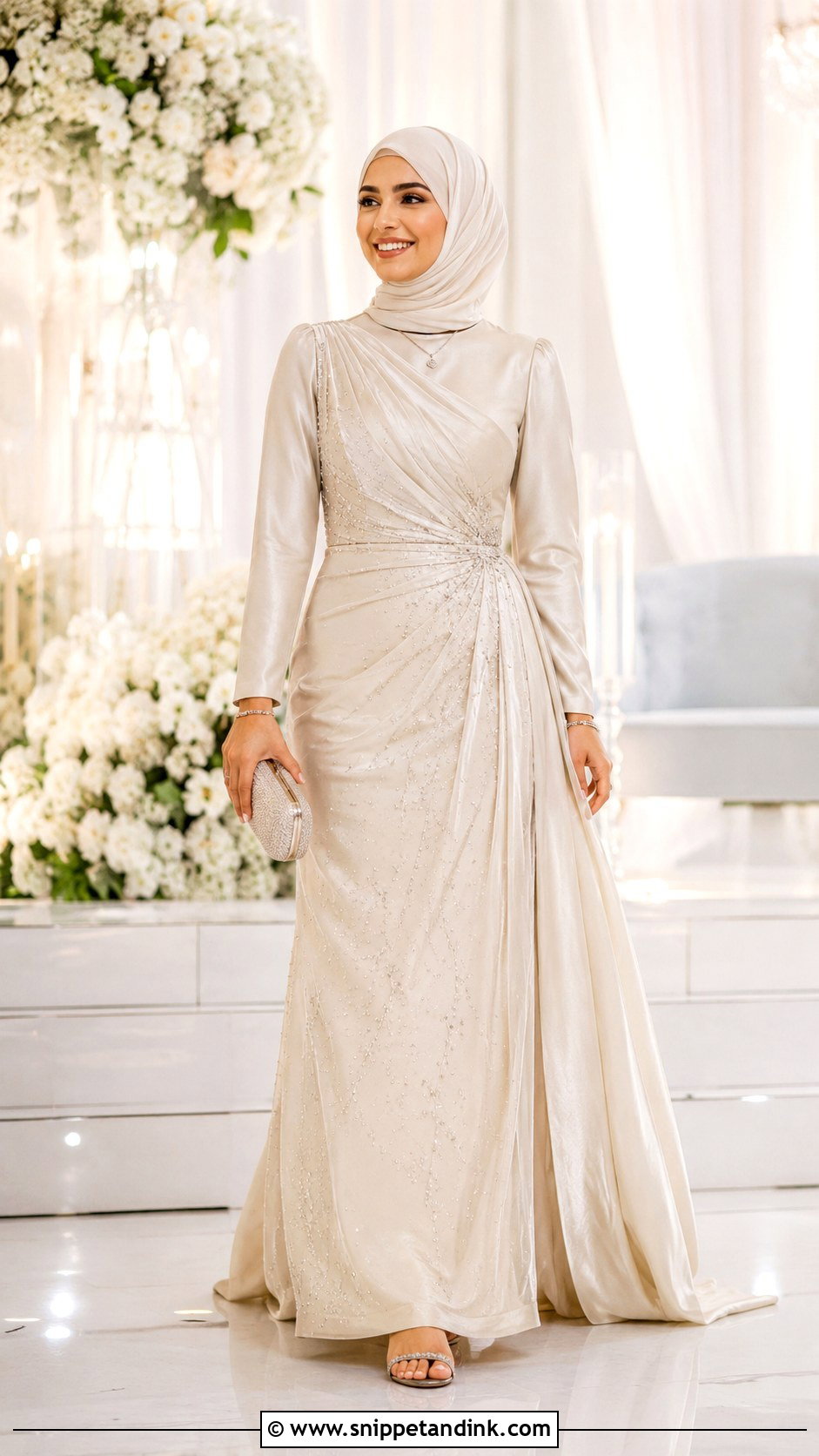
A reception Islamic wedding dress should let you move, eat and greet guests without thinking about it. Many brides switch to a lighter gown, abaya, kaftan or embellished modest dress after the ceremony. A long-sleeve satin or chiffon gown with a little sparkle works well for greetings and photos. If the ceremony gown is heavy, make the reception one softer. Keep the hijab coordinated, but a simpler veil or none at all is more comfortable. I plan the change itself too: allow twenty minutes, a private room and someone who knows the pins.
A Fitting Calendar From Order to Wedding Week
Modest gowns often need more alteration than standard ones, such as sleeves lined, necklines raised or panels closed. Here is the rough calendar I work to. Exact timings vary by designer and tailor, so confirm them when you order.
- Order the gown around eight to ten months before the wedding if it is made to order. Ready-to-wear dresses can be bought later, but leave time for changes.
- Raise every coverage change at the order appointment, not at the first fitting. Some changes are easier to build in than to add afterward.
- Book the first fitting about two to three months before the date. Bring your hijab, underscarf, shoes and any shapewear you plan to wear.
- At the second fitting, sit, walk, raise your arms and kneel as you would for prayer. Note anything that pulls or gapes.
- Have the final fitting one to two weeks before the wedding, then collect the dress steamed and bagged. Don’t try new shoes or lose weight after this point.
Keep one person with you at every fitting who will help you dress on the day. They should learn how the bustle, the hijab pins and any cape or overskirt fasten, so nothing is worked out for the first time on the morning.
What Makes a Modest Gown Feel Like Yours
The most embellished dress is rarely the one that feels right. The right gown fits well, covers you confidently, moves with you and lets you feel at peace on the day itself. Satin, lace, chiffon, pearls, embroidery, abayas, kaftans and ball gowns all appear above, and every one can be fully modest. Spend your attention on fabric quality, proper lining, how the hijab meets the neckline, and good alterations. Get those right, and the dress will feel graceful and completely your own.
You'll Like These Ideas:





Leave a Reply