
A lobola dress has a different job from a white gown. It is worn on a day built around two families meeting and agreeing, so it has to show respect first and style second. The looks below draw on South Africa’s diverse cultural clothing traditions: shweshwe prints, beadwork, layered skirts, aprons, shawls and headwraps. In many families covered shoulders, a longer hem and a head covering are expected, but the details change from one household to the next. My first step with any bride is to find out what her elders expect, then find a maker who knows that tradition. After that, the fun starts, from classic blue prints to fitted mermaid shapes.
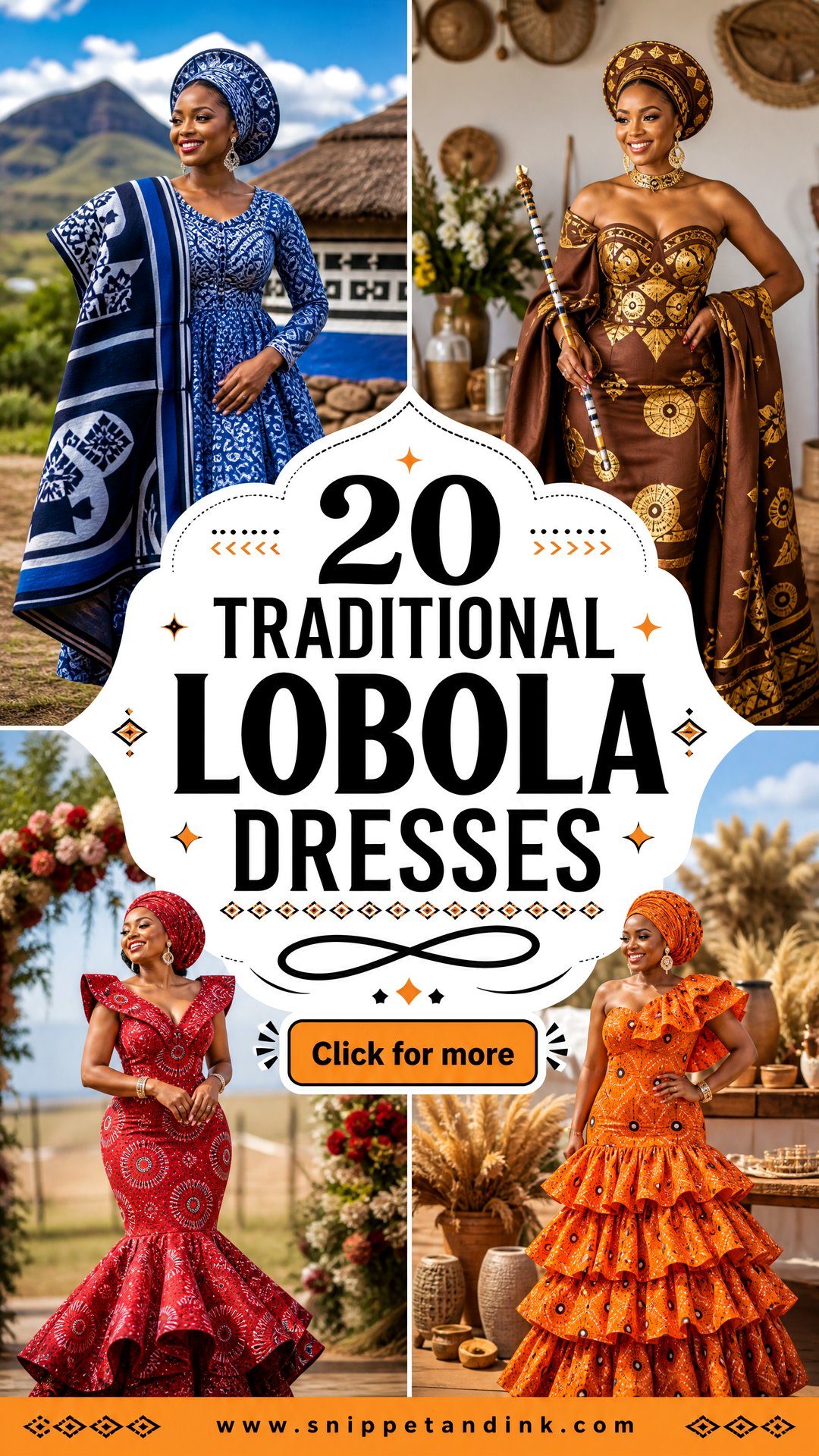
What the Lobola Day Asks of a Dress
The bride is often not in the room for much of the negotiation itself. In many families she waits elsewhere while the two sides talk, and she is brought out once an agreement is reached, followed by celebrating, eating and greeting the new family. So the dress has to look composed after hours of waiting, then hold up through a long afternoon of hugging relatives and sitting on whatever chairs the yard offers.
In some families the groom’s side presents clothing or a blanket to the bride as part of welcoming her, which can change what she ends up wearing for part of the day. I always ask about this early, because there is no point designing a cape for a moment when she will be wrapped in something else.
Questions I ask before sketching anything
- Whose customs lead the day, and are both families from the same tradition?
- Is a head covering expected, and should shoulders and knees be covered?
- Are any colours reserved, or expected, for the bride?
- Will the gathering be indoors, or outside on grass and gravel?
- Will there be a change of outfit, or gifts of clothing during the day?
1. Blue Shweshwe Lobola Dress With Matching Doek
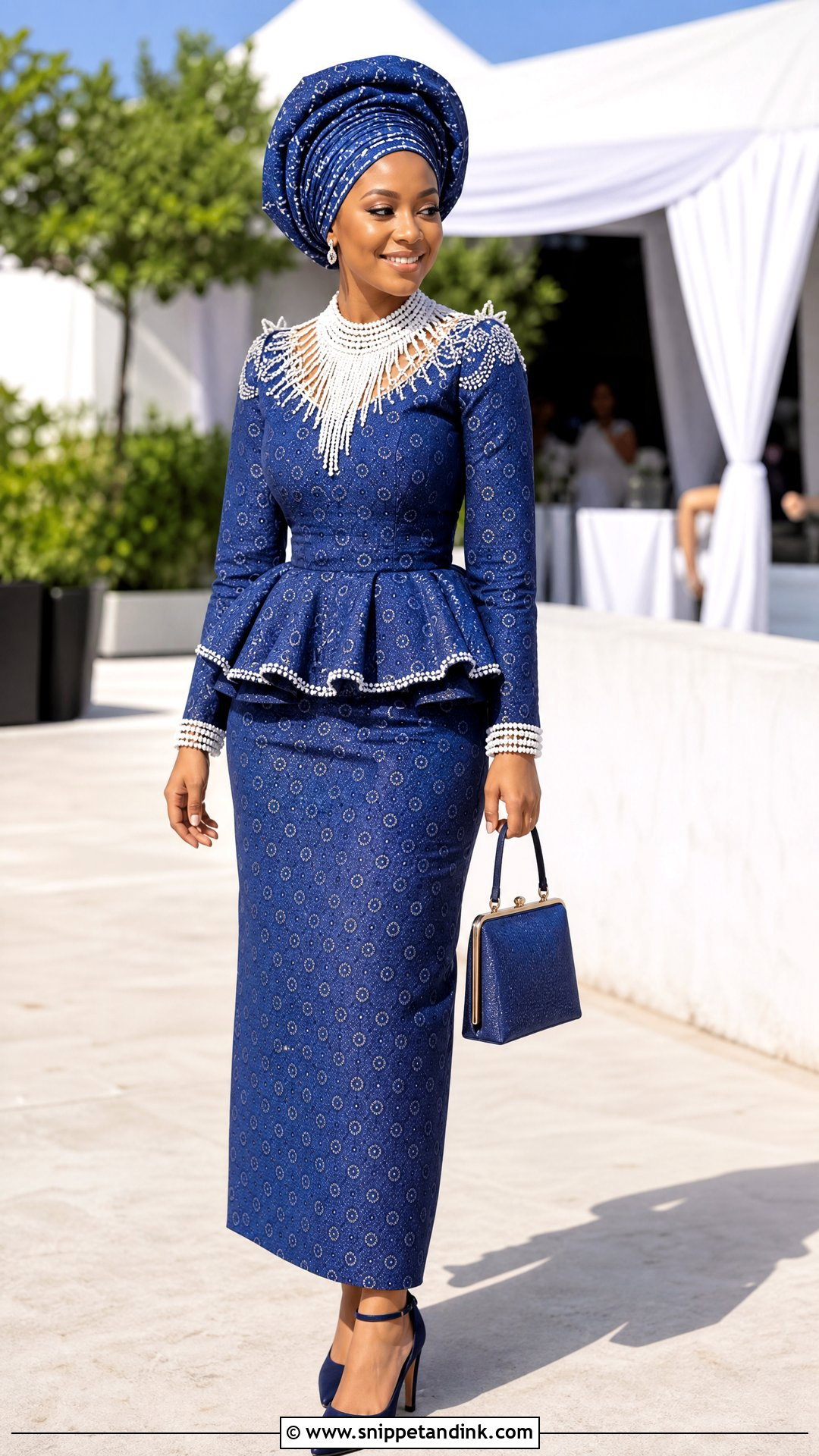
Blue shweshwe is the print most people picture, and for good reason: the indigo ground with tiny white motifs looks crisp on almost every skin tone. I like it cut as a fitted bodice with a modest round neck, short sleeves and a full midi or ankle-length skirt, with a structured peplum to mark the waist. A matching doek, a coordinating apron, simple white beadwork and navy block heels finish it, plus a small structured bag. The detail I check at every fitting is pattern alignment. Shweshwe motifs are small and regular, so a seam where the print jumps is obvious from across a yard. Ask your maker to match the print at the centre front and side seams, and allow extra fabric for it.
2. Xhosa Umbhaco Lobola Dress With Beaded Cape
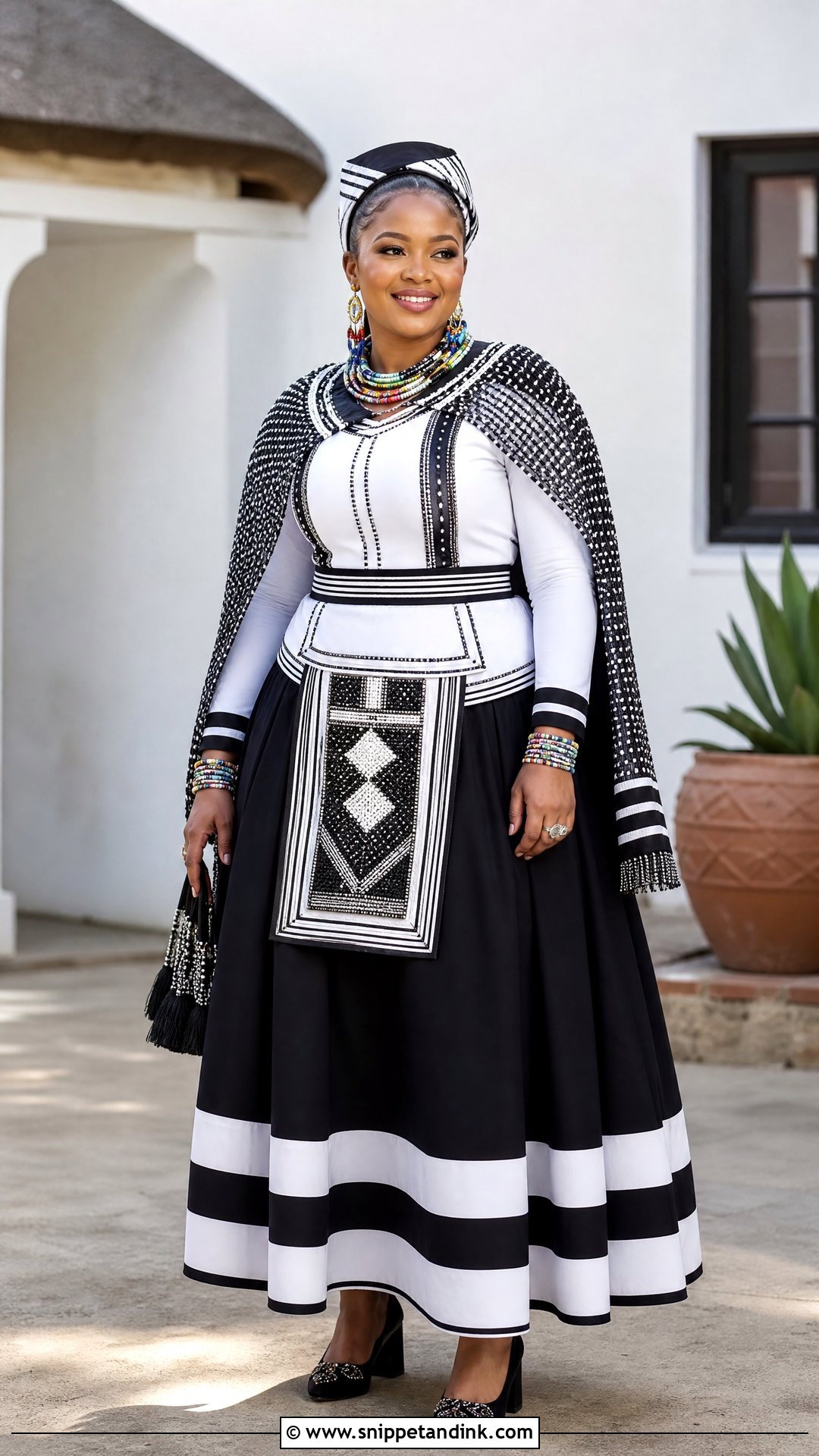
Black and white is the base of a Xhosa-inspired umbhaco lobola dress, usually with bold horizontal bands of black braid near the hem. A long column or a flared ankle-length skirt both carry the banding well. Add a fitted blouse, a beaded cape, an apron and a neatly wrapped headscarf. Beadwork in white, black, turquoise and red can sharpen the neckline. Keep the shoes low and black and the earrings small, because the cape is doing the talking. Umbhaco cloth is fairly stiff, so I always have the bride sit down at the fitting; a skirt cut too narrow will ride up. Specific garments and bead patterns can carry meaning about a woman’s status or family, so let relatives guide those choices.
3. Zulu Lobola Dress With Isicholo
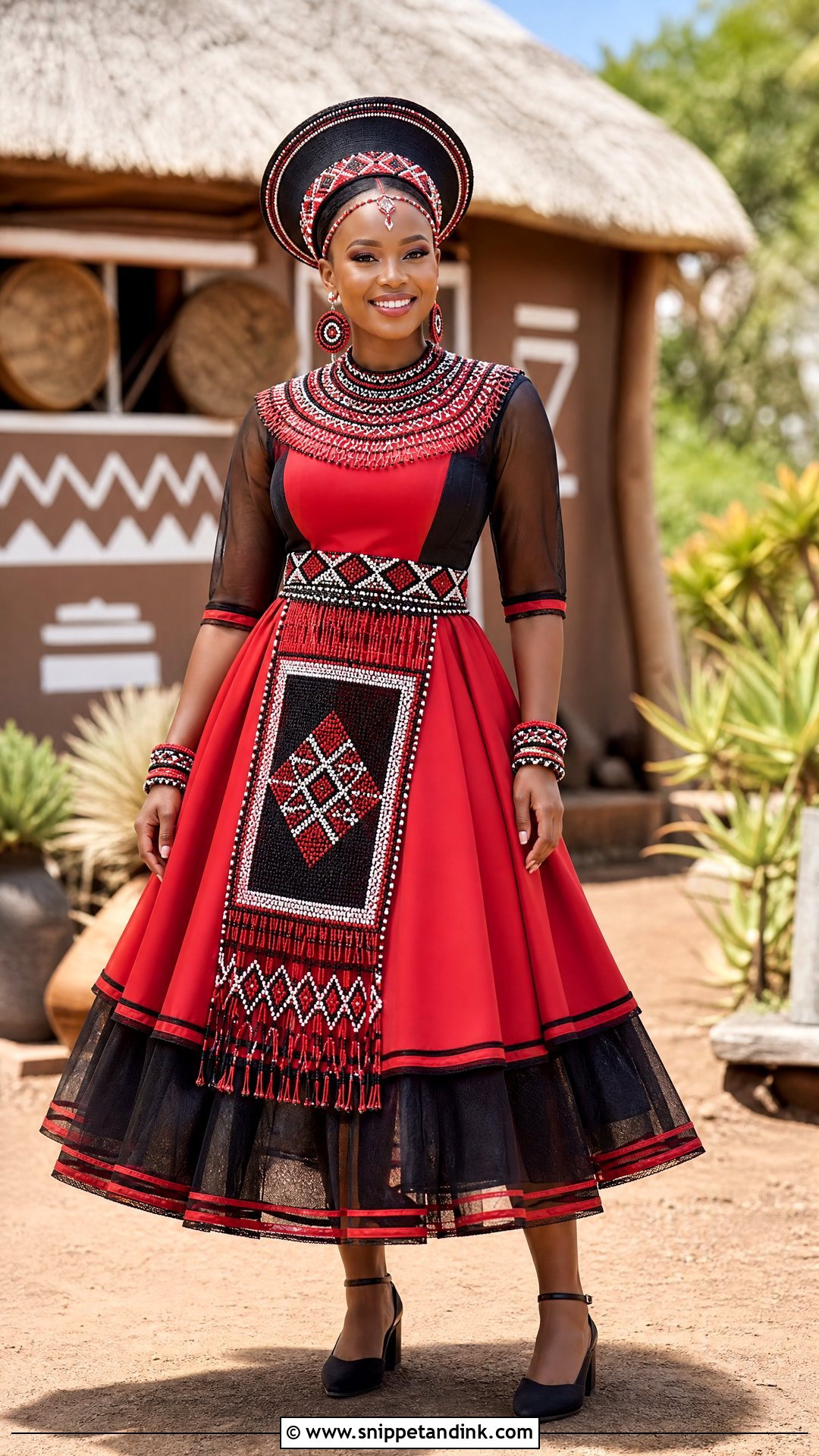
The isicholo, the wide flared hat traditionally worn by married Zulu women, gives this look its height, so the dress underneath should stay calm. A fitted red, black or white bodice that opens into a soft flared skirt, no train, is what I’d build it on. Add a beaded collar, waist beads, matching bracelets and a decorated apron, then black closed shoes or steady block heels for uneven ground. The isicholo has to sit level and secure for hours, so I fit it over the hairstyle she will actually wear, not over loose hair. Pick bead colours from the dress rather than adding new ones. Family guidance matters here, because some families reserve certain pieces for after the wedding.
4. Tswana Peplum Lobola Dress
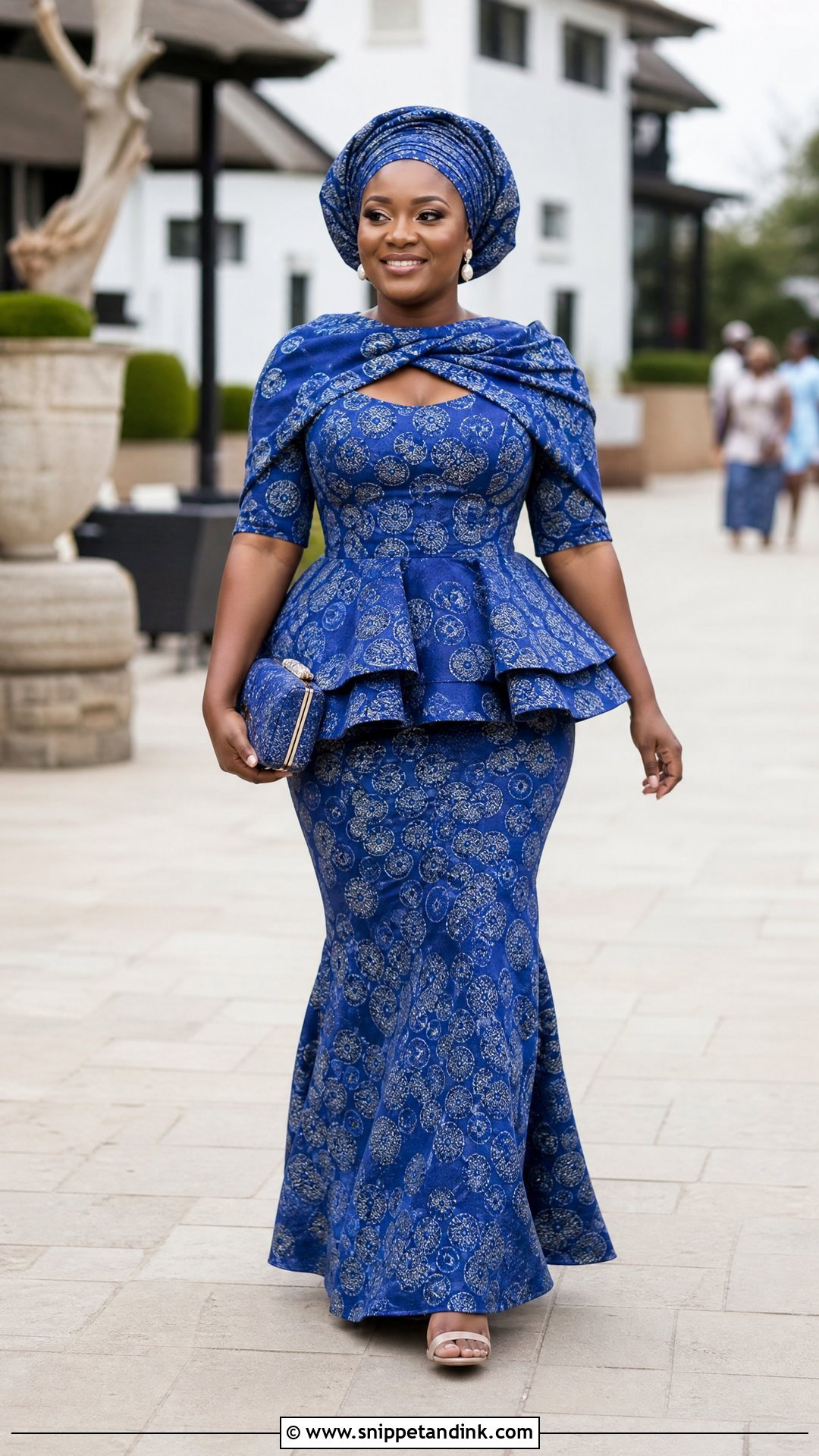
A Tswana peplum lobola dress pairs a defined waist with the volume you see in a lot of makoti wear. Blue, brown or royal purple print suits a fitted top with elbow sleeves, and a layered peplum sits over a mermaid or softly flared skirt. Add a matching headwrap, a small shoulder covering, pearl earrings and a structured clutch, with pointed flats or low block heels. Keep the neckline plain so the print leads. For couples who want to coordinate, I suggest repeating one colour from the dress in the groom’s shirt, tie or pocket square. Full matching outfits in the same print can look like a uniform in photos.
5. Sepedi Layered Lobola Dress
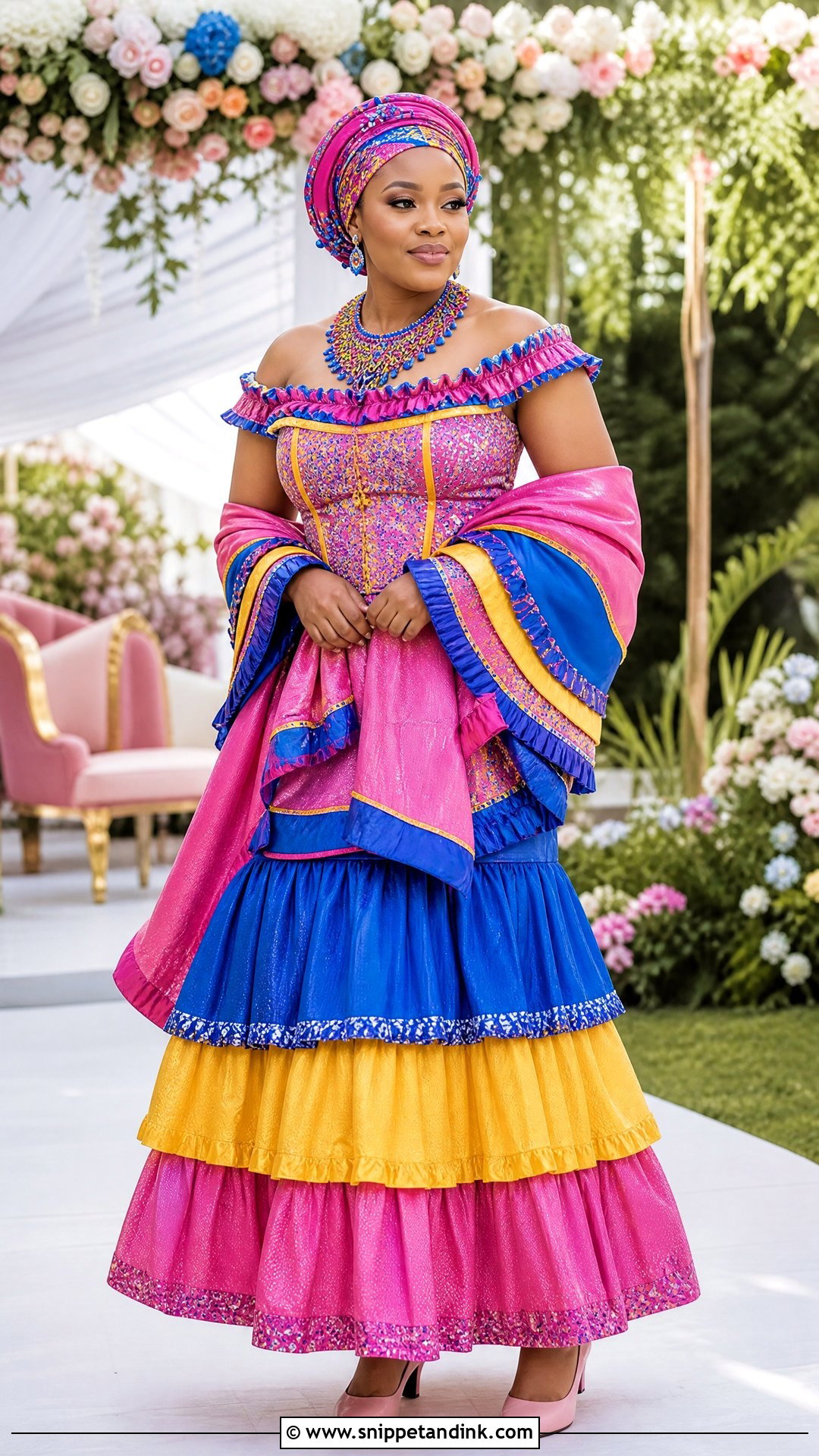
Tiers are what give a Sepedi lobola dress its swing. A fitted bodice over a tiered ankle-length skirt in pink, blue, yellow or orange, with satin bands, printed panels and a few ruffles defining each layer, is the classic build. The risk is bulk at the waist, so I ask for the top tier to start just below the hip rather than at the waistband. Petite brides look best in narrower tiers; tall brides can carry wide, dramatic ones. A matching headwrap, beaded necklace, simple earrings and low heels in a colour pulled from the fabric finish it, with a shawl for cooler weather or covered-shoulder expectations. Good internal construction, such as a stiffened underskirt, keeps the tiers from collapsing by afternoon.
6. Venda Striped Lobola Dress
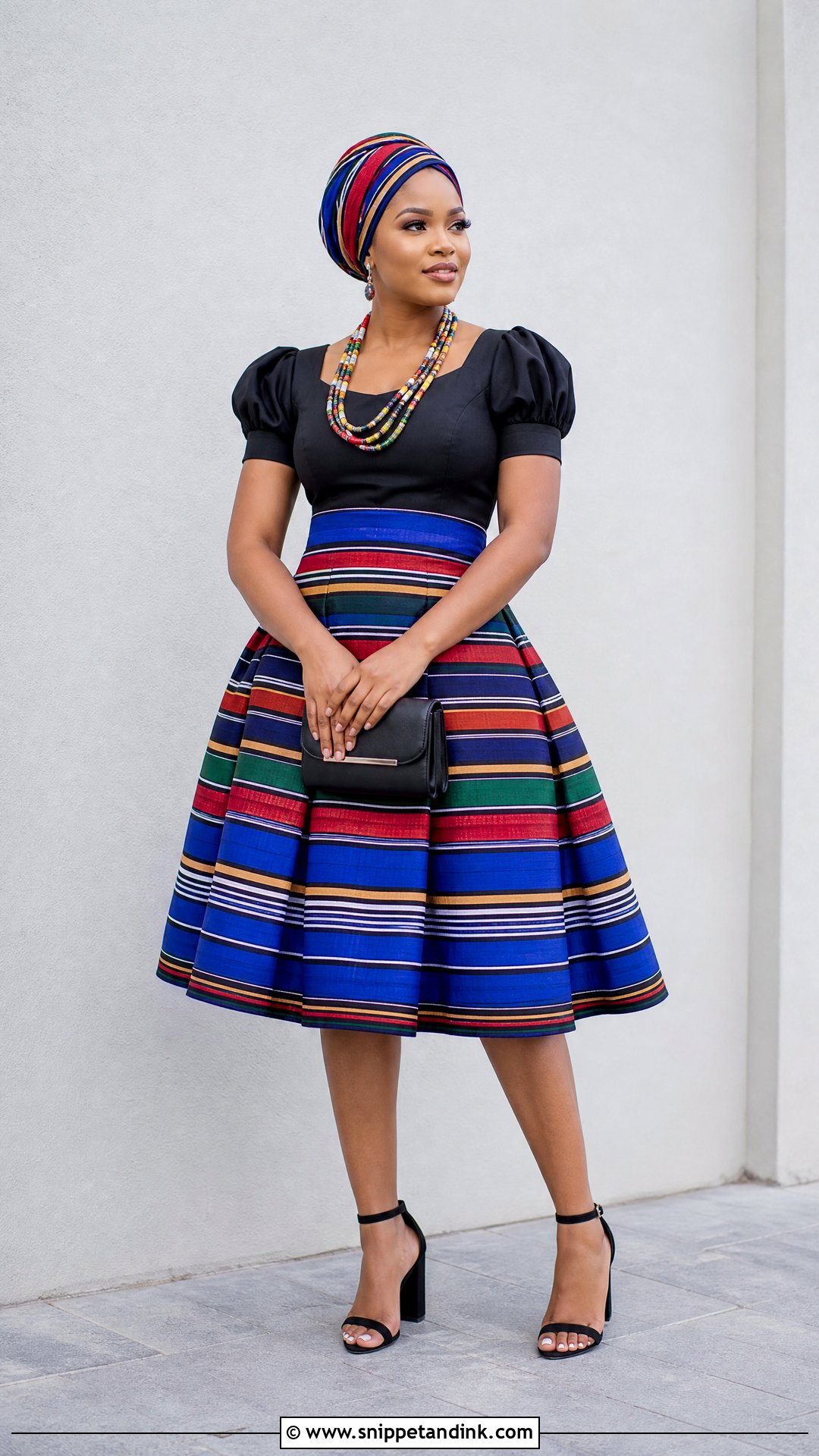
Venda cloth is known for its bright horizontal stripes, and they make this look visible from the far end of a garden. Build it around a long flared striped skirt and a fitted black top with short puff sleeves or a modest off-shoulder line. A striped band at the waist ties the two together so it reads as one dress. Add a matching headwrap, layered beads, black block heels and a simple clutch. If the family prefers more coverage, a wide square neck and a light shoulder wrap work well. Stripes are unforgiving at seams; if the skirt panels do not line up at the side seams, the eye goes straight there. I check this standing, not on a hanger.
7. Swati Red And Black Lobola Dress
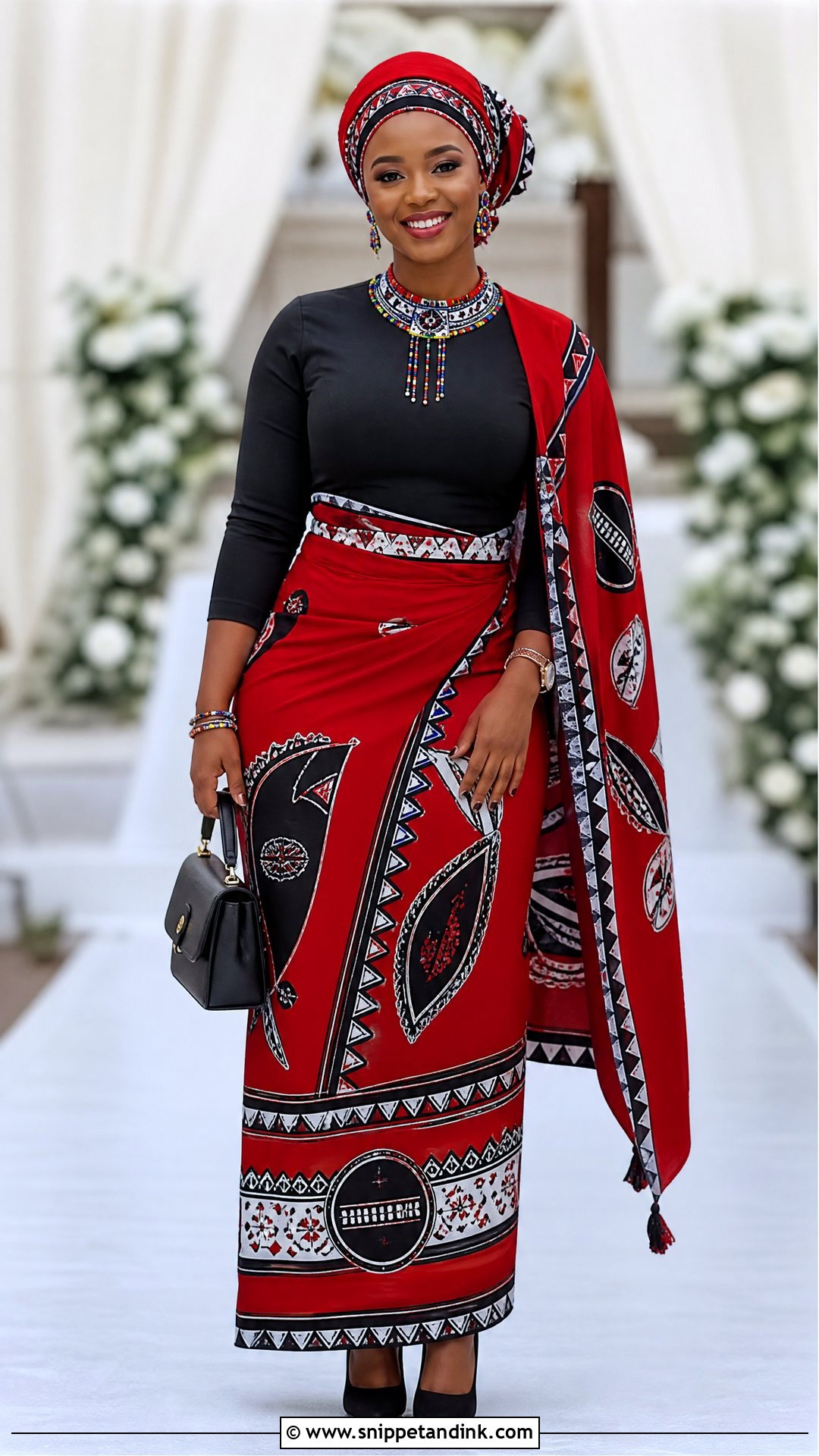
Red and black give a Swati-inspired outfit real presence. A fitted black top with a modest neckline over a long red wrap skirt, in printed or woven cloth appropriate to the tradition, is the base. A draped shoulder cloth adds movement. Finish with a neat headwrap, beadwork, black closed shoes and a compact bag; gold earrings are fine if they stay small next to detailed beading. Wrapped pieces are the ones that slip, so I secure each one with hidden hooks or safety pins at the hip and shoulder, then have the bride walk, sit and bend to greet someone. If any part of the textile carries symbolic meaning, confirm with family how it should be placed.
8. Ndebele Beaded Lobola Dress
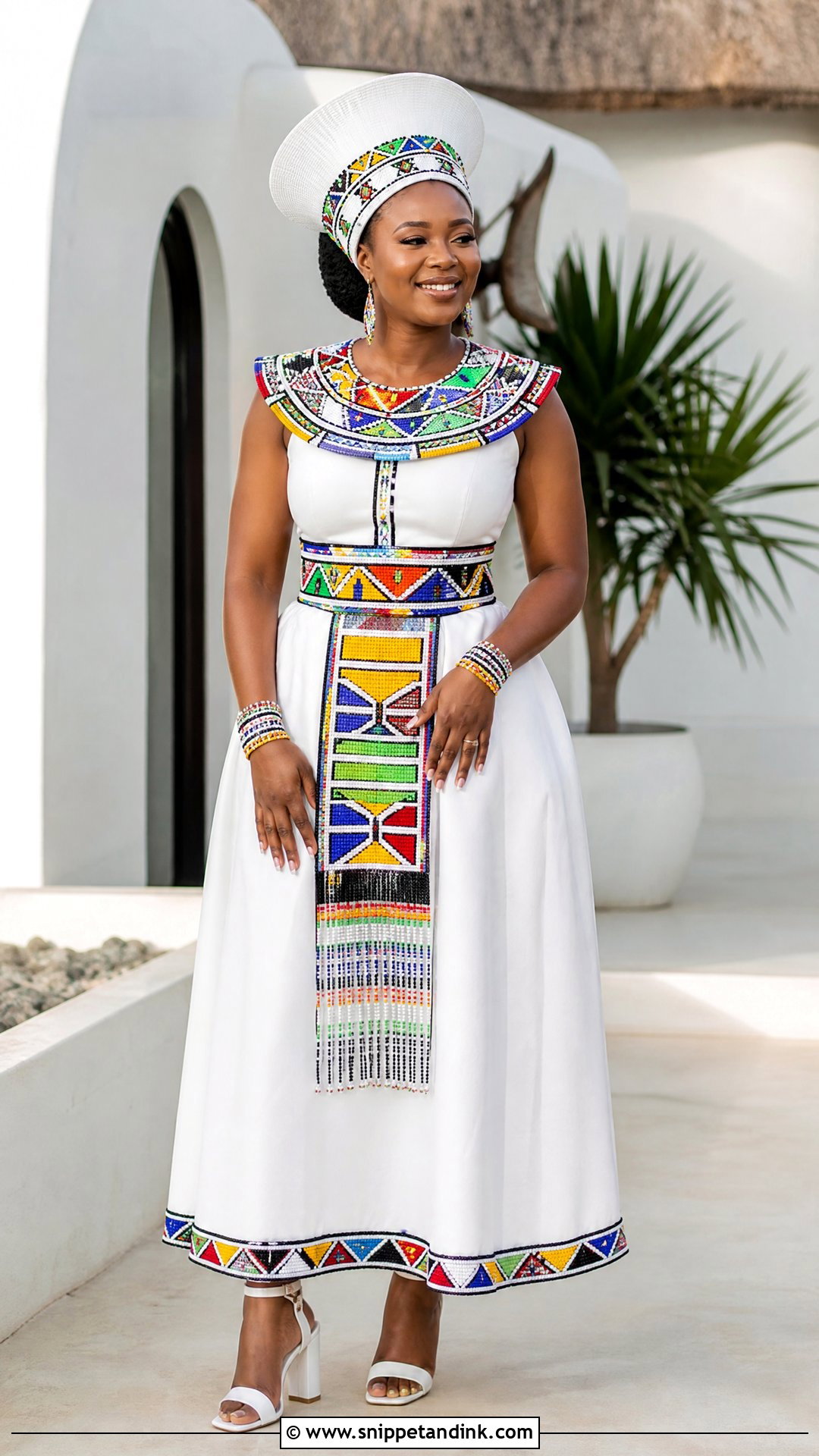
Ndebele beadwork is built on bold geometric blocks of colour, so the dress underneath works best as a quiet canvas. A plain white or black ankle-length dress gives the Ndebele-inspired lobola dress its background; the beaded collar, waist detail, bracelets and apron carry the pattern. Repeat blue, red, yellow, green and black in small sections for balance. Plain black or white block heels keep the feet out of the conversation. A structured headpiece or a wrapped doek can finish it, depending on the family. Real beaded collars are heavy, which is something brides underestimate, so try the full set on for an hour before the day. Since colour and arrangement can carry meaning, work with an experienced beadworker rather than treating the pattern as decoration.
9. Basotho Shweshwe Lobola Dress With Blanket
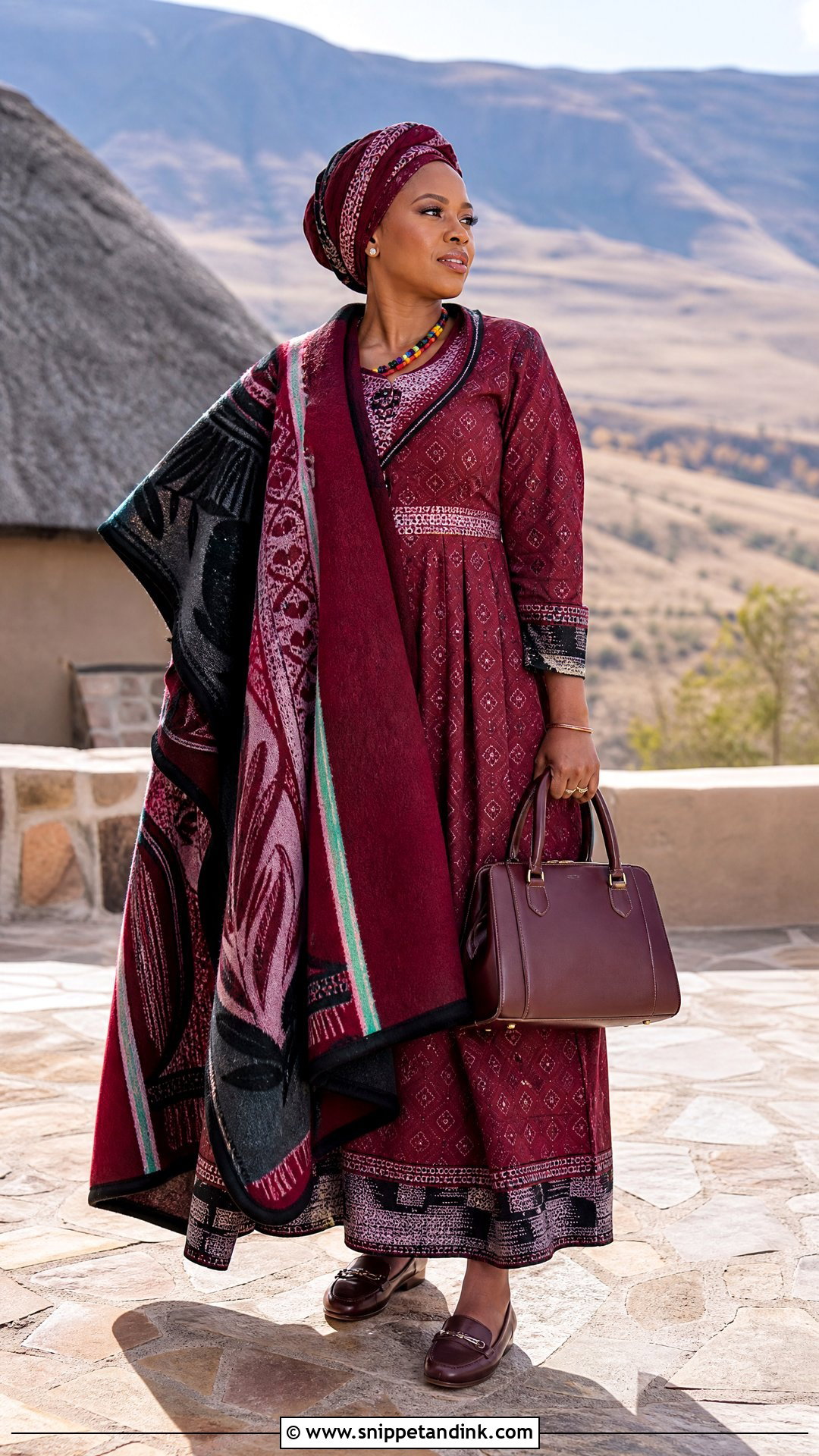
The Basotho blanket is a mark of identity in Lesotho, and wearing one at a lobola carries weight beyond warmth. Pair it with a long shweshwe dress in blue, brown or burgundy, fitted at the top with a full ankle-length skirt and three-quarter sleeves. Drape the blanket over one shoulder so the dress still shows; worn around both shoulders it hides everything and adds bulk. A matching headwrap, simple beads, comfortable leather shoes and a structured bag complete the outfit. If the blanket pattern is loud, choose a small-scale print for the dress. Blankets are heavy wool, so I pin the drape at the shoulder with a large blanket pin. Ask family which blanket and which way of wearing it suits the occasion.
10. Brown And Gold Lobola Dress
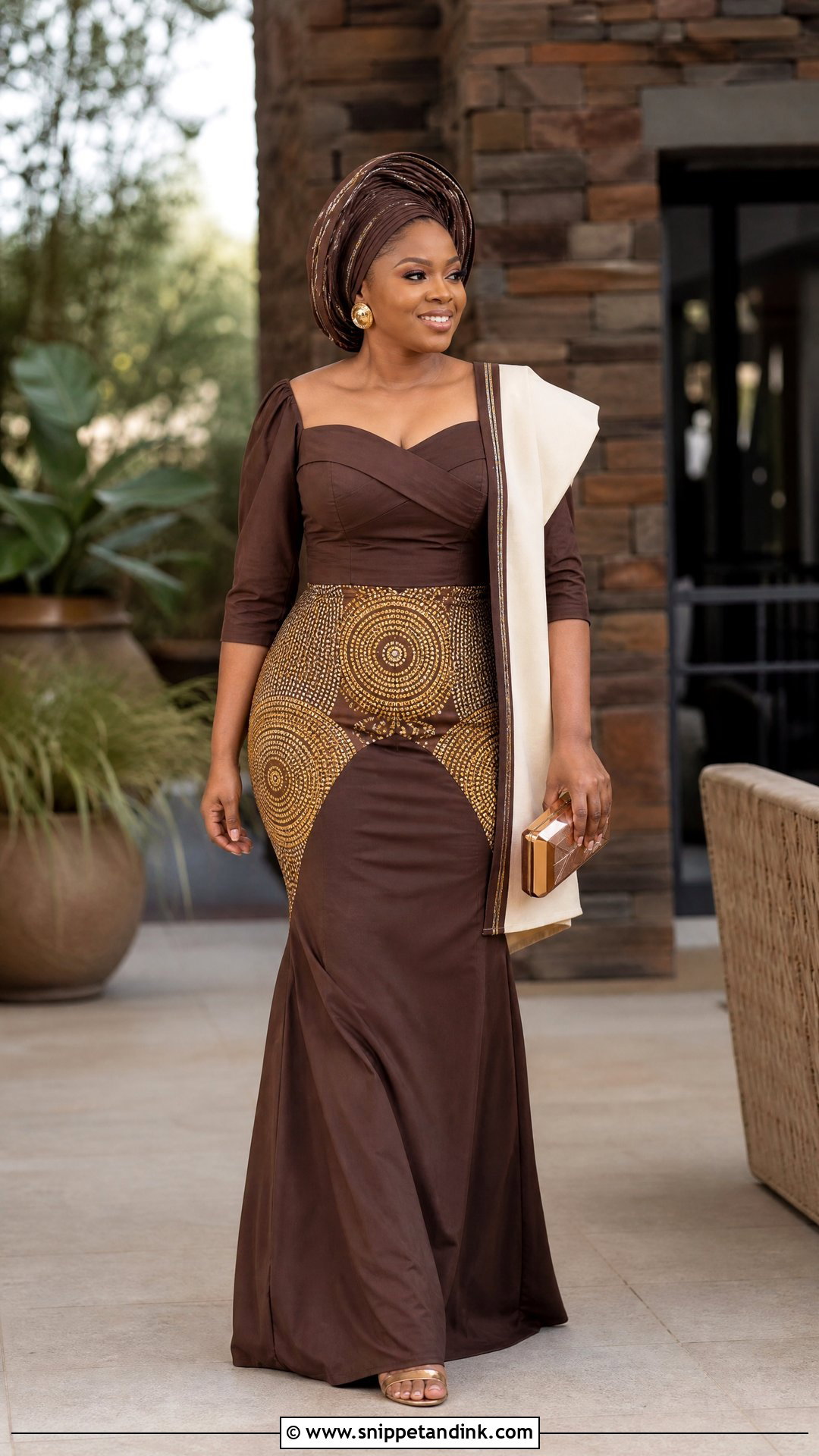
Brown and gold is the combination I suggest to brides who want something warm that still feels formal. A chocolate floor-length dress with a fitted bodice, elbow sleeves and a soft trumpet skirt, with gold printed panels at the waist, cuffs, neckline and hem. Add a matching brown doek, gold drop earrings, a beaded necklace and metallic low heels. A cream or ivory shoulder wrap lifts the darker palette and gives coverage when needed. Keep the bag small, in brown, cream or a muted gold. Shiny gold lamé can flare white under a camera flash, so I prefer matte or textured fabric where the gold reads rich instead of glaring.
11. White And Blue Lobola Dress
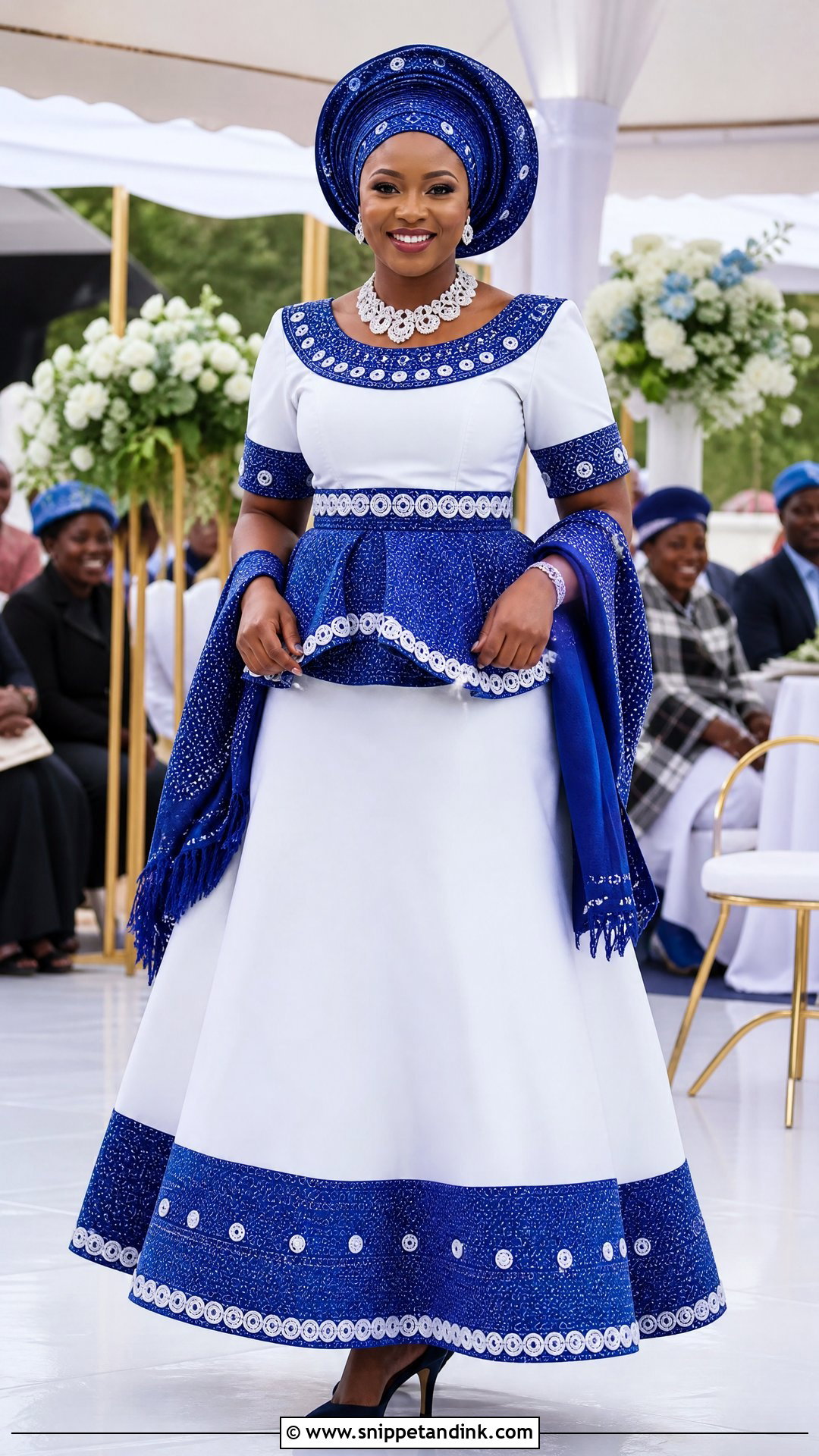
White makes blue shweshwe details look sharper than they ever do on a coloured ground. Start with a white ankle-length A-line dress trimmed in royal blue print at the neck, sleeves, waist and hem, plus a removable blue peplum or apron for volume. Style it with a blue doek, white beadwork, pearl earrings, navy closed heels and a blue shawl for formal moments. White fabric is the one I always test outdoors: in strong sun many whites turn see-through, so line it fully. One more practical note. Blue shweshwe can bleed in its first wash, so prewash it before it is sewn next to white, or the trim can stain the dress.
12. Red Shweshwe Mermaid Lobola Dress
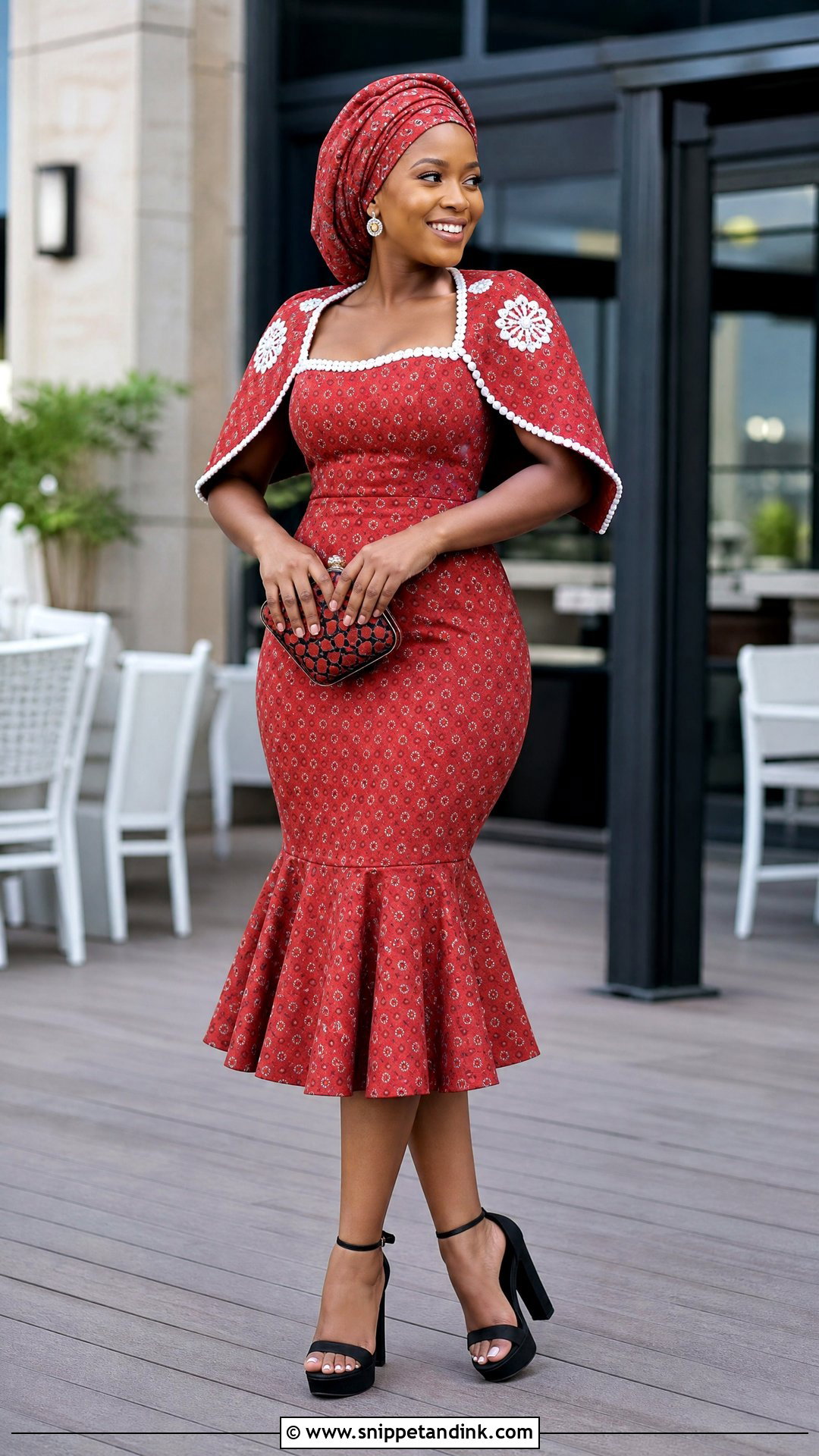
A red shweshwe mermaid dress is the modern option in this list, and the hardest to fit. Shweshwe is a firm cotton with no stretch, so the bodice has to be cut precisely through the waist and hip before it opens below the knee. Short sleeves, a square neck and a covered back keep it suitable for family. Pair it with a red doek, a detachable shoulder cape, black or nude block heels and a compact clutch; white beadwork brightens the face. Skip a long train, especially outdoors. I’d steer a bride away from this cut if she expects to sit on low chairs or kneel; ask the maker for a slightly stretchy lining and a kick pleat so walking stays possible.
13. Green A-Line Lobola Dress
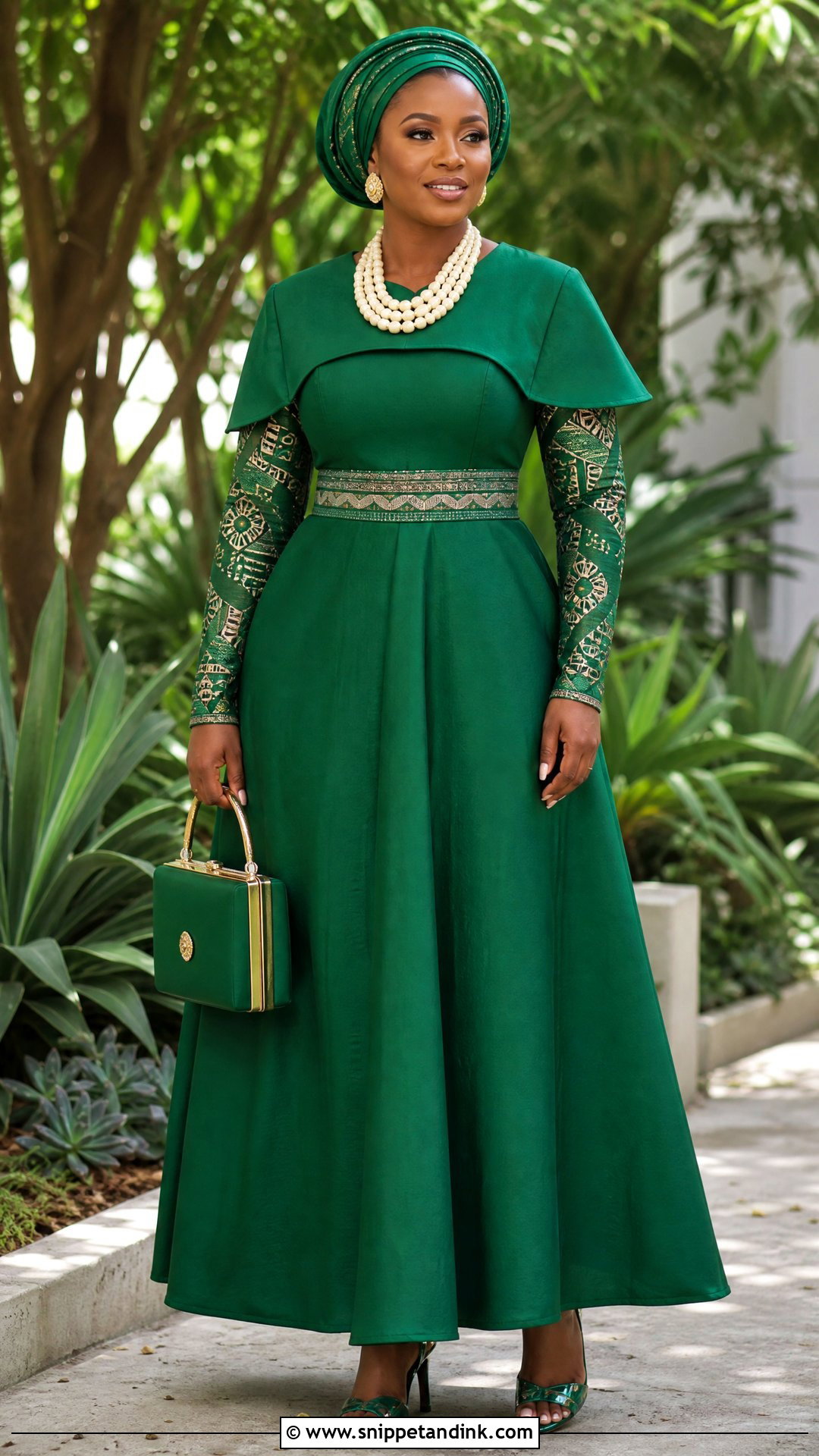
Emerald, forest or olive in an A-line shape is the calmest dress here. Trim the sleeves, waistband and hem with matching traditional print, and keep the fitted top widening gradually from the waist, which suits most body shapes and lets you move. A coordinated doek, a short shoulder cover, gold earrings and comfortable block heels finish the look, with a cream beaded necklace to bring light to the face. If the print holds several colours, repeat only one in the shoes or bag. Deep greens can photograph unevenly through thin fabric, so line the dress; a lined green holds its colour in harsh daylight.
14. Burgundy Velvet Lobola Dress
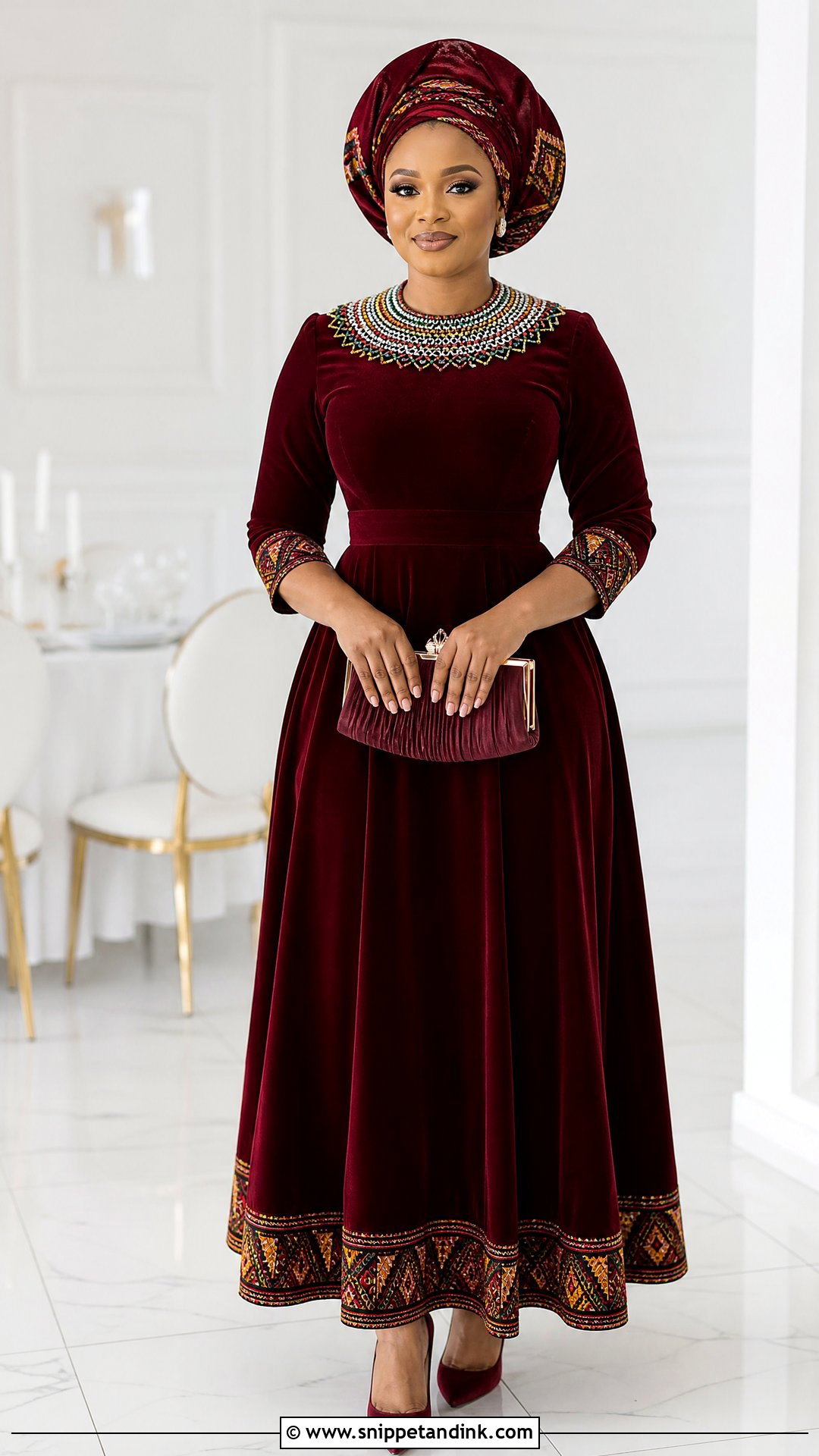
Burgundy velvet is my pick for a winter lobola, when outdoor gatherings in parts of South Africa can get properly cold. A long gown with a defined waist, three-quarter sleeves and a modest V or round neck, trimmed with traditional print at the cuffs, waist and hem, ties the luxurious fabric back to the occasion. Add a matching doek, a beaded collar, closed heels and a structured clutch. Velvet is heavy and it crushes where you sit, so I’d choose a stretch velvet and avoid gathers at the hip; smooth panels and a gentle flare hang better. Gold, cream, black or muted pink accessories all suit burgundy.
15. Orange Ruffled Lobola Dress
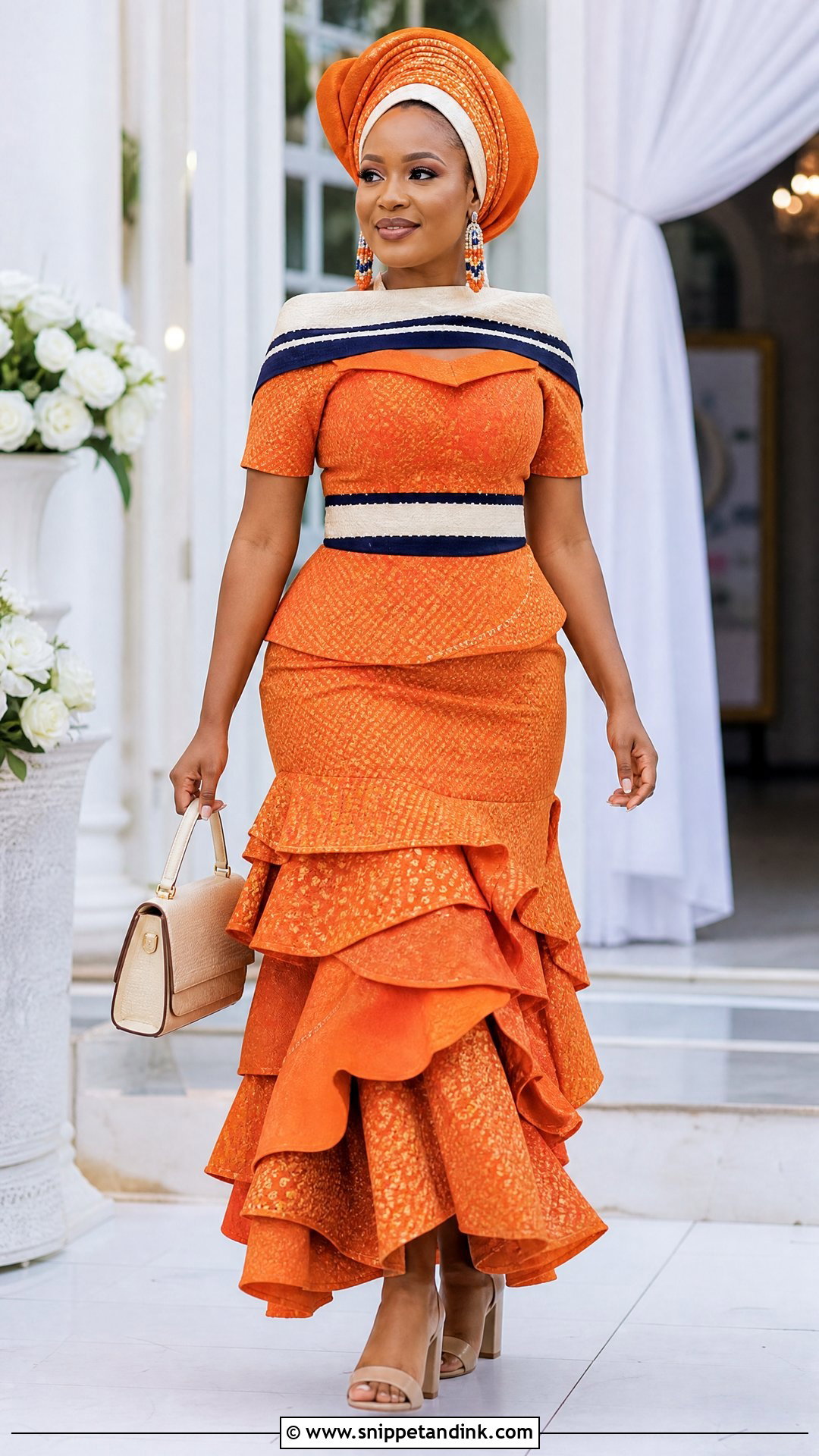
Orange is loud in daylight, which is exactly why some brides want it. A fitted bodice with short sleeves leads into a skirt with controlled ruffles from the knee down. Use orange shweshwe or a patterned fabric as the base, with cream, brown or navy bands at the waist and hem. A coordinating doek, a modest shoulder shawl, beaded earrings, neutral block heels and a small cream bag complete it. Keep the ruffles stiffened and not too deep; oversized ruffles catch on chairs and drag in grass. For group photos I ask relatives to wear quieter shades from the same print so the bride stays the focus.
16. Purple Two-Piece Lobola Dress
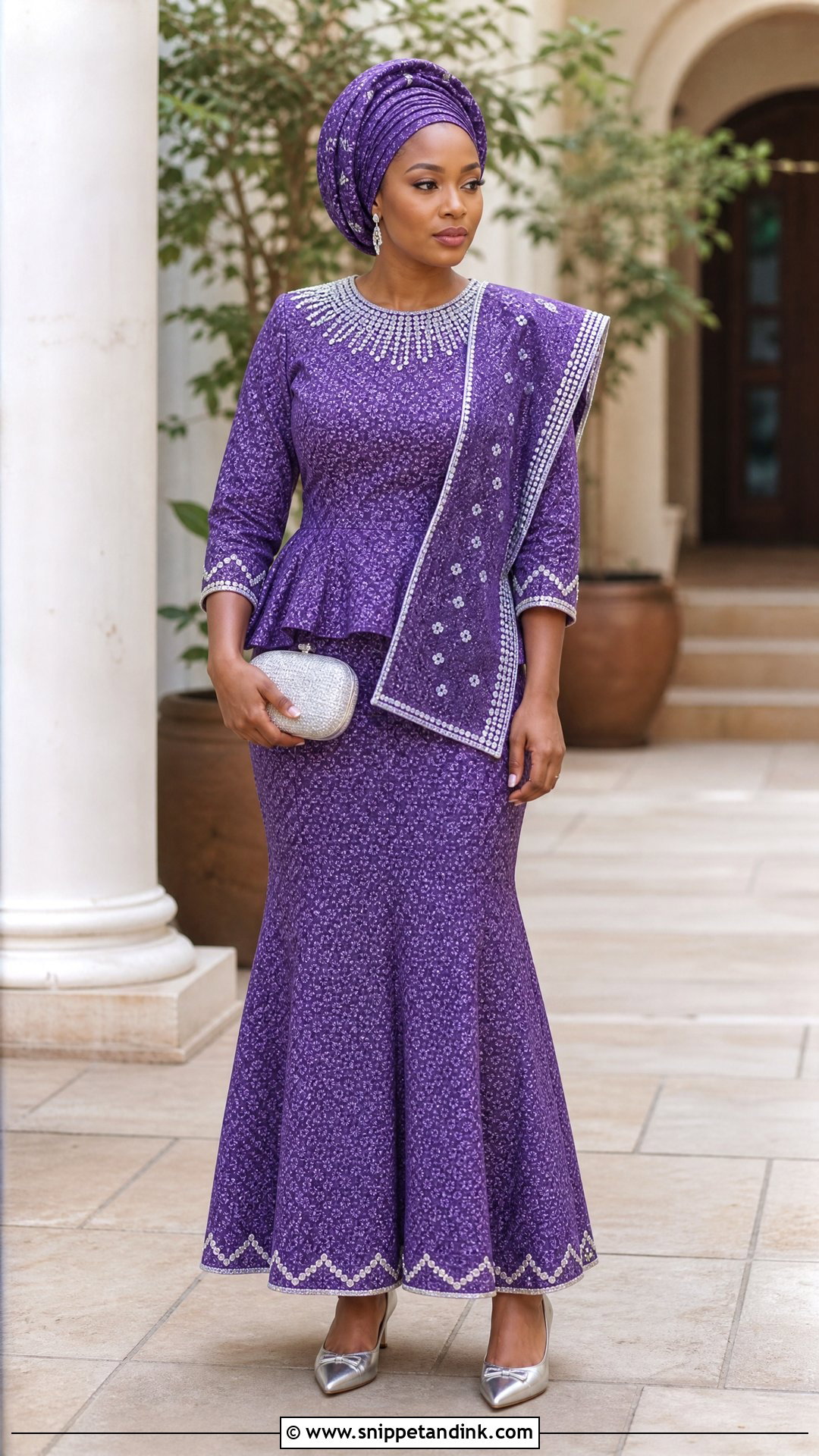
Two pieces solve a fitting problem many brides have: different sizes on top and bottom. A fitted peplum blouse and a matching ankle-length skirt in plum, violet or deep grape shweshwe, with three-quarter sleeves and a high round neck, look like a single outfit when done well. The skirt can be softly flared or pleated. Add a matching doek, a draped shoulder cloth, silver or white beadwork and low heels. Separates are also easier to alter and to wear again afterwards. The one thing I insist on is print alignment across the front, so the blouse and skirt look planned together rather than bought separately.
17. Black And White Lobola Dress
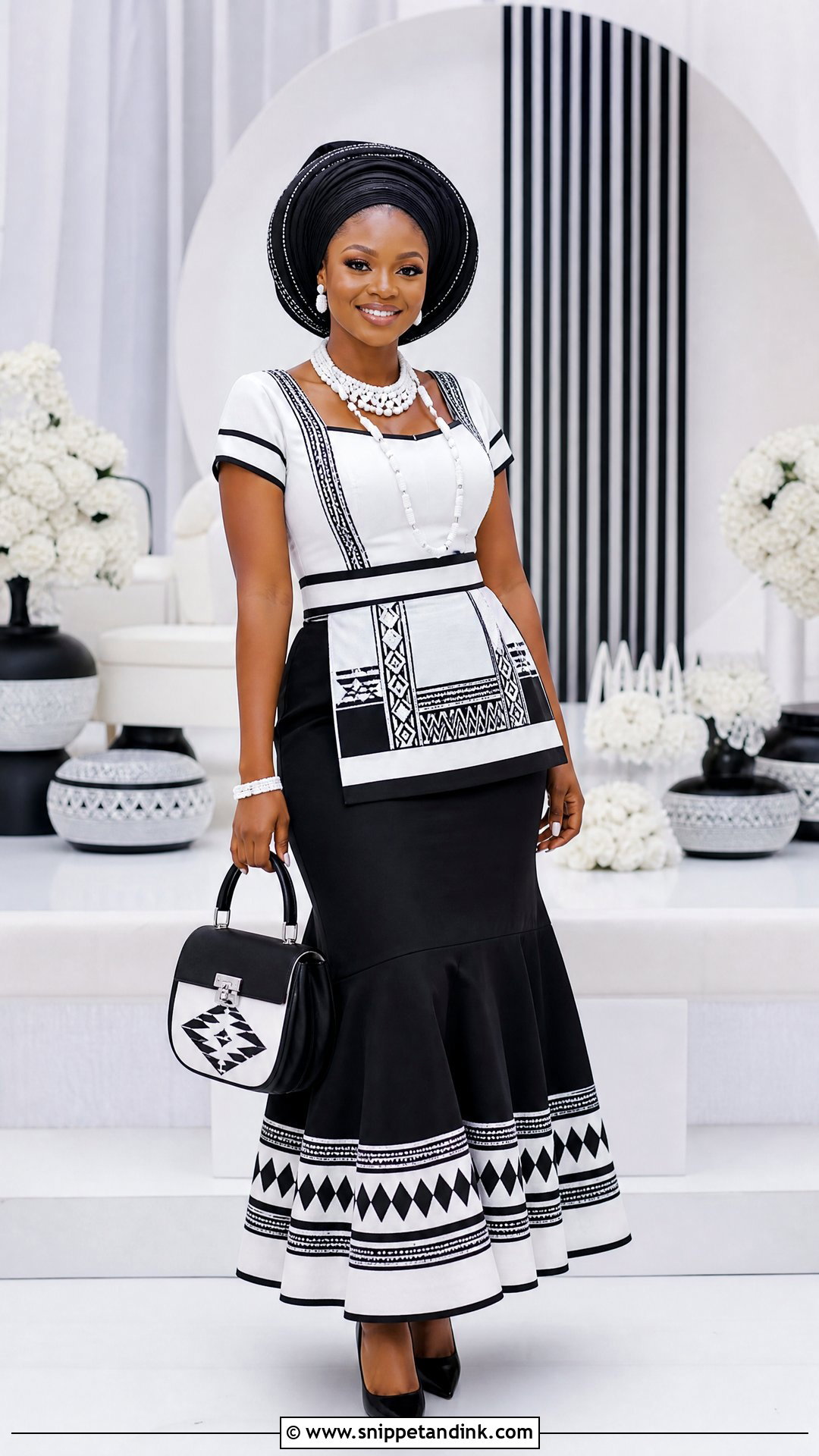
Black and white is crisp and graphic, and it scales well for families who want to coordinate. A white fitted bodice with black printed panels, a long black skirt with white bands or geometric accents near the hem, and an apron or peplum to sharpen the waist. Add a black doek, white beaded accessories, plain black pumps and a monochrome bag. If the print is busy, I make the sleeves and neckline solid to give the eye a rest. Relatives can wear smaller amounts of the same print; the bride’s dress should still carry the most detail so she stands out in a group.
18. Yellow Pleated Lobola Dress
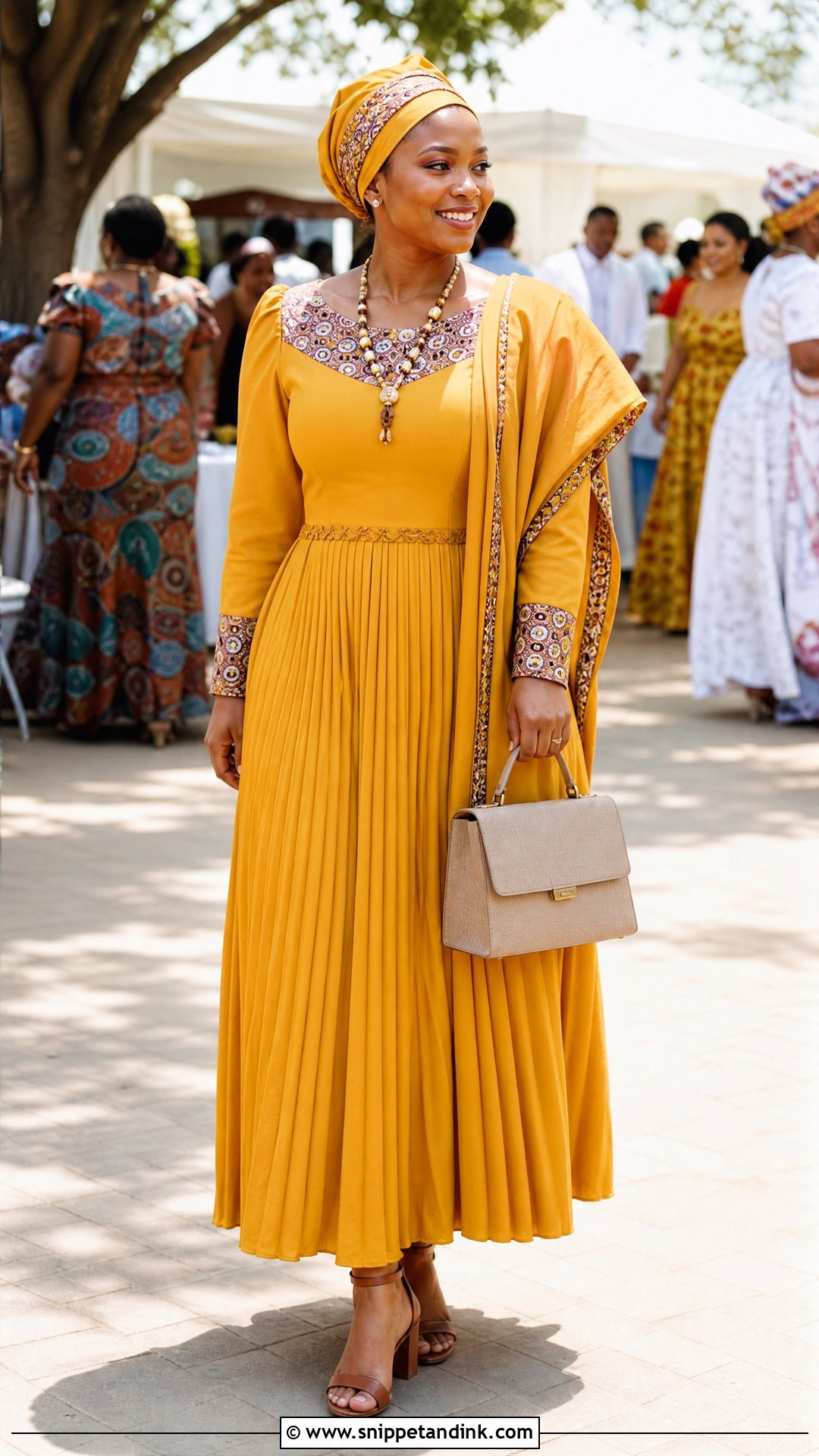
Mustard, marigold or golden yellow in a long pleated skirt looks cheerful and welcoming. Add shweshwe panels at the neckline, cuffs, waist and headwrap for cultural character, then brown or navy block heels, a shoulder wrap, simple beads and a small neutral bag. Narrow pleats move smoothly and keep bulk down; wide pleats look fuller and more formal. Check that the waistband does not fold over when you sit, which pleated skirts love to do. Yellow can blow out to near-white in full sun, so I steer brides toward matte fabrics over shiny satin for this colour.
19. Plus Size Shweshwe Lobola Dress
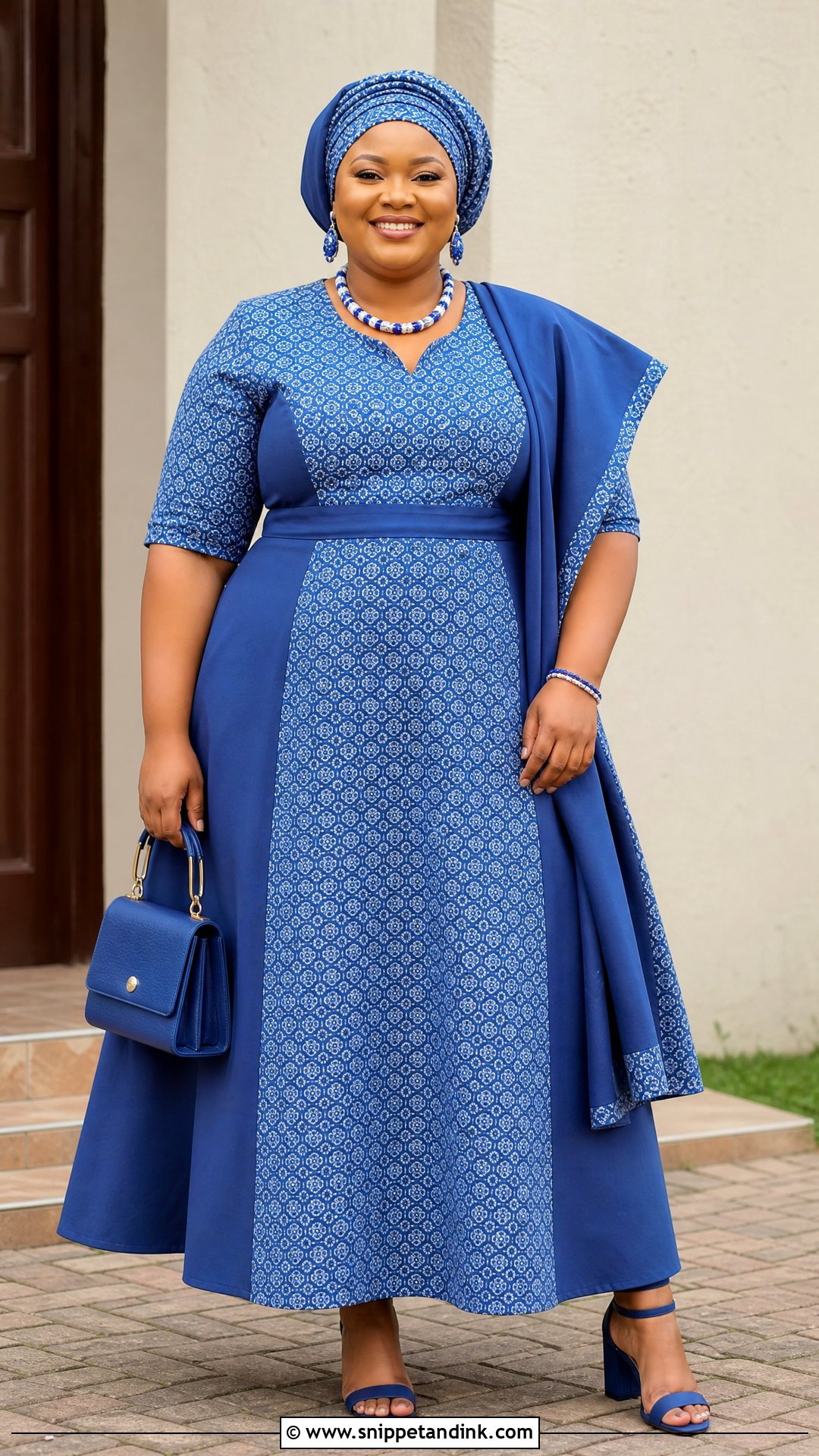
A plus size shweshwe lobola dress should be cut to celebrate the body, not to hide it. An empire waist, a softly defined natural waist or a structured A-line all give support and room to move. Medium-scale print with solid side panels adds a vertical line if you want one. Elbow sleeves, a shaped neckline and a full ankle-length skirt balance the silhouette, finished with a matching doek, supportive block heels, a shawl and accessories in proportion to the dress. The fitting step I never skip is the sitting test, plus a few dance steps. A breathable lining and the right undergarments do more for comfort than any cut.
20. Modest Long Sleeve Lobola Dress
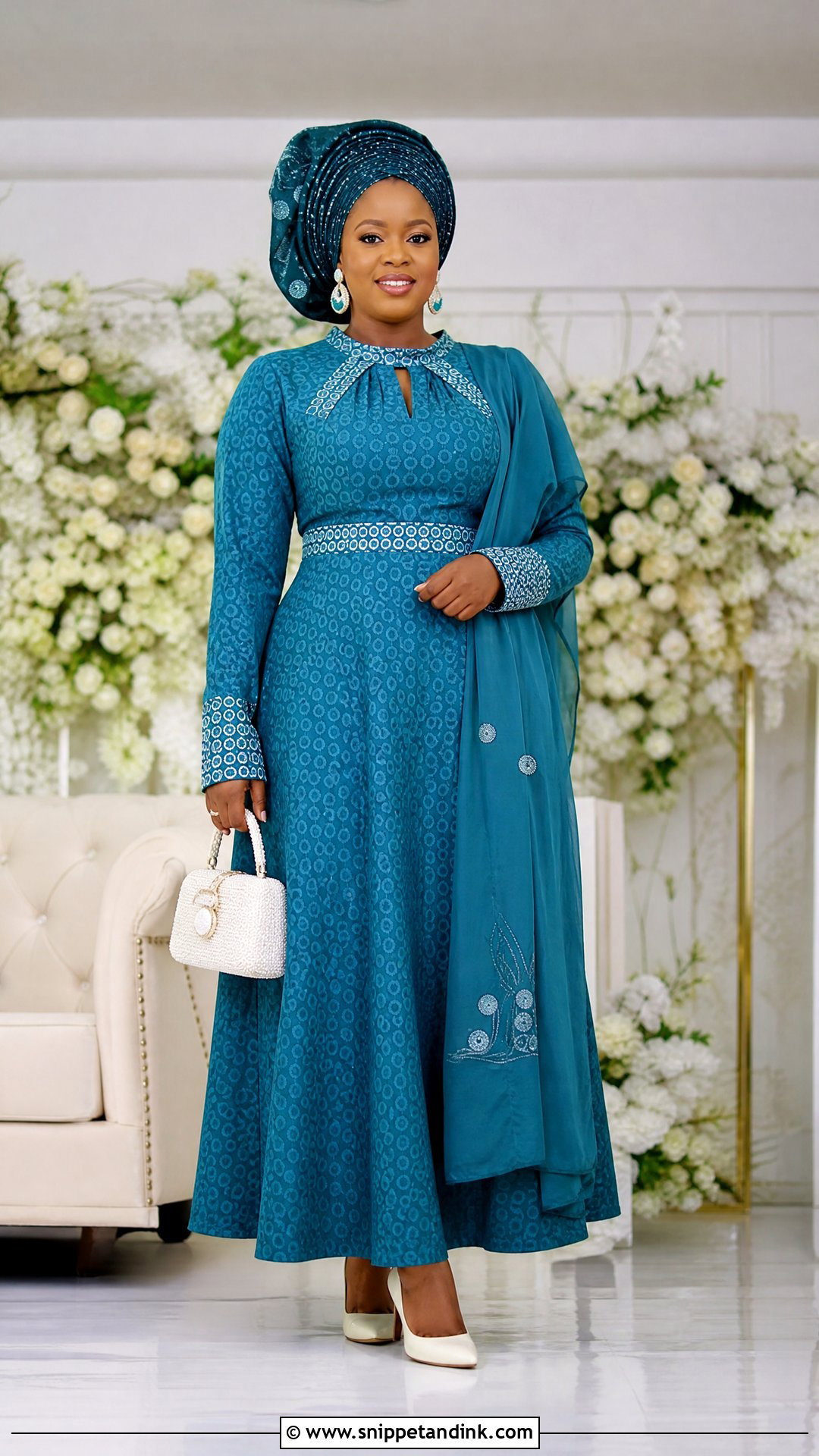
Full sleeves can look heavy, but they don’t have to. Breathable shweshwe or cotton, or a mix of solid and printed fabric, keeps a modest long-sleeve dress light. A fitted bodice, defined waist and softly flared ankle-length skirt work in any season, with slightly puffed shoulders or shaped cuffs for interest. Finish with a matching doek, a light shawl, beaded earrings, closed block heels and a small bag. In summer I leave the sleeves unlined; in winter, add a lined cape in a coordinating colour. Keep the neckline high enough for the family but shaped enough to frame the face.
Sewing With Shweshwe Without Shrinking Surprises
New shweshwe feels stiff because it is finished with starch, and it softens a great deal once washed. It also shrinks. I have every length washed, dried and pressed before the scissors come out; a dress cut from unwashed cloth can tighten after its first clean, and the first clean usually comes straight after the wedding.
Buy more fabric than the pattern says, especially if you want the print matched at the seams. Plan on at least two fittings, and start early. Seamstresses who specialise in traditional wear get busy before the end-of-year wedding season, and a rushed dress is where crooked prints and tight armholes come from.
A Doek That Survives Hours of Greeting
A doek shifts every time you lean down to hug an aunt. I tie it over a smooth, flat base, such as cornrows, a low bun or a wig cap, never over loose curls, which let the fabric slide. A stiffened fabric or a light interfacing behind the front pleat keeps its shape. Hide two or three bobby pins under the folds at the temples, and carry a spare pin in your bag. If your hairstylist and your doek tier are different people, get them to agree on the base before the day.
Respect, Comfort and a Print You Love
A lobola outfit starts with knowing the family, the culture and the setting. Find out what fabrics, colours, beadwork and headwear mean in the families involved before the design is fixed, then put your energy into the practical side: fit, a breathable lining, wraps that stay secure, stable shoes and enough room to move. Classic blue shweshwe, a layered Sepedi skirt, Xhosa beadwork or a modern mermaid cut can all be right. The dress that works is the one that honours where both families come from and still looks like you.
You'll Like These Ideas:


Leave a Reply