
A modest wedding look should never feel like a compromise, and in my fittings it rarely is once we stop thinking about the dress alone and start dressing the whole bride: hijab, underlayers, sleeves, shoes and all. These 25 Islamic Bridal Dress Ideas cover white gowns, abayas, embroidered lehengas, Moroccan kaftans and simple dresses for an intimate nikah, across different cultures, seasons and levels of formality. Each one is built around opaque fabric, long sleeves and a silhouette that skims rather than clings. Modesty means different things in different families, so read every look as a starting point. A neckline can go higher, a bodice looser, a lining heavier, and none of that spoils the design if your tailor knows from the first appointment.
Where Coverage Usually Slips at a Fitting
Most modest gowns look fully covered on a hanger. The gaps show up once a bride moves, so I run the same checks at every fitting, with her own hijab and shoes on.
Sleeves and wrists
Raise both arms as if hugging someone taller than you. If the sleeve rides above the wrist bone, ask for longer sleeves, a fitted cuff with a button loop, or a thin sleeve extension that sits underneath. Bracelets and bangles also push cuffs up, so test with them on.
The neckline and the hijab tuck
A neckline that looks high when standing can gape when you bend forward to sign the nikah papers. Tuck the hijab into it and lean over a table. A matching underscarf cap and a neck-cover layer keep everything in place, and they also stop hair from slipping out under a heavy veil.
Sheer fabric under bright light
Lace, tulle, chiffon and pale satin can all turn transparent under sunlight or a camera flash. Ask someone to photograph you with the flash on, front and back. If the outline of your legs or arms shows, add a slip or a heavier lining before the final fitting rather than after.
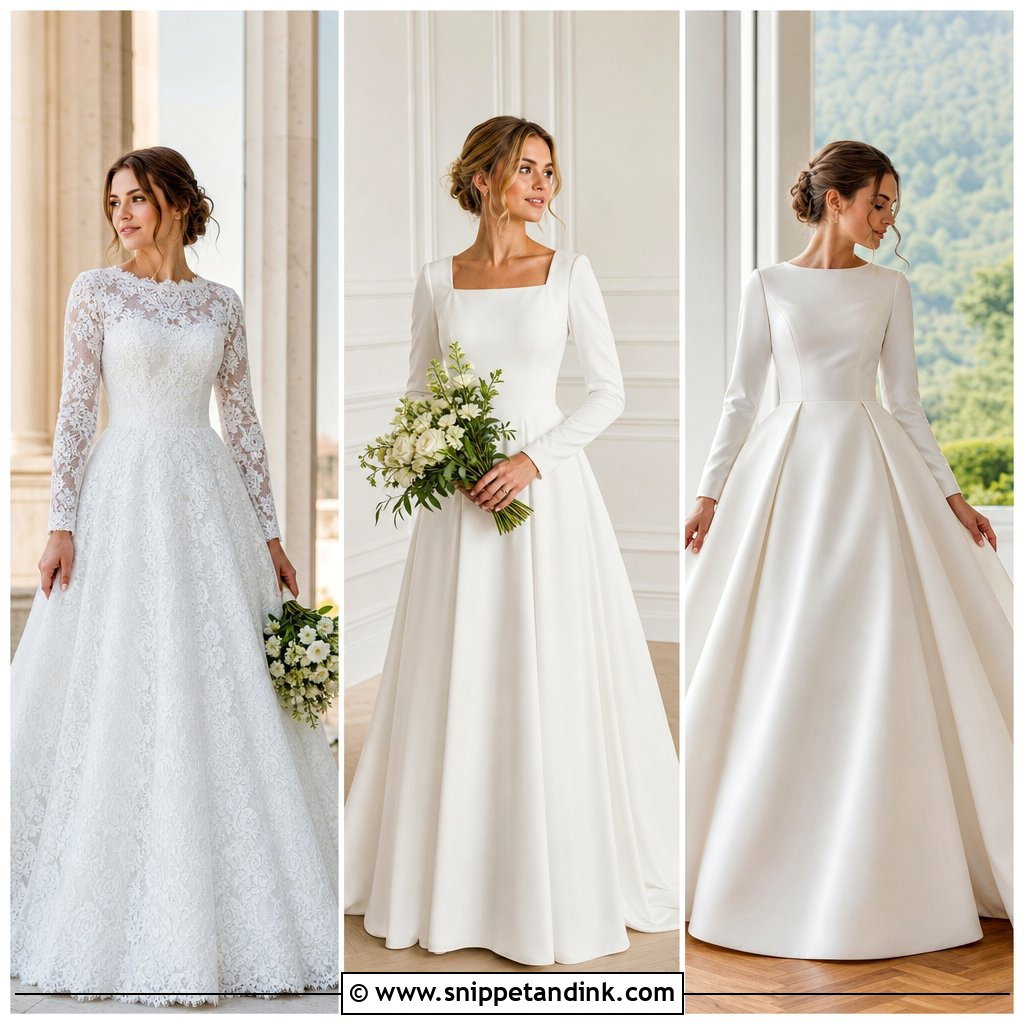
1. White Satin Islamic Bridal Dress
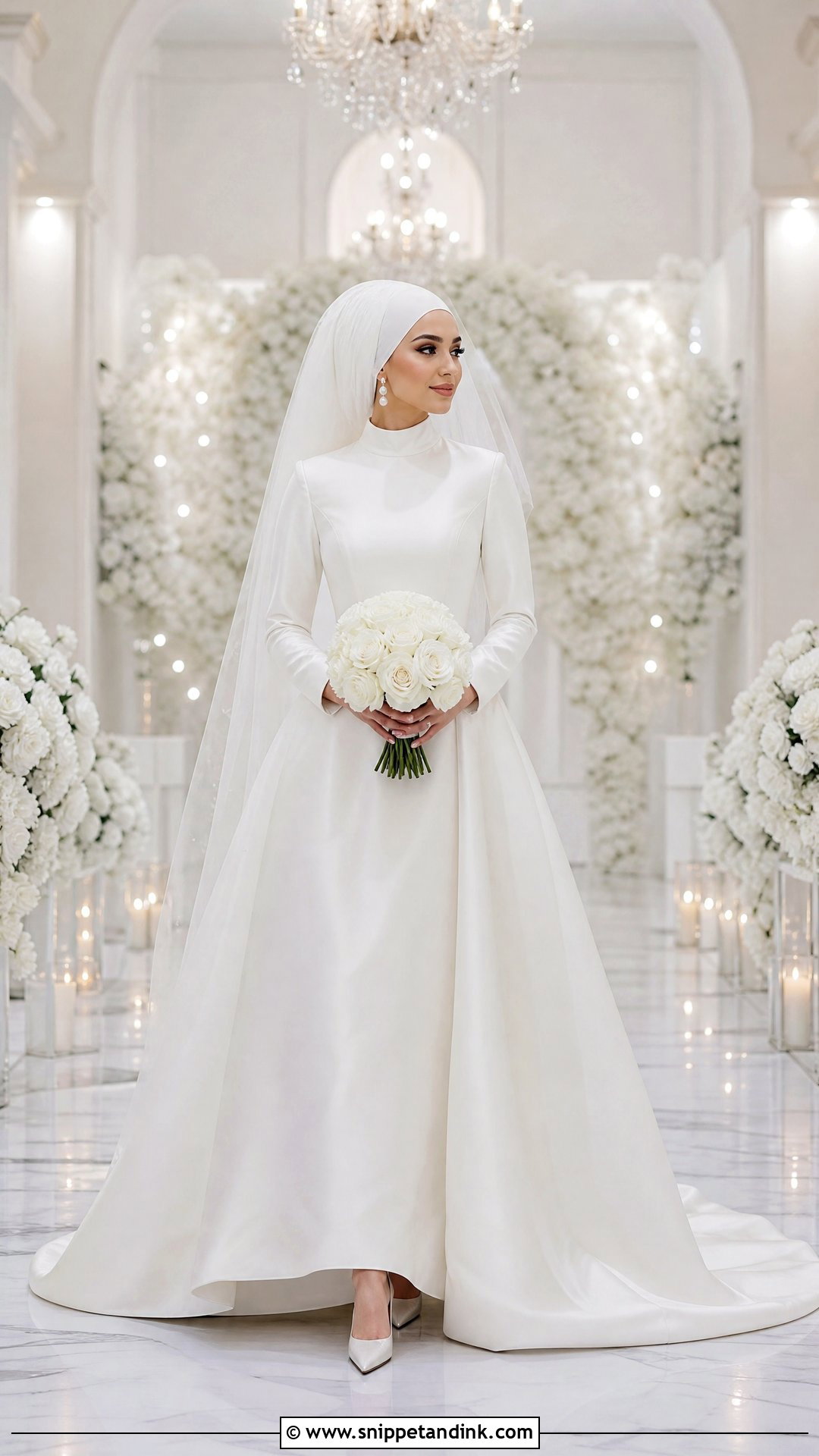
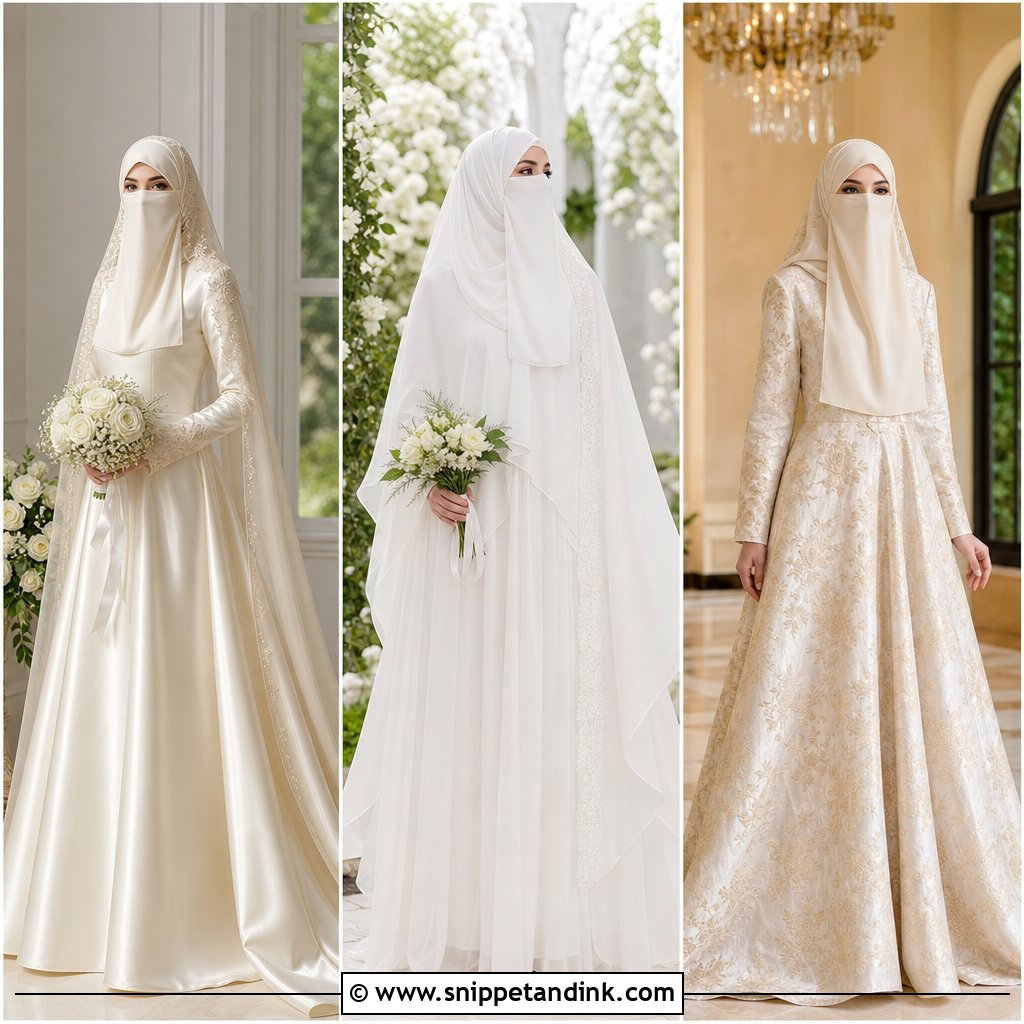
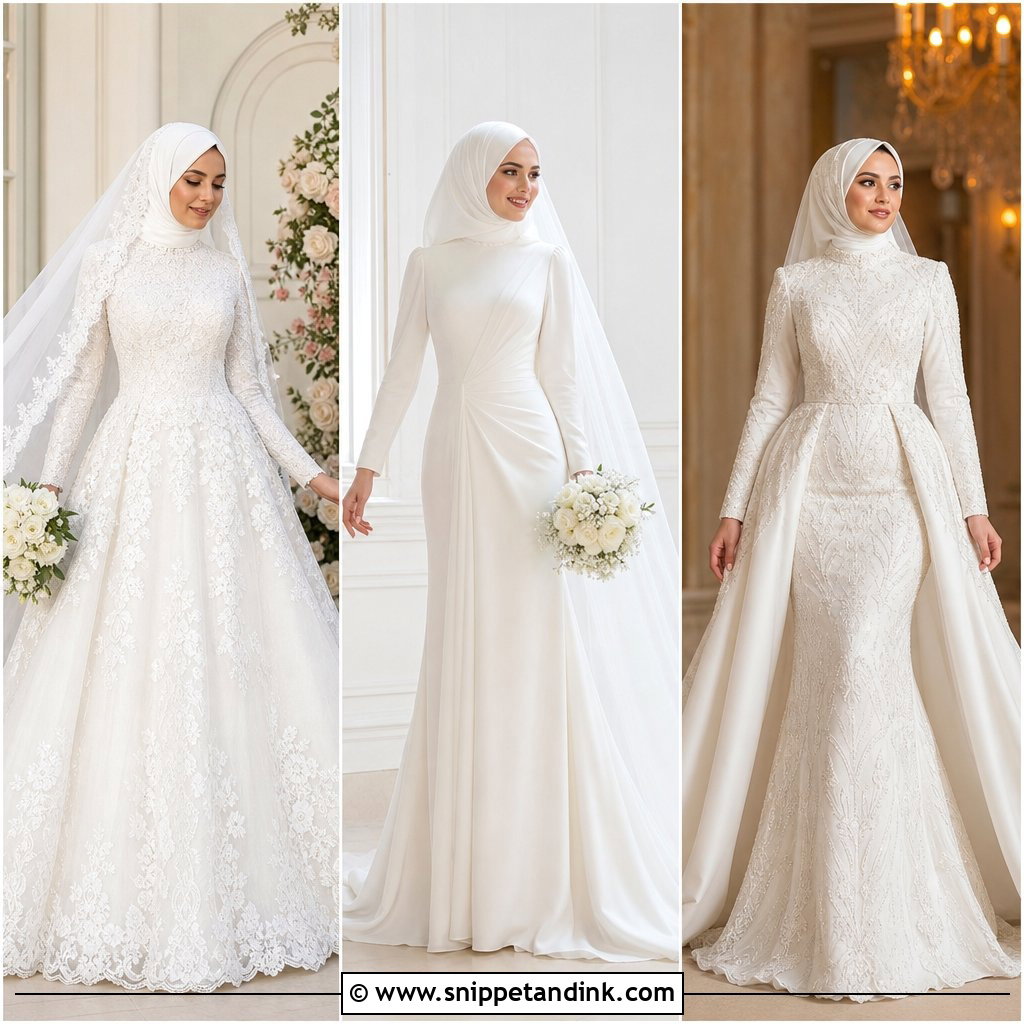
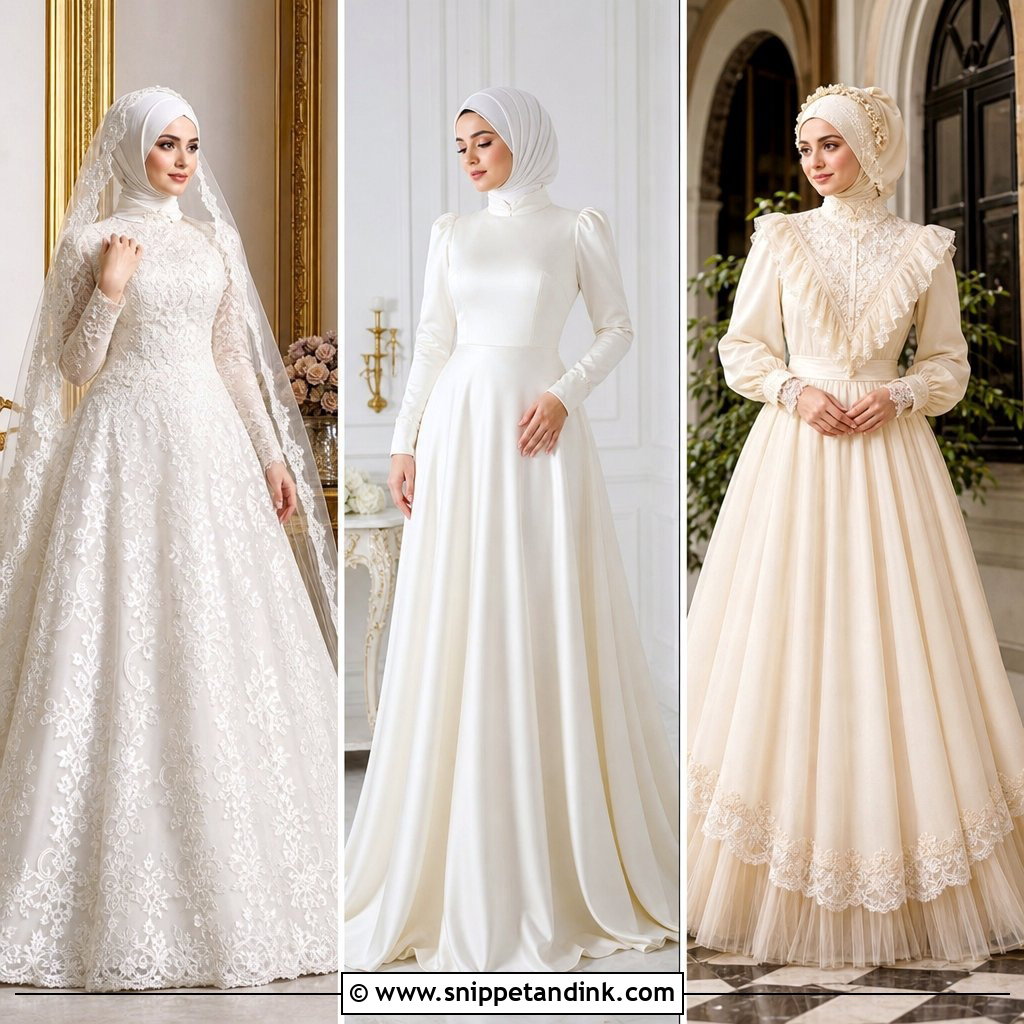
White satin needs very little decoration, but it tells the truth about fit and fabric quality. I always ask for a heavy, fully lined satin, because a thin one shows every seam and catches light unevenly across the hips. An A-line with a high neckline, fitted cuffs and a softly structured bodice keeps the line modest, and the skirt can fall into a small train. Choose a matte chiffon hijab in the same white; shiny on shiny makes it hard to tell where the dress ends. A long tulle veil pinned at the back adds ceremony. Pearl drops, pointed ivory pumps and a compact bouquet of white roses finish it.
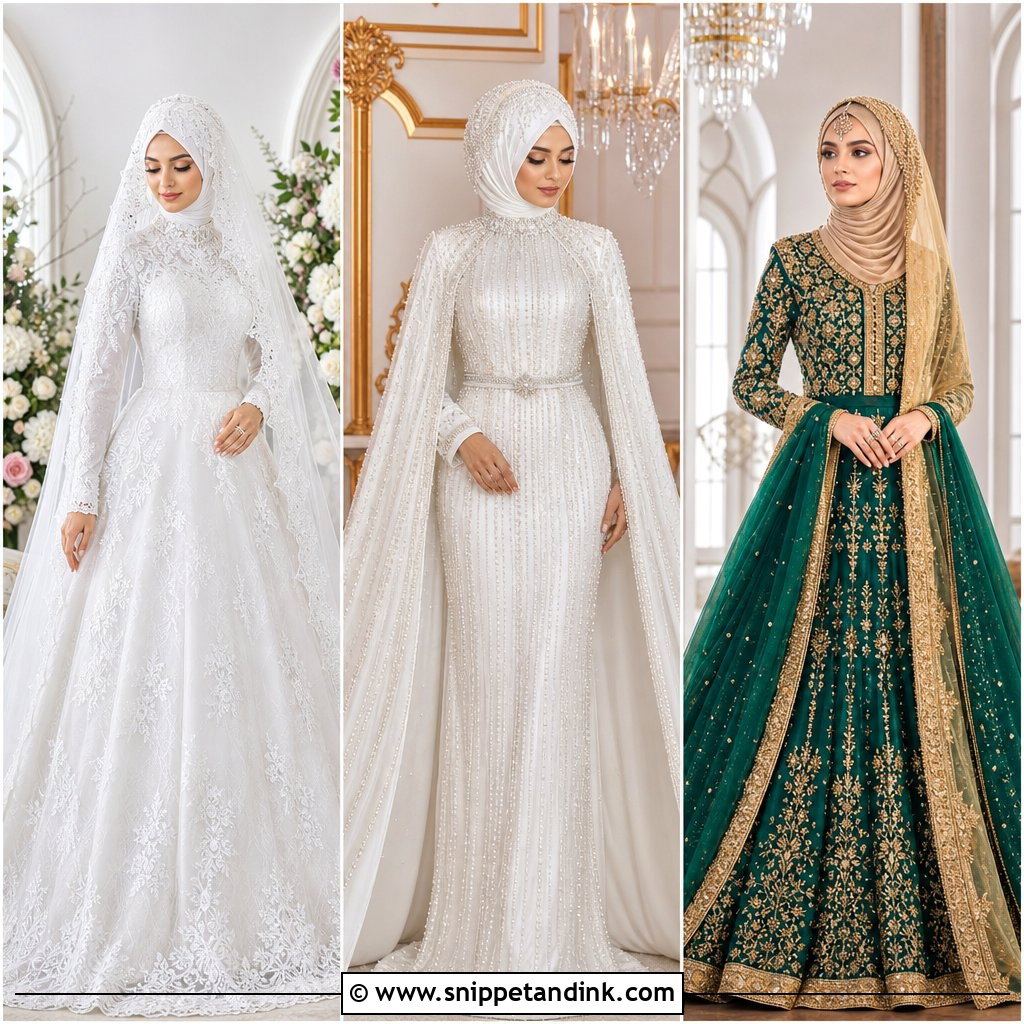
2. Lace Ball Gown Islamic Bridal Dress
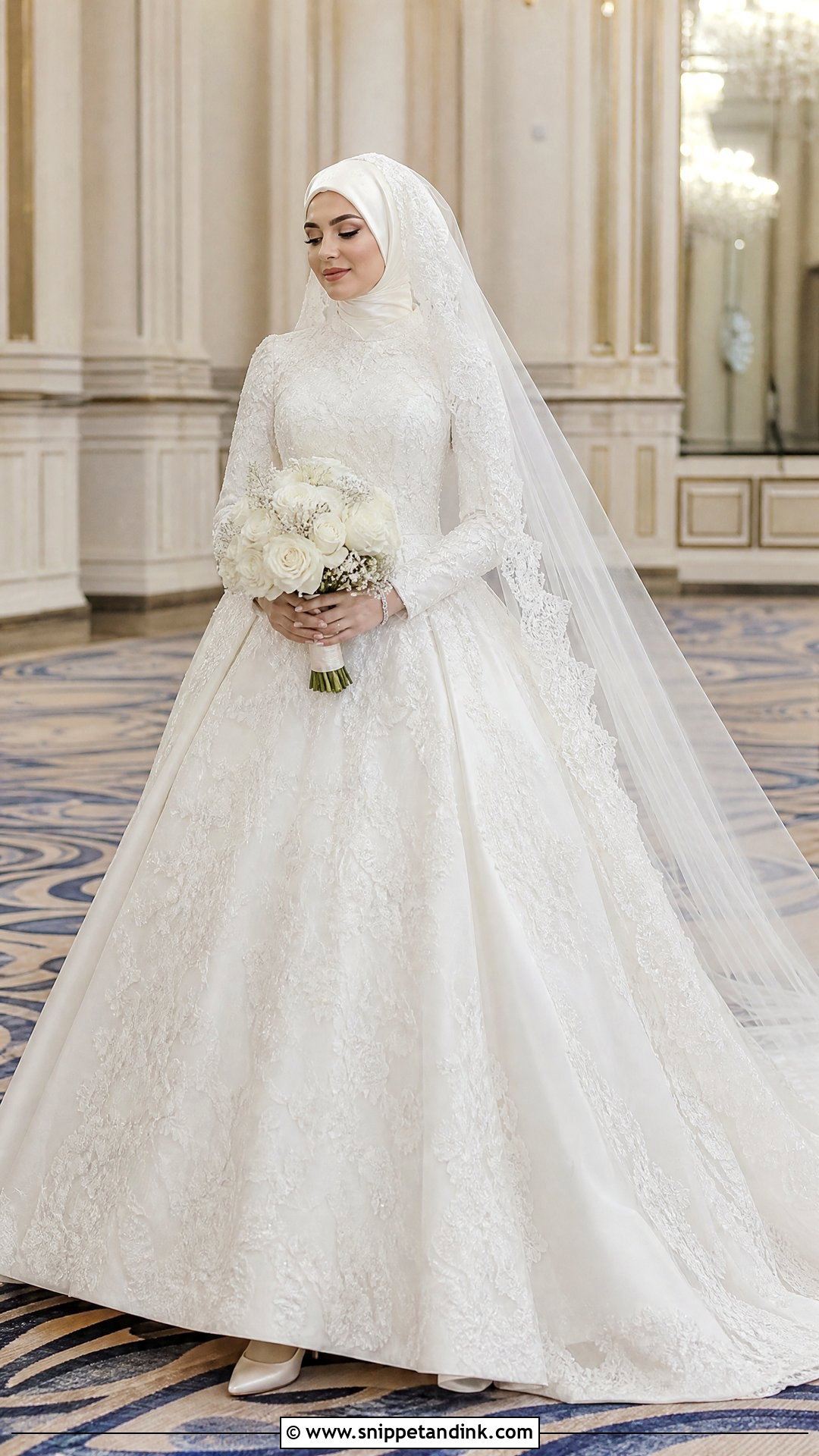
Lace ball gowns give you the traditional drama of a big wedding with full coverage, provided the lace sits on a proper lining. Look for a high-neck bodice, opaque long sleeves and a voluminous skirt lined from waist to hem. With this much texture on the dress, I keep the hijab in plain satin so the two don’t fight. A cathedral veil edged in matching lace makes it formal. Closed-toe satin heels, a fine crystal bracelet and a structured white bouquet are enough. At alterations, stand under the brightest lamp in the shop and have someone check the neckline, wrists and upper back. Lining that is a shade off your skin or the lace shows up immediately in flash photos.
3. Minimalist Crepe Islamic Bridal Dress
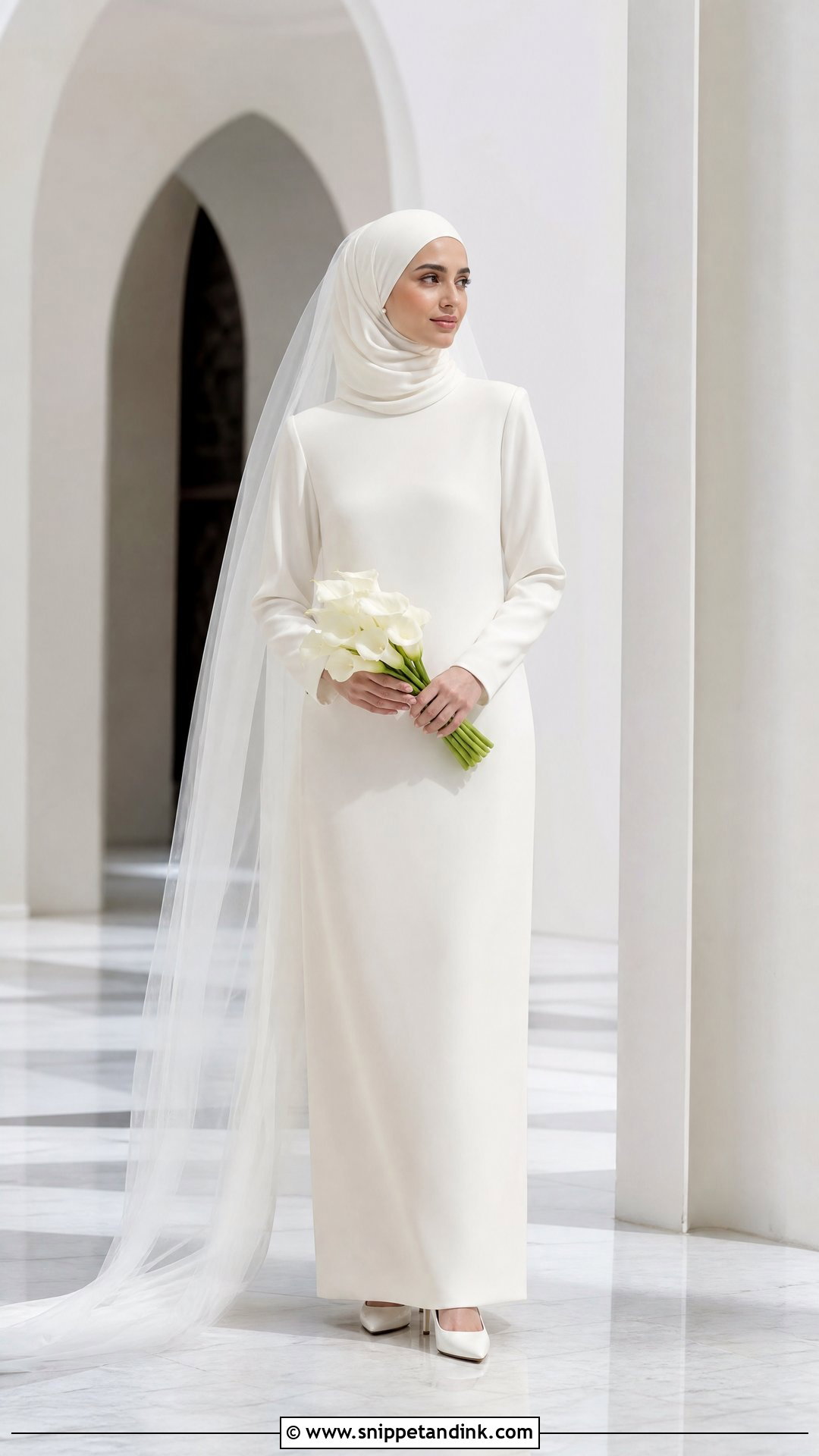
Crepe is my favorite fabric for a bride who wants clean lines and no sparkle at all. It drapes heavily, stays opaque without layers, and doesn’t wrinkle much when you sit through a long ceremony. A loose column or soft A-line with a high boat neck, full sleeves and covered buttons at the cuff is the shape. Match the hijab in crepe for a single, unbroken color; add a light veil for movement. White leather pumps, small pearl studs and sculptural calla lilies suit it. The risk with minimal crepe is looking shapeless, so I have the shoulders tailored precisely while leaving ease through the waist and hips for sitting, walking and prayer.
4. Pearl Beaded Islamic Bridal Dress
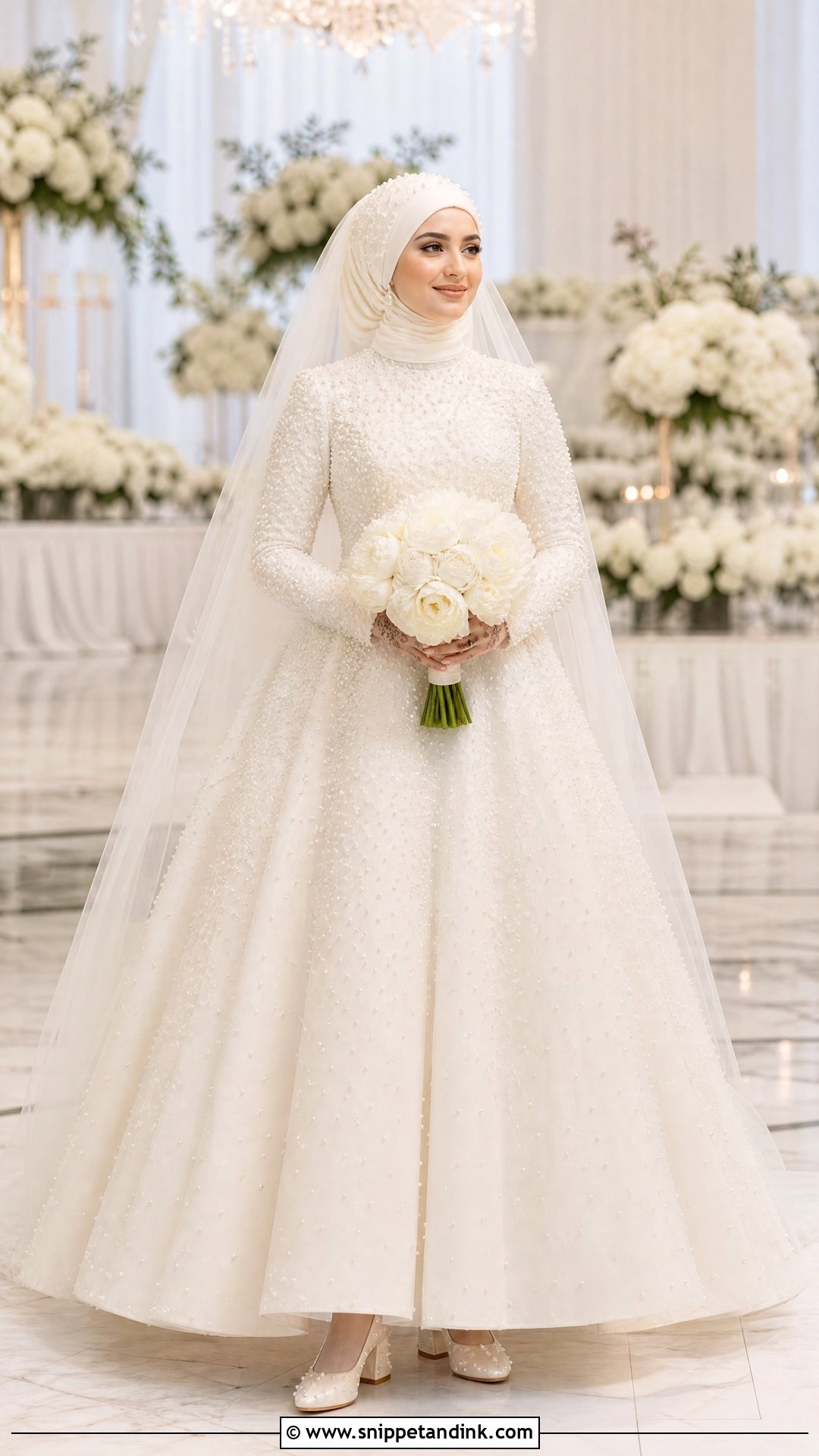
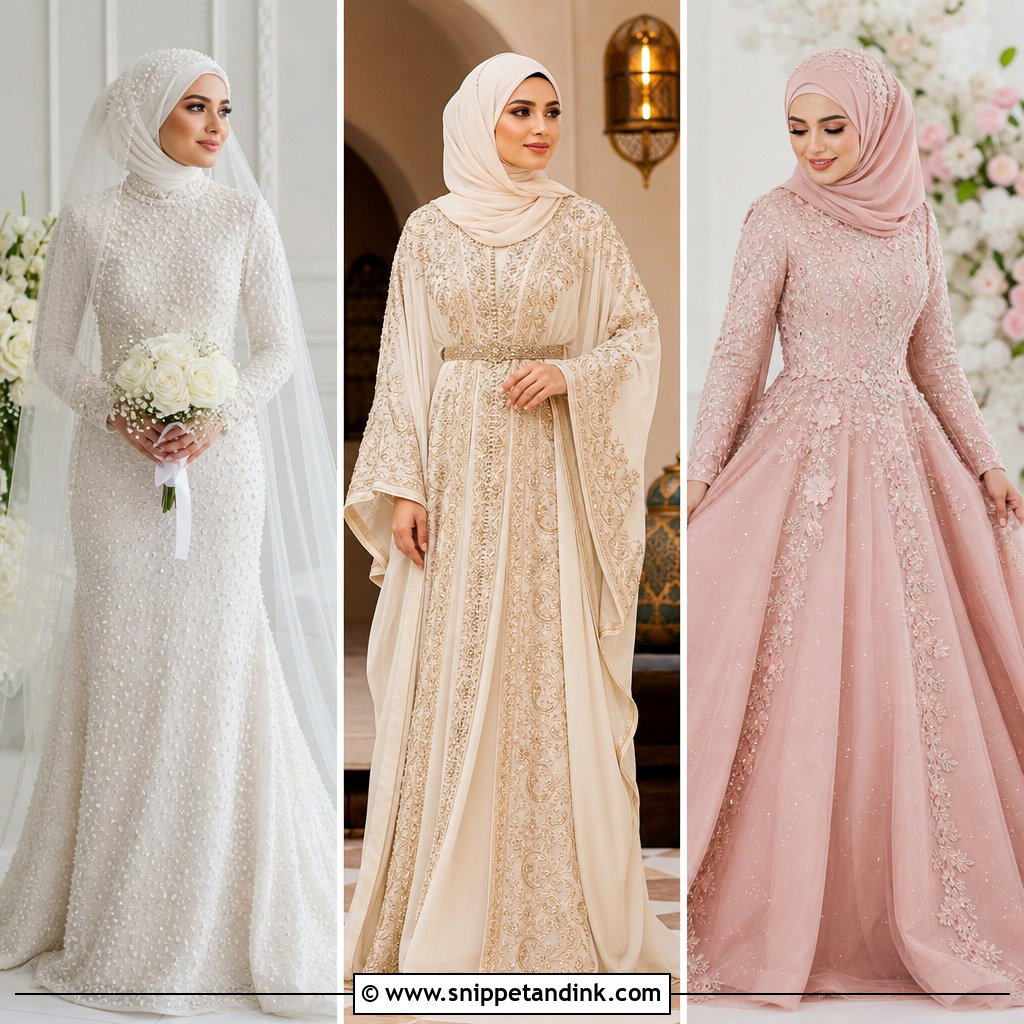
Pearls add dimension to a modest gown without the glare of crystal. I prefer them scattered across the bodice, sleeves and upper skirt rather than packed everywhere, because dense beading on a sleeve gets heavy and rubs the inner arm. A high neckline and flowing A-line keep the design calm. A smooth ivory hijab with a few hand-sewn pearls near the crown or along one side links the head to the dress, while a plain tulle veil keeps the focus where it should be. Closed-toe block heels help through a long reception. Before you collect the dress, run your hand down each sleeve inside and out: every pearl should be firmly stitched and nothing should scratch.
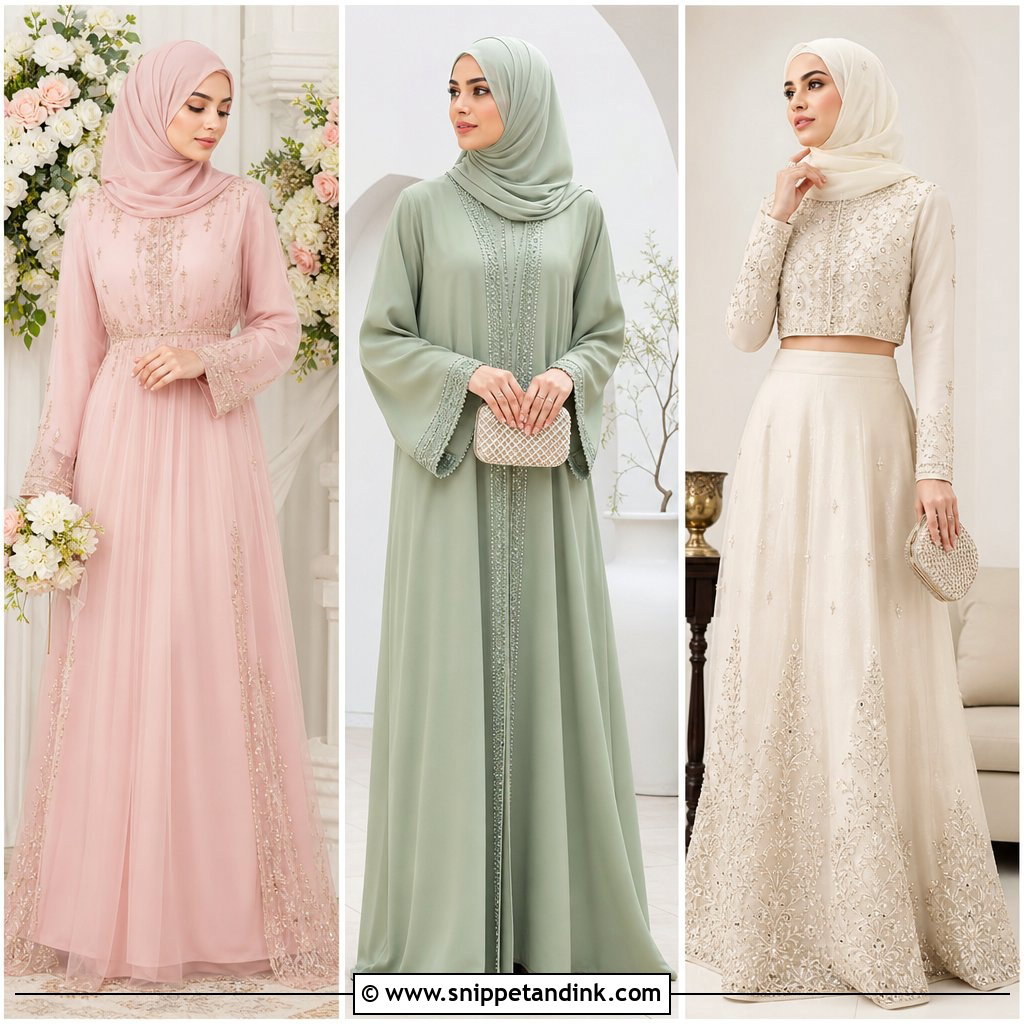
5. Bridal Abaya With Embroidery
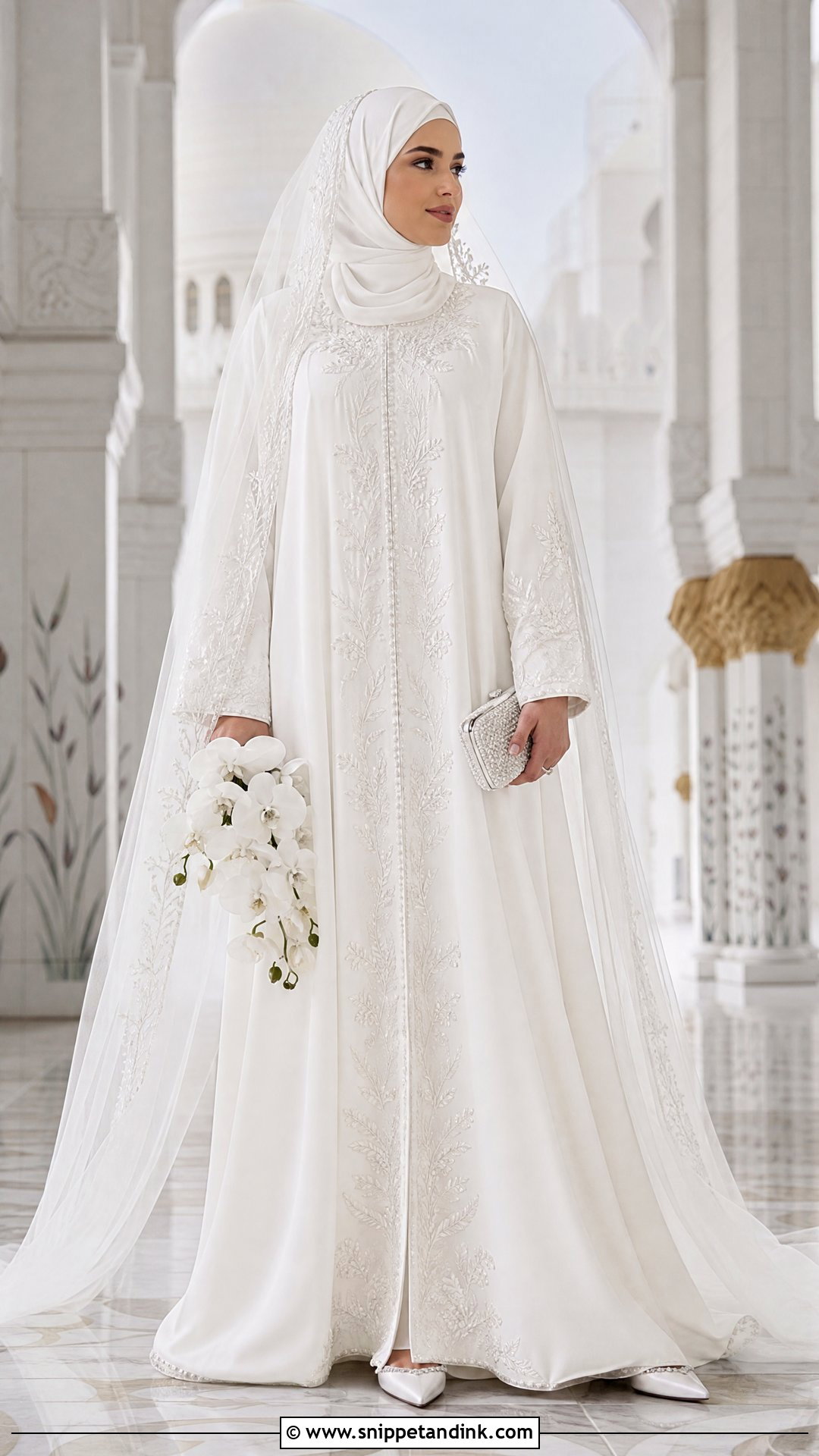
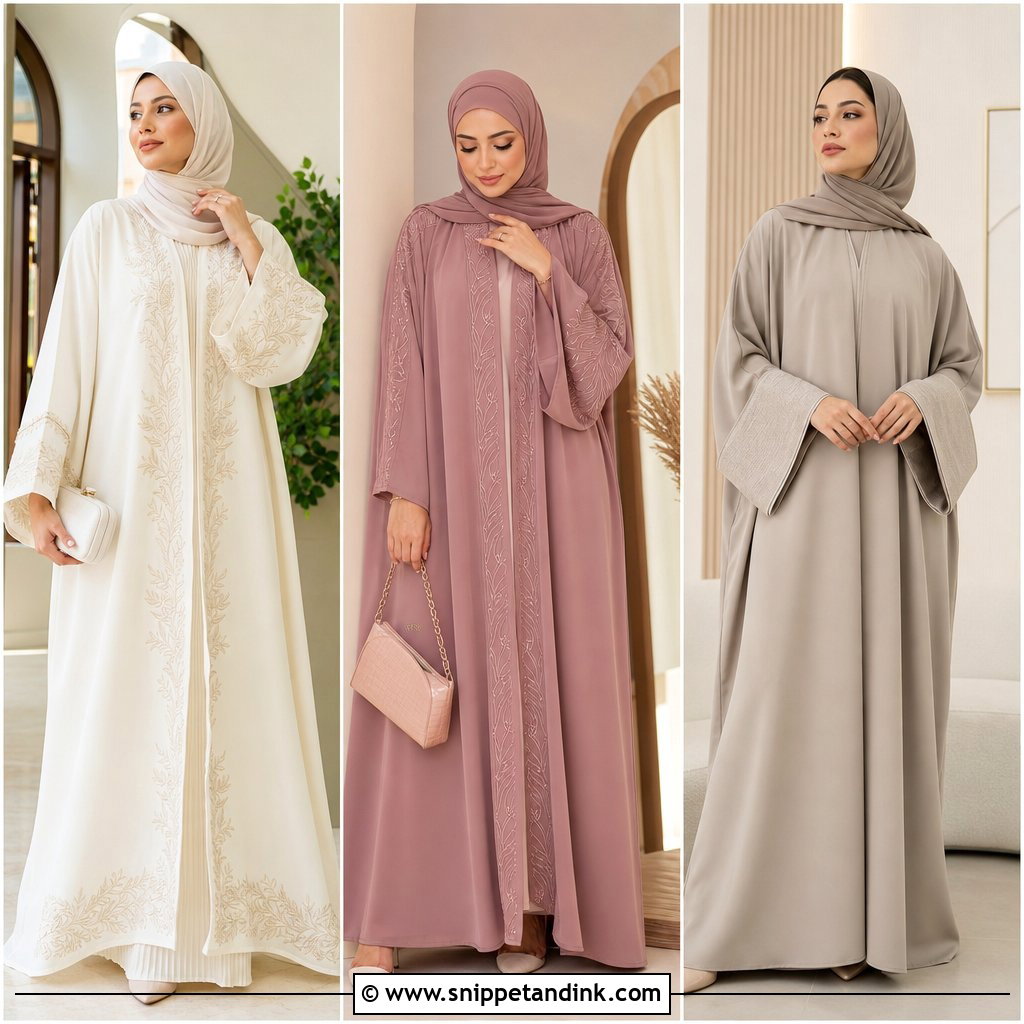
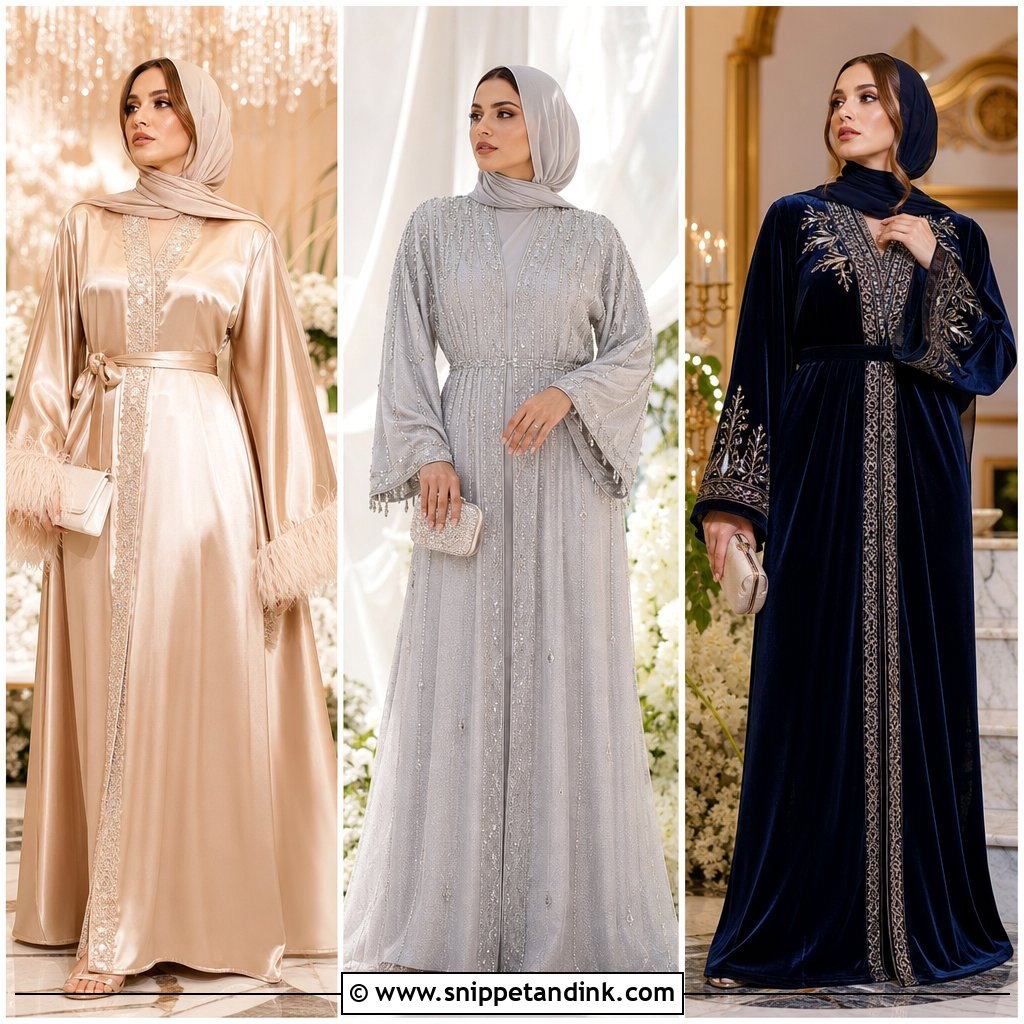
A bridal abaya gives flowing coverage and a silhouette that looks composed in every photo. I choose an opaque white or soft ivory with tonal embroidery along the neckline, sleeves and front opening, worn over a closed inner dress that reaches the floor and sits loosely. The inner dress matters more than people expect, because an open-front abaya swings apart when you walk. Hidden snaps along the opening solve that. A matching chiffon hijab with a long veil behind the head, white pointed flats or low heels under the wide hem, a crystal clutch and orchids are enough. A little shoulder structure stops the fabric from collapsing in photographs.
6. Cape Sleeve Islamic Bridal Dress
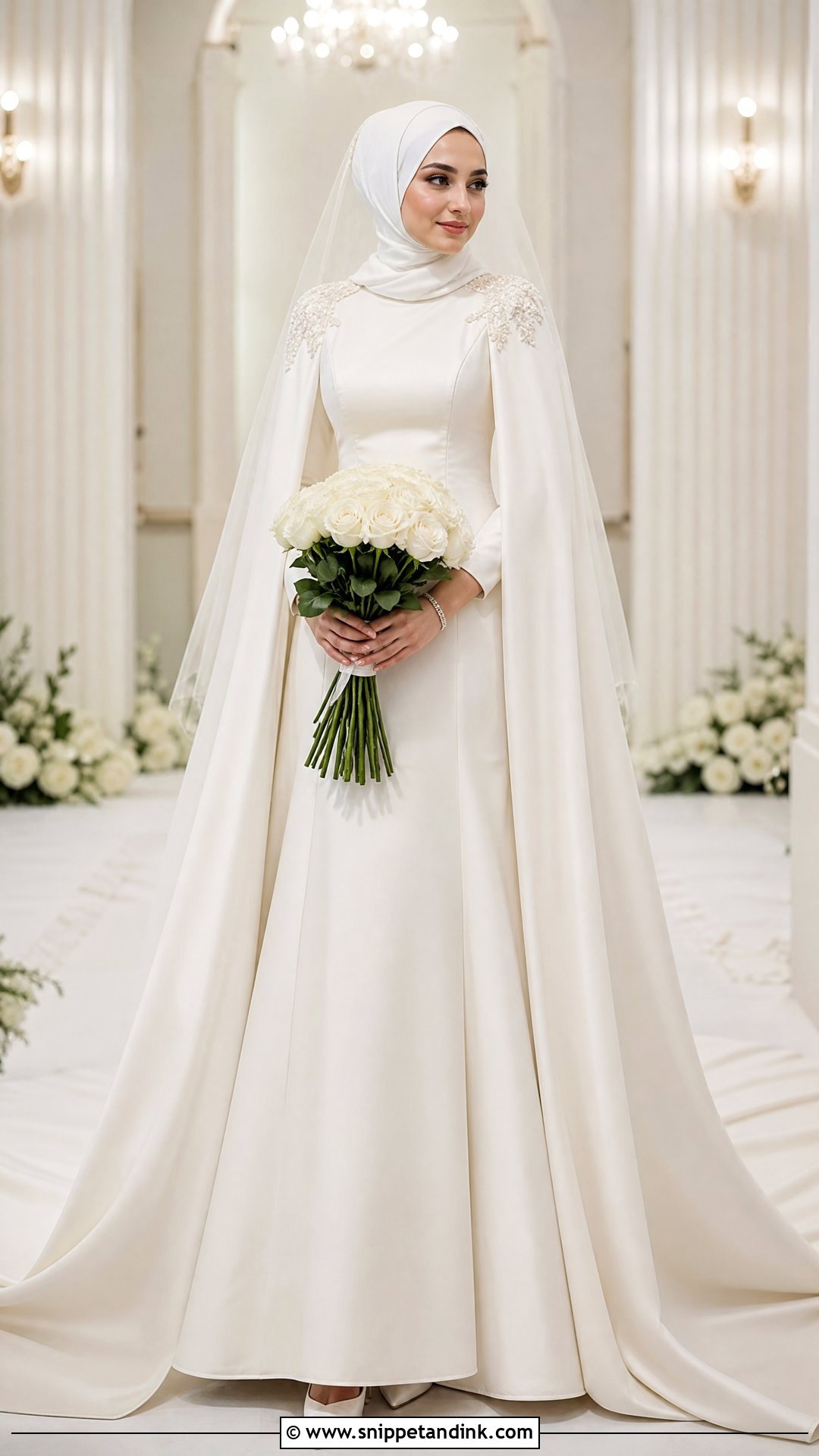
Cape sleeves add movement and an extra layer over the arms and upper back. Start with a fully lined ivory gown with a high neck and a softly flared skirt; the cape can stop at the wrist or run to the floor for a more formal look. Here the head layers need planning. Keep the hijab smooth and close to the face so it tucks neatly under the cape, and pick a narrow tulle veil without heavy edging, or you end up with three fabrics fighting at the shoulder. Closed-toe ivory heels, a silver bracelet and long-stemmed roses finish it. Practice raising your arms and hugging in it, since a cape catches on bracelets and chair backs more than you’d think.
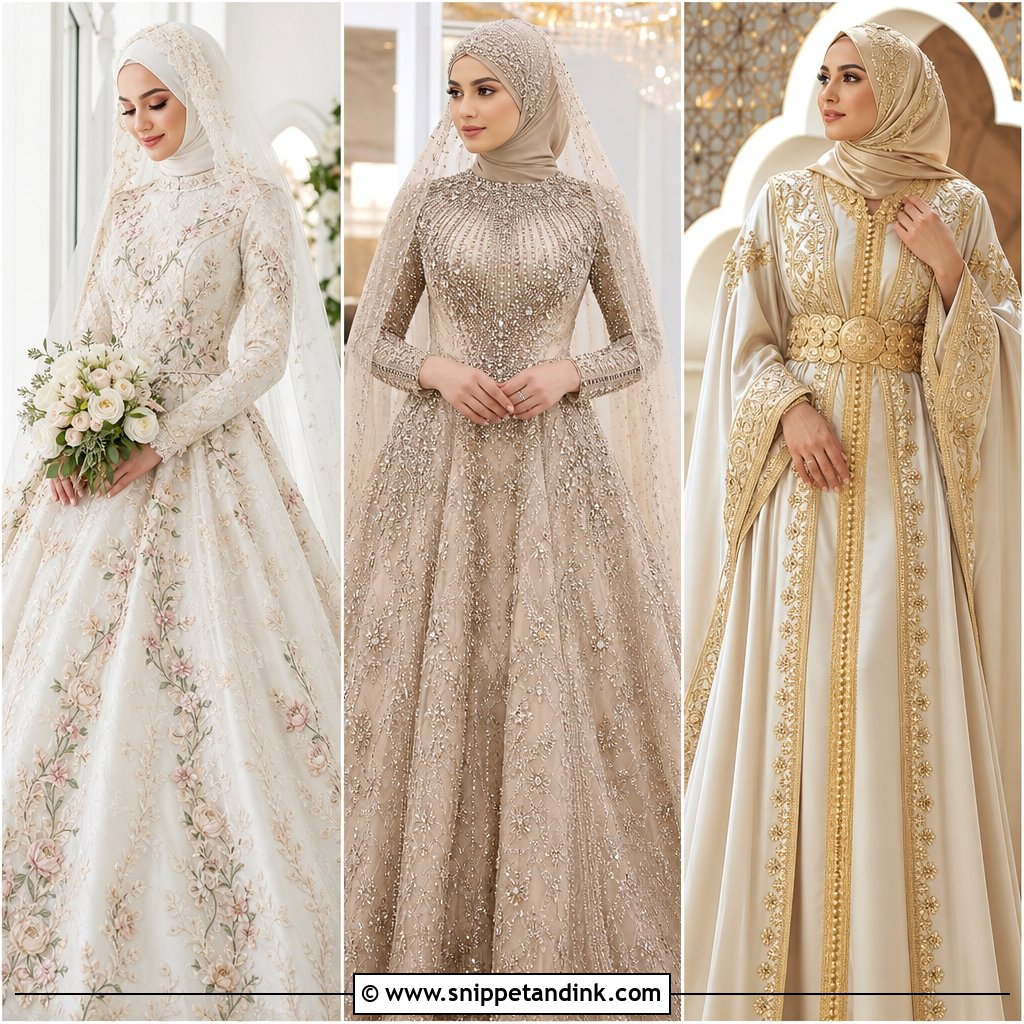
7. Floral Embroidered Islamic Bridal Dress
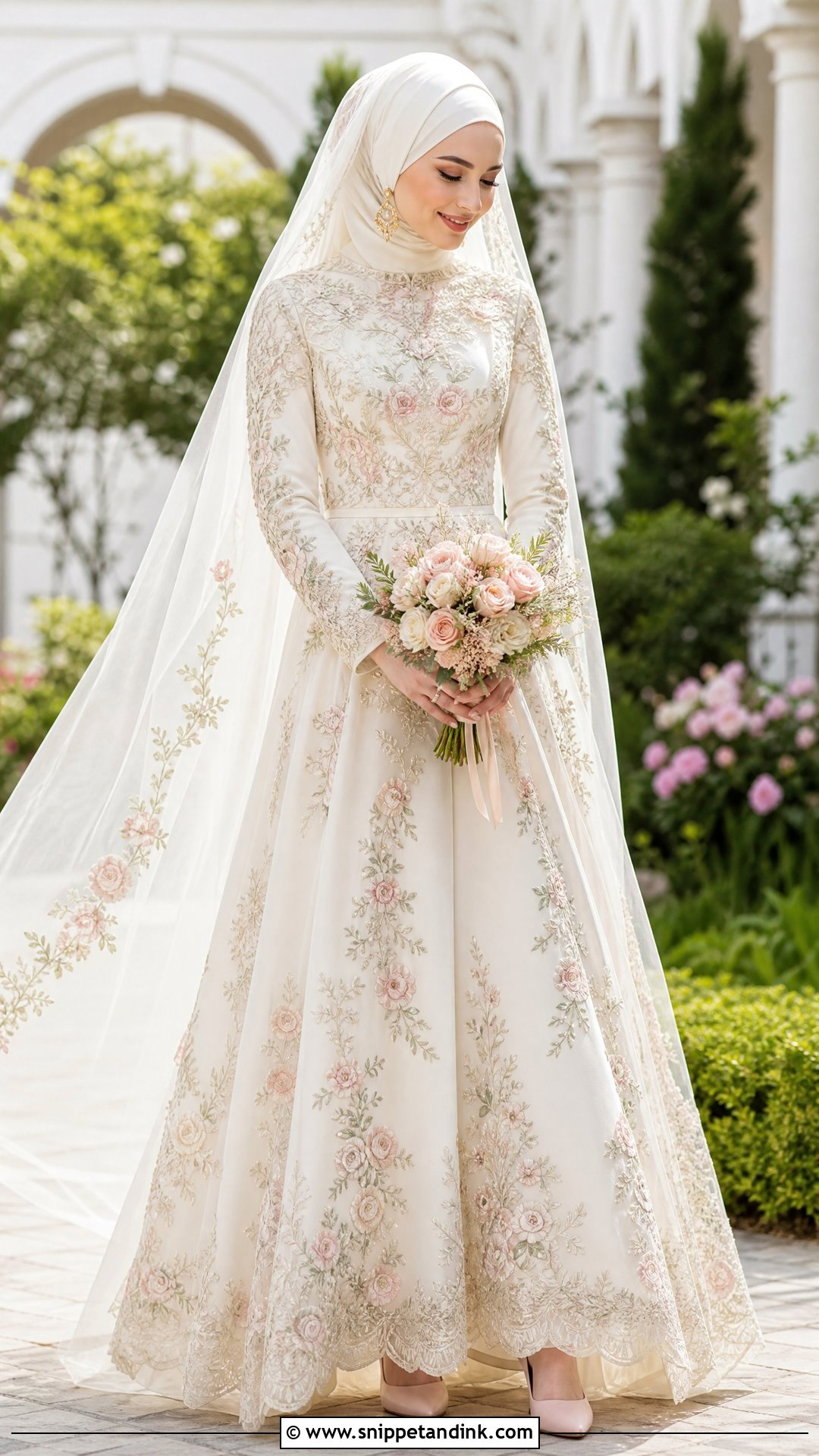
Embroidered flowers bring color into a classic modest gown without changing its shape. An ivory A-line with pale blush, sage or champagne flowers across the bodice and lower skirt sits well over long opaque sleeves and a high neckline. I usually pick the hijab color from the embroidery rather than the base, ivory if the flowers are busy, an accent shade if they are sparse. A fingertip veil with a narrow embroidered border, blush closed-toe pumps and small gold earrings finish the look, with a bouquet built from the thread colors. Keep the placement balanced. For an outdoor spring wedding, ask for a sturdy hem lining, because grass and gravel shred delicate stitching at the hem first.
8. High Neck Tulle Islamic Bridal Dress
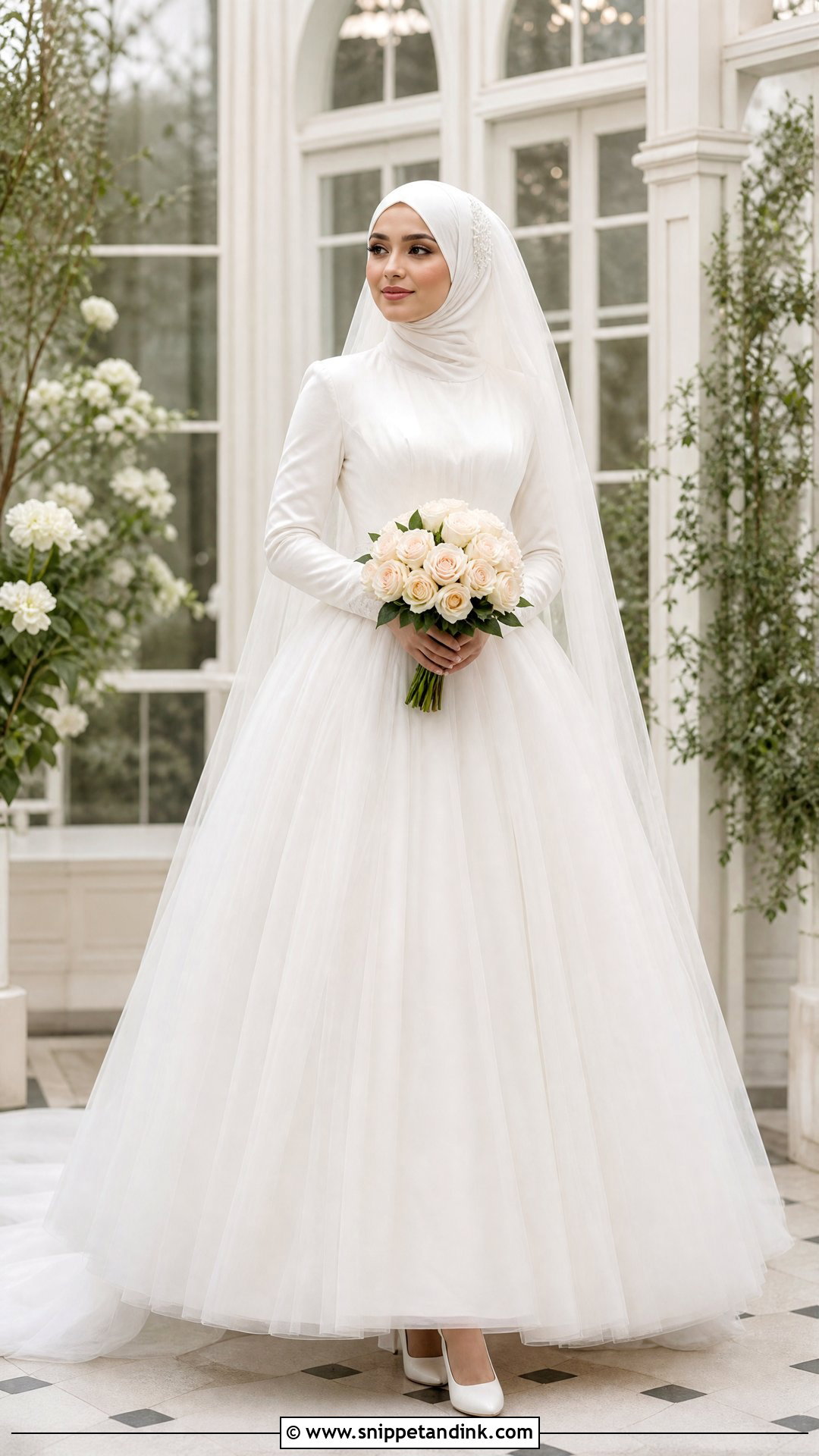
Tulle is romantic but it is sheer, so this is the gown where I’m strictest about layers. Look for an opaque bodice, long lined sleeves and several layers of tulle over a solid underskirt, with soft gathers at the waist for volume. A matte chiffon hijab tucked smoothly into the neckline and a plain tulle veil past the train keep it light. Pearl pins placed over the hijab where the veil attaches give a little detail. White block heels and a loose bouquet of roses and baby’s breath finish it. Test the whole outfit in sunlight and with a camera flash, because pale tulle that looks solid indoors can turn see-through outdoors.
9. Long Train Islamic Bridal Dress
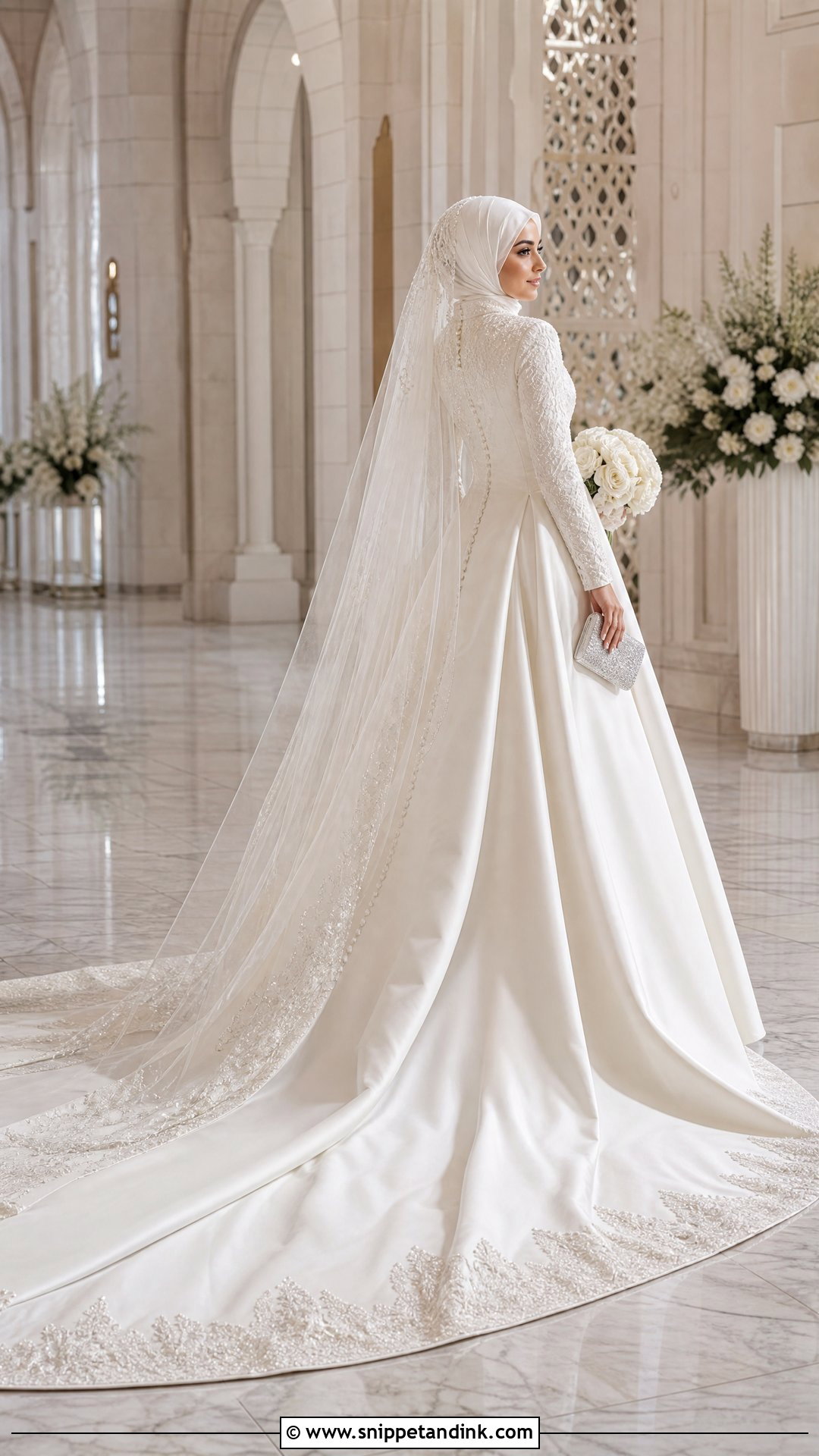
A long train turns a simple gown ceremonial. Choose a structured A-line with an opaque high neckline and full sleeves, with the train growing out of the skirt rather than from a tight, shaped back. Crepe, mikado or heavy satin hold that line well. A neatly wrapped hijab with a cathedral veil can follow the train for one continuous shape in photos. Wear low closed-toe heels, and ask your tailor for a strong bustle with enough hooks for the reception; one loop gives way by dessert. I always rehearse turning, sitting and walking with the person who’ll be handling the train. It should glide without dragging at the waist.
10. Simple Nikah Islamic Bridal Dress
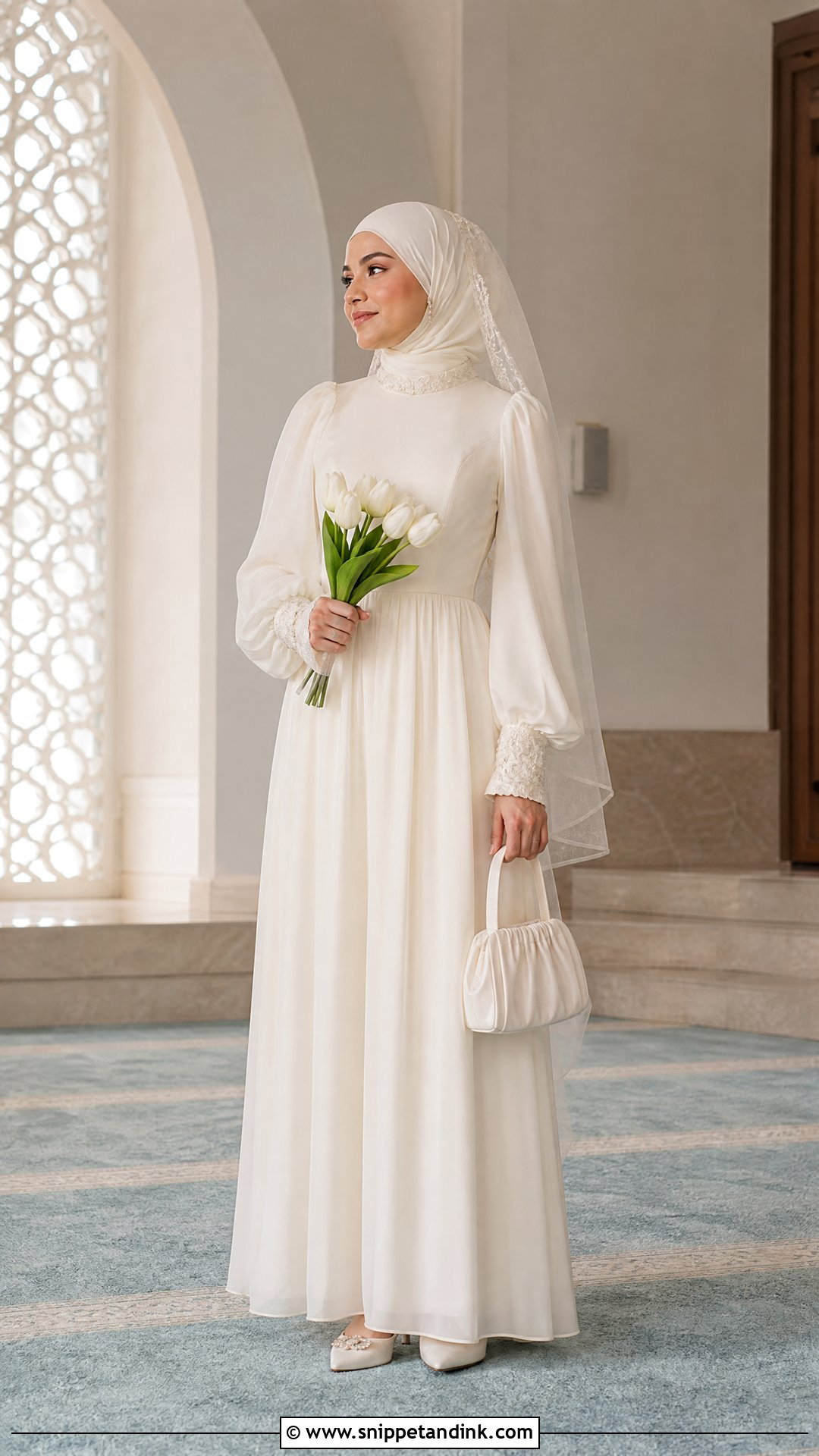
For an intimate nikah, I’d rather see a bride in something soft and comfortable than in a gown built for a ballroom. A loose ivory maxi with a raised neckline, gathered skirt and long bishop sleeves with fitted cuffs is just right, and a little embroidery around the neck or cuffs gives the photos detail. Pair it with a soft chiffon hijab in ivory, beige or muted blush and a short veil at the back. Closed-toe slingbacks, pearl studs, a small white bag and tulips or roses finish the outfit. If the ceremony is in a mosque, make sure the skirt is wide enough to sit on the floor without pulling, and that the hem covers your feet when you’re seated.
11. Champagne Islamic Bridal Dress
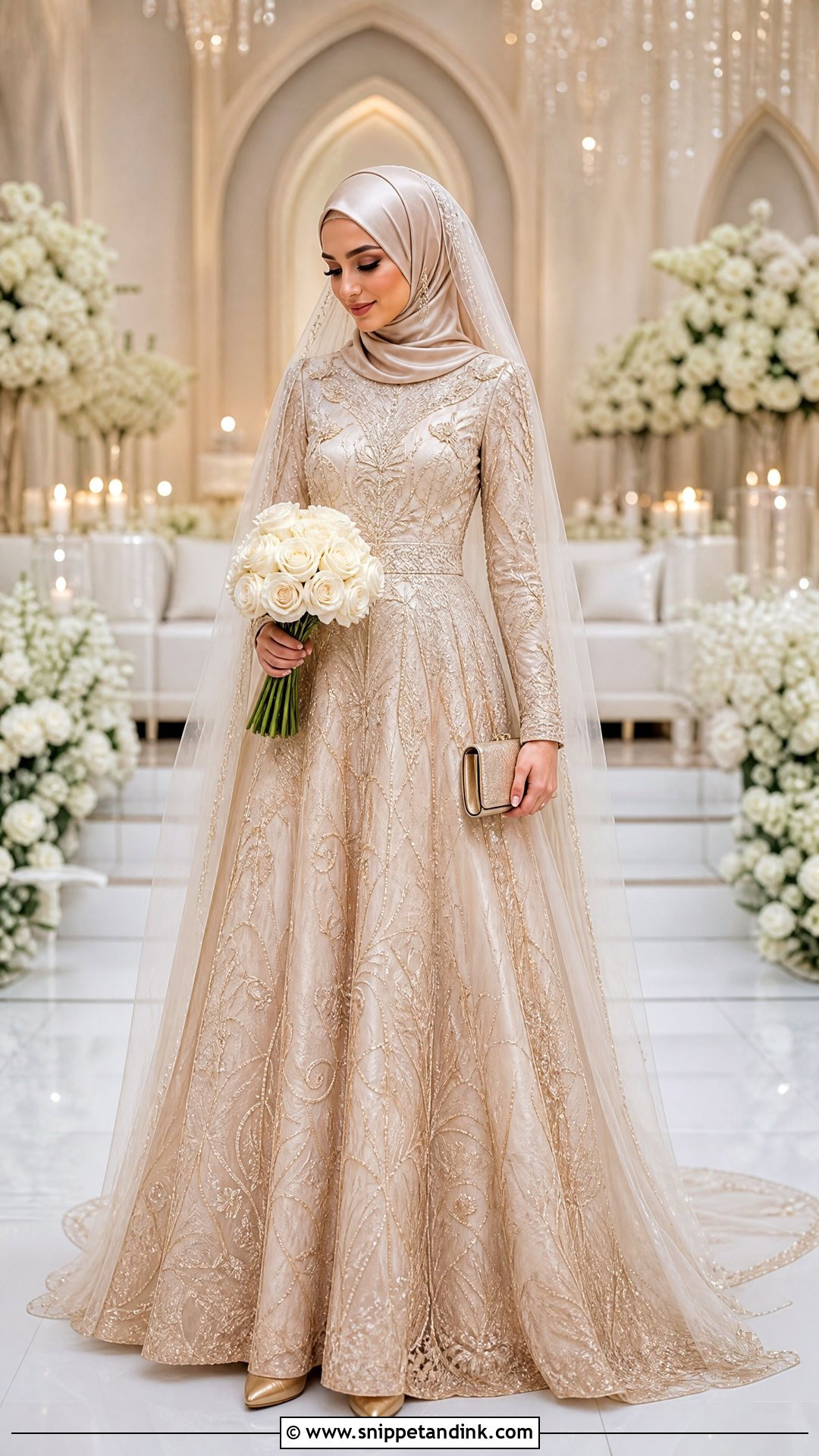
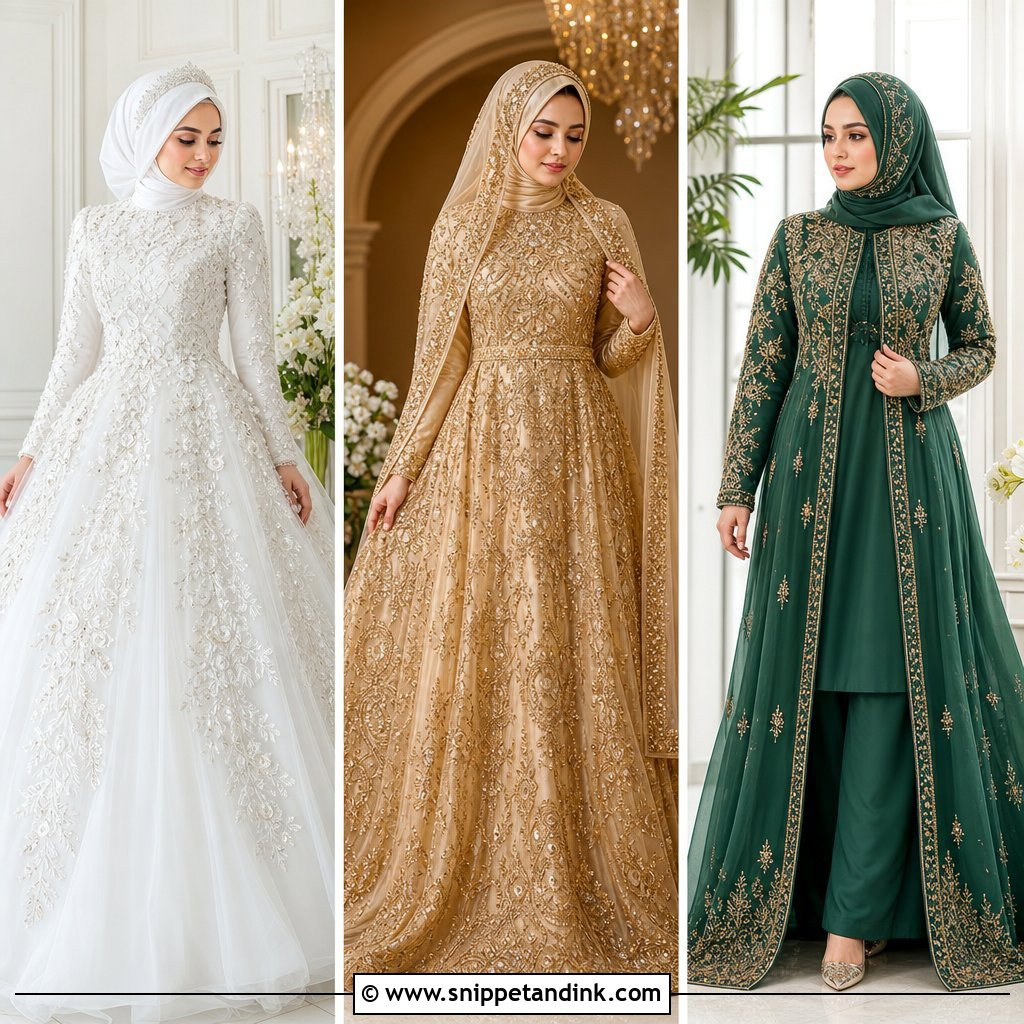
Champagne is warmer than bright white and pairs naturally with gold embroidery. Pick a fully lined gown with a high neck, long sleeves and a flowing A-line, and let tonal beading or metallic thread sit at the cuffs, waist and hem rather than all over. Champagne is fussy about undertone. I compare fabrics in daylight by a window, because some shades turn yellow under indoor bulbs, and I match the satin hijab to the dress’s undertone, not its name. An ivory veil gives gentle contrast. Gold closed-toe heels, a small metallic clutch and modest drop earrings complete it, with cream roses and pale greenery.
12. Blush Pink Islamic Bridal Dress
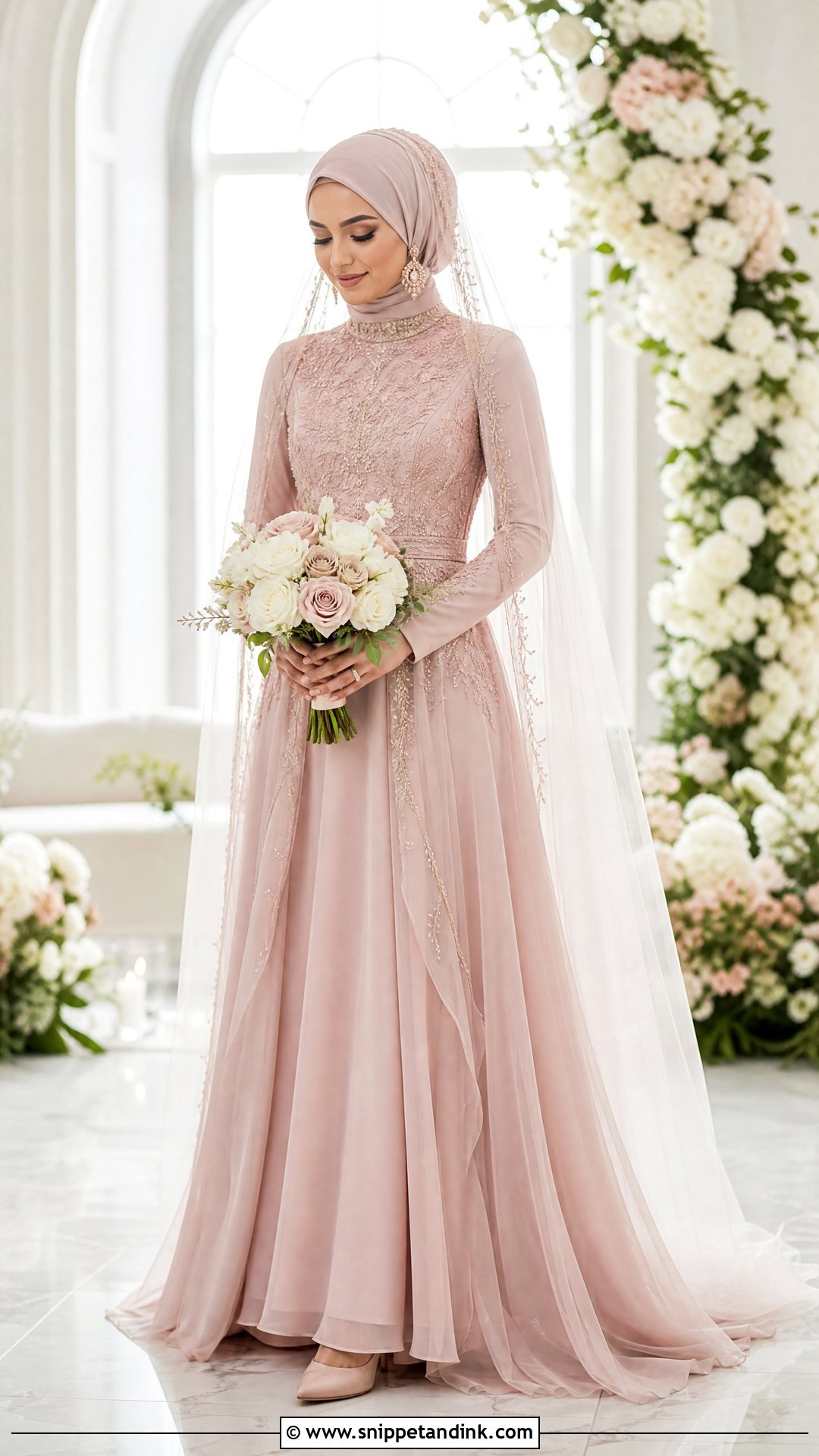
Dusty blush is gentle on most complexions and reads well in daytime light. Choose a gown with an opaque high neckline, long sleeves and a layered chiffon skirt, with tonal beading on the bodice for shape. The hijab can match exactly or go one shade lighter in rose beige, which keeps it from looking like a costume block of pink. An ivory veil keeps the bridal note. Nude closed-toe heels, rose-gold earrings and cream and blush flowers suit it. Pastel chiffon is often thin, so I check the lining before anything else. A looser skirt with controlled pleats moves well through the nikah, portraits, meal and reception.
13. Gold Embroidered Islamic Bridal Dress
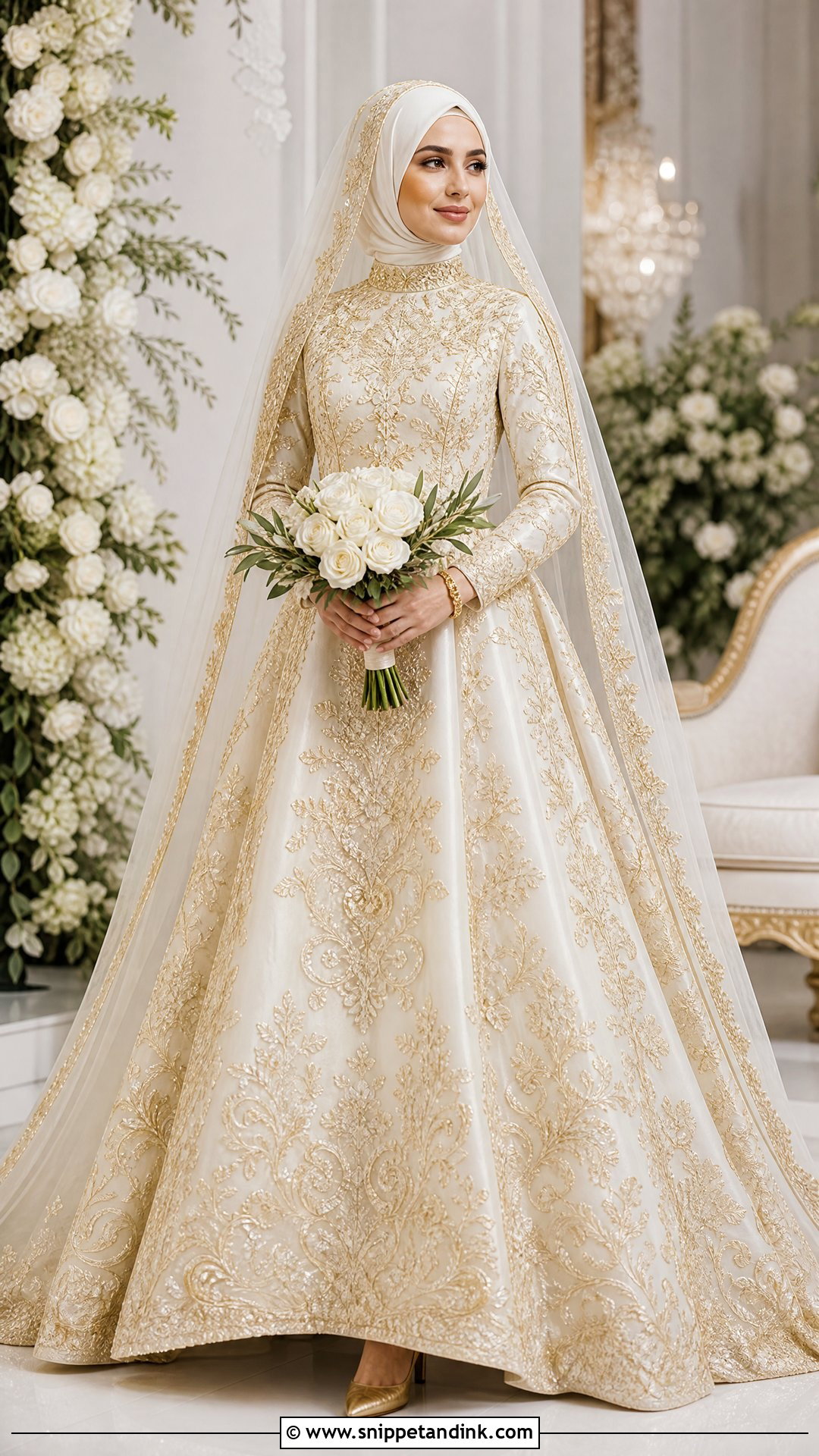
Gold embroidery on ivory looks regal, and it is heavier than it looks on a hanger. Look for an A-line or softly flared gown with metallic threadwork around the high neckline, cuffs, bodice and hem, on an opaque base with a comfortably loose silhouette. A plain ivory hijab lets the embroidery show, and a veil with a narrow gold border links the head to the dress. Gold pointed pumps, small drops and a fine bracelet are enough, while white roses with olive branches add a fresh note. Lift the dress before you buy it. If it feels heavy in your arms, ask for reinforced shoulders and a smooth inner lining so metal thread doesn’t scratch through a long day.
14. White Bridal Kaftan
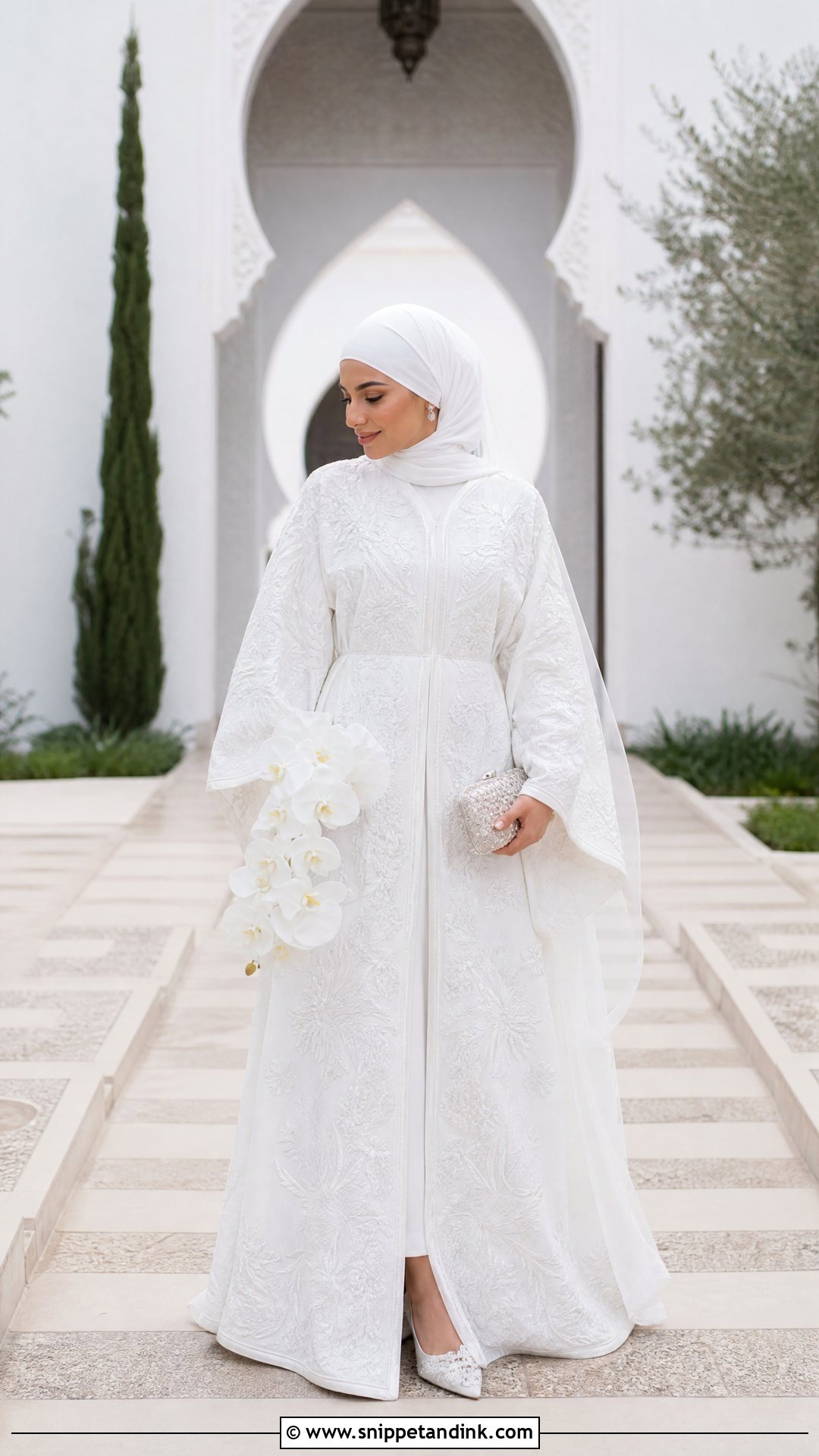
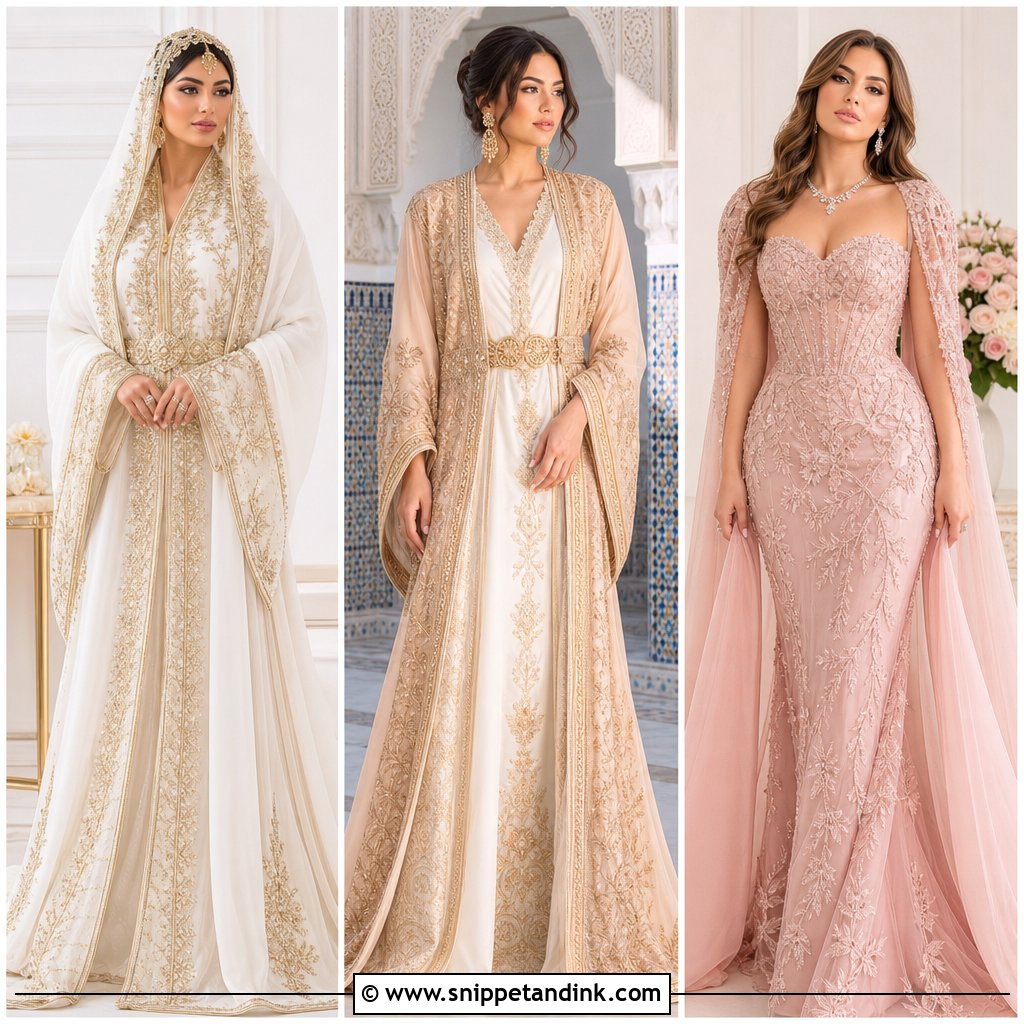
A white bridal kaftan gives generous coverage and a lot of room for handwork. Choose a floor-length kaftan in lined silk, crepe or satin, with wide sleeves and structured embroidery down the center. A small internal tie can control the volume without making it fitted. Pair it with a plain white hijab and a light veil behind the crown, embellished closed-toe mules or low block heels, a metallic clutch and white orchids. If the kaftan comes with a decorative belt, I often suggest wearing it loosely or swapping it for an embroidered panel when the bride prefers less waist definition. Hem it to your exact shoe height; wide kaftans drag easily.

15. Moroccan Bridal Kaftan
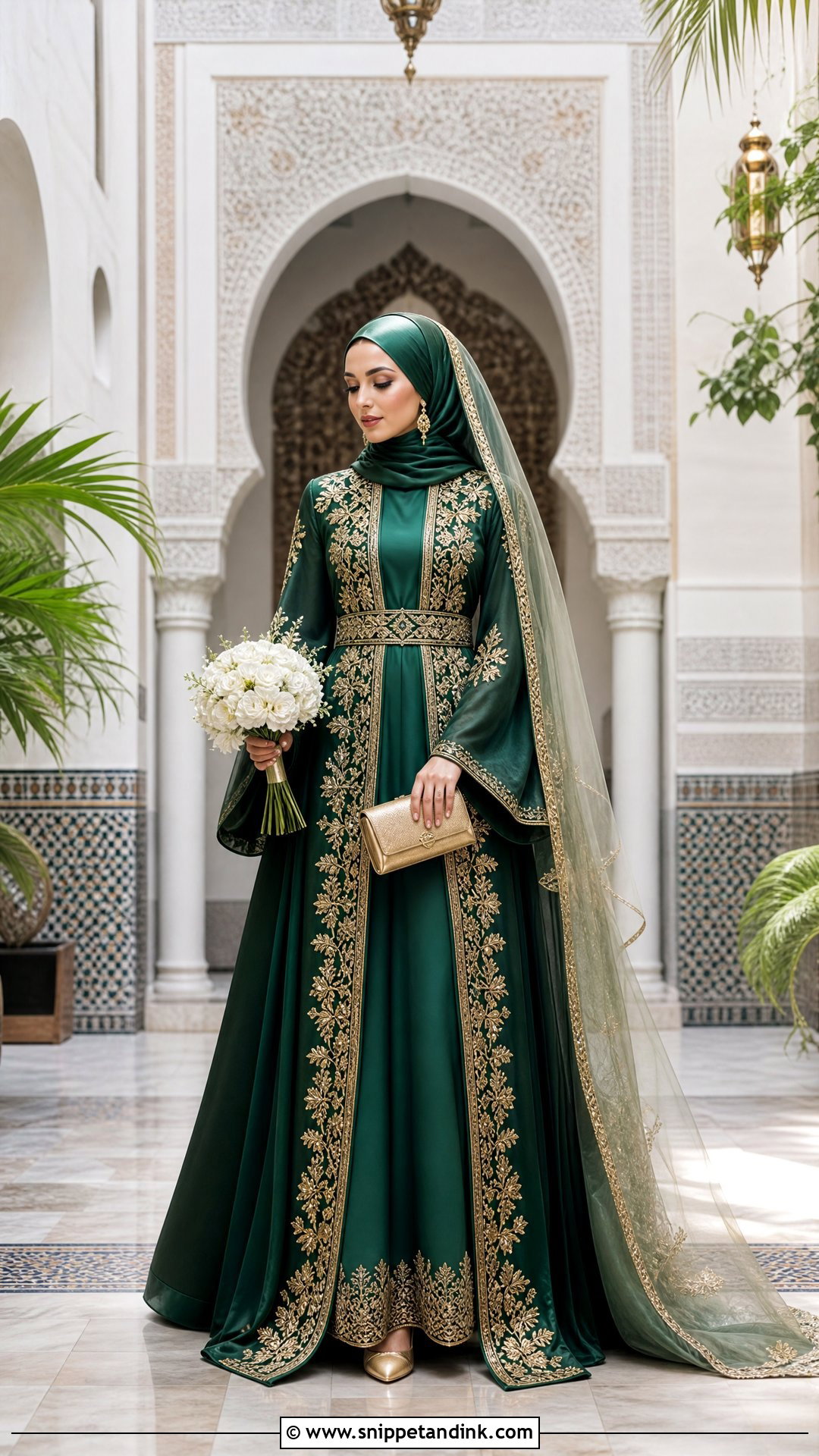
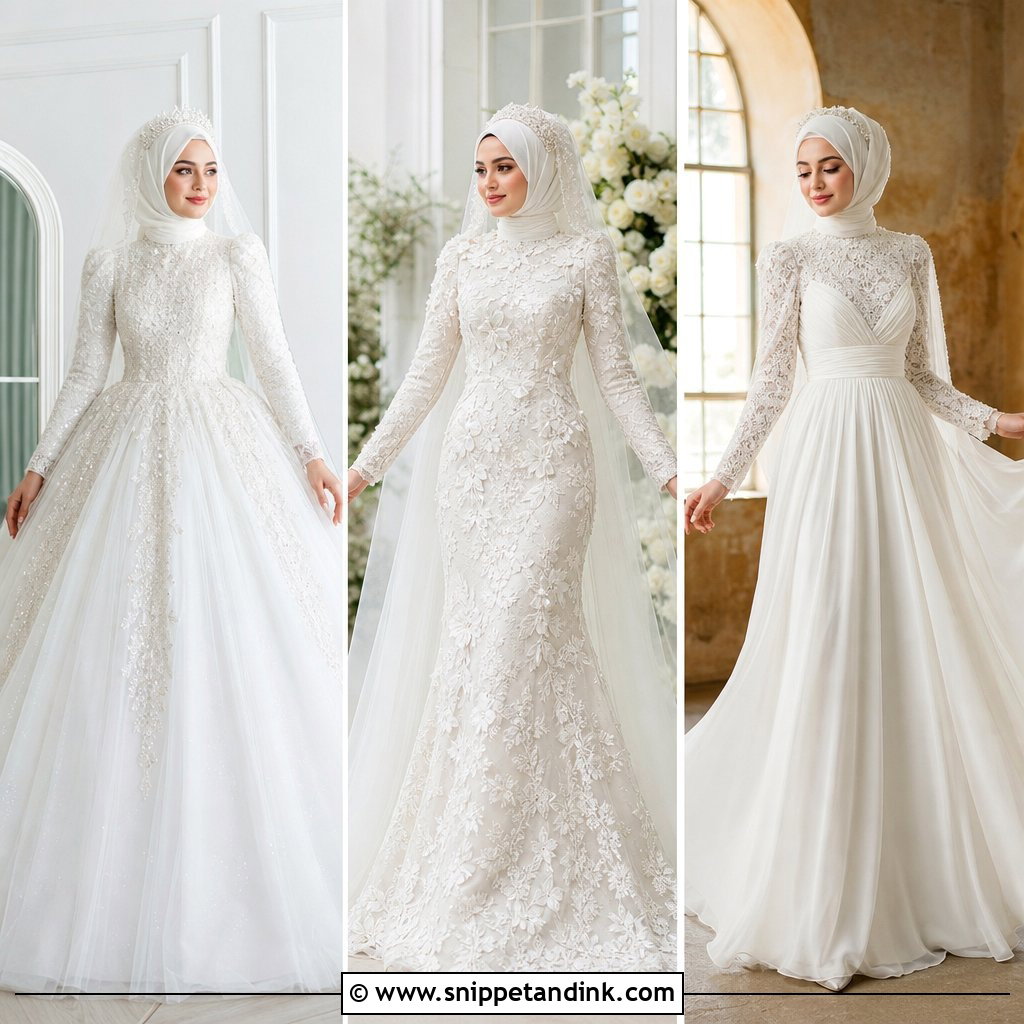
A Moroccan bridal kaftan is layered, richly colored and built for ceremony. Ivory, emerald or deep burgundy with gold trim all work, with full-length coverage from an opaque underlayer and an outer piece with wide sleeves, hand-finished edging and decorative buttons. Match a smooth satin hijab to the main color and set a light veil behind the head. Closed-toe gold shoes, drop earrings and a structured clutch complete it. The traditional belt is adjustable, so set it where your comfort and modesty sit. These kaftans can be heavy, and many brides change outfits several times in one evening, so I look for breathable lining, secure closures and sleeves that let you greet guests freely.
16. Red Muslim Bridal Lehenga
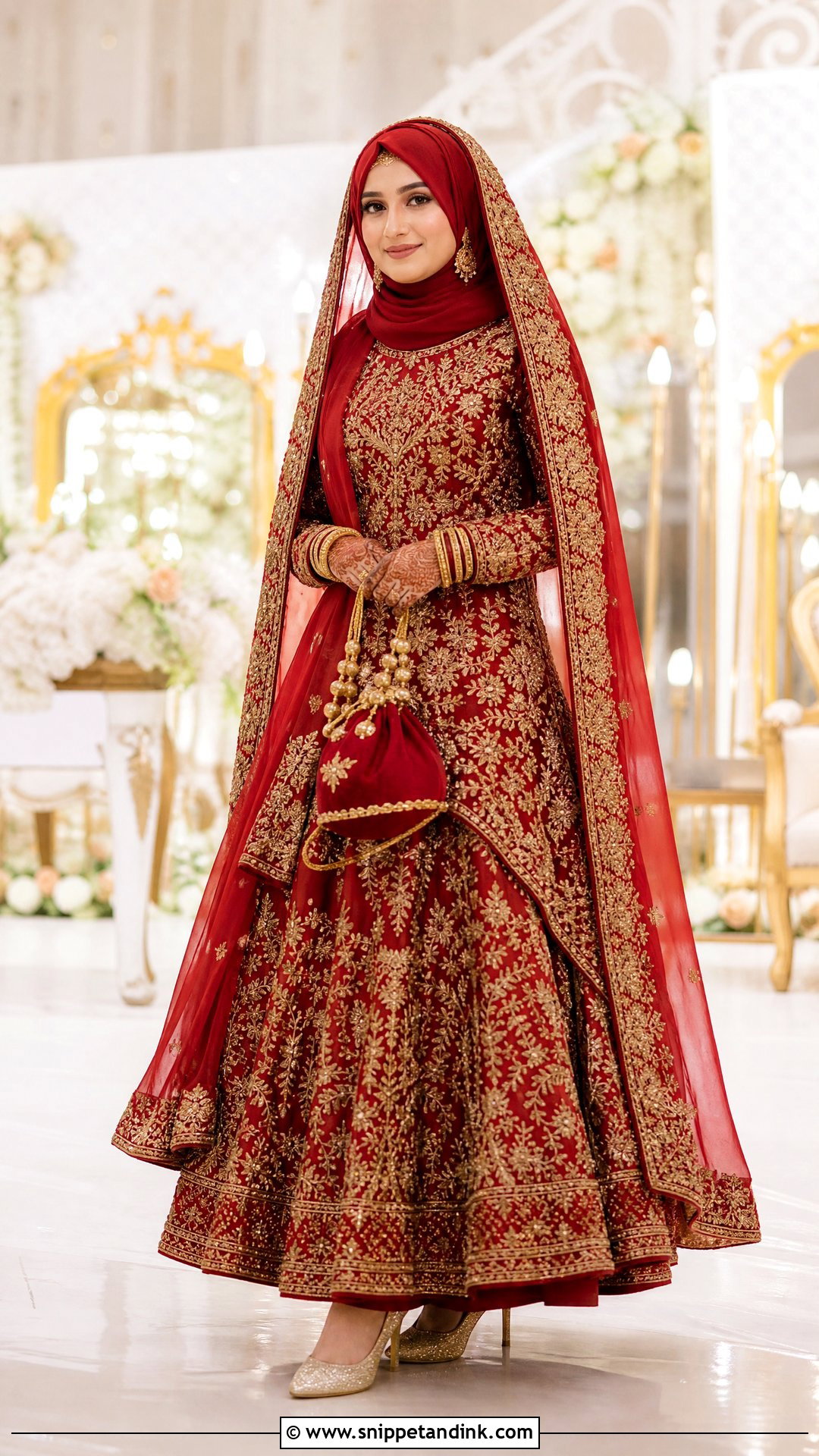
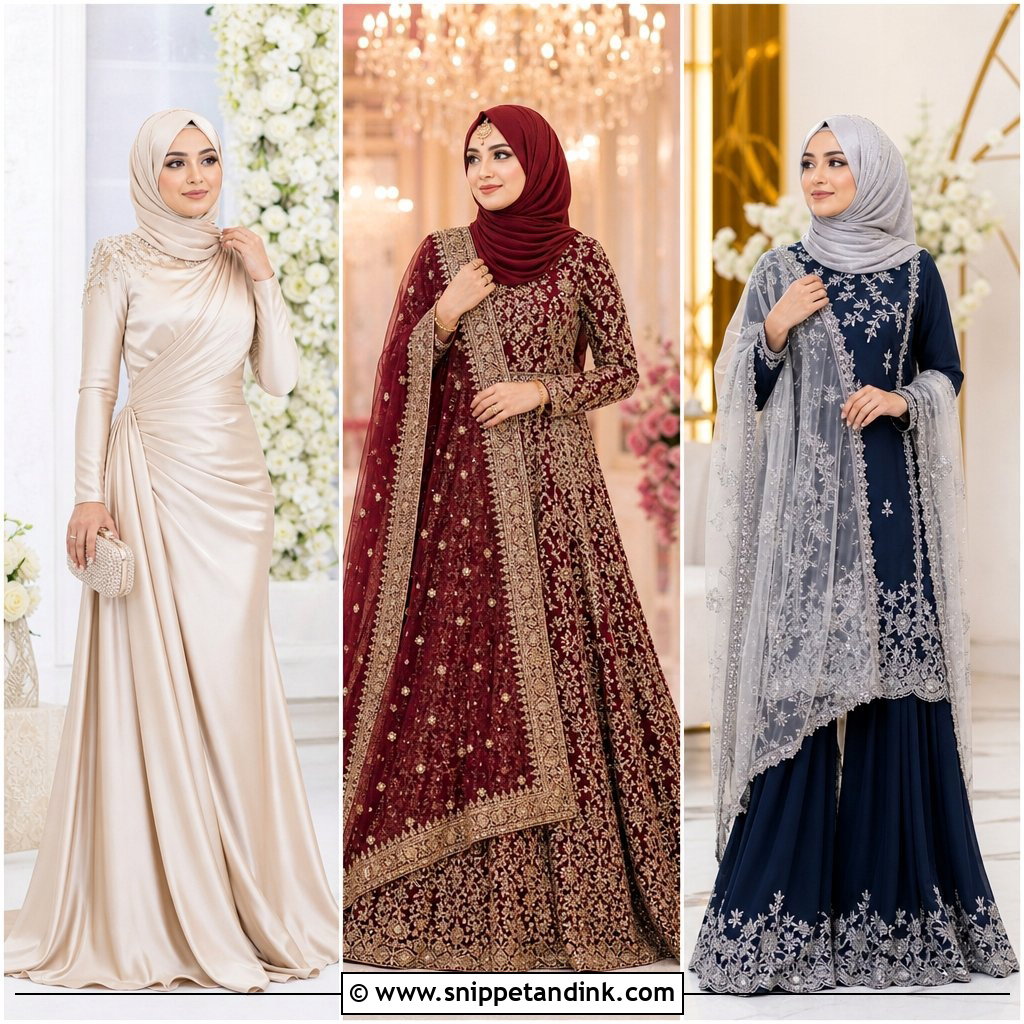
A red lehenga is a strong choice for a South Asian Muslim bride who wants the full traditional look. Choose a high-waisted skirt that fits without squeezing and a long, loose tunic that covers the hips, with a high neck, opaque sleeves and full lining beneath the embroidery. Wrap a red or neutral hijab around the face, then drape the dupatta over the head and one shoulder. Pin the dupatta to the hijab with small hidden pins, never to the hair, or it will drag forward all night. Gold closed-toe heels, traditional earrings, bangles and a potli bag finish it. Keep the jewelry controlled so the work on the fabric stays visible, and sit in the skirt at the fitting to test the waistband.
17. Champagne Muslim Bridal Lehenga
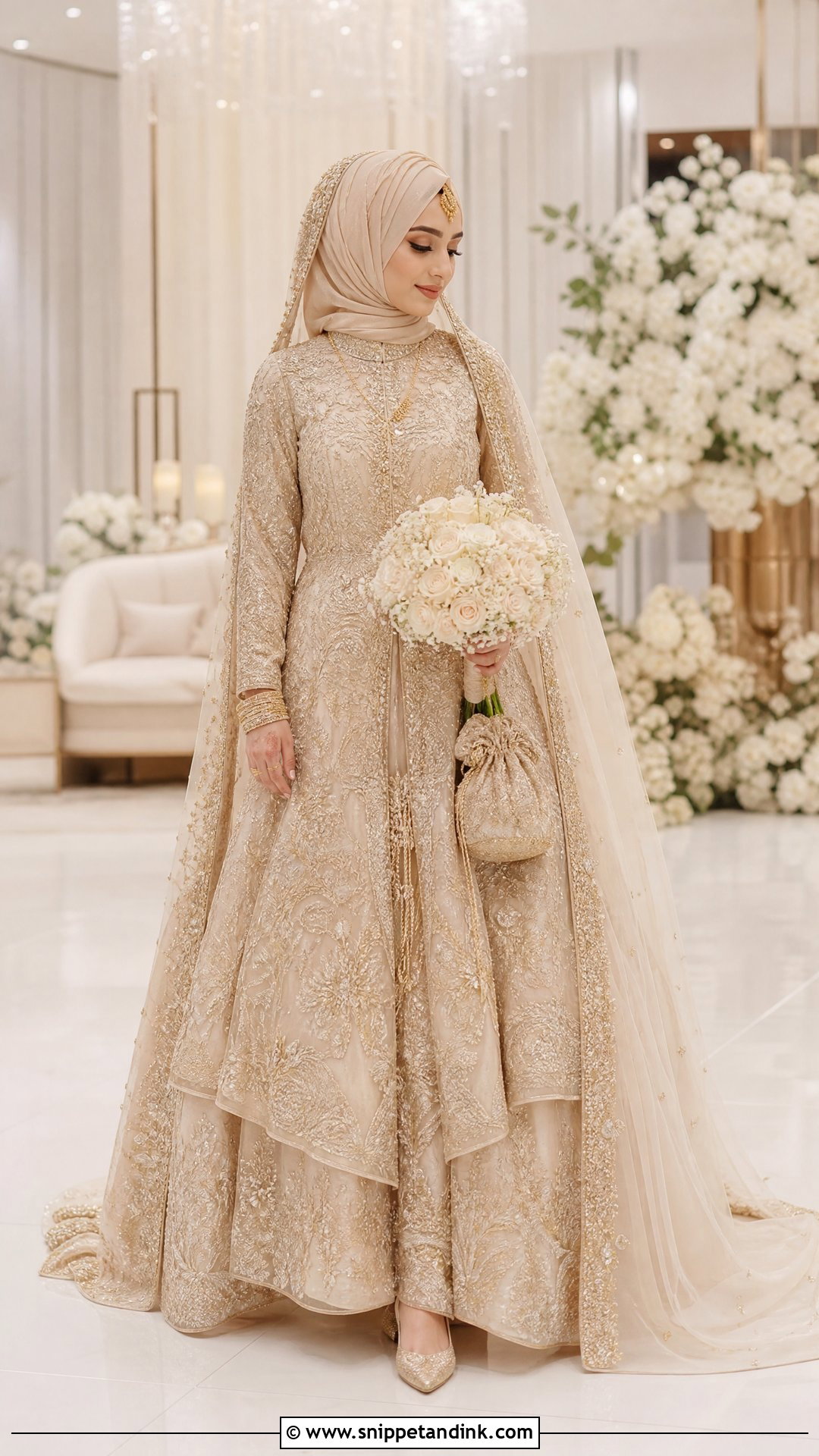
Champagne lehengas are lighter than red and still carry the grandeur of South Asian bridal wear. A flowing skirt with gold or pearl work pairs with a long, high-neck tunic and opaque sleeves. A champagne hijab underneath gives a smooth base for the embroidered dupatta over the head. Closed-toe gold pumps, a compact potli and fine jewelry that follows the dress’s metal tone complete it, with ivory and blush flowers. Heavily worked lehenga skirts can weigh a good deal. I always ask for a soft fabric waistband and a full inner lining, since raw embroidery backing rubs the hips raw over hours of events.
18. Ivory Muslim Bridal Sharara
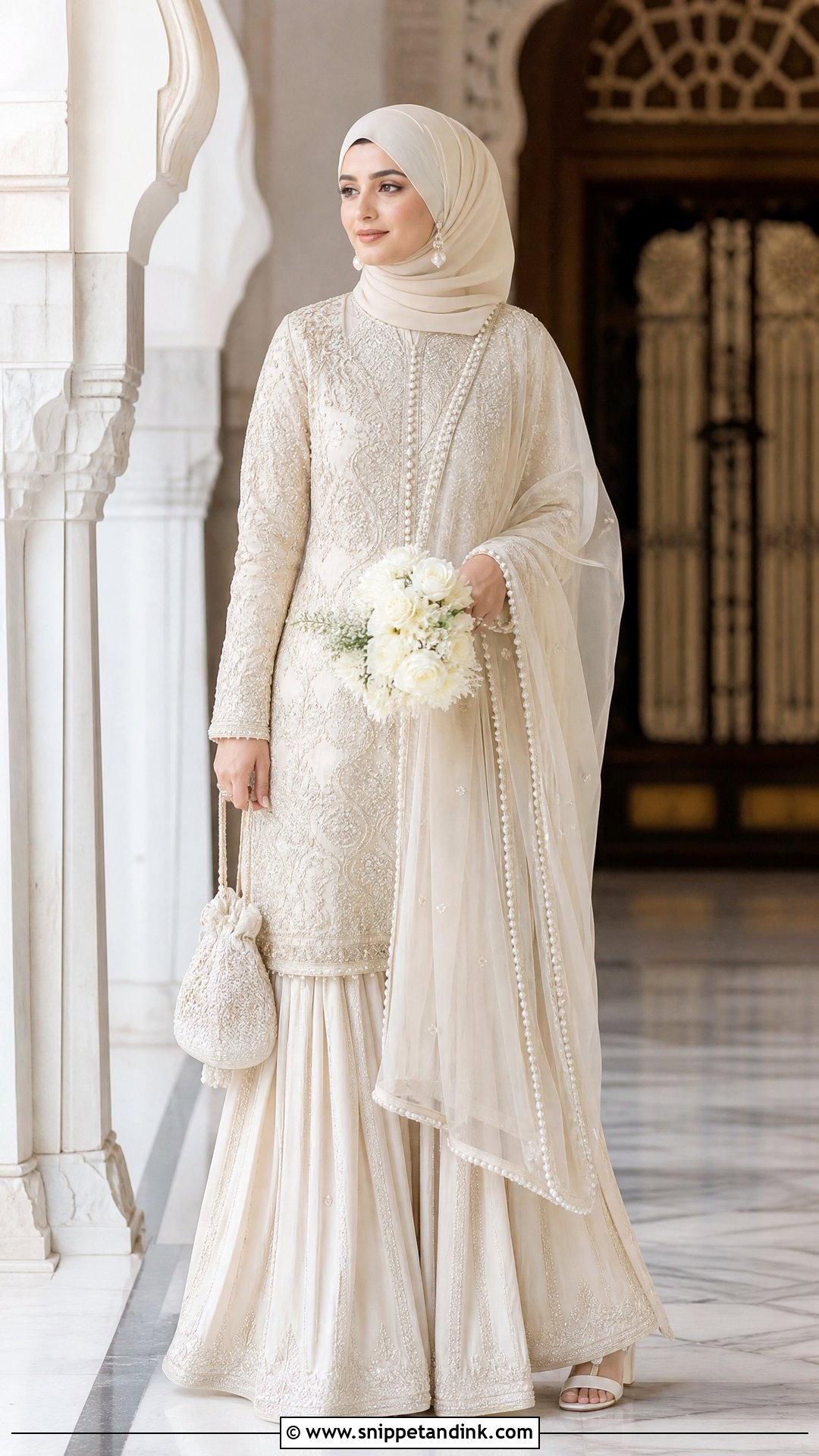
Wide sharara pants move far more easily than a lehenga, which is why I suggest them to brides with a long day of standing and walking. Pair flared, fully lined pants with a knee-length or longer tunic that has a high neckline, full sleeves and tonal embroidery. Unlined sharara fabric goes see-through when you step forward, so check that before anything else. A matching chiffon hijab with a pearl-edged dupatta draped loosely over the head and shoulders suits the ivory palette. Ivory block heels, pearl earrings and a small embroidered bag finish it. At the fitting, walk and turn in front of a mirror to check that the tunic and pants overlap from every angle, and use hidden loops so the dupatta doesn’t bunch at the hijab.
19. Gold Muslim Bridal Gharara
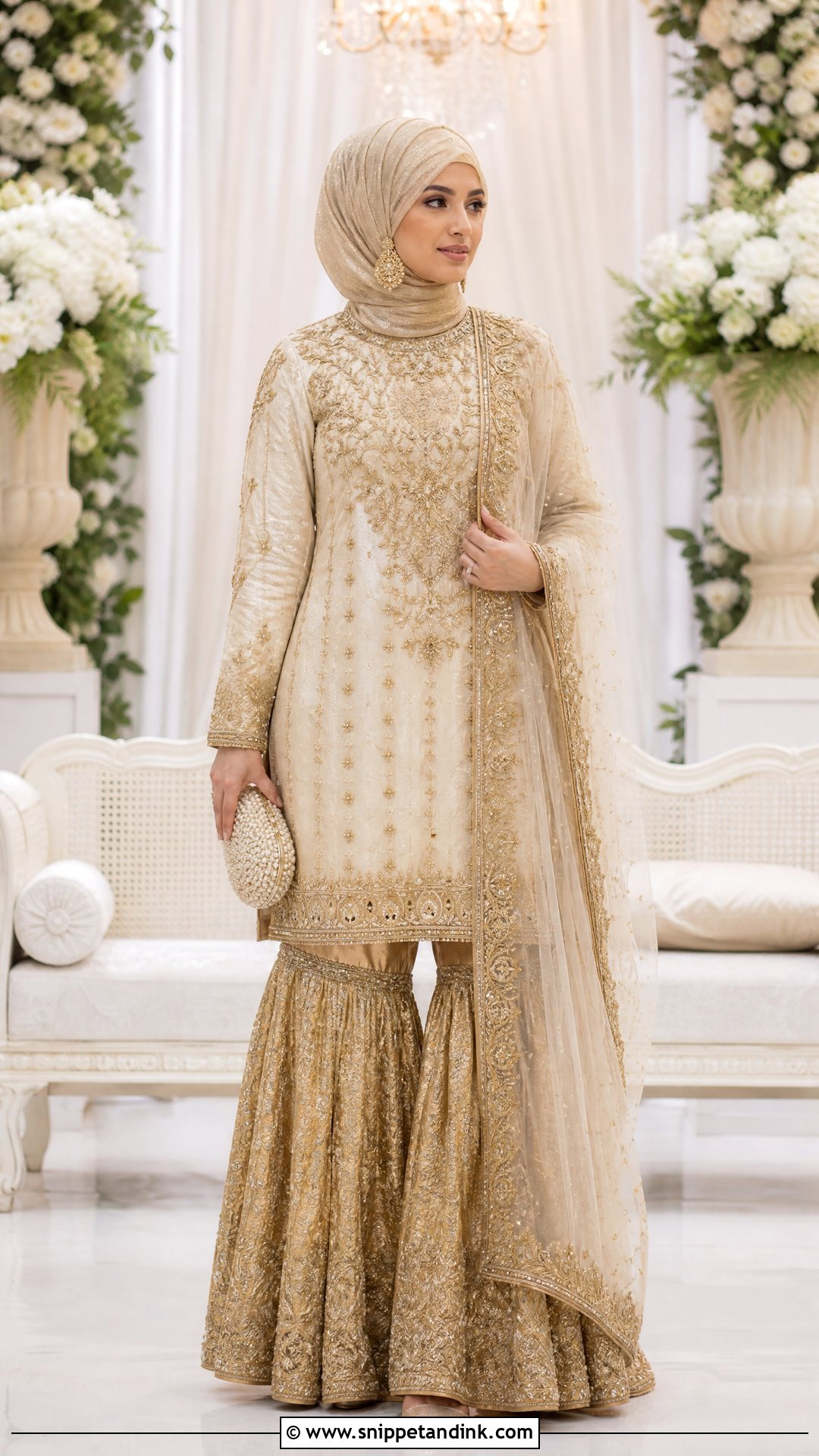
Gharara pants are gathered at the knee and flare below it, so they have real structure, and in antique gold they look festive and heritage-rich. Pair them with a long, loose ivory or champagne kurta with a high neck, opaque sleeves and embroidery that echoes the pants. Wrap the hijab close to the face and lay a light dupatta over the head with one end falling across the shoulder. Closed-toe gold shoes, traditional earrings and a pearl-trimmed clutch are enough. With this much volume below, the kurta should be streamlined without being tight. I check two things at the fitting: that the hem clears the floor in your shoes, and that the knee seam doesn’t pinch on stairs.


20. White Bridal Anarkali Dress
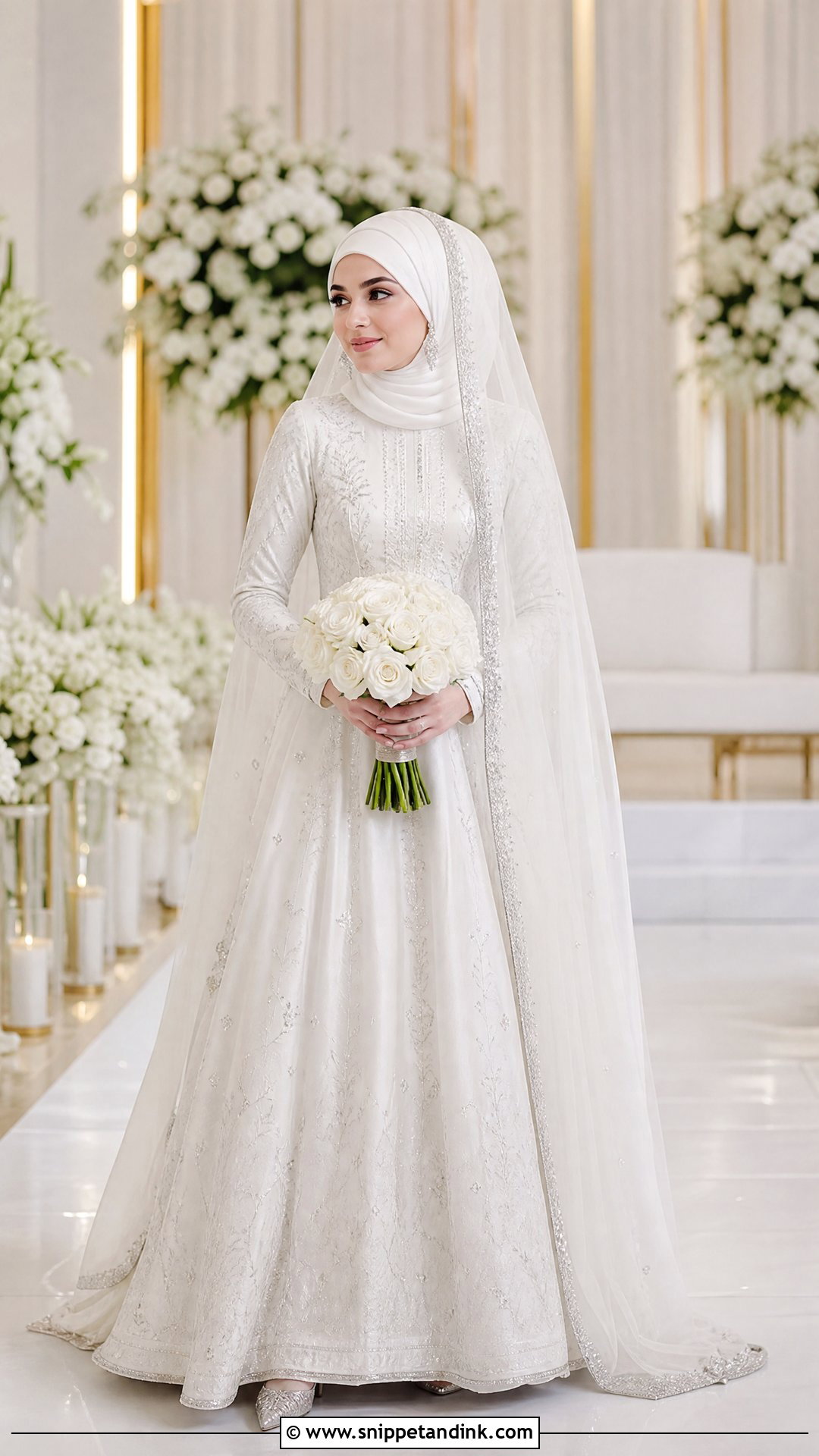
An Anarkali gives you flowing coverage with a classic South Asian shape: a fitted bodice that flares into a full, floor-length skirt. Keep the neckline high and the sleeves long, and put tonal embroidery, pearls or silver thread on the upper section. Chiffon and net Anarkalis need an opaque slip underneath. I’d ask for the bodice to be cut with some ease, since a traditionally close fit isn’t what most modest brides want, and the skirt needs width for walking. A white hijab with a silver-edged dupatta, pointed silver flats, small earrings and white roses with eucalyptus complete it. Place the dupatta so it adds coverage without hiding the embroidery.
21. Pakistani Bridal Pishwas Dress
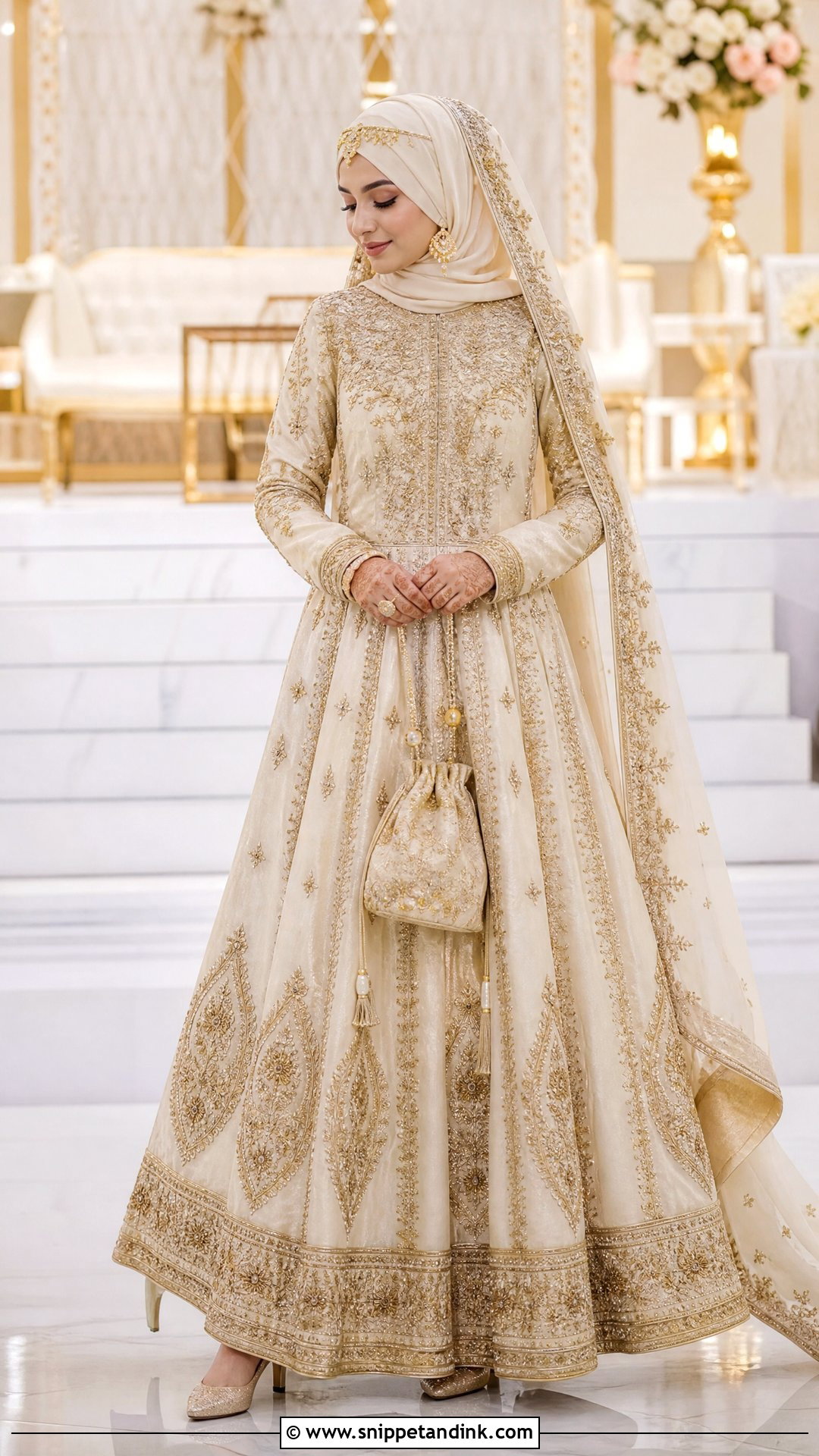
A pishwas is long and regal, with a fitted upper section and a dramatically flared skirt. For a modest version, ask for a softly tailored bodice with ease, a high neckline, opaque sleeves and a fully lined skirt. Ivory, deep red, sage or champagne all look rich with gold threadwork along the panels and hem. Pair it with a matching hijab and an embroidered dupatta draped securely over the head, closed-toe pumps, traditional earrings and a potli bag. Heavy pishwas skirts hang from the shoulders, so I ask the tailor to spread the embellishment evenly; when it’s concentrated at the hem, the shoulders drag forward by evening.
22. Turkish Islamic Bridal Dress
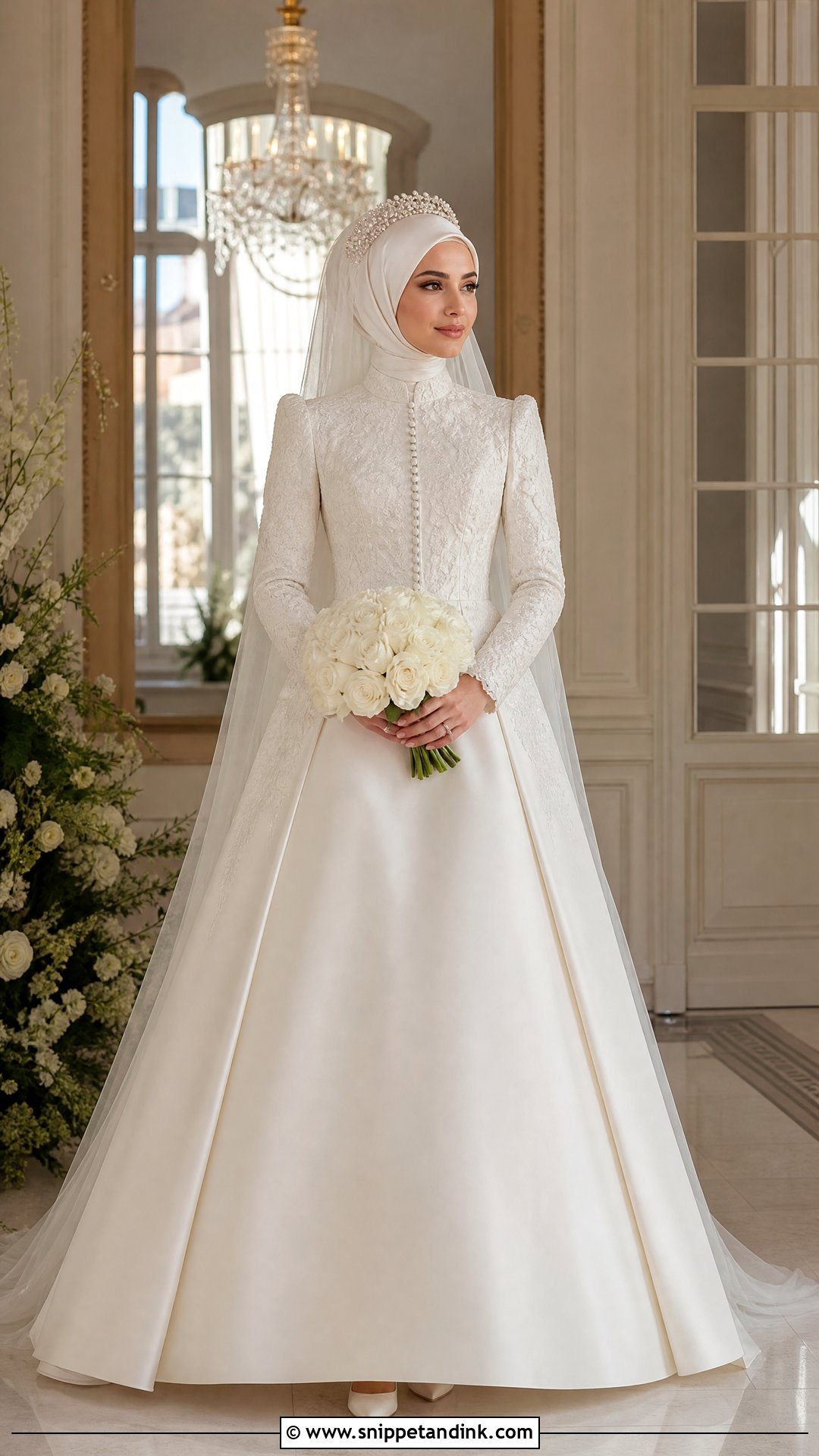
Turkish-style bridal gowns lean on structure and lace, with the hijab treated as part of the design. Choose an ivory A-line with a raised neckline, long lace sleeves on an opaque lining and covered buttons, with a full skirt that has controlled volume. Wrap a smooth satin hijab around the face and secure a long veil with a crystal or pearl headpiece. That headpiece should be light. A heavy tiara pulls the hijab back over the hairline during a long ceremony, and I’d rather pin a small piece well than balance a big one. Closed-toe ivory heels, fine earrings and white roses finish it, with tailoring through the shoulders so the bodice sits neatly.
23. Malay Muslim Bridal Dress
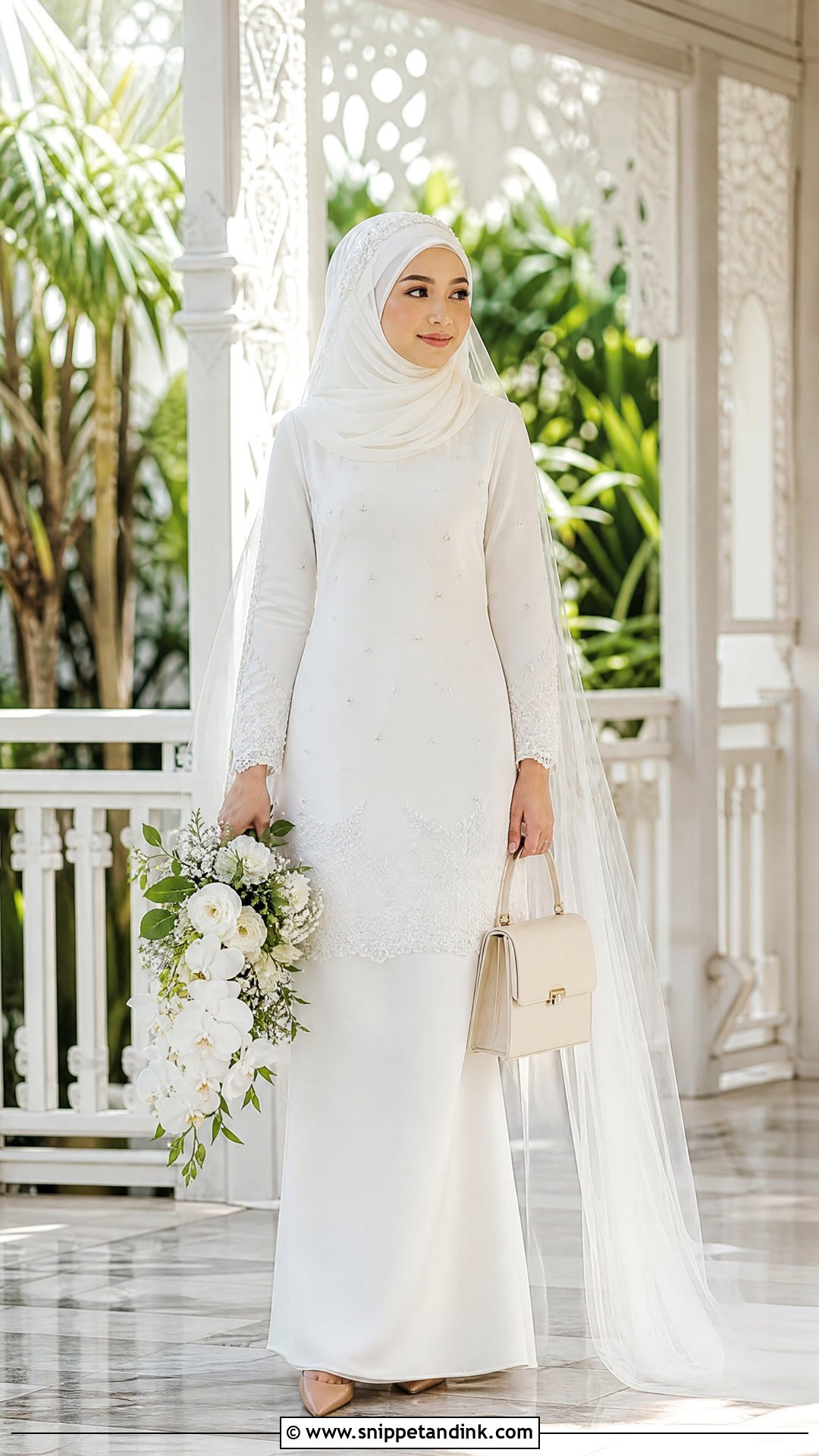
A Malay Muslim bridal outfit blends tradition with modest tailoring easily, since the baju kurung shape already covers so much. A white or pastel set with a long tunic, full sleeves, high neck and a coordinated floor-length skirt is the base. Put embroidery or beadwork around the cuffs, shoulders and hem. A neatly draped chiffon hijab with a long veil behind a fine headpiece, ivory or champagne closed-toe pumps, a small handbag and white tropical flowers complete it. The tunic should fall loosely over the hips and the skirt needs walking room. Humidity is the real test here, so I insist on breathable lining and an outdoor try-on before final alterations.
24. Indonesian Muslim Bridal Dress
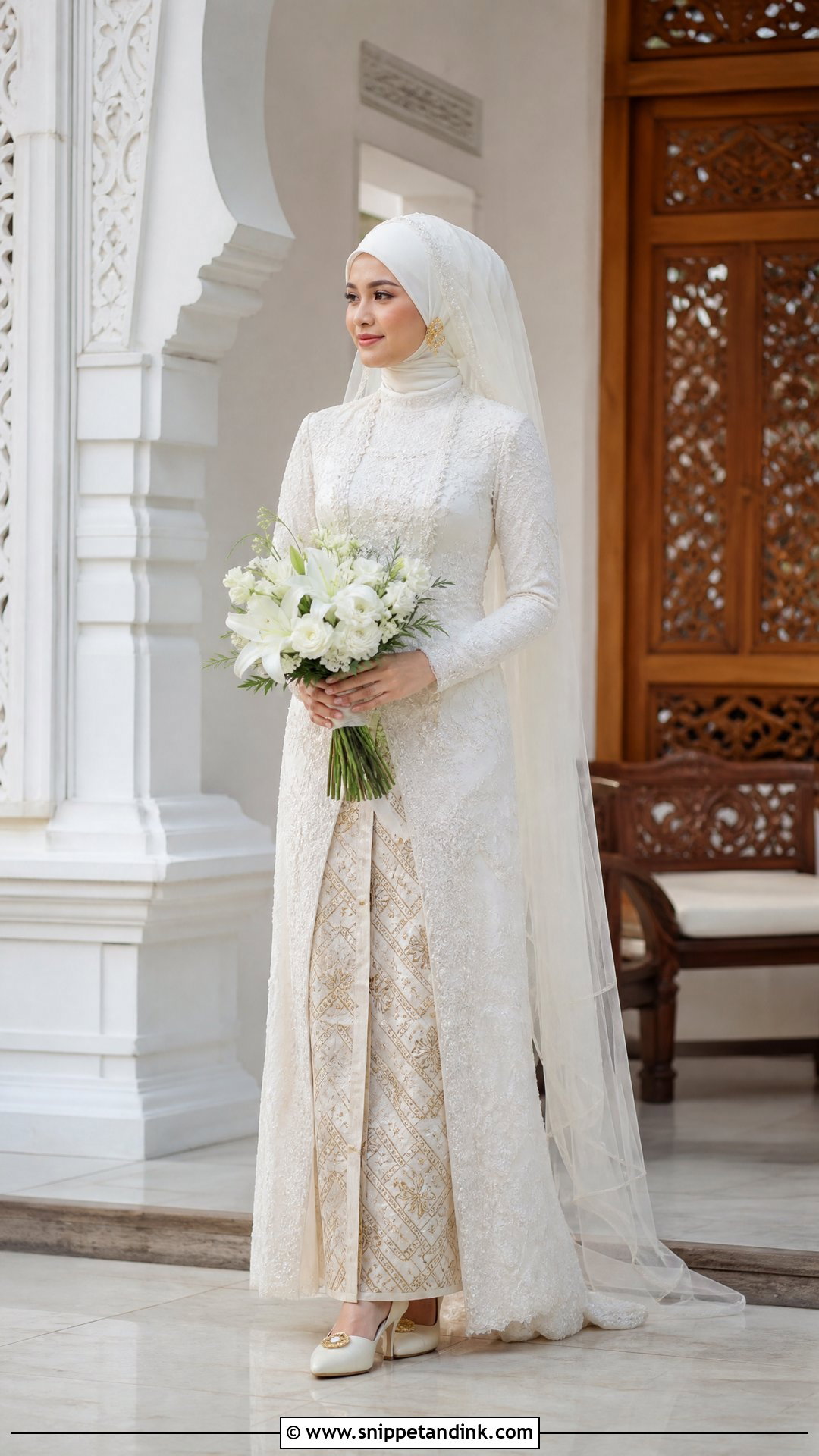
Kebaya lace is often sheer, so an Indonesian-inspired bridal dress needs full lining across the torso, back and arms to stay modest. I’d start with a long kebaya-style tunic over an opaque high-neck underlayer, full sleeves and a flowing batik or embellished skirt. Ivory, champagne, soft gold and muted green all pair well. Wrap a coordinating hijab smoothly and finish with a light veil or a traditional headpiece, closed-toe heels, small gold earrings and a structured bouquet. The tunic should sit below the hips without clinging. Wrapped batik skirts can loosen with walking, so secure the waist properly and walk around in the full outfit before the ceremony.

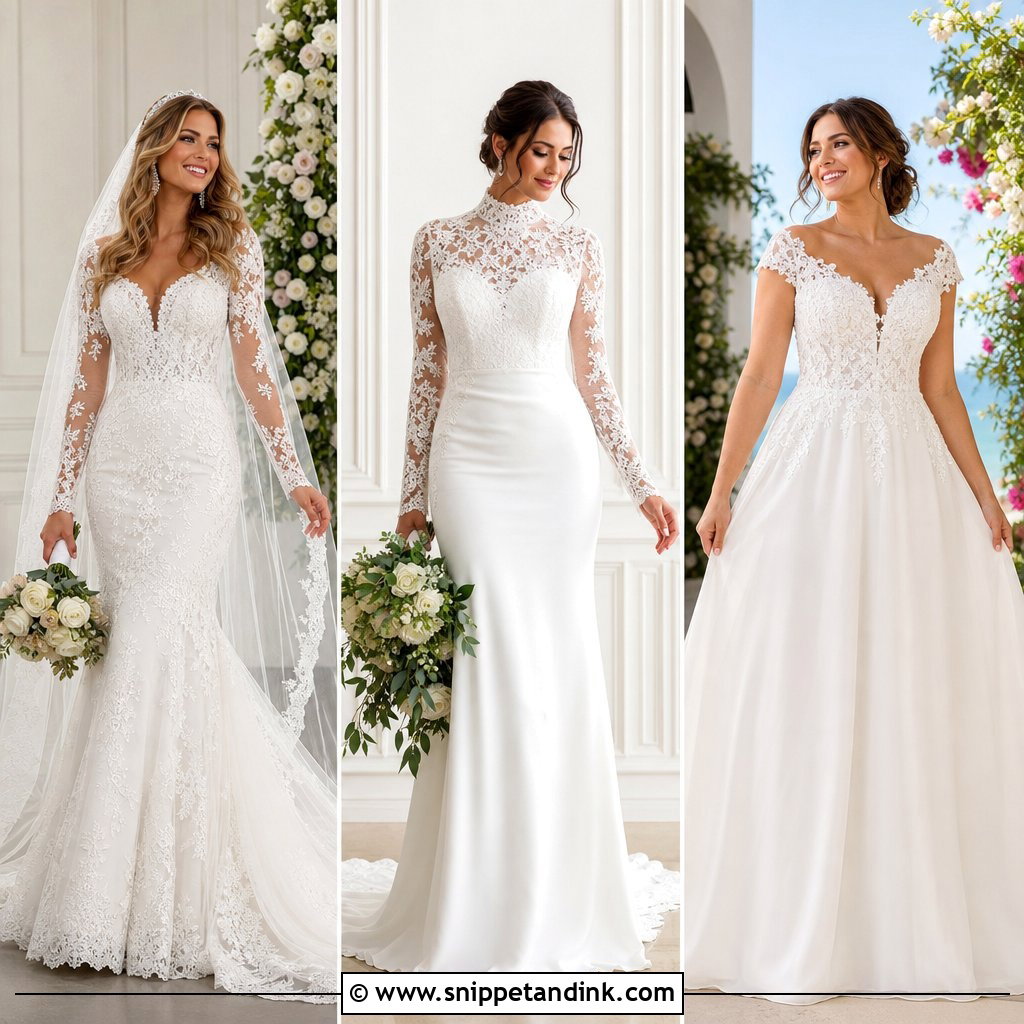


25. Velvet Winter Islamic Bridal Dress
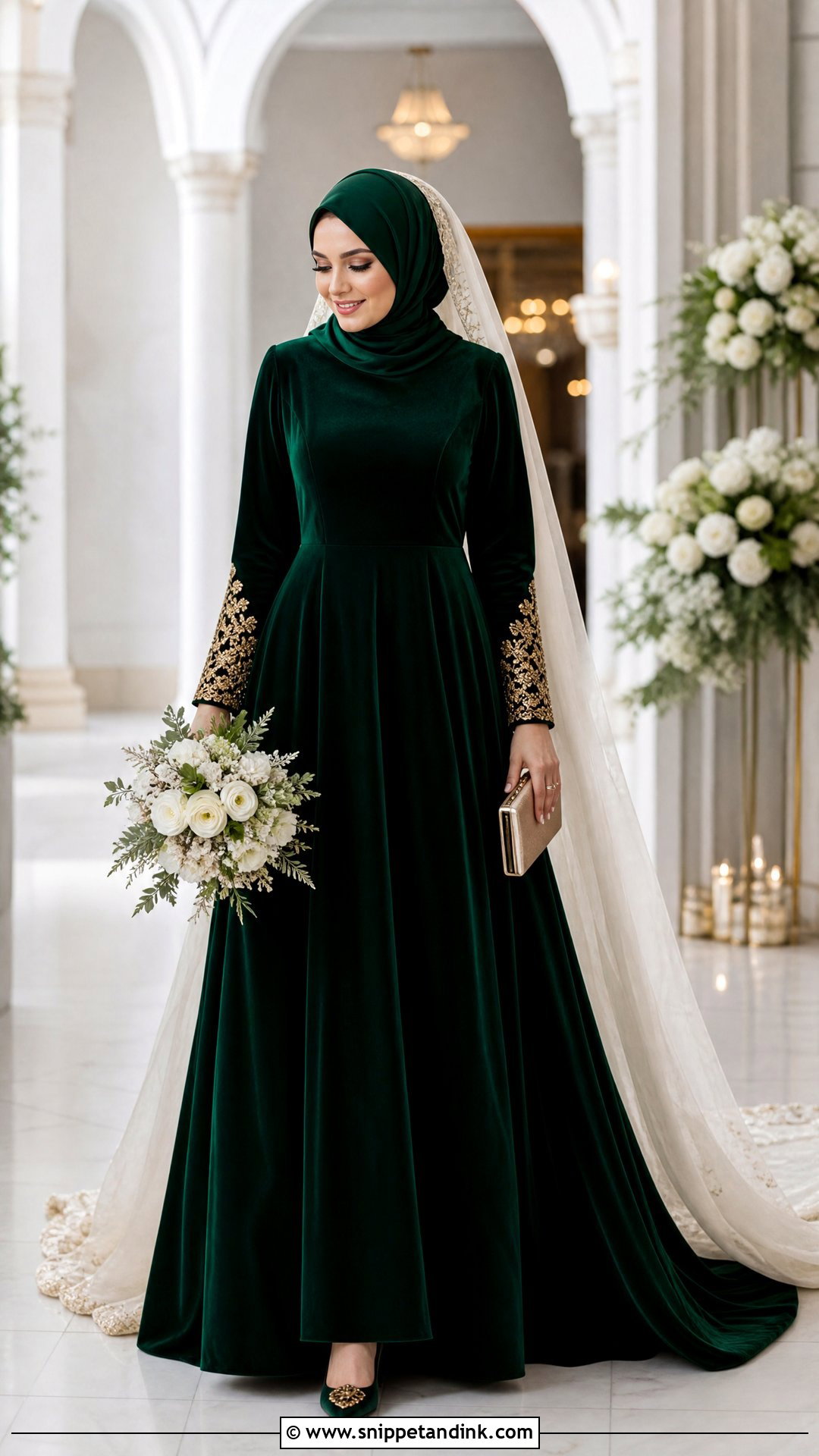
Velvet is warm, rich and quietly formal, which makes it my first suggestion for a winter wedding in a cold venue. Emerald, burgundy, navy or ivory velvet works, with a high neckline, long sleeves and a loose A-line skirt, plus tonal embroidery or gold trim at the cuffs and bodice to make it bridal. Match a satin hijab to the gown and add an ivory veil for contrast. Closed-toe velvet pumps, a metallic clutch and white winter flowers finish it. Velvet adds visual weight and gets hot fast in a heated room, so keep the skirt structured rather than layered, and ask for breathable lining and enough room through the arms.
Planning for Wudu, Prayer and a Women-Only Reception
A wedding day usually crosses at least one prayer time, and the outfit should allow for it. Practice varies between families and schools of thought, so follow your own guidance, but the practical side is the same for most brides. Sleeves that can be pushed above the elbow, or cuffs that unbutton, make wudu far easier than tight lace that won’t move. Many brides time their wudu before makeup, and some keep a separate prayer outfit or a large prayer dress ready to pull on over the gown.
If the skirt has a long train, ask for the bustle to be finished before prayer, and bring a clean prayer mat for the bridal room so you aren’t kneeling on a hem. Keep a small kit with spare hijab pins, safety pins and a magnet clasp, because pins tend to go missing between the ceremony and the photographs.
When the reception is separated, some brides remove the hijab in the women’s hall and want a second look there. I plan that change at the first fitting rather than the last. A hairstyle that survives a few hours under a hijab is usually a low bun or soft pinned waves with very little product at the crown, and the dress neckline may need to work both with and without a scarf. Ask your hairstylist to see the hijab you’ll be wearing before the trial, so the style fits under it.
Try Everything On Together, Hijab Included
The right bridal outfit lets you feel confident, comfortable and true to your values all day. Modest coverage works with nearly every silhouette, color and cultural tradition shown above, from a simple satin gown or embroidered abaya to a lehenga or kaftan. Bring the whole outfit to every fitting: hijab, veil, underlayers, shoes and jewelry. Check opacity in more than one kind of light, and practice sitting, walking and praying in it. When all the layers have been tested together, the look holds together in photos and still feels comfortable late into the evening.
You'll Like These Ideas:




Leave a Reply