
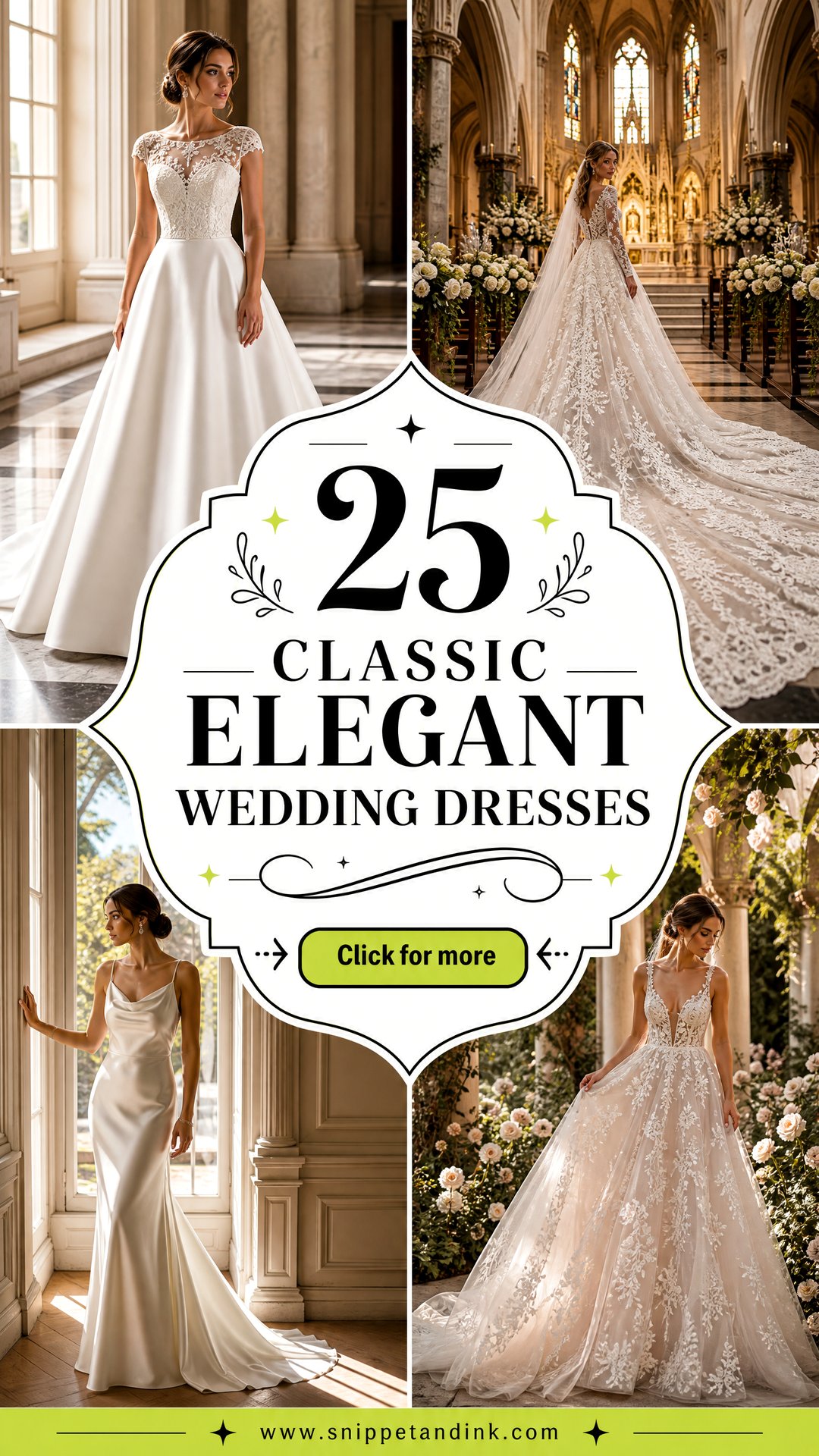
A classic gown is the one you can look at in an album decades from now without wincing at a trend. In fittings, what makes a dress read that way is rarely decoration. It’s the cut sitting in the right place on your body, a fabric with enough weight to hold its line, and a neckline that suits your shoulders. Below are twenty-five shapes I’d call genuinely classic, from structured satin ball gowns and lace sleeves to plain crepe columns and pearl work, with notes on how each one behaves once you’re actually wearing it. Most of them can move between a hotel ballroom, a garden and a courthouse with nothing more than a change of accessories.
Reading the Fabric Before You Fall for the Silhouette
Most classic gowns are simple shapes, so the fabric decides how they look by the end of the night. At a try-on I pinch, crumple and sit in a sample before we talk about necklines, because that tells you more than the mirror does.
Satin and mikado
Both hold structure and carry that smooth formal sheen. They also show creases and water marks, and they’re warm to wear. Plan to steam on the morning, and keep drinks well away from the skirt during photos.
Crepe and silk
Matte crepe forgives wrinkles and drapes close to the body, which is why it suits sheaths and columns. Silk charmeuse is lighter but shows every line underneath, so always fit it over the exact underwear you plan to wear.
Lace and tulle
These are the easiest fabrics to move in and the most fragile. Lace catches and tulle snags, so look at the hem of the sample after you’ve walked around in it. If it’s already fraying in a boutique, it’ll be worse after an outdoor reception.
1. Satin Ball Gown Wedding Dress
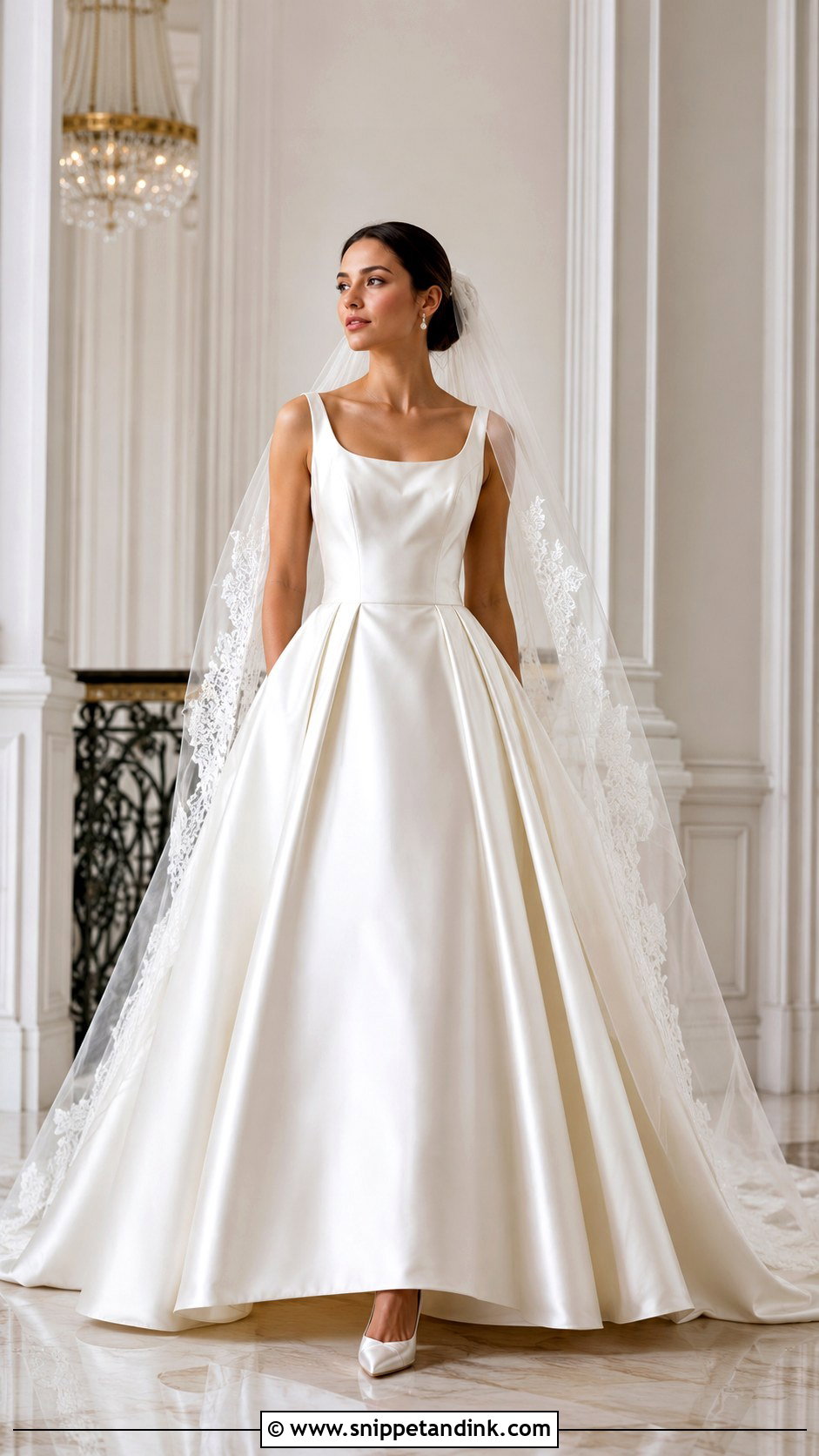
A full satin skirt over a fitted bodice is the most traditional shape here, and the one I’m most careful fitting. Satin shows every pull, so if the bodice is even slightly tight across the ribs you’ll see diagonal drag lines in photos. A natural waist with soft pleating hides that far better than a flat front. Duchess satin is heavy, so notice the skirt’s weight on your hips during the try-on and ask what sits underneath it, a hoop or layered petticoats. The styling can stay plain: a cathedral veil, pearl earrings, pointed satin heels and white roses or calla lilies. It belongs in a ballroom, an estate or a formal indoor room with space to turn around.
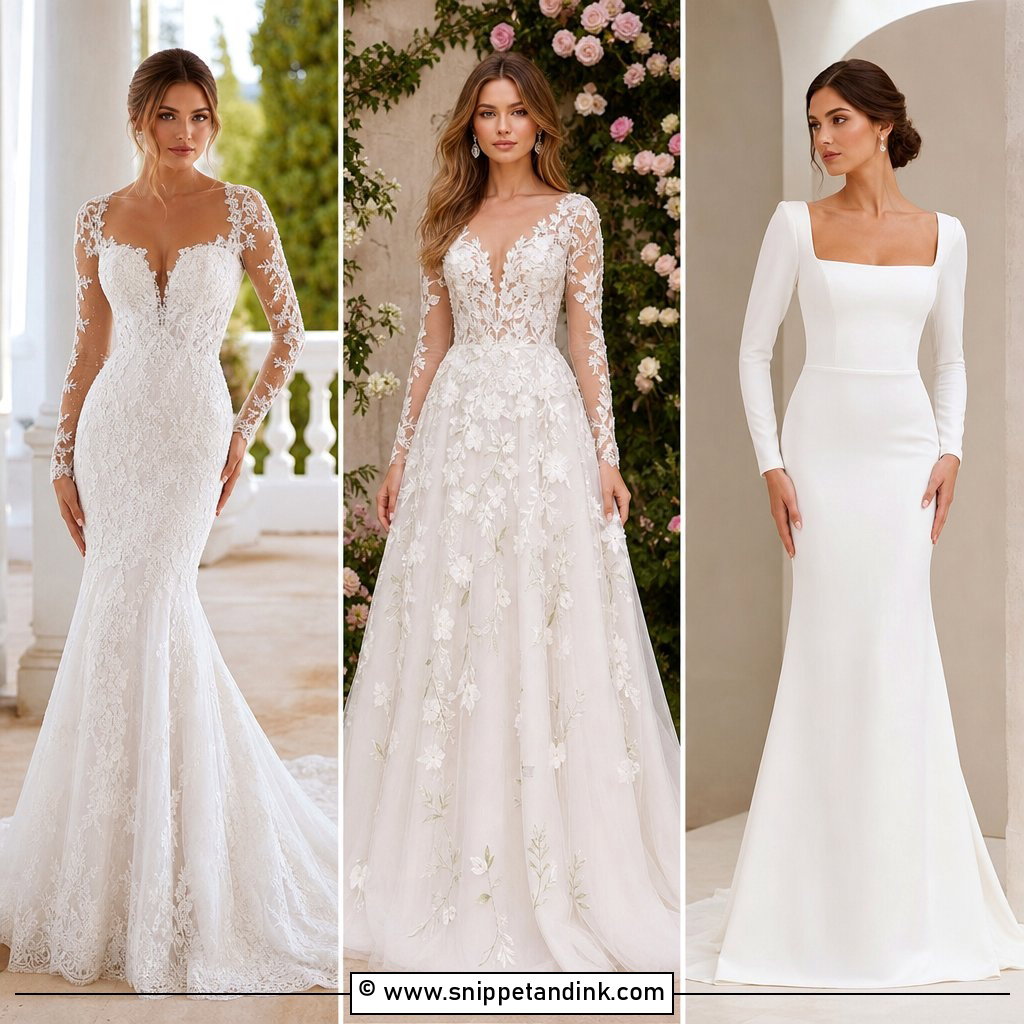
2. Long Sleeve Lace Wedding Dress
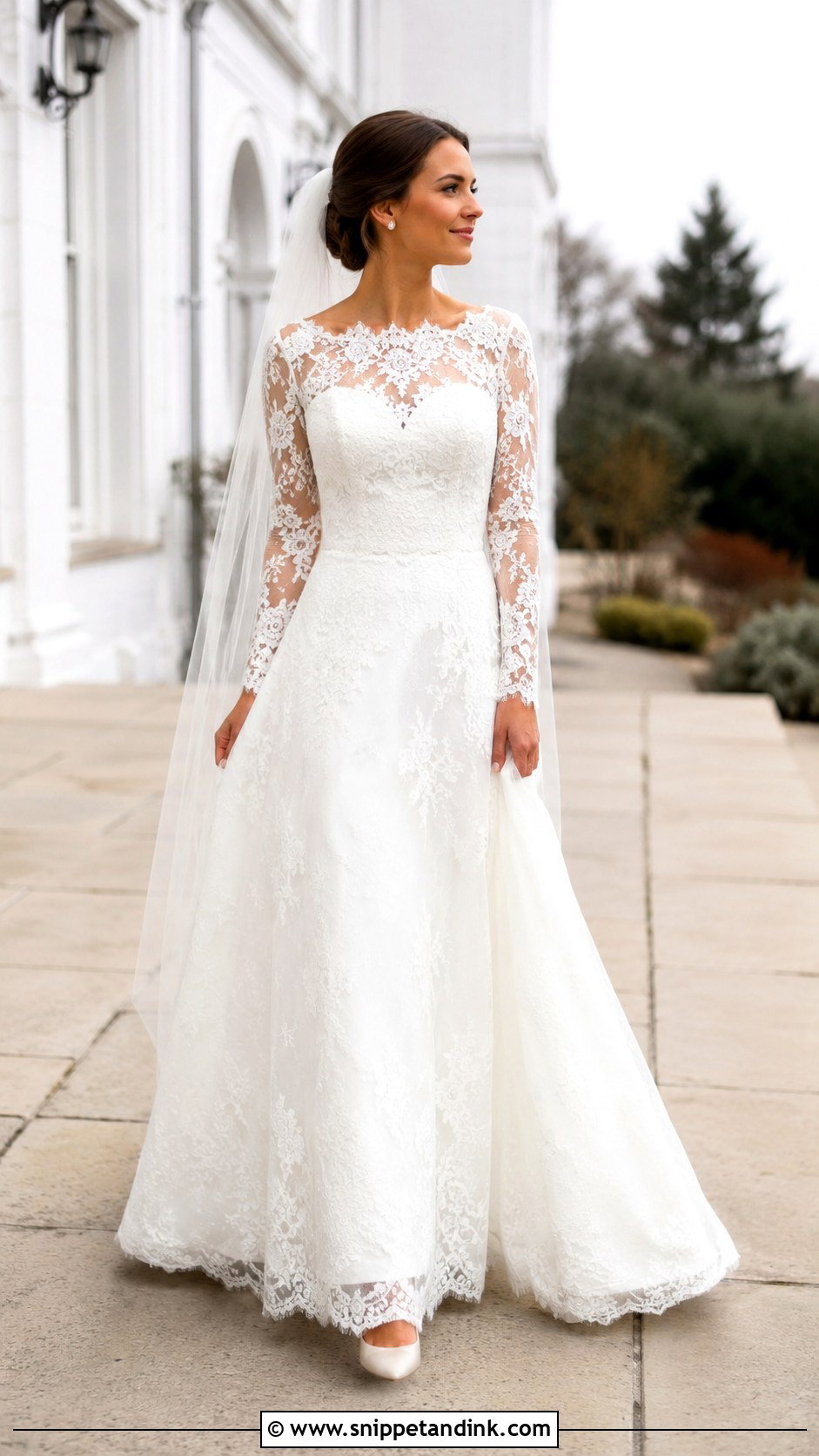
Lace sleeves give coverage without weight, and the edge finish is what I look at first. Scalloped edges at the cuff and neckline look softer than a cut edge with a bound seam. Sheer lace, floral appliqué and corded lace all behave differently on the arm; corded lace is stiffer and can rub at the elbow crease if the sleeve is fitted too close, so leave a little ease for hugging and dancing. Put the fitted bodice over an A-line or soft sheath skirt, wear a low bun and pearl studs, and keep the veil plain so the pattern isn’t fighting tulle edging. Fall, winter and formal evening weddings suit it best, though it holds up in a garden too.
3. Off Shoulder A Line Wedding Dress
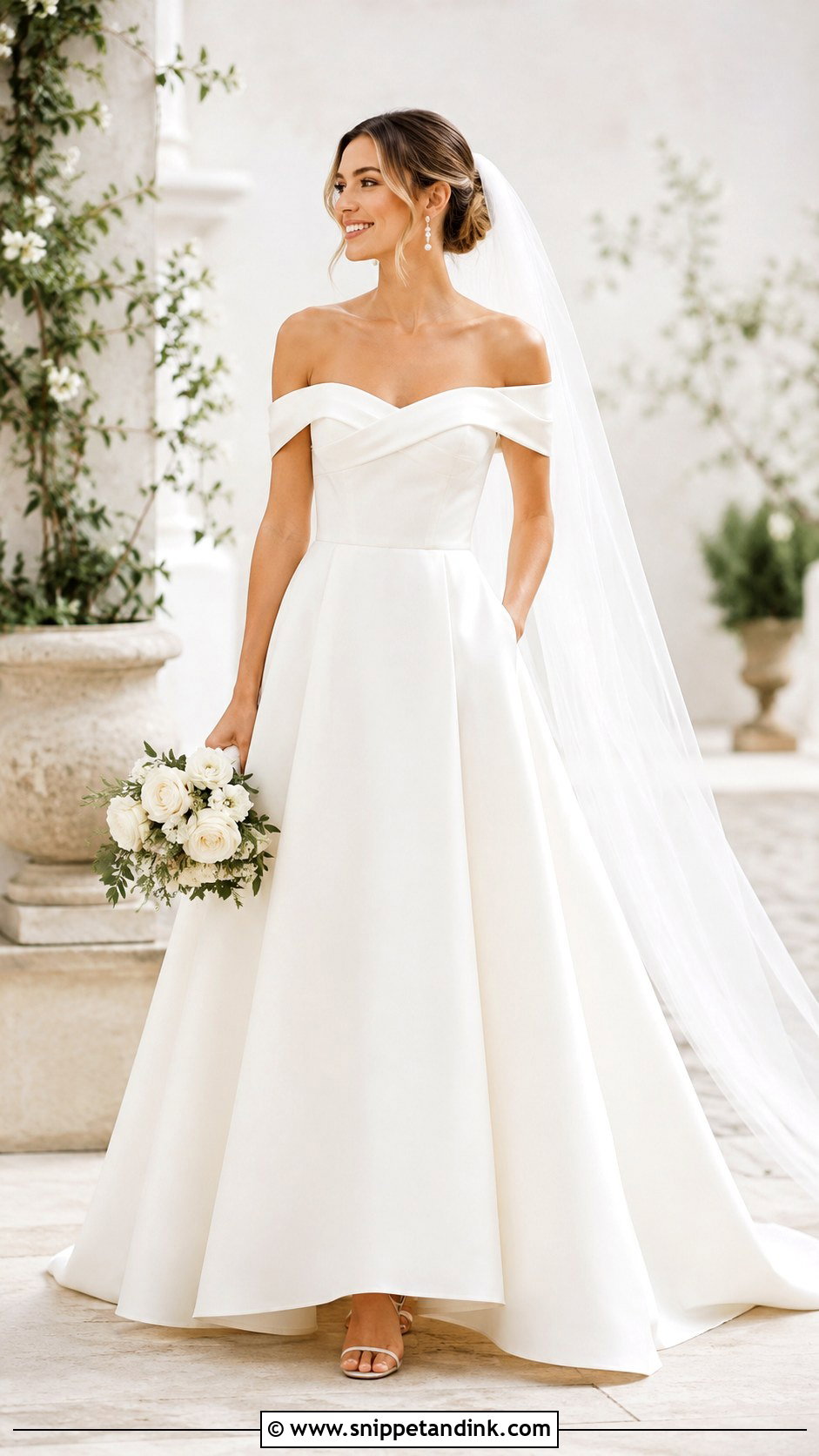
Off-shoulder necklines show the collarbone without much skin elsewhere, and the A-line skirt skims the hips, which is why the shape suits so many body types. The catch is arm movement. A true off-shoulder band holds the upper arms, so at the fitting I ask brides to lift their arms as if hugging someone. If the band rides up or digs in, it needs boning or a different cut. In satin or mikado the band keeps its shape; in unlined lace it tends to roll. Finish with a smooth veil, small drop earrings and closed-toe heels, and the dress moves easily from the ceremony to the dance floor.
4. Simple Crepe Sheath Wedding Dress
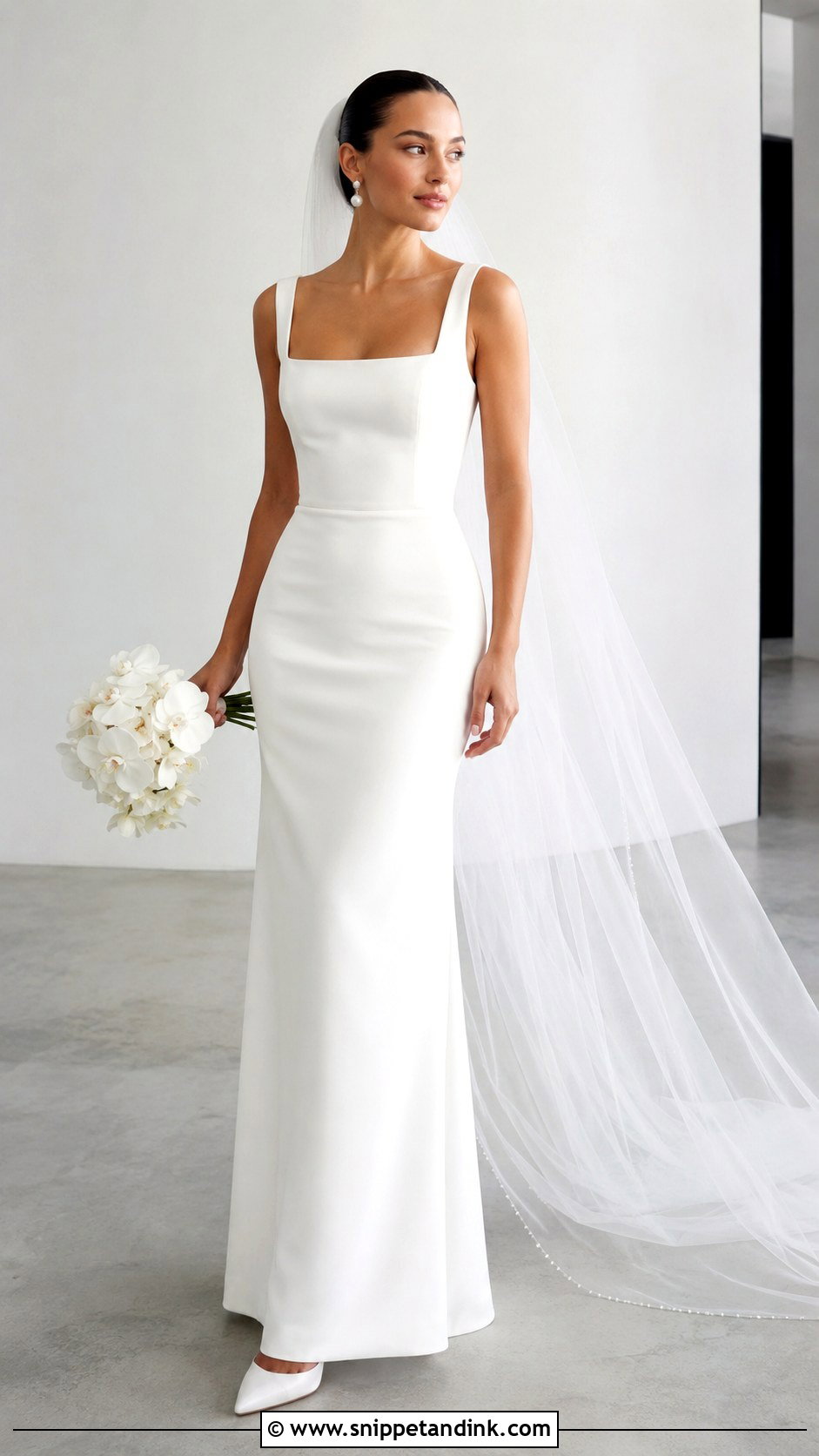
Crepe is the fabric I suggest to brides who want a clean sheath wedding dress, because its matte surface hides small creases that satin would broadcast. The trade-off is honesty. A sheath follows the body closely, so smooth, edge-free underwear and a fitting in your actual shapewear matter more here than with any other shape. A square neckline, covered buttons or a low back give it interest. Keep the hair sleek, add pearl earrings and a long veil for length, and it suits a city hall or a small dinner wedding without trying.
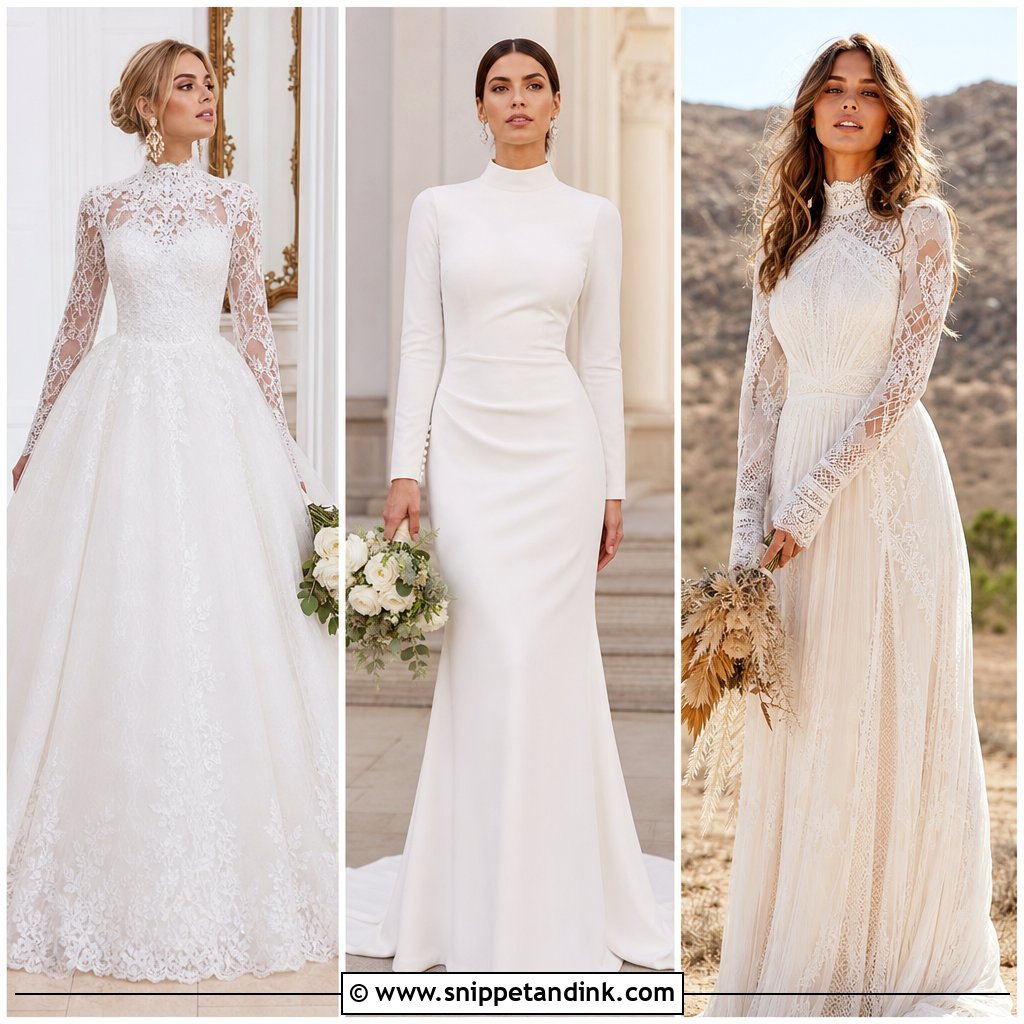
5. High Neck Wedding Dress
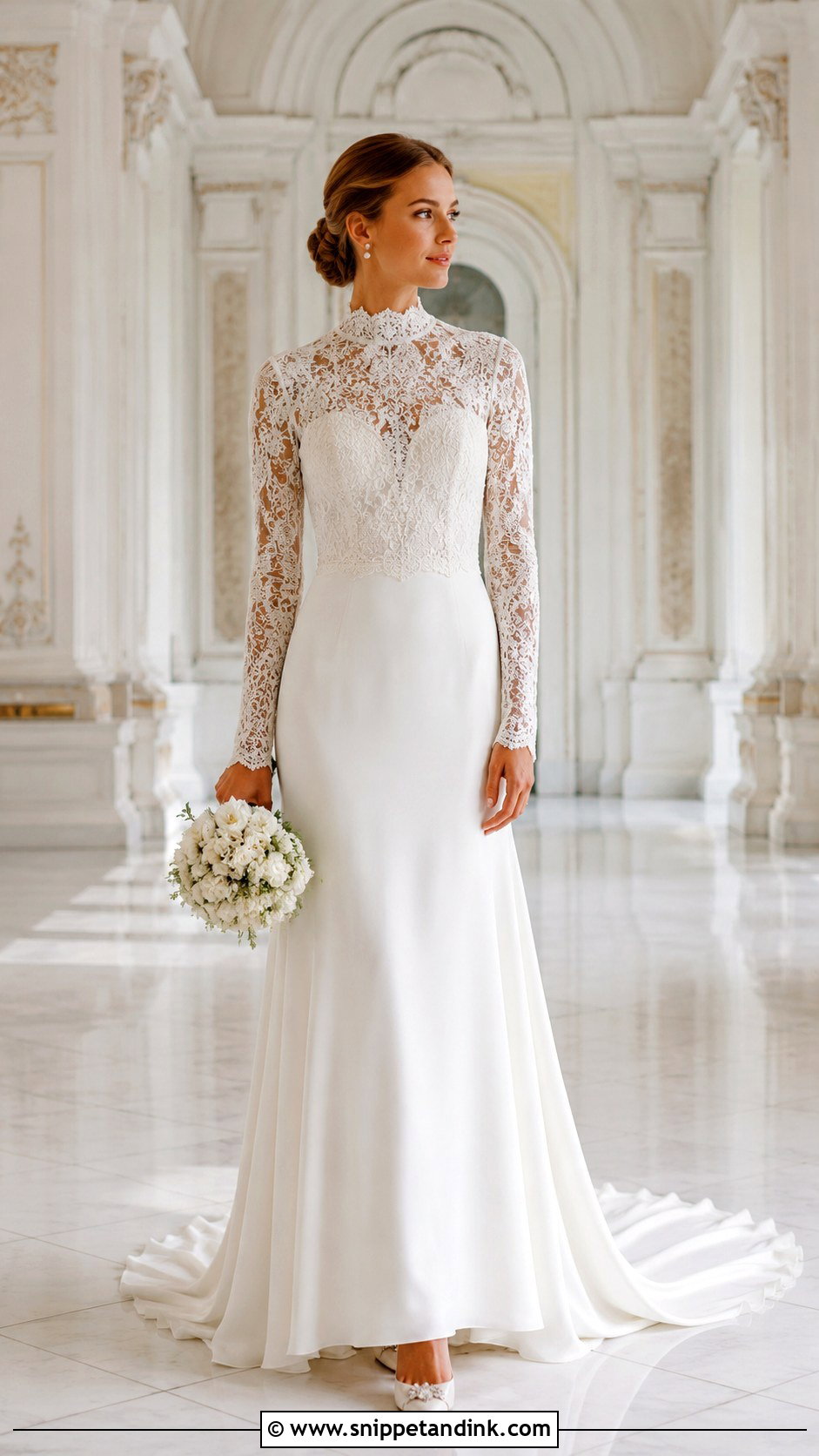
A high neck frames the face, so it works best with the hair up. If you love wearing your hair down, try the dress on that way before you decide, because long loose hair bunches against a high collar and hides its line. Lace, satin and structured crepe all suit it. I usually balance a high neck with a defined waist or a gentle A-line skirt so the top half doesn’t feel heavy. The fabric decides the era: lace reads vintage, crepe reads modern. Keep jewelry to earrings, since a necklace has nowhere to sit.
6. Pearl Embellished Wedding Dress
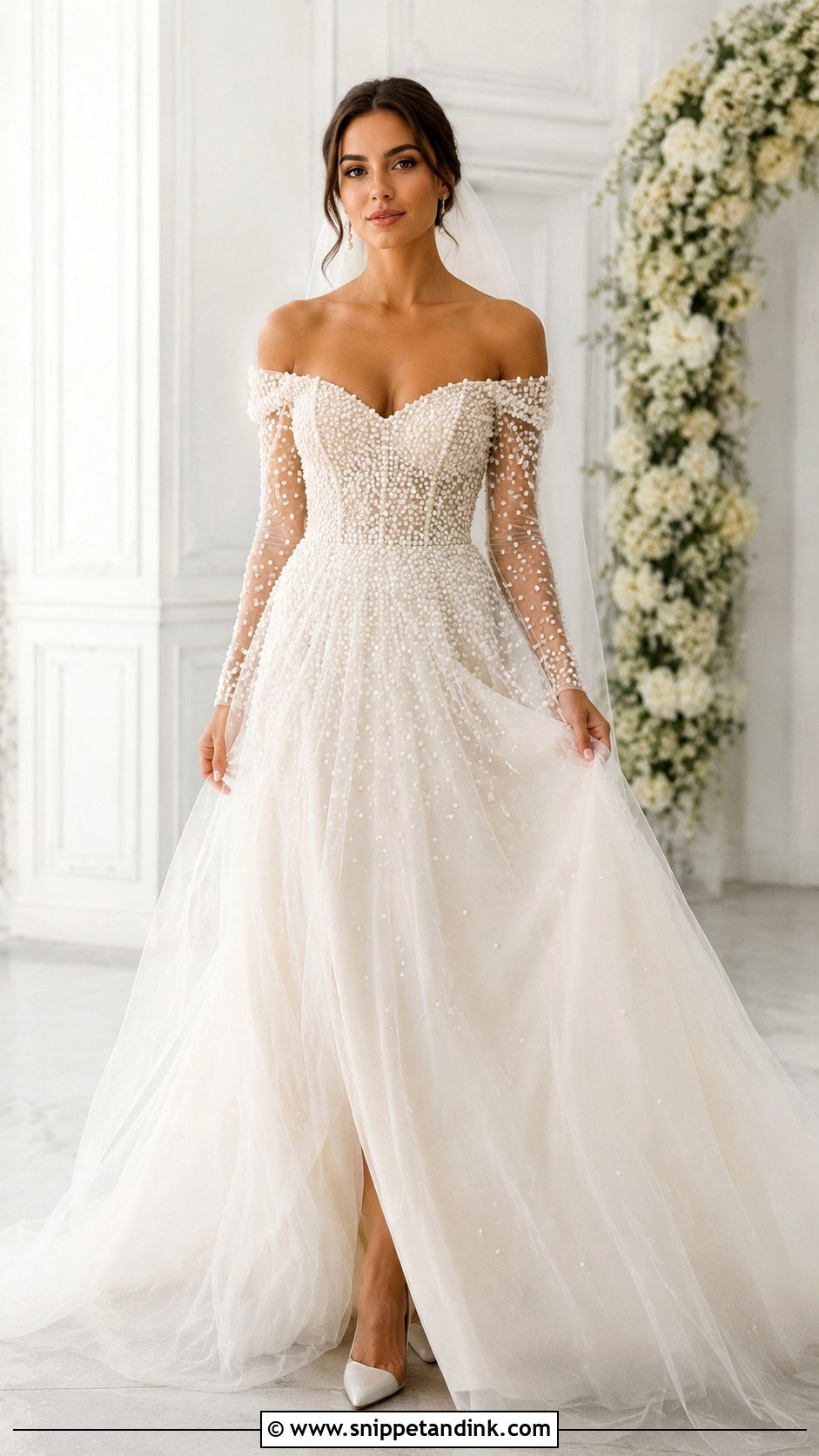
Pearls catch light softly instead of throwing sparkle, which is why they sit so comfortably on a classic gown. Ask how they’re attached. Hand-sewn pearls on a bodice or sheer sleeve are secure, while glued ones can pop off after an afternoon of hugging, so I always check the inside of the bodice for loose threads and tuck a few spare pearls into the emergency kit. Let one area carry them, the neckline or the sleeves or a light scatter over tulle, rather than covering everything. After that, a slim veil, pearl studs and ivory heels are all the dress needs.
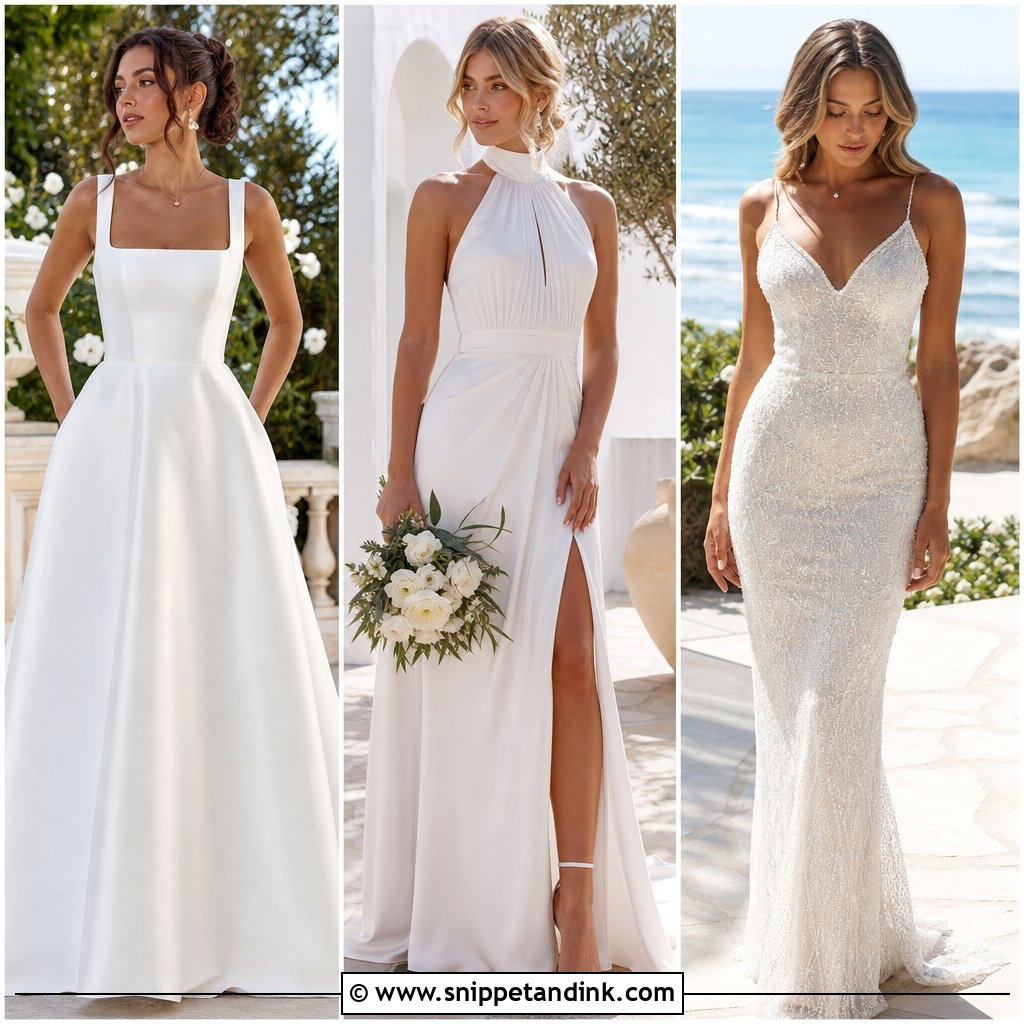
7. Square Neck Wedding Dress
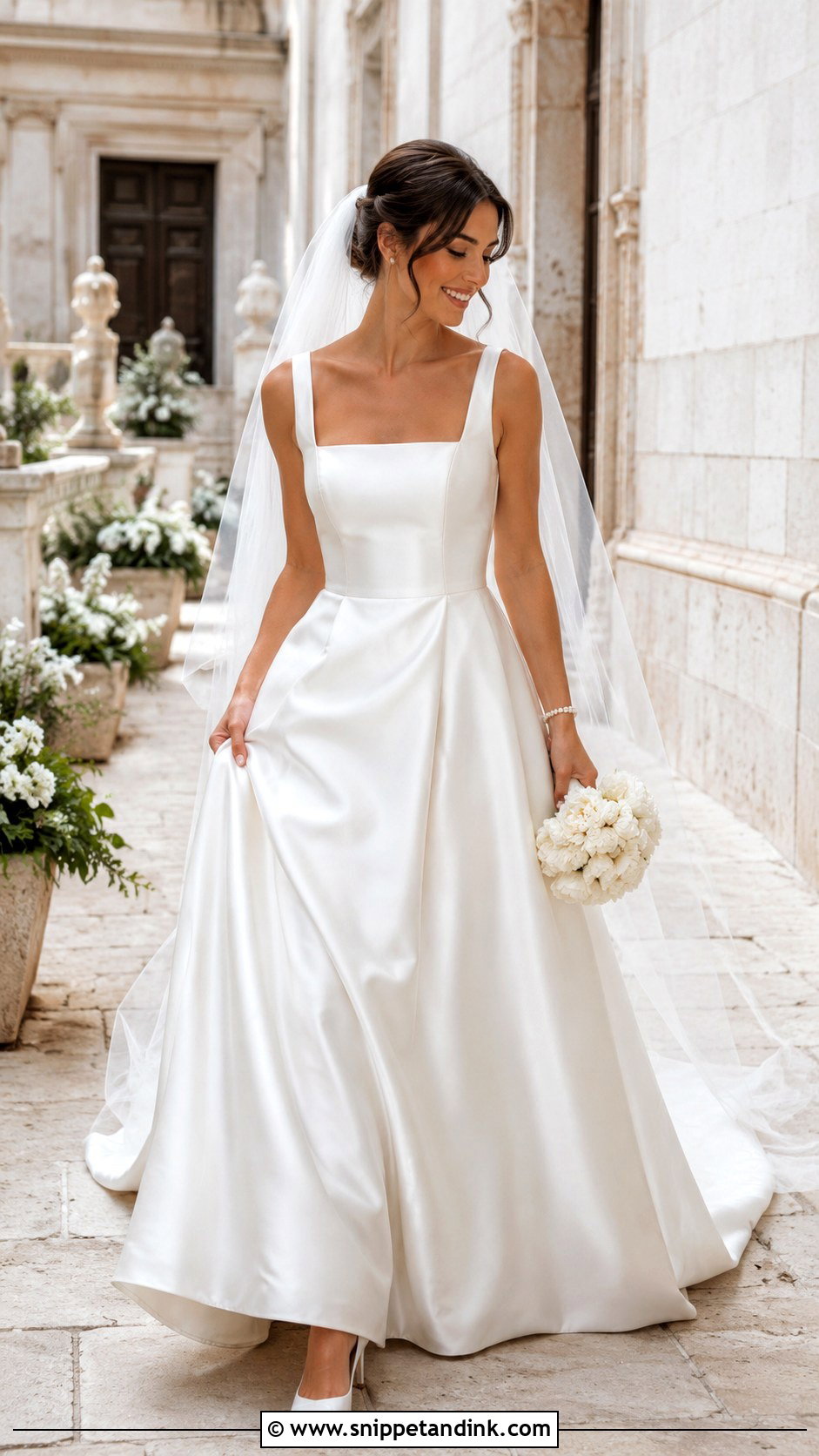
The square neckline gives the upper body a tailored frame and flatters most collarbones, with wide straps, long sleeves or no sleeves at all. What I check is the corners. They need to lie flat, and if they gape when you lean forward, the bodice needs taking in at the side seams rather than shortening the straps. Satin, crepe, lace and mikado all work. With an A-line skirt it reads romantic; with a fitted skirt it looks more modern. Add a smooth veil and small earrings, and hold the bouquet low so it doesn’t cut across the neckline.
8. Mikado Wedding Dress
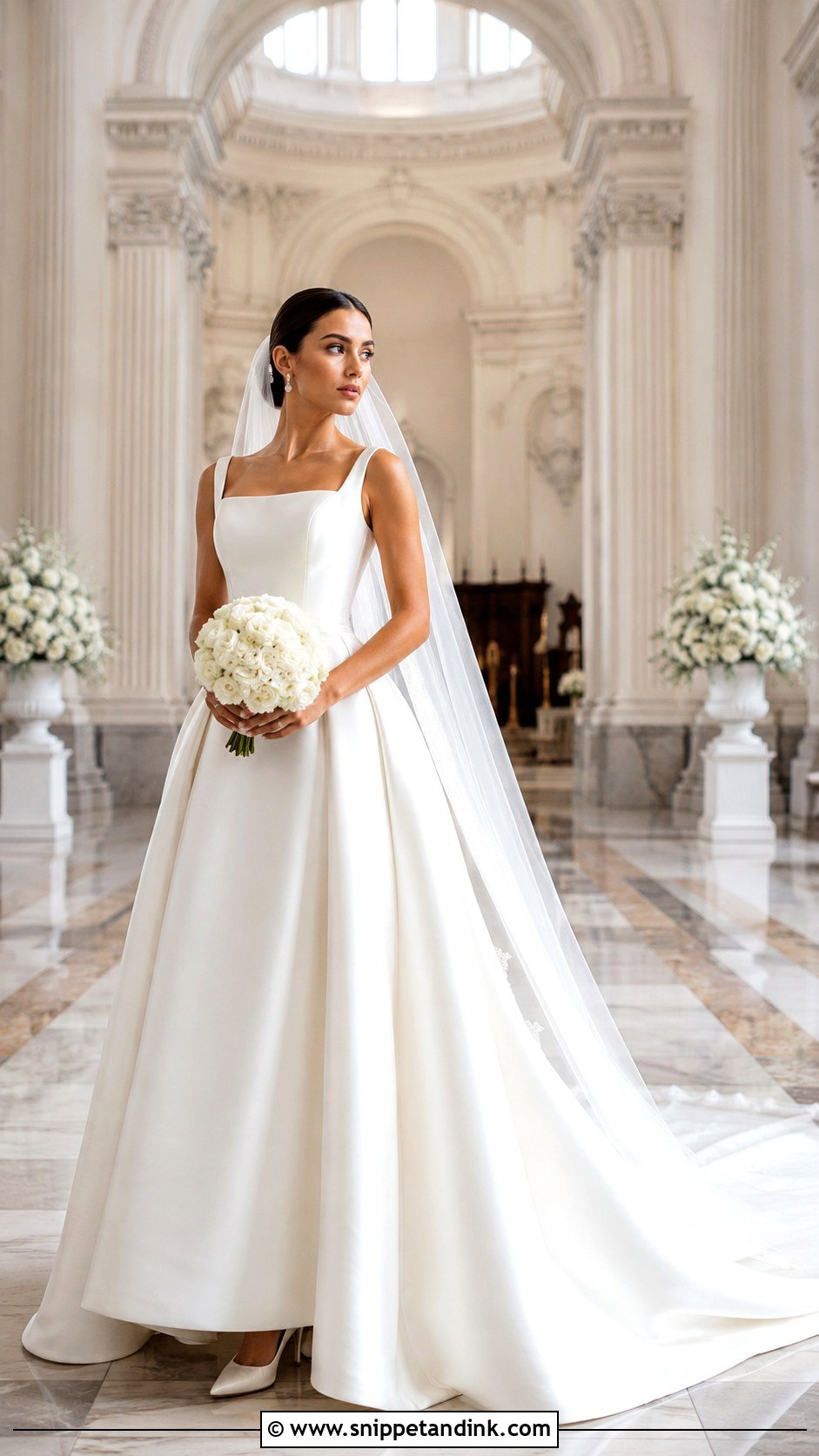
Mikado is a heavier silk blend with a low sheen, and that weight lets ball gowns and A-lines hold their shape without much underpinning. It also means the gown gets warm by evening, which matters at a summer wedding. A clean bodice, subtle pleats and a long train are where it shines. One honest warning: mikado creases sharply after a long seated dinner, so I steam it on the morning and schedule the formal portraits before the meal. A classic veil, a pearl bracelet and satin pumps are plenty, because the fabric is already doing the talking.
9. Vintage Lace Wedding Dress
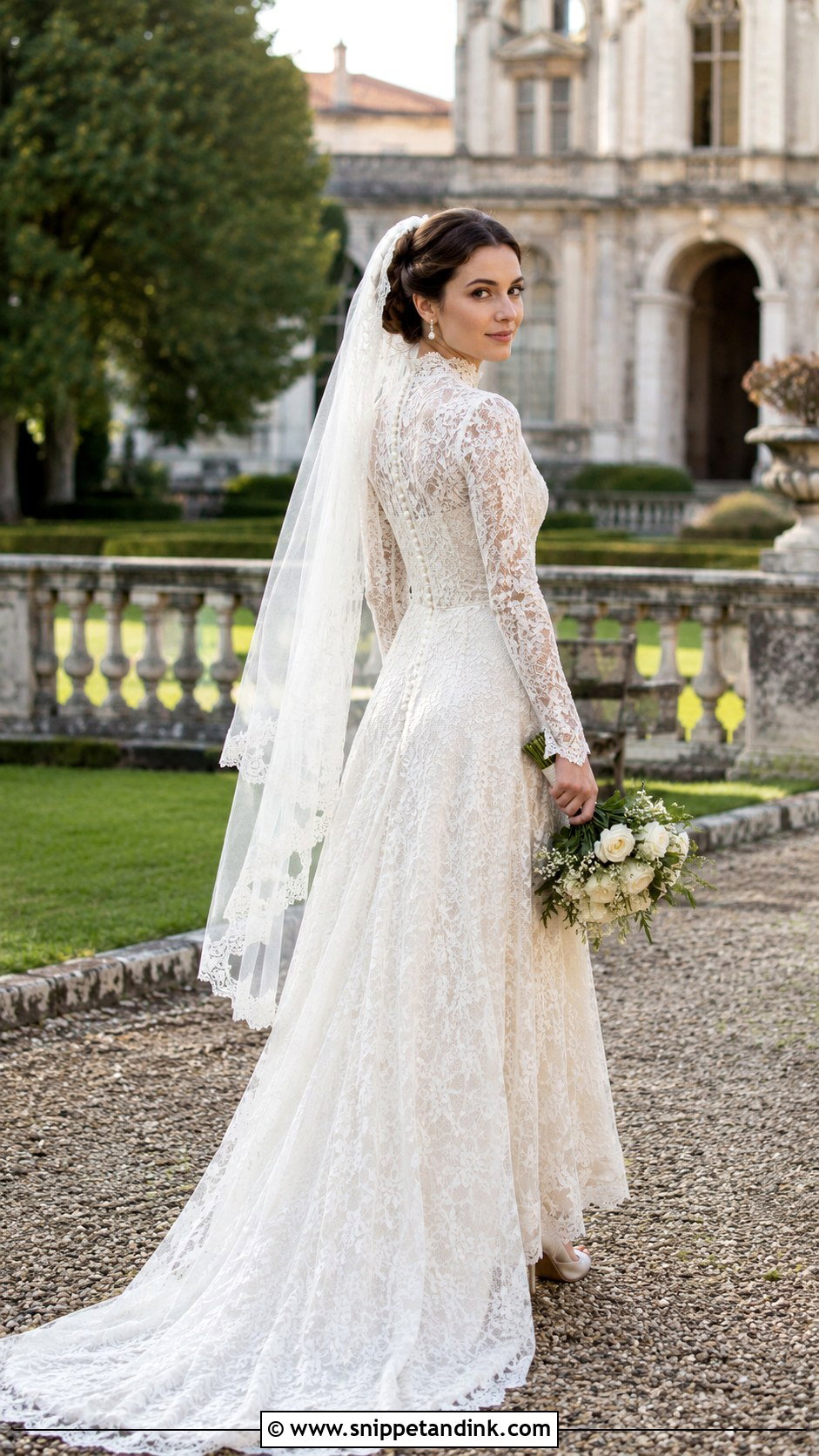
Old-world lace is all texture: floral motifs, eyelash edges, covered buttons and sometimes a slightly raised neckline, on a fitted, A-line or tea-length shape. Where brides go wrong is matching everything to the era. A vintage gown with finger waves, a birdcage veil and seamed stockings tips into costume. I keep the hair current, usually soft waves, with pearl earrings and a plain veil. If the lace is genuinely old, have a specialist look at the seams before any alterations, because aged lace tears where it has been under strain. Historic venues and garden ceremonies are its natural home.
10. Strapless Satin Wedding Dress
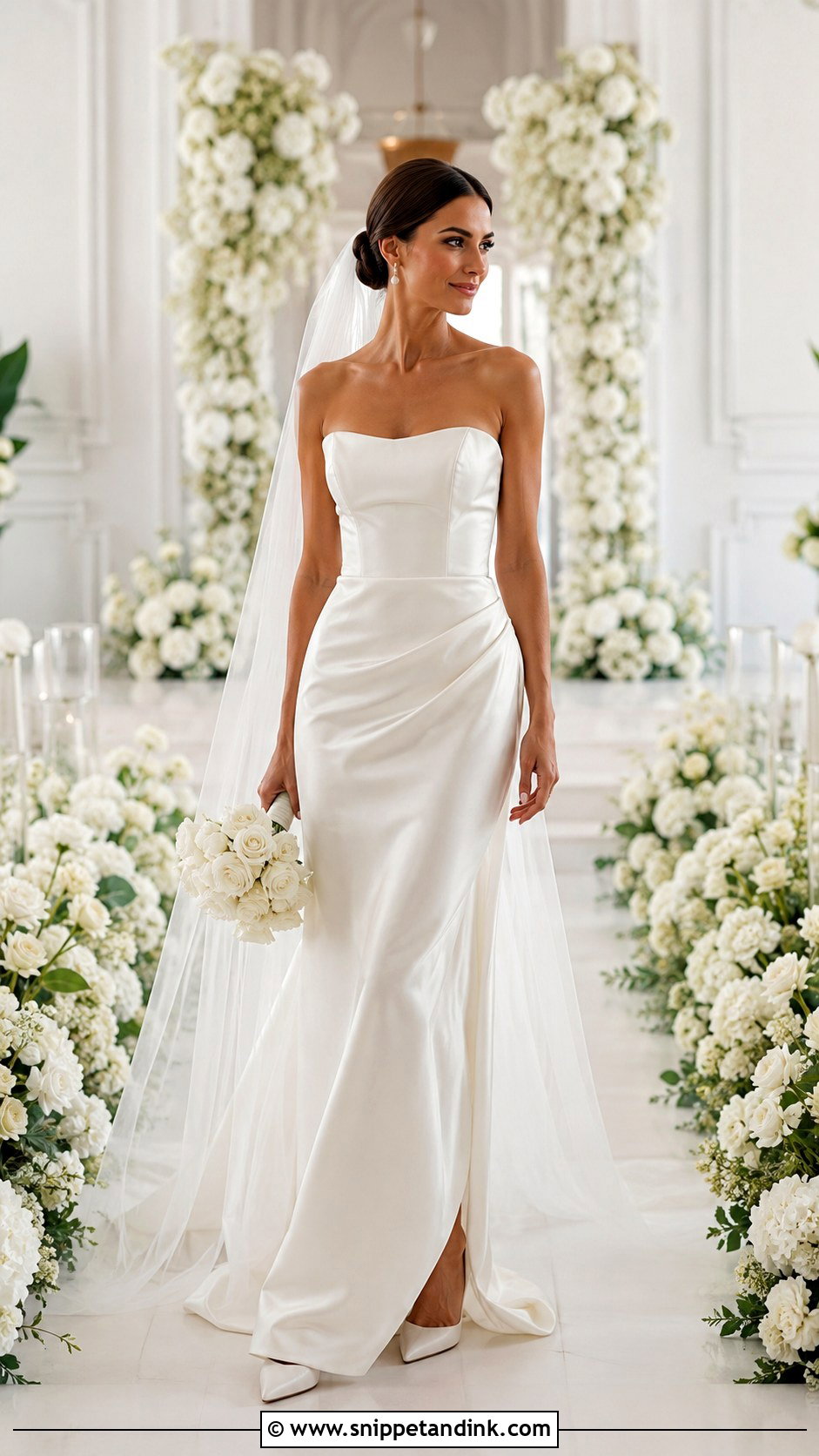
Strapless only works if the bodice is doing the holding, not your hands. A properly built one has boning and often a waist stay, a grosgrain band inside that anchors the dress at your natural waist so it can’t slide down. If you catch yourself hitching it up during the try-on, it isn’t fitted yet. Satin shows the bodice seams clearly, which is good news when they’re straight. It pairs with a full skirt, a fit-and-flare or a column. Wear a necklace or statement earrings, not both, and finish with a long veil and a polished updo.
11. Basque Waist Wedding Dress
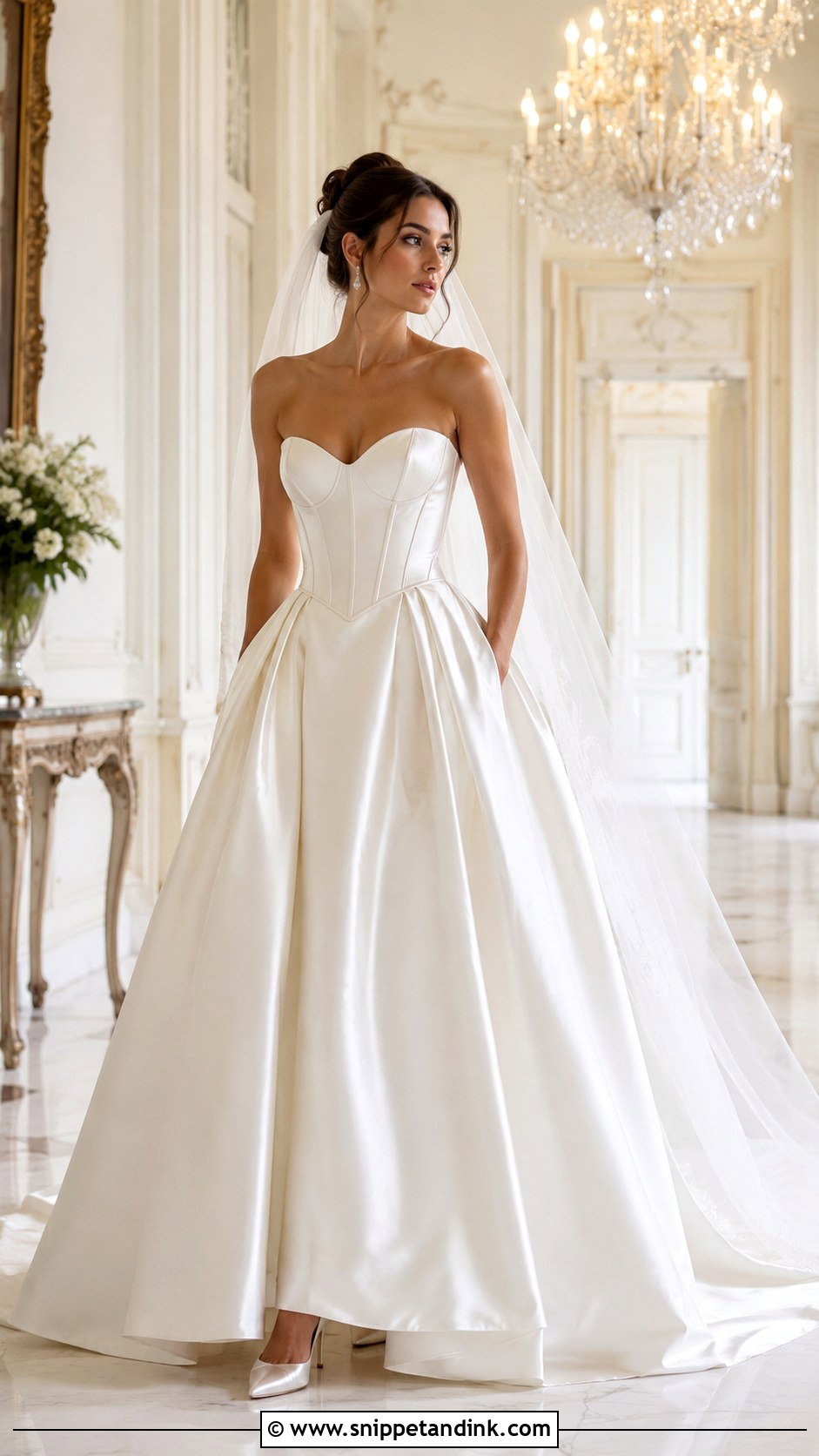
The Basque waist dips into a V below the natural waist, lengthening the torso and letting a full skirt bloom from a lower point. It gives the gown a romantic, princess-like shape without any beading. The point of the V has to land dead centre, so I check that seam standing straight and again seated. On a short torso a deep dip can make the legs look shorter, and a shallower point fixes it. Satin, mikado and lace all suit the shape. Keep the neckline plain, strapless or square, so the waist stays the focus, and add only a long veil and delicate earrings.
12. V Neck A Line Wedding Dress
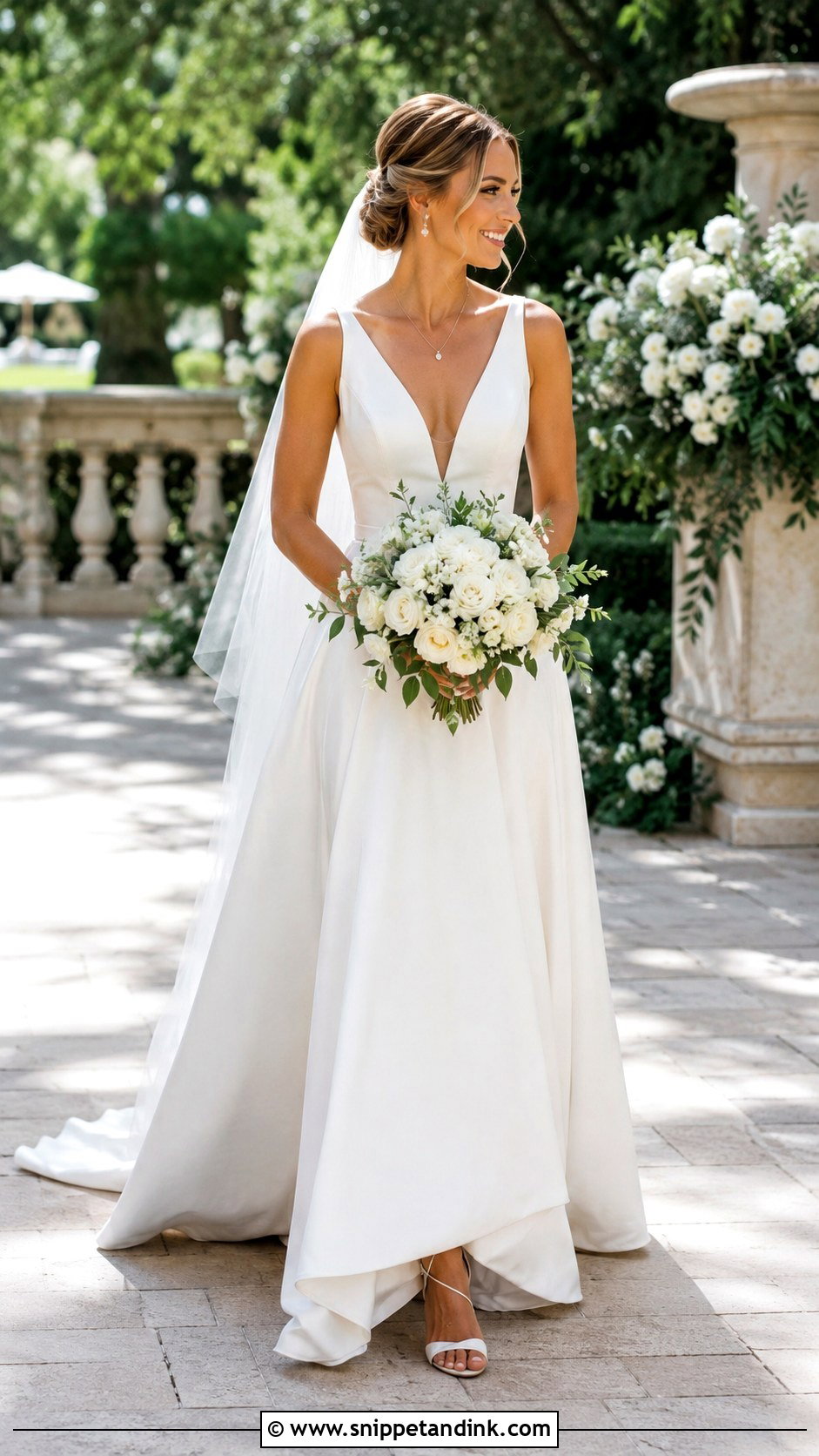
The V lengthens the upper body and the A-line skirt moves without much volume, which is why brides tend to relax in this shape fastest at fittings. How deep the V goes is the real decision. A plunge needs a strip of mesh or tulle between the cups, plus fashion tape, if you plan to dance properly. Soft satin, crepe or lace with very little embellishment keeps it classic. A delicate pendant fills the V nicely, with a simple veil and strappy or pointed heels, and it stays comfortable from ceremony to reception, outdoors or in a hotel.
13. Cap Sleeve Wedding Dress
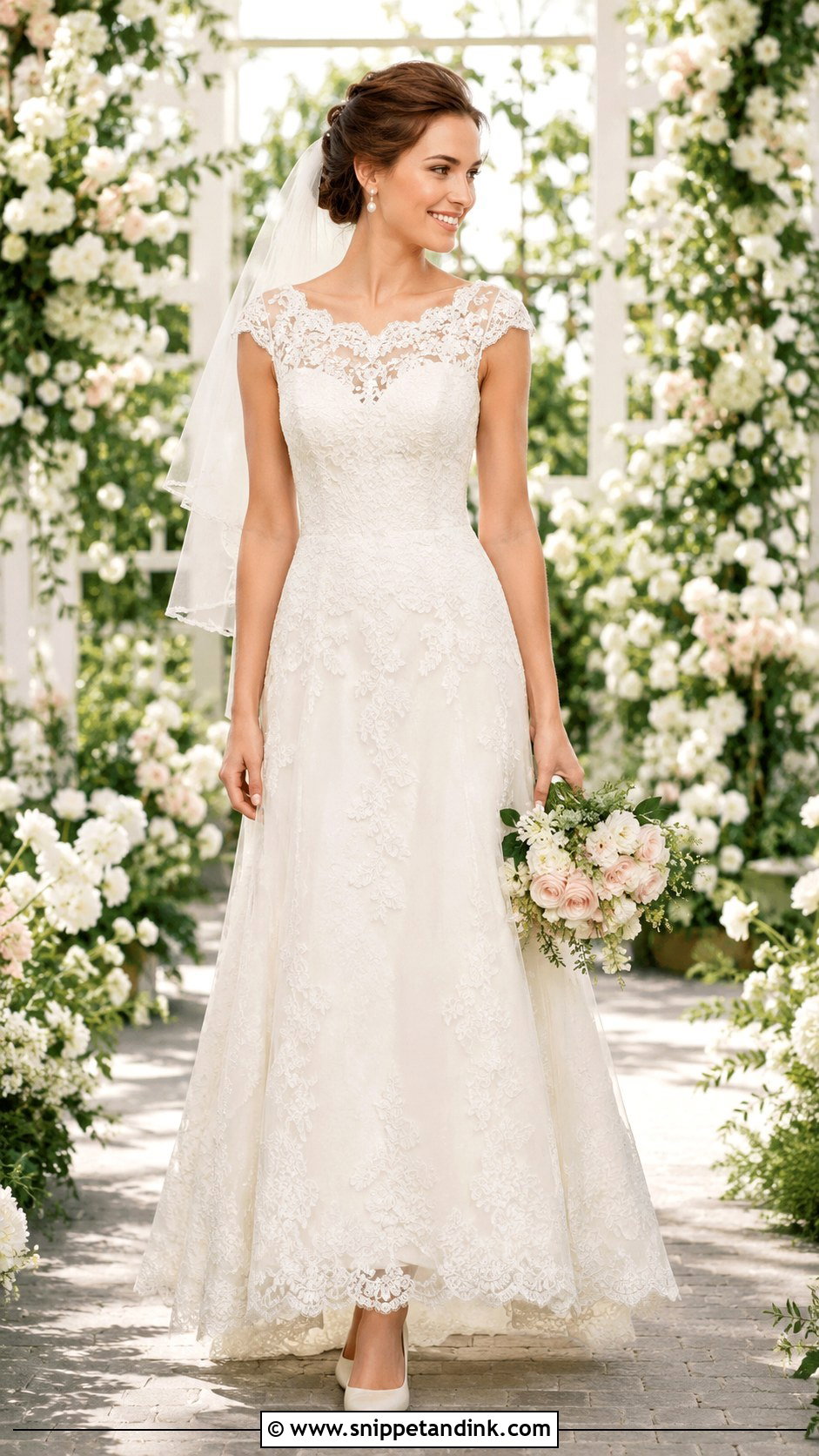
A cap sleeve wedding dress gives brides who don’t want strapless a little cover at the shoulder without committing to a full sleeve. The sleeve should end at the widest point of the shoulder. Shorter, and it cuts across the arm; longer, and it starts to look like a T-shirt. Lace, illusion tulle and satin all work, over A-line, sheath or fit-and-flare skirts. Keep a neat waistline and simple earrings, and let the veil fall behind the shoulders so its edge doesn’t catch on the sleeve. Daytime and garden weddings suit it best.
14. Cathedral Train Wedding Dress
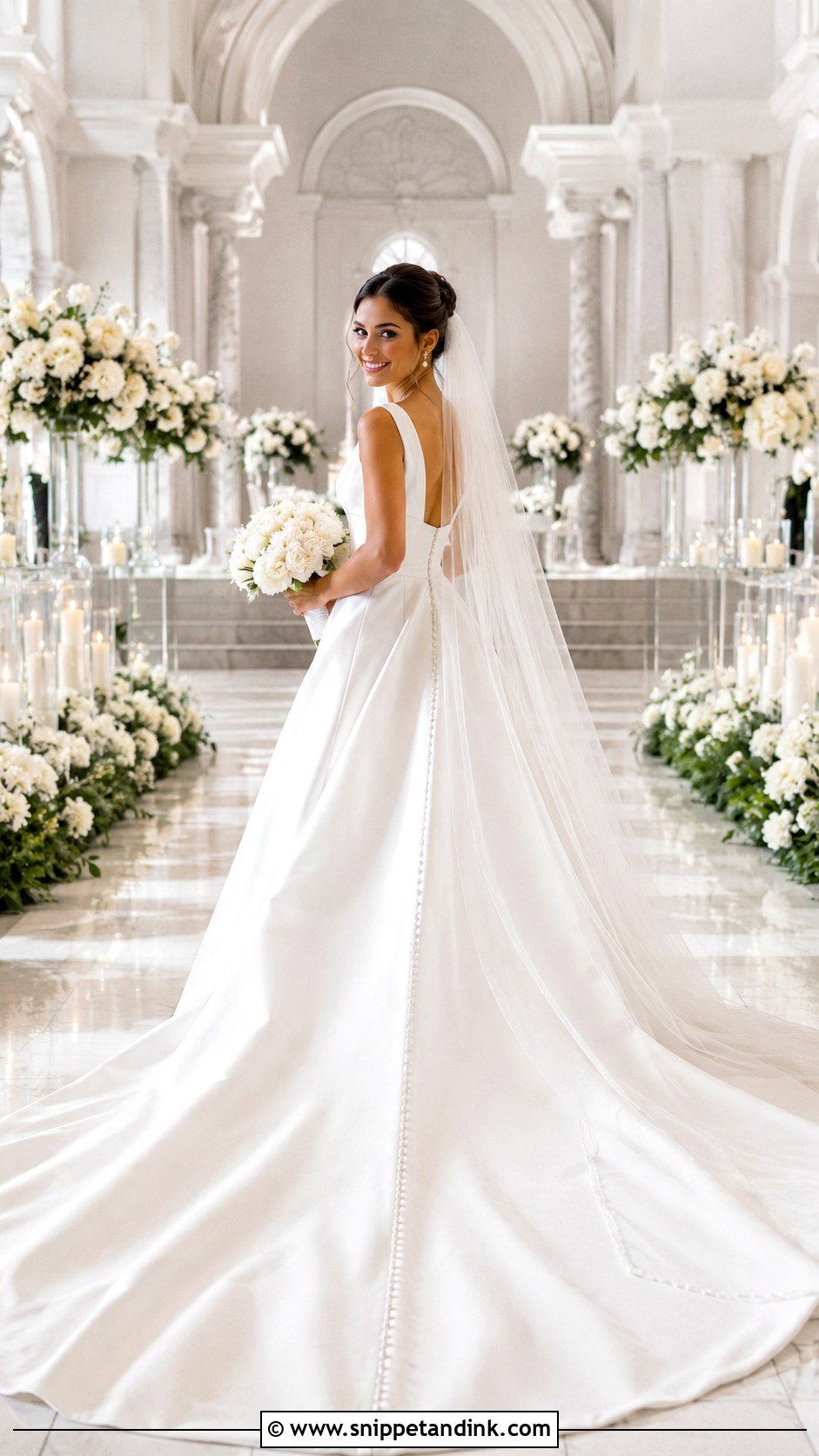
A cathedral train makes the walk down the aisle, but it also has to be managed for the rest of the day, so I plan the bustle at the same fitting as the hem. Satin, mikado, lace and crepe all carry a long train well, and lace along the edge gives the photographer something to shoot from behind. Keep the bodice clean so the train stays the one big gesture. A matching cathedral veil makes a very formal entrance, though if the dress already has heavy detail, a shorter plain veil is easier on the eye. It needs a church, a ballroom or any aisle long enough to let it lie flat.



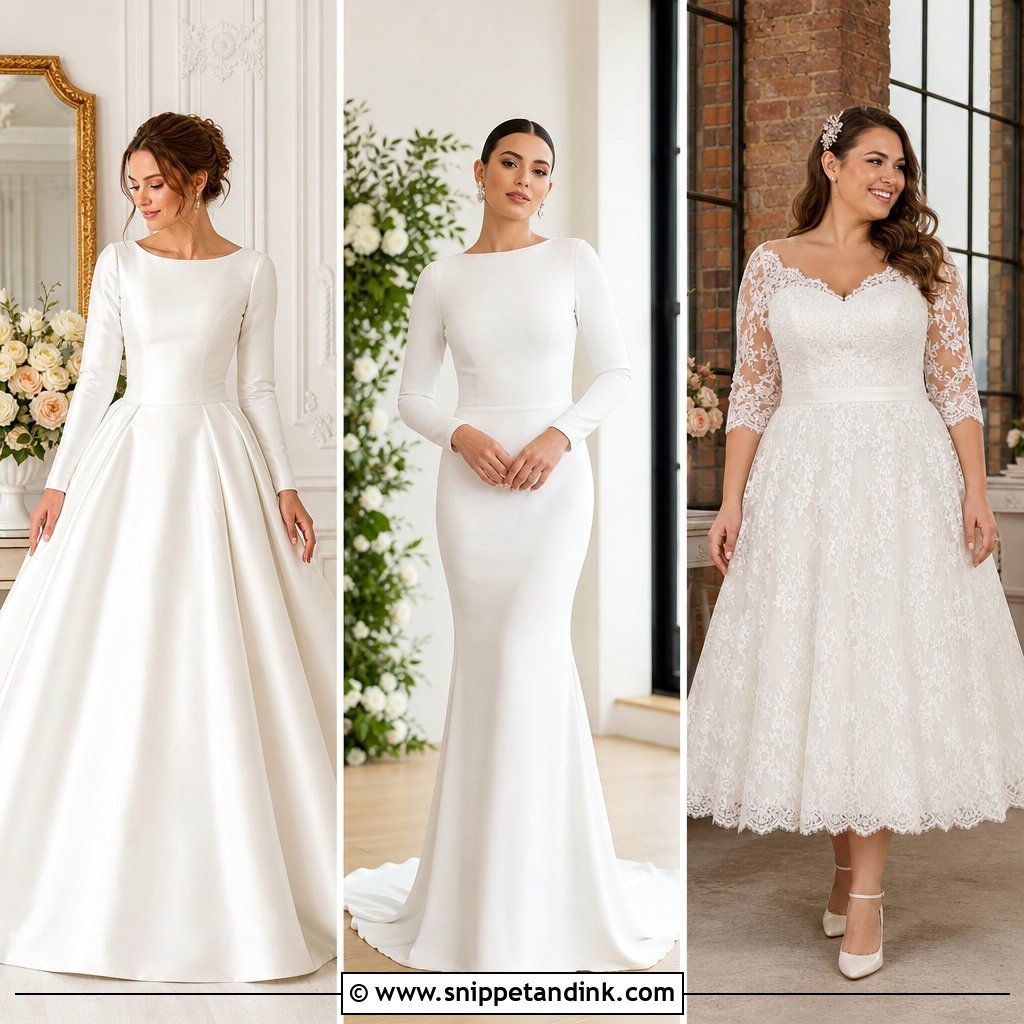
15. Boat Neck Wedding Dress
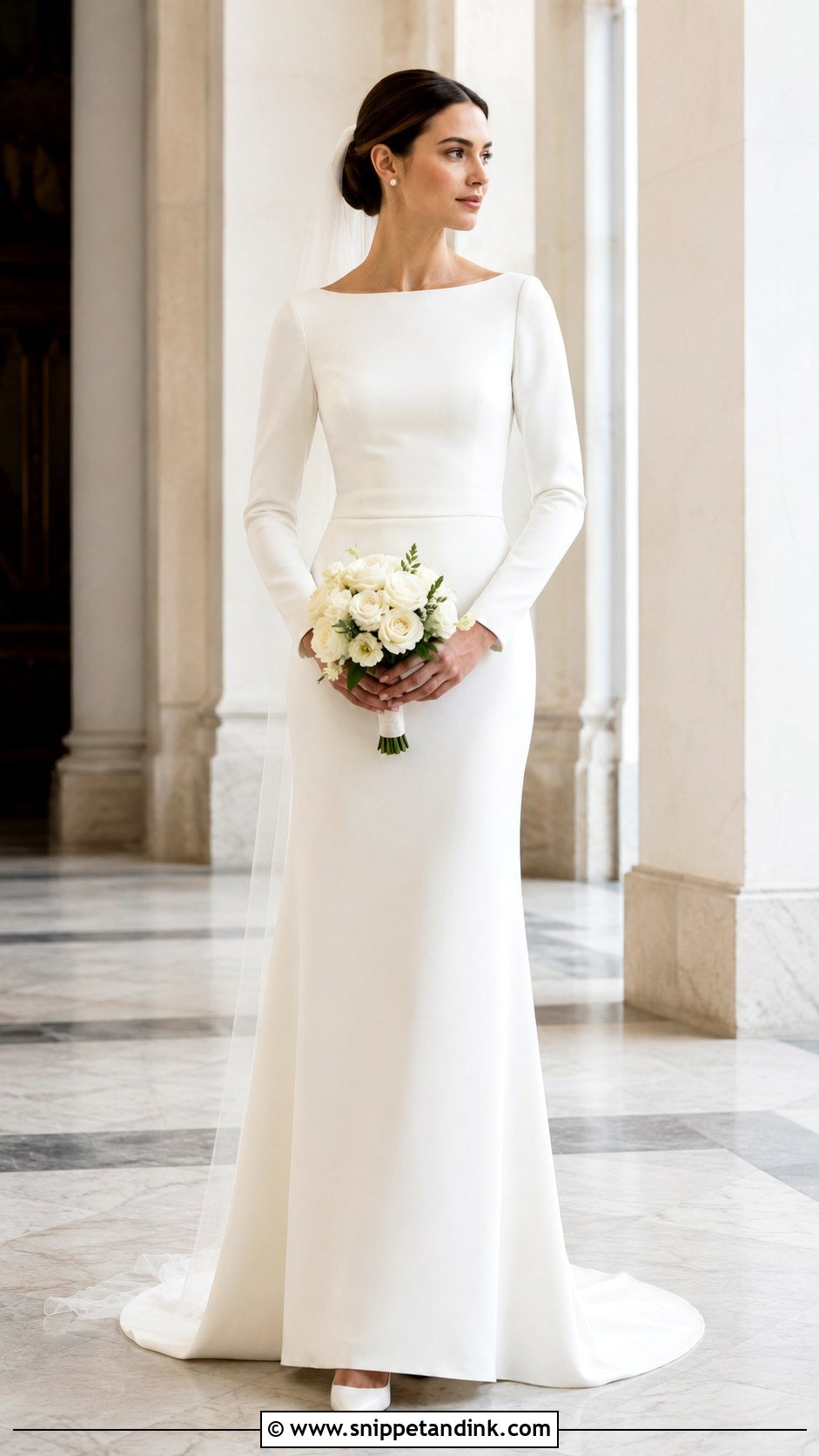
A boat neck wedding dress runs straight across the collarbone, a line long associated with royal and mid-century bridal fashion. It suits narrower shoulders especially well, because the horizontal line adds width; on broad shoulders I usually suggest lowering it into a soft scoop. Crepe, satin and lace all hold the neckline, often with long sleeves. Skip the necklace entirely. Pearl studs or small drops, a smooth chignon and a plain veil are enough.
16. Tea Length Wedding Dress
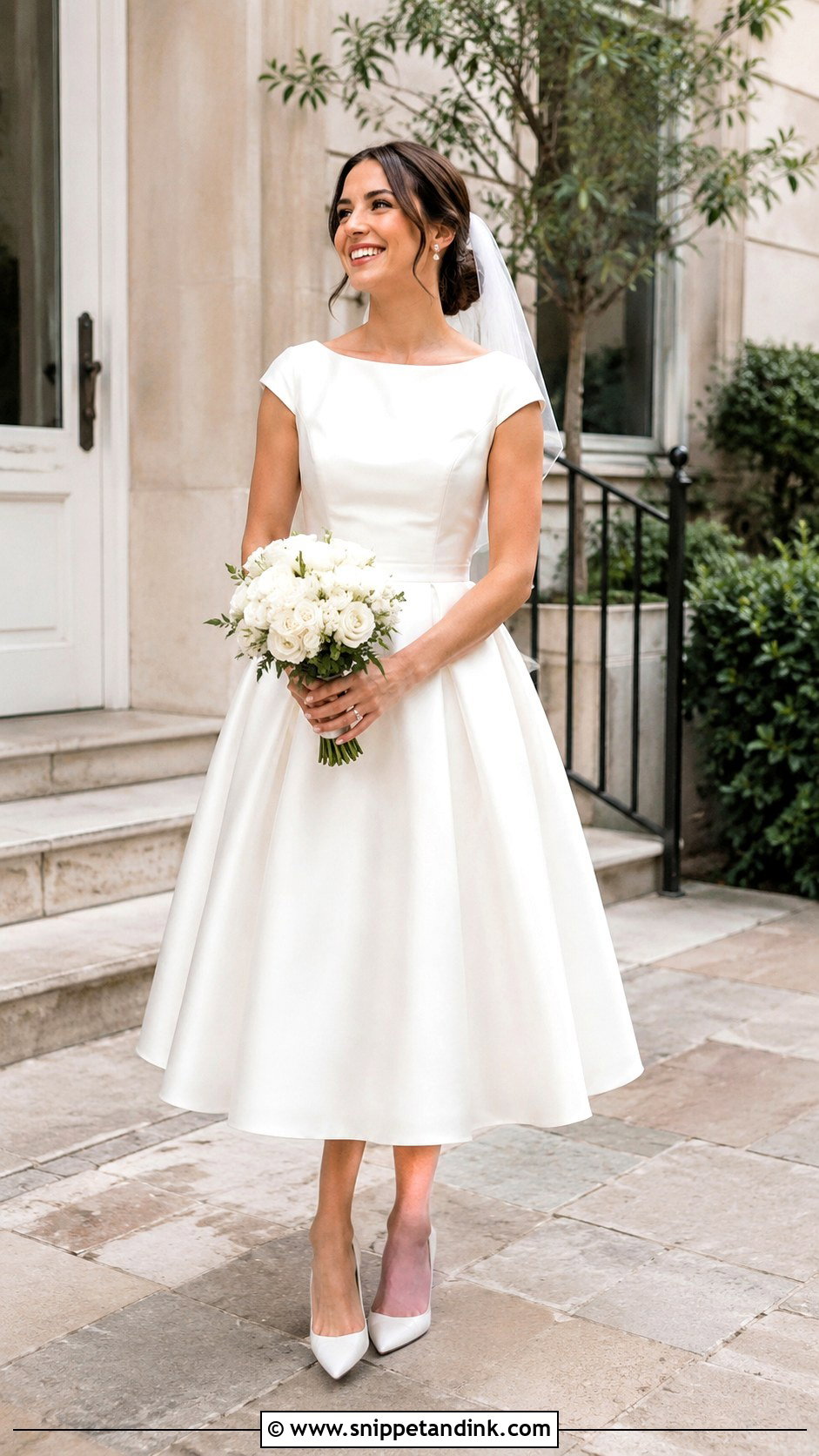
Tea length falls between the knee and the ankle, which makes your shoes part of the outfit, so choose them before the hem is set. Satin, lace, tulle and organza all hold the flared skirt, and the fitted bodice gives it that 1950s outline. A crinoline underneath stops the skirt from collapsing between your legs as you walk. Pointed pumps, pearl earrings and a short veil or hair bow finish it. It makes most sense at a courthouse, a garden ceremony or a brunch reception, and you’ll never have to gather your skirt on the stairs.
17. Floral Lace A Line Wedding Dress
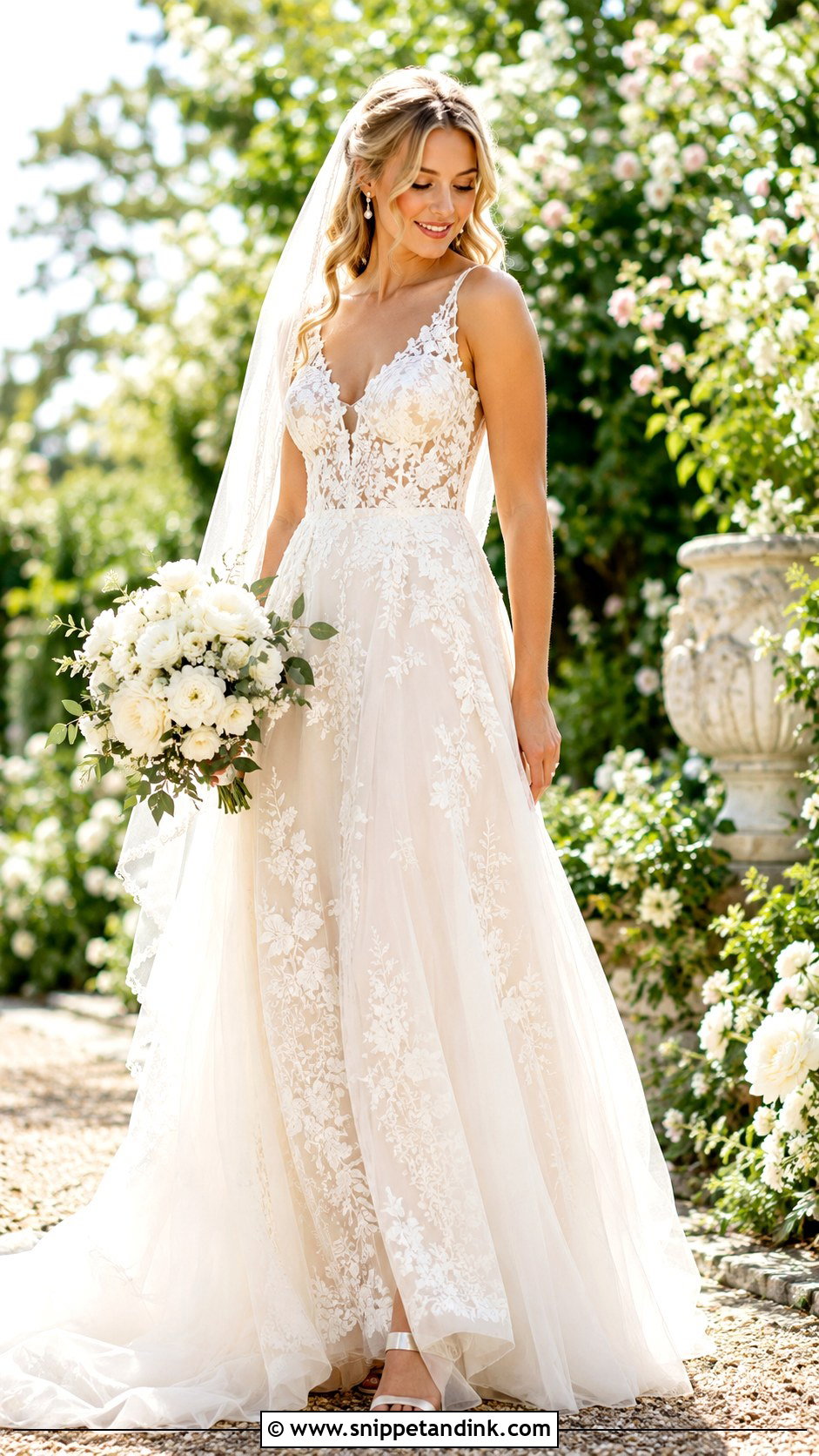
Floral lace on an A-line is the combination most brides try first, and it’s comfortable for a long day. The thing to watch is the weight of the lace. Heavily corded or beaded lace on a sleeved bodice can feel hot and stiff, so when a dress has sleeves I lean toward a lighter, Chantilly-type lace. A plain veil lets the pattern show. A lace-edged veil beside a lace gown usually clashes, because the two motifs almost never match. Pearl earrings, soft curls and a simple bouquet finish it, indoors or out.
18. Clean Column Wedding Dress
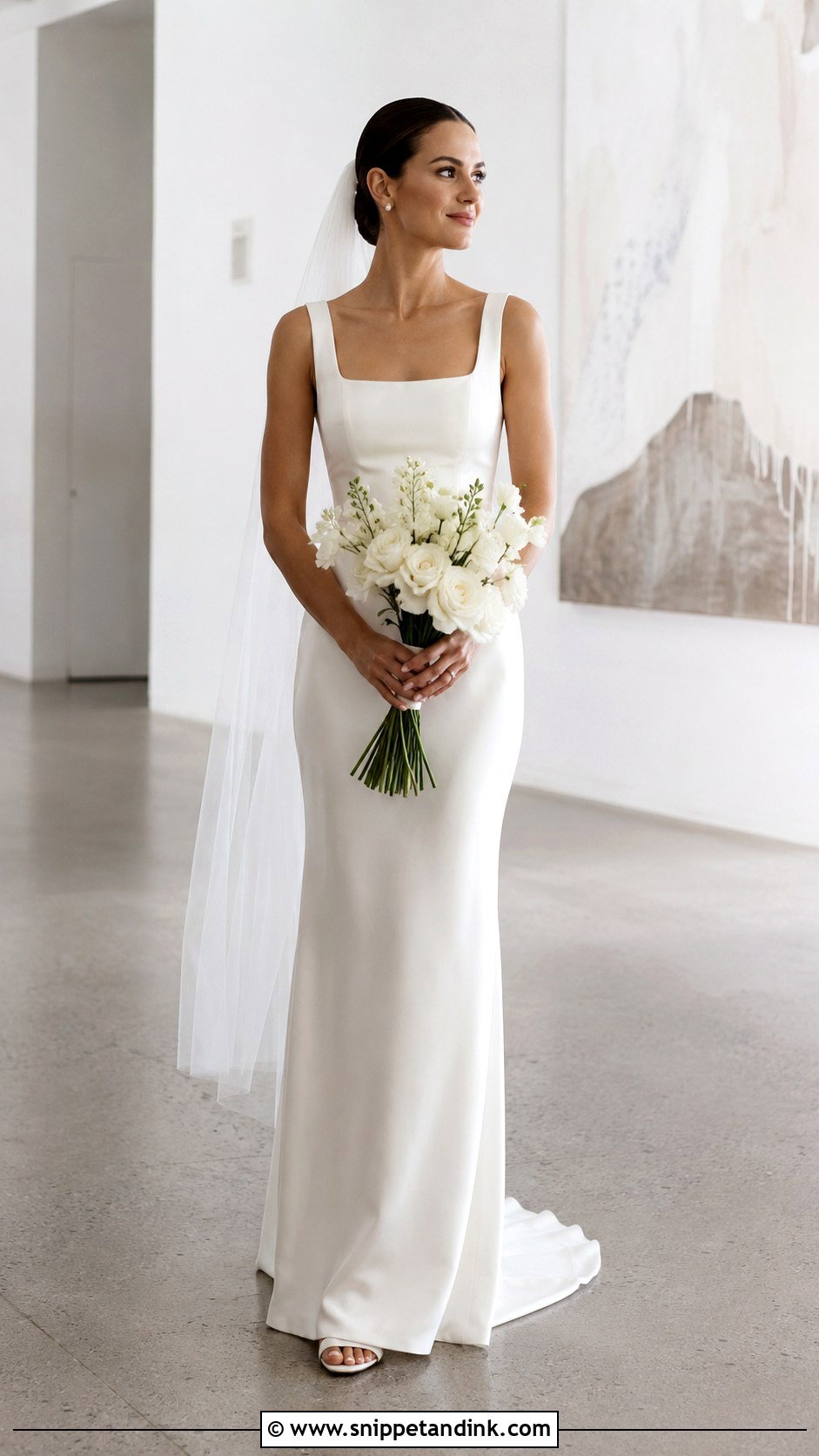
A column falls straight from shoulder to hem with no flare, so it draws one long vertical line. Crepe, satin and silk all suit it, but it must be cut with enough room to walk. I have brides take a few big steps and climb a stair during the fitting, and a column that’s too narrow at the knee gets a hidden slit or kick pleat. Interest comes from the neckline or the back, such as a cowl or a row of covered buttons. Minimal jewelry, smooth hair and refined heels finish it for a city hall, a gallery or a rooftop.
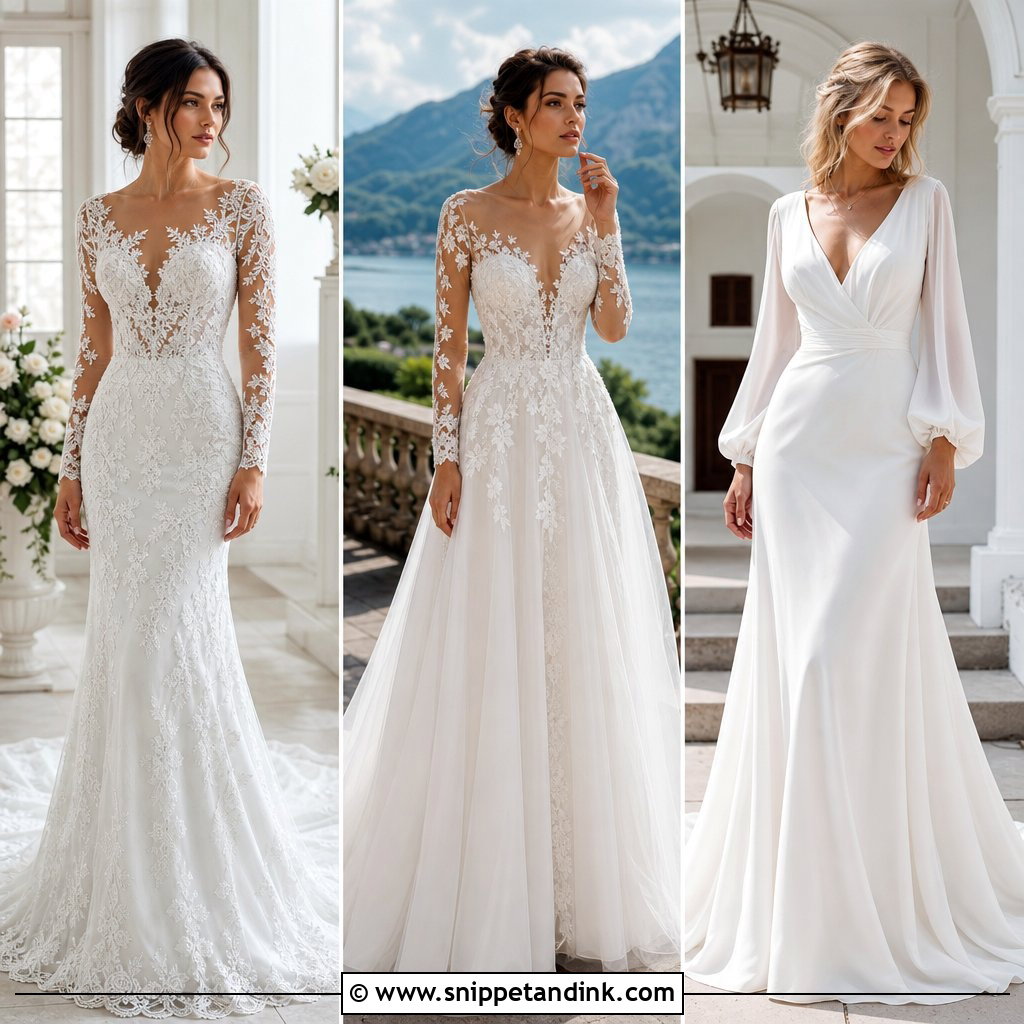
19. Illusion Sleeve Wedding Dress
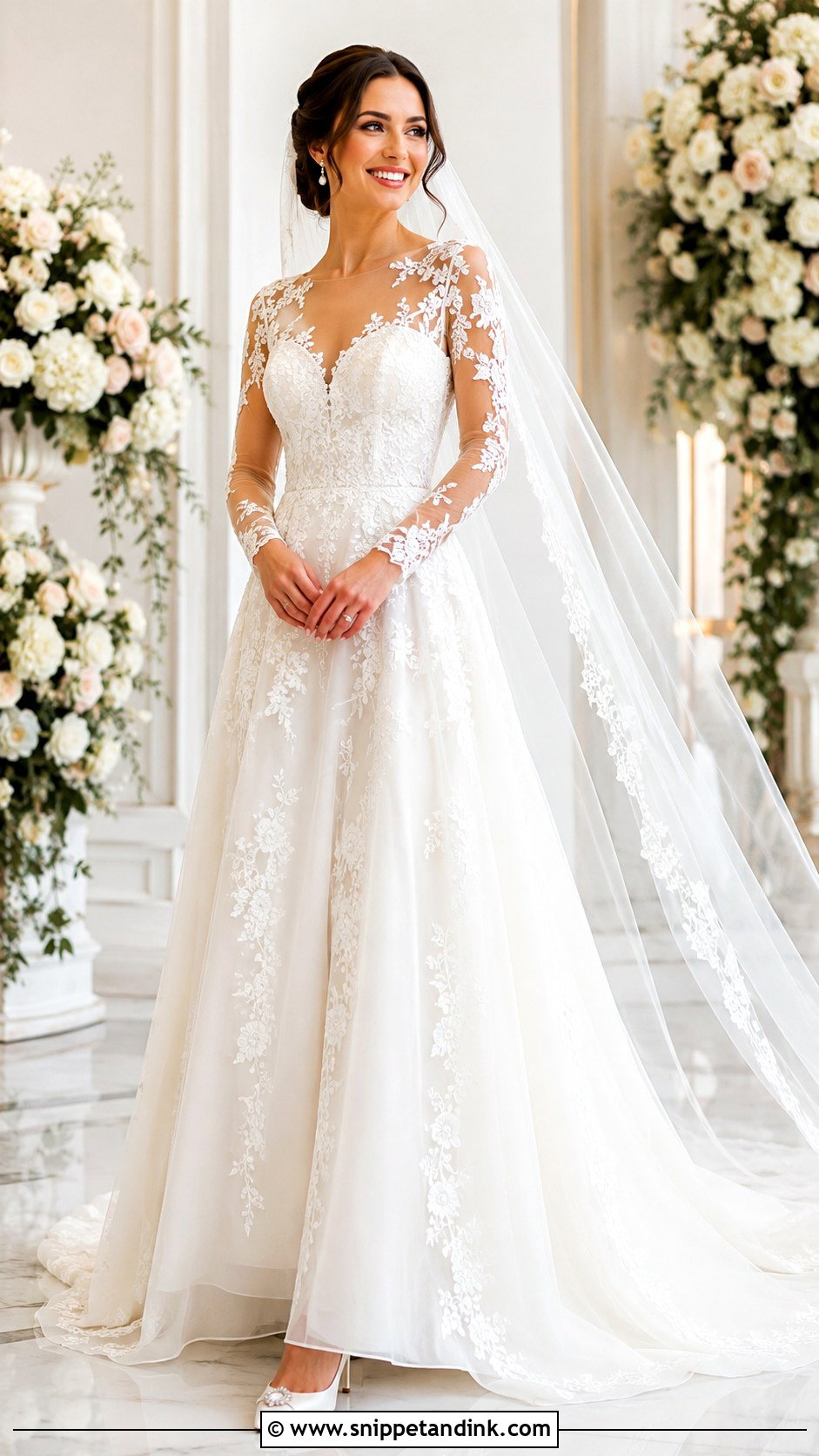
An illusion sleeve wedding dress uses sheer tulle so that lace appliqué, tiny pearls or embroidery look as if they’re resting on the skin. Ask for the tulle to be matched to your skin tone. Tulle that’s too pale or too pink shows up in photos and breaks the effect. The bodice underneath should be structured, so the sheer part has something solid to hang from. Fitted, A-line and ball gown skirts all work. A simple veil and a soft updo keep the sleeves visible, and the coverage is welcome in cooler months.
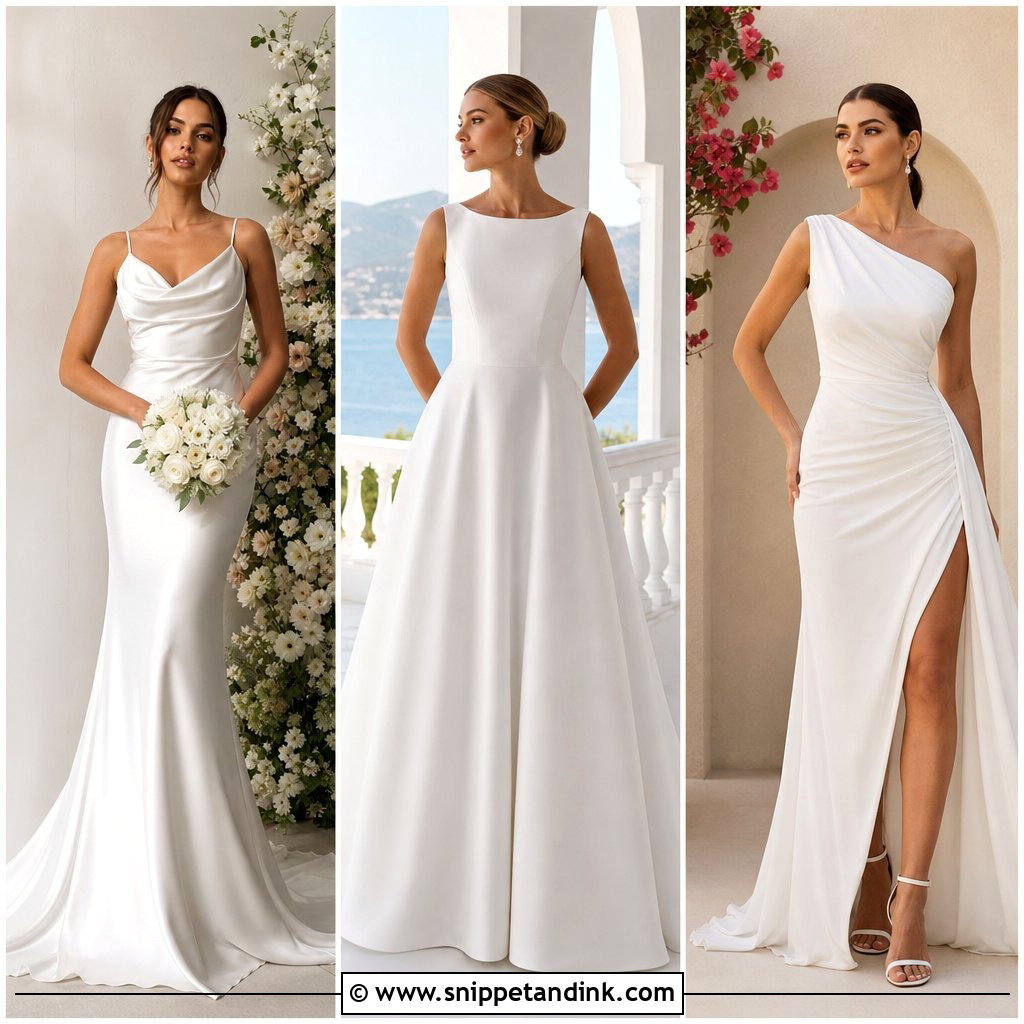


20. Silk Slip Wedding Dress
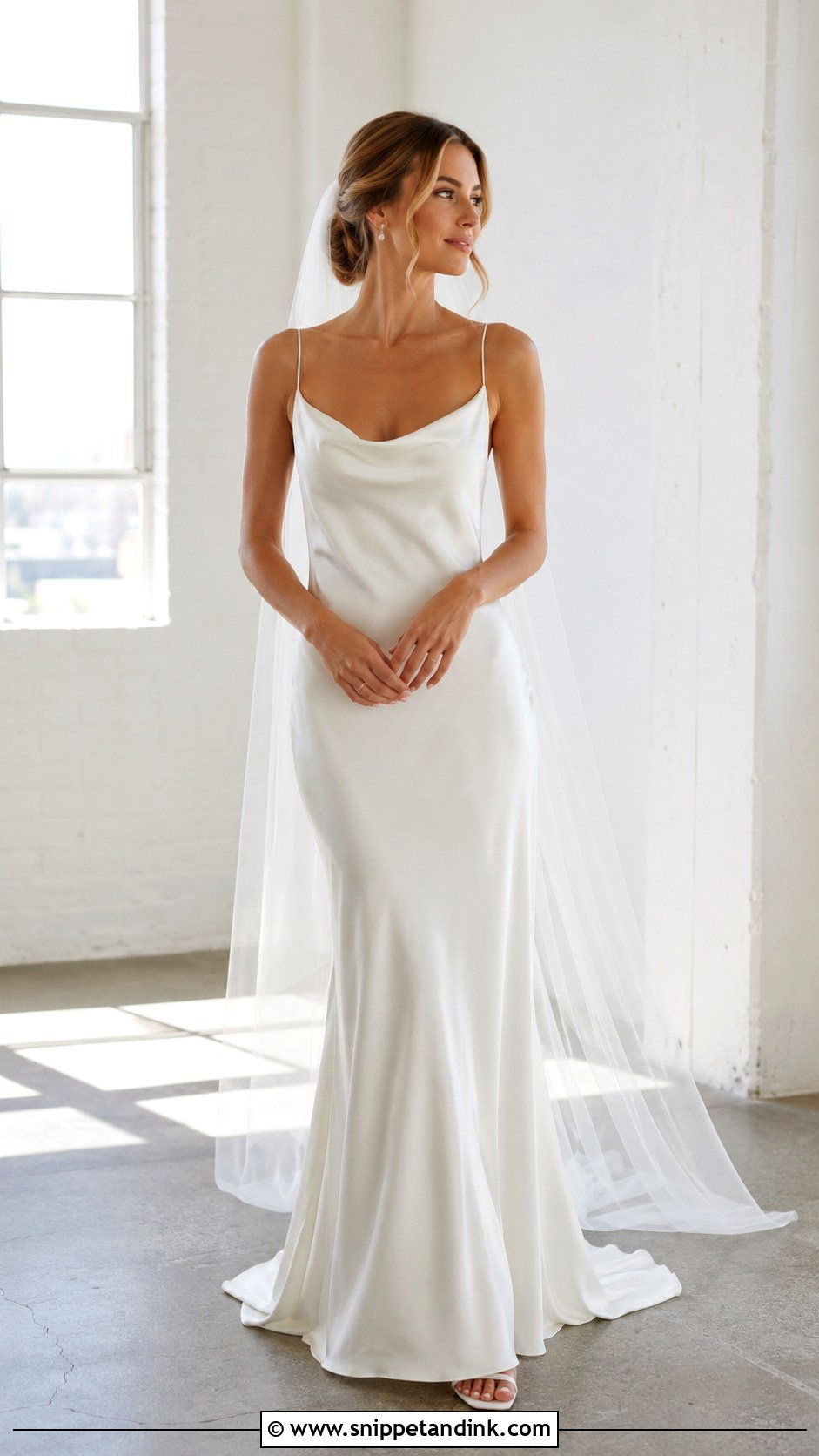
A slip dress has nowhere to hide, so I treat it as a tailoring project rather than a styling one. Bias-cut silk stretches as it hangs, and a good seamstress lets the dress hang for a day before hemming so the hem doesn’t drop later. It should skim the hip and stomach, never pull across them. A cowl neckline or slim straps keep it graceful. Sleek heels, a clean veil, delicate earrings and a low bun or soft waves complete it. It also packs better than anything else here, which matters for a destination wedding.
21. Corset Bodice Wedding Dress
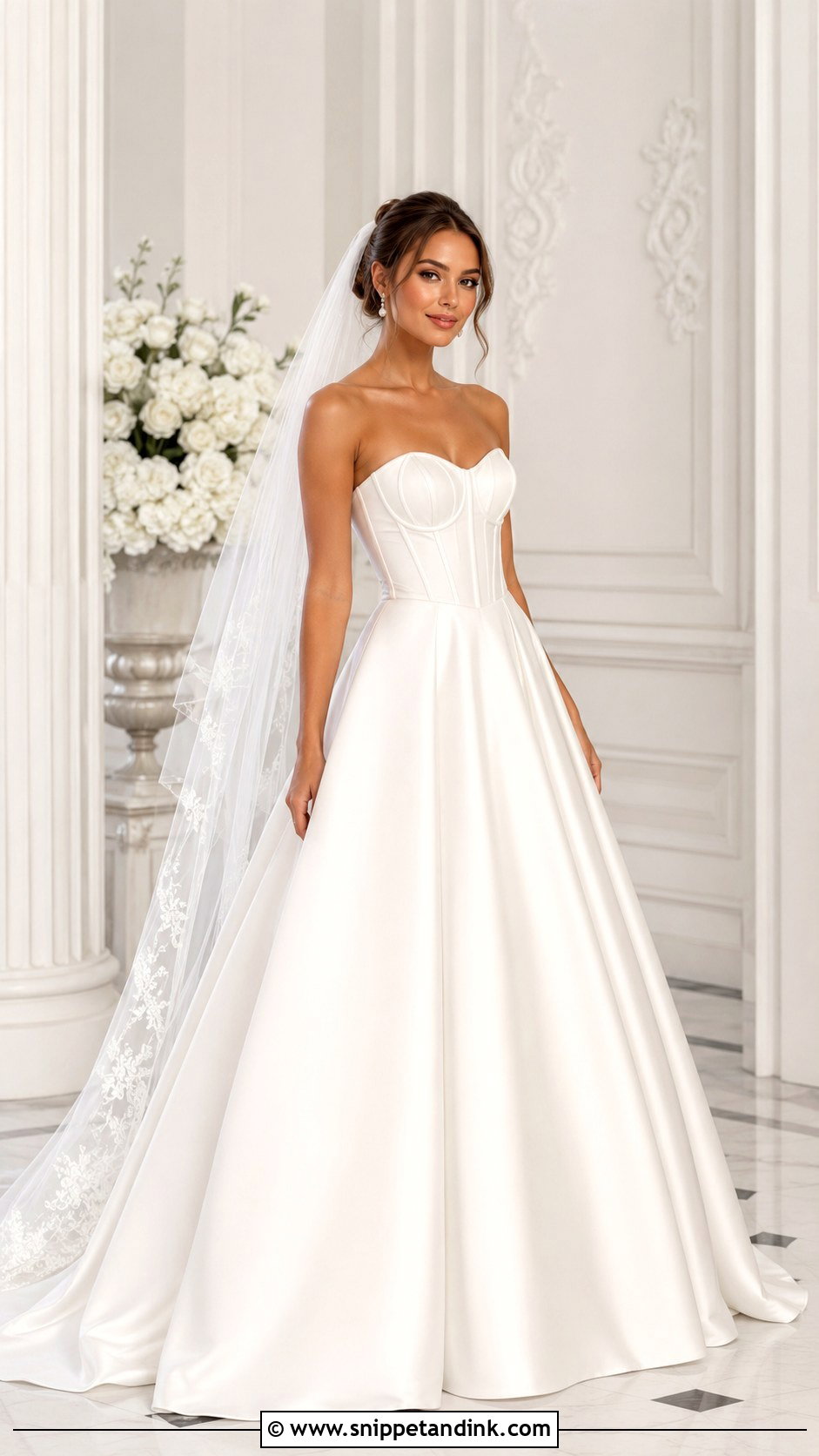
A corset bodice gives real support and a defined waist, and the classic version keeps the boning hidden or neatly channelled rather than turned into decoration. Clean seams, soft lace or smooth satin all suit it. Sit down in it at the fitting. Boning that digs into your hips when seated means the bodice is too long for your torso and needs shortening. It pairs with an A-line, ball gown or fit-and-flare skirt, and when the structure shows on the outside, the skirt should stay plain. A long veil, pearl earrings and soft makeup are enough.
22. Embroidered Tulle Wedding Dress
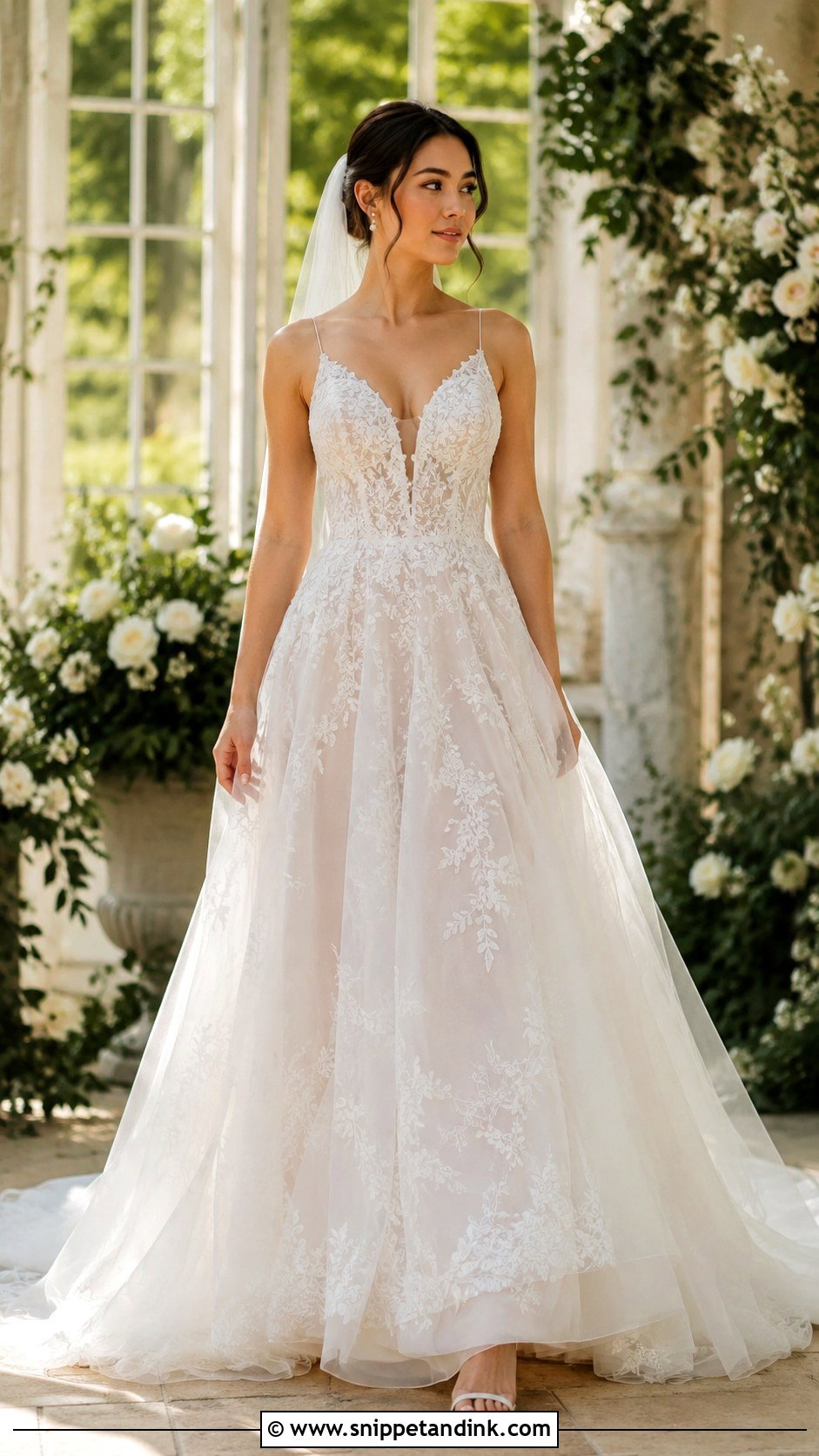
Tulle is light, and embroidery gives it detail you notice up close. Its weak point is snagging. Tulle catches on rough bark, bracelet clasps and beaded clutches, so for a garden or estate wedding I’d leave off anything with prongs or sequins near your wrists. Tonal, floral or vine embroidery keeps it classic. Since tulle builds volume quickly, keep accessories light: small earrings, a soft veil and simple heels. Spring and summer suit it best, especially outdoors.
23. Minimalist Wedding Dress With Bow
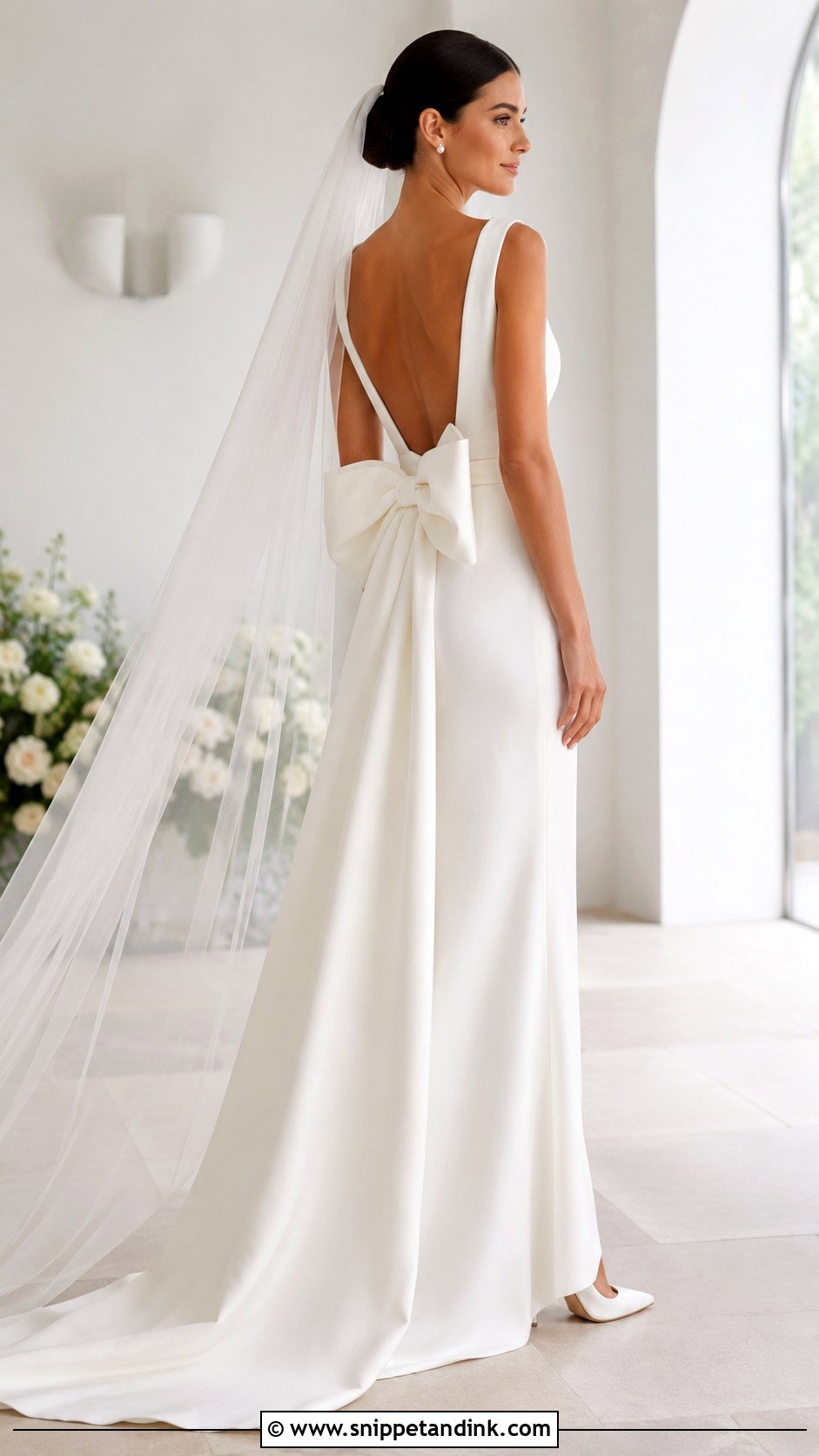
One structured bow is the whole idea here, placed at the back waist, the shoulder or the neckline. A satin or crepe column with a back bow is the cleanest version. Check how the bow is built. A stiffened, interfaced bow keeps its shape after hours of sitting and hugging, while a soft one has flattened against the chair by the speeches. Ask whether it detaches, too, which makes steaming far easier. Smooth hair, pearl studs and refined heels are all the dress needs.
24. Modest Satin Wedding Dress
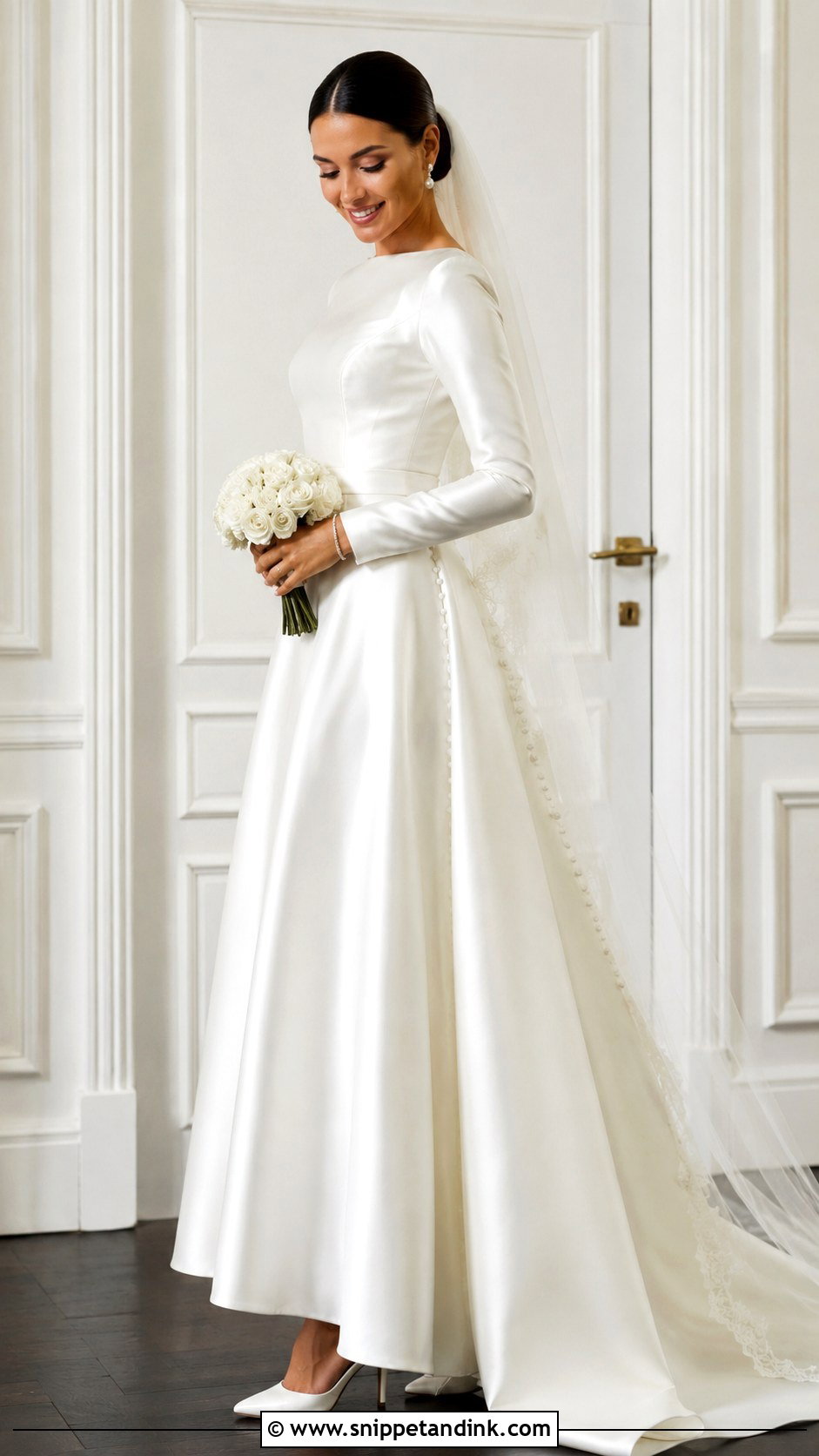
Modest satin gowns usually bring a higher neckline, sleeves or a covered back, and with that much coverage the fabric and tailoring do all the work. Satin reflects light along every line, so a slim waist seam and a row of covered buttons look sharp in it, and it gives even a plain silhouette a formal finish. I check arm movement carefully in sleeved satin because it has no stretch; a gusset or a slightly fuller sleeve head lets you raise your arms for the first dance. Style it with a neat veil, pearl earrings and classic heels for formal ceremonies and traditional or religious celebrations.
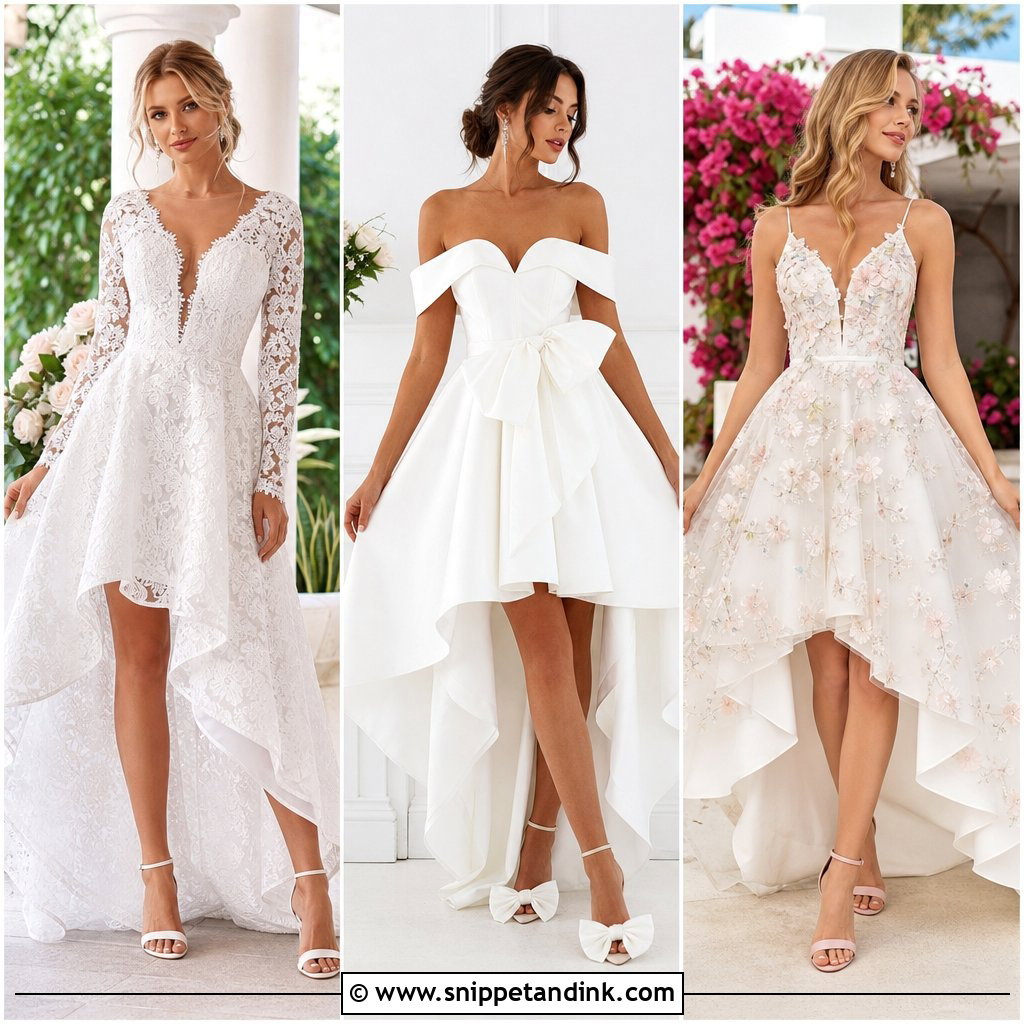

25. Fit And Flare Wedding Dress
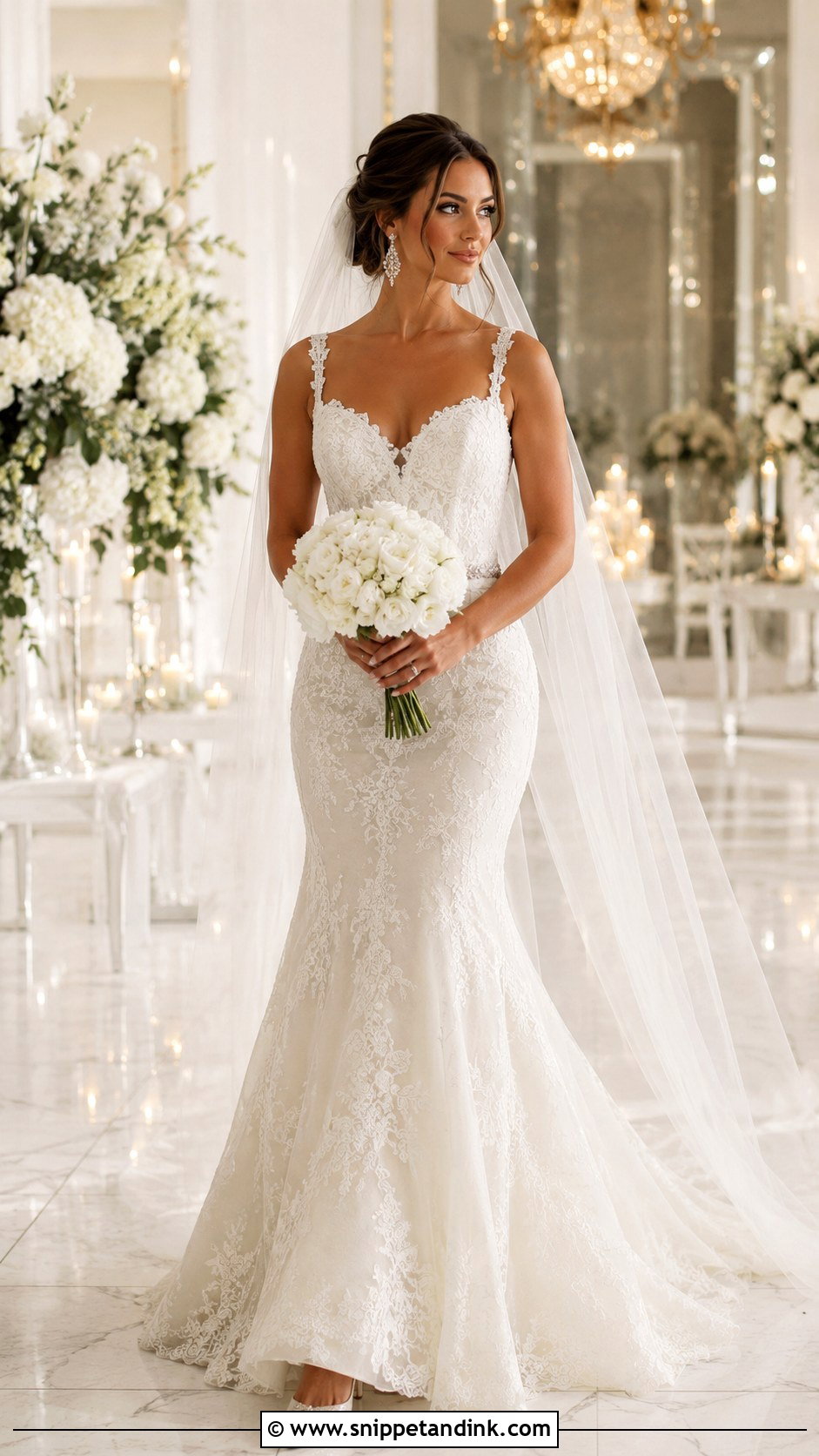
Fit-and-flare hugs the bodice and hips and then opens below the thigh or knee. Where the flare starts matters more than anything else. A flare from mid-thigh gives you room to walk and dance, while one that starts at or below the knee is a mermaid, dramatic but limited to small steps all evening. Lace, crepe, satin and mikado all hold the shape. Clean lines, subtle buttons or delicate lace keep it classic, finished with a long veil, drop earrings and pointed heels for an evening or formal venue.
The Alterations Calendar Most Brides Underestimate
A classic gown lives or dies on fit, so alterations need room in the schedule. Many made-to-order gowns take several months to arrive, which is why I suggest ordering roughly eight to ten months ahead. Timelines vary a lot by designer, so ask yours on the day you order.
- First fitting about two to three months before the wedding, wearing your actual shoes and undergarments.
- Second fitting for the hem, the bustle and any bodice changes.
- Final fitting roughly two weeks out, where you practise the bustle with whoever will do it on the day.
Bring that person with you. A long train can have many small hooks or ribbon ties, and nobody wants to work them out for the first time in a dim hallway after the ceremony.
What the Dress Needs After the Last Dance
Have it cleaned within a few weeks, even if it looks spotless. Champagne and sugary drinks dry clear and then turn brown months later as they oxidise, and a hem that dragged across a lawn carries soil you can’t see yet. Use a cleaner who regularly handles bridal gowns, and ask how they treat beading and pearls.
For storage, skip the plastic garment bag. Wrap the gown in acid-free tissue inside an acid-free box or a breathable cotton bag, and keep it somewhere dark, cool and dry rather than in an attic or basement. Heavy satin and mikado shouldn’t hang by the straps for years, since the weight stretches the shoulders. Fold along tissue-padded lines instead and refold every year or so to stop permanent creases forming. Silk in particular yellows with light, so darkness matters more than you’d think.
A Classic Gown Is Mostly a Fitting Job
None of these gowns relies on a passing trend. Shape, fabric and fit carry them. Start with the silhouette that lets you sit, walk and lift your arms without thinking about it, then pick the fabric for your season and venue, and add only as much decoration as the cut can hold. Keep the accessories quiet and spend the effort on fittings instead. A dress chosen that way looks right in your photos now and still looks right when you pull the album out years later.
You'll Like These Ideas:











Leave a Reply