
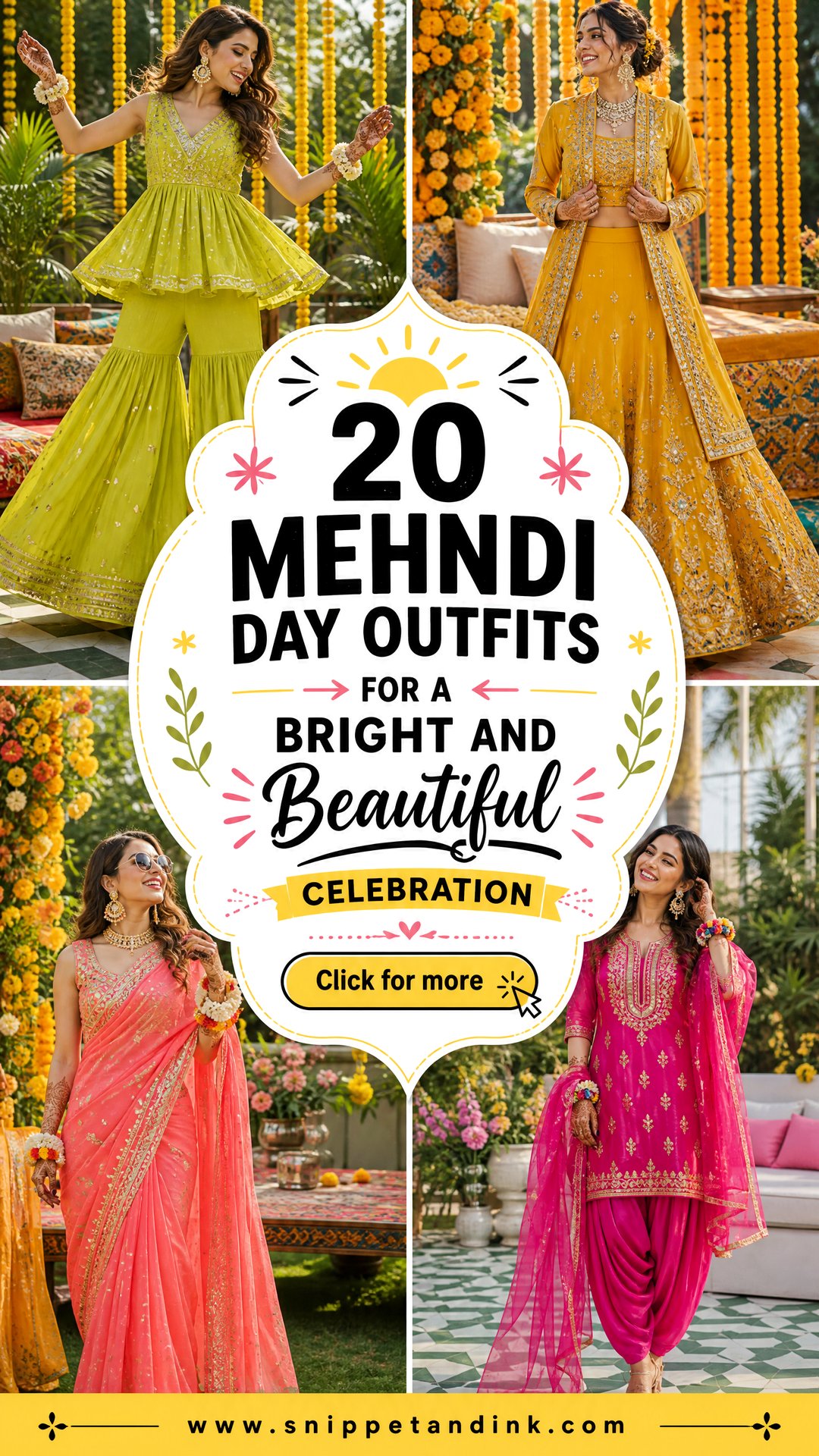
A mehndi day asks more of an outfit than almost any other wedding event. You sit on cushions for hours while the artist works, you hold your hands out still, then you get up to eat, pose and dance with paste drying on your skin. Below are twenty outfits I’d happily dress someone in for that day: shararas, light lehengas, ghararas, Anarkalis, sarees and easy co-ord sets. Green and yellow still lead, but pink, coral, teal, lavender and mixed prints all hold their own. When I style for this event, I sort out sleeves, waistband and dupatta first and only then think about jewelry, because a gorgeous outfit that traps your arms ruins the henna. Notes for brides, bridesmaids and guests are folded into each one.
Henna Paste and Fabric Do Not Mix: Dressing Around the Application
Fresh henna paste is wet, dark and surprisingly mobile. It takes roughly twenty to thirty minutes to dry on the skin, and then many artists dab on a lemon and sugar mixture that keeps it sticky for hours. Anything that touches it in that window can pick up a brownish mark, and on pale cotton or silk that mark rarely washes out completely.
So the first thing I ask is where the design will go. Hands only, or past the wrist? Feet as well? That single answer decides the sleeves, the hem and the dupatta.
- Henna to the forearm or elbow: go sleeveless, cap-sleeved or short-sleeved. Three-quarter sleeves only work for hands-only designs.
- Feet getting henna: choose ankle-length or cropped bottoms, and pack open sandals or slides, not juttis you’ll have to push your feet into.
- Dupattas: pin them at the shoulder or swap to a cape or jacket. A loose dupatta sliding forward is the most common way a design gets smudged.
- Necklines and earrings: avoid long chains or tassels that swing down while you hold your hands out.
The bride’s own design can mean several hours of sitting still, so for her I also look at the waistband. A firm hook closure that feels fine standing can dig in by the second hour. Drawstrings, side elastic or a slightly looser fitting on the day itself are worth asking your tailor about.
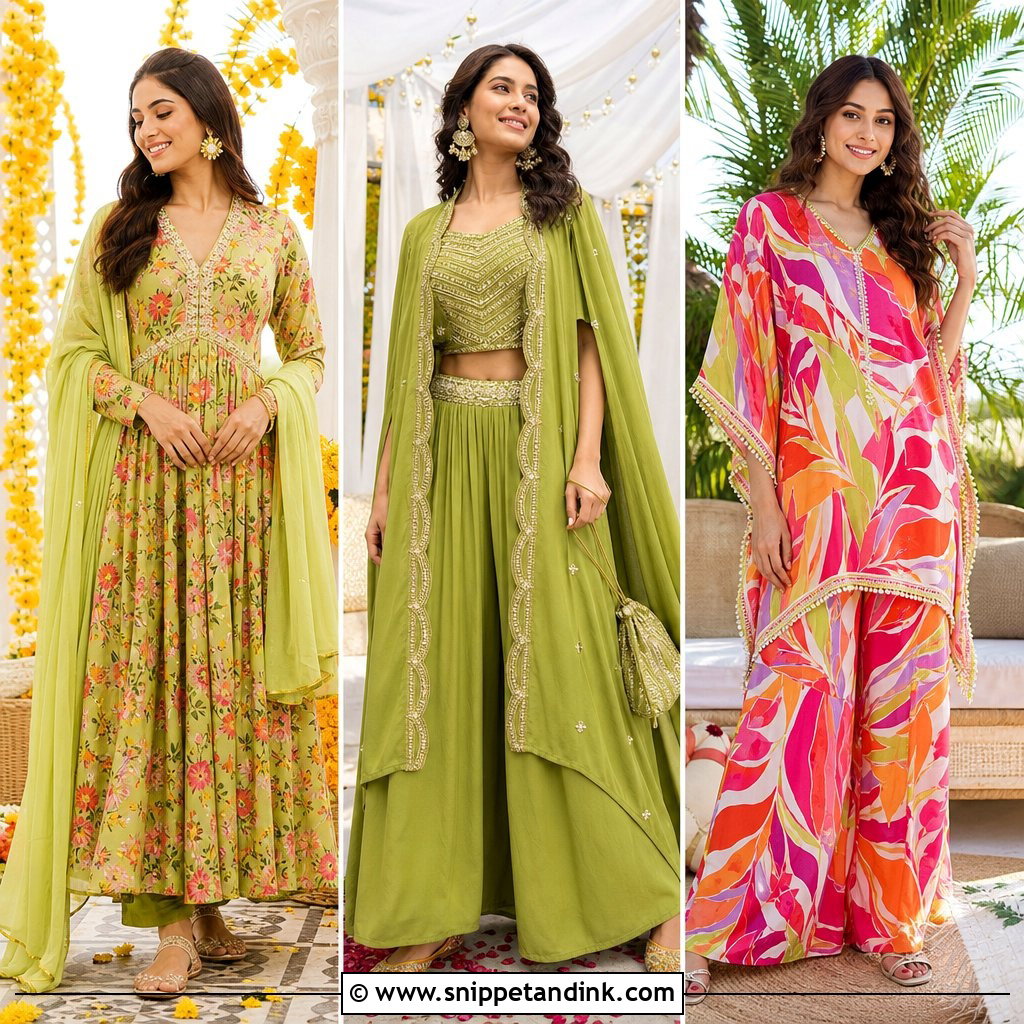
1. Green Sharara Mehndi Outfit
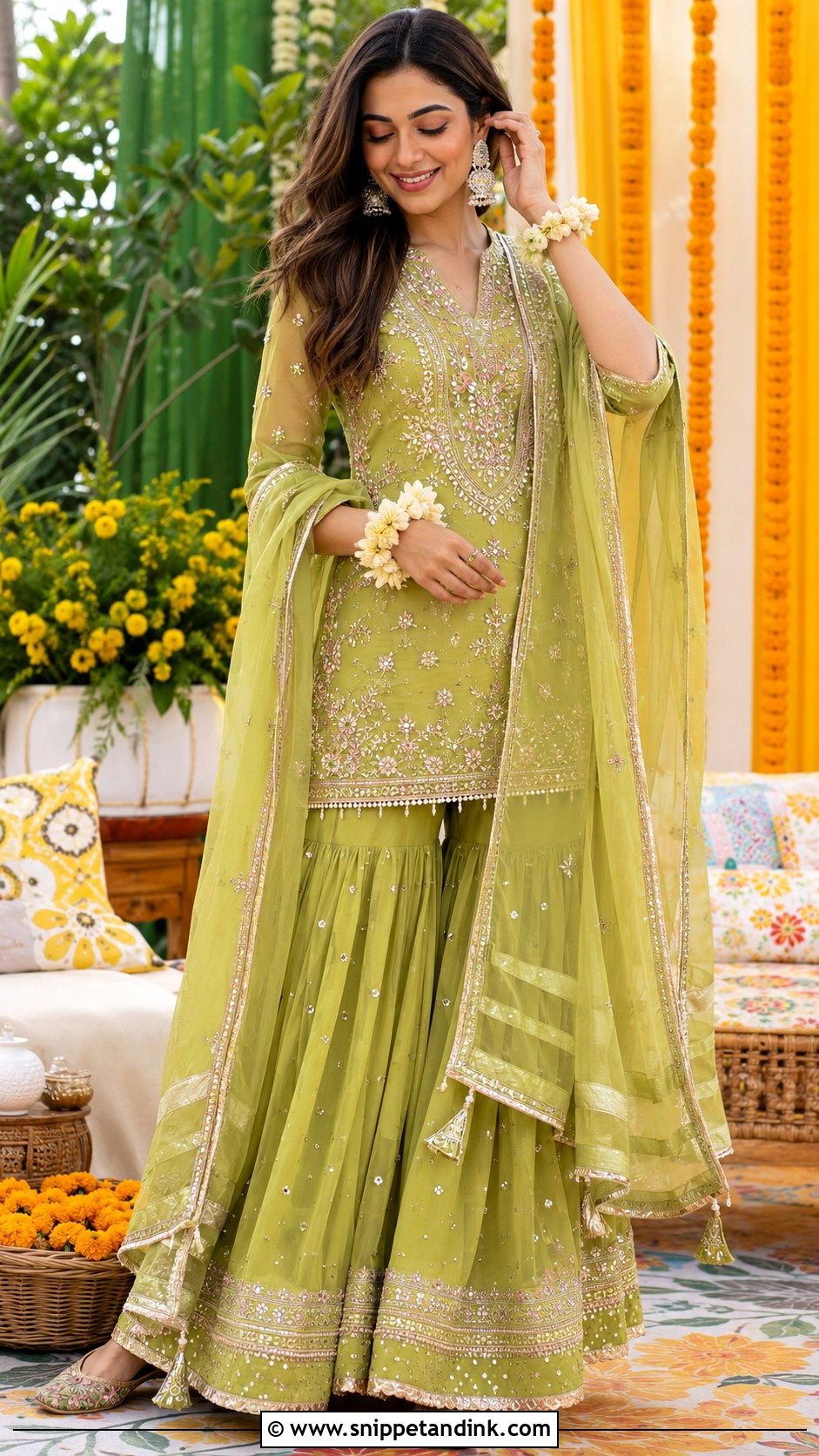
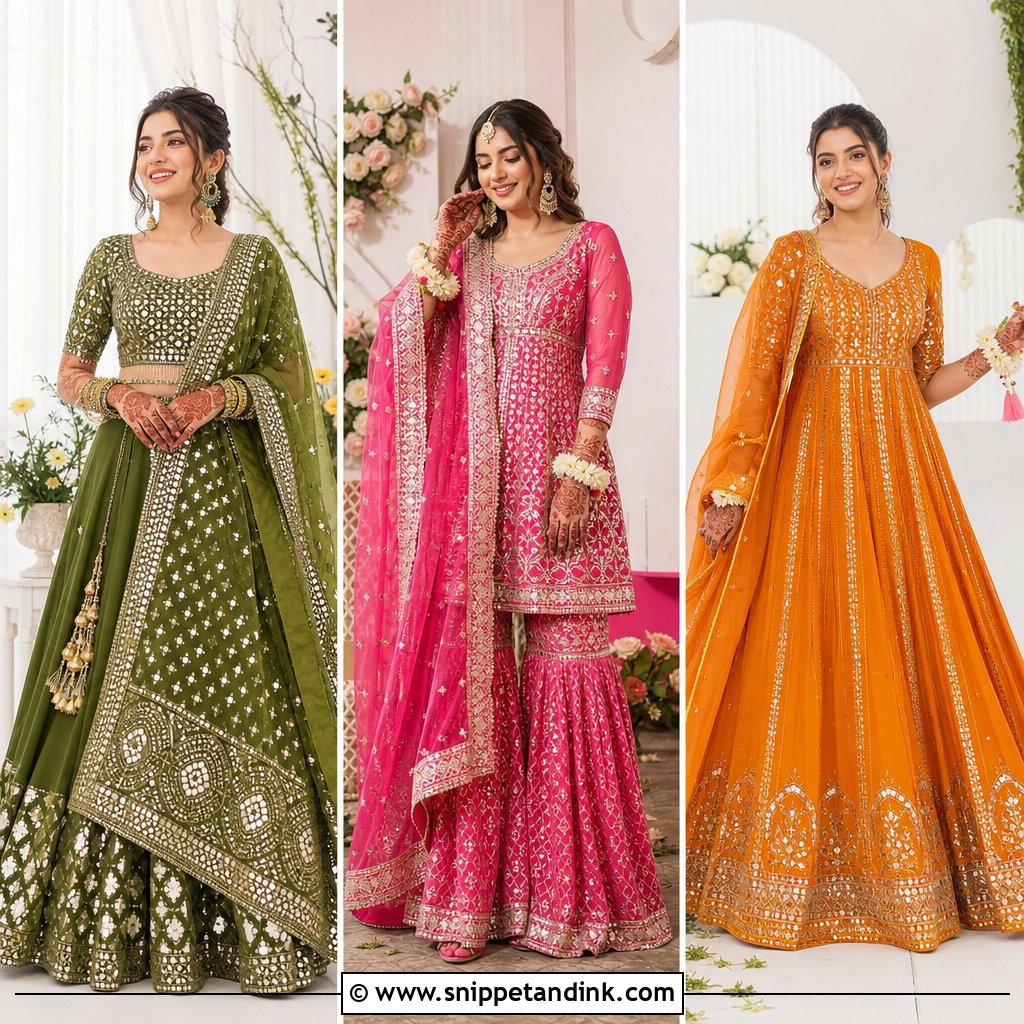
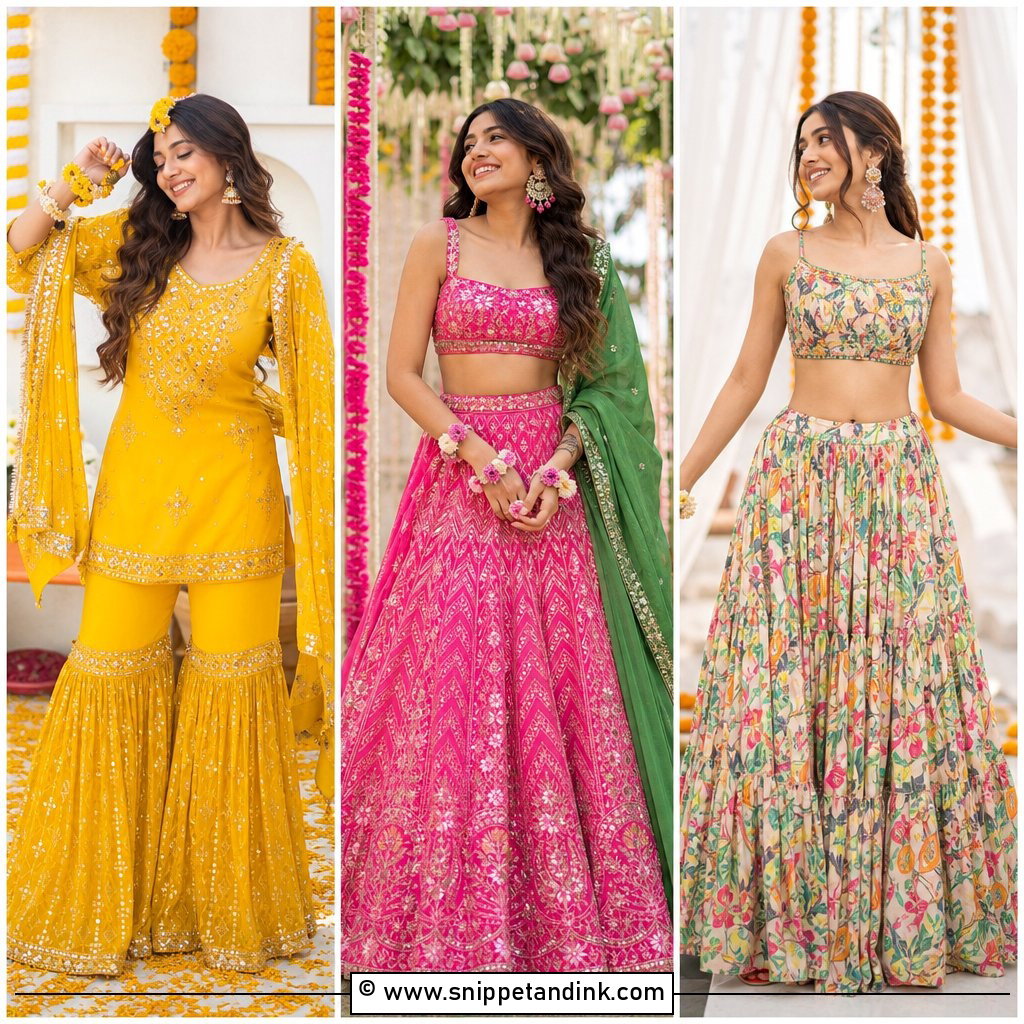
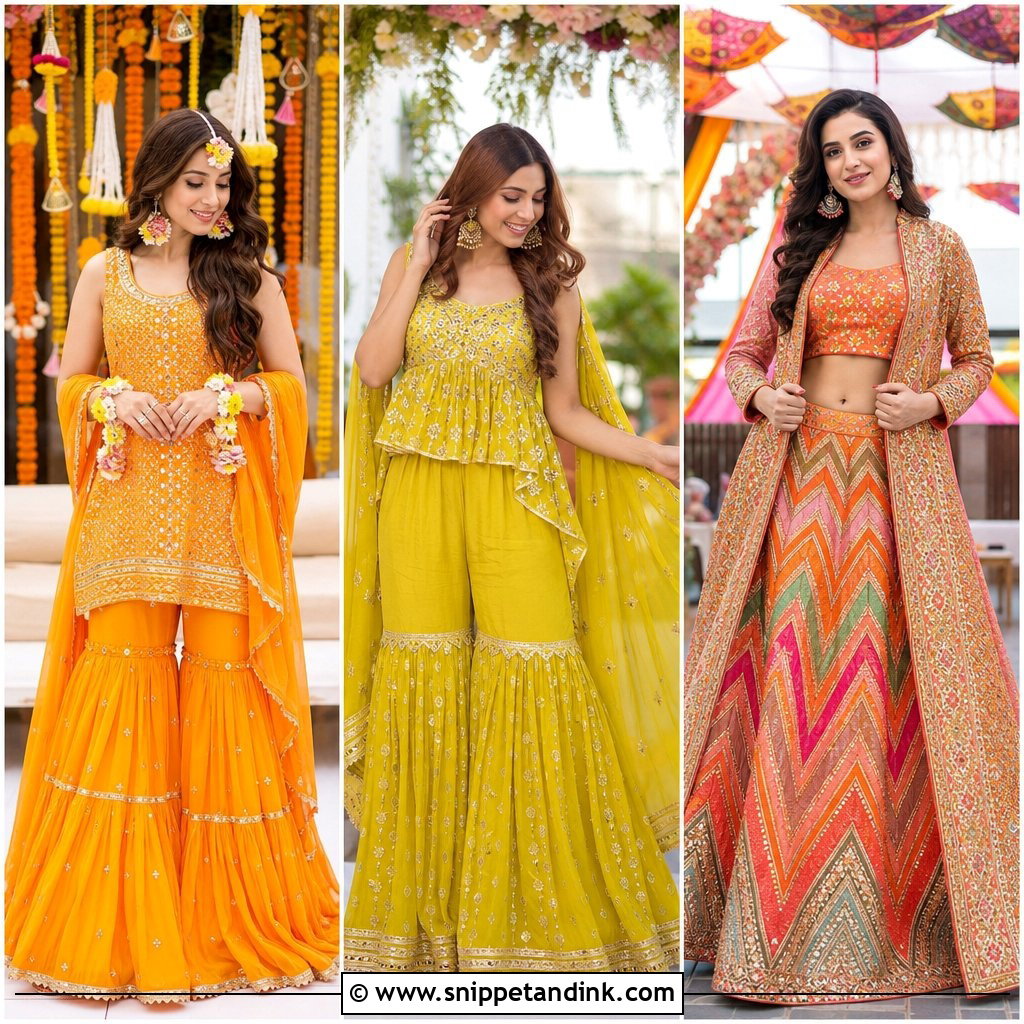
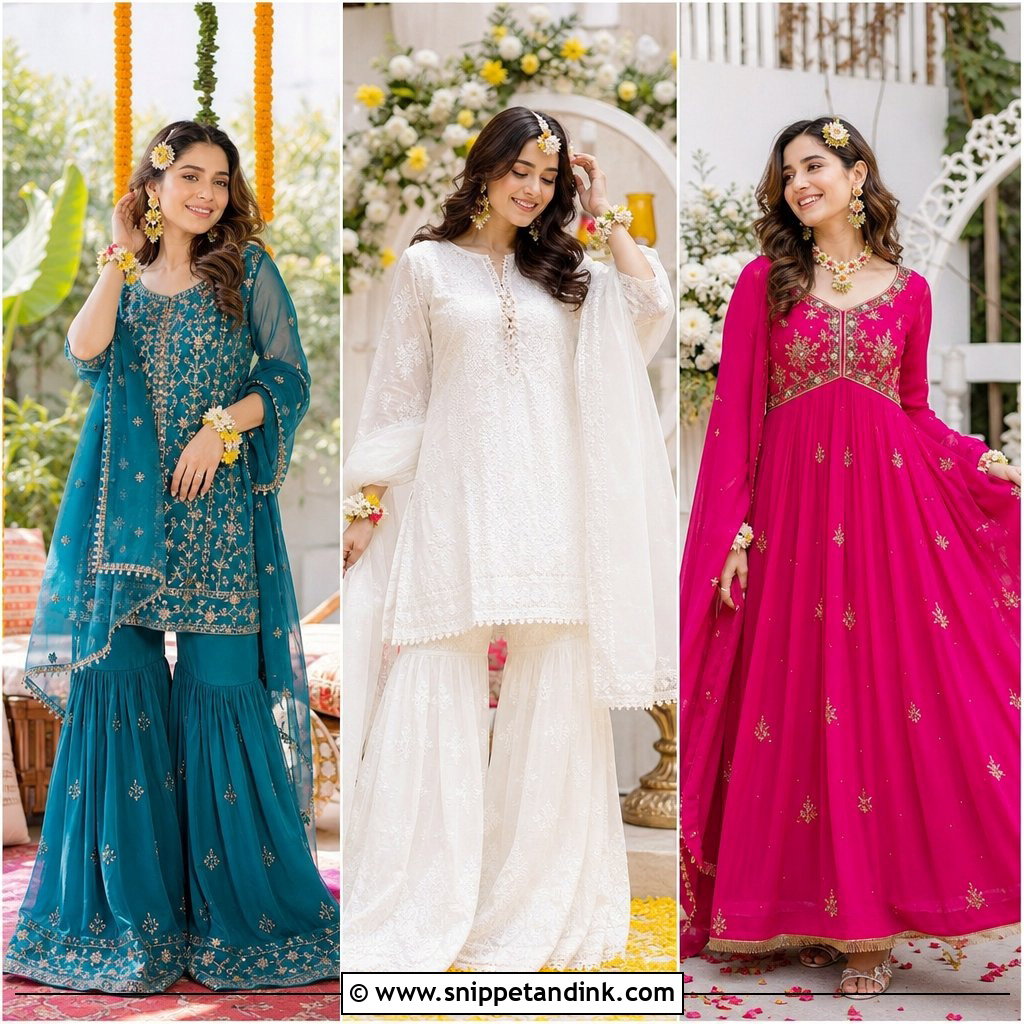
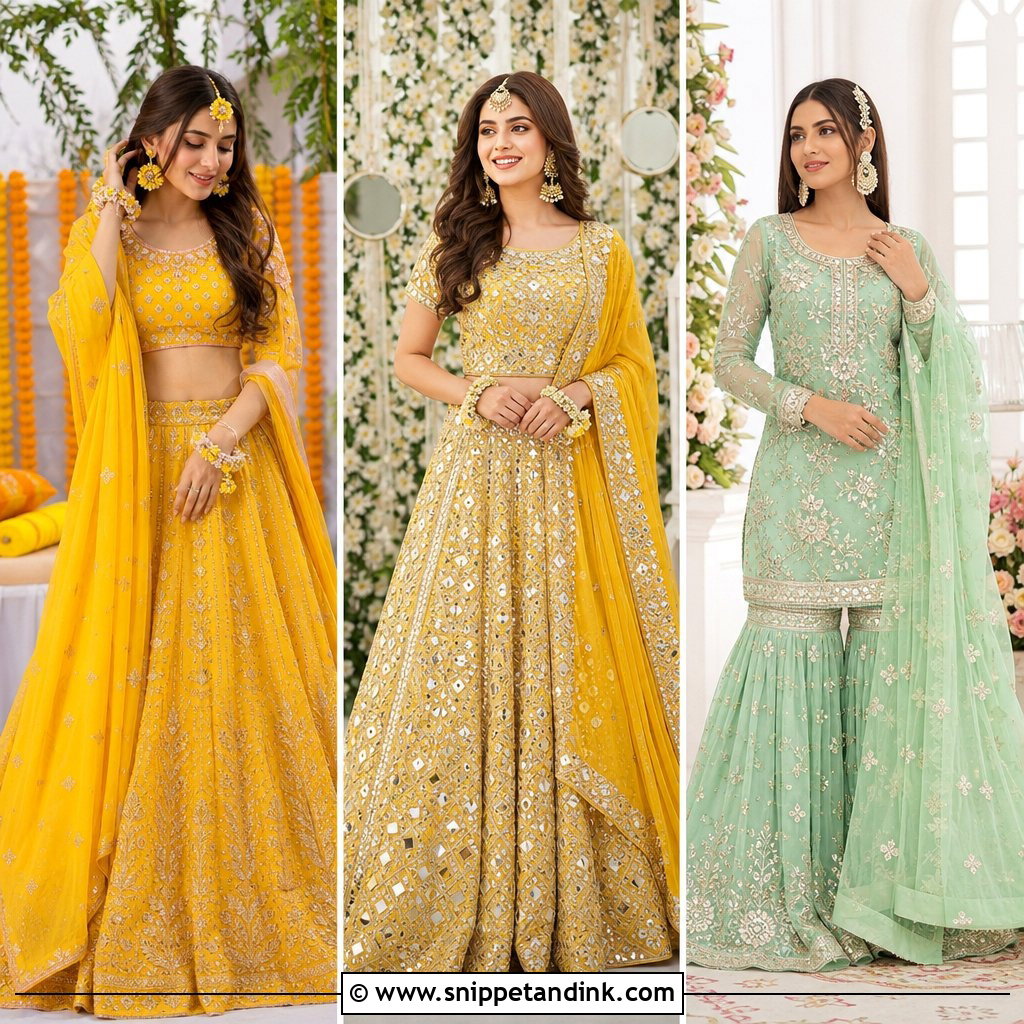
A green sharara set is the classic for a reason: the wide legs let you sit cross-legged on a low seat without anything pulling across the knees. I like a short embroidered kurta over georgette or light cotton silk shararas, with gota or small mirror motifs rather than heavy zardozi. Drape the sheer dupatta over one shoulder only, so it never swings forward into wet paste. Mint and pistachio read soft in daylight; emerald or bottle green carries better once the lights come on in the evening.
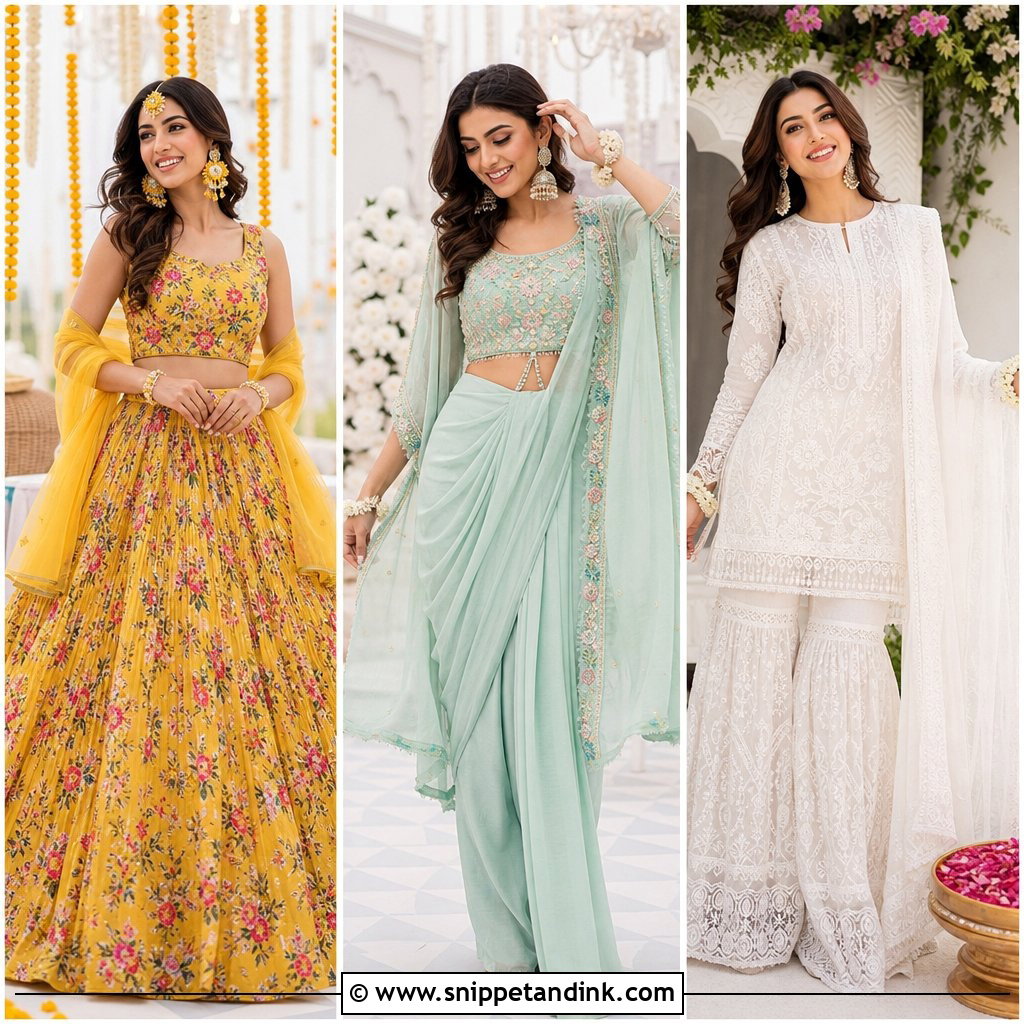
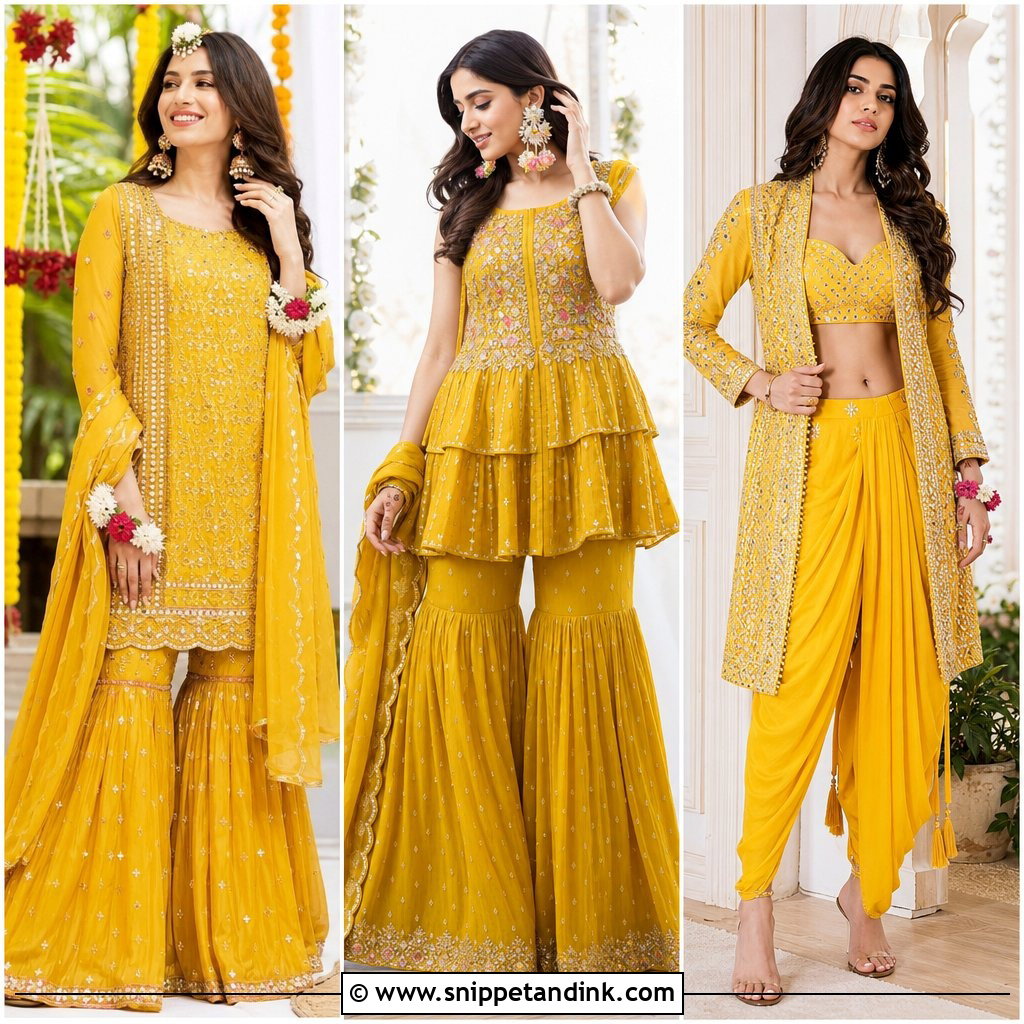
2. Yellow Floral Lehenga Mehndi Outfit
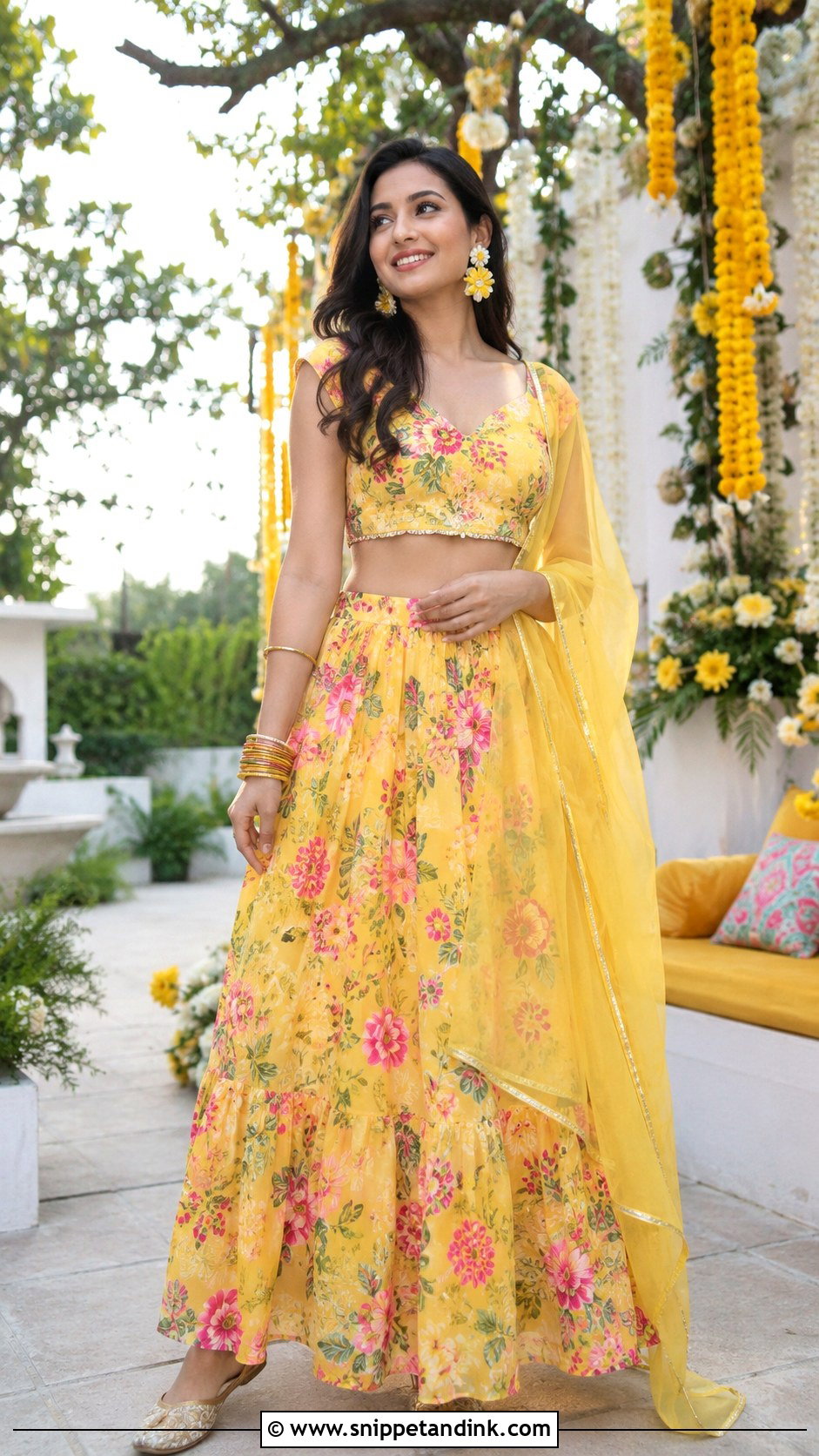
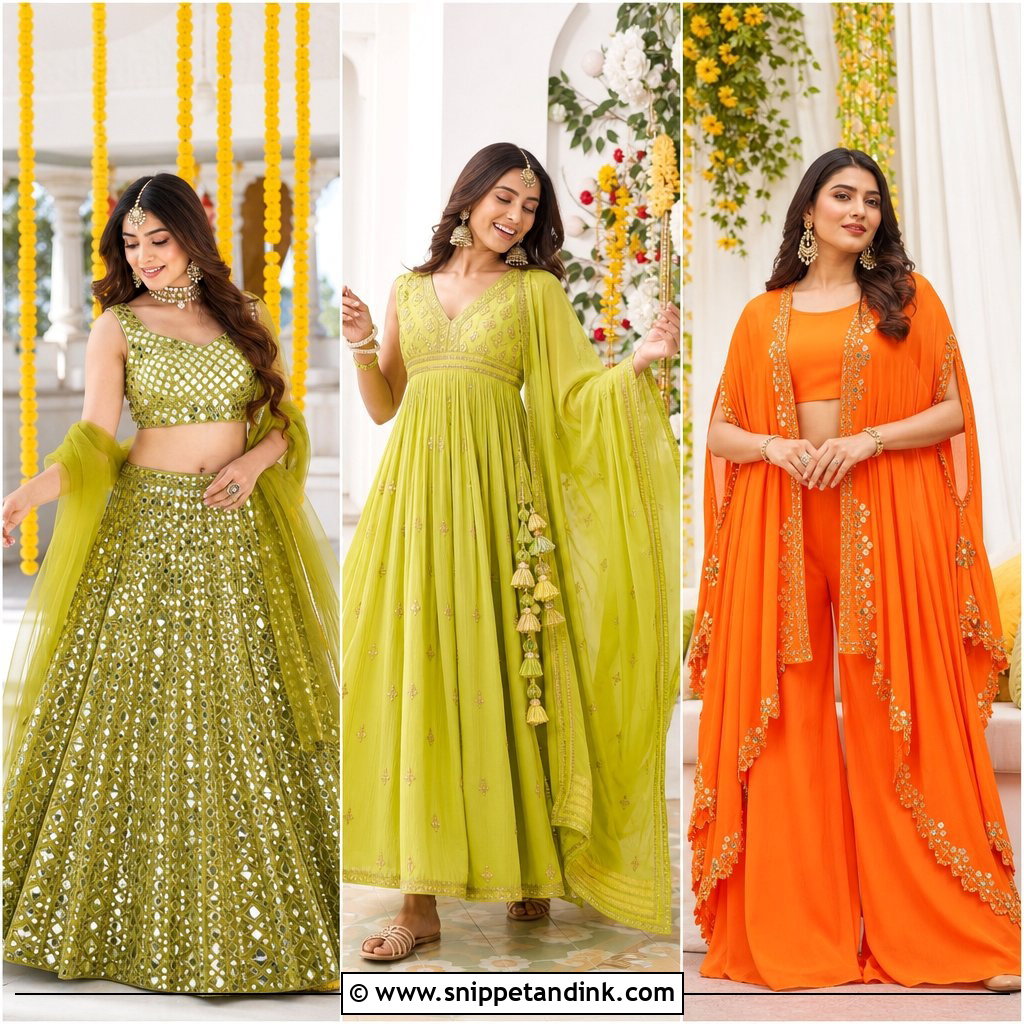
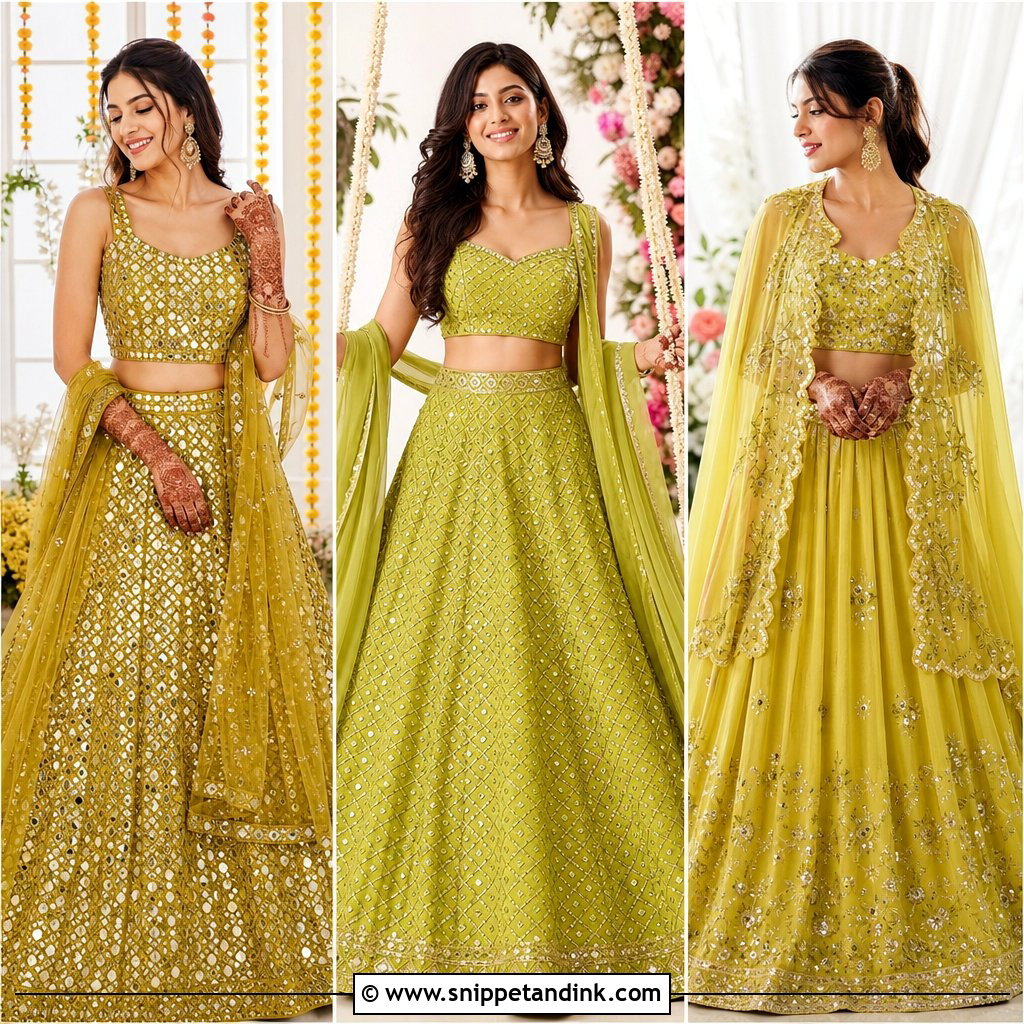
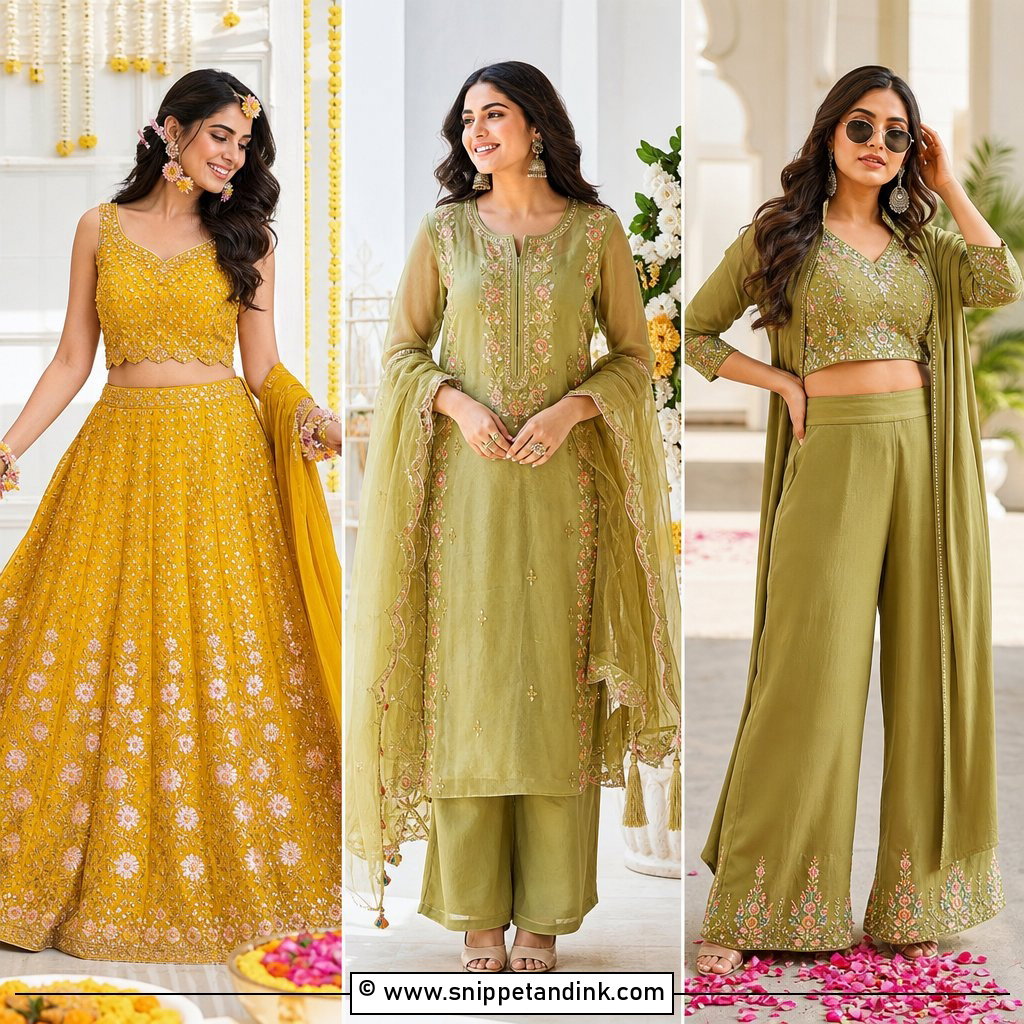
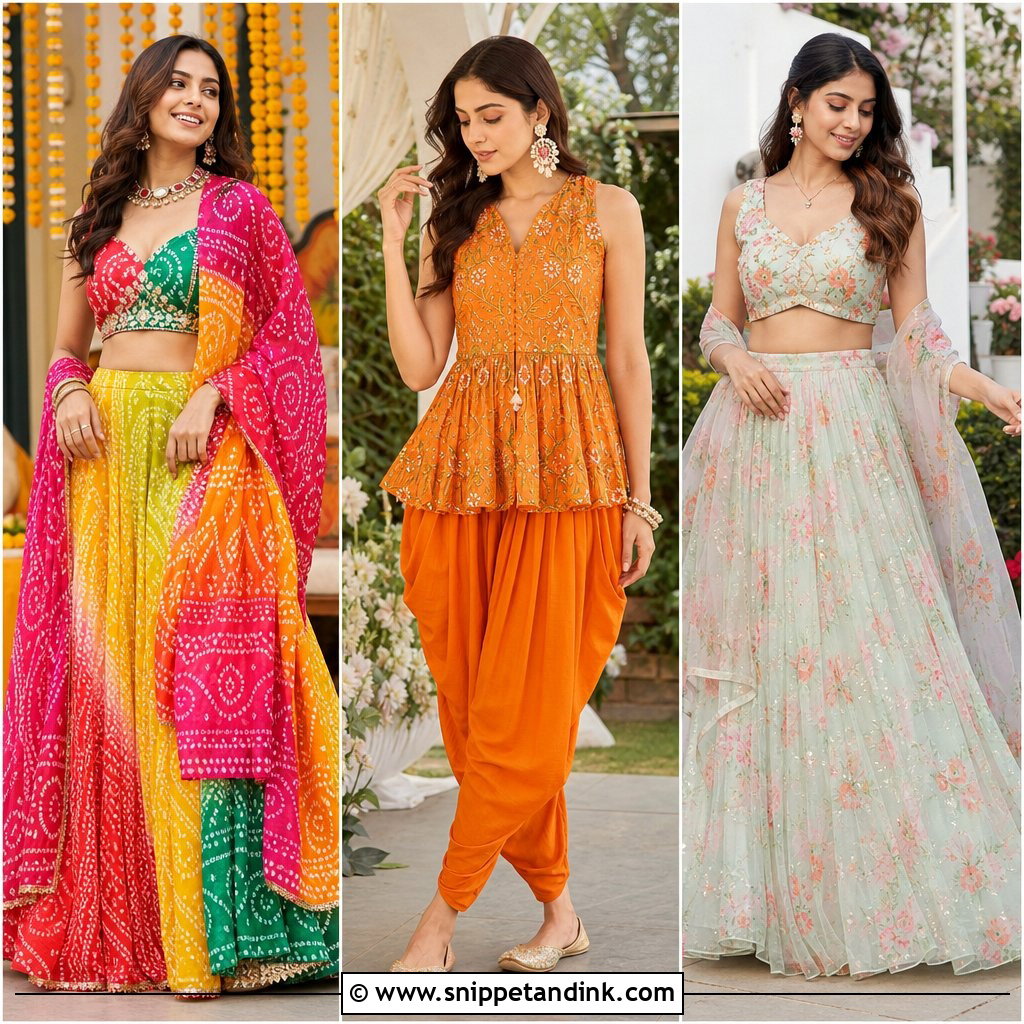
Yellow is the colour I see turn murky fastest under warm tent lighting, so I’d pick a clear sunshine shade rather than a mustard if the event runs into evening. A floral lehenga with a soft, elasticated back waistband is kinder over four hours of sitting than a rigid hook closure. Keep the blouse short-sleeved or cap-sleeved, and choose an organza dupatta with a narrow border; heavy borders drag on the shoulder. Ask your tailor to finish the hem about an inch off the floor. A bride can scale up with bigger embroidered flowers and a maang tikka, while a guest can wear a printed skirt and one pair of floral earrings.
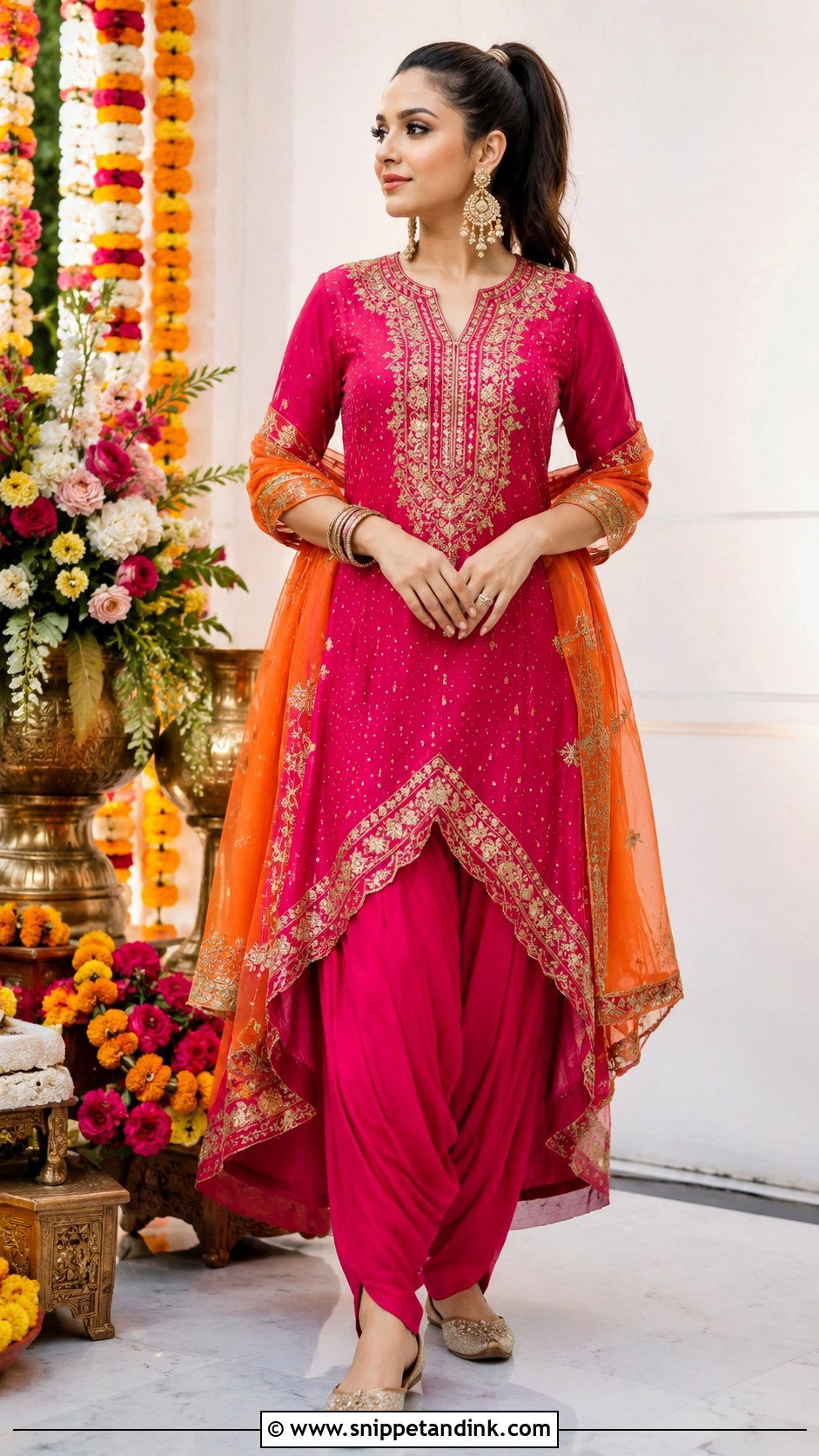
3. Pink Gharara Mehndi Outfit
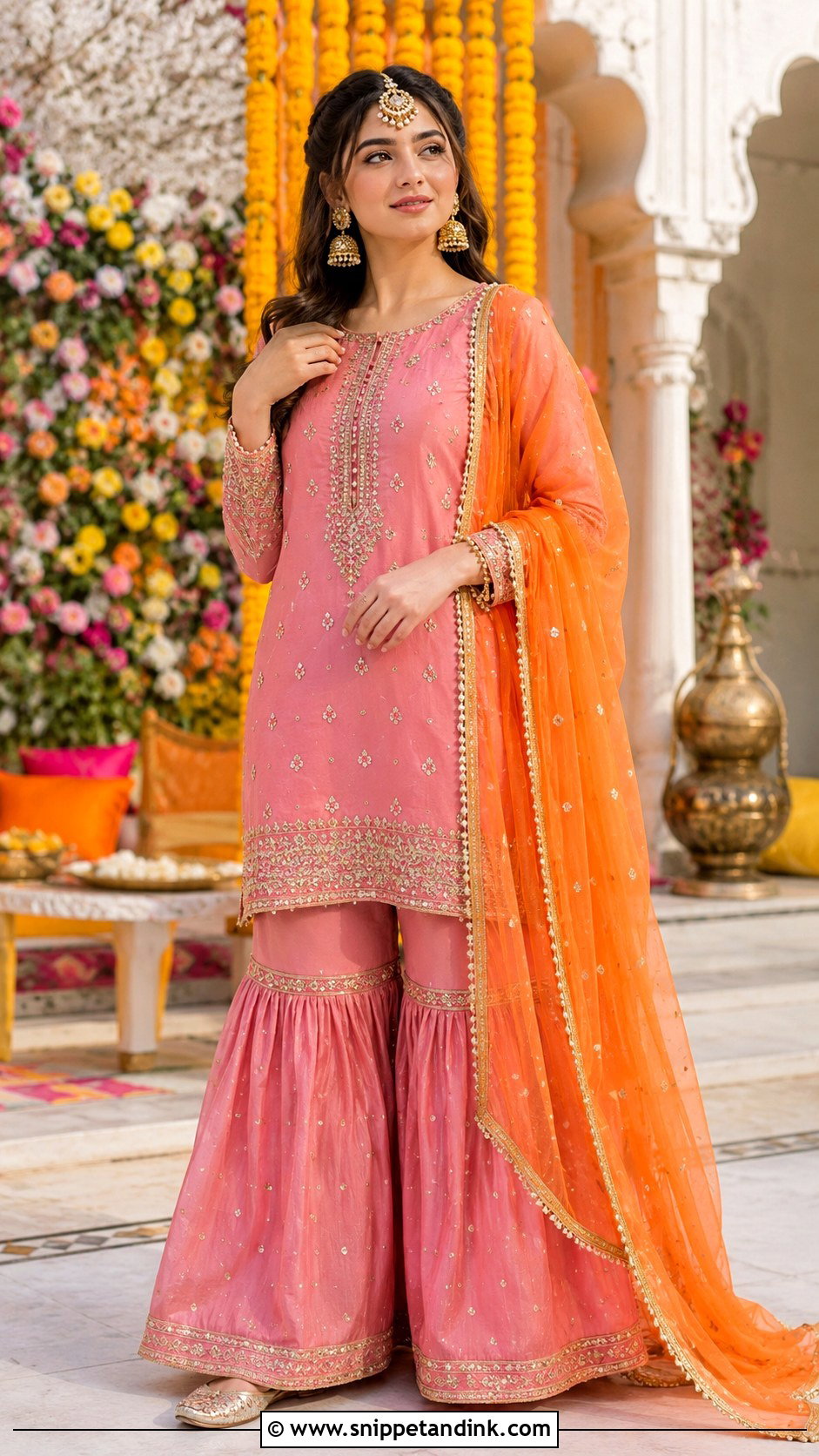
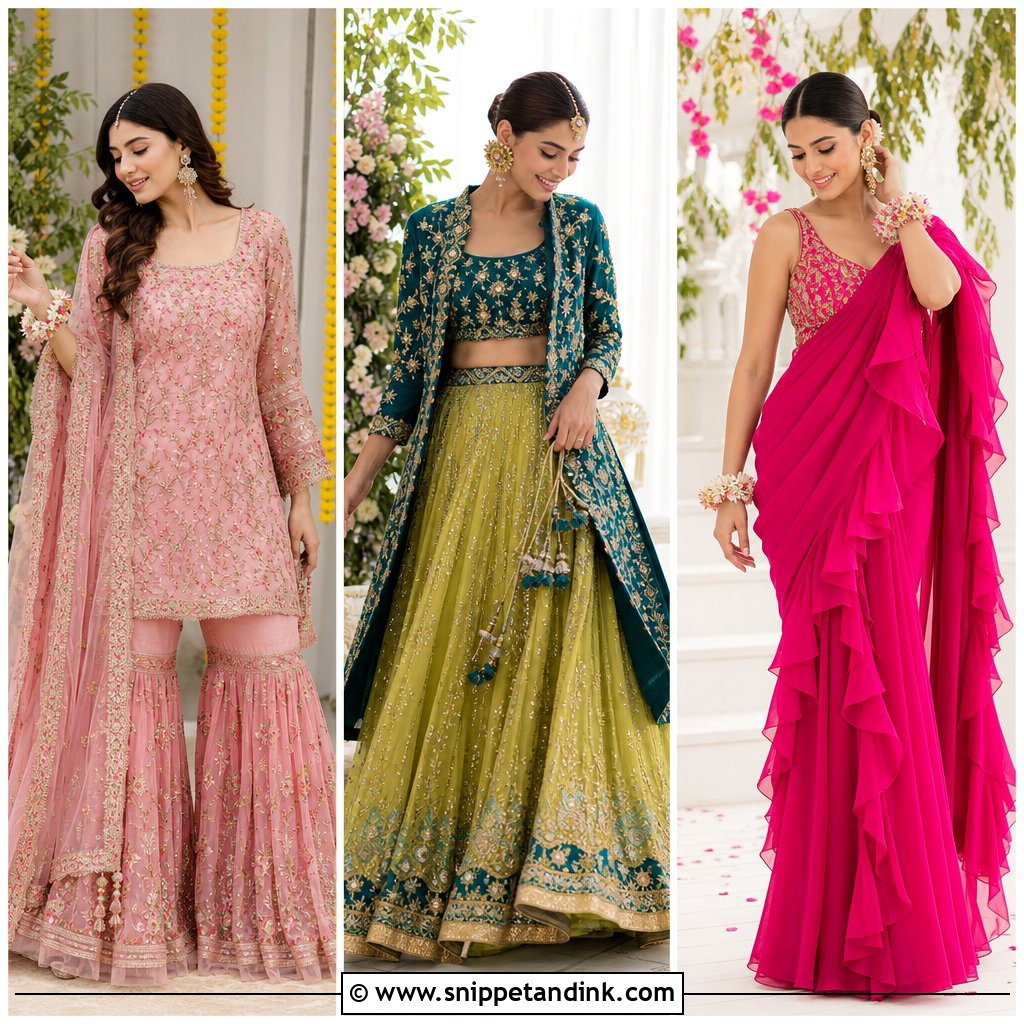
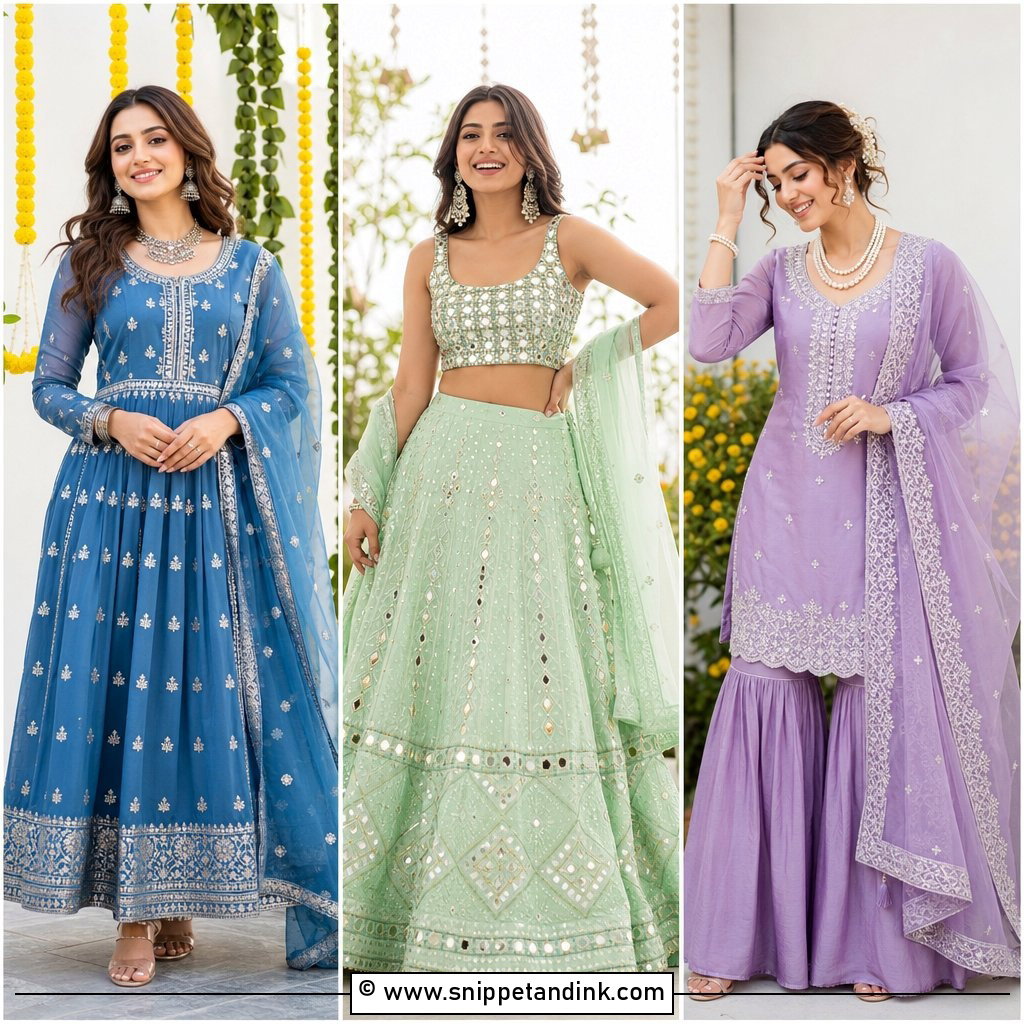
Ghararas have a joint at the knee where the flare begins, and that seam is where the fit lives or dies. If it sits too high, the pants bunch when you sit; too low and you trip on the gathered fabric. Rani pink is bold, blush or rose suits a morning ceremony, and gota patti or zari around the neckline and hem keeps it festive. A contrasting orange or green dupatta adds colour, so I keep the necklace simple and the bag small. Bridesmaids and close family wanting something a step more formal than a plain salwar suit tend to love this one.
4. Mint Anarkali Mehndi Outfit
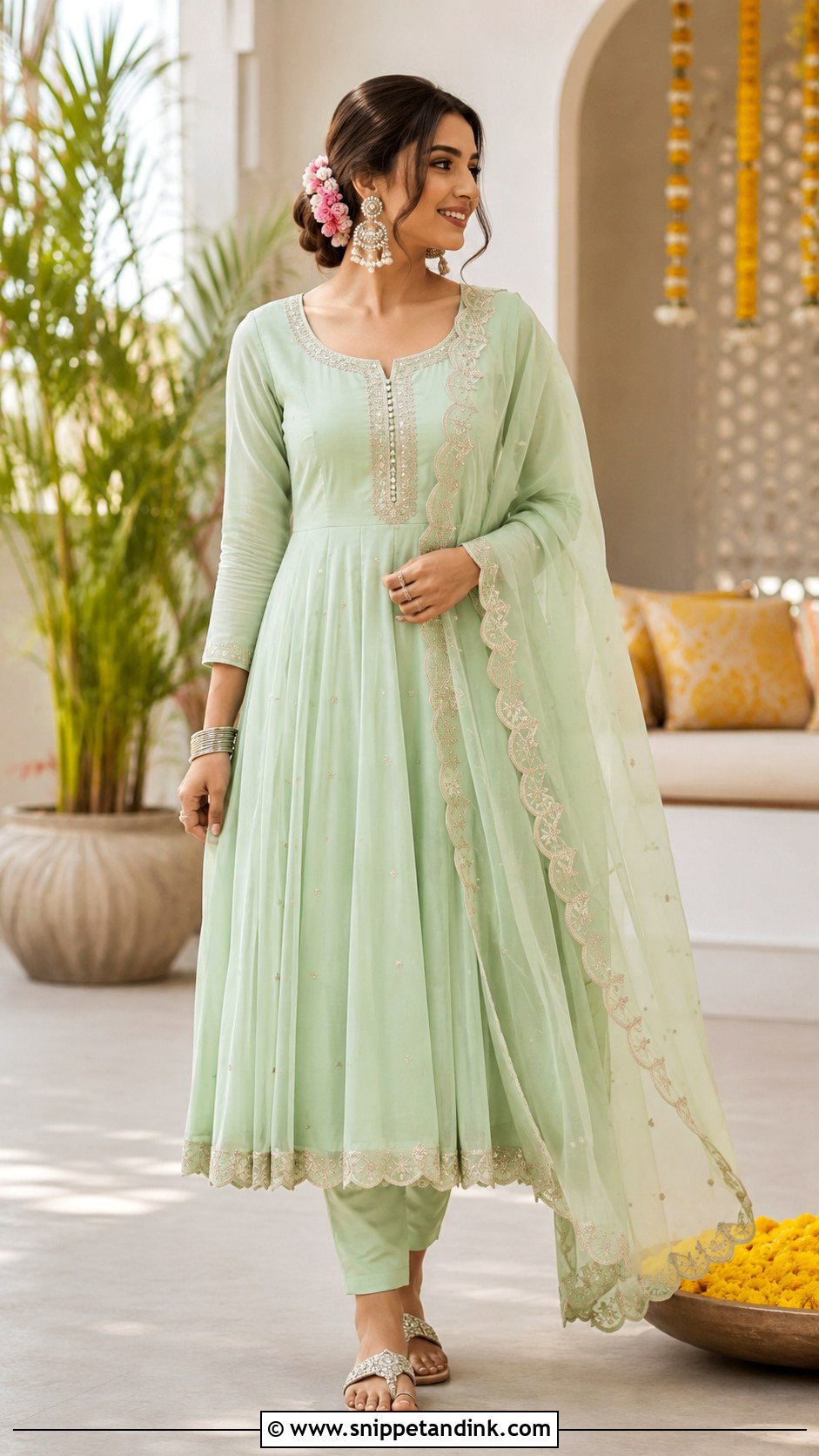
Mint calms down a loud mehndi room. I’d look for a calf-length or ankle-length Anarkali in chiffon, georgette or chanderi with a moderate flare; a full circle skirt looks dreamy standing up but pools awkwardly when you sit on the floor. Keep embroidery to the neckline, sleeves and border so the dress stays light. Slim pants underneath, a scalloped dupatta over one arm and pearl jhumkas finish it. It adapts easily for older guests or anyone wanting more coverage: ask for three-quarter sleeves and a higher neckline.
5. Orange Palazzo Suit Mehndi Outfit
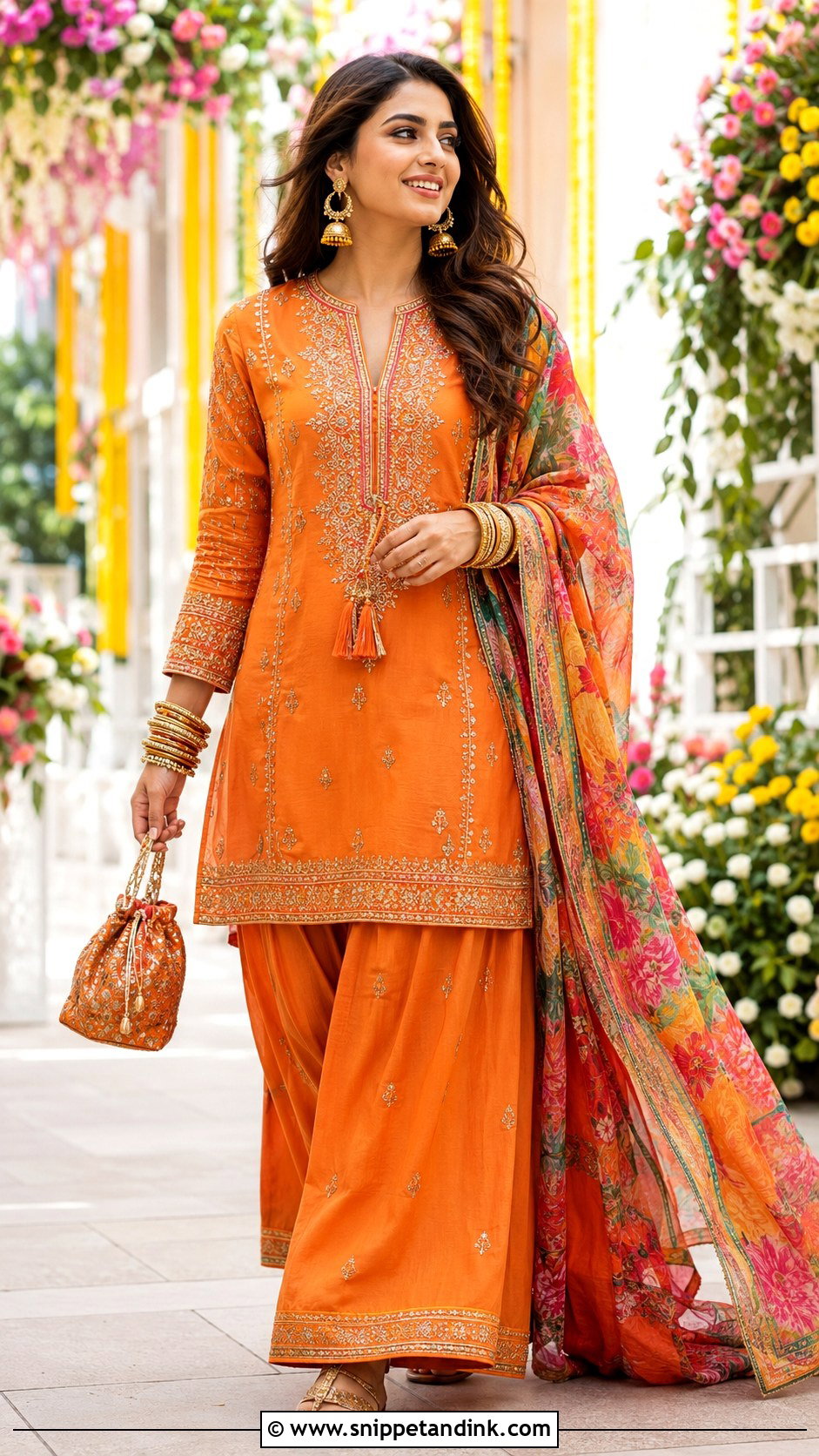
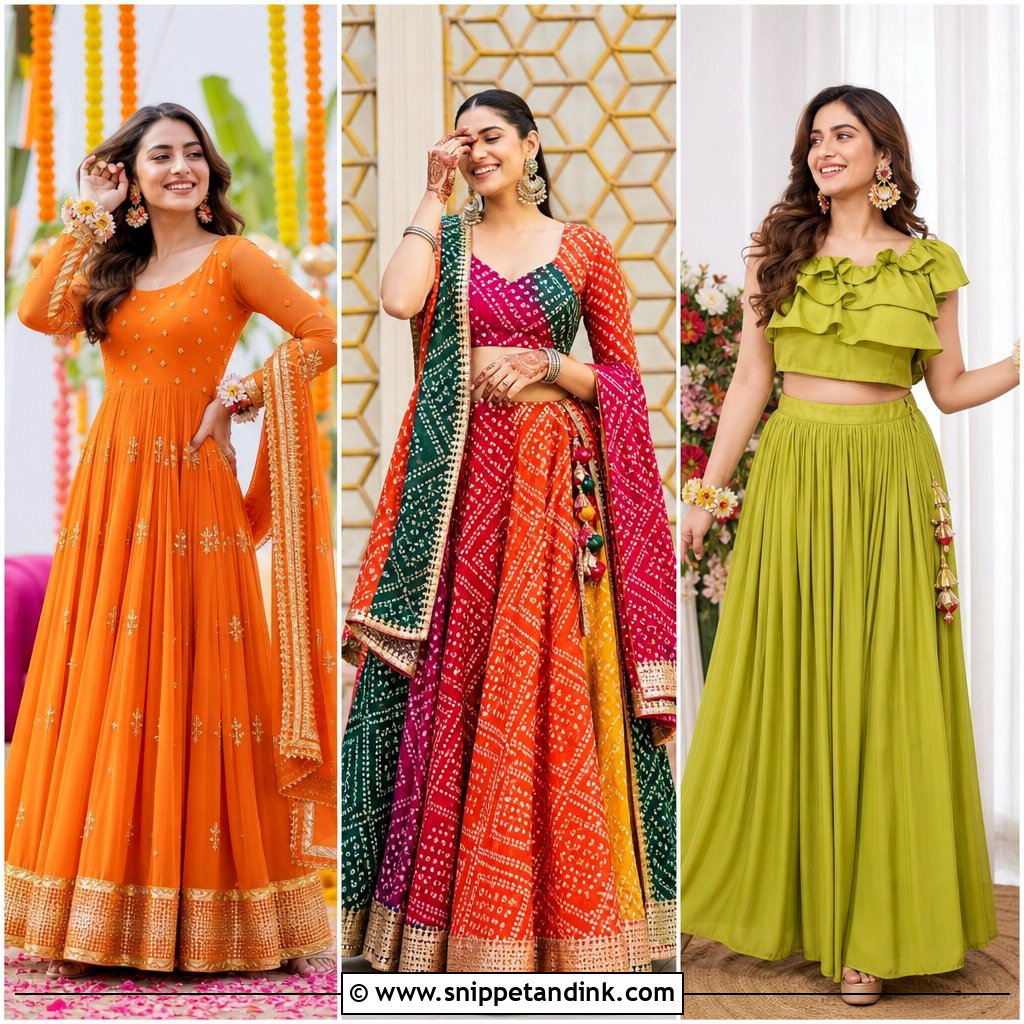
Orange glows against the marigold and green decor most mehndi setups use. A straight or slightly flared kurta with high-waisted palazzos is the most comfortable floor-seating outfit on this list, since nothing grips the thigh. Tangerine reads playful, burnt orange quieter, coral softer. A printed dupatta carrying green, pink and yellow ties you into the room. Kolhapuri sandals in tan or gold are my pick here because they slip off easily when everyone moves onto the floor. A low ponytail or loose braid leaves space for a few floral clips.
6. Multicolor Mirror Work Lehenga Mehndi Outfit
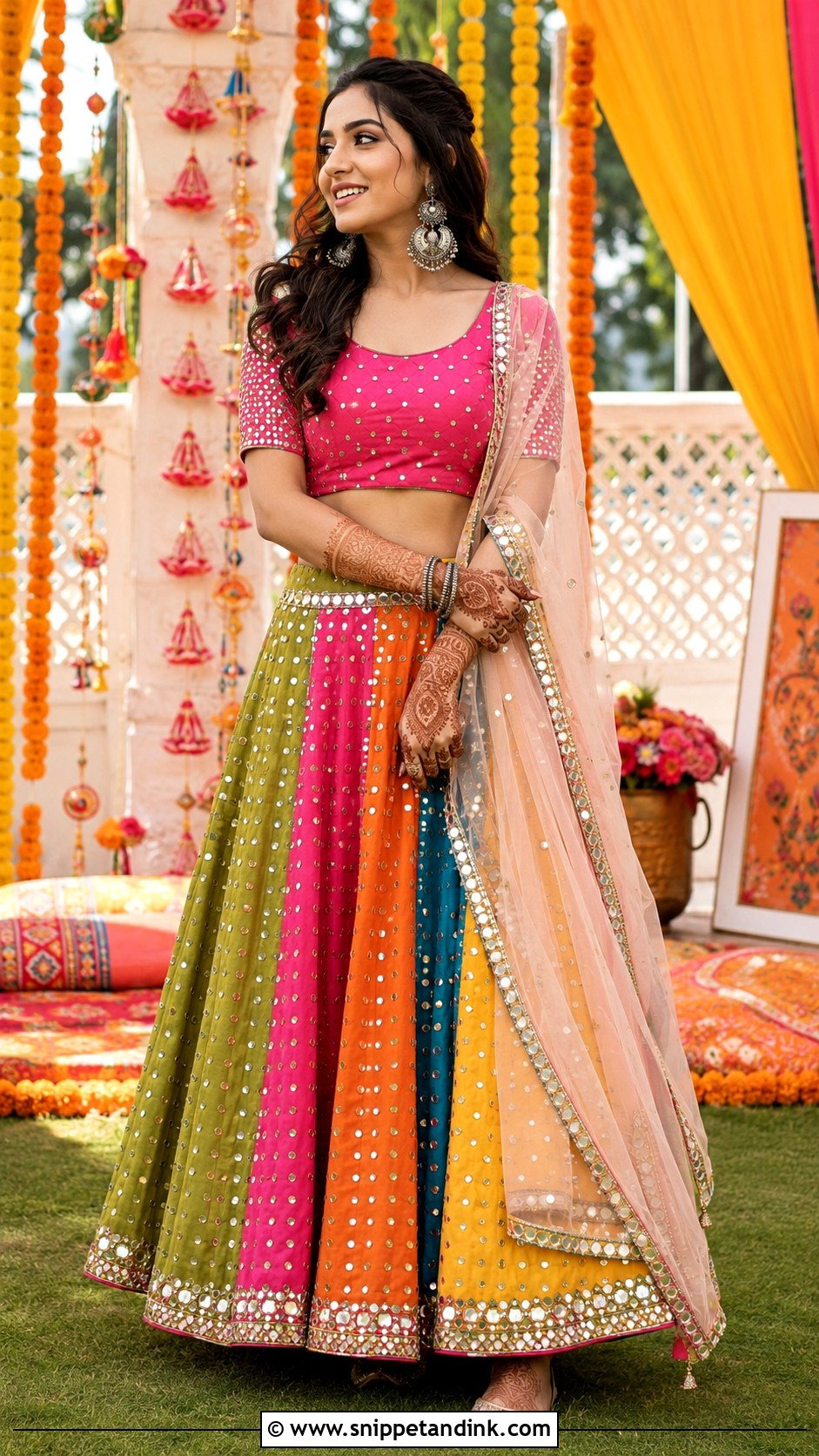
Mirror work is joyful in daylight, but it has a practical catch I always warn about: the little mirrors and their stitched frames snag fine nets and beaded bags. So keep the skirt in lighter panels of green, pink, orange, blue and yellow, and pair a plain blouse that repeats one shade. A cropped blouse with proper straps or short sleeves stays put while you dance. A plain chiffon dupatta with a slim mirror edge stops the whole thing from going busy. Oxidised silver earrings and smooth metal bangles are safer than anything with prongs.
7. White Kurta With Floral Dupatta Mehndi Outfit
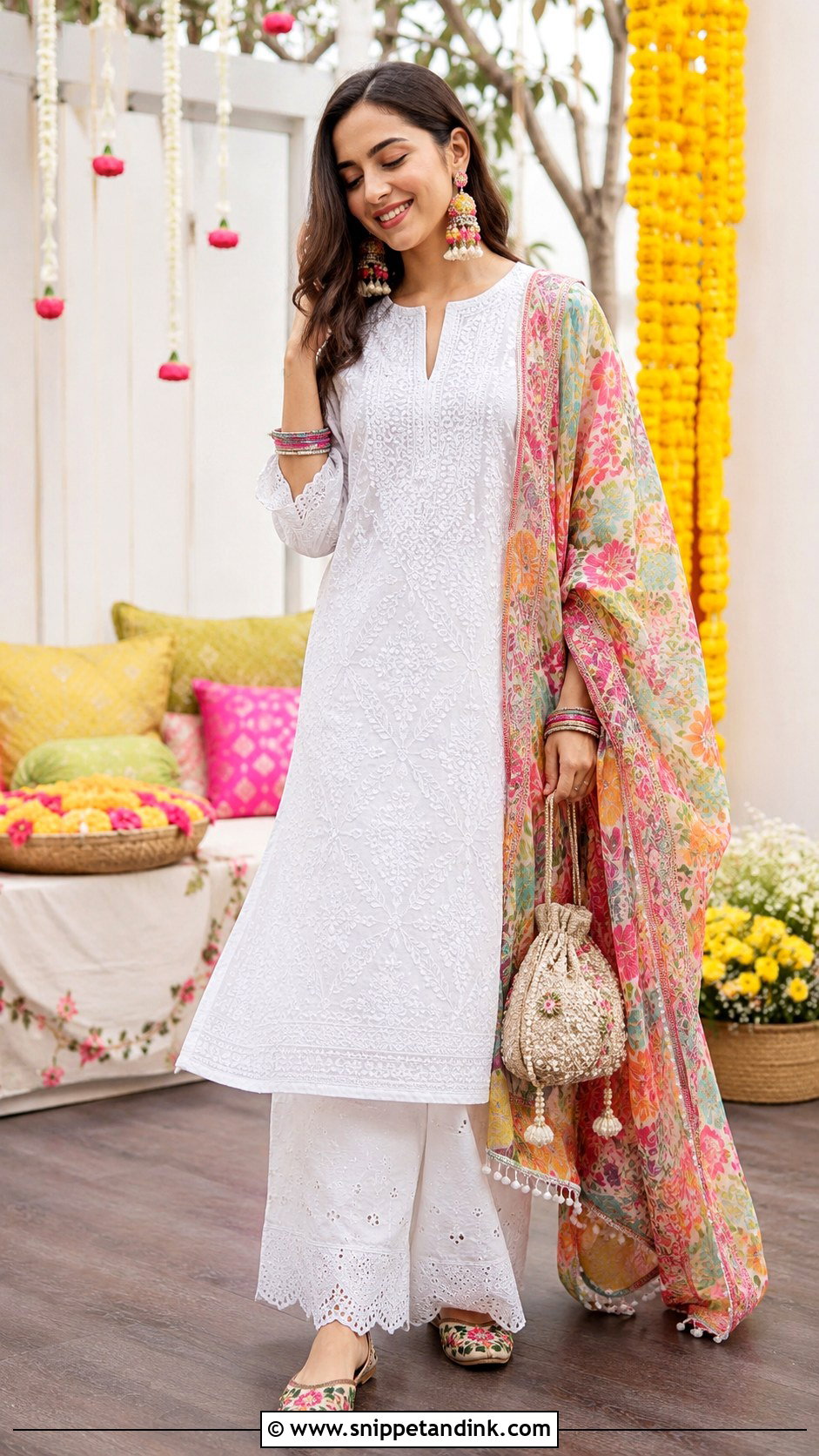
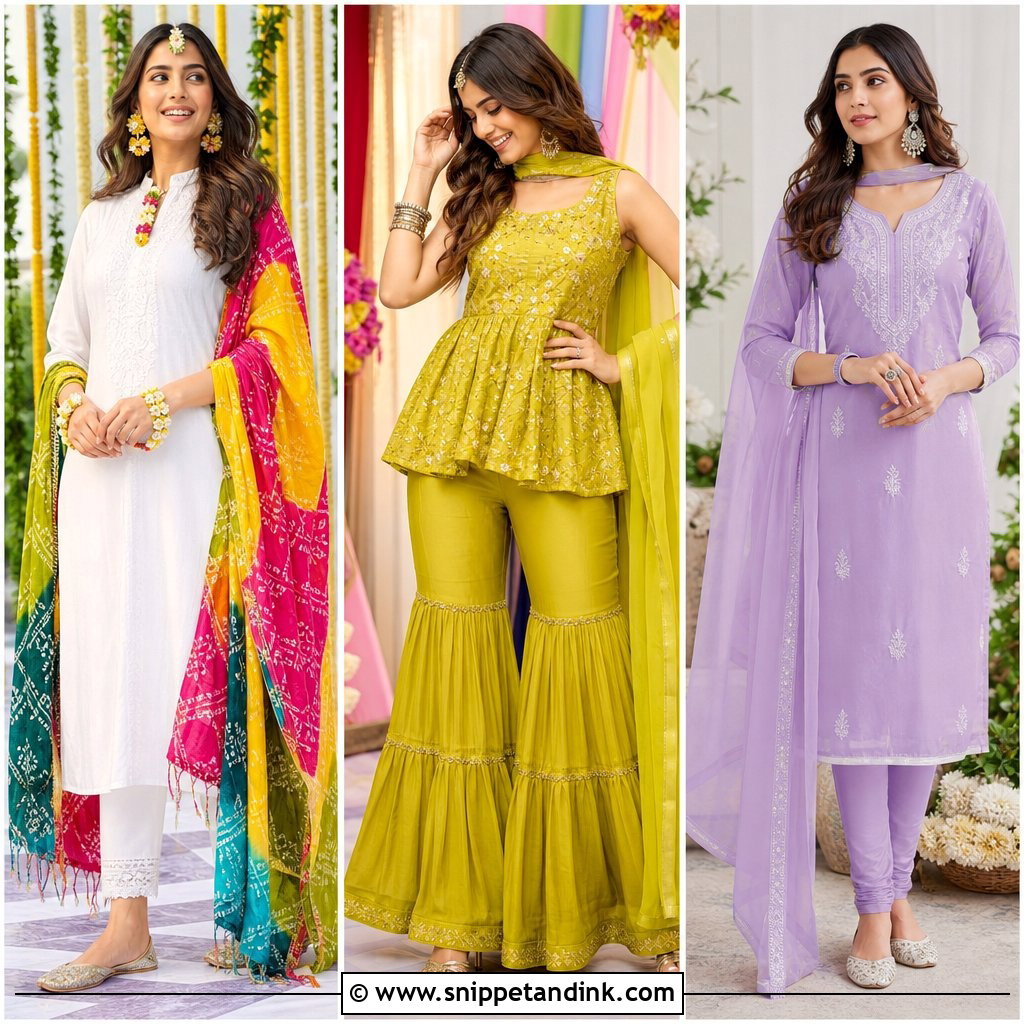
White is lovely as a base, and it is also the fabric fresh henna paste will stain first. If you wear a white cotton-silk or chikankari kurta, choose short sleeves and keep your hands away from the body until the paste has dried and been sealed. A floral printed dupatta in green, yellow, coral and pink brings the colour, and a small pin at the shoulder holds it back. Tassel earrings and enamel bangles in one shade from the print pull it together. Check the family’s feelings about white before you commit; in some households it is avoided at celebrations.
8. Teal Dhoti Pants Mehndi Outfit
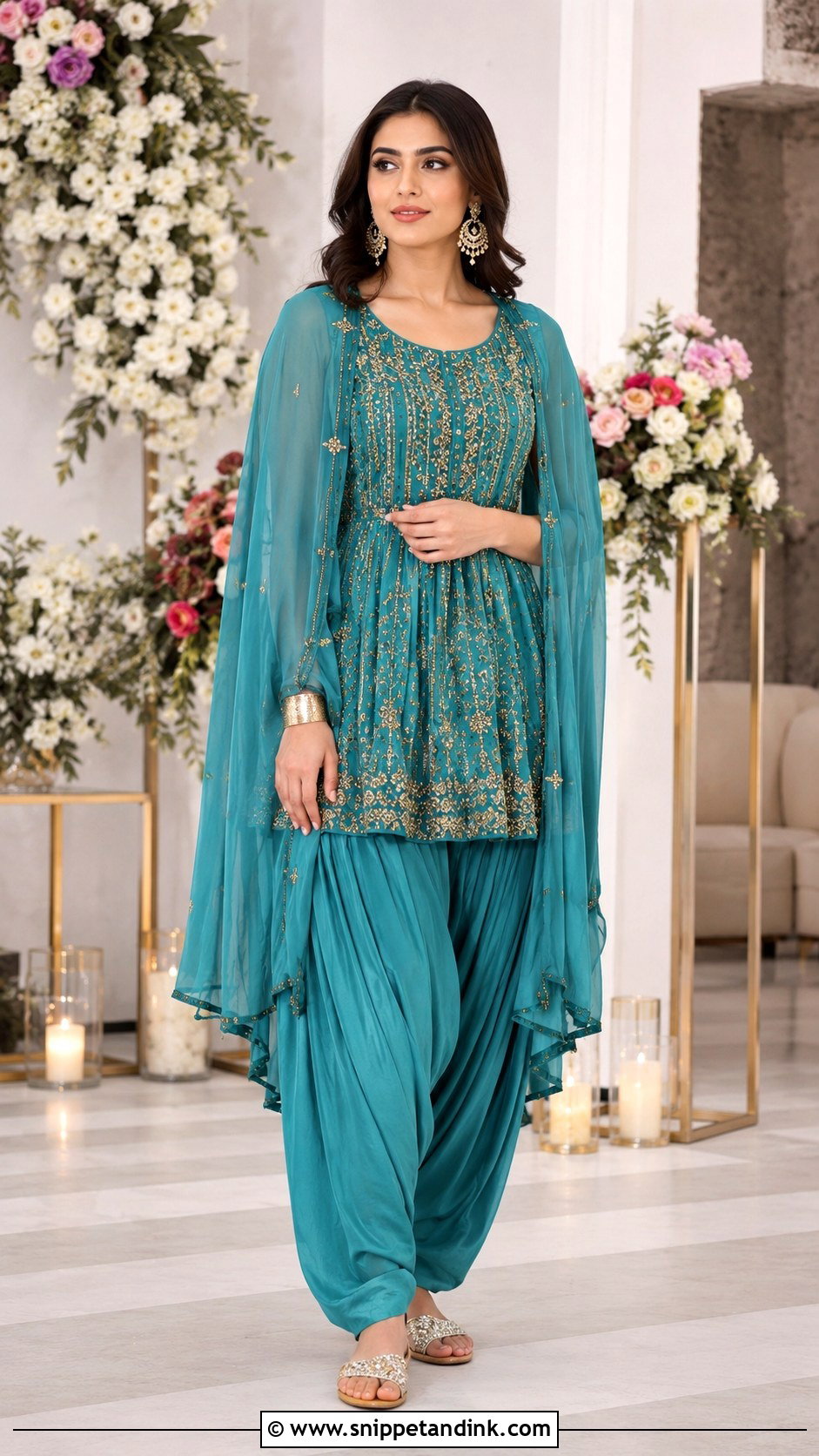
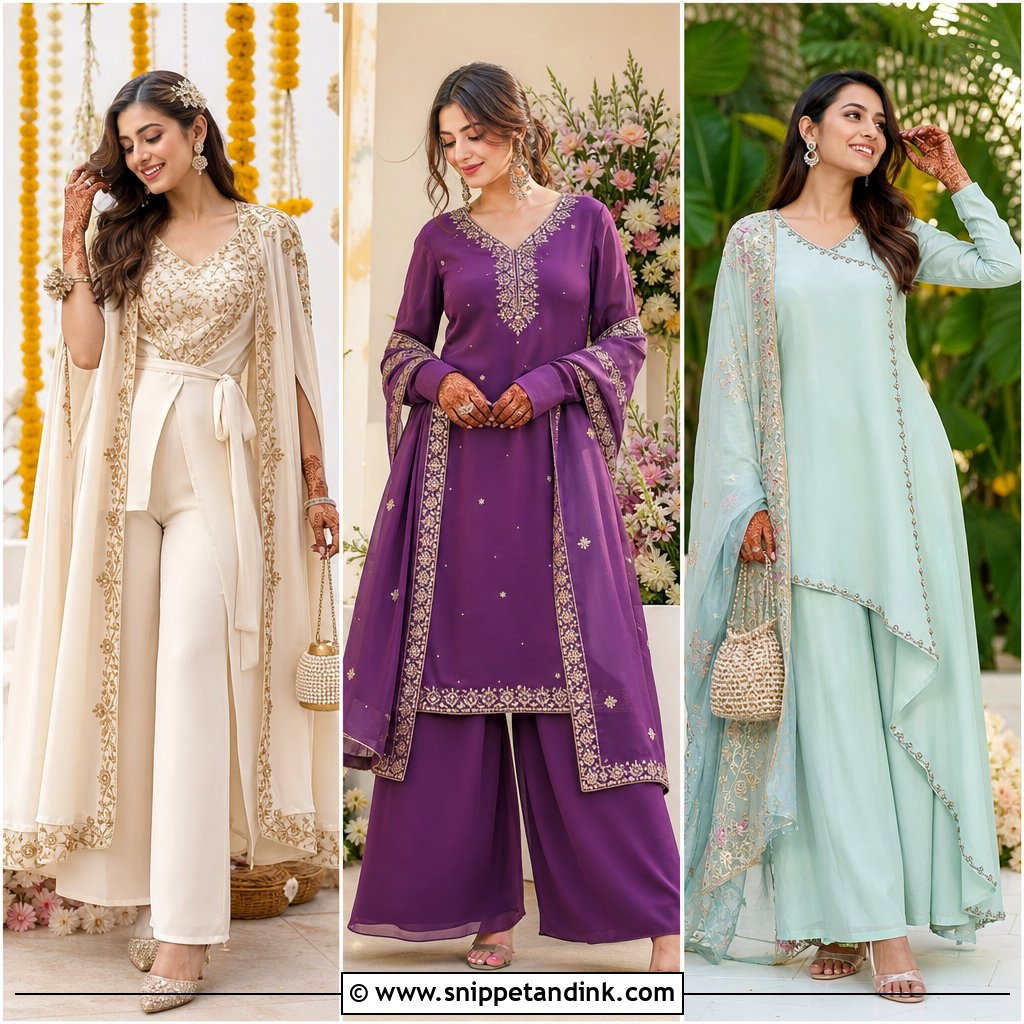
Of everything here, teal dhoti pants are the most modern choice and the easiest to move in. The proportion trick is to end the top above the deepest folds of the drape, so a peplum or short asymmetric kurta works better than anything long. Soft crepe or georgette falls cleanly; stiff fabrics make the dhoti look bulky at the hip. A short cape gives cover without involving your hands. Teal takes antique gold, magenta or lime accents, which makes it easy to coordinate with a wedding party.
9. Lime Green Peplum Sharara Mehndi Outfit
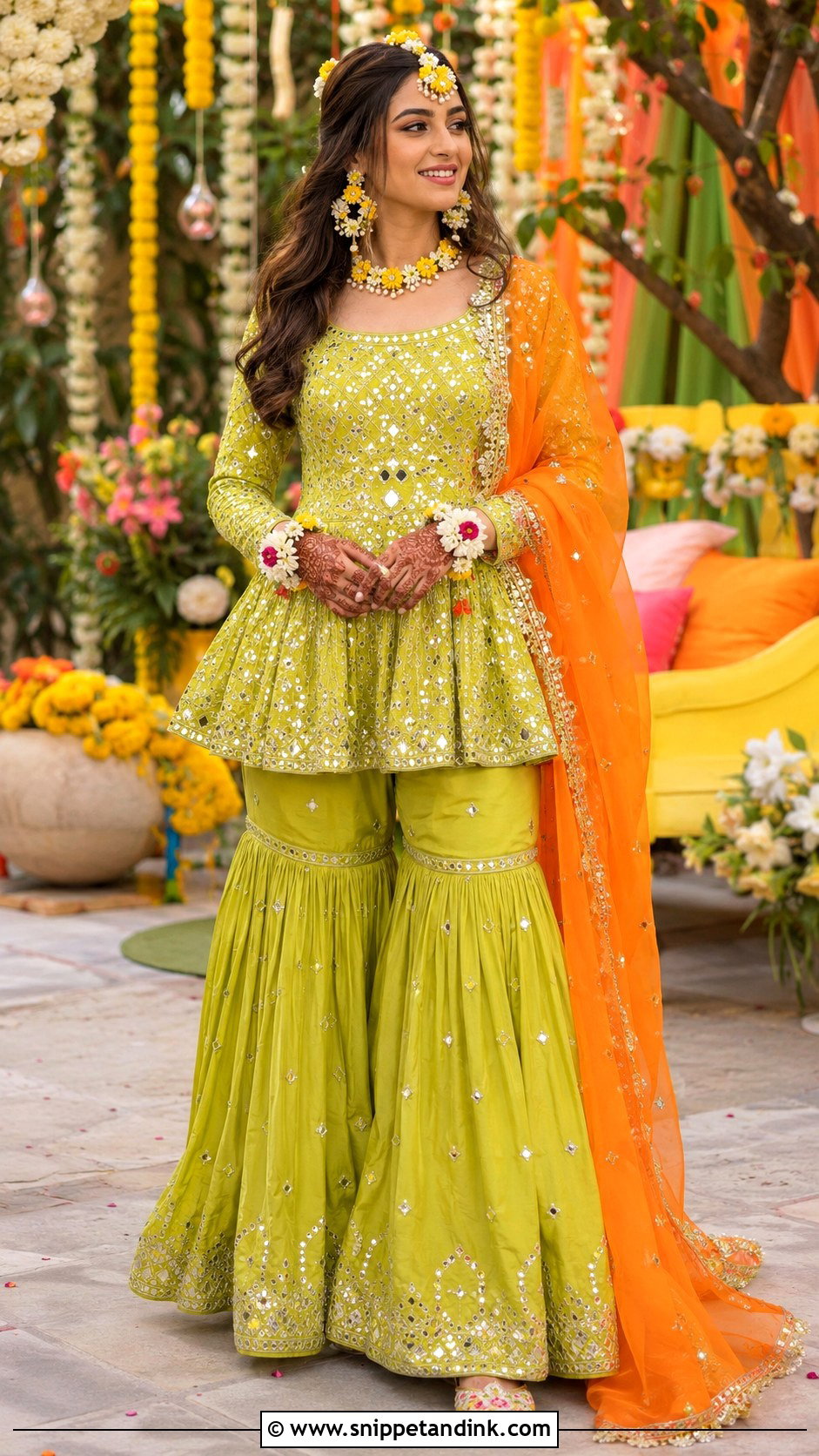
Lime is cheerful and very forgiving in photos. A structured peplum kurti that fits through the bodice and flares at the waist, over soft shararas with a thin gold trim, balances most figures. I’d pin a pink or orange organza dupatta at the shoulder so it never drifts into fresh henna. Brides can add a floral necklace; guests usually look better with a single statement piece. Get the sharara hemmed for the ground you’ll actually walk on, since lawns and stage steps catch long hems.
10. Mustard Jacket Lehenga Mehndi Outfit
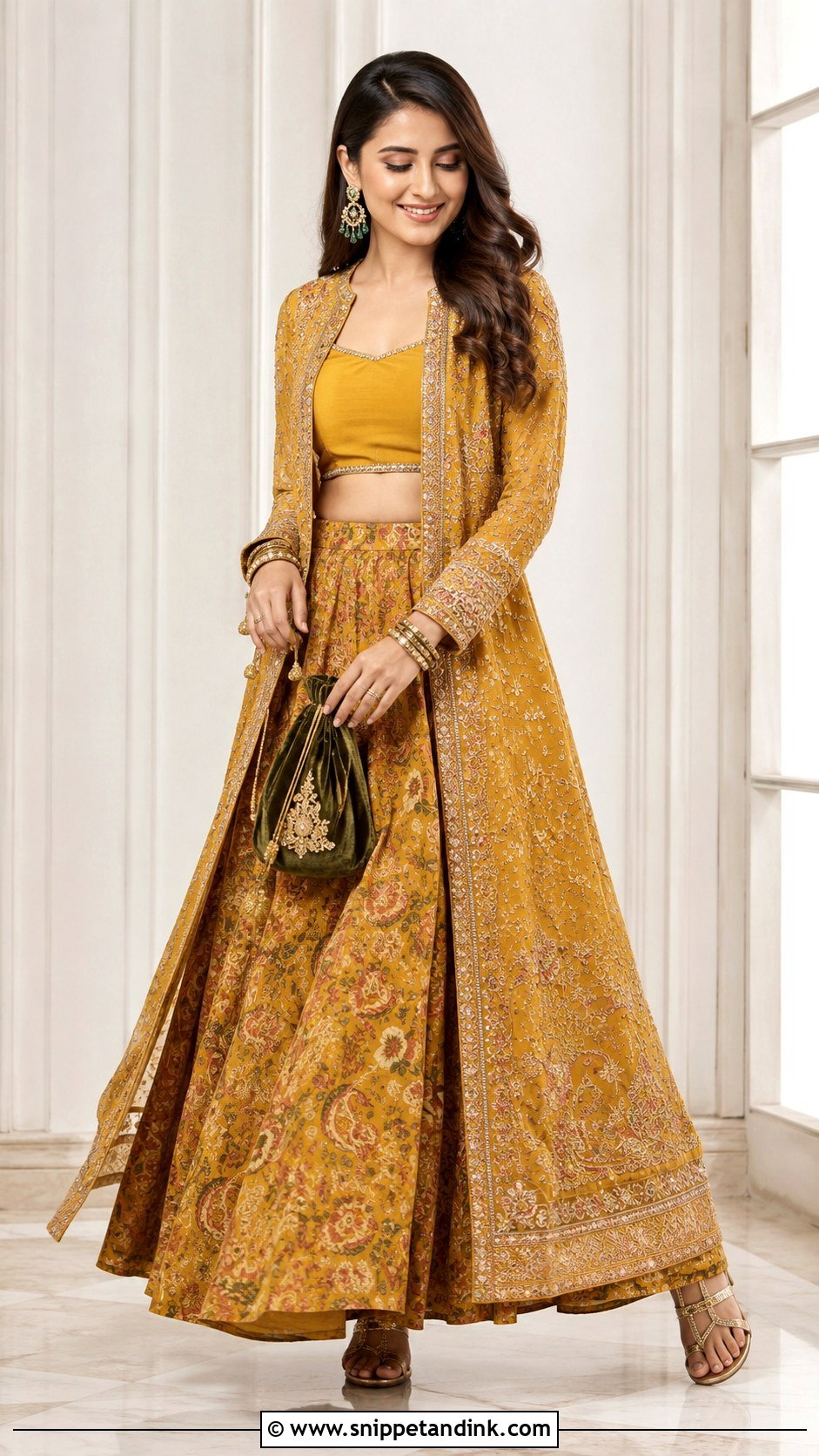
A jacket lehenga solves the dupatta problem entirely. Over a flowing skirt and simple crop top, a long embroidered jacket in sheer organza, chanderi or light georgette gives layering that doesn’t need constant adjusting. Wear it open to show the blouse, or lightly fastened for more coverage. When an afternoon mehndi rolls into a cool evening, the jacket earns its place. I check one thing at the fitting: can you bend your elbow fully in the jacket sleeve? If not, ask for a little ease or go sleeveless.
11. Lavender Cape Set Mehndi Outfit
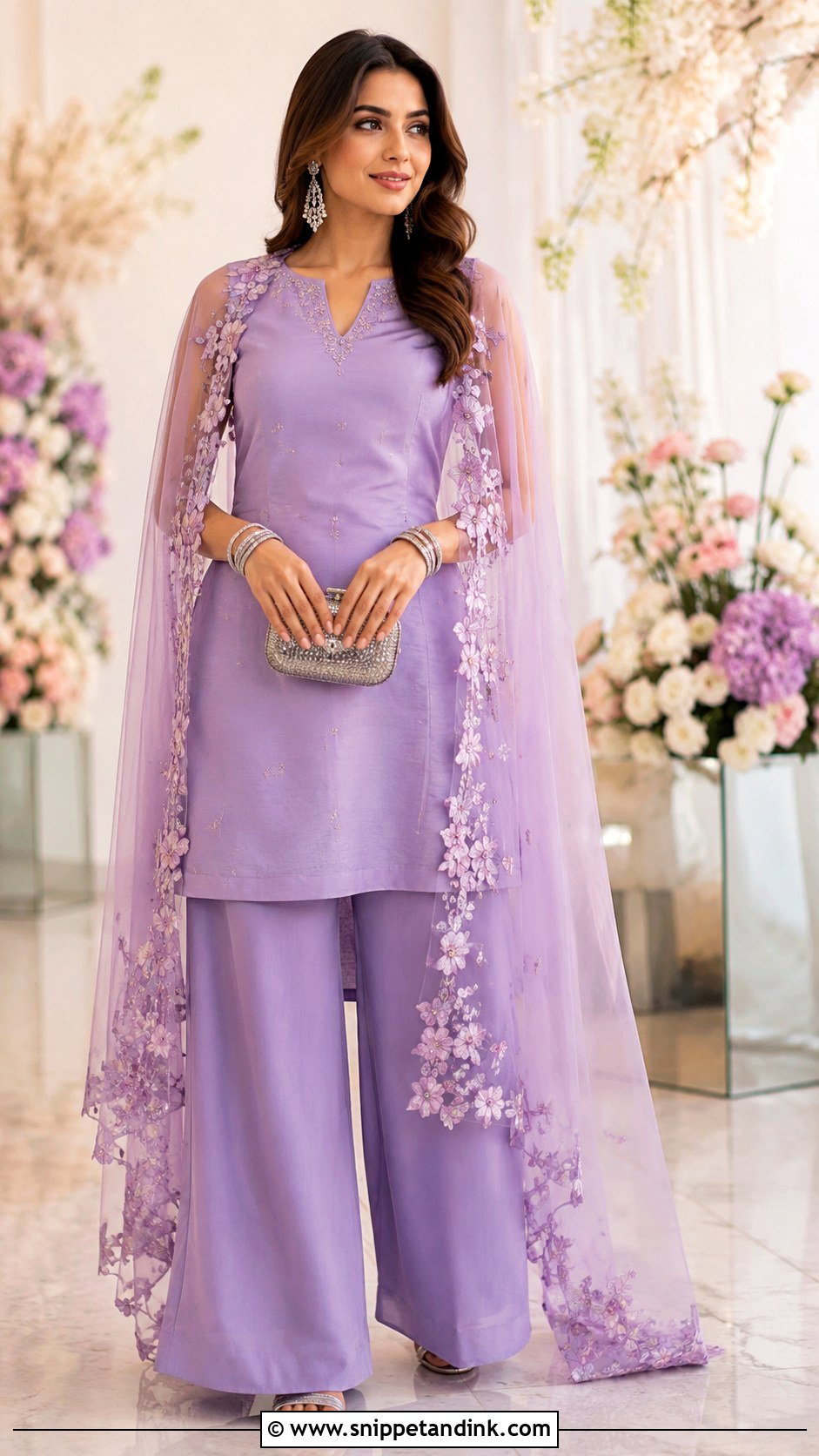
Lavender steps away from the expected greens and yellows without clashing with them. The sheer embroidered cape is what sells this set for me: it moves like a dupatta but stays anchored at the shoulders, so drying henna stays clear. Choose scattered sequins or light floral threadwork over dense decoration. A small clutch with a wrist strap is easier than a bag you have to hold. It sits naturally beside mint, blush and ivory if the bridal party is wearing pastels.
12. Coral Saree Mehndi Outfit
A coral saree feels graceful but less formal than a silk one. Pre-stitched georgette, chiffon or organza is my recommendation for this event, because a hand-draped pallu that slips mid-henna is impossible to fix without smudging. Pin the pallu firmly at the shoulder and keep the blouse short-sleeved. Floral prints, a slim gota border or light threadwork keep it daytime-appropriate. Cushioned flats matter more than you’d think; you’ll be standing for photos between long stretches on the floor.
13. Blue Printed Co-Ord Mehndi Outfit
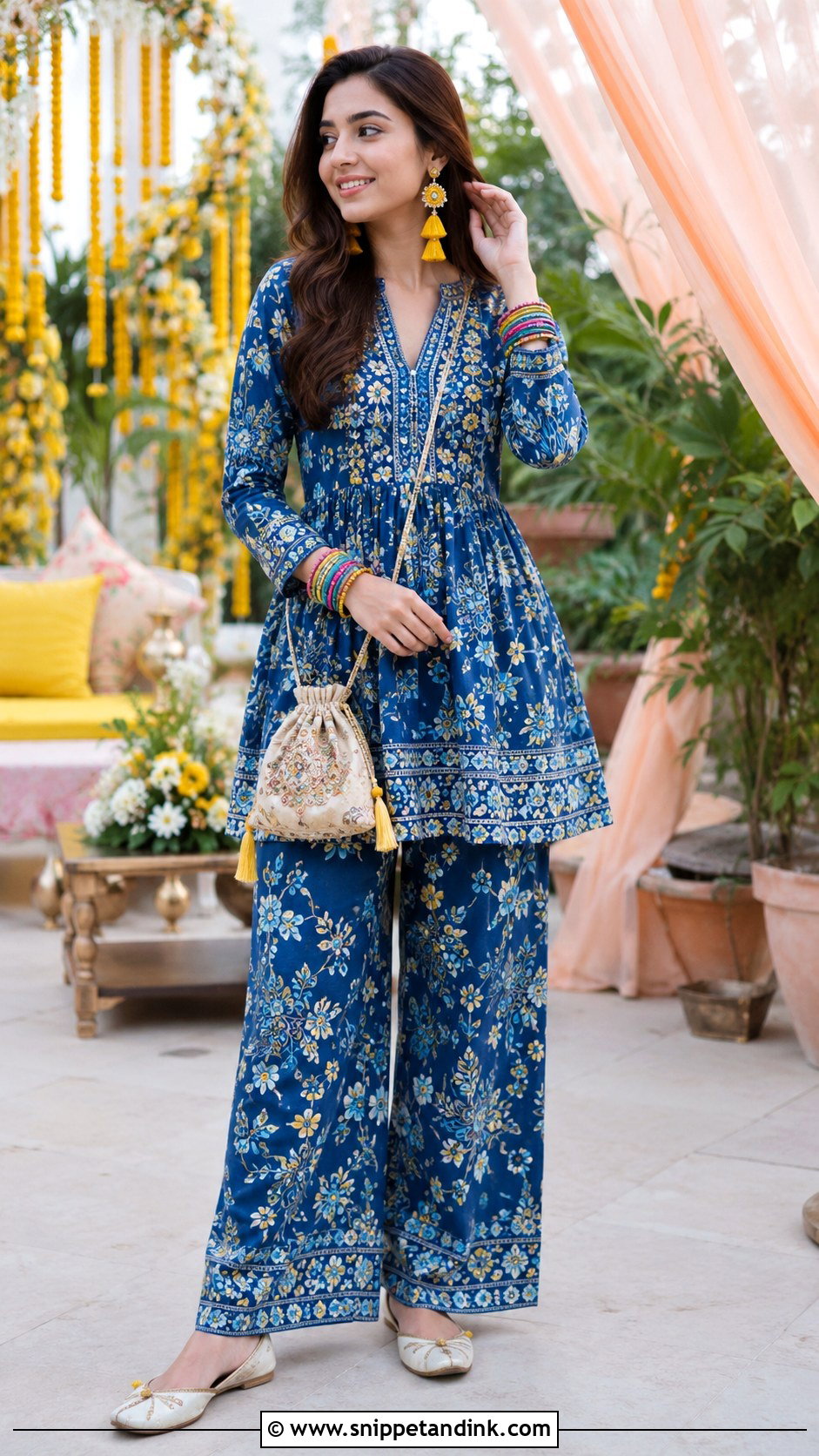
For a relaxed mehndi at home or in a garden, a blue printed co-ord set in cotton, mulmul or crepe is the comfiest thing you can wear. Paisley, floral and geometric prints carry interest without embroidery weight. I’d only add a dupatta if the family expects one. The fit should be relaxed but tailored: shoulders sitting where they should, pants not dragging. A long-strap crossbody potli keeps both hands free, and the whole set is easy to rewear afterwards.
14. Red Bandhani Skirt Mehndi Outfit
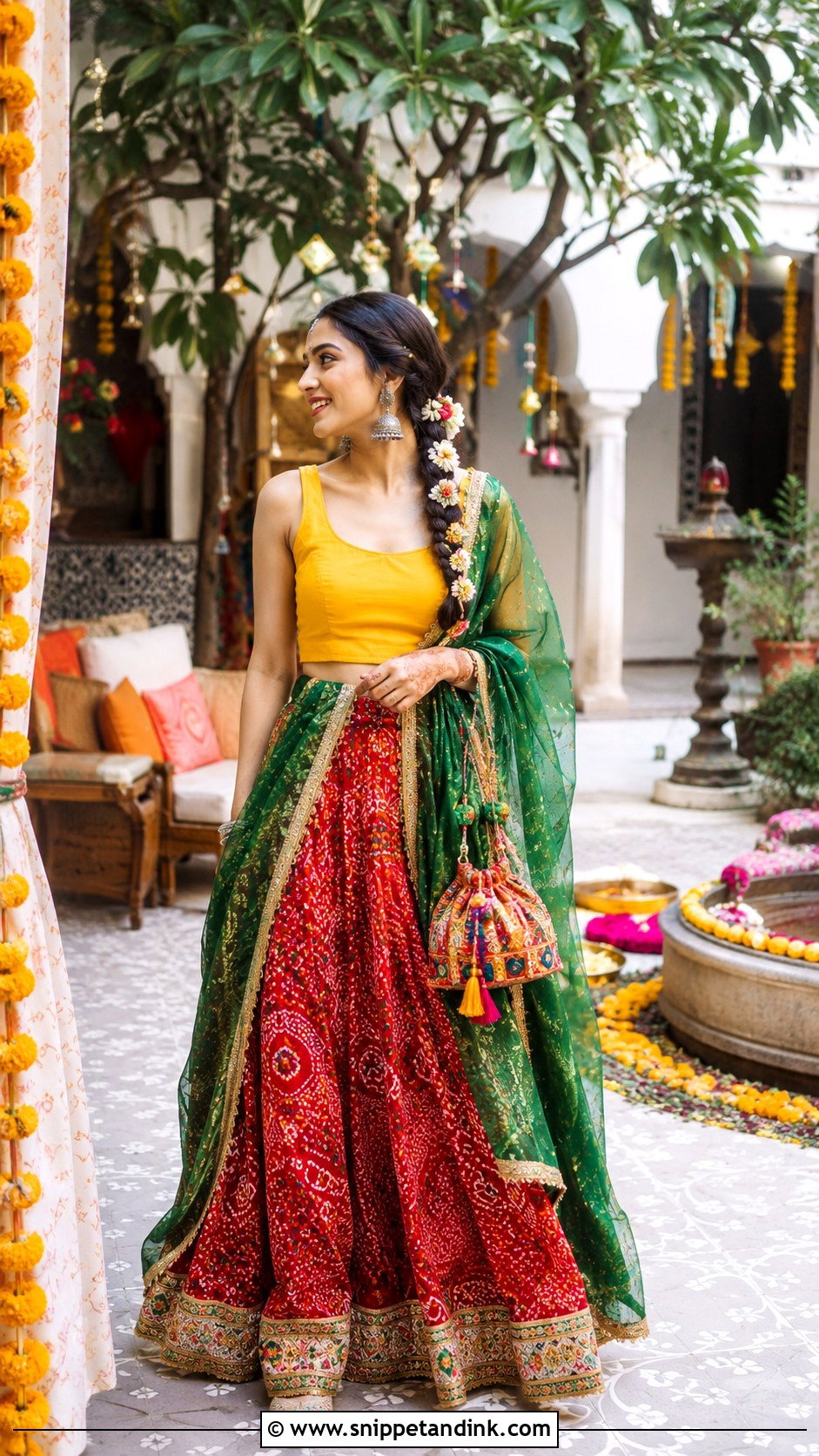
Bandhani is tie-dye with centuries of tradition behind it, and the dots do all the work, so I pair the red skirt with a plain yellow, green or ivory blouse. If henna will go past your wrists, skip elbow-length sleeves; they press against wet paste the moment you bend your arm. A contrasting bandhani or gota-edged dupatta, oxidised silver jewelry and mojaris finish the heritage feel. A drawstring waist with moderate flare is worth seeking out, since you can loosen it after the meal.
15. Sage Green Angrakha Mehndi Outfit
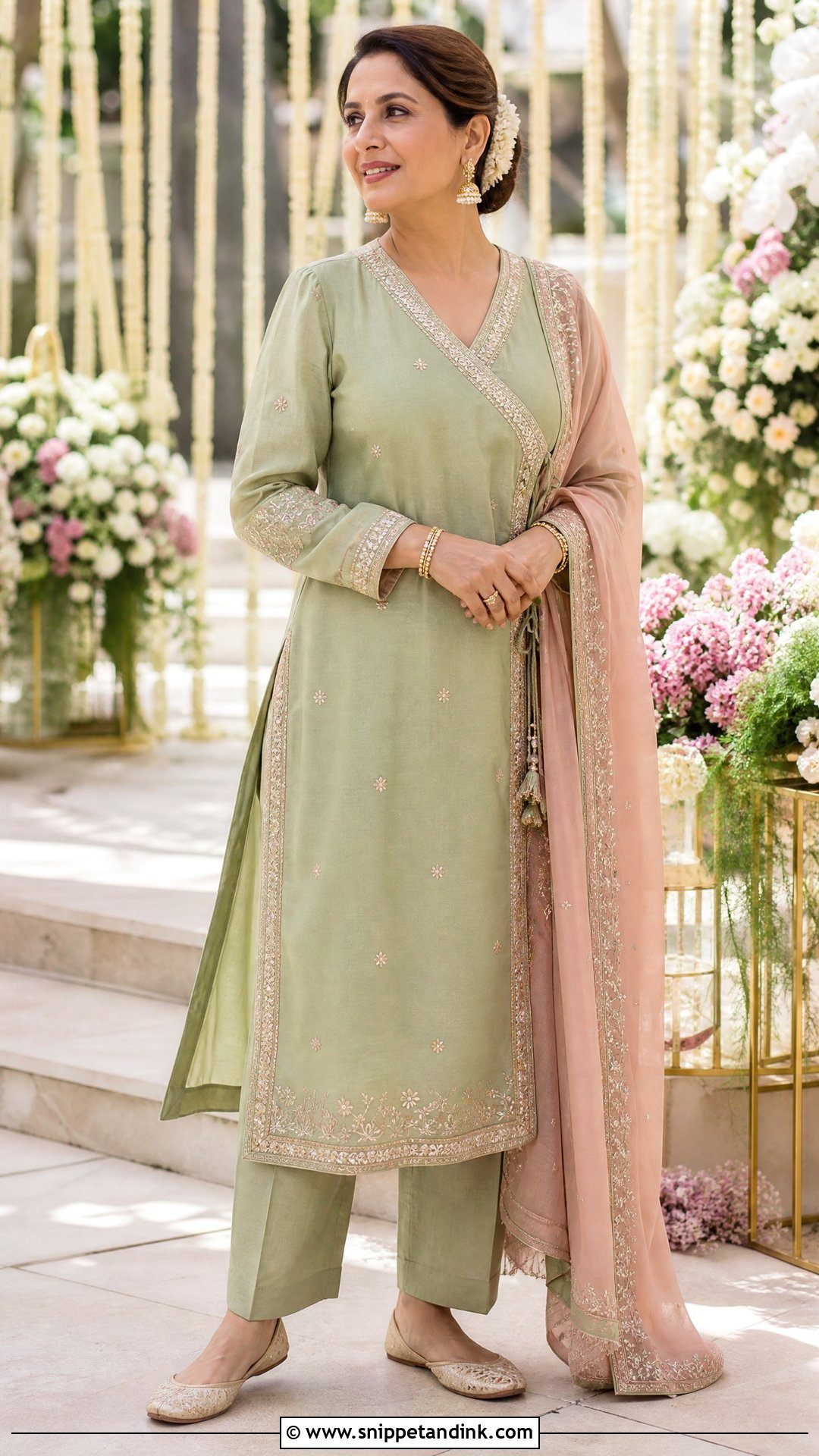
Sage is the softer sister of emerald and reads especially well on mothers and aunts who want something quiet but festive. The angrakha’s crossed bodice defines the waist; the risk is tying it so tight that sitting becomes a chore, so I tie it with a finger’s width of ease. Block printing, mukaish or a slim gota border along the wrap line looks refined. Straight pants are easier than churidars if the event involves a lot of floor sitting, because churidar bunching at the ankle digs in after a while.
16. Fuchsia Tulip Pants Mehndi Outfit
Tulip pants show off their folded drape only if the top stops in the right place, so pair them with a knee-length kurta or a high-low top. Choose a fabric that falls smoothly; anything stiff adds width at the hip. Petite women tend to suit this shape well, since the visible ankle and shorter top keep the line from swamping them. Kundan-style earrings and slim gold bangles are enough. Secure every layer before the dancing starts; tulip drapes can loosen at the waist tie.
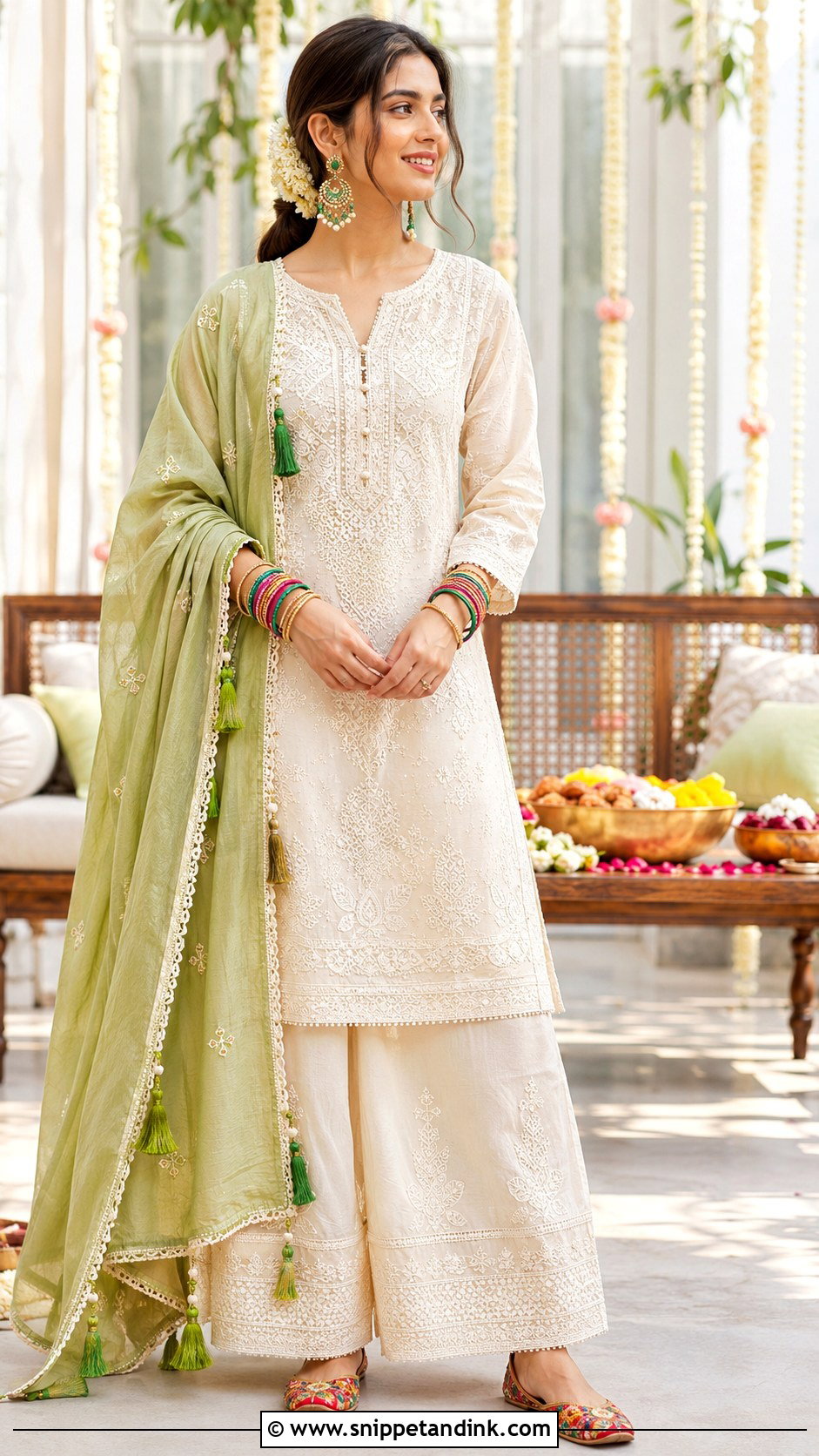
17. Ivory Chikankari Mehndi Outfit
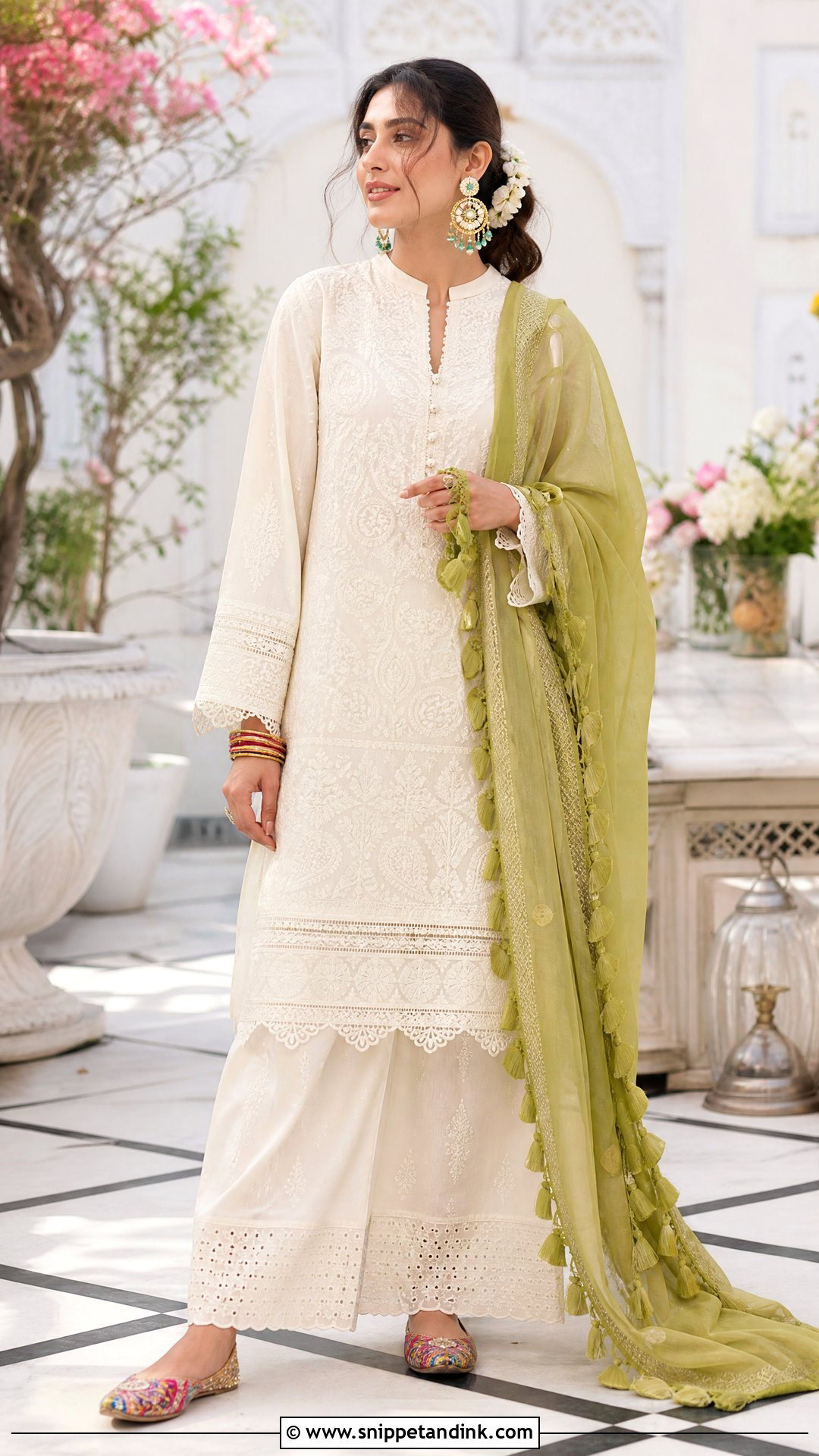
Ivory chikankari is hand-embroidered on fine cotton or georgette, which means it is sheer, so a nude underlayer is non-negotiable if you want it to look smooth in photos. Add colour through a vivid green, yellow or pink dupatta with tassels or gota edging. If you’re getting henna, choose short or three-quarter sleeves and avoid trailing cuffs, which brush wet designs. Meenakari earrings and multicolour bangles keep the white from feeling too plain. It suits intimate daytime events best.
18. Emerald Kurta Skirt Mehndi Outfit
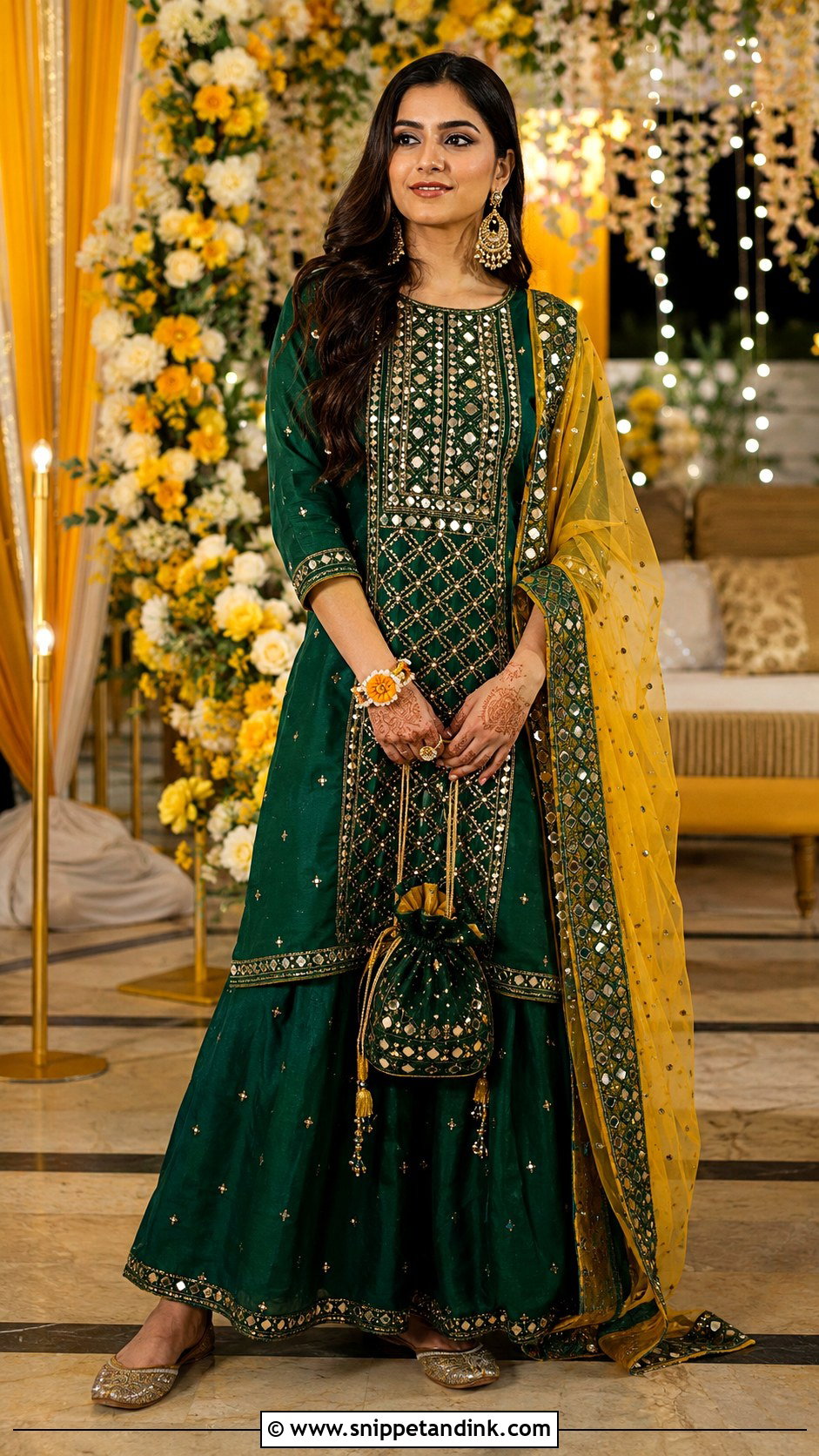
An emerald kurta over a coordinated flared skirt gives you the drama of a lehenga with the coverage of a suit. The calf-length kurta with side slits is what makes it work; without slits it rides up when you sit. Keep embellishment heavier on the kurta and lighter on the skirt so the whole outfit doesn’t weigh you down. A sheer yellow dupatta tucked behind one shoulder and antique gold earrings suit an evening mehndi or a close relative who wants a bit more formality.
19. Peach Tiered Anarkali Mehndi Outfit
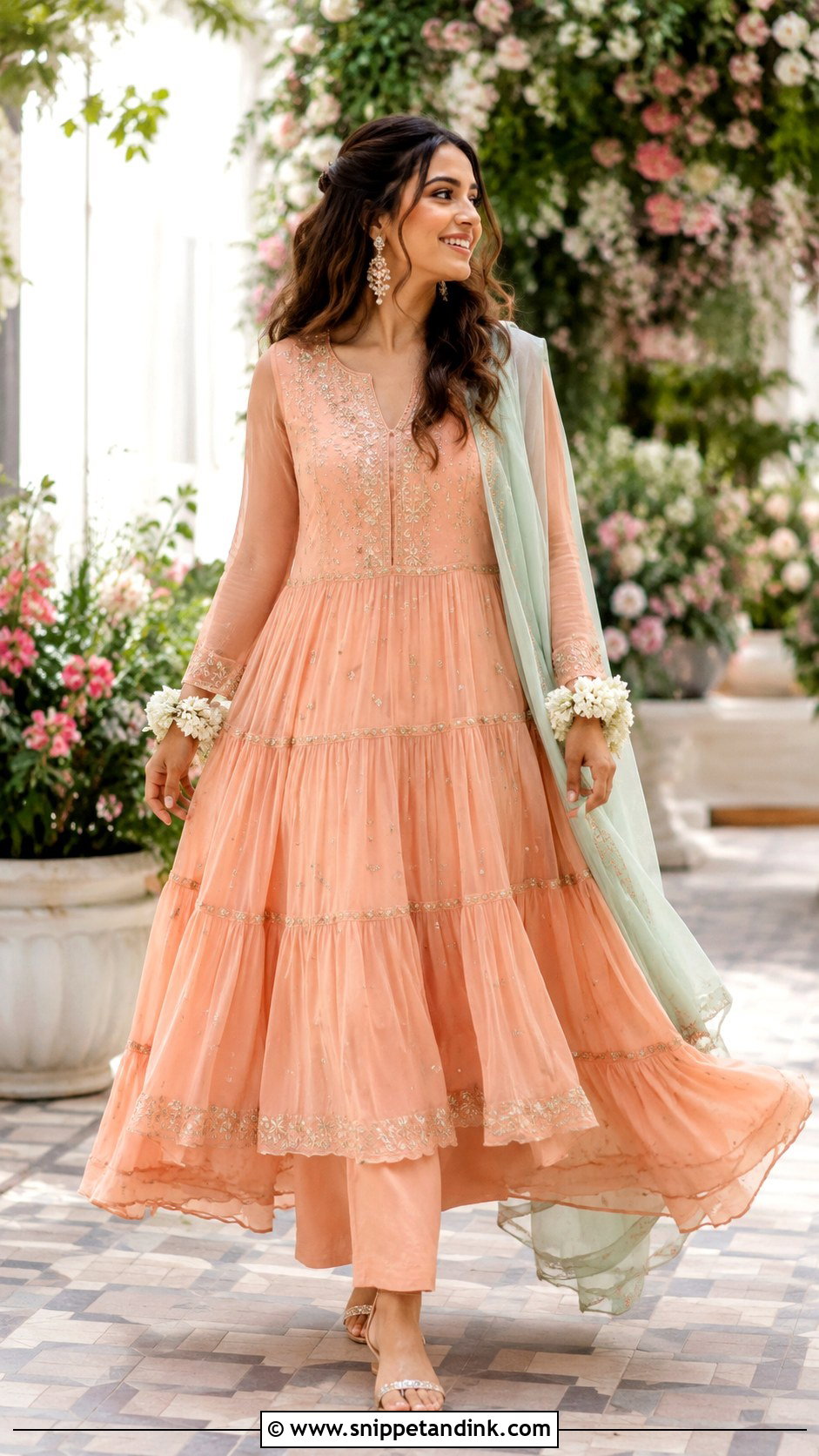
Peach turns romantic in a tiered Anarkali, but the tiers need to be narrow; deep tiers add bulk at the hip and wrinkle badly after a long sit. Lightweight georgette or chiffon with floral embroidery at the bodice and sleeves keeps it airy. A mint or pale yellow dupatta adds contrast, and champagne flats keep the palette soft. Bridesmaids can wear slightly different peach tones with matching dupattas. On grass or gravel, have the hem finished clear of the floor.
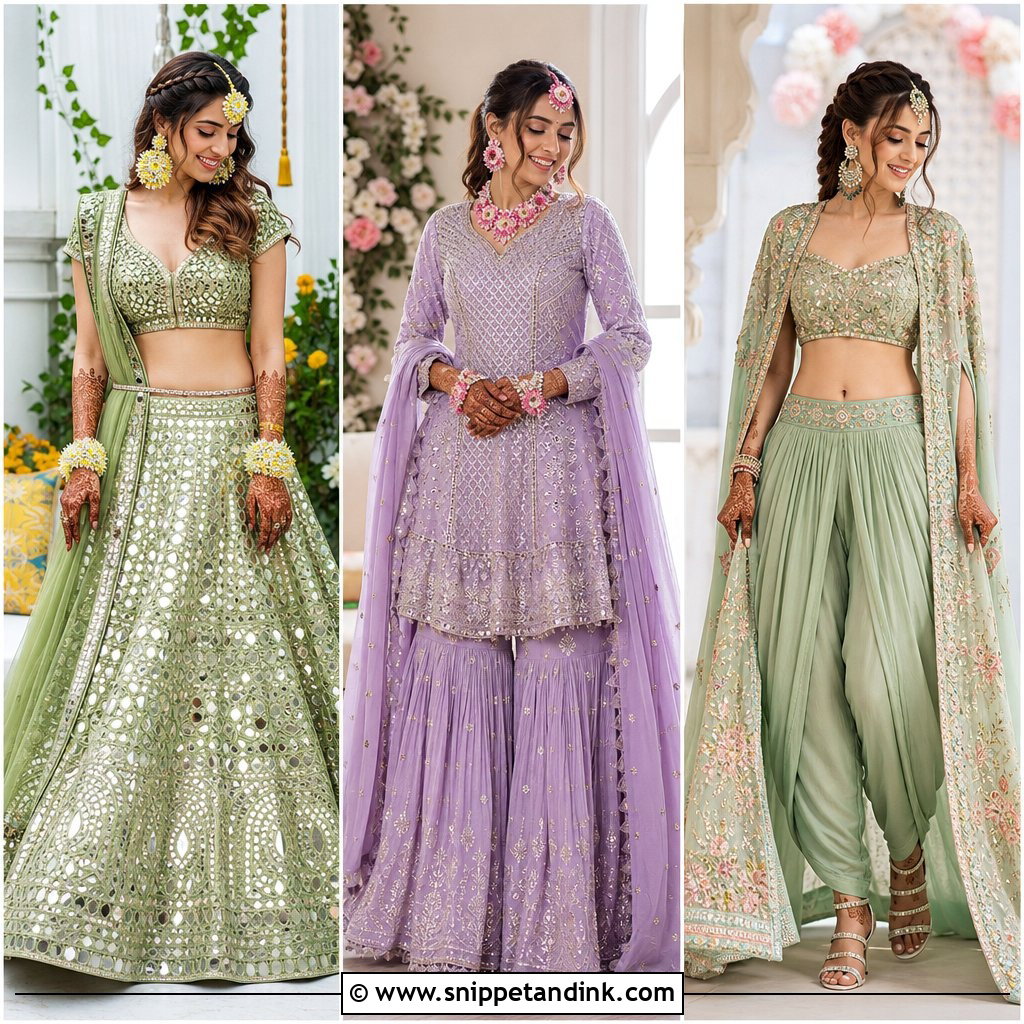
20. Black Multicolor Embroidered Mehndi Outfit
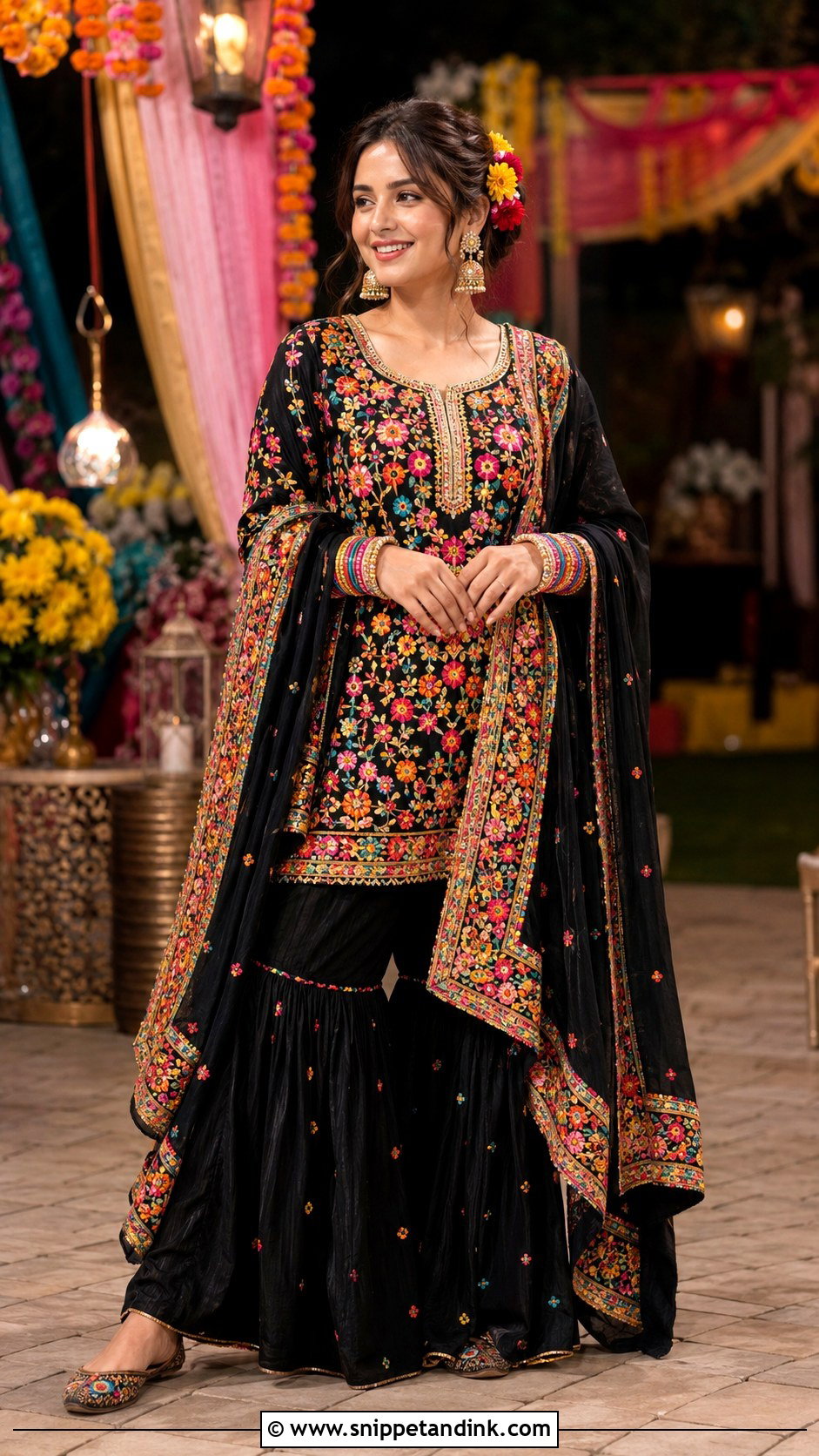
Black is a strong base for vivid multicolor embroidery at an evening event, and it hides the odd henna smudge better than anything else here. A short black kurta with bright floral threadwork over palazzos or shararas, plus a dupatta bordered in pink, green, orange and yellow, links it to the festivities. Keep the silhouette relaxed so it still reads as a celebration rather than a cocktail party. I’d suggest it for guests rather than the bride unless black is part of the plan, and do check with the family first, as some avoid black at weddings.
Heat, Floor Seating and a Long Day: Fit Checks I Do at the Final Fitting
Mehndi events are often outdoors, in the afternoon, and longer than anyone expects. A fitting room never tells you how an outfit behaves after four hours in the sun on a floor cushion, so I recreate it.
Sit on the floor in it
Sit cross-legged for a few minutes, then stand up without using your hands. If the kurta rides up, the side slits need to go higher. If the skirt or sharara pulls tight across the knees, there isn’t enough flare. If you had to grab something to get up, think about how that will go with wet henna on both palms.
Hold your hands out
Rest your forearms on your knees with palms up, the way you’ll sit for the artist, and hold it. Watch where the dupatta, sleeves and jewelry fall. Anything that touches your wrists in that pose needs pinning, shortening or removing.
Think about the weather
Synthetic satins and heavily lined blouses trap heat, and sweat lifts makeup and can make a fitted blouse cling. For a summer daytime event, I steer people to cotton, mulmul, chanderi, chiffon and georgette, and keep the heaviest embroidery for an evening function instead. If the mehndi runs late into a cool night, a light jacket or shawl in a coordinating colour saves you from covering the outfit with whatever cardigan is nearby.
What I Pack in the Mehndi Day Outfit Bag
Whichever outfit you land on, sort out comfort first: breathable fabric, a waistband you can sit in, a hem that clears the floor and sleeves that stop short of the henna. Then add one or two accessories you love rather than every statement piece at once. In the bag I bring to any mehndi: safety pins, a few spare dupatta pins, cotton pads, a soft cloth for wiping stray paste off fabric, a small bottle of water, and a pair of flat backup sandals. Wear colours you feel happy in, and give yourself room to actually enjoy the day.
You'll Like These Ideas:


Leave a Reply