
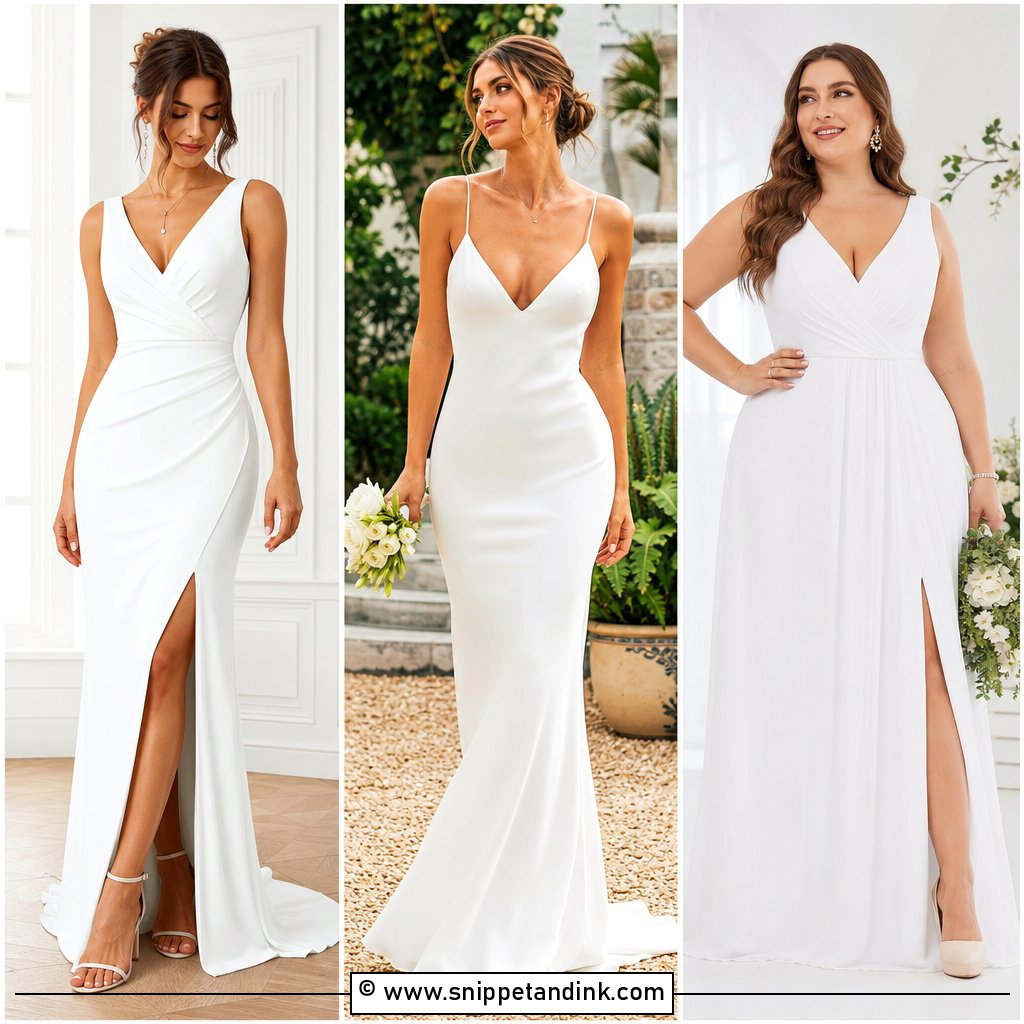
When a bride tells me a dress “isn’t quite right” but can’t say why, the neckline is usually the reason. It decides how much of the shoulders and collarbone show, how the bust is supported, where a necklace can go and how the veil and hair need to sit. It also decides whether you can hug your grandmother without hitching anything up. Bridal shops now carry everything from sweethearts and square necks to halters and soft cowls, so the choice is wide. My advice before reading on: when you try gowns, have someone photograph you from the front, side and back, and move in every dress. The twenty necklines below each come with the styling and fitting checks I’d use.
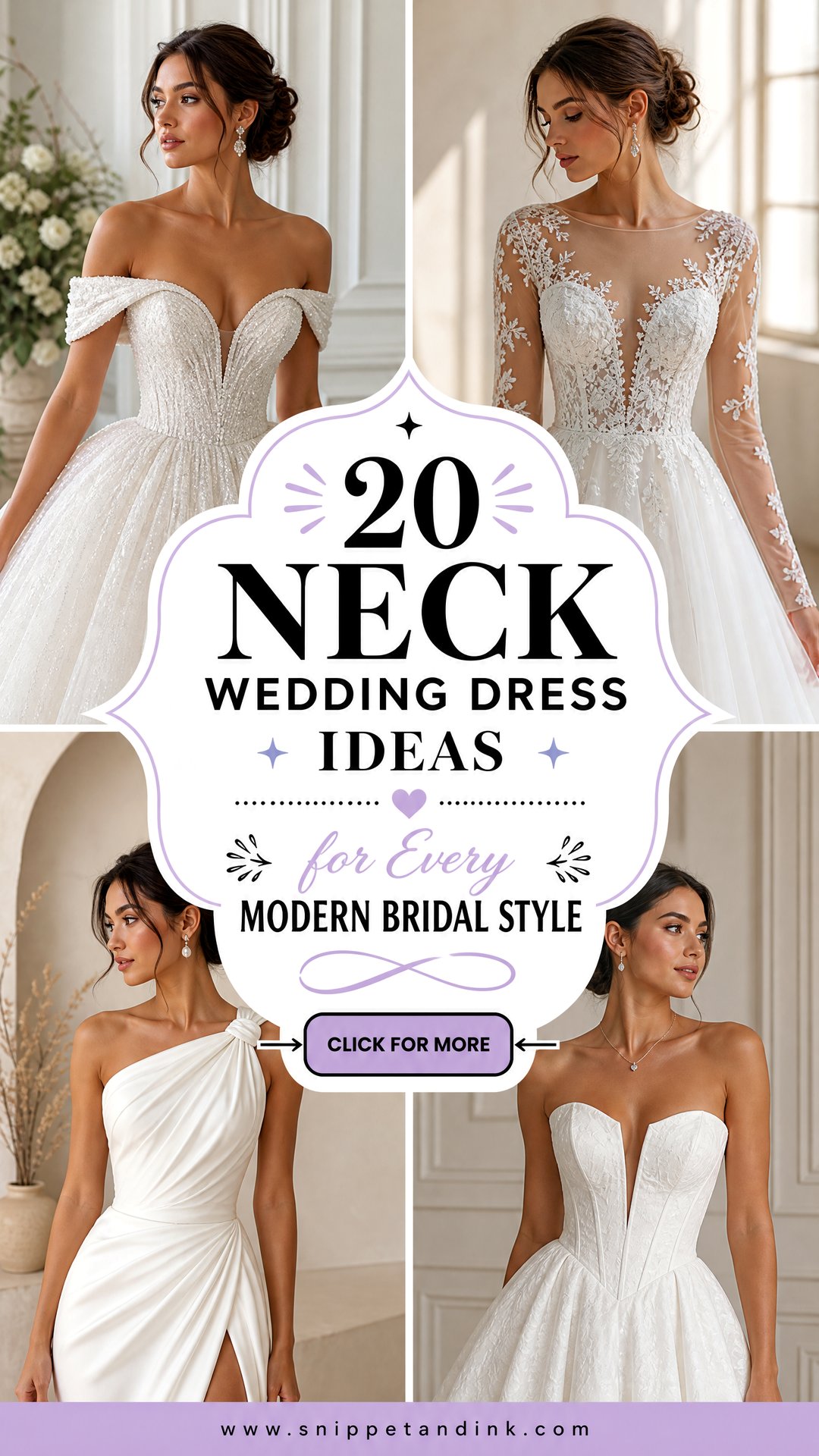
Which Necklines Suit Broad Shoulders, a Full Bust or a Short Neck?
No neckline is forbidden for any body, but some make life easier. These are the starting points I use at a first appointment, before the bride tries anything on.
- Broad or athletic shoulders: halters, deep V-necks and one-shoulder styles break the width; wide straight strapless can exaggerate it.
- Narrow or sloping shoulders: off-the-shoulder, bateau and portrait necklines add horizontal width.
- Full bust: V-necks, sweethearts and surplice wraps with built-in cups give support and shape; very high necks can make the bust look heavier.
- Small bust: square necks, straight strapless and high necks show off the collarbone without needing much to fill them.
- Shorter neck: V, scoop and plunge necklines open the space; jewel and high collars close it.
Treat these as a shortlist, not rules. I’ve seen petite brides carry a bateau beautifully. Try at least one shape you’d assumed wouldn’t work.
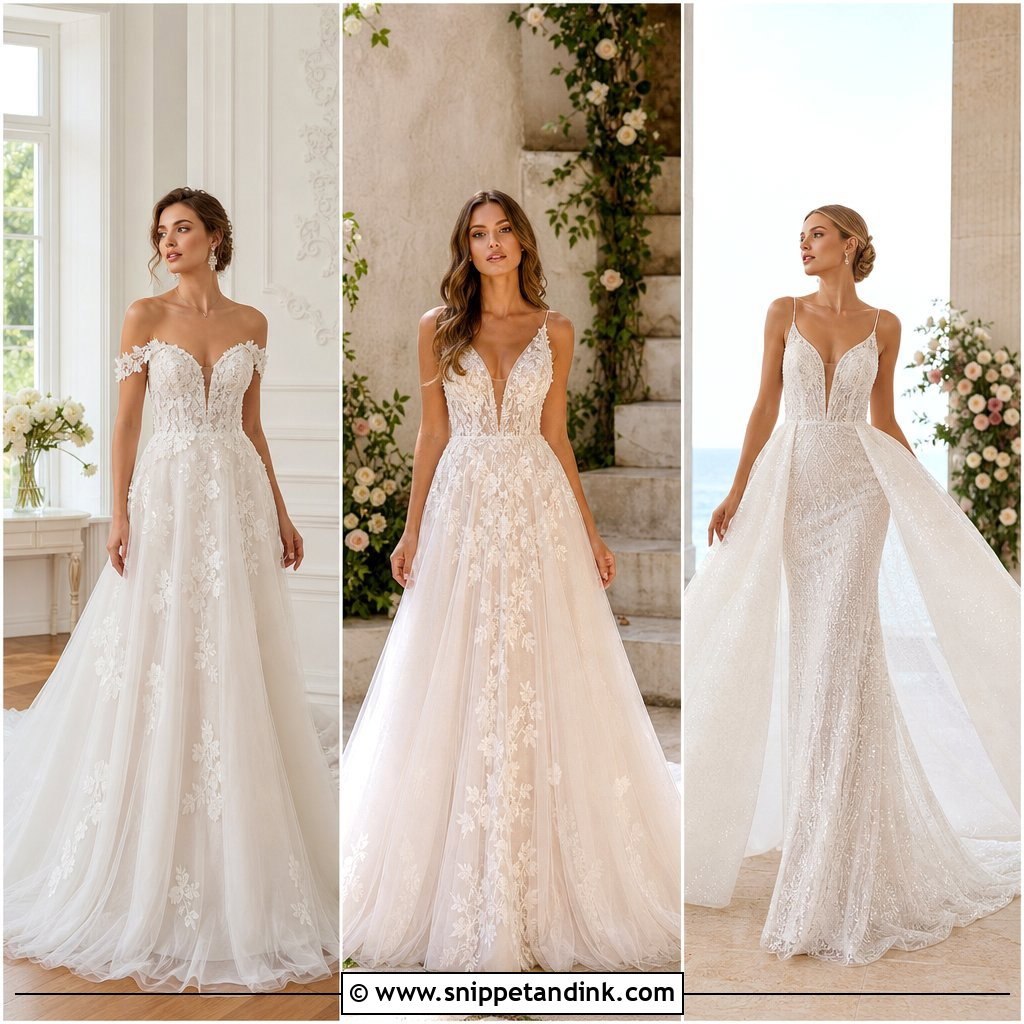
1. Sweetheart A-Line Wedding Dress
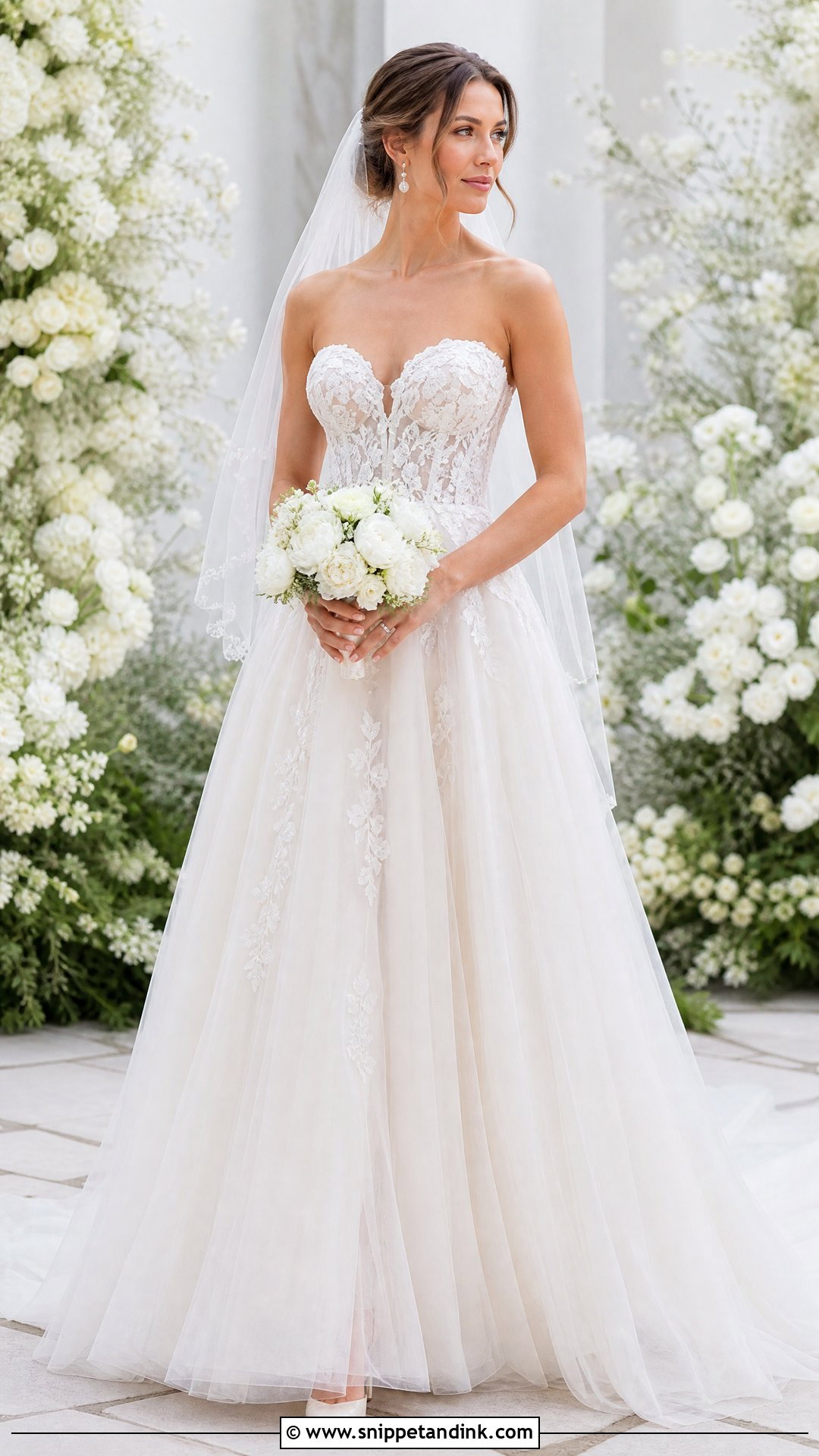
The sweetheart’s double curve draws the eye up to the face, and on an A-line skirt it looks classic without feeling stiff. A structured corset lining does the real work of holding it up; lace appliqués can soften the join between bodice and skirt. I’d style it with a fingertip veil, pearl drop earrings, ivory pointed pumps and a compact bouquet, and leave the necklace optional. For outdoor weddings, tulle or organza skirts move more freely than satin. The fitting check: raise both arms. If the centre dip lifts away from the chest, the bodice needs taking in at the side seams.
2. Deep V-Neck Lace Wedding Dress
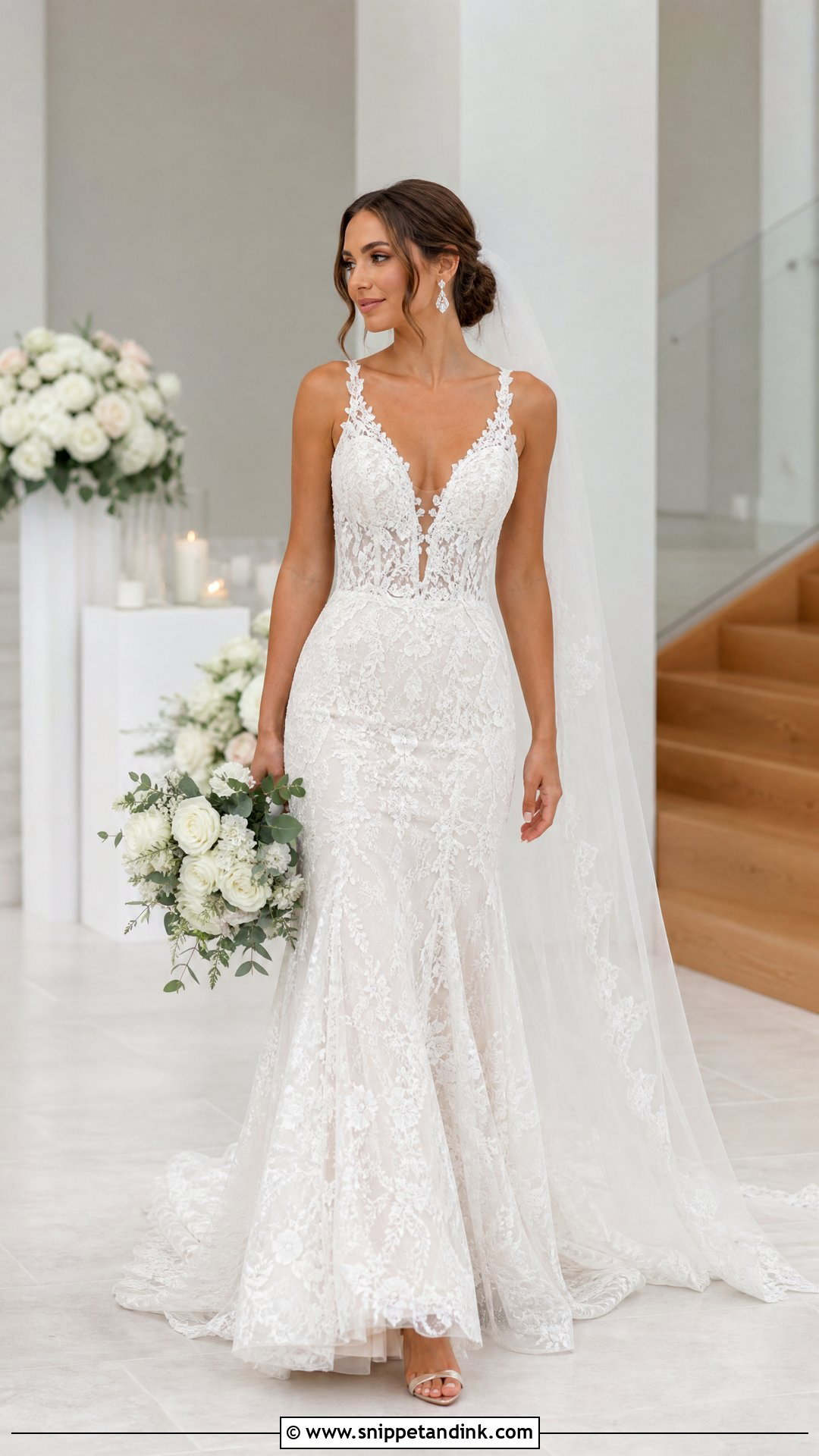
A deep V lengthens the upper body, and lace keeps a daring cut looking bridal. Most well-made V-necks have a strip of fine mesh between the two sides, and I recommend keeping it, because it stops the panels drifting apart when you lean over to sign the register. Pair it with a fit-and-flare skirt, small crystal earrings, a low bun, metallic ivory heels and a chapel veil tucked under the bun. No big necklace; the lace should be the pattern people notice. Sewn-in cups and a little interior boning add support without changing the line.
3. Off-the-Shoulder Ball Gown Wedding Dress
Off-the-shoulder bands sit below the shoulder bone and make a horizontal line across the collarbone, which suits narrow or sloping shoulders particularly well. On a ball gown, satin looks formal and layered tulle looks lighter. Sleek updo, drop earrings, a plain cathedral veil and block heels hidden under the skirt. Skip the necklace unless the bodice is bare. The honest drawback is arm movement: with the bands fixed, you can’t lift your arms much above chest height. Practise hugging and dancing at the fitting, or choose detachable bands so you can take them off for the reception.
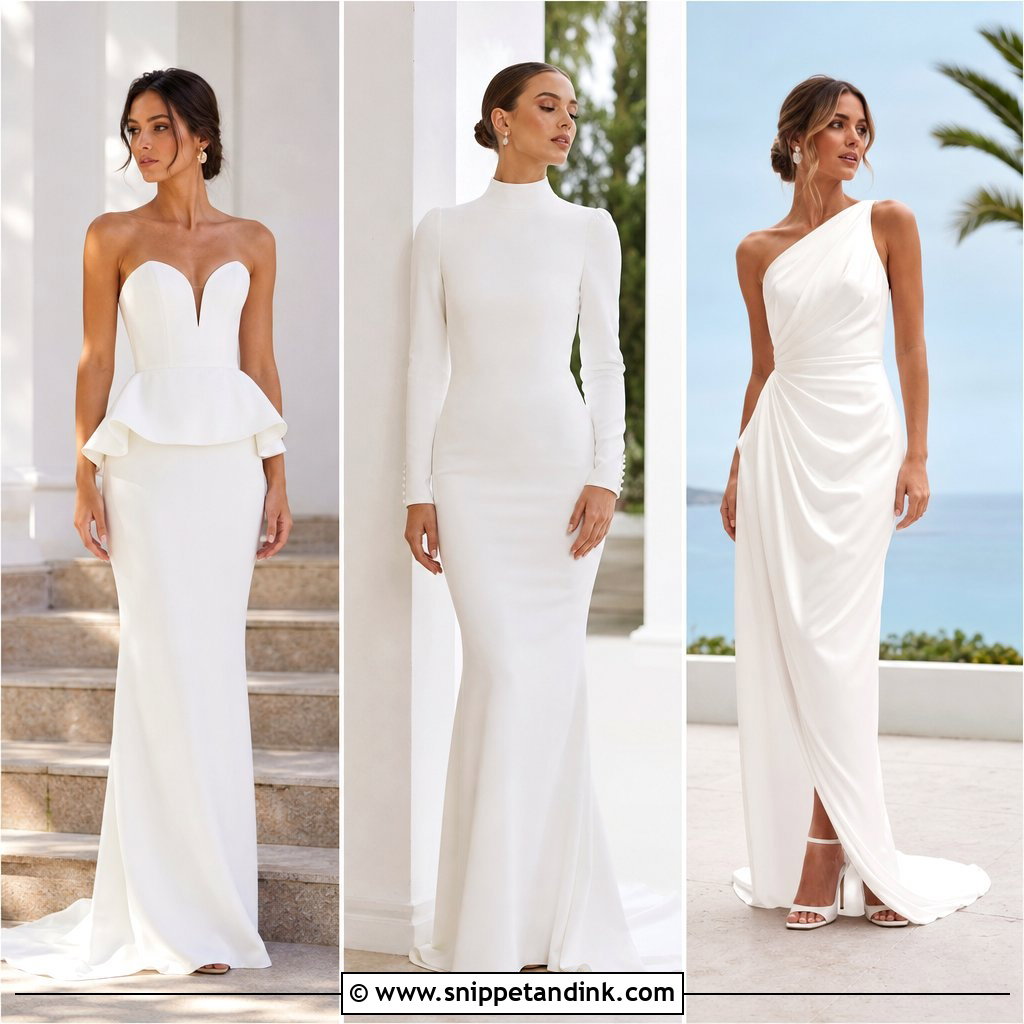
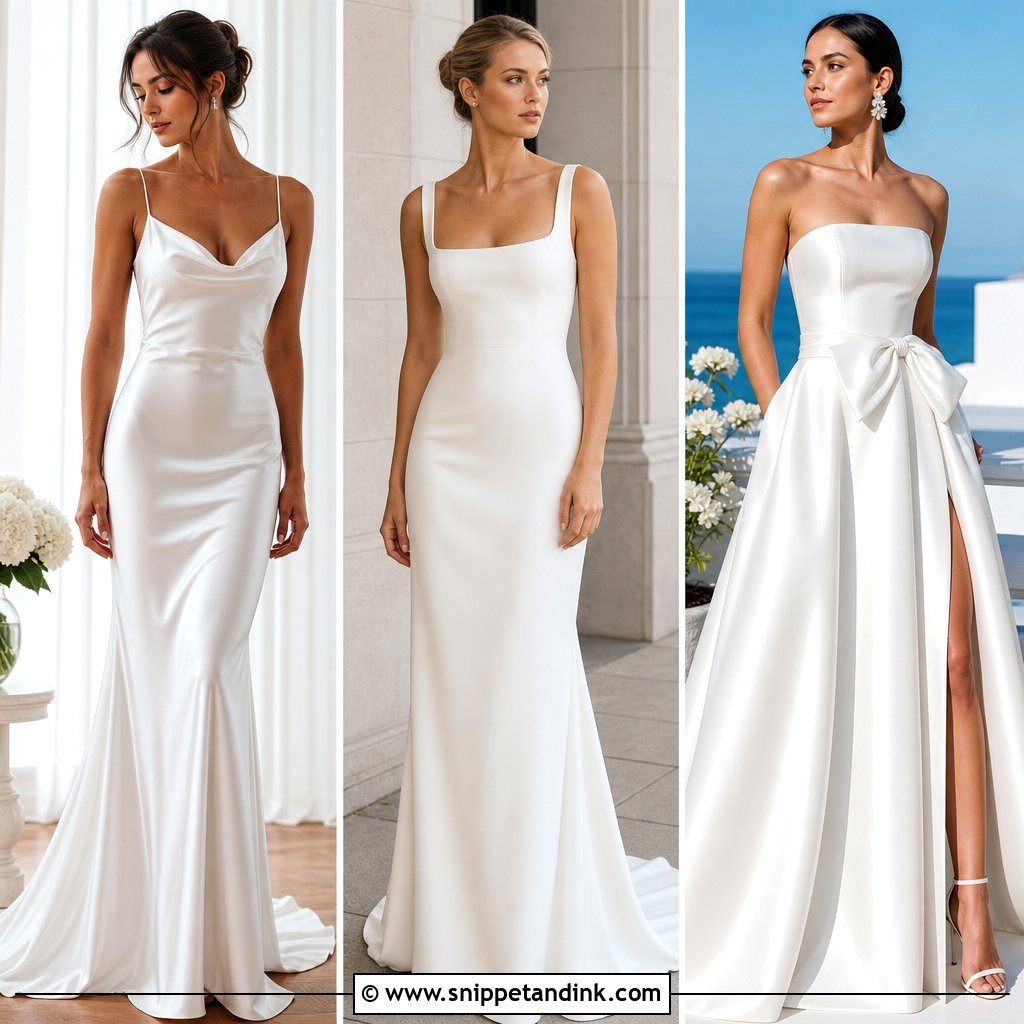
4. Straight Strapless Satin Wedding Dress
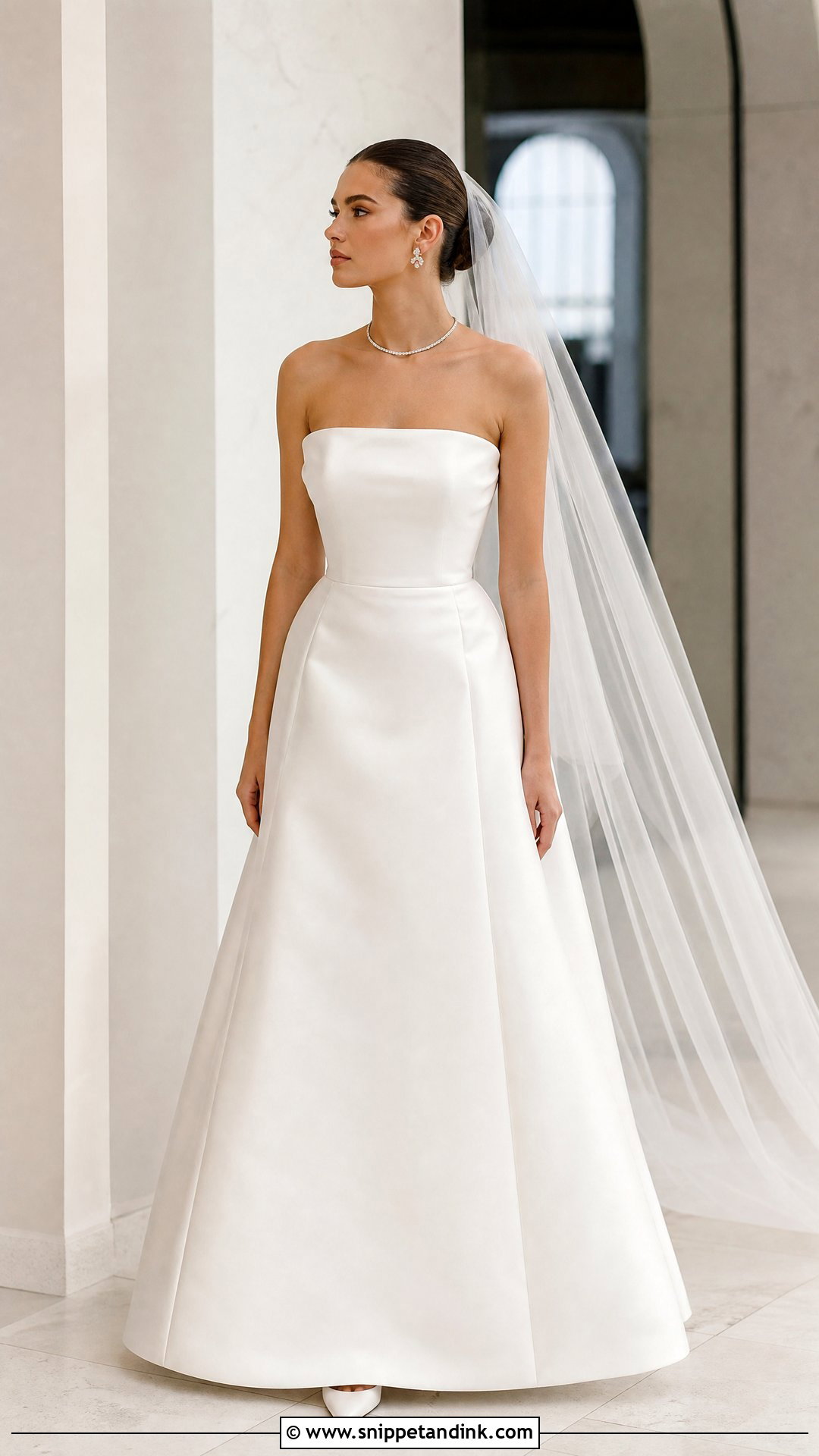
A straight strapless neckline is the most minimal option and the least forgiving if the construction is weak. Choose substantial satin or Mikado, a fitted waist, and either an A-line or a column skirt. Smooth bun, sculptural earrings, pointed pumps and a long sheer veil with no heavy edging; a thin tennis necklace is fine if you want sparkle. Inside, look for boning, cups and a waist stay, a grosgrain band that grips the waist so the dress hangs from the torso, not from the neckline. Without one, you’ll spend the evening tugging the top edge up. Sit down in it before approving alterations.
5. Square Neck Column Wedding Dress
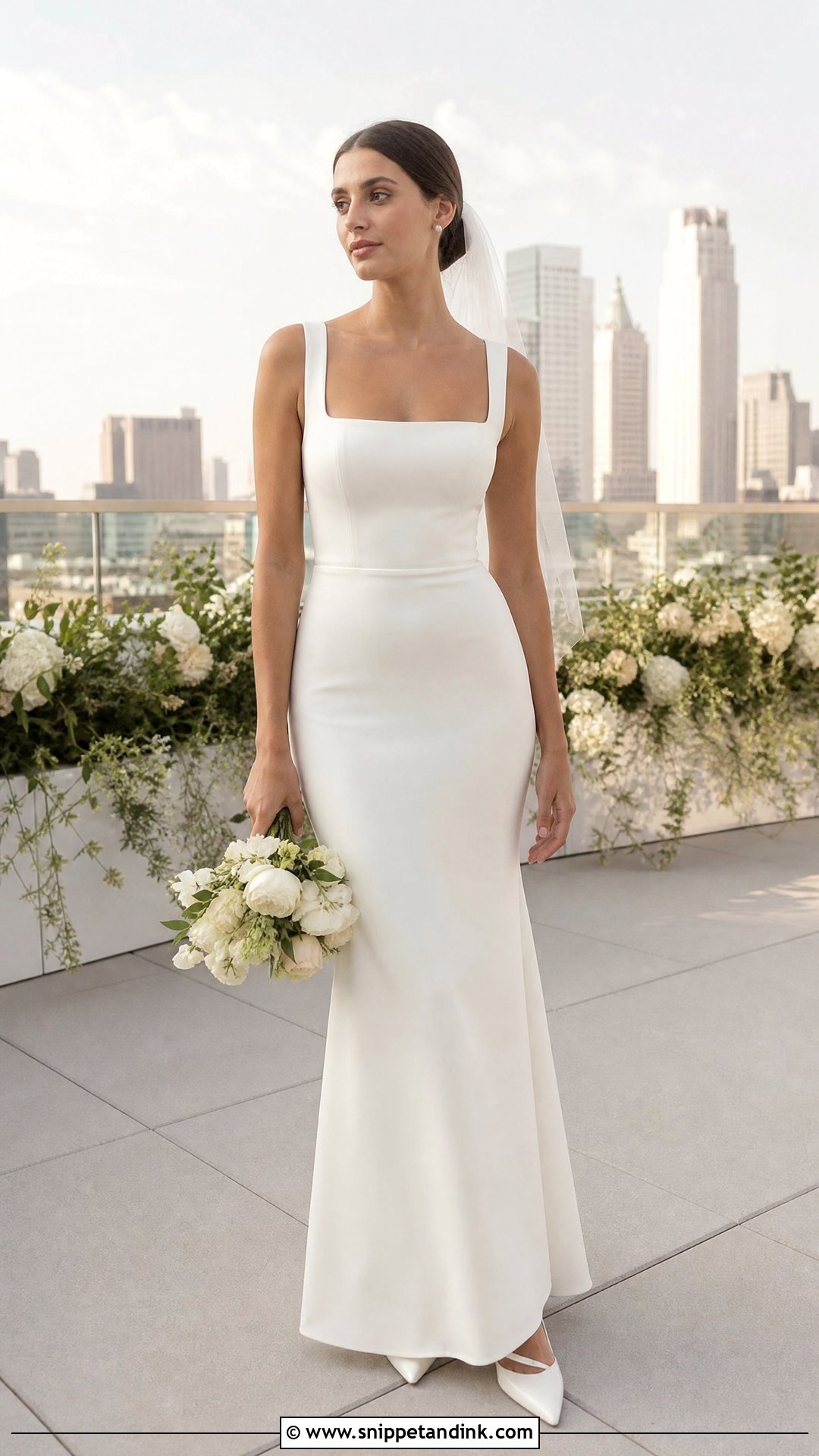
Square necks look architectural on a crepe column. The wide straps frame the shoulders and the skirt drops cleanly to the floor. Pearl studs, a low chignon, a slim veil and pointed slingbacks. I usually leave the neckline bare, because a pendant hanging inside the square softens the corners that make it interesting. For more detail, I’d rather add seaming, covered buttons or a detachable overskirt than beading. The corners are what to watch at alterations. They should sit flat against the skin; if they gape when you lean forward, the straps need shortening slightly.
6. Scoop Neck Chiffon Wedding Dress
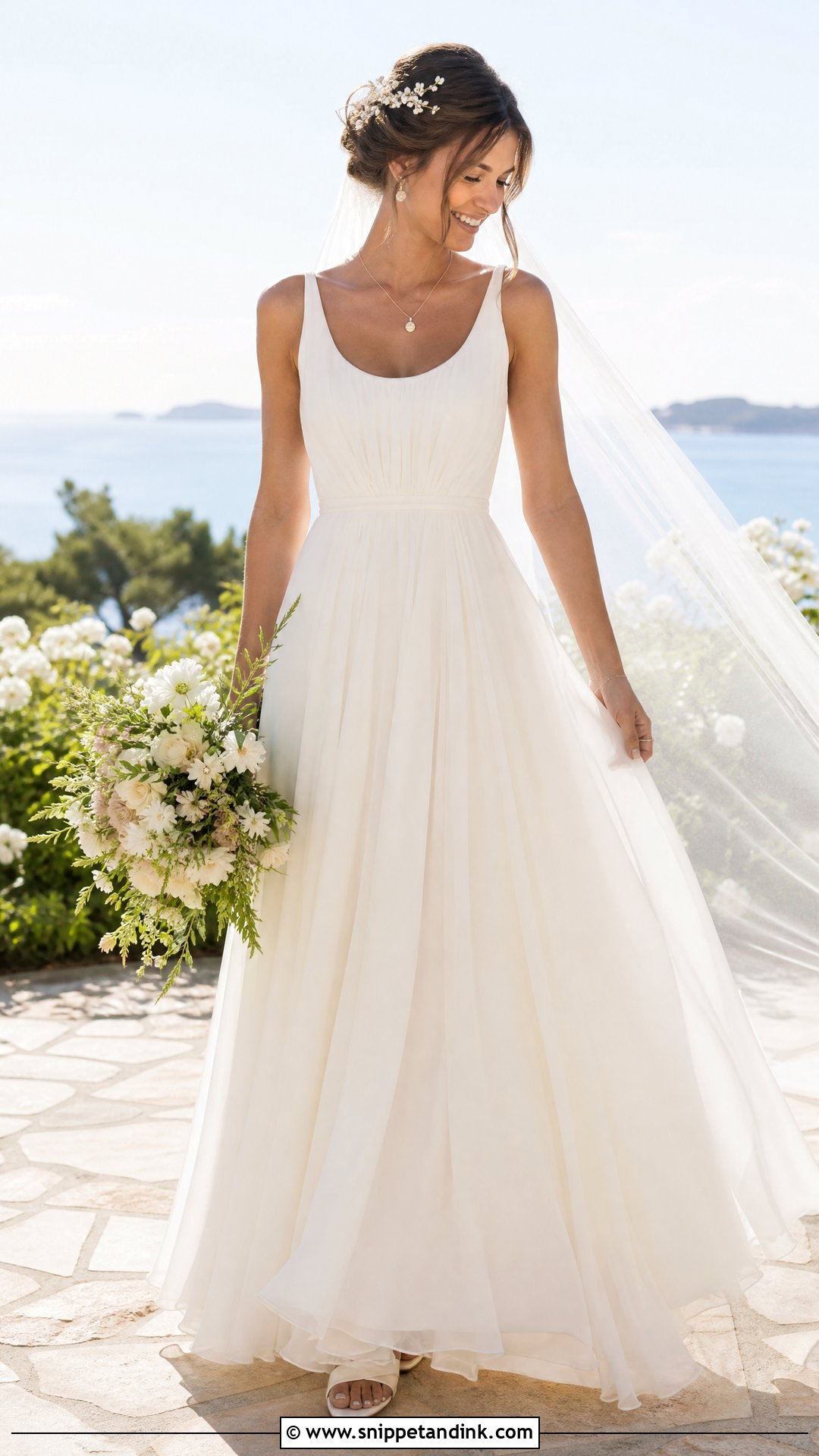
A scoop neck is the easy-going cousin of the V, open but not deep, and it’s often the most comfortable neckline I can offer a bride who dislikes structure. In chiffon with a gathered A-line or empire skirt, it moves nicely outdoors. Delicate sandals, a floral comb, pearl earrings and a light veil. A fine pendant can follow the curve when the bodice is plain. Ask for a full lining, because unlined ivory chiffon can go see-through in strong sun, and request cups if you need them. Stand near a fan at the last fitting to see how skirt and neckline react to moving air.
7. Bateau Neck Long Sleeve Wedding Dress
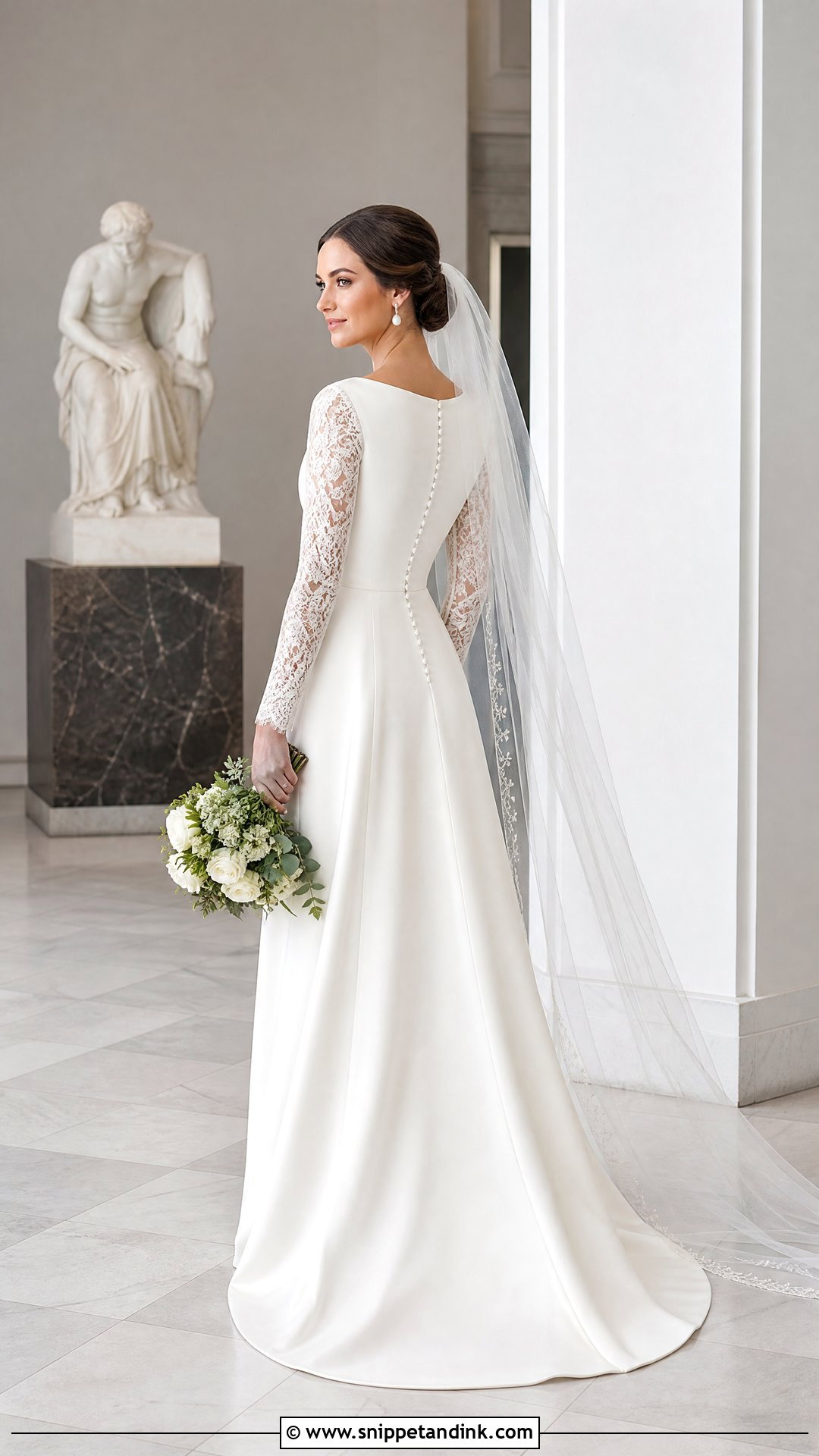
The bateau runs almost straight from shoulder to shoulder and covers the collarbone, so it suits brides who want coverage without a high collar. With fitted long sleeves and a soft A-line skirt, crepe looks modern and lace sleeves look vintage. An updo, pearl or crystal earrings, closed-toe pumps, and the veil fixed low at the back. No necklace; there’s nowhere for one to sit. Put the sparkle in earrings or buttons instead. Two fitting checks: sit down and make sure the front edge doesn’t press on your throat, then reach forward to see whether the chest pulls across between the sleeves.
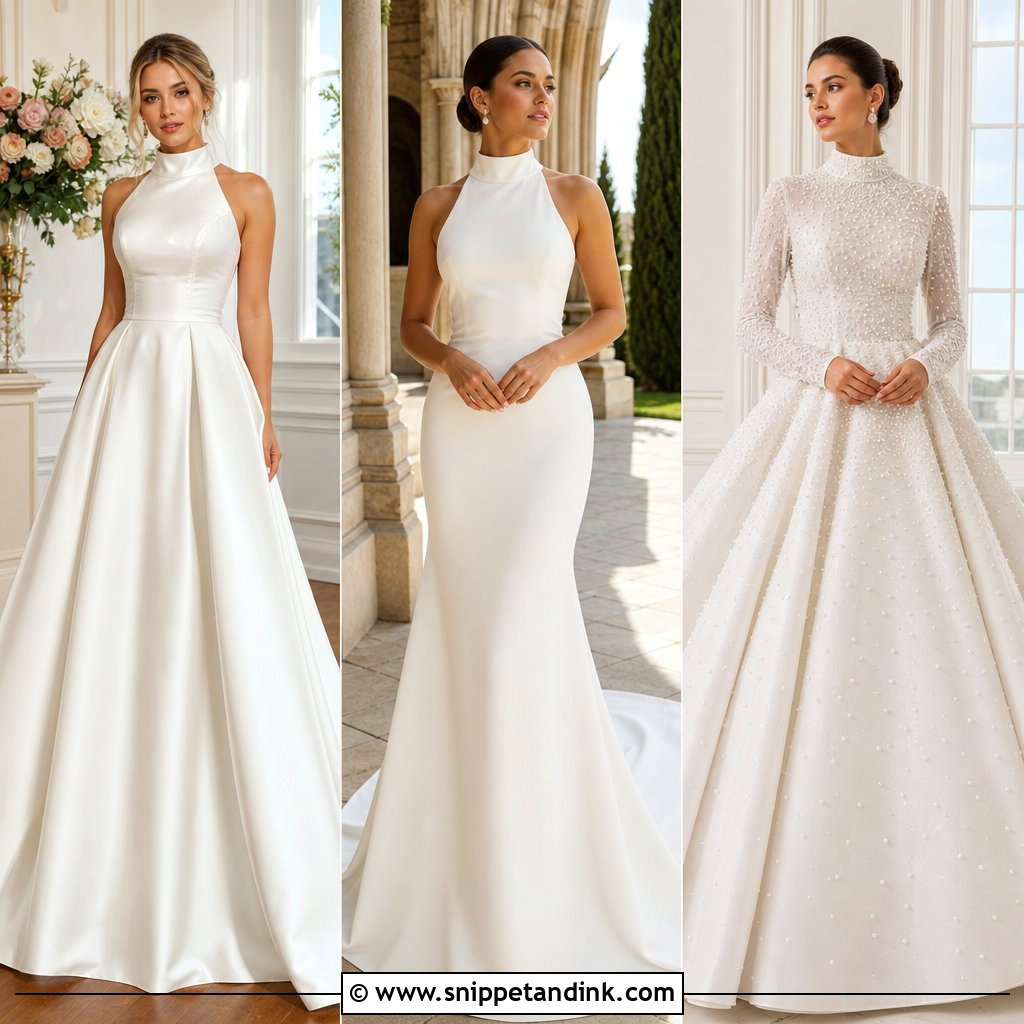
8. Halter Neck Mermaid Wedding Dress
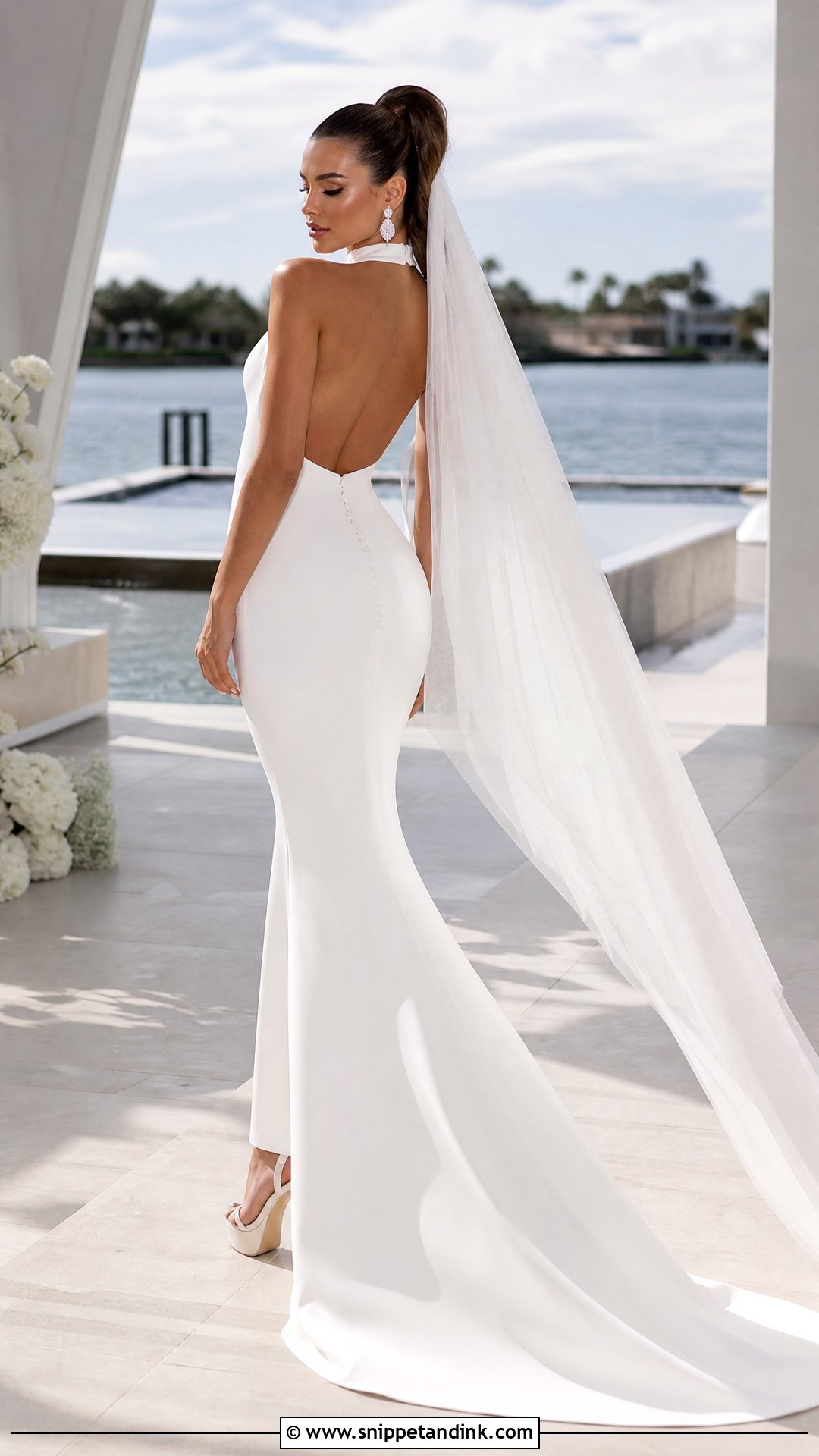
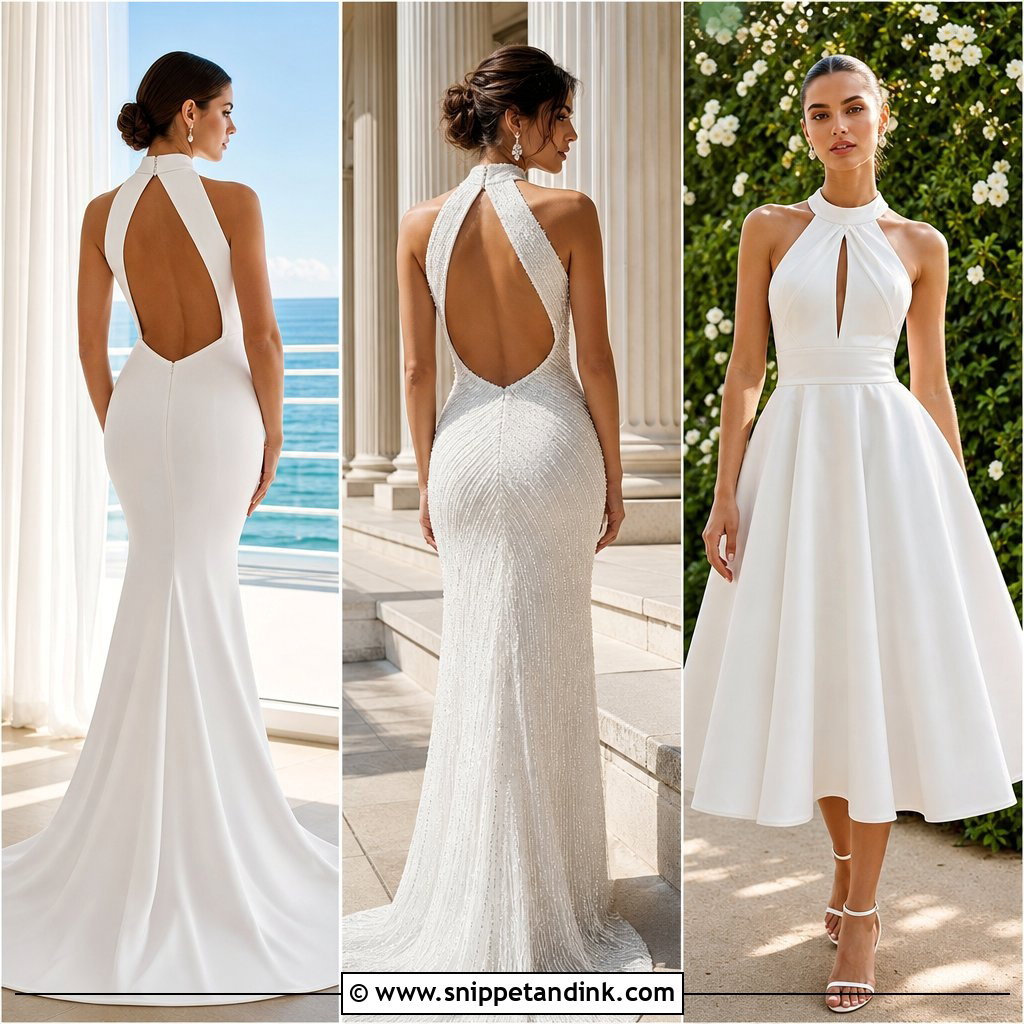
A halter neck wedding dress draws a strong frame around the shoulders, and a mermaid skirt keeps that sculpted line going to the knee. Halters flatter athletic and broader shoulders especially well. Smooth crepe, satin or stretch Mikado, with an open back to balance the covered front. A high ponytail or polished bun, bold earrings, platform heels and a clean-edged veil; a necklace only crowds it. The fastening at the back of the neck carries a surprising amount of the dress’s weight, so check it at every fitting. A hidden bustle or detachable train makes the reception far easier in a mermaid shape.
9. High Neck Lace Wedding Dress
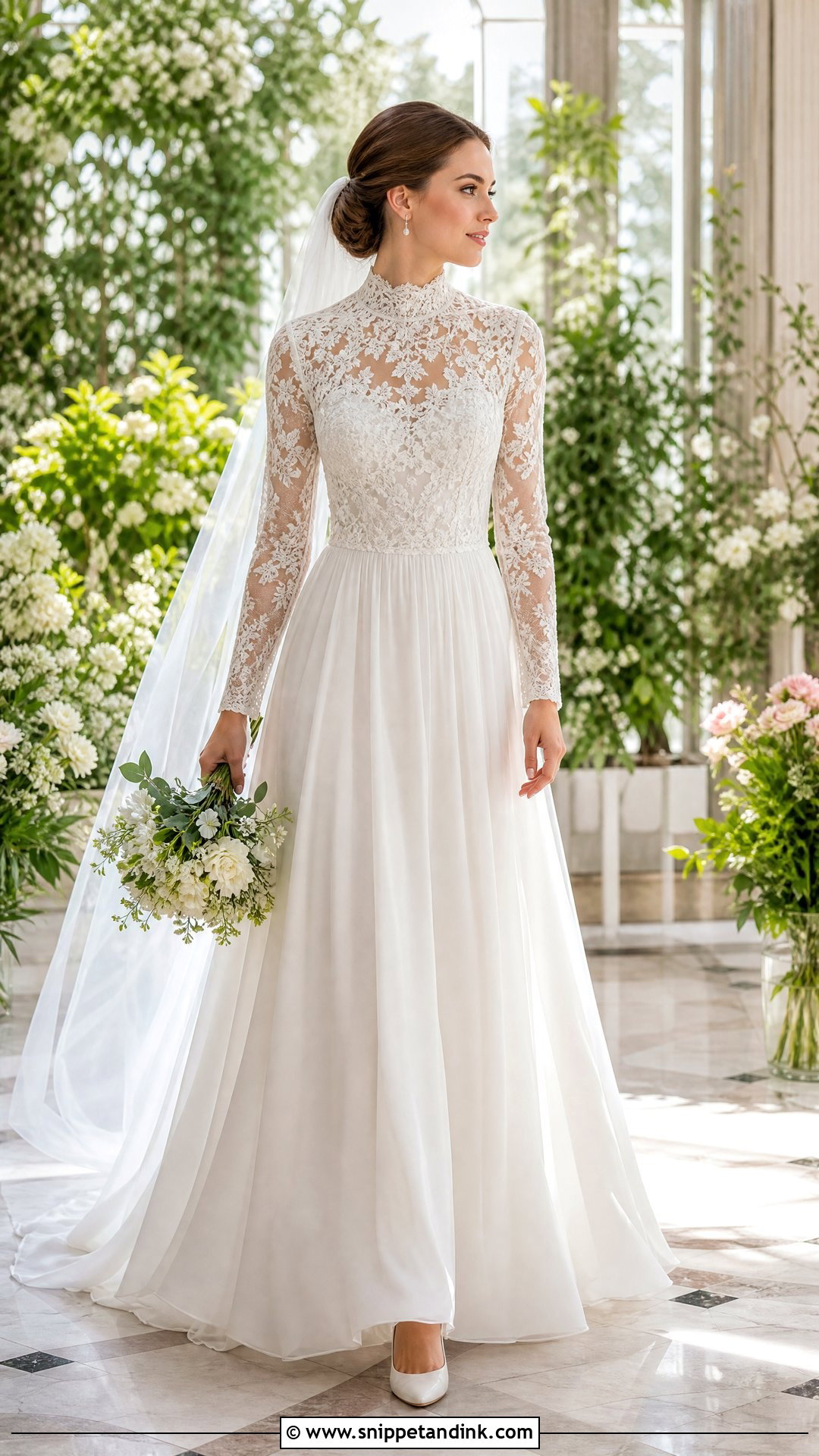
Lace on a high neck wedding dress gives the eye something to follow from every angle. A fitted lace bodice can go with a chiffon skirt for softness or a satin one for formality; long sheer sleeves carry the pattern down the arms. A neat chignon, small drops, closed-toe heels and a plain veil. Skip the necklace. My main concern with lace collars is comfort, because cheaper lace edges scratch the neck after a few hours. Ask whether the collar can be lined with soft tulle or finished with a narrow binding.
10. Illusion Neck Tulle Wedding Dress
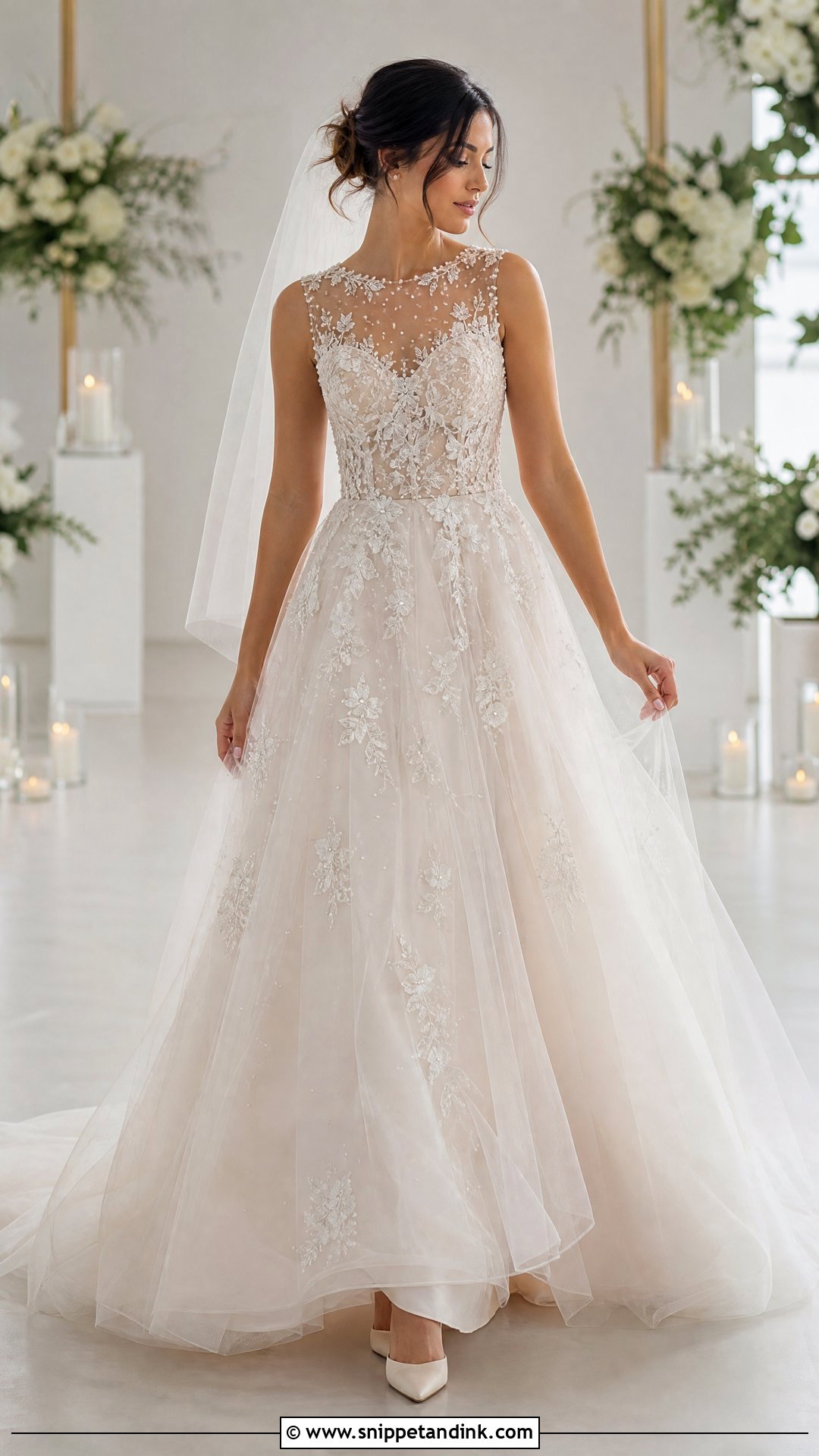
Illusion necklines look strapless from a distance but have sheer mesh across the chest, which gives far more security. The mesh can carry lace, pearls or crystals that seem to float on skin. With a layered tulle A-line, add crystal studs, soft waves or a loose bun, ivory pumps and a fingertip veil. No necklace if the panel is decorated. The single most important choice is the mesh colour: it has to match your skin tone closely, or it shows as a pale or grey band in photos. Check it in daylight and under indoor bulbs, since mesh reflects light differently in each.
11. Plunging Neck Crepe Wedding Dress
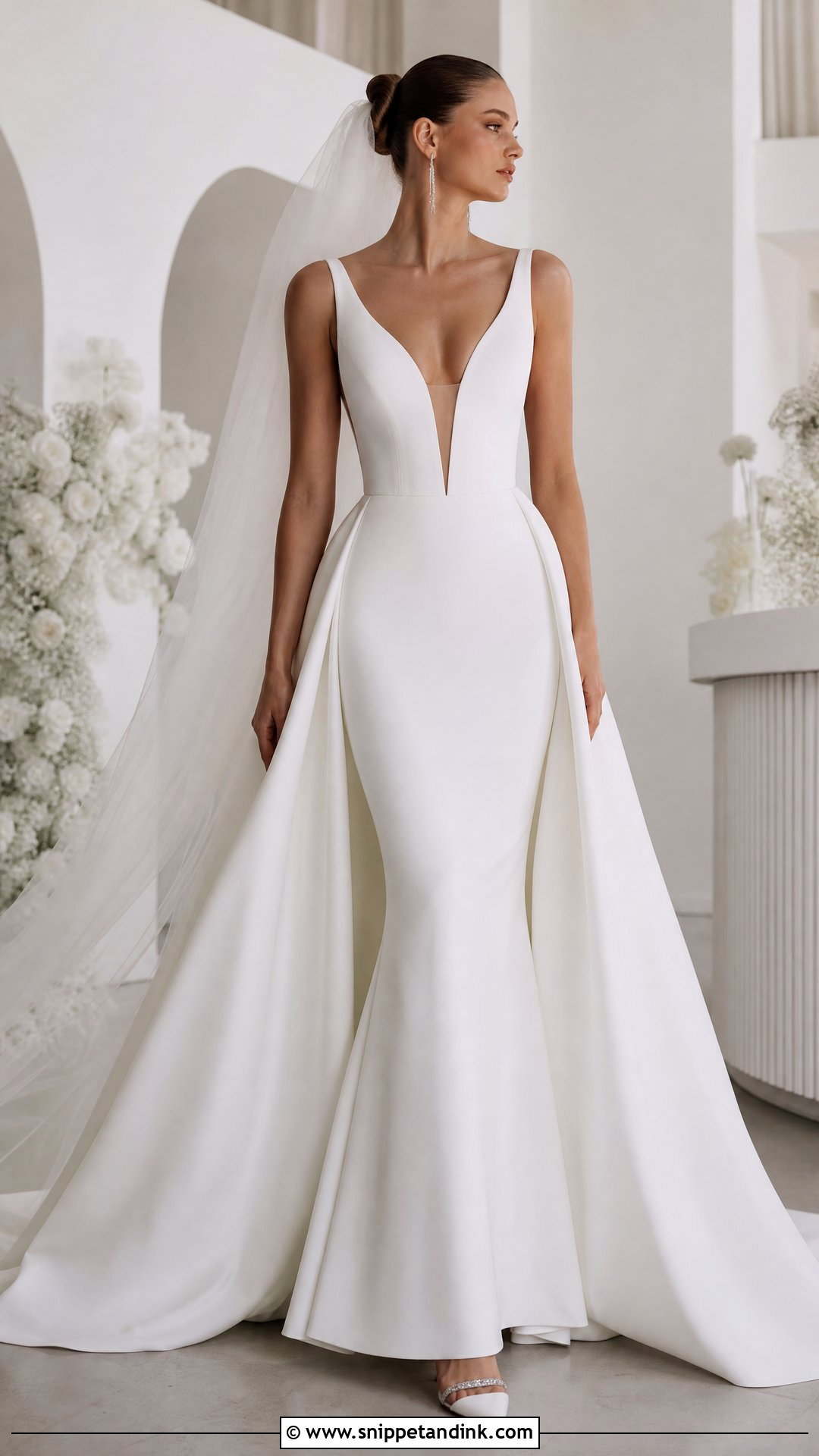
A plunging neckline on plain crepe is all about the line, with nothing to distract from it. Choose a fitted column or soft fit-and-flare with a low back and a short train. Sheer mesh across the plunge keeps everything in place without closing the look. Sleek hair, long earrings, pointed heels, a narrow veil. Fashion tape helps at the edges, but the bodice’s own structure should do the supporting. Hug people, sit and lean forward at the fitting. A detachable cape or overskirt is a sensible addition if the ceremony venue expects more coverage.
12. One-Shoulder Draped Wedding Dress
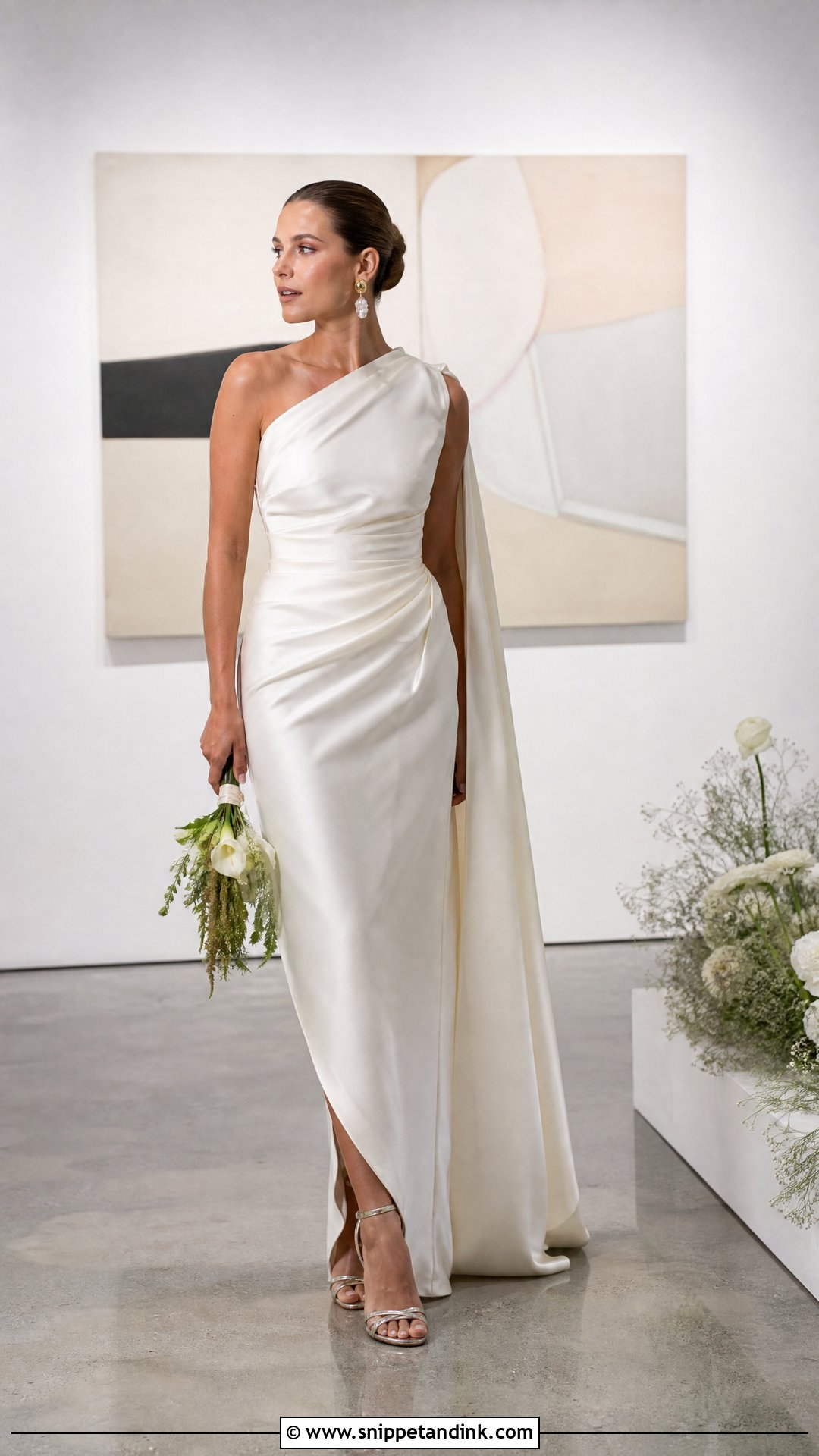
One-shoulder dresses rely on asymmetry, and draped satin or crepe lets the fabric run from the shoulder down into the bodice. A column looks modern; a slight flare is easier to walk in. Hair swept back, a statement earring on the bare side and a stud on the other, metallic heels, a small clutch. No necklace across the diagonal. A cape fixed at the shoulder adds drama without hiding the line. One shoulder carries the whole bodice, so I check that the strap isn’t dragging the dress upward on one side or digging into the skin by the end of the fitting.
13. Queen Anne Vintage Wedding Dress
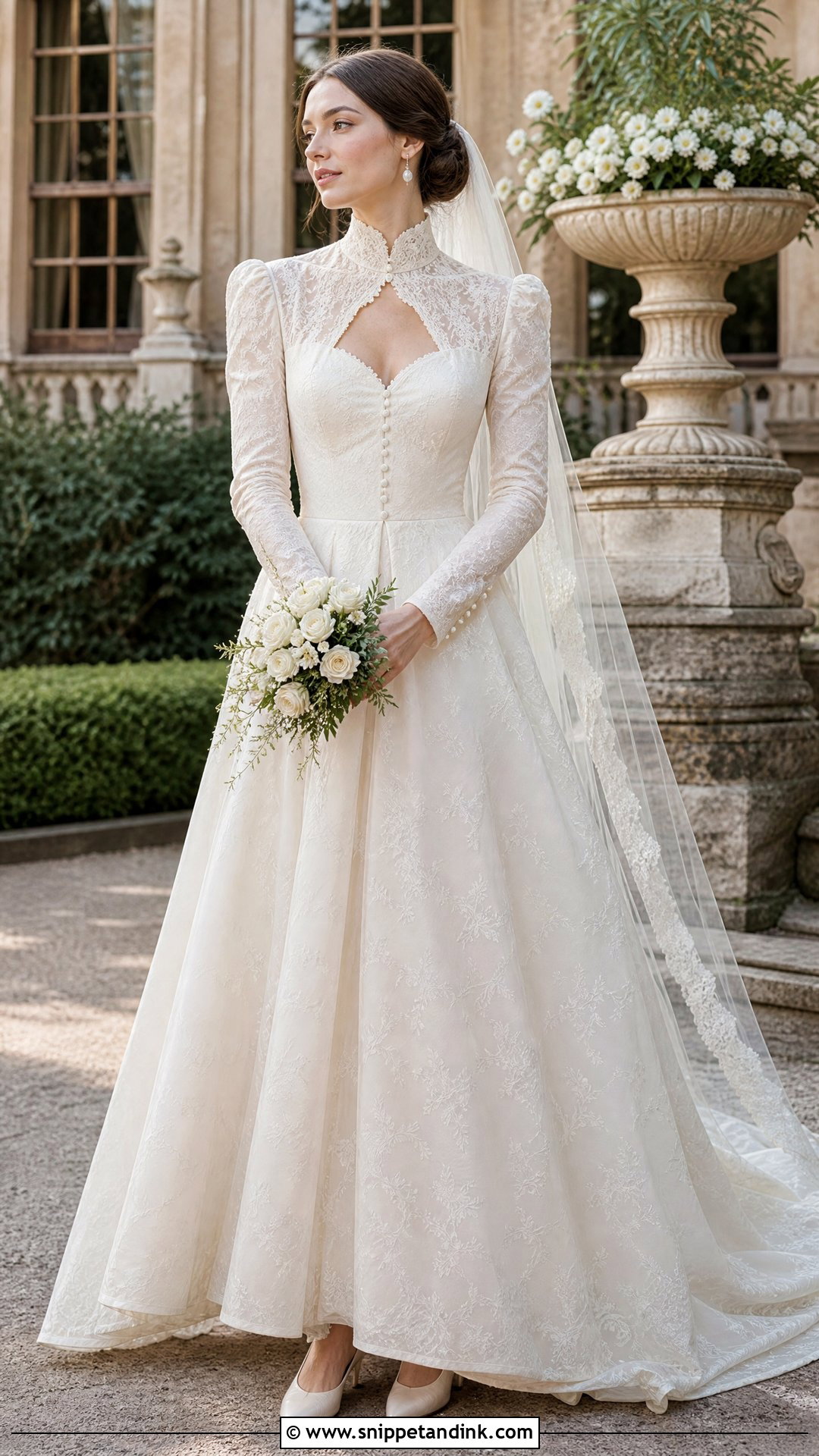
The Queen Anne neckline rises high at the back and sides, then dips low at the front, a shape borrowed from historic dress. It’s most graceful on a lace A-line with fitted sleeves and covered buttons. Pearl earrings, a smooth low bun, classic pumps and a veil fixed beneath the bun. A small pendant can sit in the front opening when the bodice is plain. The back collar has to lie flat and let you turn your head. Sleeve and shoulder alterations change how it sits, so have the collar checked after those are done, not before.
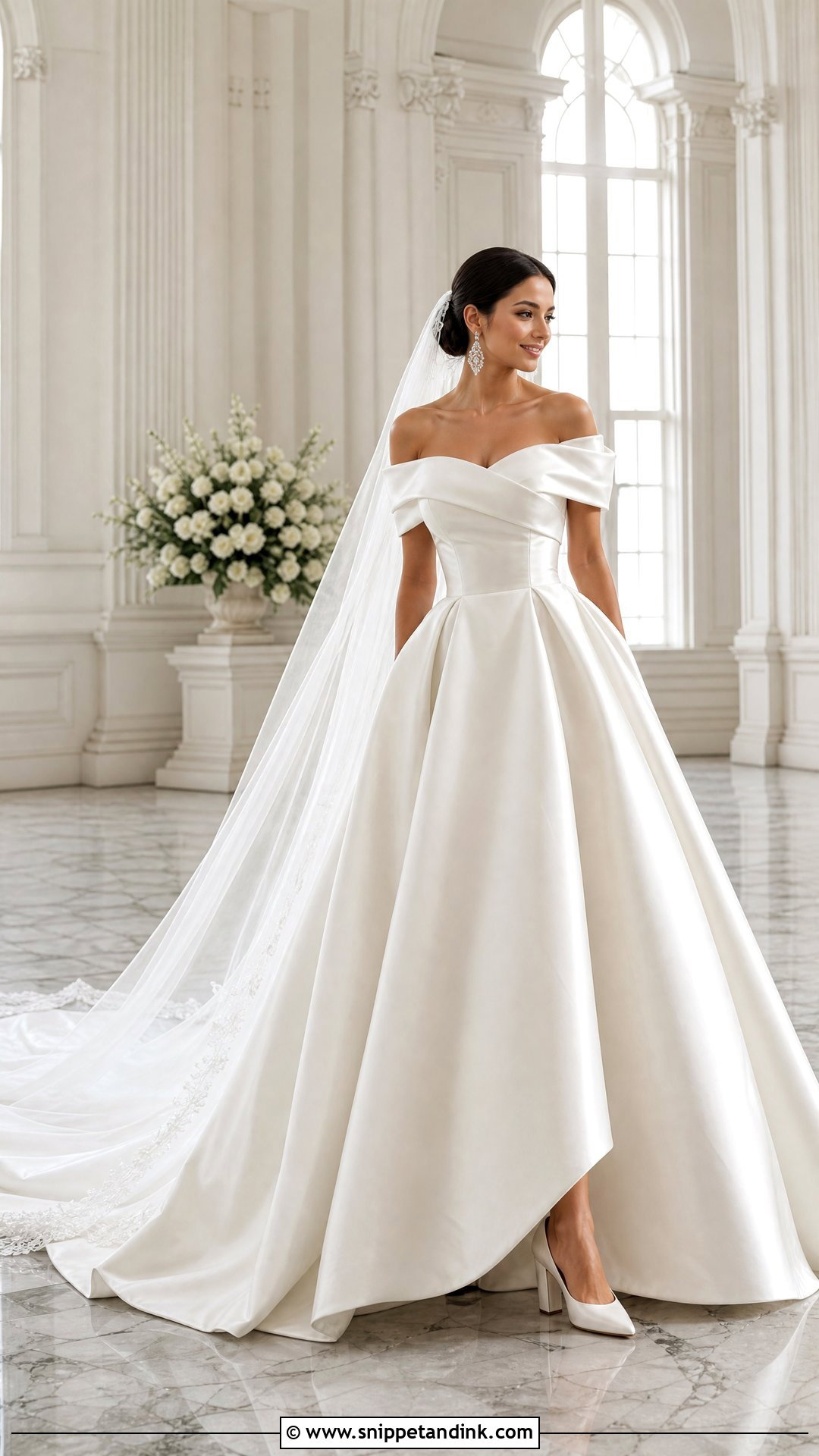
14. Portrait Neck Ball Gown Wedding Dress
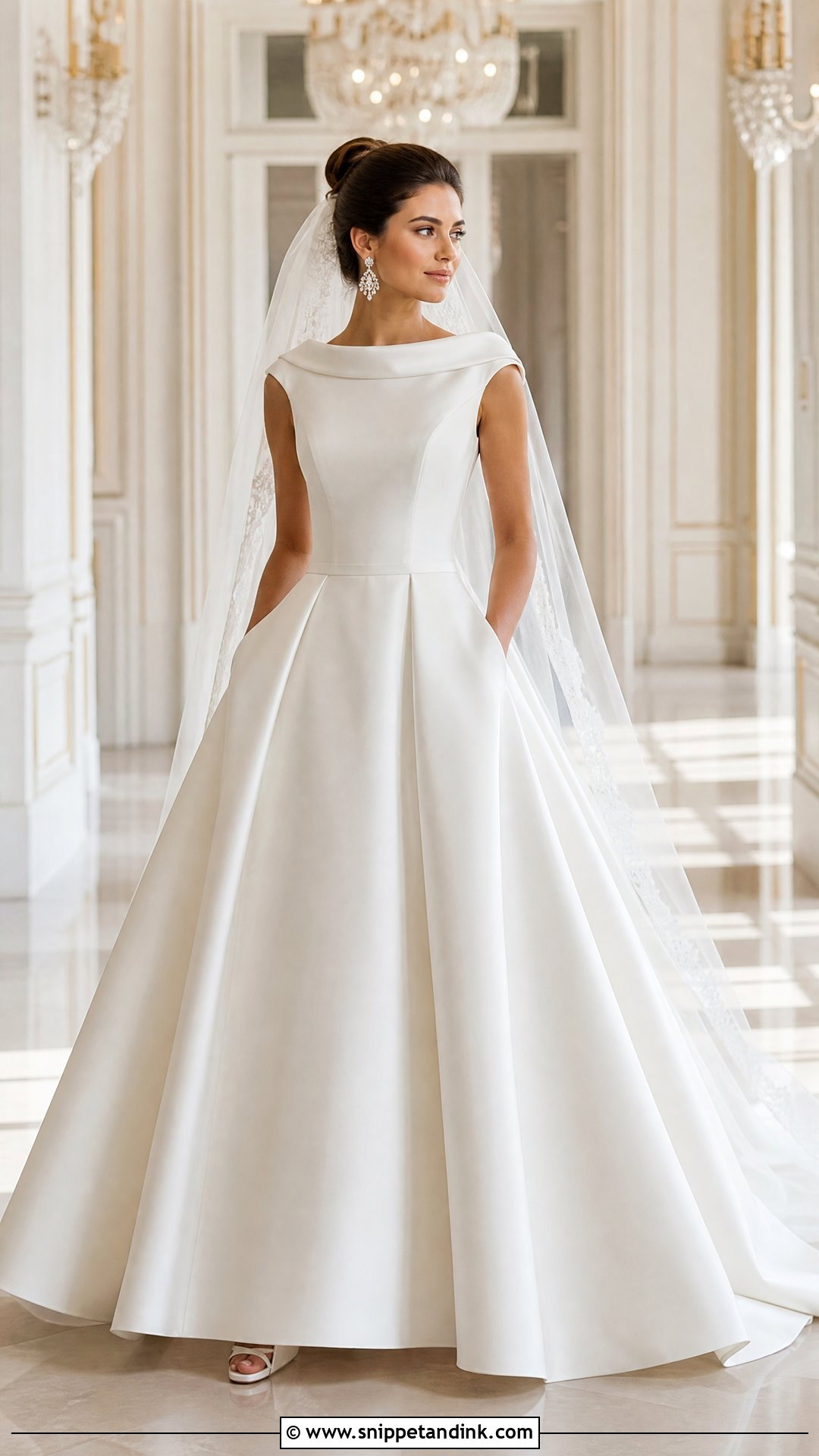
Portrait necklines are a wide folded band framing the shoulders, almost like a picture frame around the upper body, hence the name. On a structured ball gown, it’s formal and slightly vintage. Satin or Mikado keeps the fold crisp; a fitted waist balances the volume below. Elegant updo, chandelier earrings, a cathedral veil and block heels. Pockets and detachable gloves are worth considering. I’d leave the collarbone bare. The fold tends to roll inward when the band is too loose, so check it stays even, and test that you can raise your arms high enough to greet guests.
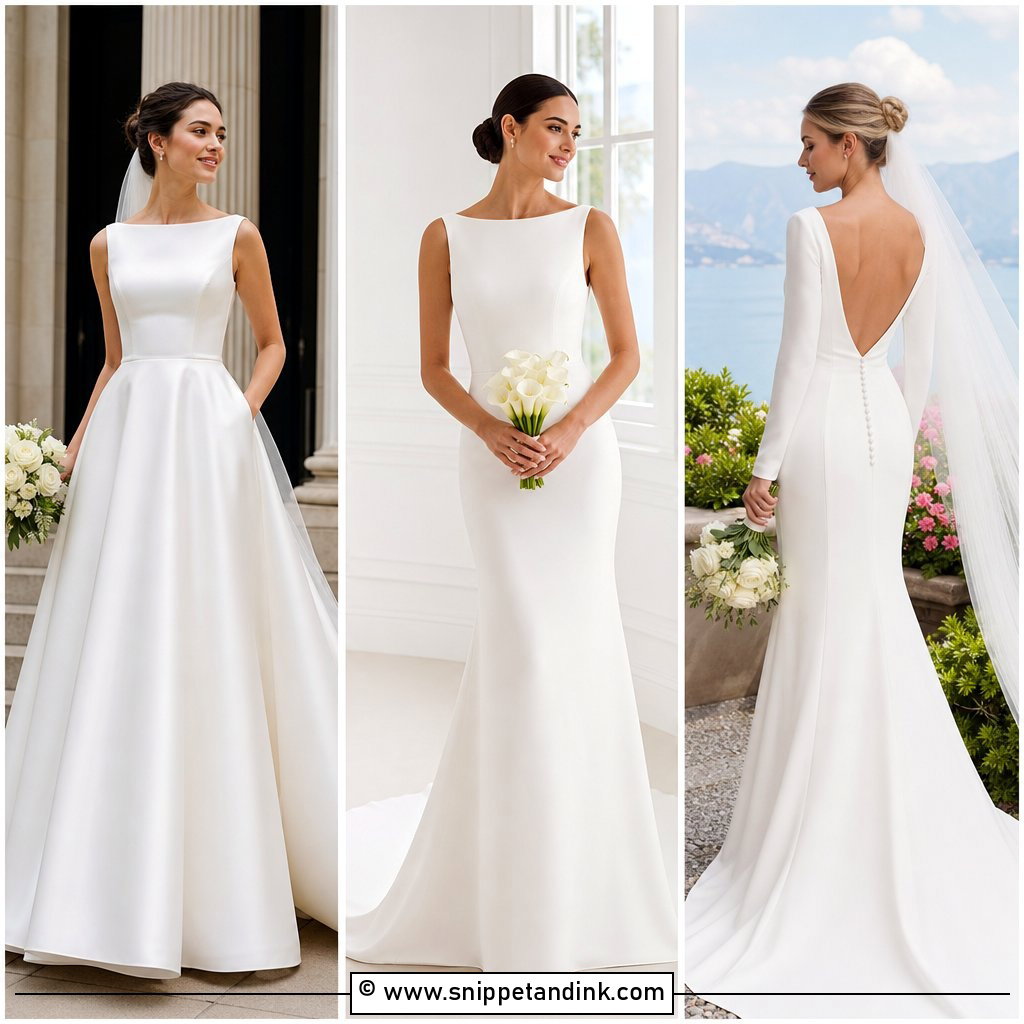
15. Cowl Neck Slip Wedding Dress
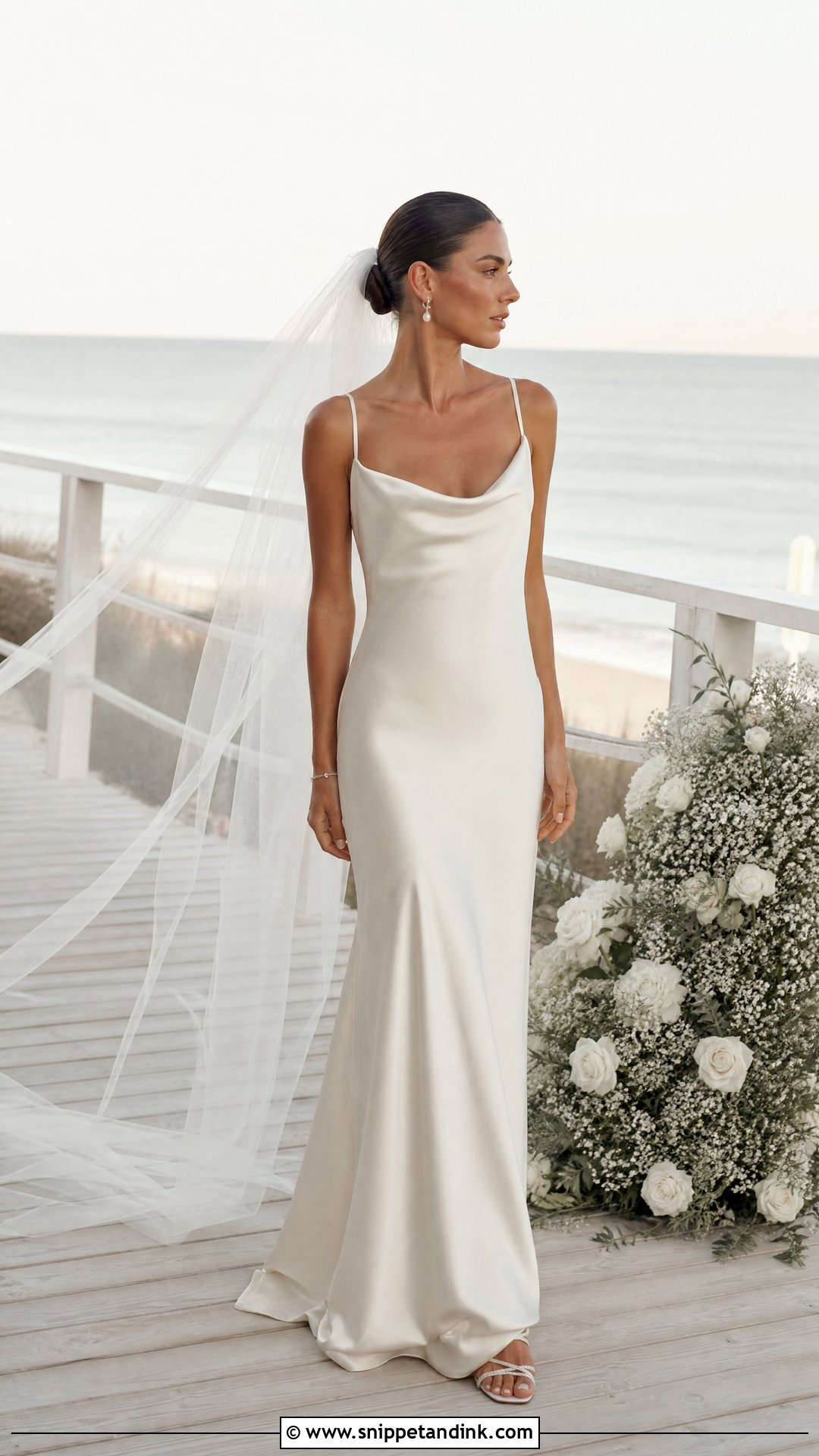
A cowl neck slip wedding dress is the opposite of a structured gown: the neckline drapes in soft folds instead of holding a shape. It needs silk, satin or a fluid satin-like fabric; stiffer cloth just looks crumpled. A bias-cut skirt, narrow straps and a low back. Delicate drop earrings, strappy ivory sandals, a sleek bun and a floor-length sheer veil. A fine pendant can work under a shallow cowl. Cowls slide around as you move, so a good seamstress will add a fitted lining, discreet cups and sometimes small weights inside the drape to keep it hanging evenly.
16. Jewel Neck Minimal Wedding Dress
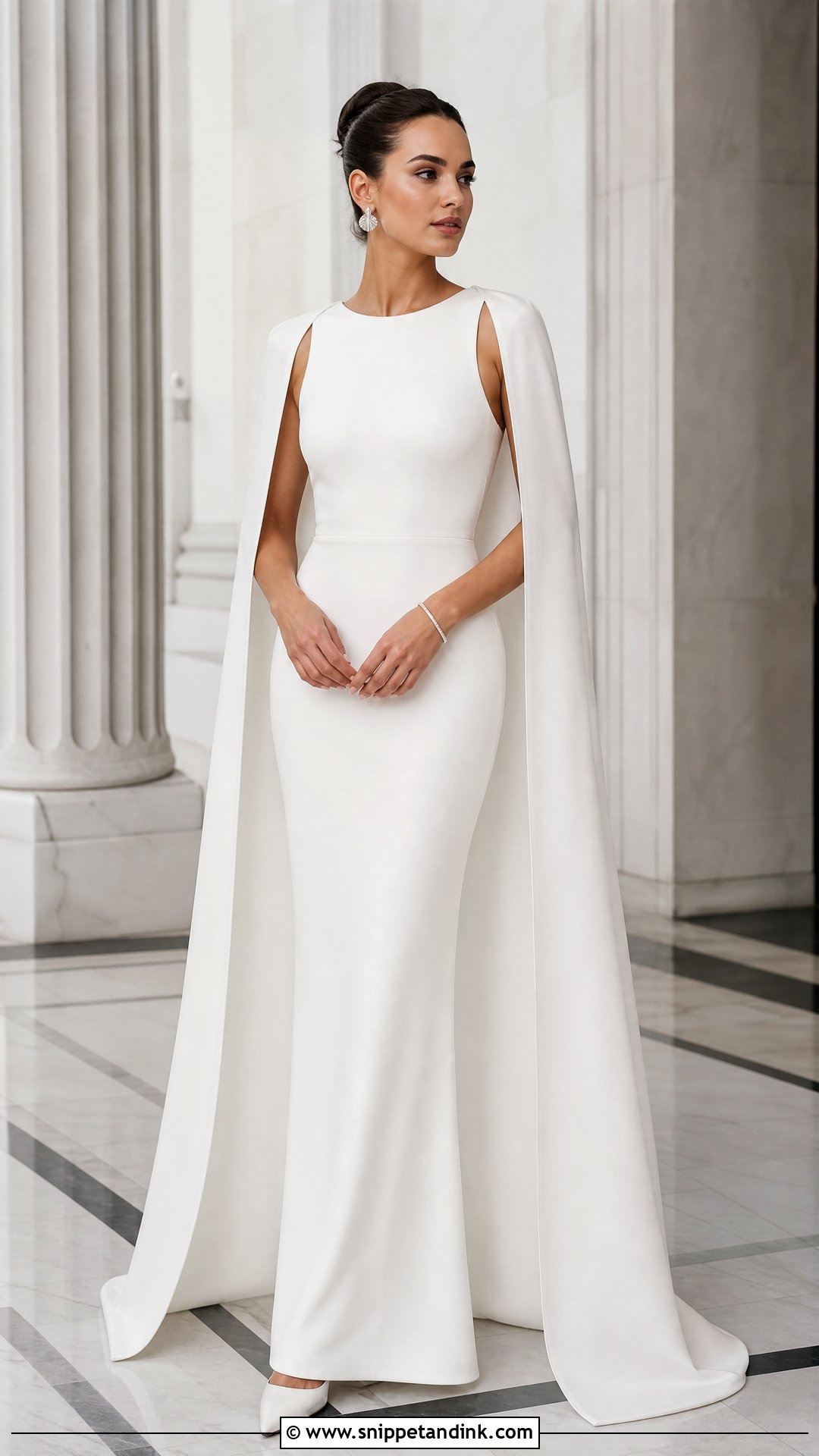
A jewel neckline sits at the base of the throat, round and close, like a T-shirt collar cut with precision. On a sleeveless crepe or matte satin column it looks clean; on a full A-line, more formal. Covered buttons down the back add a bridal detail. Hair up, sculptural earrings, pointed pumps and a detachable cape. No necklace, since there isn’t space; use a bracelet or hair accessory. Very high necks can shorten the look on a short-necked bride, so I’d compare it against a bateau before deciding. Make sure the edge doesn’t press when you sit and the armholes don’t rub.
17. Keyhole Neck Boho Wedding Dress
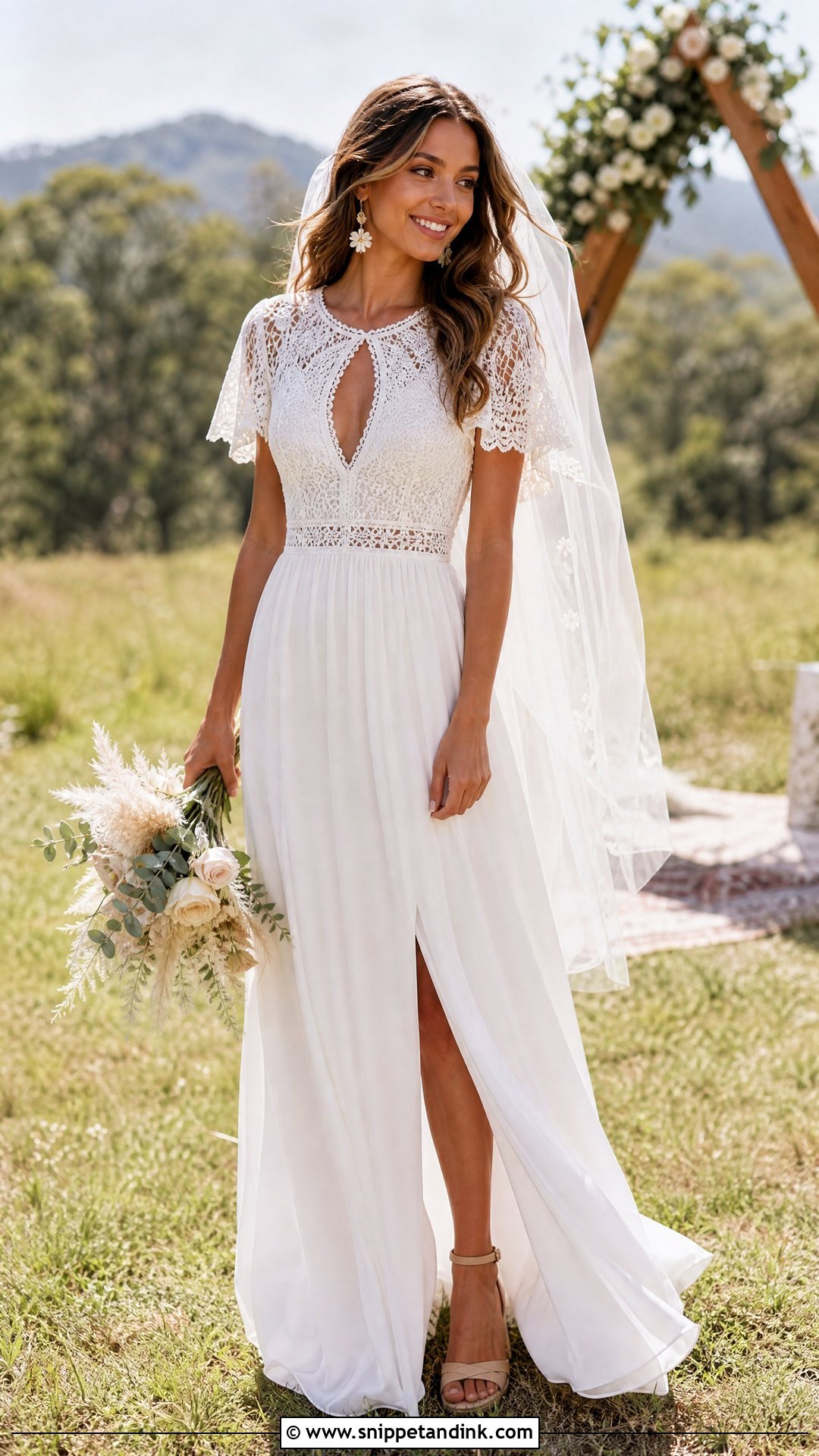
A keyhole adds a small opening to a covered bodice, and its shape decides how much it shows: round and small is subtle, a teardrop or slit is bolder. It suits boho dresses in crochet lace with flutter sleeves and a flowing chiffon or soft tulle skirt. Loose waves, floral earrings, block-heel sandals and a simple veil or light hair scarf. No necklace, so the keyhole stays defined. Check the button or hook at the top fastens firmly, because if it pops, the opening gapes. Choose breathable lining for outdoor ceremonies.
18. Surplice Neck Empire Wedding Dress
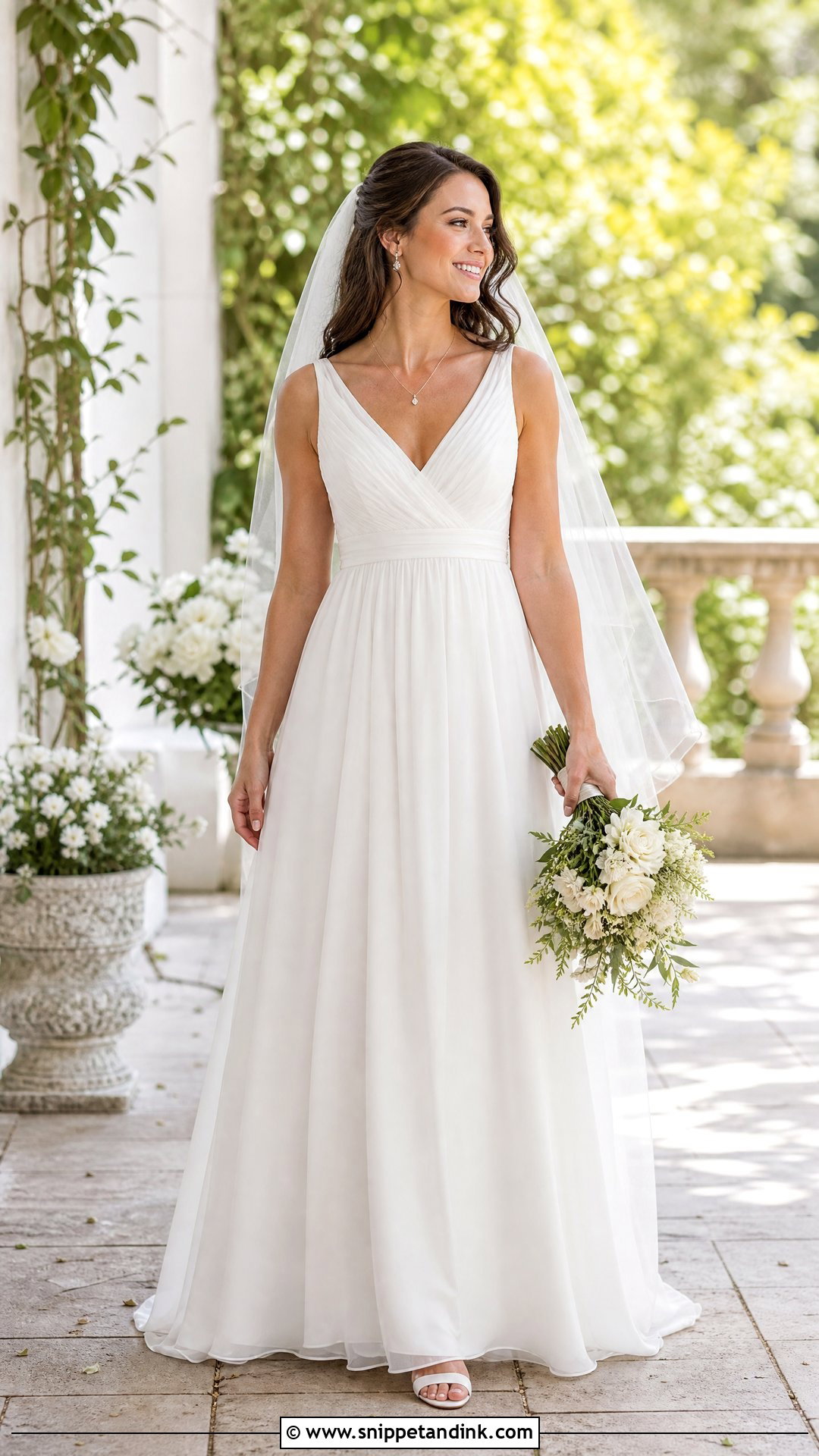
A surplice neckline crosses one panel over the other and forms a soft wrap V. Combined with an empire waist, it’s one of the most comfortable bridal shapes to wear all day, and it’s kind to brides who are pregnant or simply prefer a looser fit through the middle. Chiffon skirt, lined lace or pleated bodice. A pendant that follows the V, small earrings, low block heels and a fingertip veil, with soft waves or half-up hair. Ask for the crossed panels to be tacked together inside so they don’t drift open. For more coverage, raise the overlap slightly or add matching mesh.
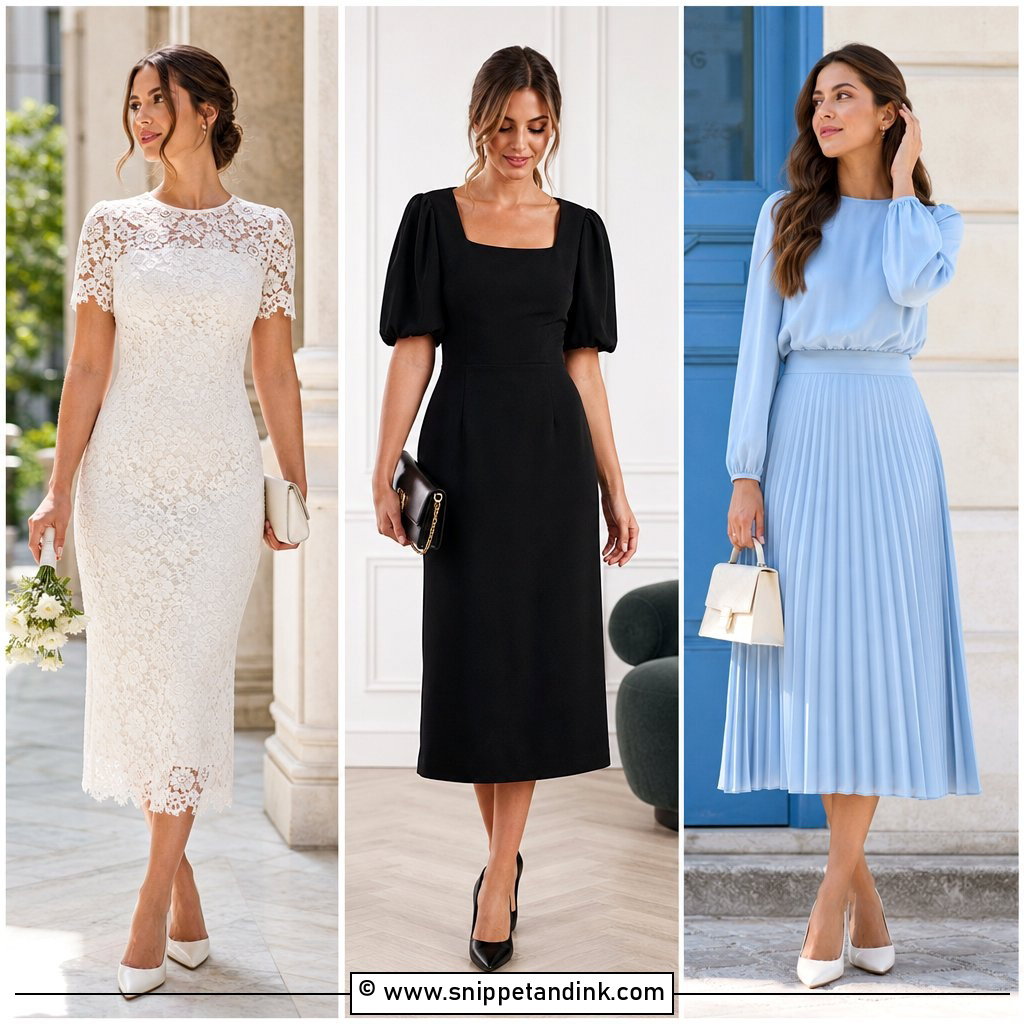
19. Scalloped Neck Tea-Length Wedding Dress
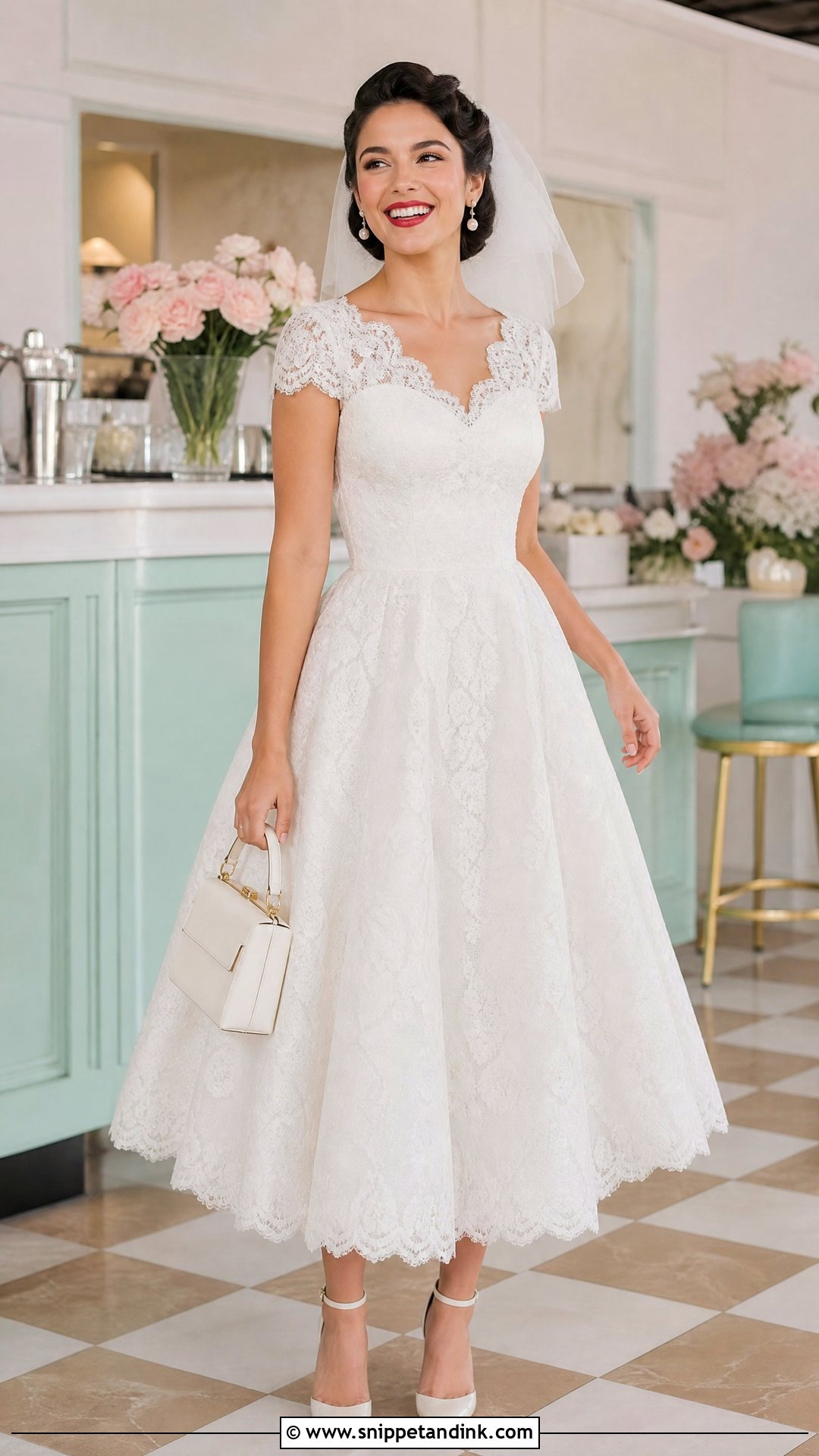
Scalloped edges give a tea-length dress a delicate, slightly vintage finish, and lace is the natural material because its own curves can form the border. A fitted short-sleeve bodice with a full skirt ending between knee and ankle. The shoes will be on show, so pick ivory pumps, embellished flats or ankle-strap heels you actually like. Pearl earrings, a short veil and a small structured bag. Keep jewellery near the neck minimal. Scallops curl outward after a few wears if they aren’t backed, so I’d ask the seamstress to reinforce the points discreetly, especially near the shoulder seams.
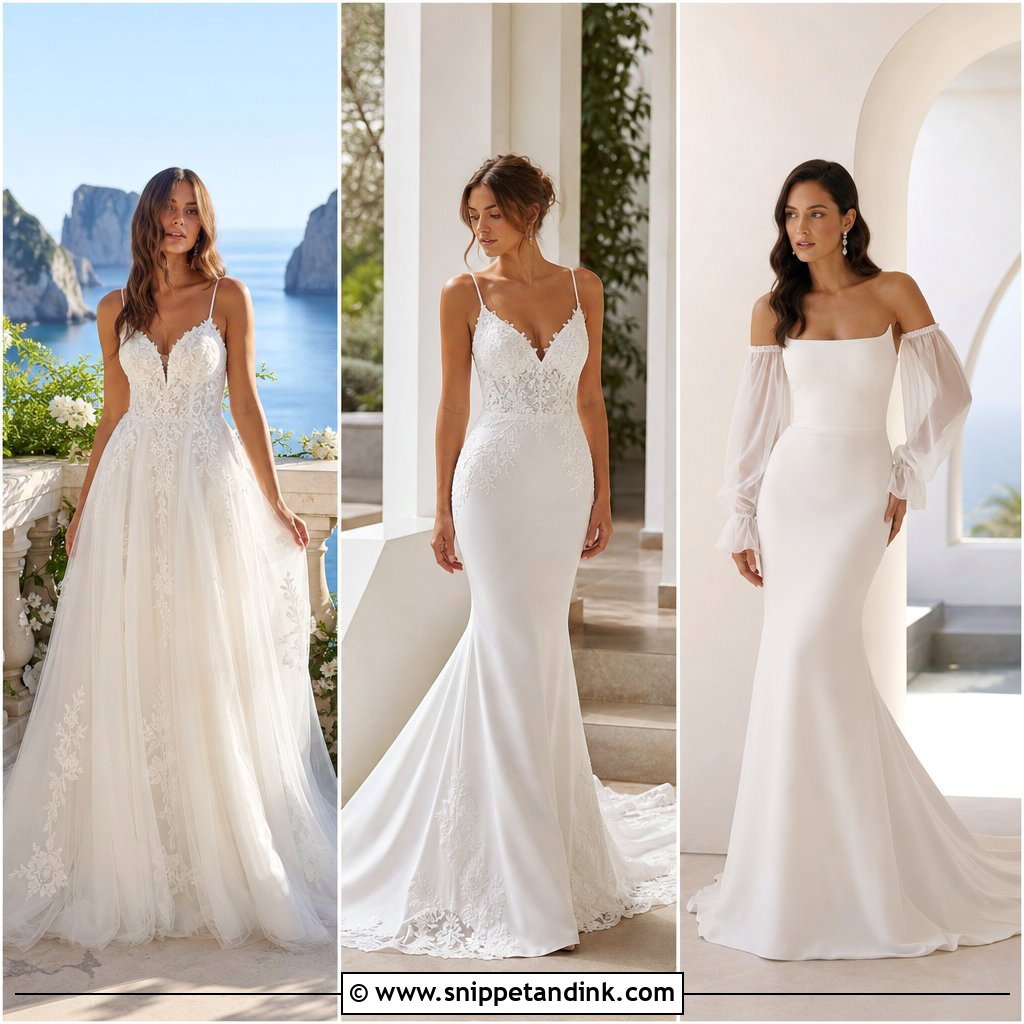


20. Notched Neck Corset Wedding Dress
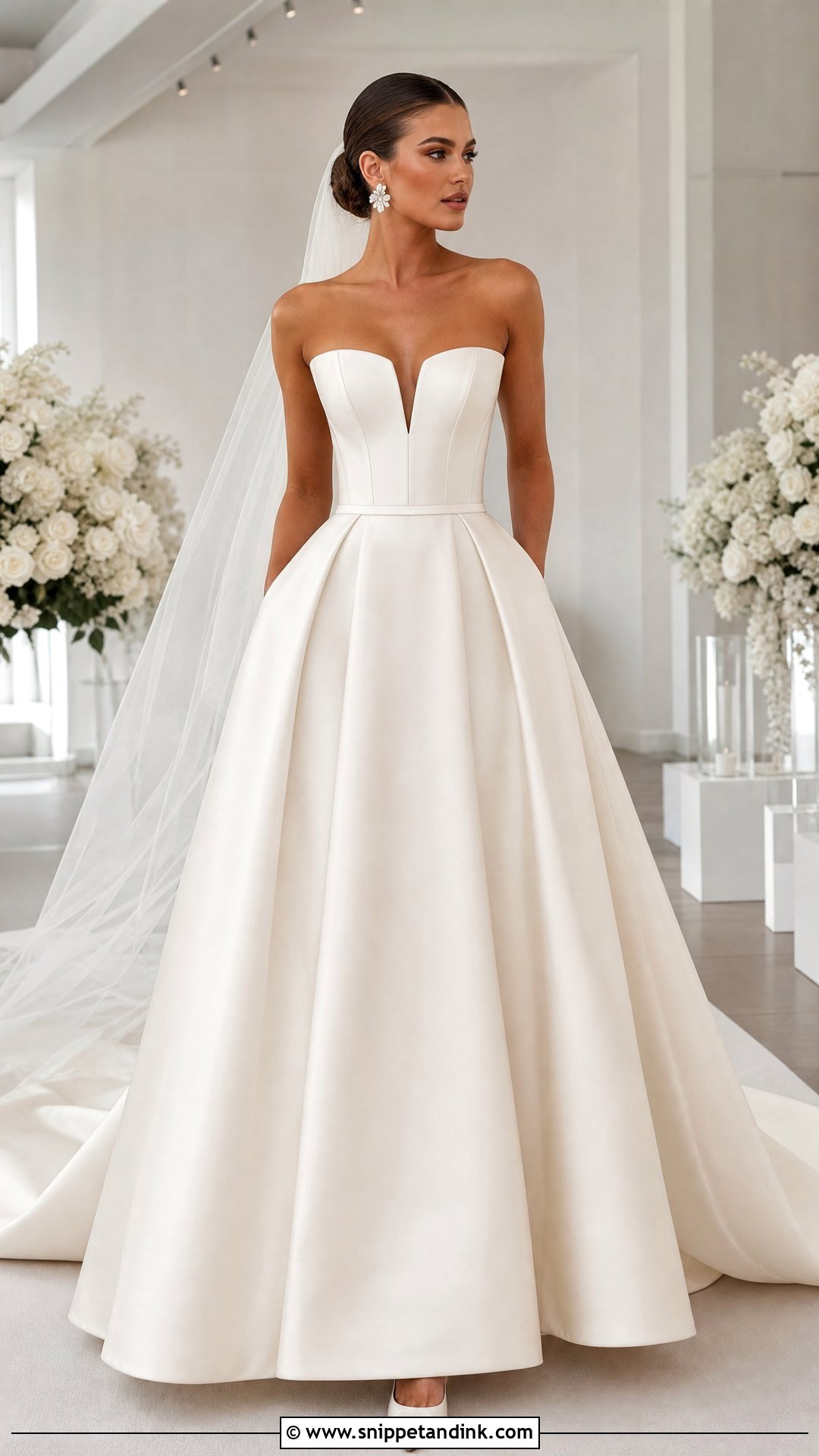
The notch is a small V cut into the centre of a straight bodice. It looks modern and slightly sharper than a plain strapless line. On a corset-style top with visible seaming and a full satin A-line skirt, it looks strong and balanced. Polished bun, bold earrings, pointed pumps and a long veil fixed low. Skip the necklace unless the notch is shallow and the bodice plain. The notch has to sit dead centre, so tailoring is everything: any twist in the bodice shows straight away. Check the boning is comfortable and that the notch stays put when you walk and sit.
Bras, Cups and Bustiers Matched to the Neckline
Underwear decides whether a neckline sits flat, and it needs to be settled before the first alteration, not after. A seamstress pins the dress to the body you bring to the fitting. Change the bra afterwards and the fit changes too.
Matching support to the cut
Strapless, sweetheart and straight necklines usually work best with a longline strapless bra or a bustier, or with cups sewn directly into the gown. Deep V and plunge styles often need a low-plunge bra or adhesive cups, and many bridal seamstresses prefer to sew cups in so nothing can slip. Halters and backless gowns rule out most bras entirely; sewn-in cups or an adhesive bra are the usual answer. Illusion and high necks are the easiest, since the bodice structure does much of the support.
Bring the exact underwear and shoes to every fitting. And if you’re using adhesive cups, wear them for a full afternoon at home first. Heat and dancing loosen some adhesives faster than you’d expect, and the wedding day is a bad time to find that out. Keep a small kit in the getting-ready room too: spare adhesive cups, fashion tape and a few safety pins for emergencies on non-silk fabric.
Comfort at the Neckline Lasts Longer Than the First Impression
A neckline frames your face and links the dress with your hair, jewellery and veil, which is why it matters so much in photos. But looking right is only half of it. The neckline you choose has to support you, stay in place and let you move for a long day. Try a few you’d normally dismiss; brides are often surprised. Photograph each from the front, side and back, then sit and raise your arms. The same neckline can feel completely different in another fabric or with better construction, so judge the dress you’re wearing, not the name of the shape.
You'll Like These Ideas:




Leave a Reply