
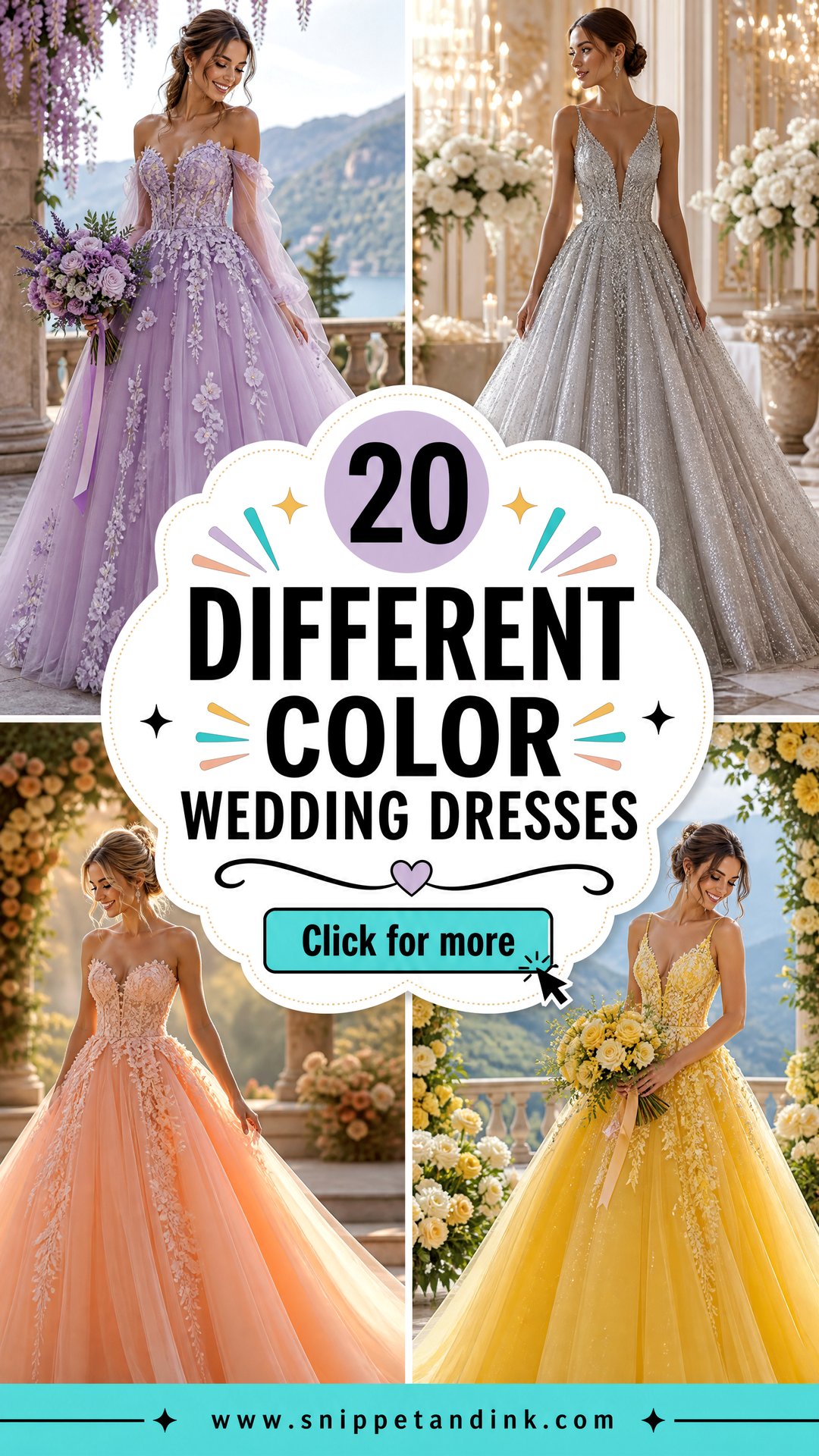
More brides ask me for colour now than ever, and the request is rarely just a pink sash. Today the colored gowns I see come in faded pastels, deep jewel tones, metallics and painted prints, and muted blue, pink, yellow and grey are especially easy to find in sample racks at the moment. A coloured dress still looks bridal when the shape, fabric, veil and accessories are clearly wedding pieces. The harder part is the shade itself. The same pink can make one bride glow and leave another looking tired, and venue light shifts every colour. Below are twenty colours, from blush to black, with what I’d check about undertone, fabric and setting before you commit.
Testing a Colour Against Your Skin Before the Sample Rack Wins You Over
Bridal shops are usually lit with bright, cool light that makes most fabric look good. So before I let a bride fall for a colour, I take the fabric somewhere less flattering.
The window test
Stand near a window with no makeup, or very little, and hold the fabric under your chin. Look at your face, not the dress. If the colour makes your skin look clearer and your eyes brighter, keep it on the list. If you suddenly notice shadows under your eyes or redness around your nose, it’s pulling the wrong way, however much you like it.
Warm or cool
A quick guide I use: if gold jewellery usually suits you better than silver, warmer shades like peach, champagne, burnt orange and greener teal tend to flatter. If silver wins, look at blue-based pinks, lavender, silver, navy and cool greys. Many people sit in between and can wear both, so treat it as a starting point, not a rule.
Ask for a swatch
Most shops will give you a small cutting of the fabric if you ask. Take it home, look at it in your own lighting and, if you can, in the venue. Show it to your makeup artist too, so the foundation and lip are chosen with the dress colour in mind.
1. Blush Pink Wedding Dress
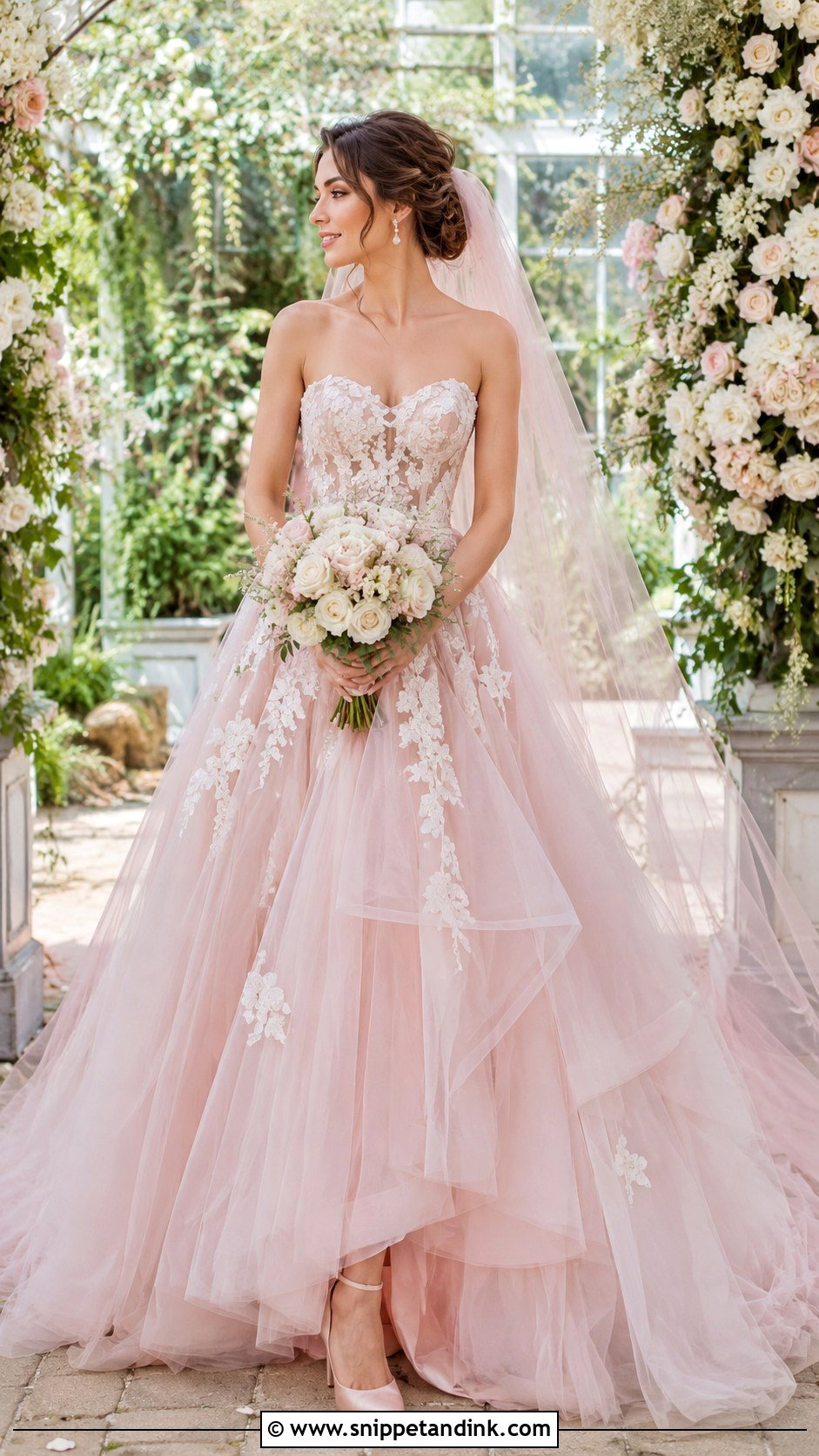
Blush is the gentlest step away from ivory, and the one most mothers accept without a raised eyebrow. A tulle ball gown softens it further; fitted lace gives more shape. Ivory floral appliqués over a pink base add depth while letting the colour show. Pearl drops, a fine bracelet and blush satin heels keep the outfit quiet. A blush veil blends into the dress, while an ivory one gives a faint contrast I often prefer. One caution from fittings: very pale blush can read as plain white in bright sun, so if you want people to notice the pink, go a shade deeper than you think. Cream, pale pink and soft green flowers suit it in any season.
2. Champagne Wedding Dress
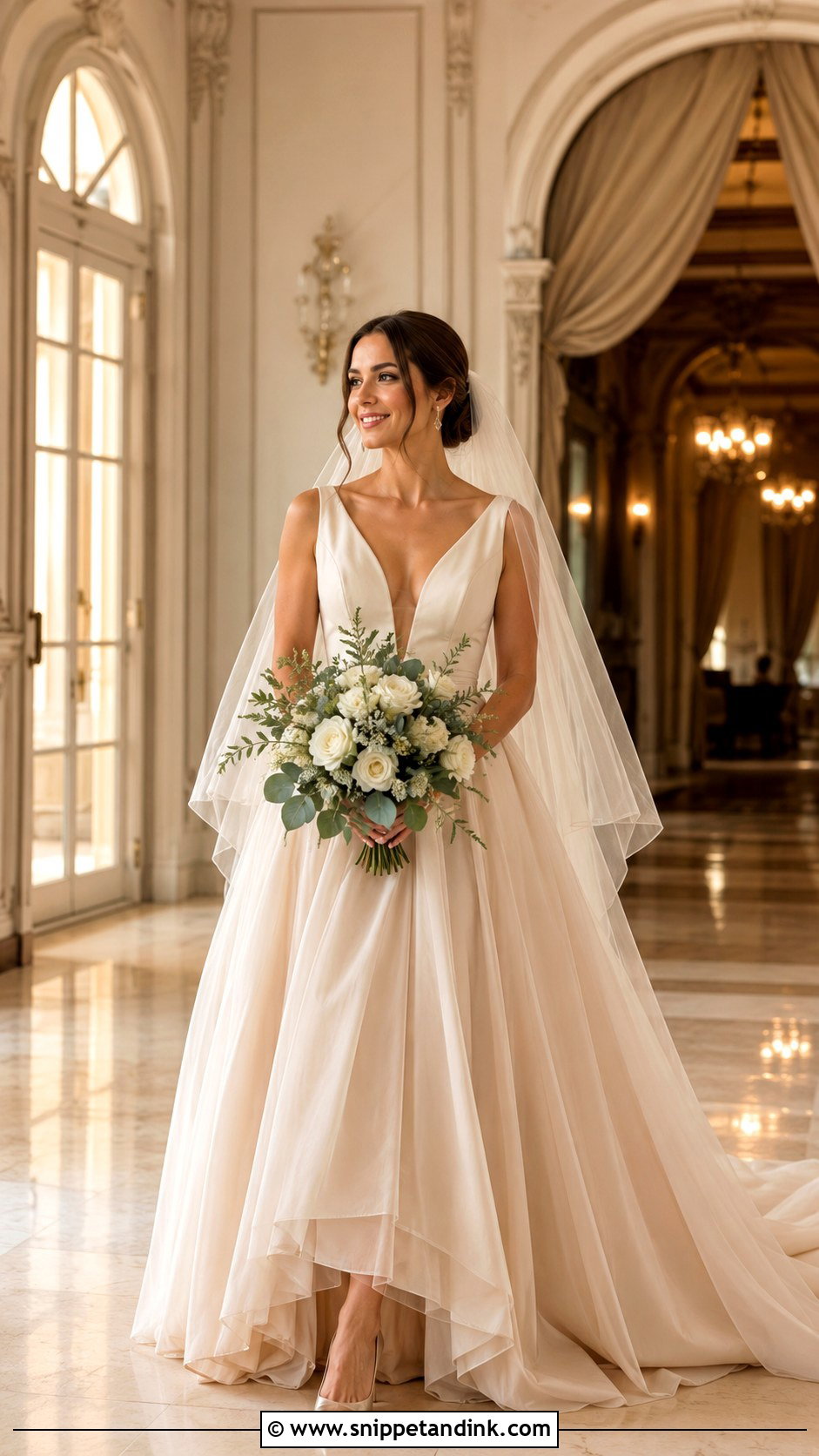
Champagne is the colour I’m asked about most and the one I’m most careful with. Its beige-gold base can sit too close to many skin tones, so the dress and your neck merge into one shade in photos. Satin, silk, tulle and beaded lace all carry it well. An A-line with a structured bodice, layered skirt and soft train is a safe shape. Gold earrings, a slim bracelet and champagne pointed pumps complement it; choose an ivory or champagne veil depending on how much contrast you want. White flowers with eucalyptus keep it bridal. Always compare swatches in daylight and indoors. The right one brightens your face. The wrong one looks yellow, grey or simply like skin.
3. Light Blue Wedding Dress
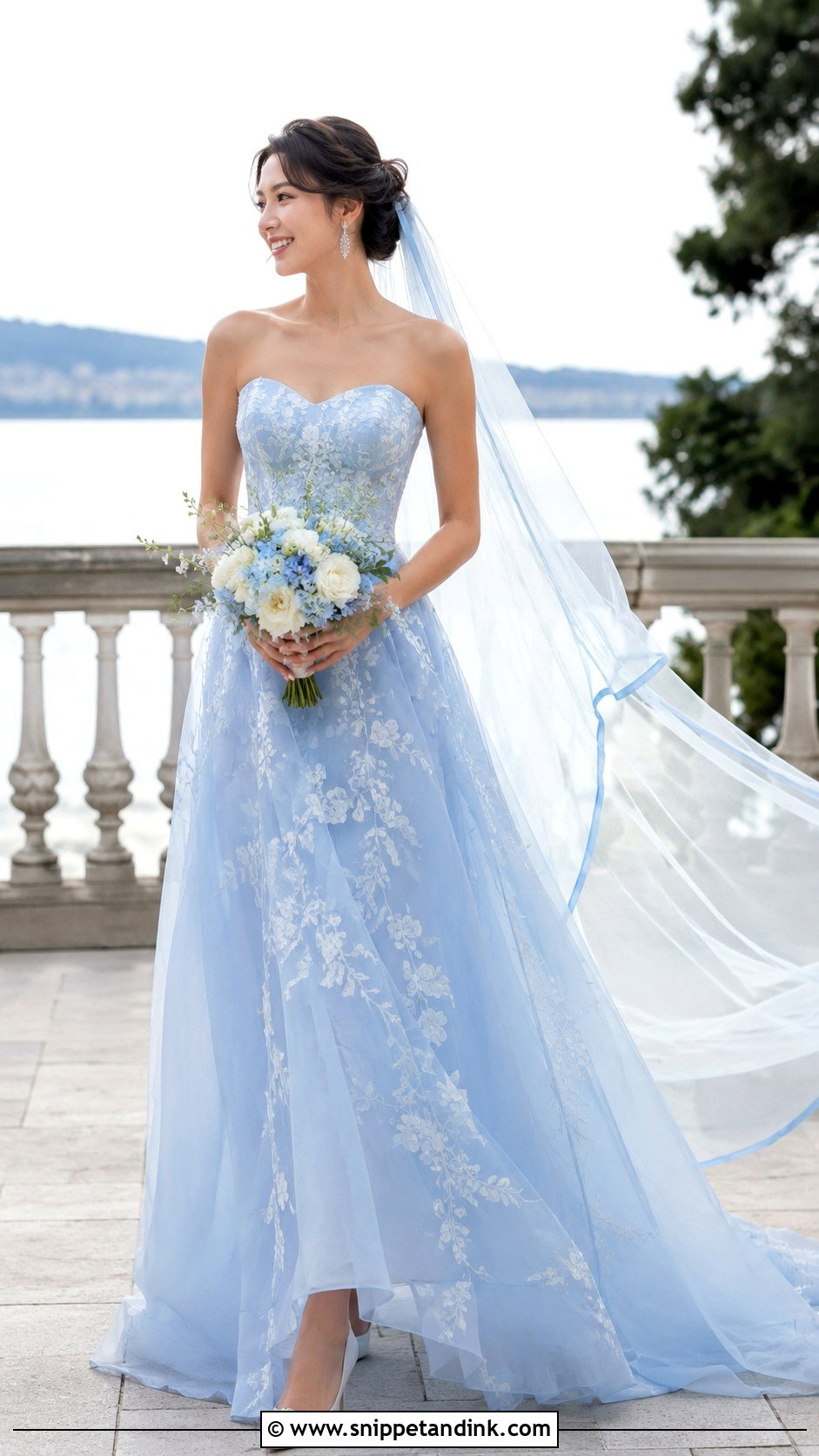
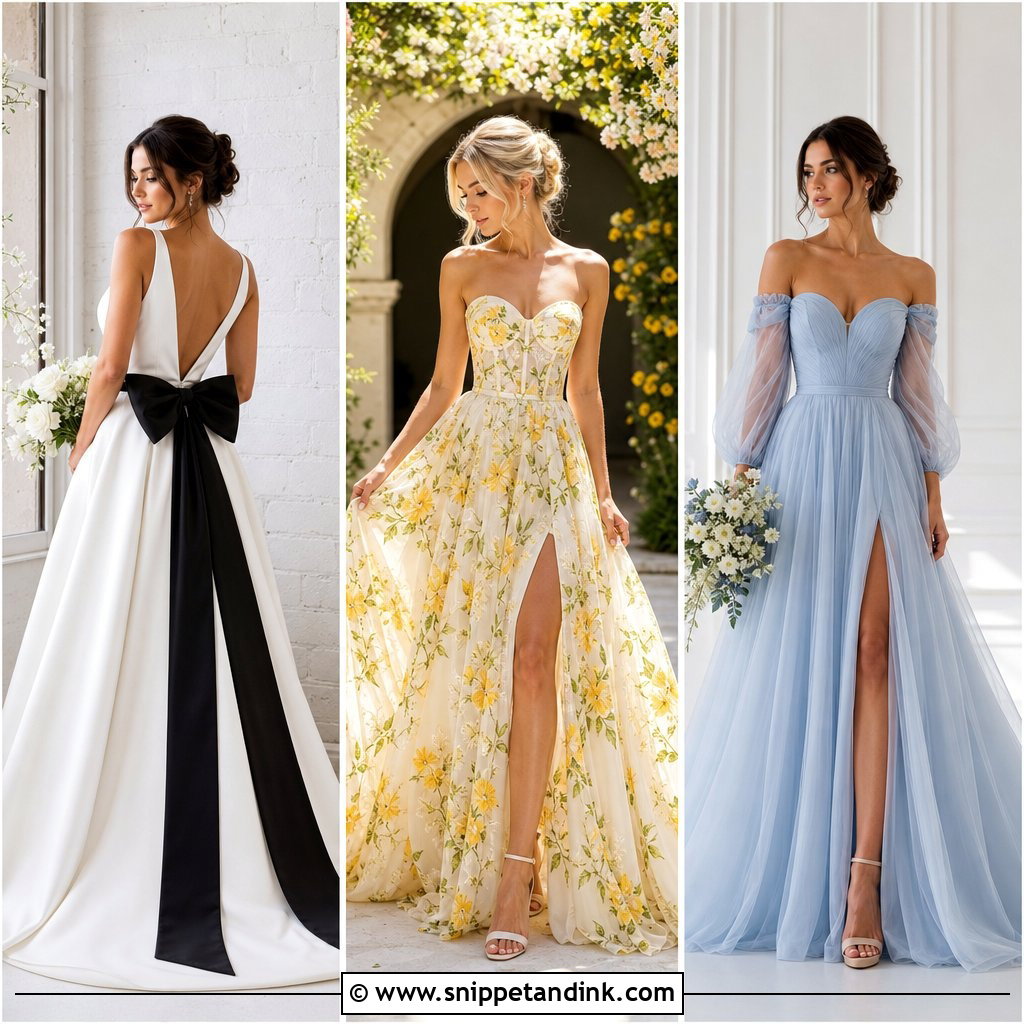
Light blue moves well outdoors, especially in chiffon, layered tulle, silk organza or lace over a blue lining. A strapless A-line with soft floral embroidery stays romantic without tipping into sugary. Silver earrings, pale blue or ivory heels and a sheer veil with a thin blue edge tie it together, and white and pale blue flowers link the bouquet. Keep makeup fresh with a cool pink lip. I’d test the blue next to your face in shade as well as sun. Pale blue can make cool undertones look radiant and warm, olive skin look slightly sallow. Spring, summer and waterfront venues suit it; heavier satin carries it into cooler months.
4. Lavender Wedding Dress
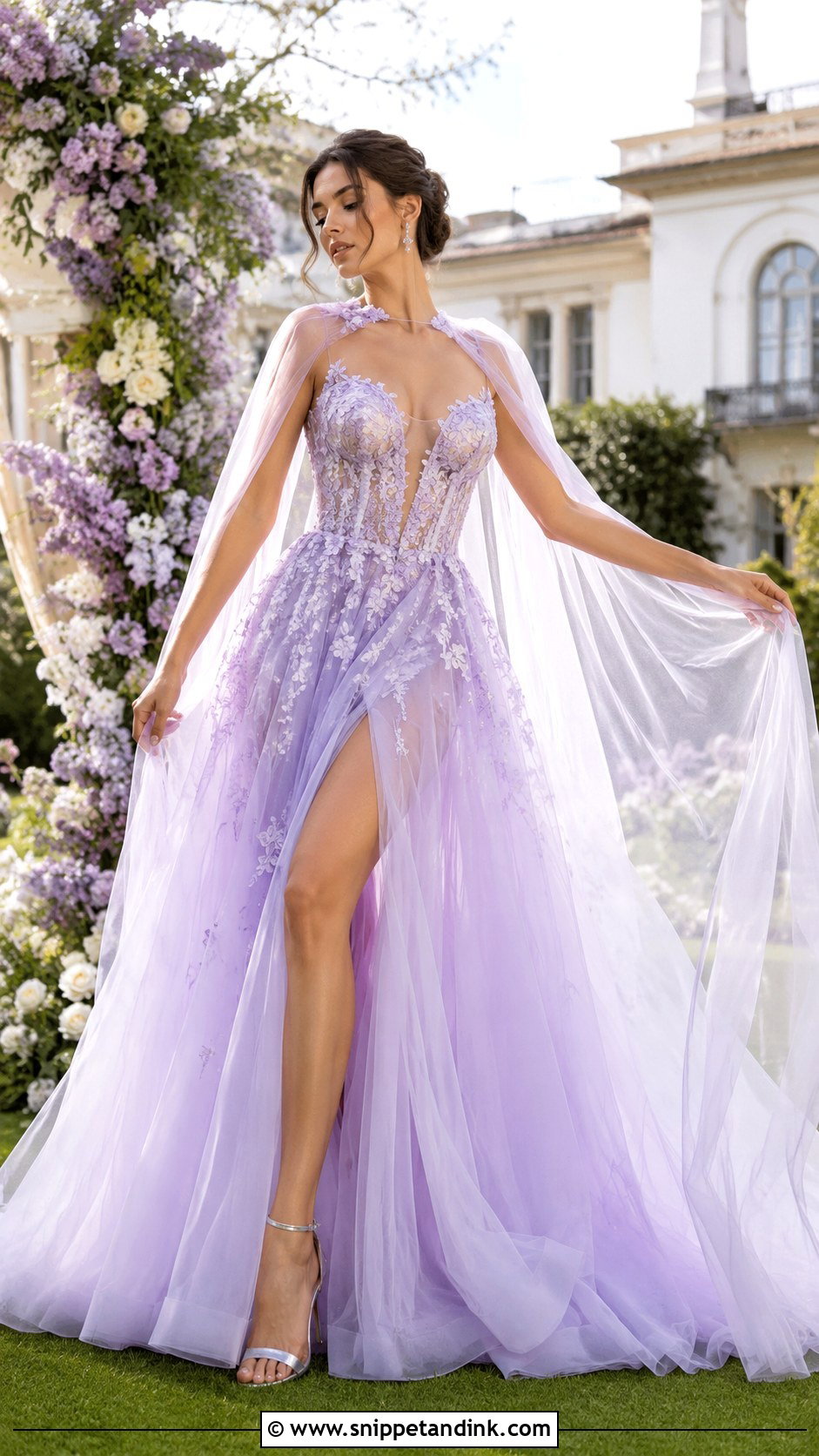
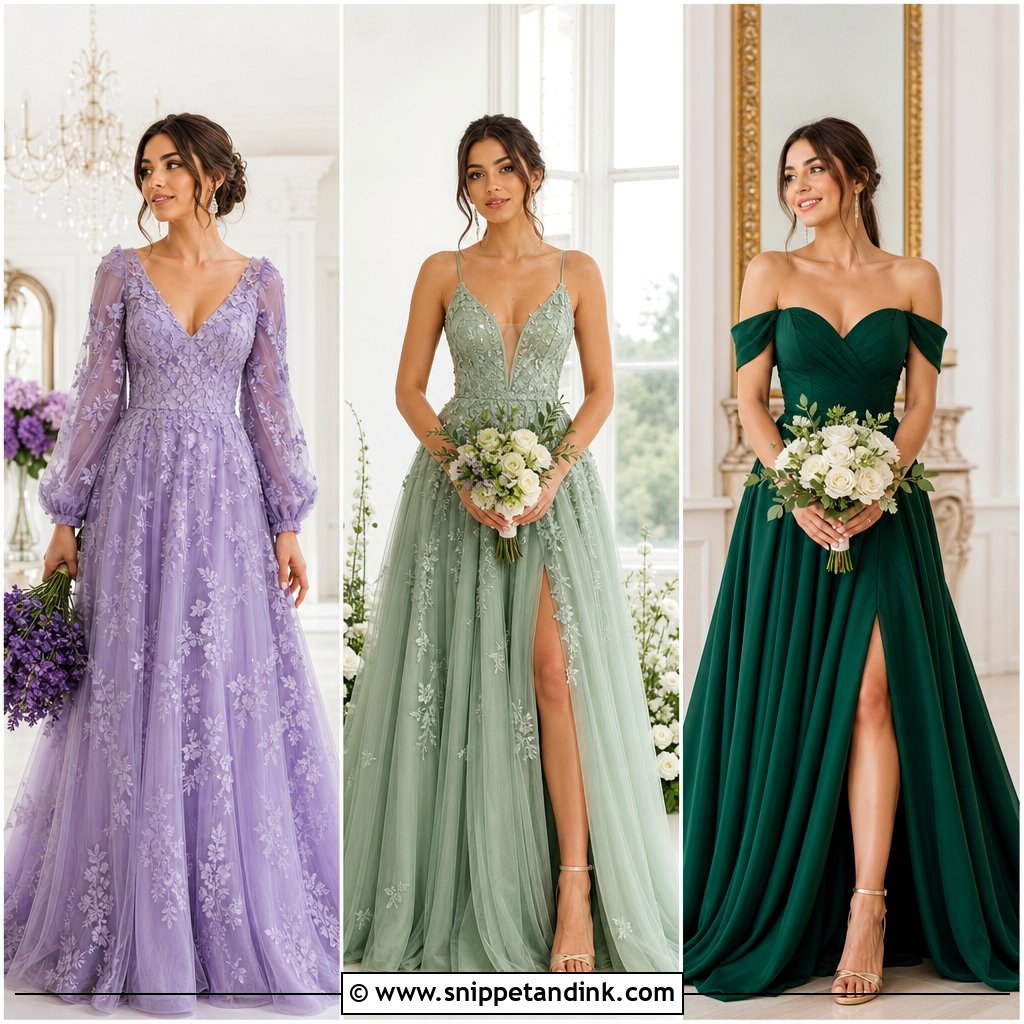
Lavender gains depth when the tulle is layered over a slightly darker lining, so the skirt doesn’t look flat. A fitted, appliquéd bodice into an A-line or ball skirt defines the waist. Crystal earrings, silver heels and a sheer lavender veil or detachable cape suit it. I’d carry white flowers with lilac touches rather than an all-purple bouquet, which looks too matched. Lavender can lean blue or pink, and that undertone decides whether it flatters you. Hold several swatches under your chin before choosing. Soft plum liner and rosy makeup give gentle definition. Spring gardens, estates and soft indoor rooms suit it.
5. Black Wedding Dress
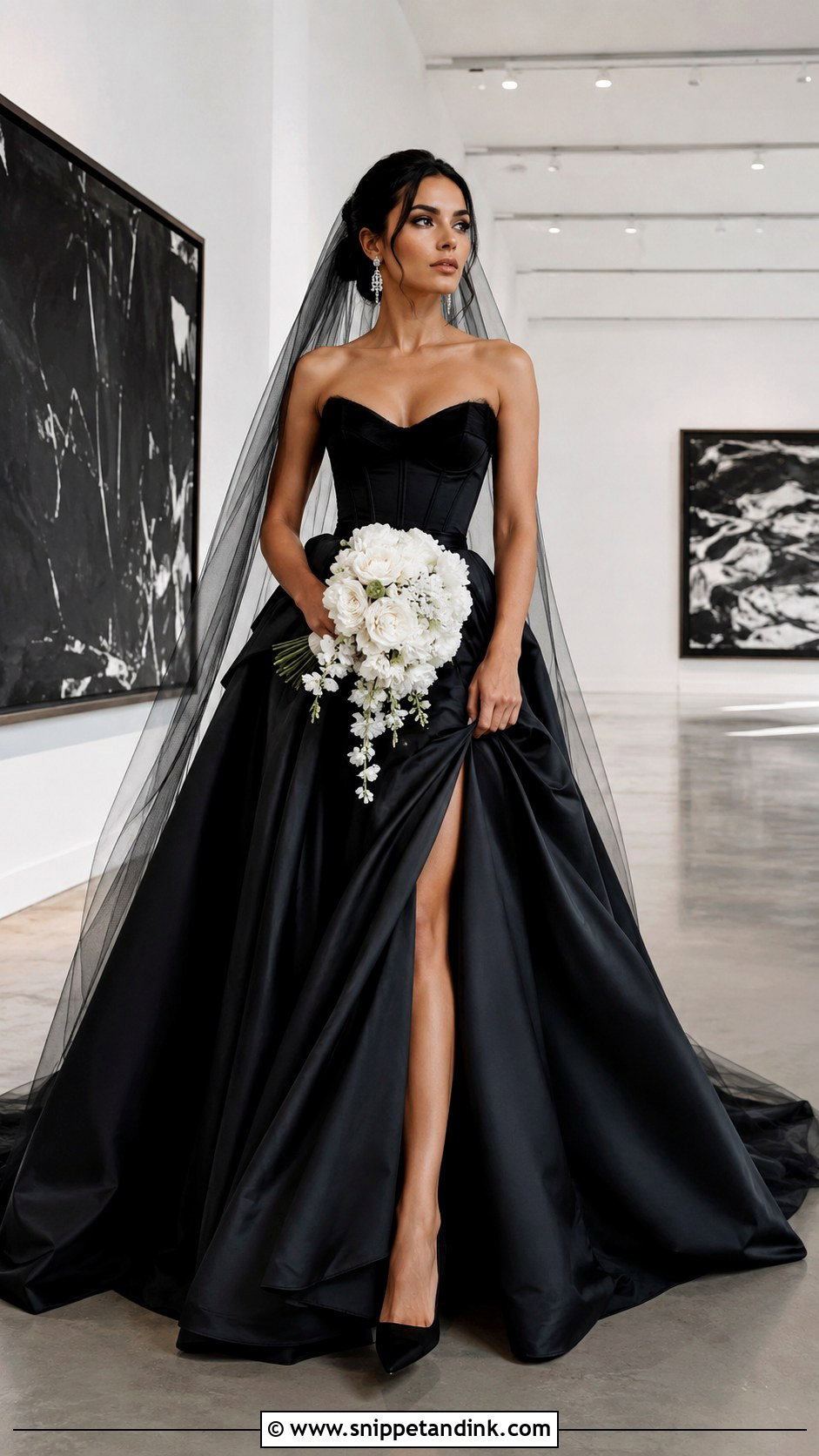
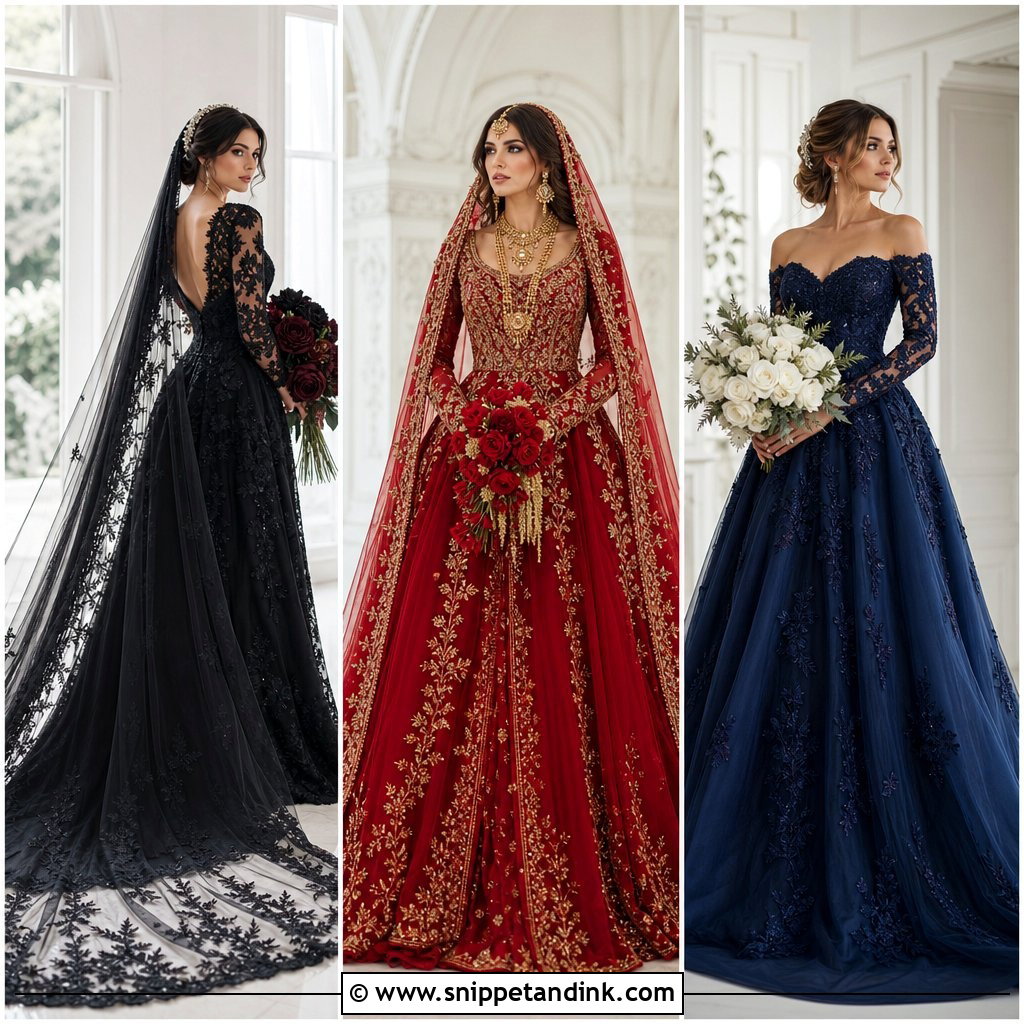
Black is the boldest choice here, and it only looks bridal when the shape is unmistakably a wedding gown. A black satin ball gown with a corset bodice does that instantly; black lace over a solid lining gives texture and softness. Crystal drops, black pointed heels and a long black veil with a clean edge complete it. White flowers give sharp contrast, while deep red or purple blooms are moodier. I keep accessories to a minimum. Fit matters even more than usual, because black hides the waist and seam lines that tell the eye where your shape is. Get the neckline and waist placement right and it works on any figure. Evening, historic venues, galleries and autumn or winter weddings suit it.
6. Red Wedding Dress
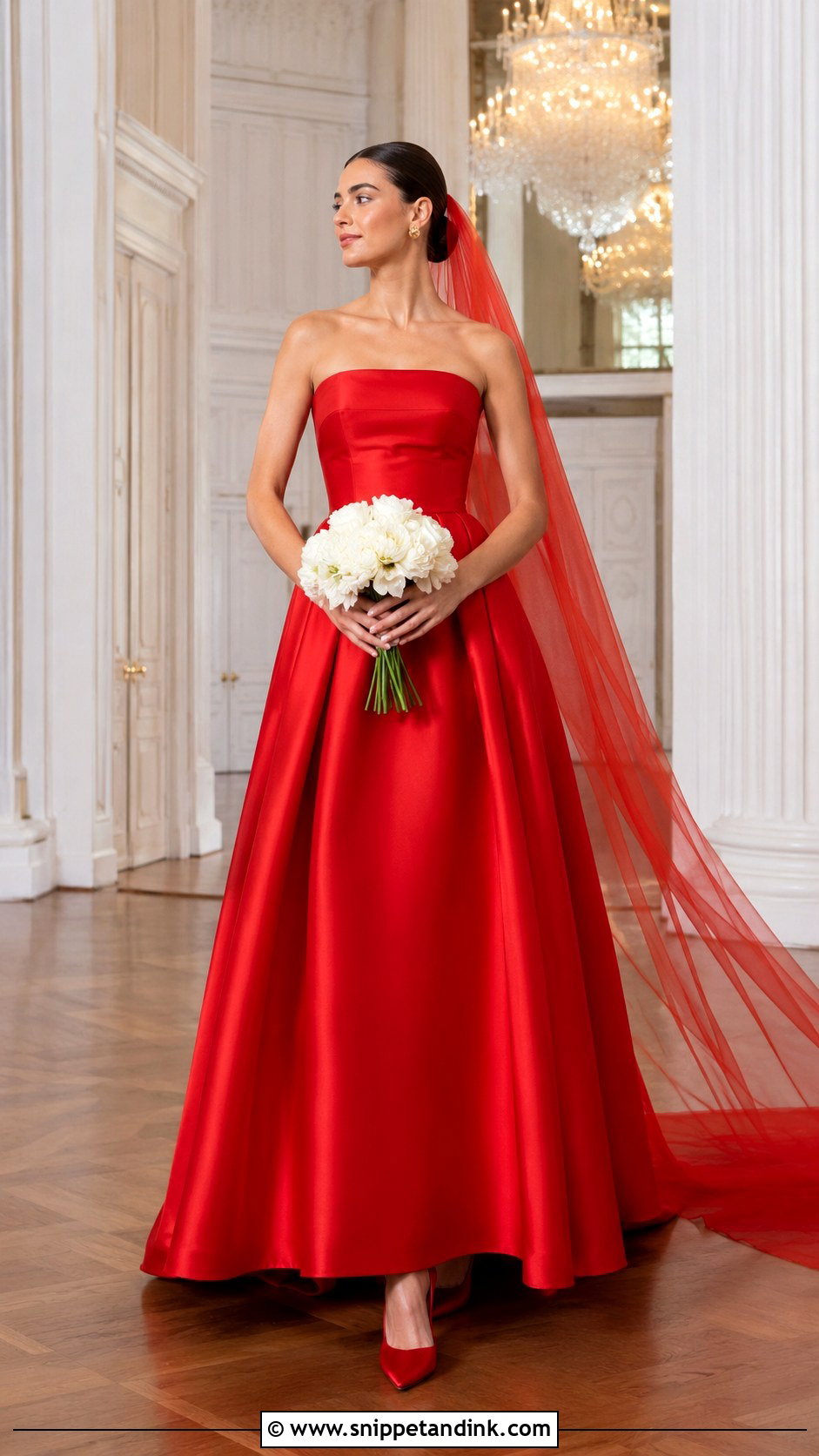
Red is the colour where undertone matters most. Put a true red, a blue-based crimson and a warm scarlet next to your face and one will clearly win. A structured satin A-line looks modern; a layered tulle ball gown is more dramatic. Gold or crystal earrings, red satin heels and a matching veil create one strong block of colour, and an all-white bouquet keeps it from looking crowded. Ivory shoes or a sheer ivory veil add contrast if you prefer. For red-lip lovers, match the lip to the dress undertone or skip it for a neutral. Grand ballrooms, cultural celebrations and evening ceremonies suit red.
7. Gold Wedding Dress
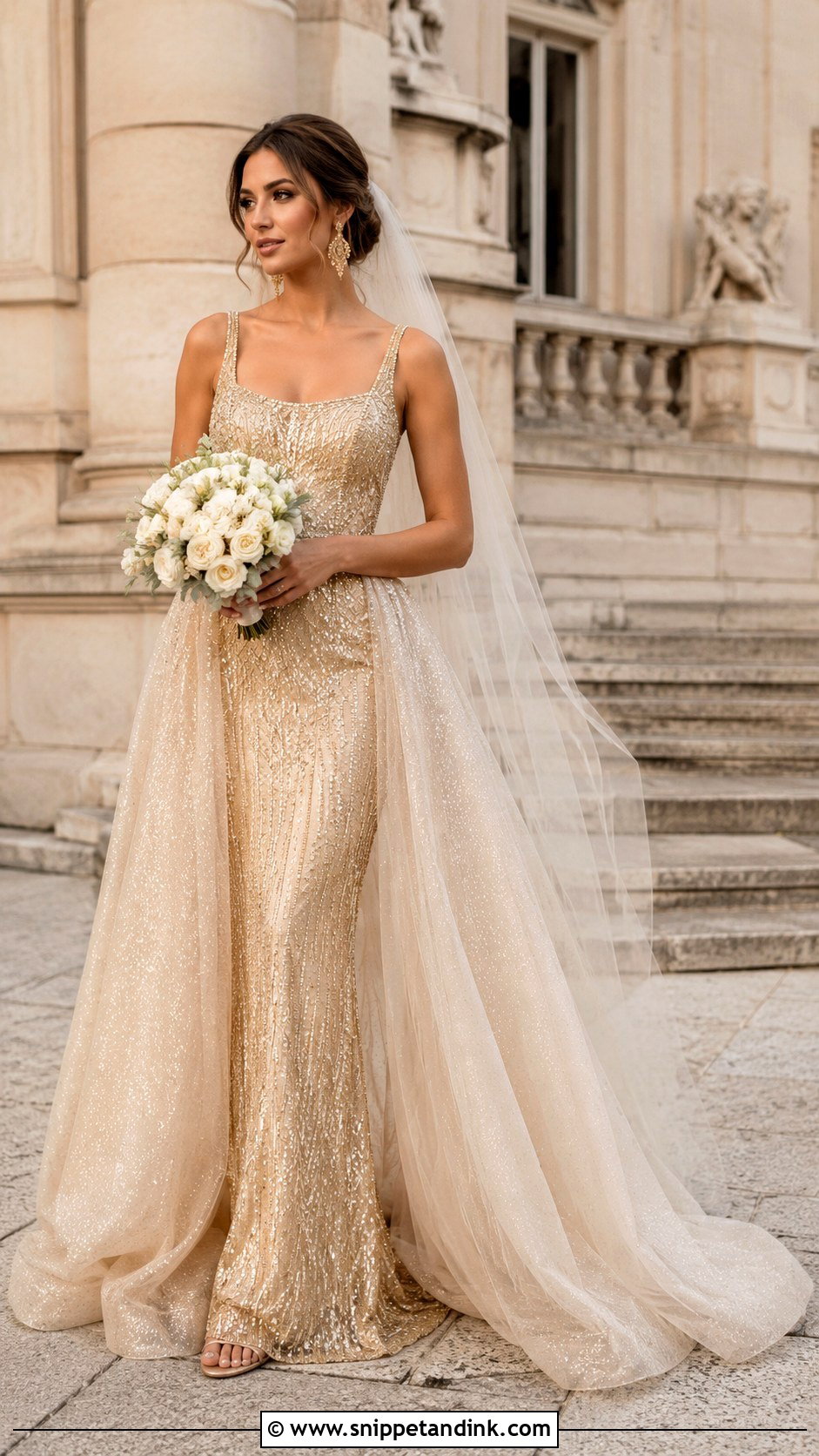
Gold works best when it glows rather than glitters. Pale gold is subtle; antique gold has more depth. A beaded column is sleek, while a gold tulle ball gown keeps a classic bridal shape. Small gold earrings, neutral heels and a light champagne veil are enough. Stick to one metal tone across jewellery, shoes and hairpins; three different golds next to each other look accidental. Cream flowers, white roses or simple greenery calm the shimmer. Gold reflects whatever is around it, so look at the dress under light like your venue’s before deciding. Formal halls, historic houses, sunset ceremonies and winter weddings suit it.
8. Silver Wedding Dress
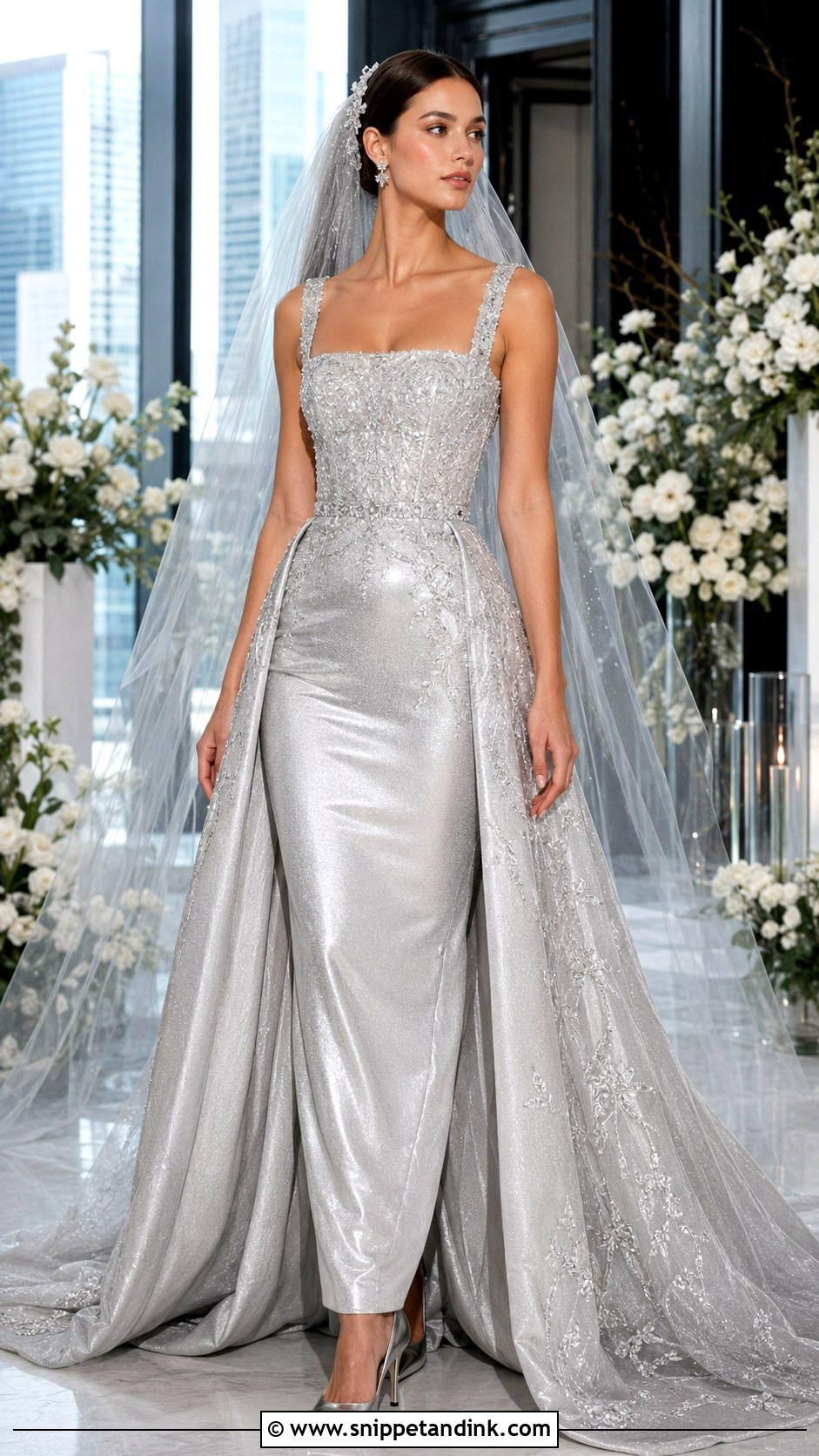
Silver brings a cool, modern edge. Look for silver satin, crystal-scattered tulle, metallic embroidery or small sequins that catch light without looking like a costume. A fitted silver gown with a square neckline and detachable overskirt gives you two looks. Crystal studs, silver pumps and a sheer grey-silver veil keep the palette clean, with white flowers and silvery foliage. Ask the shop to photograph you with and without flash, since metallic fabrics can flare white or turn flat grey on camera. Silver suits cool complexions best; pewter and warmer metallic blends widen the range. Modern venues, city weddings and evening parties suit it.
9. Sage Green Wedding Dress
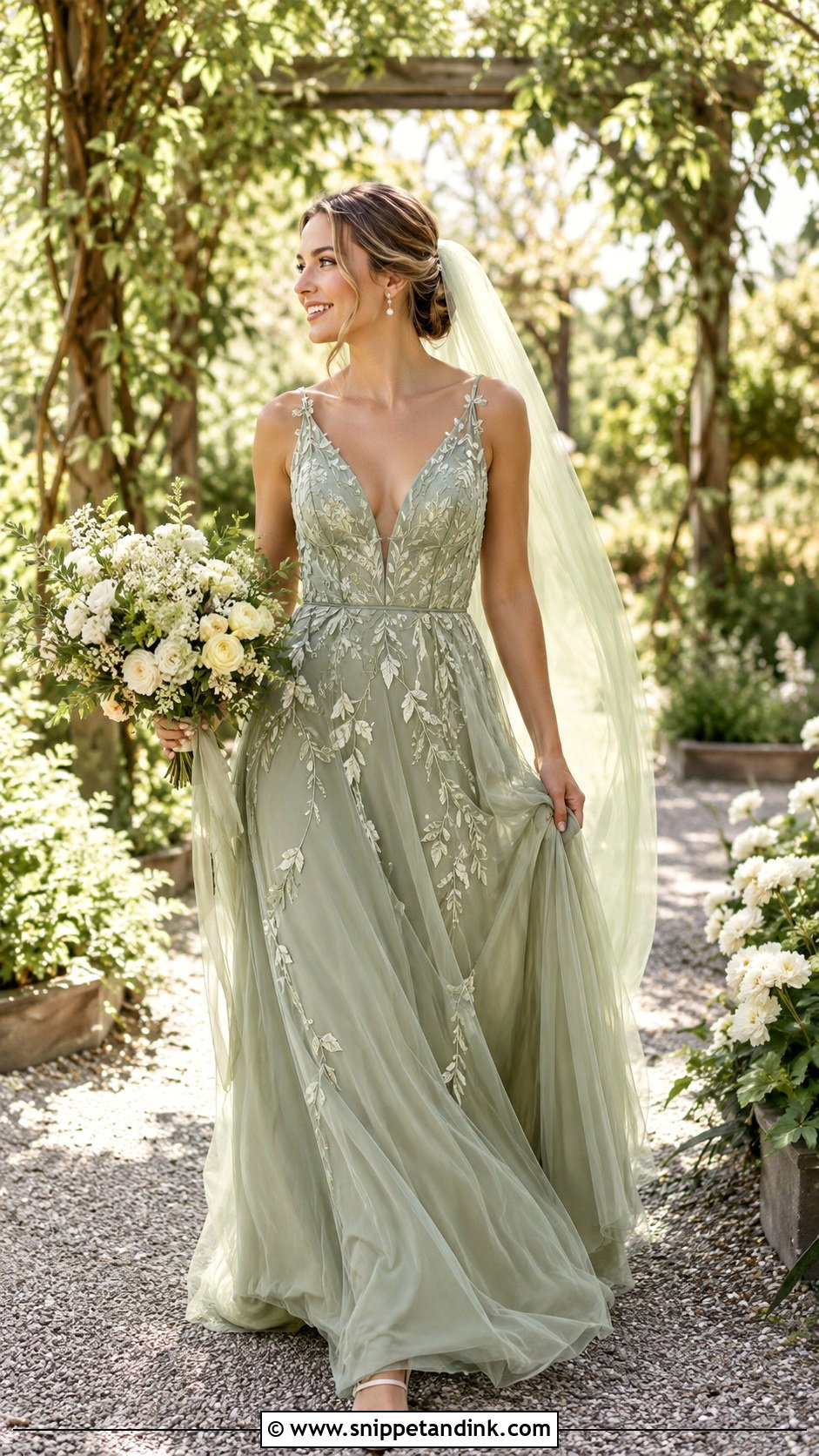
Sage looks at home outdoors and among plants, which is both its charm and its risk. Chiffon or tulle in an A-line with a fitted waist and fine leaf embroidery suits the colour. Pearl earrings, ivory shoes and a light sage veil keep it bridal. Don’t carry an all-green bouquet; against sage it blends into one mass in photos. Cream flowers with a little greenery stand out properly. A loose updo or soft waves suit the relaxed shade. Spring and early autumn suit it best, and it’s a good alternative for brides who find bright pastels too sweet. Check it against your skin, though; sage can grey out pale, cool complexions.
10. Emerald Green Wedding Dress
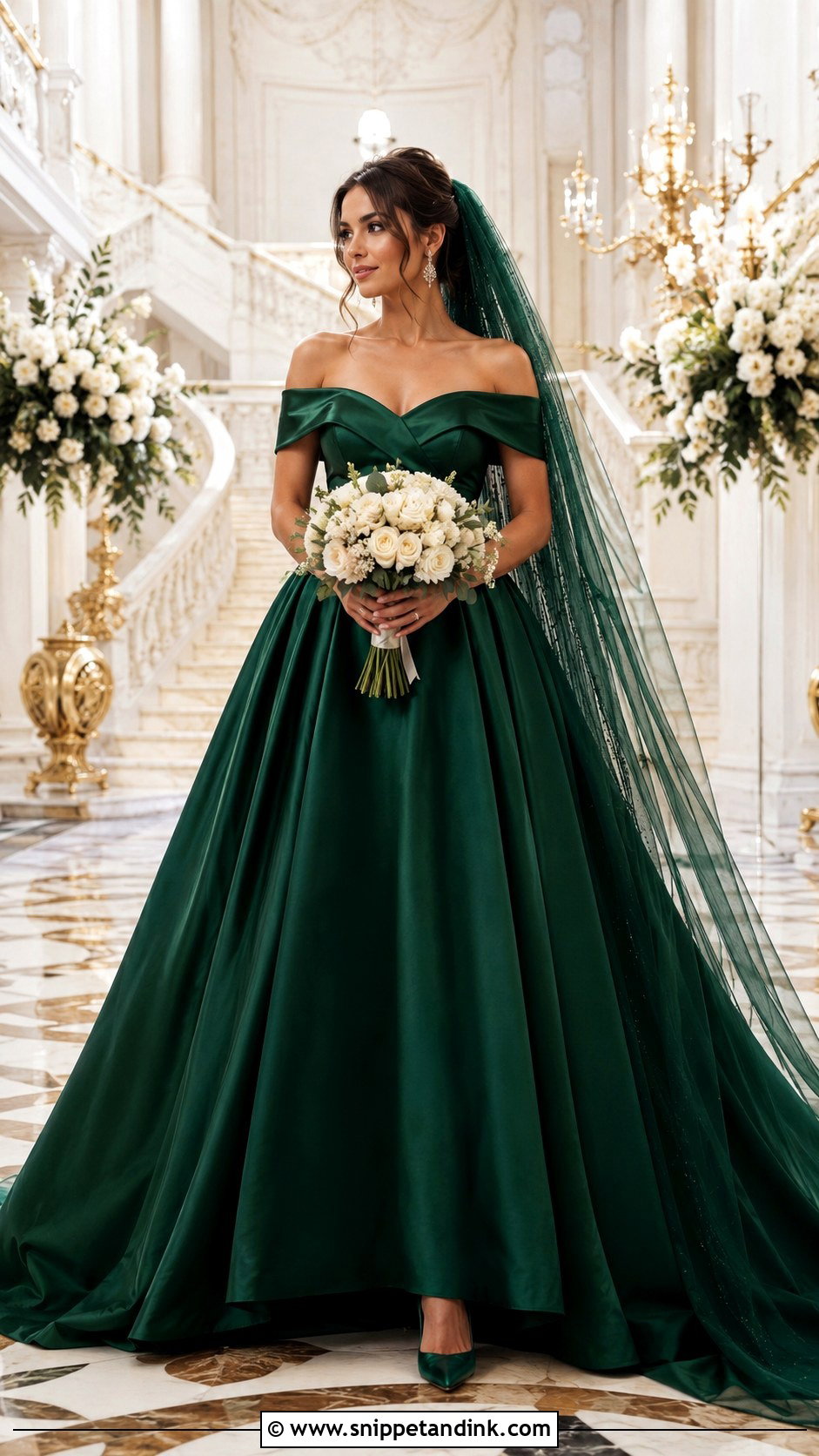
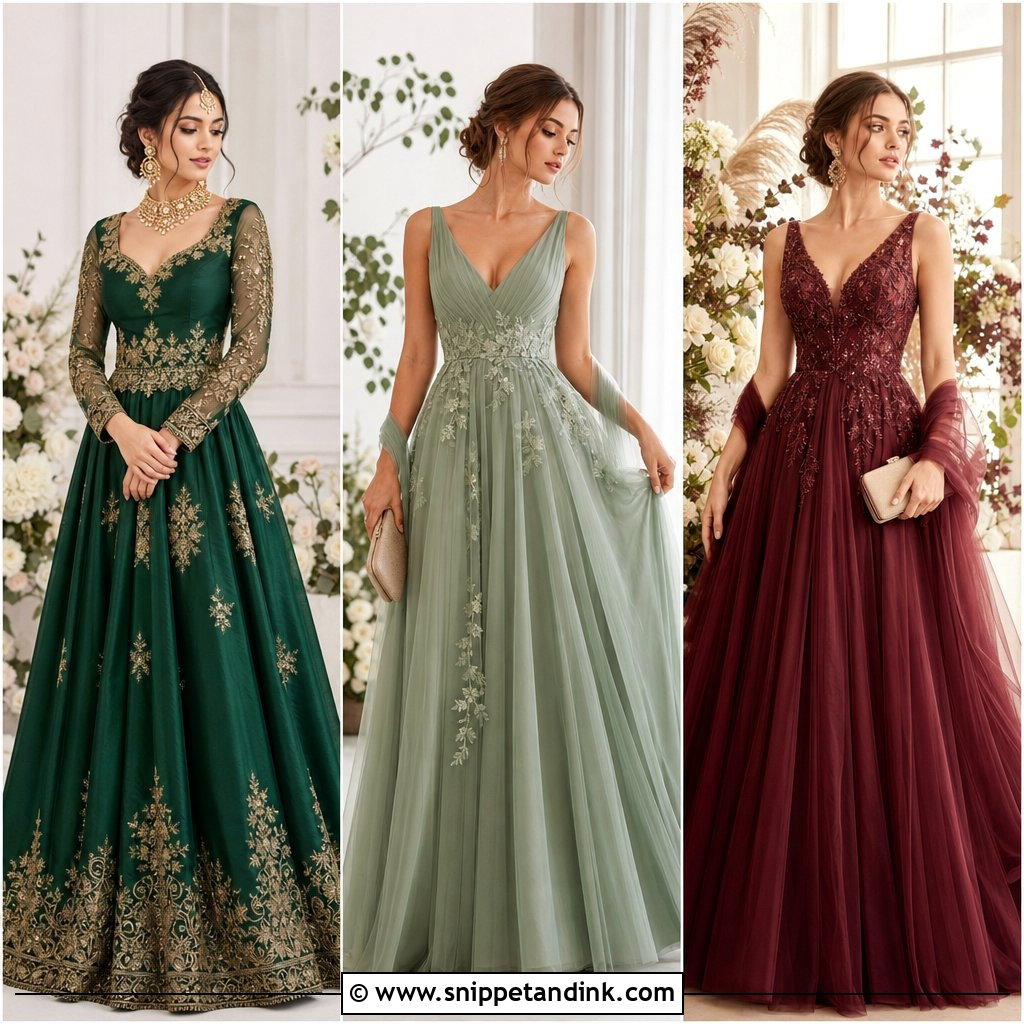
Emerald is rich enough to carry a whole wedding look on its own. A satin off-the-shoulder ball gown gives structure and shine; emerald chiffon with a gathered waist is lighter. Gold earrings, matching pumps and a long veil in the same colour family complete it. Cream flowers contrast cleanly, and an emerald ribbon on the bouquet links everything. A polished bun shows the neckline. Emerald’s blue-green depth flatters a wide range of complexions, which is why I suggest it to brides nervous about colour. Formal venues, evenings, forest settings and cooler months suit it. Ask about dye consistency if you’re ordering matching pieces; dark greens vary between batches.
11. Dusty Rose Wedding Dress
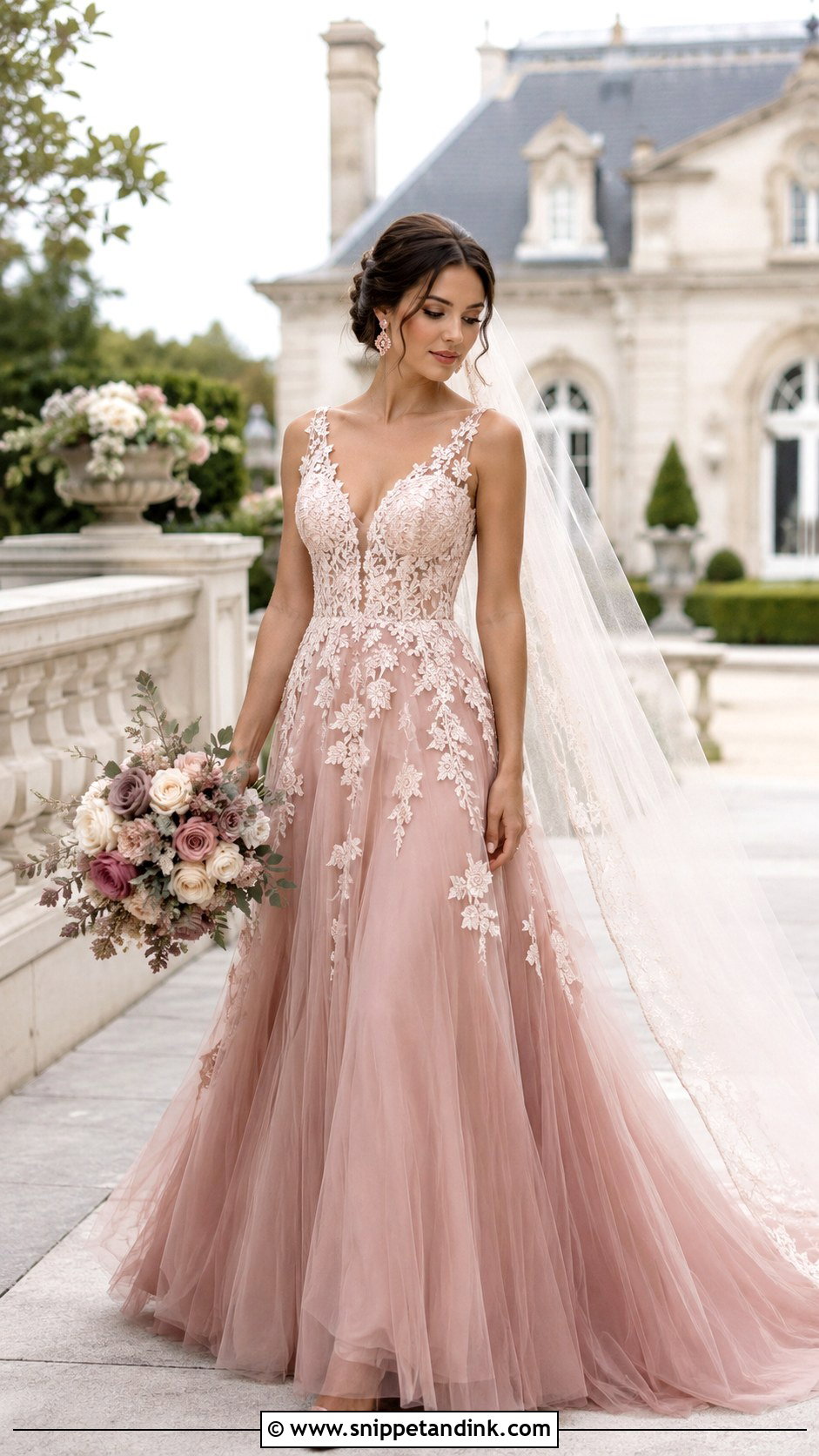
Dusty rose has more depth than blush and reads more grown-up. A lace or tulle gown over a muted rose lining, with a fitted bodice and gentle flare, suits it. Ivory appliqués across the neckline and skirt add dimension without hiding the colour. Rose-gold earrings, nude or dusty pink heels and an ivory or faded rose veil finish it. Cream, mauve and soft pink flowers coordinate while still contrasting. Warm neutral makeup and a rose lip suit the shade. It moves easily between seasons: airy fabrics for spring, velvet details and denser satin for autumn. I rarely see it look wrong on anyone.
12. Peach Wedding Dress
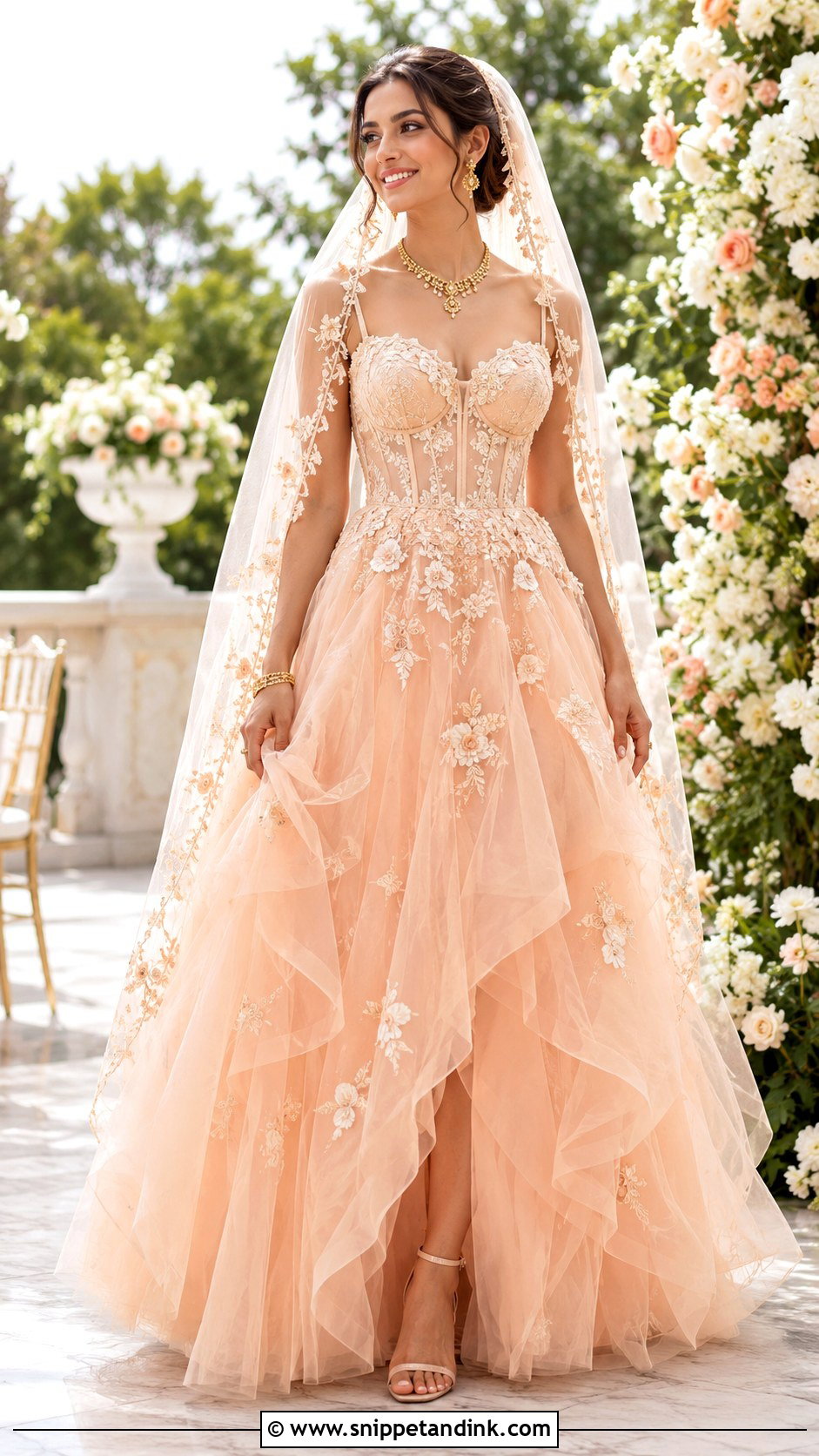
Peach warms up a light palette, but it’s a slippery colour. It can lean orange, pink or beige, and each version suits a different skin tone. A peach tulle gown with a defined waist, supportive bodice and airy layers is the classic shape. Cream, pale coral or soft pink appliqués add detail. Gold jewellery, nude heels and an ivory veil with faint peach embroidery finish it, with white and peach flowers and light greenery. Softer peaches look most bridal. I’d hold a few shades to your face before choosing. Spring and summer, outdoor venues, beaches and bright rooms suit it.
13. Yellow Wedding Dress
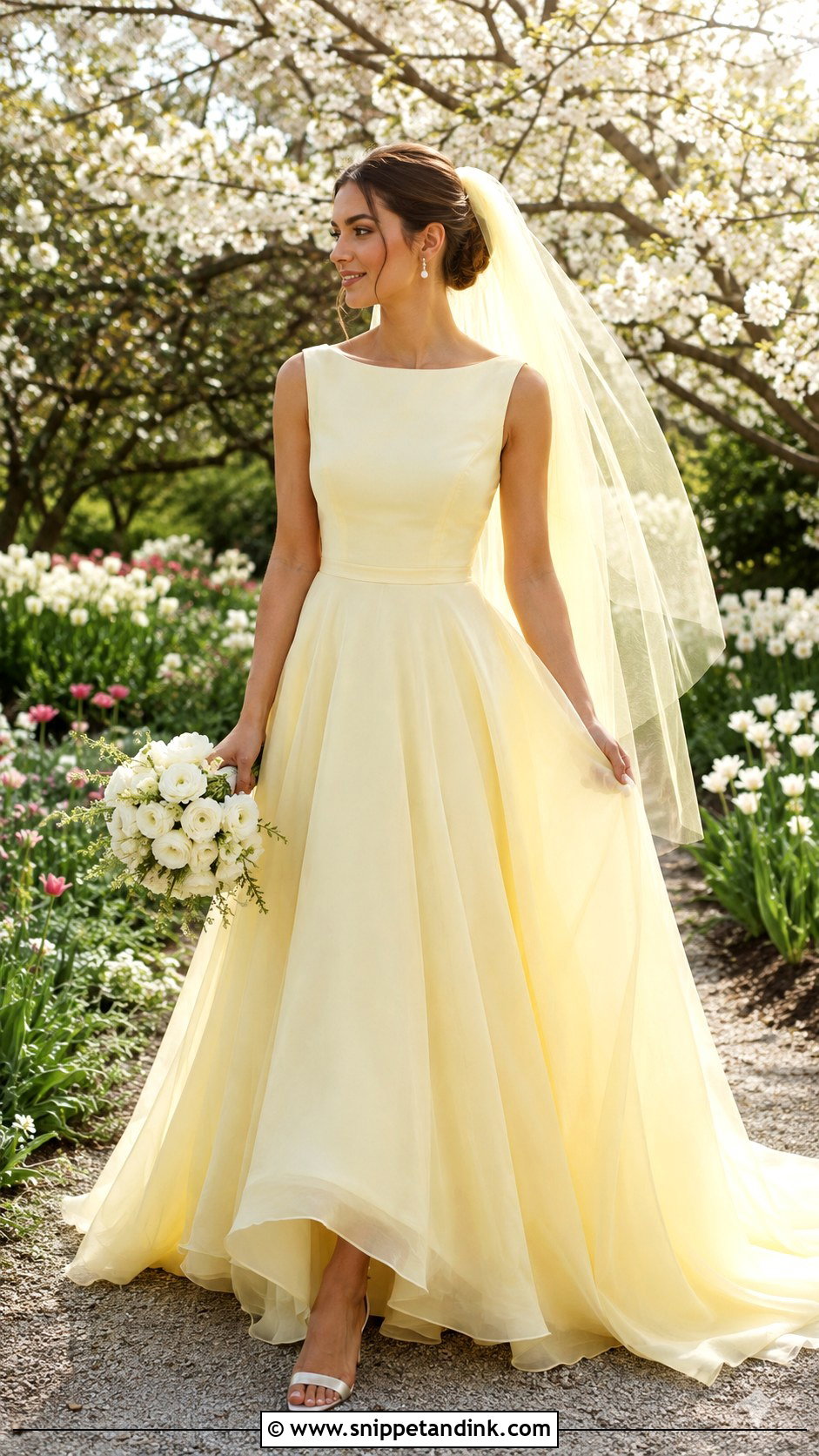
Can yellow look bridal? Yes, if the fabric and shape are formal. Pale butter yellow looks delicate in chiffon or organza; marigold is a stronger statement in satin. An A-line with a clean neckline, fitted waist and sweeping skirt keeps it elegant. Pearl earrings, ivory or neutral heels and a pale yellow veil suit it, with a white bouquet to keep it crisp. Avoid several bright accessory colours unless you want a maximalist look. Yellow is cheerful in outdoor photos in spring and summer, and deeper golden yellows suit early autumn evenings. It is unkind to sallow skin, so test it in daylight first.
14. Orange Wedding Dress
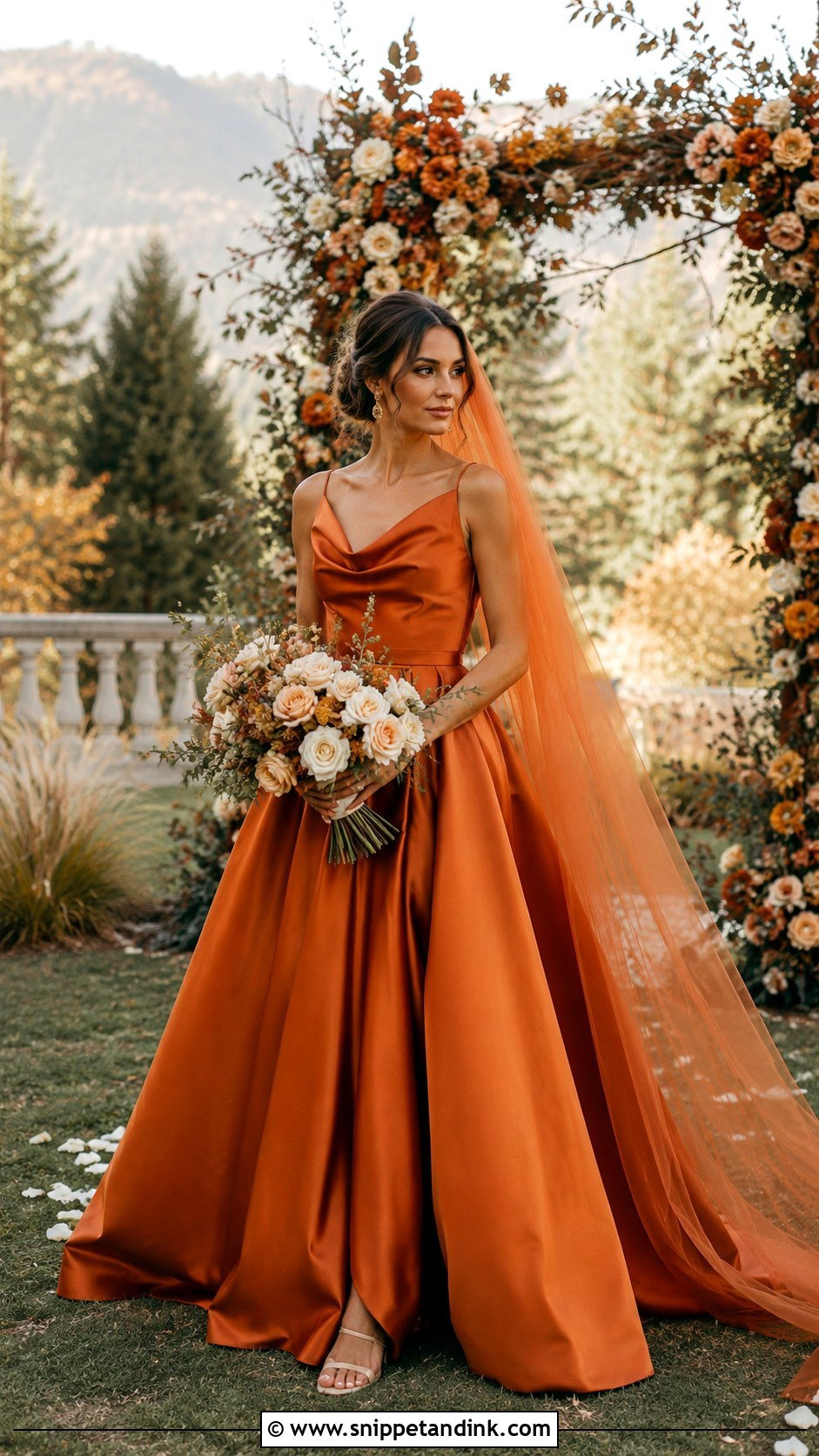
Orange covers a huge range, from soft apricot through terracotta and burnt orange to bright tangerine. I’d usually steer brides toward the muted end. A burnt orange satin gown with a draped bodice and full A-line skirt is formal enough for a ceremony. Gold earrings, neutral heels and a matching sheer veil keep it unified. Cream flowers lighten the palette, and small peach blooms bridge bouquet and dress. Keep hair and makeup polished and simple, since the colour already has plenty of energy. Late summer and autumn suit it, especially outdoors, at rustic estates and desert venues surrounded by warm tones.

15. Purple Wedding Dress
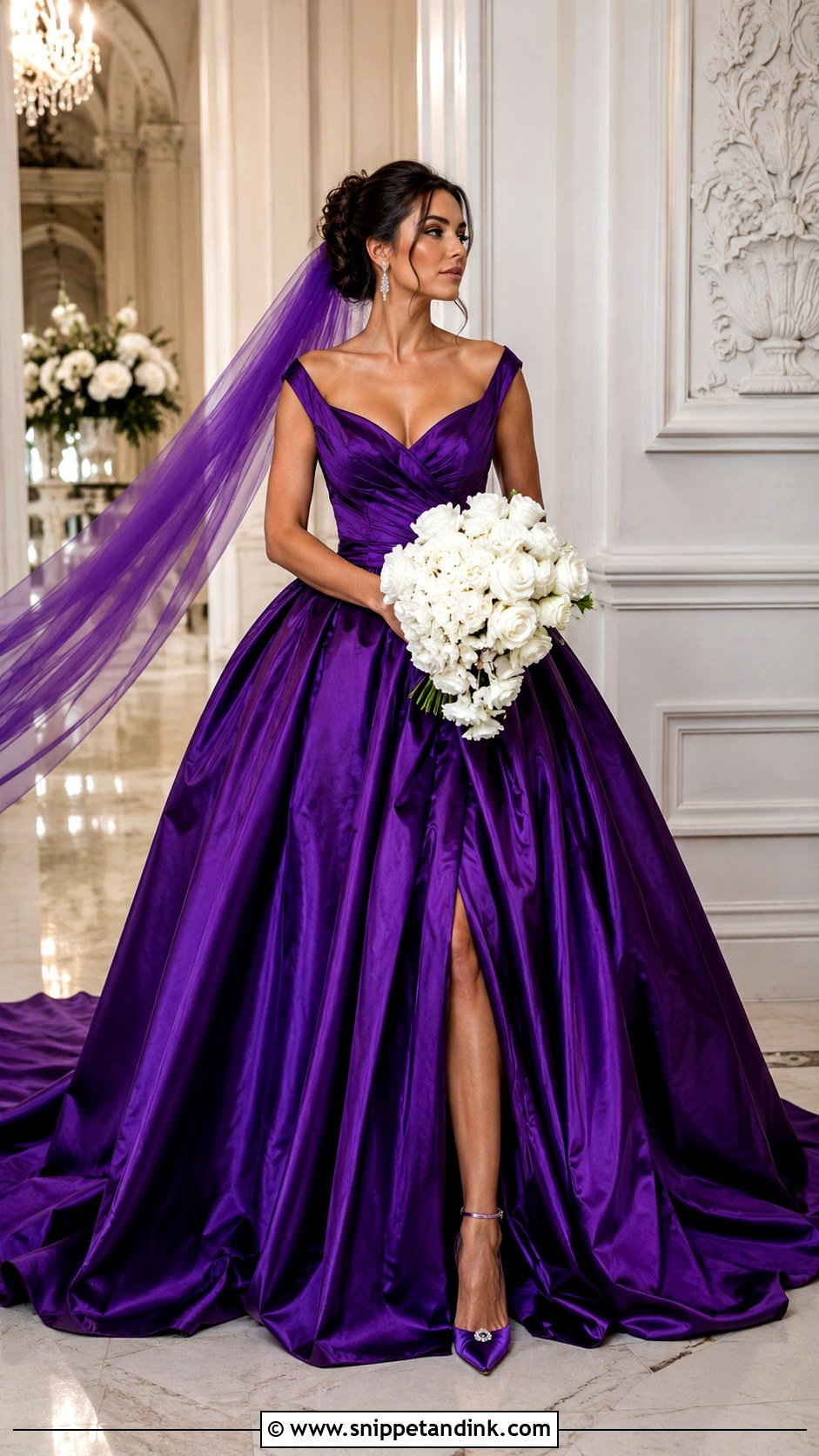
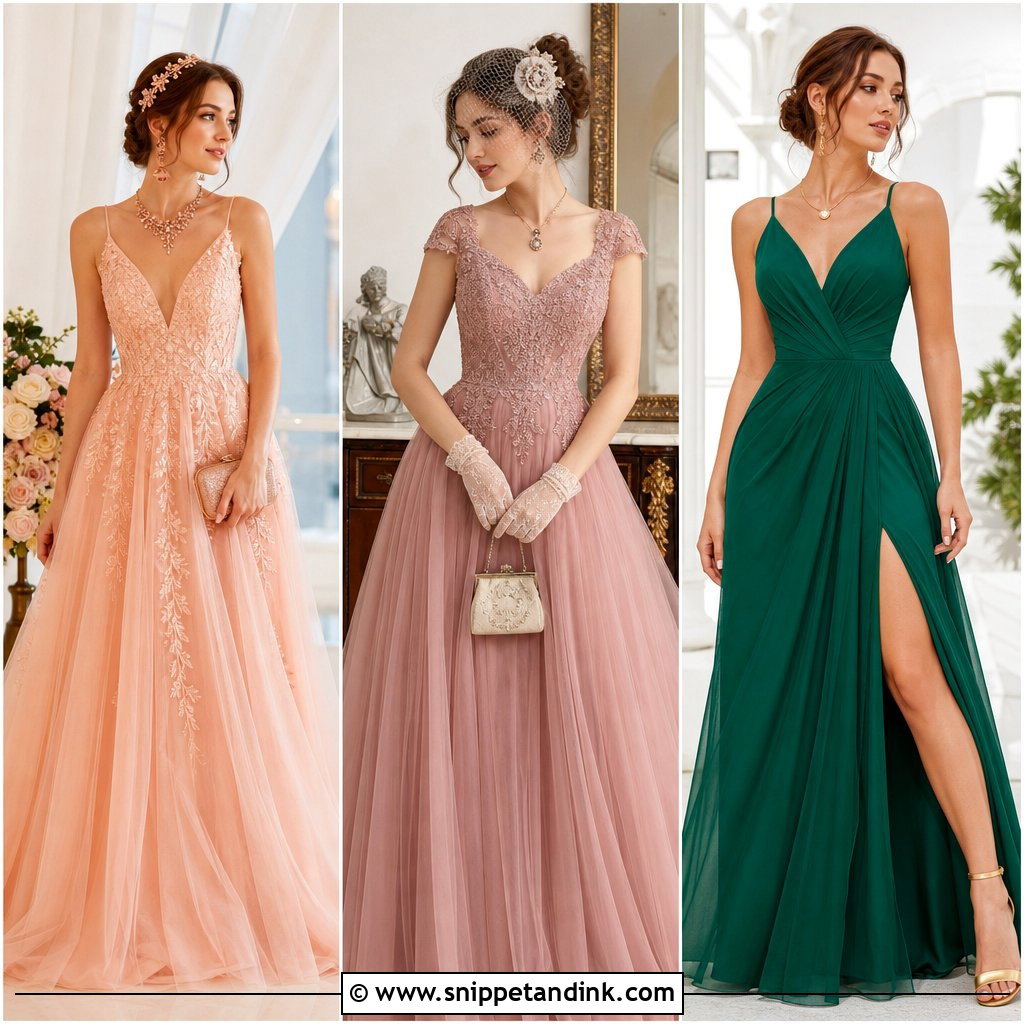
Purple runs from soft violet to deep royal, and saturation decides the mood. Deep royal purple looks rich in satin or velvet; medium violet is lighter in chiffon and tulle. A purple ball gown with a structured bodice and plain skirt keeps it balanced. Silver or crystal earrings, purple heels and a long matching veil complete it, with white flowers for contrast. If the bodice is heavily beaded, leave the neck bare. Purple is the colour that surprises brides most in photographs. It can read bluer, redder or greyer on camera than in person, so ask for test photos at the shop. Evenings and formal spaces suit it, and softer purples suit gardens.
16. Navy Blue Wedding Dress
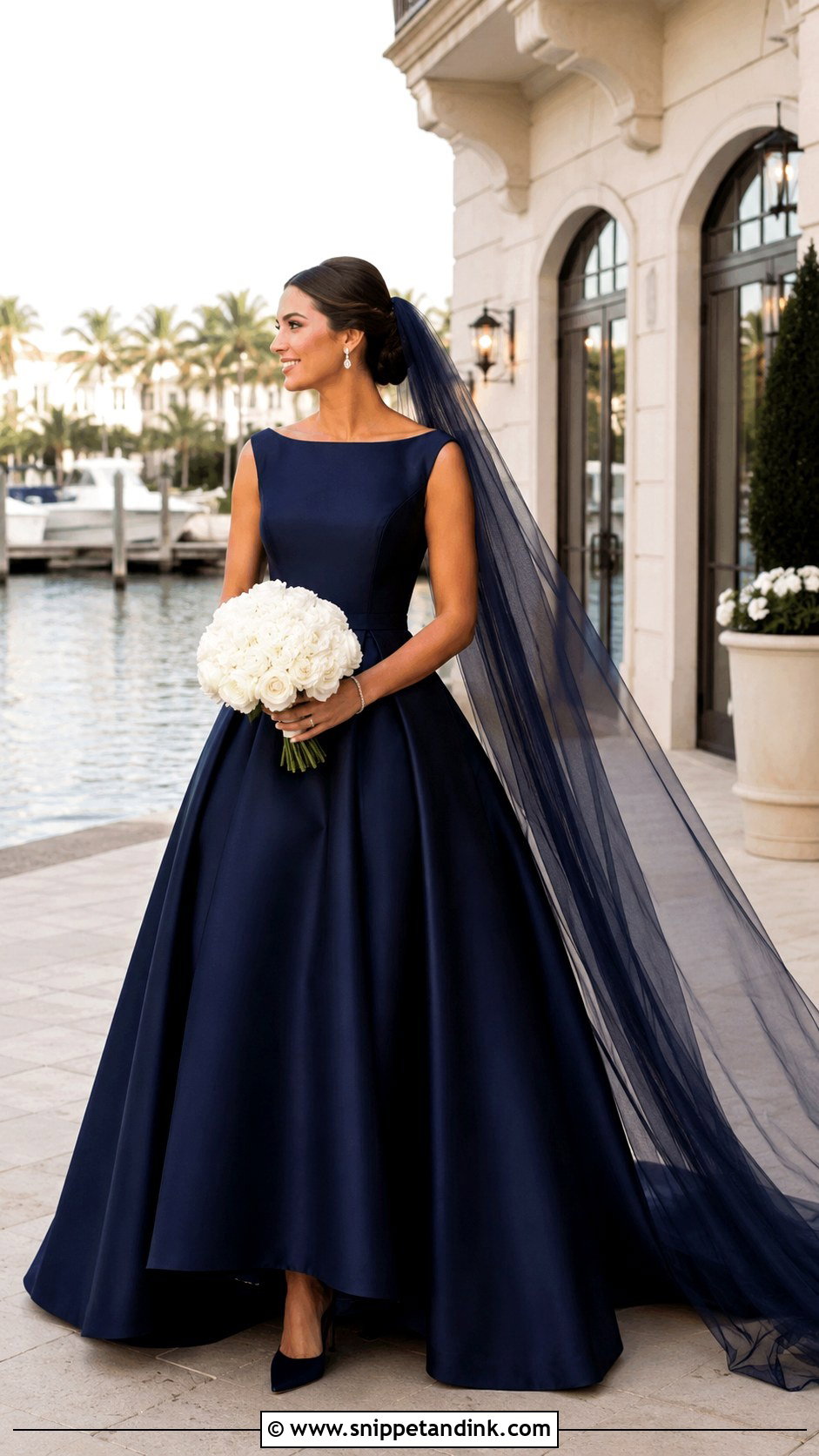
Navy has the drama of a dark gown with a softer edge than black. A navy satin dress with a bateau neckline, fitted waist and full skirt is classic; navy lace with sheer sleeves adds texture and cover. Silver earrings, navy pumps and a long veil with a clean edge suit it. White flowers make the navy look richer. Use crystal accessories sparingly. Navy works all year at formal, waterfront, city and evening venues. It also sits well beside a partner in a navy or neutral suit, though I’d make sure the two navies are close in shade, since mismatched dark blues look odd next to each other in photos.
17. Burgundy Wedding Dress
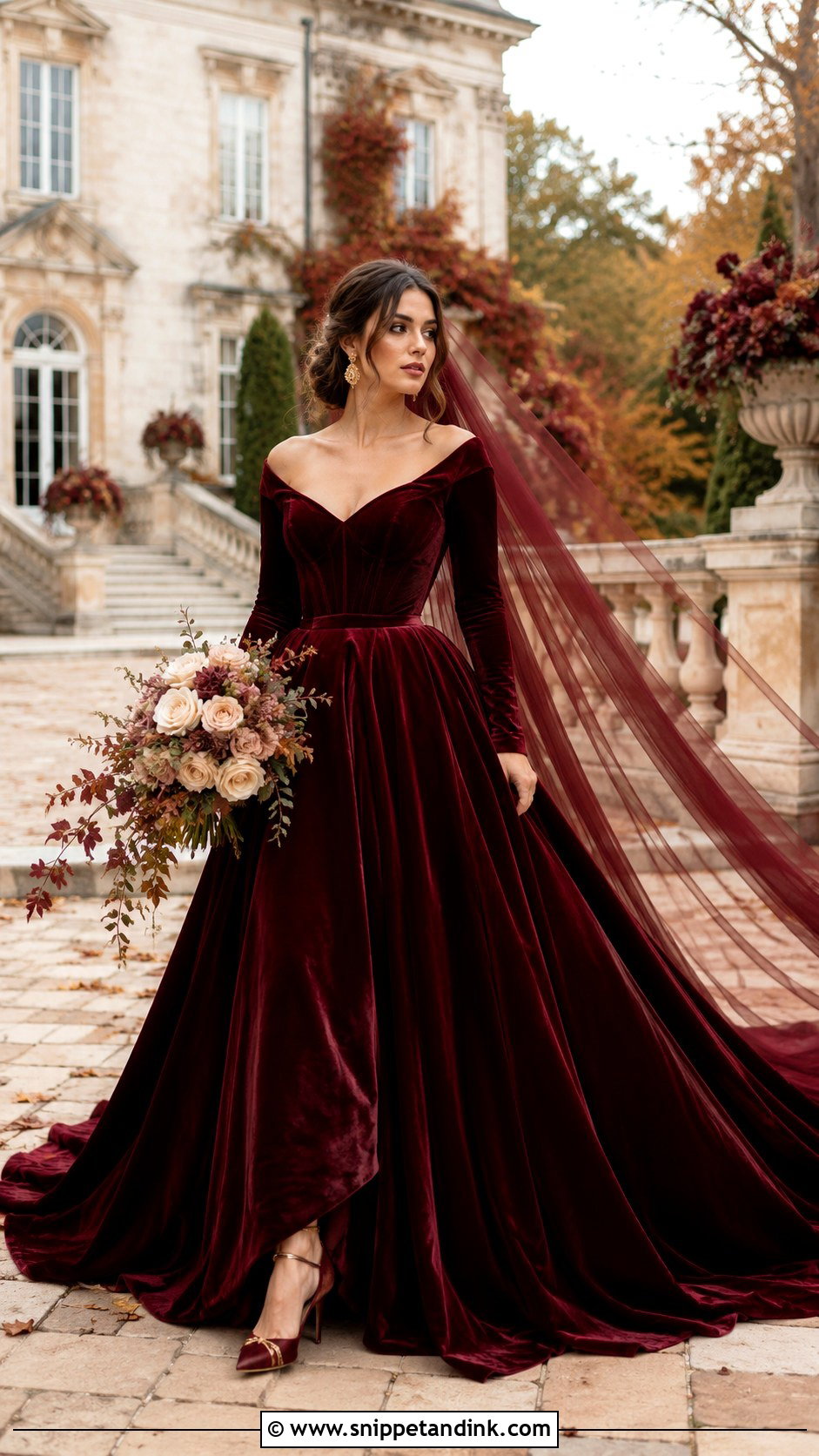
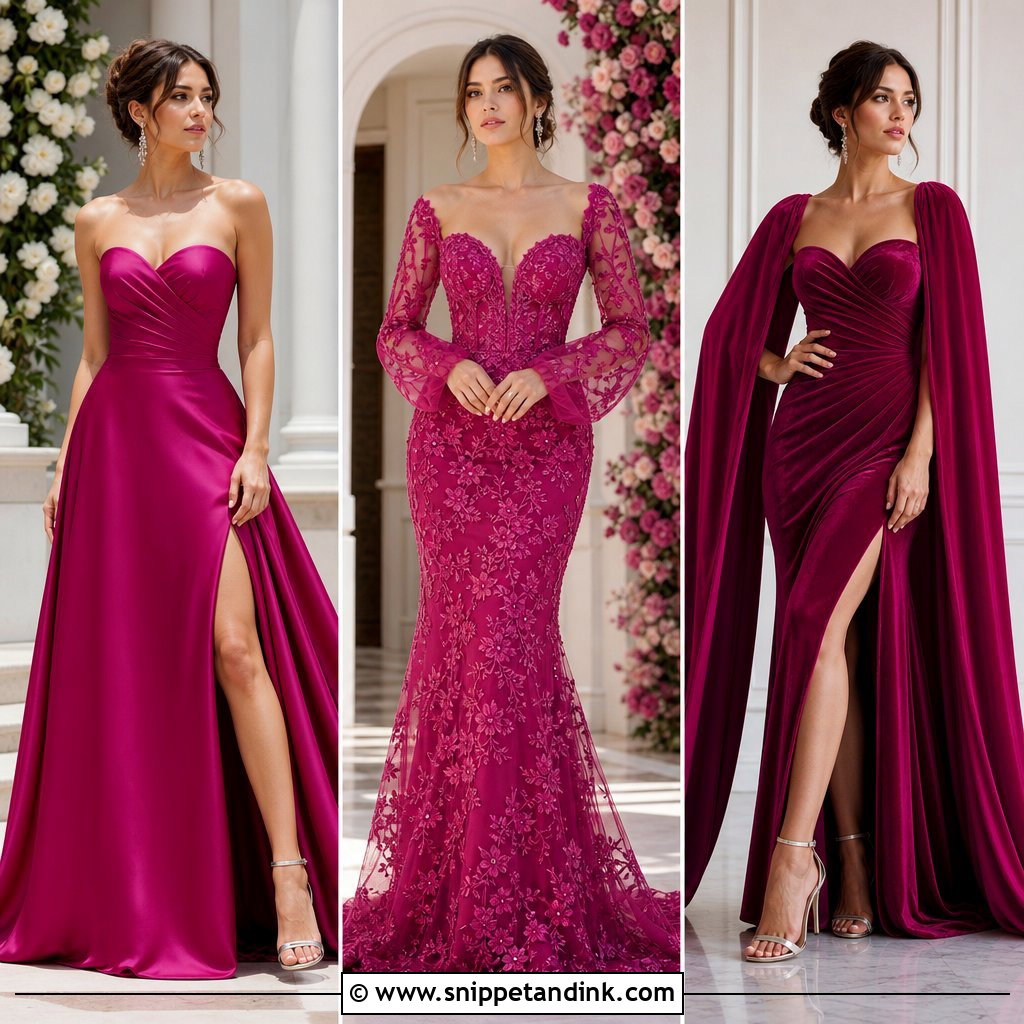
Burgundy suits brides who love red but want it deeper. Velvet or satin ball gowns are luxurious for cold weather; chiffon lightens it. A defined waist and open neckline stop the dark colour from feeling heavy. Gold earrings, burgundy heels and a matching cathedral veil complete the look, and a bouquet of cream, blush and muted greenery softens it. Warm neutral makeup and a berry lip echo the dress without matching it exactly. Autumn and winter ceremonies, estates and candlelit ballrooms suit it. Velvet shows every press mark and crush, so have it steamed from the inside and avoid sitting on it in a car more than you need to.
18. Teal Wedding Dress
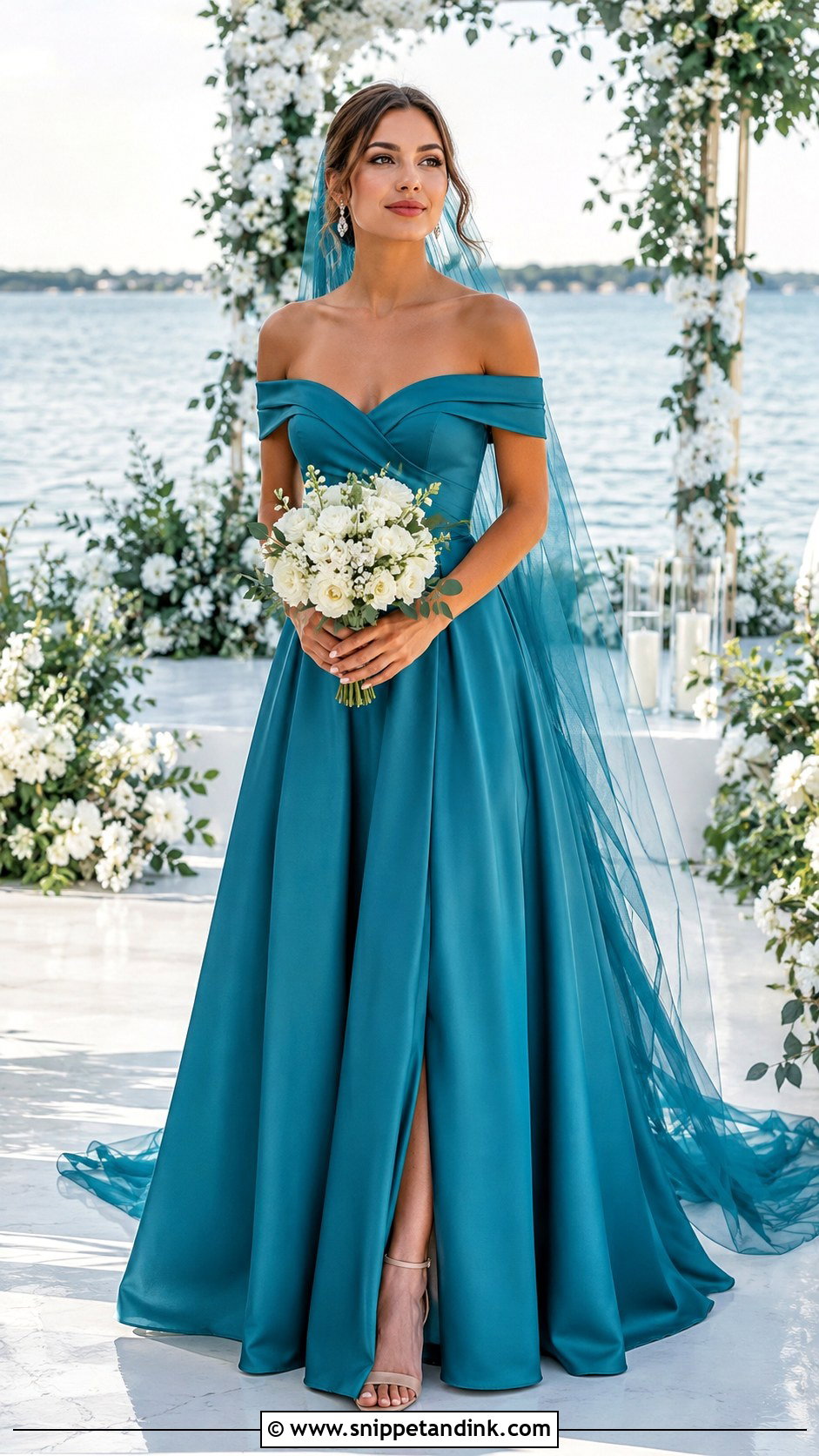
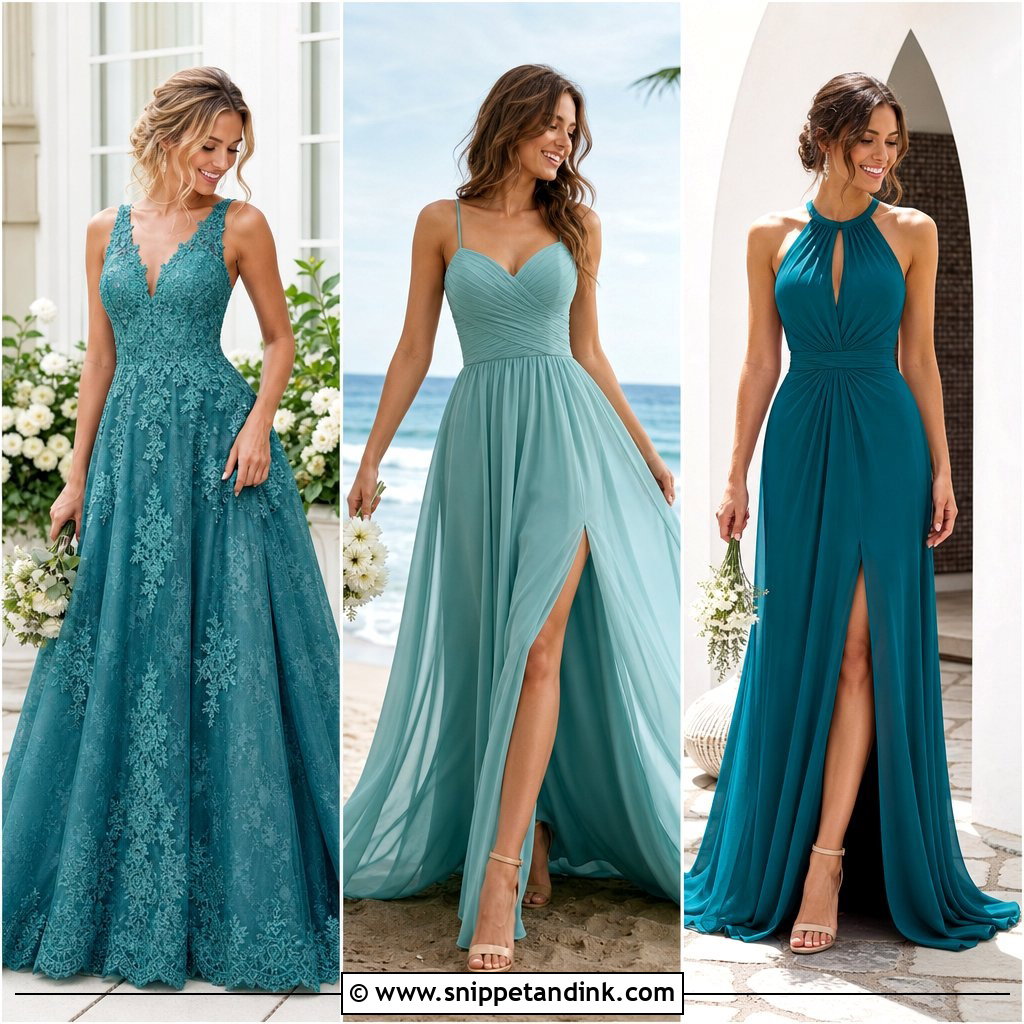
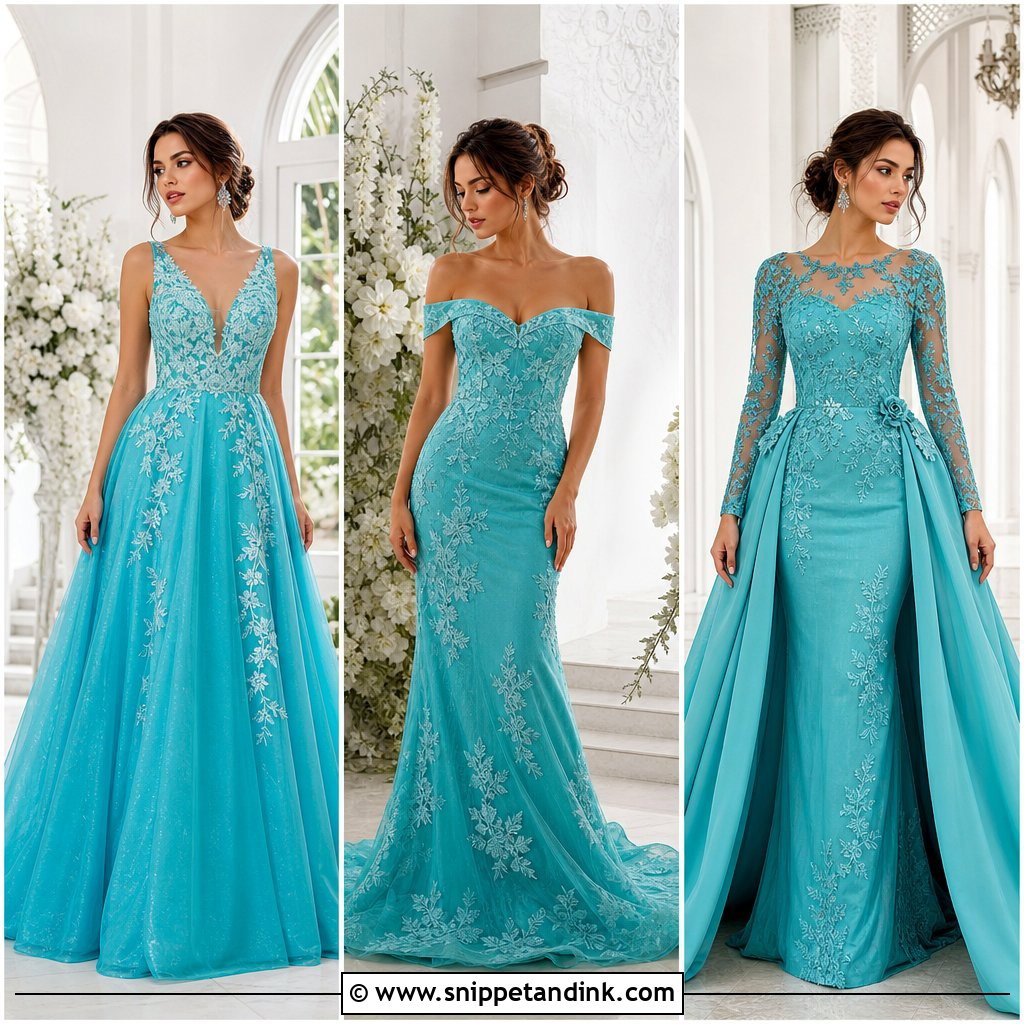
Teal sits between blue and green, and which way it leans decides your accessories. Cooler teal pairs with silver; greener teal often suits gold. Dark teal satin is formal; sea-coloured chiffon is lighter. A one-shoulder or off-the-shoulder gown with a fitted waist and A-line skirt suits the colour. Silver earrings, teal or neutral heels and a matching sheer veil complete it, with white flowers and a few blue-green accents. Before you buy shoes or jewellery, hold the fabric next to both metals and see which one looks right. Waterfronts, modern venues and gardens all suit teal in any season.
19. Gray Wedding Dress
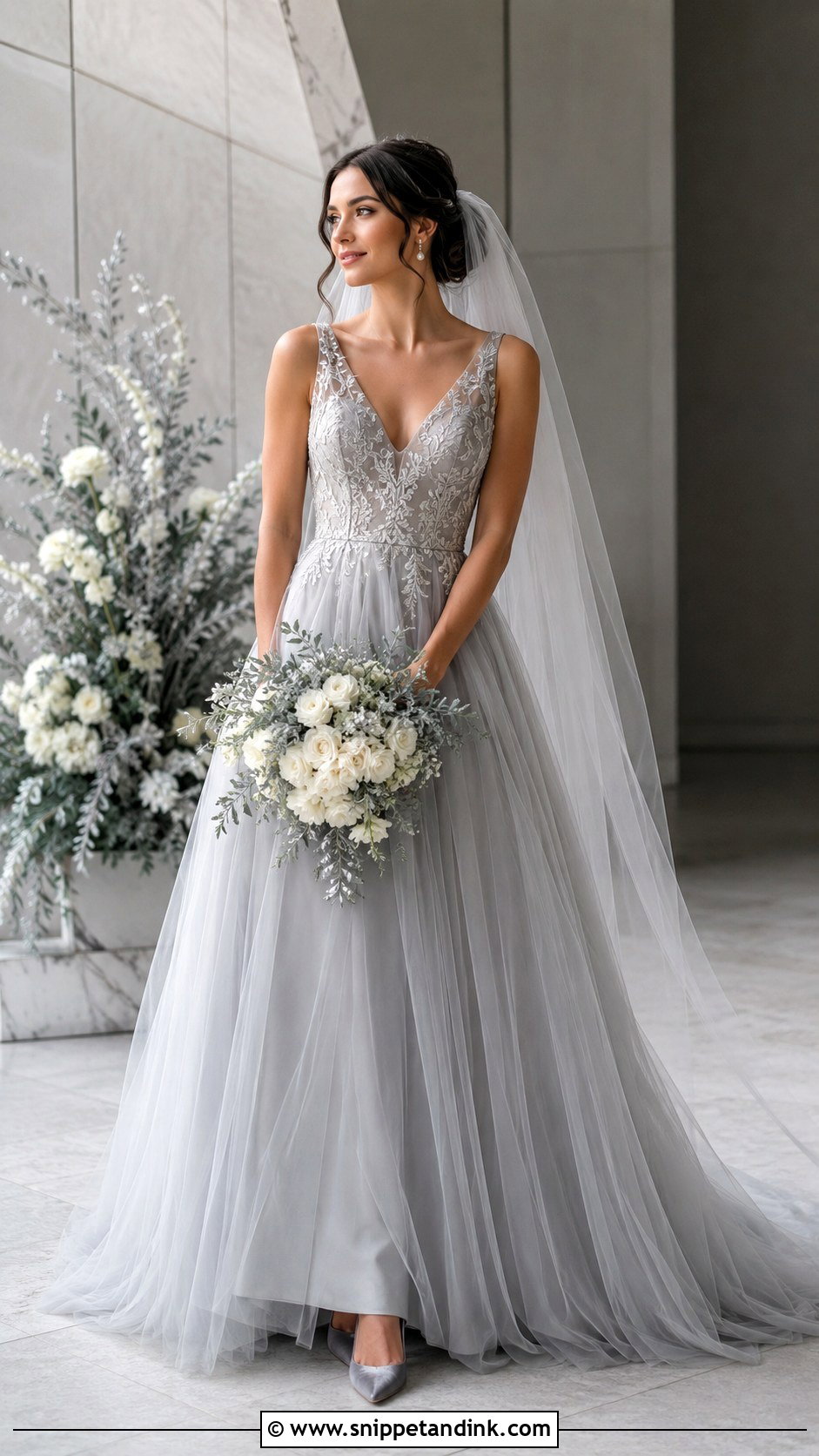
Grey is quiet and modern. Pale dove grey looks airy in tulle; charcoal is dramatic in satin or layered lace. A light gray gown with a fitted bodice, full skirt and silver floral embroidery is romantic. Pearl earrings, grey satin heels and an ivory or grey veil suit it, with white flowers and silvery foliage. Compare cool blue-grey and warmer taupe-grey beside your skin. Watch the venue: a grey dress against grey stone or concrete disappears in photos. Modern architecture, city spaces, industrial venues and minimal rooms suit it, as long as there’s some contrast behind you.

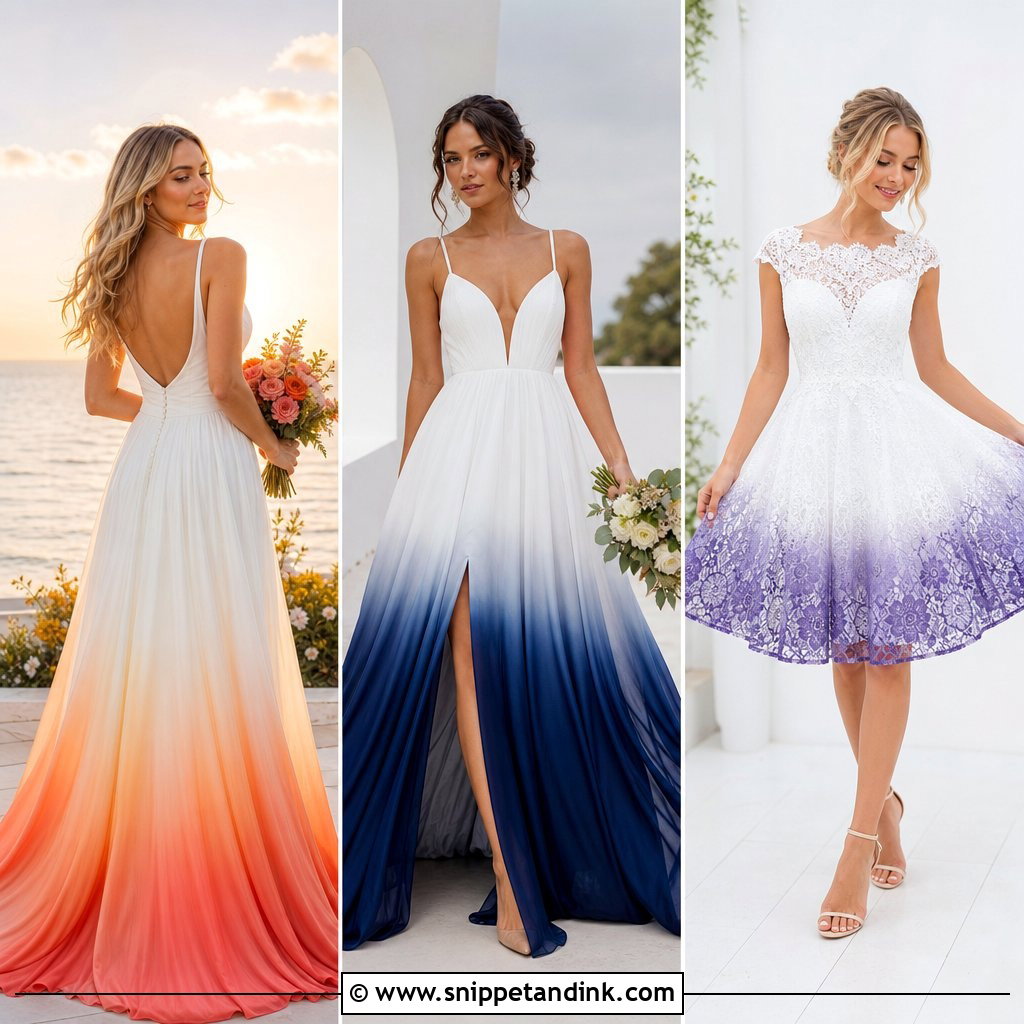
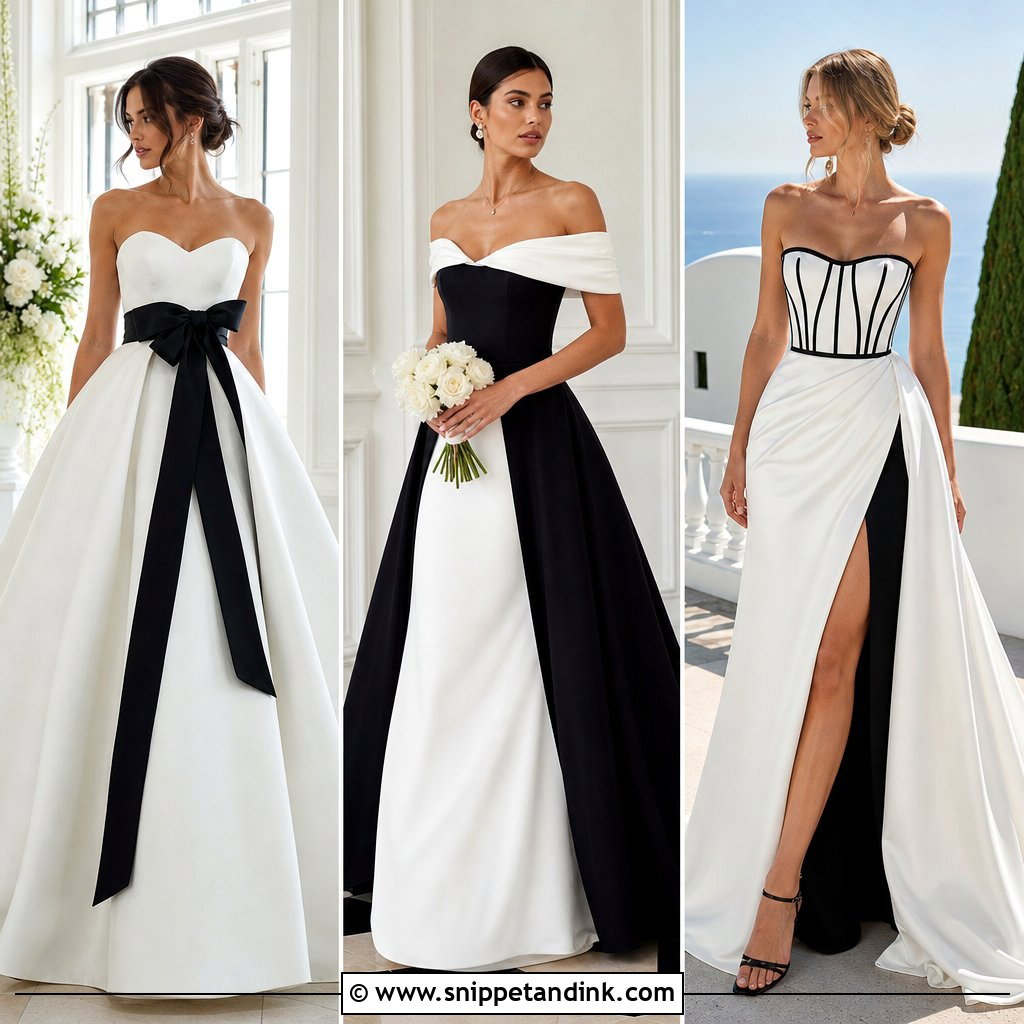
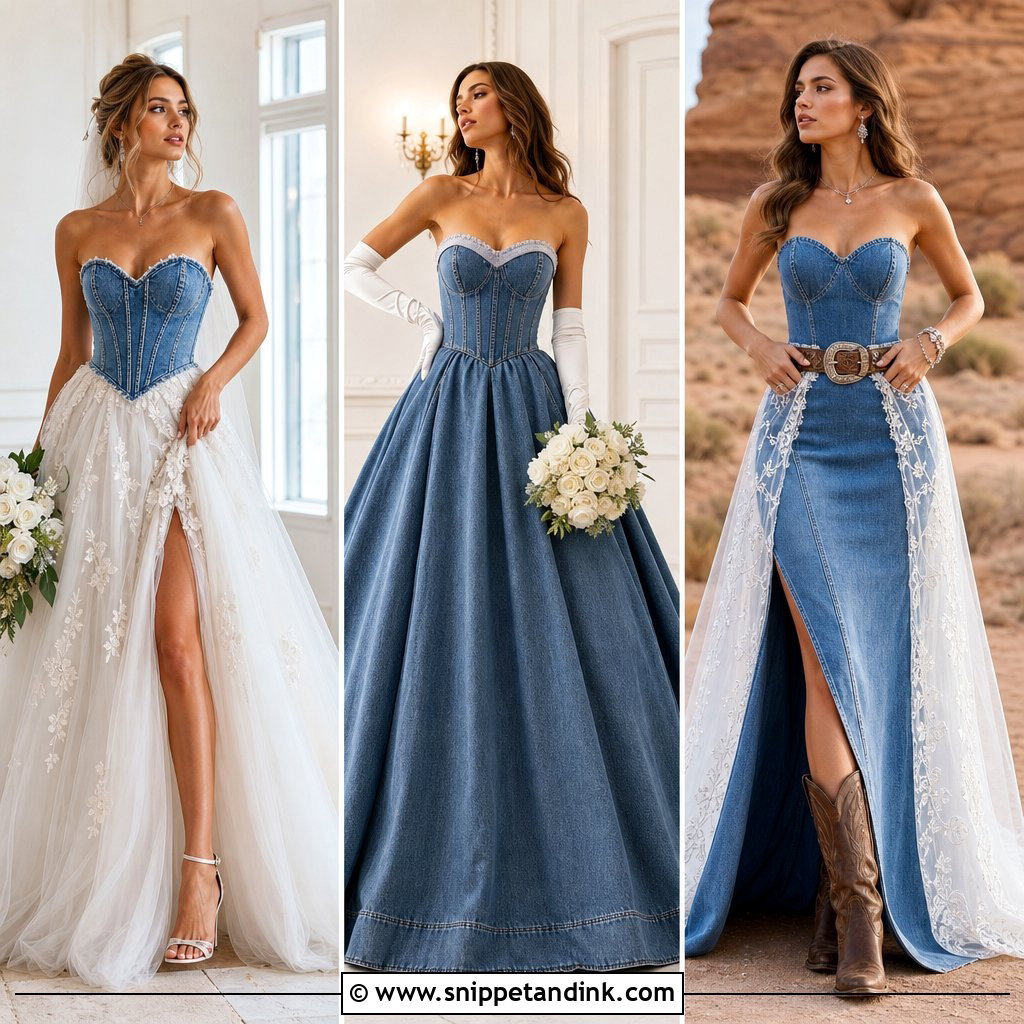

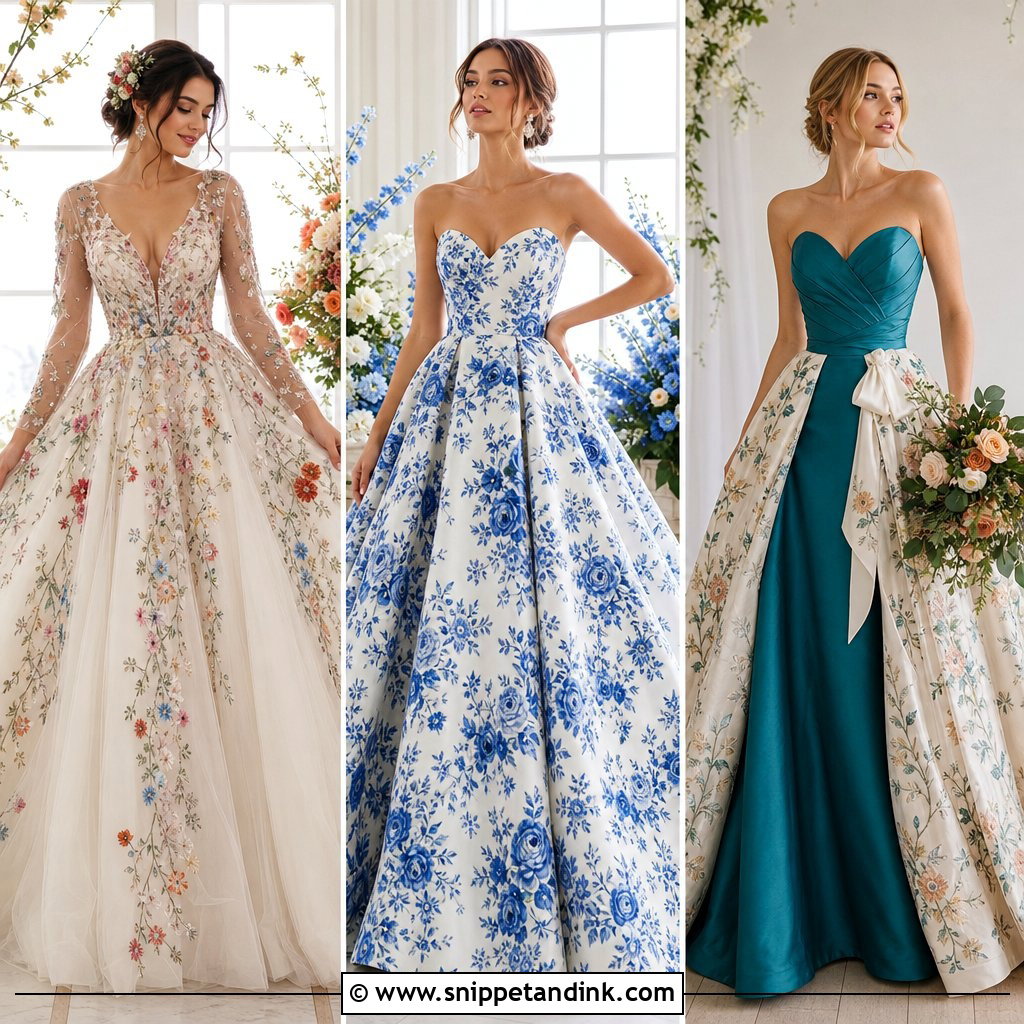
20. Multicolor Floral Wedding Dress
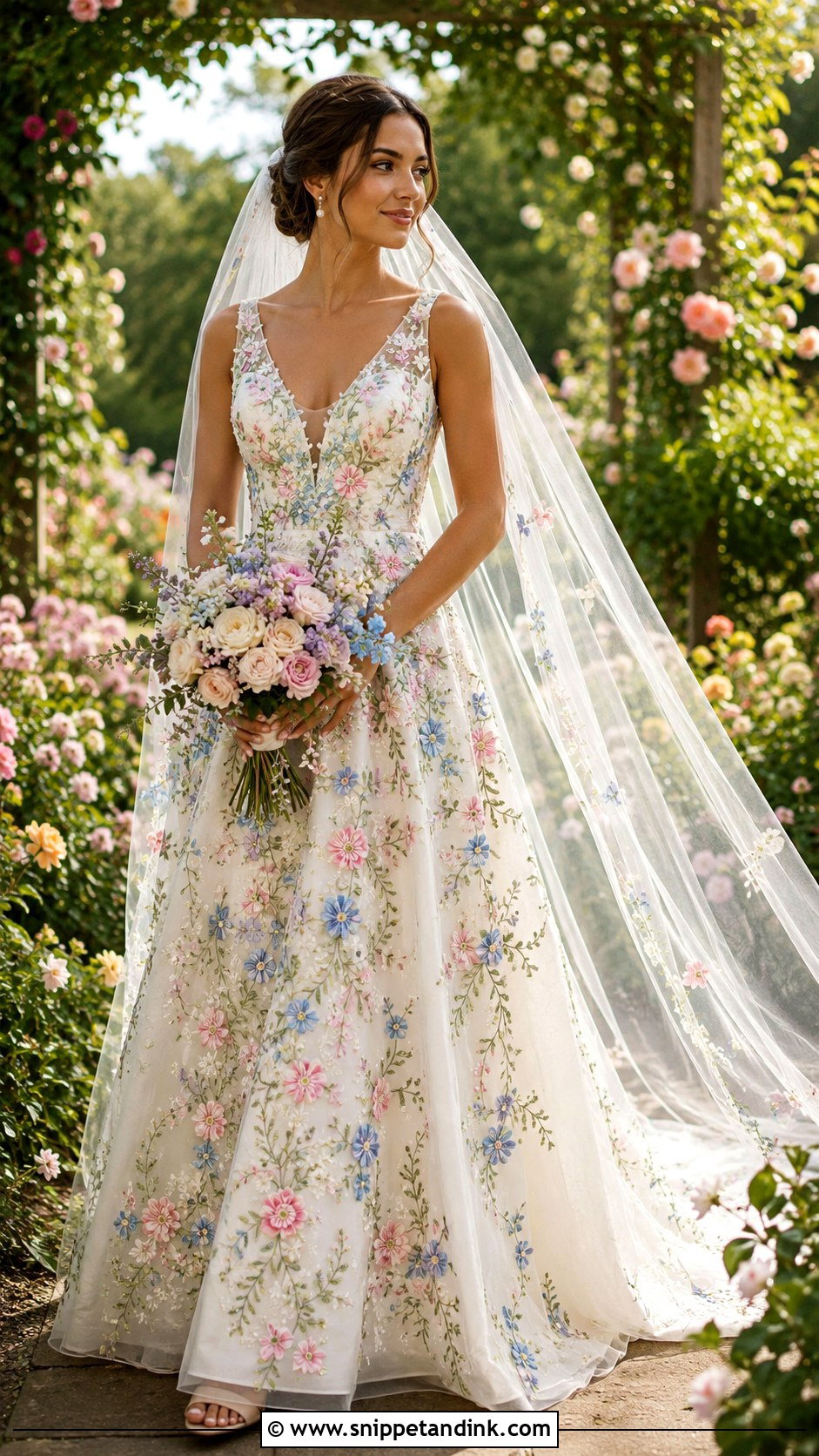
A multicolour floral gown solves the problem of not being able to pick one shade. Start with an ivory, blush or light blue base covered in embroidered flowers, painted botanicals or raised appliqués. An A-line gives the pattern room to show from bodice to hem. Pearl earrings, neutral heels and a sheer veil with just a few matching flowers keep it calm. My rule for the bouquet is two or three colours from the dress, never all of them. Keep jewellery minimal and makeup natural so the artwork leads. Gardens, estates, spring weddings and creative venues with plain backdrops suit it.
Dye Lots, Camera Flash and Other Coloured-Gown Surprises
A coloured dress brings a few problems a white one doesn’t, and I’d rather you heard them from me than found them at the final fitting.
- Dye lots: if your gown is made to order, ask the shop to compare the delivered dress against the sample swatch. Coloured fabric can vary slightly between batches, and the same applies if your bridesmaids’ dresses are meant to match yours.
- Alterations: any extra fabric for a bustle, straps or sleeves needs to come from the same batch, so ask your seamstress to use what’s taken from the hem rather than buying new.
- Light fading: strong sunlight can fade dyed silk and chiffon over time. Keep the dress in a cloth bag away from windows before and after the wedding.
- Marks: deodorant and powder show up white on black, navy and burgundy. Use a clear deodorant and keep a lint roller and a damp cloth nearby while you dress.
- Photography: tell your photographer the dress colour in advance. Very saturated reds and purples can lose detail on camera, and black needs careful exposure in a dark venue.
None of these is a reason to avoid colour. They’re just the things I check so the dress you see in the album is the one you fell for in the shop.
Let the Undertone Make the Final Call
With this many colours to compare, it helps to judge the whole outfit rather than the gown alone. Start with a colour that feels like you, then check its undertone against your skin and the venue’s light. Build the rest with shoes, jewellery, flowers, hair pieces and a veil that support the dress rather than compete. Pastels are a gentle step from ivory; jewel tones, black and metallics are more dramatic. Fit, movement, comfort and good fabric still matter more than shade. Blush, emerald, silver or multicolor embroidery can all look bridal and deliberate when they’re styled with care.
You'll Like These Ideas:





Leave a Reply