
More brides now ask me for something other than white or ivory, and colour does change the whole feel of an aisle look. Blush, champagne, blue, lavender, black, florals and metallics can all still read as bridal if the shape and accessories are right. The trick is to choose the shade on purpose. Pale colours sit close to tradition; deep ones read as a deliberate statement. A veil, fine jewelry and polished hair pull almost any colour back into wedding territory. Below are 25 coloured gowns, with the fabric and styling choices that make each shade work, and the places where some of them go wrong.

Hold the Swatch Under Your Jaw in Daylight
A colour that looks wonderful on a hanger can drain your face, and the only way to know is to test it against your skin. I ask brides to hold a fabric swatch or the gown itself right under the jaw, near a window, with no makeup or very little. Look at your skin, not the fabric. If it looks brighter and more even, the shade works; if shadows under the eyes or redness suddenly stand out, it doesn’t.
Warm and Cool Undertones
- Warm undertones (veins look greenish, gold jewelry flatters): champagne, peach, terracotta, butter yellow and burgundy usually work.
- Cool undertones (veins look bluish, silver flatters): dusty blue, powder blue, lavender, grey, emerald and navy usually work.
- Neutral: most shades work, and blush and sage are often the safest.
These are starting points, not rules, and the depth of a colour matters as much as its warmth. Photograph yourself in the dress outdoors and under indoor light. Cameras exaggerate some shifts, especially purples going grey and yellows going green.
1. Blush Pink Wedding Dress With Pearl Veil
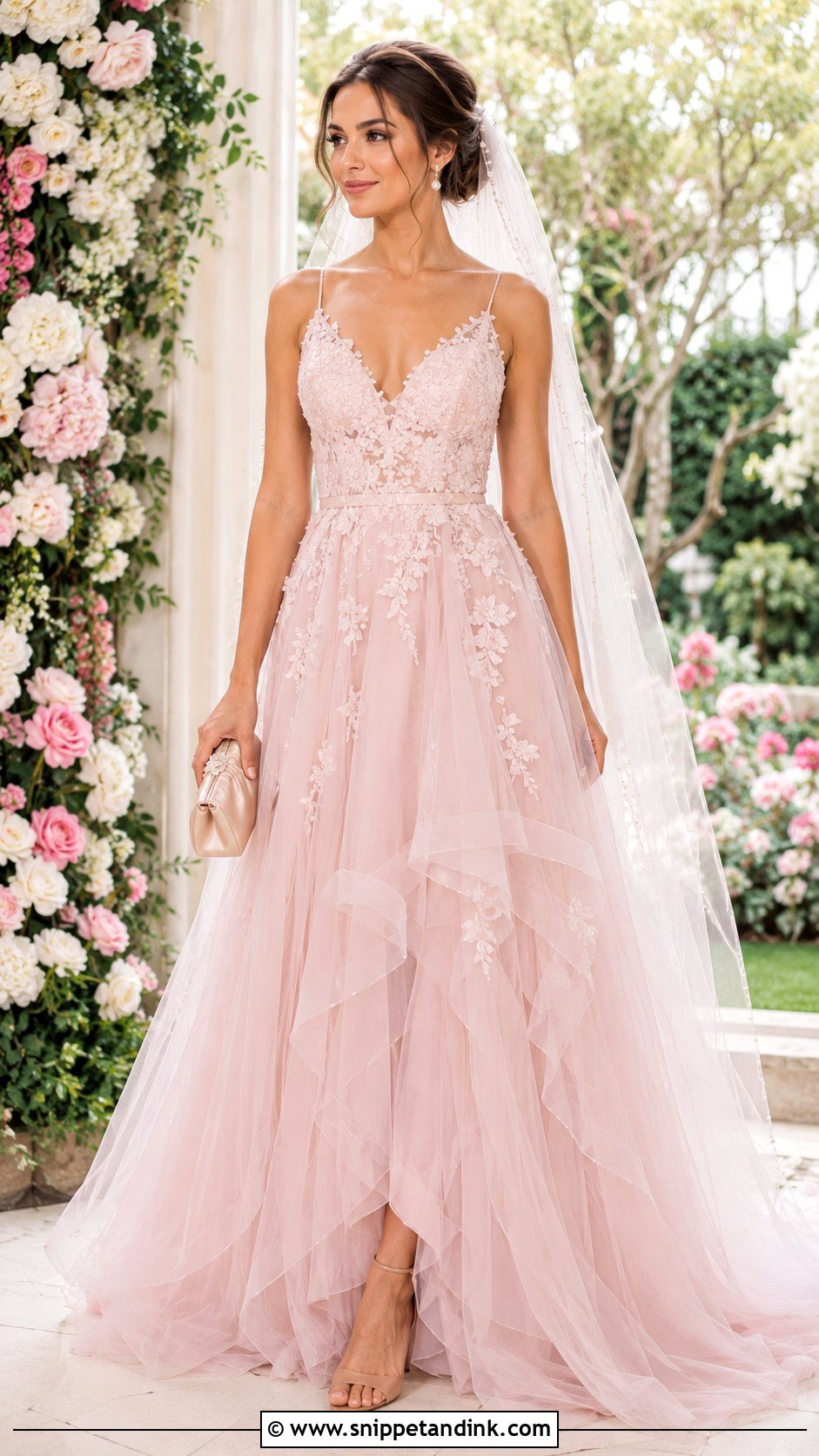
Blush is the gentlest step away from white, and on a tulle A line it barely reads as colour until the light catches it. Layered tulle softens the pink further, since each layer lets a little of the one beneath show. Check the shade against your skin in daylight. A blush with too much yellow can make fair skin look washed out, while a cooler pink lifts it. A pearl-trimmed veil keeps the look bridal. Nude or champagne heels, pearl drops and a small satin clutch go with it for spring, garden or ballroom weddings.
2. Champagne Wedding Dress With Gold Heels
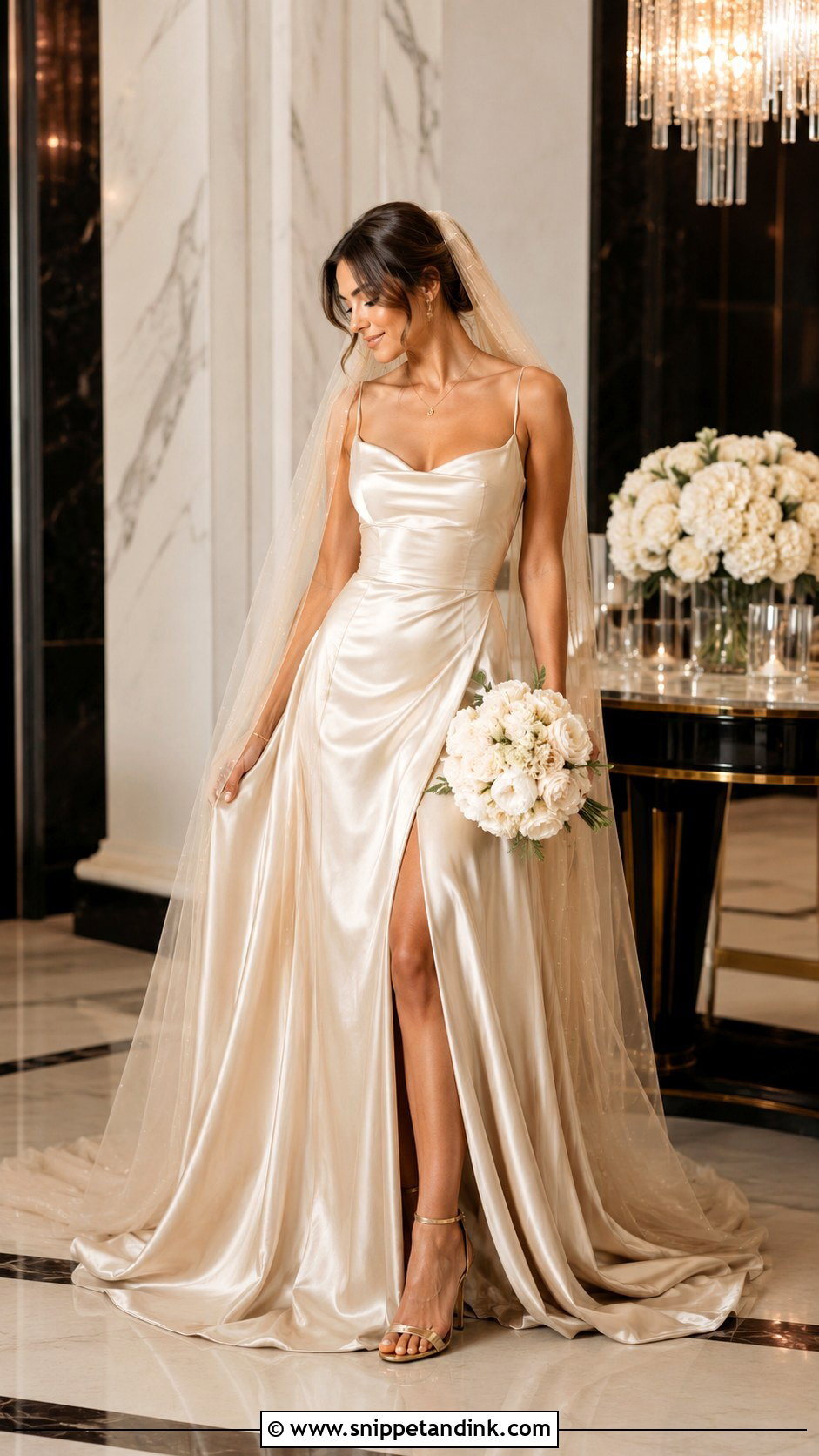
Champagne is warmer than ivory, and in satin, silk or organza it glows under evening light. On some skin tones it can lean beige in daylight photos, so try it outside before ordering. A fitted bodice and soft skirt look classic; a slip makes it modern. Gold heels and fine gold jewelry suit the warmth, with a sleek low bun and an ivory or champagne veil. It suits evening, hotel and autumn weddings, when warm light flatters it most.
3. Dusty Blue Wedding Dress With Silver Accessories
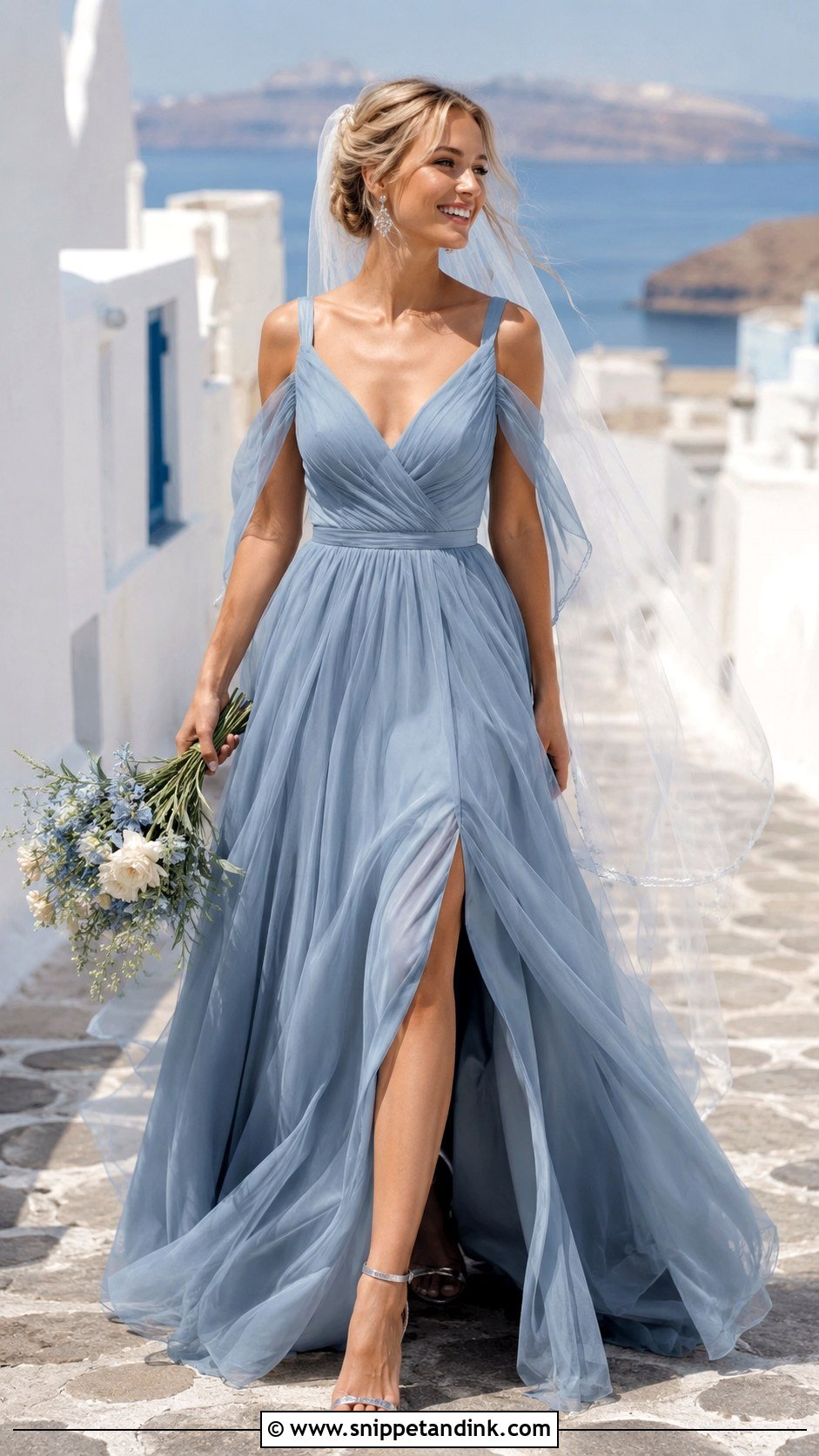
Dusty blue has grey in it, which is why it looks calm rather than loud. In chiffon or tulle it reads soft; in satin it looks more formal. Silver heels, crystal earrings and a pale blue or ivory veil keep the outfit in one cool family. I’d avoid gold with it, which tends to clash with the grey undertone. It photographs well next to stone, water, greenery and white flowers, so coastal and winter ceremonies with soft natural light suit it.
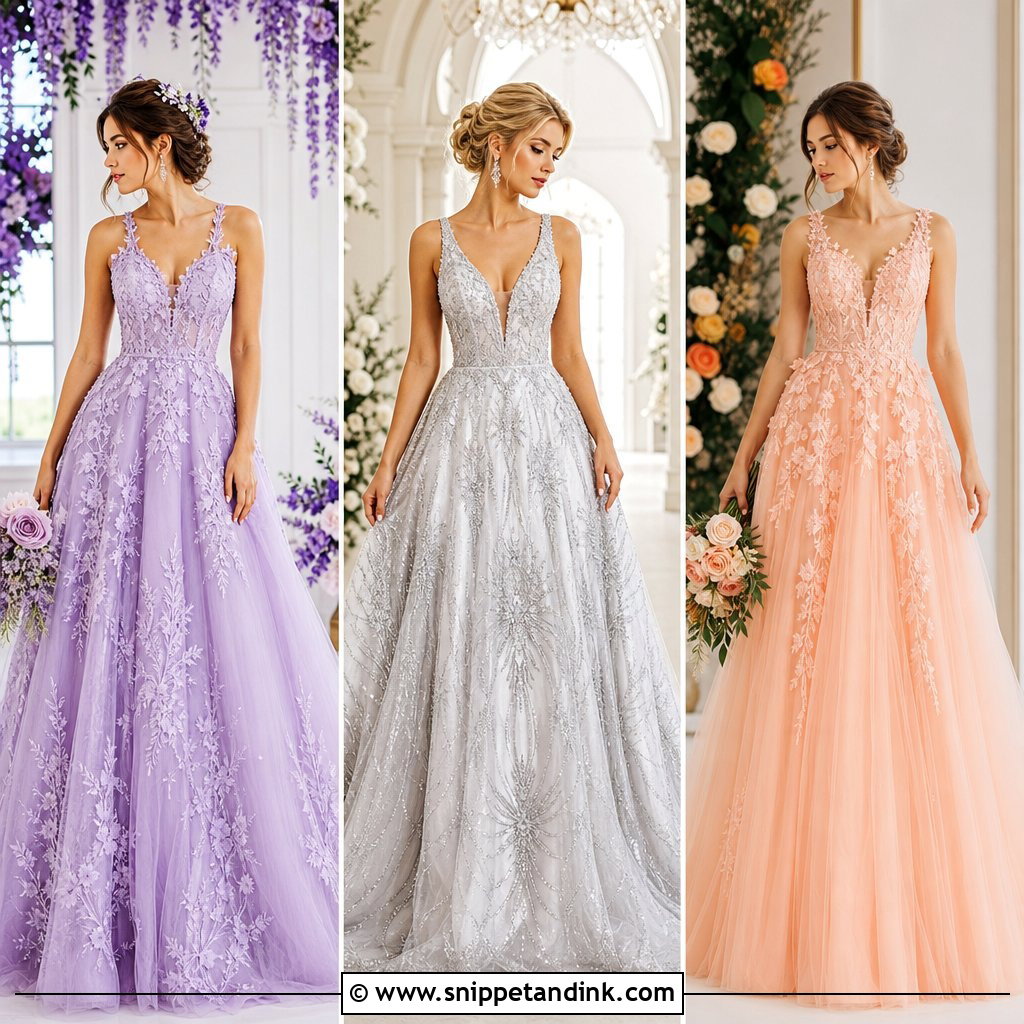
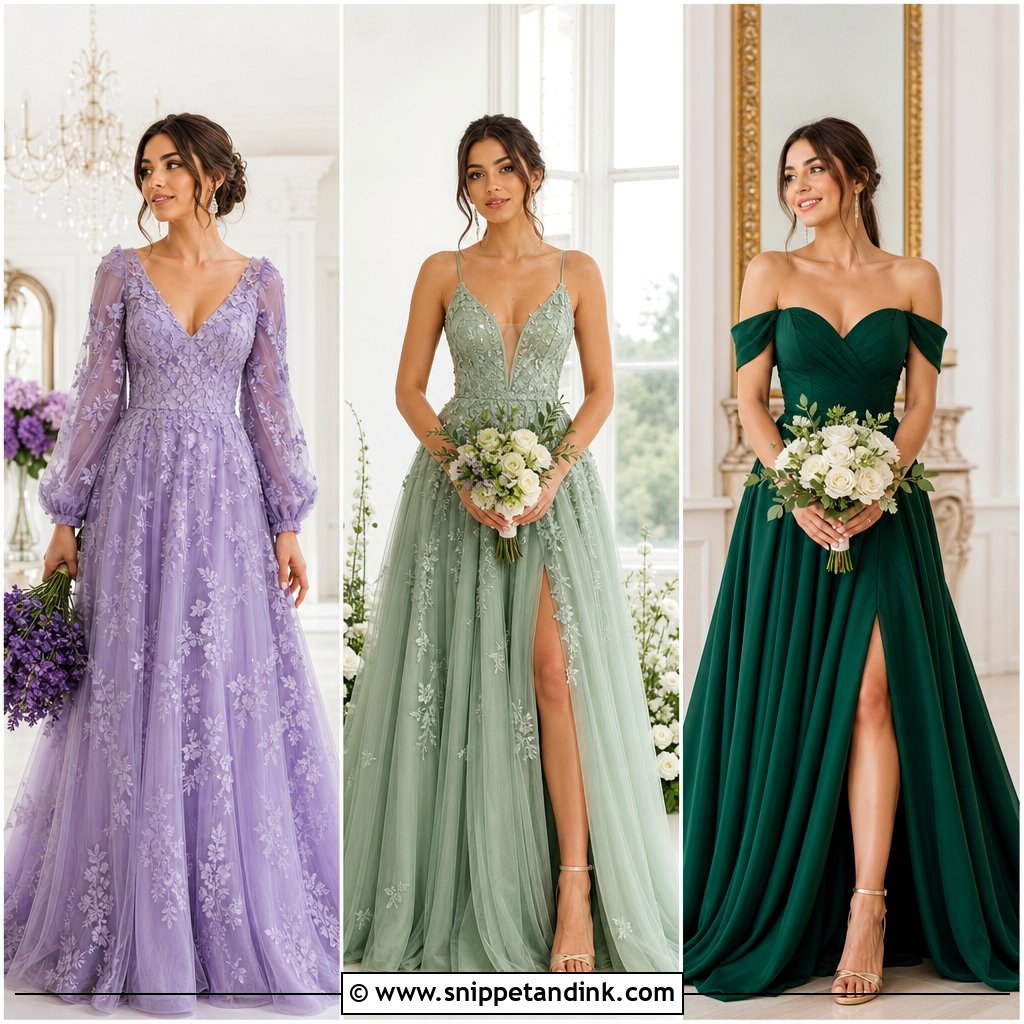
4. Lavender Wedding Dress With Tulle Skirt
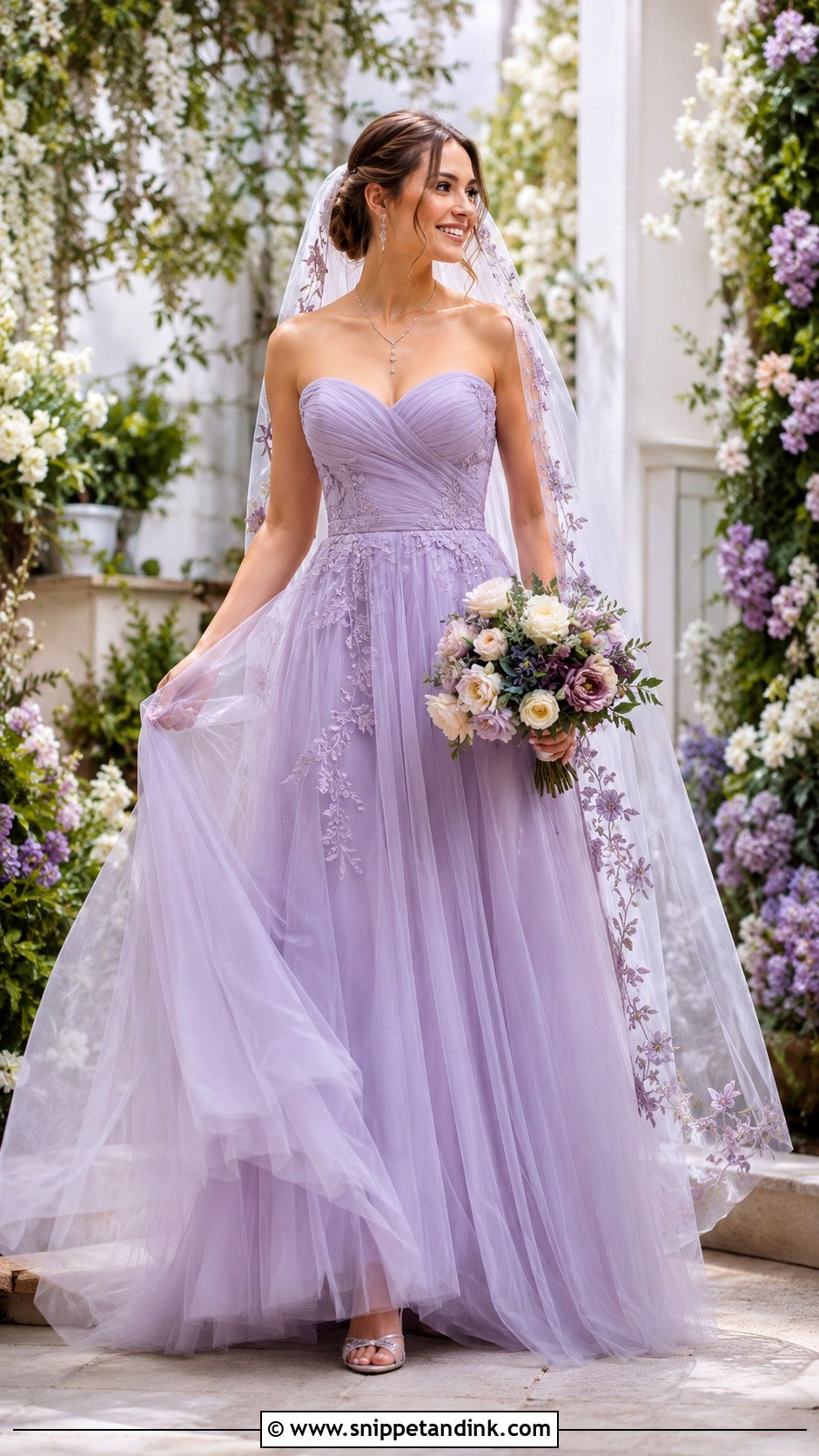
Lavender looks fairy-like in tulle, and a structured bodice is what stops a lavender wedding dress from tipping into costume. Purple is one of the trickier colours in photos, since some lilac fabrics shift toward grey or blue under shade or flash. Ask the shop for a swatch and photograph it with a phone outdoors and indoors. Silver or pearl jewelry, pointed heels and a lightly embroidered sheer veil suit it, with soft makeup and loose waves. Cream, lilac and pale green flowers sit well beside it at a spring or botanical venue.
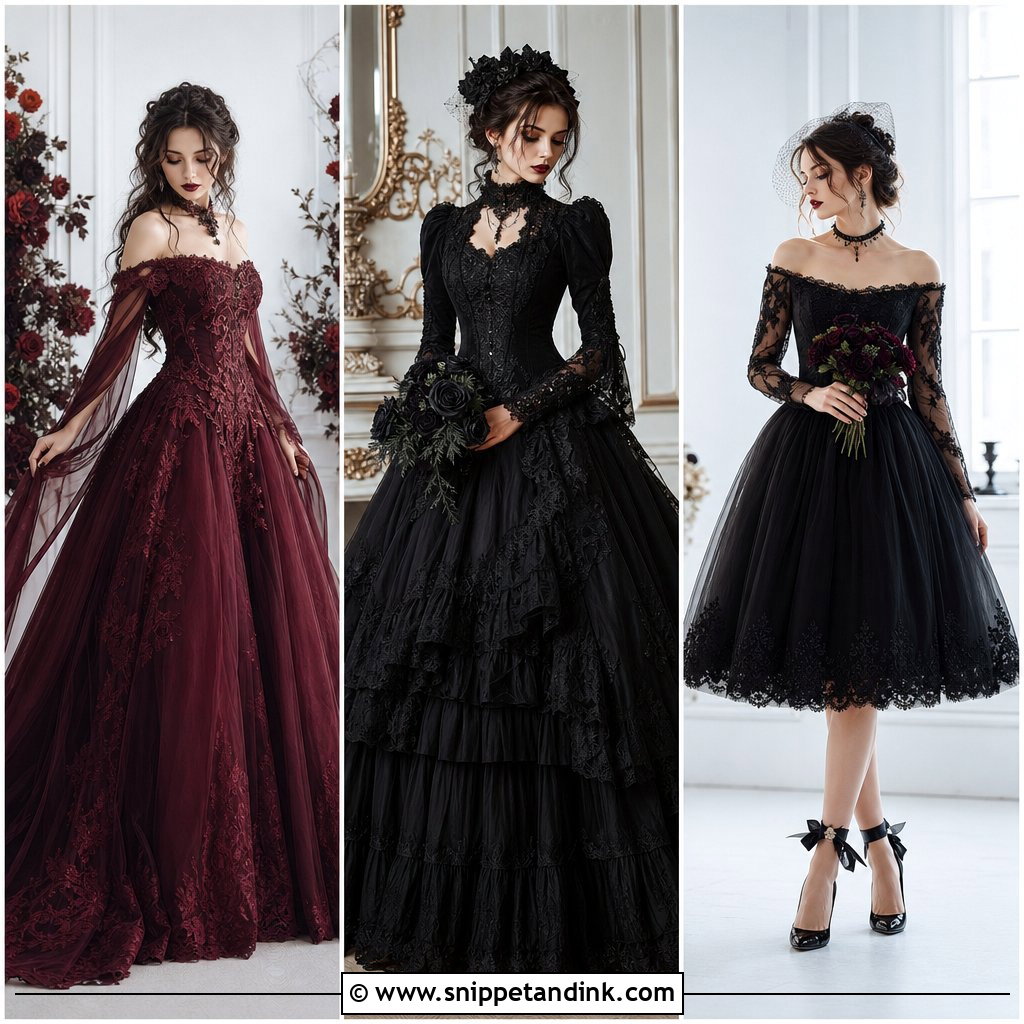
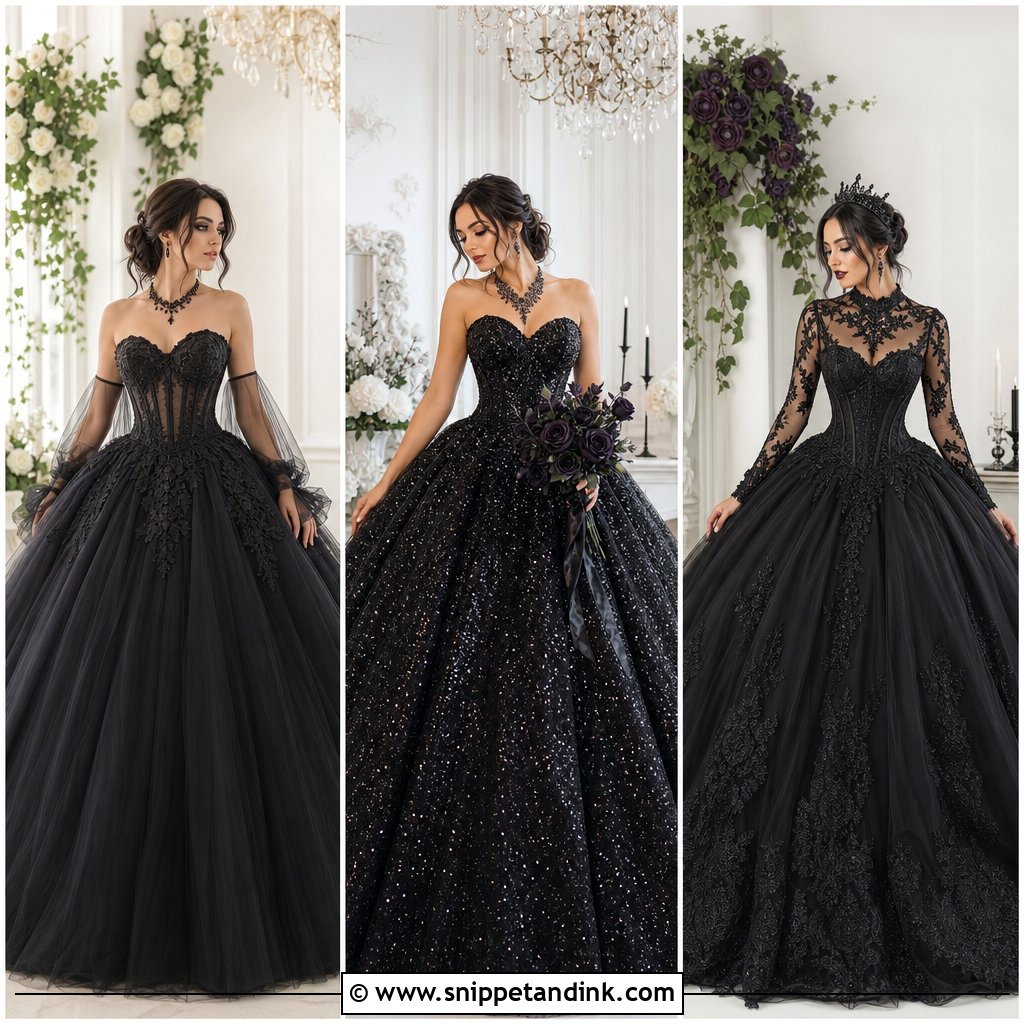
5. Black Wedding Dress With Cathedral Veil
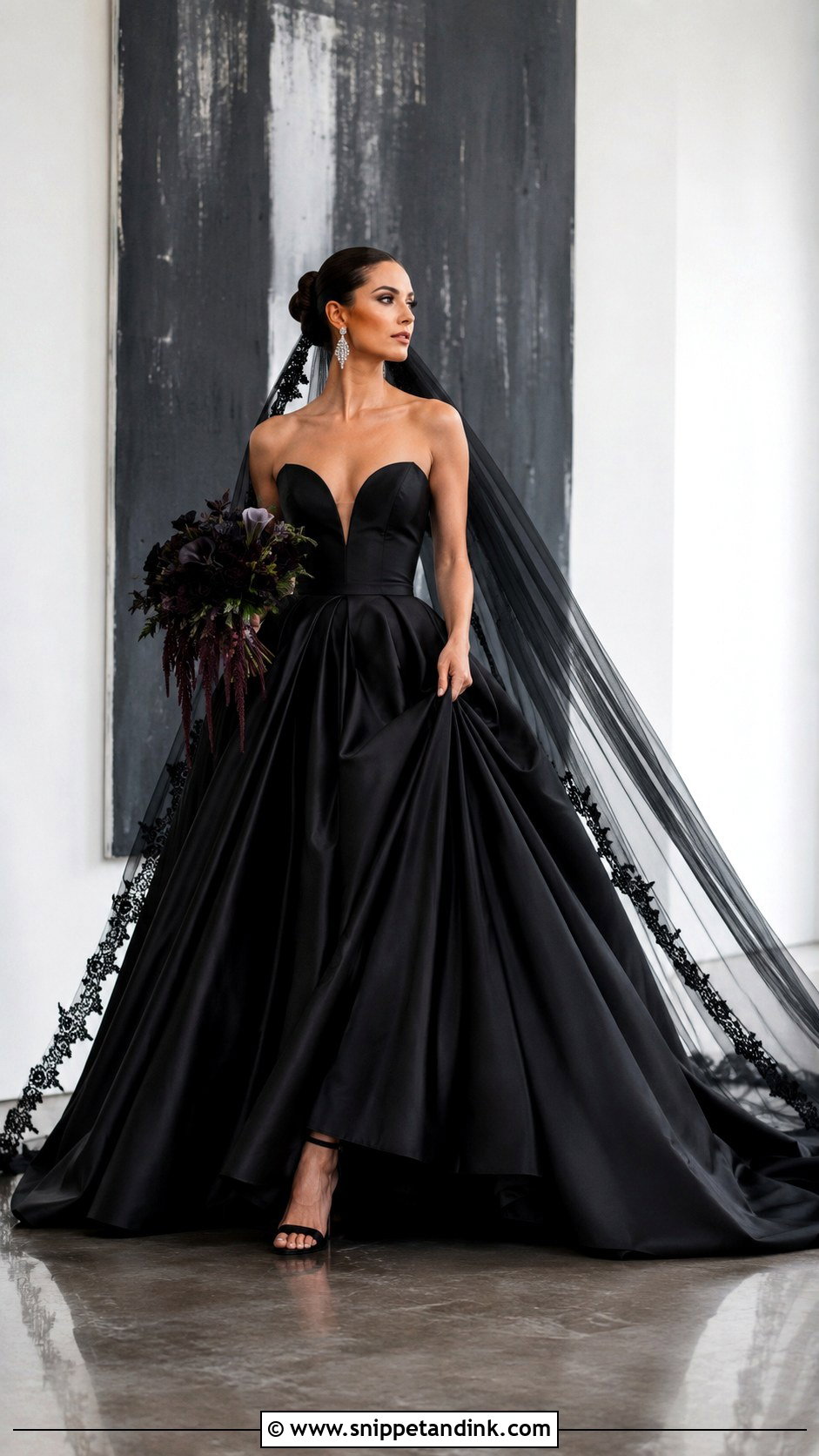
Black is the boldest choice here, and the styling has to stay unmistakably bridal or it reads as evening wear. A cathedral veil, in black lace or sheer ivory, does that more than anything else. Structured ball gowns, lace mermaids and sleek satin all work. Black satin heels, crystal earrings and a polished updo keep it clean. Keep the skin glowing and the lip soft; heavy dark makeup on top of a black gown closes the face in. It suits formal evenings and gallery venues.
6. Floral Embroidered Wedding Dress With Nude Heels
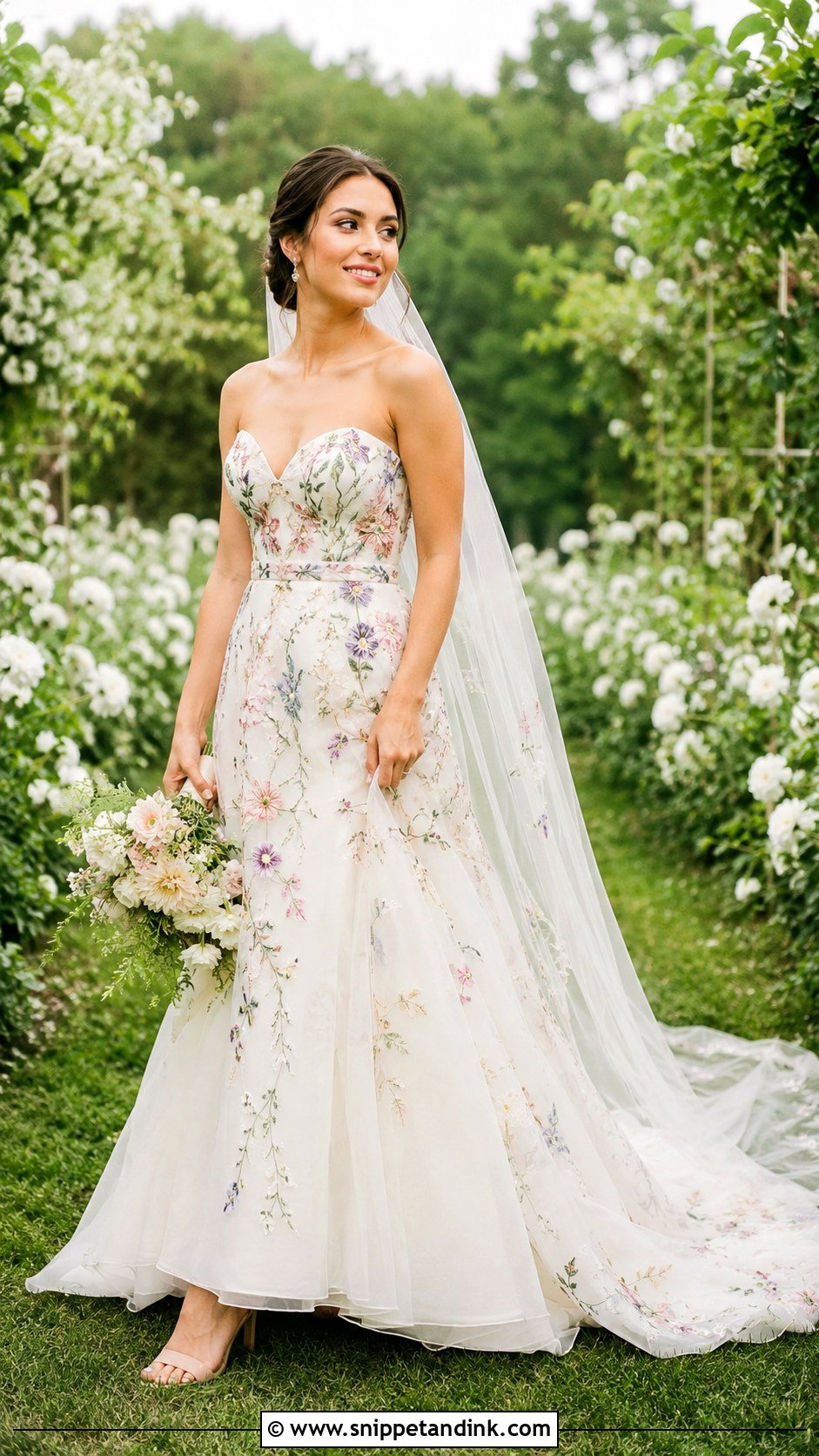
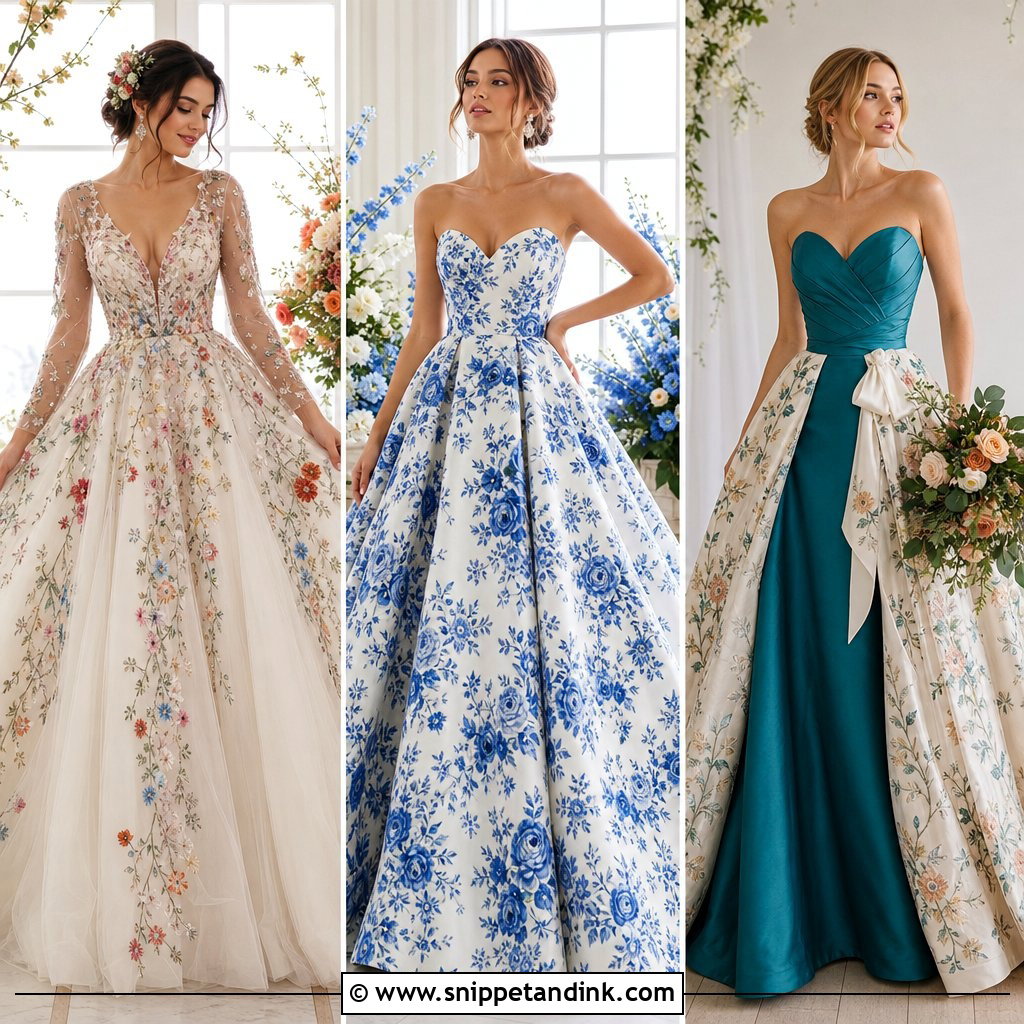
Embroidered flowers let you wear colour without committing the whole gown to it. The base stays white, ivory or nude, and pink, blue, green or yellow stitching sits on the bodice, skirt or sleeves. I like the threads to pick up the bouquet or the season. Hand embroidery is heavier than it looks, so check how the skirt hangs. Nude heels, simple earrings and a sheer veil keep it balanced for a garden or summer wedding.
7. Sage Green Wedding Dress With Ivory Veil
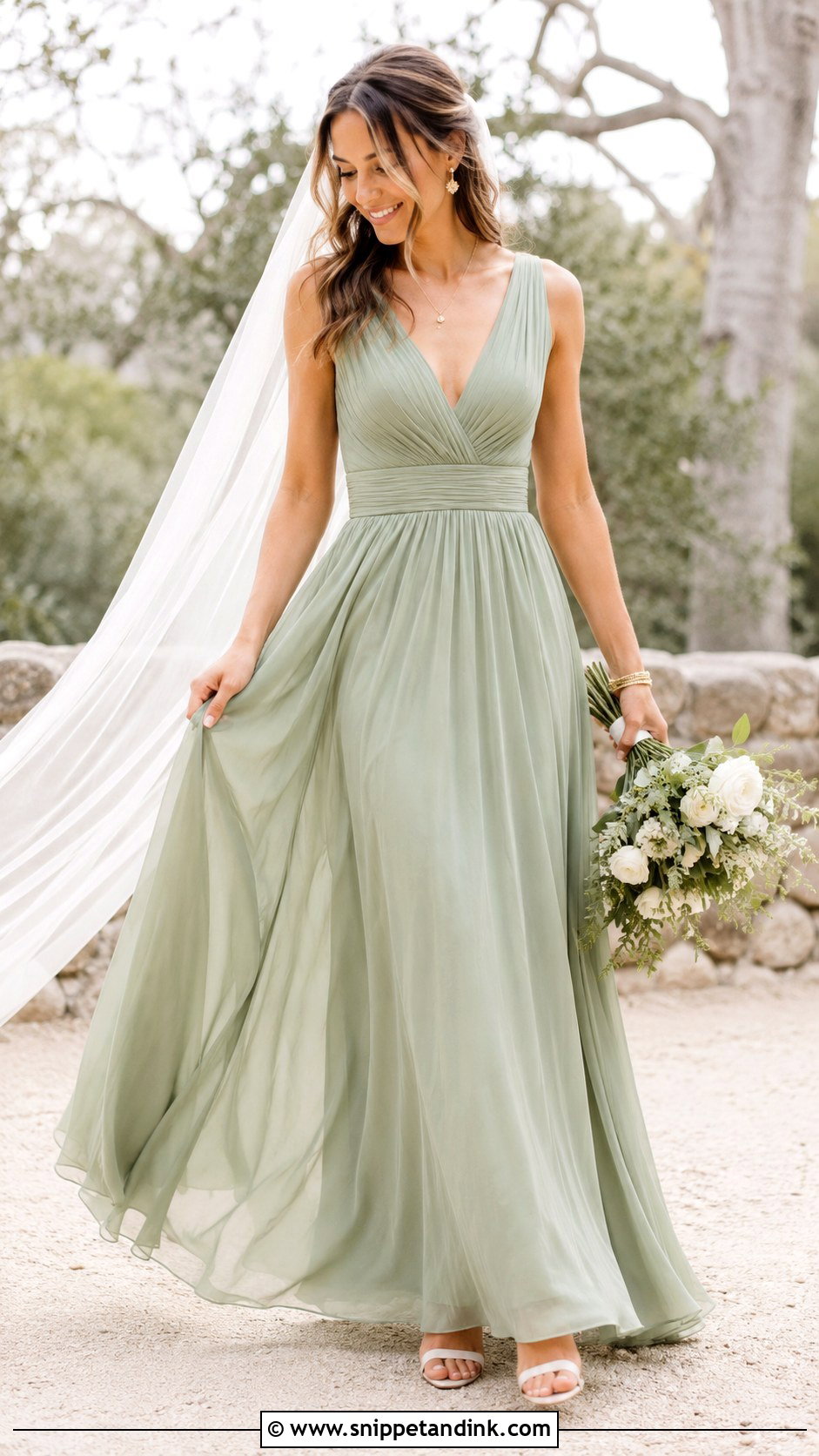
Sage is a grey-green that sits comfortably beside nature, which is why a sage green wedding dress looks right at a vineyard or garden. Chiffon or crepe keeps it soft; satin gives a slight sheen. A flowing gown with a fitted waist suits the colour. Ivory heels, an ivory veil and fine gold jewelry warm it up. Cream flowers, greenery and wood, stone and linen textures repeat its earthy tone. Be careful with very green venues: a sage dress against a lawn can blend in, so ask your photographer to use stone or wood backdrops too.
8. Red Wedding Dress With Gold Jewelry
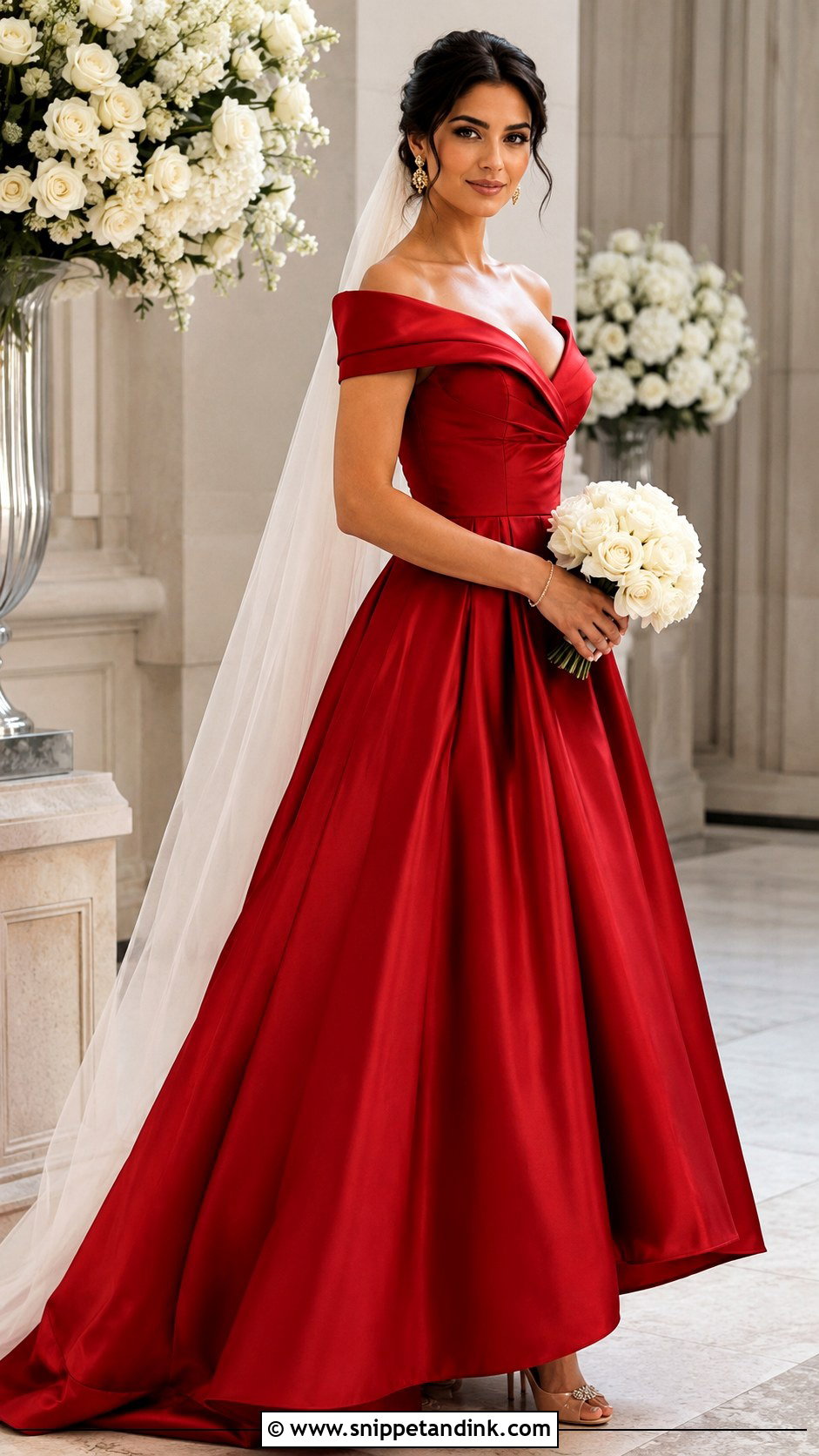
Red carries meaning in many cultures, and for many Chinese and South Asian brides it is the traditional colour rather than a bold one. A clean shape lets it shine: satin A line, fitted mermaid, long-sleeved lace. Gold jewelry is the natural partner. Match red heels exactly or go nude, since a slightly different red looks like a mistake. A sleek veil adds a Western bridal touch if you want one. Red can bleed when wet, so be careful with drinks and rain.
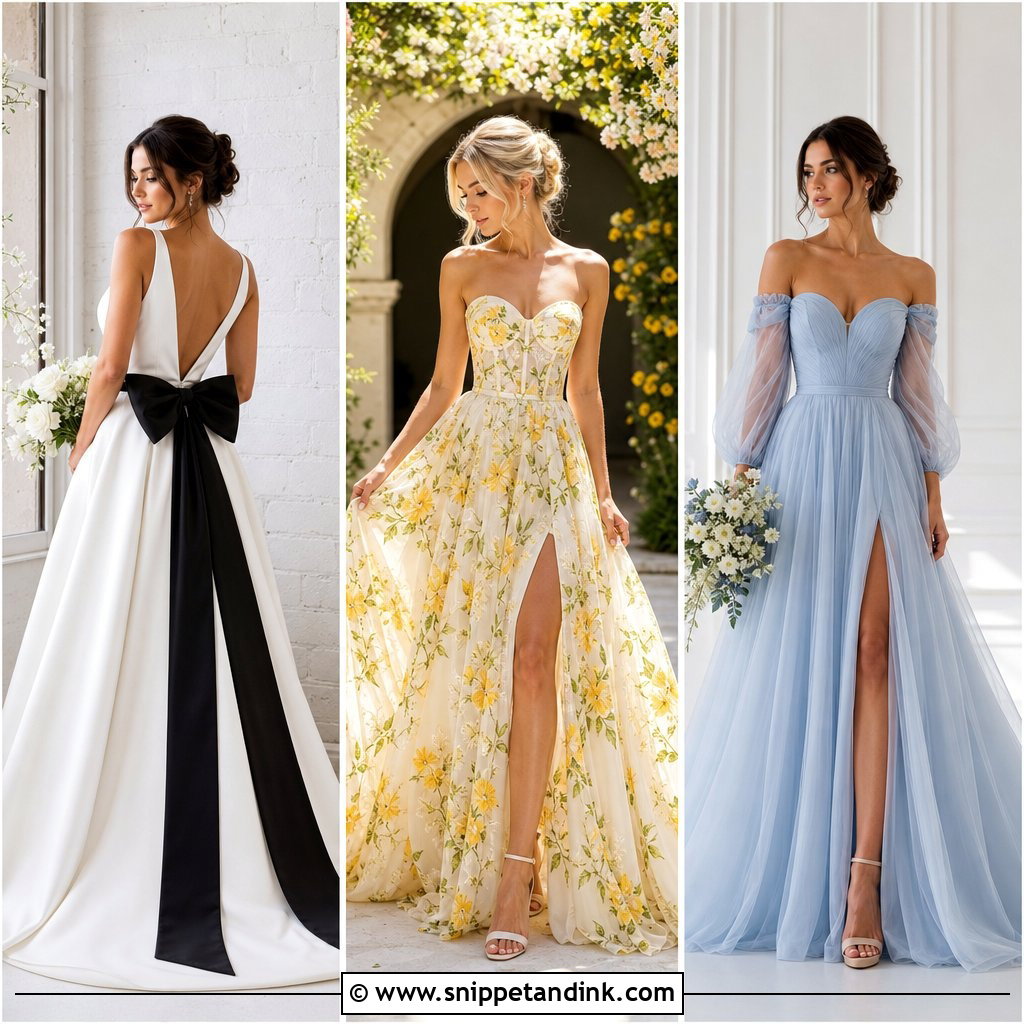
9. Pale Yellow Wedding Dress With White Heels
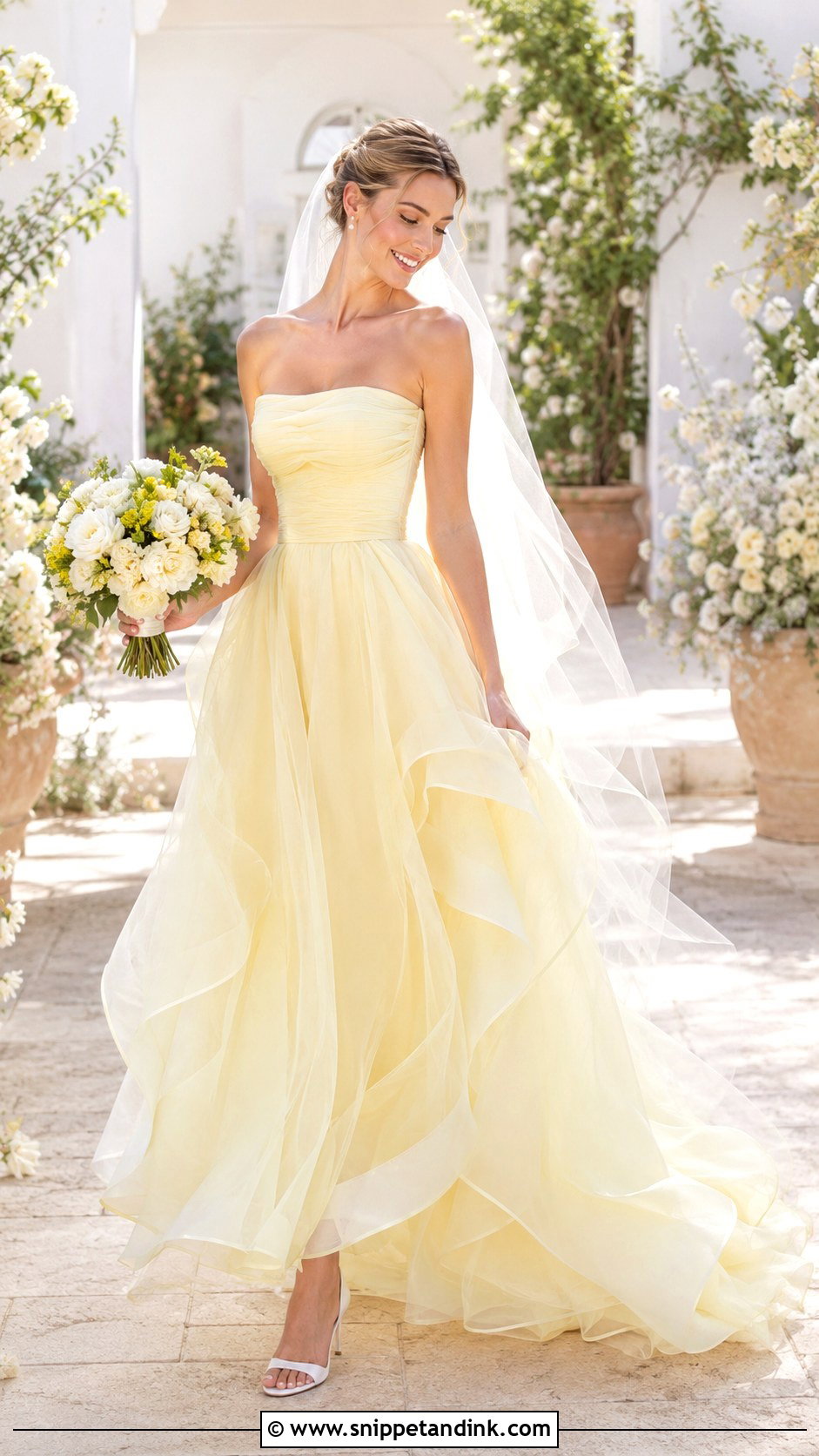
Pale yellow is one of the most flattering pastels on warm skin and one of the hardest on very fair, cool-toned skin, so test it against your face. Butter yellow or a soft pastel works better than lemon. Organza, chiffon or tulle keep it airy. White heels, pearl earrings and a white veil pull it back toward bridal. Simple hair, peachy makeup and a cream, yellow and green bouquet suit spring and summer outdoors.
10. Rose Gold Wedding Dress With Metallic Sandals
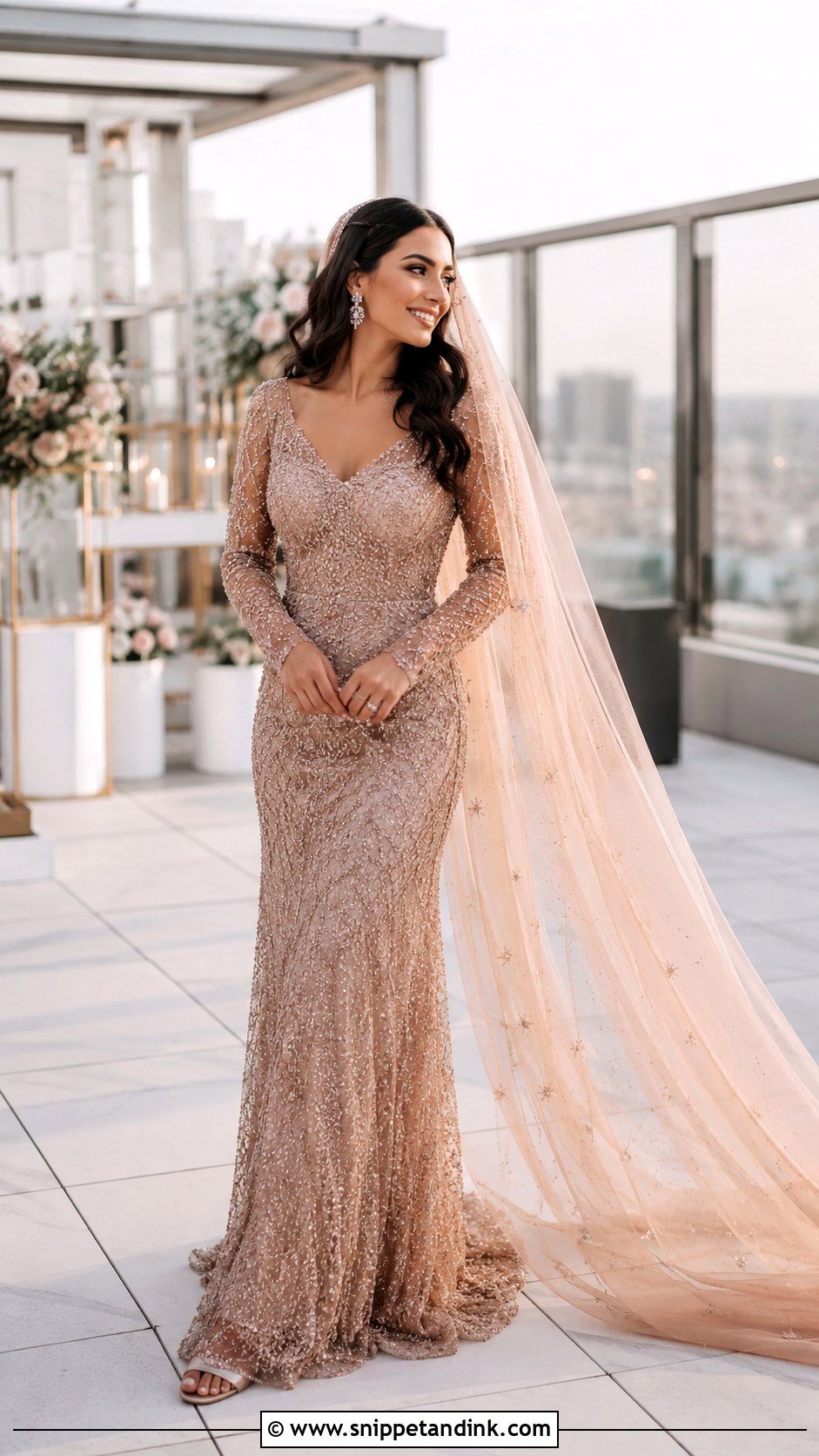
Rose gold gets its shine from sequins, metallic lace, satin or beading, and those catch flash in a very different way from natural light. Ask to see the gown under both. A fitted bodice with a soft skirt moves well; a sleek column looks more modern. Metallic sandals, crystal earrings and a warm-toned veil suit it. Keep the bouquet neutral so the dress stays the focus. Sequin and beaded fabrics can scratch inner arms, so check the lining. It suits evening, rooftop and formal receptions.
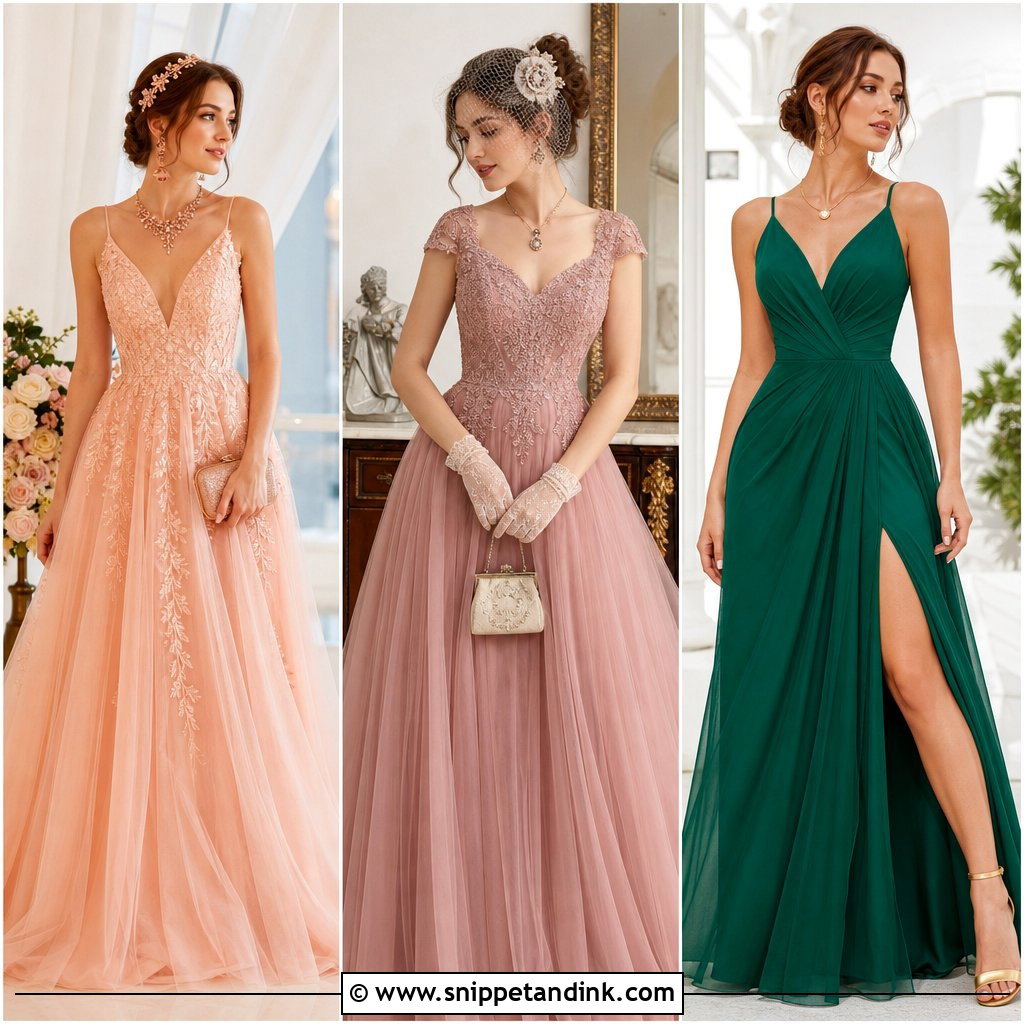
11. Emerald Green Wedding Dress With Satin Pumps
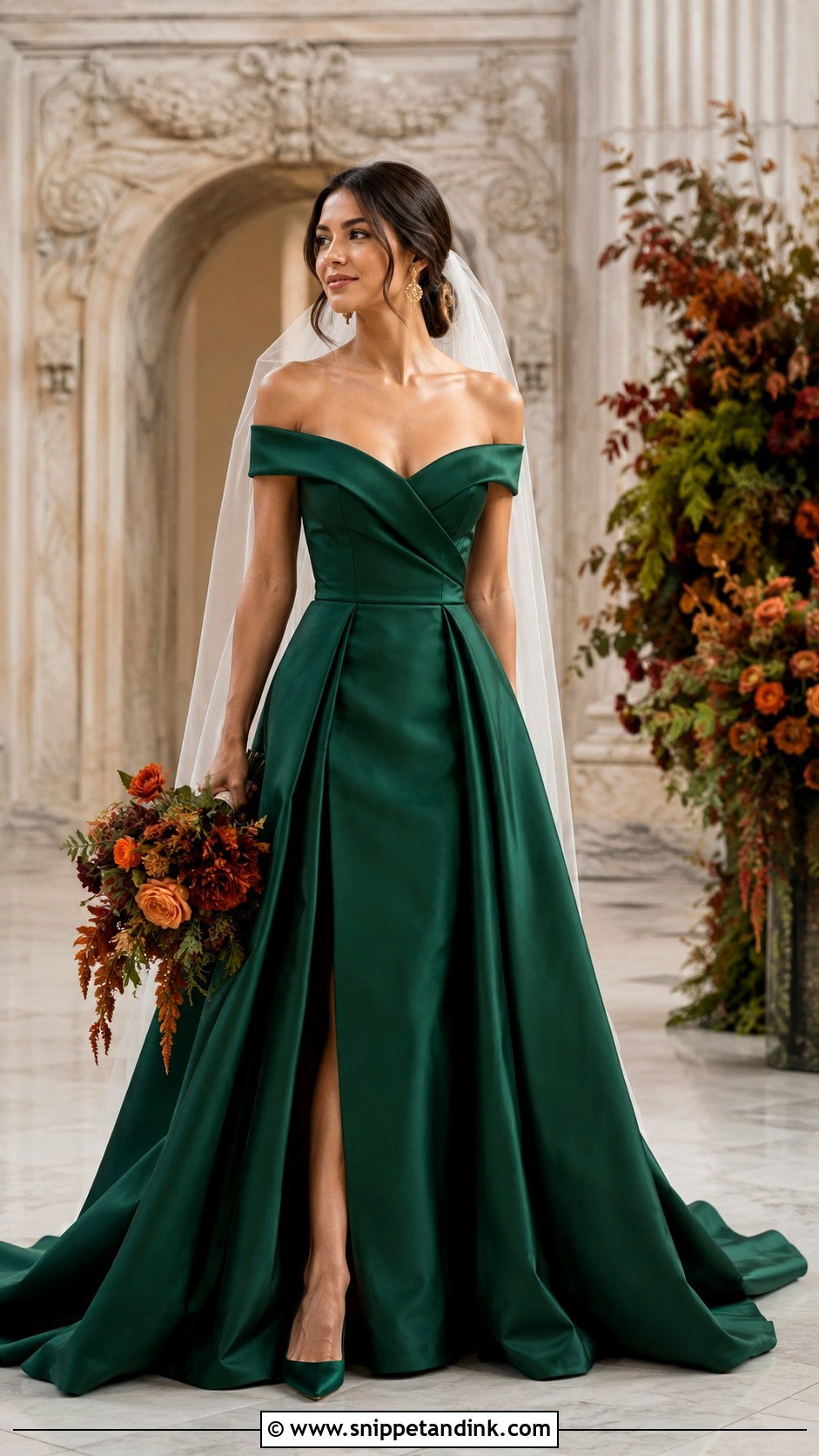
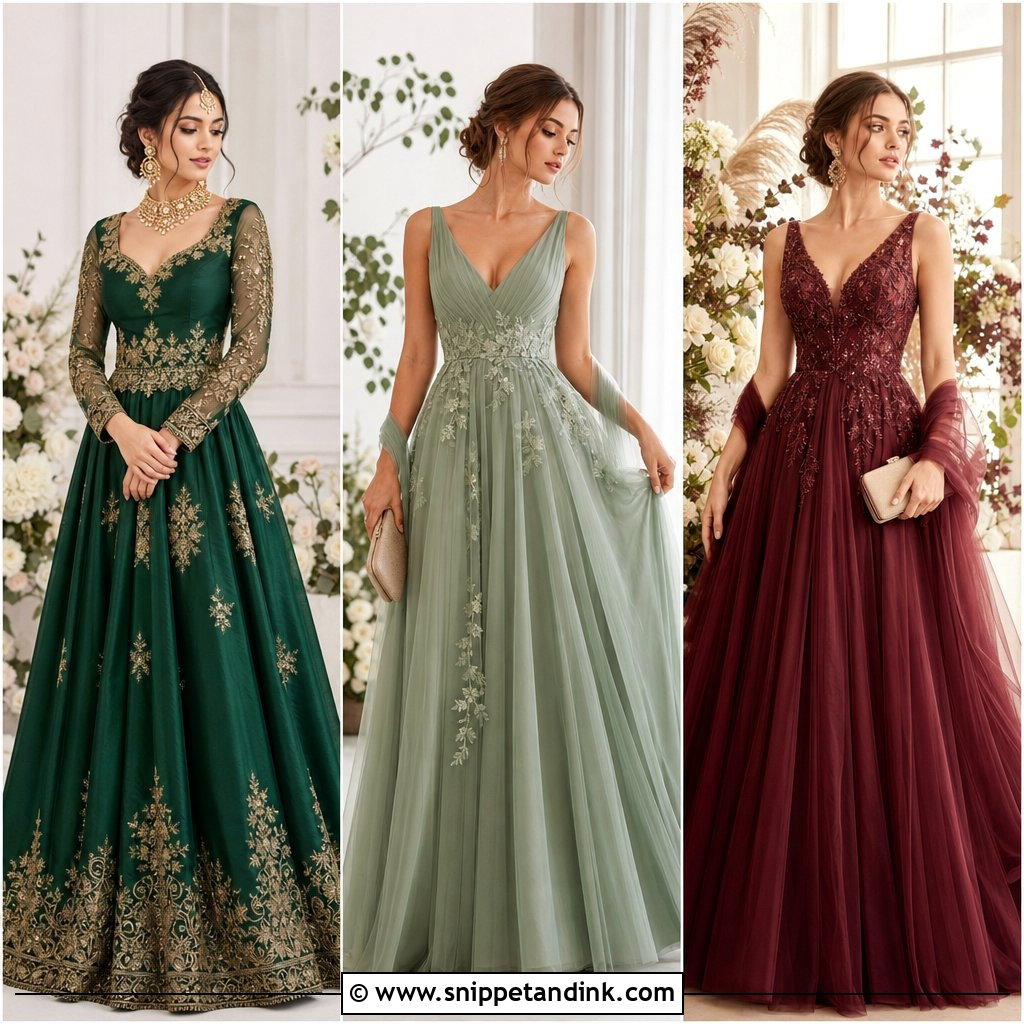
Jewel tones need fabric with body. Satin, velvet or structured crepe let an emerald green wedding dress look rich rather than flat. A full skirt makes it dramatic; a long-sleeved sleek gown makes it regal. Satin pumps, gold earrings and a simple veil or hair piece finish it. Ivory flowers and greenery give contrast against the depth. Velvet is warm, so I’d keep it for autumn and winter weddings and historic venues.
12. Powder Blue Wedding Dress With Pearl Earrings
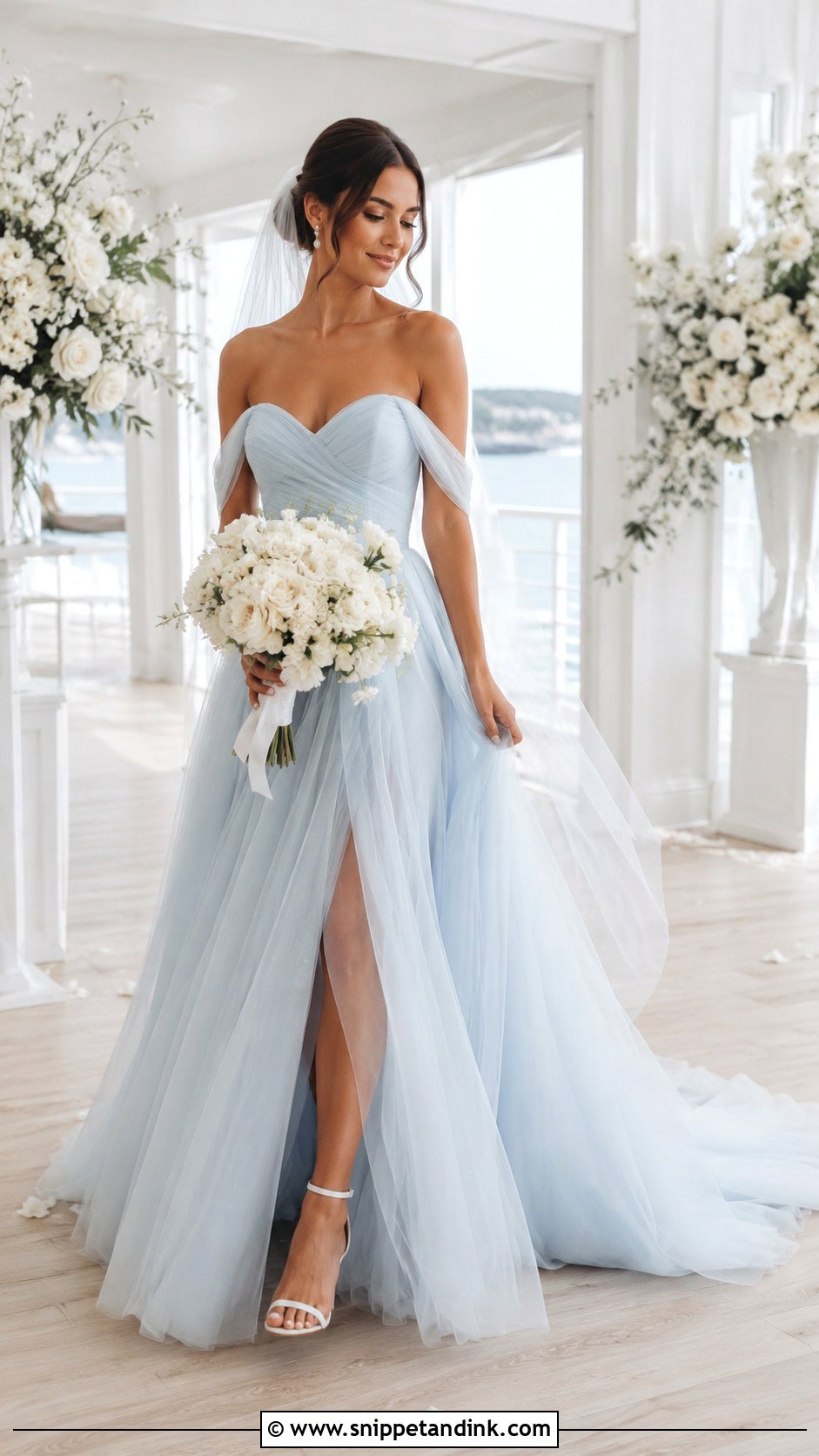
Powder blue is lighter than dusty blue and has less grey, so it reads airy and young. Soft tulle, lace or organza suit it. In bright sun it can almost wash out to white in photos, which some brides love. Pearl earrings, white heels and a sheer veil keep it bridal. A white bouquet with a pale blue ribbon ties it together for spring, coastal and daytime weddings.
13. Mauve Wedding Dress With Soft Waves
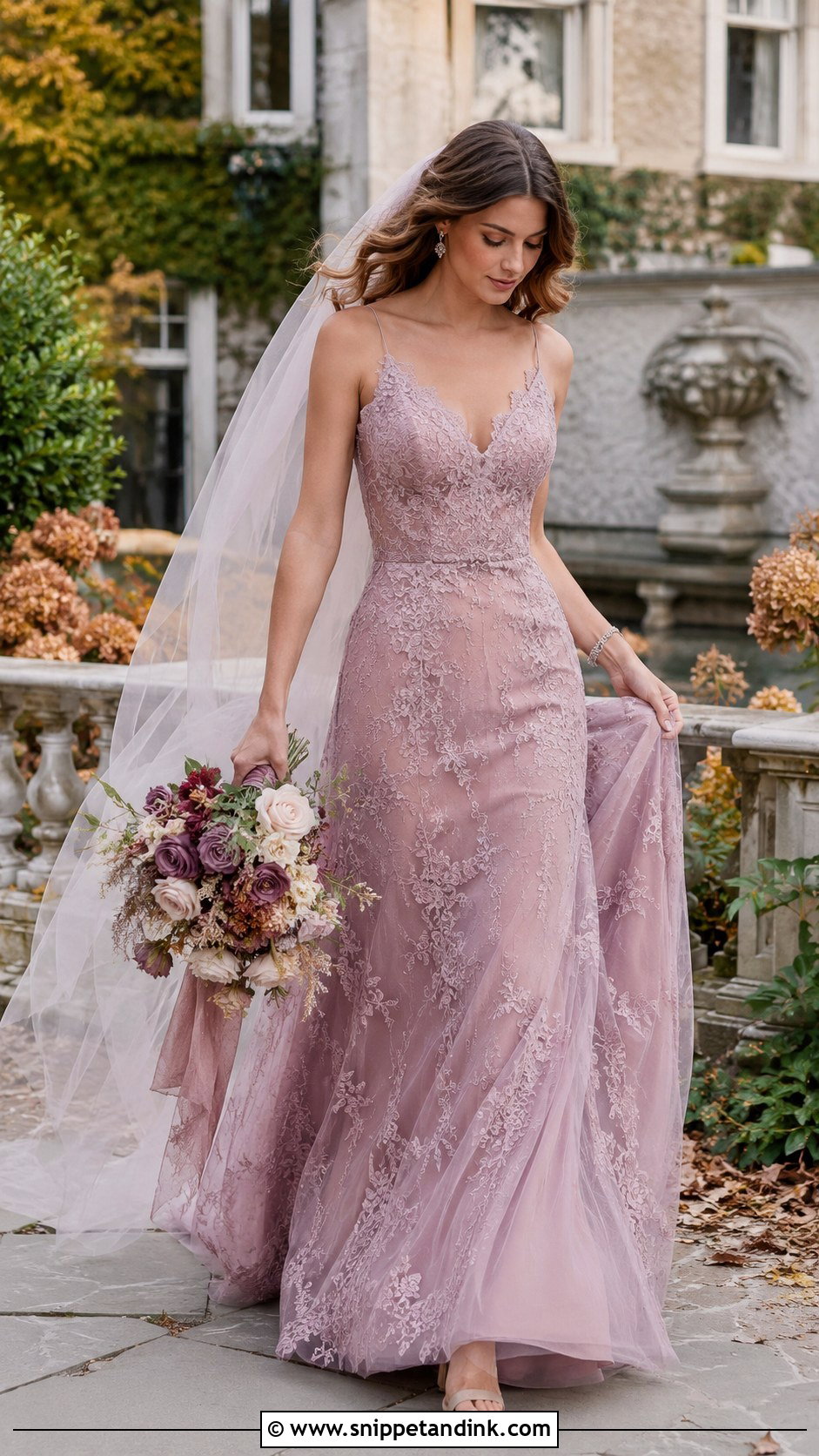
Mauve, a dusty pink with some purple in it, looks more grown-up than blush and works across seasons. Lace makes it vintage, tulle softer, satin more formal. Rose gold jewelry and nude heels suit its warmth, with soft waves. An ivory, blush or pale mauve veil all work, so take swatches to the veil fitting. It looks especially good in autumn light at estates and small weddings.
14. Ivory Wedding Dress With Colorful Floral Train
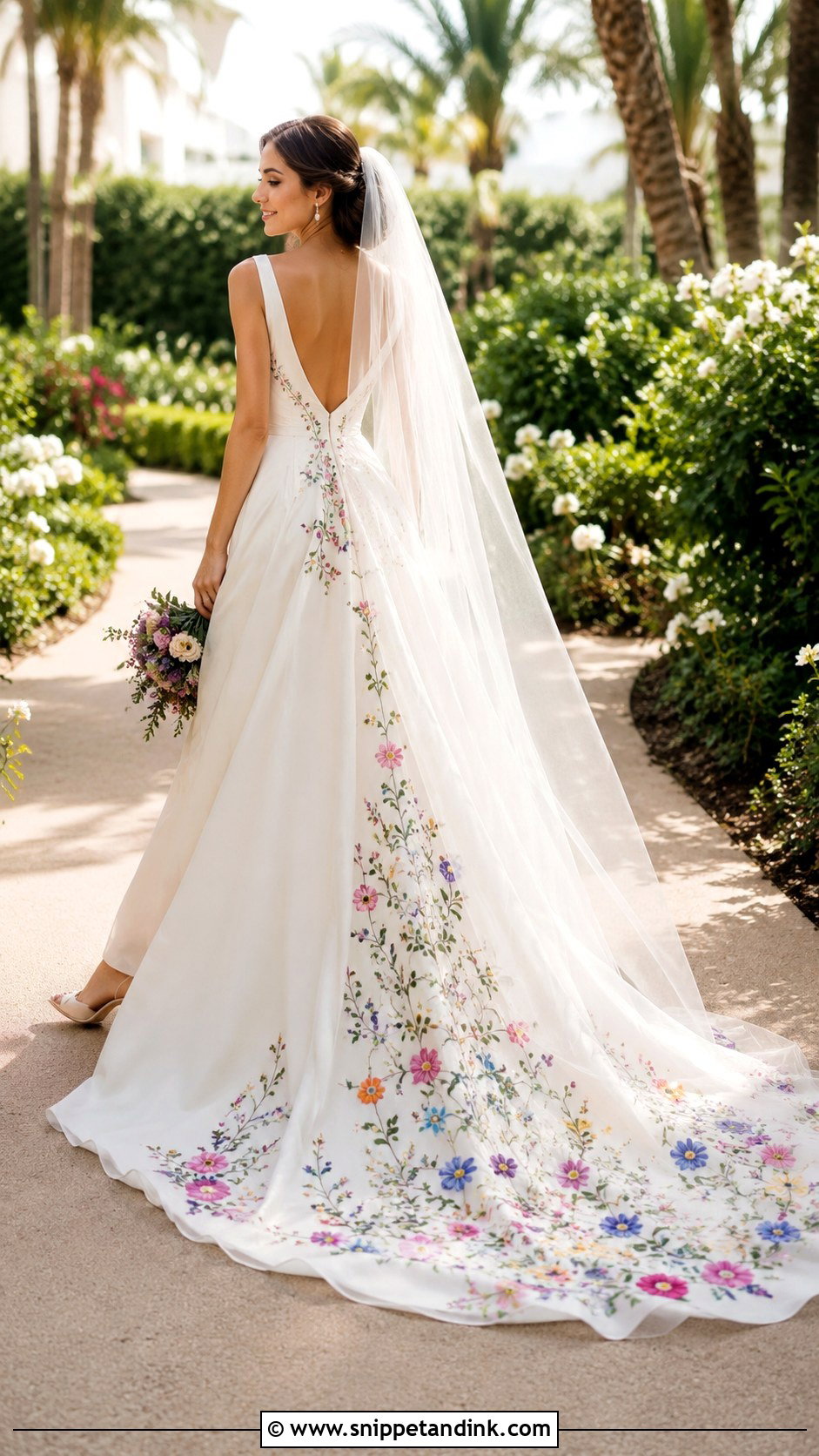
An ivory gown with a coloured train is traditional from the front and a surprise from behind. The colour can be embroidered, painted or built from layered appliqué. Pull the train colours from your bouquet or palette so the whole picture connects. A train like this needs a bustle that shows the colour, not one that folds it underneath, so discuss it with your seamstress. Ivory heels, simple earrings and a plain veil keep the focus behind you, and walking shots show it best.

15. Silver Wedding Dress With Crystal Heels
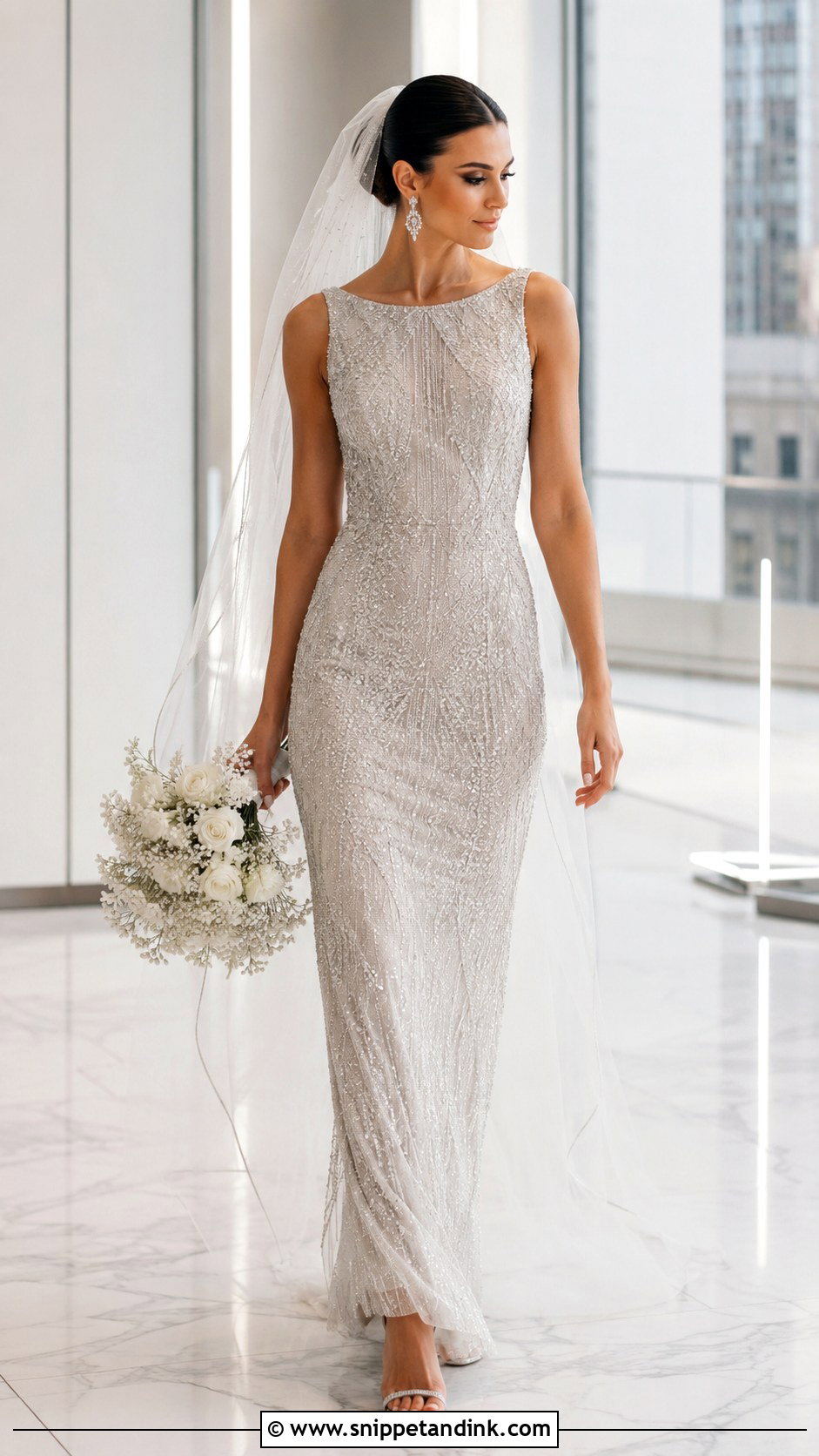
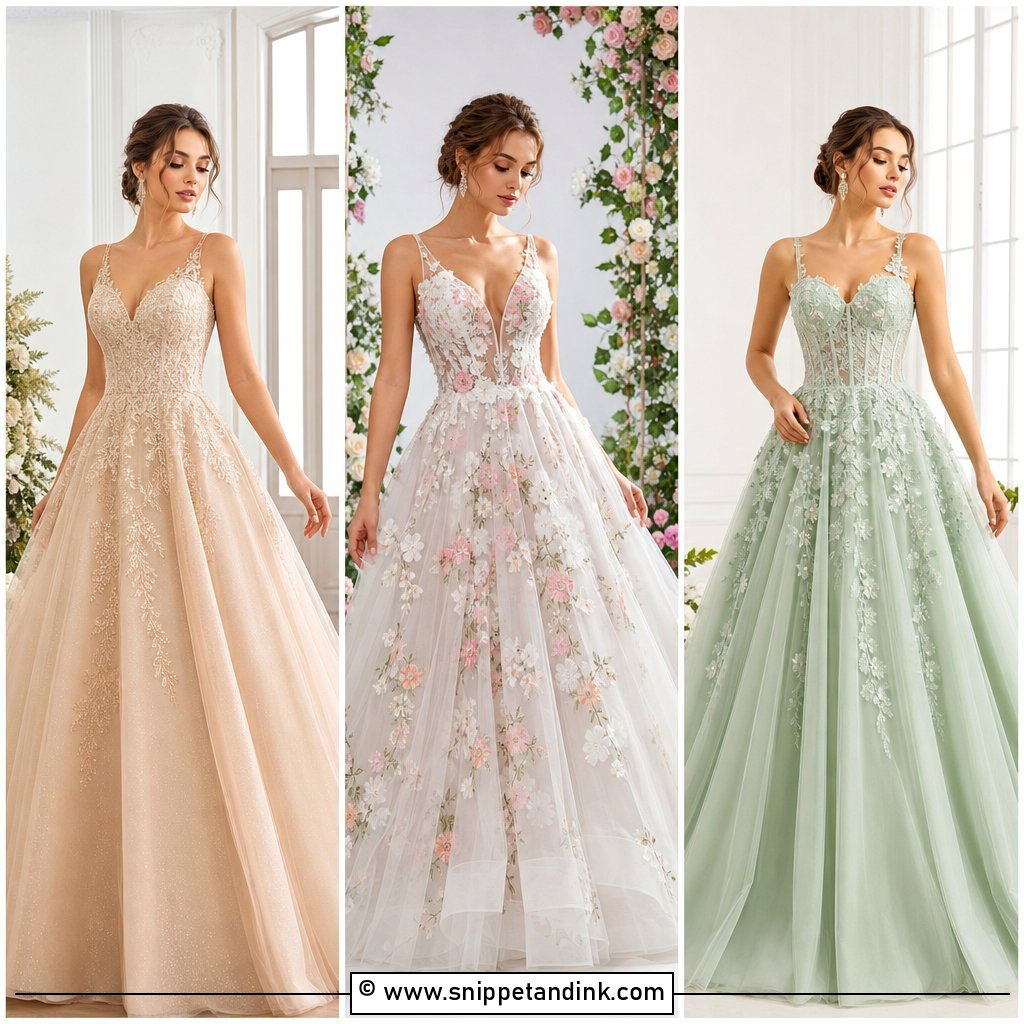
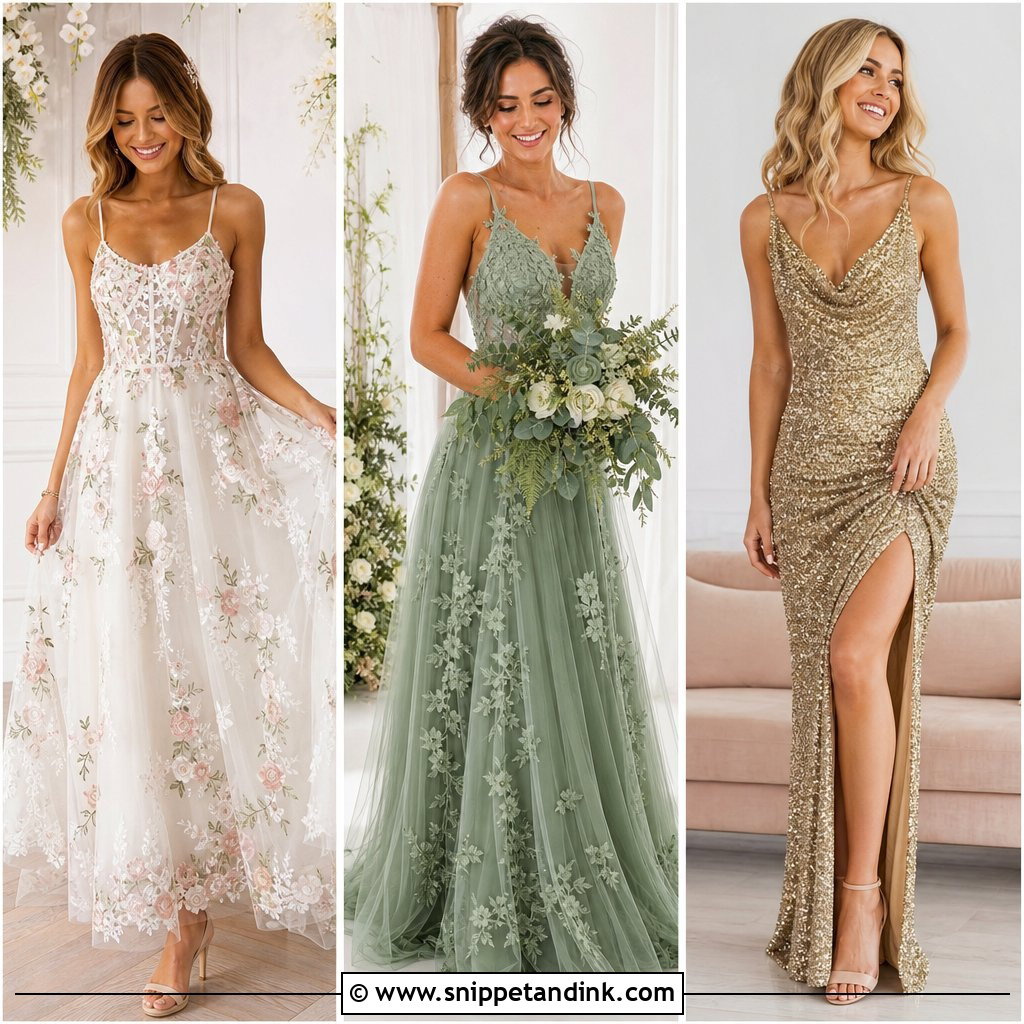
Silver is the cool alternative to gold, and the metal comes from beading, metallic threads or a satin with a grey sheen. Column, sheath or structured ball gown shapes all suit it. Crystal heels, diamond-style earrings and a sheer veil keep it polished. Too much sparkle in the accessories competes, so keep the bouquet simple: white flowers, greenery. Silver suits winter, city and evening ceremonies where artificial light picks up its shine.
16. Peach Wedding Dress With Delicate Veil
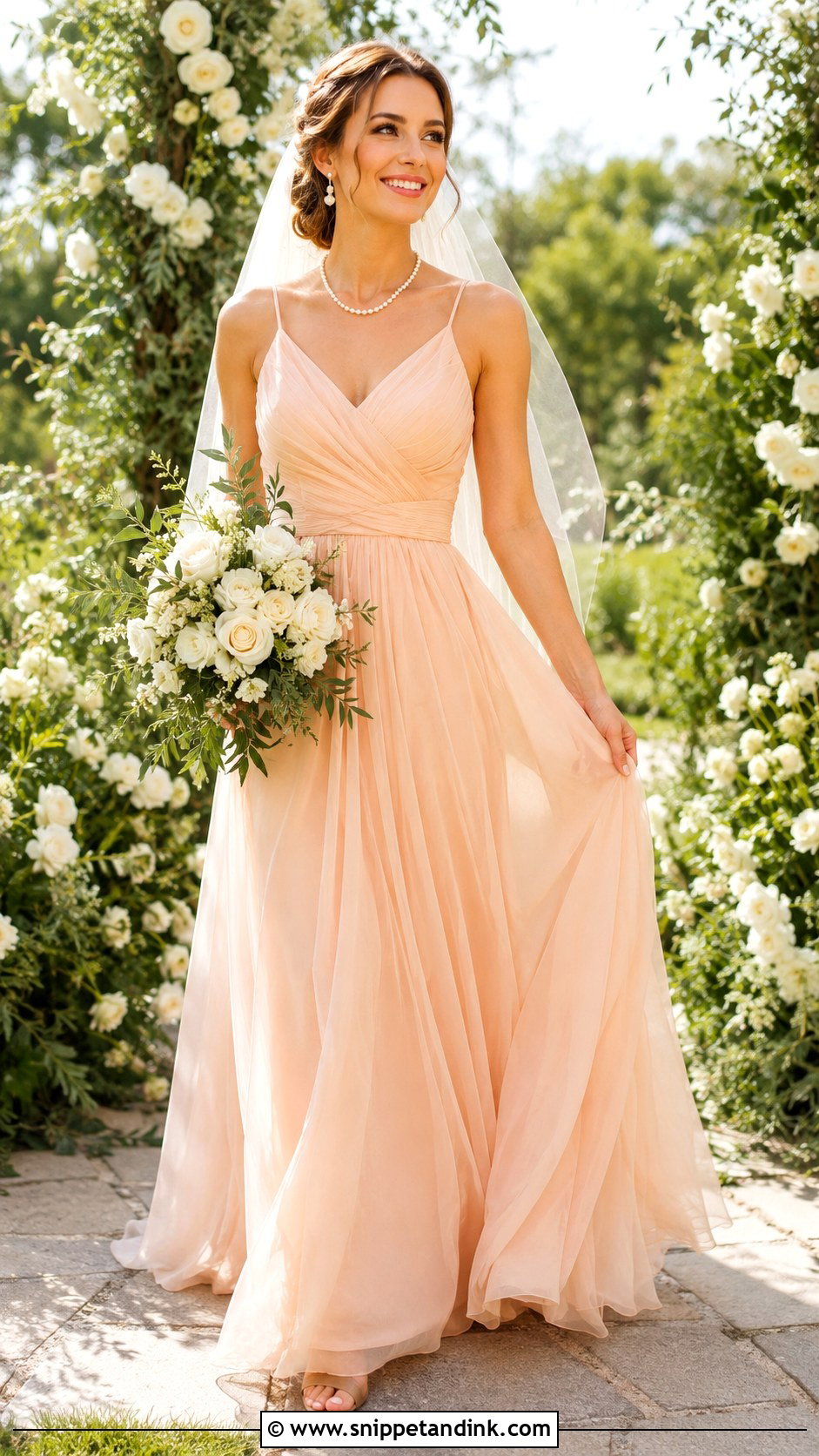
Peach sits between blush and coral, and it gives warm skin a glow. On very pink or ruddy skin it can intensify redness, so test it in daylight. Chiffon, lace A line or soft tulle suit it. Nude heels, pearl jewelry and an ivory veil keep it gentle. Cream flowers with greenery and soft gold accents look right beside it at spring and summer garden weddings.
17. Navy Blue Wedding Dress With White Bouquet
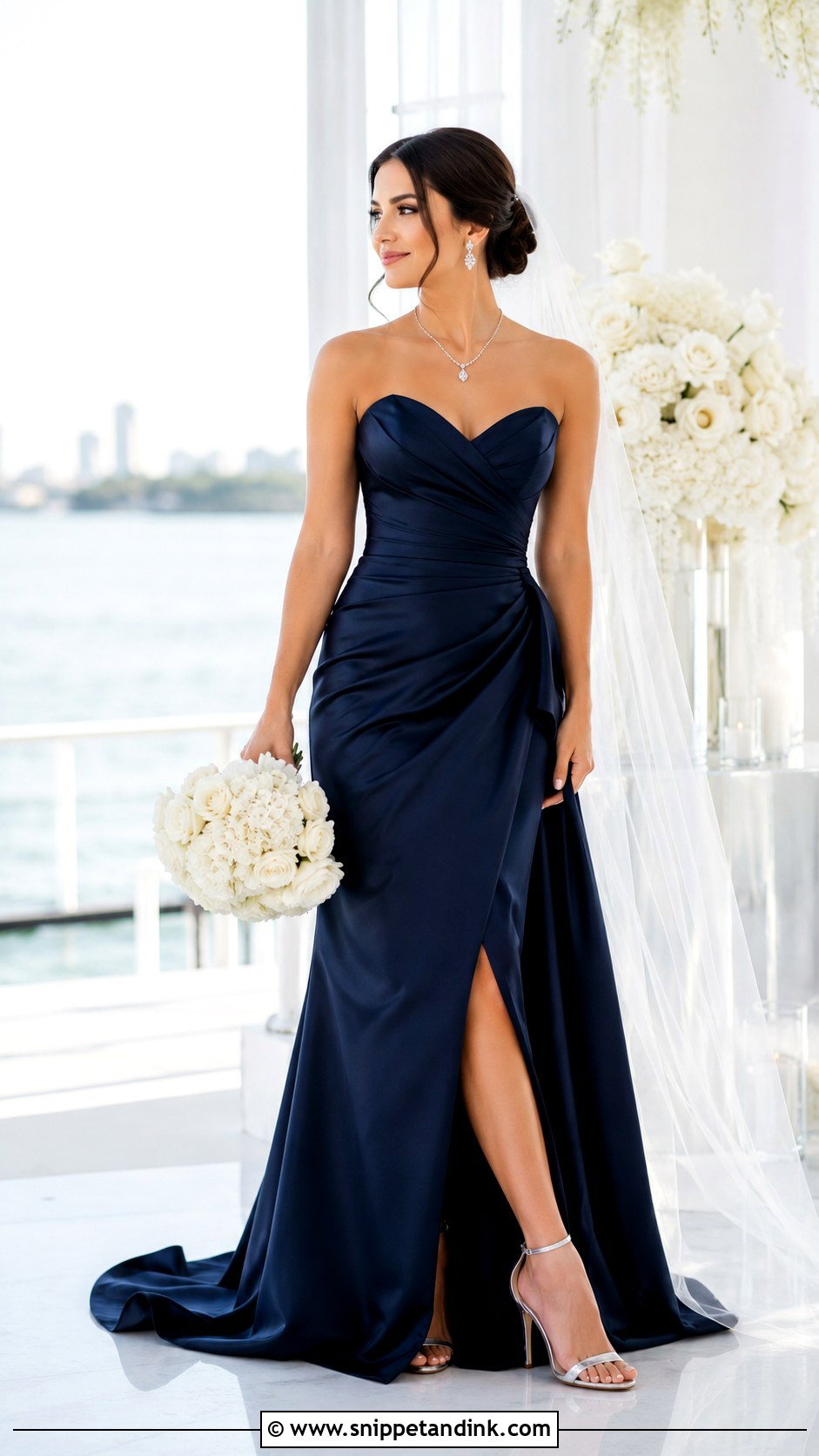
Navy gives the drama of black with a softer edge, and it flatters a wide range of skin tones. Satin, crepe and lace all hold the colour well. A white bouquet gives it a clean contrast, and navy or silver heels with crystal jewelry keep it polished. A sheer veil softens the dark tone. Dark silk shows water spots, so keep a cloth handy at waterfront venues. It suits formal evening and winter weddings.
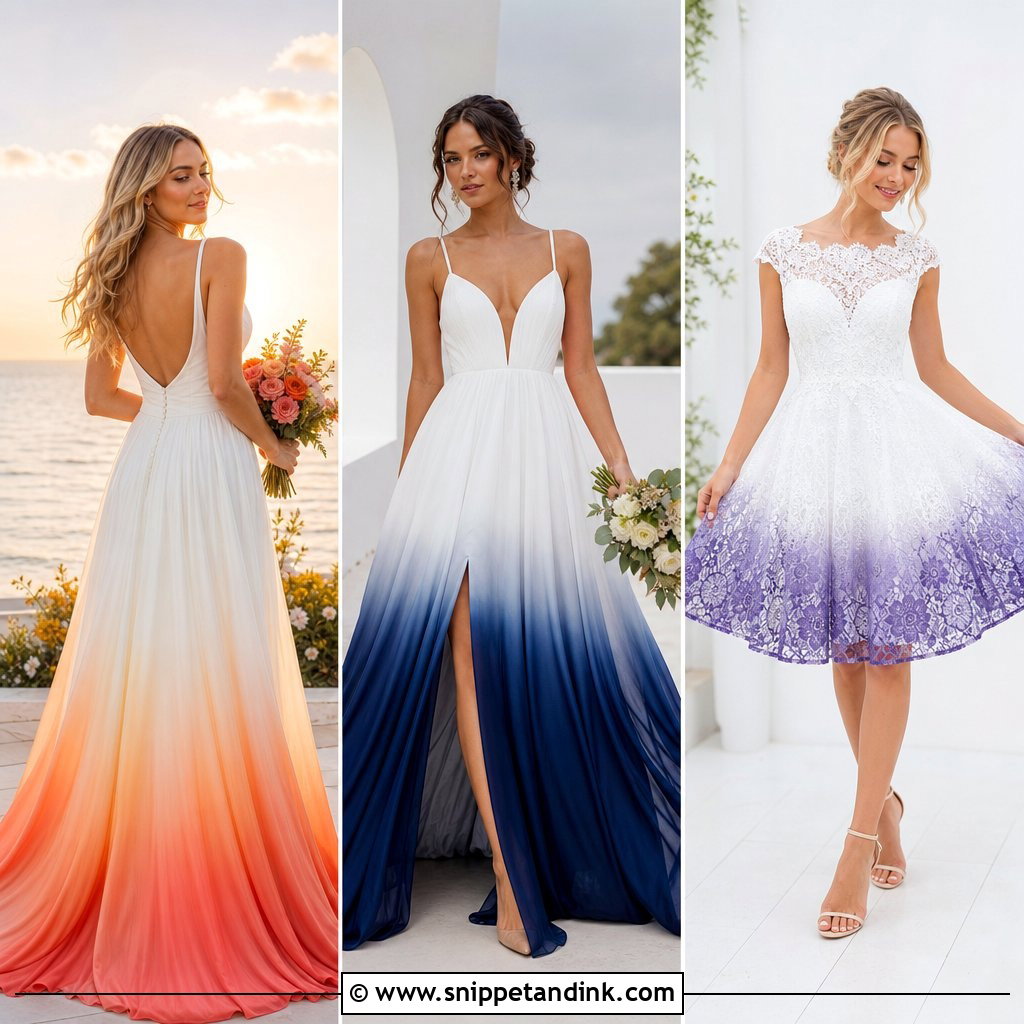
18. Ombre Wedding Dress With Matching Veil
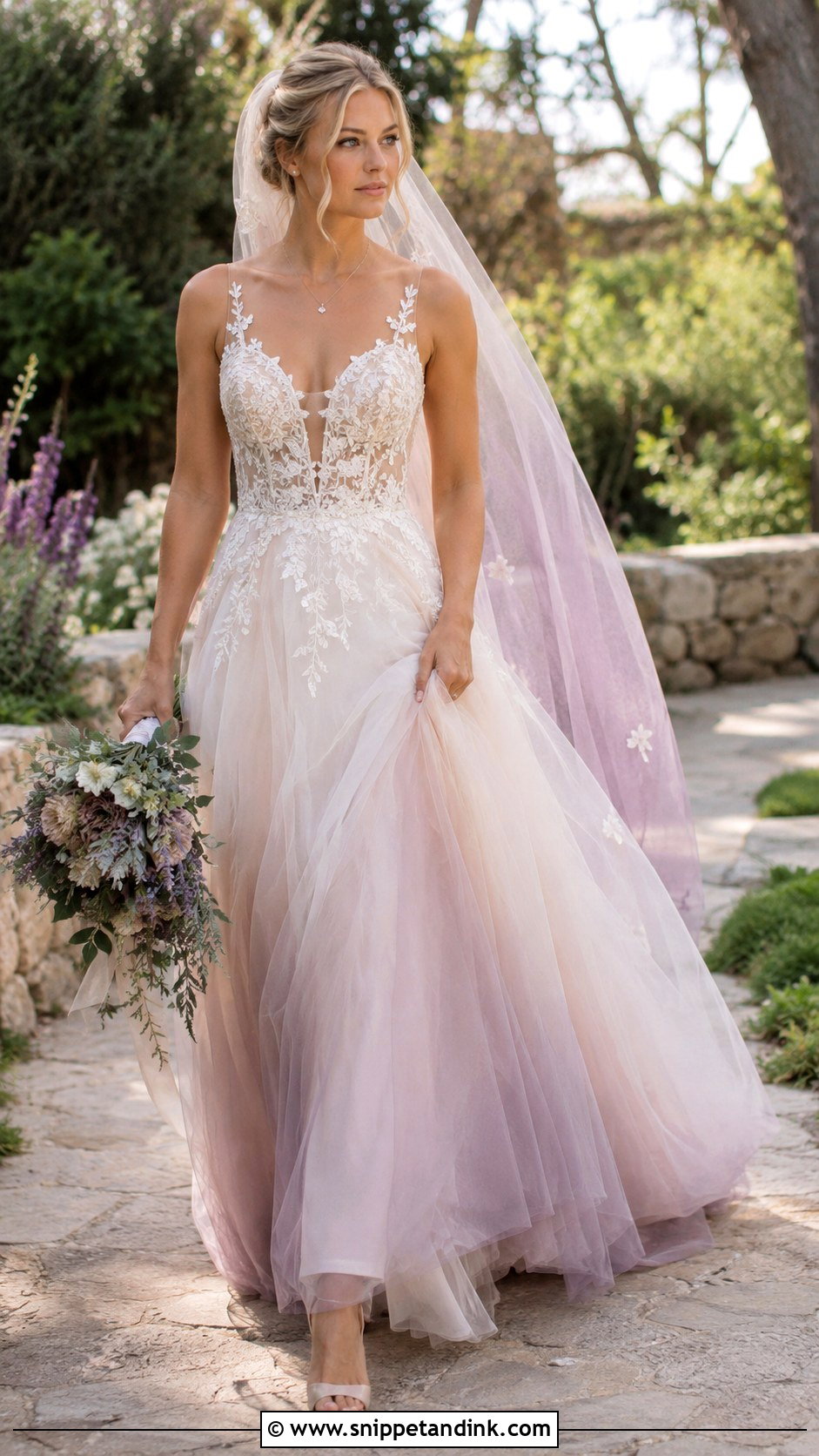
An ombre wedding dress fades from ivory at the top into blush, blue, lavender, champagne or something bolder toward the hem. A flowing skirt shows the gradient best as you walk. The fade is done by dyeing, so alterations to the hem must be planned carefully: cutting length removes the deepest colour. A matching veil, plain heels and minimal jewelry keep the transition clean. It’s a good compromise for a bride torn between tradition and colour.
19. Terracotta Wedding Dress With Gold Sandals
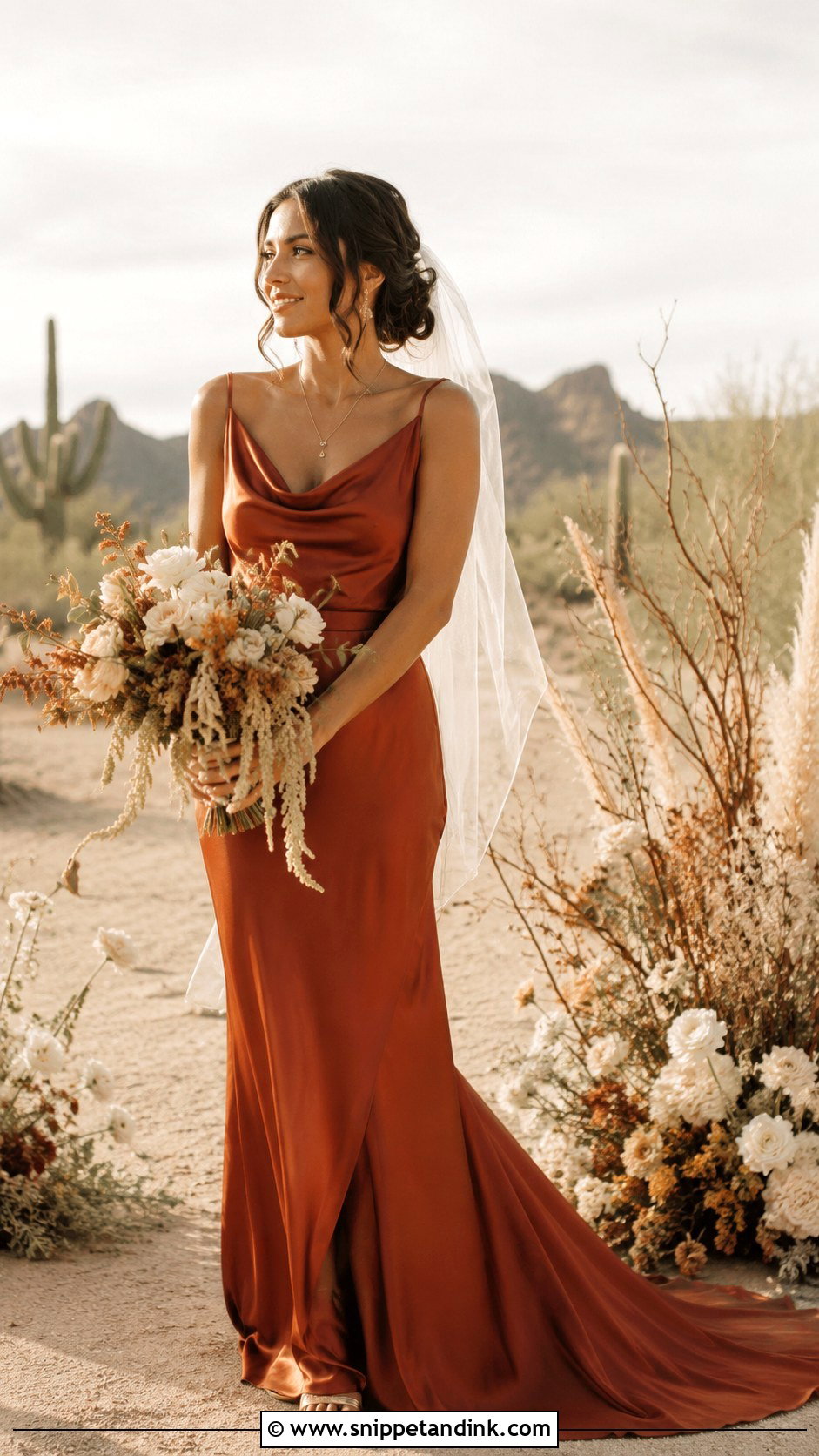
Terracotta is a warm clay colour, and it looks right in natural settings: desert venues, autumn fields, rustic barns. A satin slip, long-sleeved crepe or soft chiffon gives three different moods. Gold sandals and warm-toned jewelry suit it; silver looks off. A simple veil keeps it bridal. Dried florals, cream flowers and greenery match its earthy tone. Bright sun can make it look orange in photos, so golden-hour portraits suit it best.

20. Mint Green Wedding Dress With White Accessories
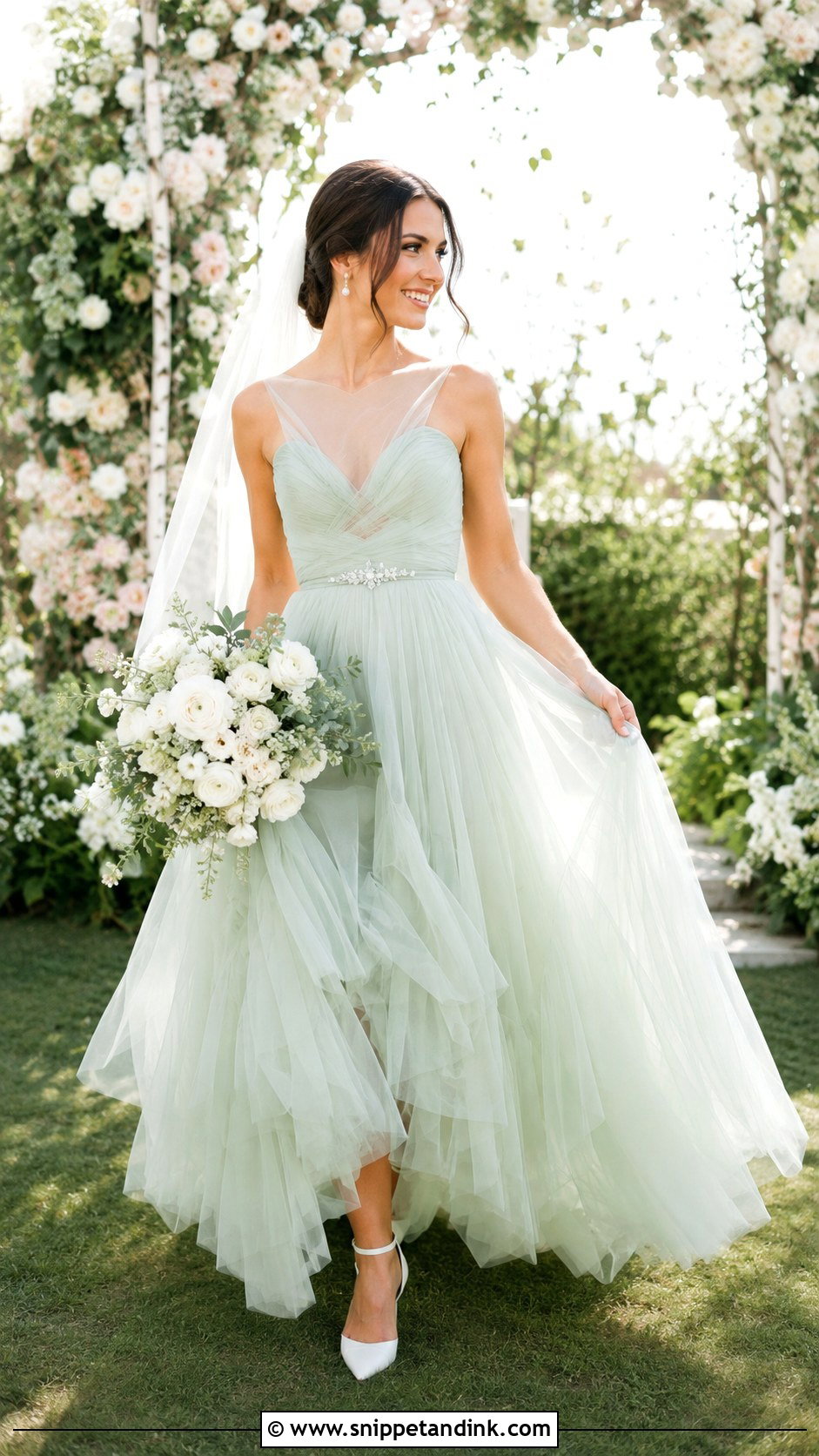
Mint is fresh and light, but it’s one of the colours that can look slightly sickly on cool, pale skin, so try it on before falling for it online. Tulle, organza and chiffon keep it delicate. A fitted bodice and flowing skirt balance it. White heels, pearl earrings and an ivory veil bring it back to bridal. White flowers, pale greenery and silver suit it for spring garden and daytime receptions.
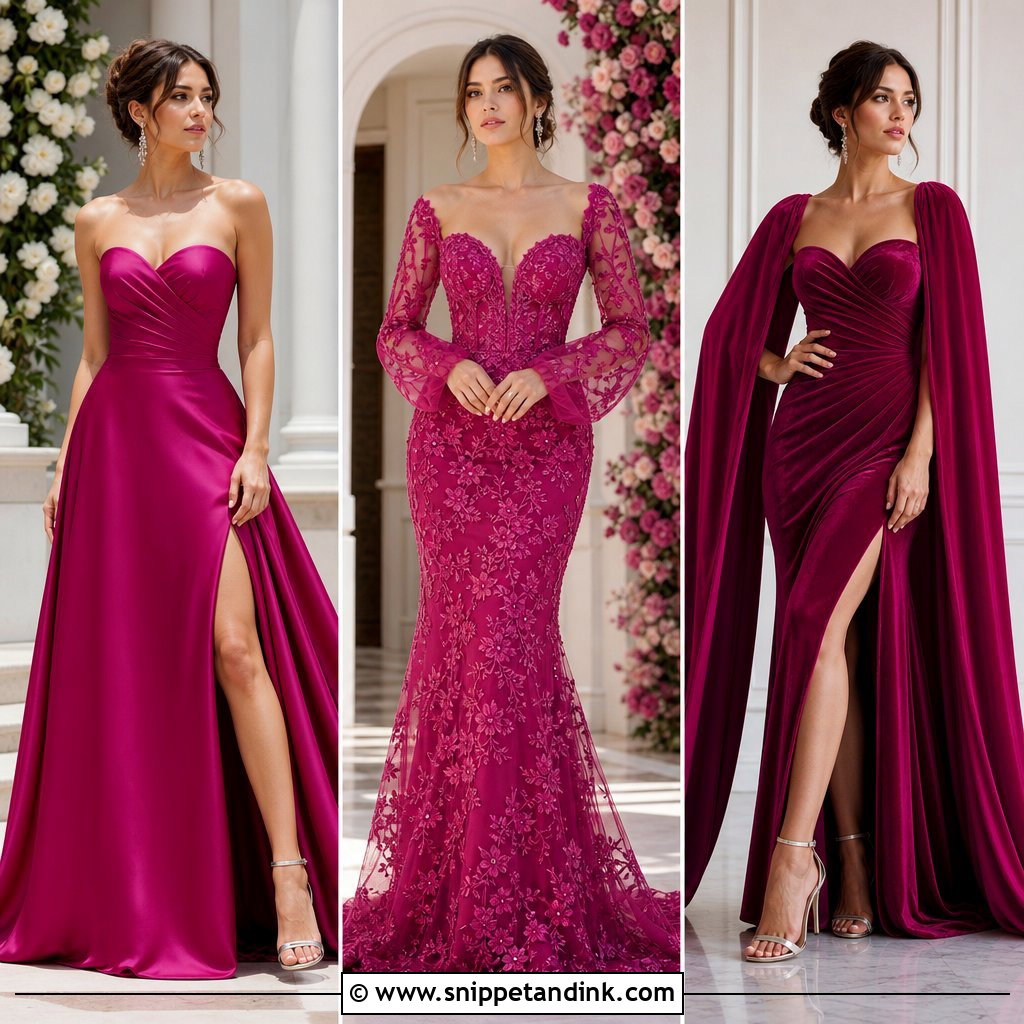
21. Burgundy Wedding Dress With Velvet Shoes
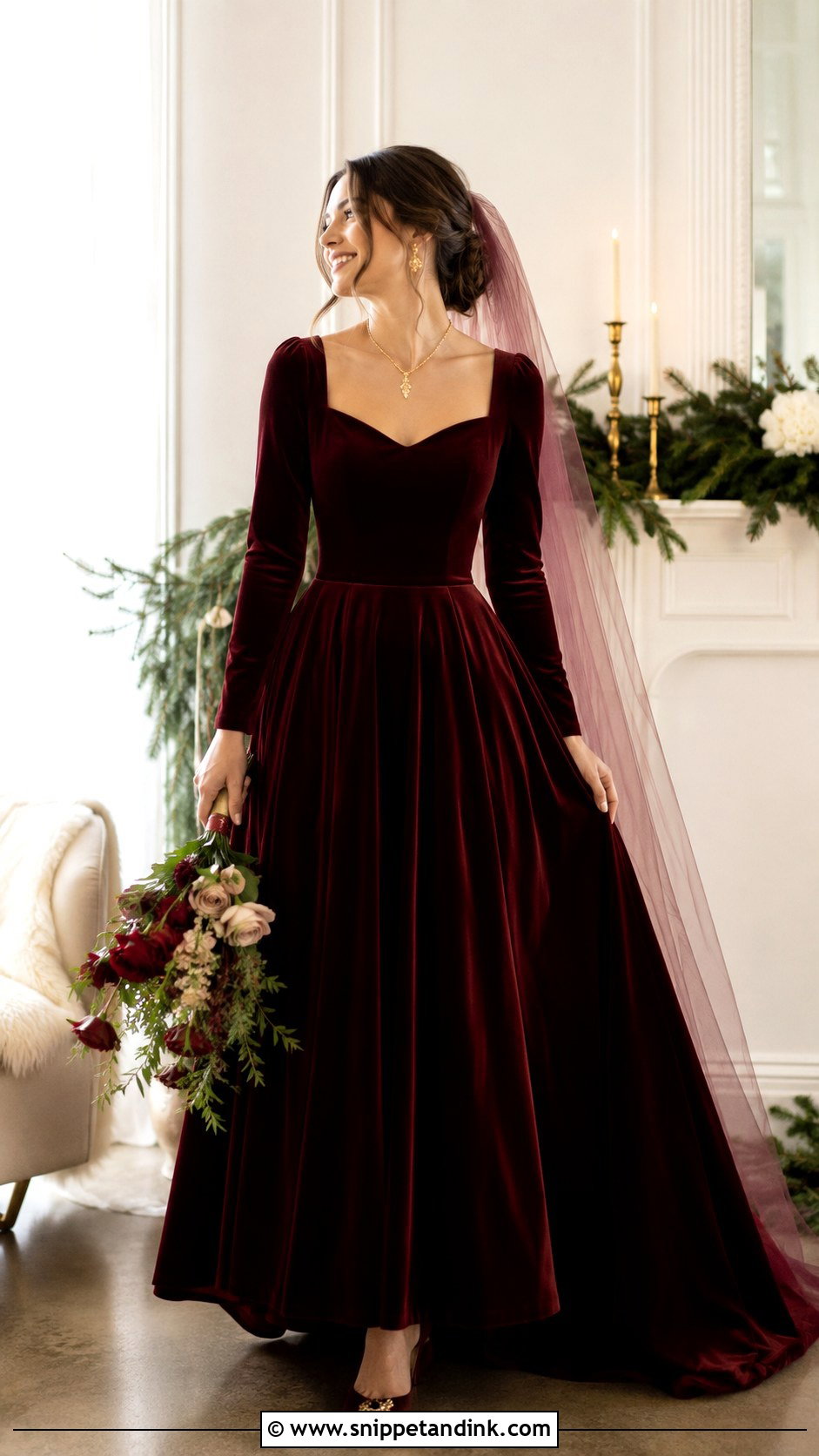
Burgundy is deep and warm, and it looks luxurious in satin, lace, velvet or structured crepe. A long gown with a defined waist, off-shoulder neck or full skirt makes it dramatic. Velvet shoes, gold jewelry and a soft veil complete it. Light flowers, ivory, blush and green, give contrast against the dark tone. I wouldn’t wear burgundy velvet in summer heat; it’s an autumn and winter choice for formal venues.
22. Light Gray Wedding Dress With Sheer Cape
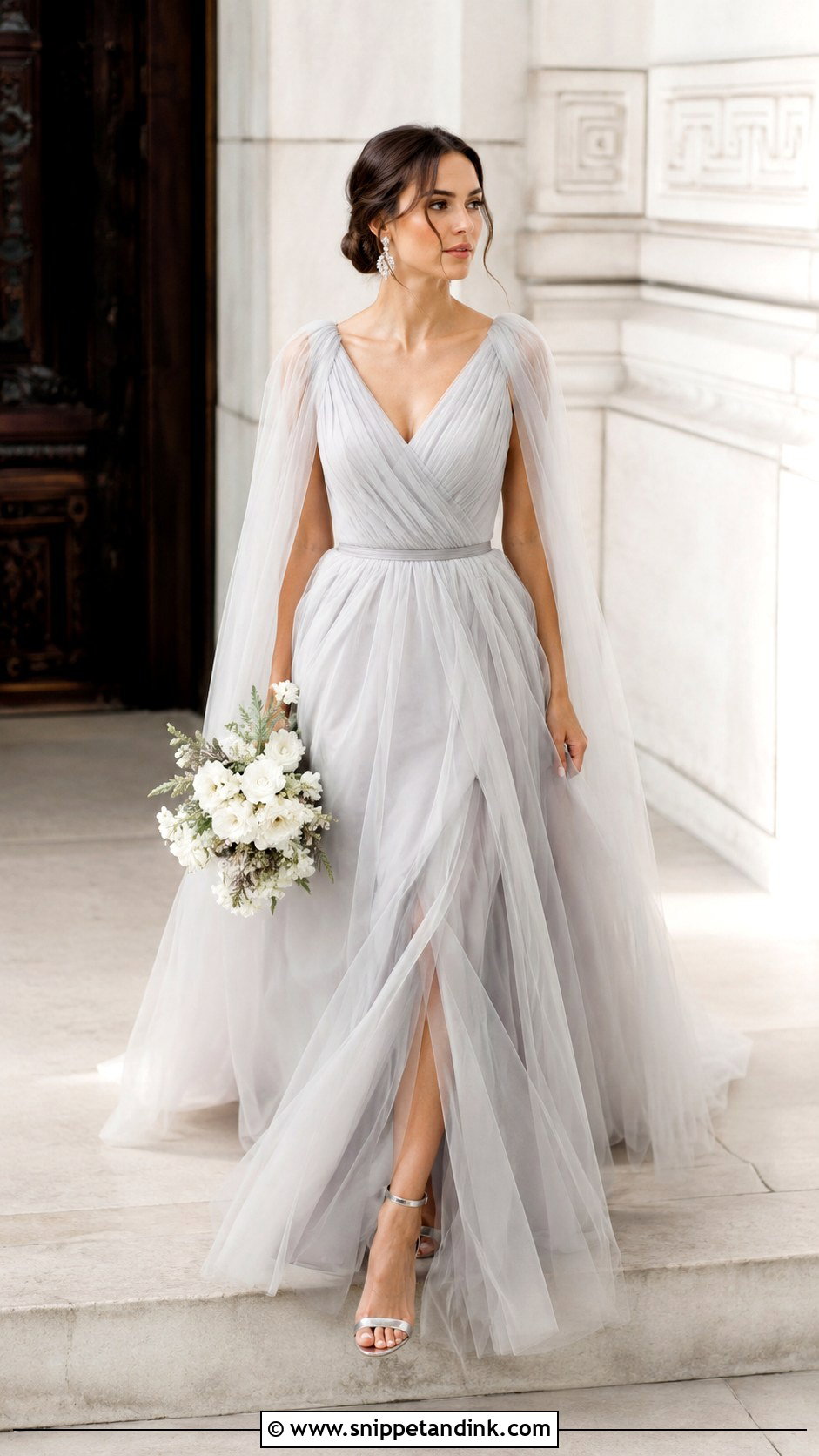
Light grey gives a little more depth than white while staying neutral. In tulle it looks soft, in a beaded sheath modern, in satin quietly formal. A sheer cape in place of a veil adds movement. Silver heels, crystal earrings and a white bouquet with greenery keep it clean. Grey can look dull in flat overcast light, so a little shine in the fabric helps. It suits city, winter and minimalist weddings.
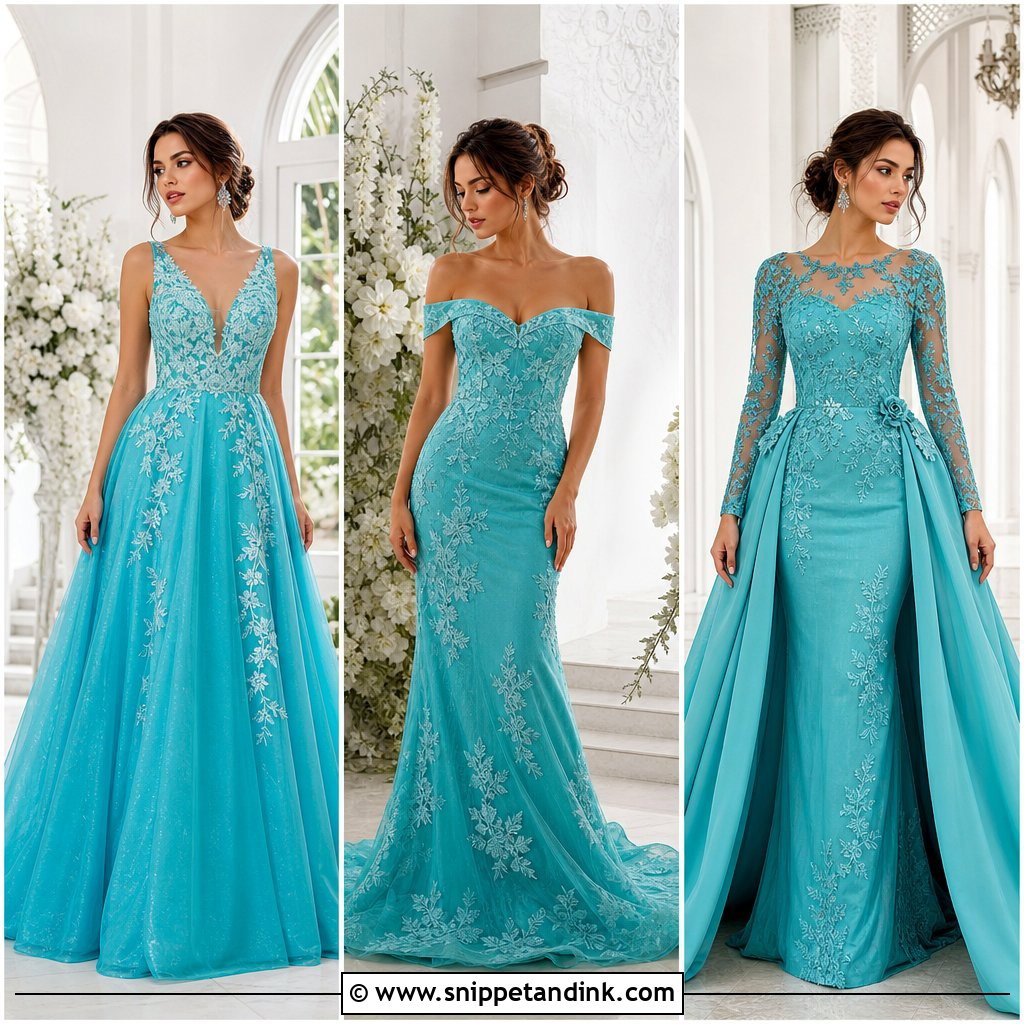
23. Teal Wedding Dress With Simple Jewelry
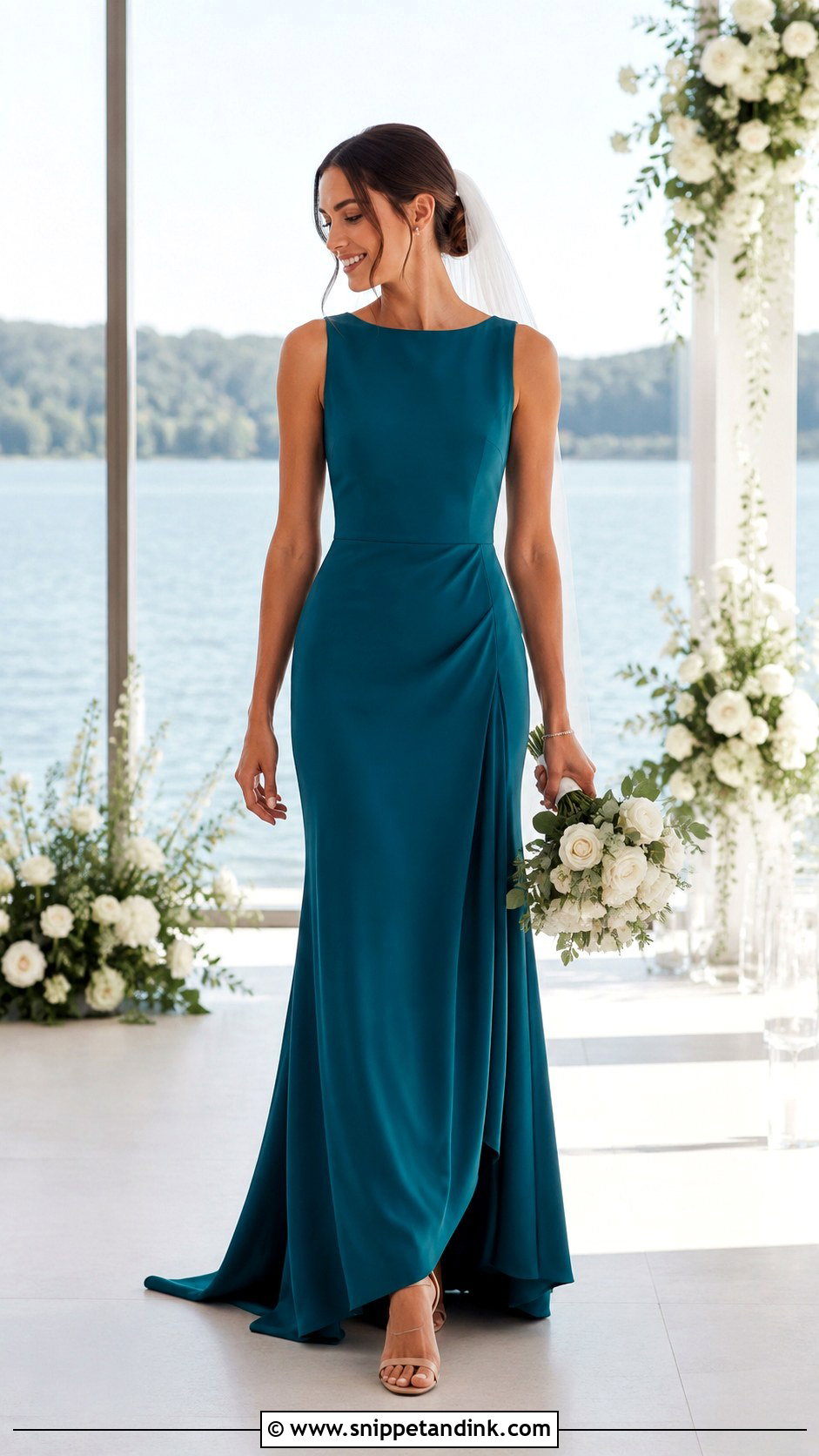
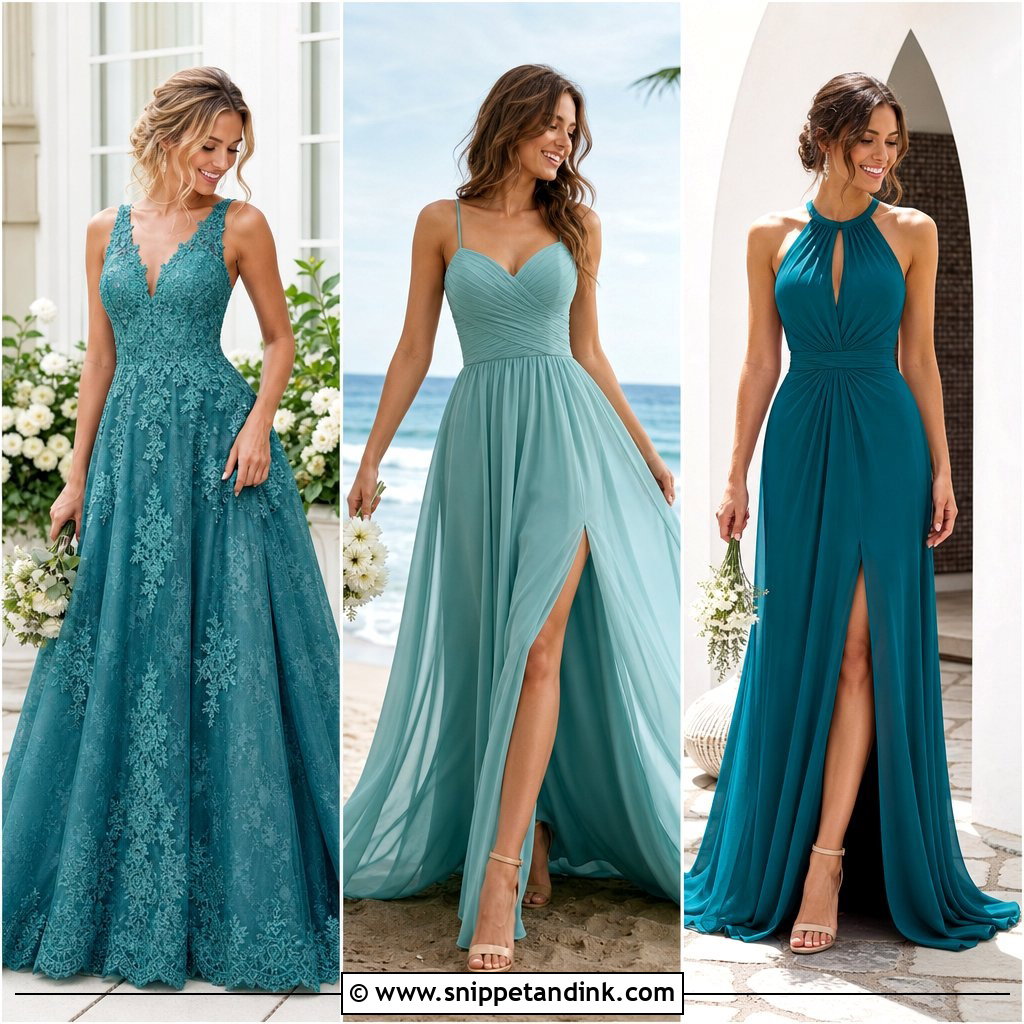
Teal, between blue and green, looks vivid and still refined with clean accessories. Satin or crepe keeps it smooth, lace adds texture. Nude or metallic heels, simple jewelry and sleek hair let the colour lead. A soft ivory veil adds a bridal touch without competing. Teal holds up well under evening light and flash, which makes it practical for evening and waterfront weddings.
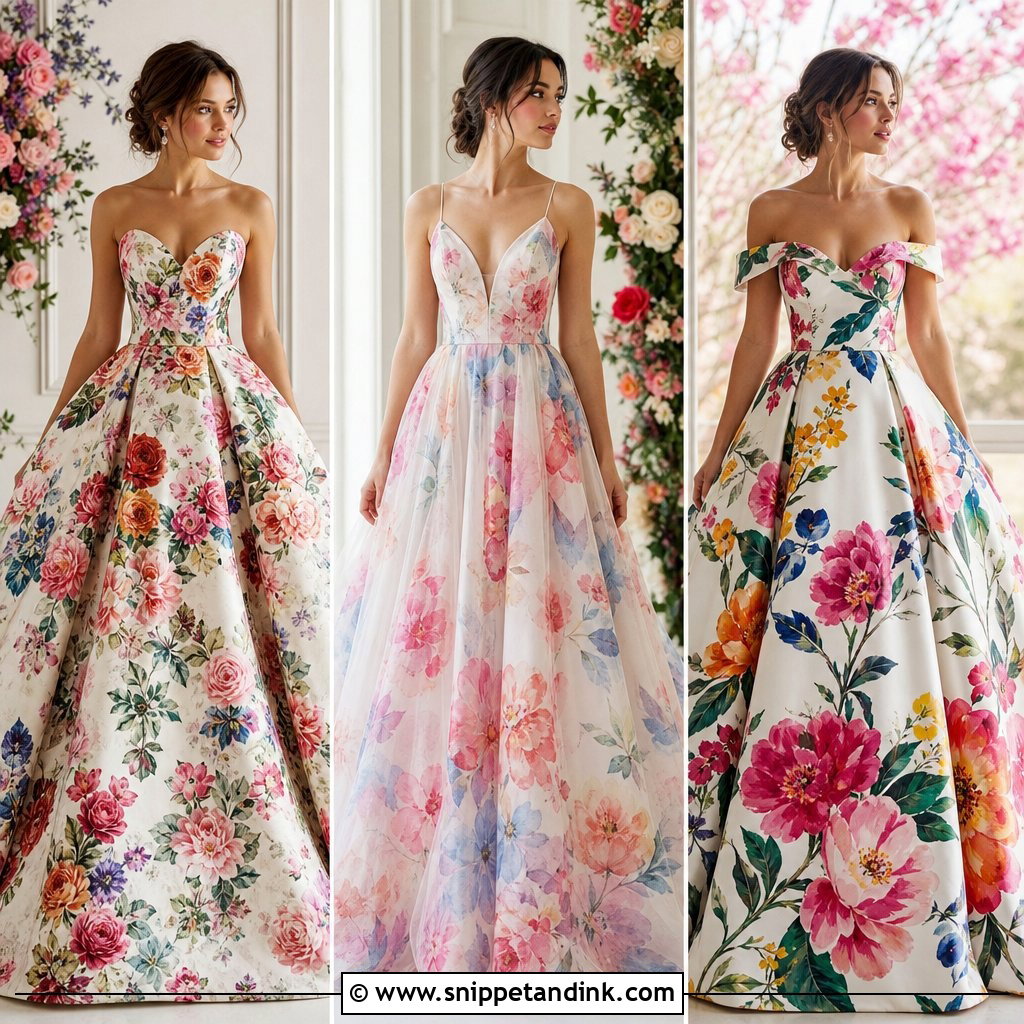
24. Floral Print Wedding Dress With Strappy Heels
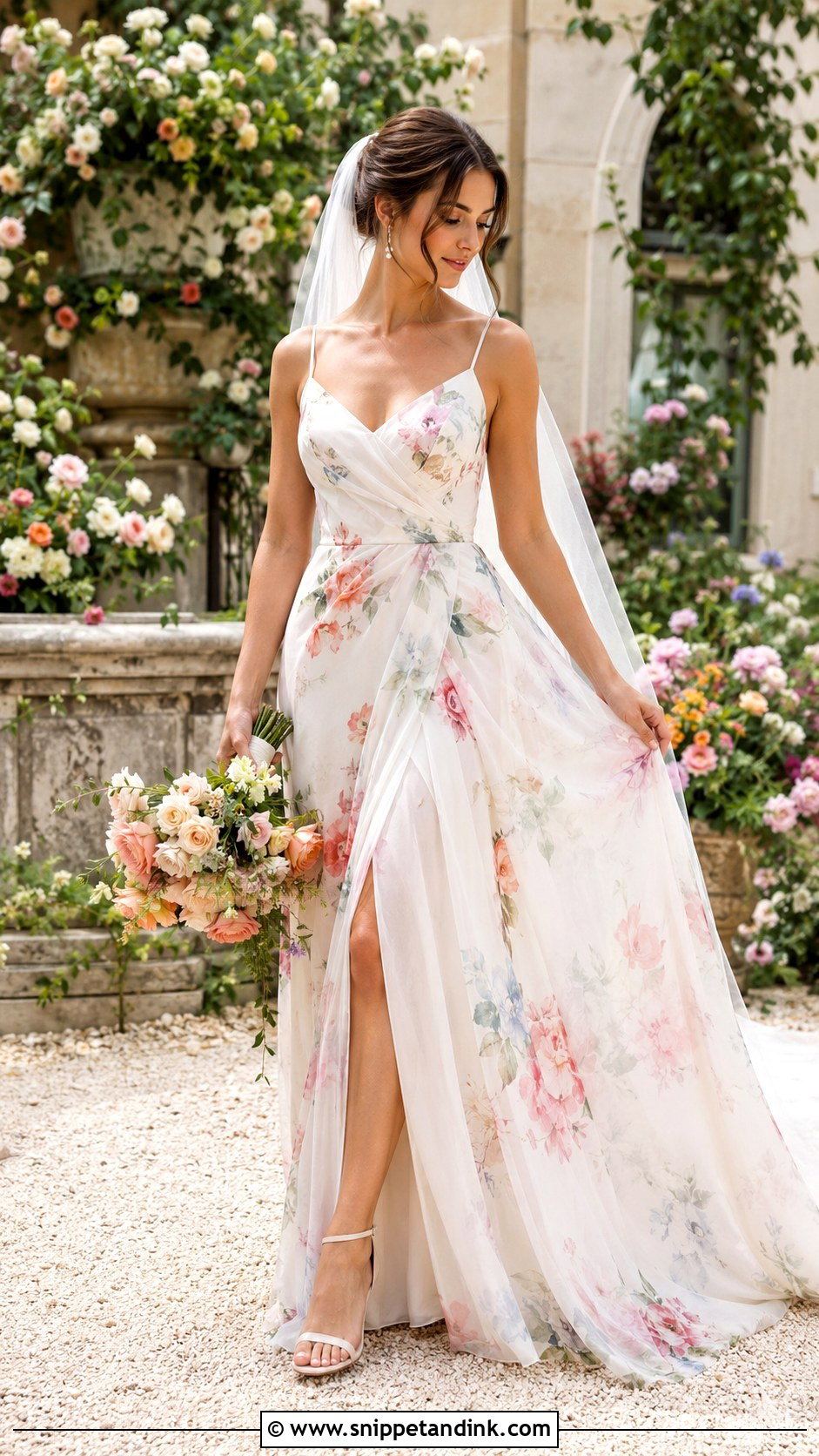
A print reads casual unless the placement is careful, and that is what separates a floral print wedding dress from a summer frock. A soft base colour with watercolour flowers, embroidered blooms or printed organza works well. Strappy heels, simple earrings and a plain veil or floral hairpiece suit it. Coordinate the bouquet with the print without copying every colour, or the two blur together. Garden and spring weddings suit it.
25. Pastel Rainbow Wedding Dress With White Shoes
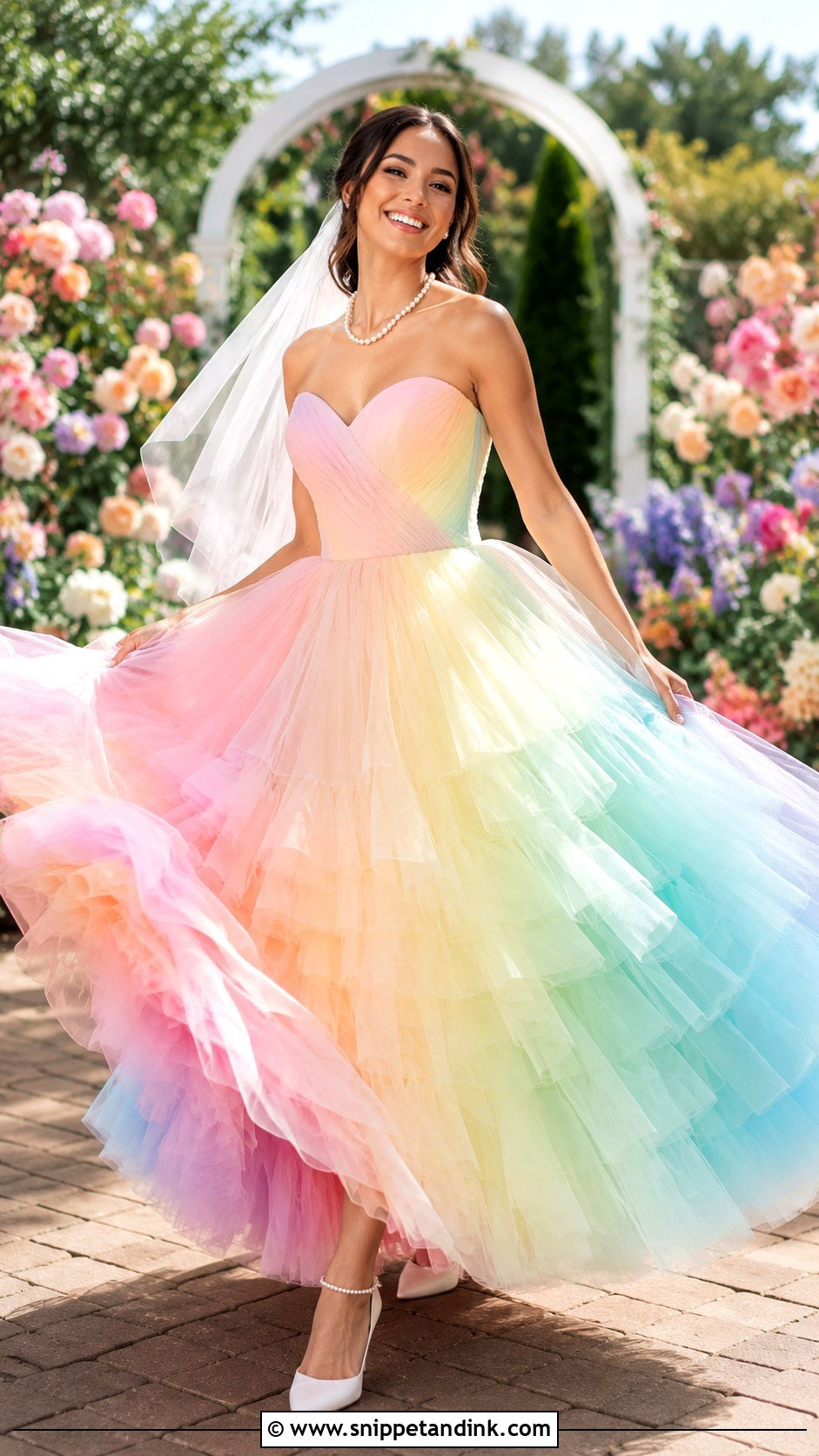
Soft pastels layered together look artistic; harsh bright blocks look like a costume. A pastel rainbow wedding dress works best as layered tulle, ombre panels or gentle multicolour embroidery. A fitted bodice and flowing skirt make it read as bridal. White shoes, pearl jewelry and a plain veil steady it. Keep makeup soft and the bouquet light so the gown isn’t fighting anything. It suits creative outdoor weddings with a colourful palette.
Dyed Fabric Behaves Differently on the Day
Coloured gowns have a few quirks white ones don’t. Most are easy to manage if you know about them before the wedding.
- Water and sweat marks show on dark satin and silk. Bring a clean white cloth and blot, don’t rub.
- Deep reds and blues can transfer onto pale skin or a light lining when damp, so test with a damp white tissue at a fitting.
- Alteration fabric must match the dye. If the seamstress needs extra fabric for a bustle or strap, ask the shop for a piece from the same batch.
- Long sun exposure can fade some dyes. Store the gown away from windows before the wedding.
- Pale pastels show grass stains and dust as easily as white, so plan outdoor portraits accordingly.
Telling Family Before They See It at the Altar
In some families a non-white gown raises eyebrows, and in others it’s the norm. Red is traditional for many Chinese and South Asian weddings, while some older relatives in Western families still expect white. If you think it might surprise someone close to you, show them a photo or a swatch before the day. It doesn’t change your choice, but it means they react to the dress at the aisle instead of to the idea. Matching the veil or flowers to white can also help a coloured gown read as bridal to everyone.
Colour Has Always Belonged to Weddings
Wearing colour doesn’t mean dropping tradition. It means fitting it to your skin, venue, season and story. Blush, champagne, lavender and powder blue sit close to classic bridal; emerald, burgundy, navy and black make a deliberate statement. Prints, ombre, embroidery and metallics give still more options. Test any shade in daylight against your face and on camera before you order. The right colour is the one that makes you look like yourself, only more so.
You'll Like These Ideas:



Leave a Reply