
Layers are how a wedding dress gets depth. A single satin skirt reads as one surface, while three or four sheer layers over a lining catch light at different depths, so the skirt changes as you walk. Brides fall for layers in pictures and then get surprised by two things at the fitting: how much the skirt weighs once there are six of them, and how differently the fabrics behave. Tulle puffs, organza holds a crisp line, chiffon falls. The ideas below run from full ball gowns to a short dress with one sheer overlay, and for each I’ve noted what I’d check before you commit.
What a Dozen Tulle Layers Weigh by the Reception
Every layer adds weight, and almost all of it hangs from your waist. A chiffon skirt with three layers is barely noticeable. A ball gown with a dozen tulle layers plus a crinoline is something you’ll feel in your lower back by the speeches. None of that makes a heavy dress wrong, but it changes what you should ask at the first appointment.
The petticoat you can’t see
Many full skirts get their shape from a hidden petticoat or crinoline rather than from the visible layers. Some are separate and can come off for the reception, which removes real weight. Ask whether yours is sewn in or detachable.
Heat, sitting and the bathroom
Layers trap heat around the legs, so a full tulle skirt in a summer garden runs warm. Sit in the dress at the fitting and check that the layers fold under you without bunching up at the front. And practice the bathroom. With a full skirt, the easiest way is to face the toilet, gather the layers forward and let a bridesmaid hold the back. Better to laugh about it at a fitting than at the wedding.
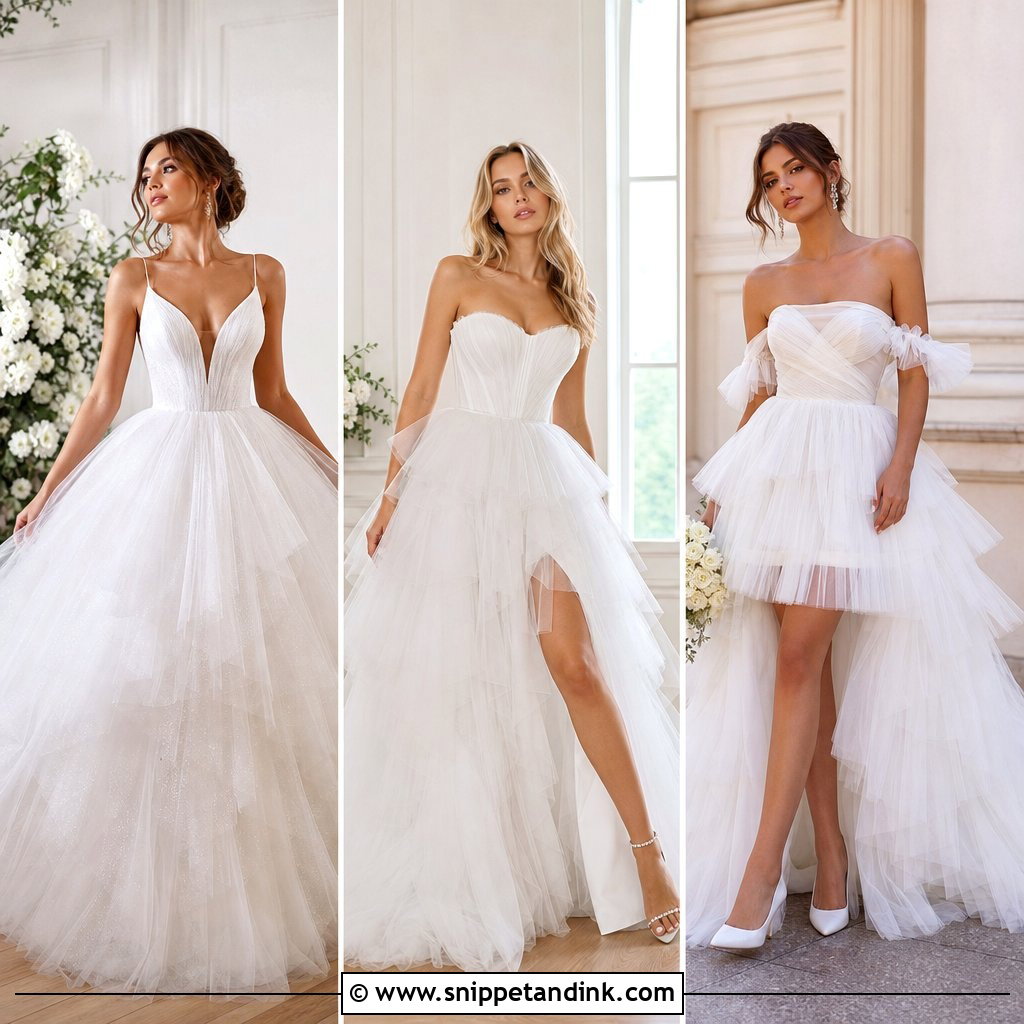
1. Layered Tulle Ball Gown Wedding Dress
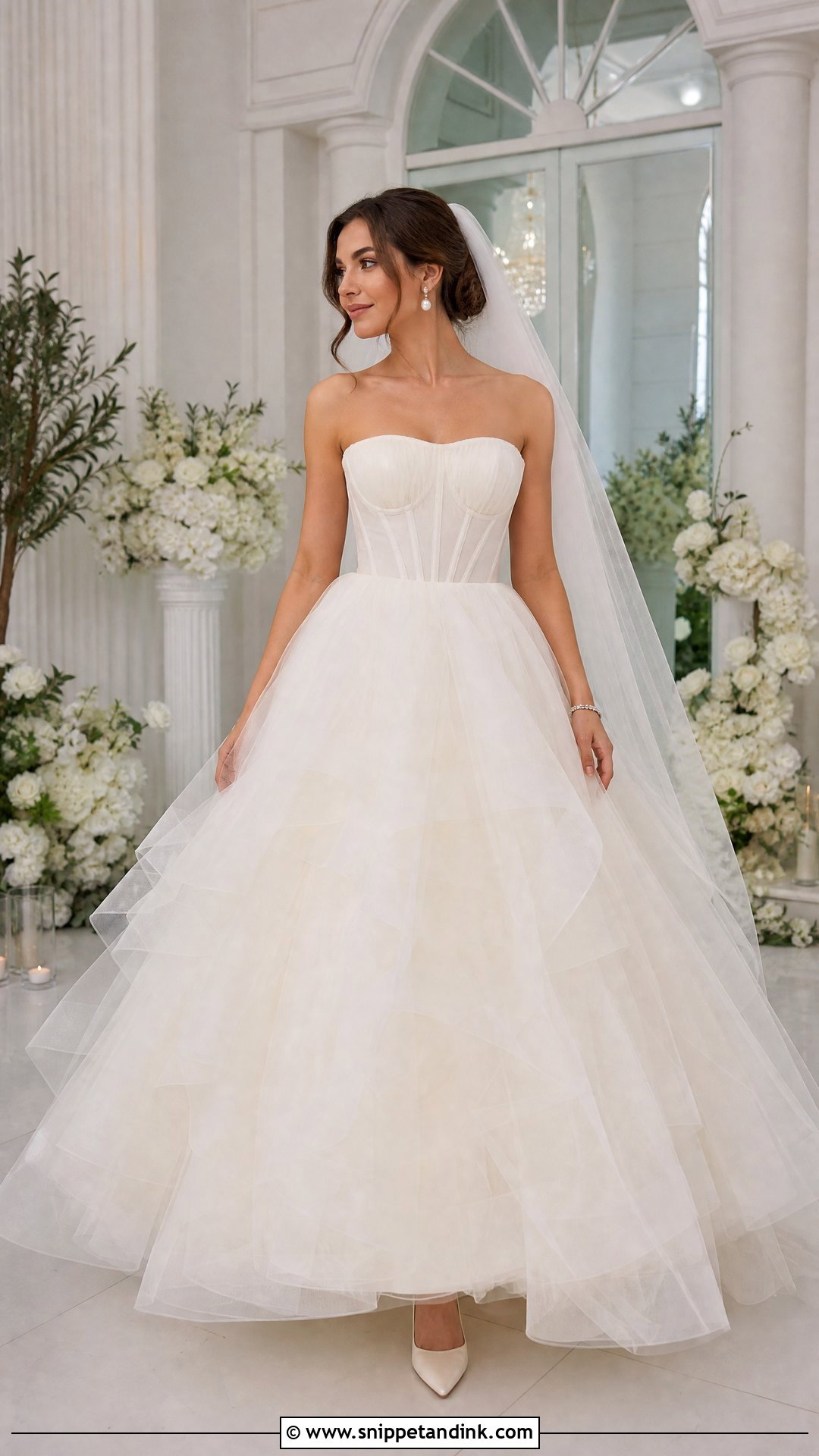
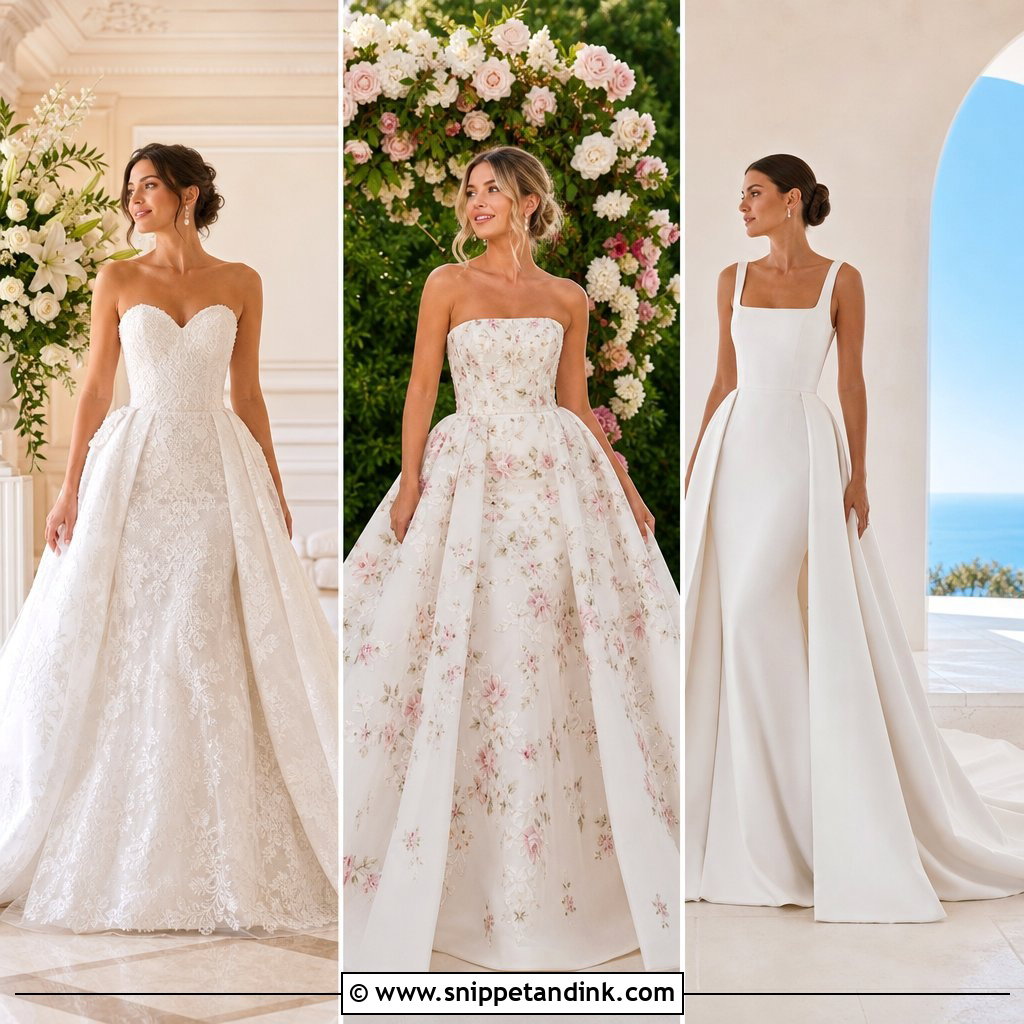
Volume in a good tulle ball gown comes from the number of layers, not from stiffness, so it floats rather than standing out like a lampshade. Ask how many layers there are and whether a crinoline sits underneath. More tulle means more weight on the hips, and most of it hangs from the waist seam, so a well-boned bodice anchored at the natural waist matters more here than anywhere else. Strapless is the classic pairing. Keep the veil plain and wear closed-toe shoes, because open sandals catch on the bottom layer as you walk.
2. Layered Organza A Line Wedding Dress
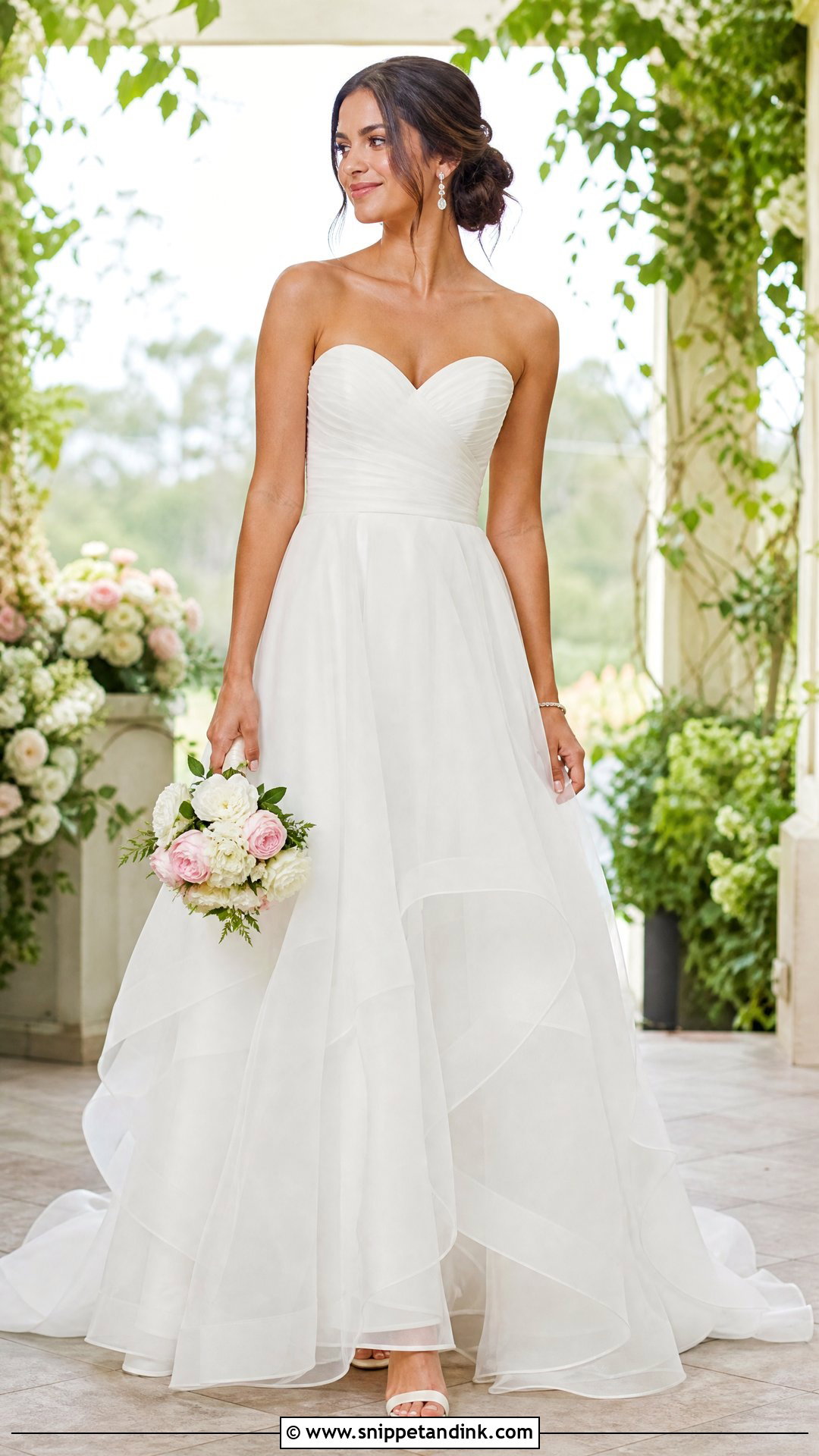
Organza is woven tighter than tulle, so it holds its own shape and gives an A line a clean outline without a petticoat. It’s the fabric I suggest to brides who want movement but not weight. A sweetheart bodice balances the flare. If you add appliqué to the top layer, have it placed away from where your arms brush the skirt, since that’s where it snags first.
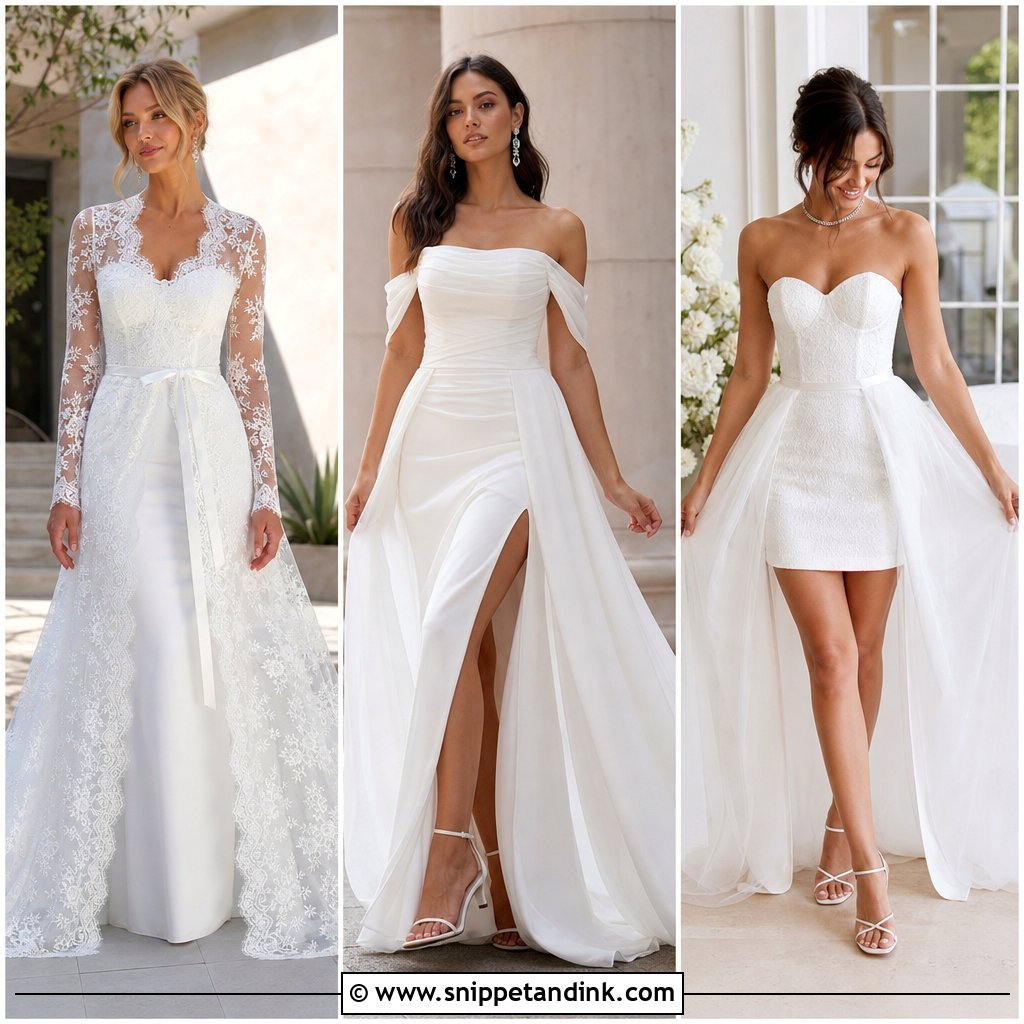
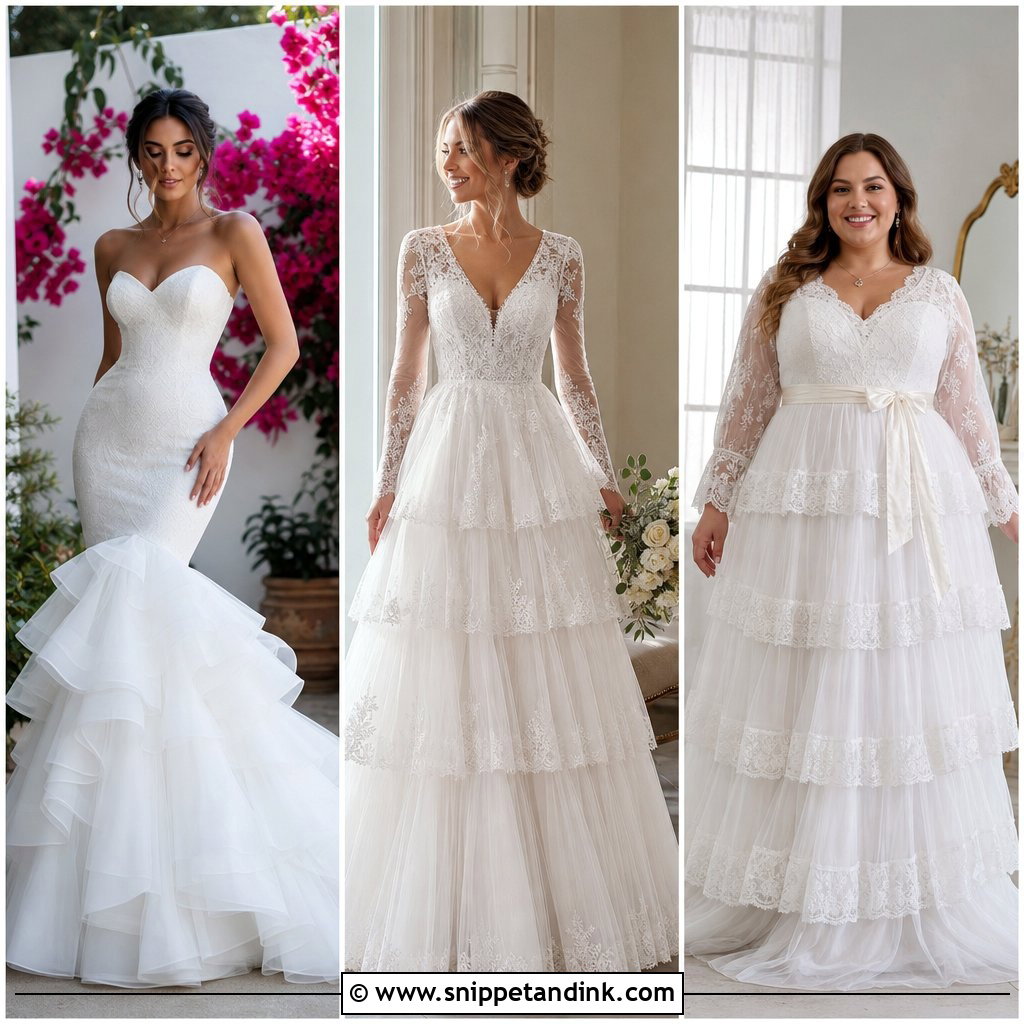
3. Layered Lace Wedding Dress With Long Sleeves
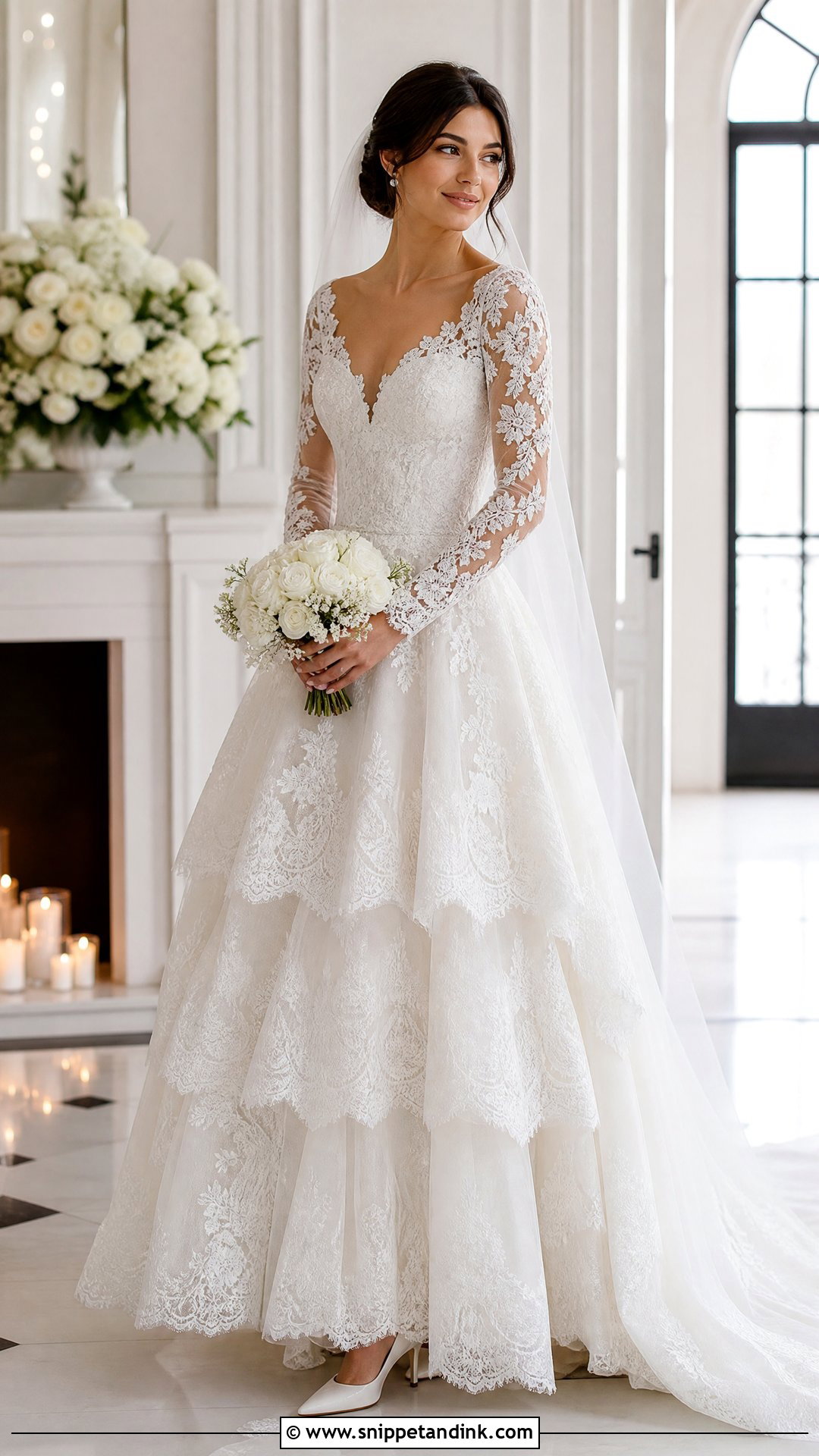
Long lace sleeves on illusion mesh look like lace sitting straight on skin, and that’s the effect people love. The fitting point that matters is the armhole. Sleeves cut too close stop you lifting your arms for a hug, so raise both arms above your head in the fitting room before you sign off. Under the bodice, lace can sit over tulle or chiffon to add depth without much volume. With detailed lace I keep the veil plain and the hair in a low bun. Bear in mind it’s warm, which matters more in July than in November.
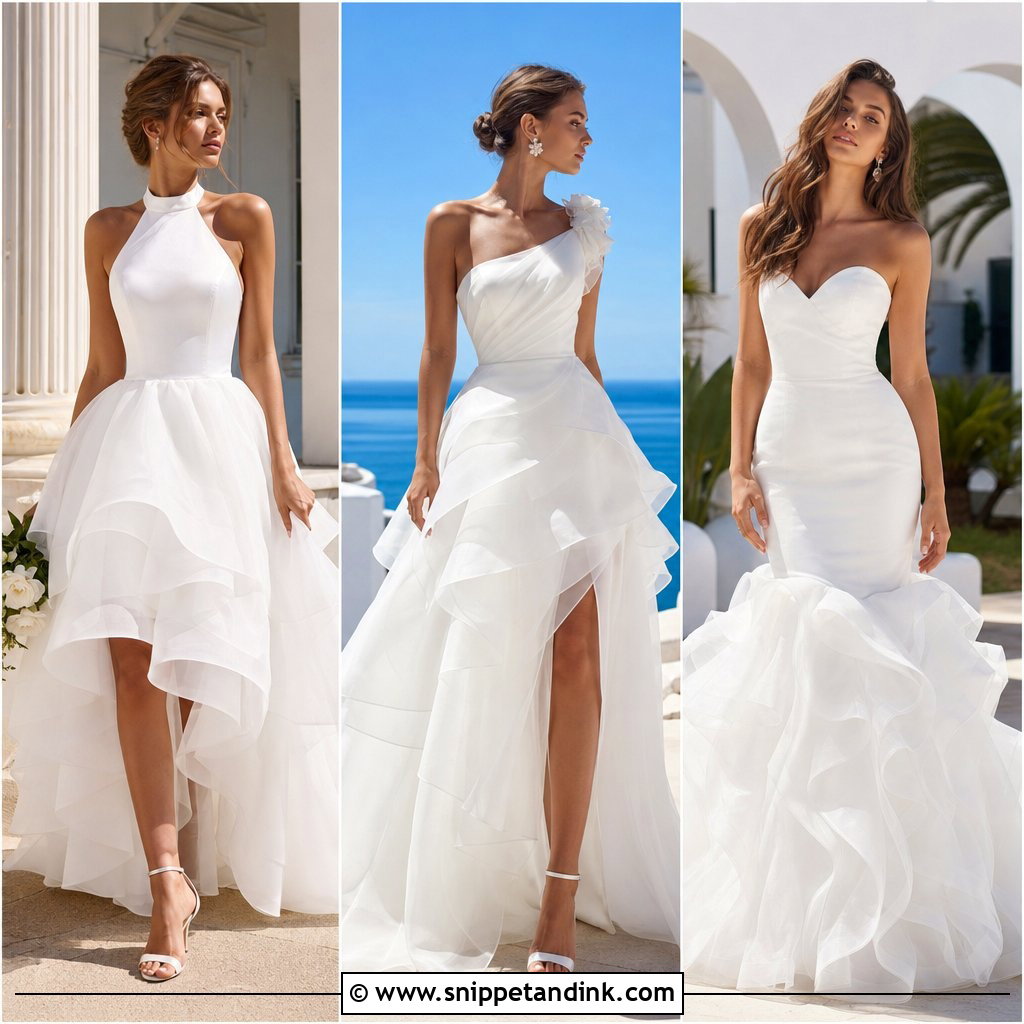
4. Layered Chiffon Beach Wedding Dress
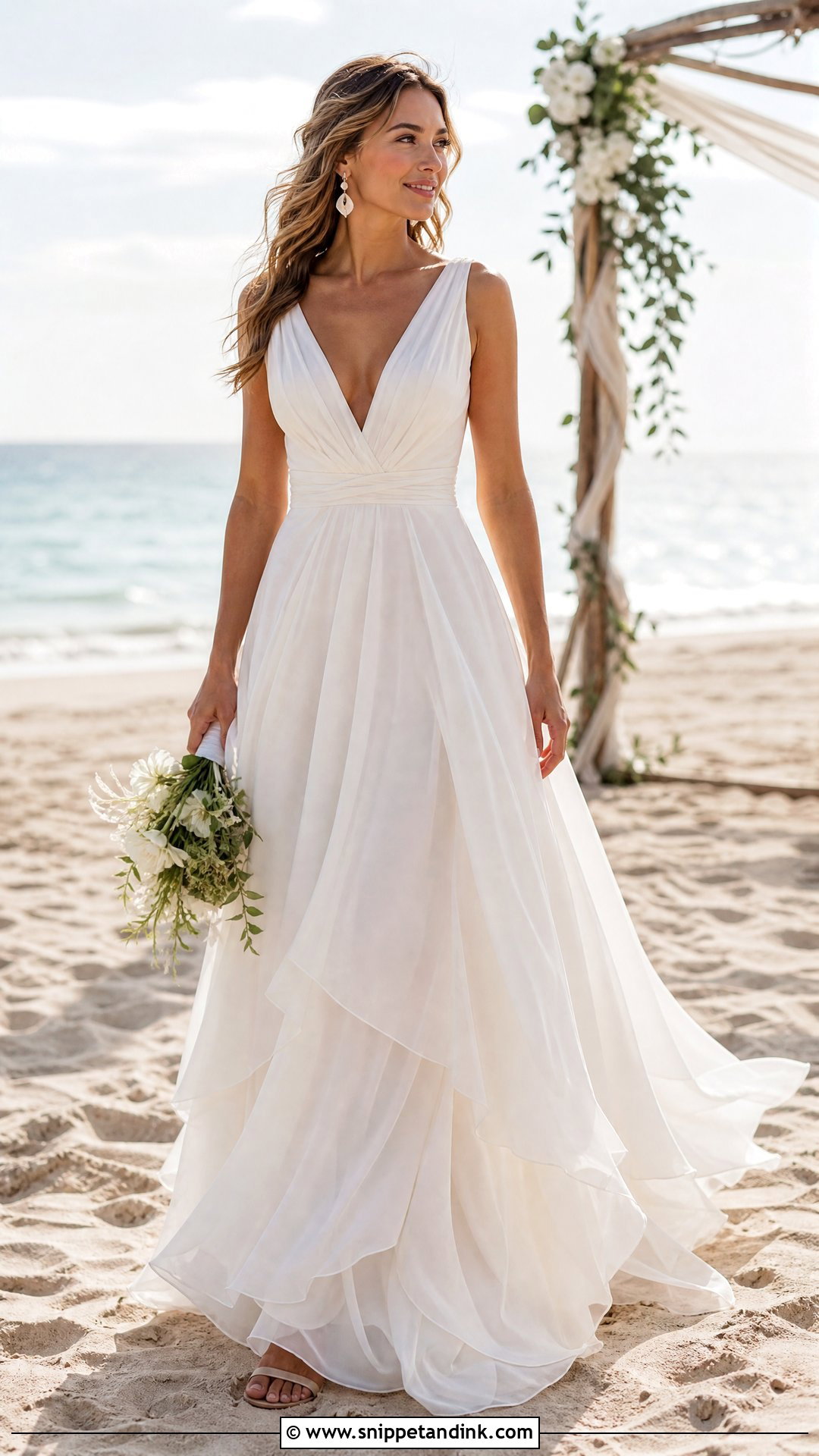
Chiffon is the layer that cooperates with wind. It falls close to the body instead of standing away, so on a beach it moves without billowing into your face. Watch the lining: a heavy one fights the chiffon and drags sand, so ask for a lightweight lining cut slightly shorter than the outer layers. V necks and halters both stay cool. Hem the whole thing to clear the ground in the flat sandals you’ll actually wear, because wet sand clings to chiffon and darkens the hem within minutes.
5. Layered Ruffle Wedding Dress
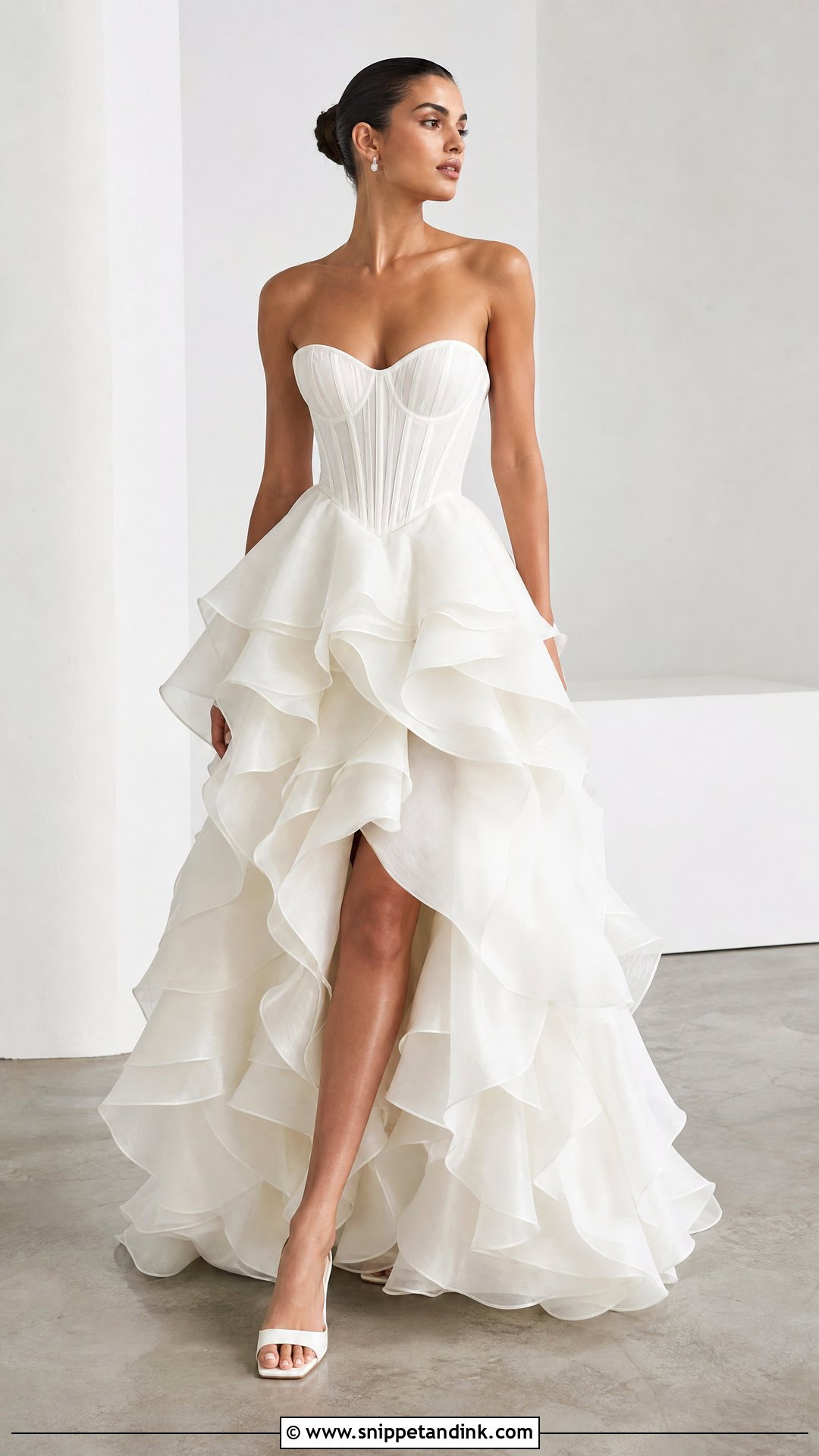
Ruffles need a quiet top half. If the skirt is all cascades or diagonal tiers, I pair it with a strapless corset or a plain square neck so the eye knows where to rest. Every ruffle also adds bulk at the line where it’s stitched down, which changes how the skirt sits when you’re seated, so sit in it at the fitting and check the mirror from the side. Side and back views are where this skirt really shows, so ask your photographer to catch you walking away.
6. Layered Mermaid Wedding Dress
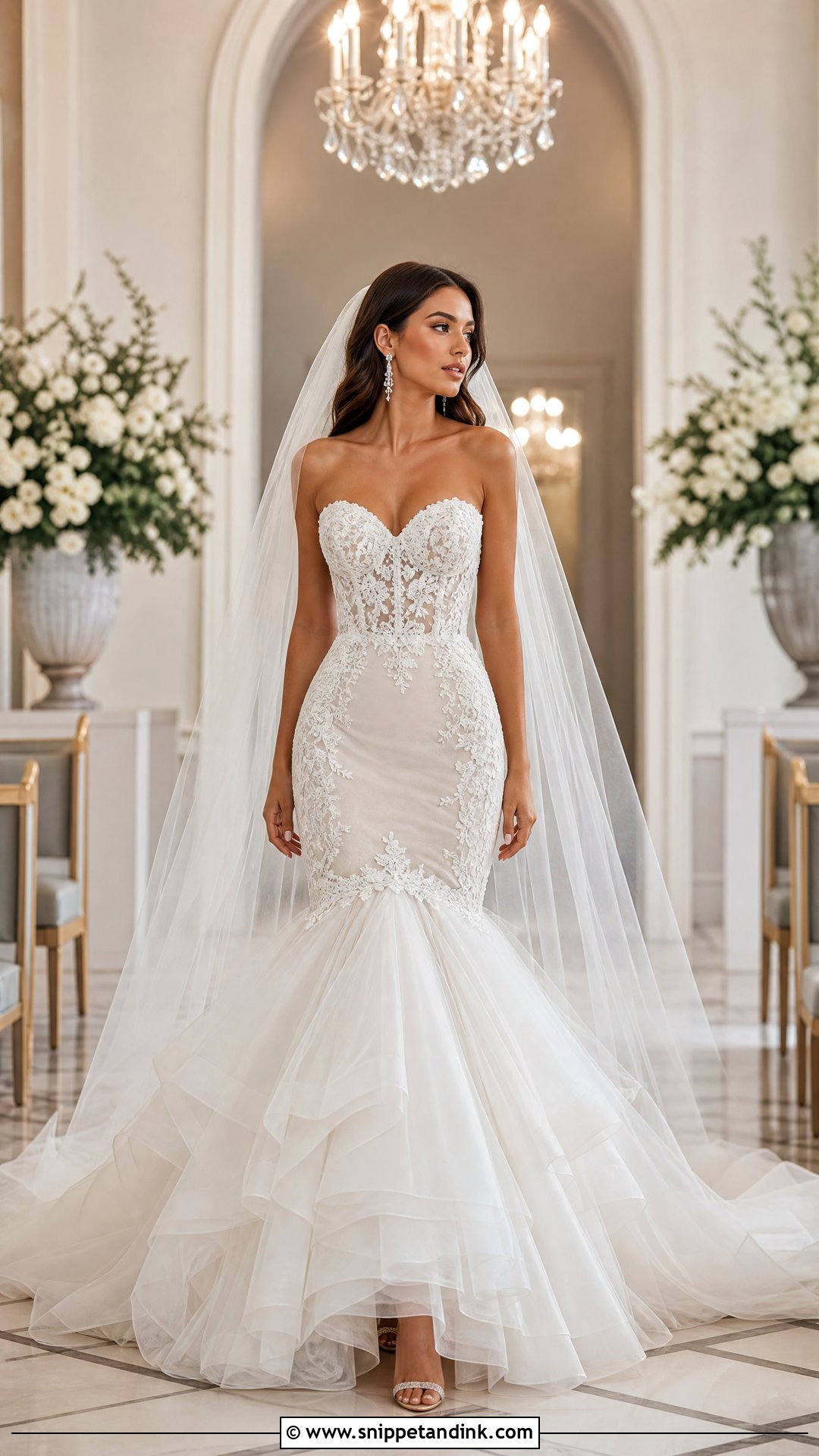
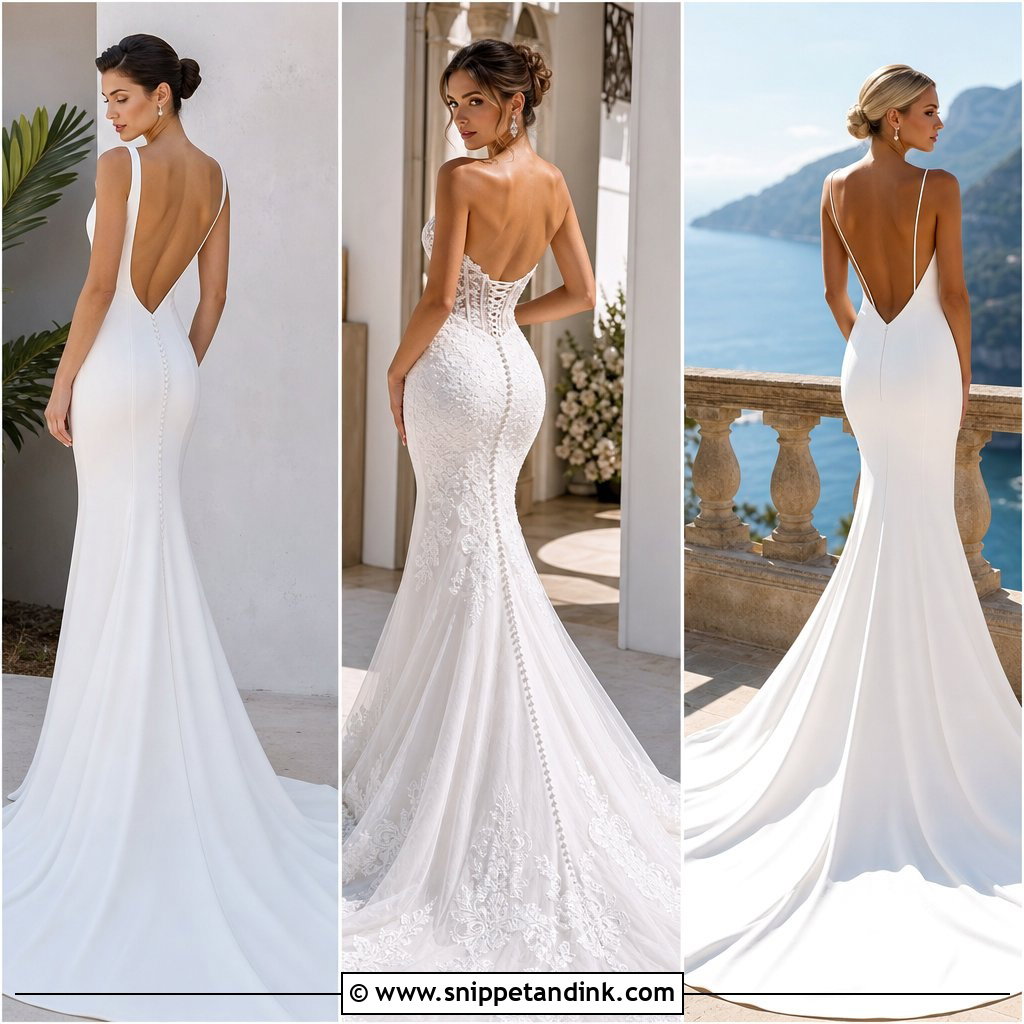
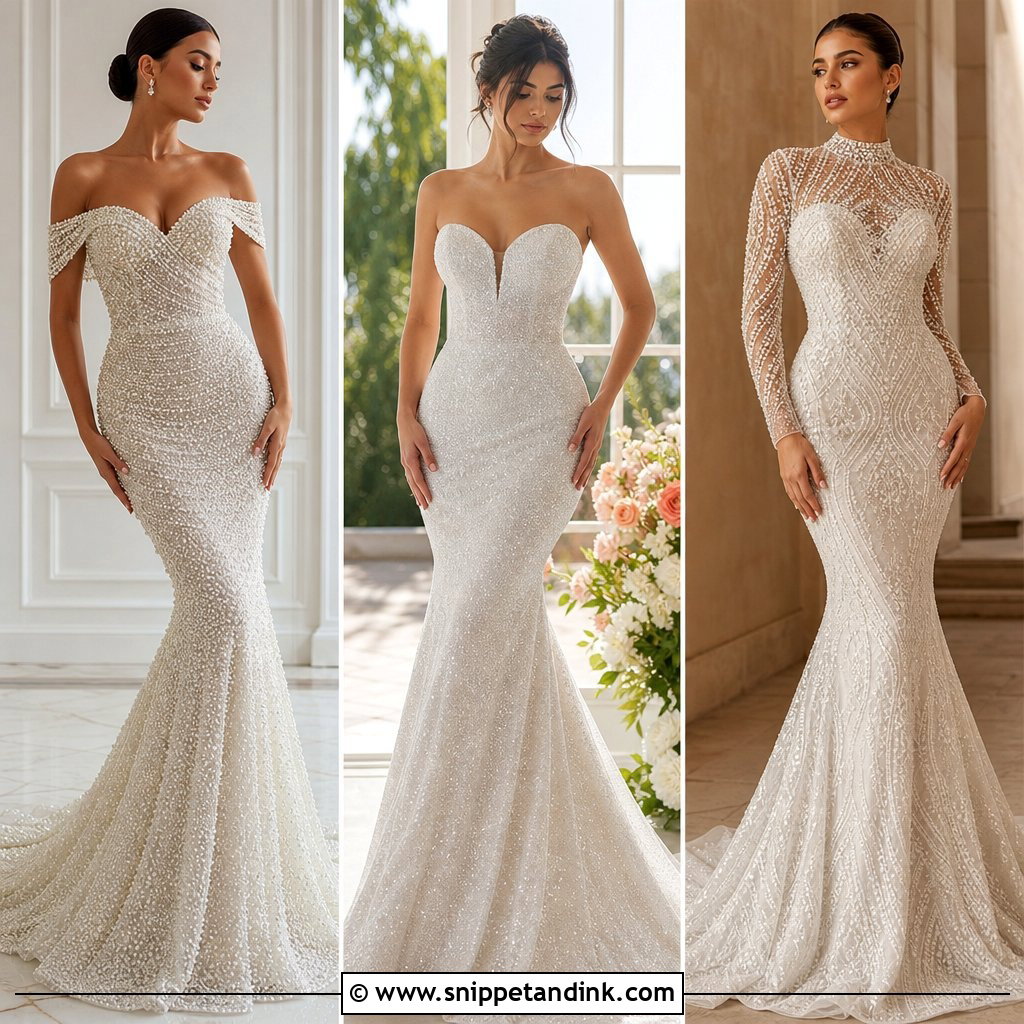
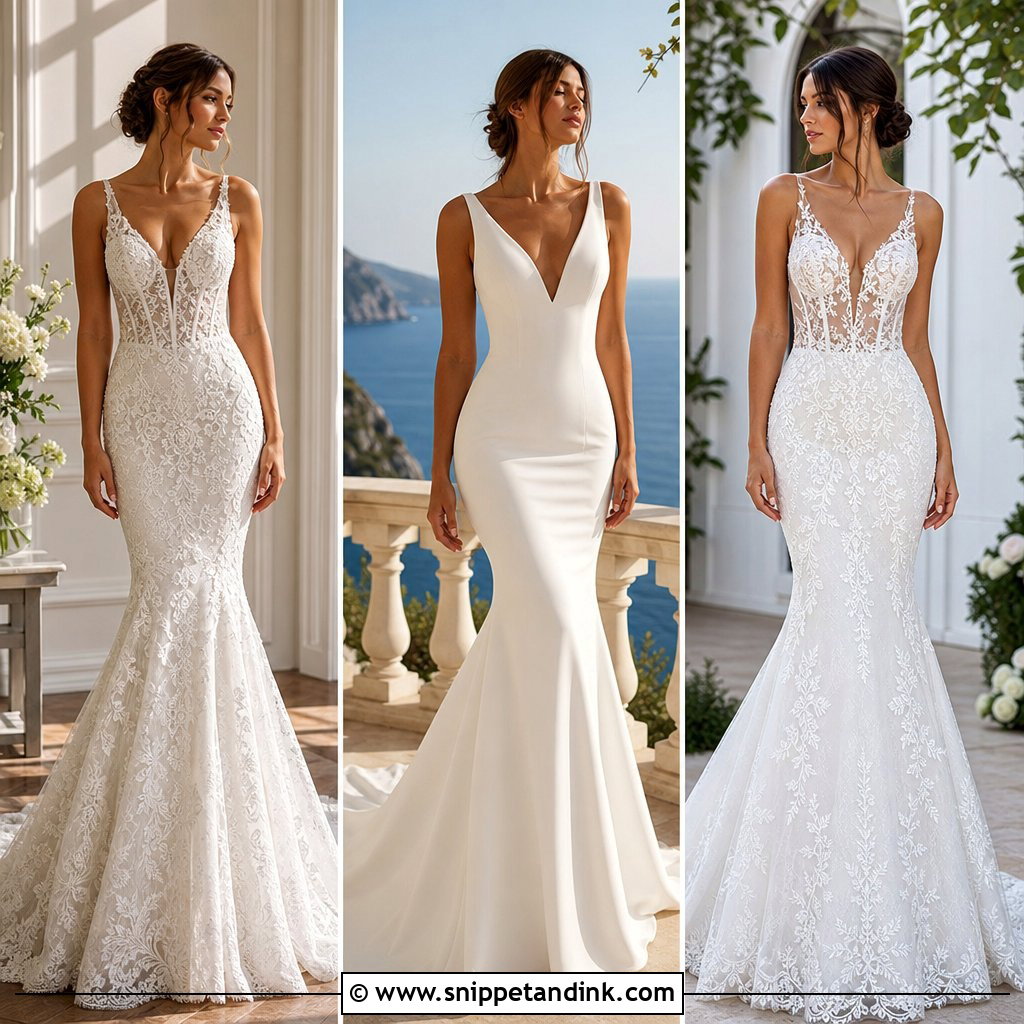
A layered mermaid wedding dress is fitted through the bodice and hips, then opens into layers around the knee or lower thigh. Where that flare starts changes everything. A lower flare looks more dramatic but shortens your stride and makes stairs awkward, so walk, sit and climb a step in it before deciding. Ask the seamstress to stagger the layer lengths in the flare so it lengthens the leg rather than adding a lump at the knee. I keep the styling sleek here: long veil, crystal earrings, slim heels.
7. Layered Wedding Dress With Overskirt
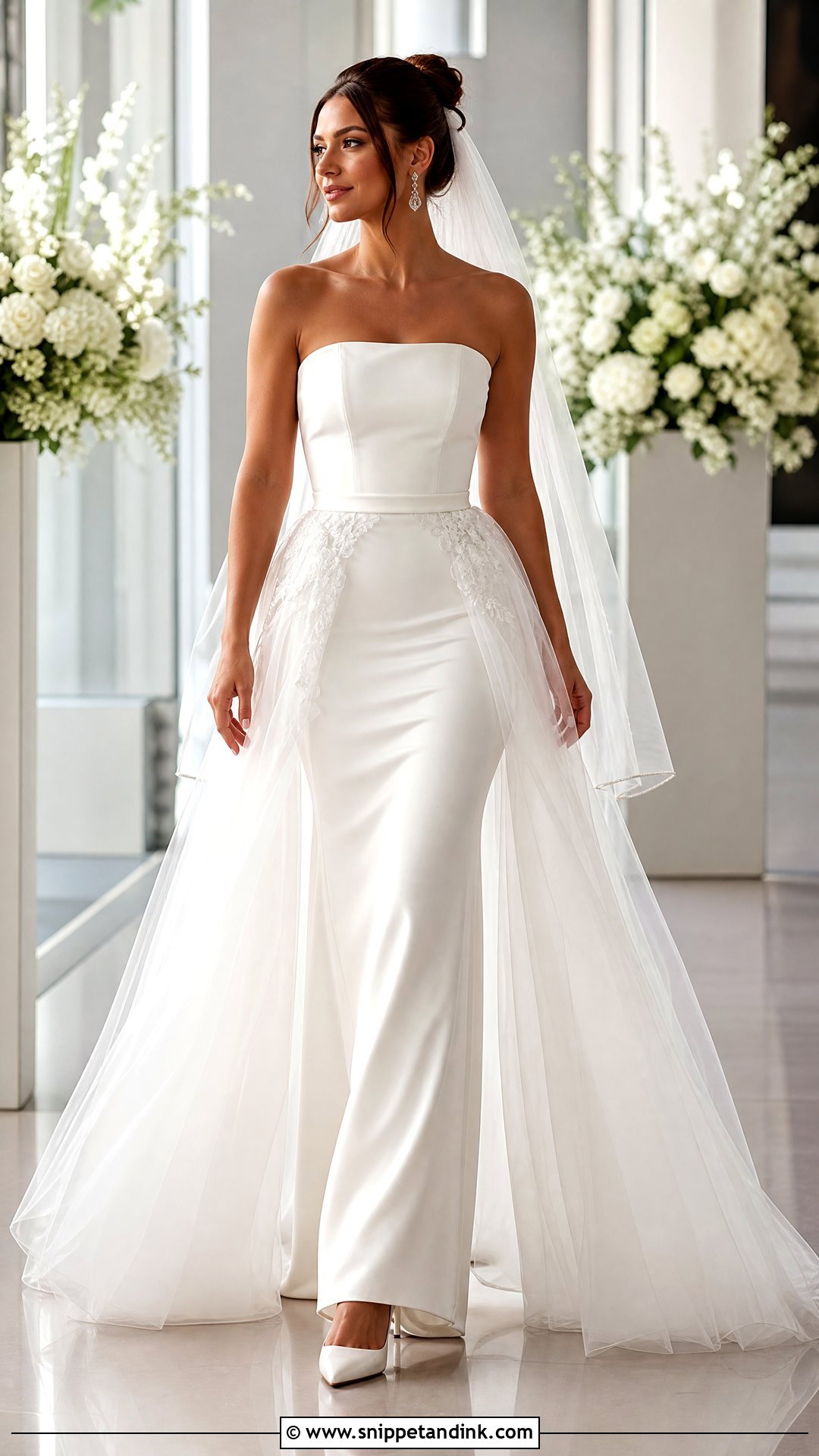
An overskirt gives you two dresses: drama for the ceremony and a fitted sheath or mermaid underneath for dancing. The practical bit nobody mentions is the fastening. Most overskirts close with hooks, snaps or a hidden zip at the waist, and someone other than you needs to know how it comes off, so show your maid of honor at the last fitting. Choose earrings that suit both versions, because nobody wants to change jewelry halfway through the reception.
8. Layered Satin Wedding Dress With Tulle Skirt
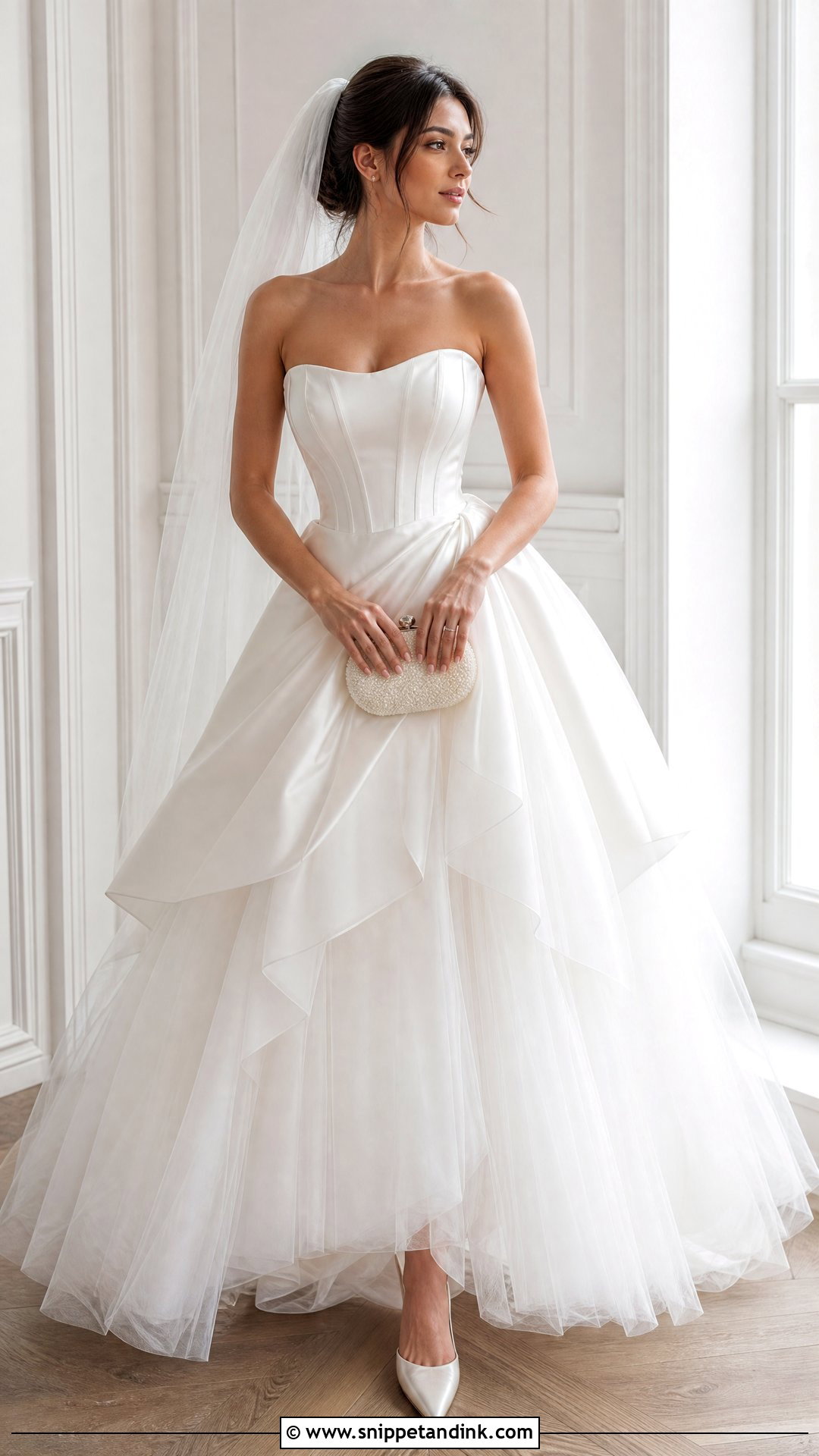
The appeal is contrast, a smooth satin bodice over soft tulle. Satin shows every pull, so the bodice has to fit exactly; any wrinkle at the waist catches light in photos. A basque waist, dipping into a V at the front, makes the change to tulle look deliberate and lengthens the torso. Floral appliqué where bodice meets skirt softens it if you want more detail. Satin pumps and a neat veil suit formal and semi-formal weddings alike.
9. Layered Floral Applique Wedding Dress
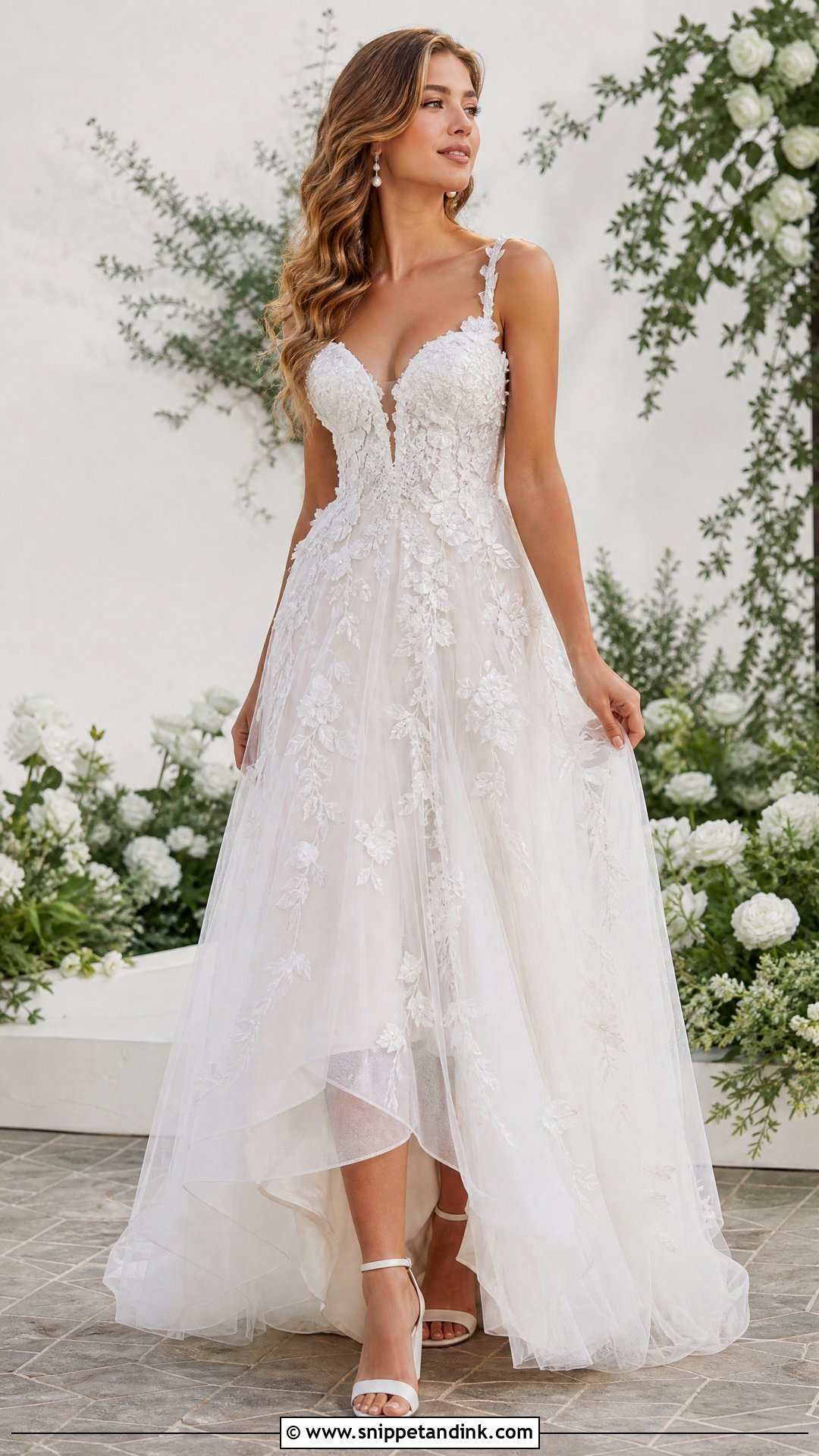
3D flowers on layered tulle give real depth, because they sit on the top layer and throw small shadows onto the layers below. Small appliqués read delicate; big blooms read fashion. I check two things. How they’re attached, since glued flowers can lift after a day of hugs while hand-stitched ones hold. And where they land when you sit. Sheer straps or an open back suit the style, and garden light flatters it in portraits.
10. Layered Strapless Wedding Dress
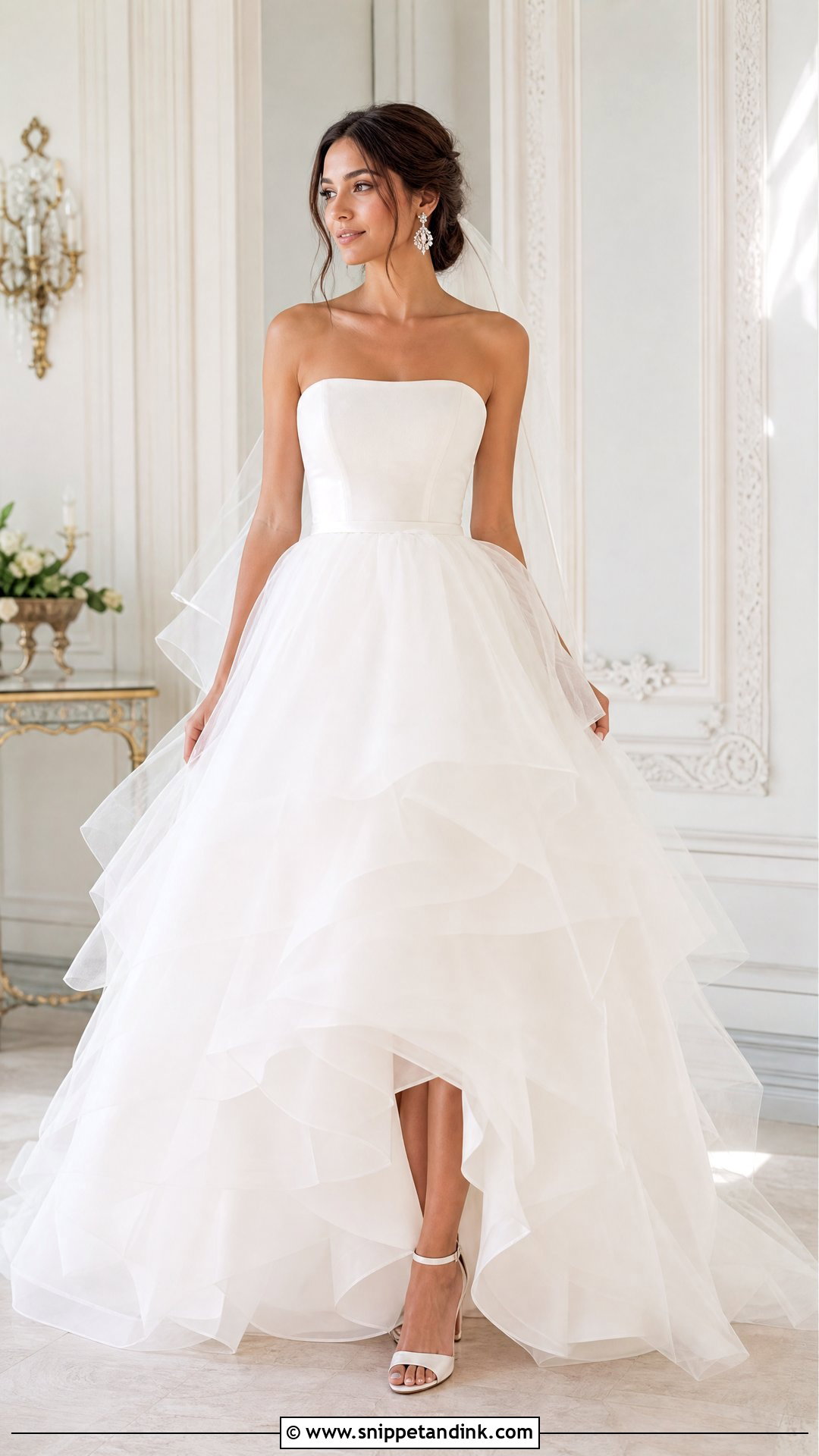
Strapless is the most adaptable neckline here and the one most dependent on construction. A strapless bodice stays up through internal boning and a waist stay, a band inside the dress fastened firmly around your waist, not through the top edge gripping your chest. If you’re constantly hitching it up at the fitting, the bodice needs taking in, not taping. Over full tulle, smooth organza or layered lace it suits an updo and loose waves equally. Wear the veil for the ceremony, then switch to statement earrings.
11. Layered Off Shoulder Wedding Dress
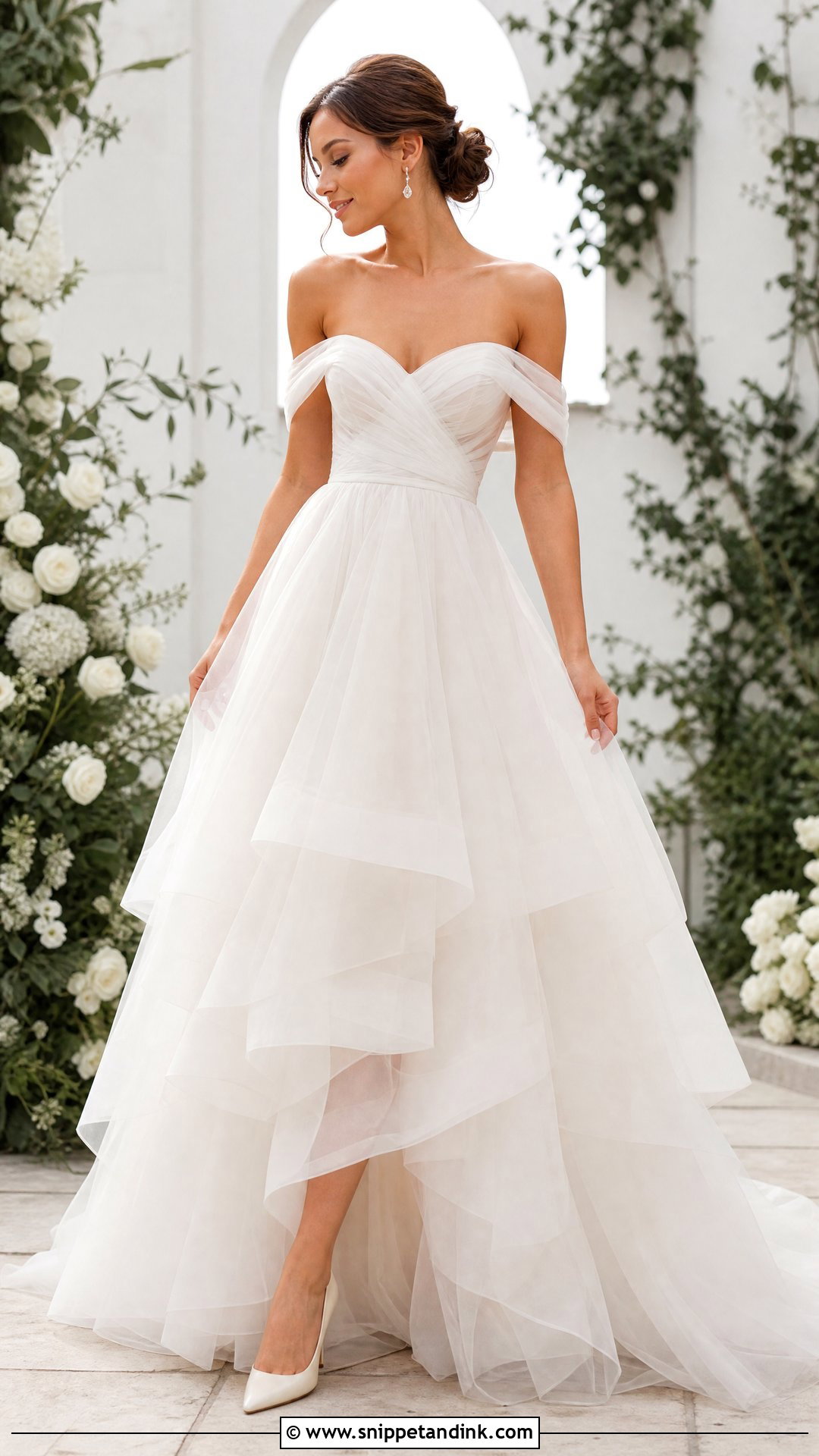
An off-shoulder neckline frames the collarbone and balances a full skirt better than almost anything. It also limits how high you can lift your arms, which is fine for most of the day and noticeable on the dance floor. A folded band suits a modern A line; lace sleeves feel more classic. Skip the necklace and let earrings and a low bun do the work. Brides with sloped shoulders should ask for light boning in the band so it doesn’t slide down.
12. Layered Corset Wedding Dress
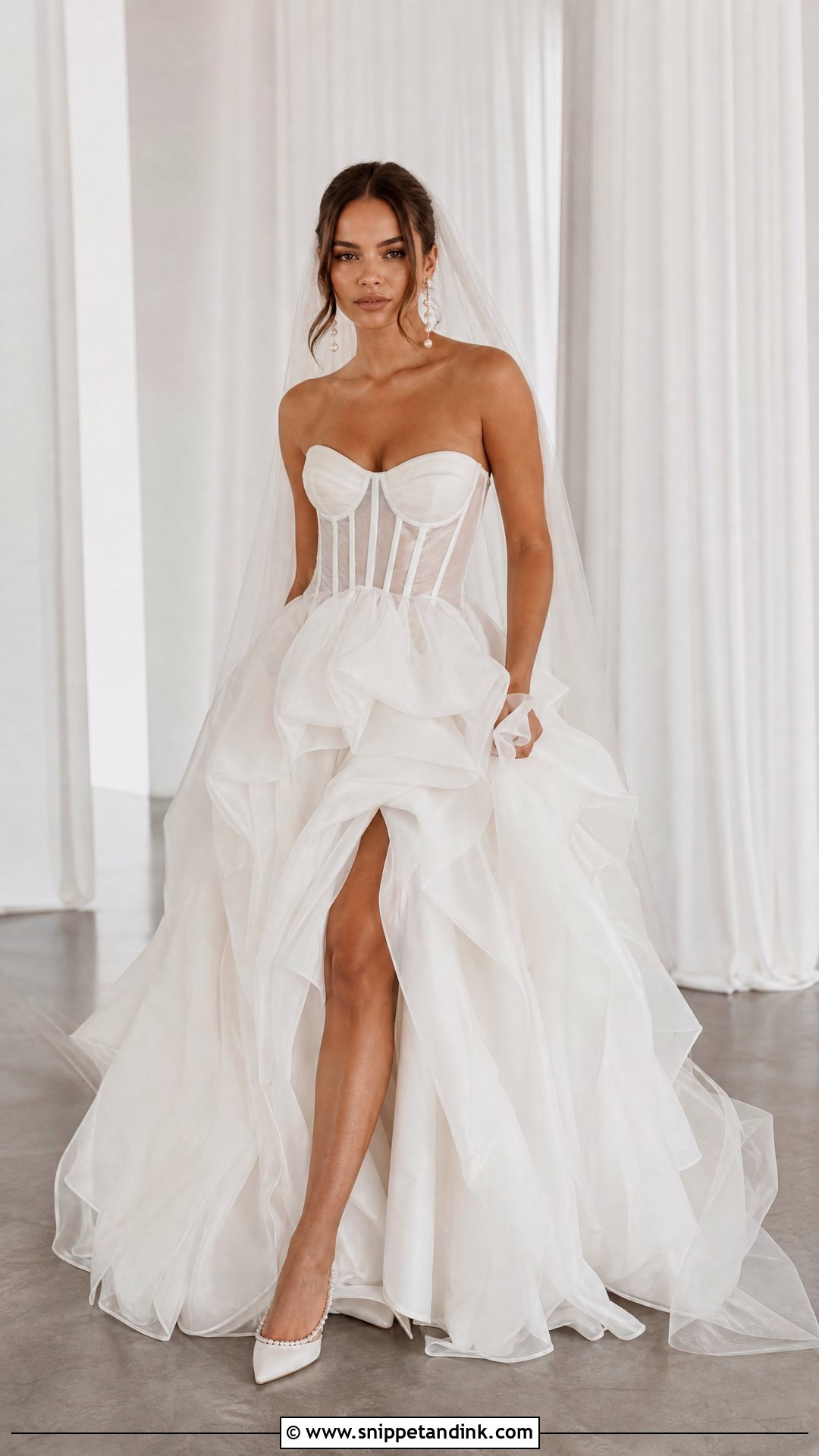
A layered corset wedding dress mixes strong lines with airy fabric. Exposed boning reads fashion-forward and covered boning reads traditional. The corset should feel firm but never breathless, so at the fitting I ask brides to sit, reach for a glass and hug someone. If a bone digs into the hip when you sit, that bone needs shortening. Tulle or organza keeps the skirt light under all that structure.
13. Layered High Low Wedding Dress
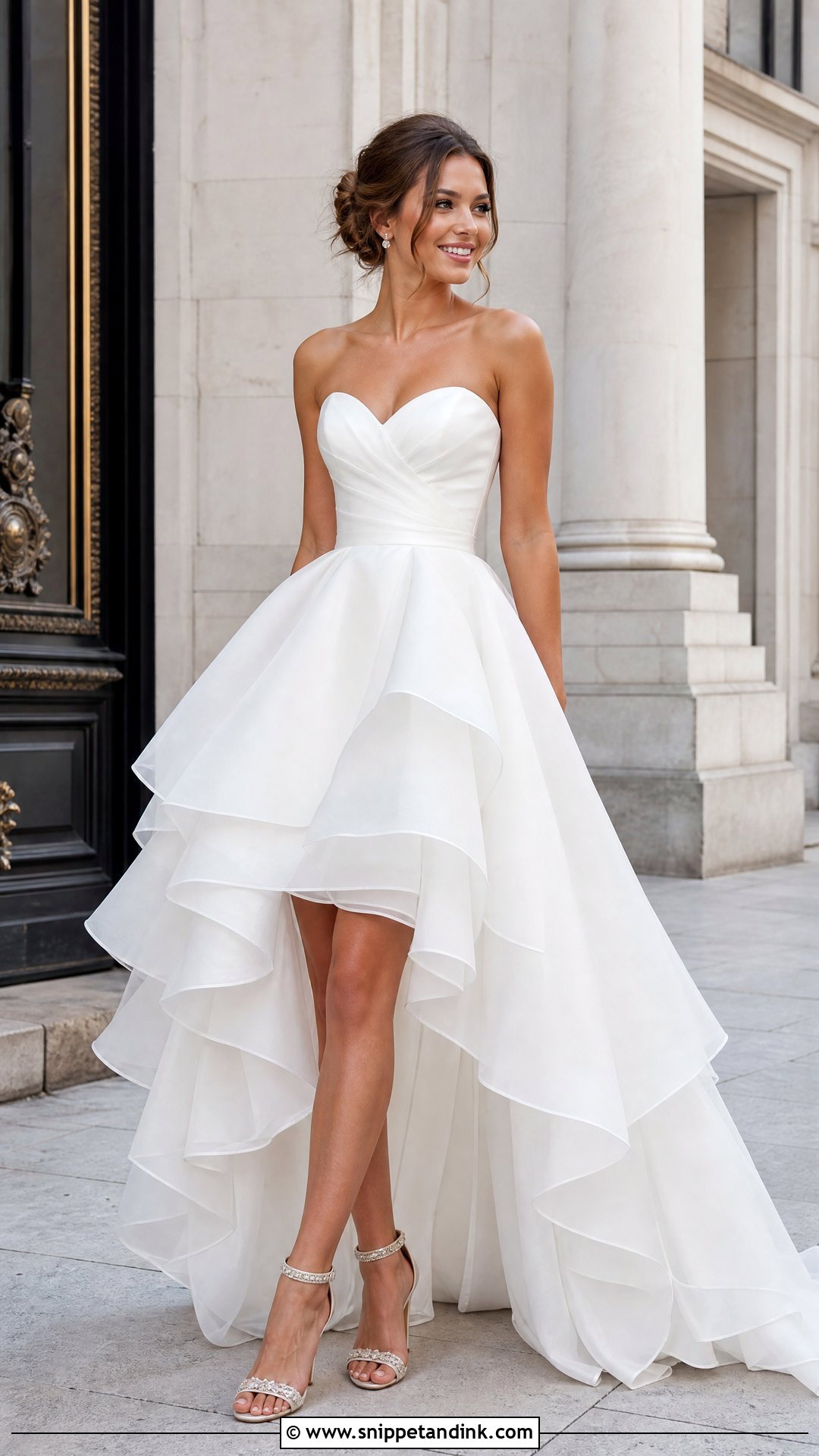
With a high low hem the shoes become part of the dress, so choose them before the hem is set, not after. Layers soften the curve, and tulle or organza cut at slightly different lengths looks better than one hard line. Check what happens when you sit. A front that’s knee length standing can ride well above the knee seated, which surprises people in photos. It’s a relaxed, playful shape for a city ceremony or an outdoor venue.
14. Layered Tea Length Wedding Dress
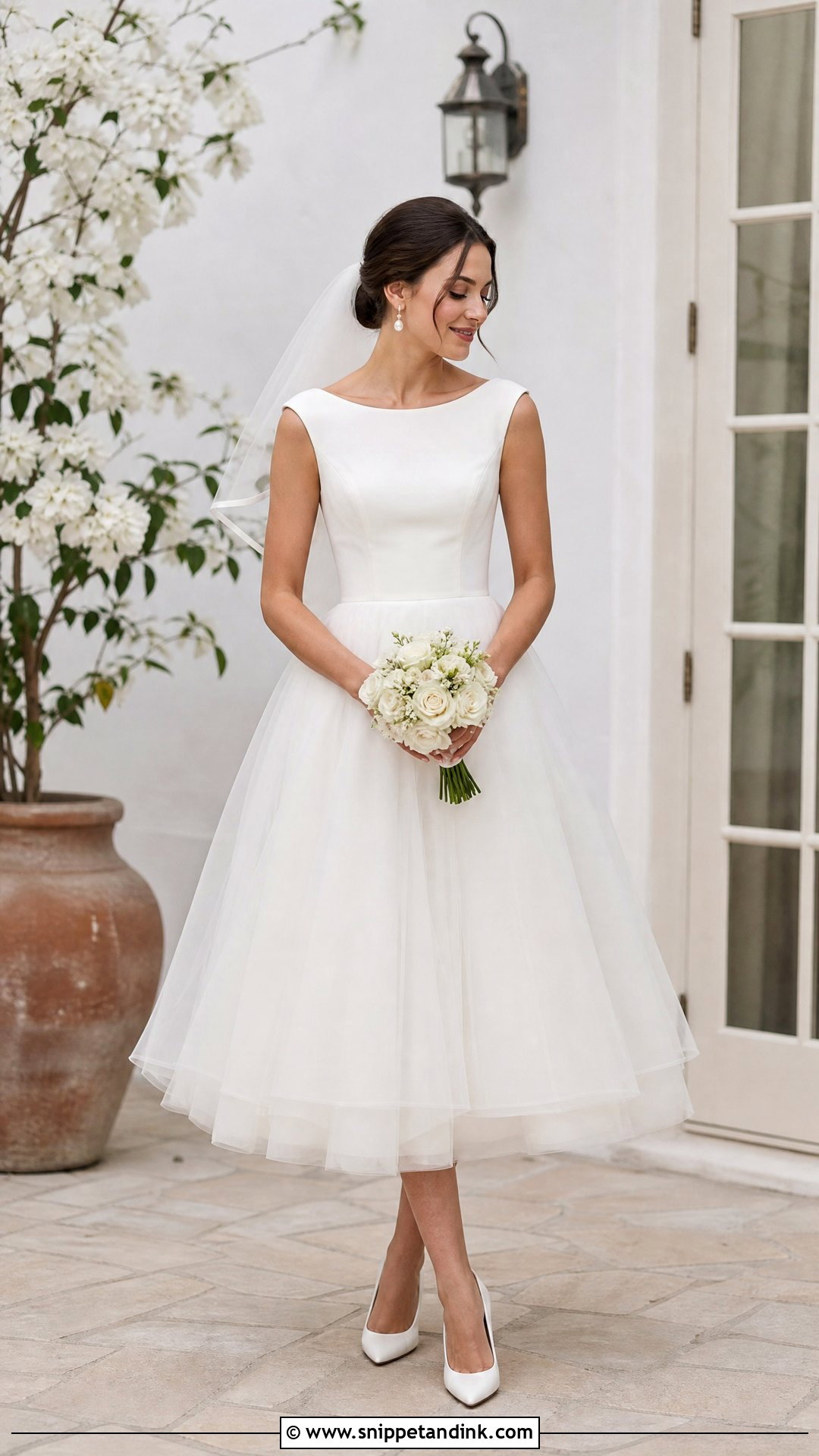
A layered tea length wedding dress stops between knee and ankle, which feels vintage and frees you to walk and dance. The bounce comes from tulle or organza layers, often over a short petticoat. On shorter brides the exact hem point matters: mid-calf can cut the leg at its widest part, so try a hem just below the calf instead. Cap sleeves or a bateau neckline with pointed pumps and a short veil keep it polished for a courthouse ceremony or a daytime lunch.

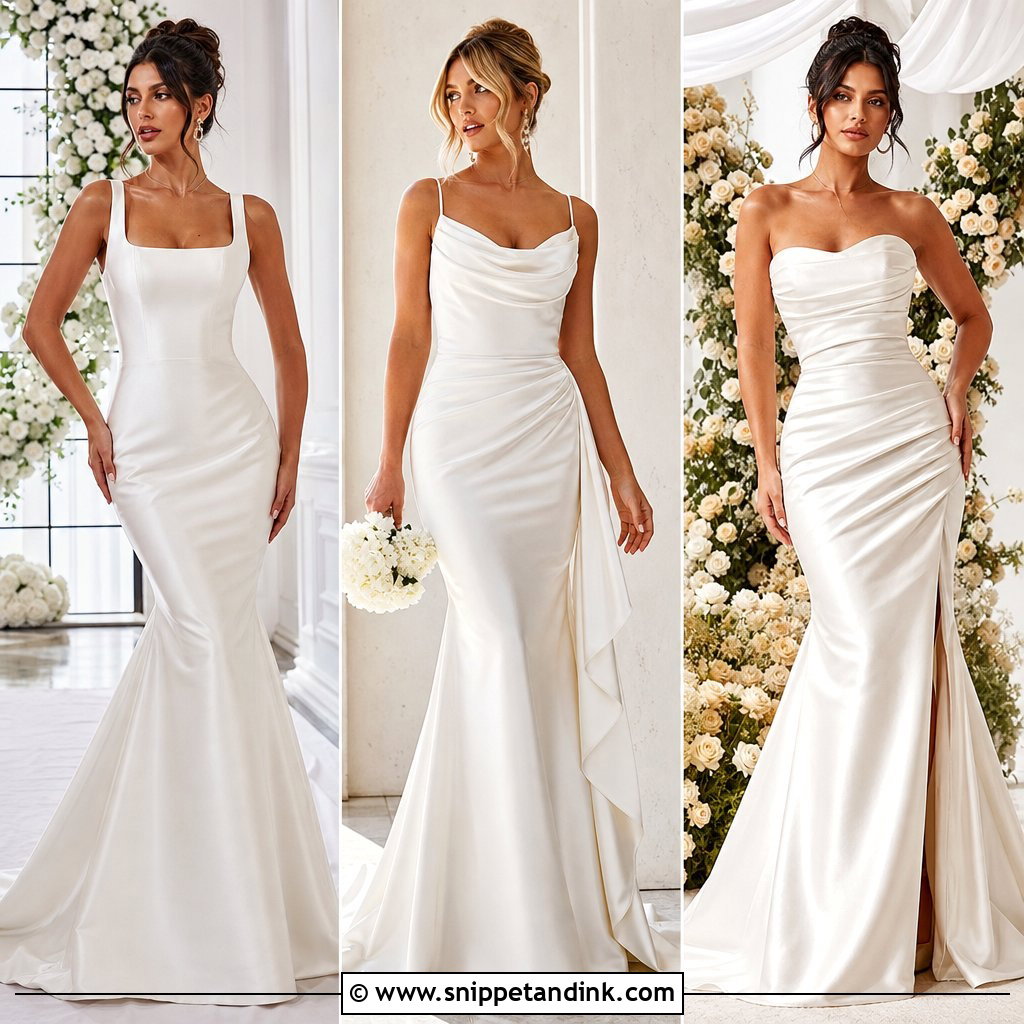
15. Layered Slip Wedding Dress With Sheer Overlay
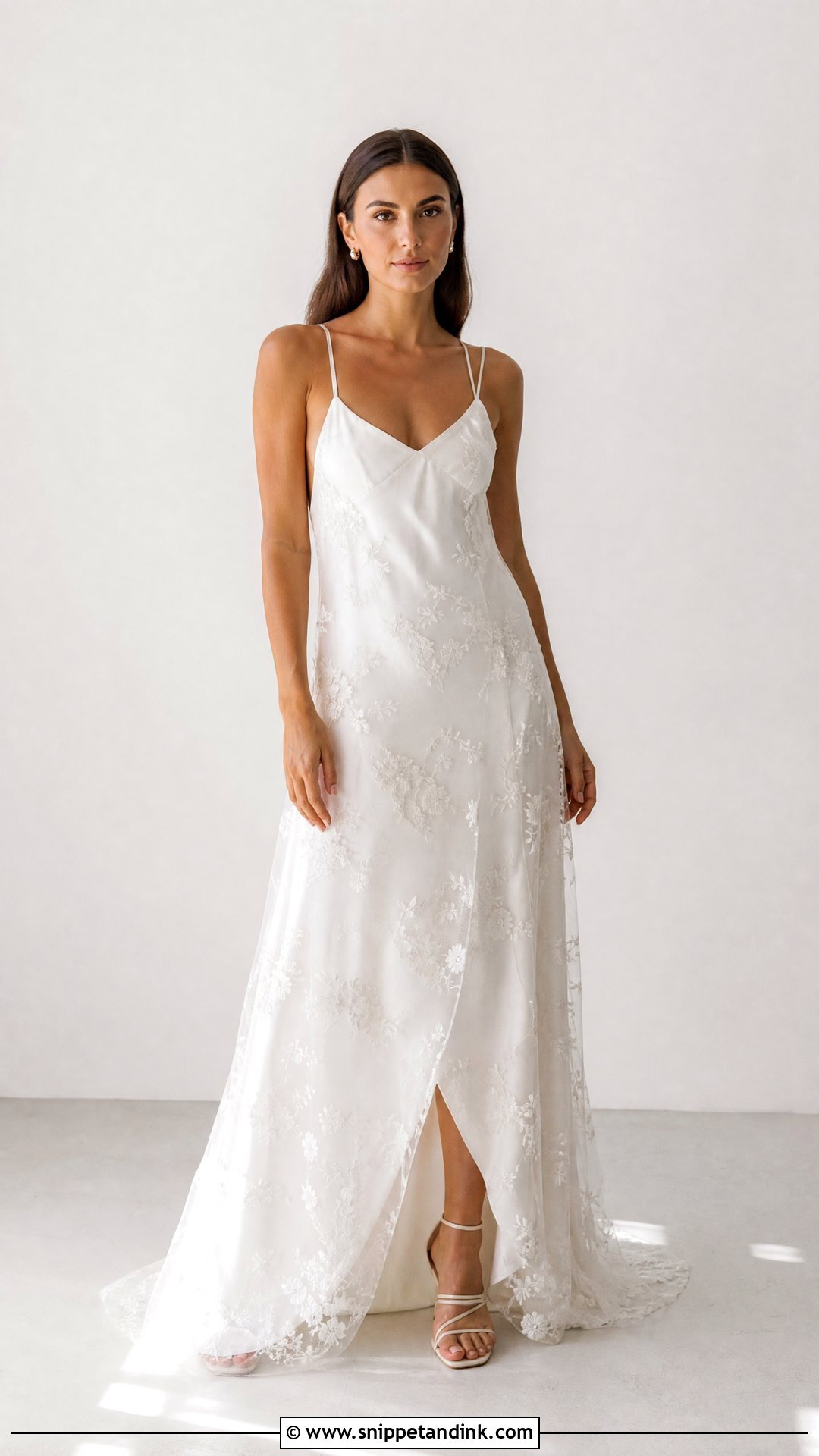
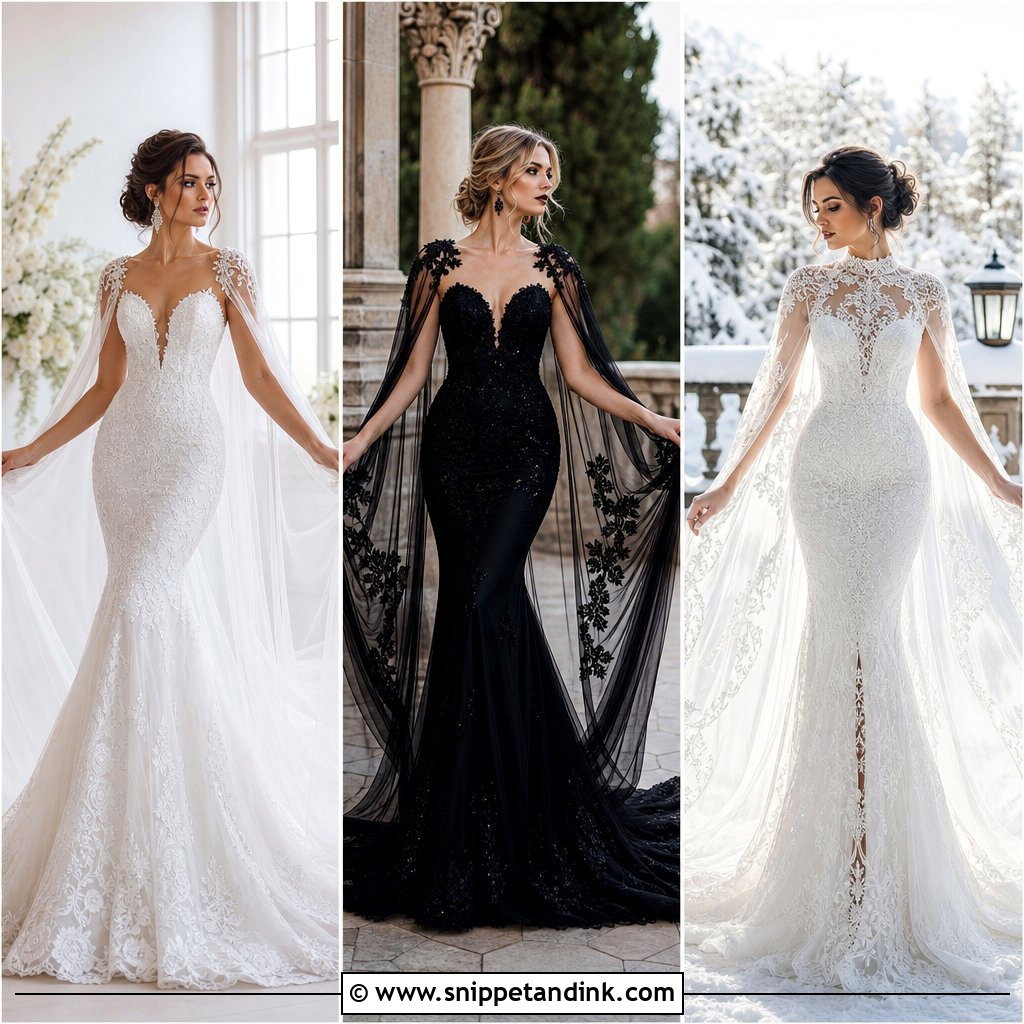
This is layering at its lightest, a sleek slip with one sheer layer on top. Bias-cut slips show everything underneath, so smooth no-line underwear and a test in daylight are not optional. The overlay can be chiffon, tulle or lace, and it may carry sleeves or a cape back. Thin straps or a cowl keep the slip clean. It’s the dress for a minimalist who wants exactly one romantic detail.
16. Layered Wedding Dress With Cape
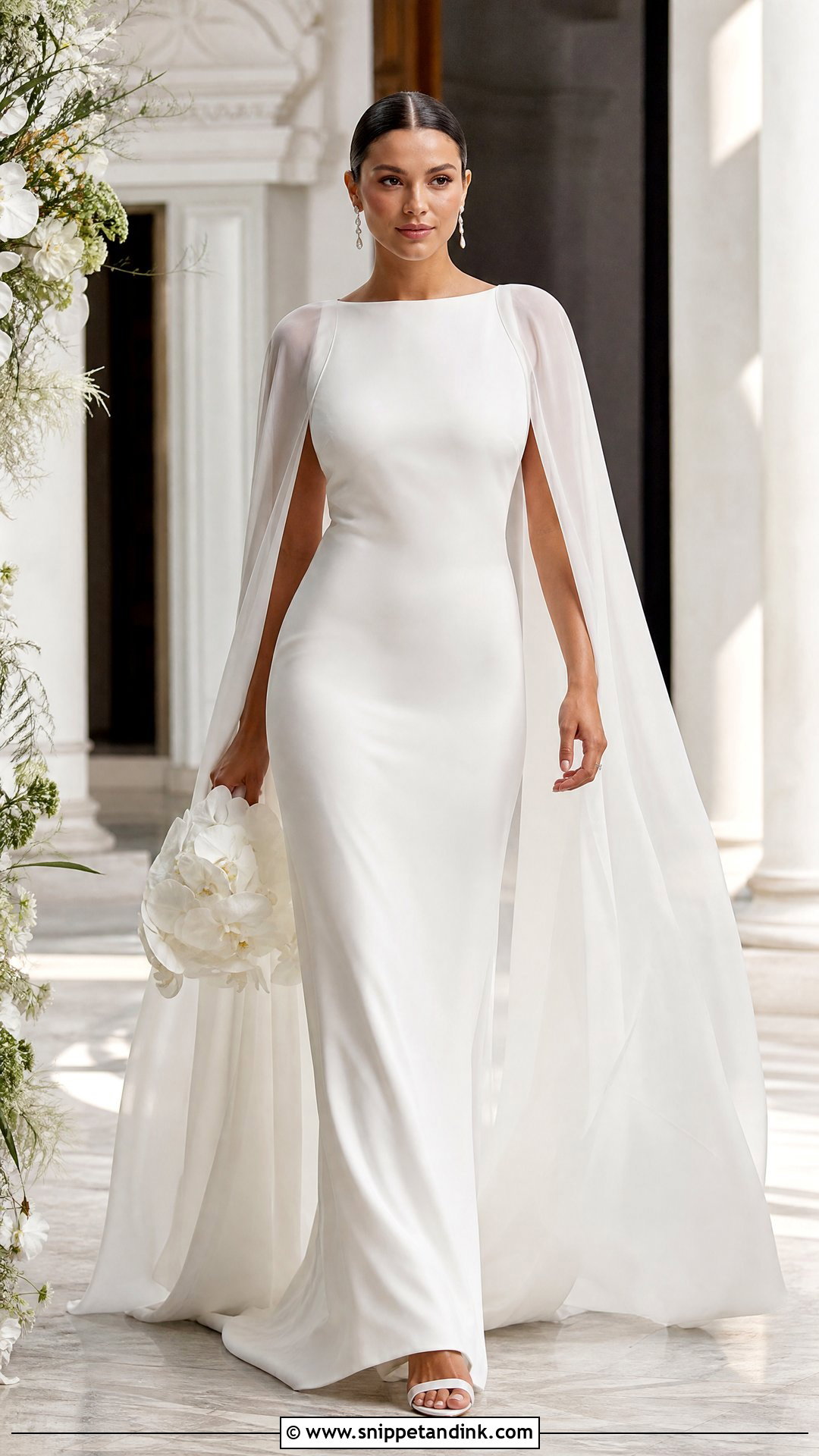
A cape can replace the veil entirely and still give you movement down the aisle. It’s the main layer here, so put it over a plain sheath or a simple A line. How it attaches matters most. A cape sewn into the shoulder seams stays put, while one held by small snaps can pull the neckline backward as you walk, so test it at speed. Keep jewelry minimal and let the back view carry the ceremony photos.
17. Layered Wedding Dress With Detachable Sleeves
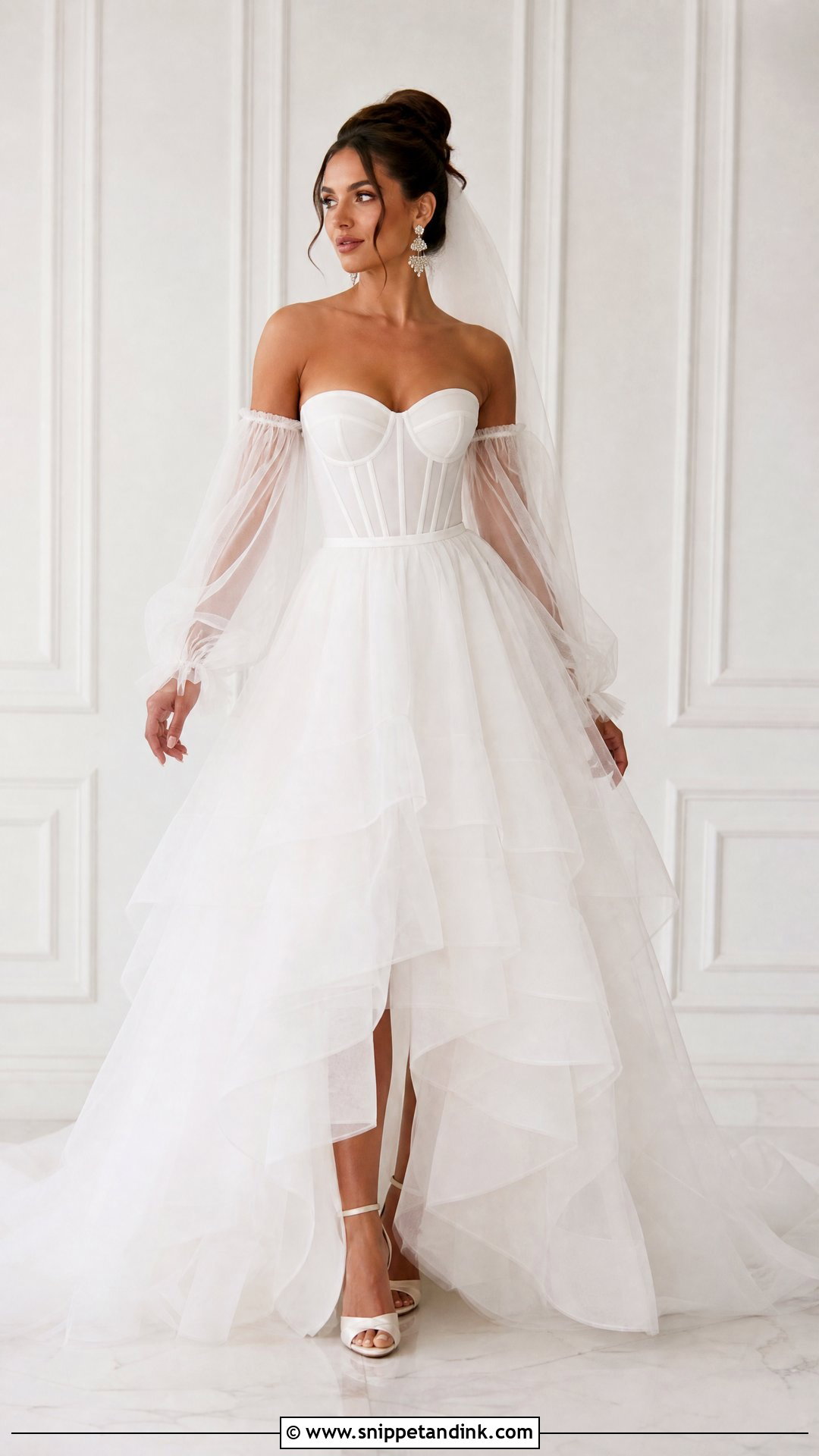
Detachable sleeves let you start covered and finish lighter. Tulle, lace or puffed organza sleeves usually attach with snaps or small buttons at the bodice or on a thin band under the arm. They suit strapless, corset, and sweetheart necklines best, because the sleeves need a clean edge to anchor to. If the sleeves are full, keep the skirt layers soft rather than embellished. Practice removing them before the day; you’ll want them off in a minute, not ten.
18. Layered Pleated Wedding Dress
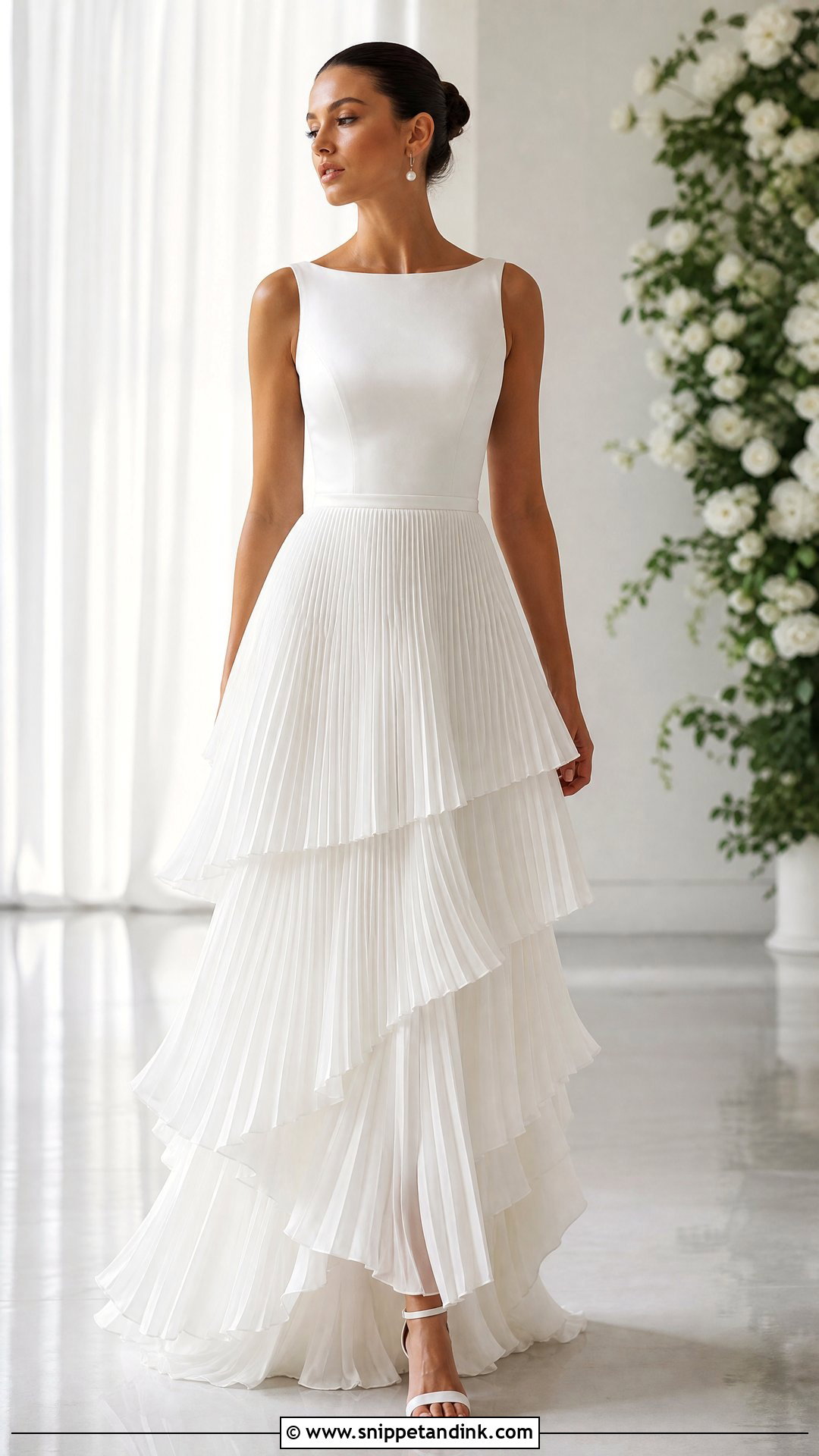
Pleats give soft fabric a controlled fall. Tiny accordion pleats in chiffon look delicate, and wider knife pleats in organza feel architectural. They’re heat-set, which means careless steaming can flatten them, so pass the care instructions to whoever is steaming the dress on the day. A plain bodice suits the detail, with a sleek bun and satin heels.
19. Layered Bubble Hem Wedding Dress
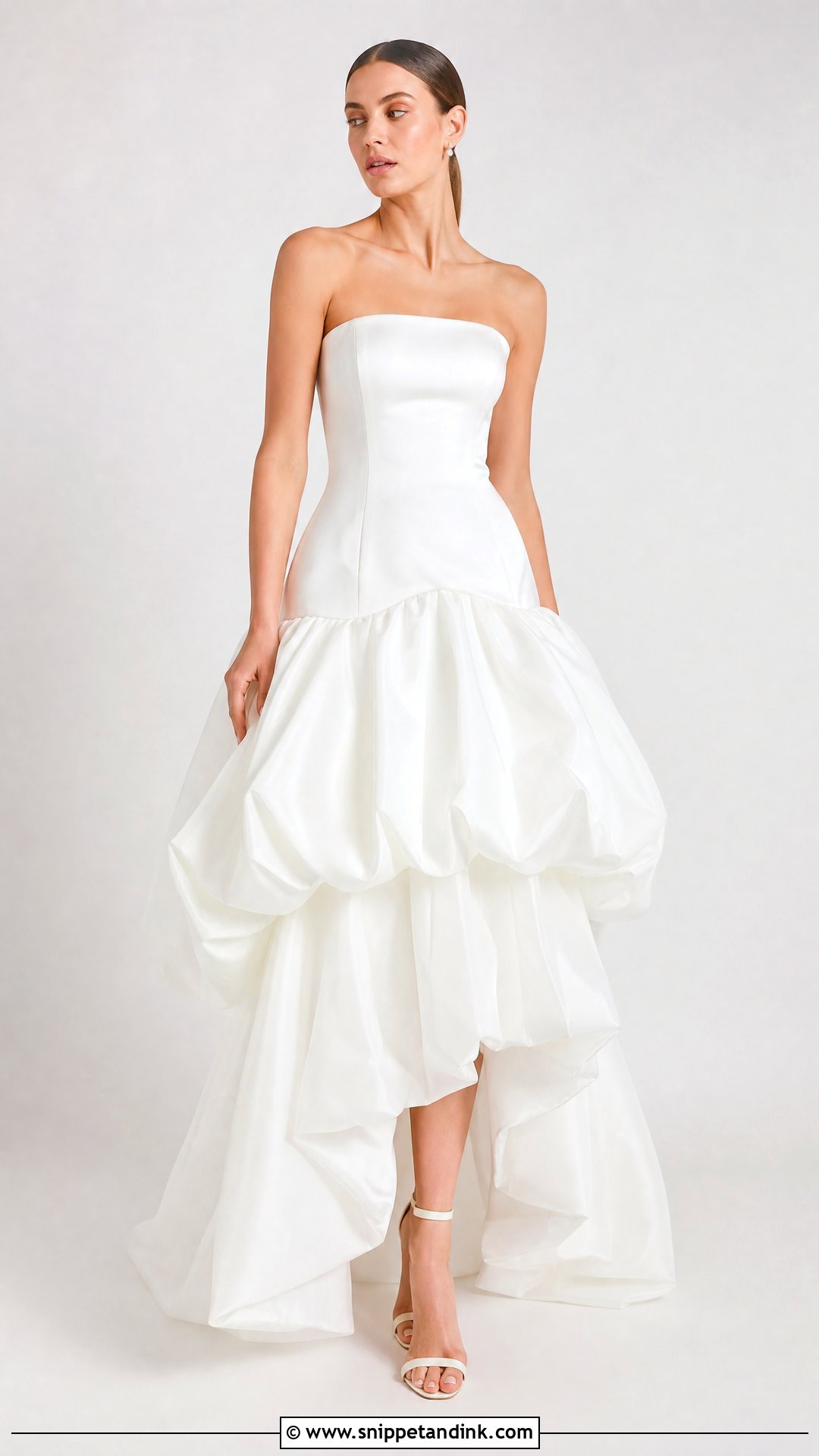
A bubble hem is gathered back under itself at the bottom, giving the skirt a rounded edge. It needs fabric with body, such as mikado, satin or a stiff organza, because soft fabrics just collapse. Since the hem curves inward, a full-length version can feel tight around the knees, so check your stride in it. A plain strapless or square neck lets the hem take the attention. This is for the bride who wants something unexpected and doesn’t mind the conversation it starts.
20. Layered Two Piece Wedding Dress
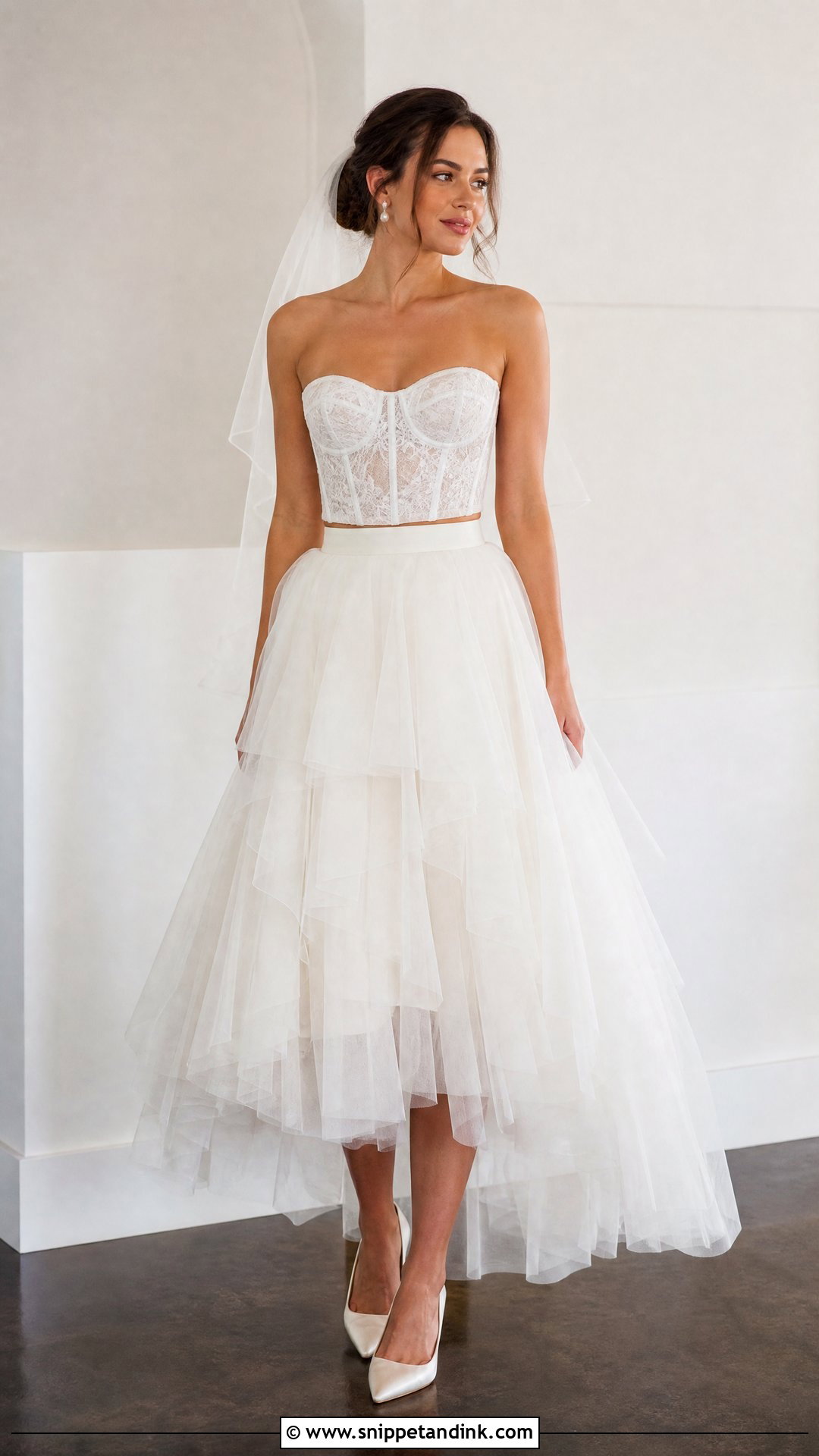
A layered two piece wedding dress gives you a defined waist and lets you pair a corset, lace blouse or satin crop top with a layered skirt. Keep both pieces in the same white or ivory unless the contrast is deliberate, because two slightly different whites look like a mistake in photos. The gap between top and skirt grows when you raise your arms, so decide how much skin you’re comfortable showing at full stretch. Match the veil length to the skirt.
21. Layered Blush Wedding Dress
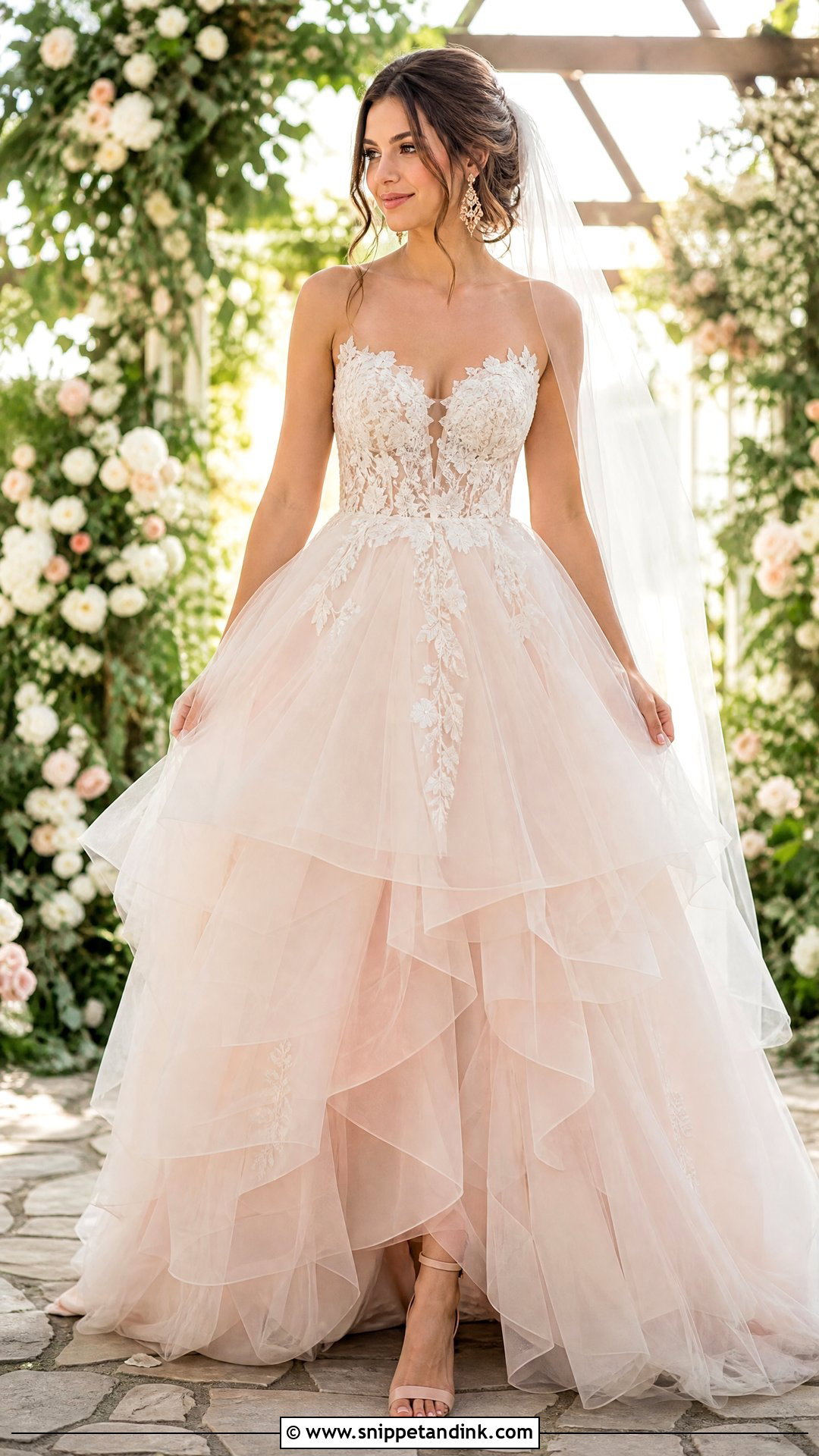
Blush can be barely there, a pink lining under ivory tulle, or obvious through layered chiffon. It warms the skin in natural light, which is why it photographs softly outdoors. Hold the fabric against your face in daylight first, though. On very fair, pink skin, blush can wash you out entirely. Floral appliqué or soft beading adds depth to the layers. Keep the veil sheer so the color still reads through it.
22. Layered Champagne Wedding Dress
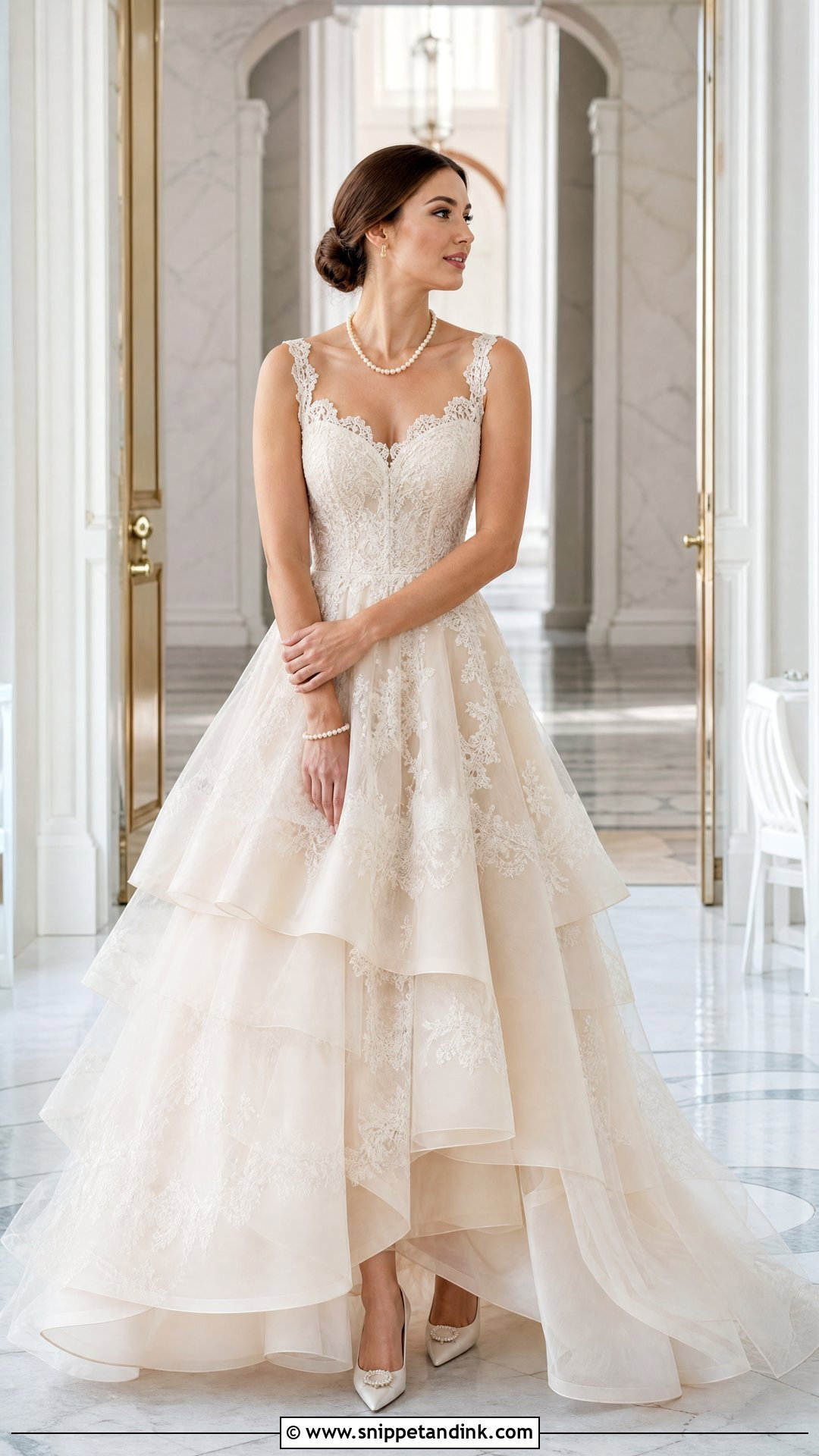
A champagne lining under ivory lace makes the lace pattern stand out, because the darker layer beneath gives it contrast. That’s the real reason champagne layers look richer. The shade also helps brides for whom bright white looks harsh against the skin. Keep accessories ivory, pearl or light gold. In evening light champagne glows; in very cool daylight it can look beige, so see it in both if you can before ordering.
23. Layered Minimal Wedding Dress
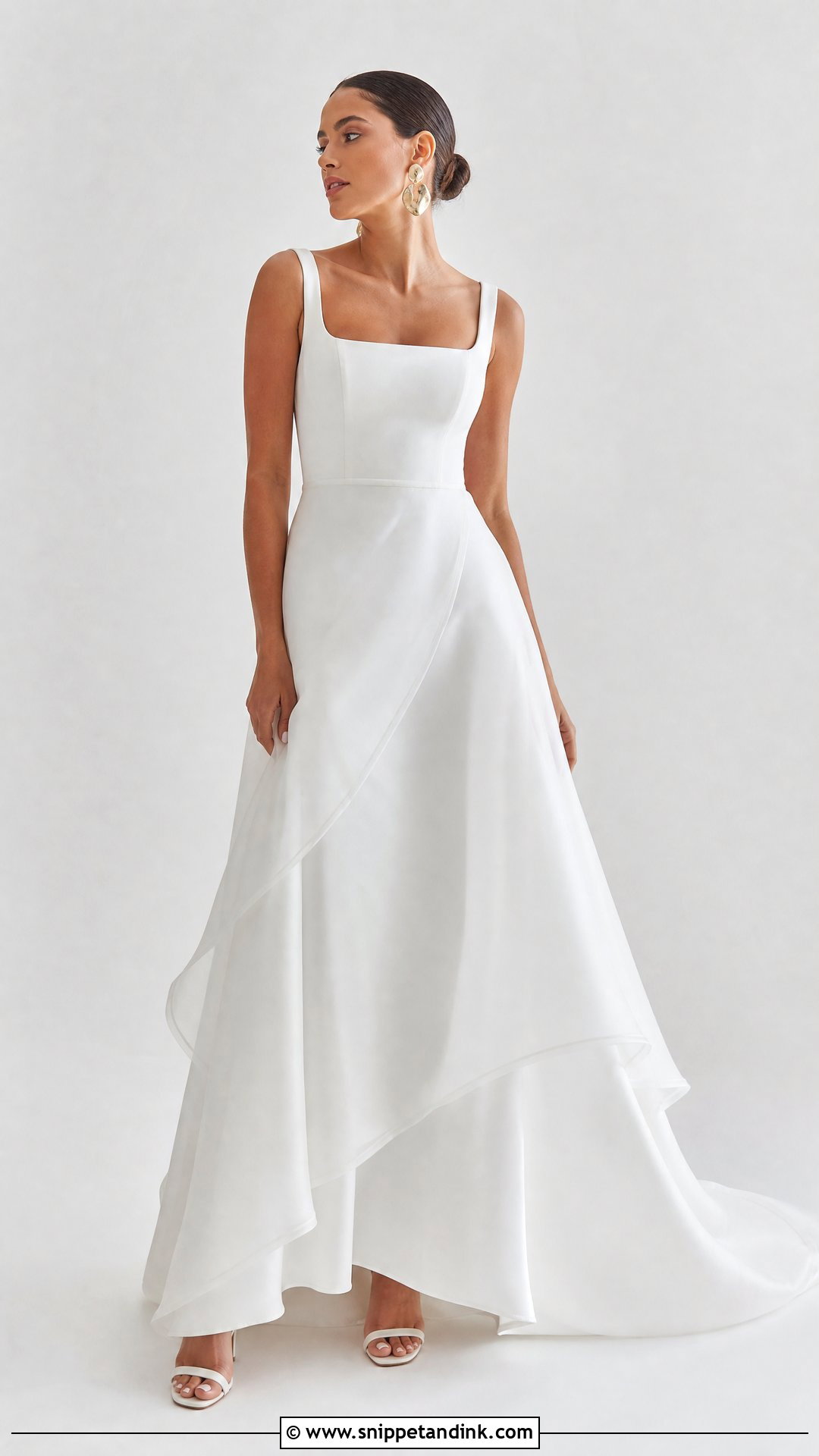
Layers don’t have to look busy. A smooth bodice with an organza overlay, an A line with hidden tulle underneath, a sleek dress under one sheer layer: the interest comes from fabric quality and shape. That’s also the risk, because a minimal dress exposes cheap fabric fast. Feel the weight of the organza and look at the seams on the inside. A straight or square neckline with sculptural earrings suits it.
24. Layered Plus Size Wedding Dress
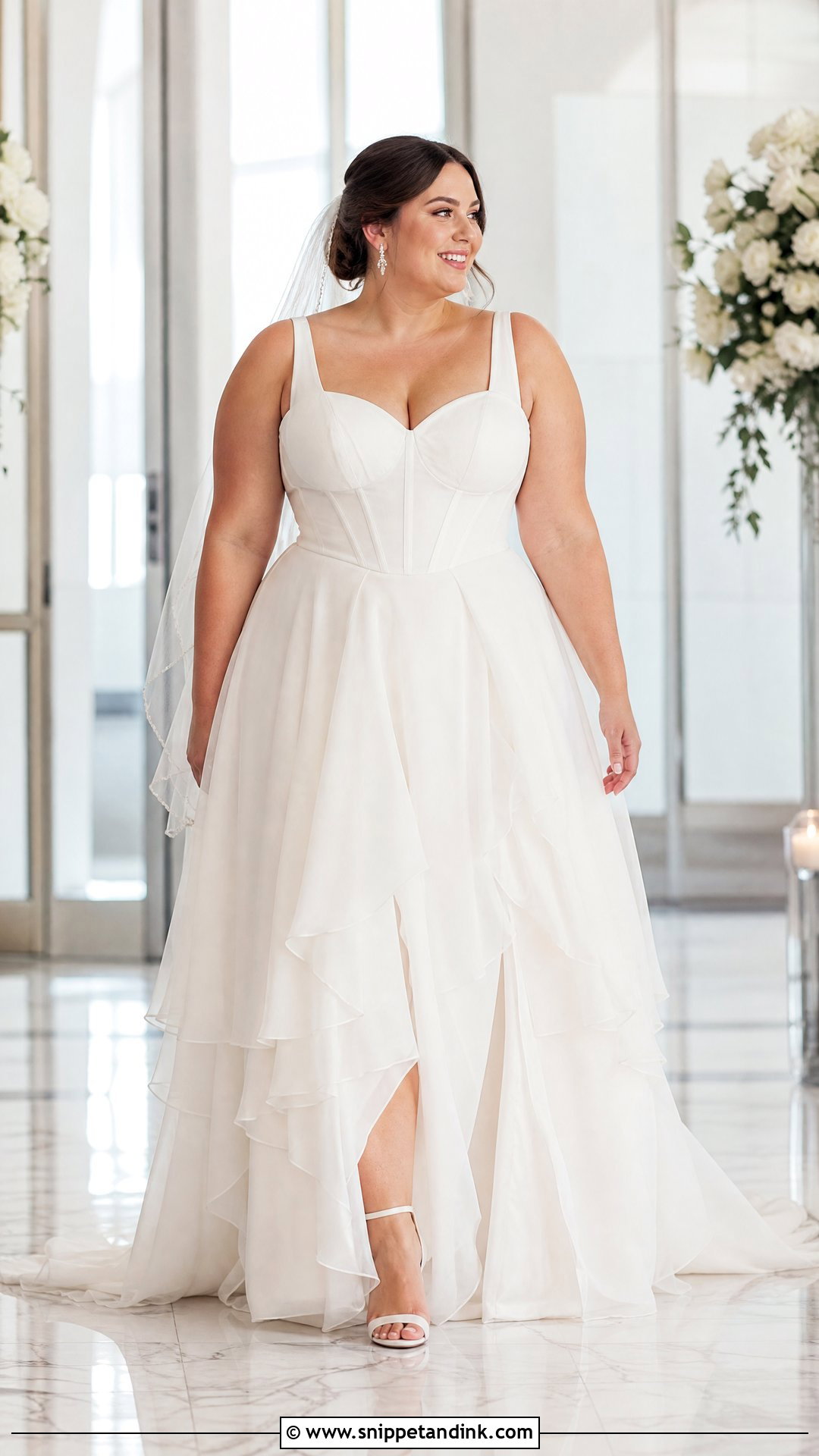
A layered plus size wedding dress starts with support. A corset back, wide straps or a structured inner lining carries the bodice so the layers can stay soft. A line and ball gown shapes define the waist and flow over the hips. Where the layers begin matters: layers that start at the natural waist lengthen the leg, while layers that start low on the hip shorten it. Ask for a waist stay inside, since it takes the skirt’s weight off the bodice and makes a long day far more comfortable.
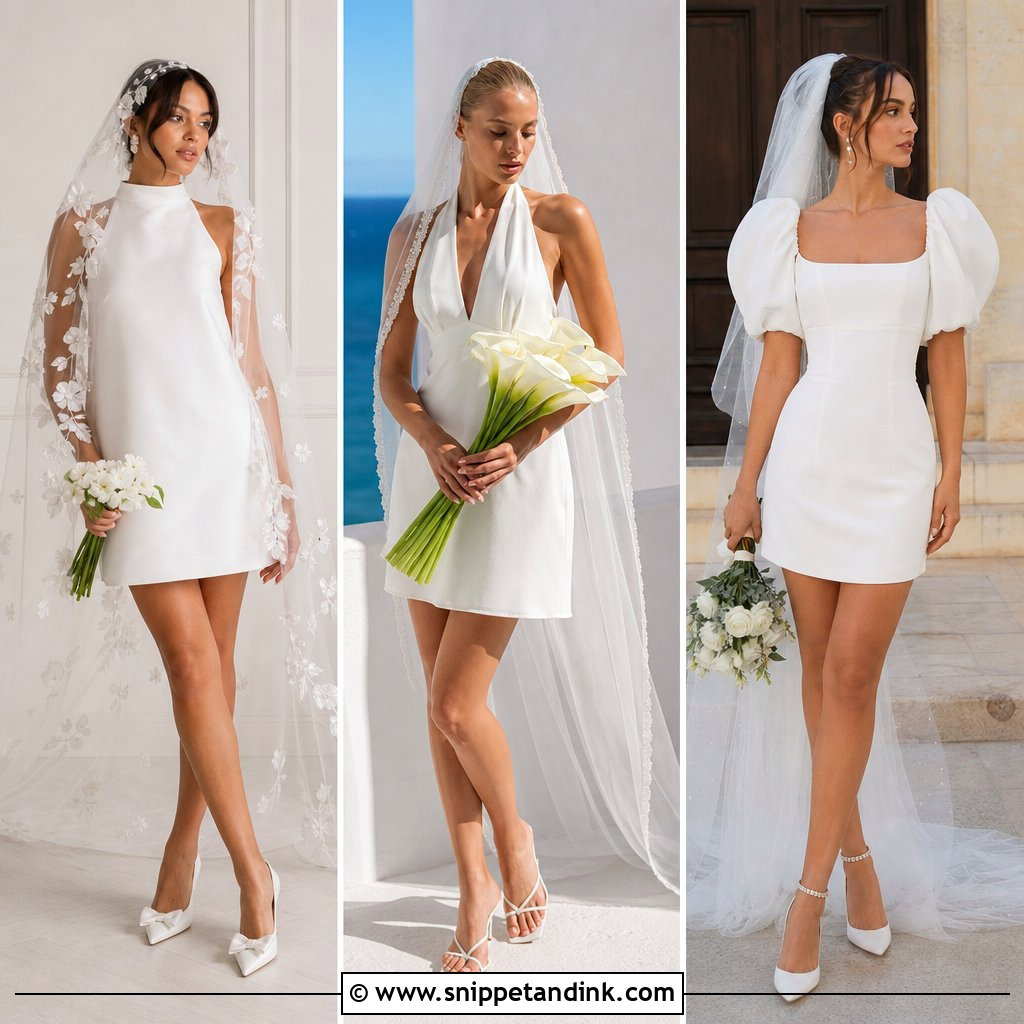

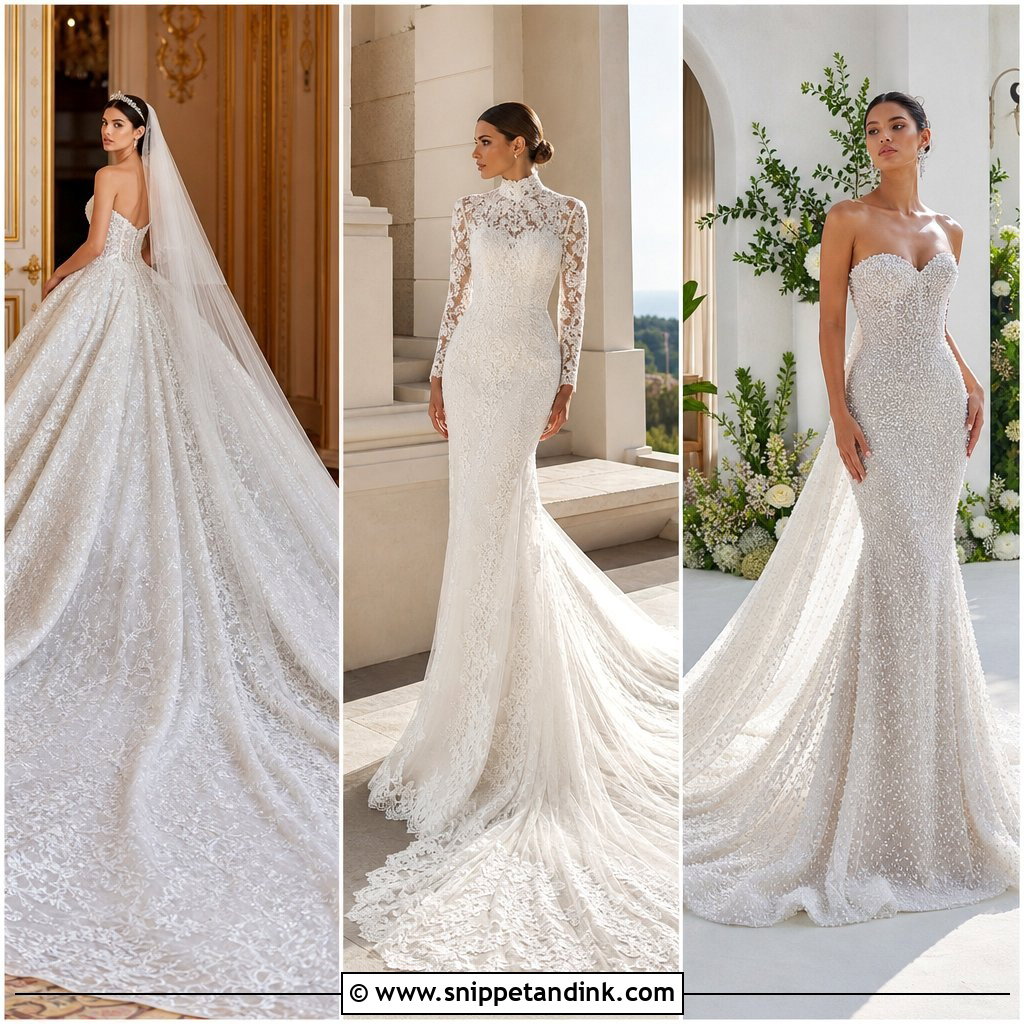
25. Layered Short Wedding Dress
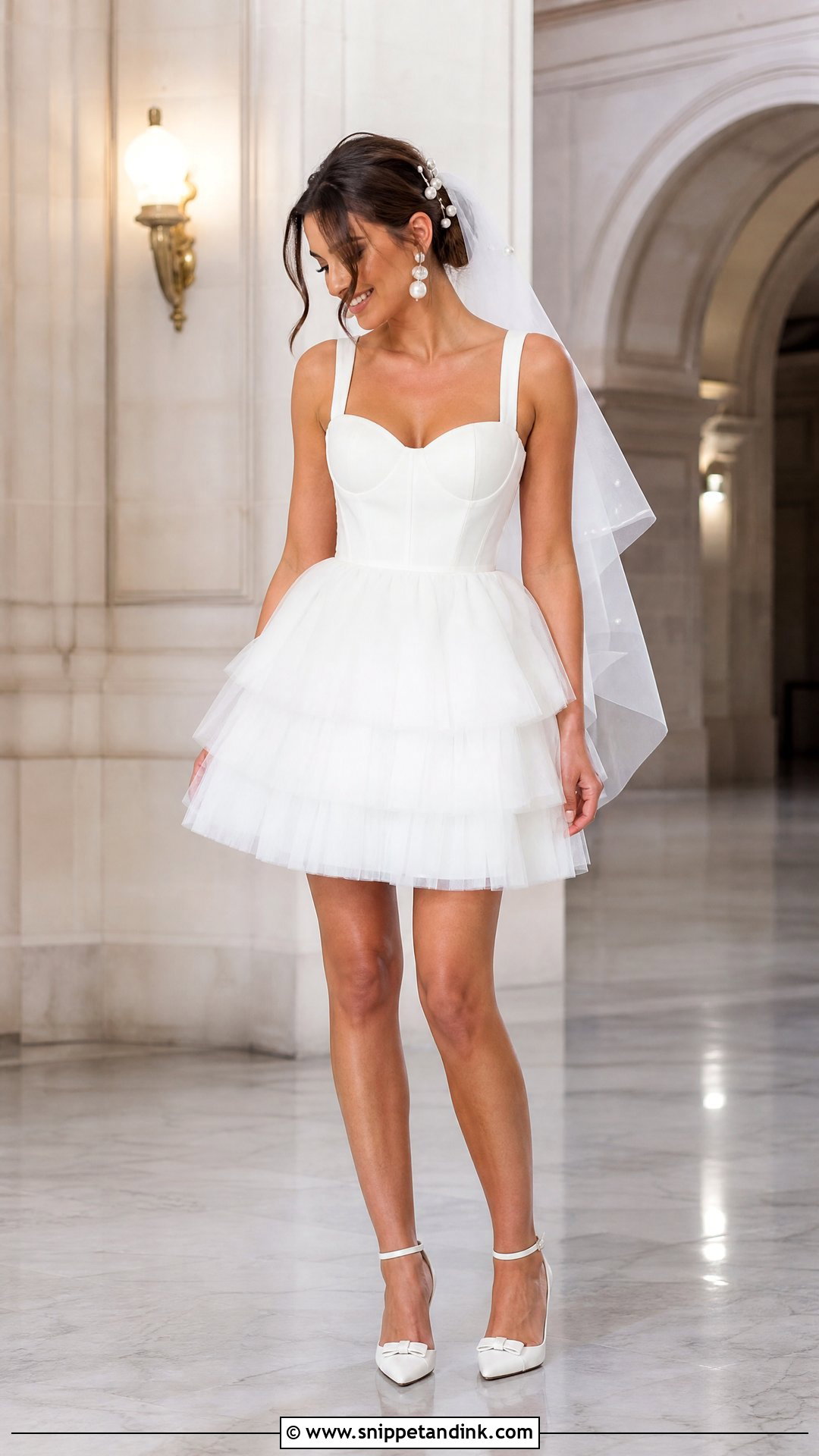
Layers are what stop a short dress from looking like a party dress. A full tulle skirt on a mini reads playful; a straight shift with a sheer overlay reads modern. Your legs and shoes are on show, so choose the shoes early. A short veil or pearl hair pins keep it bridal. I like it for civil ceremonies and as a reception change after a heavier gown.
Bustling a Train Made of Several Layers
A train on a layered dress isn’t one piece of fabric; it’s several, each a slightly different length. That makes the bustle harder than on a single satin train. Usually the seamstress lifts the outer layers together and shortens the underlayers so they don’t hang below the hem once it’s up.
- An over bustle hooks the train up over the back of the skirt with buttons or hooks. It suits lace and organza, where the gathered fabric looks deliberate.
- An under bustle, often called French, tucks the train beneath with ribbon ties. Tulle looks softer folded up from underneath, so it usually suits this style.
- Bring the exact shoes to the bustle fitting, and bring whoever will do it on the day. Numbered or color-coded ties save ten minutes of guessing in a dim corridor.
Steaming Tulle Without Melting It
Tulle is usually nylon, and an iron on even a moderate setting can shrivel it in a second. Steam it from inside the skirt with the head held a little away from the fabric, and never press it flat. Silk organza can water-spot if the steamer spits, so wipe the nozzle first and test on the inside of the hem. Chiffon relaxes by itself if you hang it in a steamy bathroom overnight.
For the drive to the venue, lay the dress flat across a back seat in its bag instead of folding it into a box. Hang it by the inner hanging loops as soon as you arrive, not by the straps, so the weight of all those layers doesn’t stretch the shoulders out of shape.
Will It Still Feel Light at Midnight?
Tulle, organza, chiffon, lace and removable pieces all give a gown layers, but they behave very differently once you move. Judge each dress walking, turning and sitting, not only standing in front of the mirror. Pay attention to the weight at your waist, how the bodice holds you up and how the layers will be bustled after the ceremony. The dress that still feels light at midnight is usually the right one.
You'll Like These Ideas:



Leave a Reply