
Take the sleeves away and the whole job of a wedding dress shifts to the bodice. Your shoulders, collarbones and earrings become the frame, and the fabric has to stay put by construction alone. That is why I spend more time on fit with sleeveless gowns than with any other category. Below are twenty silhouettes I’d happily put a bride in, from strapless satin to a short reception mini, each with notes on what to check before you say yes and how I’d finish the look around it.
How a Sleeveless Bodice Actually Stays Up
Without sleeves, there’s nothing hanging from your shoulders, so the dress grips your ribcage instead. At a first appointment I check three things before I even look at the skirt: the boning, the waist stay and the grip tape along the top edge. Steel bones keep their shape through a long day. A waist stay, a hidden ribbon hooked tightly at the natural waist, carries the skirt’s weight so the neckline doesn’t get dragged down. Silicone or grip tape along the top edge stops that slow slide everyone fears.
Your bust size changes which neckline will hold. Larger busts generally do better with wider straps, a halter or a sweetheart with a raised centre, because a straight-across strapless edge has nothing to anchor against. Smaller busts can often go strapless with no help, though a bodice that’s too roomy will gape when you bend forward to sign the register.
Three quick checks in any sample
- Hug someone. If the top edge pulls away from your chest, the bodice needs taking in.
- Lift your arms as if you’re dancing. The neckline should move with you, not stay still while you rise out of it.
- Sit for five minutes. Boning that digs into your hips seated will hurt all through dinner.
1. Strapless Satin A-Line Wedding Dress
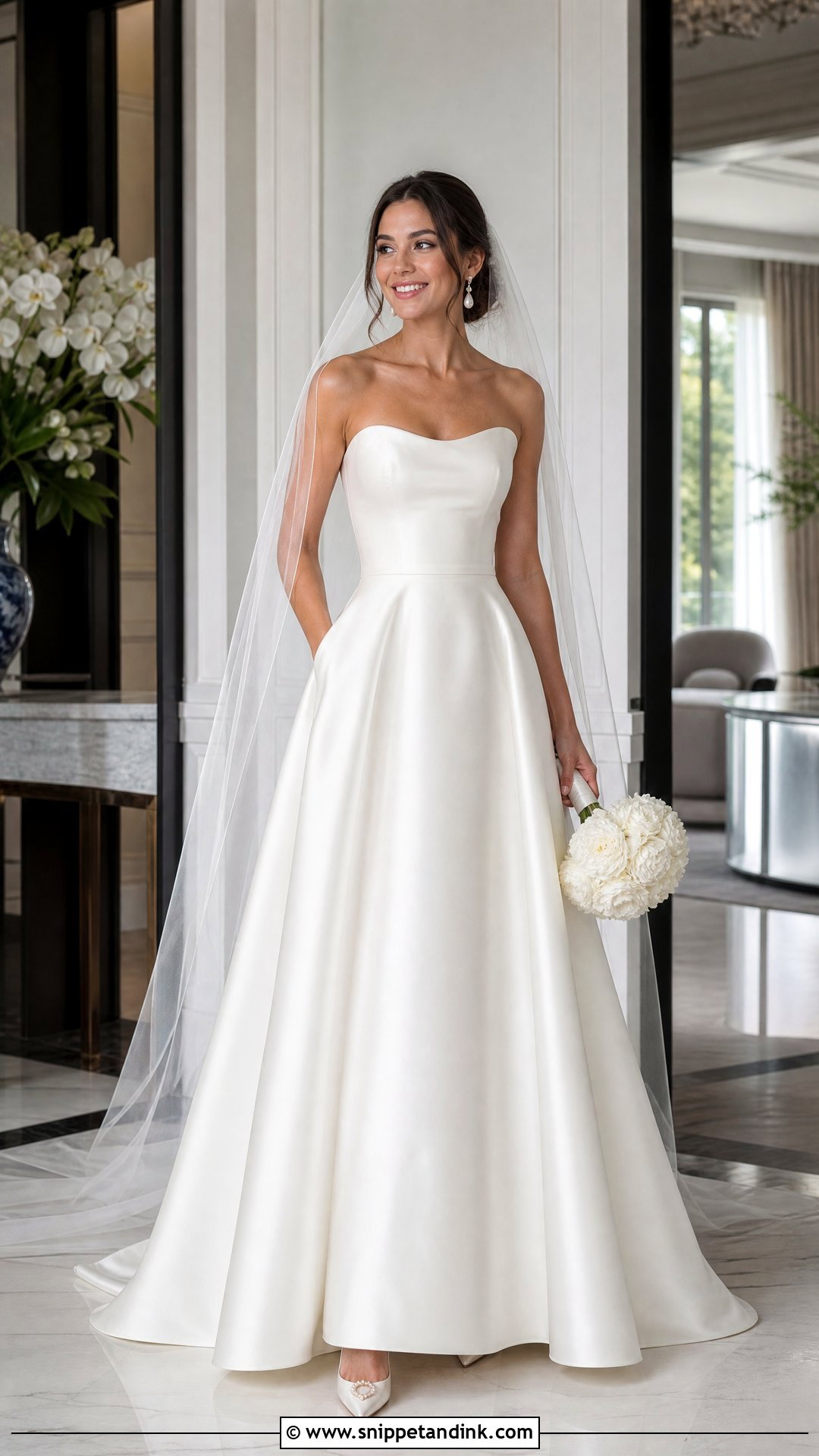
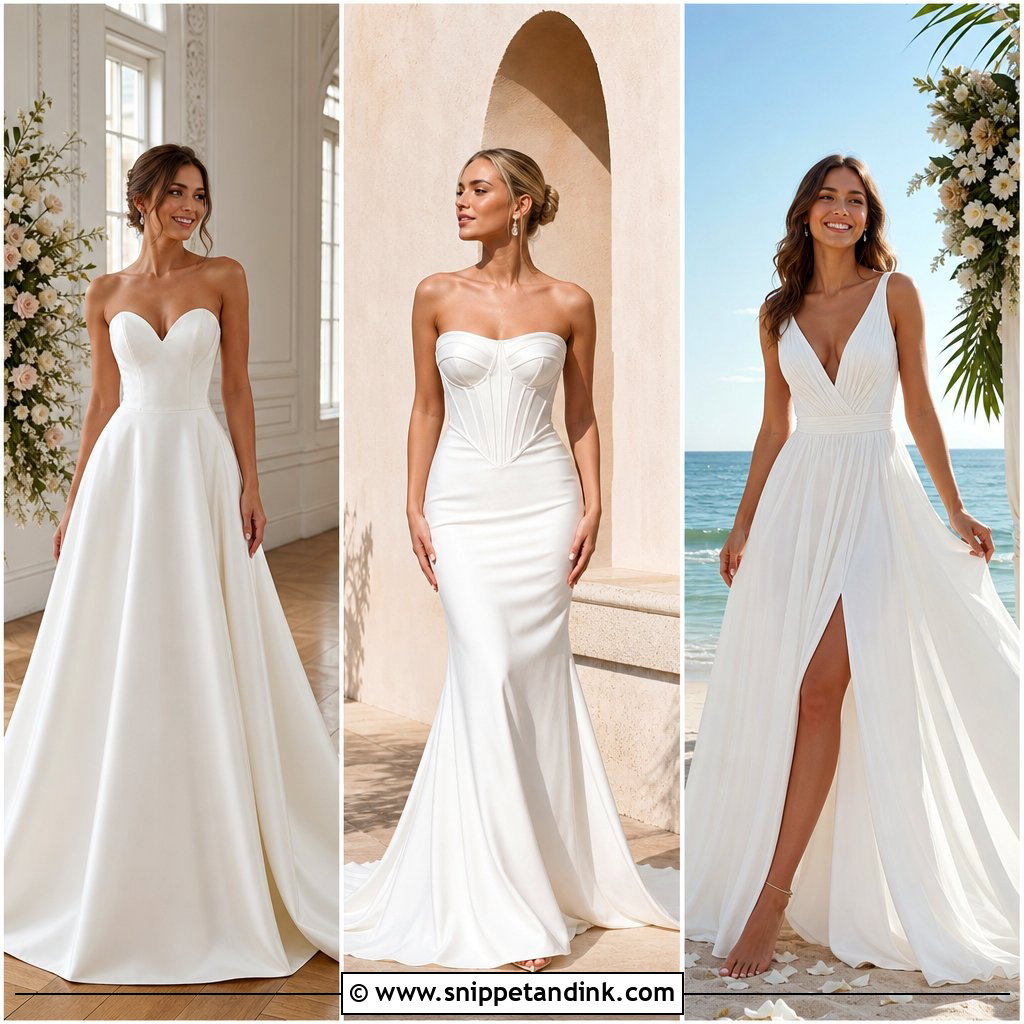
Satin and an A-line skirt is the shape I reach for when a bride wants polish without stiffness. The bodice does the heavy lifting here, so I look for spiral steel boning rather than plastic, because plastic bones bend at the side seams by the reception. A gently curved neckline sits more securely than a straight-across one on most busts. Ivory satin with pearl drops, a fingertip veil and pointed pumps gives a clean ballroom or estate look, and a low chignon keeps the neckline in view. If a mermaid felt too tight to sit in but you still want a defined waist, start here.
2. Sweetheart Ball Gown Wedding Dress
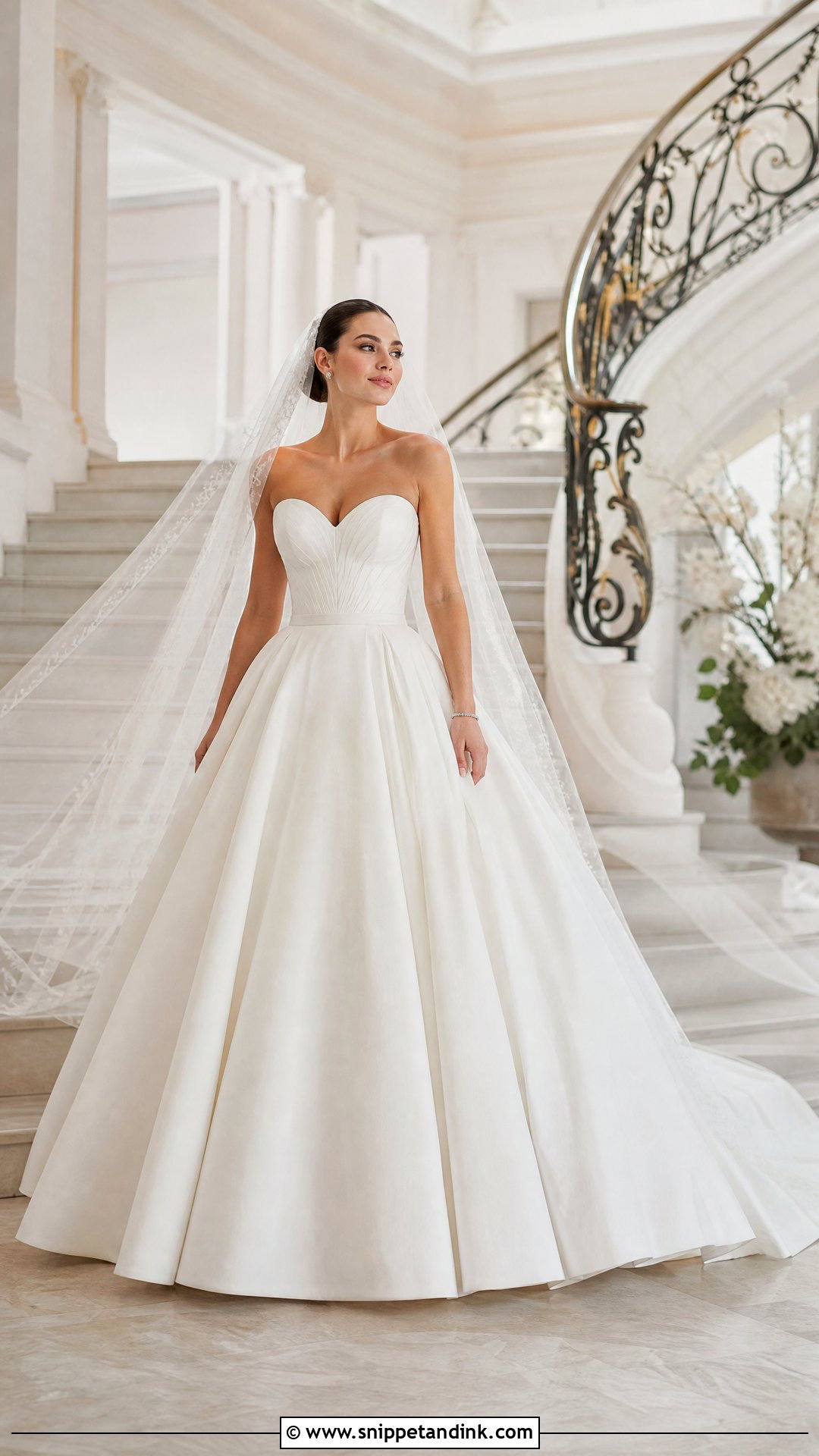
A sweetheart ball gown pairs a fitted, heart-shaped bodice with a full skirt, and the proportion is hard to beat for a formal evening. The weight of the skirt is what most brides underestimate. Several layers of tulle and a lining can pull down on a strapless bodice all night, so I ask whether the skirt hangs from a waist stay or straight off the bodice seams. With a fuller bust, ask your seamstress to raise the centre dip of the sweetheart slightly; it gives real coverage and stops the edge from gaping when you lean in to hug people. Crystal studs, a cathedral veil and block heels hidden under the skirt finish it.
3. Square Neck Crepe Column Wedding Dress
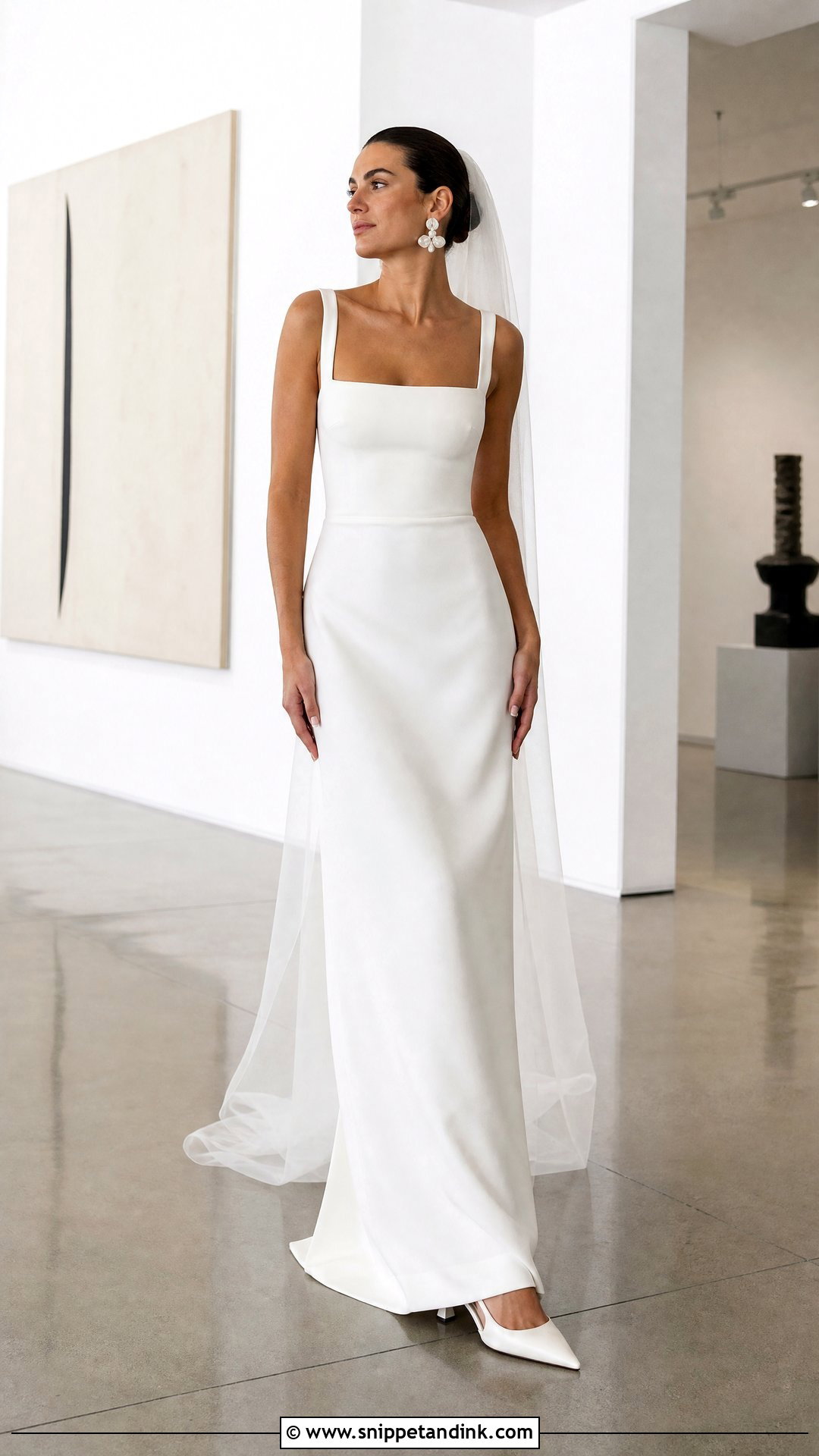
A square neck column in heavy crepe is quietly modern, and it is the least forgiving dress on this list. Crepe shows every wrinkle of a badly placed seam, so the shoulder straps, waist and hem all need to land exactly. Wide straps help: they spread the load and let you wear a proper bra. A modest back slit makes walking possible without breaking the straight line. I style it with sculptural earrings, a sleek bun, slingbacks and a plain chapel veil, and I’d put it in a gallery or a city hotel rather than a field.
4. V-Neck Lace A-Line Wedding Dress
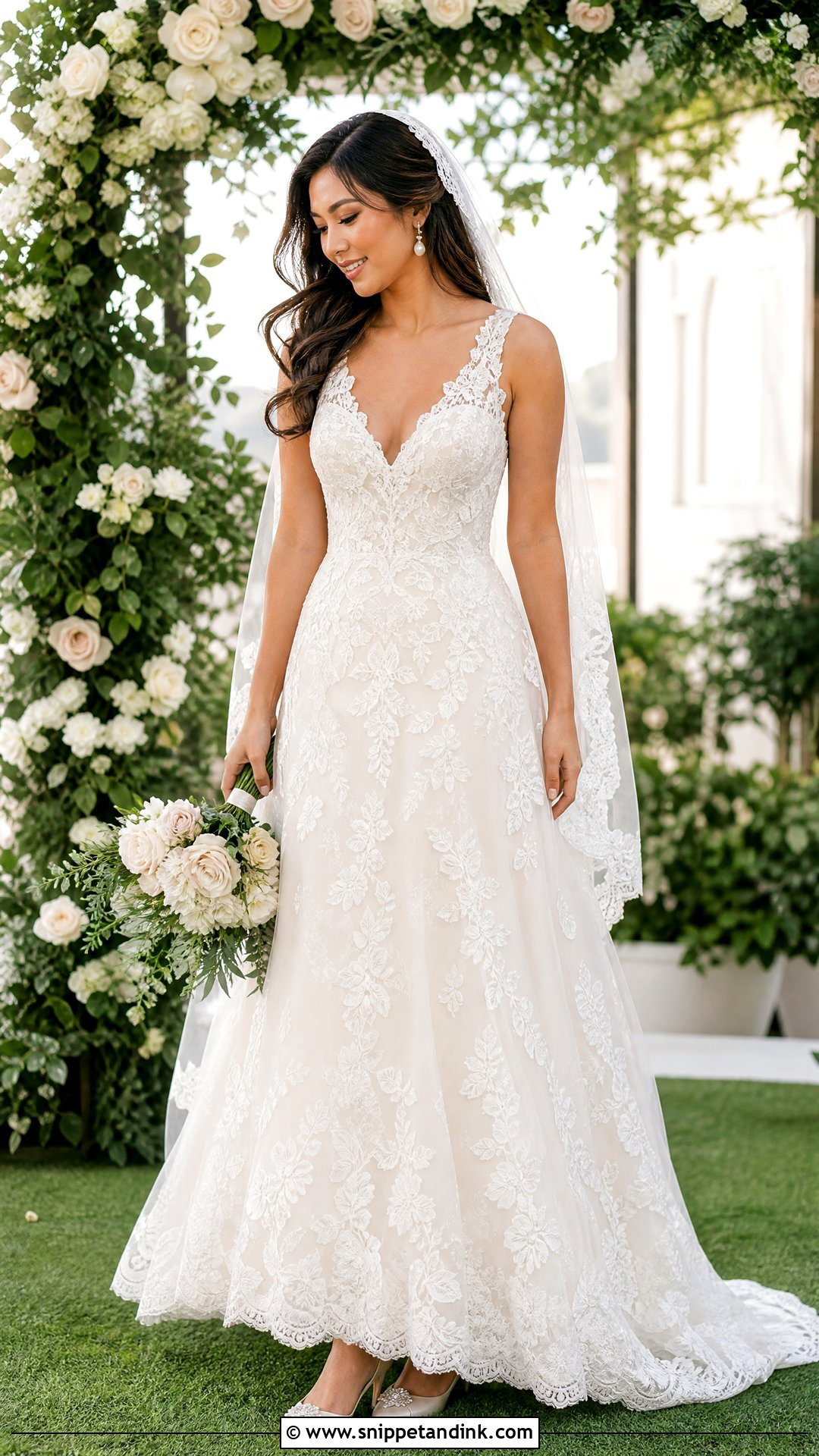
Lace reads lighter and younger on a sleeveless V-neck than it does under long sleeves. A moderate V lengthens the torso, and wider lace straps let most brides keep a regular bra on. When you’re comparing samples, look at what sits behind the lace. A nude or soft ivory lining makes the motif show up clearly in photos, while a stark white lining can flatten it. I’d choose a veil with a simple lace edge rather than one that copies the gown’s pattern, which tends to look busy. Soft waves or a loose low bun match the outdoor mood.
5. Halter Chiffon Wedding Dress
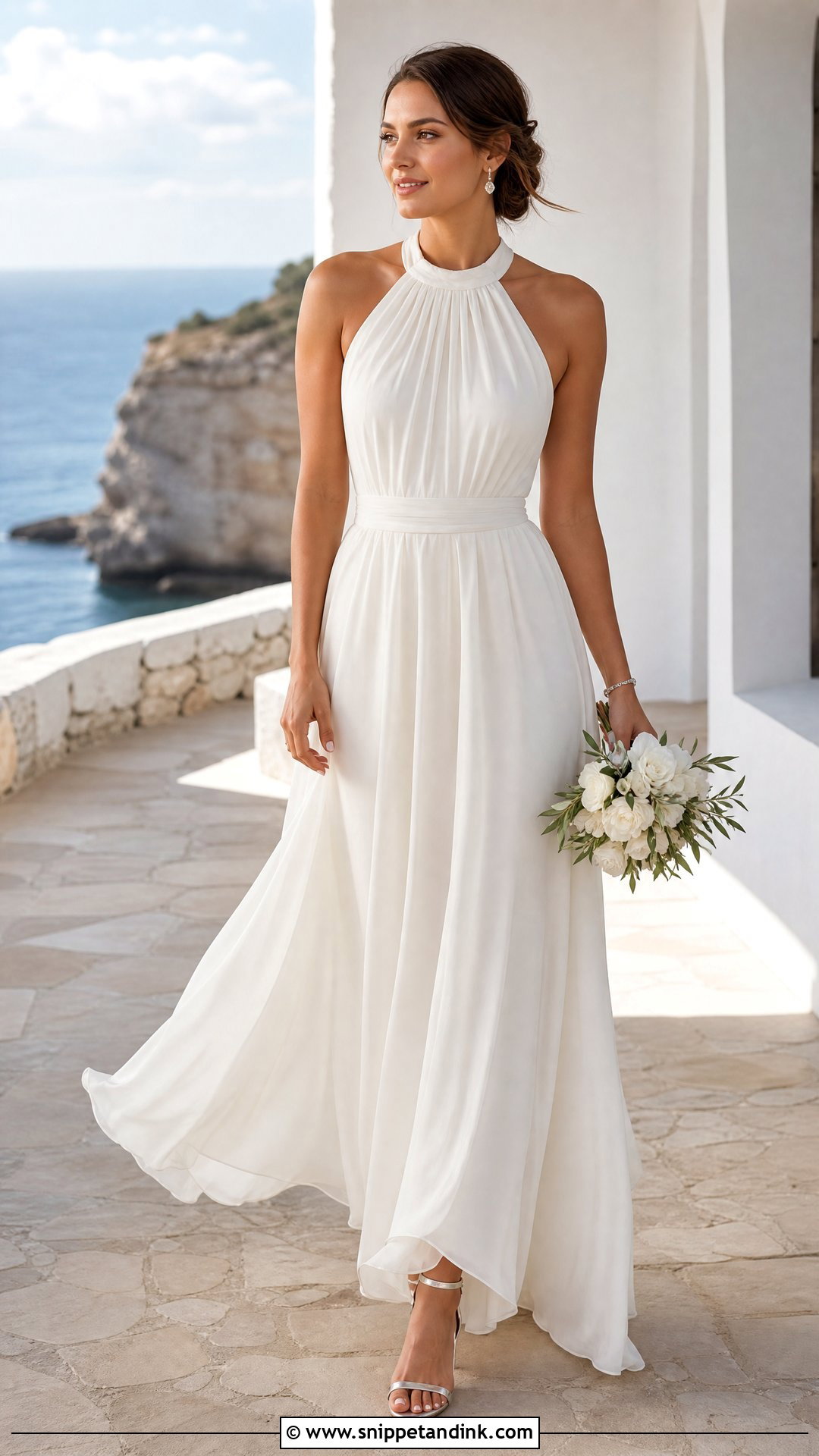
Halters are my go-to for heat. You get chest coverage while the shoulders and arms stay free, and chiffon breathes in a way satin never will. The weak point is the neck fastening. A halter tied or hooked too tight leaves a red line and a headache by evening, so at the final fitting I have the bride wear it for at least twenty minutes. Skip the necklace entirely here. Metallic sandals, small drops and a low ponytail keep the attention on the gathered neckline, which suits a beach or garden ceremony.
6. Spaghetti Strap Slip Wedding Dress
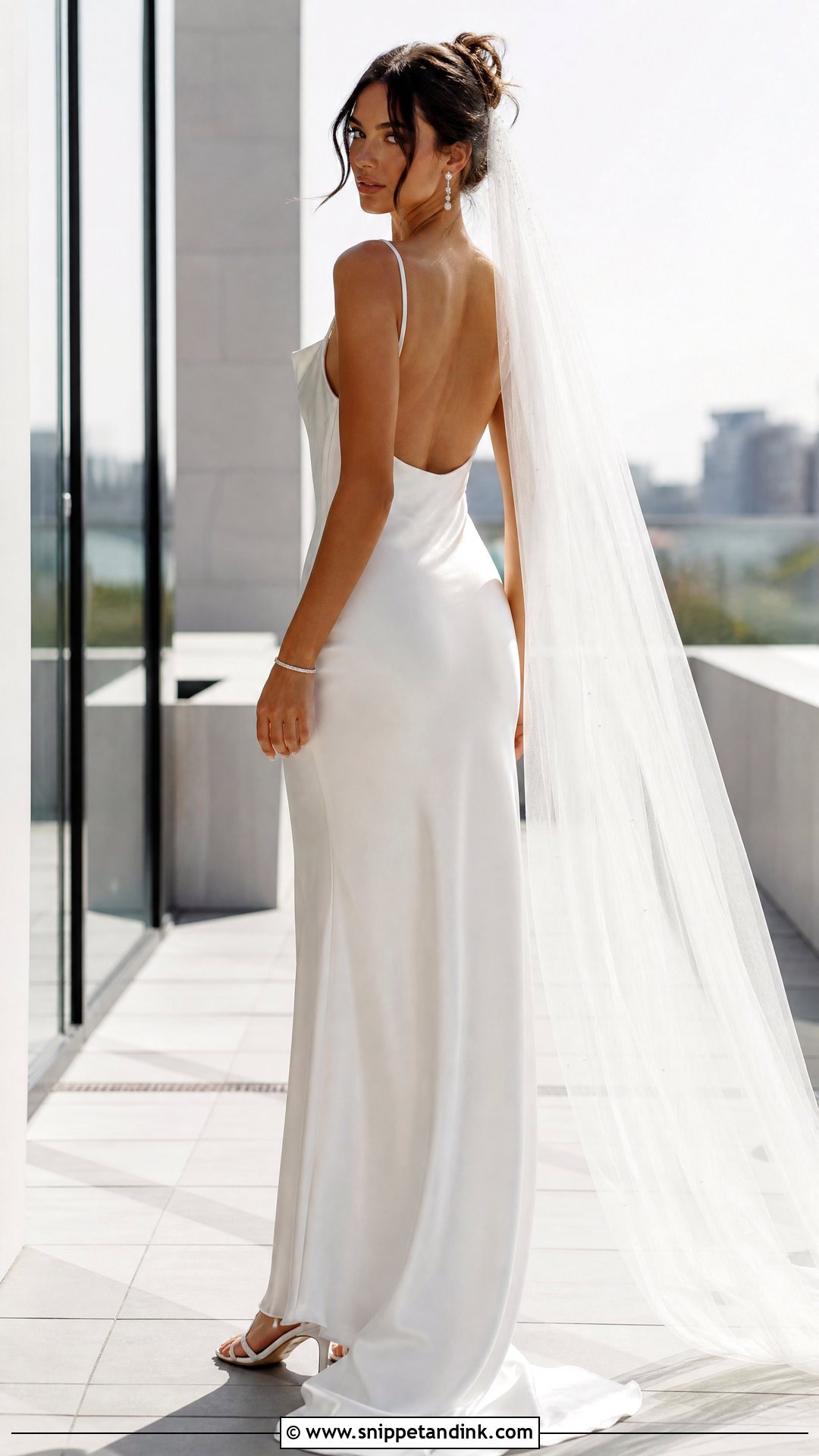
A slip dress looks simple, and that simplicity is all in the cut. Bias-cut silk or satin-backed crepe skims the body, but it also shows underwear lines and creases where you sit, so I always do a seated test in the fitting room. A softly draped cowl neckline adds a little depth at the front, and a low back gives the aisle shot its detail. Thin straps carry almost no support. If you need lift, ask for cups sewn into the lining before you consider this shape. A long sheer veil and strappy heels suit a rooftop or an intimate dinner.
7. Corset Mermaid Wedding Dress
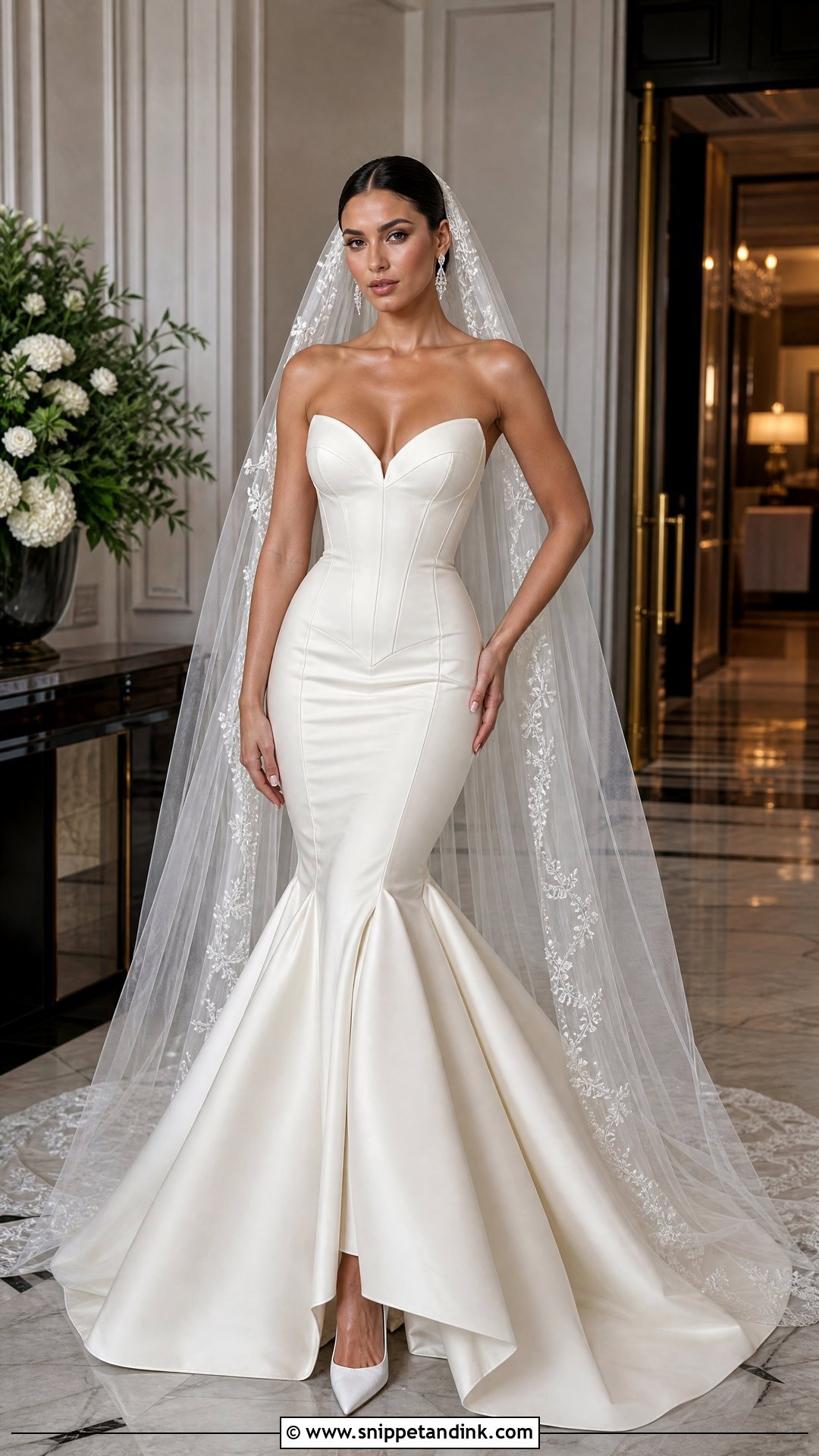
This is the most engineered gown here. A sleeveless corset bodice has to hold firmly without stopping you from breathing, and the flare has to start at exactly the right point on your leg. Too high and it looks like an A-line; too low and you’ll shuffle. A strapless cat-eye or sweetheart neckline shows off the corset shape. Plan for three fittings at minimum, and practise climbing a step in it. Statement earrings, pointed pumps and a high bun keep the line clean.
8. High Neck Sleeveless Wedding Dress
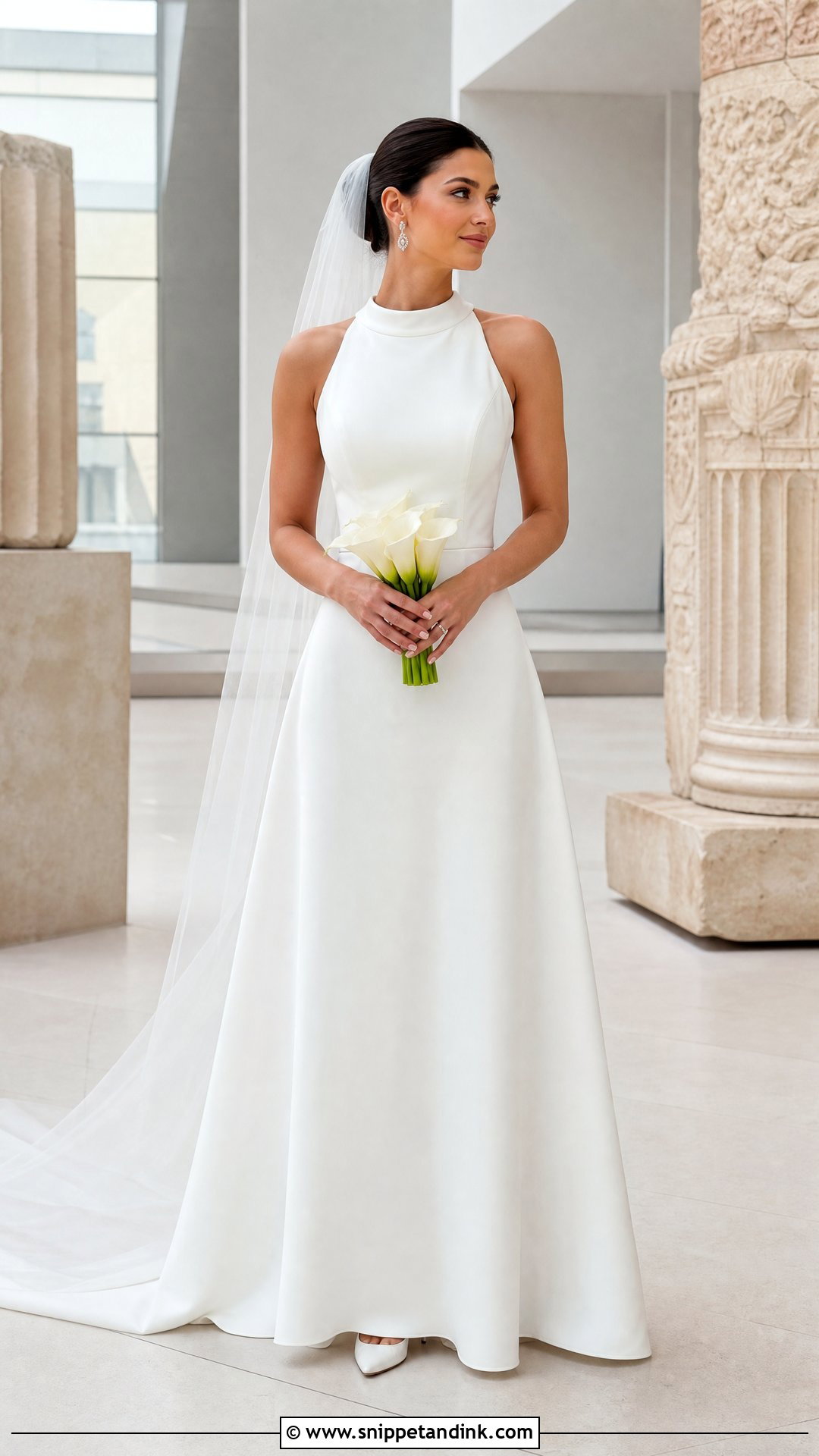
A high neck is how I answer brides who want coverage at the front but hate fabric on their arms. The detail I watch is the armhole. Cut too deep, it shows the side of a bra; cut too high, it rubs every time you raise your hand. A mock neck or lace-covered neckline is the focal point, so I leave off the necklace and use earrings only. Attach the veil below the updo so it doesn’t fight the collar. Buttons or an open back add interest without touching that covered front, and the look fits a museum or a formal restaurant well.
9. Scoop Neck Tea-Length Wedding Dress
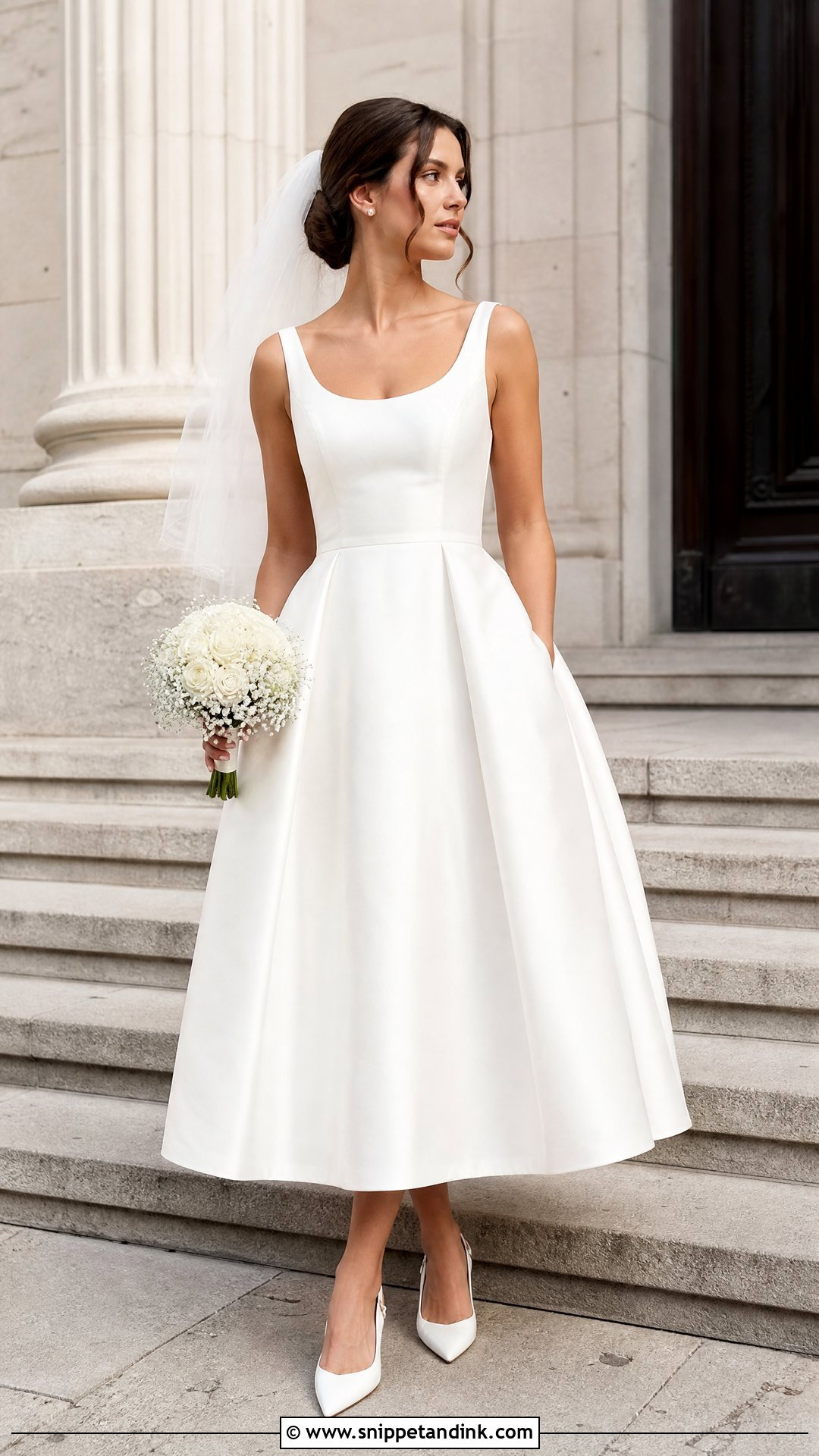
Tea length brings back the hemline, and with it, the shoes. I treat footwear as half of this outfit: pointed pumps, slingbacks or embellished flats depending on how long you’ll stand. A scoop neck tea-length dress works best in a fabric that holds its own shape, such as mikado or organza, while soft crepe drops and loses that vintage swing. Hem placement matters more than people expect. Ending at the widest part of the calf shortens the leg, so we adjust it an inch up or down until it looks right in the mirror. Pearl studs and a short veil keep it light for a courthouse or a daytime lunch.
10. One-Shoulder Draped Wedding Dress
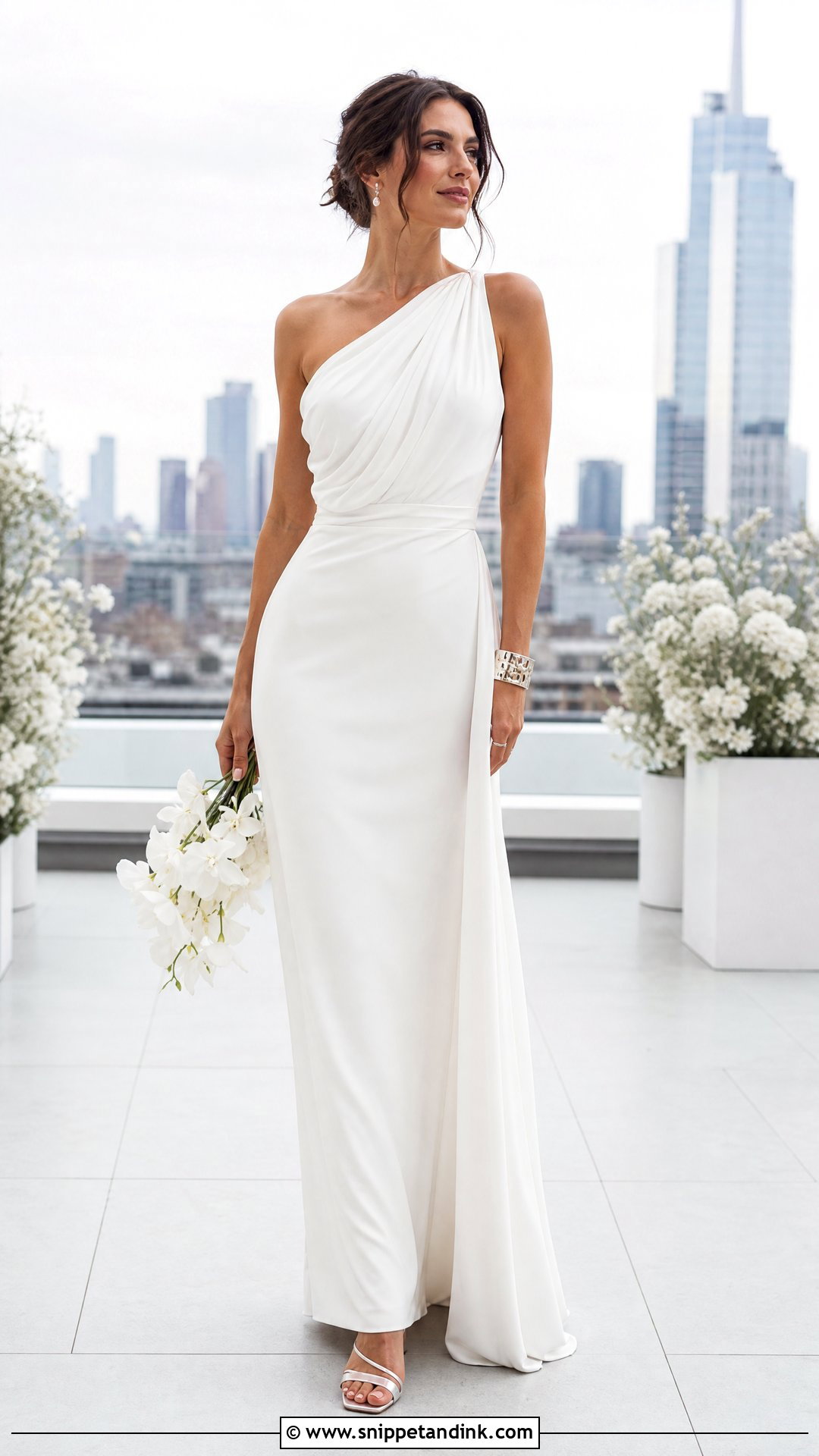
A one-shoulder neckline does the work that beading would otherwise do. Crepe, satin or a stable jersey hold the diagonal drape best. Very light chiffon tends to slide off the shoulder. The single strap must be anchored with a silicone strip or a hidden stay, or it will creep toward the neck every time you raise your glass. I put a cuff on the bare arm, keep the earrings minimal and set the bun on the opposite side of the shoulder detail. A sculptural hair piece often beats a veil with this one.
11. Beaded Sheath Wedding Dress
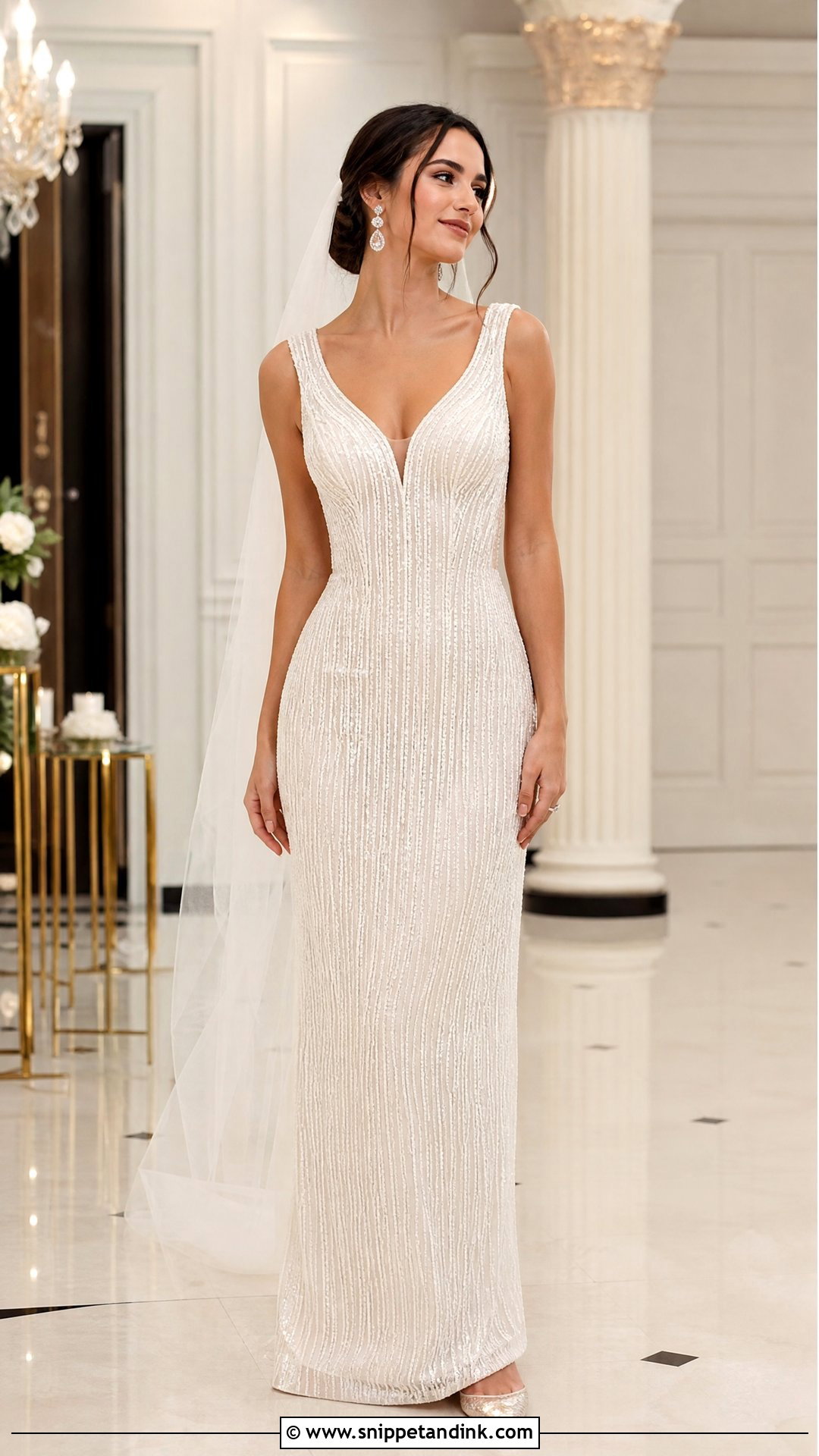
Beadwork changes a plain sheath into something made for evening light. I prefer beading that runs vertically, which strengthens the long line, and a sleeveless bodice with wider straps so the weight isn’t hanging from two thin threads. Heavily beaded gowns are heavier than they look on the hanger. Check the inside, too: exposed thread knots and bead backs under the arms will scratch after a few hours. Metallic pumps, small crystal studs and a plain tulle veil are enough, because the dress already reflects the room.
12. Floral Appliqué Tulle Wedding Dress
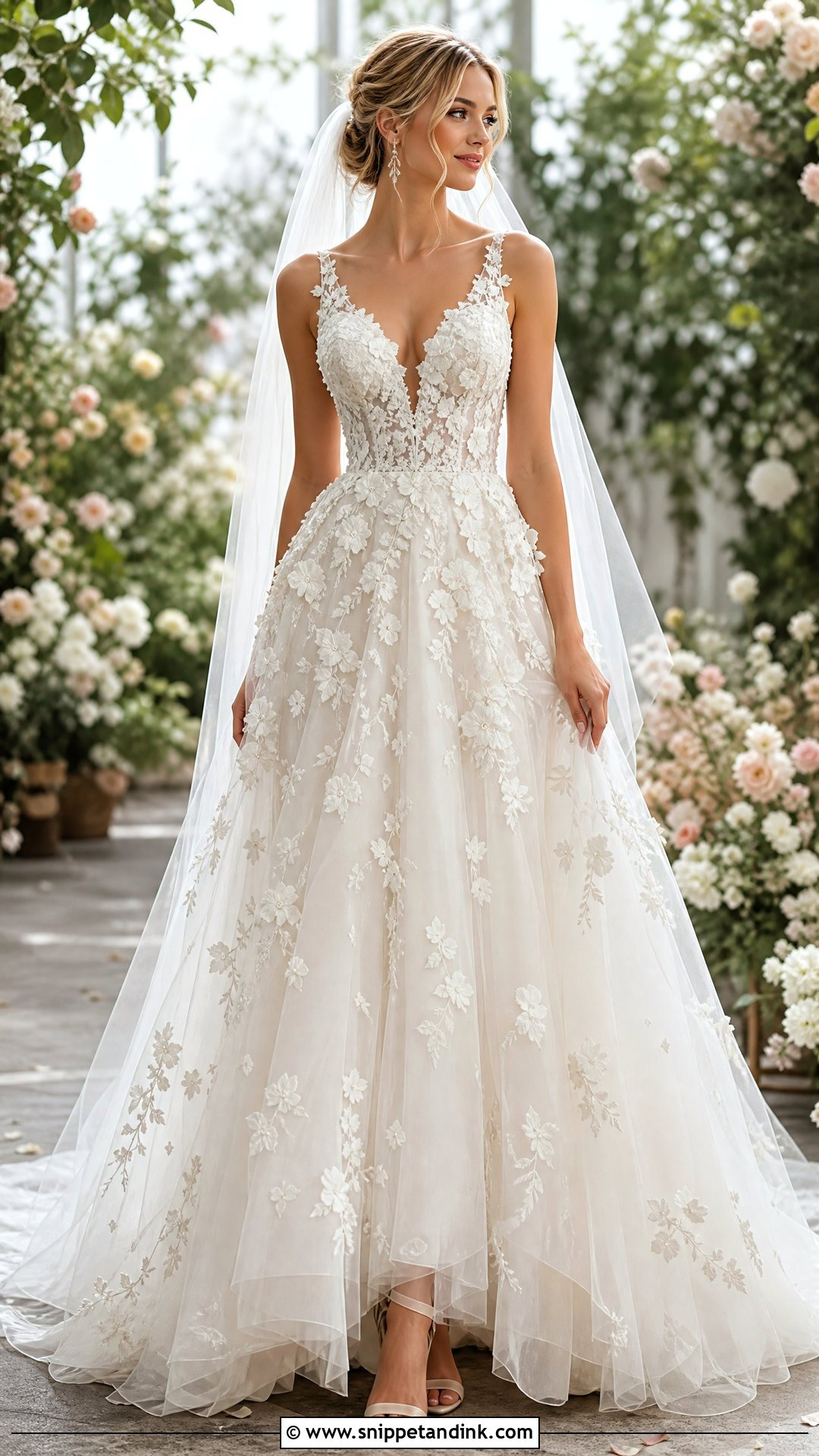
Floral appliqués on tulle bring texture without bulk, as long as they’re placed with some irregularity. Same-sized flowers in a neat grid look machine-made; a mix of sizes clustering near the bodice and thinning down the skirt looks grown. The base bodice should be strong enough on its own, because appliqués add weight at the neckline. Avoid chunky necklaces and bracelets with prongs here, since raised petals snag. A plain veil lets the flowers show, and a few small floral pins in a loose updo tie hair to dress in a garden setting.
13. Minimalist Mikado Ball Gown Wedding Dress
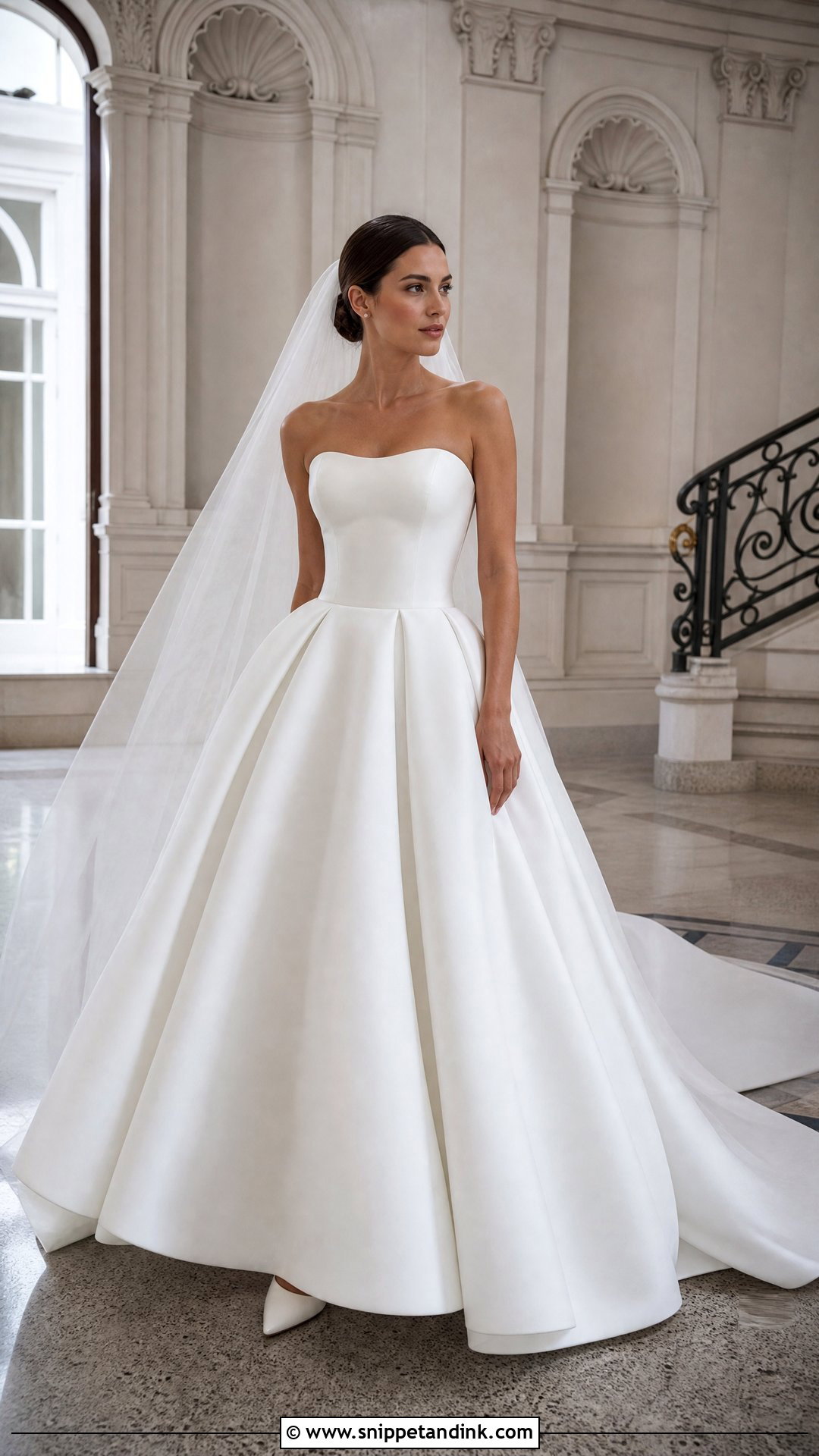
Mikado holds a pleat like paper, which is why it gives a ball gown architectural volume without layers of tulle underneath. Box pleats from a clearly defined waist are the classic way to build that fullness. Because the fabric is so crisp, it shows creases from storage and from sitting in a car, so I ask the bridal shop to steam it the day before and travel with the skirt laid flat. Pockets are welcome, but they must be set to lie flat or they bulge out of the clean line. Diamond studs, satin pumps and a sleek bun suit a formal indoor ceremony.
14. Empire Waist Chiffon Wedding Dress
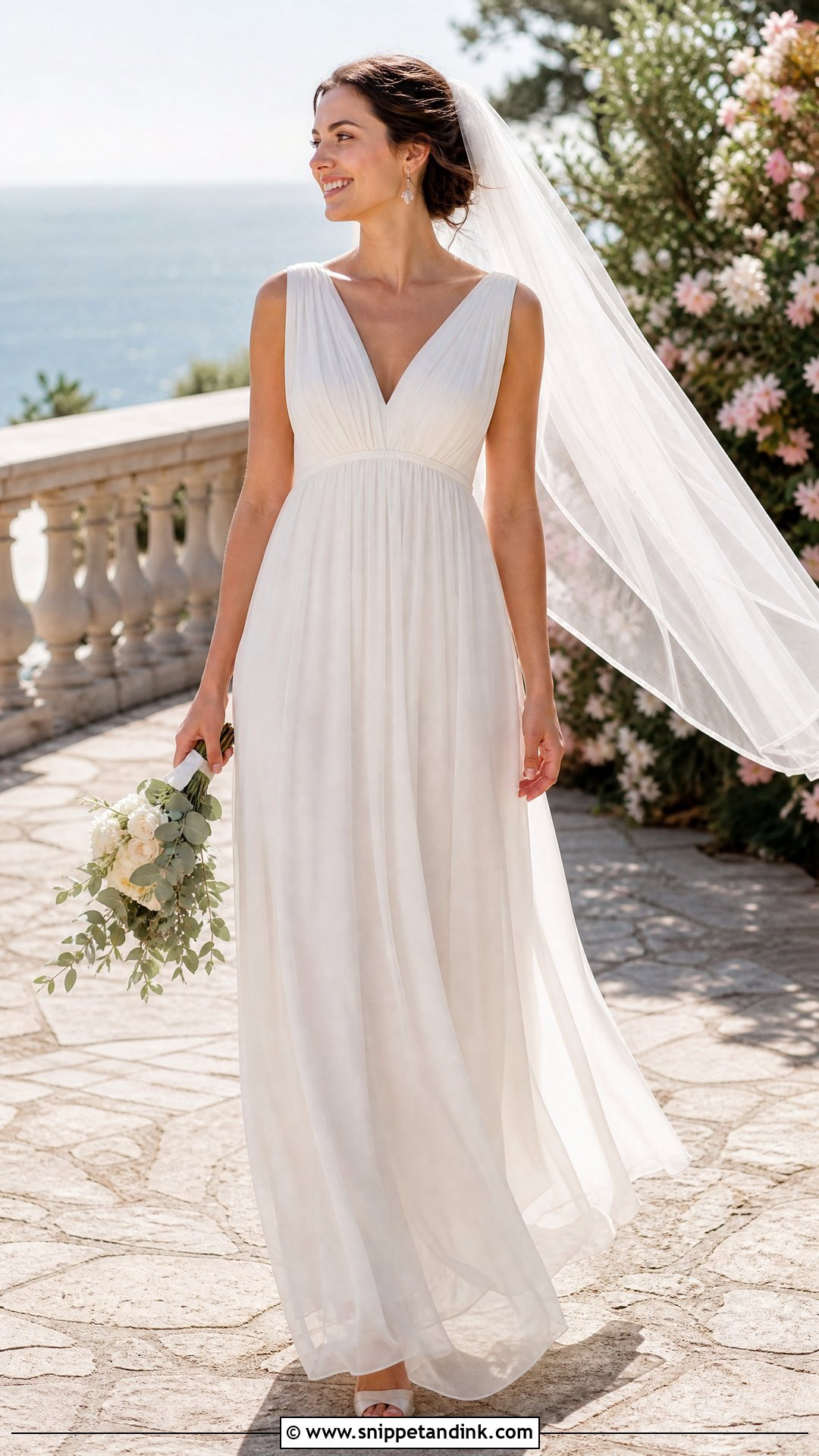
The empire line is the most comfortable silhouette on this list. The seam sits just under the bust and the skirt falls free over the waist and hips, so nothing presses when you sit through dinner. The thing to watch is gathering. Too much fabric gathered under the bust adds volume where you don’t want it, and I’d rather see a few soft pleats than a full ruched band. Supportive straps and a smooth lining matter in chiffon, which is translucent in sunlight. A half-up style and low block heels suit beach and garden weddings.
15. Basque Waist Strapless Wedding Dress
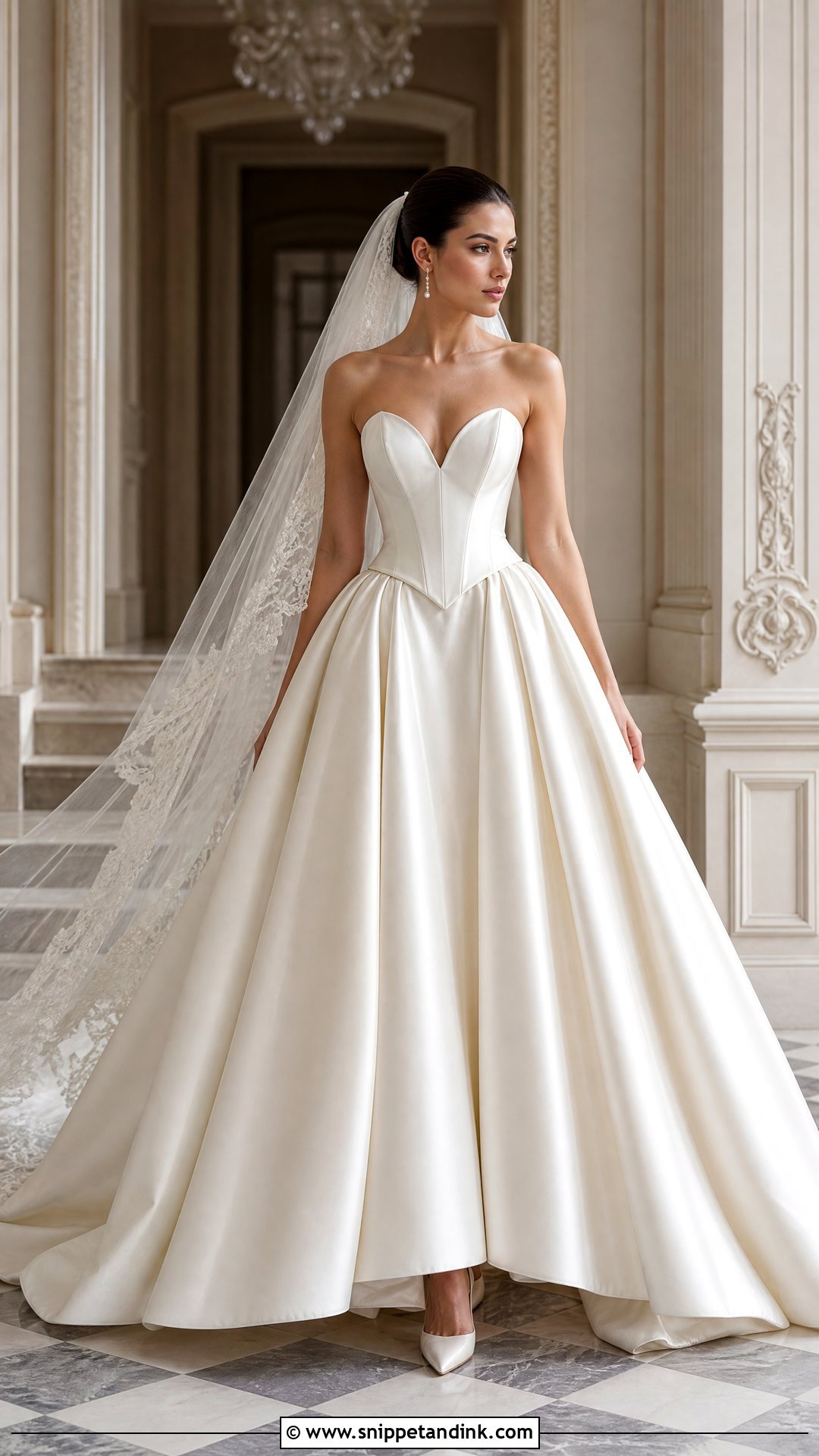
A Basque waist dips into a V below the natural waist, which lengthens the torso and makes a strapless gown look sculpted. It only works if the corsetry is solid, because a dropped point that rides up looks crumpled. I pair it with a full skirt in satin, mikado or layered tulle and ask for a short pendant or a simple choker rather than anything long that would cut across the V. Hair up, a cathedral veil and pointed heels give it the formal setting it wants.
16. Open Back Lace Wedding Dress
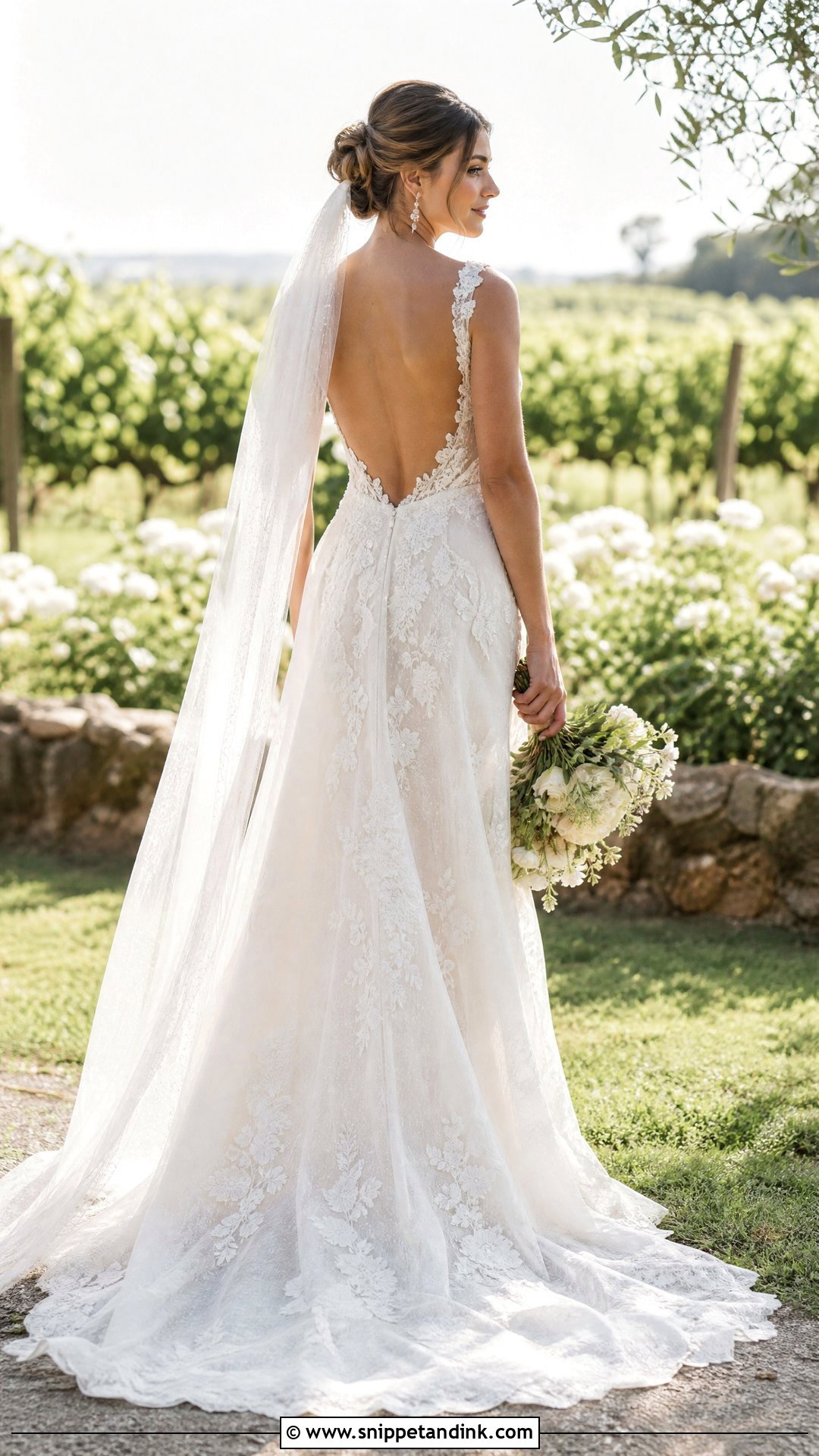
An open back is the detail guests see for most of the ceremony, so it pays to balance it with more coverage at the front: a higher scoop, a bateau or a modest V. The real question is what you’ll wear underneath. Standard bras won’t work, so I bring the bride’s chosen undergarment or ask the seamstress to build cups and a hidden stay into the dress. Wide lace straps that merge into the motif look intentional instead of structural. Pin the veil below a loose bun so the back stays visible in a vineyard or garden.
17. Pearl Embellished Wedding Dress
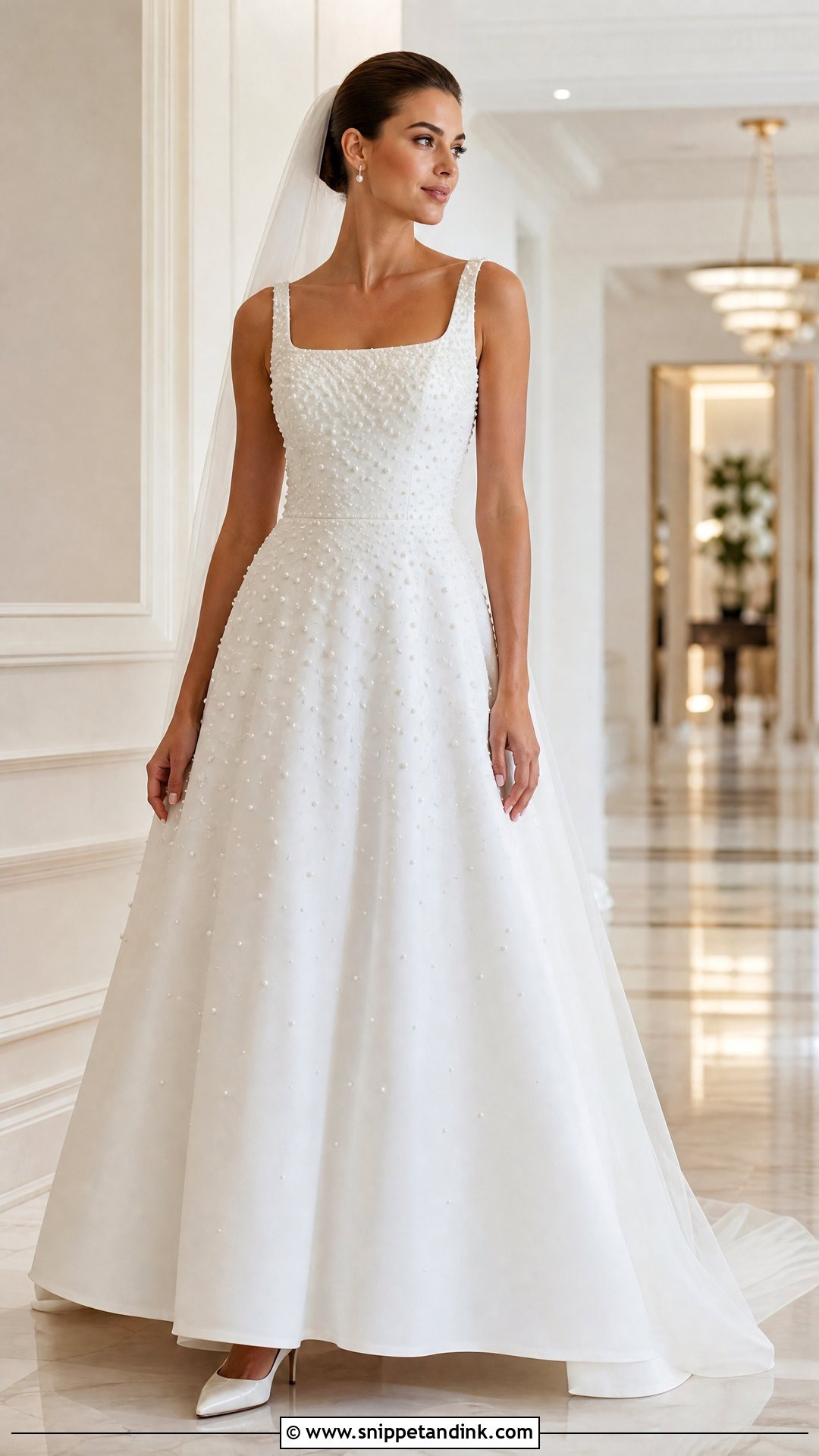
Pearls give a softer glow than crystals, which suits daylight and warm indoor lighting. I like them concentrated at the neckline and scattered thinner toward the hem; even coverage head to toe starts to feel like a costume. Before you buy, rub your arm against the bodice where it meets the underarm, since that’s where pearl beading catches skin. Small pearl earrings, a single bracelet and satin pumps are plenty. A plain veil and a smooth bun keep the gown the centre of attention, and the pearl texture reads clearly on camera without glare.
18. Bow Back Satin Wedding Dress
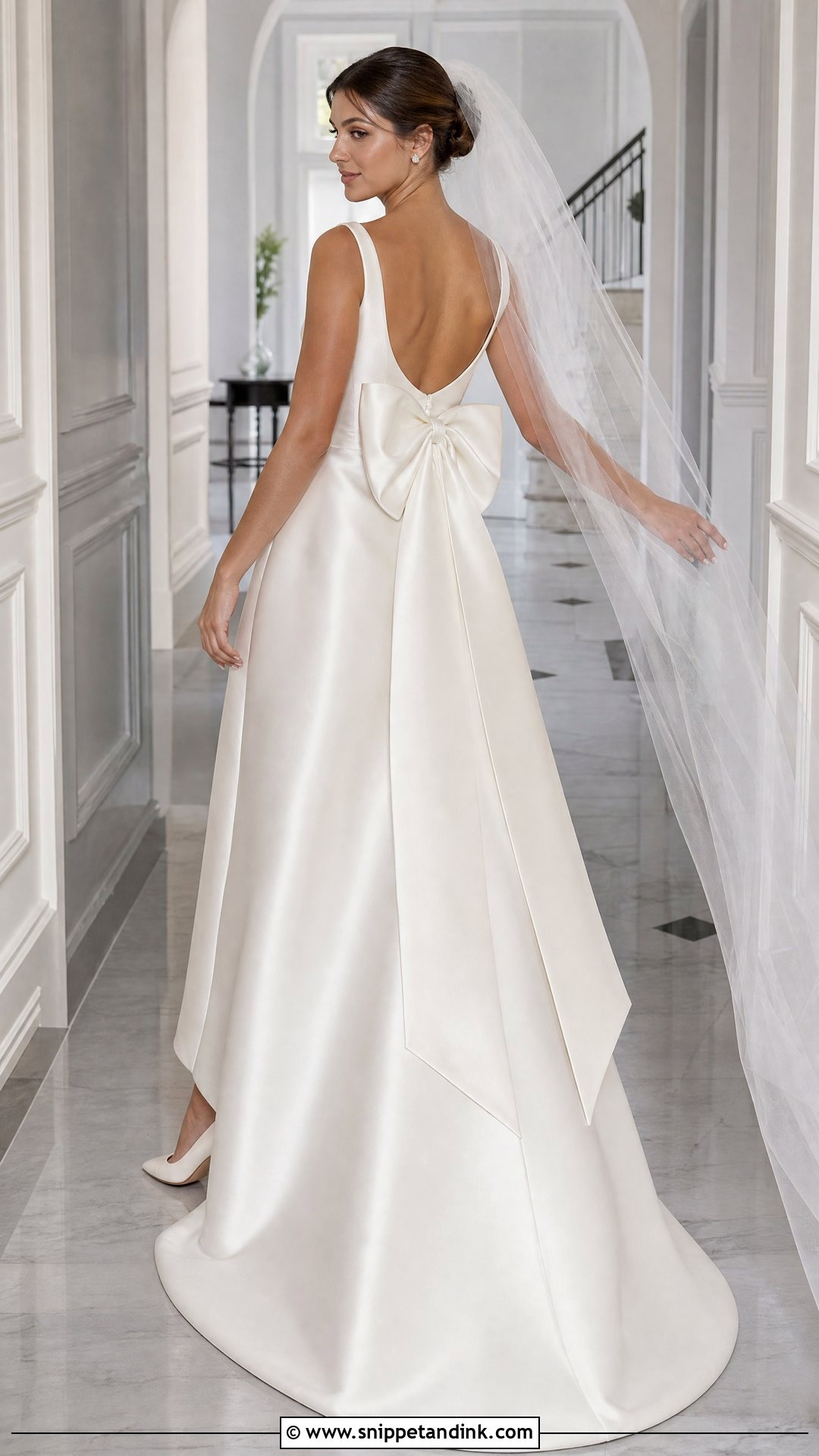
A bow at the back is a reveal: the front stays clean, then the detail appears as you walk away up the aisle. Scale is everything. A bow that’s too small disappears against a long train, and one that’s too large looks like gift wrap on a petite frame, so I judge it against the train length in a full mirror. Hair should go up, partly so the bow shows and partly because loose curls snag in the loops. Ask whether the bow is detachable; many are, and taking it off for dancing makes the dress far easier to move in.
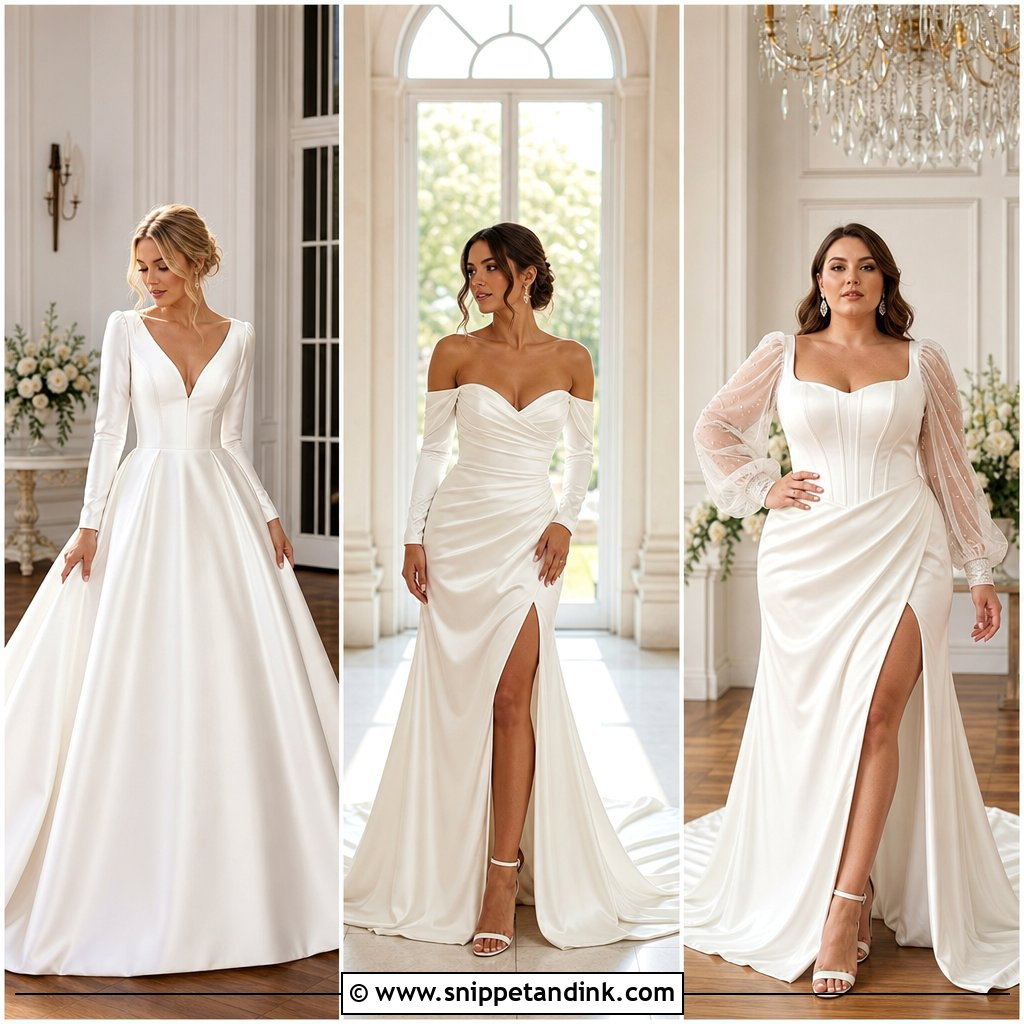
19. Plus Size Ruched A-Line Wedding Dress
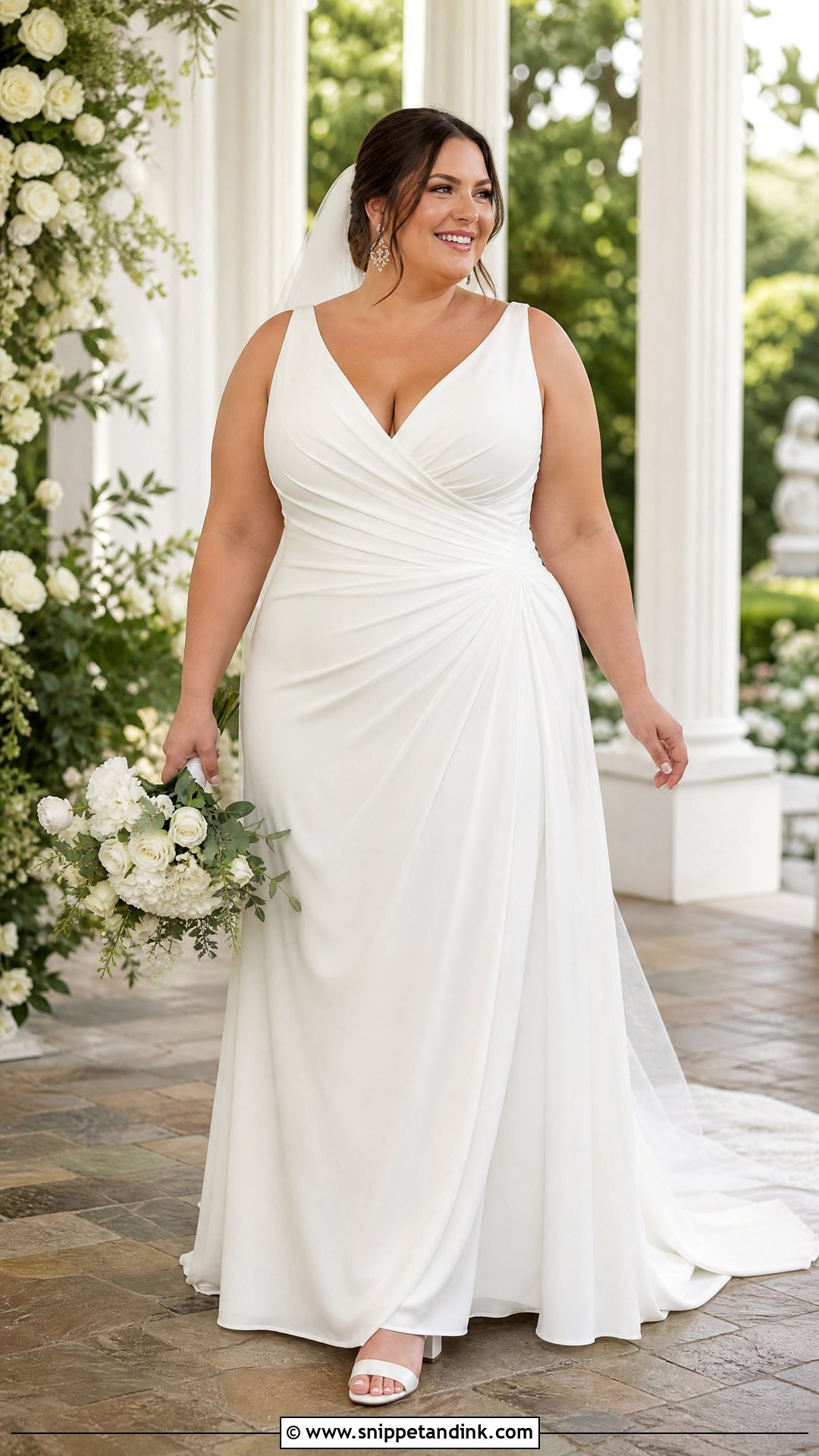
Ruching earns its place on plus size gowns because it adds structure and lets you control coverage. Diagonal gathers that meet near the waist guide the eye inward. What I insist on is internal support: a built-in corset or power-mesh lining that holds the bust, not removable foam cups that shift by the first dance. Satin-backed crepe smooths without clinging. Shop where samples are close to your size, because pinning a sample that’s four sizes too small tells you nothing about the real fit. Block heels, statement earrings and a soft updo finish the outfit.



20. Sleeveless Bridal Mini Wedding Dress
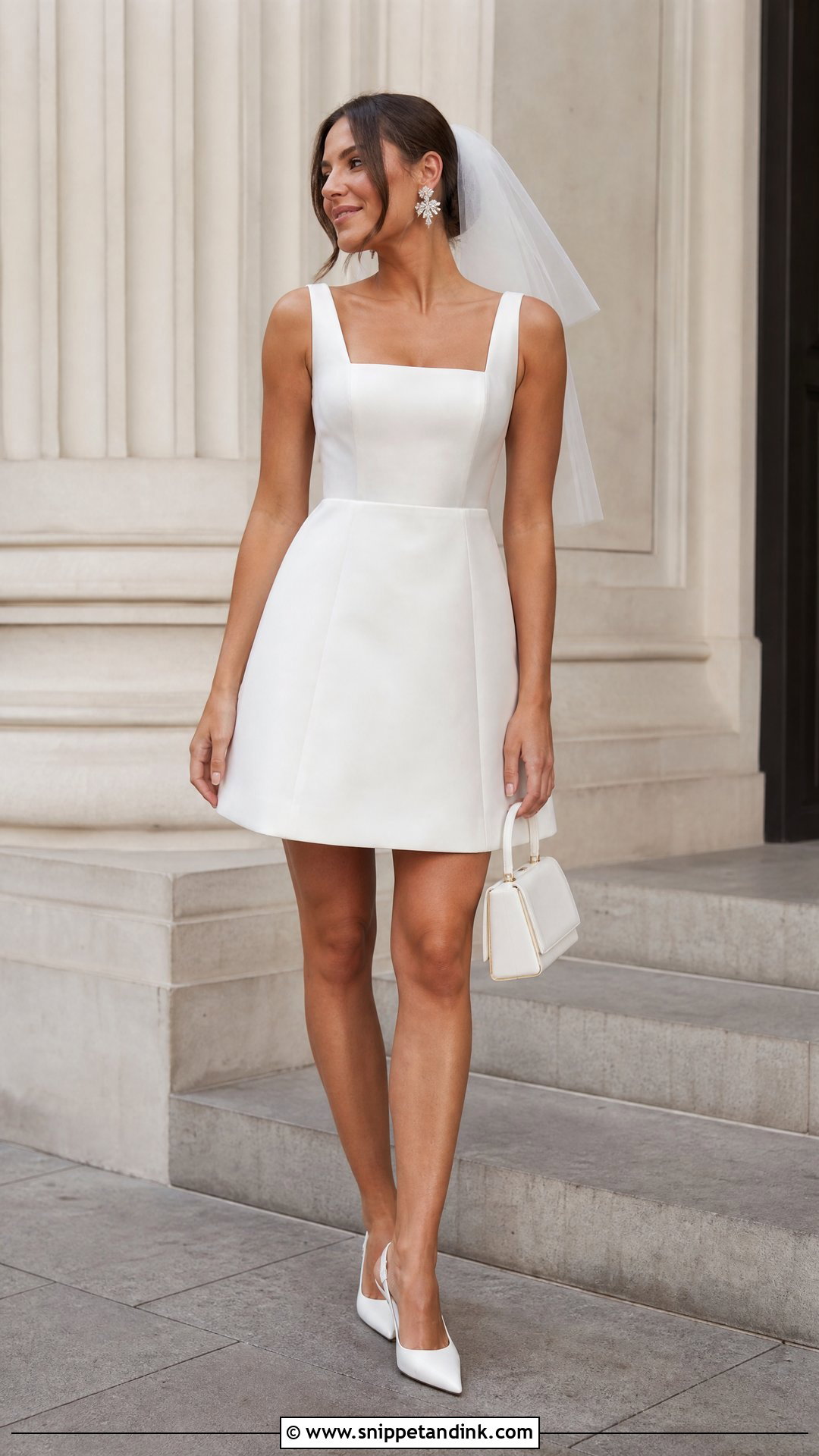
A short sleeveless dress suits a courthouse ceremony, a relaxed party or a reception change. A tailored shift, a fitted sheath or a structured A-line in satin or embellished crepe keeps it bridal. With the legs on show, shoes become half of the outfit, and pointed pumps or slingbacks look sharper than sandals. Sit and dance in it before the hem is finalised; minis can ride up more than you’d guess when you take a seat. Statement earrings and a sleek ponytail suit the modern mood, and it’s one of the few wedding dresses you’ll actually wear again.
Covering Bare Arms for the Church, Then Losing the Layer
Plenty of brides love a sleeveless gown and then discover their place of worship expects covered shoulders, or that an October garden is colder than the sample room. You don’t need to change the dress. You need a second layer that comes off cleanly afterwards.
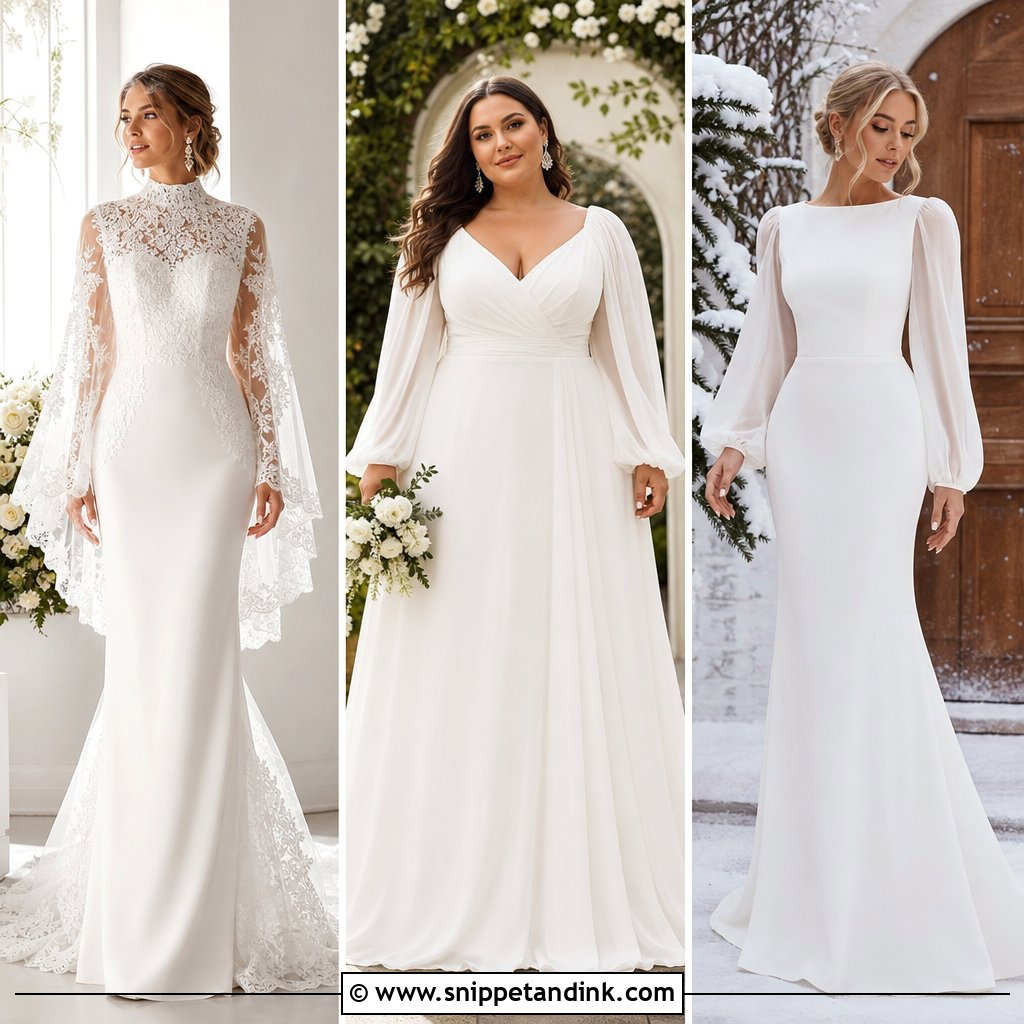
- A sheer bolero or short lace jacket covers the shoulders for the vows without hiding the bodice shape.
- Detachable sleeves tie or button onto the straps; ask your seamstress to fit them at the same appointment as the dress so the attachment points match.
- A tulle or crepe cape suits strapless and halter gowns and photographs well from behind.
- For evening cold, a faux fur stole or a long cashmere wrap is warmer than any sheer layer and is easy to drop over a chair.
Bring whichever cover-up you choose to your final fitting. Lace sleeves can catch on beadwork, and a stiff jacket can crush a soft chiffon neckline, so I want to see them together before the day.
Shoulders and Skin in the Weeks Before
Bare shoulders put skin on display in nearly every photo, so plan for it. Strap tan lines from a summer holiday show clearly against an ivory strapless neckline, and they take weeks to fade. If you’re wearing a halter or wide straps, try to match your swimwear shape to the dress in the month before. Avoid trying new body lotions or self-tan close to the wedding; some transfer onto satin and lining, and those marks are difficult to clean. Do a patch test well ahead, then wear the product for a full day under an old light top to see whether it rubs off.
The Fitting Room Test That Settles It
Satin ball gowns bring formality, chiffon and slip dresses bring ease, and the neckline sets the mood more than any accessory. Still, the decision usually happens in the fitting room. Raise both arms, sit on a hard chair, walk a few steps and turn around. If the bodice stays put and you forget about it within a minute, that is your dress. Then build the shoes, hair, veil and underwear around it, rather than judging the gown on its own hanger.
You'll Like These Ideas:



Leave a Reply