
Most brides who ask me about ombre want two things at once: colour, and a dress that still unmistakably says bride. A soft fade gives a delicate, romantic version; a bold dip-dyed hem looks artistic and modern. Bridal fashion now leaves plenty of room for personal style, colored gowns and dresses that echo the setting, which makes ombre at home in a garden, on a beach, in a city loft or up a mountain. Colour alone won’t carry it, though. Silhouette, fabric, shoes, veil, jewellery and bouquet have to agree. Here are 25 gradient gowns, with what I’d pair and check for each.
Ordering a Custom Fade Without Surprises
Many ombre wedding dresses are dyed to order, and that changes how you buy. Colour on a screen is not colour in daylight, and each dye batch can come out slightly different. A few steps save a lot of heartache.
- Ask for a dyed fabric swatch in your chosen colour, ideally in the same fabric as the skirt. Look at it outdoors, indoors and with phone flash.
- Agree where the colour should start, measured from the waist or the floor, and get it written on the order. One brand’s ‘mid-skirt’ is another’s ‘knee’.
- Ask how much extra time dyeing adds. Custom colour usually takes longer than a standard order, so build in a buffer before your first fitting.
- Ask for a daylight photo of your finished gown before it ships, so any colour issue can be raised while there’s still time.
If you’re buying off the rack, inspect the fade closely. Look for streaks, a hard line where the dye stopped, or uneven colour between the front and back of the skirt.
1. Blush Ombre Wedding Dress
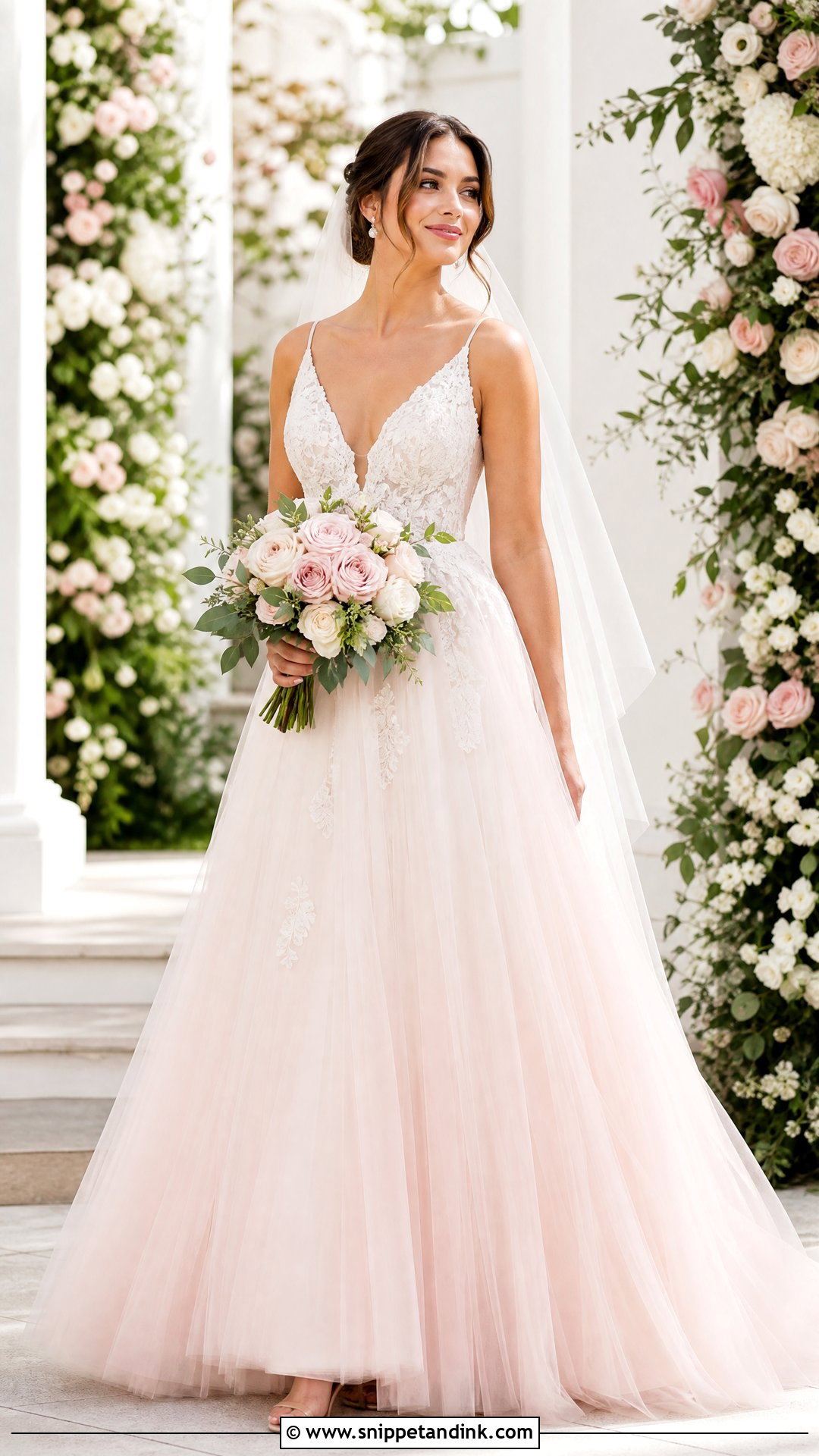
Ivory or champagne at the bodice melting into pale pink at the hem is the gentlest way in. Because blush is so close to ivory, the fade stays subtle in photos and close to traditional in person, which also makes it an easy sell to a conservative family. A tulle A-line lets the pink move as you walk. Pearl earrings, nude or blush heels and roses or peonies in soft pink suit it. Keep the veil sheer so the colour shows through rather than being veiled into ivory.
2. Blue Ombre Wedding Dress
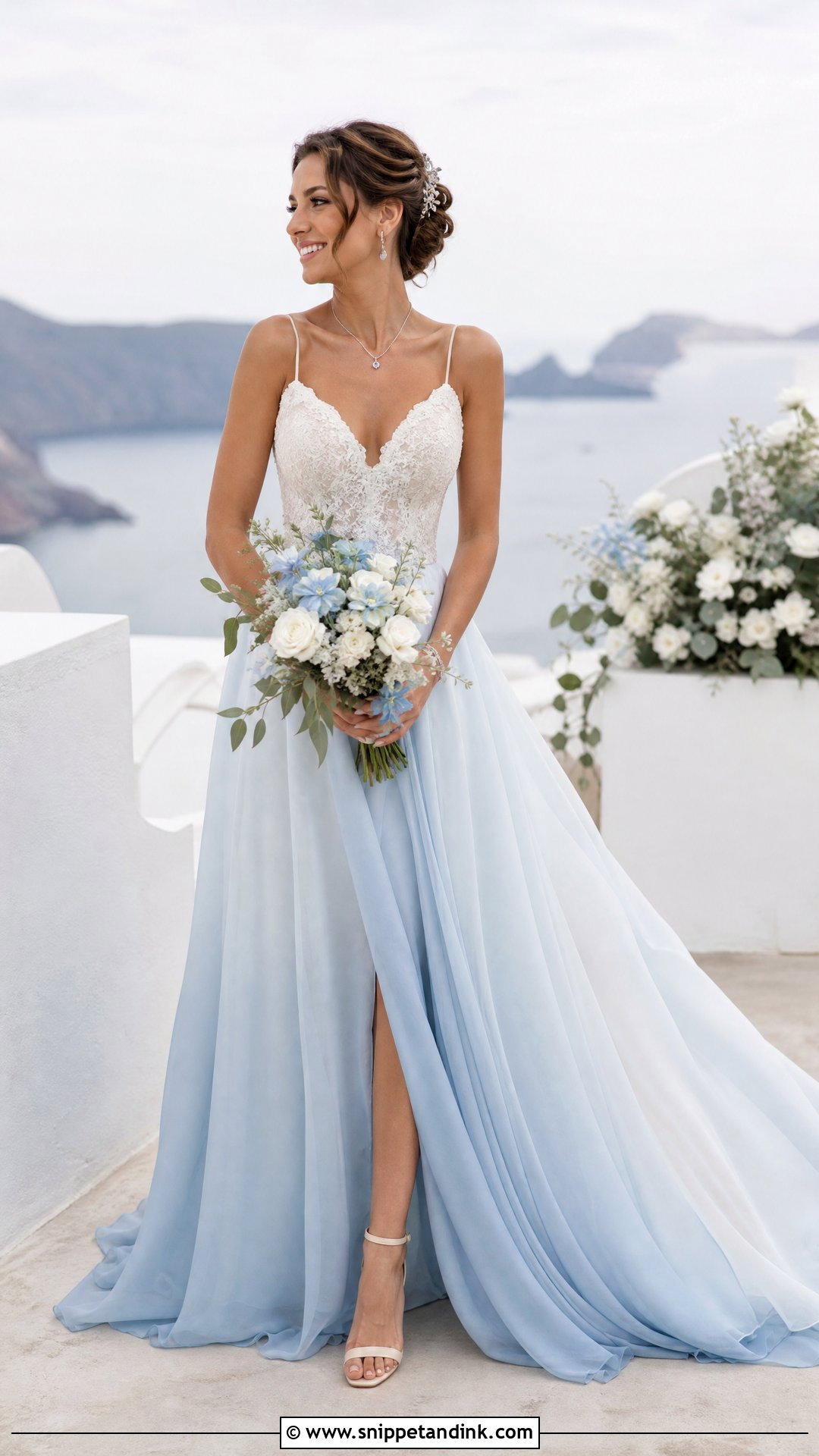
Blue fades from white at the neckline into powder blue, sky or a misty grey-blue at the hem. It’s peaceful and slightly unexpected, and it suits a coast, a lake or a winter ceremony. Chiffon or organza gives the blue a watercolour softness. Silver jewellery, crystal hair pins and ivory heels keep it clean; a bouquet of white flowers with blue delphinium echoes the hem. One practical note: pale blue shows grass stains more than ivory, so plan portraits on paths or decking where you can.
3. Pink Ombre Wedding Dress
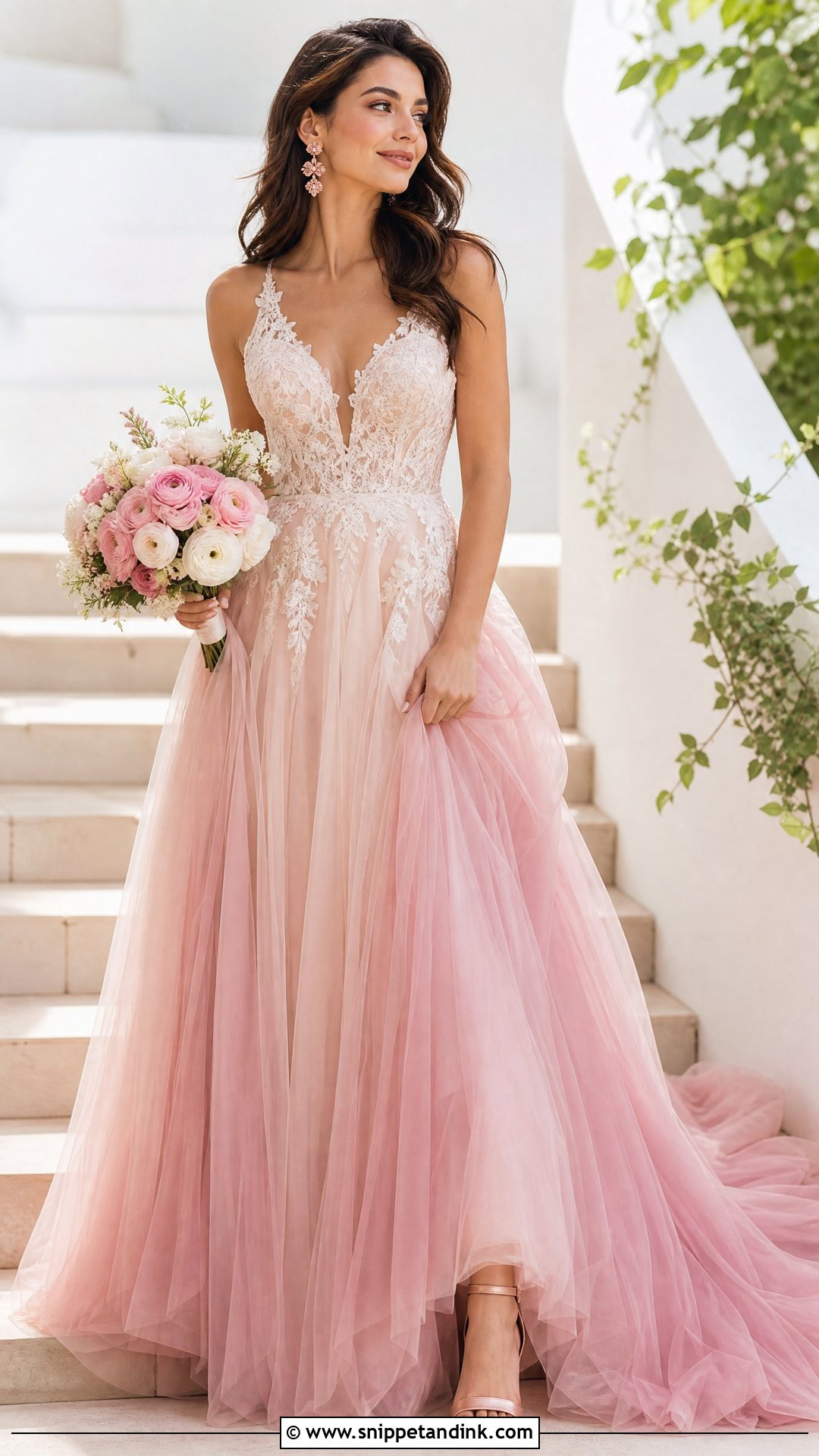
How deep should the pink go? A pale fade is romantic; a rose or raspberry hem has much more personality and needs a confident bride. A fitted lace bodice over layered tulle balances structure and softness. Rose-gold jewellery, soft glam makeup and satin heels in nude or dusty pink suit it, with white blooms and pink ranunculus in the bouquet. Deeper pinks clash with some red-toned venues and carpets, so look at your reception photos before choosing the shade.
4. Purple Ombre Wedding Dress
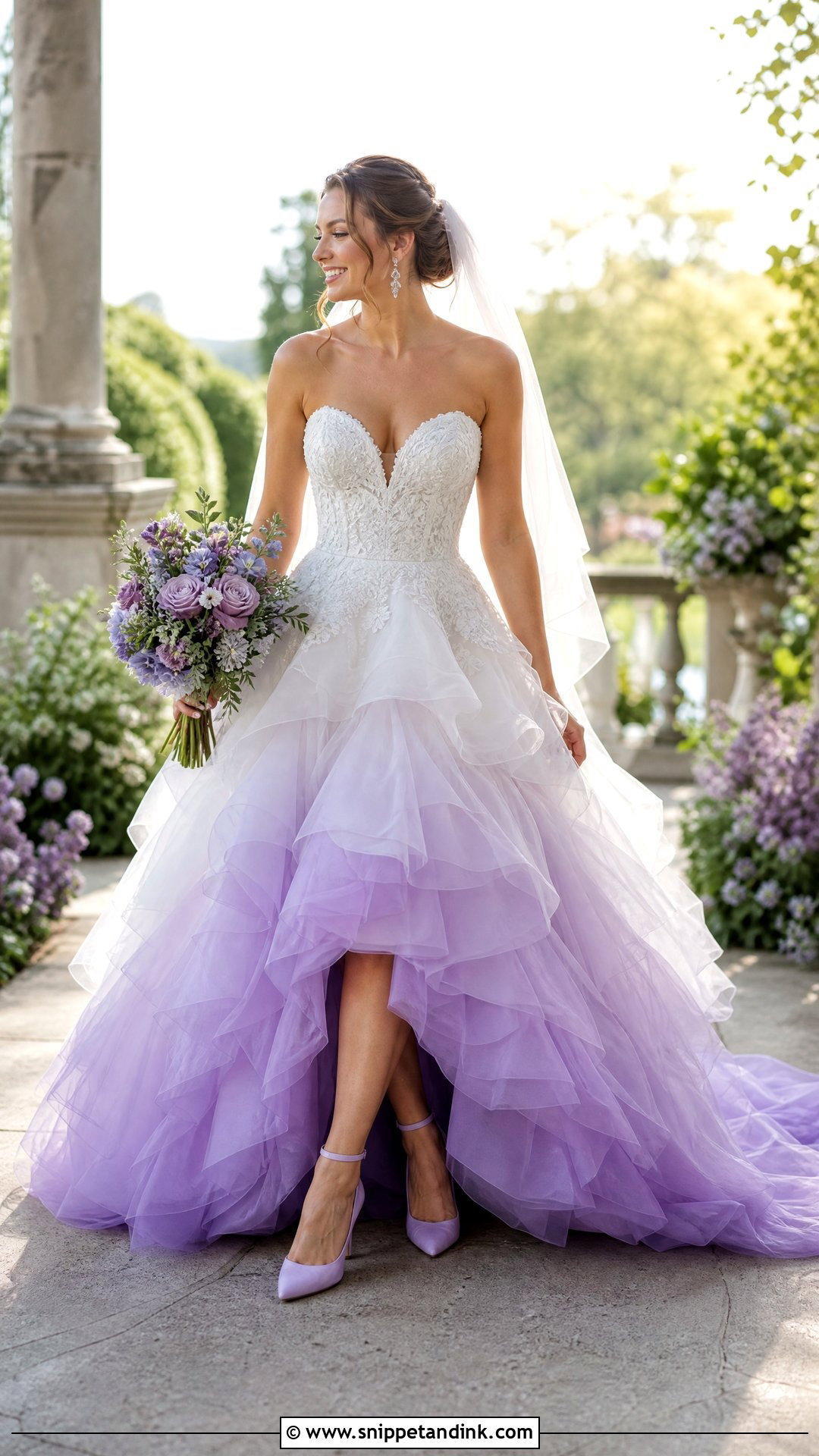
Purple ombre runs from ivory into lavender, lilac, mauve or violet. Lavender reads springlike; the deeper violets feel more dramatic for autumn or evening. A full tulle skirt gives the colour room and a fitted bodice keeps it polished. Silver drop earrings, a delicate veil and pale lavender heels suit it, and white orchids with lilac accents tie the bouquet in. Purple dyes are among the shades most likely to look different under camera flash, so ask for a flash photo of the sample before you order.
5. Sunset Ombre Wedding Dress
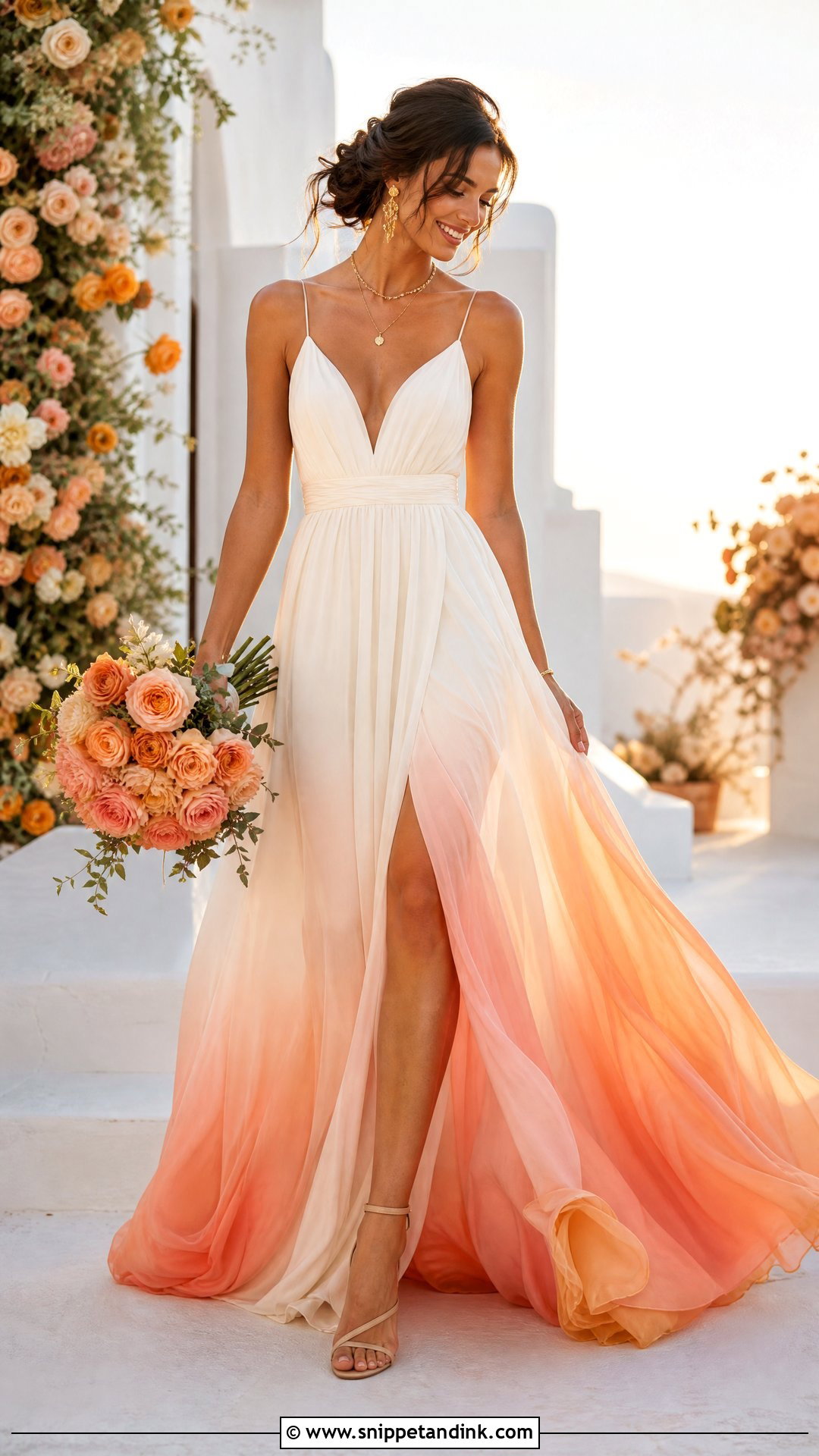
Sunset gradients, ivory into peach, coral, apricot or soft gold, are made for golden-hour photos and warm venues like beaches and deserts. Weight matters here: lightweight tulle, chiffon or organza keeps the colours airy, while heavy satin can make orange tones look dense. With a strong skirt, keep the bodice plain. Gold jewellery, strappy nude sandals and a loose bouquet of peach roses and cream flowers suit it. The warm colours glow at sunset and look a little flatter at noon, so time your portraits accordingly.
6. Black Ombre Wedding Dress
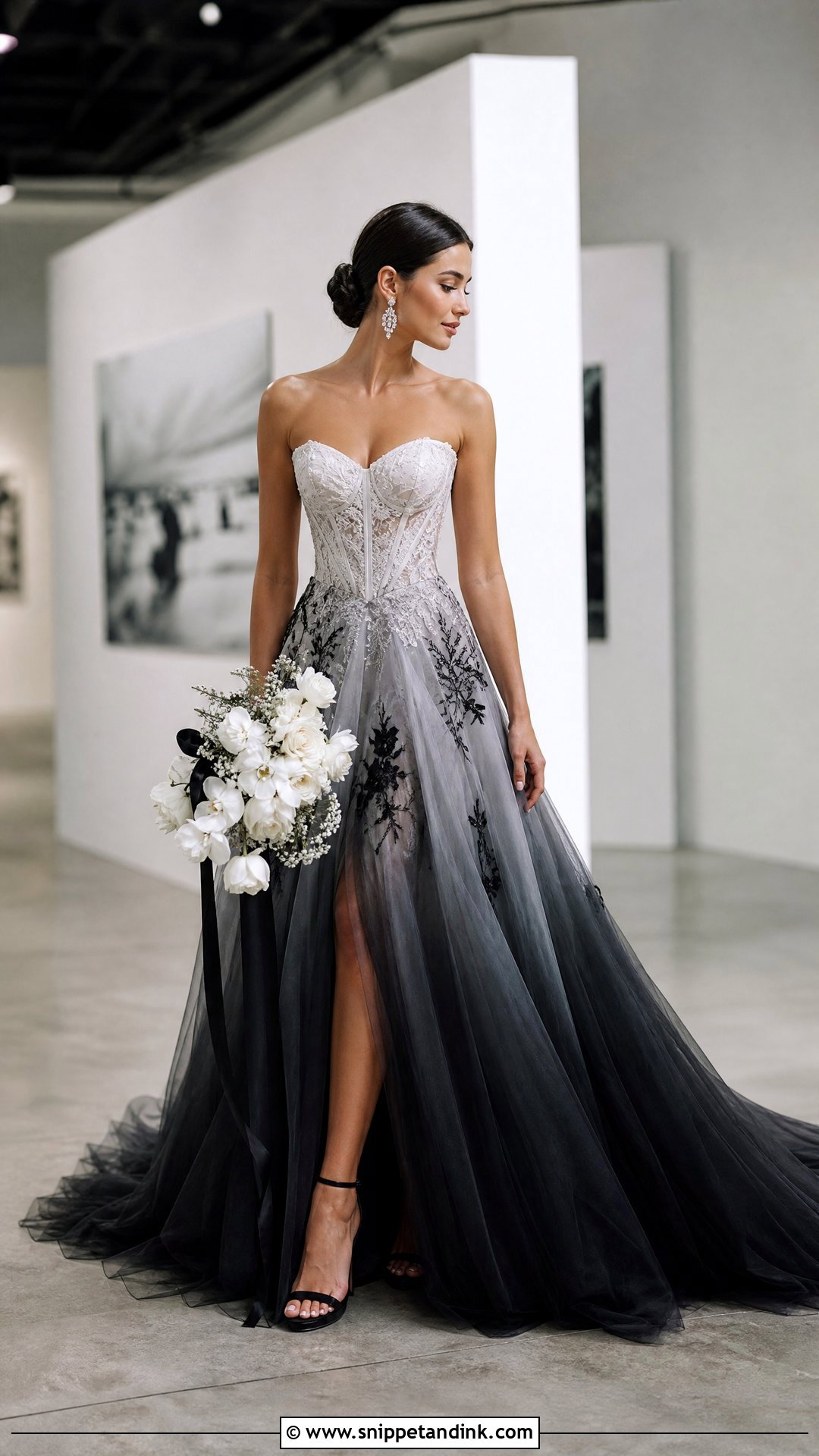
Black ombre is dramatic without being gothic when the top stays ivory, nude or champagne and the darkness gathers in the hem and train. A fitted corset bodice and full skirt make the contrast sharp. It’s at home in galleries, modern venues and evening weddings. Black heels, crystal earrings and a sleek low bun suit it, and white flowers with deep greenery keep the bouquet bridal. Be prepared for a strong reaction from some relatives; I’d show them a photo before the day rather than surprise them at the aisle.
7. Red Ombre Wedding Dress
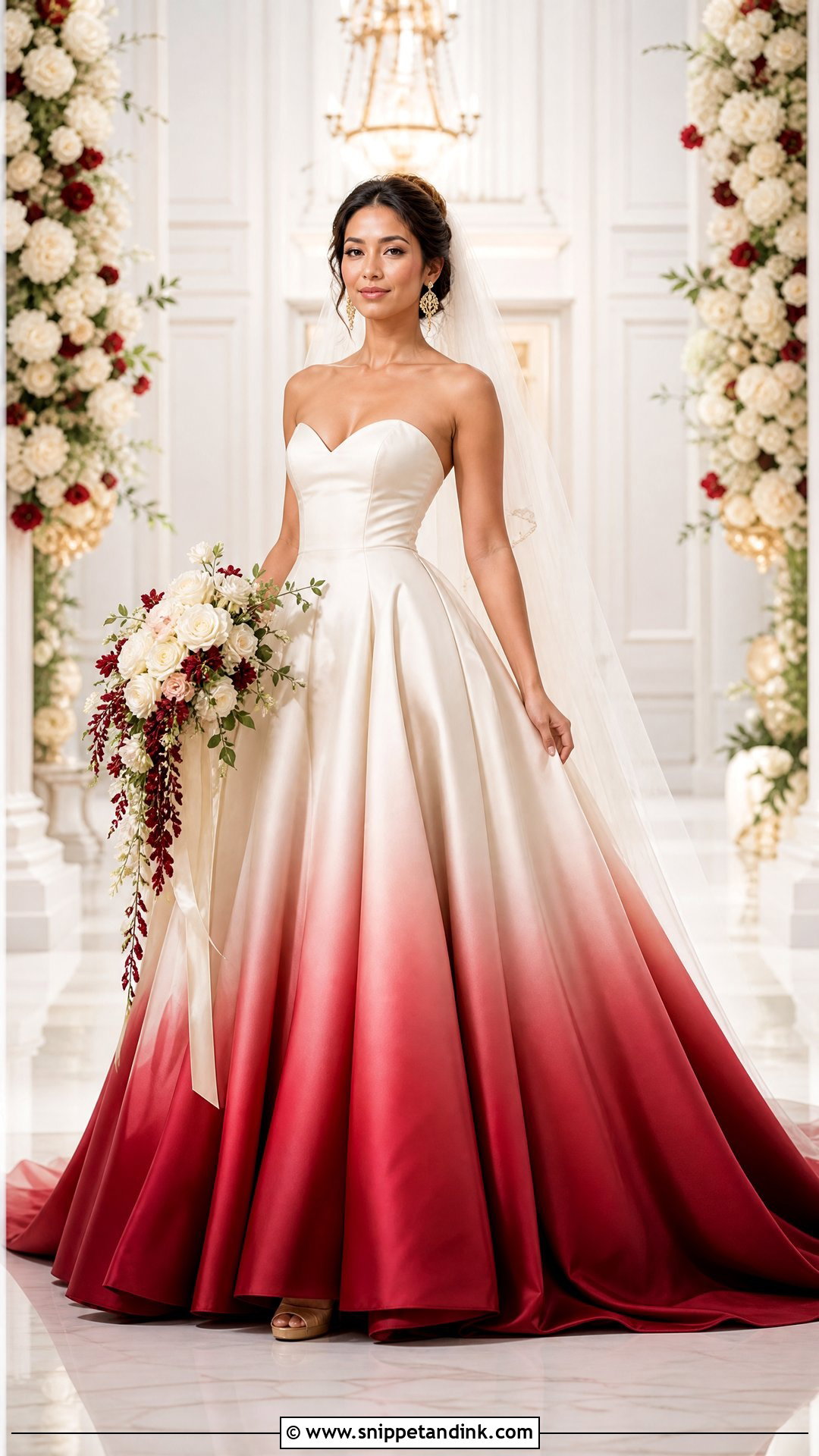
Red carries cultural meaning for many brides, and a red gradient can honour that while keeping an ivory bodice. The fade might run to soft rose, cherry, burgundy or crimson. A satin or tulle ball gown makes it grand; a fitted mermaid makes it sleek. Gold earrings, nude heels and a classic veil keep the accessories refined, and a bouquet of ivory with red accents ties it together. Red dyes can bleed when wet, so if rain is possible, keep the hem bustled until you’re indoors.
8. Gold Ombre Wedding Dress
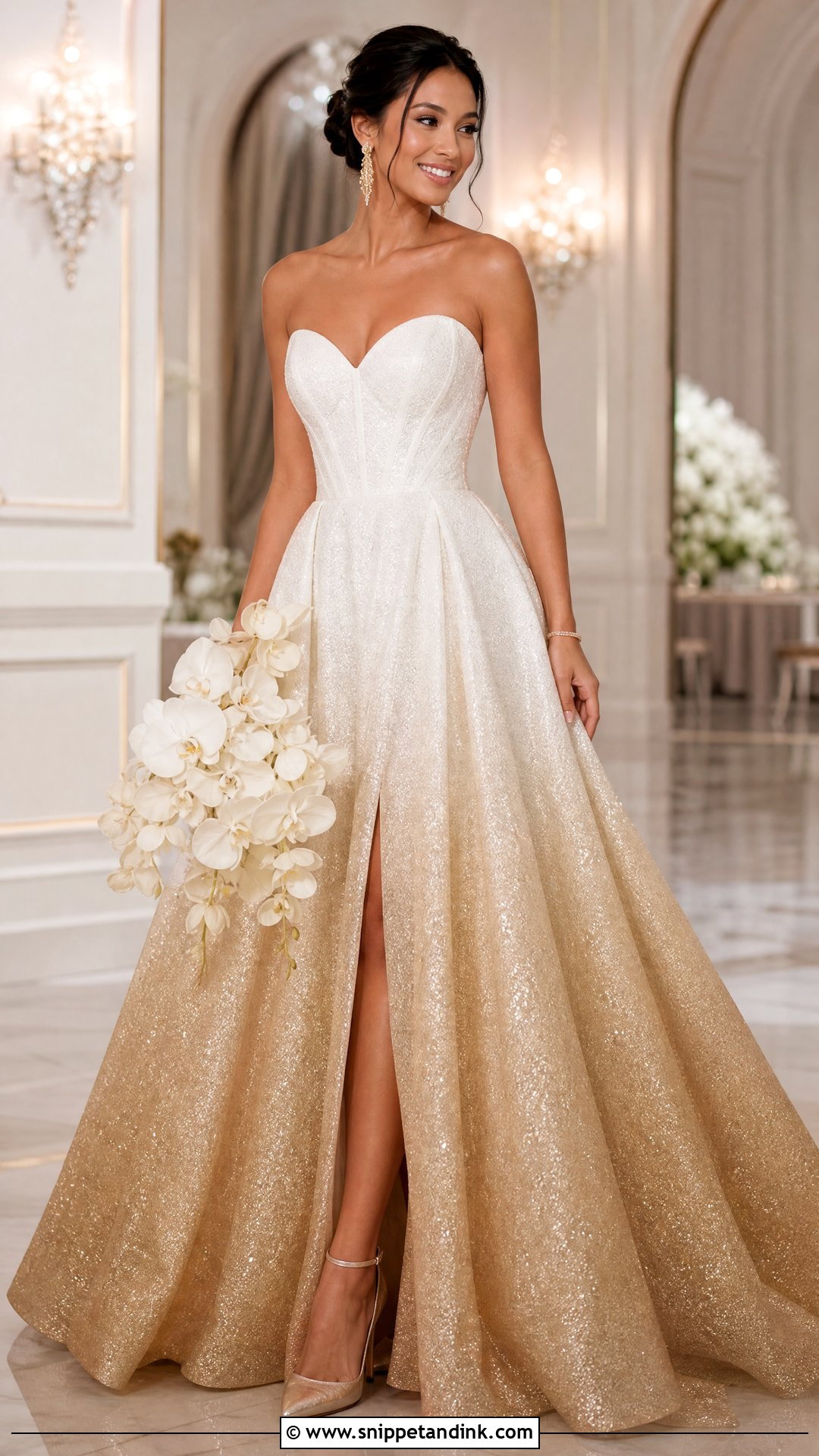
Gold ombre usually starts in ivory lace or satin and fades into champagne, antique gold or a metallic shimmer at the hem. A structured bodice balances any sparkle in the lower half. Ballrooms, hotels and rooftops suit it. Gold earrings, a sleek bracelet and champagne heels keep the warmth consistent, with white roses, cream orchids and beige ribbon in the bouquet. Metallic thread embroidery can catch on lace veils, so choose a veil with a plain edge if the skirt is embellished.
9. Green Ombre Wedding Dress
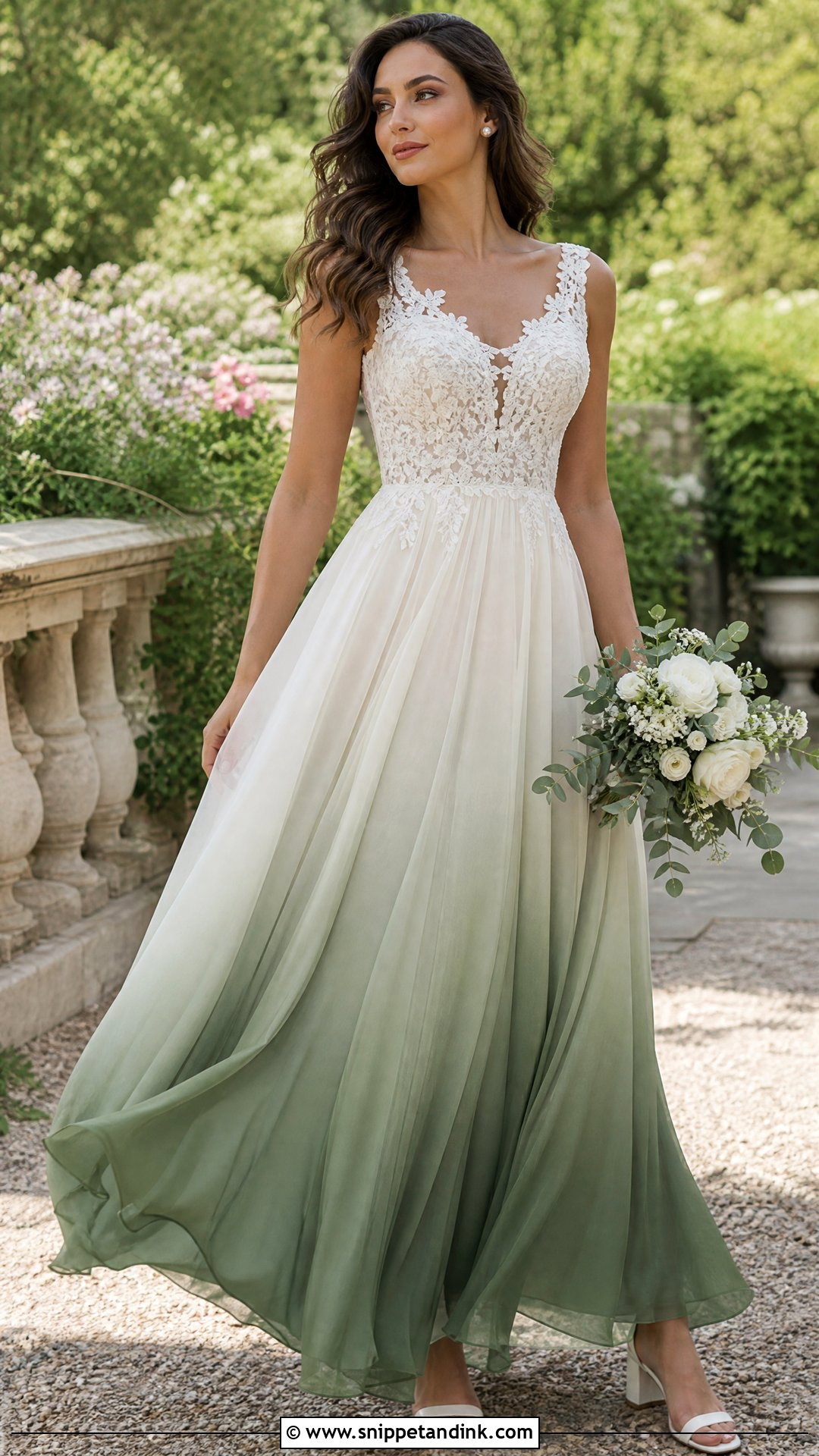
Green fades from ivory into sage, mint, moss or emerald. Sage green sits naturally in a garden; deeper greens suit forests, mountains and autumn. A lace bodice with a flowing chiffon skirt feels organic. Ivory block heels are kinder on soft ground than stilettos. Pearl studs and soft waves keep it simple, and a bouquet with eucalyptus and textured greenery makes the dress feel part of the setting. Against a very green backdrop, a mid-tone sage can blend in, so a slightly deeper hem helps you stand out in photos.
10. Rainbow Ombre Wedding Dress
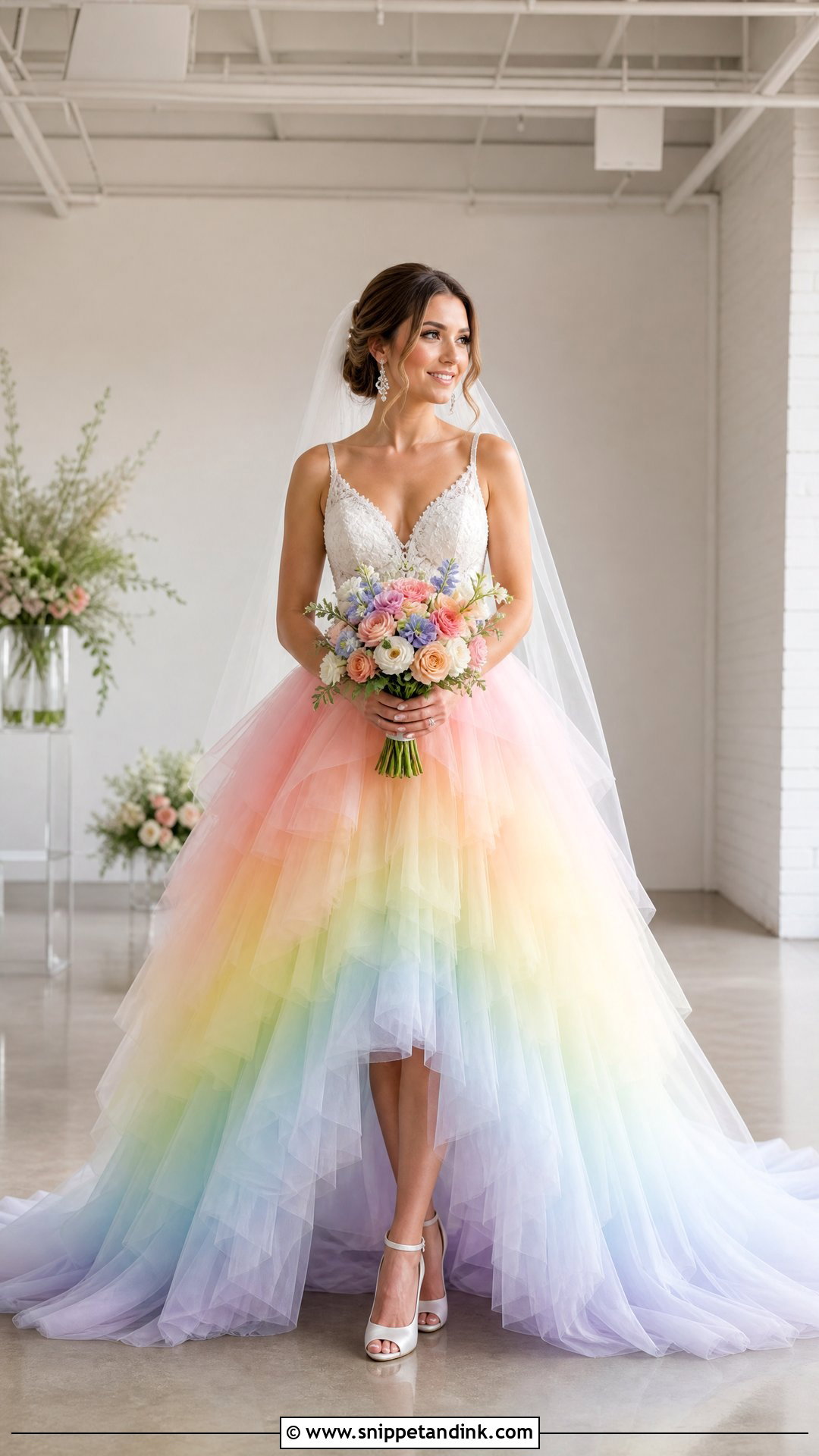
Rainbow is the boldest choice here, and the most bridal versions keep the bodice white or ivory with the fade running through the skirt or train. Pastel rainbows feel dreamy; bright ones feel playful. Layered tulle is essential because it blends the colours instead of striping them. Everything else stays quiet: white heels, small crystal earrings and a clean veil. A mixed pastel bouquet that repeats two or three of the skirt’s colours ties it together without turning into a second rainbow.
11. Pastel Ombre Wedding Dress
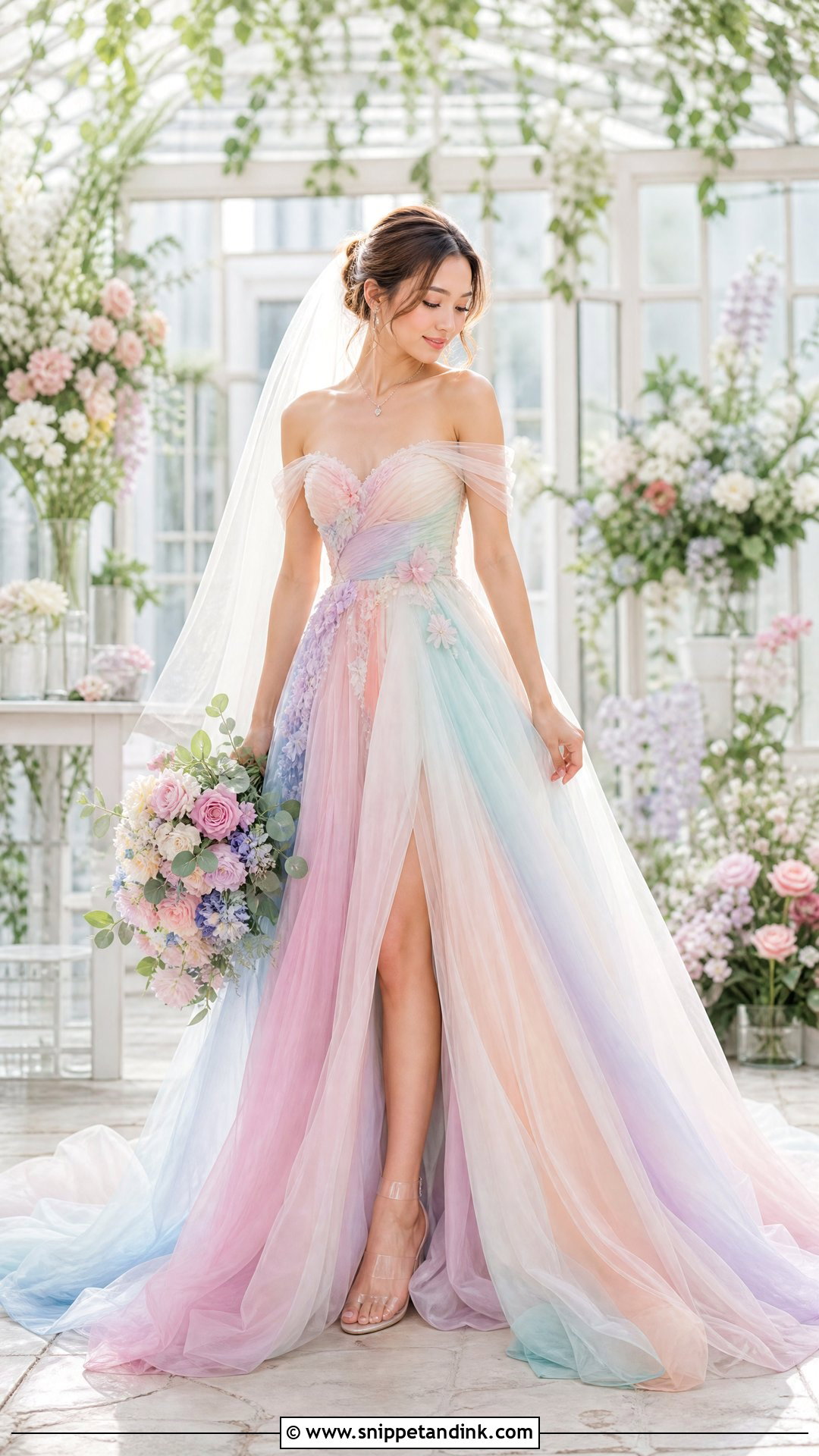
Pastel ombre blends pale pink, lavender, mint, blue and peach into a watercolour wash rather than one strong fade. Tulle and organza keep it light. Choose a simple bodice, delicate straps or off-the-shoulder sleeves, because a busy top on top of five colours is too much. Clear or ivory heels, dainty jewellery and pastel flowers finish it. Greenhouses and spring gardens suit it best. I’d ask to see the gown in natural light, since pastels can drift grey under fluorescent shop lighting.
12. Teal Ombre Wedding Dress
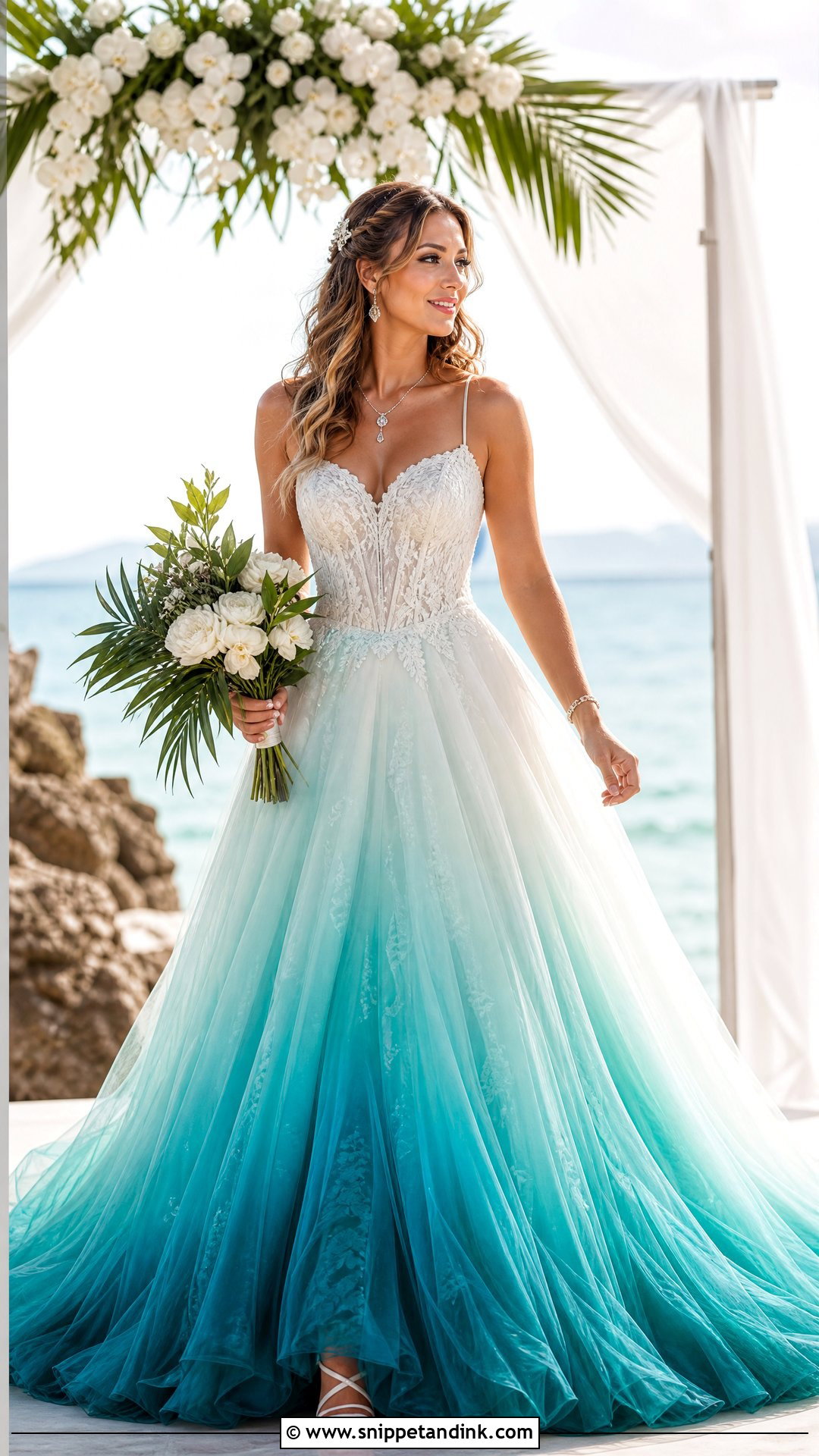
Teal ombre moves from ivory into aqua, turquoise, teal or a deep blue-green at the hem, an ocean palette for beach and tropical weddings or any bride who loves jewel tones. A fitted bodice and full skirt keep it balanced. Silver jewellery, soft waves and white sandals feel fresh, with ivory flowers, blue-green accents and tropical leaves in the bouquet. Teal is strong, but the fade softens it enough that it rarely overpowers the bride’s face.
13. Lavender Ombre Wedding Dress
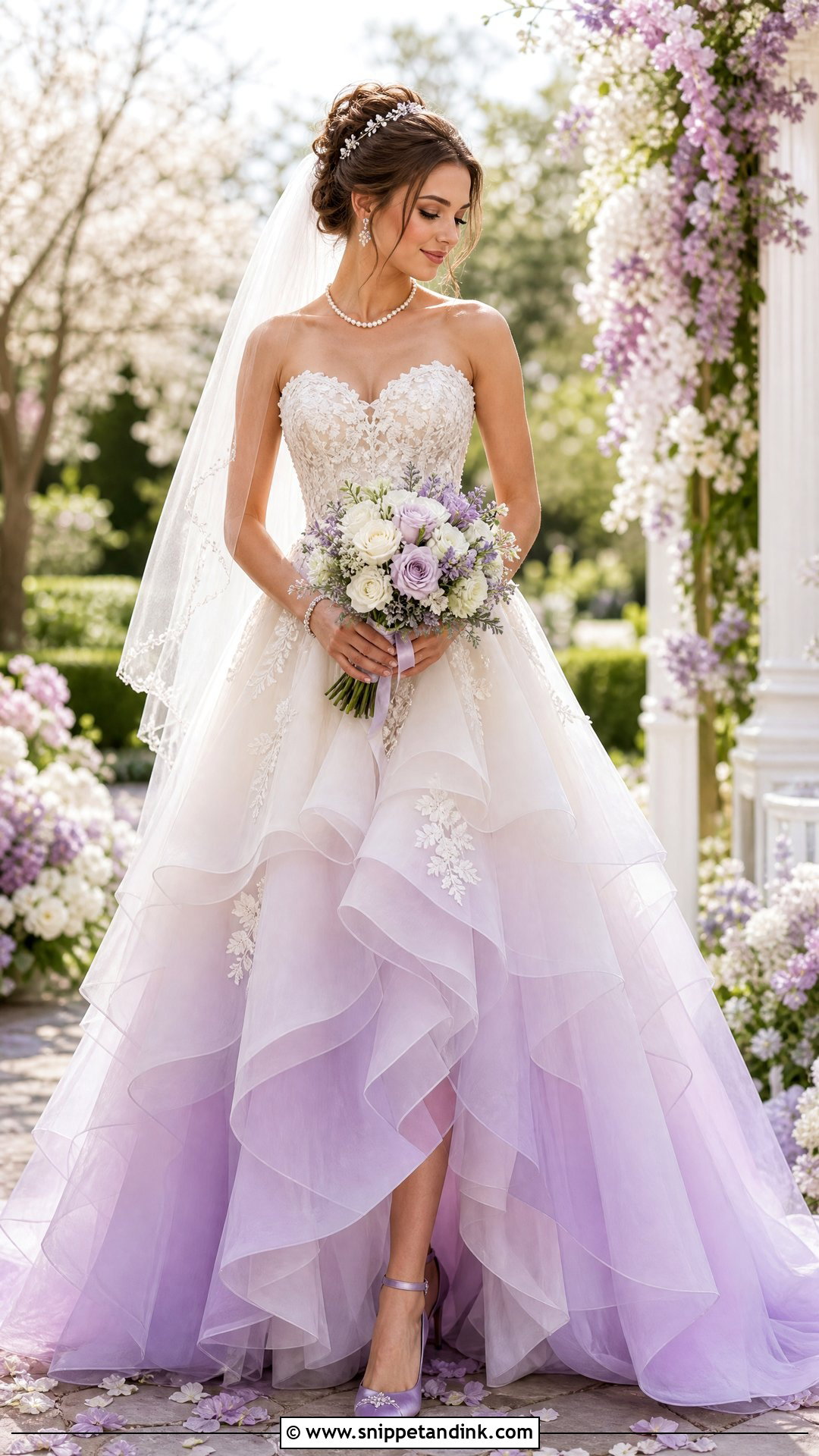
Lavender suits a wide range of skin tones because it has both warm and cool notes. Starting in ivory and shifting into soft lavender through the skirt, sleeves or train, it’s a natural fit for vineyards and spring gardens. A lace or embroidered bodice adds texture, and a sheer layered skirt keeps the colour light. Silver or pearl jewellery, lavender-toned shoes and a sheer veil suit it. White roses with lavender sprigs finish the bouquet; real lavender also smells lovely and holds up well out of water.
14. Champagne Ombre Wedding Dress
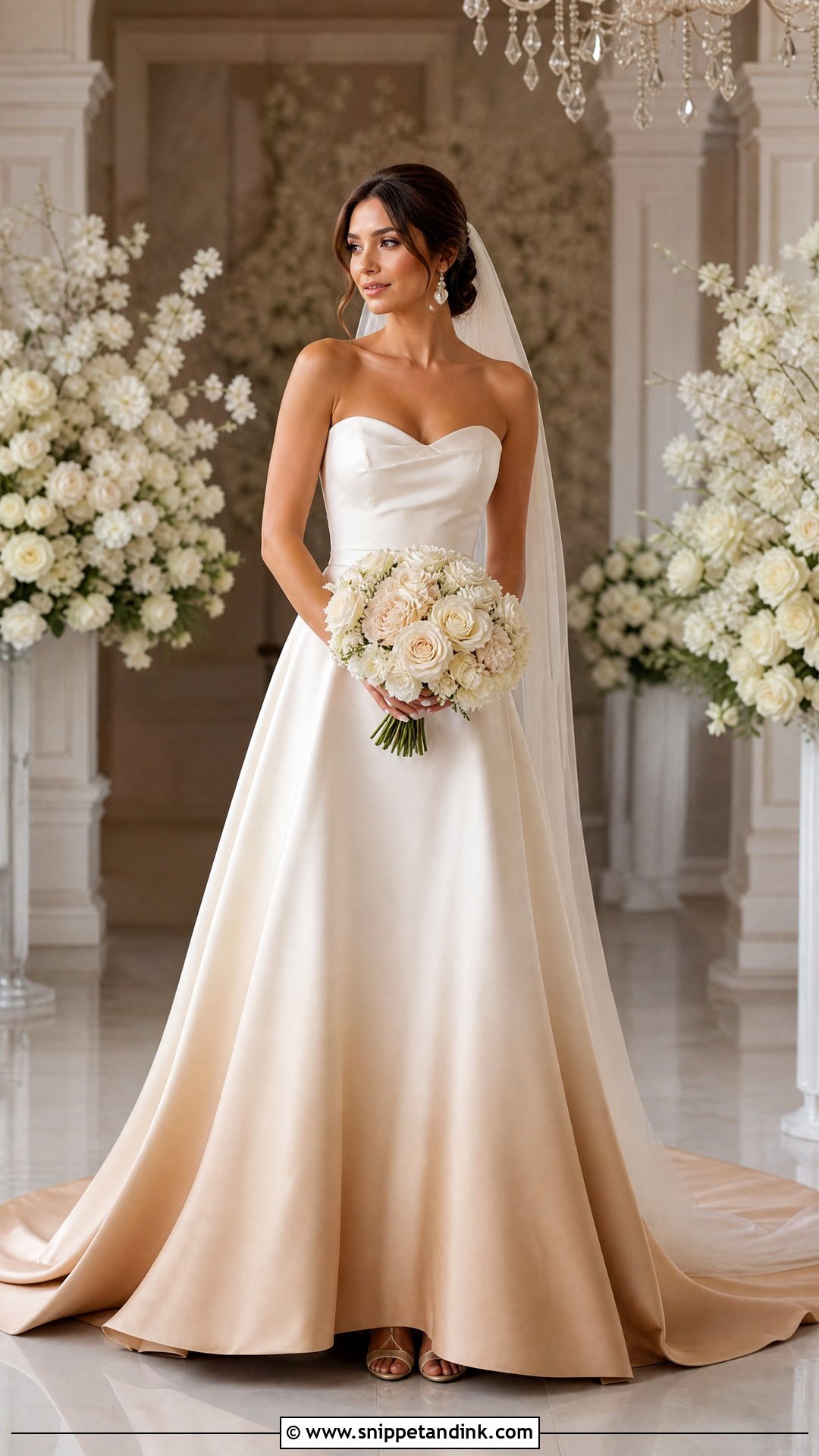
Champagne ombre is warmer than white but still classic. The gradient fades from ivory into champagne, beige, soft gold or honey. It flatters warm and olive skin tones particularly well, while very fair, cool-toned brides sometimes look better with the lighter end kept longer. A satin A-line or lace fit-and-flare gives it a timeless feel. Champagne heels, pearl earrings and a soft ivory veil suit it, with cream roses, dried accents and beige ribbon in the bouquet.
15. Gray Ombre Wedding Dress
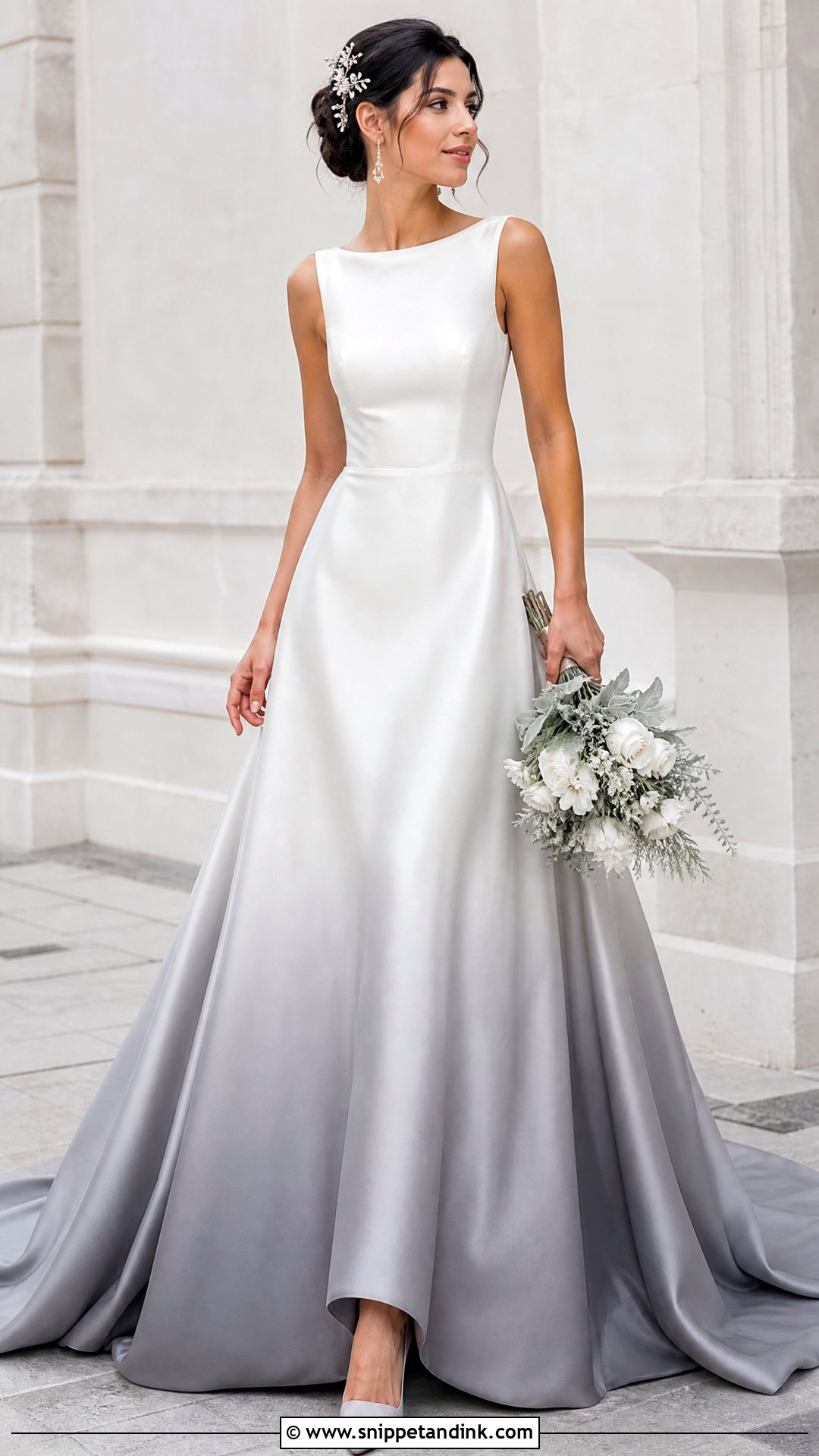
Grey ombre starts in ivory and moves into dove gray, silver, charcoal or smoky blue-grey. It’s understated and modern, a good fit for winter, city venues and minimalist ceremonies. Sleek satin feels architectural; tulle feels softer. Silver earrings, crystal pins and pale grey or ivory heels suit it, and dusty miller in the bouquet picks up the cool palette. Grey near the face can drain colour, so keep the bodice ivory and let the grey start below the waist.
16. Peach Ombre Wedding Dress
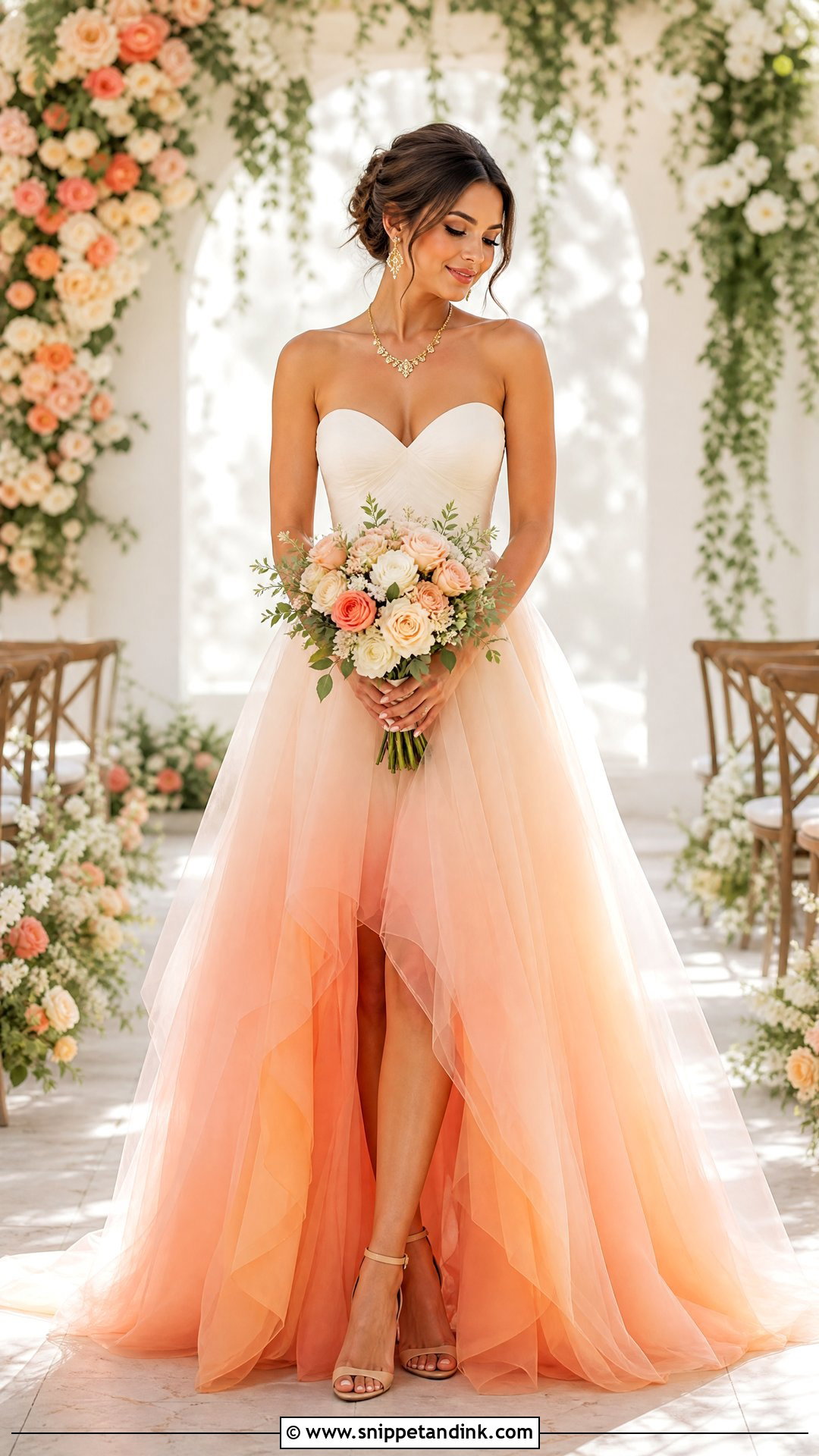
Peach melts from ivory or cream into apricot or coral at the skirt. It’s warm and fresh for spring and summer. A strapless or sweetheart bodice with full tulle creates a romantic shape. Gold jewellery, nude heels and peach blush suit it, and cream blooms with peach roses tie the bouquet in. Peach and blush can look almost identical in photos, so if you want people to notice it’s peach, go a shade deeper at the hem.
17. Burgundy Ombre Wedding Dress
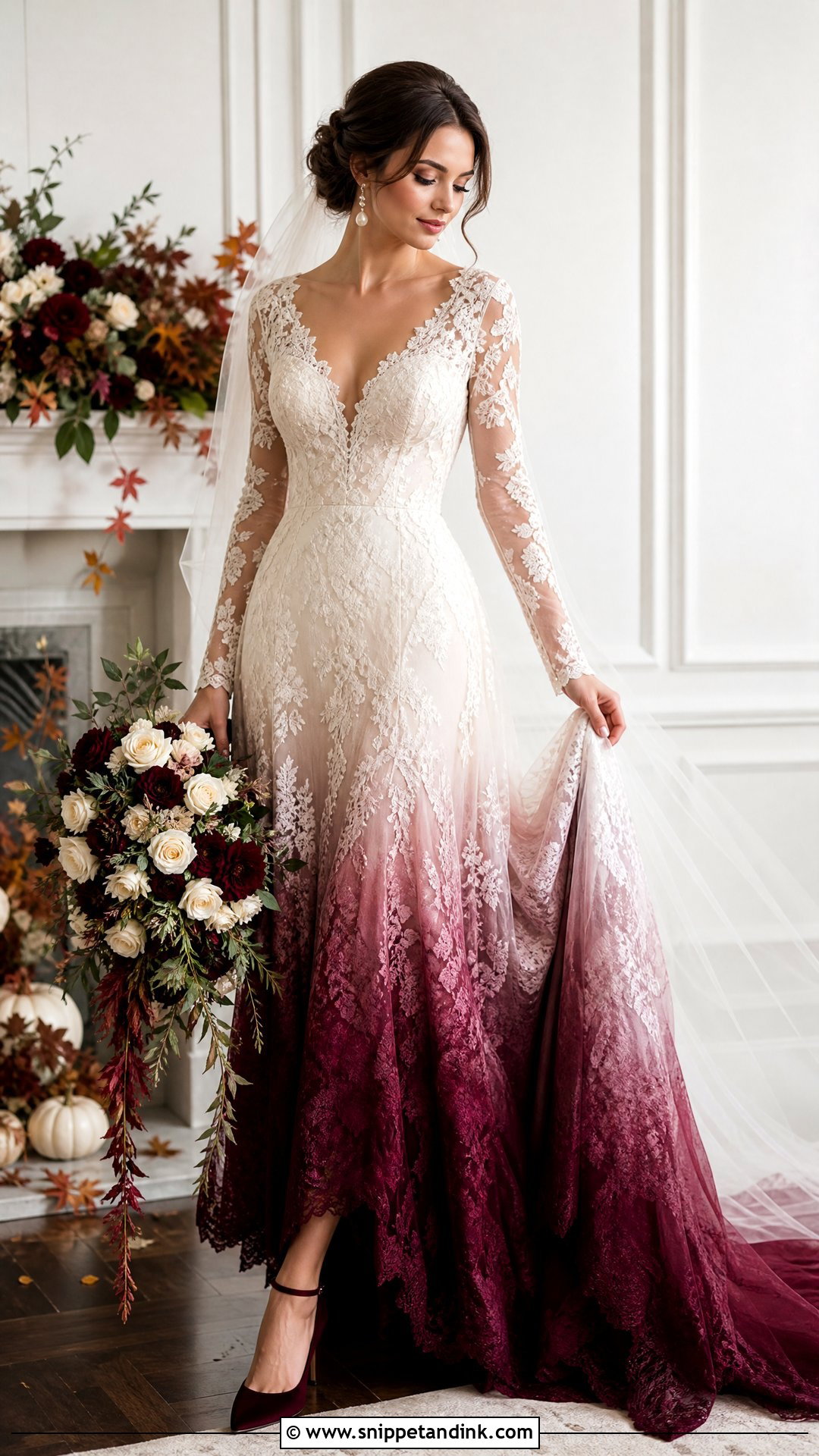
Burgundy belongs to autumn and winter. The bodice stays ivory or champagne while the skirt deepens into wine or berry. It suits candlelit venues and moody florals. A long-sleeve lace bodice adds elegance, and a layered skirt gives the colour depth. Gold or pearl earrings, burgundy heels and a classic veil balance the drama, with ivory and burgundy blooms in the bouquet. Dark dyes rub off more easily when damp, so I’d avoid ivory shoes that might pick up colour from a wet hem.
18. Floral Ombre Wedding Dress
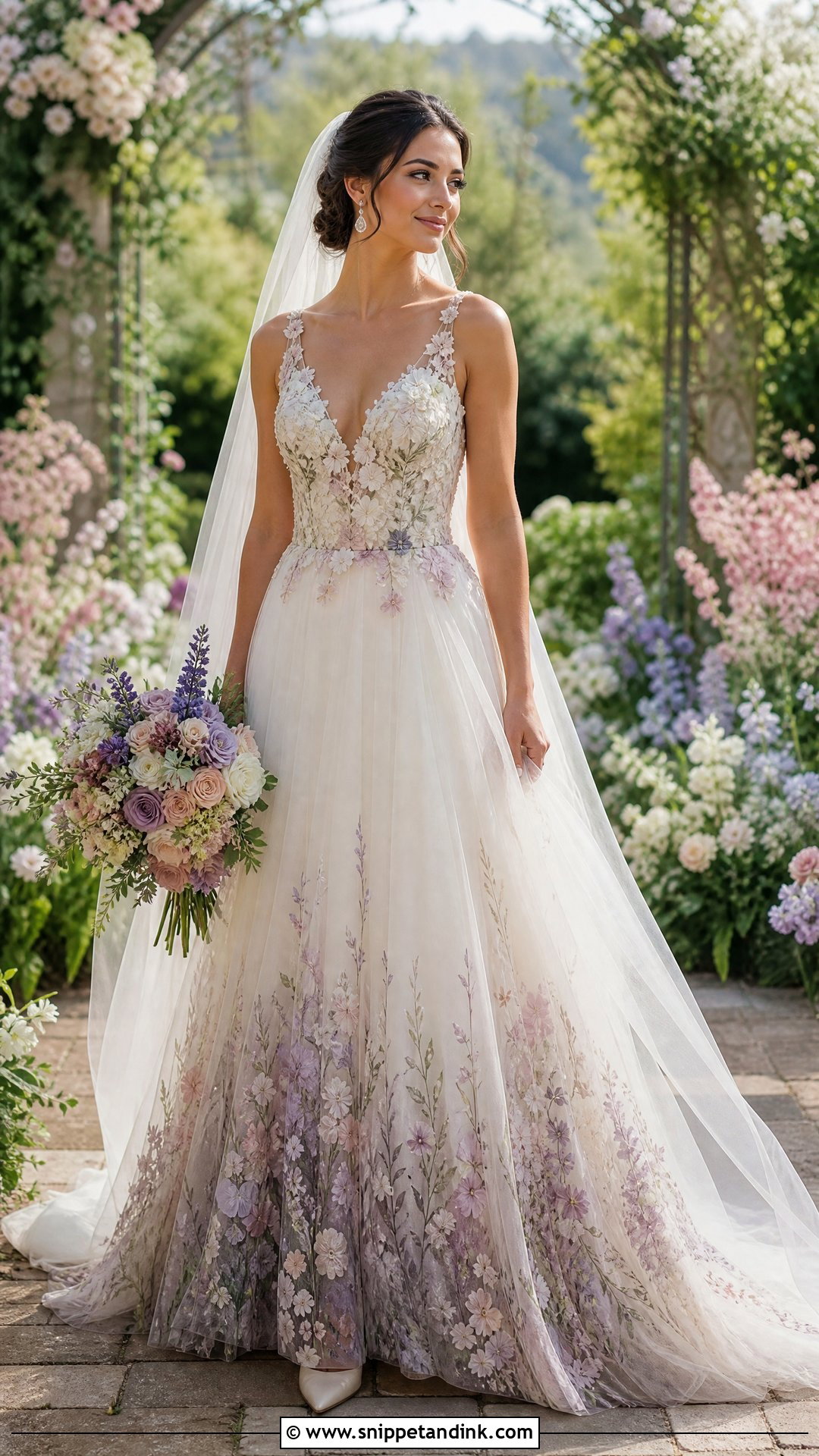
Here the colour comes from flowers: coloured embroidery, painted blooms or a dyed skirt fading into soft botanical tones. Hand-painted gowns are one of a kind, so ask how the paint has been sealed and whether it can be cleaned. A fitted bodice with floral appliqué and a soft tulle skirt gives a graceful shape. Ivory or nude heels, pearl earrings and a sheer veil that doesn’t hide the detail suit it. Choose a bouquet that repeats one or two of the dress’s flower colours, not all of them.
19. Dip Dye Ombre Wedding Dress
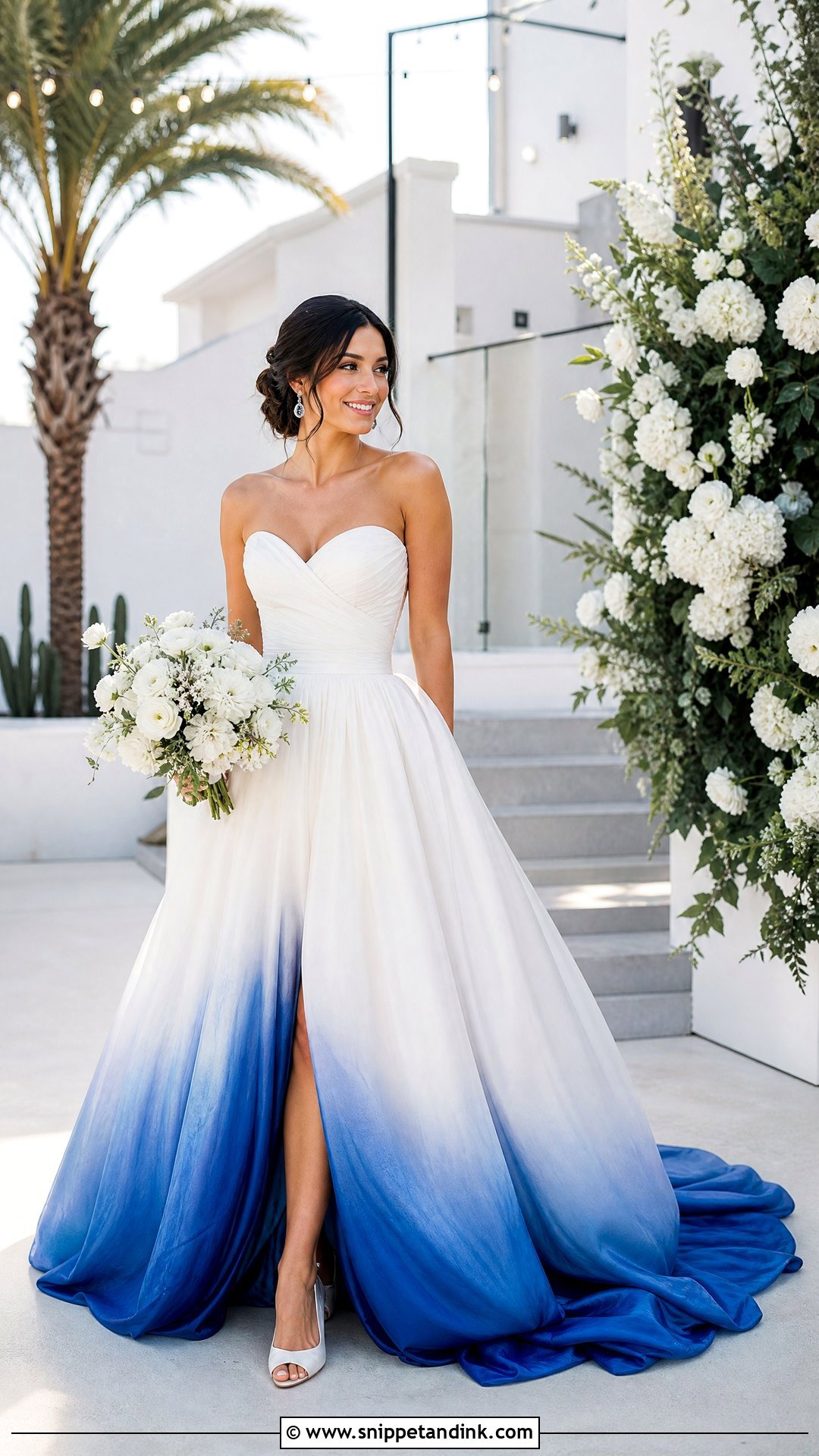
A dip dye ombre wedding dress holds the strongest colour at the hem, as if the skirt had been lowered into pigment. The bodice stays traditional, which is the appeal for many brides. Blue, pink, purple, black, gold and sunset tones are the usual choices. Full skirts, high-low hems and long trains show it best, since the colour sits at the bottom. Clean heels and simple jewellery suit it, and the veil should stop above the deepest colour so it doesn’t mute it.
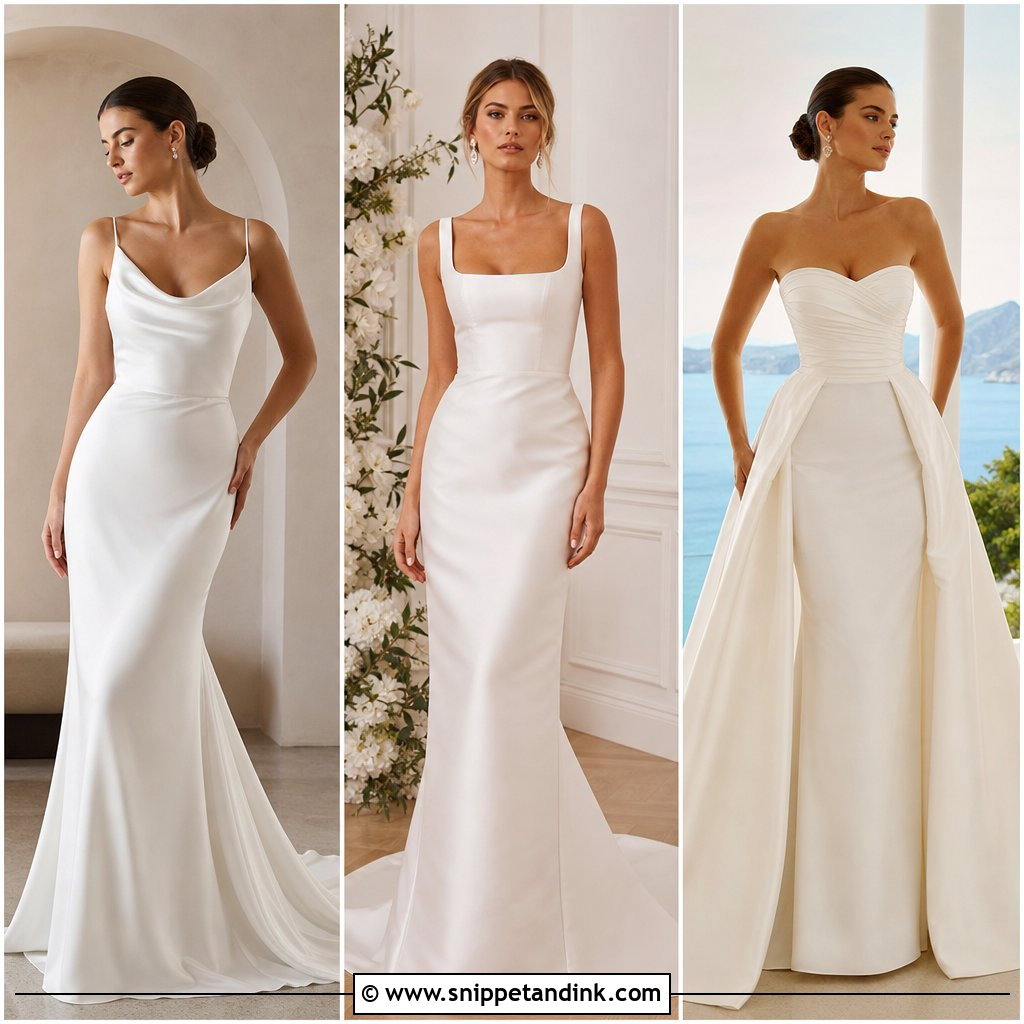

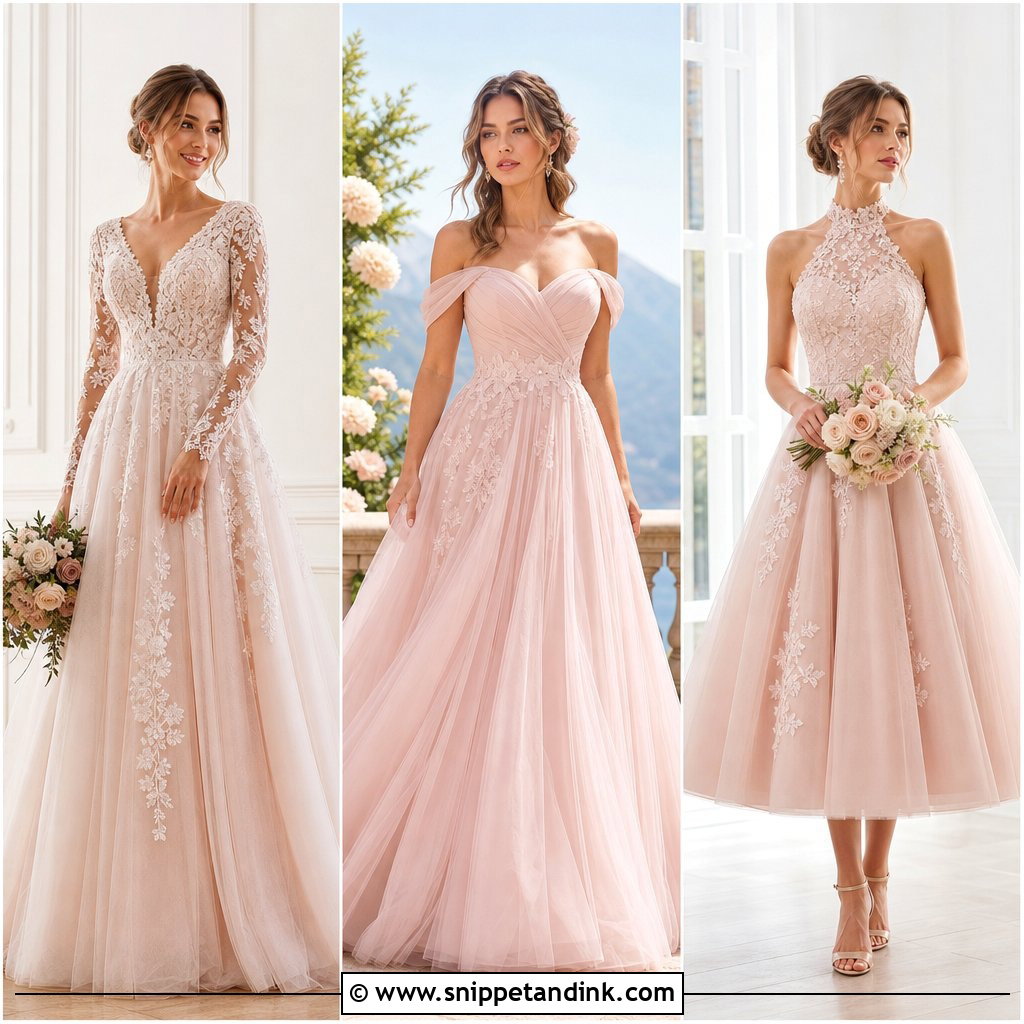


20. Tulle Ombre Wedding Dress
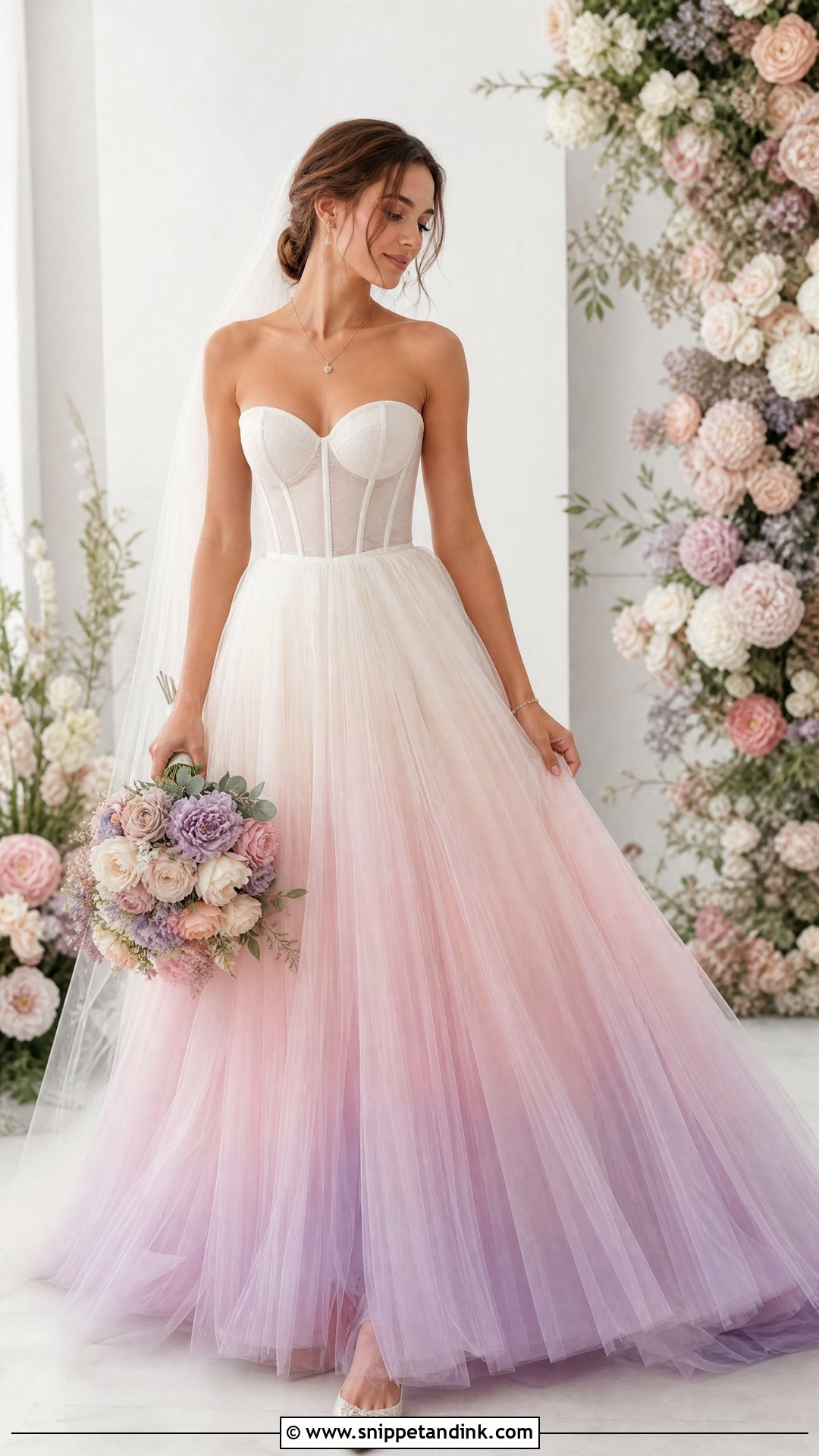
Tulle creates the softest gradient of any fabric, because the layers overlap and the colour looks cloud-like instead of flat. Blush, blue, lavender, pastel rainbow, peach and grey all work. A corset bodice or lace top gives structure, while the skirt moves for photos and dancing. Tulle snags easily on rough surfaces and on embellished shoes, so smooth heels or flats are wiser under a long skirt. Delicate jewellery, a soft veil and a bouquet in matching tones keep it cohesive.
21. Lace Ombre Wedding Dress
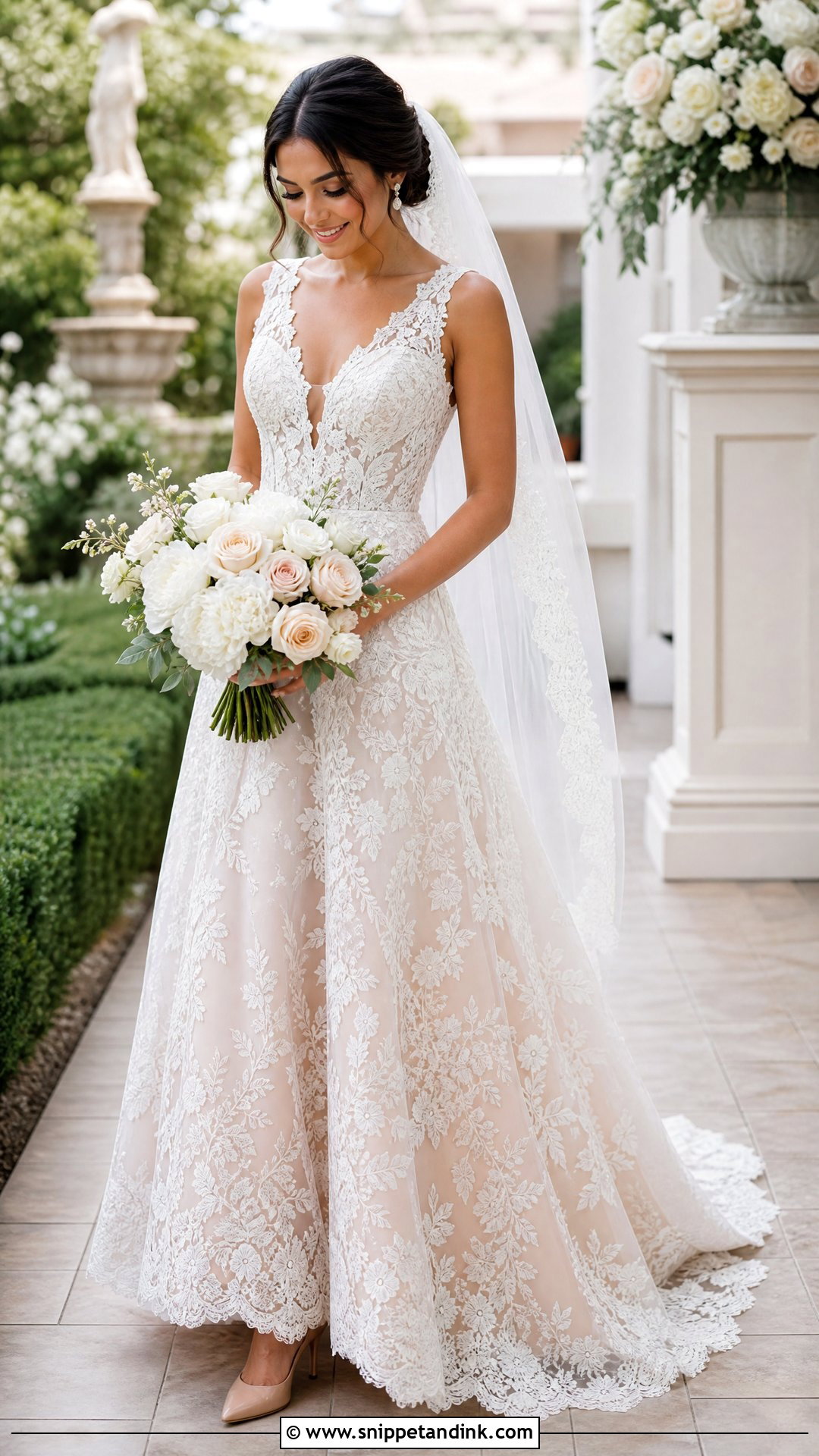
Lace ombre puts the colour either beneath ivory lace as a lining or through embroidered appliqués on the skirt. The lining version is subtler and easier to wear; the appliqué version is more detailed. Blush, champagne, lavender, blue and sage all work. A fitted lace bodice with an A-line or sheath skirt keeps it light. Pearl earrings, a lace-trimmed veil and satin heels in ivory or nude suit it. Hold the gown up to daylight; coloured linings can look stronger outdoors than in the shop.
22. Mermaid Ombre Wedding Dress
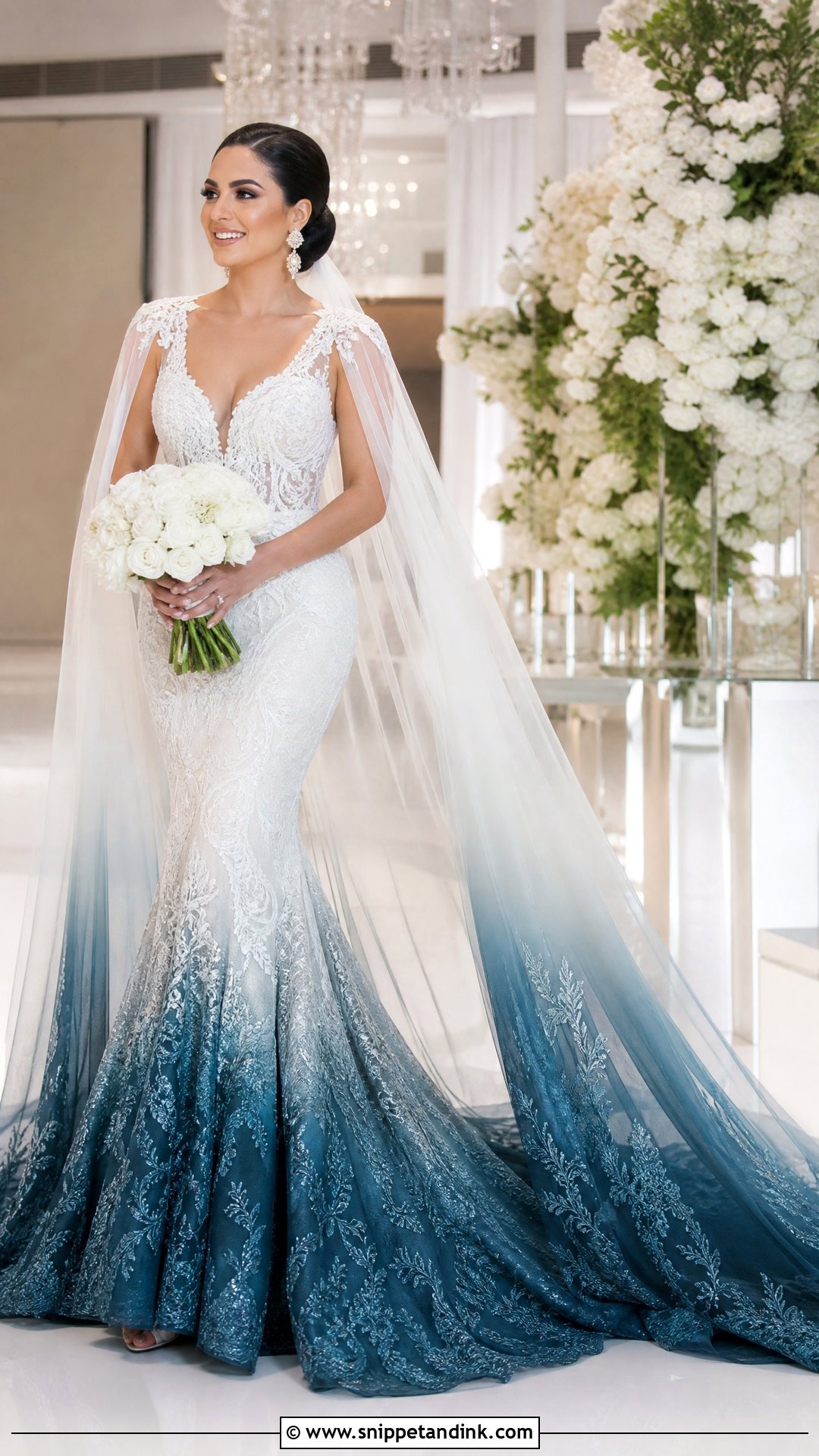
On a mermaid, the colour follows the body and then opens out with the flare, so the gradient usually starts at the hips and strengthens through the skirt and train. Blue, black, red, purple, gold and teal look especially dramatic. Stretch lace, crepe or layered tulle each give a different level of structure. Mermaids limit stride, so practise stairs in the gown before the day. Statement earrings, sleek hair and a fitted or cape veil suit the sculpted shape.
23. Ball Gown Ombre Wedding Dress
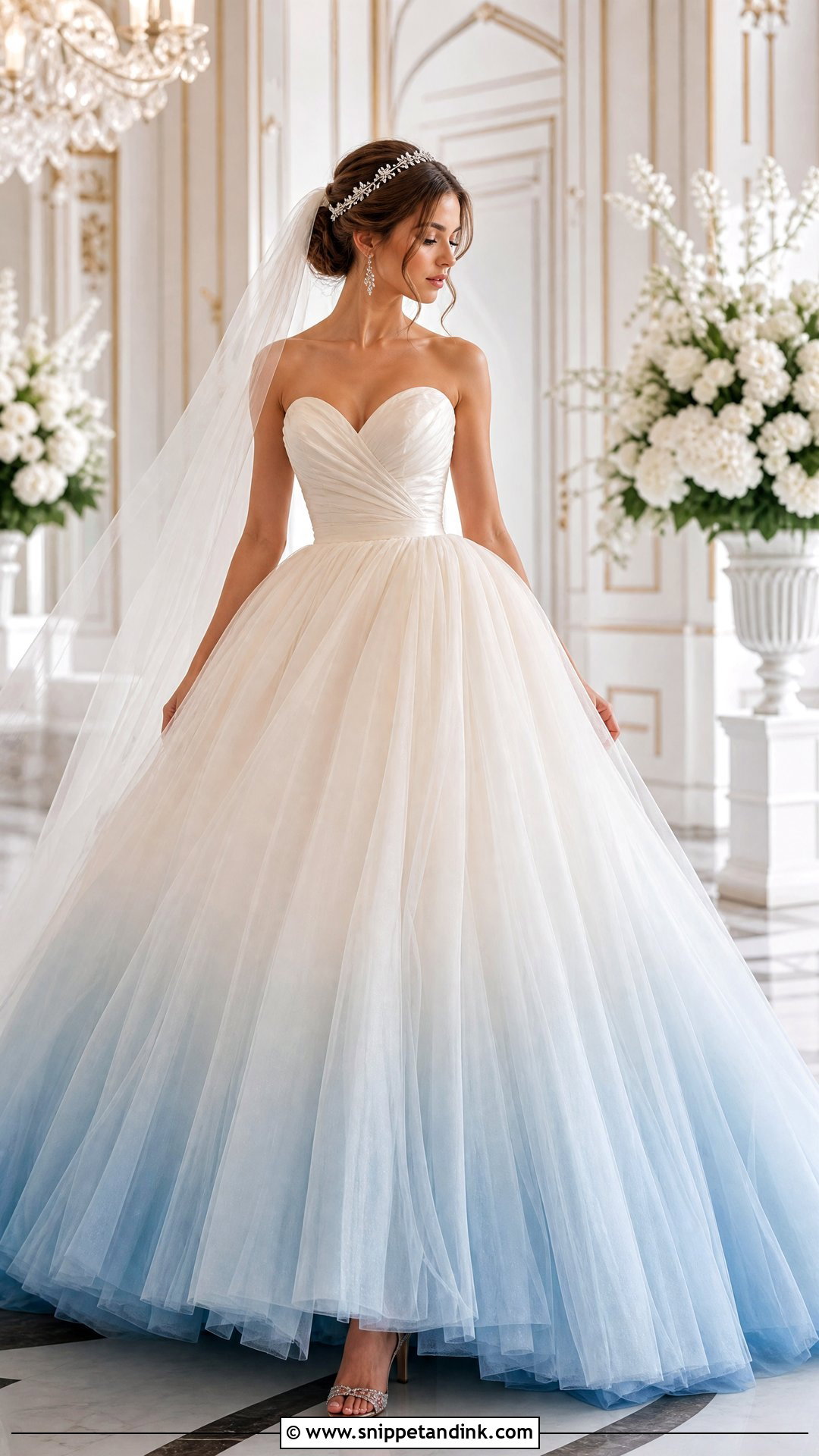
A ball gown gives the colour the most room of any silhouette, fading from waist to hem across a wide skirt. Blush, blue, champagne, lavender and pastel rainbow suit it. A structured bodice keeps it polished, and layered tulle or organza keeps the gradient light. A tiara or crystal headband with simple earrings feels right. If you wear a long veil, choose a sheer one so the skirt shows through. Wide skirts need a plan for the car and the toilet, so practise both before the day.
24. Beach Ombre Wedding Dress
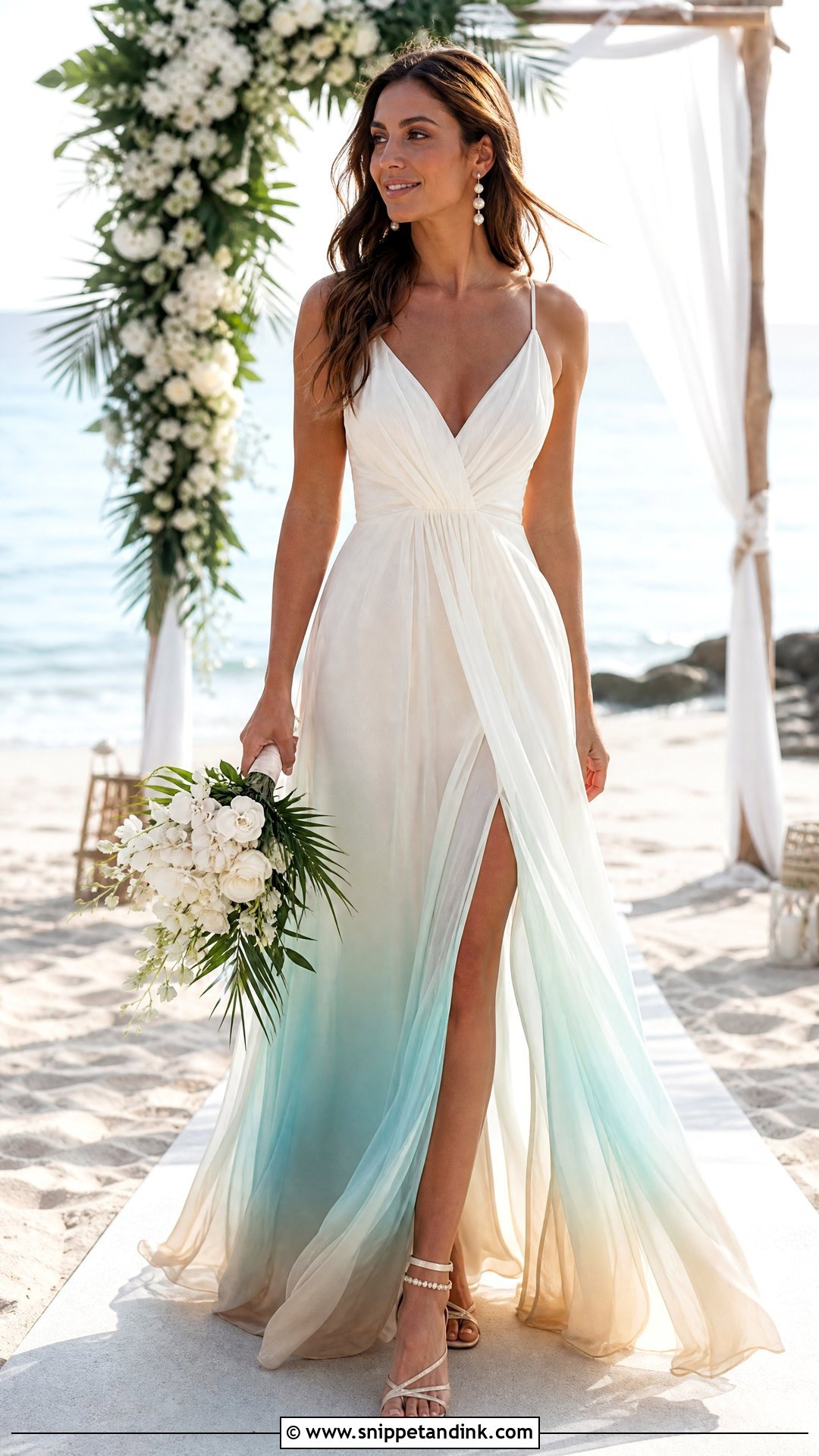
By the water, the dress has to move and breathe. Soft blue, aqua, sand, peach and sunset gradients look natural against sea and sky. Chiffon, organza or lightweight tulle catch the breeze; heavy satin just drags. A simple bodice, low back and flowing skirt are comfortable on sand. Flat sandals, pearl drop earrings and loose waves suit it. Wet sand stains coloured hems differently from ivory ones, so a quick rinse with cool fresh water later is safer than scrubbing.

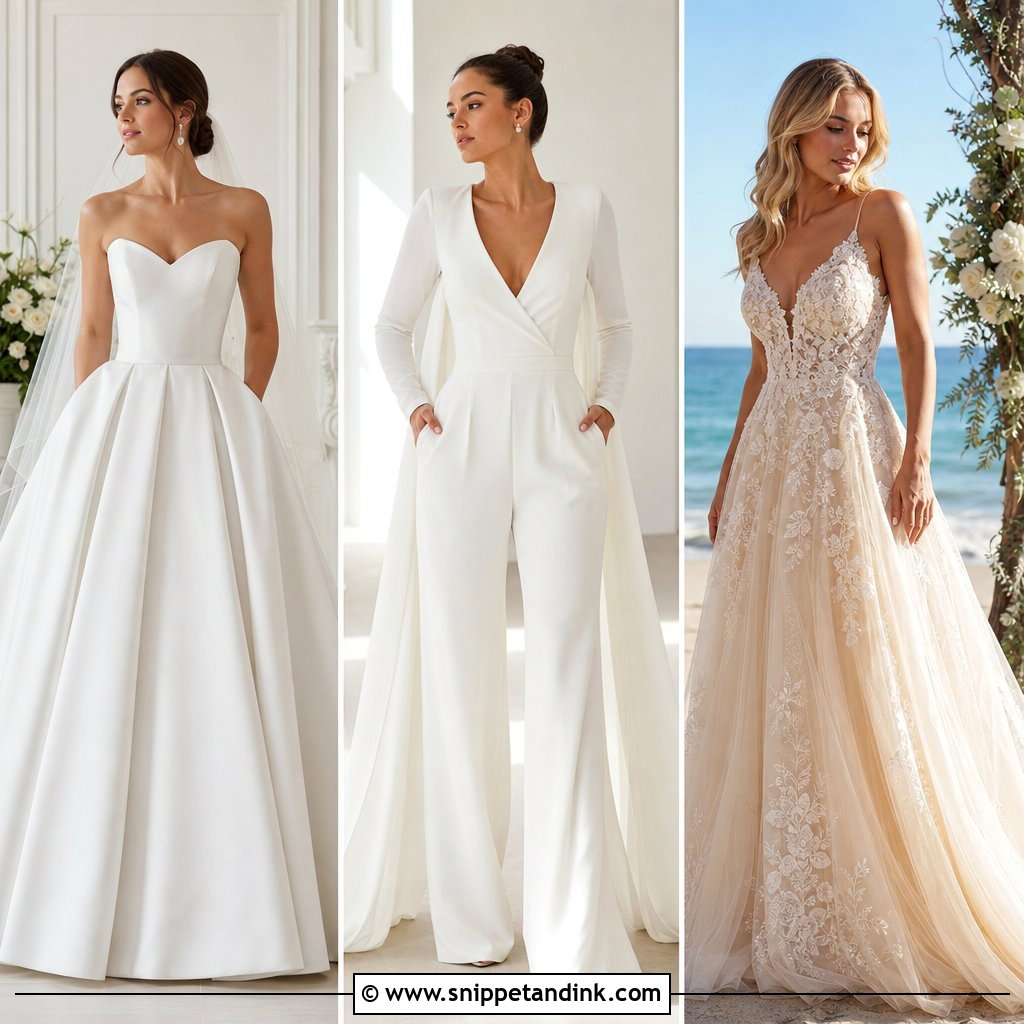

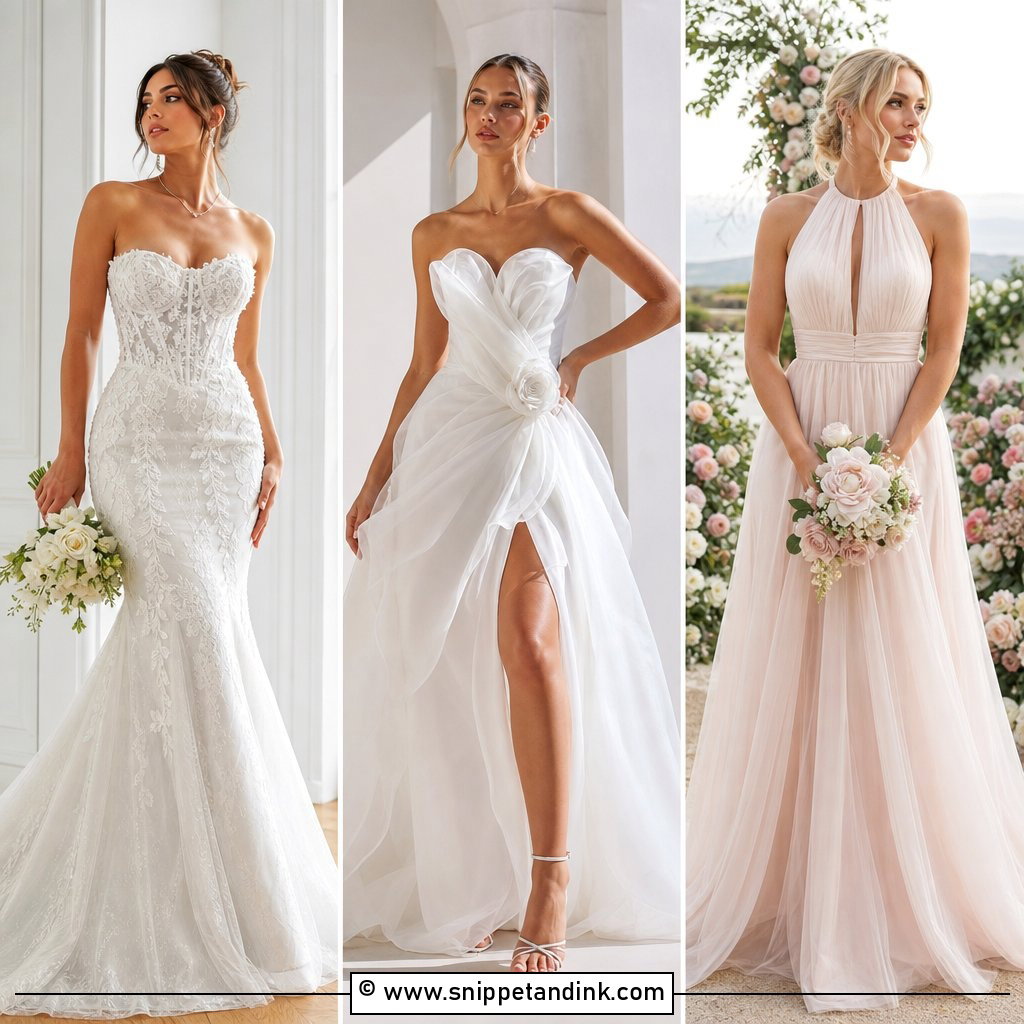
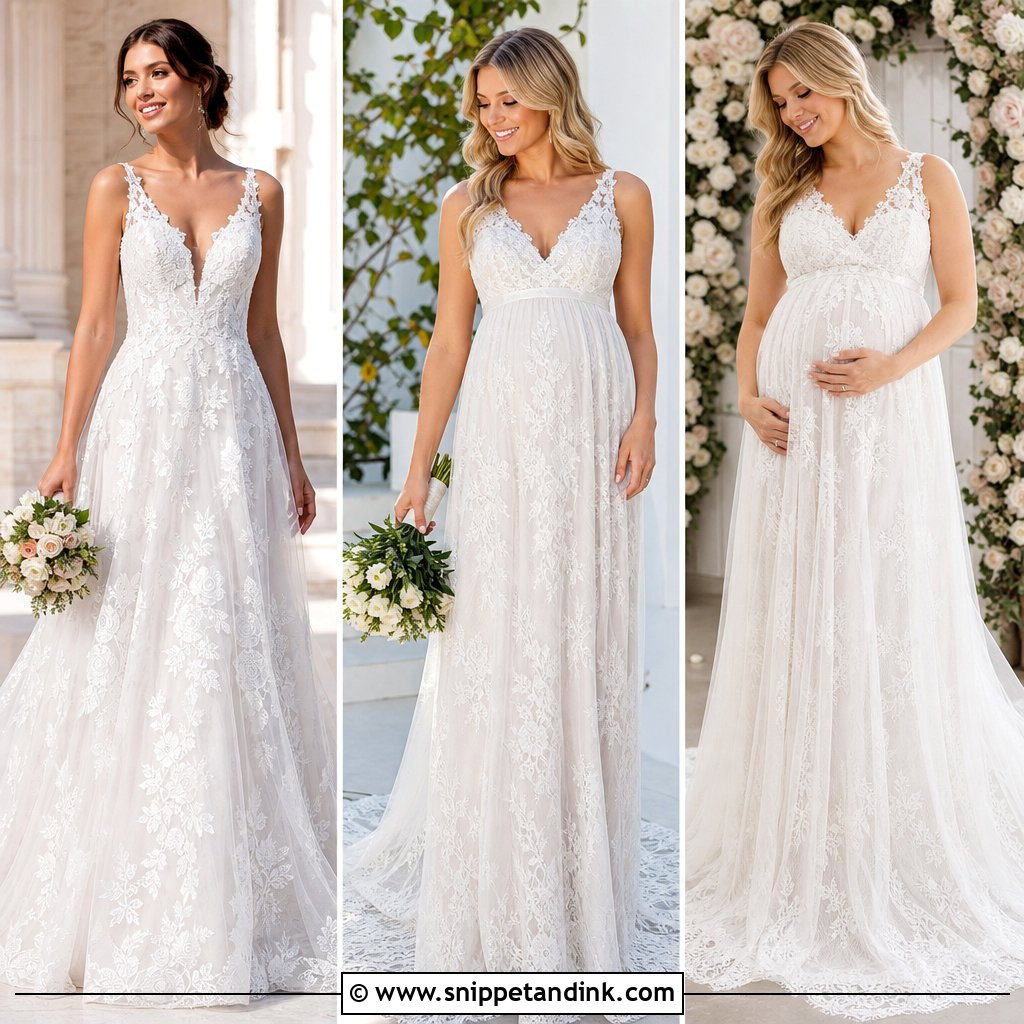
25. Plus Size Ombre Wedding Dress
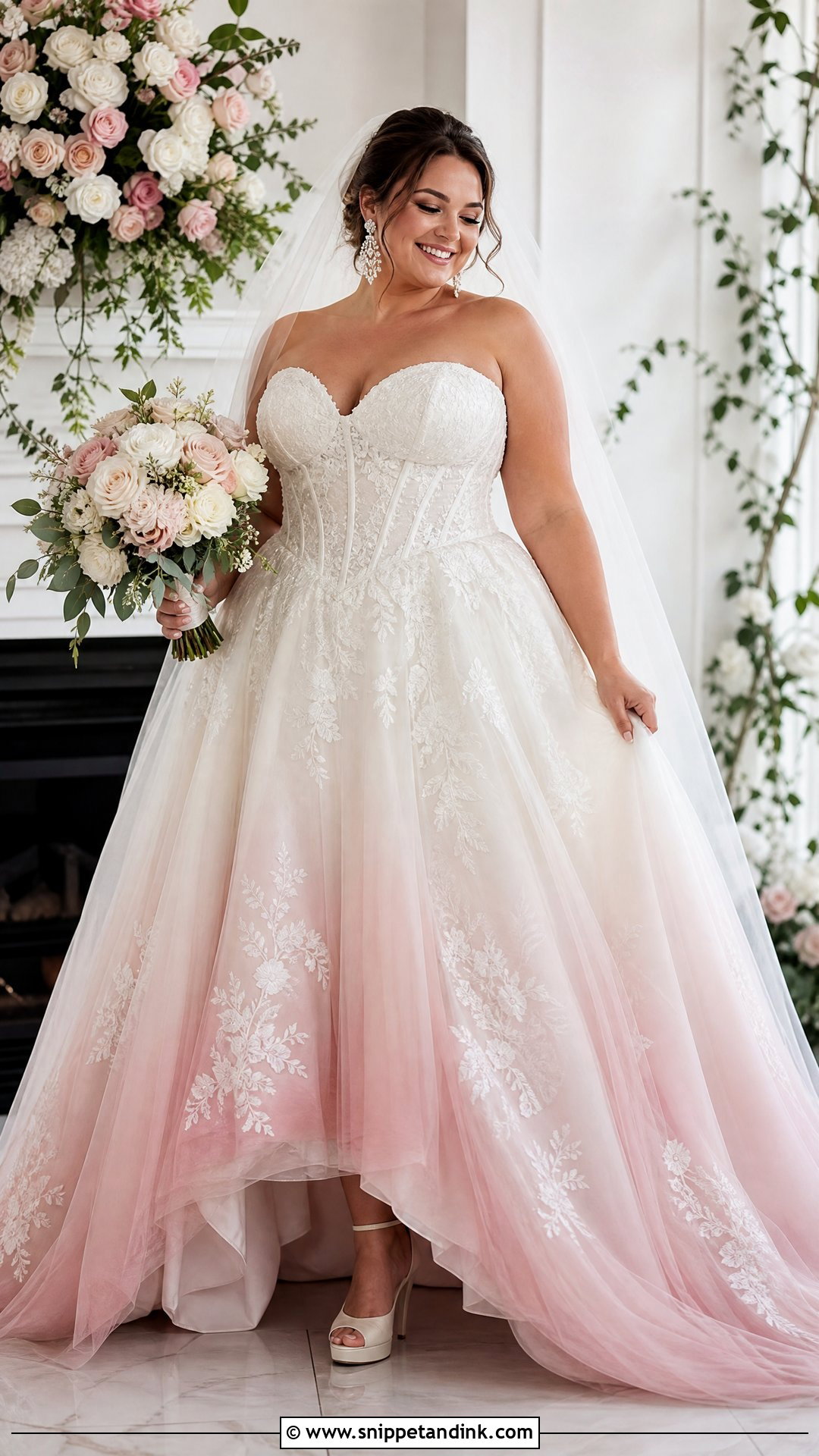
For plus size brides, support comes first and colour second. A-line, ball gown, empire and structured corset silhouettes give shape and easy movement. Ombre can be soft, like ivory to blush, or bold, like ivory to blue or burgundy. Where the colour starts matters: a fade that begins at the waist draws attention down the skirt, while one starting higher can widen the bodice visually. Look for quality lining, supportive straps and a skirt that flows. Cushioned heels or bridal flats and statement earrings finish it.
Veil, Bouquet and Bridesmaids Around a Coloured Hem
With a coloured skirt, the rest of the wedding party should take its cue from the gradient, not repeat it. I usually suggest bridesmaids wear the deepest shade in the hem or a neutral, so the bride’s dress remains the only fade in the line-up. Matching the bridesmaids to a mid-tone tends to make the bride’s colour look washed out by comparison.
For the bouquet, pick one tone from the middle of the gradient and let white or green do the rest. For the veil, length matters more than usual: a veil that ends right where the colour is strongest acts like a filter. Fingertip or cathedral both work, as long as the edge lands above or well below that band.
When a Dyed Train Meets Wet Grass
Some dyed fabrics can transfer colour when they get soaked, onto ivory shoes, a pale bustle underlayer or even your legs. If the forecast is damp, bustle the train early and keep it lifted for outdoor portraits. After the wedding, tell your cleaner which parts are dyed, and never try home stain removers on the coloured areas; they can lift the dye and leave a pale patch in the middle of the fade.
Wearing Colour Down the Aisle
A gradient is one of the most personal choices a bride can make. Blush, blue, lavender, gold, black, rainbow or sunset can all suit the right venue, season and person. Style it as a whole look, thinking about silhouette, fabric, shoes, jewellery, bouquet and veil together. A soft fade reads romantic; a bold dip-dyed hem reads fashion. From beaches to ballrooms, the dresses above show how much range there is between traditional and creative, and the best one is the fade that still looks like you in your wedding photos.
You'll Like These Ideas:






Leave a Reply