
A Barat outfit has to do more work than almost anything else in a Pakistani wedding wardrobe: it carries the family’s sense of occasion, it has to survive hours of greetings and photos, and it still has to look like you. I start every Barat styling session by asking two questions, who is wearing it (the bride, a sister, a guest) and how long they will be on their feet. The answers decide more than the colour does. Below are thirty looks I’d happily put together, from heavy lehengas and ghararas to pishwas, maxis, and shararas, with the styling notes I’d give a client for each one.
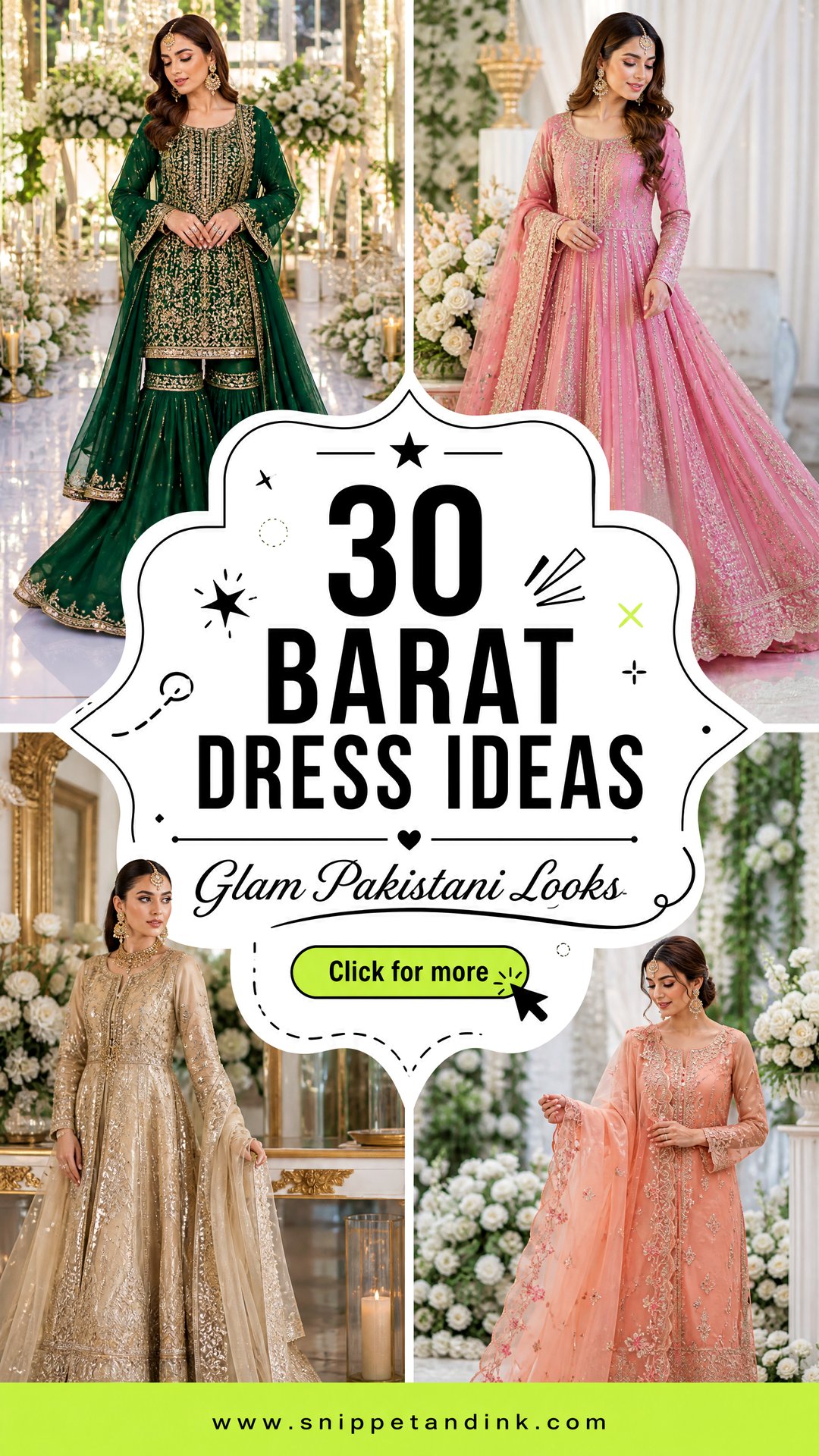
Planning the Fittings for a Heavy Barat Outfit
Handworked Barat outfits take time. Zardozi, dabka and kora embroidery are stitched by hand, and for a bridal lehenga I tell clients to place the order at least three to four months ahead, longer in peak wedding season when workshops are full. Guest outfits with lighter work can be quicker, but leave room for at least two fittings.
The first fitting is about the base: blouse or shirt fit, length and how the skirt sits on the hips. The second should happen once the embroidery is finished, because heavy work changes how fabric hangs and can add real weight. At that second fitting I ask brides to do four things before anyone touches a pin:
- Sit on a chair for a few minutes, since a blouse that fits standing can cut in at the ribs when seated.
- Raise both arms as if hugging a relative, so you know the sleeves and armholes allow it.
- Walk up and down a step in the shoes you’ll actually wear, to set the hem length.
- Put the dupatta on with the pins in place and turn your head, to check it doesn’t drag the hairstyle.
If the lehenga feels heavy on the hips, ask the tailor about a can-can or cushioned waistband, and about a hidden hook or loop for lifting the skirt on stairs. Small changes like these are cheap at the fitting stage and impossible on the day.
1. Red Bridal Lehenga Barat Dress
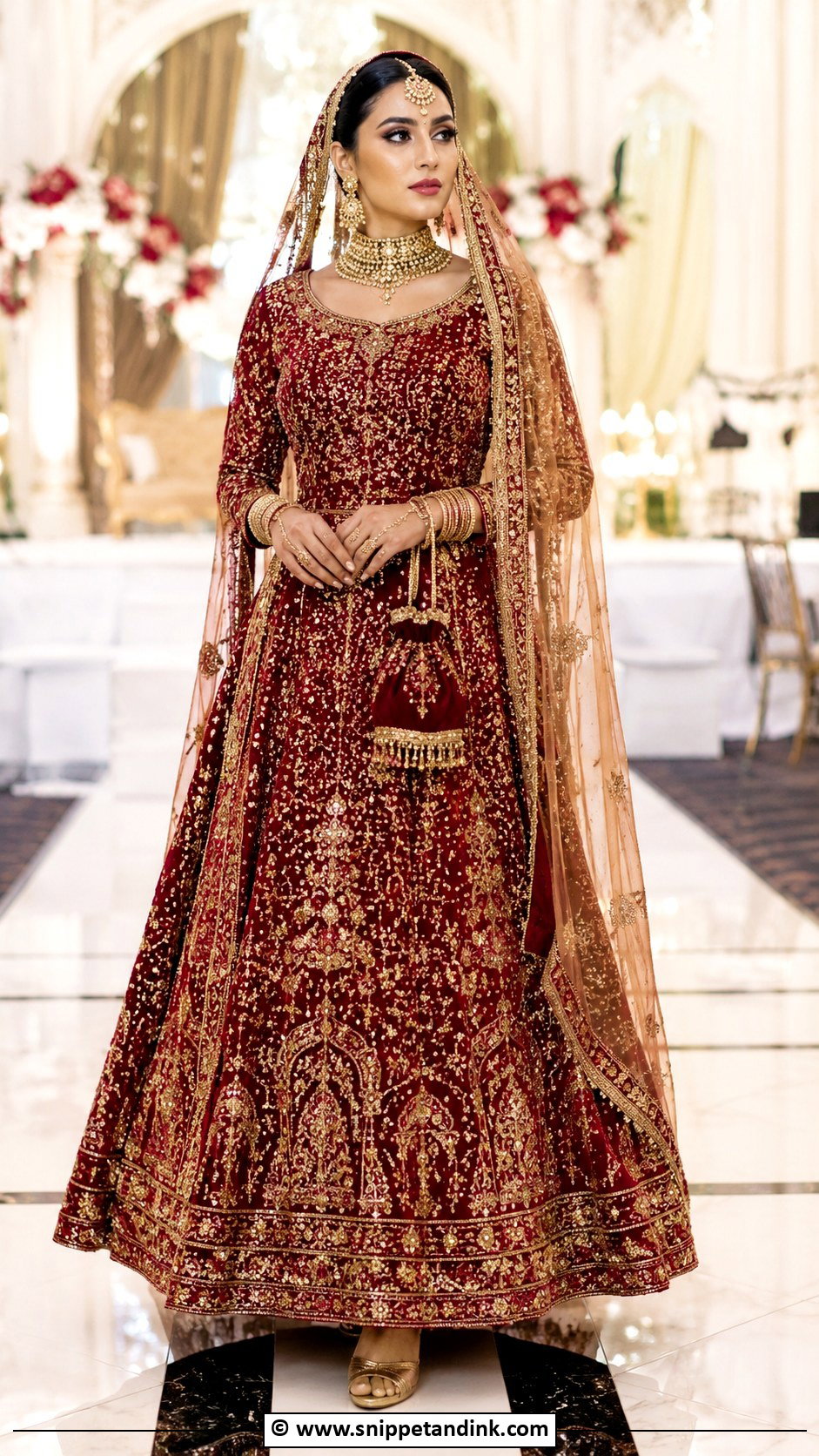
Red is still the colour most families picture when they hear Barat, and a deep crimson with gold embroidery reads as bridal from across a hall. The detail I watch at fittings is the dupatta border: a heavily worked border pulls the dupatta backwards when it sits on the head, so I ask for it to be pinned at three points rather than one. Antique gold jewelry, a sleek centre-parted bun and gold khussas keep the eye on the lehenga. With this much embroidery, glowing skin and a soft red lip hold their own better than a heavy smoky eye.
2. Maroon Velvet Lehenga Barat Dress
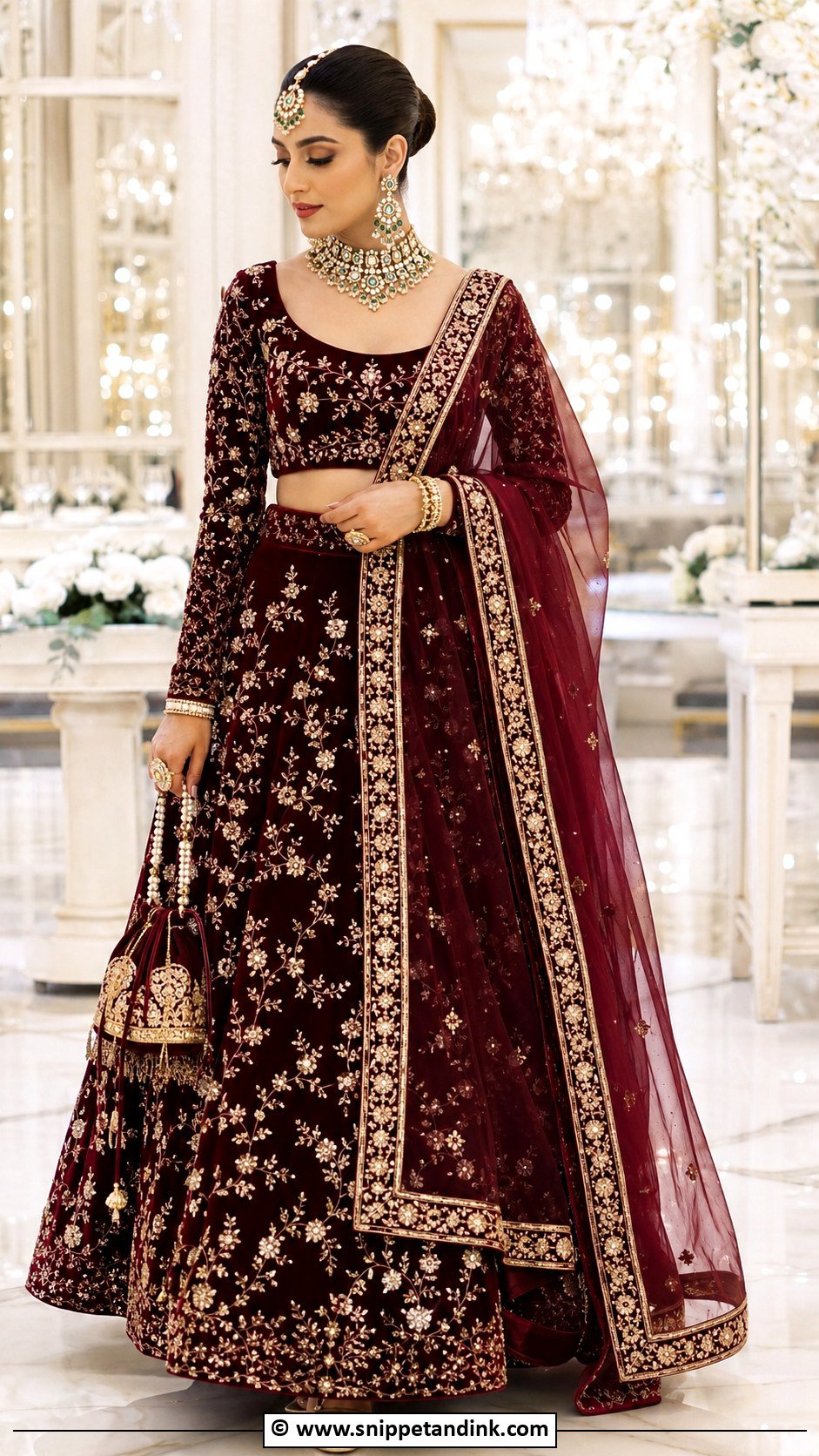
Maroon velvet with gold zardozi is my first suggestion for a winter Barat in an indoor hall. Velvet drinks light rather than bouncing it, so the colour stays rich under harsh venue bulbs instead of flashing pink. Pair the lehenga with a full-sleeve blouse and an organza dupatta, because a velvet dupatta on top of a velvet skirt gets hot and heavy within an hour. A longer choli or kurti-style top works if you want more coverage, and kundan with a small potli finishes it.
3. Gold Gharara Barat Dress
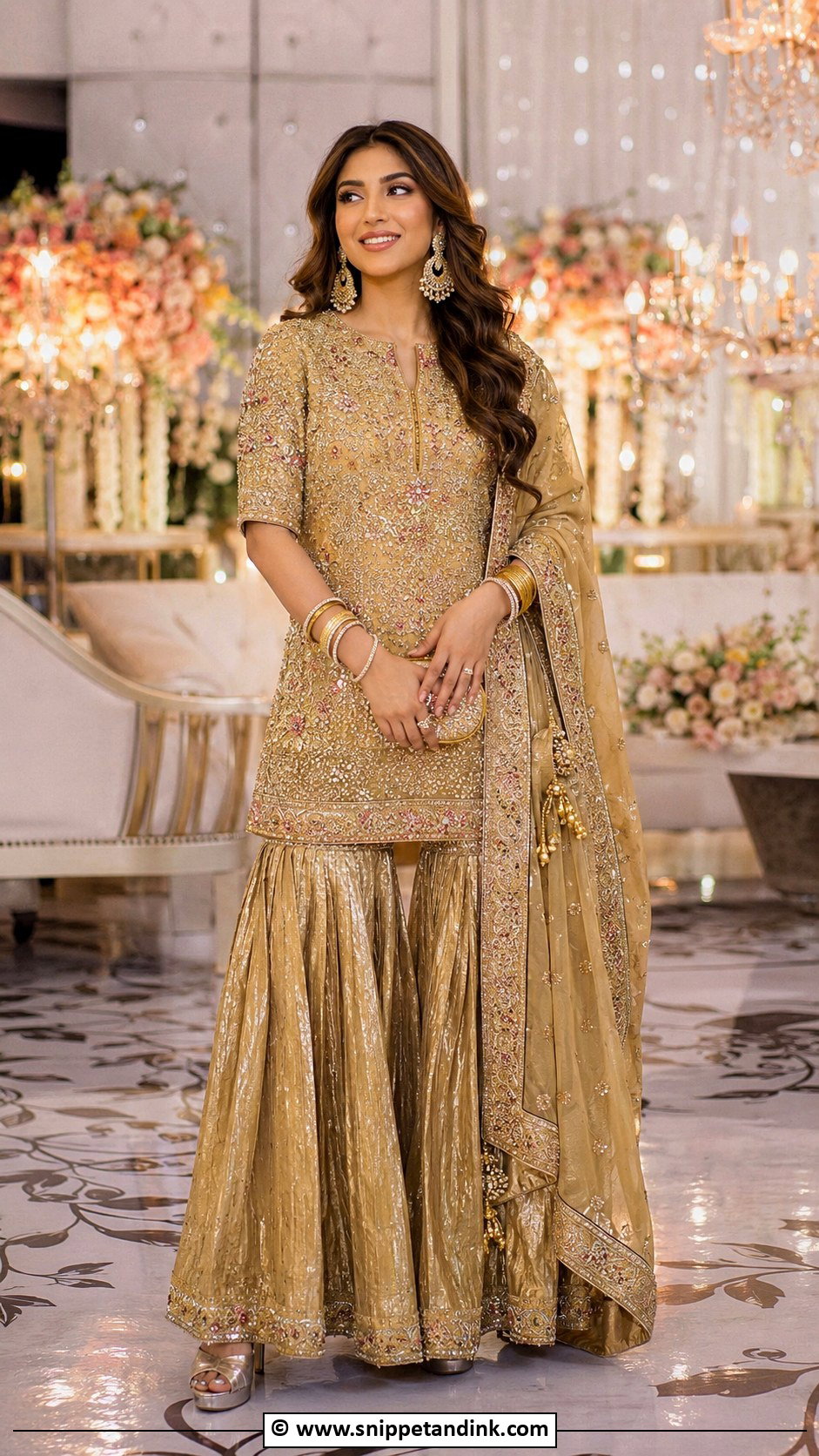
I steer clients toward antique or dull gold over bright yellow gold almost every time. Bright gold tissue bounces flash back into the lens and can look brassy, while the muted shades hold their embroidery detail in photos. A fitted short shirt, wide gharara pants and a dupatta with a finished border give you a complete look; check that the gota joint at the knee is stitched flat, because that is where ghararas rub and fray. Keep the neckline clean so the flare does the talking. It’s a strong pick for sisters of the bride or a lighter second outfit.
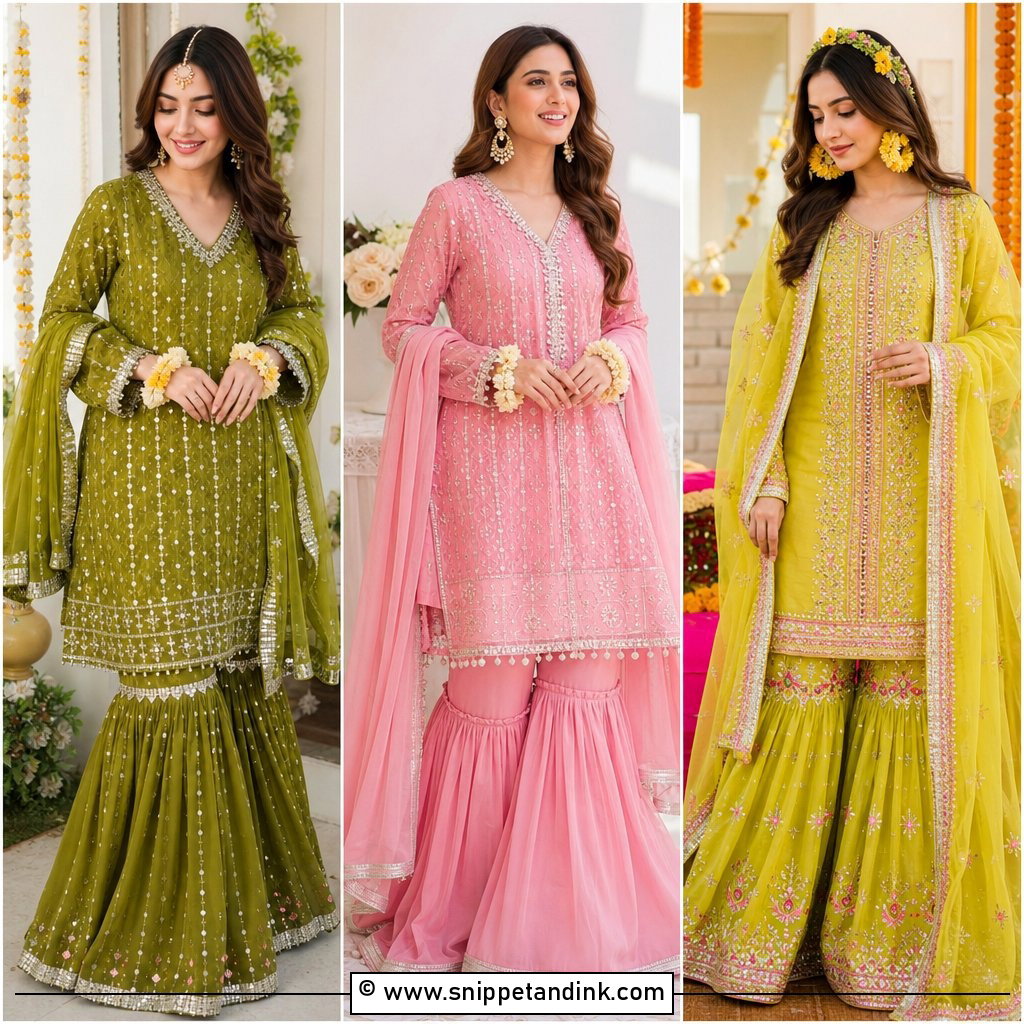
4. Emerald Green Sharara Barat Dress
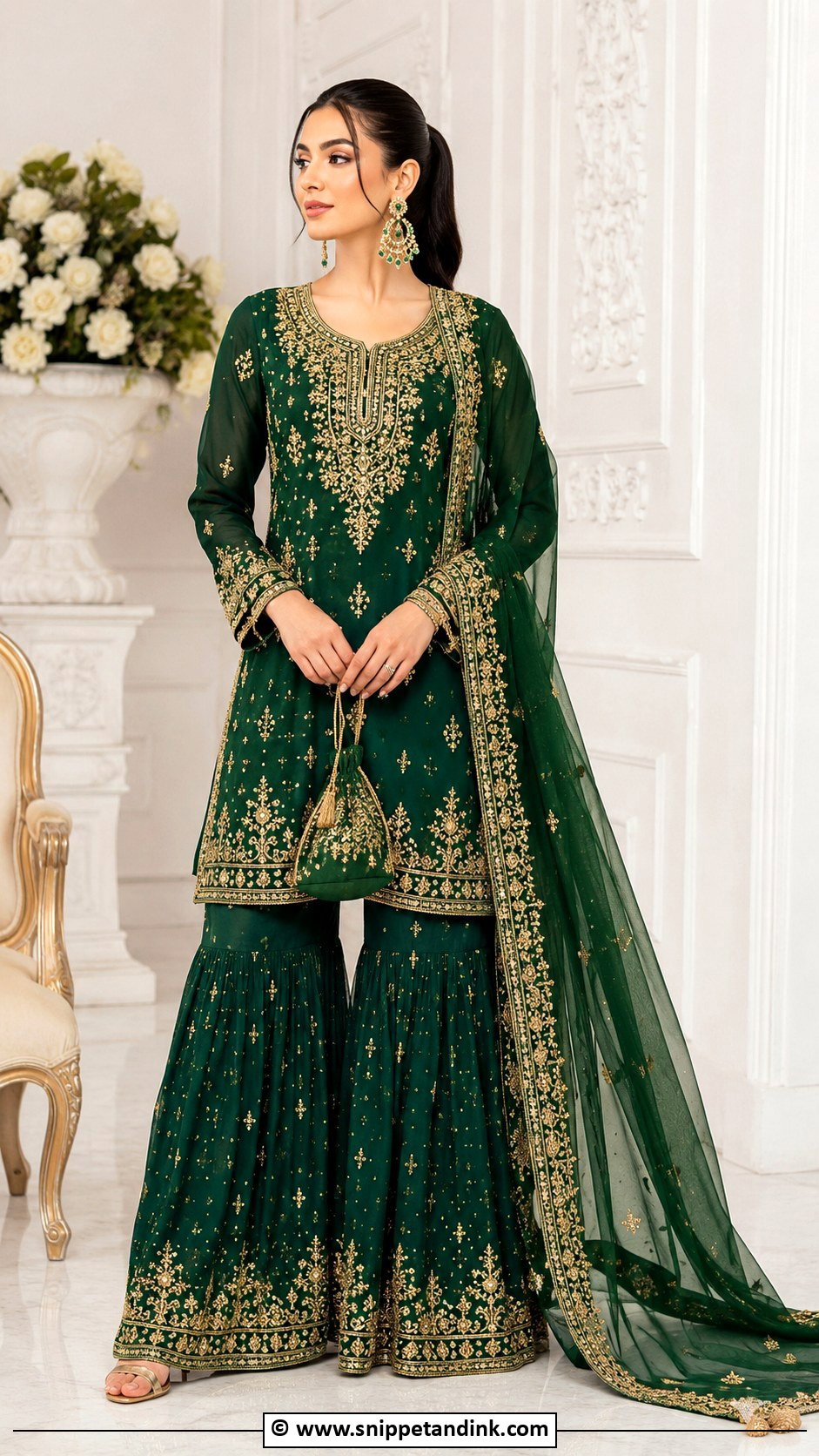
Emerald is the colour I reach for when a guest wants to look dressed up without borrowing from the bride’s red. Copper or champagne embroidery sits better on emerald than bright gold, which can look a little costume-like against green. A long shirt with a flowing sharara gives movement on the dance floor, and a net dupatta keeps the weight down. Add a maang tikka only if the event is very formal, and keep the bag small and structured.
5. Navy Blue Maxi Barat Dress
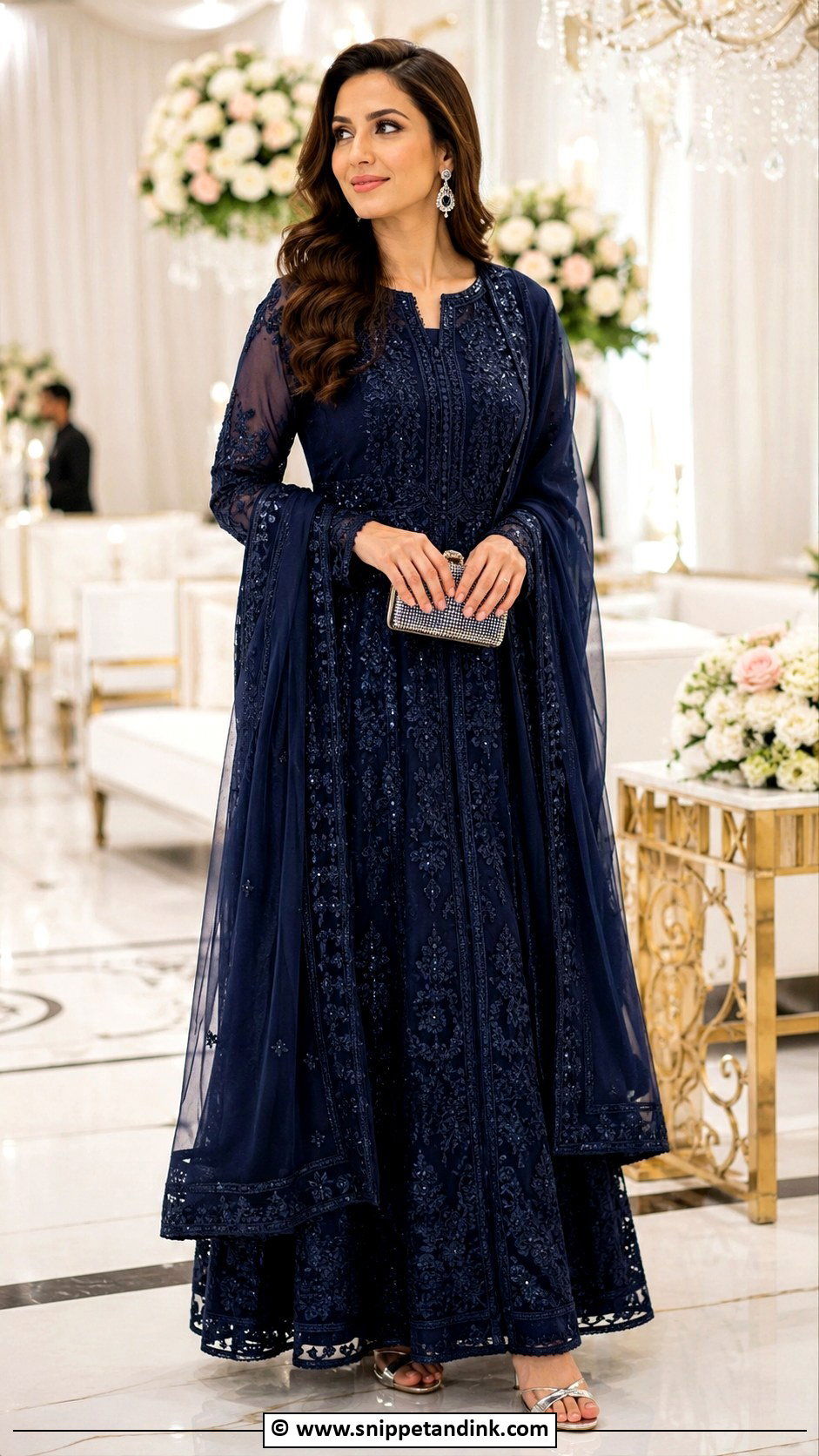
Navy is easy to underestimate. On the hanger it can look flat, but with antique or silver threadwork it reads as deep and expensive, and a floor-length maxi with a fitted bodice gives full coverage without the bulk of a lehenga. The trap is makeup: navy pulls colour out of the face, so I’d add warmth through blush and highlighter rather than a darker lip. A loose bun or soft waves follows the line of the flare, and metallic heels with drop earrings are all it needs.
6. Pink Anarkali Barat Dress
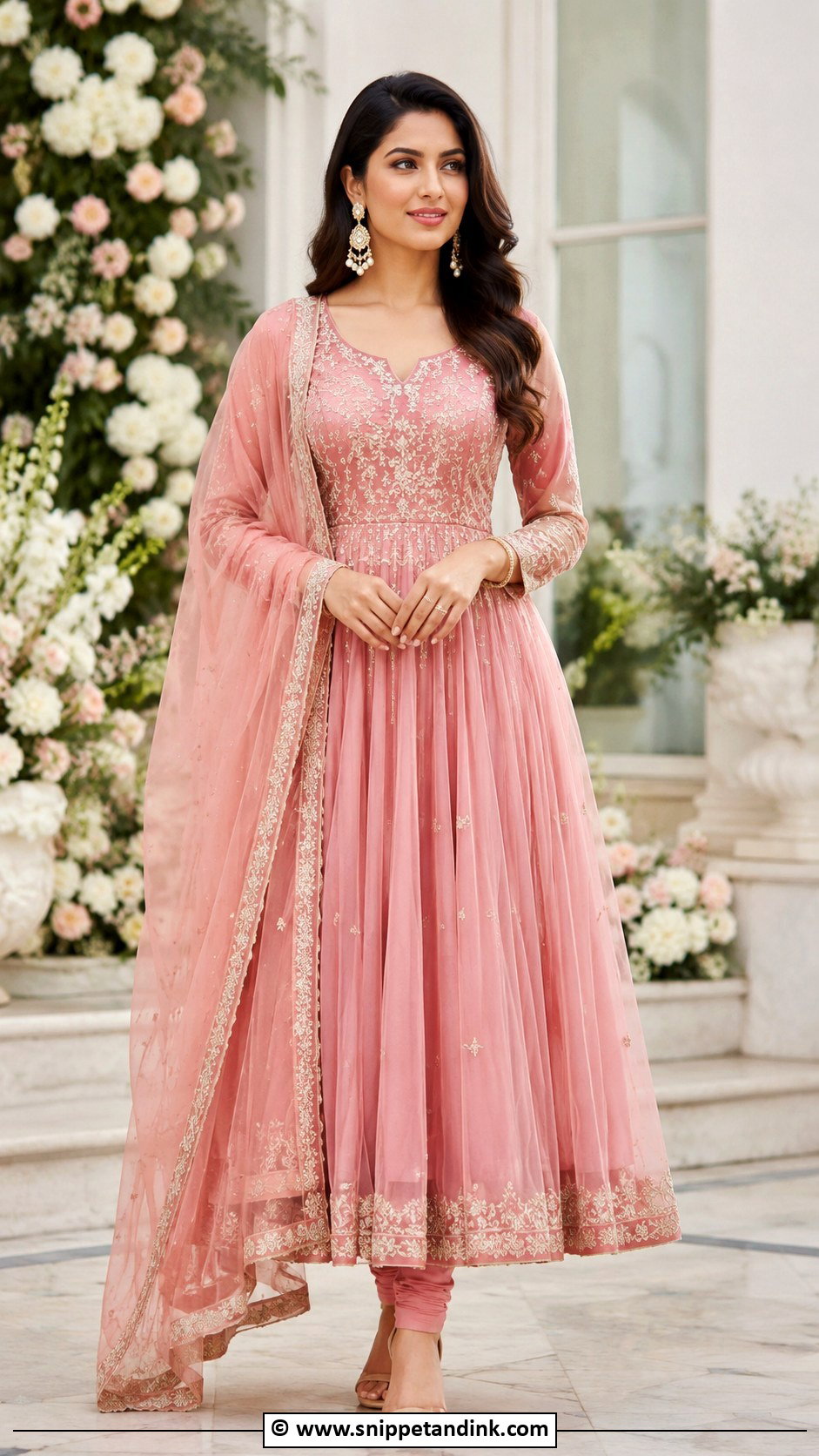
An Anarkali in blush or dusty rose is one of the most comfortable Barat options I style, because the weight hangs from the shoulders instead of sitting on the hips like a heavy lehenga. Gold or silver embroidery, churidar pants and a sheer dupatta keep it formal. The churidar is where fit goes wrong: if the gathers at the ankle are too tight, you will feel it by the second hour, so sit and walk in it at the final fitting. Pearl earrings, delicate bangles and rosy cheeks suit it well, especially for younger cousins.
7. Champagne Pishwas Barat Dress
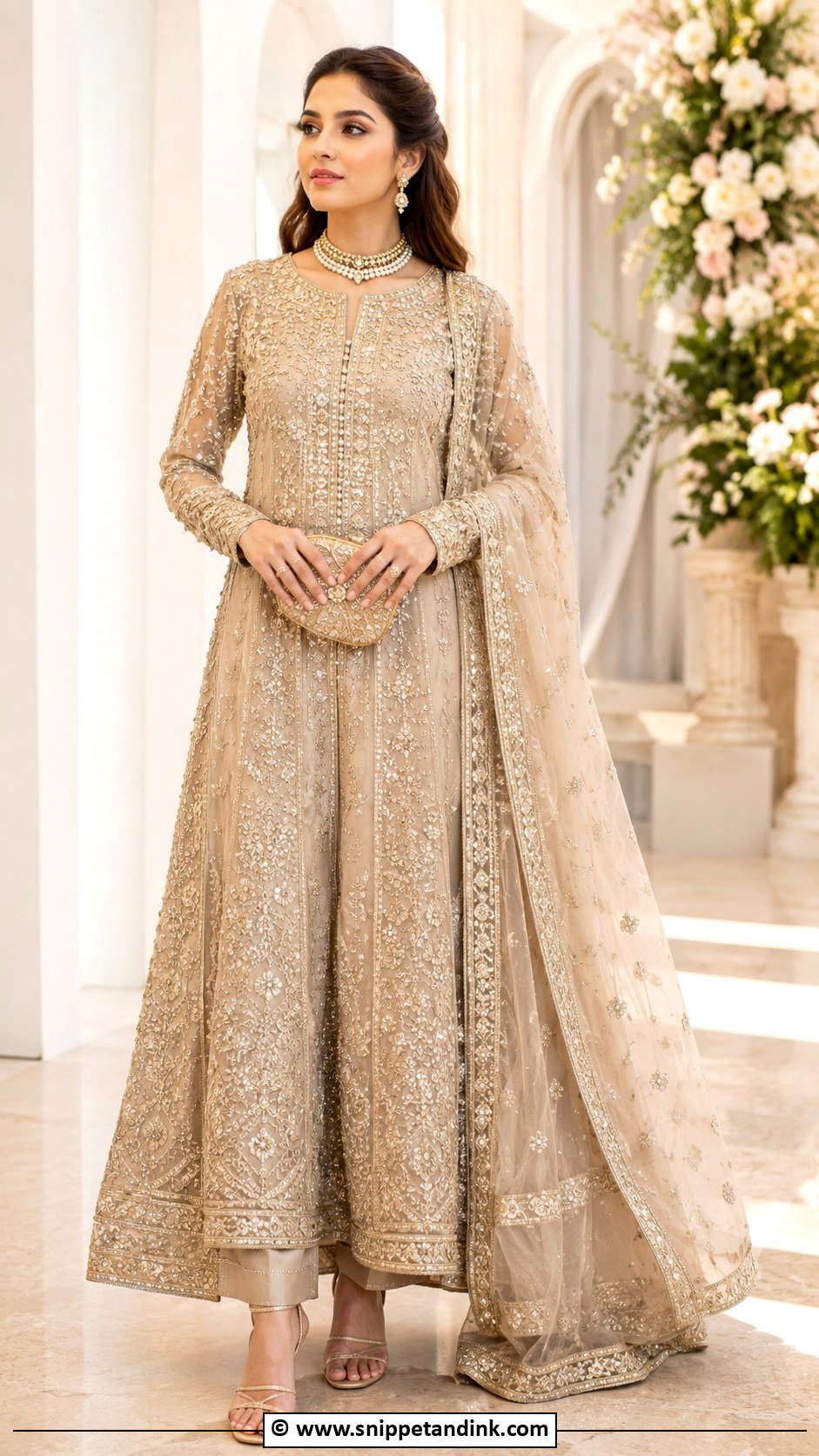
Champagne is a quiet colour that photographs paler than it looks in person, and I’ve learned to plan for that from the start. A pishwas with sequin, dabka or thread embroidery gives the long flared princess shape, worn with churidar or straight pants and a sheer bordered dupatta. Defined eyes, warm blush and a lipstick one shade deeper than you’d usually wear stop the whole look from washing out on camera. Pearl jewelry and champagne heels keep it soft for a bride who doesn’t want red.
8. Ivory And Gold Barat Dress
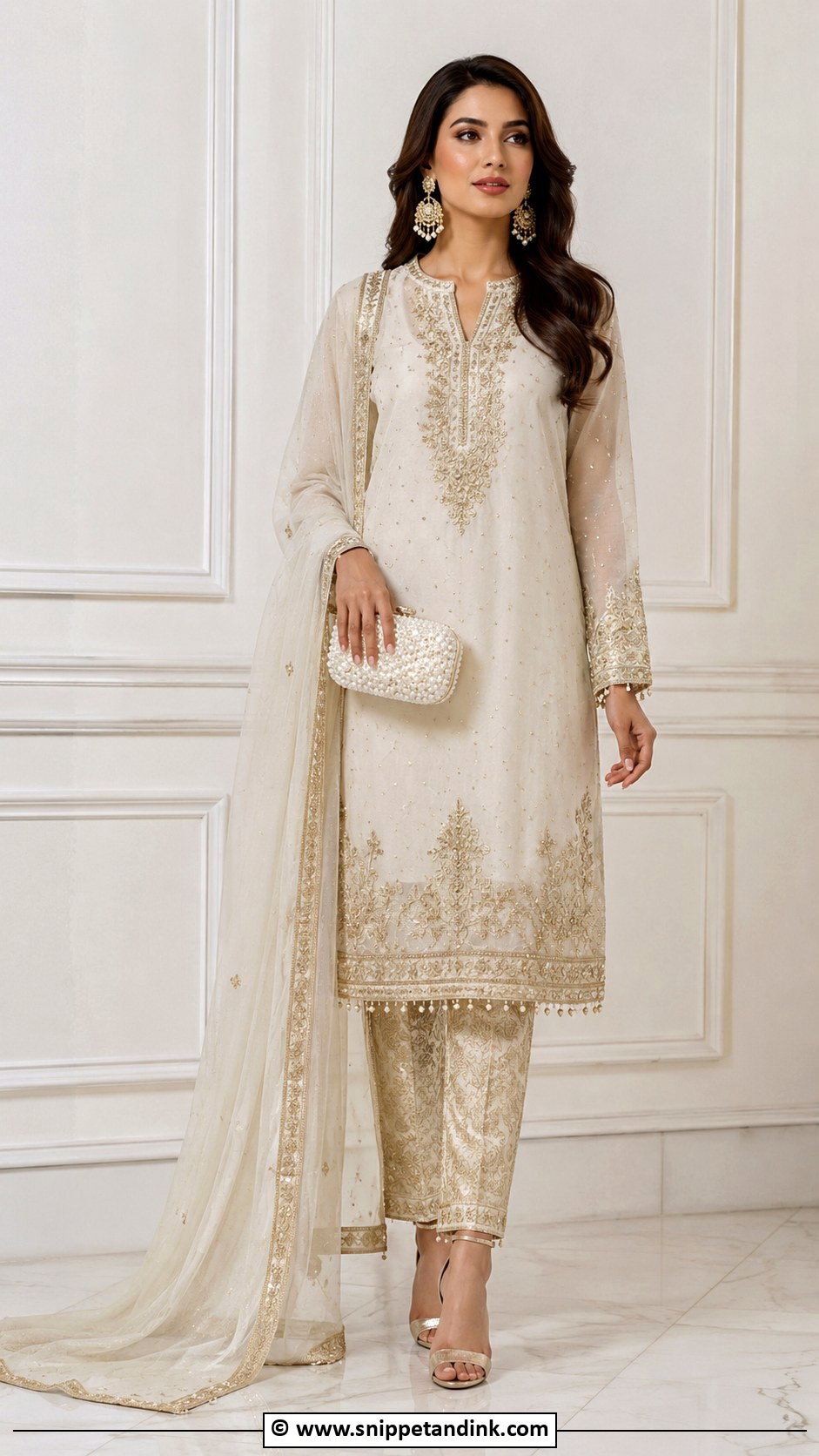
Ivory and gold is the look I’d check with the family first. In some households a guest in ivory is perfectly normal; in others it feels too close to the bride. If it’s fine, keep the embroidery moderate as a guest and save layered jewelry and heavy handwork for the bride herself. A long ivory shirt, straight pants and a rich dupatta make a clean, regal outline, and warm-toned makeup stops ivory from draining your skin.
9. Black And Gold Barat Dress
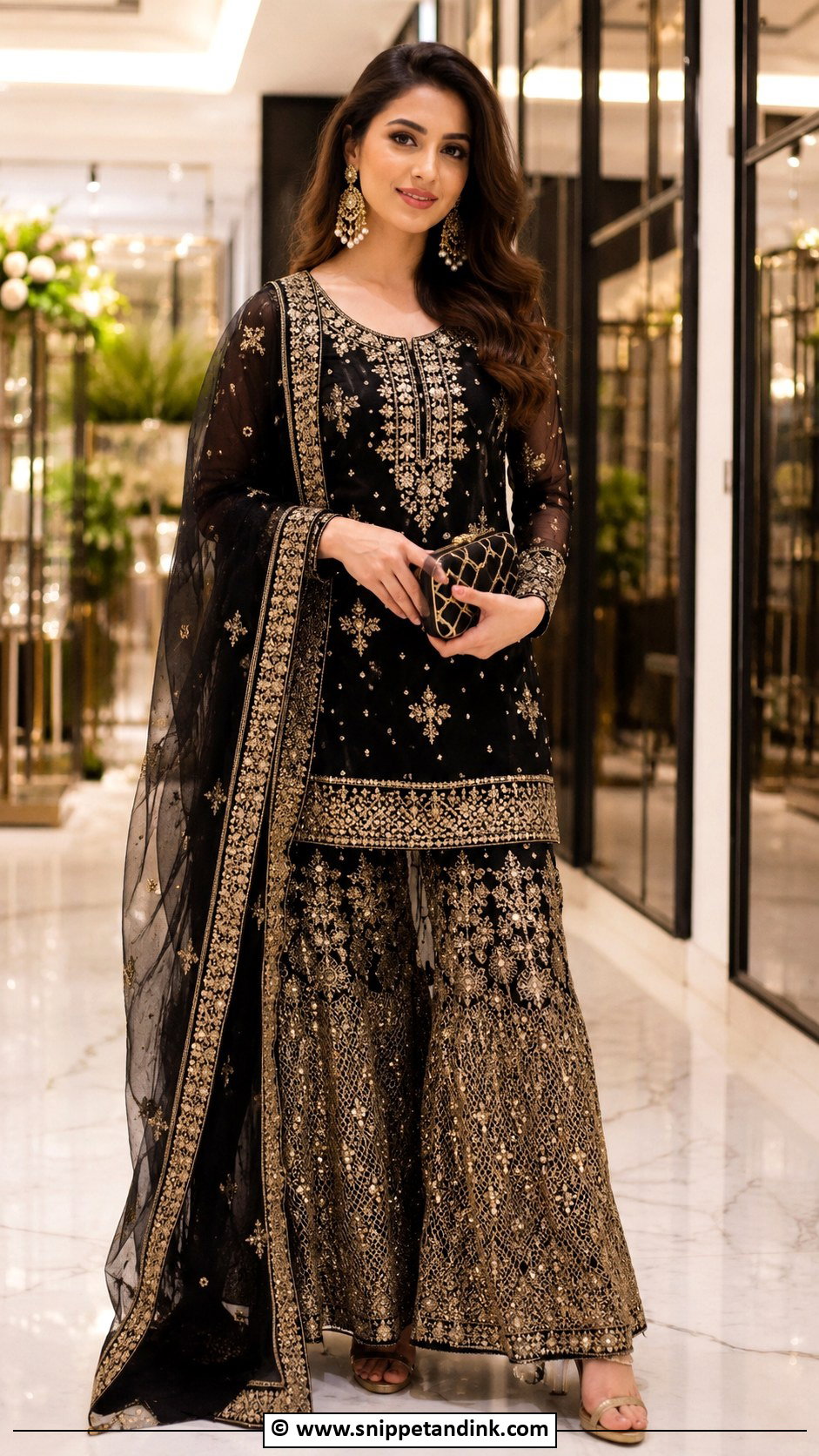
Black with gold is sleek and evening-ready, but ask about it before you buy, because some families still treat black at a wedding as unlucky. Where it’s welcome, a black embroidered long shirt over a sharara, gharara or wide-leg trousers looks sharp, and the gold detailing keeps it festive. I keep the jewelry to statement earrings and skip bridal sets so the outfit stays clearly a guest look. Bronze eyes and a nude or berry lip finish it, and it’s one of the easiest outfits to re-wear later.
10. Teal Lehenga Barat Dress
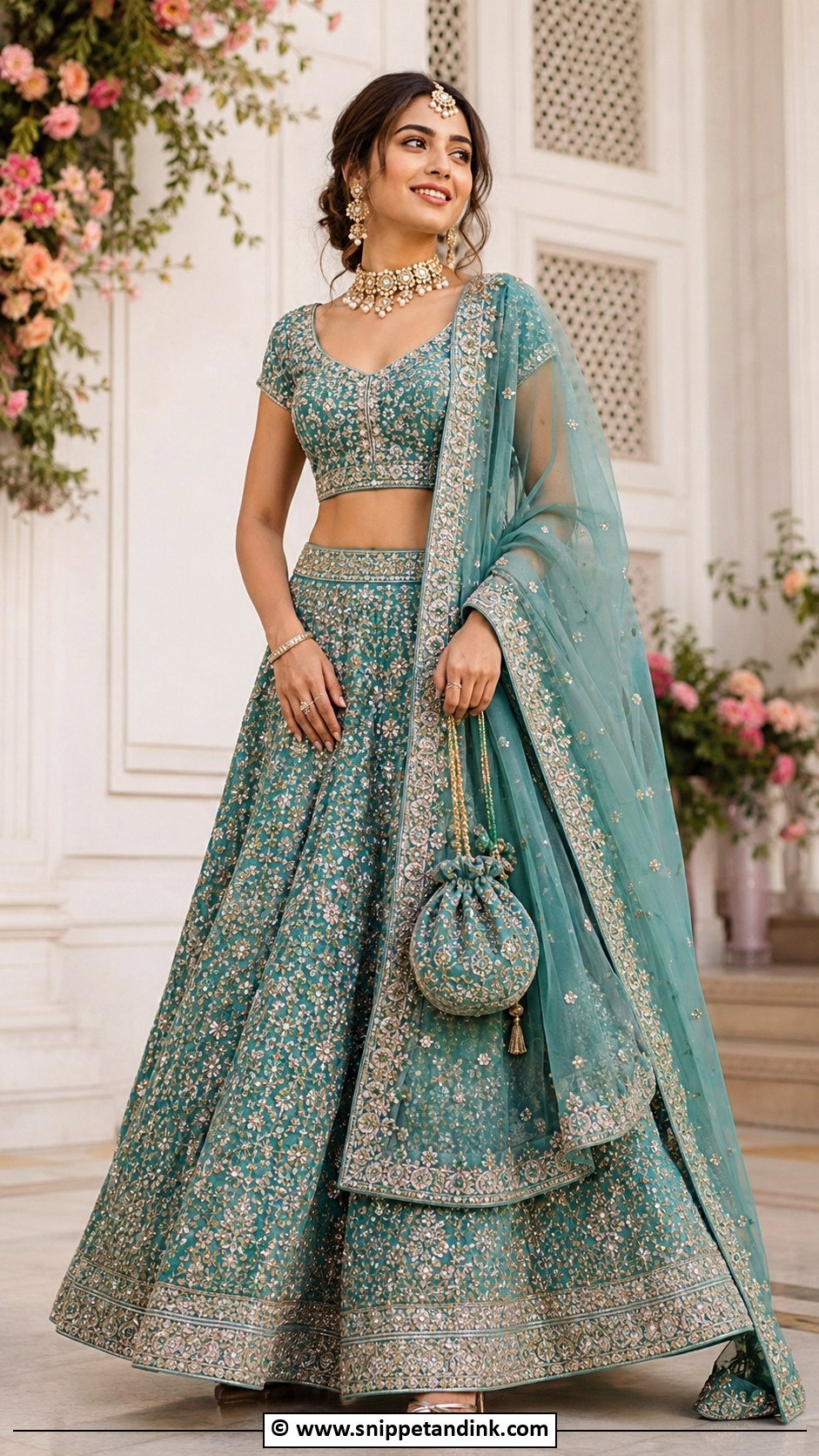
Teal sits between blue and green, which is exactly why it works: it looks fresh in daylight and turns richer under warm hall lights. When the lehenga carries heavy gold or silver work, I keep the blouse plain so the skirt is the focus. Kundan jewelry, metallic heels and a small potli are enough. Soft curls or a low bun balance it, and it’s a reliable colour for bridesmaids who need to stand out in group photos without matching the bride.
11. Purple Gown Barat Dress
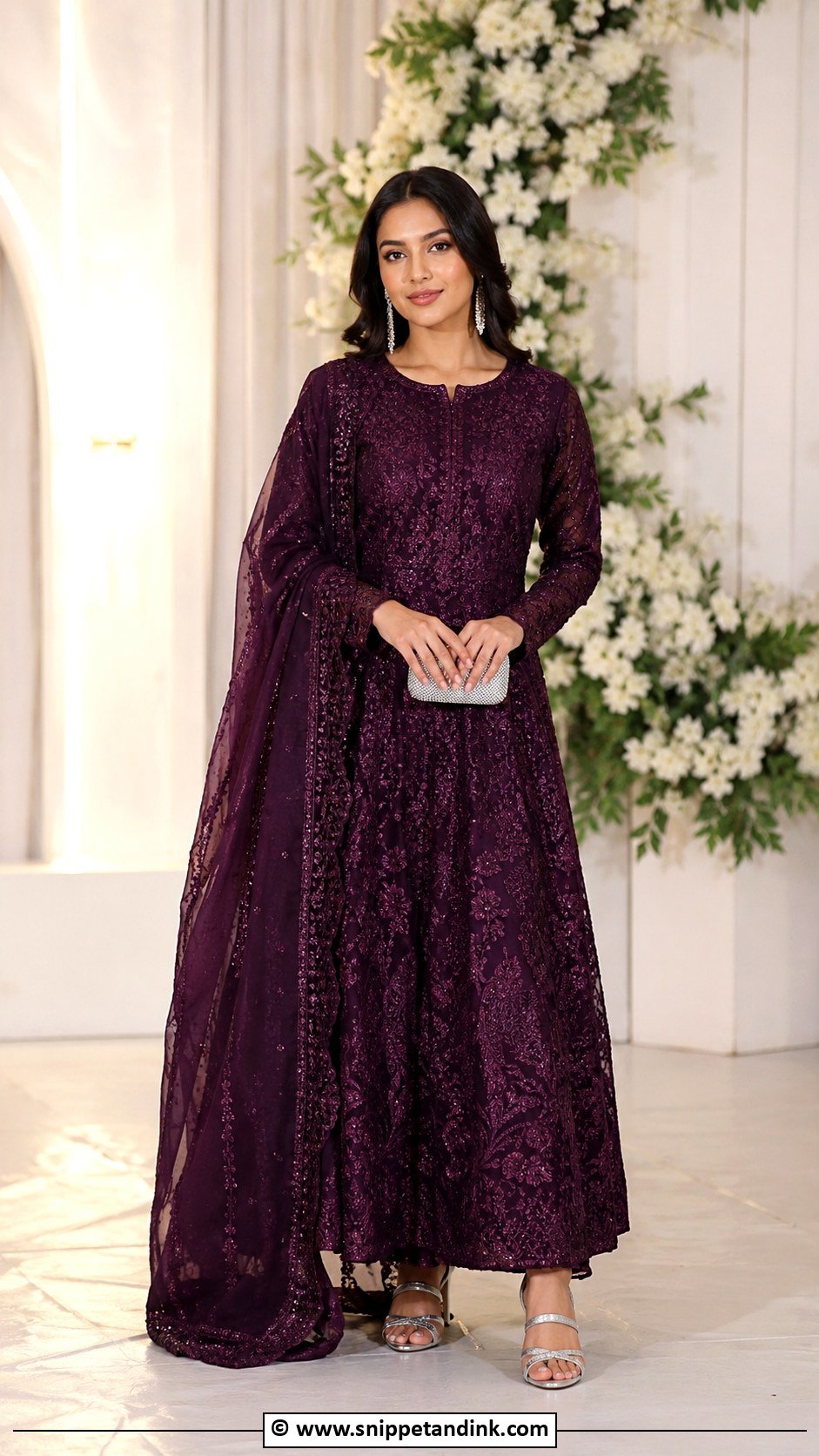
A gown suits guests who don’t want to manage separate pieces all night. Plum, aubergine or royal purple with embroidery around the neckline, sleeves and hem looks finished on its own, and a matching dupatta adds the traditional touch a South Asian wedding expects. Purple is forgiving with makeup, so mauve, berry or bronze accents all work. Silver heels, crystal earrings and a sleek clutch keep it modern.
12. Mustard Gharara Barat Dress
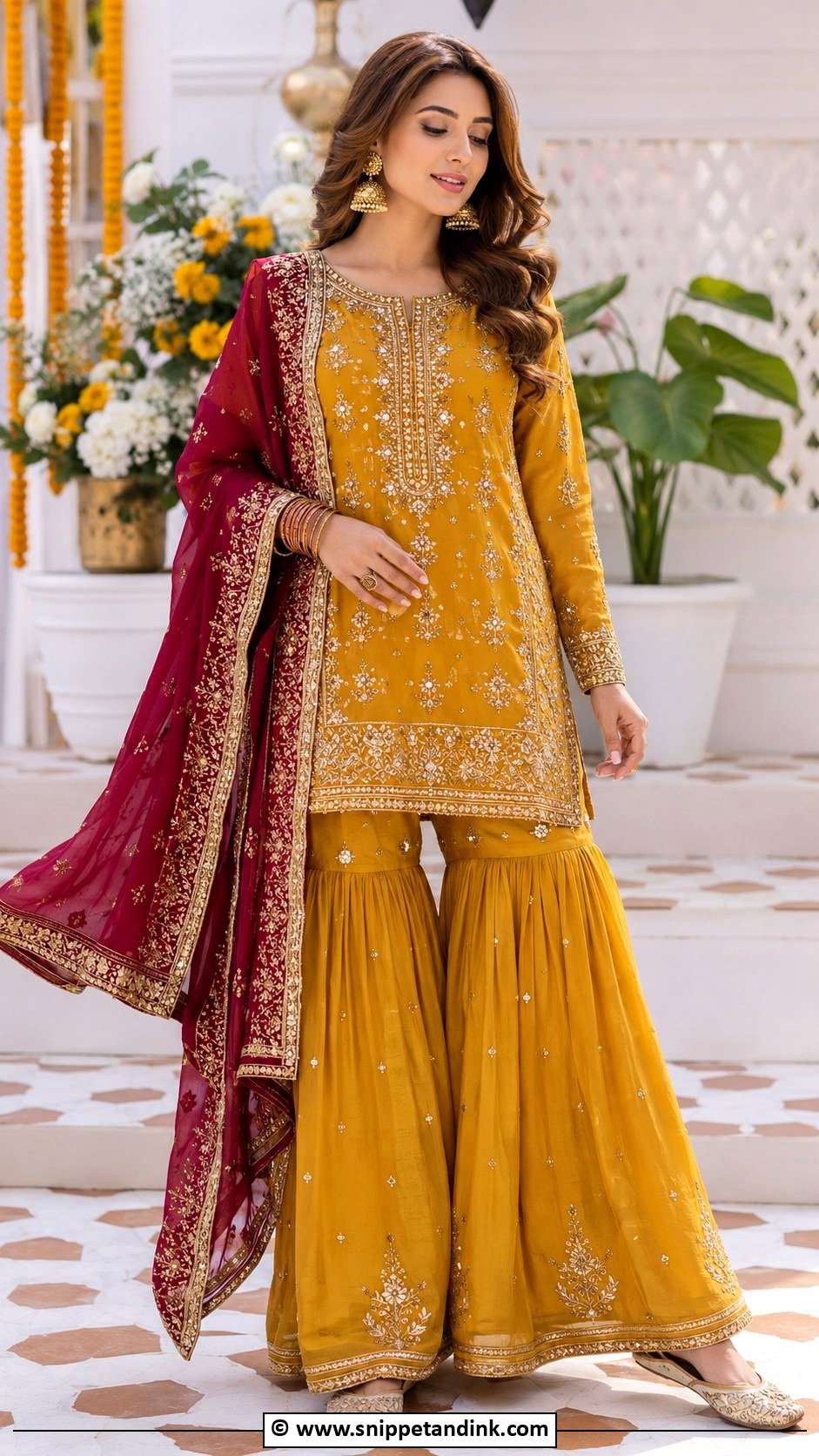
Mustard usually belongs to the mehndi, so for Barat it needs to be lifted with richer work and a darker partner colour. A mustard gharara with antique gold embroidery and a maroon, rust or emerald dupatta stops it from looking like a leftover mehndi outfit. Gold bangles and embroidered khussas suit the energy, and khussas are kinder than heels if you’ll be dancing. Warm bronze eyes and peachy blush tie it together.
13. Rust Pishwas Barat Dress
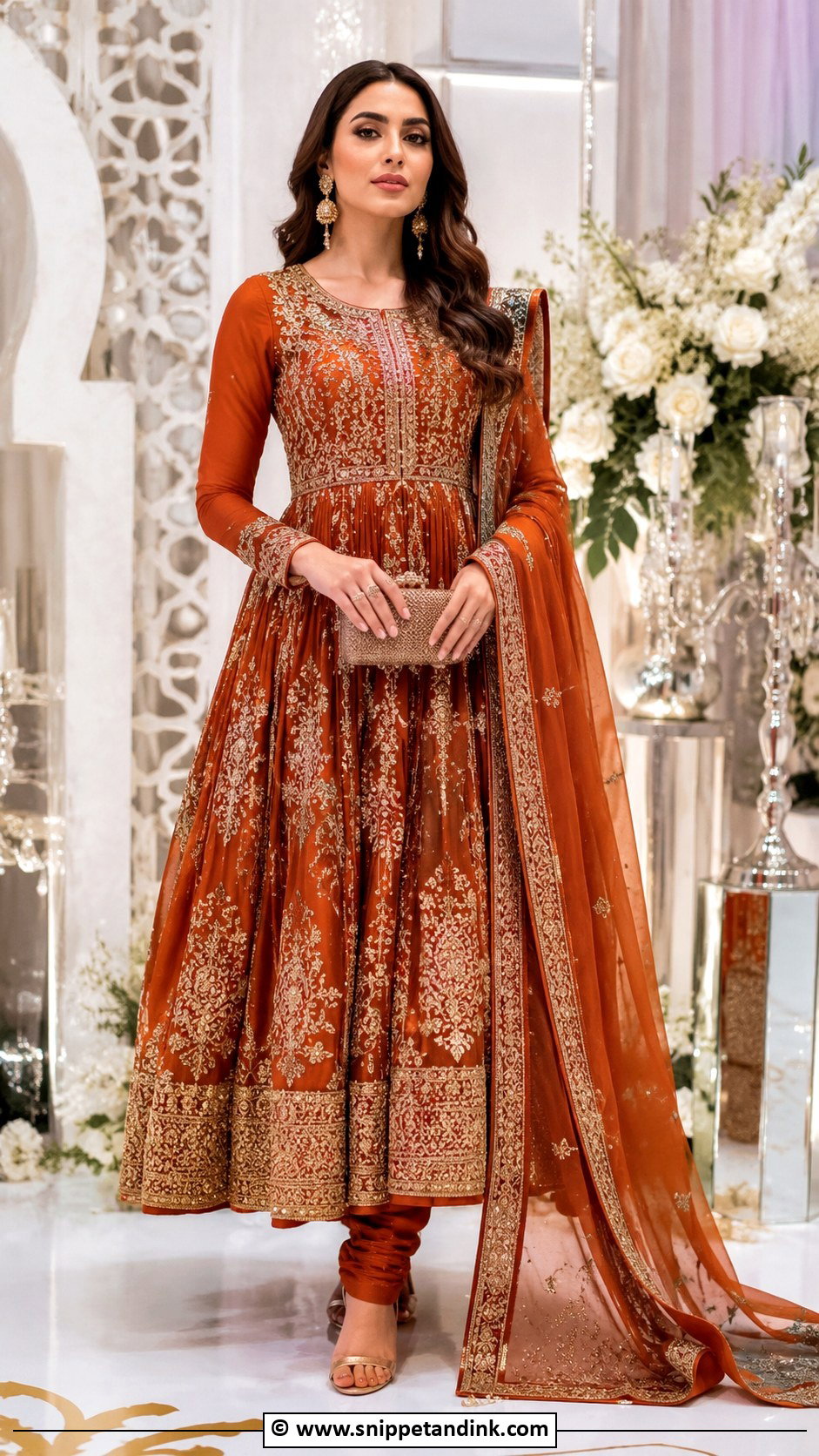
Rust is a colour I often suggest to women who find red too bright on themselves. With antique gold embroidery, a rust pishwas has a vintage feel that stands apart from the pinks and reds around it. Churidar pants, a bordered dupatta and traditional gold jewelry complete it. Choose gold heels or embellished flats based on how long you’ll stand, and it sits most comfortably at autumn and winter weddings.
14. Sage Green Sharara Barat Dress
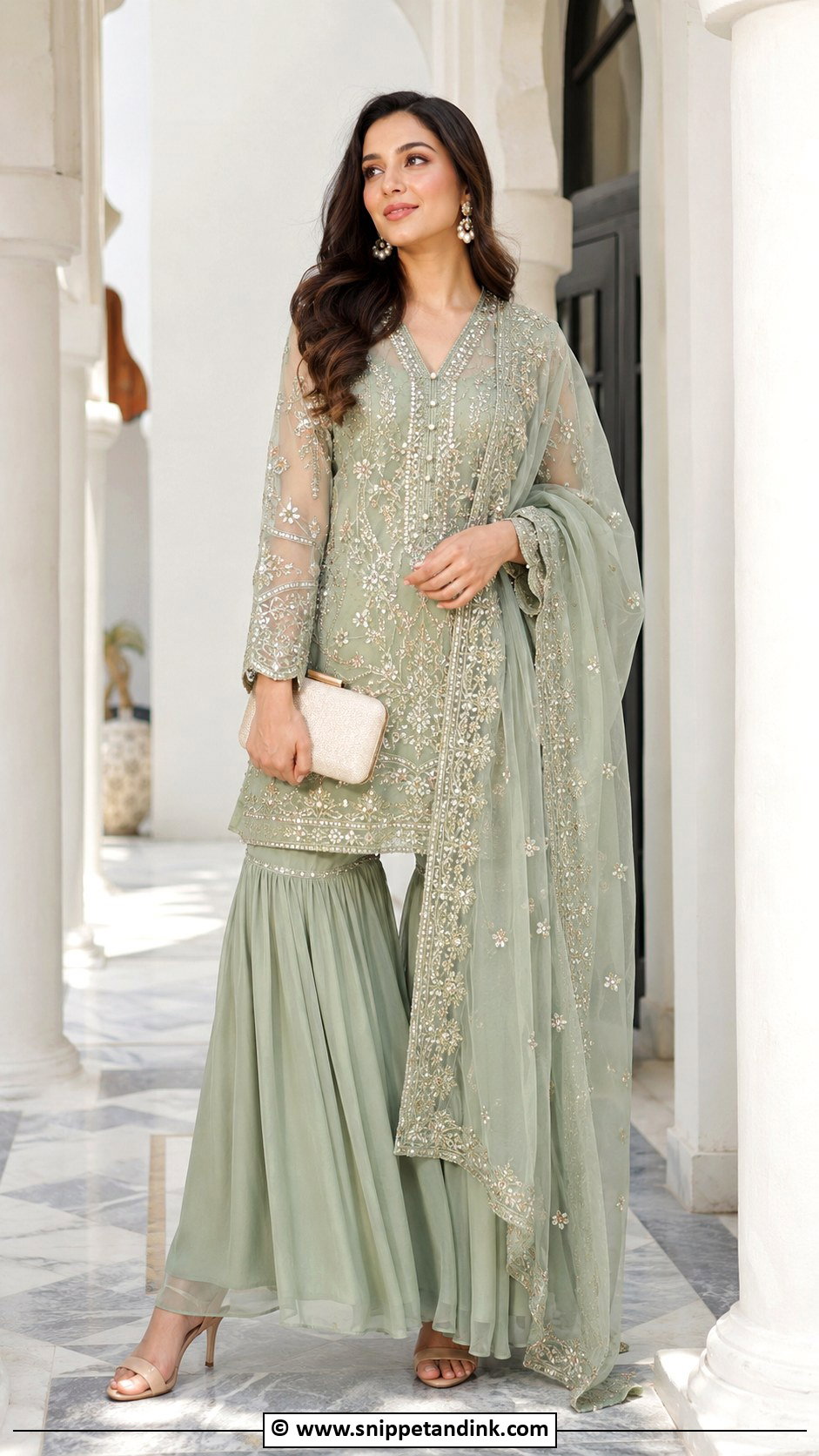
Sage is the colour I’d suggest for a daytime Barat, when heavy dark shades can feel like too much in natural light. Silver, pearl or pale gold embroidery on a long shirt, with a flowing sharara and sheer dupatta, keeps it calm while the sharara still gives it festive movement. Very light outfits can wash a face out, so a slightly brighter lip or defined eyes help. Pearl earrings and nude heels keep the palette quiet.
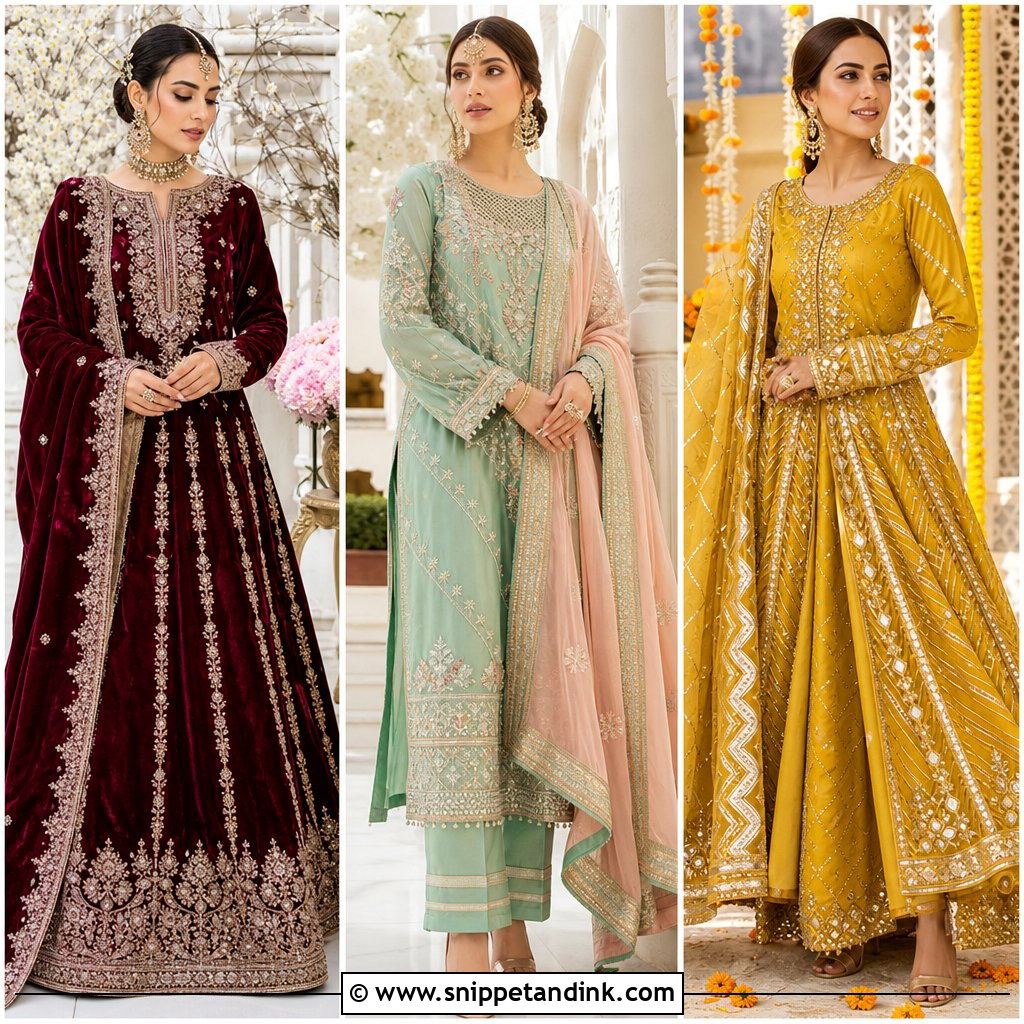
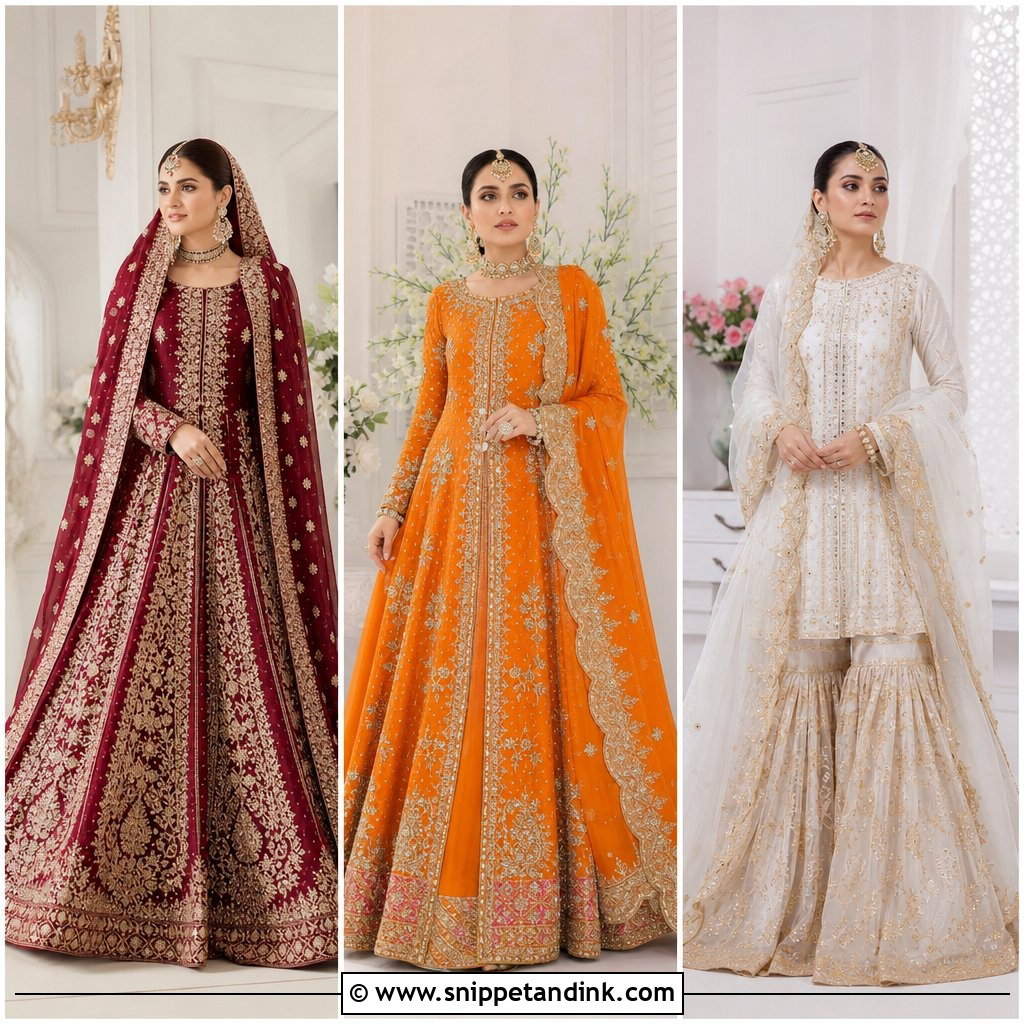

15. Burgundy Farshi Lehenga Barat Dress
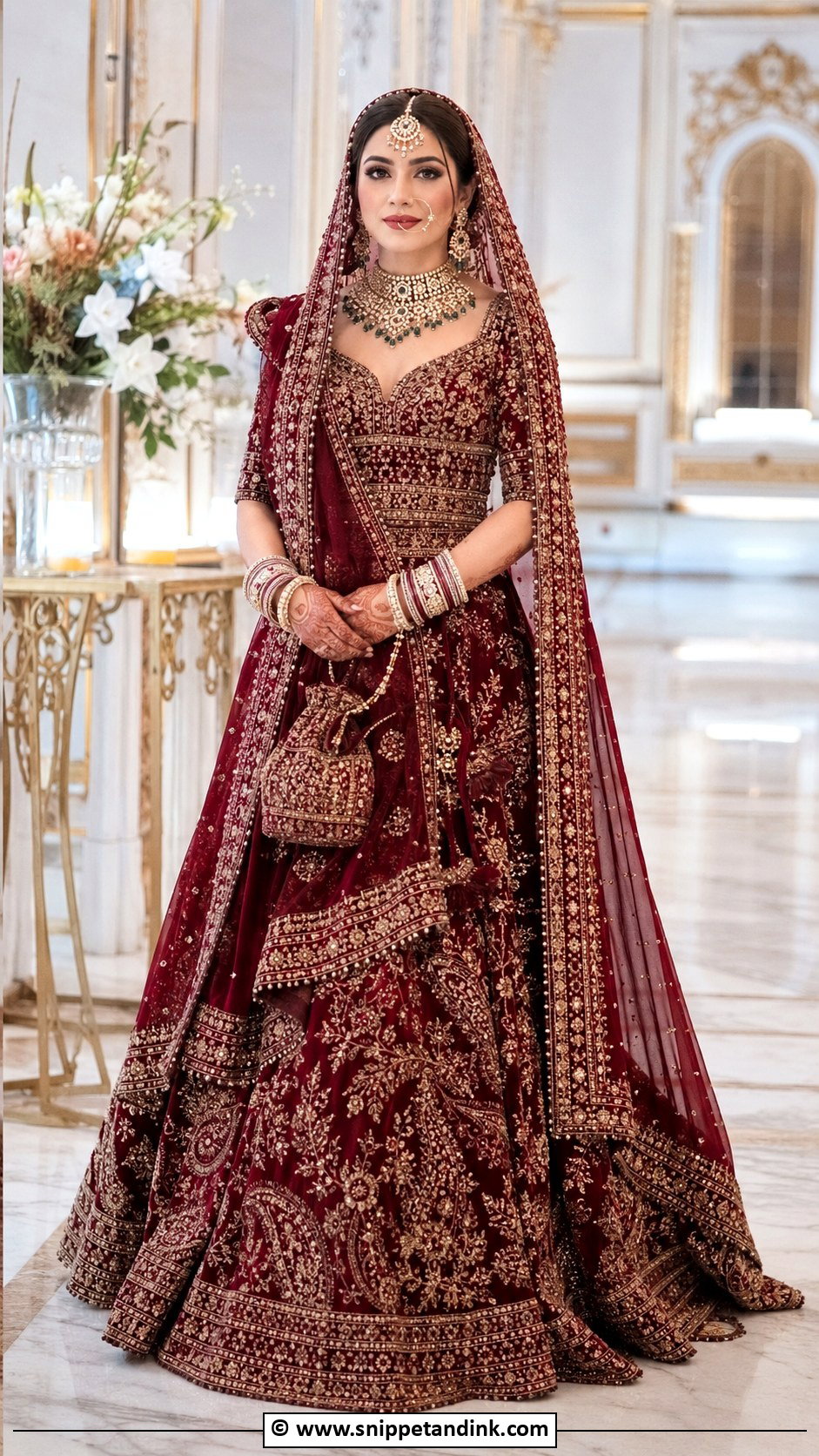
The farshi lehenga is built for the entrance: the extended flare trails behind you, and with a structured blouse or long shirt it looks properly regal. That same trail is the practical problem. I always tell brides to practise walking and turning in it, and to have a sister or bridesmaid responsible for lifting it on stairs. Hide supportive platforms under the flare, drape the dupatta over the head, and choose kundan, polki or antique gold that matches the depth of burgundy.
16. Peach Organza Barat Dress
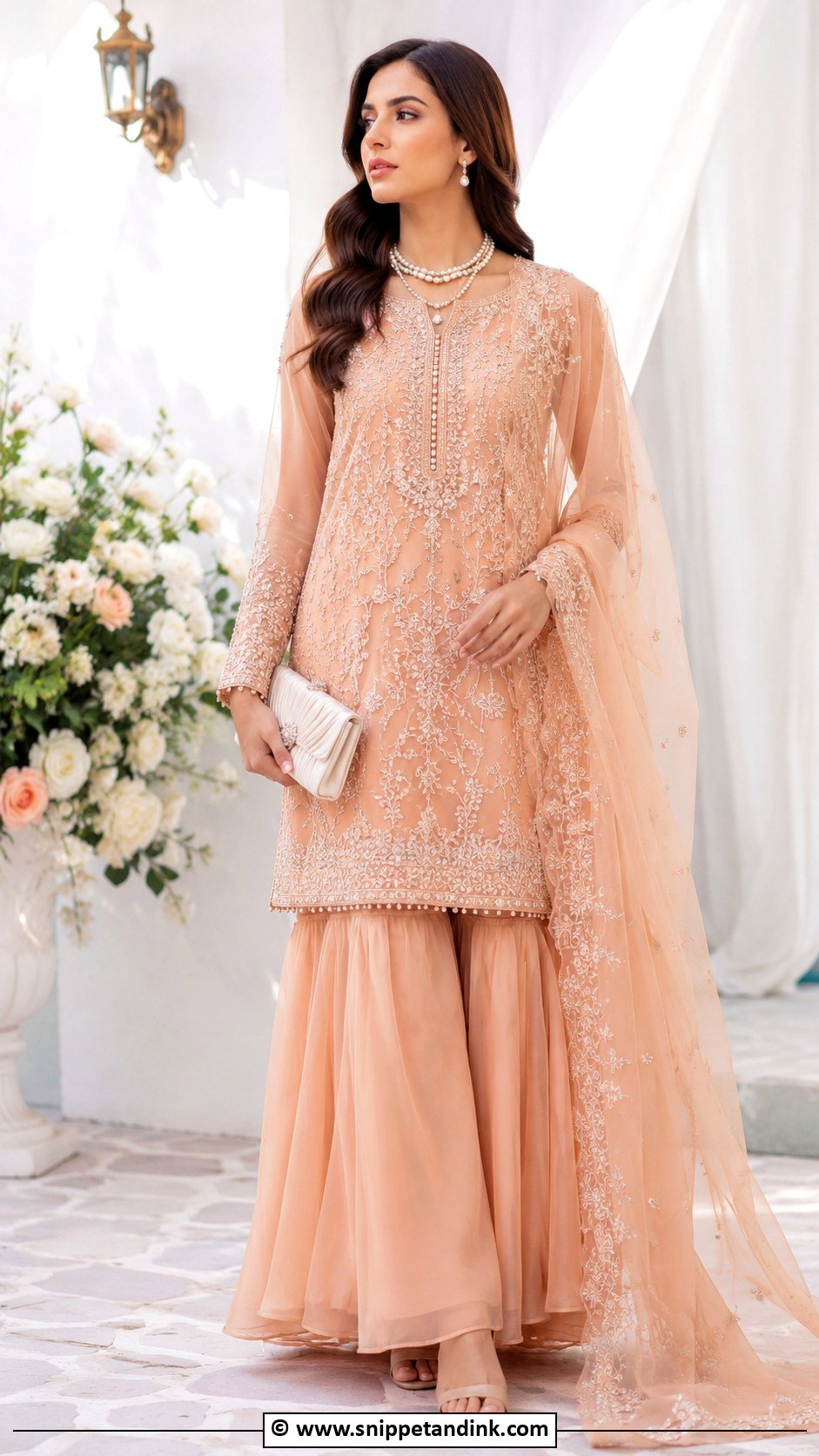
Organza is light and crisp, which is its charm and its catch. Gota or sequin work on peach organza looks delicate, worn as a long shirt over a flared sharara or lehenga with a matching dupatta. Check the lining before anything else: a sheer outfit with a poorly fitted lining shows every seam in daylight photos. Peach looks fresh at outdoor and daytime venues, and pearl jewelry, peach blush and glossy lips suit it.
17. Silver Lehenga Barat Dress
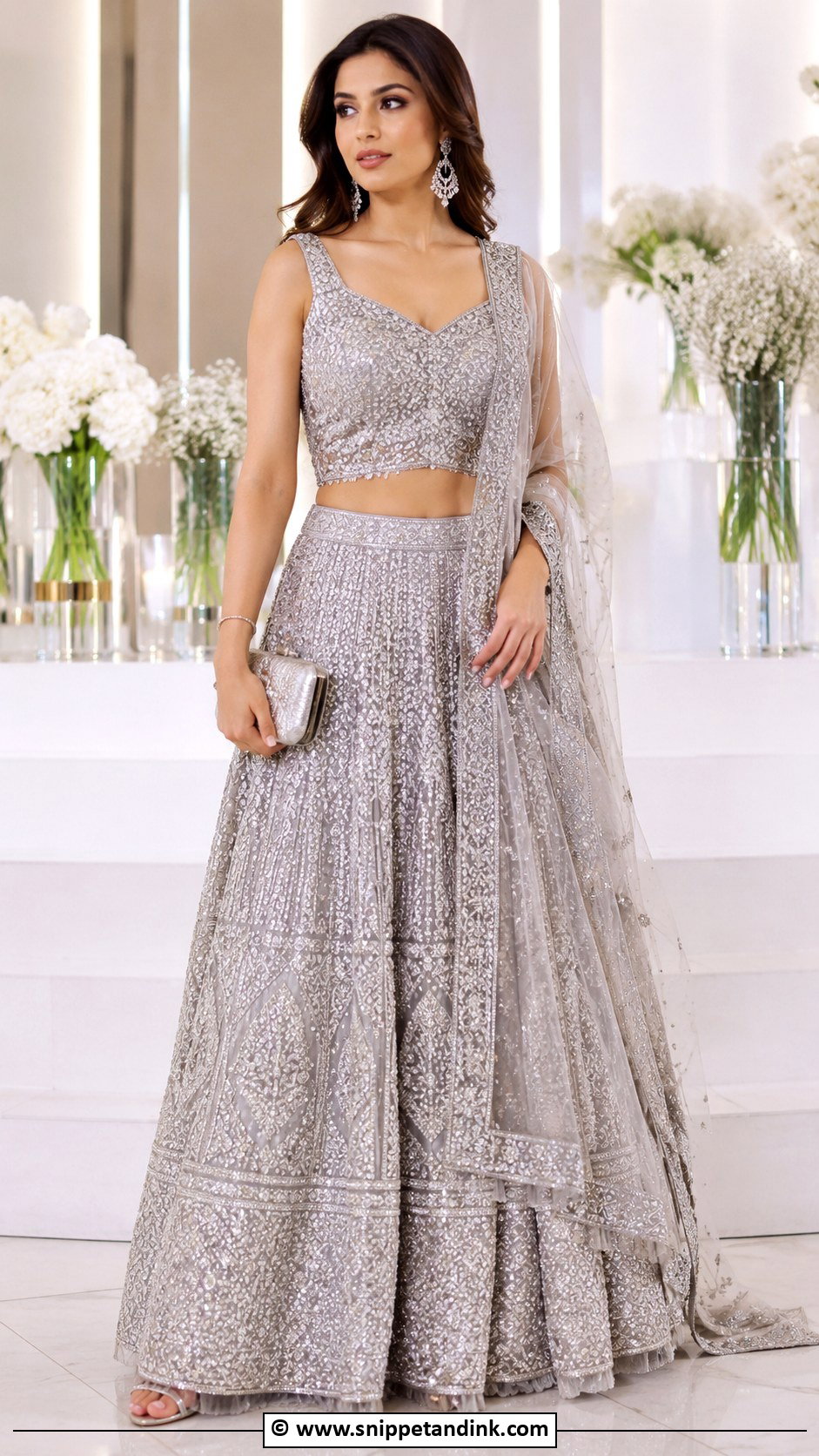
Silver mirror work and sequins throw light around a room, so this is one outfit where I hold back on accessories. Choose a soft grey, ice blue or metallic base with a fitted blouse and a sheer dupatta, then stop at crystal earrings and silver heels. Under a photographer’s flash, extra sparkle on top of mirror work just turns into hot spots. A sleek bun or soft waves keeps the head clean against all that shine.
18. Bottle Green Velvet Barat Dress
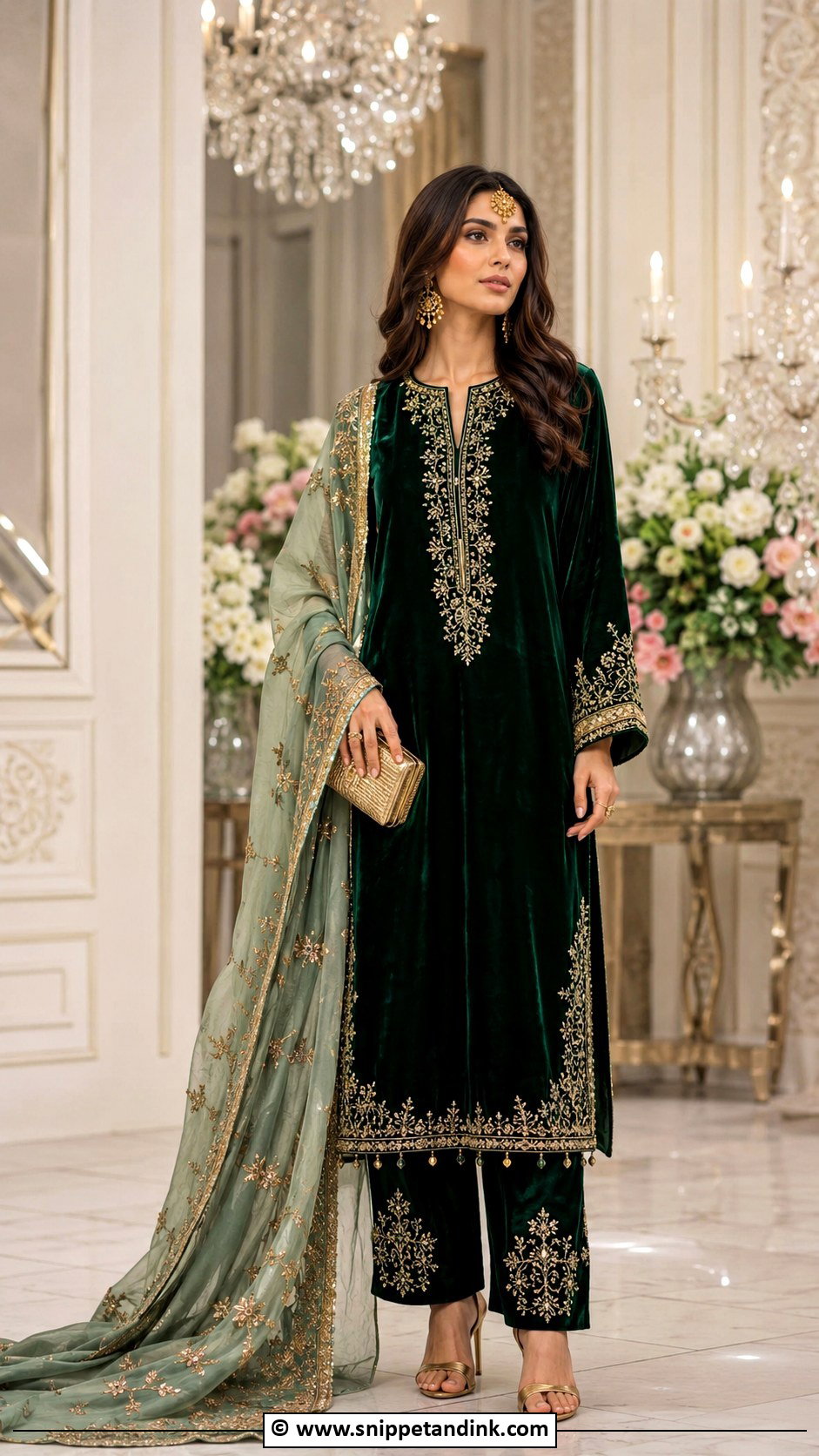
Bottle green velvet is the outfit I suggest most often to mothers of the bride and groom. It’s modest, warm for a winter hall, and the deep green carries gold embroidery at the neckline, sleeves and hem without looking heavy. A long shirt with straight pants or a sharara, plus an organza dupatta in a matching or contrast shade, keeps it from becoming too warm. Antique jewelry and bronze tones with a soft berry lip finish it.
19. Coral Lehenga Barat Dress
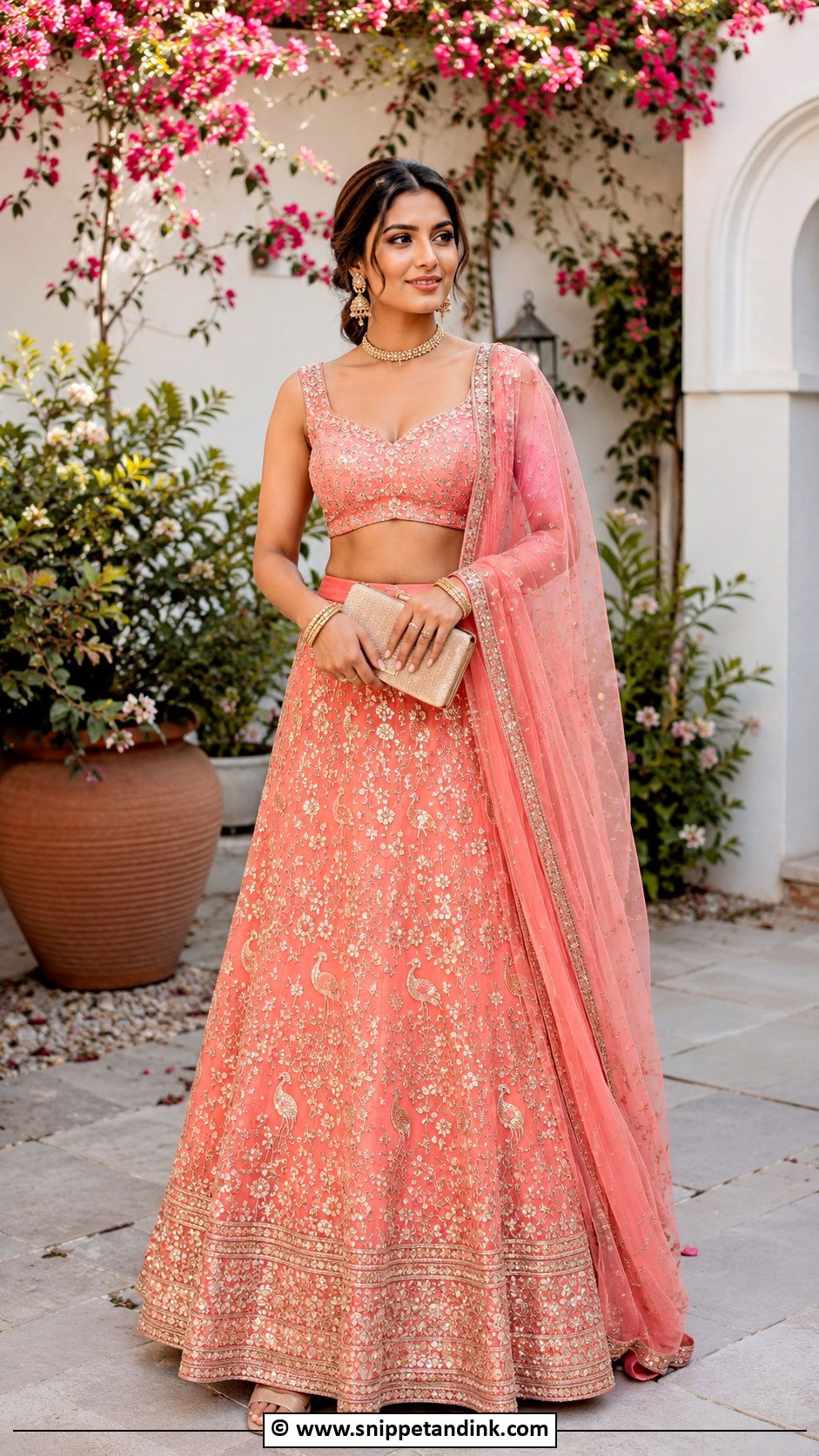
Coral is bright without being harsh, and it comes alive at spring and summer weddings. A coral lehenga with gold, pearl or mirror work suits bridesmaids and close family. If the skin tone and coral sit too close together, an emerald or gold dupatta border gives the contrast you need. Light jewelry, soft waves and a champagne clutch keep it guest-friendly rather than bridal.

20. White And Maroon Barat Dress
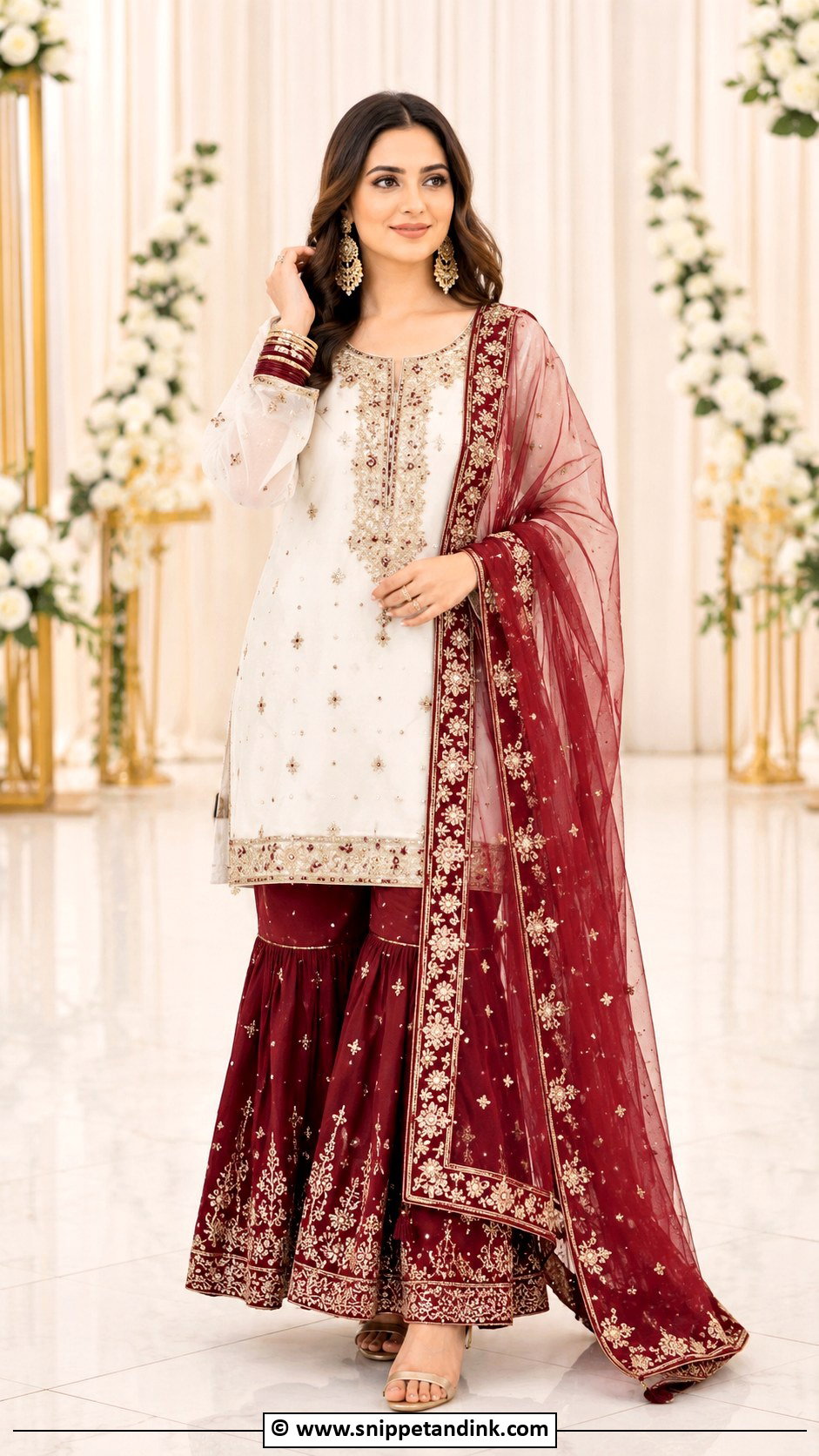
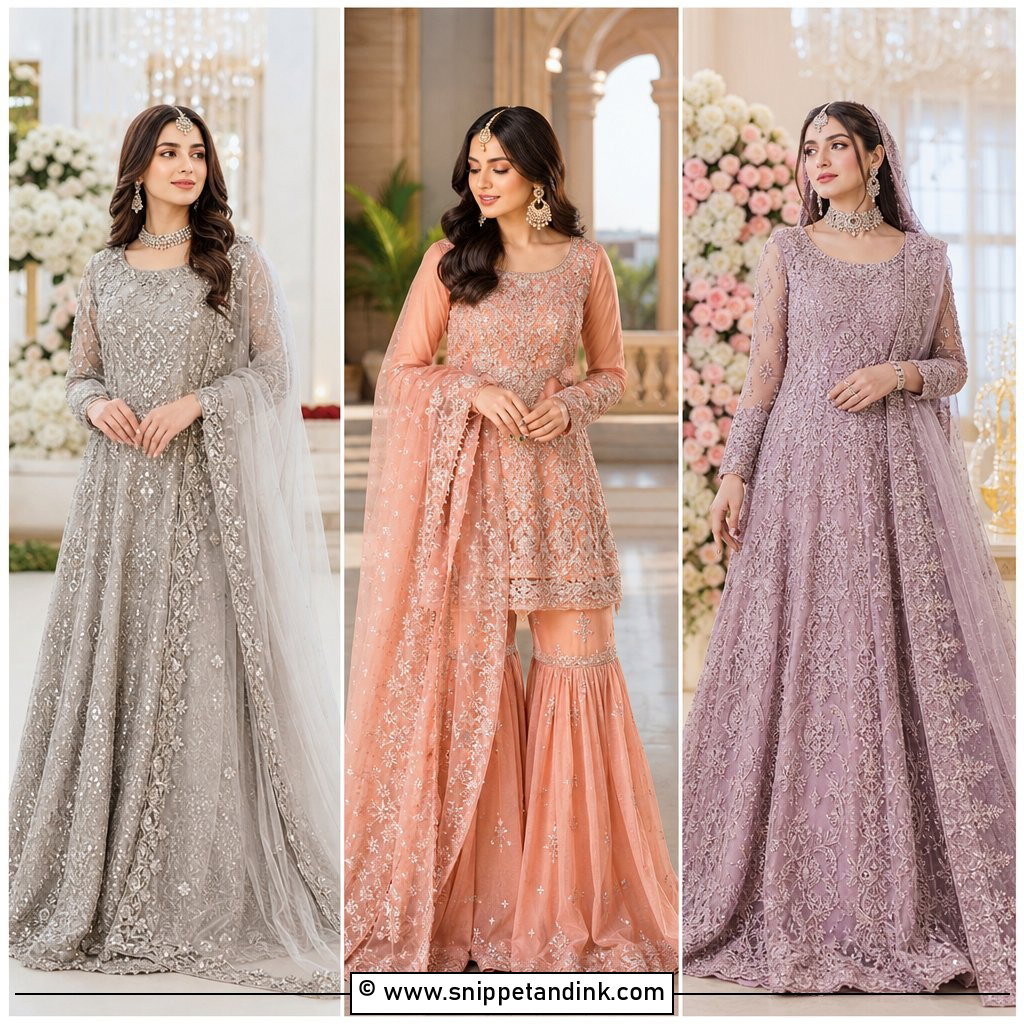
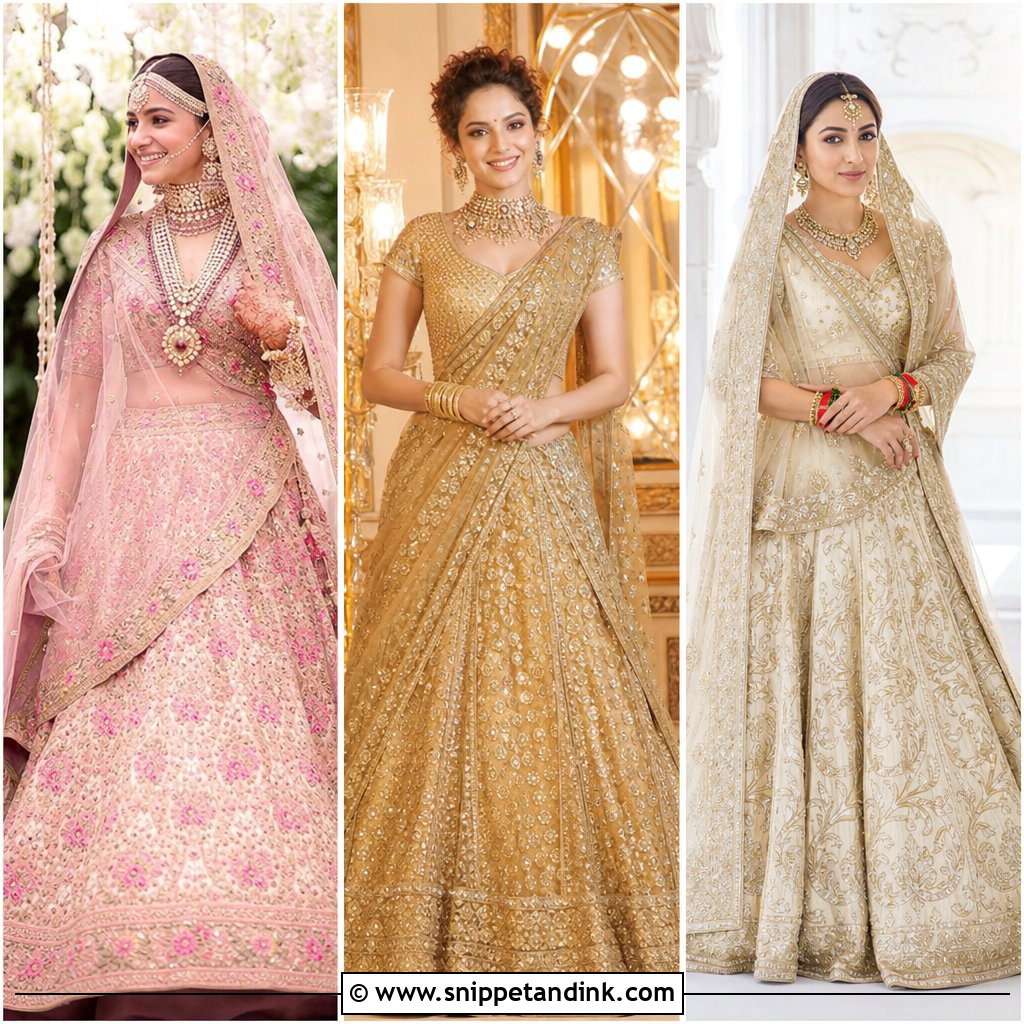
White with maroon embroidery and maroon sharara pants is classic colour blocking, and it reads as traditional without being another full red outfit. If the bride is wearing a light colour, keep the white base modest and the embellishment well below bridal level. Maroon bangles, gold earrings and a soft bun or side-parted waves suit the contrast. One practical note: white sharara hems pick up marks from the floor, so keep the length just off the ground.
21. Royal Blue Gharara Barat Dress
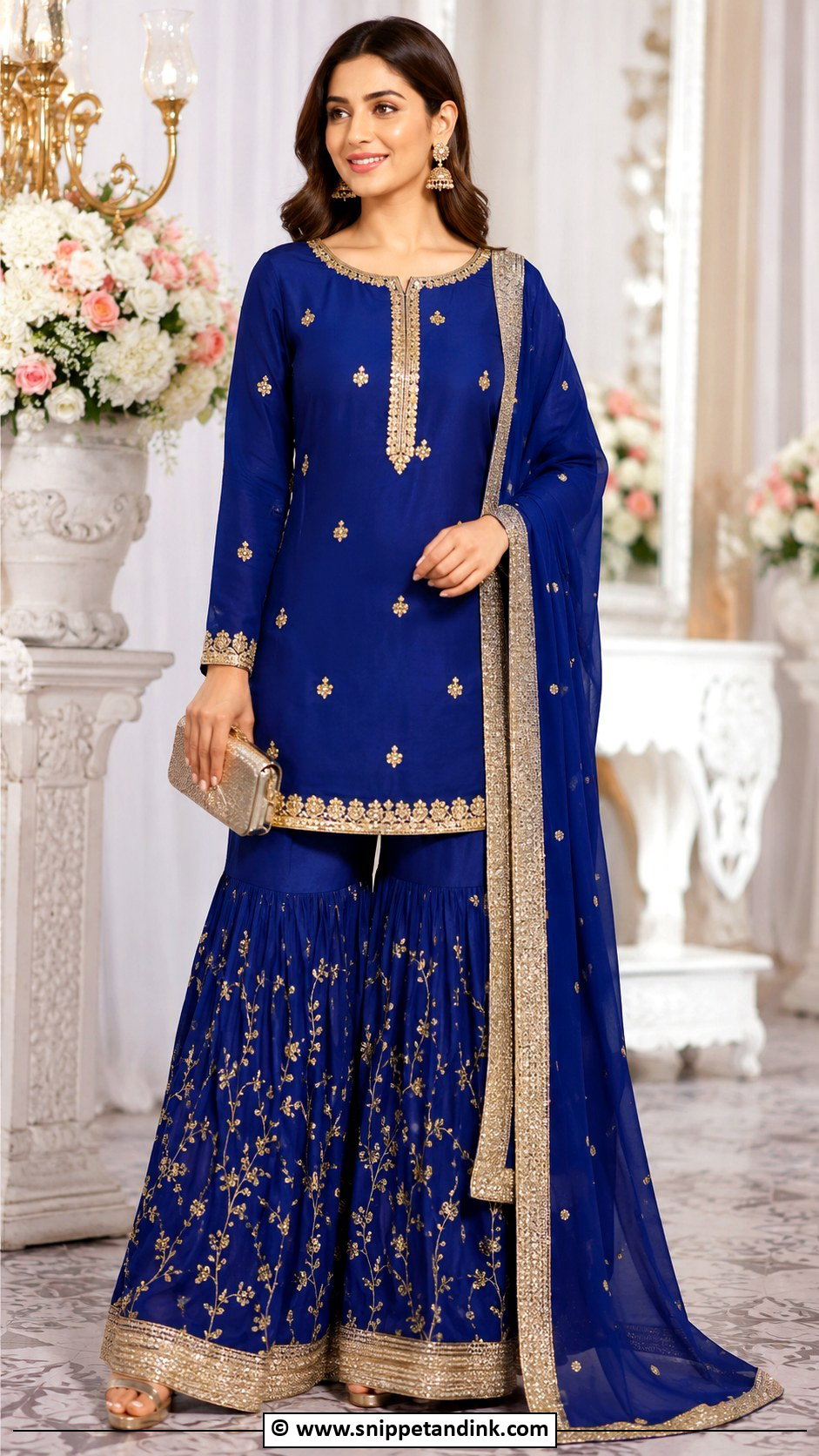
Royal blue stands out in a group photo more than almost any other colour. A royal blue gharara with gold embroidery, a short kameez and a bordered dupatta make a full traditional outfit for a guest who wants colour without bridal red. Because the blue is so strong, I keep the lips neutral and put the definition in the eyes. Embroidered flats are a sensible choice if the evening includes dancing.
22. Dusty Rose Maxi Barat Dress
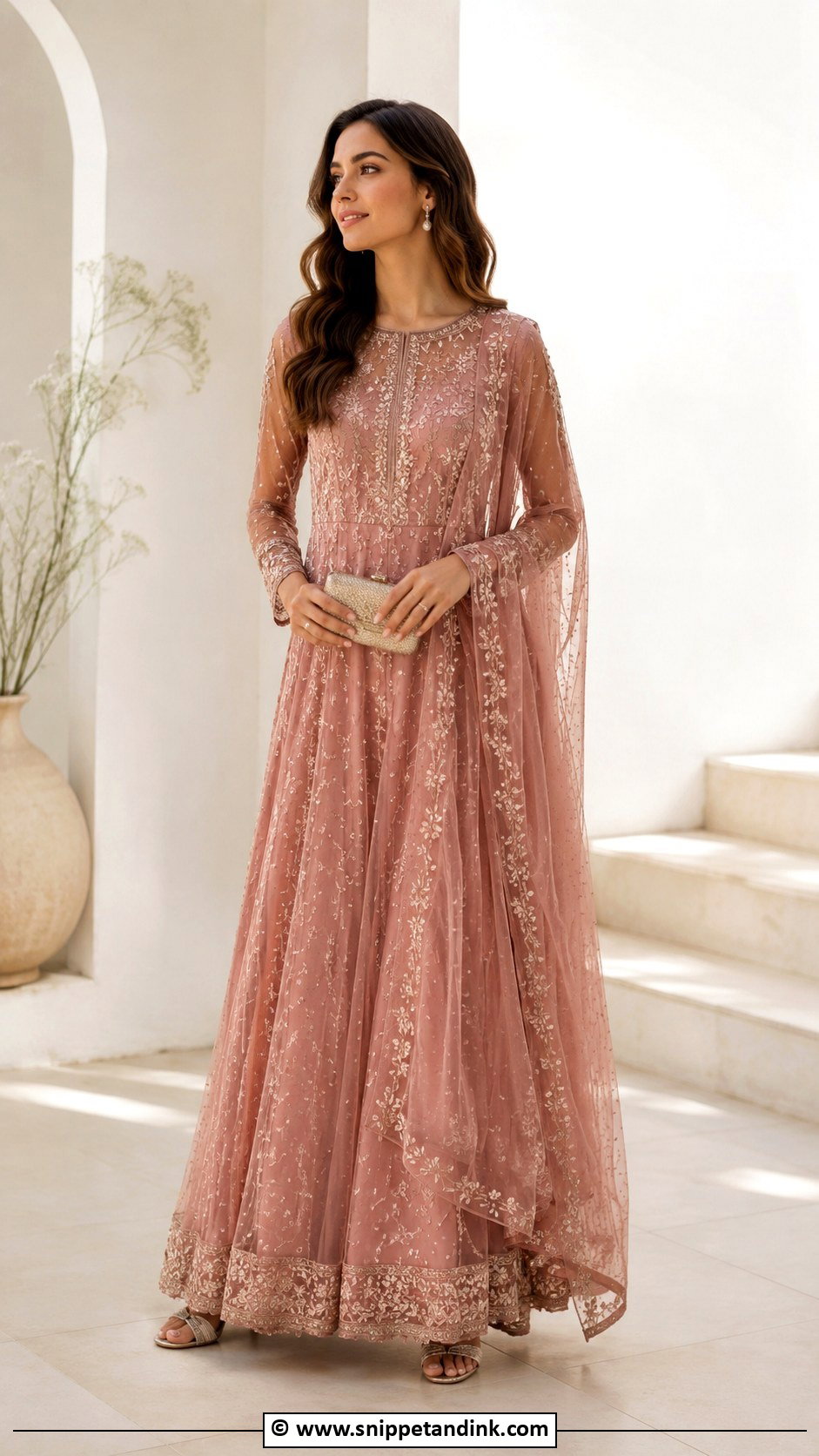
Dusty rose is one of the easiest colours to wear for most skin tones, which is why I use it so often for bridesmaids in a pastel palette. A floor-length embroidered maxi with a fitted waist and matching dupatta looks polished without much effort. Rose-gold heels, pearl earrings and mauve lips suit it, and a half-up style or loose waves keeps the mood soft. It’s comfortable enough for a long event.
23. Orange Sharara Barat Dress
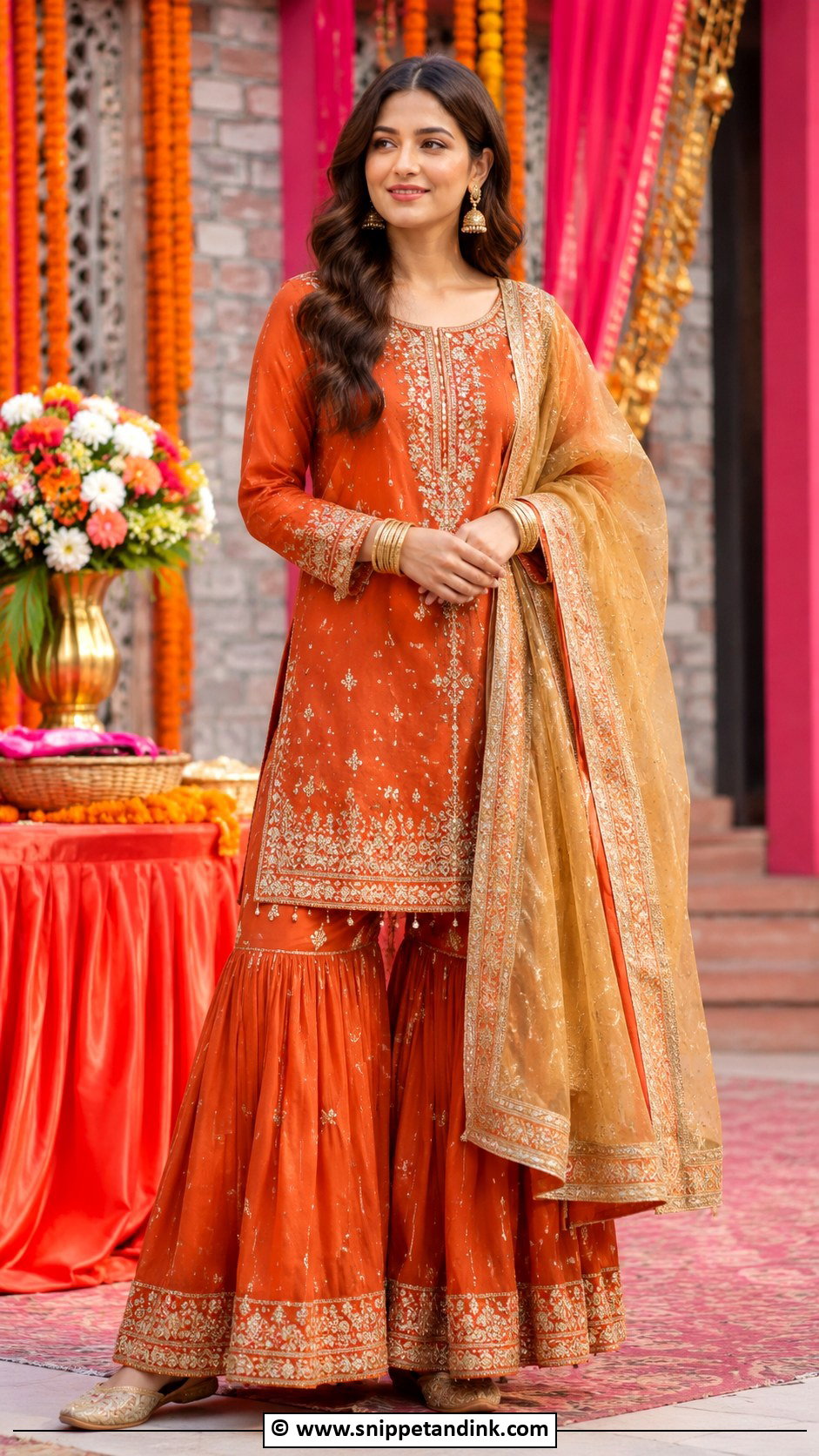
Orange is cheerful and loud, so the styling has to be disciplined. Burnt orange is easier to wear than tangerine, and a contrast dupatta in green, pink or gold makes it feel more traditional. I’d keep jewelry to gold bangles and jhumkas unless the outfit itself is plain, because orange plus heavy sets quickly looks busy. Bronze shadow and peach lipstick suit it, and comfortable khussas are worth it for a lively Barat.
24. Mint Green Lehenga Barat Dress
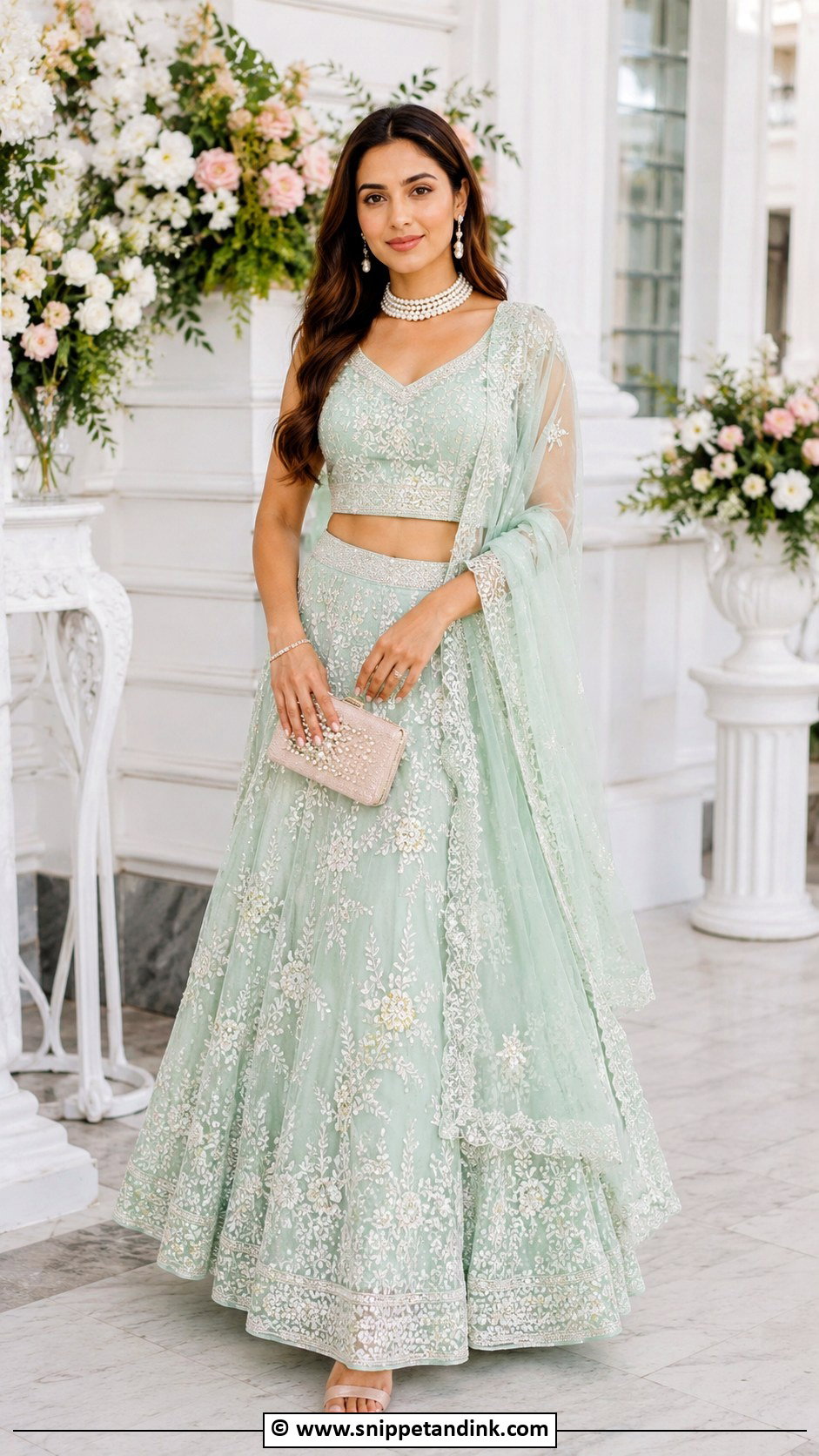
Mint can look washed out in a plain fabric, so I look for texture first: organza, net or tissue gives the colour depth in photos. A mint lehenga with silver, pearl or light gold detailing and a sheer dupatta suits daytime and summer events, especially for sisters. Pearl jewelry and nude heels keep it soft, and a pink or peach lip stops the face from looking pale against the cool green.


25. Beige And Red Barat Dress
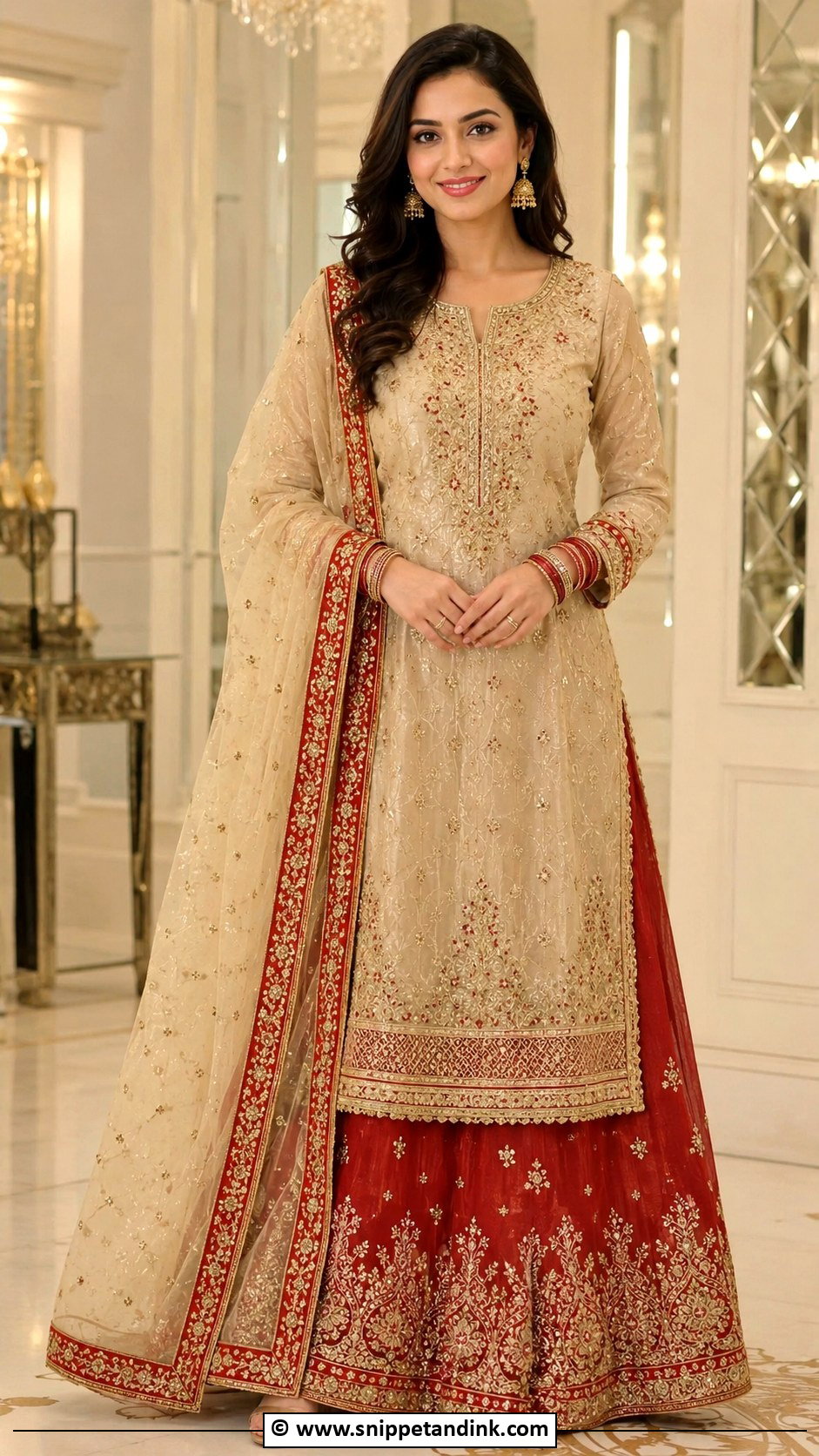
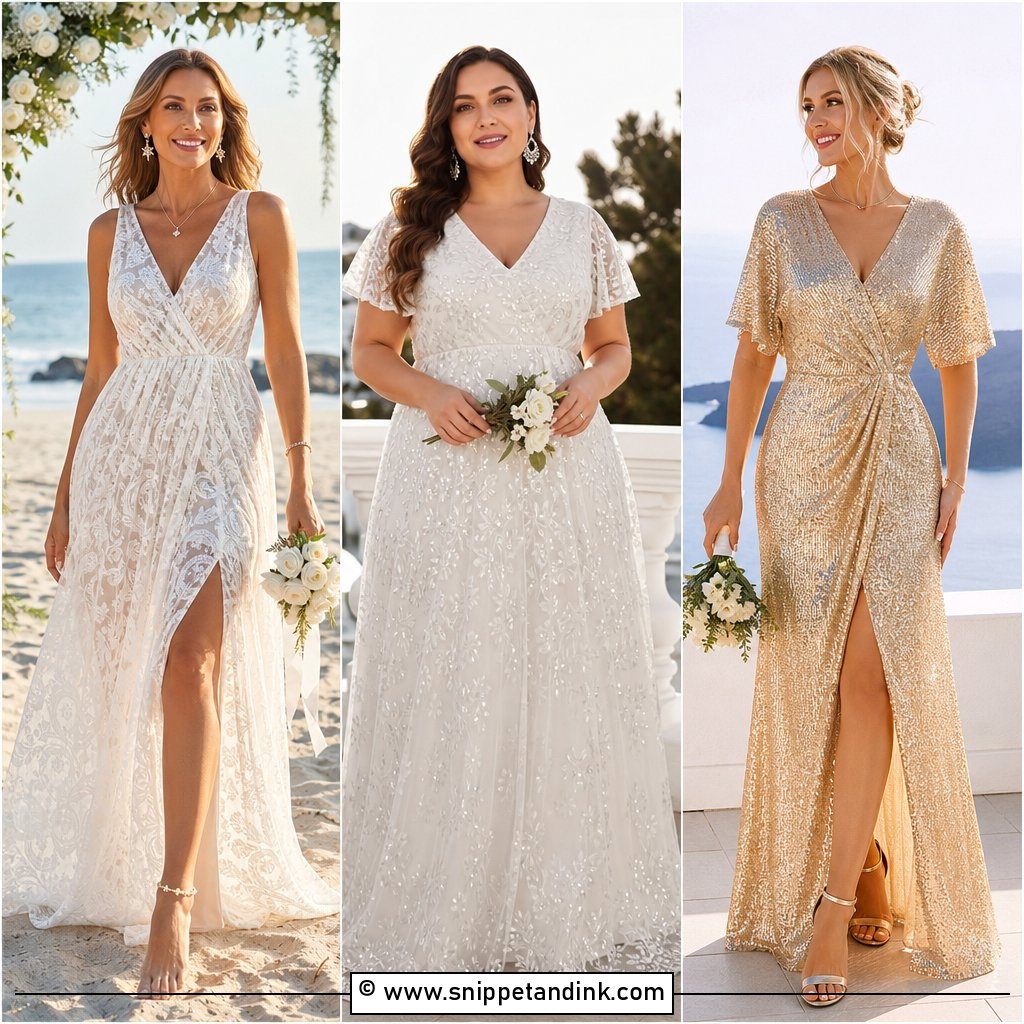
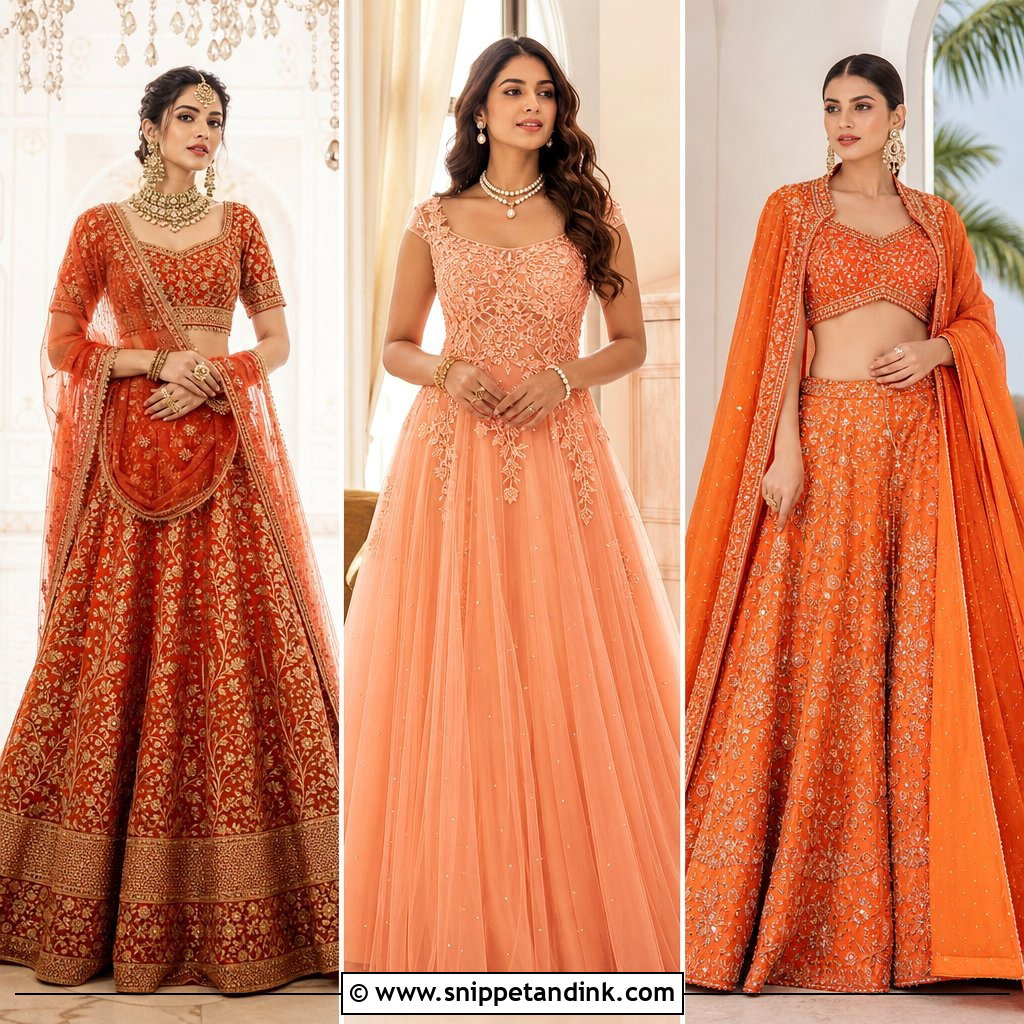
Beige with red is a clever compromise for family members who want to honour the classic Barat colours without dressing like the bride. A beige long shirt with red embroidery, red wide-leg pants or a lehenga, and a red-bordered dupatta does it. As a guest, keep the embroidery balanced. Red bangles, gold jewelry and a low bun or soft curls finish it neatly for family photos.
26. Magenta Pishwas Barat Dress
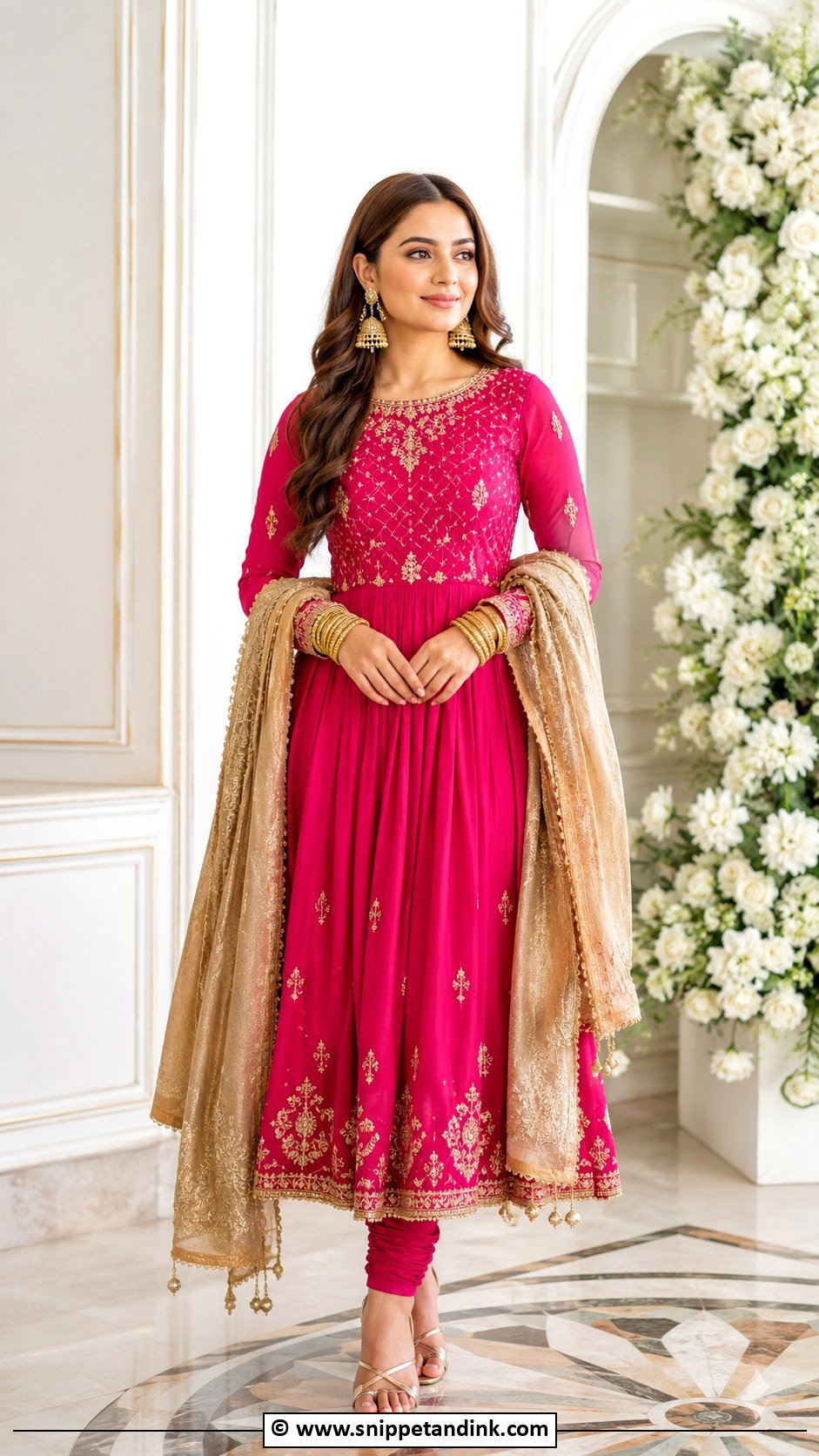
Magenta is joyful, and the pishwas shape gives it room to move. With gold embroidery, churidar pants and a soft dupatta, it’s a full traditional outfit for cousins and bridesmaids. My one rule with bright colours is to stay in one metal tone: gold jhumkas, gold bangles, metallic sandals, nothing mixed. Soft glam eyes and a neutral pink lip let the colour lead.
27. Copper Tissue Barat Dress
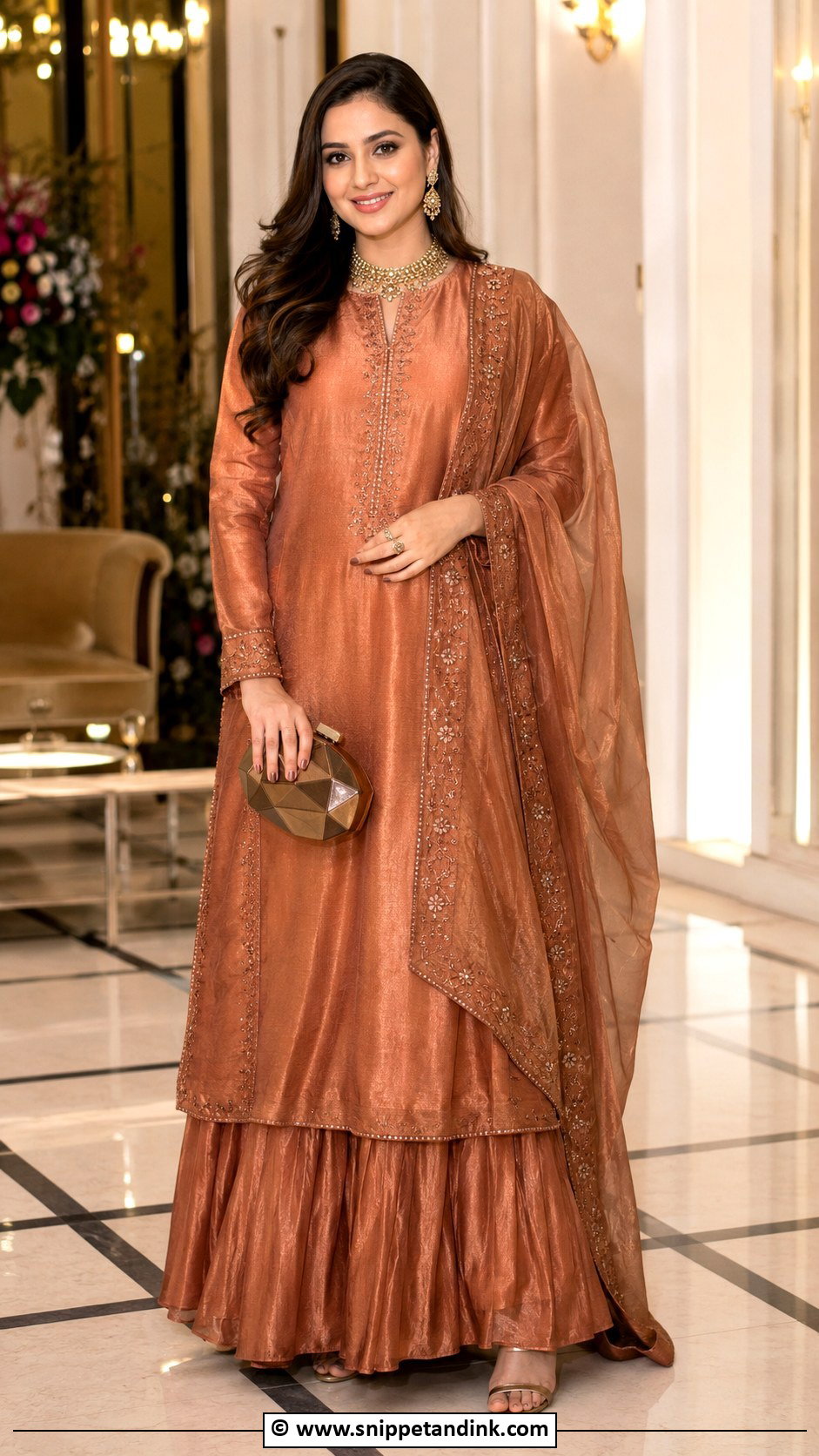
Tissue fabric has a natural sheen, which means copper tissue can look rich with surprisingly little embroidery. That makes it a good choice for guests who want glamour without the weight of heavy handwork. The downside is that tissue is crisp and can scratch at the underarms and waist, so check the lining is soft and complete before you commit. Antique gold jewelry, a bronze clutch and warm makeup suit the colour.
28. Lavender Gown Barat Dress
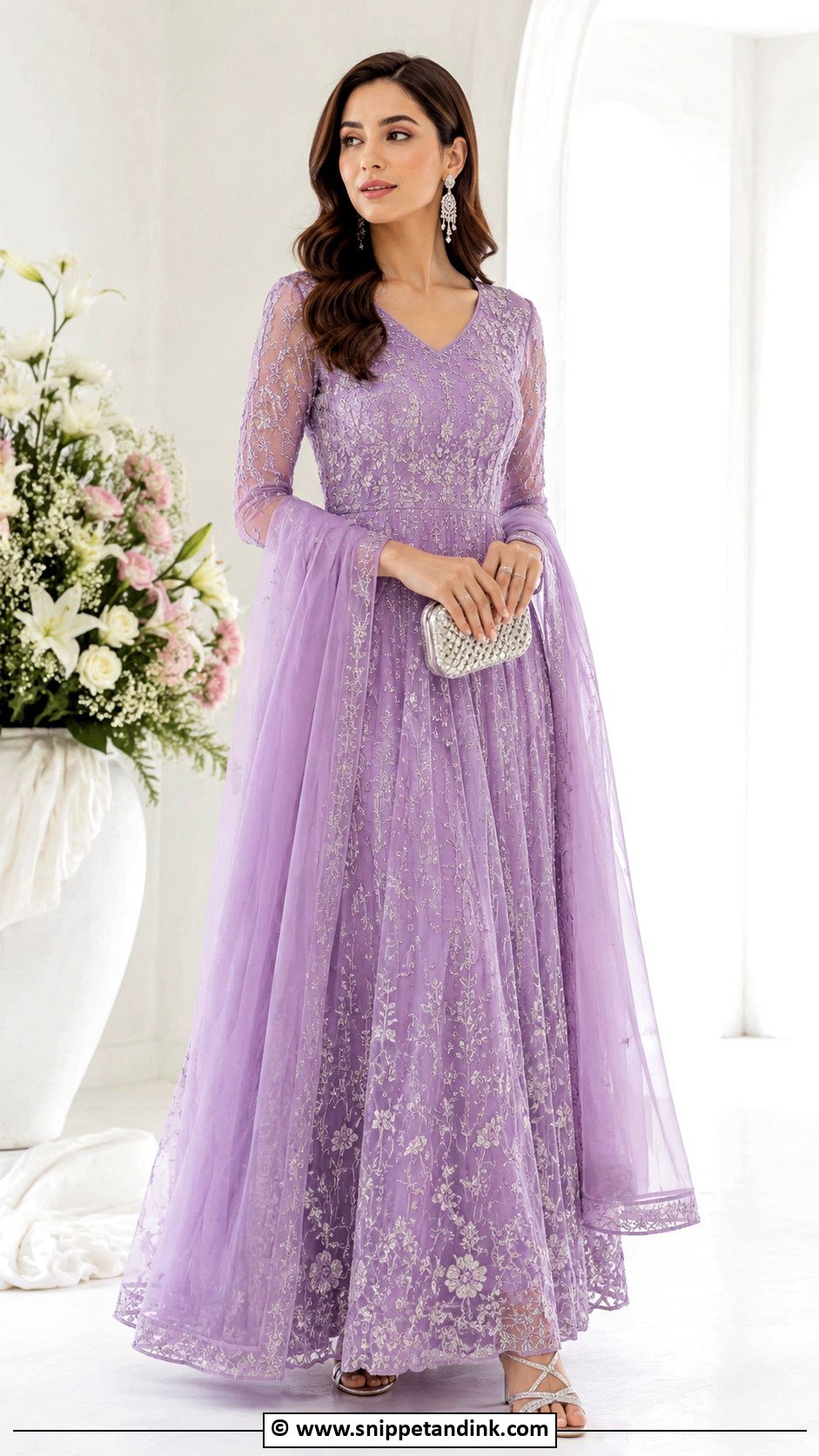
Lavender is a fresh, modern choice for a younger guest or a daytime wedding. An embroidered gown with a matching dupatta and silver, pearl or pale gold embellishment keeps the palette light. If the gown already has a full flare, keep the dupatta simple or it starts to feel bulky around the arms. Silver heels, crystal earrings, soft curls and pink-toned makeup complete it.
29. Brown And Gold Barat Dress
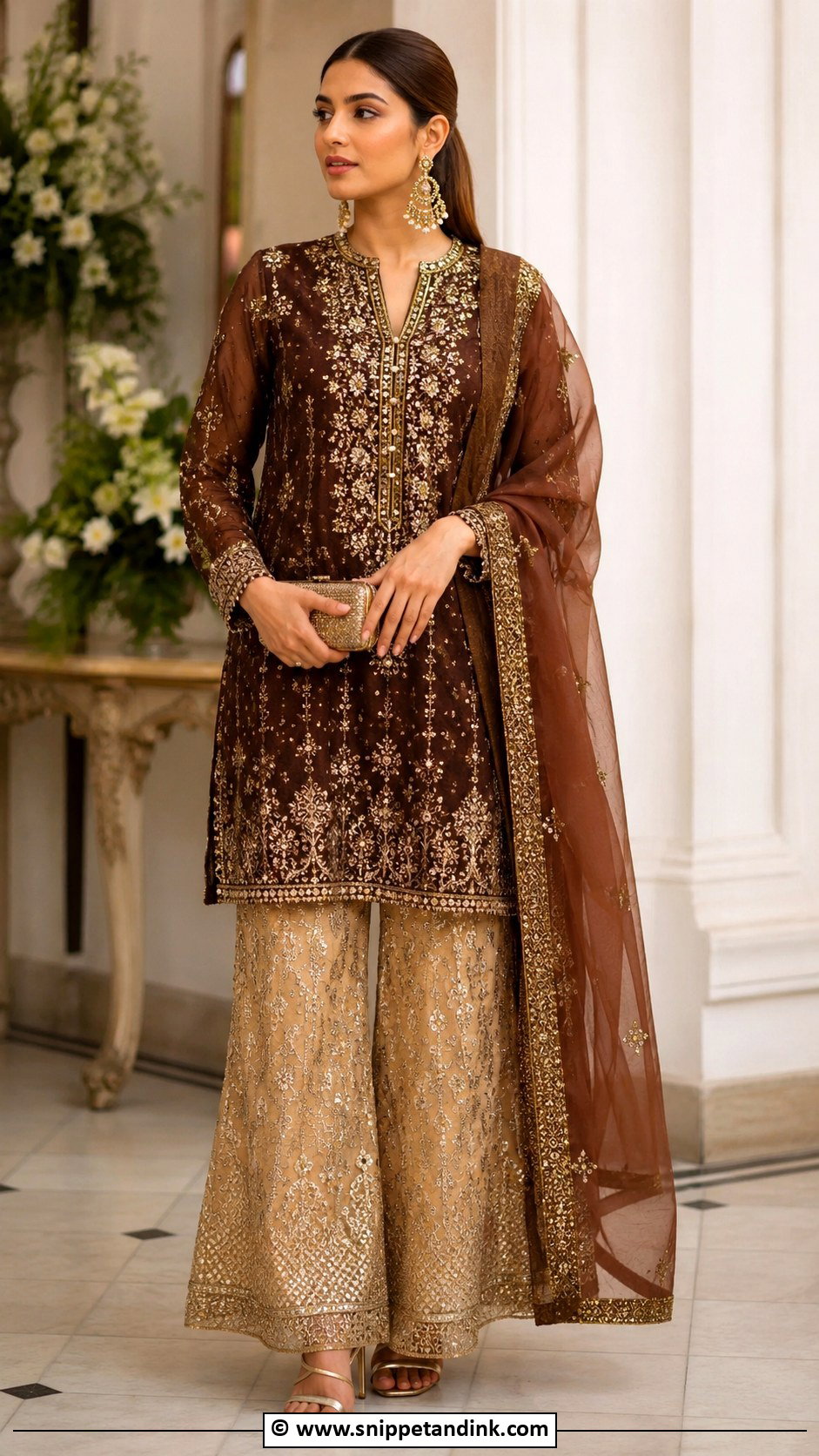
Brown surprises people. Chocolate, mocha or bronze-brown with antique gold embroidery looks mature and expensive, especially at an evening or winter event. A long shirt with a sharara or straight pants gives structure, and a sheer dupatta softens it. Warm bronze eyes, soft contour and a nude-brown lip suit it, and it’s a smart pick if you want something different from the usual pink, green or red.
30. Pastel Blue Sharara Barat Dress
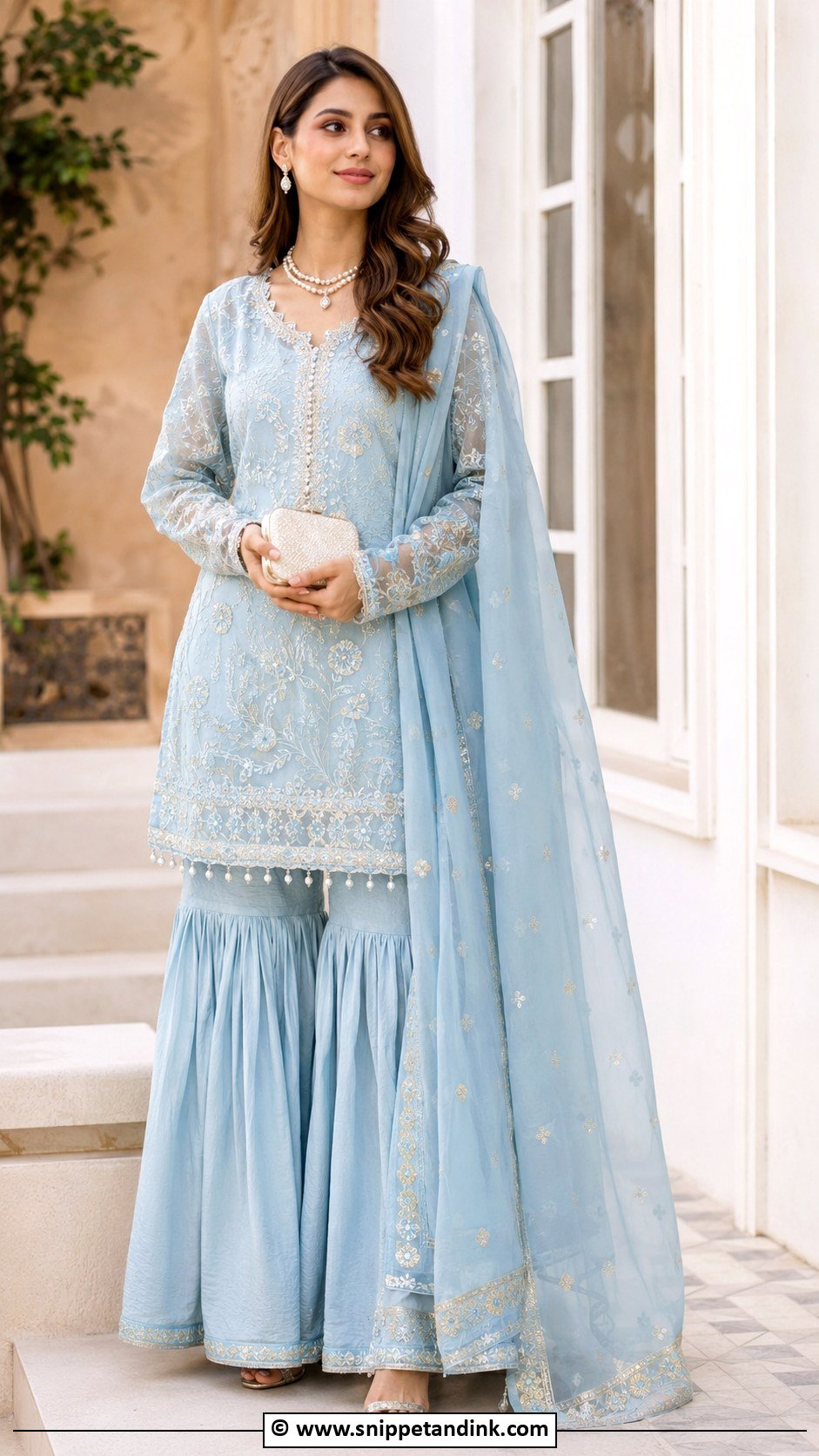
Pastel blue is cool-toned, so it needs warmth added back through blush and a soft pink lip. A long shirt with silver embroidery, a flowing sharara and a net or organza dupatta keeps it dressy enough for a formal Barat, and it suits daytime venues and summer weddings. Silver heels, pearl jewelry and a light clutch are all you need.
Reading the Family Dress Code Before You Buy
The colour rules at a Barat are rarely written on the invitation, but they exist. Red and deep maroon are generally understood as the bride’s colours, so guests and sisters usually stay away from full red unless the family says otherwise. Ivory, white and black vary a lot between households, and I’d simply ask the bride or her mother rather than guess.
Embellishment level matters as much as colour. A guest in a heavily worked outfit with a full bridal jewelry set can look like she’s competing, even in emerald or navy. My working rule for guests is one heavy element only: either the outfit is richly embroidered and the jewelry stays light, or the outfit is simpler and the earrings carry the look.
Storing Zardozi, Velvet and Tissue After the Wedding
Embroidered Barat outfits are usually kept for years, and most of the damage I see comes from storage, not wear. Metallic zari and dabka threads tarnish in damp air and in plastic, so skip the plastic garment bag and wrap the outfit in clean cotton or muslin instead.
- Air the outfit for a day before packing it away, so sweat and perfume don’t sit in the fabric.
- Fold heavy lehengas flat with acid-free tissue in the folds rather than hanging them, because the weight of the embroidery stretches the waistband on a hanger.
- Turn velvet inside out and avoid pressing it, since pressure crushes the pile into shiny patches.
- Refold everything every few months so the creases don’t set and crack the embroidery along the fold lines.
- Send heavily embroidered pieces to a dry cleaner who handles bridal wear, and point out any stains when you drop them off.
Which of These Suits a Bride, a Sister or a Guest?
Every outfit here can work; the question is which one works for your role, your venue and your stamina. A bride might want a red lehenga, a burgundy farshi or a champagne pishwas, while a guest may be happier in an emerald sharara, a navy maxi or pastel blue. Check the family dress code, think about the season and the hours you’ll be wearing it, and do at least one fitting where you sit, eat and dance. The outfit you can forget about once you’re dressed is usually the one you’ll look happiest in.
You'll Like These Ideas:








Leave a Reply