
Black and white is the most graphic thing a bride can wear, and it’s far less risky than people assume. It takes the romance of a classic gown and adds the sharp contrast of eveningwear. I’ve styled it for ballrooms, courthouses, gardens and destination weddings, and what makes it work every time is planning the black from the start rather than adding a dark accent at the last minute. Black lace over ivory tulle, white satin with a black bow, sculpted monochrome gowns, long gloves: below are thirty versions, and what I’d check on each.
Ivory or Optic White Next to Black?
The white you choose changes the whole effect. Bright optic white against black gives the crispest, most graphic contrast and suits modern, minimal gowns. Ivory beside black looks warmer and slightly vintage, but in some light it can read creamy or even yellowish next to true black. I always hold the black trim against the base fabric by a window before a bride commits.
Settle the proportion
I sort these dresses into three groups: white with a black accent, an even split, and mostly black with white detail. Accent dresses read as bridal to everyone, including traditional relatives. An even split is a fashion statement. Mostly black is the boldest of the three, and worth a quiet conversation with family wherever black is linked to mourning.
Where the black should sit
Dark color recedes and light color comes forward, so black along the sides of a bodice or at the waist works like contour, while white pulls the eye in. Put the black where you’d like the eye to slide past, and the white where you want it to land.
1. Black And White Ball Gown Wedding Dress
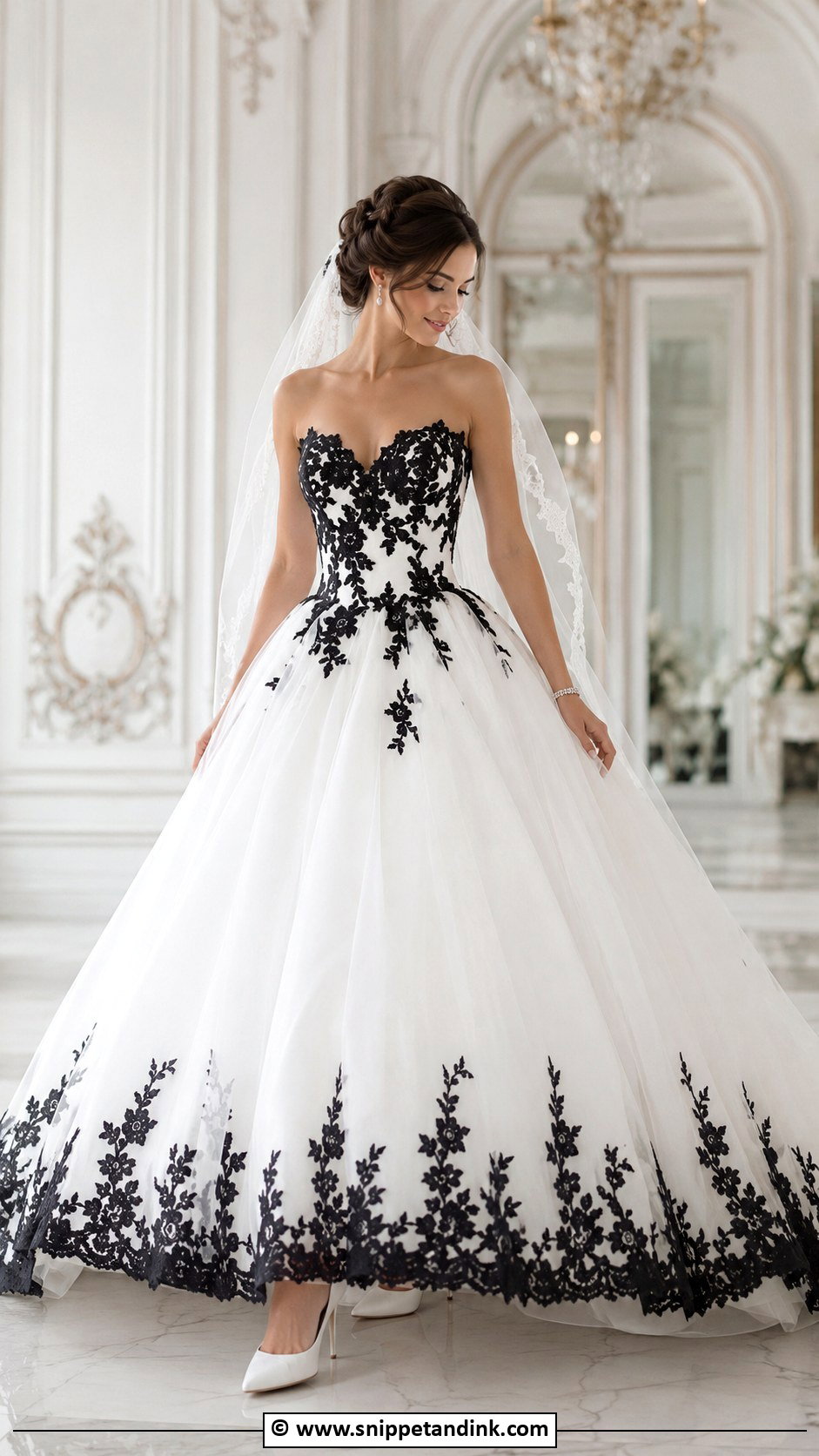
A black and white ball gown wedding dress gives you classic structure with a dramatic edge. Start with a white or ivory full skirt and put black lace on the bodice, hem or train, not all three, so the contrast has one clear home. Strapless reads regal; long illusion sleeves soften it. Pearl drops, a low bun and a cathedral veil with minimal edging keep the gown in charge. White satin heels keep it bridal, black heels push it toward fashion. It needs a big room: formal venues, grand staircases, evening receptions.
2. White Wedding Dress With Black Lace
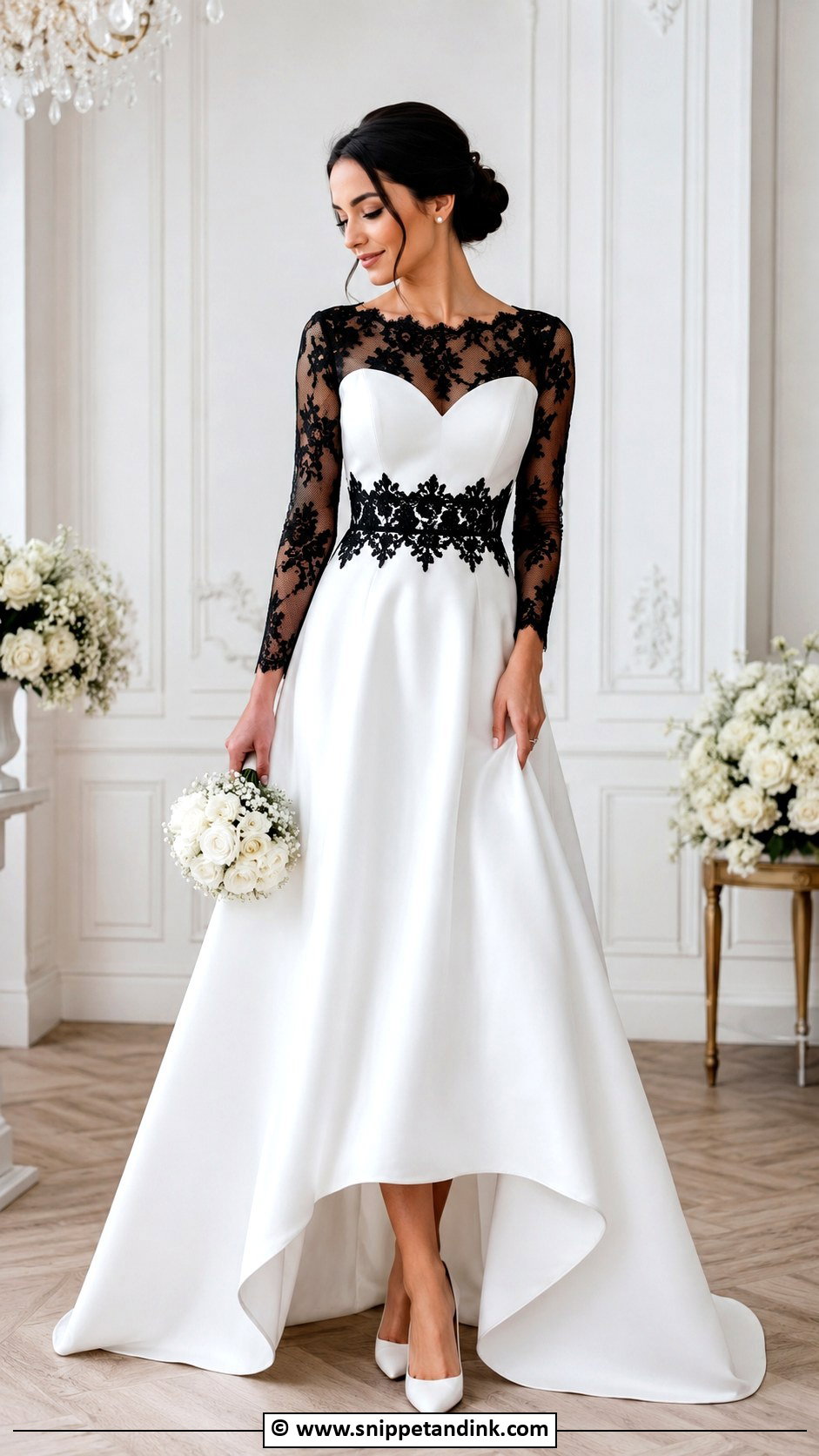
Black lace on white gives contrast without darkening the whole outfit. The most flattering placements are the bodice, sleeves, waist or skirt border, where the lace acts like contour and gives the shape depth in photos. A fitted bodice over an A-line skirt is the easiest version to wear. I keep shoes simple, either black pointed heels or white heels with a black ankle strap. If the lace is heavy, skip big jewelry; pearl studs, a clean veil and a small white bouquet are enough.
3. Black Wedding Dress With White Lace
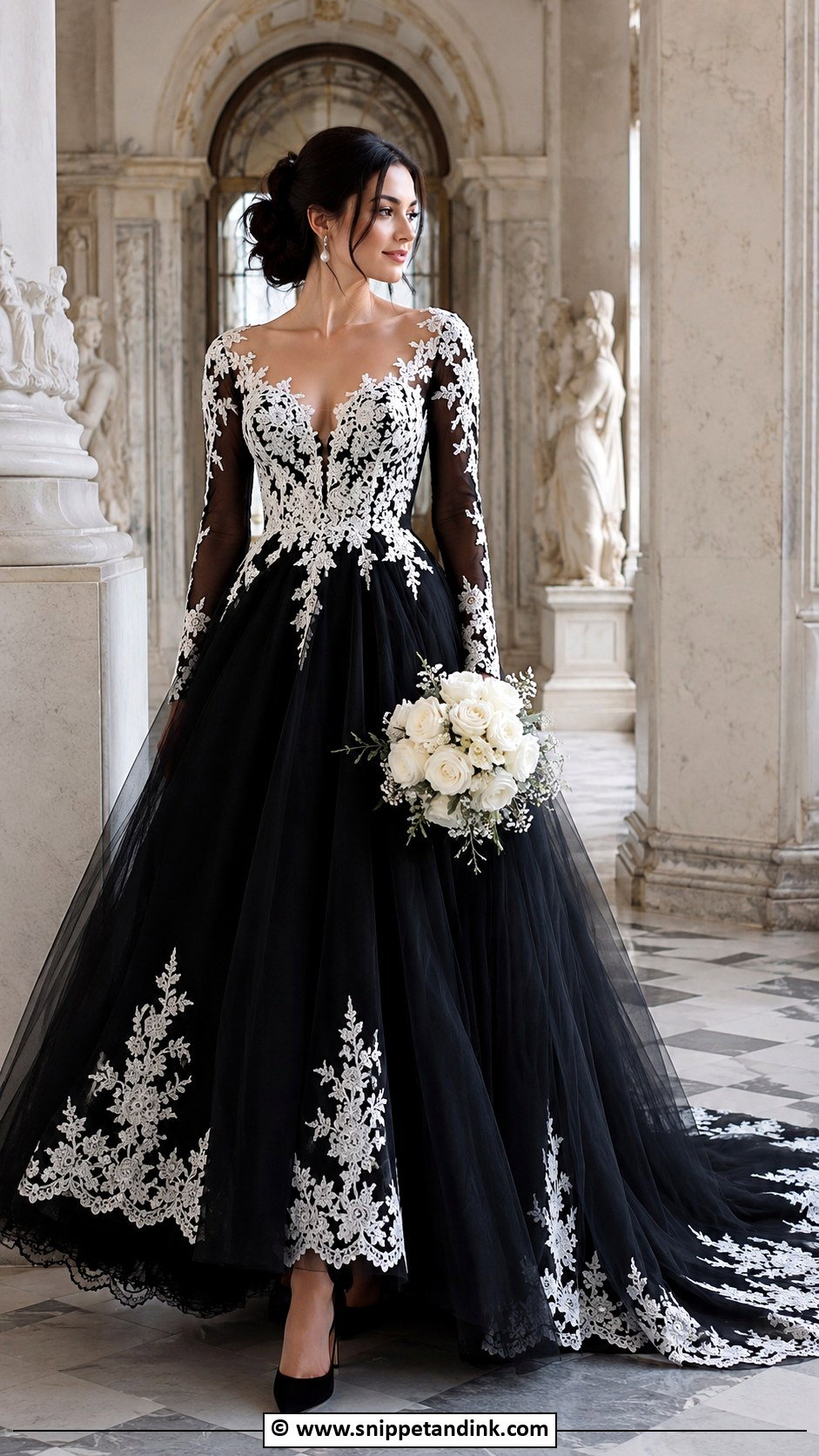
A black gown with white lace flips the usual balance, and the white lace is what stops it reading as an evening dress. Look for black tulle or satin with white appliqué at the neckline, sleeves, waist or train; lace near the face matters most because it brightens your skin. White pearl earrings, a white bouquet and black satin heels complete it, and a soft updo or brushed waves keep it from feeling severe. In families where black is tied to mourning, I’d have that conversation before buying. Evening weddings and historic venues suit it.
4. Black And White A Line Wedding Dress
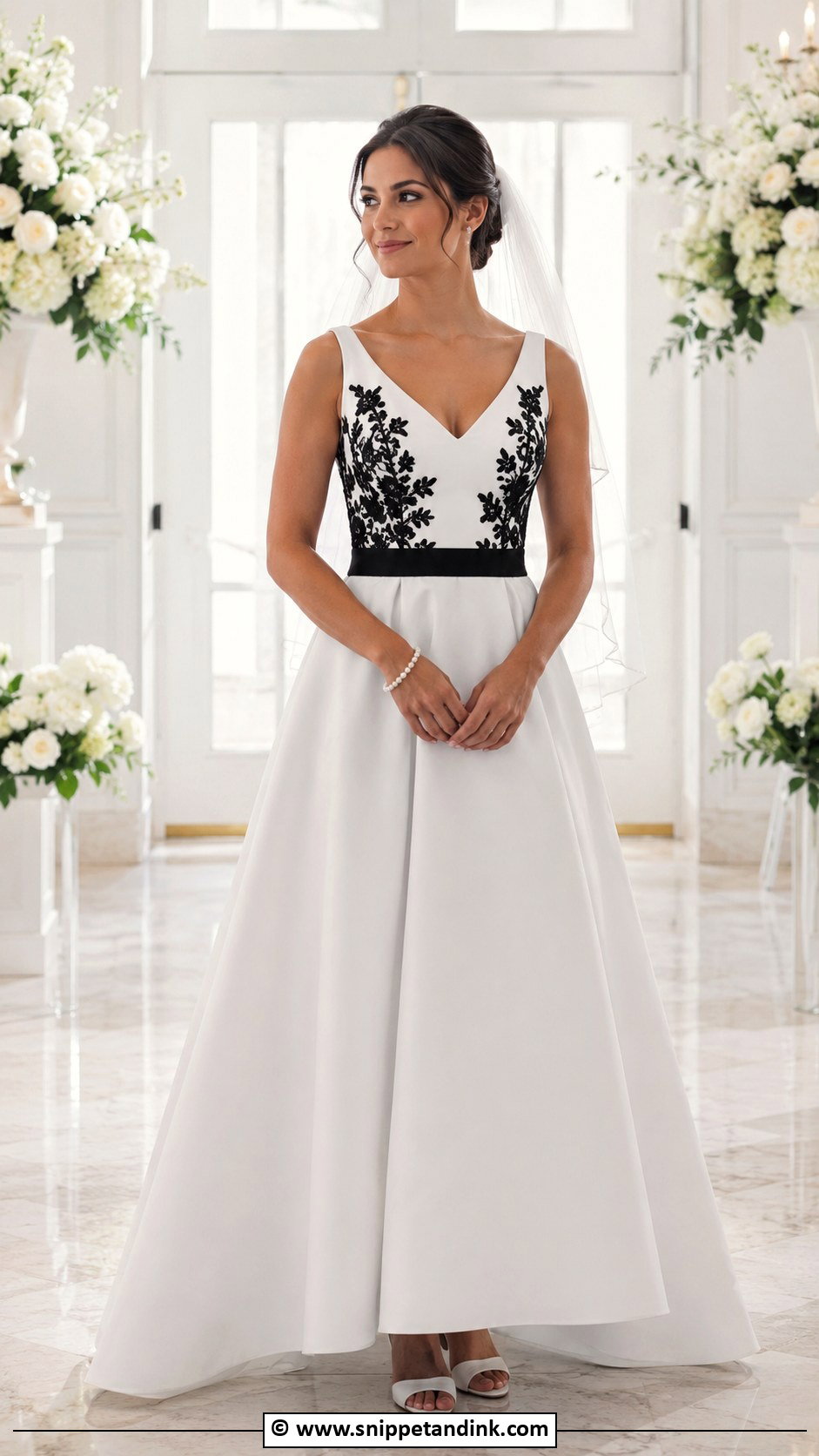
An A-line is the easiest two-tone silhouette to wear: it defines the waist and flows away from the hips. For a classic version, choose a white A-line with a black waistband, black floral appliqué or a black lace overlay on the bodice. The waistband does the most work for the least effort, because it draws a clean line at your narrowest point. Block heels give support, pointed pumps a sharper finish. A medium-length veil, a pearl bracelet and a white-and-green bouquet complete it.
5. Black And White Mermaid Wedding Dress
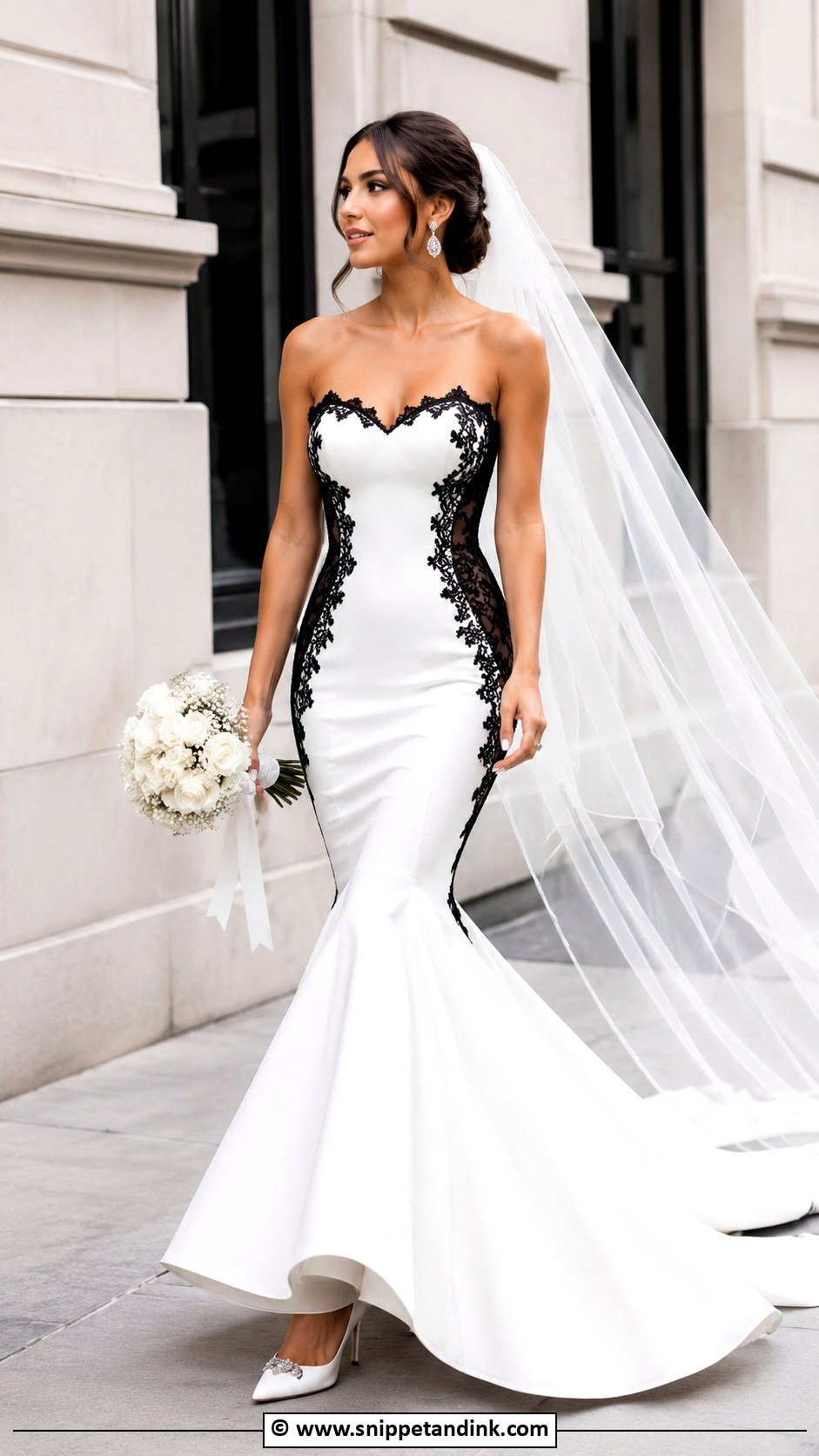
Mermaid gowns are fitted through the body and flare low, and two-tone panels make that shape even stronger. Vertical black lace panels on a white mermaid lengthen the body; a black mermaid with white floral embroidery feels more dramatic. Placement is everything here. I check where the black lands on the hip, because a horizontal band at the widest point makes it look wider. Drop earrings, a slim bracelet and pointed heels balance it, and a long veil softens the close cut.
6. Black And White Wedding Dress With Bow
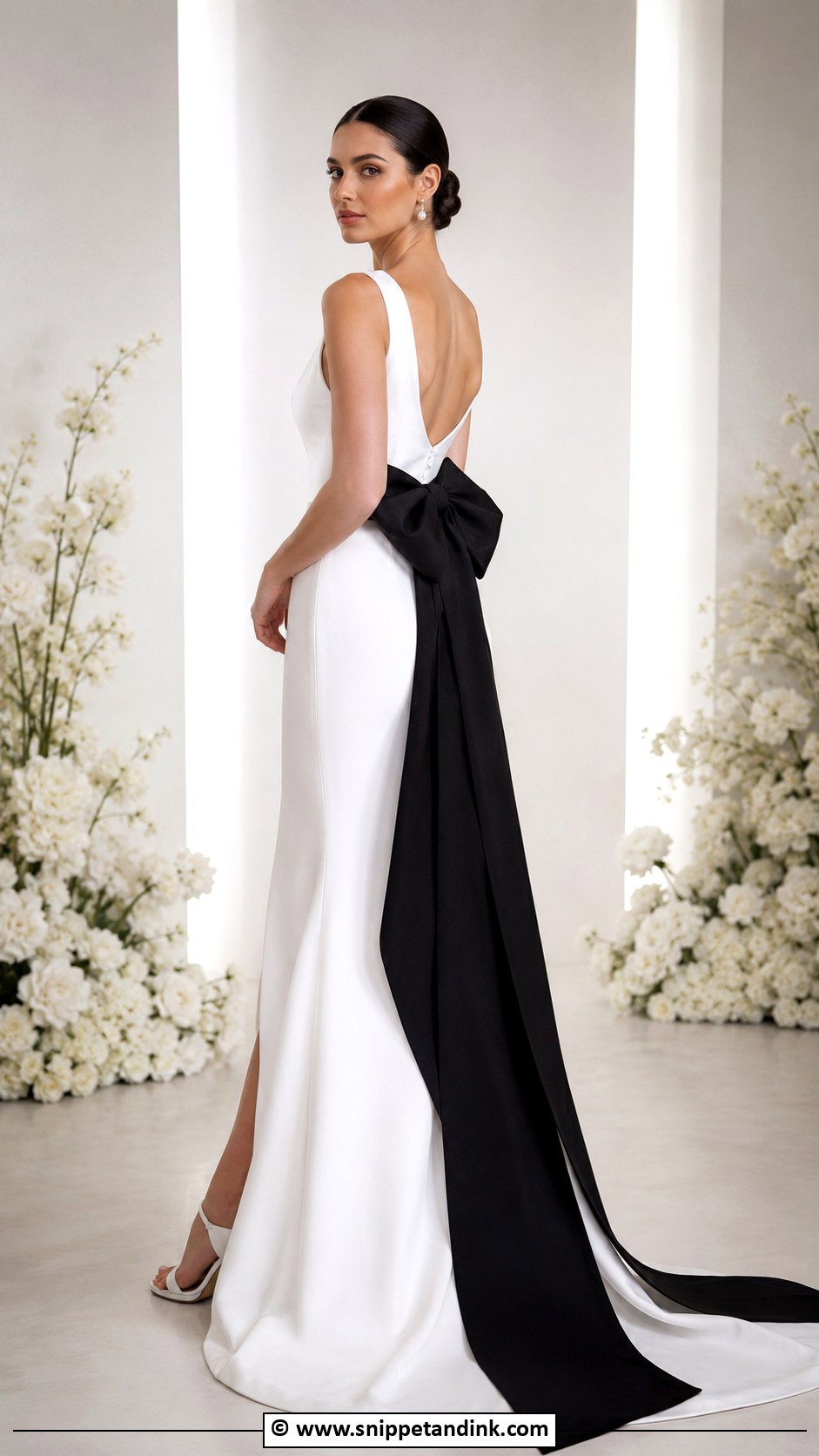
A black bow on white satin is the cleanest version of this whole palette: graphic, simple and instantly recognizable. It can sit at the waist, back, shoulder, neckline or train. For a softer take, try a sheer black organza bow over ivory. I keep the rest of the dress plain so the bow looks deliberate. Big satin bows need internal structure or they sag by evening, so ask what’s inside. Pearl earrings, satin pumps and a smooth veil finish it, with a low bun or half-up style framing a back bow.
7. Black And White Strapless Wedding Dress
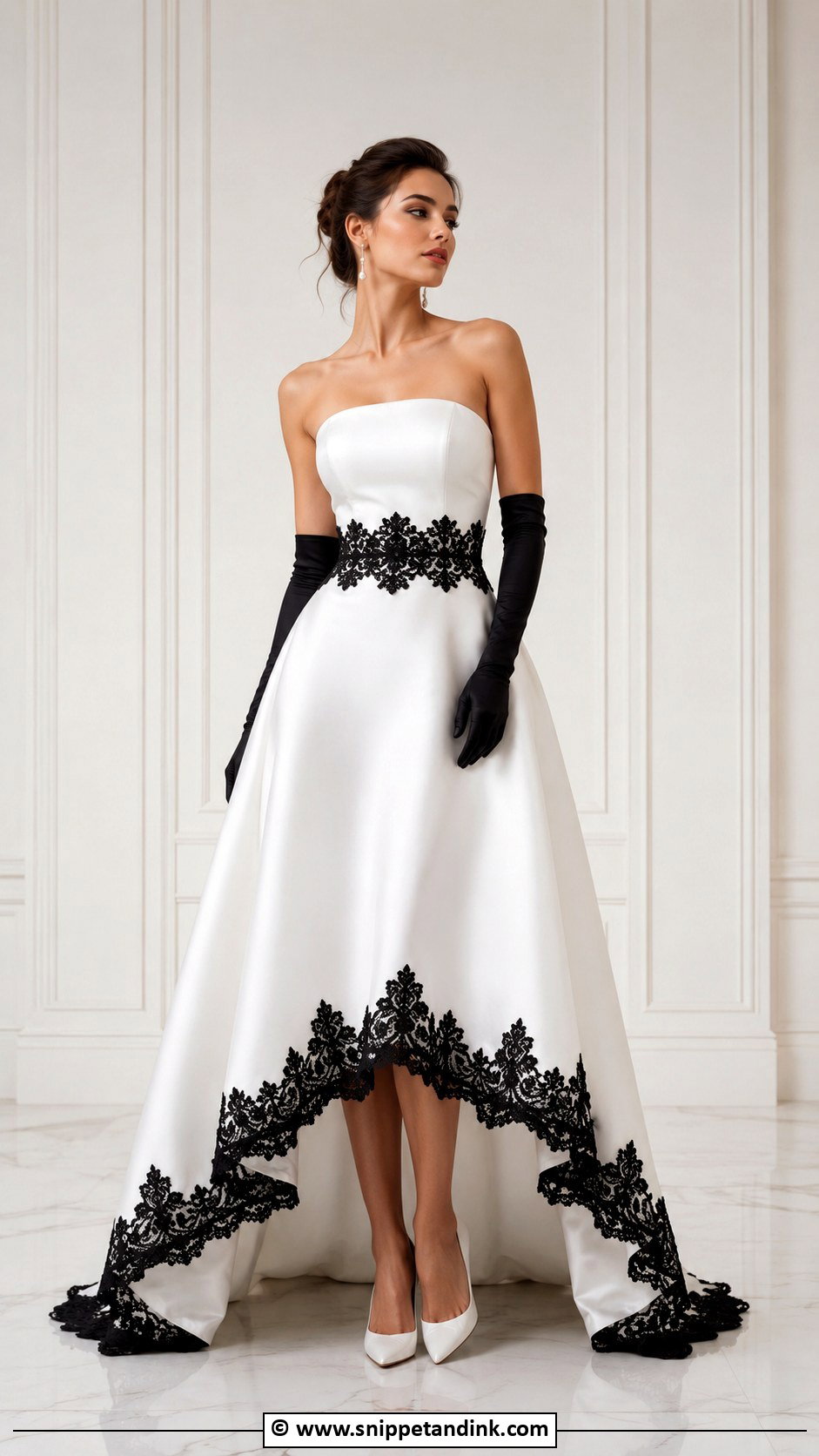
Strapless gives a clean neckline and a strong shape. Black lace at the waist or hem keeps the contrast subtle. A black strapless bodice over a white skirt is bolder and splits the body in two, which suits taller brides best. The bare neckline takes a delicate necklace, statement earrings or a sculpted choker, and at a formal wedding long gloves in white or black add drama. Make sure the bodice has proper boning so you’re not hitching it up all night.
8. Black And White Long Sleeve Wedding Dress
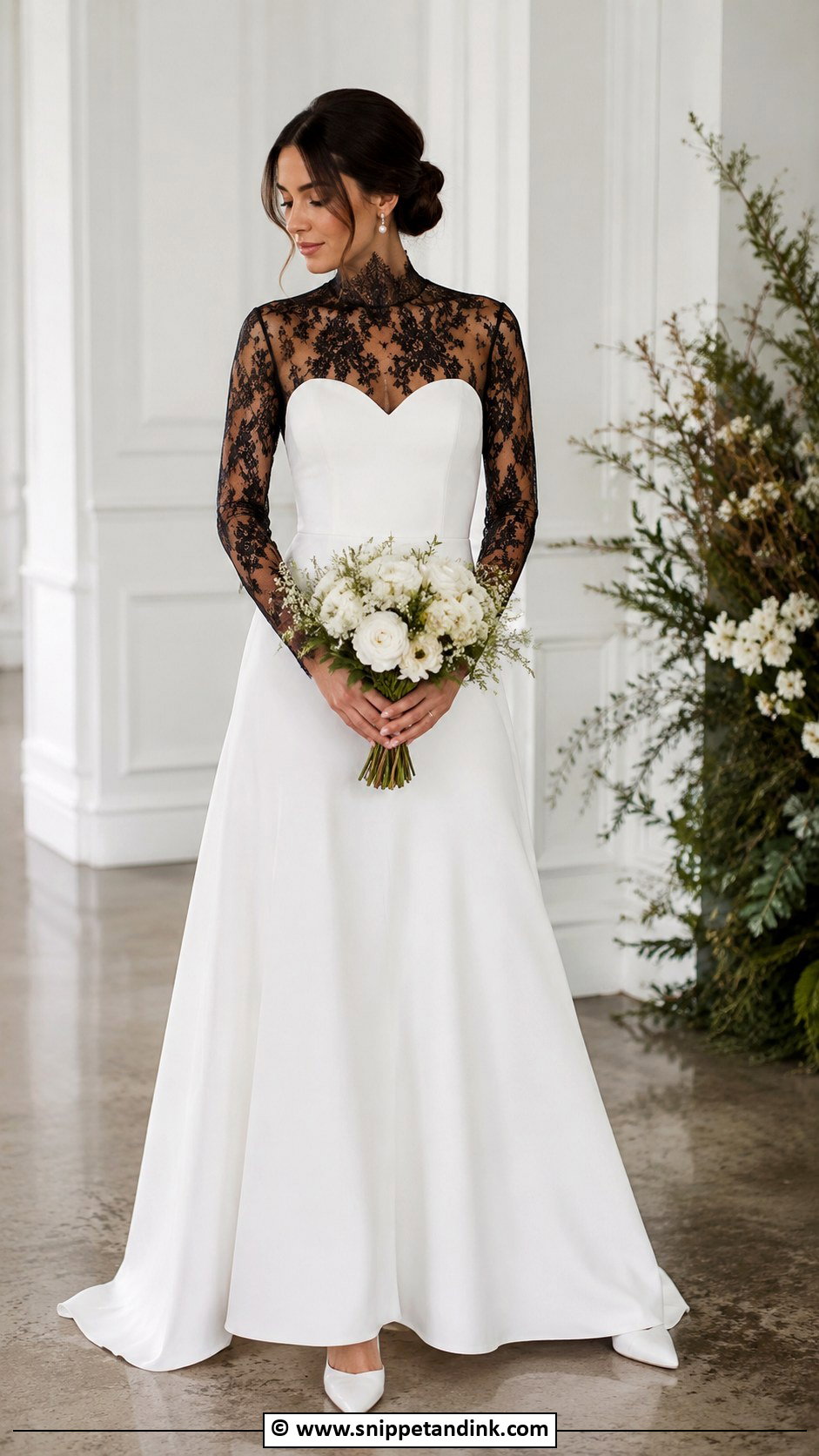
Long sleeves give coverage and presence. Sheer black lace sleeves over a white gown are romantic; white sleeves on black feel striking and fresh. Look at the cuff in the fitting: black lace that stops at the wrist bone frames your hand and ring, while a long point over the hand tends to catch on the bouquet. Simple earrings and an updo keep the sleeves visible, and with a high neckline I swap the necklace for a bracelet. Closed-toe heels suit autumn, winter and evening ceremonies.
9. Black And White Off Shoulder Wedding Dress
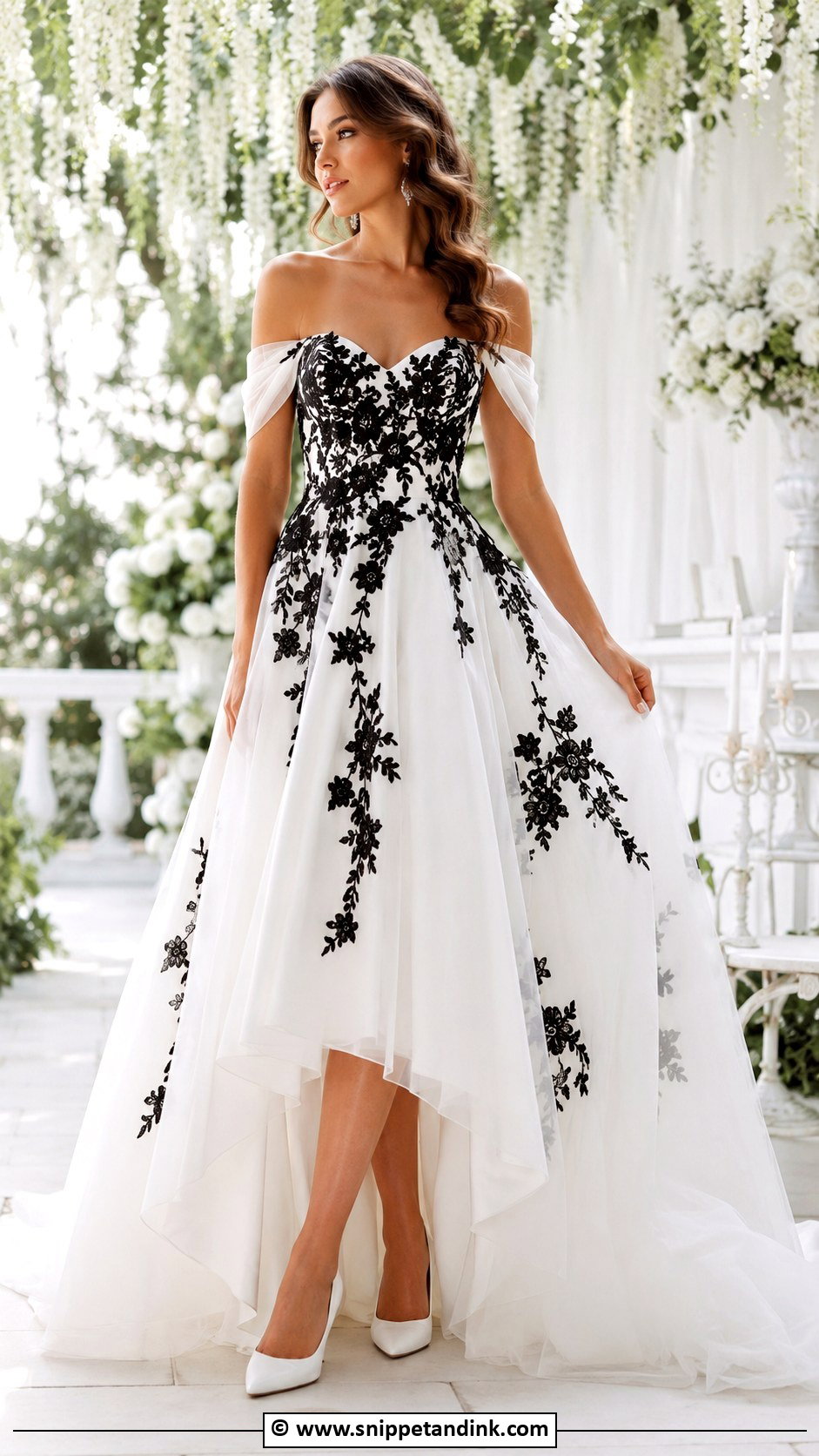
The off-shoulder line frames the collarbone, and it works in lace, satin, tulle or crepe. White with black floral appliqué across the bodice is soft; black with white trim feels editorial. With black right next to the skin, I watch complexion: on very fair skin a black off-shoulder band can look stark in daylight, and a fine white edge helps. A delicate necklace or statement earrings, a soft curled style or low chignon, and white, black or two-tone heels finish it.
10. Black And White Corset Wedding Dress
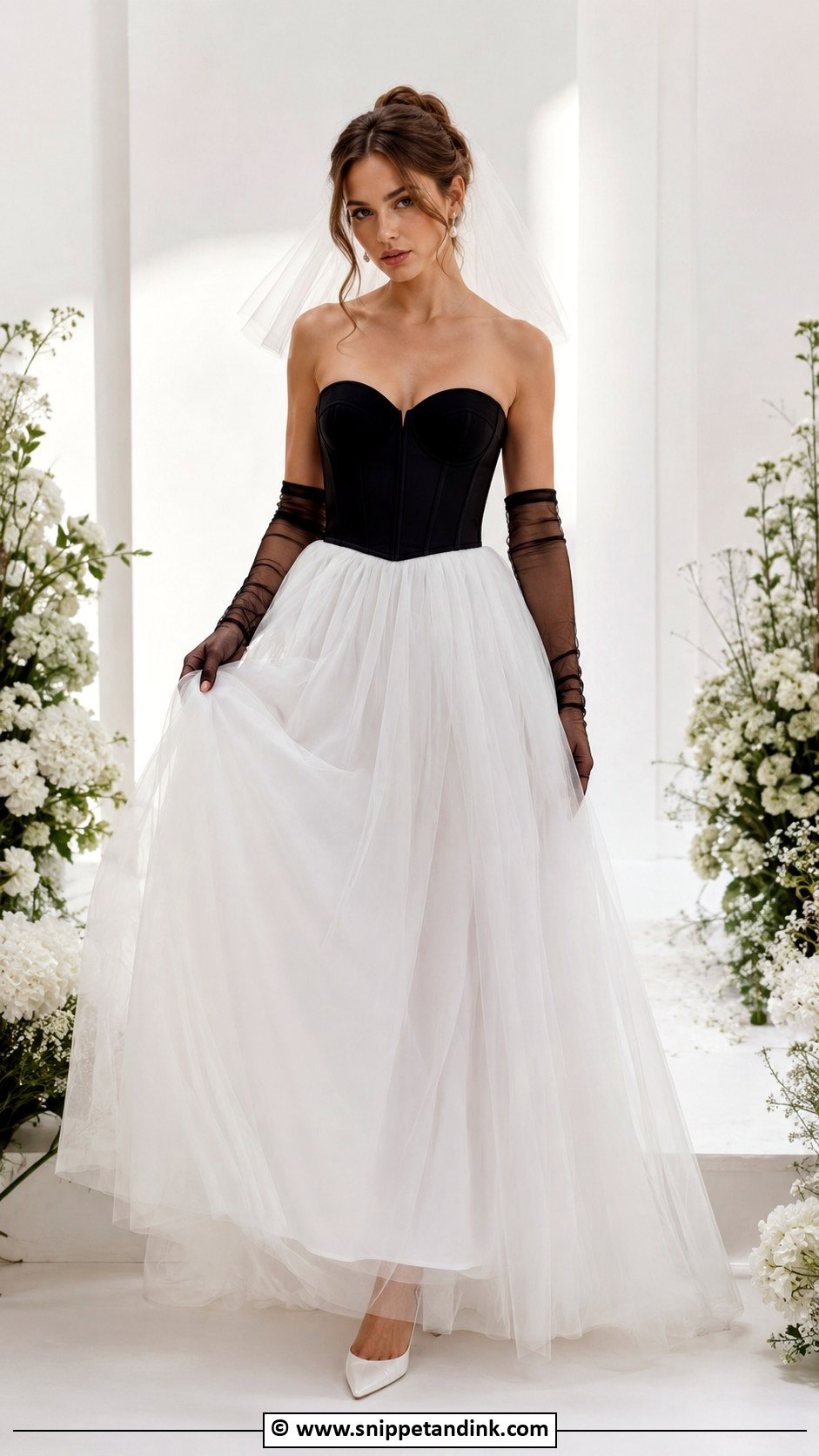
A corset bodice brings structure and a hint of vintage. Visible black boning on white satin looks modern, while a black corset over a white tulle skirt defines the waist sharply. That contrast pulls every eye to your waist, so the fit there has to be perfect. Keep jewelry minimal since the bodice already carries the detail, and let soft waves, a sheer veil and classic heels keep it bridal.
11. Black And White Tulle Wedding Dress
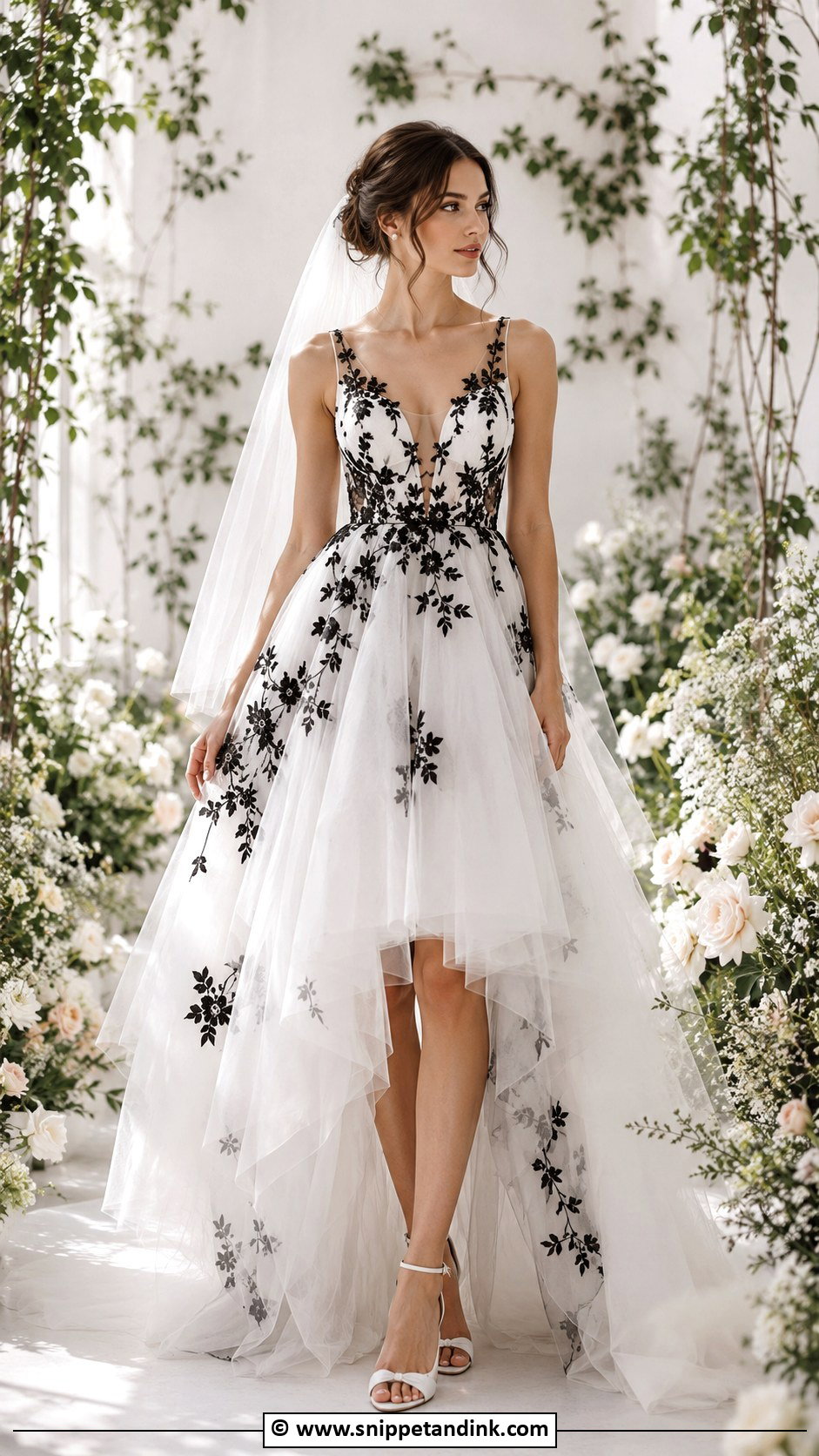
Tulle is where black and white turns smoky. Black tulle over a white lining reads grey from a distance and shows depth up close, while white tulle with black floral appliqué stays soft. It adds volume without weight. Keep accessories light: pearl studs, a thin bracelet, delicate heels. I’d pick a plain veil if the gown has lots of texture and save an embroidered one for a simple dress. Black tulle also shows dust and lint far more than white, so keep a lint roller in the bridal kit.
12. Black And White Satin Wedding Dress
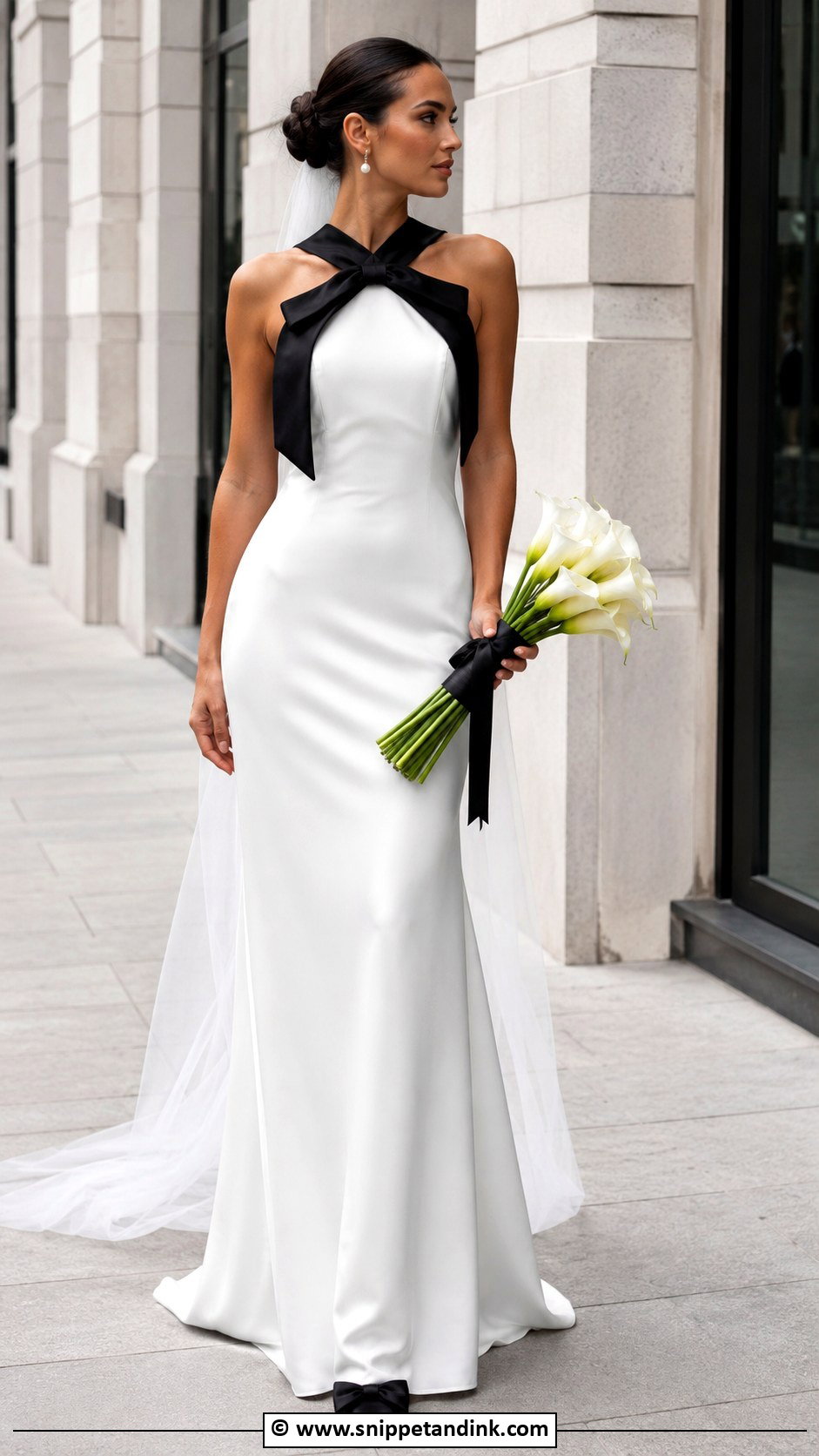
Satin makes the contrast crisp, because both the black and the white hold their depth under light. A white satin column with a black bow or black gloves feels modern; a black satin gown with white trim at the neckline is glamorous. Satin shows every pull and seam, so the tailoring must skim the body, not grip it. Polished hair, pearl earrings, pointed satin heels and a structured bouquet suit city weddings and hotel venues.
13. Black And White Lace Wedding Dress
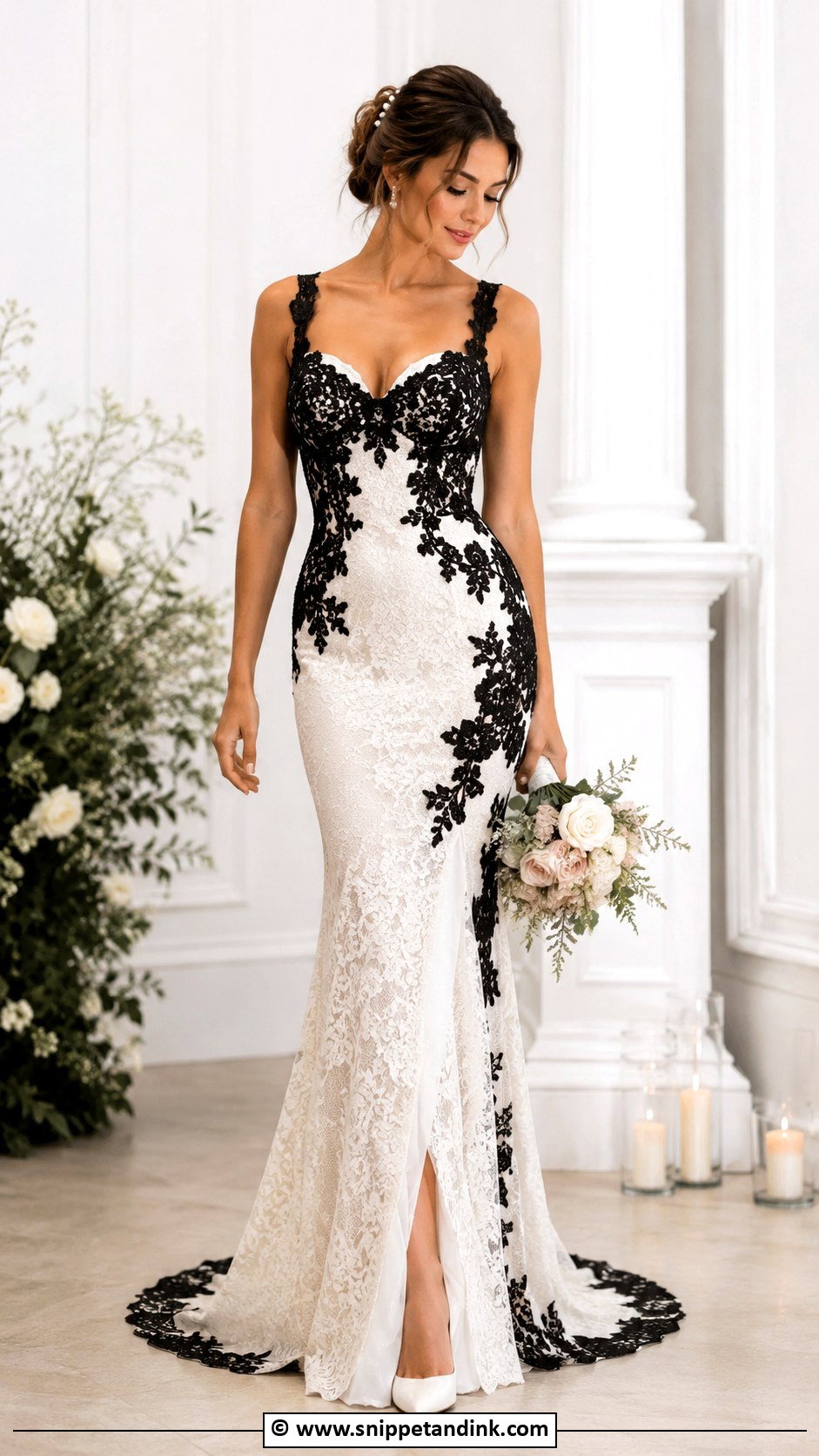
Lace can be black over a white lining, white over black, or mixed across the gown. Black over white shows the pattern most clearly; white over black is subtler and moodier. Pick a silhouette that lets the pattern breathe, a sheath for elegance or an A-line for something classic. I keep jewelry minimal so nothing fights the lace. Simple heels, a neat updo with pearl pins and a soft bouquet finish it, in any season.
14. Black And White Floral Wedding Dress
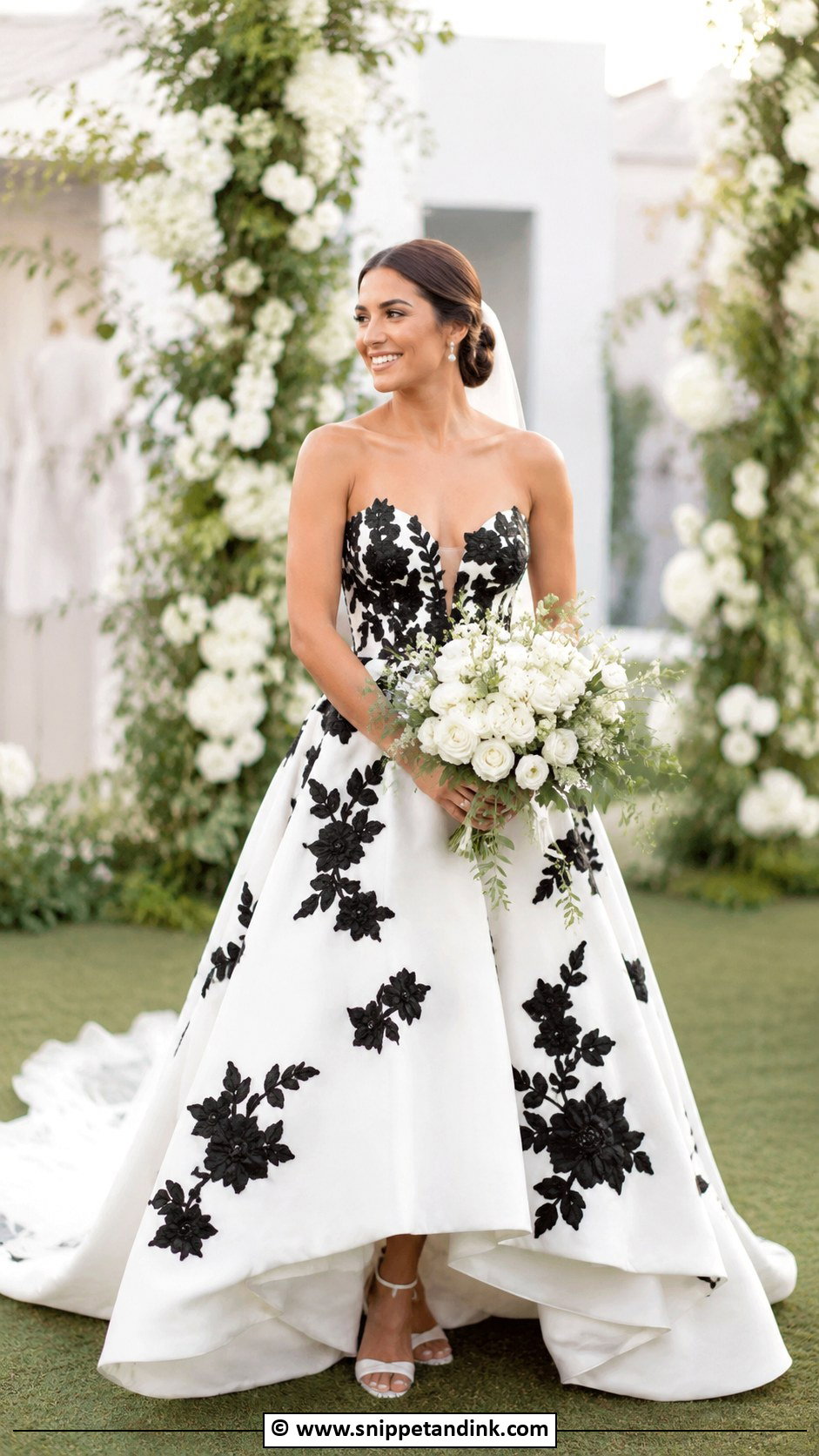
Here’s pattern without color. Oversized black floral appliqué on white feels bold and artistic; smaller embroidery is more traditional. Flowers across the skirt create movement, flowers at the bodice draw the eye to waist and neckline. When I place appliqués, I keep the largest blooms away from the bust and hips unless that’s exactly where the bride wants attention. White heels, pearl earrings, a simple veil and a bouquet of white blooms with dark greenery tie it together.
15. Black And White Polka Dot Wedding Dress
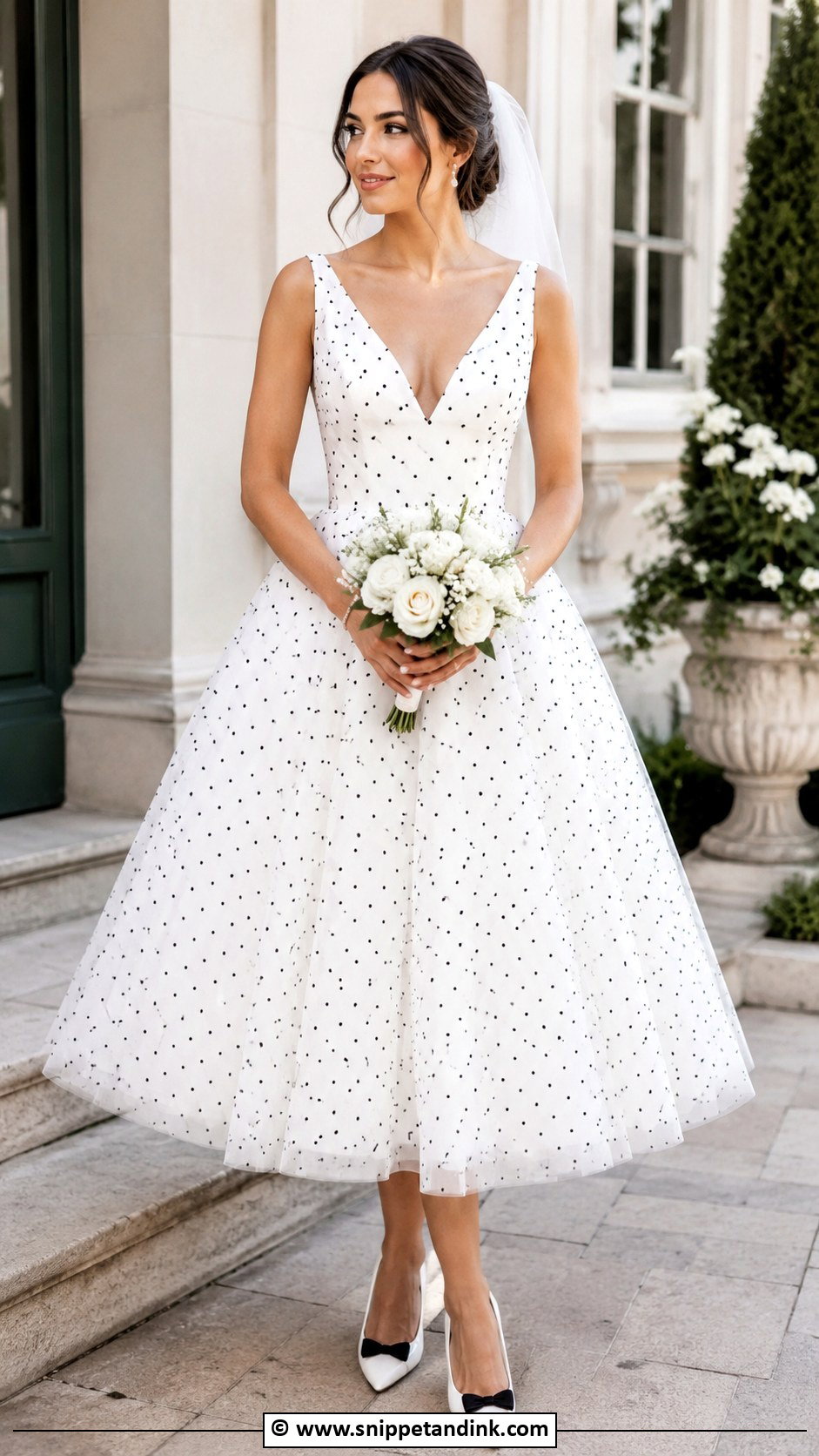
Polka dots are playful, and they stay elegant when the dots sit in sheer tulle over a white or ivory base. Big dots are bold; tiny ones are delicate and read almost as texture in photos. Tea length gives it retro charm, full length makes it formal. Pair it with white pumps, pearl earrings and a short veil or bow, and keep the bouquet classic so the print leads. It’s a natural fit for courthouse weddings and garden parties.
16. Black And White Tea Length Wedding Dress
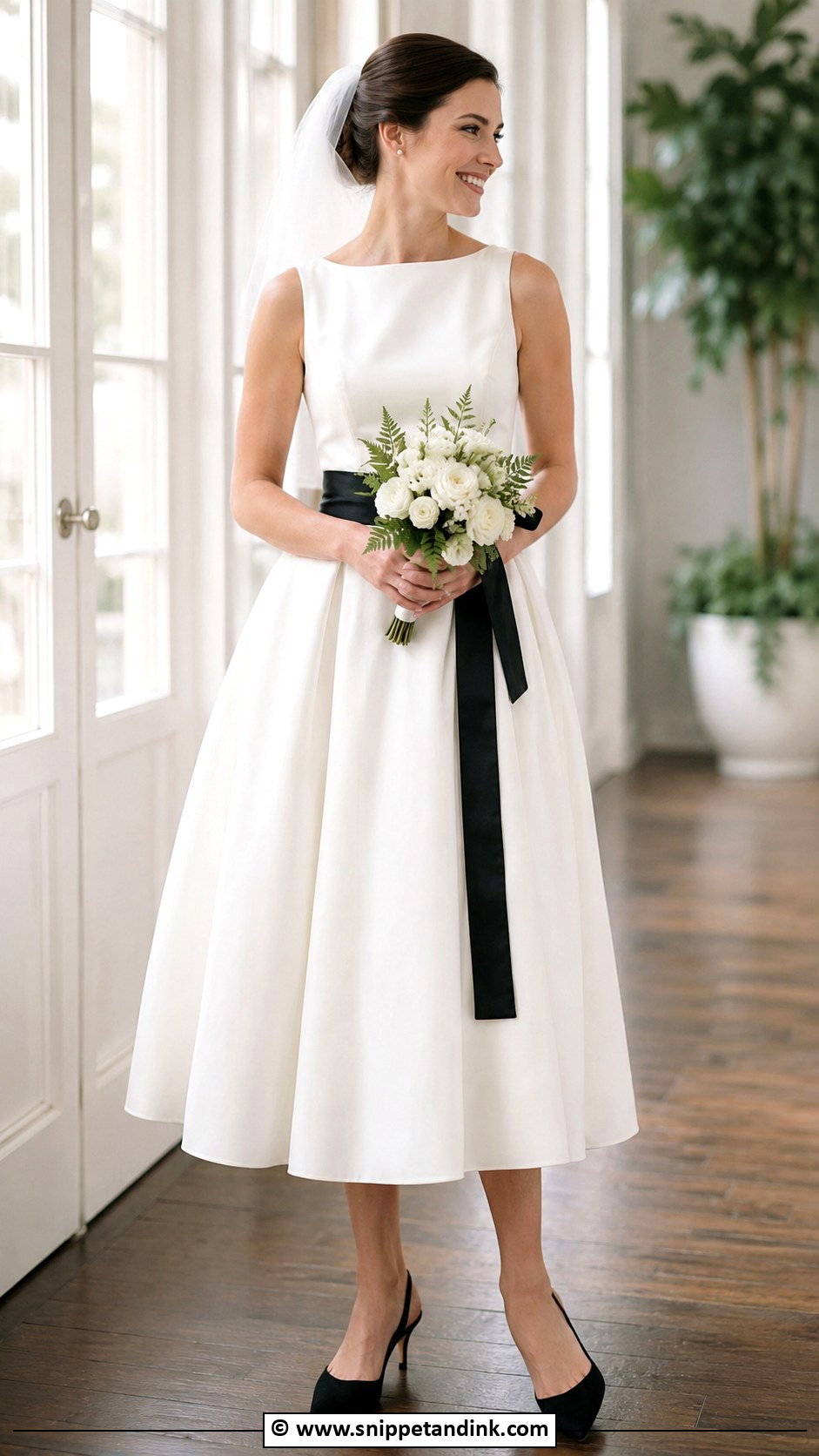
A tea-length hem ends mid-calf, so the shoes are on show; choose them as carefully as the dress. White pumps with black bows, black slingbacks or two-tone heels all work. A white tea-length dress with a black sash is classic, a printed one feels retro. It’s easy to dance and walk in. I check the hem with the actual shoes on, because a hem that stops at the widest part of the calf shortens the leg. A short veil, pearl studs and a small bouquet complete it.
17. Black And White Mini Wedding Dress
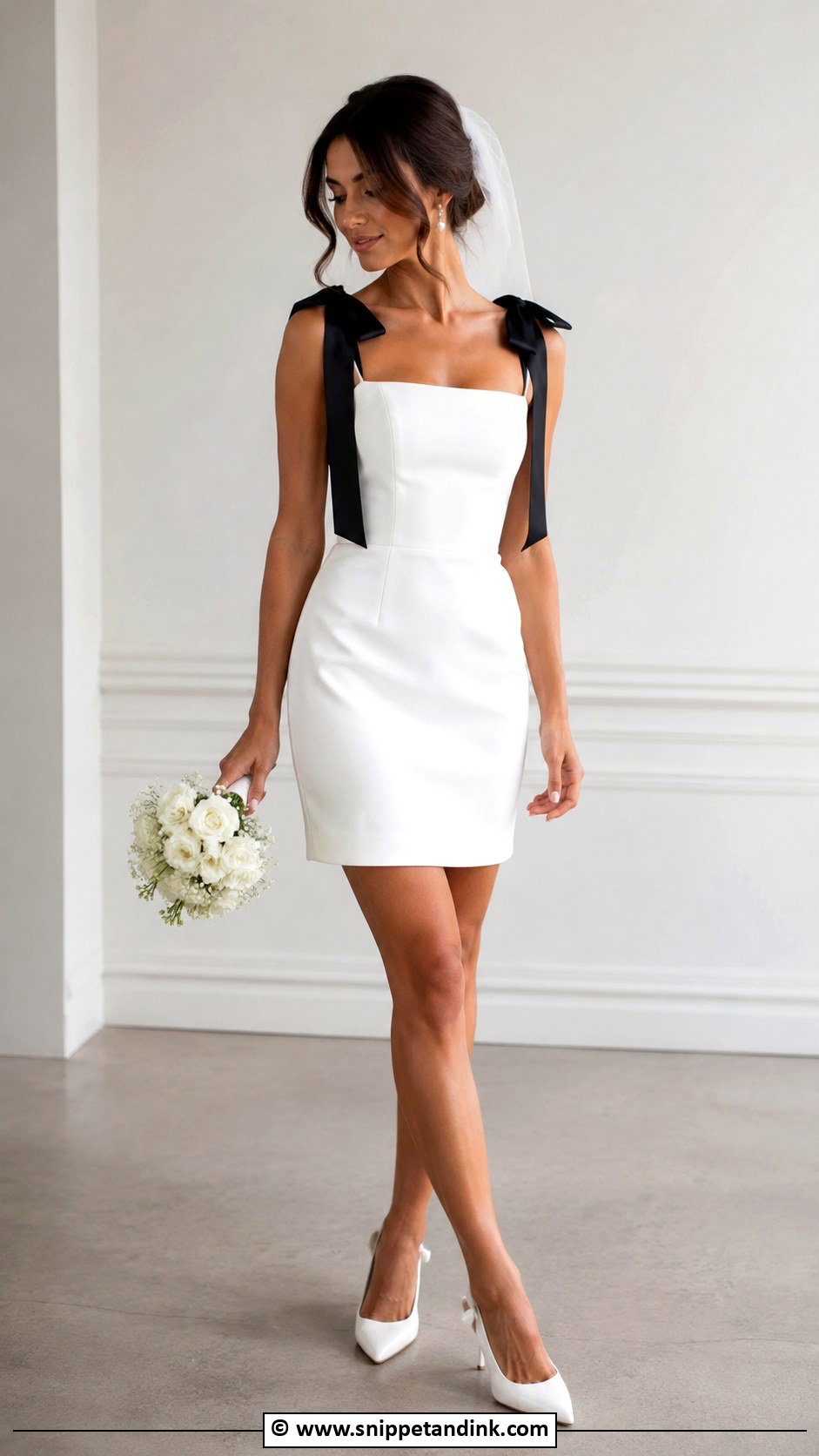
A mini suits a second look or a small ceremony. Choose a structured white mini with black bow straps, a black waist sash or black lace sleeves, or a black mini with white pearl trim and a detachable white overskirt. A short hem needs refined accessories to stay bridal: pointed heels, pearl earrings, a sleek clutch. A short veil or headband marks it as a wedding outfit. Sit down in it during the fitting, since structured minis ride up more than you’d think.
18. Black And White High Low Wedding Dress
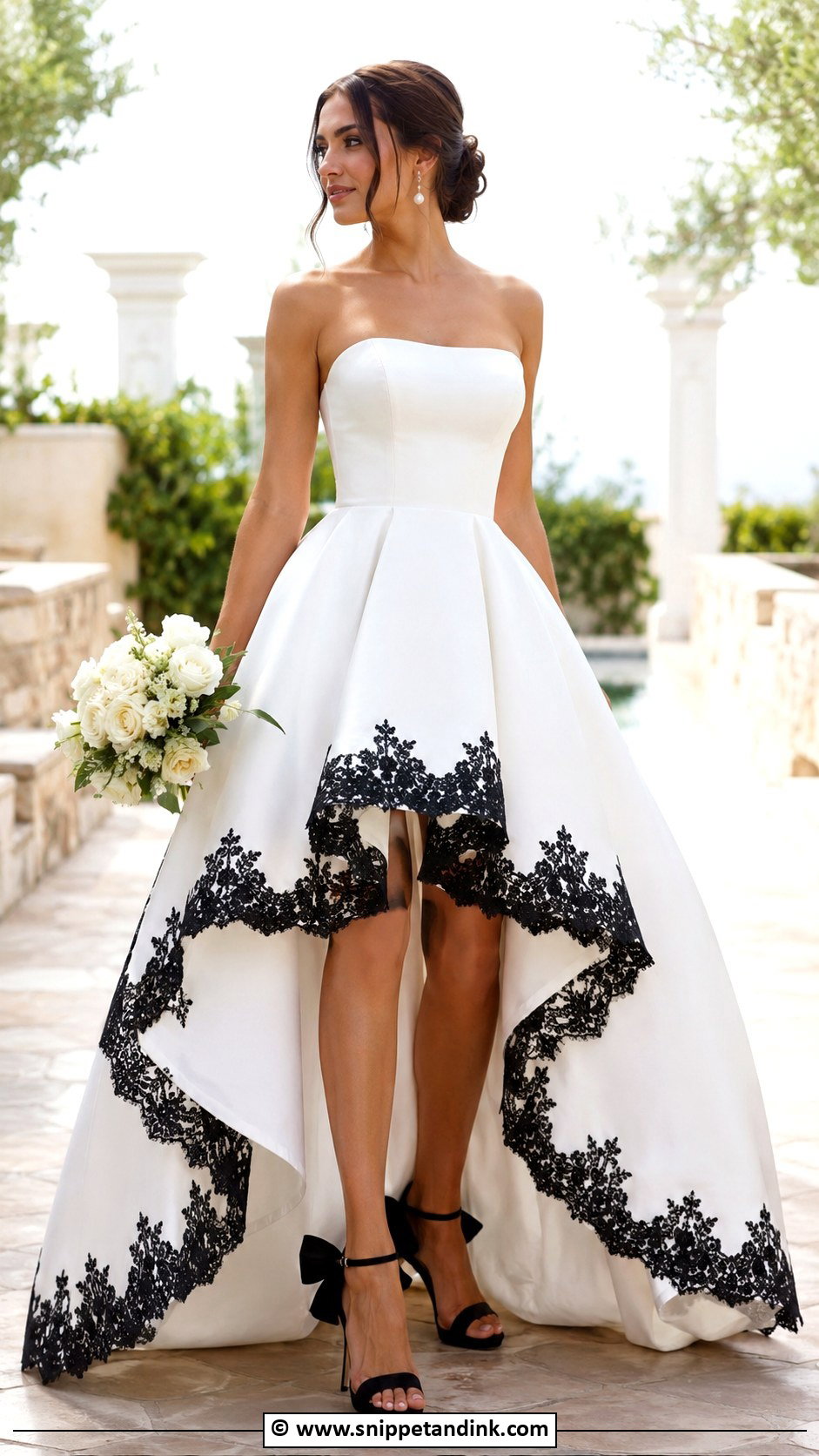
High-low gives you a train behind and your shoes in front. White with black lace along the hem feels romantic; a black bodice over a white high-low skirt is more graphic. The front hem needs a clear, deliberate length, at the knee or just above the ankle; anywhere vaguely in between can look like an alteration gone wrong. Since your shoes are part of the look, make them count, and keep jewelry and hair simple.
19. Black And White Wedding Dress With Train
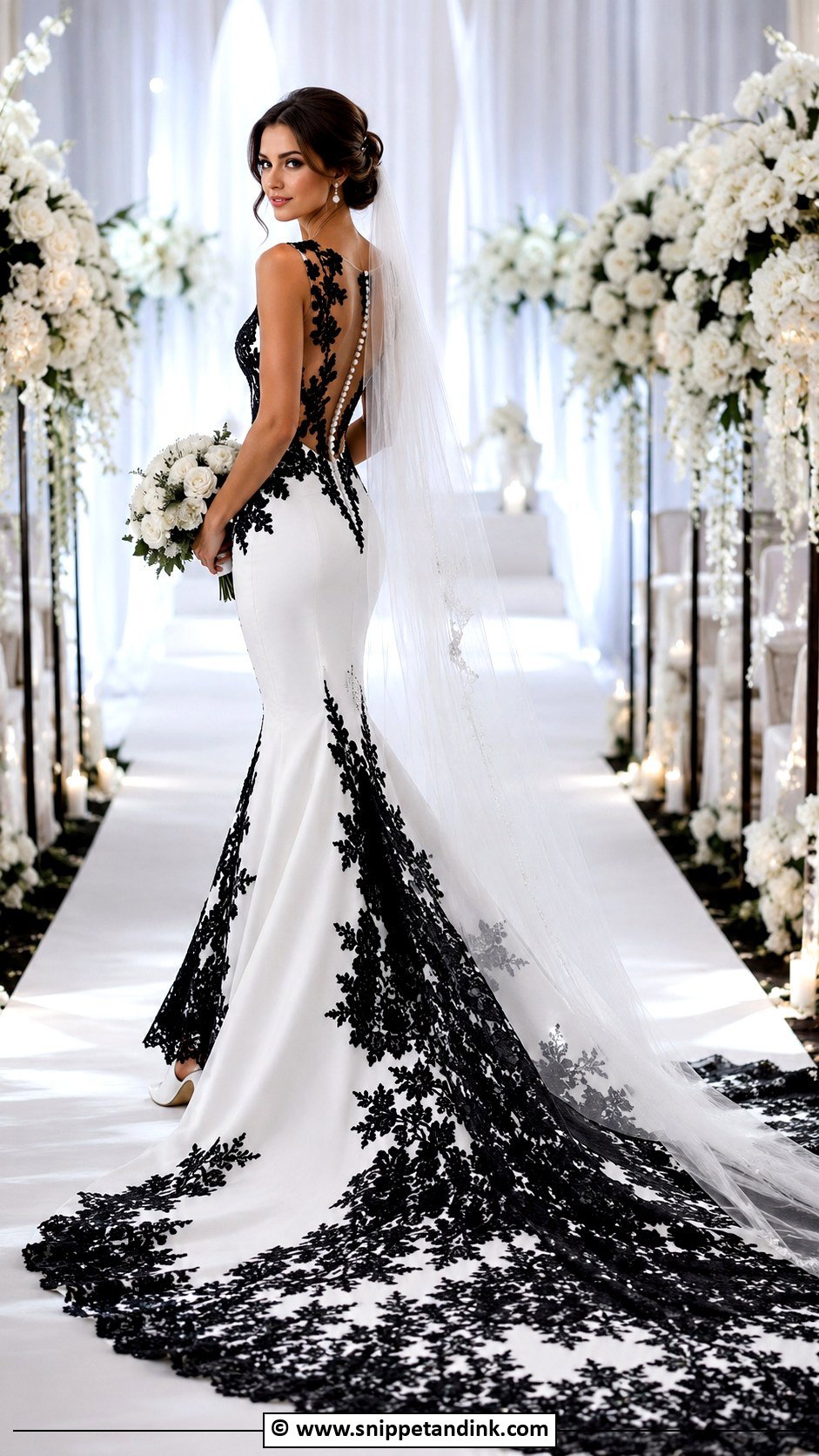
A train makes the aisle walk. It can be white with black lace edging, black with white embroidery, or detachable for later. Maximum drama is black appliqué trailing from the bodice into the train; cleaner is black piping or a single back bow. Comfortable heels matter, since a train adds weight and drag. If you add a long veil, keep it sheer and plain. I always ask how the train bustles before a bride buys, because black lace on a bustled train can bunch into a dark knot at the back.
20. Black And White Wedding Dress With Cape
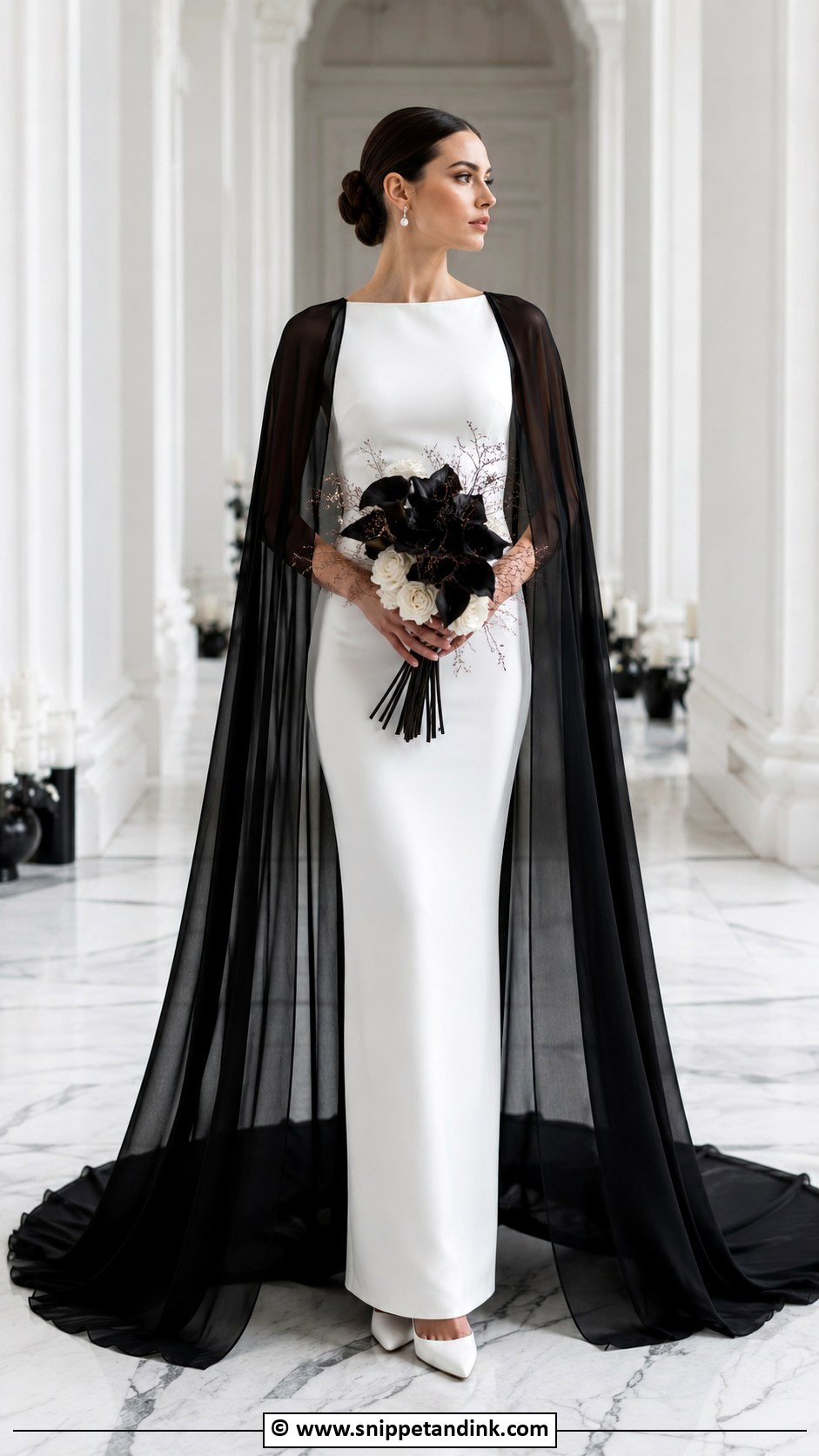
A cape adds drama and coverage without sleeves. Sheer white over a black gown softens it; black over white is striking. Attachment matters most: I look for a cape fixed at the shoulders or neckline with hidden snaps, so it doesn’t slide back when you lift the bouquet. Keep jewelry minimal, since the cape already adds volume. Sleek hair, pointed heels and a simple bouquet suit formal indoor ceremonies and winter weddings.
21. Black And White Wedding Dress With Gloves
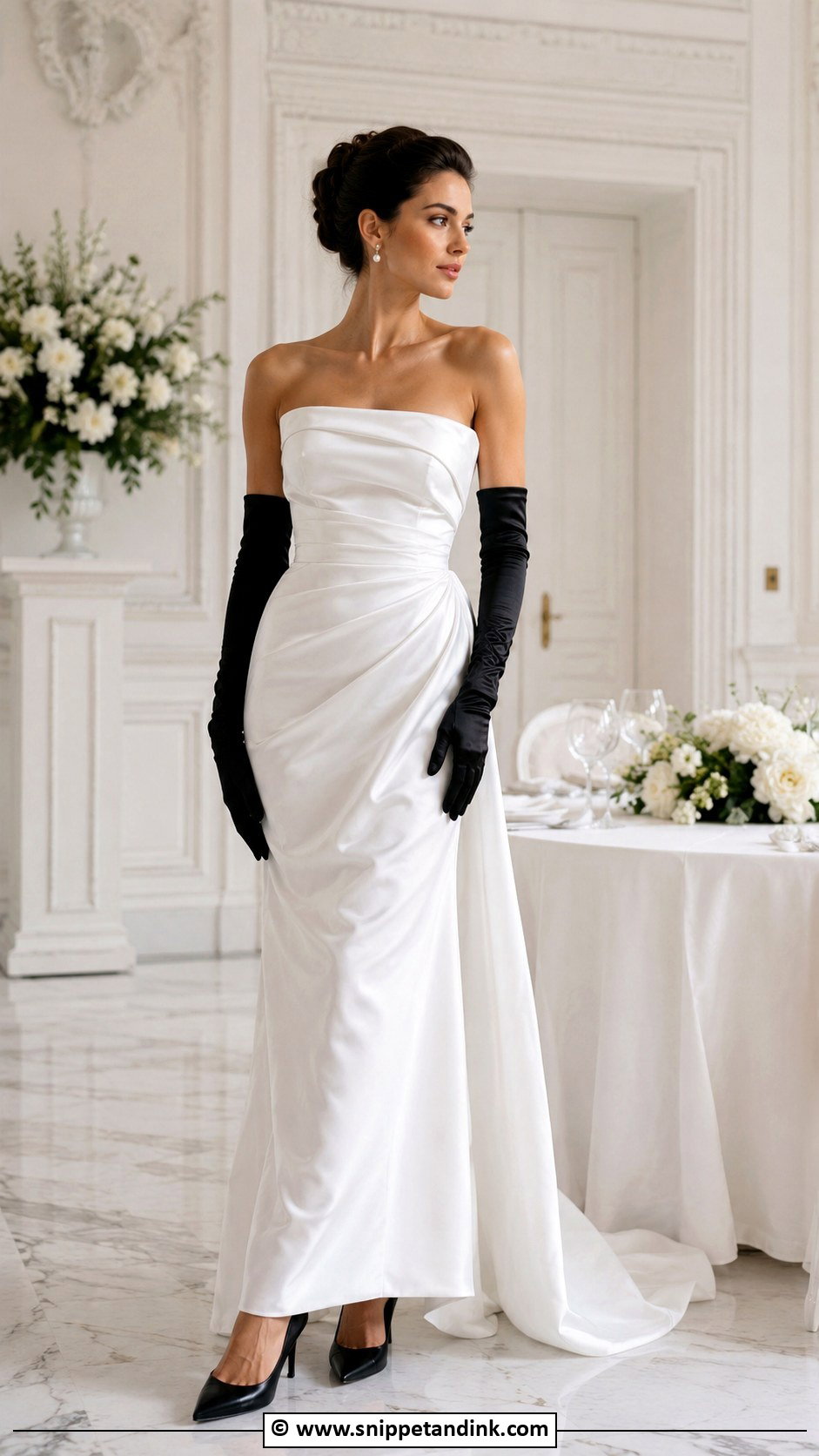
Gloves are the eveningwear signal. Long black gloves with white satin are the classic pairing; white gloves with a black gown keep it bridal. Match the glove fabric to the dress mood, satin for sleek, lace for romantic, sheer for soft. They need room, so they suit strapless, off-shoulder or short-sleeve gowns. A practical point: the left glove has to come off for the ring, unless you choose fingerless gloves or ones with a slit finger. Pearl earrings, a clean updo and elegant heels finish it.
22. Black And White Wedding Dress With Veil
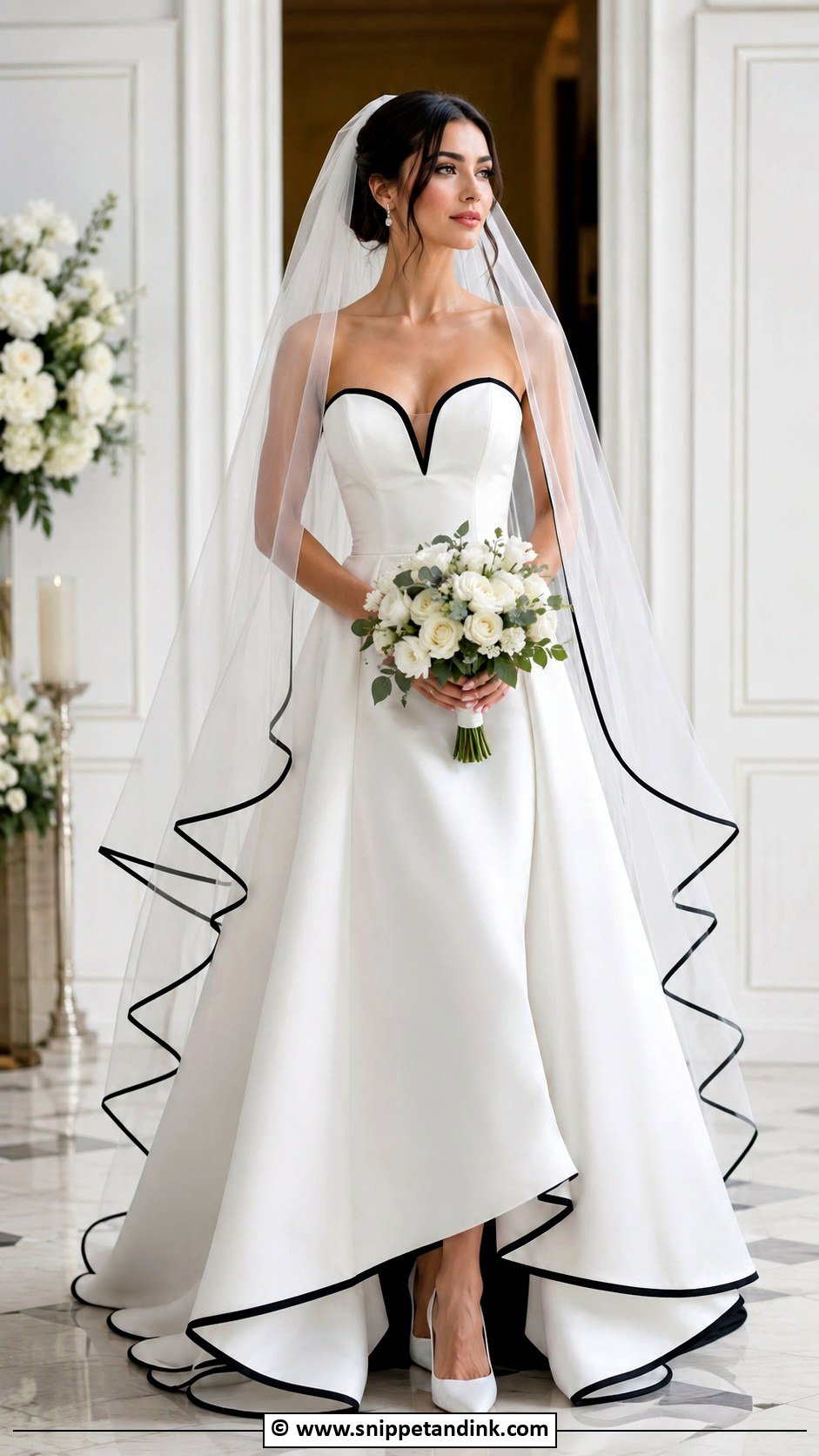
The veil decides whether the look reads traditional or bold. A white veil on a black gown makes it bridal at once. A black-trimmed veil on a white dress adds definition around the face and down the back. If the gown is heavily patterned, use a plain veil; if the dress is simple, a veil with black embroidery adds interest. I hold the veil against the gown in the shop to check that the whites match, since a slightly different white makes either one look dingy.
23. Black And White Wedding Dress With Pearls
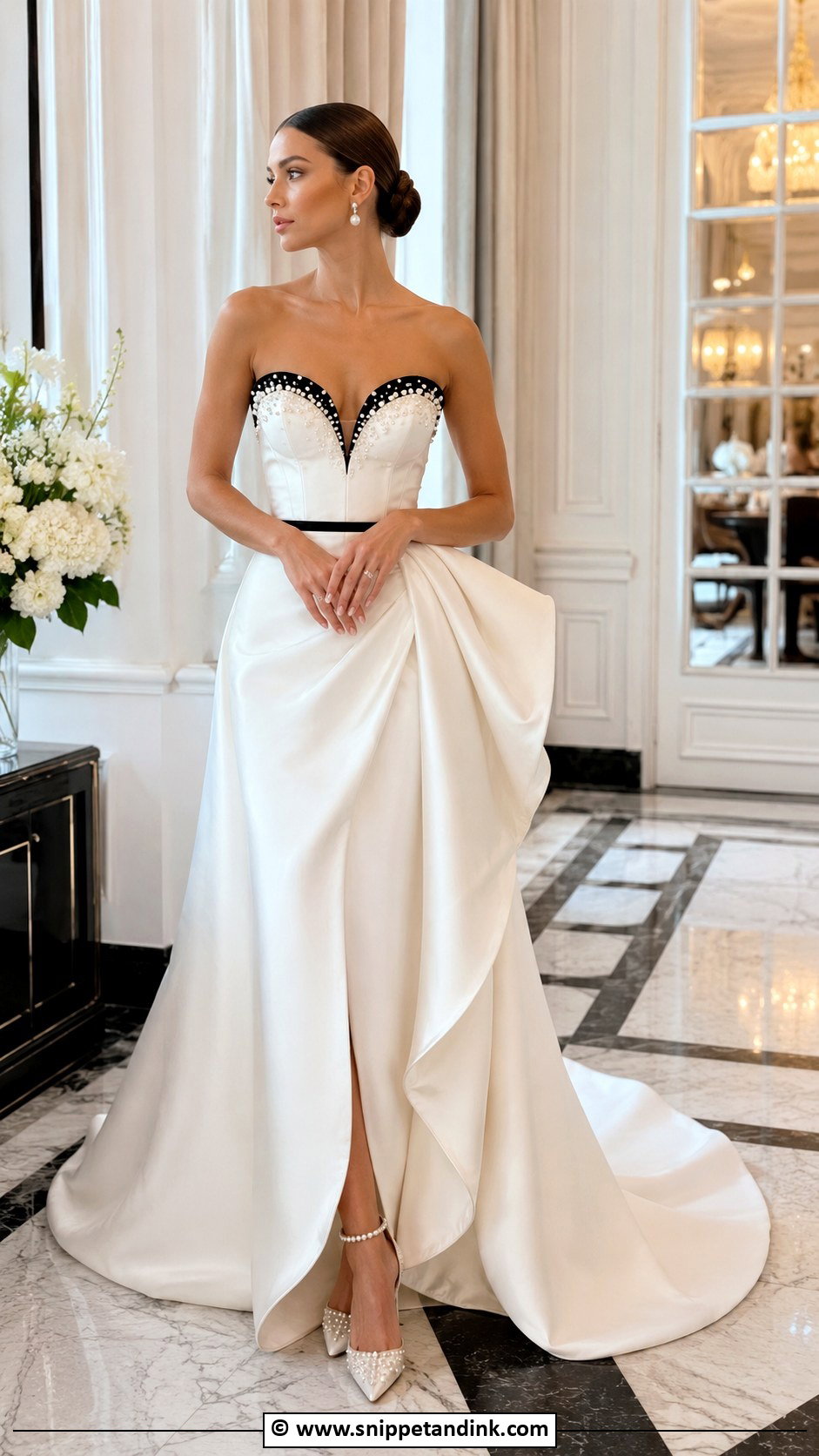
Pearls soften the hard contrast of black and white, which is why I reach for them so often with this palette. A white gown with black accents and pearl embellishment at the neckline or sleeves is classic; a black gown with a pearl belt, pearl earrings and pearl-detailed shoes feels refined. If the dress is already embellished, stop at one or two pearl pieces. A smooth bun or soft waves keep it clean for a classic venue or hotel wedding.
24. Black And White Wedding Dress With Sleeves
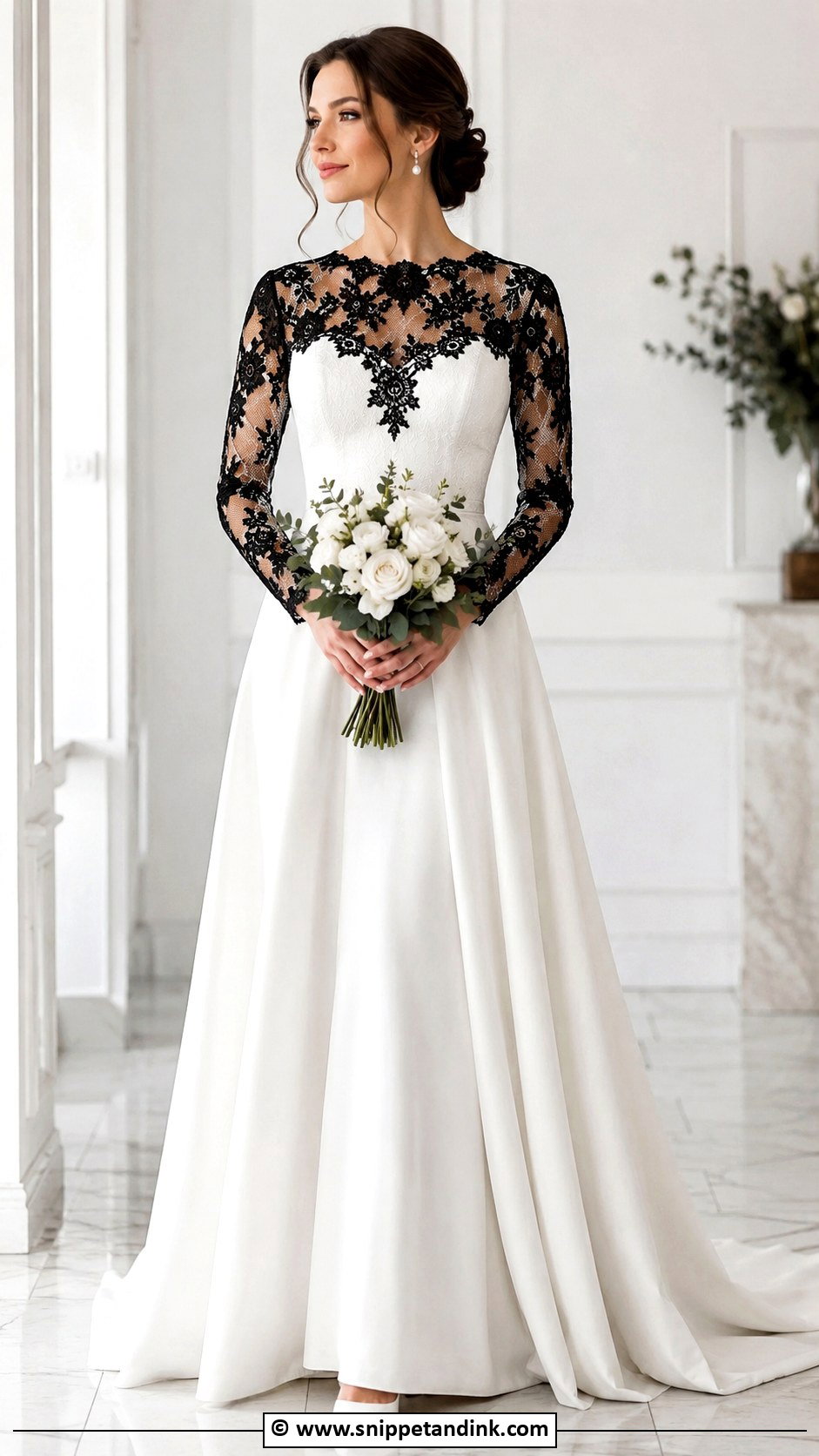
Sleeves come lace, satin, sheer, puffed, fitted or detachable, and each changes the dress. Black lace sleeves on white put contrast around the arms and shoulders; white sleeves on a black gown soften the frame around your face. With detailed sleeves, keep the neckline and jewelry simple, since earrings are often all you need. I match the shoes to whichever color dominates the dress. Cooler weather and formal venues suit it.
25. Black And White Drop Waist Wedding Dress
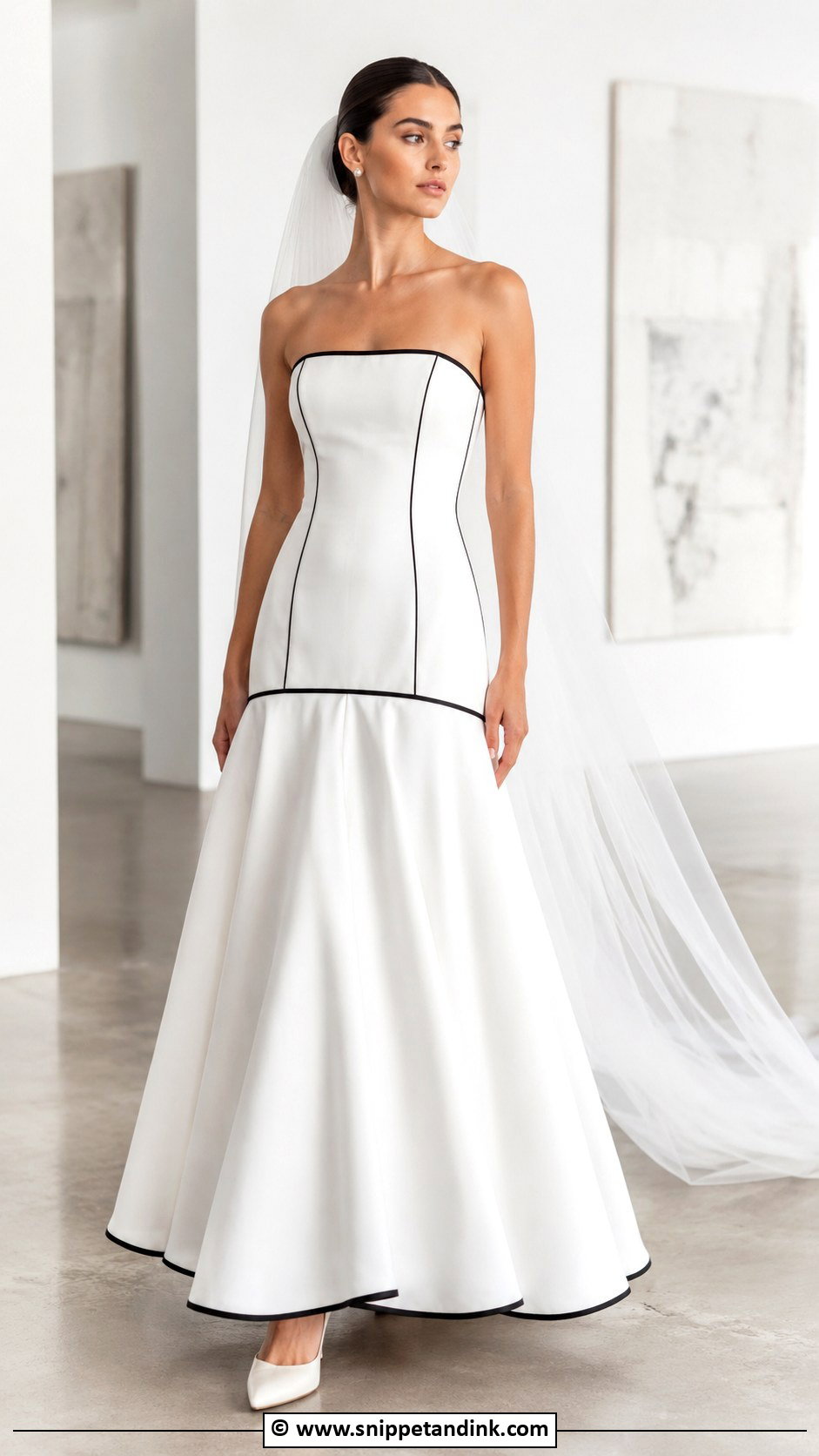
A drop waist moves the seam down toward the hips, lengthening the torso and creating a dramatic shift into the skirt. A white drop-waist gown with black piping feels architectural; a black bodice with a white dropped skirt gives a bold two-piece effect in one gown. A black seam line shows exactly where the waist sits, so fit at waist and hips must be precise. On a short torso I’d think twice. Simple heels, small earrings, a clean bouquet and a long veil finish it.
26. Black And White Halter Wedding Dress
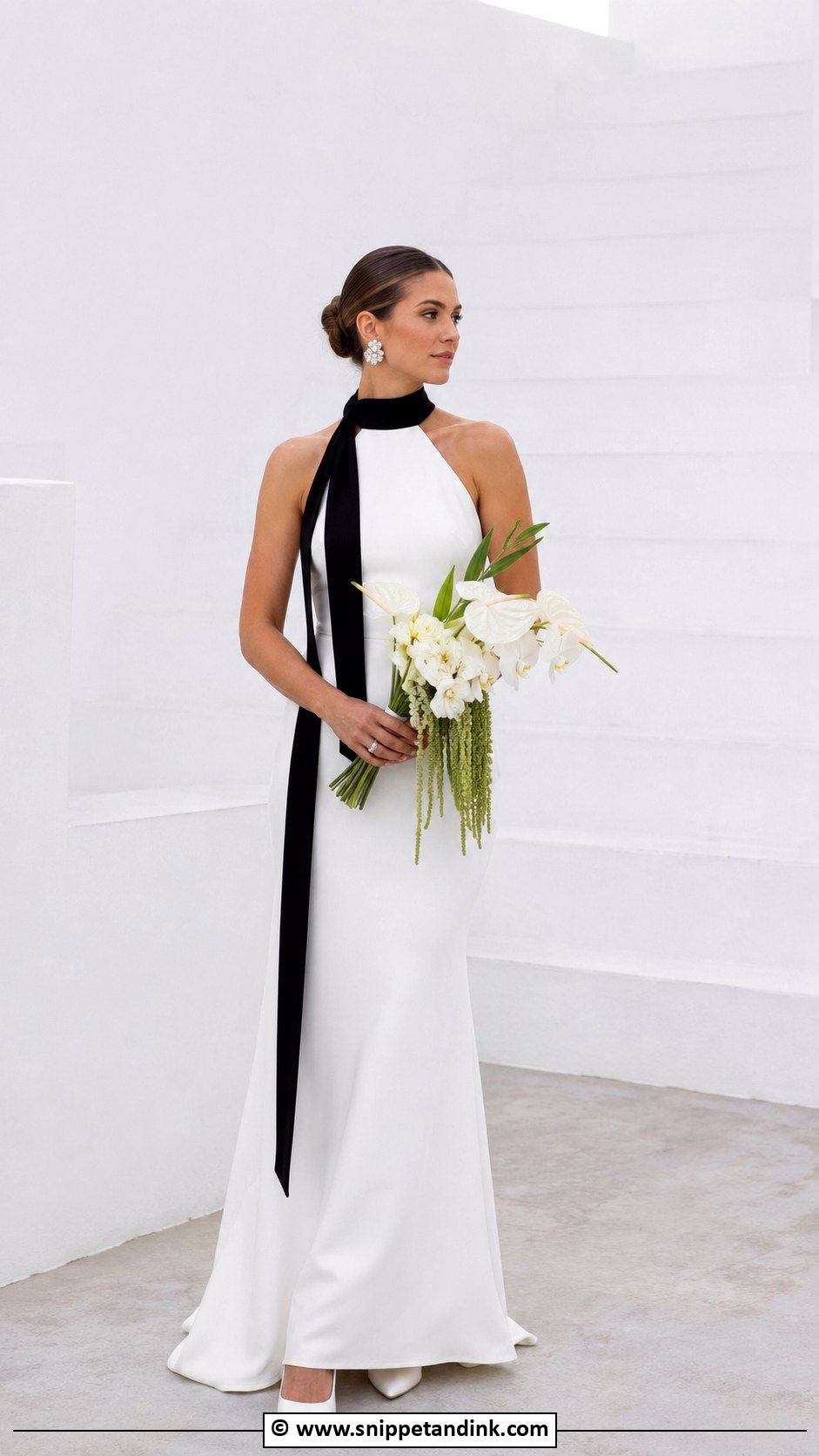
A halter frames the shoulders and gives a sleek, modern shape. White with a black neck tie is minimal; black with white paneling is bold. Skip necklaces, since the neckline is the detail, and wear earrings instead. A low bun or smooth ponytail keeps the halter visible. Halters suit broad or athletic shoulders and put the support at the neck, so check that the strap isn’t digging in after an hour of wear. Pointed heels and a structured bouquet finish it.
27. Black And White Wedding Dress With Overskirt
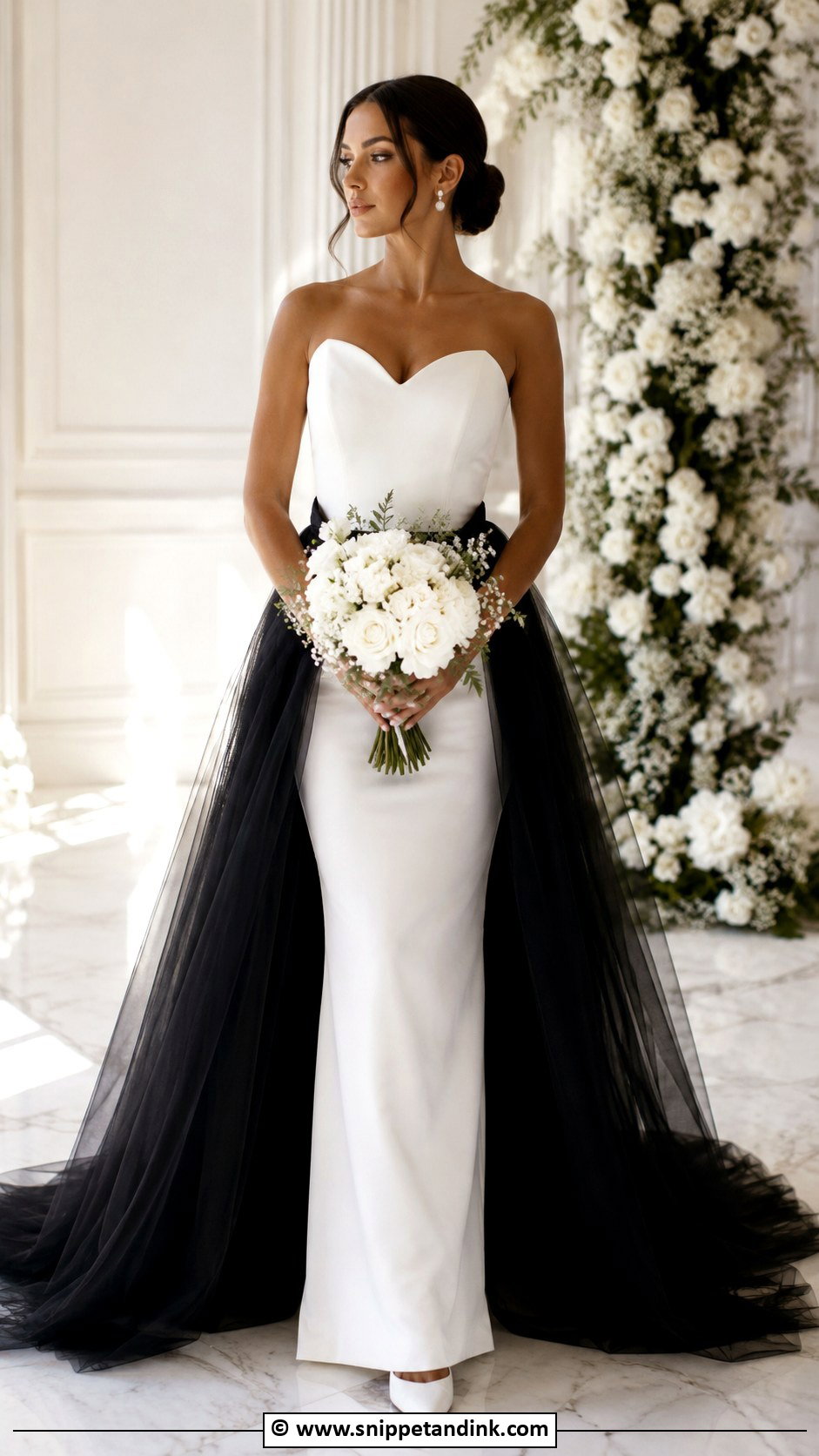
An overskirt gives you two looks without a second dress. A white fitted gown under a black tulle overskirt is editorial; a black fitted gown with a white overskirt is striking but still bridal. It should attach smoothly with no bulk at the waist. Practice removing it with whoever will help you on the day. Comfortable heels, simple earrings and a bouquet that doesn’t compete with the volume finish it.
28. Black And White Two Piece Wedding Dress
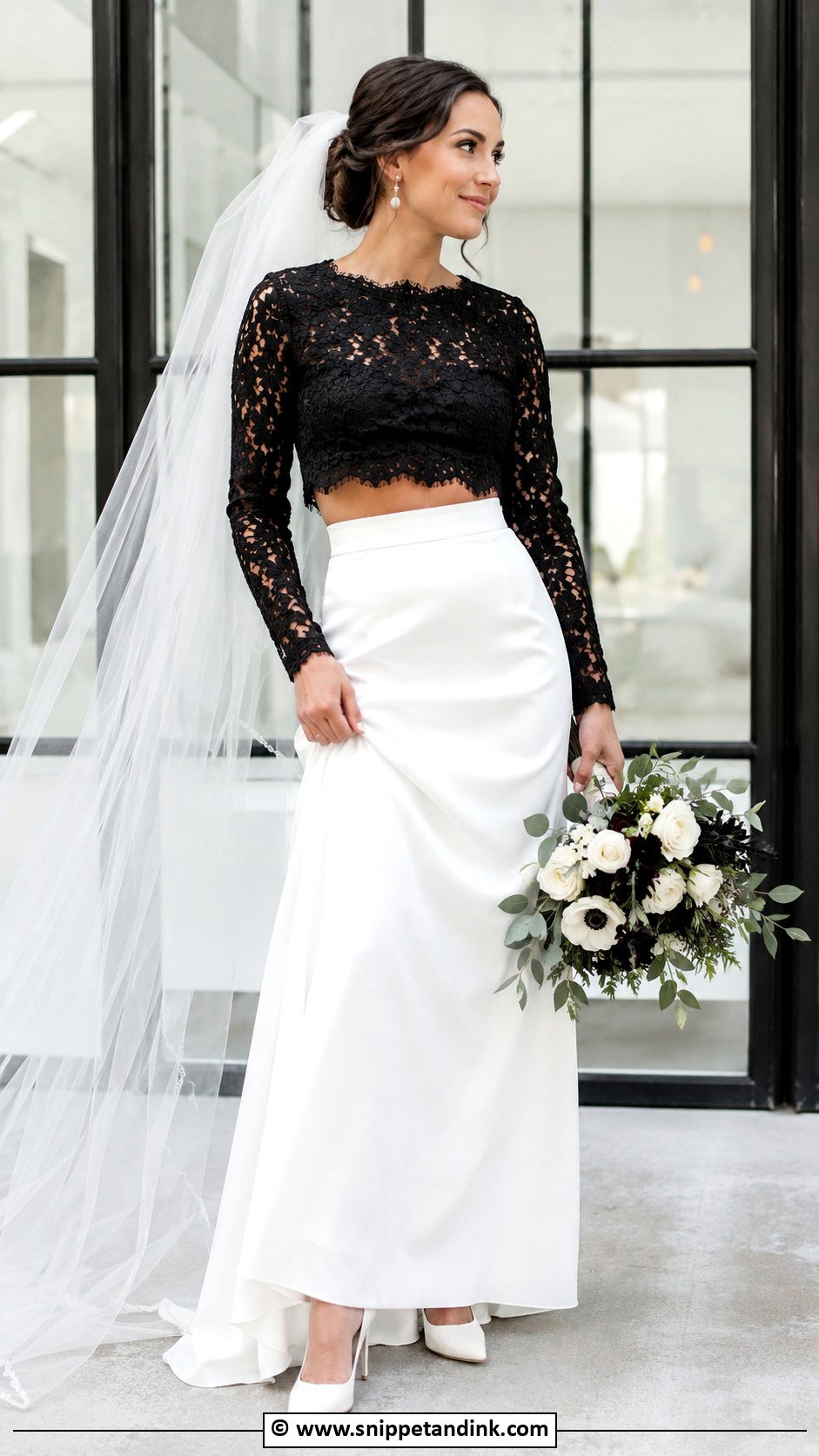
A two-piece is the most flexible option here. Try a white crop top with a black skirt, a black lace top with a white satin skirt, or a structured corset over a flowing tulle bottom. It still looks bridal when the fabrics are rich and the fit is polished. The gap between top and skirt is what I fit most carefully: a sliver of skin looks intentional, an uneven one looks accidental the moment you raise your arms. Add a veil, pearl earrings and elegant heels for a city wedding or contemporary reception.
29. Black And White Courthouse Wedding Dress
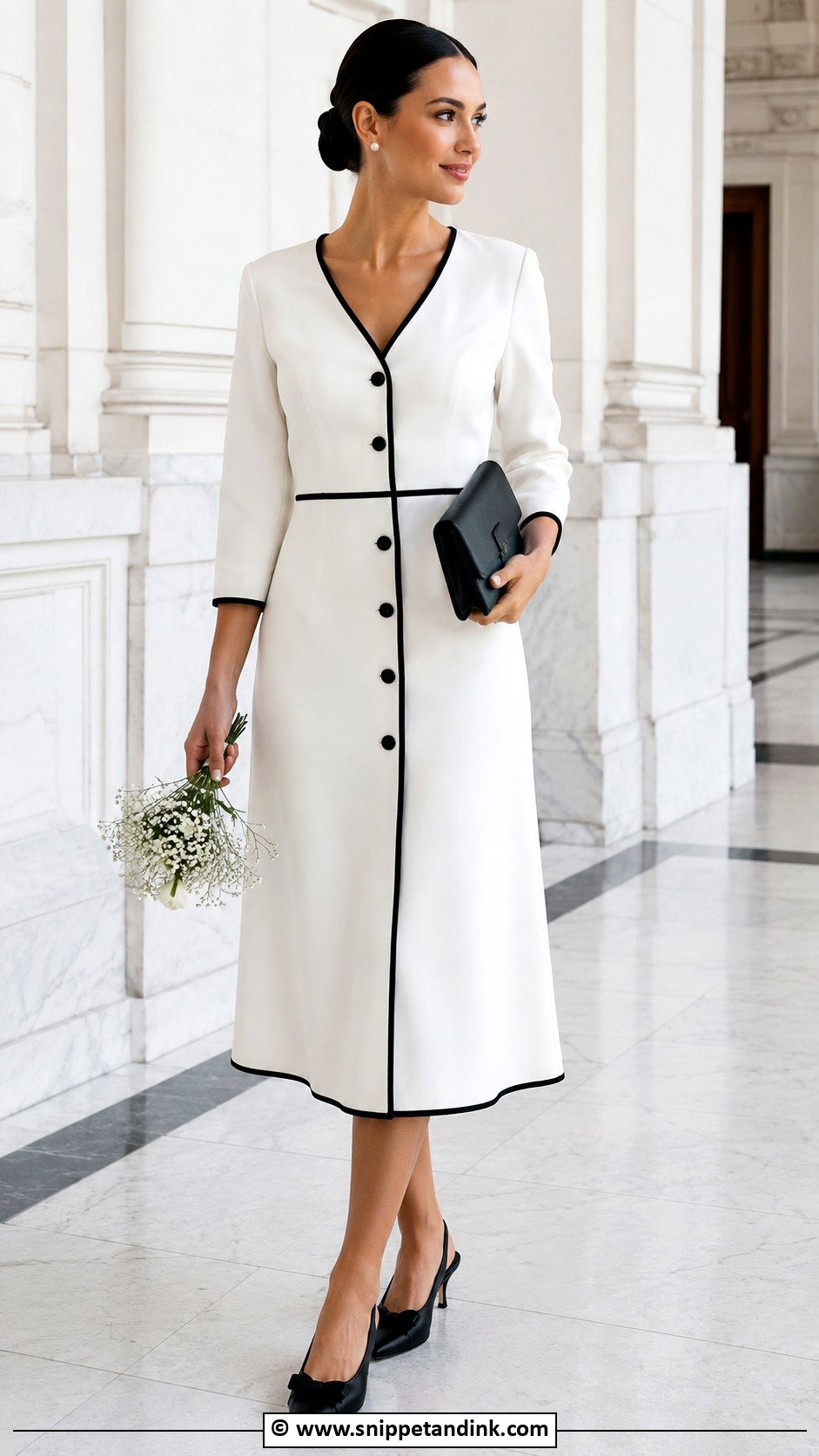
A black and white courthouse wedding dress should be comfortable and easy to move in, since civil ceremonies often mean waiting in corridors and walking outside for photos. A white midi with black buttons, a black bow or black trim looks chic, and a tailored black-and-white sheath works too. Choose low heels, slingbacks or sleek pumps depending on how much walking you’ll do. A small bouquet, pearl earrings and a short veil, hair bow or headband make it feel ceremonial.
30. Black And White Reception Wedding Dress
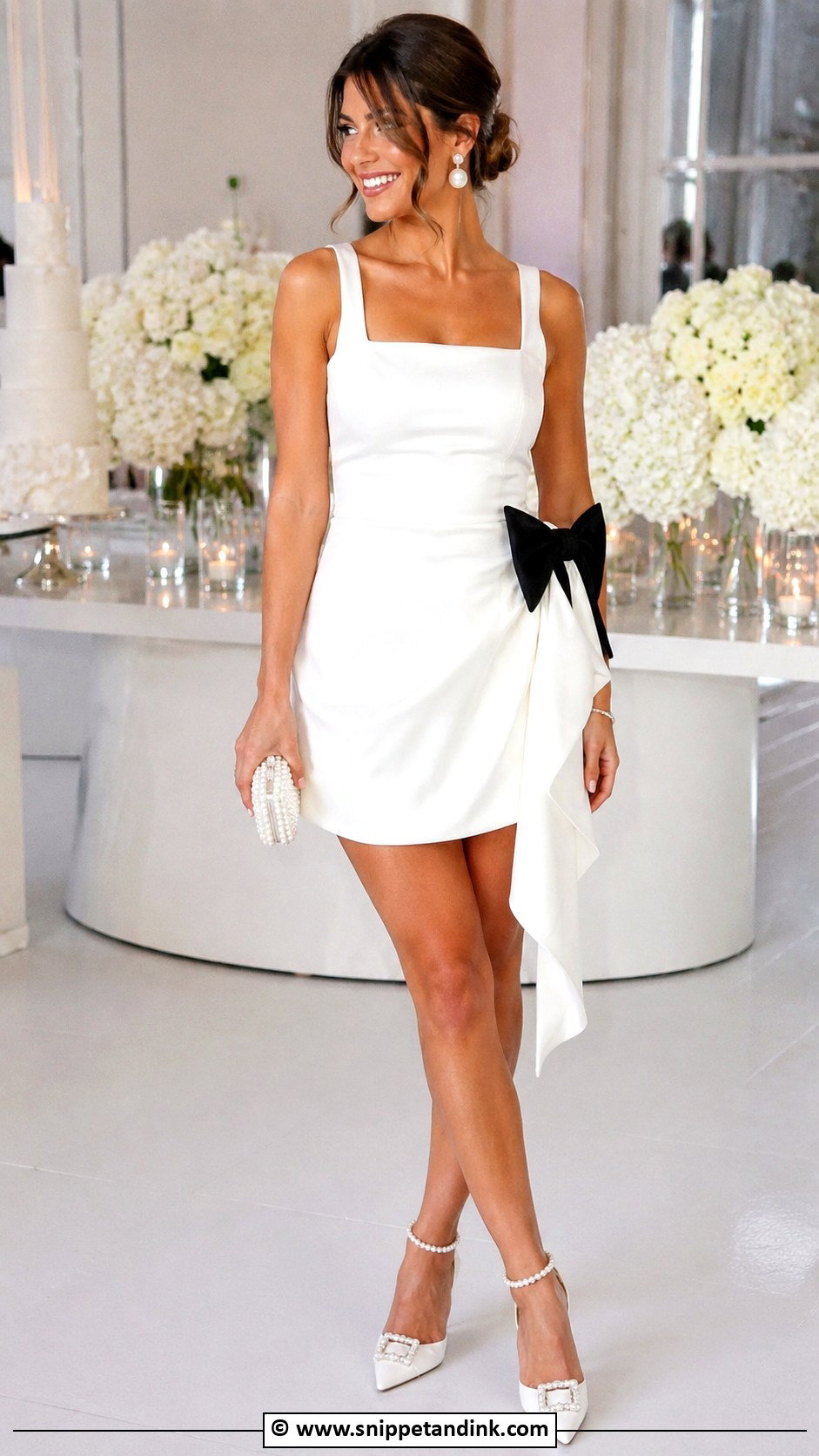
A reception change lets you dance and eat freely. Choose a sleek midi, a mini, a jumpsuit or a fitted dress with black-and-white contrast. White with a black bow is playful; black with white pearl trim is glamorous. Comfort matters most now, so look for some stretch, a lighter fabric or a shorter hem. Statement heels, a small clutch and earrings that catch the light finish it. Keep the veil on for a few photos, then take it off, and you have a fresh second look.
Will the Black Bleed Onto the White?
It’s the risk nobody mentions in the shop. Black dye on lace, ribbon or tulle can transfer onto white fabric once it gets damp from rain, sweat, a spilled drink or a steamer held too close. Before buying, I dampen a white cotton cloth and rub it gently on a hidden part of the black trim. If any color comes off, ask the maker about colorfastness or have the trim replaced.
- Steam from the white side and keep the steamer moving; never press a hot iron across black appliqué.
- If rain is likely, have a plan to keep the hem dry between the car and the door.
- After the wedding, point the black trim out to the cleaner so the gown is handled as a two-color garment.
Send the Photographer a Picture of the Gown
Bright white and deep black in one frame is about the hardest contrast a camera handles. Expose for the black and the white loses its detail; expose for the white and black lace can flatten into dark shapes. I send the photographer an image of the gown well before the day so nothing surprises them. Side light, from a window or low evening sun, is what shows black lace texture best, so ask for a few minutes of it in the portrait schedule.
Start With How Much Black You Want
Black and white proves a wedding dress can be classic and personal at once. The contrast can go soft or sharp depending on the silhouette, fabric and accessories. If you love traditional bridal style, begin with a white gown and add black lace, bows, gloves or trim. If you want a stronger statement, try black with white appliqué, pearls or a dramatic veil. Either way, settle the proportion first and build everything else around it, and the look will feel deliberate rather than borrowed.
You'll Like These Ideas:






Leave a Reply