
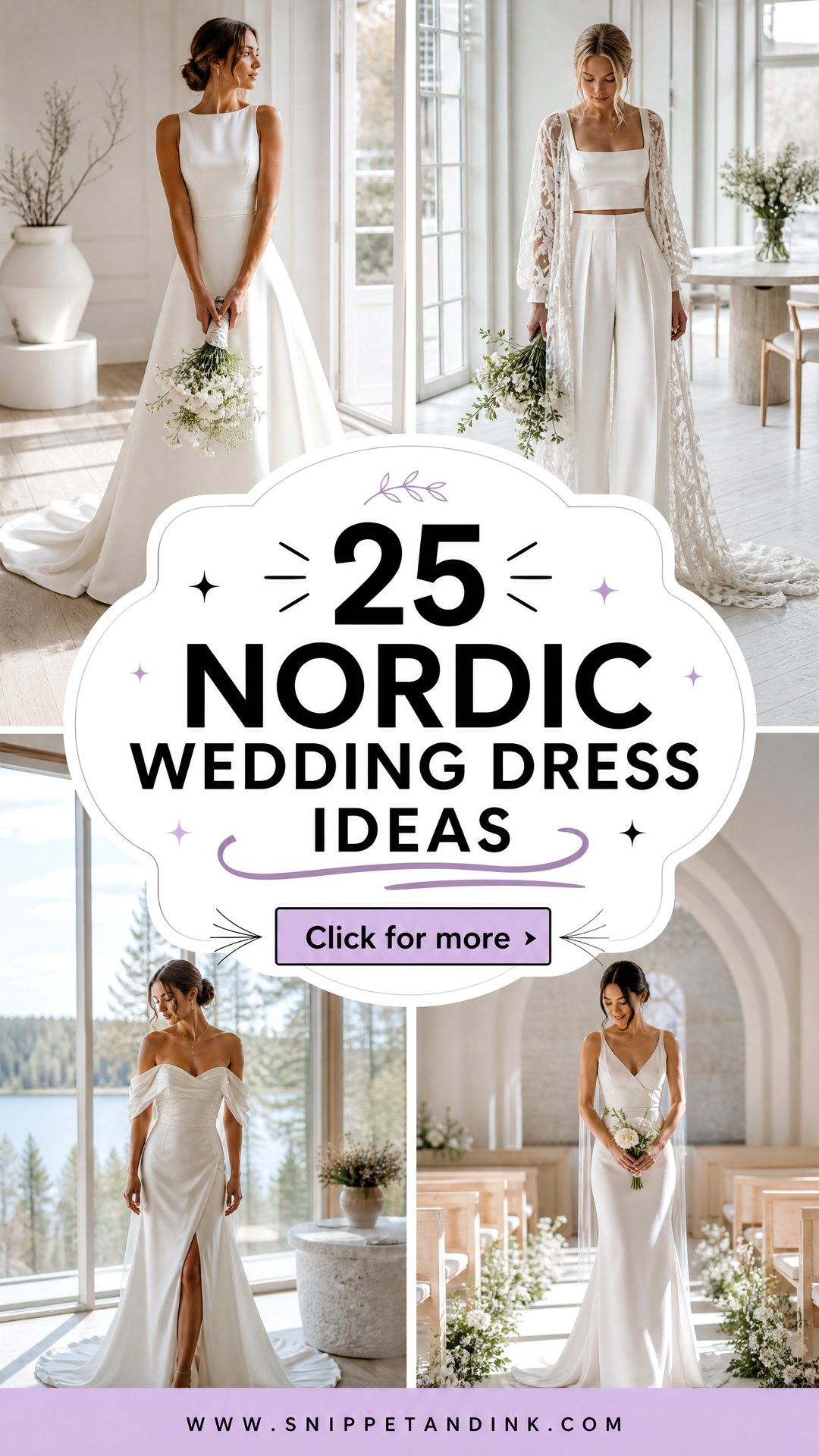
Nordic bridal style looks simple, and that’s exactly why it’s hard to get right. With no beading or ruffles to hide behind, the fabric and the tailoring do all the work. Scandinavian bridal fashion leans on smooth satin, structured crepe, a little lace, natural textures and layers you can actually wear outside in the cold. High necklines, long sleeves, plain ball gowns, pearls and well-cut cover-ups are all strong right now. I’ve put each idea together as a full outfit, from gown and outer layer to shoes, jewellery, hair and flowers, so you can see how the pieces sit together in snow, by the sea, in the city or out in the countryside. All of them can be adjusted for your body, your taste and how formal the day is.
Crepe, Mikado or Satin? Feel the Fabric Before the Silhouette
In a pared-back gown the fabric decides almost everything: how the dress hangs, how it creases, and how it looks in flat northern light. When a bride books a fitting with me, I ask her to touch and crush each fabric before she falls for a shape.
Crepe
Matte, a little stretchy and comfortable. It recovers well from sitting and photographs cleanly in winter daylight. It does cling, so it shows anything uneven underneath.
Mikado
Stiff with a faint rib, it holds pleats and volume without petticoats. Heavier and warmer than it looks, which is a plus in winter and a burden in July.
Satin
Smooth with a sheen that catches every light source. Duchess satin is thick and structured; charmeuse is thin and fluid. Both crease when you sit. Scrunch a corner in your fist for five seconds at the shop and see how quickly it springs back.
My rough rule: if you’ll spend much of the day seated or travelling, lean towards crepe; if you want shape without layers, mikado; if you love shine and can live with a few creases, satin.
1. Minimalist Satin Nordic Wedding Dress
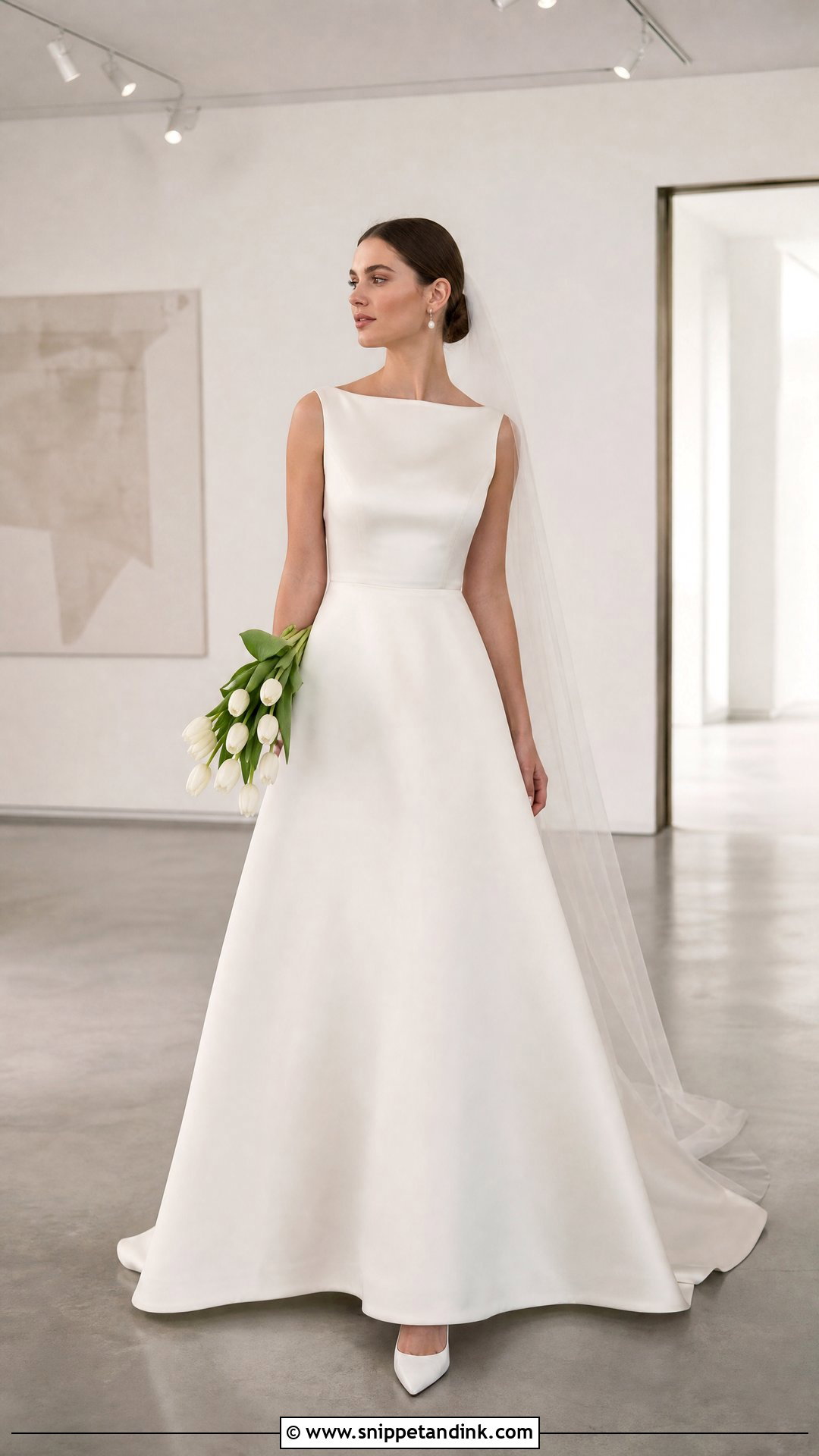
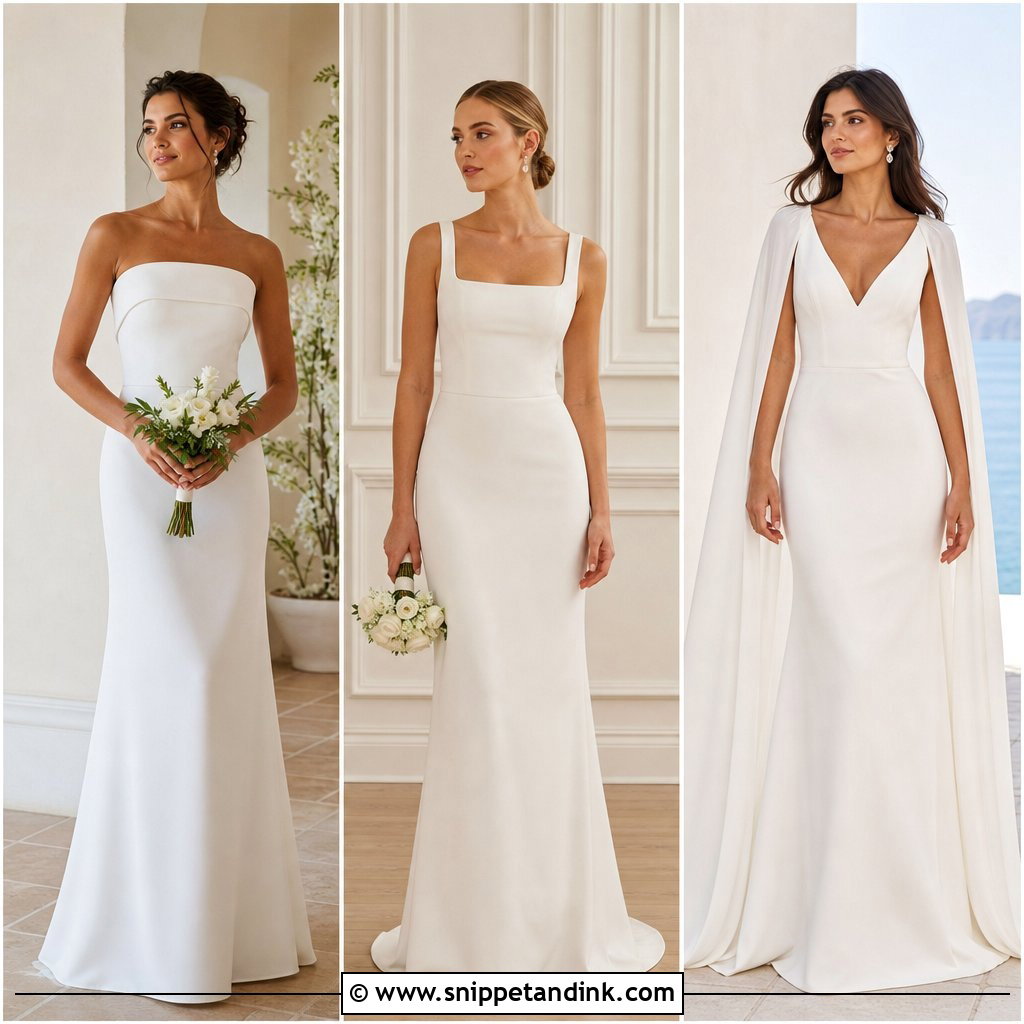
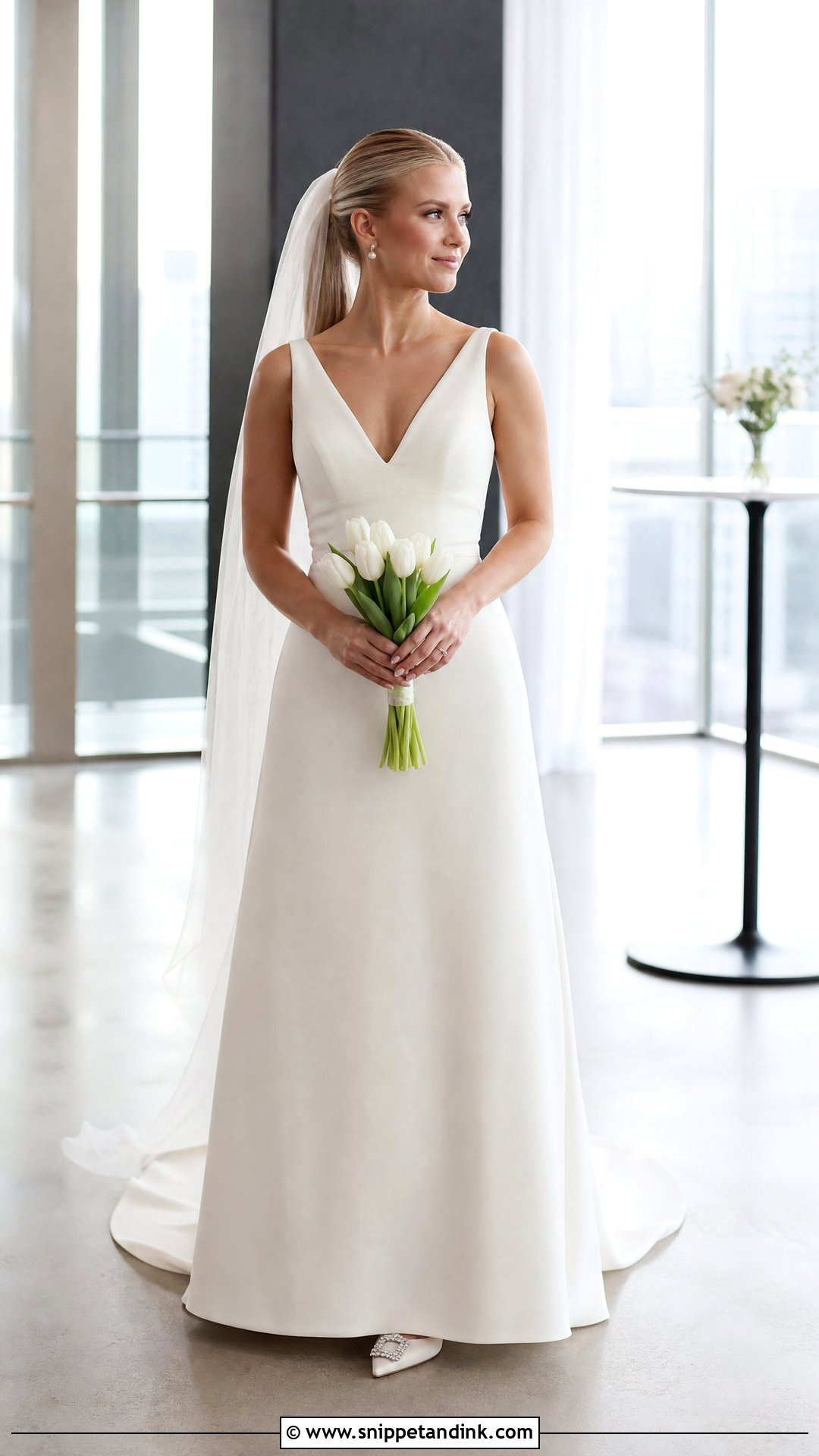
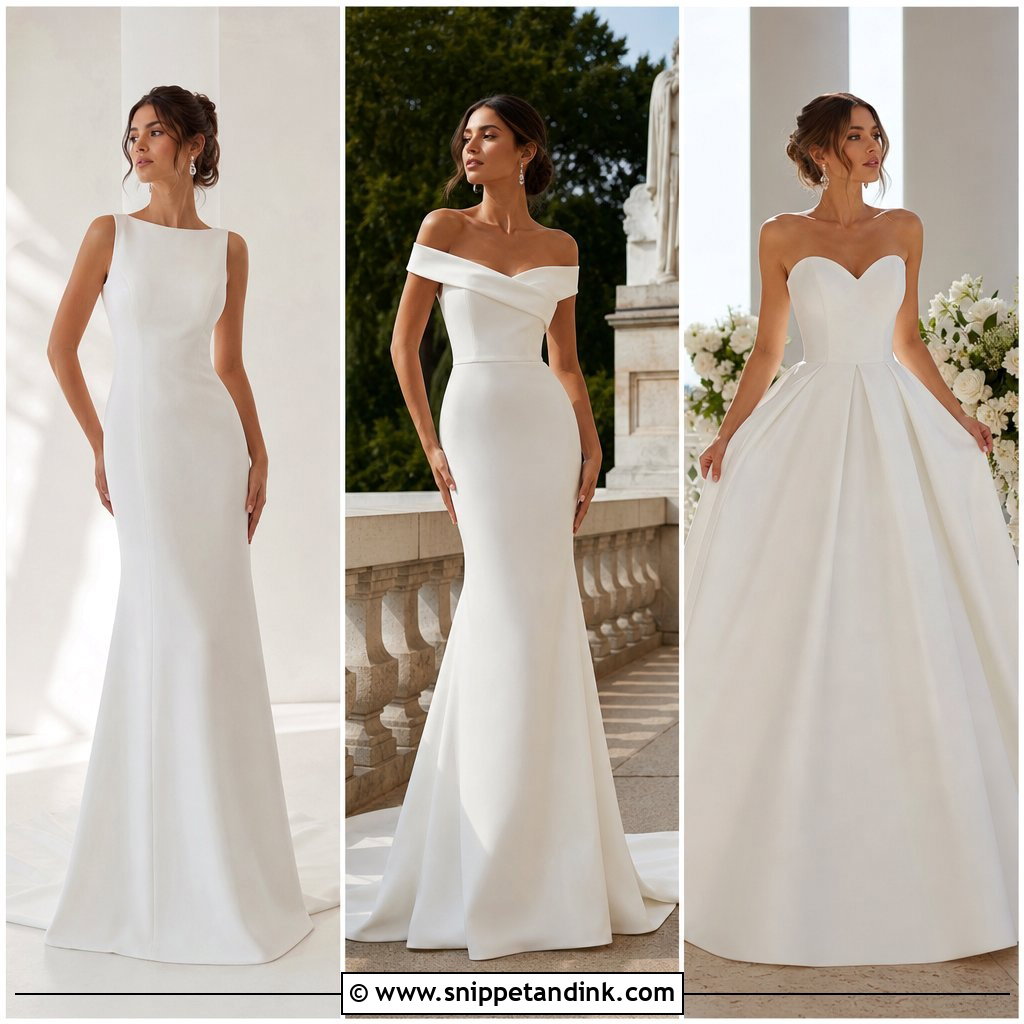
Satin in a softly structured A-line is about as quiet and polished as bridalwear gets. Go for a clean bodice, a defined waist and a gently sweeping train, with a bateau or straight neckline to keep it modern. Pointed ivory pumps, small pearl earrings and a low centre-parted bun are all it needs, plus a plain fingertip veil and white tulips or calla lilies on a narrow silk ribbon. Plain satin shows everything, including the outline of your underwear and every pull at a seam. I’d fit it with the exact bra and shapewear you’ll wear on the day, and let the sheen of the fabric be the only decoration.
2. Long Sleeve Crepe Nordic Wedding Dress
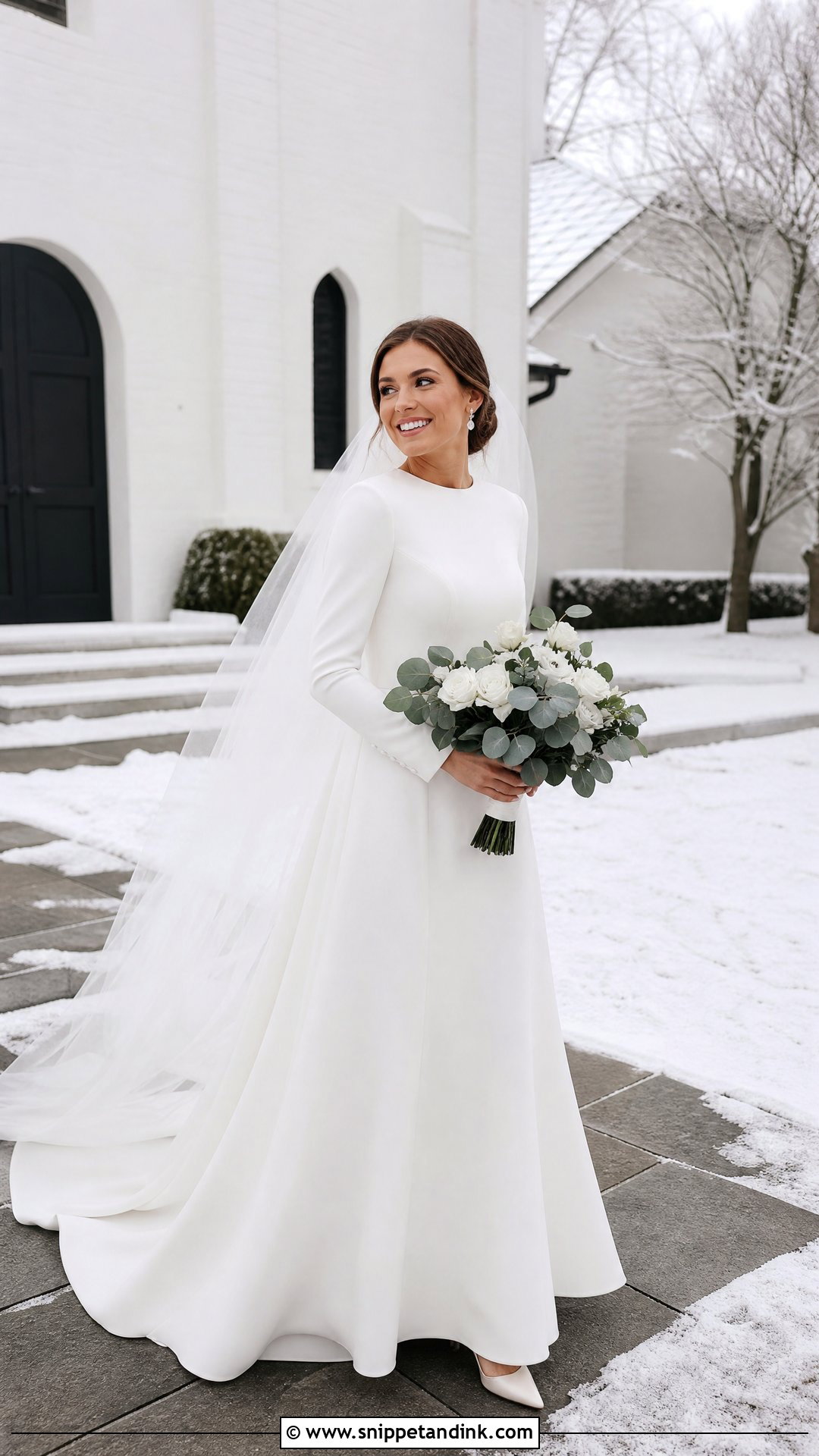
Long-sleeved crepe is my favourite winter fabric for a minimalist bride. It’s matte, it has a little stretch, and it doesn’t glare in low winter sun. Look for a fitted bodice, lightly defined shoulders and an A-line or column skirt, with covered buttons from cuff to train if you want one traditional detail. Pearl drops, ivory leather pumps and a sleek low chignon finish it; a single-layer cathedral veil for the ceremony and a wool wrap for outdoors. Carry white roses, ranunculus and eucalyptus. One thing to check: long fitted crepe sleeves can restrict your arms. Raise them over your head at the fitting, as if hugging someone taller. If the bodice lifts, the sleeve head needs more room.
3. High Neck Nordic Wedding Dress
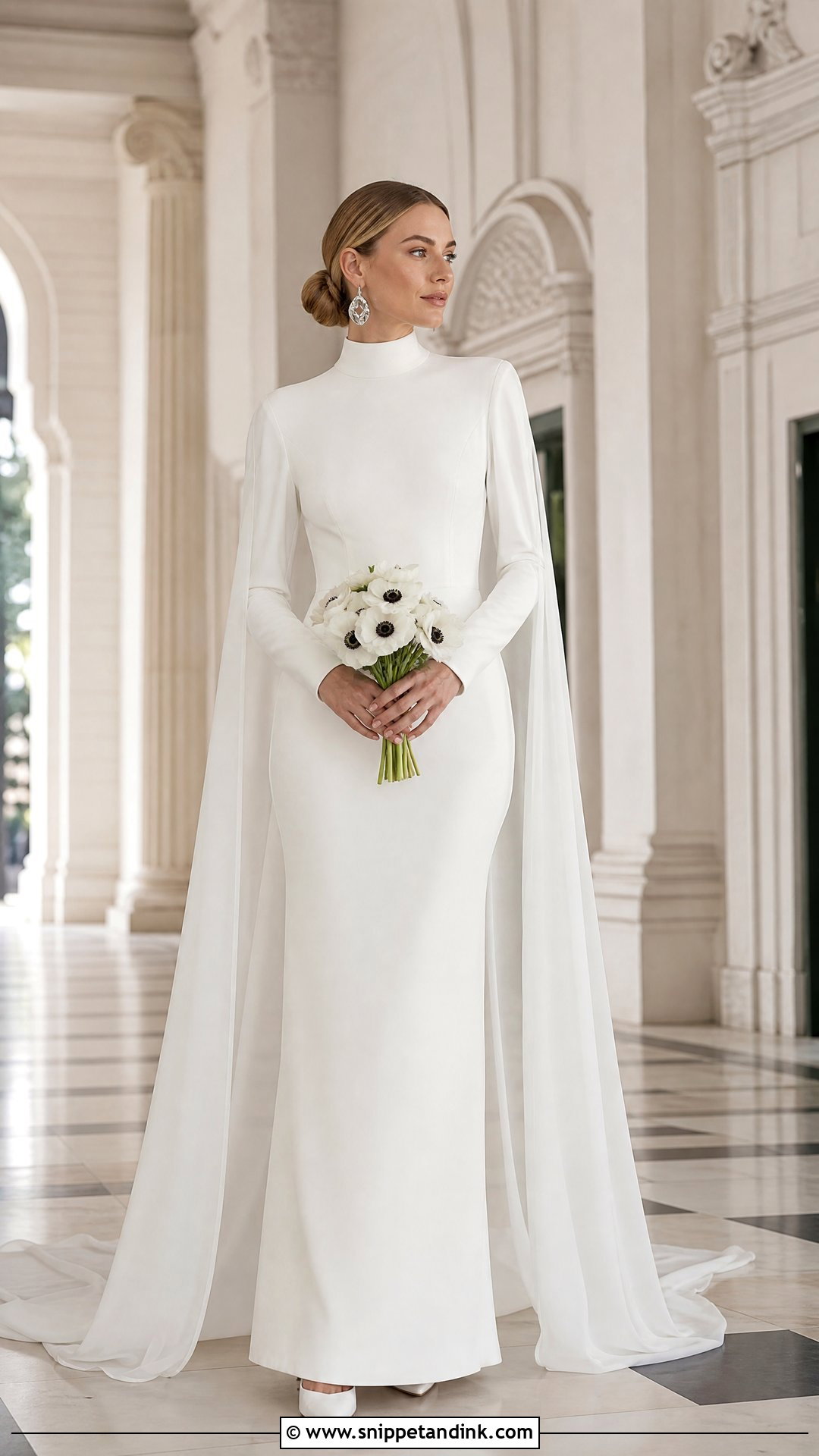
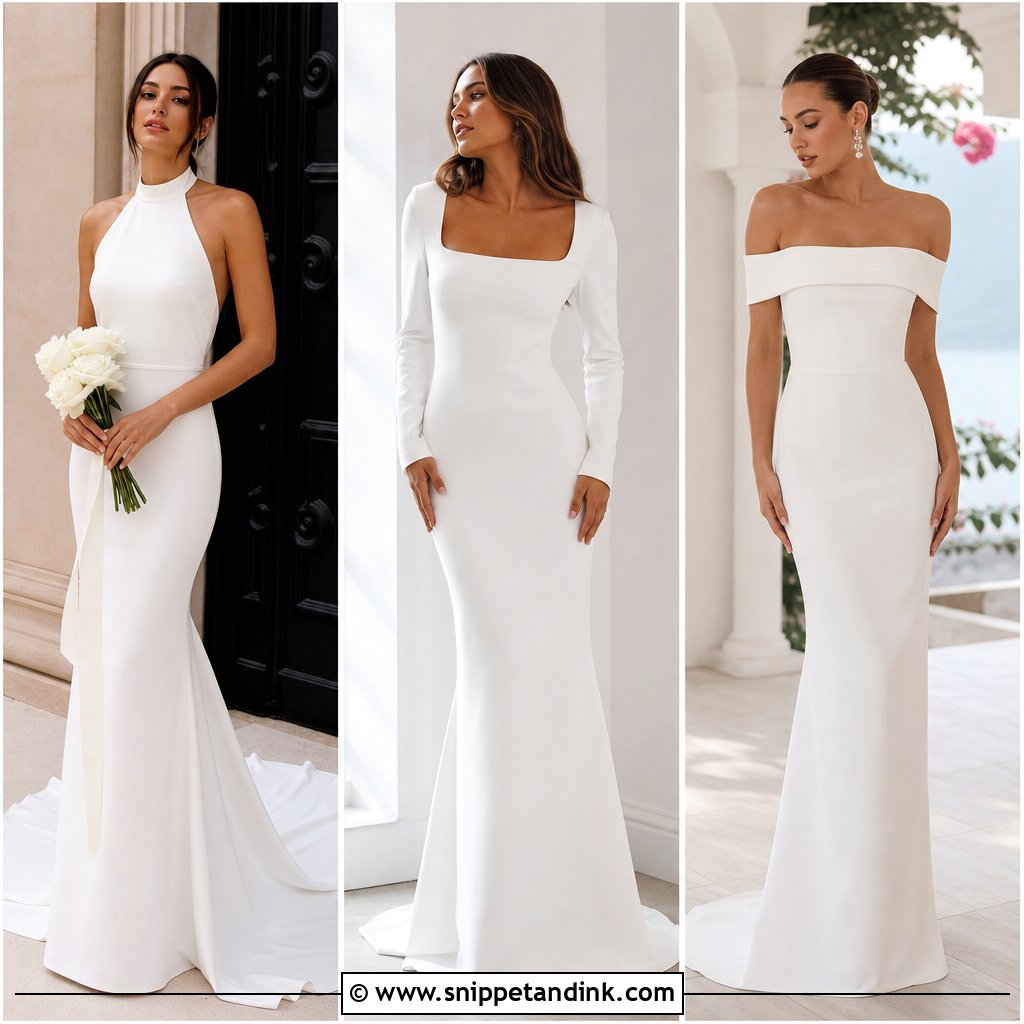
A high neck reads as very Scandinavian when the proportions are clean. Choose a sleeveless or long-sleeved column in silk crepe, satin or matte mikado, with a narrow mock neck to frame the face and a low keyhole back for contrast. Sculptural silver earrings, closed-toe heels and a smooth bun at the nape suit it, and I’d skip the necklace completely. A plain floor-length veil or a detachable chiffon cape keeps the line long; white anemones and greenery work for flowers. High necks are less comfortable than they look on the hanger. Ask for the collar to be fitted with a finger’s width of room, because your neck moves and swells a little over a long, warm day.
4. Open Back Nordic Wedding Dress
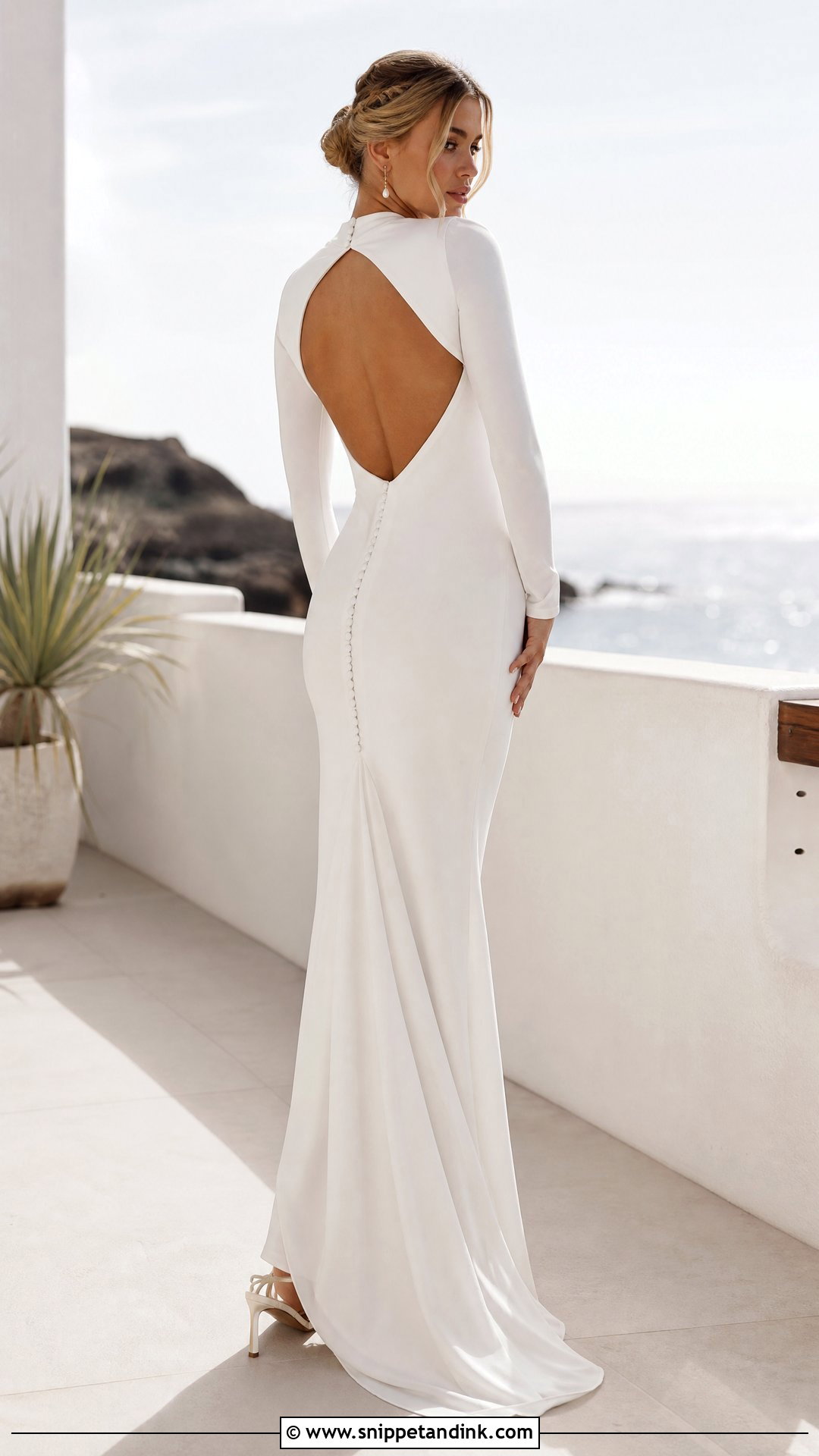
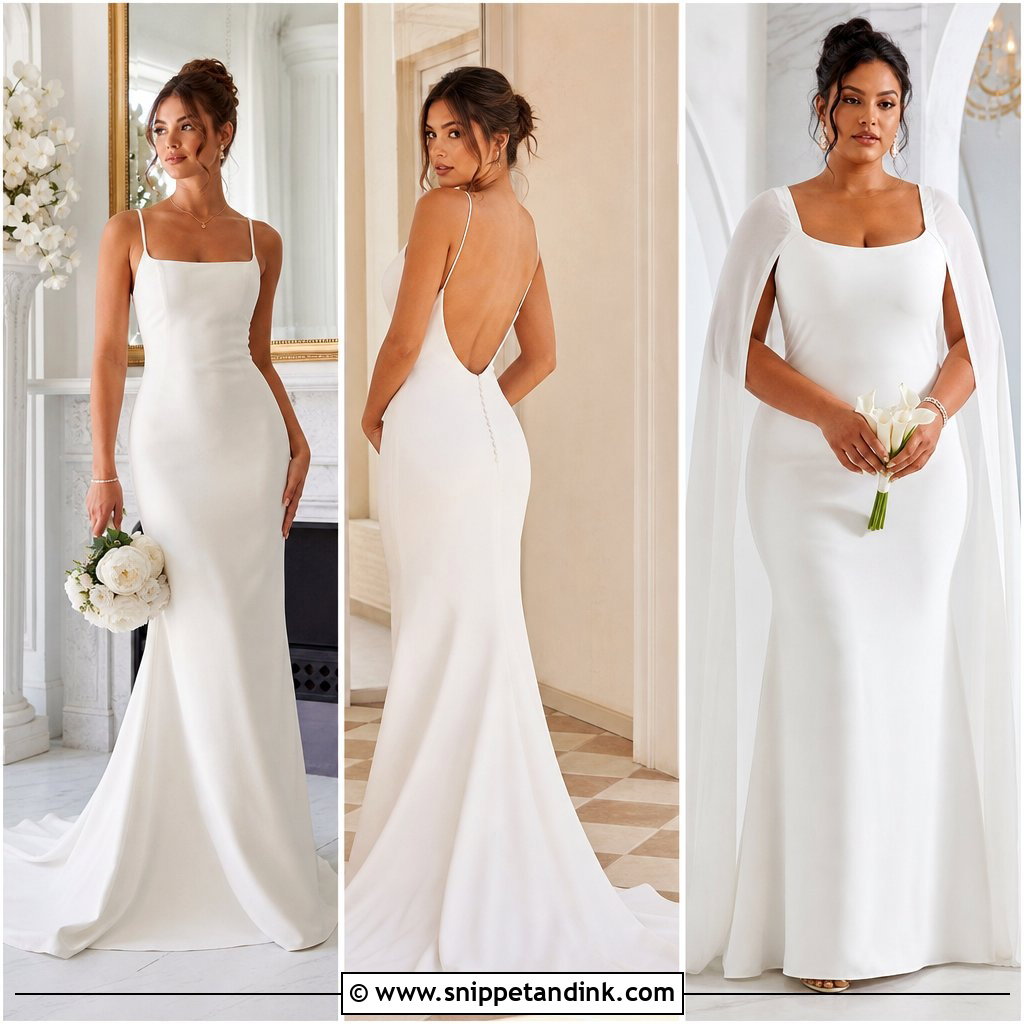
Can a plain dress still make an entrance? Yes, if the back does the talking. Choose a fitted crepe or silk column with a high front neckline, long sleeves and a rounded or geometric back opening, finished with covered buttons along the lower back. Delicate drops, ivory slingbacks and a low twisted bun that leaves the opening visible pair well with it. A sheer veil can come off after the ceremony to show the design properly. Open backs depend on construction: the bodice must be anchored at the sides so it doesn’t gape when you lean forward. I check that at every fitting by asking the bride to sit down and reach for a glass.
5. Square Neck Nordic Wedding Dress
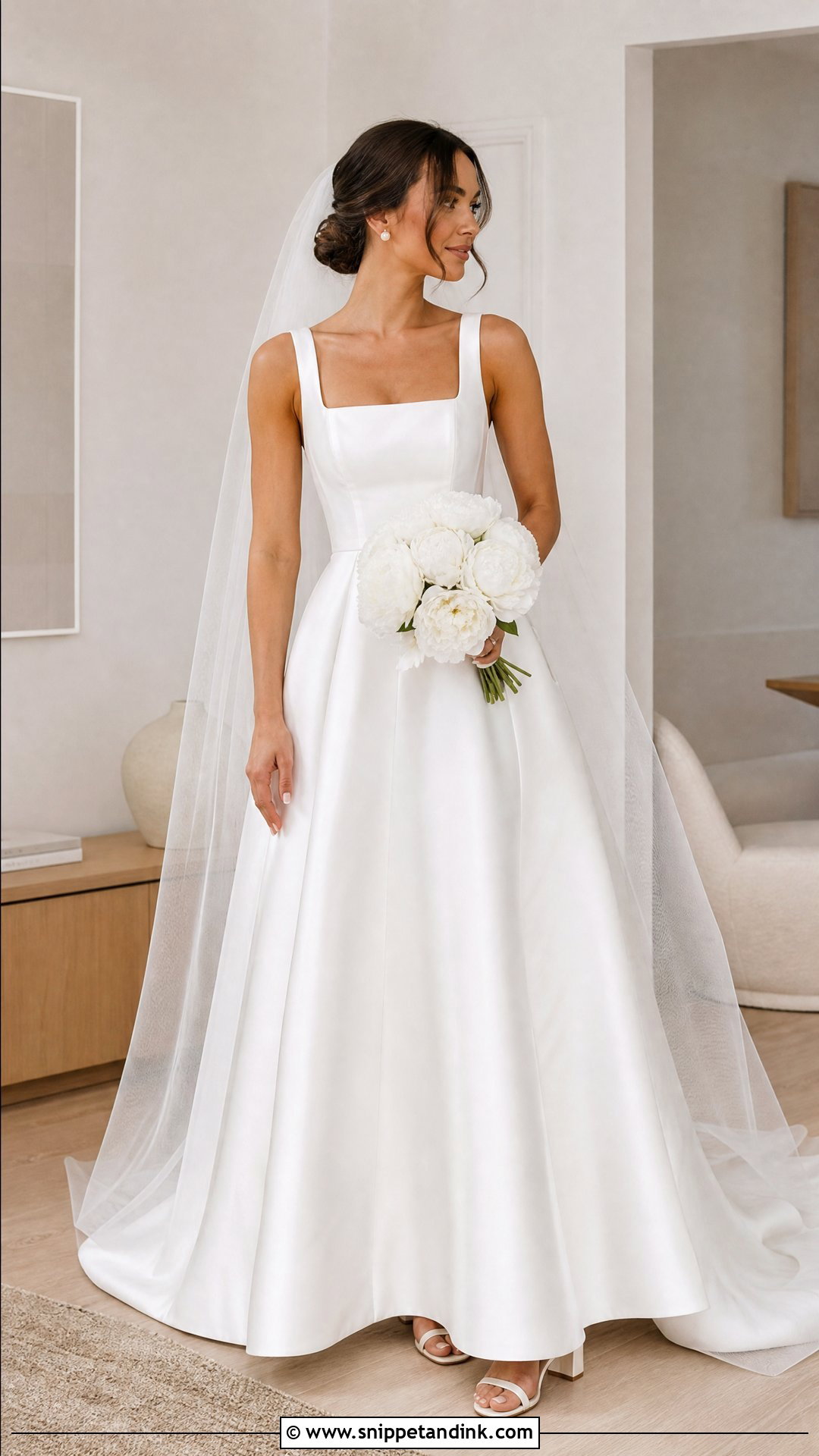
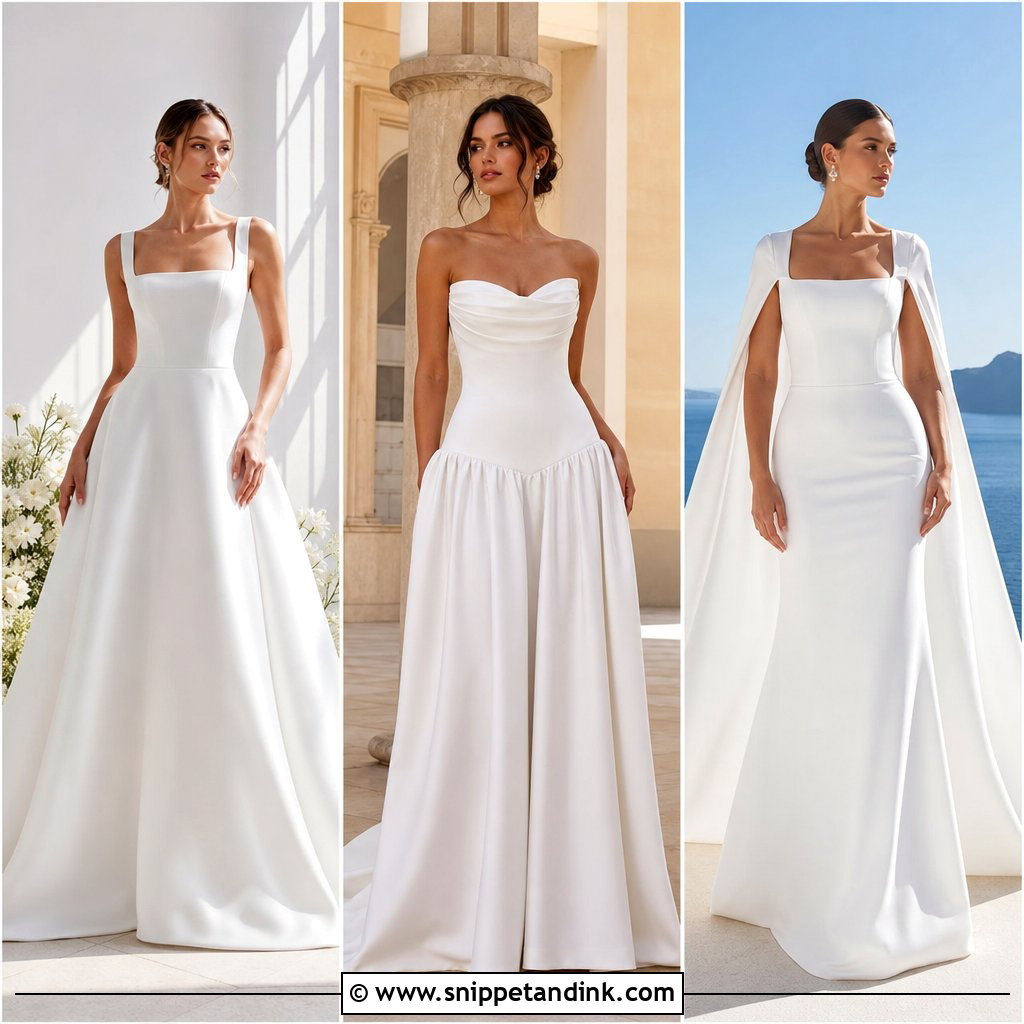
A square neckline gives a simple gown structure without adding a single embellishment. Silk mikado in an A-line with wide straps, a fitted waist and a softly structured skirt is the version I like best. When it’s tailored properly it flatters petite and fuller figures alike, because the straight line across the chest balances the shoulders. Pearl studs, low block-heel pumps and a neat centre-parted bun keep it calm; a short tulle veil for lightness or a cathedral one for formality. Peonies, tulips or seasonal branches make a loose bouquet. For colder days, a cropped ivory wool jacket sits neatly at the waist without hiding the neckline.
6. Nordic Wedding Dress With Cape
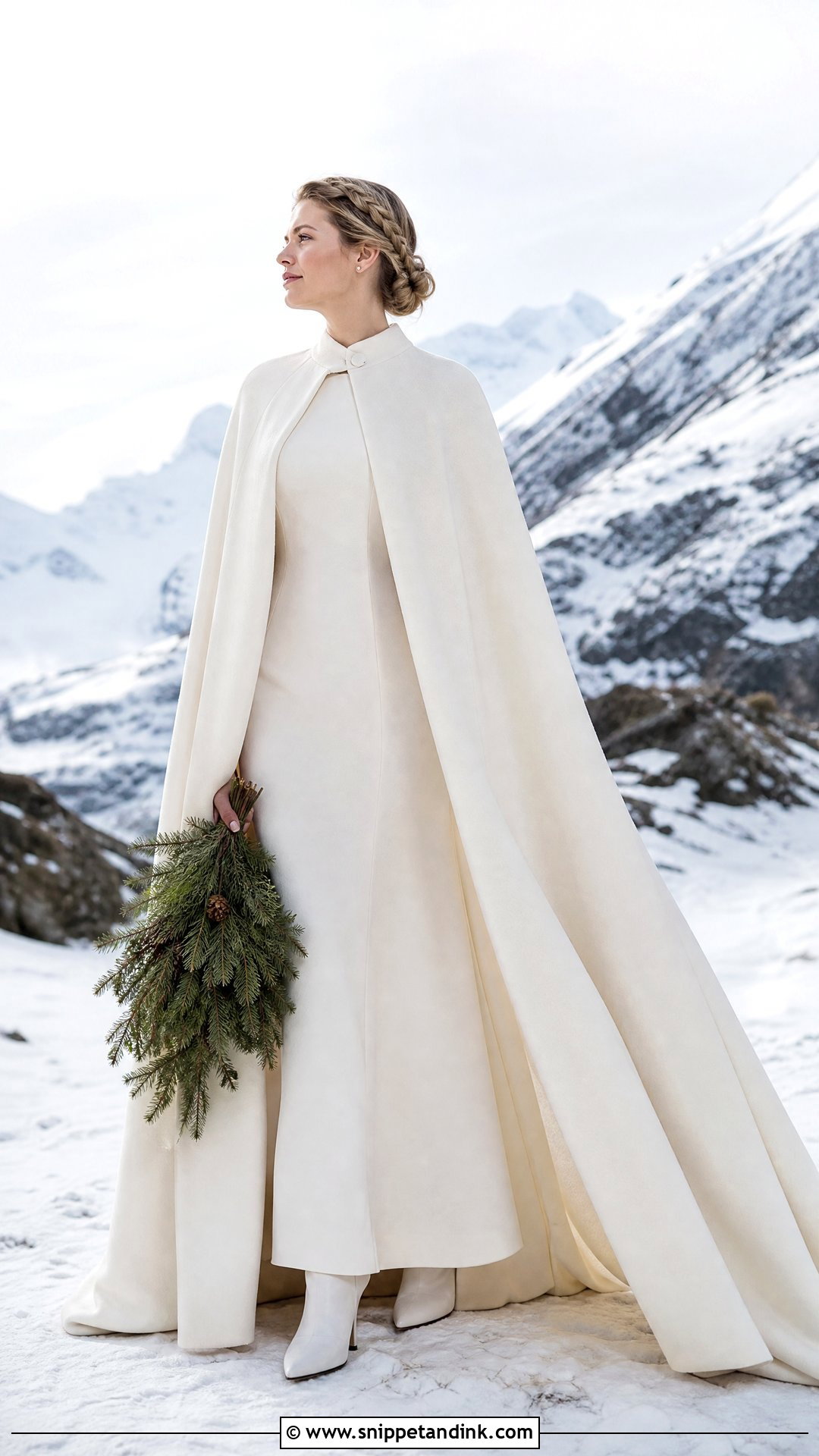
Capes are the most practical bridal layer for a northern winter. Start with a sleeveless column or an understated crepe A-line, then add a floor-length cape in chiffon for warmer months or soft wool or satin when it’s cold. A high collar or a small covered clasp at the throat finishes it. Pointed ankle boots handle snowy ground, with crystal studs and a braided low bun; white roses, eucalyptus and evergreen sprigs tie the bouquet to the landscape. The cape can replace a veil and come off indoors. A wool cape with no lining can scratch bare shoulders, so I always ask for a silk or satin lining, and I check that the clasp won’t snag your hair when it’s taken off.
7. Lace Sleeve Nordic Wedding Dress
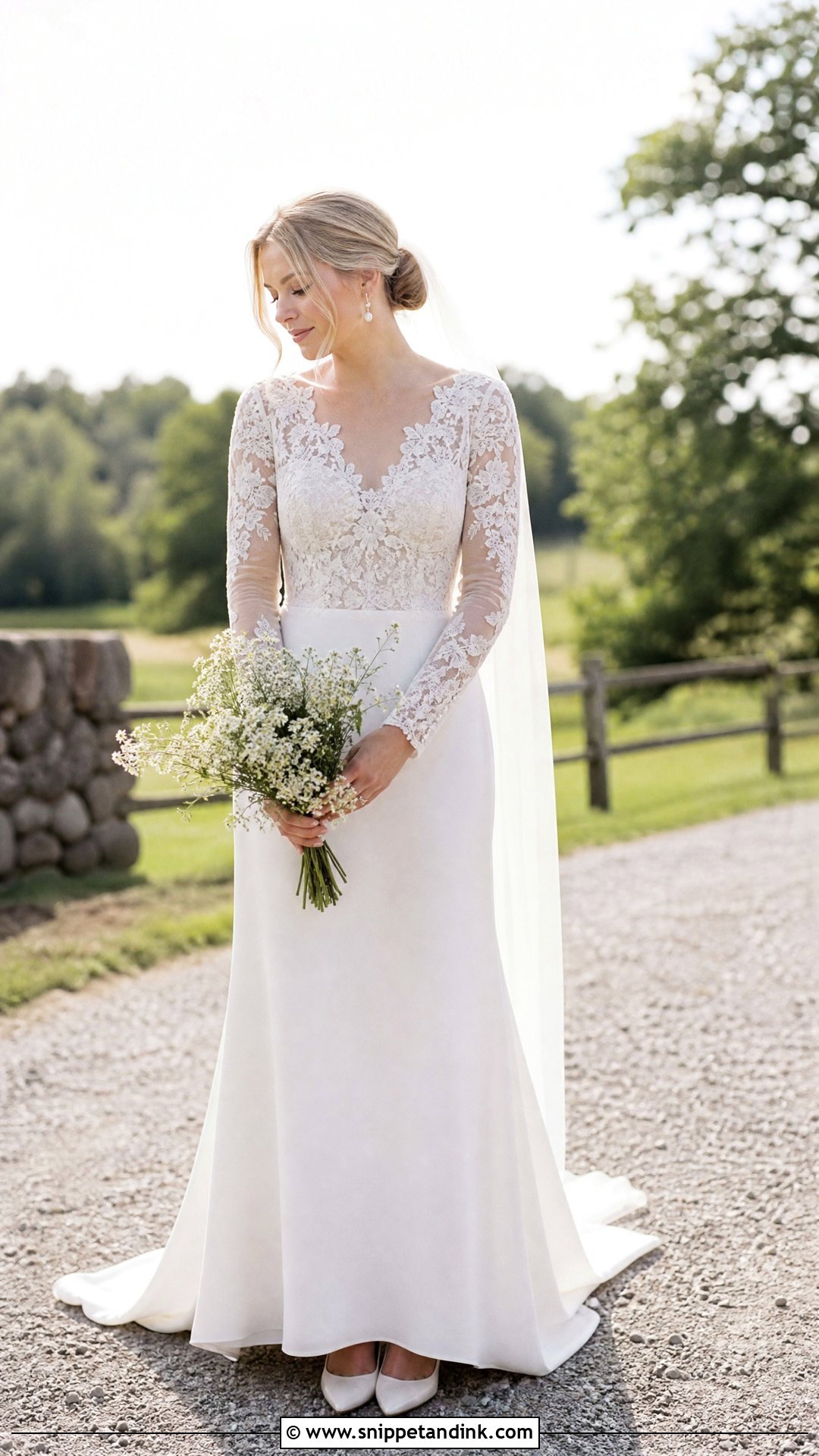
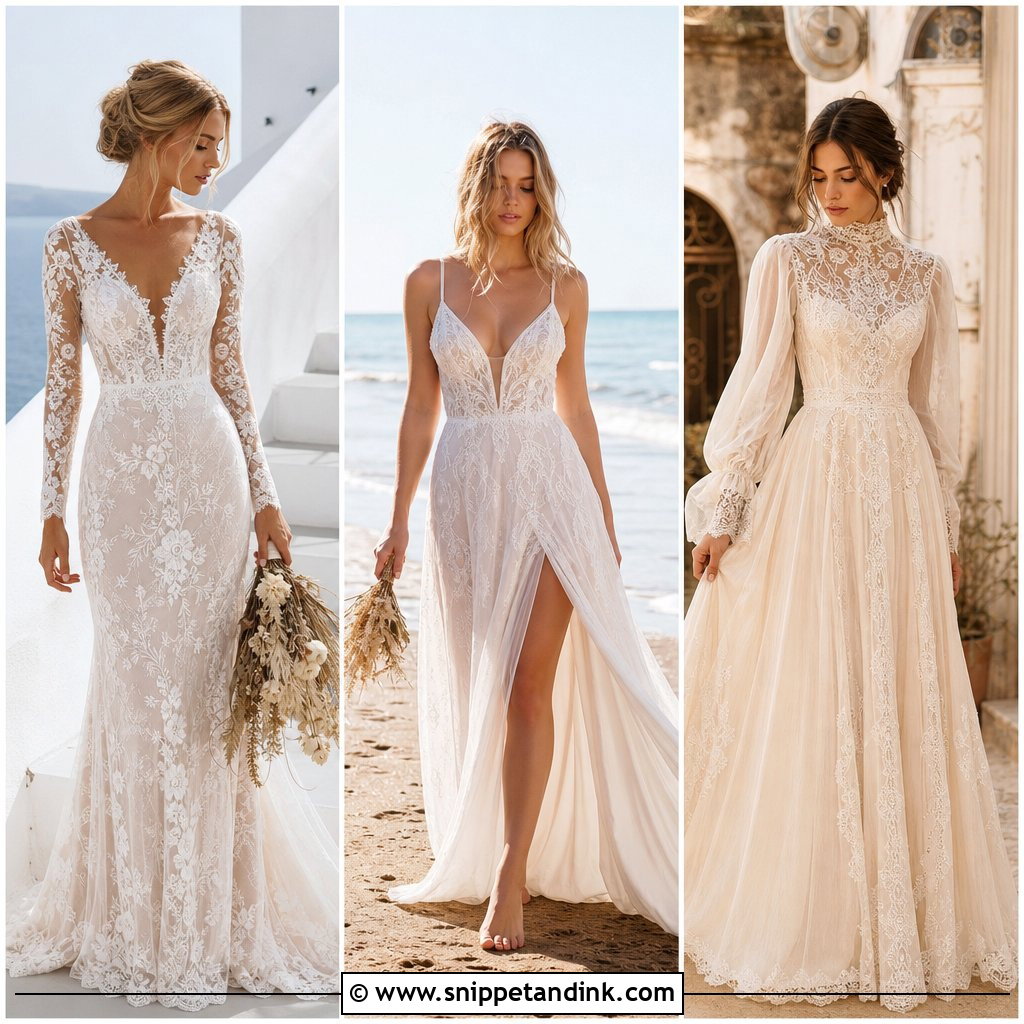
Lace sleeves add a little romance while the skirt stays plain. Look for an A-line with a crepe skirt and a fitted lace bodice, ideally with an open floral, leaf or geometric pattern rather than dense, heavy lace. A modest V or boat neck works, finished with covered buttons at the wrists. Ivory pumps, pearl earrings and a relaxed low bun with a few loose strands suit it, with a plain tulle veil so nothing competes. Carry loose white wildflowers and branches. Barns, coastal chapels and gardens all suit it. Lace sleeves are often lined with tulle that feels scratchy after a few hours. If yours does, a seamstress can swap it for a softer mesh.
8. Boho Nordic Wedding Dress
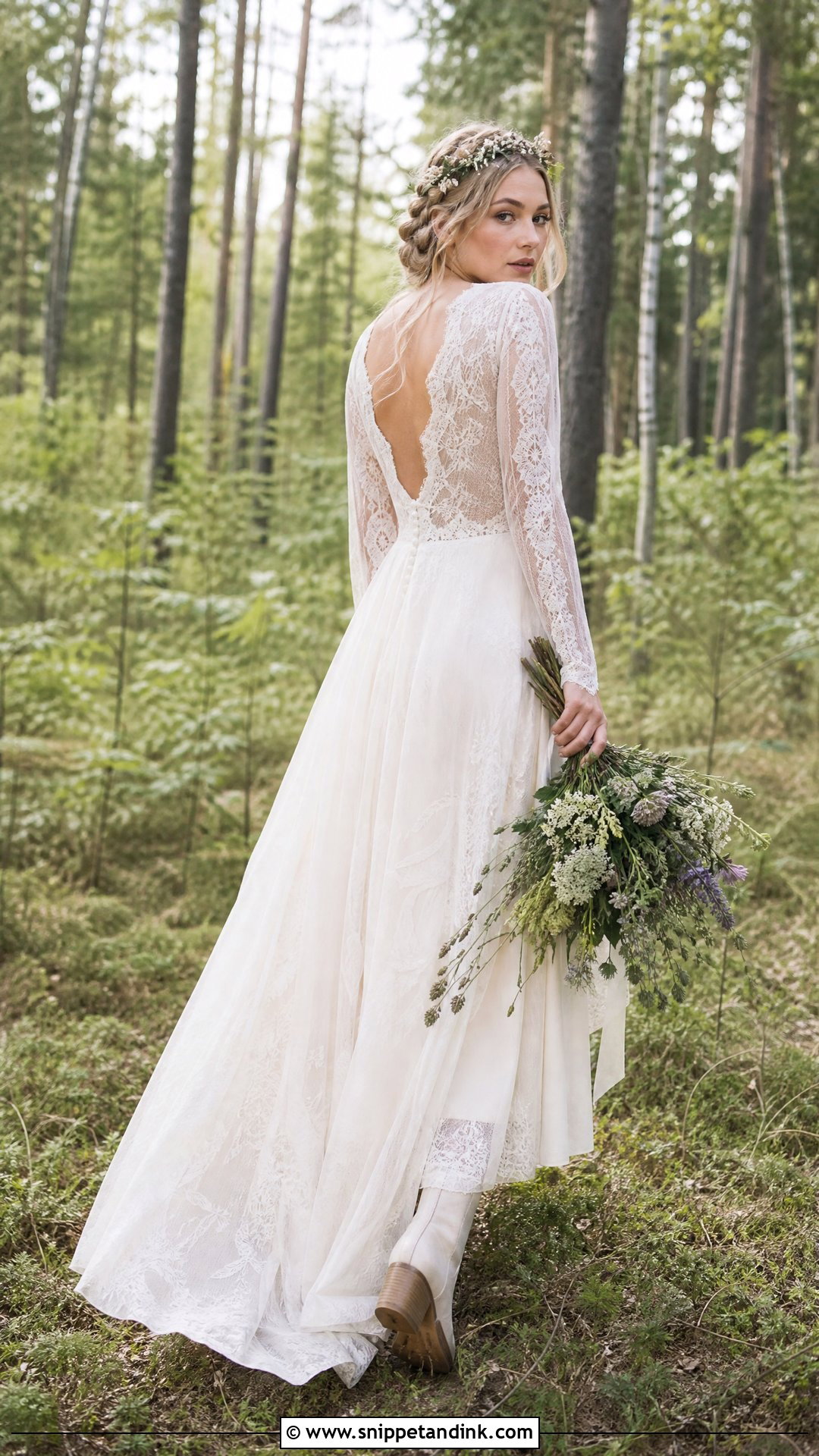
Wild landscapes call for something that moves. A soft A-line with botanical lace, a lightly fitted waist and long sheer sleeves fits that brief, with a modest V-neck and open lace back. Ivory ankle boots or low block heels, a loose braid and small gold hoops keep it relaxed. Choose a plain fingertip veil or a small crown of white flowers and greenery, and carry daisies, ferns and seasonal wildflowers. It’s made for a forest clearing, a lake edge or a farm. My caution is the hem: long, light lace picks up grass seed and mud quickly outdoors. Have it taken up to ankle length or add a bustle so you’re not dragging the train across a field.
9. A-Line Nordic Wedding Dress
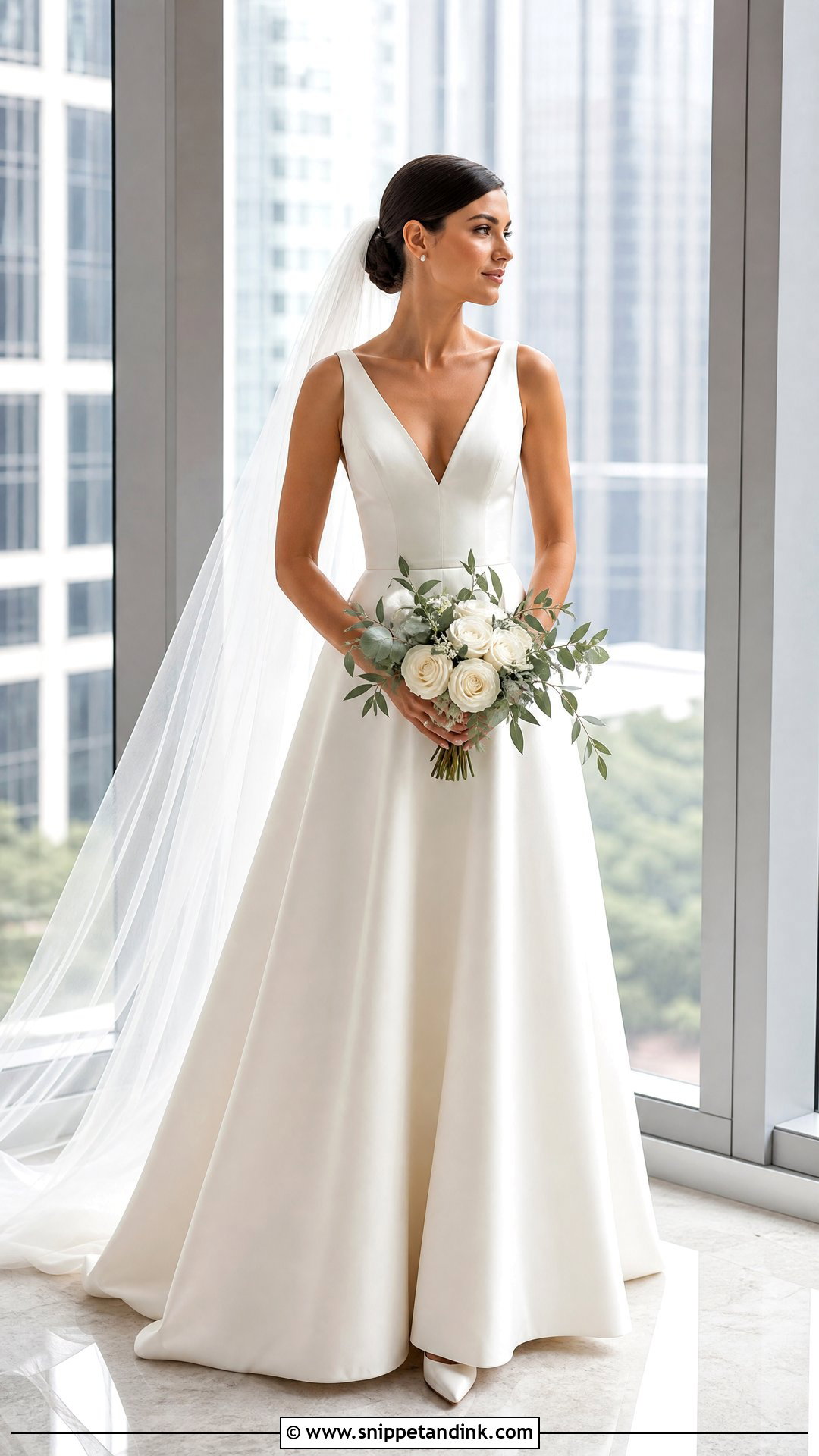
If you’re unsure where to start, start here. A matte satin or crepe A-line with a fitted bodice, softly defined waist and a skirt that falls smoothly over the hips suits almost every body and every venue. A shallow V or bateau neckline keeps it versatile. Add pointed ivory heels, pearl studs, a structured mini bag, a low bun and a plain cathedral veil, with white roses, tulips and eucalyptus. You can make it yours through sleeve length, neckline depth or fabric weight. Because it’s so adaptable, the fit is everything. I spend most of an A-line fitting on where the waist seam sits, since a centimetre too low makes the whole skirt look heavy.
10. Mikado Ball Gown Nordic Wedding Dress
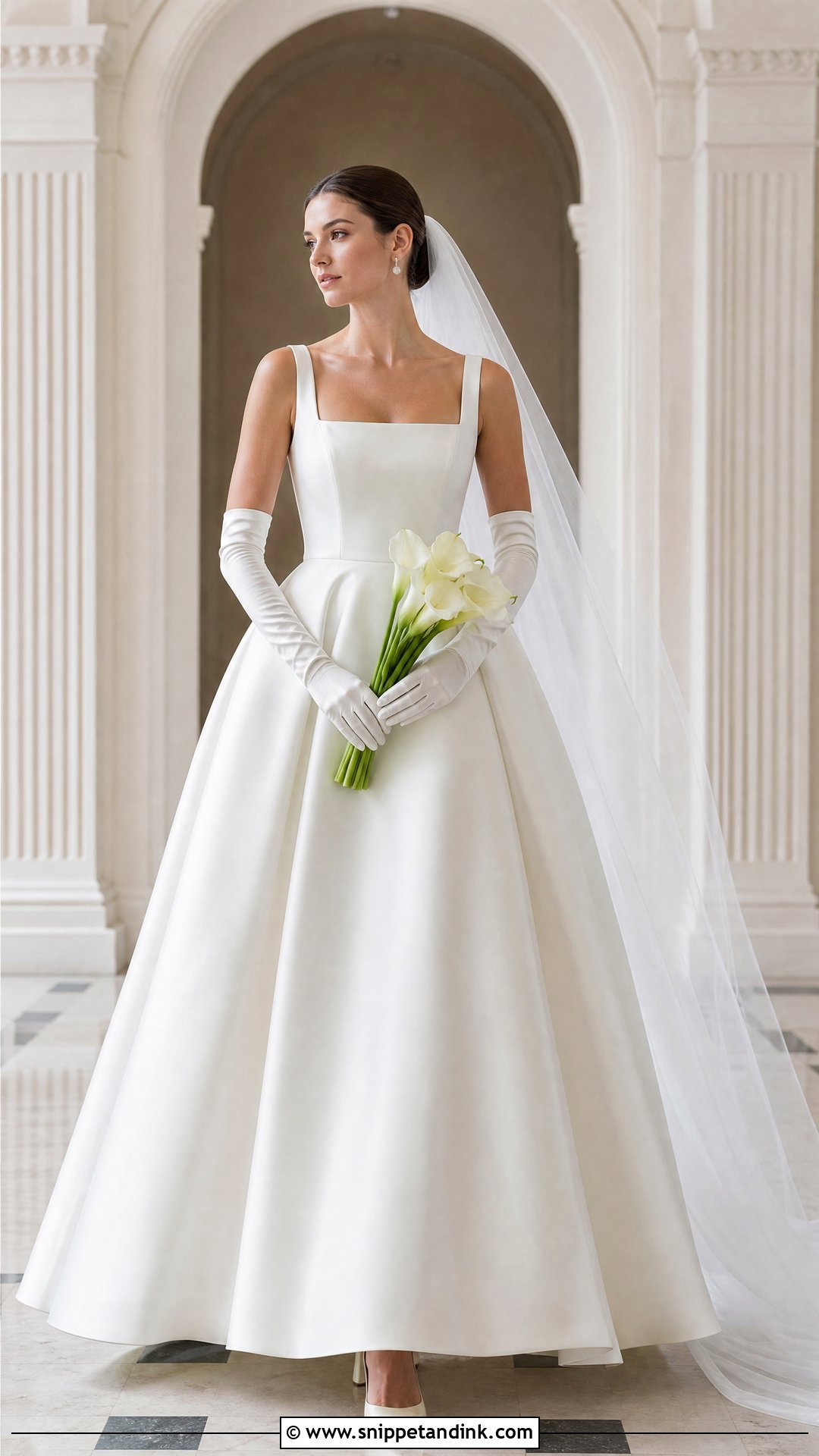
Mikado is a stiff, slightly ribbed silk blend that holds a shape on its own, which is why it suits a ball gown that relies on structure rather than decoration. Choose a fitted bodice with a straight, square or gently curved neckline and a full skirt with crisp pleats. Pearl drops, ivory pumps and a smooth bun suit it; long satin gloves are a classic touch, and a plain cathedral veil balances the skirt’s volume. White calla lilies or roses keep the bouquet compact. It belongs in a grand hall or historic hotel. I keep the bodice free of beading, because on mikado any weight pulls the fabric and breaks the clean pleat lines.
11. Silk Slip Nordic Wedding Dress
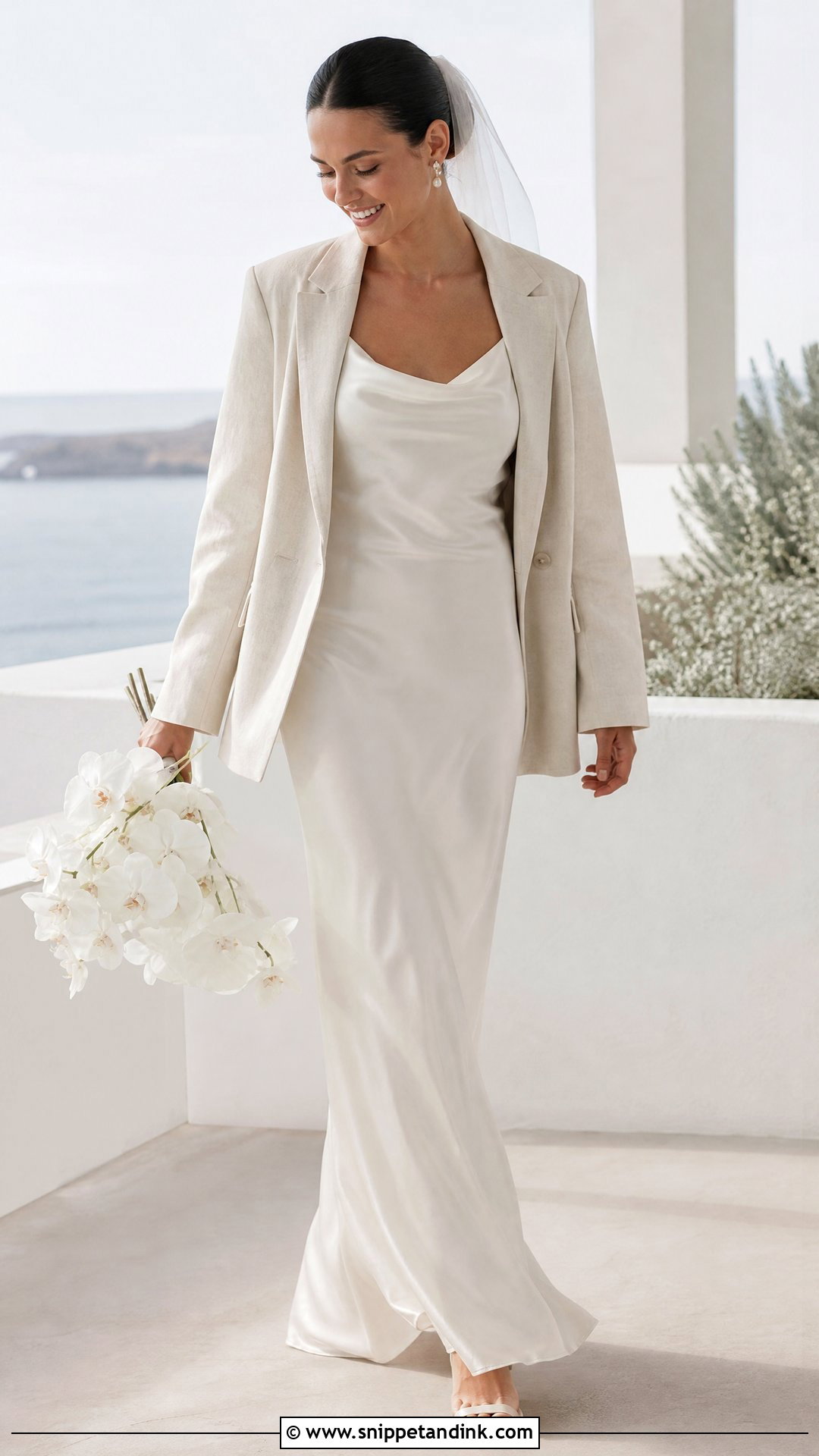
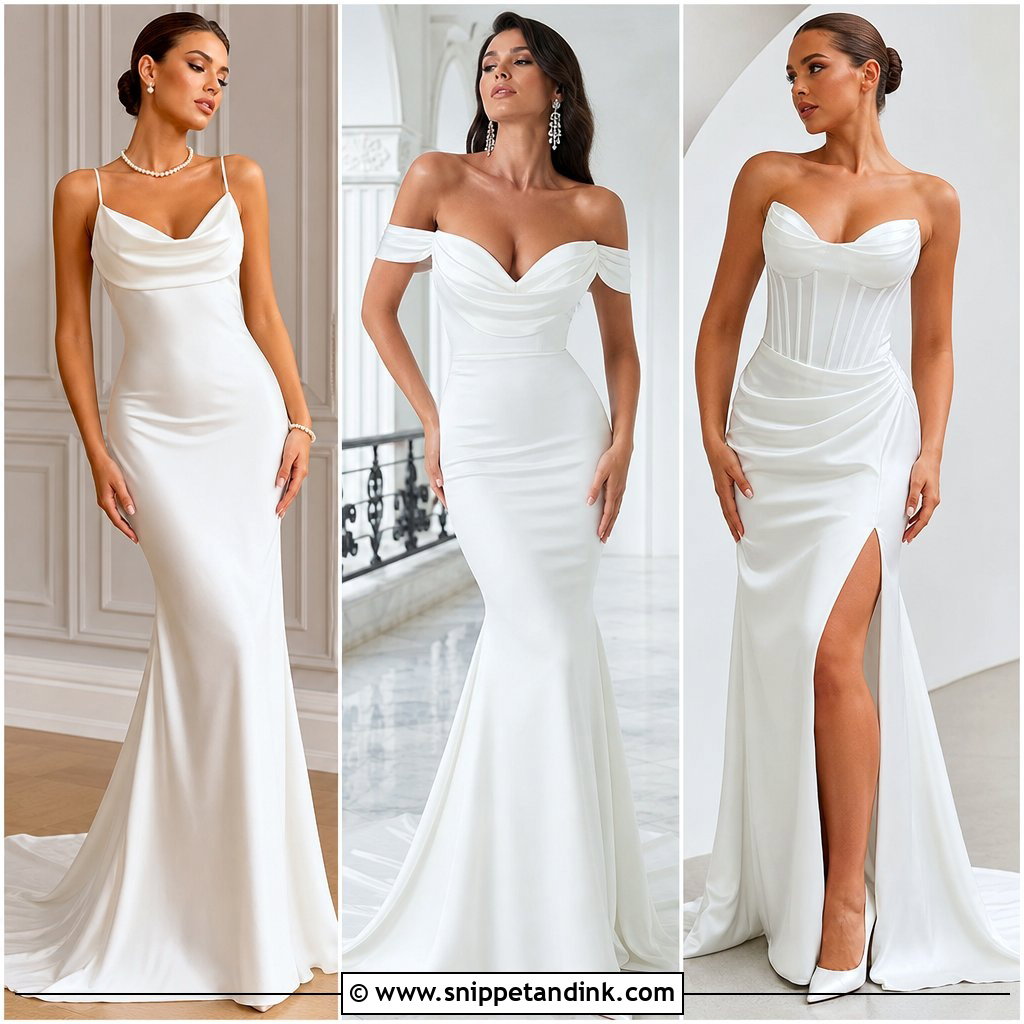
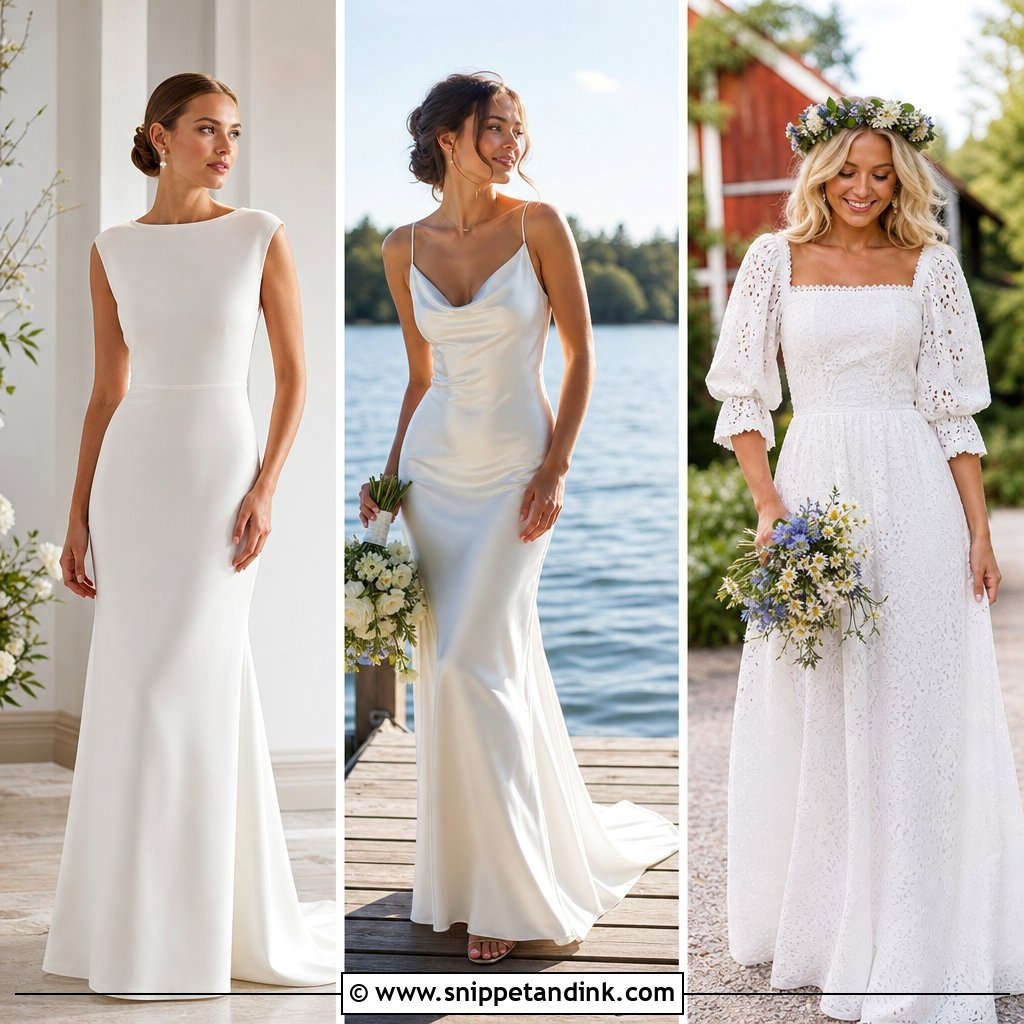
A silk slip gown is the lightest thing on this list and the least forgiving. Bias-cut silk follows the body closely, so look for wider straps, a softly draped neckline and a fluid skirt that skims rather than clings. A linen blazer or sheer chiffon wrap gives coverage for the ceremony. Minimal strappy sandals, small pearls and a low knot or soft shoulder-length waves finish it, with a short veil and orchids, tulips or one variety of seasonal flower. Bias silk shows every line underneath. I’d budget for smooth, edge-free underwear in a skin-tone shade, not white, and for a skilled alterations person, because bias-cut hems twist if they’re shortened carelessly.
12. Tea Length Nordic Wedding Dress
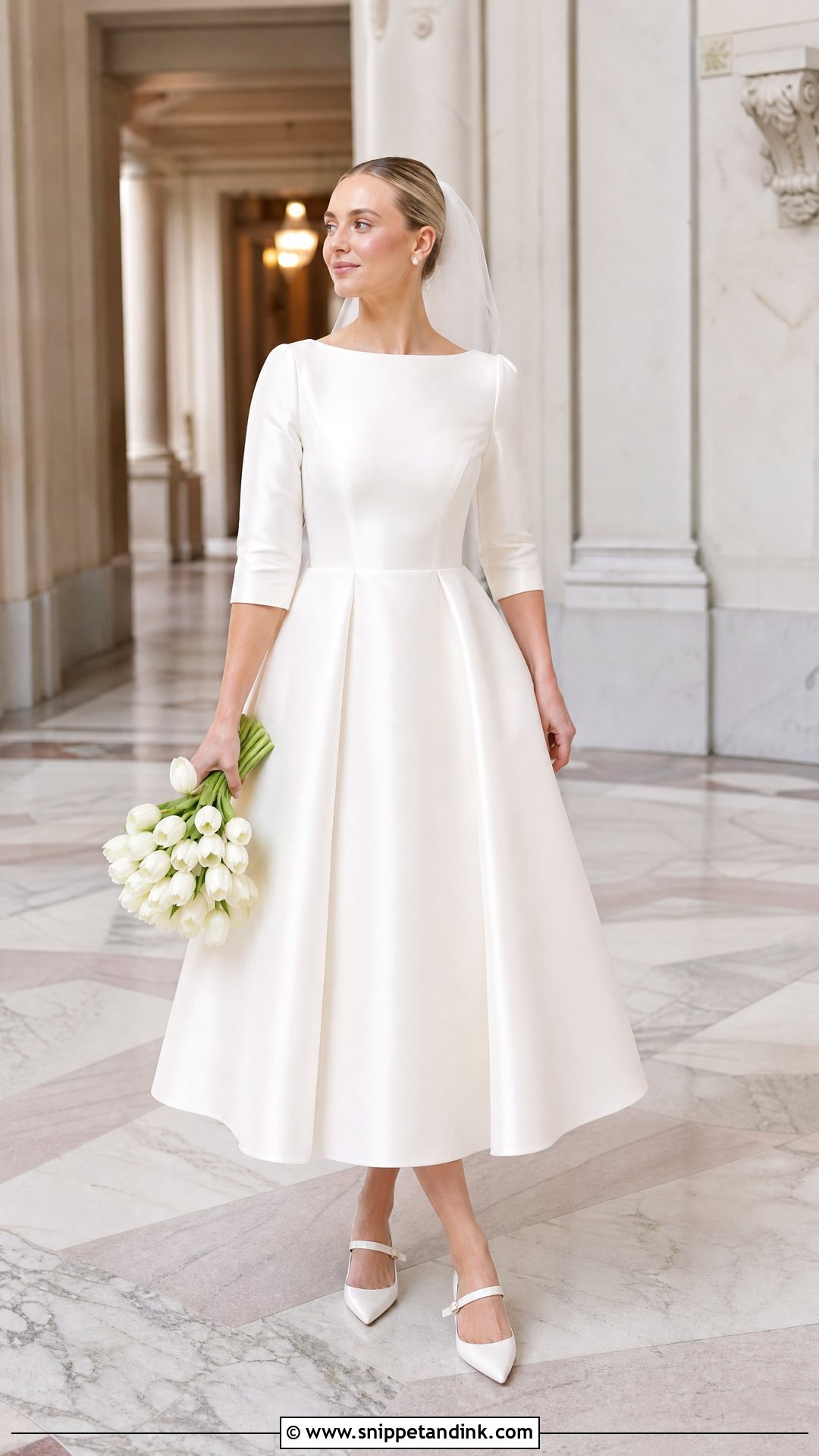
Tea length is practical and has a quiet vintage feel. Pick clean satin or mikado with a fitted bodice, a defined waist and a skirt ending between knee and ankle; three-quarter sleeves or a bateau neckline keep it polished. Your shoes are on show, so choose them as carefully as the dress: pointed pumps, refined Mary Janes or sleek ankle straps. Add pearl studs, a short veil, a smooth low bun and a small bunch of white tulips. In cold weather, a cropped wool coat and opaque ivory tights work well. I fit a lot of these for city halls, small restaurants and civil weddings. I’d set the hem while you wear the actual shoes, since a heel changes where tea length lands.
13. Nordic Wedding Dress With Bridal Separates
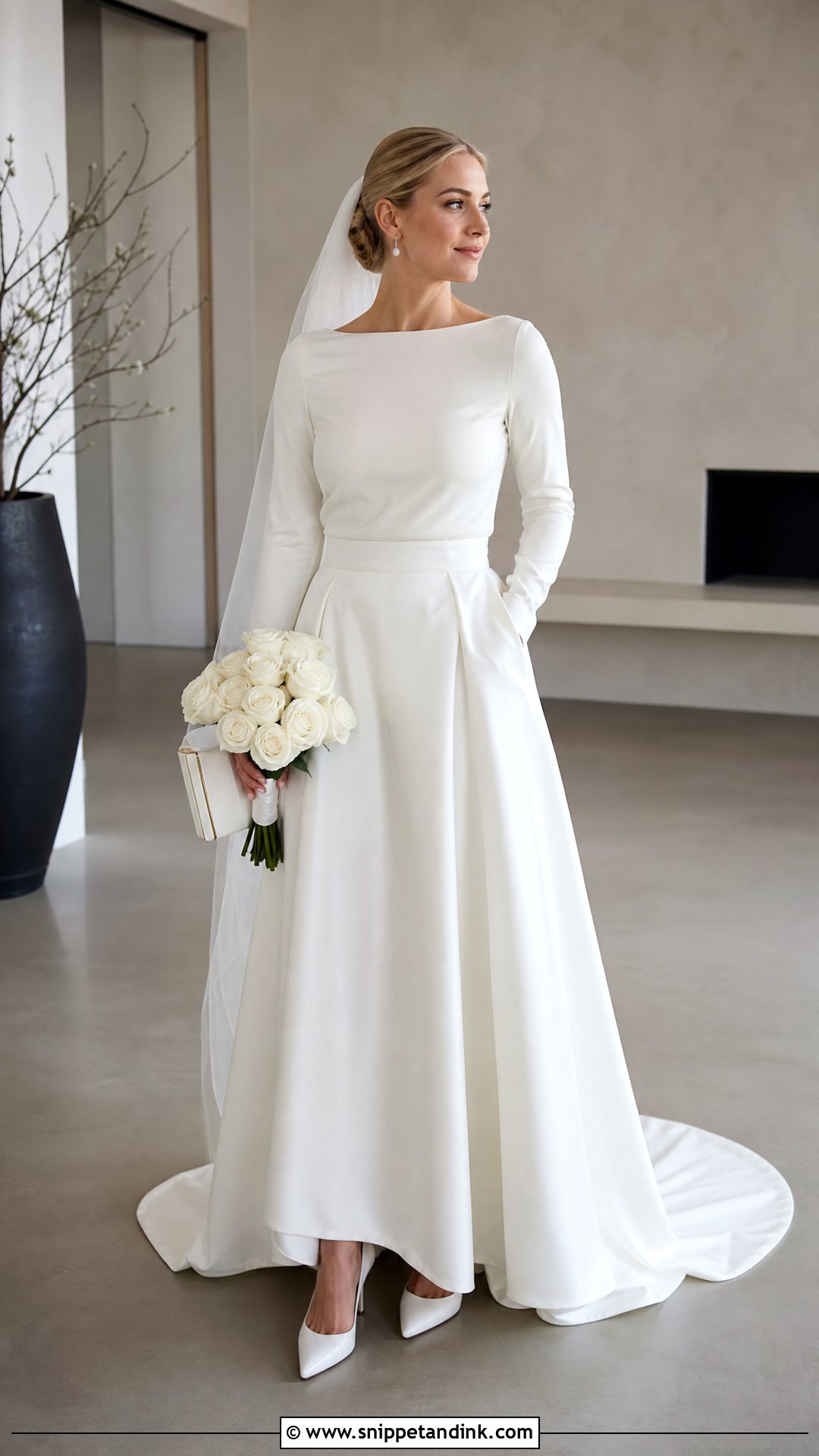
Separates are underrated. A fitted silk or crepe top with a high-waisted A-line skirt in the same ivory gives you comfort and far easier alterations, because each piece can be fitted on its own. The top might have long sleeves, a square neck or a subtle open back, and the skirt can have pockets and a small train. Pointed pumps, silver earrings and a clean ponytail or low bun suit it, with a plain veil for the ceremony and a structured clutch and white roses. The common problem is the waist gap. When you lift your arms, a short top can rise above the skirt. I add a hidden hook or a fabric tab that joins the two.
14. Cashmere Sweater Nordic Wedding Dress
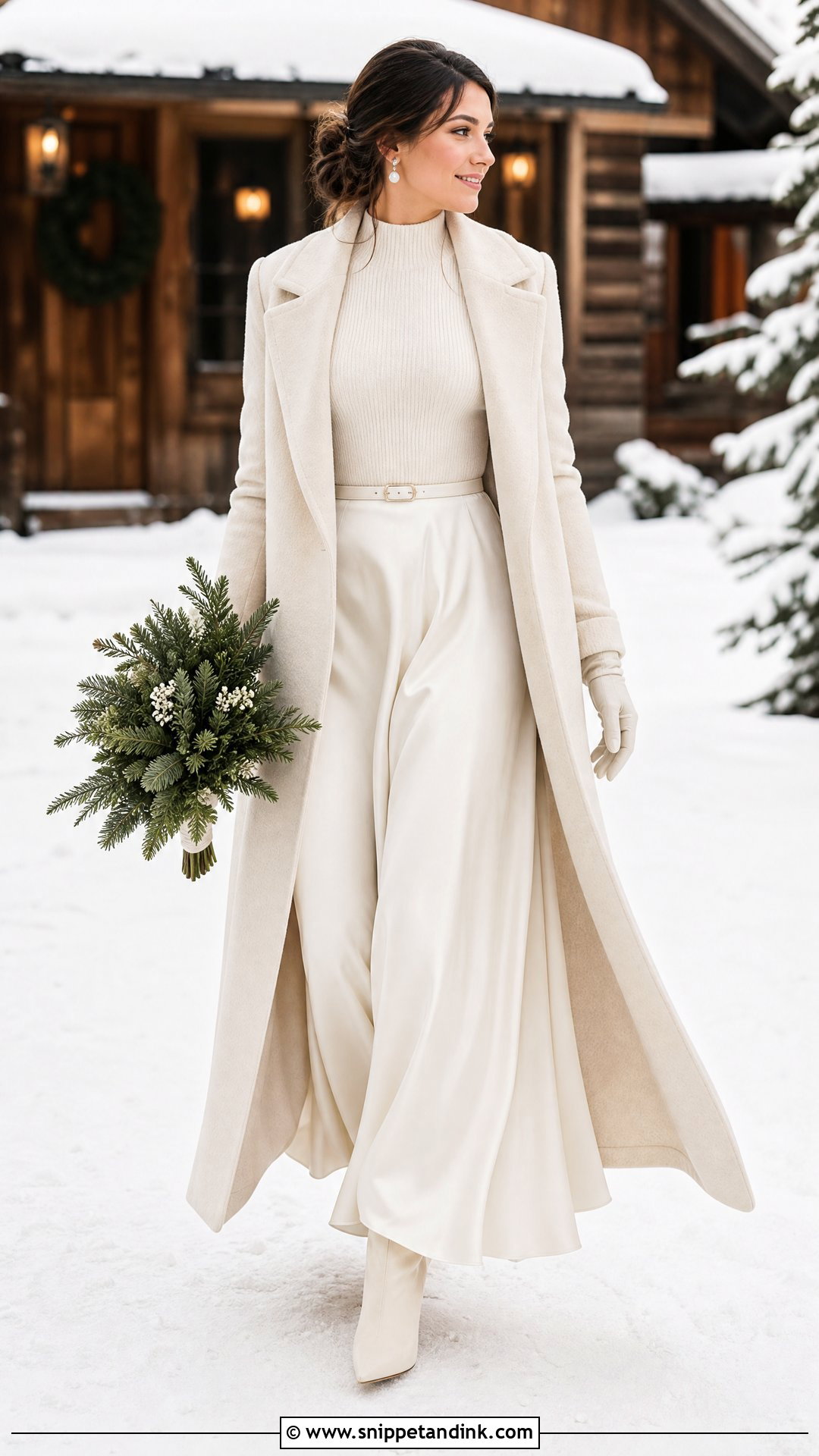
Picture a snowy ceremony and a bride in a soft cashmere sweater over a flowing skirt. Choose a fitted ivory crewneck or mock neck with a high-waisted satin, tulle or silk A-line skirt, and a slim belt if you want more waist. Ivory ankle boots, pearl earrings, a loose low bun, a long wool coat or lined cape and matching leather gloves keep it practical for outdoor portraits. White roses, pine and pale winter berries suit the bouquet. Cabins, mountain lodges and small winter gatherings are where it shines. Ivory knitwear is never quite the same white as satin or tulle, so I take a swatch of the skirt fabric when shopping for the sweater.
15. Blue Nordic Wedding Dress
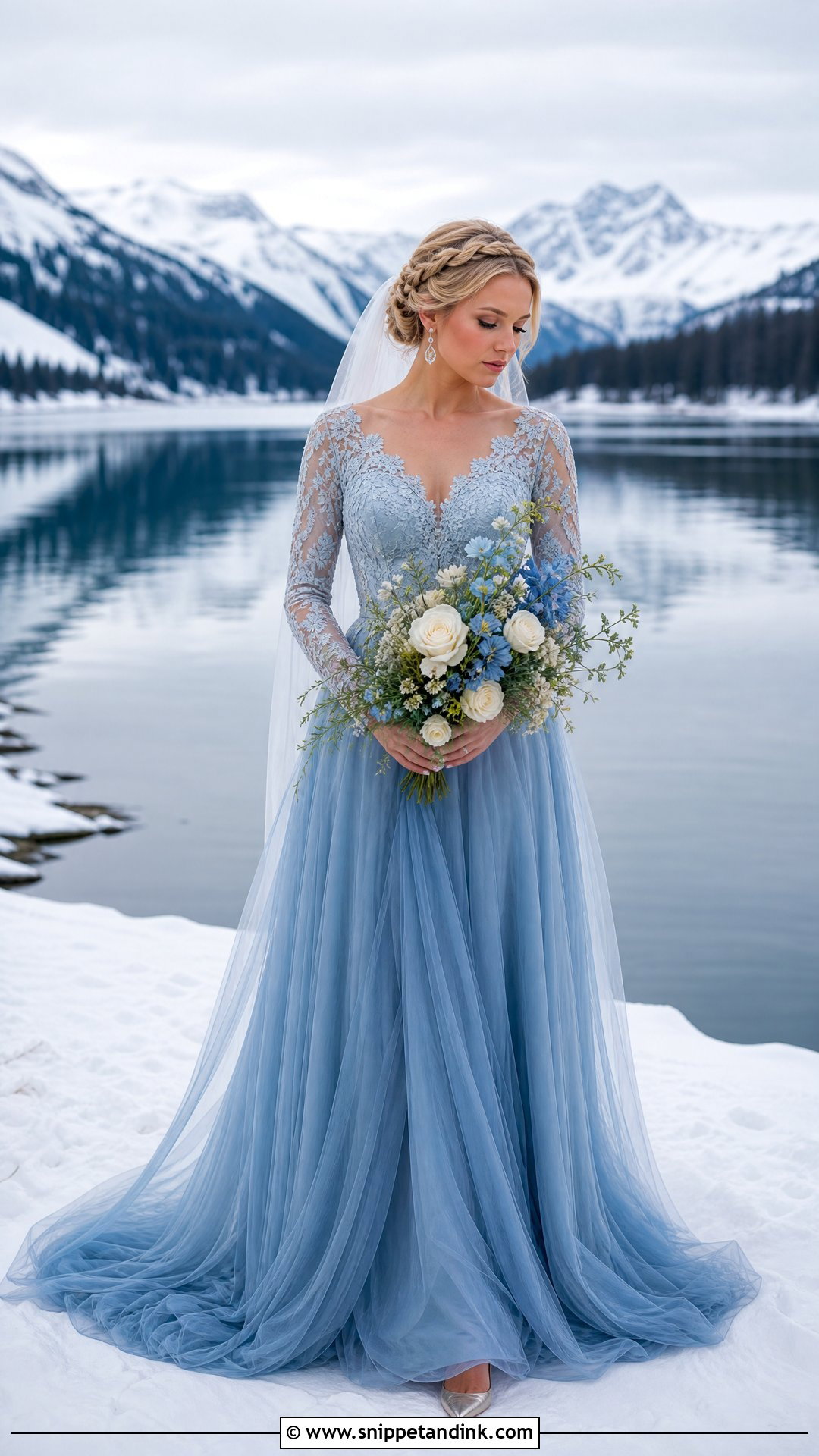
Soft blue echoes northern skies and coastlines. A misty blue A-line with a fitted lace bodice, long sleeves and a layered chiffon or tulle skirt is a good version, with the embellishment kept subtle. Silver pumps, crystal earrings and a low braided bun pair well, with a sheer pale blue or ivory veil. White roses, blue delphiniums and eucalyptus suit the flowers. It’s lovely at snowy venues and by lakes. If you only want a hint of colour, an ivory gown with a blue-grey lining or ribbon belt works. Pale blue changes a lot with light, so I’d look at the fabric outdoors on a grey day as well as a sunny one before you commit.
16. Light Gray Nordic Wedding Dress
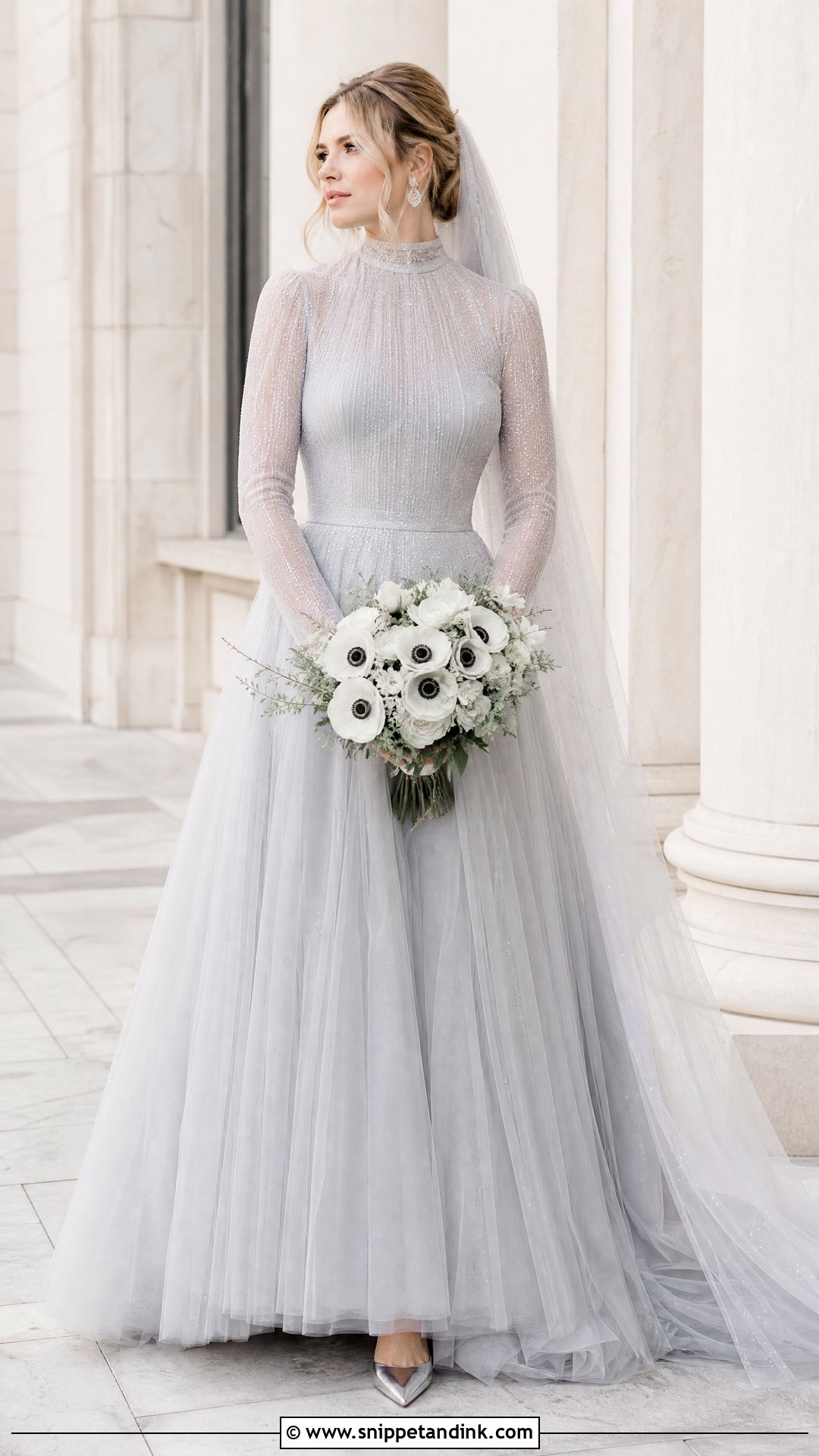
Light grey is formal and calm, and it isn’t white. Choose a silver-grey crepe or airy tulle A-line with long sleeves and a softly fitted bodice; a high neck for winter or a V for spring. Metallic silver shoes, small crystal earrings, a polished low chignon and an ivory or matching grey veil complete it. White anemones, dusty greenery and pale lavender flowers suit the cool palette. Grey looks wonderful against snow, stone, evergreens and concrete. It can drain colour from some complexions, though. I’d hold the fabric under your chin in daylight; if your skin looks flat, choose a warmer, champagne-leaning grey and wear soft pink on cheeks and lips.
17. Embroidered Nordic Wedding Dress
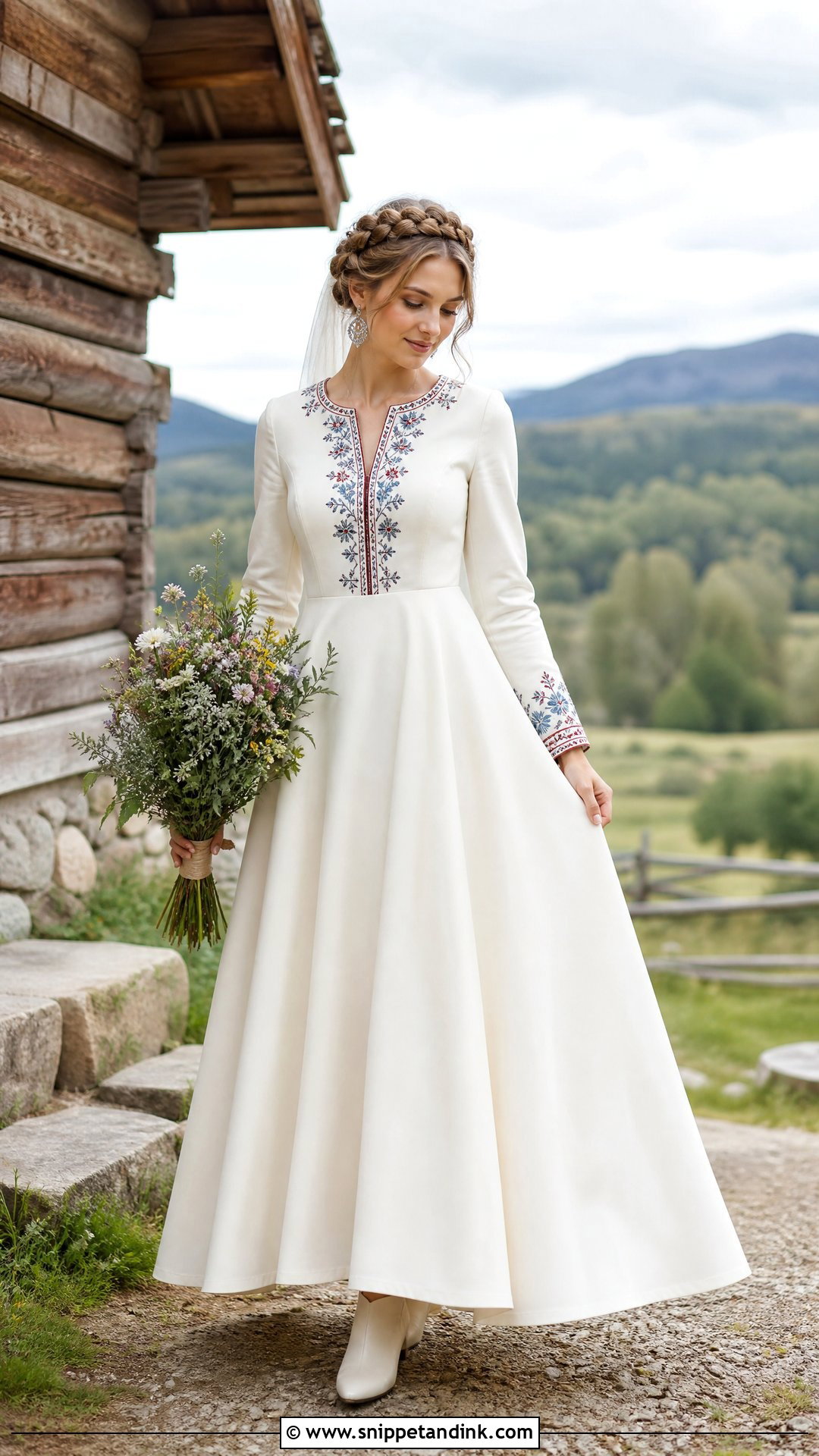
Folk embroidery feels modern when you use it in small doses. Choose a simple ivory A-line with stitching at the cuffs, neckline or waist, in muted blue, soft red, sage or grey. Ivory block heels or leather ankle boots, small silver earrings and a braided crown or low textured bun suit it, with a plain veil so the stitching stays visible. Tie a bouquet of white wildflowers and herbs with a ribbon that picks up one of the thread colours. Countryside celebrations and heritage venues fit it best. Custom embroidery of local flowers or family symbols is a meaningful touch, but it takes time. I’d allow extra months for hand work and ask to approve a stitched sample first.
18. Puff Sleeve Nordic Wedding Dress
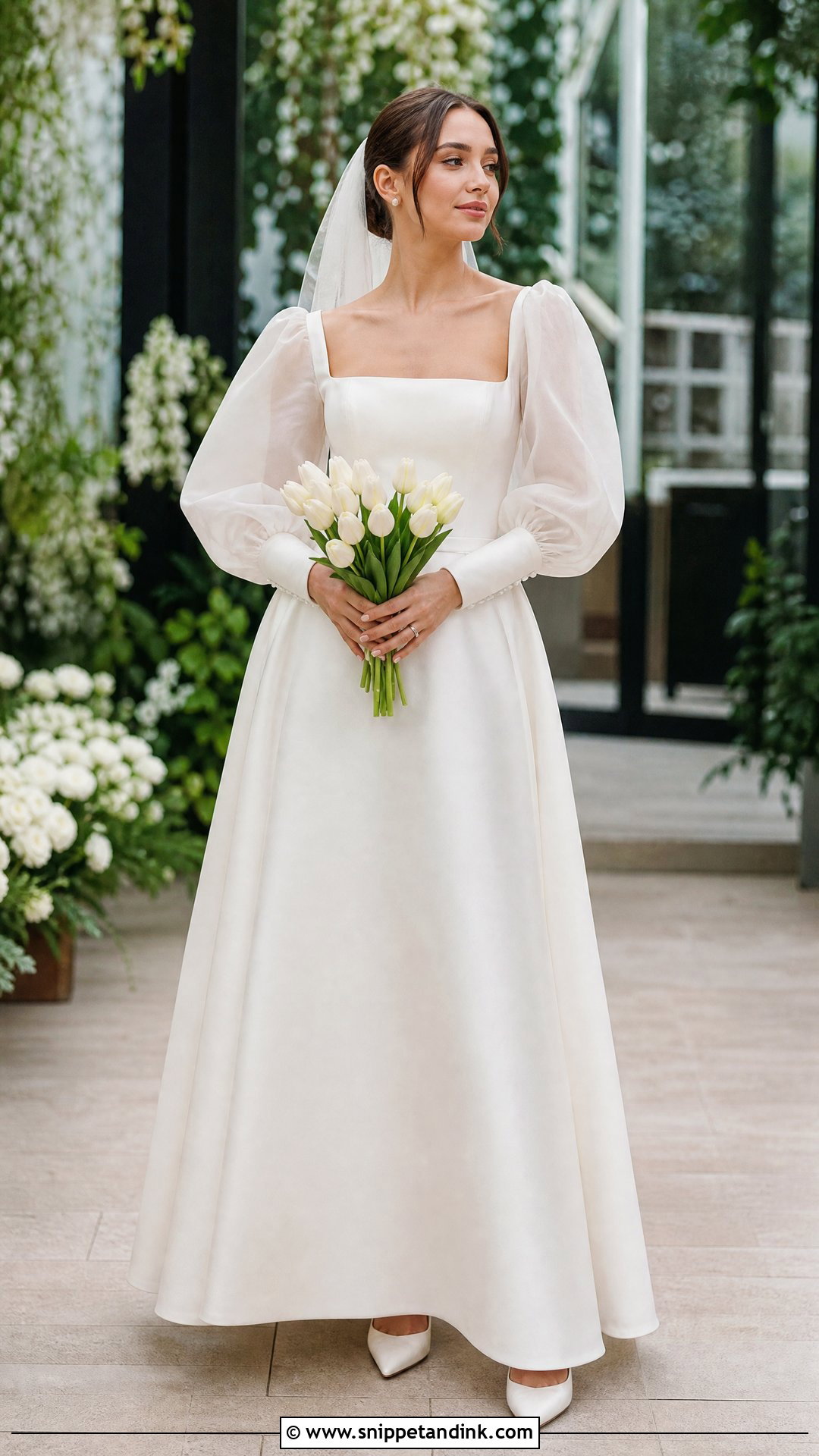
Puff sleeves work with Nordic simplicity when everything else stays restrained. A matte satin or organza dress with a square neck, fitted waist and clean A-line skirt is the base, with sleeves that have gentle volume at the shoulder and a narrower cuff. Pearl drops, pointed ivory shoes, a smooth low bun and a short plain veil keep the shoulders uncrowded, and tulips or calla lilies give a modern bouquet. Detachable puff sleeves are clever: dramatic for the ceremony, sleeveless for dancing. Organza puffs crush in a car seat, though. I’d travel with the sleeves off and attach them at the venue.
19. Bell Sleeve Nordic Wedding Dress
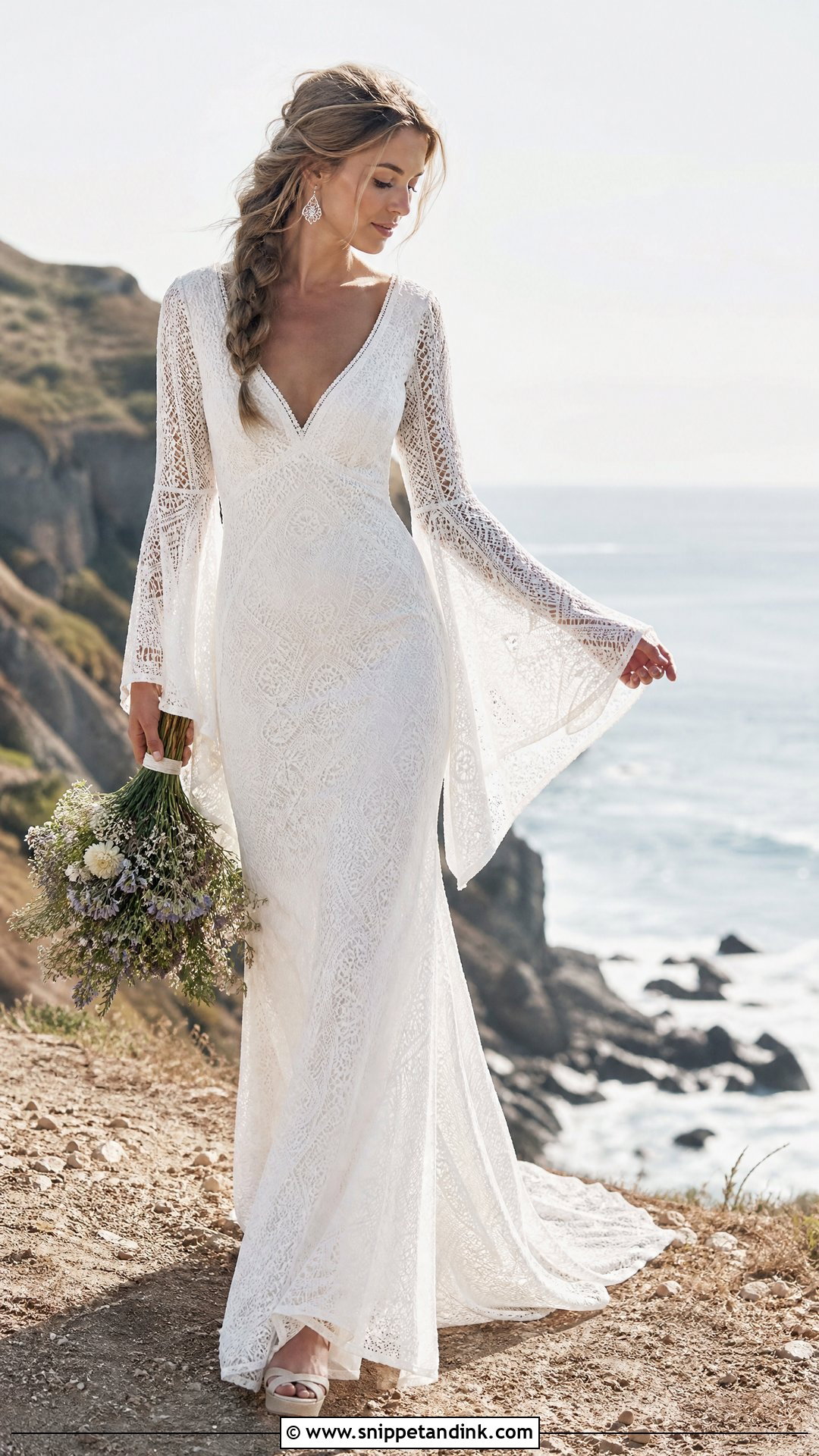
Bell sleeves add a relaxed, slightly bohemian note. Look for a fitted crepe or lace gown with a simple V-neck, a defined waist and a gently flared skirt, with sleeves widening below the elbow. Ivory block heels, delicate silver earrings and a loose low braid suit it; a simple chapel veil or a narrow floral headband. Carry wildflowers, ferns and leafy branches. Forests, cliffs, summer fields and informal country venues are its home. Keep bracelets and rings minimal. The practical issue is eating: wide sleeves trail into plates and candle flames. I tell brides to hold the sleeve back with the other hand at the table, or pin a small elastic loop inside the cuff.
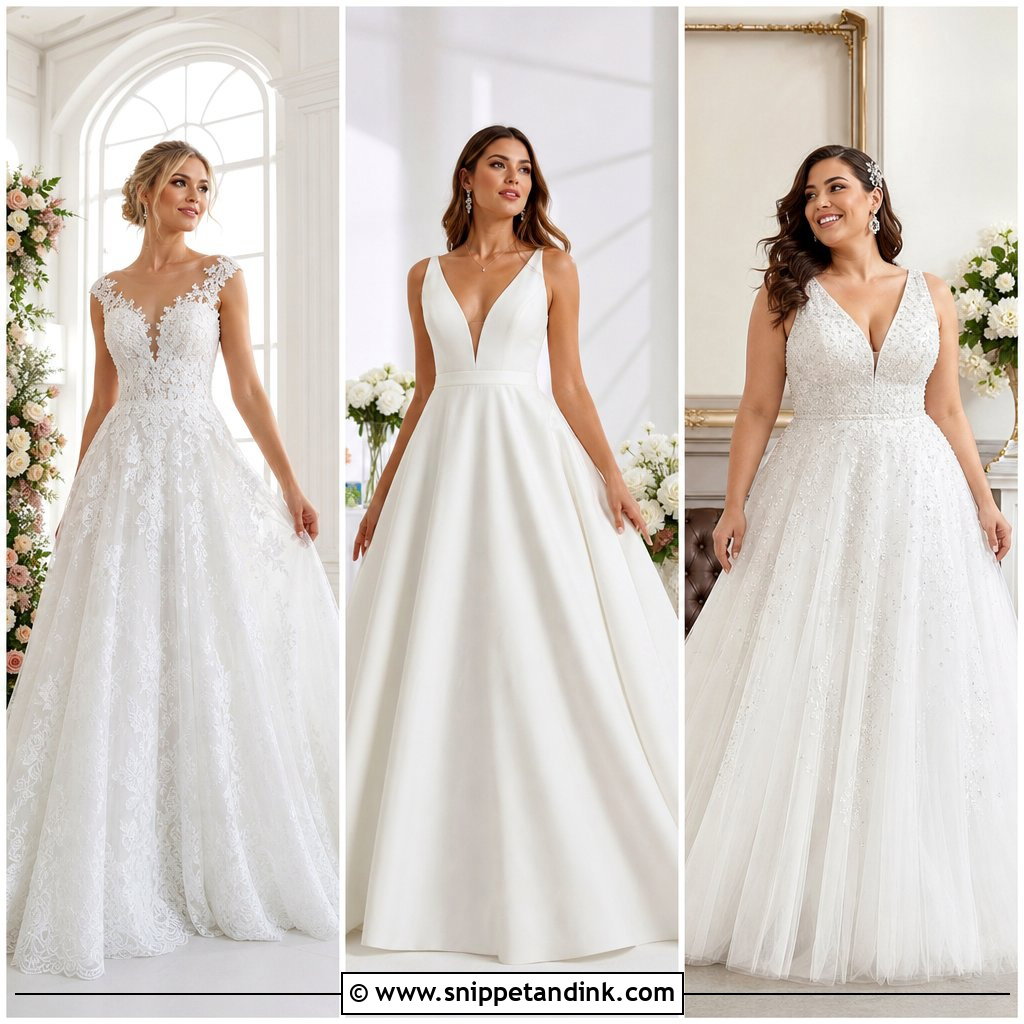
20. Off Shoulder Nordic Wedding Dress
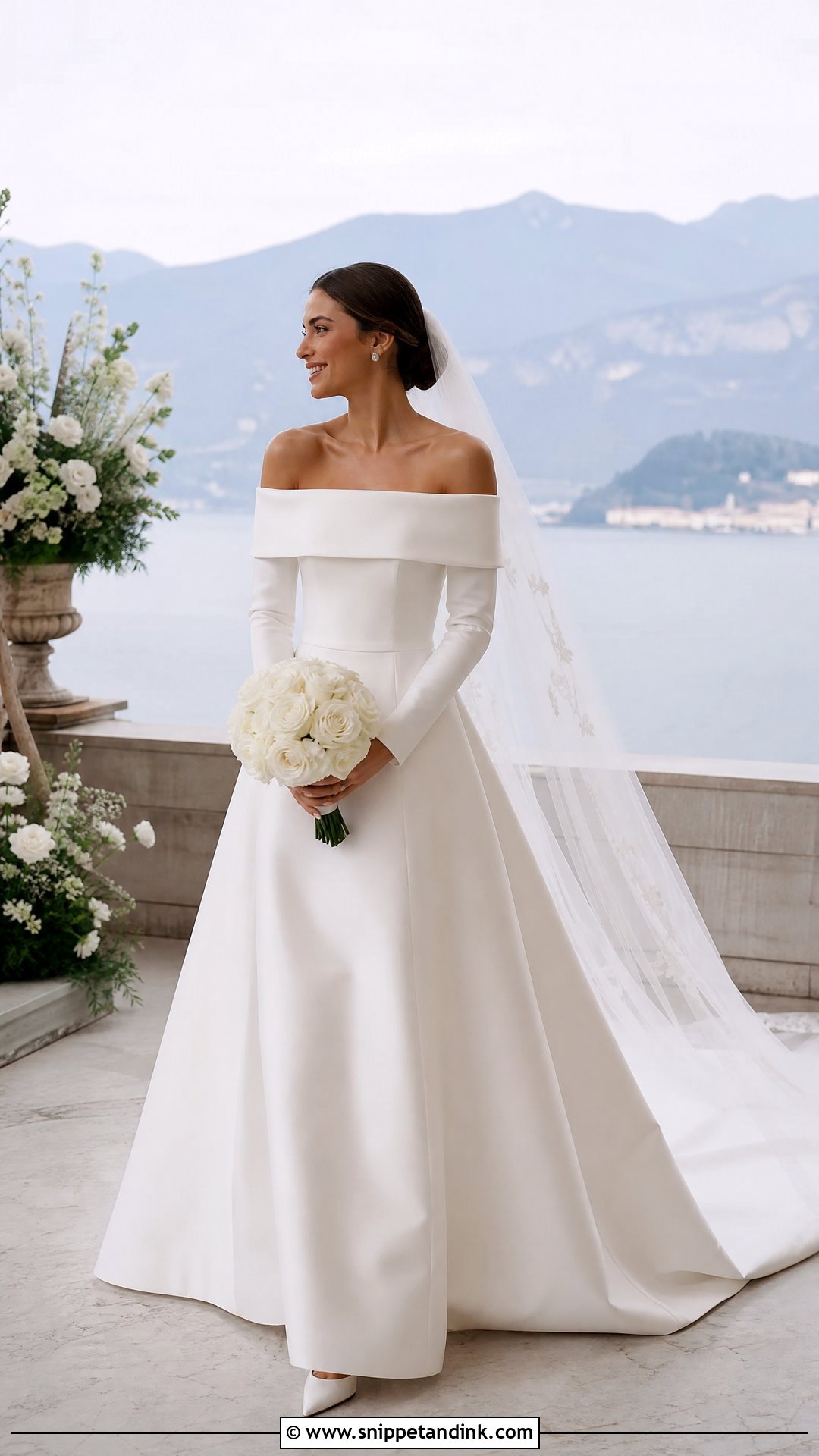
Off-shoulder bands soften a structured gown and frame the collarbone. Choose a clean satin A-line or fit-and-flare with folded bands at the neckline; long fitted sleeves for coverage or sleeveless for warm indoor days. Pearl studs, a fine bracelet and pointed ivory heels pair well, with a low bun or smooth waves swept back so the neckline shows. A plain cathedral veil and compact roses or ranunculus finish it, plus a full-length wool cape for cold portraits. Off-shoulder bands rely on a firm internal bodice. If the gown has no boning, you’ll be hitching it up all night, so I check that before any other alteration.
21. Pearl Nordic Wedding Dress
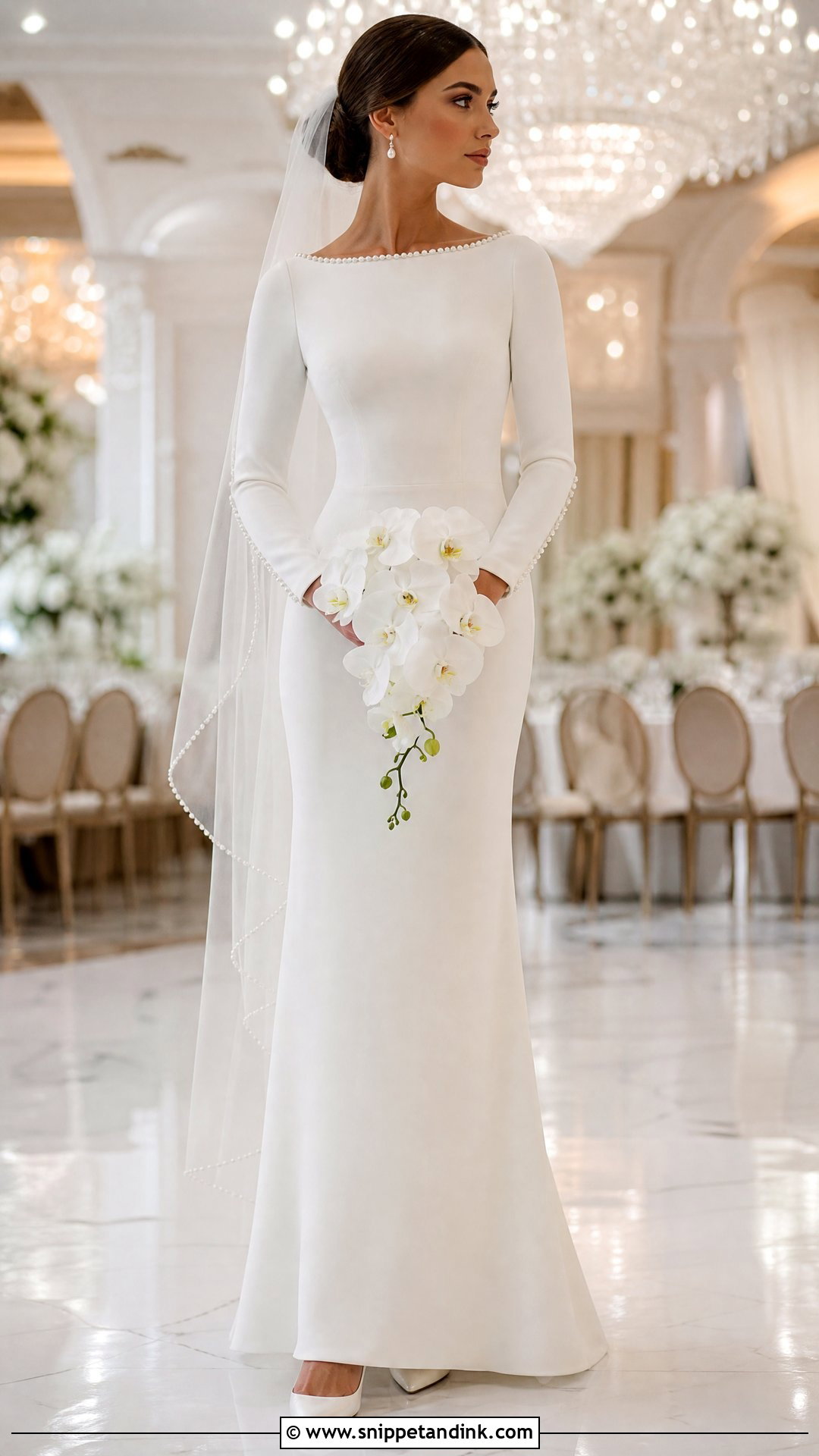
Pearls give a plain gown dimension without glitter. Choose crepe or matte satin with pearls placed along the neckline, sleeves, open back or a detachable cape, in a column, sheath or modest A-line. Pearl earrings, ivory pumps and a polished low bun complete it; a plain veil edged with a few scattered pearls carries the detail through. Skip the heavy necklace, since repeating the decoration weakens the clean effect. White orchids or roses keep the bouquet compact. It suits evening receptions and winter ceremonies. Sewn-on pearls catch on veil tulle, so I check placement where the veil falls across the back.
22. Sustainable Silk Nordic Wedding Dress
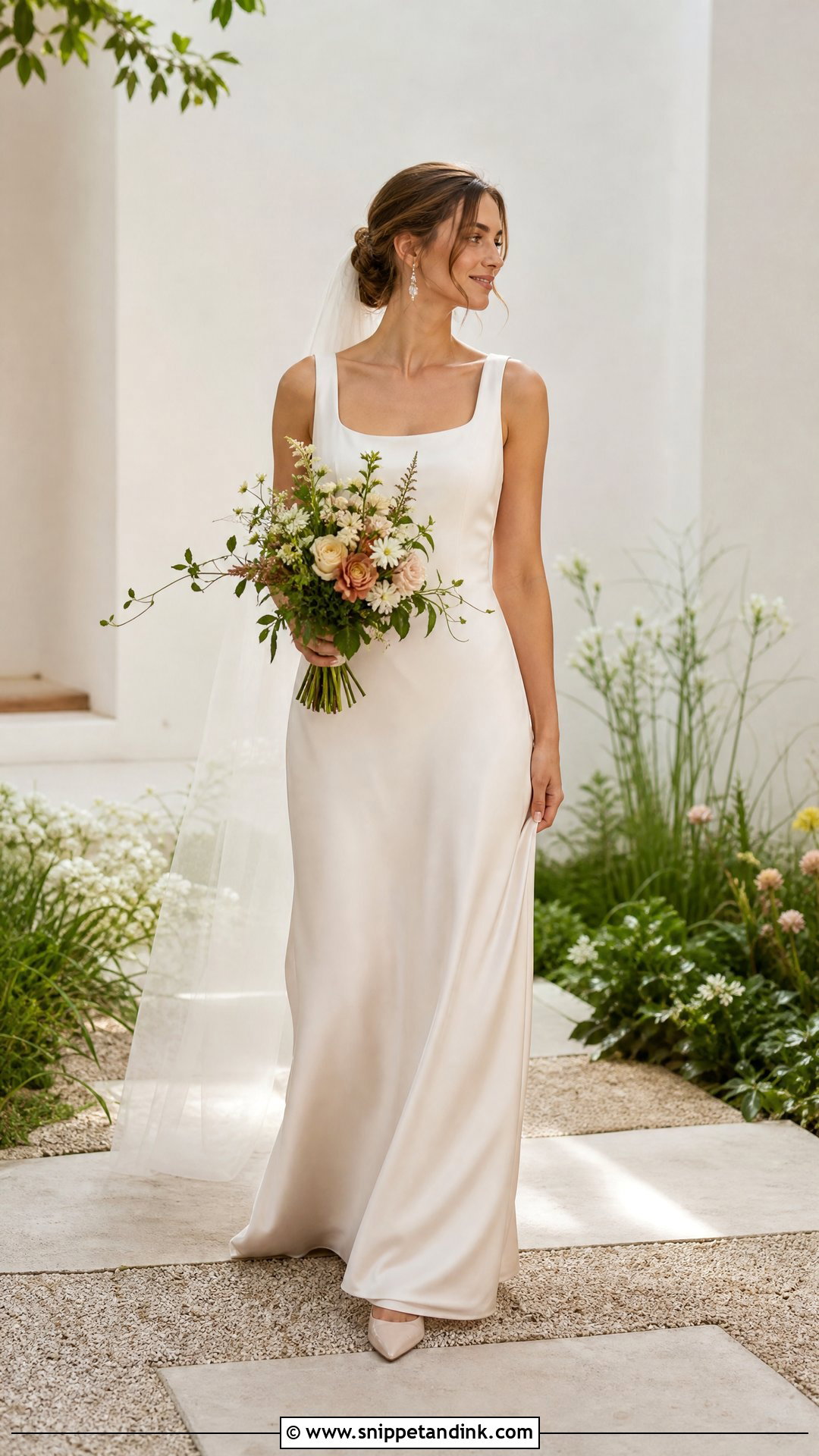
Sustainable bridalwear usually means buying less and choosing better, not a particular label. Look for made-to-order, vintage, rented or pre-owned silk charmeuse, peace silk or another responsibly sourced fabric, in a bias, column or A-line cut that can be shortened and worn again. Shoes you already own or quality neutral heels you’ll wear later, heirloom earrings, a borrowed veil and local seasonal flowers fit the same idea, with a relaxed low knot. Pre-owned gowns need a budget for alterations and cleaning, so I’d factor that in before comparing prices with new dresses. Fit, few accessories and pieces with a purpose are what make it work.
23. Vintage Nordic Wedding Dress
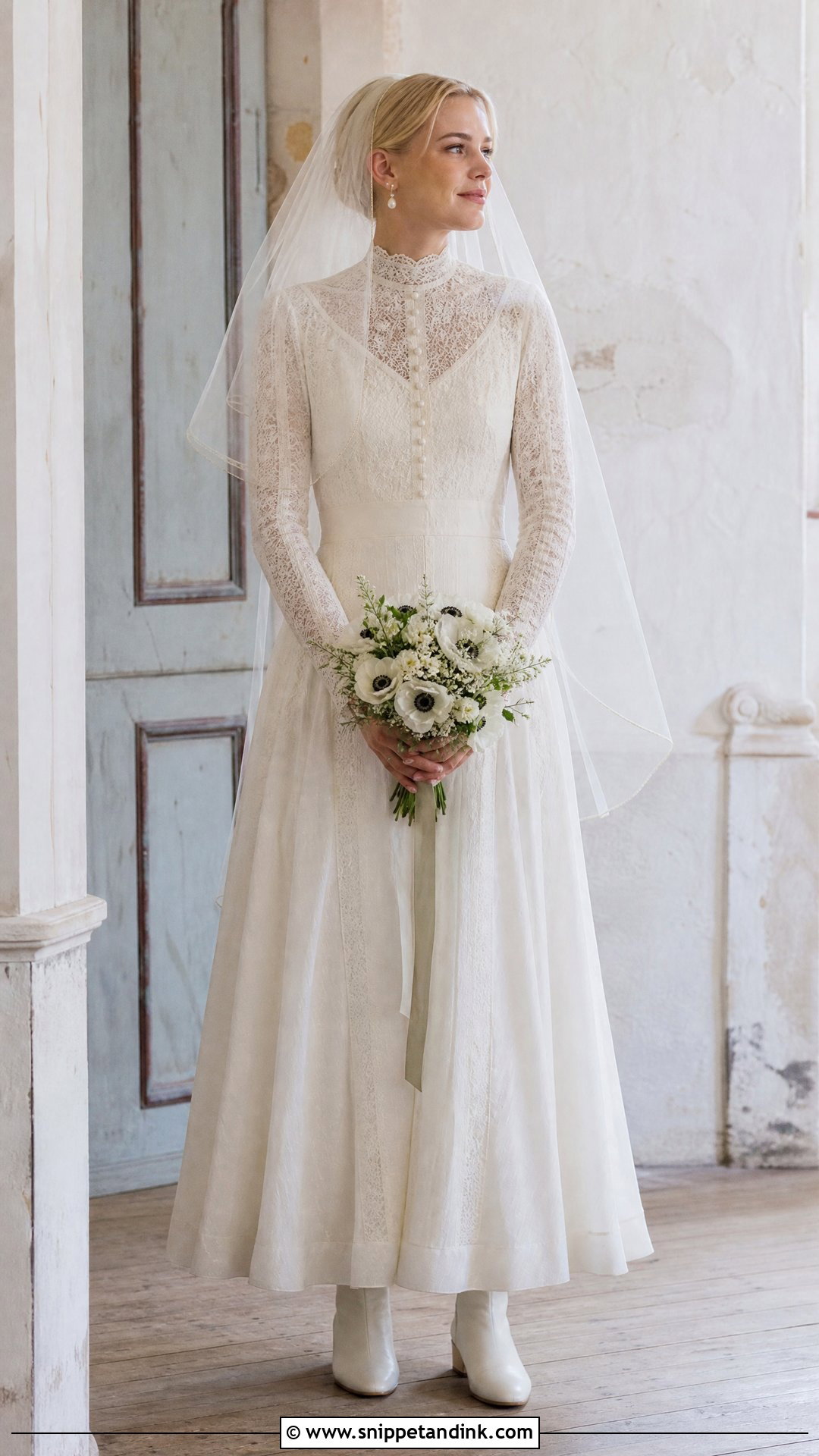
Vintage-inspired dresses bring lace, covered buttons and practical long sleeves. Choose a softly fitted A-line with a high lace neckline, a defined waist and a fluid skirt rather than a very full one. Ivory pumps or polished ankle boots, pearl earrings and a low rolled bun suit it, with a fingertip or lace-edged veil. Add a structured wool coat for travel and outdoor portraits, and carry white roses, anemones and greenery. You can wear a true vintage piece, a restored family dress or a modern design with an older feel. With real vintage, the lace is often fragile; I’d have a specialist reinforce it before any alterations start.
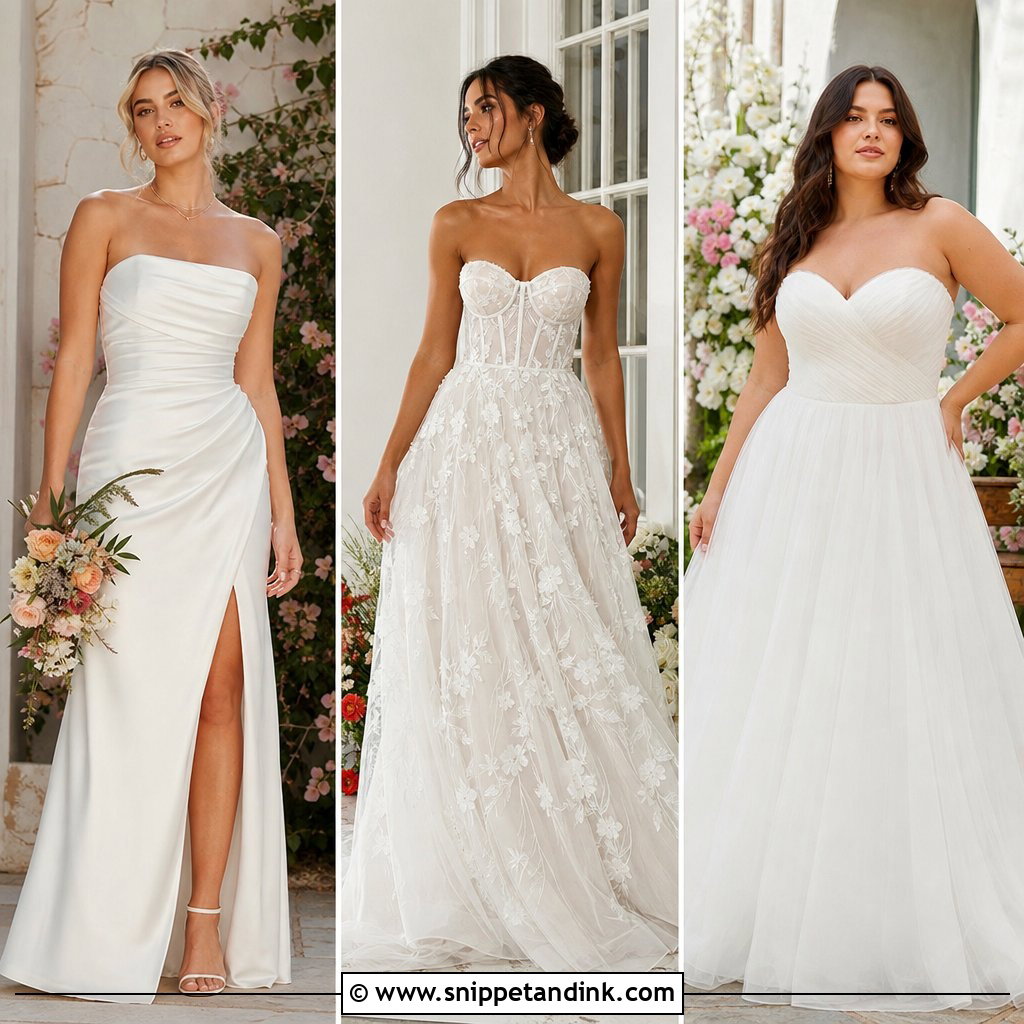
24. Plus Size Nordic Wedding Dress
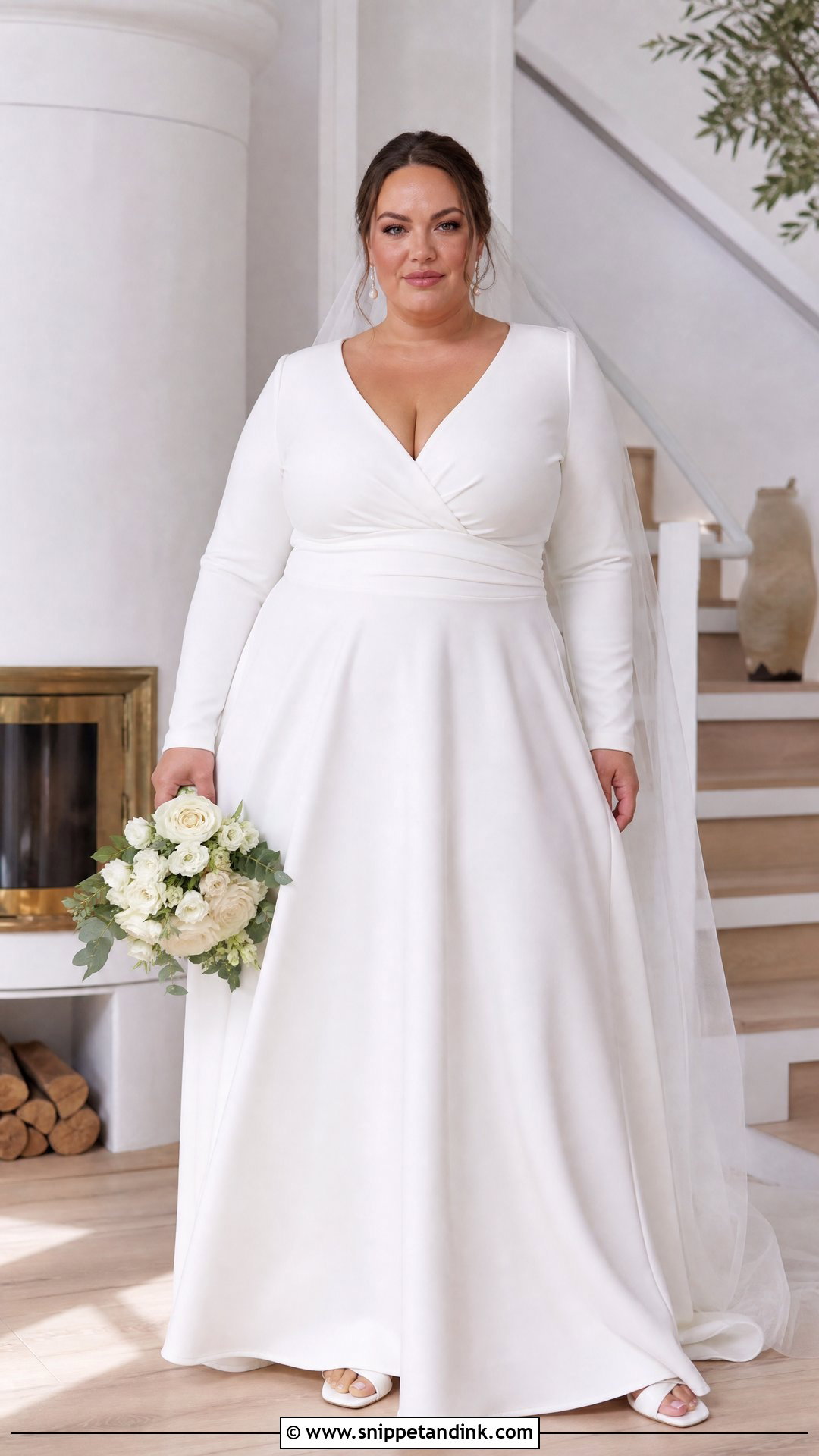
For a plus-size bride the first priority is support and fit, not rules about what you can wear. A structured crepe A-line with a square or V-neck, supportive straps and a defined waist is a reliable start; long fitted or detachable chiffon sleeves add optional coverage without bulk. Stable block heels, pearl drops, a softly styled low bun and a plain chapel veil finish it, with a bouquet sized to your hands. Internal structure matters most. A built-in corset or boned bodice does more than any external shapewear, and I’d ask the shop directly what support is inside the dress before falling for the outside.



25. Petite Nordic Wedding Dress
On a petite frame, the danger is the dress wearing you. A narrow A-line, sheath or gently fitted crepe gown with a raised waist and an unbroken vertical line keeps things in proportion. A modest V lengthens the upper body, and a shorter train is easier to manage. Matching ivory pointed heels continue the line; small pearl earrings, a compact bouquet and a low bun or sleek ponytail finish it. A narrow chapel veil adds height without width. Oversized bows or big appliqués swamp a small frame, so if you love one, ask whether it can be scaled down. I often move a detail to the back so the front stays clean.
Snow, Wind and Wet Hems on a Northern Wedding Day
A winter ceremony outdoors is a different job from a winter ceremony in a hotel. Cold itself is manageable; wet fabric and wind are what spoil the look.
- Thermal layers go under, not over. A thin, flat-knit thermal top and leggings in nude or ivory disappear under crepe and mikado; they show under bias silk, so save them for structured dresses.
- Snow and slush mark satin and silk with water spots. Bustle the train before you step outside, and ask someone to carry the hem on wet ground.
- Boots beat heels on ice. Waterproof the leather a week ahead and walk them in at home so they aren’t stiff on the day.
- Wind lifts long veils straight up. For outdoor portraits I add a few small weights or clear pins along the edge, or switch to a shorter veil for that part of the day.
- Cold hands go red and blotchy in photos. Keep gloves on until the last moment, and have a warm car or room within a short walk.
If the dress does get wet, let it dry hanging, away from radiators, and don’t rub at marks. Most water spots on silk fade once the fabric has dried evenly, and anything left is a job for a professional cleaner after the wedding.
Matte Fabric, Good Tailoring and One Detail
Nordic bridal looks work because every piece has a reason to be there. Clean silhouettes, comfortable fabrics, layers you can wear outside and a few careful accessories carry the whole style. Satin for a city ceremony, embroidered lace in the country, a cashmere sweater and skirt for snow: the venue and the weather will point you towards one. Whatever you pick, budget time and money for tailoring, since plain dresses reveal every fitting flaw. Treat these ideas as starting points rather than rules. If the outfit moves with you, suits the setting and still feels like yours, it’s right.
You'll Like These Ideas:




Leave a Reply