
A timeless gown is one you can look at in your wedding album years later without wincing. In my experience, that comes down to quality fabric, a structure that flatters you, and one or two details chosen with restraint. Silk satin, lace, crepe, tulle and organza have all lasted for generations, and so have pearl accents, long veils and clean necklines. Timeless doesn’t have to mean plain, either; a drop waist, a sculpted bodice or a long train can still feel classic. The thirty gowns below each come with what I’d look at in the fitting room.
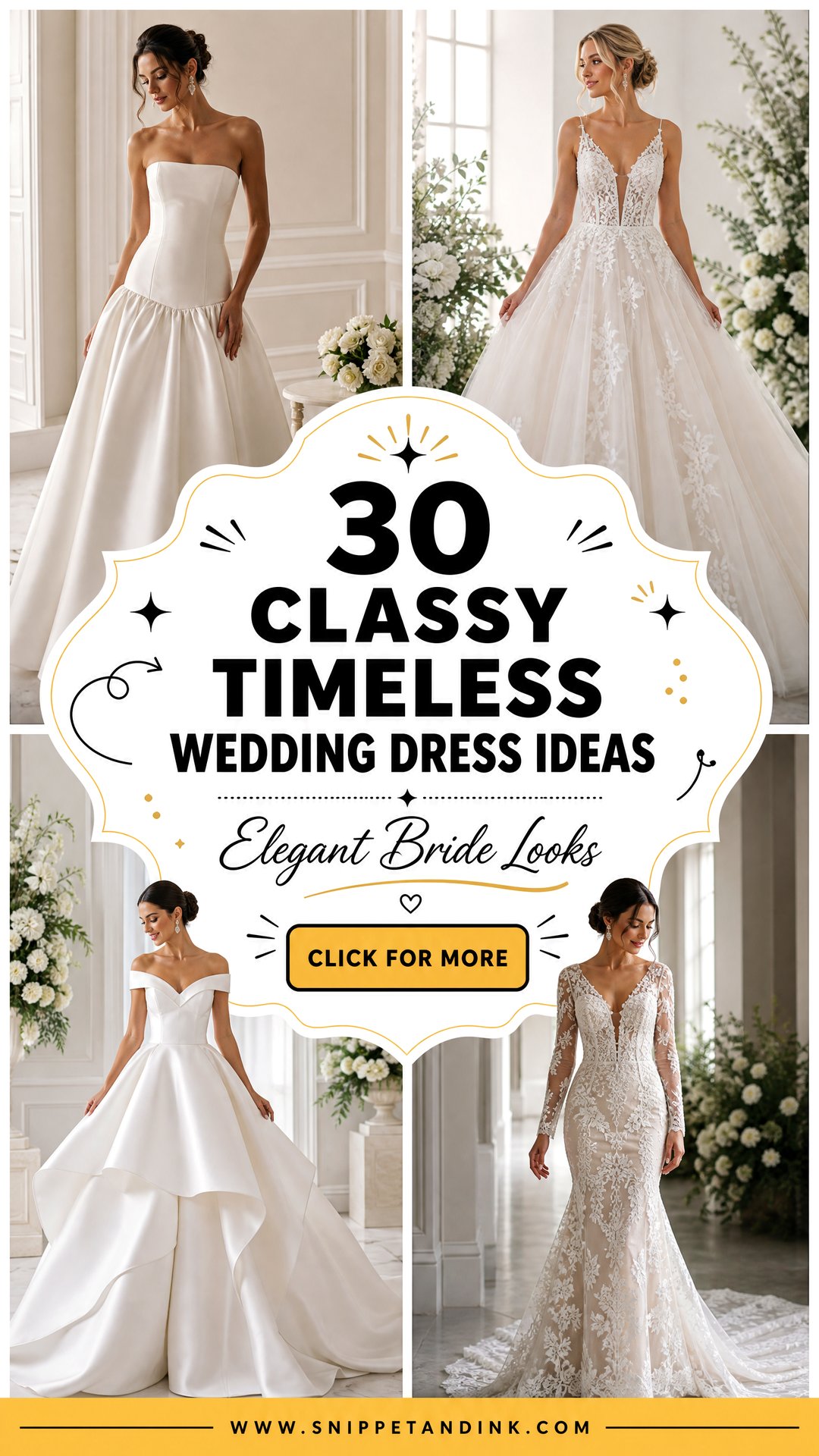
Will You Still Love This Gown in Twenty Years?
The quickest way I know to test timelessness is to look at wedding photos from fifteen or twenty years ago. Notice what dates them. Usually it’s not the silhouette at all; it’s the specific trend detail of that season: a particular kind of bling, an unusual colour cast, a very of-the-moment neckline.
- Details that tend to date quickly: heavy all-over sparkle, contrasting colour sashes, very trend-specific cut-outs, and fabrics with a strong synthetic sheen.
- Details that tend to last: a well-fitted bodice, natural or high-quality fabrics, fine lace, simple necklines and a veil in proportion to the gown.
- A useful rule: let one element be the feature, whether that’s the neckline, the lace, the train or the back, and keep everything else quiet.
I also ask brides to picture the gown without accessories. If the dress still looks complete on its own, it’s likely to age well. If it relies on a statement headpiece or bold earrings to feel finished, the accessories may date faster than the dress.
1. Satin Ball Gown Wedding Dress
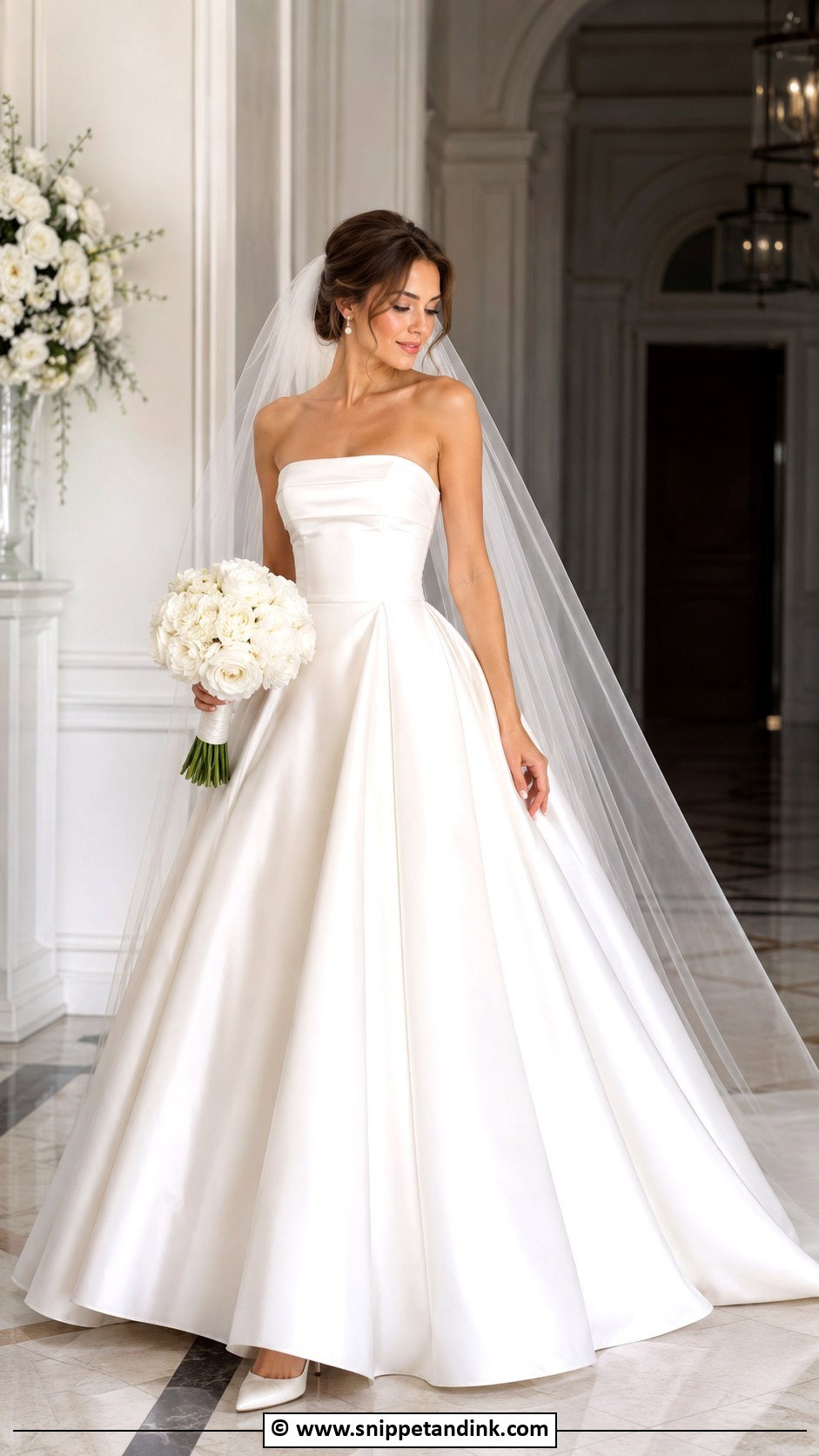
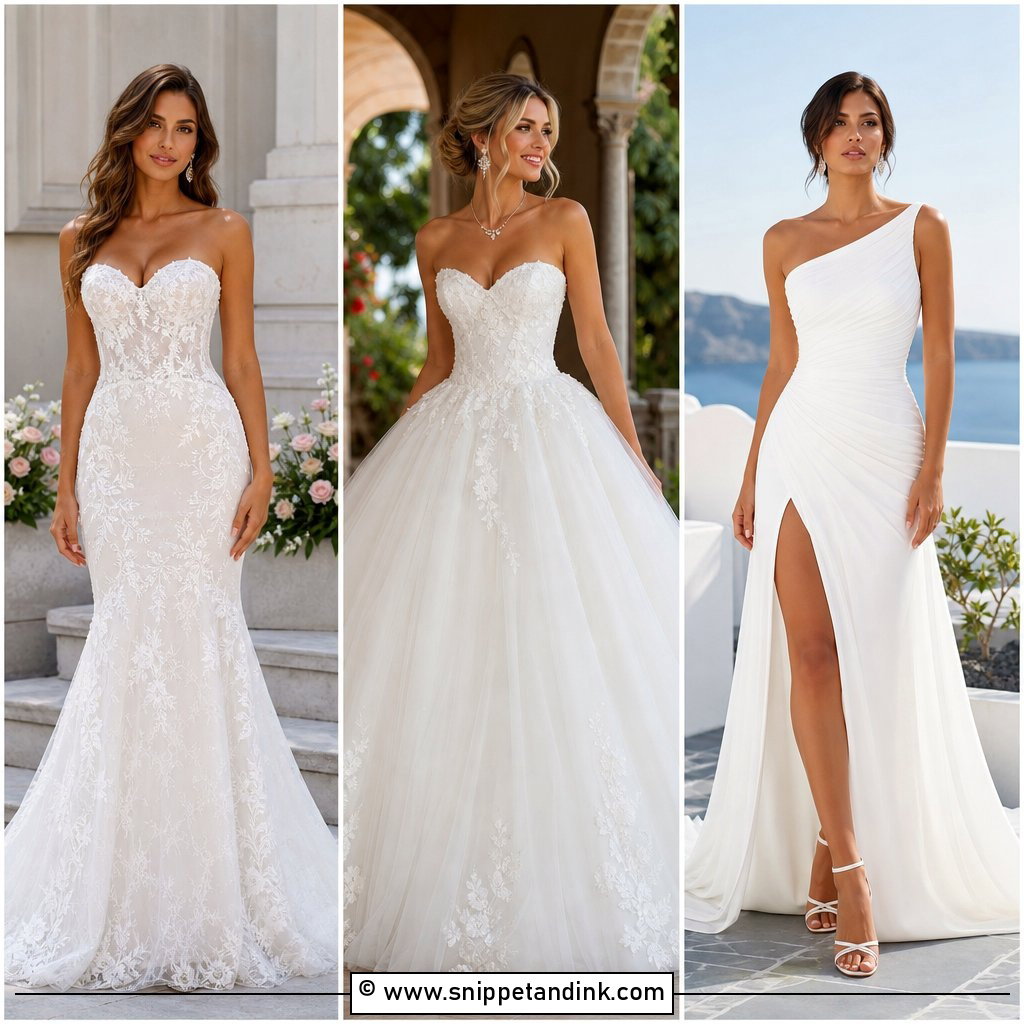
Satin ball gowns feel grand without needing decoration, because the fabric and the volume do the work. The fitted bodice and full skirt create a defined waist and that slow, sweeping entrance. Weight is the issue: a full satin skirt can be heavy, so I ask brides to wear it for twenty minutes in the shop and walk a few laps before deciding. A square or clean strapless neckline keeps it current. Pair with a simple veil, pearl studs and pointed ivory heels.
2. Lace A Line Wedding Dress
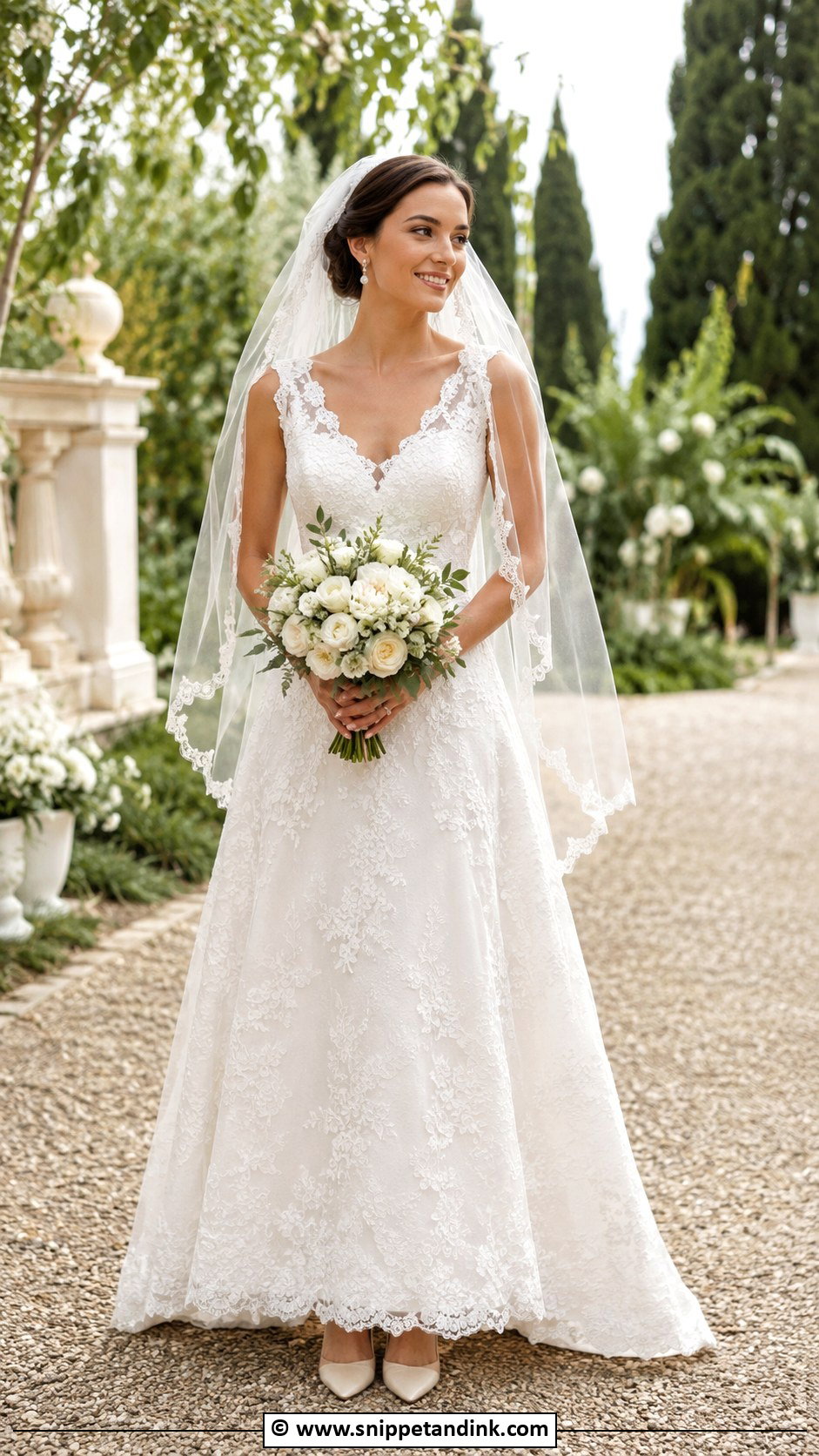
Lace on an A-line skirt is one of the most forgiving combinations I fit. The skirt skims the waist and hips, and the lace gives texture without shouting. Delicate floral lace, long sheer sleeves or a soft scalloped hem keep it classy. I look closely at how the lace has been appliquéd at the seams; on a good gown, you can’t see where one piece ends and the next begins. A fingertip veil, small drop earrings and ivory pumps suit garden and estate venues.
3. Long Sleeve Wedding Dress
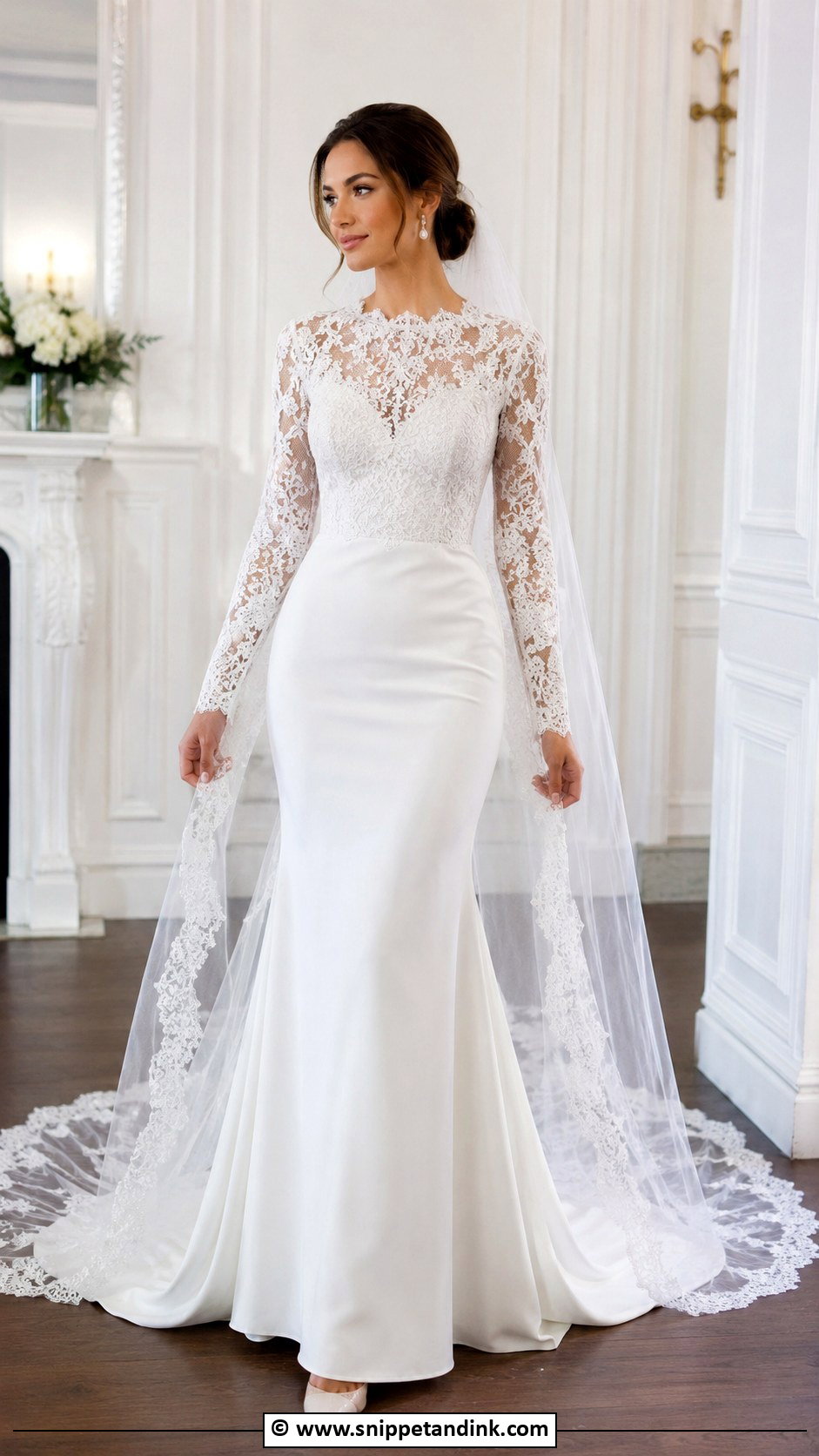
Sleeves bring a quiet authority to a gown. A long sleeve wedding dress in lace, sheer tulle, crepe or satin gives coverage and still looks delicate. Slim sleeves on a fitted bodice look the most polished. Lift your arms above your head at the fitting, because sleeves set into a tight armhole pull the whole bodice up during the first dance. A low bun, pearl earrings and a cathedral veil suit autumn, winter and formal evening weddings.
4. Off Shoulder Wedding Dress
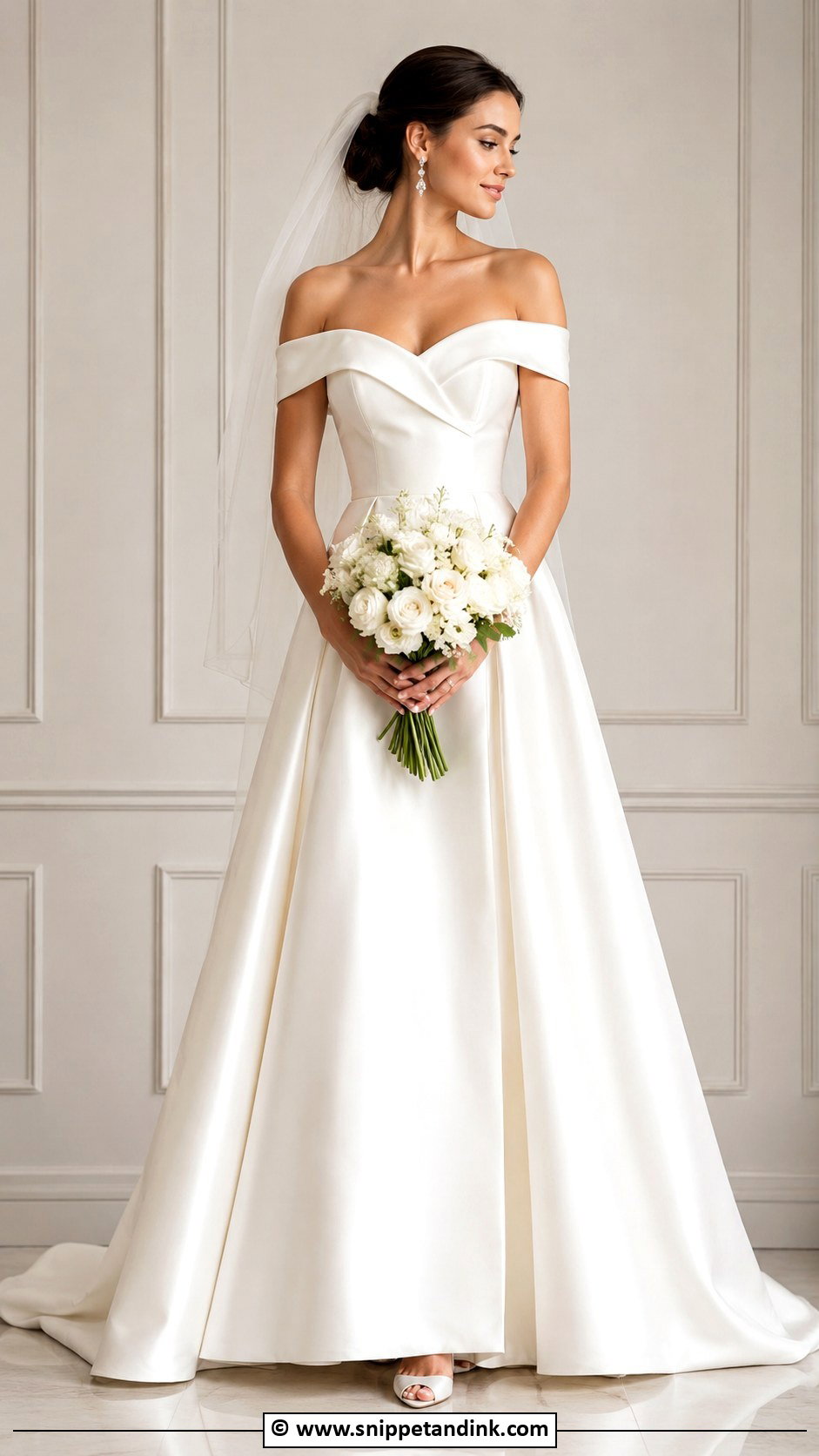
Off-shoulder gowns frame the collarbone and soften the neckline. The risk I watch for is the bodice sliding down; good off-shoulder designs have a firm, boned bodice underneath so the sleeves are decorative rather than load-bearing. Satin, mikado, lace or crepe all work. A full skirt looks formal, a slim cut sleek. Keep it clean with a simple veil, crystal earrings and ivory heels, especially in a ballroom or museum.
5. Square Neck Wedding Dress
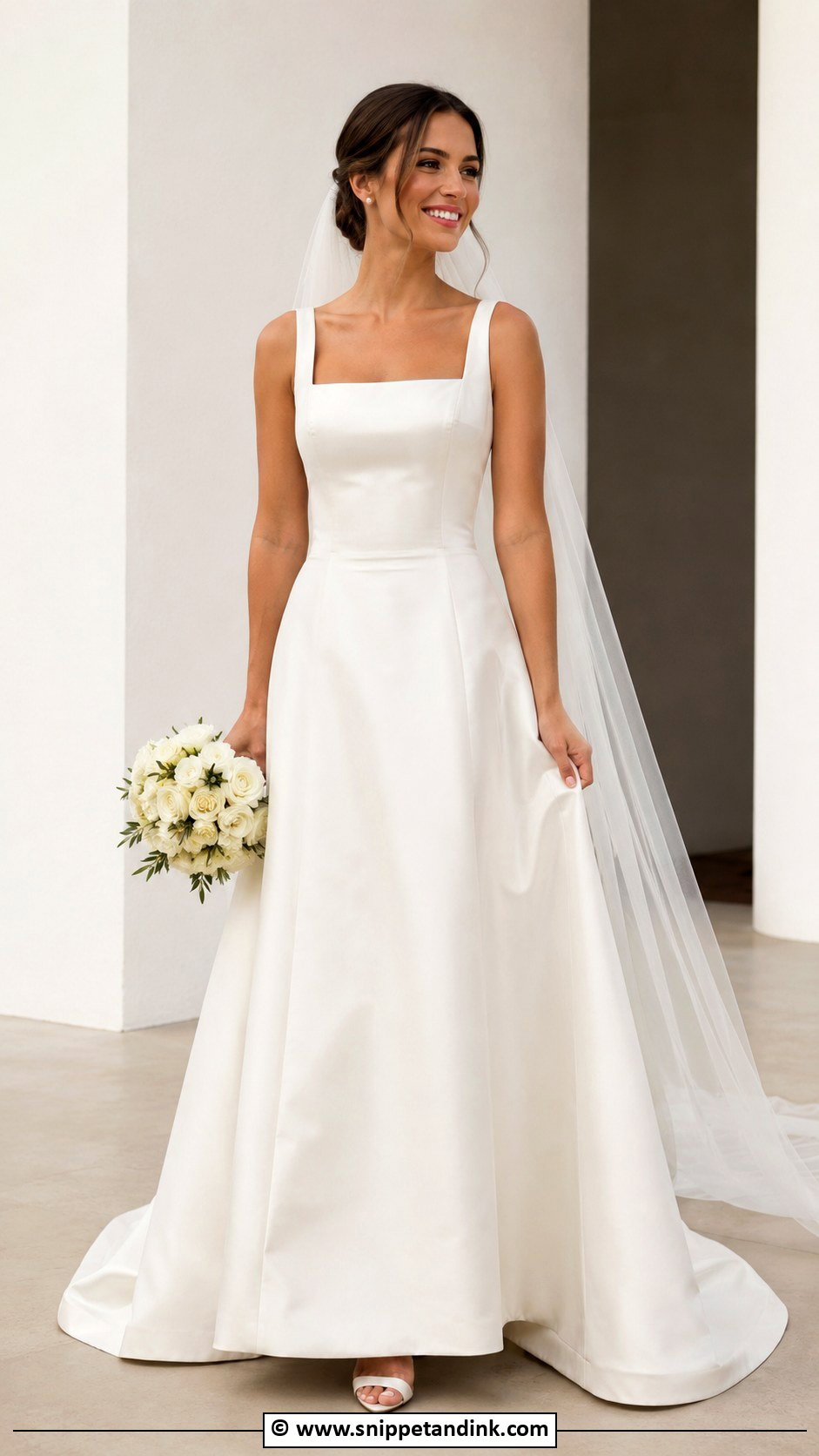
Square necklines give the bodice structure and draw the eye to the face and shoulders. They suit thick straps, long sleeves or a sleeveless cut, and they support a fuller bust better than most necklines. In satin, crepe or lace, with a smooth veil and pearl studs, it’s minimal but unmistakably bridal. I check that the corners sit flat when the bride bends forward; if they lift, a small tuck at the side seam fixes it.
6. Crepe Sheath Wedding Dress
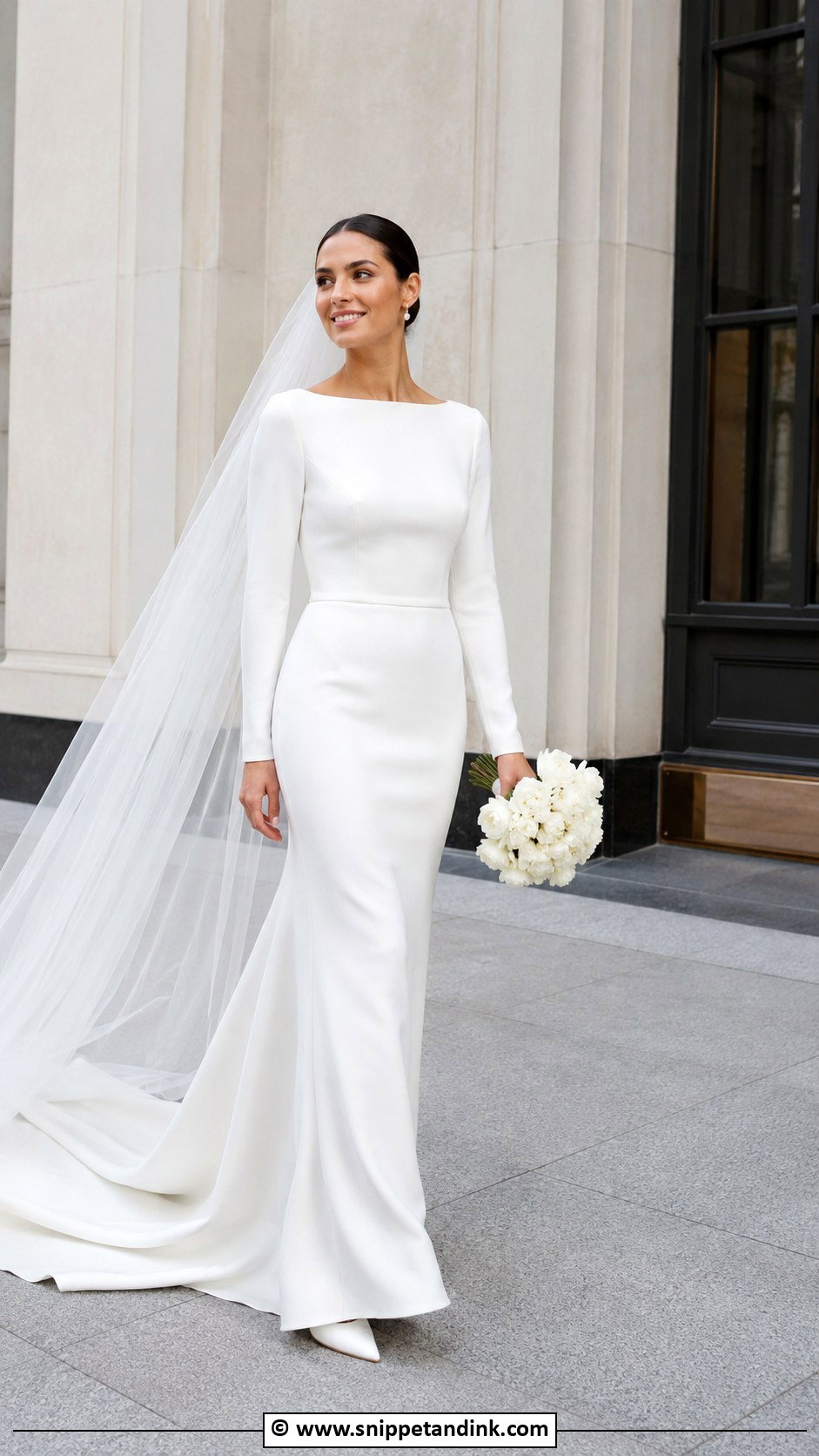
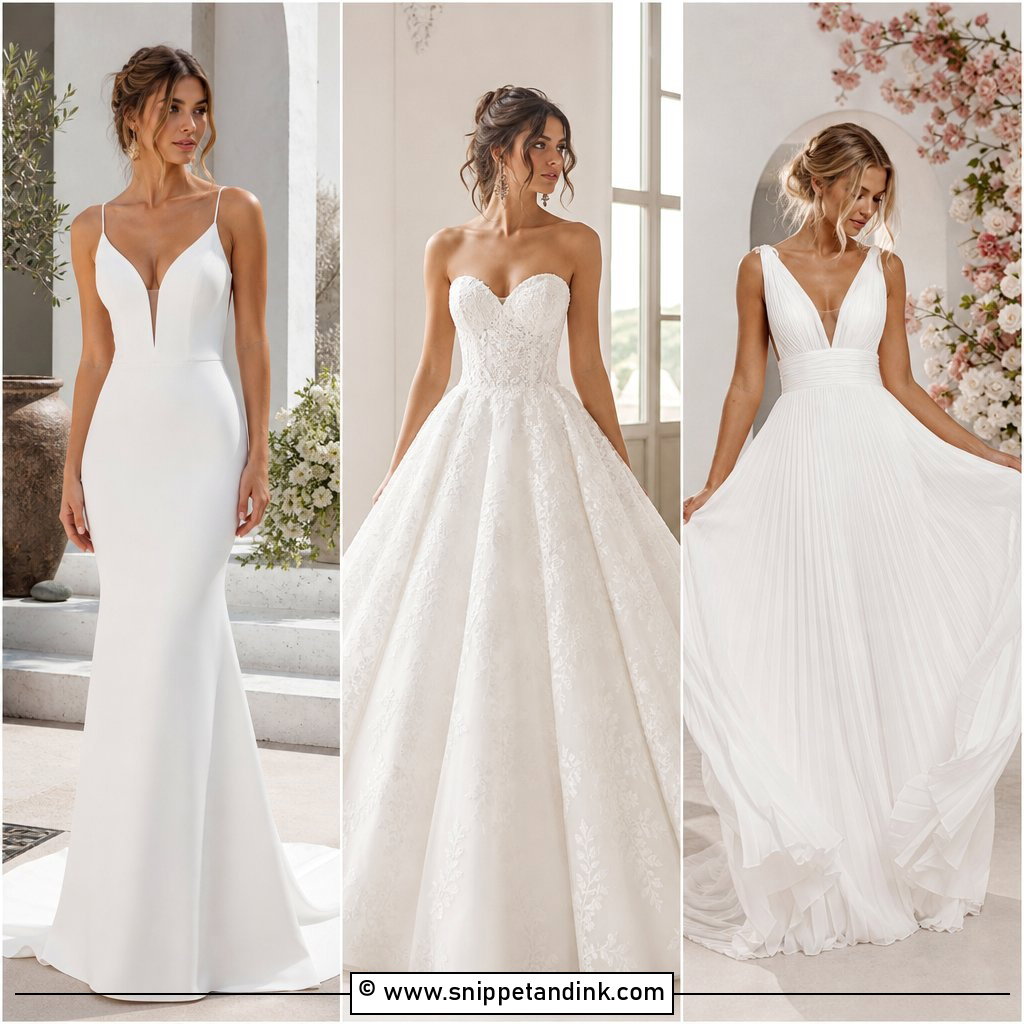
Crepe has enough weight to drape cleanly and a matte finish that never looks dated. A crepe sheath wedding dress follows the figure without drama, and a bateau neckline, scoop back or long train makes it special. Because crepe shows every line underneath, I fit it over the exact underwear the bride will wear. Sleek hair, pearl earrings, a long veil and pointed pumps suit city, rooftop and minimalist venues.
7. High Neck Lace Wedding Dress
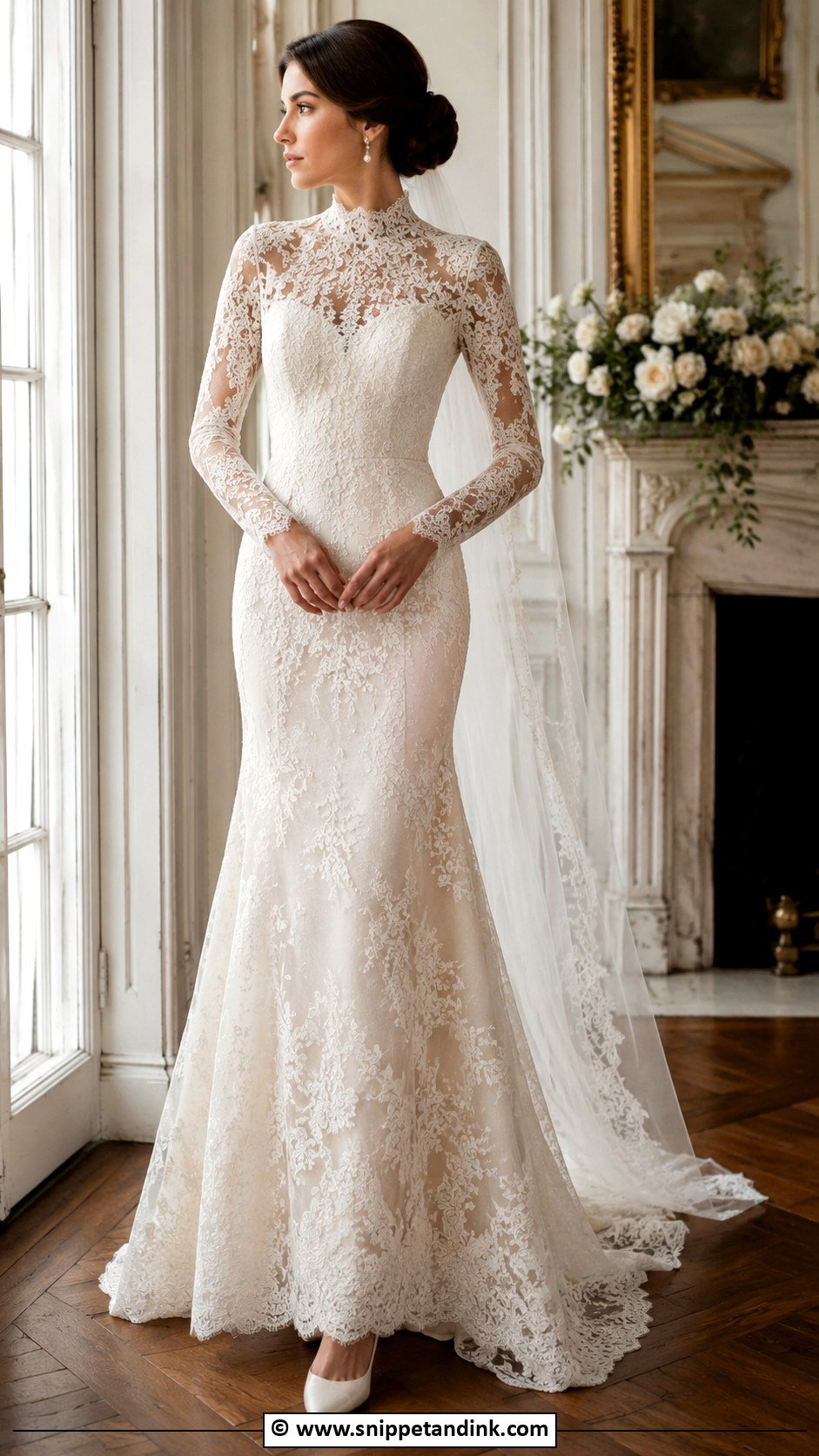
High-necked lace has an heirloom quality. It reads modest and romantic, especially with long sleeves, a fitted waist and a soft skirt. Heavy lace from collar to hem can feel weighty, so I steer brides toward airy lace or sheer panels that let the design breathe. Keep the veil plain so it doesn’t compete with the lace. Delicate earrings and a low chignon finish it, and family portraits suit it well.
8. Strapless Mikado Wedding Dress
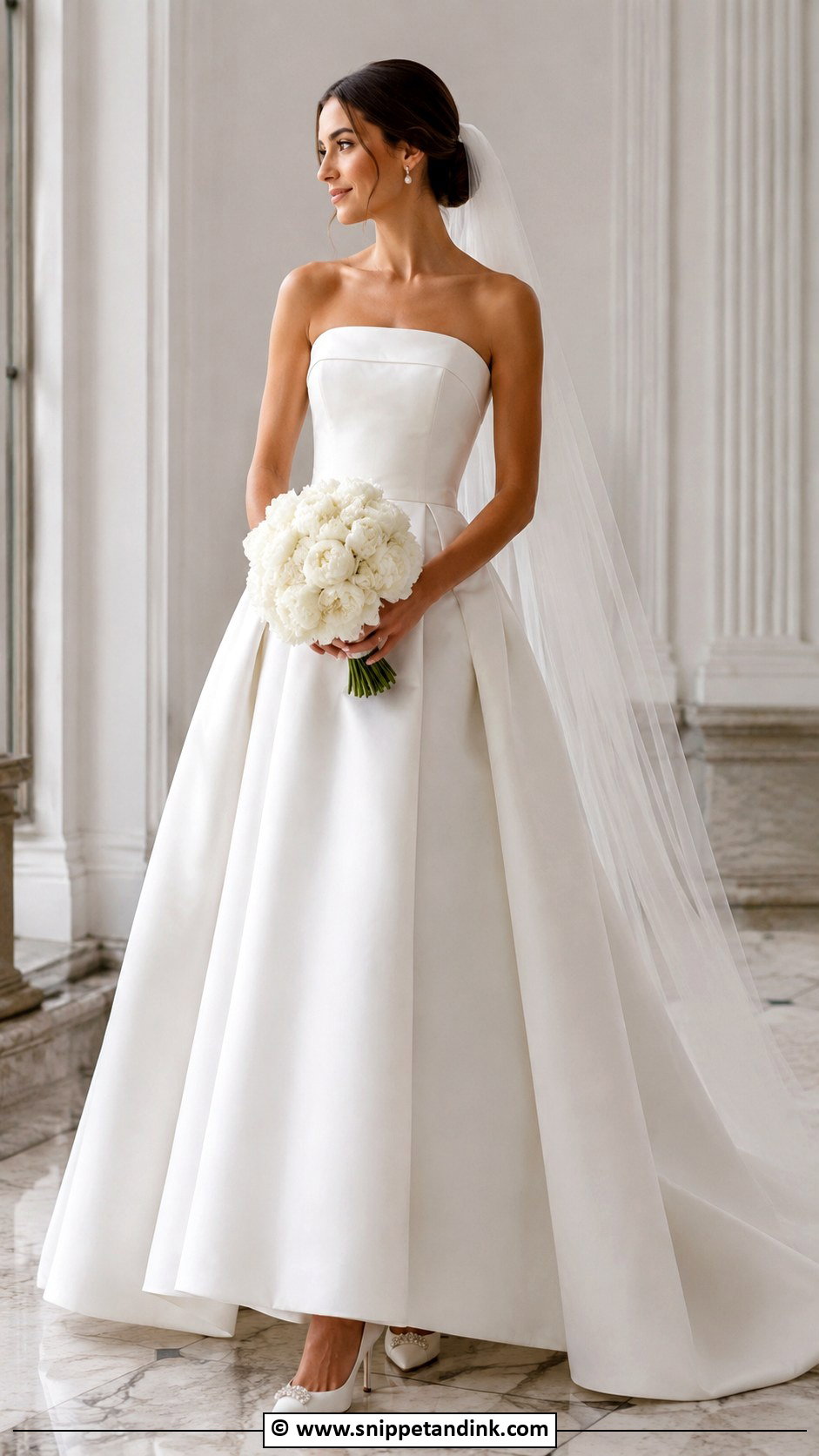
Mikado is heavier than satin and holds volume and structure beautifully. A strapless mikado bodice over a full or A-line skirt feels crisp and formal. It’s stiff, though, and creases sharply if crushed, so it should travel hanging and be steamed on the morning by someone who knows the fabric. Hidden pockets, a curved neckline or subtle pleating add a modern note. A long veil, pearl or diamond studs and satin heels are all the styling it needs.
9. V Neck Wedding Dress
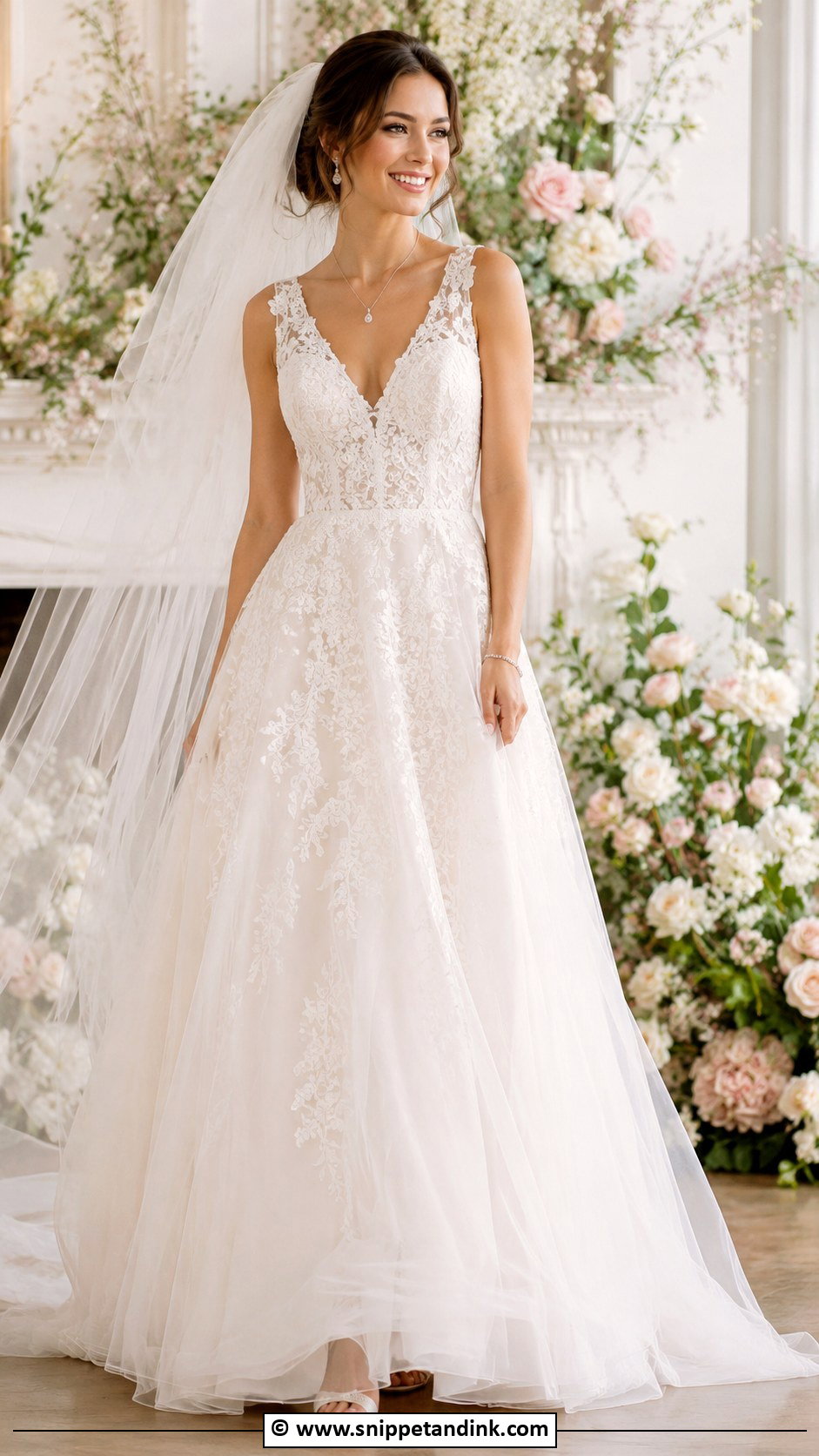
A V neck lengthens the upper body. Depth is personal: I’d sit, bend and hug in the fitting room, and if you’re adjusting it, a strip of sheer mesh or fashion tape fixes it. Lace feels romantic, crepe or satin sleek. It suits A-line, sheath and ball gown cuts alike. Add a delicate pendant, drop earrings and soft waves.
10. Bateau Neck Wedding Dress
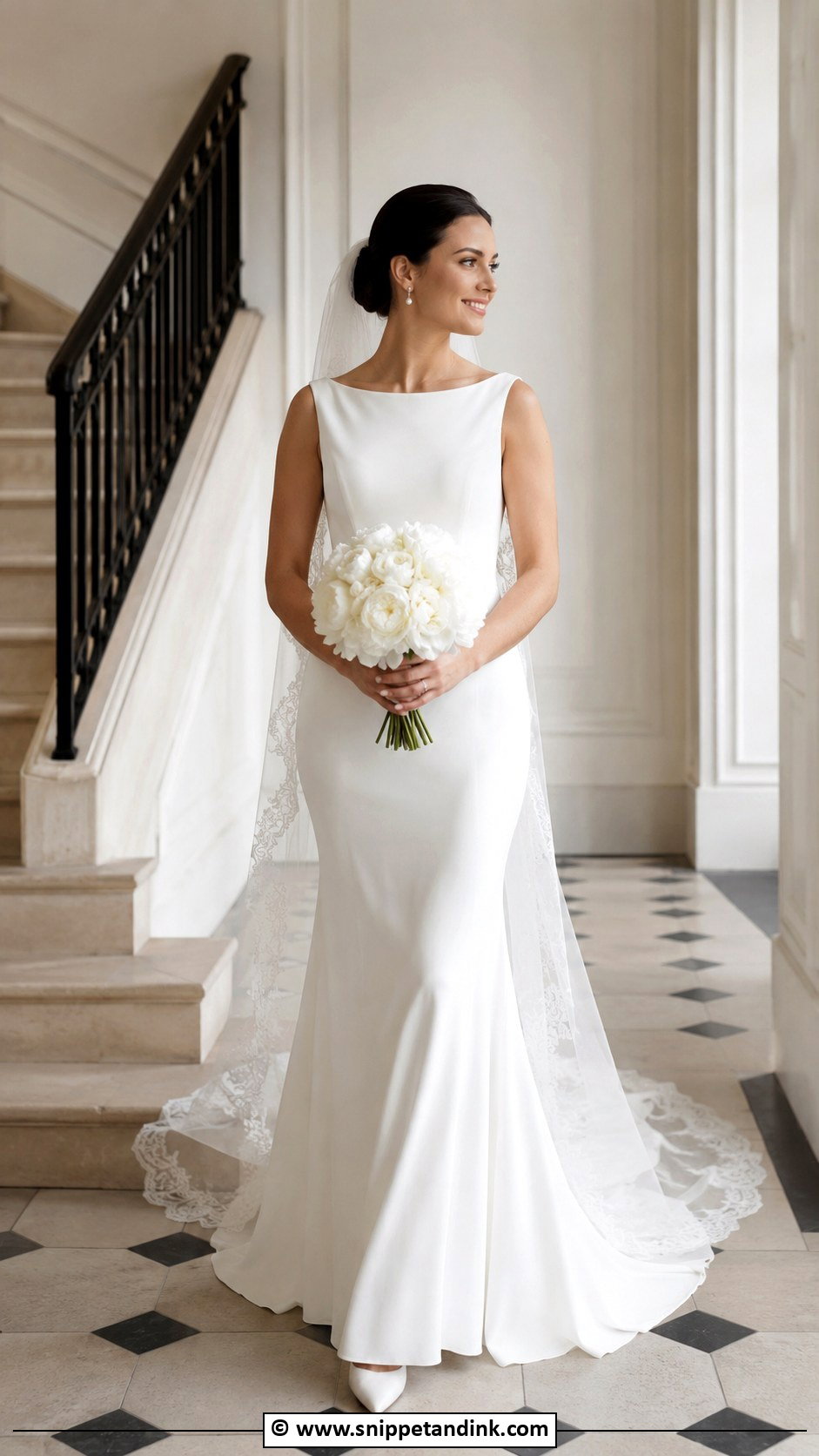
The bateau neckline runs straight across the collarbone, framing the face without showing much skin. It’s at its best in crepe, satin or silk faille, and it doesn’t need decoration because the shape is the point. A slim skirt gives a city feel, a fuller skirt more formality. I make sure the neckline sits on the shoulder rather than sliding toward the neck, a small adjustment that changes the whole look. Pearl earrings, a neat bun and a long veil suit it.
11. Drop Waist Wedding Dress
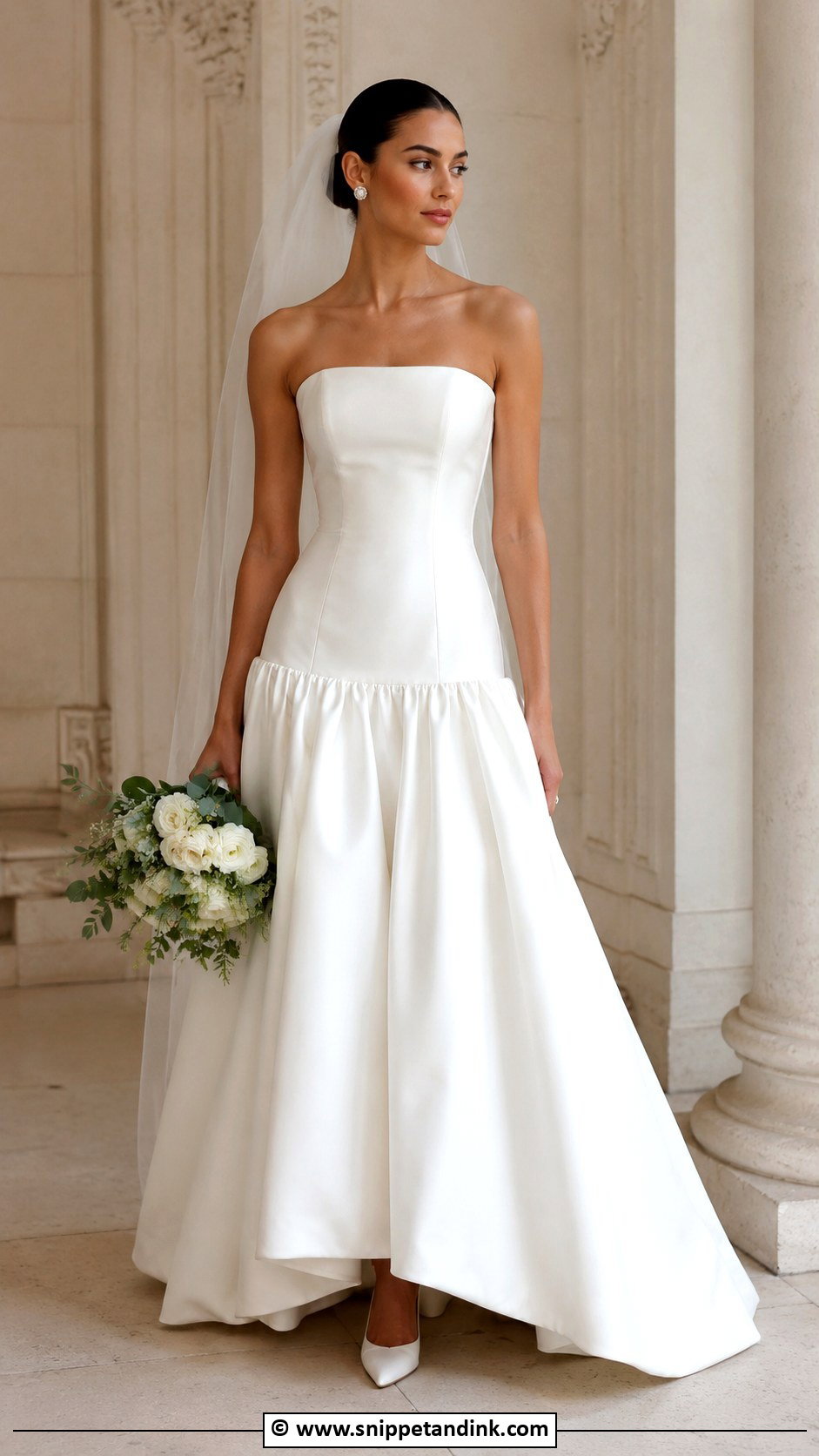
The drop waist extends the bodice below your natural waist before the skirt opens out. A drop waist wedding dress looks long and sculpted, and it’s fresh again without losing its classic roots. It flatters a longer torso most; on a short-waisted bride, the drop can make the legs look shorter, so try it before committing. Soft satin, lace or tulle keeps it timeless. Simple veil, classic earrings and satin pumps.
12. Basque Waist Wedding Dress
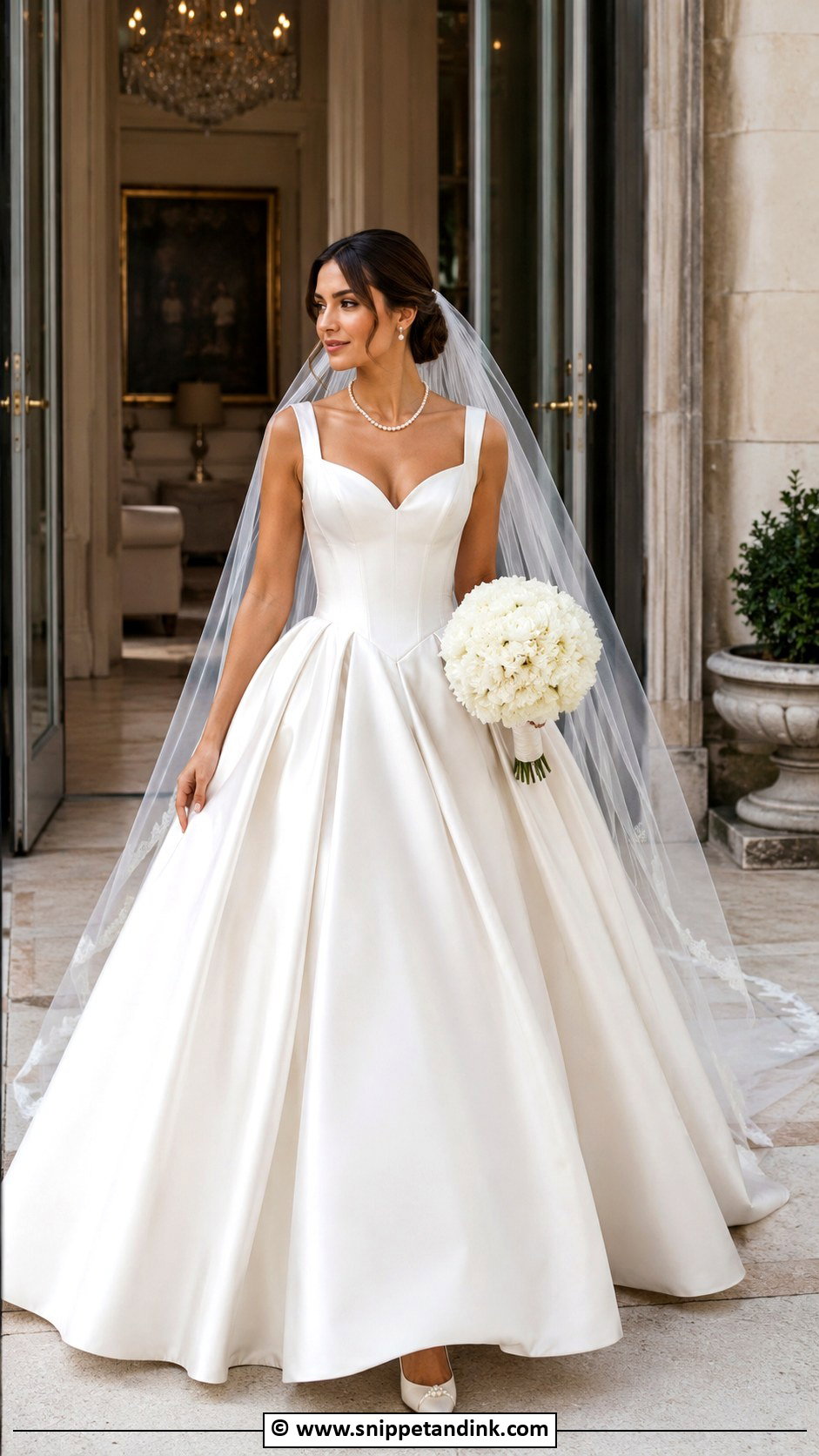
A basque waist wedding dress dips into a soft V at the front waist, which lengthens the torso and narrows the waist visually. It appears on classic ball gowns and romantic A-lines, and works in satin, mikado, lace or tulle. The point of the V needs to land correctly on your body, so this is a detail I adjust in almost every fitting. A delicate veil, pearl jewellery and ivory heels keep it regal without sparkle.
13. Tea Length Wedding Dress
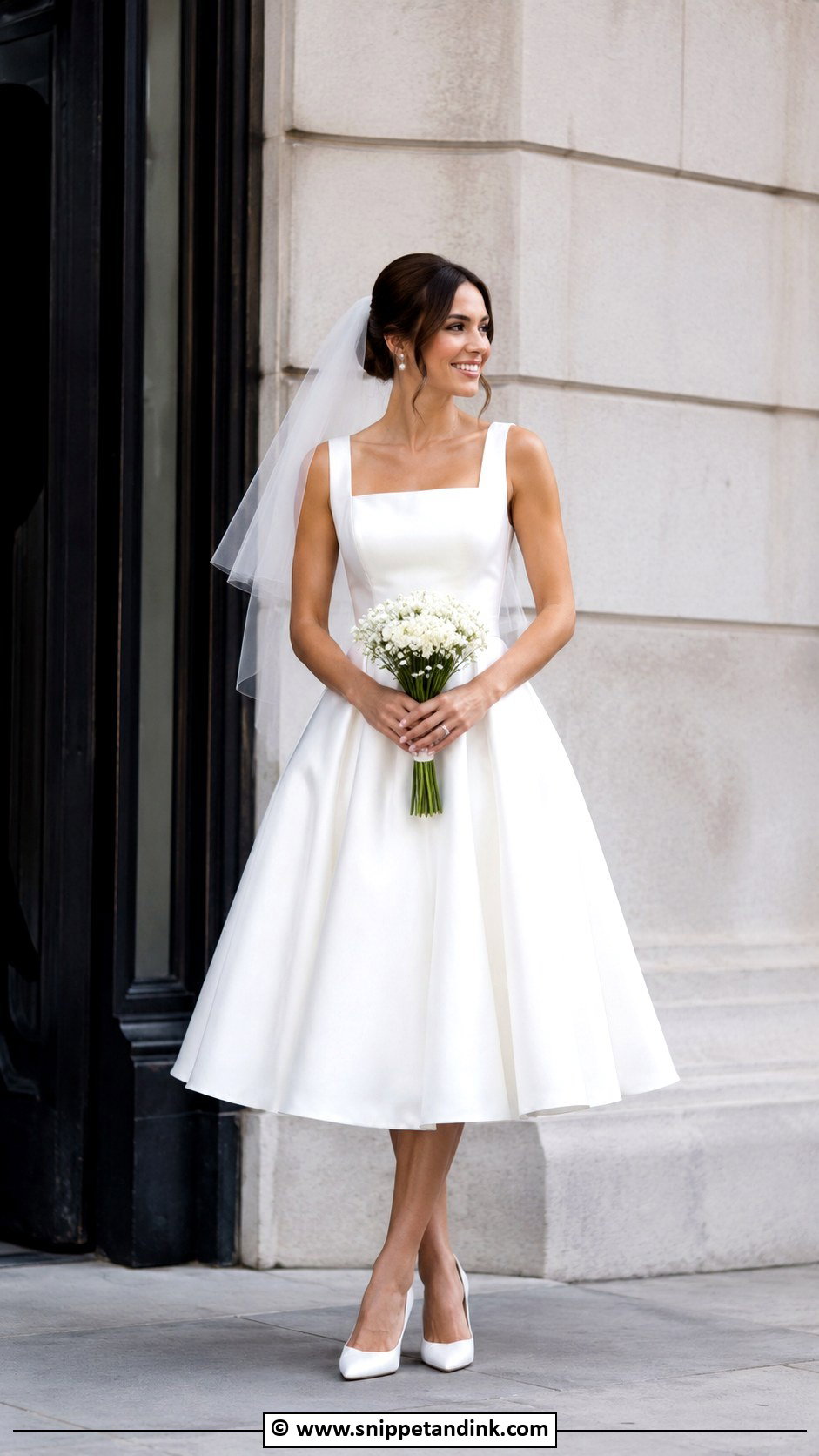
Tea length is practical and charming, falling between knee and ankle so your shoes become part of the look. A fitted bodice and full skirt in satin, lace or organza give it the timeless shape. Short veils or a bow hair accessory suit it better than a long veil, which can look out of proportion over a shorter skirt. It works for courthouse weddings, brunch receptions and intimate celebrations.
14. Silk Slip Wedding Dress
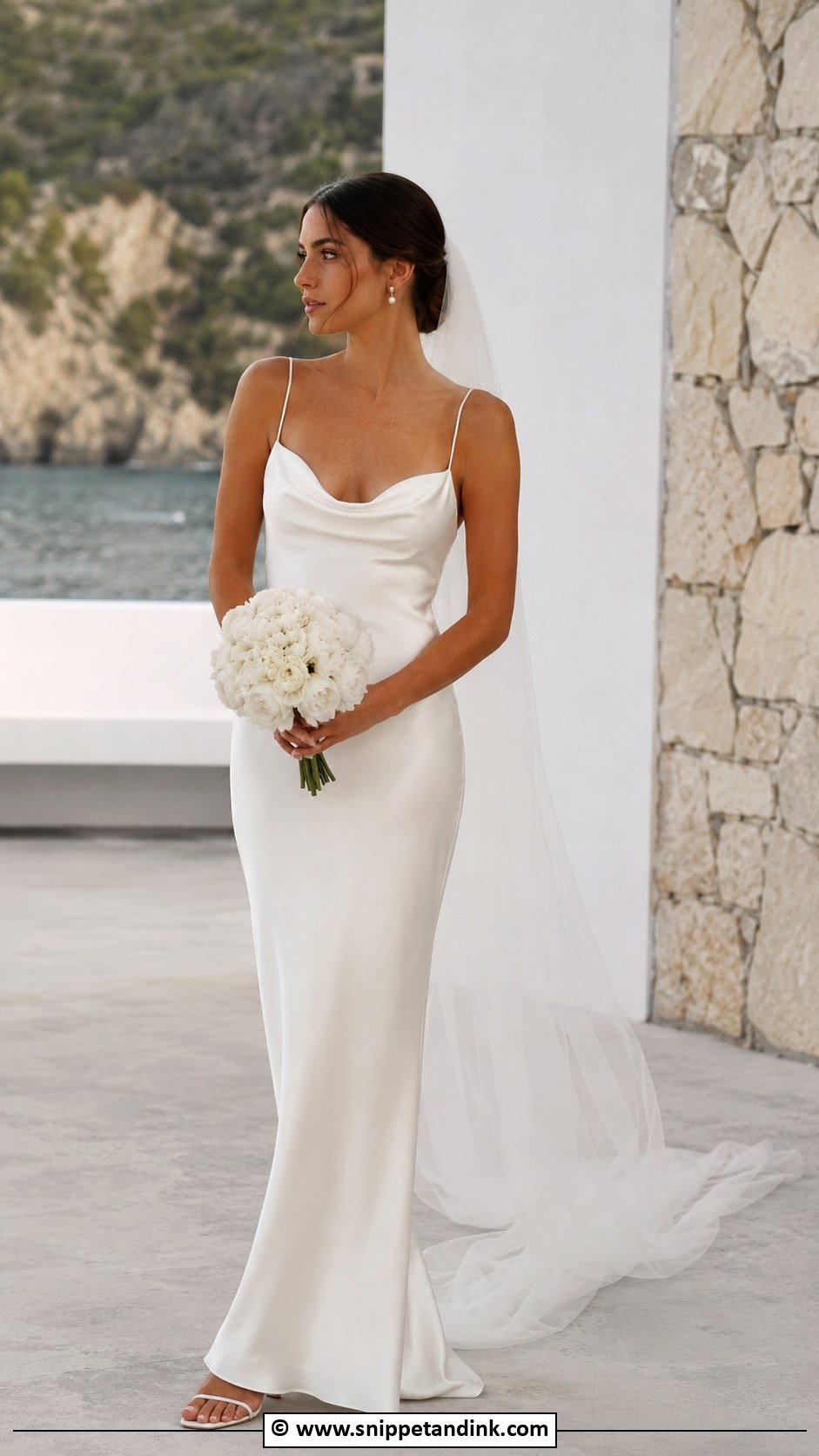
Silk slips rely entirely on fabric and fit. A cowl neck, bias cut or thin straps make the gown soft and fluid. Bias silk is unforgiving, so tailoring should feel smooth but never tight, and I’d budget for an experienced seamstress, because altering a bias cut badly makes it twist. A long sheer veil, delicate sandals and pearl earrings keep it bridal for beach, city or destination weddings.

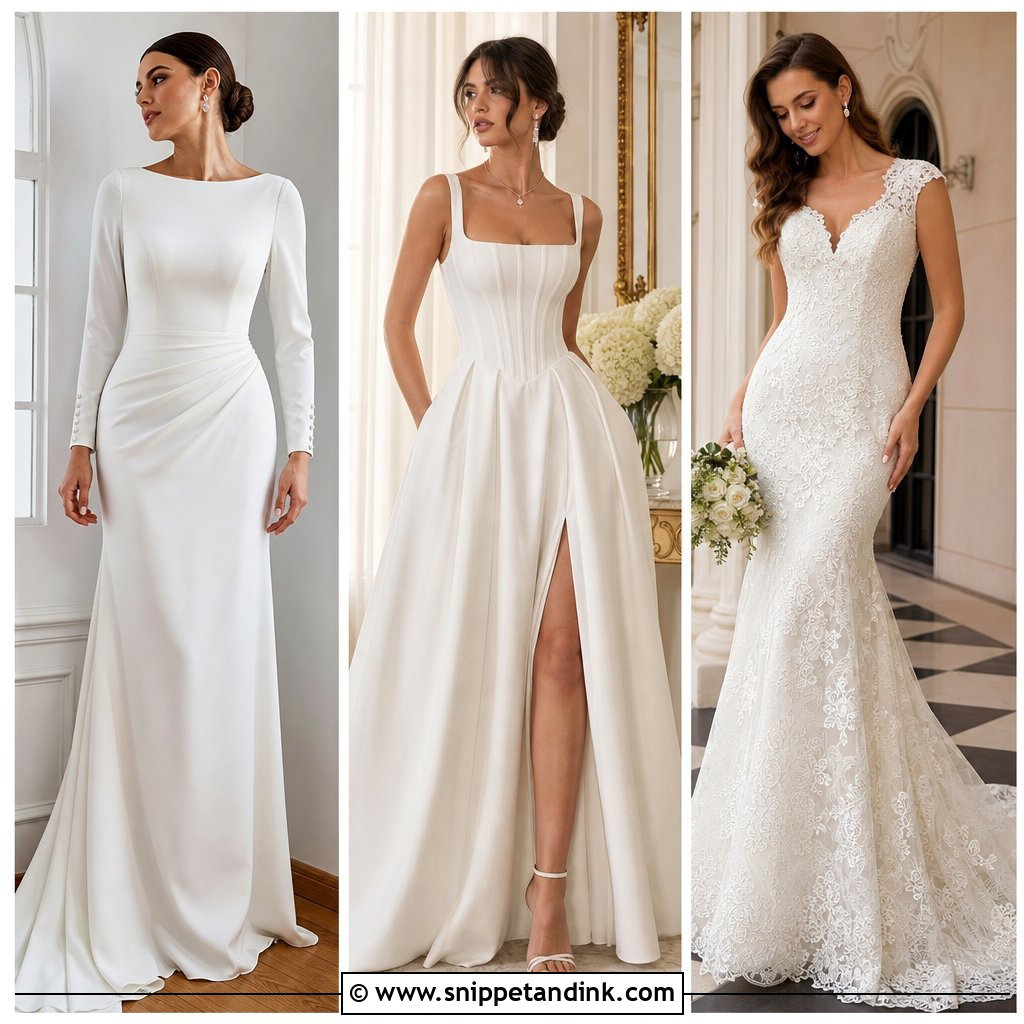
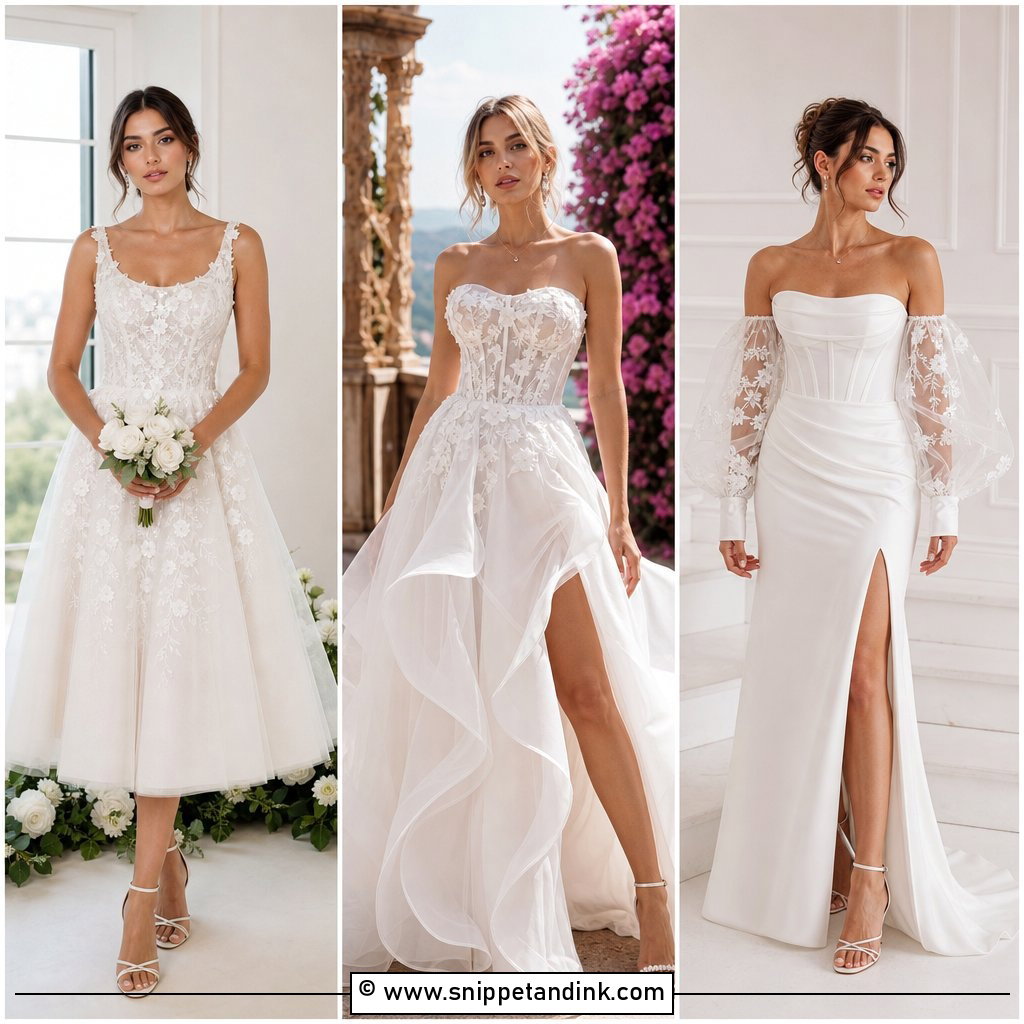
15. Pearl Wedding Dress
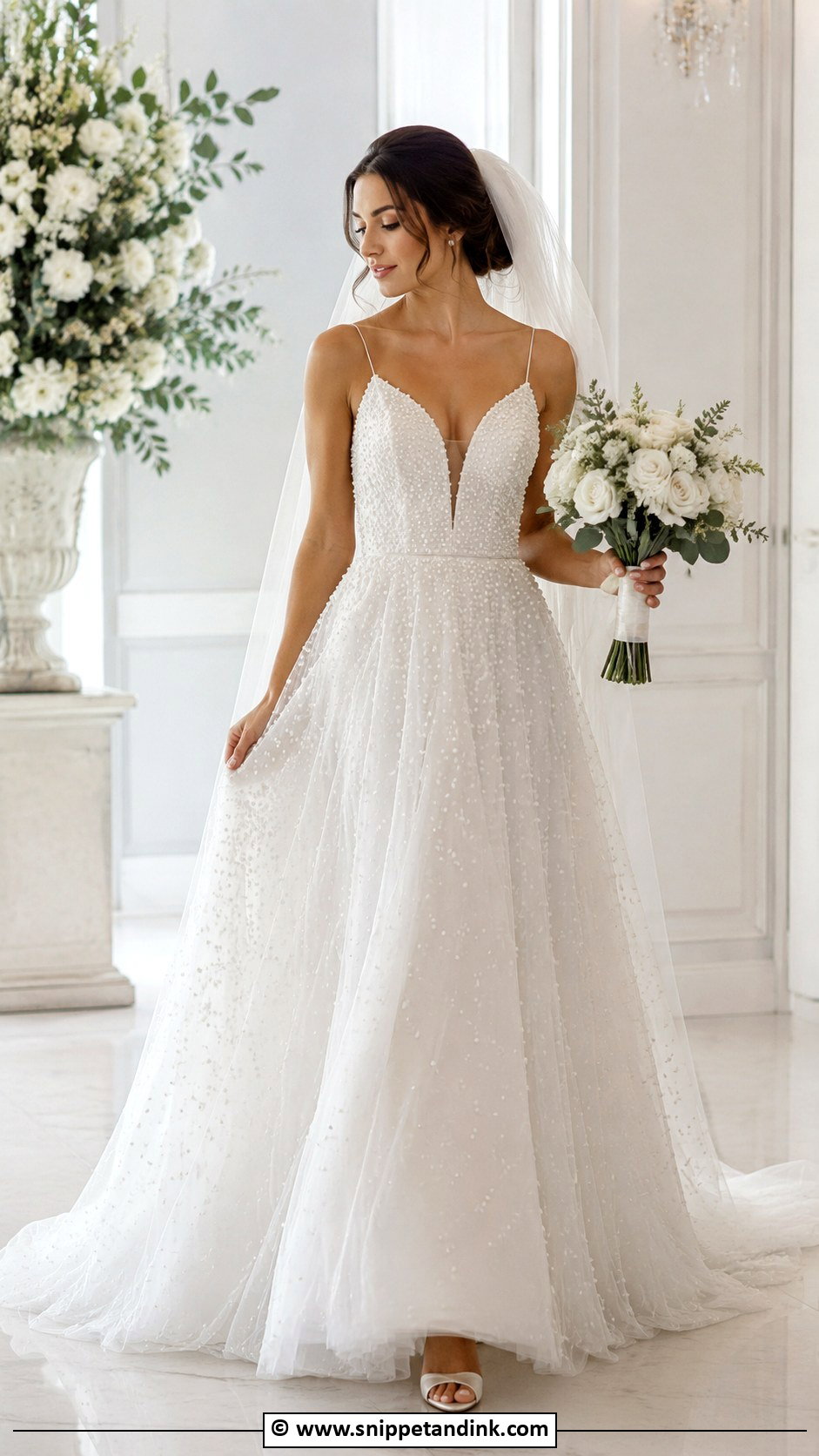
Tiny pearls across tulle, lace or crepe give a soft glow rather than sparkle. A simple silhouette, A-line or sheath, lets the beading lead. Hand-beaded pearls add weight, so I check how the bodice is supported and whether the skirt drags at the hem. Keep accessories minimal with pearl studs and a plain veil; too many pearls start to look busy. Formal indoor and garden venues both suit it.
16. Minimalist Wedding Dress
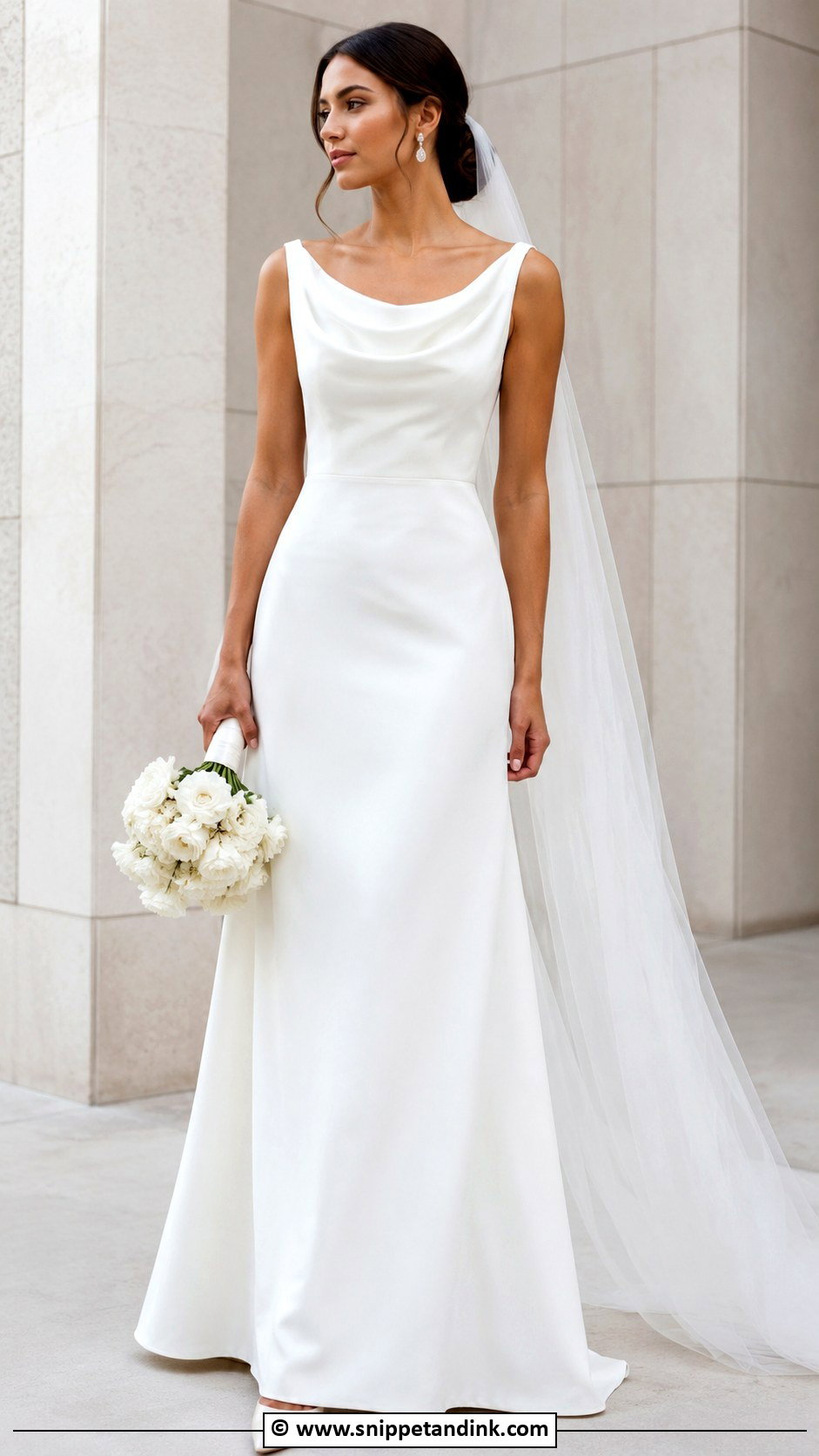
Minimalist gowns have nothing to hide behind. That’s why I spend most of the fitting on them: every seam, hem and dart is visible, and the fabric must be excellent. A satin column, crepe A-line or structured mikado gown can look extraordinary when it fits perfectly. Choose a shape you can wear comfortably for twelve hours. A sleek veil, sculptural earrings and pointed heels complete it.
17. Corset Wedding Dress
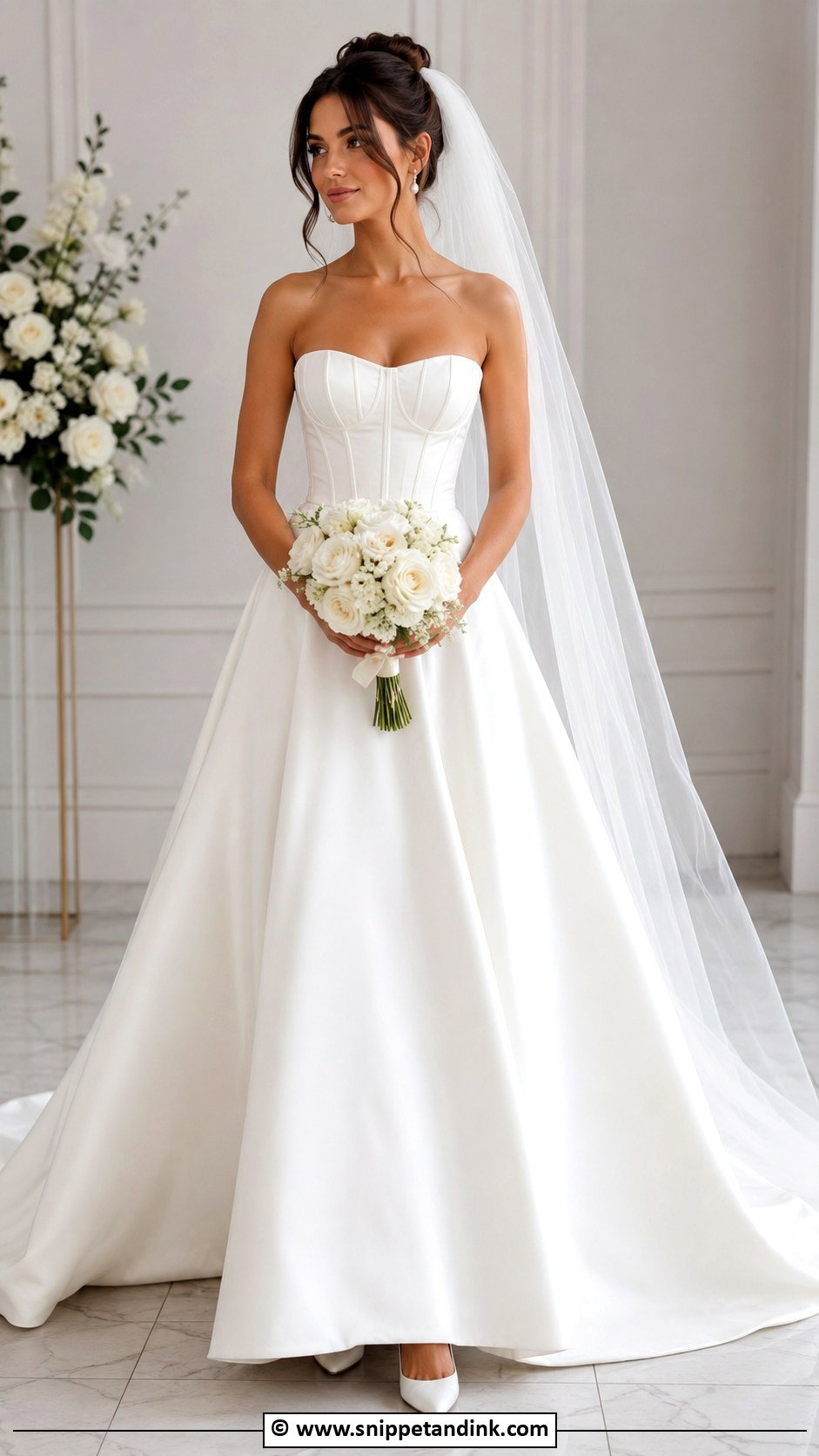
Corsetry dates when it’s overdone and lasts when it’s quiet. A soft corset bodice gives shape and support, and pairs well with a satin A-line, lace overlay or tulle skirt. A straight neckline, basque waist or subtle boning keeps it refined. I always have brides sit, eat a little and dance in a corset at the final fitting; if it pinches at the ribs, it needs letting out before the day. Long veil, pearl earrings, classic heels.
18. Tulle A Line Wedding Dress
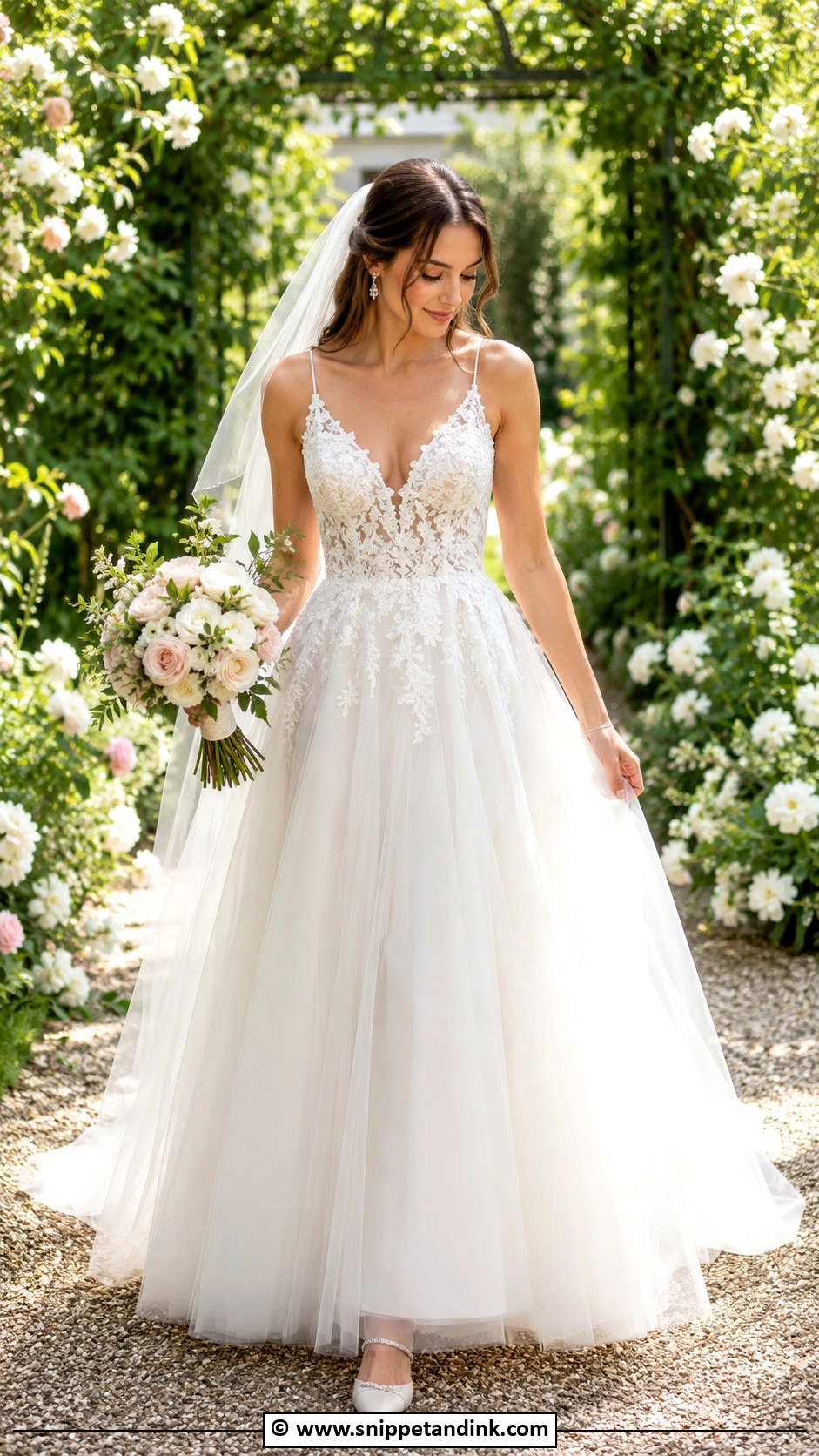
Layered tulle gives volume without weight, which is why I suggest it to brides who want a big skirt but dread a heavy ball gown. A fitted bodice with lace details or a satin waistband keeps it classic. Tulle snags on rough surfaces like stone steps, bark and jewellery clasps, so watch for that in outdoor ceremonies. A veil as airy as the skirt, delicate earrings and ivory heels finish it.
19. Organza Wedding Dress
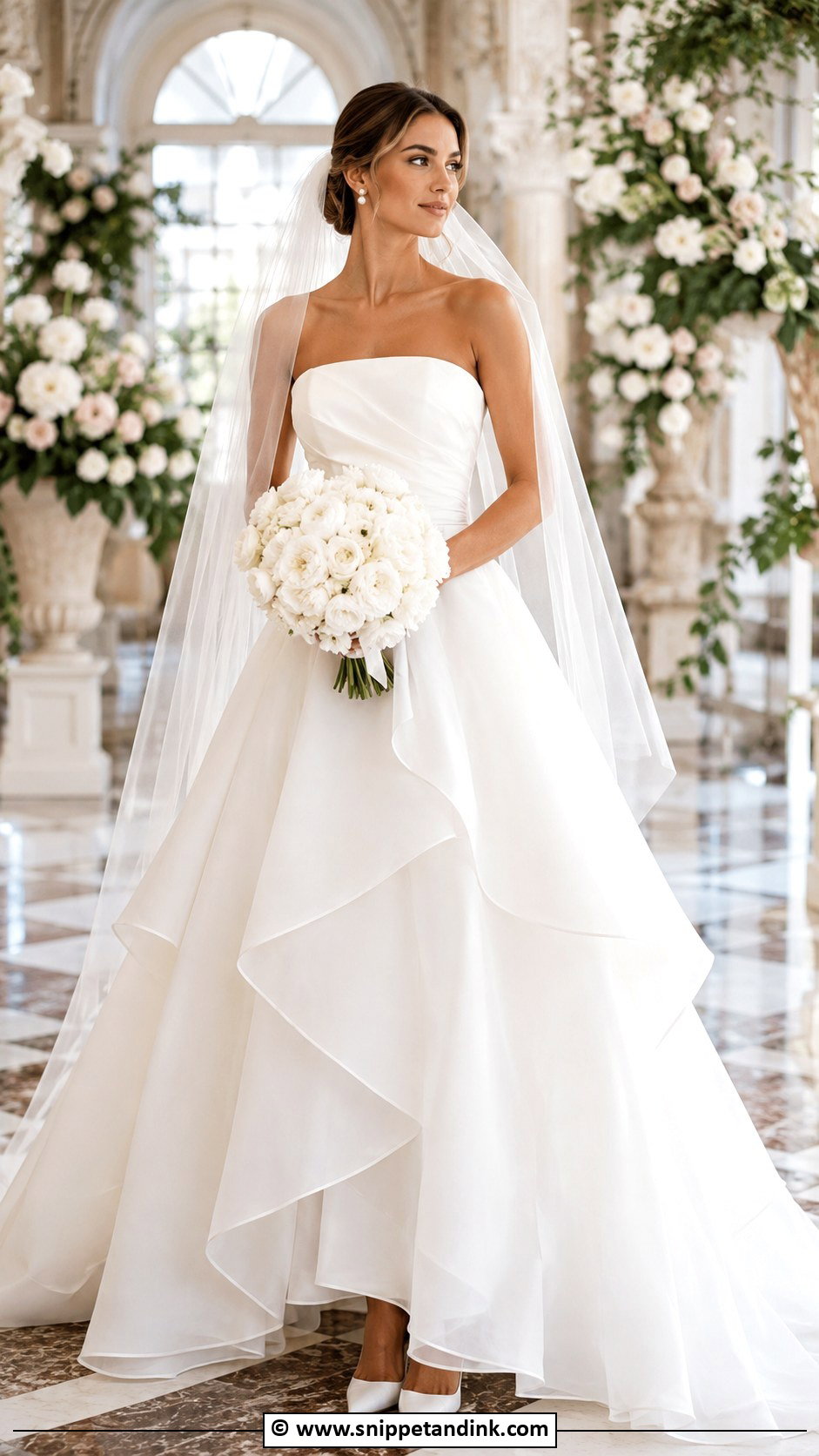
Organza is crisp yet sheer, so it can hold a full skirt that still feels airy. It suits A-line gowns, ball gowns and layered skirts with a structured bodice. It creases more than tulle and shows water marks, so I keep it covered in the car and away from wet grass. Satin pumps, pearl earrings and a long veil complete it, and spring and summer weddings suit it best.
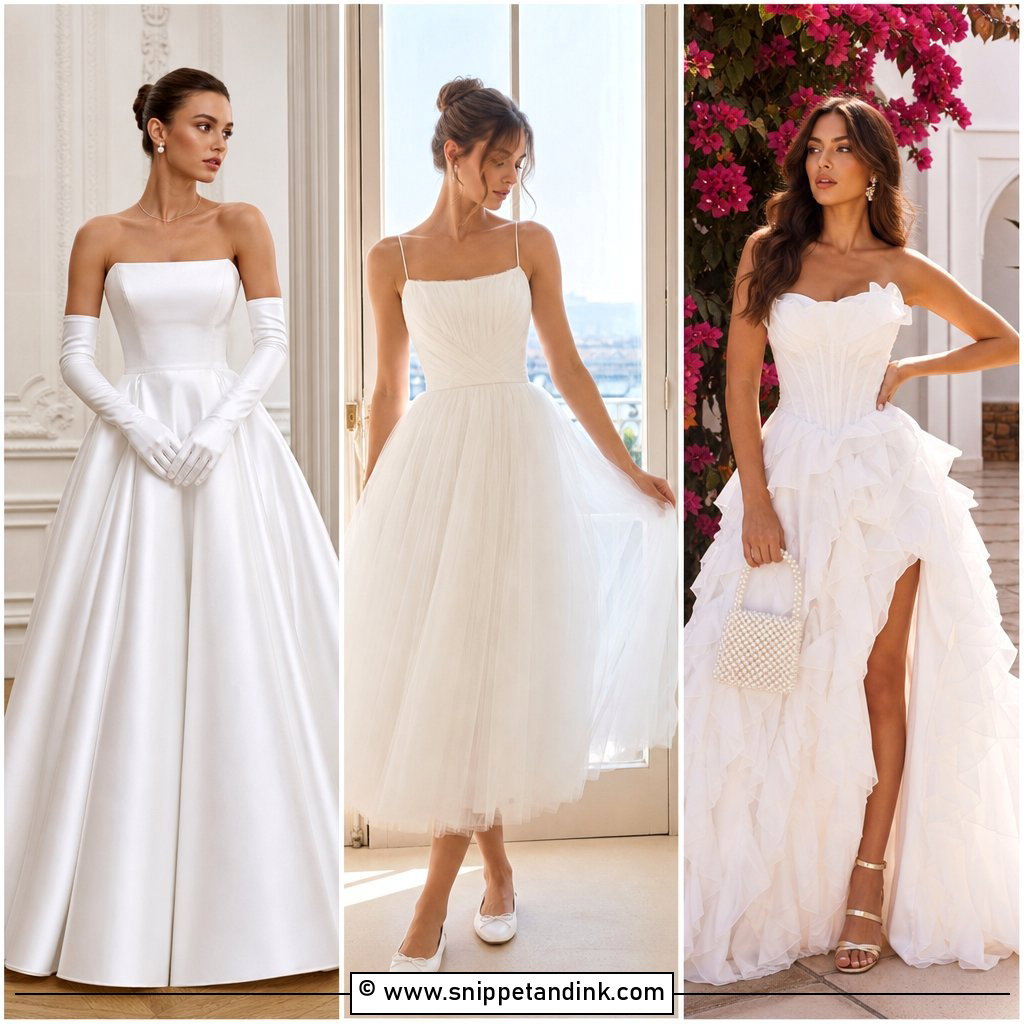

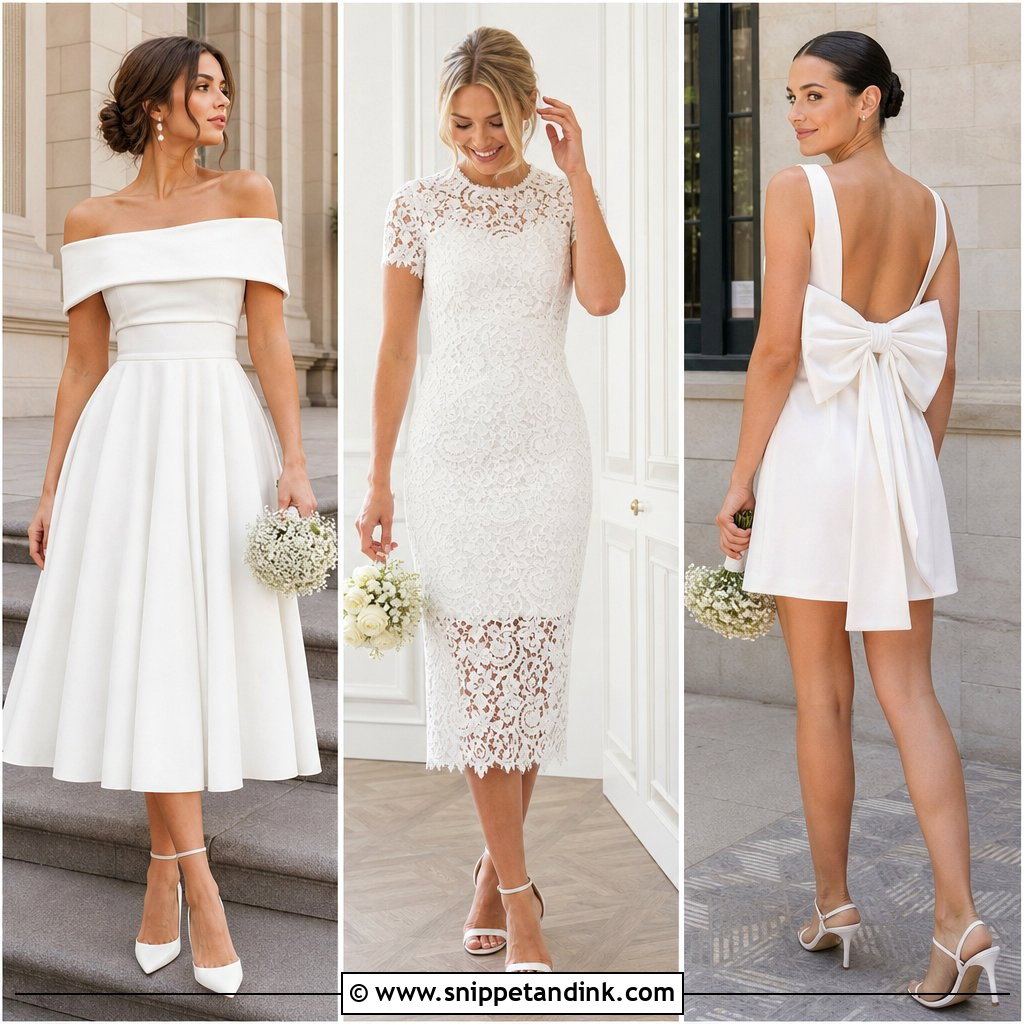
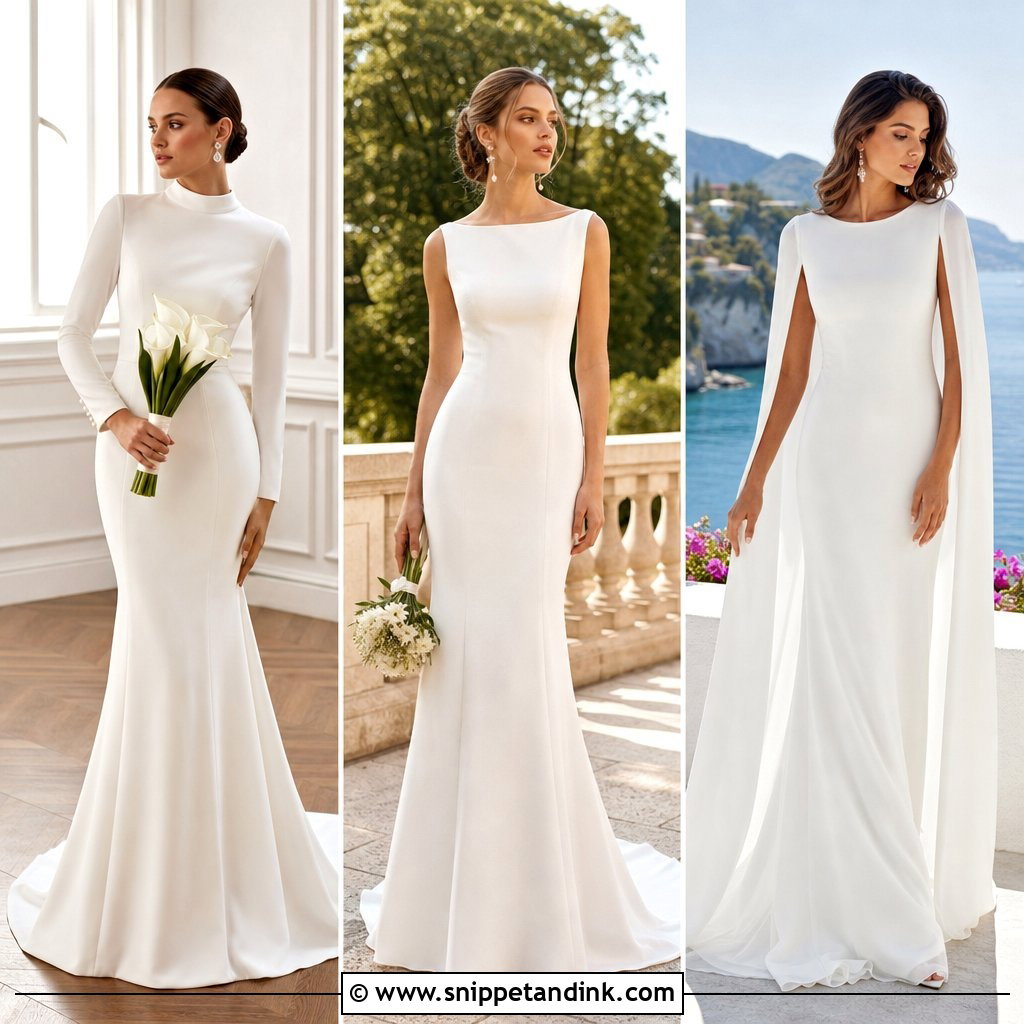

20. Floral Lace Wedding Dress
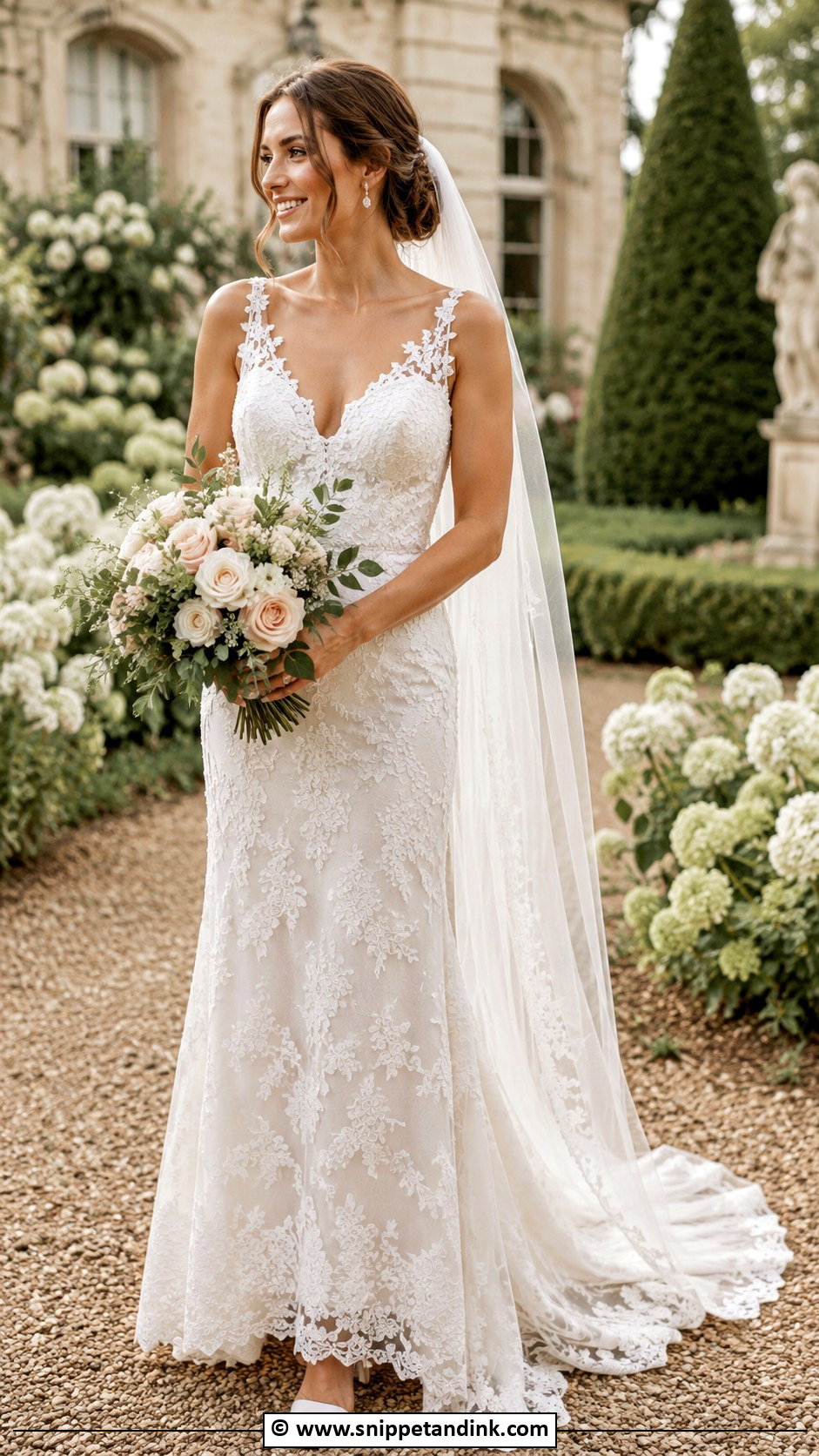
Floral lace stays classic when the pattern is delicate. Small florals, soft vines and scalloped edges age far better than large, bold motifs. A floral lace gown can be fitted, A-line, long-sleeved or strapless. I’d look at the lace in daylight before buying; some synthetic laces have a slight sheen that looks cheap outdoors. Keep the veil sheer and the jewellery small so the lace stays the focus.
21. Bow Back Wedding Dress
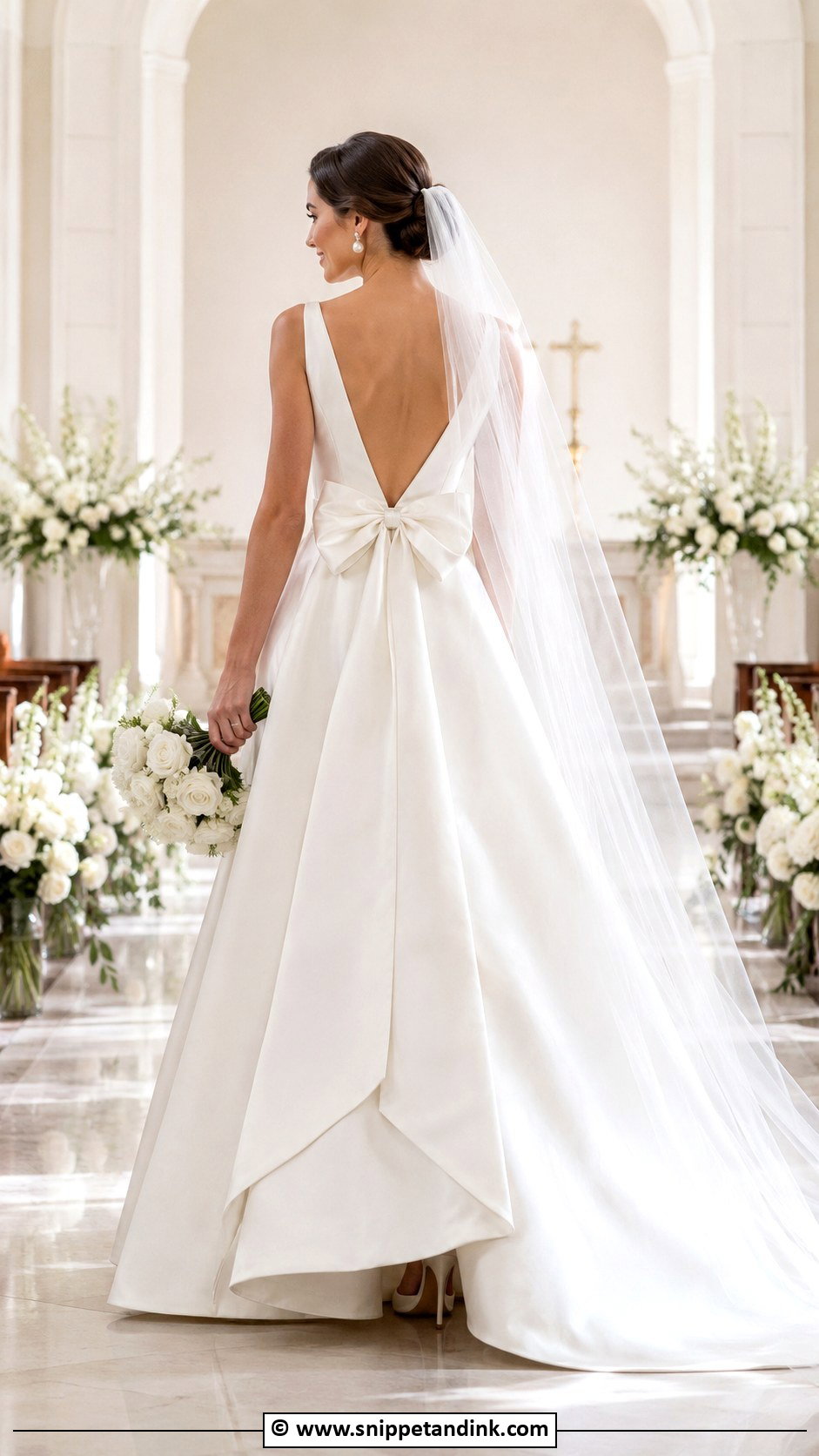
A bow at the back keeps the front clean and gives guests something to see as you walk the aisle. A satin A-line with a back bow is the most timeless version. Large bows need internal structure or they droop by the reception, so ask how it’s made. Keep the rest unembellished. Simple veil, pearl earrings and elegant heels; and make sure your veil doesn’t hide the bow, or pick a shorter one.
22. Column Wedding Dress
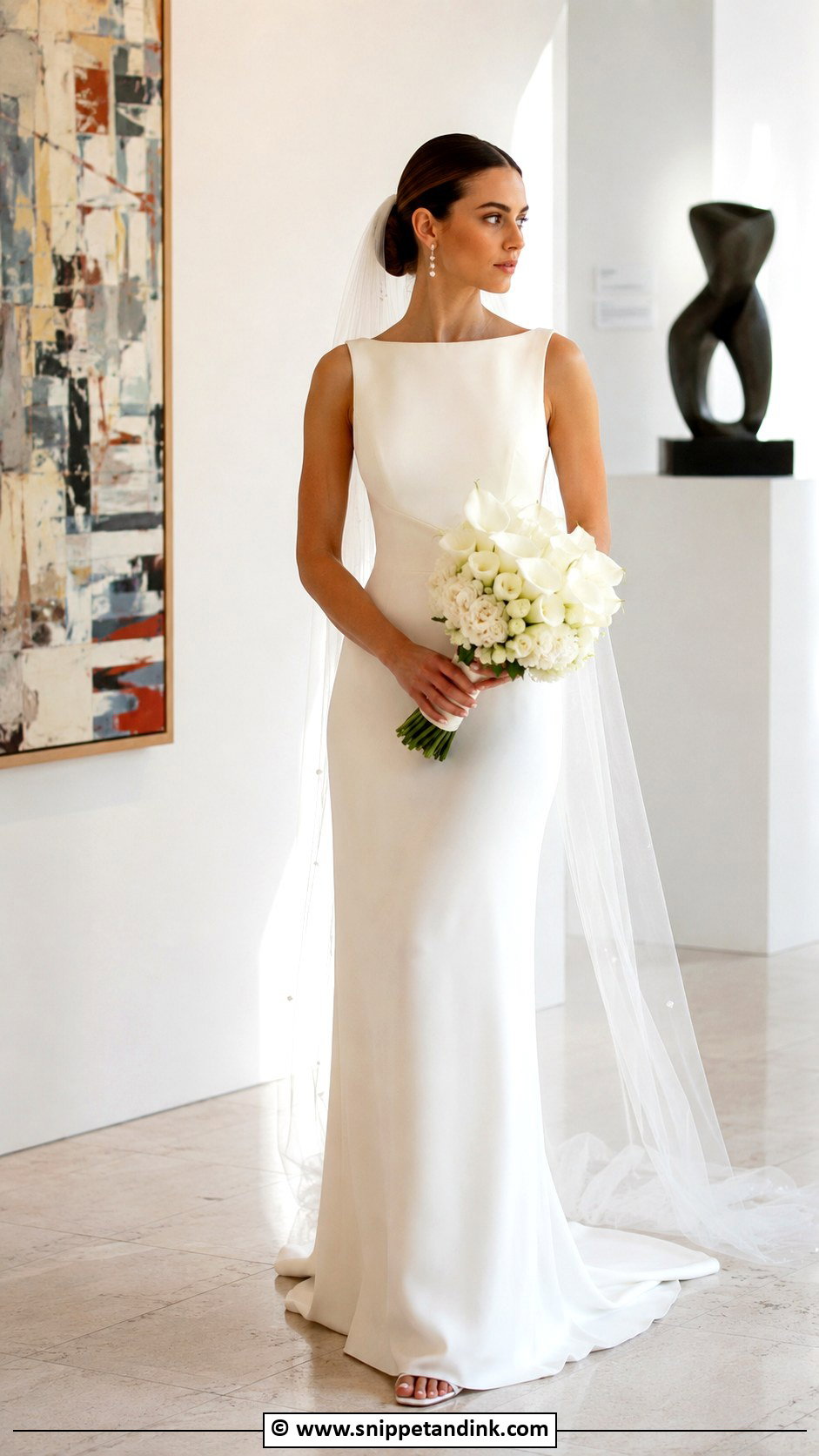
Columns sit close to the body with little flare, creating a long, clean line. Crepe, satin, silk and soft lace all work. The neckline can be high, strapless or scooped; the tailoring is what makes it last. A column gown limits stride unless it has a back slit or a kick pleat, so test the walk to the altar and the steps. Long veil, sleek heels and simple jewellery suit hotel, gallery and city venues.
23. Cap Sleeve Wedding Dress
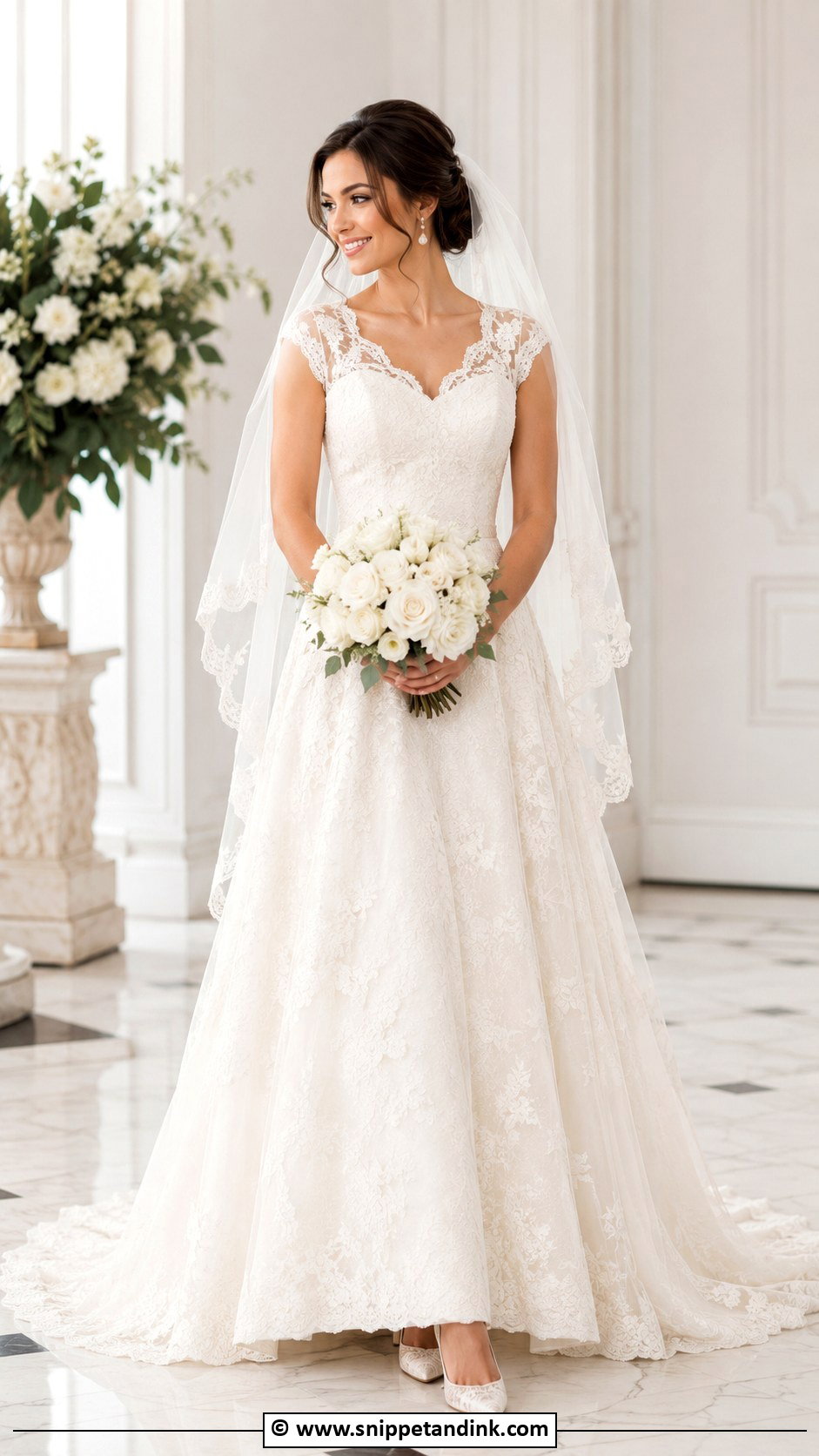
Small sleeves offer just enough coverage while leaving the neckline open. A cap sleeve wedding dress works in lace, satin, crepe or tulle, over an A-line or sheath. The sleeve edge should sit cleanly on the shoulder without cutting into the upper arm, which can look tight in photos. Pearl earrings, soft waves, ivory heels and a fingertip veil suit it. It’s a good middle ground if you want a little coverage without feeling covered up.
24. Scoop Neck Wedding Dress
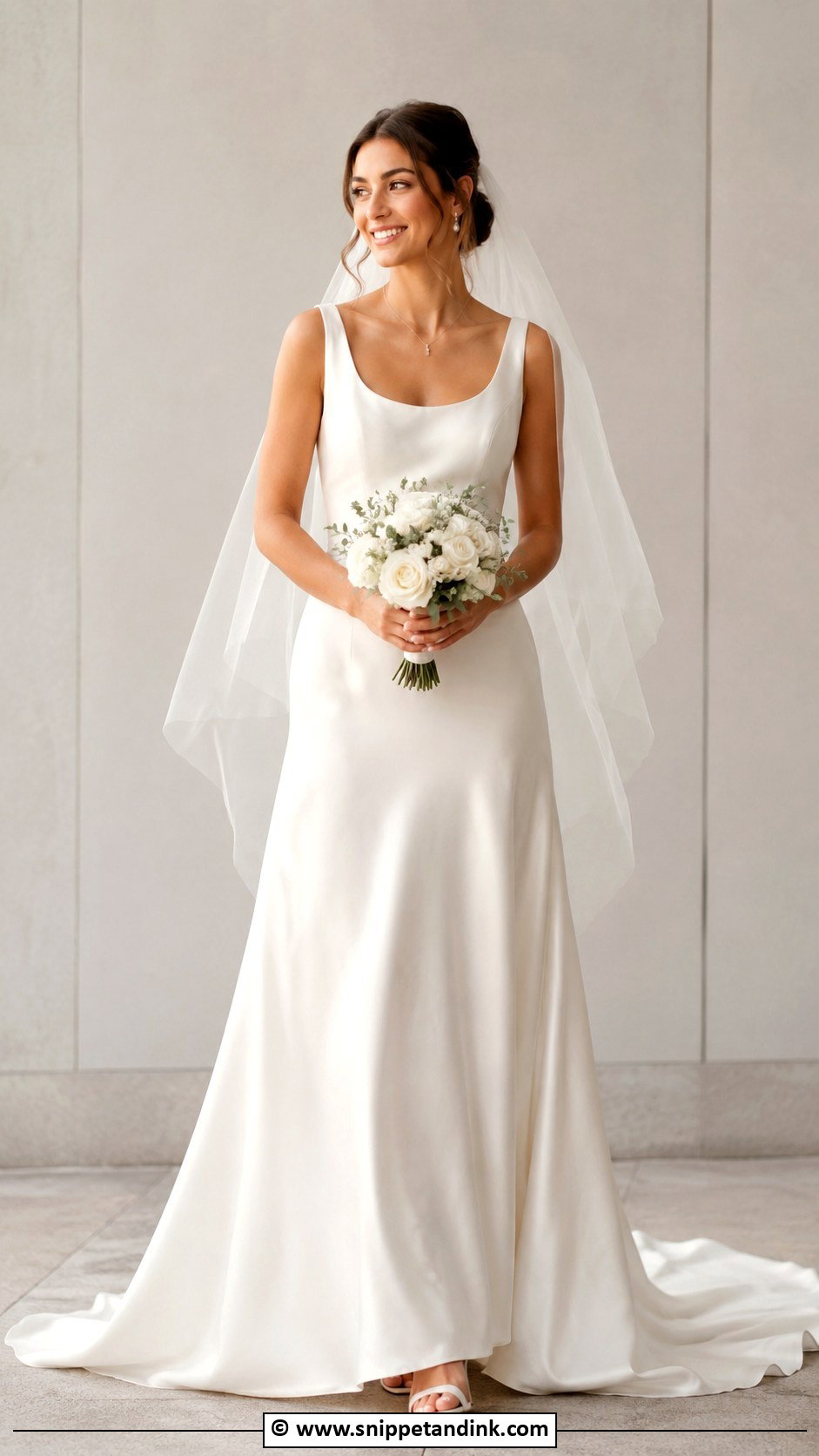
The scoop neck softens the upper body and works with nearly every silhouette, from fitted gowns to full skirts. Satin looks clean, lace romantic. A low scoop back adds a subtle detail. It’s one of the easiest necklines to wear for a whole day because nothing presses on the throat or shoulders. A delicate necklace, pearl earrings or a sheer veil finish it neatly.
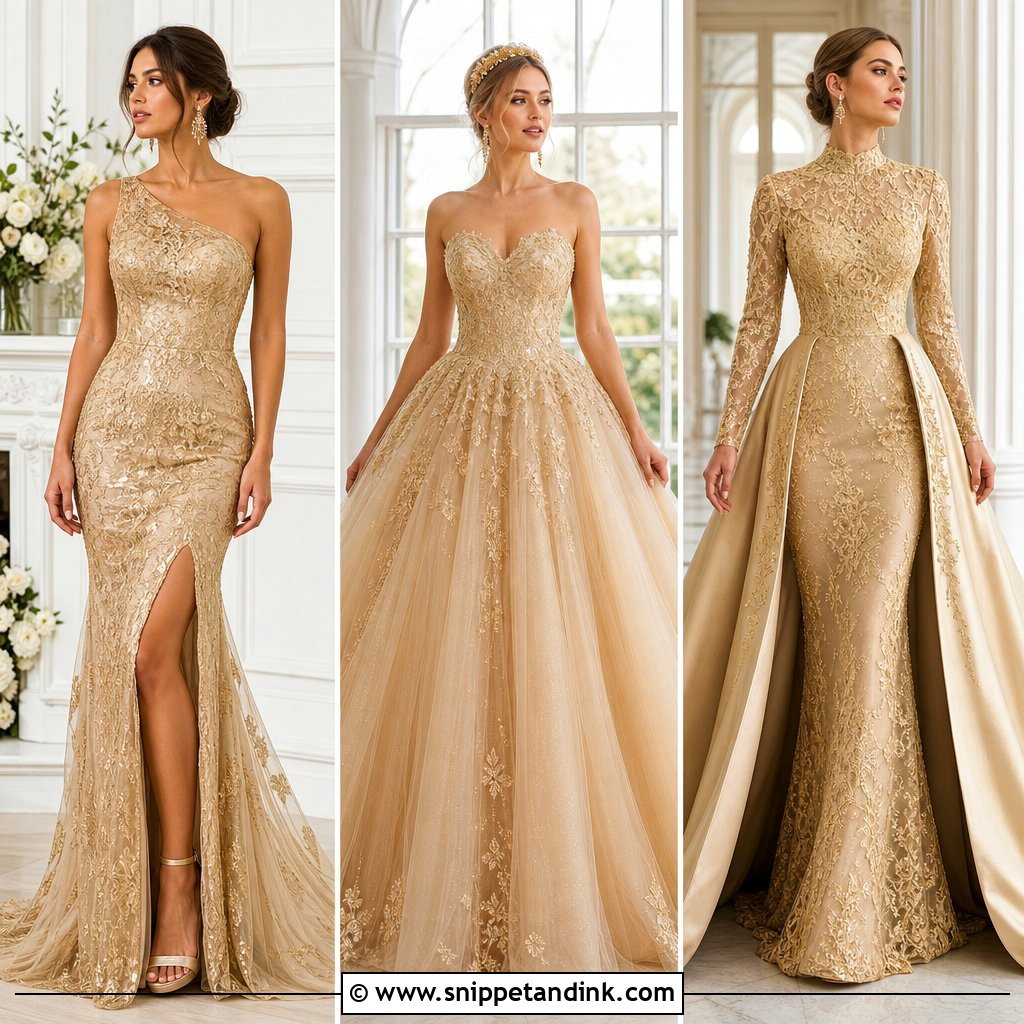



25. Halter Wedding Dress
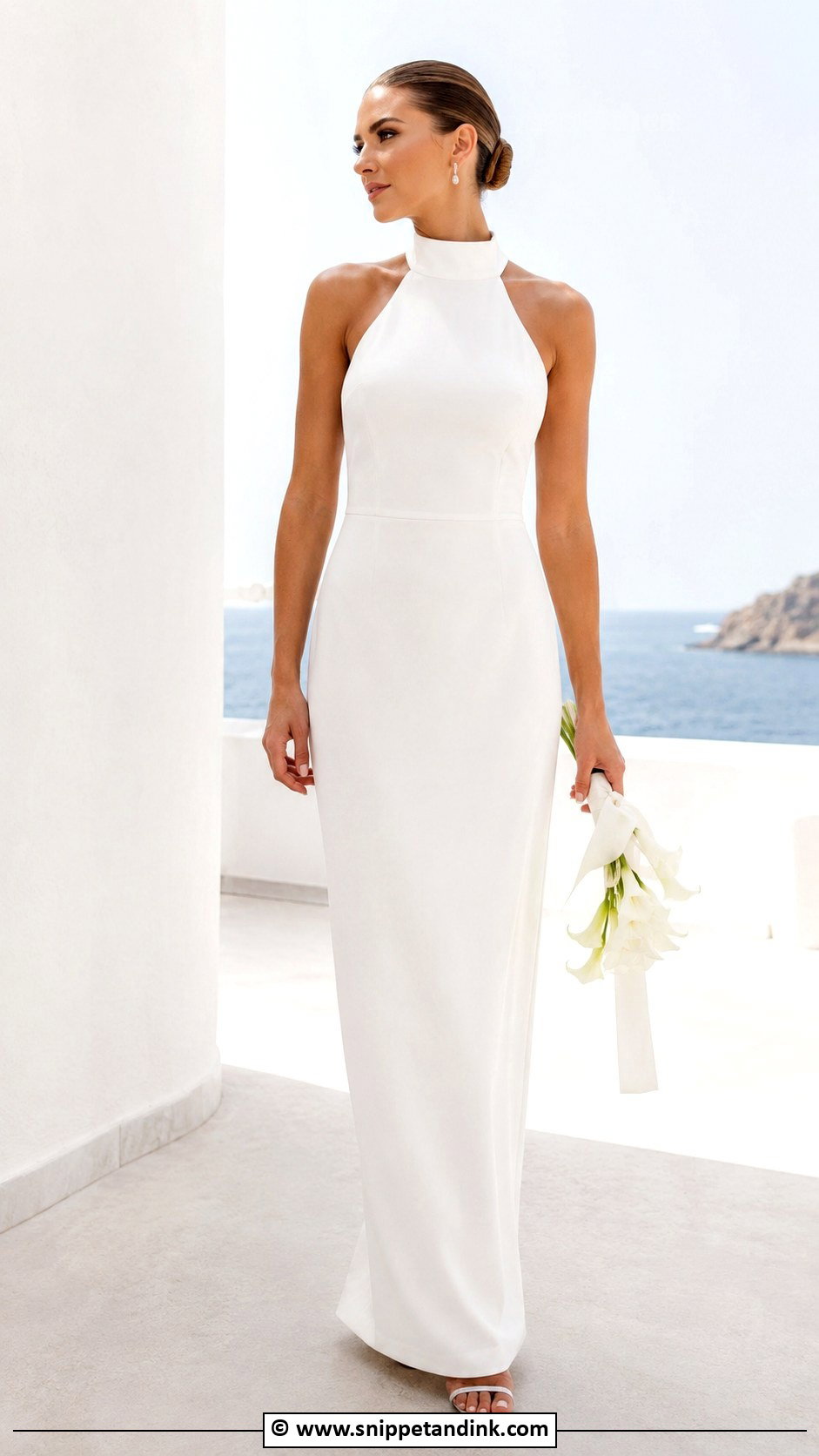
Halter gowns draw attention to the shoulders and create a long line through the upper body. Satin, crepe and silk keep the shape smooth. A column skirt looks modern, an A-line more romantic. I build a supportive bra cup into most halter bodices and check the neck closure carefully, since tie halters can tug after hours of wear. A sleek bun, drop earrings and simple heels keep the neckline clear for warm-weather and coastal weddings.
26. Embroidered Wedding Dress
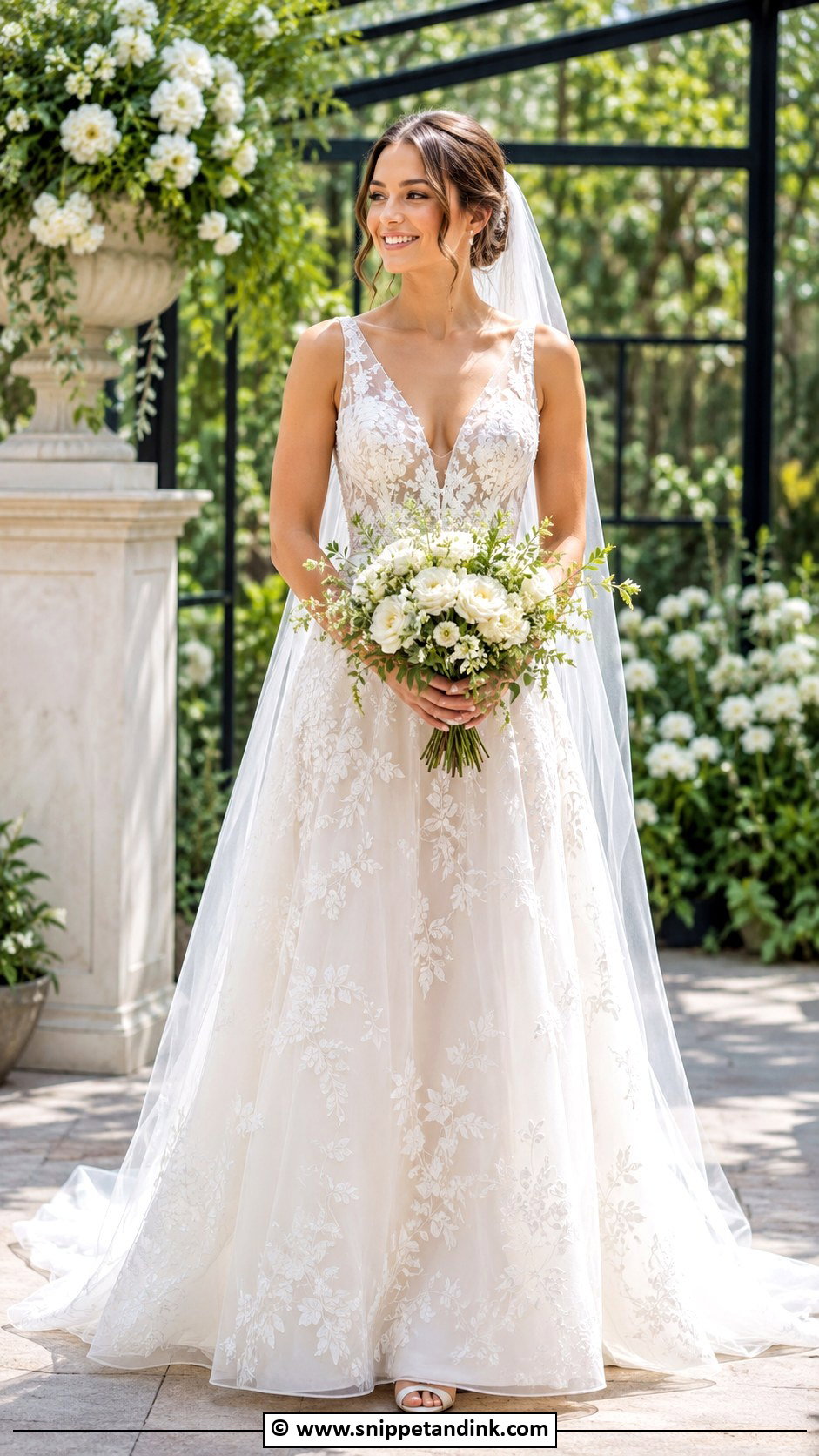
Embroidery gives a gown detail without sparkle. Floral motifs, vines or tonal threadwork on a sheer overlay, fitted bodice or soft A-line feel personal and handcrafted. Tonal embroidery that blends into the fabric ages better than high-contrast designs. I turn the bodice inside out to check the backing; a soft lining behind the stitching prevents scratching. Minimal jewellery, ivory heels and a simple veil.
27. Cathedral Train Wedding Dress
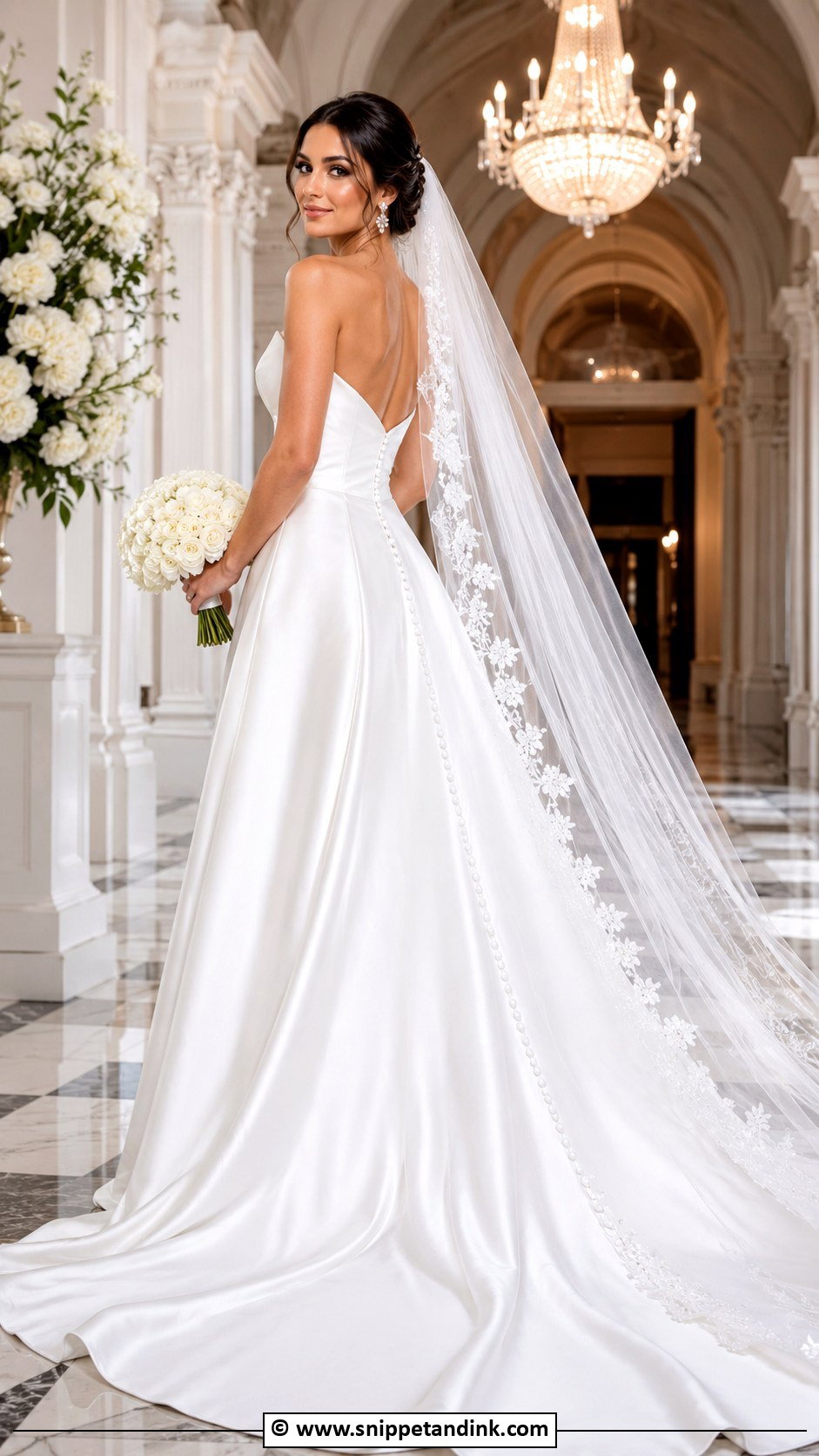
A cathedral train wedding dress brings real drama to portraits and the aisle. To stay classic, the bodice and skirt need to be clean, and the fabric high quality: satin, lace, mikado or crepe. A long train needs a bustle for the reception, and the bustle has to be planned at the fittings, not improvised on the day. Keep shoes and earrings simple. It’s made for large venues and formal halls.
28. Illusion Neckline Wedding Dress
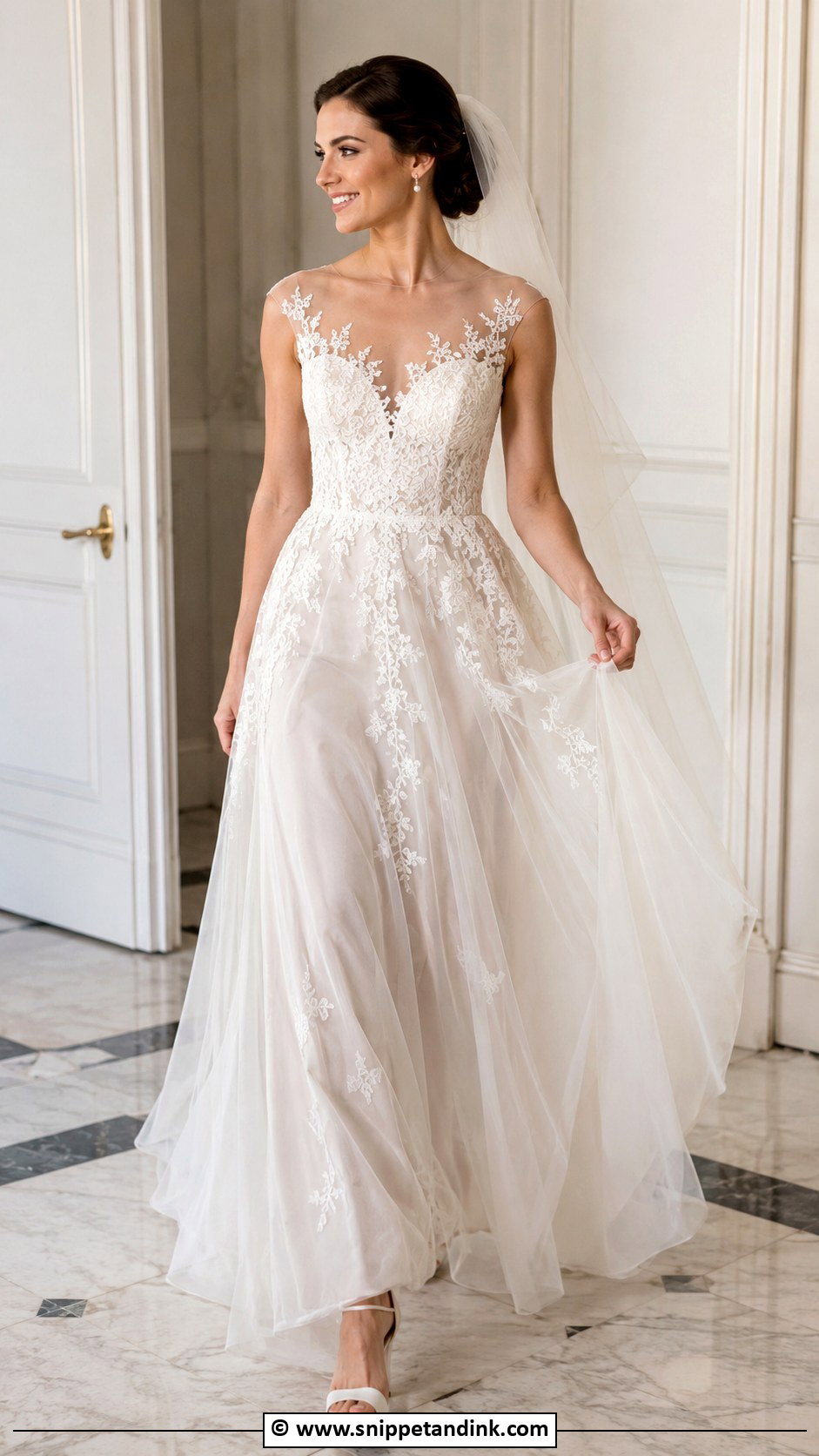
Illusion necklines use sheer tulle, lace appliqué or fine mesh to look delicate while giving support and coverage. They suit long sleeves, cap sleeves or a sleeveless bodice. The mesh should match your skin tone as closely as possible, or it shows as a visible panel in photos. Subtle lace placement keeps it timeless. A simple veil, pearl earrings and ivory heels.
29. Simple Satin Wedding Dress
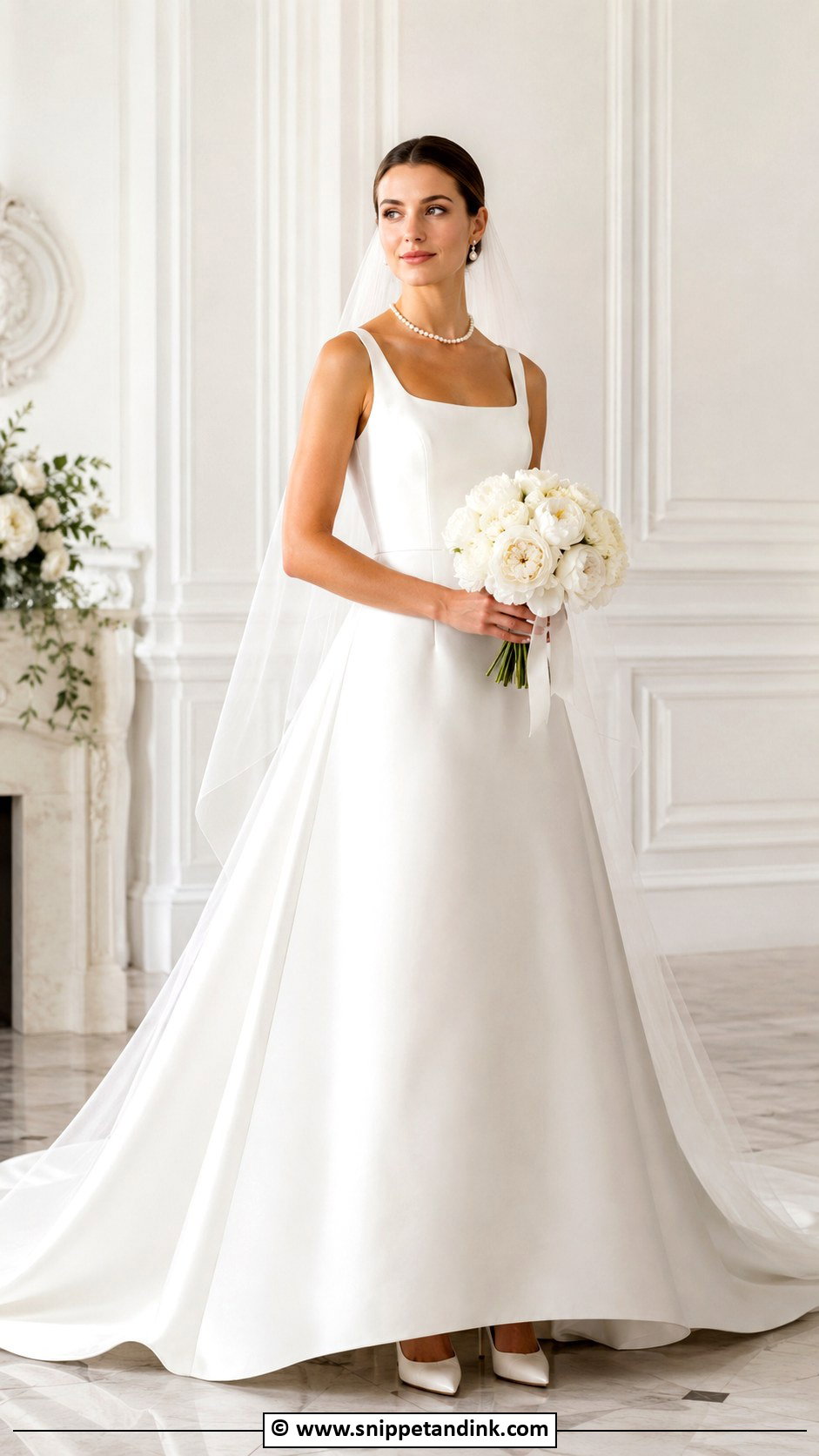
Satin carries a plain gown by itself; it reflects light softly and needs nothing else. A clean bodice, A-line skirt and long train feel classic, while a satin sheath or slip is sleeker. Satin shows handling marks, so I suggest the bride puts it on last, after makeup, with clean hands. Pearl jewellery, a smooth veil and polished heels suit formal weddings, city ceremonies and intimate celebrations alike.
30. Vintage Inspired Wedding Dress
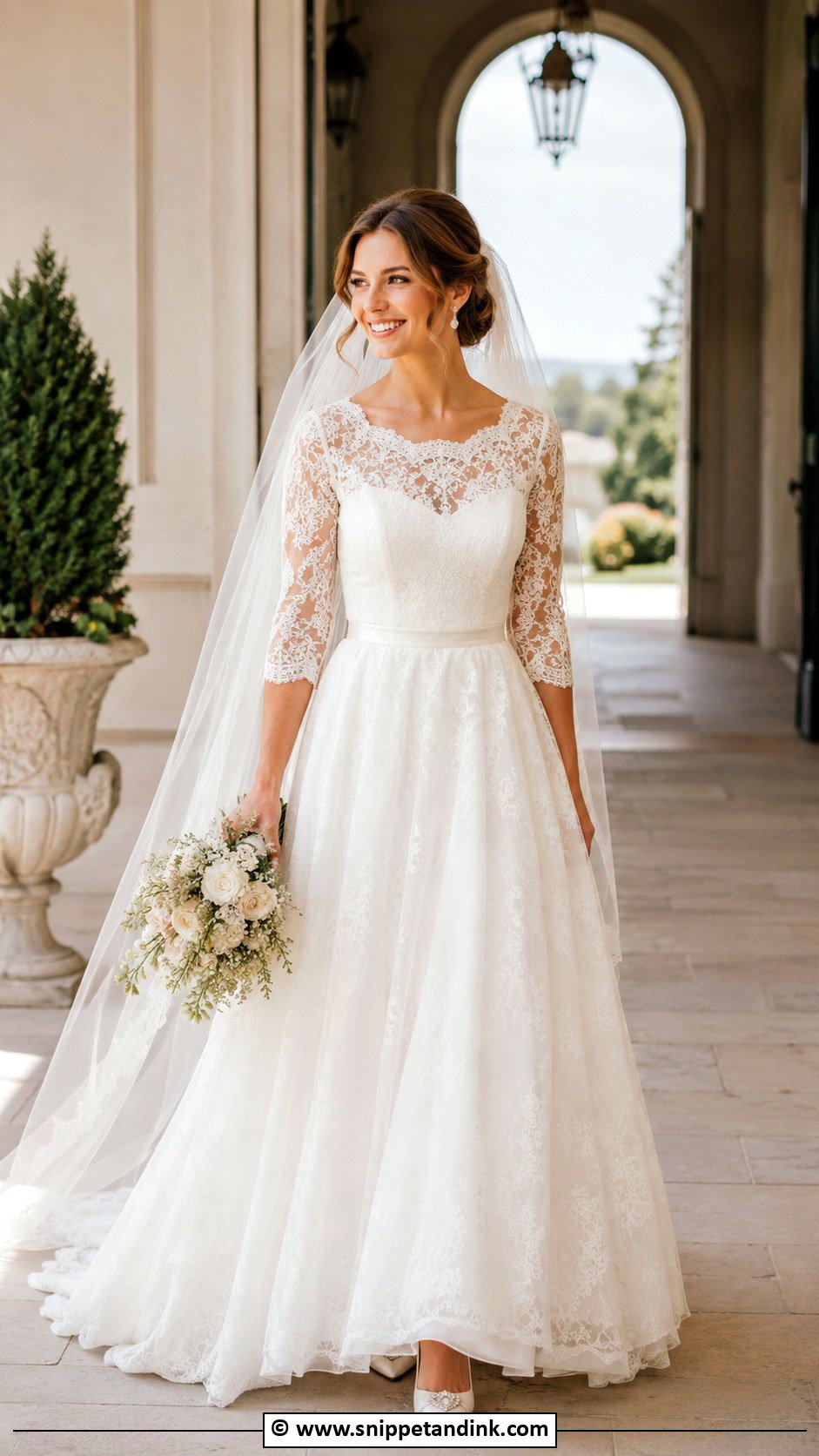
Vintage-inspired gowns last when they borrow one classic detail rather than recreating a whole era. Lace sleeves, a defined waist, soft pleating, a tea-length hem, a high neck or a fluid slip shape all work. Pick one, then keep the rest polished. If you’re wearing an actual heirloom piece, like a grandmother’s veil, I’d let that be the vintage note and choose a cleaner dress. Simple heels and heirloom-style earrings finish it.
The Gown Calendar Brides Tend to Underestimate
Full-length gowns take longer than most people expect. Many are made to order once you’ve chosen your size, and production times commonly run several months; the shop will give you a realistic window, and it varies by designer and season. I’d start trying gowns on around nine to twelve months before the wedding so there’s no pressure later.
- Order the gown with enough time for production plus a buffer for shipping delays.
- Book the first alteration fitting roughly two to three months before the wedding.
- Expect two or three fittings in total, more for complex gowns or significant changes.
- Bring your wedding shoes and underwear to every fitting, since the hem length depends on them.
- Collect the gown close to the date and keep it hanging in its breathable bag until the morning.
Planning the bustle
If your gown has a chapel or cathedral train, ask your seamstress about bustle options at the first fitting. An over-bustle lifts the train and hooks it up onto the back of the skirt; an under-bustle tucks it beneath, giving a softer, layered look. Ask her to teach the person who’ll do it on the day, and have them practise at the final fitting, because finding the right loops in a dim reception room is harder than it looks.
Shape, Fabric and the Confidence to Keep It Simple
A classic gown doesn’t have to be plain, and a memorable one doesn’t have to be dramatic. Satin, lace, crepe, tulle, pearls, bows and long trains all work when they’re used with balance. Pick a dress that suits your venue, fits your body properly and still feels like you when you’ve worn it for an hour. Get the fit right, keep the accessories in proportion, and the photos will still feel right decades from now.
You'll Like These Ideas:









Leave a Reply