
A French twist is one of the updos I trust most on a wedding morning. The hair is gathered at the nape, twisted upward into a vertical roll and pinned from inside the fold, so the structure is hidden and the back of the head looks smooth from the aisle. It shows off a neckline and earrings better than almost any bun. It also adapts: I can keep it glassy for a formal ceremony or loosen it for a garden, and with the right pinning it works on long, medium and layered hair. These are the versions I’d suggest, with notes on what each needs from your hair and your accessories.
The Fold Only Holds If the Hair Underneath Has Grip
Freshly washed, conditioned hair is the hardest to twist. It’s slippery, the pins slide, and the roll loosens by the reception. I ask brides to wash the day before, skip heavy conditioner on the lengths, and arrive with dry, product-free hair. On the morning I add texture spray and set the hair on hot rollers, even for a sleek twist, because the slight bend gives the pins something to hold.
Fine, thick and layered hair each need something different
Fine hair needs volume at the root and sometimes a hidden padding piece, otherwise the roll looks thin. Thick hair needs the opposite: I twist smaller sections or switch to a double twist so the fold doesn’t become bulky and heavy. Short layers are the real challenge, since they poke out of the seam. A few become face-framing pieces, and the rest get pinned and smoothed with a wax stick.
At the trial, I’d also ask you to bring the veil or headpiece, wear a top with a similar neckline, and keep the style in for a few hours. You’ll learn more from how it feels at hour four than from the mirror at minute one.
1. Classic Sleek French Twist
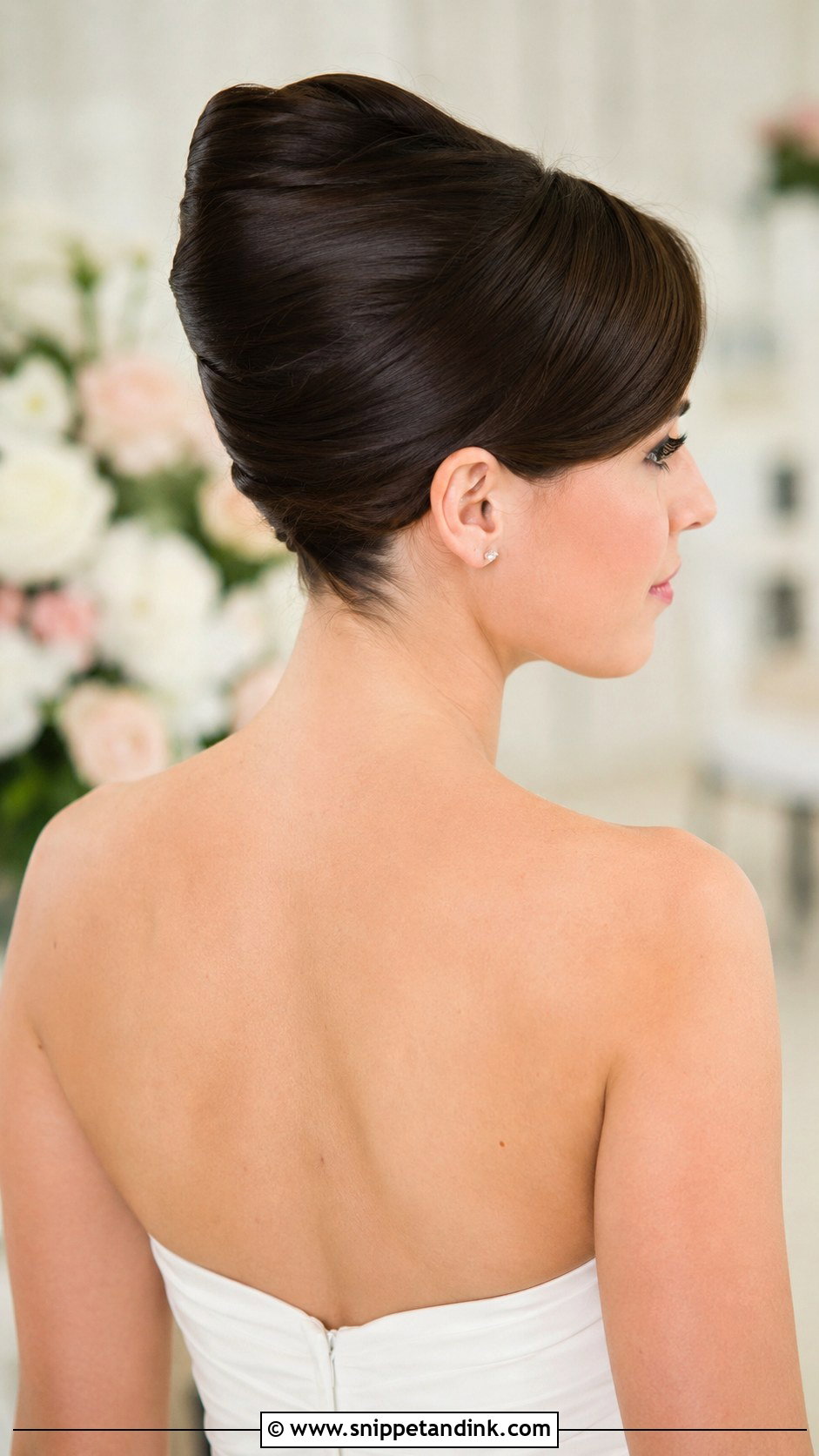
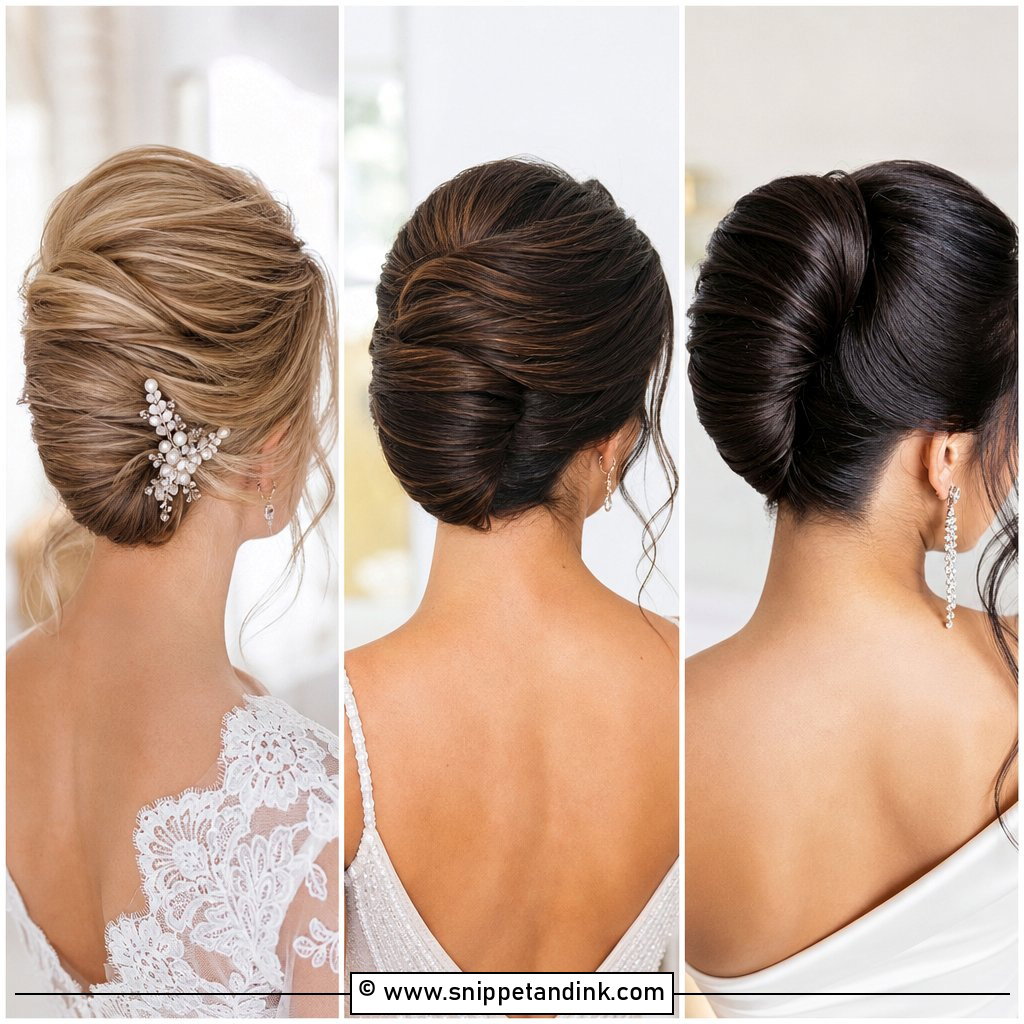
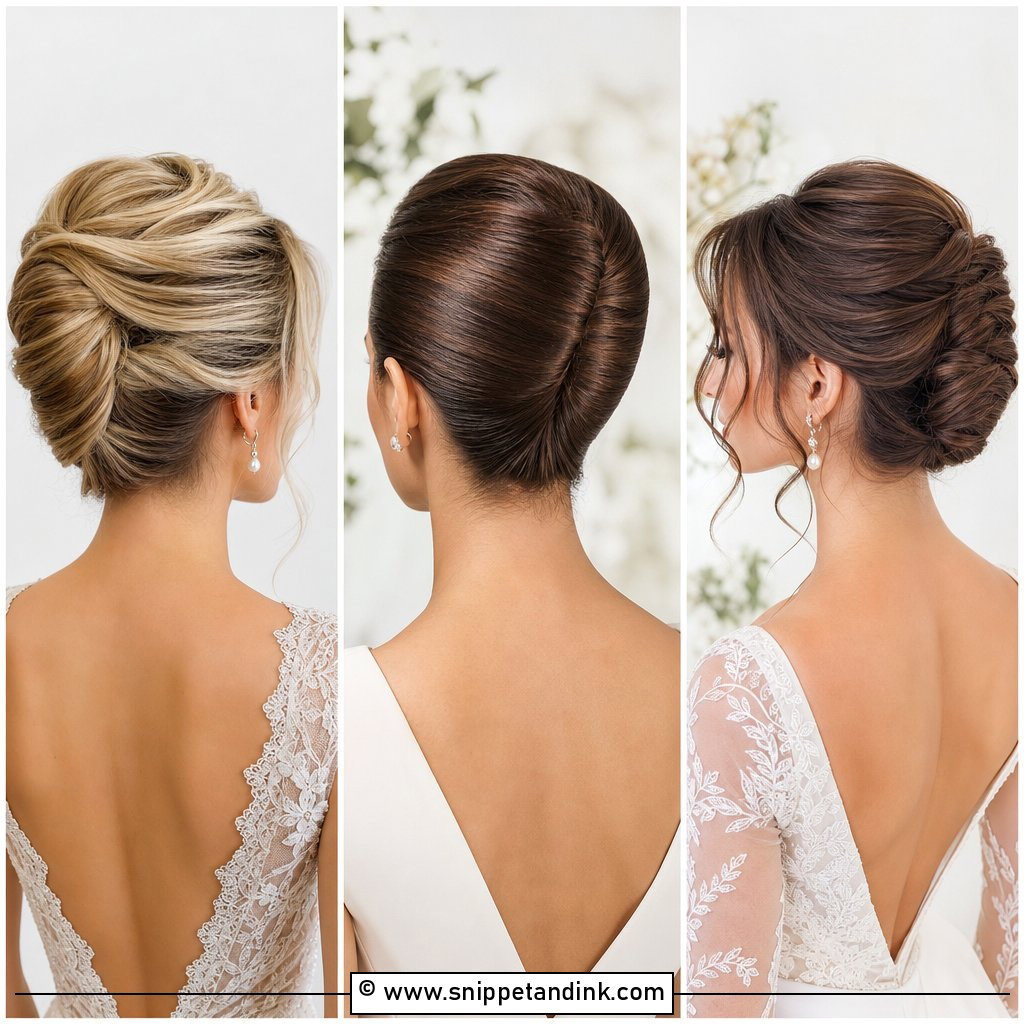
The sleek version leaves nowhere to hide, so prep does the work. I smooth the hair with a light cream, blow it straight with a paddle brush, and only add a drop of oil at the very end; too much oil and the pins slide. Every strand goes into one clean roll down the back of the head, and I pin it in a zigzag along the seam so it can’t open. It pairs with a structured gown or a minimalist slip dress, and it draws attention to the jawline and earrings. A sleek twist does show flyaways in close-up photos, so I finish with a fine-tooth comb and a little wax stick.
2. Low French Twist With Veil
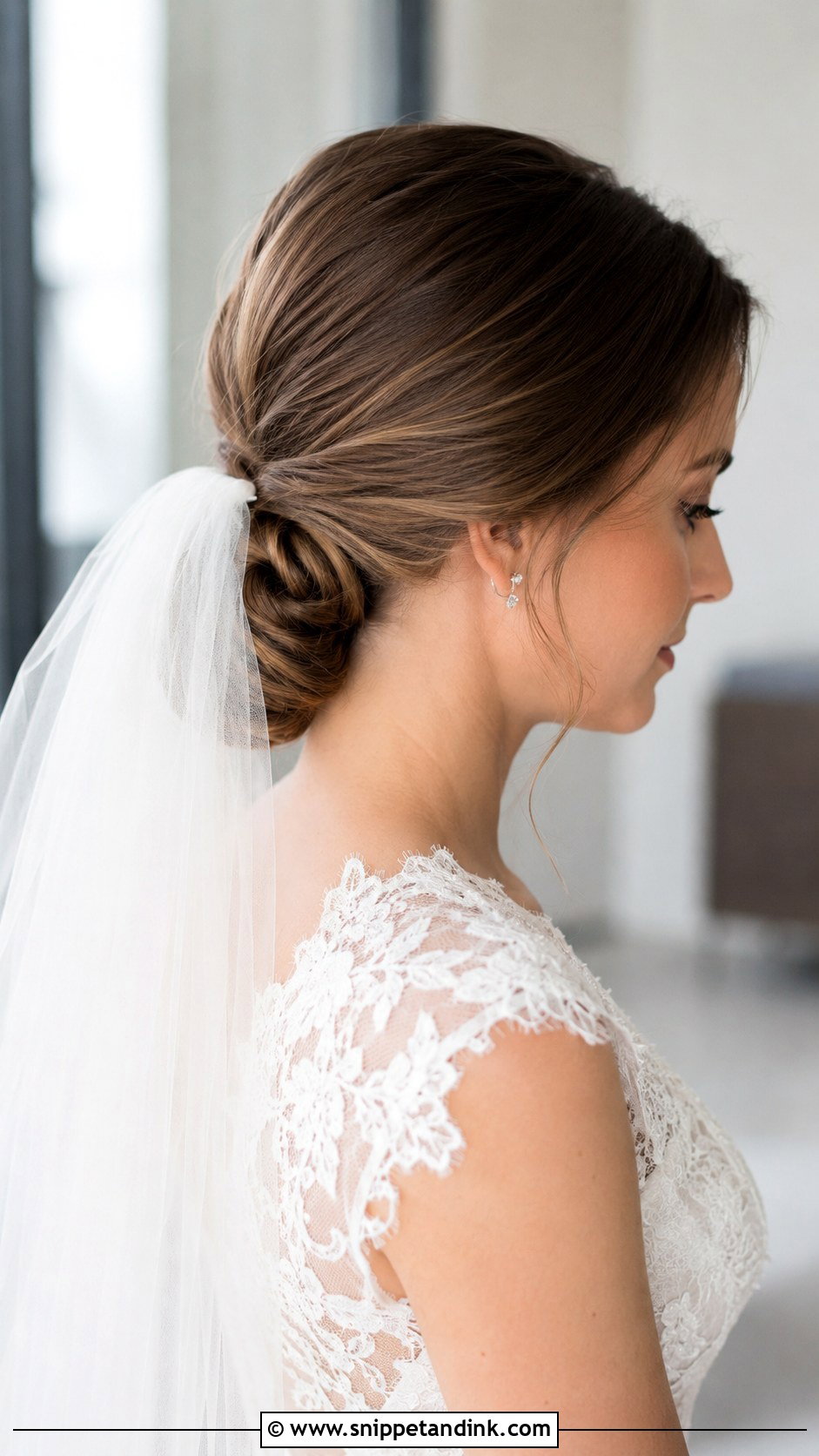
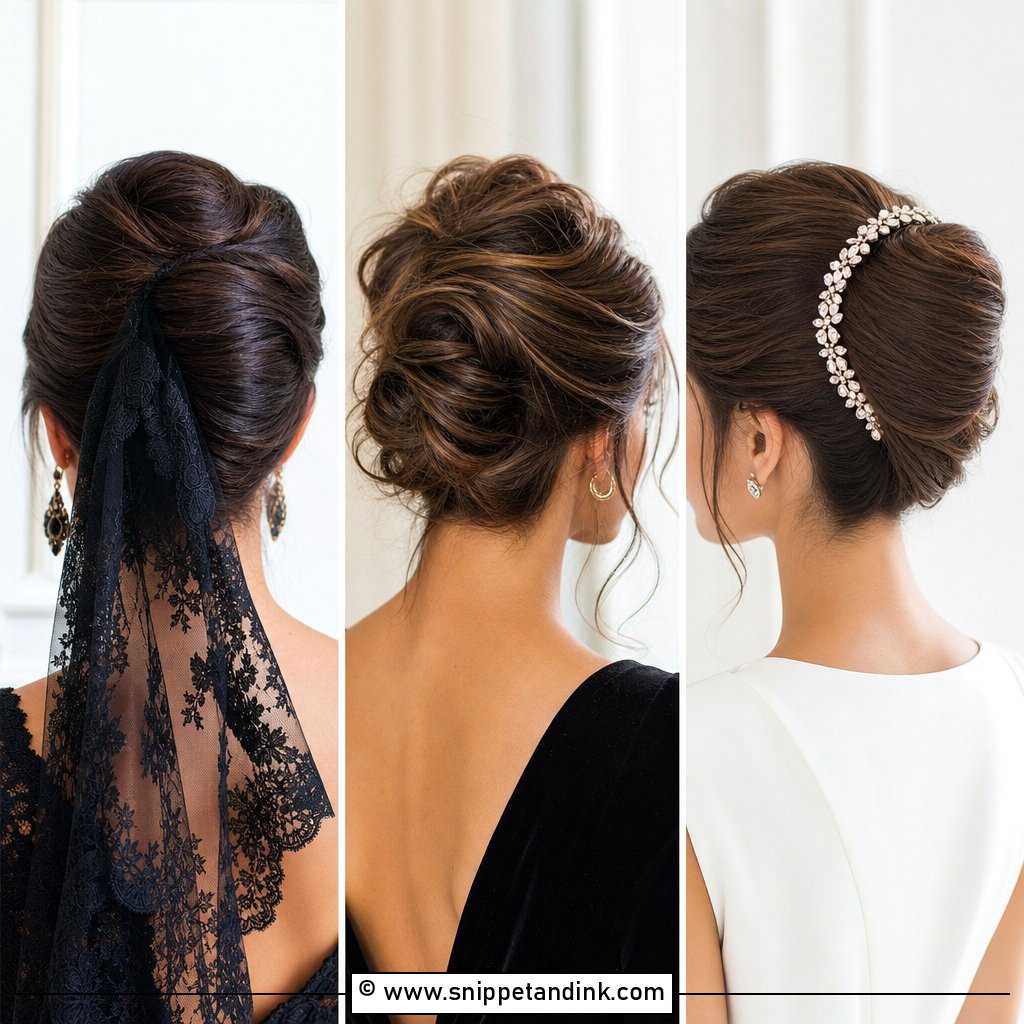
A low twist sitting near the nape leaves the crown free for the veil comb, which is why I suggest it for church weddings and long cathedral veils. The comb sits above the roll, anchored into two crossed bobby pins rather than the twist itself, so the weight of the tulle doesn’t drag the fold open. Many brides add a decorative comb at that point to hide the attachment. When the veil comes off for the reception, the twist still looks finished, with no restyle needed.
3. Textured French Twist With Champagne Blonde
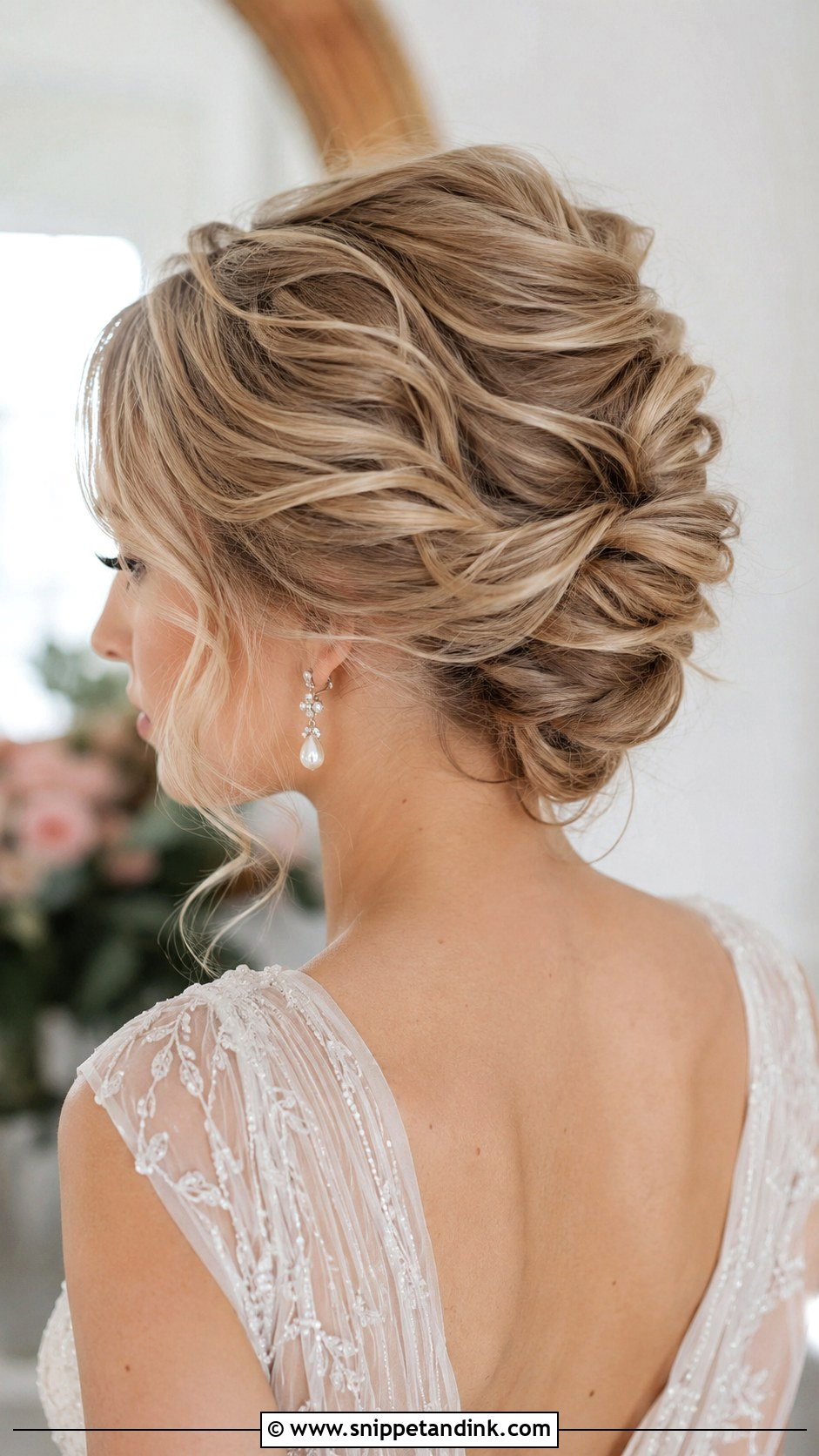
Texture changes the character of a twist completely. Instead of a glassy finish, I curl the hair first, brush it out, and twist it with some volume left in, pulling a few strands loose afterwards. With a creamy champagne blonde shade, every fold catches the light differently, so the dimension really reads in photos. A little teasing at the crown gives height and a few pieces around the face keep it soft. Textured twists forgive a breezy garden far better than sleek ones, because a strand that escapes just looks intended.
4. French Twist With Side Bangs
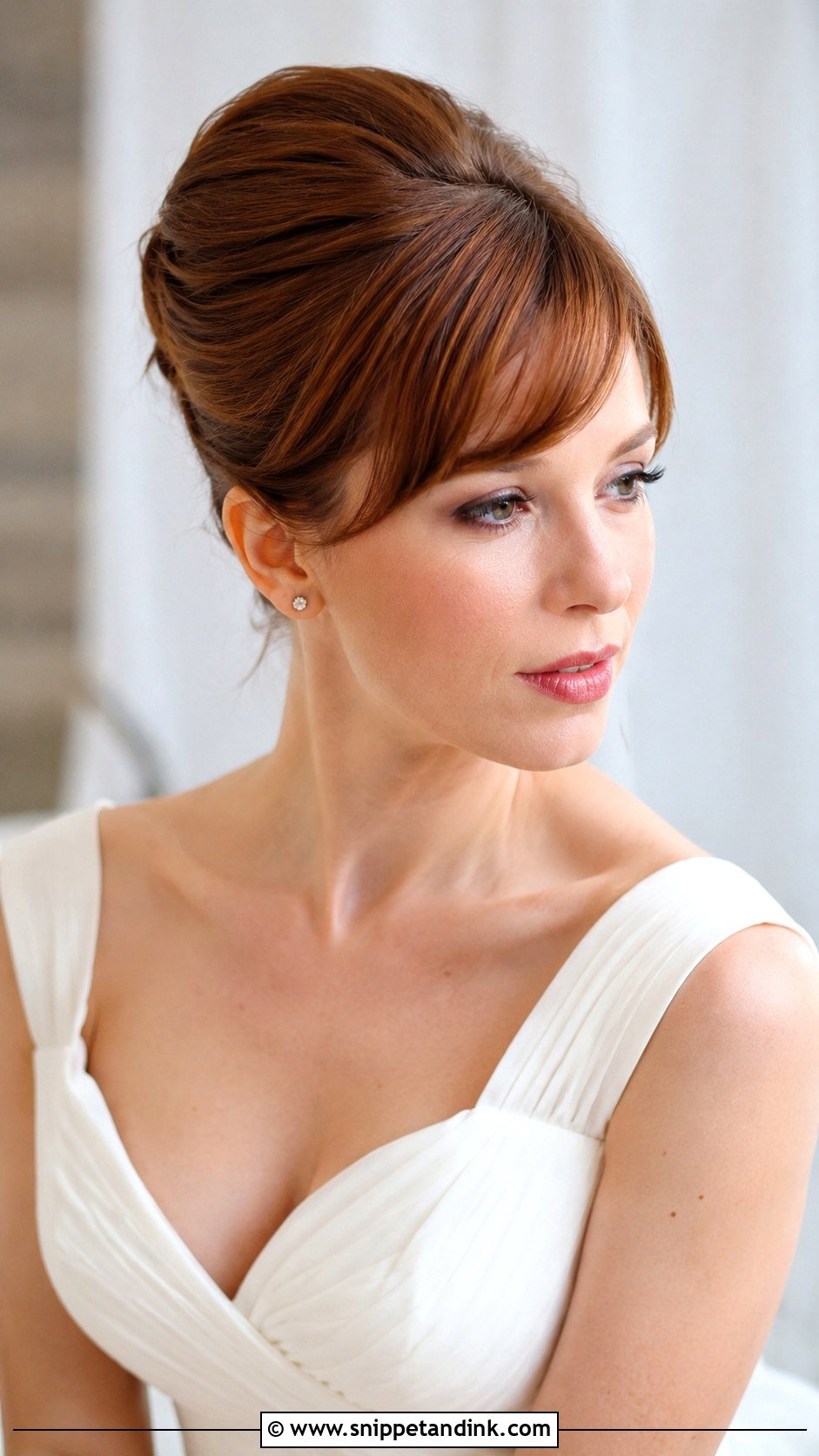
If you already wear side-swept bangs, keep them. They frame the forehead and soften a structured twist, and growing them out or pinning them back for one day rarely looks like you. I set them on a large round brush or a big barrel, so they curve away from the eye rather than falling into it during the vows. The back stays clean and controlled. A light mist of flexible spray holds the sweep without making it crunchy.
5. Romantic Loose French Twist
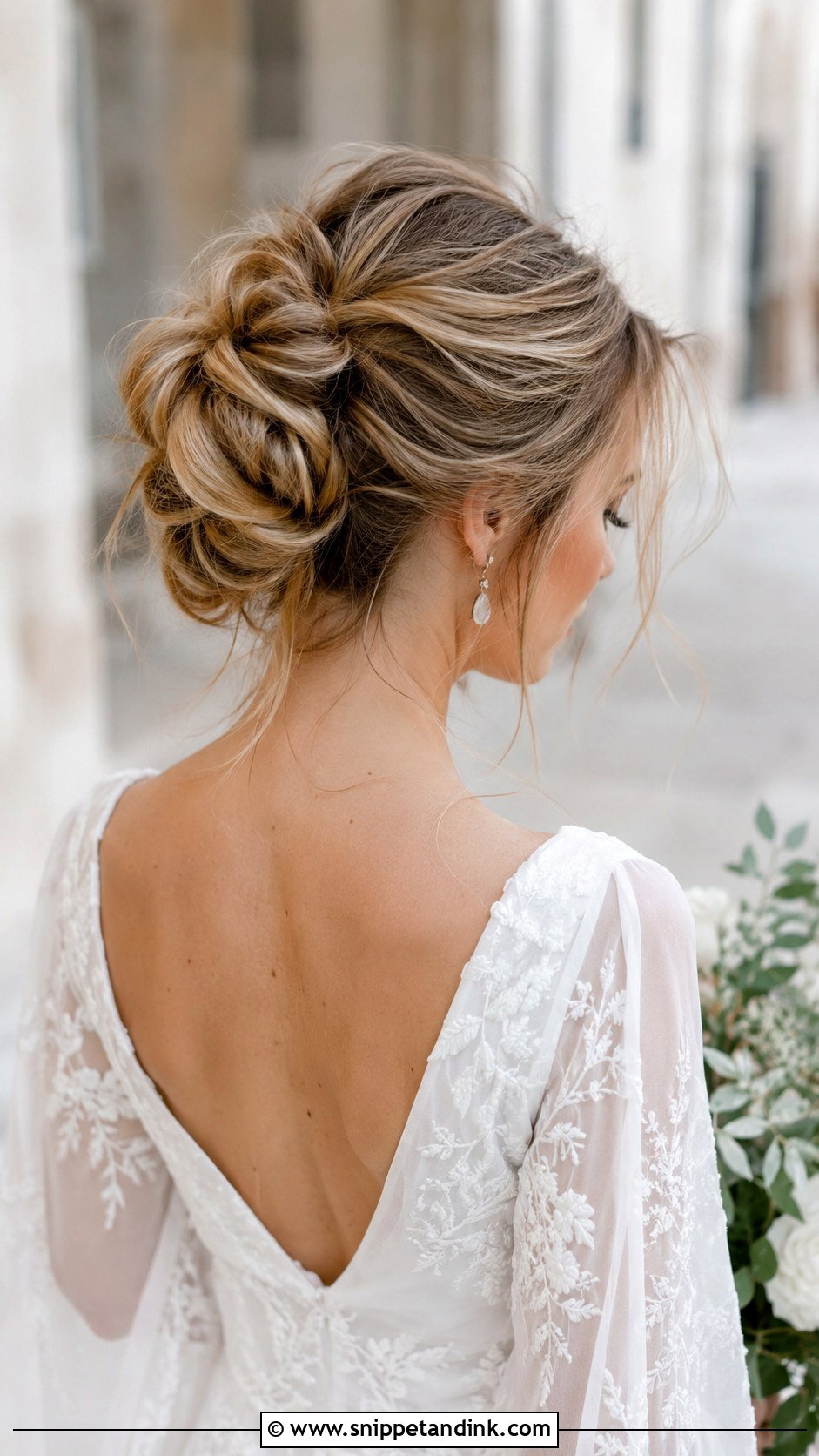
A loose twist leaves a few strands free and keeps the roll relaxed, so it looks as if it fell into place. It only holds that shape if the hair is curled first; straight hair has nothing to grip and slips out of a loose twist within the hour. I pin it with fewer, longer pins, placed deeper. The soft wisps around the face suit bohemian and beach weddings, where a stiff updo feels out of place. On very silky hair I’d add a dry texture spray before twisting.
6. French Twist With Tiara
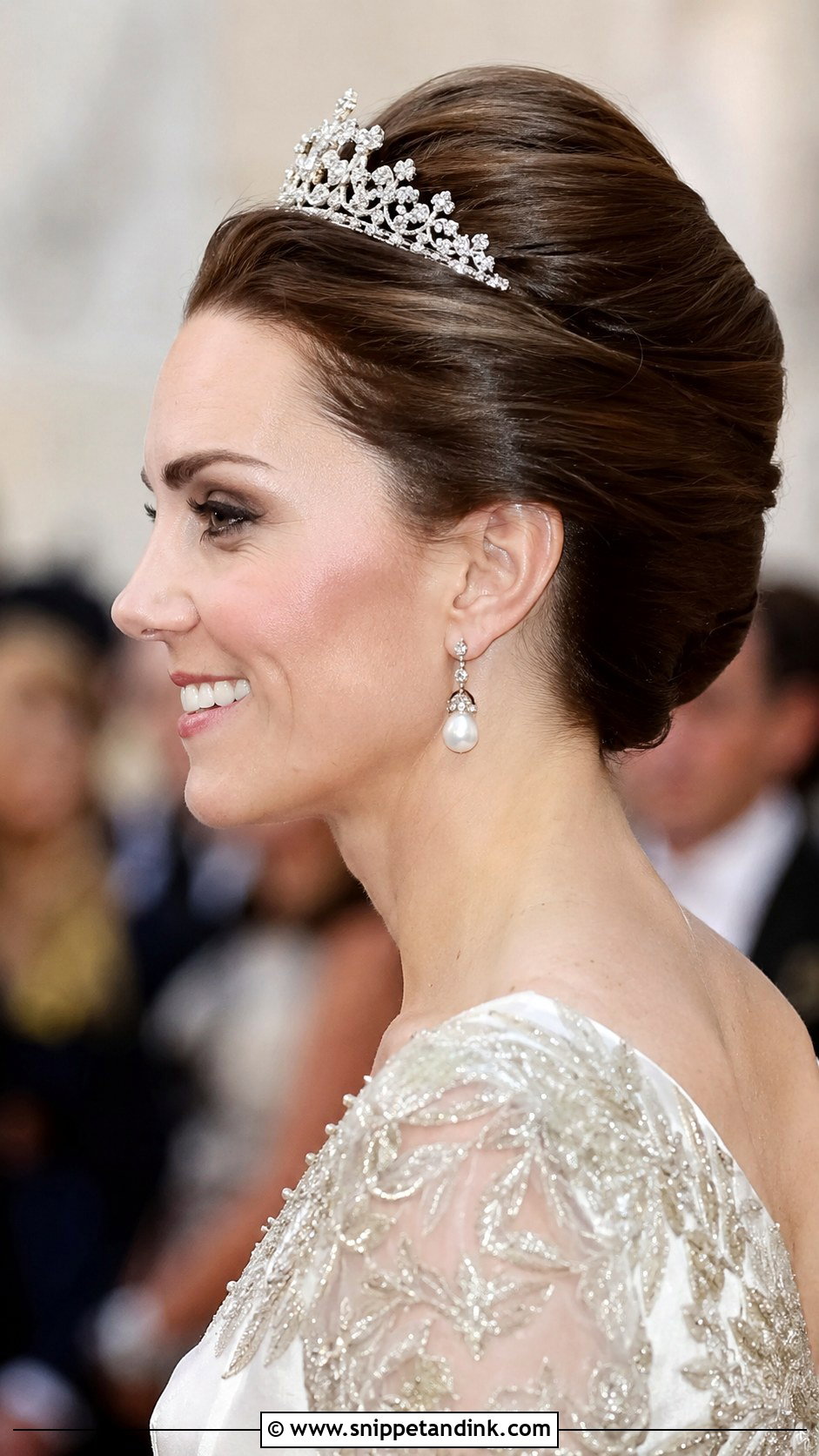
A tiara needs a structure behind it, and the smooth vertical fold gives a sparkling headpiece a clean backdrop with no competition. I build a little height at the crown first, then slide the tiara in and pin through its end loops into the backcombed base so it won’t tip forward when you bow your head. A delicate band reads subtle, while a taller piece looks full ballroom. This pairing suits formal venues and grand entrances.
7. French Twist With Curled Tendrils
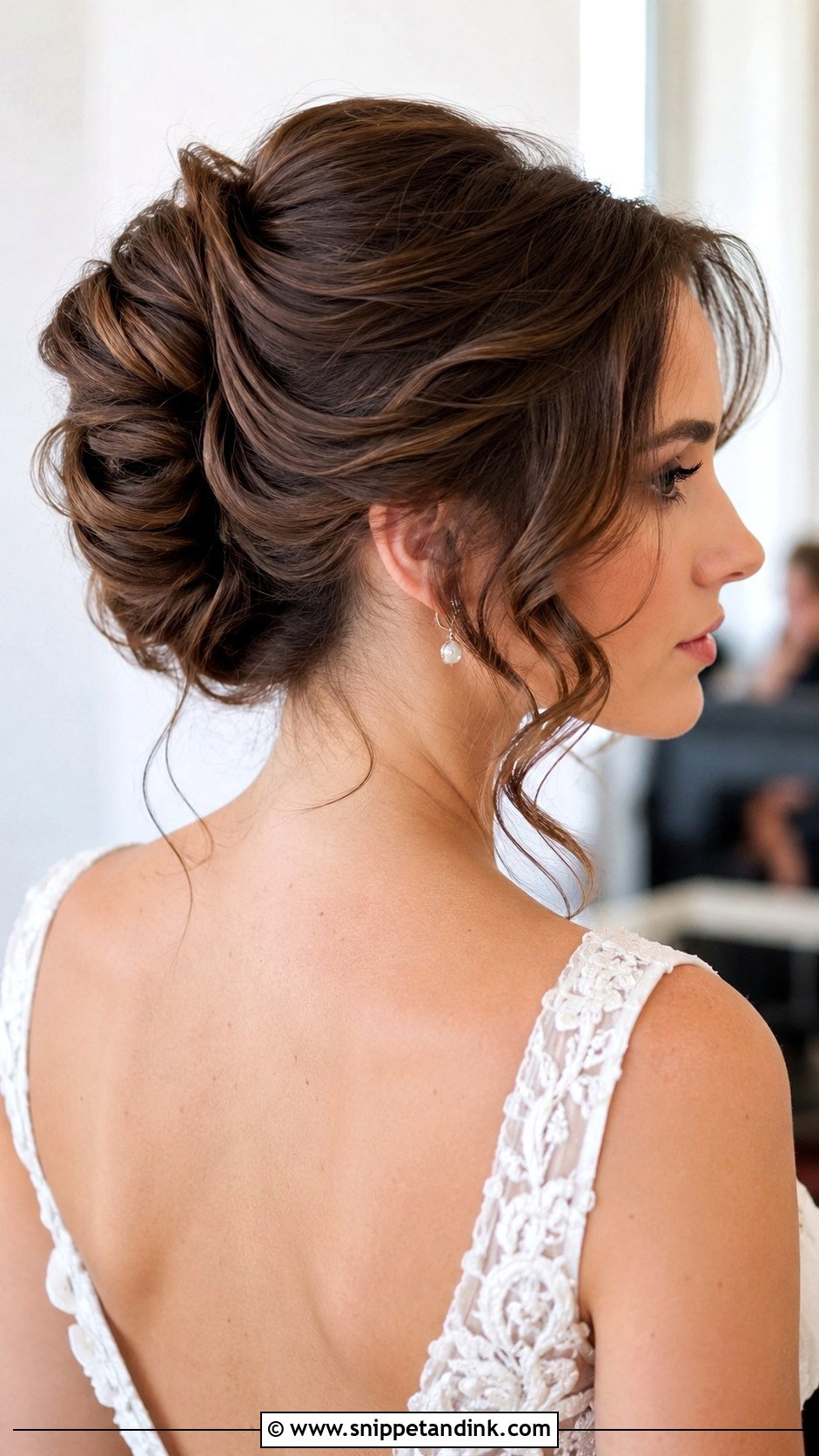
Tendrils are the detail I’m most careful with. I leave a few pieces at the temples and nape, curl them with a small barrel and leave them pinned in clips while the rest sets, so they keep their shape for longer. The contrast between a smooth twist and soft curls softens the whole look. One warning: in humidity, curled tendrils drop and straighten faster than anything else on the head, so I keep them slightly shorter than you’d expect.
8. High French Twist For Long Hair
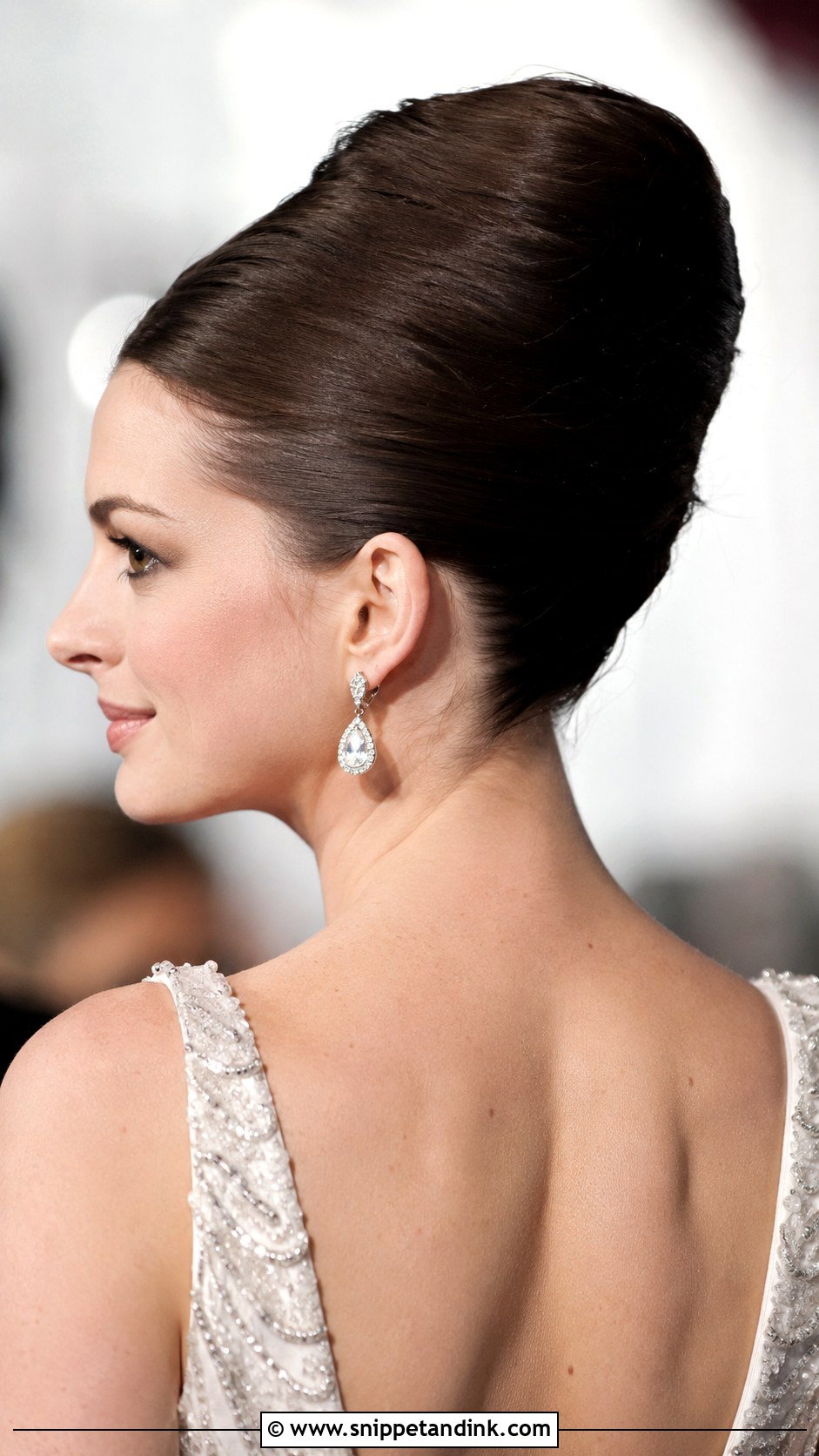
Positioning the roll higher on the back of the head lengthens the neck and gives a dramatic profile. Long, thick hair is ideal, because there’s enough to fill the twist without padding. The challenge is weight: a high twist on heavy hair can pull, so I build an anchor of crossed pins at the base first and twist around it. A little volume at the crown enhances the lift. It suits formal evening weddings.
9. French Twist With Pearl Pins
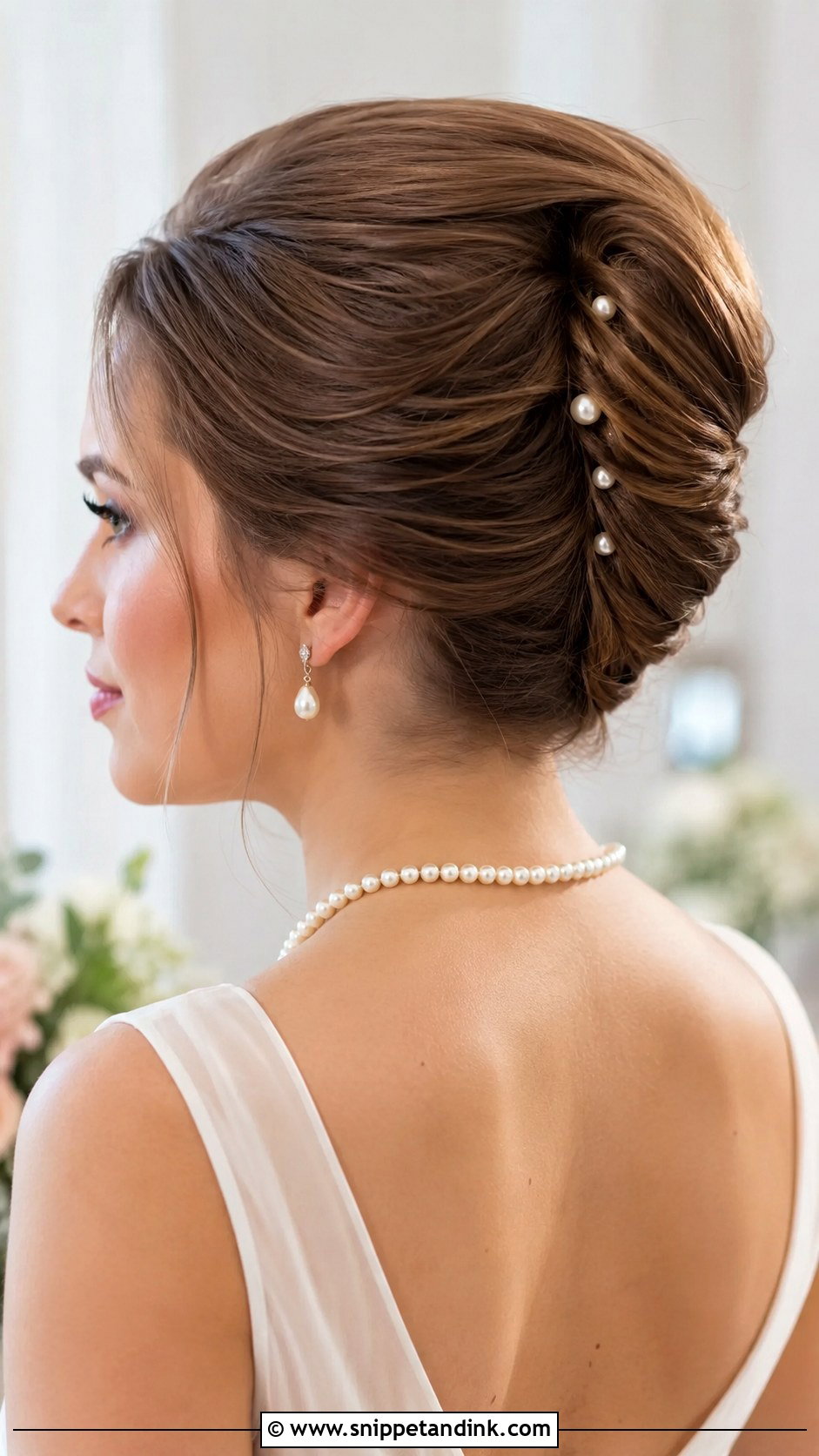
Tiny pearl pins along the fold add a soft shine that never overwhelms the style. I cluster them near the top of the twist or space them evenly down the seam, and I push each one in at an angle so it hooks the hair underneath; pearl pins with straight shafts slide out otherwise. Pearl jewelry ties the look together. It works at classic and modern weddings alike, and it’s one of my favorite ways to dress up a twist quietly.
10. Messy French Twist Updo
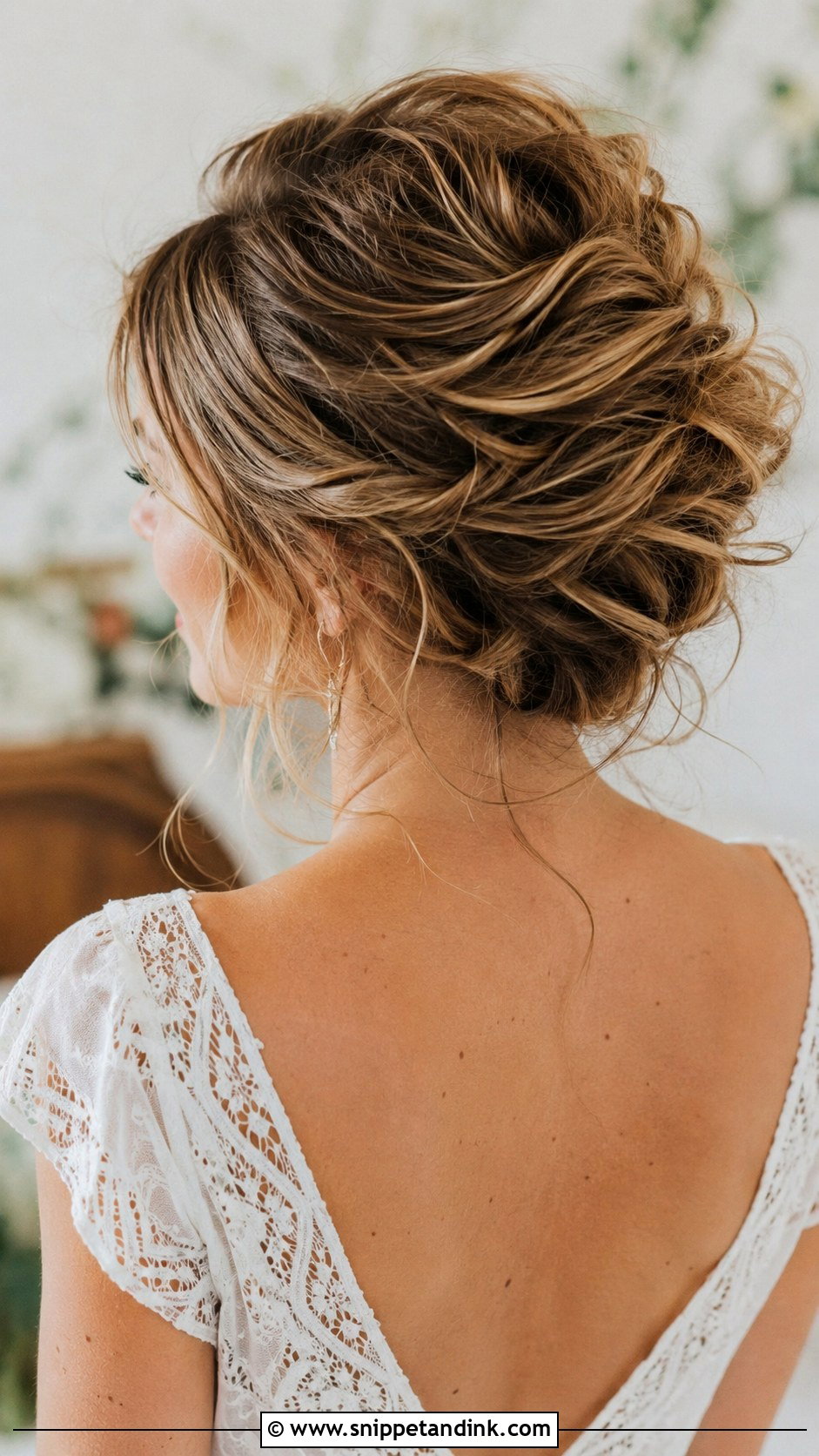
The messy twist trades precision for personality, with soft texture, loose pieces and a slightly tousled finish. Ironically, it takes as long as a sleek one. I tease the hair at the base for grip, twist it loosely, then pull pieces out by hand until it looks relaxed rather than unfinished. That balance is what separates a style from a hairdo that’s fallen out. It suits rustic, bohemian or outdoor celebrations.
11. French Twist With Braided Detail
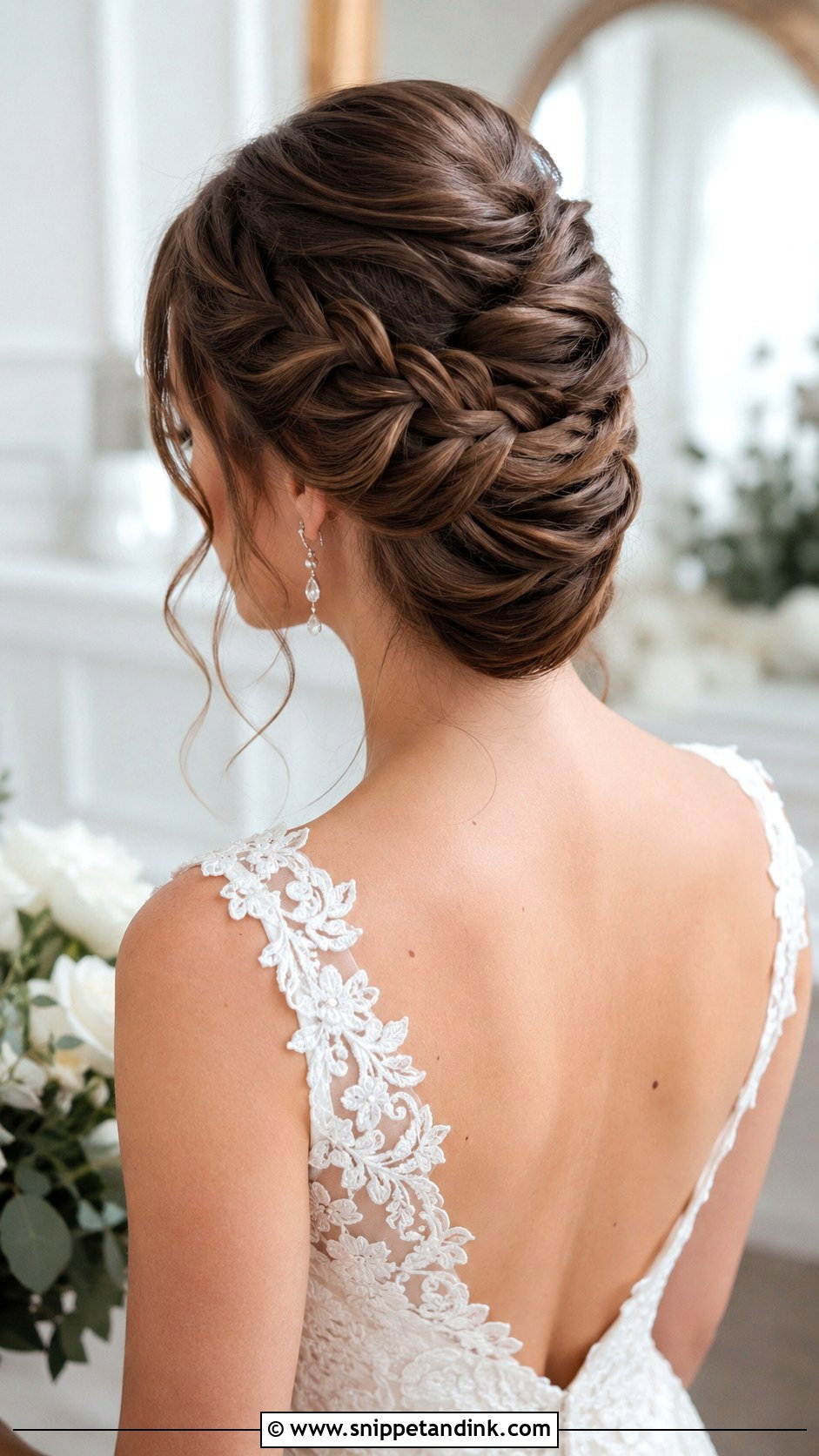
A braid running alongside the twist adds texture and some artistry. I usually braid a small section along one side before the twist goes in, then pin the end of the braid inside the fold so it disappears. Pancake the braid gently for softness, or leave it tight for a cleaner finish. Styled tight, it suits a formal wedding; loosened, it looks boho. The braid also acts as an extra anchor, which helps on slippery hair.
12. French Twist With Flowers
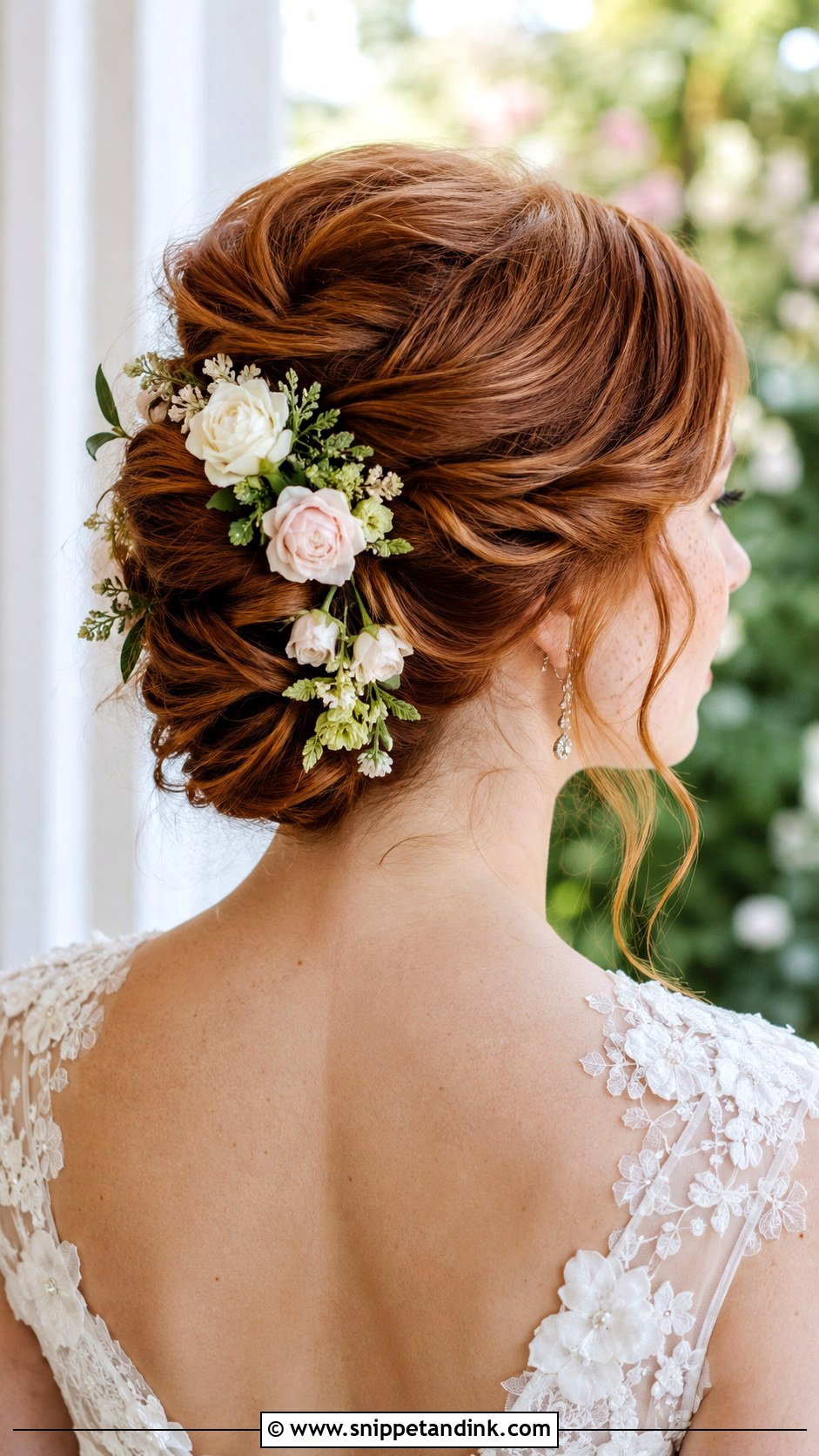
Fresh or silk flowers tucked along the fold give a garden feel. Fresh blooms should be ones that can last out of water, like spray roses or wax flower, and I ask the florist to wire and tape them so I can pin them like accessories. Delicate blooms like gardenias bruise and brown within hours. Small flowers read subtle, larger ones bold. Matching them to the bouquet ties everything together at a spring or summer outdoor ceremony.
13. French Twist With Center Part
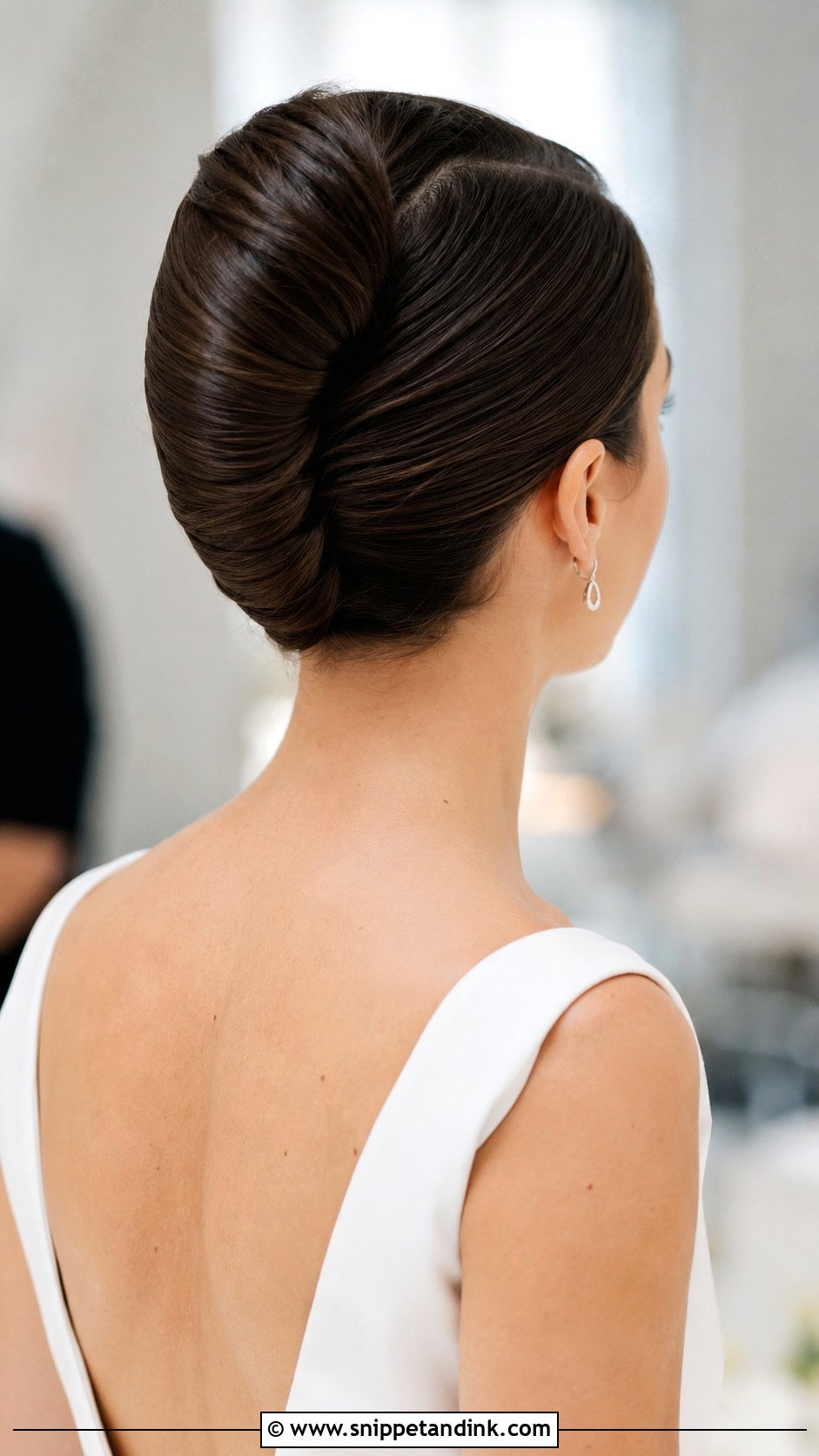
A center part makes the twist symmetrical and modern. I split the hair cleanly, smooth each side back, and twist so the roll starts directly in line with the part. It works best on balanced features and simple jewelry. The trade-off is honesty: a center part shows any cowlick or uneven growth at the hairline, so I check that at the trial. It suits minimalist brides and sleek city venues.
14. French Twist With Side Part
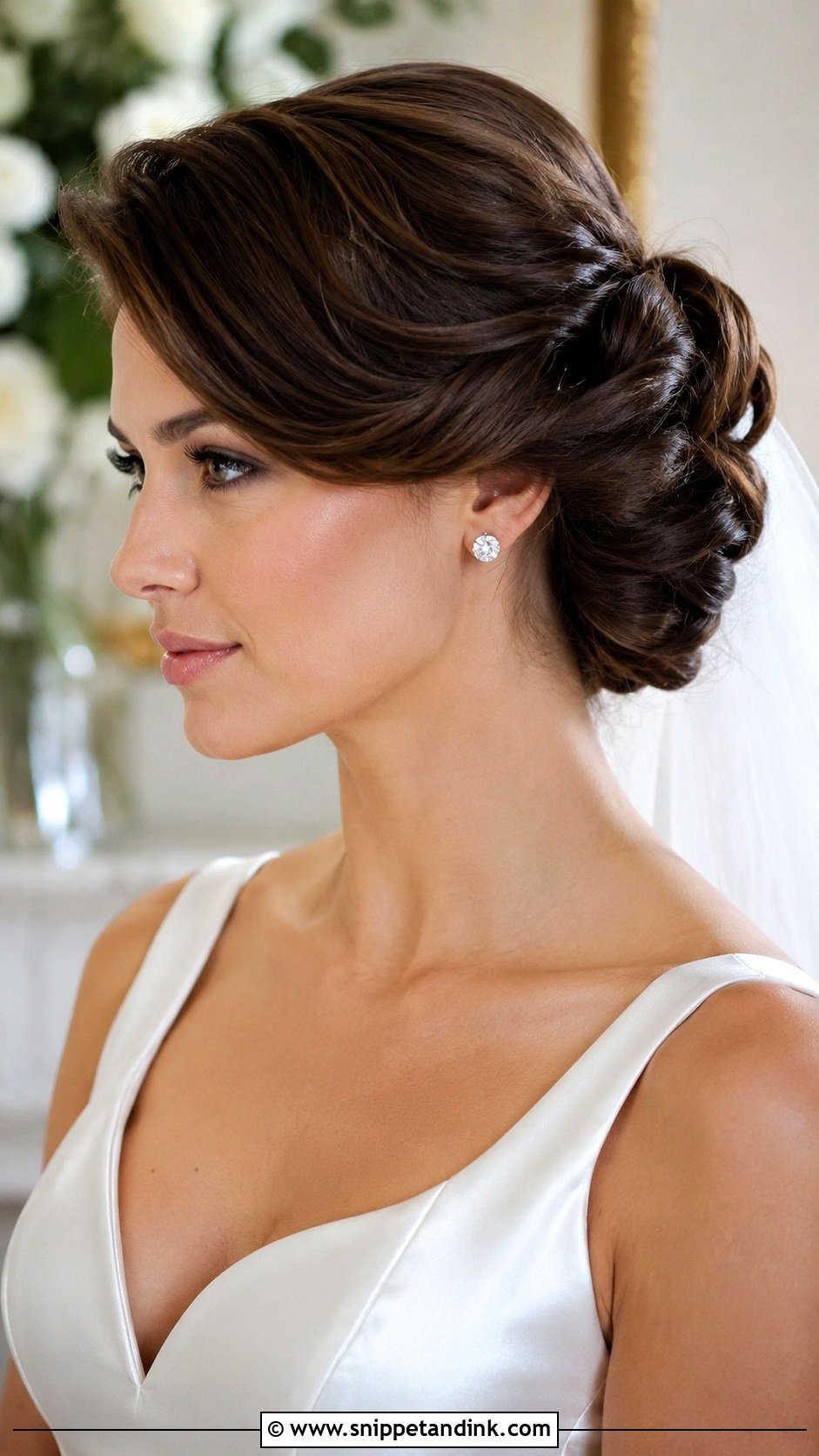
A deep side part adds asymmetry and a soft sweep across the forehead, with an old Hollywood feel. I set the front over a large round brush so the sweep has body, then pin it discreetly behind the ear before the twist goes in. The part draws attention to the eyes and cheekbones and pairs well with statement earrings. It adapts to formal or relaxed weddings. If your hair naturally parts on one side, use that side; fighting a natural part all day rarely works.
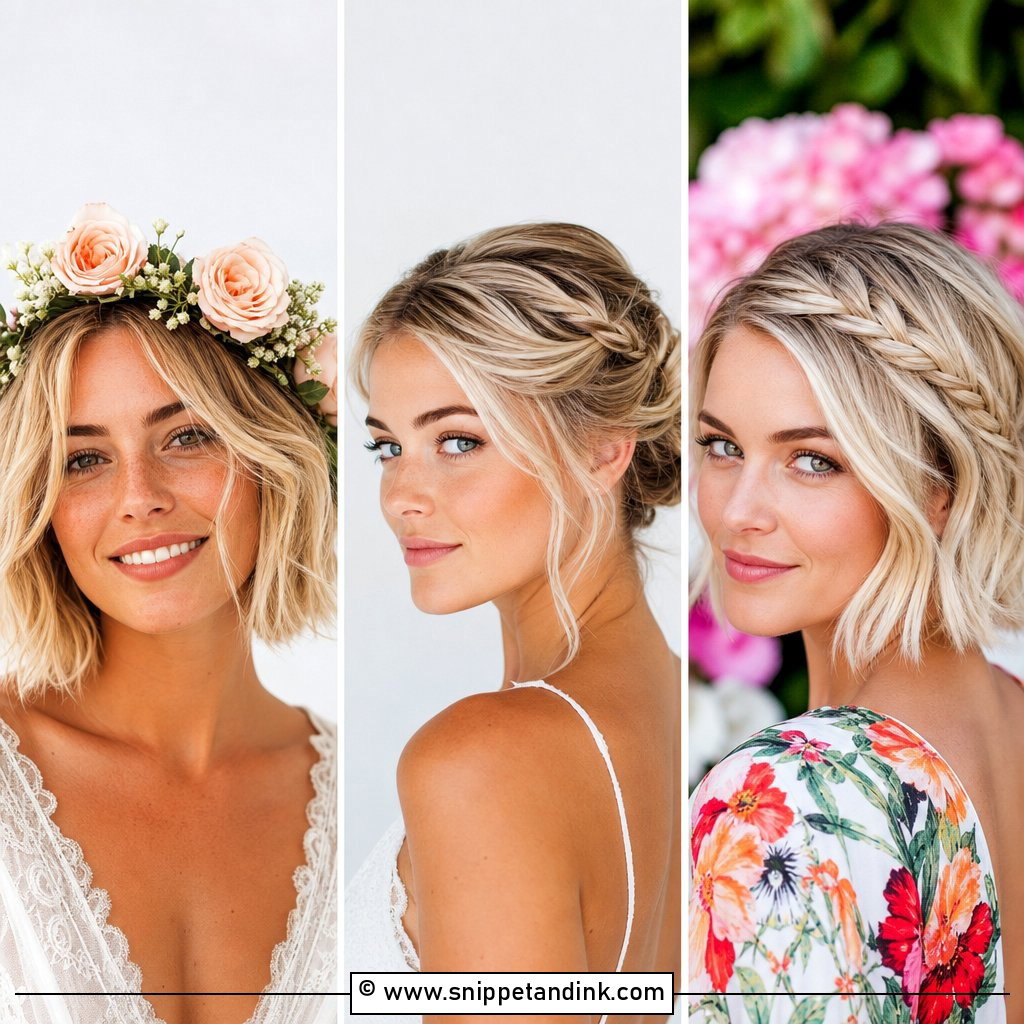
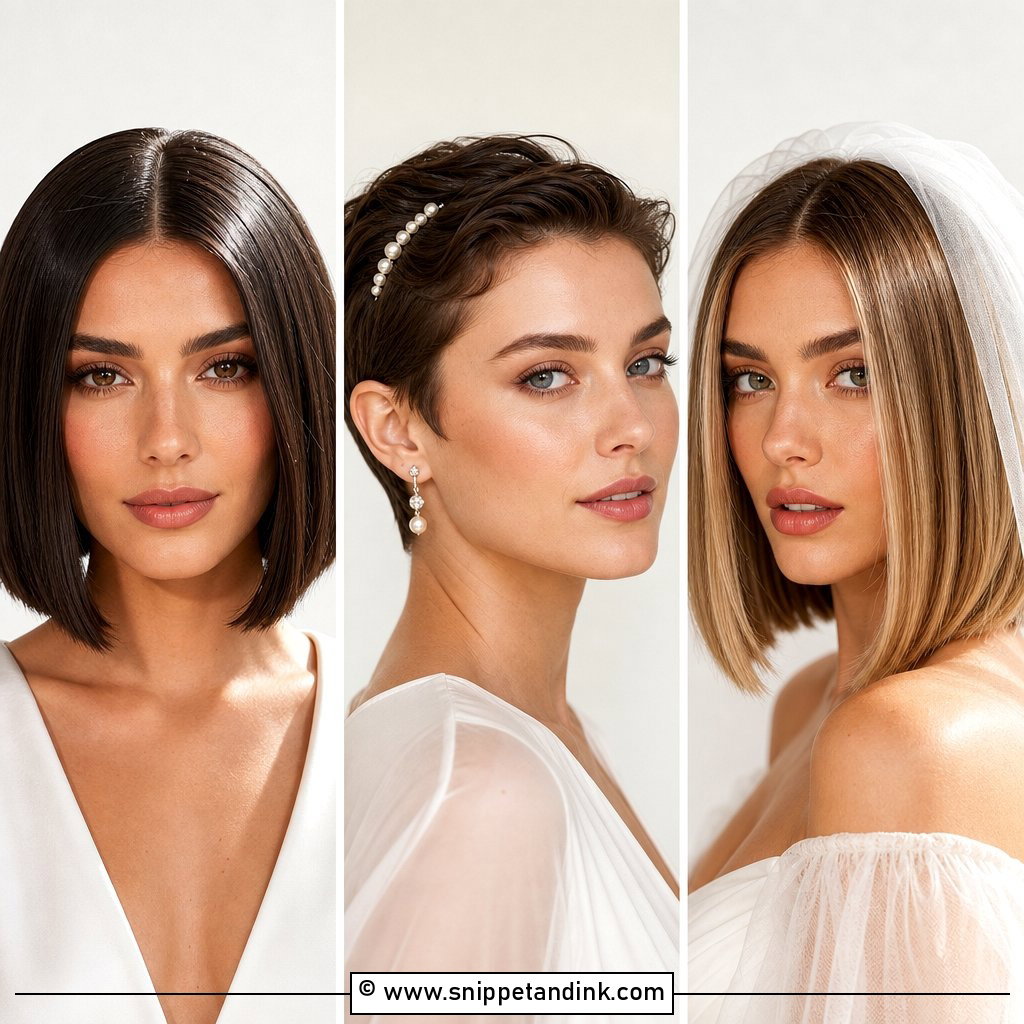
15. French Twist Bun Combination
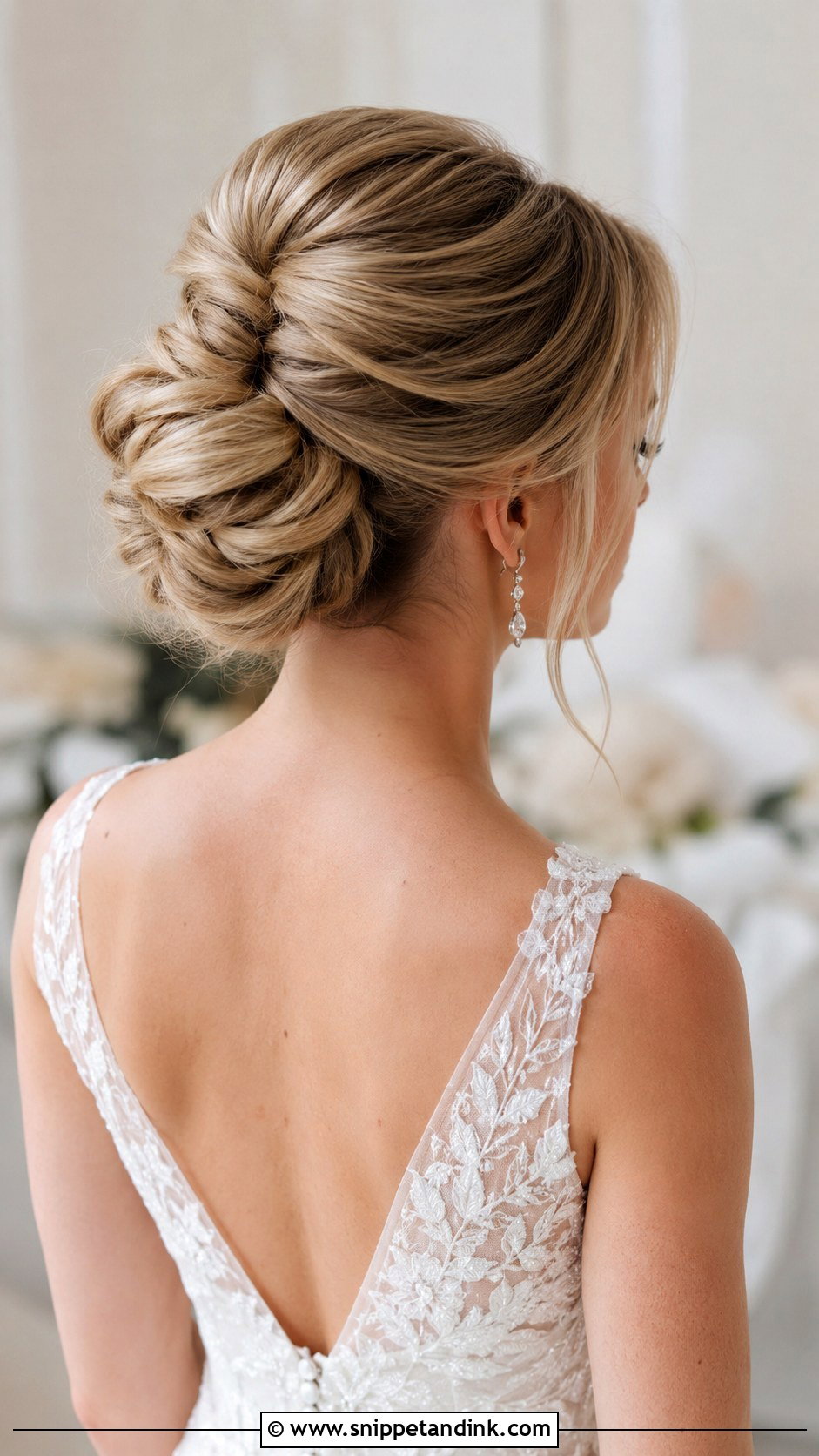
Combining a twist with a bun gives a fuller updo. The twist forms the base and a soft bun sits above or inside it, which spreads the weight of long or thick hair across two anchors instead of one. That makes it one of the most secure styles in this list. Keep the bun sleek or loosen it for softness. It holds up through the ceremony, photos and dancing.
16. French Twist With Sparkle Hair Vine
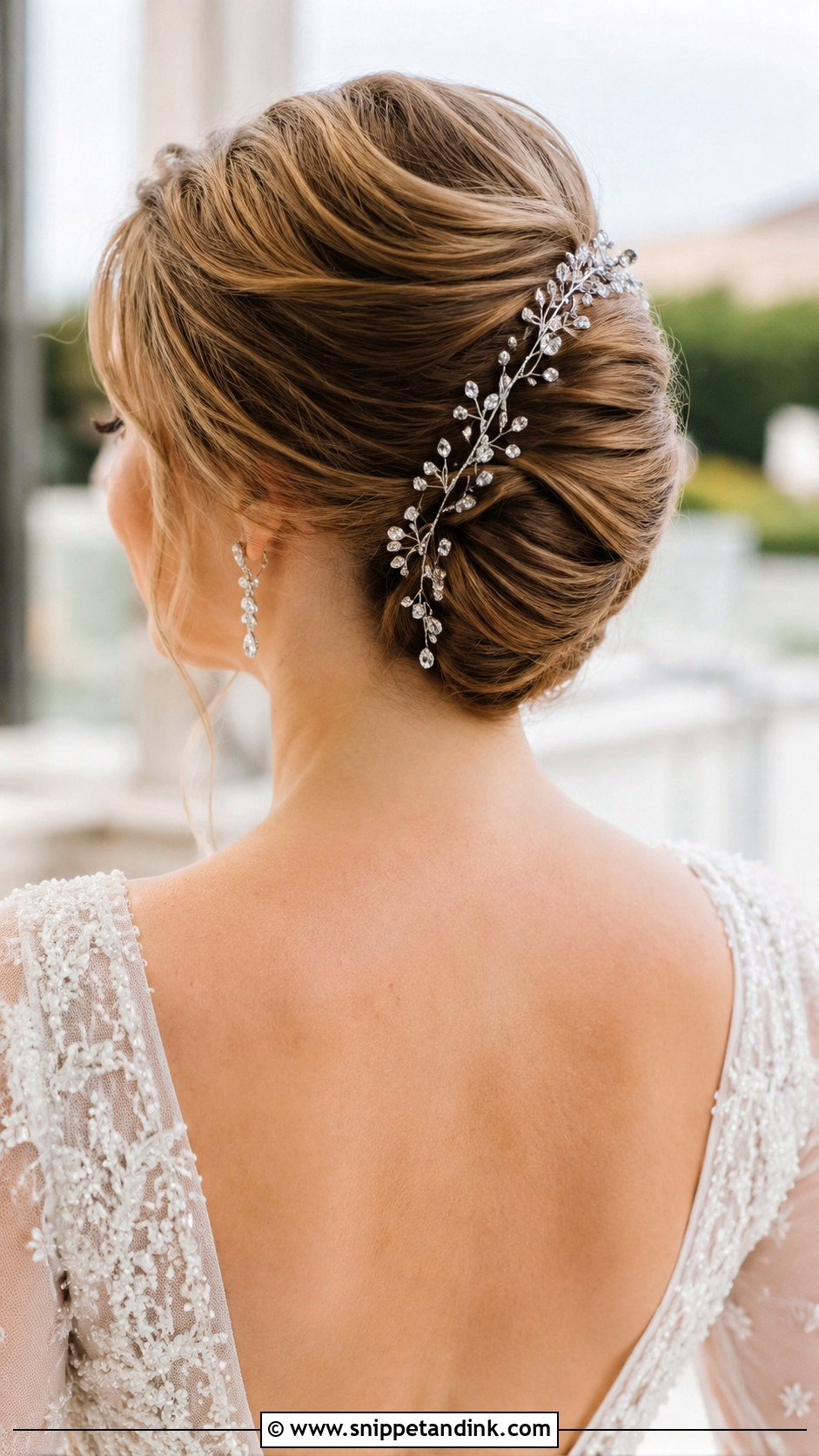
A delicate hair vine bends around the twist and catches the light with crystals or pearls. I weave it in after the twist is pinned, threading its wire through the fold and securing the ends with small pins so it doesn’t spring out. Placed across the crown it’s bold; along one side it’s subtle. It suits garden and formal weddings alike.
17. French Twist For Short Hair
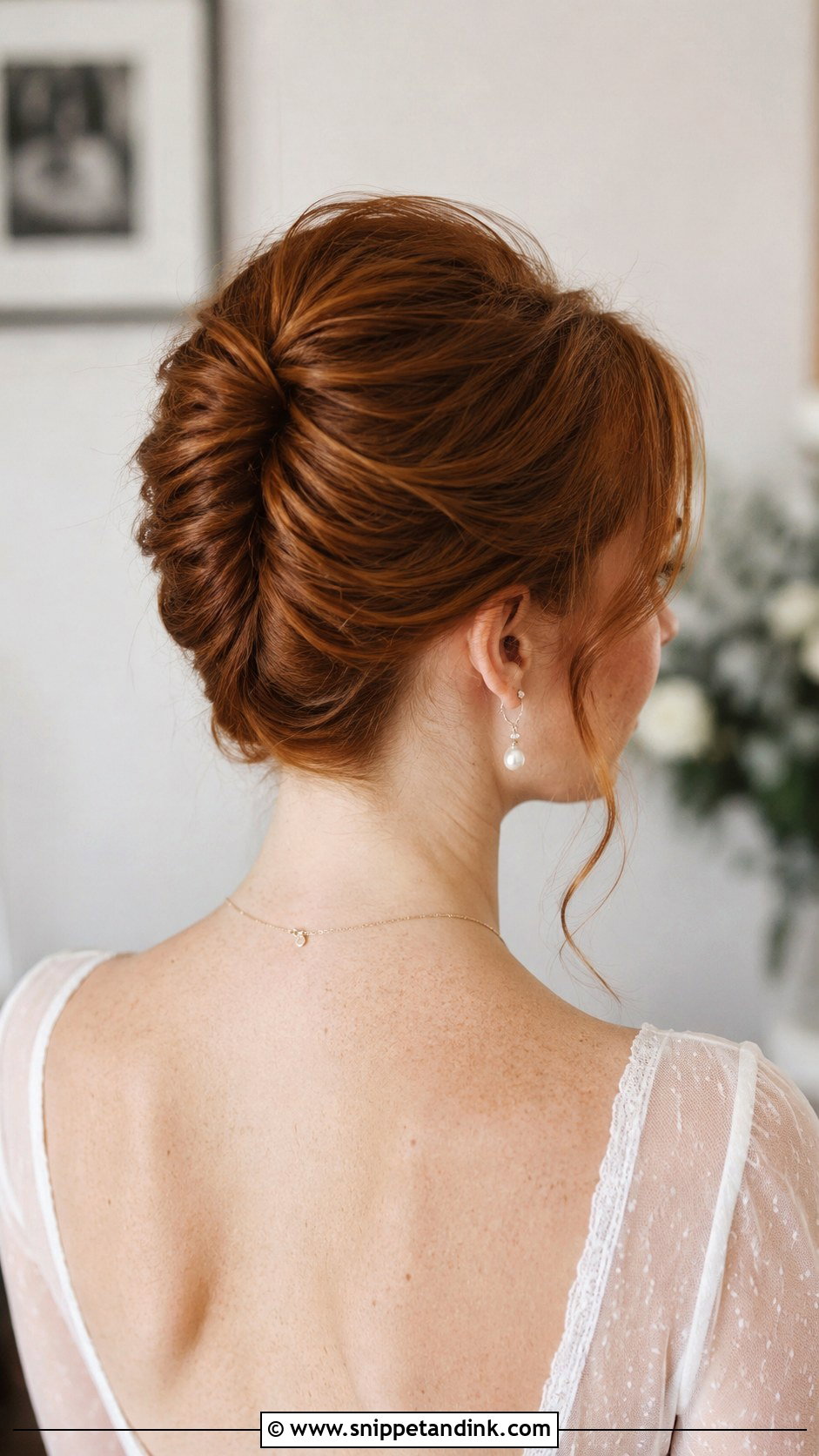
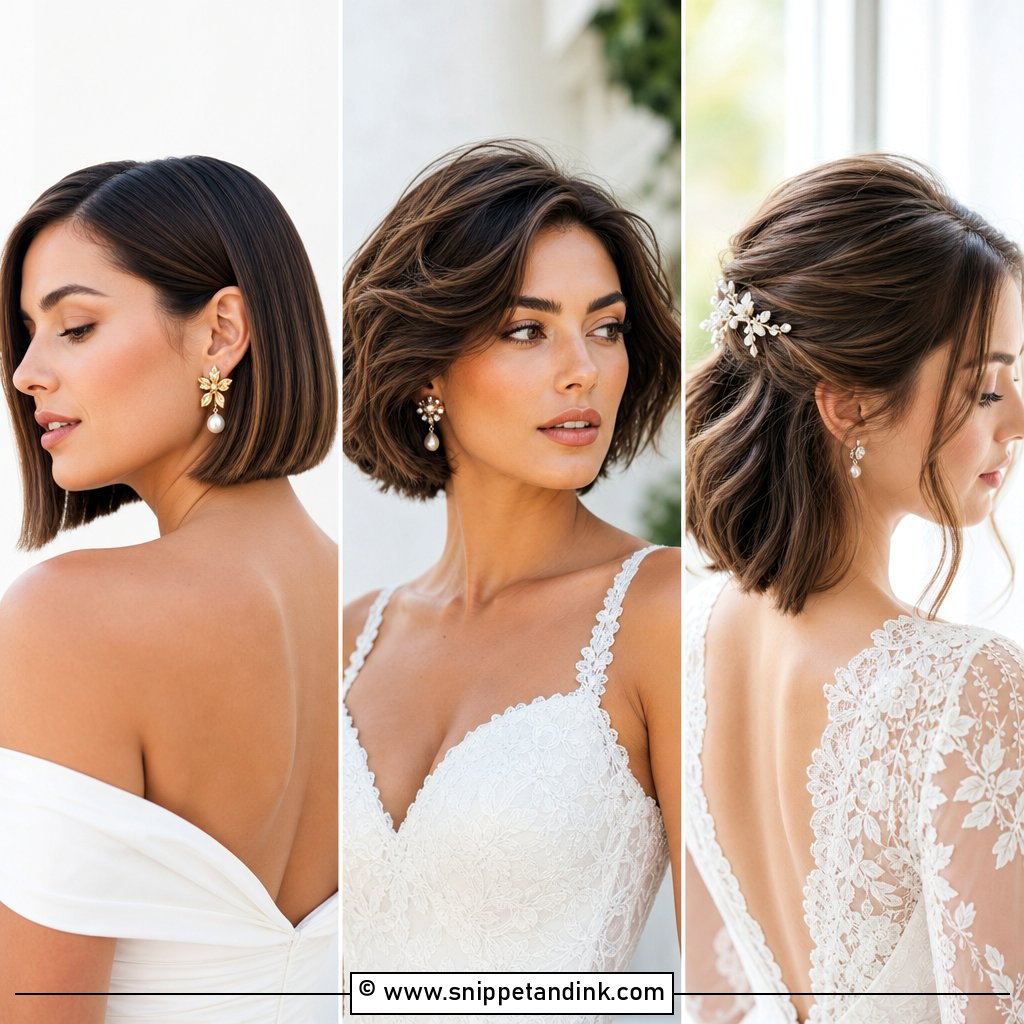
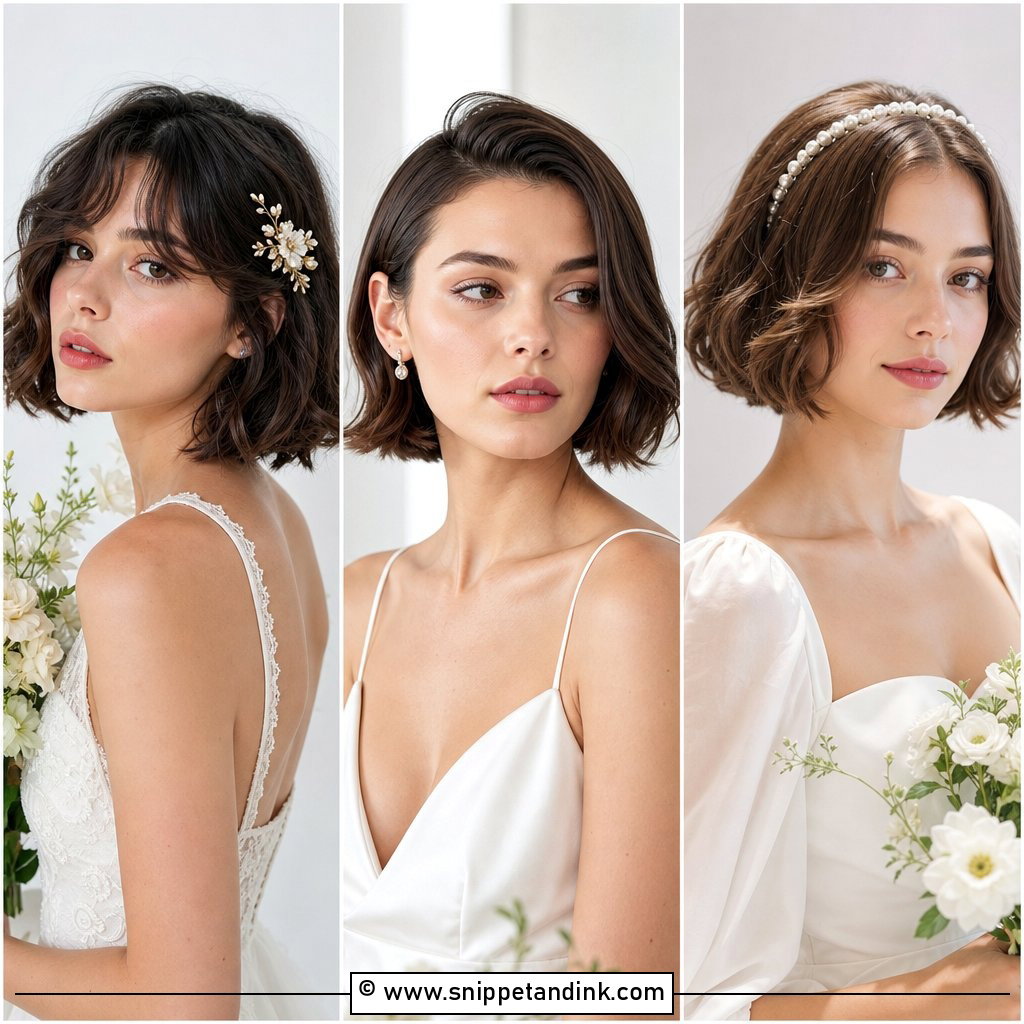
Short hair can carry a twist with the right technique, though there’s a limit. Hair needs to reach roughly the shoulders for a classic roll; on a bob I twist the back sections in smaller pieces and pin the shorter ends up into the fold. Curling the hair first gives grip, and layers that won’t tuck become face-framing wisps. Some bobs simply won’t hold it all day, so I’d always test this one at a trial.
18. French Twist With Volume At Crown
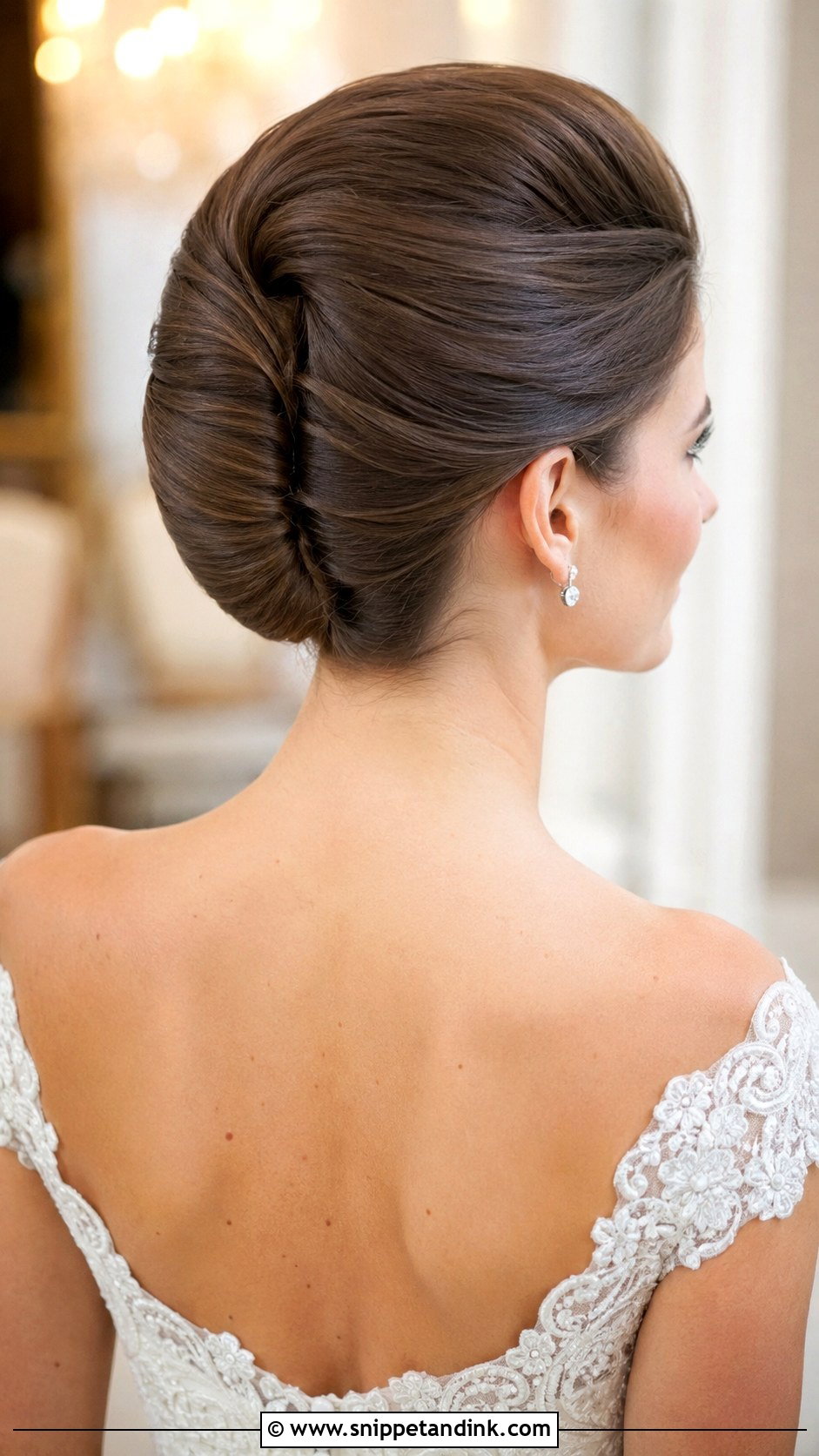
Volume at the crown gives the twist height and lengthens the profile in photos. I tease the top sections at the root, smooth the surface over the top with a soft brush, then twist the back. The lifted crown balances the sleek fold below. It suits formal weddings, though I’d scale it down if you’re wearing a heavy veil or a cathedral-length one, since the comb can flatten it.
19. French Twist With Lace Veil
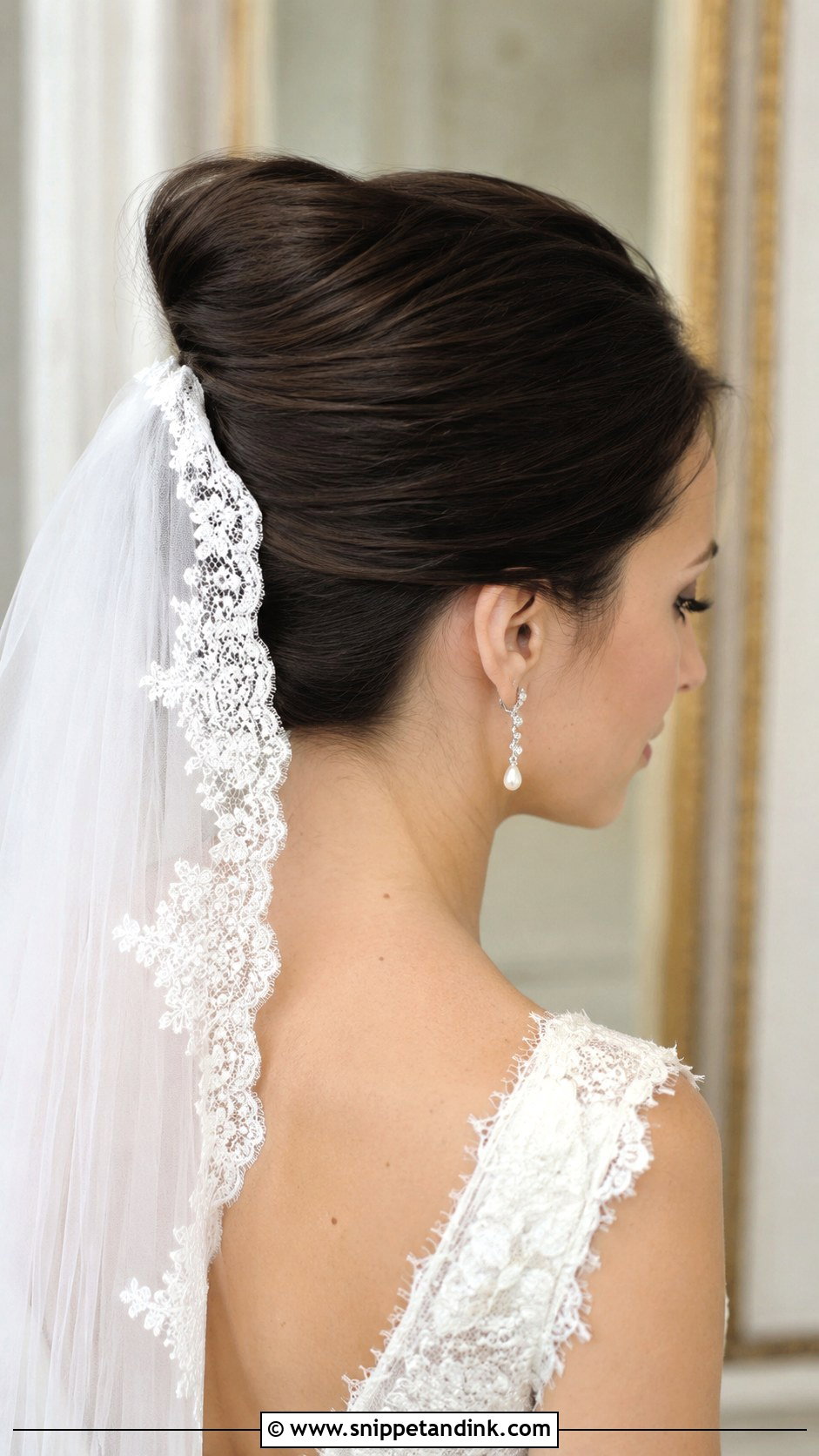
Lace veils are heavier than plain tulle, so the twist has to be secure enough to carry one. I attach the comb beneath or just above the fold, again anchored into crossed pins, and the lace drapes over the twist and frames the face and shoulders. When it comes off, the twist remains complete for the reception. Classic and traditional weddings suit it, especially with heirloom lace.
20. French Twist With Wispy Bangs
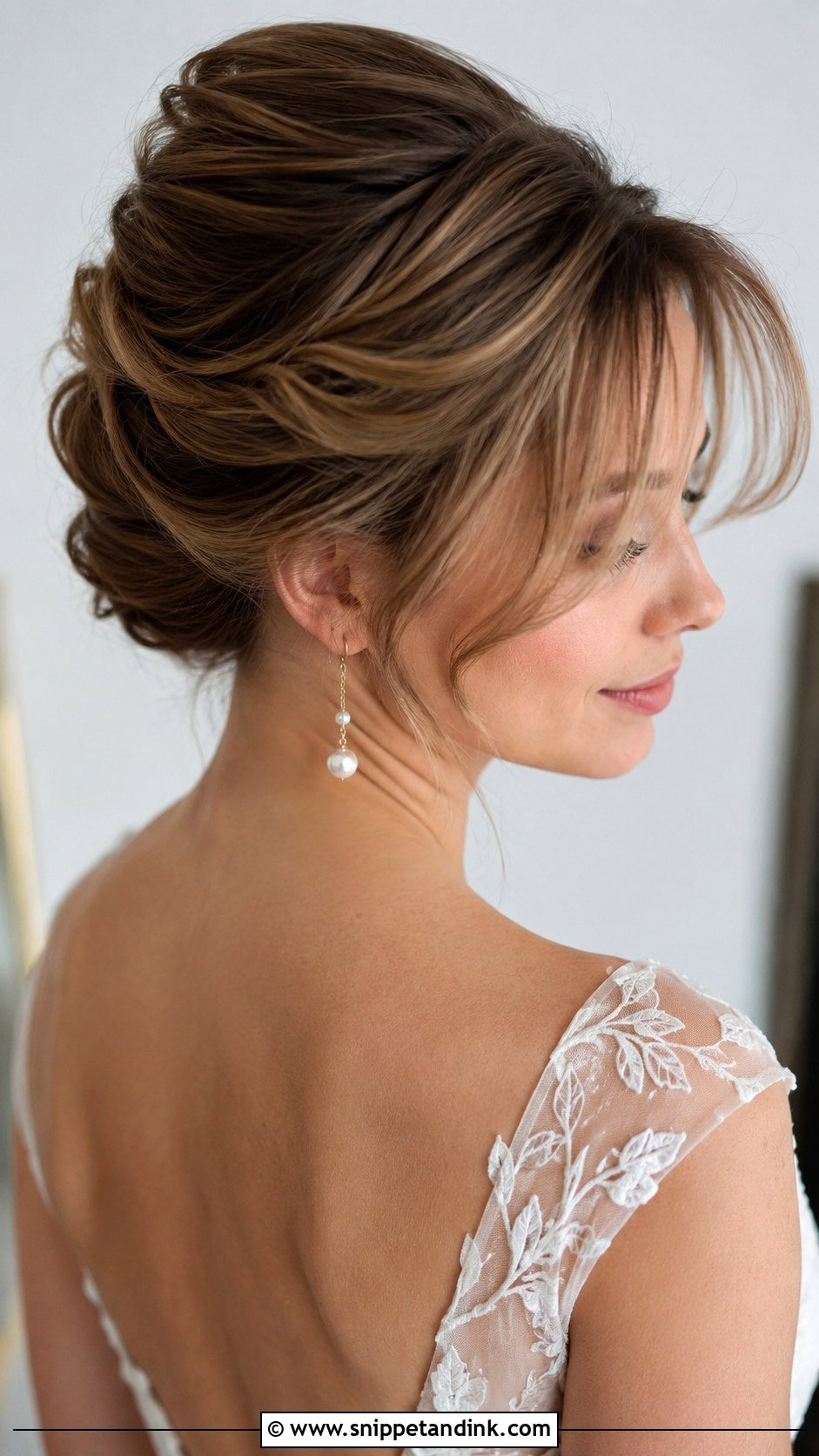
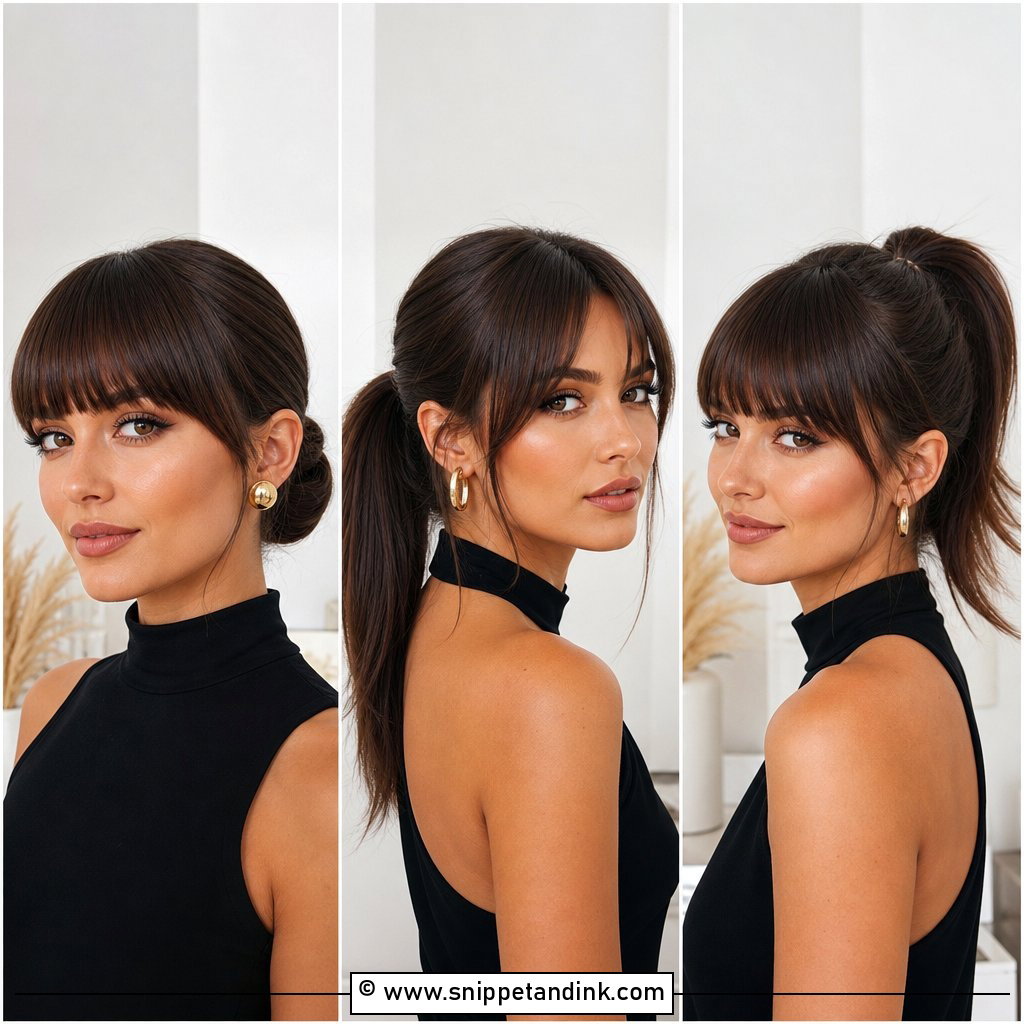
Wispy bangs are lighter and more feathery than side-swept ones, and they suit a softer face. I keep them piecey with a little cream, or smooth them if the rest is sleek. The airy movement balances the structure of the twist. One practical note: wispy bangs separate in heat, so if your wedding is outdoors in summer, I’d keep a tiny bit of powder or dry shampoo for the forehead.
21. French Twist With Auburn Highlights
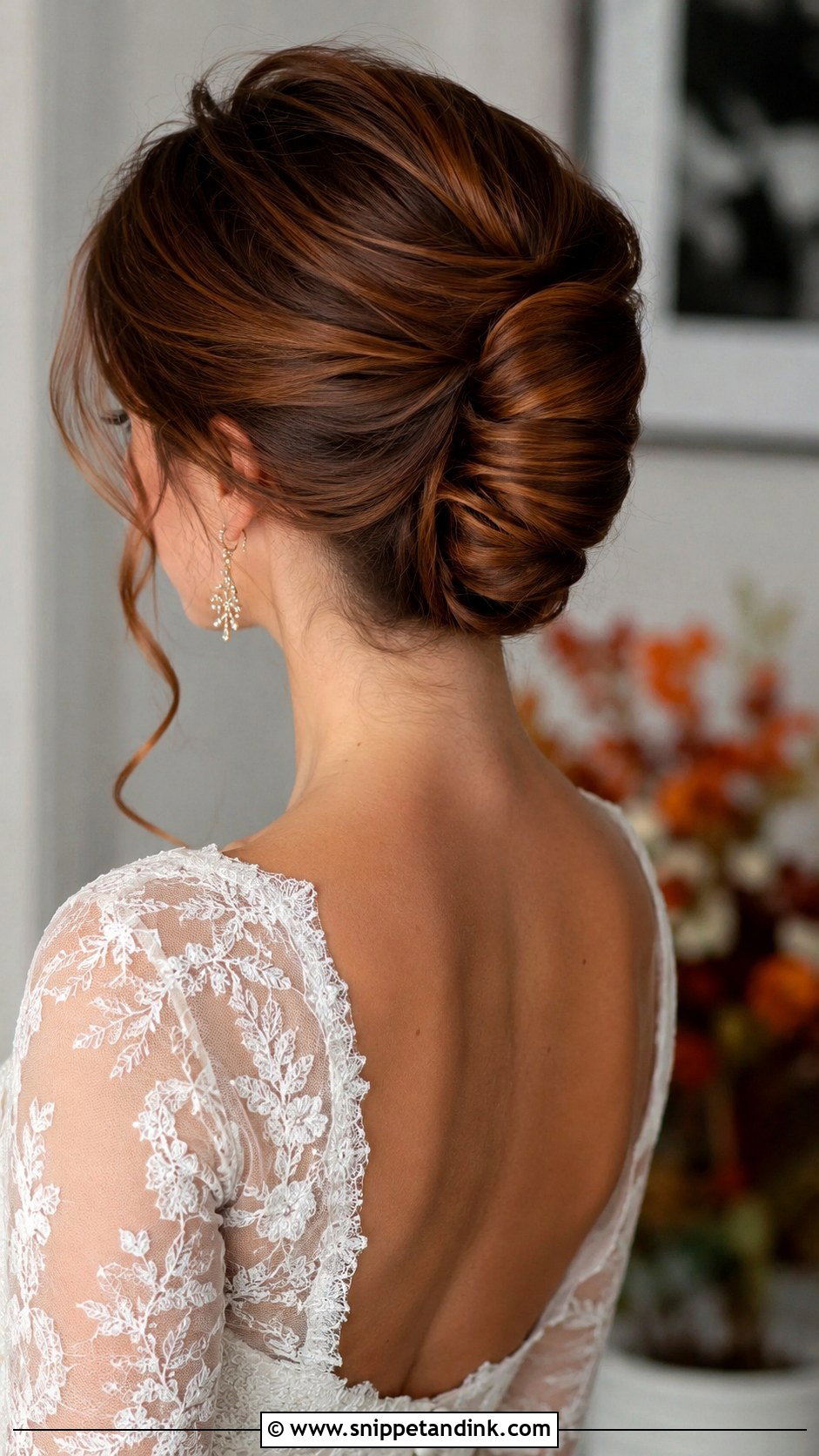
Auburn highlights add warmth and depth to a twist, because the reddish tones catch the light as the hair folds. I’d book color about a week or two before the wedding so it has settled, and red tones fade with every wash, so go easy on hot water. The dimension shows each section of the roll clearly. Brown or red hair benefits most, and it suits fall and rustic celebrations.
22. Vintage French Twist With Finger Waves
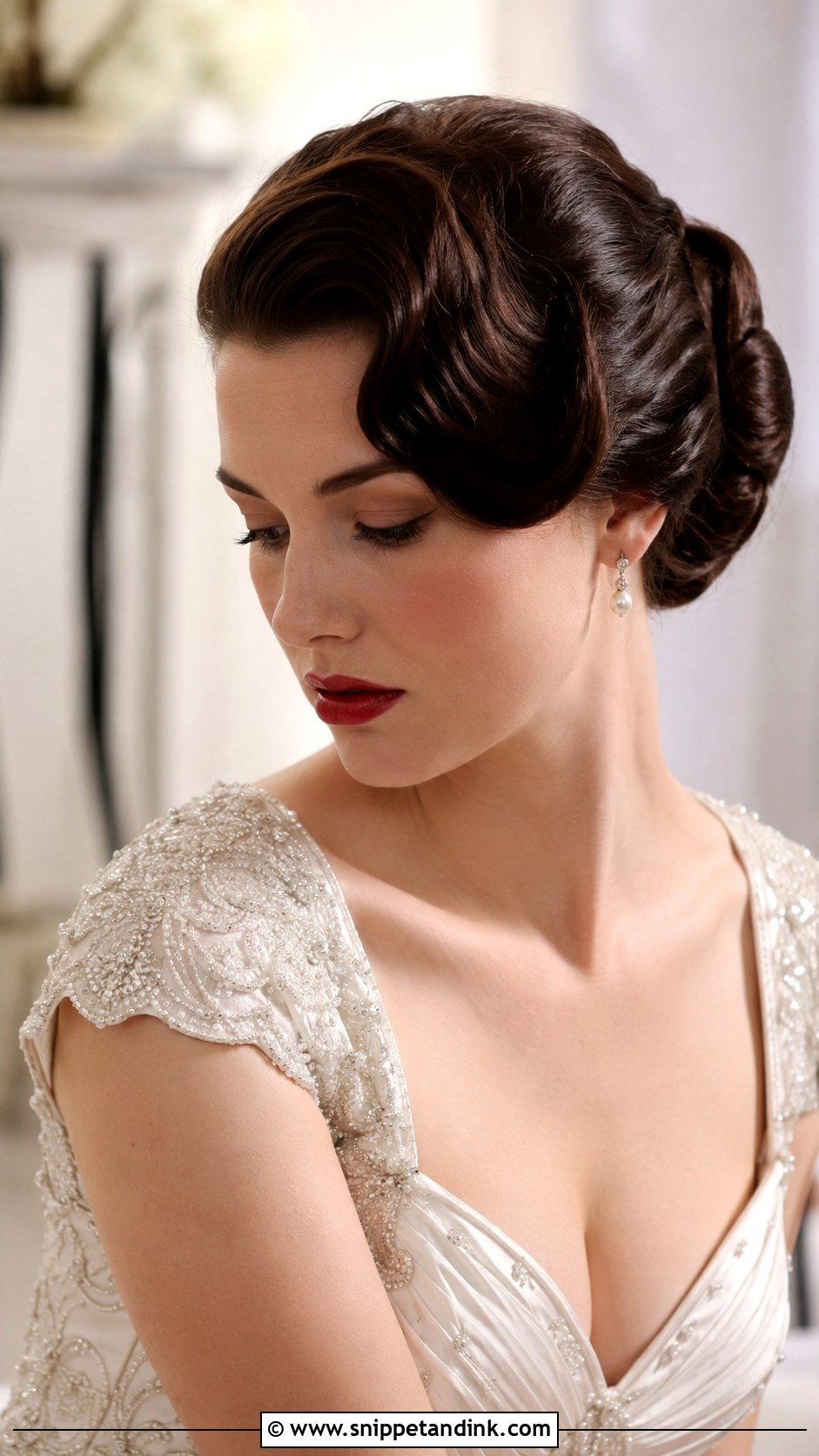
Finger waves are a wet-set technique. I sculpt them with setting lotion and clips, let them dry fully, then brush gently, so they need extra time in the schedule. The sculpted waves sit at the front while the twist keeps the back polished. Pair it with a bold lip and statement jewelry for full old Hollywood glamour. It suits formal and themed weddings, and it’s the style I’d least like to rush.
23. French Twist With Embellished Comb
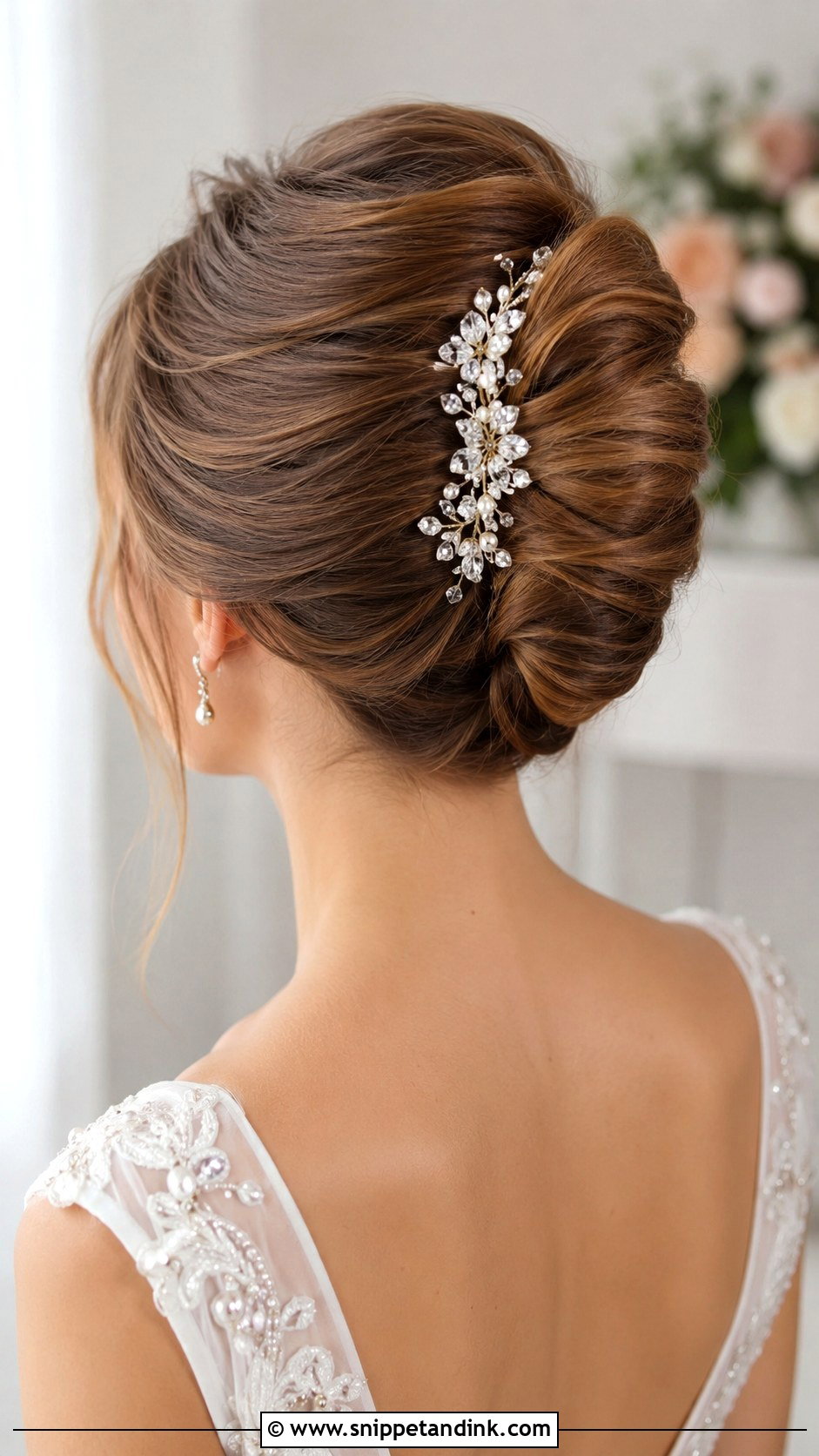
A jeweled comb slotted into the fold adds sparkle, and it does real work too: pushed in against the direction of the twist, it helps lock the roll. I place it where the twist folds over, so crystals or pearls catch the light from the side. It sits well with simple or detailed gowns. A heavy comb needs crossed pins underneath for support, or it will slowly droop through the evening.
24. Soft French Twist For Fine Hair
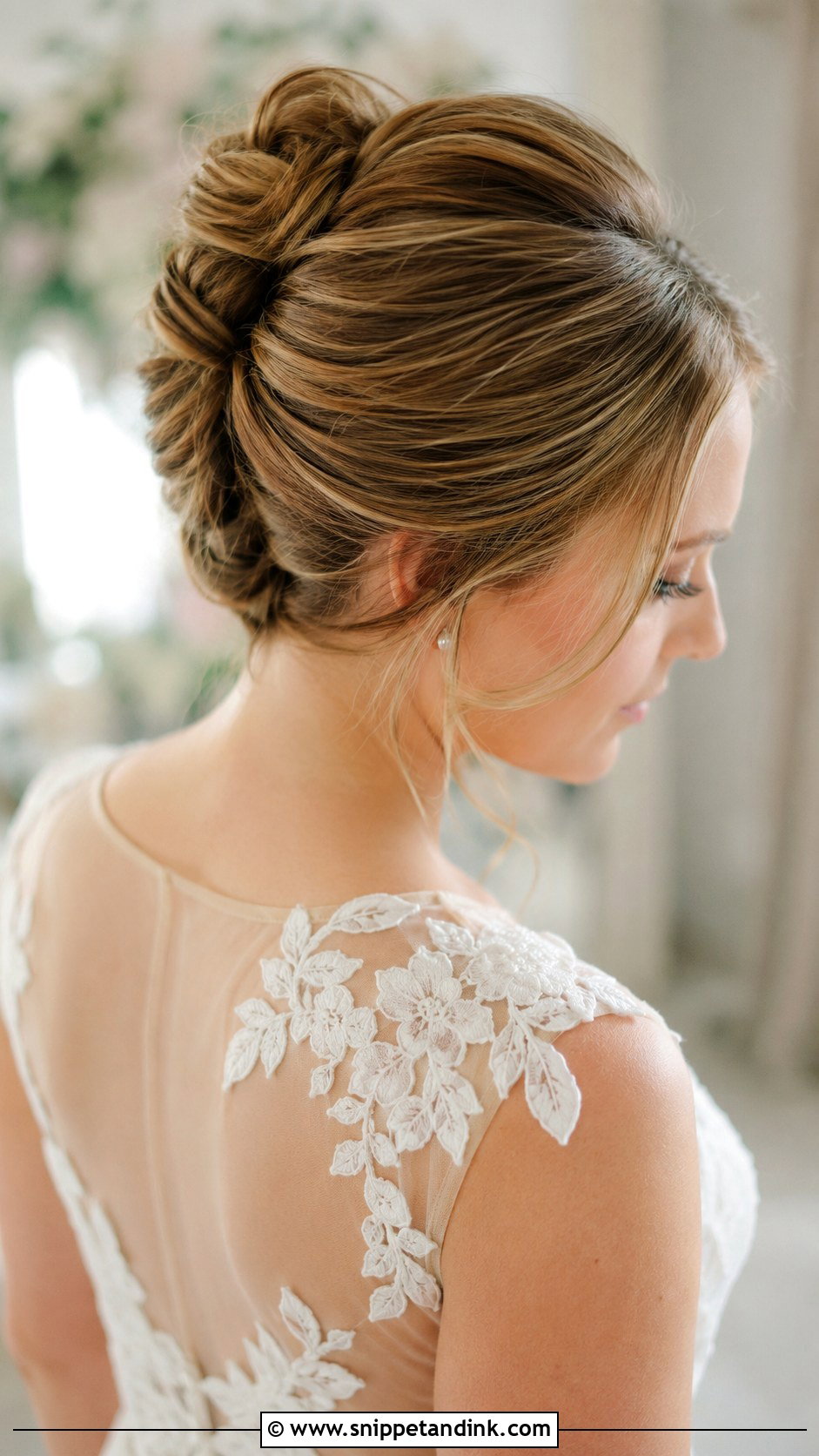
Fine hair can hold a soft twist with the right prep. I add volumizing mousse at the root, curl the hair for grip, and tease the crown gently. For very thin hair, a small padding piece or a clip-in weft hidden inside the roll makes it look fuller without strain. A few loose pieces around the face add softness. Done this way, the twist looks airy and full rather than flat.
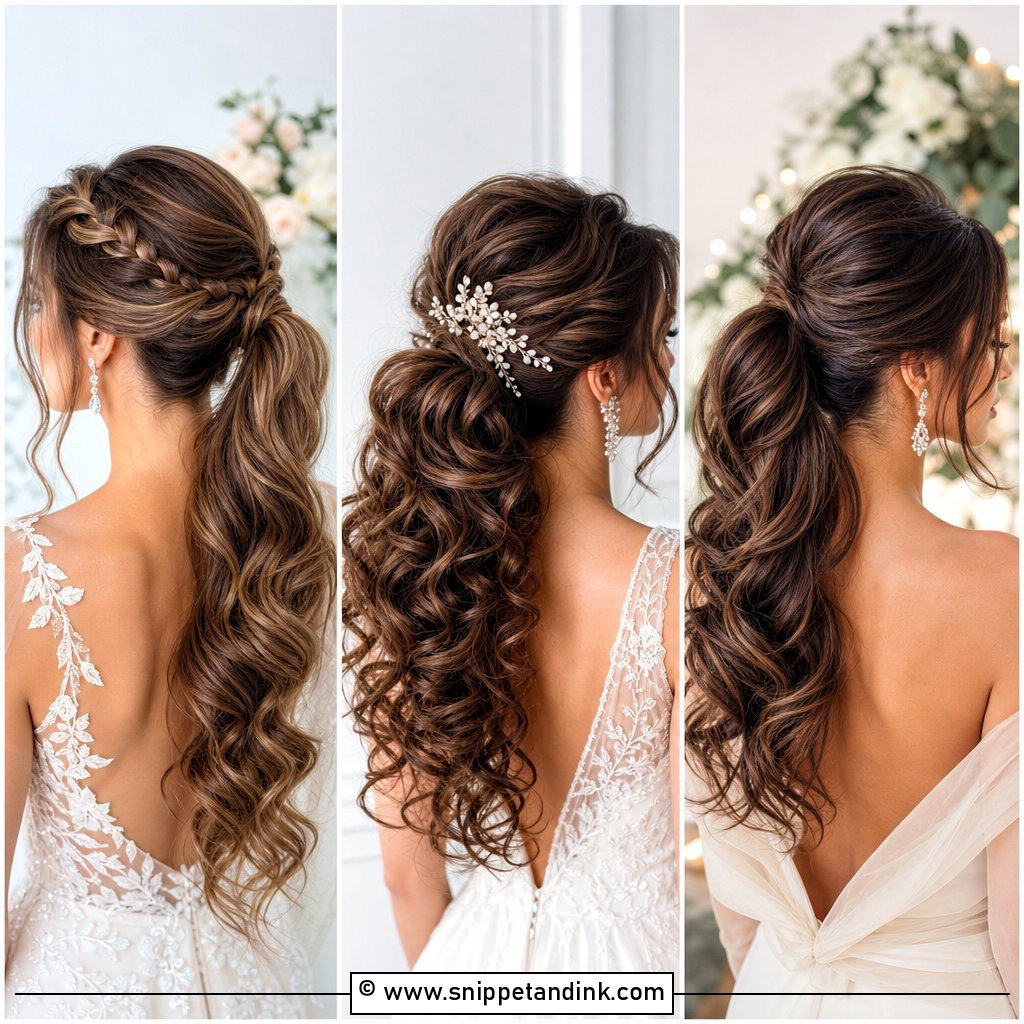
25. French Twist With Loose Front Pieces
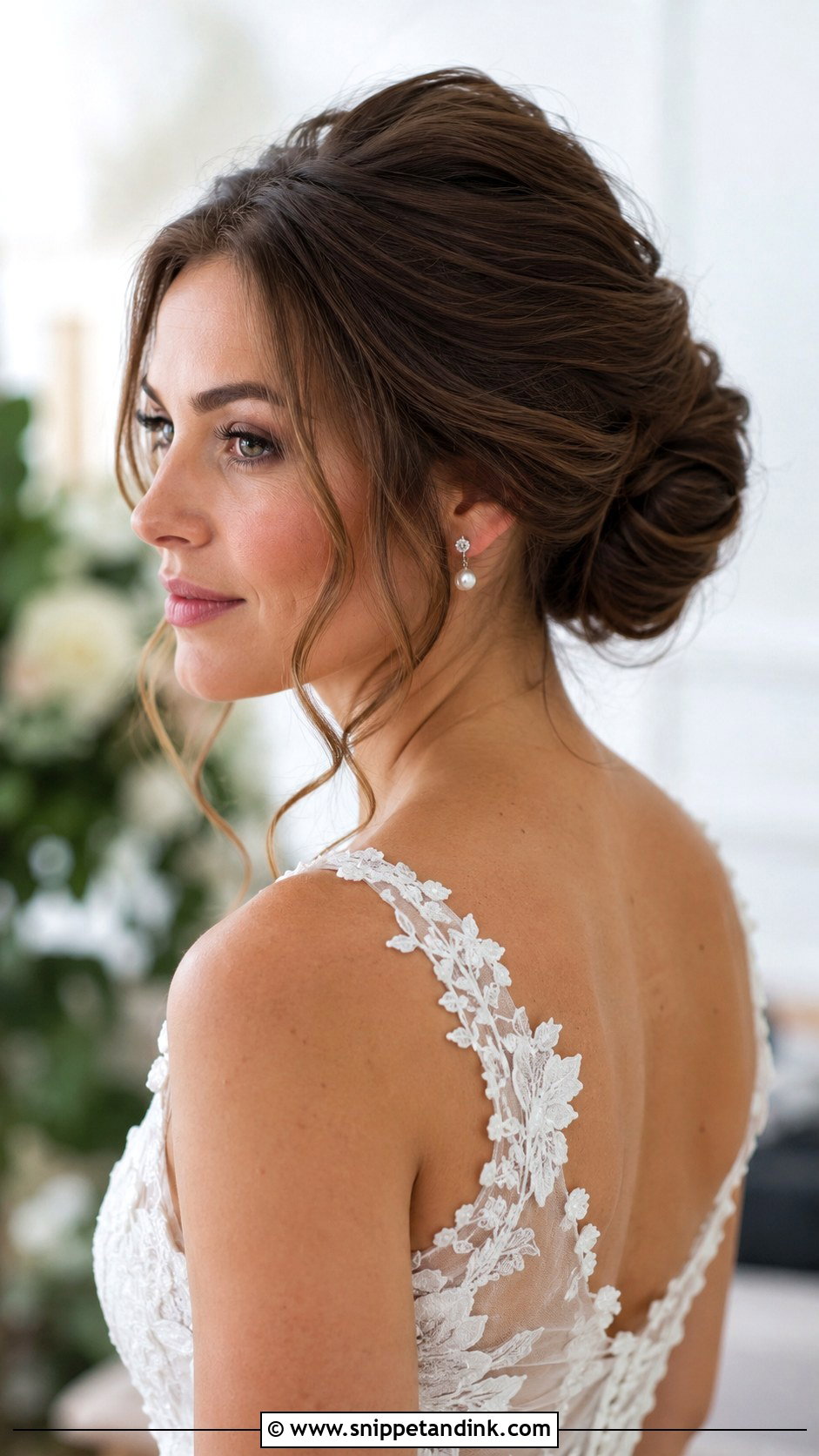
Leaving a few pieces loose at the front softens the twist. I decide where they fall at the trial, because random strands look accidental while chosen ones look styled. Curl them for softness or leave them straight. They flatter most face shapes and work for formal and casual weddings. If you tend to push hair behind your ears, keep the pieces shorter so they don’t end up tucked away by the first dance.
26. French Twist With Rose Gold Tones
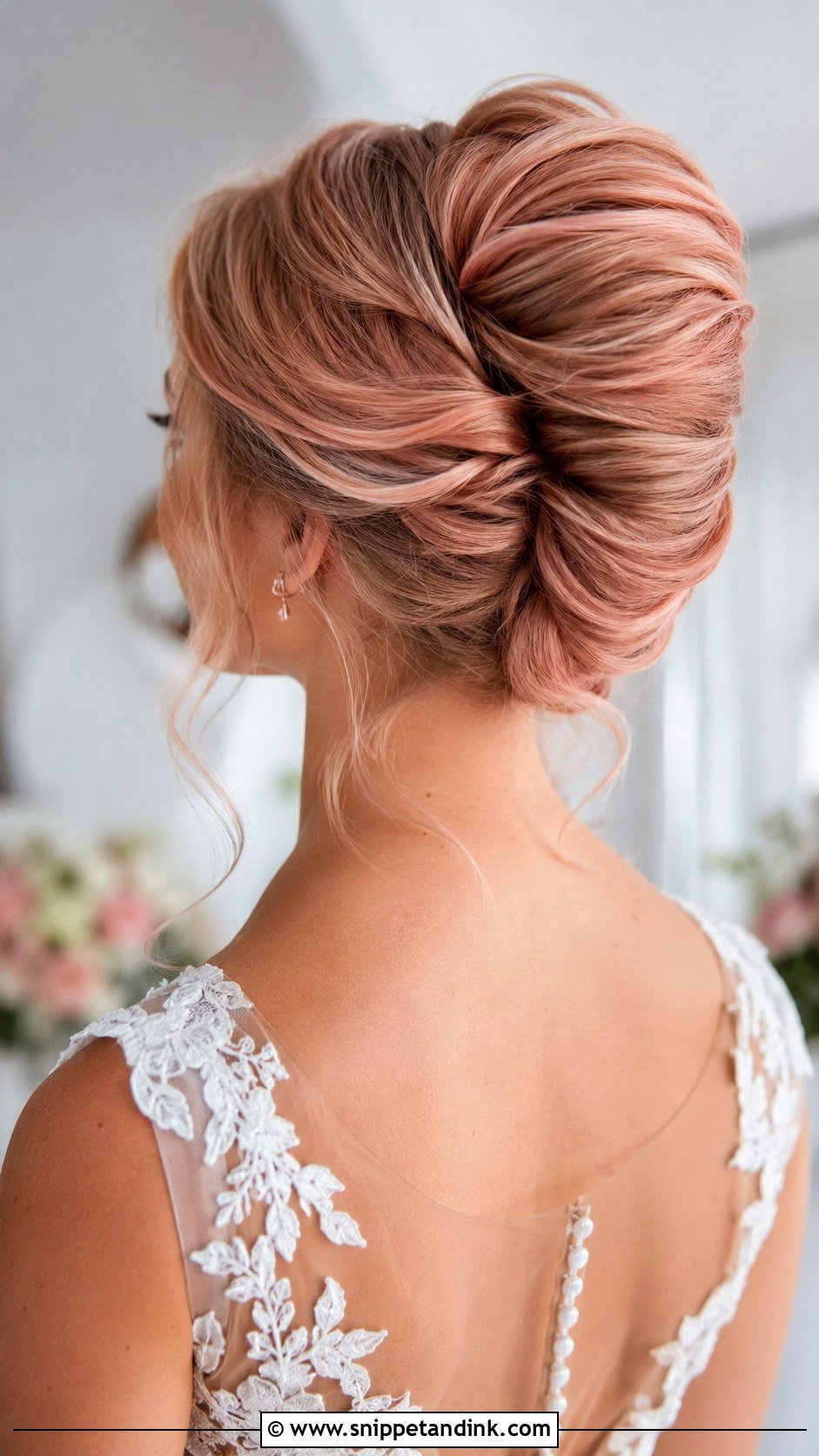
Rose gold color brings a blush warmth to the twist, and the pink tones catch the light along every fold. Pastel shades like this fade quickly, sometimes within a few washes, so I’d ask your colorist to refresh it no more than a few days before. It suits soft makeup and delicate jewelry. Modern and creative weddings carry it well.
27. Double French Twist
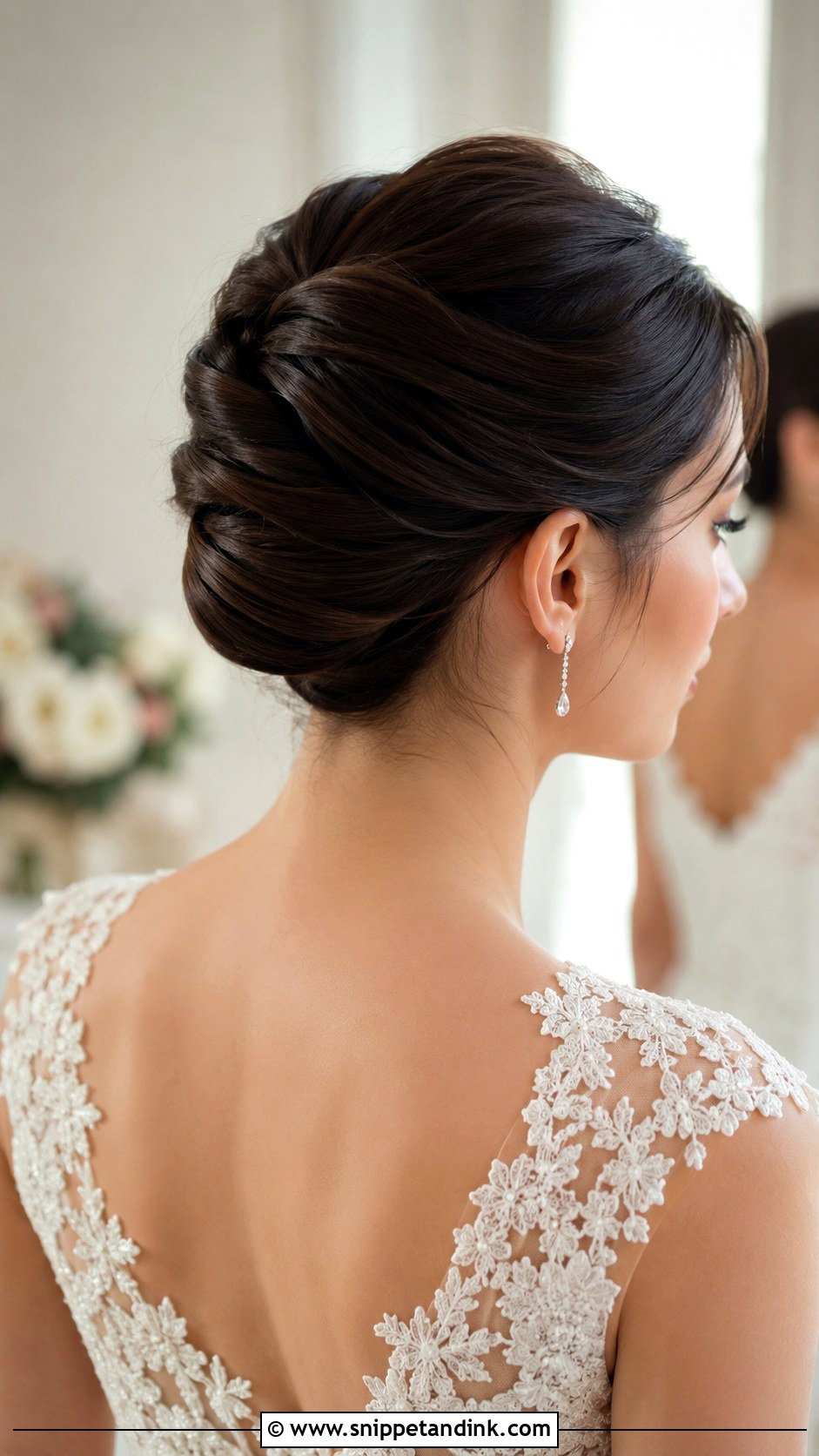
A double twist uses two folds that meet in the middle, which adds detail at the back and spreads the hair across two rolls. That makes it a practical choice for thick or very long hair that would make a single twist bulky. Keep both twists smooth. It photographs well from behind, so make sure your photographer gets that angle.
28. French Twist With Birdcage Veil
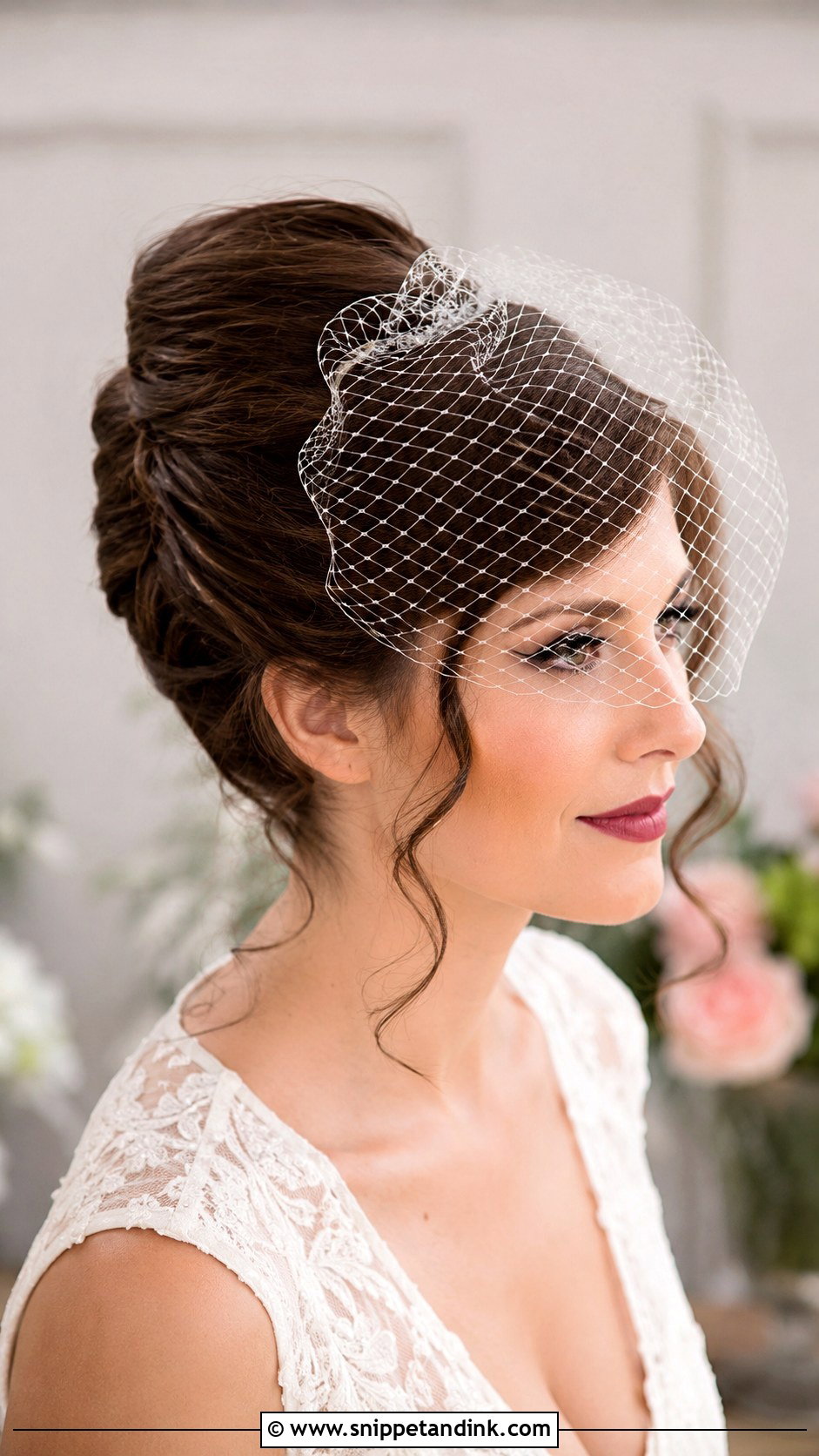
A birdcage veil pairs a short netted veil with a sleek twist for a vintage feel. The veil is pinned at the side of the head, so the twist can sit slightly lower and to the back. It works with bold lips and statement earrings. Once removed, the twist stays tidy for the reception. Themed and modern weddings suit it.
29. French Twist With Crystal Headband
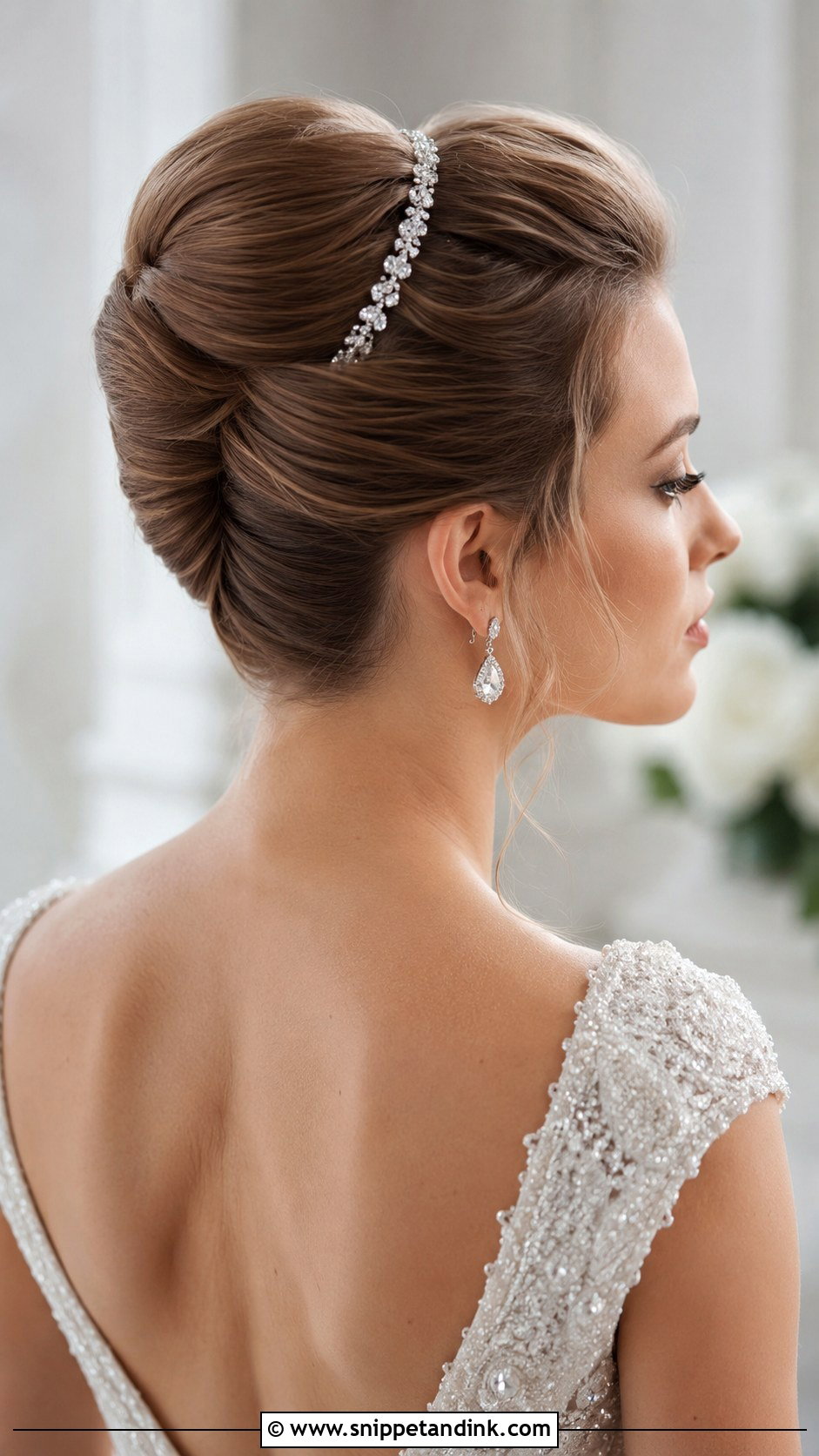
A sparkling crystal headband sits across the crown and catches the light whenever you move. Headbands tend to press on the head behind the ears, so I bend the ends slightly and anchor them with small pins hidden under the hair. It works well with statement jewelry and elaborate gowns. Ballroom and grand venue weddings suit it.
30. French Twist With Cascading Curls
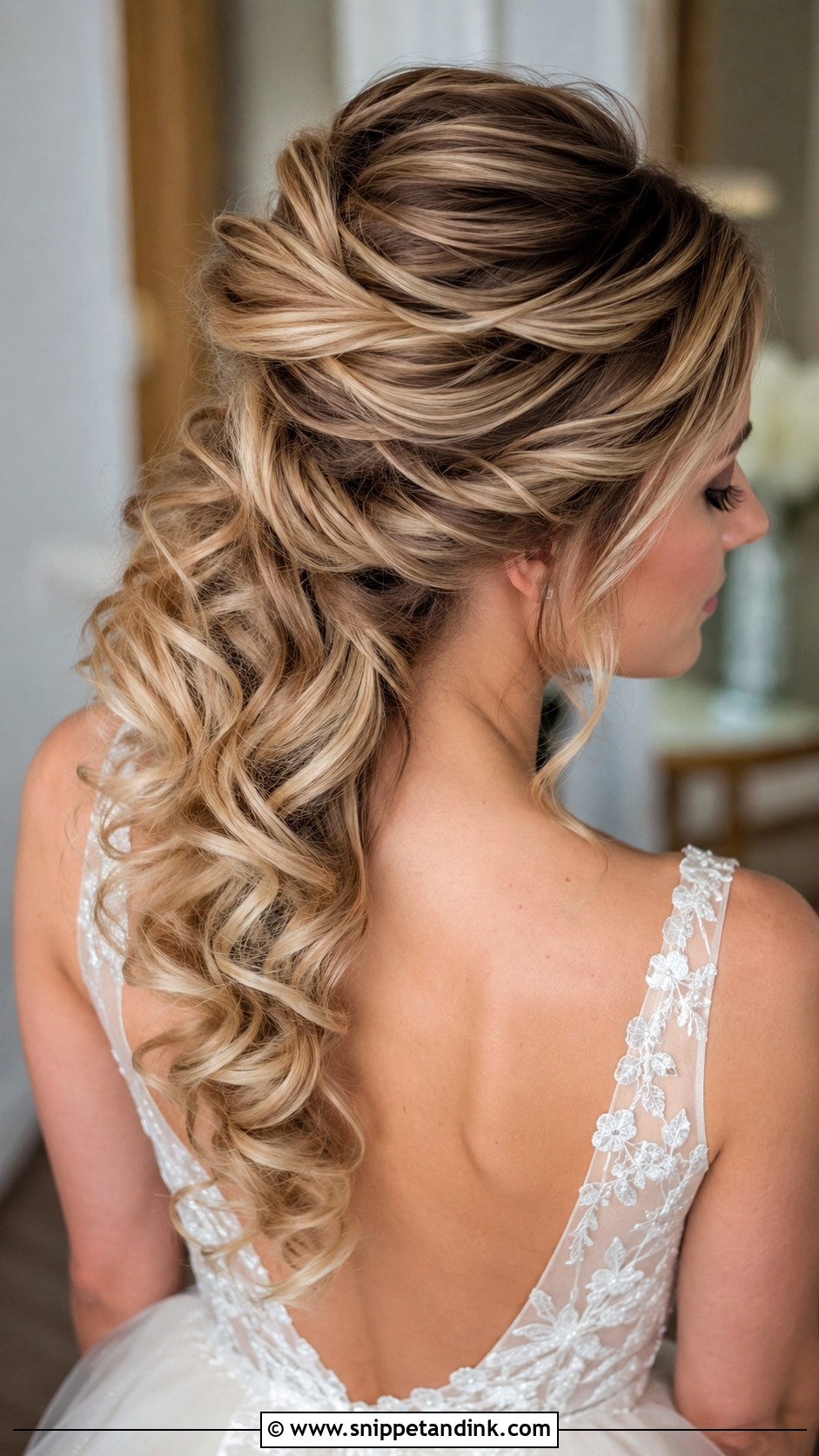
A twist with cascading curls is technically half-up: the twist secures the sides and crown while curls fall from the back. I set the curls with hot rollers rather than a wand when the hair is long and heavy, because rollers hold better through the evening. Curl longevity is the weak point in humidity, so I finish with a strong but brushable spray. It flatters long hair and suits garden weddings.
Ten Hours of Hugs, a Veil Removal and the Take-Down at Midnight
A twist will loosen a little as the evening goes on; that’s normal. What matters is that it loosens evenly. Tell your stylist if any pin is pressing on your scalp before you leave the chair, because a pin that aches at noon is a headache by the speeches.
When the veil comes off, hold the twist flat with one hand and slide the comb out in the direction it went in. Pulling it upward tears the anchor pins out with it. Ideally, someone who watched the styling does this for you.
Small things for a bridesmaid’s bag
- A dozen bobby pins in your hair color, plus a few longer U-pins.
- A travel-size flexible hairspray.
- A small comb with a tail, for tucking strands back into the fold.
- A wide-tooth comb and conditioner at home for the take-down: remove every pin first, then work through the backcombing from the ends up rather than brushing it dry.
Bring Your Neckline, Your Veil and a Photo of the Back
A French twist adapts to almost any hair type and dress, which is why it stays popular. Sleek or soft, with pearls, flowers, a veil or curls, it always keeps the neck clear. Bring photos of the dress neckline, your veil or headpiece and the back of the twists you like to the trial. Ask your stylist what your hair will hold, then refine from there until the twist feels like yours.
You'll Like These Ideas:


Leave a Reply