
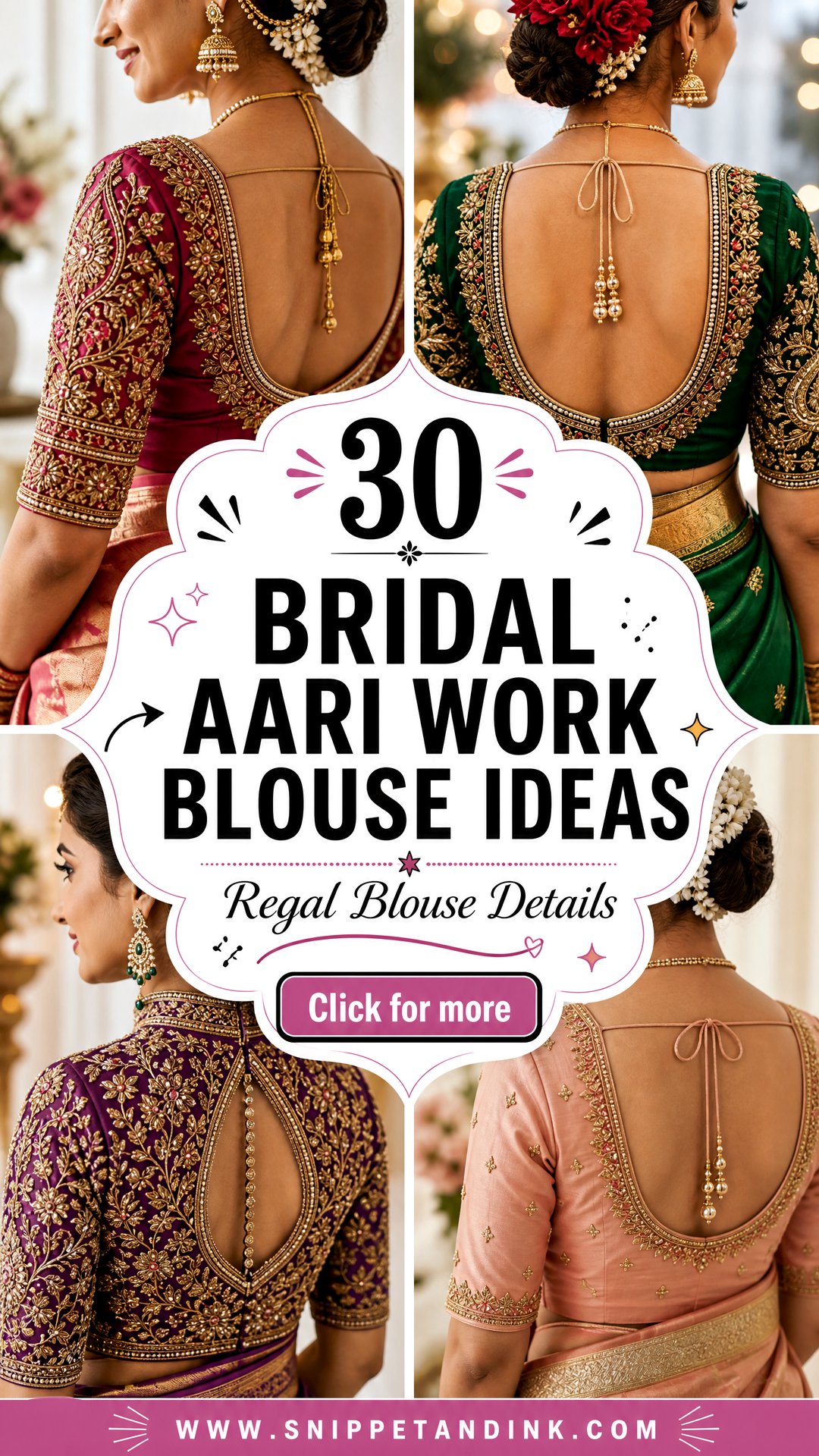
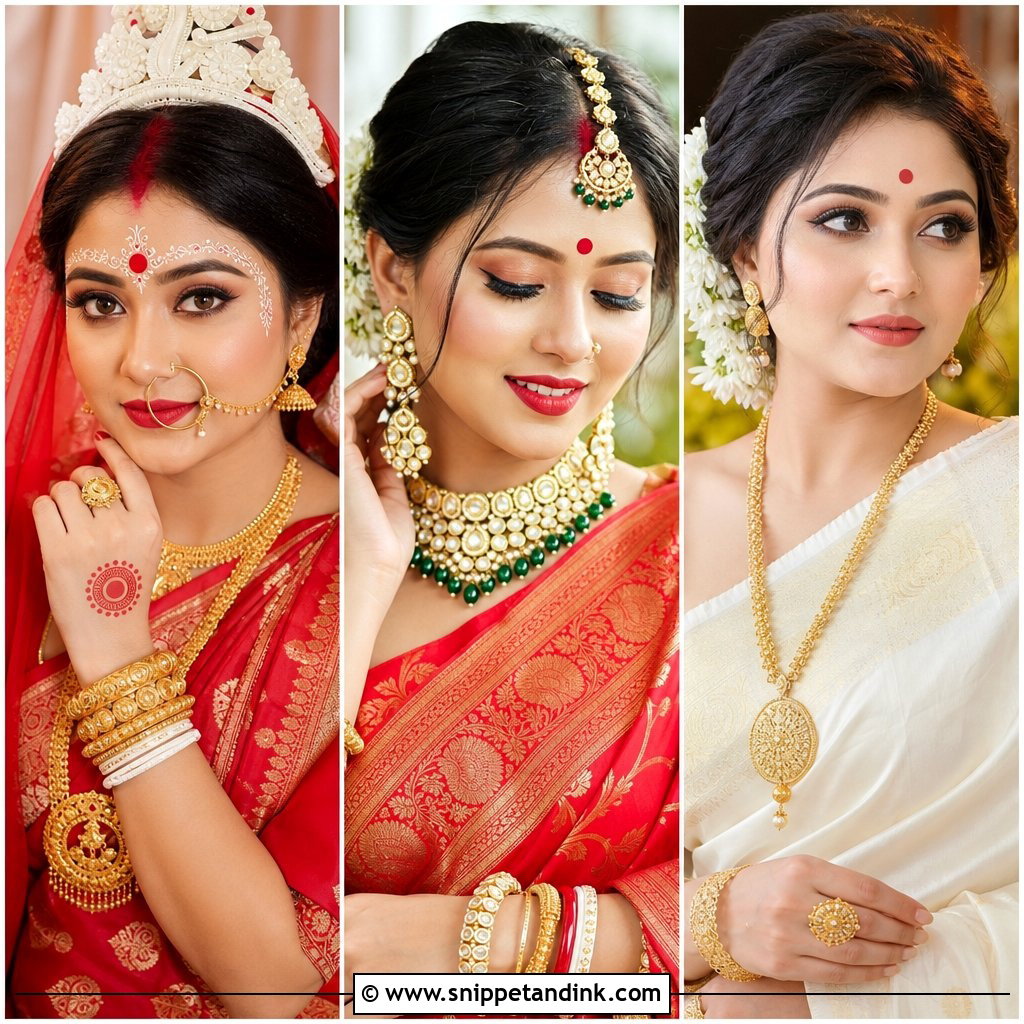
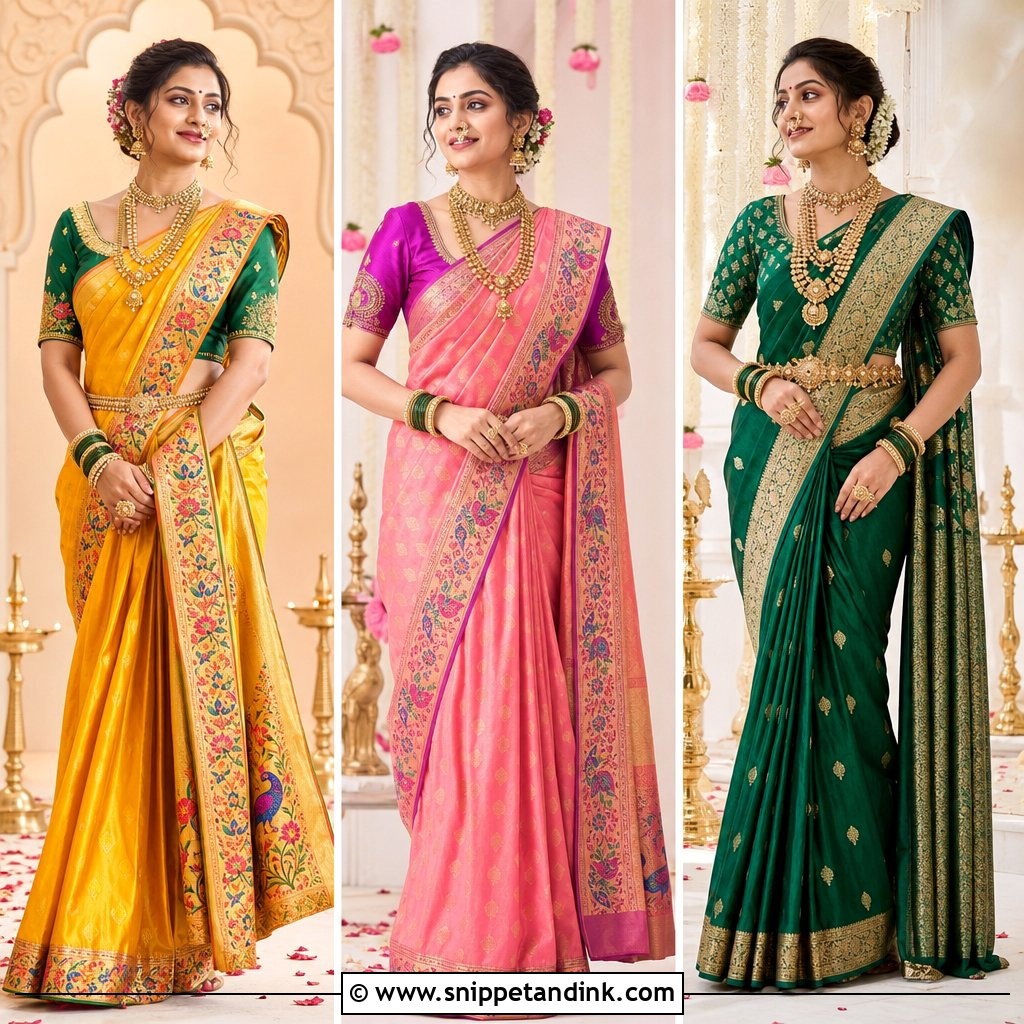
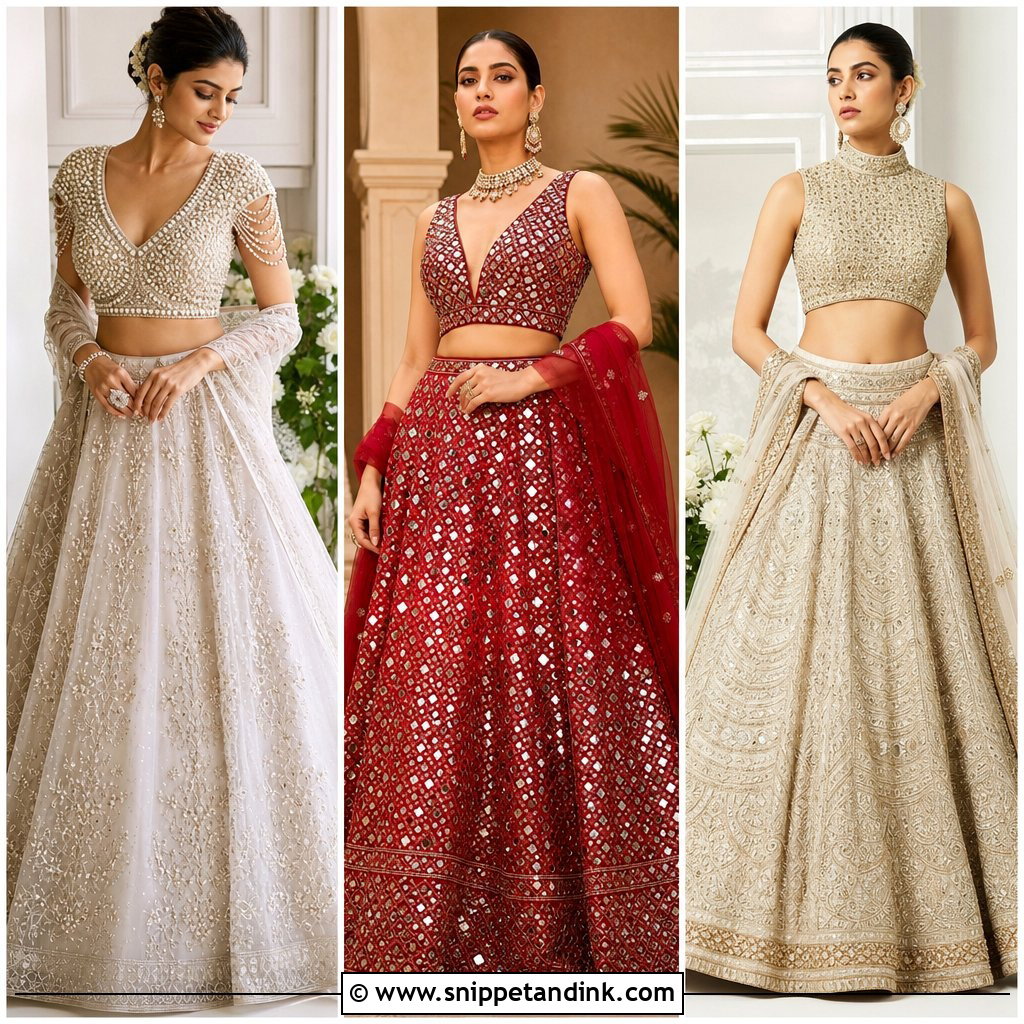
An Aari blouse is where a saree bride gets to put her own hand into the outfit, because every motif is drawn and stitched to order. The work, called maggam in much of South India, is done with a hooked needle on fabric stretched over a wooden frame, which is why bridal blouses made this way carry zari, beads, stones and pearls so densely. When I plan one with a bride, I never look at the blouse alone. I hold it against the saree border, the jewelry and the way she drapes the pallu, since all four decide how much embroidery will actually be seen. The 30 designs below run from heavy peacock backs to near-plain borders, with notes on where each one works and where it fights the rest of the look.
How an Aari Blouse Order Actually Runs, From Sketch to Last Fitting
Aari embroidery is stitched before the blouse is sewn. The tailor marks the panels from your measurements, the embroiderer works them on a frame, and only then are the pieces cut and assembled. That order explains most of the advice I give: once the work is done, there is very little room to change the fit.
- Start early. Heavy sleeves plus a worked back take weeks of handwork, and wedding season queues are long. I tell brides to place the order two to three months ahead and to treat any shorter quote with caution.
- Bring the saree to the first meeting, not just a photo. The thread color, zari tone and motif scale are matched to the border in hand.
- Give a blouse that already fits you well as the measurement reference, and get measured in the bra you will wear on the day.
- Ask for embroidery to stop short of the side seams and armholes. That small margin is what lets the tailor take in or let out after a weight change.
- Book a trial fitting at least two weeks before the wedding, and sit, raise your arms and fold your hands in it. Standing still in a mirror tells you nothing about a six-hour ceremony.
If a sample sketch is offered, ask to see one finished motif on your fabric before the whole blouse is worked. Thread shading that looks rich on paper can disappear against a busy silk.
1. Bridal Peacock Aari Work Blouse
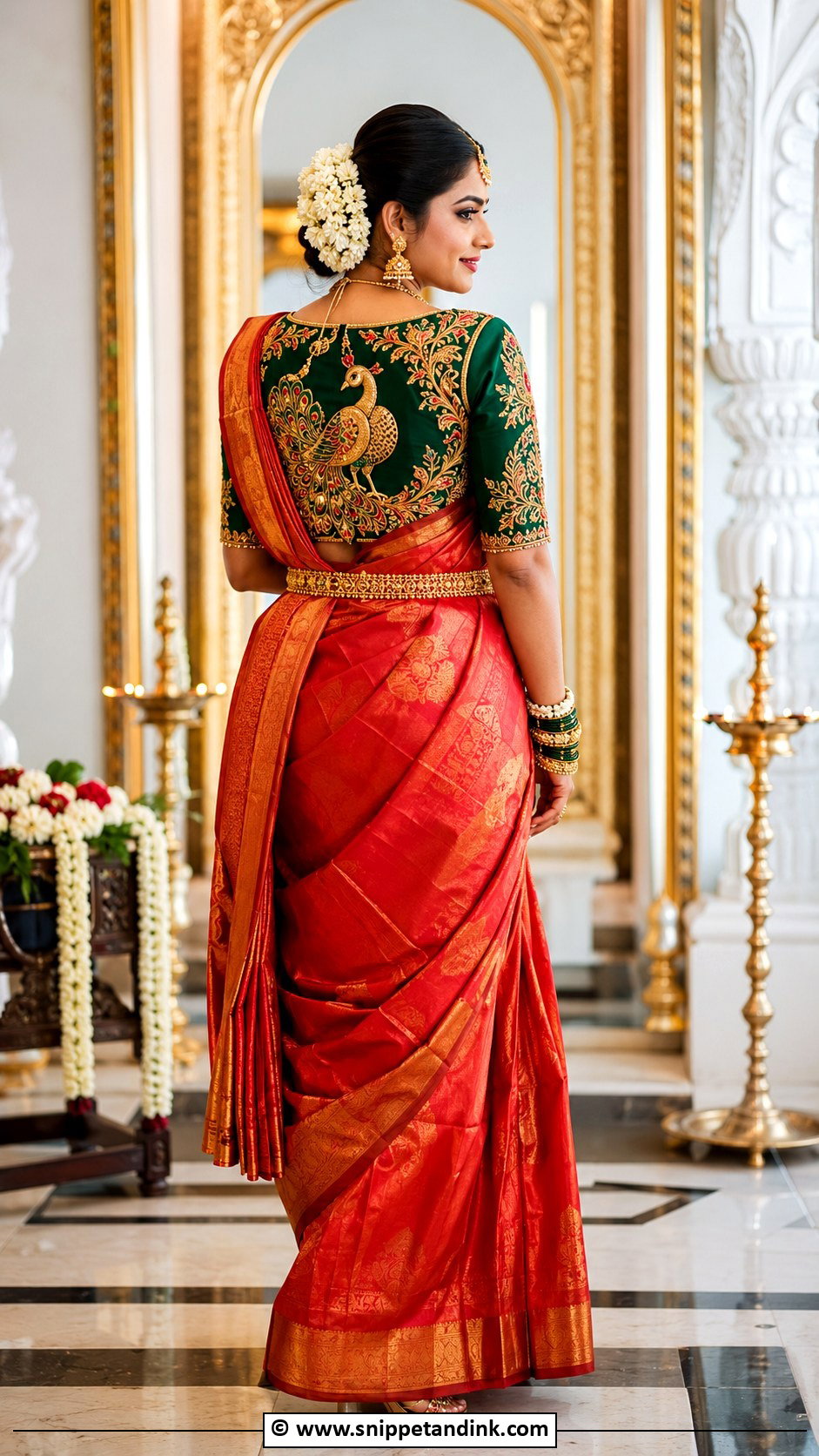
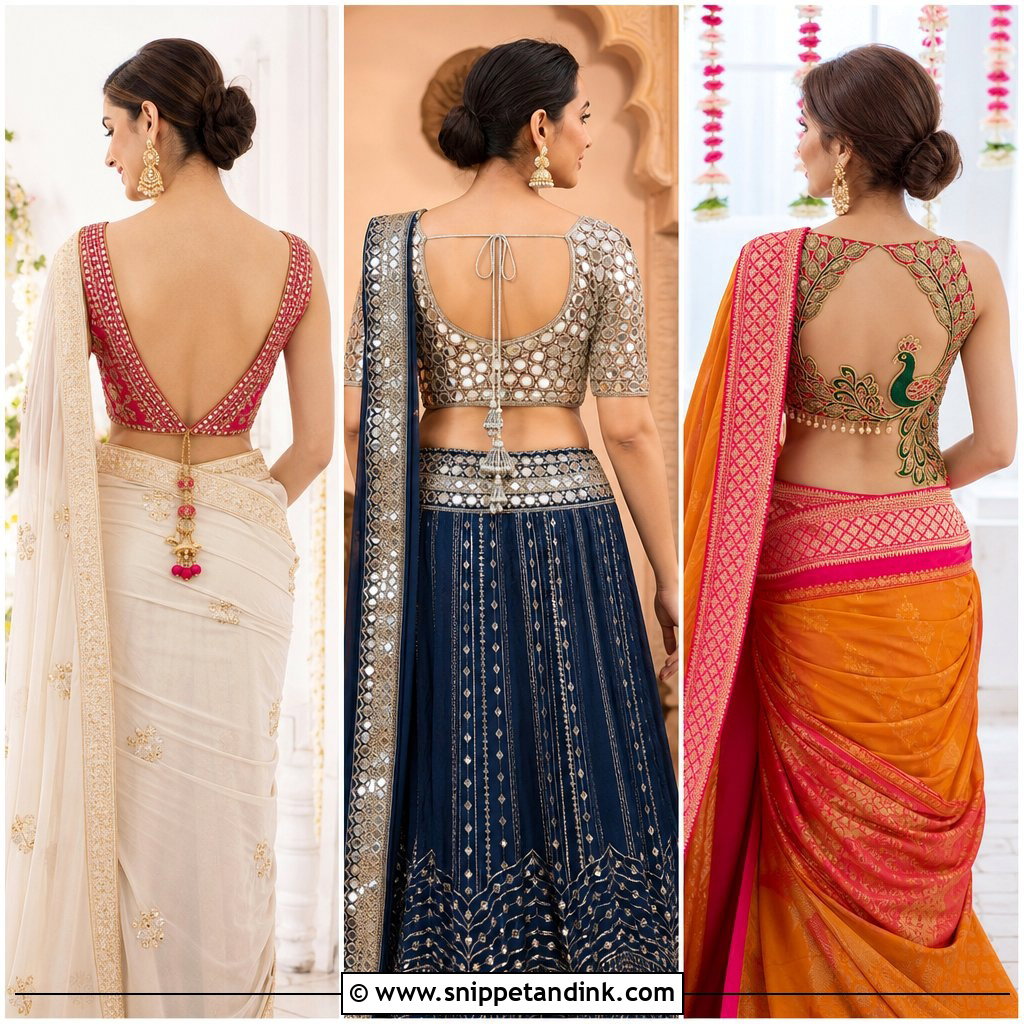
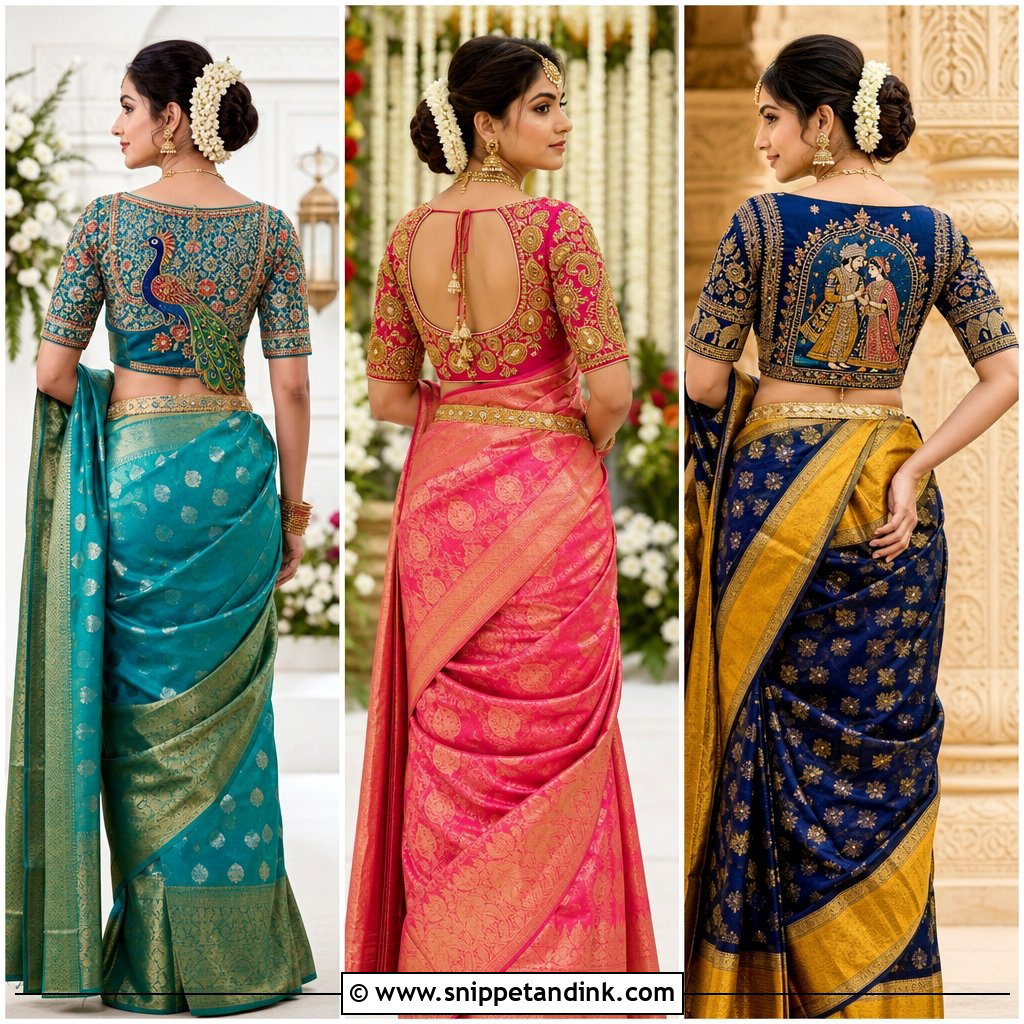
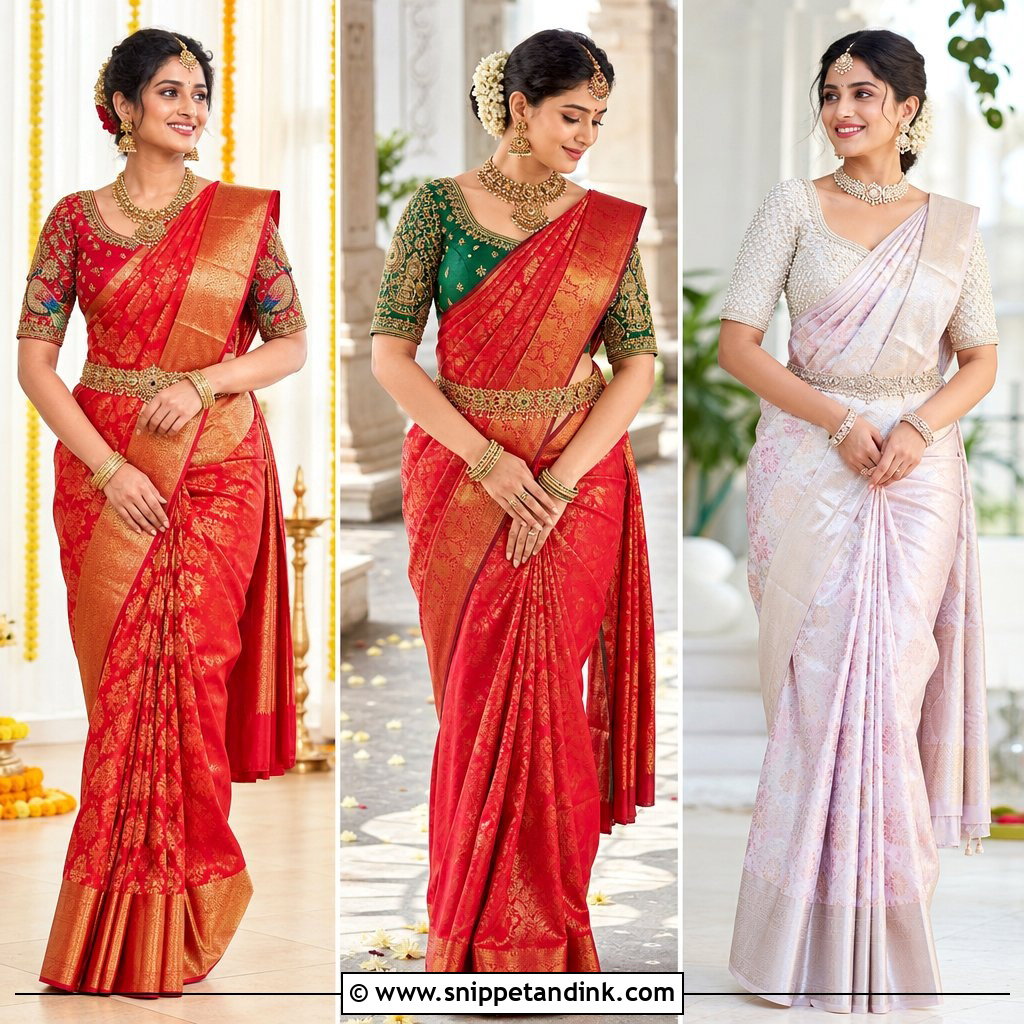
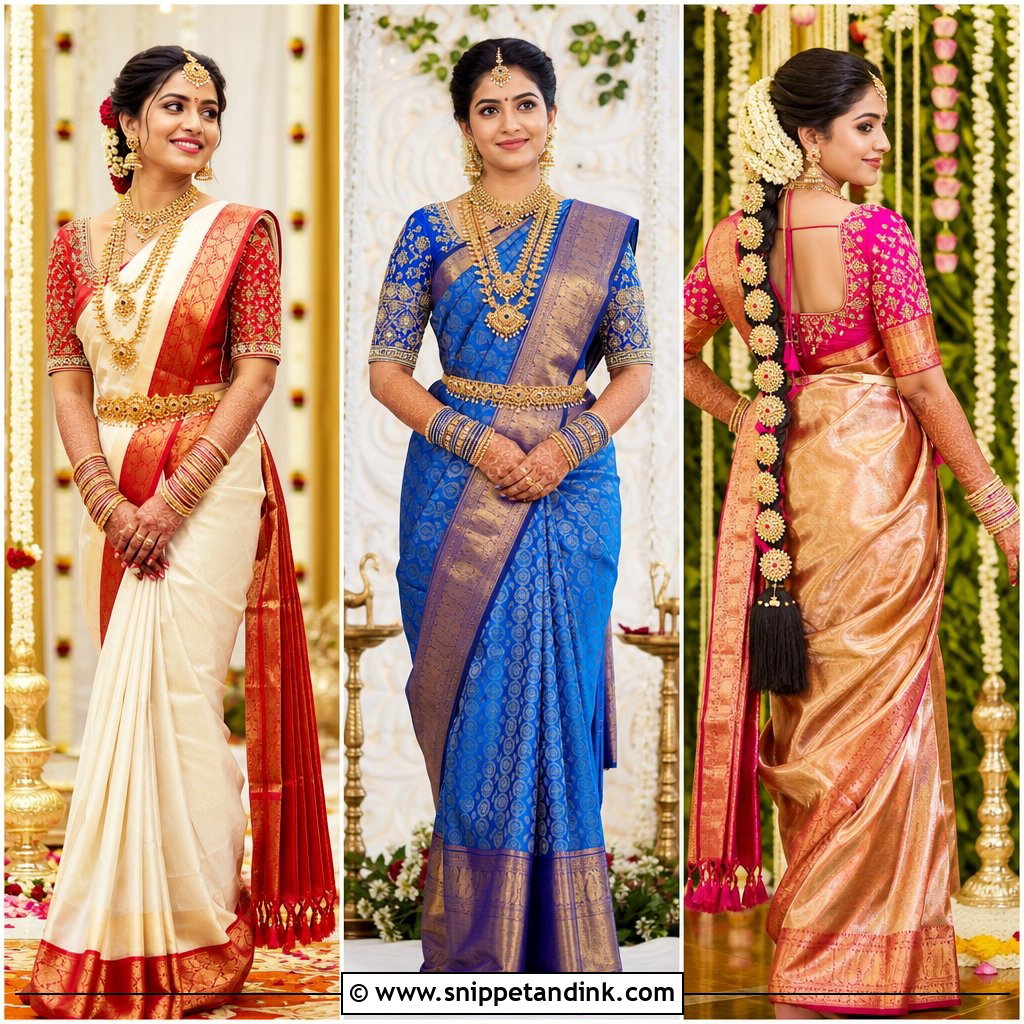
Peacocks are the motif most of my Kanjivaram brides ask for first, and the back is where they earn their place. A peacock motif worked in antique gold zari with thread shading on the tail feathers reads clearly from the far end of a mandapam, while a flat gold-only version can blur into the saree. Red, green, maroon and royal blue silks all take it well. My one rule: the saree border must stay visible at the sleeve, or the blouse and the drape start competing. Temple jewelry and a flower bun finish it without extra effort.
2. Bridal Lotus Aari Work Blouse
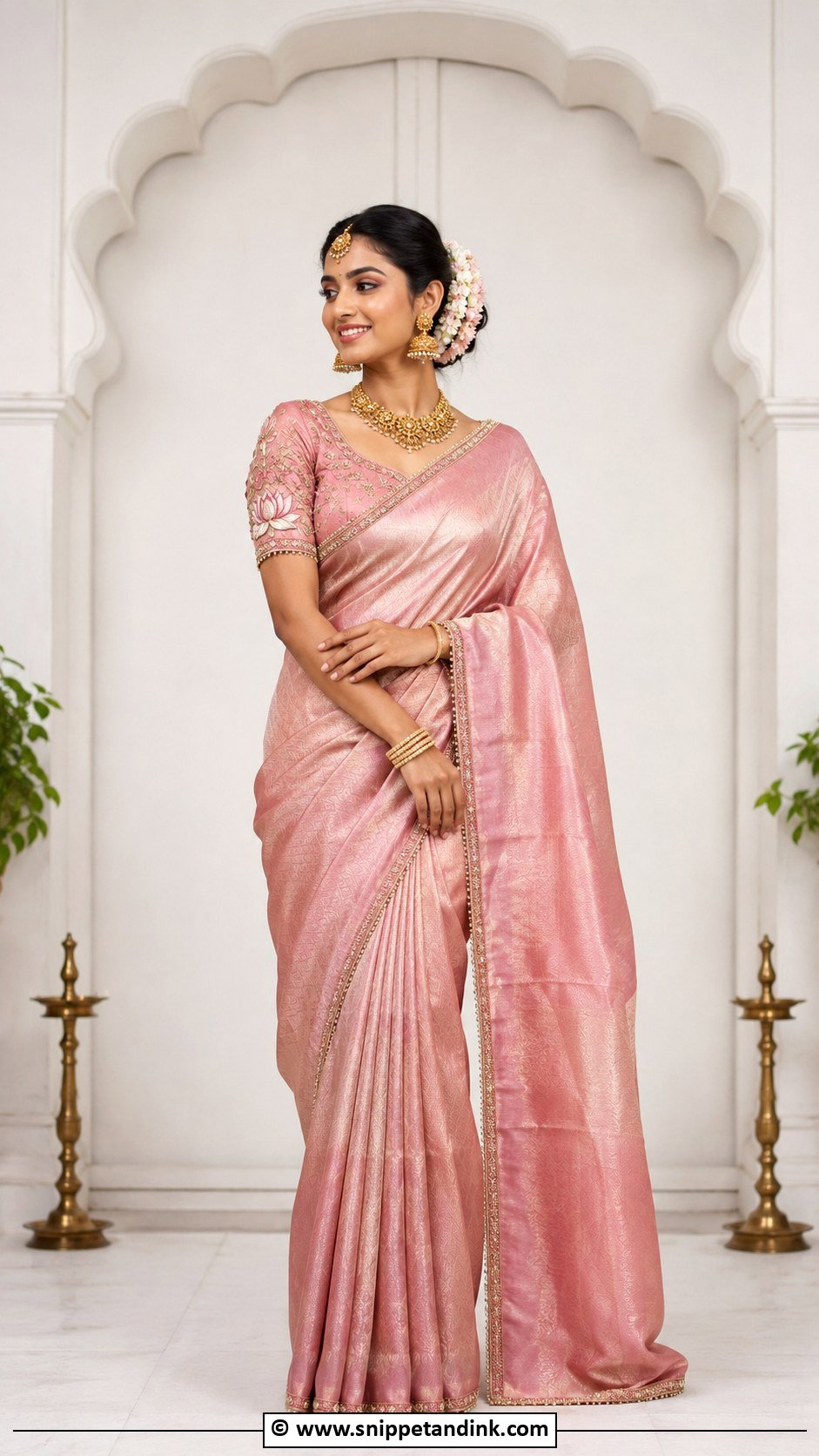
Lotus work is lighter on the eye than peacocks, which makes it my usual suggestion for a bride who wants tradition without a crowded back. The petals sit well on elbow sleeves and around the neckline, and I like to shade them in pink, peach or ivory against gold outlines so they keep their shape in photos. Silk, tissue and half-saree looks all suit it. If you want balance, put the dense lotus clusters on the sleeves and leave the front with a single narrow border.
3. Bridal Zardosi Aari Work Blouse
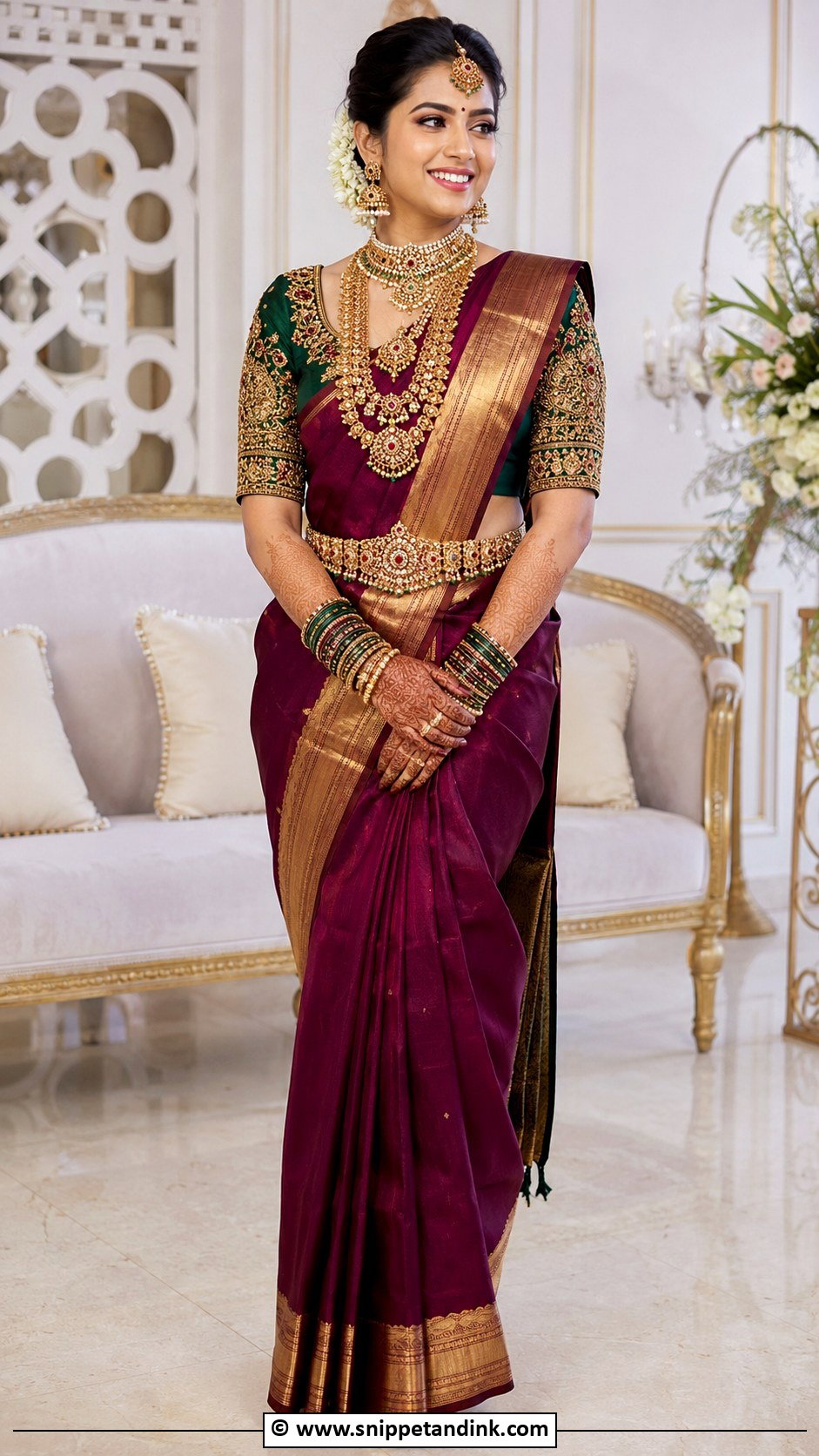
Zardosi and Aari on the same blouse is a heavy pairing, in both senses. Zardosi is raised metal thread couched onto the fabric, and the finer Aari chain stitch fills in around it, so the surface gets real depth on velvet, raw silk or brocade. Maroon, emerald, navy and deep purple carry it best. What I warn brides about is weight: a fully worked zardosi back can pull at the shoulders by evening, so I ask the tailor for a firm cotton lining and a neckline that is not too wide. Save it for the main ceremony or the reception, where the grandeur is seen up close.
4. Bridal Stone Aari Work Blouse
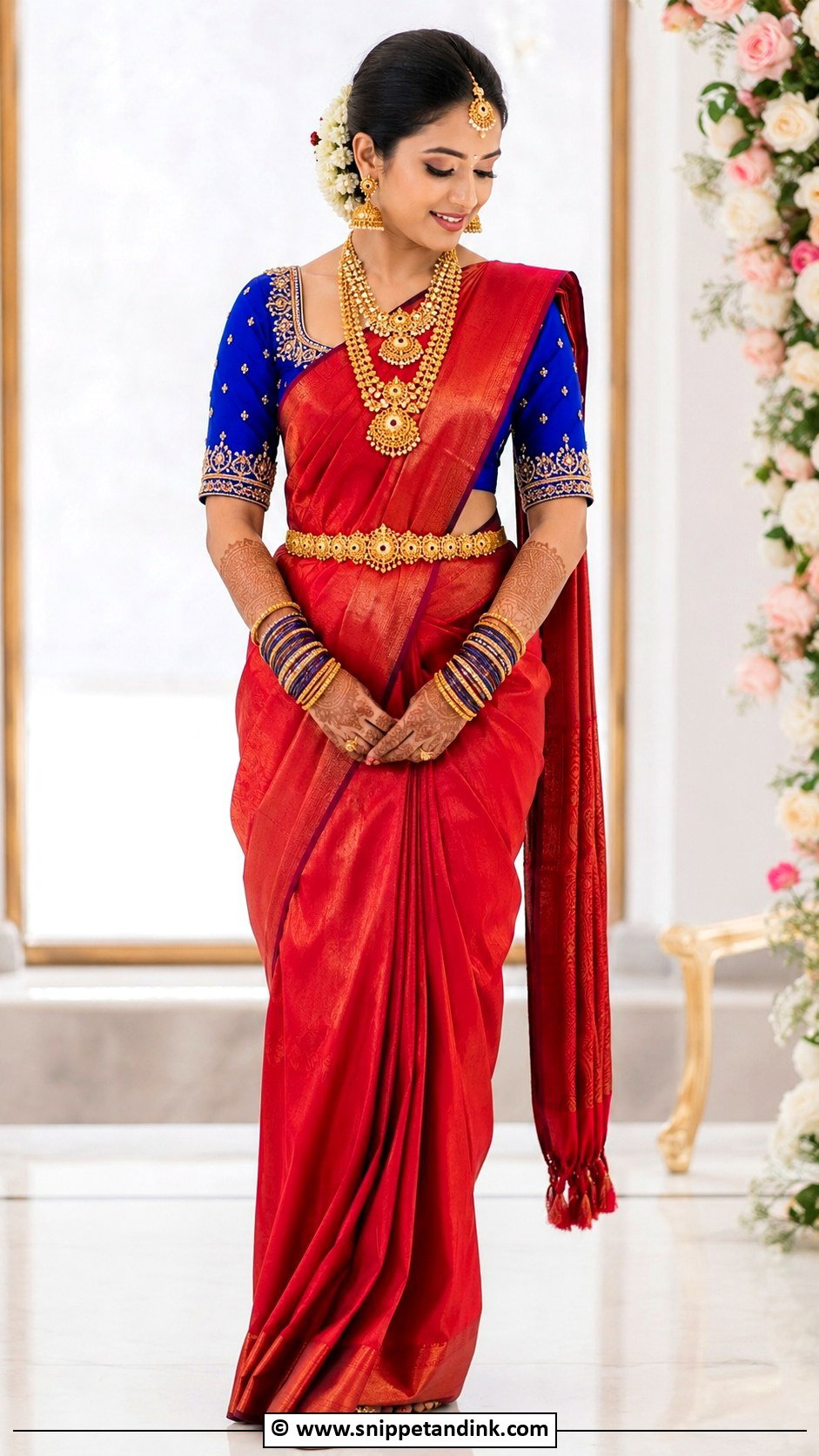
Stones give an Aari blouse its sparkle, but how they are attached matters more than how many there are. I always ask whether stones are stitched into a setting or glued on, because glued stones pop off on the first long day and leave pale marks behind. Set around florals, peacock feathers or the sleeve border, stitched stones catch the light well in jewel-toned silks like ruby, emerald and magenta. If the blouse is heavily stoned, pick a saree with a clean border so the two do not both demand attention.
5. Bridal Mirror Aari Work Blouse
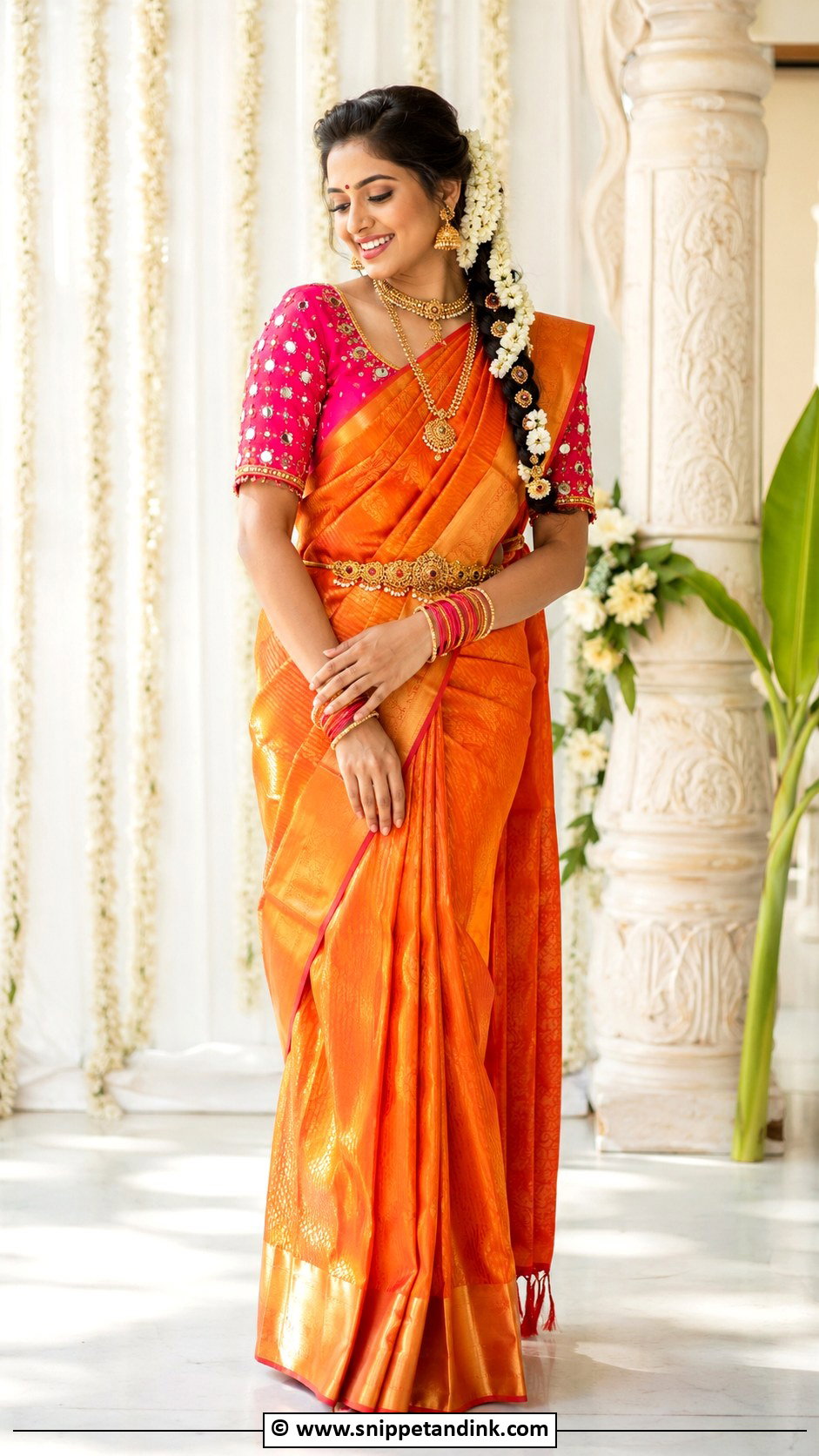
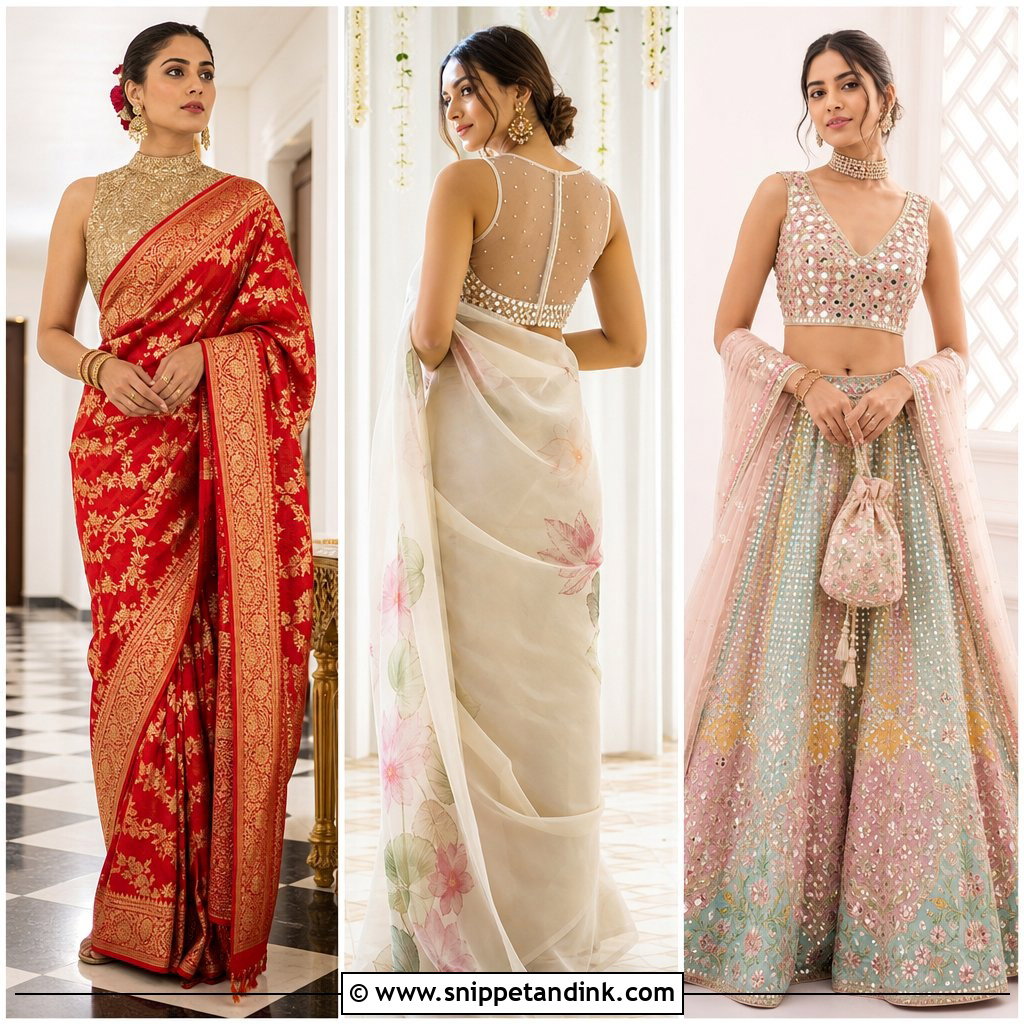
Mirror work belongs to the brighter end of the bridal wardrobe. Each small mirror is held in place by a ring of Aari stitches, then edged with beads or sequins, and it glows on pink, orange, yellow and turquoise silks or georgettes. I tend to steer it toward haldi, sangeet and mehndi outfits. It can work for the wedding itself if the mirrors are small and evenly spaced, but large mirrors flash hard under camera lights and can look busy next to temple jewelry.
6. Bridal Full Back Aari Work Blouse
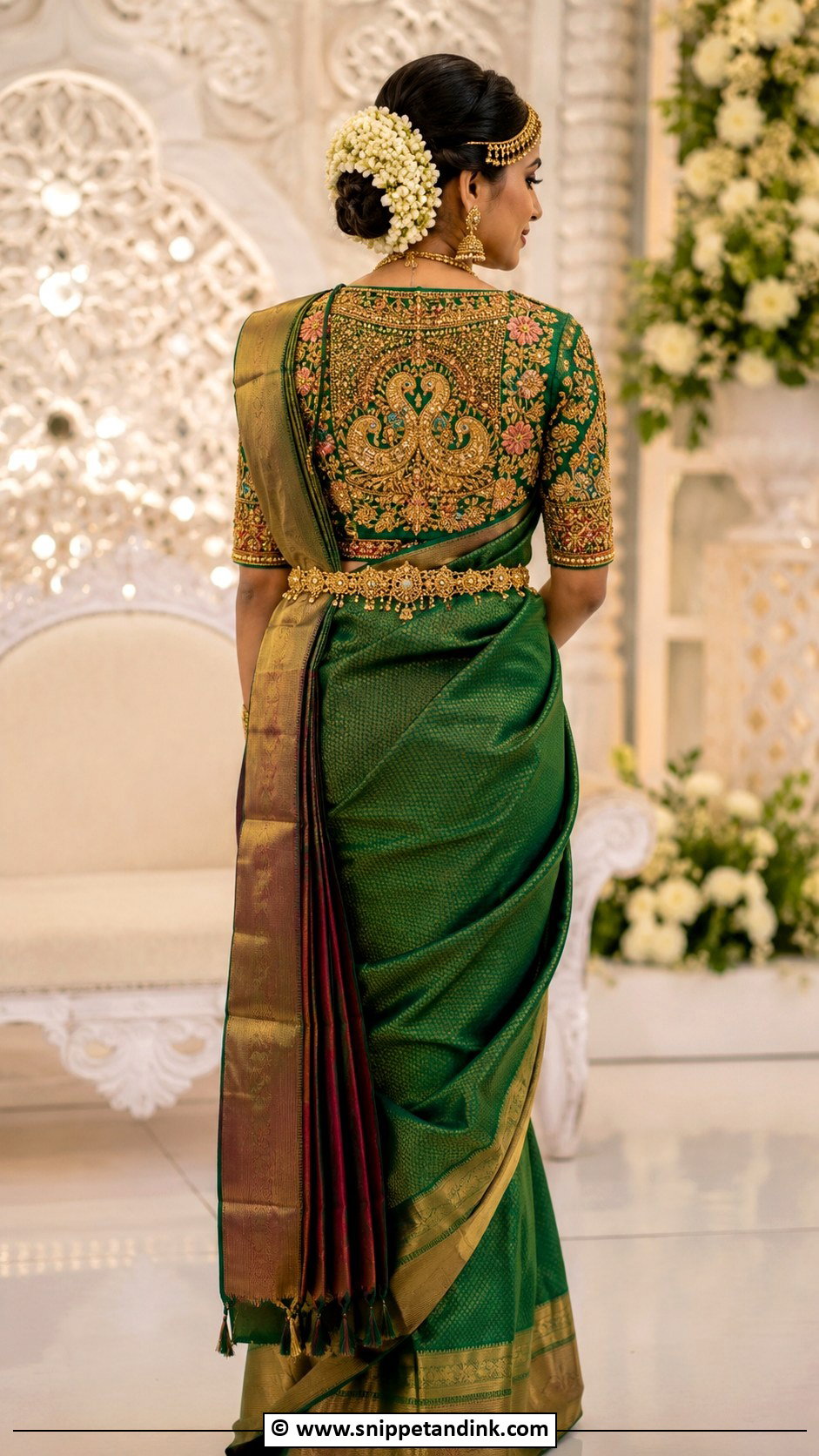
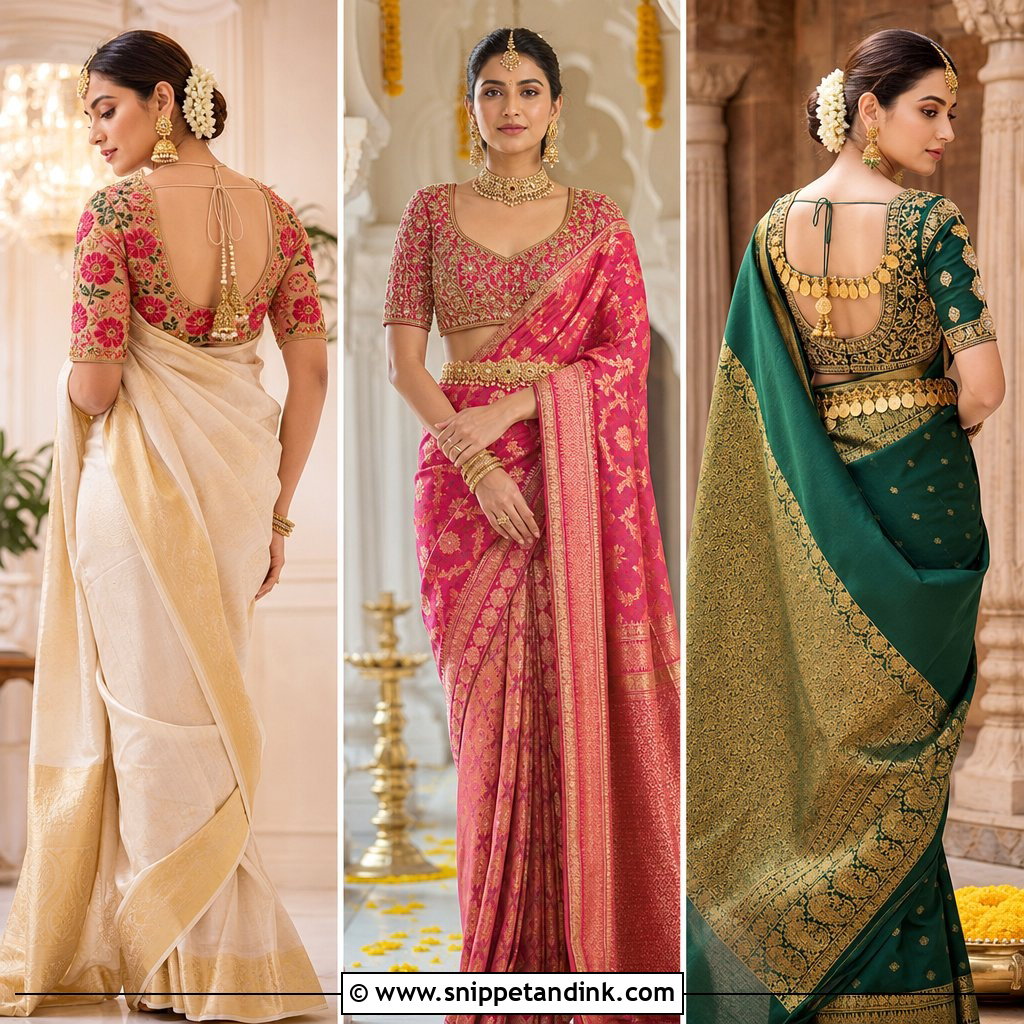
A fully embroidered back only pays off if the drape shows it. Before I sign off on a full back, I check how the bride wears her pallu: pinned flat over the shoulder, it hides half the work. Peacocks, lotuses, paisleys, couple scenes and temple borders all fill the space well, and a contrasting blouse color helps the motif read. Deep U, boat and round backs each frame it differently, so pick by comfort first. Ask for proper lining here, because dense back embroidery adds more weight than brides expect.
7. Bridal Elbow Sleeve Aari Work Blouse
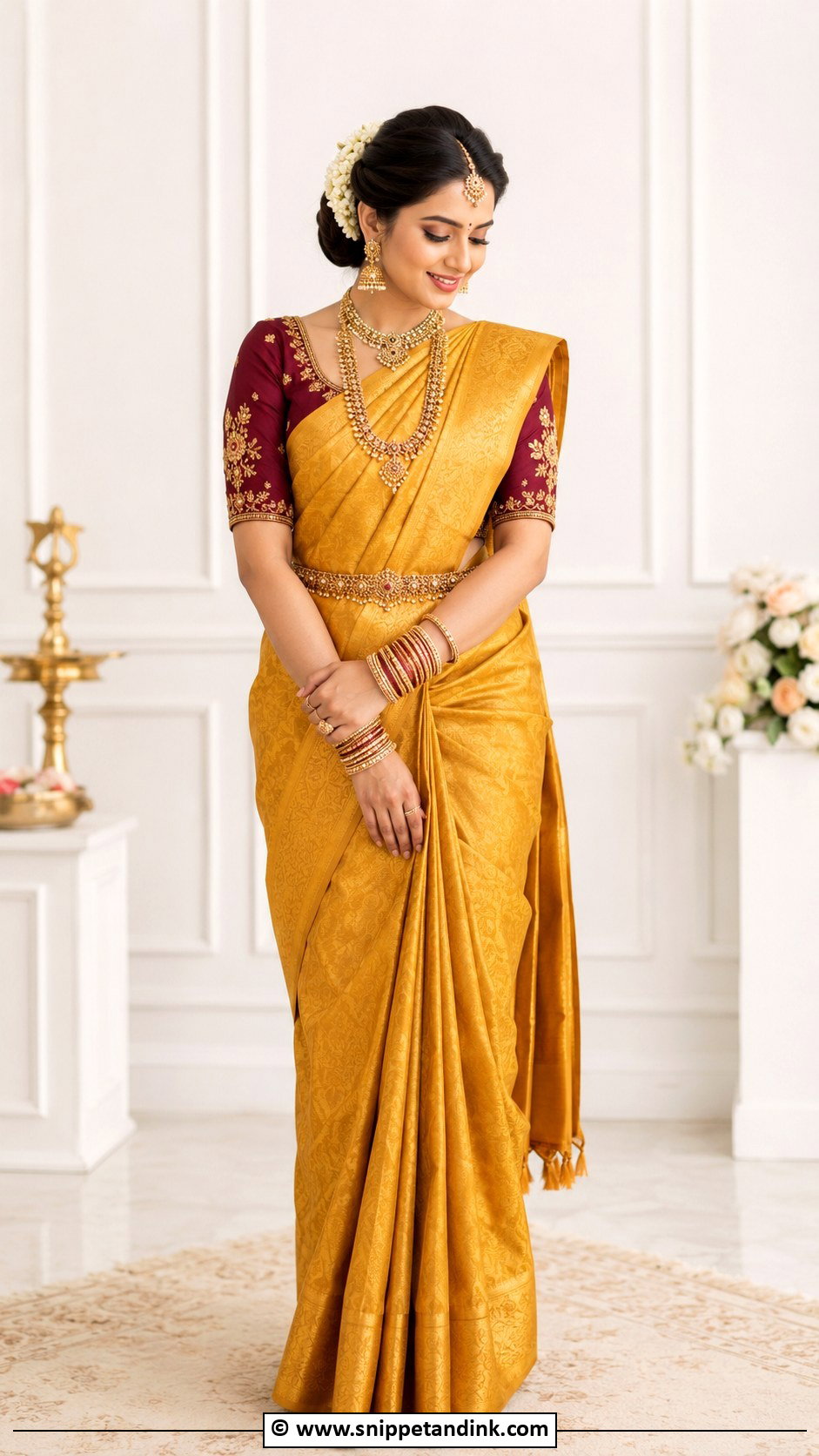
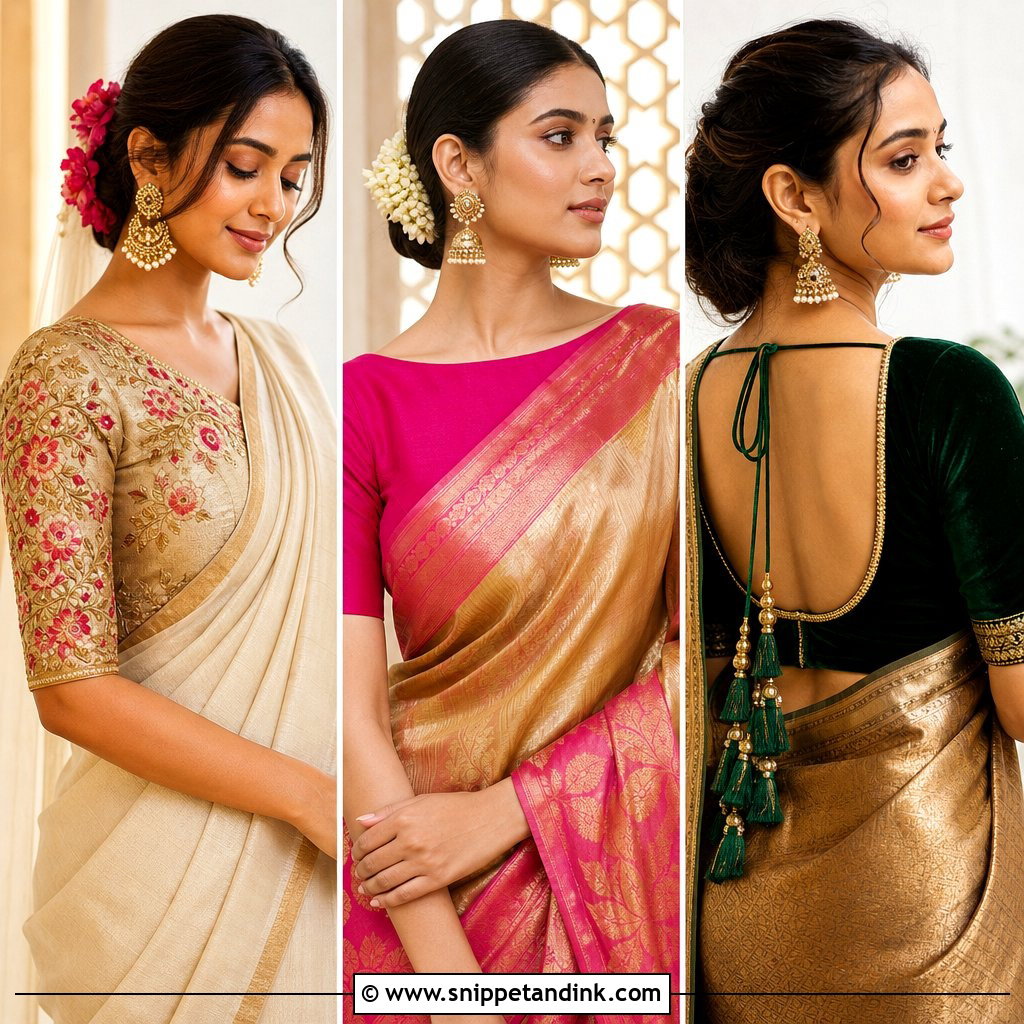
Elbow sleeves are the length I recommend most often for bridal Aari work. They give the embroiderer enough surface for a proper border without the stiffness of a full sleeve, and they bend easily when you are seated through long rituals. Florals, peacock feathers, small buttas, stone lines or zari vines all fit. With Kanjivaram, Banarasi or tissue sarees, I place the heaviest band at the sleeve end and let the work thin out toward the shoulder, so the arm does not look boxed in.
8. Bridal Puff Sleeve Aari Work Blouse
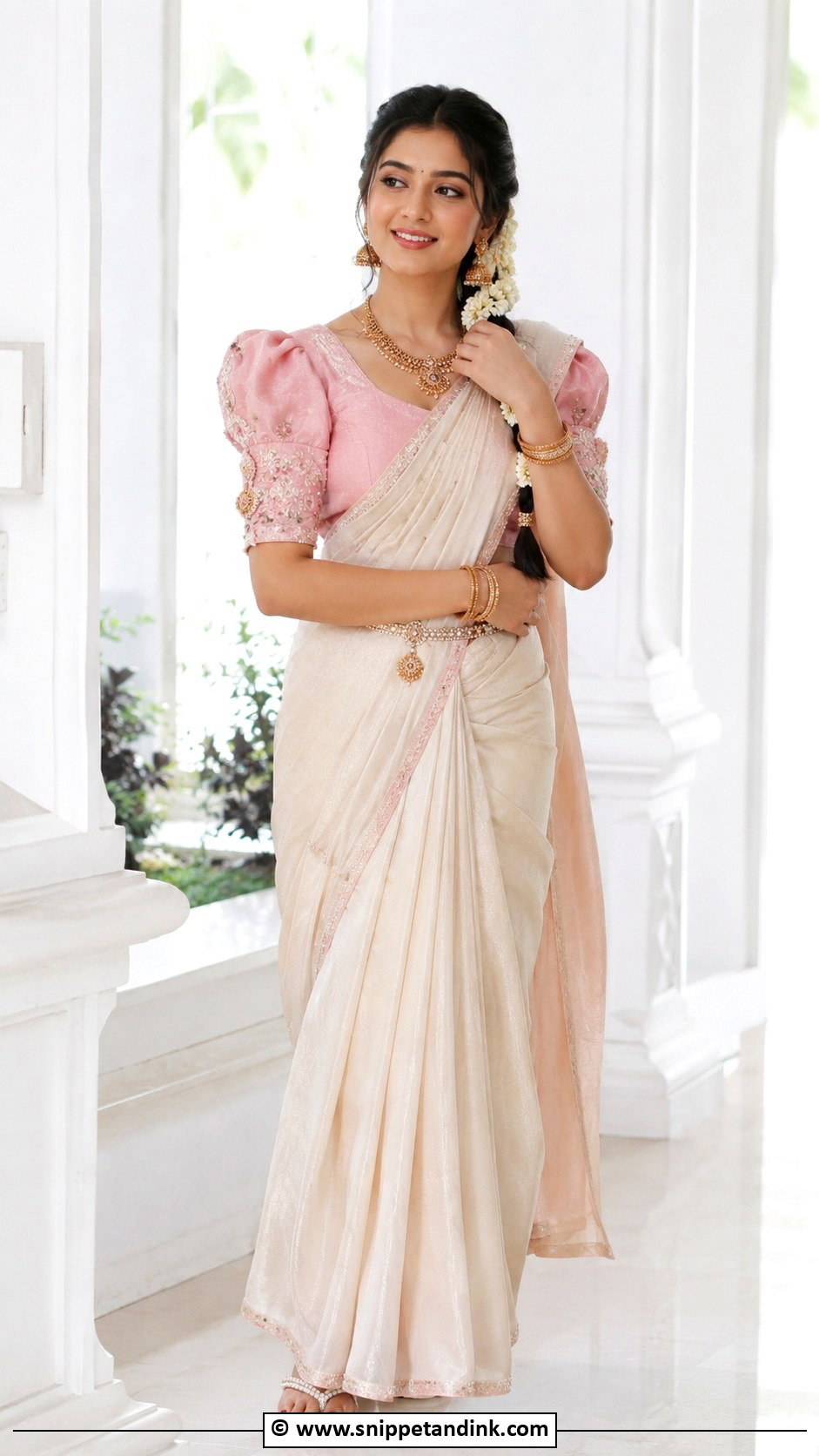
Puff sleeves read younger and a little vintage, and they suit half-saree looks especially well. The trouble is volume: a tall puff with dense embroidery stands up like a cap and can catch on the pallu. I keep the puff moderate and the Aari work delicate, a narrow border, a few pearls or a thin floral vine. Gold jhumkas and a braid with fresh flowers sit nicely with it.
9. Bridal Boat Neck Aari Work Blouse
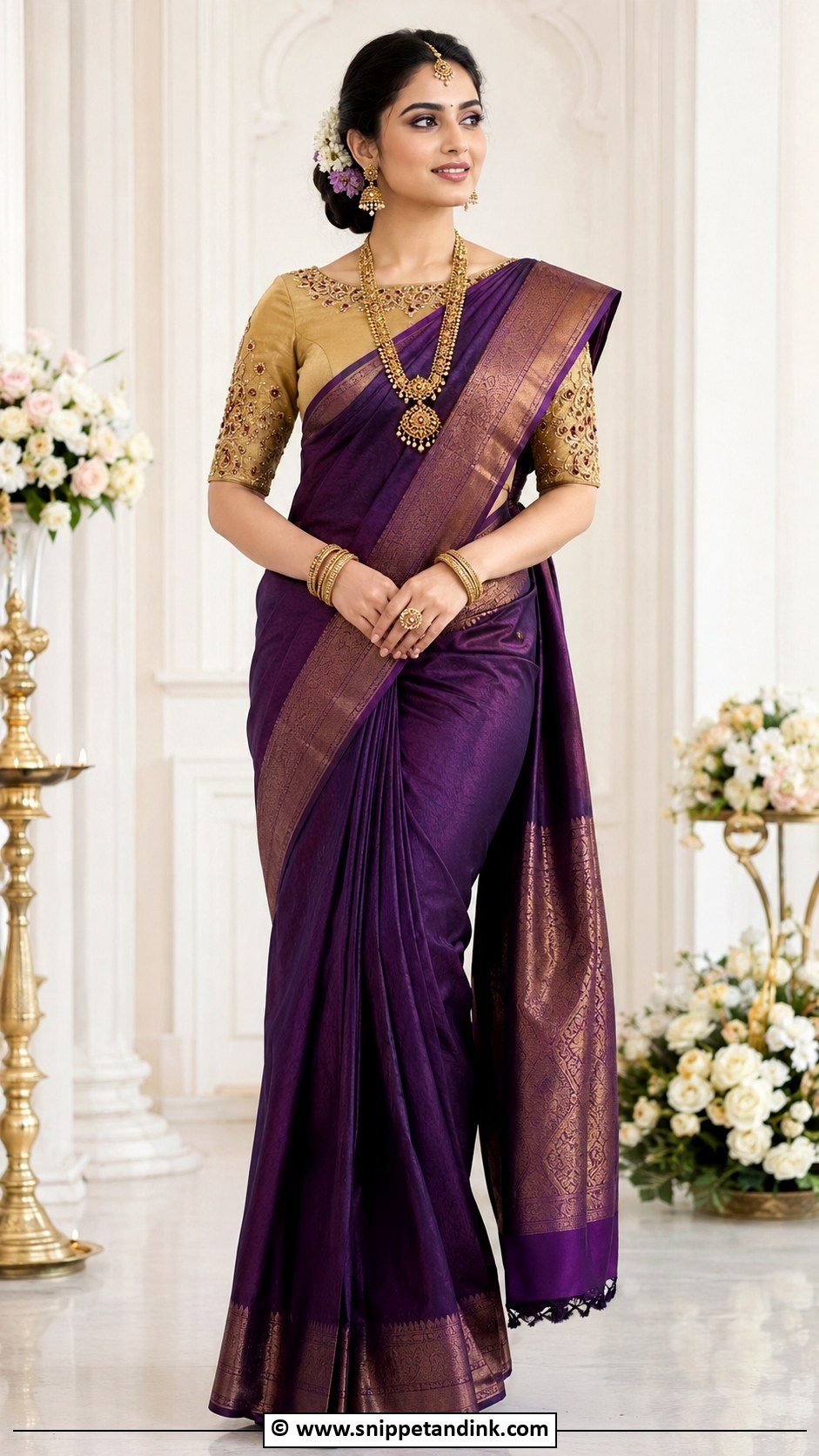
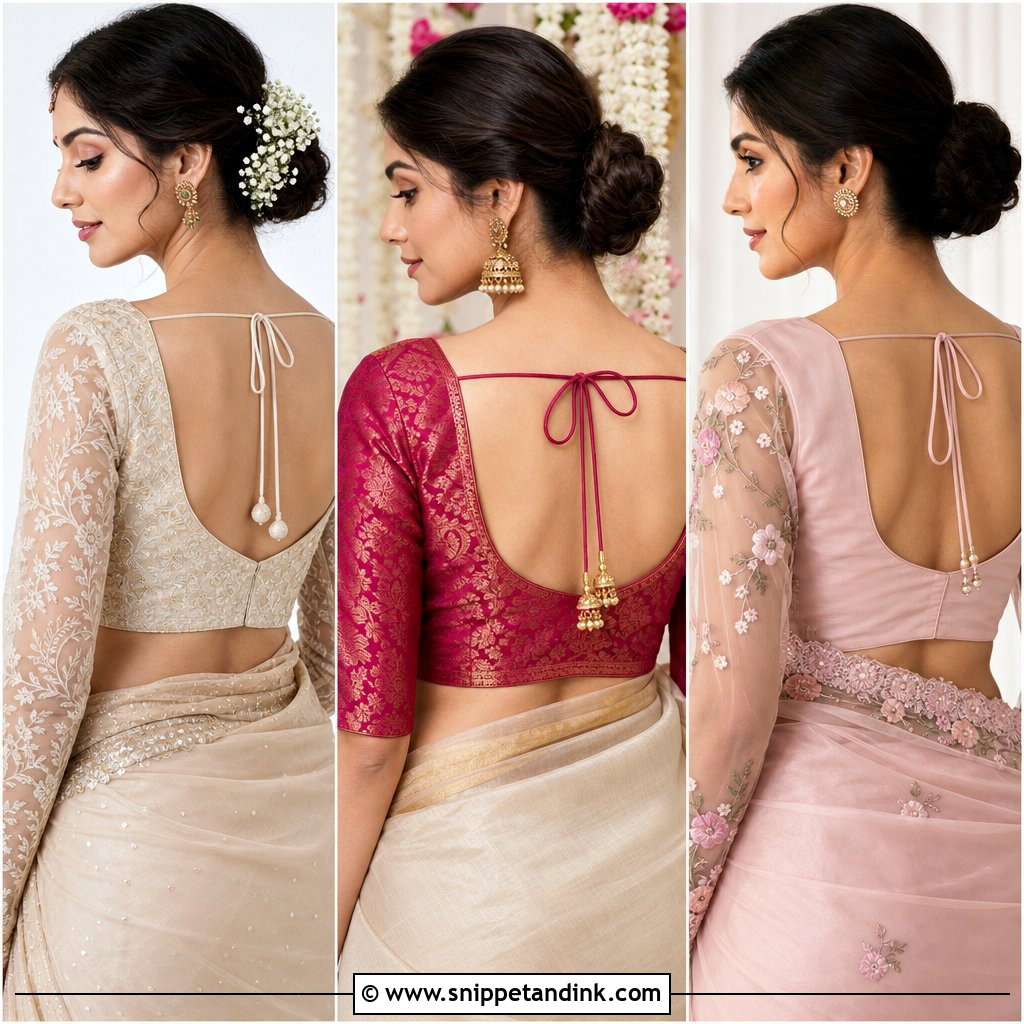
A boat neck Aari work blouse gives the embroiderer a wide, flat canvas across the collarbone, and that is where it shines. Gold zari vines, pearl lines or small stone clusters can follow the neckline evenly. I like it with heavy silk sarees because the structure holds up against a thick border. One fitting note from experience: boat necks slip toward the shoulder edge if the measurement is generous, so ask for the width to be pinned on you, not taken from an old blouse. A long necklace and a low bun suit the shape.
10. Bridal Deep U Neck Aari Work Blouse
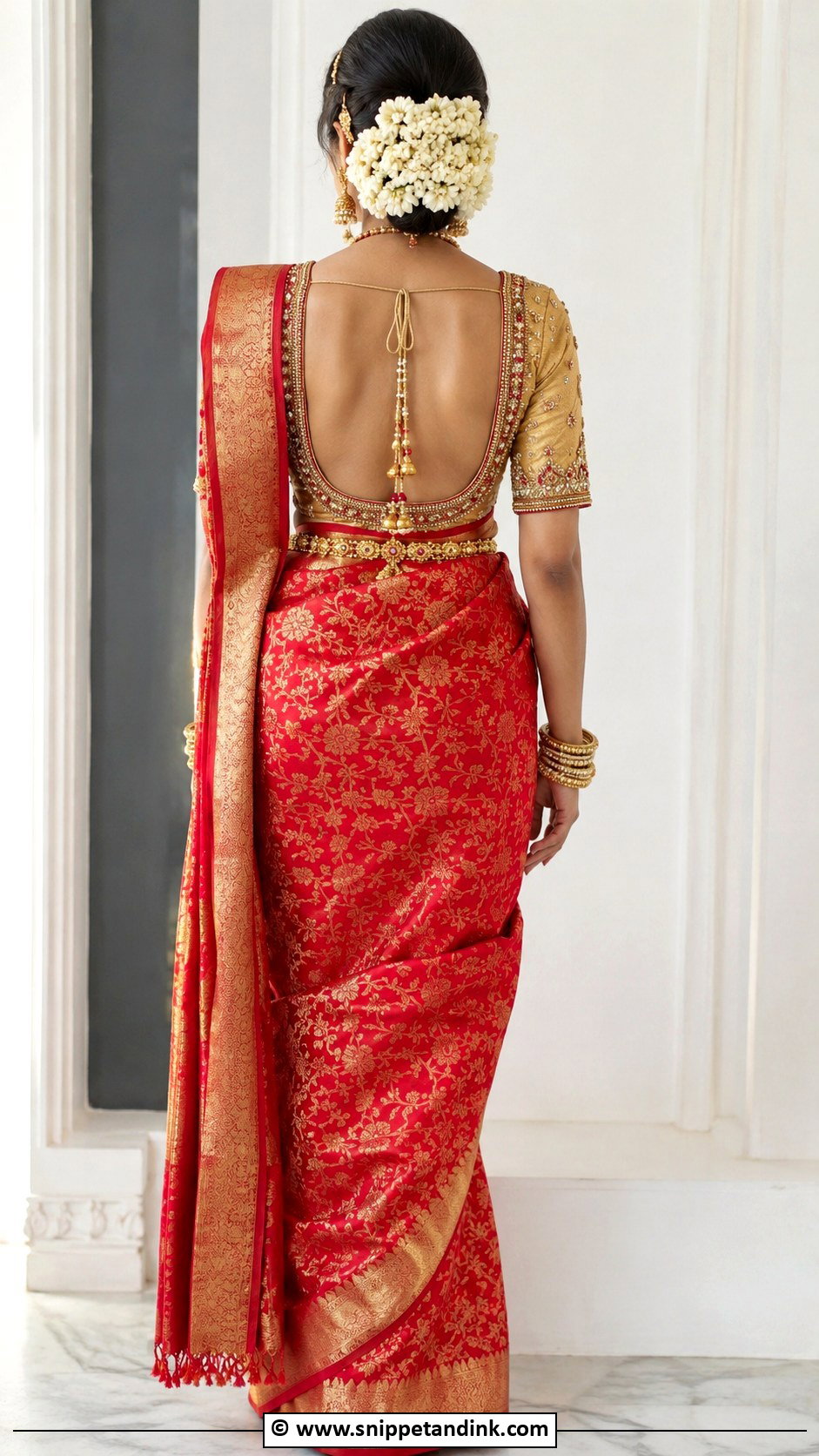
The deep U back is a classic for good reason: it frames bead edging, tassels and floral borders cleanly. The risk is fit. A deep back on an Aari blouse has less fabric holding the weight, so I ask for a well-shaped back with a secure hook line and, often, a hidden strap loop. Dori ties with handmade tassels add movement without adding embroidery. Let the pallu fall straight so the back stays in view.
11. Bridal V Neck Aari Work Blouse
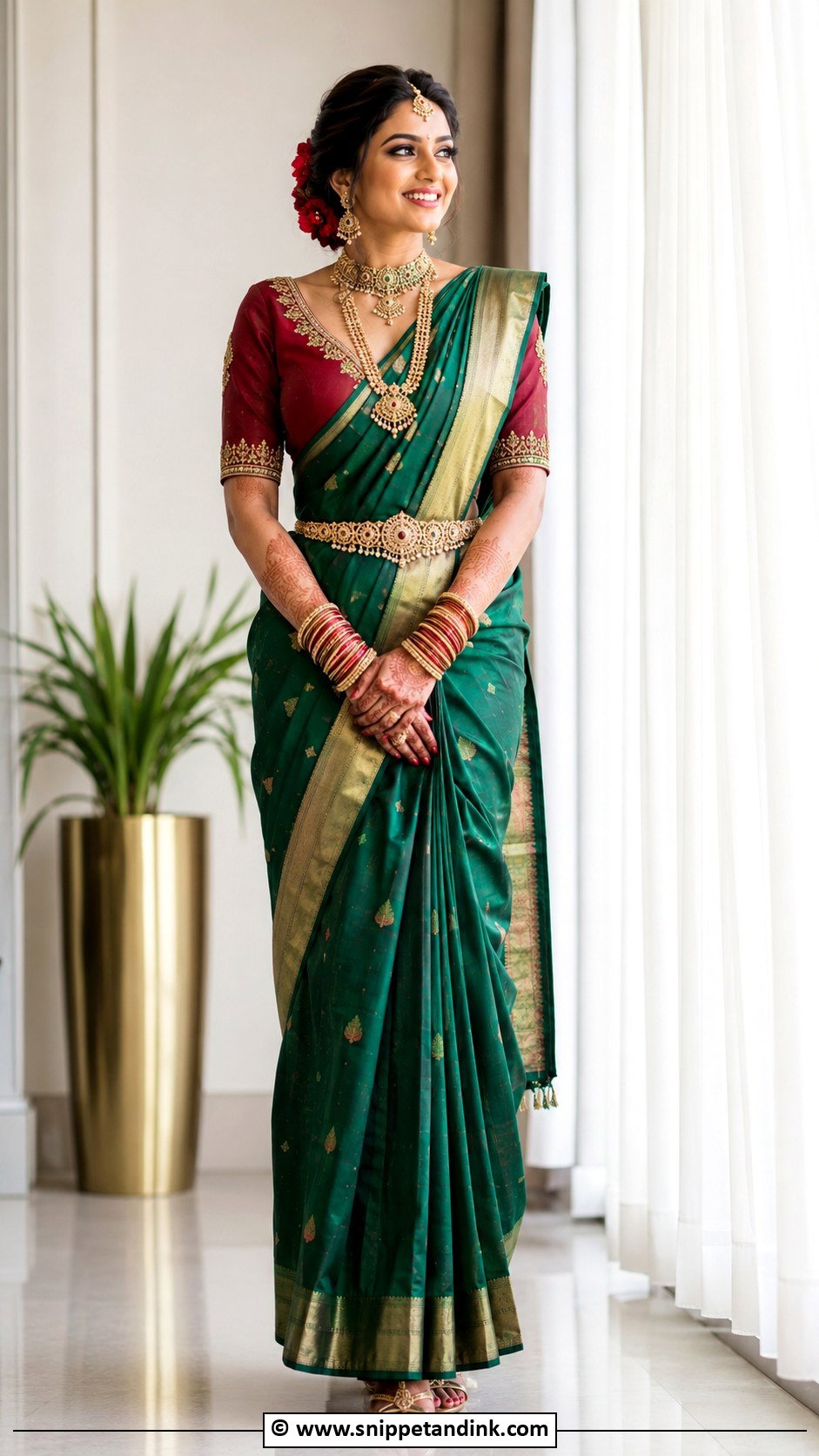
A V neck lengthens the neck and gives the Aari border a clear line to follow, front or back. Gold beads, small stones or a scalloped edge along the V look neat with heavy silk and a layered necklace or choker. I use the V to balance heavier sleeves; the open neckline stops the top half from looking solid. If you are wearing a large choker, keep the V moderate so the necklace has somewhere to sit.
12. Bridal High Neck Aari Work Blouse
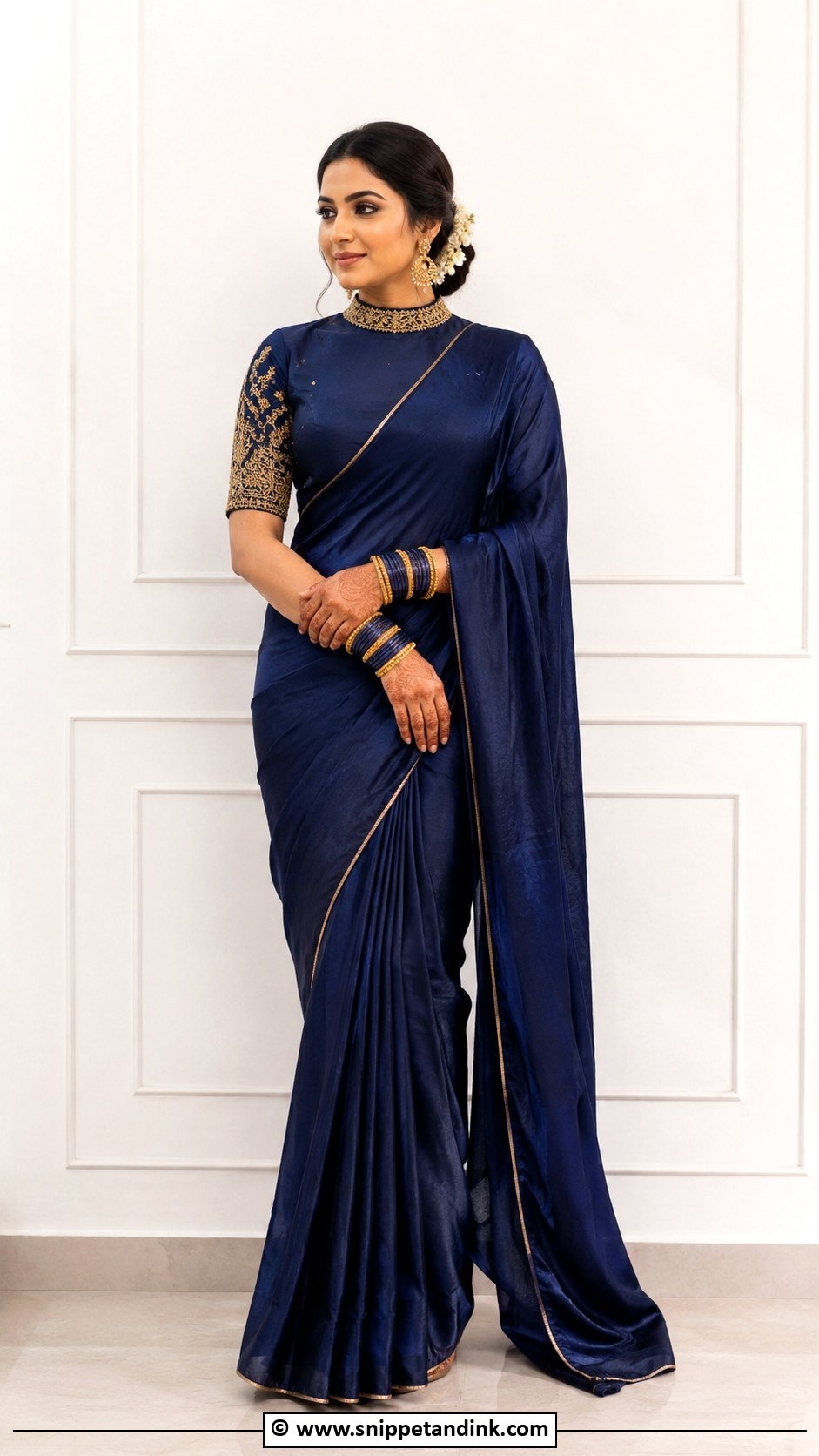
High necks suit brides who want coverage, and they turn the collar into a piece of jewelry in its own right. Raw silk, velvet and brocade hold the shape best. Because the throat is covered, I skip the choker entirely and let statement earrings do the work, with a plain or lightly bordered saree so the collar leads. Make sure the collar has a bit of ease; a tight embroidered collar gets warm fast at a summer ceremony.
13. Bridal Contrast Aari Work Blouse
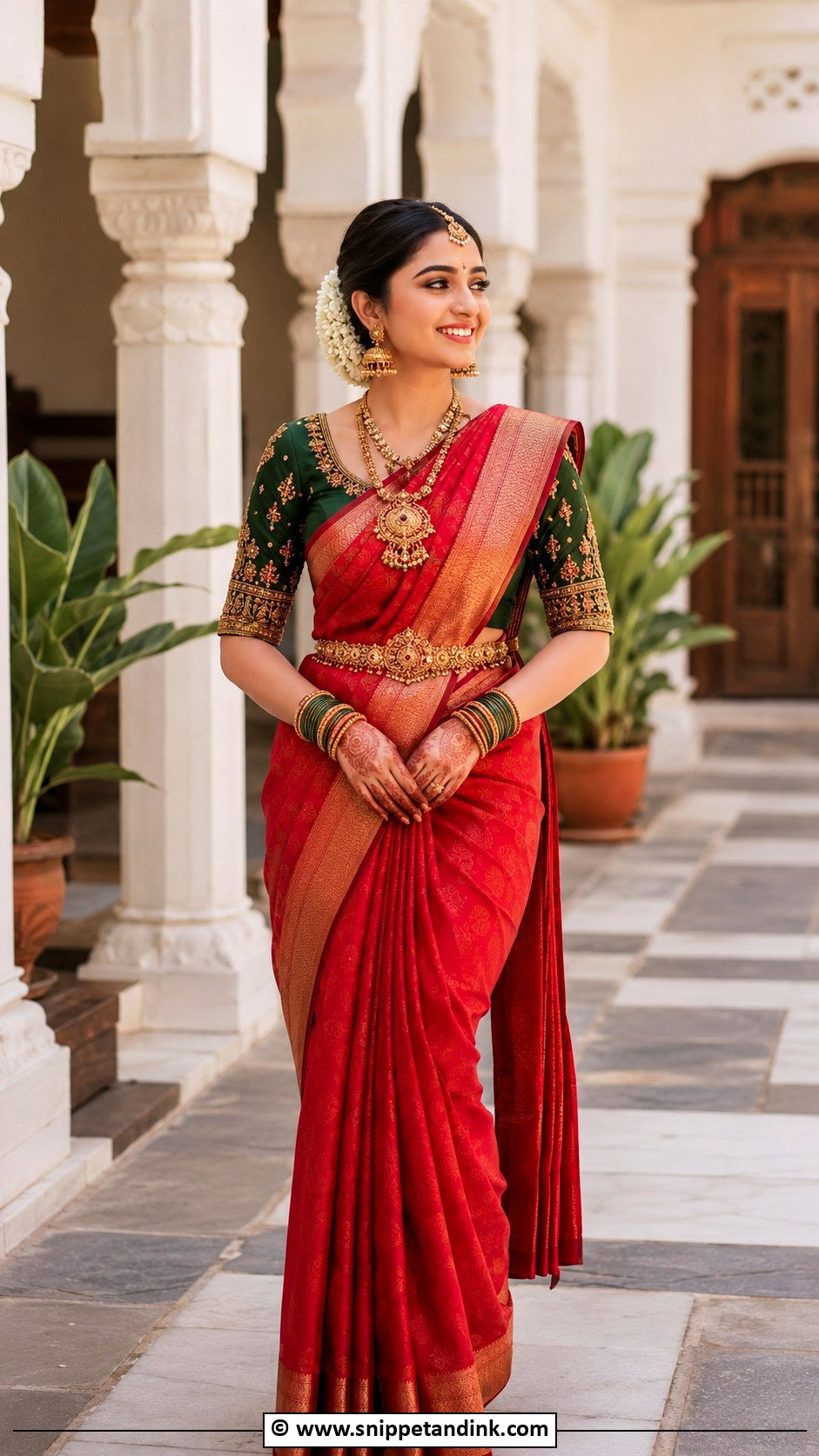
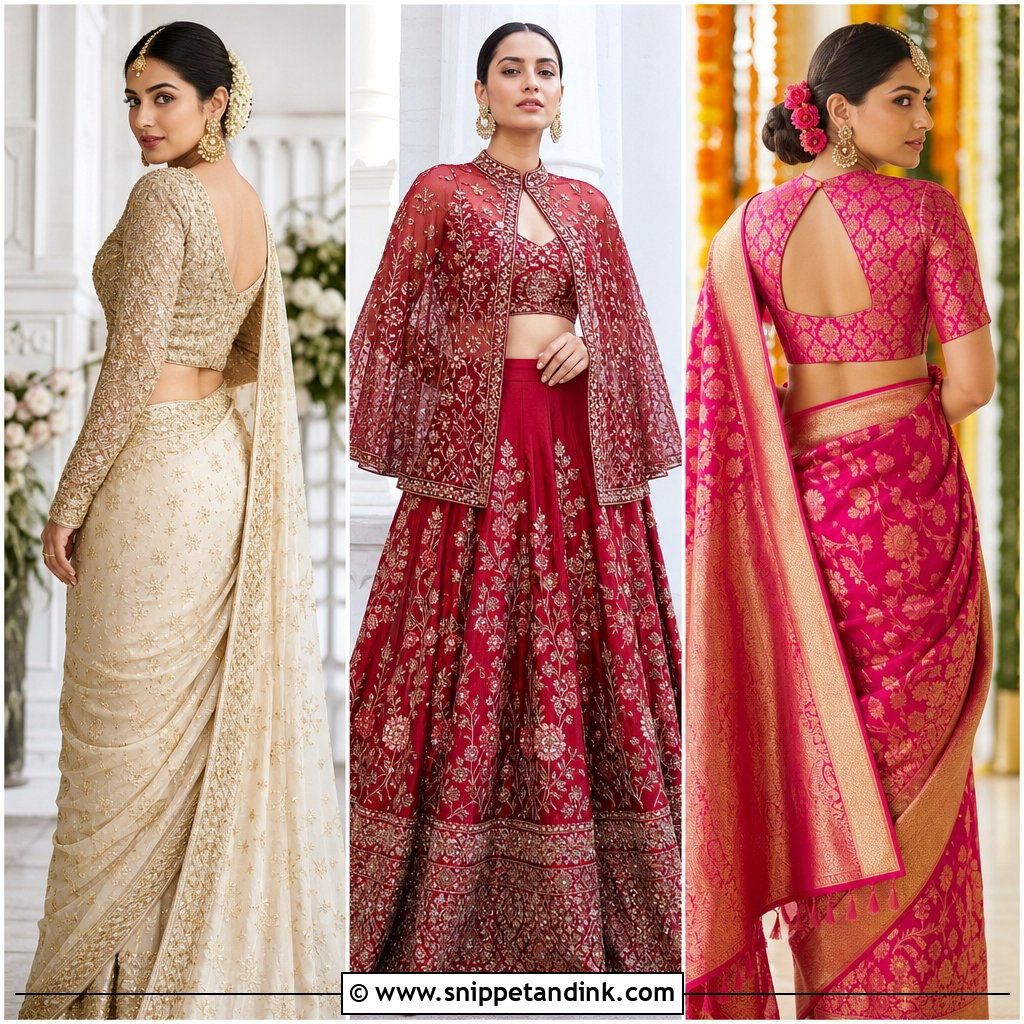
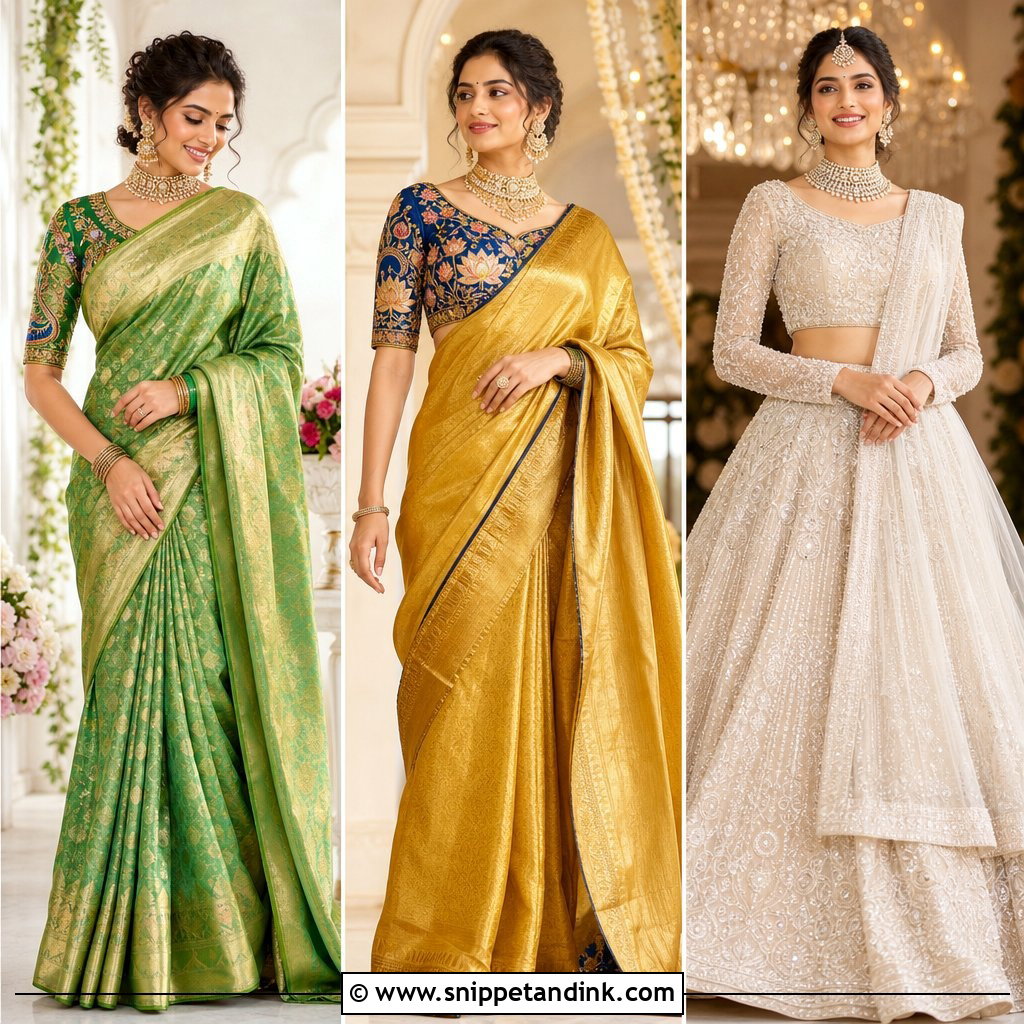
Contrast blouses are my favorite way to make a familiar saree look new. Green with red, maroon with mustard, navy with gold and magenta with orange are the pairings I see work again and again. The thread is what ties them: antique gold, copper or silver Aari work should echo either the saree border or your jewelry, never introduce a third metal. Keep accessories in that same tone and the two colors read as planned rather than clashing.
14. Bridal Red Aari Work Blouse
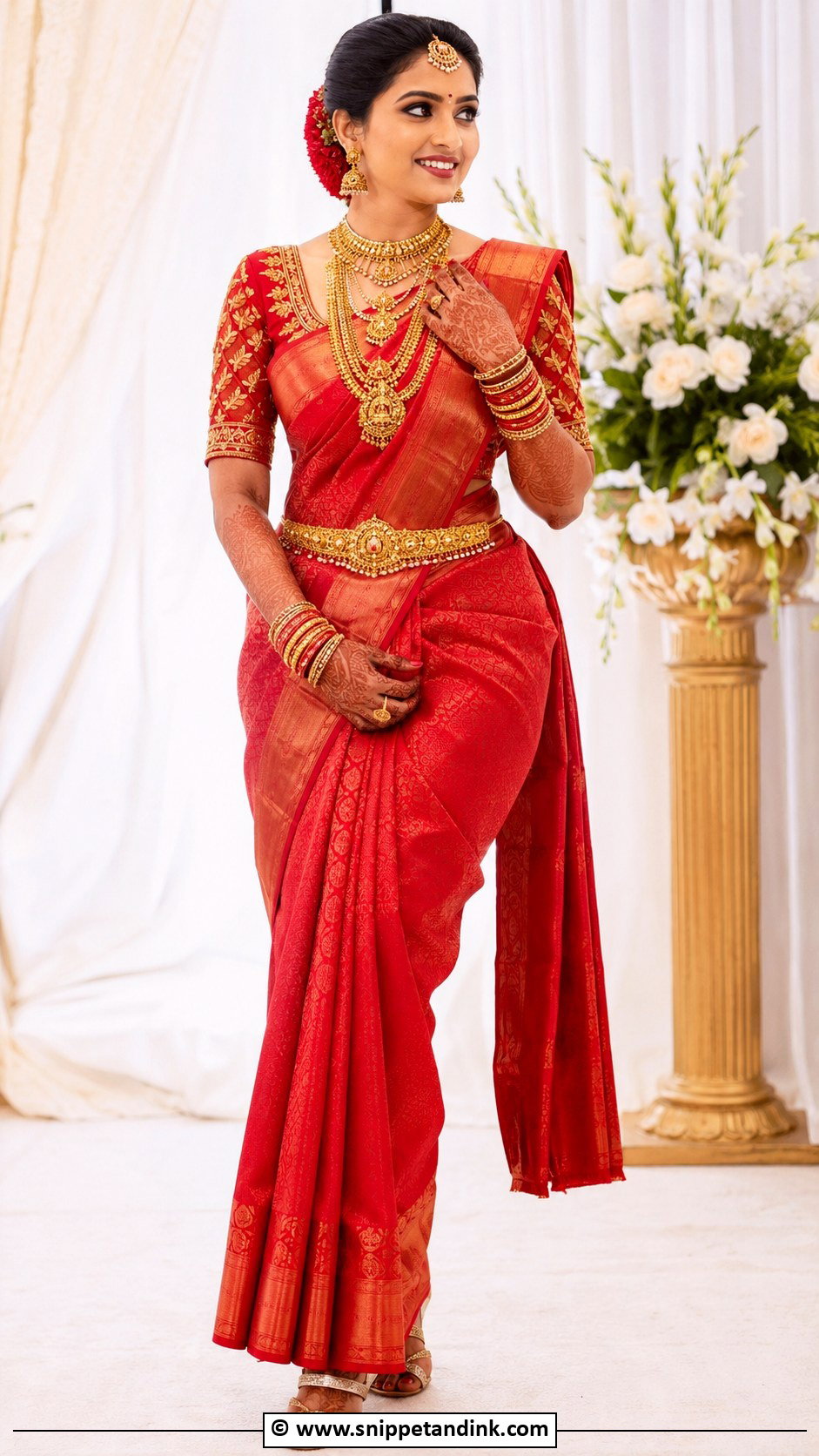
Red silk with gold Aari work is the safest bridal combination there is, and I mean that as praise. Florals, paisleys, peacock borders or dense sleeve work all suit it. Red, gold, cream, green and mustard sarees pair well. When a bride wears a red blouse with a red saree, I ask the embroiderer to use texture, beads against flat zari, so the two reds do not merge into one block in photos.
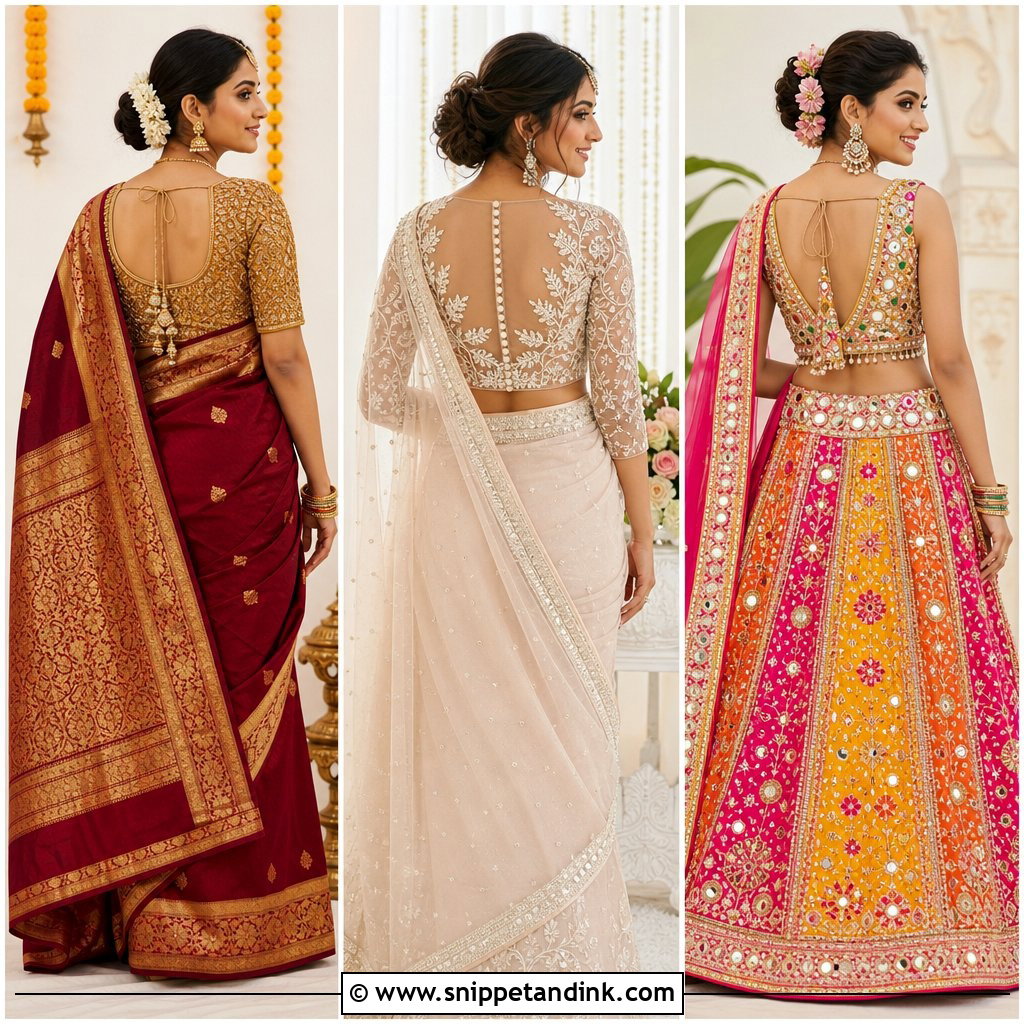
15. Bridal Green Aari Work Blouse
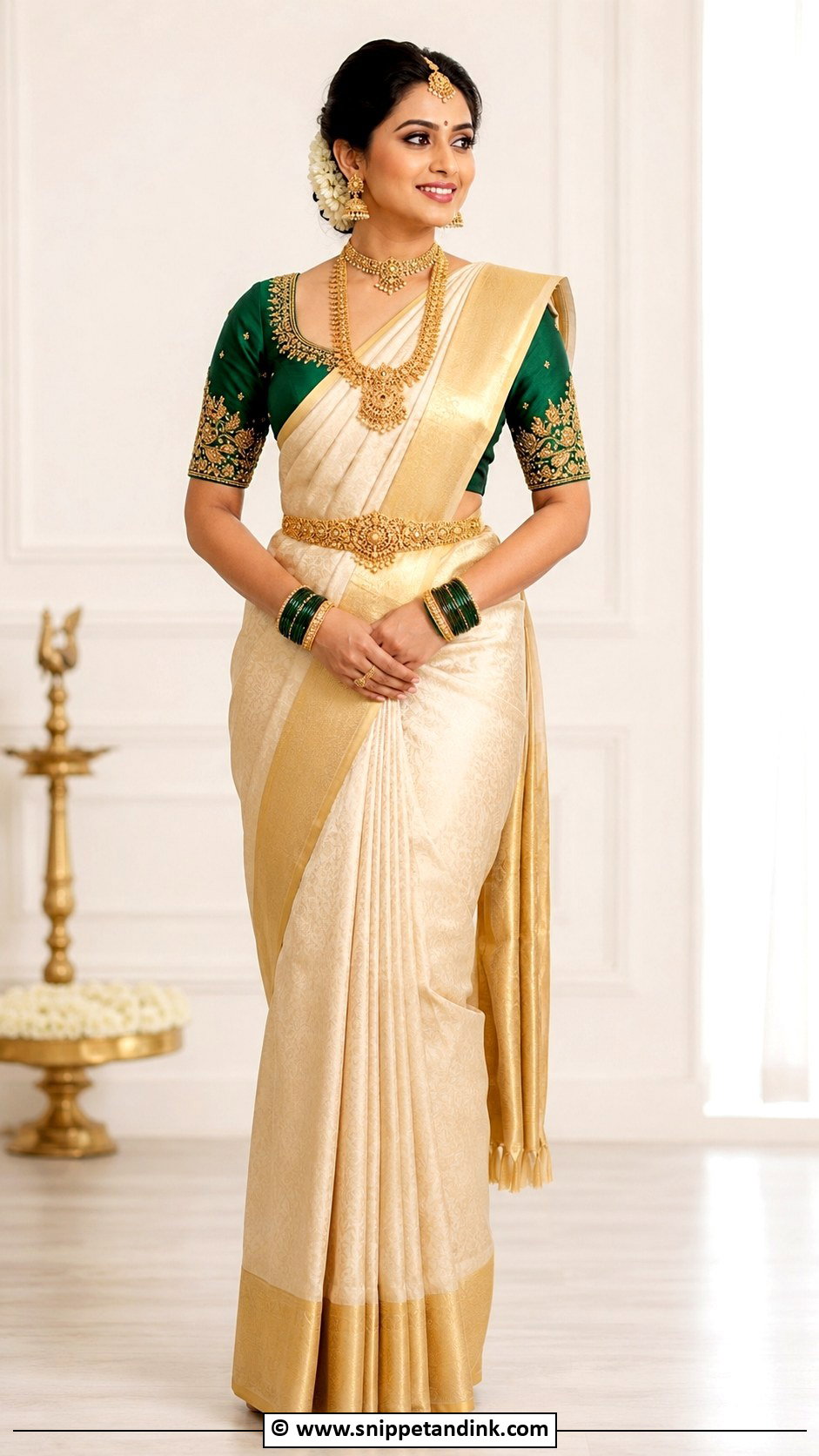
Green is the color I reach for when a bride wants contrast that still feels traditional. Emerald, bottle green, parrot and olive each pair with gold, red, mustard or cream sarees, and antique gold Aari work makes all of them look rich. Bottle green is the most forgiving under indoor lights; parrot green photographs much brighter than it looks in a shop, so check it in daylight before committing.
16. Bridal Magenta Aari Work Blouse
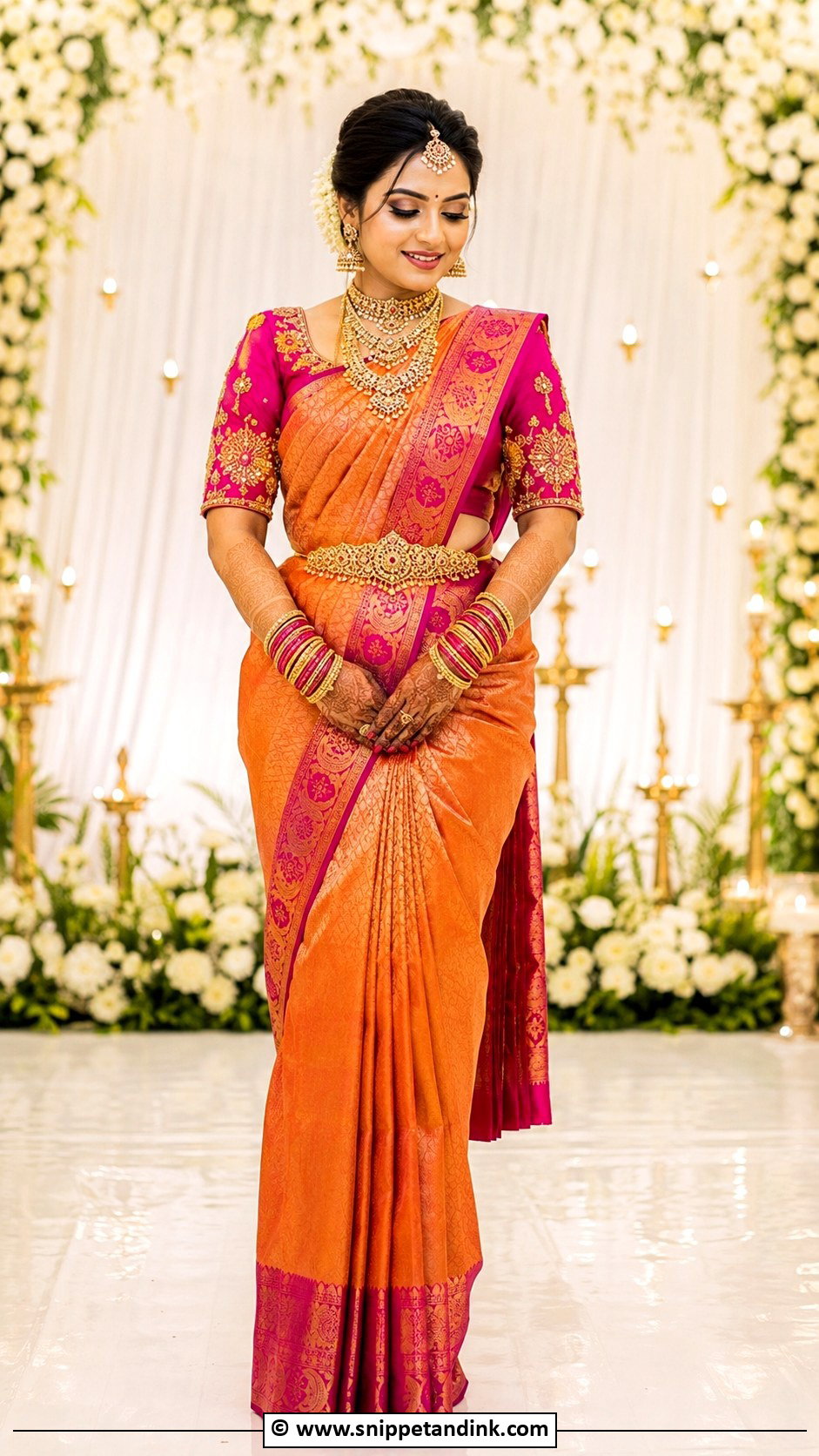
Magenta takes gold zari, pearl highlights and mirror detail better than almost any shade. Green, orange, gold, cream or a matching magenta silk saree all pair with it. For a grander version, I put peacocks or lotuses on the back and sleeve ends. Watch the makeup, though: magenta next to a warm lip can turn harsh, so I usually suggest a rose or berry lip to keep the face from fighting the blouse.
17. Bridal Maroon Aari Work Blouse
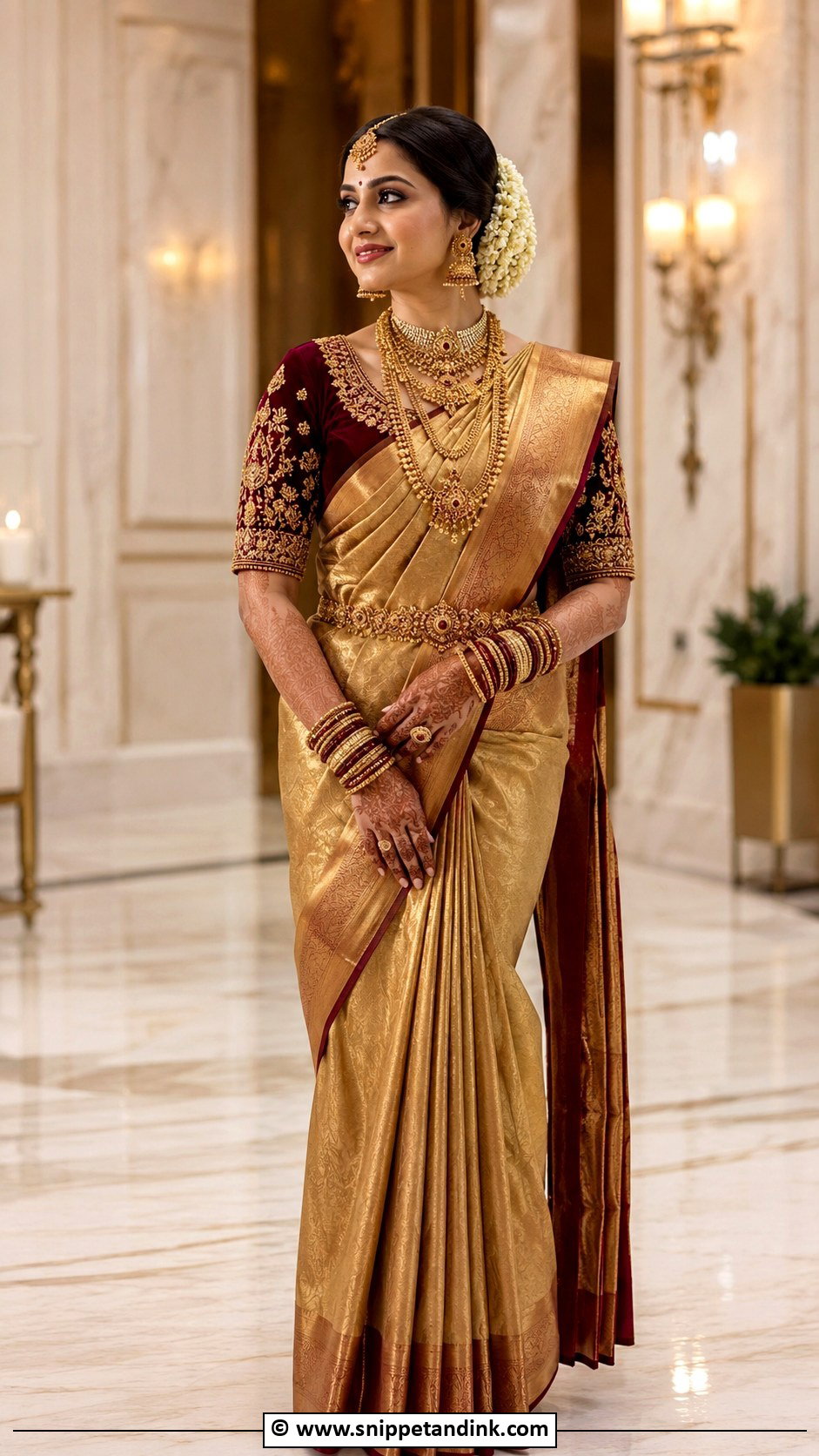
Maroon gives depth without the brightness of red, and it is often what I suggest to a bride who finds red too loud. It sits well with gold, beige, cream, mustard, green and red sarees, and antique gold or copper Aari work glows on it. On velvet it turns properly royal for an evening reception. I keep the embroidery dense on sleeves and back and leave the front cleaner, since maroon already reads rich and does not need much help.
18. Bridal Royal Blue Aari Work Blouse
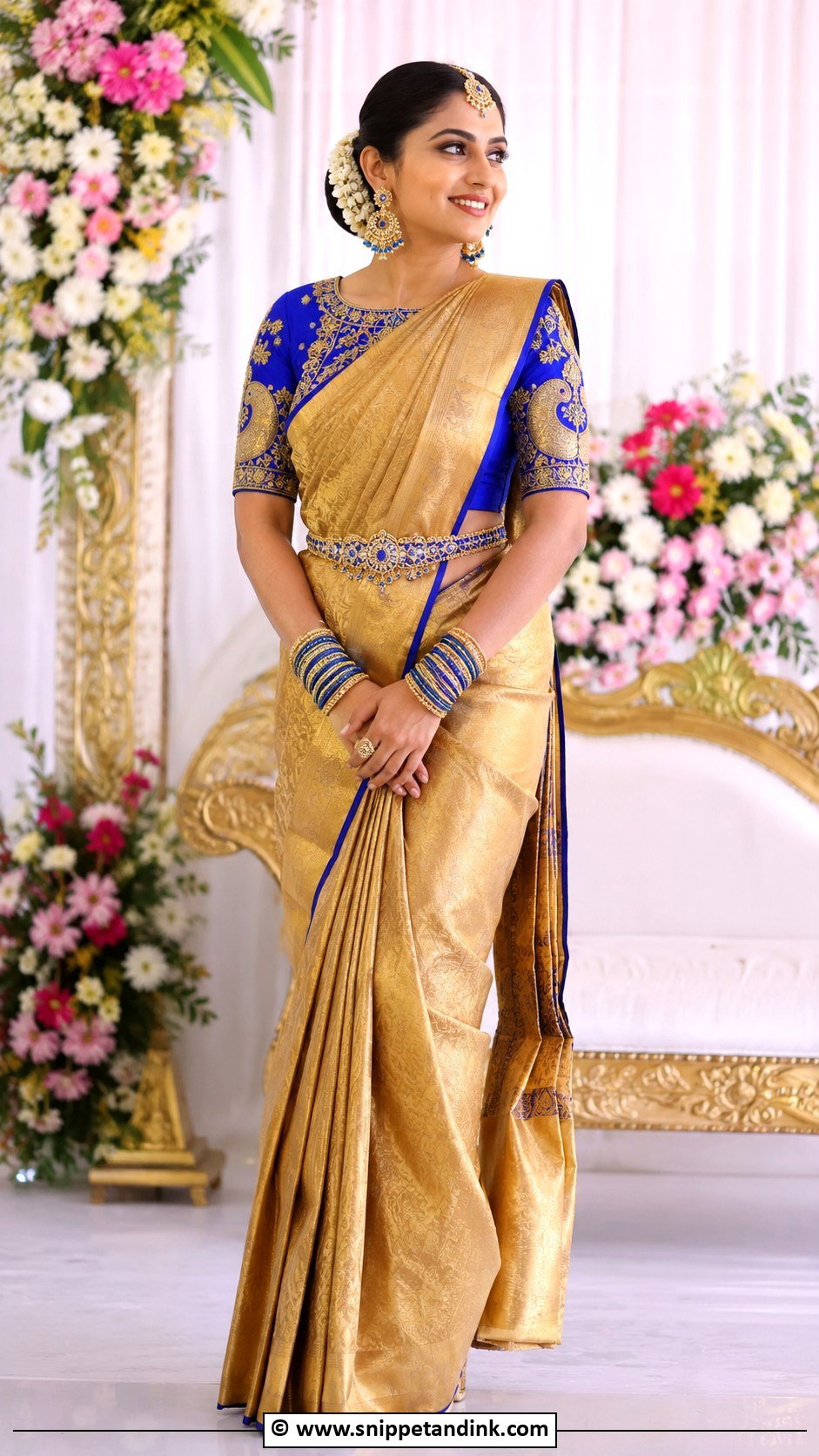
Royal blue makes gold Aari work stand out more sharply than any other base I use. Peacocks, stone borders and floral vines read clearly on it, and it pairs with gold, silver, pink, yellow and cream sarees. It suits a bride who wants to step away from red and green without leaving tradition behind. If your saree has a blue border, match the blouse to that exact shade; two slightly different blues look like a mistake.
19. Bridal Gold Aari Work Blouse
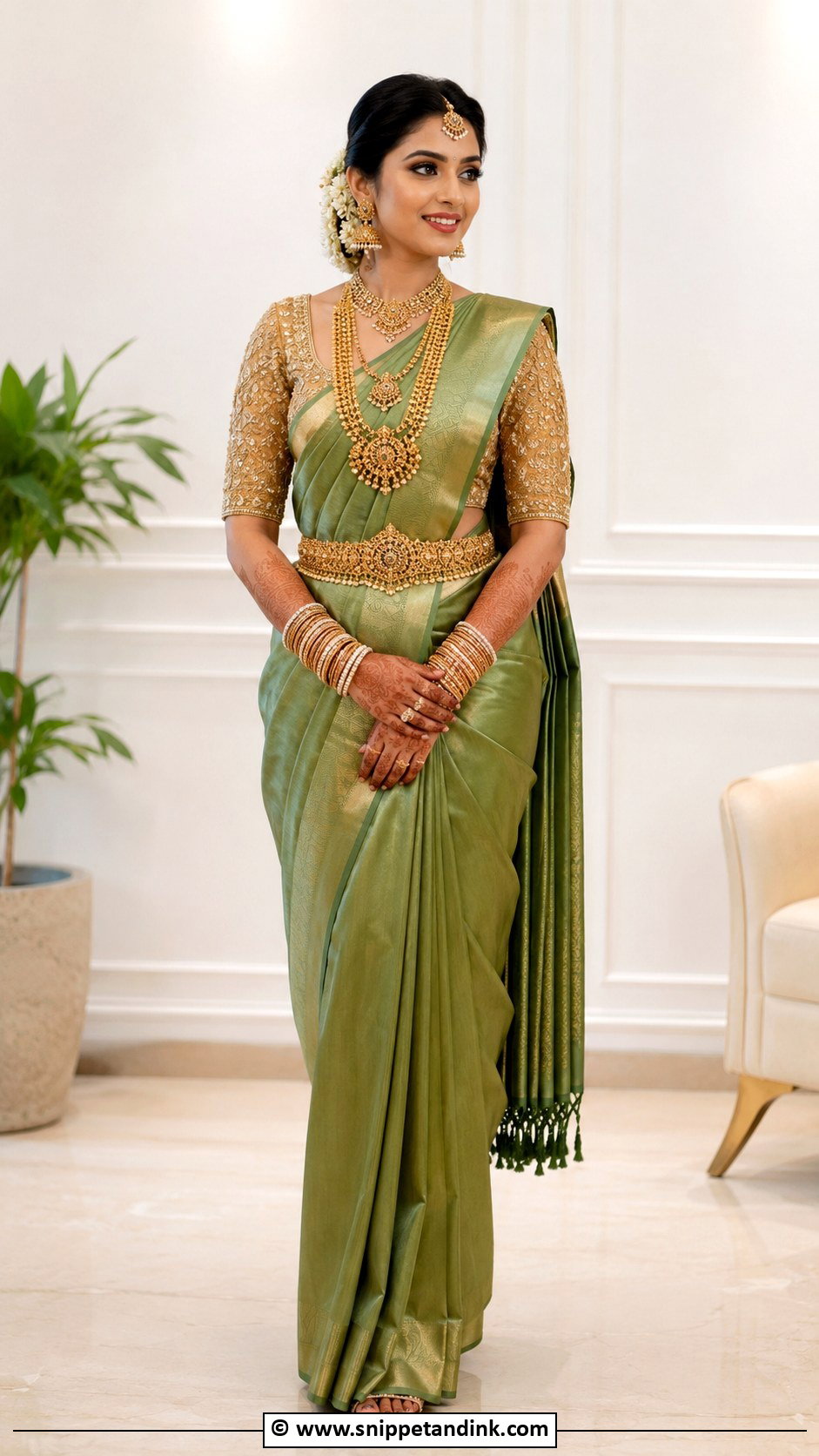
A gold blouse is the most useful piece a bride can own after the wedding, since it works under red, green, pink, purple, maroon and cream sarees. Tone-on-tone Aari work with beads, sequins and fine zari keeps it refined. The catch is that gold-on-gold can go flat, so I ask for at least one textured element like raised beads or dabka to give the embroidery shadow. With a heavy saree, keep the blouse pattern structured and simple.
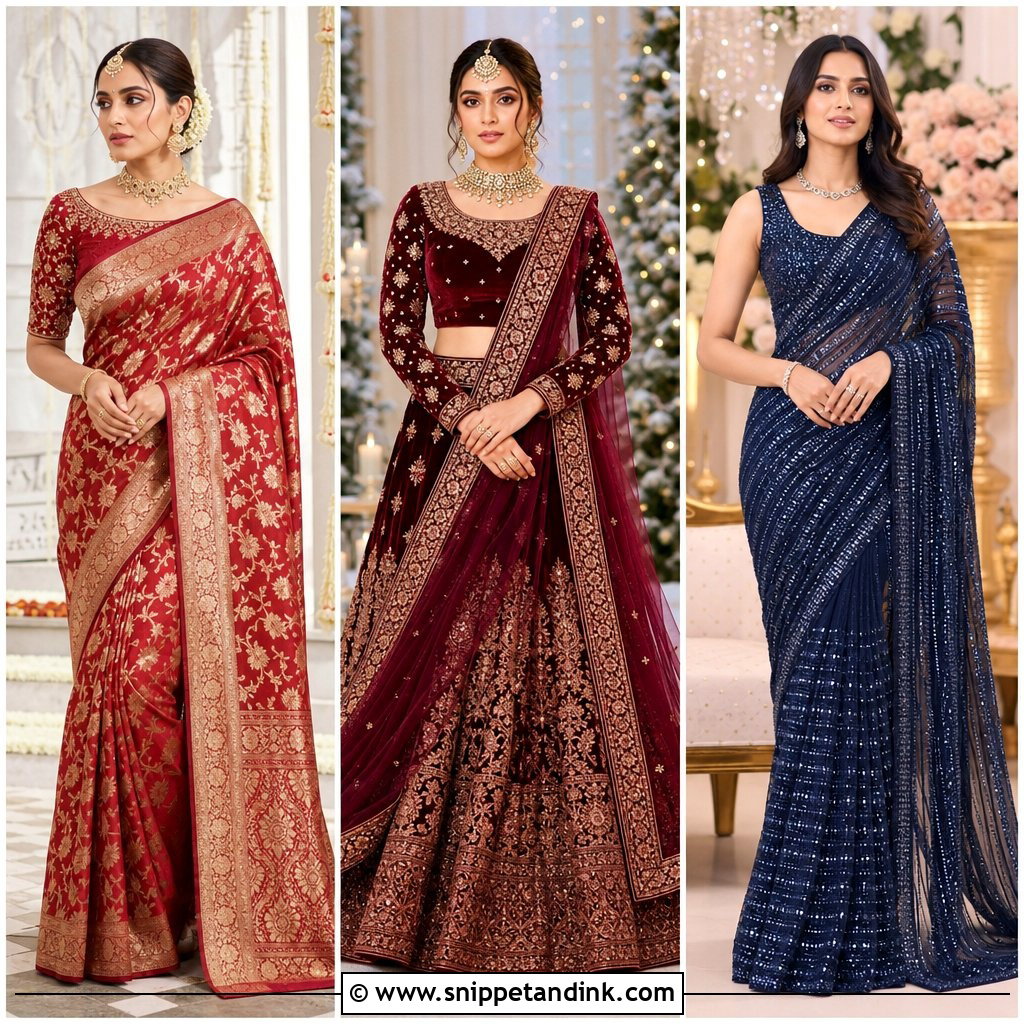
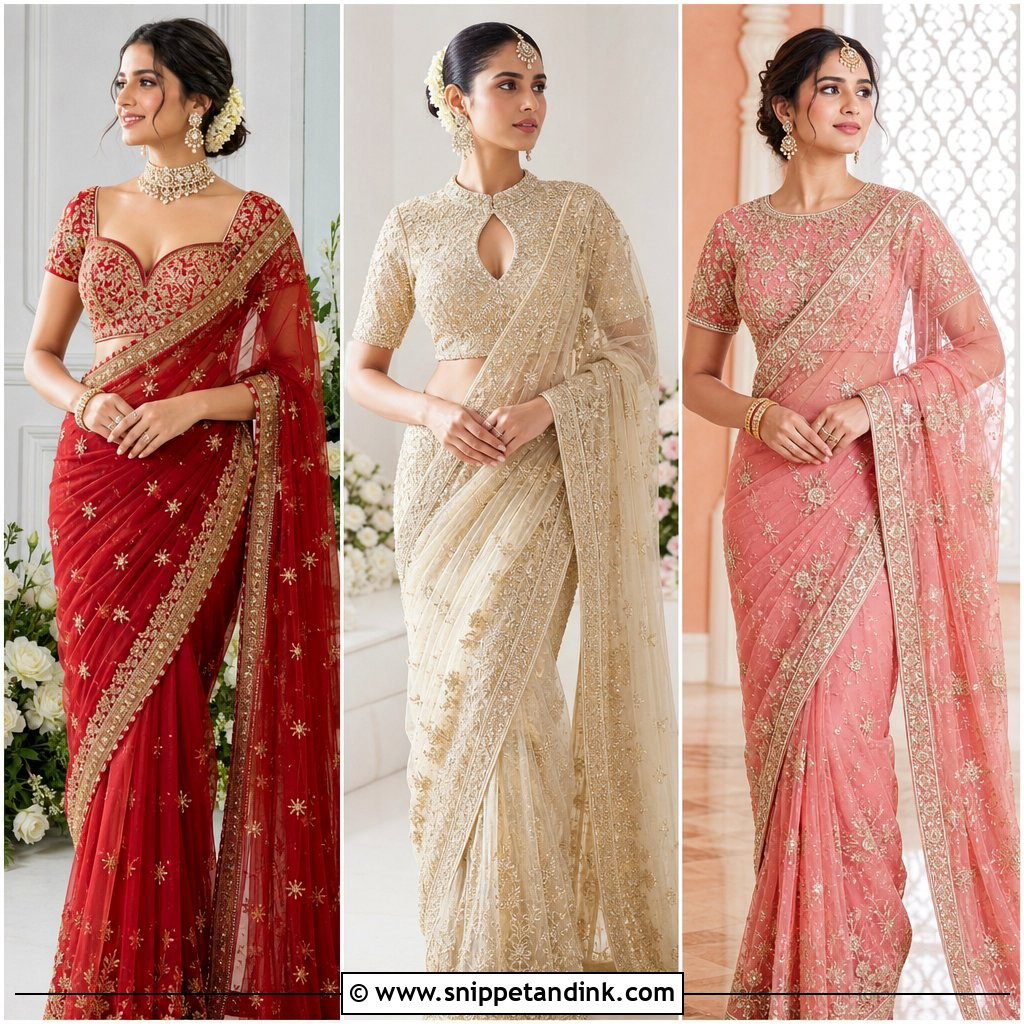

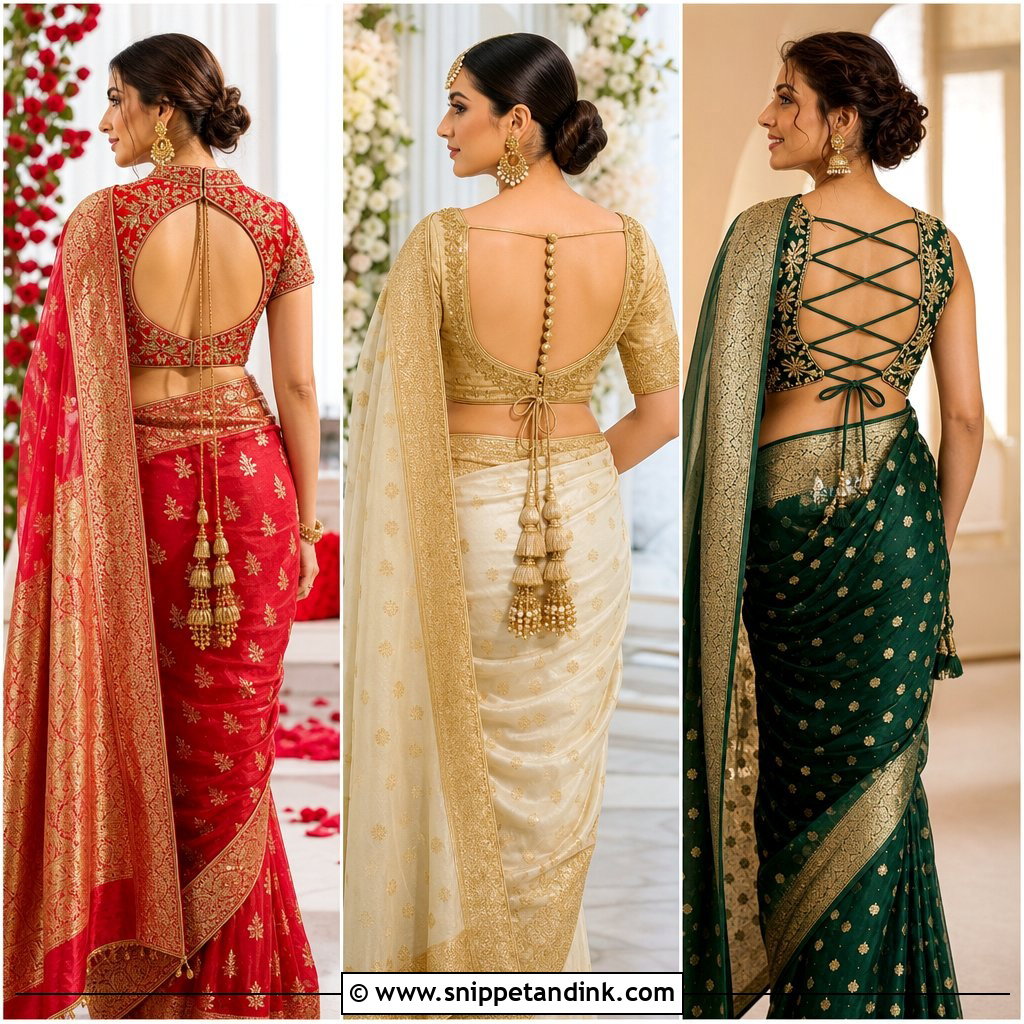
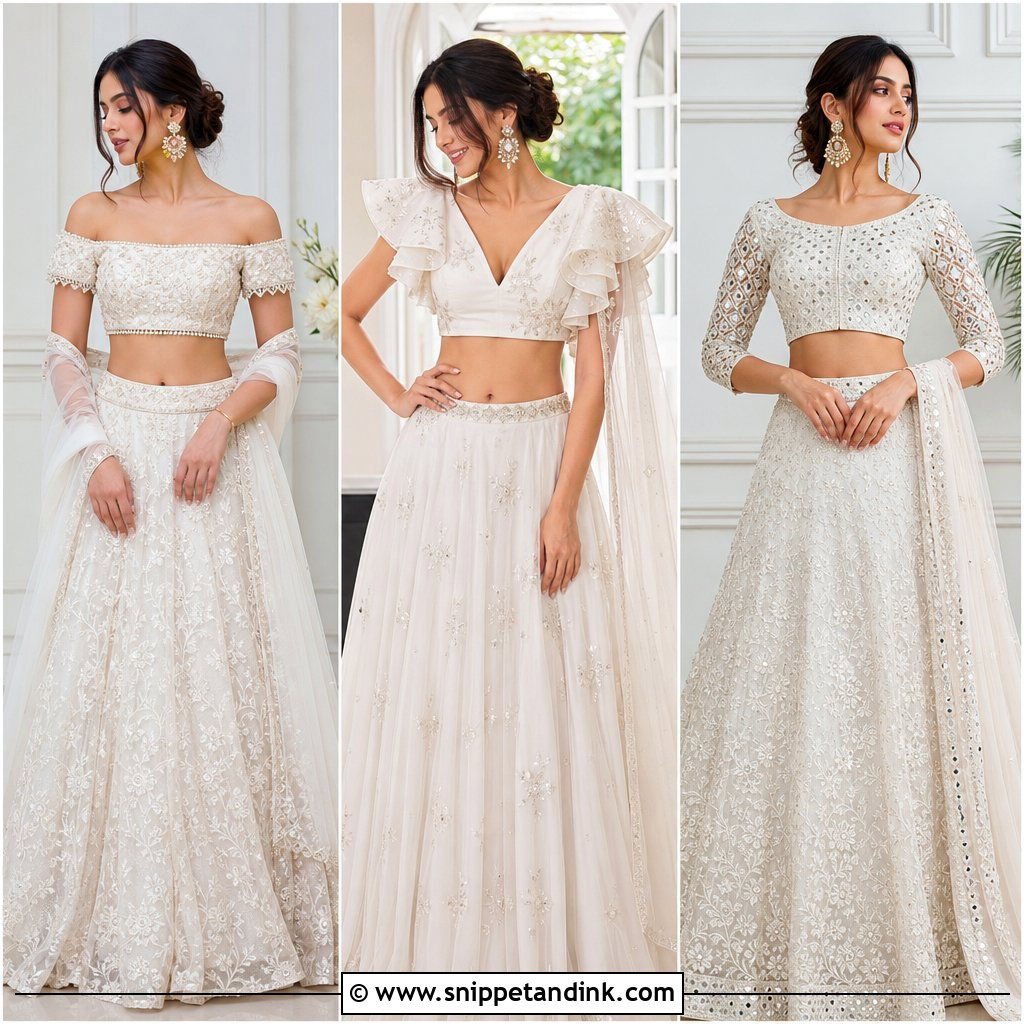
20. Bridal Pearl Aari Work Blouse
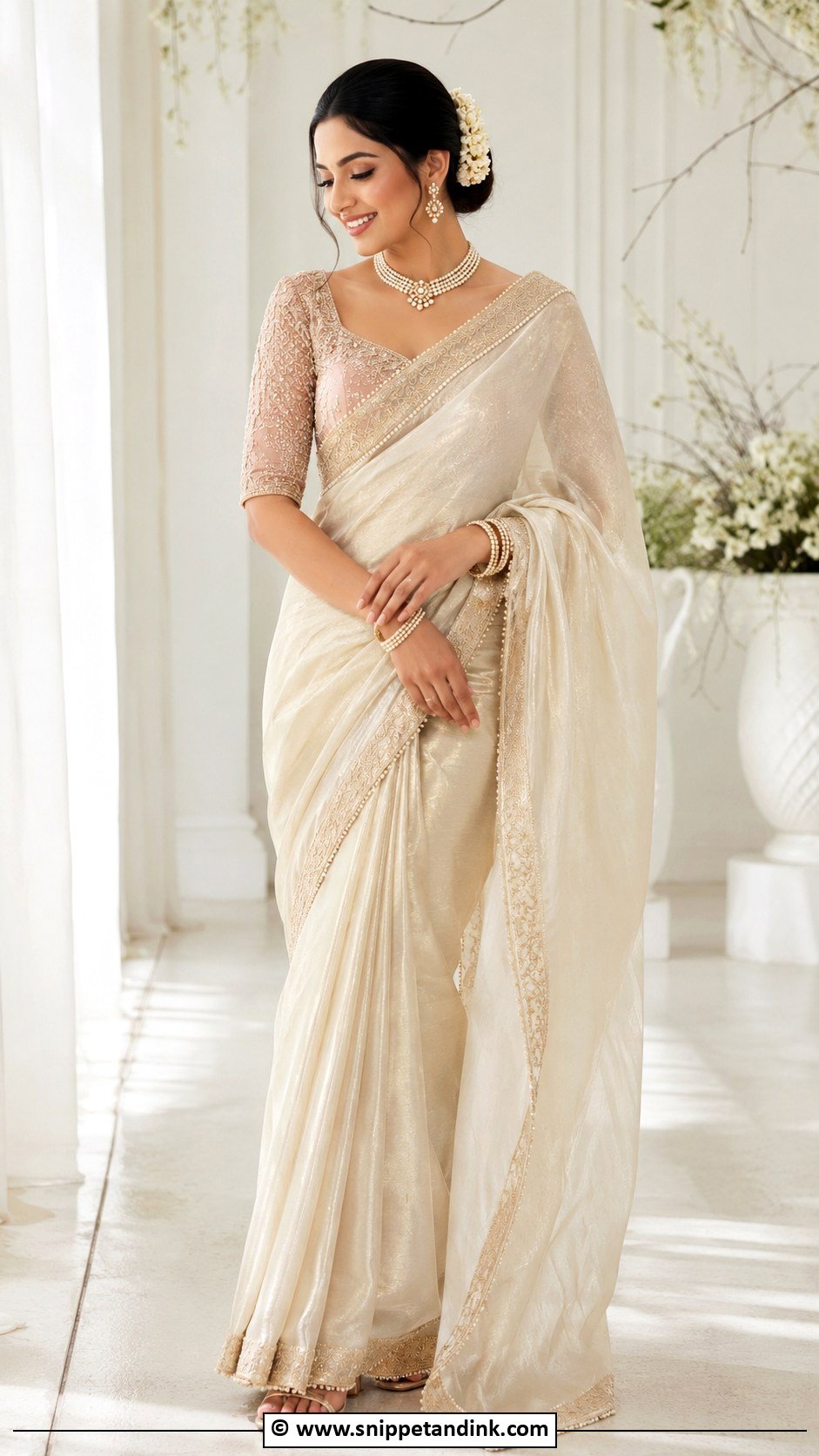
Pearl Aari work is soft rather than sparkly, and it suits pastel silks, tissue, ivory and blush drapes. Pearls mixed with white thread, gold zari and a few tiny stones give a gentle shine. I always check the pearl quality: cheap coated pearls peel at the edges after friction from bangles and the pallu. Keep the saree fabric refined so the pearls are not lost, and add pearl-accented jewelry to carry the theme.
21. Bridal Kundan Aari Work Blouse
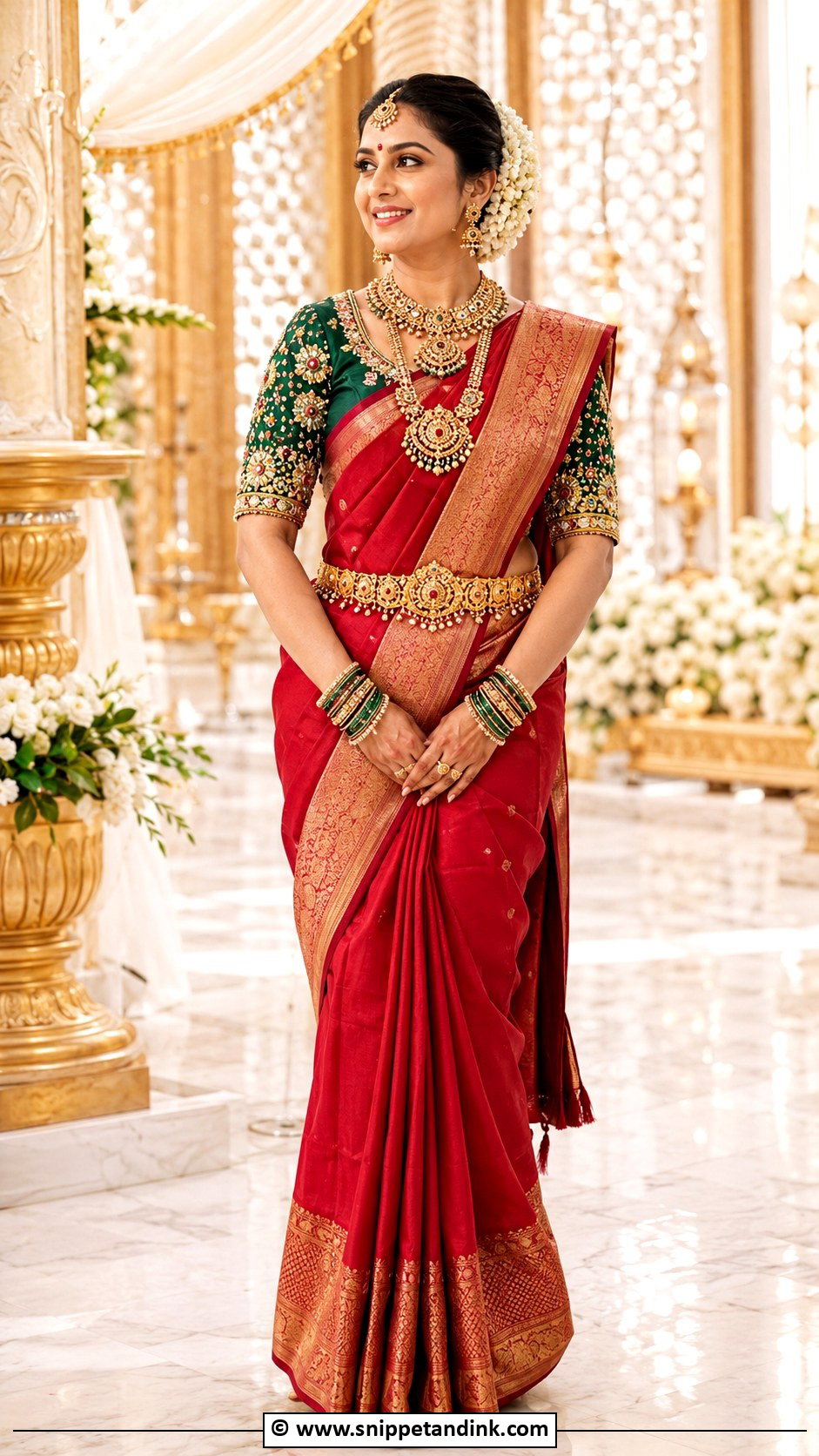
Kundan stones set inside floral, paisley or peacock motifs and outlined in Aari stitches make a blouse look like a piece of jewelry. Maroon, green, red, gold and royal blue silks carry it. Because the blouse is already ornate, I match it with a Kundan set and keep everything else quiet. Kundan pieces are heavy and have hard backs, so I ask for a sturdy fabric, full lining and no stones placed where the arm rubs against the body.
22. Bridal Bead Aari Work Blouse
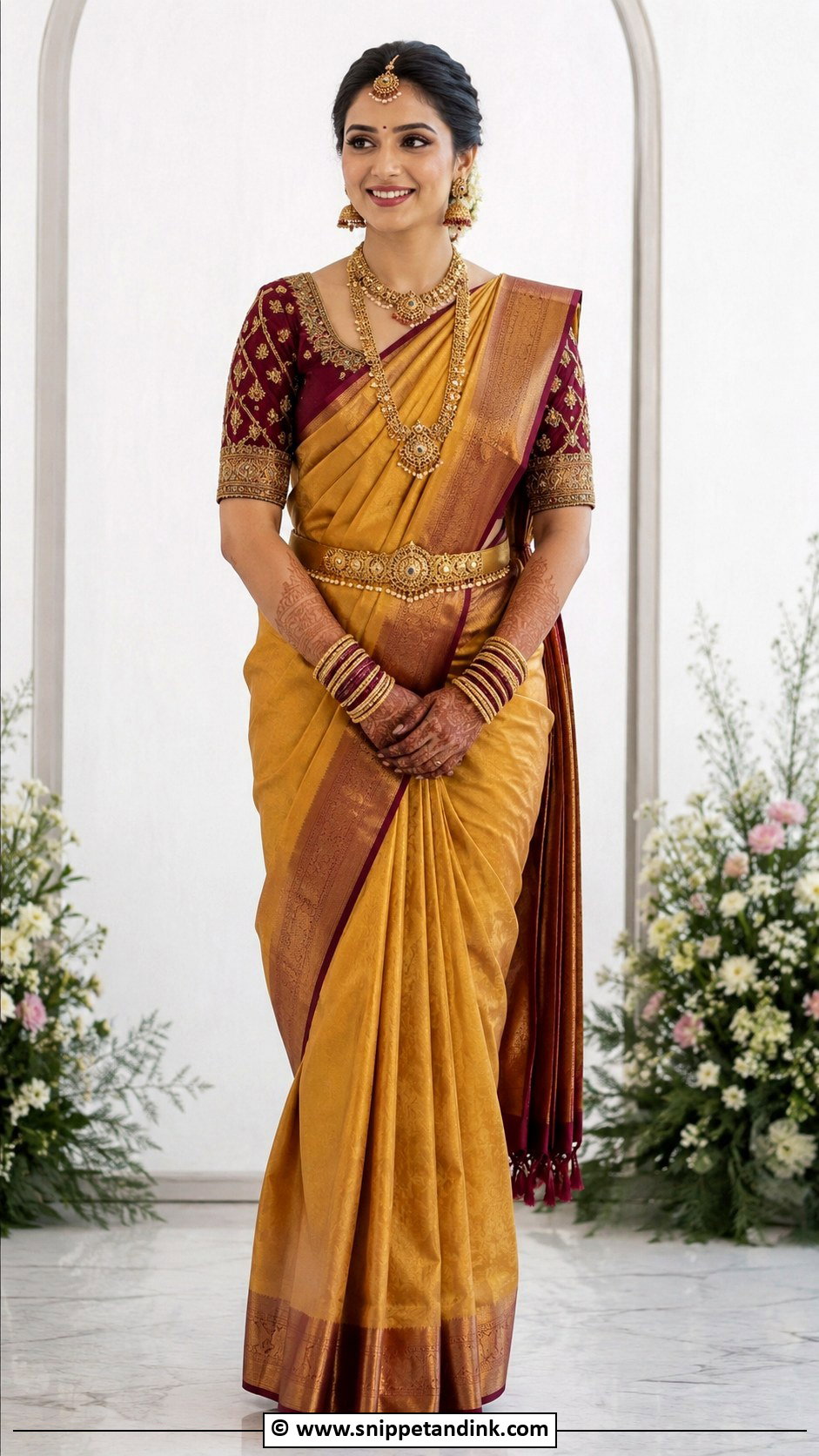
Beadwork gives an Aari blouse texture you can see from across a room without the flash of stones. Beads outline floral vines, fill peacock feathers or scatter as tiny buttas on silk, raw silk and velvet. I check the stitching on the reverse before a blouse leaves the workshop; beads strung on long loose runs snag and unravel, while short secured runs hold through a full day. A saree with a matching zari tone finishes it.
23. Bridal Sequin Aari Work Blouse
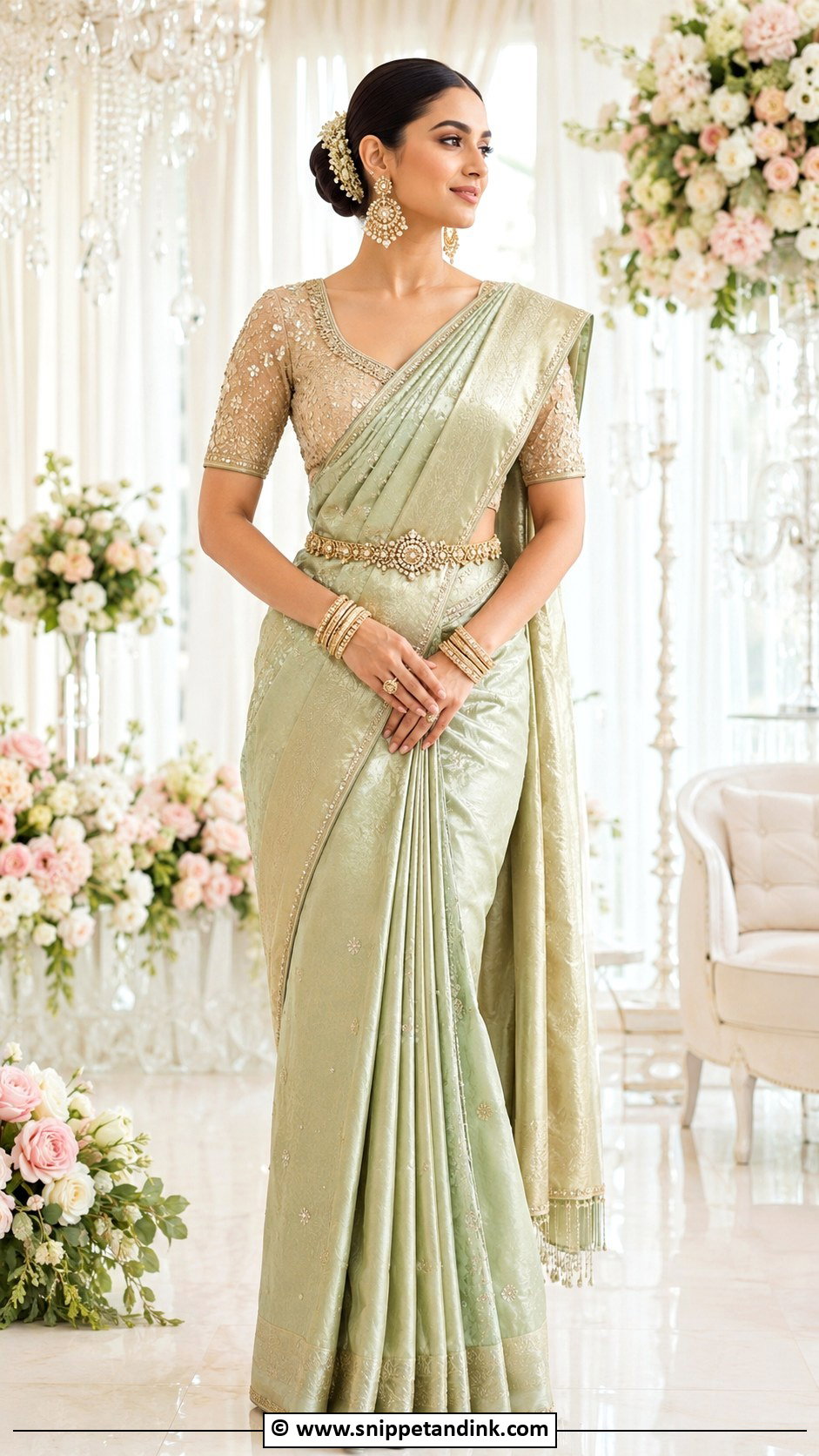
Sequins give the most sparkle under evening lights, so this is a reception blouse more than a morning one. Mixed with threadwork, beads, stones and zari, small sequins look festive; large ones turn into mirrors in flash photos. Silk, georgette and tissue sarees all work. I’d pick a drape that lets the sleeves show, and I warn brides with long open hair that sequins on the back catch strands.
24. Bridal Floral Aari Work Blouse
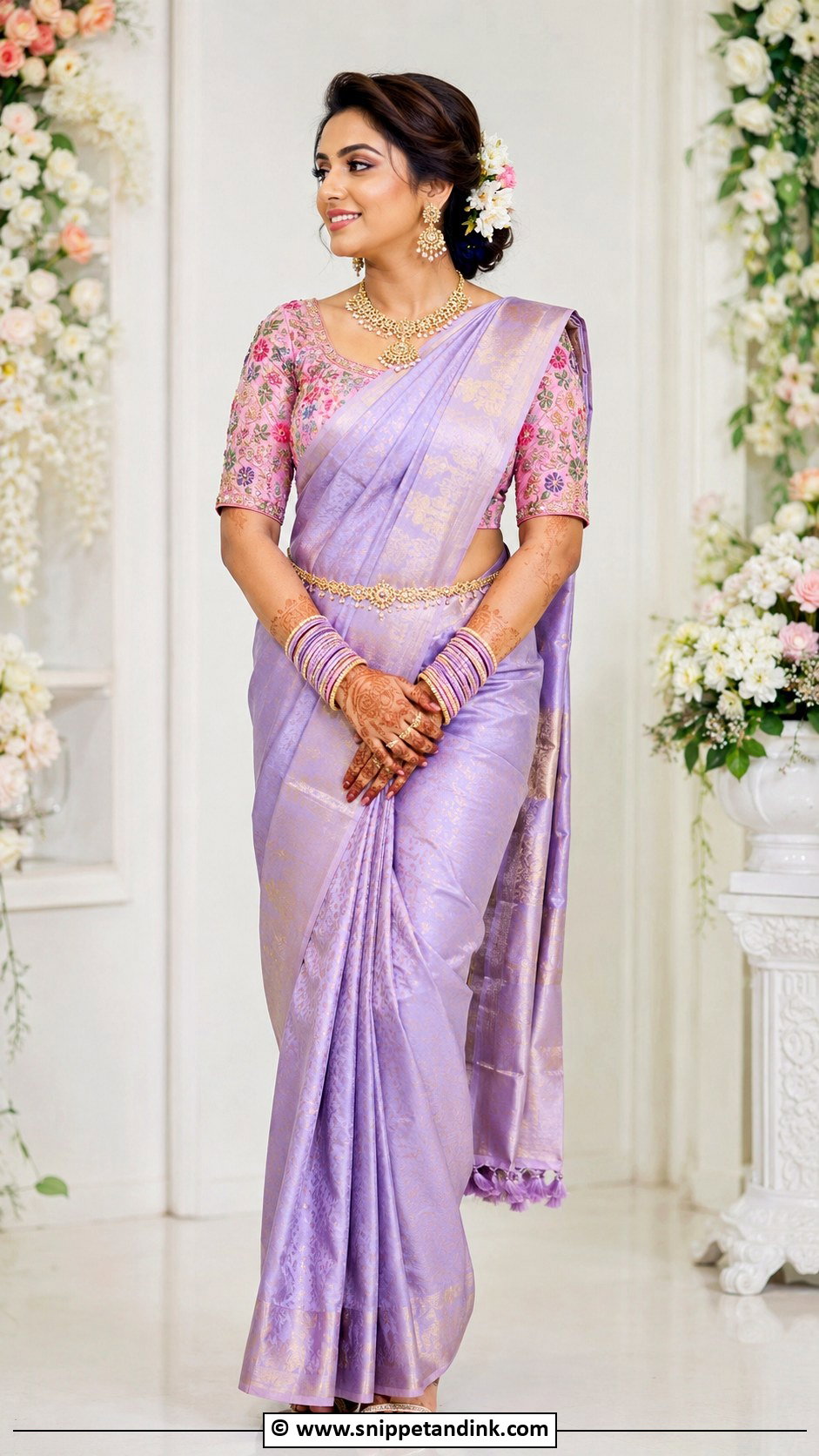
Floral Aari work is the easiest style to personalize. Roses, lotuses, jasmine vines, small buttas or mixed borders can be scaled up or down to suit how much embroidery you want. Multicolor thread feels fresh; gold zari keeps it traditional. Dense flowers on the sleeves and back read grand, scattered ones subtle, and I decide that with the bride by laying the saree pallu beside the sketch. Silk, organza and half-saree looks all suit it.
25. Bridal Paisley Aari Work Blouse
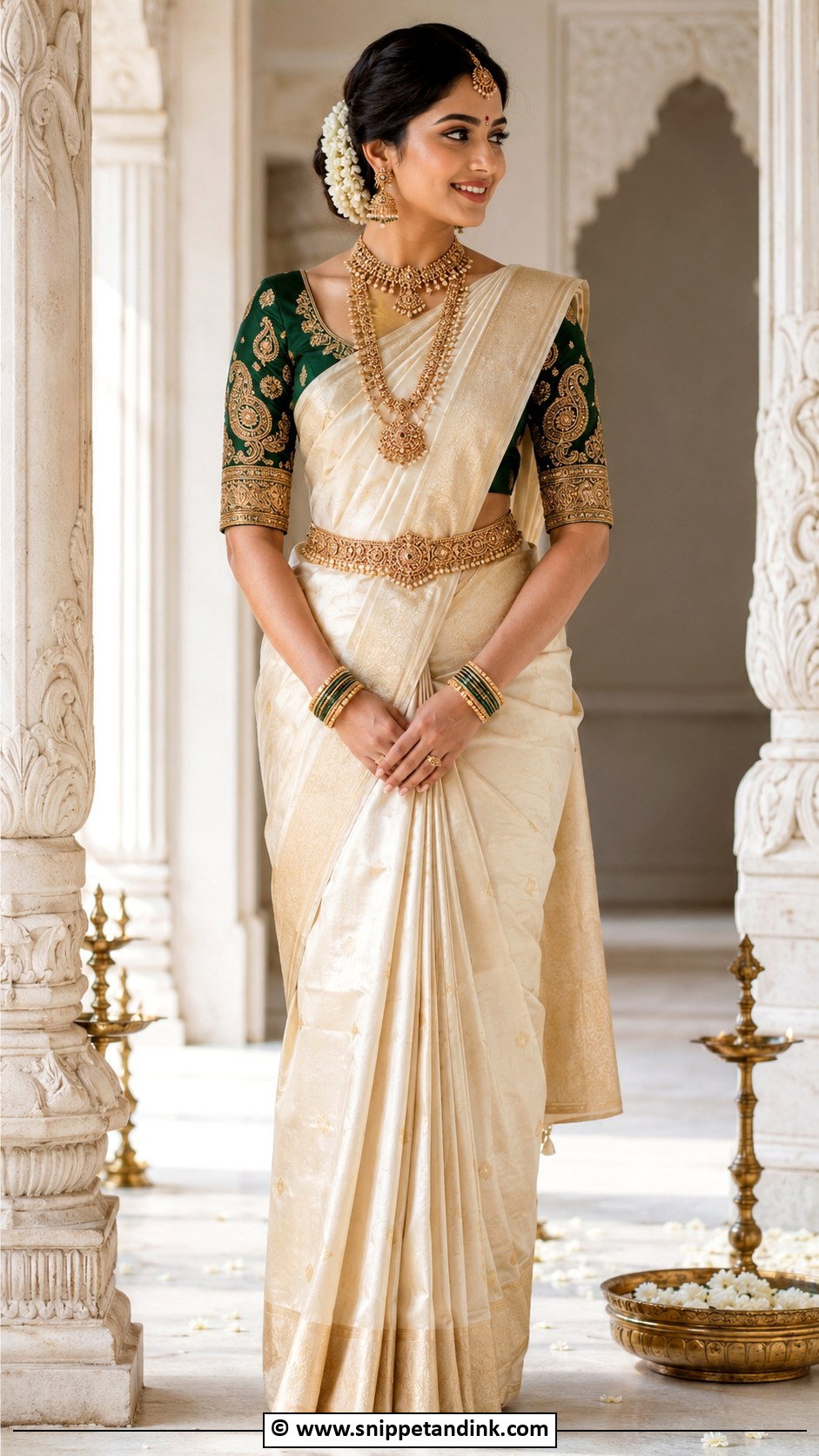
Paisley is the motif I suggest when a bride wants something bridal that will not date. It flows along sleeve borders, back panels and shoulder lines, and antique gold zari with bead and thread shading gives it richness. Paisleys also echo the mango motifs woven into many silk borders, which is why they sit so naturally next to a heavy saree.
26. Bridal Temple Border Aari Work Blouse
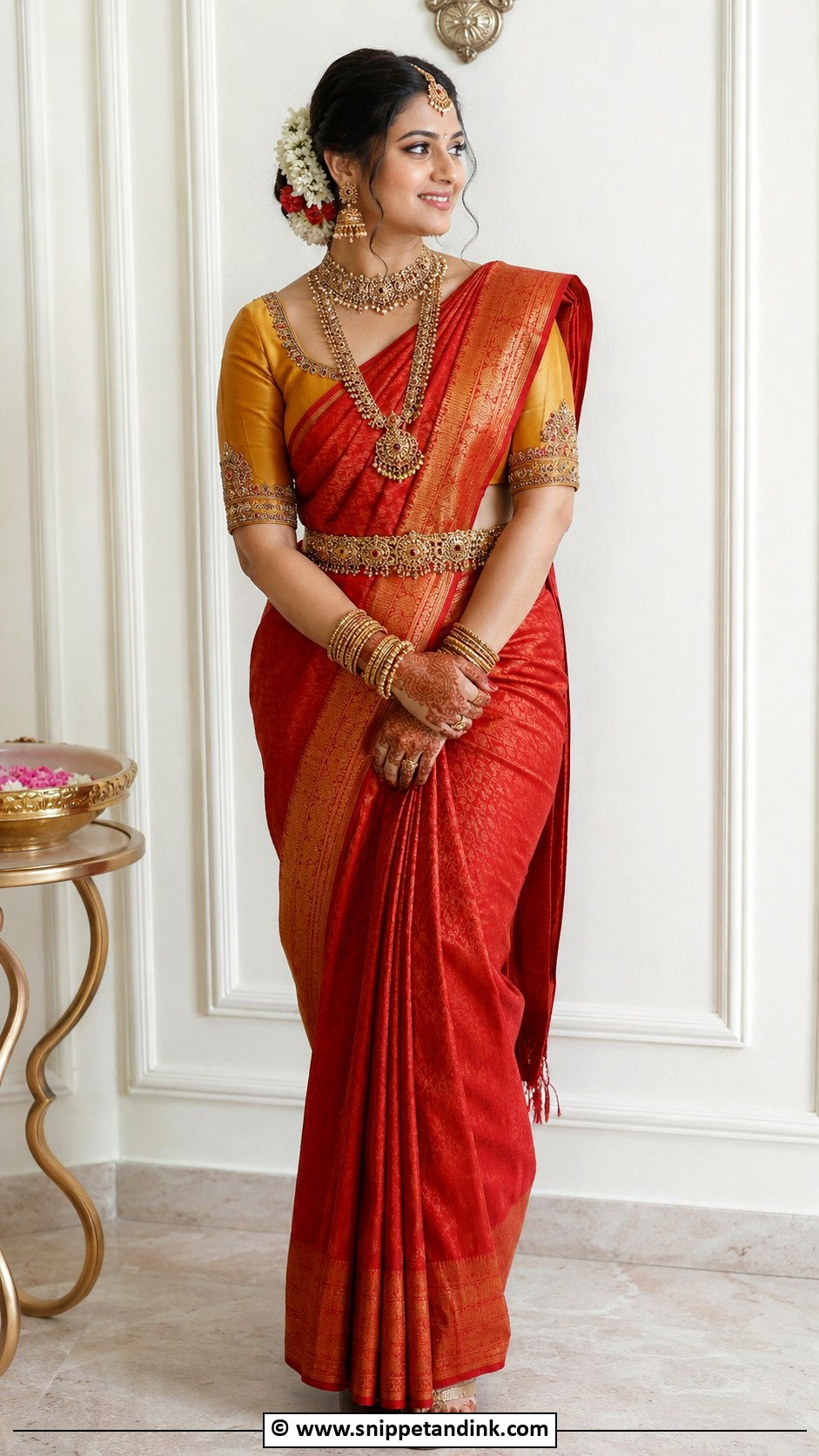
A temple border mirrors the zari bands already woven into many silk sarees, so the blouse and saree look made for each other. It can run along sleeves, neckline, back and hem. Deep red, green, maroon, mustard and royal blue work best. Symmetry is everything with this motif; I check the border at both sleeve ends against each other, because even a small mismatch in the temple tips is visible.
27. Bridal Cutwork Aari Work Blouse
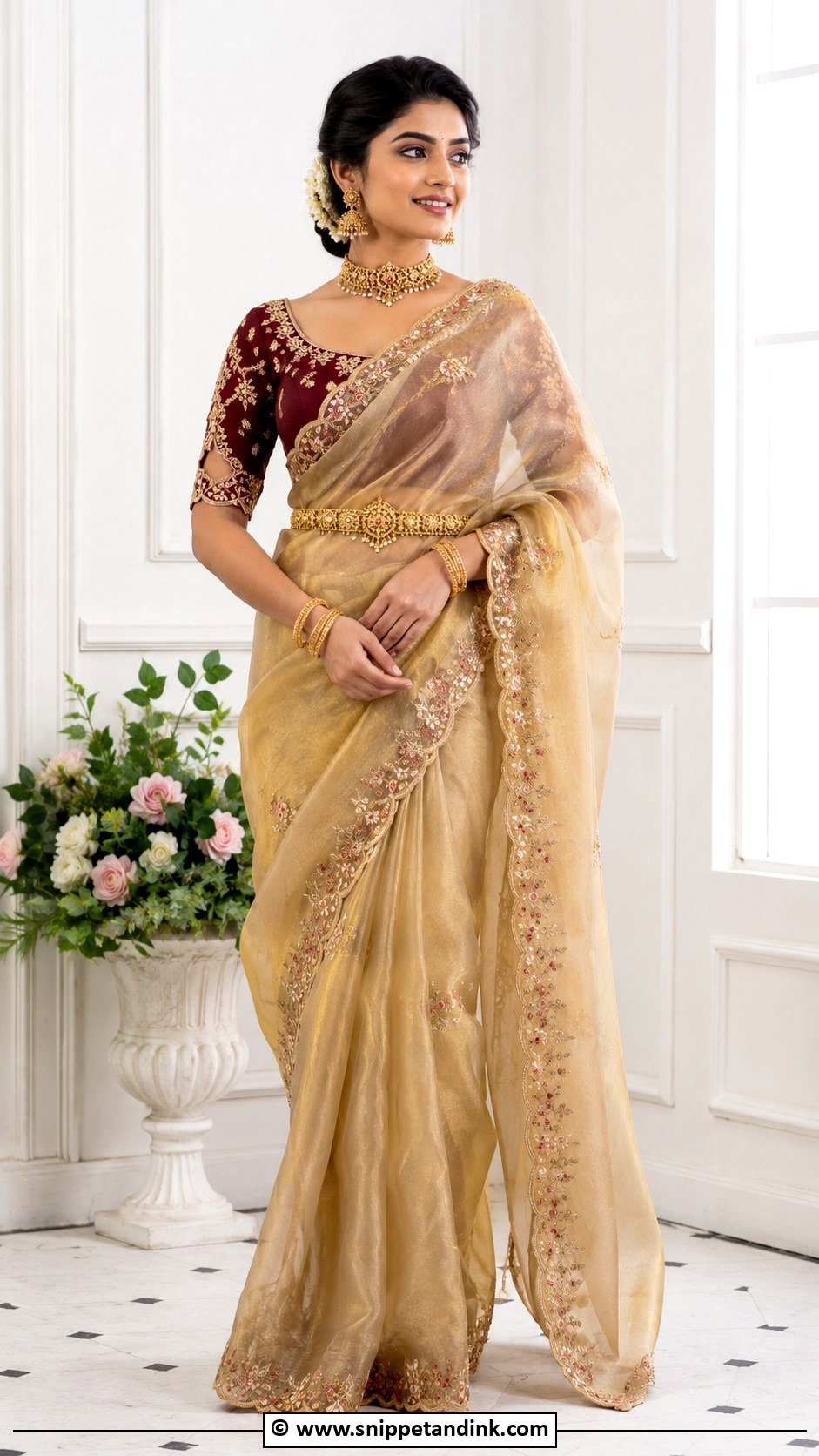
Cutwork paired with Aari embroidery gives a lace-like edge to sleeve hems, back necklines and shoulder panels. The open areas need care: I ask that every cutwork edge be finished with tight stitching so it does not fray or scratch the arm through a long ceremony. Silk or organza sarees suit it, with gold or pearl jewelry. Pair it with a saree that is not too busy, so the cutwork pattern can actually be seen.
28. Bridal Net Sleeve Aari Work Blouse
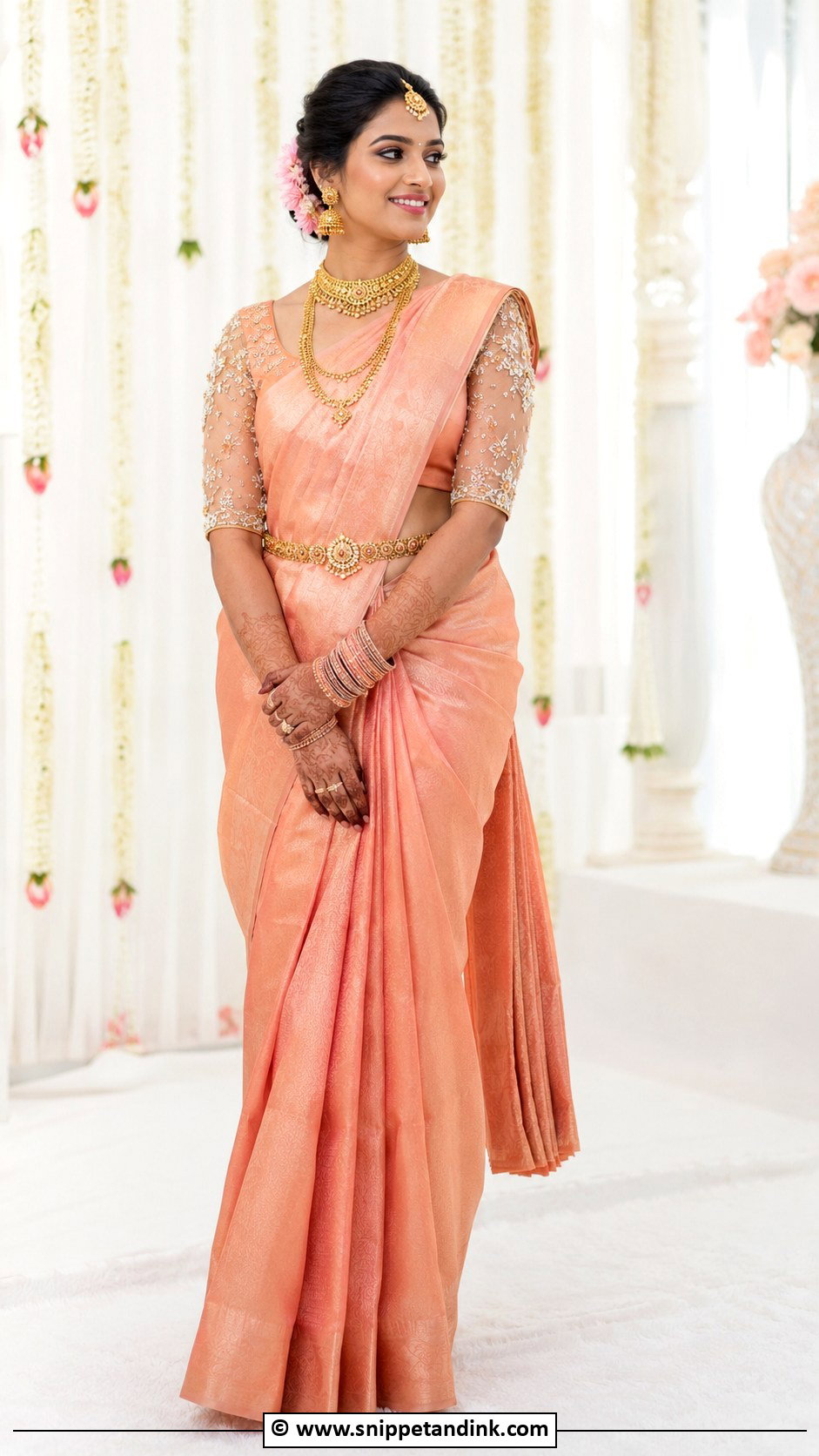
Net sleeves keep the bridal weight off the arms while still carrying embroidery. Floral vines, bead borders, pearls, sequins or stone detailing work on a sheer sleeve when the body of the blouse is silk. I check the net first: soft, fine net drapes against the skin, while stiff net scratches and puckers under heavy work. Silk, tissue or organza sarees pair well.
29. Bridal Personalized Aari Work Blouse
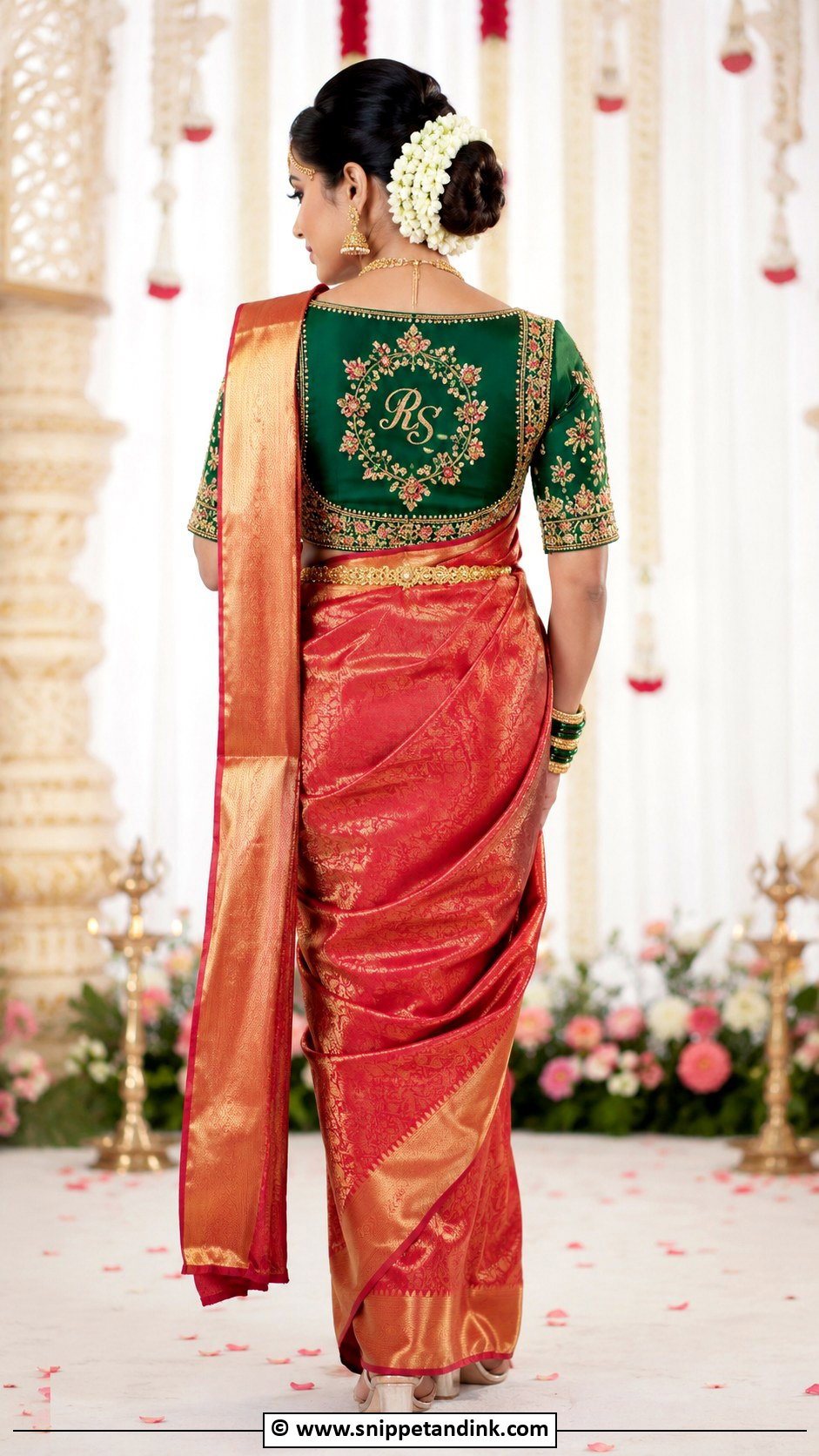
Personalized Aari work, initials, a wedding date, a small couple motif, turns the blouse into a keepsake. I keep it to one area, usually the center back, and size it so it reads up close without looking like a logo. Choose a saree and drape that leave that area visible, and match the jewelry to the embroidery tone. It photographs best in detail shots rather than full-length frames.
30. Bridal Minimal Aari Work Blouse
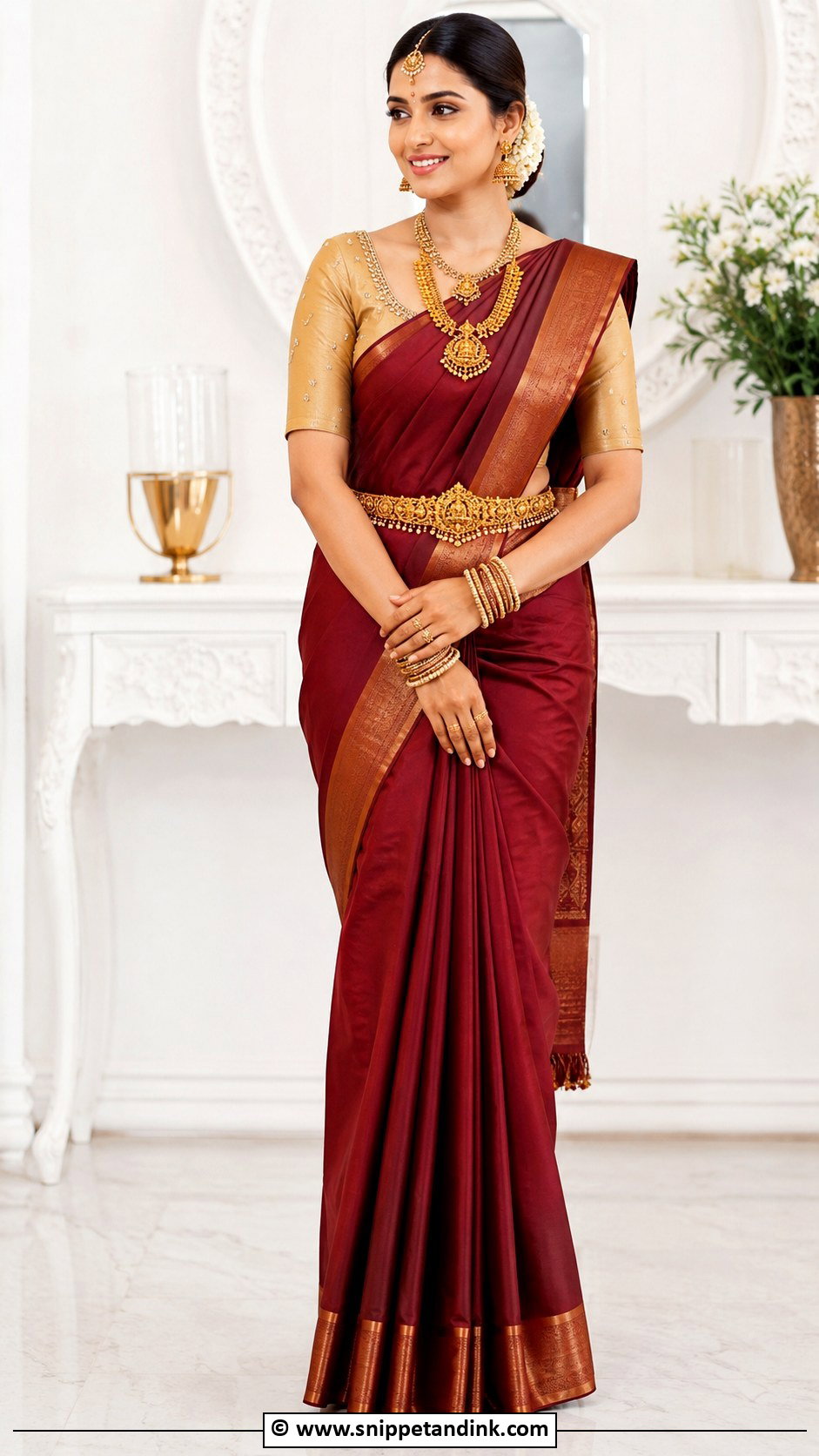
A minimal Aari blouse suits brides who want lightness through long ceremonies and a blouse they can wear again. Fine sleeve borders, tiny buttas, a neat neckline or a small back pattern are enough when the saree is rich silk. With less embroidery, every stitch shows, so I’m stricter about clean finishing here than on heavy blouses. Let the jewelry and waist belt carry the bridal weight.
Where Heavy Embroidery Rubs, Pulls and Sags by Evening
Most blouse complaints I hear after a wedding are about comfort, not looks. Stones and beads under the arm rub the skin raw by the reception. A dense back without lining drags the neckline down. Zardosi at the elbow crease stiffens the sleeve so you cannot bend comfortably at the dining table.
What I ask the tailor for
- A soft cotton lining on every bridal Aari blouse, with an extra layer behind a fully worked back.
- Plain fabric in a band around the armhole and inner arm, with the embroidery starting just outside it.
- Stitched rather than glued stones, and short secured bead runs that will not unravel if one thread breaks.
- A slightly higher hook line on deep backs so the weight sits on the shoulders, not the hooks.
After the Wedding, Let the Zari Breathe
Zari tarnishes when it is shut away with moisture, and plastic covers trap exactly that. I fold heavy Aari blouses flat with the embroidered side inward, layer muslin or soft cotton between the folds, and store them away from perfume and deodorant, which dull metal thread quickly. Do not hang a heavily worked blouse for months; the weight stretches the shoulders. Air it out every few months and refold along different lines so the creases do not crack the zari. When it needs cleaning, take it to a dry cleaner who handles bridal embroidery, and point out any stones so they are protected during the process.
Start With the Saree Border, Then Plan the Embroidery
The blouse that works is the one planned around everything else: your saree border, your jewelry, how long you will be seated and how much weight you are happy to carry. Peacock, zardosi, Kundan and full back designs are made for grand ceremonies, while floral, pearl, minimal and net sleeve designs are easier to wear for hours. Take the saree to every fitting. Matching the border and the neckline in person tells you more than any photo.
You'll Like These Ideas:





Leave a Reply