
Most of the brides I dress are planning three, four or five functions, not one outfit. A red lehenga for the pheras, a Kanjivaram for a South Indian muhurtham, something pastel for a daytime ceremony, a sharara for the sangeet. Each of those garments behaves differently once you are wearing it for hours, sitting on the floor, walking around a fire or dancing. So below, alongside the colors and the embroidery, I’ve noted how each piece actually wears. The list runs from heavy, royal lehengas through woven sarees to fusion silhouettes, 25 looks in all.
How Heavy Is Too Heavy for a Six-Hour Ceremony?
The question I ask before color or embroidery is how long you’ll be wearing it. A heavily worked lehenga with layers of can-can and a full dupatta can weigh several kilos, and that weight hangs from your waist through the whole ceremony. At the shop, ask them to weigh the skirt or at least lift it yourself by the waistband.
Then check three things. Is the waistband wide and reinforced so it spreads the load? Are there hanging loops inside so the skirt can be stored without stretching? And is the can-can stitched in, or separate, so you can remove a layer if the venue is hot?
Fittings and lead times
Custom bridal lehengas often take several months to make, and many designers ask for an order well before the wedding, especially in peak season. I plan the final blouse fitting for two to three weeks before the first function, because weight often shifts in the last month and a blouse fitted too early can gape or pull. Bring the jewelry and shoes you’ll wear to that fitting; the necklace changes where the neckline should sit, and the heel height decides the hem.
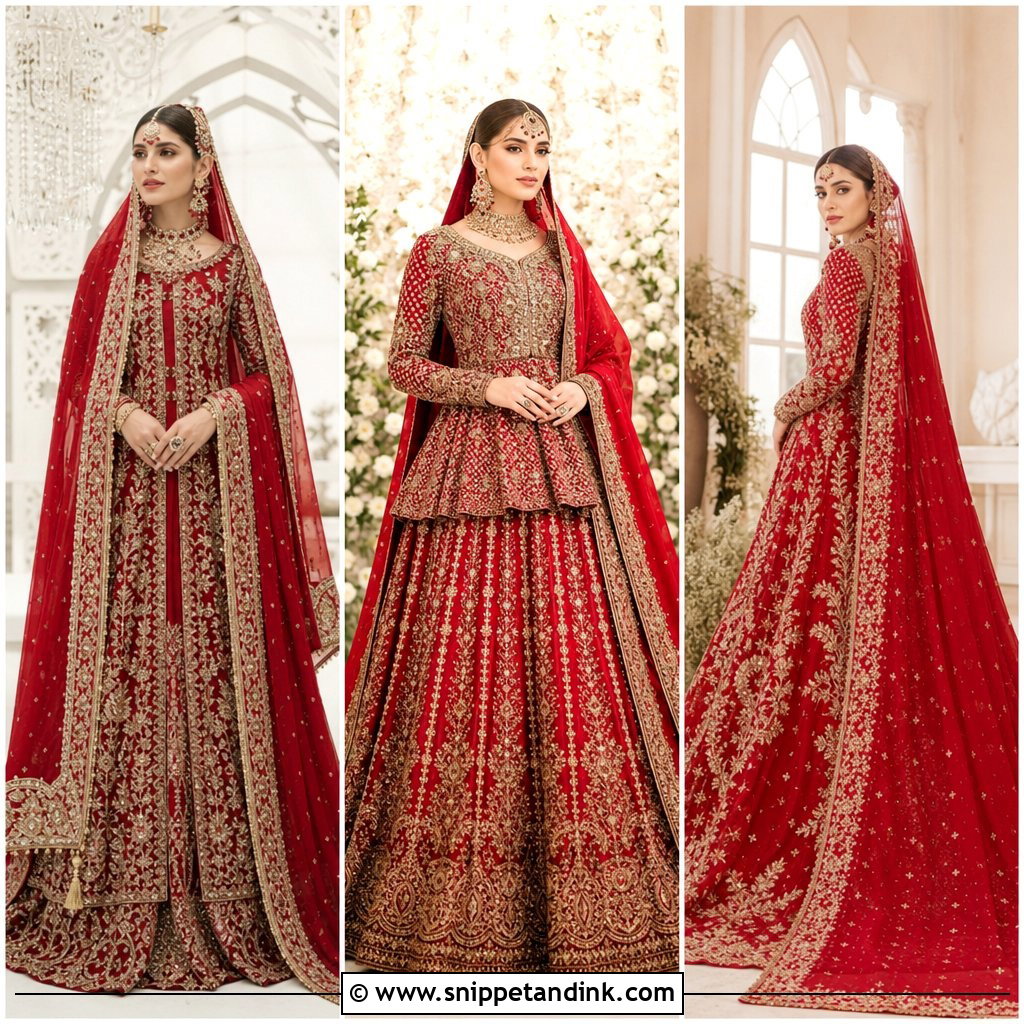
1. Red Bridal Lehenga
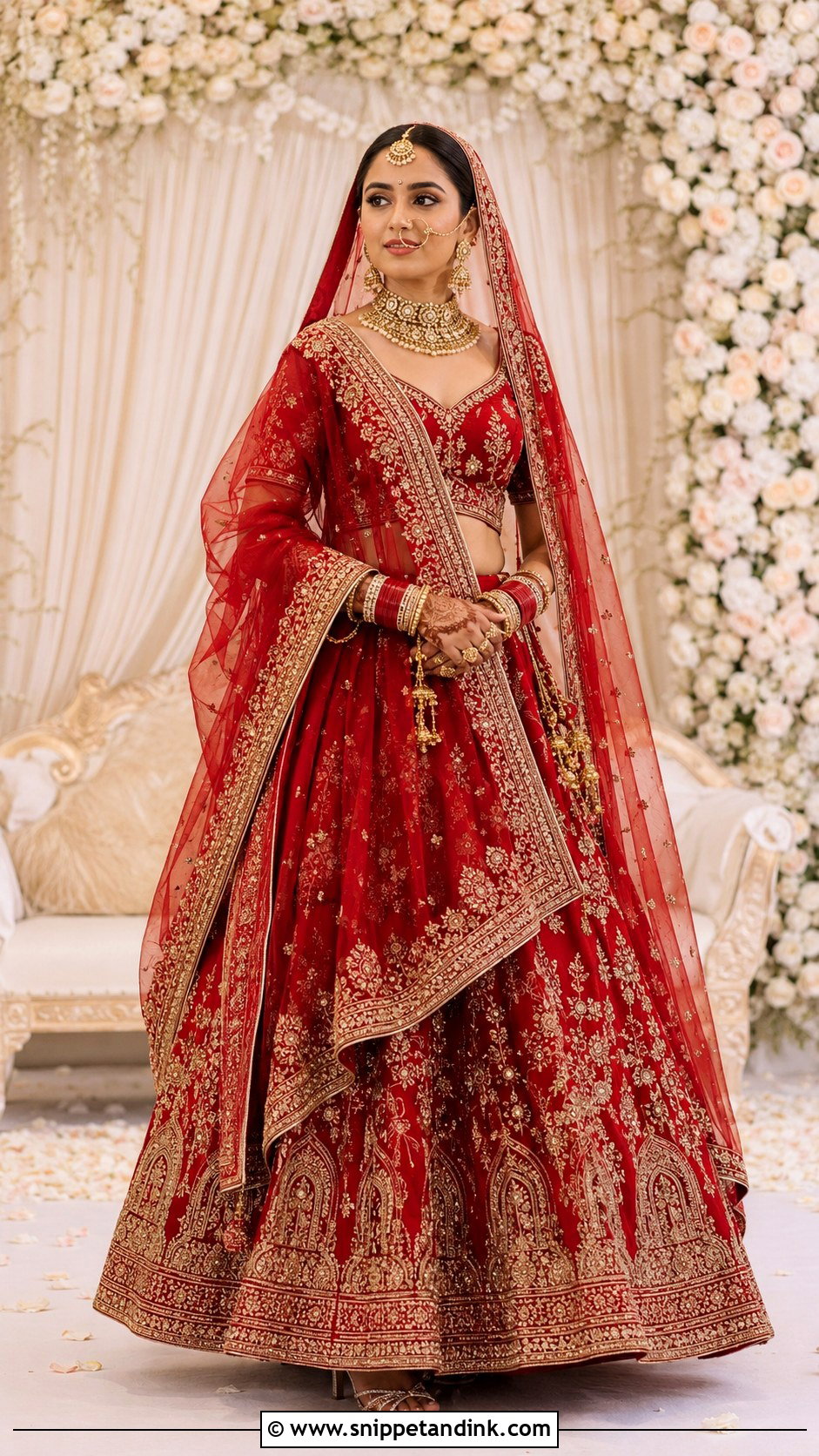
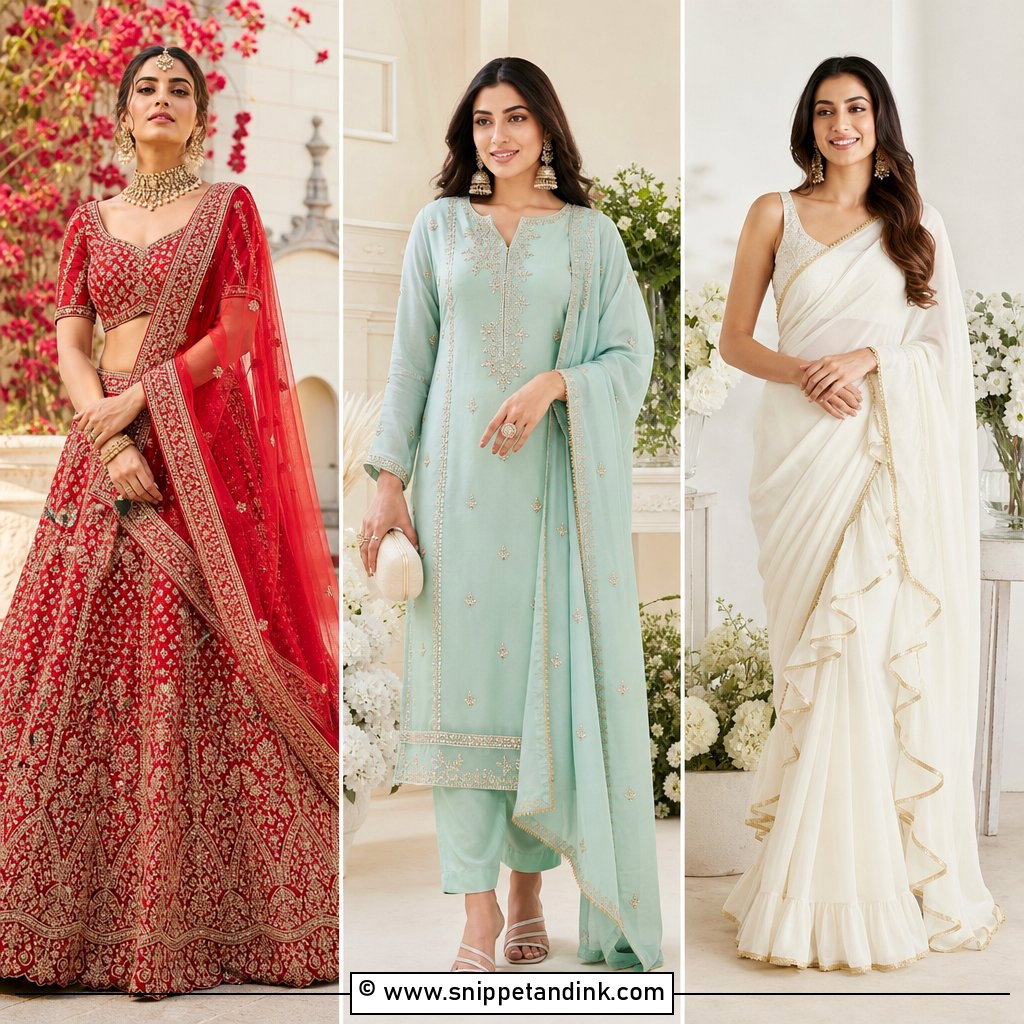
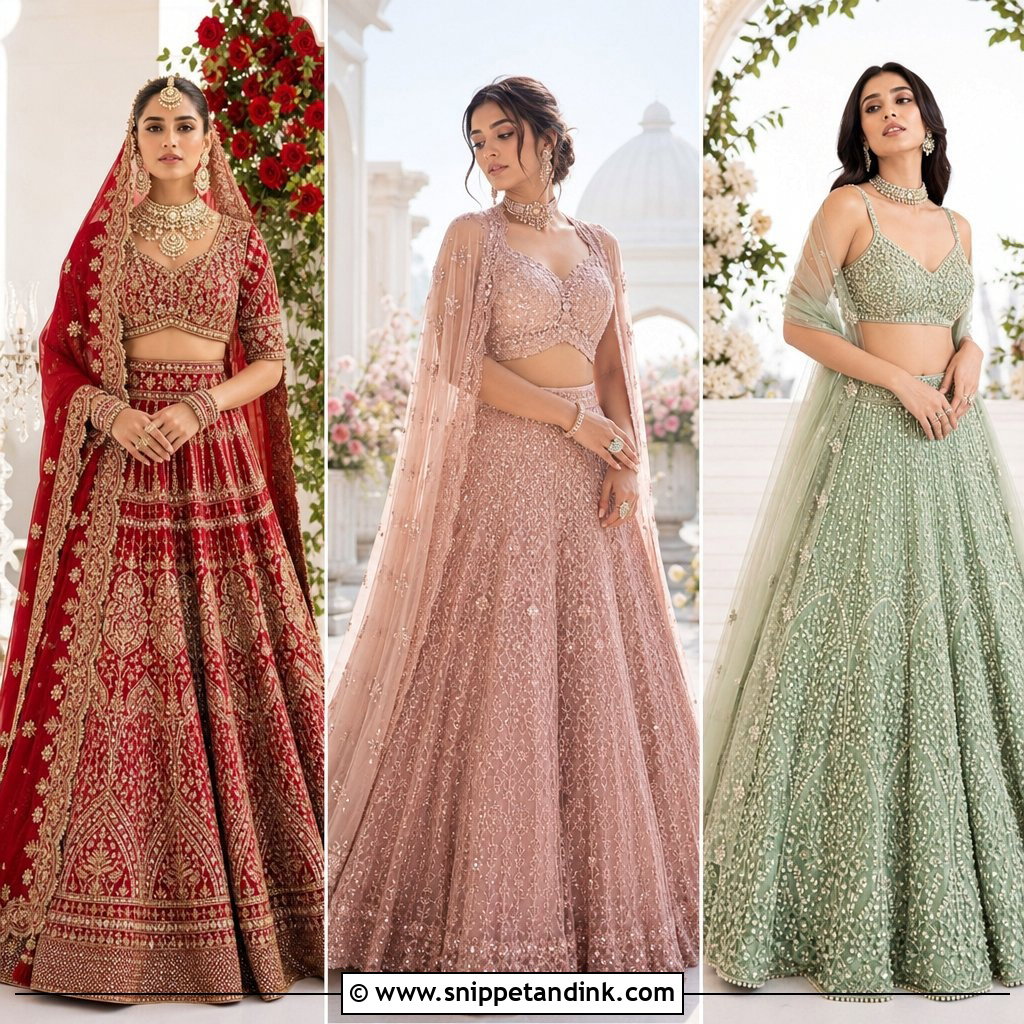
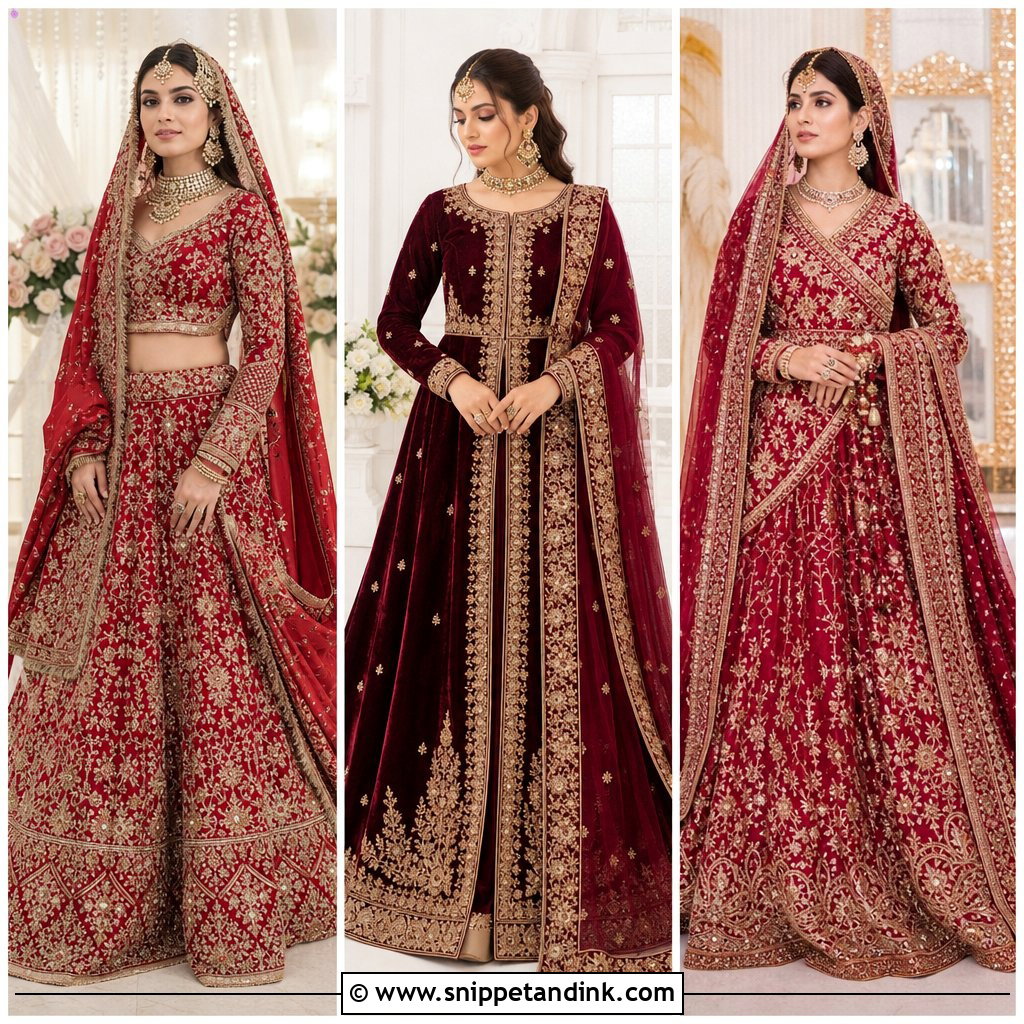
A red bridal lehenga remains the outfit most families picture for the ceremony itself. Raw silk or velvet with zardozi, gota patti, dabka or threadwork gives that rich, festive base. The first thing I check on a heavily worked red skirt is where the embroidery sits: if it is dense right down to the hem, the skirt swings well but gets heavy fast, and a well-made one has its waistband reinforced to carry that load. Elbow sleeves or a sweetheart blouse balance it, and an embroidered dupatta frames the face. With gold jewelry, a maang tikka and bangles already in play, softly defined makeup lets the lehenga stay the center of things.
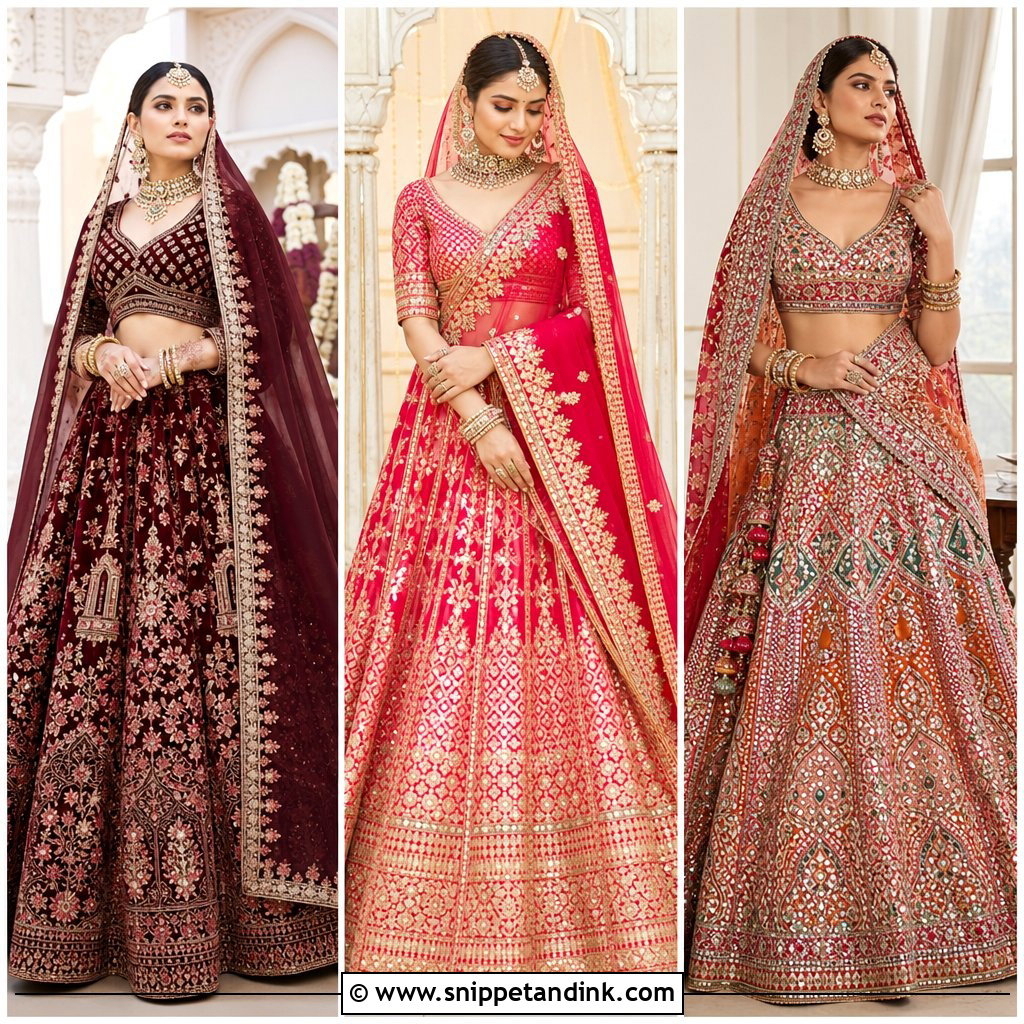
2. Maroon Bridal Lehenga
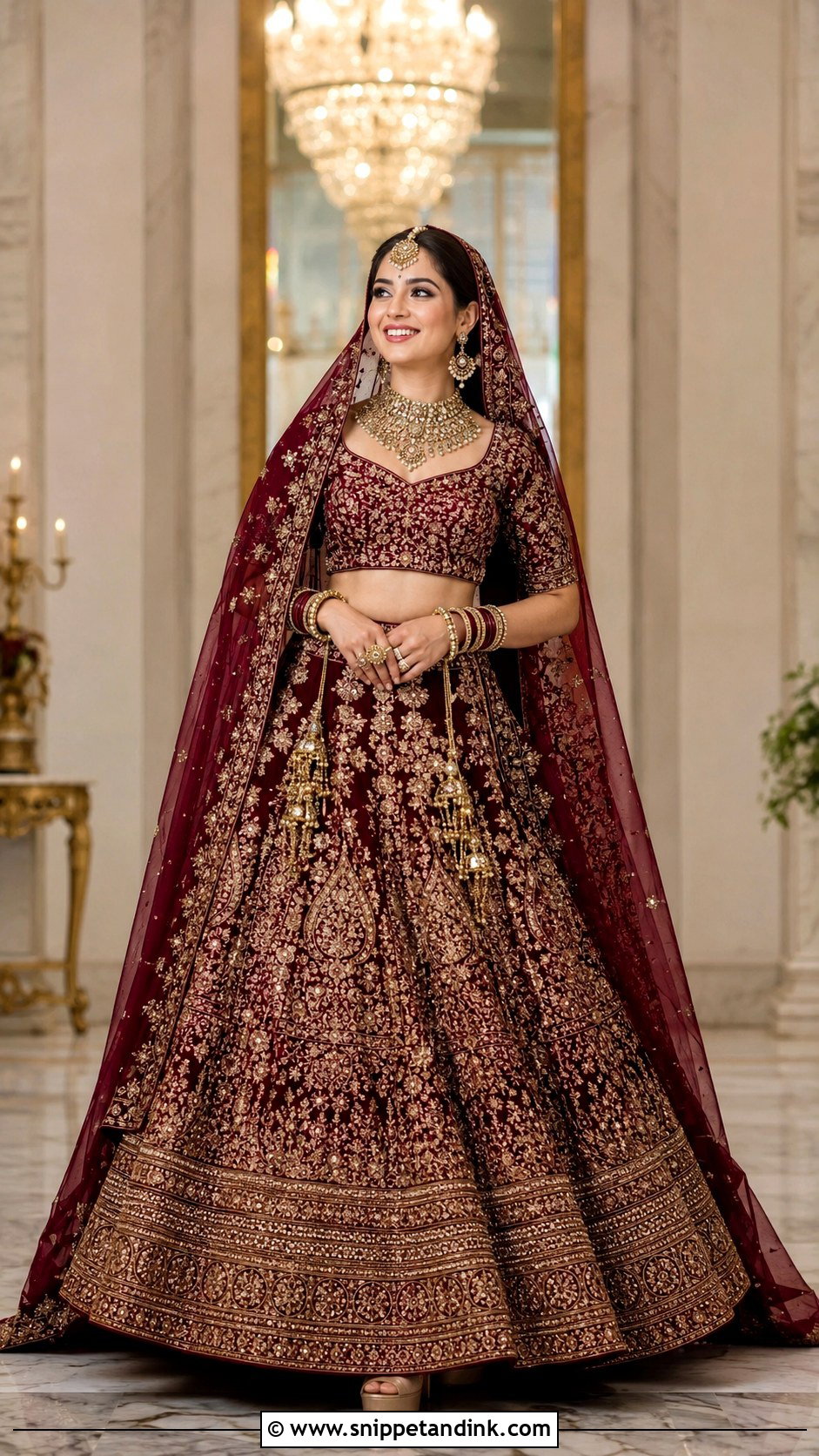
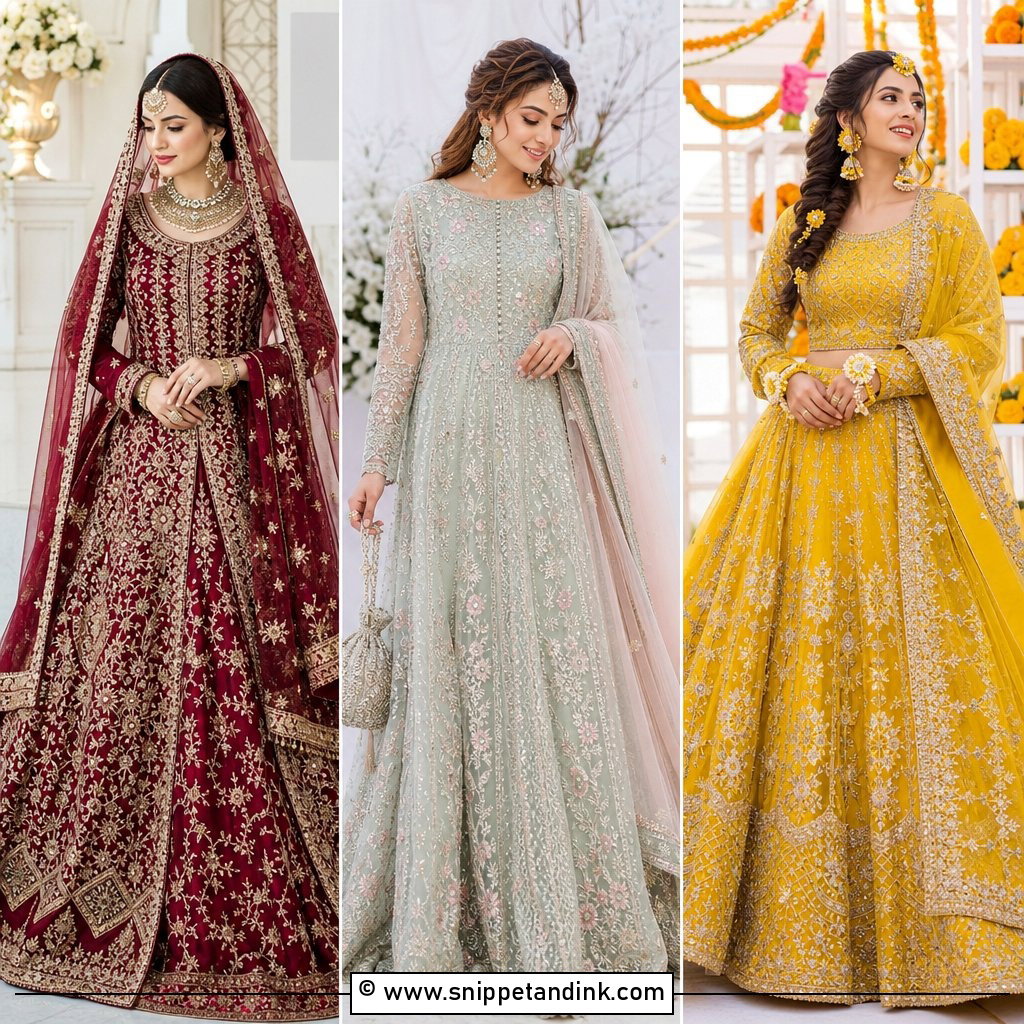
Maroon reads deeper and more regal than classic red, and it holds up under evening lighting where bright red can look orange in photos. It sits richly in velvet, silk and brocade, especially with antique gold work. I usually suggest a matching blouse, a sheer dupatta and layered gold for a royal finish. A second dupatta in blush or champagne lightens things for a bride who wants a modern edge. Because maroon lehengas tend to come with heavier skirts, choose block heels or platforms over thin stilettos. You will be standing a long time.
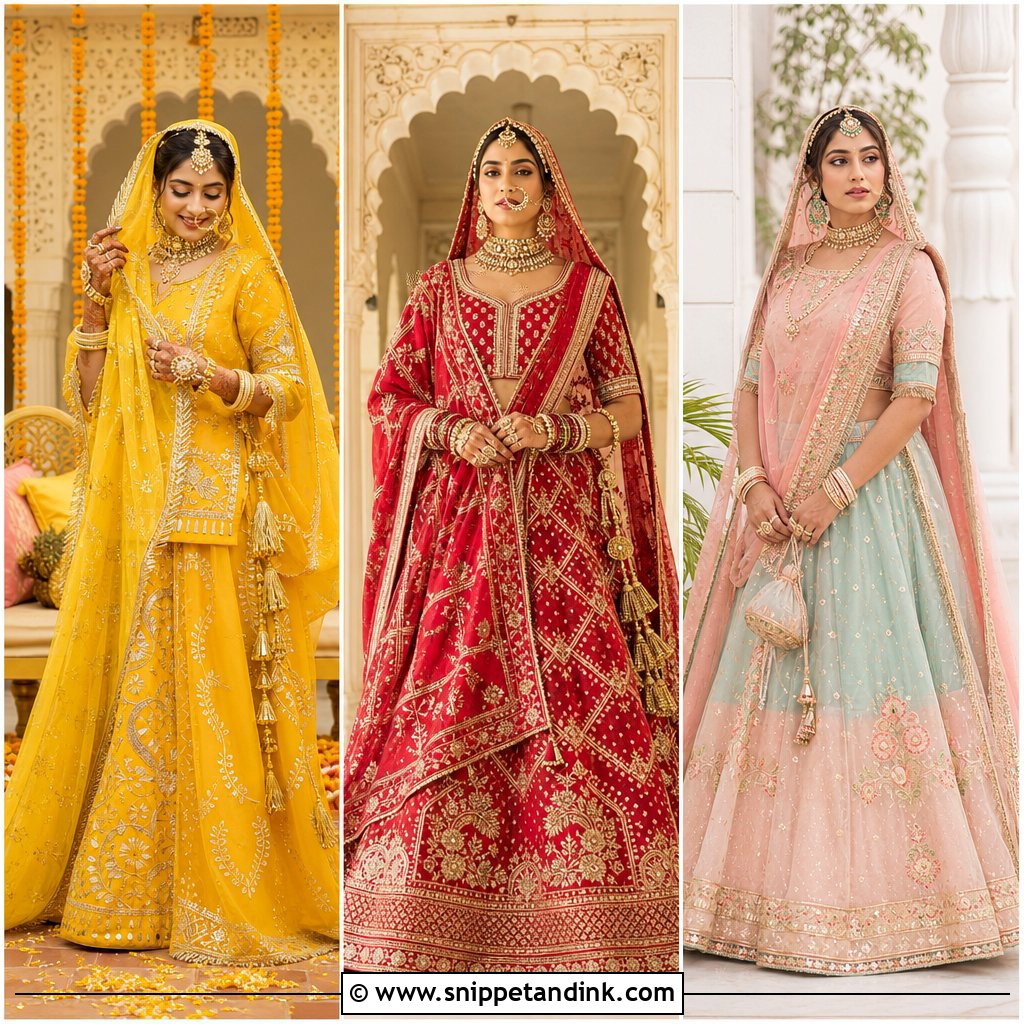
3. Pink Bridal Lehenga
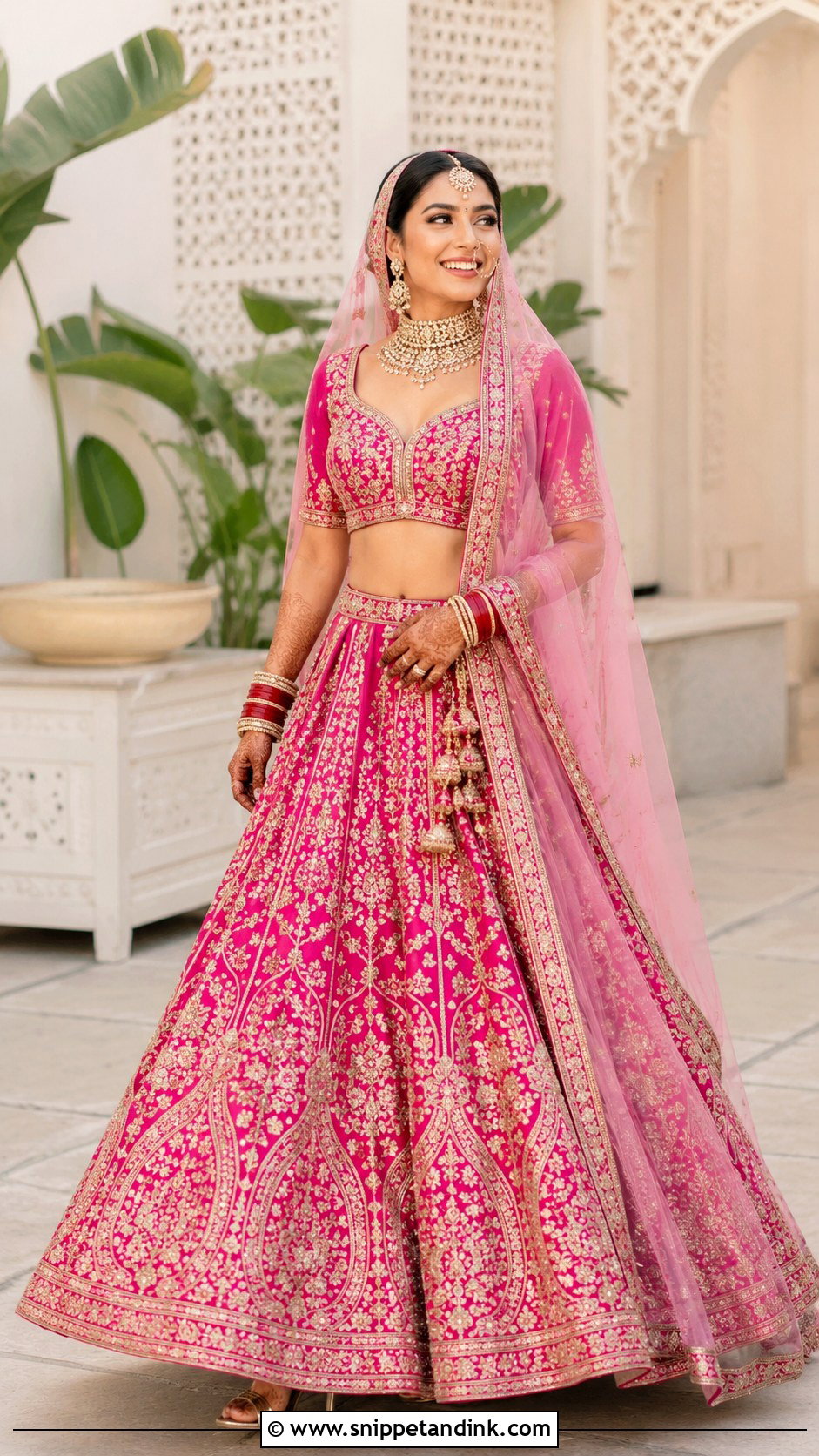
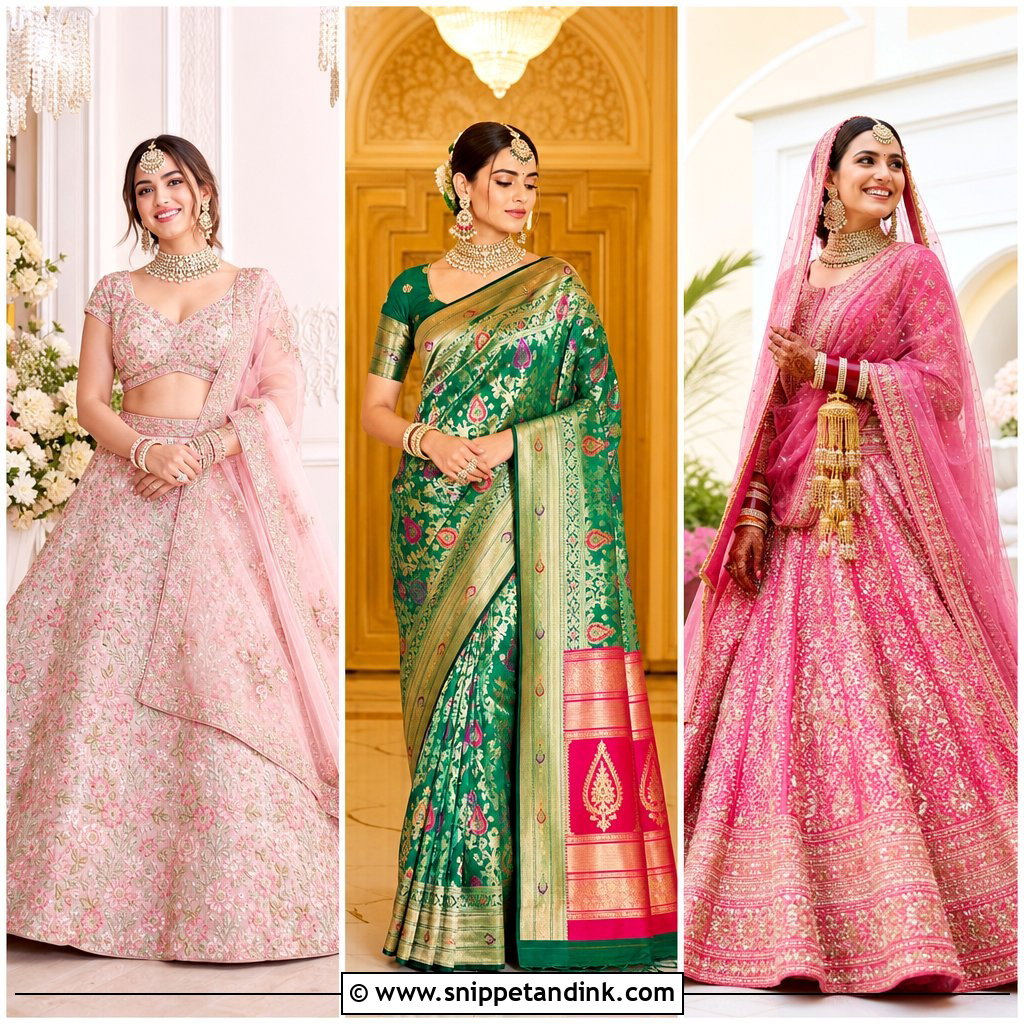
Pink keeps the festive feel of bridal dressing while softening it. Rani pink is for the bride who wants color; blush is quieter and suits daytime ceremonies. Embellishment changes the mood: mirror work, sequins, resham embroidery and pearl detailing all read differently. One warning from fittings: mirror work is heavier and scratchier than it looks, so I ask for a soft lining on the blouse where the inner arm rubs. A structured blouse, light dupatta and jewelry in gold, polki or kundan suit it, and floral hair pieces work for a mehendi or wedding morning. Finish with nude or gold heels and a potli that picks up the lehenga’s accents.
4. Ivory Bridal Lehenga
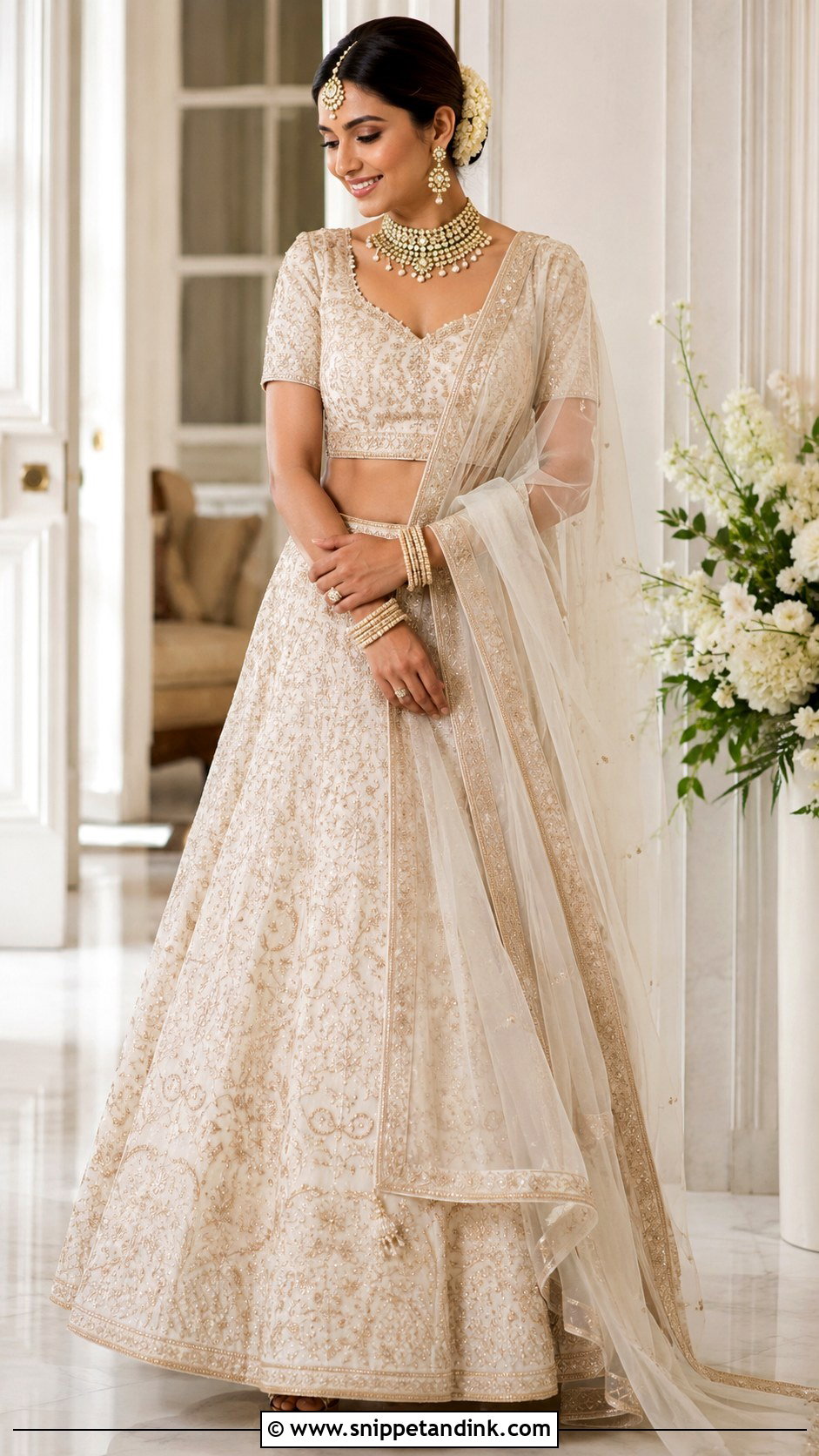
Ivory relies on its silhouette and fabric more than any other color here, because there is no strong shade to carry the look. Organza gives it air, silk gives it structure, and net makes it delicate. It looks rich with gold, pearl, silver or champagne embroidery. A deep ivory blouse with fine handwork, a flowing skirt and a sheer dupatta can feel grand without color. Do check with your family first, since in some communities ivory or white is avoided for the main ceremony. Kundan jewelry, soft gold heels and a polished bun complete it for a daytime or modern indoor wedding.
5. Pastel Bridal Lehenga
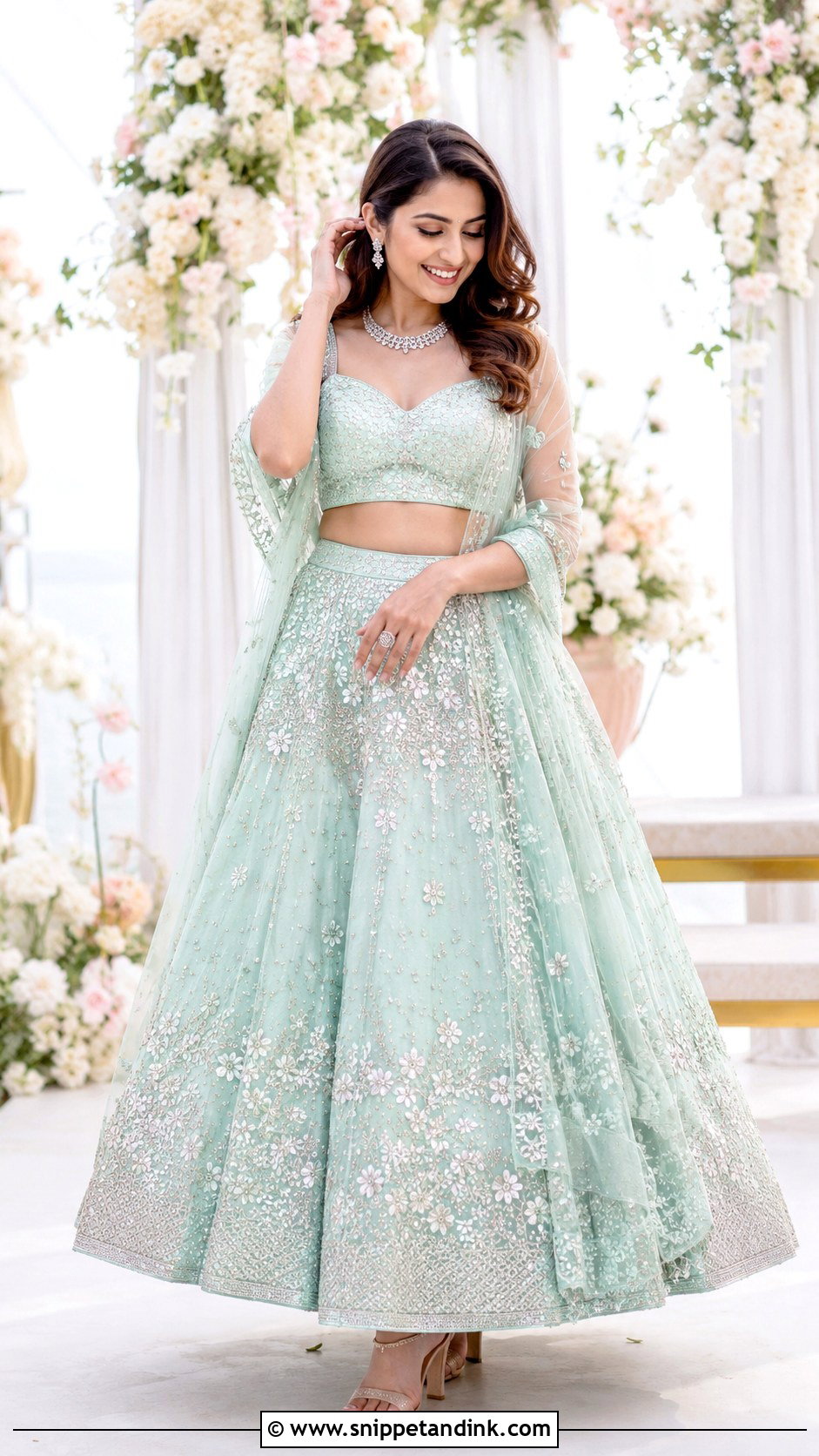
Pastels give bright, airy photos and suit daytime ceremonies, gardens and destination weddings. Powder blue, mint, peach, lavender and pale pink are the usual range. The risk with pastel is looking like a guest, so I push for detailed embroidery, beadwork or metallic thread rather than plain fabric. Diamond, pearl or polki jewelry suits it depending on the finish, along with a sheer dupatta and comfortable embellished heels. Pastels also show makeup transfer and sweat marks at the underarm more readily than deep shades, which is worth knowing for a summer afternoon.
6. Gold Bridal Lehenga
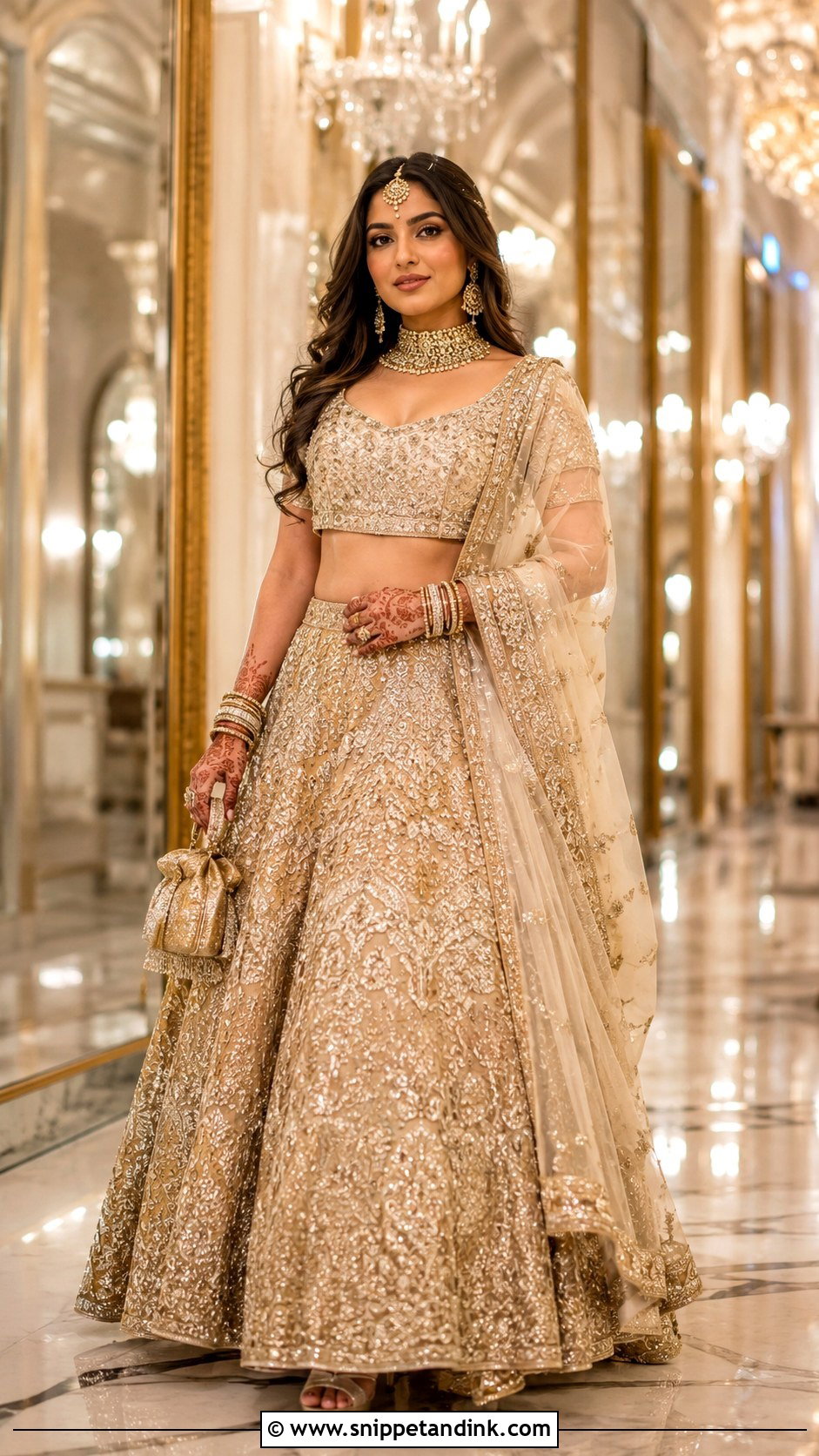
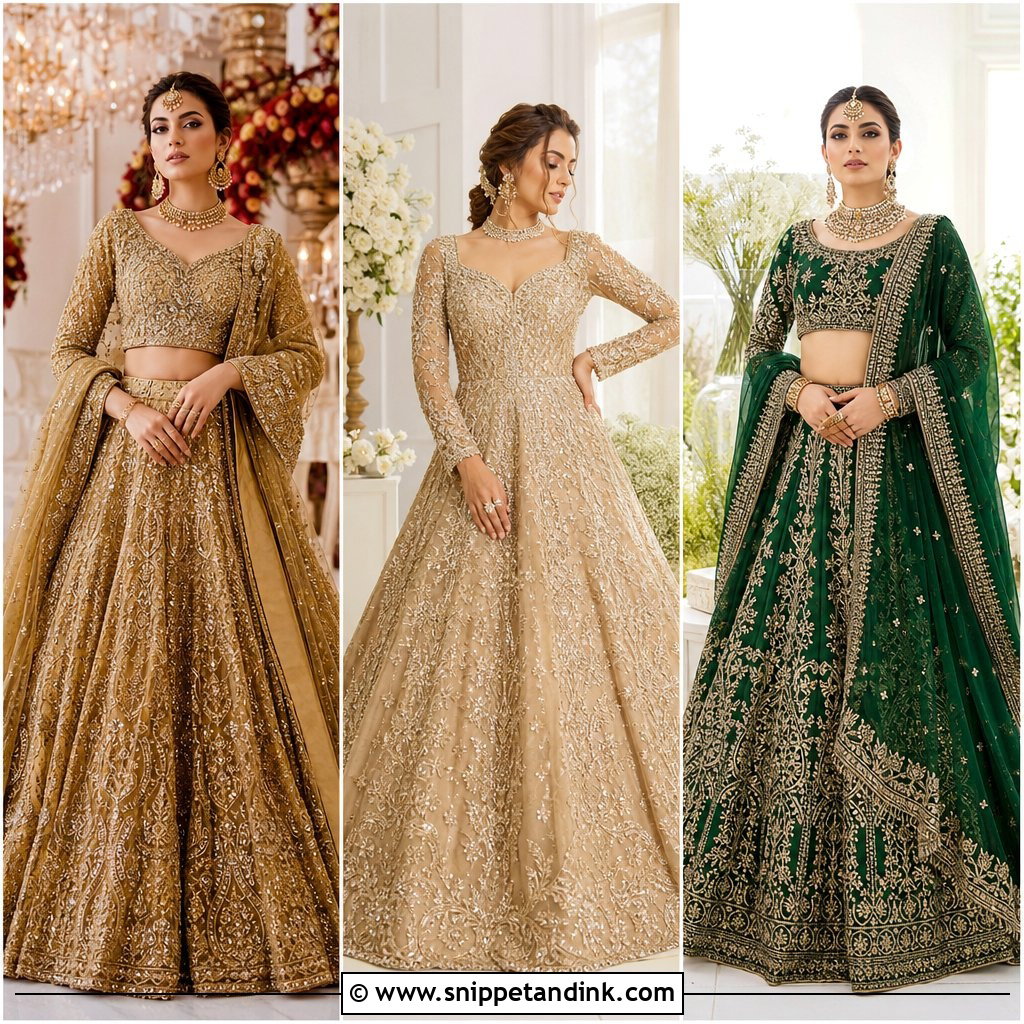
Gold head to toe is a reception outfit first. Matte gold is the softer finish; high-shine gold makes the entrance. Balance matters more than usual here: the embroidery, the blouse and the dupatta all need to be in proportion, or the bride disappears into the shine. Since the fabric already catches light, I keep the jewelry classic and the styling clean, with soft curls, a sleek bun or a center parting. A gold clutch or potli should blend in rather than compete, and gold heels finish it.
7. Green Bridal Lehenga
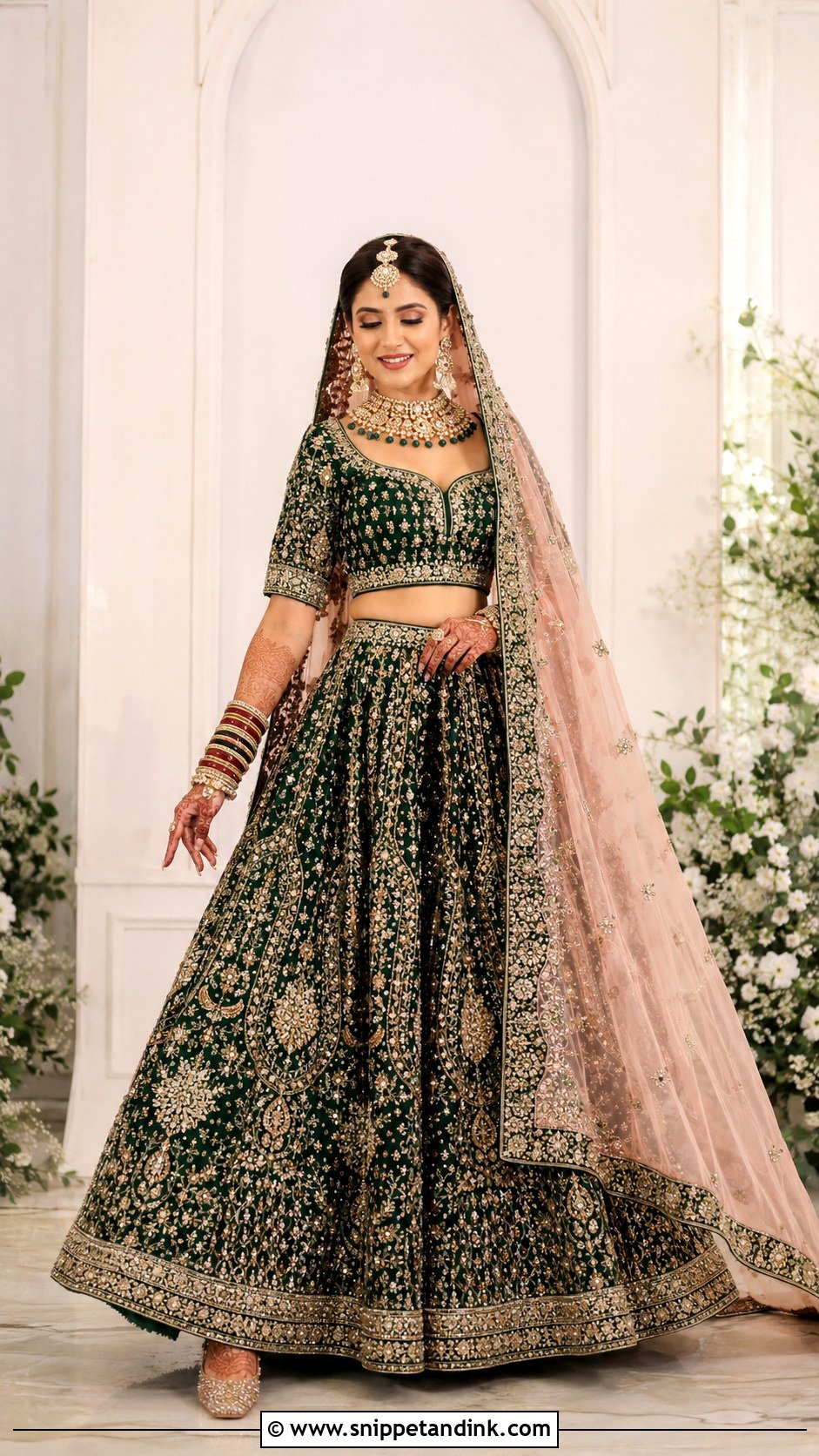
Green is royal and a little unexpected while still clearly bridal. Emerald suits evening weddings; sage and pistachio suit daytime. Gold embroidery keeps it traditional, while silver or pearl work cools it down. Emerald pairs especially well with polki, kundan and antique gold. My one caution: green can drain warm skin of color under fluorescent or LED lighting, so the makeup should be warmer and a little more defined than you’d wear with red. Match the dupatta to the skirt, or contrast it with blush.
8. Orange Bridal Lehenga
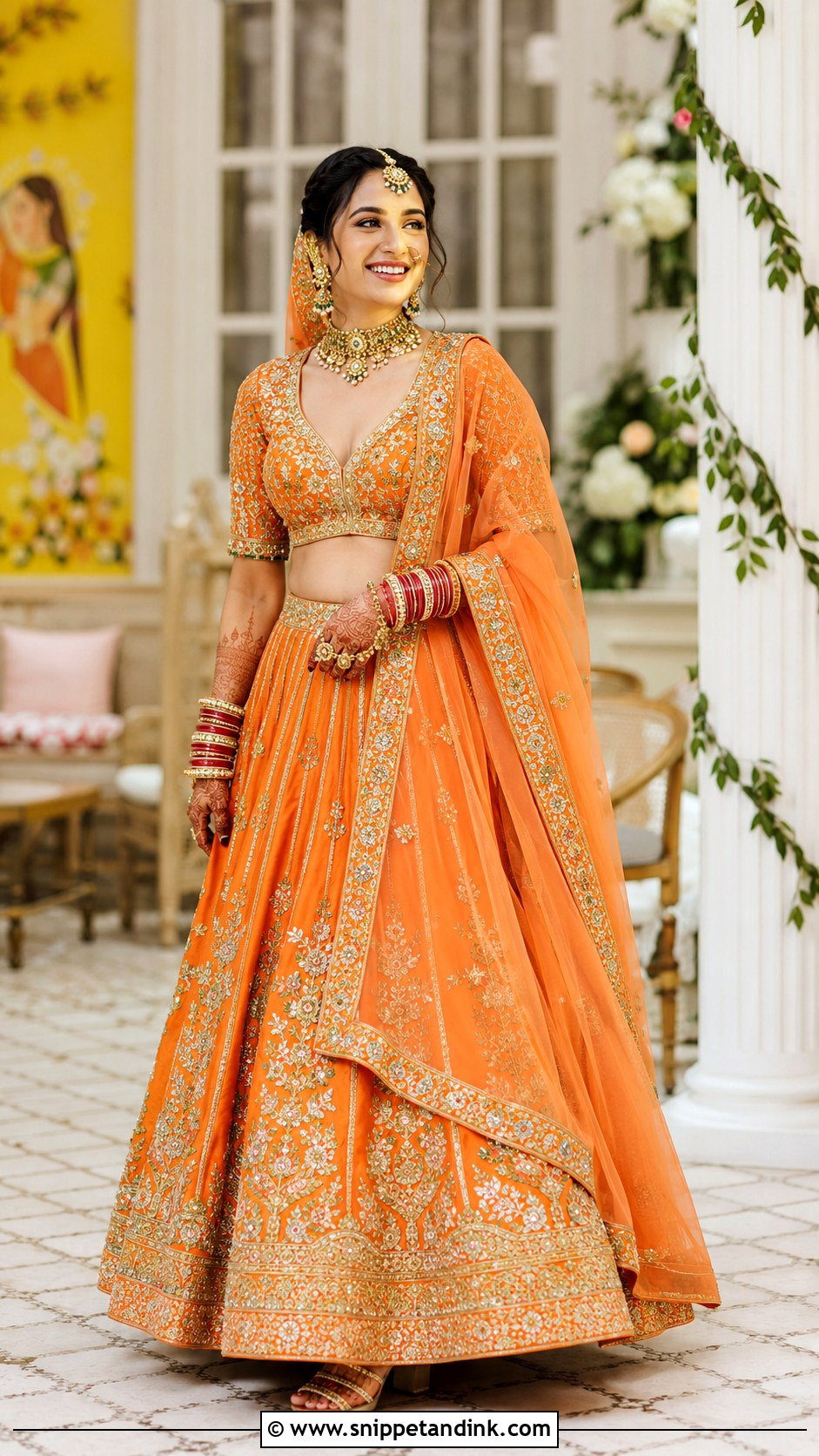
Orange brings warmth and a sense of celebration without the expectations of red. Rust, burnt orange, tangerine and saffron each set a different mood. Silk with gold embroidery is the traditional route; organza or georgette makes it lighter. For haldi or pre-wedding events, orange takes floral details happily. For the main ceremony I lean toward deeper embroidery and a more structured drape so it reads bridal rather than festive. Pair it with a detailed blouse, a soft dupatta, gold jewelry and embellished sandals.
9. Kanjivaram Bridal Saree
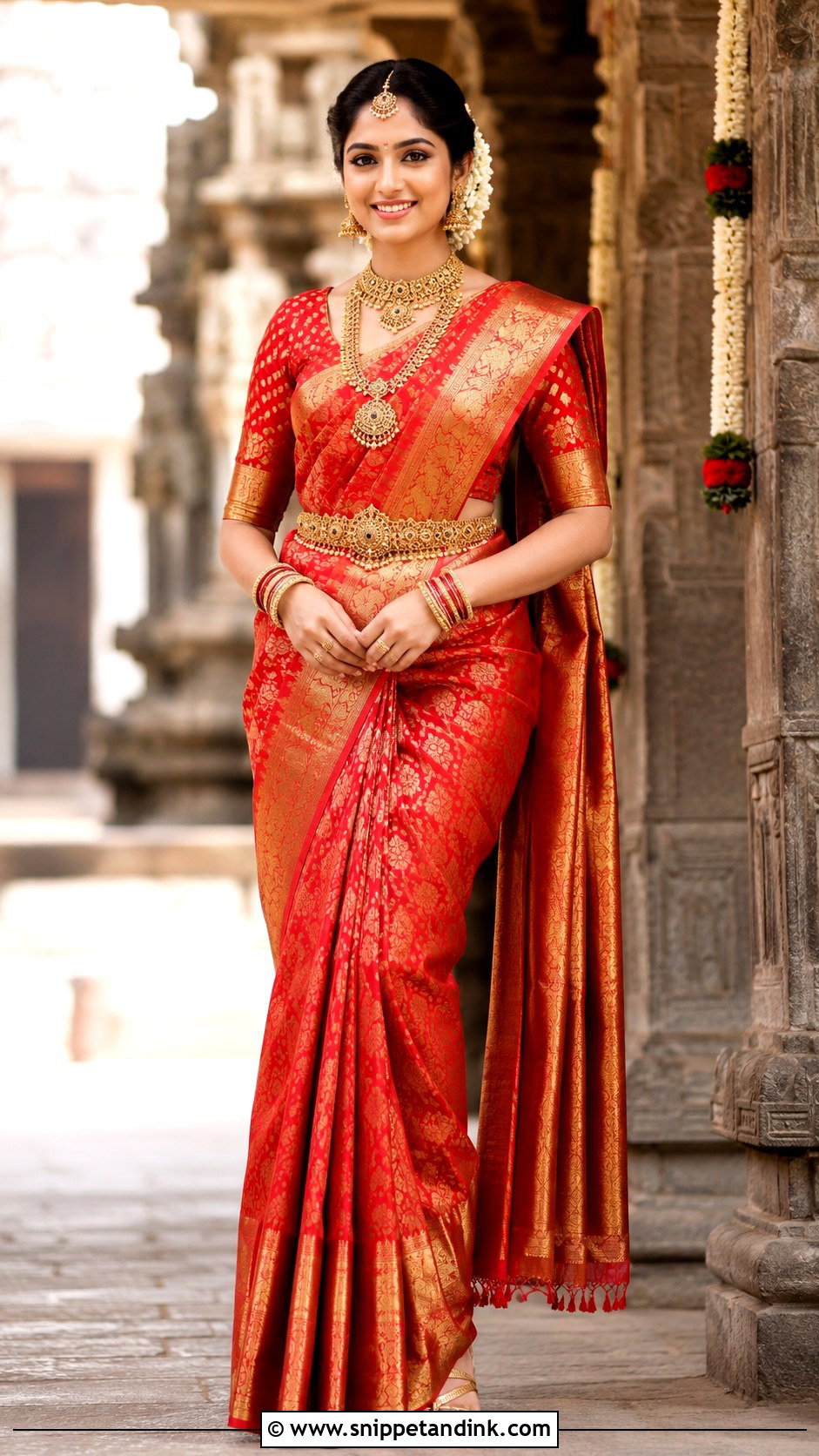
A Kanjivaram is woven, not embroidered, so its richness is in the silk and the zari borders, and a good one is noticeably heavy. Red, gold, green, orange and pink are the ceremony colors. I style it with a fitted blouse, temple jewelry, bangles, a vaddanam waist belt and jasmine in the hair. The pleats need to be pinned firmly at the waist and the pallu secured at the shoulder, because rituals involve a lot of sitting, standing and bending, and a loose pleat starts to drop within the hour. Gold sandals or low heels sit best underneath.
10. Banarasi Bridal Saree
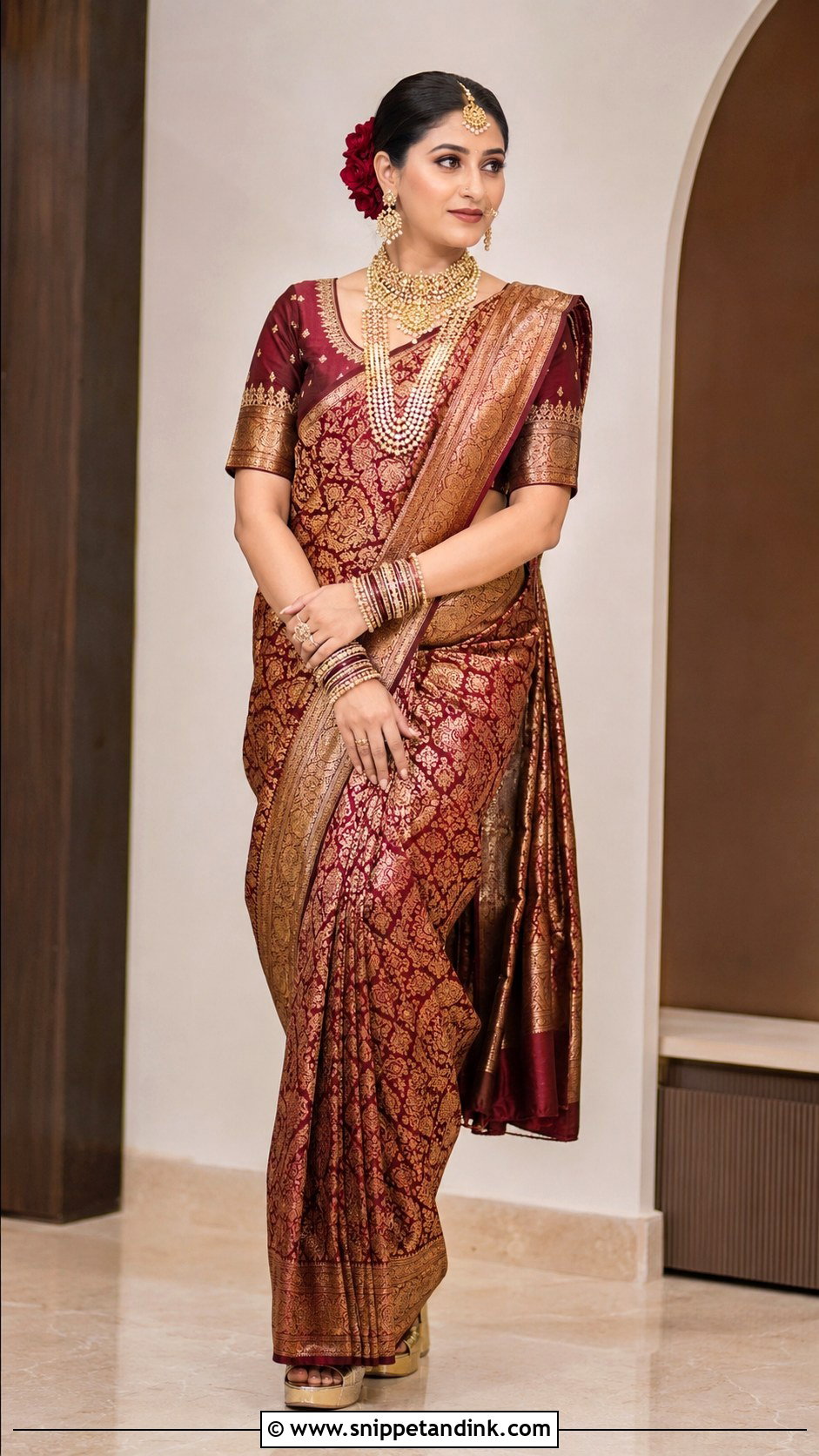
Brides who love woven luxury tend to land on a Banarasi bridal saree. The silk, brocade patterns and metallic zari need no added embellishment. Red, maroon, pink, emerald and gold are the popular ceremony shades. A brocade or embroidered blouse, traditional jewelry, bangles and a neat bun or braid suit it. Banarasi silk is slippery, so a waist belt does real work here, not just decoration. It’s the graceful alternative for a bride who doesn’t want a lehenga.
11. Red Bridal Saree
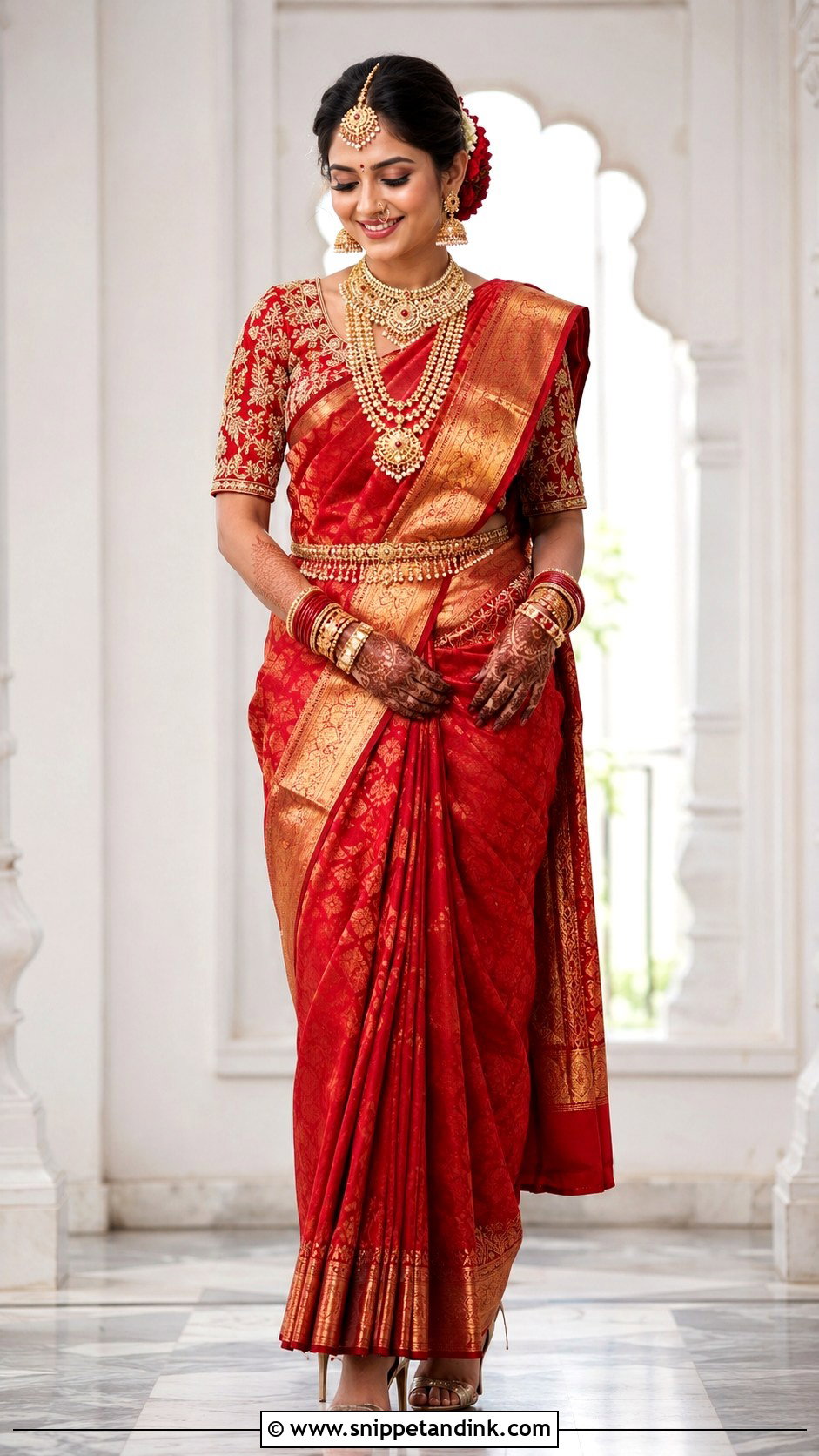
A red saree gives the classic ceremony look with more movement than a lehenga. It might be silk, Banarasi, Kanjivaram, organza, tissue or embroidered georgette, depending on region and preference. Gold work is traditional; tonal embroidery feels quieter and more modern. The drape is everything, so I always book someone experienced to tie it on the day rather than leaving it to a cousin at the last minute. Add a bridal dupatta or veil over the head for the rituals if you want the extra layer. Heels need to be the right height so the hem skims the floor without dragging.
12. Tissue Bridal Saree
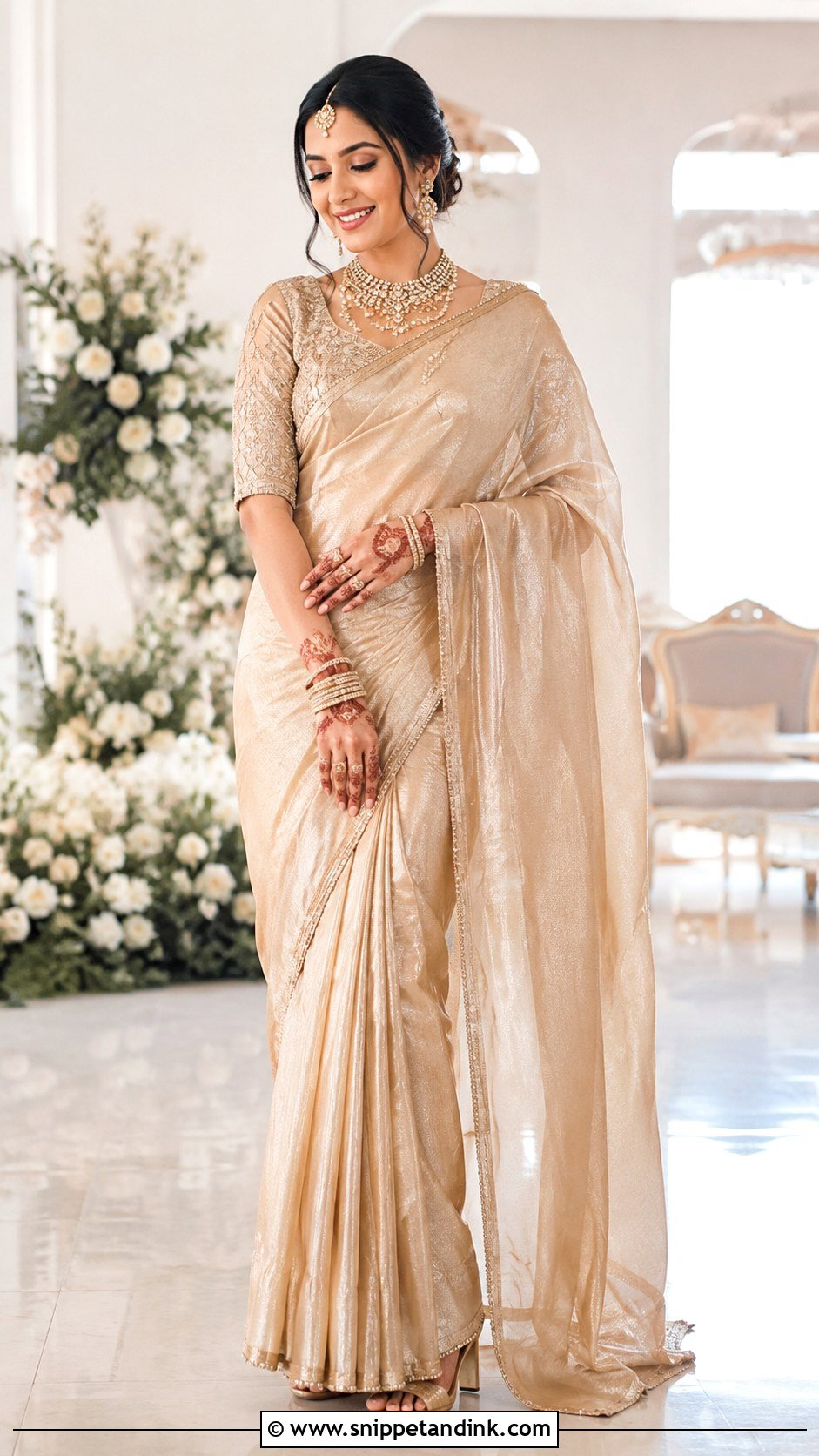
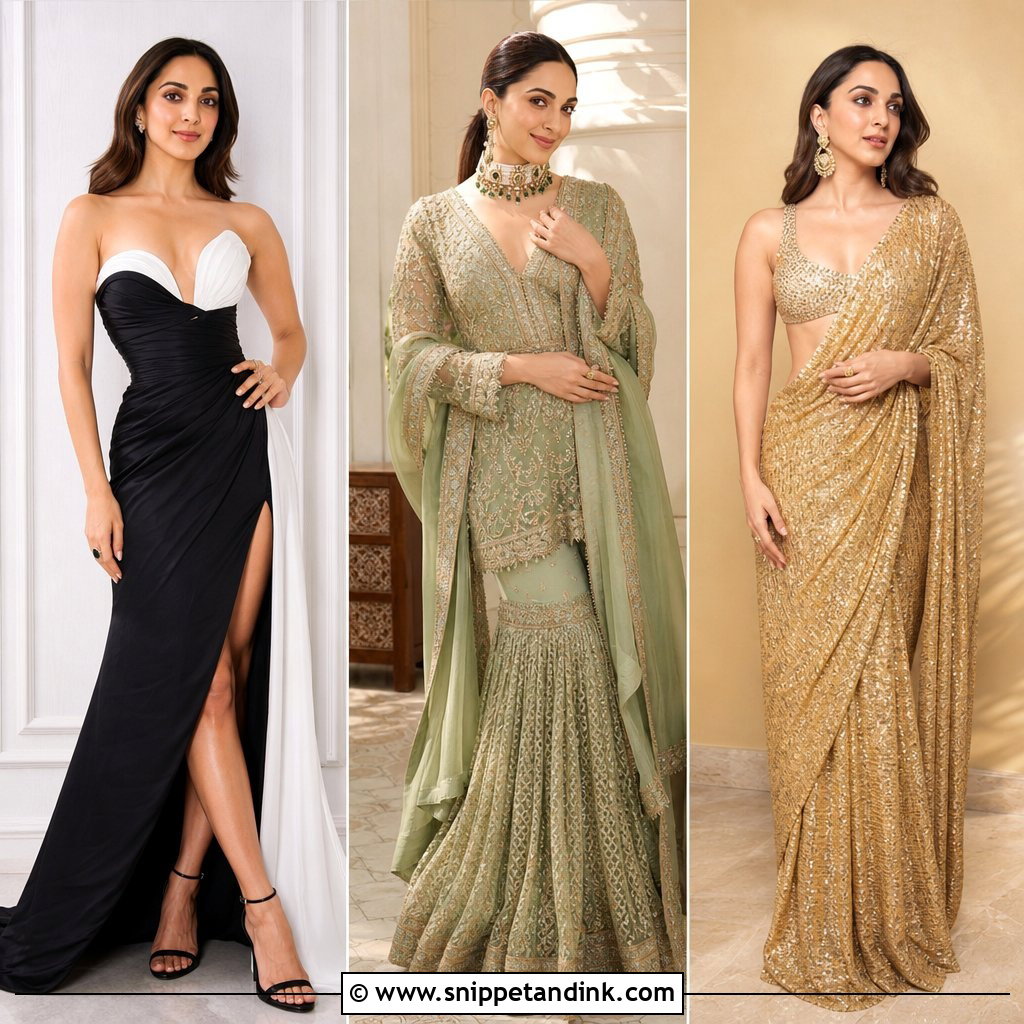
Tissue has a metallic weave that glows in photos, especially in gold, champagne, rose, ivory and soft green. Because the fabric itself is fine, an embroidered blouse gives the outfit its structure and jewelry carries more weight than usual: pearls, kundan, diamonds or gold, matched to the saree’s tone. Tissue creases sharply and those crease lines show, so it needs pressing on the day and crisp pleats. It suits a reception or an intimate ceremony better than a long ritual on the floor.
13. Lehenga Saree
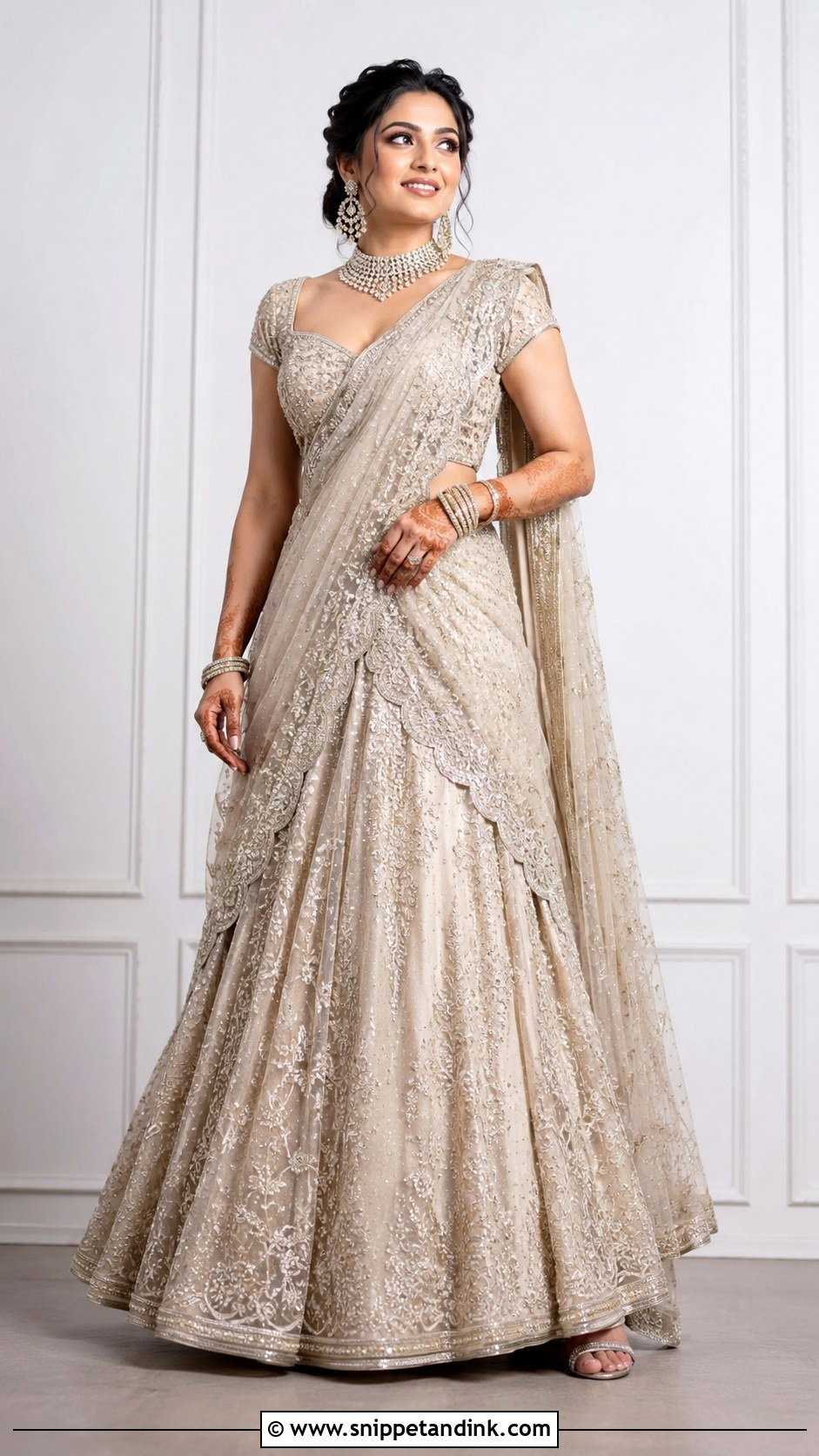
The lehenga saree solves a real problem: the look of a drape with the ease of a skirt. It usually comes with a pre-stitched or semi-stitched drape, so there’s far less adjusting through long ceremonies and photos. A flared skirt, structured blouse and attached or separate pallu are the usual parts, with embroidery, sequins, zari or stonework to make it bridal. I’d still have a fitting with the pallu pinned in place, because the pre-stitched version only falls right if the skirt sits at the height it was designed for. Statement earrings, a bracelet stack and embellished heels finish it.
14. Bridal Sharara Set
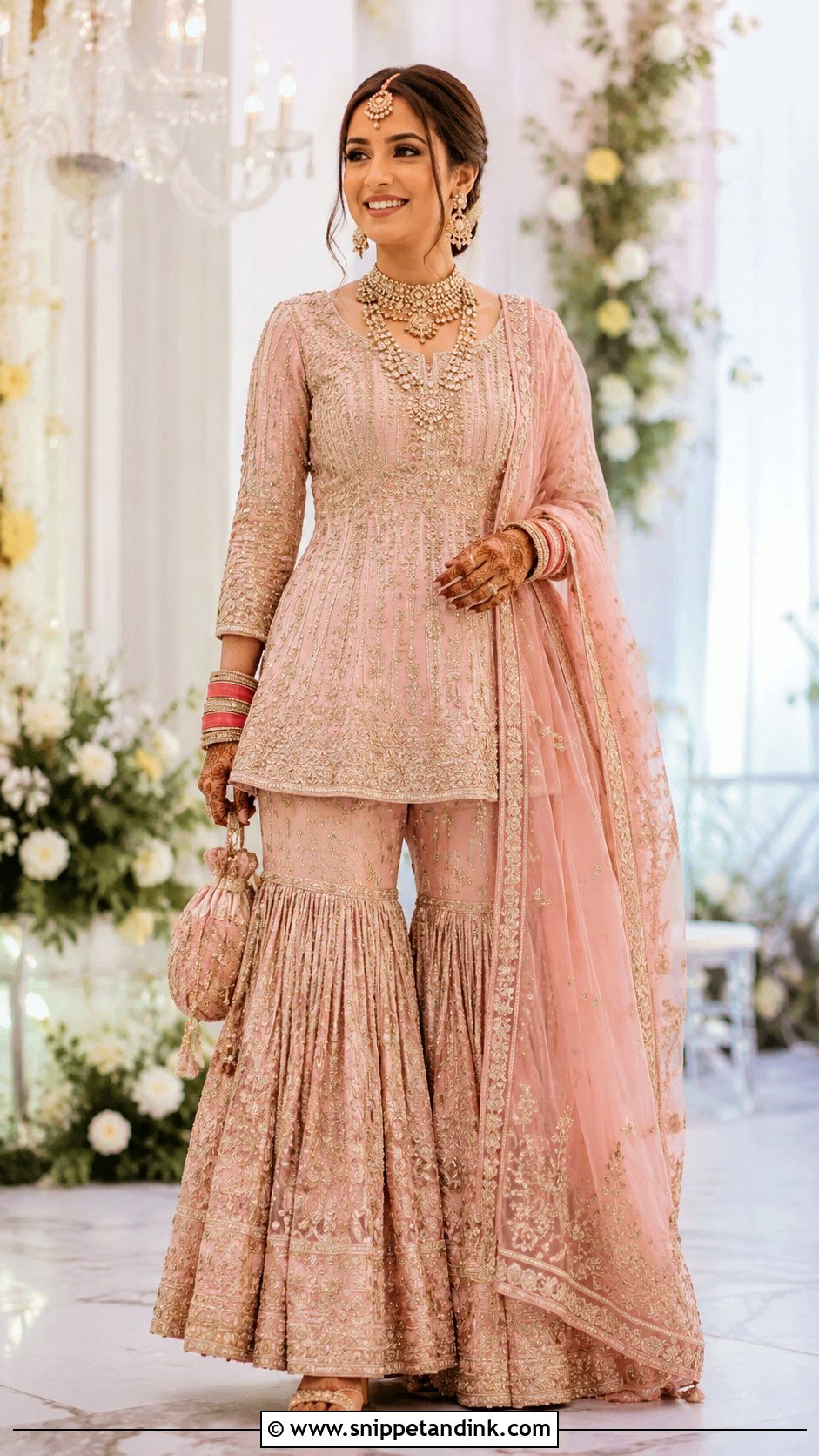
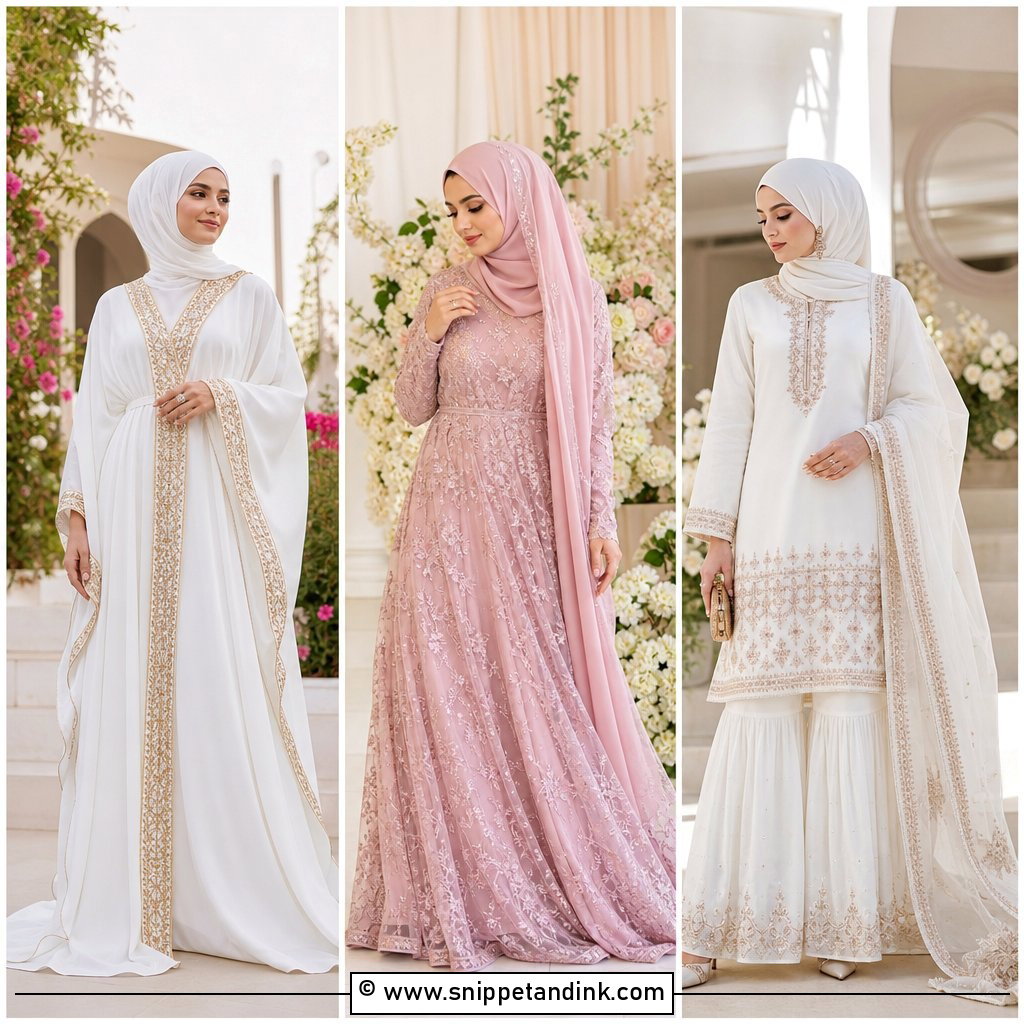
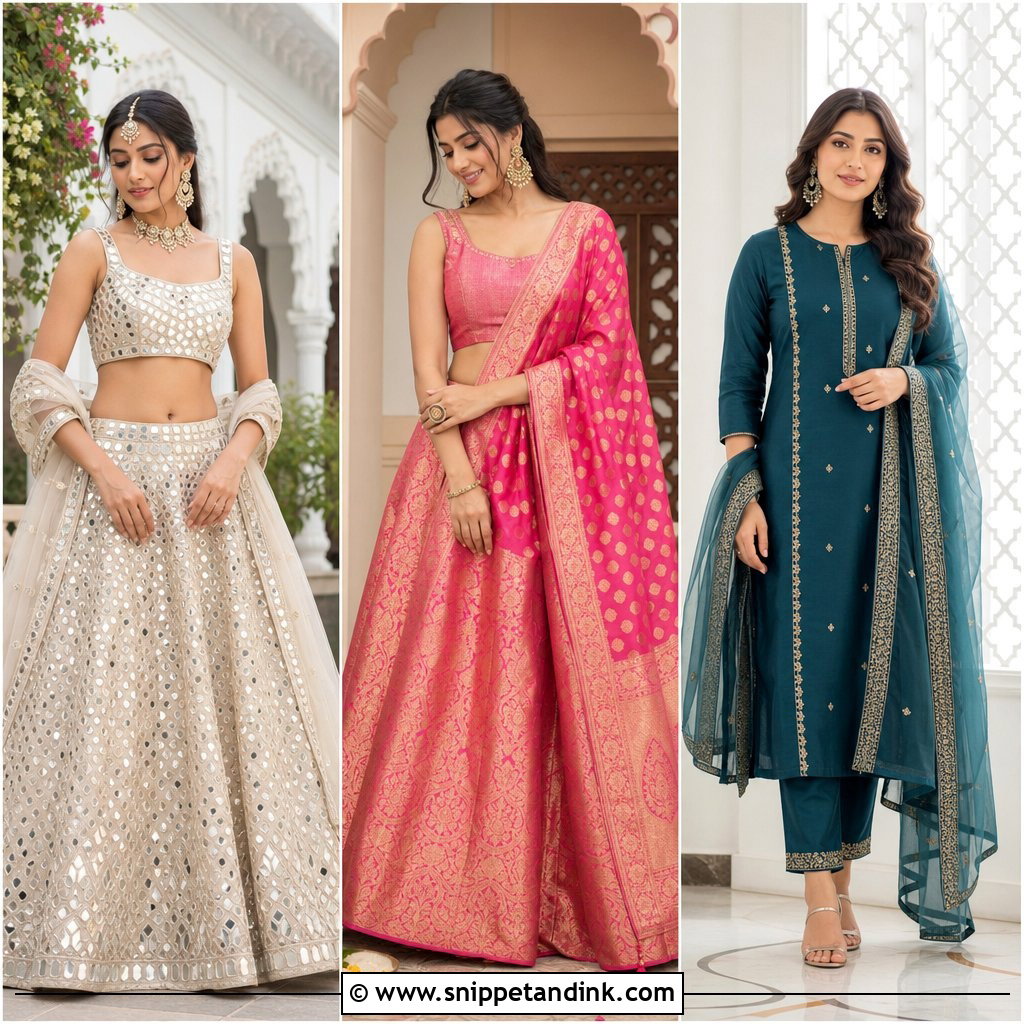
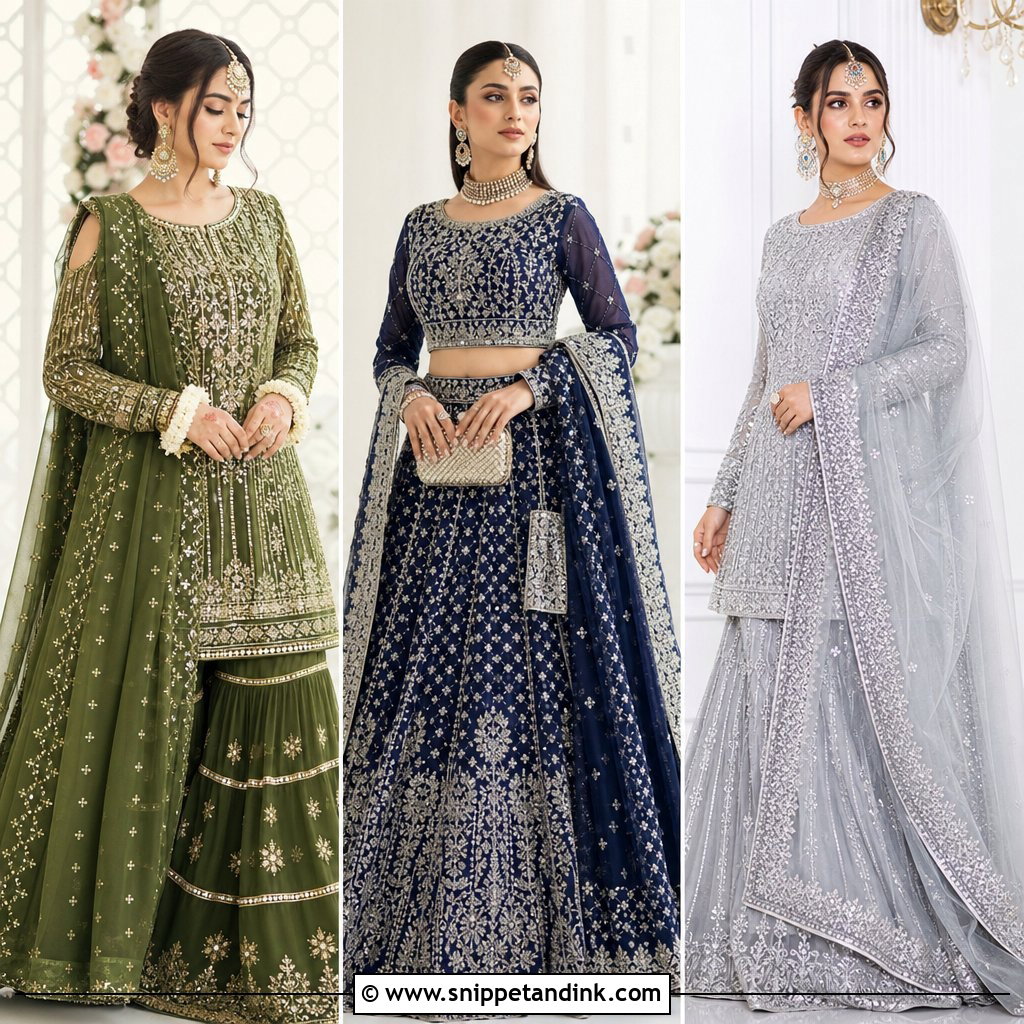
A bridal sharara set moves well and is far easier to dance in than a heavy lehenga. The wide legs carry the volume while the kurti or short blouse keeps the top easy. Silk, brocade, velvet or heavily worked georgette make it bridal, and a matching dupatta with a detailed border gives the ceremonial feel. Watch the hem length: sharara legs that pool on the floor catch under heels on stairs. Gold or polki jewelry suits traditional versions, pearls soften it. It’s a natural fit for the sangeet, mehendi, nikah or reception.
15. Bridal Gharara Set
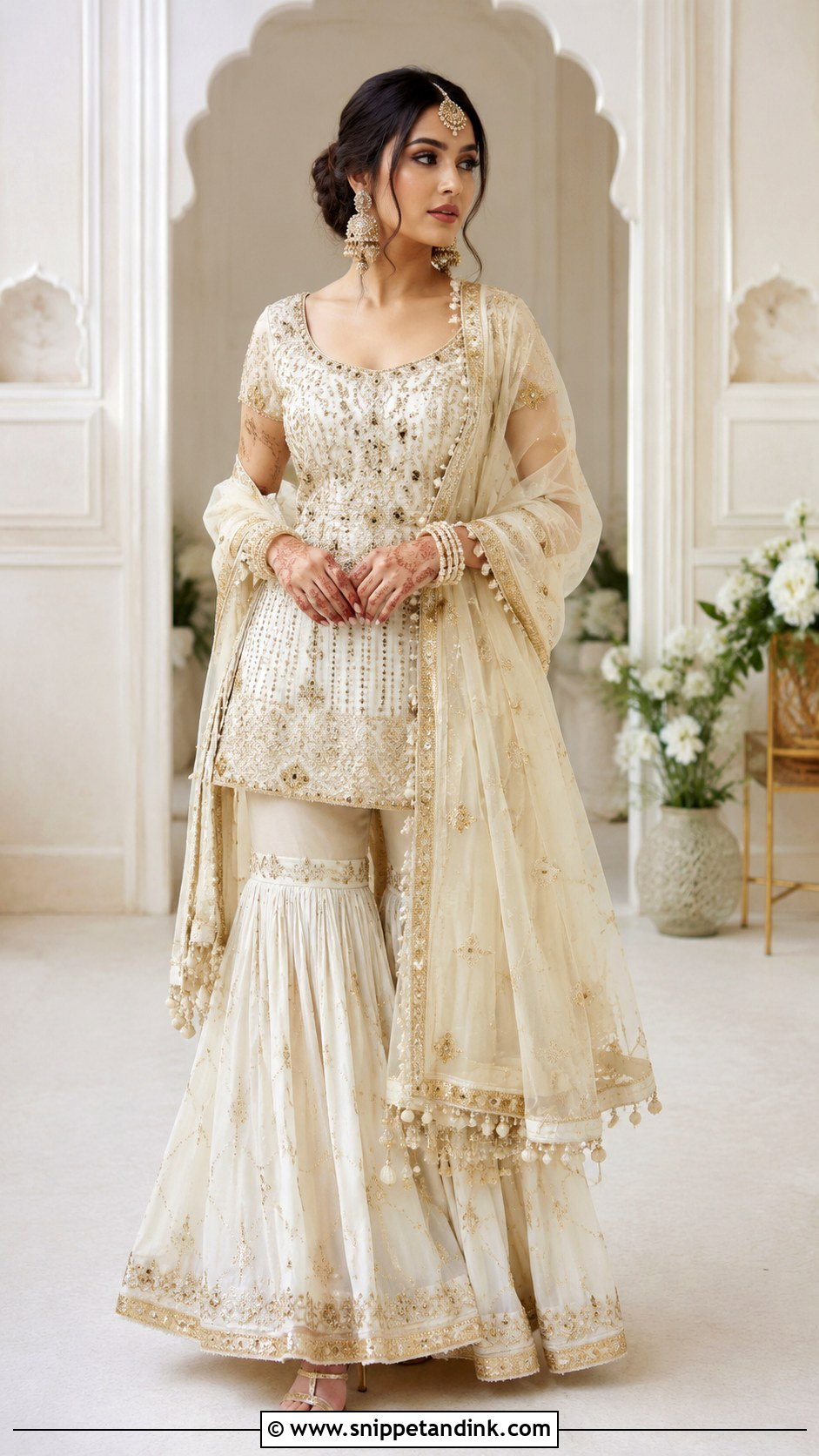
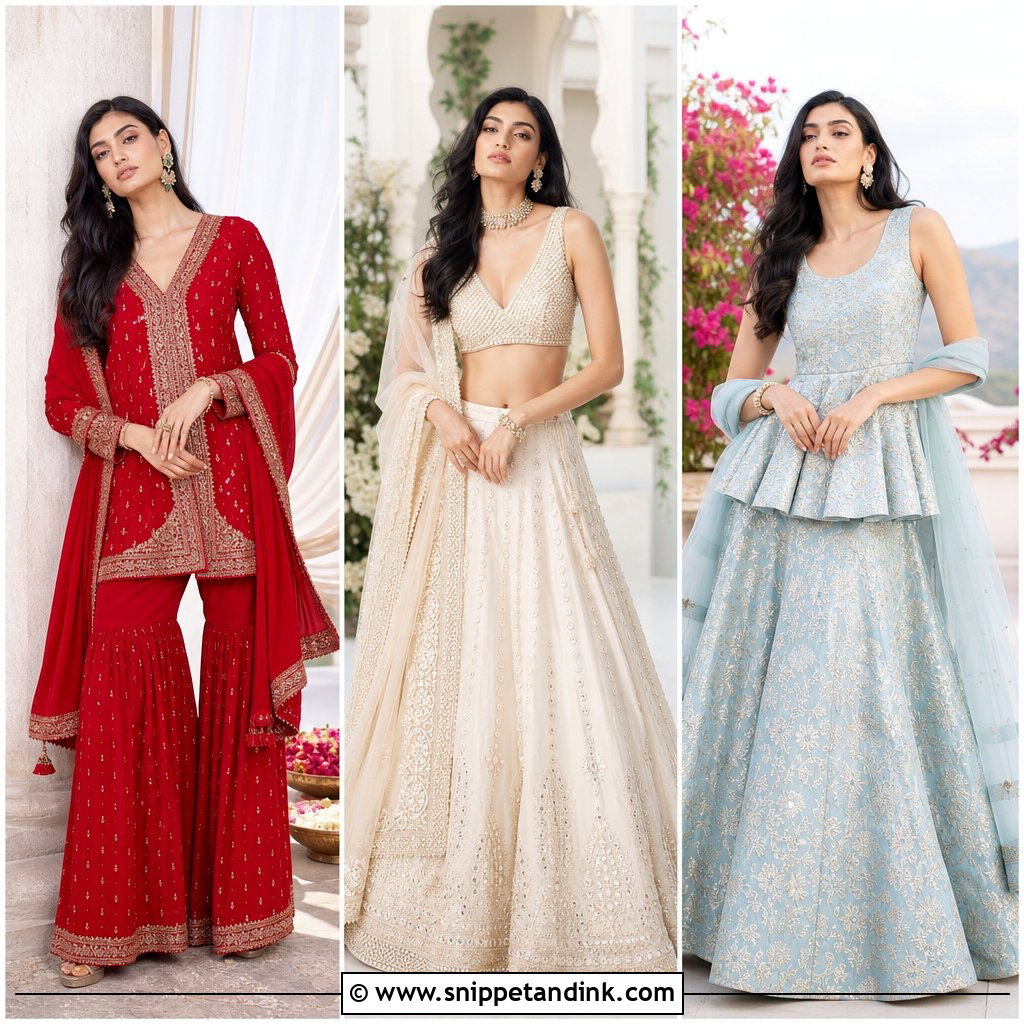
The gharara is easy to confuse with the sharara, but the cut is different. It’s fitted through the upper leg and flares below the knee, usually with a decorative band at the joint, which gives that dramatic heritage silhouette. Zari, gota patti, sequins or fine threadwork suit it. Because of the knee seam, sitting cross-legged is awkward, so I flag that for any ritual on the floor. A short kurti, fitted blouse and embroidered dupatta complete it, with jhumkas, a maang tikka, bangles and comfortable heels.
16. Bridal Anarkali Suit
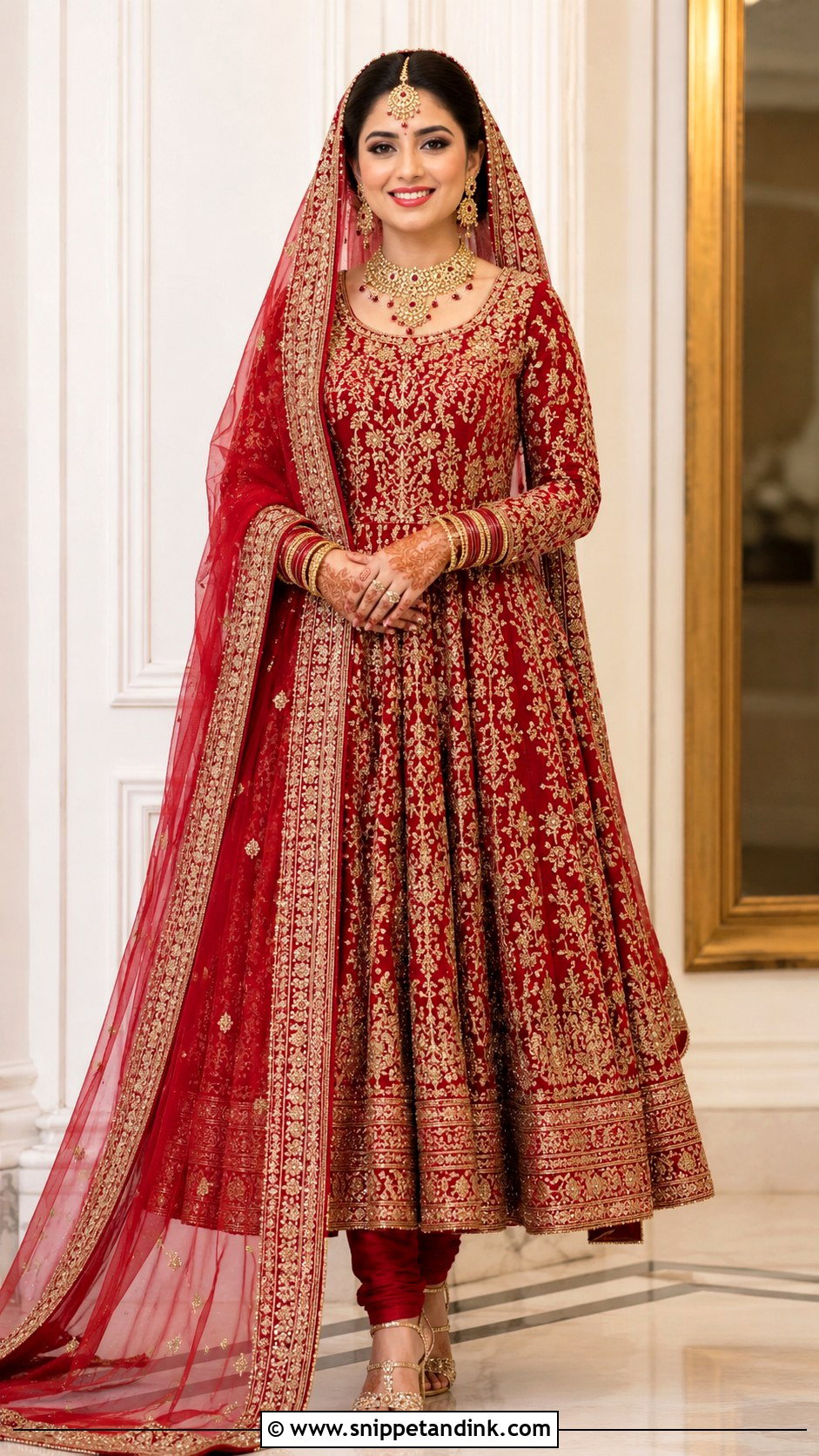
An Anarkali gives coverage and comfort in one piece. The long flared kurta makes the shape, while a churidar or slim pants keep the lower half clean. Rich embroidery, brocade panels, velvet details or a heavily bordered dupatta make it bridal, in deep red, ivory, gold, emerald or blush. The flare is cut to start just under the bust, so the bust fitting is where I spend most time; a seam sitting too low flattens the whole silhouette. Traditional jewelry, embellished heels and a potli suit smaller ceremonies, engagements and family rituals.
17. Bridal Jacket Lehenga
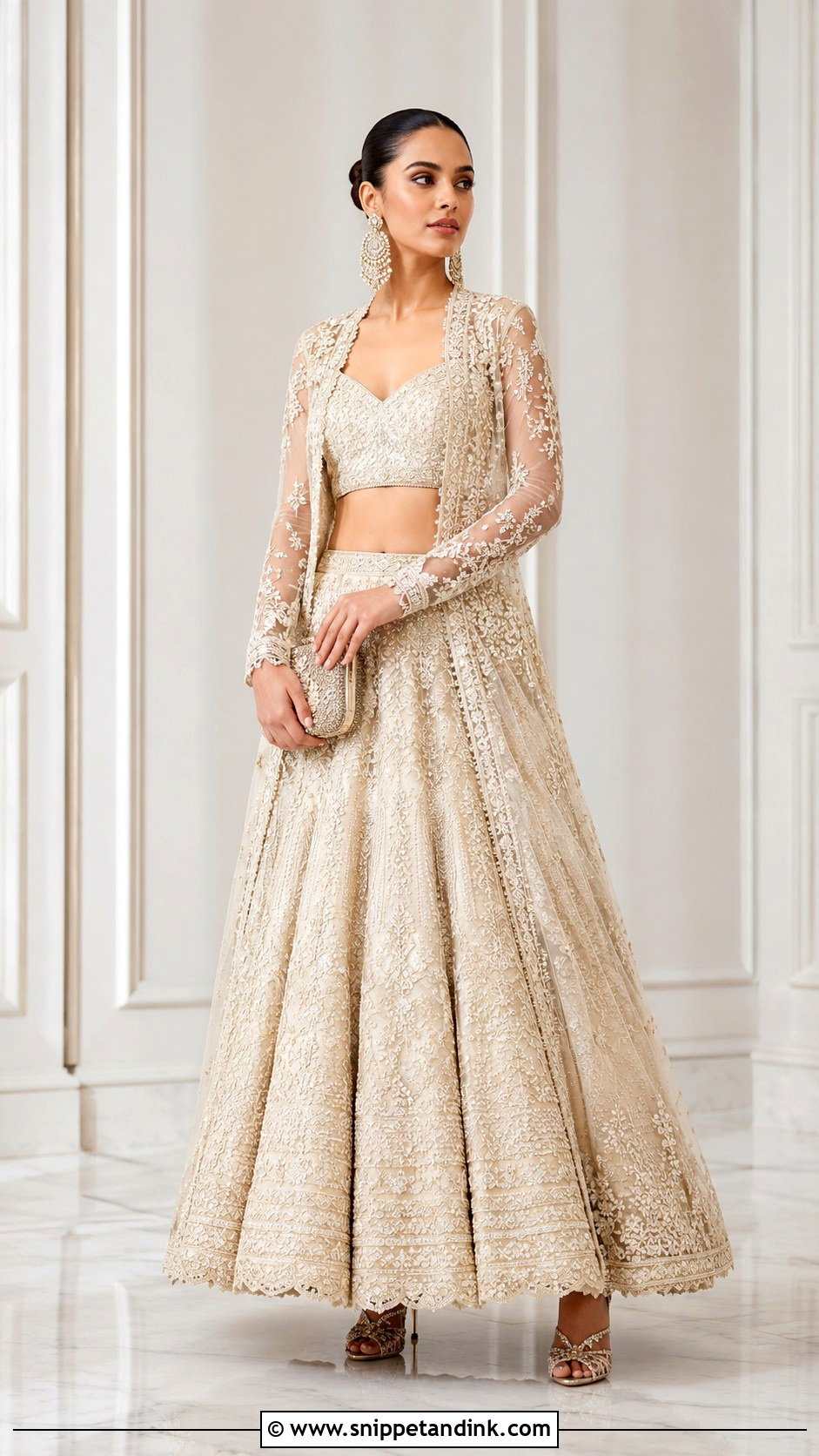
A jacket over a lehenga reads modern but keeps the traditional impact. It can be long and flowing, short and structured, sheer and embroidered, or heavily embellished. It also adds coverage without losing shape, which is why it suits winter weddings so well. Choose fine embroidery so the jacket looks intentional rather than bulky, and keep the jewelry simple if the jacket is busy. A sleek hairstyle, comfortable heels and a coordinated clutch complete it. Try it on with your arms raised, since stiff embroidered jackets ride up at the back.
18. Bridal Cape Lehenga
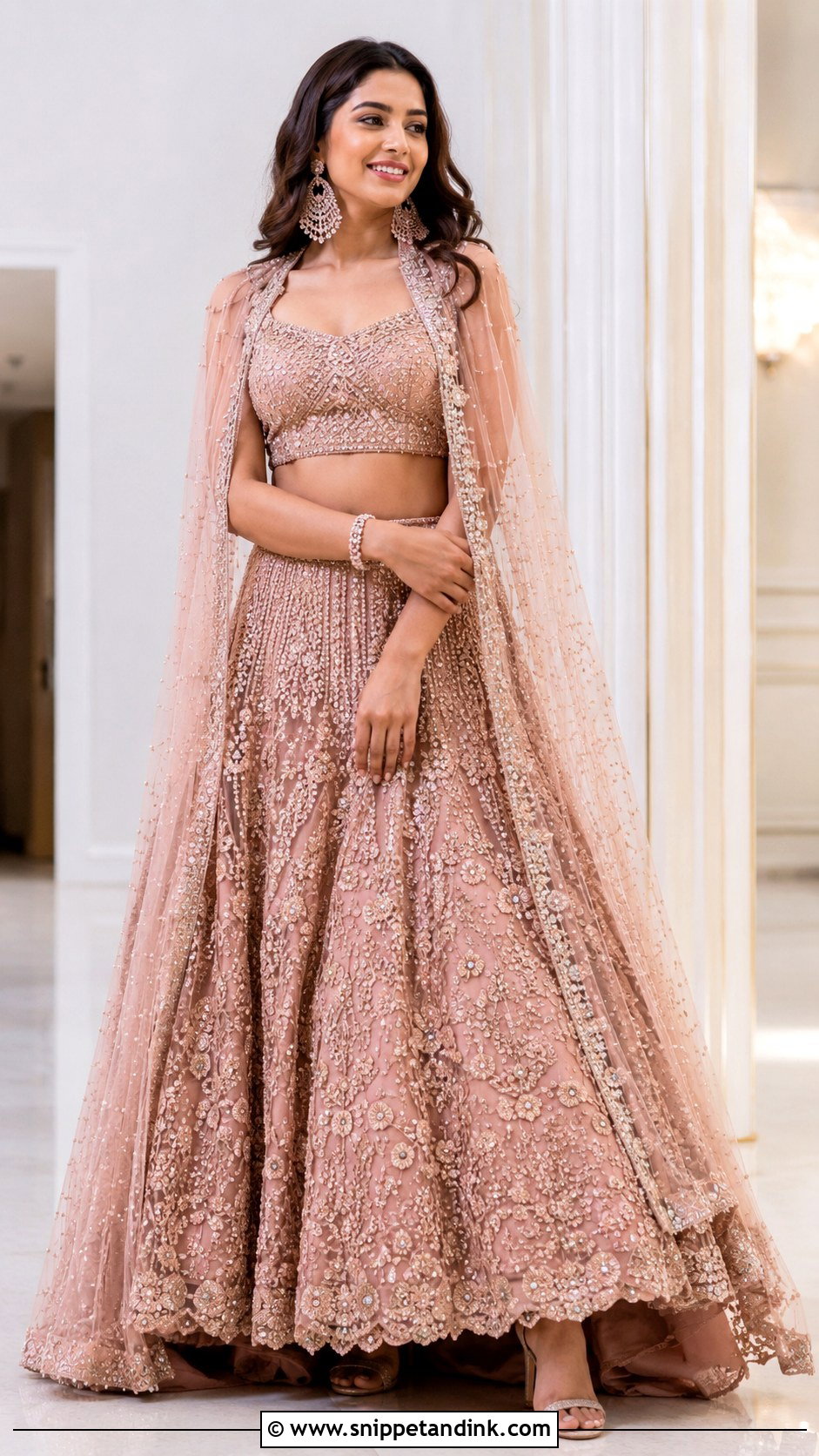
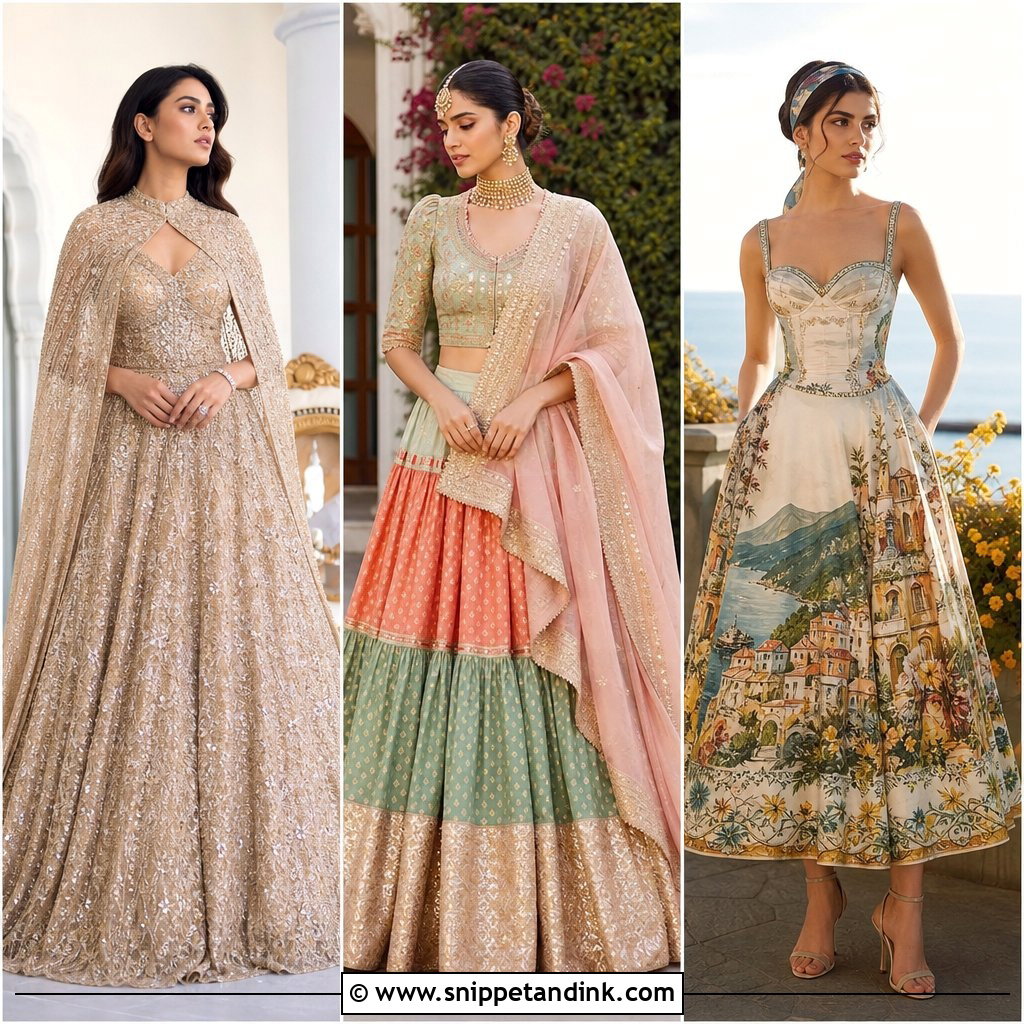
A cape gives drama without a heavy dupatta to manage. Sheer, embroidered, pearl-detailed or lightly embellished, it moves around the shoulders and pairs with a fitted blouse and flared skirt. It is better suited to receptions, engagements and cocktail events than to rituals where the head is traditionally covered. Keep the bridal feel with rich fabric and careful embroidery, and let the jewelry follow the neckline. If the cape is heavily worked, skip the necklace and wear statement earrings.
19. Bridal Peplum Lehenga
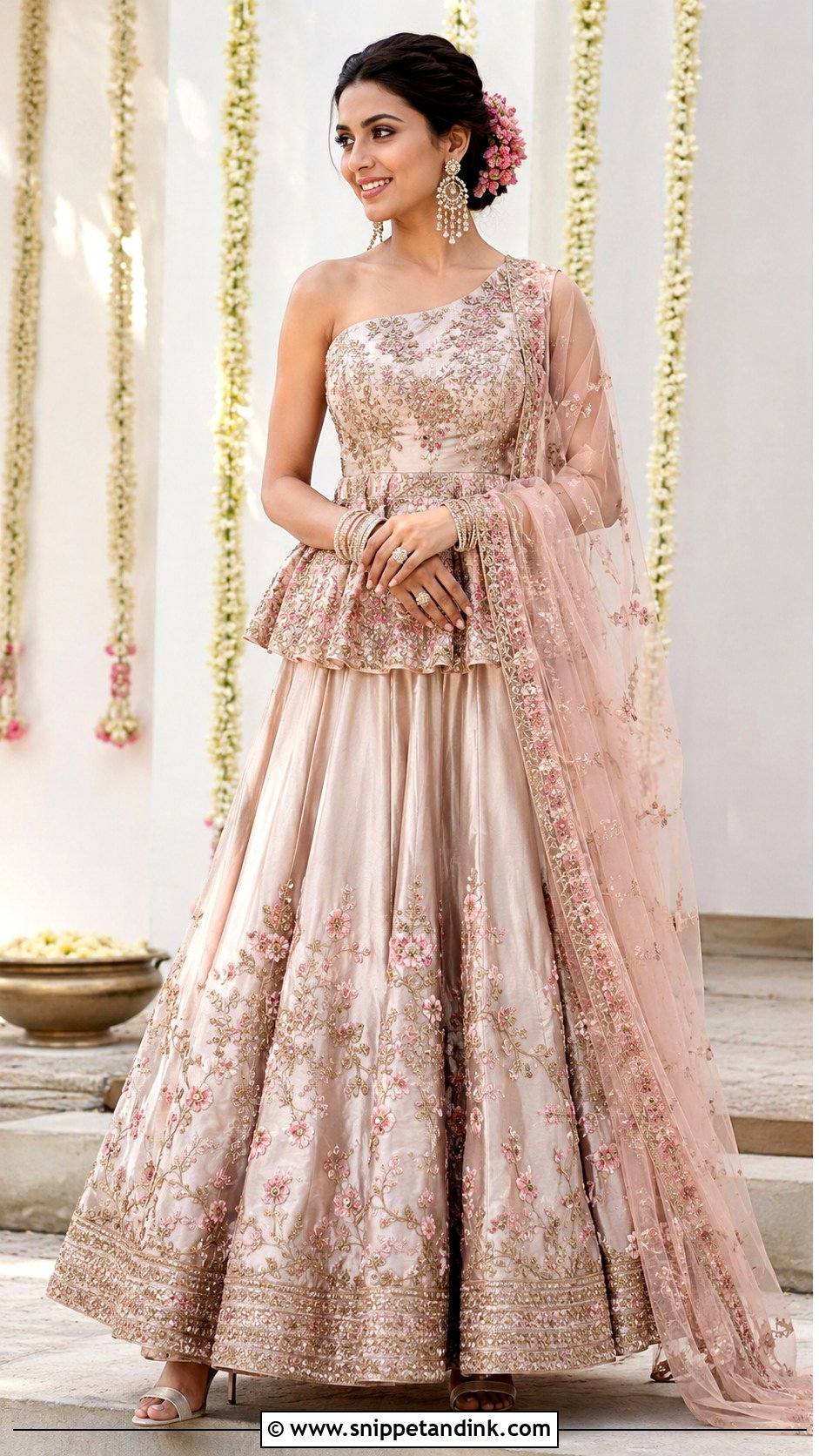
The peplum top adds structure at the waist and is often more comfortable than a very fitted blouse, since it doesn’t cut in when you sit. It works over embroidered silk, brocade, net or organza skirts. Choose detailed work at the neckline, sleeves or hem. One honest note: a peplum adds visual width at the hip, so if the skirt is already very full, I’d go for a slimmer flare. Pair it with a dupatta over one shoulder, statement earrings and elegant heels for a reception, engagement or modern ceremony, and enjoy the bit of extra coverage.
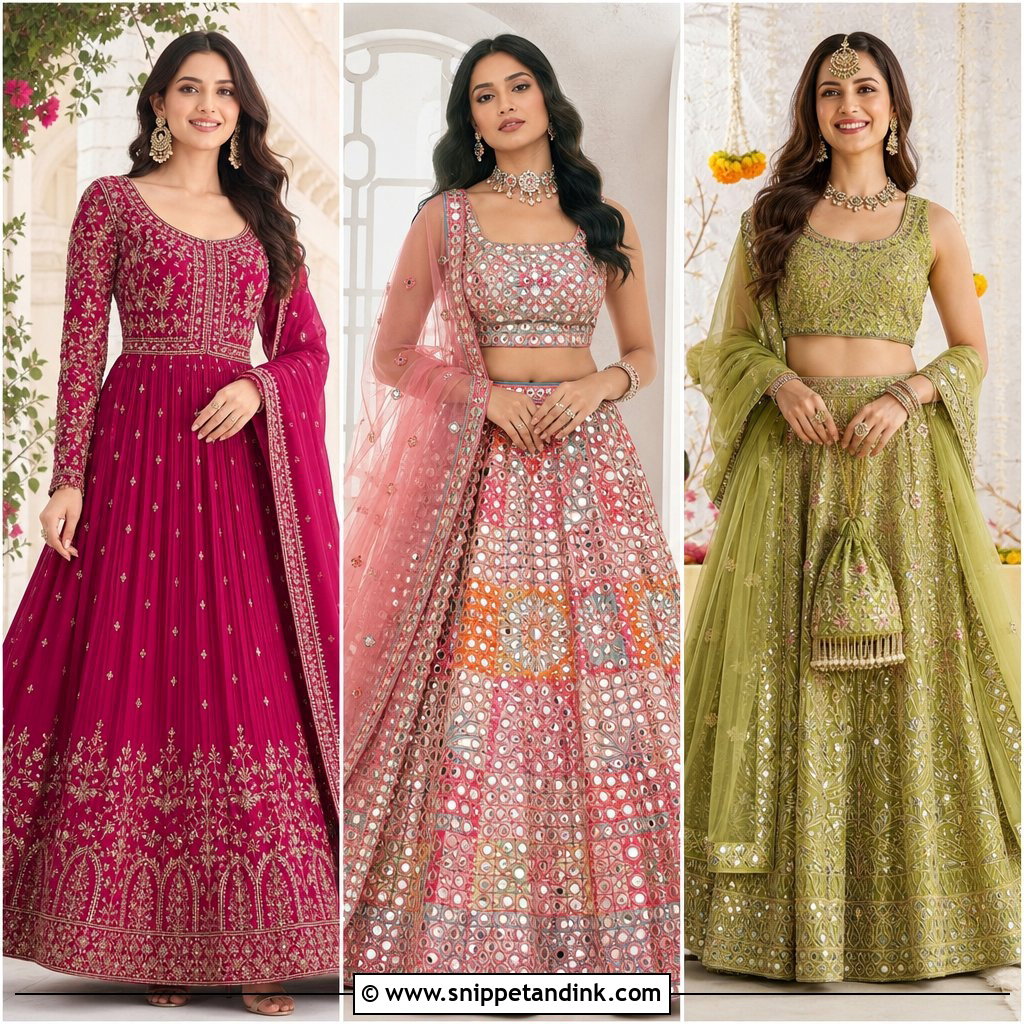
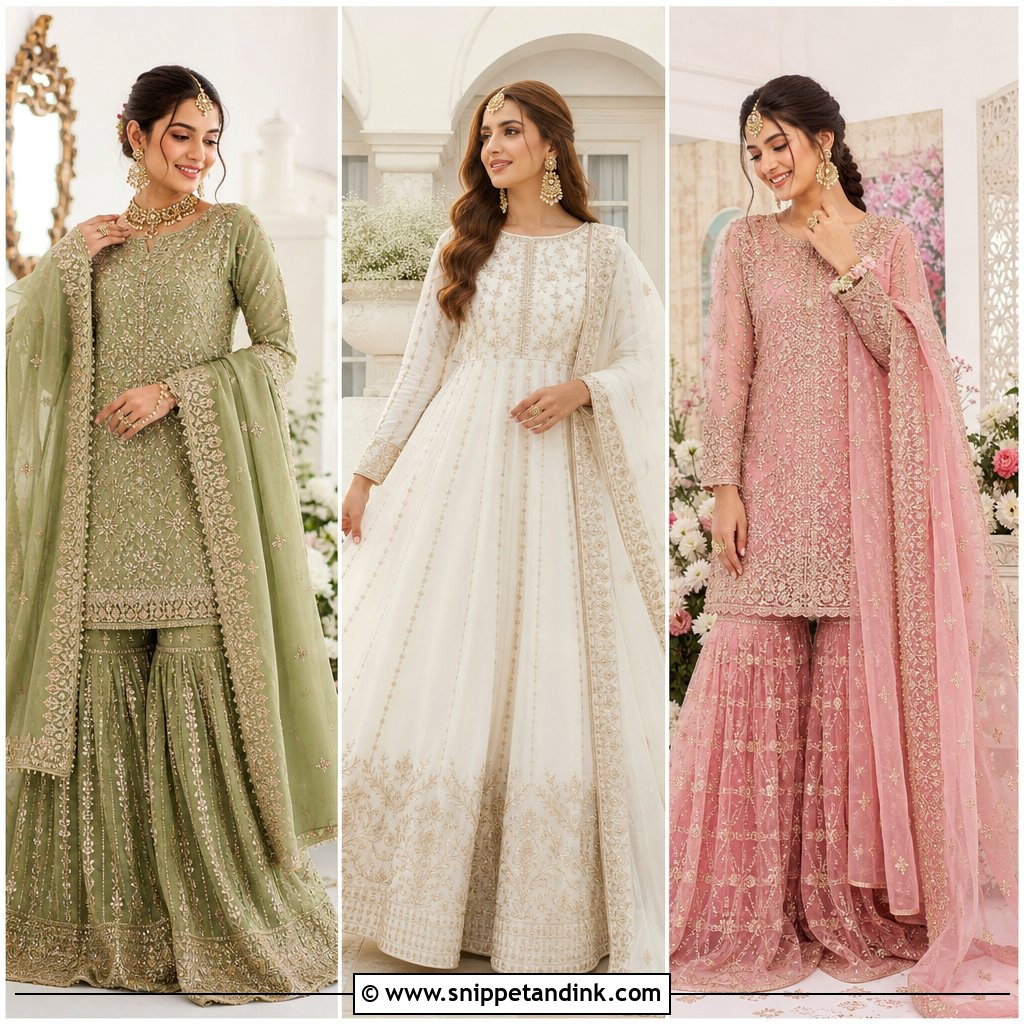


20. Bridal Kurta Lehenga
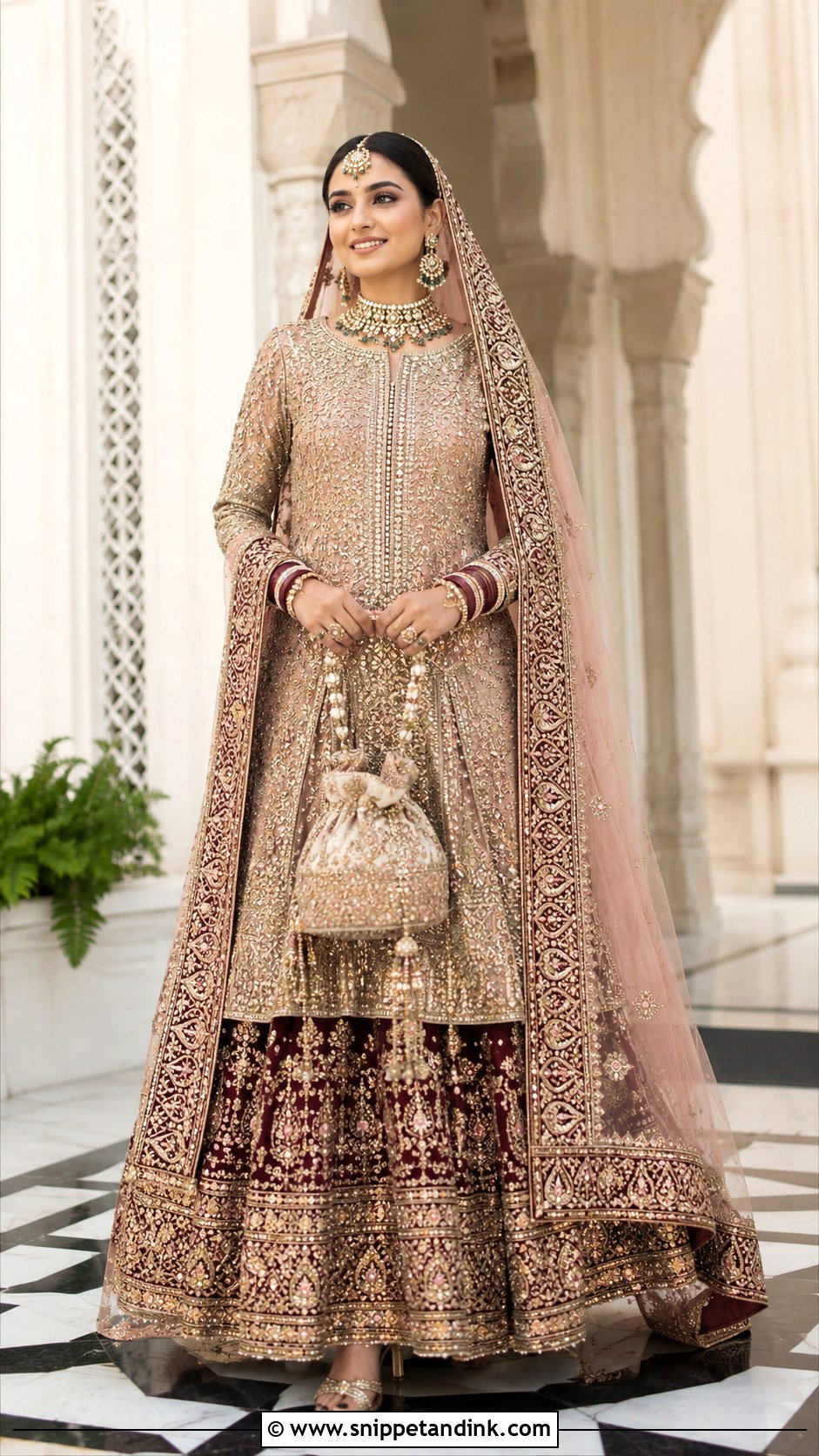
Here a longer embroidered kurta replaces the short blouse over a flared lehenga skirt. It’s modest, regal and genuinely comfortable. A straight kurta looks polished; an A-line one moves more. Silk, velvet, brocade and organza keep it ceremonial, and a heavily bordered dupatta with traditional jewelry and embellished heels finishes it. The proportion to check is the kurta length against your height: too long and it cuts the skirt in half visually. It’s especially practical for winter weddings and family-focused ceremonies.
21. Bridal Salwar Suit
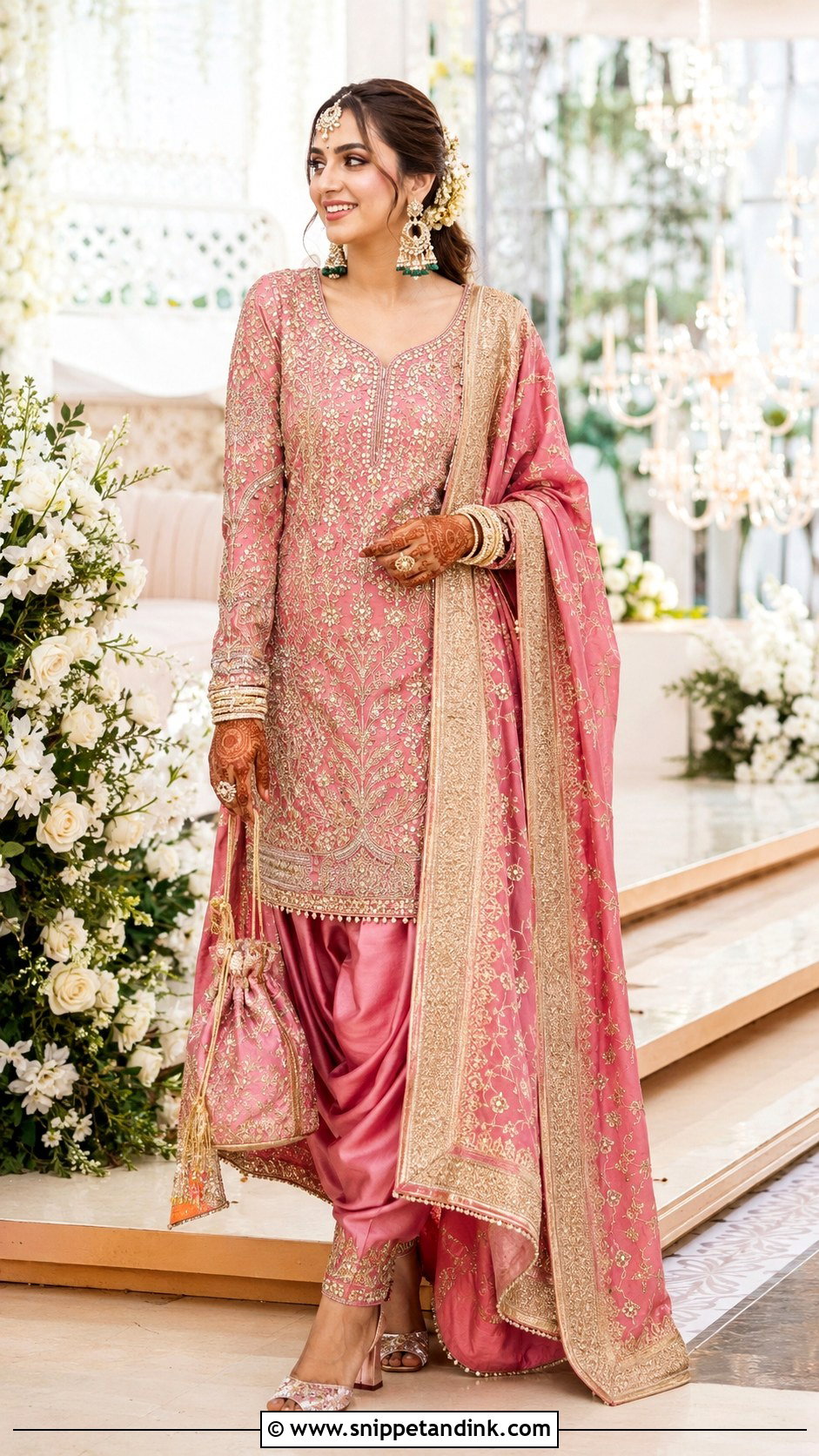
A salwar suit becomes bridal through fabric, embroidery and styling. It’s comfortable for brides who prefer a relaxed silhouette, or who need something for smaller rituals. A heavily embroidered kameez with a silk salwar, churidar or straight pants is the base, and a dupatta with zari, sequins or gota work lifts it immediately. Jhumkas, bangles, embellished flats or heels and a small potli complete it. For haldi, pick a fabric you won’t mind getting turmeric on, because those stains rarely come out of silk.
22. Bridal Palazzo Suit
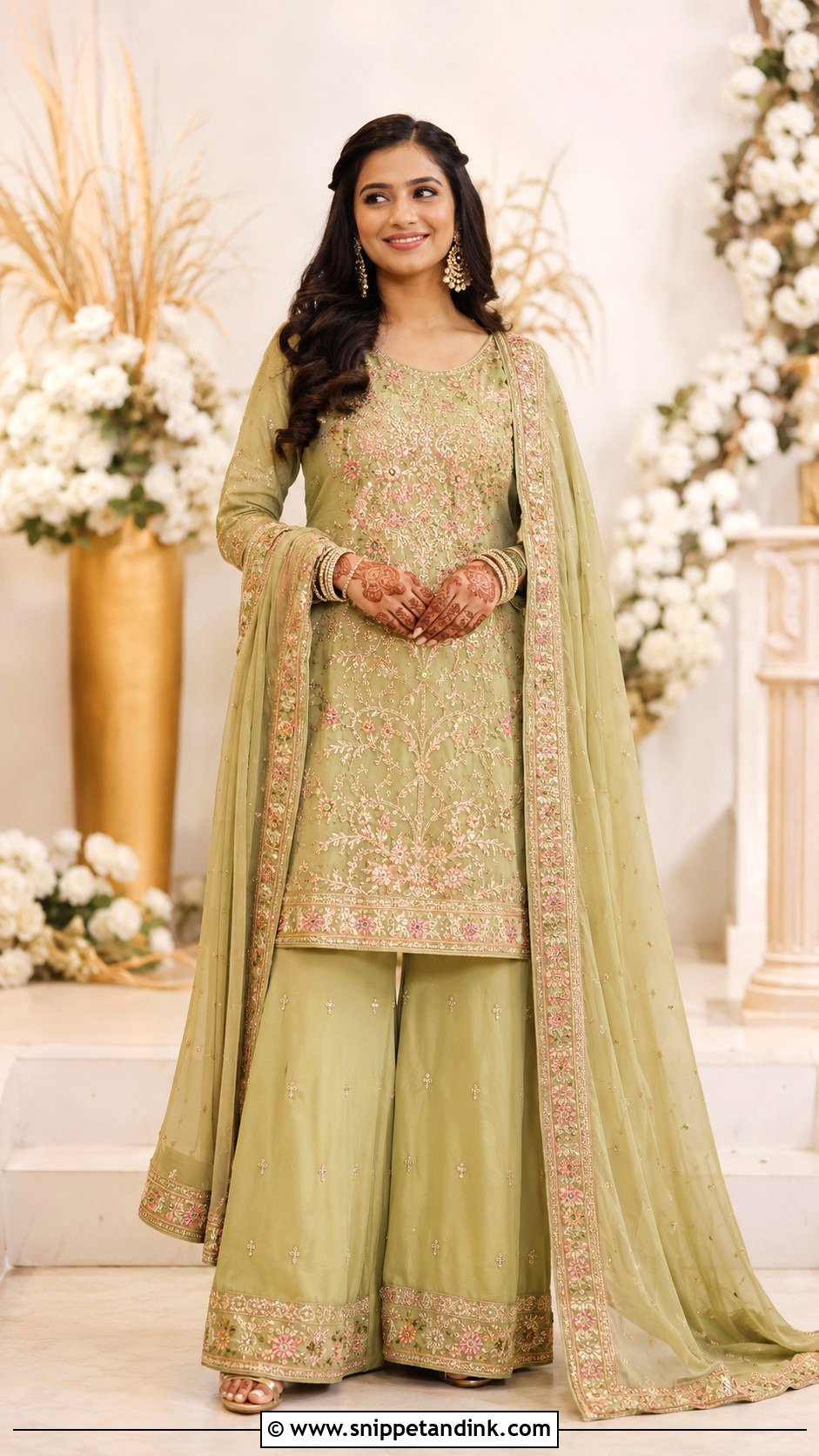
A bridal palazzo suit is the comfortable modern option. Wide legs move softly and the kurta, crop top or tunic keeps it polished. Silk, georgette, organza or brocade with fine embroidery give the bridal finish, and a long embroidered jacket or heavy dupatta adds presence. It suits a mehendi, engagement, welcome event or small ceremony. Get the hem length right with the shoes you’ll actually wear, because palazzos are cut to just skim the floor and heels change that fast. Statement earrings and bangles complete it.
23. Bridal Lehenga Gown
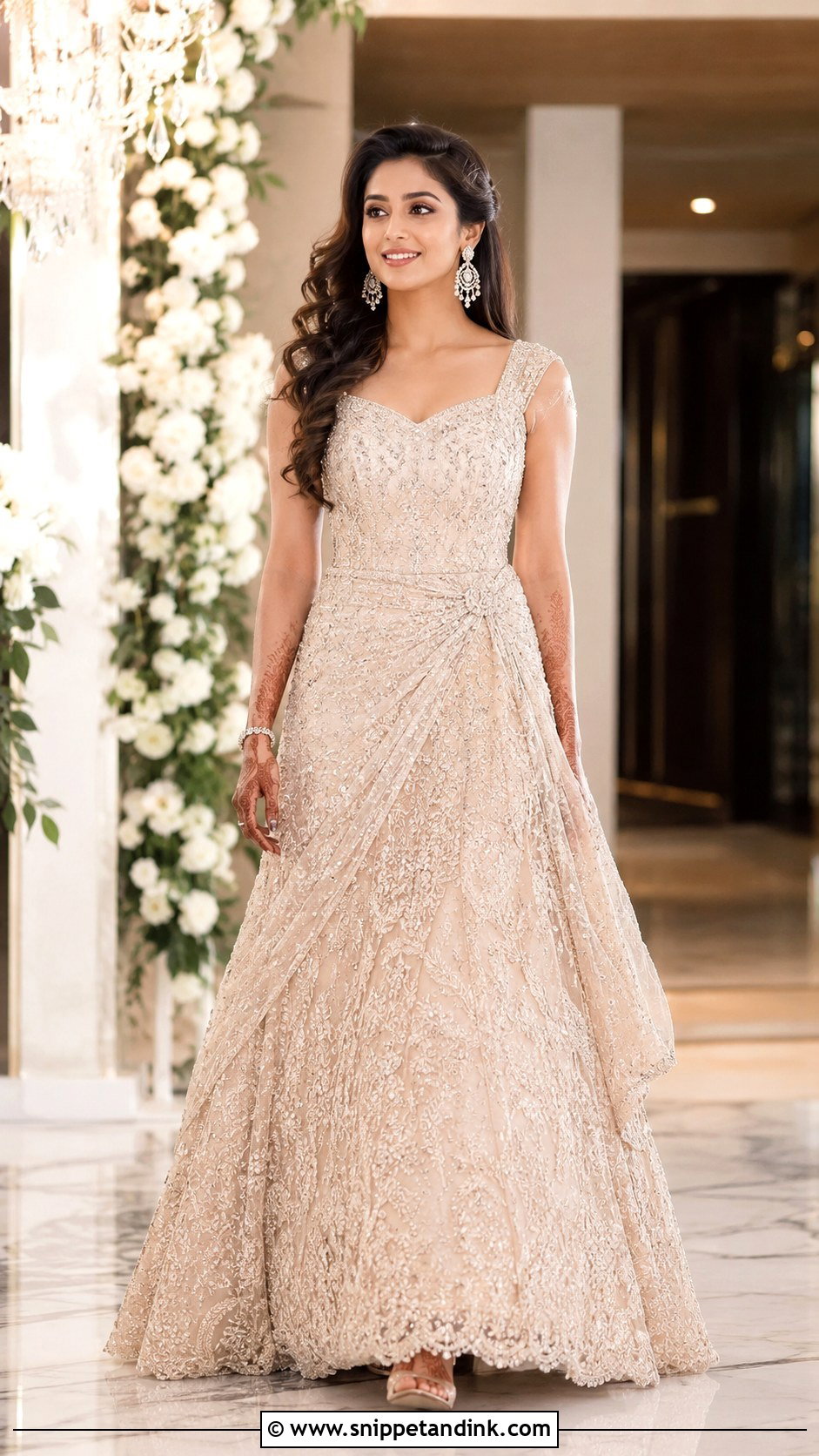
A lehenga gown combines a lehenga’s volume with the clean finish of a gown, all in one piece. There’s no separate skirt to hitch and no blouse gap to manage, which makes it far easier than a multi-piece lehenga. A fitted bodice, flared skirt, embroidery and an attached drape or dupatta detail are typical. Champagne, ivory, blush, emerald and gold suit the shape. Since the silhouette is the statement, keep accessories to earrings, a bracelet and elegant heels. It’s a reception outfit built for a dramatic entrance.
24. Bridal Organza Lehenga
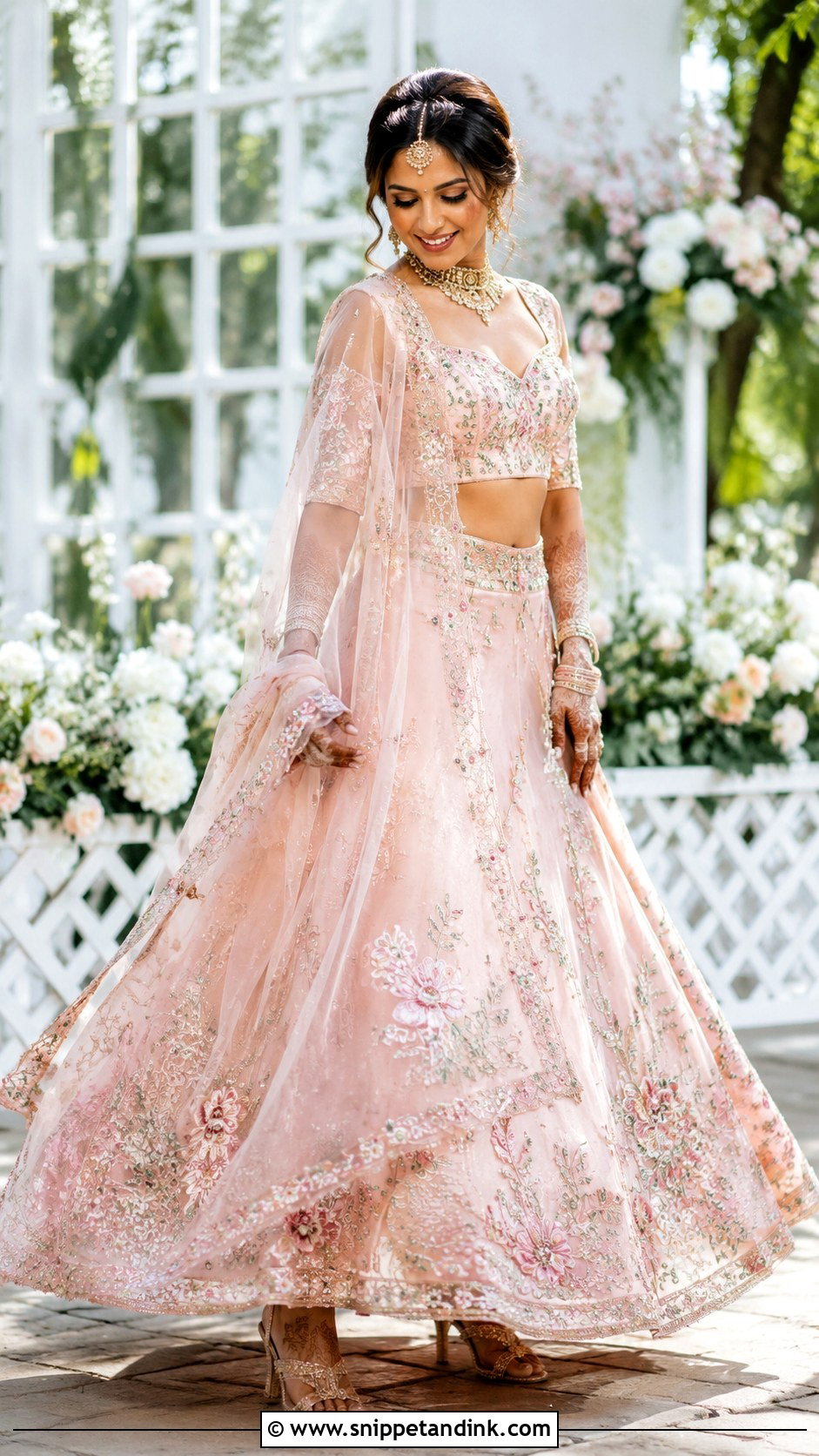
Organza is light and airy, which makes it a good daytime or outdoor choice. It holds shape while still looking soft. Floral embroidery, pearl work, sequins or metallic thread make it bridal, and pastels, ivory, blush, sage and powder blue suit it. Organza volume can look boxy at the waist, so I insist on a well-tailored waistband and a structured blouse. It also crinkles when you sit and doesn’t always recover, so a quick steam before photos helps. Delicate jewelry, soft makeup and elegant heels finish it.

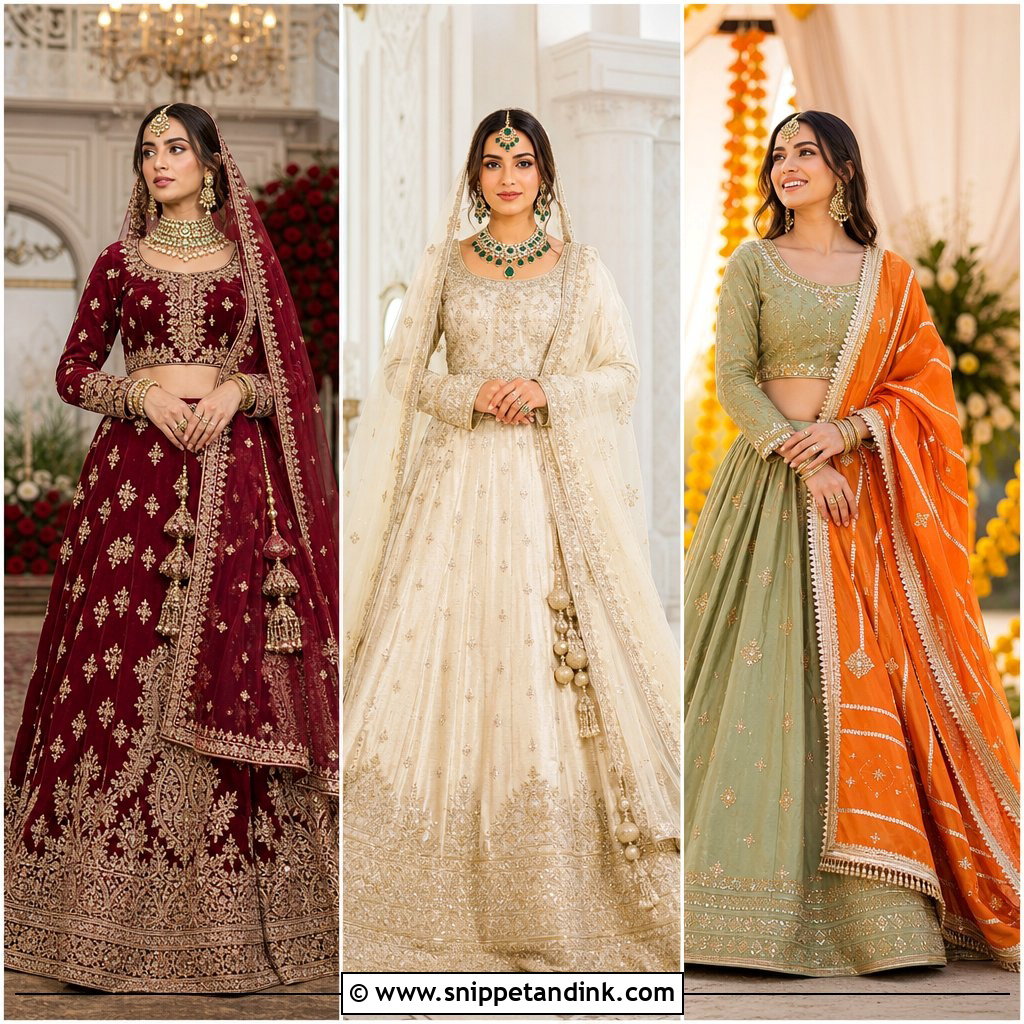
25. Bridal Velvet Lehenga
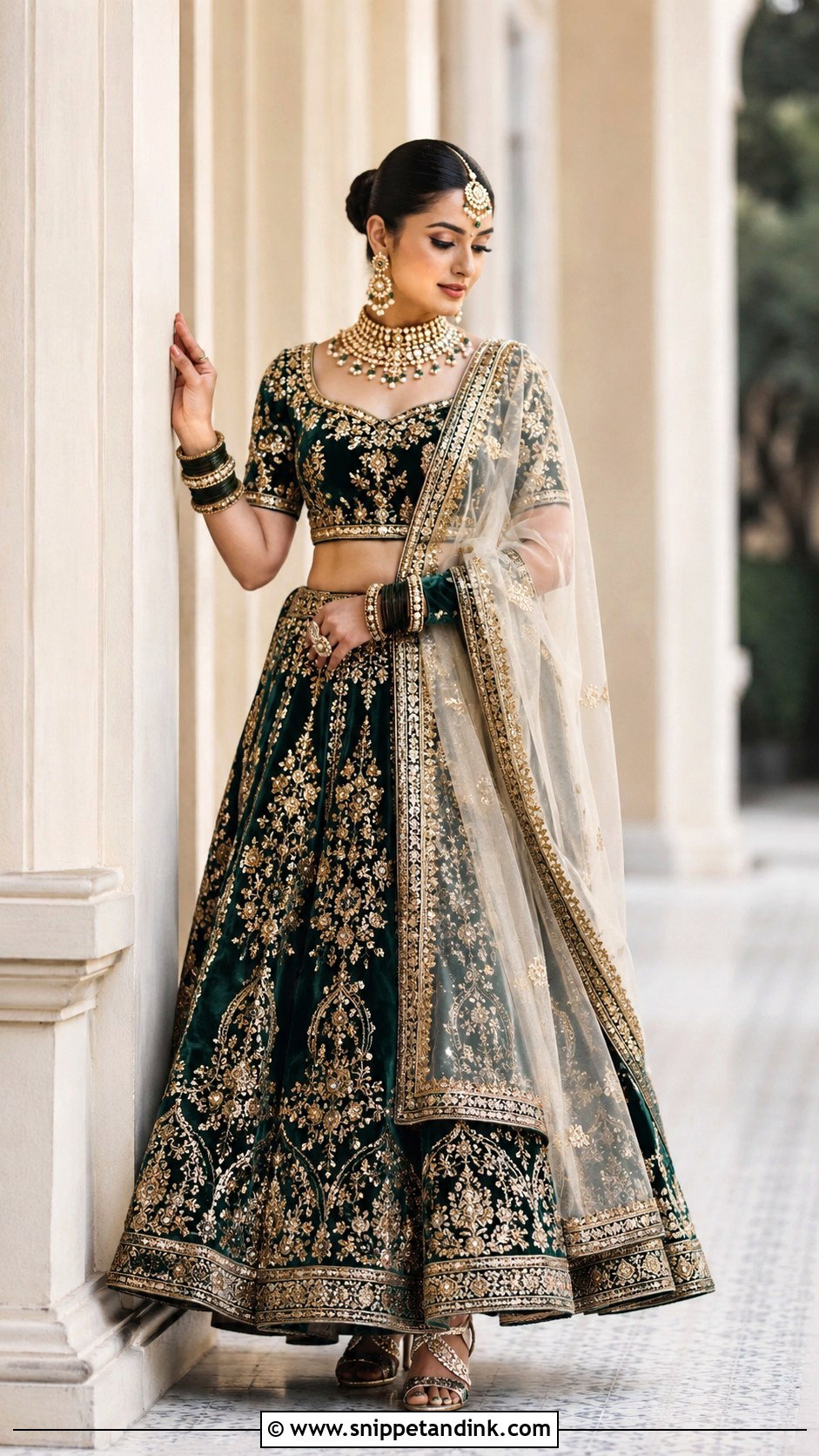
Velvet is warm and dramatic, which suits winter weddings and evening ceremonies. Maroon, emerald, navy, plum and red look richest in it. The fabric is naturally heavy, so I’d pick a comfortable silhouette and avoid extra layers of can-can. Gold zardozi, antique embroidery or tonal threadwork give it a royal finish. Velvet should never be ironed flat, since that crushes the pile permanently; steam it from the inside instead. A fitted blouse, a lighter dupatta, traditional jewelry and sturdy heels complete it, with a sleek bun or soft waves.
Dupattas, Pleats and Safety Pins on the Wedding Morning
Most wardrobe trouble on the day comes from the dupatta. A heavy one set on the head pulls backward the moment the bride turns, and a pallu that isn’t anchored slides off the shoulder in every photo. My order on the morning goes like this:
- Hair and maang tikka first, so the dupatta can be pinned to a firm base
- Blouse and skirt, with the drawstring tied and tucked well inside
- Saree pleats or dupatta at the shoulder, pinned through the blouse strap, not just the fabric
- Head dupatta last, pinned at the crown and behind each ear with U-pins
Use small brass or matte safety pins rather than shiny steel ones, which catch flash. Carry spares in the potli.
After the last function
Zari and metallic threads tarnish in damp air and break along fold lines. Wrap heavy pieces in plain muslin or cotton, never plastic, and refold them along new lines every few months. Velvet and heavily embroidered skirts store better flat or rolled than hung, and anything stained with haldi, mehendi or food should go to a specialist cleaner who handles bridal silk.
Which Outfit Goes to Which Function?
No single outfit is right for every bride, and often no single outfit is right for every function either. A red lehenga may be exactly right for one bride’s pheras, while another wants a Kanjivaram, a pastel organza, a sharara or a cape lehenga. Before you commit, think through the venue, the weather, how long each ceremony runs, whether you’ll sit on the floor, and what jewelry and shoes the outfit needs. Then wear it at home for an hour. The garment that still feels like yours at the end of that hour is the one to book.
You'll Like These Ideas:






Leave a Reply