
Damask is a woven fabric, so the pattern isn’t printed on top; it’s built into the cloth by the way the threads float over each other. That’s why it catches light differently as you move, and why a very plain cut can look finished in it. When I style a client in damask, I start from one rule: the fabric is already the decoration, so the cut should stay quiet. Below are twenty shapes I’d put in front of someone dressing for a wedding, an engagement or a family celebration, from loose bubus and kaftans to fitted midis, each with the shoes, bag, jewelry and gele choices I’d pair with it.
Briefing Your Tailor on a Damask Gown
Most damask disappointments I see start at the cutting table, not on the body. Damask has a pattern repeat, a right and wrong side, and a weight that decides which silhouettes will hang well. If your tailor treats it like plain cotton, the motif ends up cut in half at the center front or running in two directions across a seam.
- Buy extra fabric. A large motif needs more length so panels can be matched across seams; I’d rather have half a yard left over than a bodice where the pattern jumps.
- Decide which side faces out. Many damasks are reversible, with a matte side and a shinier one. Hold both up in daylight and pick before anything is cut.
- Match the cut to the weight. Stiff damask suits A-line, peplum, pleats and structured shift dresses. Softer, lighter damask is the one to use for bubus, kaftans, wraps and tiers.
- Ask for a lining. It stops scratching from metallic thread, helps the skirt fall straight and keeps light fabric from clinging in heat.
- Do one fitting sitting down. Damask has almost no give, so the waist, hips and slits need to be checked in the position you’ll spend most of the event in.
Bring your shoes and, if you’re wearing one, your gele fabric to the final fitting. Hem length and color balance are both judged far better with them on than from a description.
1. Straight Maxi Damask Gown
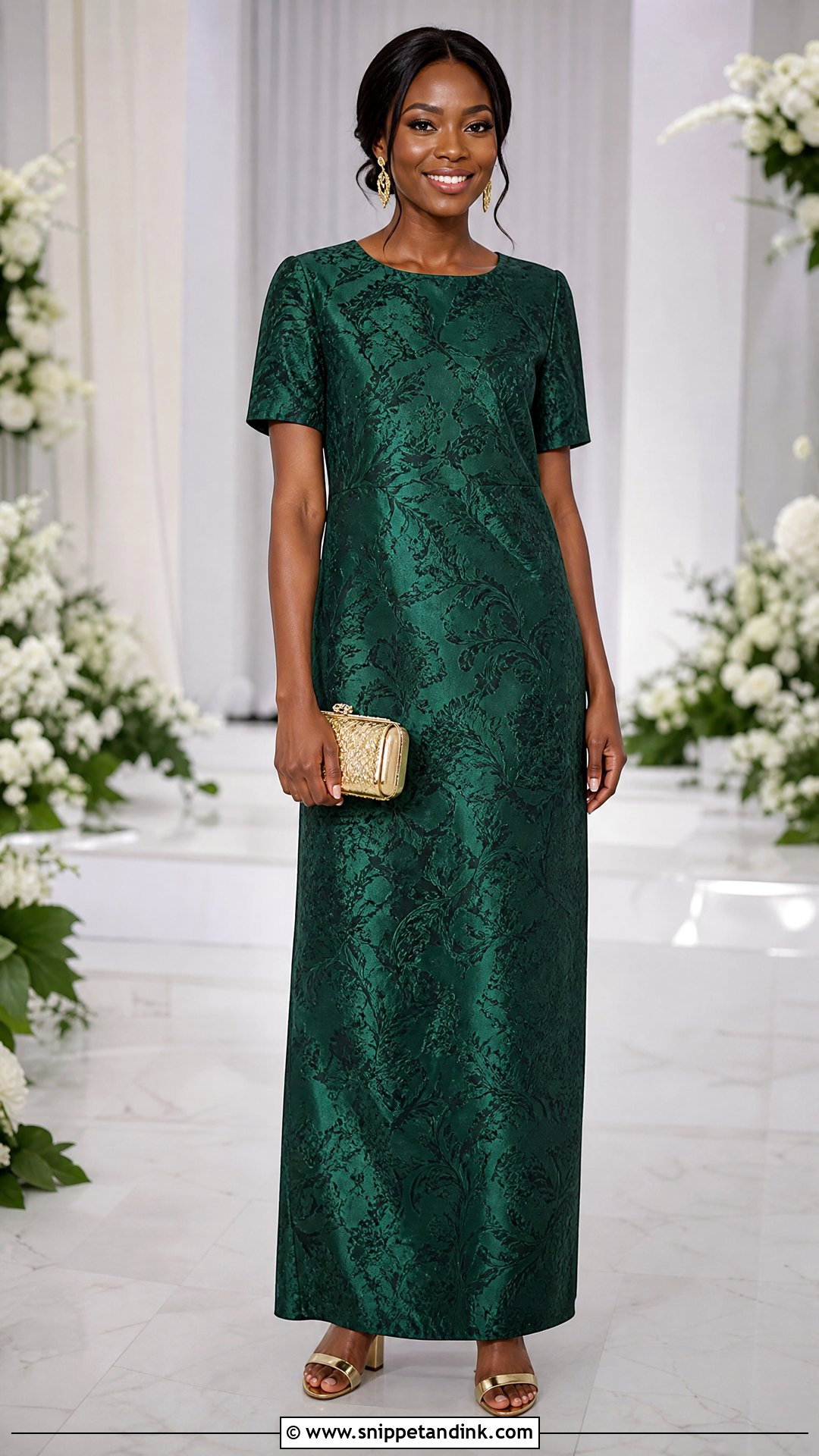
If you’re unsure where to start, start here. A straight maxi damask gown falls from shoulder to floor with only light shaping at the waist, so the woven motif reads as one long, unbroken panel. I ask the tailor for short side slits once the fabric is stiff, because firm damask doesn’t give at the ankle and you’ll feel it on stairs. Emerald, navy, plum and bronze show the weave best; very pale shades can flatten it under flash. Metallic block heels, a small clutch and drop earrings are all it needs, and a low bun or a neat gele keeps the line clean.
2. Belted Bubu Damask Gown
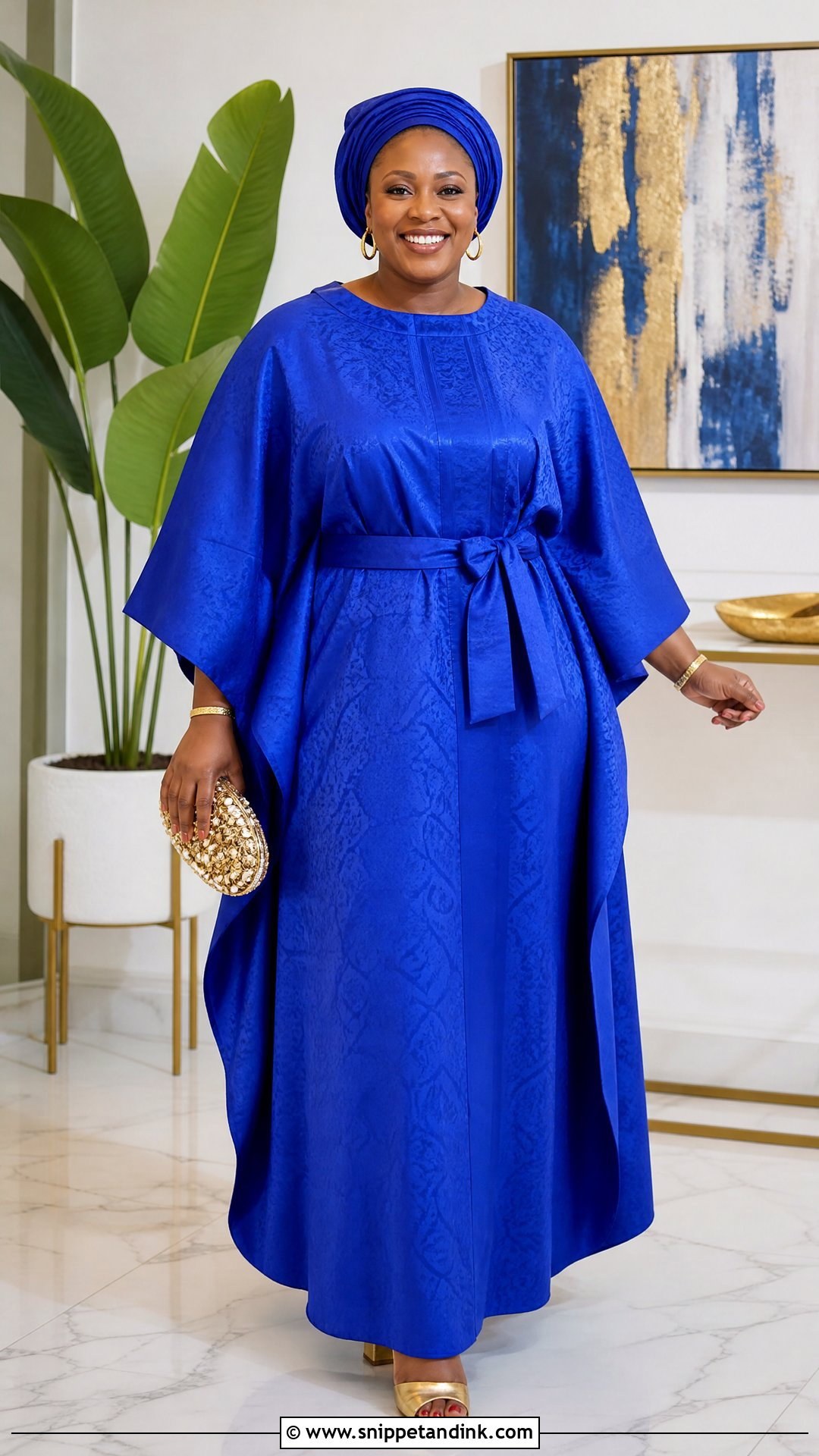
A damask bubu gown gets its ease from width, and the belt is what stops all that width from swallowing you. I place it at the natural waist and only cinch until the folds start to gather, never until the fabric strains, since damask creases sharply where it’s pulled. A self-fabric belt disappears into the pattern; a slim metallic one adds a line of shine. Low block heels, a beaded clutch and medium hoops keep it grounded. Add a matching headwrap for a traditional finish, or leave natural hair out for something more current. The belt comes off for the drive home.
3. A-Line Midi Damask Gown
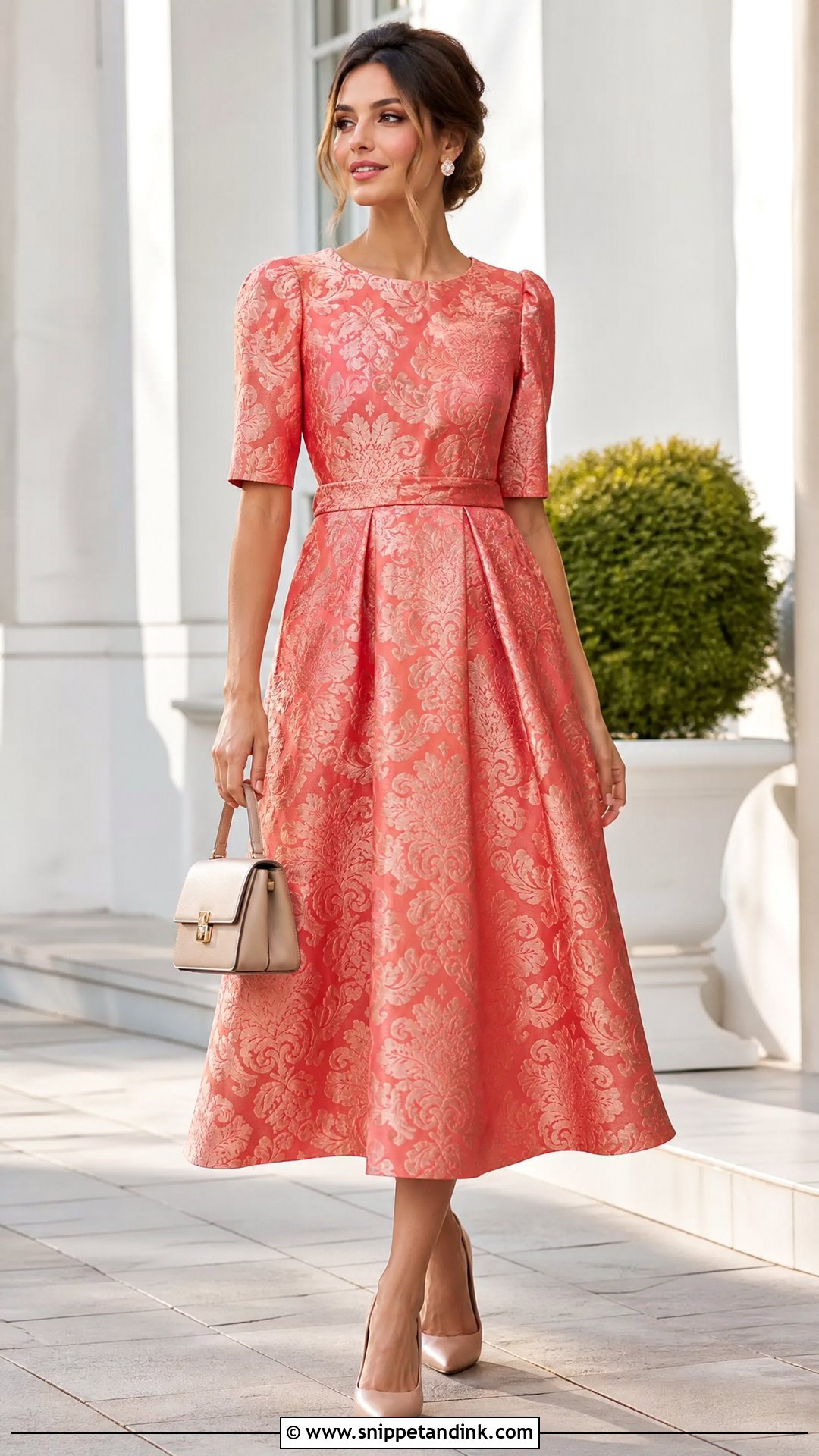
Want something polished that won’t feel like black tie? The A-line midi is my answer for daytime ceremonies. A fitted bodice, a defined waist and a skirt that widens gradually to just below the knee give damask room to show its weave without fighting your body. Elbow sleeves balance the shorter hem. With bright blue, coral or purple, I go neutral on everything else, especially if the pattern carries metallic thread: pointed pumps, a small structured bag, studs. Check the hem while standing in your actual shoes, because a midi that sits a finger too low makes the leg look shorter.
4. Short Shift Damask Gown
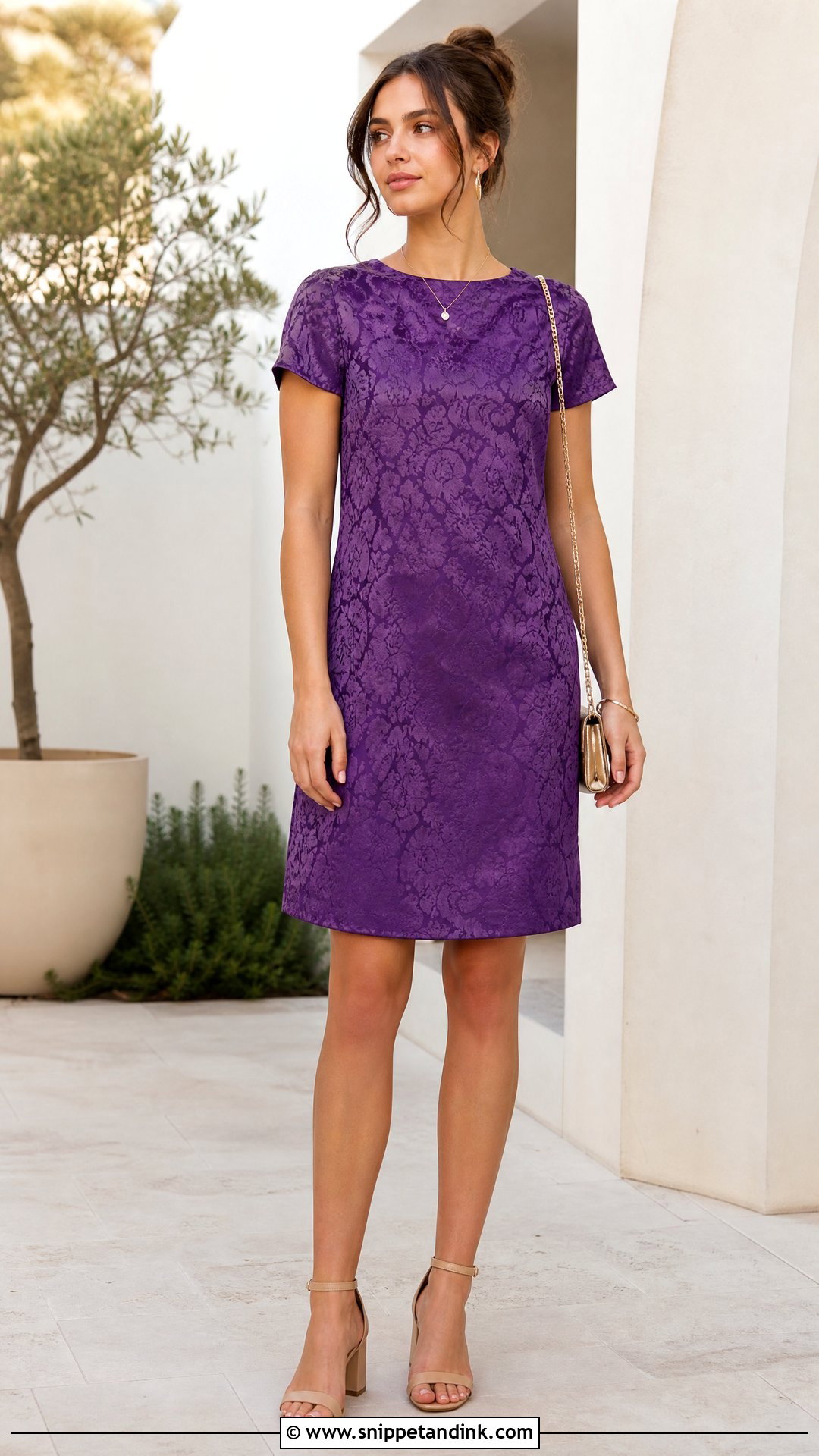
The short shift is cut to skim, not cling, and that distinction matters more in damask than in most fabrics. Because the cloth has little stretch, a tight shift pulls across the hips and the motif distorts into diagonal drag lines. I ask for a fit you can pinch about an inch from at the side seam, a high round neck and short sleeves. Ankle-strap block heels or low pointed flats, a shoulder bag and fine gold jewelry finish it. Leave off the ruffles; the weave already gives the eye plenty. Good for hot afternoons.
5. Puff Sleeve Damask Gown
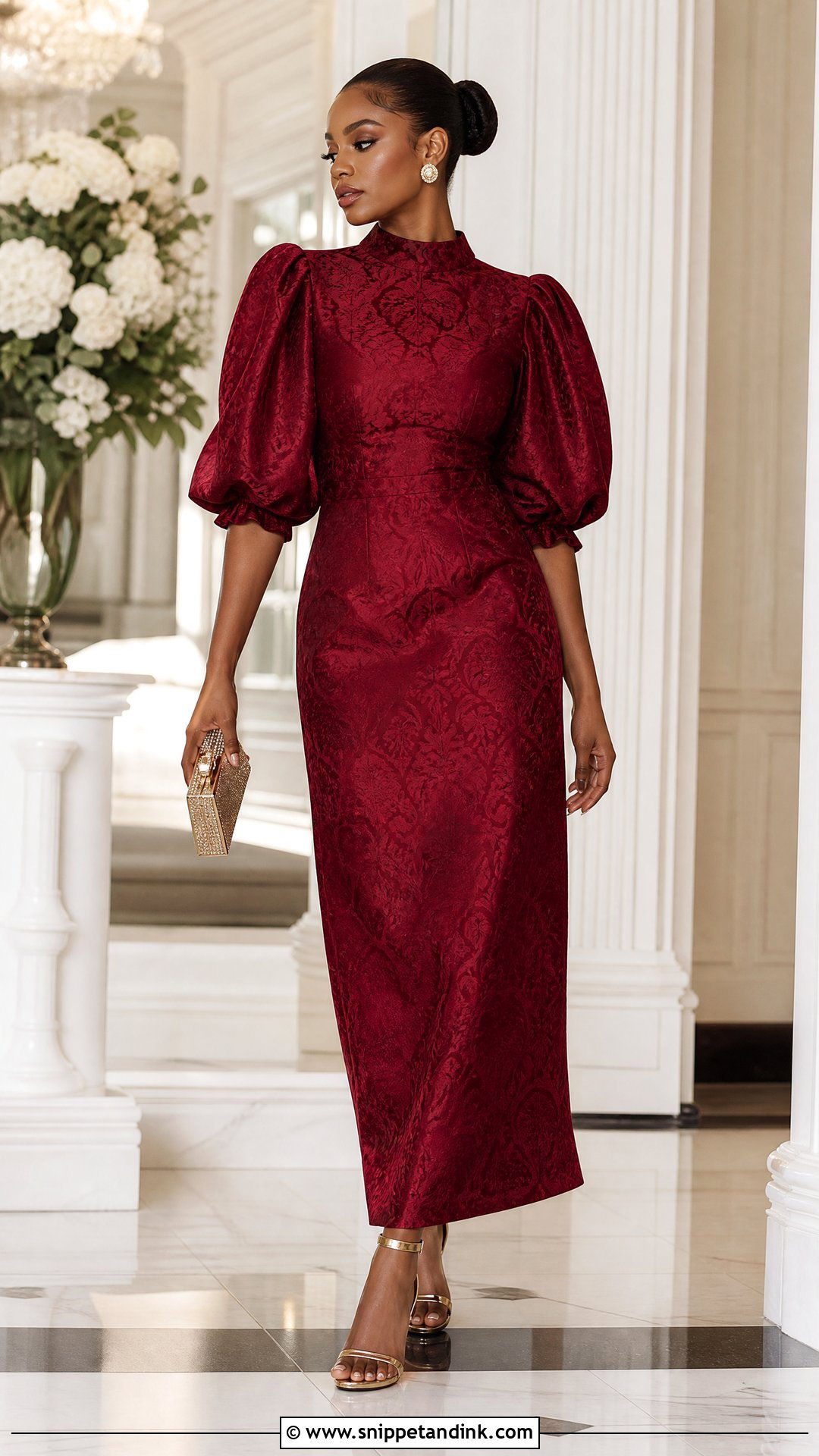
Sleeves are where damask can go wrong fast. On a basic dress shape, a gathered puff sleeve adds a real focal point, but thick damask holds every gather it’s given, so a sleeve that looks soft on the design sketch can stand up like a balloon. I ask for fewer gathers and a lighter interlining than you’d use in silk. Keep the neckline plain, wear slim heels, a box clutch and small earrings, and put your hair up so the shoulder line stays visible. Deep red, royal blue and gold carry the volume best.
6. Off-Shoulder Damask Gown
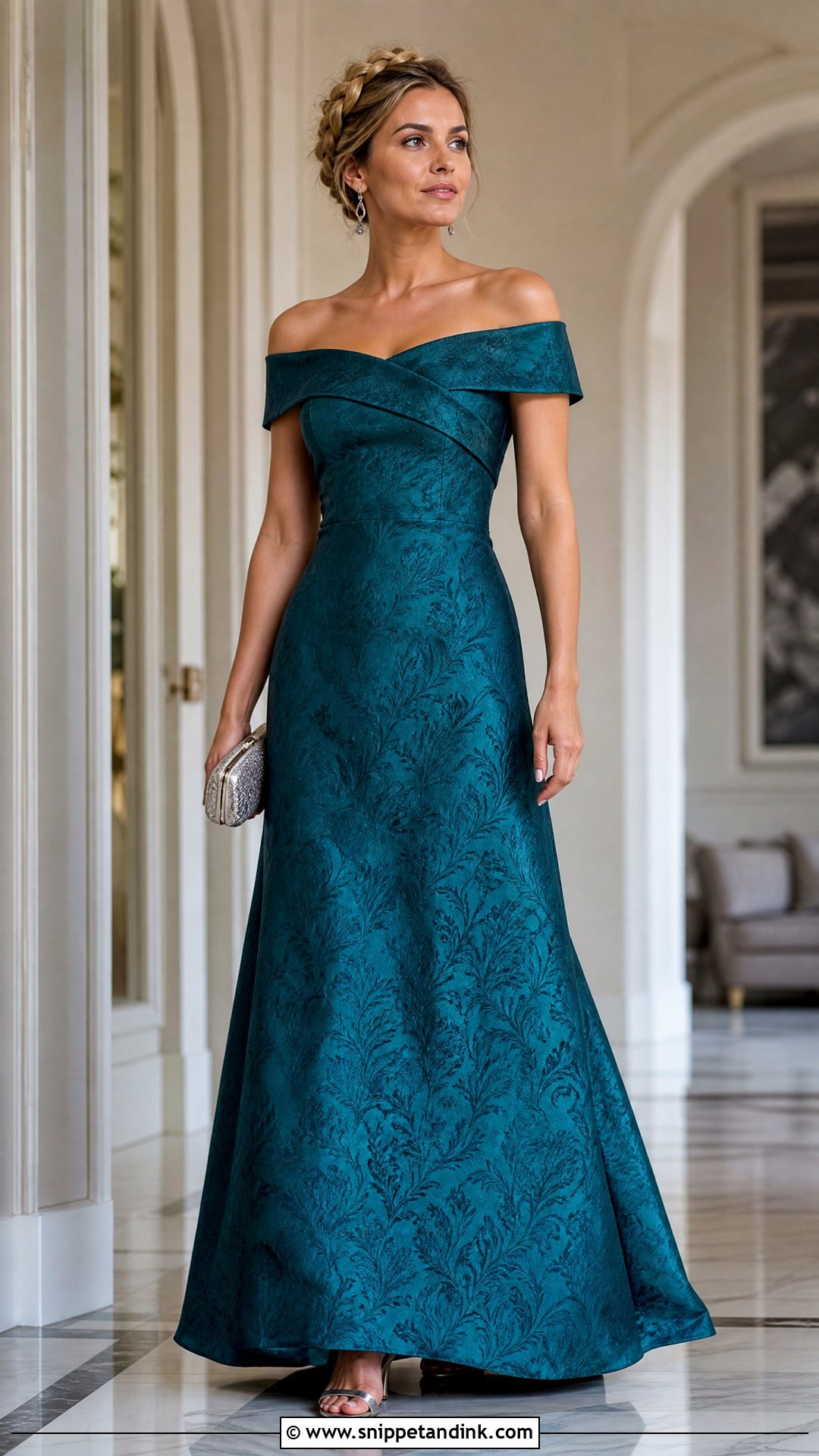
An off-shoulder neckline only works if the dress holds itself up. In damask I insist on a boned or firmly interfaced bodice and a grip band along the folded edge, because the fabric’s own weight will drag the neckline down your arms by the second hour otherwise. A fitted bodice over a straight or gently flared skirt balances the bare shoulders. Short drops, a small clutch and open-toe heels in gold, silver or nude; skip the necklace if the fold is pleated. Wear your hair up or swept to one side. If you hate adjusting clothing in public, choose a different neckline.
7. Peplum Damask Gown
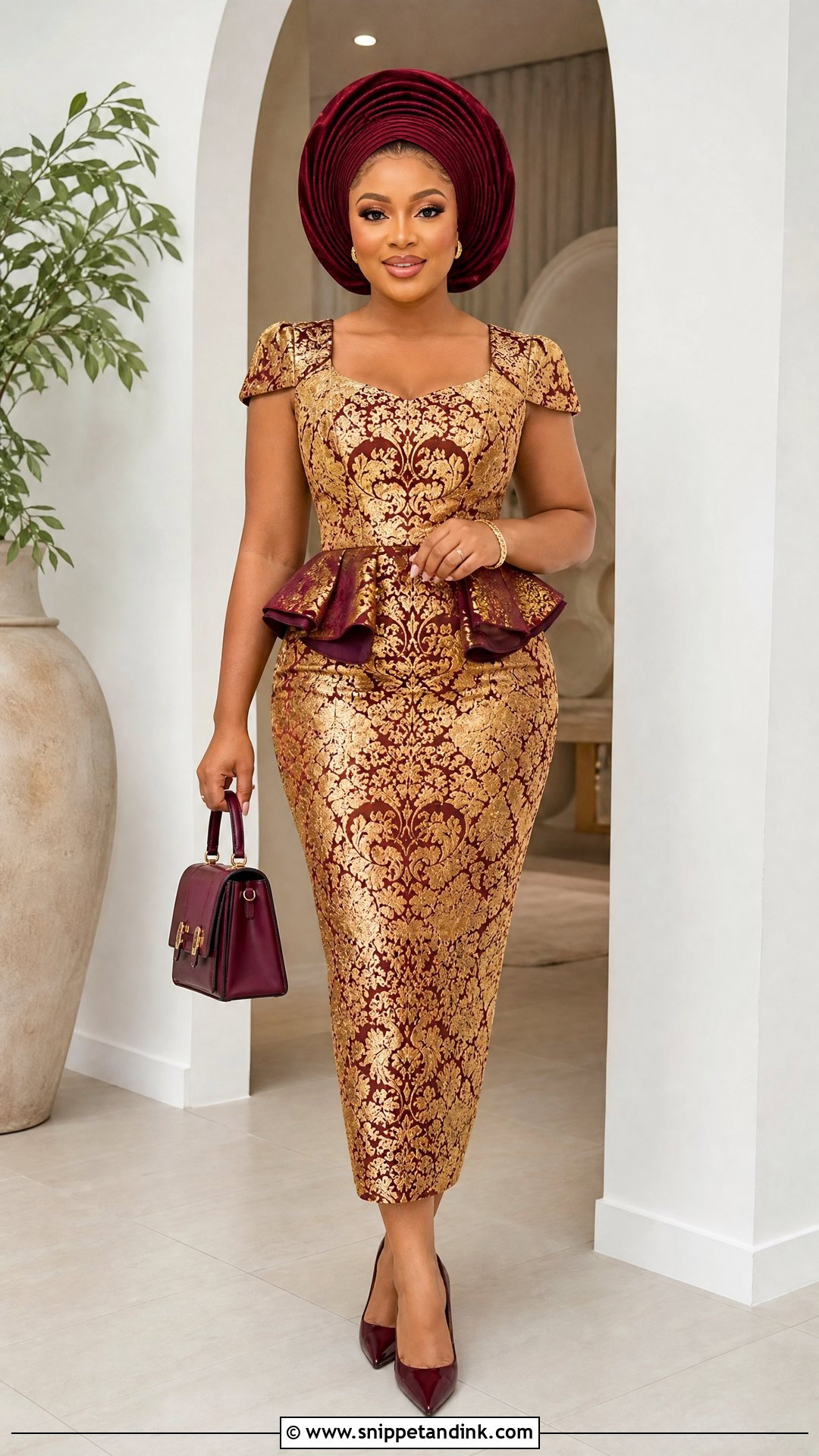
A peplum damask gown gives the waist a clear edge, and damask is stiff enough that the peplum stands out on its own. That’s exactly why I keep it small. A single short flounce at the natural waist over a knee or midi pencil skirt is plenty; layered peplums in this fabric add width at the hip that nobody asked for. The detail I check first is pattern alignment: when the peplum and skirt come from the same stretch of cloth, the motif lines up and the gown looks custom. Classic pumps, a structured bag and a slim bracelet. A gele in a shade lifted from the print adds tradition.
8. Wrap Damask Gown
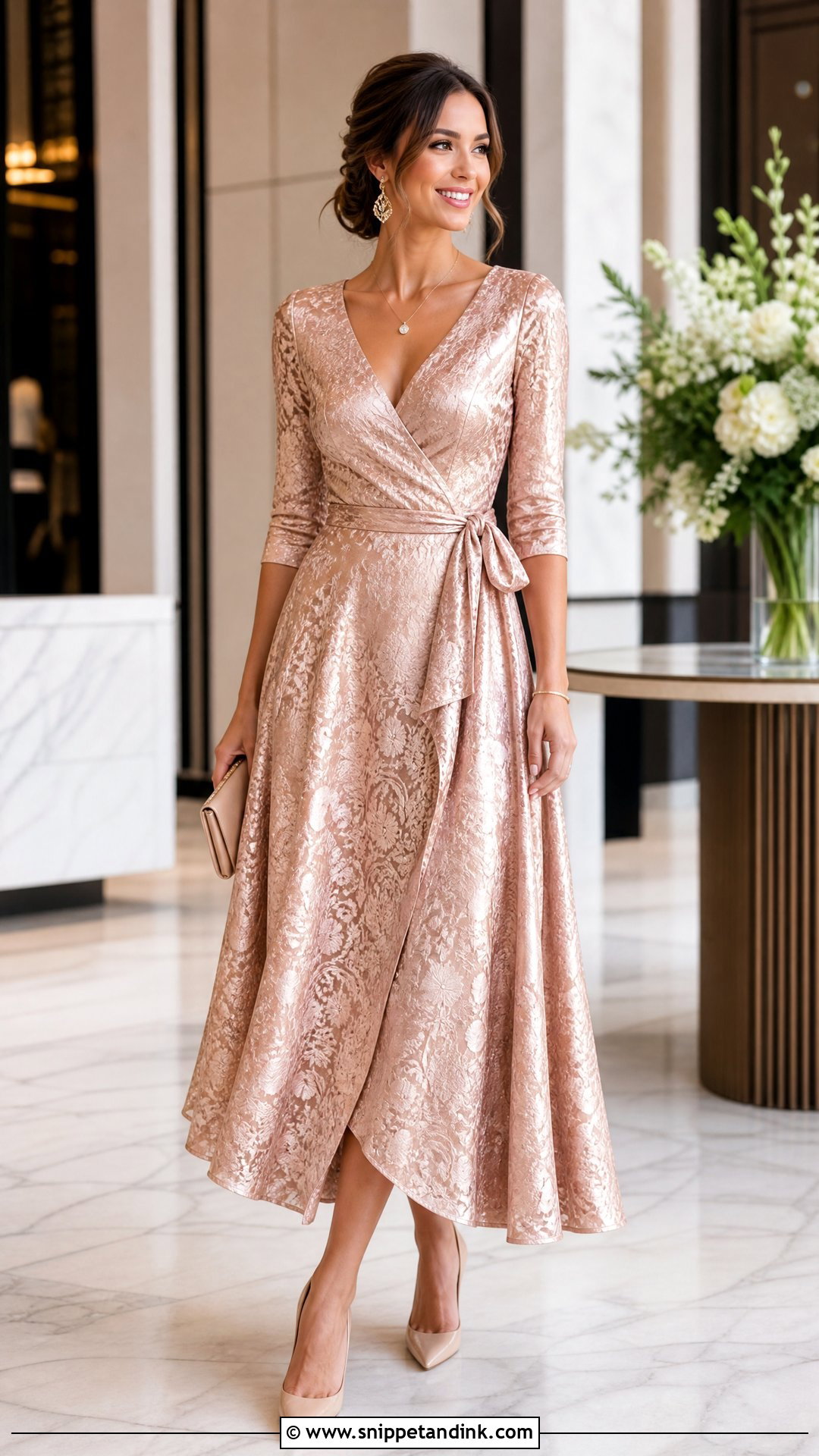
A wrap shape builds a waist with diagonal lines instead of darts, which suits damask because the woven motif runs across the body rather than being chopped by seams. Choose a true wrap or a secured faux wrap with a V-neck, waist tie and midi skirt. I always sit the client down in a fitting: if the skirt overlap is too shallow, it opens at the thigh the moment you sit. Three-quarter sleeves soften the structure. Pointed heels, a slim clutch, one pair of statement earrings, and at most a fine chain. Teal, burgundy, mustard or rose gold carry from afternoon into evening without a change.
9. Mermaid Damask Gown
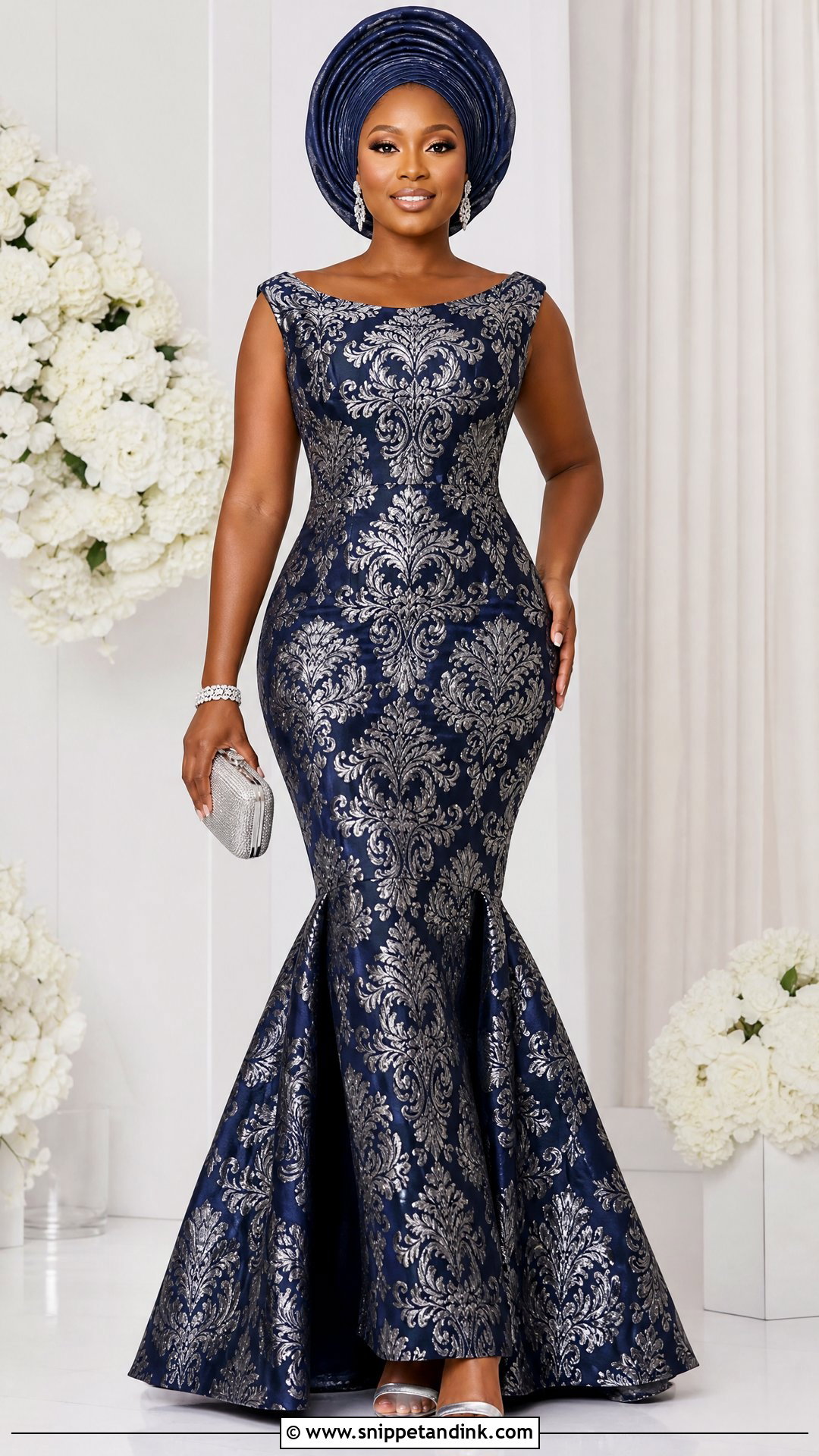
Mermaid is the most formal shape here and the hardest to wear in damask. The bodice and hips need to follow you closely, and stiff fabric doesn’t forgive a fit that’s slightly off. I usually move the flare up to the knee rather than down at the calf, so you can walk and sit without hobbling. A square, round or bateau neckline balances the fitted skirt. Medium heels, a hard-case clutch and small sparkly earrings, with a gele for height or a smooth updo for a modern finish. Pick a mid-weight damask; a heavy one makes the flare rigid instead of swinging.
10. High-Low Damask Gown
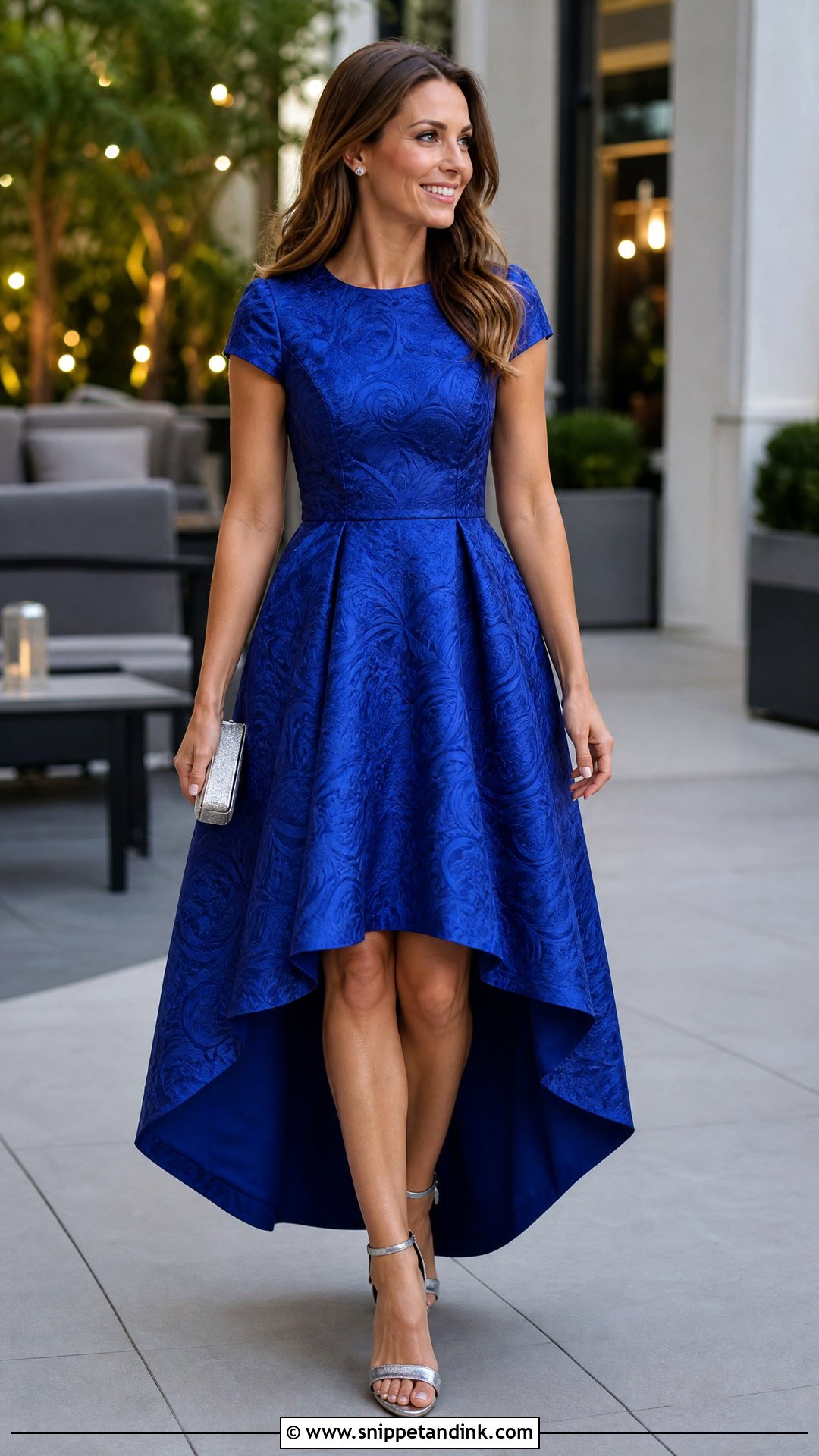
The high-low hem shows off your shoes and gives a sense of movement without the hassle of a train. For a quieter version I keep the front at the knee or mid-calf and the back near the ankle. A fitted sleeveless or short-sleeved bodice steadies the unusual hemline. This is the one gown where I’d spend on footwear: metallic ankle straps or polished pumps, since they’re on display all night. Keep the clutch small and earrings to studs. Fabric weight matters here more than color. Too heavy and the back panel hangs flat like a board; too soft and the curve collapses.
11. Two-Tone Damask Gown
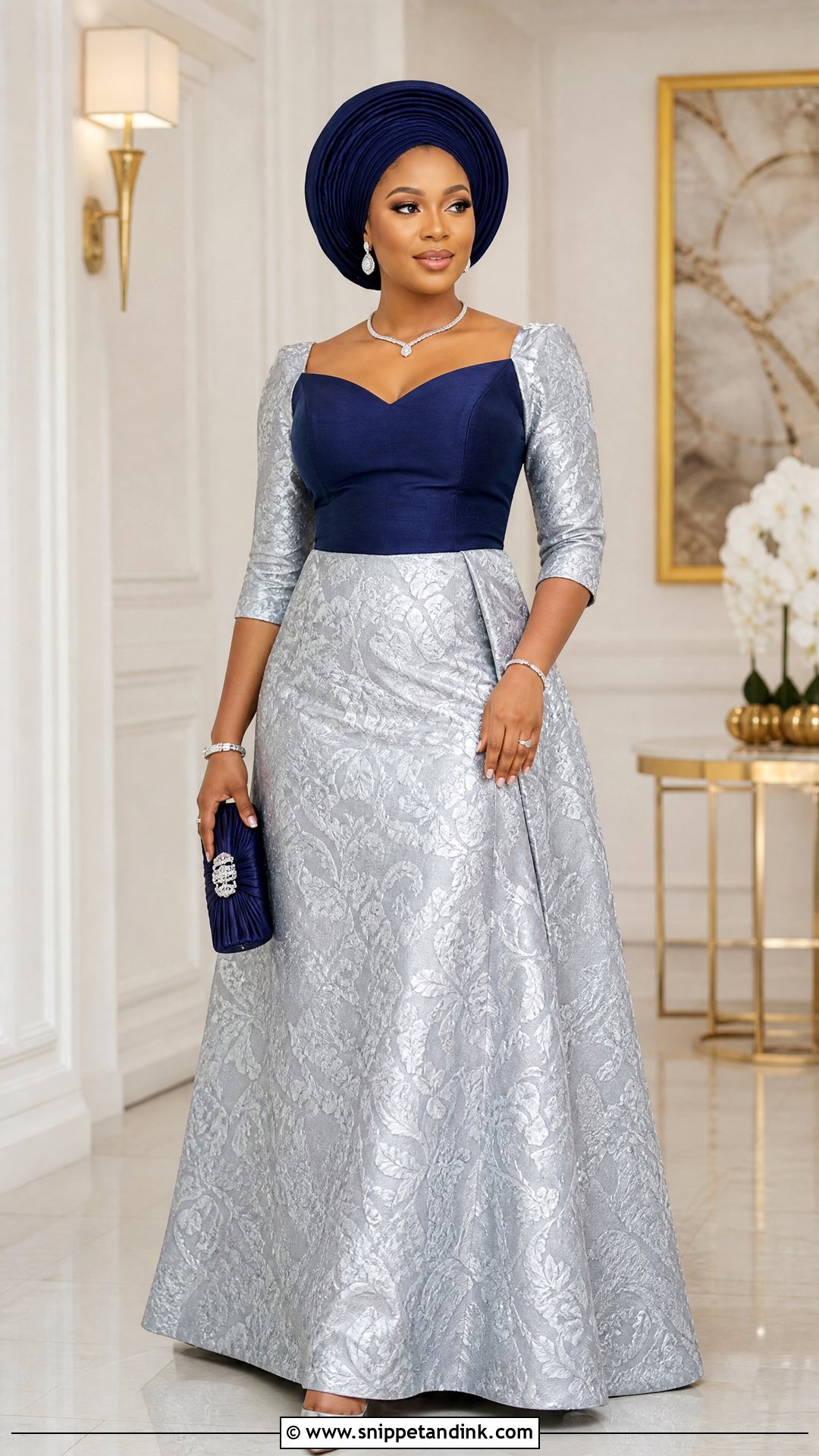
Two shades of damask can shape the body without a single bead. I use the darker color where I want the eye to recede and the lighter one where I want it to land, so a dark side panel slims and a lighter bodice draws attention up. Navy with silver, burgundy with blush and emerald with gold are pairings that hold together. Keep the cut simple, a straight maxi or fitted A-line, so the color blocking reads clearly. Shoes and clutch in one metallic, jewelry matching it, and if you wear a gele, take its color from one of the two fabrics rather than adding a third.
12. Front Slit Damask Gown
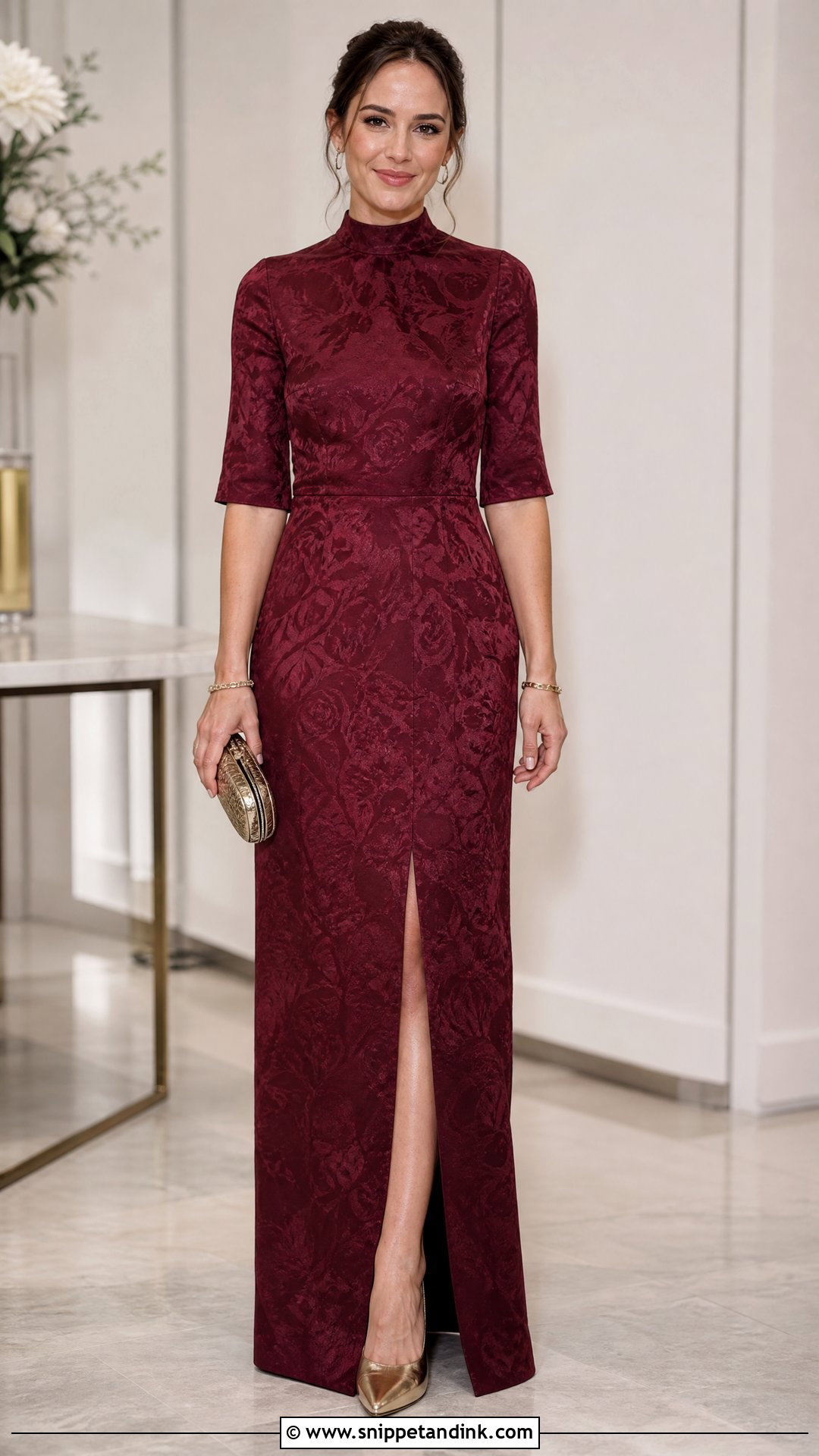
A front slit gives a long damask gown the walking room the fabric itself won’t. I mark it seated, not standing, and stop it near or just below the knee, since slits open further than you expect once you sit. A high neckline and fitted elbow sleeves balance the open hem. Line the gown fully; unlined damask can scratch, particularly when metallic thread is woven in. Closed-toe heels, a compact clutch and fine bracelets in the same metal as the thread in the weave. One bold feature is enough, so skip oversized sleeves and deep necklines.
13. Simple Kaftan Damask Gown
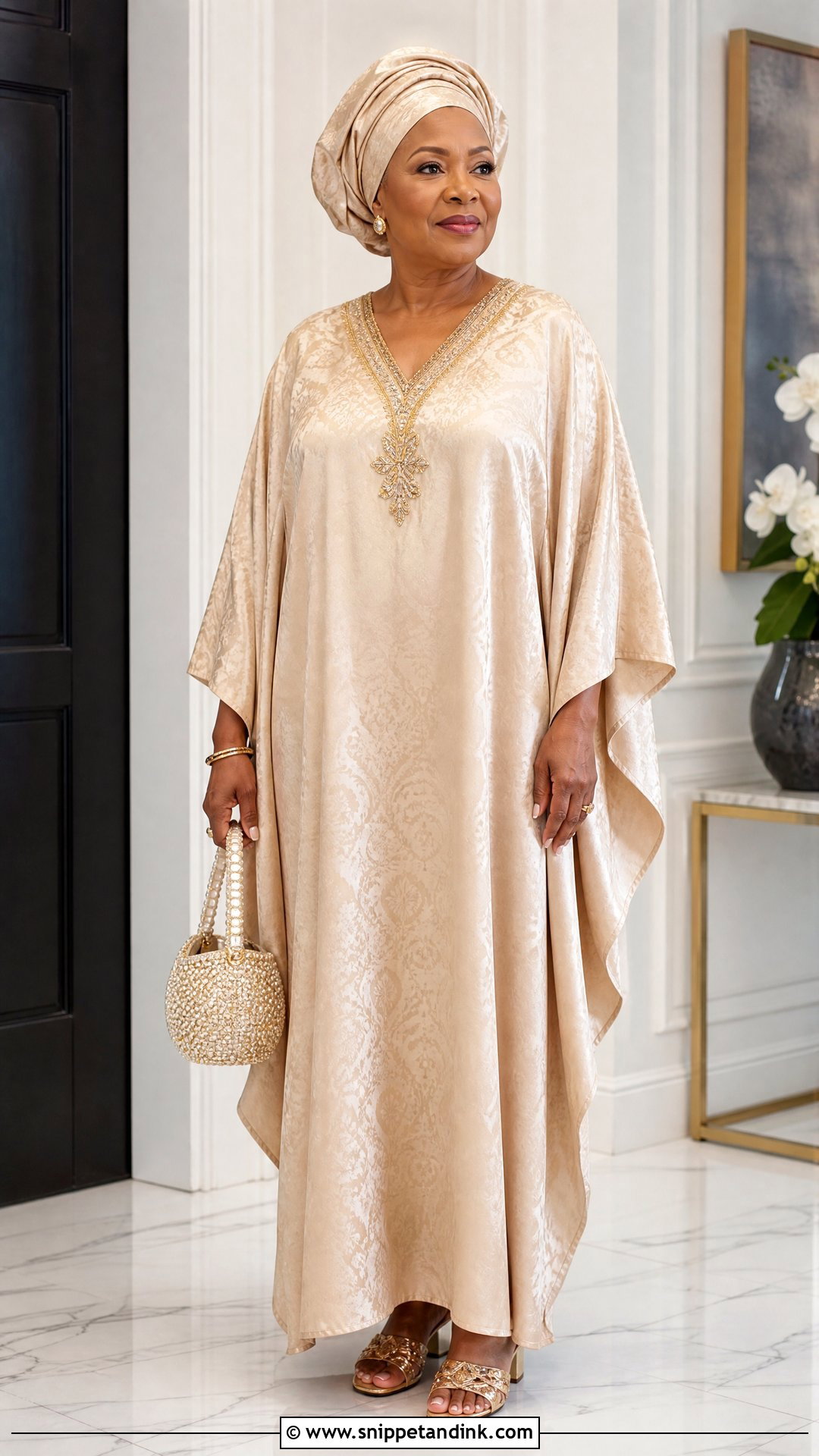
For comfort and full coverage, the kaftan wins. An ankle-length cut with loose sleeves, a neat V-neck and a little embroidery at the neckline lets the damask fall in long folds where its sheen shows best. A narrow front panel or center seam gives it some structure. My one fitting rule: hem it to the exact shoe you’ll wear, because a kaftan that drags picks up dust and catches on heels within an hour. Low sandals, a beaded bag and simple earrings, with a headwrap for formal events or a slim headband for lighter ones. It suits every age I dress.
14. Corset Damask Gown
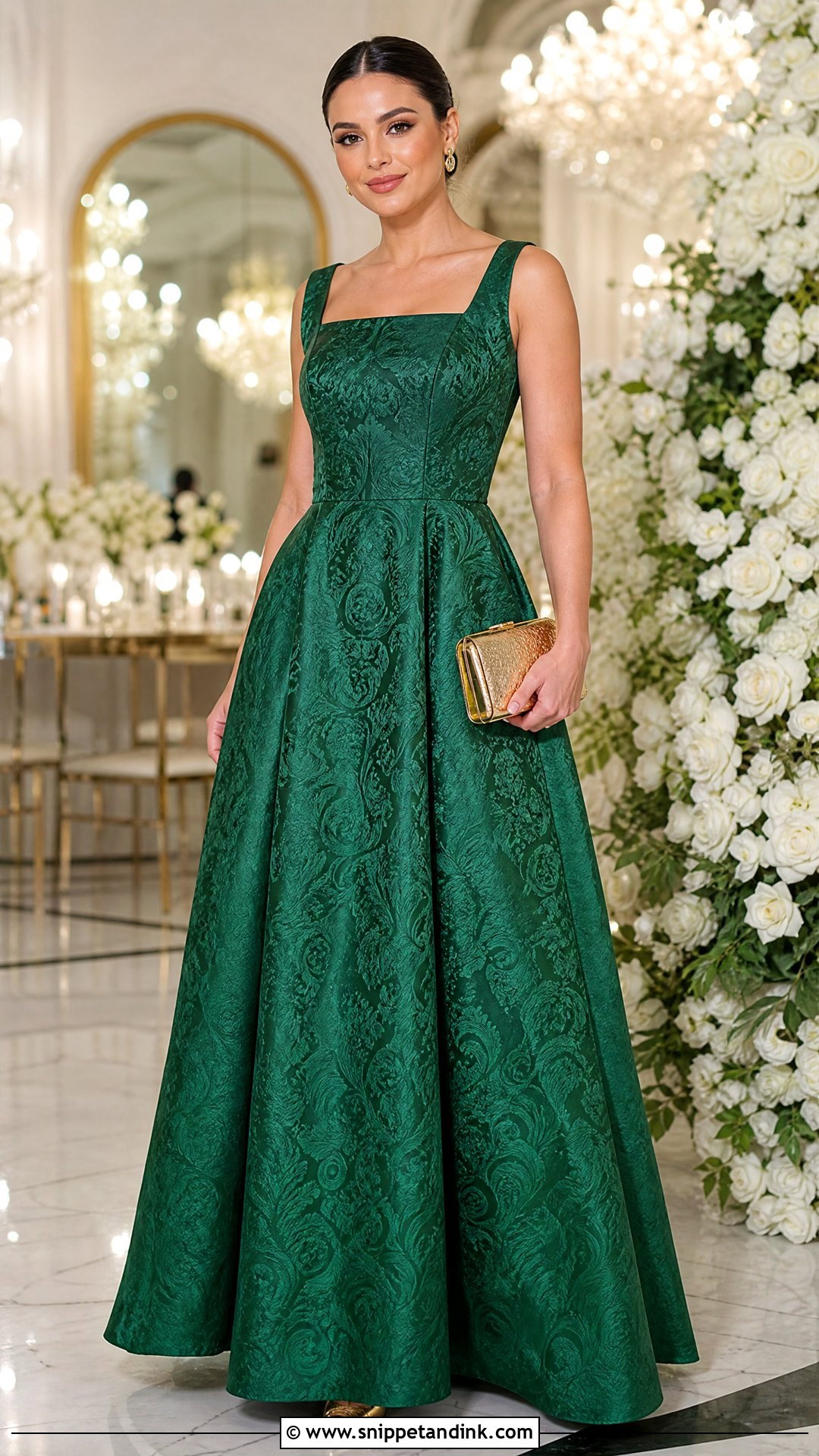
A corset bodice in damask can look sharp rather than costume-like, as long as the seams are clean and the boning sits flat. Pair it with an A-line or gently flared skirt so the defined waist has something to balance against. For a long reception, I add wide straps, short sleeves or a modest square neckline so you’re not hitching it up all evening. Closed pumps, a structured clutch and simple earrings. Don’t add stones or appliqué on top of visible boning; the woven pattern already traces the shape. Fit it so you can take a full breath while seated. That’s the test I use.


15. One-Shoulder Damask Gown
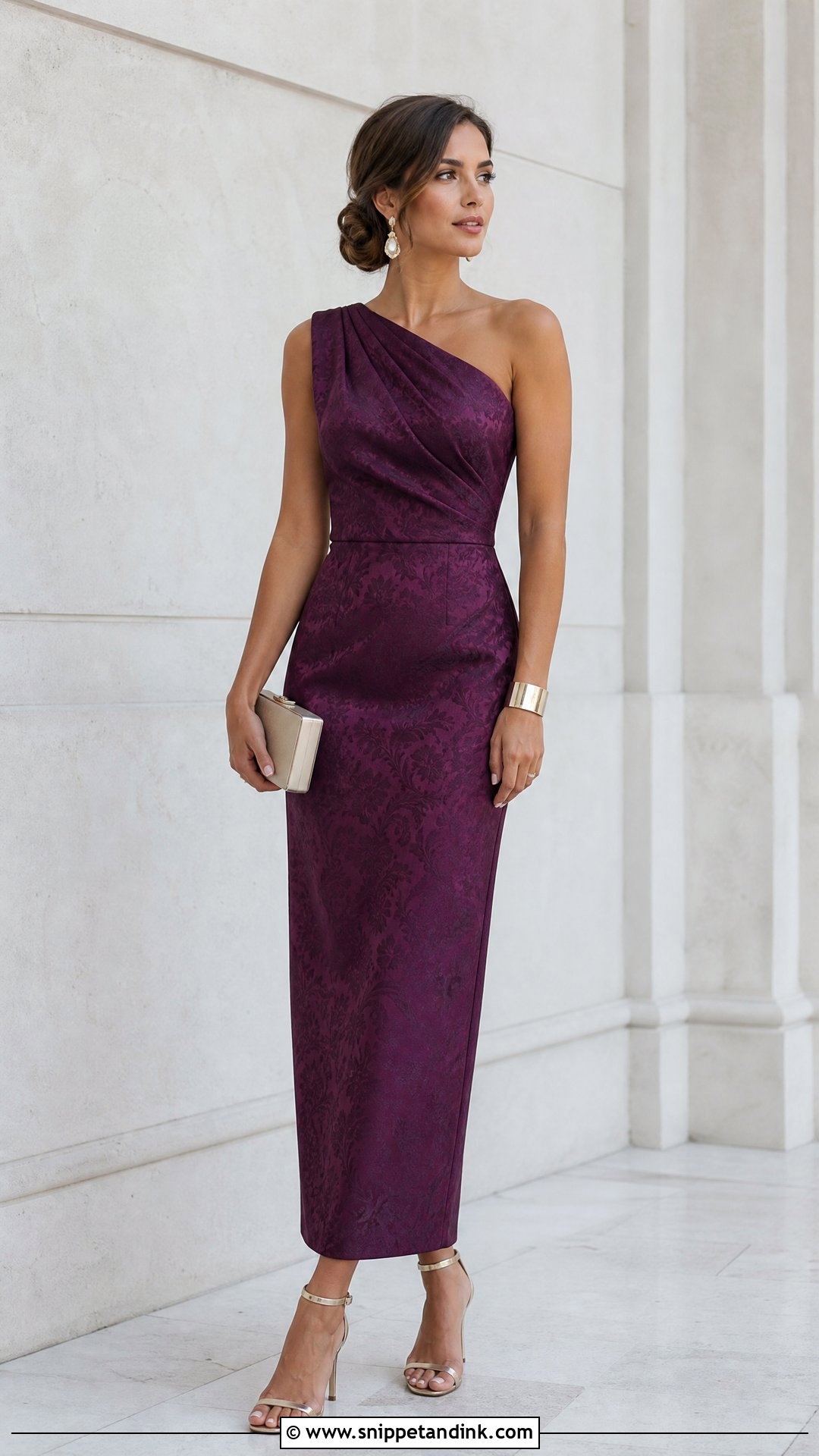
Asymmetry is the whole design here, so I don’t let anything compete with it. A one-shoulder damask gown needs a supportive strap and a smooth bodice; then a straight skirt for a sleek line or a modest A-line for more movement. The bare shoulder stays bare, no necklace, and I put the interest on a cuff bracelet or drop earrings instead. A low side bun placed opposite the strap balances the neckline in photos. Slim heels and a neutral structured clutch. Resist a big shoulder bow; on this fabric it reads heavy, not playful.
16. Cape Sleeve Damask Gown
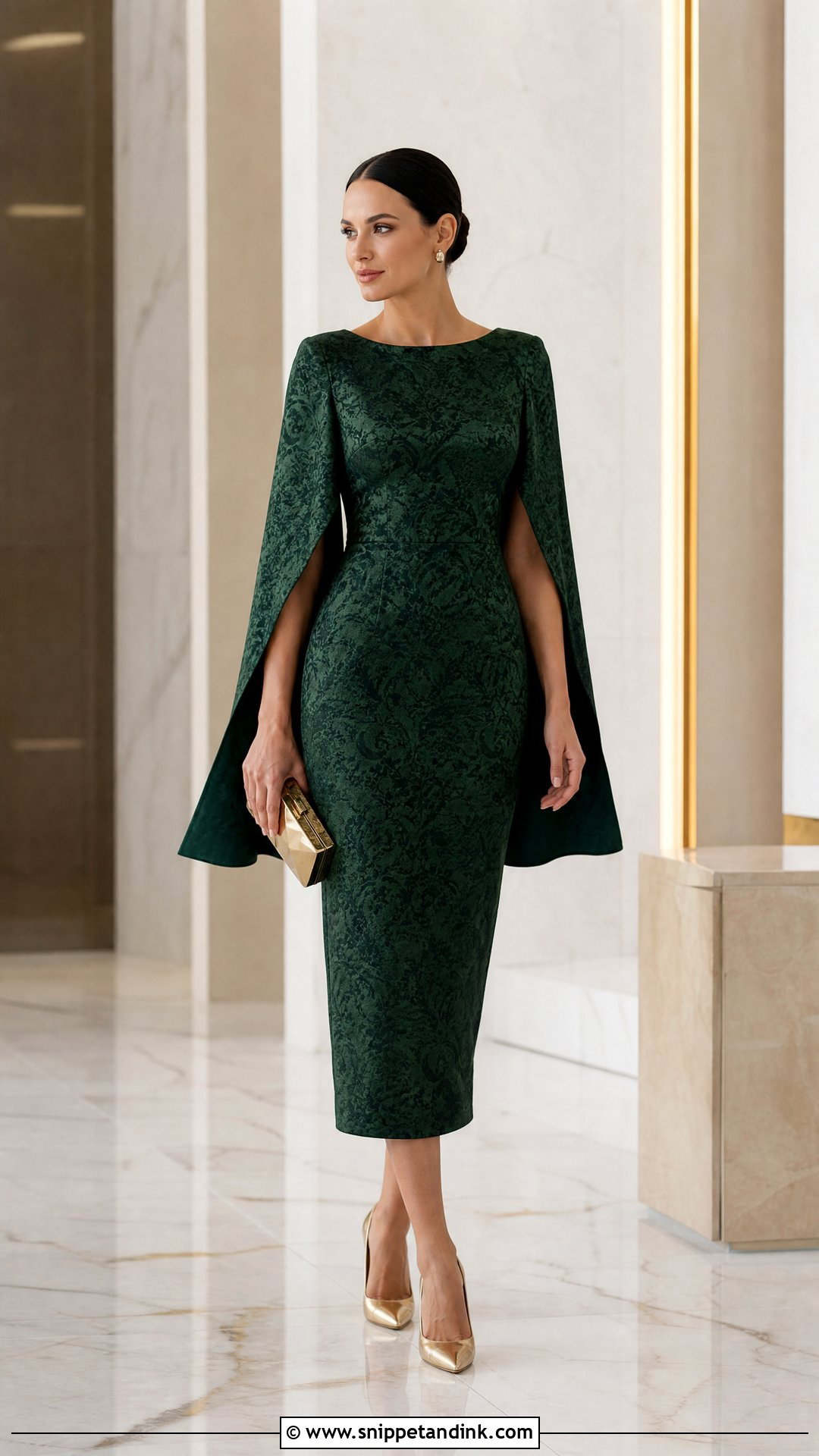
Cape sleeves give arm coverage without the tightness of a fitted sleeve, which is why I suggest them to clients who dislike sleeves pulling across the bicep when they hug people. A lightweight cape panel attached at the shoulder, ending at the elbow or wrist, over a fitted knee, midi or full-length gown. Keep the panel narrow so it frames rather than hides the dress, and cut it from a lighter weight of damask if your supplier carries one, otherwise it can stand away from the body. Pointed pumps, a firm clutch, small earrings, no heavy necklace. Hair up or short so the cape shows. Plum, forest green, cobalt or champagne in a single color looks most coordinated.
17. Tiered Damask Gown
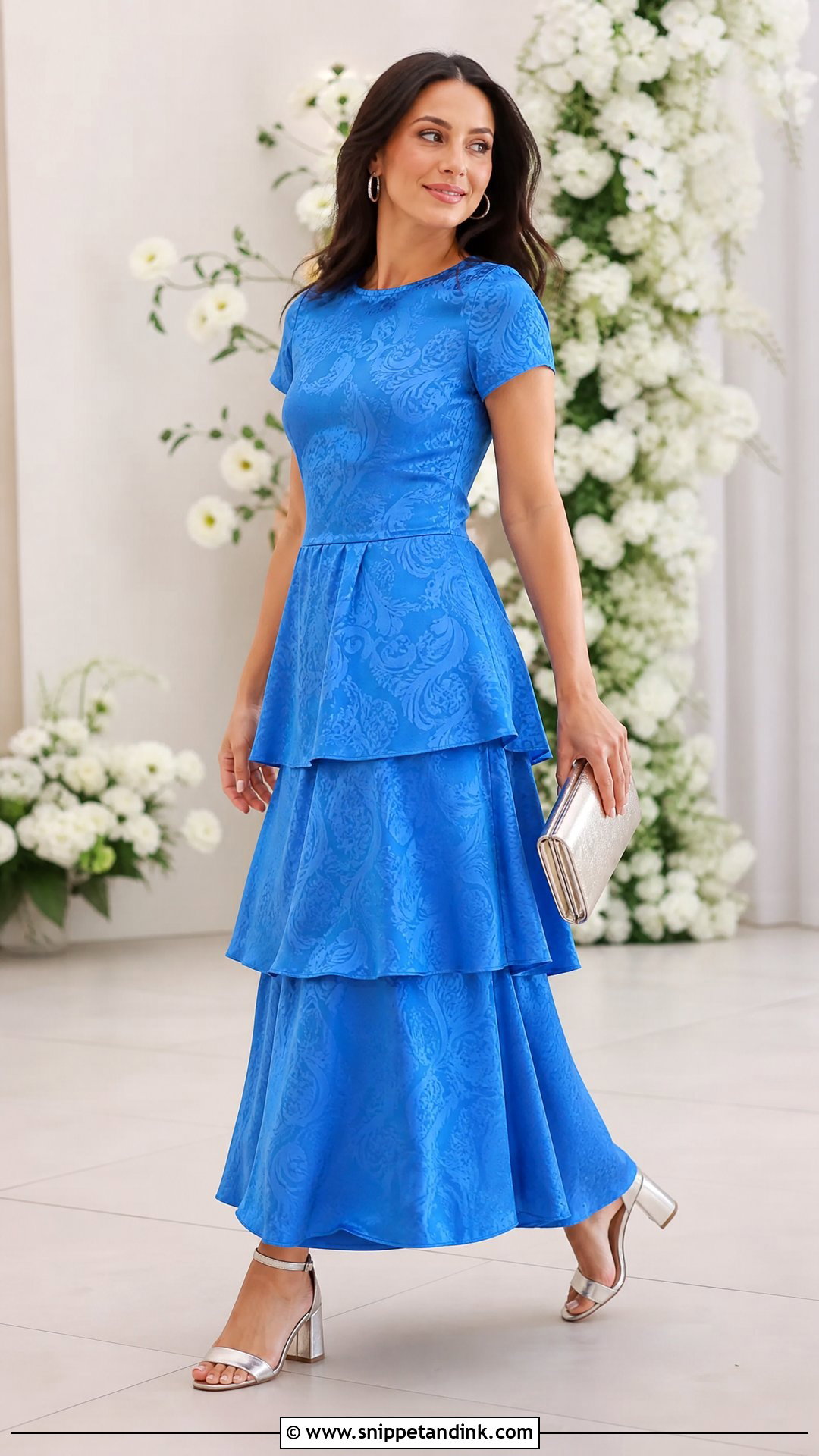
Tiers in damask need restraint. Two or three broad tiers under a fitted or lightly shaped bodice give a lively swing, while five narrow ones turn stiff cloth into a lampshade. Because firm damask holds every gather, I ask for wider tiers with less gathering in heavier cloth and allow a fuller layer only when the fabric is soft. Keep the length midi or ankle, the sleeves short and the neckline clean. Block heels, a simple clutch and small hoops. This one moves well on a dance floor.
18. Pleated Damask Gown
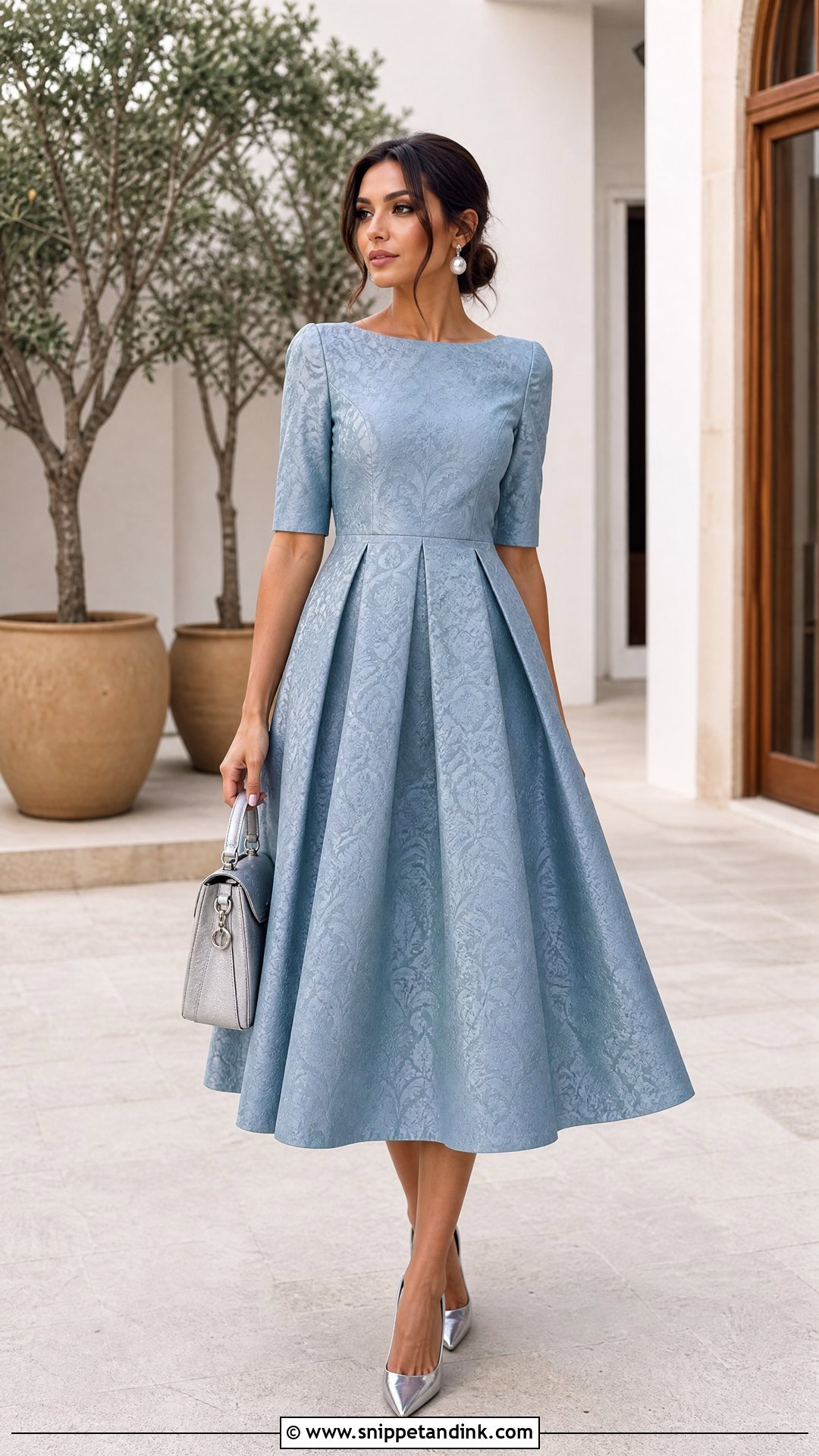
Pleats in damask behave like origami: press them properly and they hold all day; press them badly and the skirt looks bulky at the hip. I prefer box or inverted pleats starting at the waist and opening into an A-line midi, with cap or elbow sleeves. When pressing, I work from the reverse with a cloth between the iron and the fabric, since direct heat can leave a shine mark on the pattern. Pointed heels, a top-handle bag and pearl or metallic earrings. A narrow belt is fine if it lies flat over the waist seam; a big buckle is not. Soft gold, dusty blue, wine and lavender suit daytime or evening.
19. Iro-Inspired Damask Gown
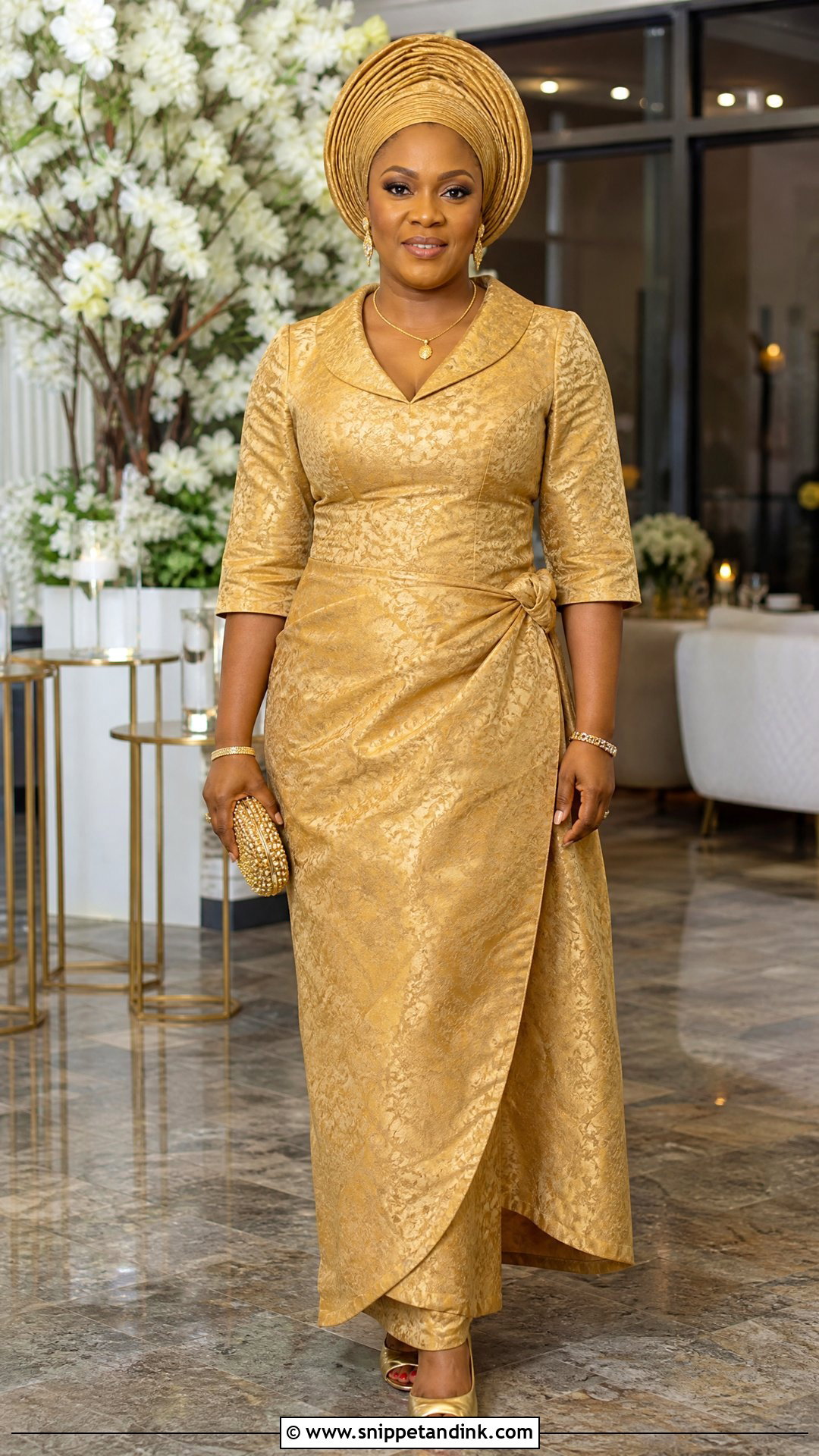
An iro-inspired damask gown borrows the look of a traditional wrapper outfit but goes on in one piece, which is a relief for anyone who’s spent a party retying a wrapper. The bodice is fitted and the skirt carries an overlapping panel that mimics the tie. I secure it with a small side knot, a soft fold or a covered button, and then I have the client sit, stand and walk in the fitting, because a wrapper panel that shifts will show the lining. A round, square or draped neckline echoes the classic blouse. Matching gele, low metallic heels, a beaded clutch and modest jewelry.


20. Empire Waist Damask Gown
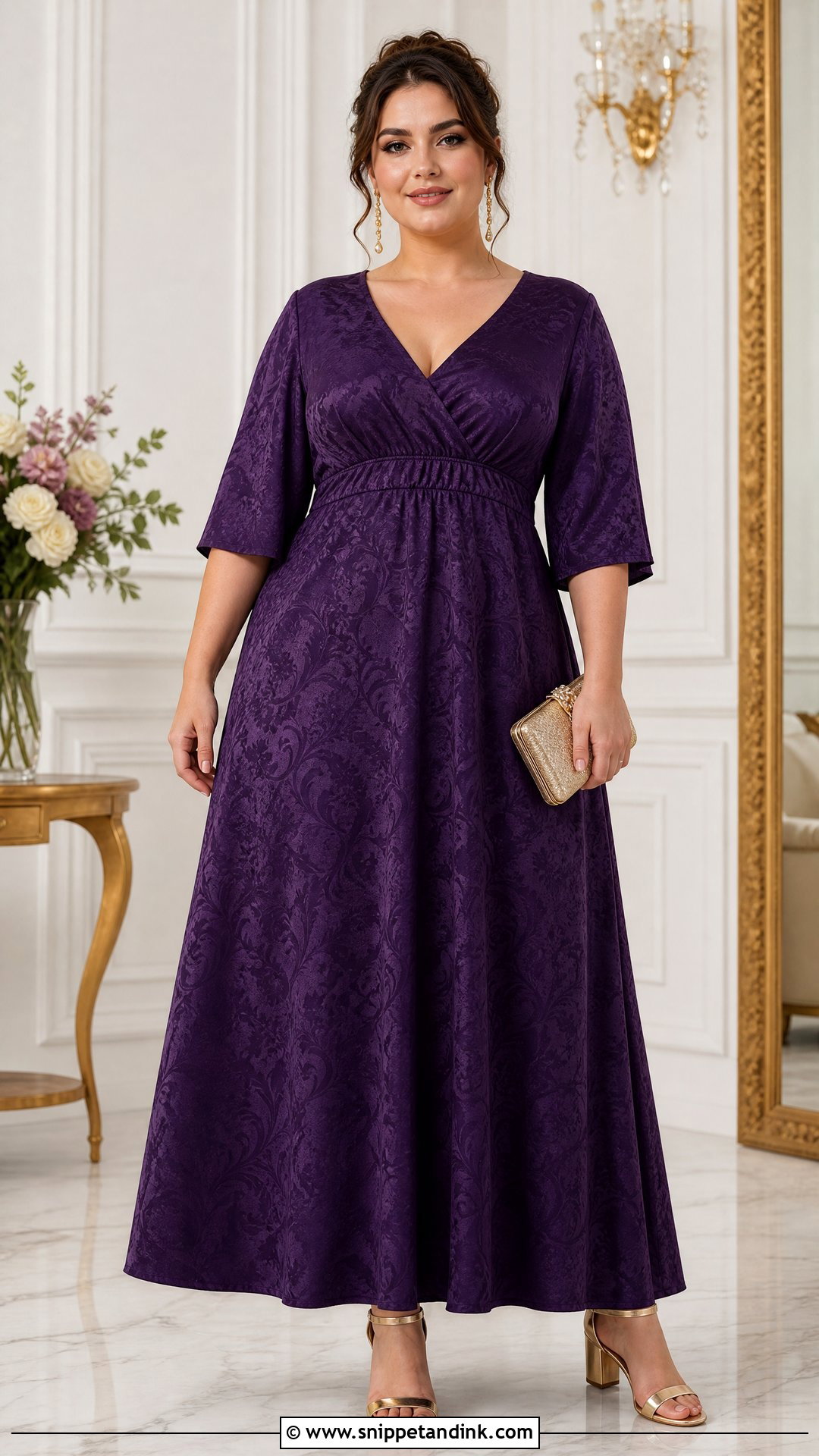
An empire waist damask gown moves the seam up under the bust, so the skirt falls clear of the midsection and hips. That’s why I reach for it with clients who don’t want waist definition, and with pregnant guests. Keep the gathering under the bust minimal; firm damask turns extra fullness into a shelf. An ankle length with a modest V-neck and flutter or elbow sleeves works on most heights once the seam placement is adjusted to your bust. Stable block heels, a medium clutch and long simple earrings. Dark jewel tones read formal, bright shades feel festive.
How Damask Holds Up Over a Long Celebration
Damask is sturdy, but it isn’t fuss-free. The firm weave that makes it look crisp also means creases set where you sit, and they show as a bright line across the pattern. A full lining and a midi or A-line skirt reduce the problem. So does standing up between courses rather than sitting through a three-hour program.
On the day
Hang the gown in the car rather than folding it onto the seat. If a crease does form, a few minutes in a steamy bathroom loosens most of it. Keep perfume and hairspray off the fabric itself; alcohol-based sprays can mark sheen on the metallic threads. If you spill something, blot it, don’t rub, since rubbing raises the floats in the weave and leaves a fuzzy patch.
Afterwards
I always check the care label first; many damasks with metallic yarn are dry clean only. For pressing, turn the gown inside out, use a pressing cloth and a moderate heat, and never let the iron sit on the right side. Store it on a padded hanger in a breathable cotton bag rather than plastic, and fold tissue into any pleats or tiers so they don’t crush flat. Damask kept this way will be ready for the next wedding with nothing more than a light steam.
Fit Before Frills With Damask
With damask, the fabric makes the statement and your job is to give it room. Start with the shape you can sit, eat and dance in for six hours, then add shoes, jewelry, a clutch and a gele if the occasion calls for one. Straight maxis and kaftans give the most coverage; wrap, peplum, corset and empire cuts each define the waist differently; short, midi and high-low hems bring a lighter feel. If I could only give one piece of advice, it would be to spend your effort on the fitting, not on extra details.
You'll Like These Ideas:





Leave a Reply