
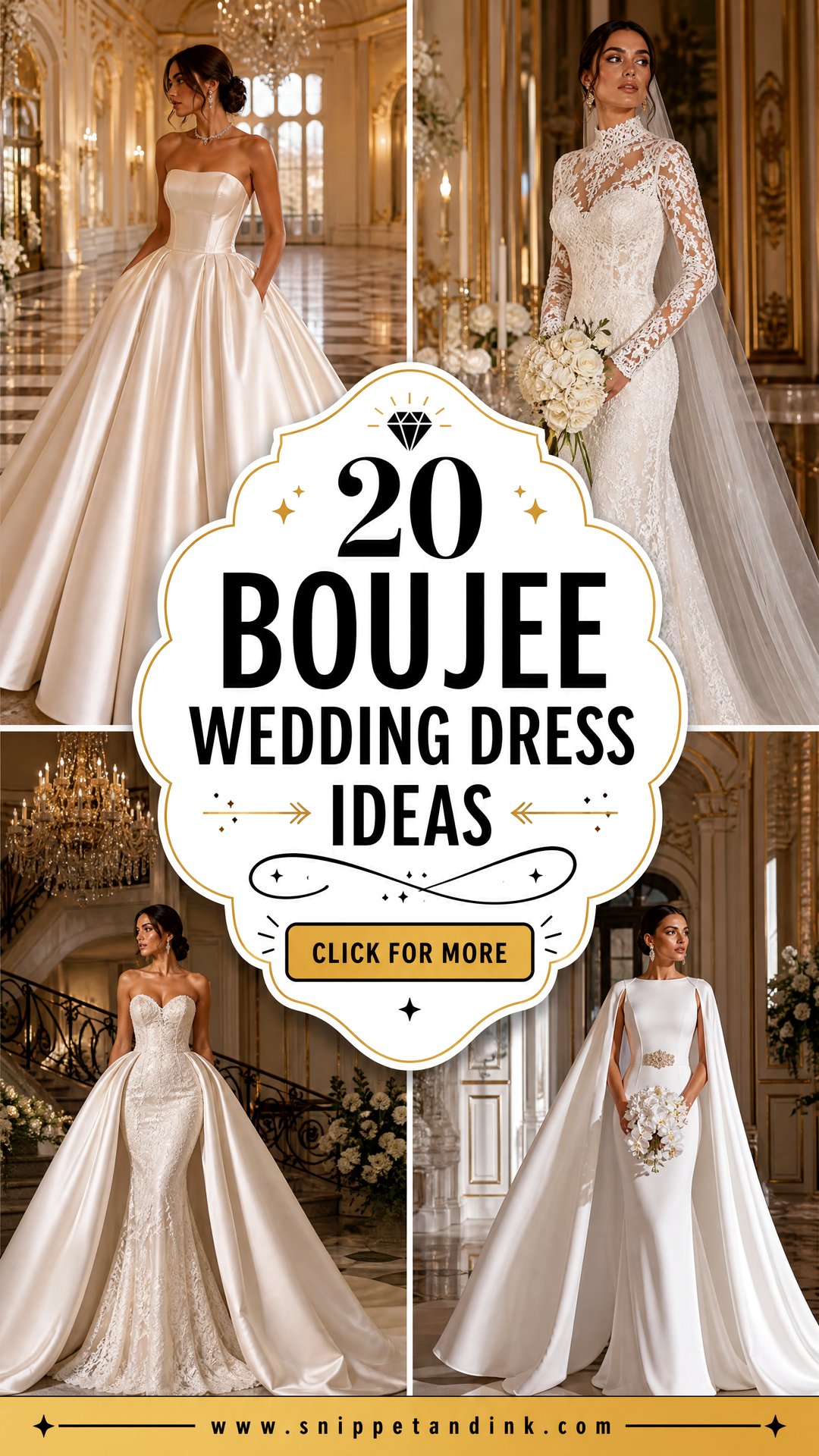
A dress looks expensive for two reasons: the fabric is heavy enough to hold a shape, and the finishing is clean enough that nothing distracts from it. Sparkle comes third. The looks below cover structured satin ball gowns, crystal corsets, pearl-covered bodices, sculpted necklines and fashion-led reception changes, all built from expensive-looking fabrics and styled from shoes to veil. The rule I work by is simple. When the gown is heavily embellished, the accessories go quiet. When the dress is plain, the drama comes from shape, texture or the veil. Read through with that in mind and you’ll spot which kind of luxury you actually want to wear.
What Expensive Looks Like Up Close on a Hanger
You can’t always tell price from a photo, but in a salon a few checks separate a well-made gown from one that only photographs well. These are the things I look at before a bride even tries a dress on.
- Fabric weight. Lift the skirt. Real duchess satin and Mikado feel dense and hold a fold; thin polyester satin collapses and shows creases straight away.
- Inside seams. Clean, finished seams and a full lining mean the dress will sit smoothly. Raw edges and visible glue suggest it won’t survive alterations well.
- Boning. In a structured bodice it should be sewn into channels and not poke through at the top edge.
- Beading. Crystals and pearls should be stitched individually, not glued, or they drop off during the day.
- Hem and train. A horsehair braid or a faced hem keeps the skirt shape at the bottom, which is where cheaper gowns droop first.
None of this means you need couture. Plenty of mid-range gowns pass every check, and plenty of costly ones fail one. Ask the consultant to turn the bodice inside out; a good shop won’t mind.
1. Satin Ball Gown Wedding Dress
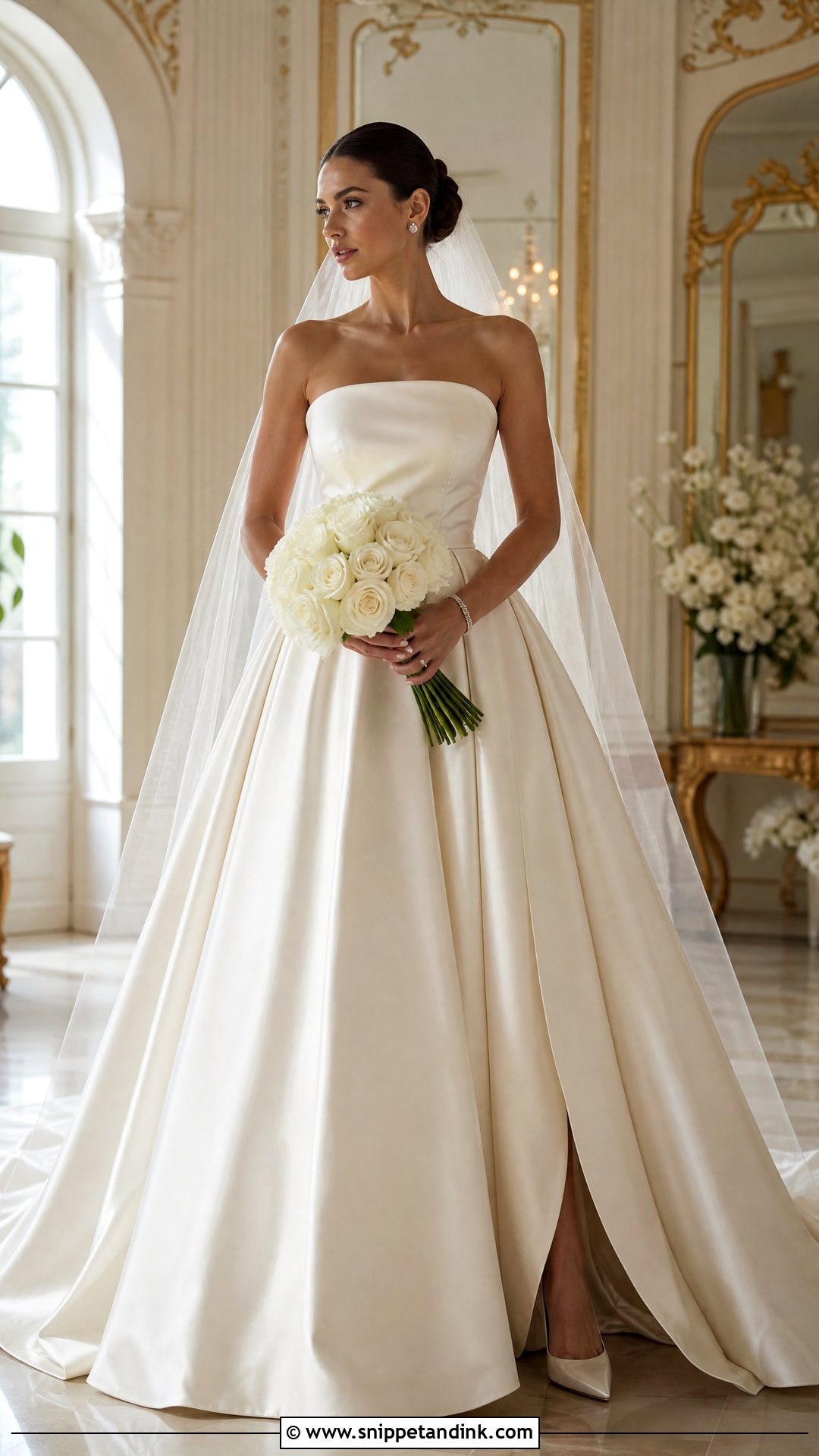
Duchess satin is the reason a plain ball gown can look grand. It’s a dense, slightly stiff weave with a low sheen, so the skirt stands away from the body and the light rolls across it instead of glittering. Choose a structured strapless bodice with a softly curved neckline, a defined waist and a full skirt, then keep the rest to pointed satin pumps, diamond studs and a thin tennis bracelet. A long cathedral veil adds ceremony without covering the clean lines, and a low chignon with a precise center part suits the formality. Satin creases where you sit, so I always pack a handheld steamer for the venue and have the skirt touched up before portraits. A compact bouquet of white roses or calla lilies fits a ballroom or formal hotel.
2. Crystal Corset Wedding Dress
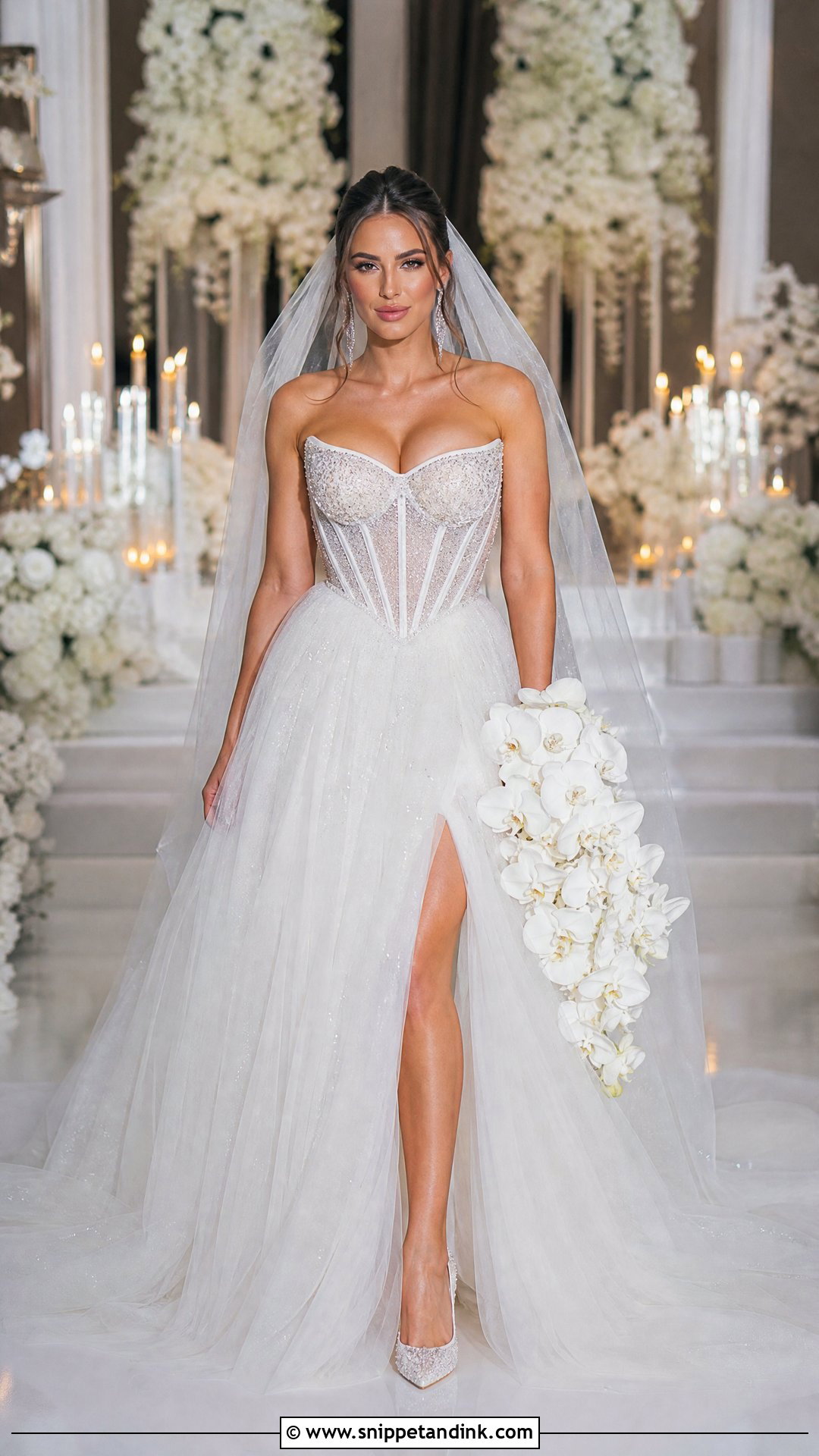
Hand-placed crystals on a boned bodice give the most sparkle per square inch of anything here. Look for visible boning, a softly pointed waist and a flowing tulle or silk organza skirt so the corset stays the focus. Crystal pumps, drop earrings and a slim silver bracelet are enough. Choose a sheer cathedral veil with only a fine shimmer at the edge, because a crystal-heavy veil scratches against a crystal bodice and both can lose stones. A sleek bun keeps the neckline in view. I check the inside of these corsets carefully at fittings; crystals stitched through the lining can rub the skin raw under the arms by evening. A white orchid bouquet suits a grand indoor ceremony or an evening estate wedding under dramatic lighting.
3. Pearl Embellished Wedding Dress
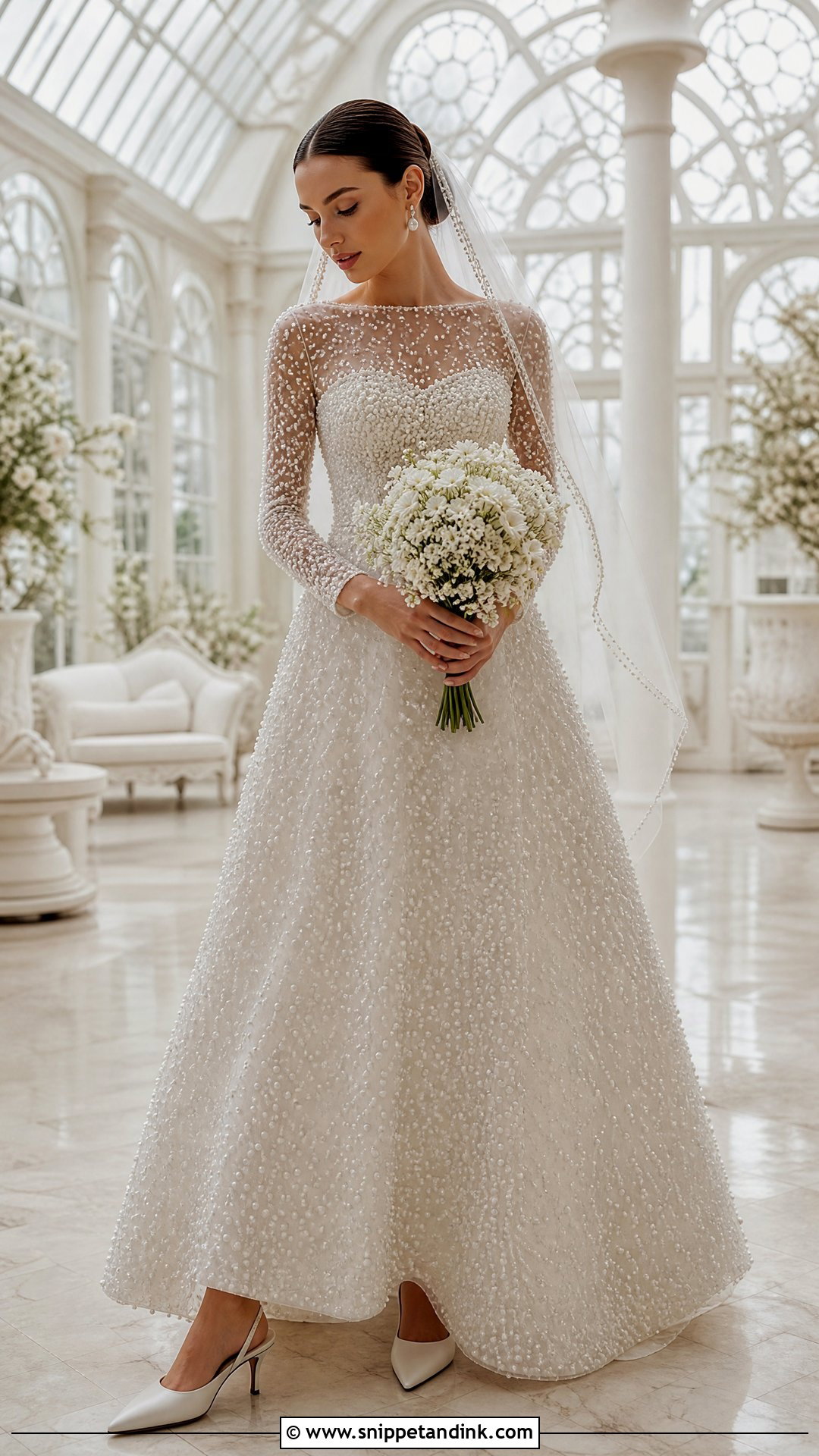
Pearls catch light softly rather than flashing it, which is why a pearl-covered gown reads lavish without feeling cold. Choose an A-line with pearls scattered across the bodice, sleeves and upper skirt, and a sheer illusion neckline for lightness. Pearl drops, ivory slingbacks and a structured satin clutch suit it, along with a pearl-edged veil if you keep the edging sparse. Soft waves or a smooth half-up style with a few pearl pins finish the hair. One thing I warn brides about: glass and plastic pearls weigh more than they look, and a densely beaded skirt pulls on the waist seam. Ask the shop how the bodice is anchored. White ranunculus and sweet peas echo the round shapes, at a garden venue, a conservatory or a formal celebration.
4. Lace Cathedral Train Wedding Dress
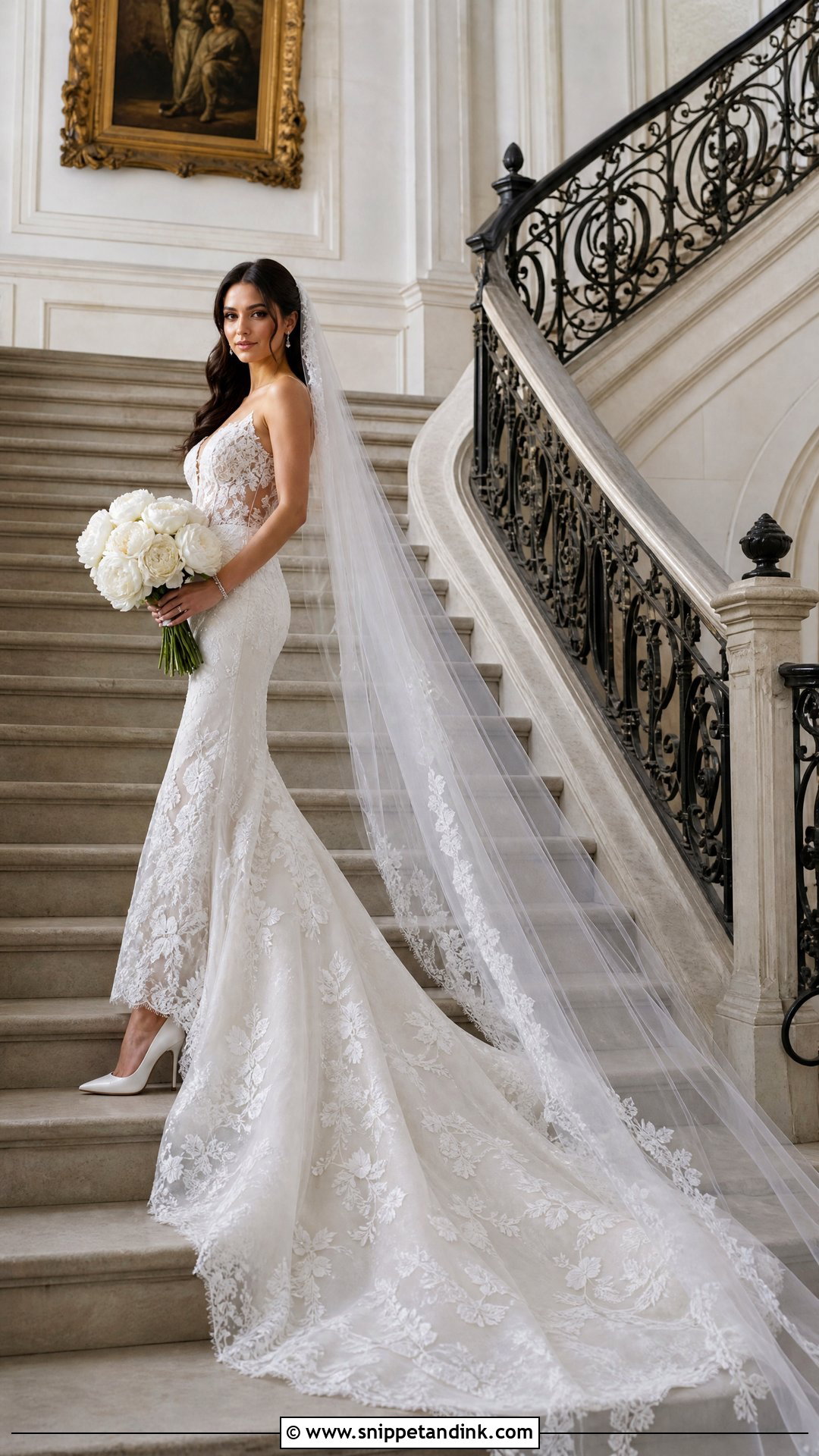
A cathedral train of lace makes the walk down the aisle the main event. Choose a fitted bodice flowing into an A-line or soft mermaid skirt, finishing in several feet of detailed lace; florals feel traditional, geometric patterns more current. Padded ivory pumps matter here because the train does all the visual work. A fine diamond necklace, matching studs and a single-tier veil extending just past the train complete it, with a low polished updo so the back stays visible. The practical question is the bustle. A long lace train needs several bustle points to lift cleanly, and I have the bride practice the hand-off with whoever will do it on the day. Loose white peonies and greenery suit long aisles and grand staircases.
5. Off Shoulder Mikado Wedding Dress
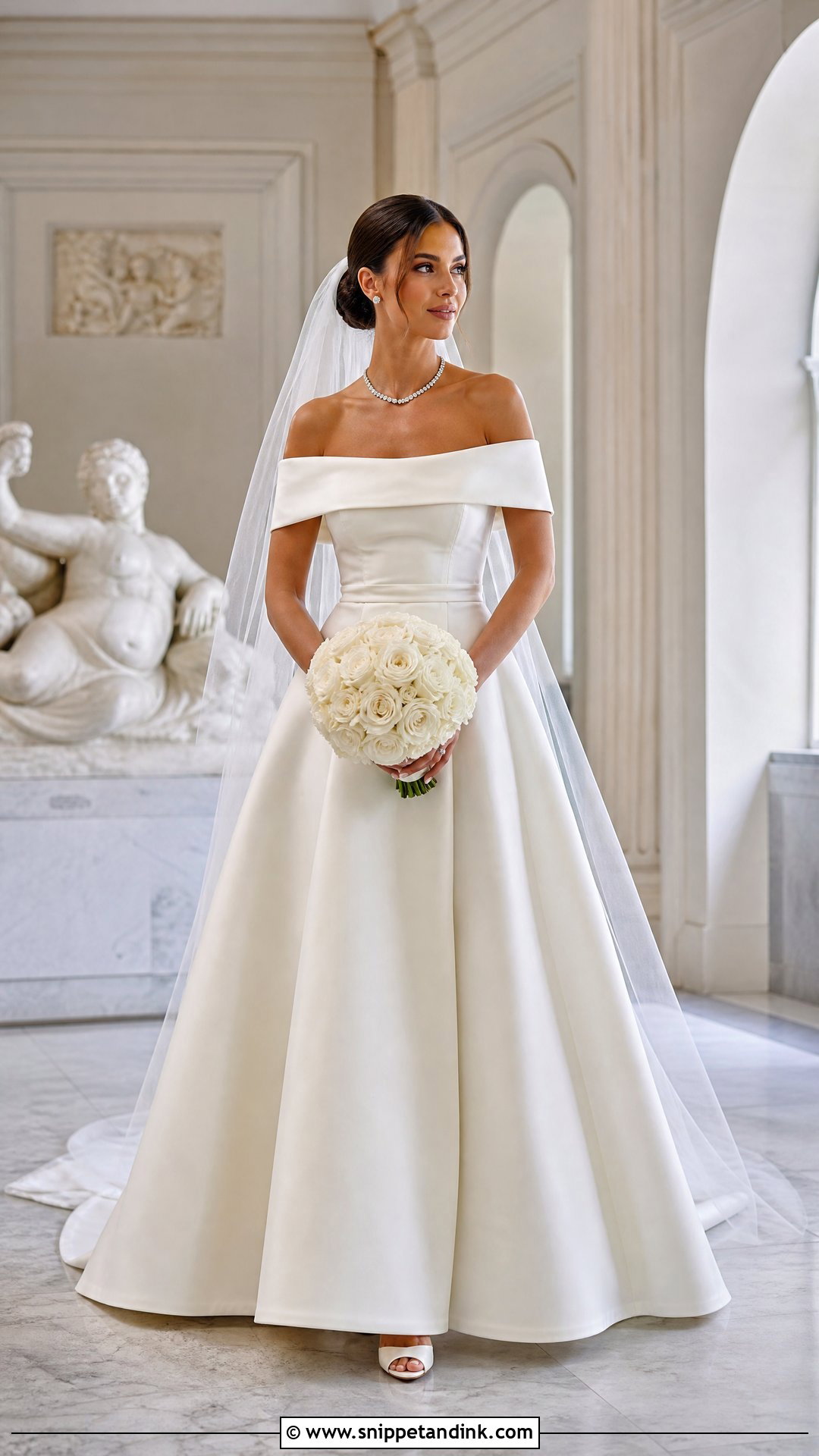
Mikado is a heavy silk blend with a crisp hand, which is why it can hold a fold-over collar off the shoulders all by itself. The fabric supports a sculpted neckline, a fitted waist and a full skirt without beading, so choose a collar that frames the shoulders cleanly. A sparkling collar necklace suits a shallower neckline; a short diamond pendant suits a deeper one. Satin block heels, a slim bracelet and a structured bouquet of white roses keep it orderly, with a clean bun or smooth Hollywood waves. Fit the veil beneath the hairstyle so it falls behind the dress. Off-shoulder Mikado limits arm movement more than people expect, so I have brides lift a glass and hug at the fitting before we finalize the strap tension.
6. 3D Floral Wedding Dress
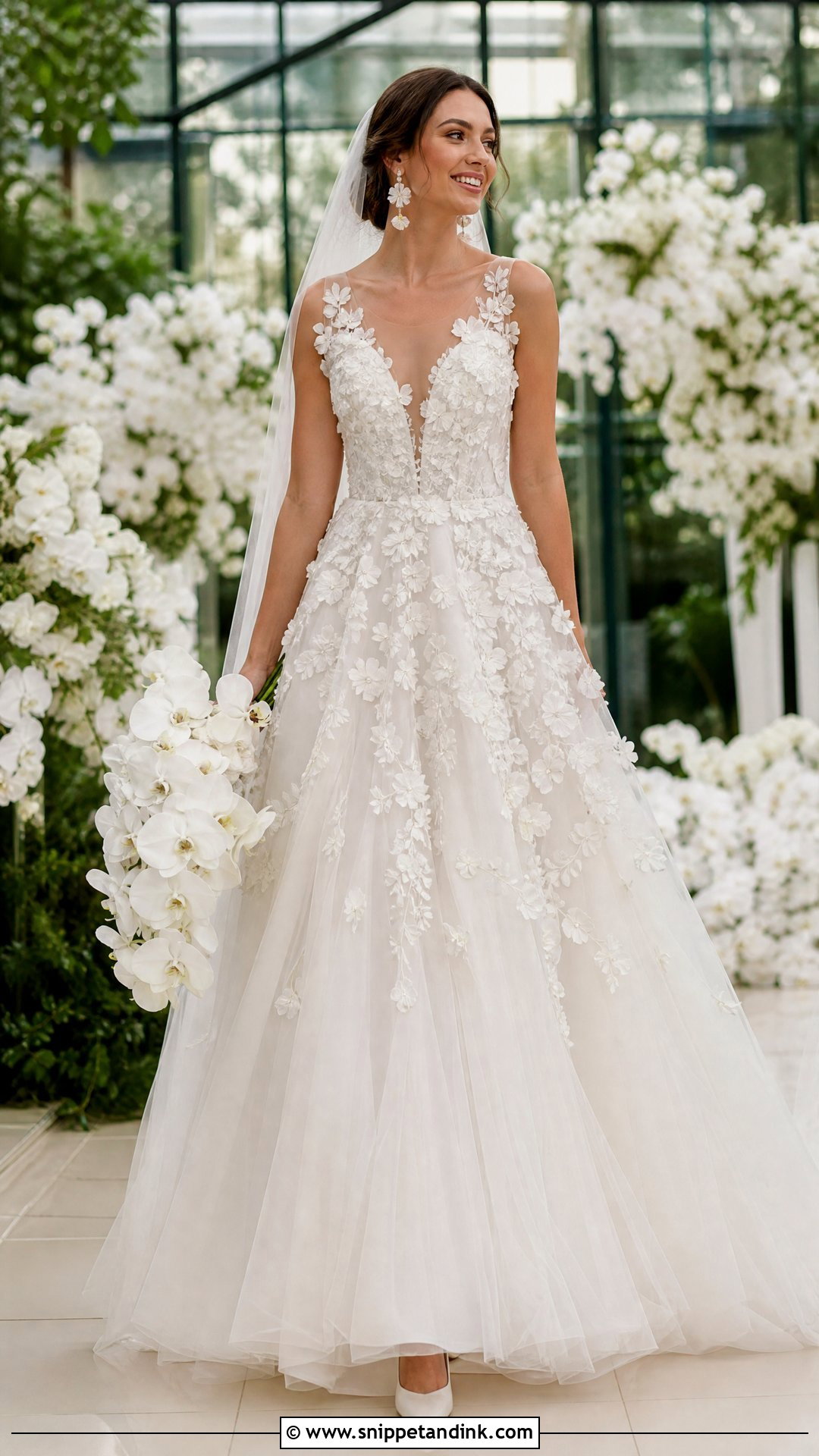
Dimensional petals on a fitted bodice, spreading onto a tulle A-line skirt, give a romantic dress some depth. Small appliqués read as delicate; large blossoms read as runway. Simple pointed pumps, floral diamond earrings and a thin bracelet suit it, and I’d leave the necklace off entirely so it doesn’t compete with the bodice. Choose a sheer fingertip or light cathedral veil and a soft low bun, with one or two matching fabric blossoms tucked near the comb. These petals crush easily in cars and hugs, so ask the maker for a few spares; a seamstress can stitch a fresh one in place in minutes. White tulips or orchids keep the bouquet minimal for gardens, greenhouses or spring celebrations.
7. Basque Waist Wedding Dress
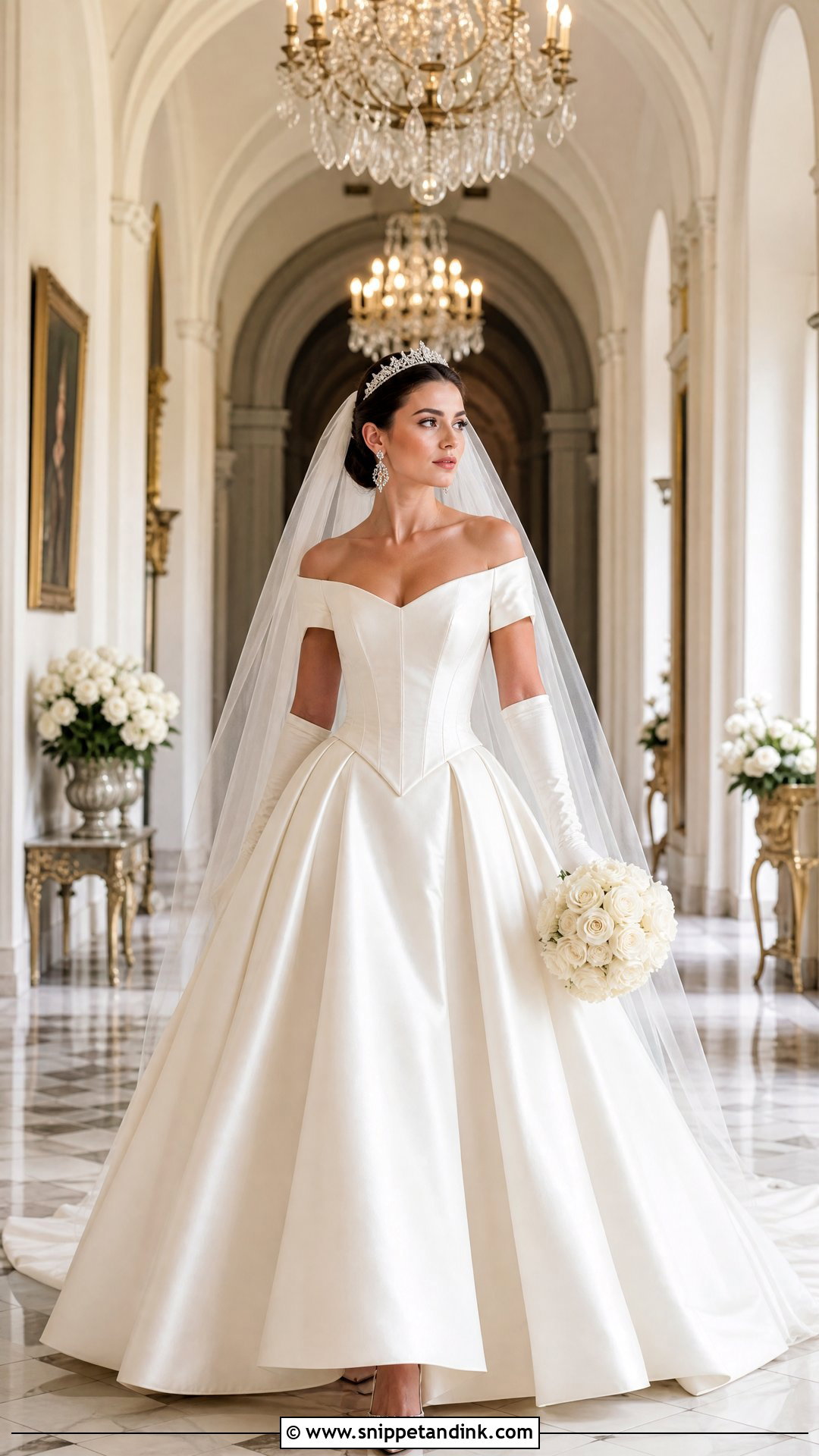
The deep V of a basque waist lengthens the torso and makes a full skirt look even fuller. Choose a structured satin or Mikado bodice with a skirt starting below the natural waist. Elbow-length gloves add formality, but leave them off if the neckline already carries detail. Pointed ivory heels, chandelier earrings and a delicate tiara complete the royal-inspired look, with a long simple veil so the waistline stays visible. A tight bouquet of white roses adds structure. The point of a basque waist sits over the lower stomach, so I always fit it with the bride seated; if it digs in when she sits, the point needs shortening by a centimeter or two.
8. Feather Trim Wedding Dress
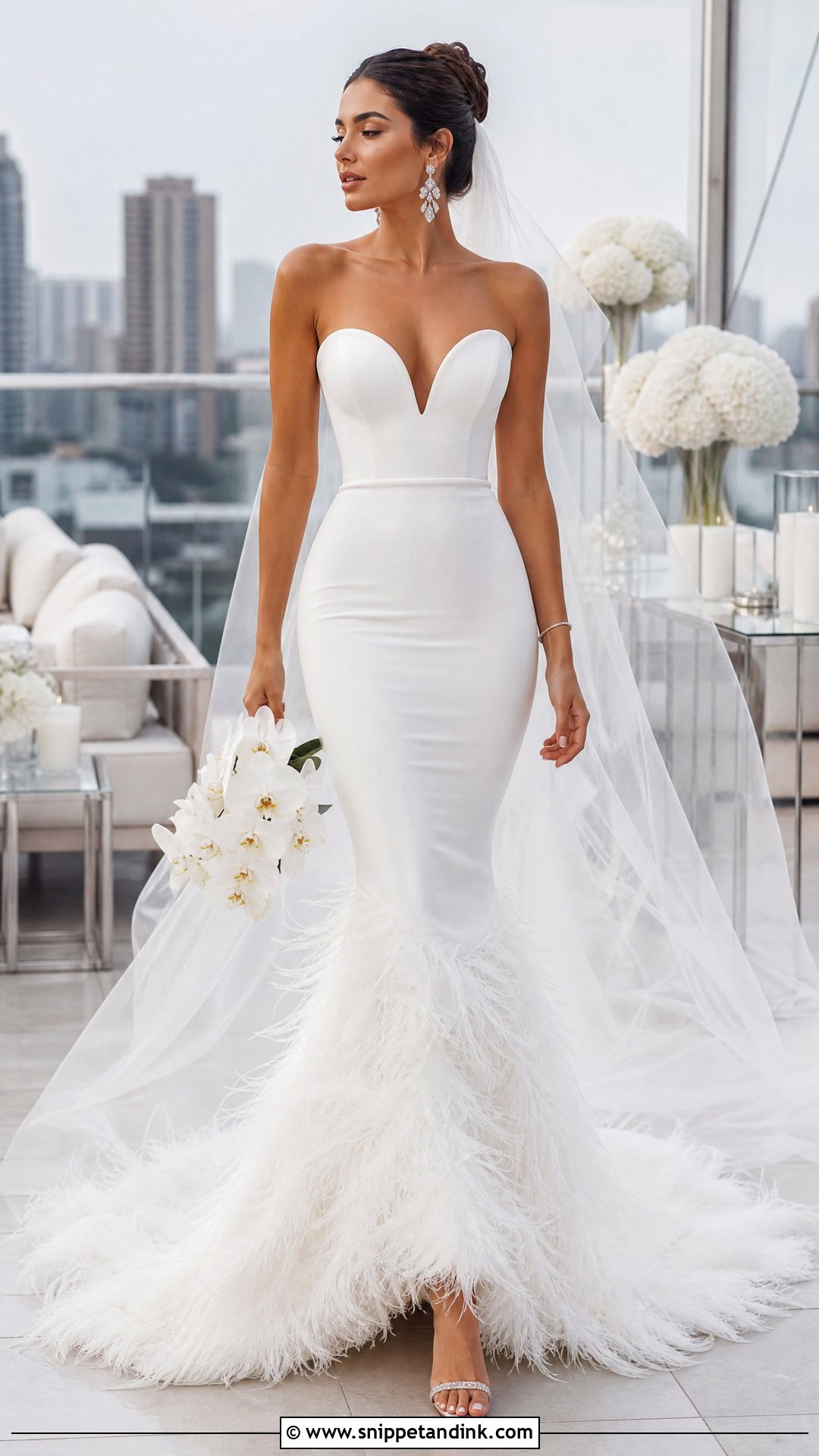
Feather trim moves every time you do, which makes it a natural fit for an evening reception. Choose a fitted column or mermaid gown with feathers at the neckline, cuffs or hem, and keep them to one area. Crystal sandals, statement earrings and a small metallic clutch suit it; skip the necklace if feathers sit at the neck. A sleek ponytail or smooth bun gives contrast against the softness. Feathers hate rain and humidity, where they clump and droop, so for outdoor rooftops I’d have a plan B wrap. Add a plain chapel veil for the ceremony, take it off before dancing, and carry a compact orchid bouquet.
9. Long Sleeve Beaded Wedding Dress
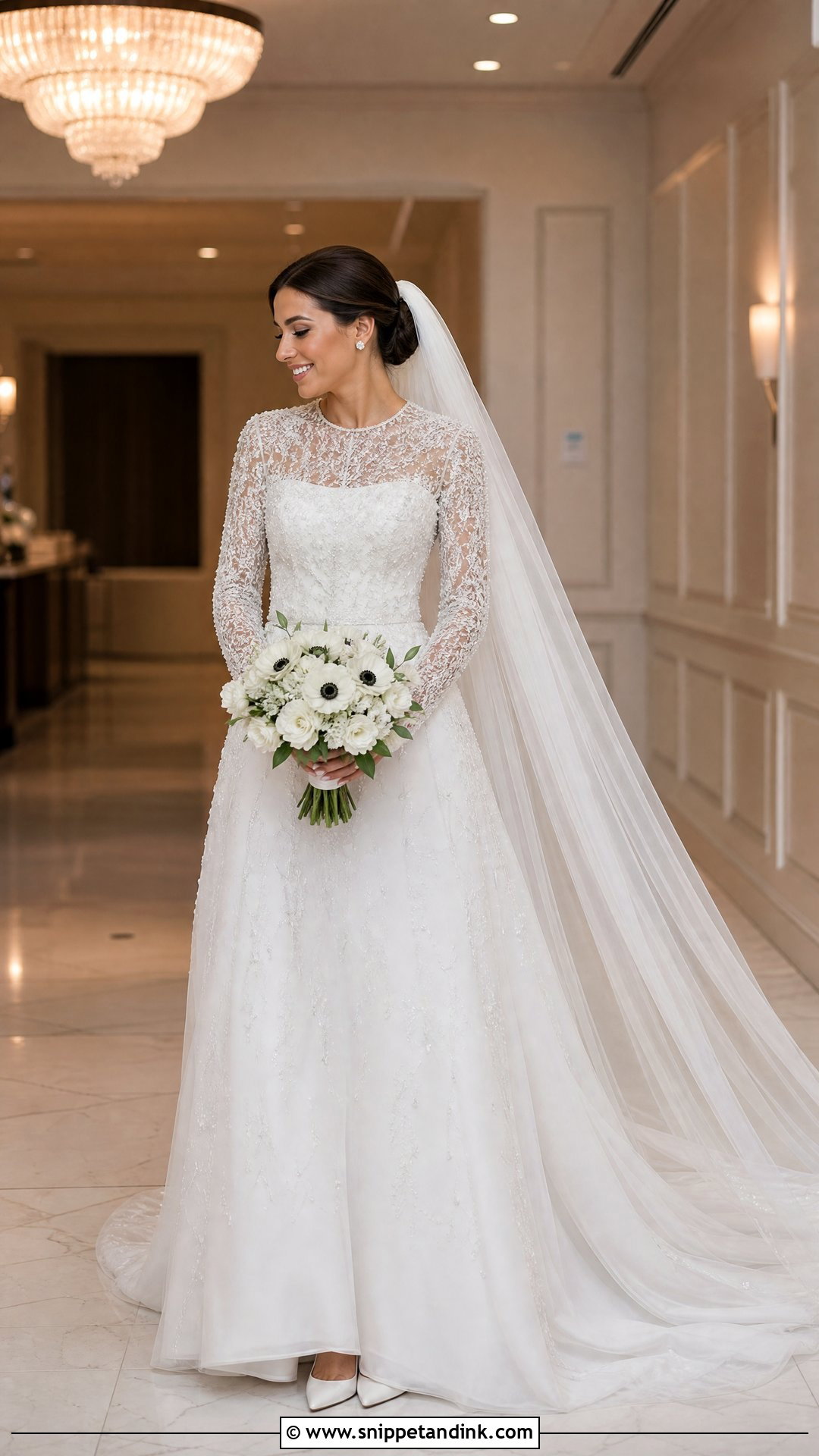
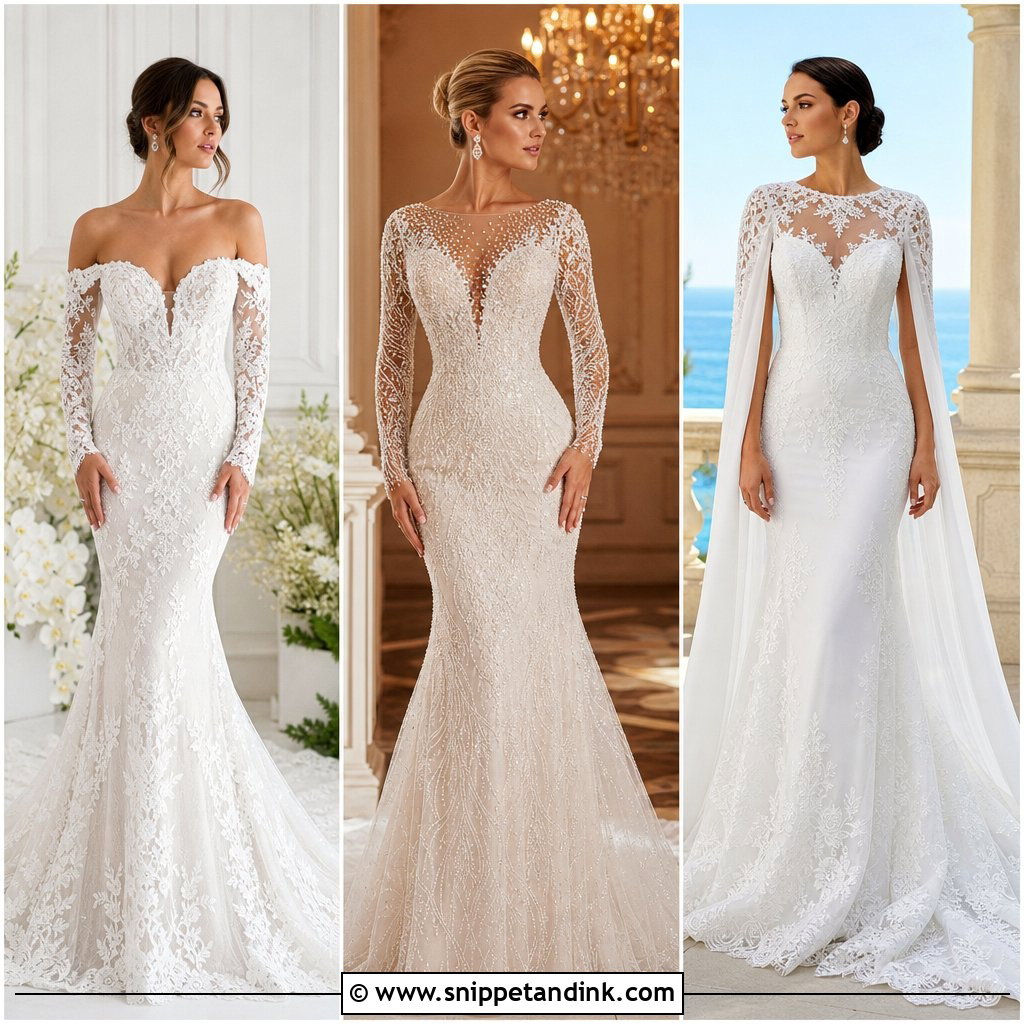
Long beaded sleeves give coverage and a great deal of sparkle. Choose a fitted silhouette with fine beadwork running from neckline to cuffs in one continuous pattern, a lightly lined bodice and a flowing skirt so the weight stays manageable. Beaded sleeves are heavier than lace ones, and a heavy sleeve set too tight at the armhole will pull the whole bodice when you raise your arms. I fit them with the arms up, not down. Closed-toe satin pumps, diamond studs and a slim hair comb are plenty, and a soft tulle veil with a clean edge contrasts well with the detail. A low bun or polished side part shows the shoulders. White anemones or roses suit fall, winter and black-tie ceremonies.
10. Square Neck Silk Wedding Dress
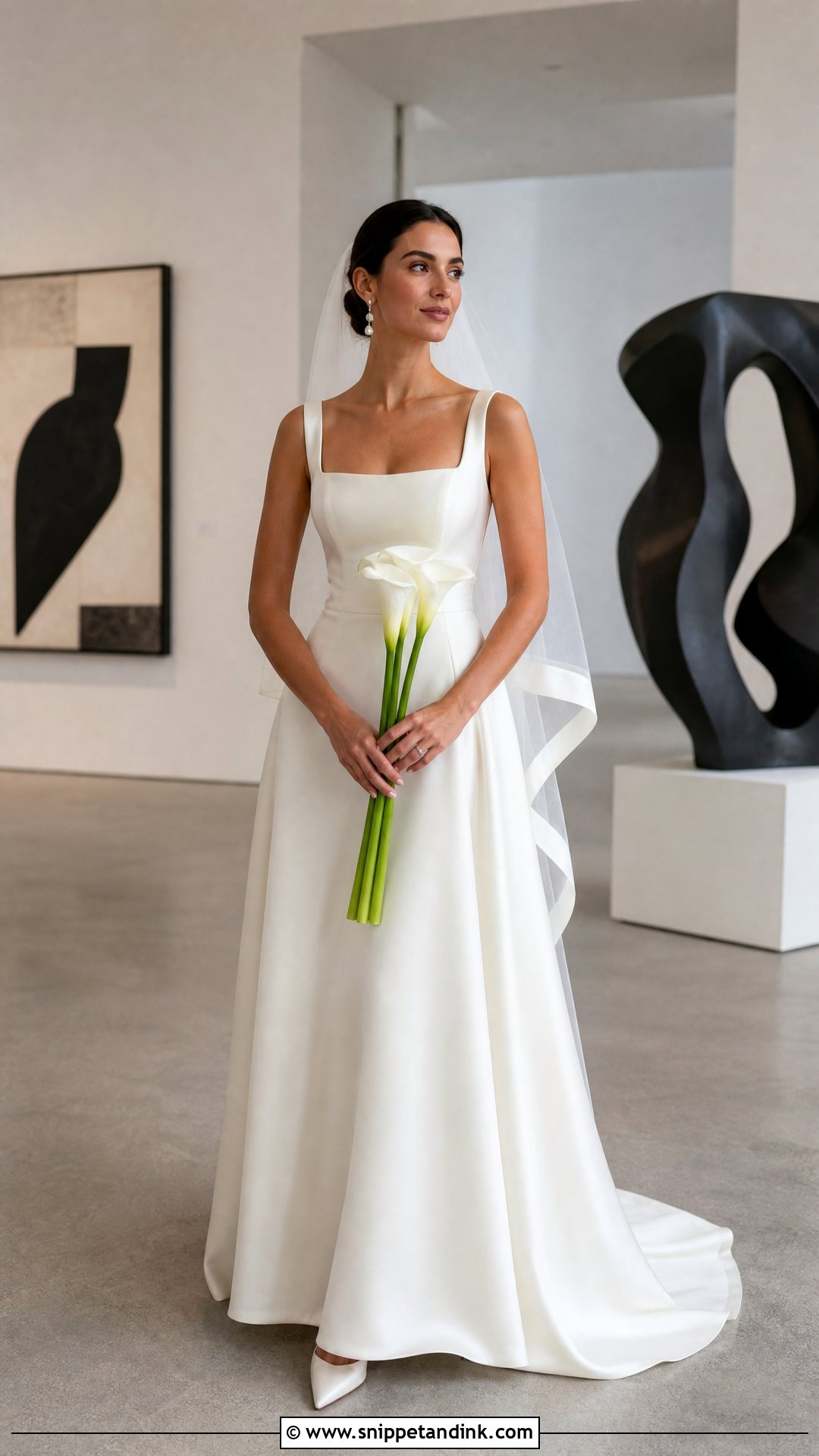
Plain silk is where poor tailoring has nowhere to hide. A square-neck dress with a structured bodice, wide straps and a fluid A-line or column skirt depends entirely on substantial silk satin or silk crepe that drapes without clinging. Pick up the fabric and feel its weight: thin satin shows every undergarment line and every pucker at the seams. Pearl-and-diamond earrings, pointed ivory heels and a simple tennis bracelet suit it, plus a long veil with a narrow satin border. Style the hair in a neat low knot or glossy waves tucked behind the ears. Long-stemmed calla lilies keep the lines sculptural, at a museum, a city venue or a private estate.
11. Bow Back Wedding Dress
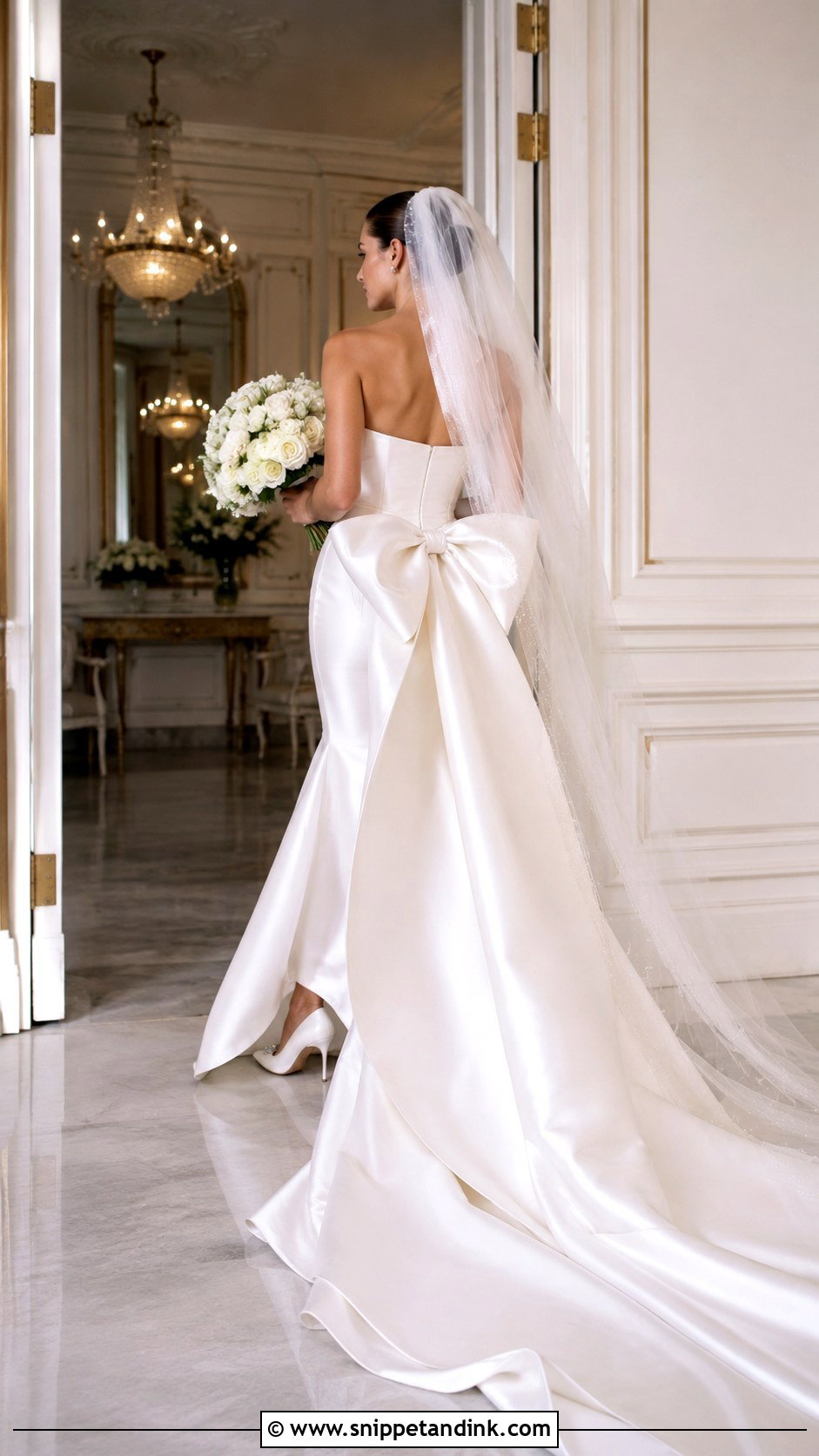
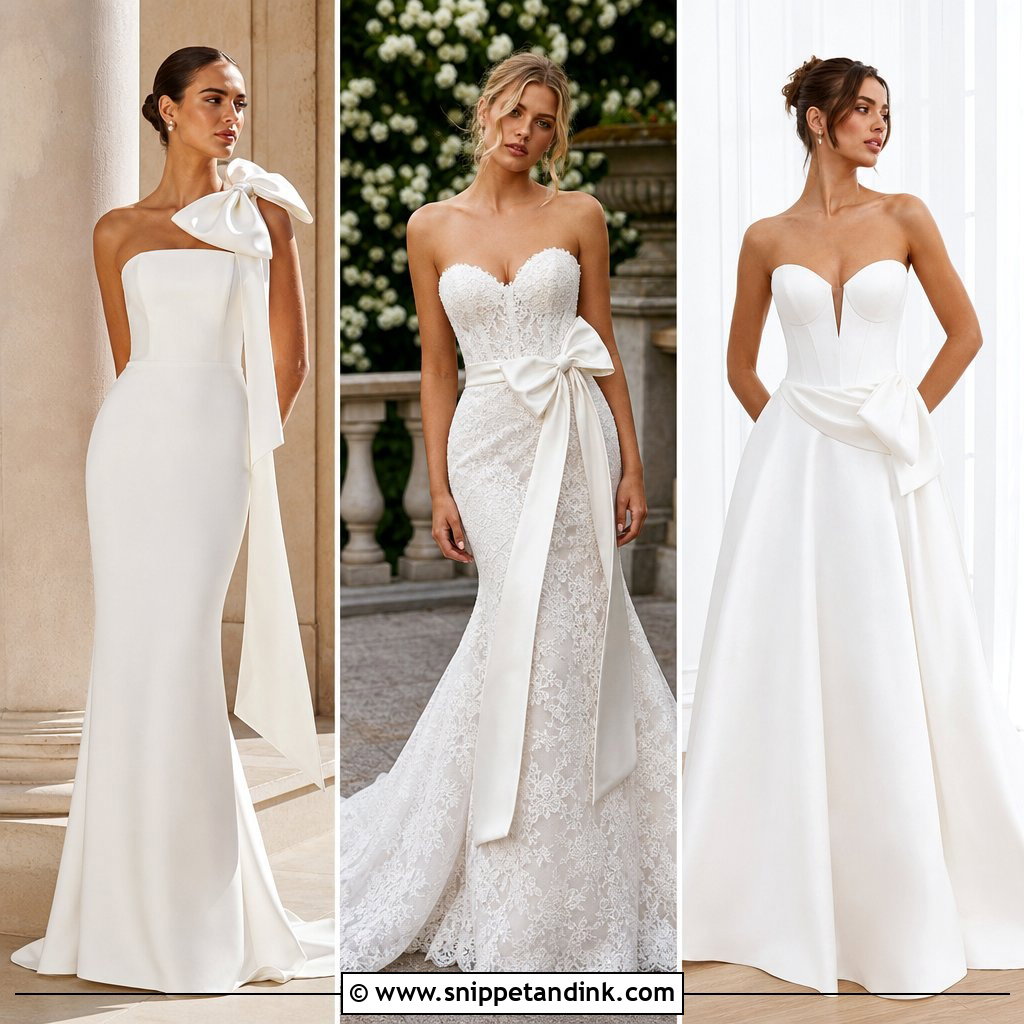
Most guests see your back for the whole ceremony, and an oversized bow makes the most of it. Choose a clean satin gown with a fitted bodice and a detachable bow at the waist or upper back, its long tails blending into the train. Keep the front simple: diamond studs, a delicate bracelet and pointed satin pumps. Fix a sheer veil beneath a sleek bun so the bow shows through instead of disappearing. Big satin bows collapse once they’ve been sat on, so I make sure the bow is interfaced or lightly stiffened, and that it’s detachable for the reception. A rounded bouquet of white garden roses softens the architecture.
12. One Shoulder Draped Wedding Dress
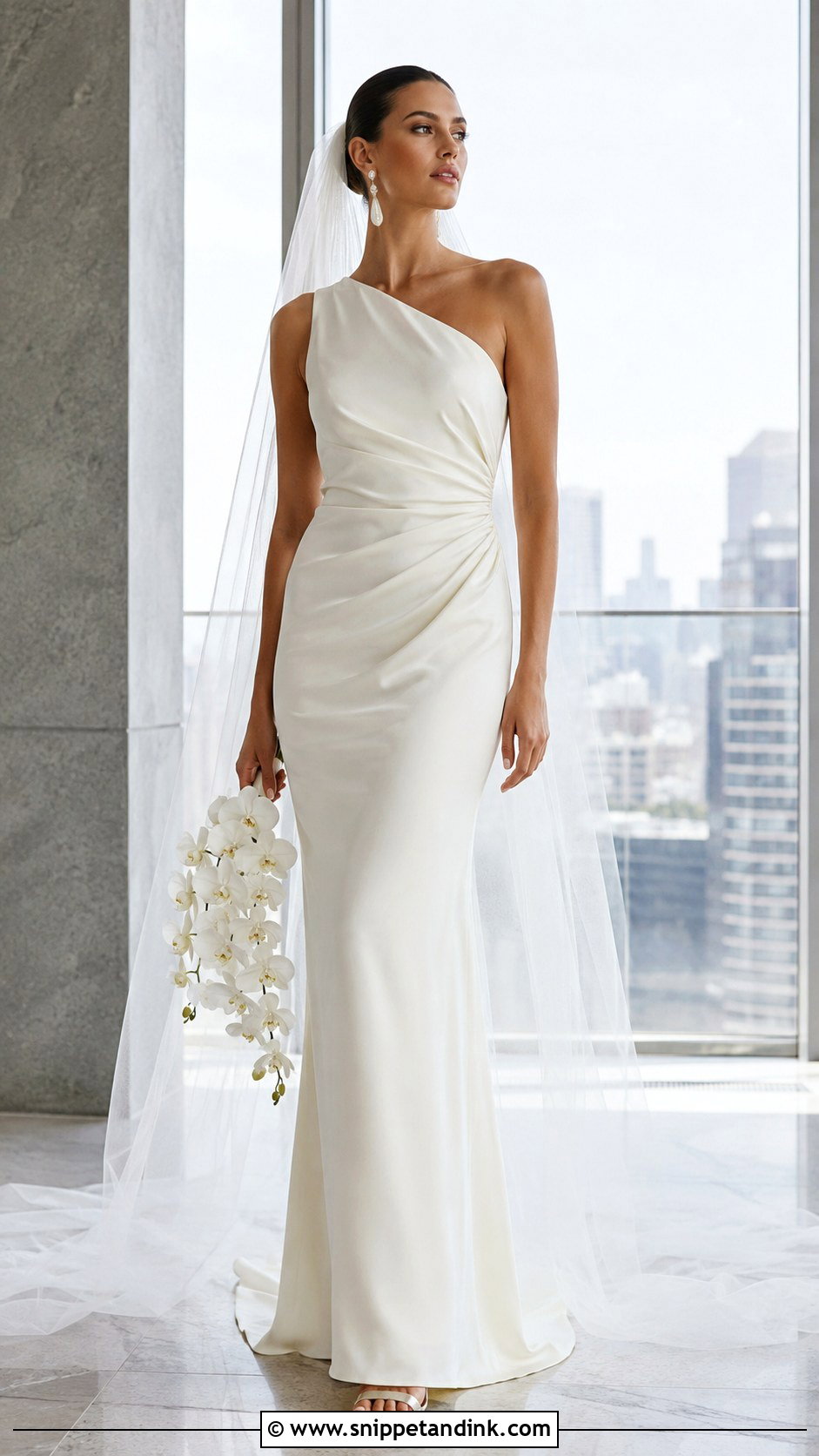
Silk crepe or satin draped from a single shoulder looks statuesque with almost no decoration. Look for smooth fabric across the bodice, gathered gently at the waist, and a column skirt with a side slit for movement. Asymmetric drops or one statement cuff suit it; a necklace would break the line. Metallic ivory sandals, a compact pearl clutch and a sleek low ponytail or waves swept away from the covered shoulder finish it, plus a plain cathedral veil you can remove later. The bare side needs a strapless bra or built-in cups, and I check that the single strap doesn’t slide toward the neck when the bride turns. A small orchid bouquet suits galleries and modern city venues.
13. High Neck Lace Wedding Dress
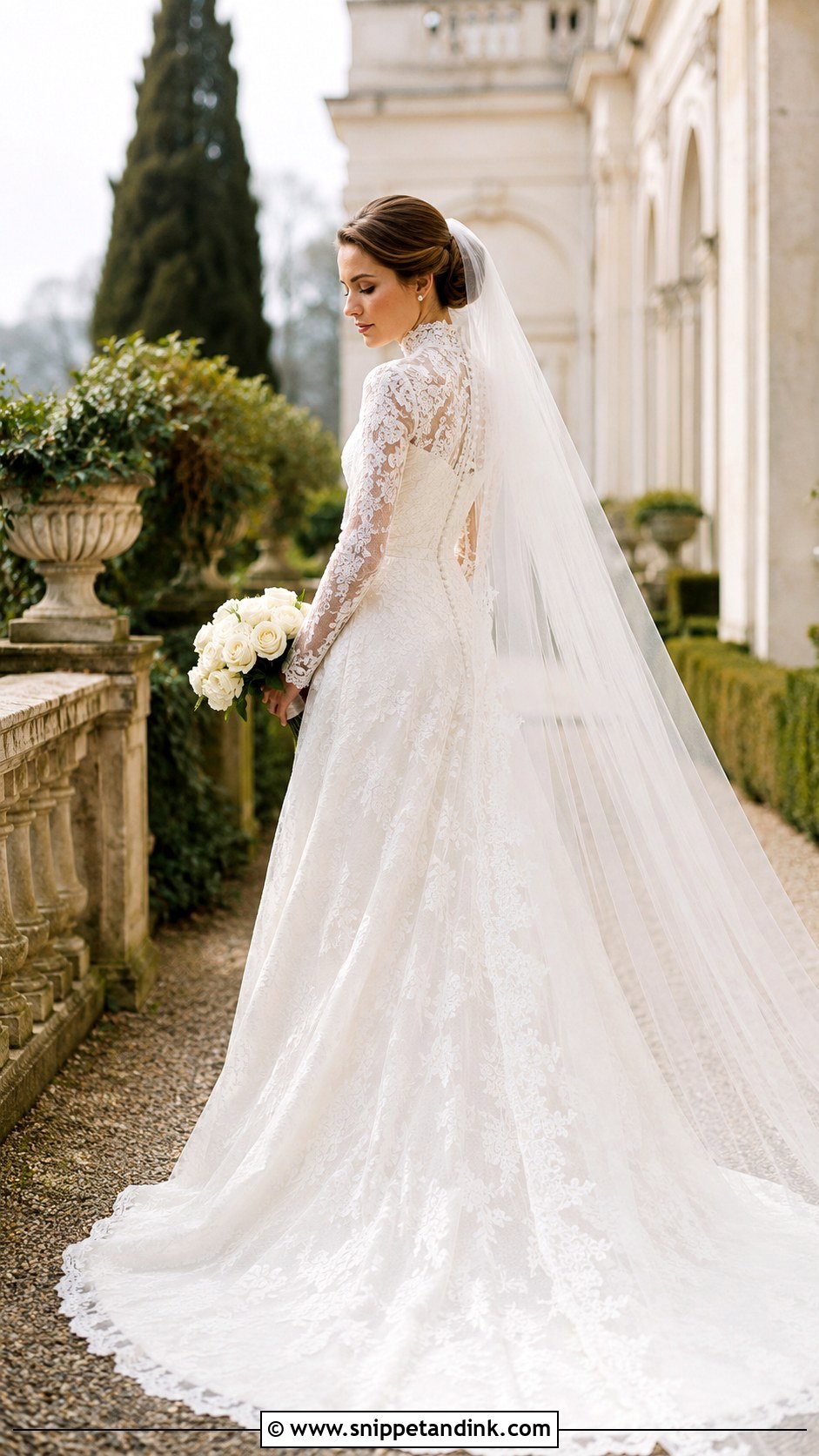
A high lace neck with long sleeves and fabric-covered buttons down the back looks vintage, and it is often the most comfortable dress here. Pair the lace bodice with a smooth satin A-line skirt, or carry the lace through the whole gown. Pearl studs, a slim bracelet and classic pointed pumps are enough, and you don’t need a necklace when the lace already frames your face. Set a cathedral veil with minimal edging under a structured low bun. Those covered buttons take a long time to fasten, so I usually ask the seamstress to put a hidden zip or loops behind them. White roses and fine greenery suit historic estates, formal gardens and cooler months.
14. Mermaid Wedding Dress With Overskirt
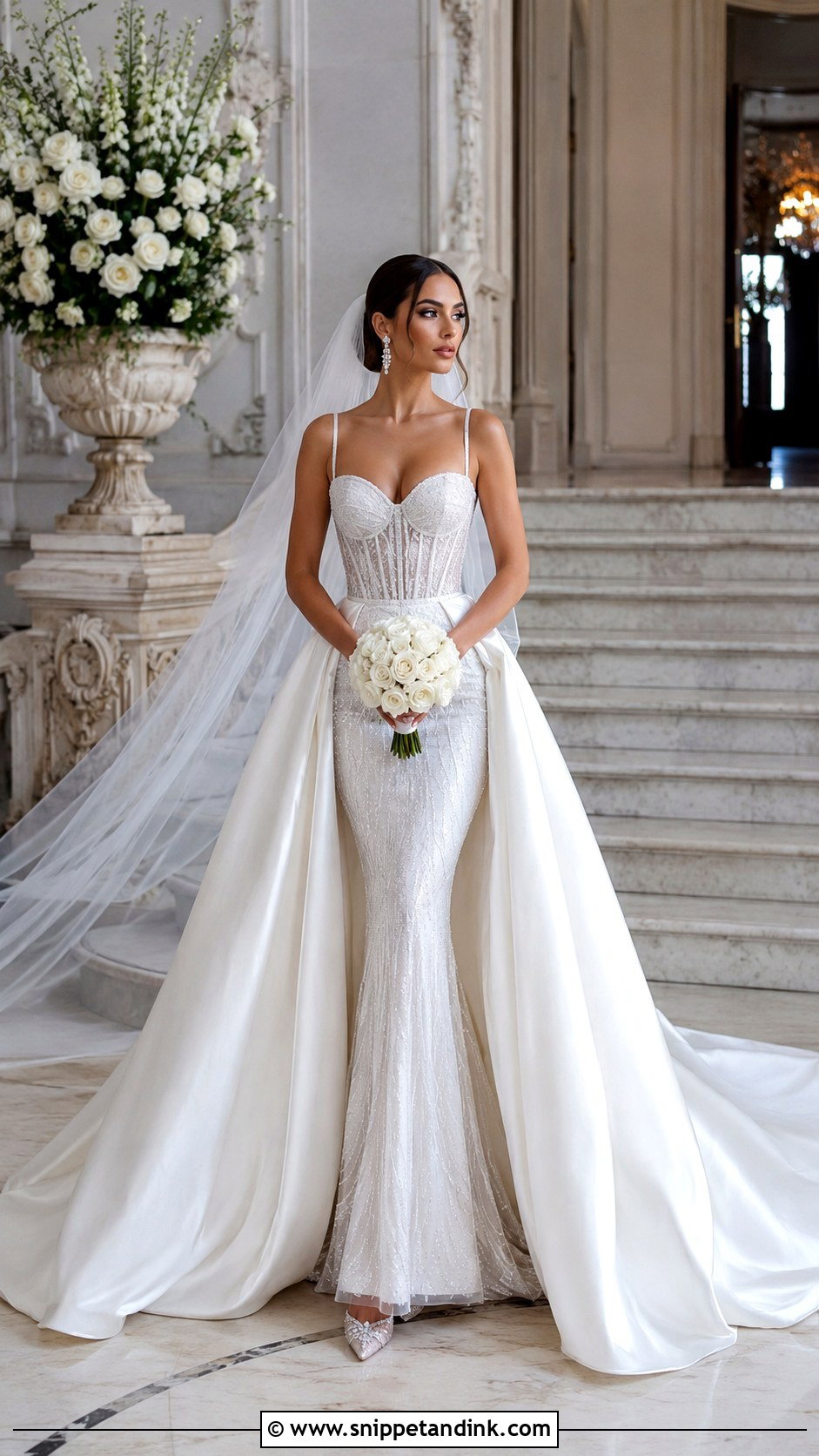
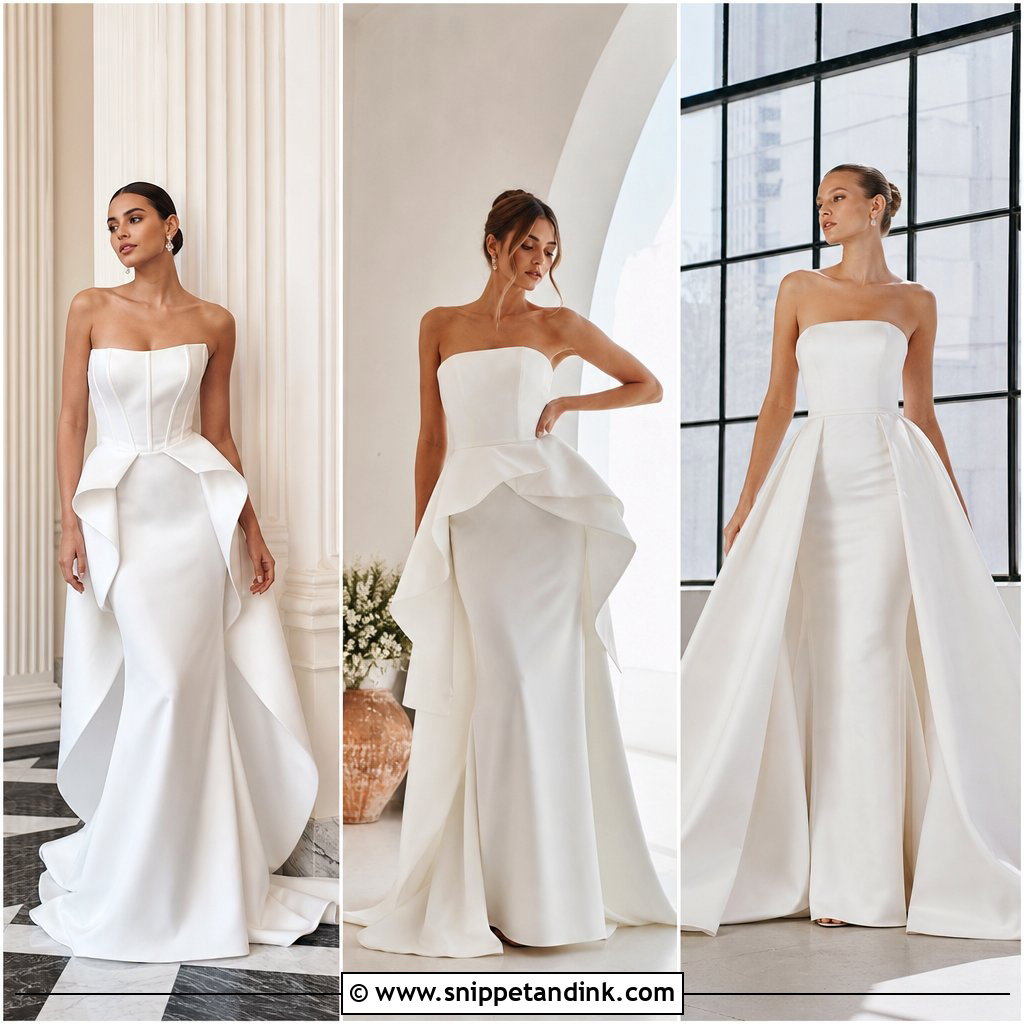
Why choose between fitted and full when a detachable overskirt gives you both? Start with a structured mermaid dress, corseted, in smooth satin or beaded fabric, and fasten a full overskirt at the waist for the ceremony to add volume and a sweeping train. Take it off for the reception. Crystal pumps, drop earrings and a refined bracelet work with both versions, and a long veil can give way to a sparkling comb later. Choose a sleek updo. The waistband where the overskirt attaches adds bulk, so I check that the closure lies flat and the mermaid underneath still looks clean once it’s removed. A compact white rose bouquet suits the change.
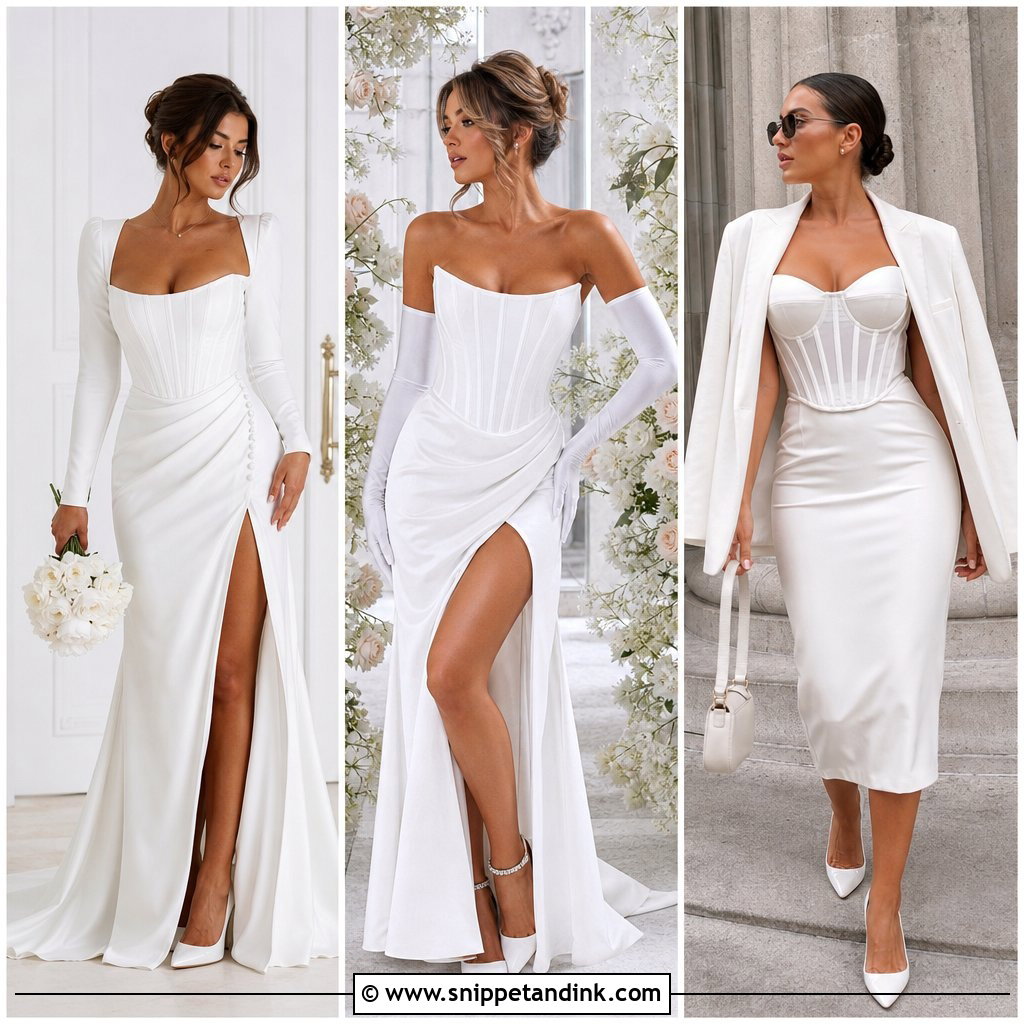
15. Cape Sleeve Wedding Dress
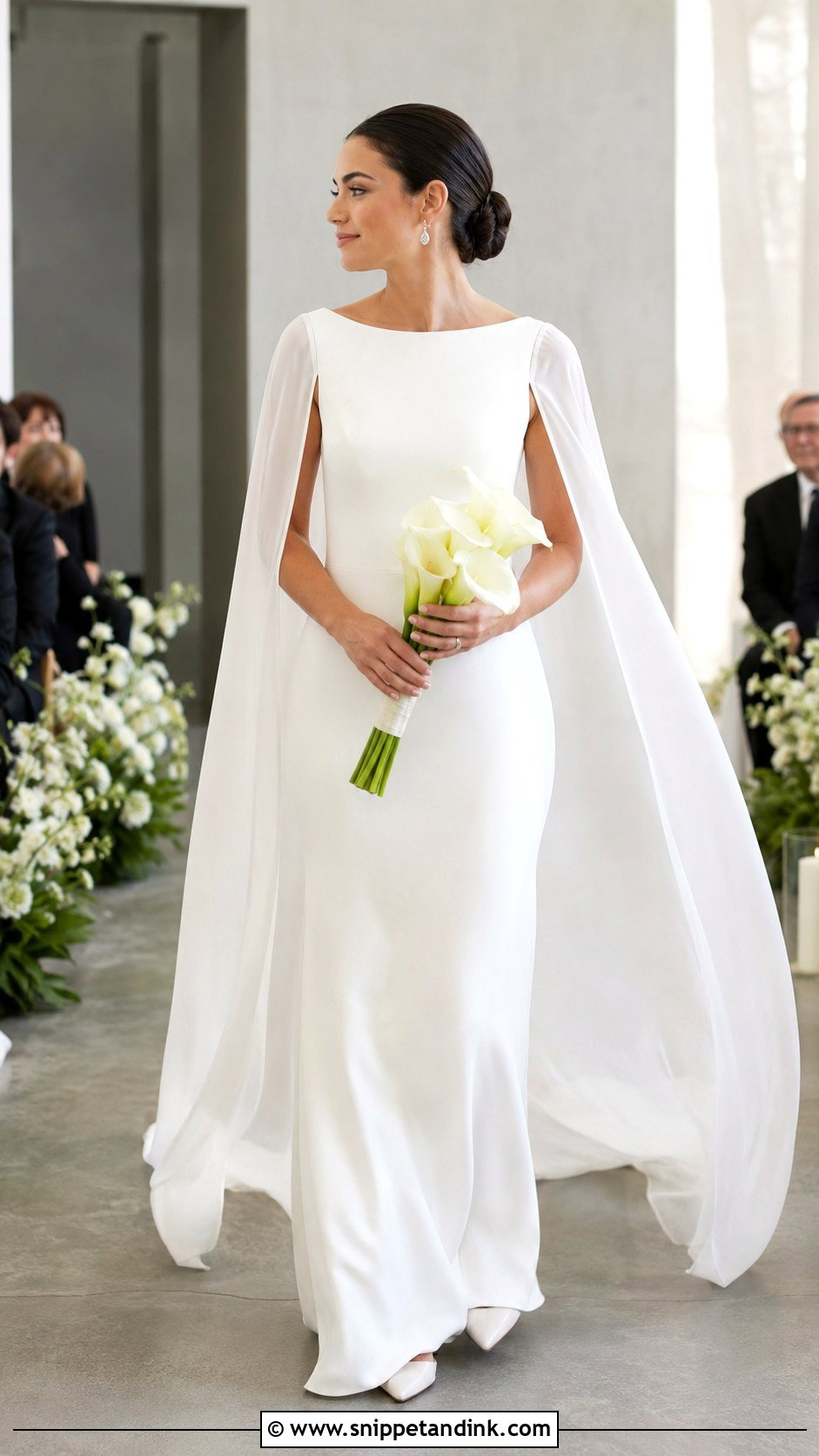
A cape gives you the drama of a veil without anything on your head. Choose a fitted crepe or satin gown with sheer cape panels attached at the shoulders and falling toward the floor, plain or finished with pearls, lace or subtle crystals. Pointed pumps, diamond earrings and a metallic clutch for later are enough. Keep the hair lifted, in a low bun, high bun or smooth ponytail, so the attachment point stays visible. A floor-length cape trails behind you on stairs and gets stepped on in crowds, so I like capes that unhook at the shoulder for the reception. Narrow calla lilies echo the long lines in venues with broad staircases.
16. Champagne Gold Wedding Dress
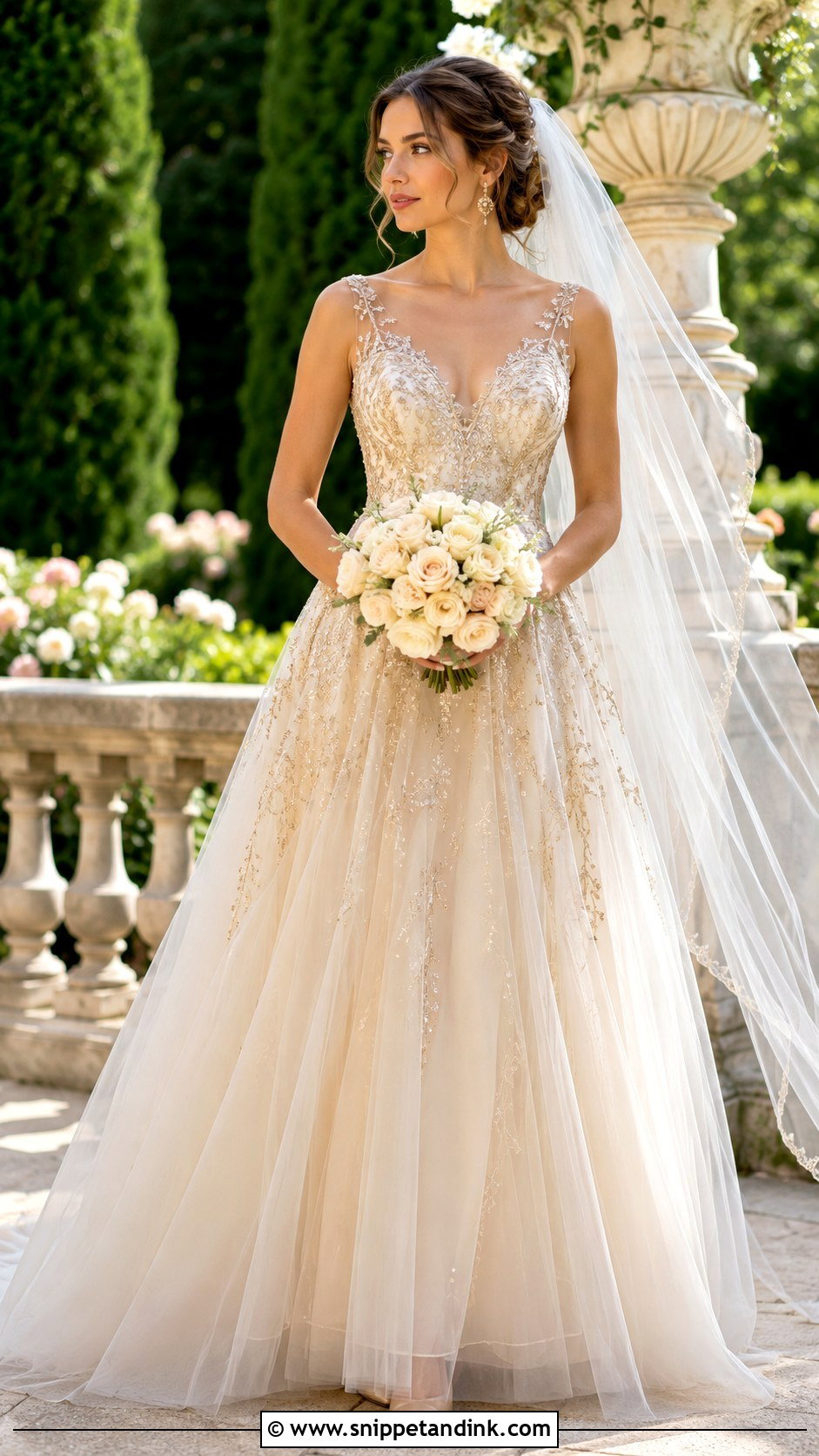
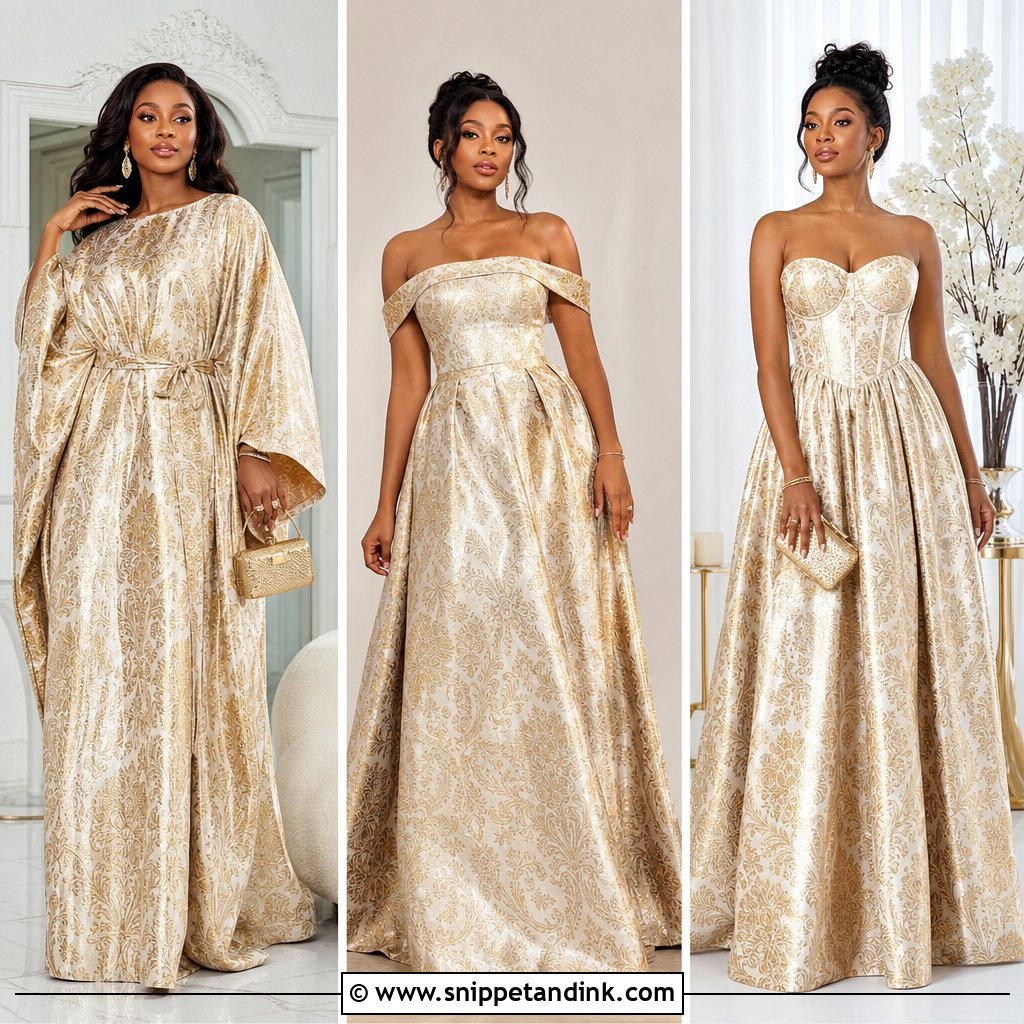
Champagne lining under ivory tulle, lace or beading warms the dress while keeping it unmistakably bridal, and the layered color makes the detail stand out. Soft gold earrings, neutral satin pumps and a delicate bracelet suit it. Avoid yellow-toned gold accessories, which make the champagne look dull beside them. Keep the veil sheer ivory and the bun smooth and low. Champagne is the shade I test most against skin, because next to fair, pink-toned skin it can disappear and next to olive or deeper skin it glows; hold it at your face in daylight before deciding. Cream roses, white orchids or pale blush flowers complete it, and golden-hour portraits suit it well.
17. Black And White Wedding Dress
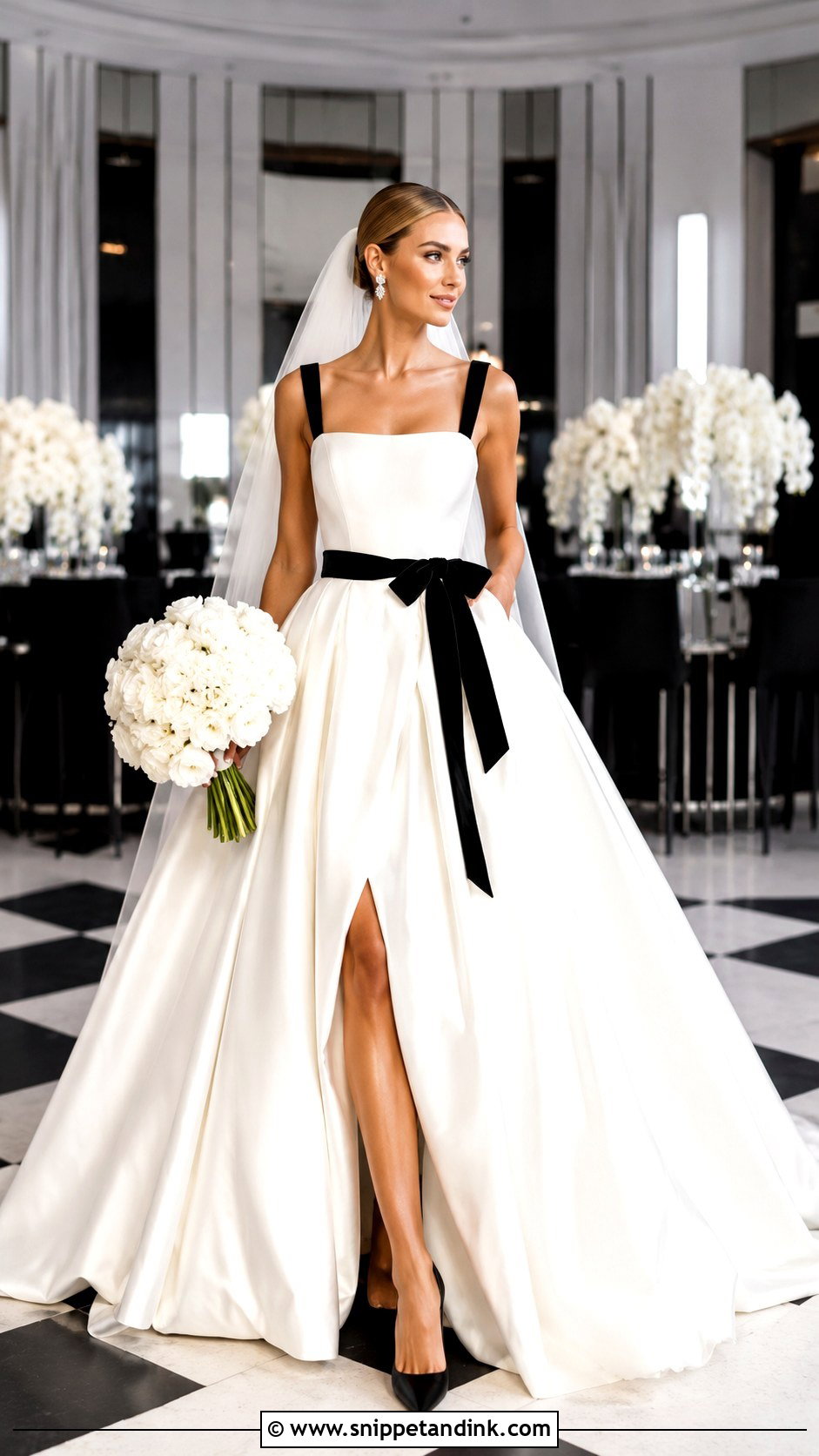
Black details on an ivory satin ball gown make a sharp contrast. Choose black velvet straps, a black waist bow or delicate black floral embroidery, but limit it to one or two places so it still looks bridal. Black pointed pumps, diamond earrings and a small ivory clutch with a thin black trim suit it, and a plain ivory veil softens the contrast. A fine black velvet ribbon in a sleek bun can echo the neckline. Velvet and satin crush differently, and velvet straps mark if they’re pressed, so I steam the satin and brush the velvet separately. An all-white bouquet keeps the palette clean in modern ballrooms and monochrome venues.
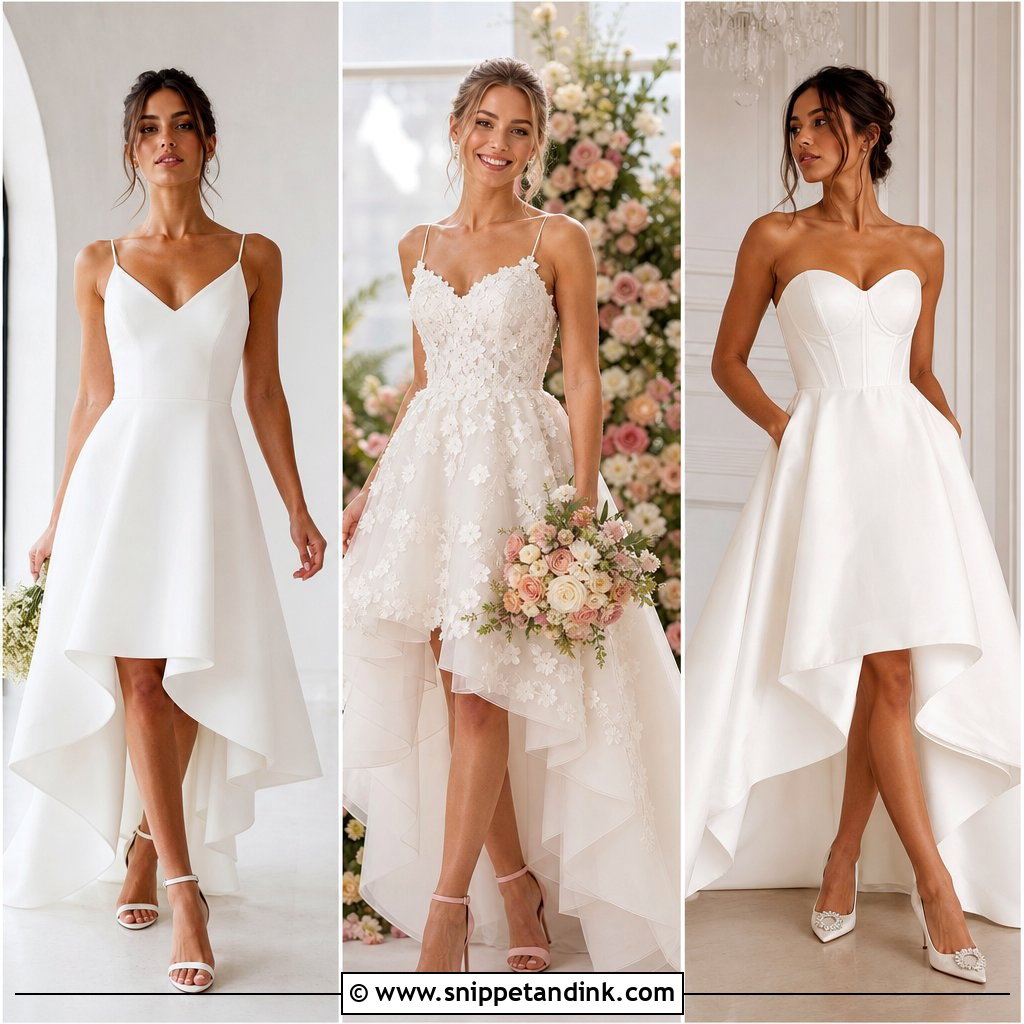
18. Bubble Hem Mini Wedding Dress
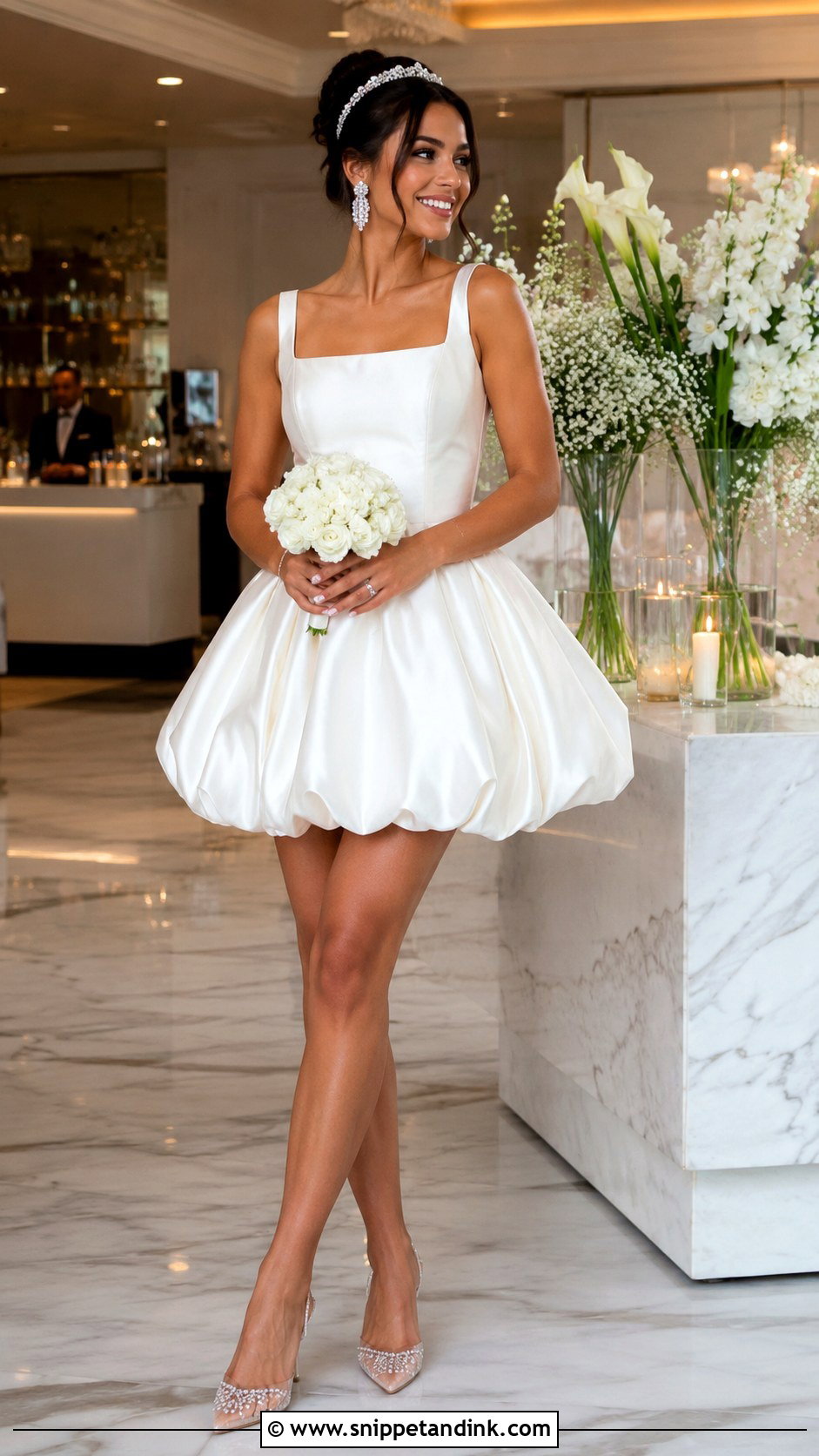
A bubble hem mini wedding dress is my favorite second look because it’s easy to dance in and still clearly bridal. Choose structured satin with a fitted bodice, a defined waist and a rounded skirt; the short length brings shoes into the outfit, so crystal pumps, embellished slingbacks or platform sandals all earn their place. Sparkling drop earrings and a small pearl clutch suit it, with a clean neckline. Swap the ceremony veil for a short bow, jeweled band or polished ponytail, and add sheer tights in cooler months. Bubble hems lose their shape if the inner lining is cut too long, so I check that the hem curls under evenly when you sit.
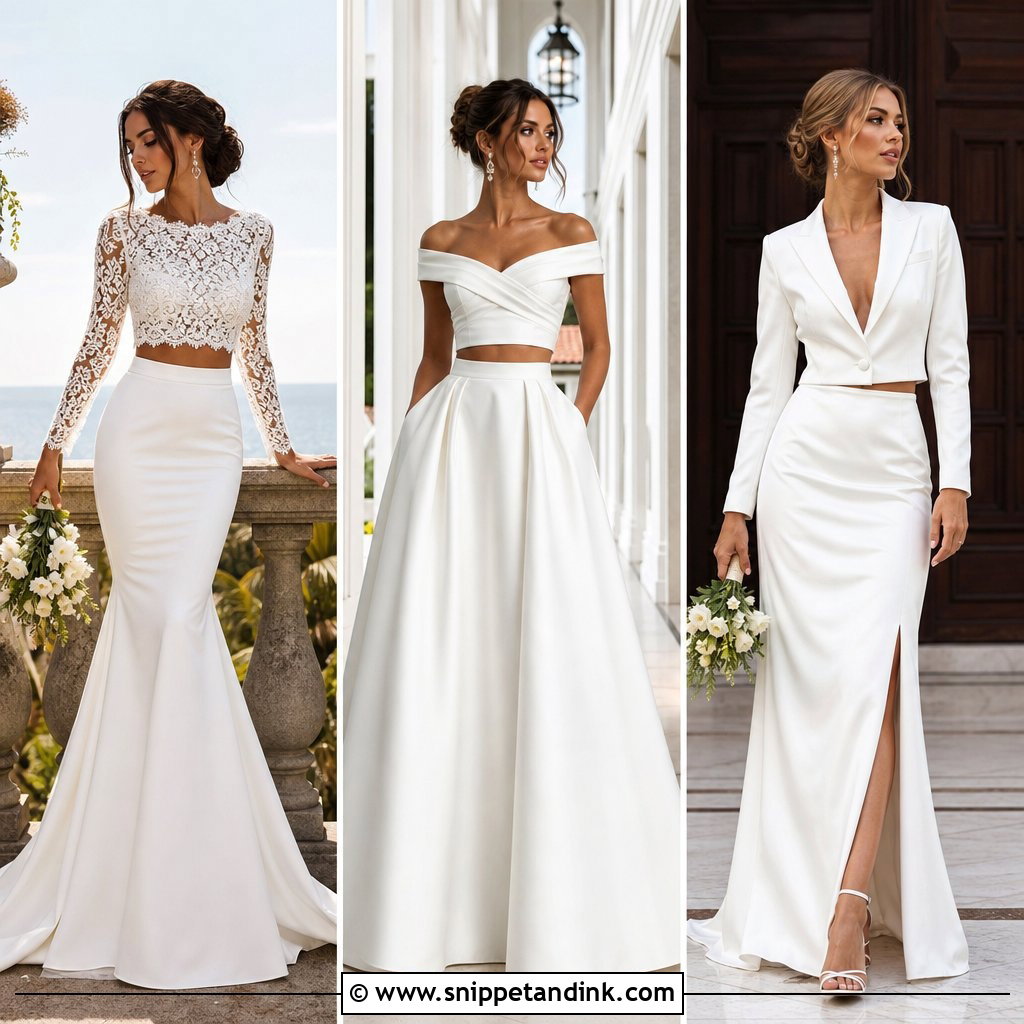
19. Two Piece Wedding Dress
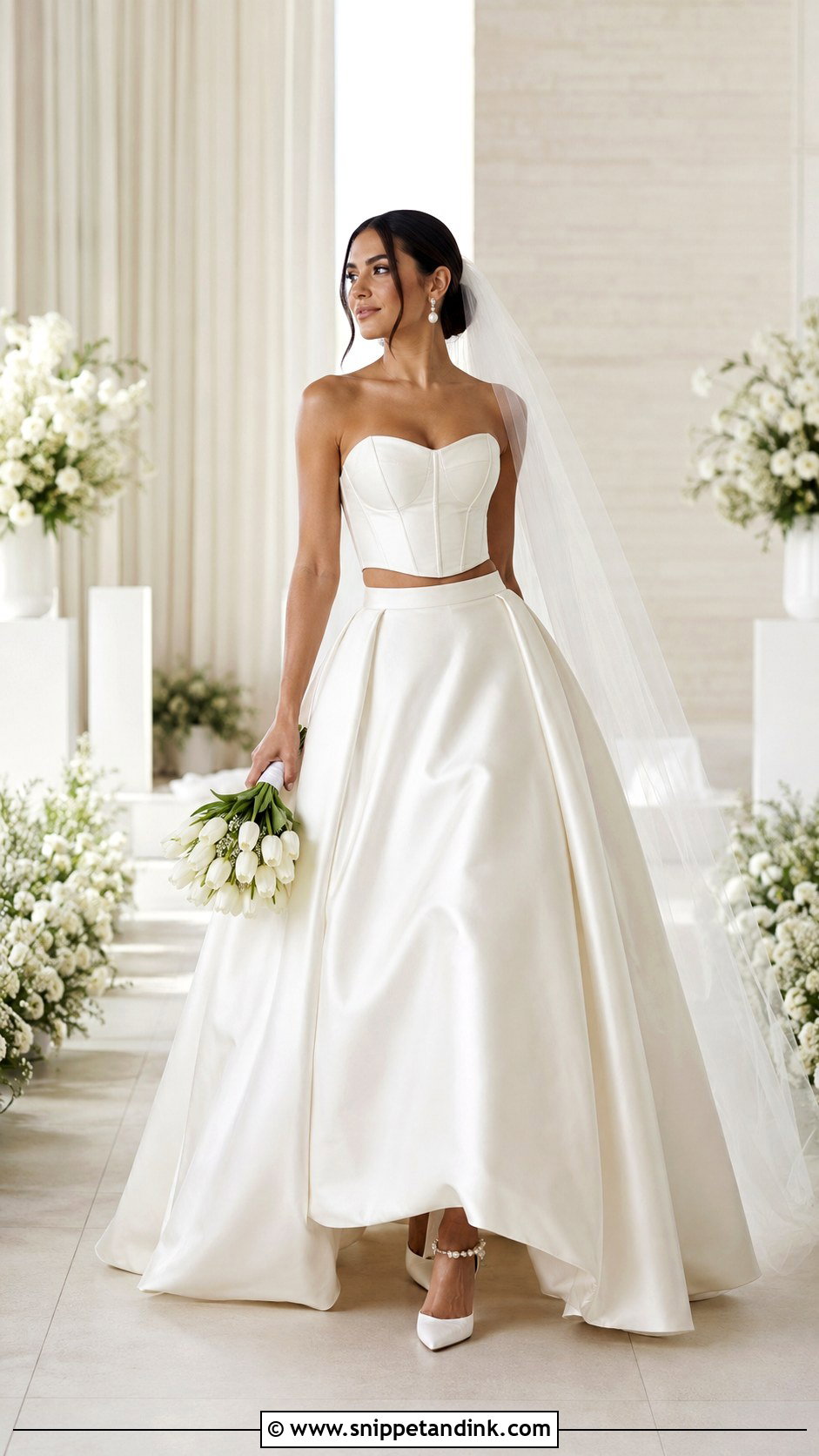
Separates look expensive only when both halves share the same fabric weight and finish. Pair a structured corset top with a high-waisted satin ball skirt, or a fitted lace top with a clean silk column skirt. A small gap of skin may show at the waist, which is fine if the proportions balance. Pointed pumps, pearl earrings and a long sheer veil finish it, with a polished bun or loose waves depending on the neckline. White tulips keep the bouquet out of the way. The advantage I mention to every bride considering separates is fit: tops and skirts can be sized independently, which solves a lot of alteration problems. Afterward you can swap the skirt for tailored trousers and wear the top again.
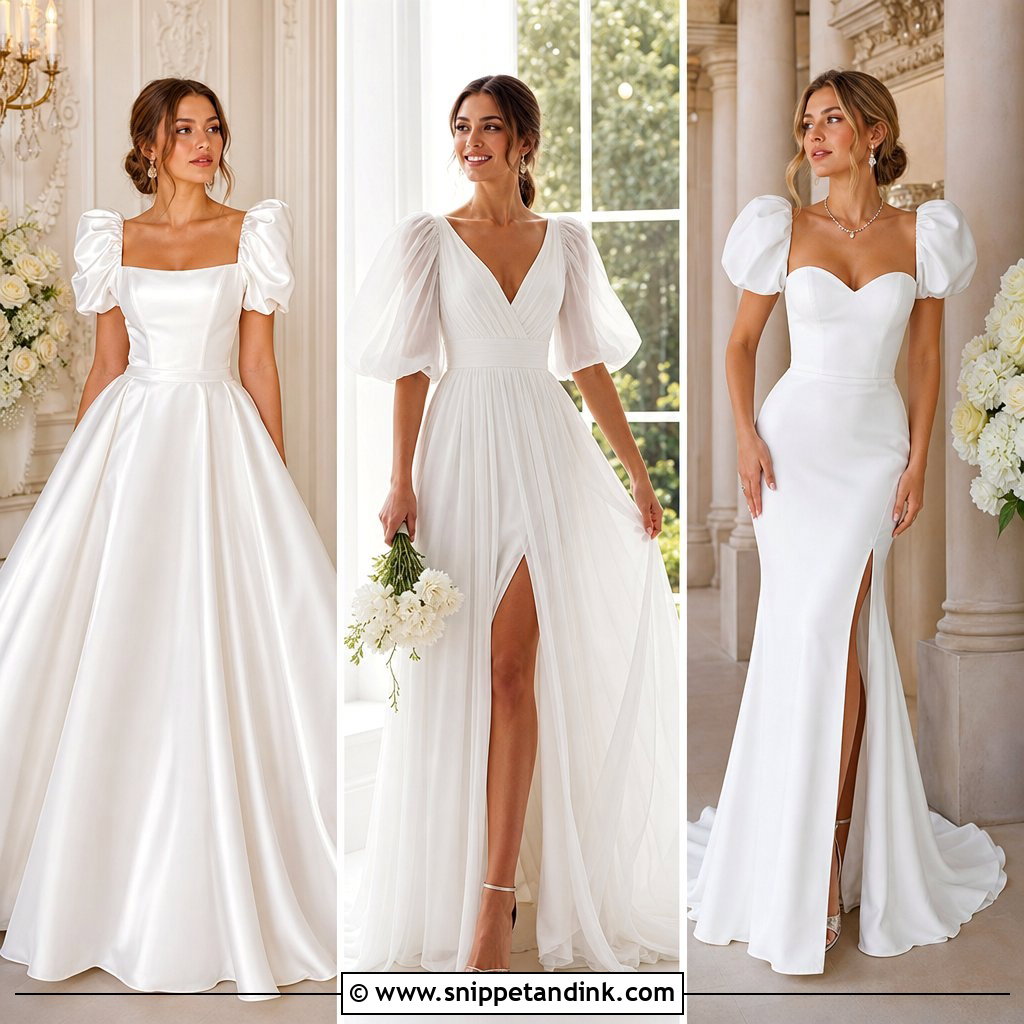
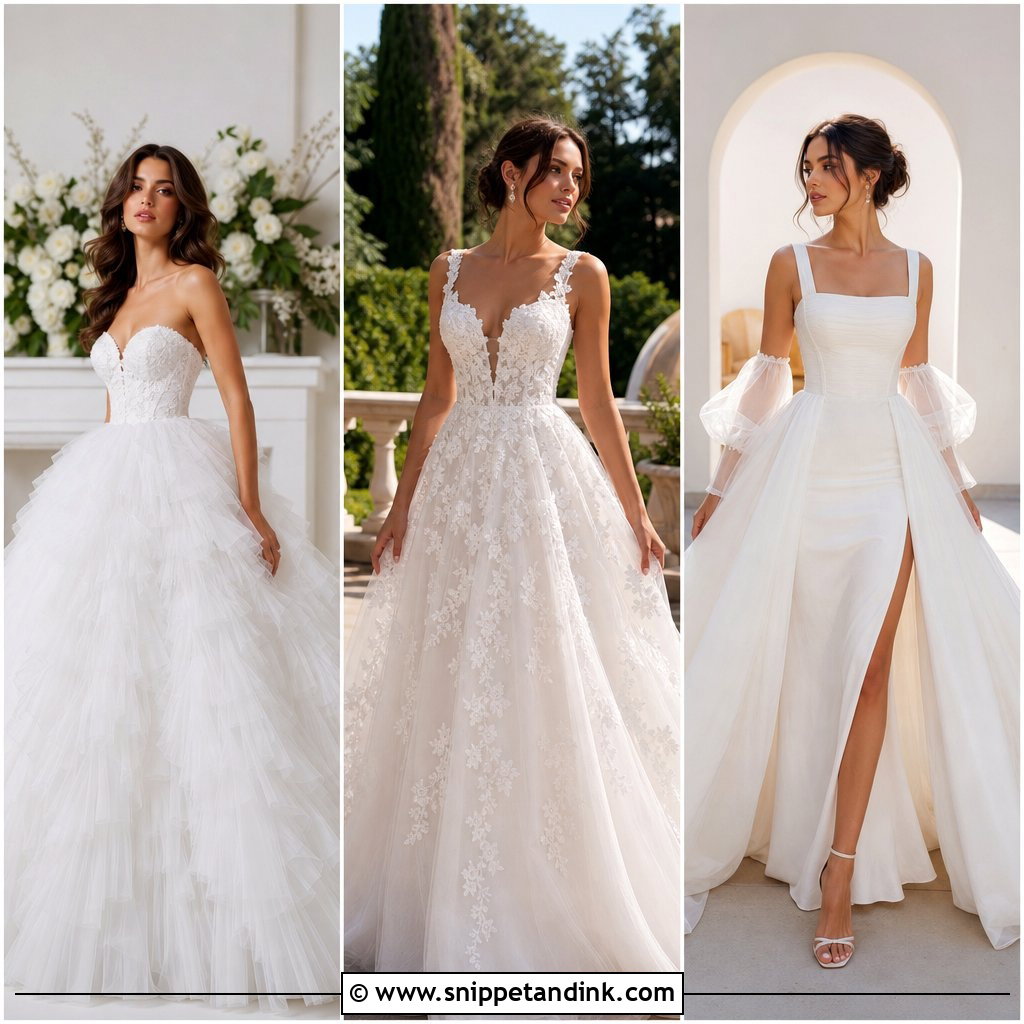
20. Convertible Wedding Dress With Detachable Skirt
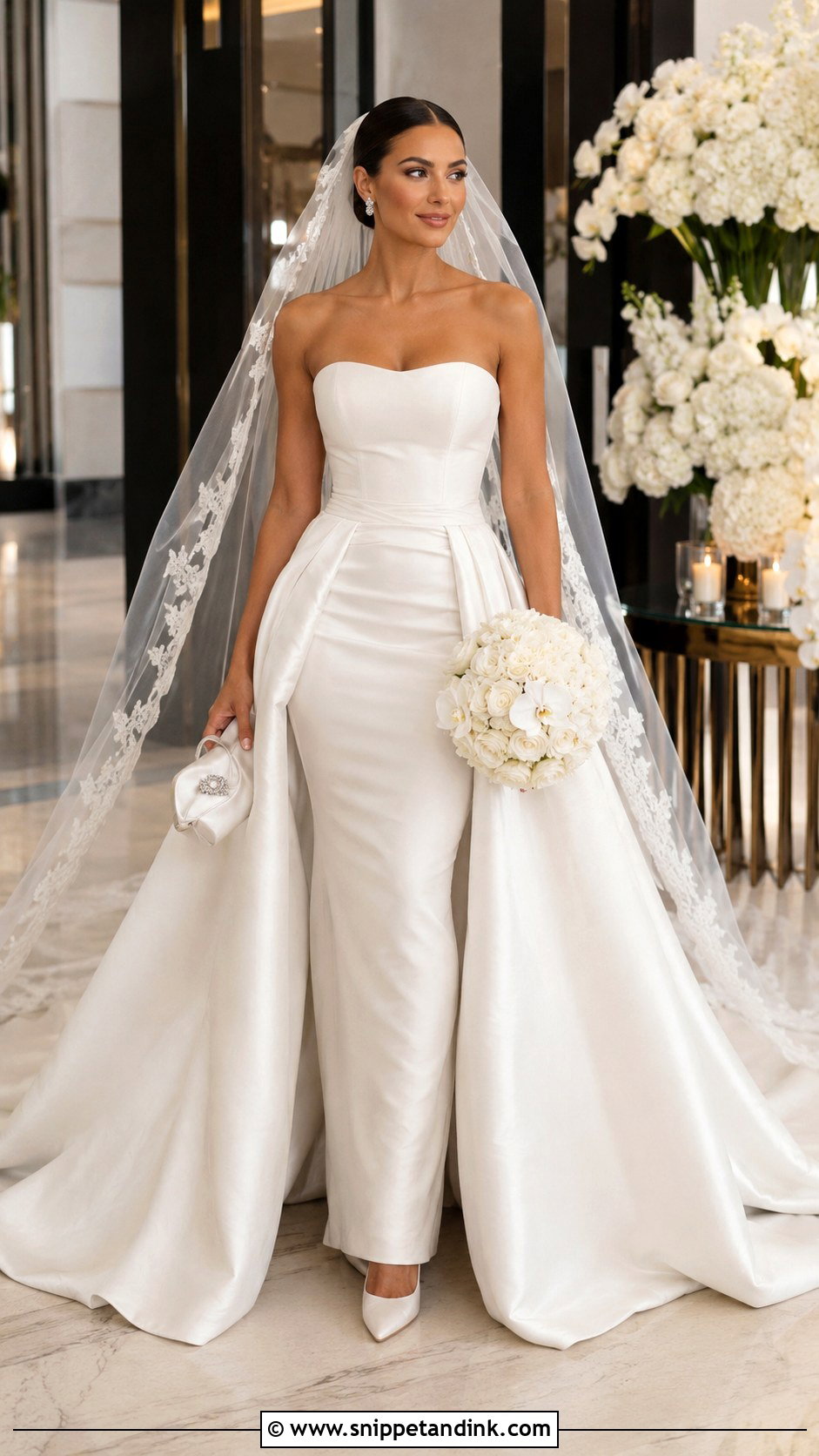
A convertible gown is a full outfit change without the change. Start with a fitted mini, column or mermaid base, then add a detachable full skirt for the ceremony in satin, Mikado or layered organza. With the skirt on, wear a cathedral veil, diamond earrings and pointed pumps; after the ceremony, remove the skirt and veil and add a jeweled hair accessory with comfortable crystal sandals. A small satin clutch holds reception essentials. Keep the bouquet structured and minimal so it suits both versions. I’d practice the removal at the final fitting with whoever will help you, because hooks and hidden snaps under a heavy skirt are fiddly the first time.
Can a Ball Gown Survive Dinner, Dancing and the Bathroom?
Structured ball gowns, beaded sleeves and long trains are heavy, warm and wide. They’re worth it, but I plan the day around them rather than hoping for the best.
Heat and weight
Satin, Mikado and multiple layers of tulle trap heat. For summer or a crowded room, I’d ask for a breathable cotton lining in the bodice, carry blotting papers and keep a chair nearby between portraits. If the skirt feels heavy at the fitting, it will feel heavier by evening, so ask the shop to remove a petticoat layer or lighten the beading before the final fitting, not after.
The bathroom question
Every bride in a ball gown asks it eventually. The easiest method is to face the toilet, gather the skirt in front of you and have one trusted person help hold the layers. Practice once at home in the dress or a full slip. For a mermaid or column, a strapless bodysuit that unfastens at the base saves a lot of time.
Getting there
Measure the car door before the day. A wide skirt needs a back seat to itself, and satin should be lifted rather than sat on so it doesn’t crease across the hips. I bring a steamer and a clean sheet to lay over the seat.
Decide What Guests Should Notice First
Luxury in a wedding dress can come from shape, fabric, tailoring, sparkle or a single bold accessory, and you rarely need all five. Start by naming the one feature you want guests to see first, whether that’s a sculpted waist, a lace train, a crystal bodice, a detachable skirt or a flash of black. Then choose shoes, jewelry, hair and veil that support it. I’d also make comfort part of the decision from the first appointment, because a gown you can sit, eat and dance in will always look better in the late photos than one you’re enduring.
You'll Like These Ideas:


Leave a Reply