
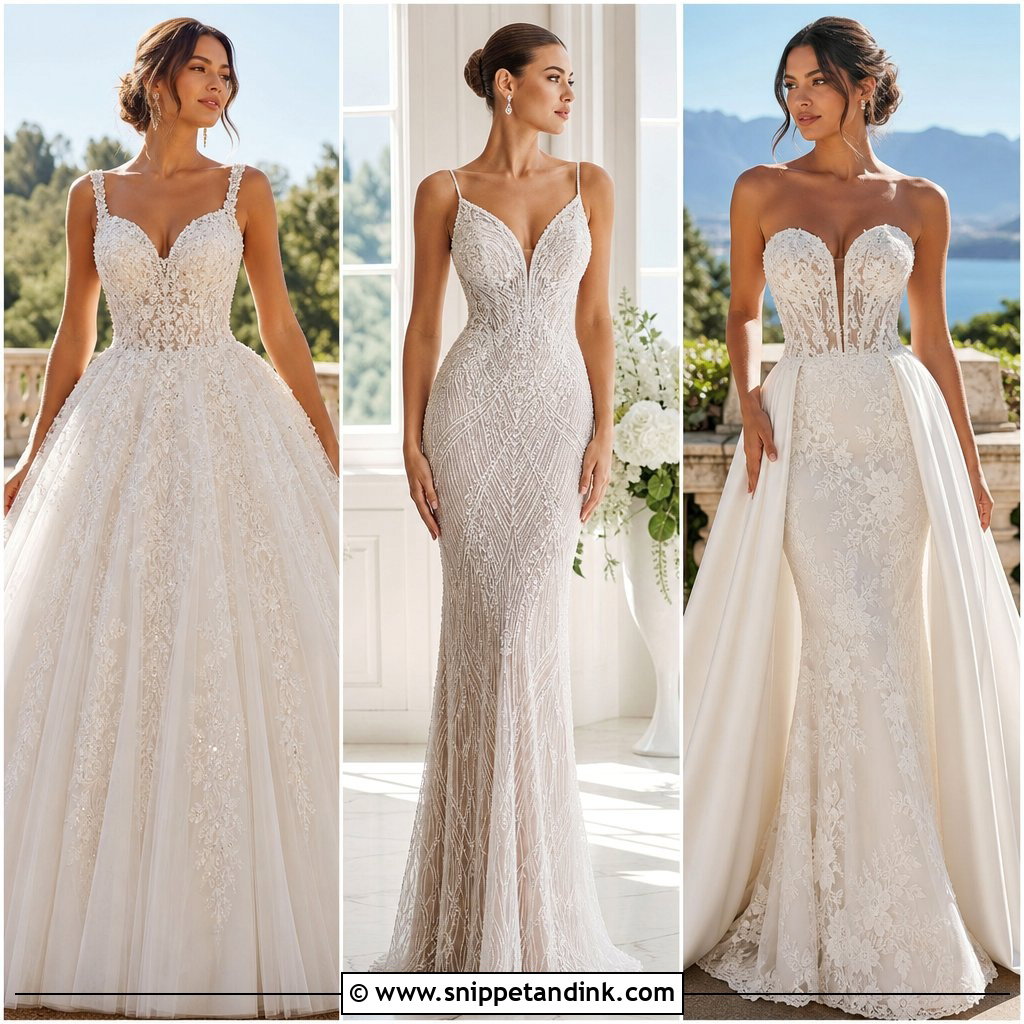
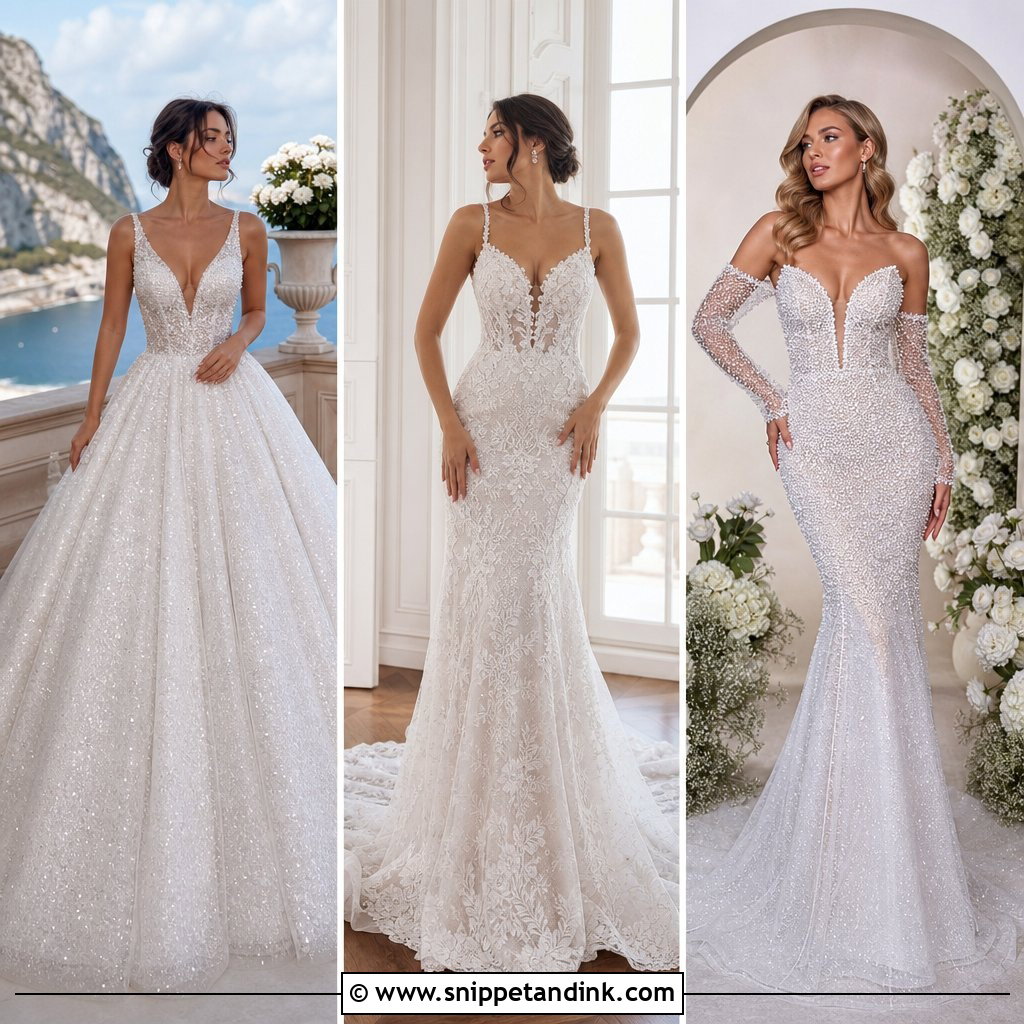
A statement gown isn’t about the widest skirt or the longest train. In fittings, the dresses that work hardest are built around one strong idea, a sculpted neckline, a corset, a bow or a train, with everything else stepping back to let it speak. Right now I’m seeing plenty of sculptural draping, Basque waists, oversized florals, big bows, detachable layers and lace reworked into something fresher. The venue matters more than most brides expect: a structured mikado ball gown that commands a ballroom can look stiff on a beach, and a feather-trimmed column can disappear in a big cathedral. Below are twenty statement looks, each with how I’d style it and what I’d check at fittings before you commit.
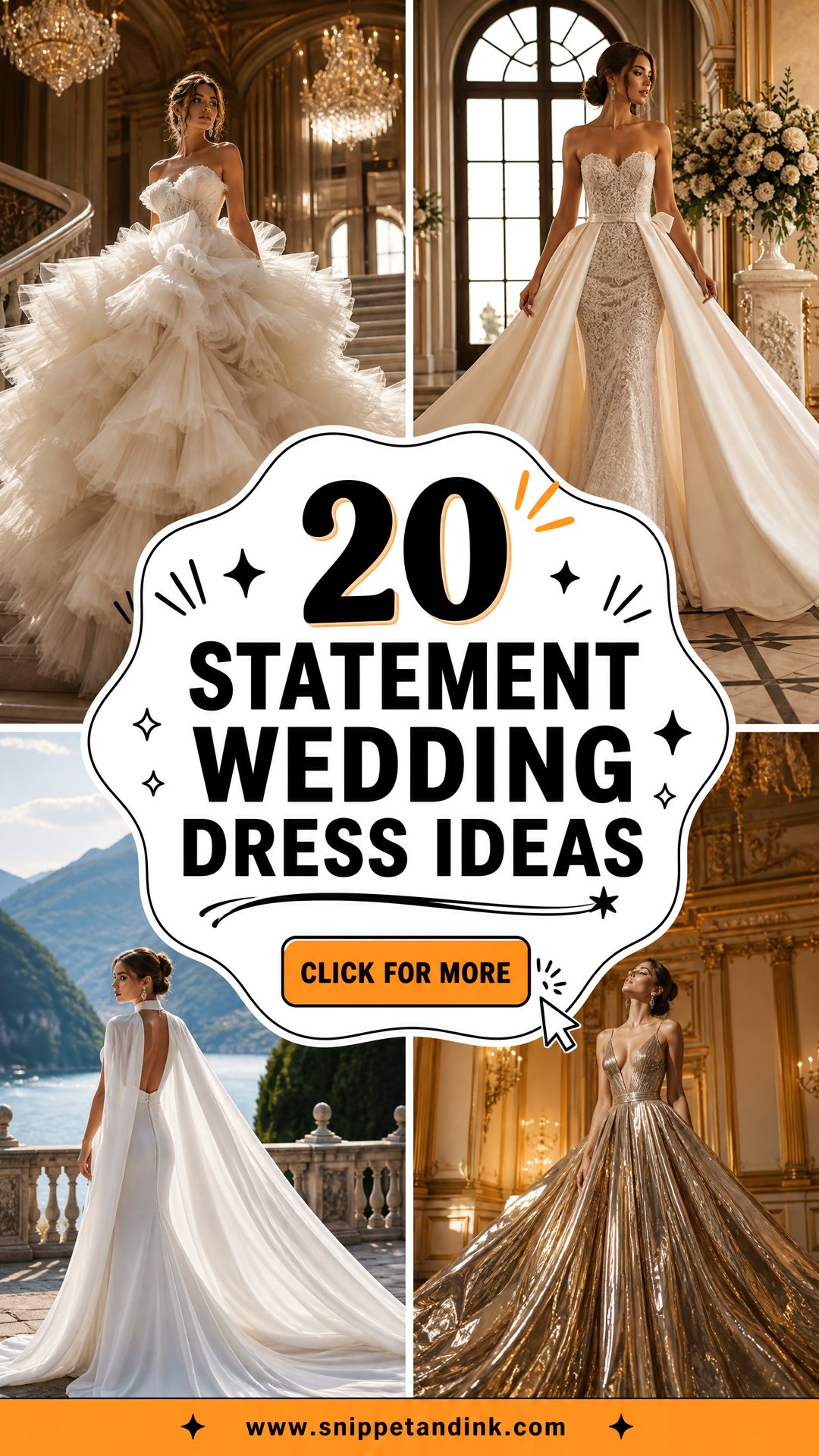
Deciding Where the Drama Sits Before Your First Appointment
Most brides who come to me for a statement dress arrive with a folder of twenty different ideas. That’s normal. The first job is to pick the one feature you’d want described back to you after the wedding, because a gown can carry one hero element comfortably, two if they’re related, and almost never three.
What to bring to try-ons
- The shoes you expect to wear, or the same heel height. Hem length and the way a train falls change with every centimetre.
- A strapless bra or shapewear in your skin tone, since a structured bodice shows every line underneath.
- Photos of the venue interior and the aisle. A ballroom and a barn need very different scale.
- One person who will tell you honestly how the dress looks from the back.
Statement gowns are usually made to order, and boutiques commonly quote several months for delivery, then another two or three months for alterations. Corsets, detachable overskirts and capes add fitting appointments, so I’d start shopping around ten to twelve months out if you can. Before paying the deposit, ask whether the bustle is included in the alteration quote and whether hemming tiers or ruffles is charged separately, because with layered skirts it often is.
1. Sculptural Satin Wedding Dress
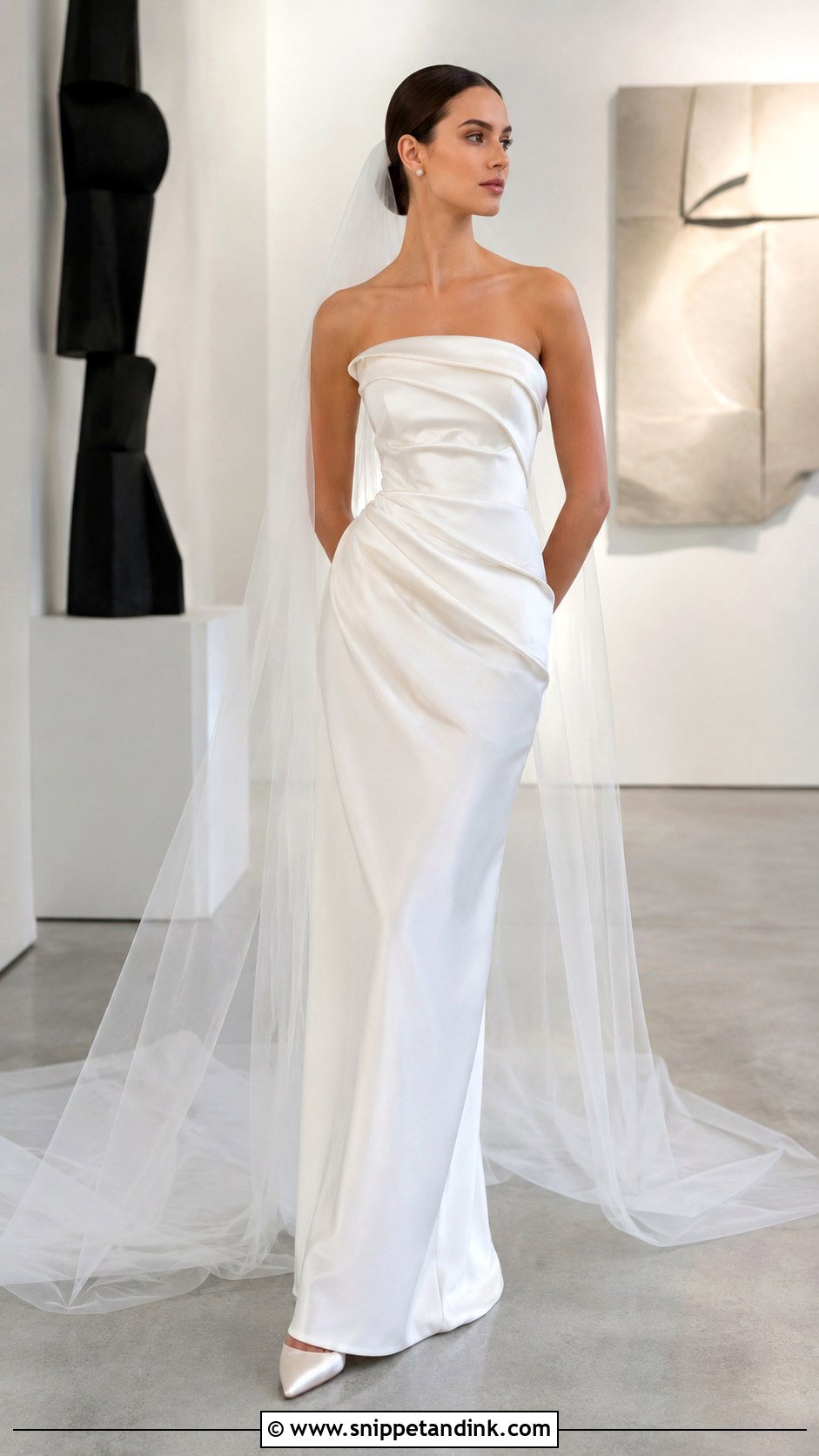
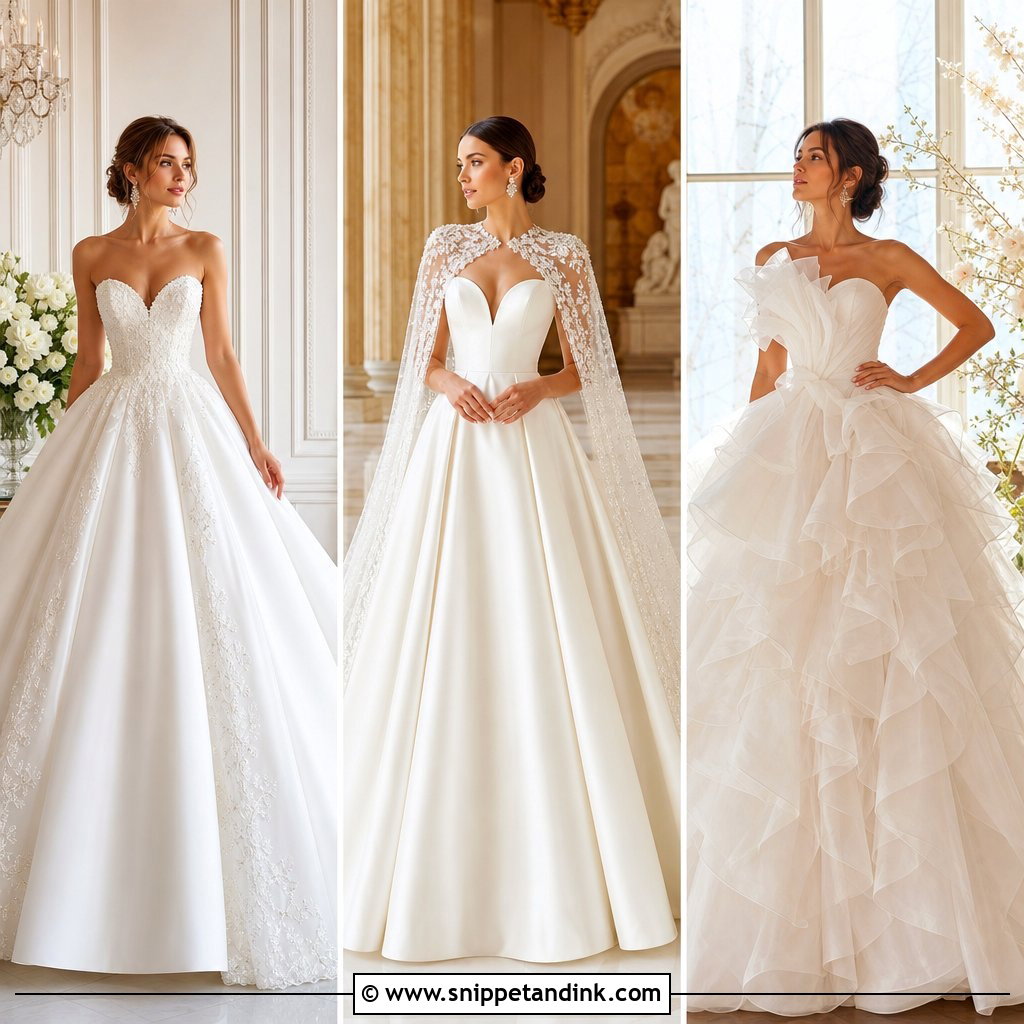
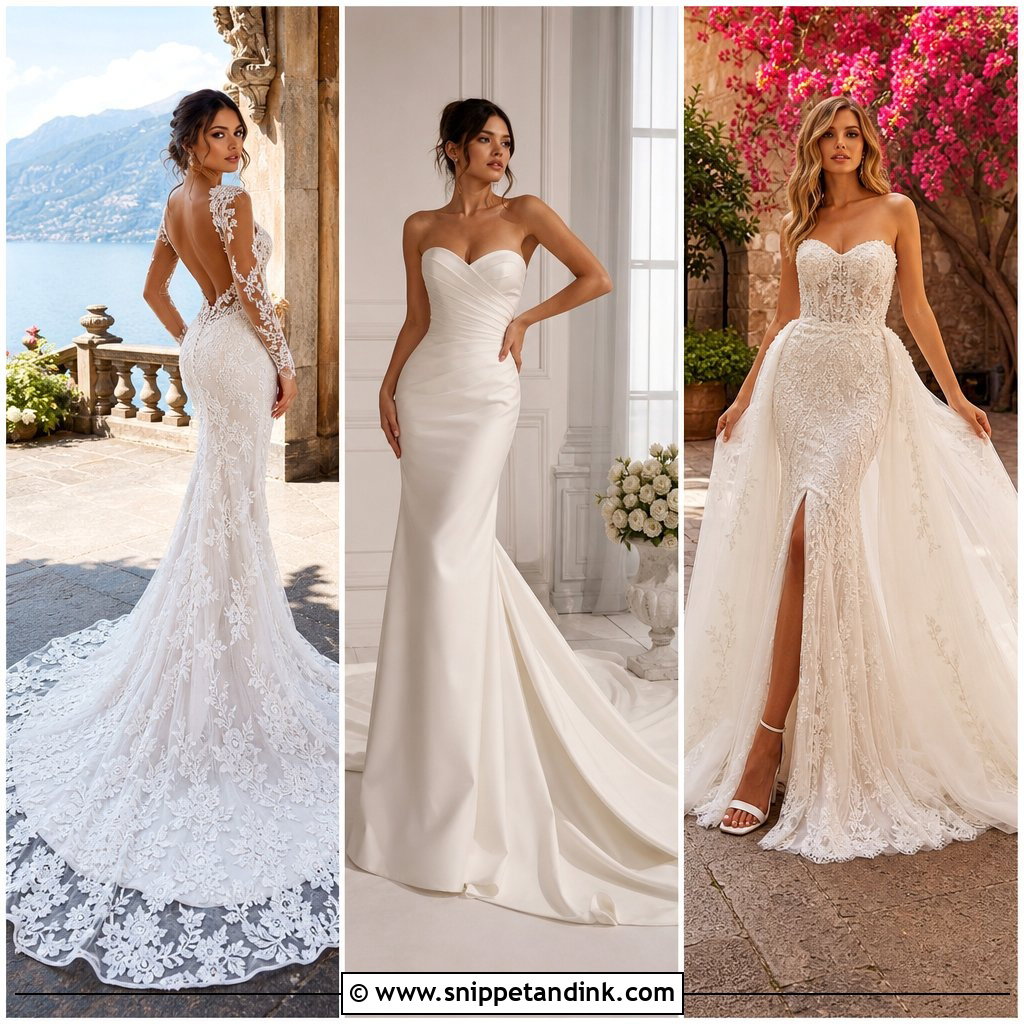
Here the drama comes from shape, not decoration. A folded bodice, an architectural neckline or draping set across one hip does the talking. Duchess satin and mikado are the fabrics I reach for because they’re heavy enough to hold a crisp fold instead of collapsing into soft creases by the reception. The catch is that those same fabrics show every tailoring mistake, so a seam pulling by a few millimetres is visible from the back row. A fitted column reads modern, a structured ball gown grander. Keep styling clean with polished pumps, pearl or diamond studs and a sleek bun so the neckline stays visible. With an elaborate back, I’d pick a sheer cathedral veil with no lace edging.
2. Corset Ball Gown Wedding Dress
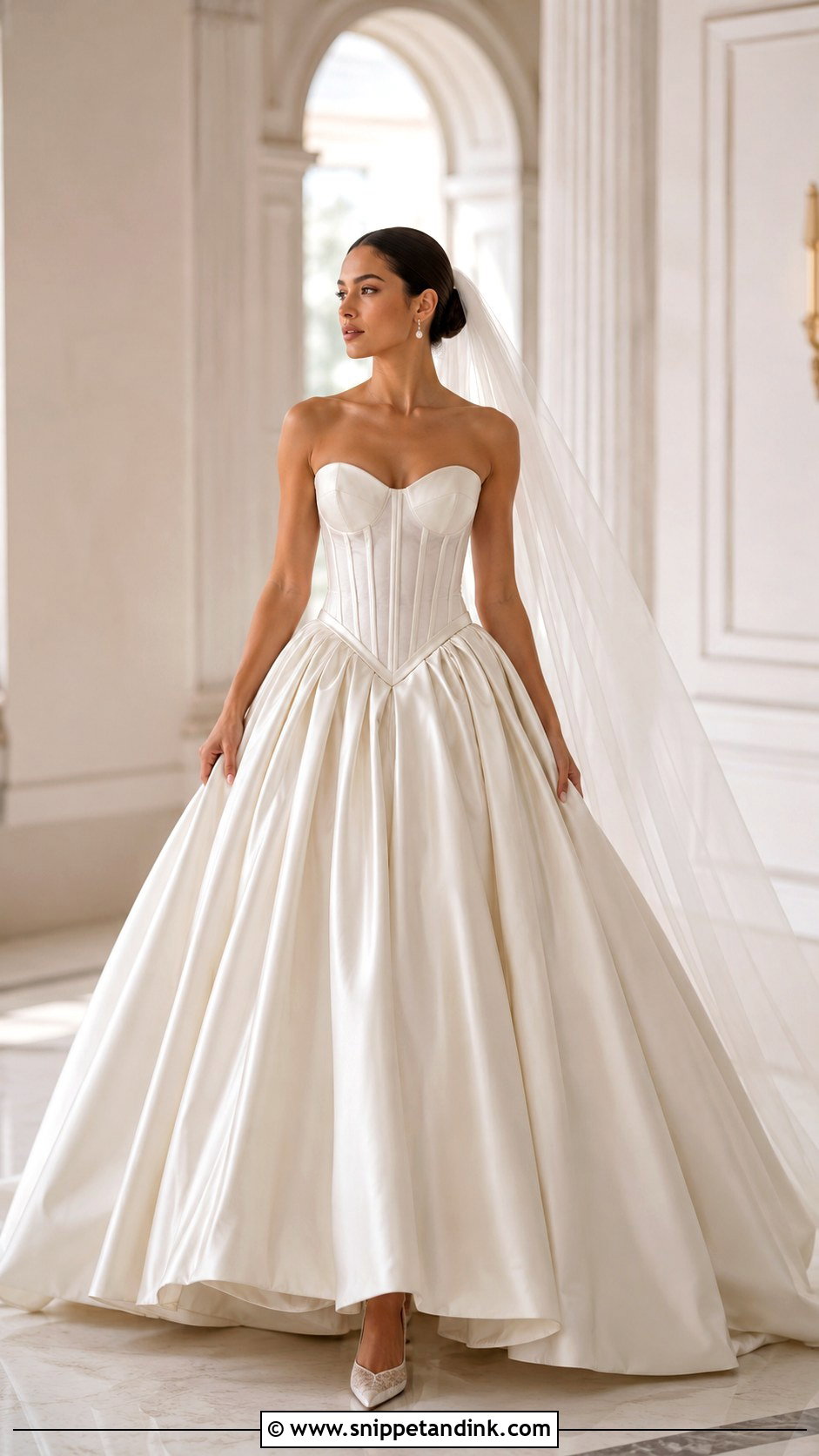
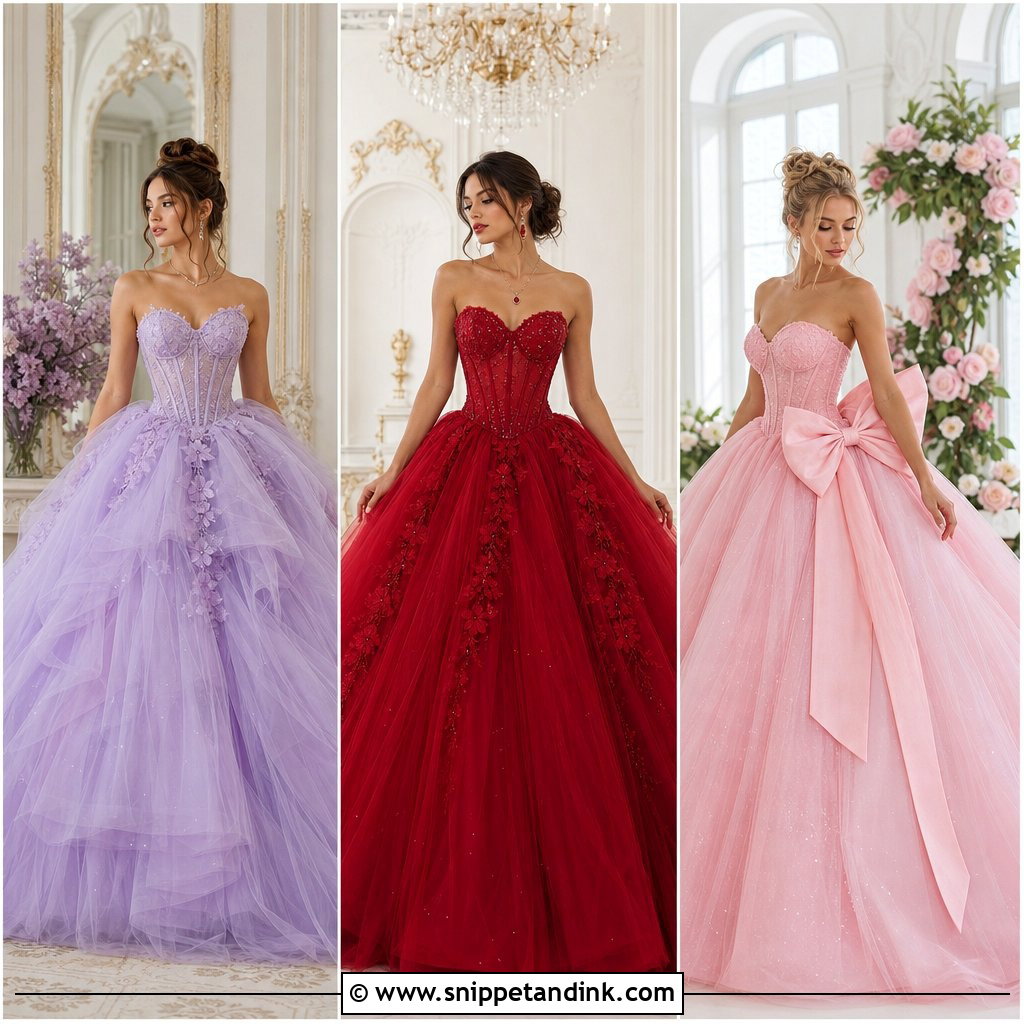
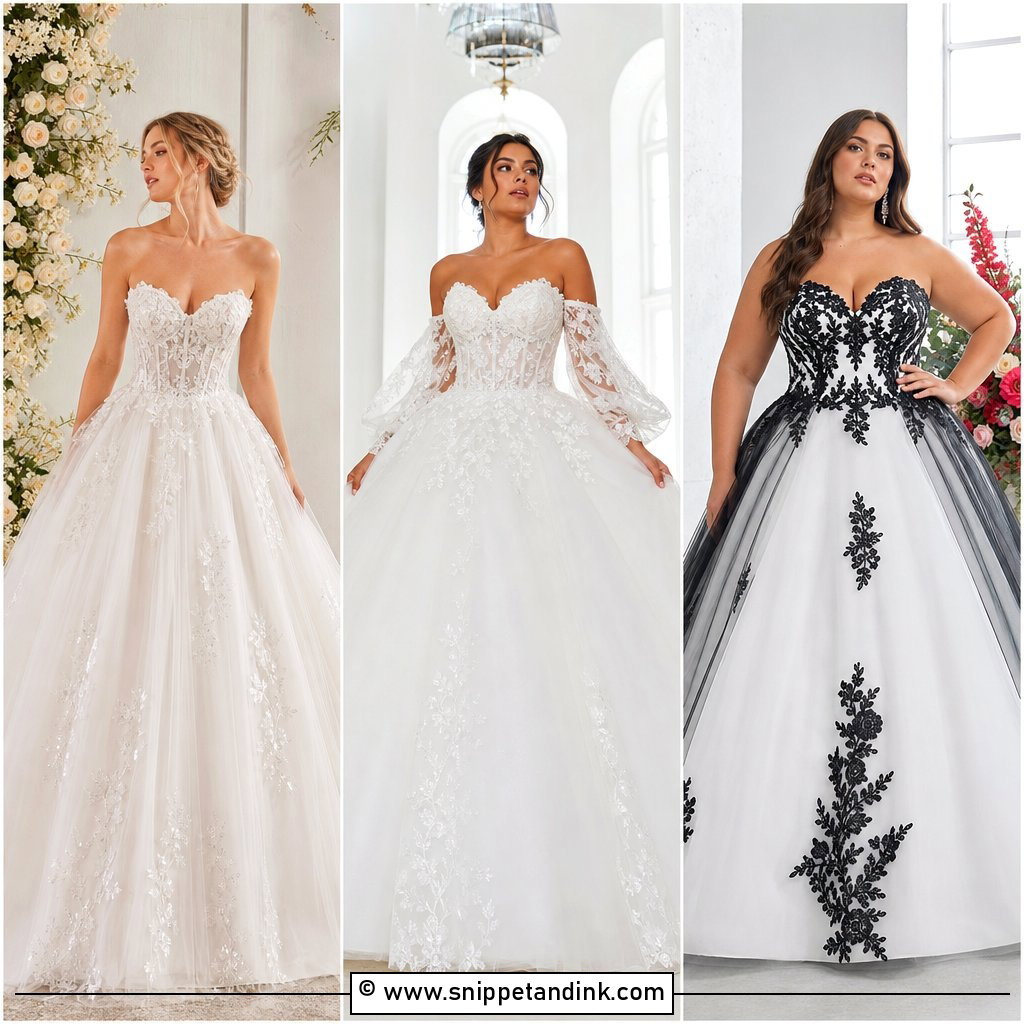
This is the most commanding silhouette I fit, and also the one that needs the most honest fittings. The boned bodice defines the waist and the full skirt balances it. Visible boning looks contemporary; a covered corset is softer and more traditional. A Basque waist, dipping into a V below the natural waist, lengthens the torso, which helps if you’re short-waisted. At the second fitting I ask the bride to sit, reach up and take a deep breath. If she can’t breathe into her ribs, the lacing needs easing, because a corset only feels tighter after a meal and three hours of standing. Style it with pointed satin heels, a fine tennis bracelet, drop earrings that echo the bodice and a long plain veil. Detachable off-the-shoulder straps or sheer sleeves add coverage if you need it.
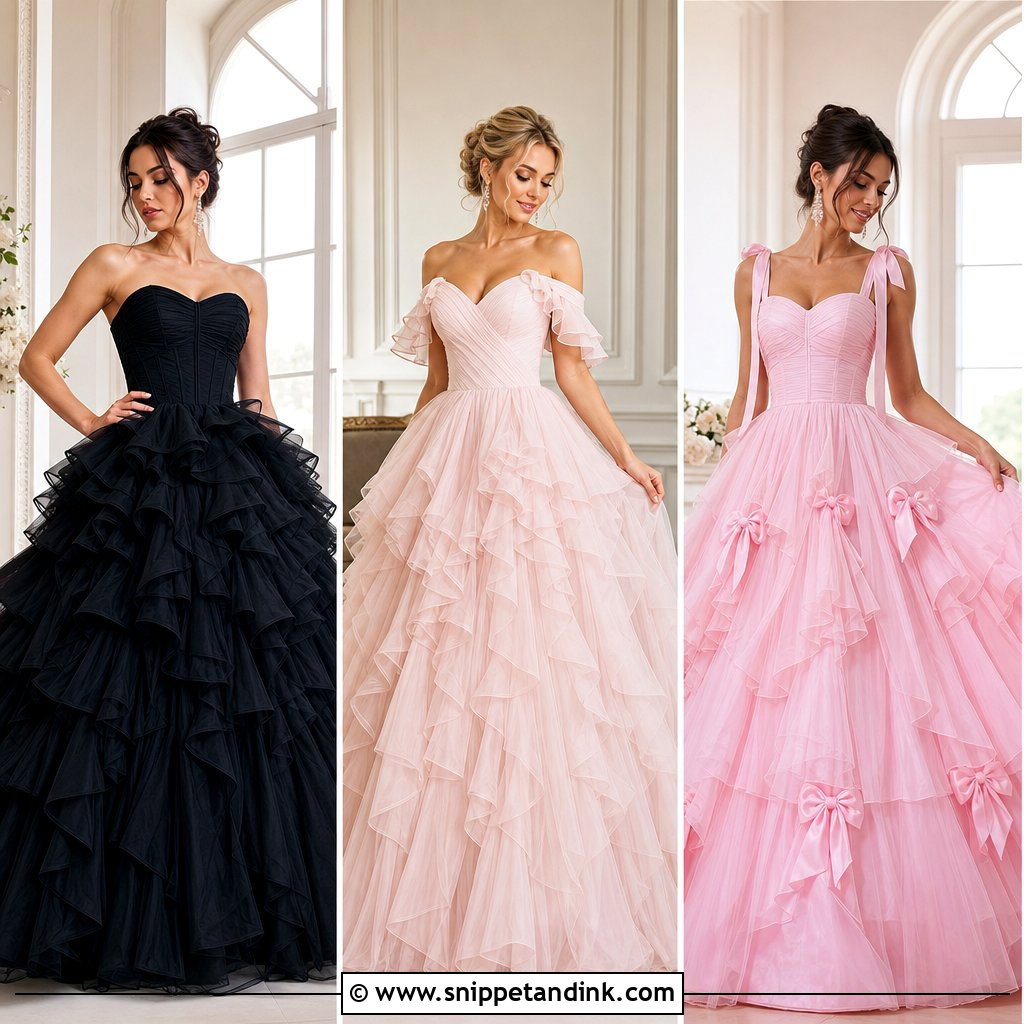
3. Oversized Bow Wedding Dress
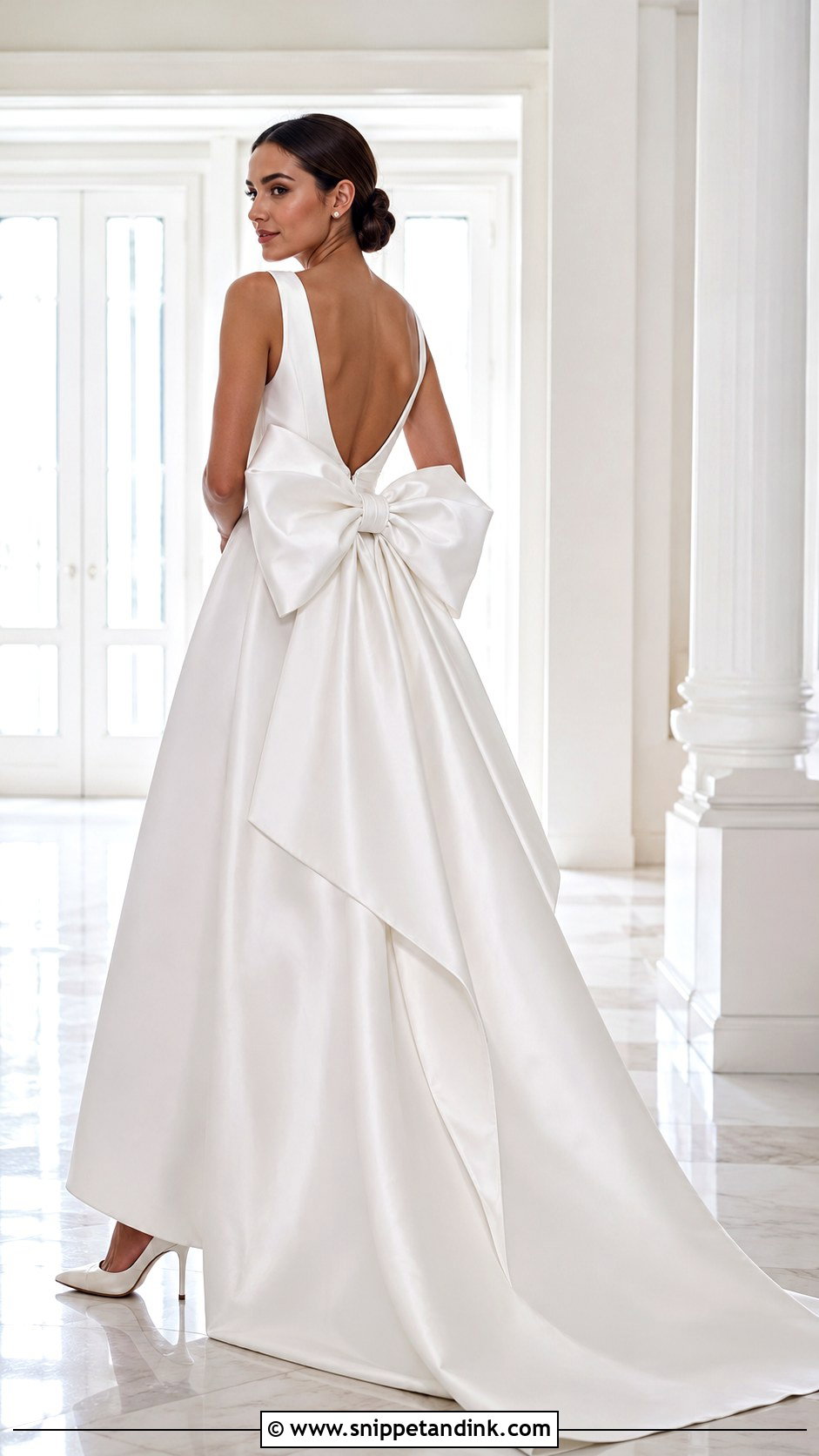
Oversized bows live or die on fabric. In silk faille, mikado or heavy satin the loops stand up; in thin crepe they droop by the time you’ve sat through dinner. The bow can sit at the back waist, sweep across a shoulder or sculpt the neckline, and a streamlined column or A-line keeps it from looking busy. I’d skip a long veil over a dramatic back bow, since it flattens the loops and hides the one thing you chose the dress for. A short blusher, a slim headband or a small comb works better, with minimal earrings, pointed heels and a low bun or sleek ponytail. Ask the seamstress whether the bow has interfacing inside. Without it, the shape won’t survive the first time you sit back in a chair.
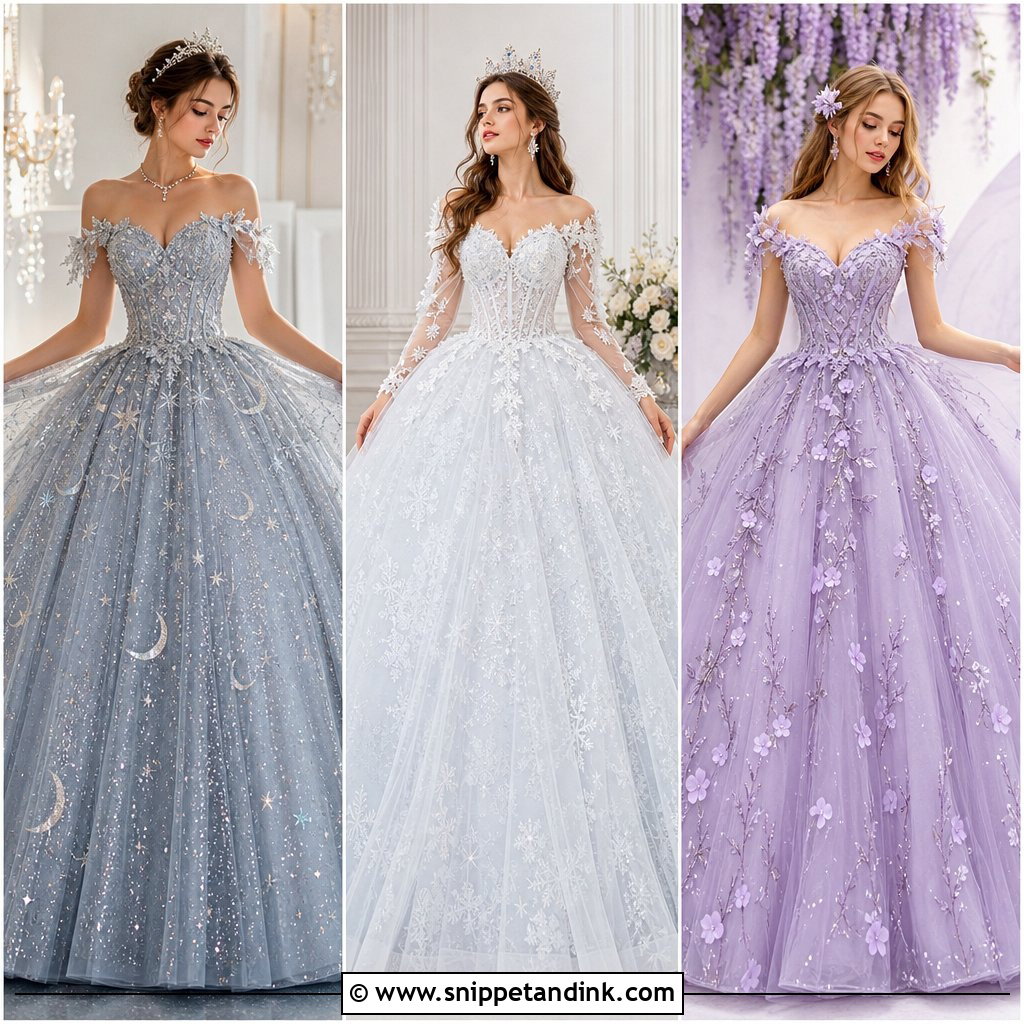
4. Floral Appliqué Wedding Dress
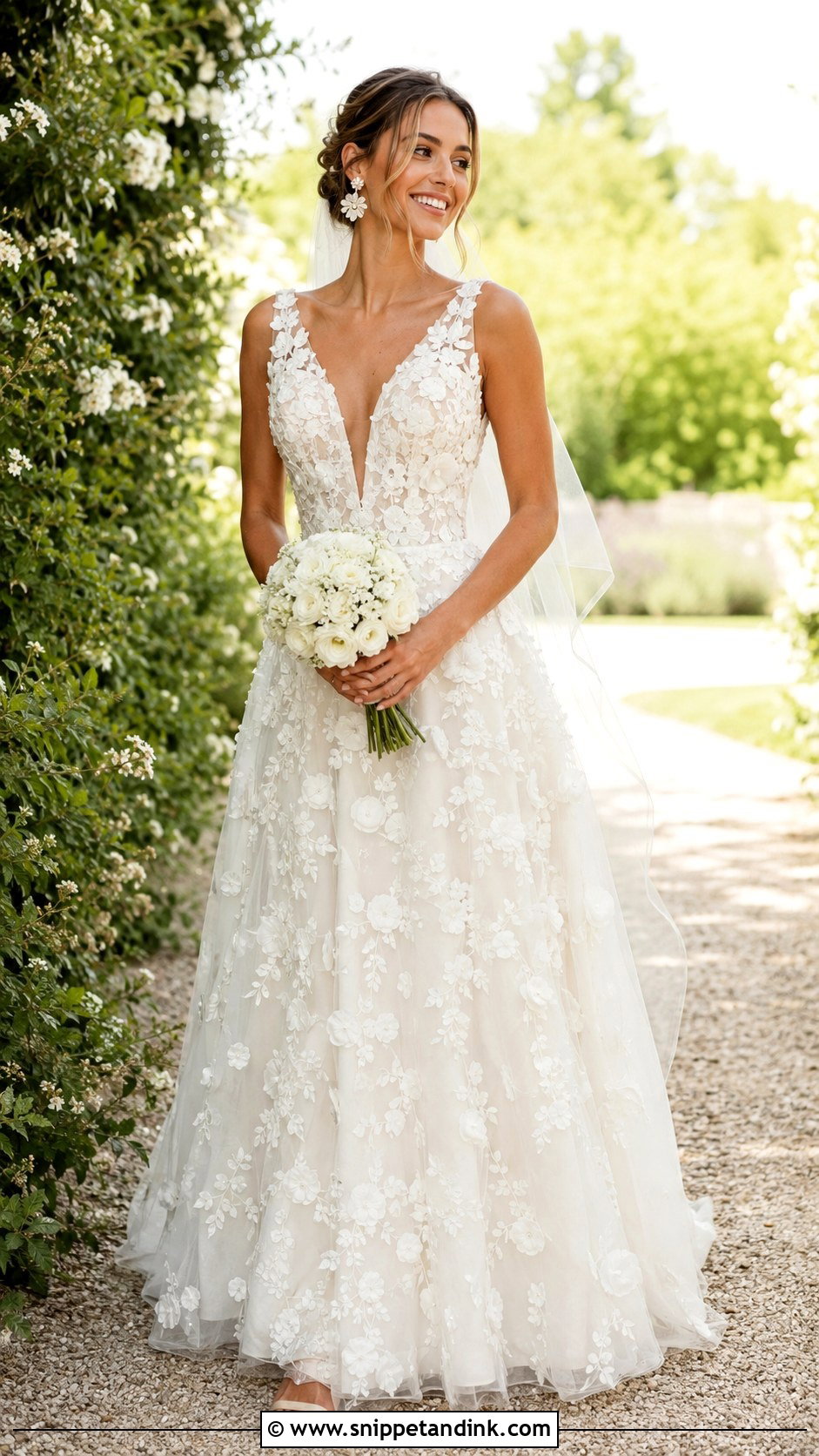
Three-dimensional flowers bring texture you can see from across the room, whether they cover the gown from neckline to hem or cluster on the bodice and train. Large appliqués read artistic and modern; small blossoms feel softer. What brides don’t expect is how much the petals catch: on a gathered tulle veil, on a bracelet, on a groom’s cufflinks during the first dance. I keep jewelry flat, usually small floral studs, with barely-there heels and a veil with a raw or narrow edge. Waves or a neat chignon with a few pins both suit it. Keep the bouquet tonal, one or two varieties, so the dress stays the main flower in every frame.
5. Dramatic Sleeve Wedding Dress
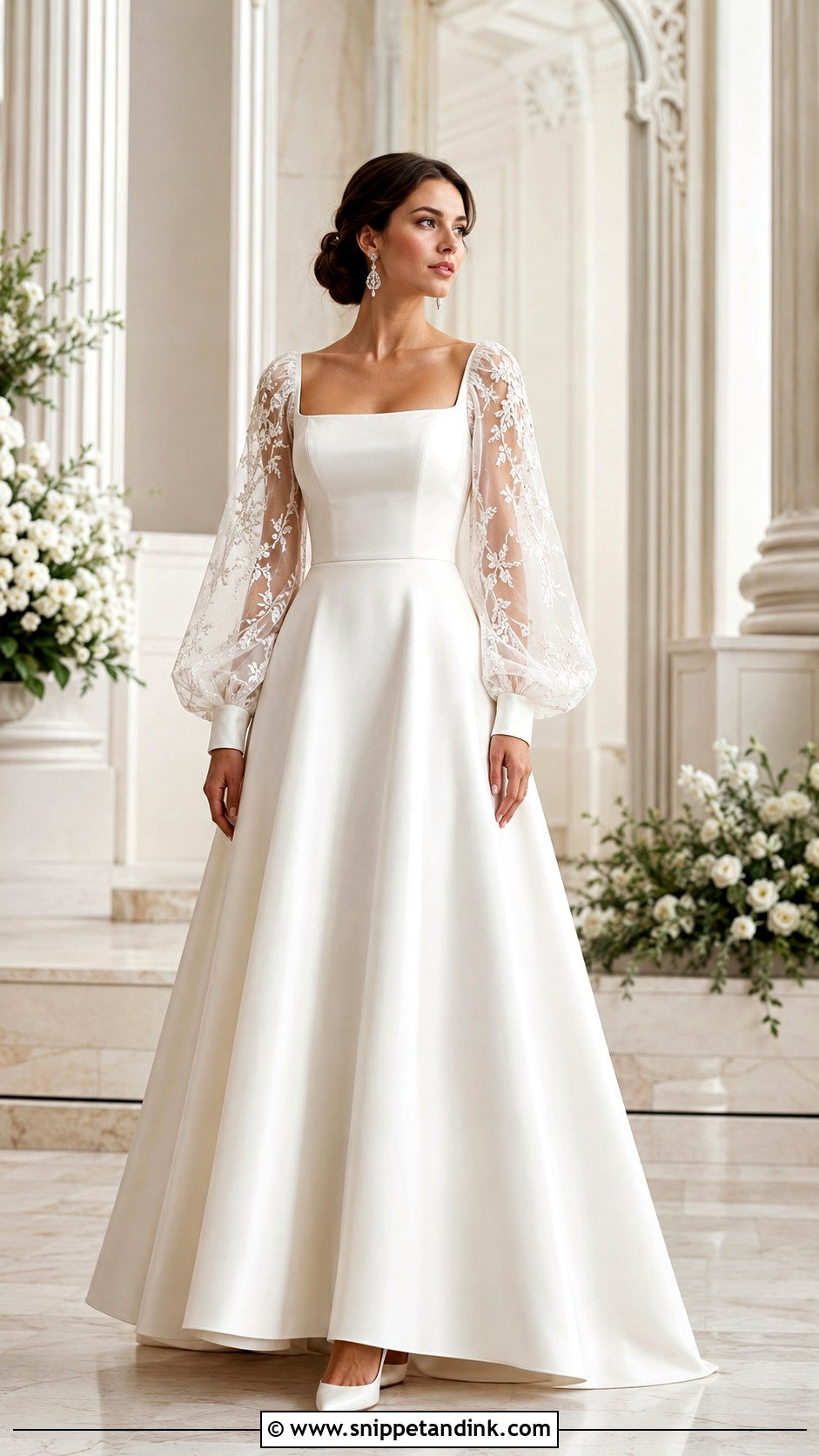
Big sleeves frame the face during the vows, which is exactly when the camera is closest. Bishop sleeves give soft volume, structured puffs feel more fashion-led, and sheer embroidered sleeves add coverage without weight. Balance them with a clean column, A-line or gently fitted skirt; two big shapes fighting each other is the most common styling mistake I see with this dress. Skip large necklaces. Small drops, a slim bracelet and closed-toe heels are enough, and an updo stops hair snagging on embellishment. The fitting test I always run: arms up as if hugging someone taller, then arms forward holding a bouquet. If the shoulder seam drags the bodice up, the armhole needs work. Detachable sleeves settle the ceremony versus dance floor question neatly.
6. Feather Trim Wedding Dress
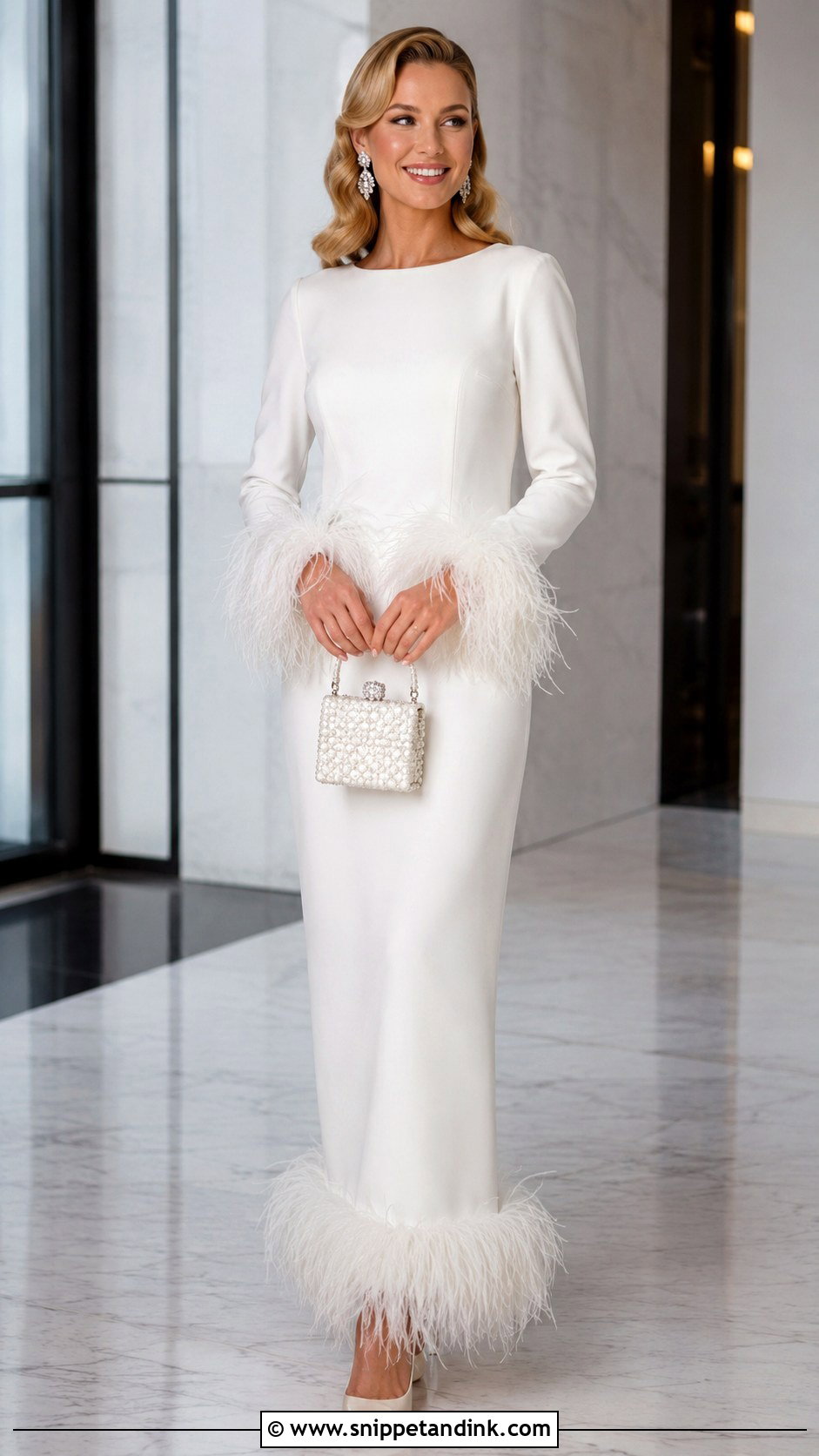
Feathers soften a simple gown and add movement every time you turn. A feather trim wedding dress works best as a fitted column, a tea-length design or a sleek gown with feathers at the neckline, cuffs or hem, kept to one or two areas. More than that and it starts to look like costume. Ostrich plumes hold their shape better than fine marabou, which sheds onto suits and carpets all day, so I always ask the designer which one they used. Style it with clean satin pumps, crystal earrings, a smooth bun or vintage waves, and a plain fingertip or birdcage veil. Test the hem on stairs. Store the dress loosely, never compressed, and a little steam held at a distance revives flattened feathers.
7. Pearl Embellished Wedding Dress
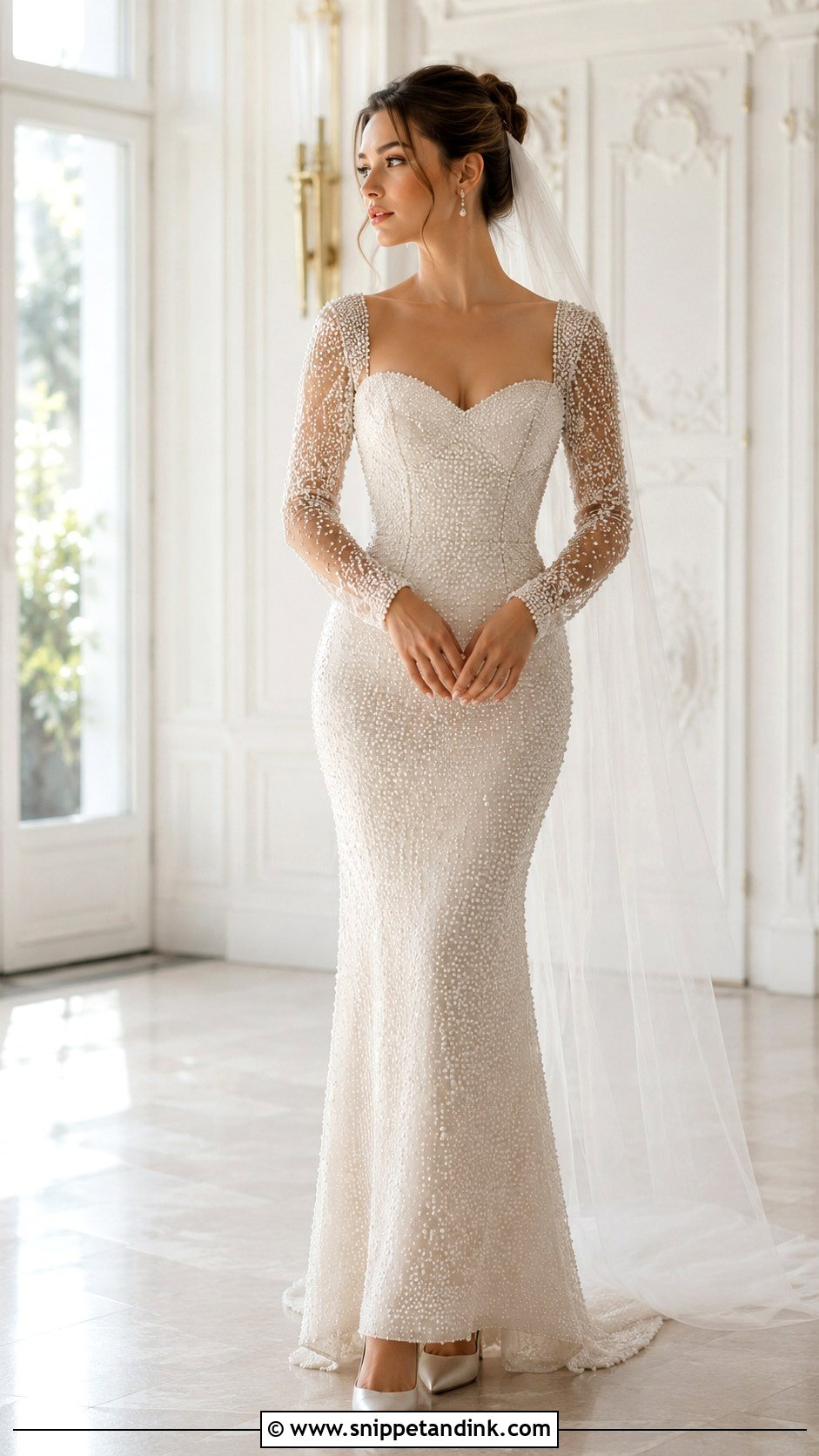
Pearls give a soft, milky glow rather than sparkle, and they read warmer in candlelight than crystals do. They can trace a corseted bodice, scatter over sheer sleeves or cover the whole gown. The heavier the beading, the simpler I keep the silhouette, usually a fitted column or classic A-line. One pearl accessory is plenty, normally drop earrings, plus satin heels and a plain veil with a narrow edge. A structured updo keeps loose strands from wrapping around the beads. Pearls are hand-sewn, often along one running thread, so when one comes loose its neighbours can follow. I check the bodice at the final fitting and pack a needle, matching thread and a few spare pearls in the emergency kit.
8. Ruffled Tulle Wedding Dress
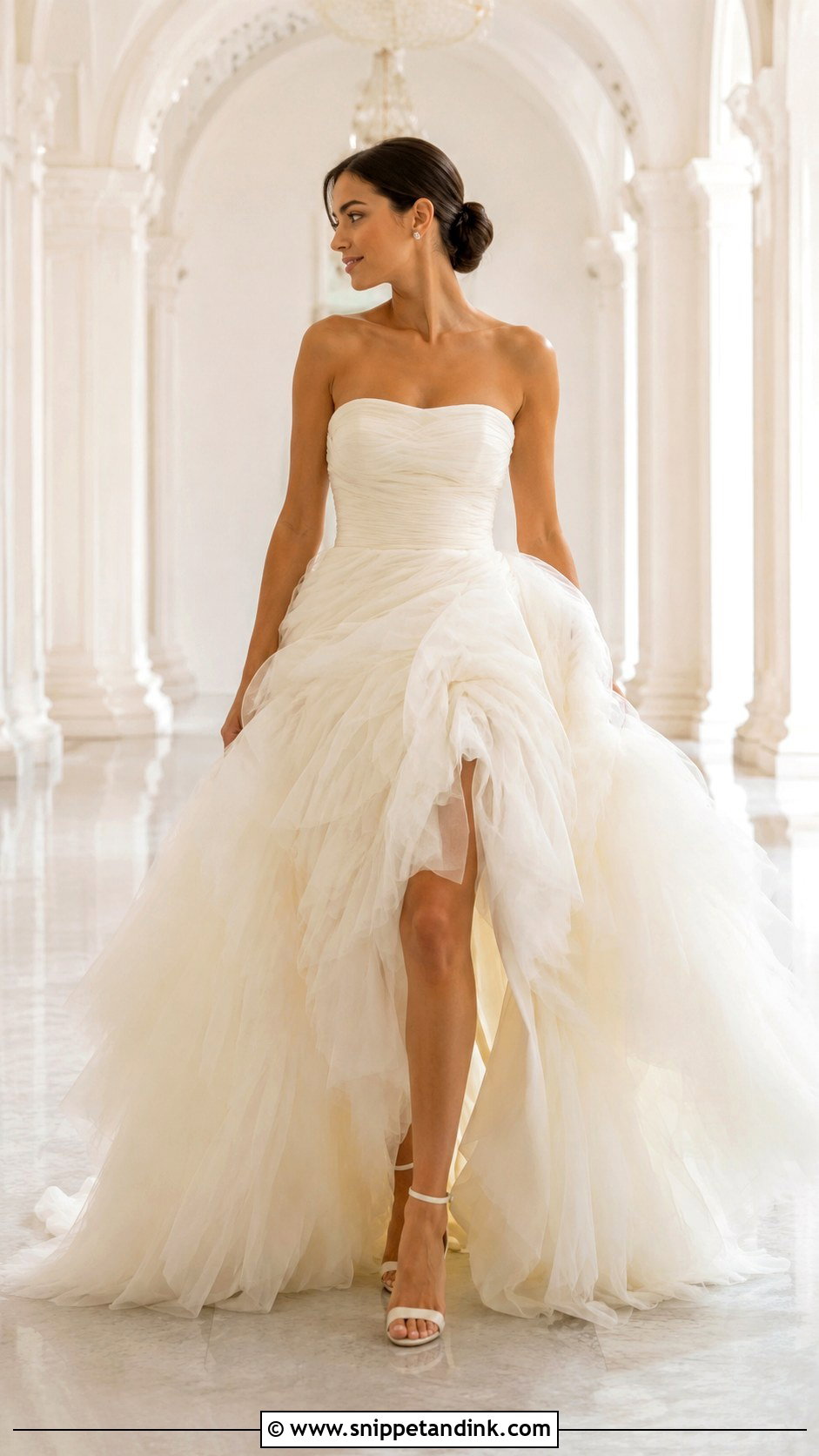
Layered tulle gives a ruffled wedding dress volume that moves with you instead of sitting stiffly. Ruffles cascading on a diagonal lengthen the figure; horizontal tiers feel fuller and more playful. A clean fitted bodice is essential, otherwise the volume swallows you. Keep the rest slim: thin heels, small crystal studs, one hair accessory. A veil is optional, and if you wear one, keep it plain and longer than the biggest ruffle so the two don’t tangle. On a petite frame I ask for lighter, narrower layers, while taller brides can carry big tiers and a sweeping train. Tulle crushes easily, so a bustle with several small pick-up points keeps the ruffles fuller than one or two big hooks.
9. High Neck Lace Wedding Dress
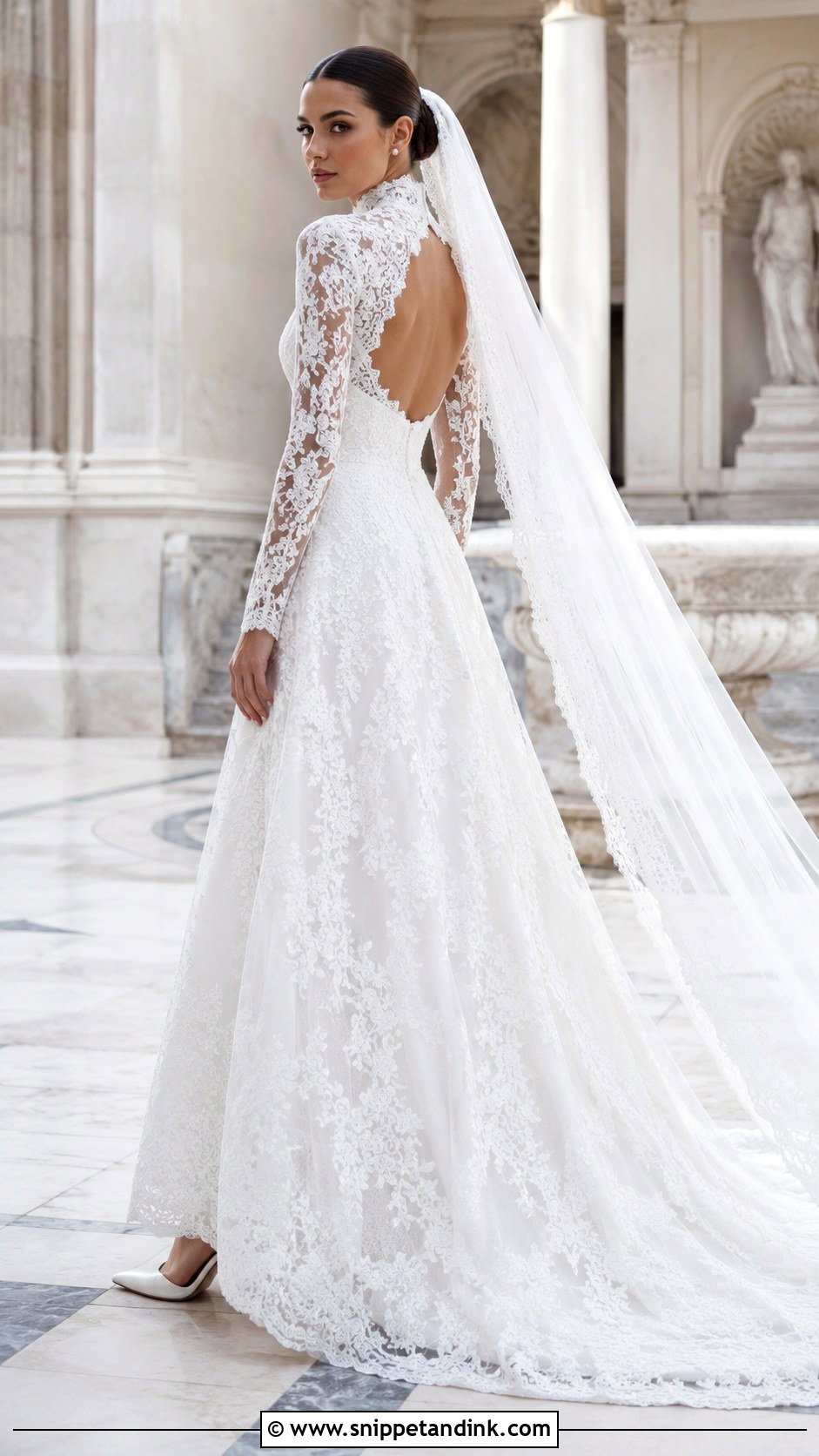
A high lace neckline puts all the detail around your face, which is also what you’ll see most in close-up portraits. Fine floral lace, geometric patterns or embroidery over a fitted bodice all work. Long sleeves feel formal and vintage; a sleeveless high neck looks cleaner. Balance the coverage with an open back, a defined waist or a fluid skirt. No necklace here, it breaks the lace pattern. Pearl studs, low pointed heels and a smooth bun set below the veil comb finish it. What I watch at fittings is the neck edge. If it sits even slightly tight, it rubs by evening and the lace scratches, so I’d rather it be lined with soft tulle and eased a touch.
10. Detachable Overskirt Wedding Dress
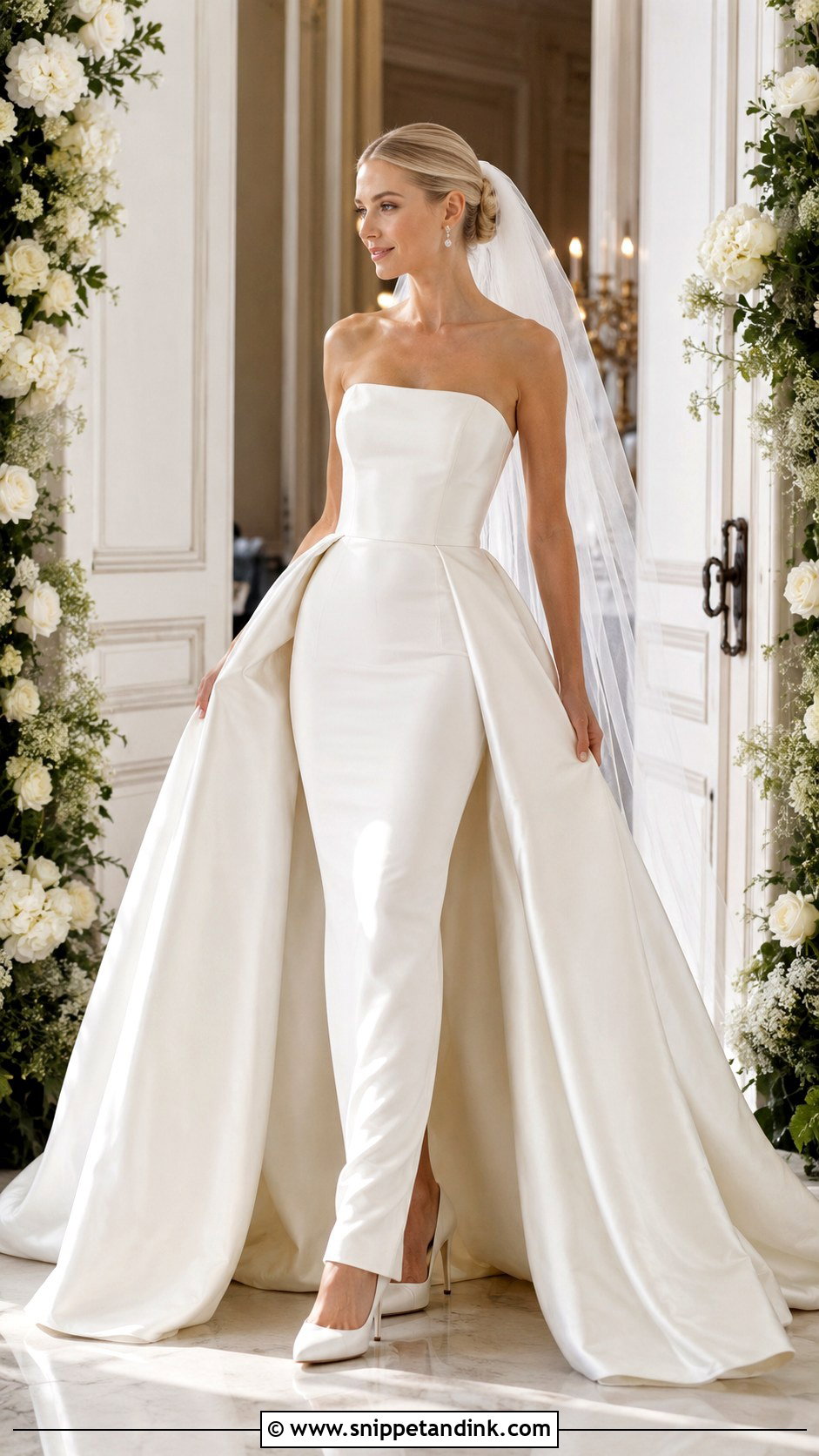
Two looks without a full outfit change: a dramatic overskirt for the ceremony, then the lighter crepe, lace or satin gown underneath for dinner and dancing. The overskirt should fasten smoothly at the natural waist and match the base fabric’s color exactly. Ivories vary more than people think, and a mismatch shows the second the skirt comes off. For the ceremony, wear a long veil, drop earrings and classic pumps. Afterwards, swap to statement earrings or a shorter veil so the transformation actually registers with guests. I have the attendant practise removal at the final fitting, not on the day; hooks and snaps behave differently under adrenaline, and someone needs a bag ready, because it’s a lot of fabric to hold.
11. Cape Wedding Dress
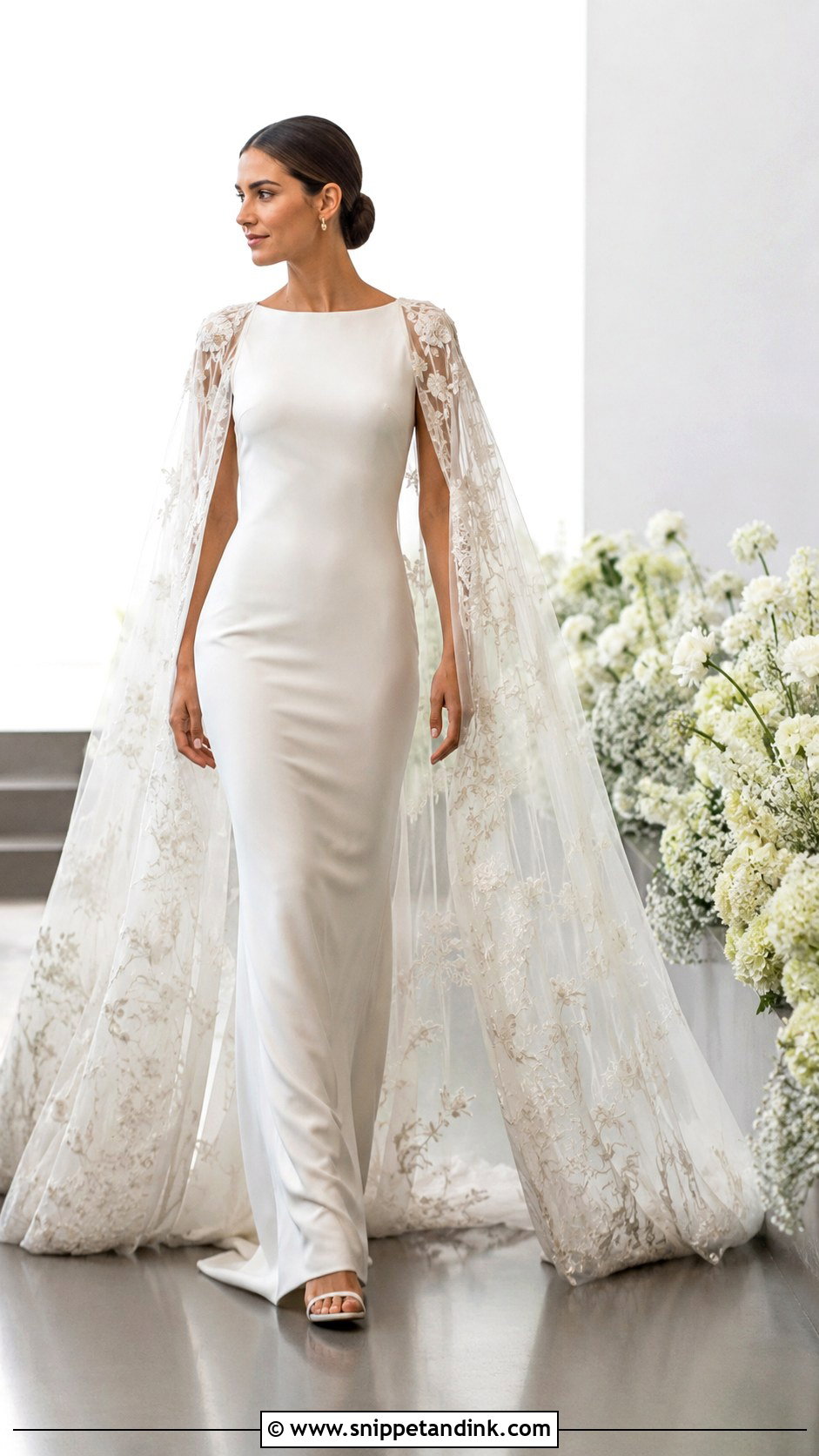
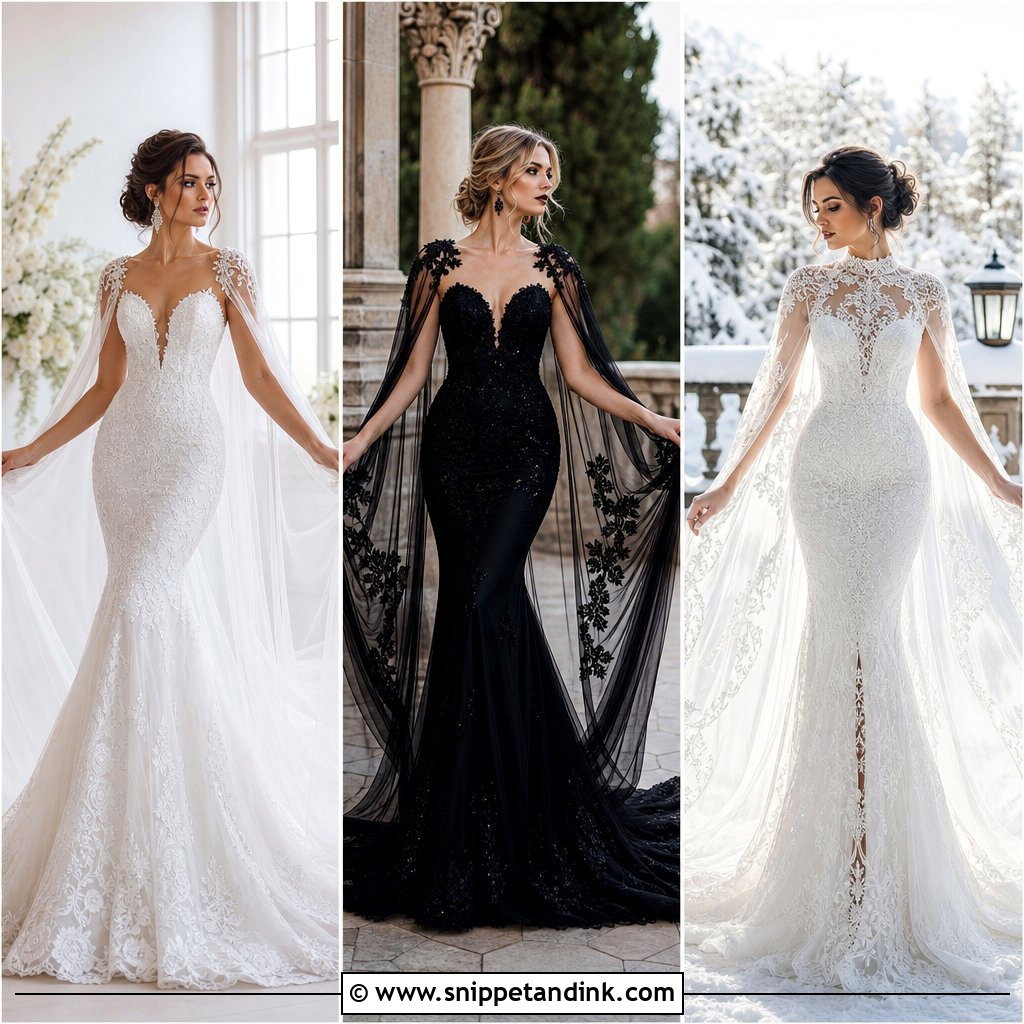
A cape gives you the sweep of a veil without anything pinned into your hair. It can attach at the shoulders, neckline or back, in sheer tulle, embroidered lace or smooth satin. The rule I follow is contrast: a detailed cape over a plain fitted dress, or a clean cape over a lightly embellished A-line. Keep earrings small, heels sleek and hair in a low bun, and leave off the necklace if the fastening sits near the collarbone. Floor length feels ceremonial; a short capelet gives coverage without a train. Wind is the real test. I ask brides to turn quickly and walk briskly at a fitting, because a sheer cape outdoors will wrap around arms and bouquet unless it’s tacked lightly at the shoulder blades.
12. One Shoulder Wedding Dress
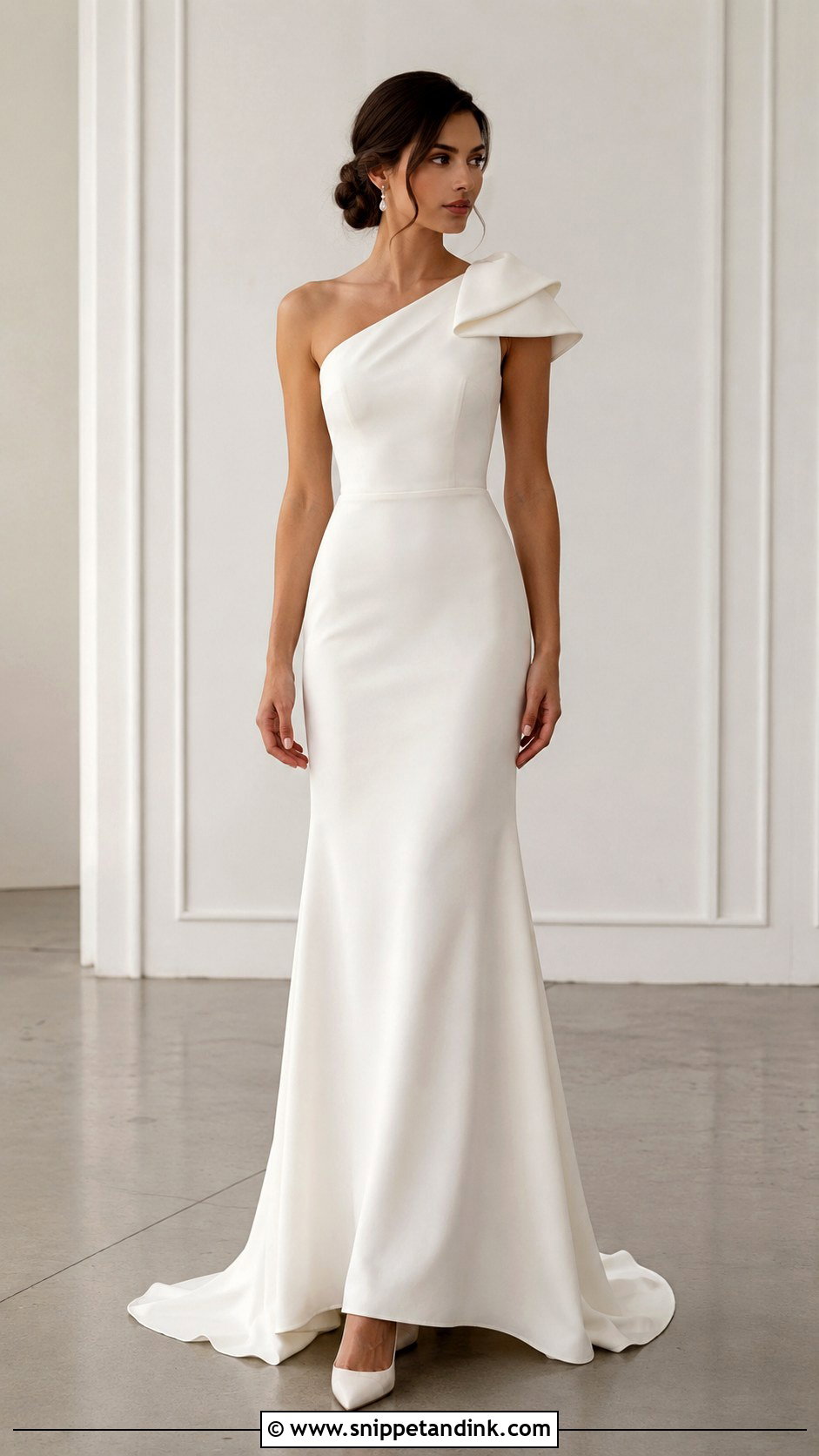
The diagonal line is what makes a one shoulder wedding dress feel modern. The shoulder can be softly draped, sharply folded or finished with a large bow or flower. A column or fit-and-flare continues that line; an A-line skirt softens it. Wear your hair side-swept or in a low bun so the bare shoulder stays clear, and choose either one statement earring on the exposed side or a slim matching pair. Pointed pumps, a compact clutch and a simple veil attached at the back of the hair complete it. Support is my main concern with this neckline. With a single strap, the bodice relies on boning and a grip band along the top edge, and I check it stays level when the bride lifts both arms.
13. Drop Waist Wedding Dress
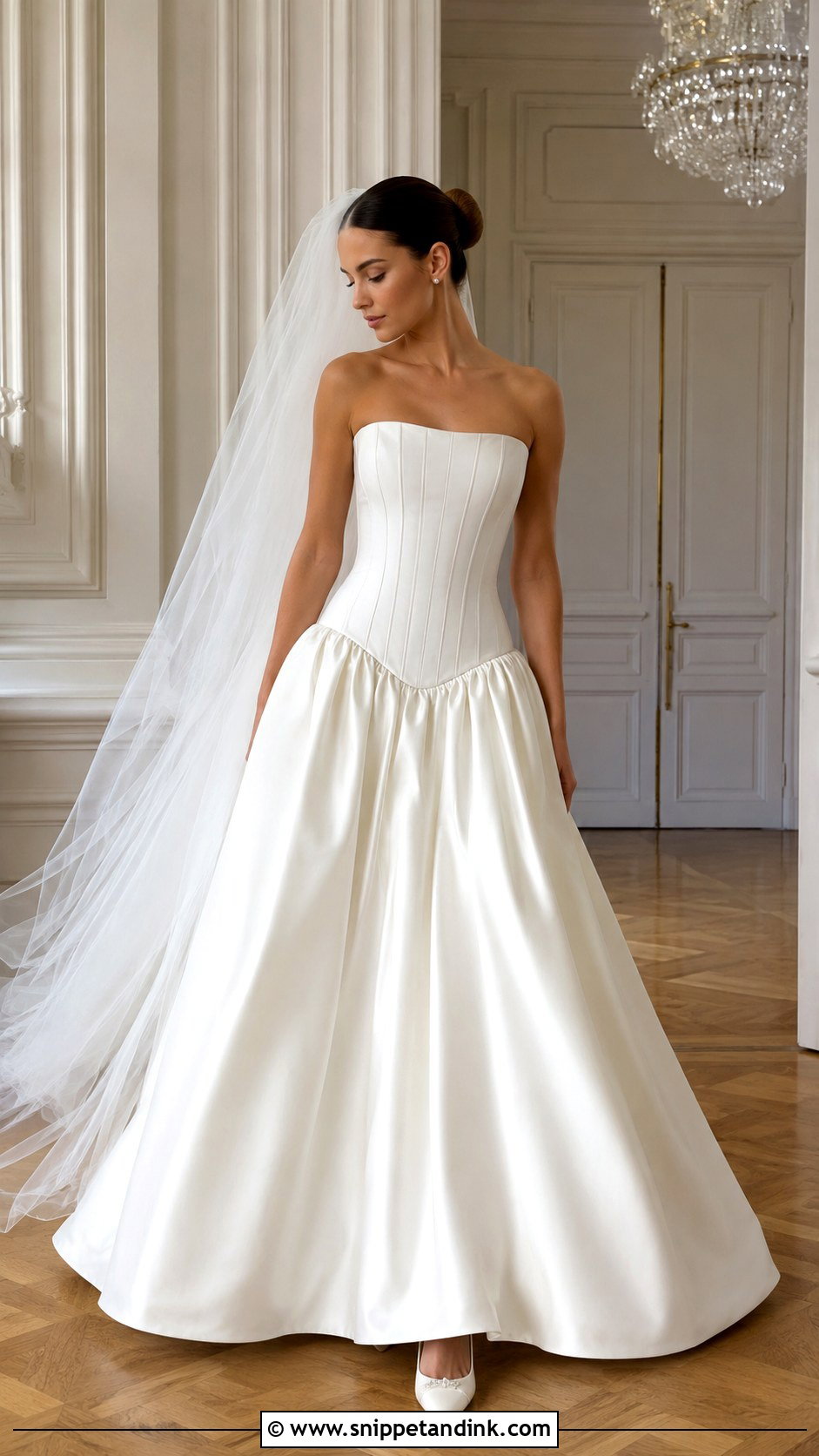
A drop waist lengthens the torso and lets the skirt open low, around the hips. In satin it looks clean and modern; in layered tulle, softer. It isn’t my first suggestion for petite brides with shorter legs, because the low seam can cut the leg line, but on a long-waisted figure it’s one of the most flattering shapes there is. Look for curved seams or corset structure that supports you rather than slicing straight across. Leave the neckline bare, wear small earrings and pointed heels, and a sleek bun adds height. A plain veil starting below the crown, or a refined headband, keeps the line clean. Where the skirt seam lands is the whole design, so I have it pinned and checked in a full-length mirror; moving it a couple of centimetres changes everything.
14. Color Wedding Dress
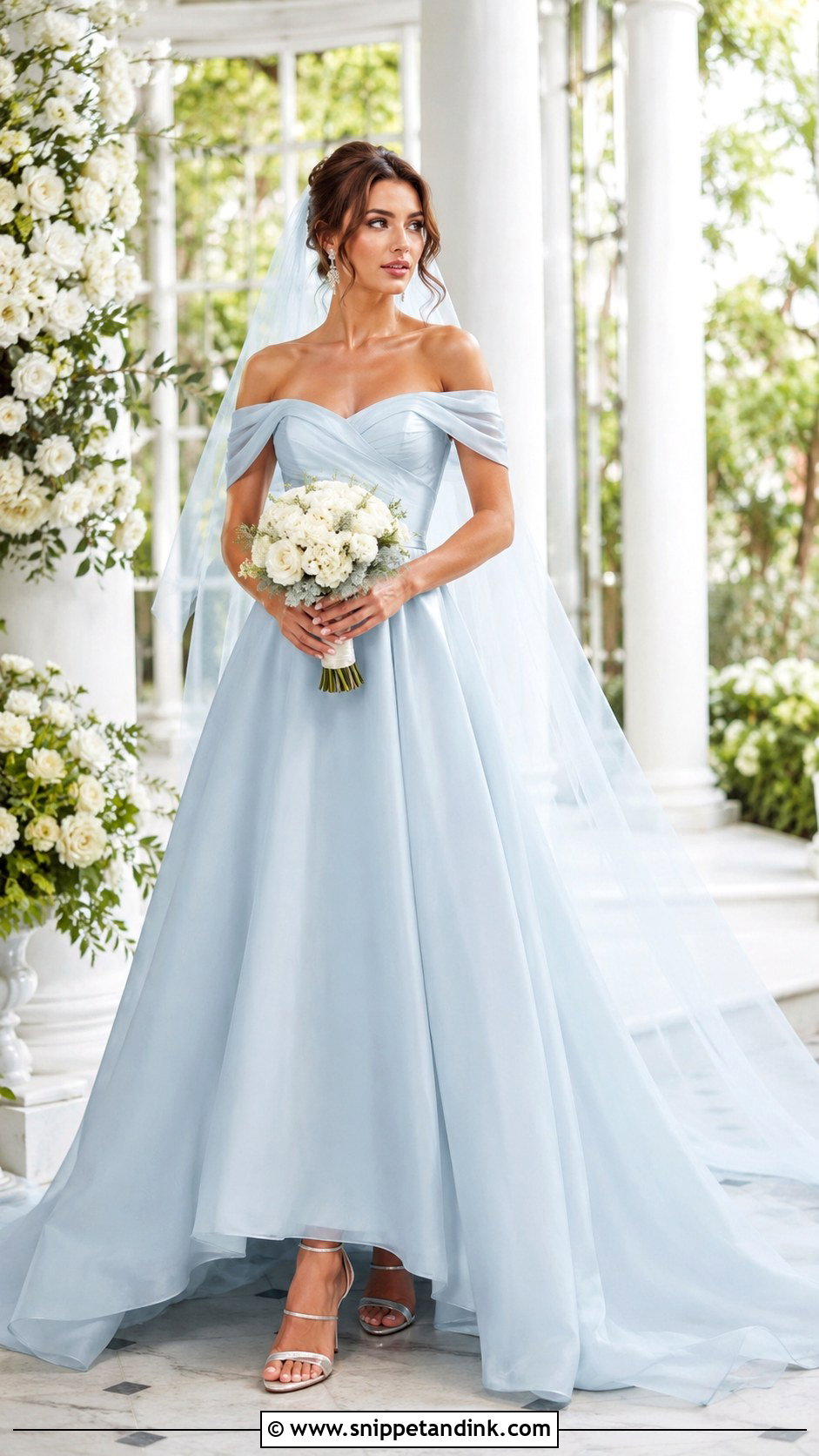
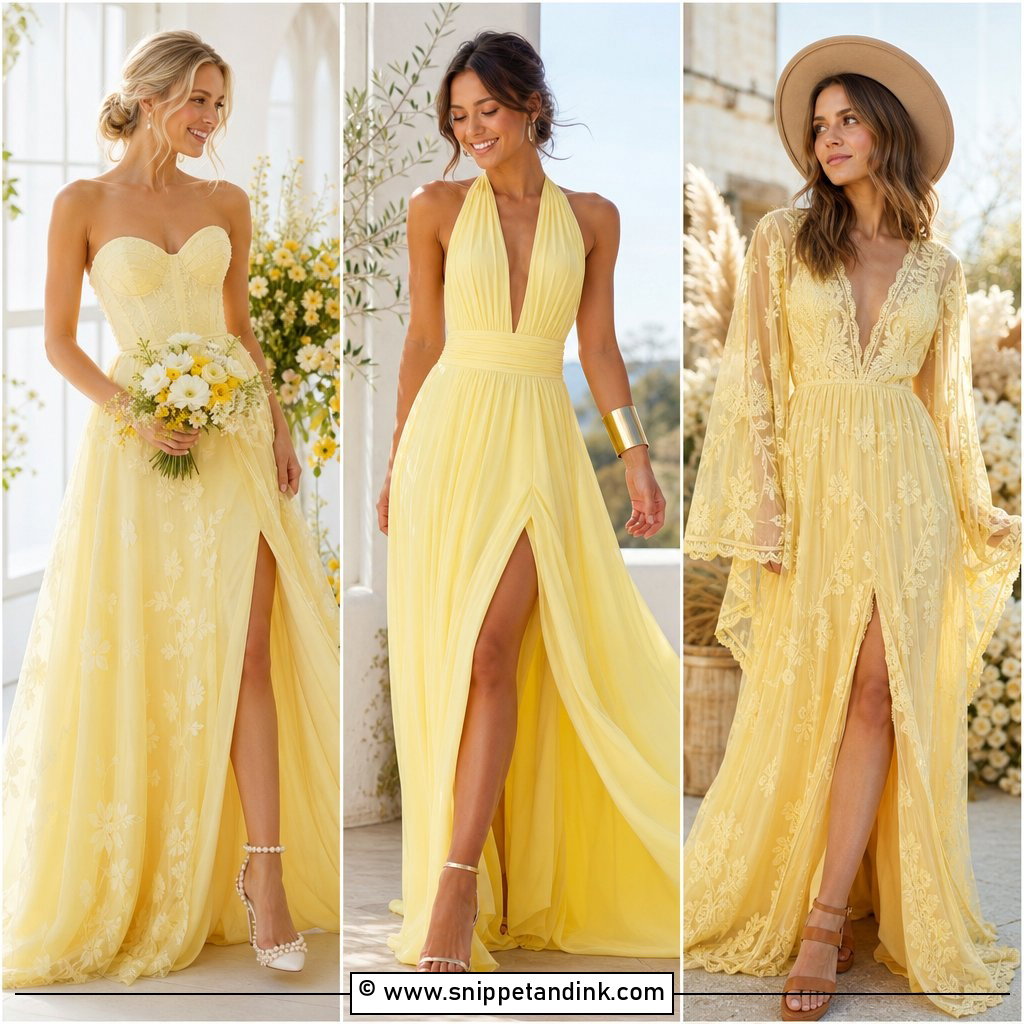
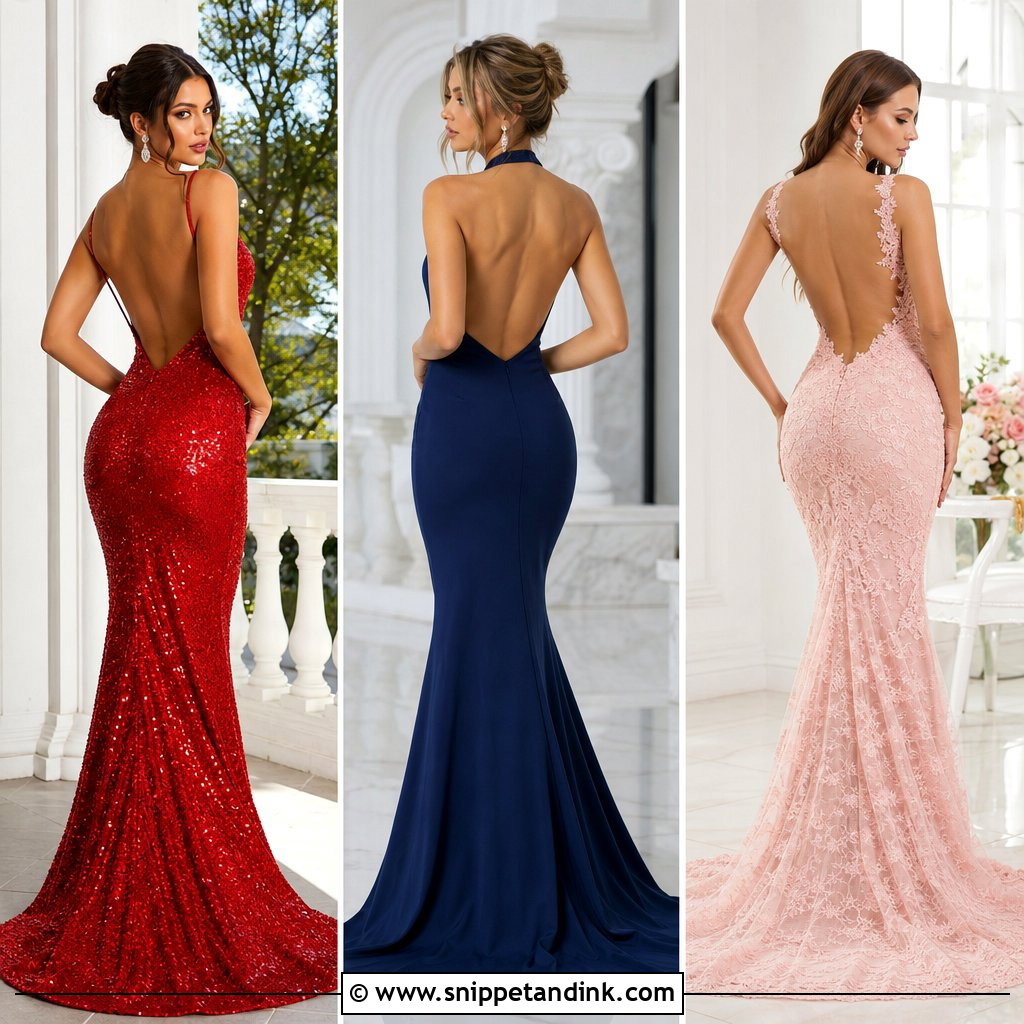
Color is a personal, unexpected choice, and pale tones such as blush, pale blue, champagne, silver or a floral print still read as bridal when the silhouette is formal. Saturated red, black or a rich metallic go further and need the venue and season behind them. Coordinate shoes and accessories with the dress’s undertone, not its exact shade; trying to match pink to pink almost always fails. Crystal earrings, a neutral clutch and metallic heels are a safe finish. An ivory veil or one dyed to match both work, but order swatches first and keep the bouquet simple. The test I insist on is looking at the fabric by a window in daylight and again under warm indoor bulbs. Blush can turn beige indoors, and pale blue can go grey in shade.

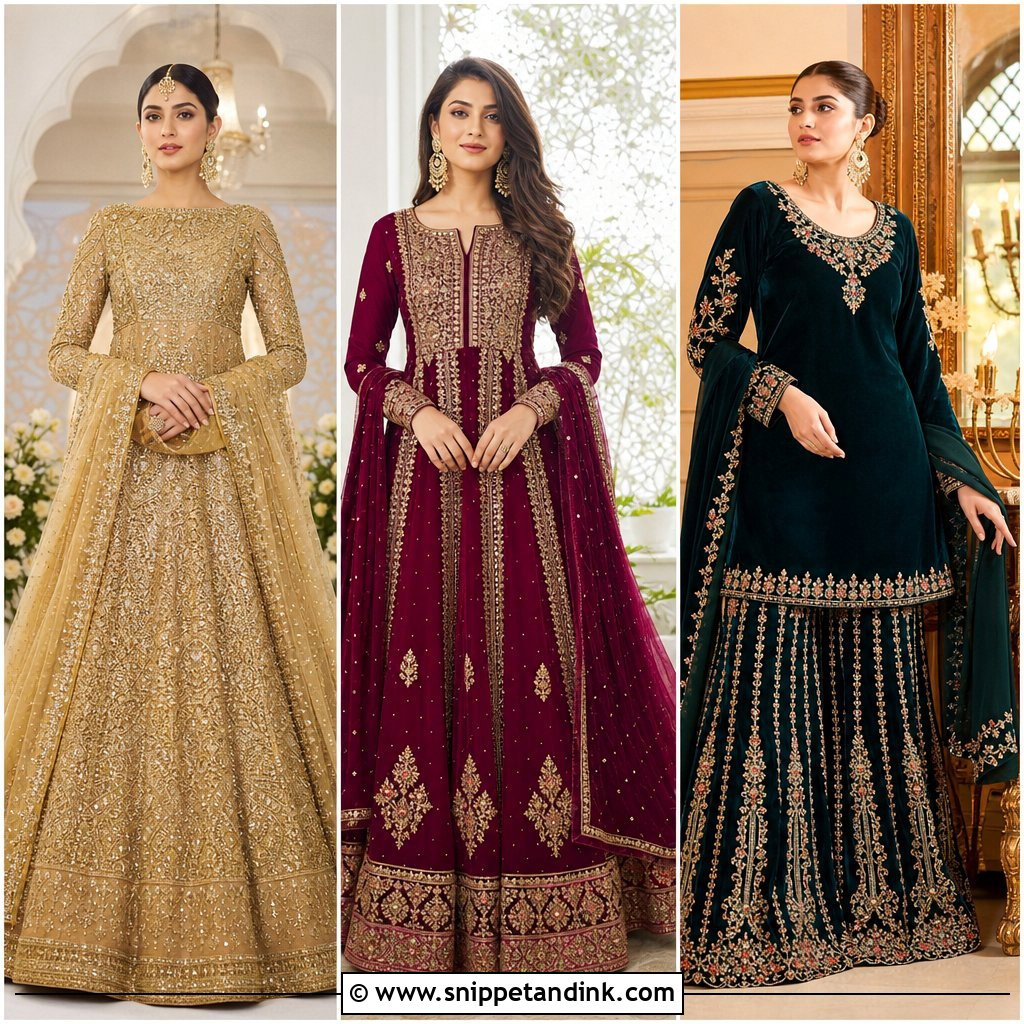
15. Black And White Wedding Dress
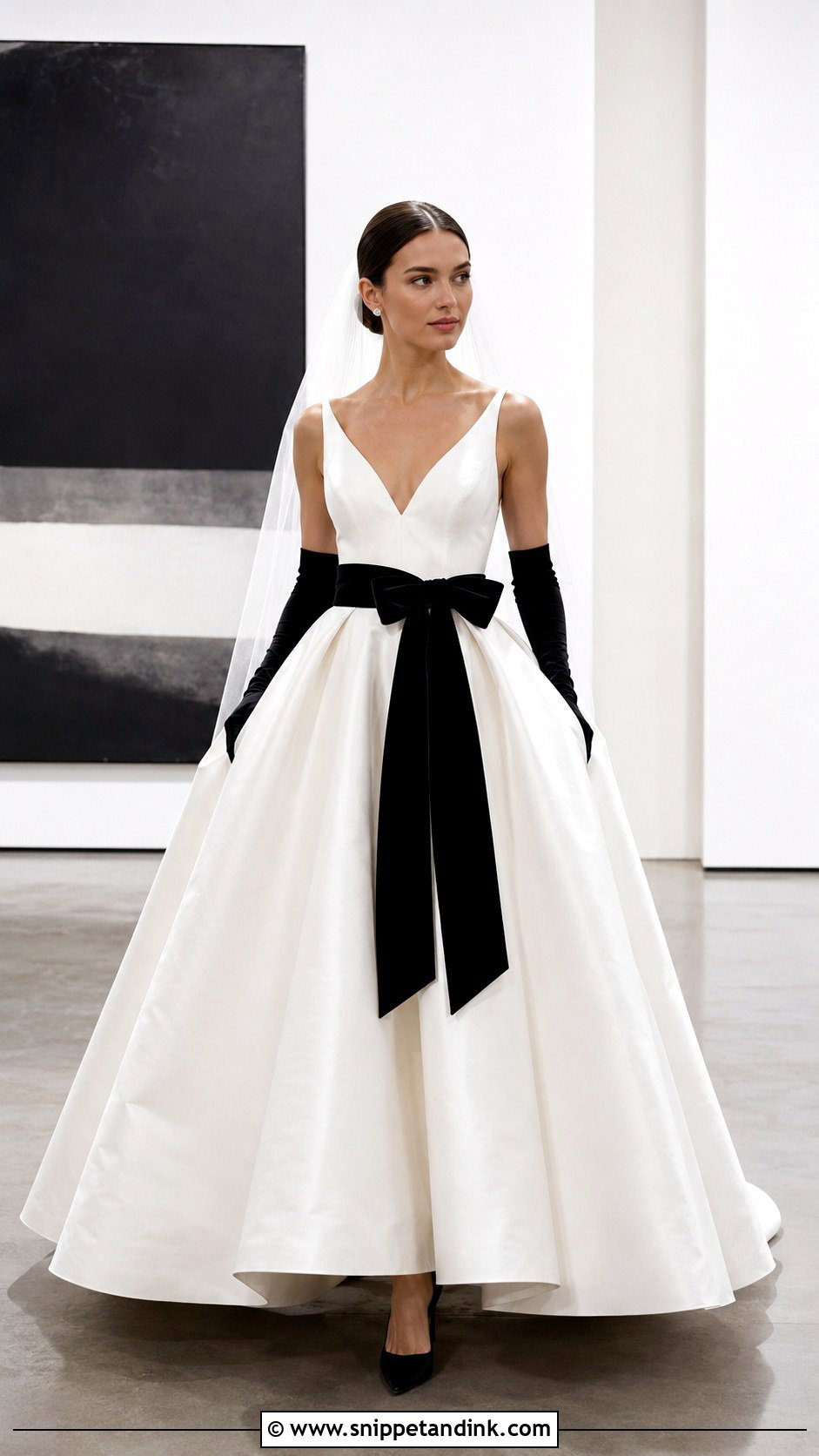
Black against ivory gives a sharp, graphic effect. Start with an ivory or bright white gown, then bring in black through a velvet waist bow, opera gloves, floral embroidery, piping or a detachable train. Column, ball gown and tea-length shapes all carry it. Black pointed pumps, diamond studs and a sleek bun finish the look, with a bouquet kept to white and green. A plain white veil softens the contrast; a black-edged one sharpens it. I’d repeat black in two or three places at most. One practical warning: dark velvet pile and dye can rub off onto pale fabric where they touch, so ask your seamstress to back any velvet trim that sits against the skirt, and photograph the full outfit from the side and back before you decide.
16. Sequin Wedding Dress
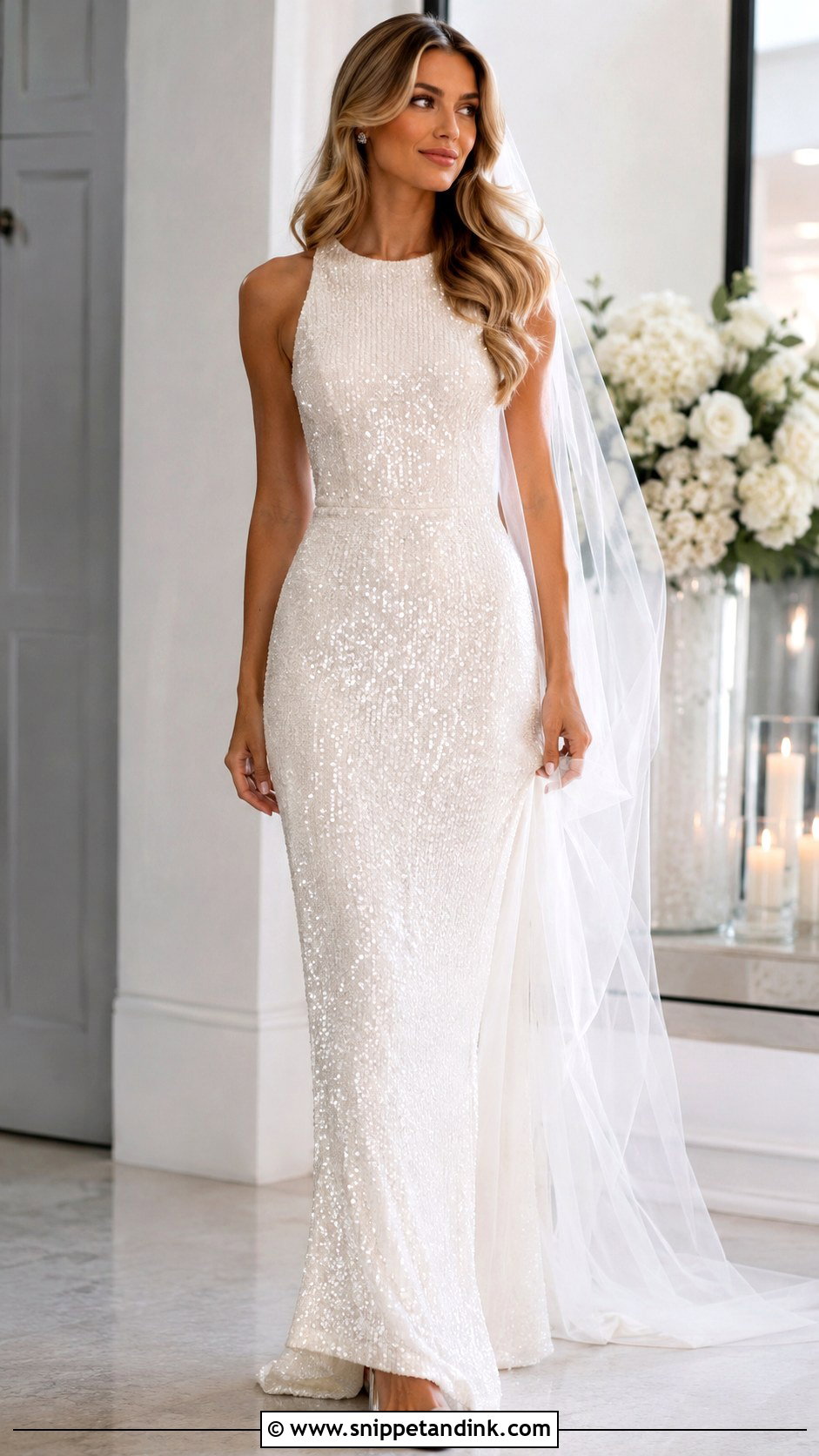
Sequins catch light every time you move. Allover micro sequins give a smooth shimmer; larger paillettes swing and flash more. A fitted column or slip keeps it sleek, while a sequinned ball gown goes all in. With that much reflection, keep jewelry minimal, heels simple and metallic, and the veil plain. Hair can be glossy waves or a clean updo depending on the neckline. My main worry is the underarm, because sequin edges scratch after a few hours, so I ask for a lined bodice with bound seams. Sequins also snag fine tulle, which is why a veil with a narrow finished edge is safer. Ask your photographer to try flash and natural light so the dress glows rather than blows out.
17. Tiered Wedding Dress
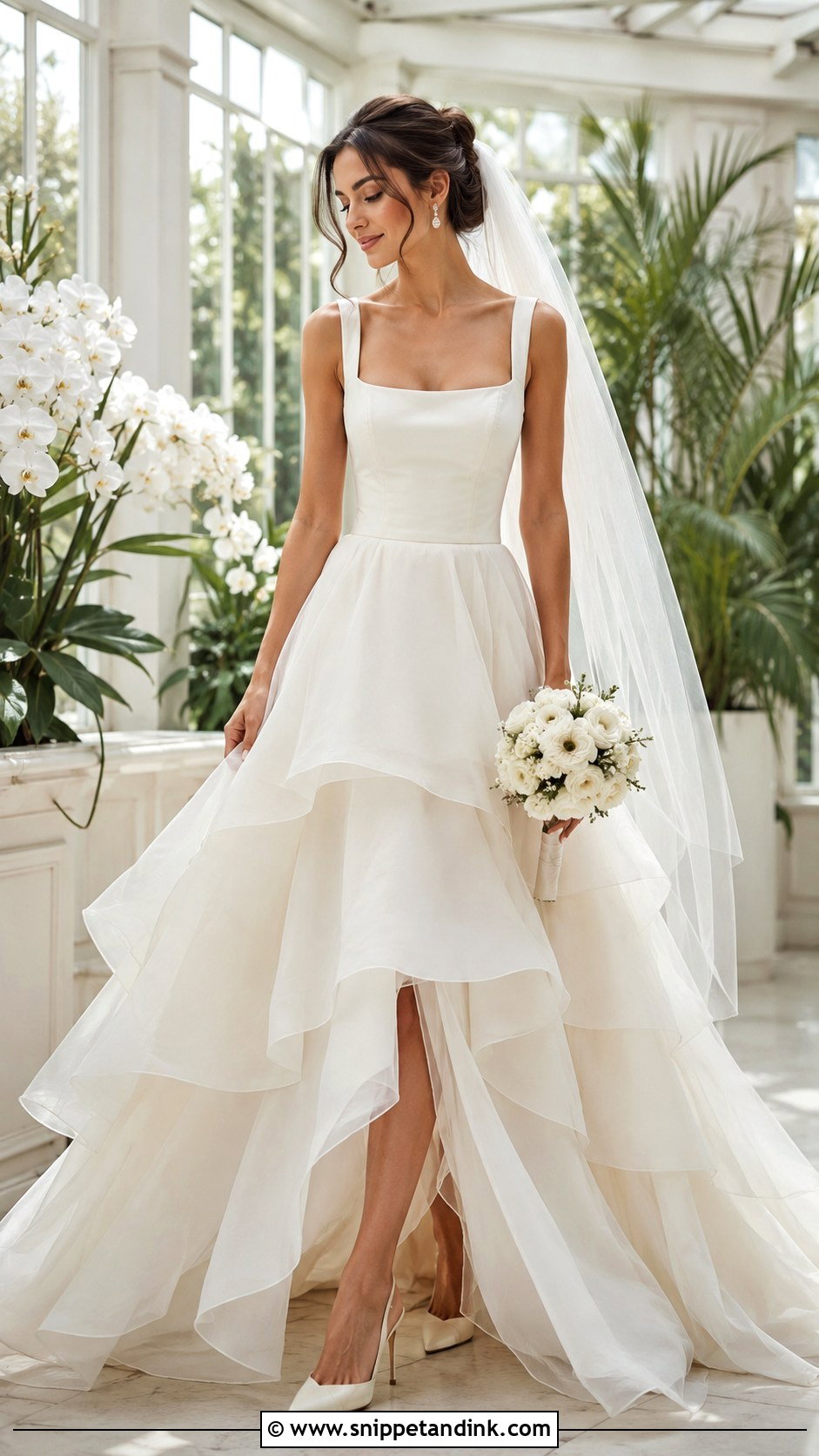
Tiers give the skirt a rhythm that’s lovely in motion down the aisle. Crisp organza tiers stand away from the body, tulle floats, and lace softens the whole thing. A fitted strapless or square-neck bodice keeps proportions clear. Narrow heels, delicate earrings and a simple veil that falls behind the tiers are enough. Avoid a large bouquet held at waist height, since it hides the bodice seam that defines the whole shape. Petite brides look best in fewer, shallower tiers, taller brides in broader layers with a longer train. Hemming tiers is fiddly work, because each level has to be taken up evenly from its own seam, so allow extra time and budget for that alteration.
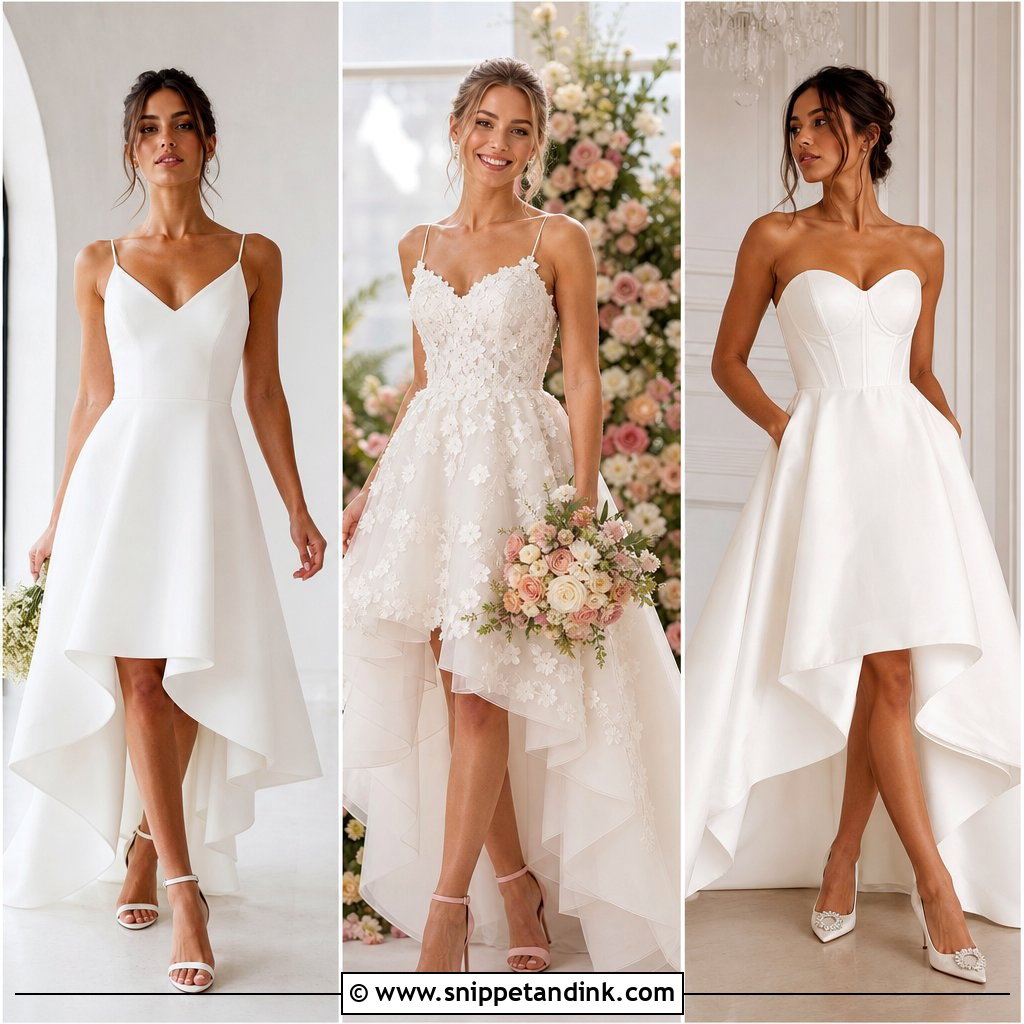
18. Bridal Mini Wedding Dress
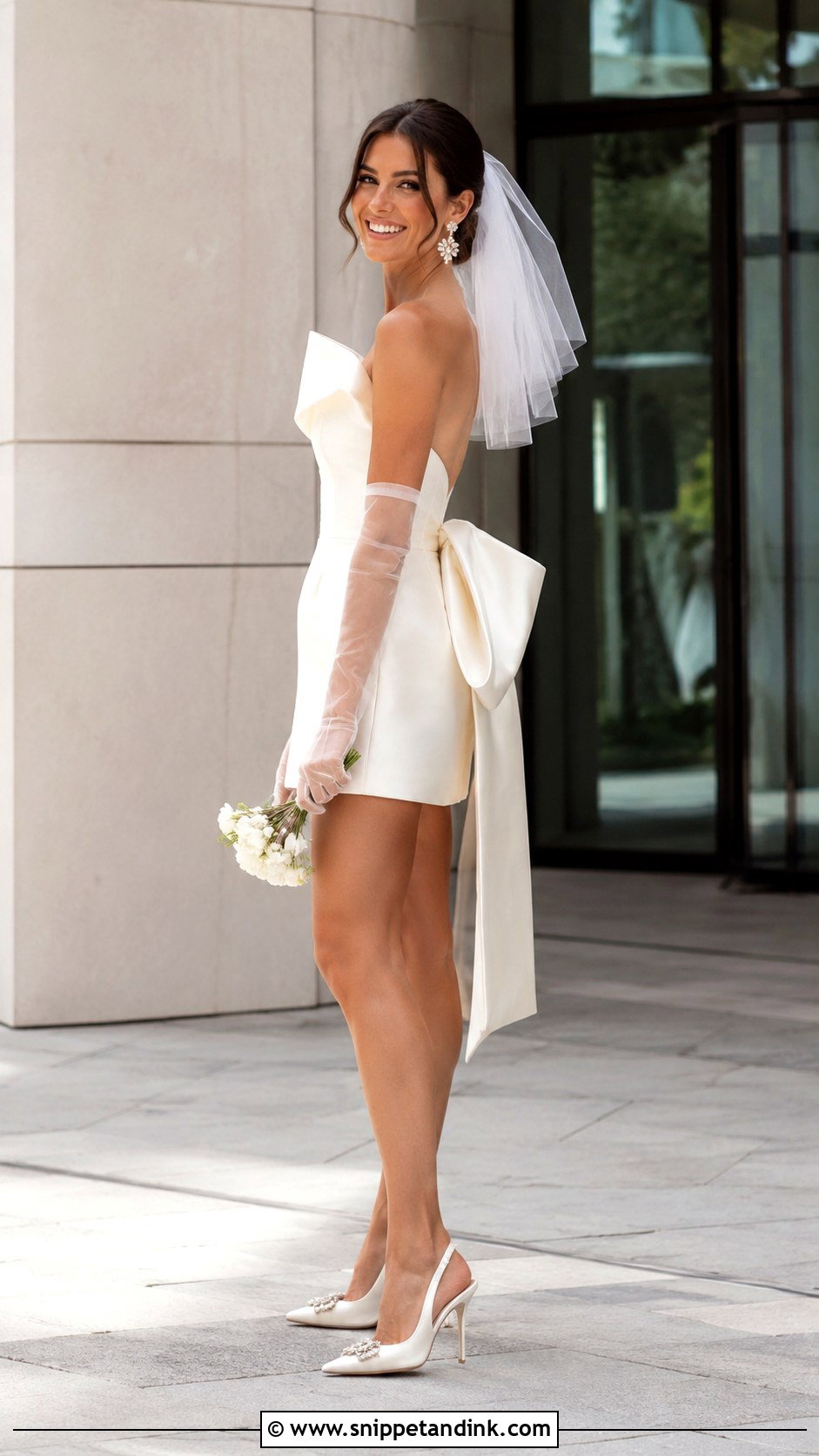
A bridal mini wedding dress suits a courthouse ceremony, a reception change or a smaller celebration. Structure is what stops it looking like a party dress: a sculptural neckline, feather trim, a big bow or three-dimensional flowers. The short hem puts your shoes in every photo, so embellished pumps, sleek slingbacks or neat platforms are worth the spend. Sheer gloves, statement earrings and a short veil finish it, but keep to one theme or it tips into costume. A fitted blazer or detachable cape helps outdoors. I always have brides sit, cross their legs and climb into a car at the fitting. A hem that’s fine standing can ride up a lot when seated, and built-in shorts or a smooth lining solves it.
19. Metallic Wedding Dress
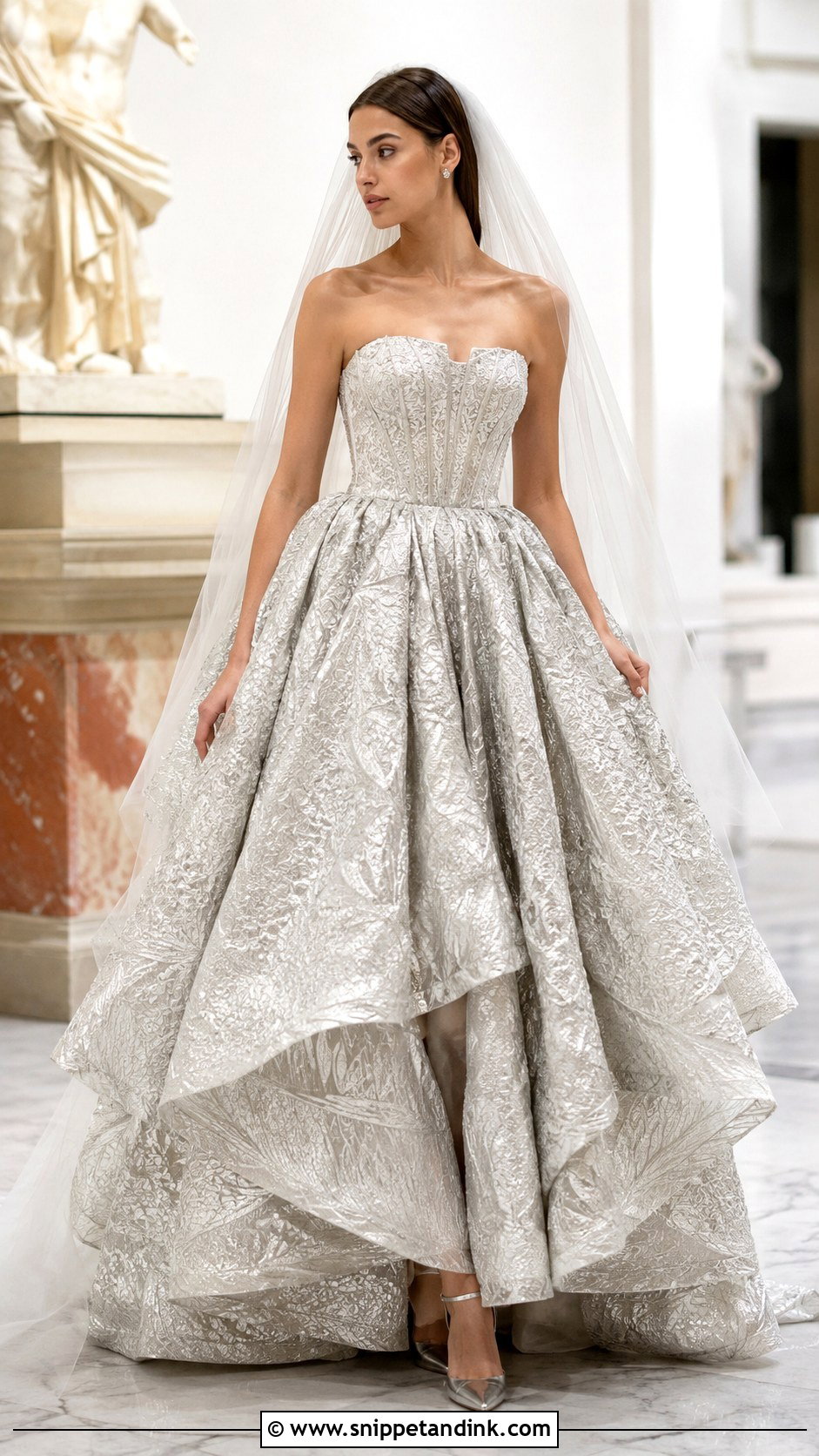
Metallics give you an alternative to ivory that still feels formal. Silver embroidery reads cool and modern; pale gold, platinum and rose gold glow warmer. A clean column is sleek, a full ball gown bigger drama. Match heels to the metal, keep earrings small and crystal, and the manicure neutral. Don’t mix strong metal tones unless the gown already does. A sheer ivory veil softens the shine and makes it feel more ceremonial. Lamé and metallic threads look completely different in daylight, under warm venue lighting and with flash, so I test all three. They also show every ridge underneath, which makes smooth foundation garments matter more here than with almost any other fabric.
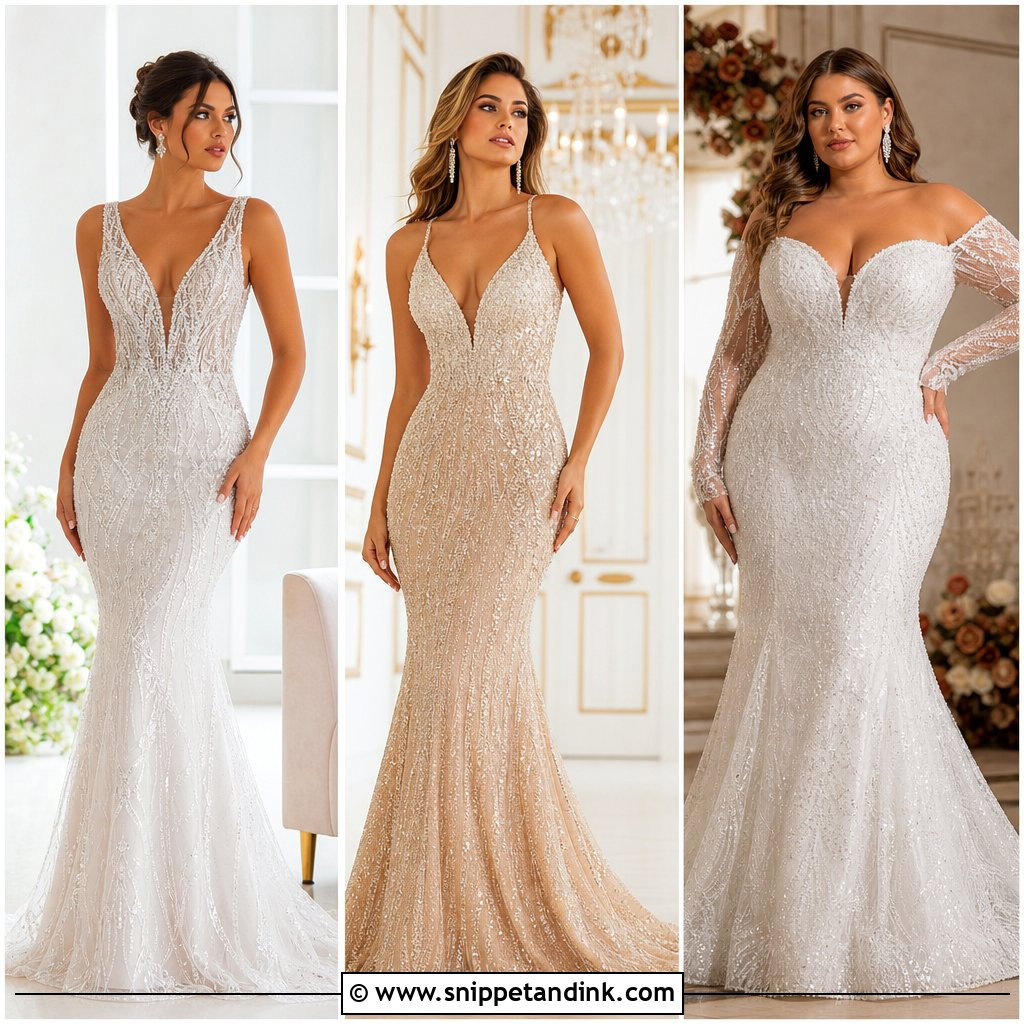
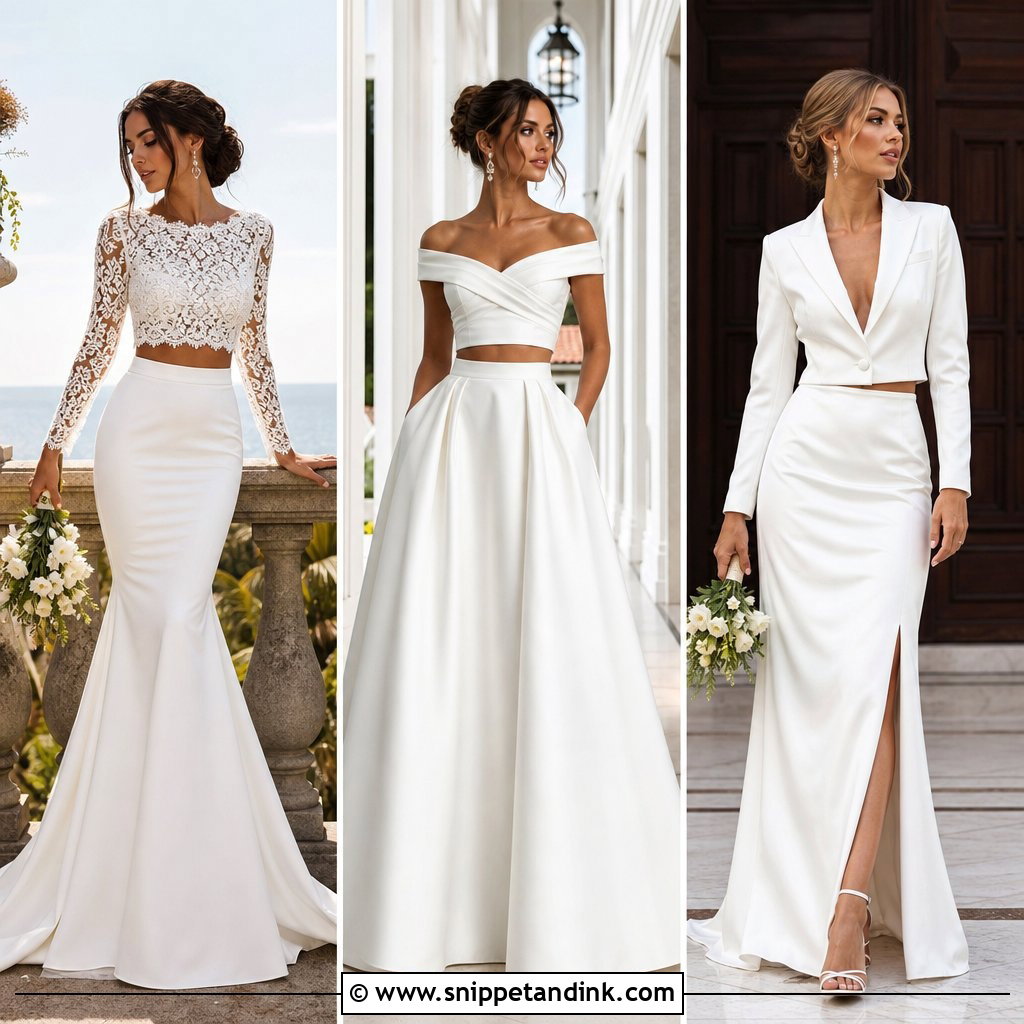
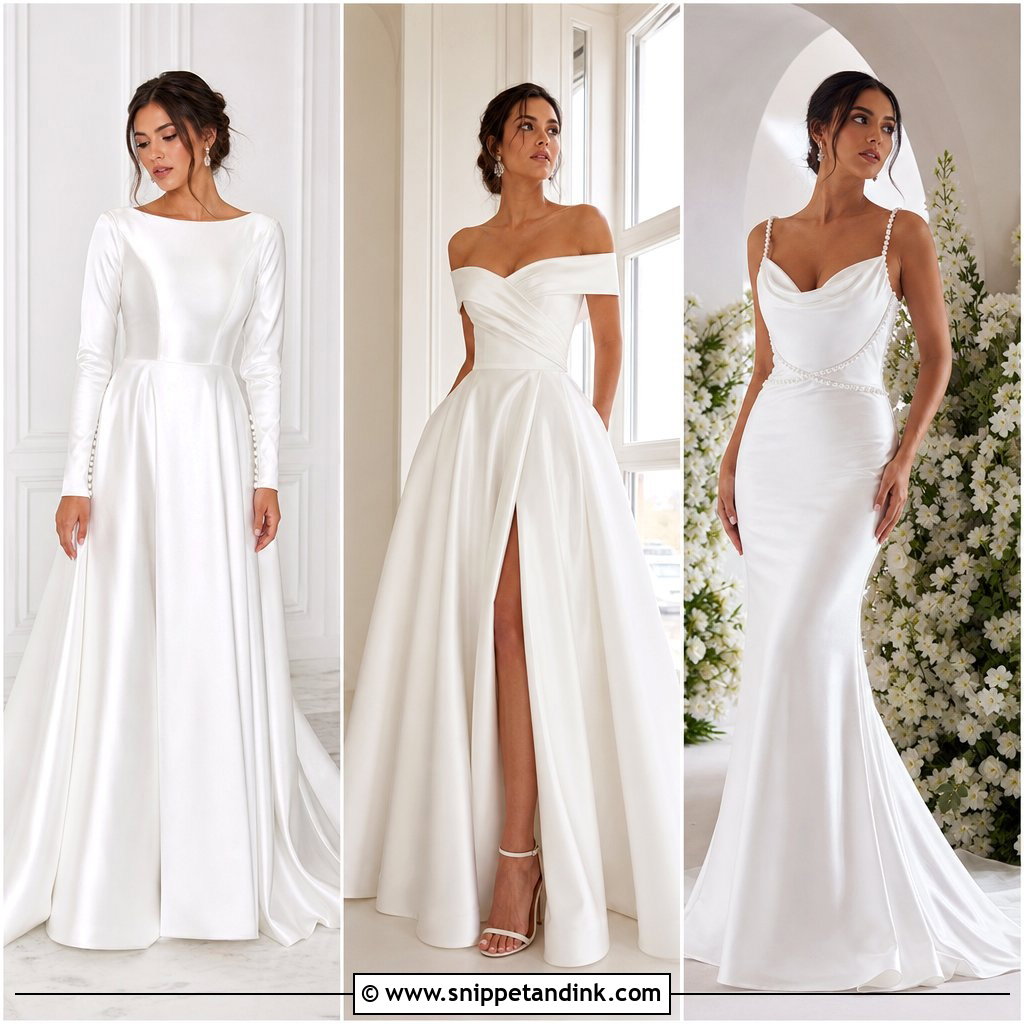
20. Cathedral Train Wedding Dress
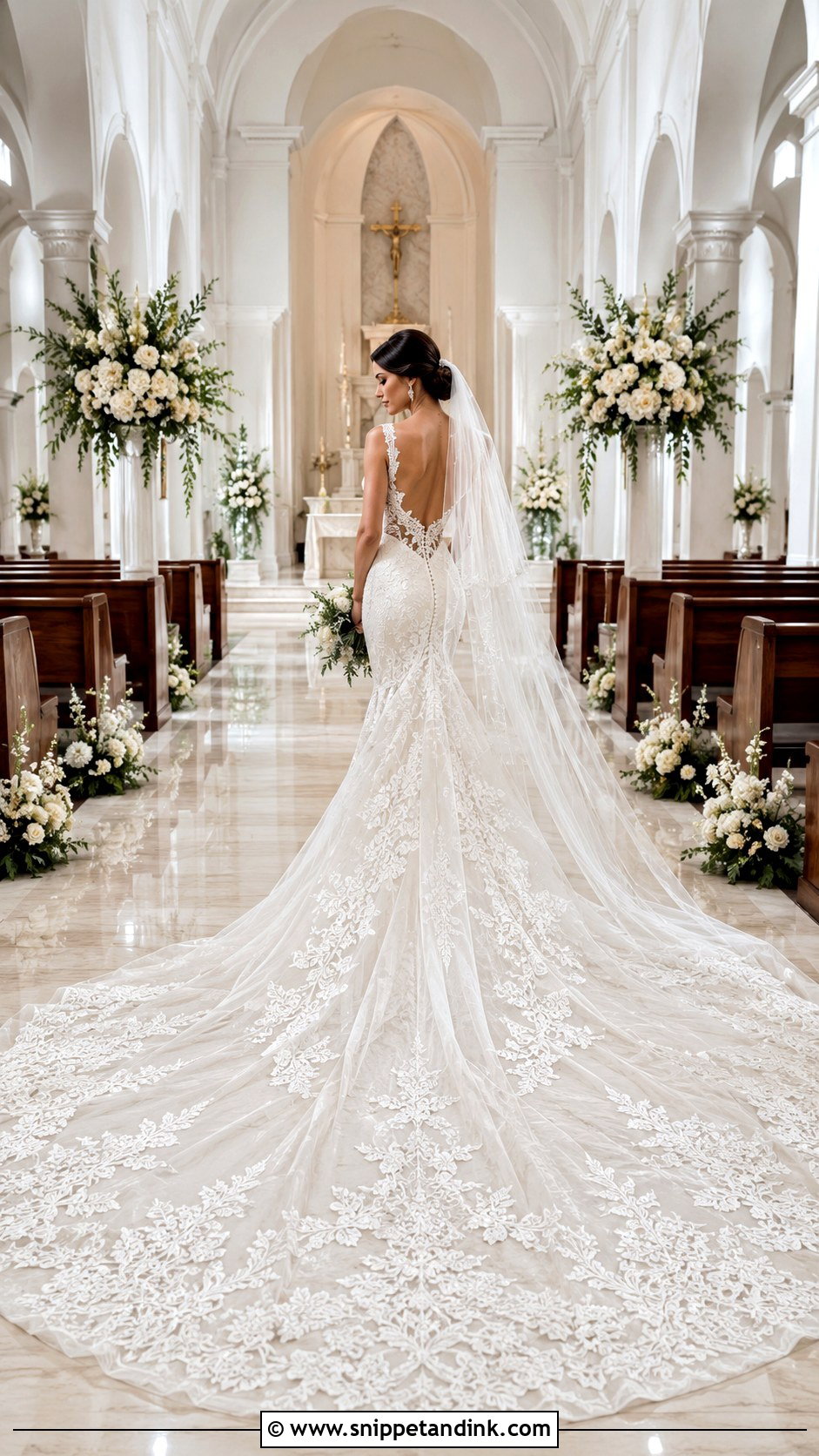
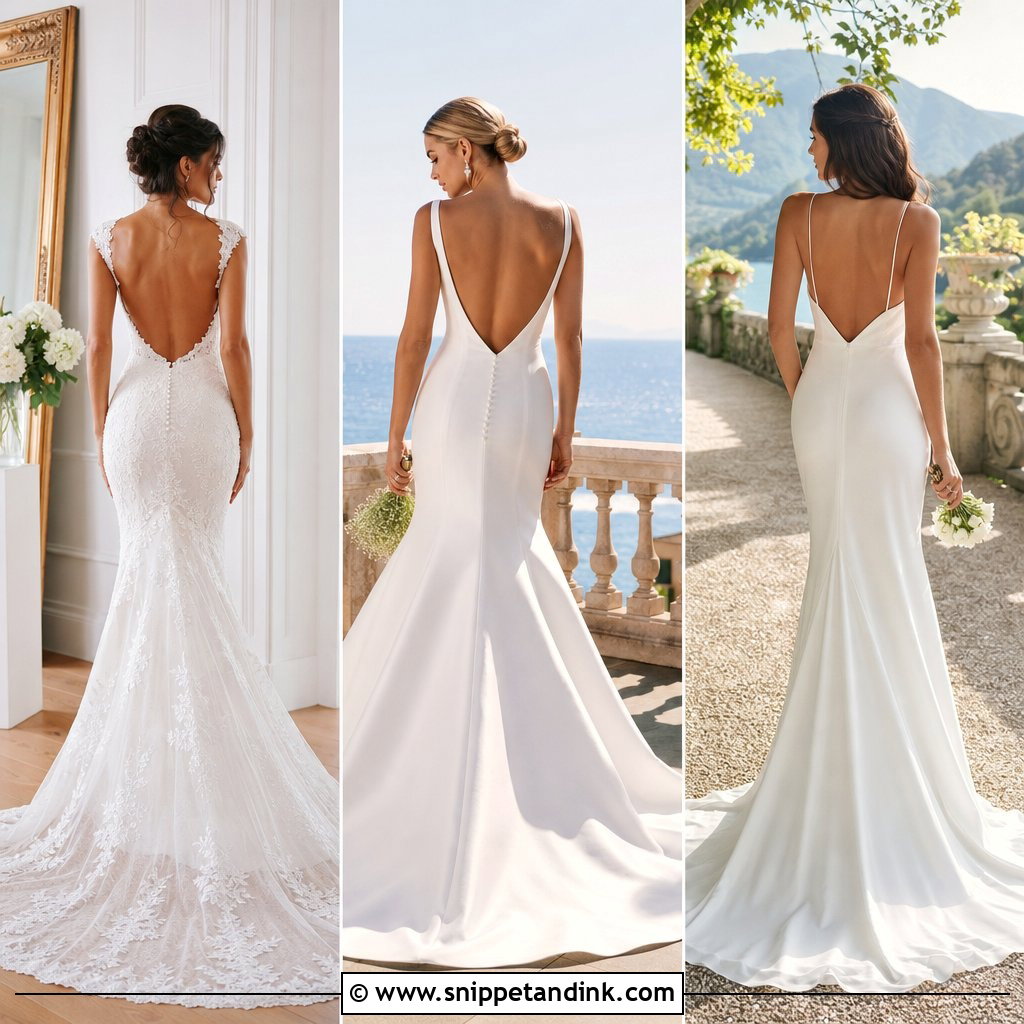
A cathedral train is the classic statement entrance, falling well beyond a chapel train behind you. It can extend from a fitted mermaid gown, a structured ball gown or a simple satin column, and lace edging, appliqué or embroidered initials add detail that shows best in rear-view shots. Pair it with comfortable heels, understated jewelry and a veil either shorter than the train or matching its length; anything in between looks like a mistake. Keep your hair secure and the bouquet medium so proportions stay balanced. Before you buy, ask the venue how wide the aisle is and what the floor is made of, since gravel, grass and wet stone mark a train fast. Your tailor needs to build a strong bustle, and one bridesmaid should practise fastening it twice before the day.
How a Heavy Gown Behaves After Hour Six
A dress that feels fine on a fitting podium for twenty minutes is a different thing at the end of a long day. Satin and mikado ball gowns can be surprisingly heavy, and most of that weight hangs from the waist and shoulders. These are the checks I run at the final fitting.
- Sit on a hard chair for five minutes, then stand. Boning that digs in now will be sore by dinner.
- Practise a bathroom trip with whoever will help you. Big skirts need a plan, and gathering the skirt from the back works better than lifting from the front.
- Bustle it, then dance. An under bustle tucks the train beneath and suits soft tulle; an over bustle hooks up on top and suits stiffer satin.
- Walk up and down a flight of stairs holding your bouquet, so you learn where your hand needs to lift the hem.
Steaming, travel and the emergency kit
Satin and mikado crease wherever you sit, and those creases set fast in a warm car. Have the dress steamed the day before, hang it from its internal ribbon loops rather than the shoulders, and travel with the skirt laid across a back seat instead of folded. Never press sequins, feathers or pearls with an iron; steam them from the inside at a distance. My kit for these gowns holds a hand-sewing needle, ivory and black thread, safety pins, double-sided tape, white chalk for covering small marks on ivory, and a lint roller whenever black or velvet is part of the outfit.
One Focal Point, Then Everything Else Steps Back
The strongest statement gown isn’t the most elaborate one. It’s the dress that suits you and the setting and still lets you move. Decide first what you want guests to notice, whether that’s a neckline, a color, a train, a texture or a layer that comes off, then make shoes, jewelry, hair and veil serve that single feature. Wear the complete outfit at your final fitting, look at it from the back and side, sit in it and climb a flight of stairs. If something pinches or slips there, it’ll be worse by midnight, and comfort is part of the statement too.
You'll Like These Ideas:




Leave a Reply