
An all-white cake is harder to make well than a colorful one, and I mean that as a compliment to the style. With no color to distract the eye, every uneven edge, air bubble and crooked tier shows. What white gives you in return is a cake that fits almost any room, from a ballroom to a backyard tent, and lets texture and shape carry the design. I’ve gathered 25 white cakes below and, for each one, the practical detail that decides whether it works.
These are the white designs I’d show a couple at a first consultation.
Briefing a Baker on an All-White Design
When a couple tells me they want a white cake, my next question is always “which white, and where?” The answers shape the cake more than any inspiration photo.
- The dress. A photo, ideally with the fabric visible, tells me whether the cake should be bright white or ivory, and whether lace, pleats or beading can be echoed.
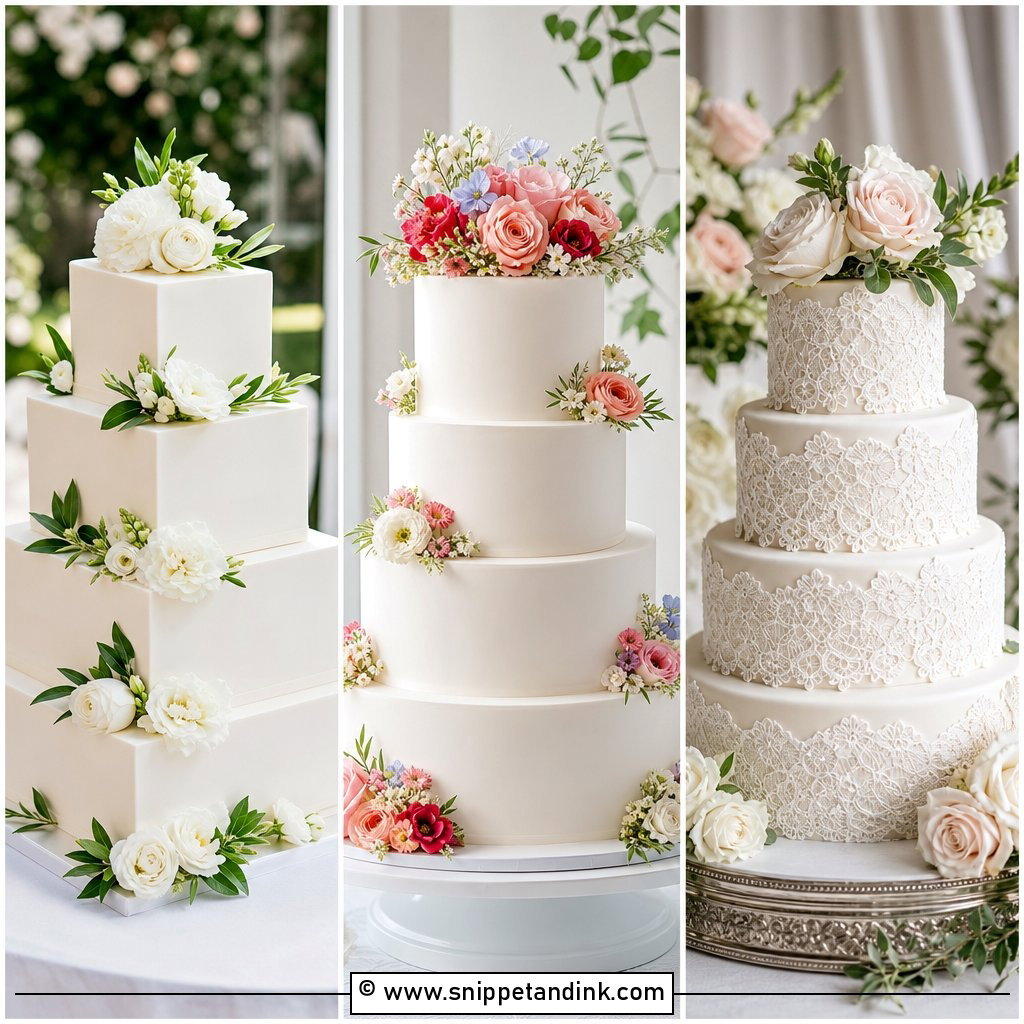
- The room. Ceiling height, lighting and where the cake table sits decide how tall it can be and how much texture it needs to show up.
- Indoors or out. Buttercream in a warm tent behaves very differently from fondant in an air-conditioned hall.
- Guest count and other desserts. These decide tier sizes, and whether a smaller display cake plus a kitchen cake makes more sense.
- Flavor priorities. If the couple cares most about taste, I steer toward buttercream; if they want a sculptural cake, fondant gives me more control.
Ordering early matters for detailed white work. Sugar flowers, Lambeth piping and draping all take many hours, and popular bakers fill their summer weekends months ahead.
1. Simple White Wedding Cake
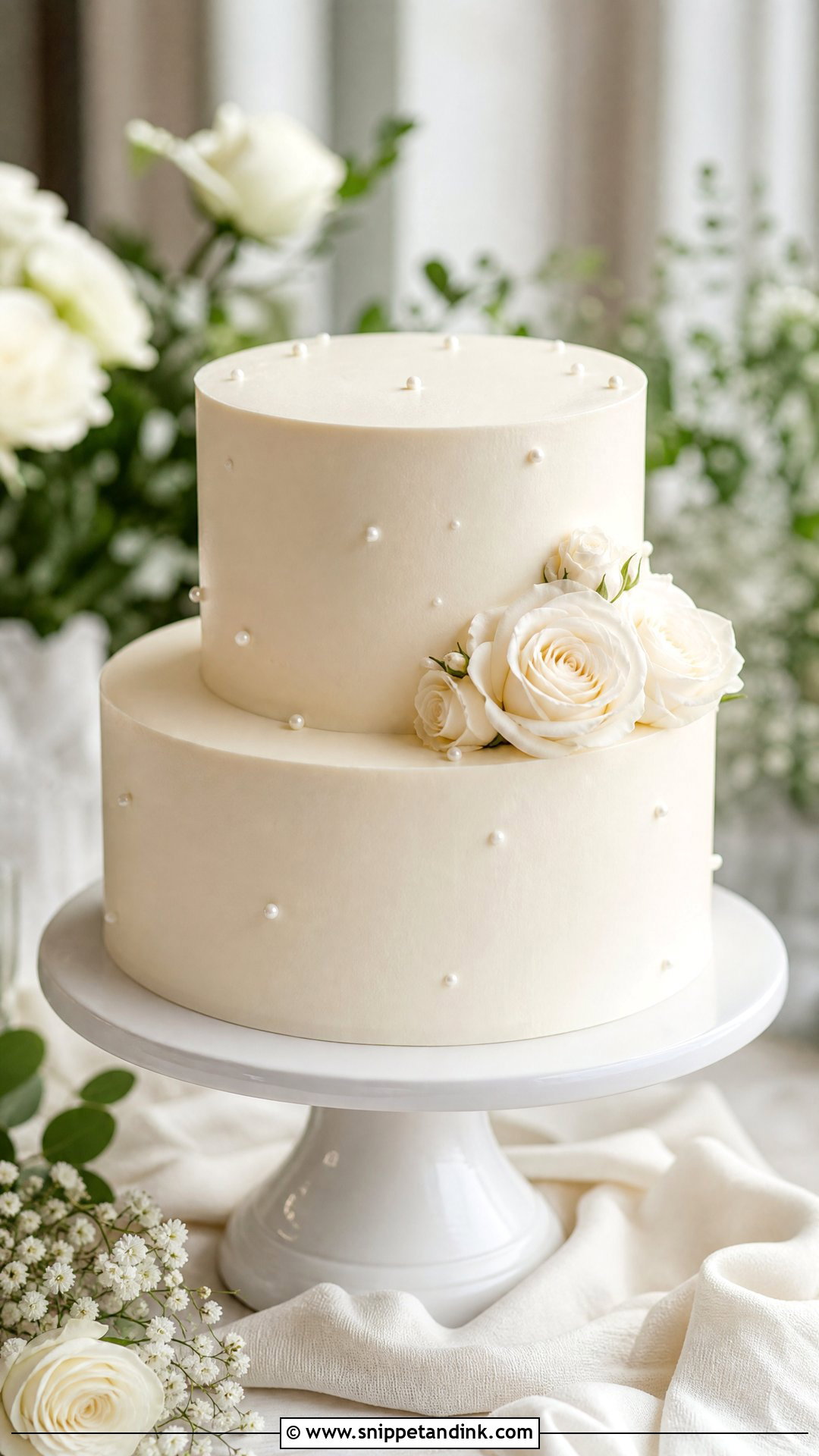
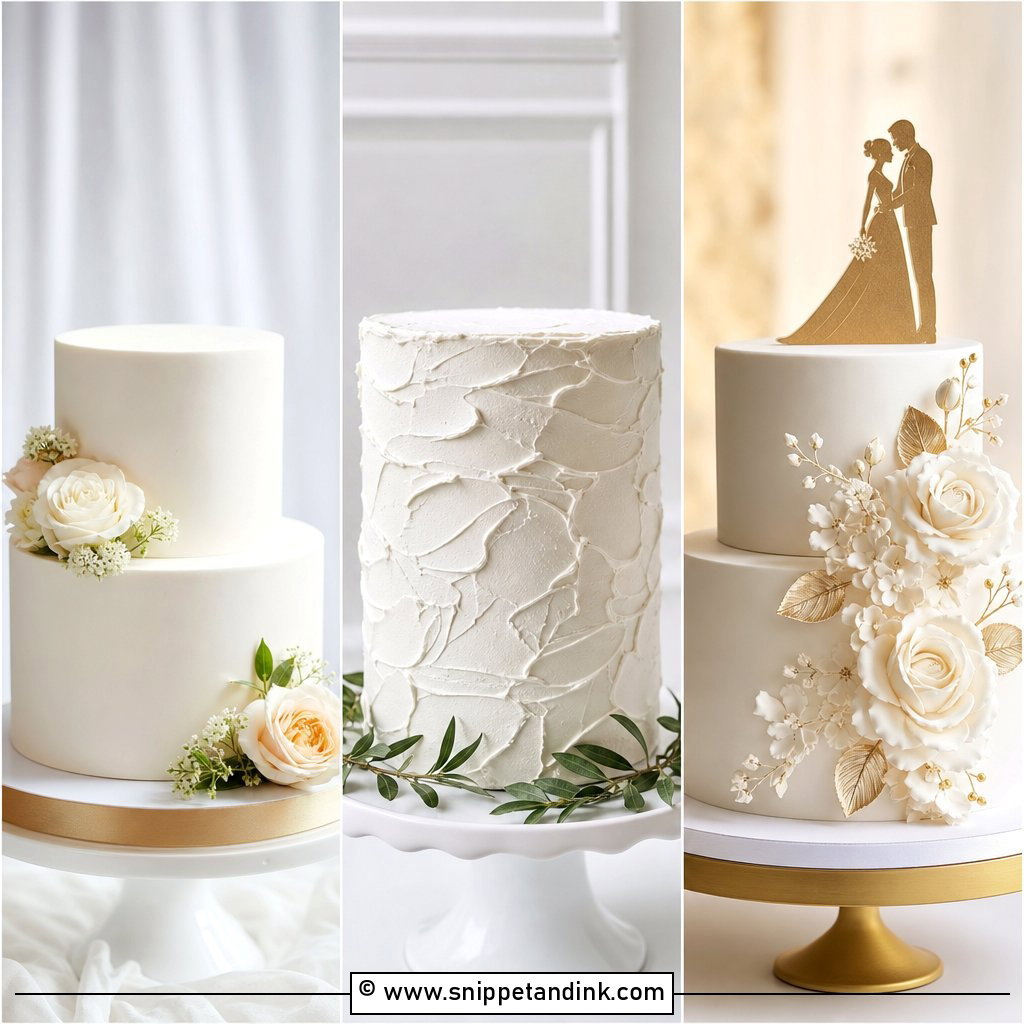
A plain white cake is the one that exposes the decorator most. Two or three tiers of smooth white buttercream with one accent, a few white roses or a slim ribbon, is all it needs, provided the sides are straight and the top edges are sharp. I spend more time scraping and chilling a simple cake than a decorated one. If bright white feels cold for your palette, ask for a soft ivory. Almost any flavor sits under it.
2. White Buttercream Wedding Cake
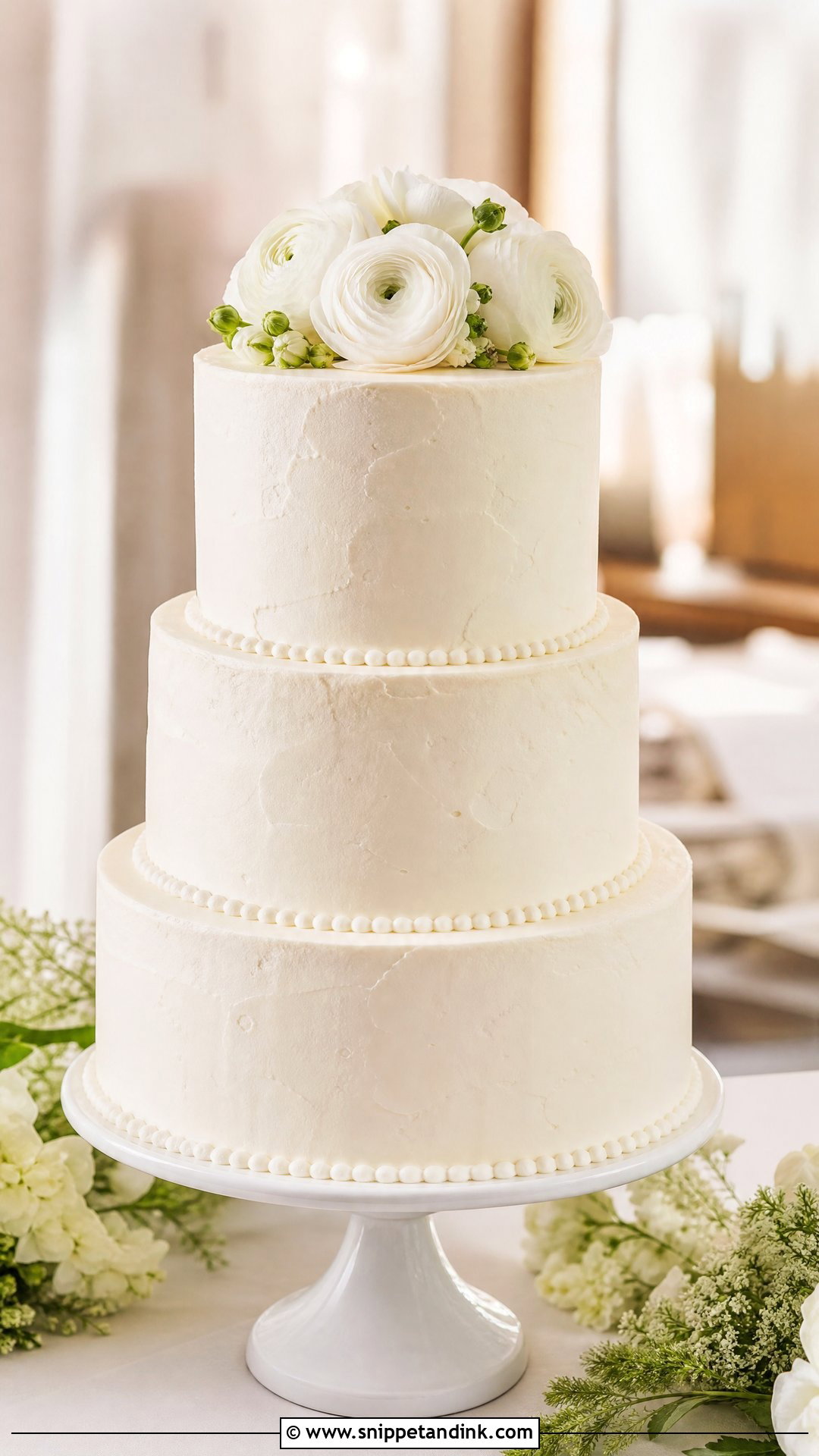
Buttercream is softer and tastes richer than fondant, and the finish can range from formal to relaxed. Smooth reads polished; light spatula texture reads handmade. Real butter gives buttercream an ivory cast, so a true bright white usually needs a portion of shortening or a whitening step, which slightly changes the flavor. A few white flowers or pearl dots keep it bridal. Couples who care most about taste often end up here.
3. White Fondant Wedding Cake
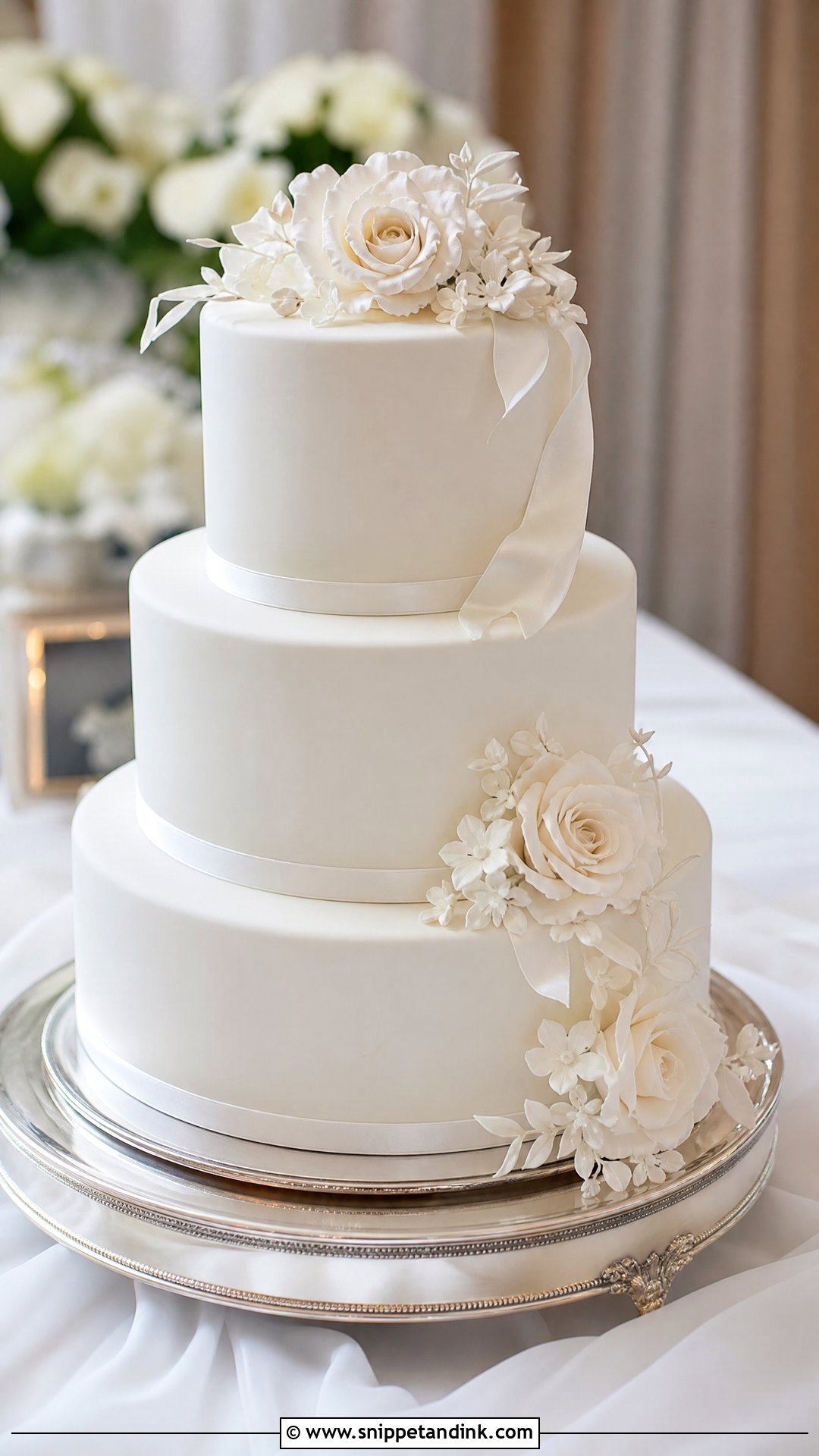
Fondant gives the crispest edges and the most even surface, and it’s the canvas I use for pleats, bows, lace impressions and monograms. It also helps a tall cake hold its shape. Fondant is only as smooth as what’s underneath, so I put a firm layer of ganache or buttercream under it. Many guests peel it off, which is why the filling matters: raspberry cream, lemon curd or vanilla custard keep the slice interesting.
4. White Pearl Wedding Cake
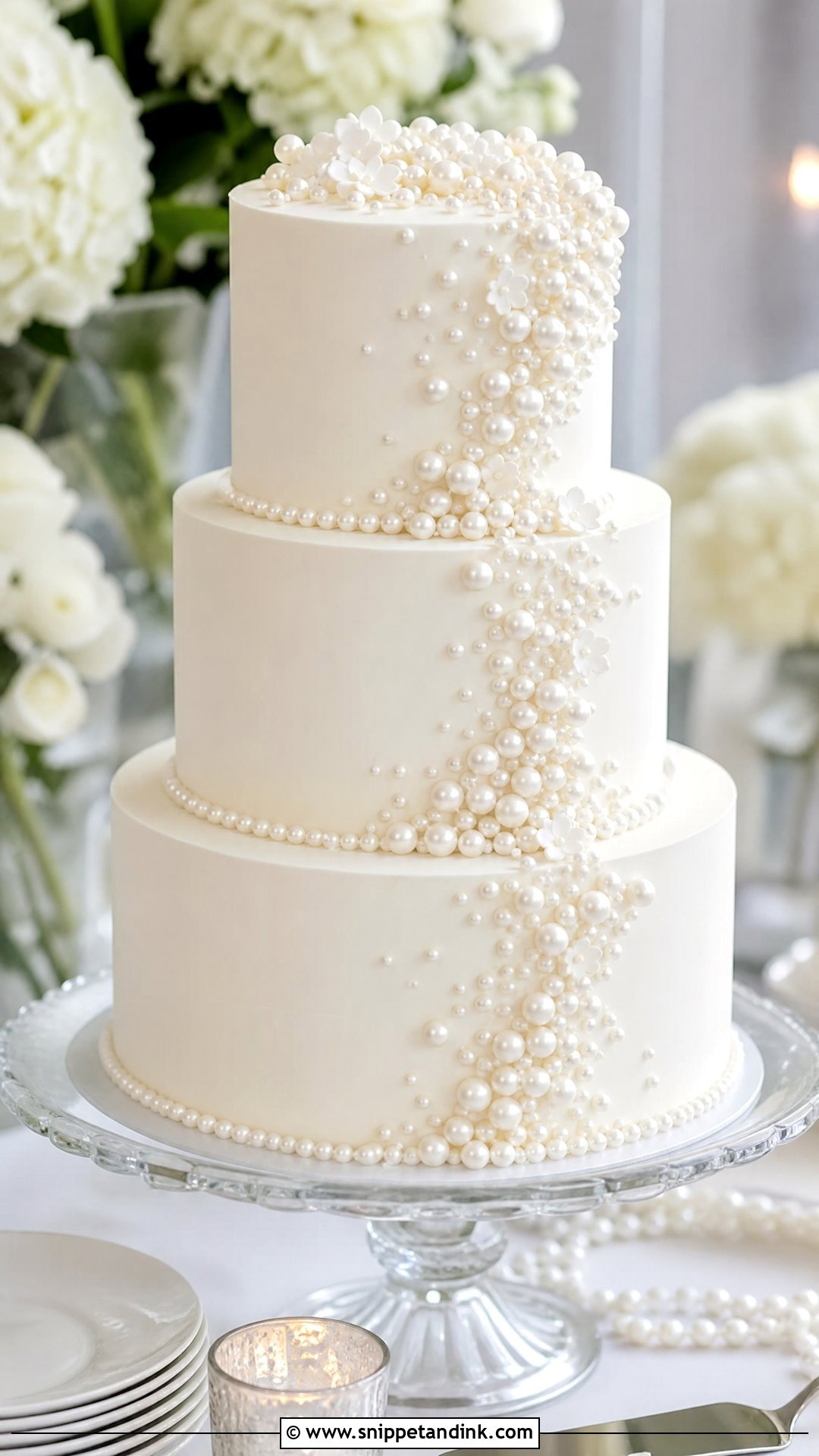
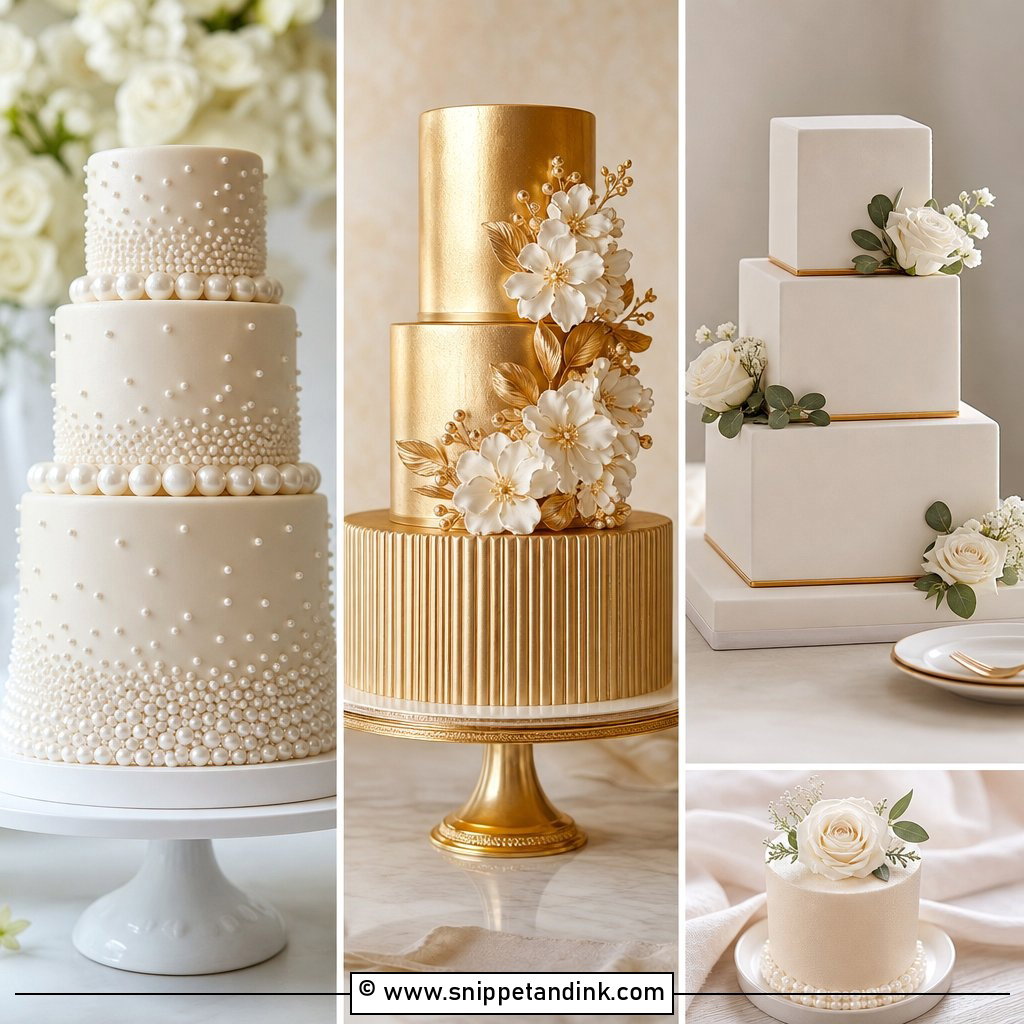
Pearls add polish without glitter. Rows look classic, a scatter looks like beading, and a cascade gives movement. Sugar pearls need a firm surface to stay put, so on buttercream they go on once the crust has set. Fewer pearls with more open white space looks more modern. Pearl borders and piping lean vintage.
5. White Floral Wedding Cake
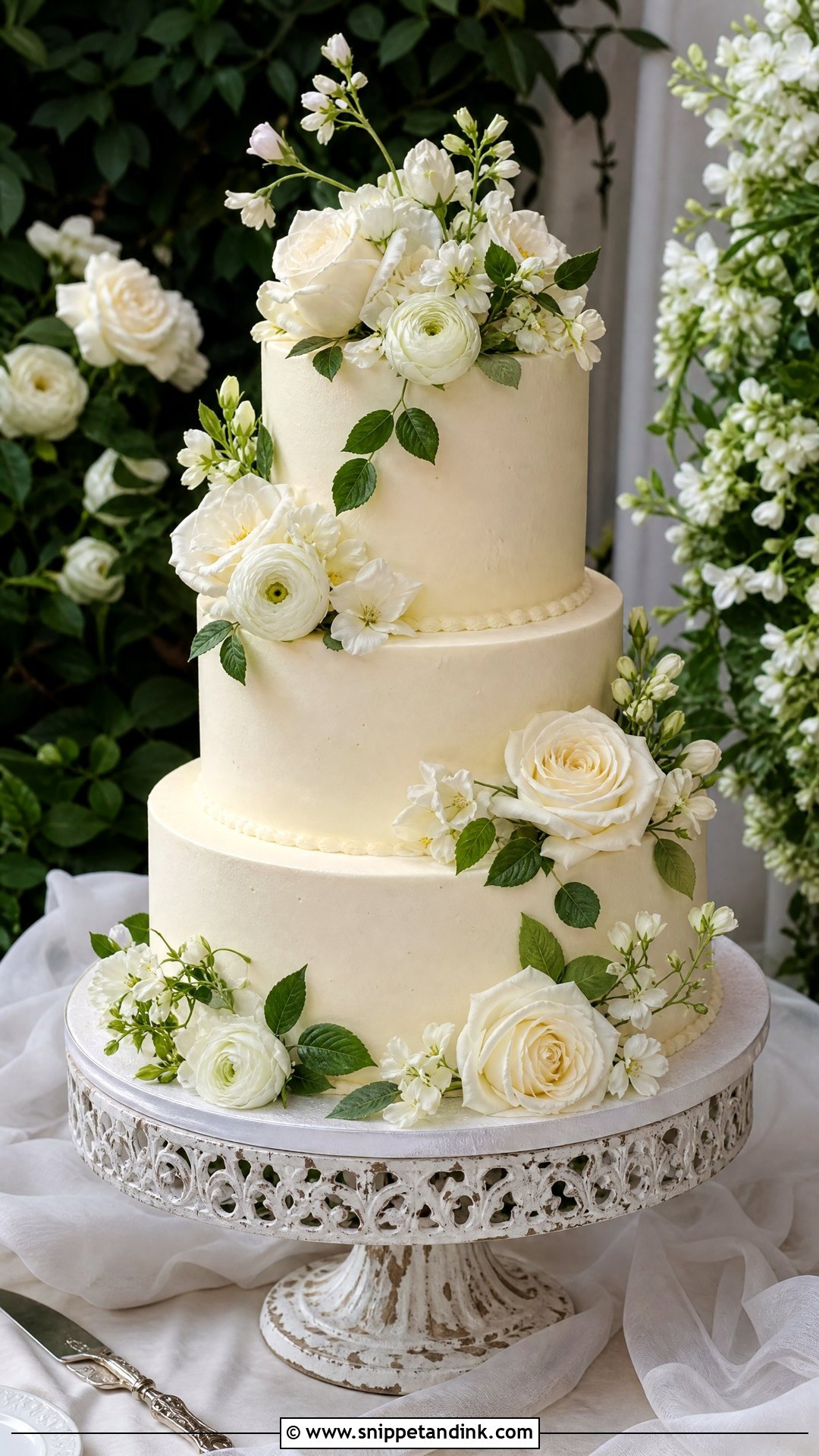
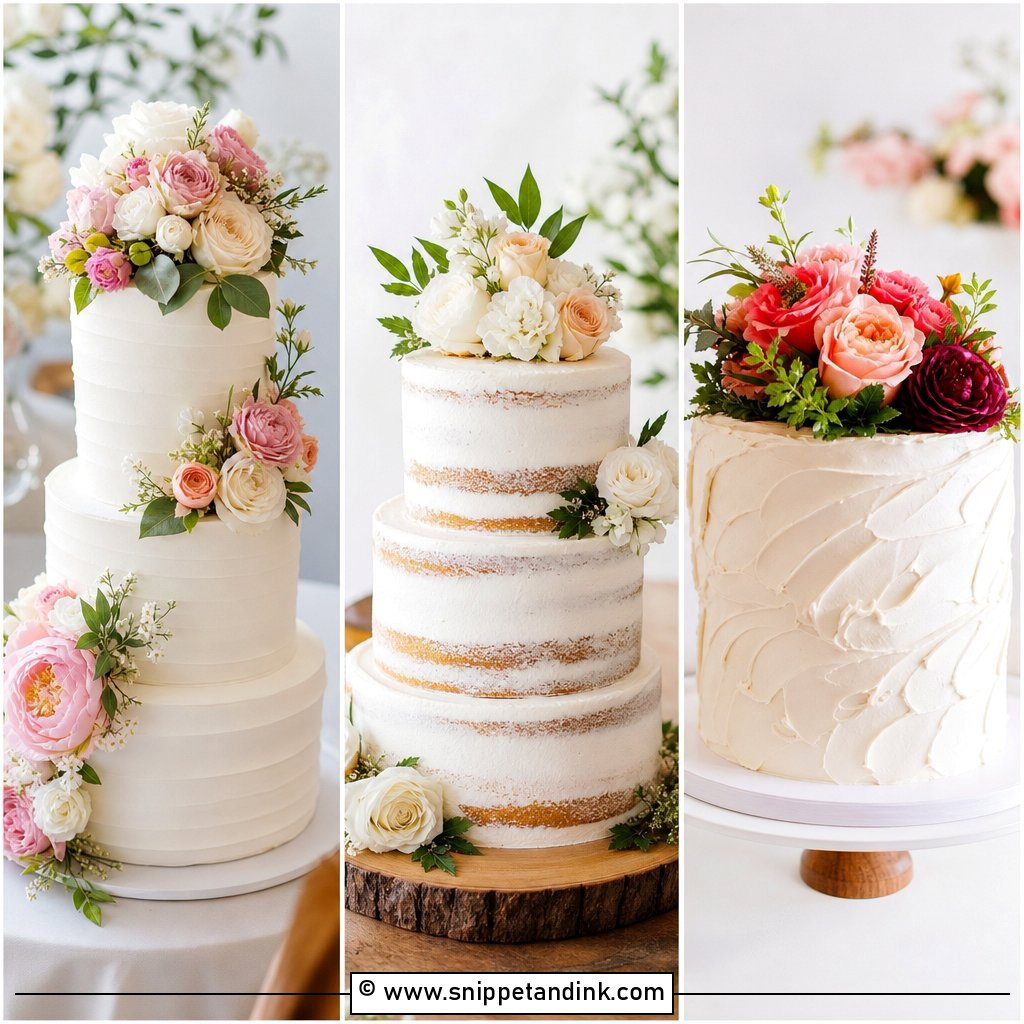
Flowers can be fresh, sugar, pressed or piped, and each one changes the budget and the look. White roses, ranunculus, orchids and peonies all work. Fresh florist flowers are often treated with chemicals, so I wrap stems and use food-safe picks, and I agree with the florist in advance which blooms are going near the cake. A few blooms finish a minimal cake; a full cascade is dramatic.
6. White Rose Wedding Cake
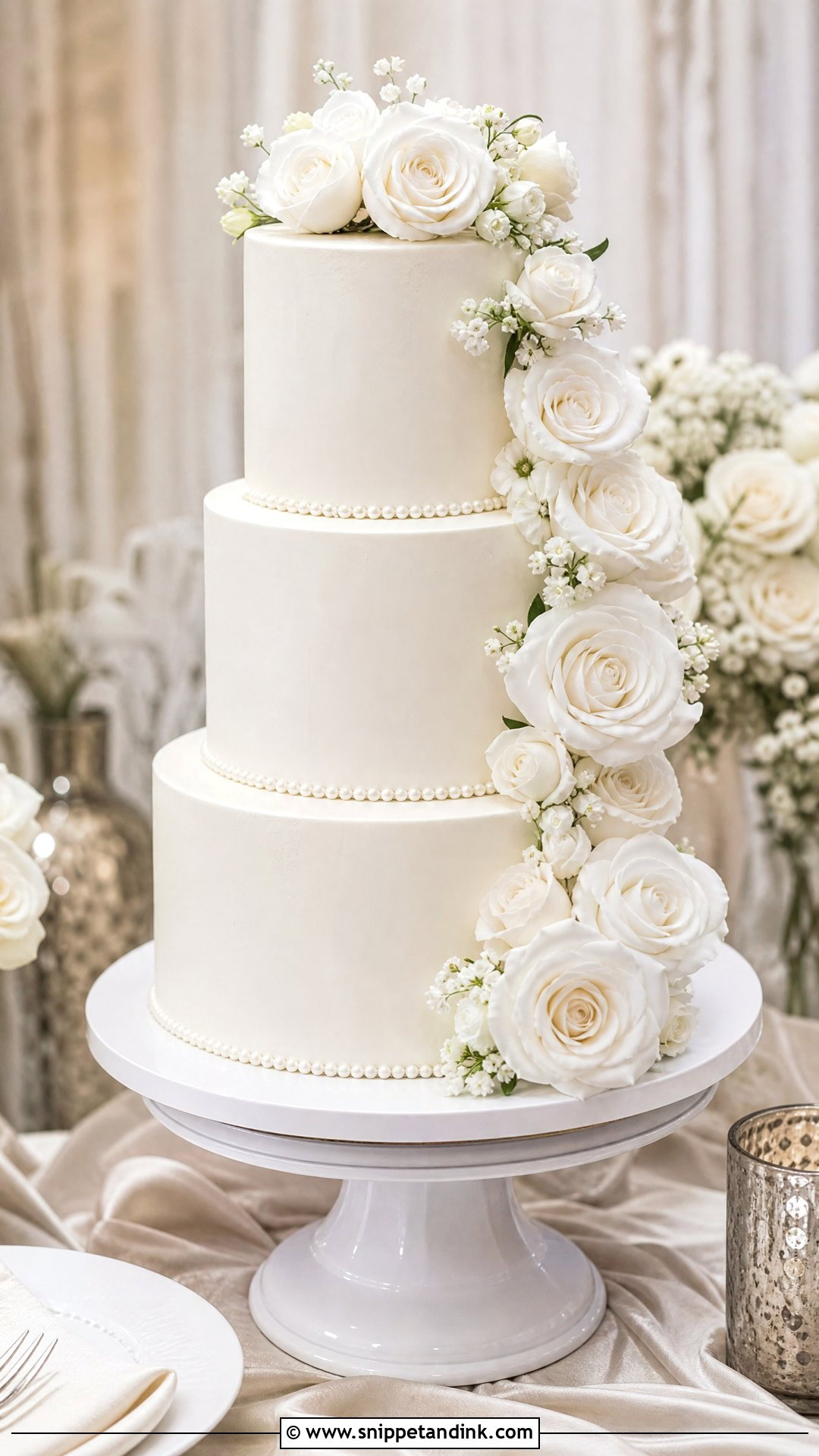
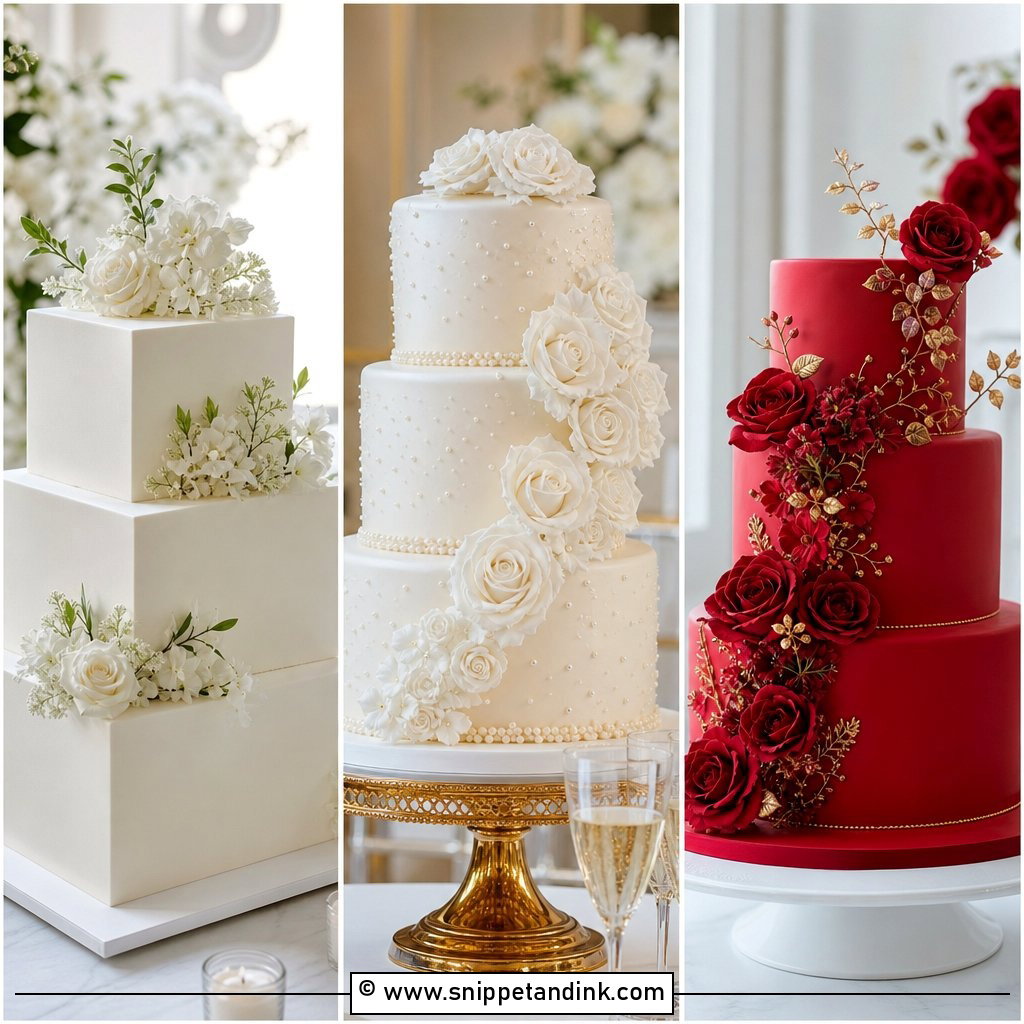
Roses can be fresh, sugar, piped or fondant appliques, and the placement is what gives the cake its character. A cluster on the top tier and another at the base looks clean. A trail down one side is more dramatic. Fresh white roses show bruising quickly at the petal edges, so for a long reception I’d lean toward sugar. They pair well with lace texture or a few pearls.
7. White Ruffle Wedding Cake
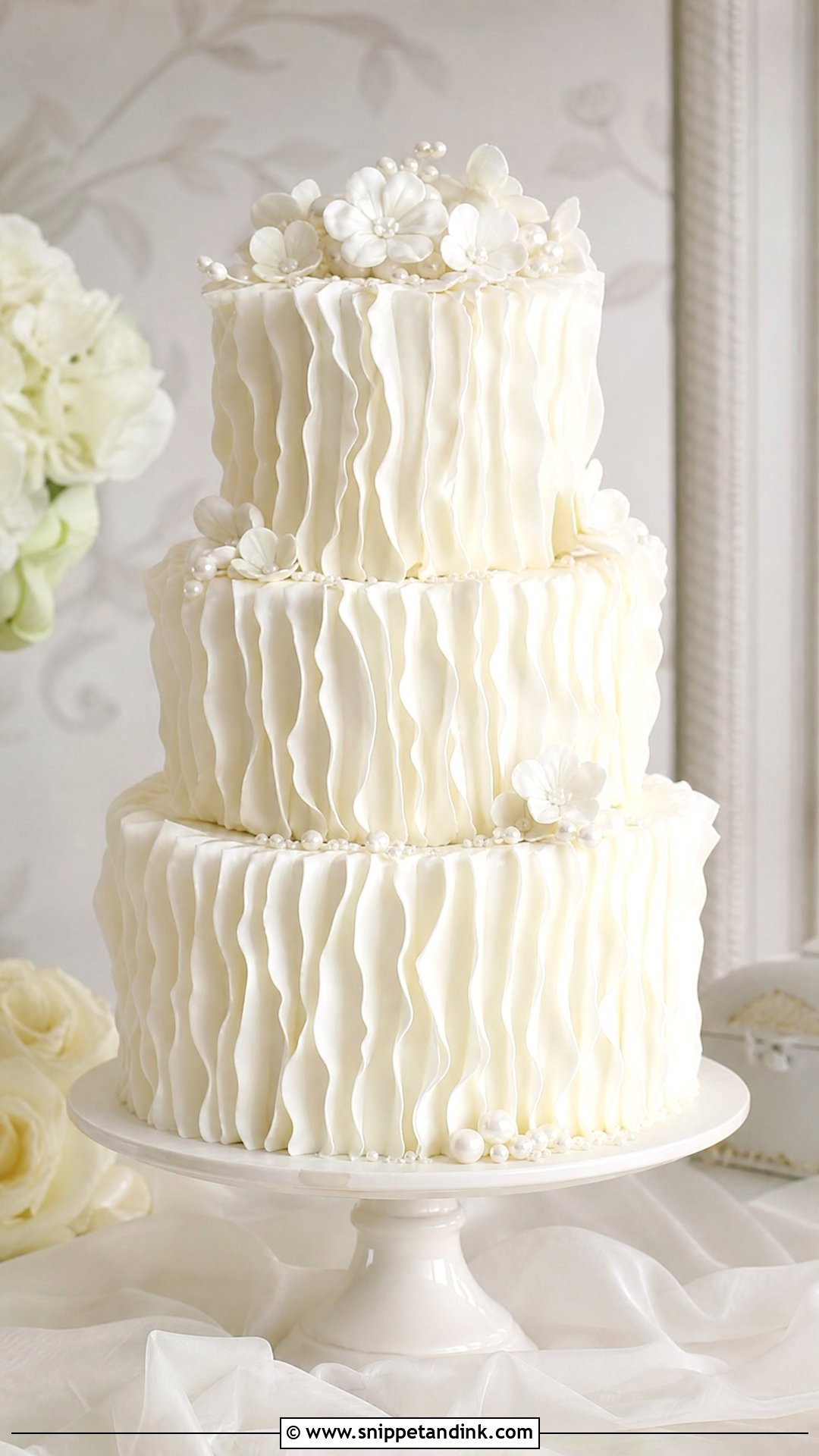
A white ruffle wedding cake gets its interest from shadow, which is why ruffles suit an all-white design so well. Buttercream ruffles are soft and fully edible, fondant ruffles hold crisp edges, and wafer paper ruffles look the airiest but can wilt in a humid room. Ruffles are slow to build on tall tiers, so allow for that in your order. Keep any other decoration to a few flowers.
8. White Lambeth Wedding Cake
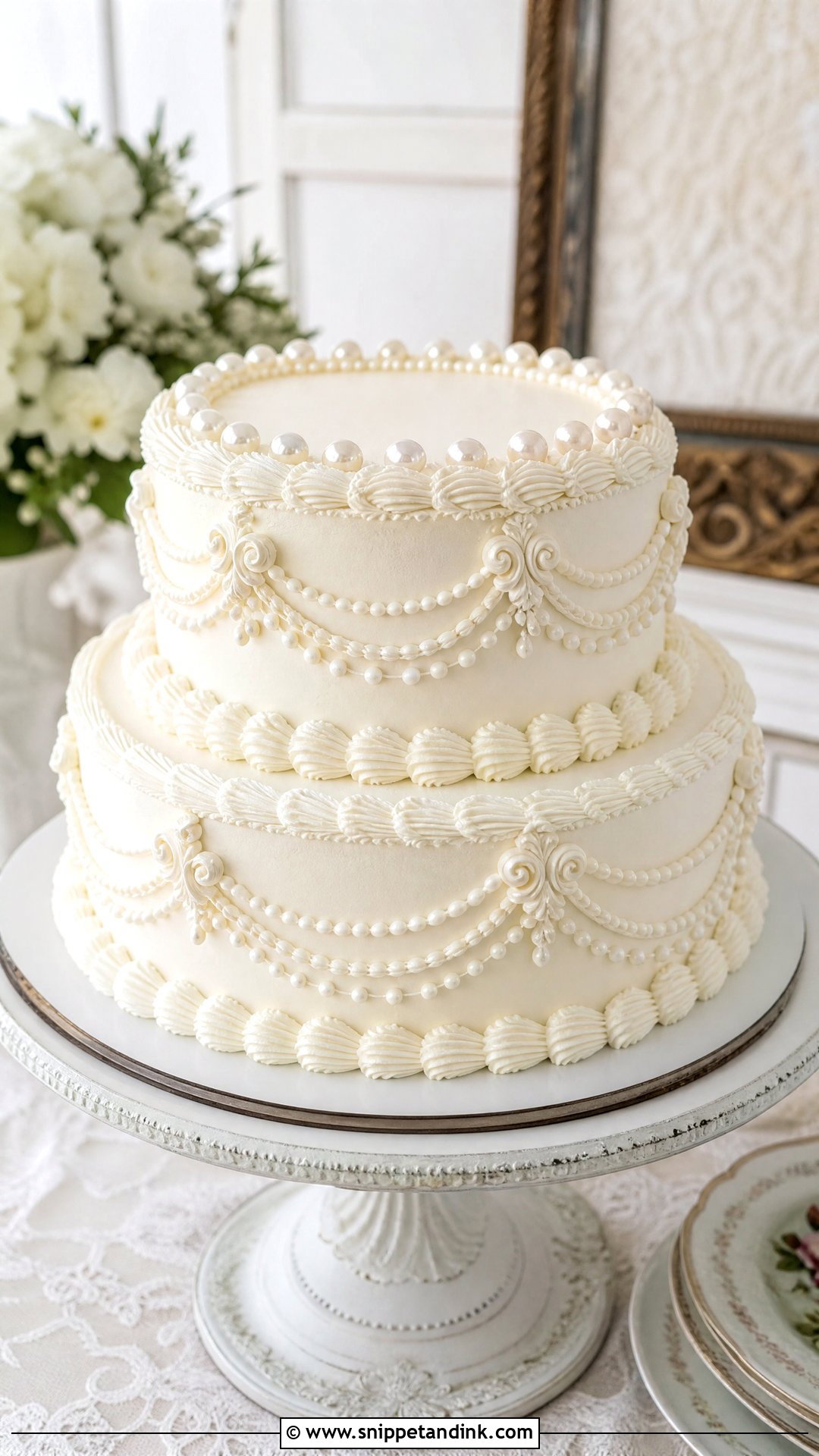
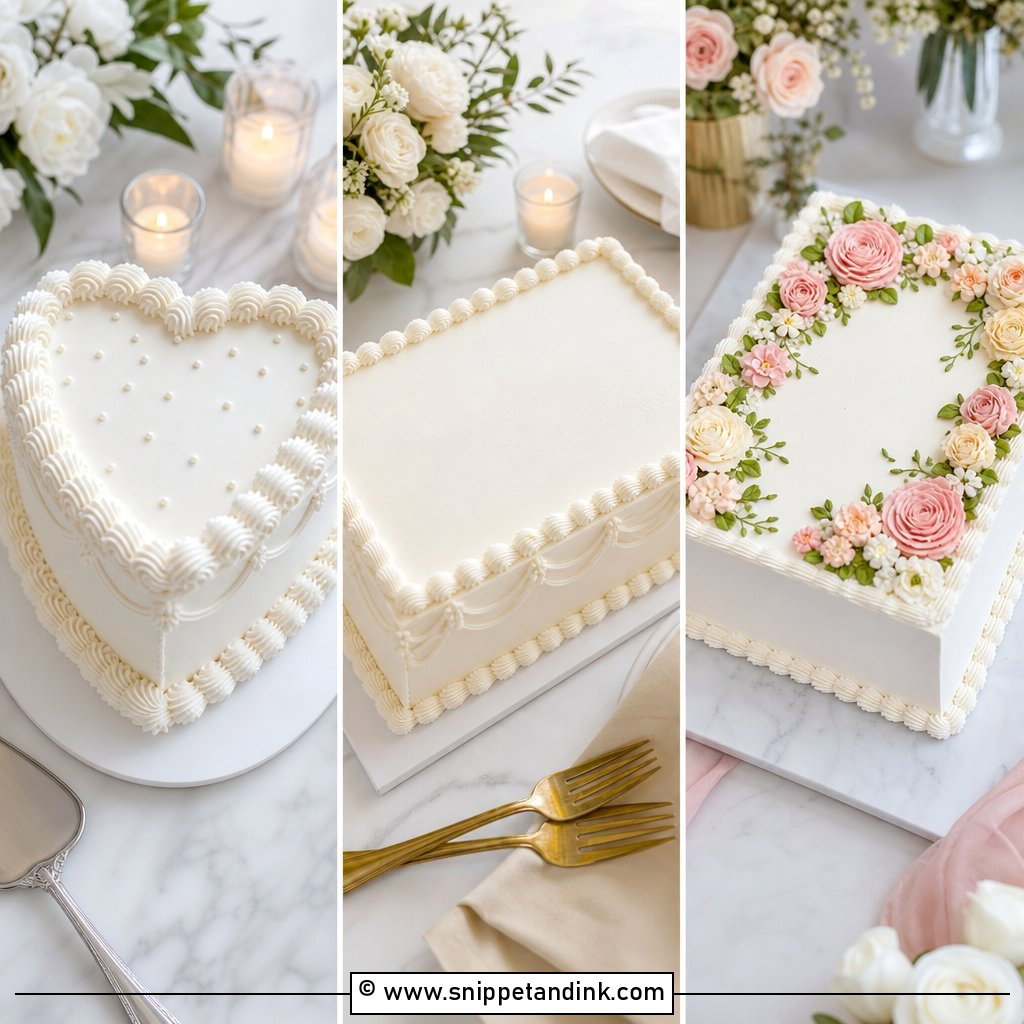
Lambeth piping is layered overpiping: shells, scrolls, swags and pearls built up in tiers of buttercream. In all white it reads nostalgic without being loud. It’s demanding work, and in a warm room the layers can slump, so it needs a confident decorator and a cool venue. A heart-shaped cake suits the playful side of the style; round tiers are more traditional. Almond cake with a little raspberry is a classic pairing.
9. White Lace Wedding Cake
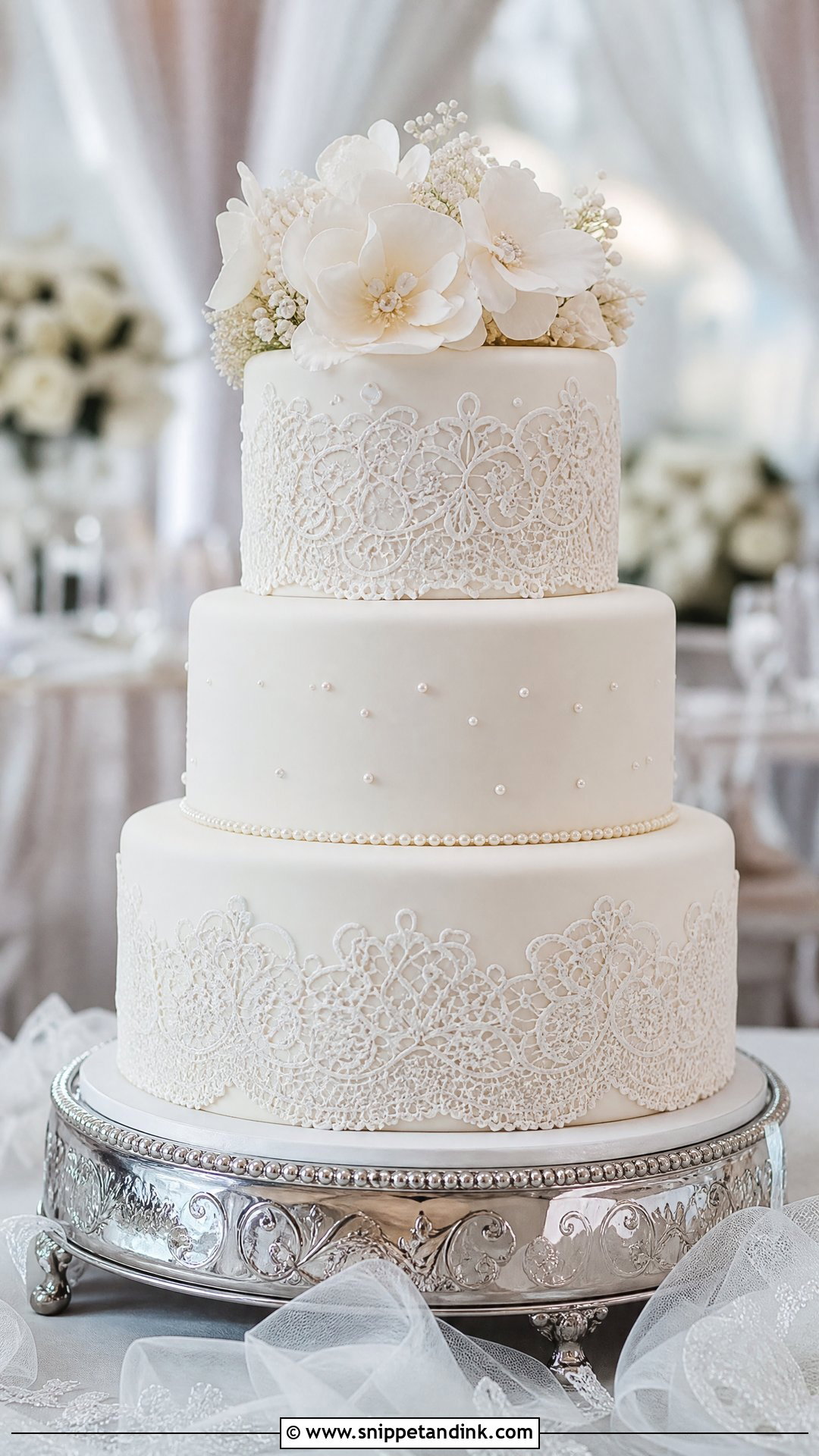
Lace can be fondant applique, royal icing piping, edible lace sheets or a stencil. I ask for a photo of the gown’s lace so the cake echoes it rather than copies it. Lace on one or two tiers looks softer; every tier is more dramatic. White on white relies on shadow to show the pattern, so piped or raised lace reads better from a distance than flat stencil work.
10. White Bow Wedding Cake
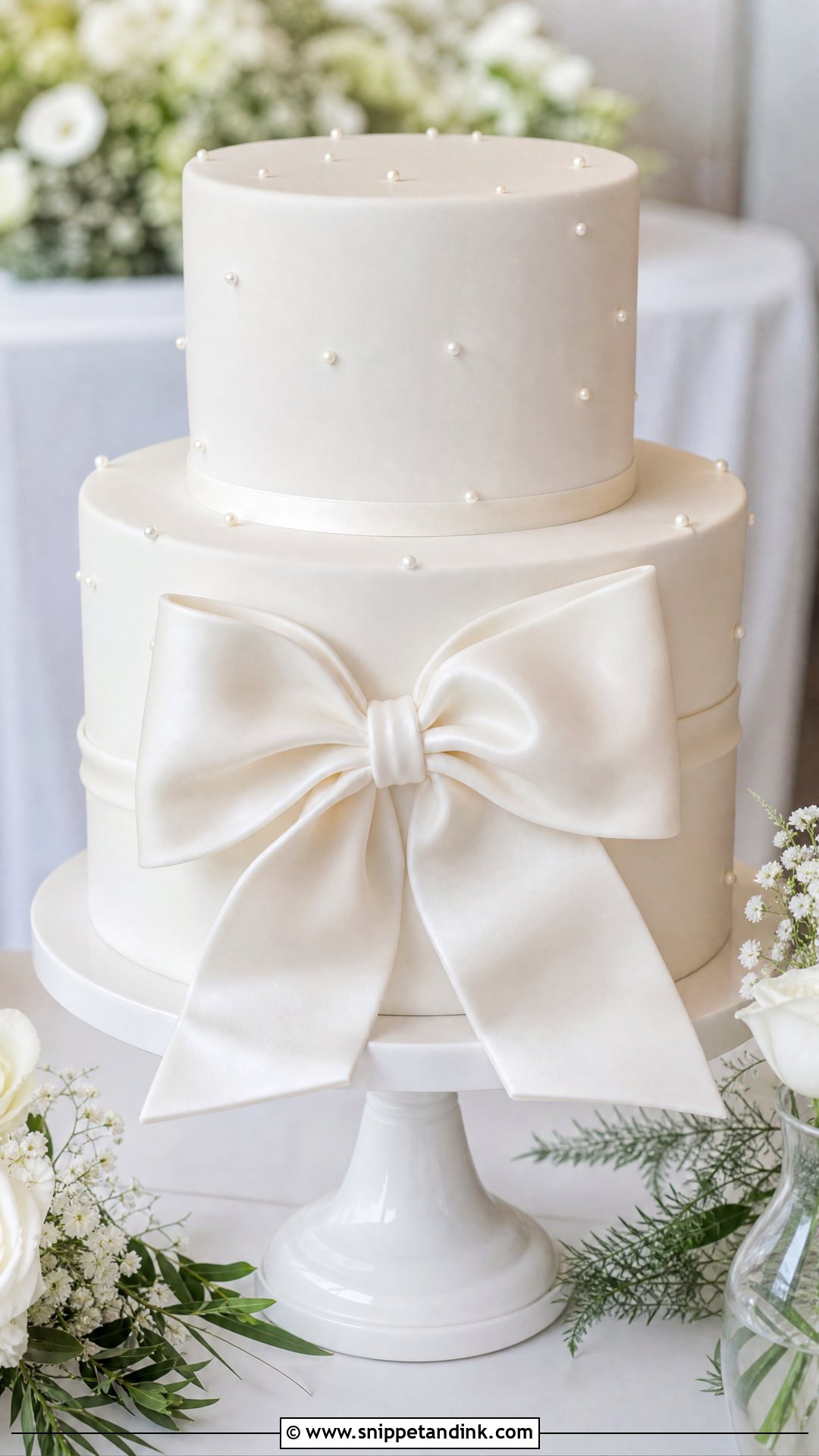
Bows range from small and neat to oversized and sculptural. Fondant bows are crisp; sugar paste bows can be thinned to look like silk. A large bow needs a day or two to dry so its loops hold, so I make it ahead and attach it late. Keep the rest of the cake plain. One bow is a strong focal point, and a second one splits attention.
11. White Tiered Wedding Cake
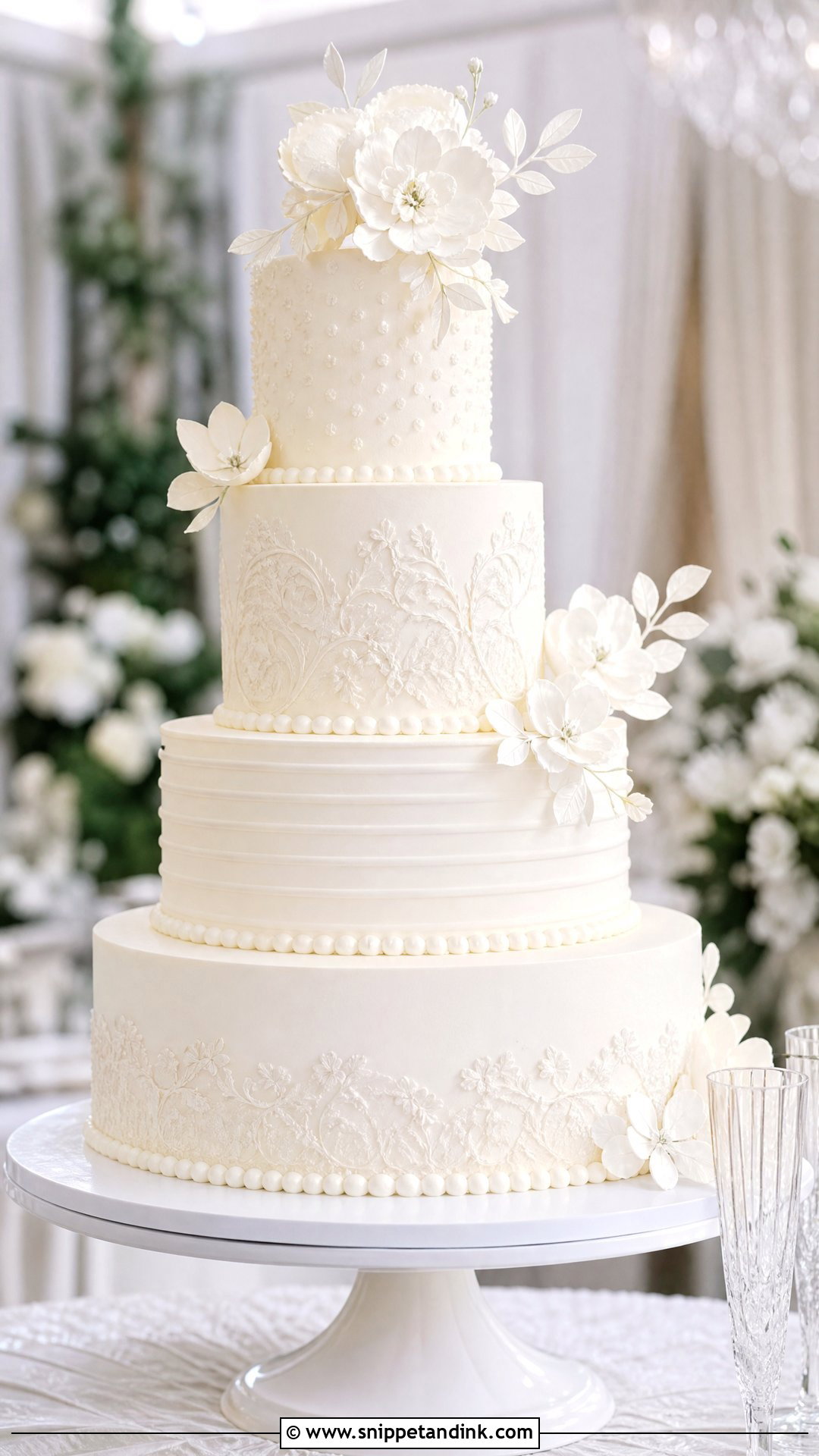
A white tiered wedding cake is the traditional centerpiece. Three tiers are classic, and four or five suit a big guest count and a high ceiling. Varying the detail by tier, lace on one, smooth on another, flowers on the third, gives depth without color. Height means weight, so every tier needs a board and supports, and fillings should be firm enough to survive the drive. Soft mousse fillings are risky in tall cakes.
12. White Two Tier Wedding Cake
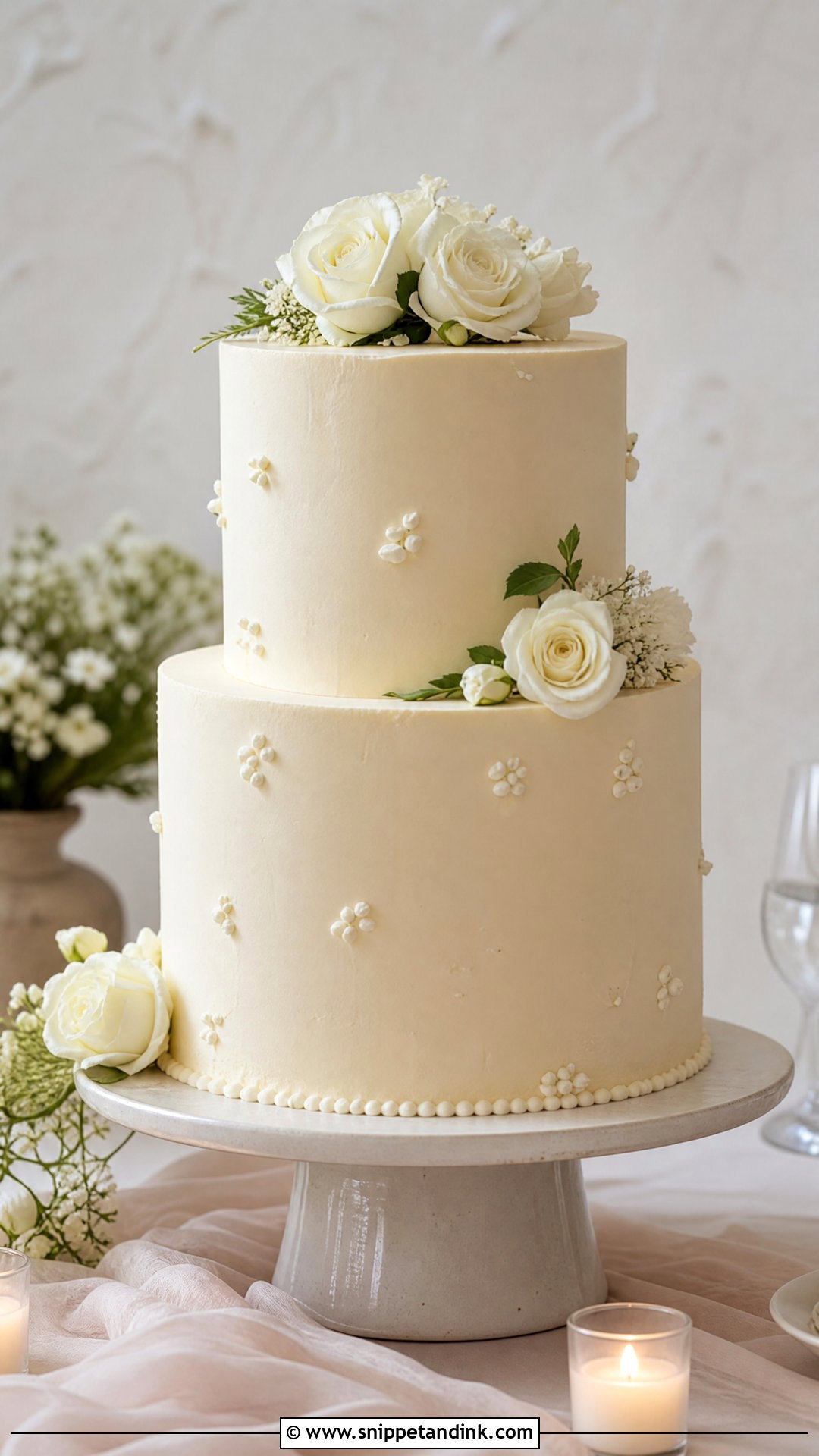
Two tiers suit an intimate wedding or an elopement, or a cutting cake alongside other desserts. Round, square, heart or extended tall tiers all work at this size. A good stand does a lot here: a pedestal adds height and makes a small cake look finished. Candles or matching desserts around it fill out the table. Proportion matters more on a small cake, so keep the top tier clearly smaller.
13. White Square Wedding Cake
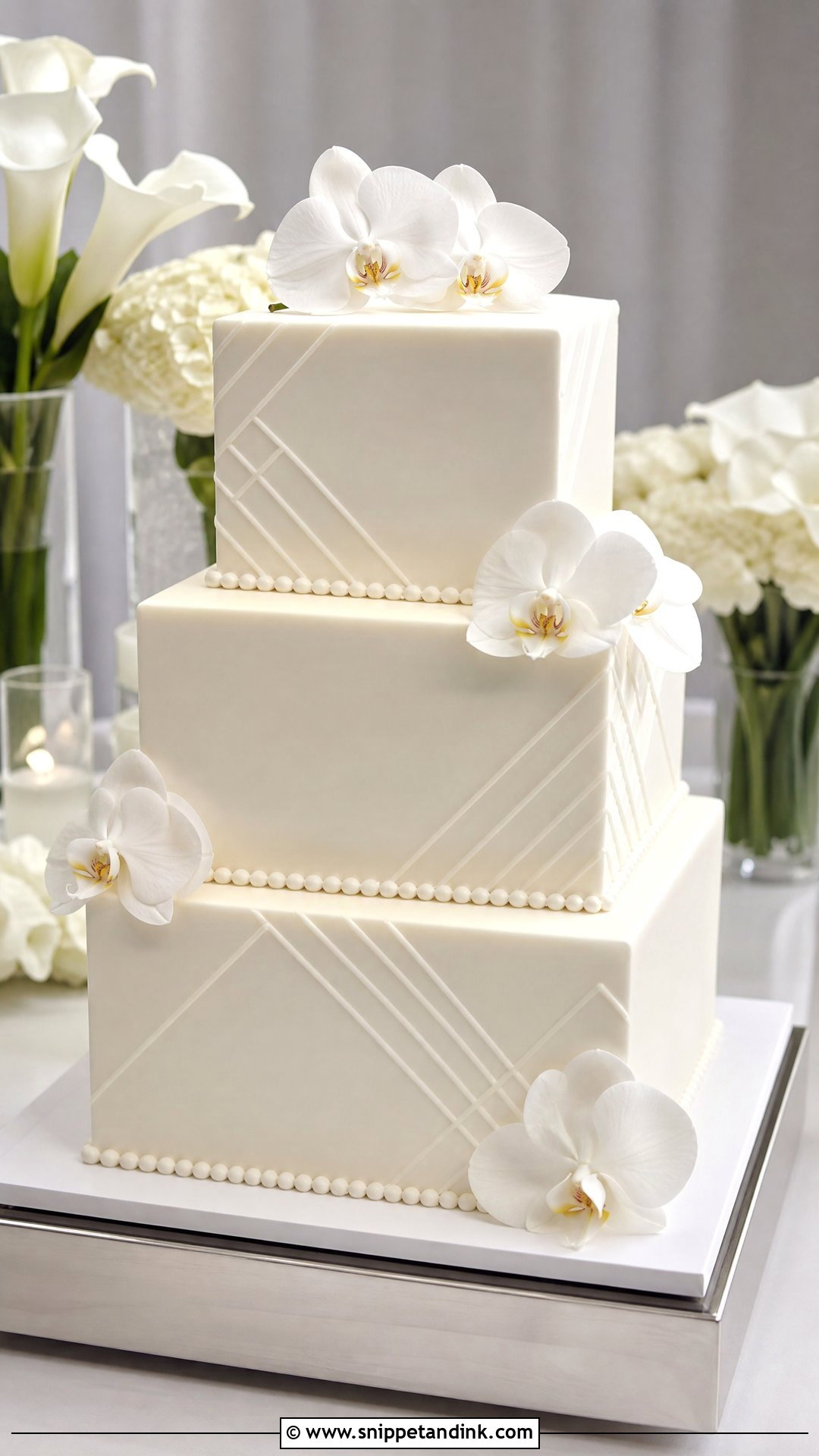
Square tiers give a clean, architectural line. They’re also unforgiving: corners must be sharp, and buttercream wants to round them off. I generally use ganache and fondant on squares, or very cold buttercream finished with a pair of acrylic boards. Stack evenly for a formal look or offset for something contemporary. Piped pearls or sugar flowers soften the geometry.
14. White Oval Wedding Cake
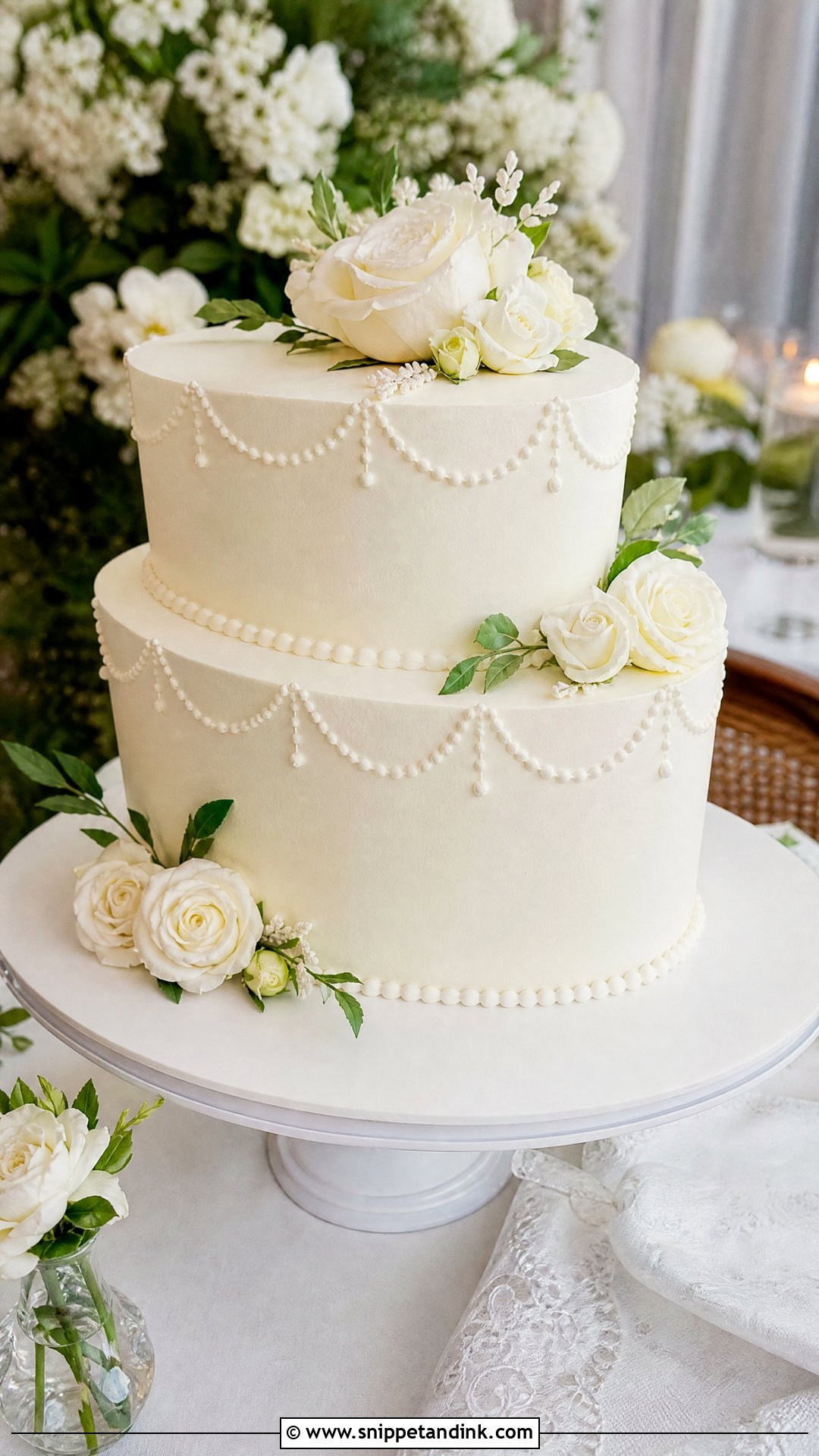
Oval tiers are softer than squares but less expected than rounds. The shape guides the eye around the cake, so garlands, lace piping and long ribbon work well on it. Oval pans and boards are less common, which can add to the cost and the lead time. Smooth or lightly textured frosting keeps the shape clear. White roses or sugar leaves finish it.

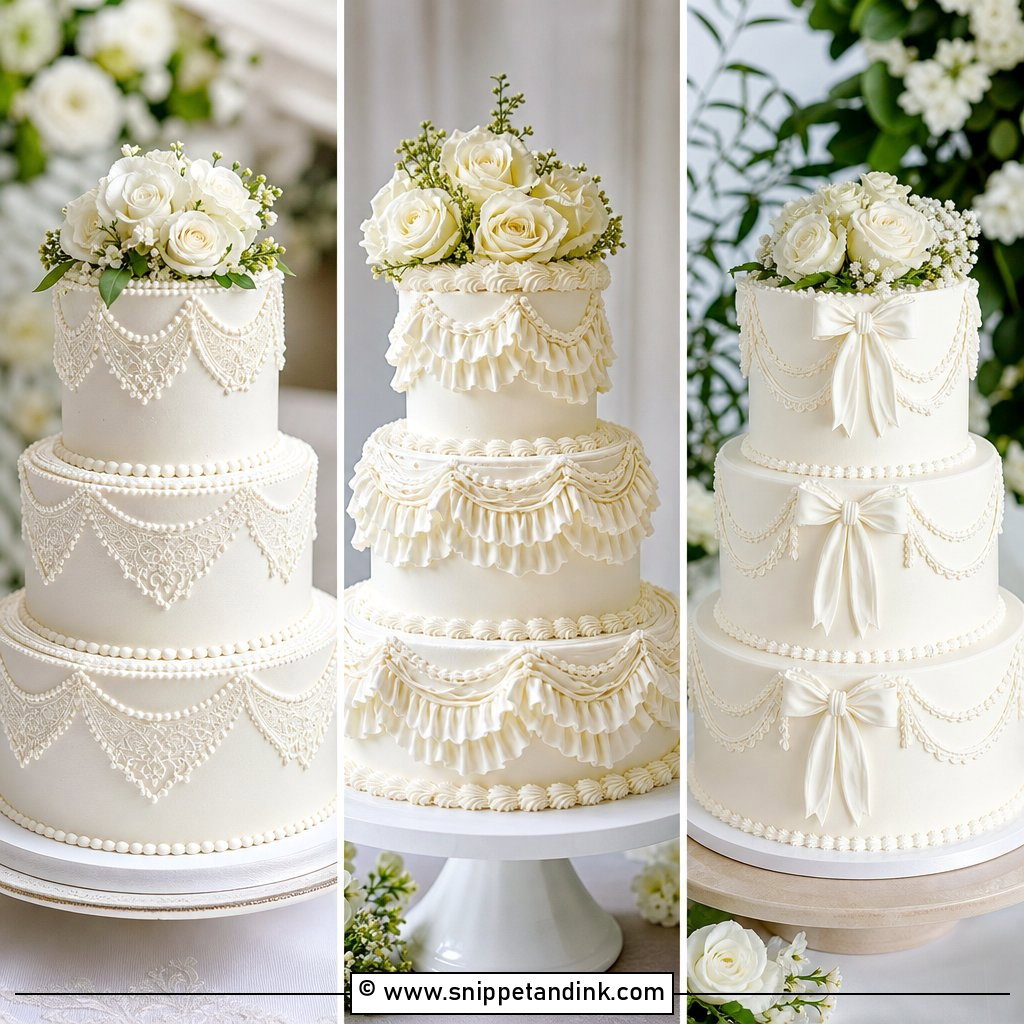
15. White Heart Wedding Cake
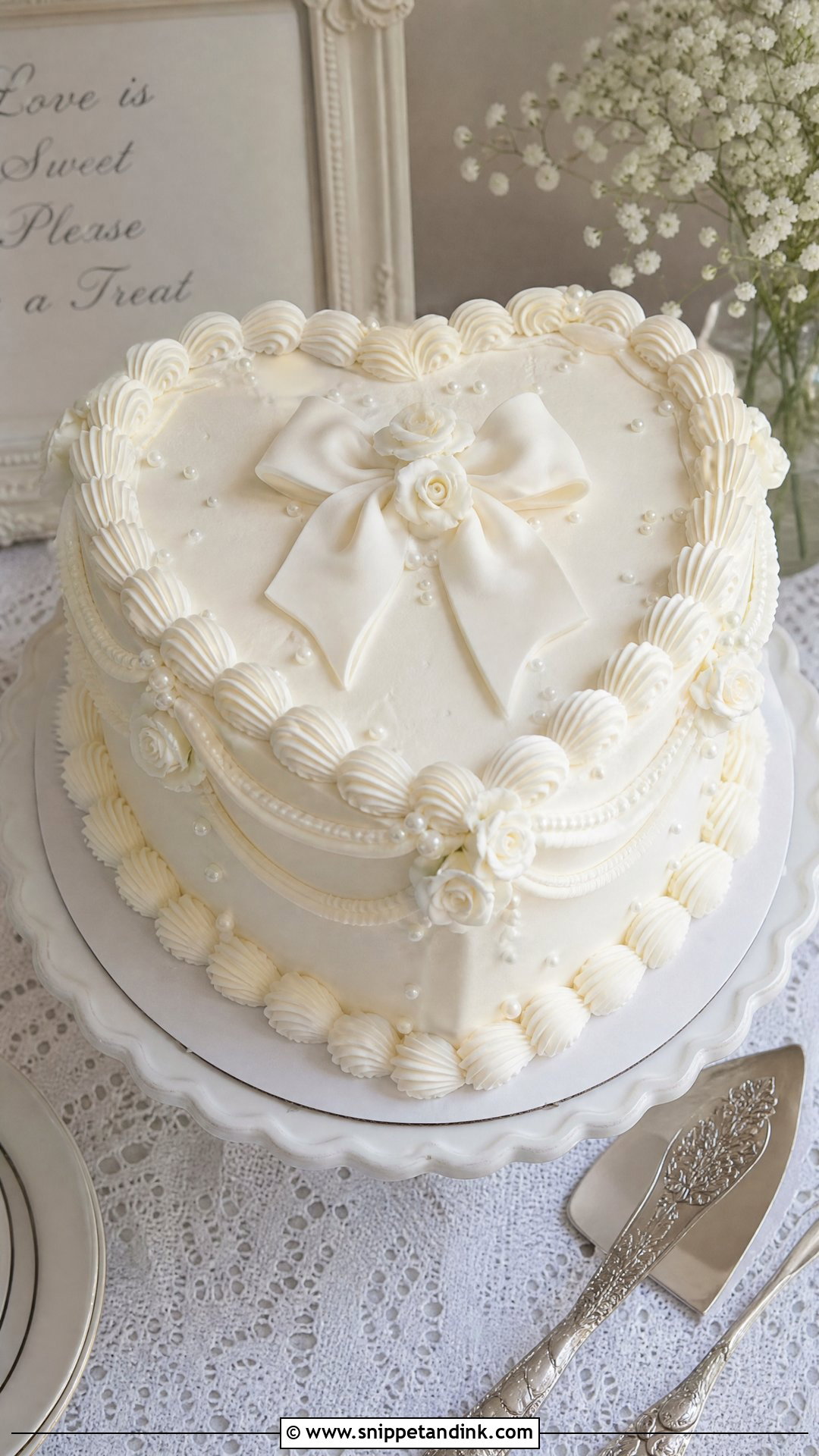
Heart cakes lean vintage and sweet. They can be a single-tier cutting cake, stacked hearts or a heart top tier on a round base. White piping, shell borders, pearl dots and swags make it charming. The line between wedding and birthday is the palette and the piping: keep it ivory-white and the piping refined. A satin-look bow or a few roses finish it.
16. White Textured Wedding Cake
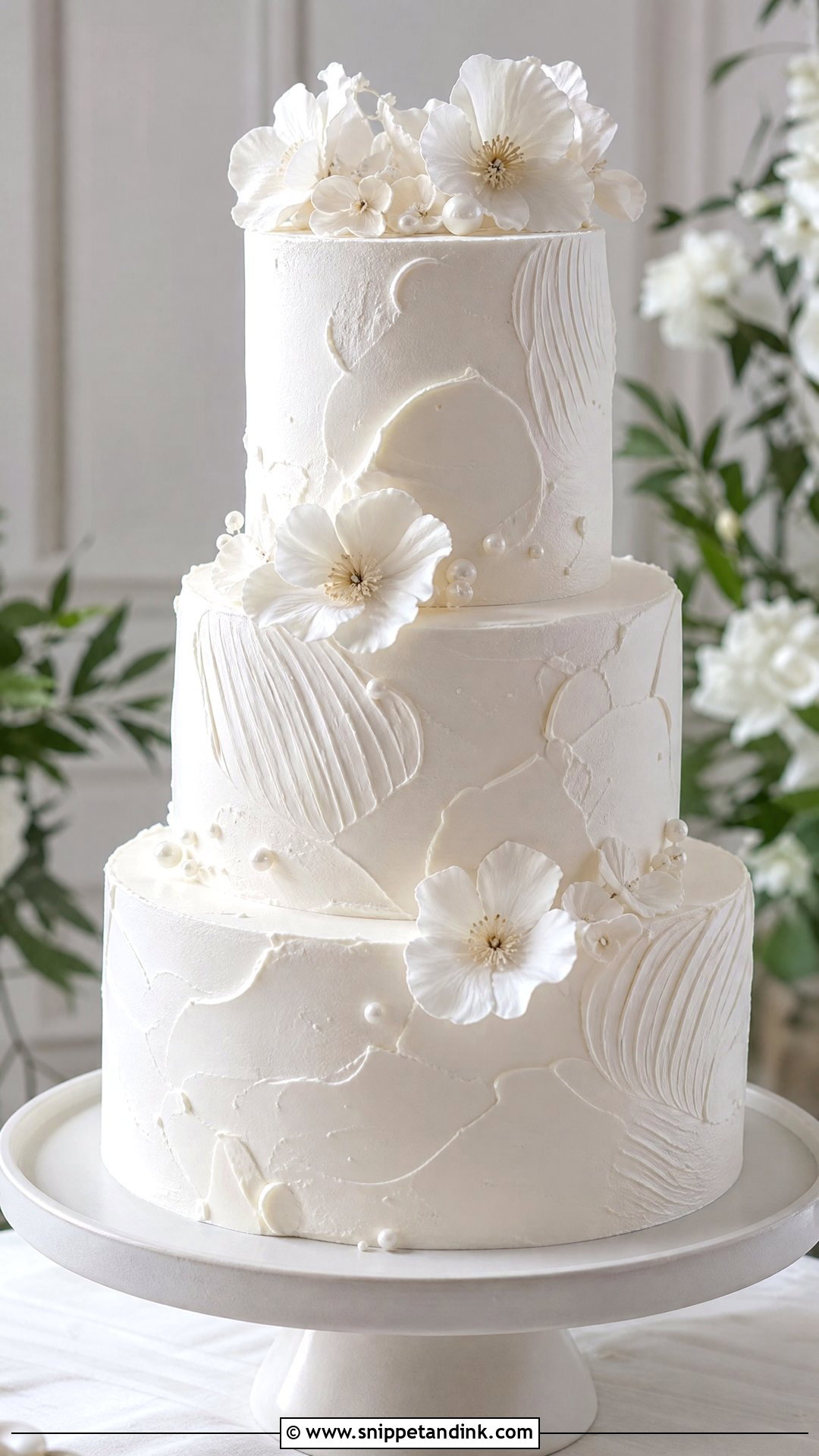
Texture is the most useful trick for an all-white cake that might look flat in photos. Palette knife strokes, plaster-style buttercream, combed lines or soft spatula marks each throw shadows that show up on camera. The finish is hand-made, so no two cakes look identical, which couples tend to like. Keep the decoration minimal: one sugar bloom or a few pearls. It suits casual and formal rooms alike.
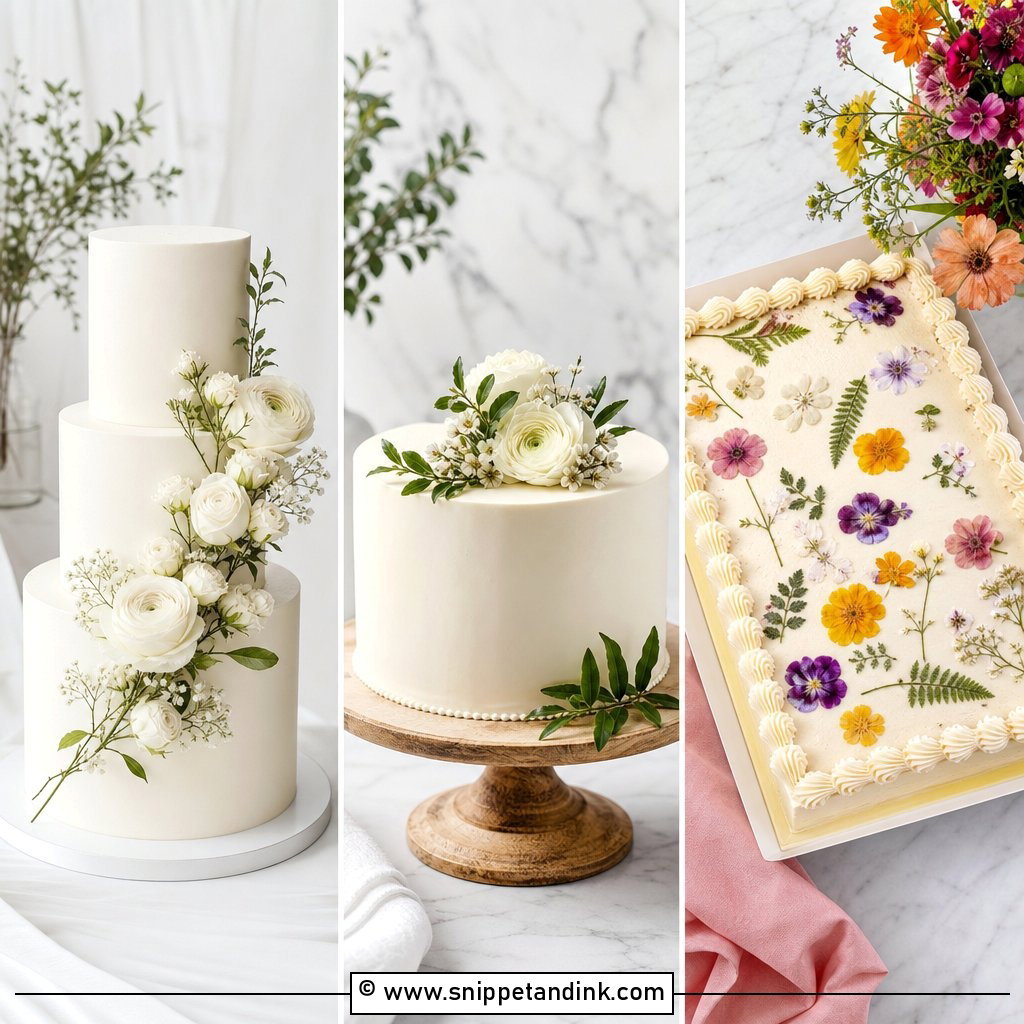
17. White Pressed Flower Wedding Cake
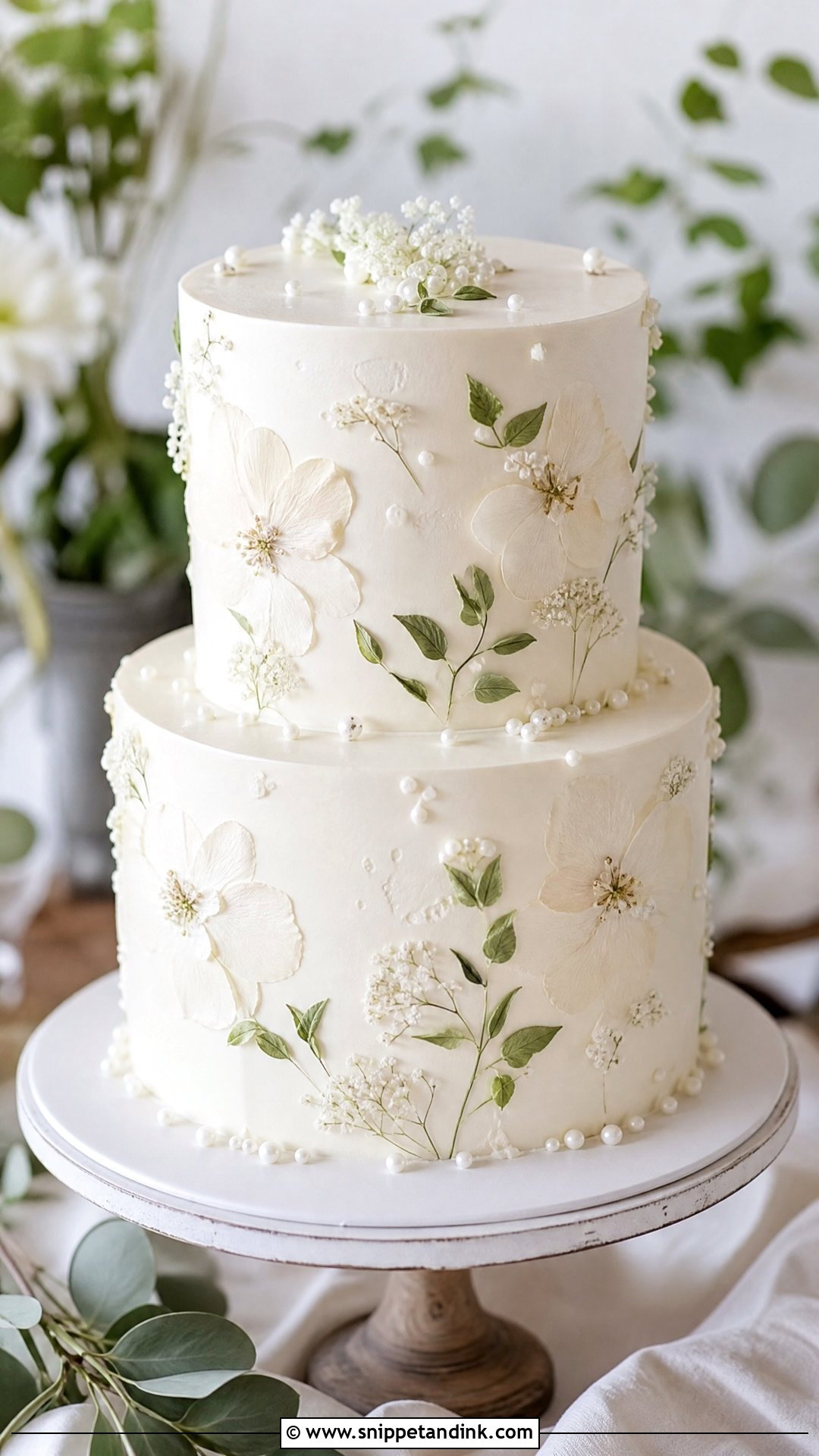
Pressed flowers sit flat on the frosting, scattered or climbing up the tiers. For an all-white look, I use edible white or ivory petals. Only edible, food-safe flowers should be pressed for cake, and they need to be pressed and dried properly beforehand. They show best on smooth buttercream or fondant. It’s a detailed, handmade look that suits a spring or outdoor wedding.
18. White Orchid Wedding Cake
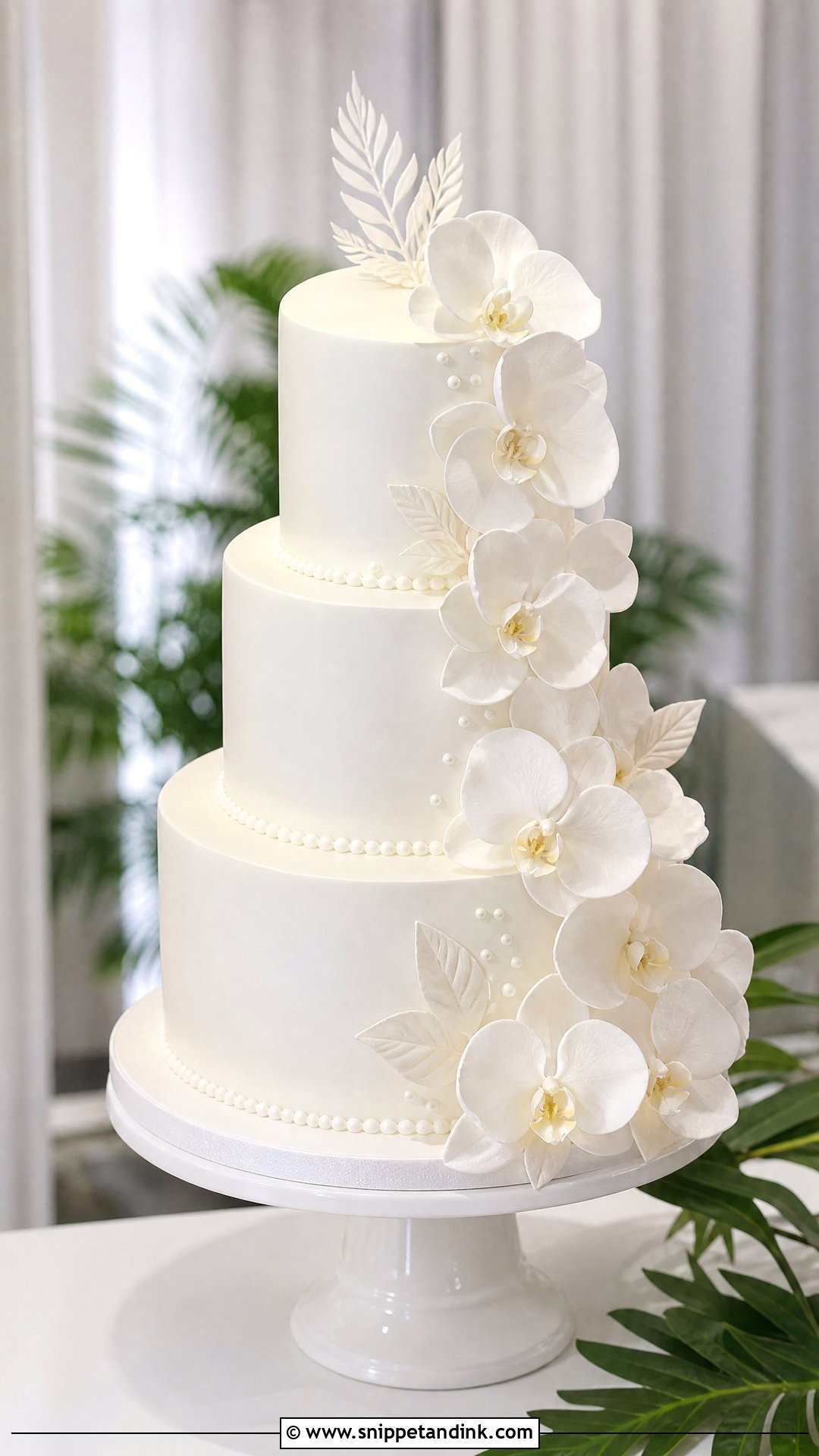
Orchids give a sleek, slightly tropical edge. Their flat shape stands out on white frosting in a small cascade or a side arrangement. Phalaenopsis orchids last well once cut, which helps in warm venues, though fresh stems still need wrapping. Keep the cake simple; smooth fondant or soft buttercream both work. They suit a black-and-white reception especially well.
19. White Garden Wedding Cake
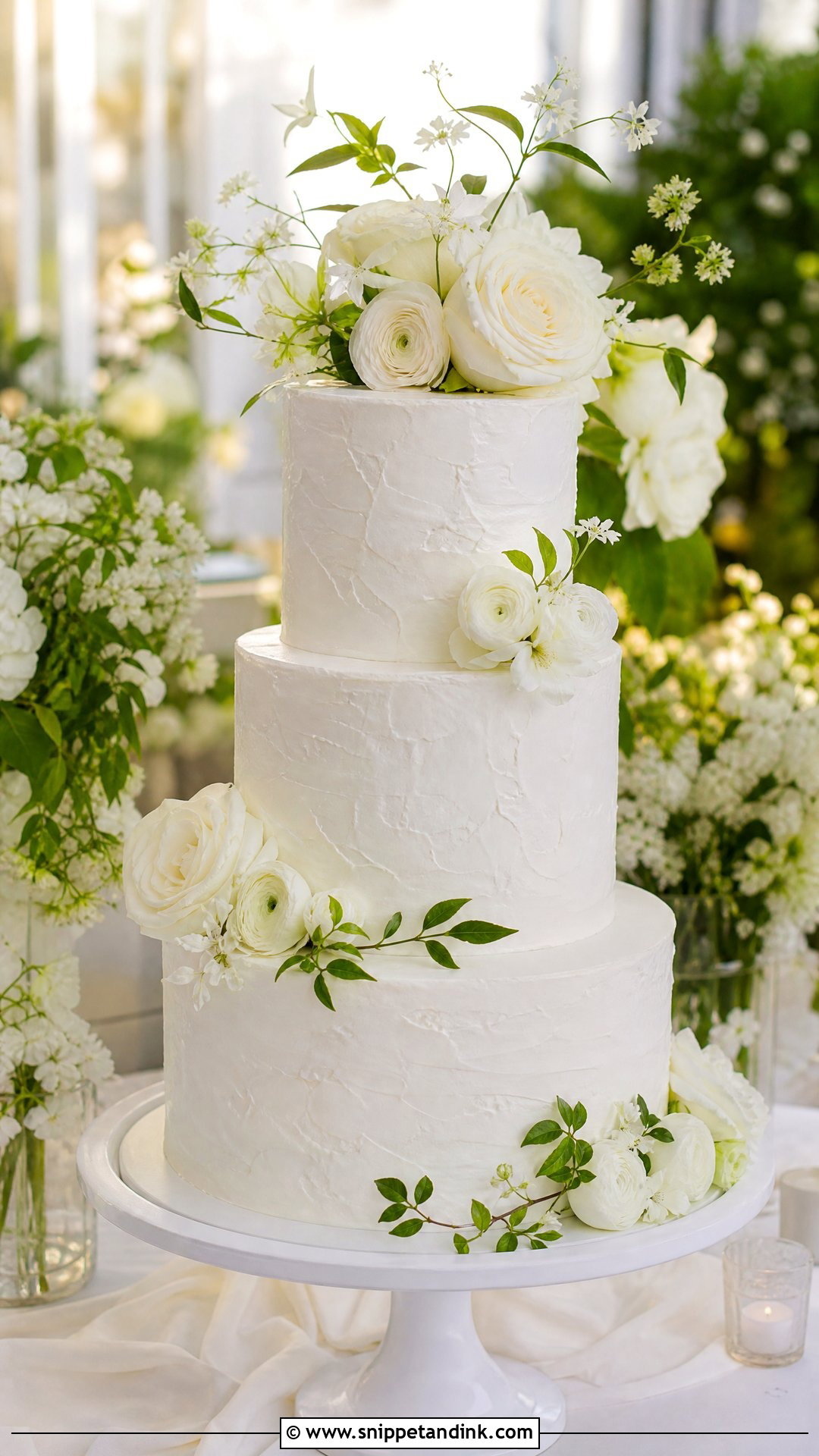
Garden cakes combine white frosting with flowers, small leaves and vines. The cake can be smooth or lightly textured. White roses, ranunculus, sweet peas and sugar leaves all work, and keeping the greenery muted means the cake still reads as white. For an outdoor reception, sugar botanicals hold up far better than fresh greenery, which wilts in the sun. Lemon or berry-filled layers suit the garden feel.


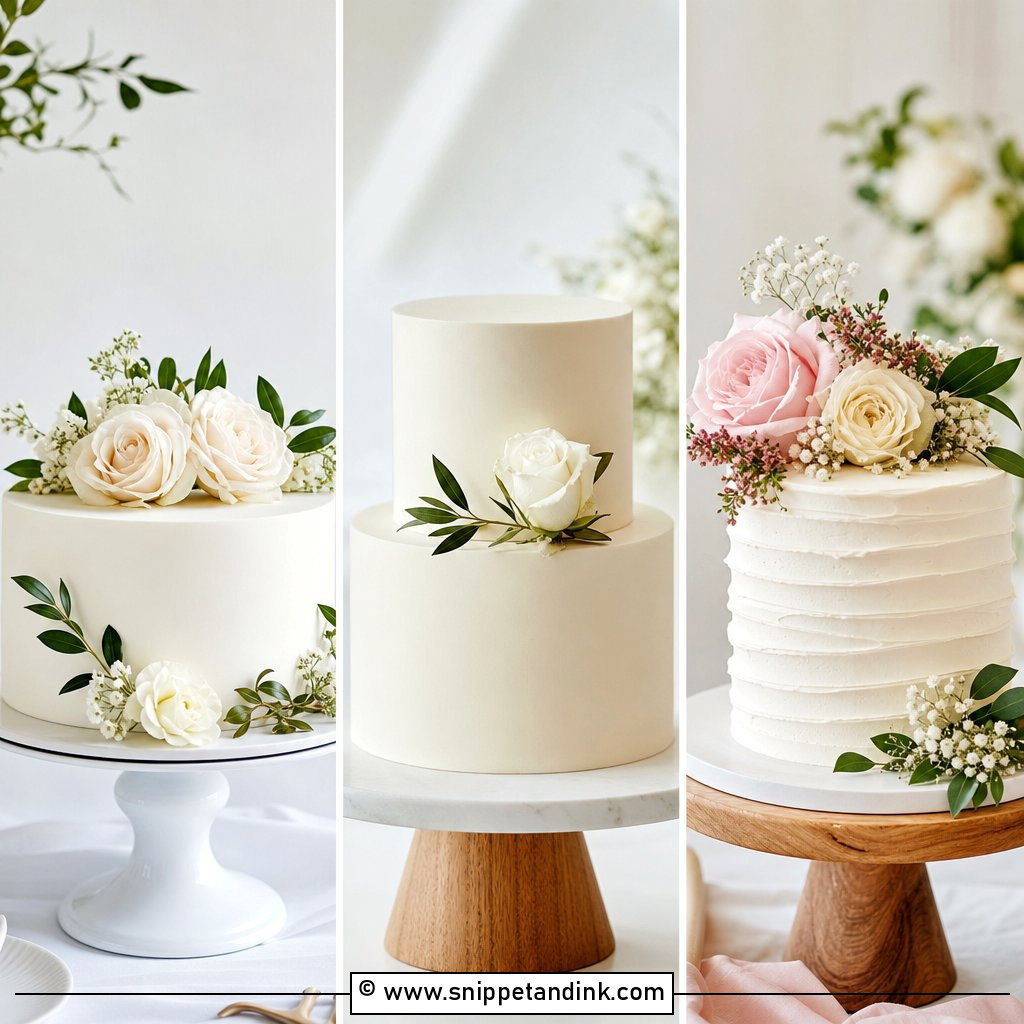
20. White Minimalist Wedding Cake
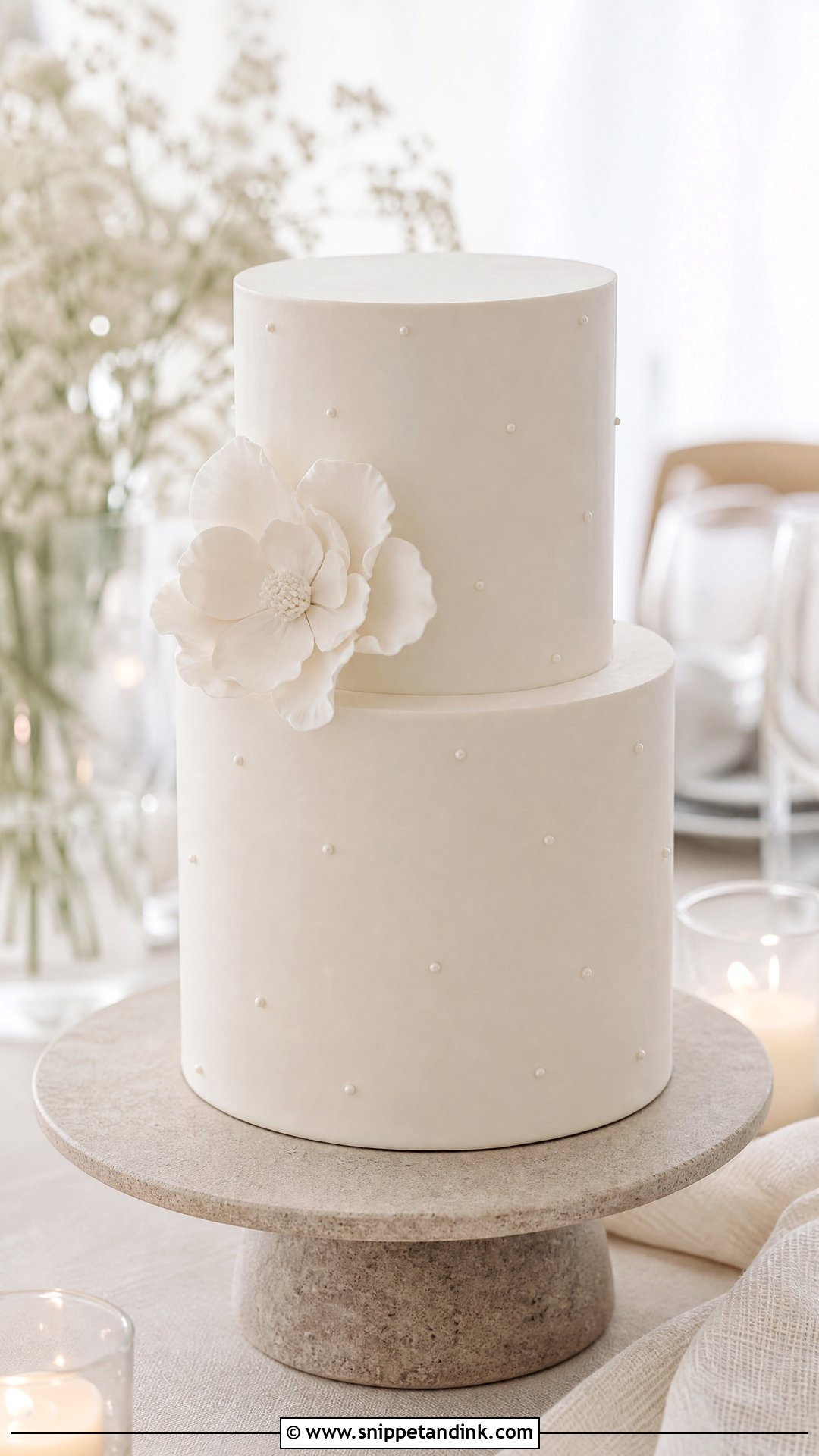
Minimalism is about restraint: smooth buttercream, sharp edges and perhaps a single flower. The risk is that it looks unfinished, so I focus on tier heights, straight sides and a good stand. A warm ivory softens it. With nothing on the outside, the flavor carries more weight; vanilla bean, almond, lemon or coconut all suit a plain white finish.
21. White Vintage Wedding Cake
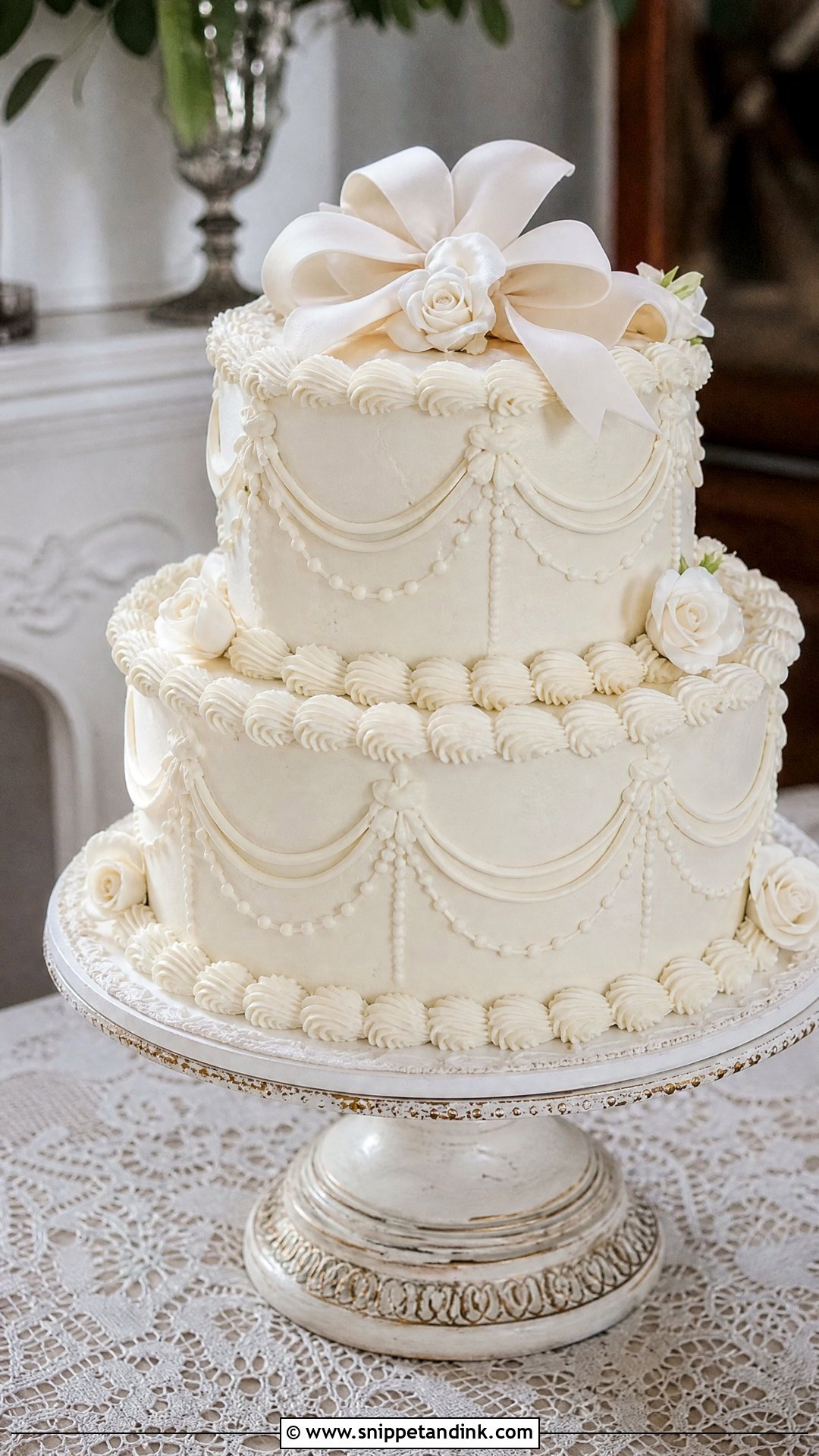
Vintage cakes bring back classic piping, scalloped borders, swags and soft shapes. In white, the style feels bridal rather than candy-colored. A round tiered cake, a heart or a tall single tier all work. The best ones look generous but controlled, with even spacing in the piping. Sugar cherries or small roses add charm, and an antique-style stand suits the look.
22. White Monogram Wedding Cake
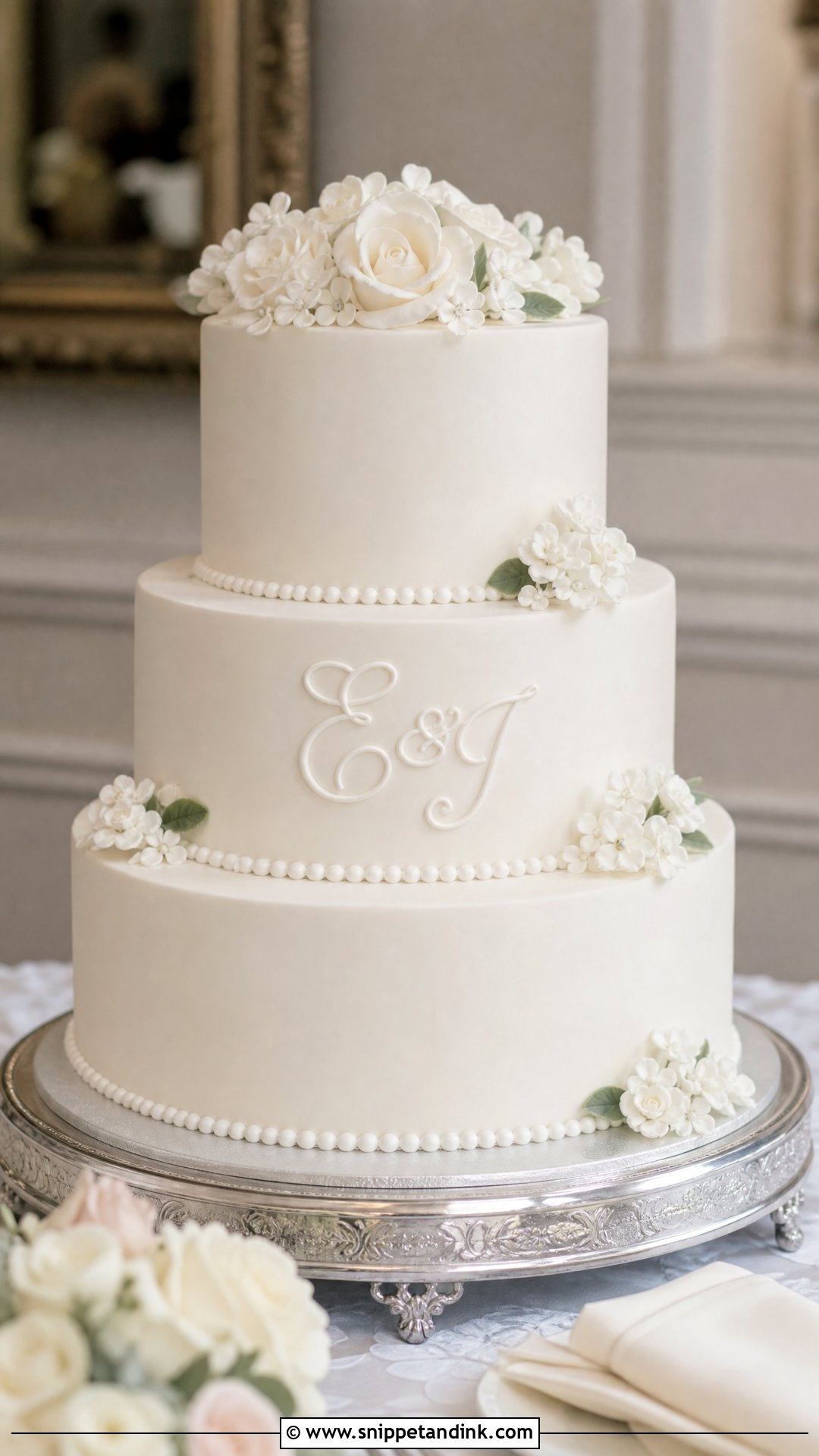
A monogram adds a personal detail. Initials can be piped in royal icing, embossed into fondant, painted in pearl shimmer or set on a sugar plaque. I keep it small and on the front of one tier. Get the initials and their order confirmed in writing; it’s the one detail on a cake that can’t be fixed on the day. Pearl borders or a few flowers balance it.
23. White Draped Wedding Cake
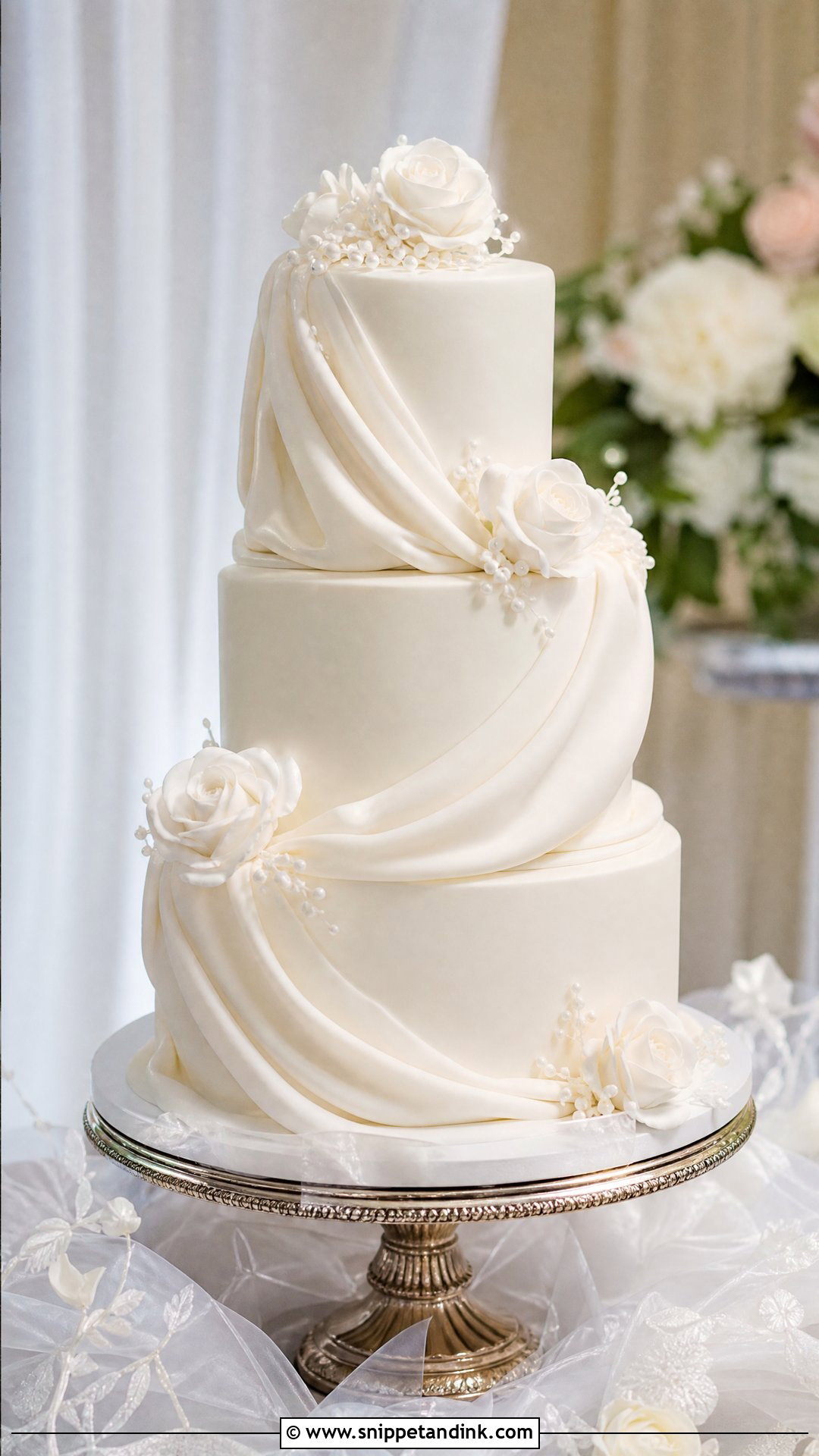
Draping makes the cake look as though fabric is falling over the tiers, like a veil or gathered silk. It’s made from fondant, wafer paper or sugar paste, and fondant drapes need to be worked quickly before the paste dries and cracks at the folds. Sugar flowers can sit where the drapes meet. It works on round, tall and even square tiers.
24. White Hydrangea Wedding Cake
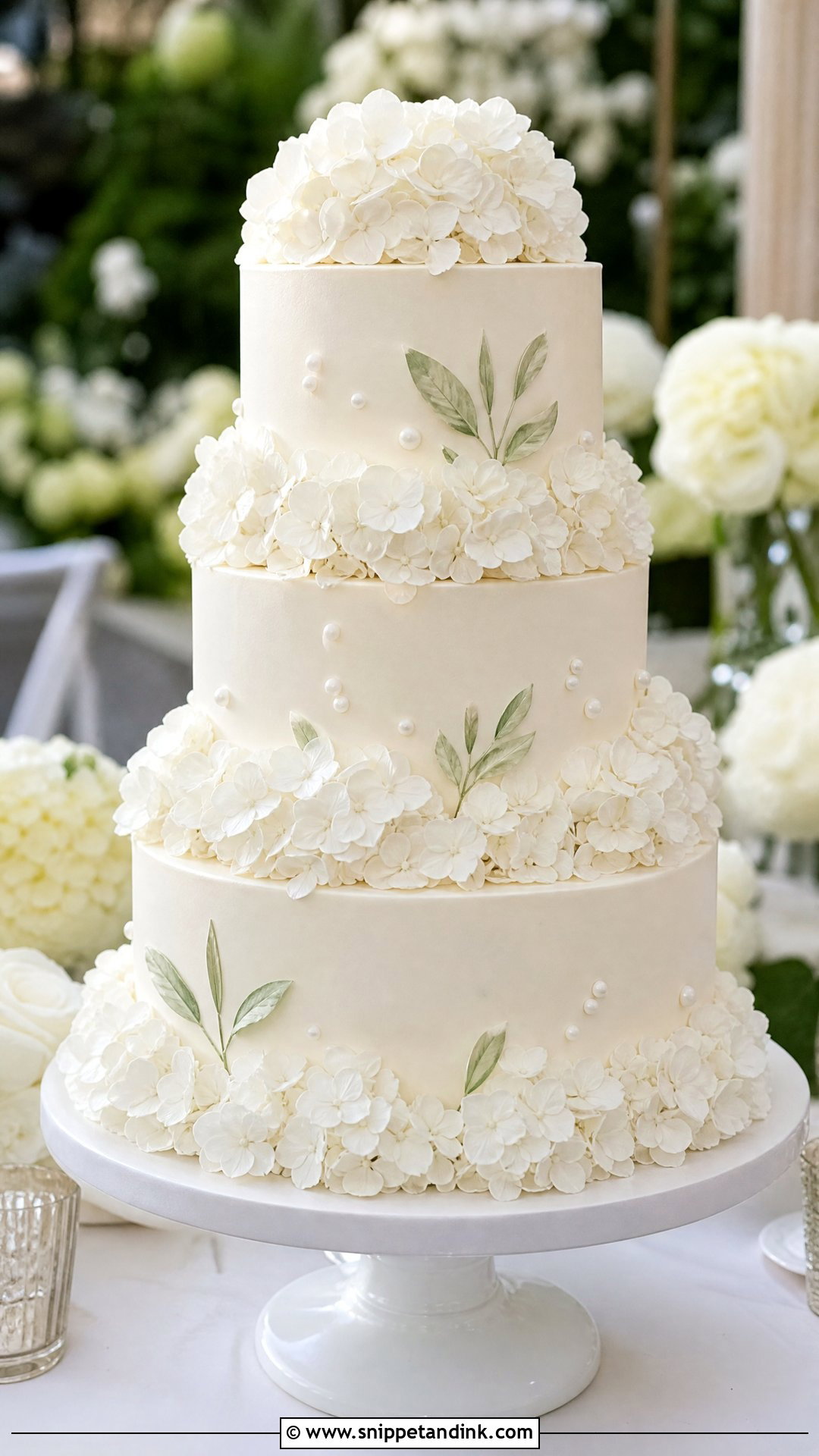
Hydrangea clusters can be sugar, piped buttercream or fresh blooms kept properly separated from the cake. Fresh hydrangea is one of the first flowers to wilt out of water, so I’d only use it fresh for a short, cool reception. Group the flowers generously, between tiers, around the base or down one side. Keep the rest of the cake simple.
25. White Marble Wedding Cake
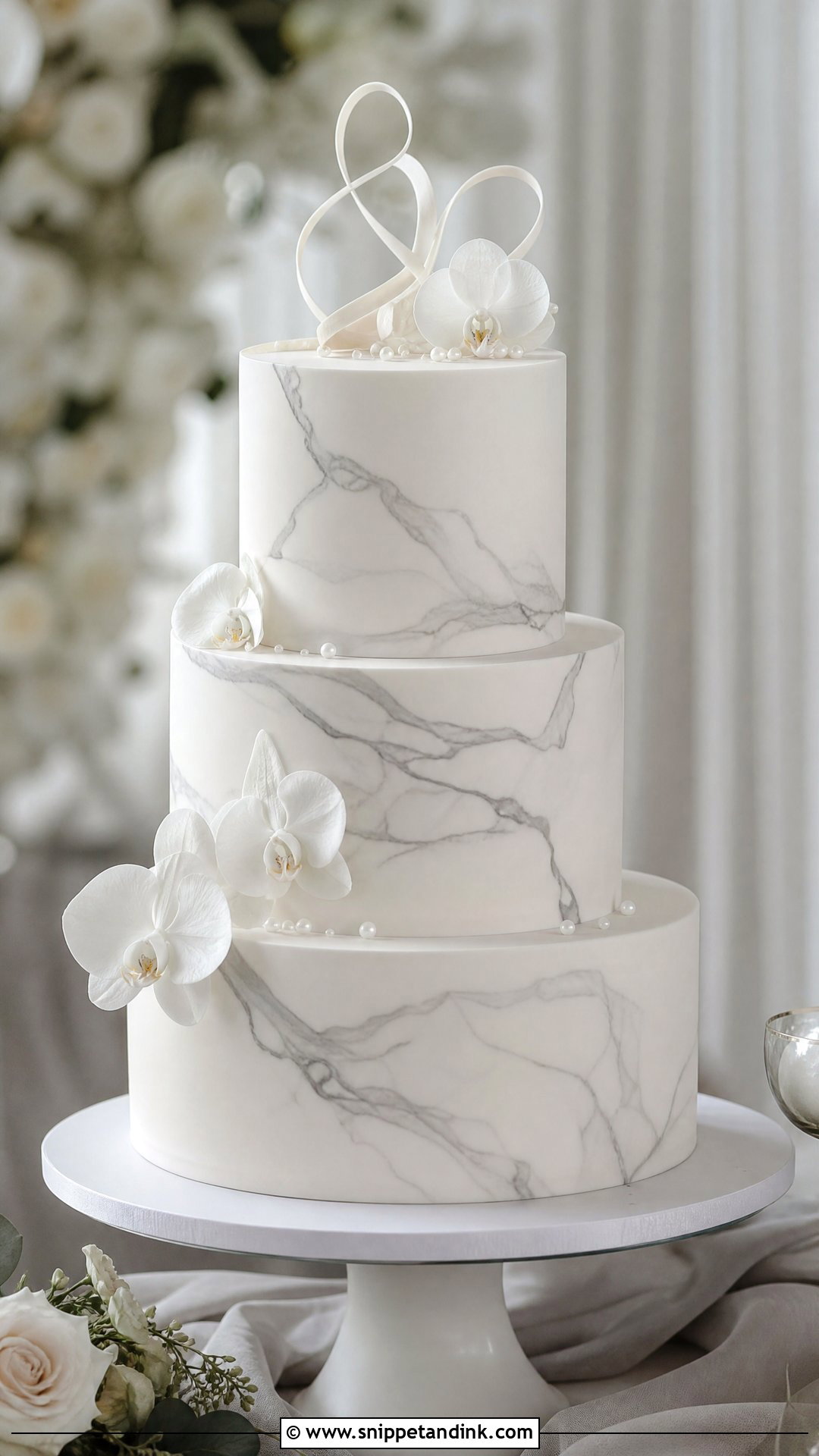
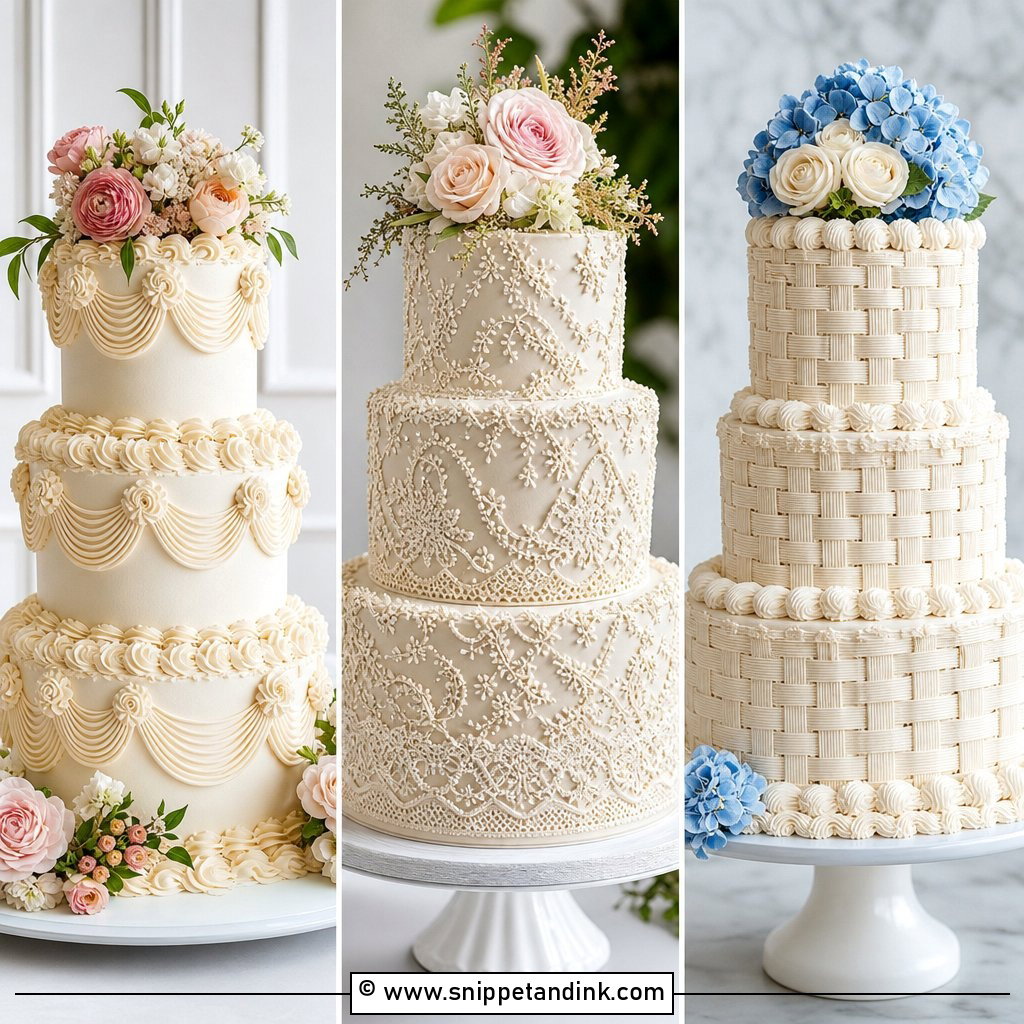
Marble works on a wedding cake only when it’s faint: white, ivory and pale grey blended through fondant or buttercream. I knead the color partly into the fondant and roll it so the veining forms naturally, rather than painting it on. Smooth tiers and small accents like orchids or sugar roses suit it. Warm lighting and a soft stand keep it from looking cold.
A White Cake in a Hot Tent or Garden
Buttercream softens as the room warms, and once it starts to slump it doesn’t recover. Fondant is sturdier, but if it moves from a cold fridge into humid air, condensation beads on the surface and it looks wet for a while. Fresh flowers on the cake wilt in direct sun.
For outdoor or warm receptions, I plan for it: a ganache or high-ratio base under the finish, sugar flowers instead of fresh, and a cake table in full shade, away from heaters, lamps and the dance floor crowd. I ask the venue how long the cake will sit out before cutting and set the design around that time, not the other way round.
Why Texture Shows Up Better on Camera
White on white reads through shadow. Flash and flat overhead light remove those shadows, which is why a smooth white cake can look like a white block in reception photos. Piped lace, ruffles and palette-knife texture all create small shadows that survive the flash. If your photographer is shooting the cake under flash, a little texture goes a long way, and side lighting from a window or candles shows it best.
White Gives You Room to Decide What Matters
All 25 of these cakes start from the same blank white base and go in different directions: simple, romantic, vintage, modern, floral or textured. Which one suits you depends on the room, the season, the guest count and the budget. Bring examples to your baker, and ask directly what will hold up at your venue in your weather. That conversation tends to decide the finish faster than any photo does.
You'll Like These Ideas:







Leave a Reply