
A heart needs no explanation on a wedding table. The shape does the talking, which leaves the rest of the design free to go vintage, modern, floral, rustic, pearl-covered or pared back. Hearts also photograph well from above, so they suit overhead shots and close-ups of the cutting. From the baking side, though, a heart is a fussier shape than a round: the points dry out, the cleft at the top is hard to frost crisply, and stacking two hearts takes planning. Some couples order one large heart; others use a small one as the cutting cake beside a sheet cake or a dessert table. Here are 25 heart designs for a wedding reception, with what I’d want you to know before you order each one.
Cut Rows, Not Wedges, From a Heart Cake
A heart looks romantic until someone tries to serve it. Cut it into wedges from the centre like a round, and you end up with a few long, thin slices from the point and awkward chunks from the lobes. Caterers who haven’t cut one before often do exactly that.
I tell couples to have it cut like a sheet cake: one straight line across, just below the dip at the top, then parallel rows down toward the point, each row cut into even pieces. The point and the two rounded lobes become slightly smaller slices for children or people who want just a taste.
A heart pan also holds a little less cake than a round of the same width, so if you’re counting servings, plan on a few fewer than the round size would give. If your caterer is cutting, send them a quick sketch of the rows with the cake. It takes two minutes and saves the last tier from being hacked apart.
1. Vintage Heart Wedding Cake
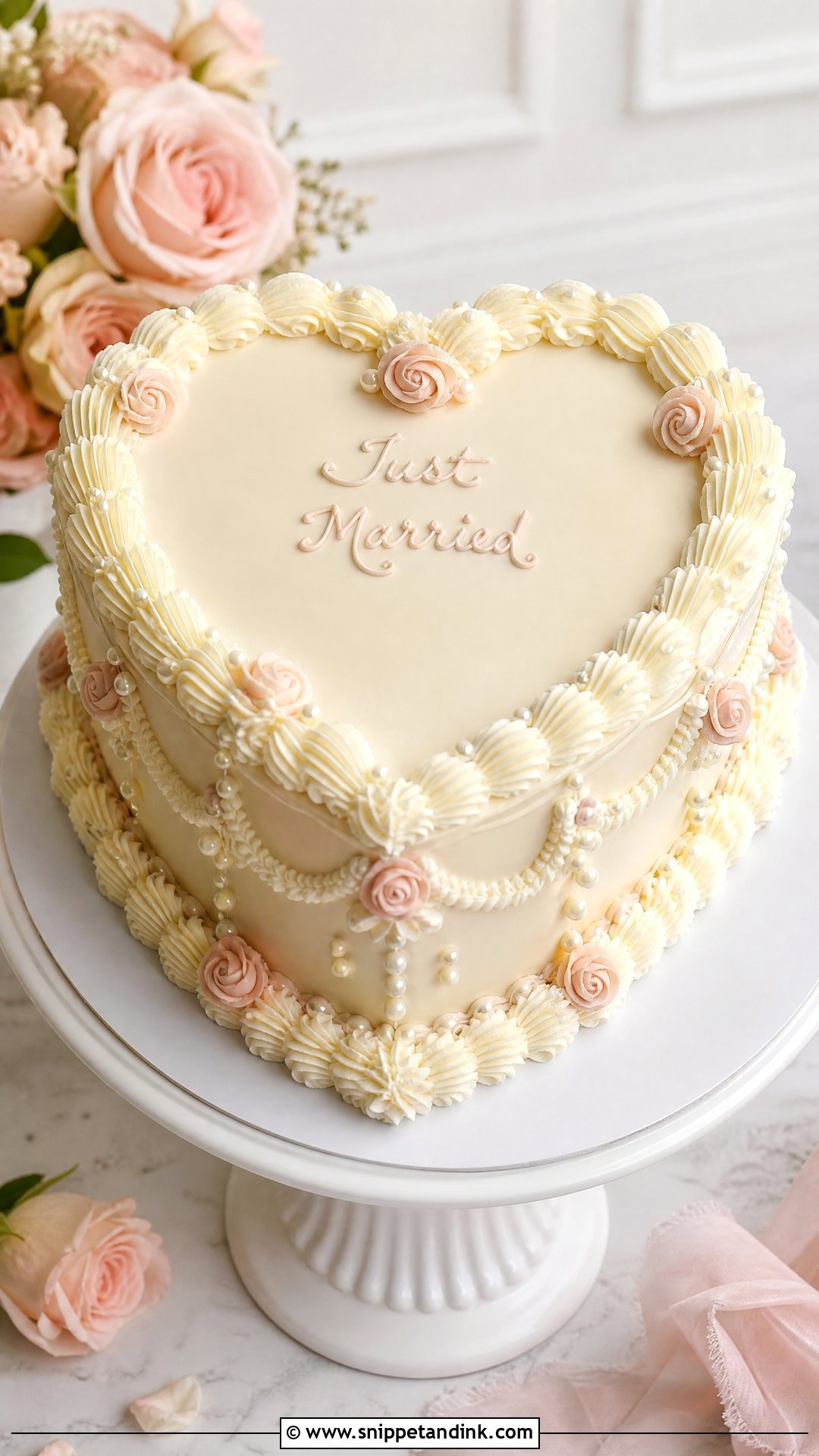
Vintage hearts are built on romantic piping: shell borders, buttercream ruffles, small rosettes and a short message on top. I pipe them in a buttercream that crusts slightly, since a soft frosting lets fine shells slump into blobs in a warm room. White, blush, ivory and pale pink stop it looking like a birthday cake. Tiny pearls, piped bows or a few sugar flowers make it bridal. Even as one tier it carries an intimate wedding. Ask for borders that follow the outline evenly, because uneven piping is what blurs the heart into a vague oval.
2. White Heart Wedding Cake
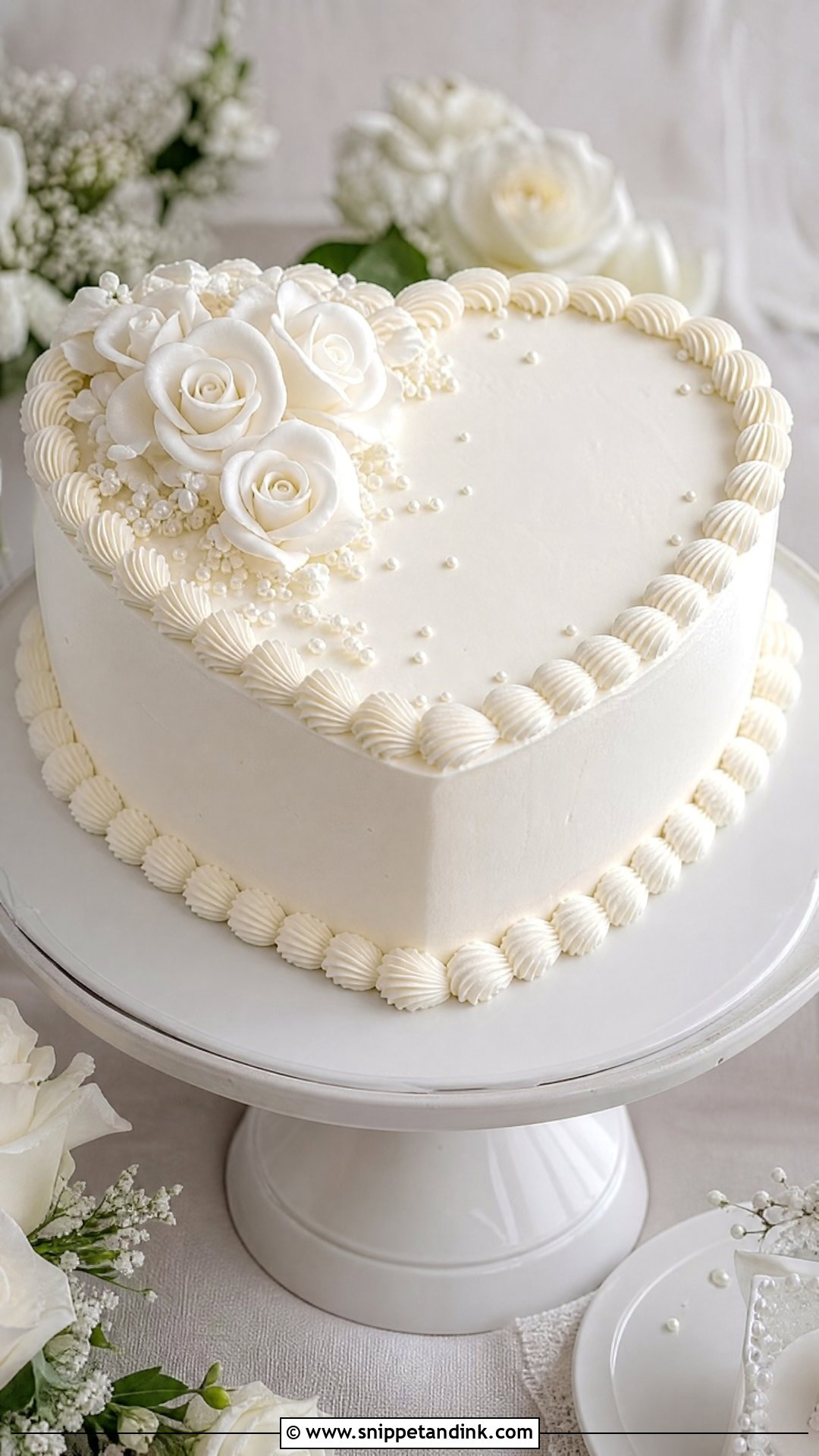
White suits nearly every venue, from a ballroom to a courthouse lunch. Texture is the decision. Smooth white buttercream looks modern, while piped borders pull it toward classic. The hardest spot to get clean is the dip at the top of the heart, where the scraper can’t reach, so I finish that curve by hand with a small palette knife. White roses, pearls or a satin ribbon at the base all work. For a quiet look, leave the top almost bare and set it on a raised white stand with flowers around the table.
3. Pink Heart Wedding Cake
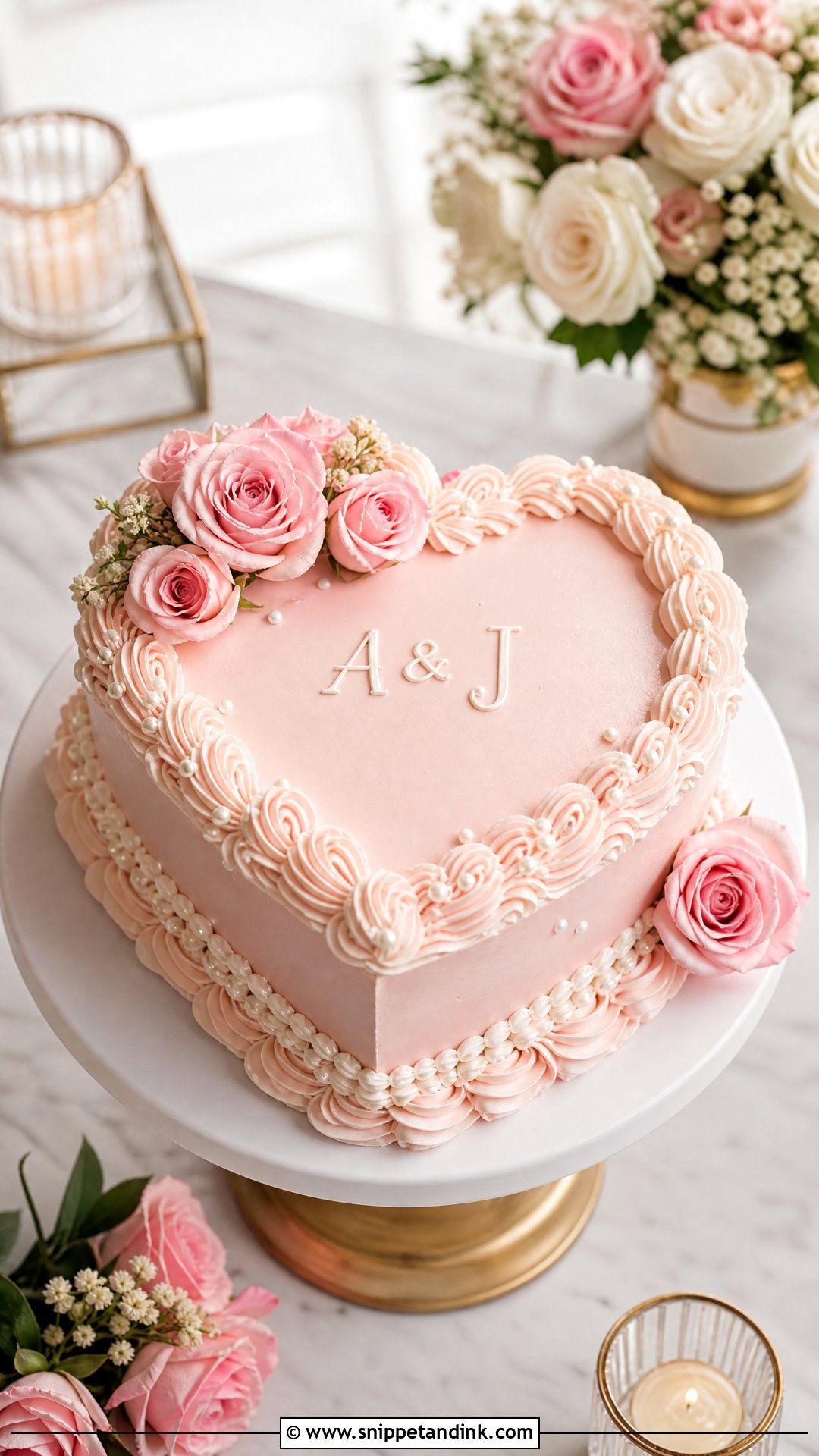
A pink heart wedding cake is the softest way to add colour to a dessert table. Blush is the safe shade; dusty rose, ballet pink and a muted peach-pink also work. Pink frosting fades under strong sunlight and drifts toward salmon if the butter is very yellow, so I tint a whitened base and keep the cake shaded. Vintage piping, pearl borders and fresh roses suit it; smooth pink with a white piped edge looks more current. A short message or initials can sit in the centre. Ivory linens, gold flatware or pale flowers keep the pink grown-up.
4. Red Heart Wedding Cake
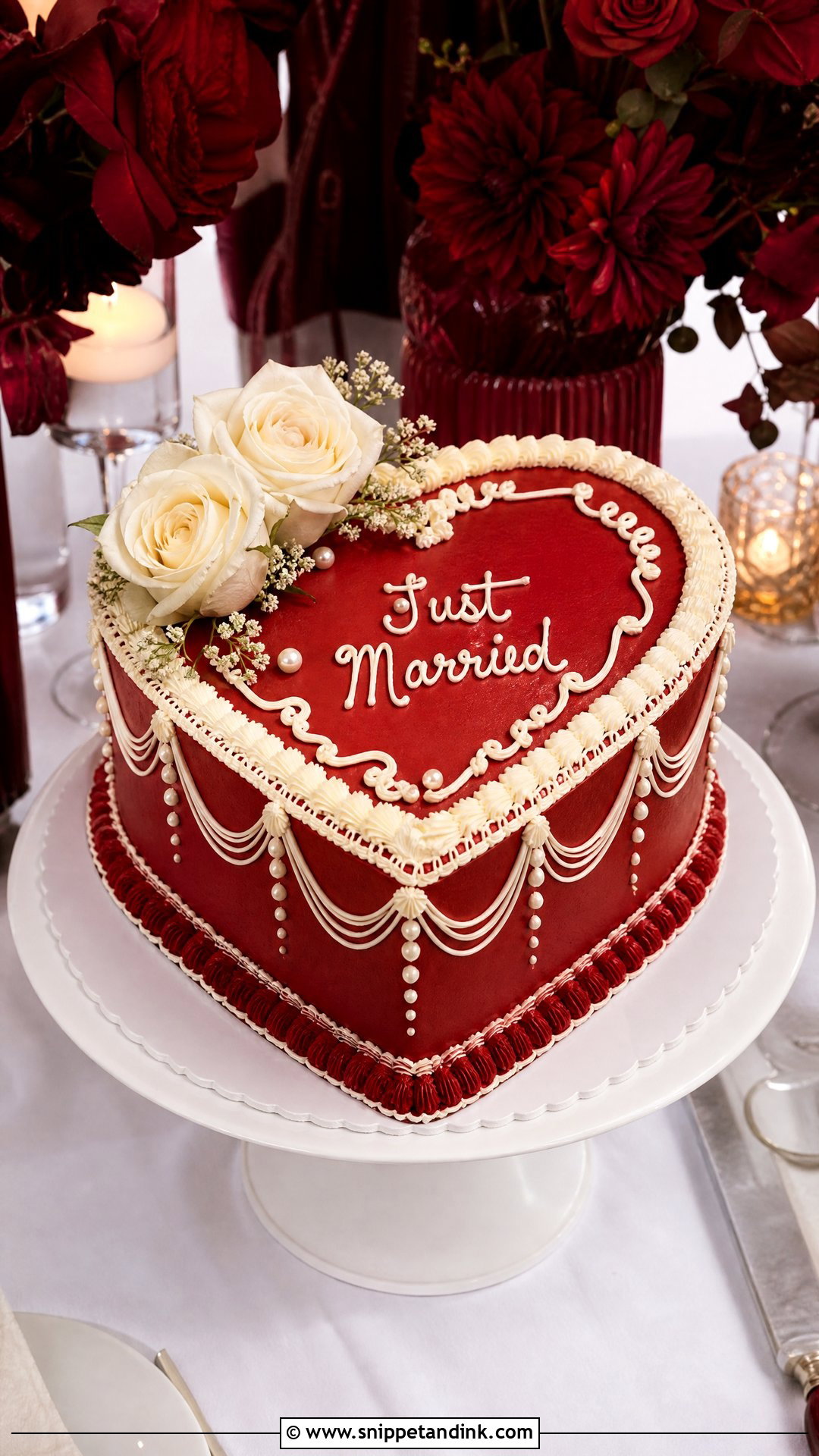
Red makes the cake the loudest thing in the room, and I’d only suggest it to couples who want that. Black-tie weddings, bold flowers and moody venues carry it best. Deep red buttercream takes a lot of colouring, can taste faintly bitter and leaves red on teeth and white linens, so I often cover the cake in a red velvet crumb instead or keep red to the inside. Balance it with white piping, ivory roses or small pearls, and skip other strong colours. A white stand, candles and deep red flowers around it suit the drama.
5. Heart Wedding Cake With Pearls
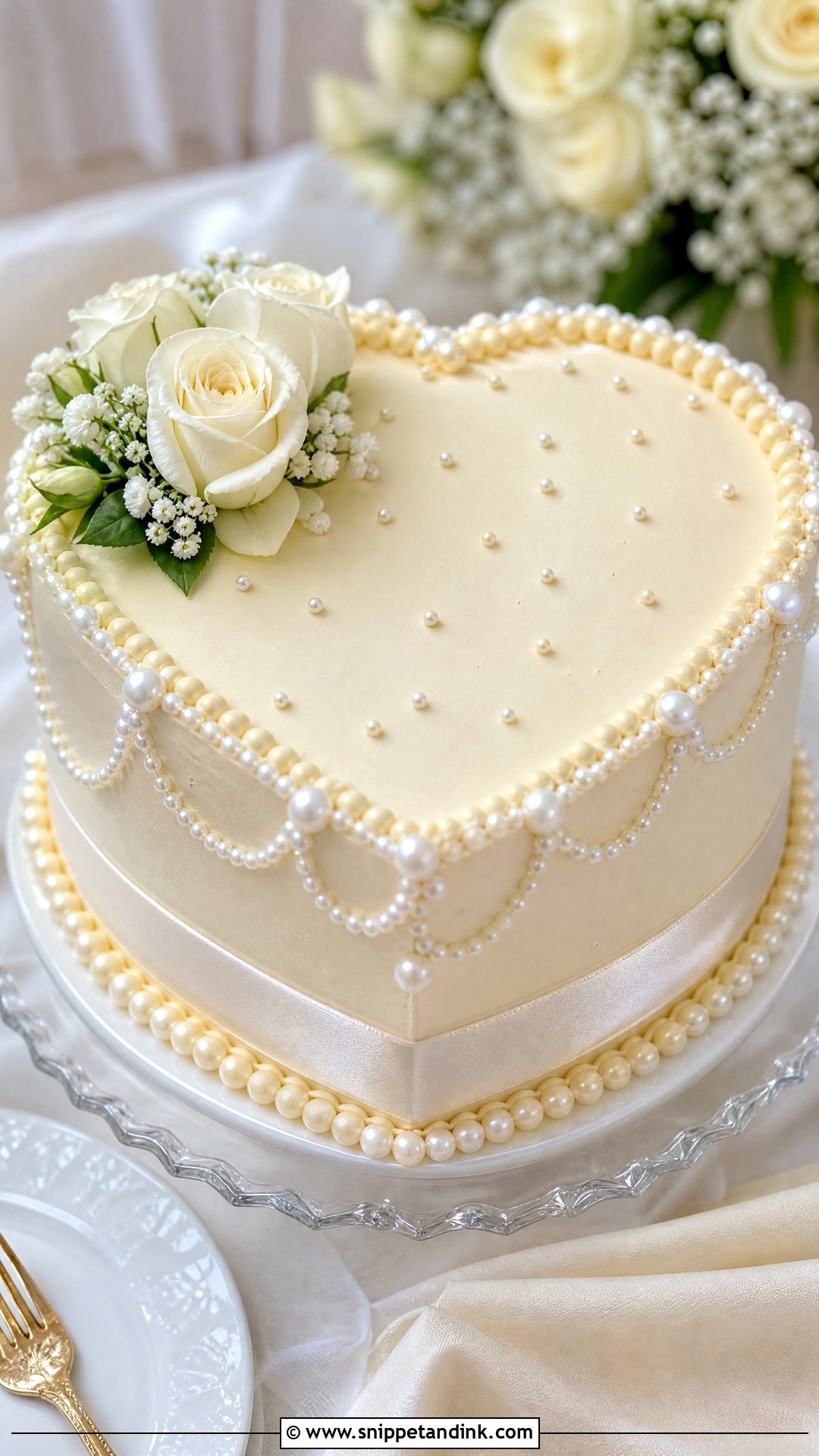
Nothing makes a heart look bridal faster than pearls. They can line the border, scatter over the top or sit in neat rows for a clean, expensive look. A pearl heart cake works best in white, ivory, blush or champagne. Piped buttercream pearls are soft to eat; sugar pearls add shine but are hard on the teeth, so I use smaller ones in quantity. I place them with tweezers while the frosting is still slightly tacky, otherwise they roll off the curve. Keep everything else simple, a few roses or a thin ribbon, so the pearls lead.
6. Heart Wedding Cake With Roses
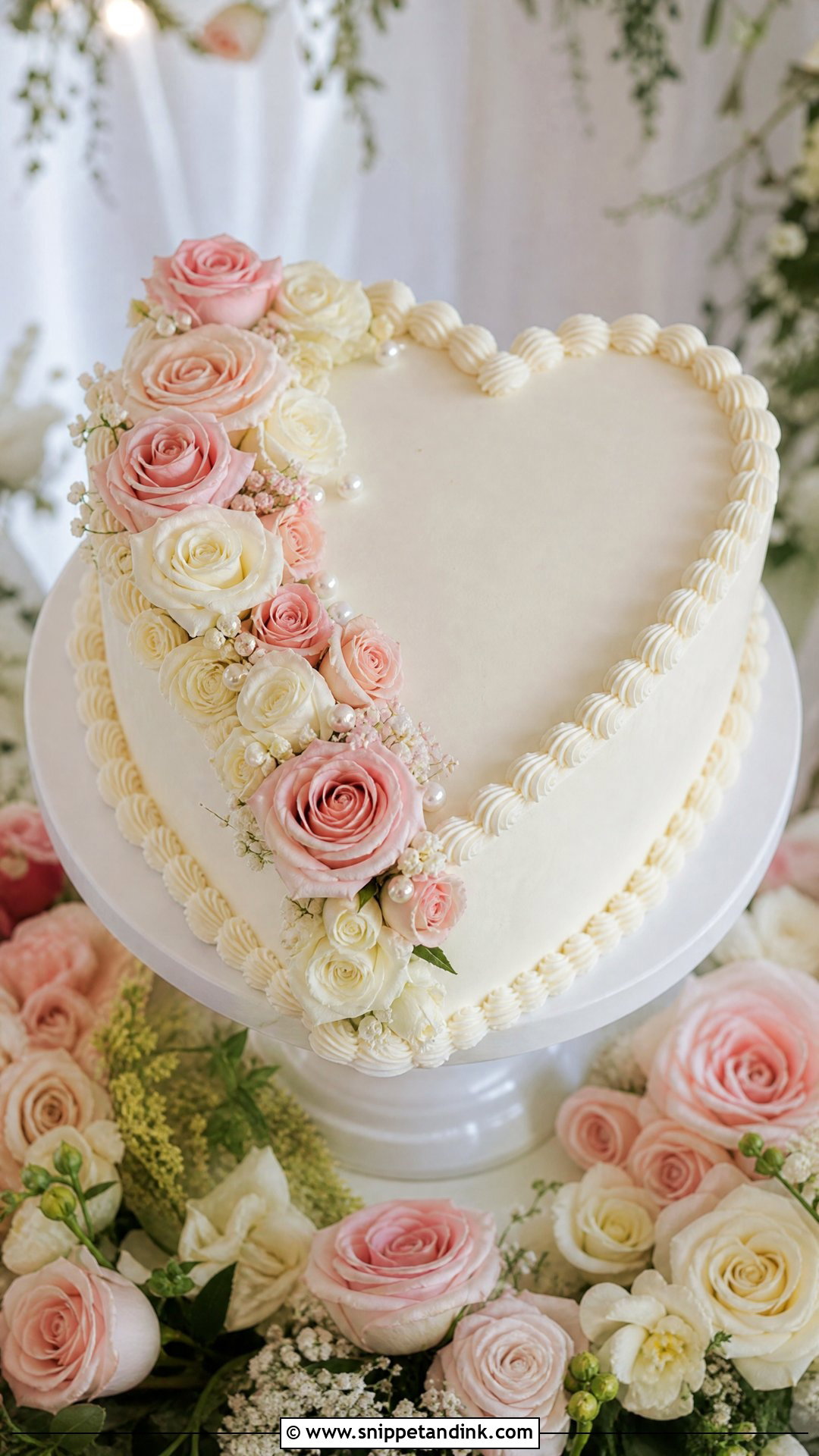
Roses and hearts belong together, and the colour decides the mood: white is elegant, blush is soft, red is bold. Fresh roses look natural around the top edge; sugar roses give a sculpted finish that lasts and can be kept afterward. If you use fresh ones, they should be unsprayed and the stems wrapped, never pushed bare into the cake. Smooth buttercream or vintage piping both suit roses. Matching them to the bouquet connects the cake table to the rest of the room.
7. Heart Wedding Cake With Bows
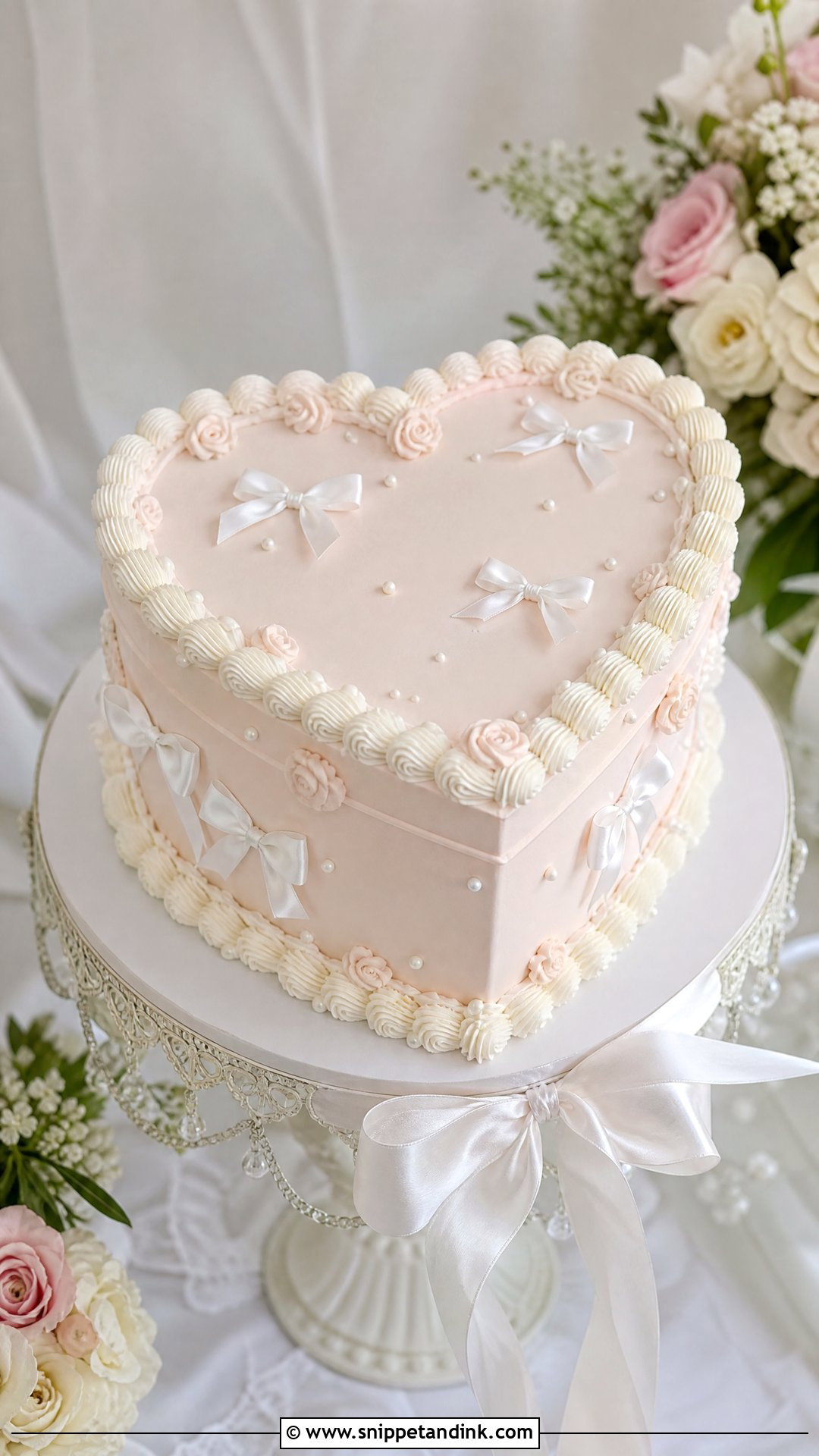
Bows are everywhere in bridal fashion right now, and they translate well to cake. Small piped bows can circle the sides, or one large fondant or buttercream bow can sit on top. A big fondant bow needs a day or two to dry over a former before it holds its loops, so tell your baker early. White bows on blush look soft; pink bows on white look playful but still bridal. Place them near the border so the heart outline stays readable. If your dress, invitations or hair accessories have bows, this cake picks up the thread, especially at a brunch or small reception.
8. Two Tier Heart Wedding Cake
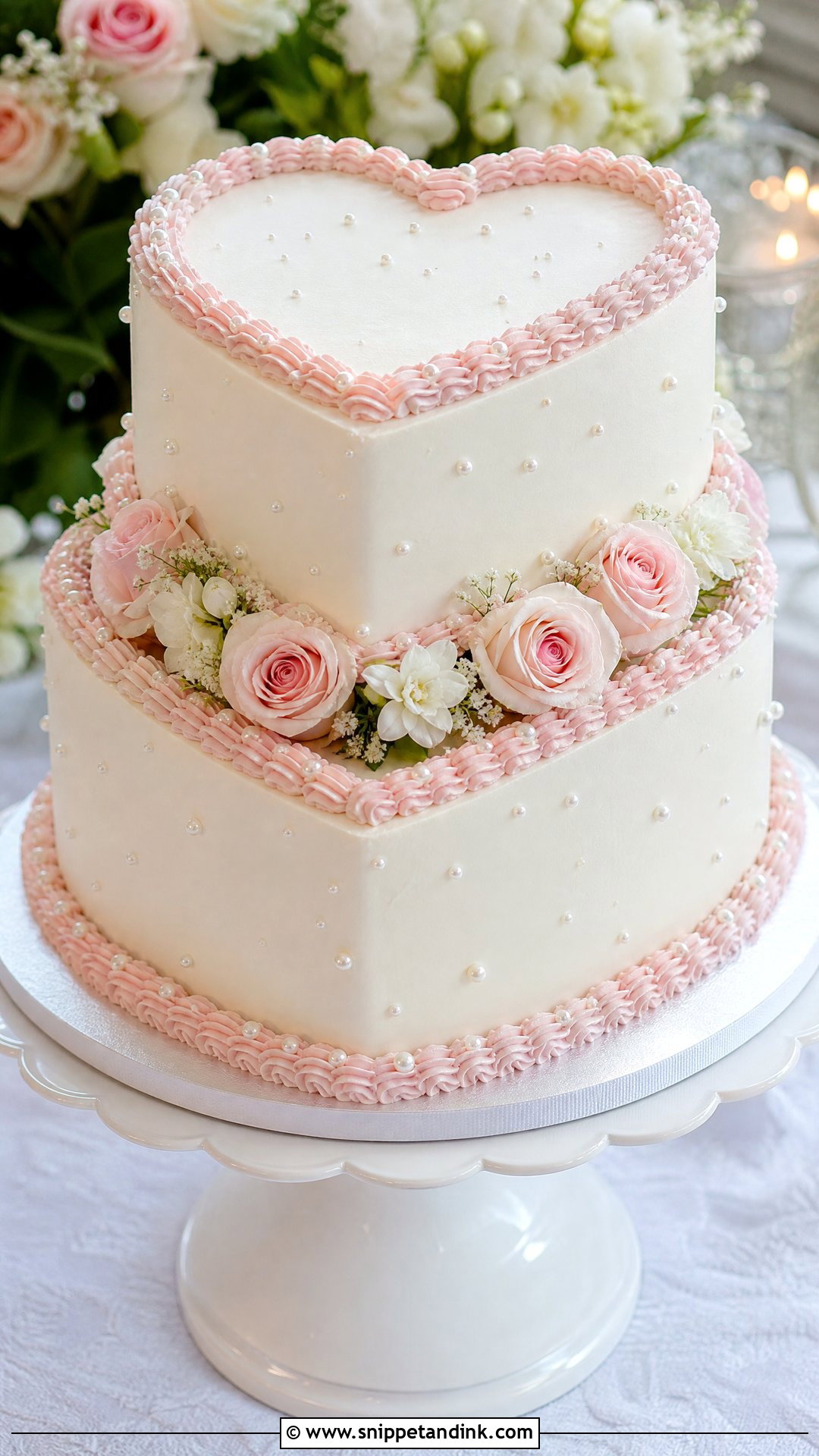
Two heart tiers give you height while keeping the shape obvious. It suits the couple who finds one tier too small and a tall round cake too formal. Matching colours on both tiers look calm; a slightly different shade on each looks playful. Smooth buttercream is modern, vintage piping is old-school. Proportion is where hearts go wrong: the top heart has to be noticeably smaller, usually about two inches narrower, and its point lined up exactly with the point below. Flowers between the tiers or down one side add movement, and it works well as the main wedding cake.
9. Three Tier Heart Wedding Cake
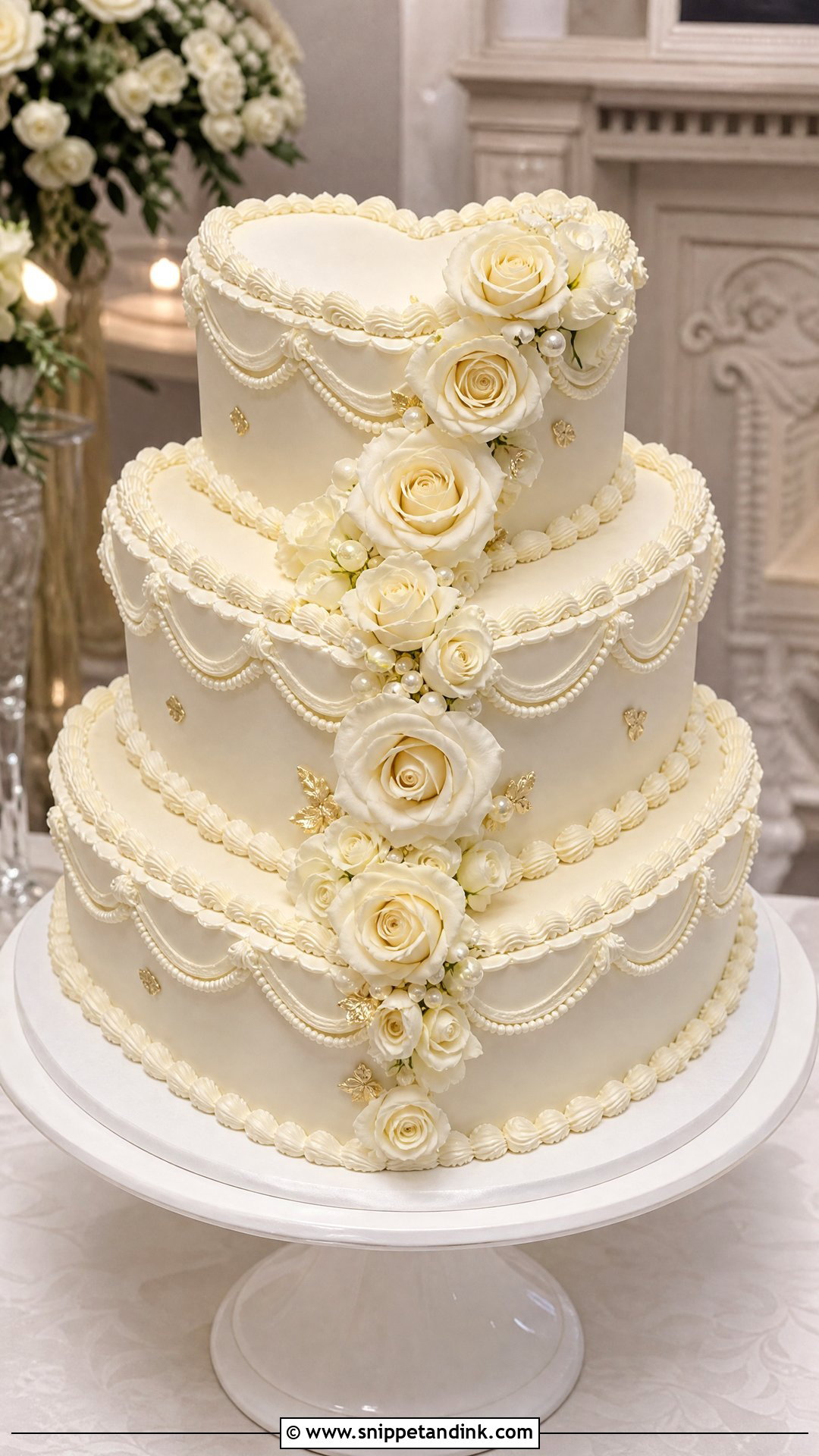
A three tier heart wedding cake is a true centrepiece, with height, shape and an obvious romantic theme. Each tier already has a strong outline, so decoration needs planning rather than piling on. White fondant, ivory buttercream and soft pearls are safe for a formal wedding; floral clusters, piped lace or a different texture per tier add personality. It photographs well from the front and above. Structurally, each tier needs its own heart-shaped board and dowels underneath, and I’d want a central rod if it travels stacked. Use a sturdy stand rated for the weight.
10. Mini Heart Wedding Cake
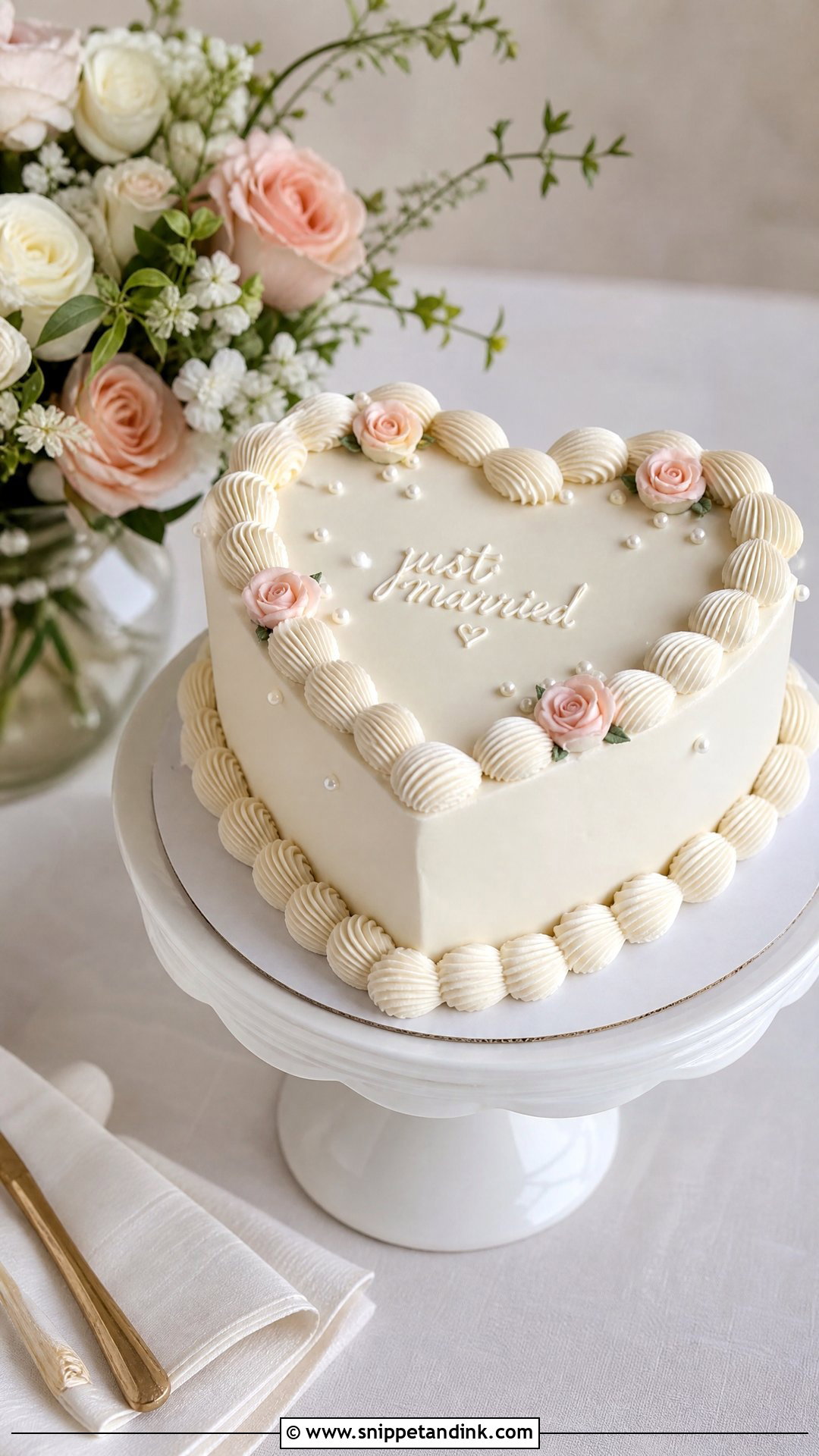
A mini heart is for elopements, courthouse weddings, micro weddings or a private cutting moment, while guests eat cupcakes, sheet cake or a dessert bar. Small doesn’t mean plain: detailed piping, pearls, flowers or a short message all fit. A six-inch heart on a pedestal with a small bouquet beside it looks complete. Since the couple are the main eaters, choose a flavour you truly love, not a crowd-pleaser. It’s also far easier to carry, style and photograph than a tiered cake.
11. Heart Wedding Cake With Fresh Flowers
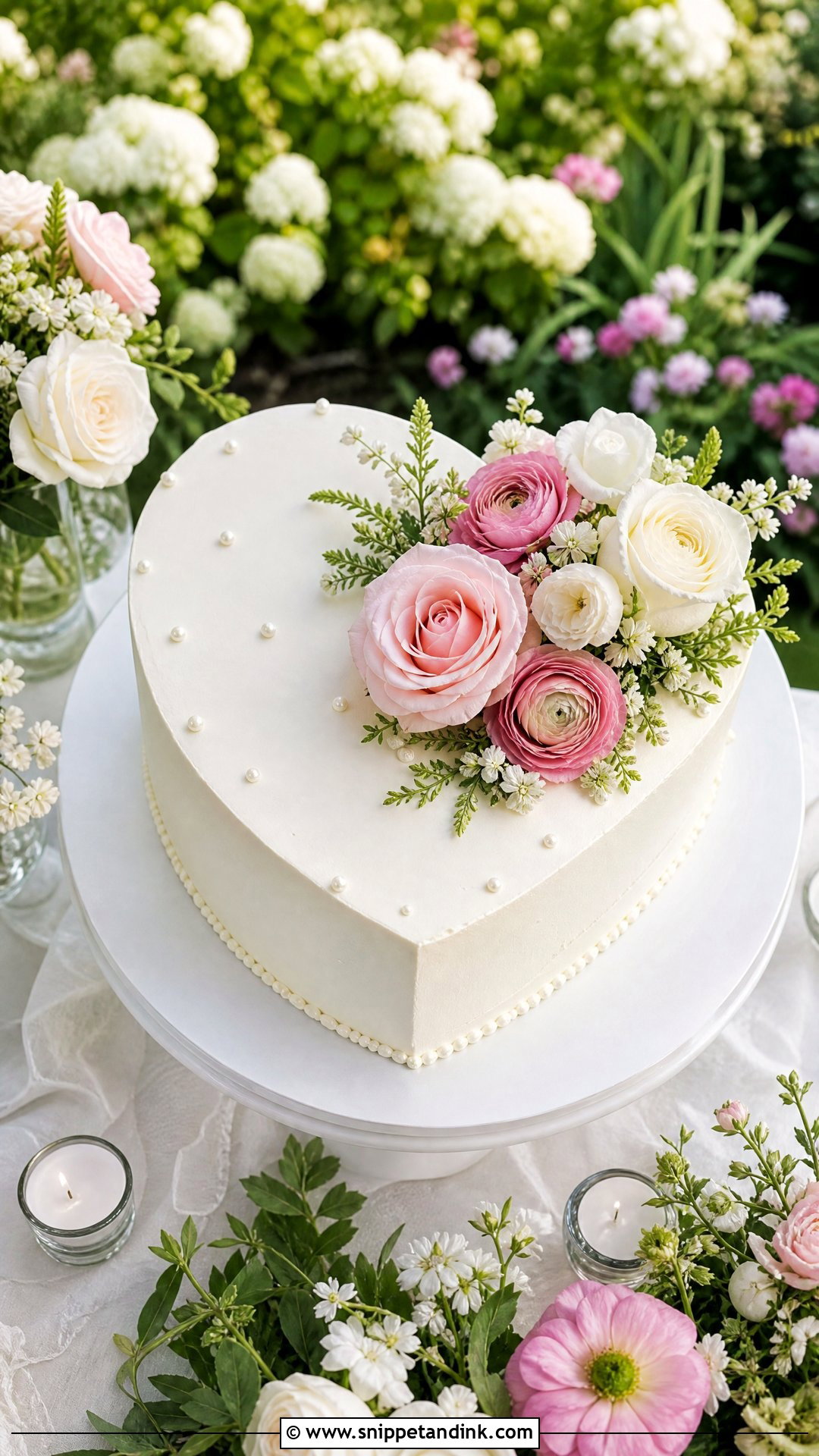
Fresh flowers give a heart a garden finish that suits spring, outdoor receptions and natural decor. Get your florist and baker talking early: the flowers need to be food-safe, unsprayed and kept away from floral preservatives, and they should match the bouquet. Roses, ranunculus, orchids, chamomile and small greenery are common picks. Cluster them rather than covering the cake, or the heart shape disappears. Smooth buttercream gives the cleanest background, and a white or glass stand keeps it simple.
12. Heart Wedding Cake With Buttercream Flowers
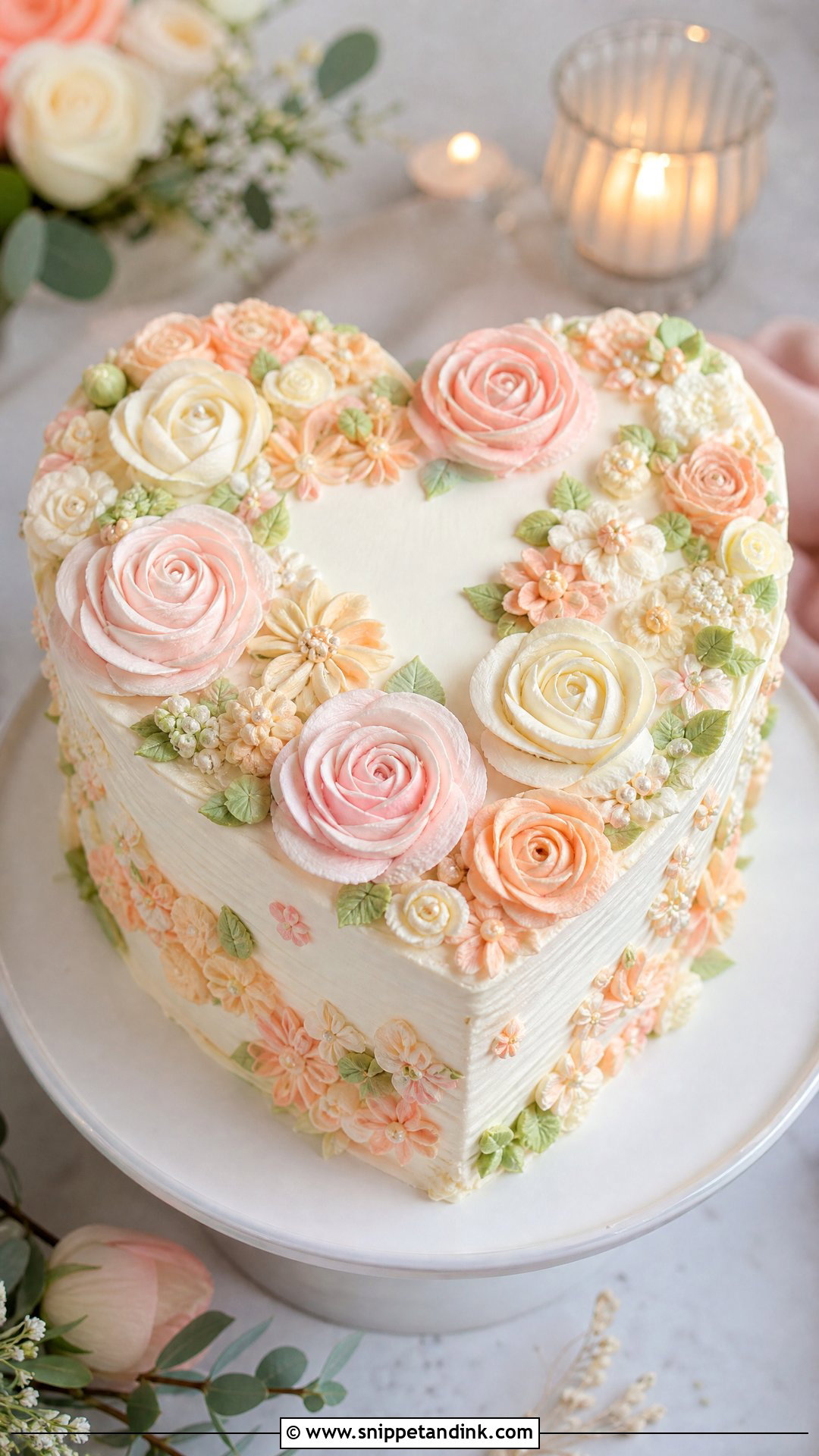
Piped buttercream flowers are fully edible and soft-looking, which fresh blooms can’t promise. Roses, peonies, daisies or tiny blossoms can be piped straight onto the heart. Many bakers pipe them ahead, chill them firm, then place them, which gives cleaner petals than piping on a curved cake. Ivory and blush feel classic; pastel blue, lavender or peach suit spring. They add texture without heavy toppers. I’d keep them to one side or around the border so the design doesn’t crowd.
13. Heart Wedding Cake With Gold
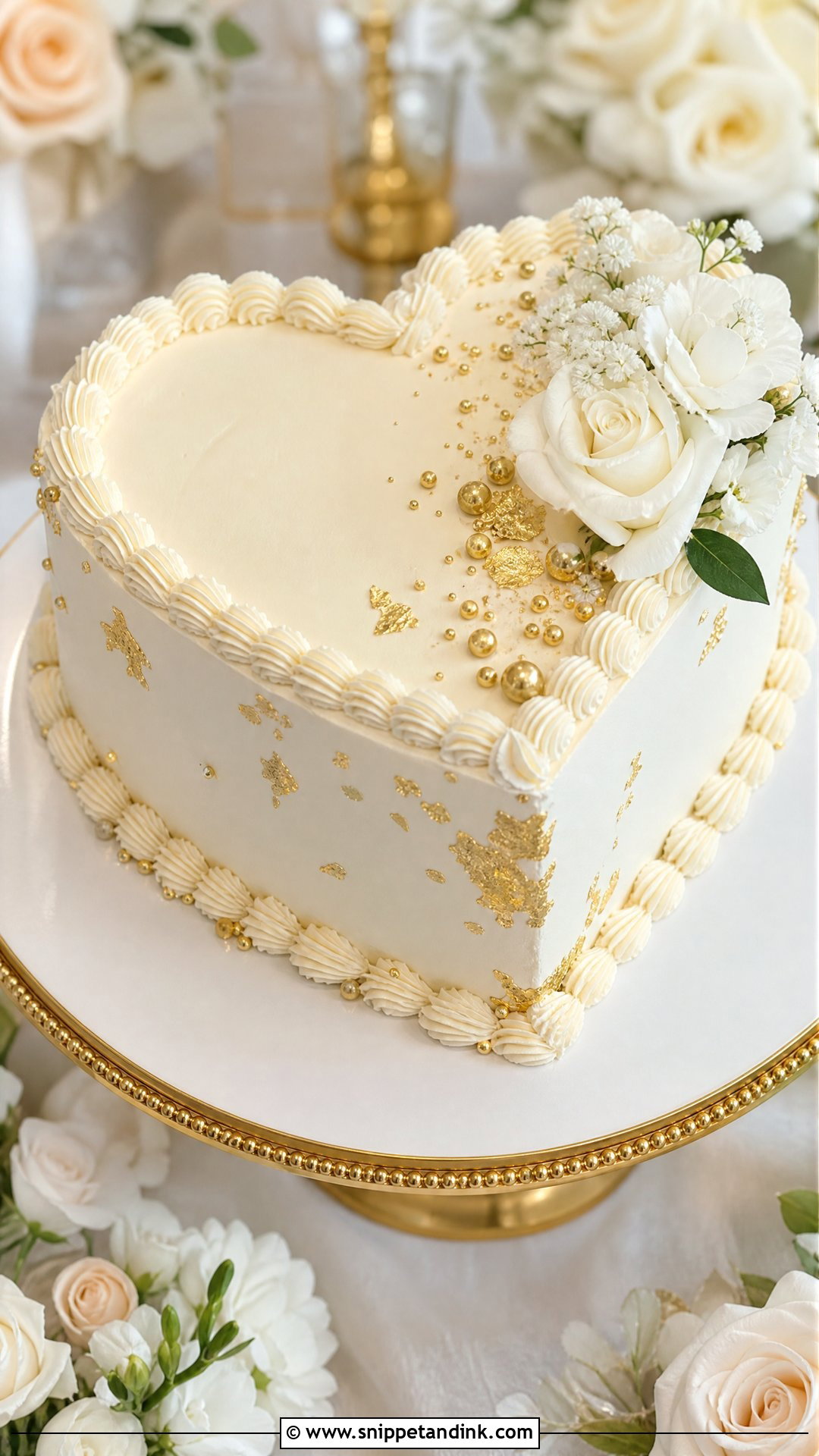
Gold goes a long way on a heart. Edible gold leaf, gold pearls, a gold topper or thin painted accents along the edges all work against white, ivory, blush or champagne, which let it glow rather than glare. Gold leaf only lies flat on chilled, dry frosting; on soft buttercream it wrinkles and sticks to itself. I like gold leaf on one side with fresh flowers, or a gold-painted border for a classic look. Evening receptions, hotel weddings and rooms with warm lighting bring it out best.
14. Heart Wedding Cake With Lambeth Piping
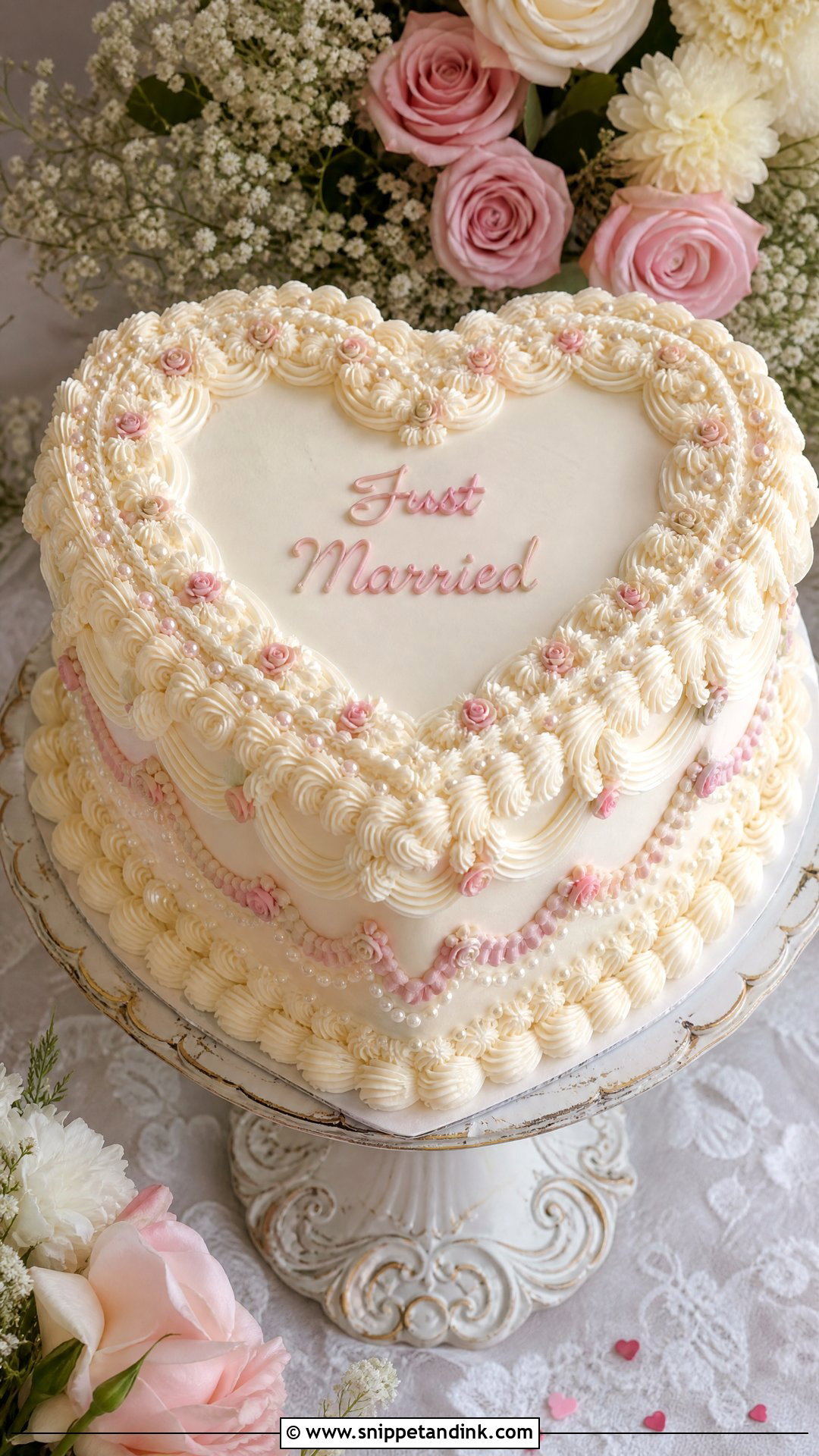
Lambeth piping and hearts are made for each other. The technique stacks borders, shells, swags and overpiped detail into a heavily decorated surface, and on a heart it looks romantic and retro. It’s also slow, hand-done work, which is why it costs more than a plain finish. White on white is classic; blush, red or pastel piping gives more personality. Because the piping is already busy, keep toppers simple: a short message, a few pearls or tiny cherries. Couples who love retro style or antique decor are usually the ones who ask for it.
15. Heart Wedding Cake With Cherries
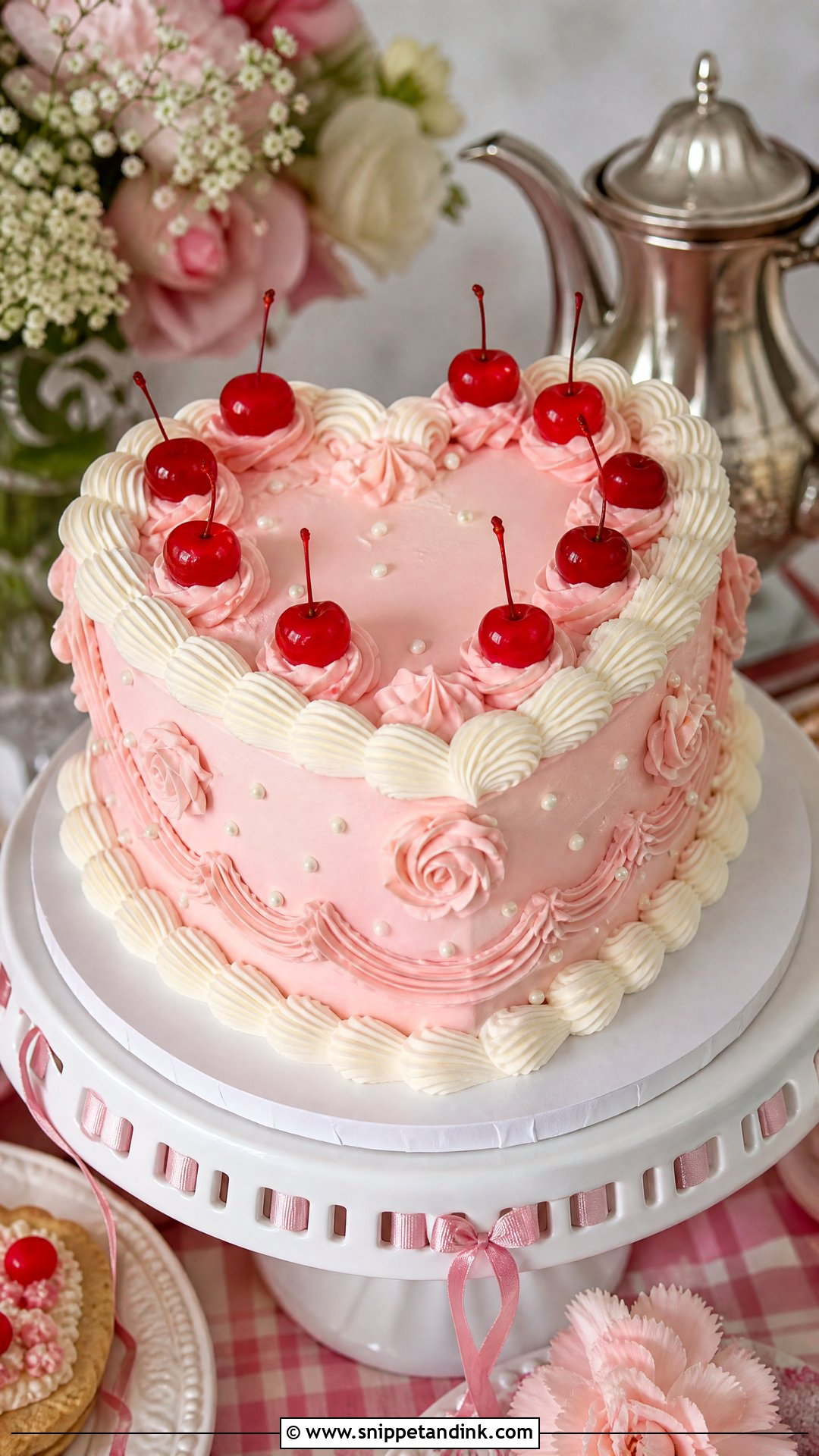
Cherries give a heart a playful, nostalgic look that still feels romantic. The classic version is white or pink buttercream, piped borders and bright red cherries around the top or edges. Maraschino or candied cherries bleed red syrup into white frosting, so I blot them dry for hours before placing them and add them close to the event. For a wedding, place them neatly and with purpose rather than scattering them. Vanilla, almond, cherry or red velvet suit it. Smaller receptions, retro venues and colourful palettes carry it best, with a short message in the middle.
16. Heart Wedding Cake With Calligraphy
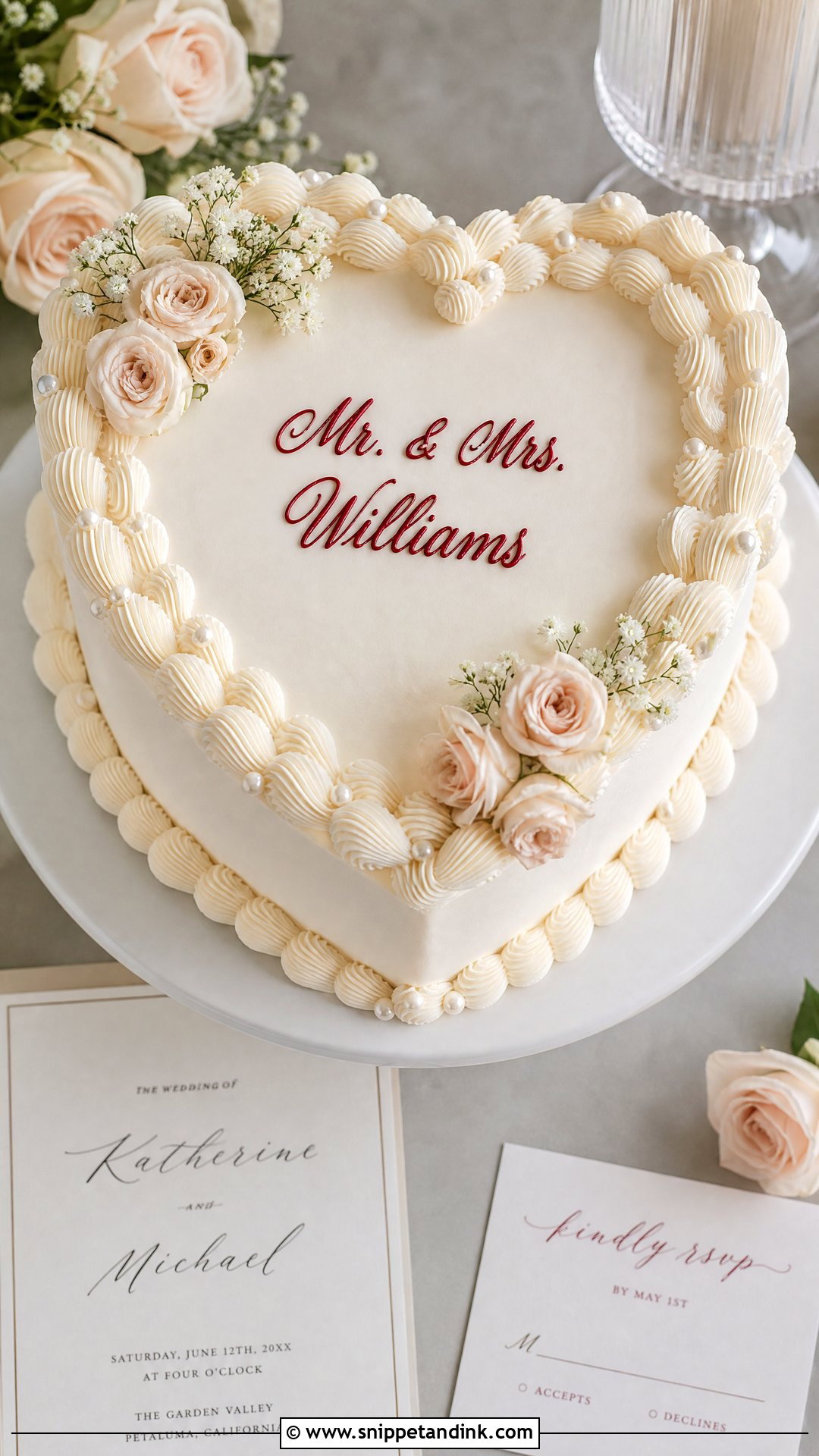
Calligraphy makes the cake personal. The words can be as short as “just married,” the couple’s names, initials or a brief romantic line. Once text is the focus, everything else should step back: smooth buttercream with a piped border gives the clean space writing needs. Contrast matters more than colour, so red writing on white or white on blush both read well. I practise the exact wording on parchment first; there’s no erasing on buttercream. Fewer words always look better.
17. Heart Wedding Cake With Lace
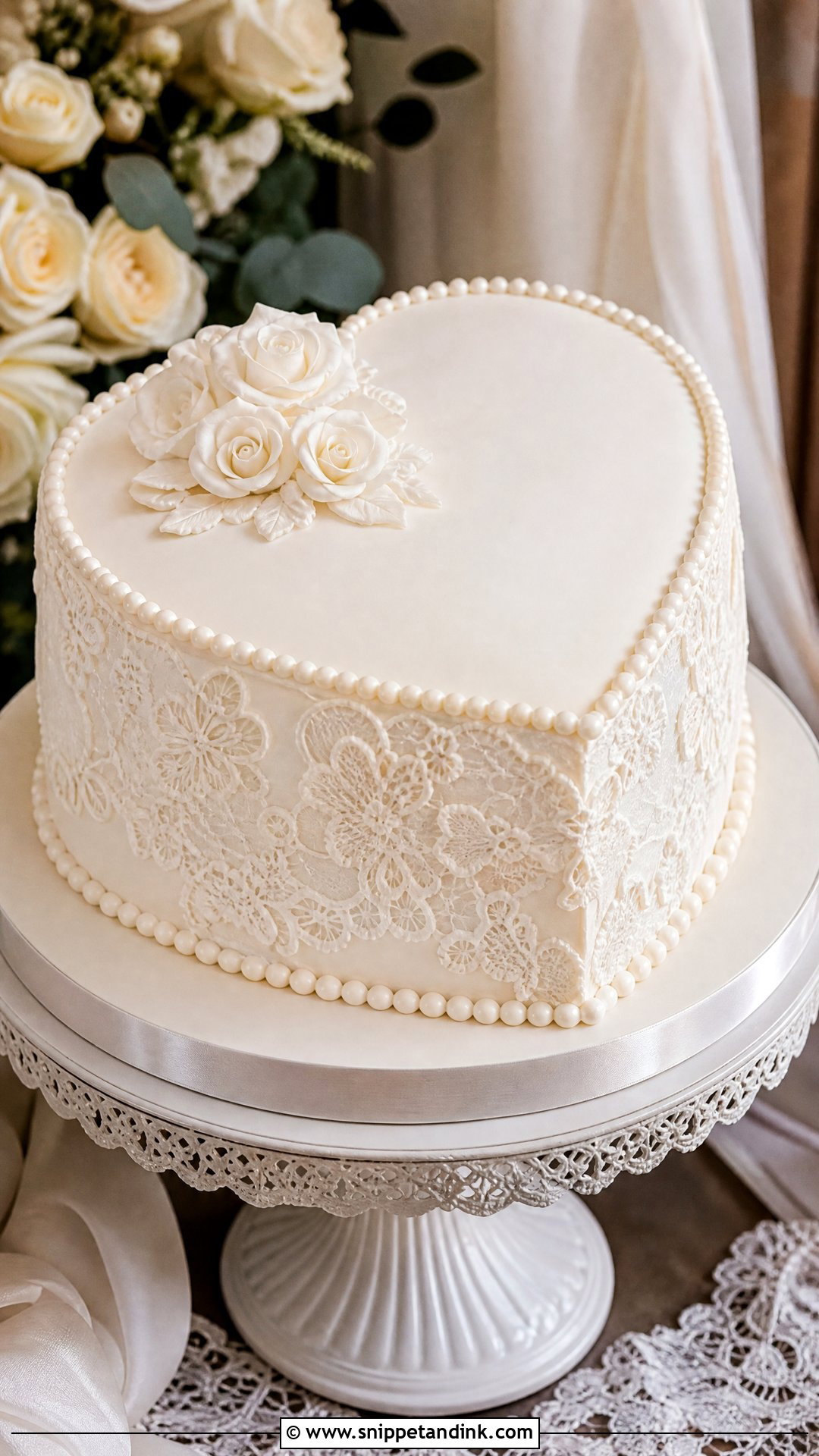
Lace suits a classic bridal look, especially when it echoes the dress. It can be fondant appliqué, stencilled icing, piped royal icing or delicate buttercream patterns. White and ivory are traditional. Royal icing lace is lovely but brittle and softens in humidity, so I add it late on muggy days. Lace only along the sides or top border keeps the heart from looking heavy, and fresh flowers, pearls or a satin ribbon complete it. Formal weddings, chapel ceremonies and vintage-styled receptions suit it.
18. Heart Wedding Cake With Ruffles
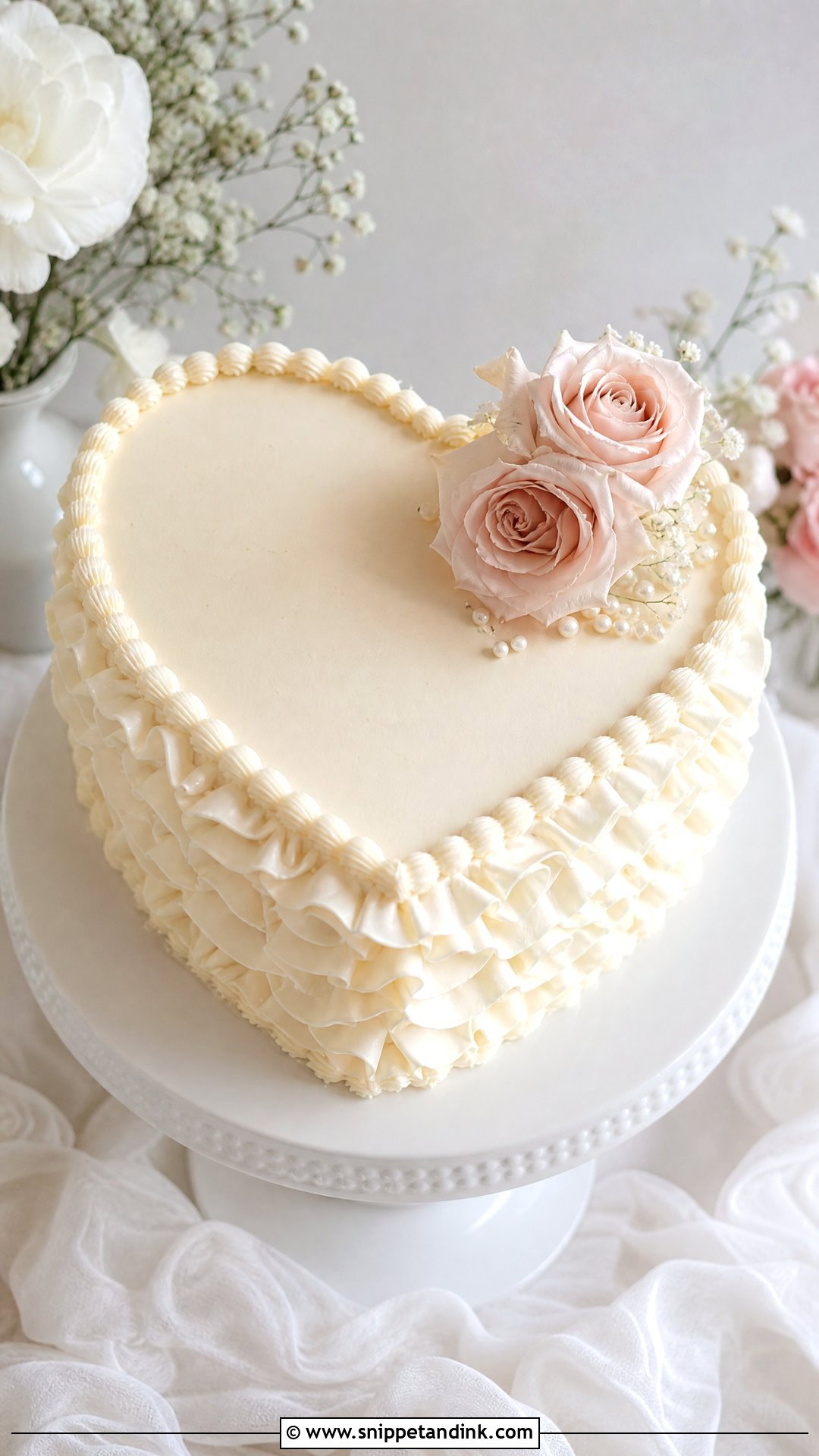
Ruffles add movement and make a simple heart look fuller without toppers. They can be piped in buttercream, cut from fondant or layered around the sides like fabric. White, ivory, blush and pale peach work best. Piped ruffles go on fastest; fondant ruffles look the most like fabric but add weight and sweetness. Keep the top clean with a few flowers or pearls so the texture has room. It pairs with romantic gowns, soft linens and flower-heavy rooms, and it’s detailed without needing colour.
19. Heart Wedding Cake With Drip
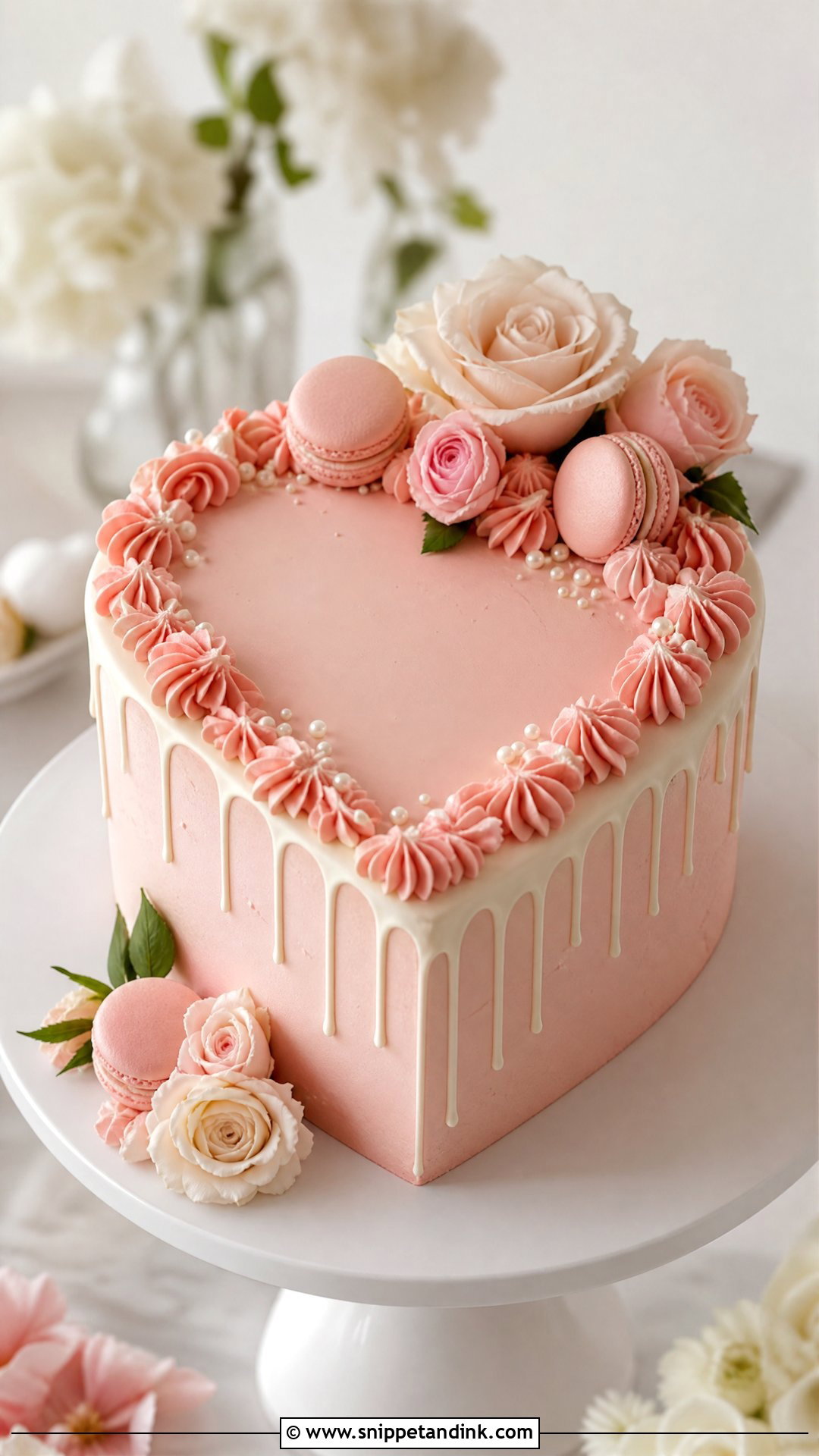
A drip makes a heart look modern. White chocolate over blush buttercream is soft; caramel over ivory is warm; dark chocolate over red velvet or chocolate cake is bold. Drips run further on a heart’s curved edges, so I test a single drip first and keep them short and even. Flowers, macarons, pearls or small buttercream swirls finish the top. Couples wanting something less traditional choose it, and it blends into a dessert table with mixed sweets.

20. Heart Wedding Cake With Ombre
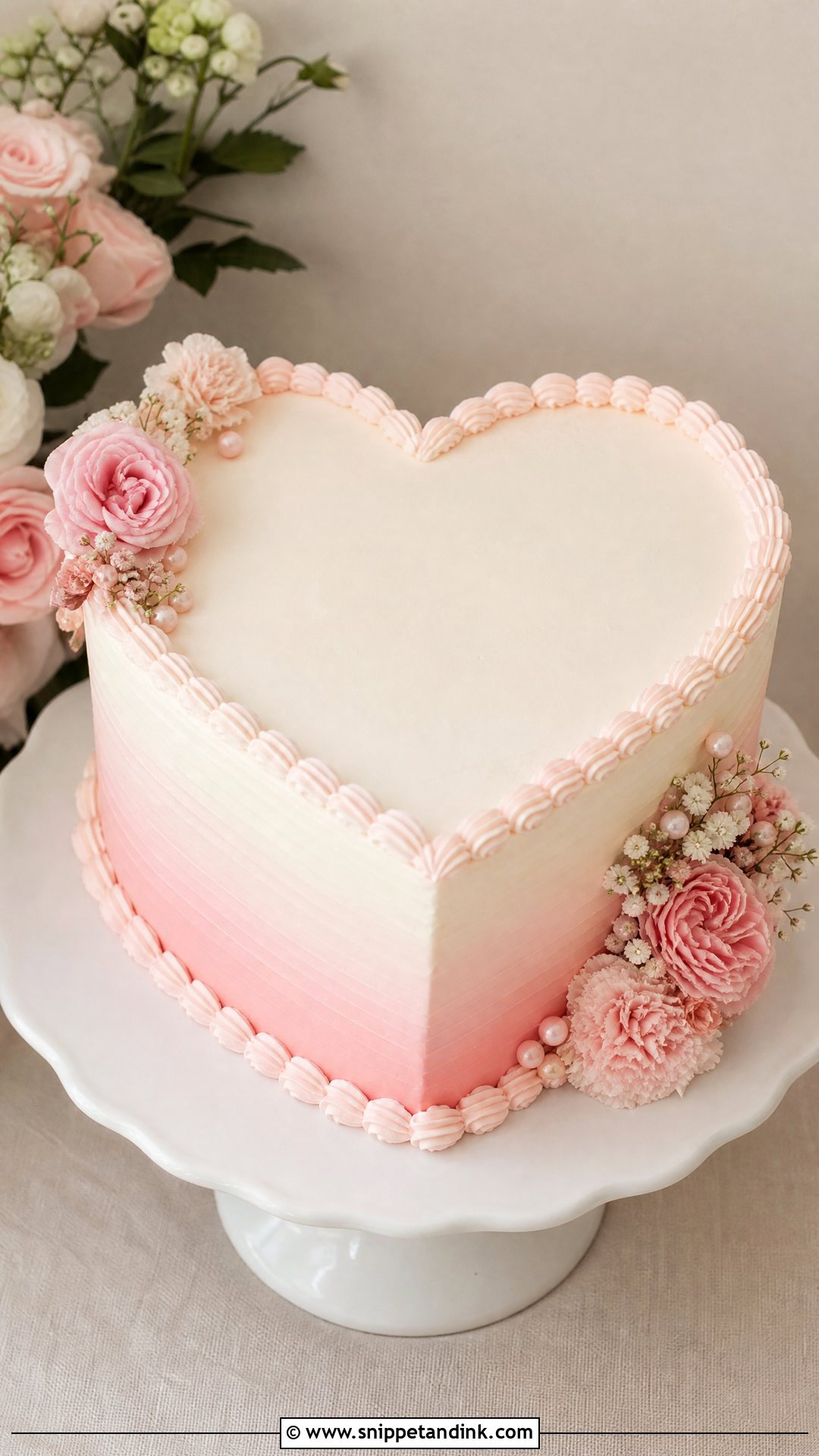
Ombré tells a quiet colour story from light to dark: blush to ivory, peach to cream, lavender to white or dusty rose to pale pink. On smooth buttercream the heart makes the gradient look even softer. Ask for a blended finish, not stripes; I spread three shades in bands and drag a warm scraper around once so they melt into each other. The top can stay plain or carry flowers in the darkest shade. It gives colour without overpowering the table.
21. Heart Wedding Cake With Pressed Flowers
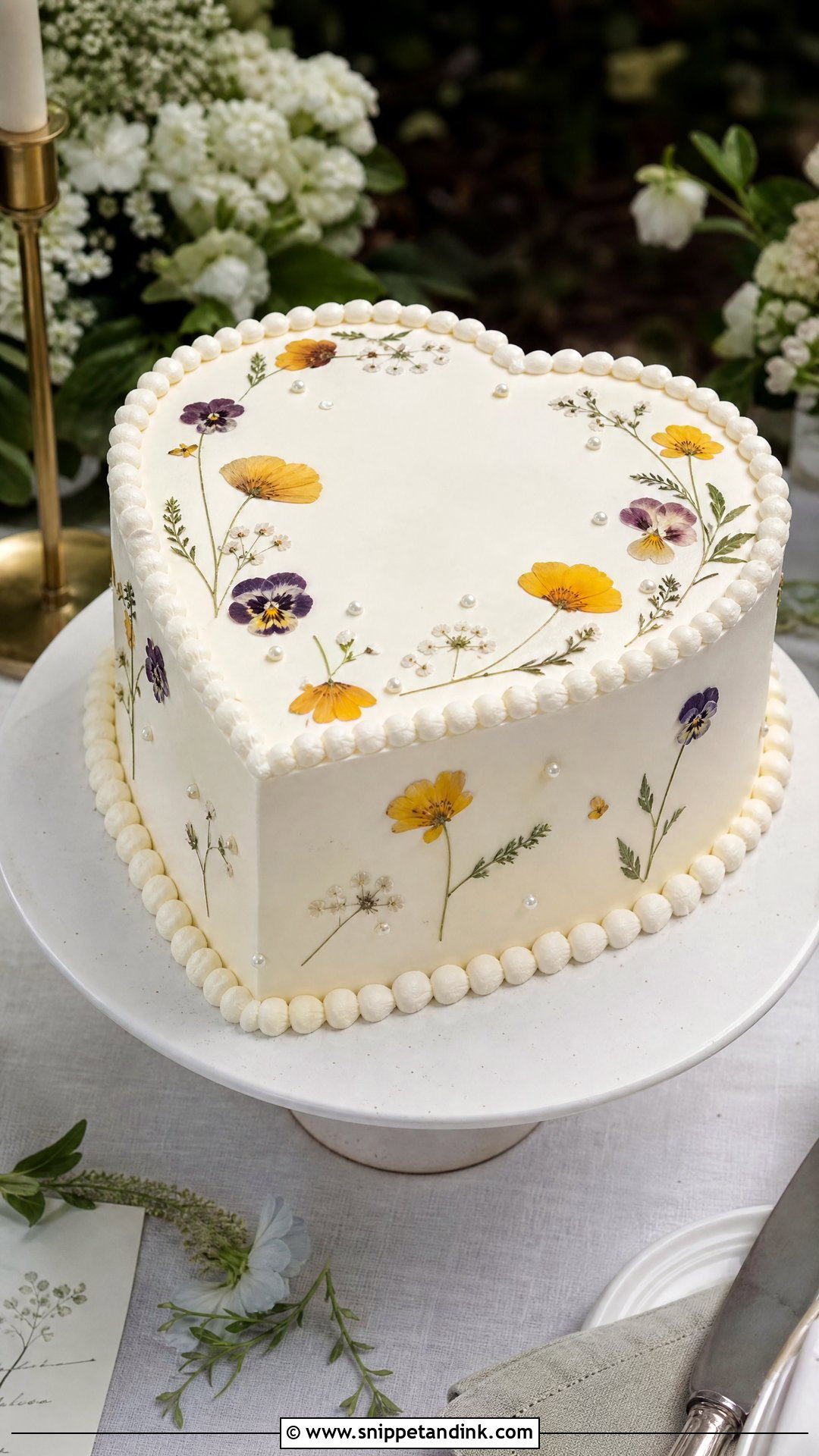
Pressed flowers lie flat and look delicate, like a botanical print on the cake. Garden weddings, outdoor ceremonies and couples who love handmade detail are drawn to them. They can circle the sides, follow the top edge or run in a soft diagonal. They must be edible varieties pressed for food, not craft-store flowers, and they press best against freshly smoothed buttercream that’s just starting to set. A white or ivory base shows the colours. Lemon, vanilla, almond or lavender flavours suit them. Keep the border plain; the flowers already bring the detail.
22. Heart Wedding Cake With Succulents
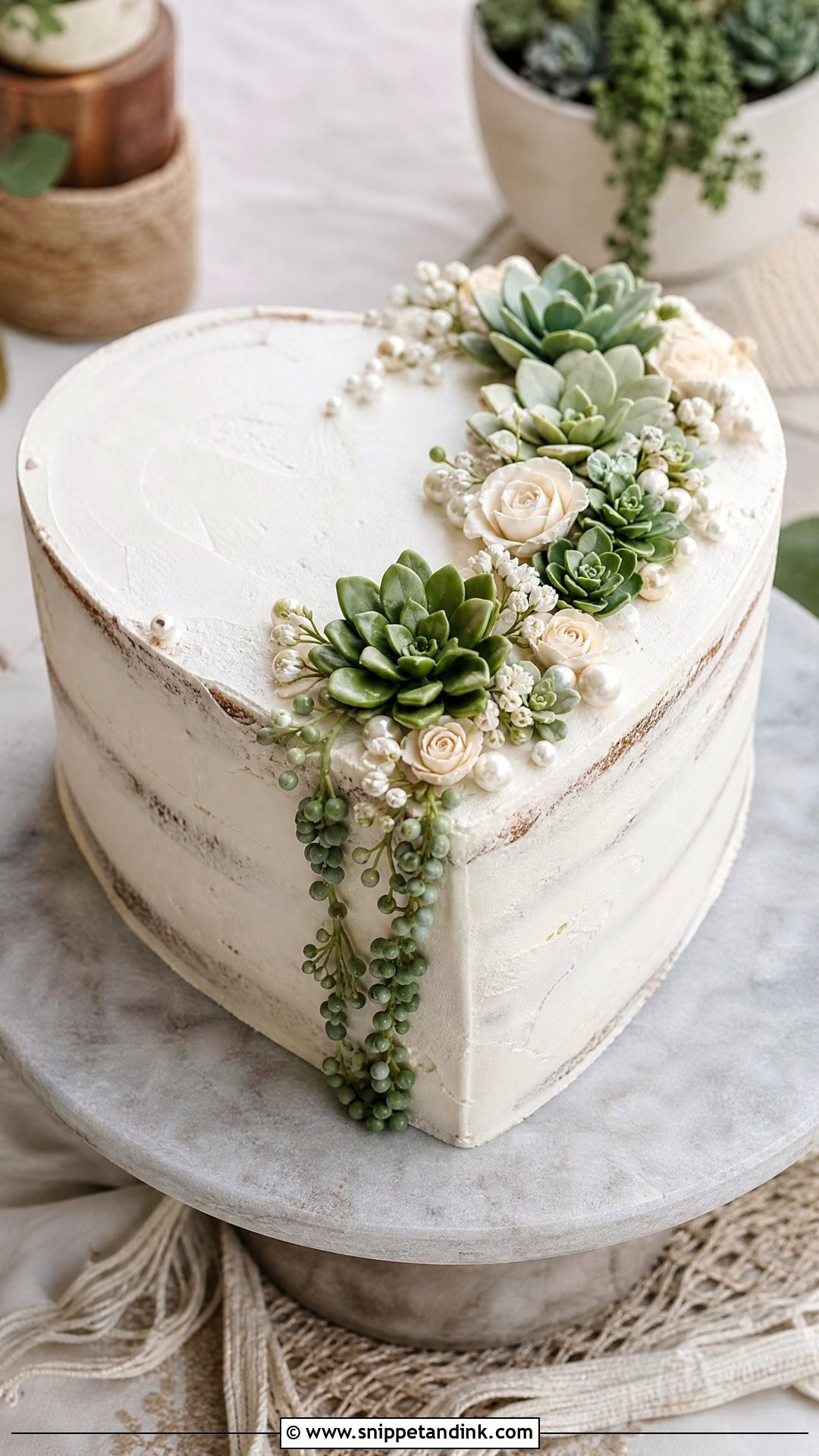
Succulents give a heart a grounded, slightly unexpected texture, at home at desert weddings, boho receptions and modern outdoor venues. Ivory buttercream, soft sage accents and wood or stone styling suit them. I make them in sugar or piped buttercream, which is easier and safer than real plants; if real ones are used, they need a proper barrier and are only decoration. Semi-naked or smooth buttercream both work. A few small flowers soften the look. The heart keeps it romantic; the succulents keep it from being sugary.
23. Heart Wedding Cake With Fruit
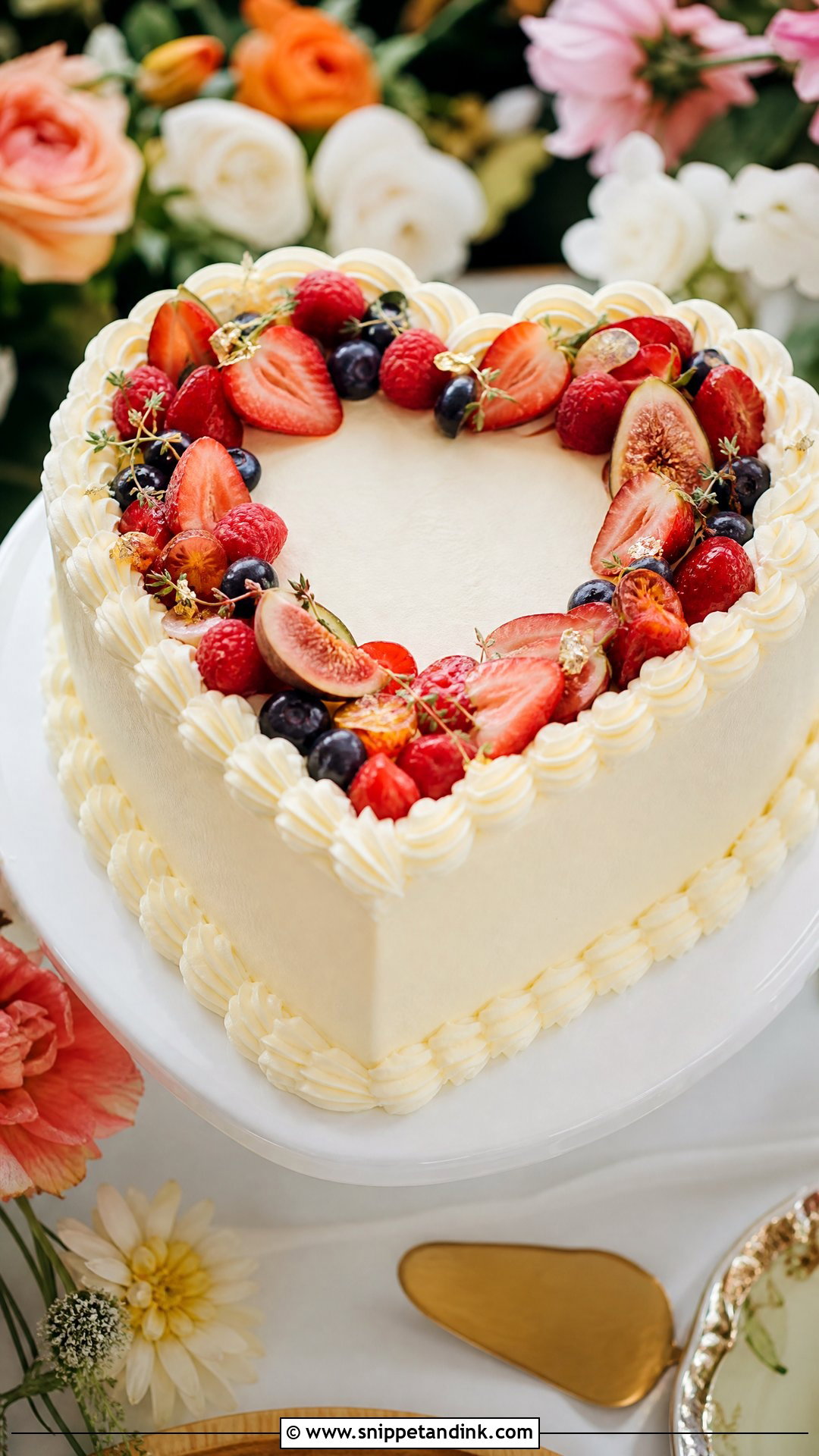
Fresh fruit makes a heart bright and seasonal. Strawberries, raspberries, figs, cherries, blueberries and citrus slices all work, depending on the month. Arrange them in a neat border or one cluster rather than covering the cake. Cut fruit weeps and dulls within a few hours, so I place it at the venue and brush it with a light glaze. Vanilla, lemon, almond or berry cake with whipped cream or light buttercream suits it, though whipped cream won’t survive a hot afternoon. Summer weddings, brunch receptions and outdoor parties suit it.
24. Heart Wedding Cake With Macarons
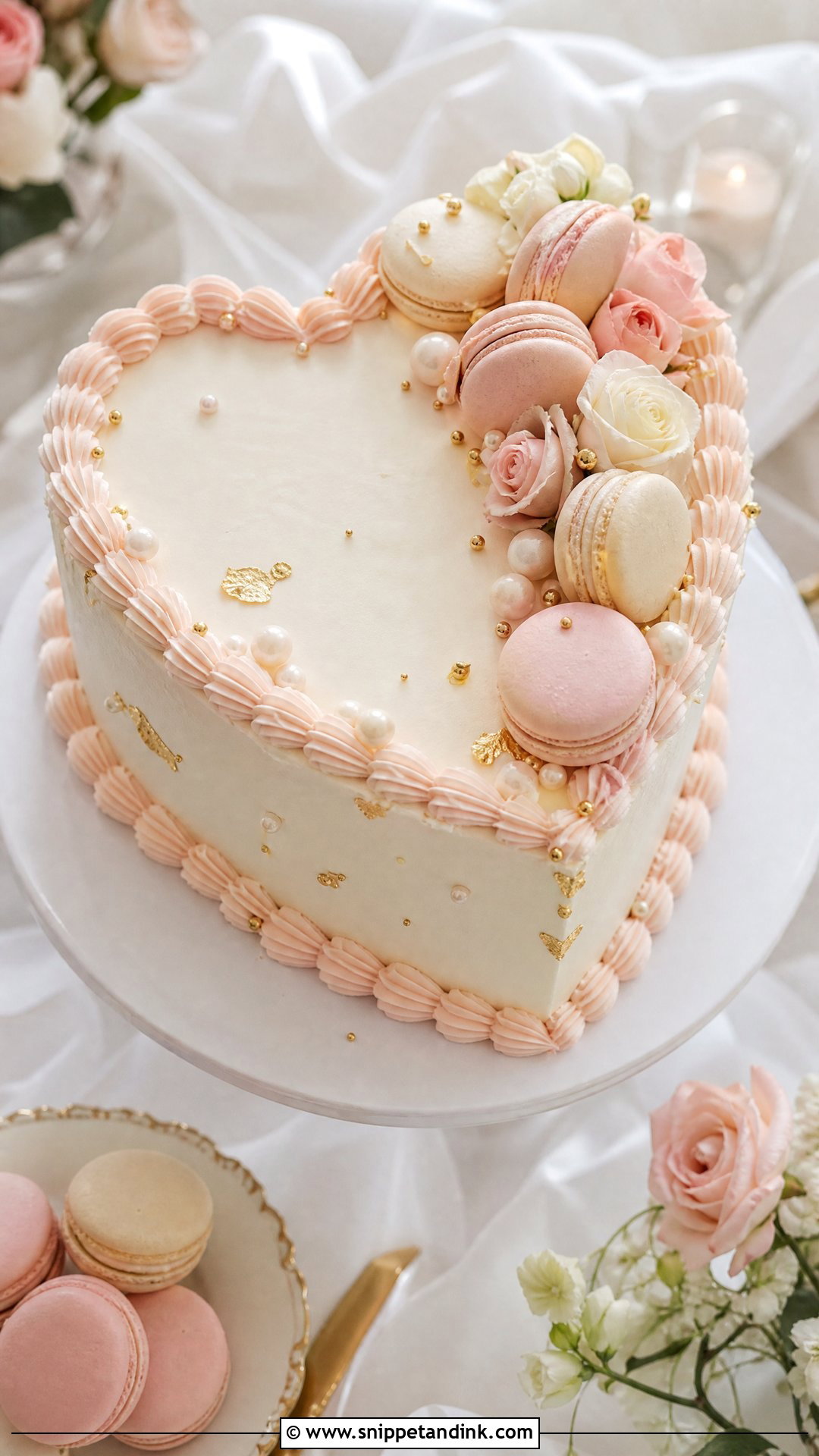
Macarons add colour and height, and they make a heart look like it came from a smart patisserie. Match them to the palette: blush, ivory, champagne, lavender or pale blue. A small cluster on top, a run down one side or a few tucked beside flowers is plenty. Macarons absorb moisture from buttercream and go soft within hours, so I attach them with a dab of ganache shortly before setting out. Smooth buttercream gives a clean base; piped borders add a vintage note. Serving matching macarons beside the cake ties the whole table together.
25. Heart Wedding Cake With Initials
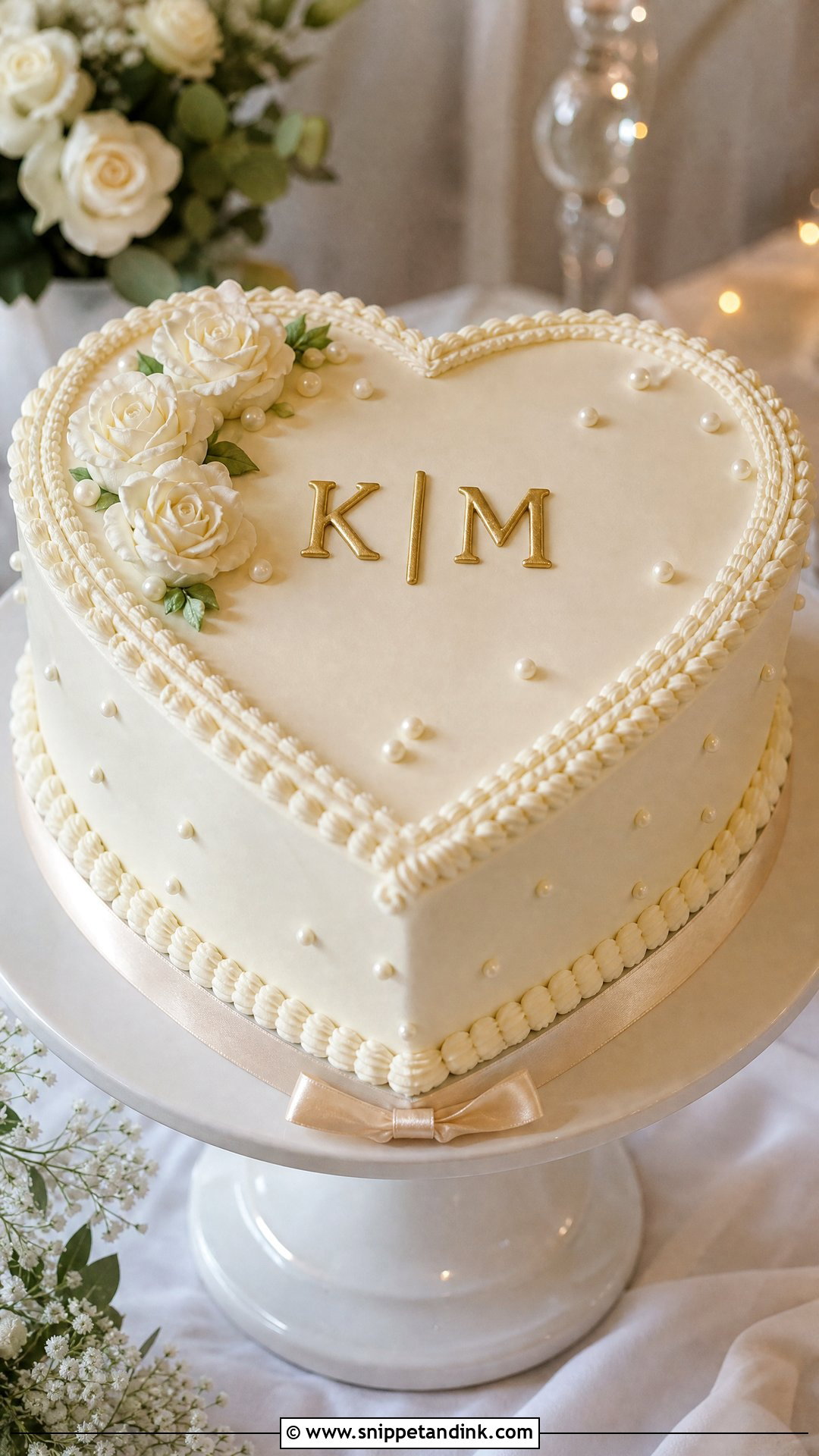
Initials feel personal without a long message. They can be piped in buttercream, written in chocolate, set as a topper or painted in edible gold. White, ivory, blush or champagne buttercream lets them stand out. I usually work from a printed template so both letters sit centred in the heart, since a heart’s visual centre sits a little higher than its true middle. A piped border, small pearls or a few flowers finish it. It works as one tier or as the top of a bigger cake.
Lining Up Stacked Hearts So They Don’t Look Lopsided
Most stacked heart cakes that look wrong in photos have one tier rotated a few degrees. On a round cake nobody can tell; on a heart, the points give it away instantly. When I stack, I mark the centre line of each board before anything goes on it, then line the points up with a straight edge from the side.
- Each tier sits on its own board cut to the heart shape, slightly smaller than the cake so it doesn’t show.
- Dowels go under where the next tier will sit, including near the lobes, which carry more weight than you’d think.
- Tiers usually step down by about two inches, so the outline reads clearly at every level.
- The front of the cake should face the room, with the point toward the guests, not toward the wall.
How Many Words Fit on a Heart Top
Less than you think. The usable writing space on a heart is a band through the middle; the lobes and the point narrow too fast for letters. On a six-inch heart, two short words or two names with an ampersand is about the limit before the lettering gets cramped. An eight-inch heart can take a short phrase on two lines.
If you want a longer line, put it on a ribbon around the base, on a topper or on a small plaque on the cake board, and leave the top for initials or a date. Send your baker the exact spelling in writing. Names are the one thing I always confirm twice.
Is a Heart Too Sweet for a Formal Wedding?
Hearts are more flexible than they first look: vintage, modern, bold red, floral, pearl-covered or gold. Pick the one that suits your wedding’s mood rather than this year’s trend. Think about colour, venue, season and how the cake will sit on the table. A small heart can feel personal; a tiered heart can carry the whole room. With the right frosting, decoration and stand, the shape looks polished and fully at home at a formal reception.
You'll Like These Ideas:













Leave a Reply