
An all-white cake has nowhere to hide, which is exactly why I love piping it. With no color to carry the design, every shell, pearl and scroll does its work through shadow, and the cake looks finished without any heavy decoration. The same white can read vintage, garden or ballroom depending on the pattern, the tier shape and what the icing underneath is made of. Below are twenty piping styles I’d make for a wedding, from a single row of pearls to full Lambeth work, along with what each one asks of your venue, your timeline and the person cutting it.
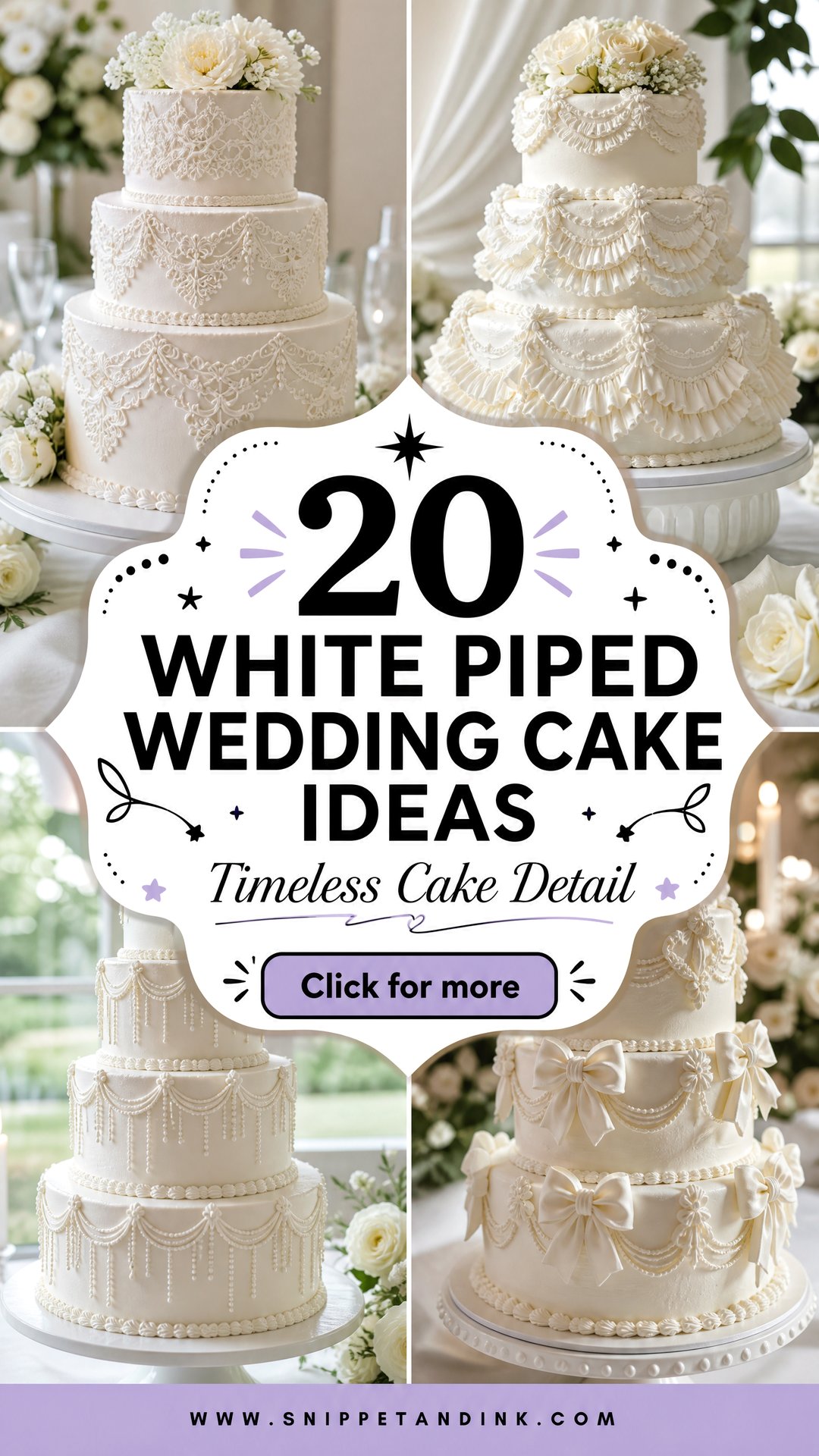
The Icing Under the Piping Decides How White It Looks
Couples usually choose a piping pattern first. I’d start one step earlier, with what the cake is covered in, because that sets how bright the white is, how sharp the piping can be and how long it lasts in the room.
Butter is yellow
Buttercream made with real butter comes out ivory, not snow white. To get it whiter, decorators either replace some butter with shortening or add the tiniest touch of violet to cancel the yellow. Both work, and both change the taste and texture slightly, so if bright white matters to you, ask to see and taste the icing at your tasting.
What each icing does in practice
- Swiss meringue buttercream: silky to pipe and lovely to eat, but softest in heat. Shells and swirls start to droop in a warm room.
- Firmer buttercream with some shortening: holds piped detail better at room temperature and looks whiter, with a slightly less buttery taste.
- Fondant: gives the smooth, sharp surface that lace, string work and monograms need, though many guests peel it off.
- Royal icing: dries hard and crisp, which is why traditional string work and Lambeth piping use it. It can chip when cut, so I keep it for borders and decoration rather than covering whole tiers.
1. White Piped Wedding Cake With Pearl Borders
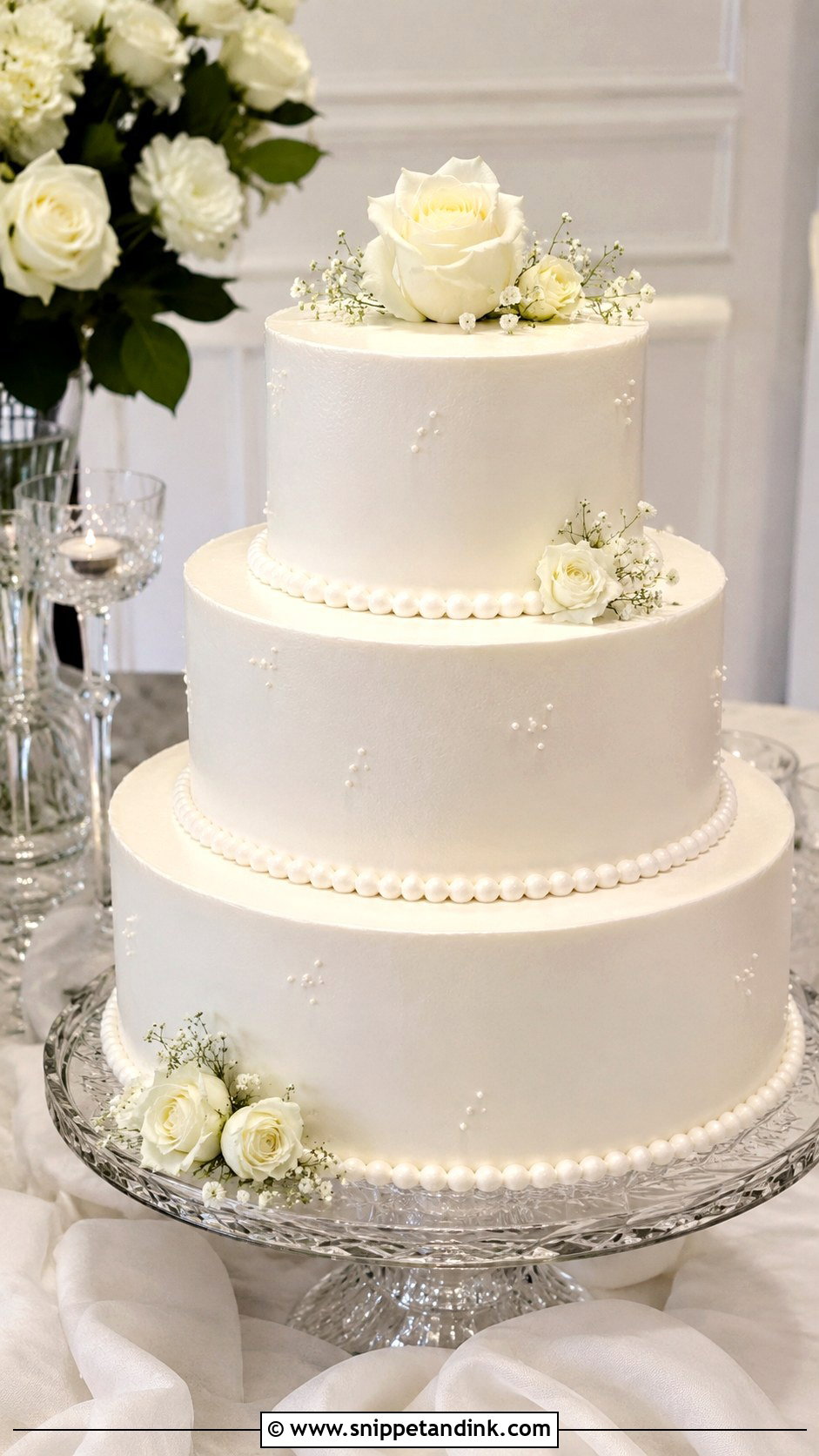
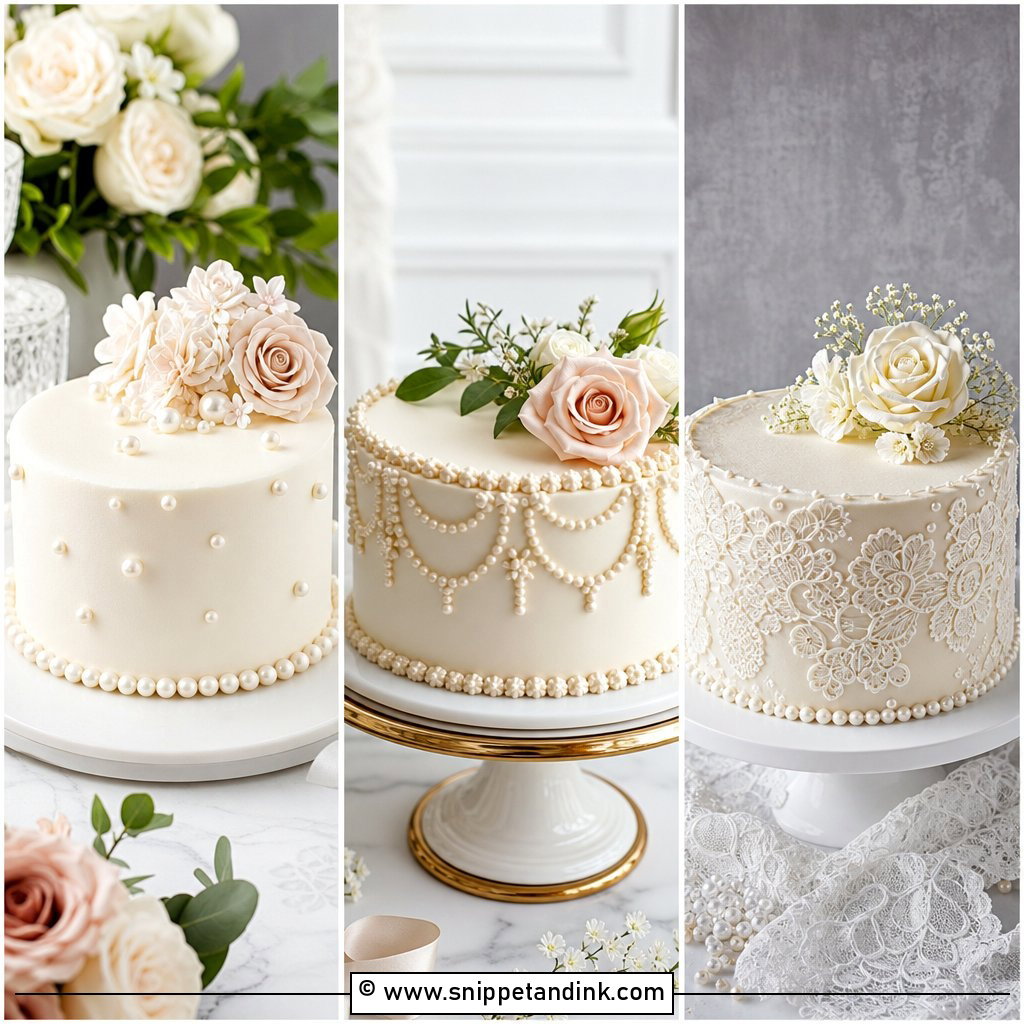
Pearl borders are the first piping I teach and the one I still use most. A row of evenly sized dots at the top and base of each tier defines the edges of two-tier and three-tier cakes without changing their shape. The skill is in consistency: each pearl gets the same pressure and the same release, and a tired hand shows by the third tier. Small pearls read delicate; slightly larger ones hold their own on a tall stand in a big room. White flowers are all it needs beside it.
2. White Piped Wedding Cake With Shell Borders
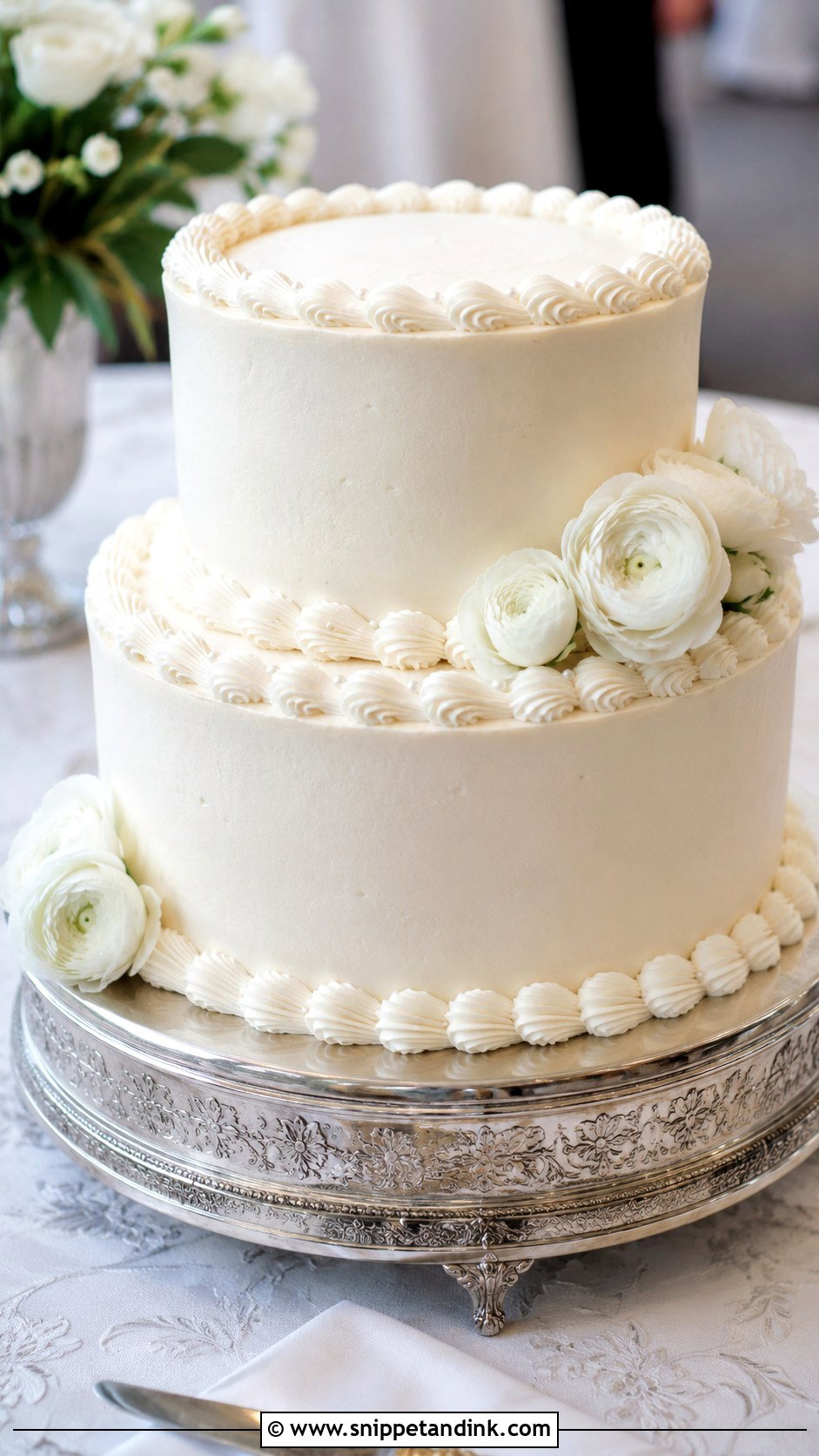
Shells are the old bakery border, and piped in white buttercream they still look right. I use a star tip and let each shell tail into the next, which hides the seam where a tier meets its board. Run them around the base of each tier, frame the top edges, or both. Smooth sides keep it polished; a light vertical comb gives a handmade feel. Silver serving pieces and satin linens suit it well.
3. White Piped Wedding Cake With Lambeth Piping
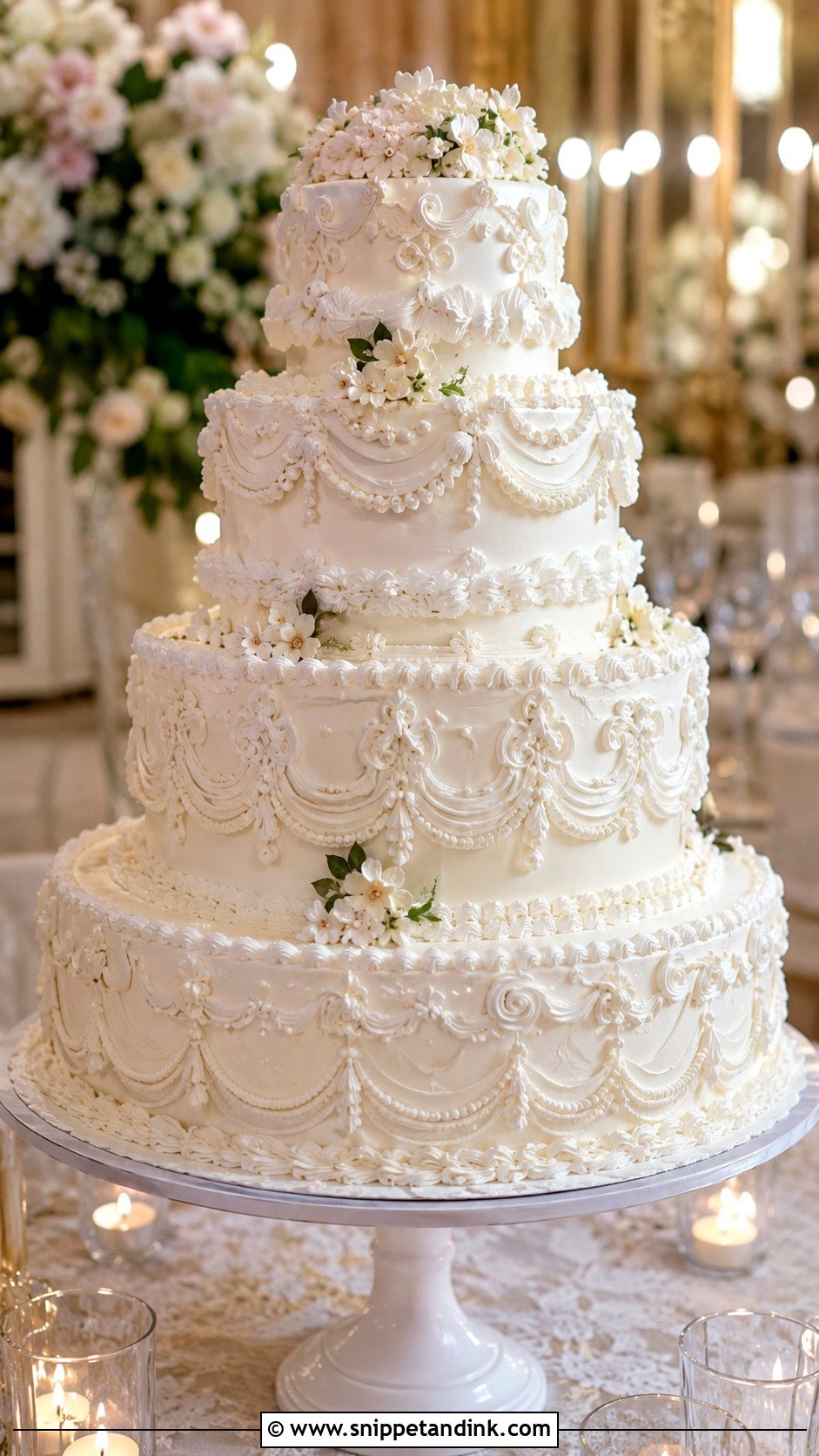
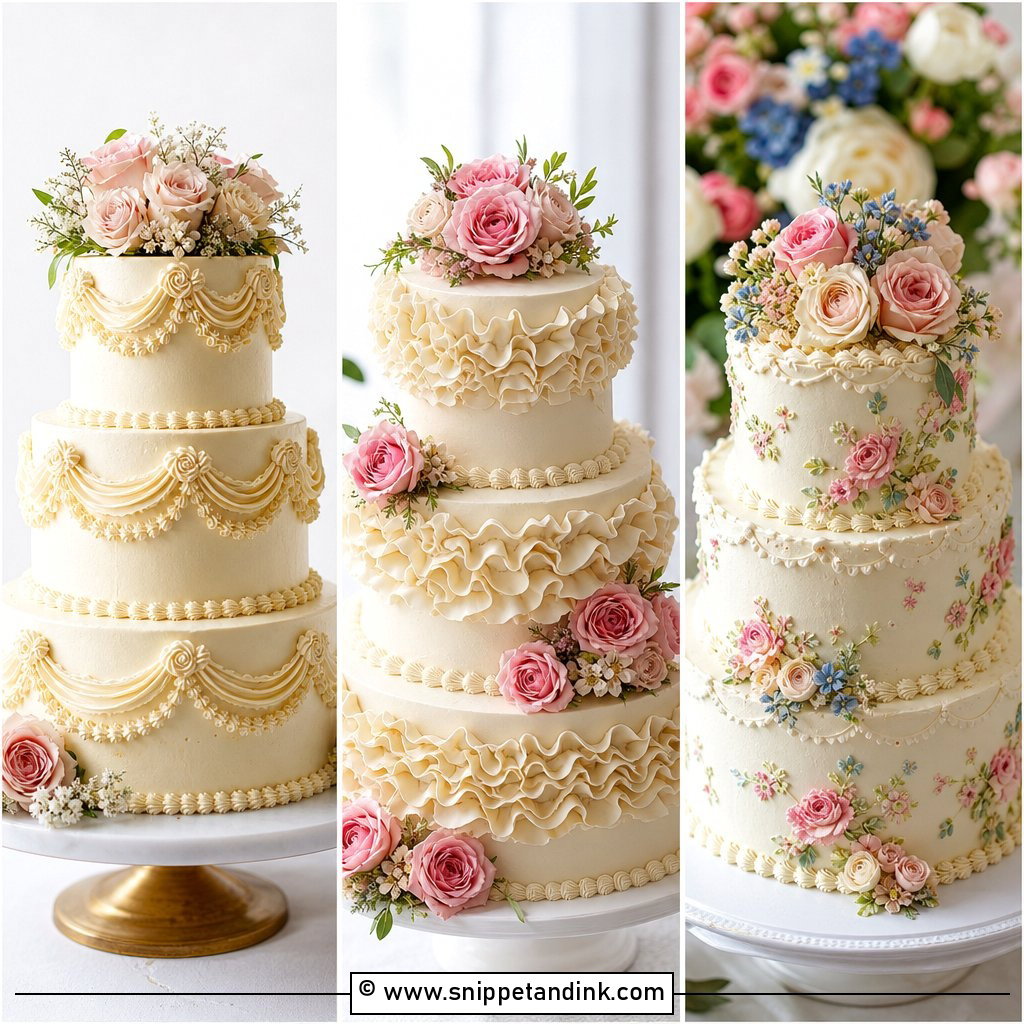
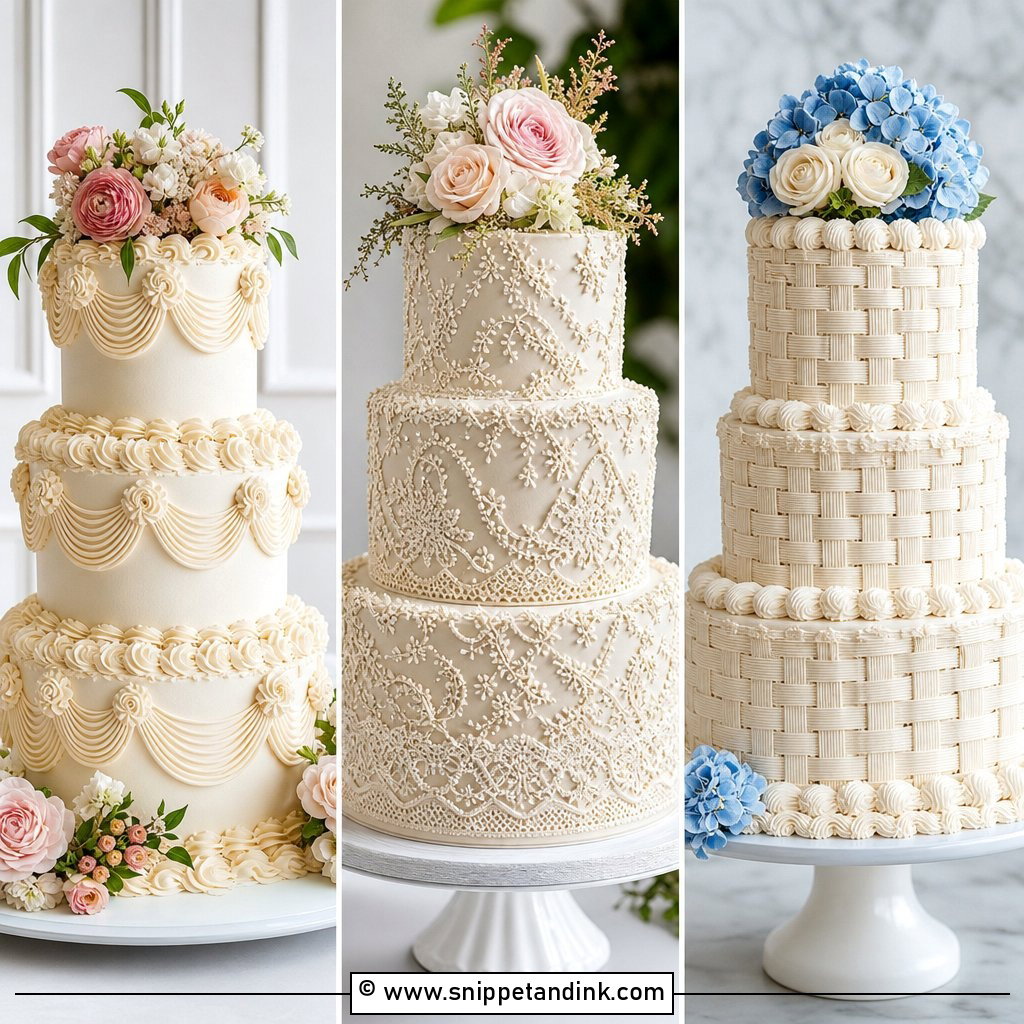
Layered Lambeth piping stacks shells, scrolls, swags, dots and ruffles on top of each other until the cake looks carved. It’s the most time-consuming work I do, because each layer has to set before the next goes over it. Scale changes everything: on a small two-tier cake it looks charming, and on four tall tiers it becomes grand. Royal icing gives the crisp, traditional edges and holds up in a warm room; buttercream gives a softer, modern version but slumps if the venue runs hot. Keep it entirely white so the shadows do the decorating.
4. White Piped Wedding Cake With Lace Piping
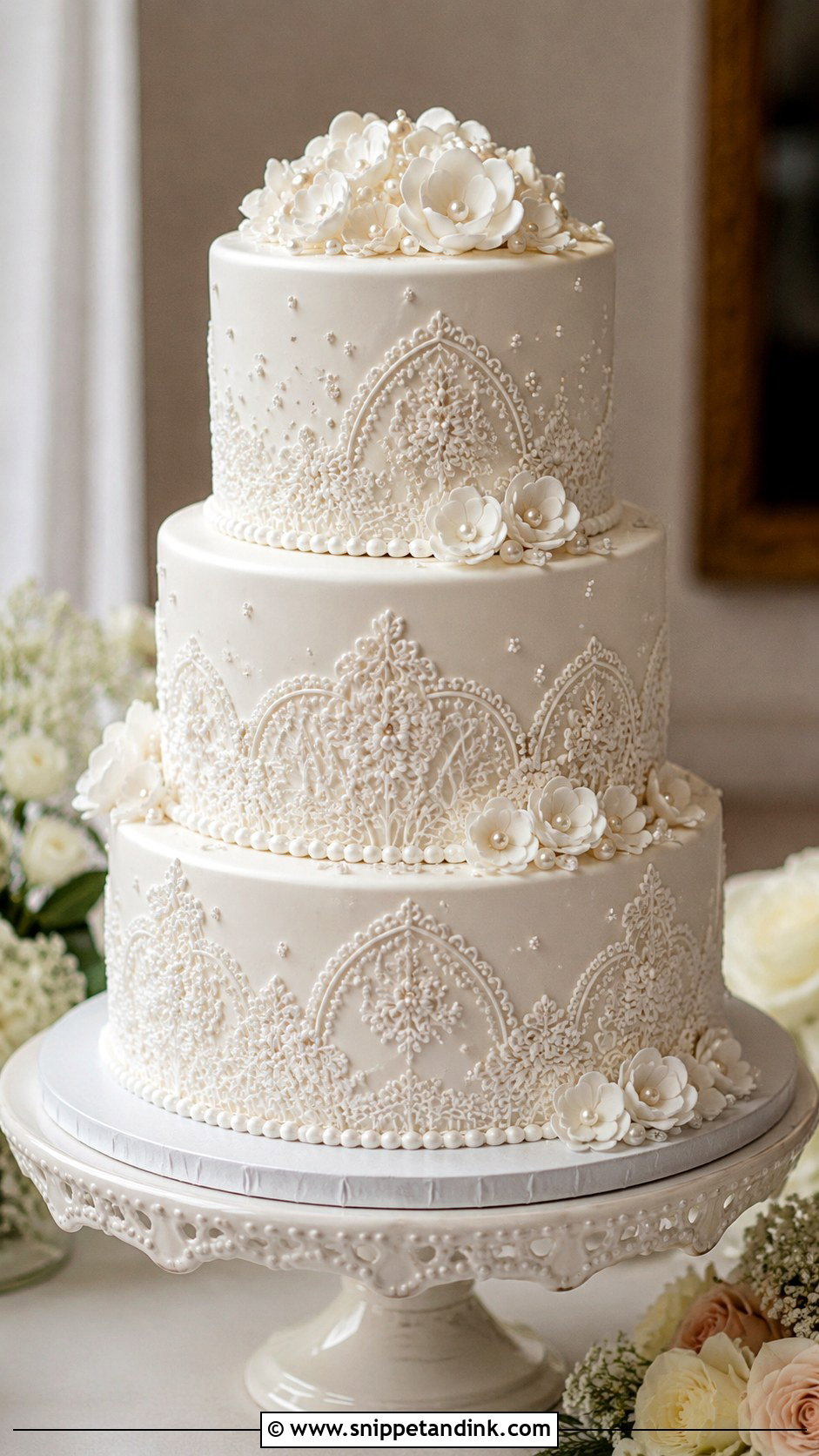
Here the lace is drawn in icing: tiny loops, dots, scallops and flower outlines piped straight onto the cake. It needs a firm, very smooth surface, which is why I almost always pipe it on fondant rather than buttercream. If you’d like it to echo your dress, bring a close photo of the lace and I’ll borrow the motif. Covering every tier is beautiful but slow, so a single lace tier between smooth ones is a common and sensible compromise. Pearl accents fit it naturally.
5. White Piped Wedding Cake With Swirl Piping
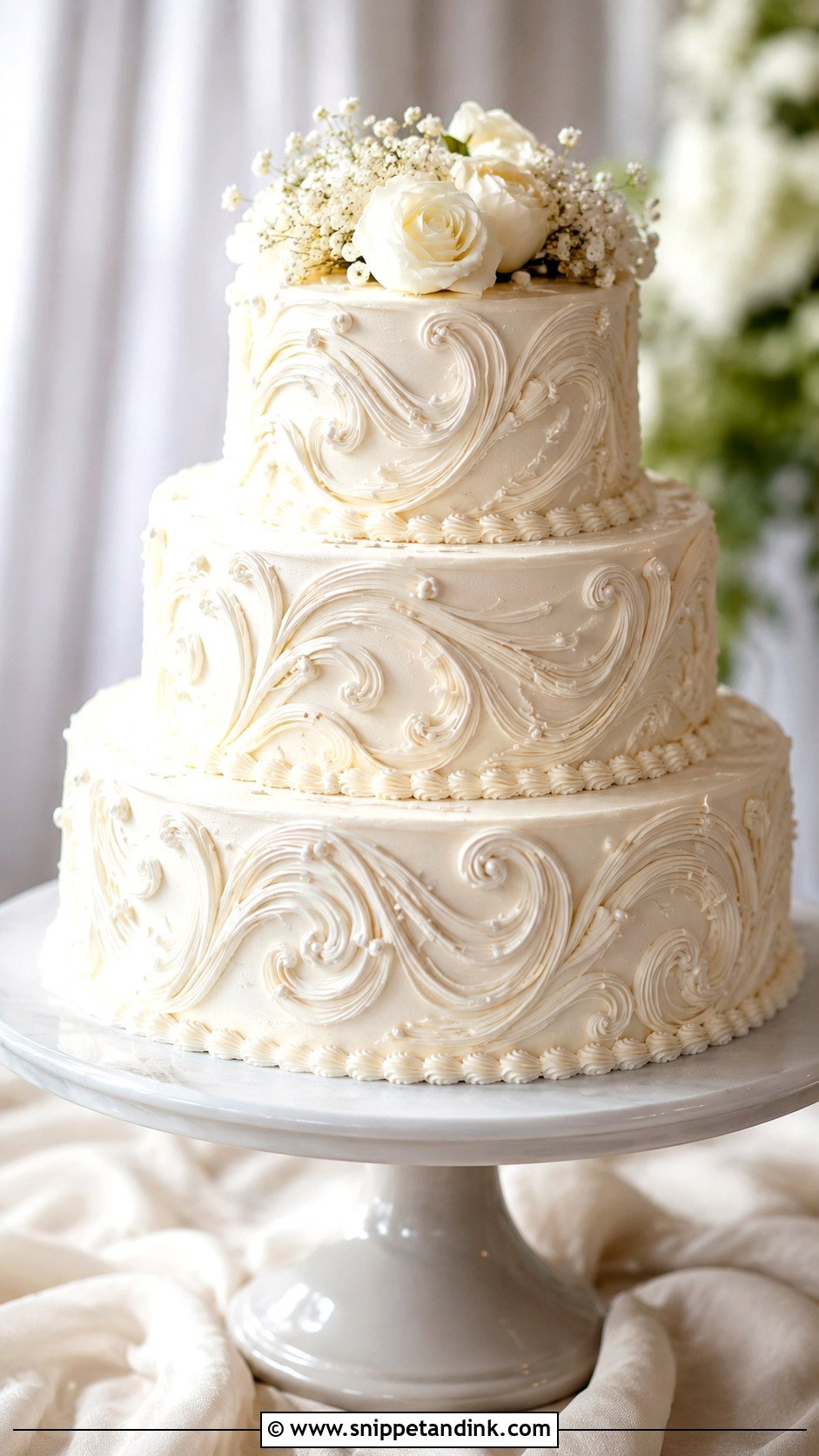
Swirls give a white cake movement. Instead of straight borders, the icing curves around the tiers and catches the light as it turns, which suits round cakes best. Swiss meringue buttercream is my choice for this because it pipes silky and soft, though it’s also the least heat-tolerant icing on this list, so I wouldn’t put it in afternoon sun. Large open swirls feel romantic; tight small ones read as texture. A small flower cluster or a simple topper is enough on top.
6. White Piped Wedding Cake With Rosettes
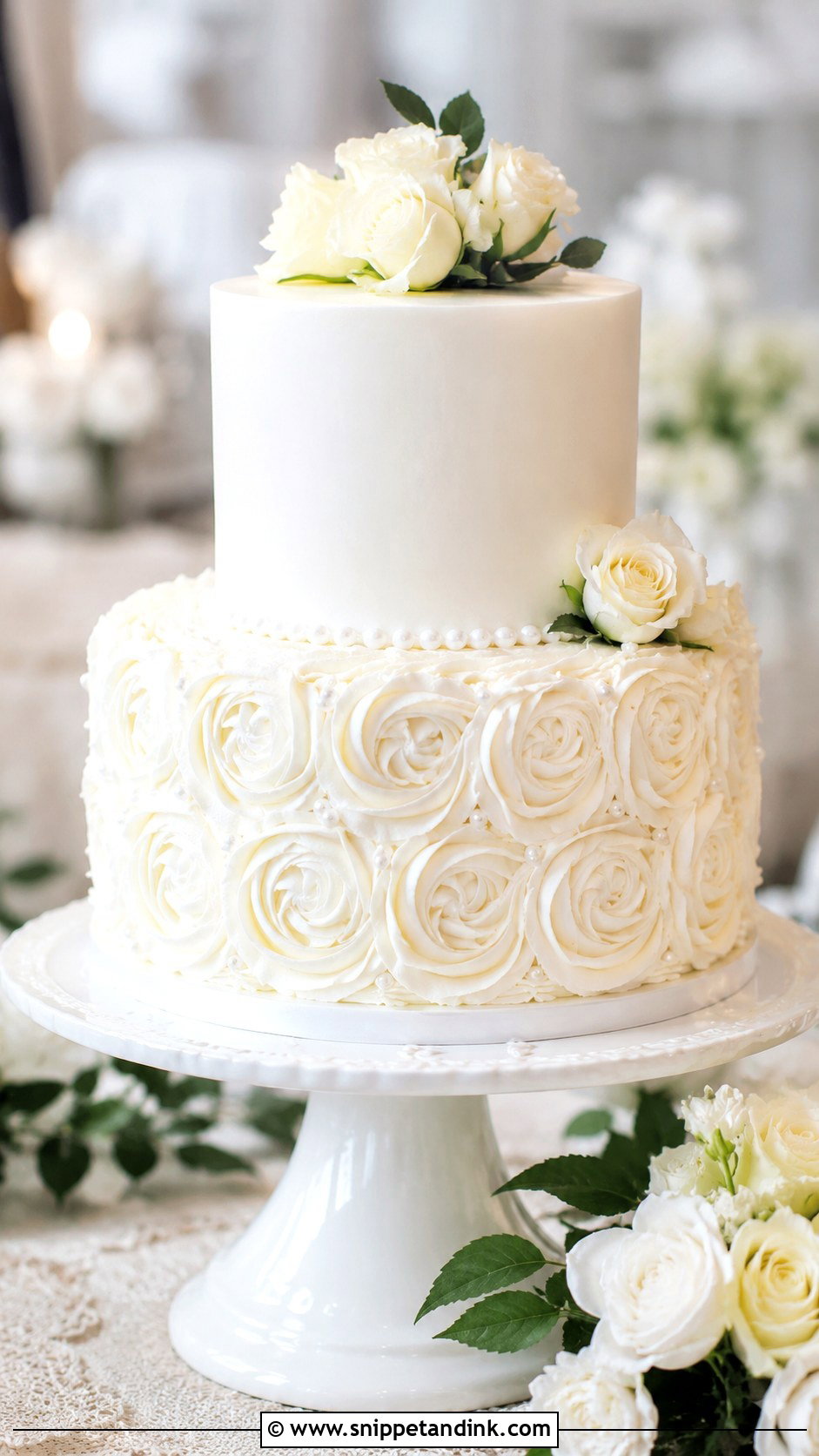
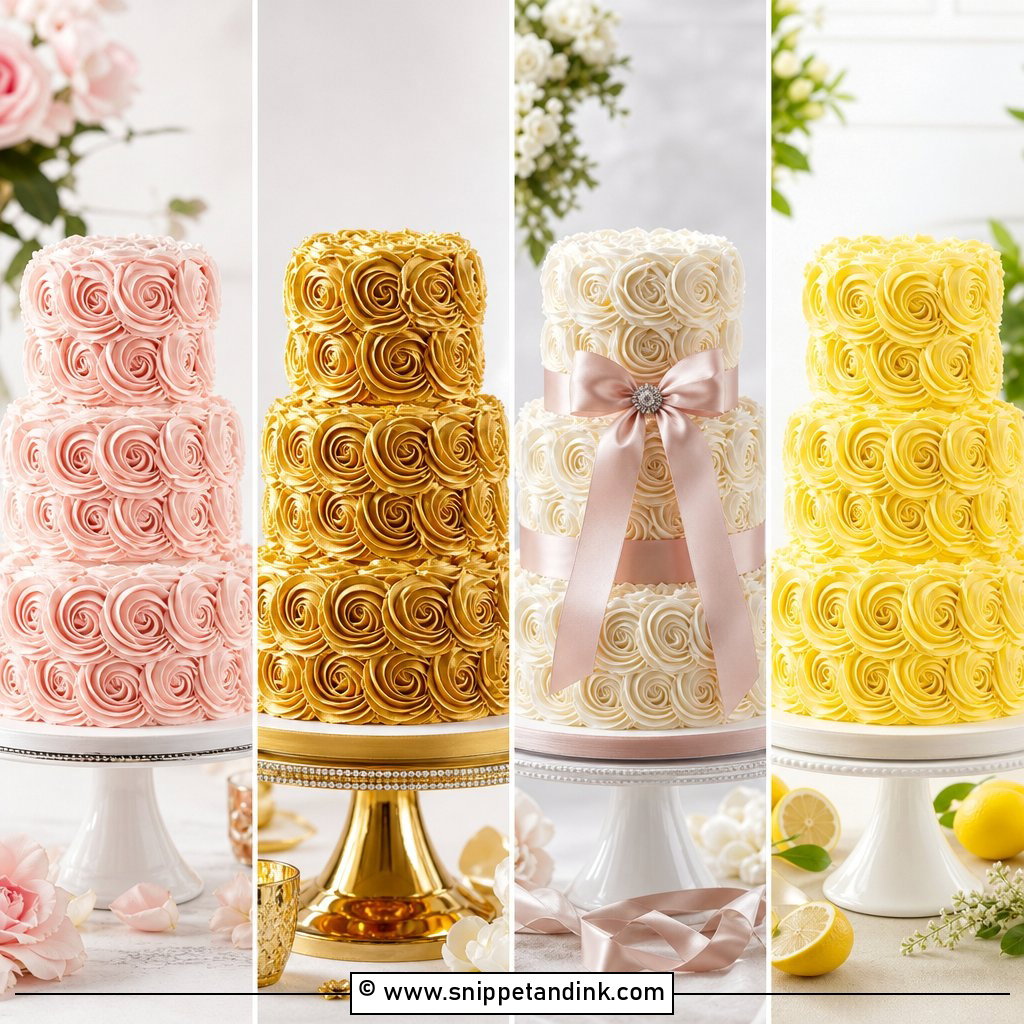
Rosettes can cover a whole tier, cascade down one side or ring the base like a wreath. Kept all white, they look like a wedding cake rather than a birthday one. I vary the sizes on purpose, because identical rosettes in neat rows look machine-made. They’re also forgiving: piped coverage hides a buttercream surface that isn’t perfectly sharp. Put a smooth tier above or below them so the cake has somewhere for the eye to rest.
7. White Piped Wedding Cake With Scallop Piping
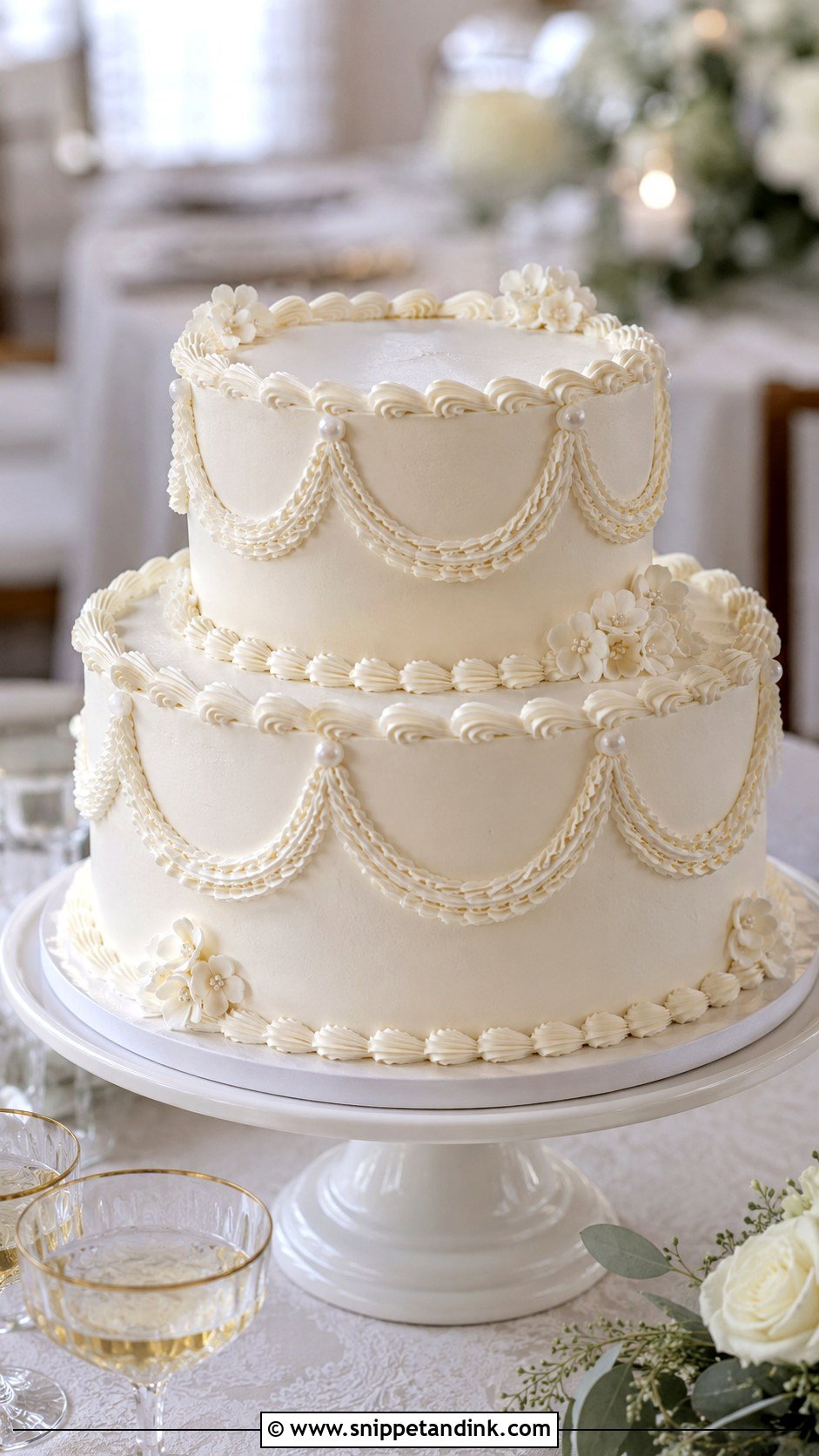
Scallops wrap the tiers in a steady rhythm of arcs, which makes them more structured than freehand swirls. Before I pipe, I mark the spacing lightly around the tier with a template, because uneven scallops are obvious from across the room. Small ones read refined; larger ones look more retro. A pearl dot where two arcs meet tidies the join. Bright white or ivory both work, so match the shade to your linens.
8. White Piped Wedding Cake With Floral Piping
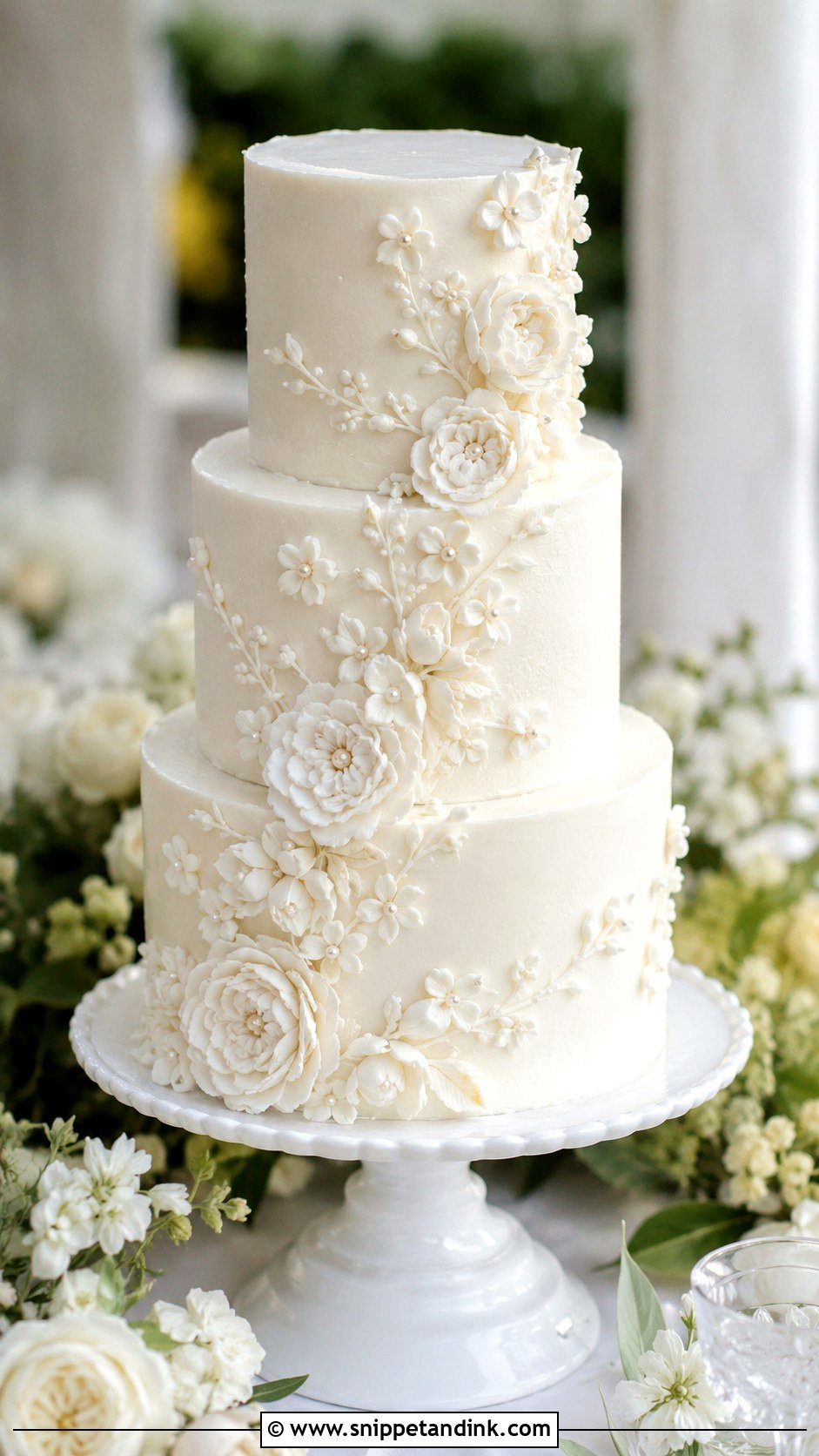
Floral piping turns the icing itself into the flowers, with buttercream blossoms, leaves, vines and buds in white on white. It’s a sensible answer when you want a floral cake but don’t want fresh stems, some of which aren’t safe against food, touching it. Flowers can stay small around each tier or climb up one side. I pipe them over a smooth base so they stand out. Spring and garden weddings suit it, but it sits just as well indoors with classic white décor.
9. White Piped Wedding Cake With Basketweave Piping
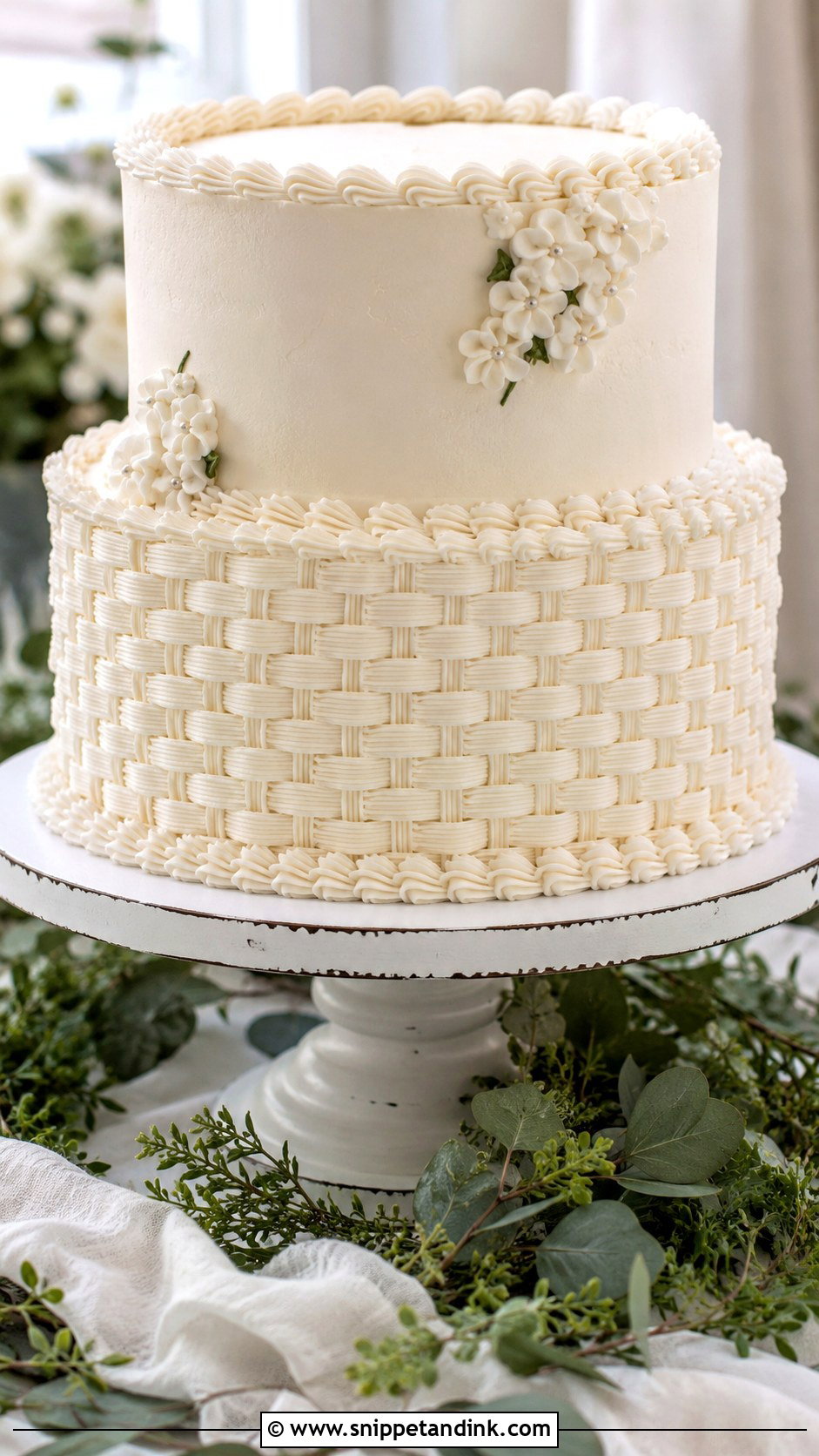
Woven texture on a white cake looks more elegant than people expect. Basketweave piping is built from alternating horizontal and vertical strokes with a ridged tip, so it creates real depth, and it takes time to keep the weave lined up all the way around. I usually limit it to one or two tiers and pair them with smooth ones. A piped rope border or a few buttercream flowers finishes the edges. It suits barns, gardens and relaxed receptions.
10. White Piped Wedding Cake With Ruffle Piping
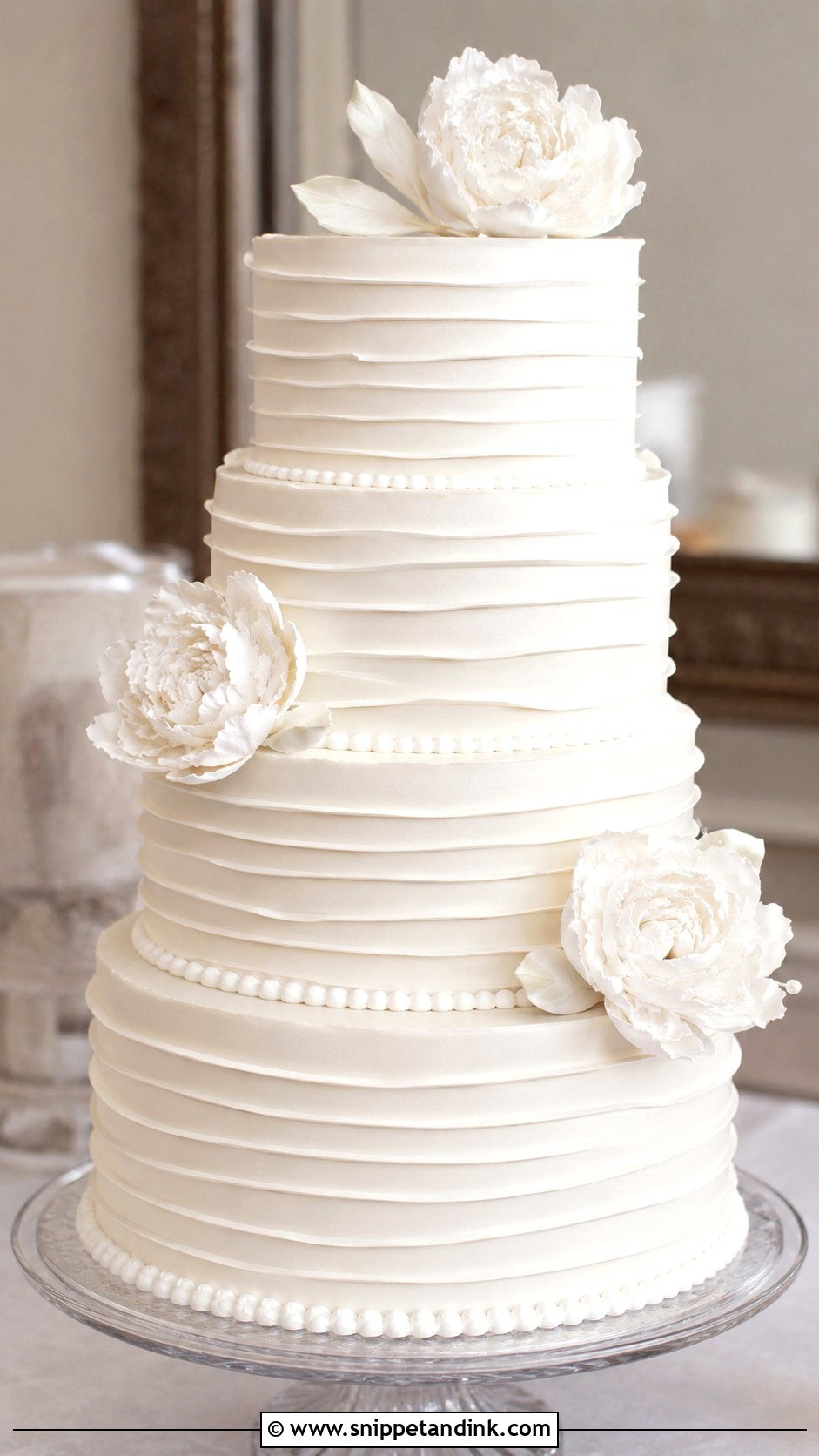
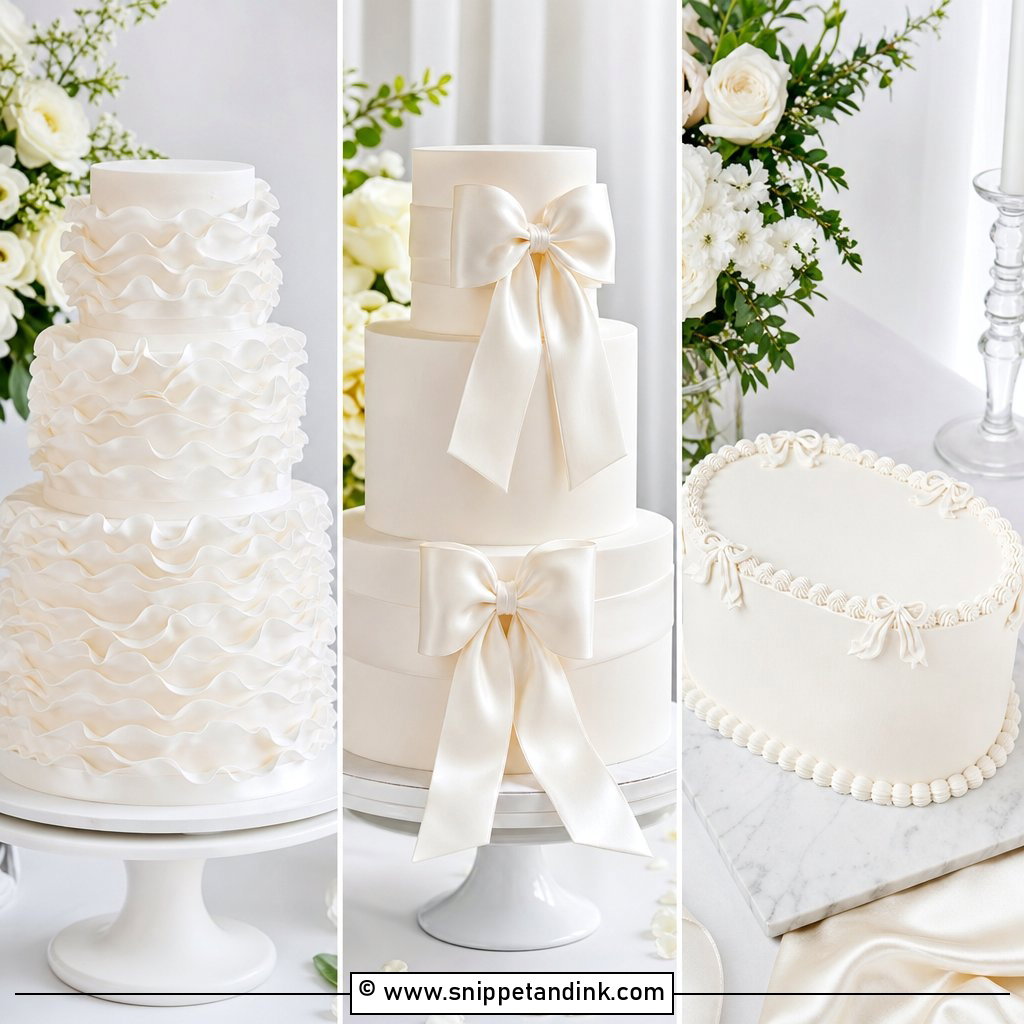
Ruffles look airy, but they’re heavy. Each row is a band of buttercream piped from a petal tip, and a fully ruffled tier carries a lot of extra icing. Horizontal rows, vertical waves or loose petal layers all work if they’re spaced with intent rather than crammed together. I’ll often ruffle one tier as the focal point and keep the rest plain. Smooth buttercream tiers above or below balance the texture and make the ruffled tier look softer by contrast.
11. White Piped Wedding Cake With Drop String Piping
String work is the most delicate piping on this list. Thin lines of royal icing are dropped between marked points so they hang in soft arcs around each tier, and they have to dry in the air without touching anything. That’s why I avoid it for long drives and humid outdoor tents; vibration can snap the strings and damp air softens them. On a smooth fondant cake in a ballroom or historic hall, though, nothing looks more traditional. Tiny dots or shell borders finish the edges.
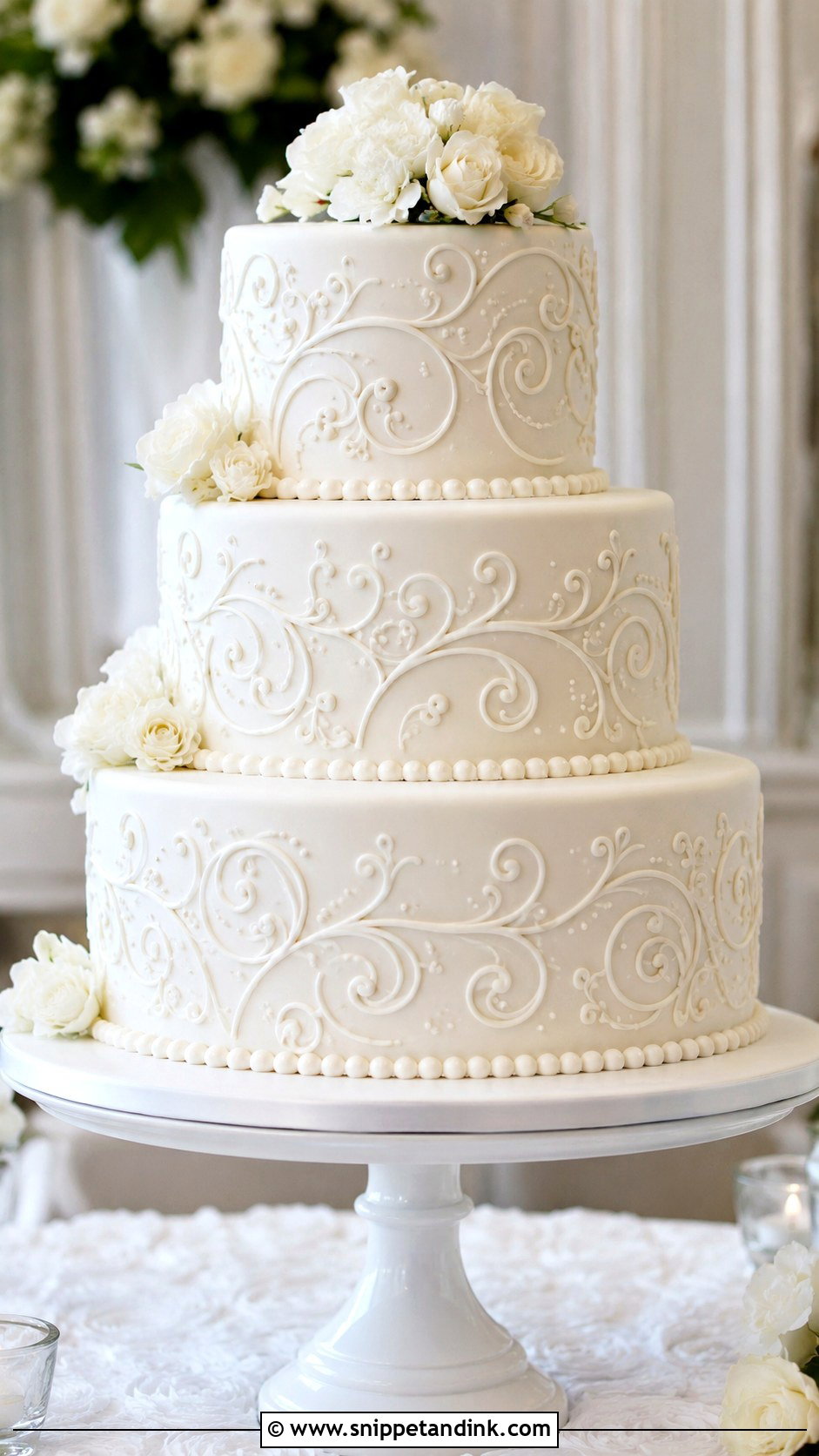
12. White Piped Wedding Cake With Scroll Piping
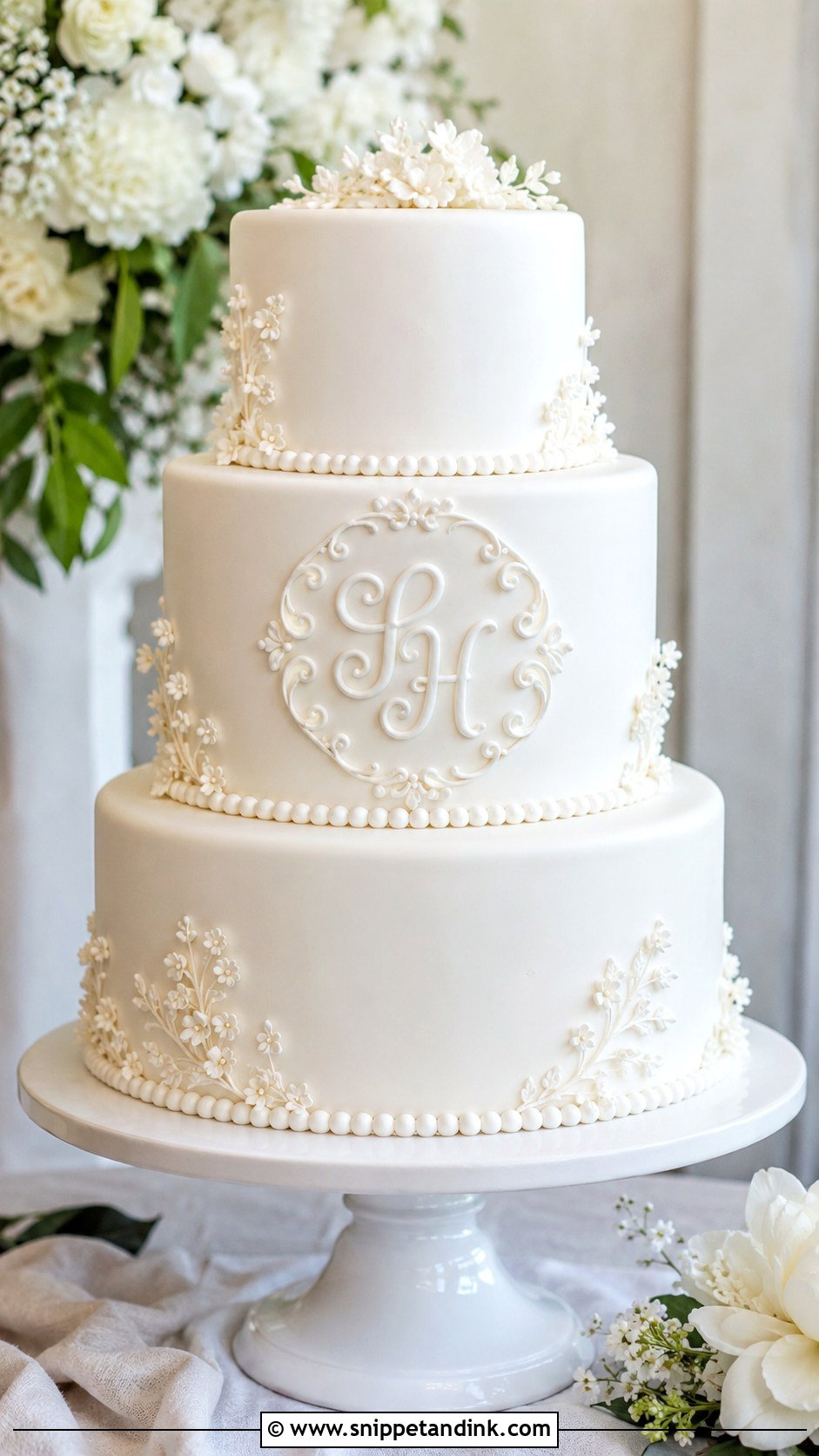
Scrolls are C and S curves piped with enough pressure to stand slightly proud of the surface, so they cast small shadows on the white. Set them in panels, around each tier or as a loose vine. Kept simple they look modern; layered with dots and borders they lean vintage. Fondant gives the crispest base, while buttercream softens the lines. It’s one of the easier styles to fit to almost any wedding.
13. White Piped Wedding Cake With Vintage Heart Shape
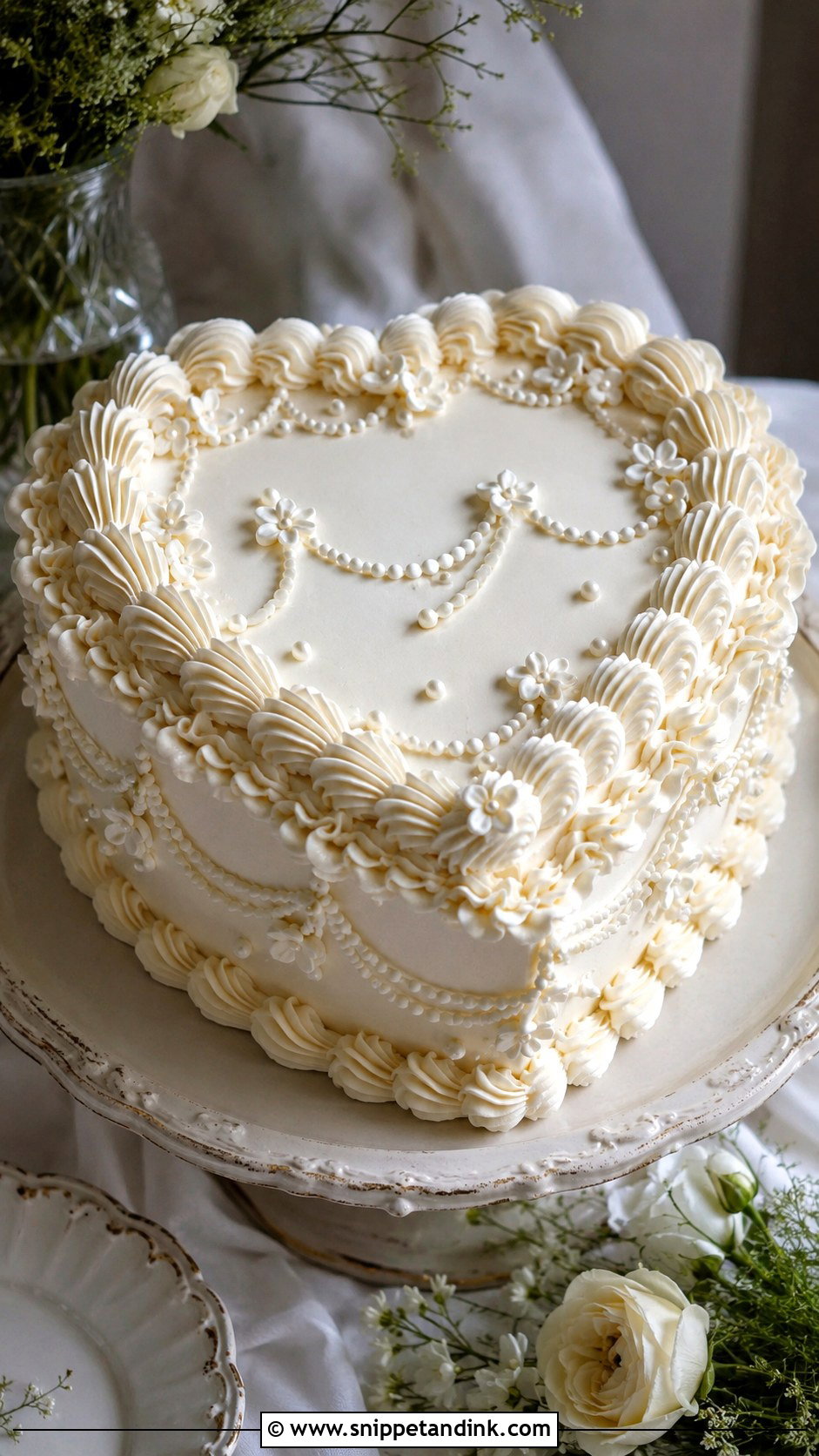
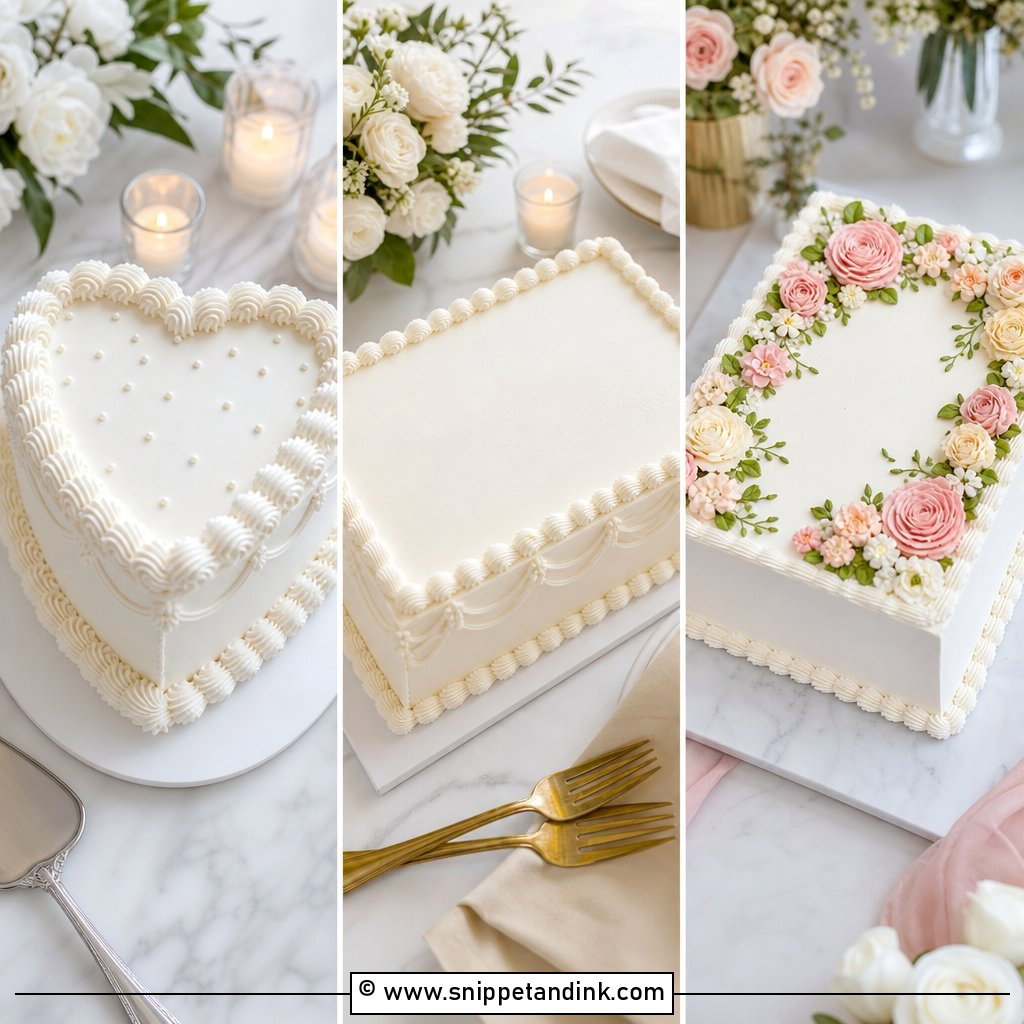
A heart-shaped cake already says romance, so the piping’s job is to frame the outline: shells or pearls at the base, small swags around the top edge. Heart tins only come in limited sizes and the point is awkward to stack, so I mostly make this as a single-tier cutting cake, with sheet cake in the kitchen to serve the rest. Ivory buttercream gives it an antique feel. A monogram on top is fine, but the piping alone usually carries it.
14. White Piped Wedding Cake With Tiered Columns
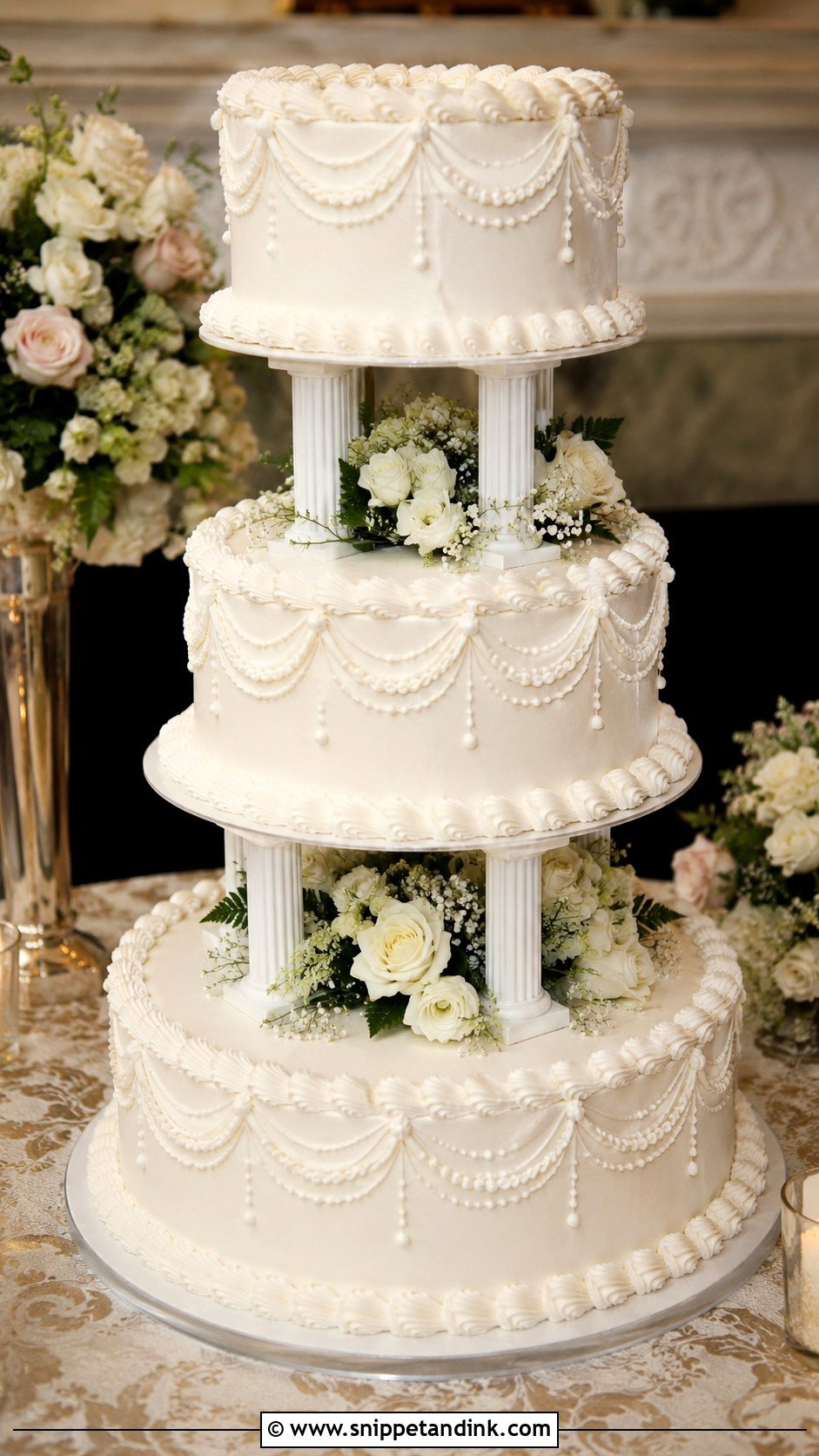
Separating tiers on columns gives height and a formal, old-school silhouette. Because each tier sits on its own plate with air around it, the piping on every edge is visible, so I use strong classic work: shells, drop strings, scrolls and pearls. Columns also mean each tier has to be dead level, or the gaps show the tilt. Firm buttercream or fondant keeps the shapes crisp. Leave the spaces open or tuck small white flowers between the tiers.
15. White Piped Wedding Cake With Monogram Piping
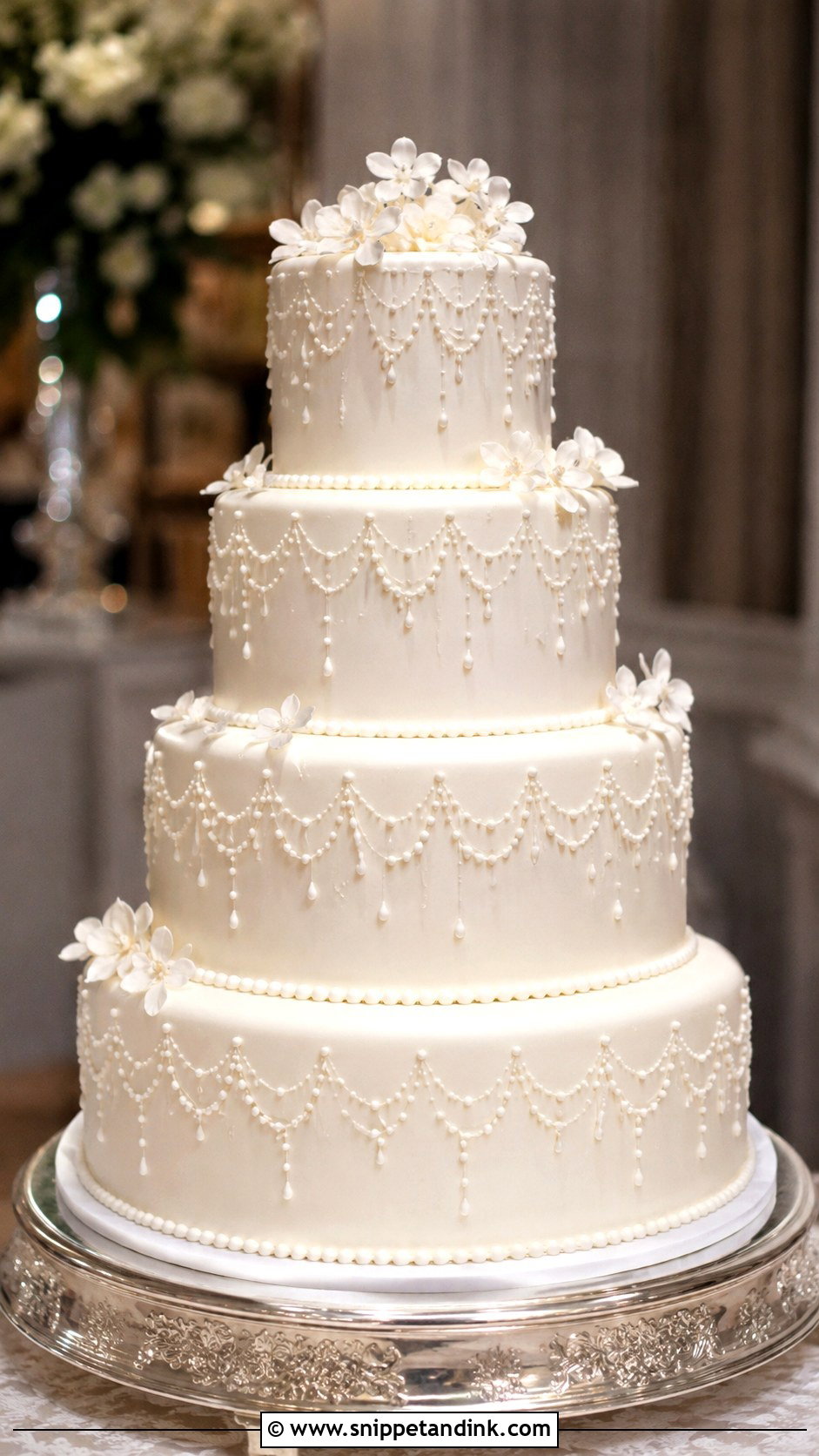
A monogram is the quickest way to make a white wedding cake feel like yours. I pipe the couple’s initials on the middle tier and frame them with scrolls or a fine oval border. In white on white, the letters only show if they’re raised, so I build them up in two or three passes. I usually ask for the exact lettering style a few weeks ahead and practise it on a board first. Simple borders on the other tiers keep the monogram the focus.
16. White Piped Wedding Cake With Piped Bows
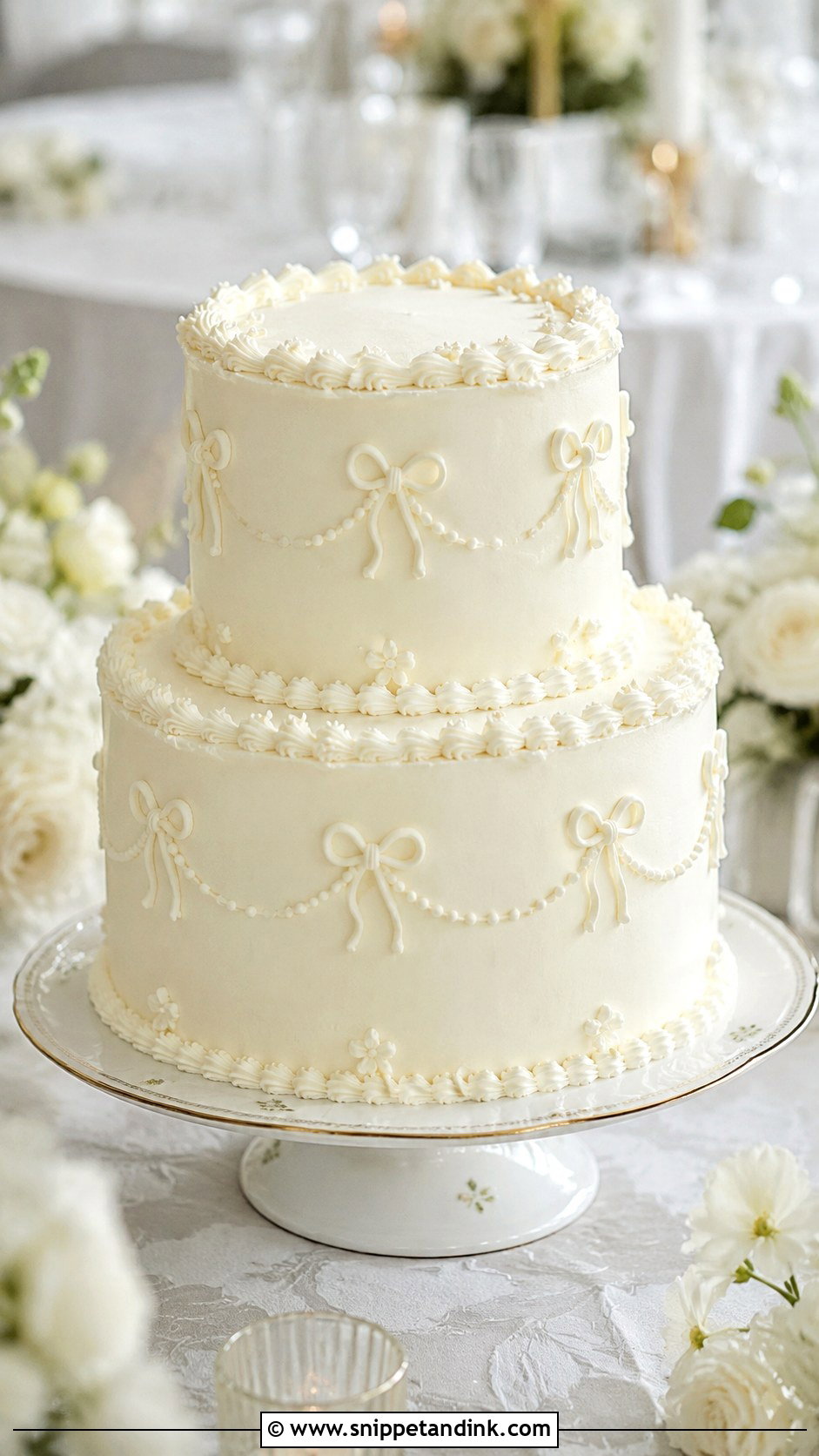
Bows can be piped in buttercream or royal icing, either as a small repeat around each tier or as one large bow on the front. Spacing decides whether they look tailored or childish, so I measure them out before piping. One large bow with minimal borders looks very chic. They sit happily alongside pearls and scallops on smooth white icing. Classic receptions and bridal showers suit them well.
17. White Piped Wedding Cake With Piped Flowers And Pearls
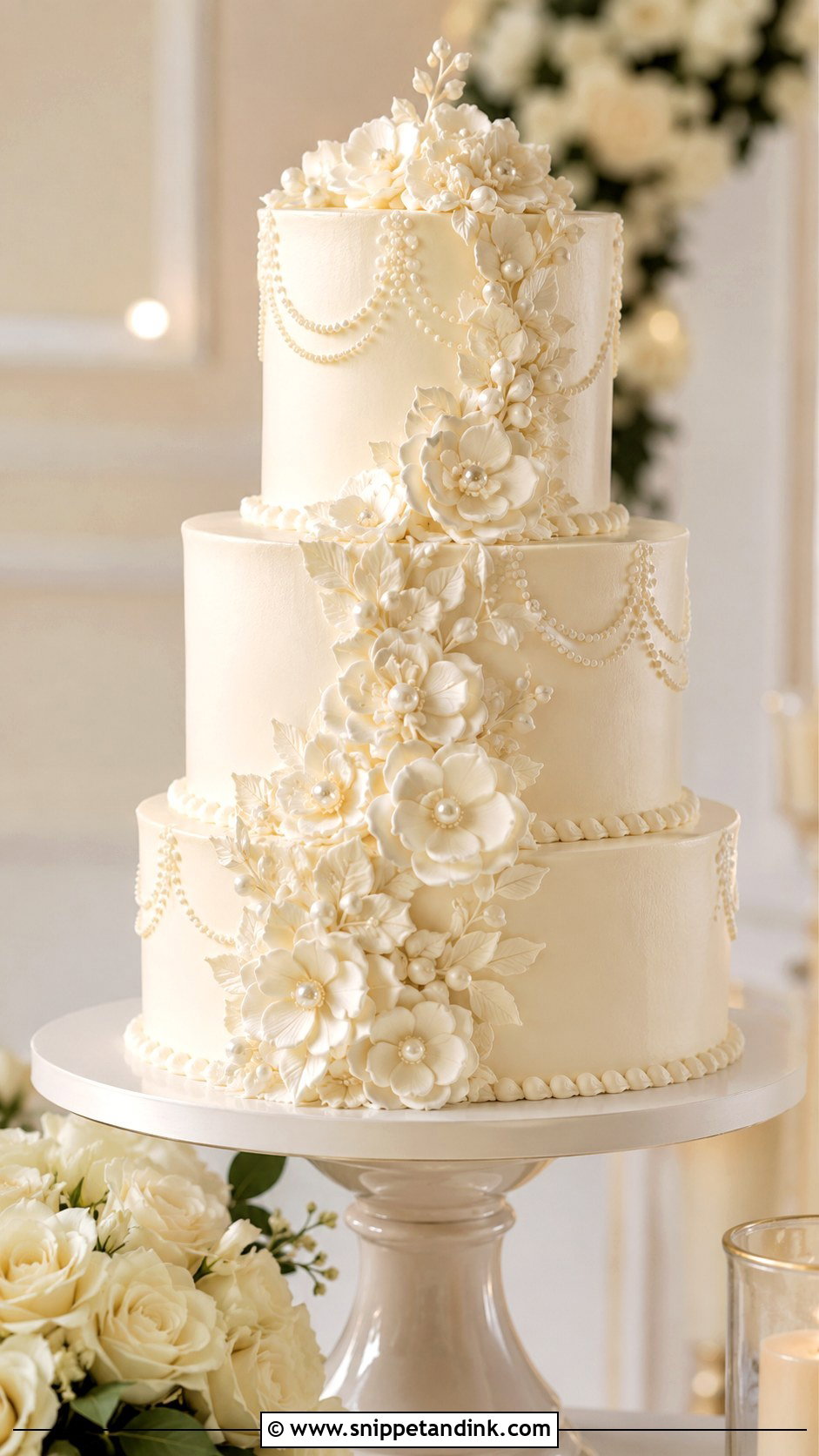
Mixing piped flowers with pearl borders gives the floral work some structure, so it doesn’t drift. The flowers can trail diagonally, cluster at the base or circle each tier. Buttercream blossoms look soft; royal icing flowers are made ahead, dried hard and applied, which gives sharper petals and saves time on the day. Ask for blossoms, leaves and buds in mixed sizes so the arrangement feels like it grew there. Kept fully white, even a busy design stays calm.
18. White Piped Wedding Cake With Textured Buttercream
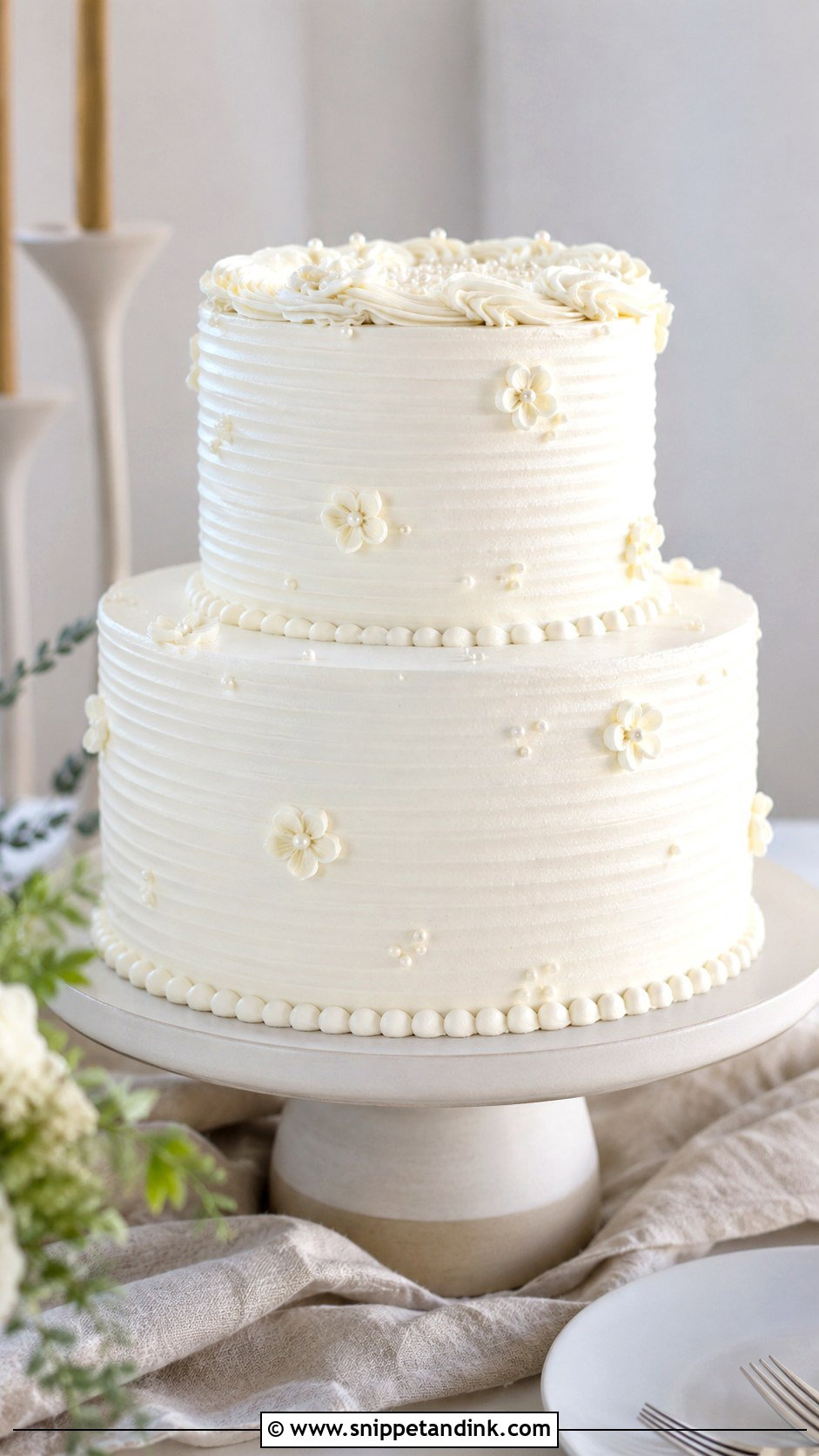
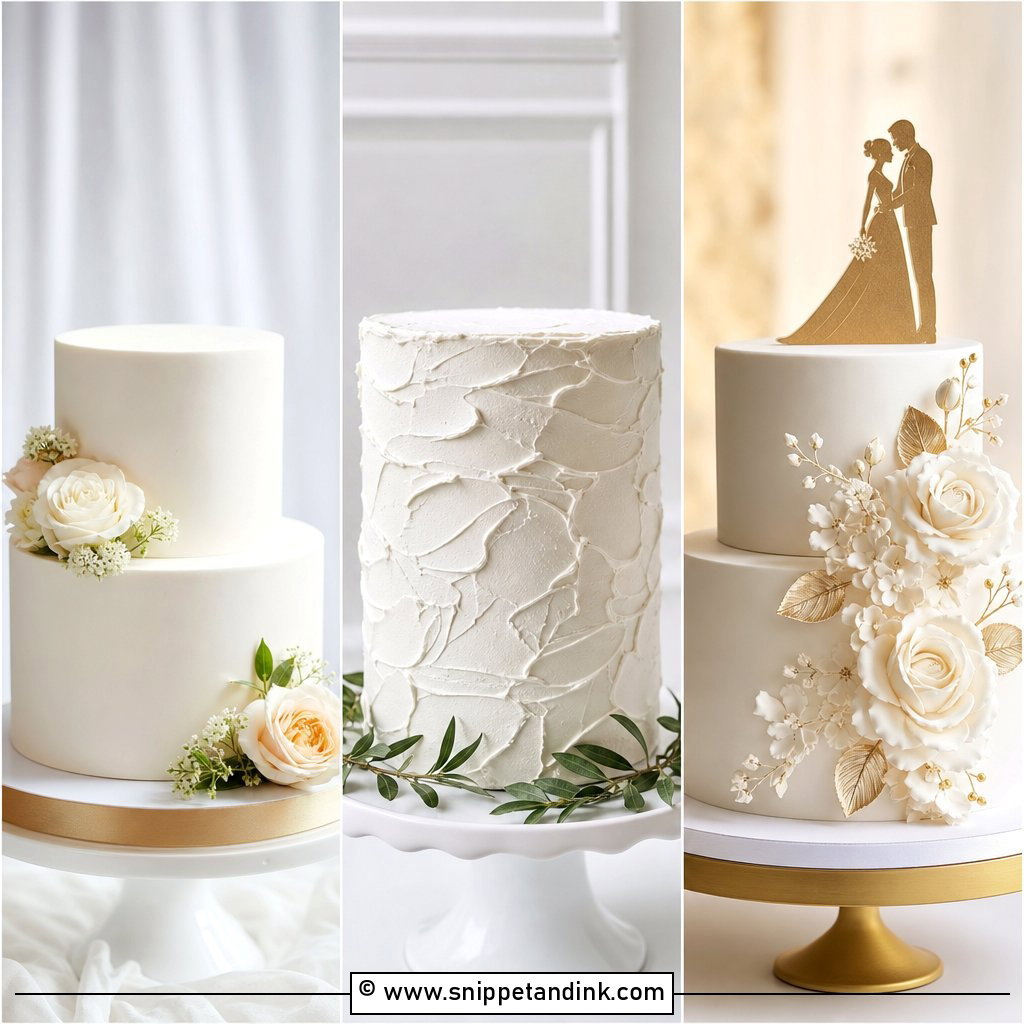
A textured finish is softer and quicker to achieve than a sharp, mirror-smooth one. I use a palette knife or comb to leave gentle ridges or horizontal lines, then add pearls or a few piped flowers to make it look like a wedding cake rather than a casual bake. The texture has to be controlled; random marks just look unfinished. Every ridge throws a little shadow, so it reads well in photos. A ceramic stand and simple flowers suit it.
19. White Piped Wedding Cake With Square Tiers
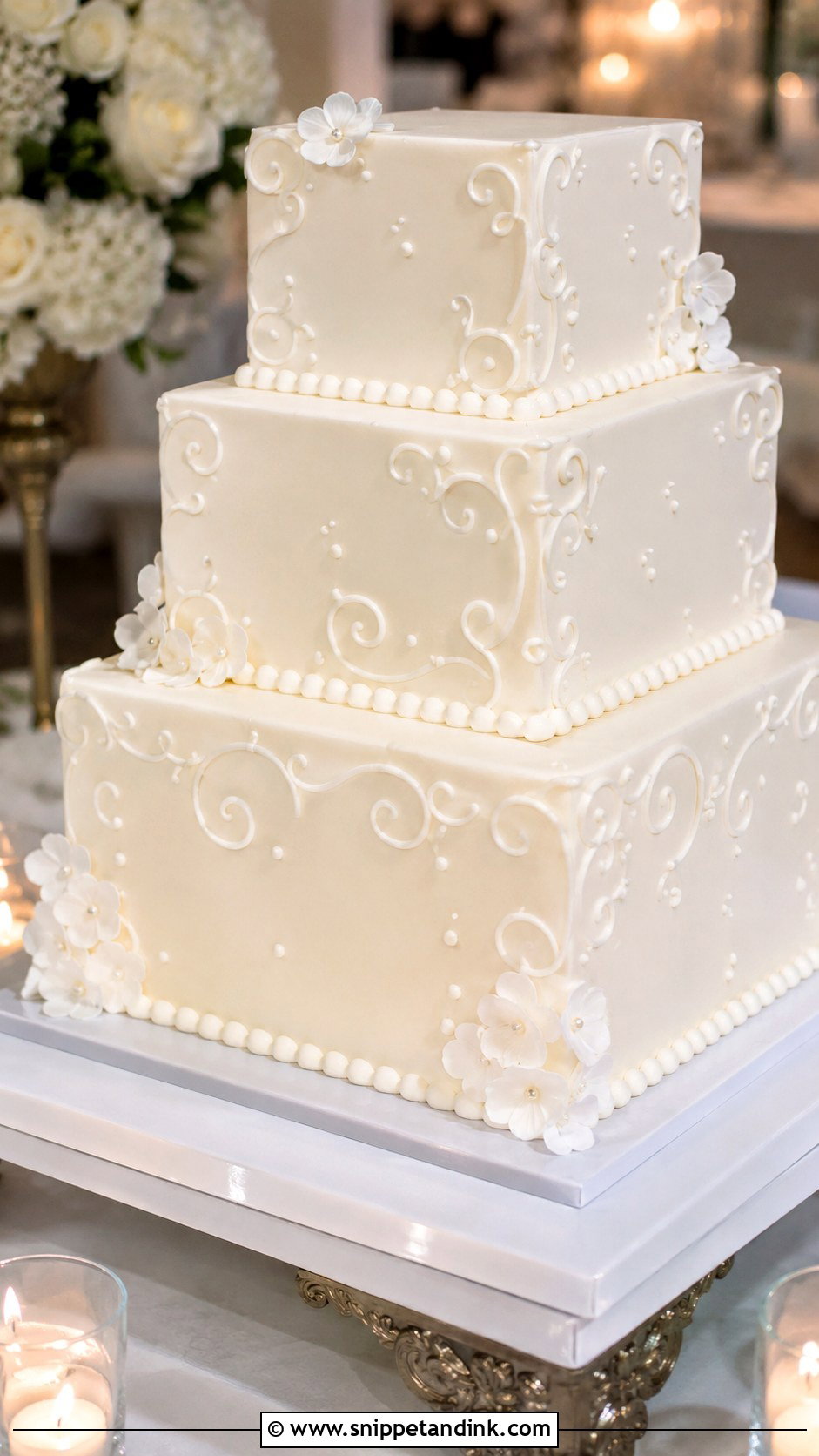
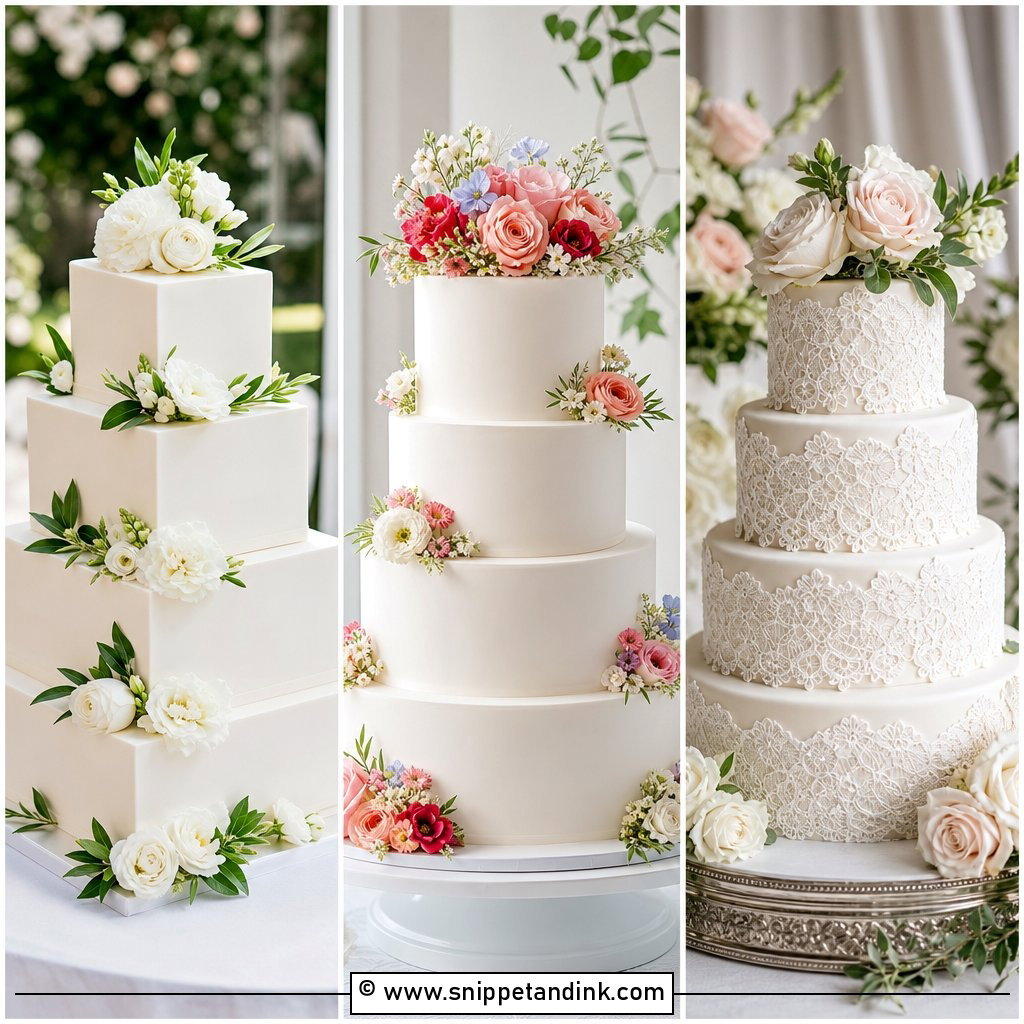
Square tiers give the piping a crisp frame, and the corners are where I put the detail: scroll corners, pearl edges or lace panels on each face. Clean lines and tailored décor are a natural match for this shape. Fondant shows the sharp corners best; buttercream can manage it but needs very careful finishing and a cool room. Every side has to be piped identically, because guests walk all the way around a square cake.



20. White Piped Wedding Cake With Tall Tiers
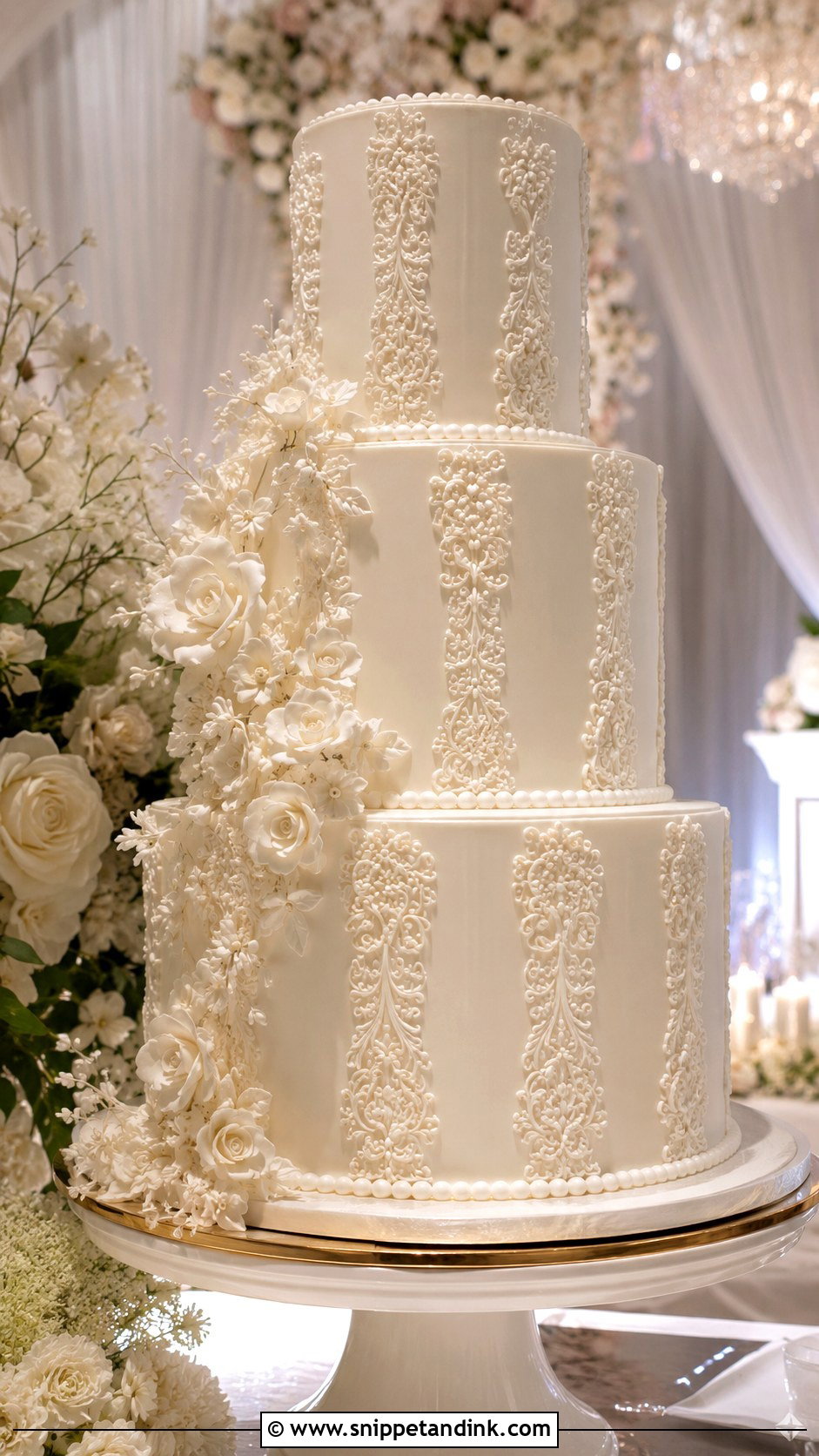
Extra-tall tiers, often double-height, give a modern silhouette and a lot of vertical room for lace panels, scrollwork or long floral trails. They need internal support, usually a board and dowels halfway up, so tell me early if you want this shape. Because the outline is already bold, I plan the piping with plenty of space: fine borders everywhere and one strong feature, such as a lace panel or a trail of piped flowers. In all white the cake looks almost sculpted.
Will Heavy Piping Survive the Drive, the Heat and the Knife?
Piping is the most fragile part of a wedding cake. Most of the problems I see happen between the bakery door and the first slice, not during decorating.
Getting it there
Tall or heavily piped cakes usually travel as separate tiers and get stacked at the venue. I finish the bottom border of each tier on site, because that border hides the join and would crack in the van anyway. If your cake has string work or delicate lace, give your baker a realistic idea of the route and ask whether they’d rather assemble it at the reception. A cake that leaves a cold fridge for a warm, humid room can also gather condensation on fondant, which is why I let it adjust before unboxing it.
Where it sits
Keep a buttercream cake out of direct sun and away from windows, heaters and the dance floor lights. Ask your venue where the cake table will be and when the room gets warm. If it’s an outdoor summer reception, royal icing details or a firmer buttercream are a safer choice than meringue-based swirls.
Cutting through all that detail
Lambeth piping and royal icing borders don’t slice neatly. Whoever cuts the cake should use a long, hot, clean knife and take the heaviest decoration off before portioning, otherwise a few guests get a slab of icing and others get none. Give the caterer a heads-up if your design has any hard piping.
Finally, allow time. Detailed piping is hours of handwork per tier, so many cake designers limit how many intricate cakes they accept for a weekend. Bring your reference photos to the first conversation rather than the last, and ask for a sketch before you sign.
One Color, Twenty Ways to Cast a Shadow
Every cake above is the same color, and still none of them look alike, because the variety comes from shape and shadow. Pearls stay clean, Lambeth goes grand, lace stays soft and tall tiers look modern. Bring the two or three you keep coming back to into your tasting, along with your venue details, guest count and the time of year. From there we can work out which piping your icing, your room temperature and your budget will actually support.
You'll Like These Ideas:






Leave a Reply