
More brides ask me about pink now than ever, and most are nervous about one thing: will it still look like a wedding dress? It does, as long as the silhouette stays bridal. Pale blush and champagne pink are the quiet alternatives to ivory; dusty rose, florals and bright pinks are the bolder end. Below are twenty pink gowns, from flowing destination dresses to structured ball gowns, each with the fitting and accessory notes I’d give in a fitting room. Let the accessories support the gown; a pink dress already says a lot.
Can an Ivory Gown Be Turned Pink?
Brides often fall for a gown that only comes in ivory and ask whether it can be dyed. I’d advise against dyeing a finished bridal gown. Most are polyester, which doesn’t take ordinary fabric dye, and a gown with lace, tulle, lining and thread from different fibres will take colour unevenly even with specialist dye. The seams and embroidery thread can end up a different shade from the fabric.
There are safer ways to get pink:
- Ask whether the designer offers the same style with a blush lining. Many do, and the lining alone changes the colour under sheer lace or tulle.
- Have a seamstress add a blush underlayer or replace the skirt lining.
- Add a pink tulle overskirt or cape that can be removed after the ceremony.
- Keep the gown ivory and bring pink in through the veil edge, sash or shoes.
A new lining or underlayer is real alteration work, so book it early and treat it as an extra fitting. I’d ask the seamstress to pin a sample of the pink fabric under the gown first and look at it in daylight. Blush under ivory tulle can read peach on one bride and lilac on another, and it is far easier to swap the sample than to unpick a finished lining.
1. Blush Pink Ball Gown Wedding Dress
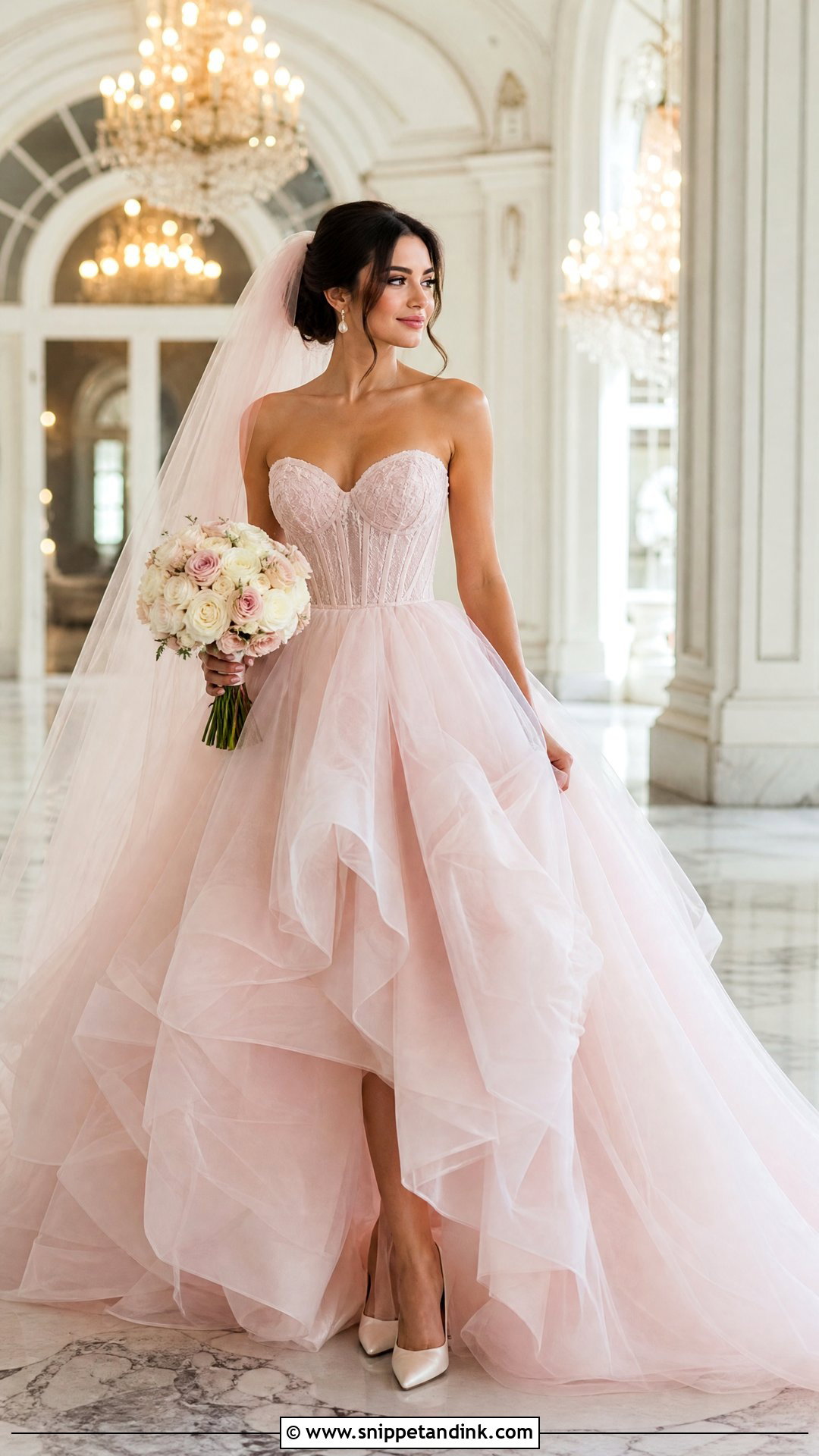
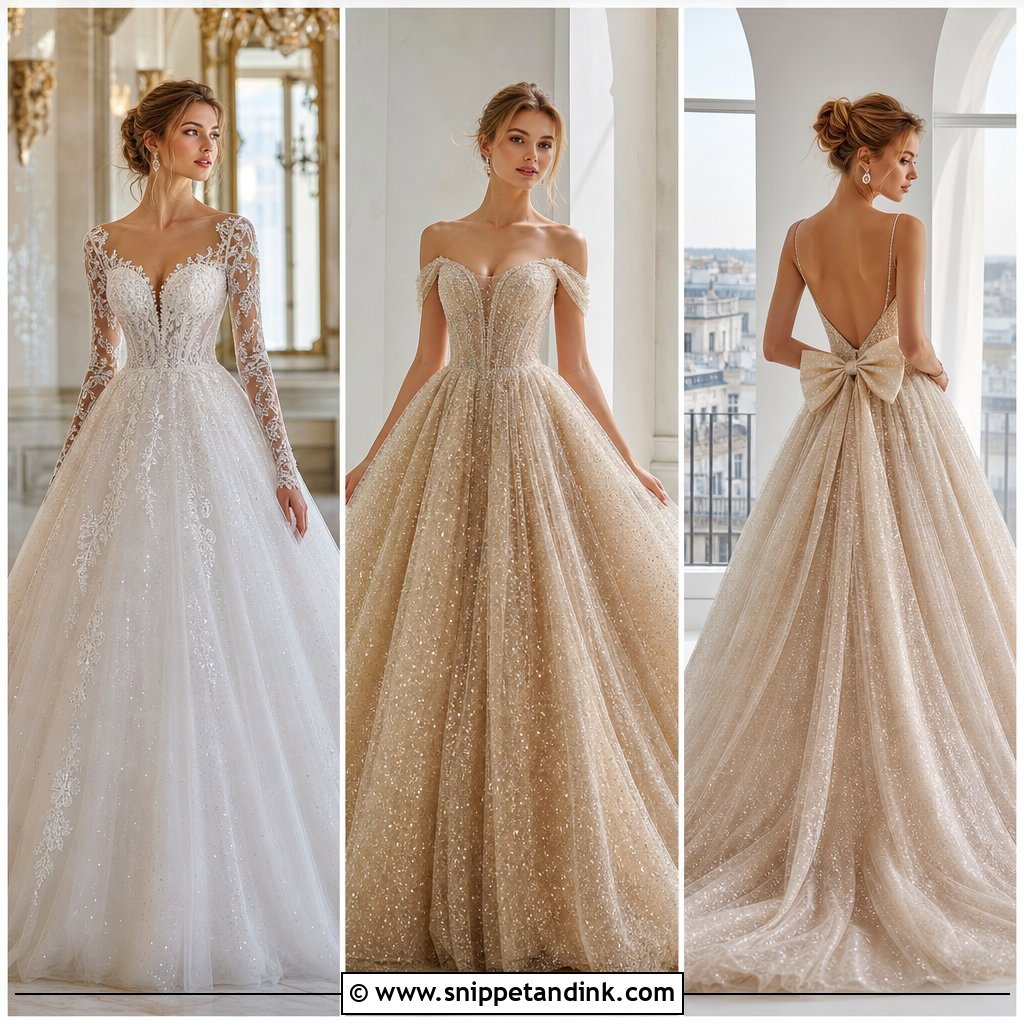
Corset bodice, full tulle skirt, blush colour: the most romantic version of a pink gown. A sweetheart or softly scooped neckline keeps it soft rather than stiff. I’d pair it with a blush fingertip veil, pearl drops and ivory satin heels. A bouquet of cream roses and pale ranunculus sits against the skirt without disappearing into it. Ball gowns need floor space, so ballrooms and estates suit them.
2. Dusty Rose A-Line Wedding Gown
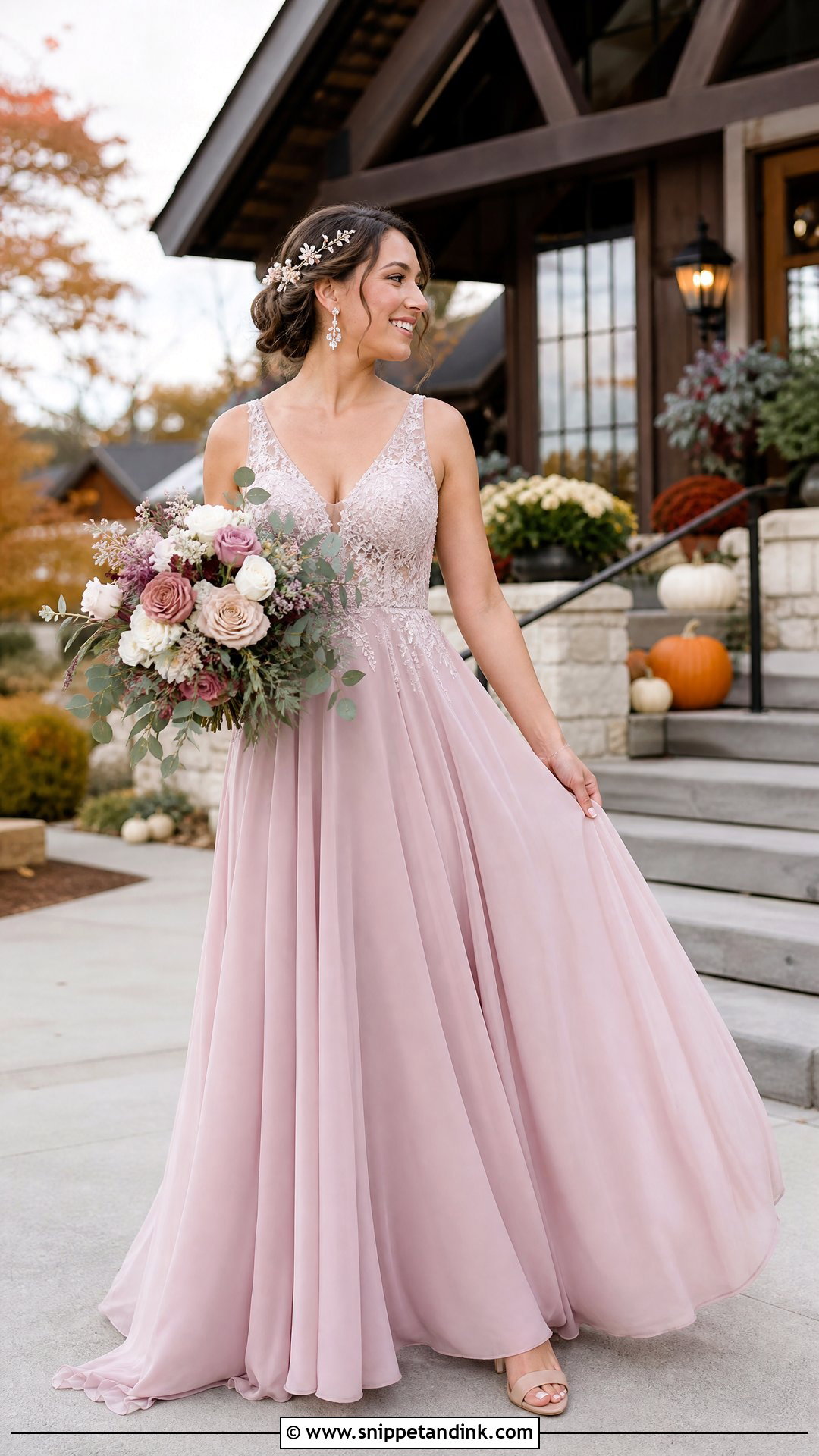
Dusty rose has a grey-brown undertone that makes it look sophisticated rather than sweet. On an A-line, the fitted bodice flows away from the waist and suits most figures. I’d choose chiffon, soft tulle or satin over heavy beading. A rose-gold comb, small crystals and neutral block heels are plenty. Fall weddings and rustic venues with earthy colours show this shade at its best, and mauve flowers with eucalyptus echo it well.
3. Floral Pink Wedding Gown
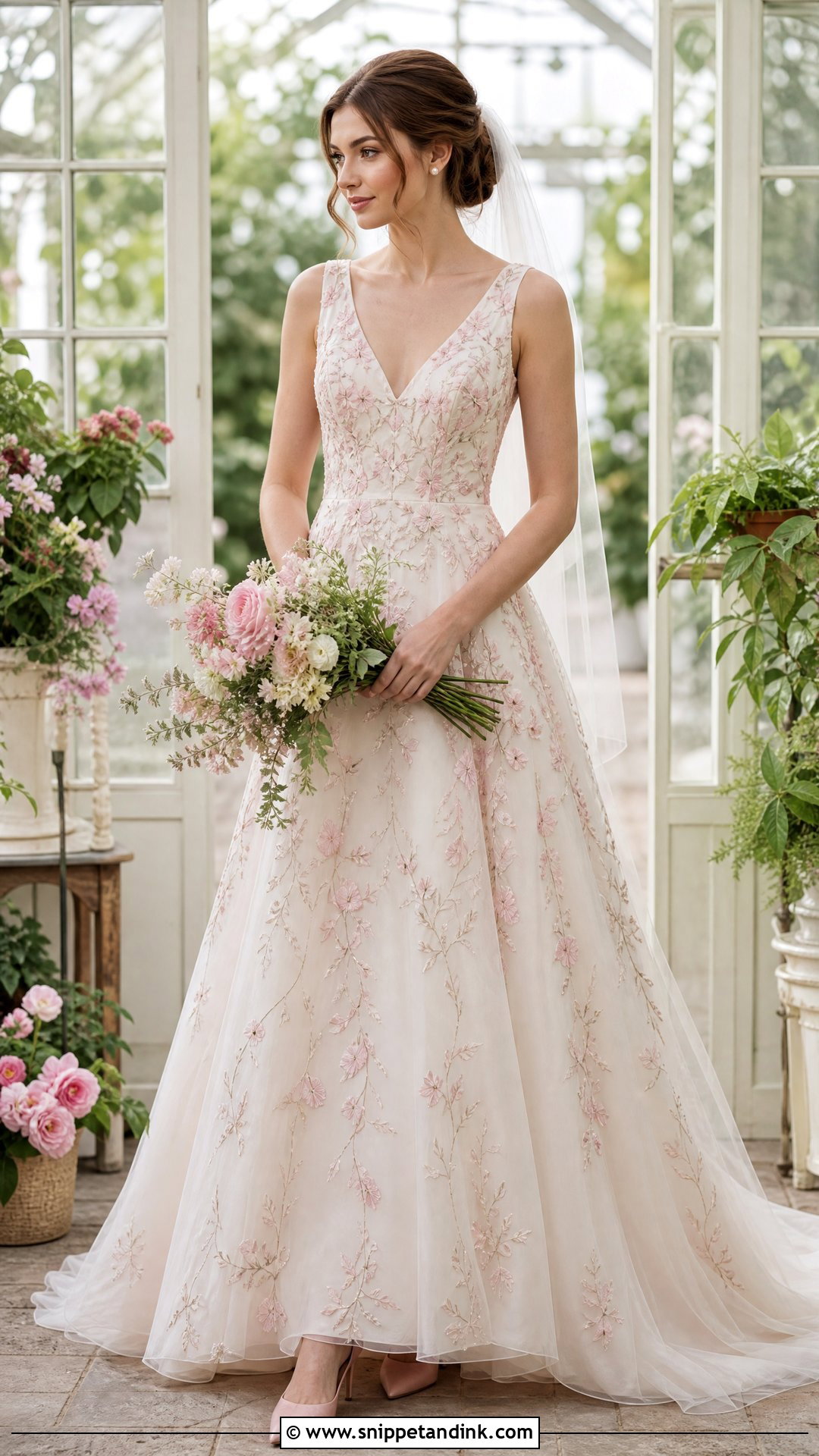
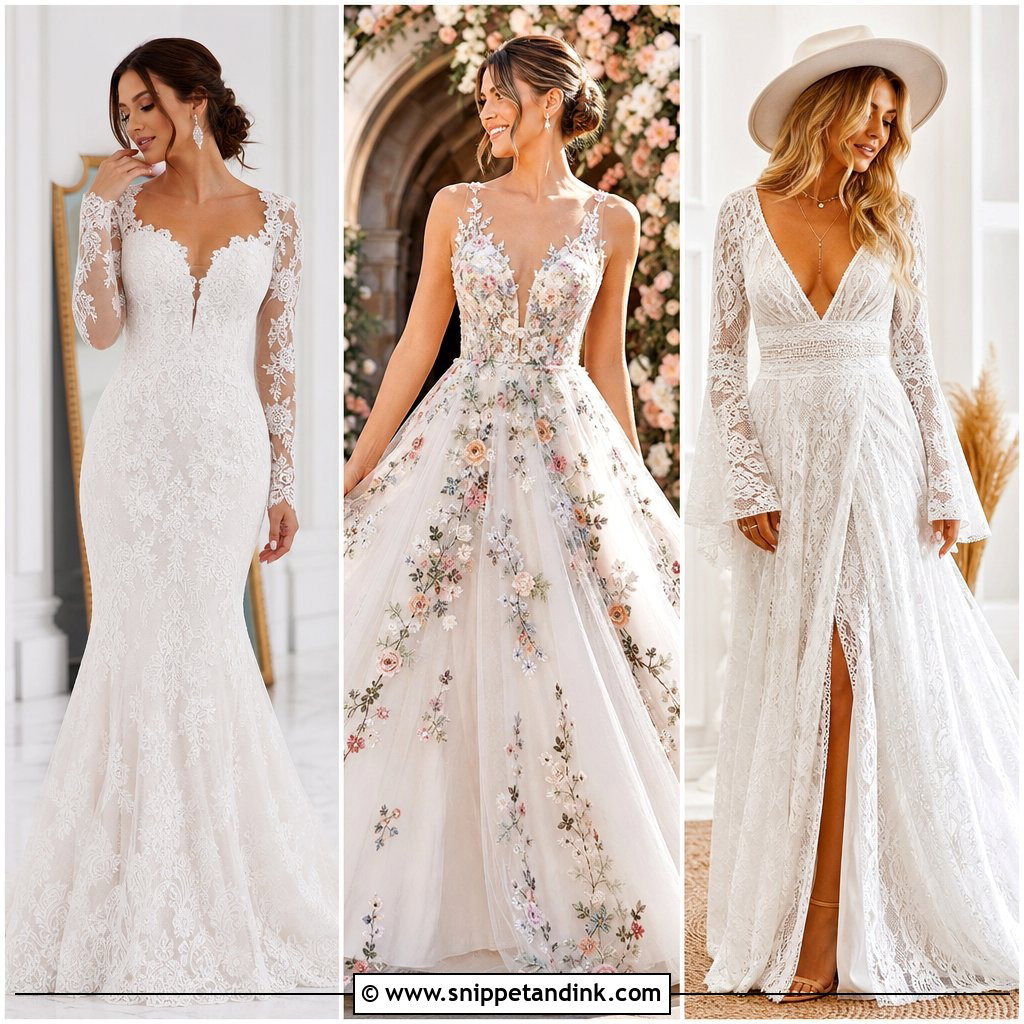
Printed or embroidered flowers bring pattern into a gown. I look for blossoms scattered over ivory, blush or sheer tulle, on an A-line or a softly structured ball gown. With that much going on, the veil must be plain and the jewellery small: pearl studs and pale pink pumps. Hand-painted florals can’t be cleaned like ordinary fabric, so ask how the paint was set before you buy. Gardens, greenhouses and spring weddings are its natural home.
4. Pink Lace Wedding Gown With Sleeves
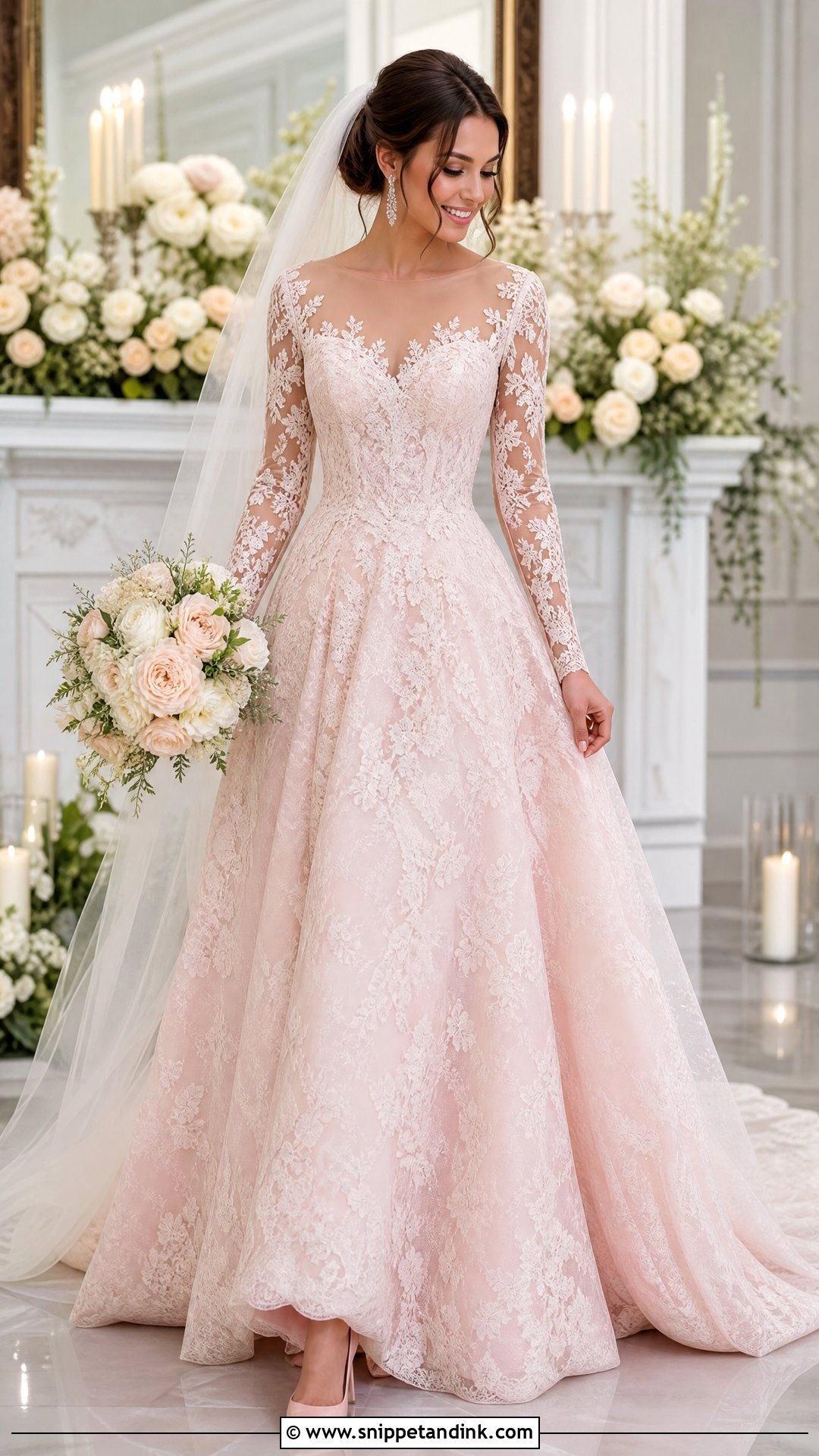
Long lace sleeves with a nude-blush lining underneath give coverage that still feels light. The lining is what makes the pink show and lets the lace pattern stand out. A defined waist and a flowing A-line skirt keep it comfortable. I fit lace sleeves with a little ease at the elbow so the bride can lift her bouquet without the seams straining. A cathedral veil works when the lace isn’t too dense; peach and white flowers add contrast.
5. Pink Mermaid Wedding Gown
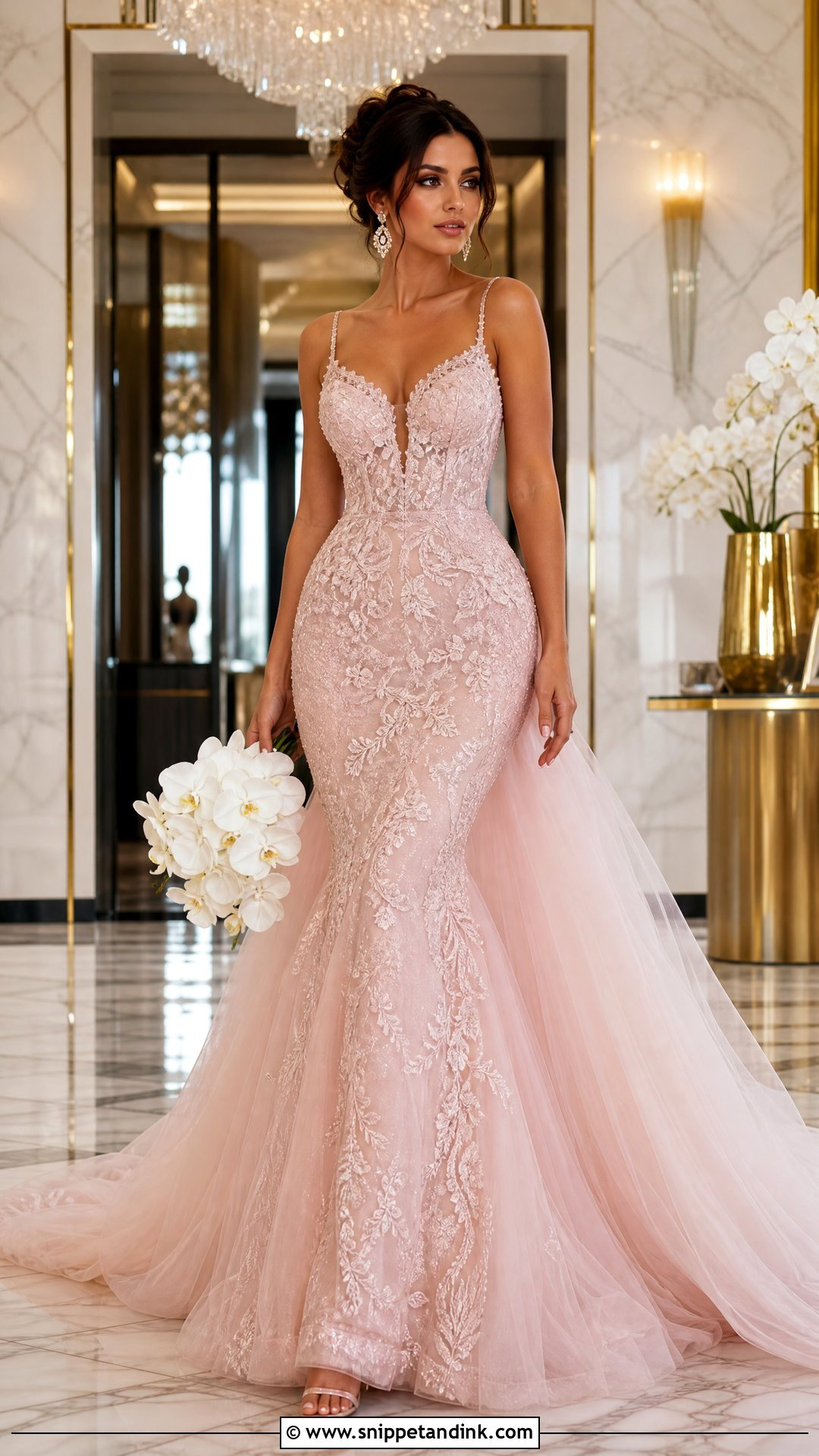
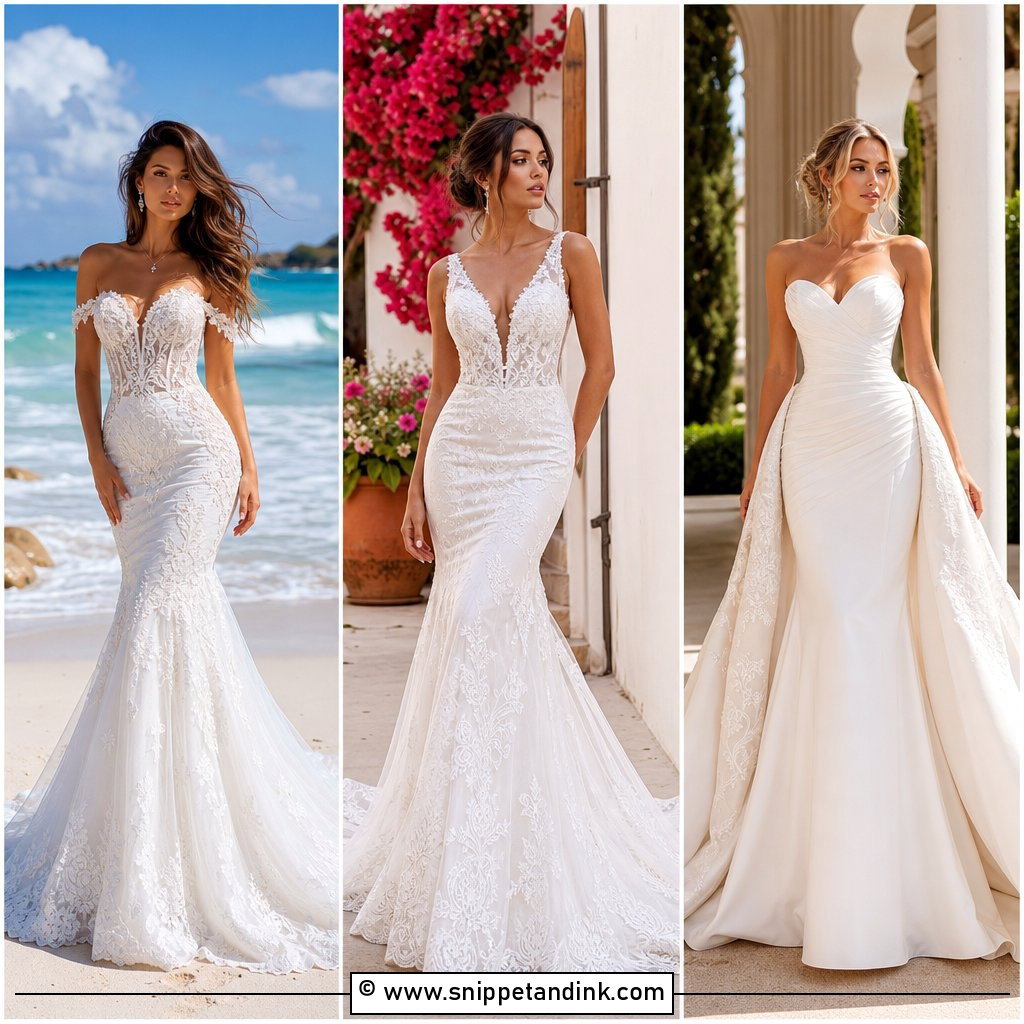
Mermaid gowns are fitted to the knee and then flare, which suits brides who like a sculpted line. Structured satin, mikado or layered lace hold the shape. Soft blush is understated; rose pink makes the fitted cut more visible. A detachable tulle train adds ceremony drama and comes off for dancing. Sitting is the hard part in a mermaid, so I’d always test the chair at the reception venue height during a fitting.
6. Pink Off-The-Shoulder Wedding Gown
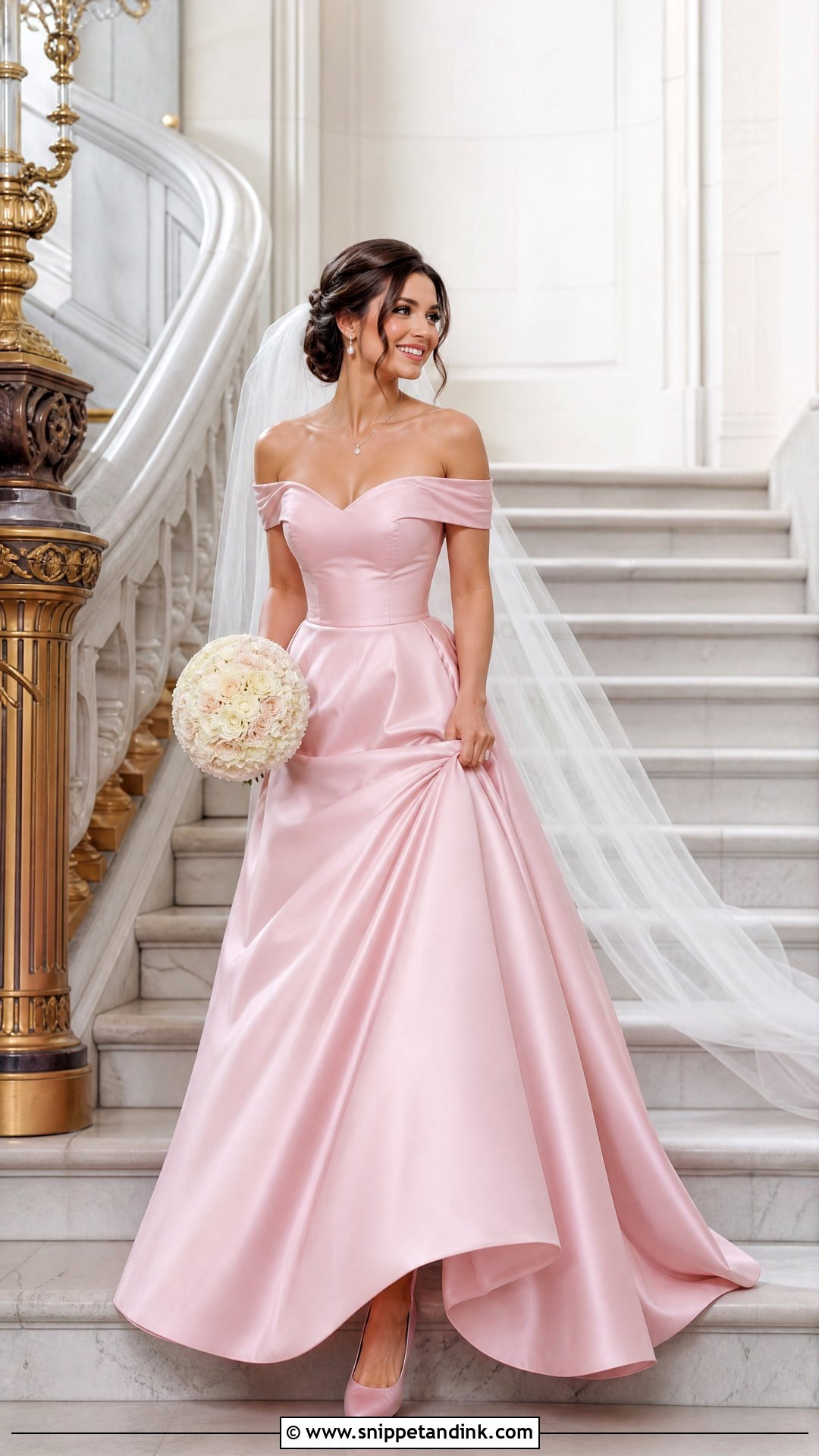
Off-the-shoulder necklines show the collarbone, and they rely completely on the bodice underneath. I want internal boning and a grip band at the top edge, or the sleeves creep up as you move your arms. A full satin skirt looks classic; tulle feels softer. A fine pendant, a low bun and blush pumps complete it. The line looks good from behind too, which matters on a staircase.
7. Pink Princess Wedding Gown
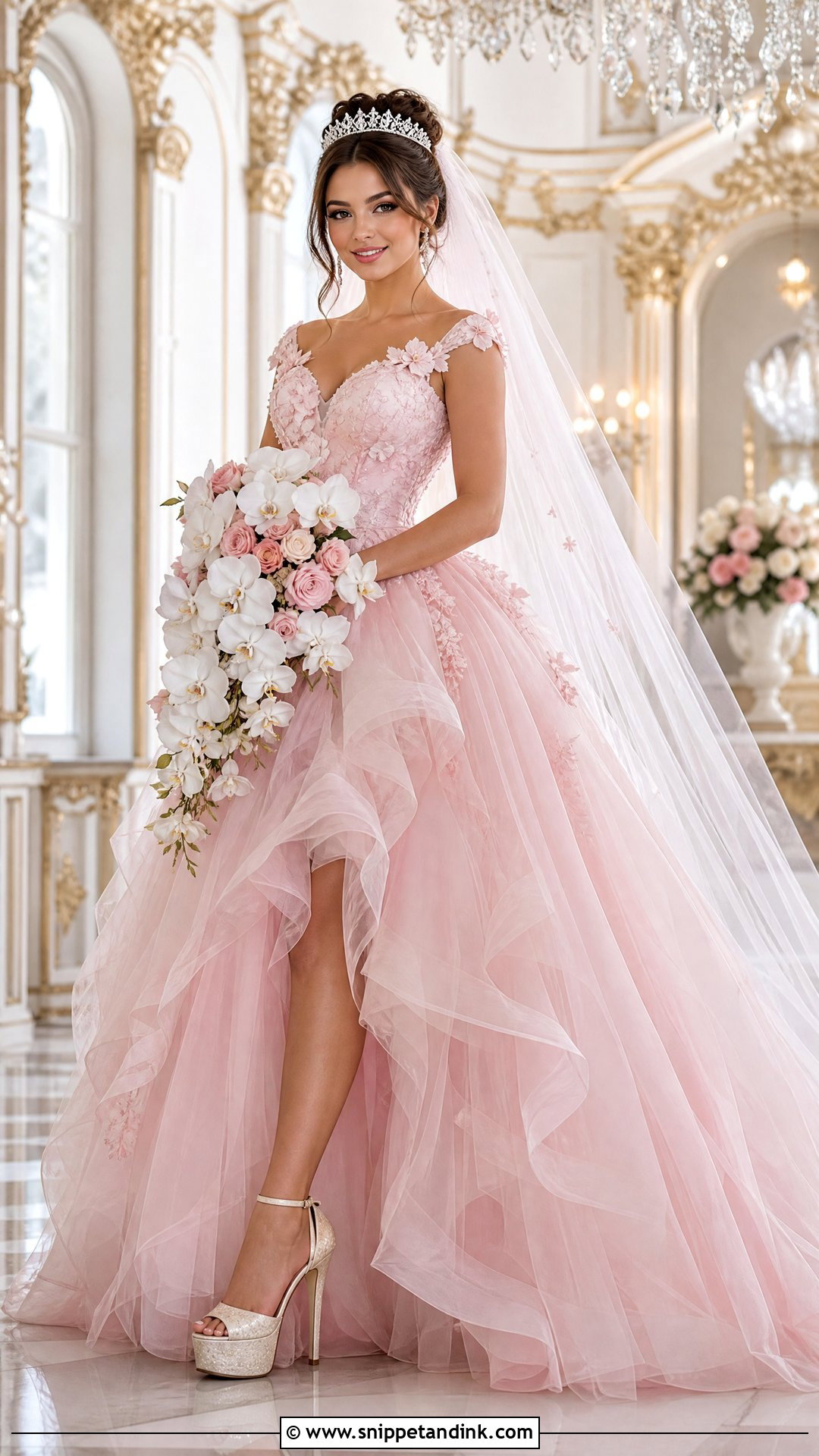
Volume is the whole idea of a pink princess wedding gown, but it shouldn’t feel heavy. Look for a fitted bodice, defined waist and a wide skirt that moves rather than stands stiff. Light crystals or a few 3D flowers add detail. I recommend ivory platform heels under very full skirts, since the extra height stops you treading on the front hem. A long veil and a subtle tiara finish it in an ornate ballroom or grand hotel.
8. Pale Pink Satin Wedding Gown
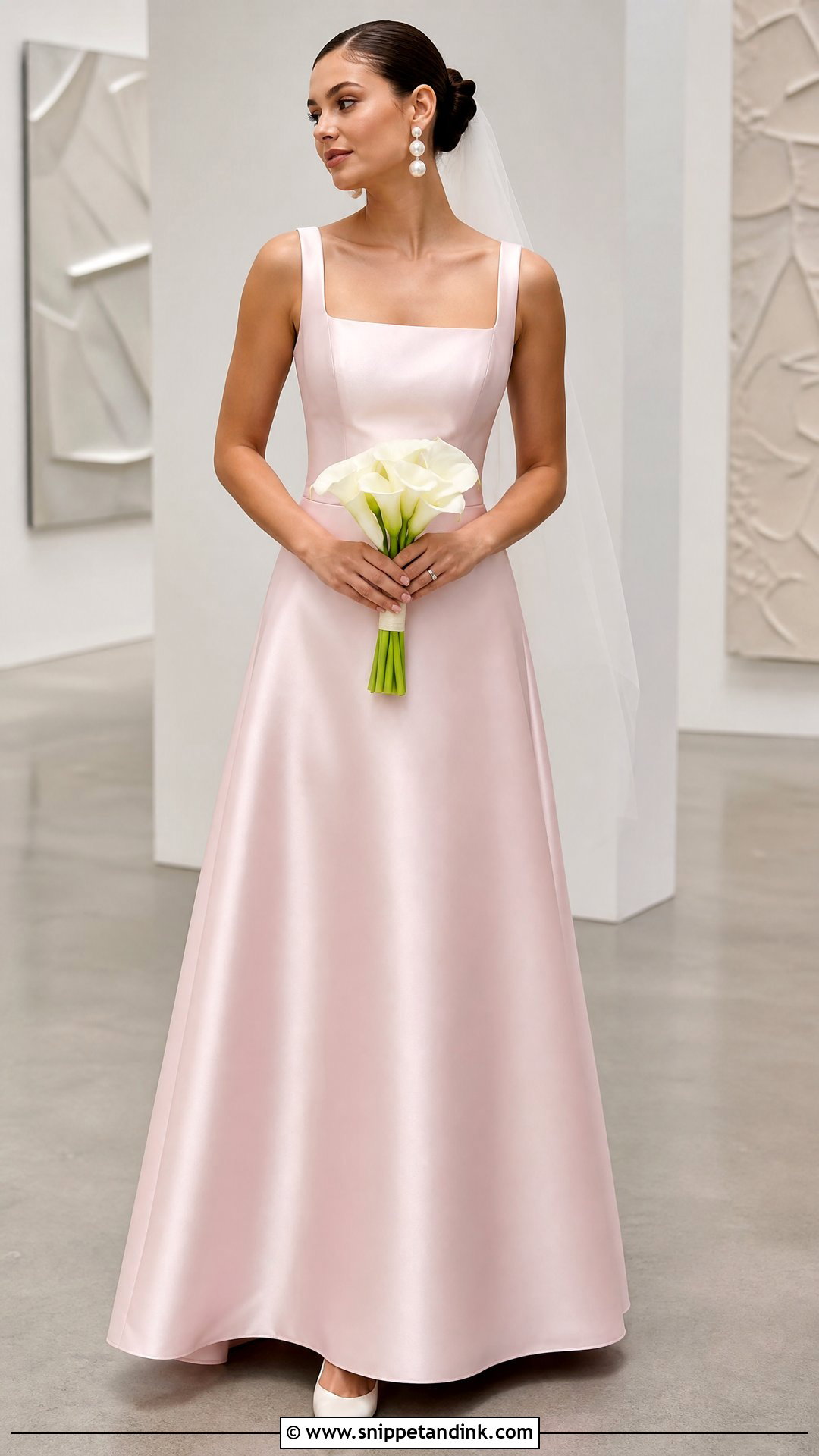
Pale pink satin is minimalism with colour. A column, A-line or soft flare with a square or strapless bodice shows off the sheen. Satin reveals every seam and every fitting flaw, so alterations here need to be precise. I’d also bring the exact shapewear and bra to every fitting, because any line shows through. Sculptural pearl earrings and a plain tulle veil suit city weddings and galleries.
9. Pink Tulle Wedding Gown
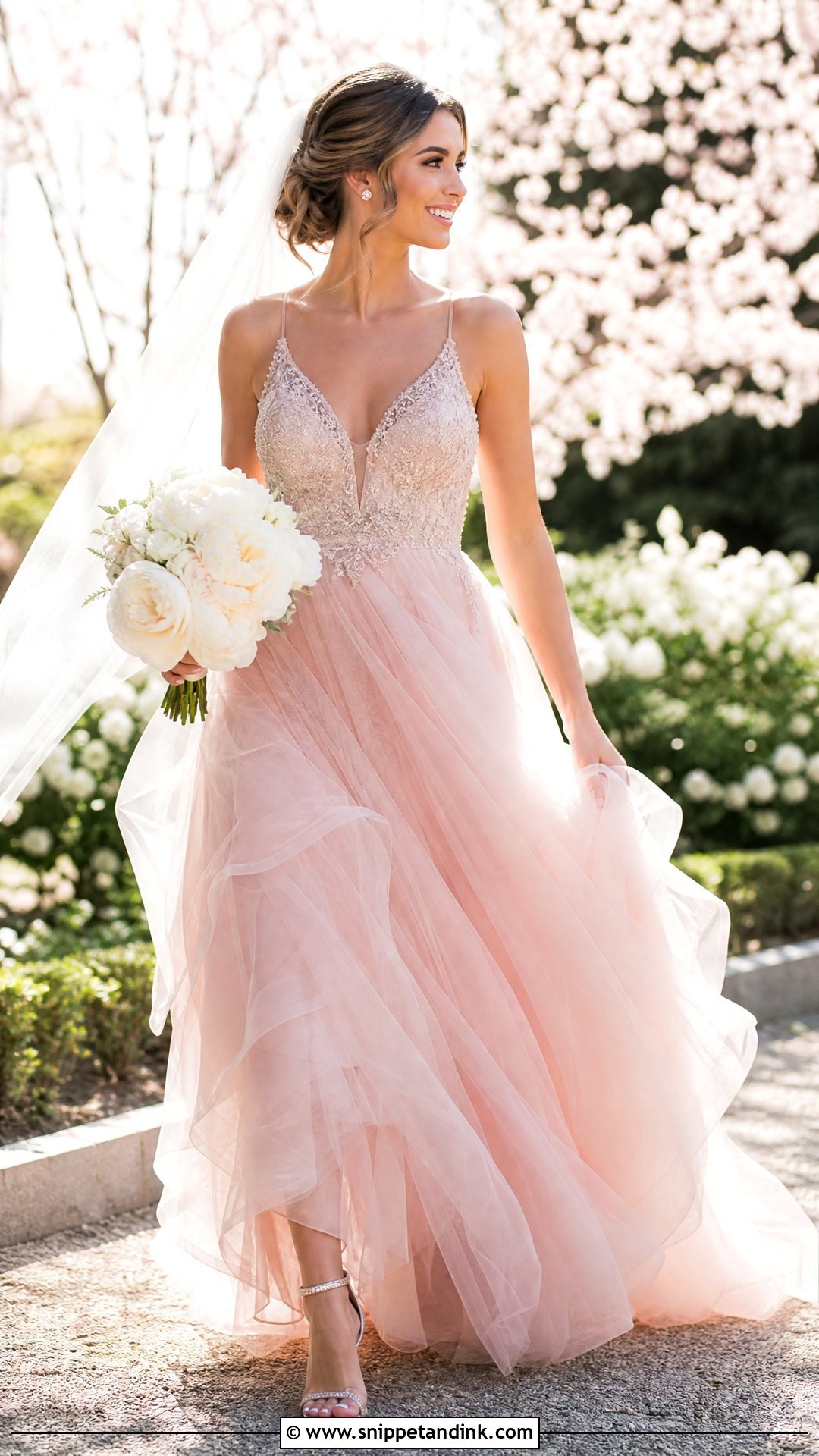
Several layers of tulle in slightly different pinks give depth without decoration. Narrow straps, a sweetheart neckline or an illusion top balance the airy skirt. A horsehair-trimmed veil echoes the movement. Tulle catches on sandal buckles and bouquet wire, so I’d check both before the day. Spring weddings and bright, airy reception rooms suit it.
10. Rose Gold Sequin Wedding Gown
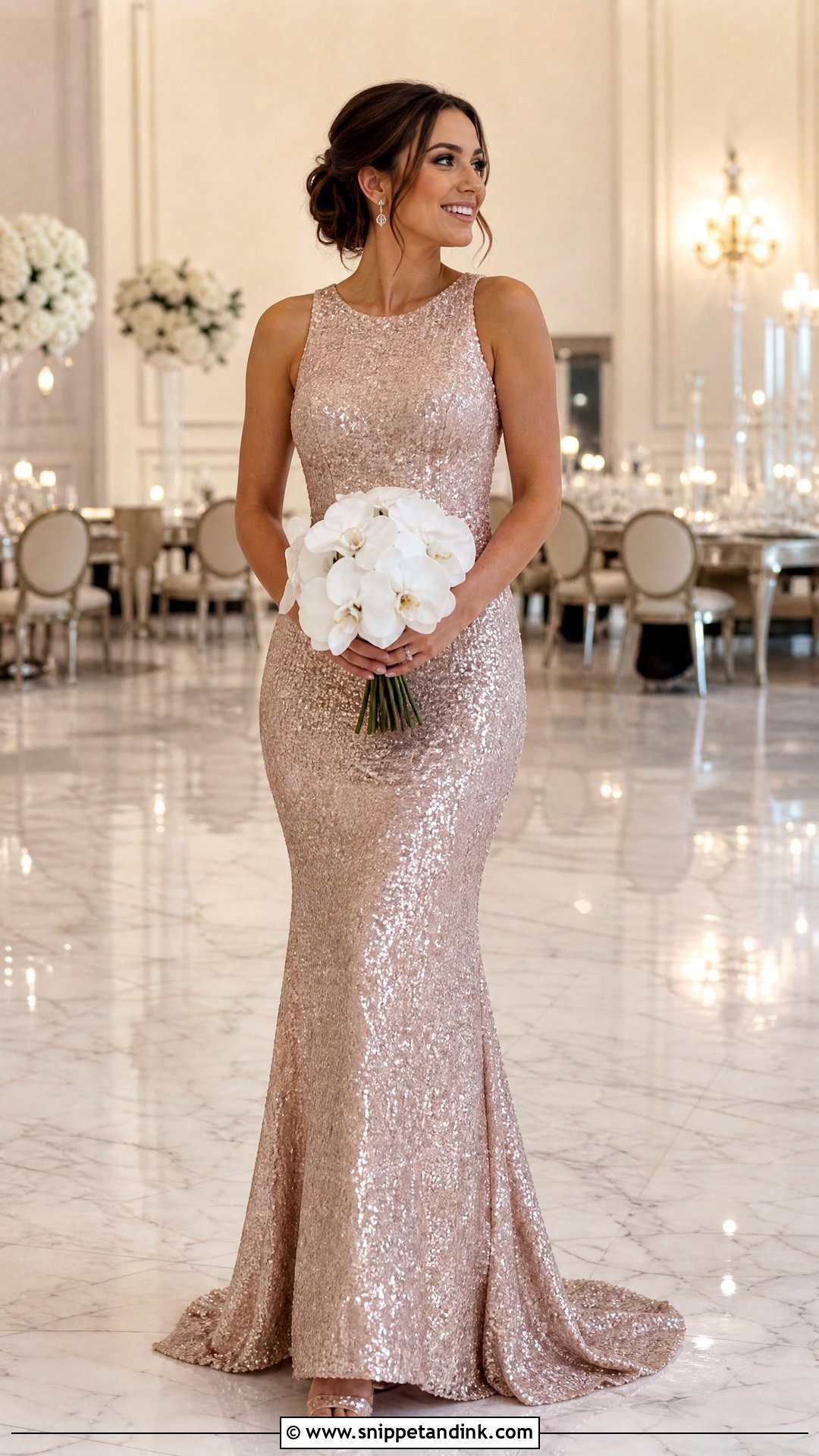
Evening glamour is where a rose gold sequin wedding gown belongs. A fitted sheath, trumpet or gentle flare keeps the shine polished rather than costume-like, and a blush lining softens it. Skip the necklace if the bodice is fully embellished. Sequin gowns are heavy at the hem and can drag, so I ask for the bustle points to be reinforced. Hotel ballrooms and rooftops at night show the shimmer best.
11. Pink Ombre Wedding Gown
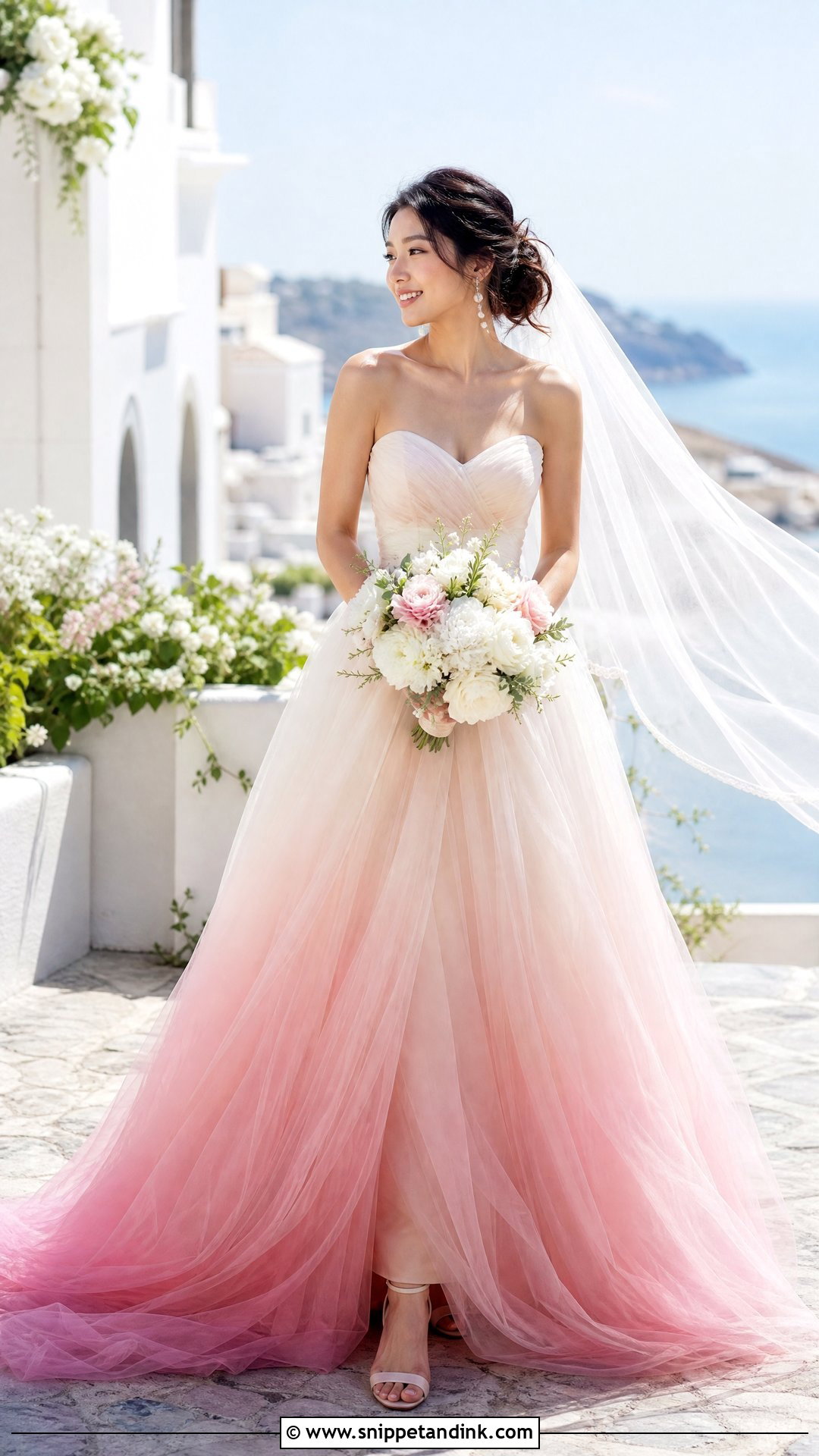
A pink ombre wedding gown starts ivory or pale blush at the bodice and deepens toward rose, coral or petal pink at the hem. It suits brides who want a traditional top and a modern finish. Chiffon and layered tulle show the gradient smoothly. Match the veil to the lightest shade, not the darkest, or it will look heavy around your face. A half-up style keeps the neckline visible.
12. Pink Wedding Gown With 3D Flowers
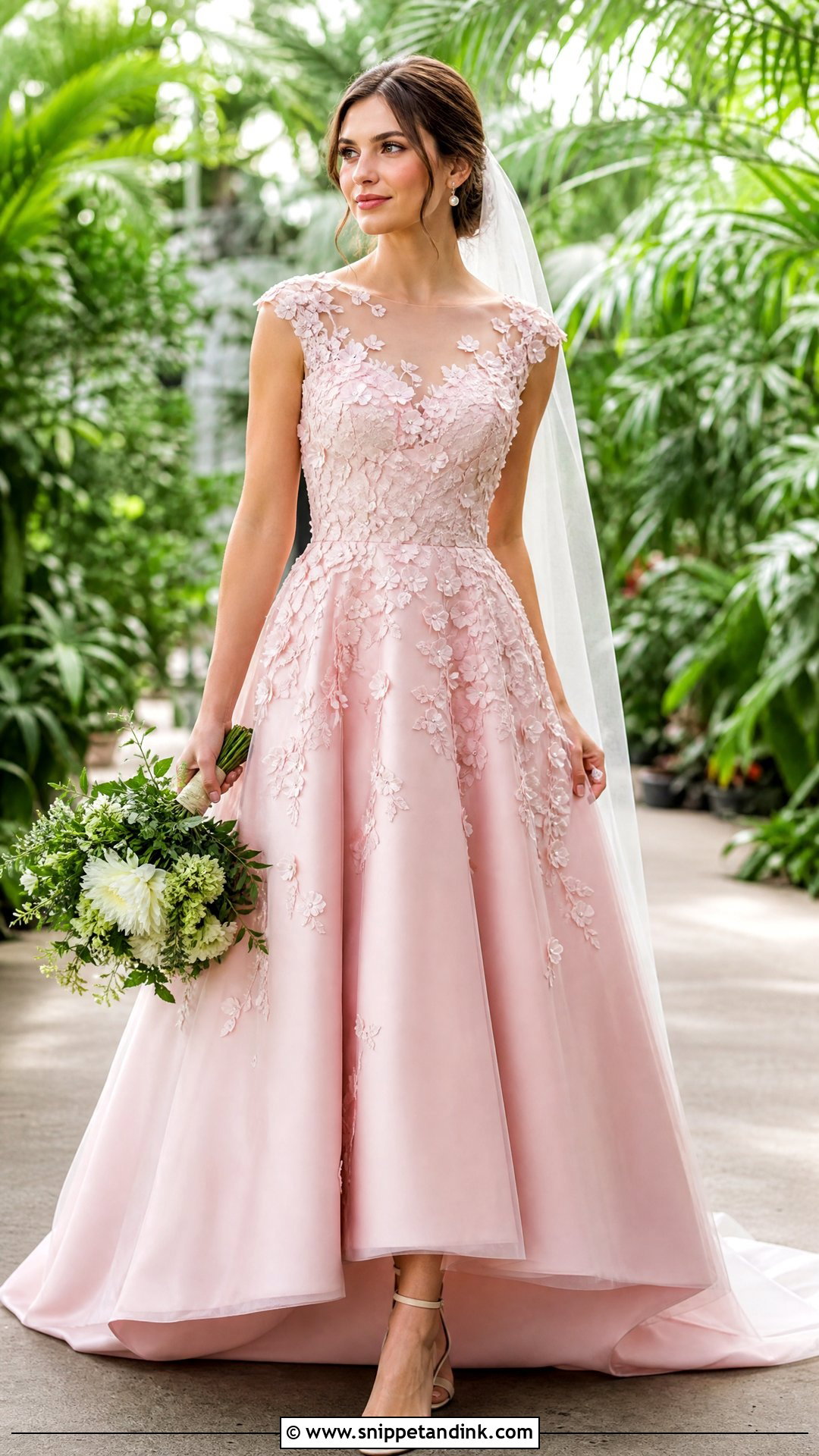
Raised floral appliqués add texture and a handmade feel. I prefer them grouped at the neckline, waist or skirt rather than everywhere, so each flower can be seen. Tonal blossoms on blush feel soft; bright pink flowers on a pale base create contrast. Keep the bouquet mostly green and white so it doesn’t fight the appliqués. Check how they are attached: glued flowers can lift in heat, stitched ones last.
13. Pink Corset Wedding Gown
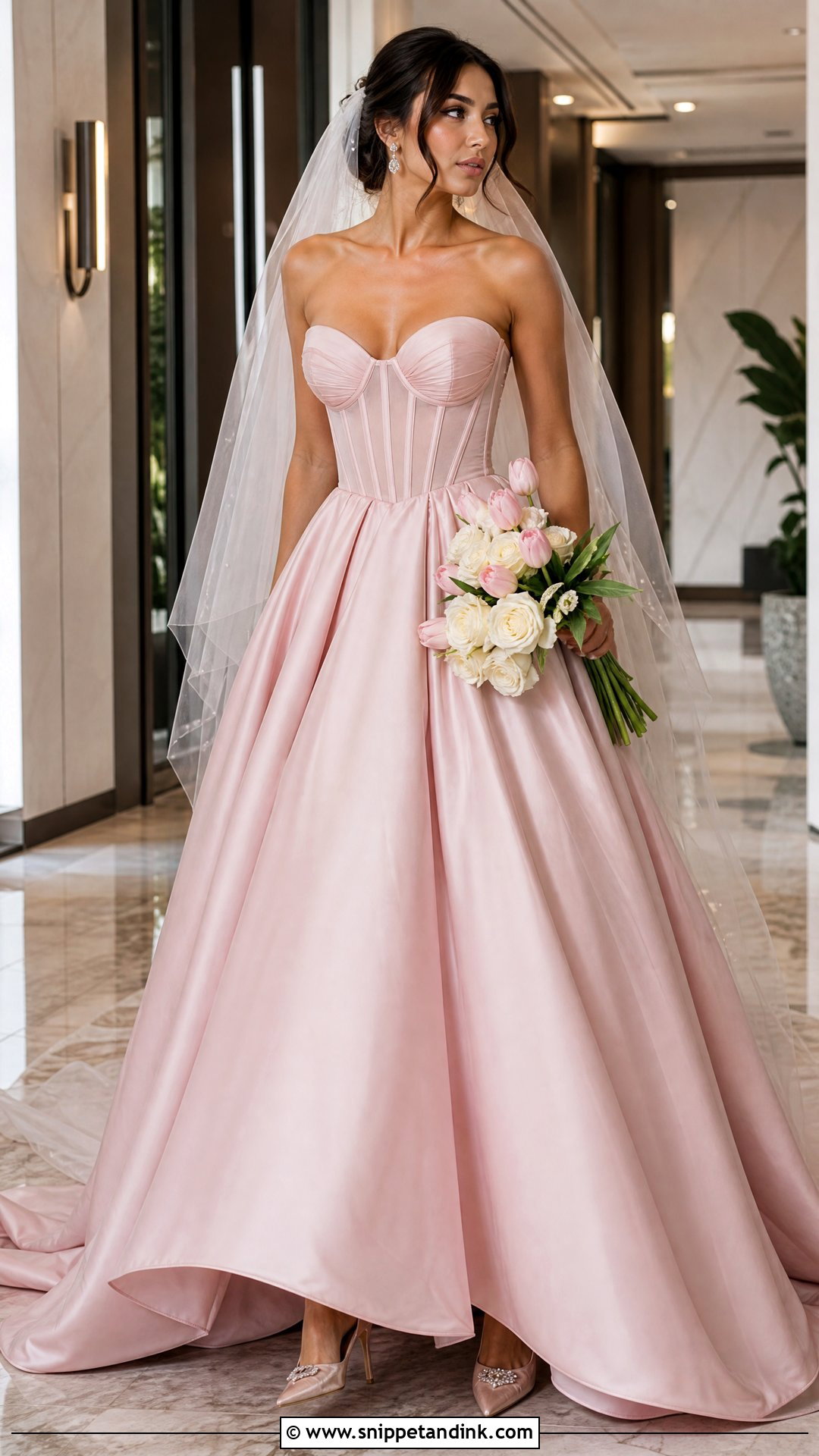
Visible corsetry gives a structured, modern shape. What matters is inside: proper boning, cups placed for your bust and a back closure you can sit in for dinner. A flowing A-line skirt balances it; a ball gown skirt adds drama. Pale blush keeps the corset subtle, while dusty rose makes it fashion-forward. I lace a corset back slightly looser for the reception than for the ceremony, and I’d ask your bridesmaid to learn how before the day.
14. Pink High-Low Wedding Gown
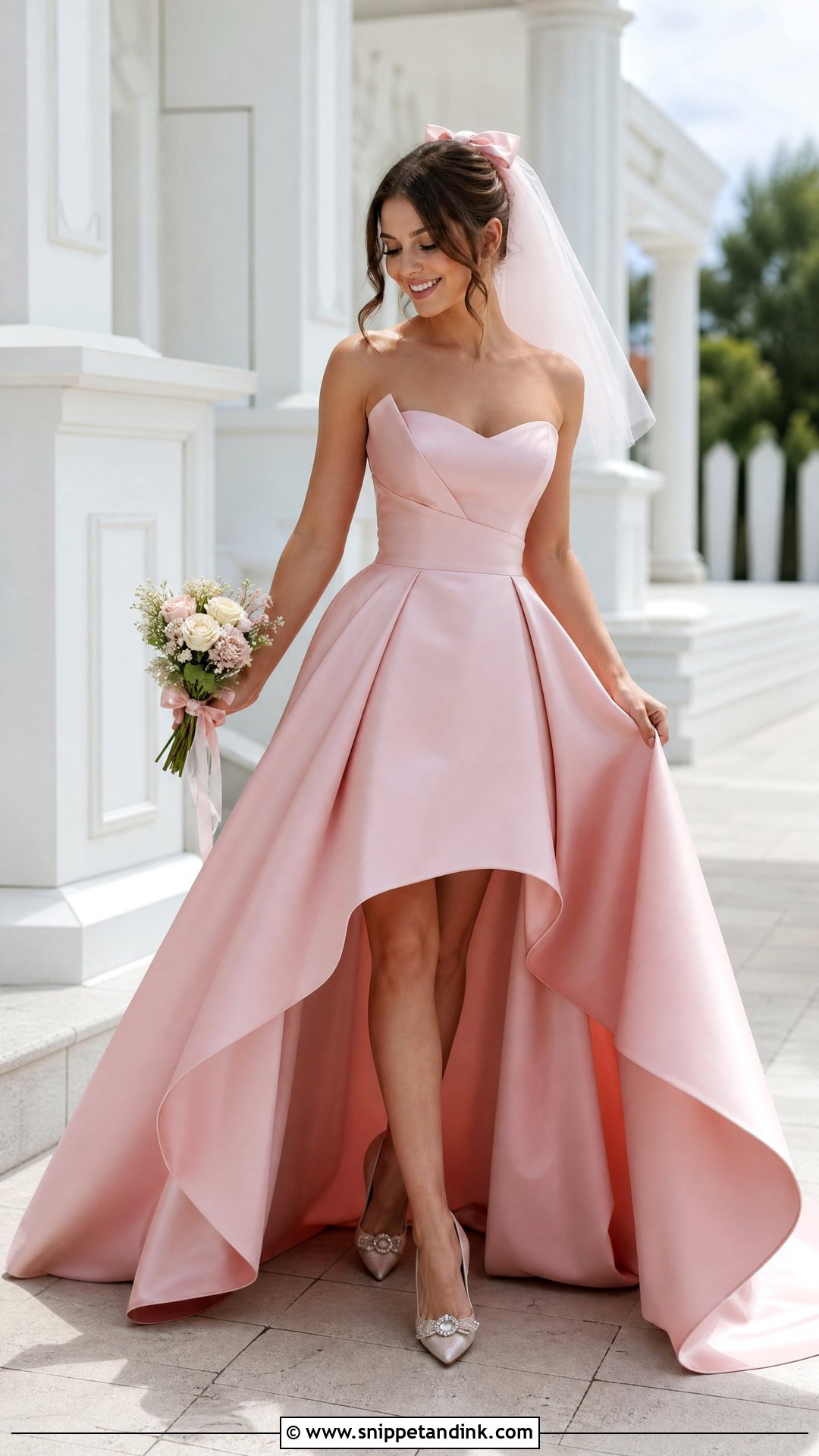
High-low hems show the shoes at the front and keep a train at the back. The front usually falls at the ankle or lower calf. Structured satin looks crisp; layered tulle feels playful. Since your shoes are on show, choose them first and hem to them. Outdoor paths, beaches and dance floors are much easier in this cut. It moves from ceremony to reception without a change.
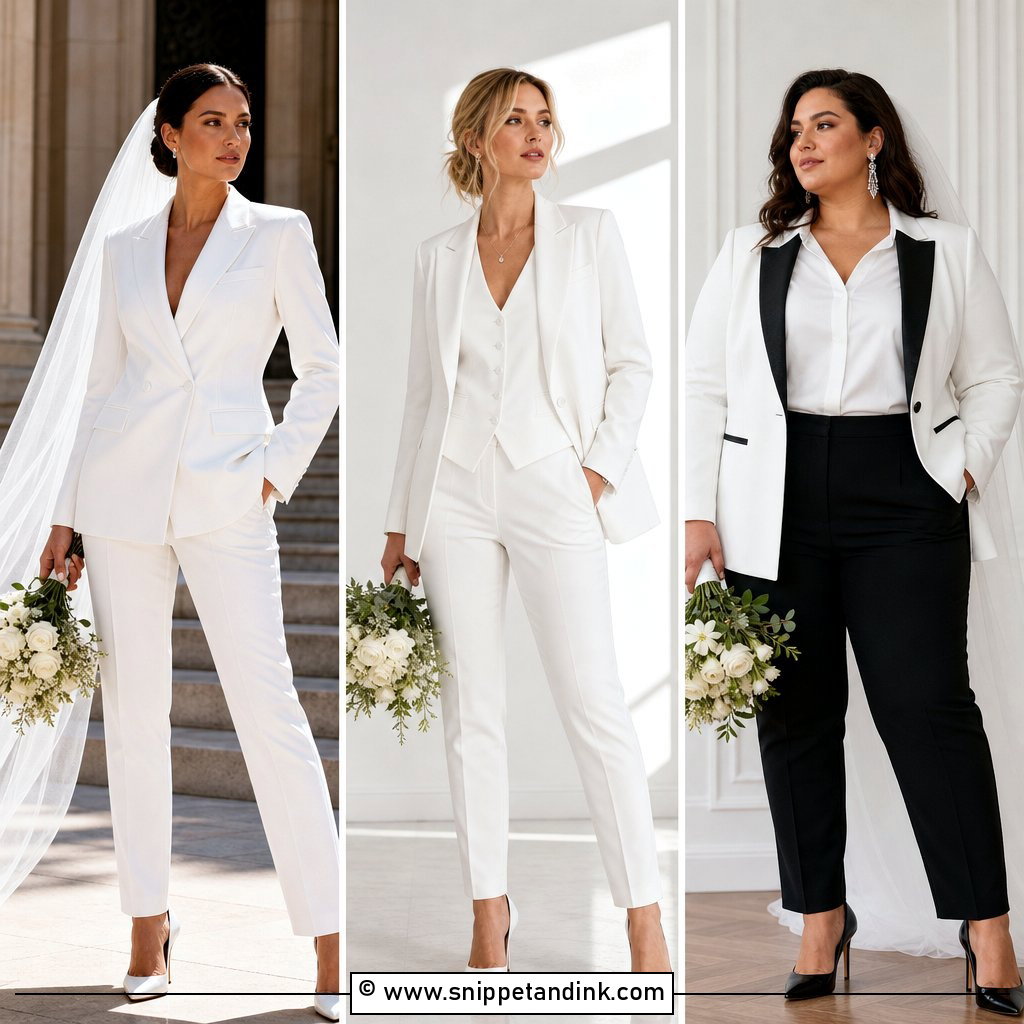
15. Pink Boho Wedding Gown
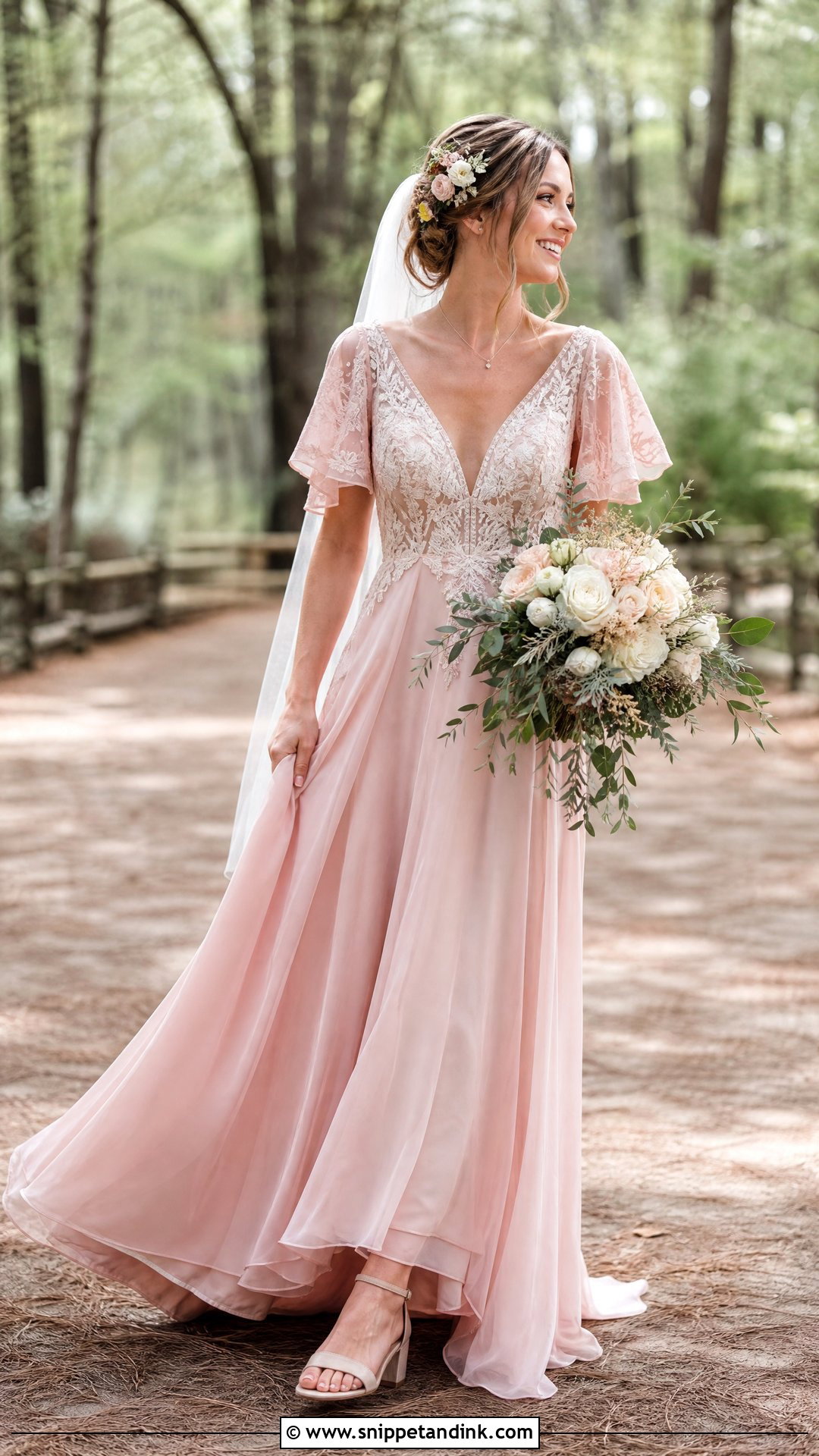
Boho gowns trade structure for ease. Flowing chiffon, soft lace or embroidered tulle with an unstructured A-line, flutter sleeves, a gentle V and maybe a low back give the shape. Low block sandals and a floral comb suit it; heavy crystals do not. A soft gown with little inner structure needs a well-fitted bra or built-in cups, which I add during alterations. Woodland, desert and destination weddings suit it.
16. Plus-Size Pink Wedding Gown
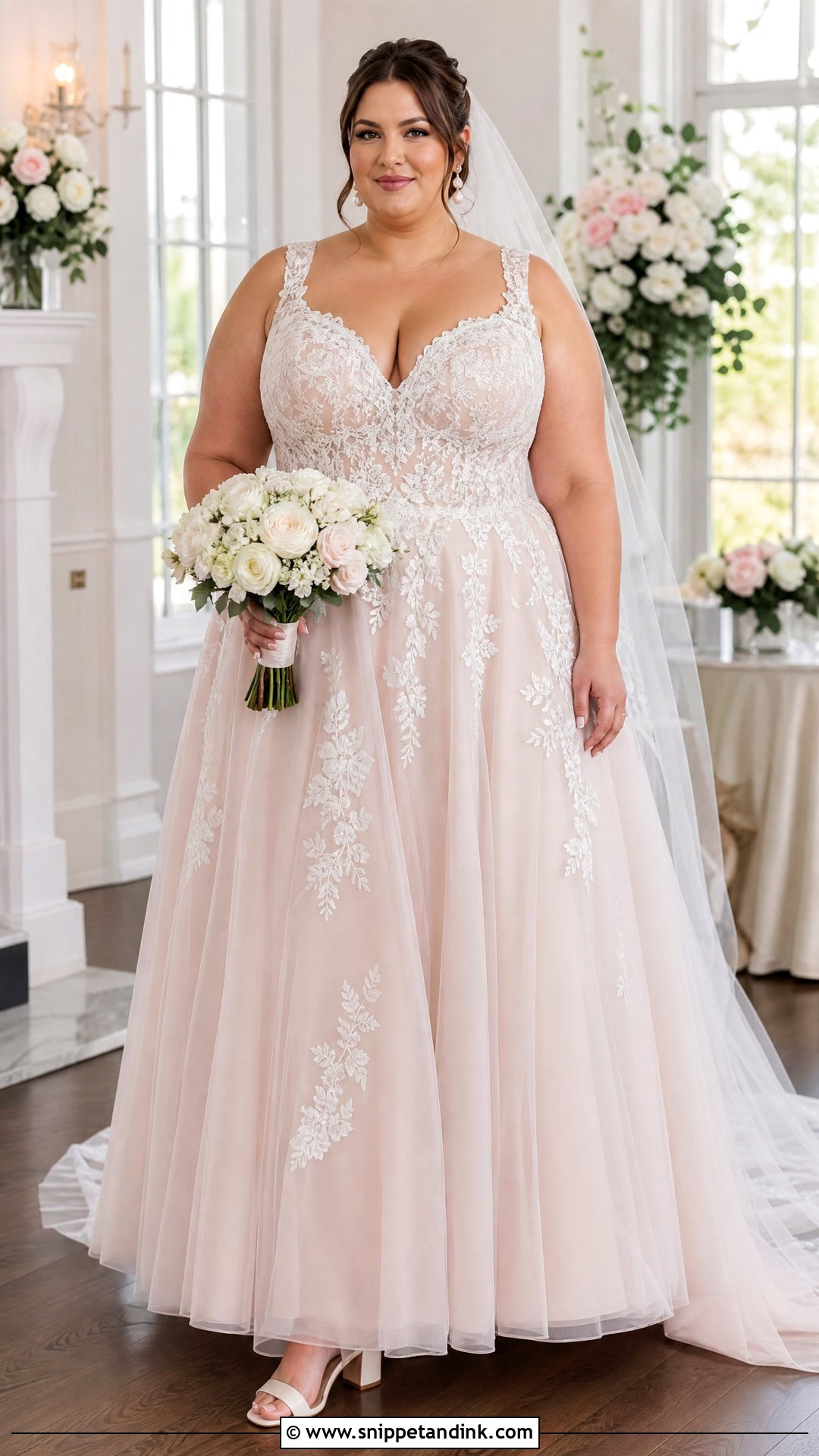
A plus-size pink gown should give real support, comfortable movement and the silhouette you want, not the one someone says you should want. A-line and ball gown shapes with proper boning, wider straps and a well-cut neckline provide security without hiding the body. Blush tulle, pink satin and floral lace all look good once the fit is right. I’d place the veil so it frames rather than covers the dress. Good alterations make the difference from every angle.
17. Bright Pink Wedding Gown
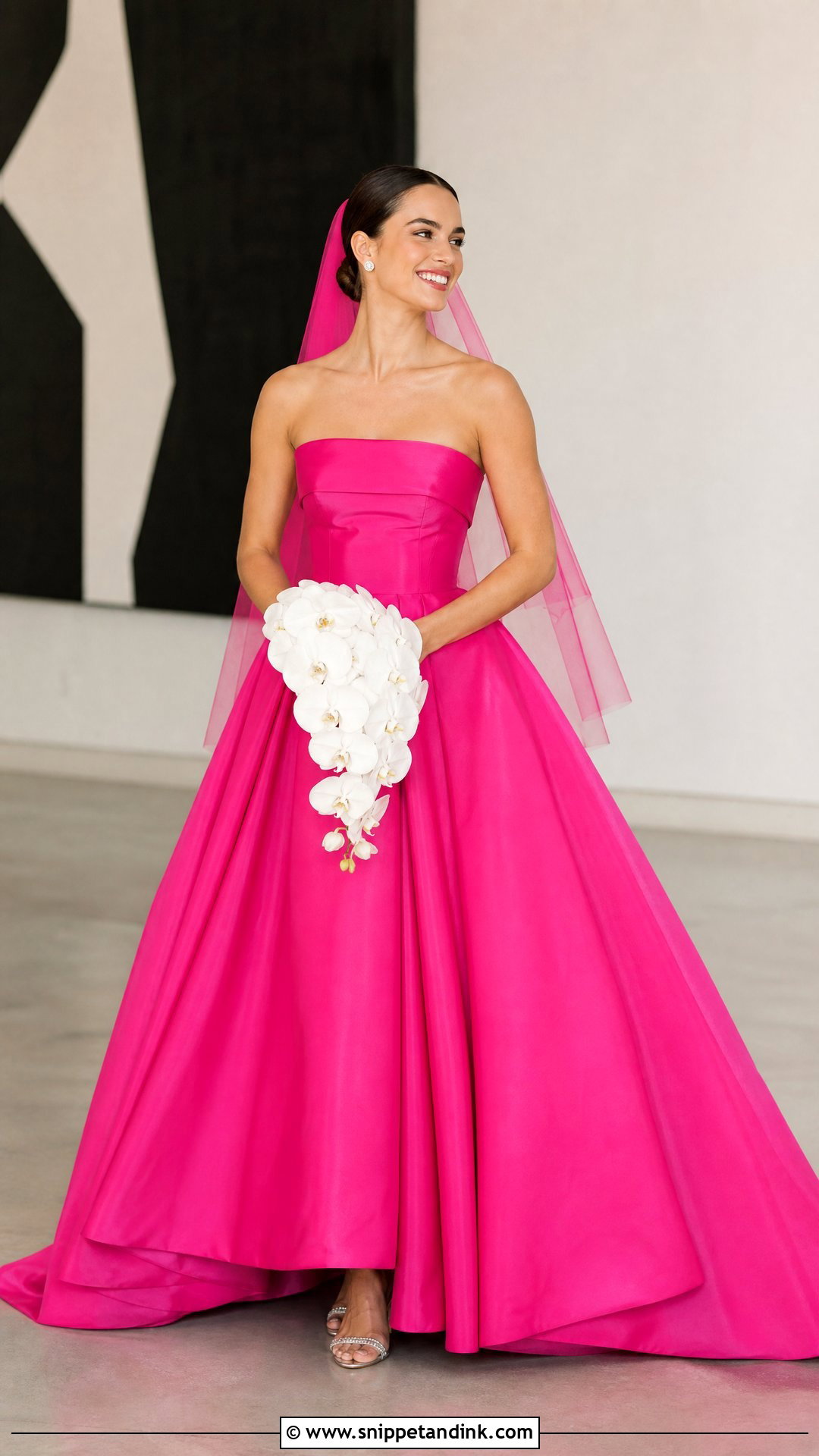
Fuchsia, raspberry and vivid rose make colour the centre of the day. They suit clean shapes: strapless ball gowns, sleek columns and structured A-lines. Everything else should stay calm, with simple crystals, silver heels and a plain or barely tinted veil. A white orchid or rose bouquet gives the eye a resting point. Bright pinks show sweat marks under the arms more than pale ones, so I’d consider dress shields for a warm day.
18. Pink Tea-Length Wedding Gown
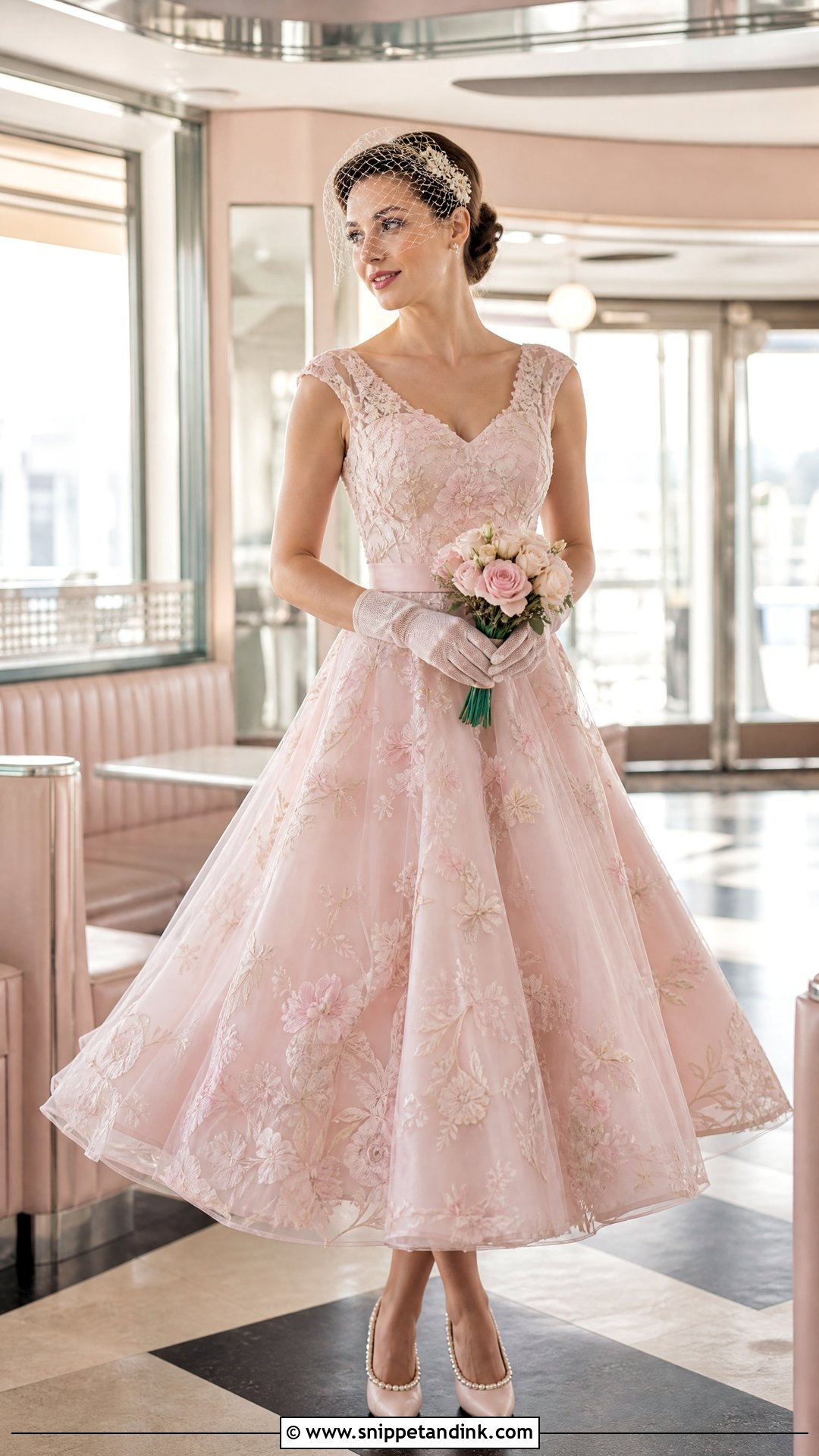
There’s a swish to a tea-length skirt that floor-length gowns don’t have. Falling between knee and ankle, it shows the shoes while staying formal enough for a ceremony. A fitted bodice and full skirt in blush satin, floral organza or layered tulle needs a petticoat to hold its shape; I always check the petticoat length so it doesn’t peek out. Pearl-trimmed pumps, short gloves and a birdcage veil lean retro. Courthouse and daytime weddings suit it.
19. Pink Cape Wedding Gown
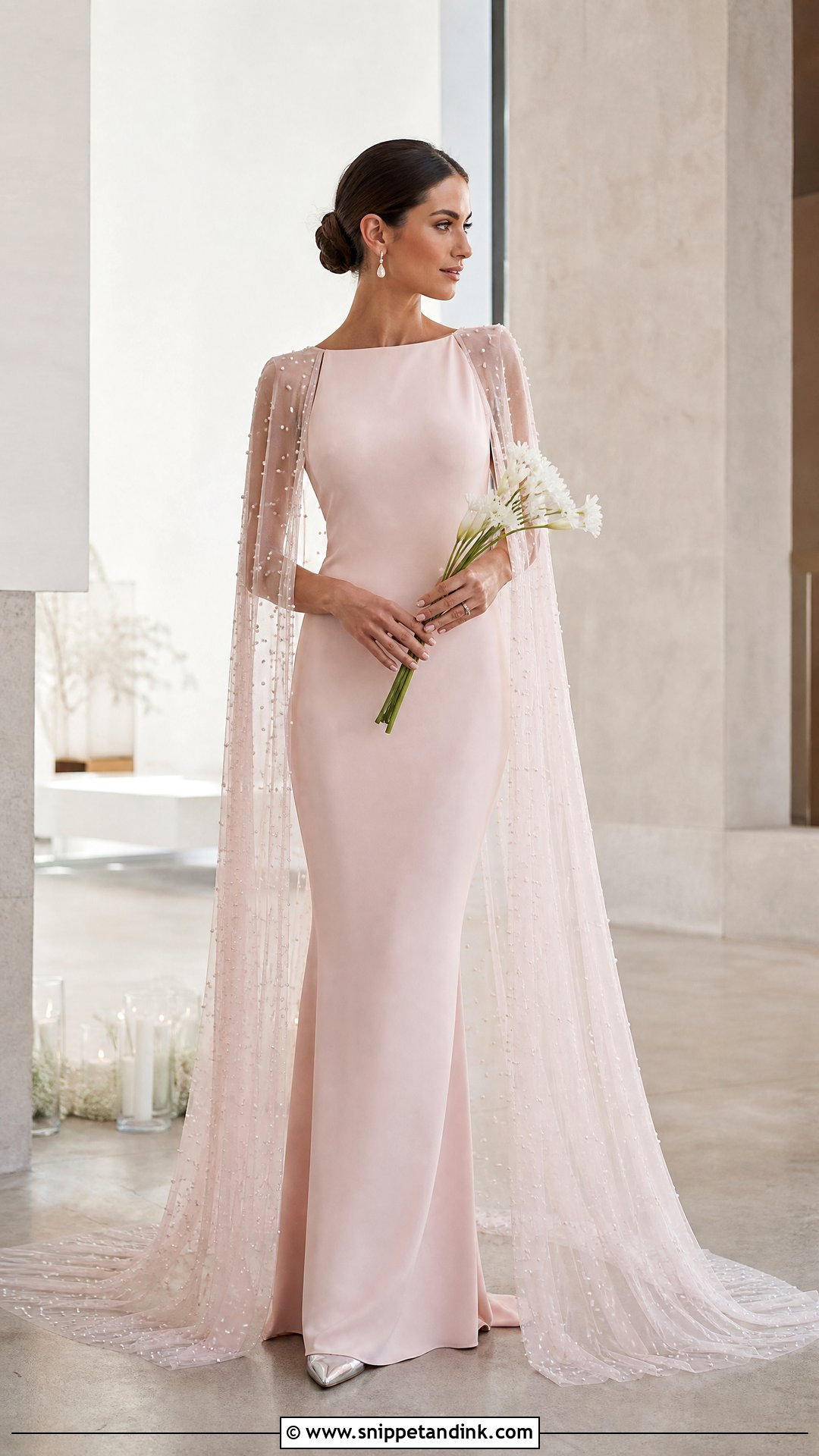
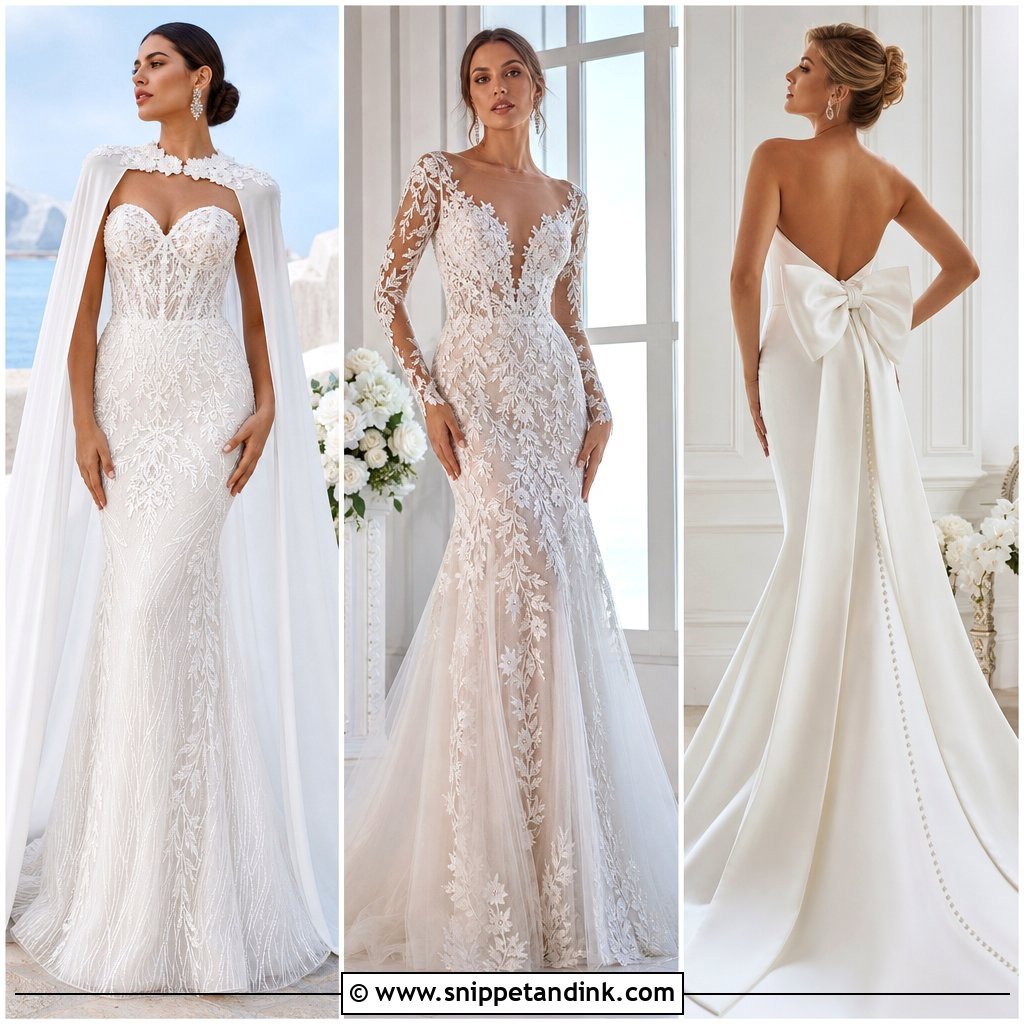
A cape turns a simple gown into a ceremonial look. Start with a clean sheath, A-line or fitted crepe gown in pale blush or dusty rose, then add a detachable sheer cape that falls into a soft train. Light embroidery or scattered pearls on the cape keep the gown underneath visible. You rarely need a veil as well. Ask how the cape attaches; snaps at the shoulder are quicker to remove before dancing than hooks hidden under the zip.


20. Pink Floral Train Wedding Gown
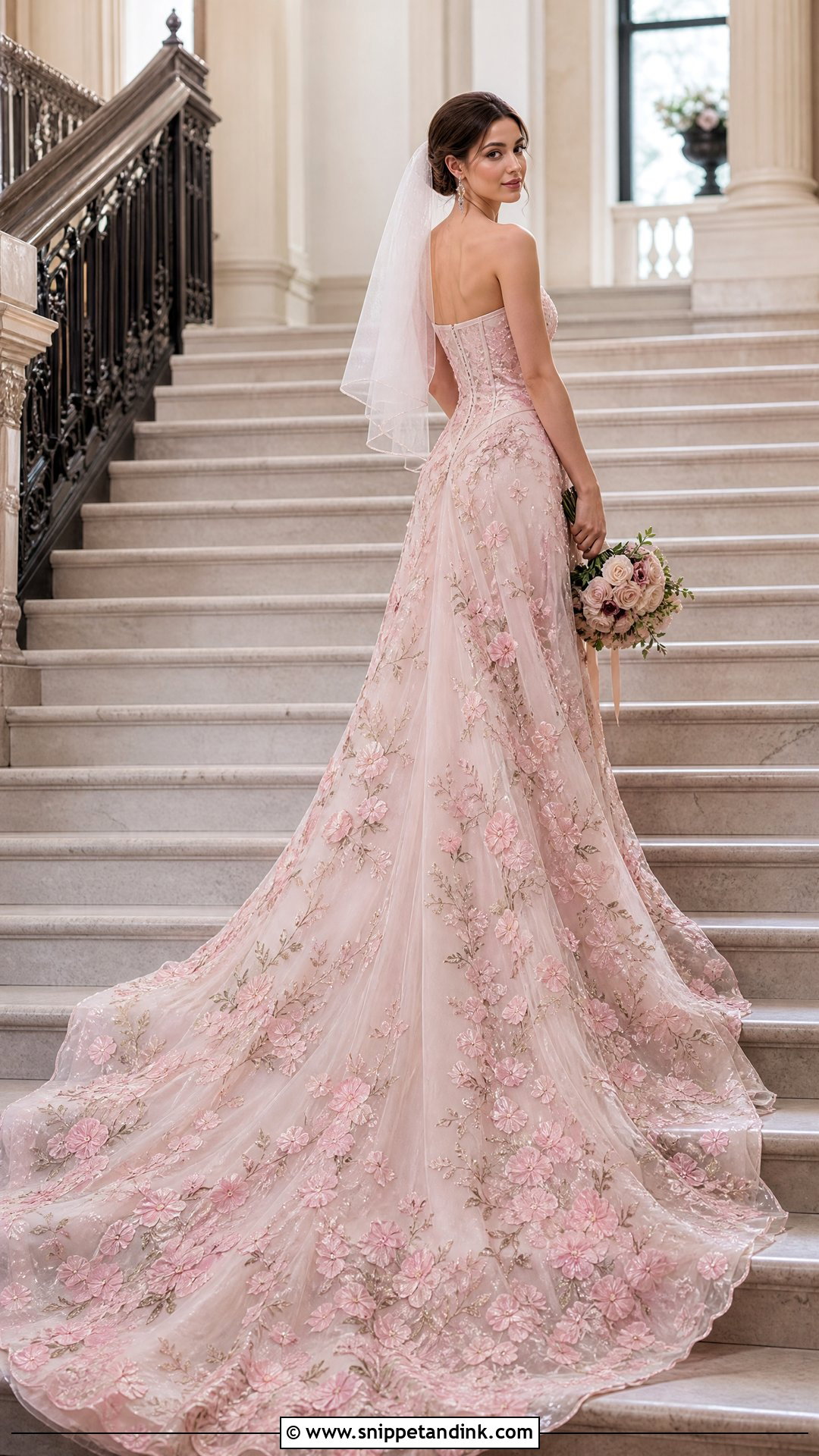
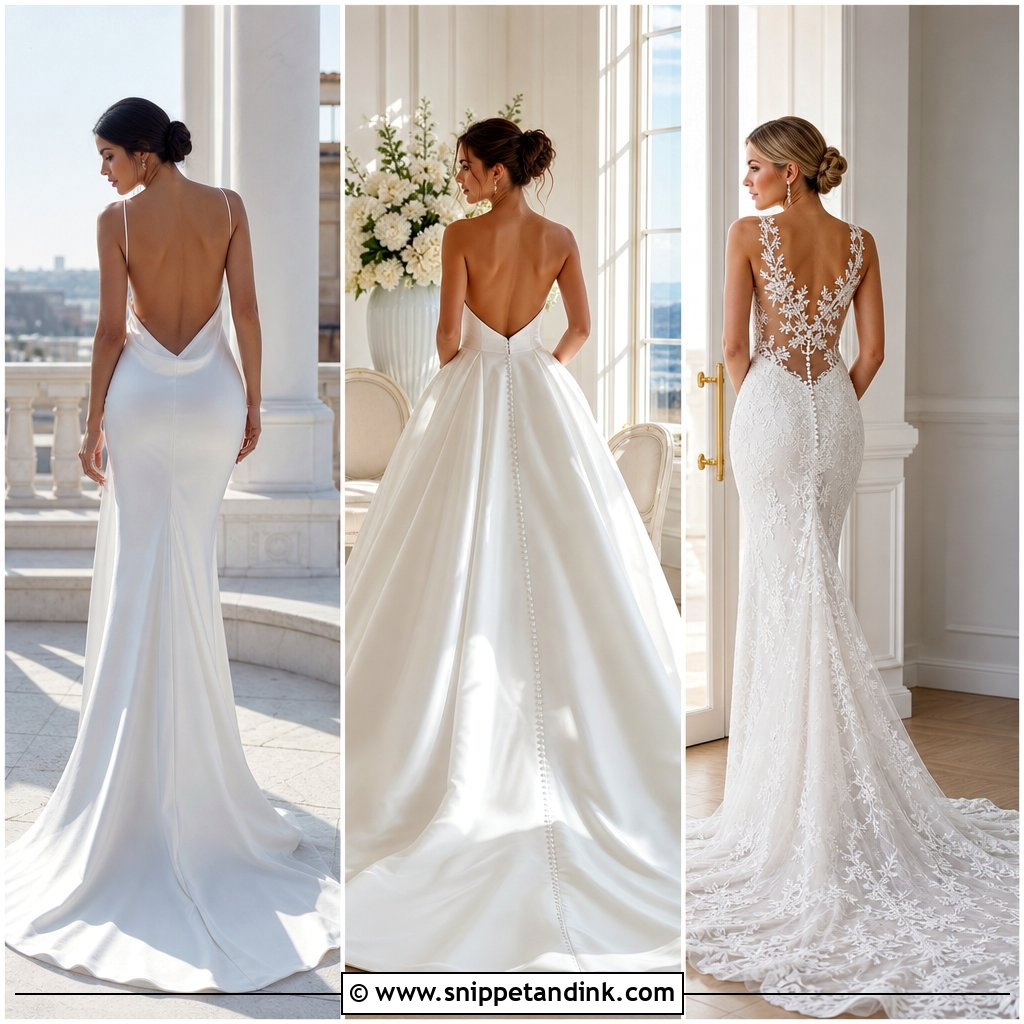
A floral train makes the back of the gown the focal point. I’d keep the bodice and front skirt streamlined so the embroidered, printed or appliquéd train gets the attention. Flowers that start at the waist and grow fuller toward the hem look natural as you walk. Keep the veil short so it doesn’t cover the train, and wear an updo. A long train needs a bustle plan; ask your seamstress to show your bridesmaid how it works.
Bridesmaids, Bouquet and a Pink Bride in the Same Frame
When the bride is in pink, the bridesmaids can’t simply wear pink too, or she blends into the line. I either take the party to a clearly different colour (sage, dusty blue, champagne or deep burgundy all sit well beside blush) or keep them in pink that is two or three shades deeper or lighter than the gown. Hold the swatches together in daylight before ordering.
The bouquet needs the same thinking. Pale pink flowers against a pale pink skirt disappear in photos. I’d give the florist a fabric swatch and ask for white, cream or deeper berry tones with plenty of green, so the flowers stand apart from the dress. Groom’s suits work best in navy, grey or a warm tan; black can look harsh next to soft blush.
Colour on the Aisle, Fit Under It All
Pink lets you keep the traditions of a wedding dress and still bring in your own colour. The range runs from quiet blush satin to bright ball gowns, floral trains, rose gold sequins and relaxed boho shapes. When you compare them, think about venue, season, fabric, comfort and how the shade looks in daylight and indoors. Build the rest of the outfit around the gown’s strongest feature: simple accessories for detailed dresses, a bolder veil or earrings for plain ones. And I’d put good alterations above everything else.
You'll Like These Ideas:





Leave a Reply