
The mermaid is the most fitted silhouette in bridal. It follows the bodice, waist and hips closely, then flares near the knee or lower thigh, and that sculpted outline is why brides either fall for it instantly or rule it out without trying. Newer versions are kinder to wear than older ones: lighter fabrics, cleaner seams, detachable overskirts, pearl details, basque waists and softer sleeves. Below are 35 takes on the shape, from lace to plain crepe to beach-weight chiffon, with what I look for in each when a bride steps into it.
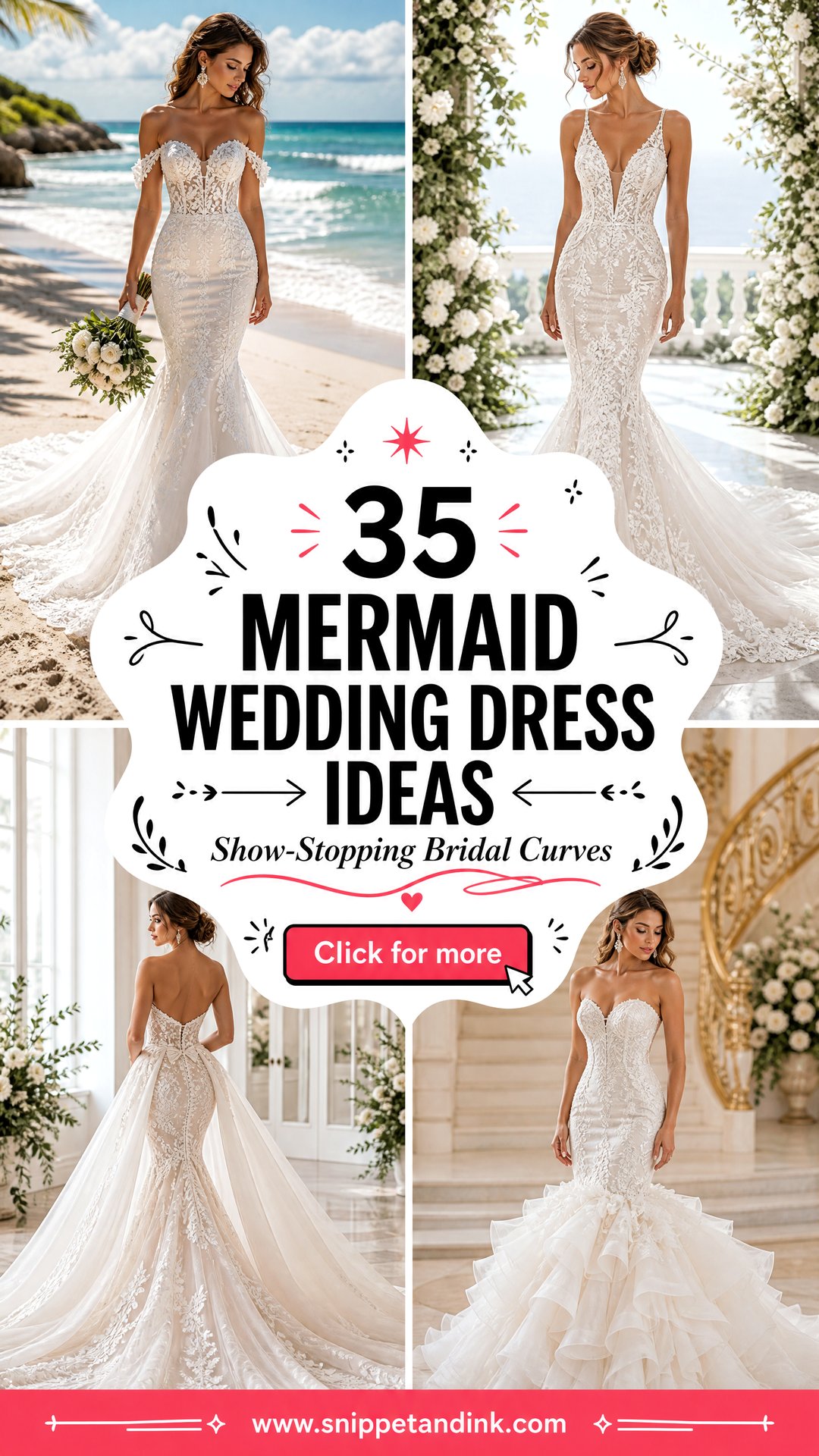
Trumpet, Mermaid or Fit and Flare: Where the Skirt Opens
Shops use these names loosely, so I go by where the flare begins rather than the label on the tag. That one measurement changes how the dress moves, how you sit and which figures it suits.
- Fit and flare opens around the upper hip. It’s the easiest to walk and dance in and a good first try if you’re unsure about fitted gowns.
- Trumpet opens around mid-thigh. You get a clear curve with a fair amount of freedom, and it suits most heights.
- True mermaid opens at or below the knee. It’s the most dramatic outline and the most restrictive; you’ll take shorter steps and sit more carefully.
When a bride tells me she’s nervous about feeling trapped, I put her in a trumpet first. If she loves it, we try one that opens lower. Going the other way is harder, because once you’ve felt a true mermaid’s drama, the higher flares can seem tame, and you may end up choosing a shape for the photos rather than for the ten hours you’ll actually spend in it.
1. Lace Mermaid Wedding Dress
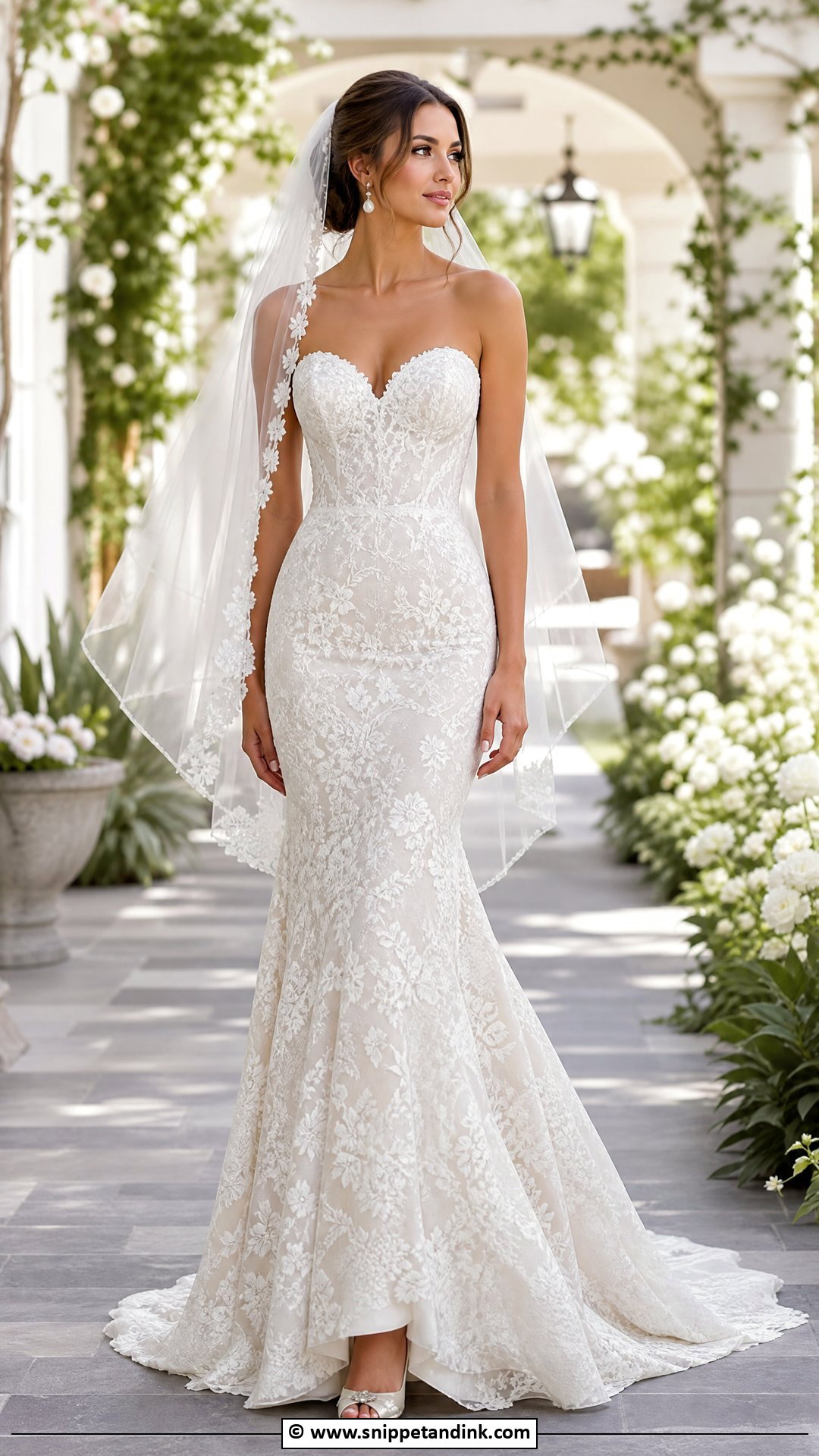
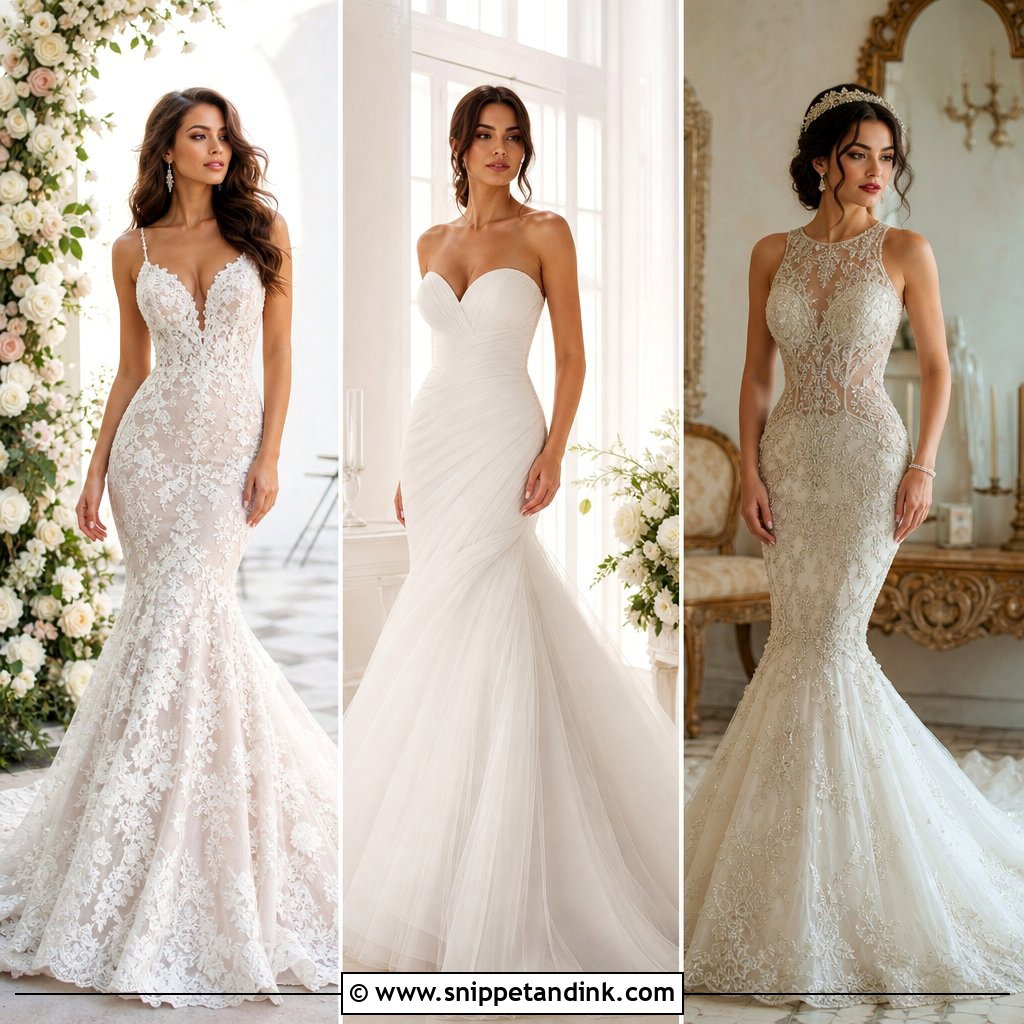
Lace is the most requested version, and it’s forgiving in a way plain fabric isn’t: the pattern hides small fit adjustments. Floral lace suits a garden; Chantilly lace is finer and softer for a vintage feel; corded lace has raised outlines that show up strongly in photos. A sweetheart neckline, illusion straps or a low back personalise it. When a lace mermaid is taken in, the seamstress often has to unpick motifs and re-appliqué them over the seam, so allow extra alteration time. Pearl earrings, a fingertip veil and soft waves finish it.
2. Satin Mermaid Wedding Dress
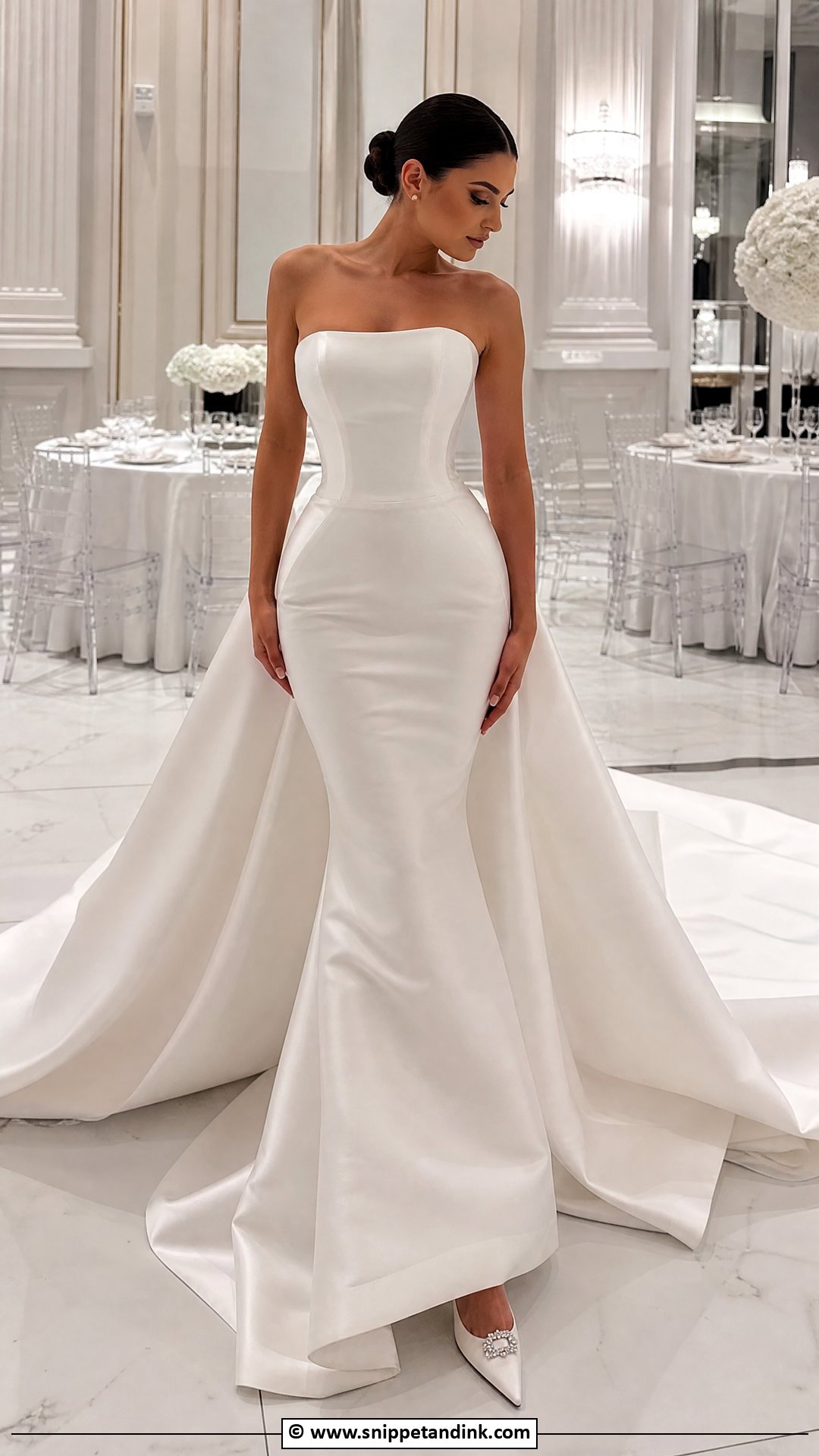
Satin has a natural sheen, so even a plain cut looks expensive. For clean lines, a strapless satin gown with a structured bodice and a chapel train is hard to beat; for something softer, look at a cowl neckline, covered buttons or a draped waist. Here’s the trade-off nobody mentions in the shop. Satin across the hips shows every crease from sitting, so by the reception a satin mermaid will look lived-in. A sleek bun, crystal studs, pointed heels and a long veil are all it needs.
3. Crepe Mermaid Wedding Dress
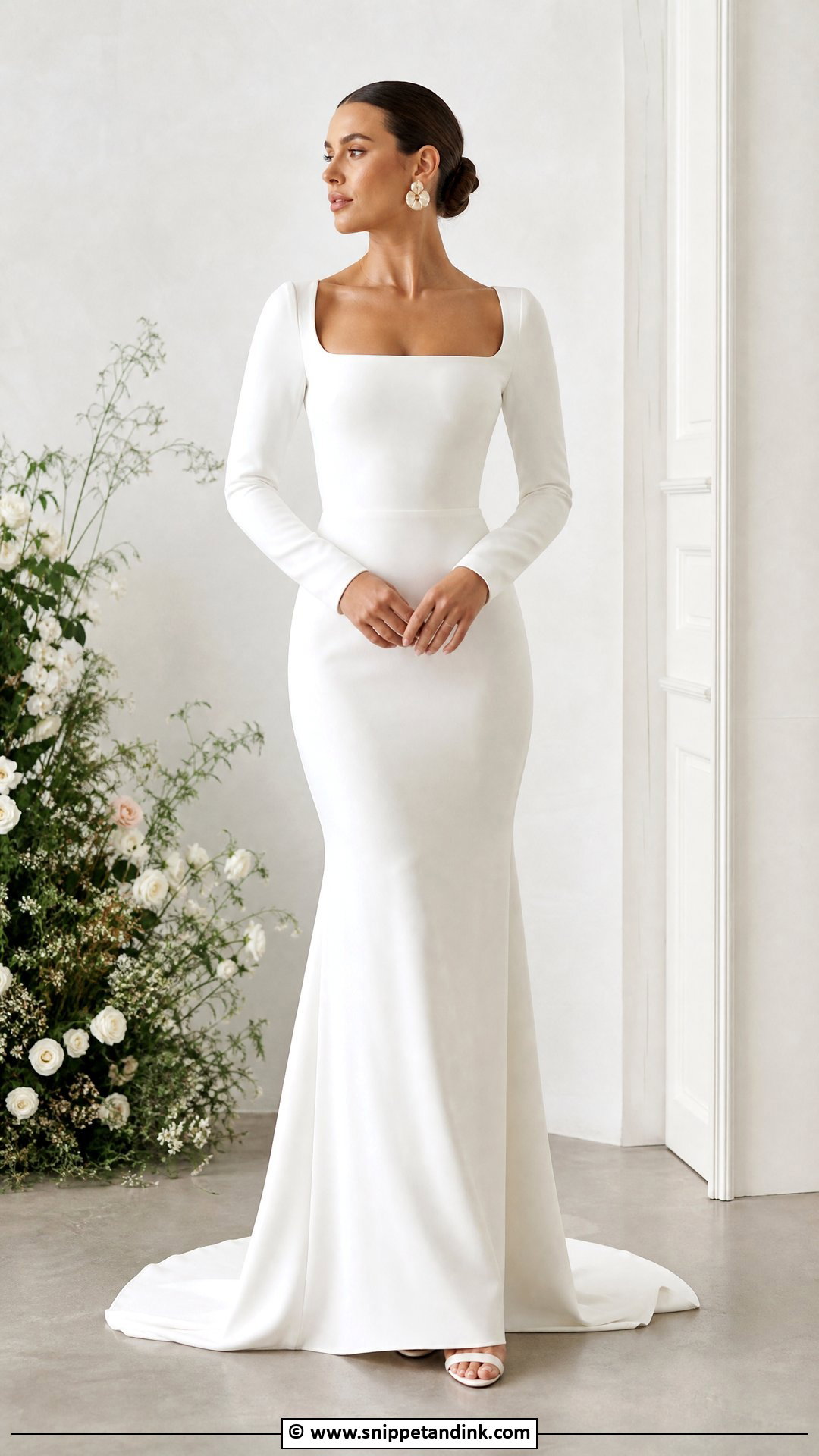
Crepe has a matte finish and a soft structure that hugs smoothly, and it’s the fabric I recommend most when a bride wants the shape without the shine. Long sleeves, a square neckline or a clean off-shoulder bodice all suit it. Because crepe is plain, fit is everything: strong inner support, well-placed seams and a flare low enough that you can still walk and sit. Stretch crepe moves with you, which helps a lot in a fitted skirt. Sculptural earrings, a low chignon and a simple veil complete it.
4. Strapless Mermaid Wedding Dress
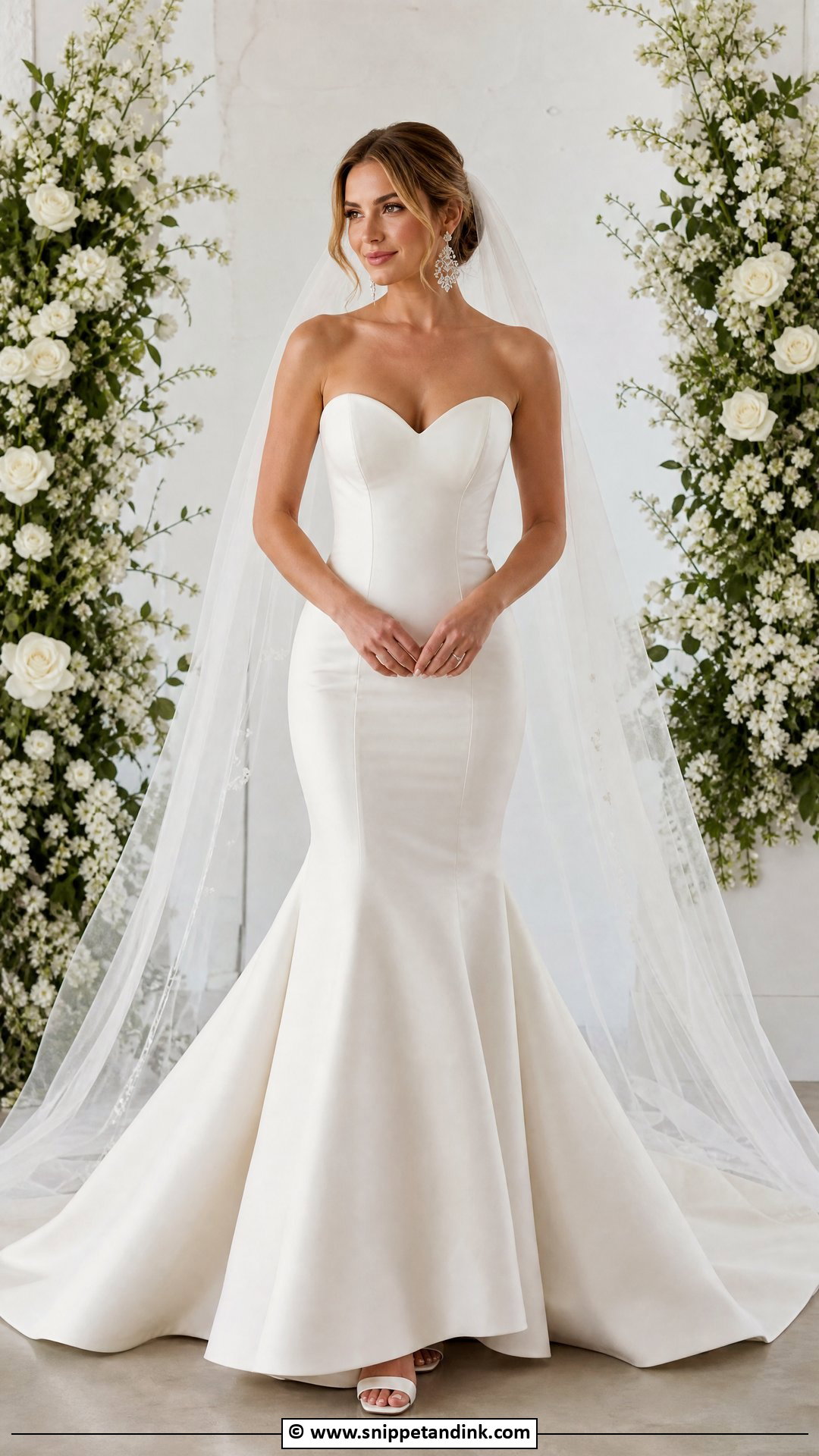
Strapless balances a fitted skirt with an open neckline, drawing the eye to shoulders, collarbone and waist. A structured corset bodice gives support; a sweetheart neckline reads romantic and straight-across reads modern. With nothing over the shoulders, the bodice has to grip, so good boning and expert alterations matter more than anything else here. Wear a statement necklace or skip it for bold earrings. A long veil softens the bare neckline nicely.
5. Off Shoulder Mermaid Wedding Dress
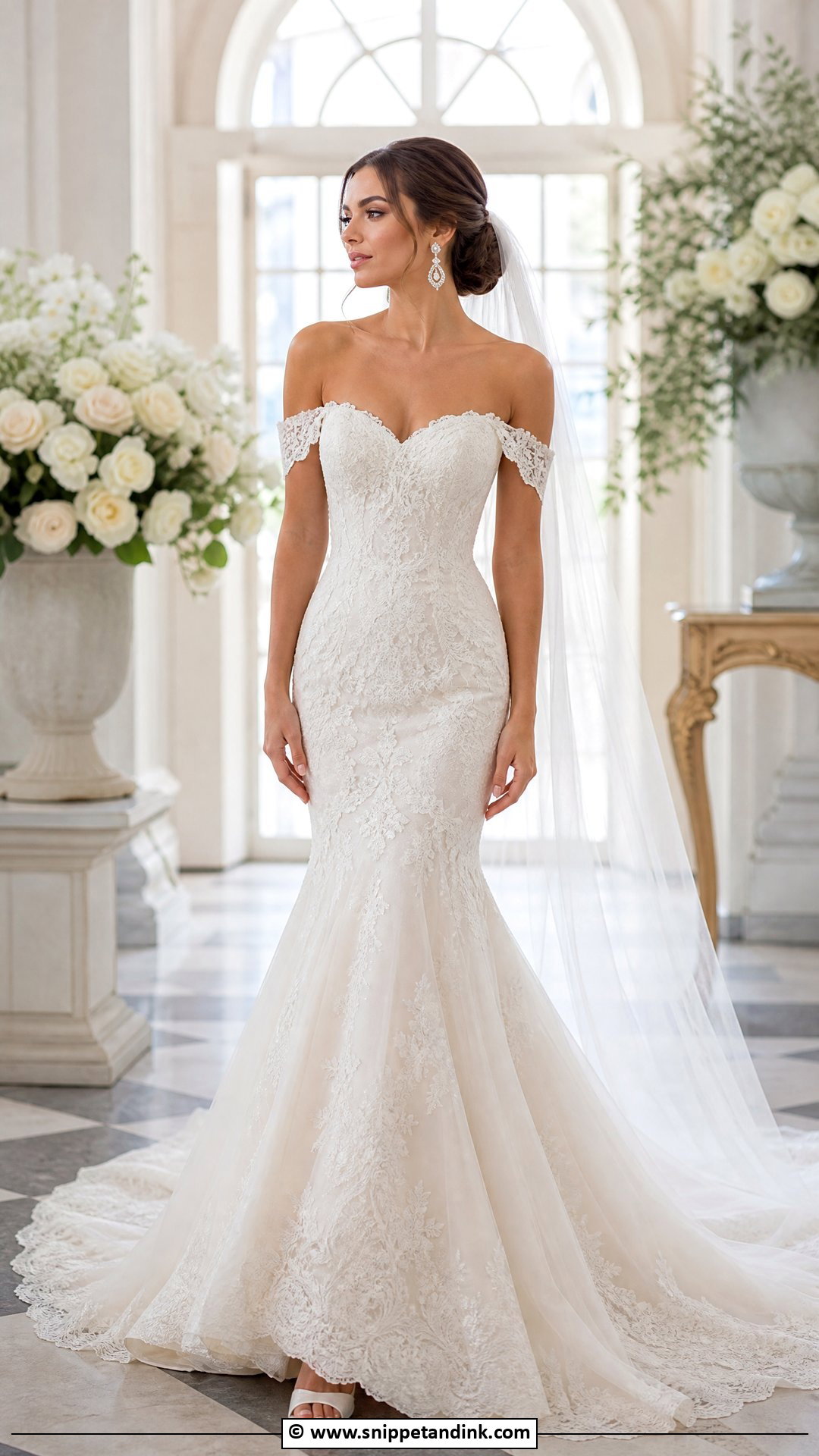
Off-shoulder necklines frame the shoulders while the fitted skirt does the sculpting. Lace, satin, crepe and mikado all work. Soft draped sleeves suit garden and estate weddings; structured folded cuffs feel formal and modern. The band across your upper arms limits how far you can lift them, so try a full hug at your appointment. Keep necklaces tiny or skip them. Drop earrings, a low bun and a medium-length veil suit it best.
6. Long Sleeve Mermaid Wedding Dress
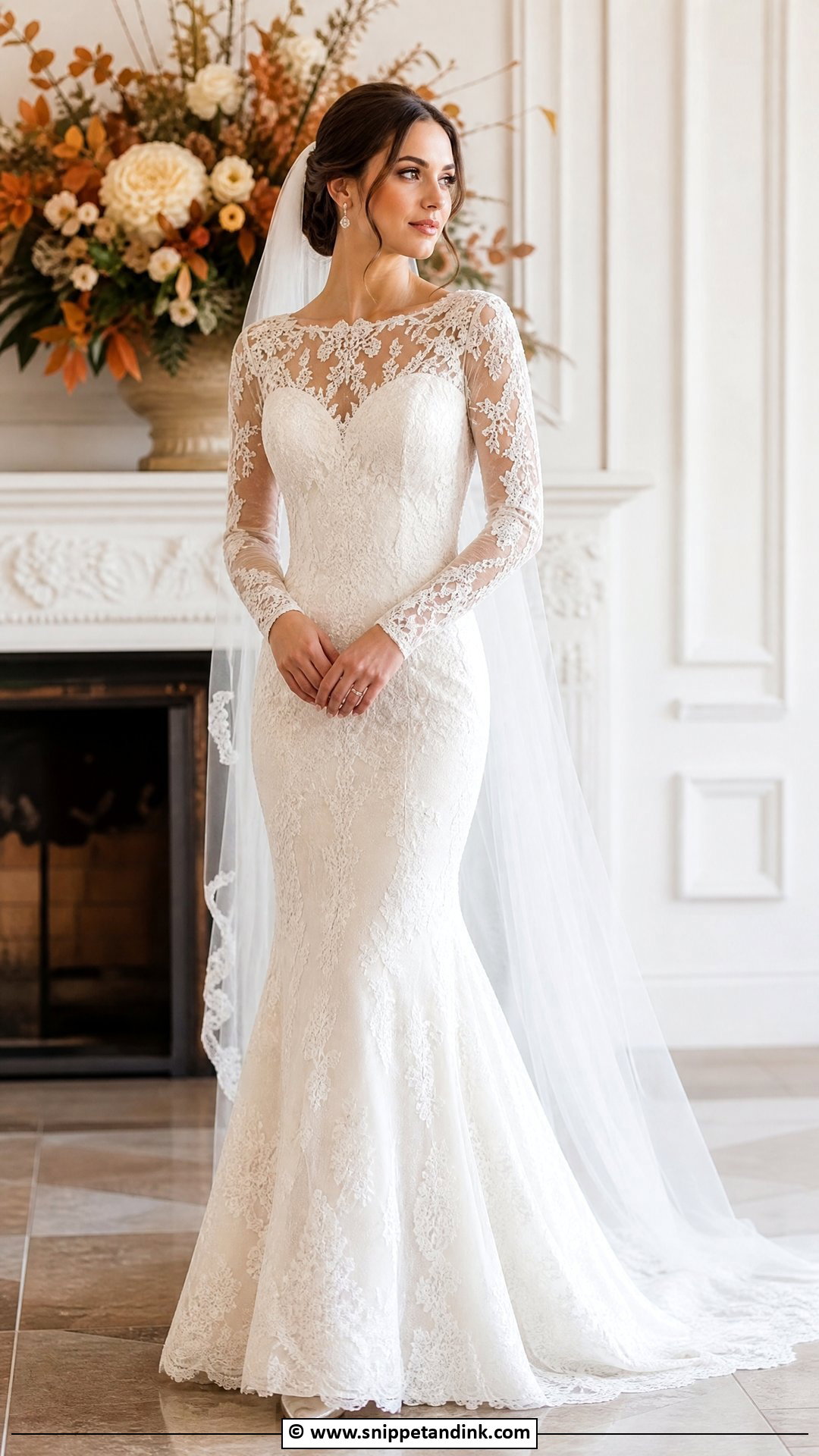
Long sleeves on a mermaid give coverage and still show shape. Lace sleeves look romantic, crepe or satin sleeves sleek, and illusion sleeves add detail without bulk. Fall, winter and formal indoor weddings are the obvious fit, though light lace works in spring. A fitted sleeve on a fitted dress is a lot of restriction at once, so I always check arm movement as carefully as the walk. A clean updo, small earrings and a simple veil keep it balanced.
7. Beaded Mermaid Wedding Dress
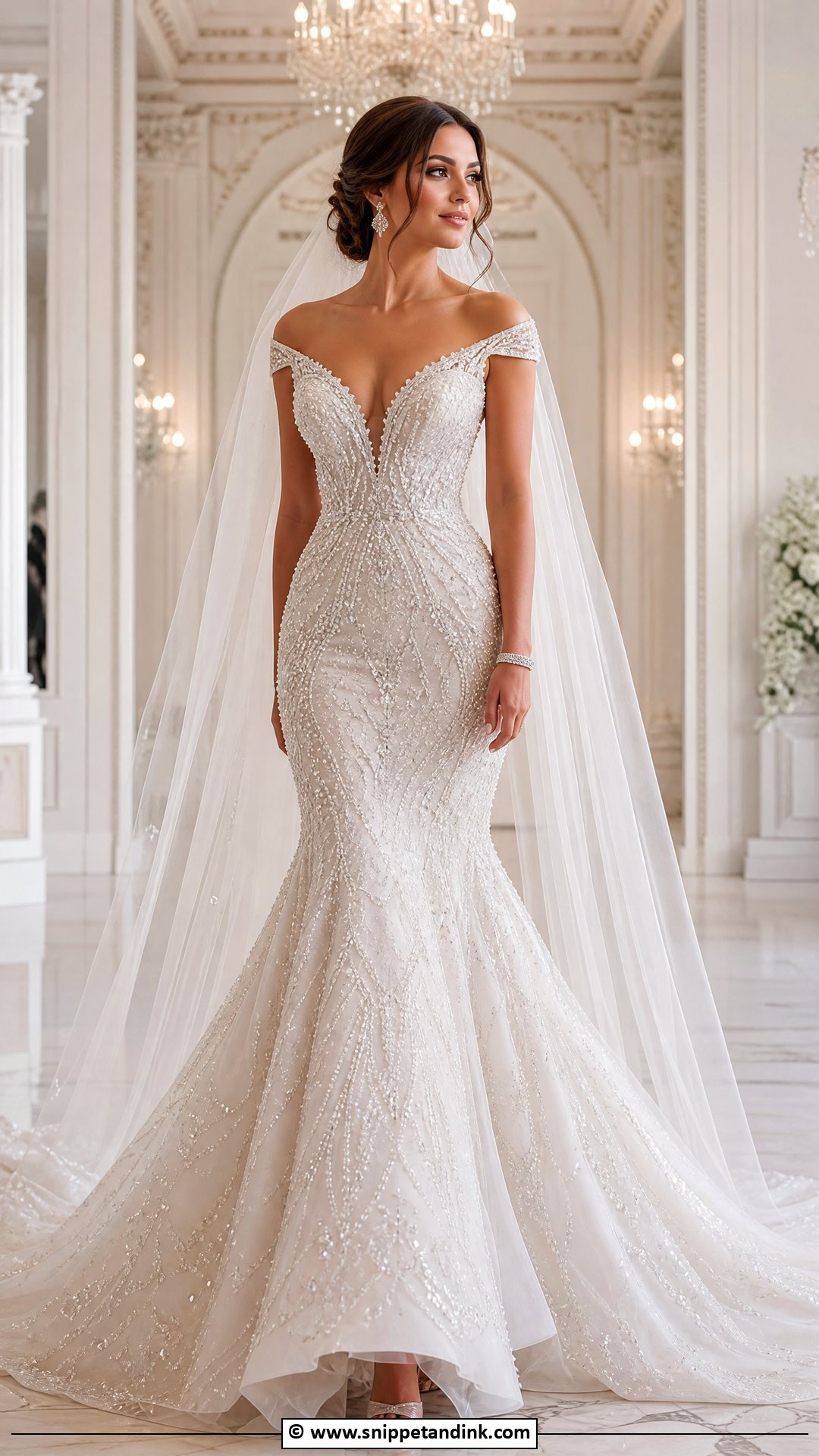
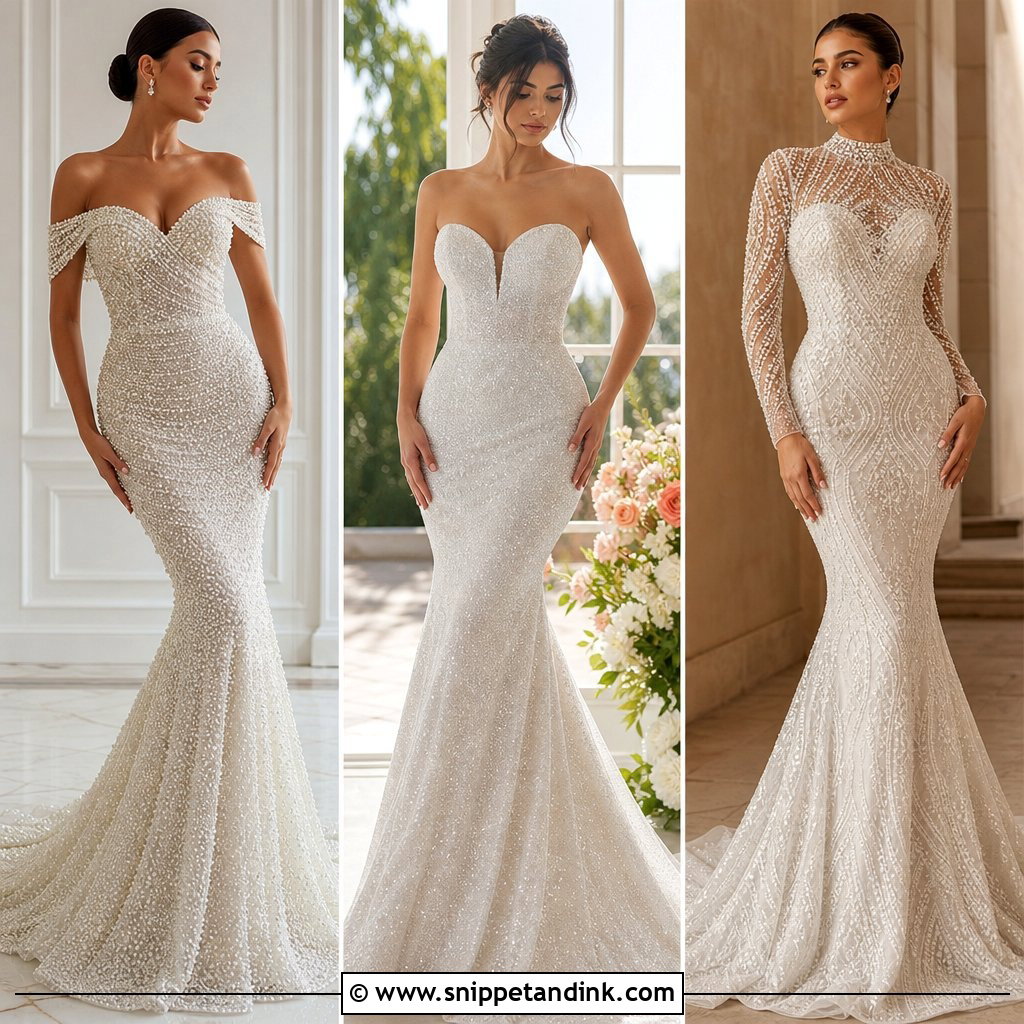
Beaded mermaids sparkle as you move because the pearls, crystals, sequins and bugle beads follow the body’s curves. Scattered beading over lace is softer; allover beadwork is full drama. Beading adds real weight, and on a fitted skirt that weight pulls downward on the hips through the evening, so walk, sit and turn at every fitting. Ask too whether the beads are hand-sewn near the seat, because sitting on rough beads for dinner isn’t pleasant. A smooth veil, a delicate bracelet and classic heels are enough.
8. Pearl Mermaid Wedding Dress
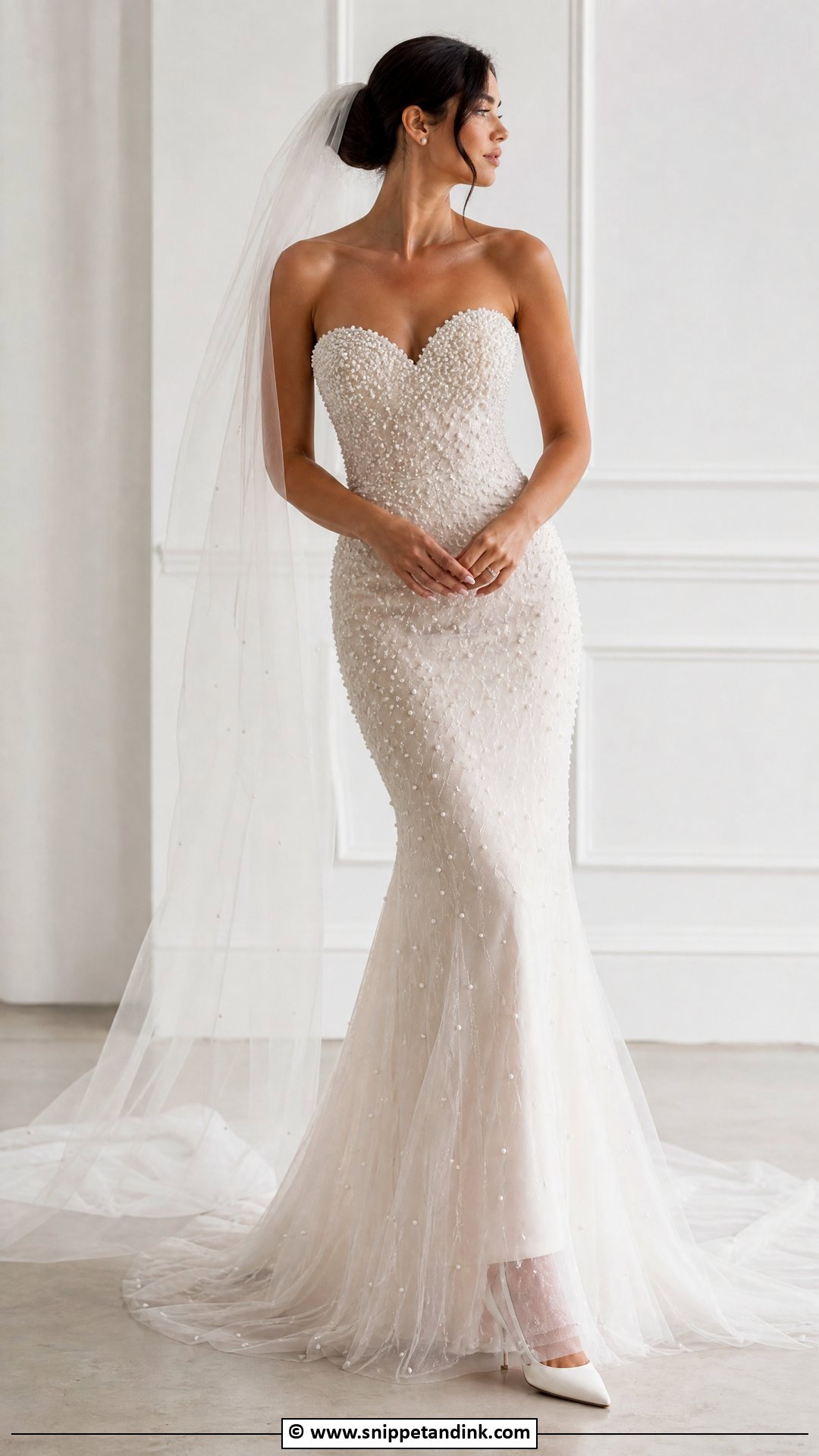
Pearls give texture instead of sparkle. They can be scattered across tulle, run along the neckline or decorate the sleeves and train. A pearl-covered bodice with a clean crepe skirt feels modern; a full pearl tulle gown feels romantic. Style it with pearl studs, a sleek bun and satin heels, and stop there, since more pearls on top of a pearl dress quickly looks costume. I’d ask how the pearls are attached, because glued ones can loosen after hours of hugging.
9. Floral Mermaid Wedding Dress
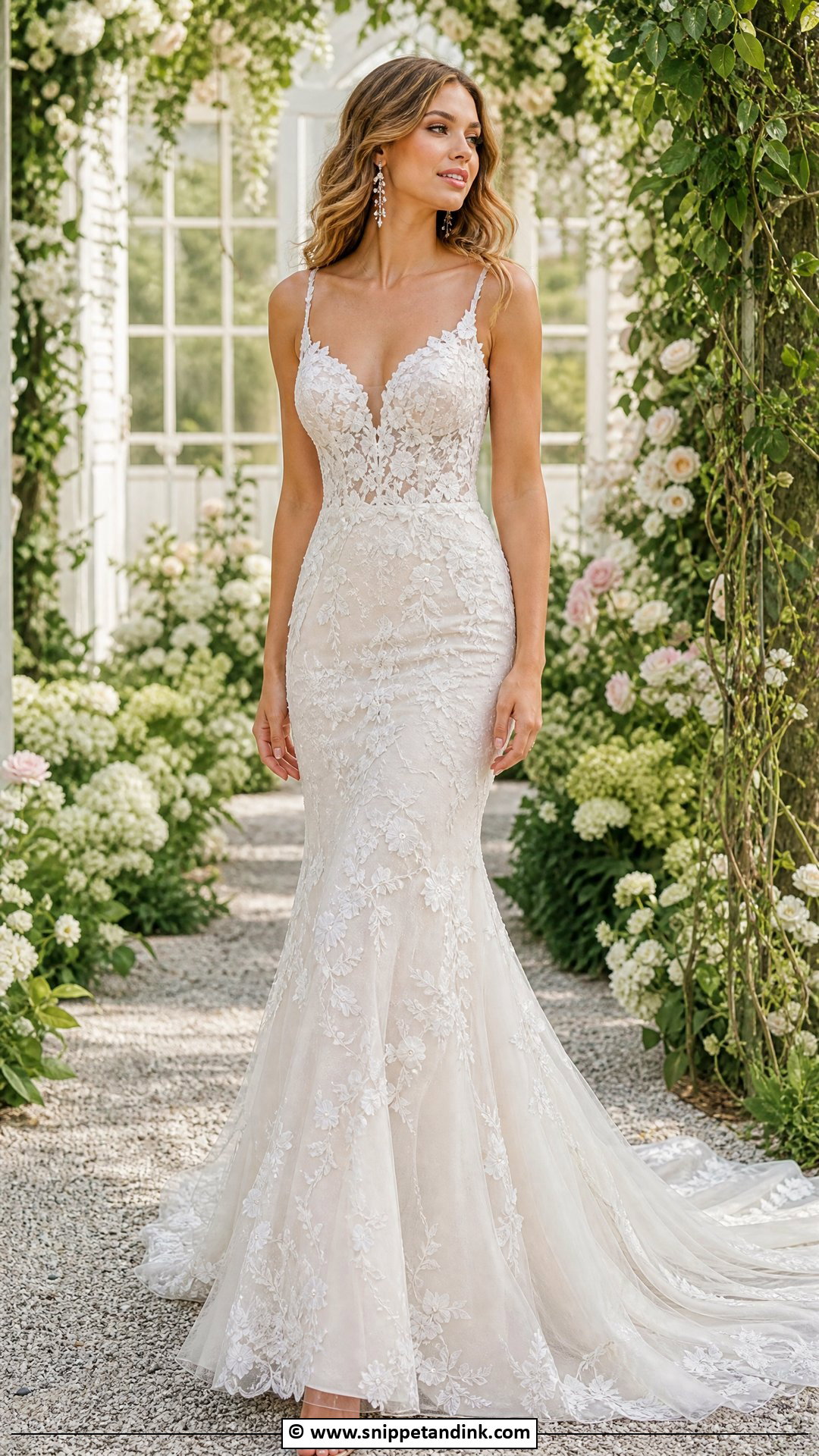
Floral detail on a mermaid can be lace, embroidery, appliqué or raised 3D petals. A floral lace bodice with a plain skirt keeps it balanced; appliqués trailing down the skirt into the train add drama. Spring, summer and garden weddings suit it. Raised 3D flowers on the skirt crush when you sit, and they’re the first thing a seamstress has to work around when bustling, so ask how the train lifts before you commit. Loose waves, natural makeup, a sheer veil and delicate heels keep it fresh.
10. Simple Mermaid Wedding Dress
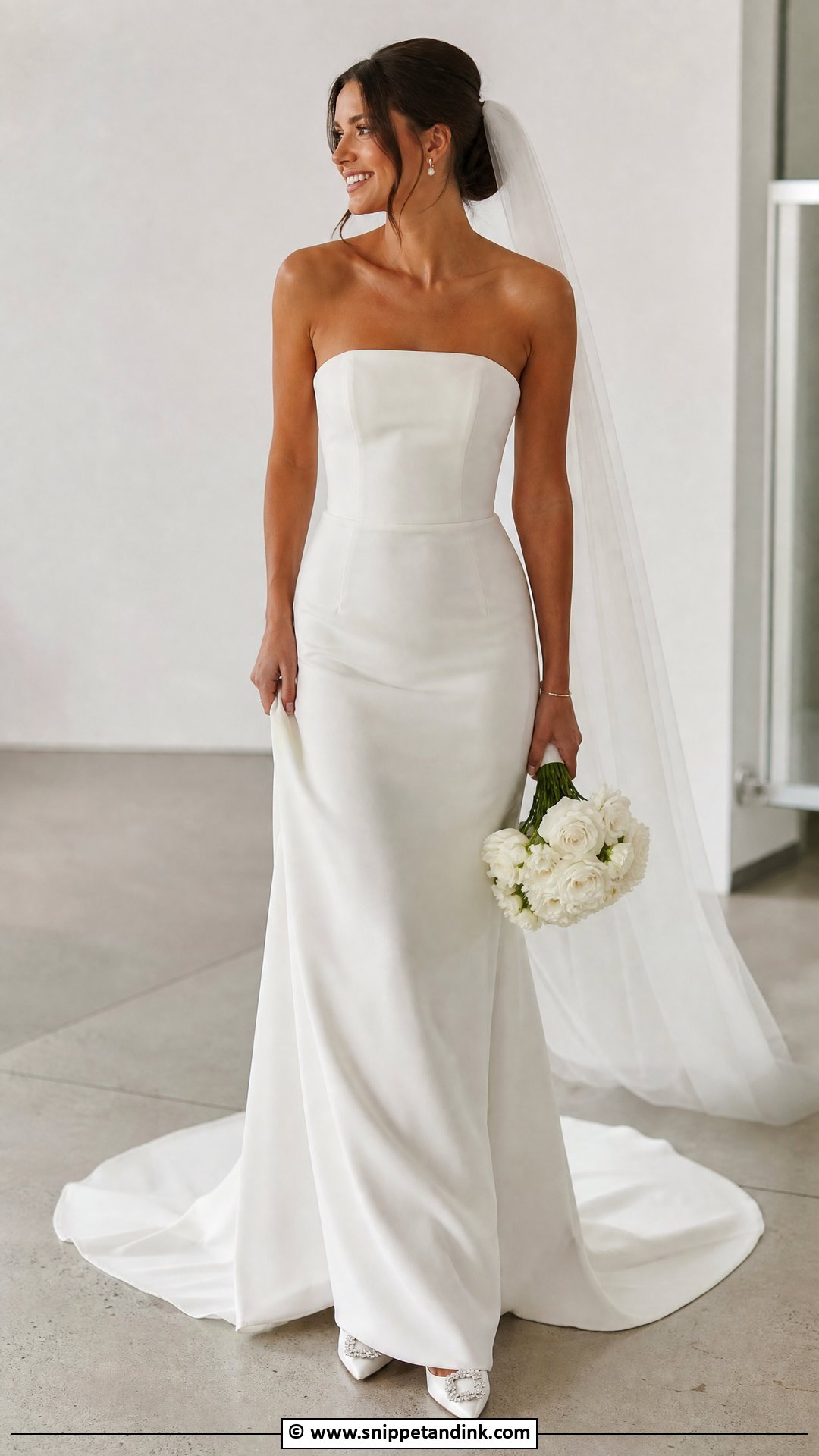
A plain mermaid relies on fabric and tailoring, nothing else. Crepe, satin and mikado hold shape and keep it minimal. A square neckline, strapless bodice or high bateau each changes its personality. Wear a dramatic veil for the ceremony and take it off for a sleek reception look. My honest note: a plain fitted gown shows every bump of shapewear, so sort your underwear before the first fitting. Minimal jewelry, smooth heels and a neat updo finish it.
11. Modern Mermaid Wedding Dress
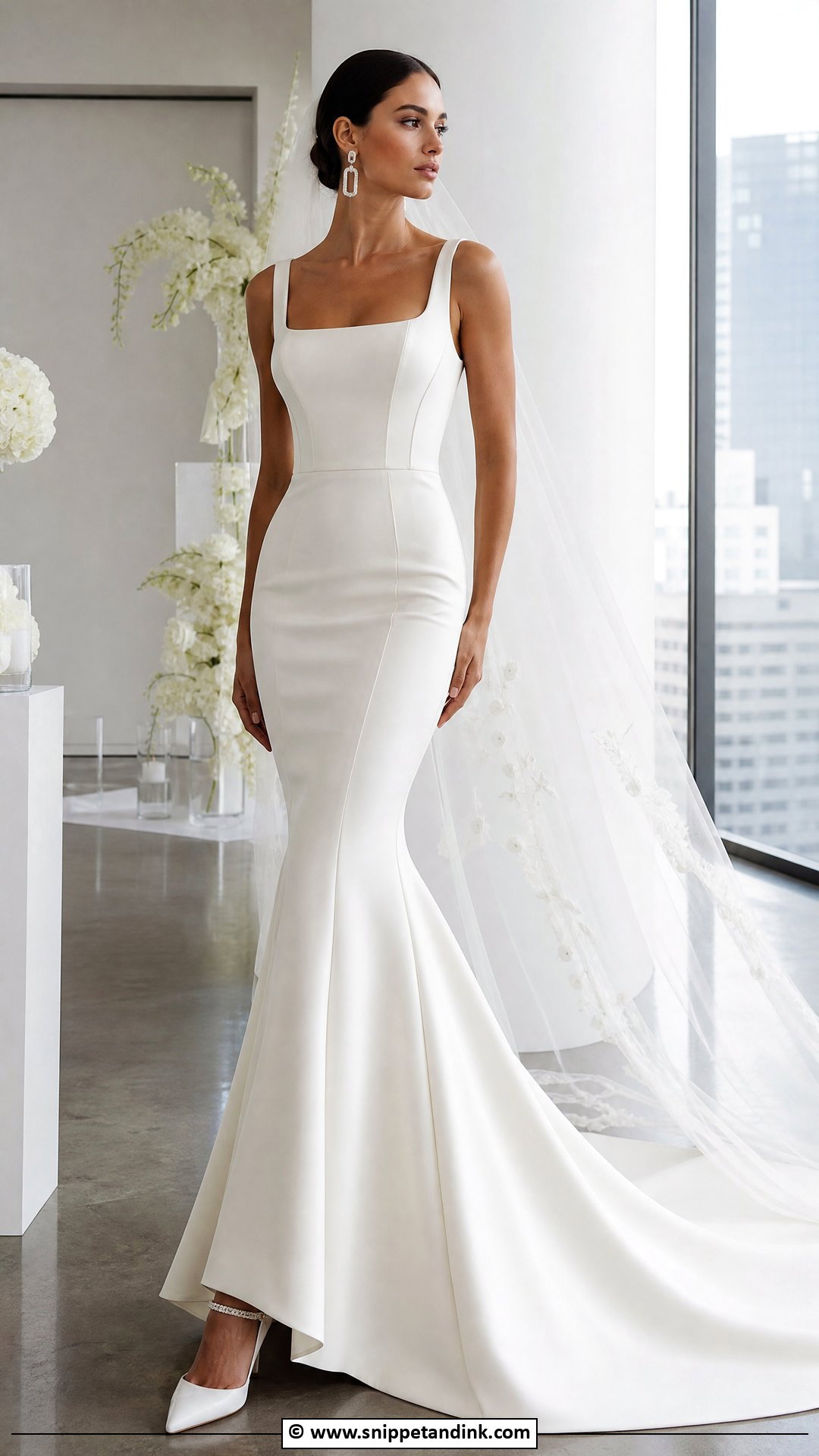
Modern versions focus on clean lines, sharp structure and one detail, such as a square neckline, exposed corset seams, a sculpted bodice, a high slit or a detachable train. The cut and fabric carry the look. Satin, crepe, mikado or stretch fabric with a firm lining all work. Slicked-back hair, architectural earrings and a plain-edged veil keep it intentional. City venues and modern ballrooms suit it. If you choose the high slit, check it sitting down, because on a fitted skirt the slit opens wider than you’d guess.
12. Vintage Mermaid Wedding Dress
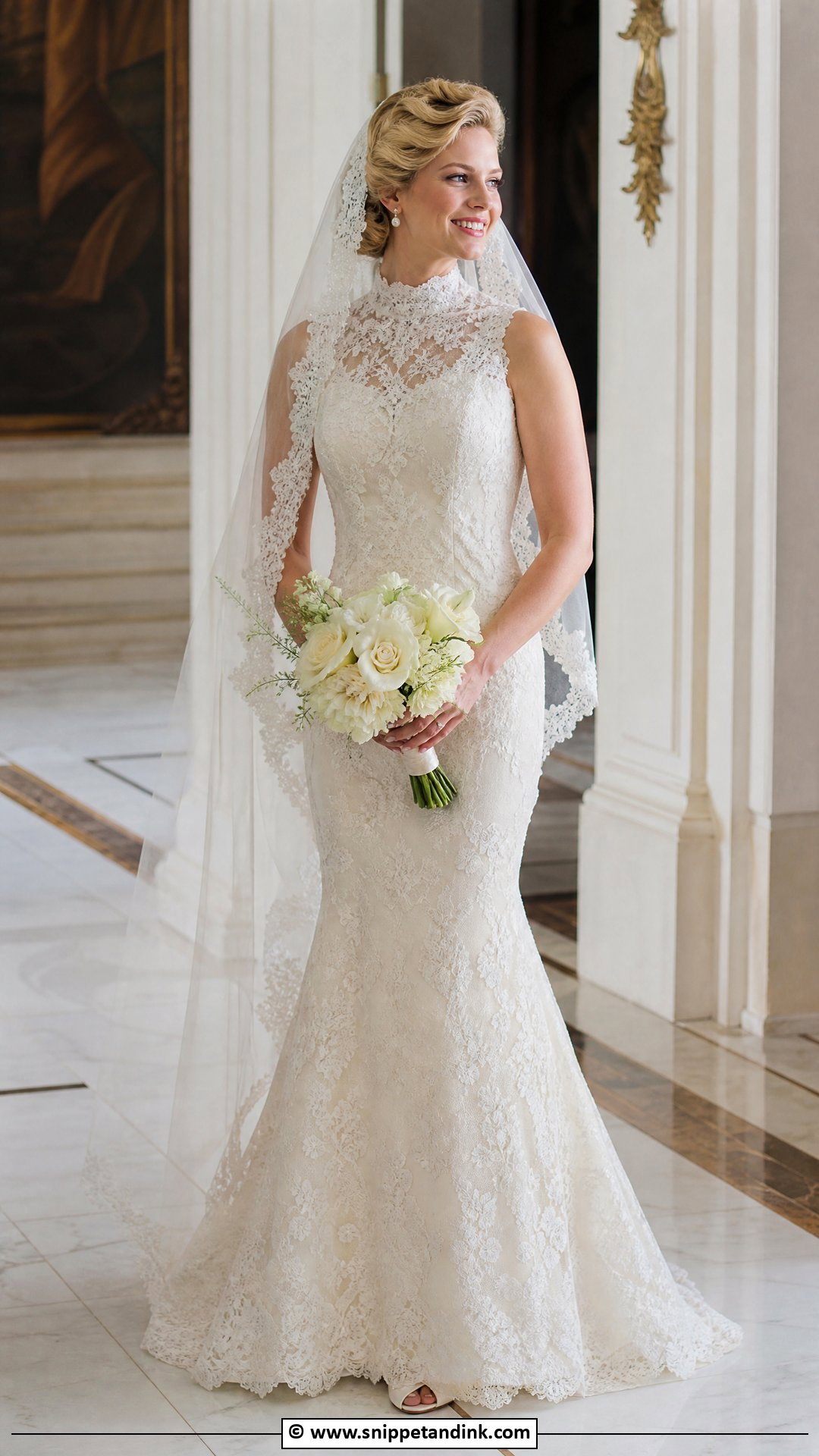
Vintage mermaids borrow from old Hollywood: lace sleeves, high necklines, covered buttons, a basque waist or fine beadwork. Ivory usually reads more vintage than bright white. Soft curls, classic makeup, pearl earrings and a lace-edged veil suit it. Choose one or two period details and keep everything else clean; a dress covered in every retro feature starts to look like a costume rather than a wedding gown.
13. Boho Mermaid Wedding Dress
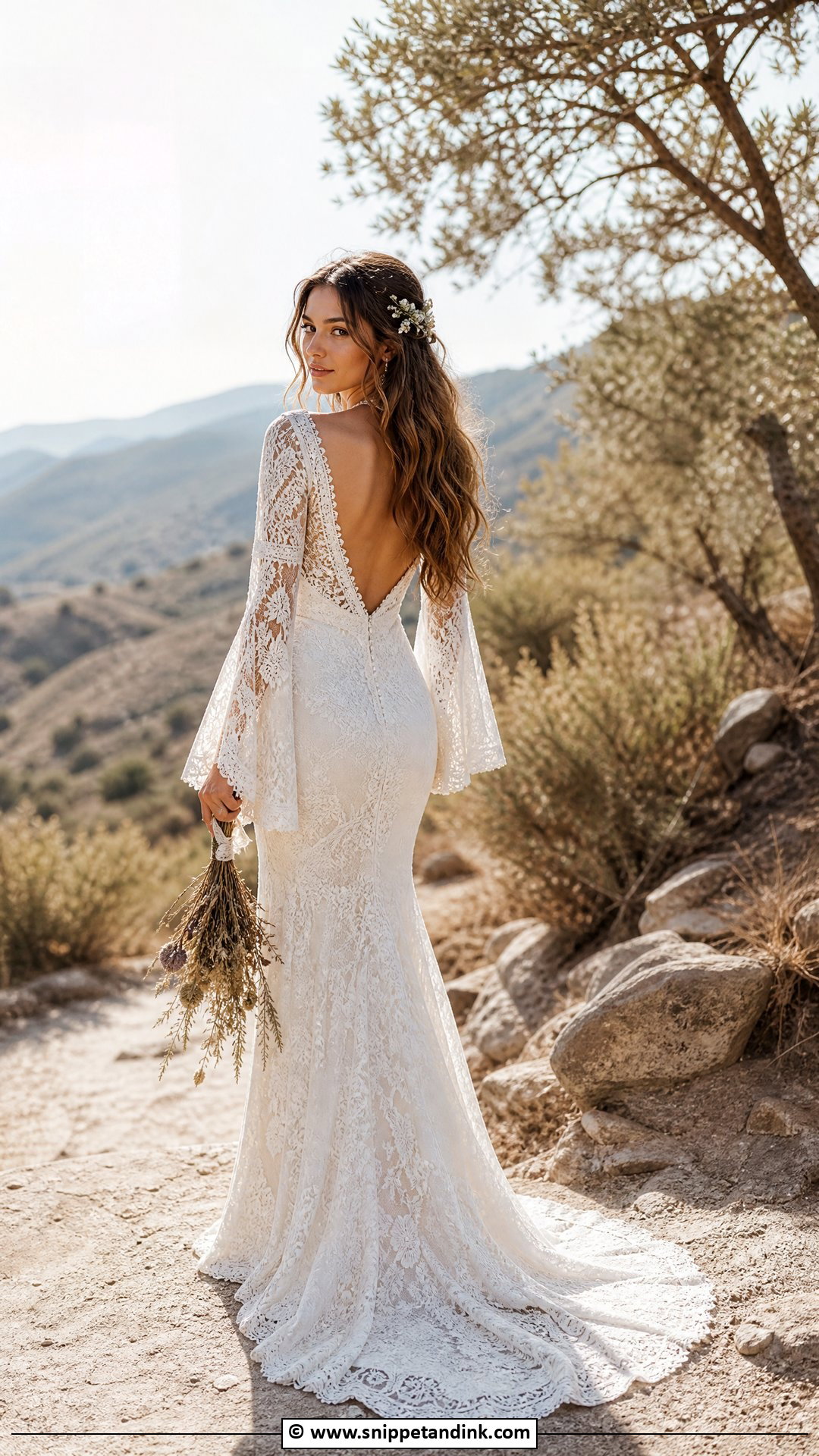
Boho mermaids trade stiff structure for soft lace, crochet-style patterns, light lining and an easy flare. Bell sleeves, open backs, illusion panels and botanical lace set the mood for outdoor, desert, beach and rustic venues. Pair it with loose waves, soft makeup, sandals or block heels and a light veil, plus floral hair pins if you like. Unstructured mermaids can drop and stretch over a long day, especially in heat, so I ask whether there’s a light corset or waist stay inside to hold the shape.
14. Beach Mermaid Wedding Dress
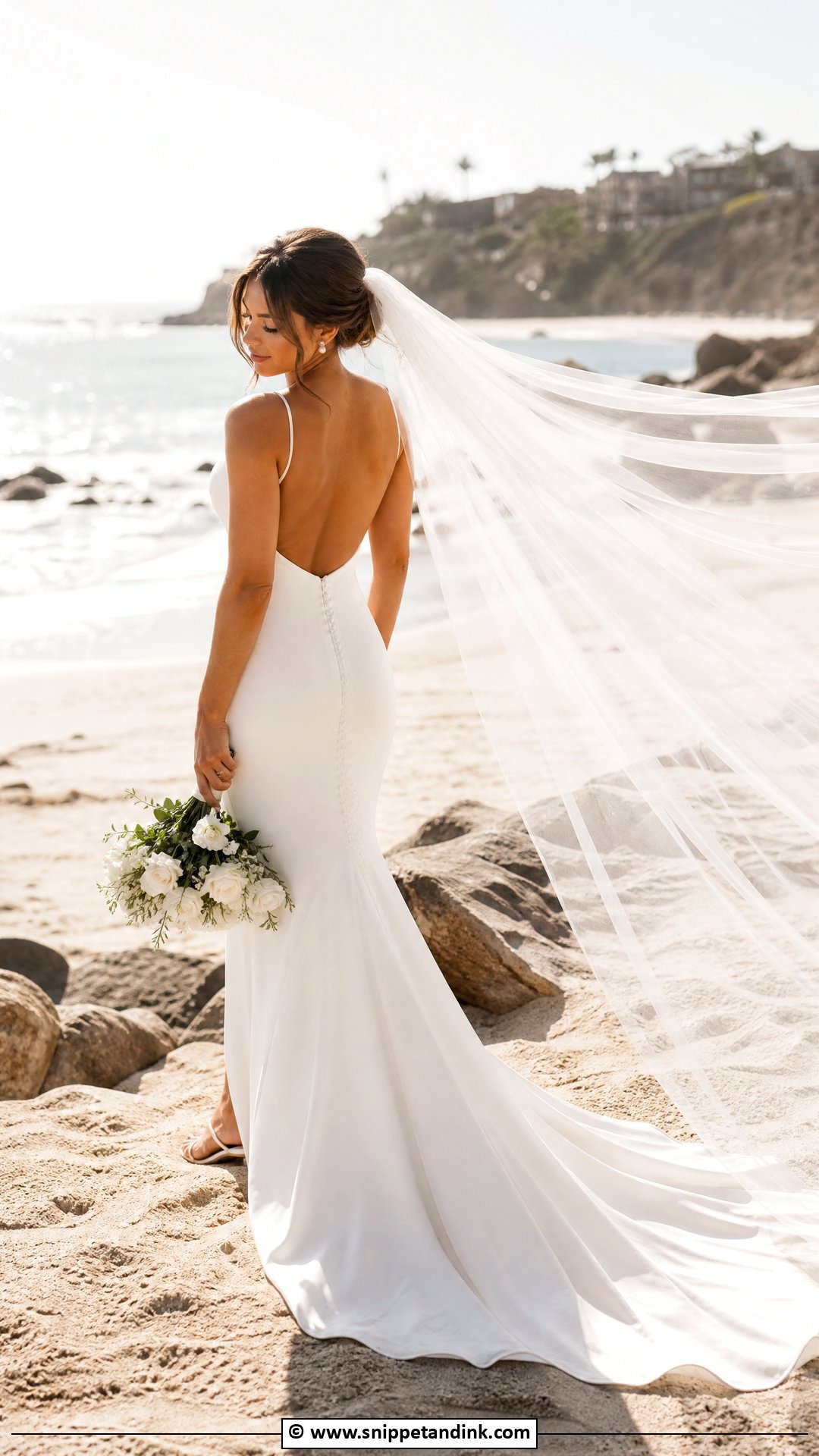
Sand is hard on fitted skirts. Heavy beadwork and stiff trains drag, so look for soft crepe, stretch lace, chiffon overlays or light tulle with a lower flare. Spaghetti straps, off-shoulder necklines and open backs suit the water. A shorter train or detachable overskirt gives drama for photos and comfort afterward. Flat sandals or low block heels, pearl studs, soft waves and a breezy veil. Walking on sand in a mermaid takes shorter steps than you expect, so practise in the shoes on uneven ground.
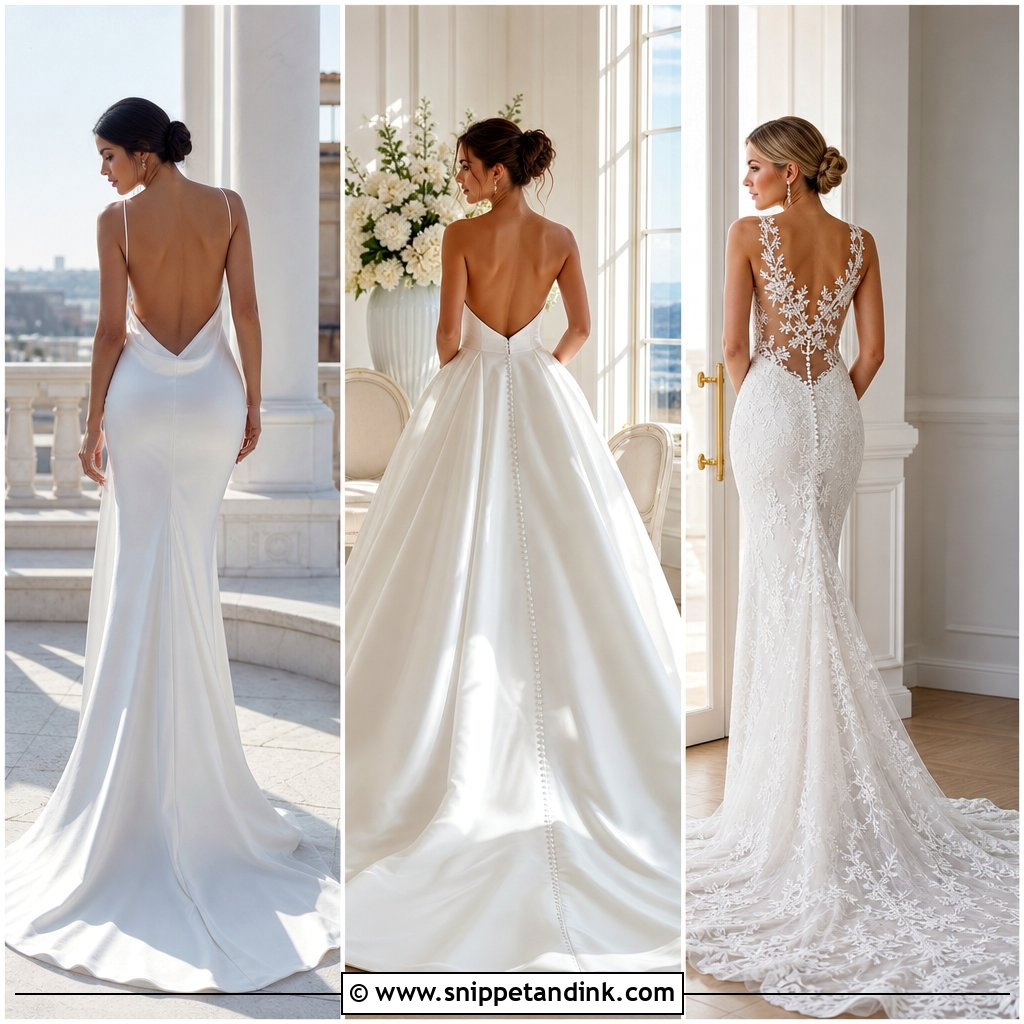
15. Plus Size Mermaid Wedding Dress
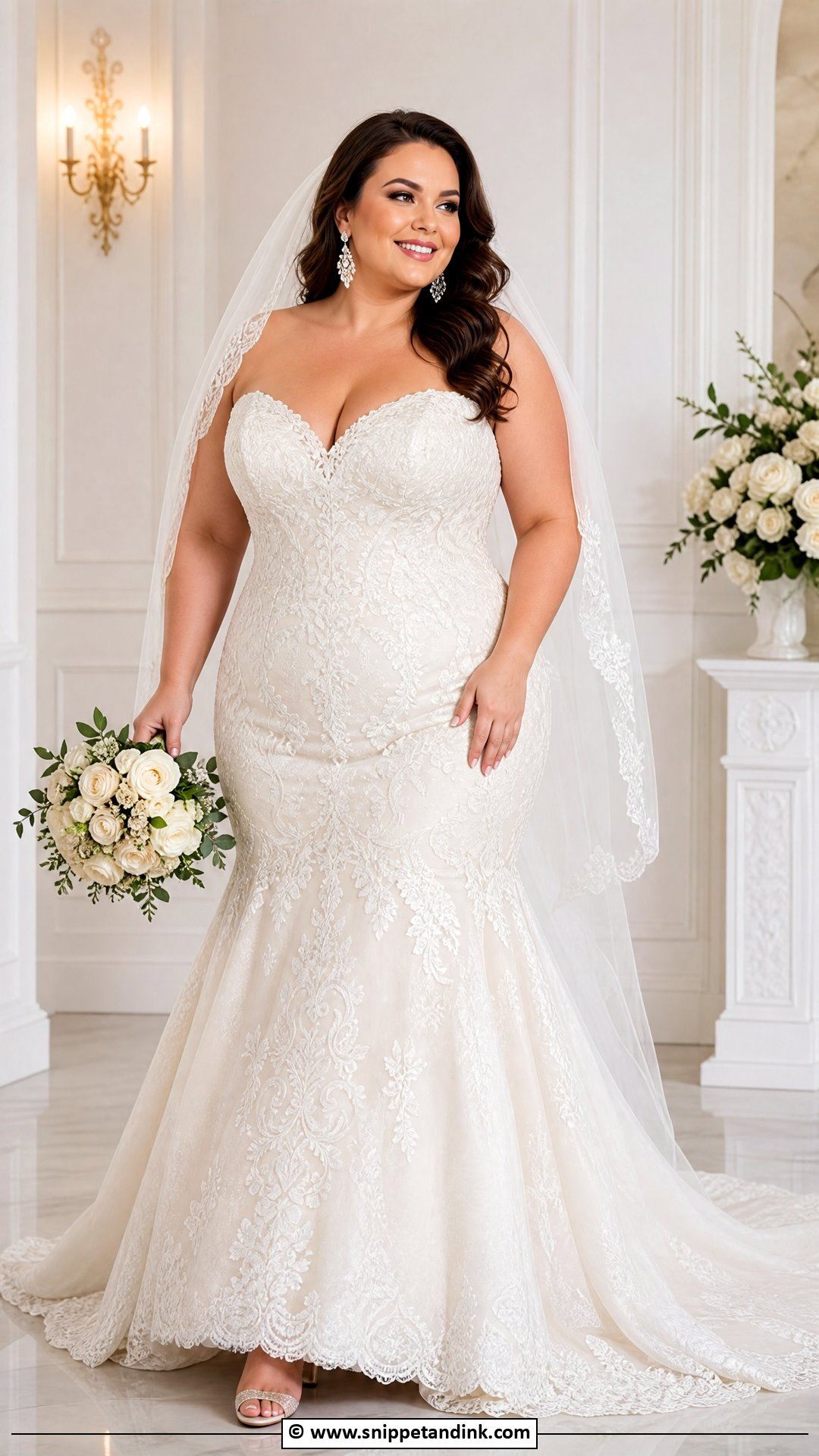
On a plus size bride, a mermaid works when the structure is right: supportive cups, strong boning, good lining, and seams that follow your curves rather than squeezing them. A flare starting at or just above the knee usually gives the best balance and freedom to walk. Lace, ruching and diagonal seams define the waist, and off-shoulder, sweetheart and V necklines frame the upper body. I’d always ask what’s built in before relying on shapewear. Pick a veil that stays put, heels you can stand in and jewelry that’s yours.
16. Petite Mermaid Wedding Dress
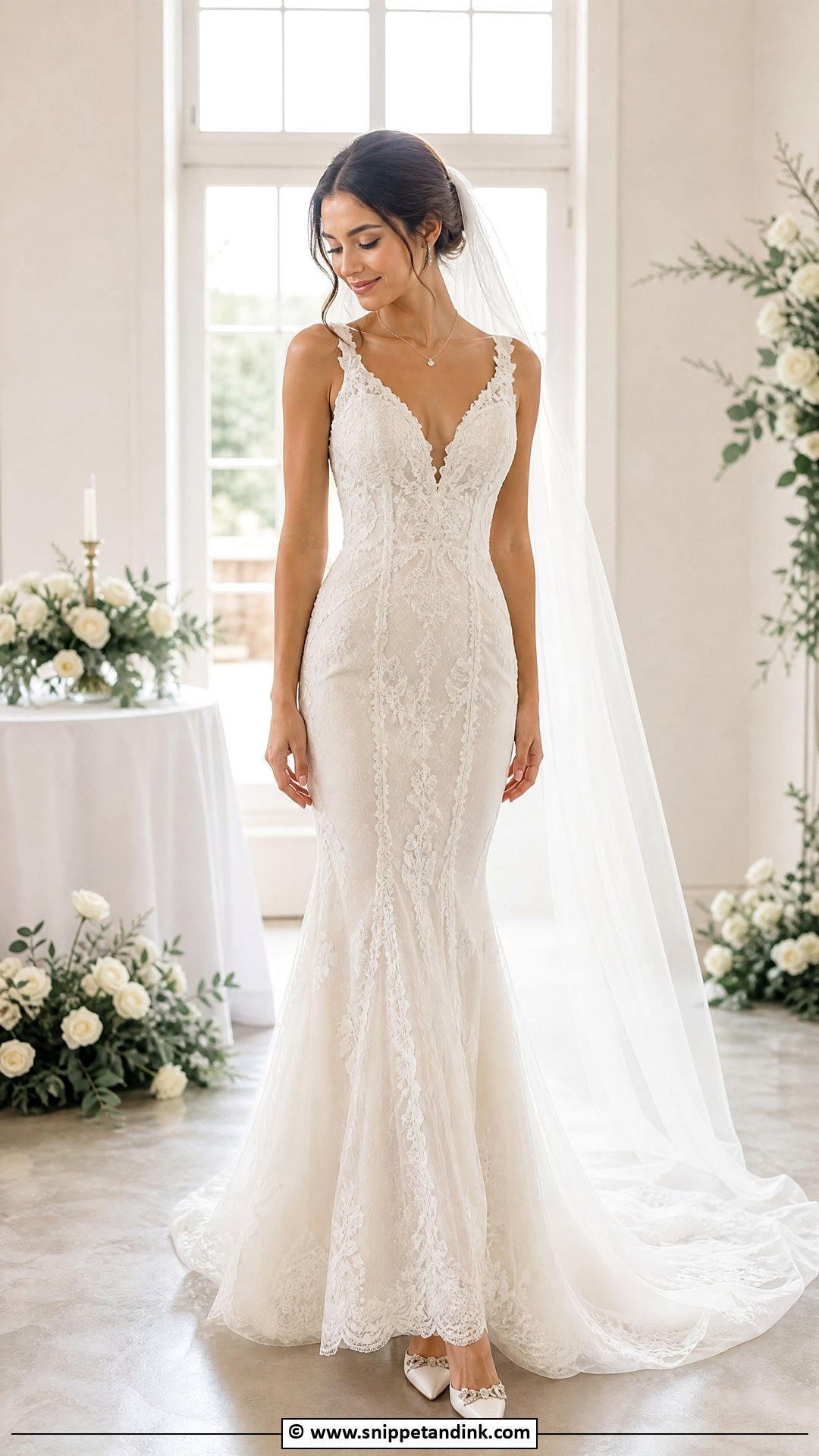
Petite brides need the flare placed carefully, because a high flare cuts the leg line and makes you look shorter. A lower, softer flare usually works better. Vertical lace patterns, clean seams, a deep V and uninterrupted fabric add height visually. Avoid a huge train; a chapel or sweep train is enough. When I fit petite brides, the hem and flare often both need moving, so ask whether the gown can be shortened from the waist rather than the hem. Pointed heels, delicate jewelry and a veil that flows keep it proportional.
17. Curvy Mermaid Wedding Dress
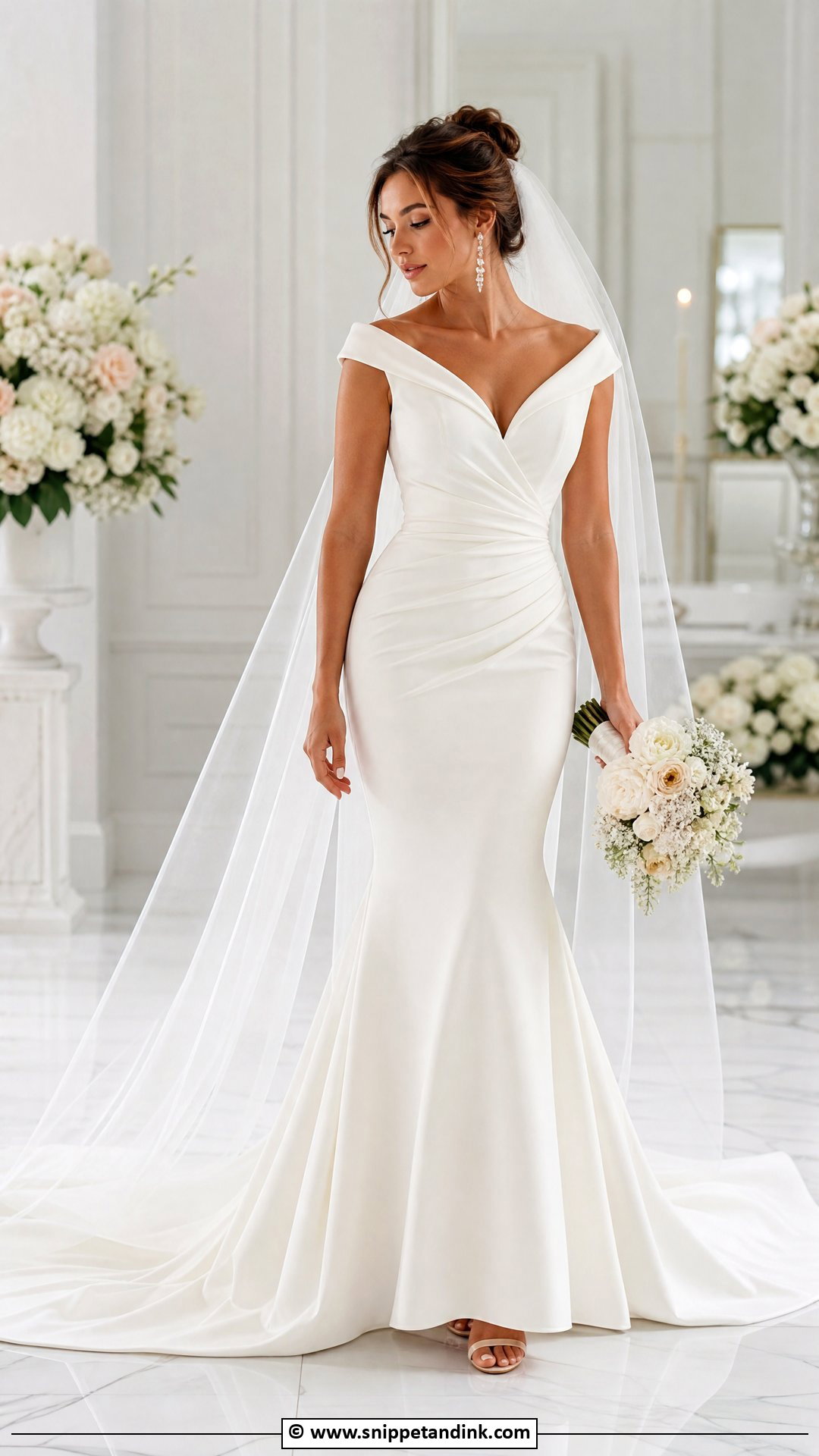
A curvy mermaid wedding dress supports the bust, defines the waist and skims the hips before the flare. Stretch crepe, lace over lining and structured satin are strong fabrics. A corset bodice or subtle ruching across the middle adds definition; a sweetheart, off-shoulder or deep V balances the fitted skirt. Choose undergarments before your first fitting so the measurements are accurate, because switching later can throw off a close fit. Supportive heels, statement earrings and a veil that suits the mood finish it.
18. Corset Mermaid Wedding Dress
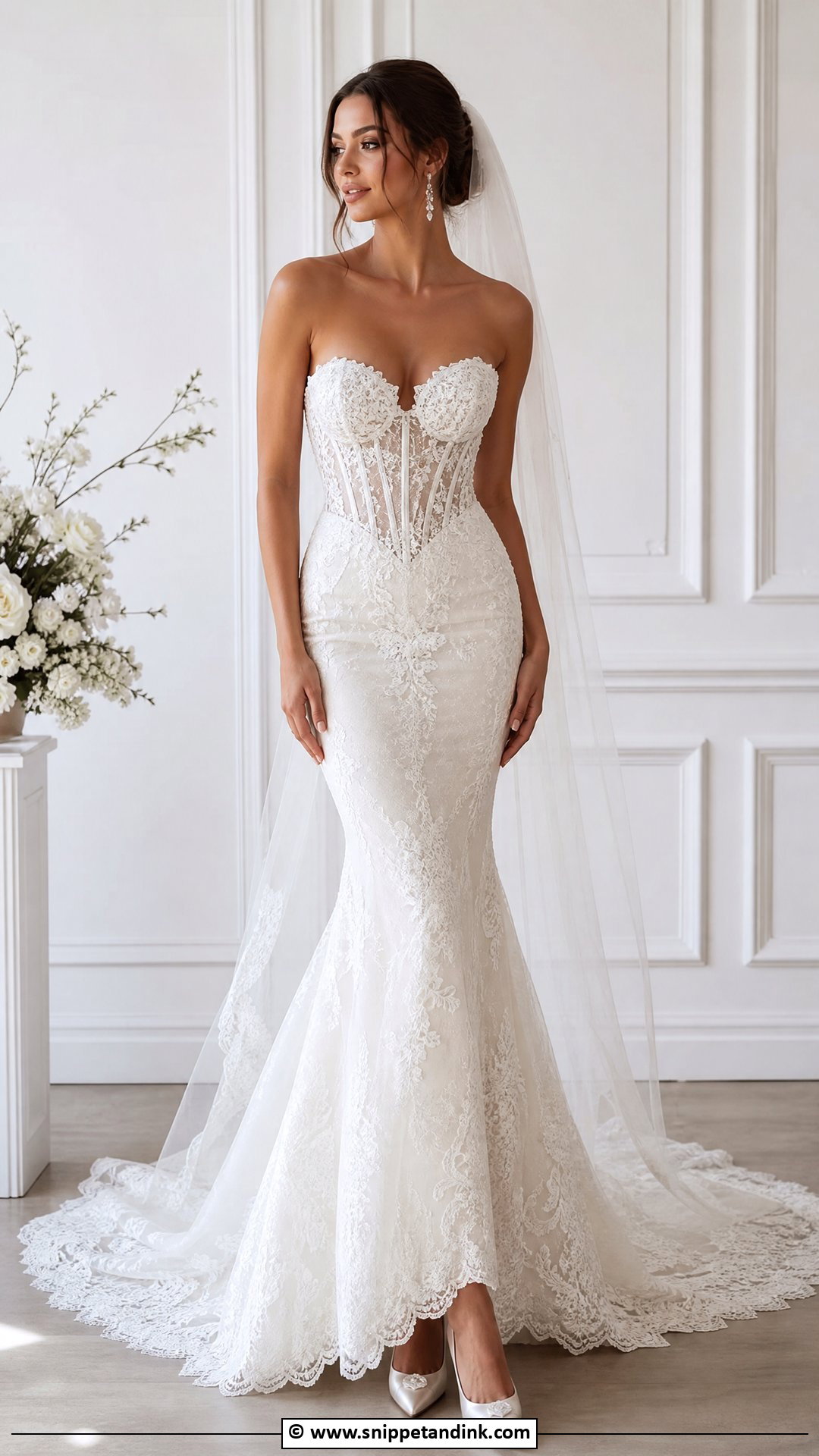
A corset mermaid wedding dress gives the strongest waist definition here. The corset can hide under smooth fabric or show through visible boning and sheer panels; both look current when fitted precisely. Lace, satin, tulle or crepe skirts all work. A lace-up back is adjustable, which helps if your weight shifts before the day, while a zip gives a cleaner finish. Corset plus fitted skirt means sitting is the real test, so eat lunch in it at the final fitting if you can. Soft waves, drop earrings and a simple veil.
19. Sweetheart Mermaid Wedding Dress
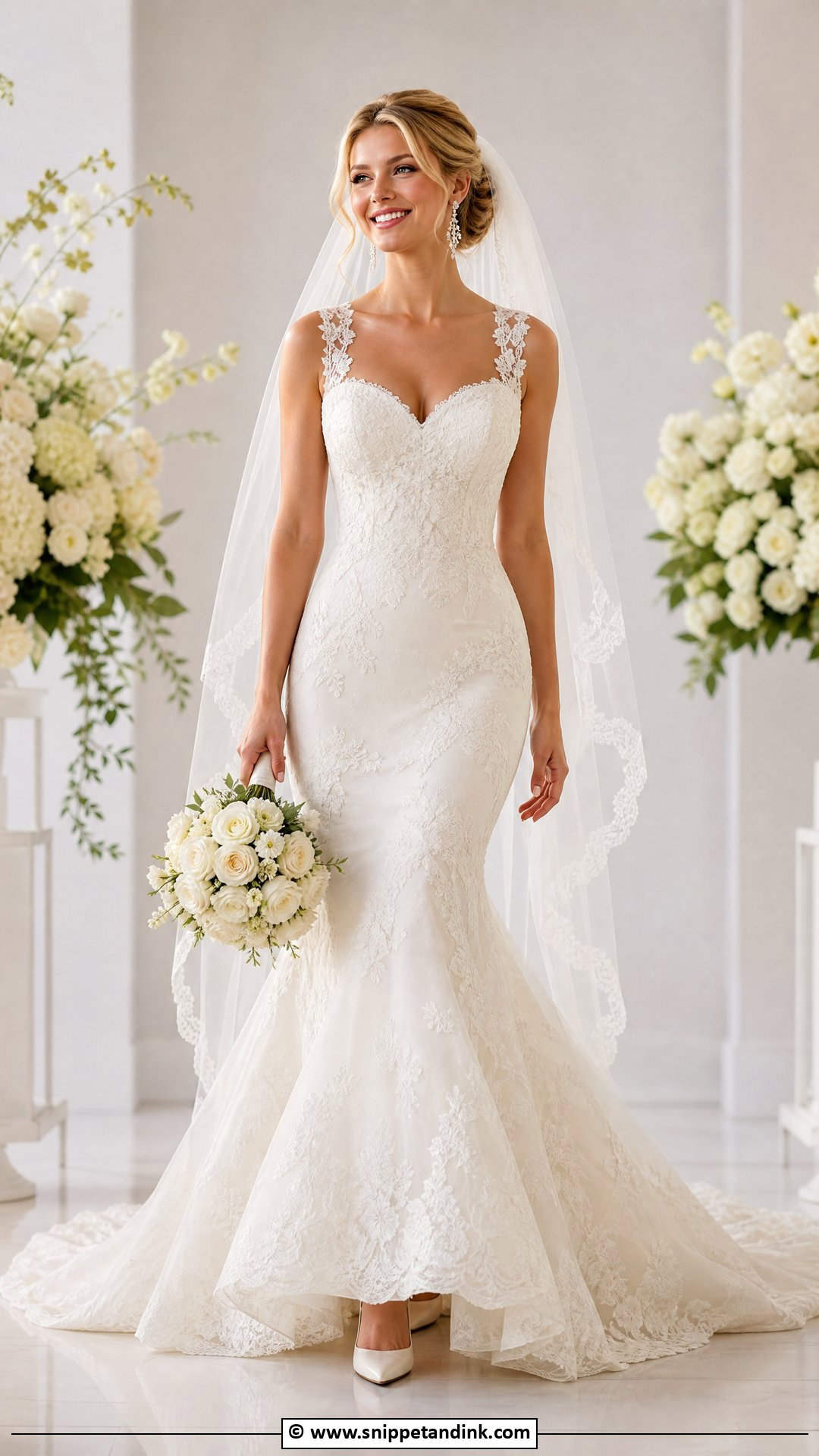
The sweetheart curve softens a fitted silhouette and draws attention to the collarbone and face. It works strapless, with lace straps, with detachable sleeves or with illusion panels. Lace or satin feels classic; smooth crepe feels modern. It pairs with both a veil and statement earrings. If you need support, insist on built-in structure rather than relying on tape, since a sweetheart bodice that shifts shows straight away at the neckline.
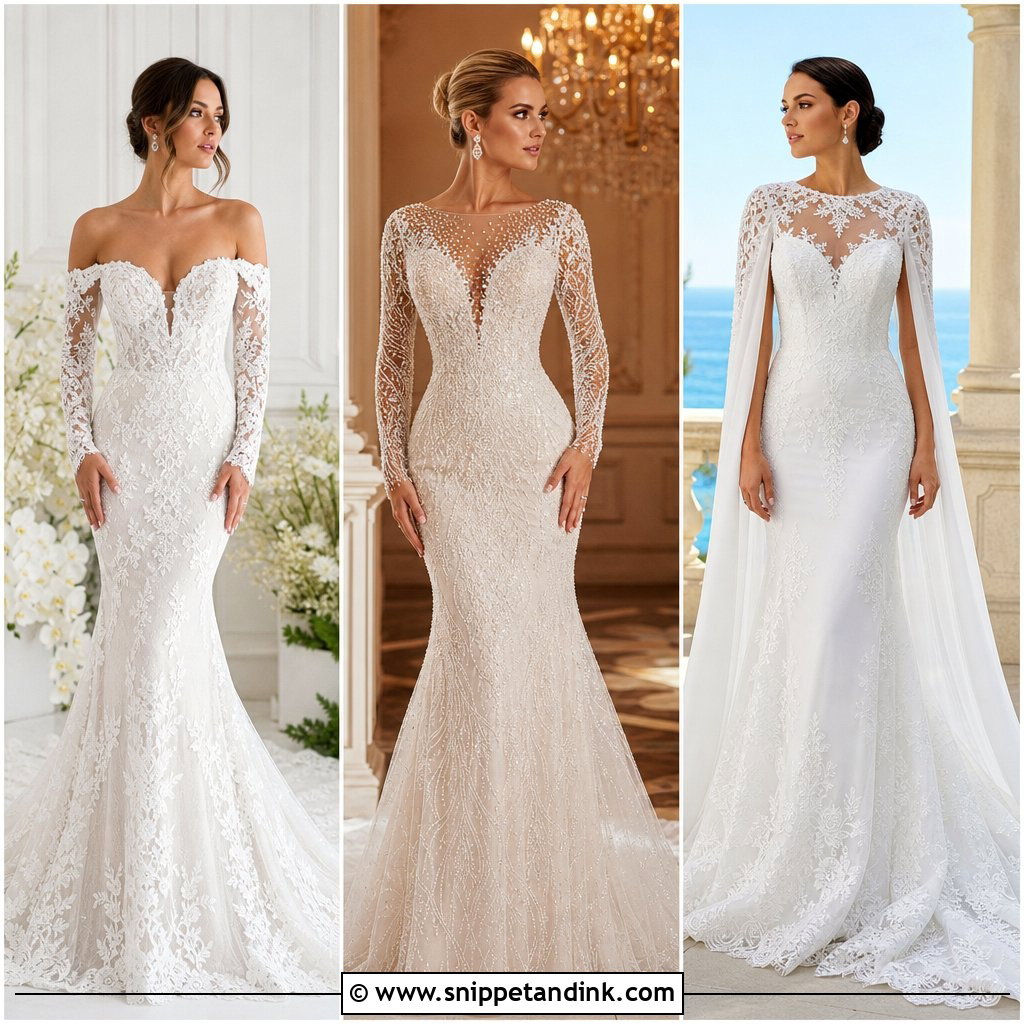

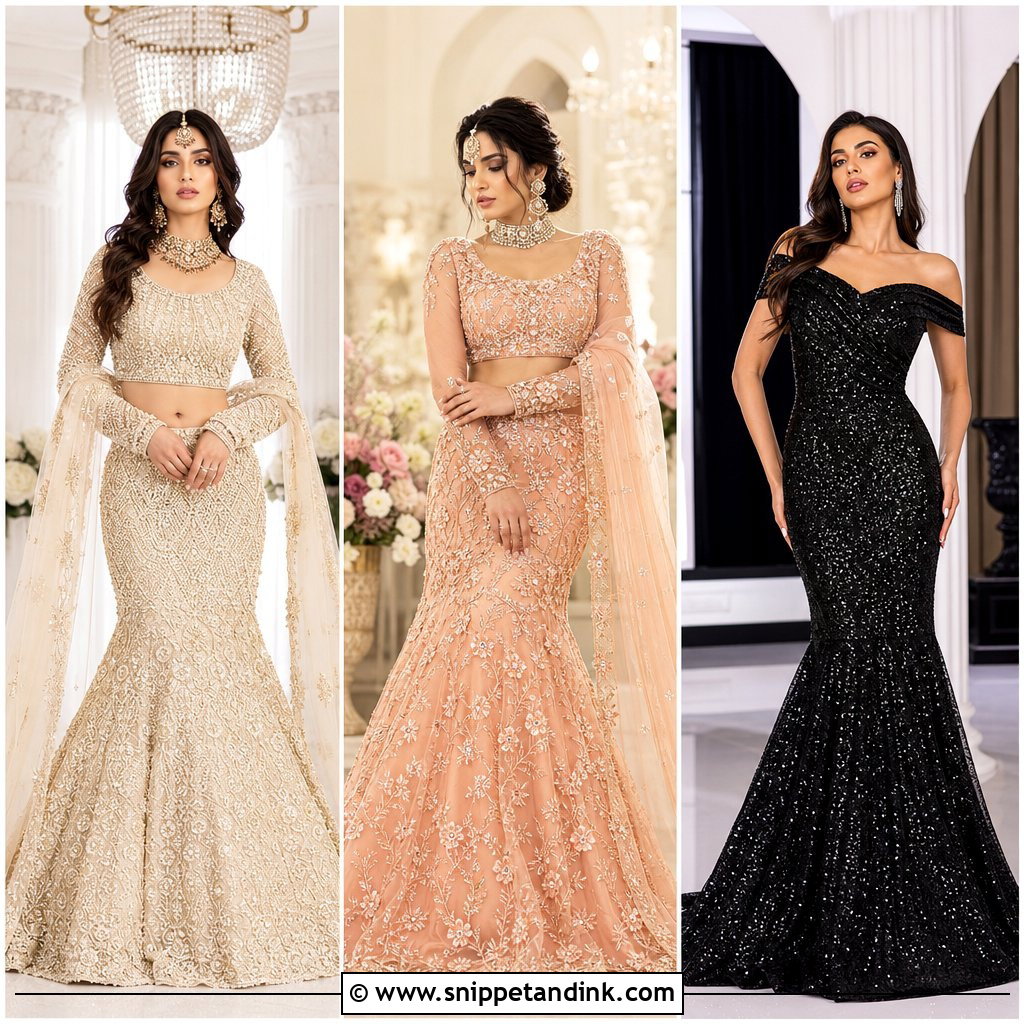
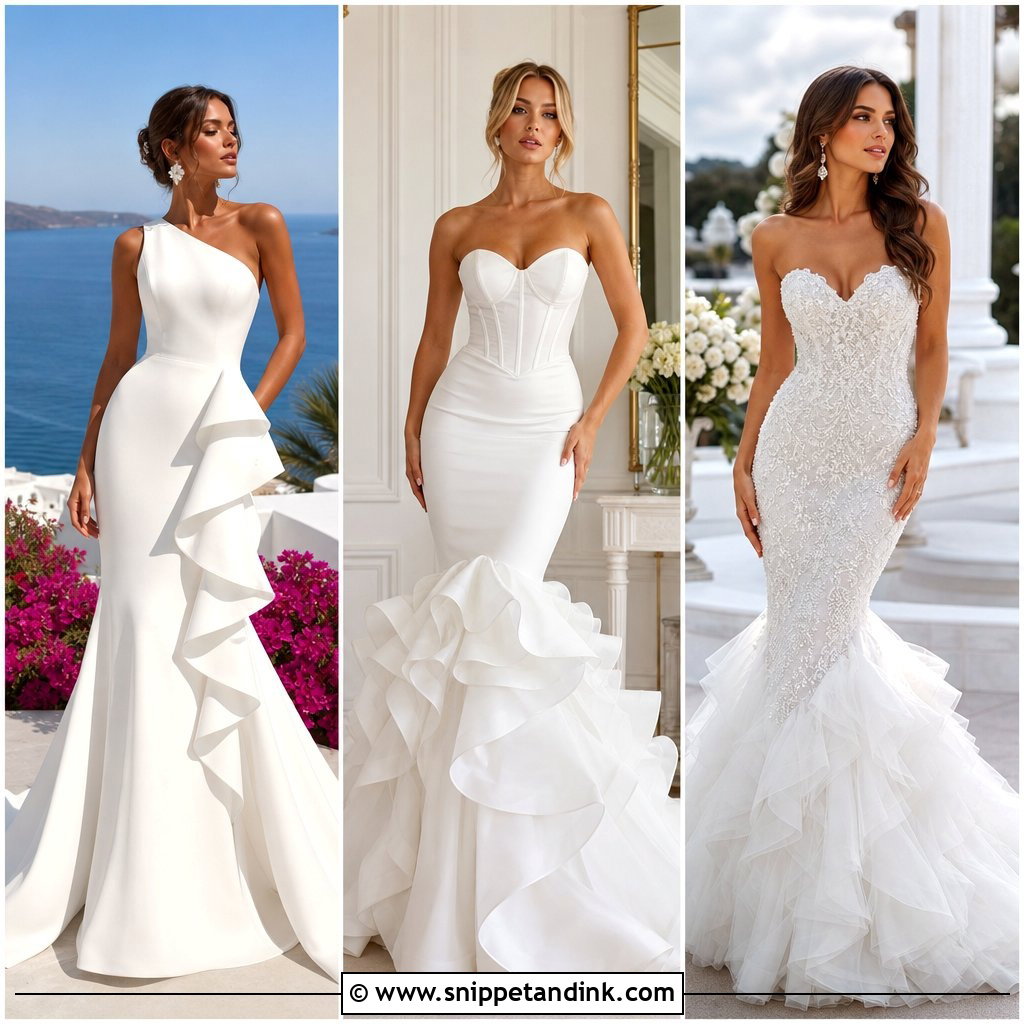
20. V Neck Mermaid Wedding Dress
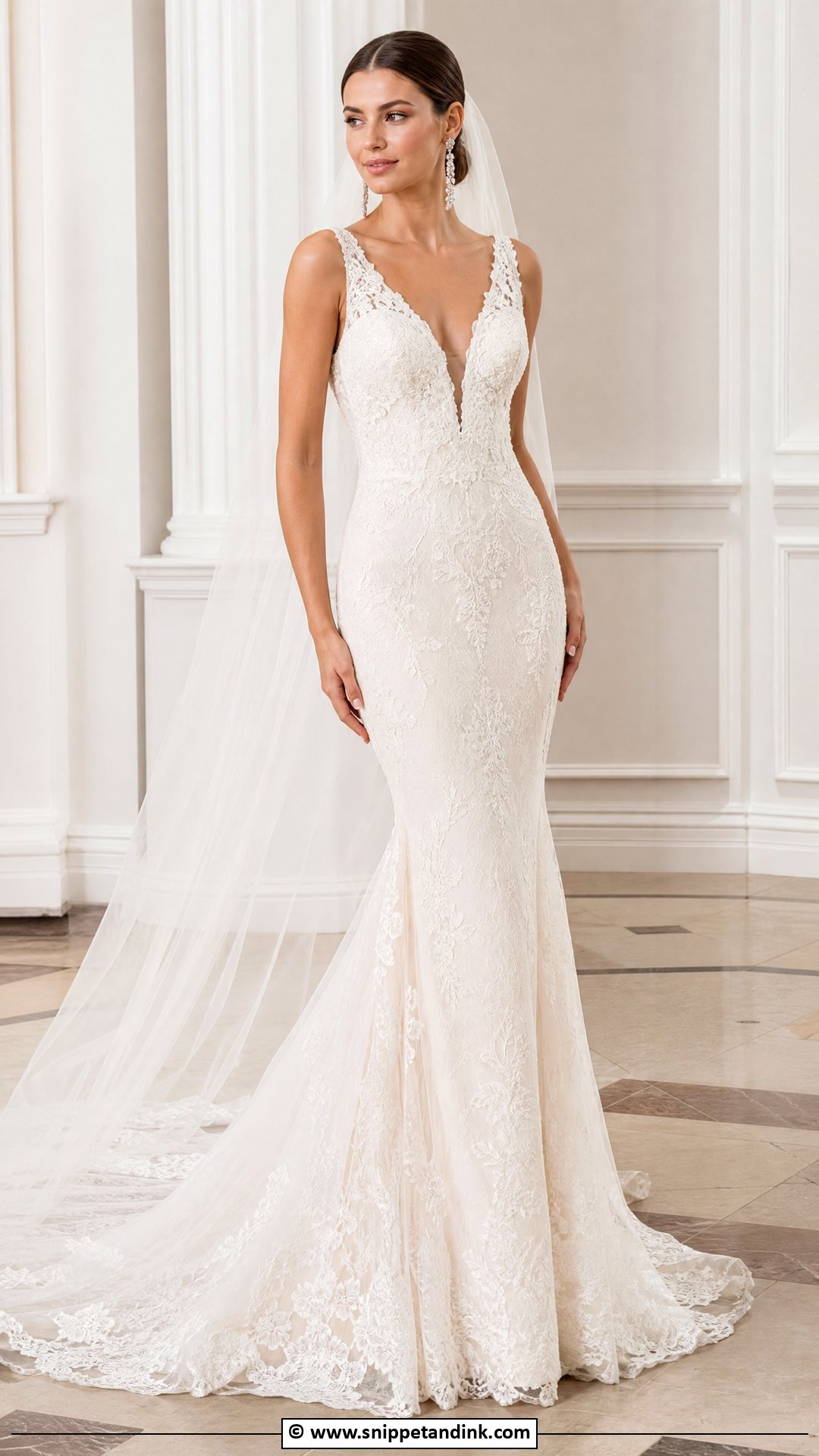
A V lengthens the torso, which suits a fitted dress well. A deep V is bold; a soft V is easier to wear all day. Illusion mesh can add coverage and keep the open line. It pairs with lace, beading, satin or crepe. Balance front and back: a dramatic front wants a quieter back, and a modest front can take a low back. On deep Vs I check the edges don’t gape when you bend, and often add small hidden tape points. A pendant or long earrings, not both.
21. Square Neck Mermaid Wedding Dress
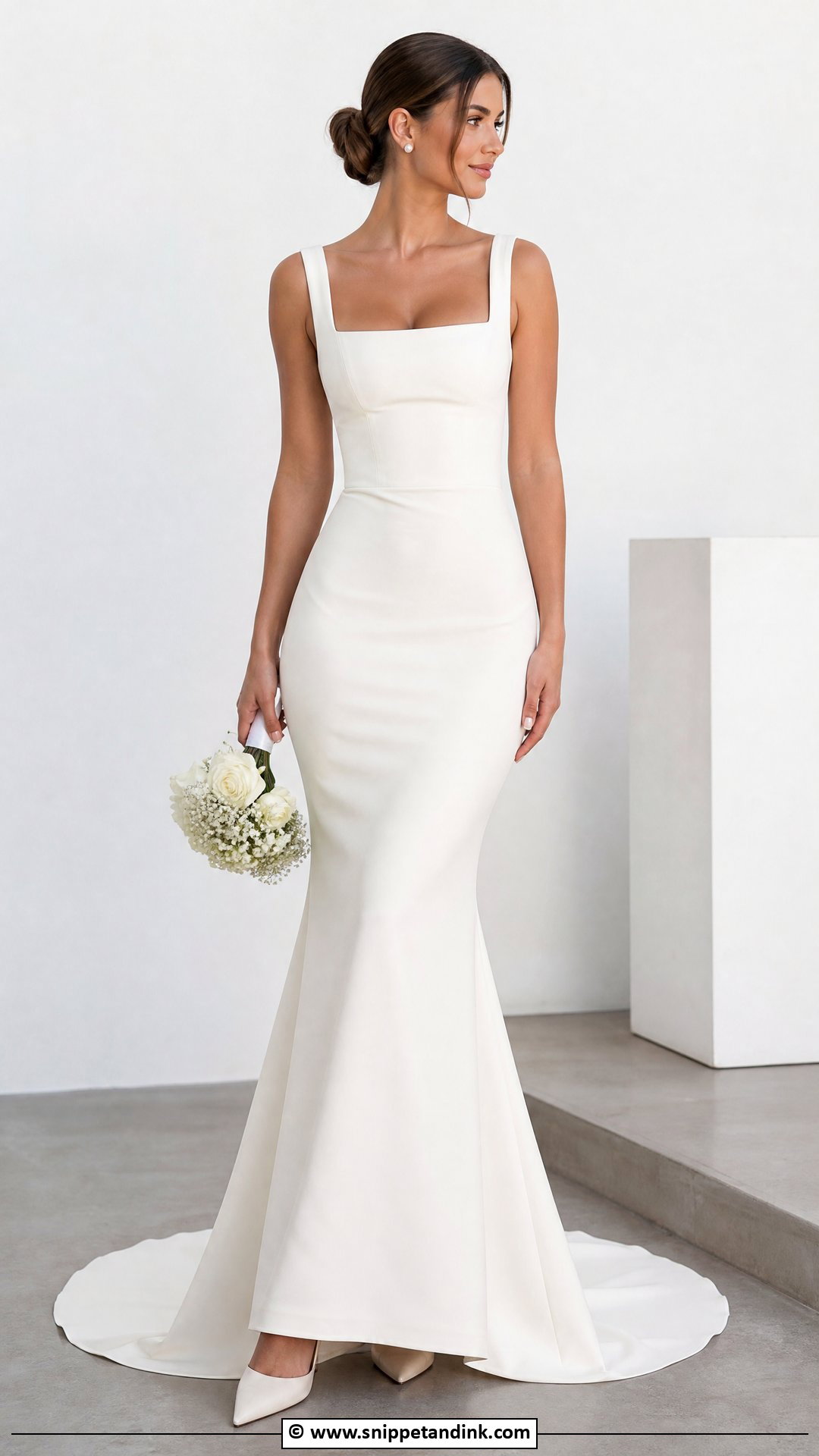
A square neckline adds a slightly architectural edge and more coverage than a sweetheart or deep V. Crepe, satin and mikado show the sharp corners best. Wide straps give support, which makes it a practical choice. A low bun and small pearl or diamond-style studs suit it; keep the veil simple. Corners are where square necklines fail, so I check them for gaping every time the bride leans forward to sit.
22. High Neck Mermaid Wedding Dress
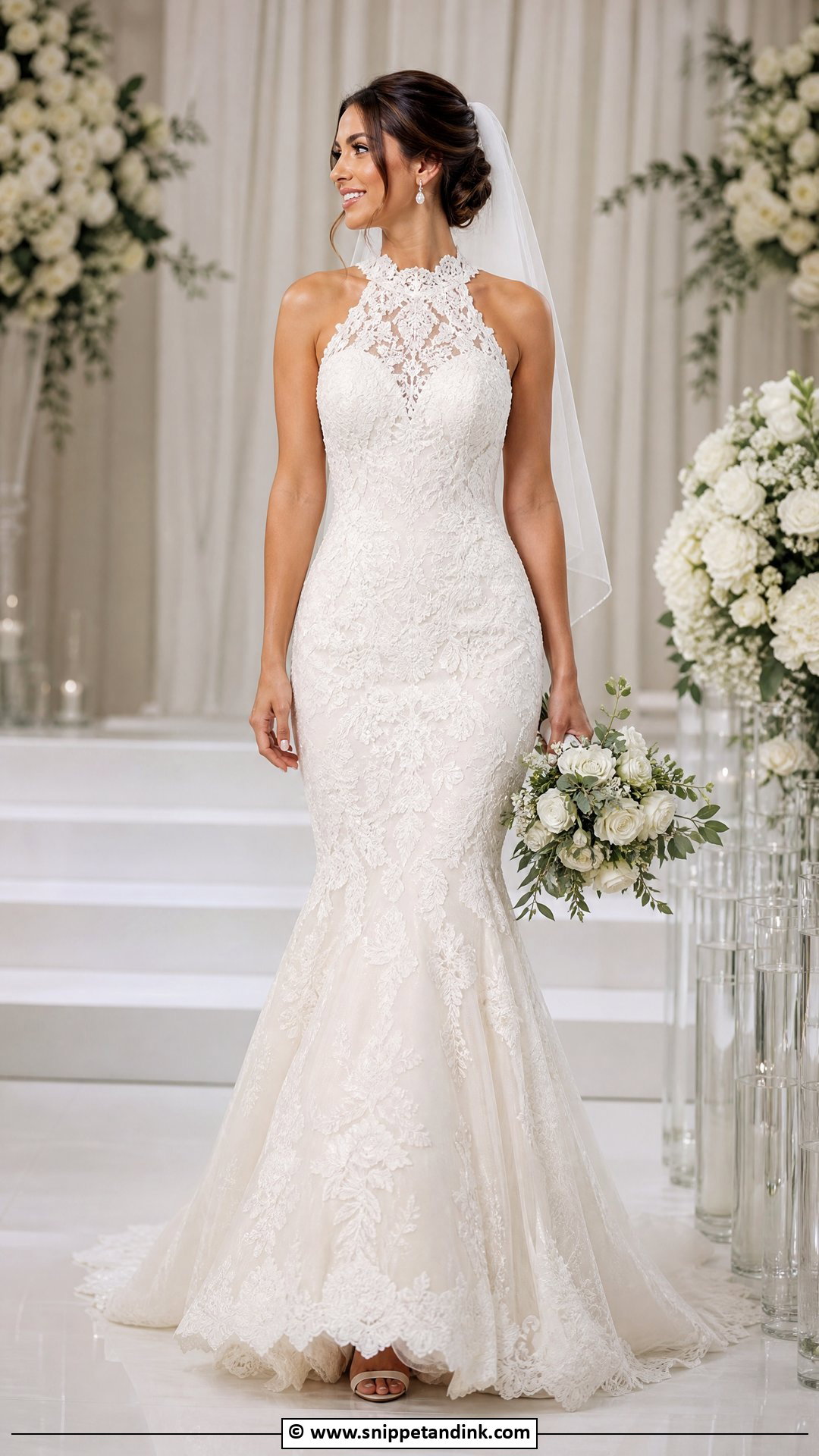
A high neck balances a body-hugging skirt, so the dress reads graceful rather than revealing. Lace high necks feel vintage and romantic; crepe or satin ones sleek. An open back adds a surprise if you want contrast. Wear your hair up so the neckline shows, with small earrings and simple heels. Fully covered on top and fitted below can be warm, so for a summer wedding I’d look for a lace or illusion version rather than solid satin. Formal and evening weddings suit it.
23. Halter Mermaid Wedding Dress
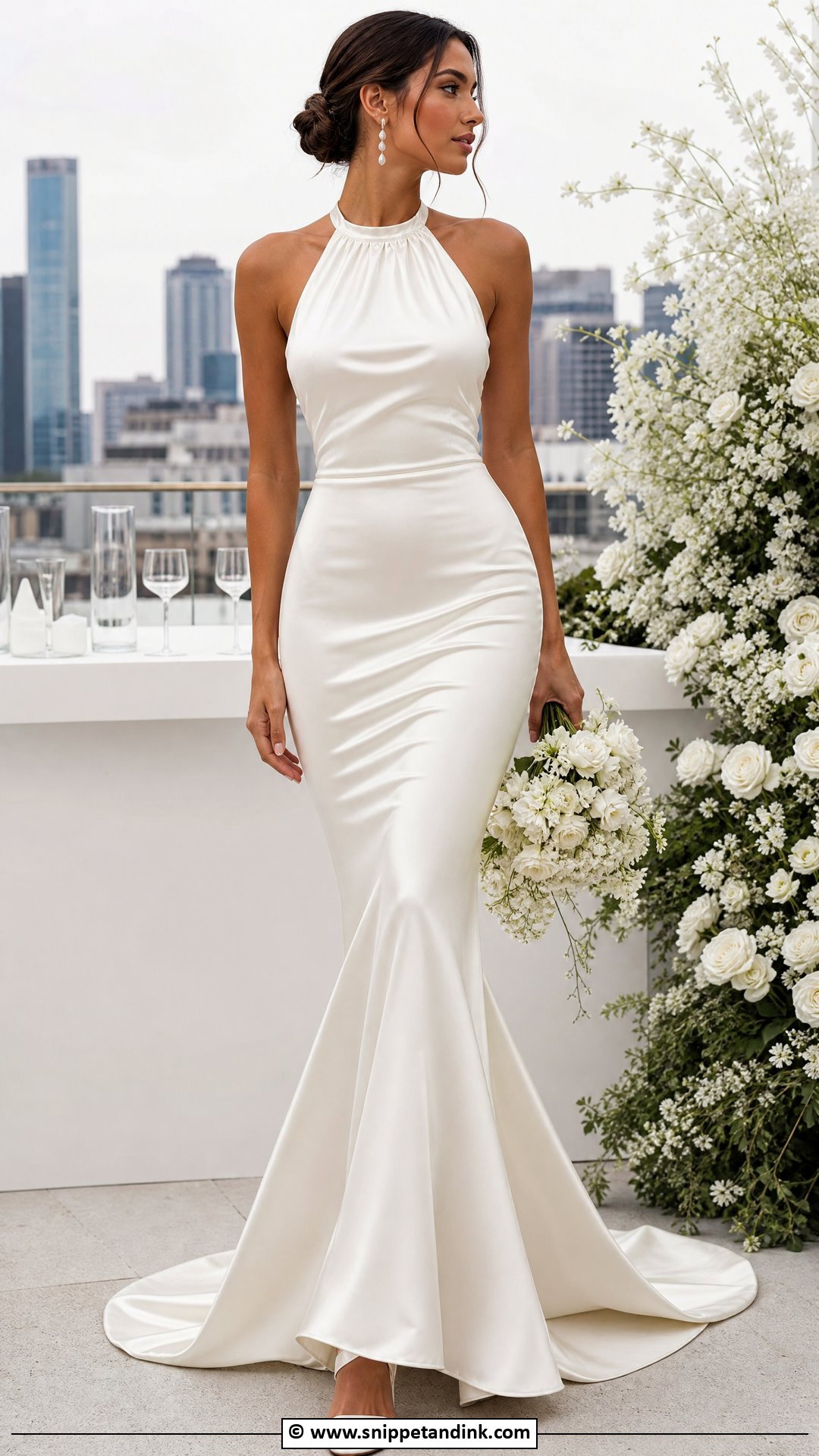
A halter feels secure and draws the eye upward, which balances the fitted skirt. Satin or crepe makes it sleek, lace romantic, beading glamorous. A high halter covers more; a plunging one is bolder. Skip necklaces and wear earrings instead. Since the halter strap carries some of the bodice weight, I check whether it can be adjusted, because one that pulls at the back of the neck becomes uncomfortable by the evening. A low bun, clean makeup and a smooth veil complete it for modern, rooftop and warm-weather weddings.
24. Open Back Mermaid Wedding Dress
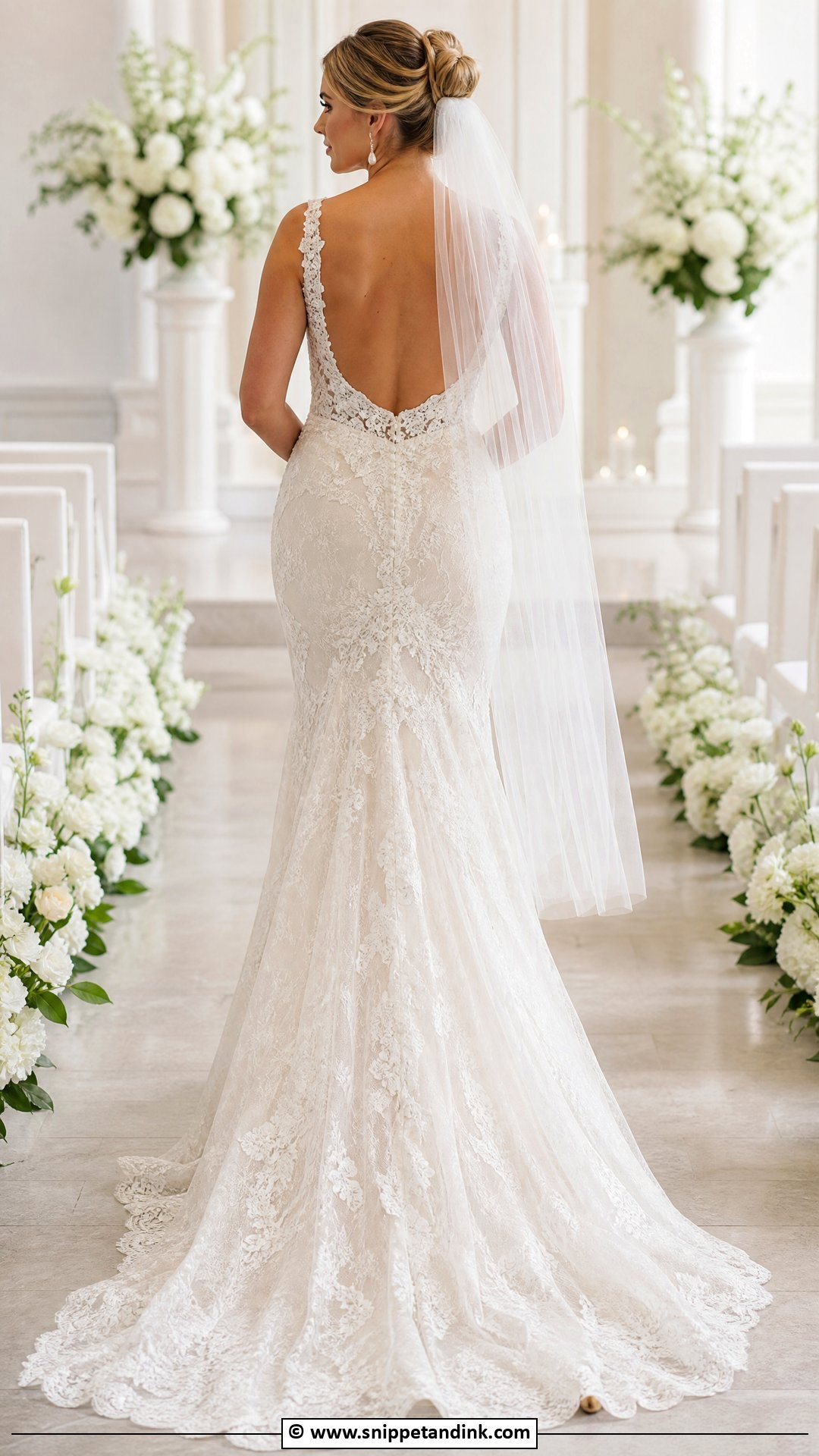
An open back gives guests something to look at through the whole ceremony. A low scoop is soft, a V elegant, a keyhole more unusual. The front can be simple, lace or fully structured. The lower the back, the more the bodice has to do on its own, so ask how the gown stays up; illusion mesh across the back can hold the shape while looking almost invisible. An updo or side-swept waves show the back clearly. A sheer veil for the ceremony, removed for the reception.
25. Detachable Train Mermaid Wedding Dress
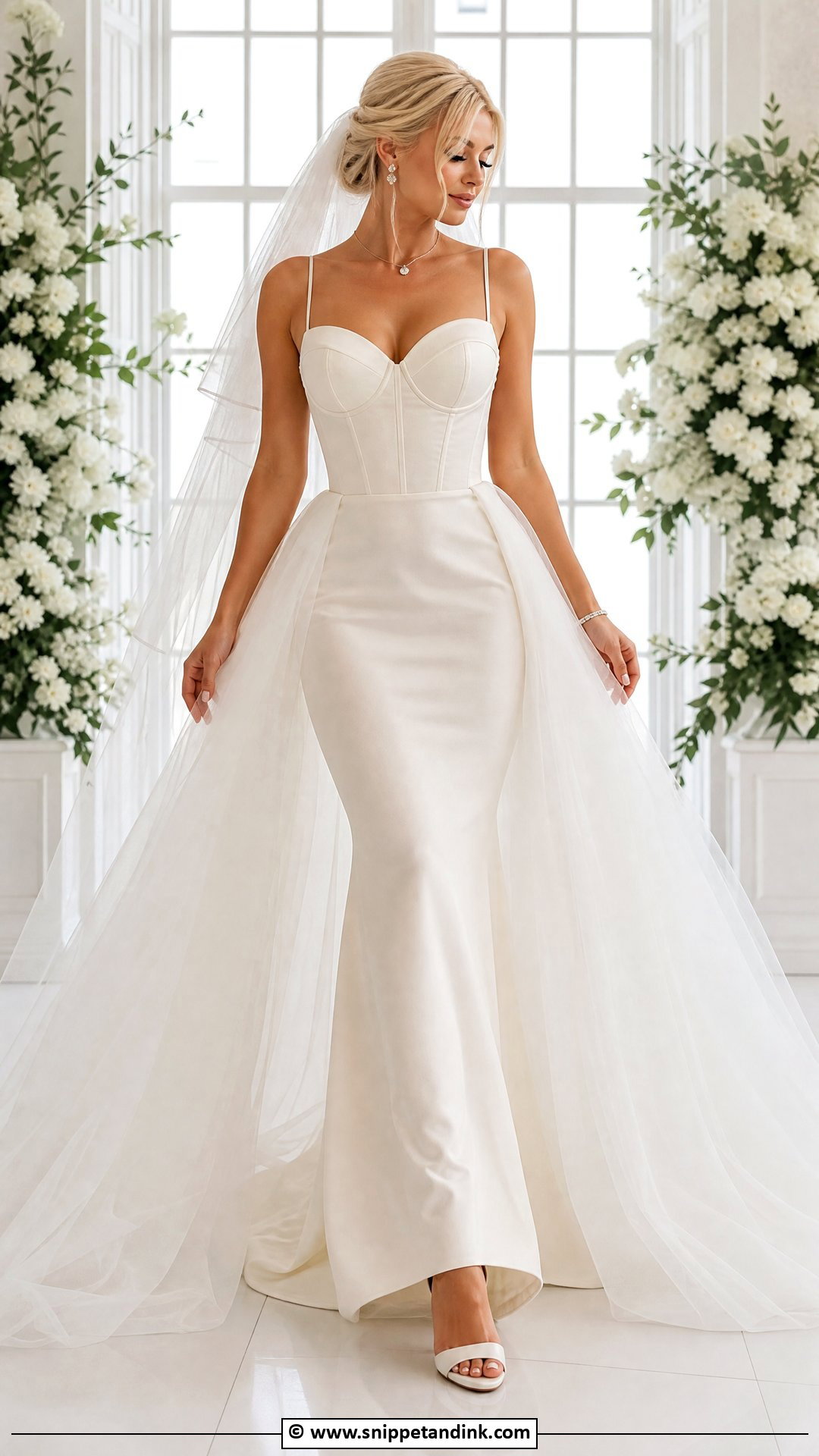
A detachable train gives two looks: volume and a dramatic entrance for the ceremony, then the fitted gown alone for the reception. It suits brides who love the mermaid shape but want grandeur for the walk. Trains come in tulle, lace, satin or organza. The attachment matters most, so ask to see it fastened and removed in the shop. Hidden hooks or snaps should hold through photos and come off without tugging the bodice. Elegant heels, a balanced veil and simple jewelry let the change look intentional.
26. Overskirt Mermaid Wedding Dress
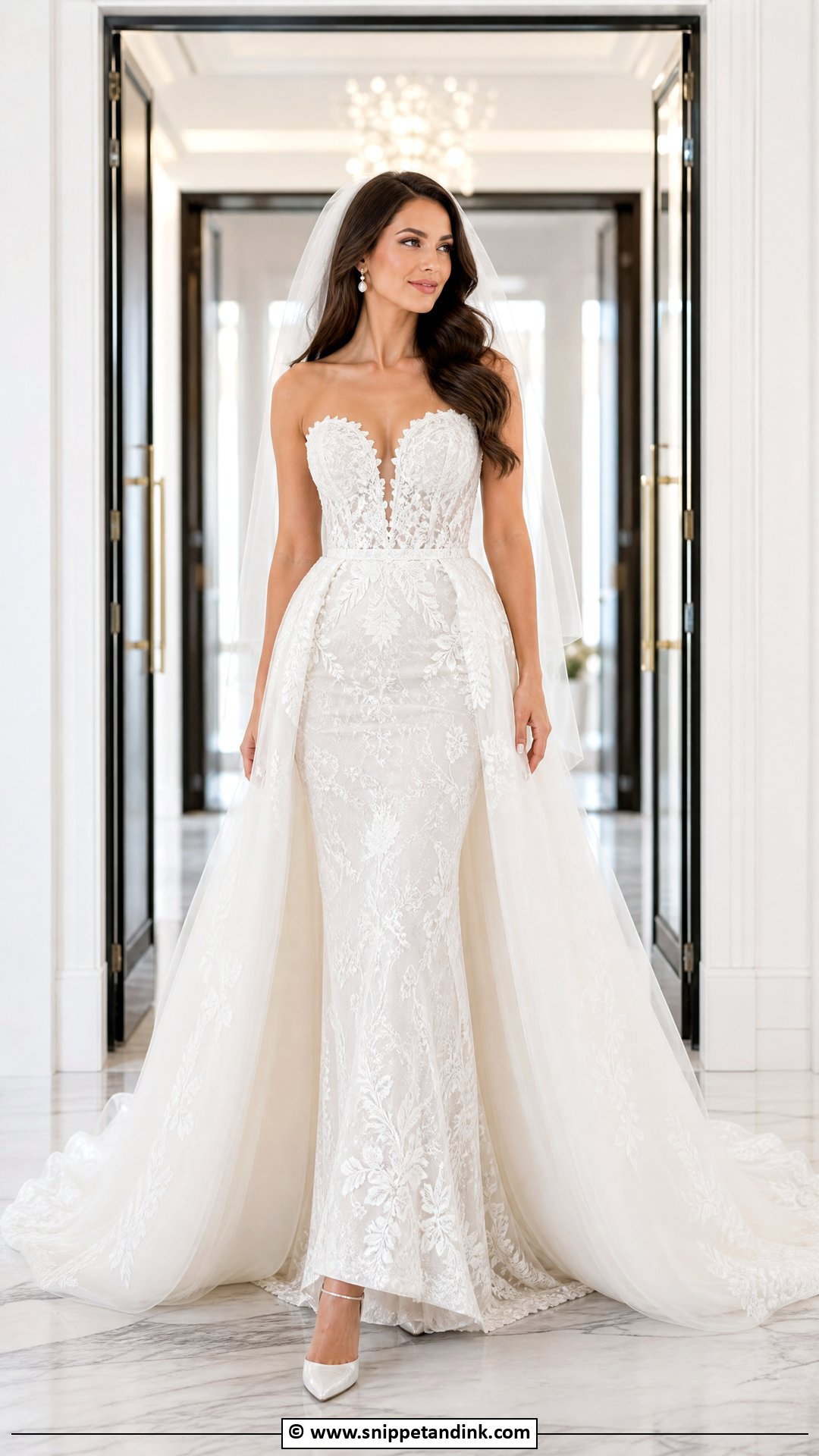
An overskirt answers the ball gown versus fitted dilemma. The mermaid underneath gives shape; the overskirt adds volume for the ceremony and portraits, then comes off for dancing. Sheer tulle reads romantic, satin formal, lace textured. If the overskirt is detailed, keep the bodice clean. Overskirts usually fasten around the waist with hooks or a hidden belt, and it takes a second person to remove one neatly, so brief whoever is helping you before the day.
27. Ruffle Mermaid Wedding Dress
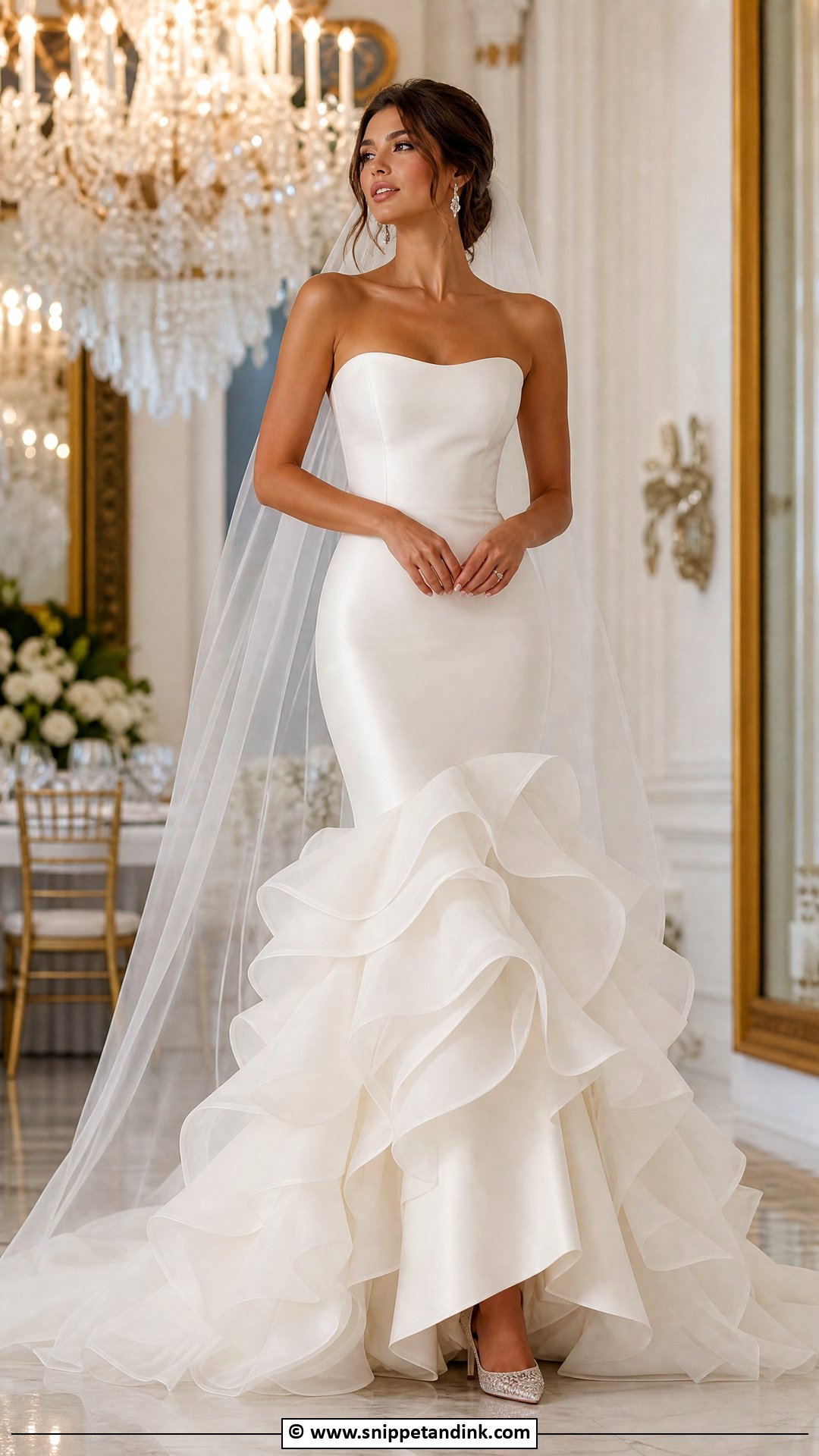
Ruffles usually start at the flare, adding movement around the lower skirt while the bodice stays smooth. Soft tulle ruffles look airy; organza ruffles are crisper and more dramatic. A strapless bodice, clean earrings and a soft veil keep it from getting busy. Ruffled skirts take up more floor space than they look, so check the aisle width at your venue. Ballrooms, estates and formal gardens suit it.
28. Tulle Mermaid Wedding Dress
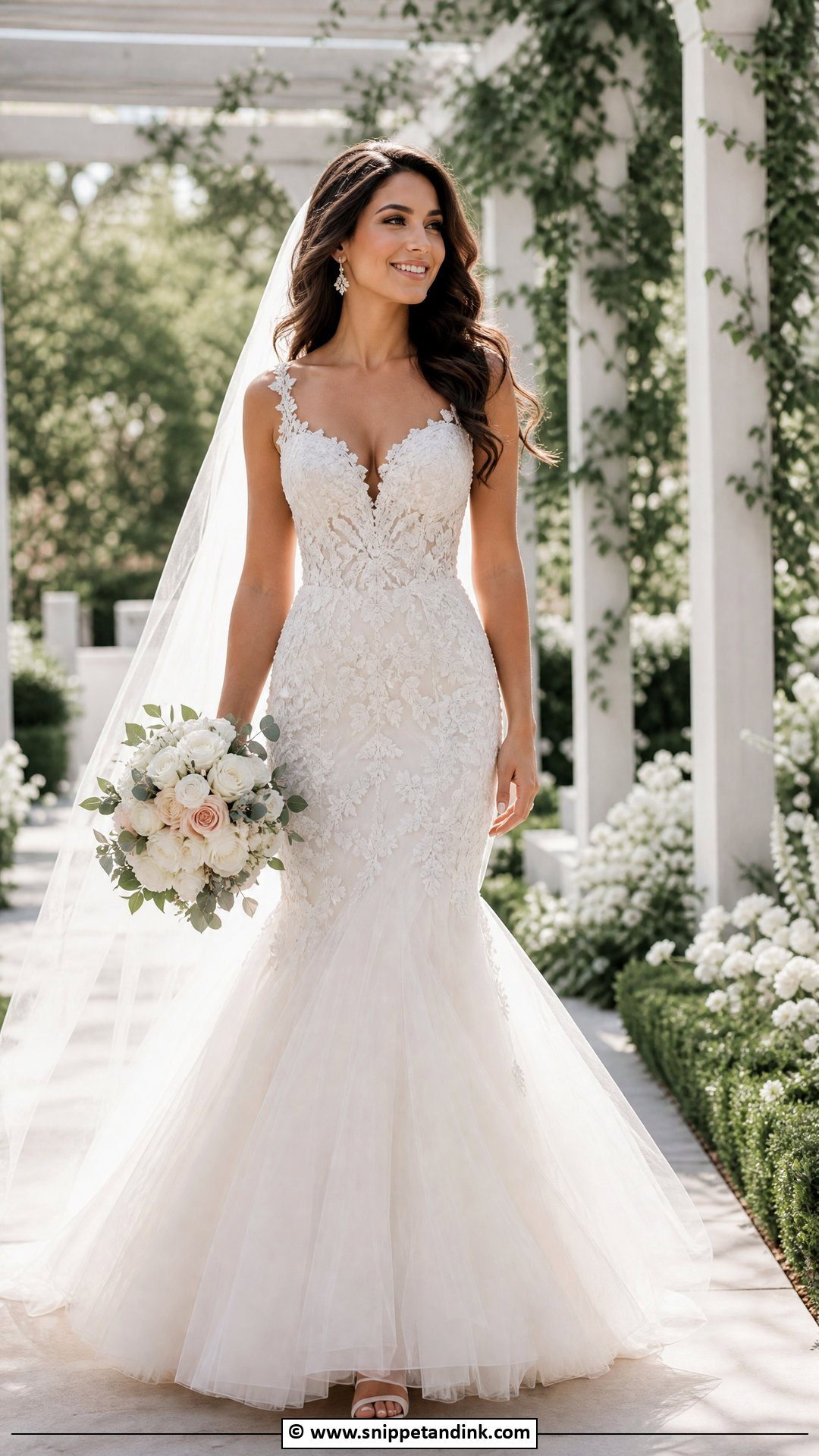
Tulle softens the mermaid’s fitted outline. Layered, it gives a light flare without much weight, and it carries lace appliqués, pearls, fine sparkle or a sheer overskirt well. It’s a romantic middle path between a sleek fitted dress and a full ball gown. Indoors it feels glamorous, outdoors more whimsical, depending on the bodice. Soft curls, airy makeup and a veil in matching tulle finish it. Tulle snags on rough stone and flower stems, so walk the venue path once in your mind before choosing it.
29. Mikado Mermaid Wedding Dress
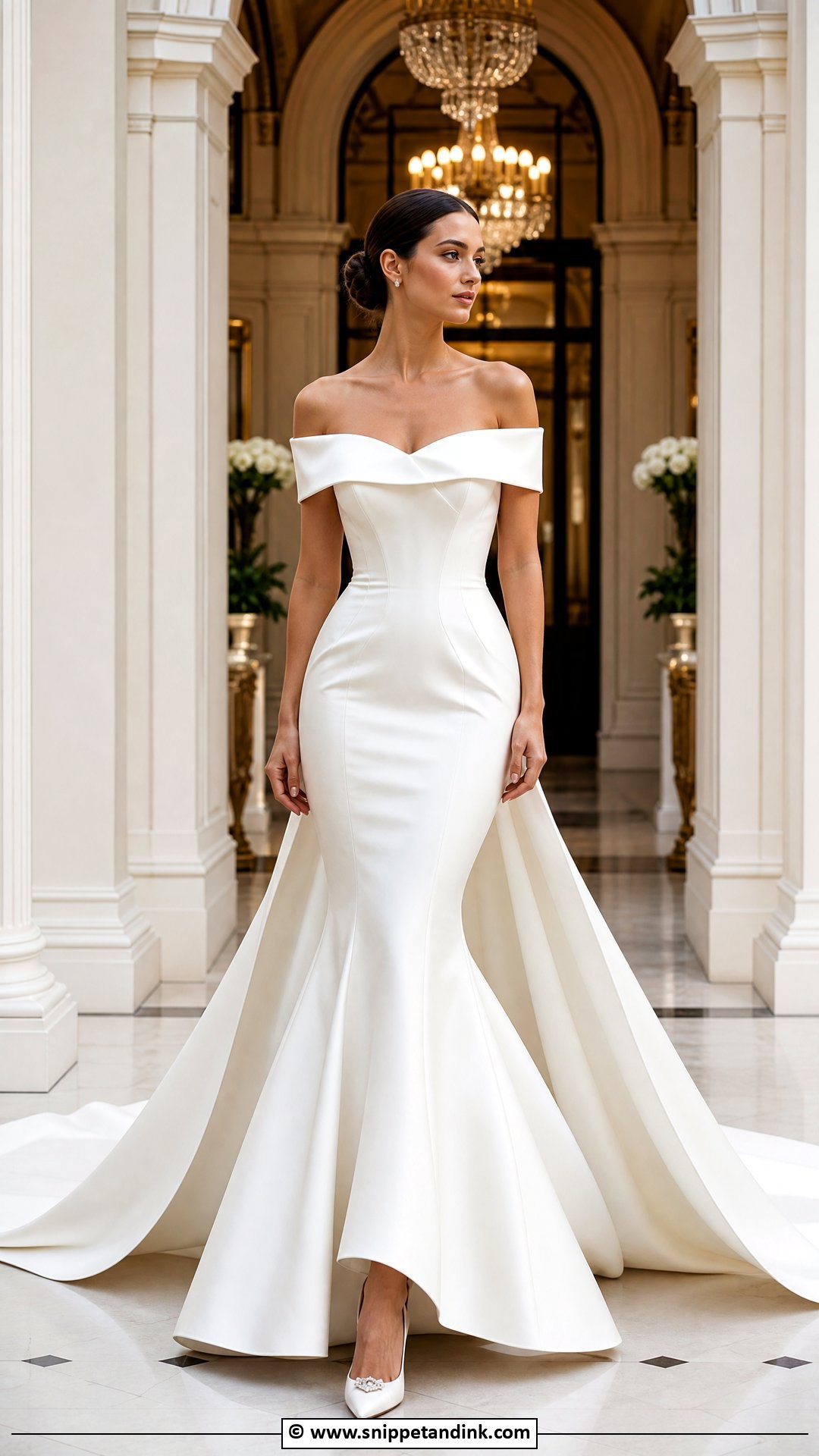
Mikado is thicker than satin, so it holds sculpted lines and folded necklines exactly as cut. That makes it ideal for strapless bodices, basque waists and dramatic trains. It has a soft sheen rather than a shine and barely needs embellishment. Polished earrings, a sleek updo and classic heels are enough. Bear in mind the weight: a long mikado train is heavy to drag and bustle, so I’d pair it with a venue where you won’t be walking far. Grand venues and hotel weddings suit it.
30. Illusion Mermaid Wedding Dress
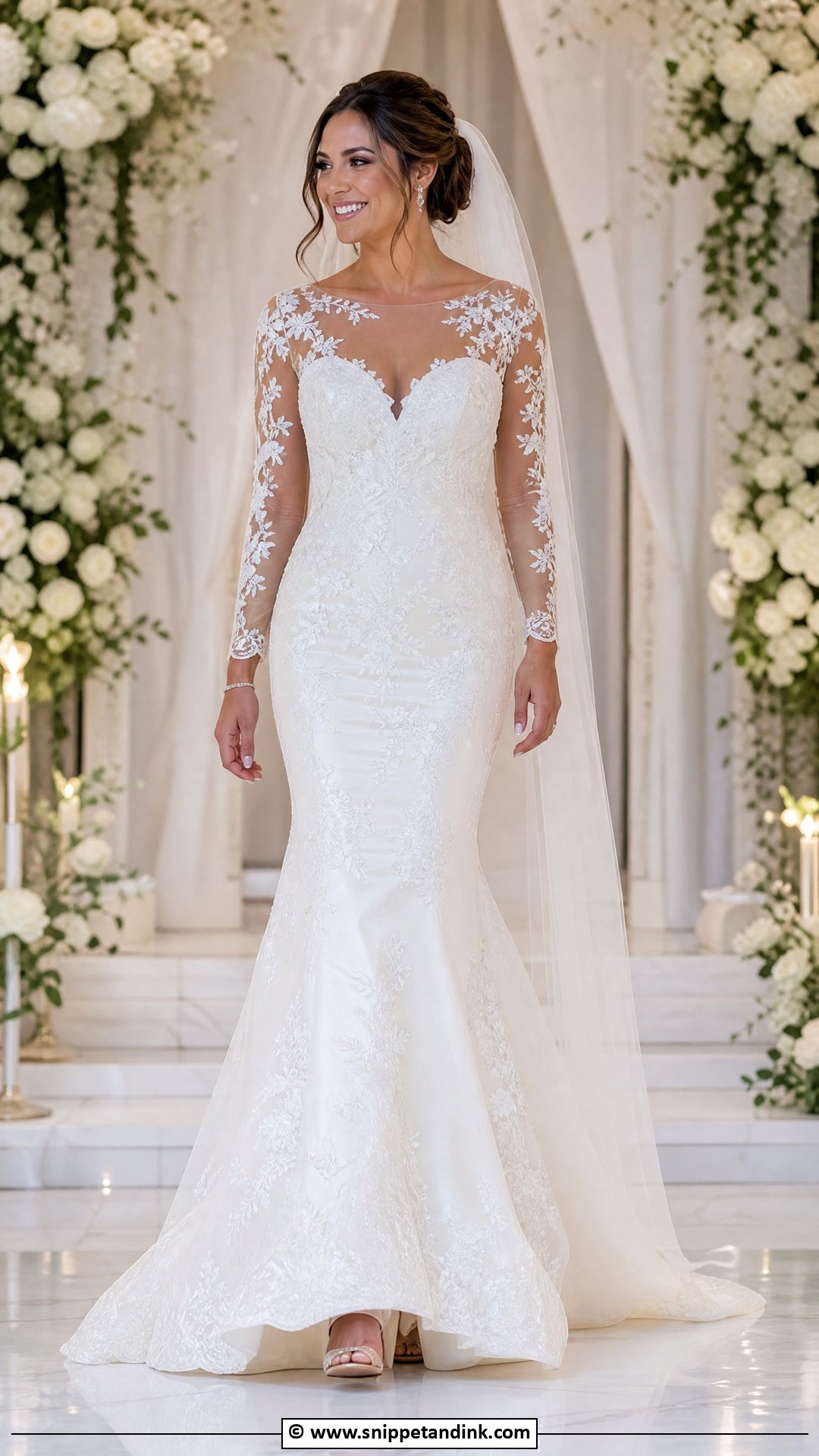
Illusion mesh lets a fitted gown have an open back, a deep neckline or detailed sleeves while still holding its structure. It can sit at the neckline, sleeves, sides, back or bodice. Lace over sheer panels feels romantic; clean inserts feel modern. Match the mesh to your skin tone as closely as possible so it disappears. Ask to see it in daylight, because mesh that matches under shop lighting can look grey or pink outdoors. Simple accessories, a sheer veil and a soft updo let the detail show.
31. Cap Sleeve Mermaid Wedding Dress
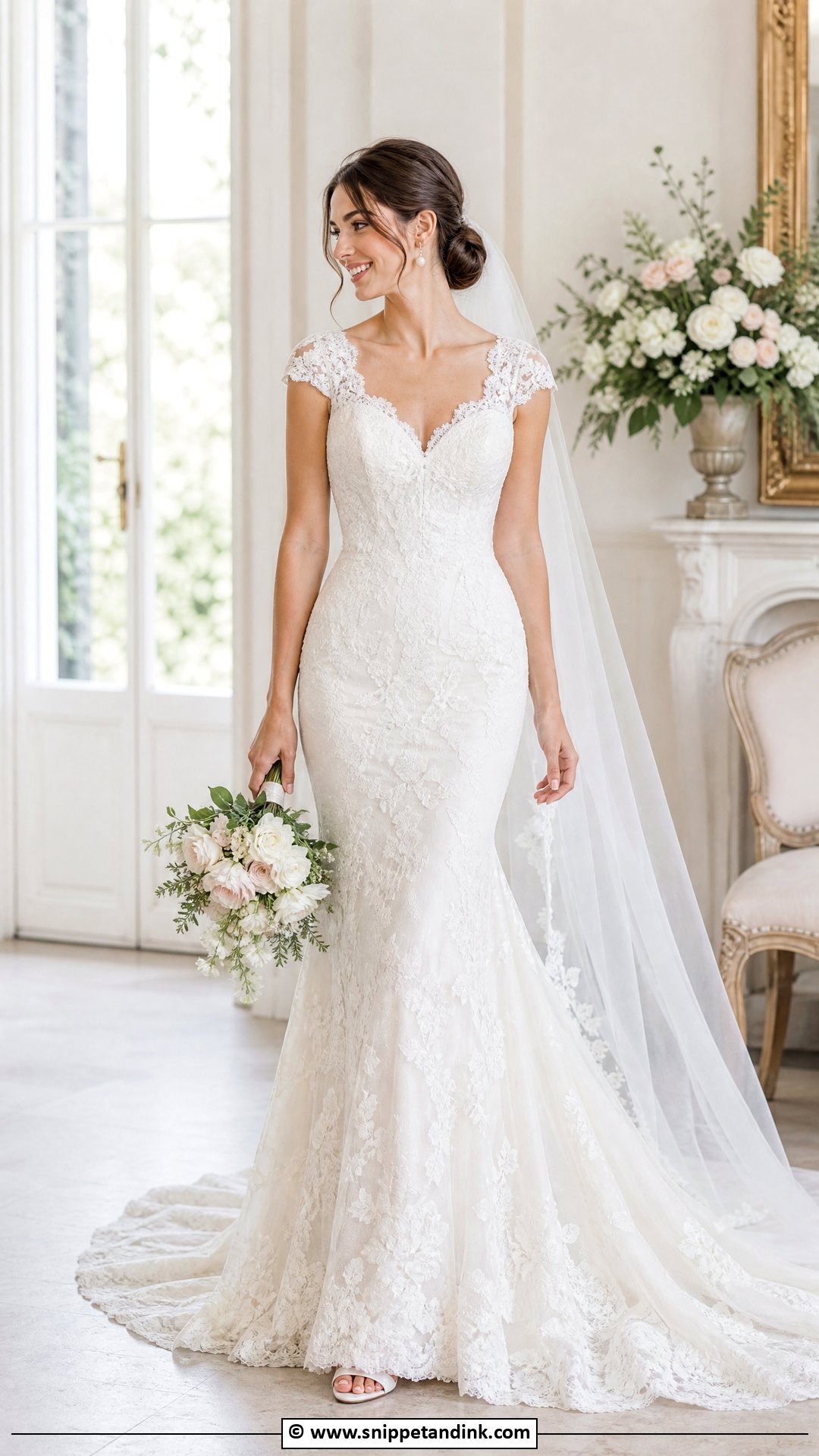
Cap sleeves give light shoulder coverage without full sleeves, softening the upper body. They suit lace, beading or illusion fabric and can look vintage, romantic or classic depending on the neckline. A lace cap sleeve gown is especially pretty for gardens, estates and spring weddings. Cap sleeves sometimes cut into the arm when you lift it, so raise both hands during the fitting. A low bun, pearl earrings and a simple veil finish it.
32. Spaghetti Strap Mermaid Wedding Dress
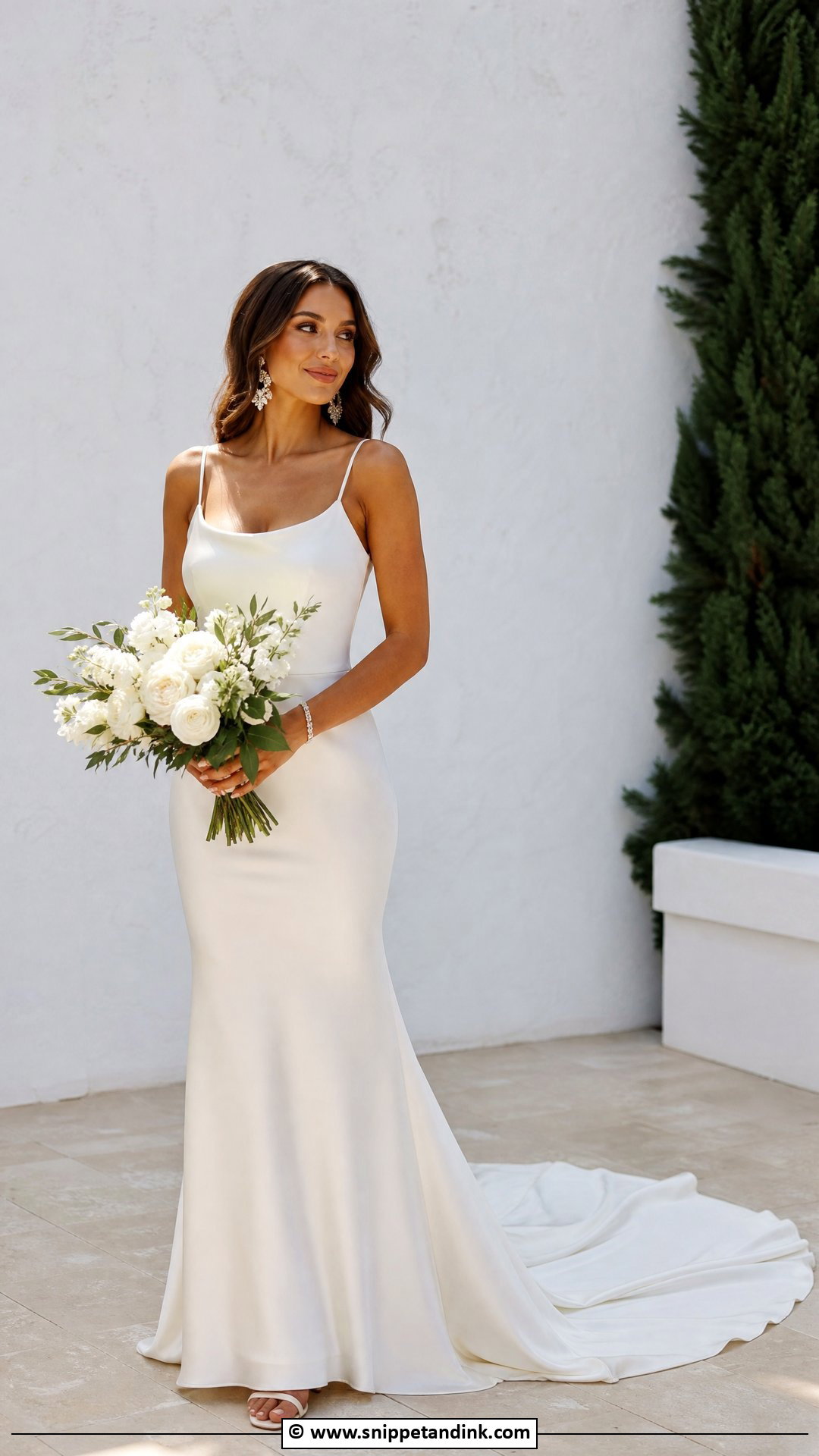
A spaghetti strap mermaid wedding dress keeps the neckline open and delicate. Thin straps suit satin, crepe, lace and beaded gowns, and they make sense for warm weather and destination ceremonies. A scoop or soft V suits them. On a fitted gown, though, the straps barely hold anything; the bodice does the real work, so check it’s built to stay up without them. If the gown is simple, add statement earrings or a long veil. If it’s detailed, keep accessories minimal.
33. Basque Waist Mermaid Wedding Dress
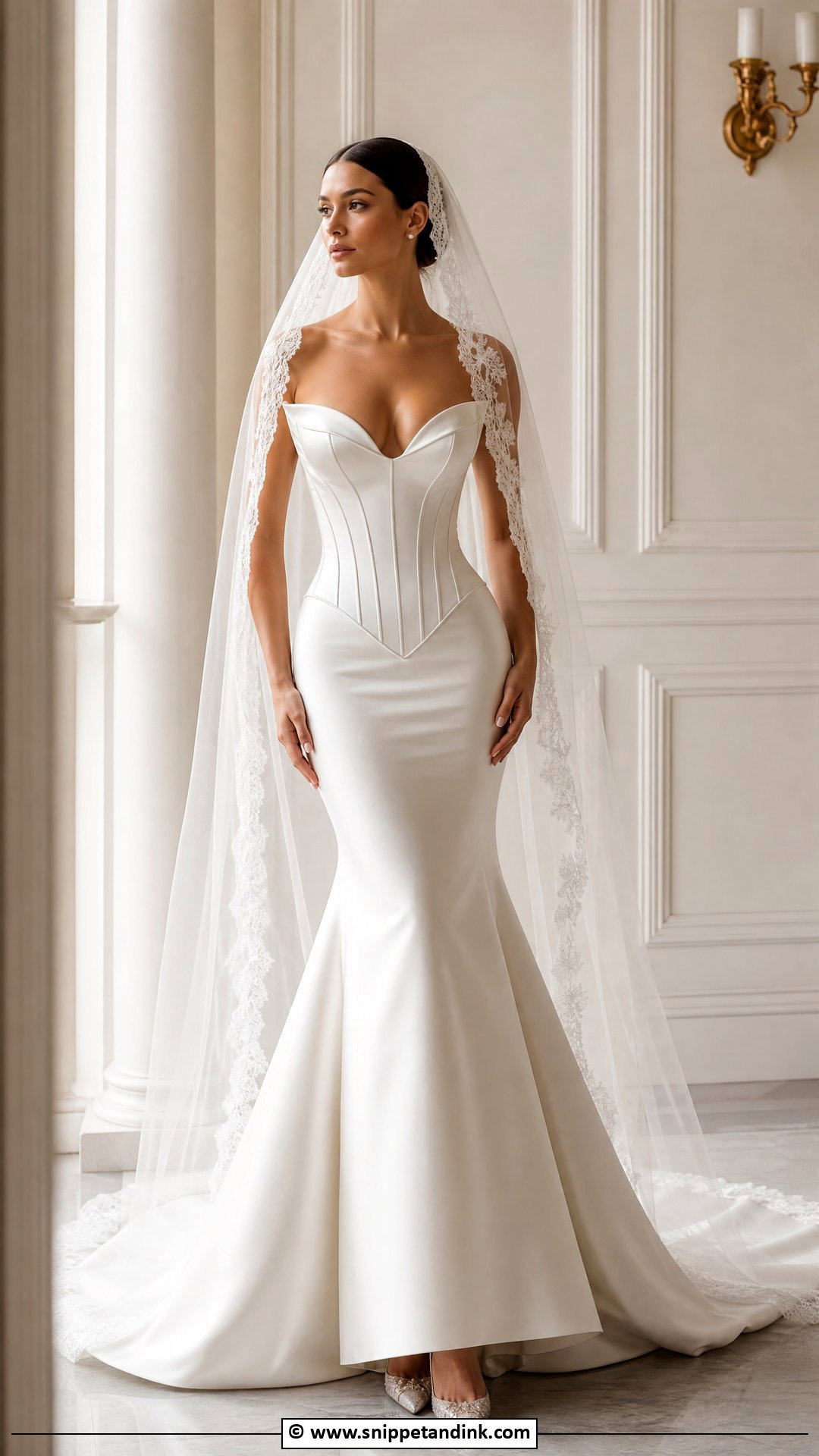
A basque waist dips slightly in front, lengthening the torso before the skirt hugs the hips and flares. It looks regal with corset bodices, satin, lace overlays and mikado, and it can read classic or current depending on how plain the rest is. A long veil emphasises the shape; pearl studs or delicate drops keep jewelry refined. The point should sit exactly at centre and lie flat, which I check from the side as well as the front.
34. Short Train Mermaid Wedding Dress
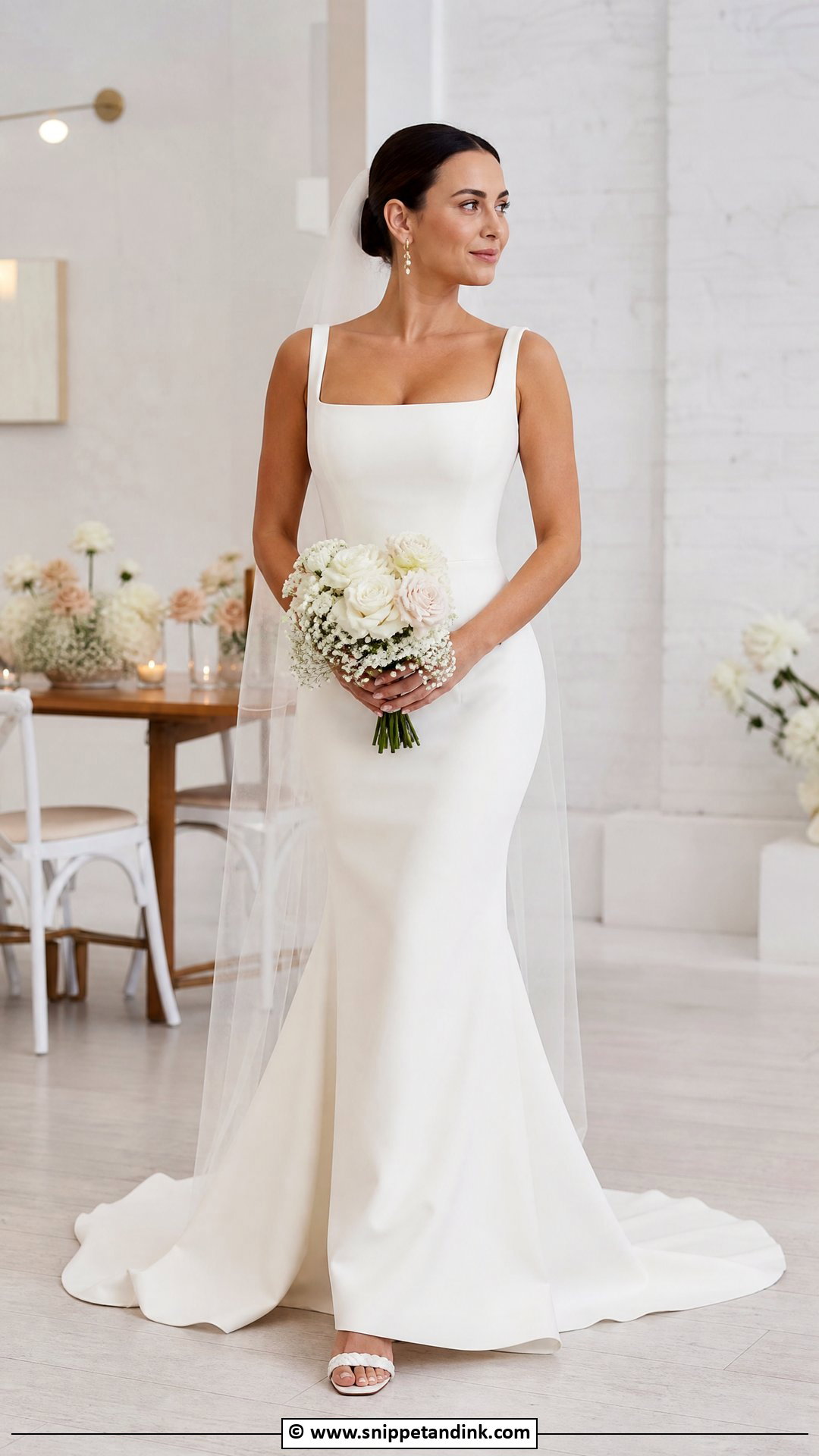
A sweep or small chapel train gives enough drama for photos without much fabric trailing behind. Smaller venues, outdoor locations and restaurant receptions suit it. The gown can still be formal in lace, satin, crepe or beading. Pick a veil that complements the train instead of swamping it. Short trains bustle with one or two hooks, which means less time in a side room with a bridesmaid and a sewing kit, and that alone wins over a lot of brides.
35. Reception Mermaid Wedding Dress
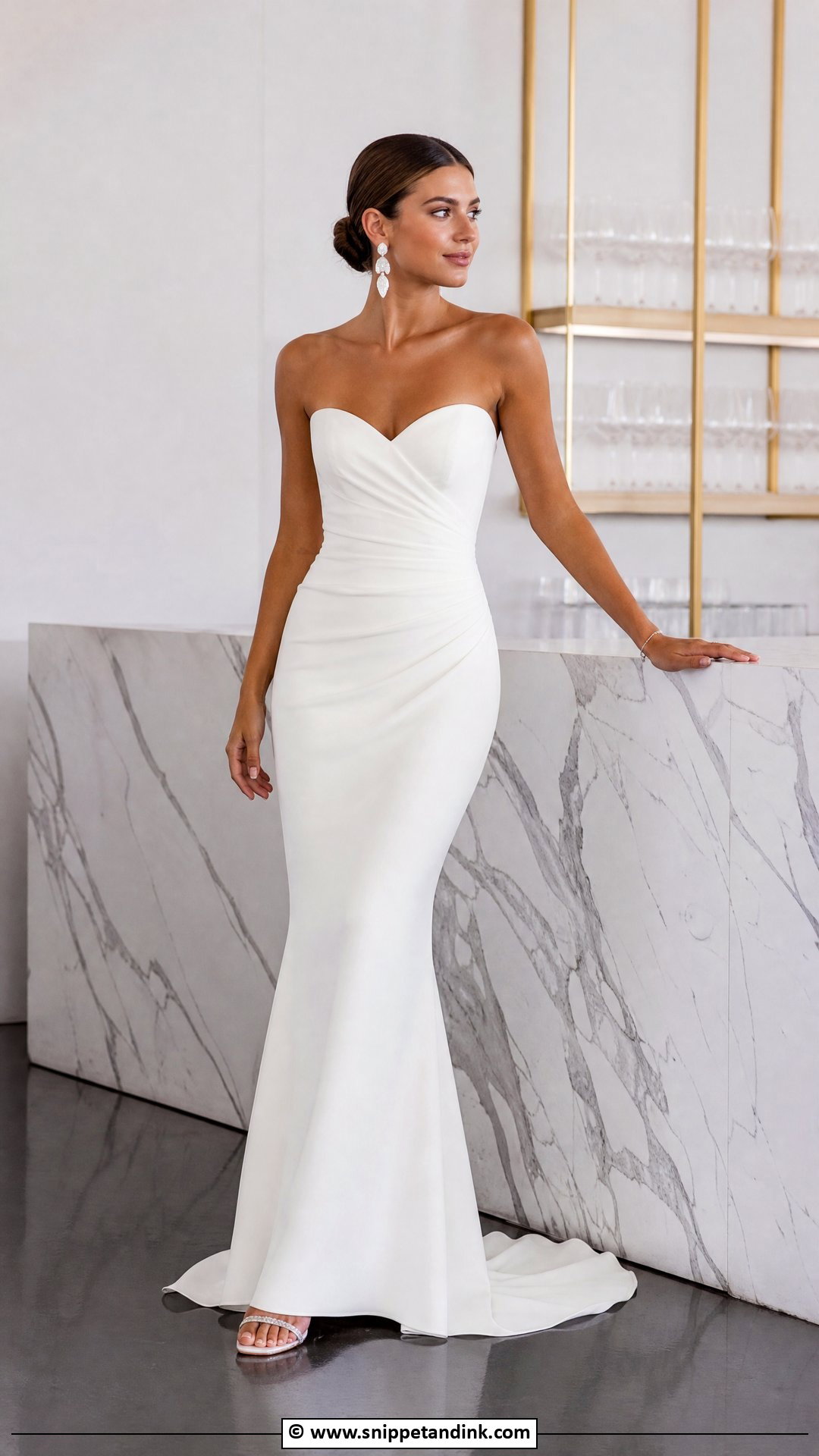
A second, simpler mermaid for the reception lets you move more freely after the ceremony. It can be lighter or more playful than the main gown: stretch crepe, satin, sequin details or texture, and a short train or none. Strapless or spaghetti straps work well for dancing if the tailoring is secure. Comfortable heels, statement earrings and a hairstyle that lasts. Have it altered at the same appointments as the main gown, so both fit over the same underwear.
Ten Hours in a Fitted Skirt
Brides fall for a mermaid standing still in a mirror. The wedding itself is mostly walking, sitting, climbing in and out of cars and dancing, so plan for those moments before the day.
The bustle
A mermaid train usually lifts with an under bustle, sometimes called a French bustle, where the train is tucked and tied underneath, or an over bustle that hooks up onto the back of the skirt. Under bustles keep the line cleaner on lace and tulle; over bustles suit heavier satin and mikado. Ask your seamstress to show your maid of honour how it works at the final fitting and to label the ribbons or hooks. It’s fiddly the first time.
Stairs, cars and the bathroom
On stairs, lift the skirt at the sides just above the flare, not from the hem, and go slowly. Getting into a car, sit first with your back to the seat, then swing your legs in together. For the bathroom, a helper and a large plastic bag pulled up over the skirt make it manageable; it sounds silly, but it saves a lot of crushed tulle.
The dance floor
Bustle the train before the first dance, not after. Slow dances are easy in any mermaid, but if you’re planning a choreographed routine or you simply love to dance, say so at your first fitting. A seamstress can sometimes open the knee seam slightly or add a hidden kick pleat in the lining to buy you extra stride without changing how the dress looks.
A Shape That Rewards Good Tailoring
Lace, crepe, beading, a square neckline or an overskirt, the mermaid can be romantic, sleek, glamorous or dramatic. What decides whether it works for you is the venue, your comfort level, the fabric and how much structure you want. Walk, sit and turn at every appointment, so the dress feels as good at midnight as it looks at the altar. Fitted properly, it’s one of the most confident shapes a bride can wear.
You'll Like These Ideas:



Leave a Reply