
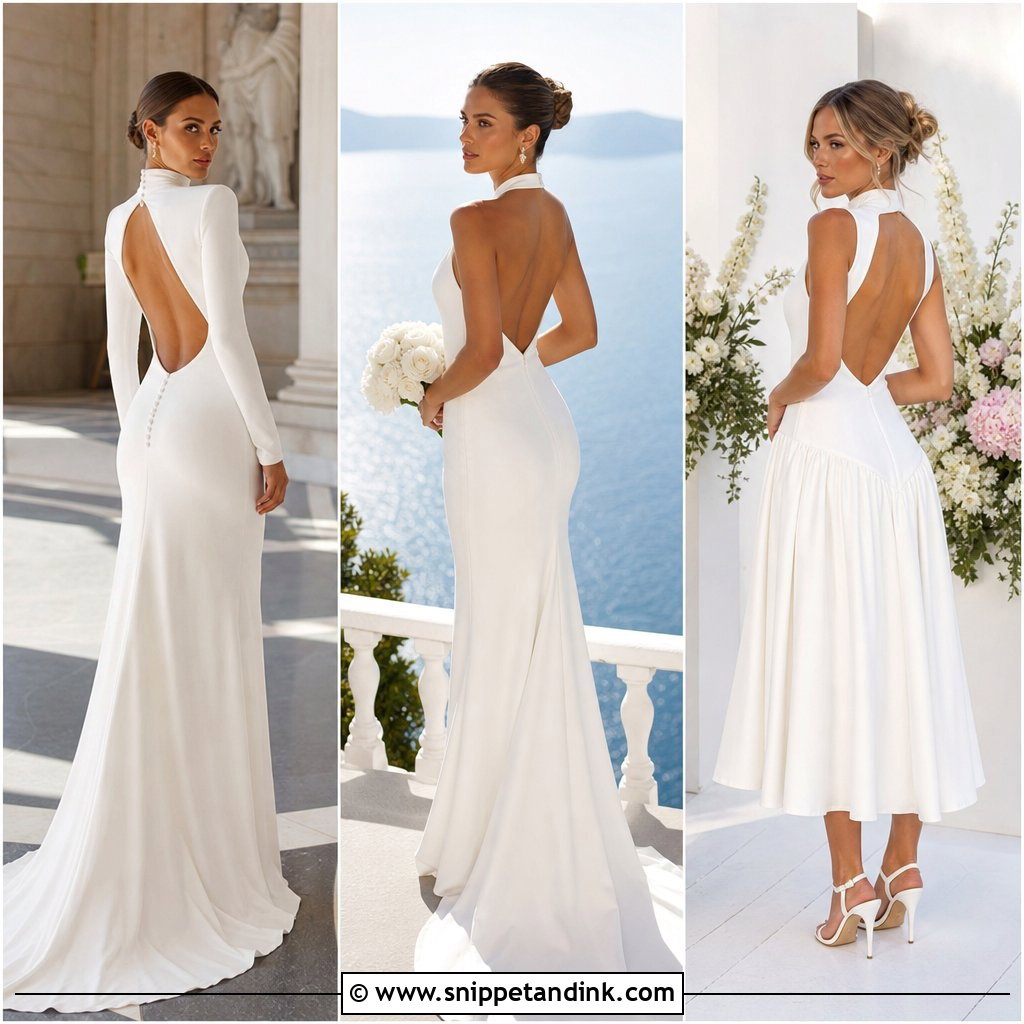
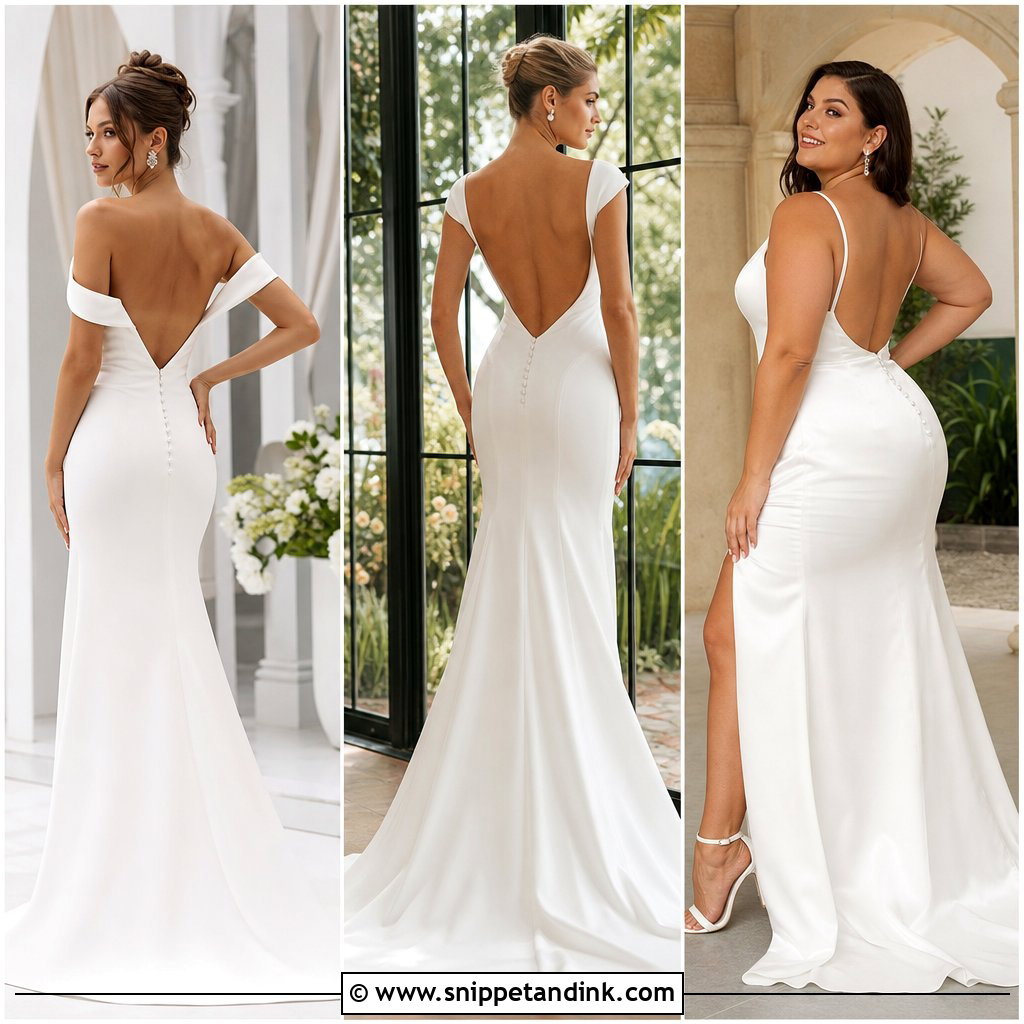
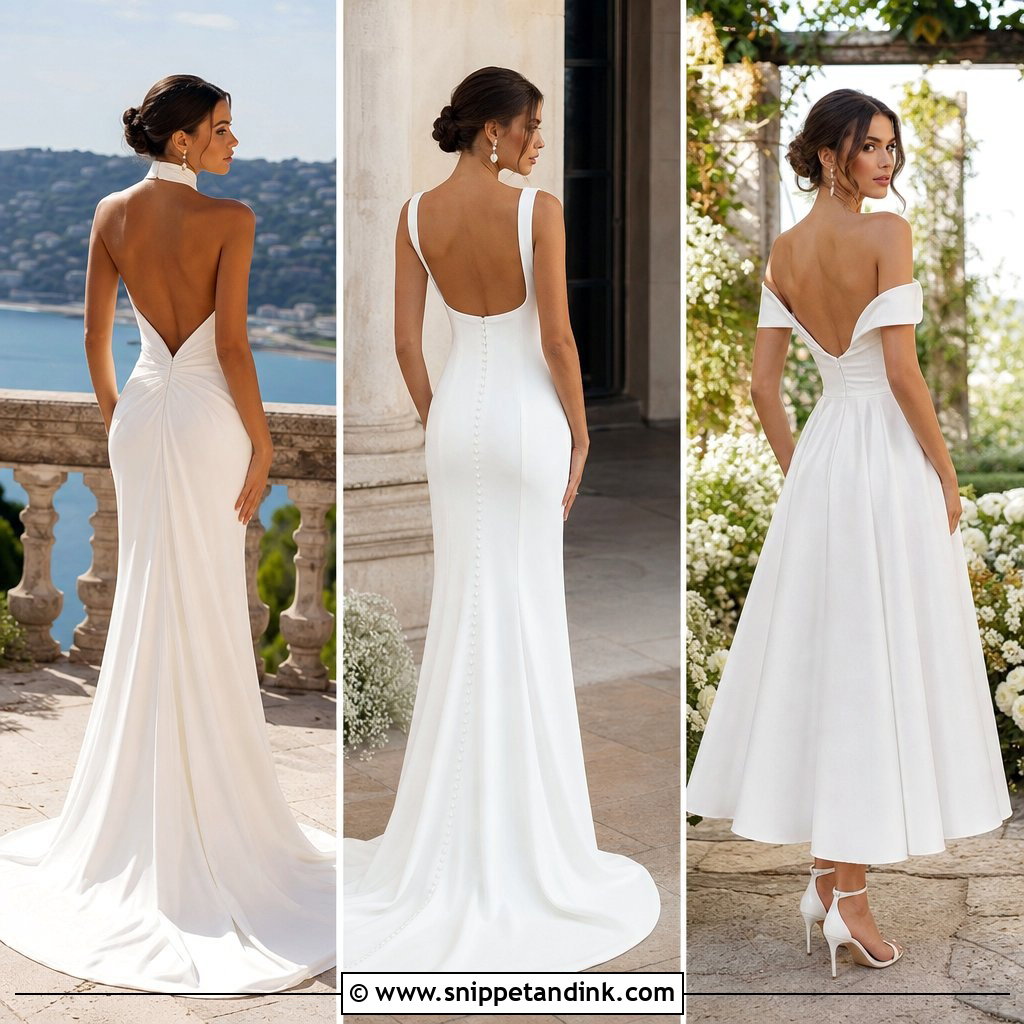
An open back is the part of a wedding dress most guests actually study, because for most of the ceremony they are looking at you from behind. That makes it worth planning properly. Below are twenty ways a back can be cut, from sleek satin columns and lace mermaids to beach slips and full ball gowns, with plunging V shapes, cowls, illusion panels, keyholes, corsets and bows among them. For each one I’ve noted the hair, shoes and accessories that suit it, and the fitting question I’d raise in the dressing room, since a low back only looks good when it stays exactly where it was sewn.
What Holds a Backless Bodice Up When There Is No Back
Brides ask me this at nearly every appointment, and the answer is that the work moves to the front and the waist. A well-made open-back dress is engineered from the inside: boning in the side seams and under the bust, cups sewn into the lining, and a firm waist stay, a hidden band of grosgrain that hooks closed around your natural waist so the bodice can’t slide down or forward.
Your choice of support depends on your bust and on how low the back drops.
- Sewn-in cups suit most brides and are the most secure option, but they must be placed at your fitting, not taken as they come from the factory.
- Low-back bras and plunge converters work for backs that stop around the middle of the spine. Below that, the band shows.
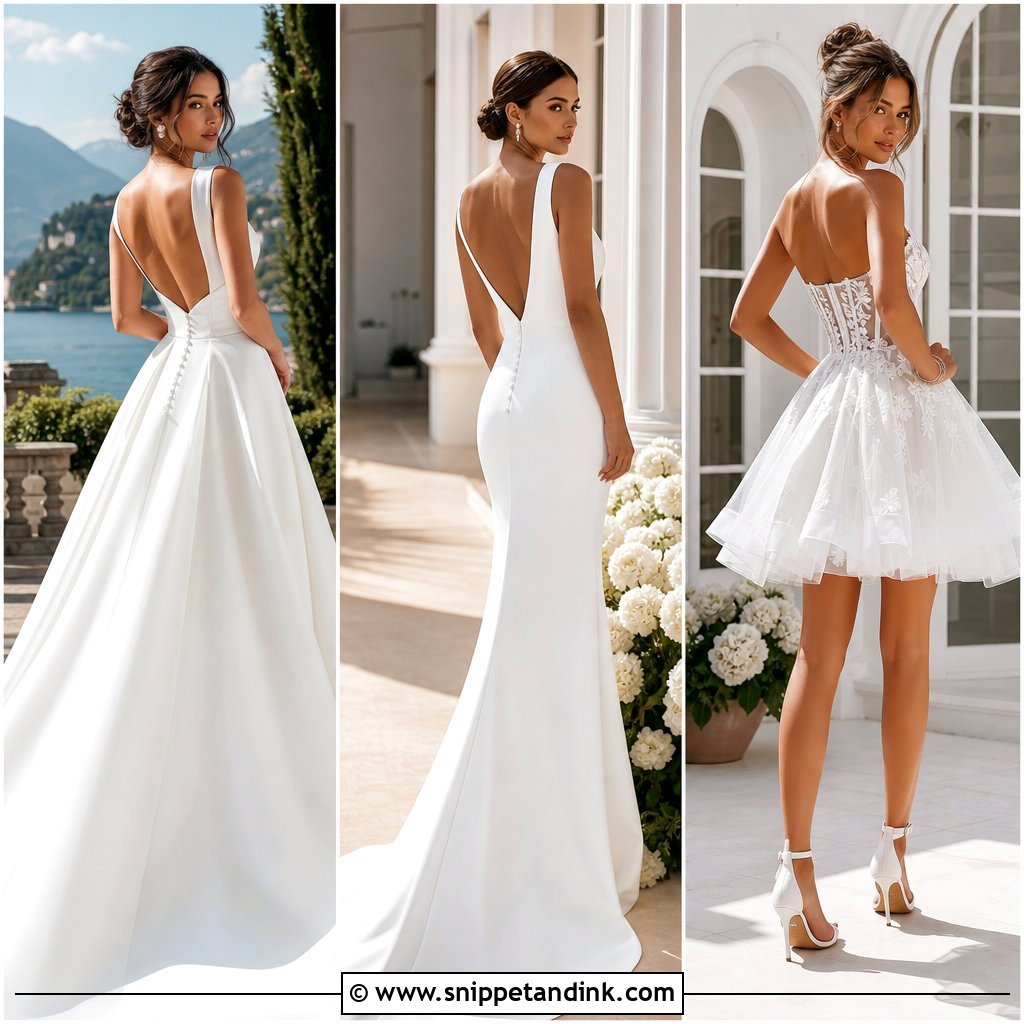
- Adhesive cups and lift tape help smaller busts. Test them on your skin weeks ahead, since some adhesives irritate and most loosen with heat and sweat.
- A low corset or longline with a dropped back can be built into the dress for fuller busts when a free-standing bra won’t do.
Bring whatever you plan to wear to every fitting. Changing support after the bodice is altered shifts the bust point, and the back edge stops lying flat.
1. Satin Backless Wedding Gown
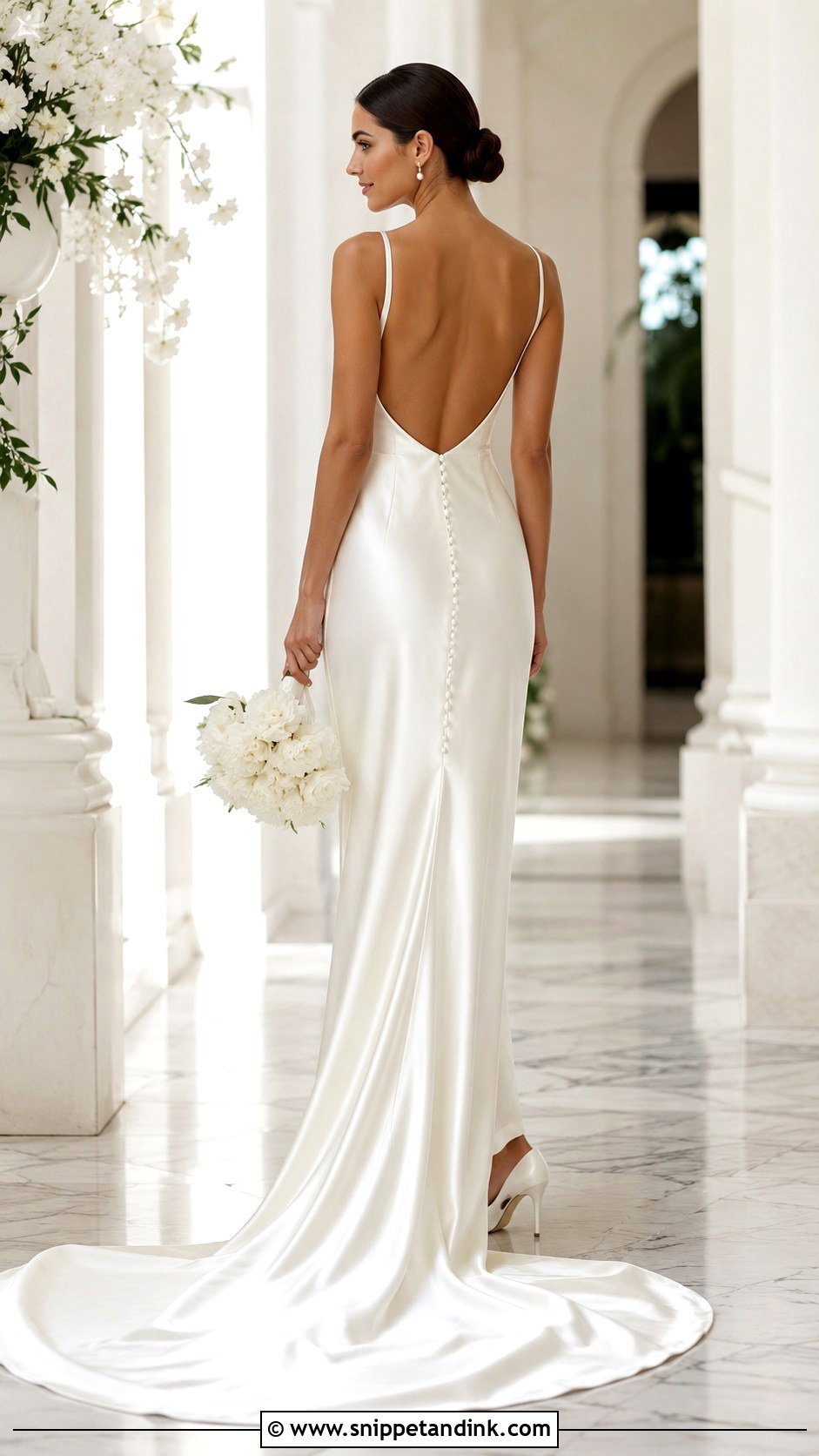
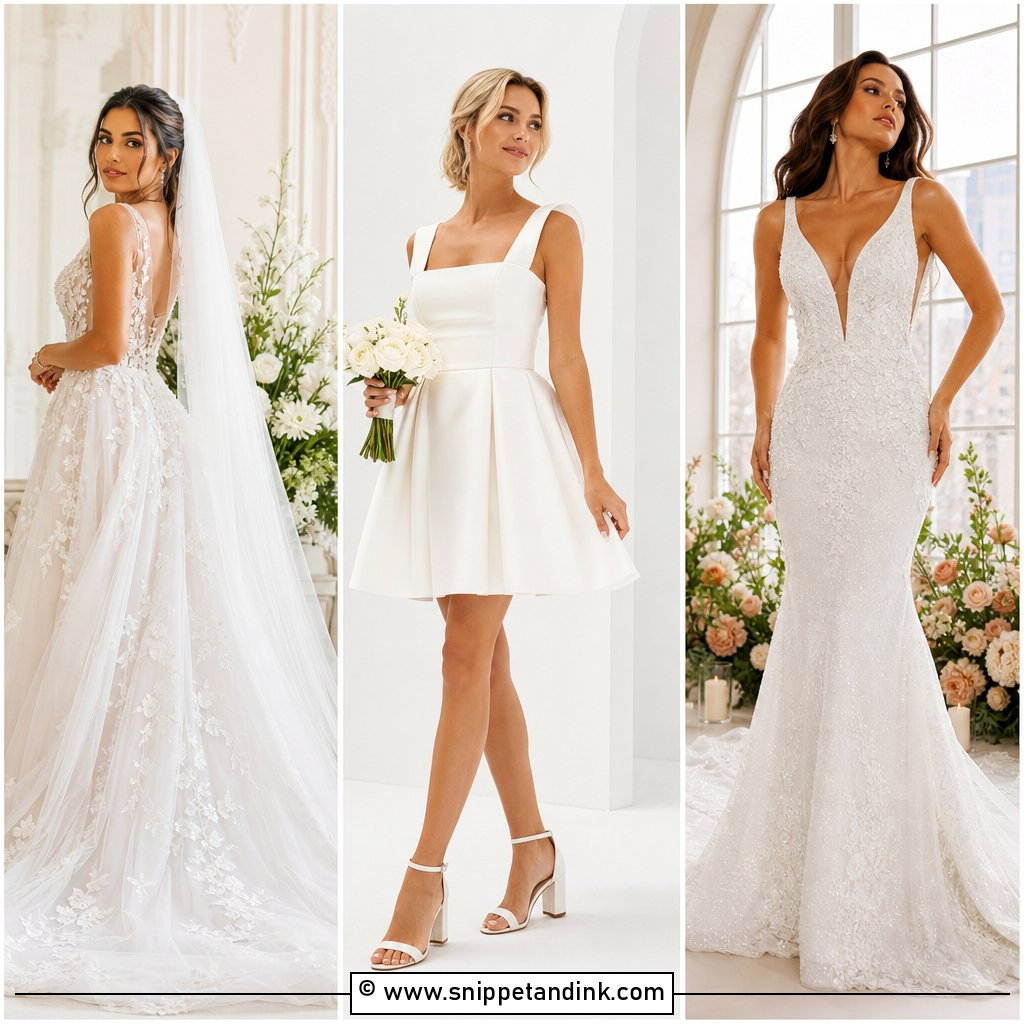
Satin is the least forgiving fabric for an open back, and that is also why it looks so clean when it’s right. A fitted column or soft flare with a deep scoop back and narrow straps needs nothing else, and a line of covered buttons running from the lowest point into a chapel train gives the eye somewhere to travel. Pointed ivory pumps, pearl drops and a compact white bouquet keep it quiet. I put satin brides in a low bun or sleek ponytail so nothing snags the fabric. One warning: satin shows every pucker at a seam, so the cups and inner waistband have to be set by a good seamstress, and the bustle points need testing so the train lifts without dragging the back opening sideways.
2. Lace Backless Wedding Gown
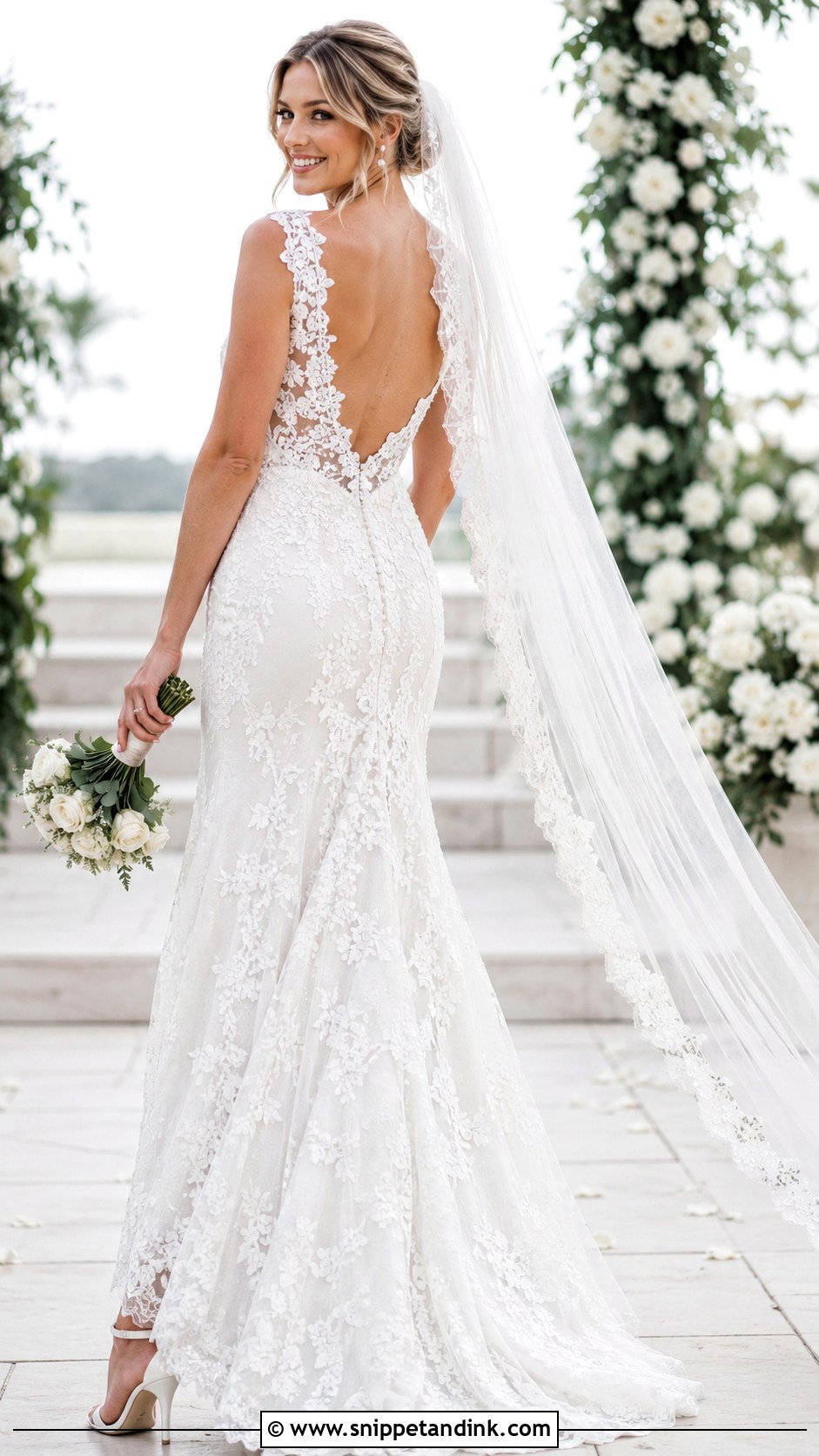
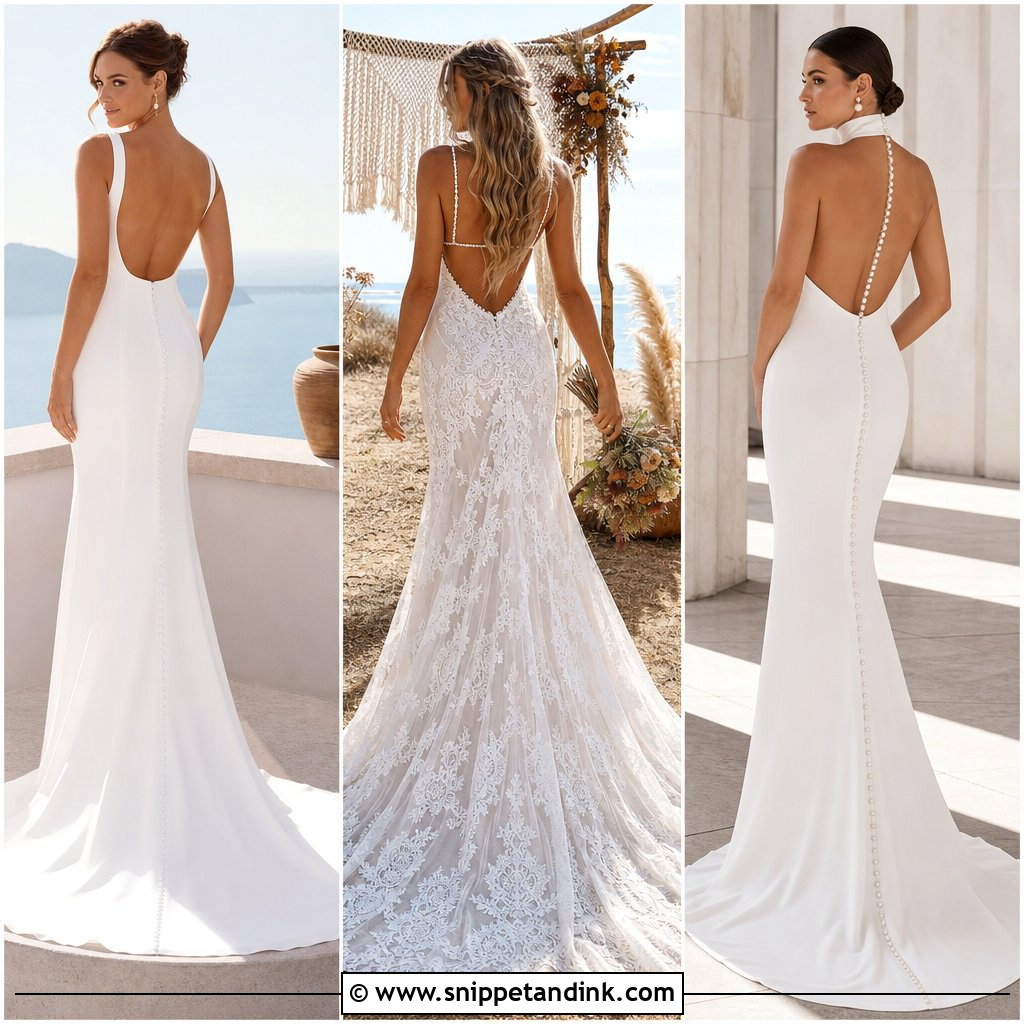
Lace takes the edge off a very low back. The scalloped border of a fitted bodice frames the opening, then the skirt drops into an A-line or fit-and-flare. Floral lace reads softer; geometric lace looks more current. I like satin ankle-strap heels here, small pearl studs and a sheer cathedral veil with only a narrow lace edge so the two laces don’t fight. A loose chignon with a few face-framing pieces leaves the back clear. The thing I check first on lace is the underside of the appliqués at the opening, because a stiff, unfinished edge will rub your shoulder blades raw by the reception. If the drop feels too exposed, a nude illusion panel adds security and still reads as bare skin from a few feet away.
3. Long Sleeve Backless Wedding Gown
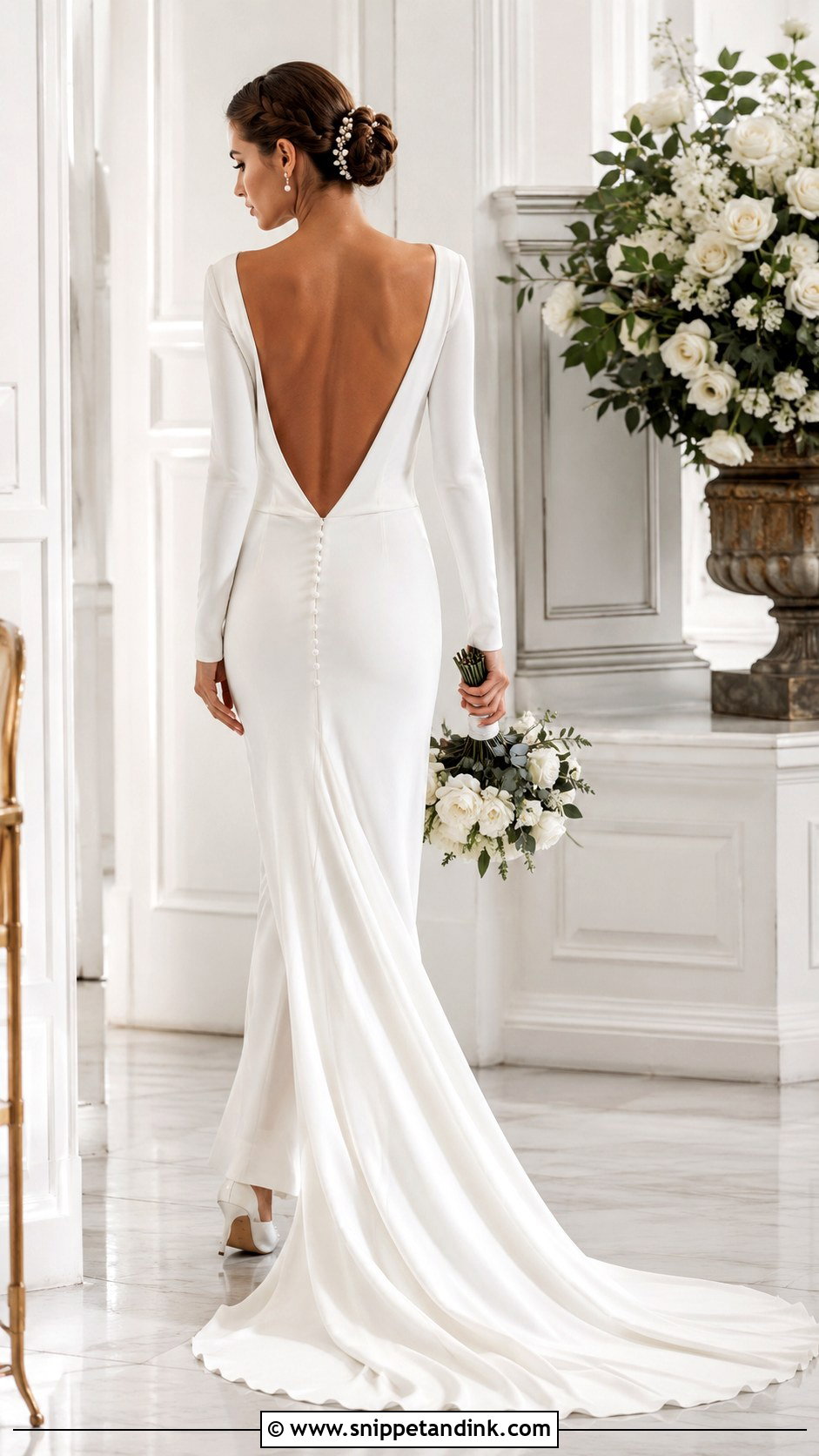
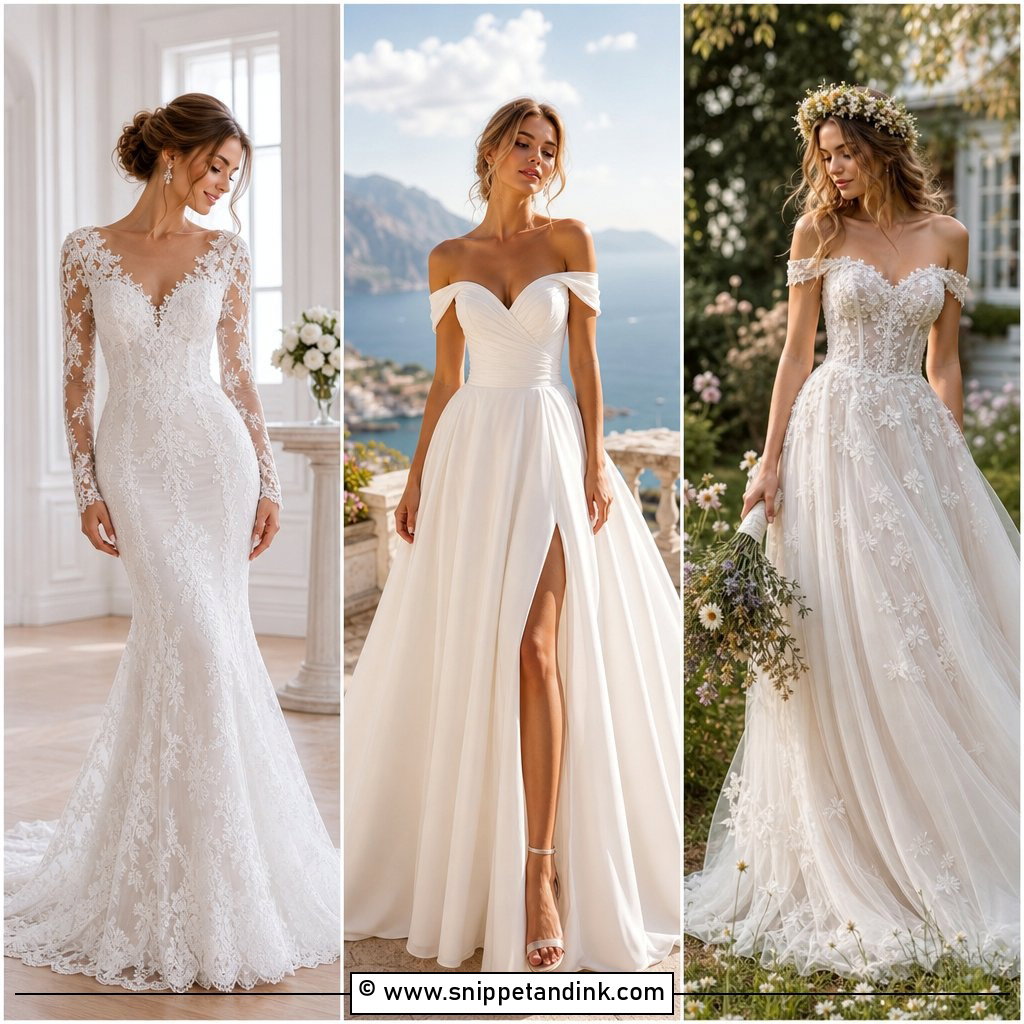
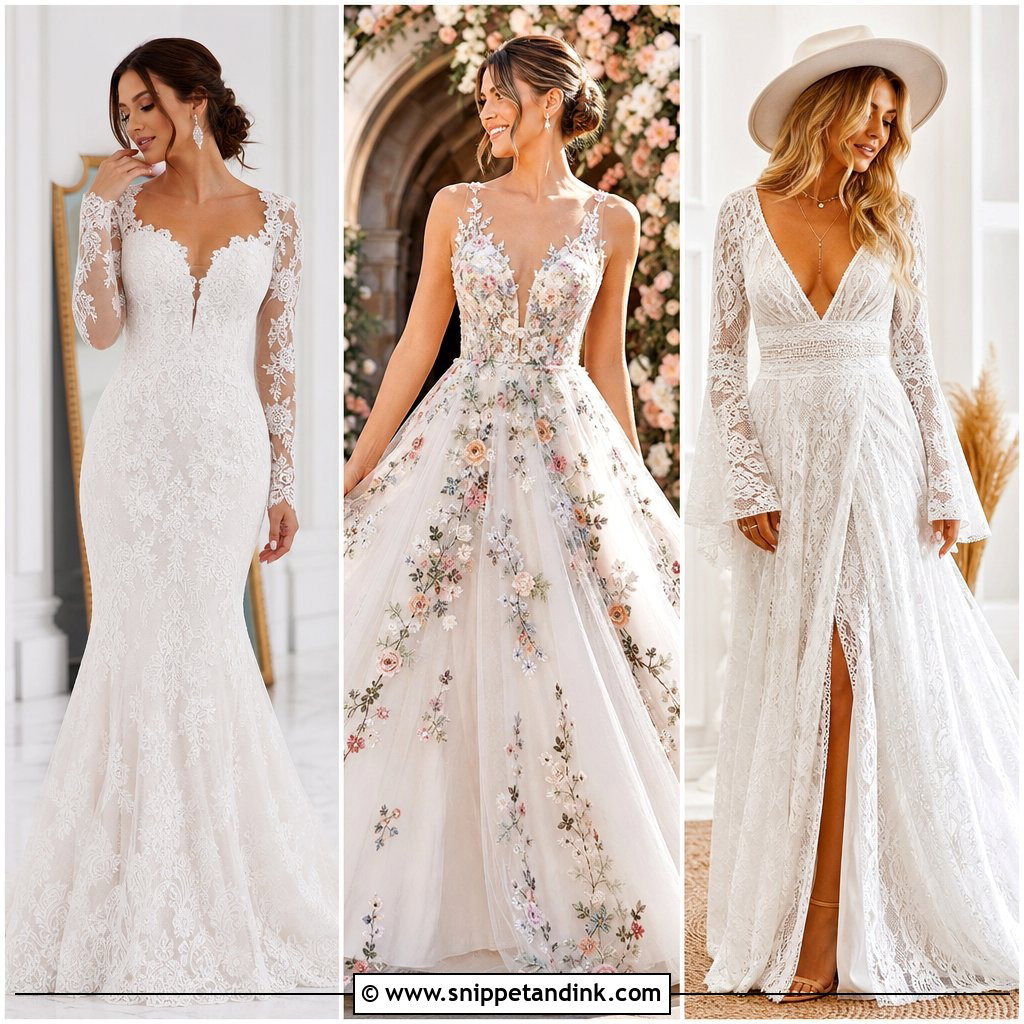
Covered arms in front and almost nothing behind: this contrast is why the style keeps selling. Stretch crepe, embroidered tulle and light lace all work, cut with a high bateau neckline, fitted sleeves and a V that finishes near the waist. Add pearl hairpins, closed-toe pumps and a structured white bouquet, and wear your hair in a braided bun so the neckline stays clean. Sleeves are where this dress usually goes wrong. A tight armhole pulls the whole back upward when you lift your arms, so at every fitting I have the bride hug someone, raise both hands and sit. If the back lifts away from the skin, the sleeve head needs more room.
4. Mermaid Backless Wedding Gown
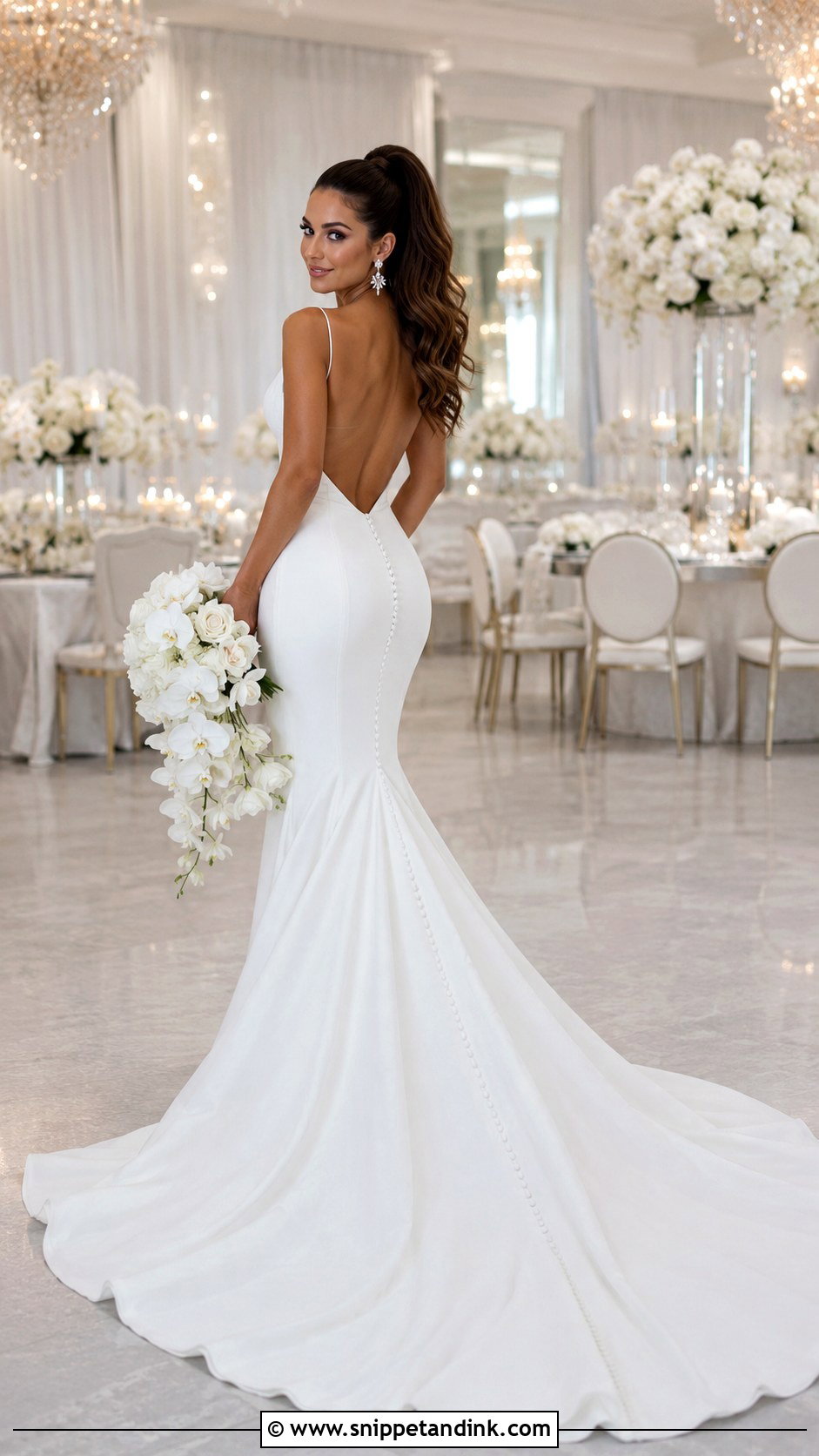
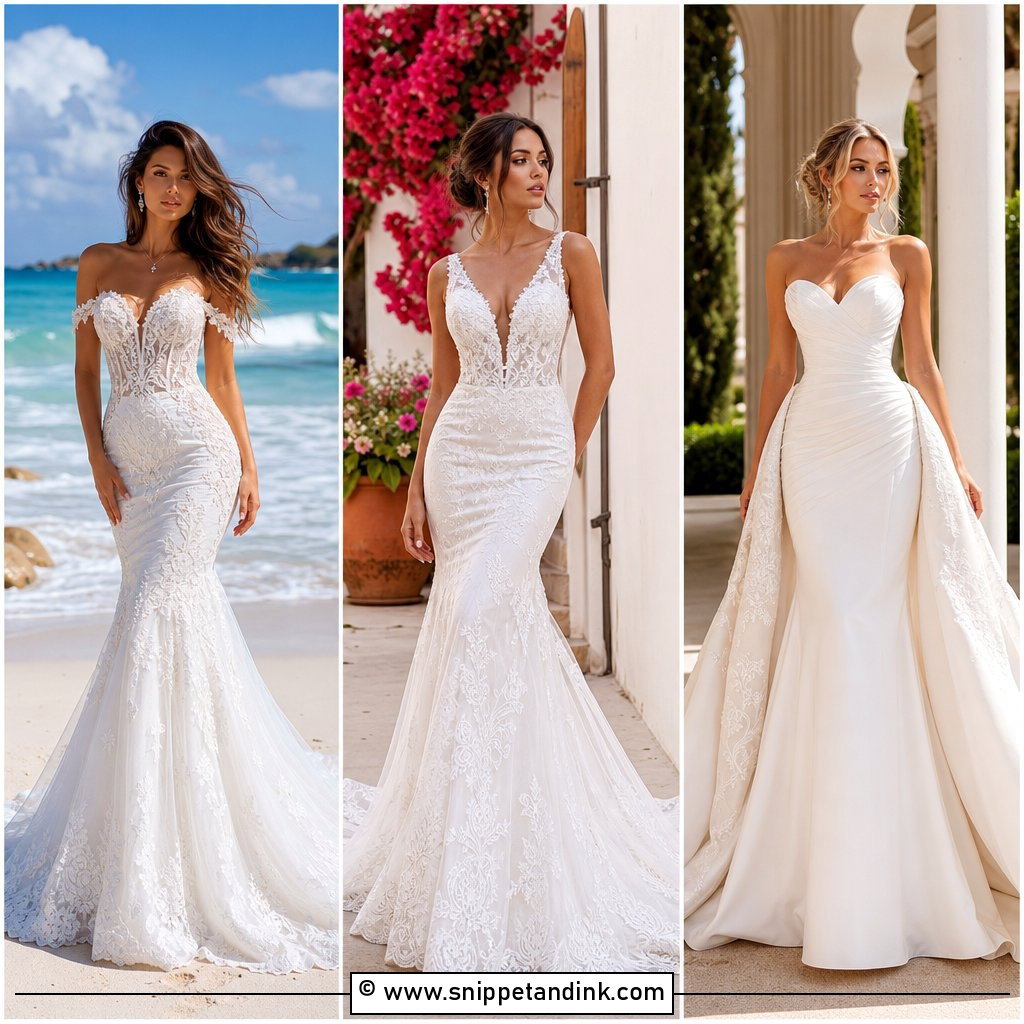
The mermaid is fitted through the torso and hips and only releases at the knee, so a plunging back makes the upper body look longer still. Crepe gives a smooth modern surface; lace adds texture. Crystal earrings, a fingertip veil, pointed heels and a small cascading bouquet suit it, along with a high ponytail or a sleek updo. Be honest with yourself about movement here. If you can’t take a normal stride or climb a step at the appointment, it will be worse after dinner. Since a regular bra is out, the support has to live in the dress: hidden boning, firm side seams and cups sewn in at the right height.
5. A-Line Backless Wedding Gown
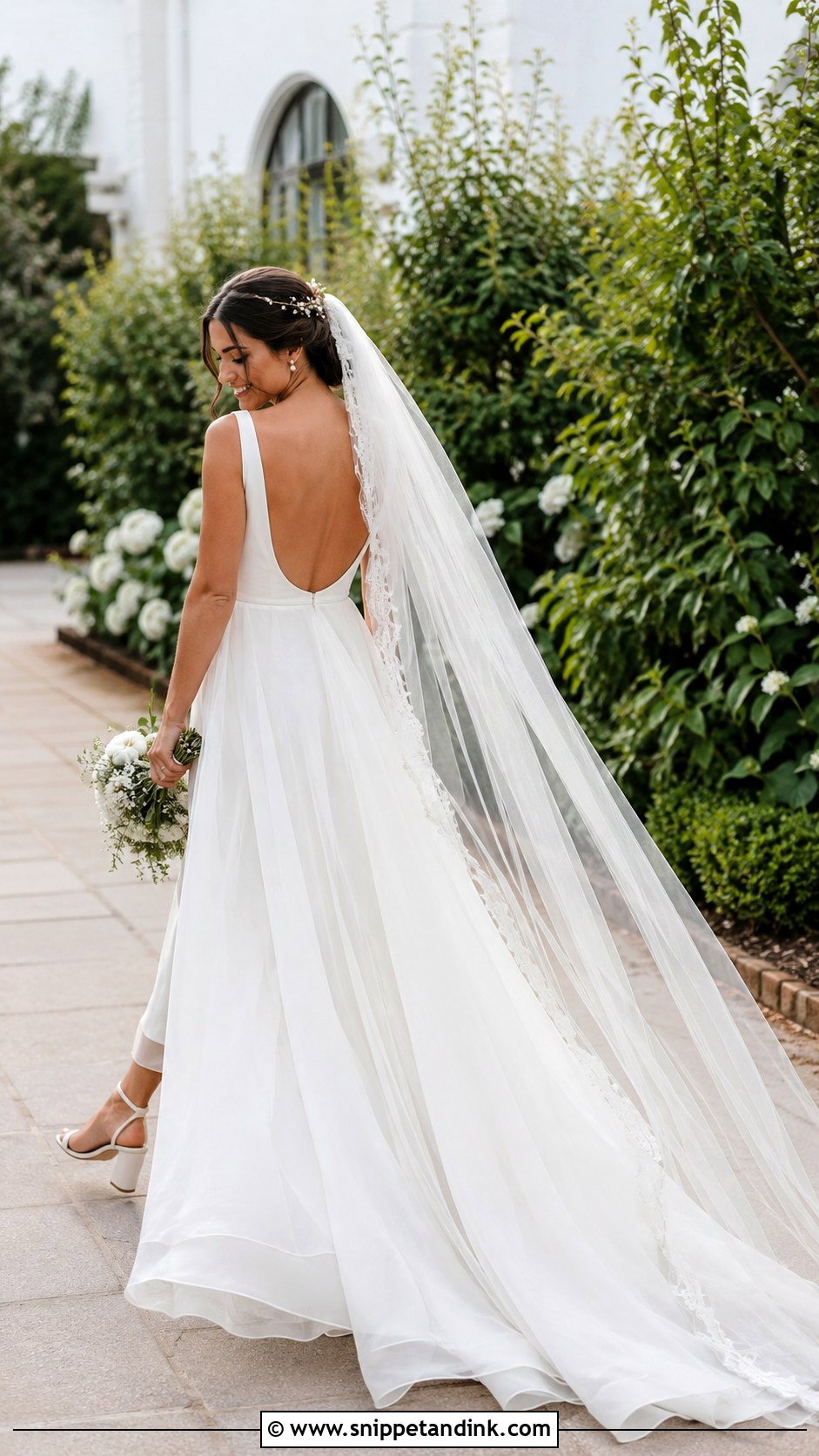
If you want the easiest backless dress to spend twelve hours in, start with an A-line. The bodice holds the waist and the skirt opens gradually, so nothing drags on the back straps. A rounded scoop feels classic; a deep V has more punch. Block-heel sandals, fine gold or pearl jewelry and a floral comb in a low bun finish it, and a chapel veil sits nicely over the skirt. The skirt can be satin, chiffon, organza or lace, so it adapts to a ballroom or a garden. Have your seamstress pin the opening while you bend forward, because gaping at the edge almost always shows up when you lean in to hug guests, not when you stand still for the mirror.
6. Ball Gown Backless Wedding Gown
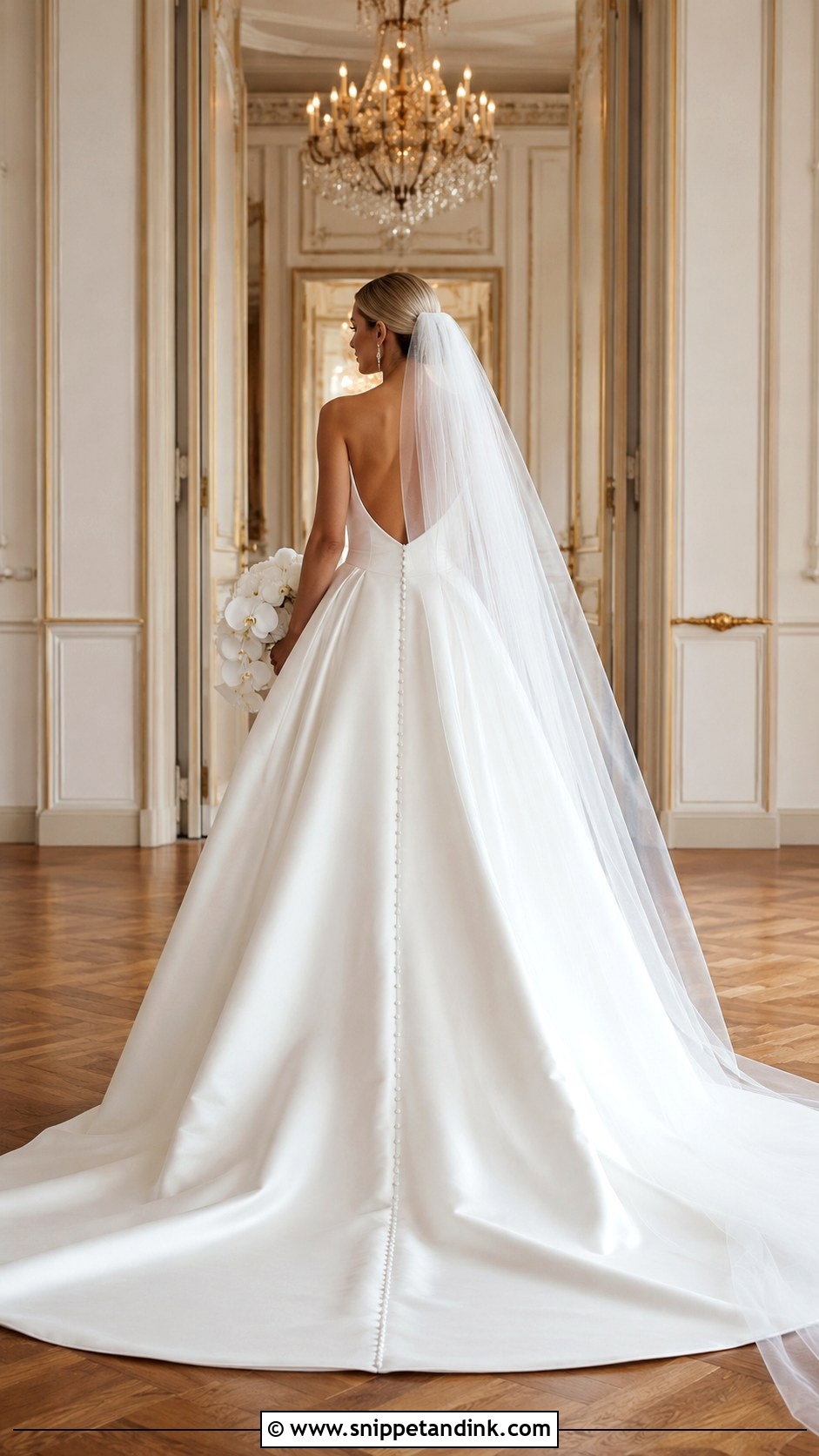
A ball gown with a bare back is pure theatre: a structured bodice against a huge satin, organza or tulle skirt. Frame the low scoop or V with covered buttons, lace trim or light beading, and pair it with crystal drops, satin pumps and a long veil set above a neat chignon. I’d skip the necklace so both necklines stay clean, and choose a fuller bouquet to match the scale of the skirt. The weight of a skirt this size wants to pull the bodice down at the back, so the waist stay and the bustle matter more than on any other style here. Ask how many bustle points it has and practise lifting it before the day.
7. Backless Wedding Gown With Bow
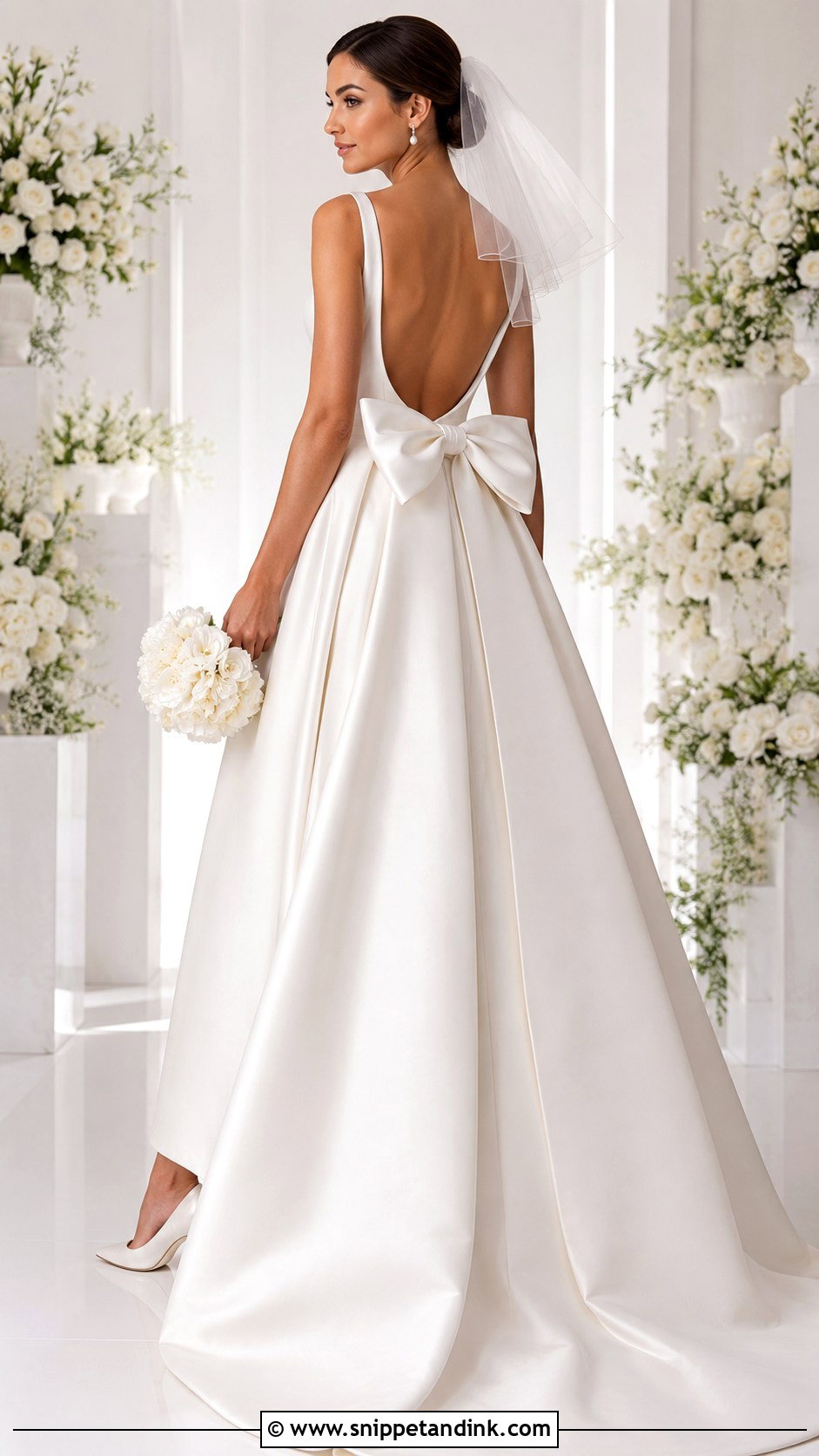
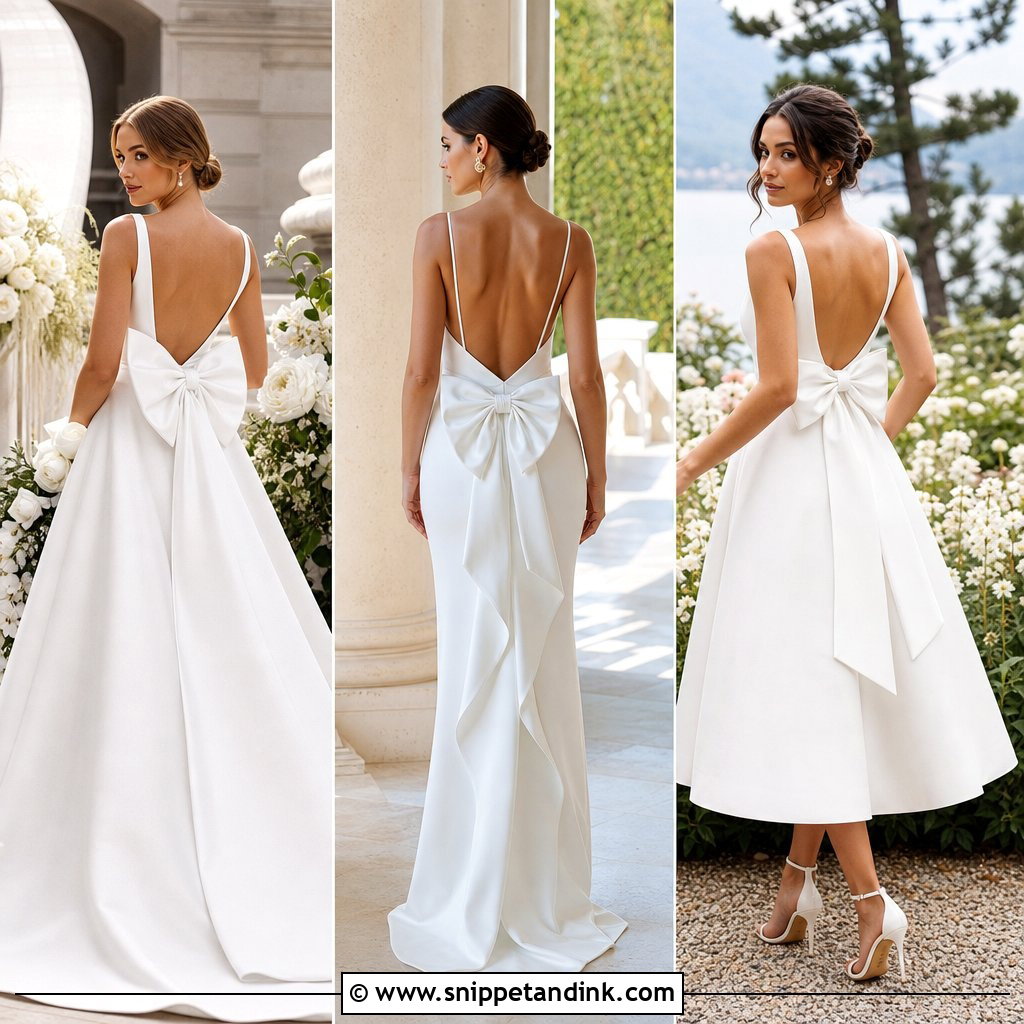
A big bow gives the eye one place to land below an open back. It can sit oversized at the waist under a low scoop, or trail long ribbons that move when you walk. Mikado and plain satin hold a bow’s shape best, and an A-line without lace lets it stand alone. Keep the jewelry to pearl studs, wear pointed pumps, and cut the veil to end above or below the bow, never on top of it. A smooth bun keeps hair out of the loops. I often suggest a removable bow on a hook-and-bar fixing, so the ceremony look is dramatic and the evening version sits flat for dancing and sitting.
8. Cowl Back Wedding Gown
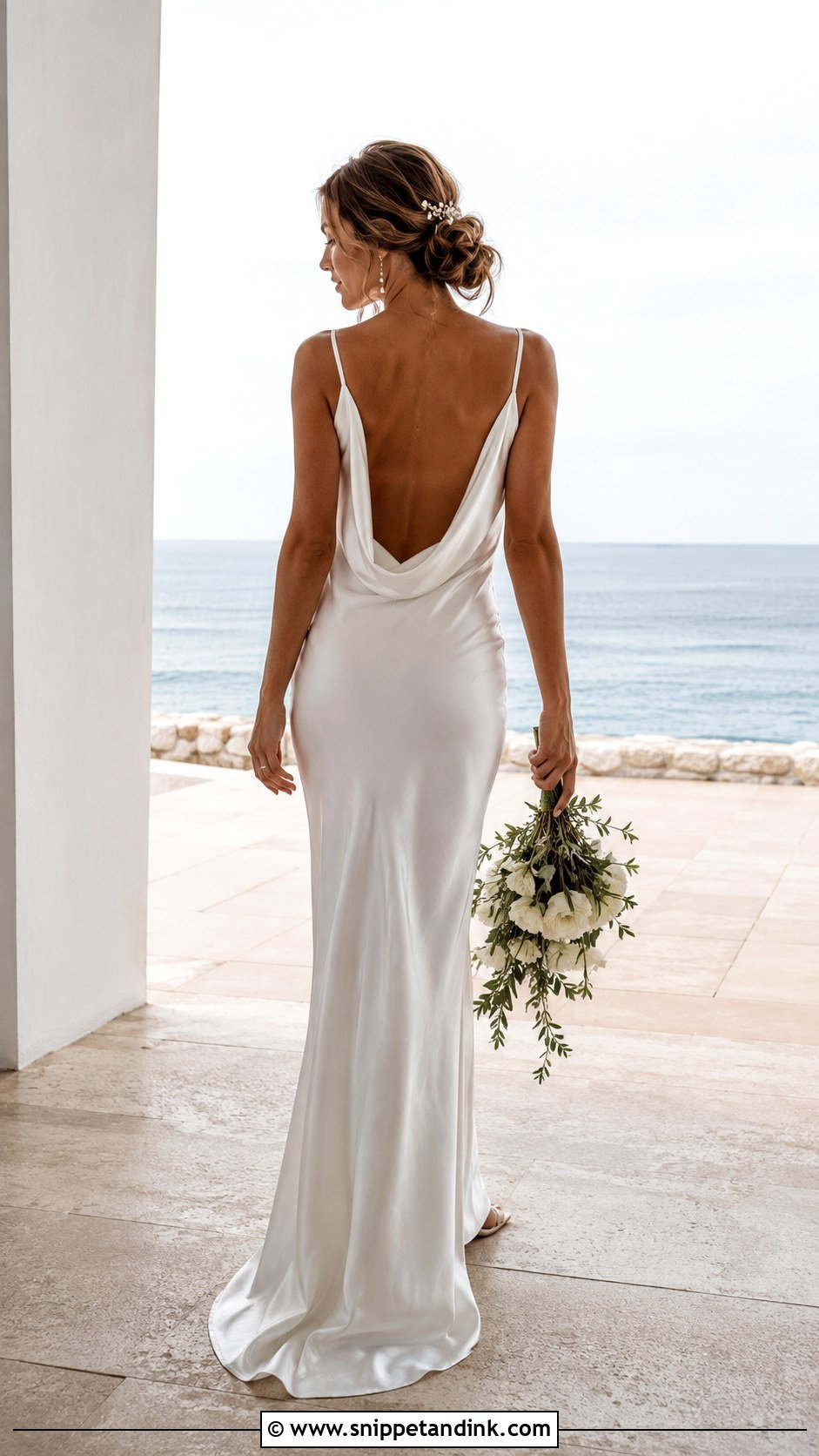
A cowl only works on fabric that falls under its own weight, which means silk, liquid satin or a soft crepe cut on the bias. Stiff fabric just sticks out. A slip-style column with slender straps and a modest front lets the drape do its job, with metallic sandals, pearl threaders and a loose low bun. Choose a short veil or a single comb so the folds stay visible. The fit sits in the shoulders and hips rather than the back itself, and the common problem is a cowl that slides lower every time you sit. Walk, sit and stand again at the fitting; if the drape drops more than an inch, a small hidden weight or a tack stitch fixes it.
9. Illusion Back Wedding Gown
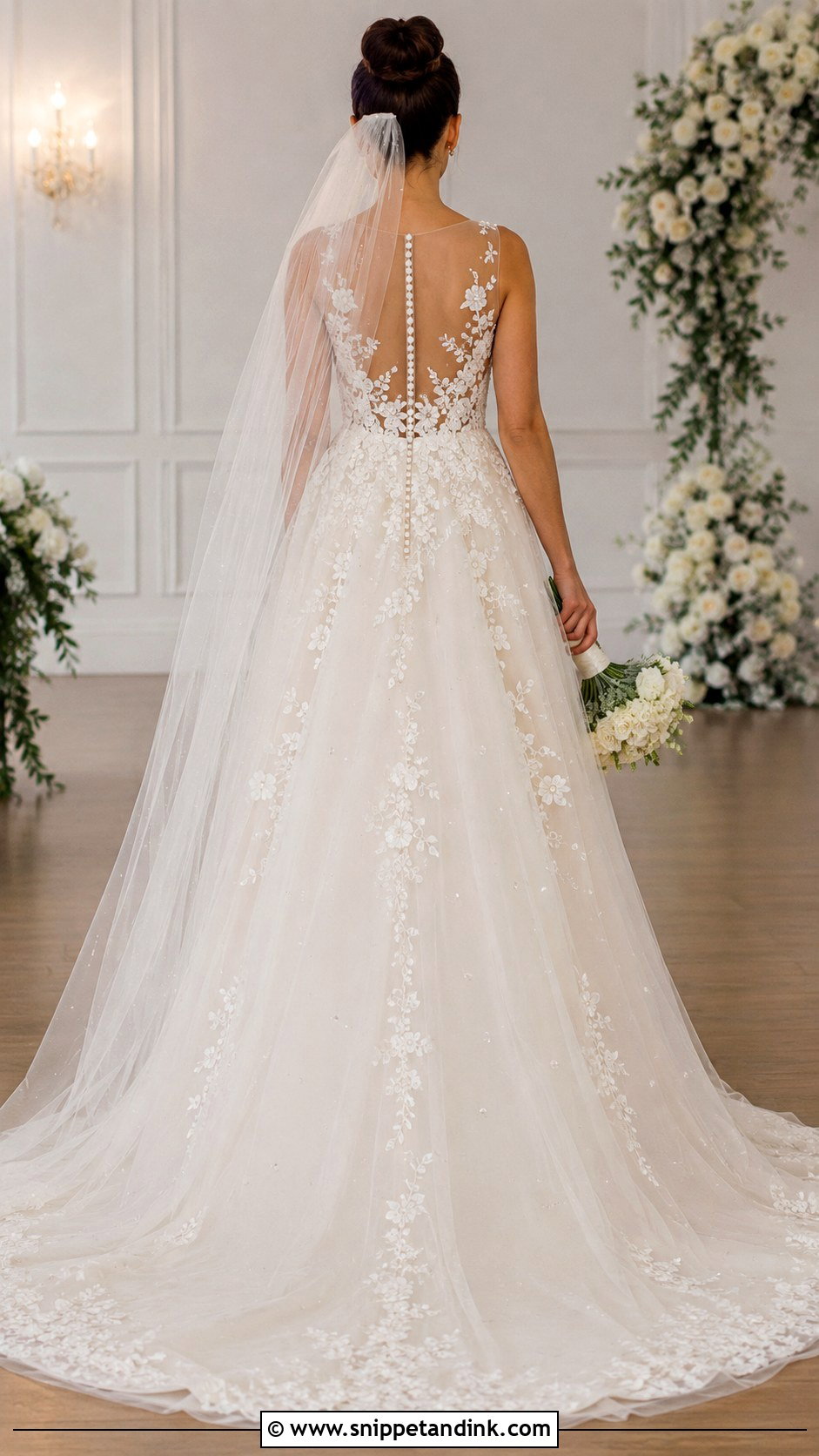
An illusion back gives you the bare look with real structure underneath. Fine mesh carries lace appliqués, beadwork or a row of covered buttons that seem to float on skin. The mesh shade is the whole job: hold it against your back in daylight and under warm indoor bulbs, because a tone that disappears in one can look grey or pink in the other, and flash makes the mismatch obvious. Crystal studs, ivory pumps and a veil without a heavy border keep it light, and a side-swept updo shows the detail. I also look at where each appliqué lands; motifs should follow the line of the spine and shoulder blades rather than look scattered.
10. Halter Backless Wedding Gown
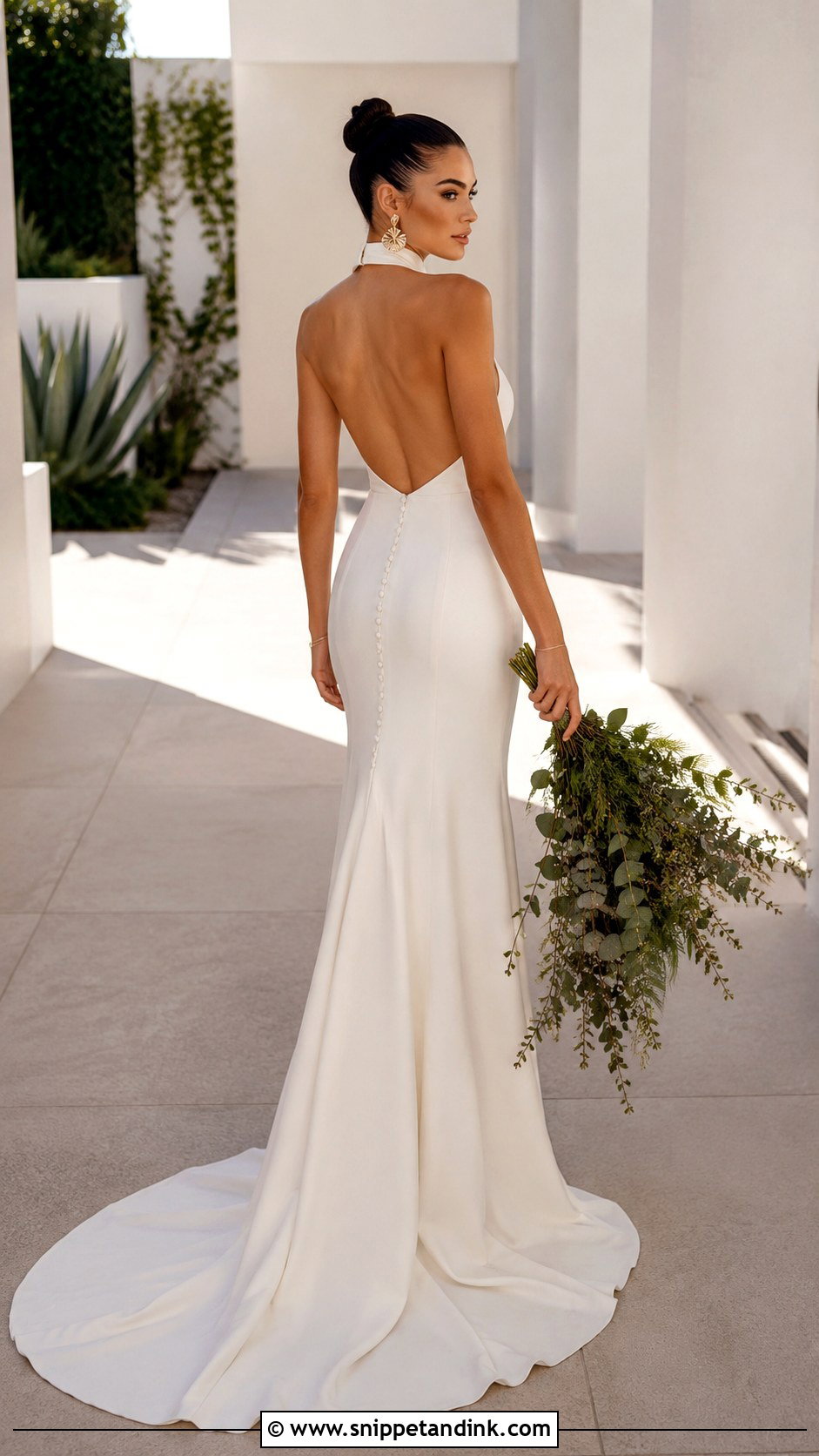
A halter collar leads the eye straight down to a bare back, and it suits brides with strong shoulders. Fitted crepe keeps it modern, while chiffon in an A-line moves more. Skip the necklace and wear a sculptural earring, slim sandals and a narrow bracelet, with a long trailing bouquet. A high bun or ponytail shows the straps. The honest drawback is neck strain. If all the skirt’s weight hangs from that collar, you’ll feel it by the speeches, so I ask for a waist stay and a structured bodice that carry most of the load, leaving the halter to do little more than hold position.
11. Corset Backless Wedding Gown
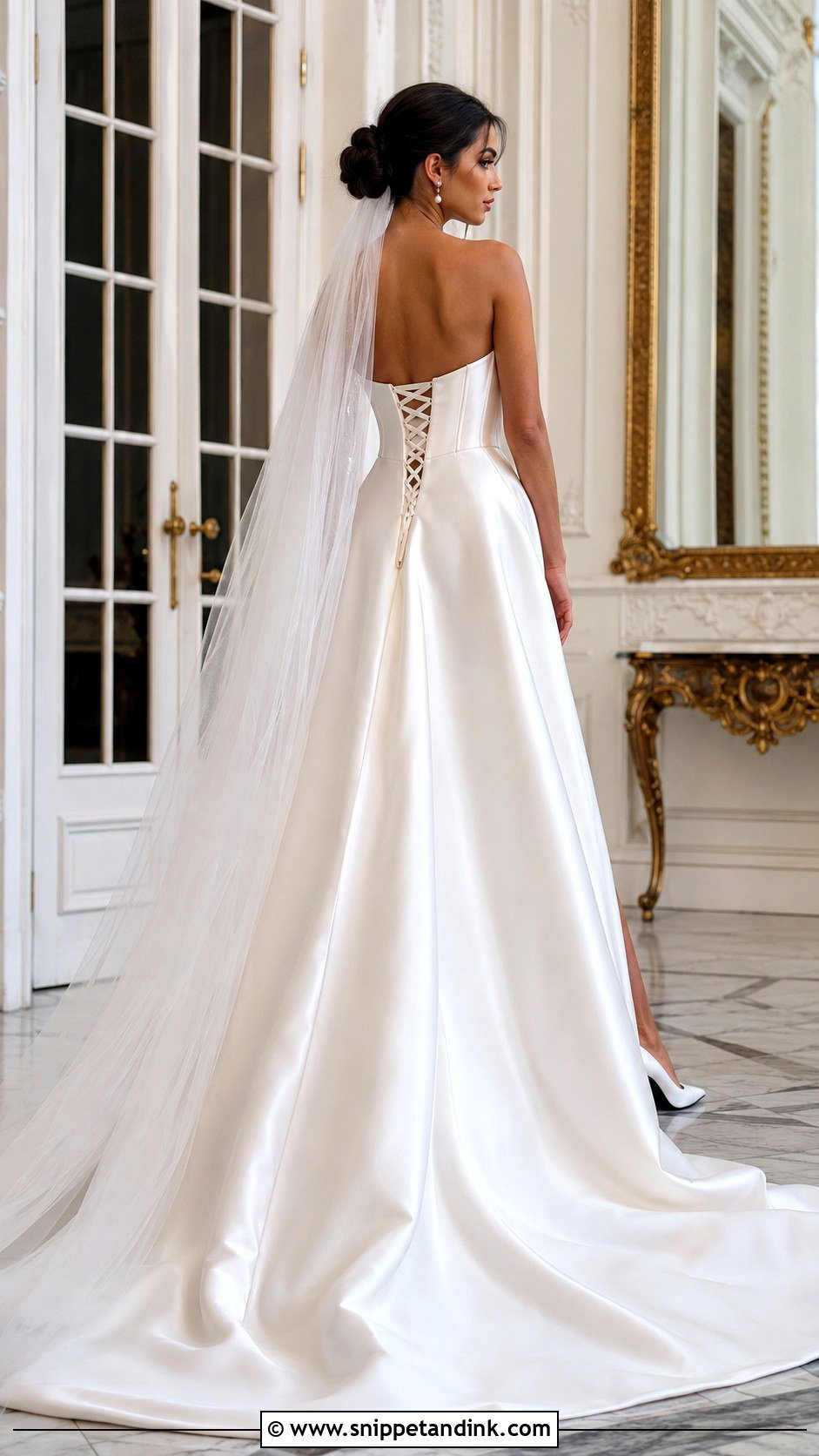
You get the outline of a backless dress with far more hold from a corset back. Instead of an empty opening, the back is laced with satin ribbon, sometimes with visible boning or sheer side panels. It works over a flowing A-line, a full ball skirt or a fitted crepe base. Pearl drops, pointed heels and a soft tulle veil above a low bun finish it. Lacing too tight is the usual mistake on the morning; you should be able to breathe deeply and sit for an hour. Ask the salon to lace it for you at the last fitting and take photos of every stage, because whoever dresses you will need to copy the spacing exactly.
12. Boho Backless Wedding Gown
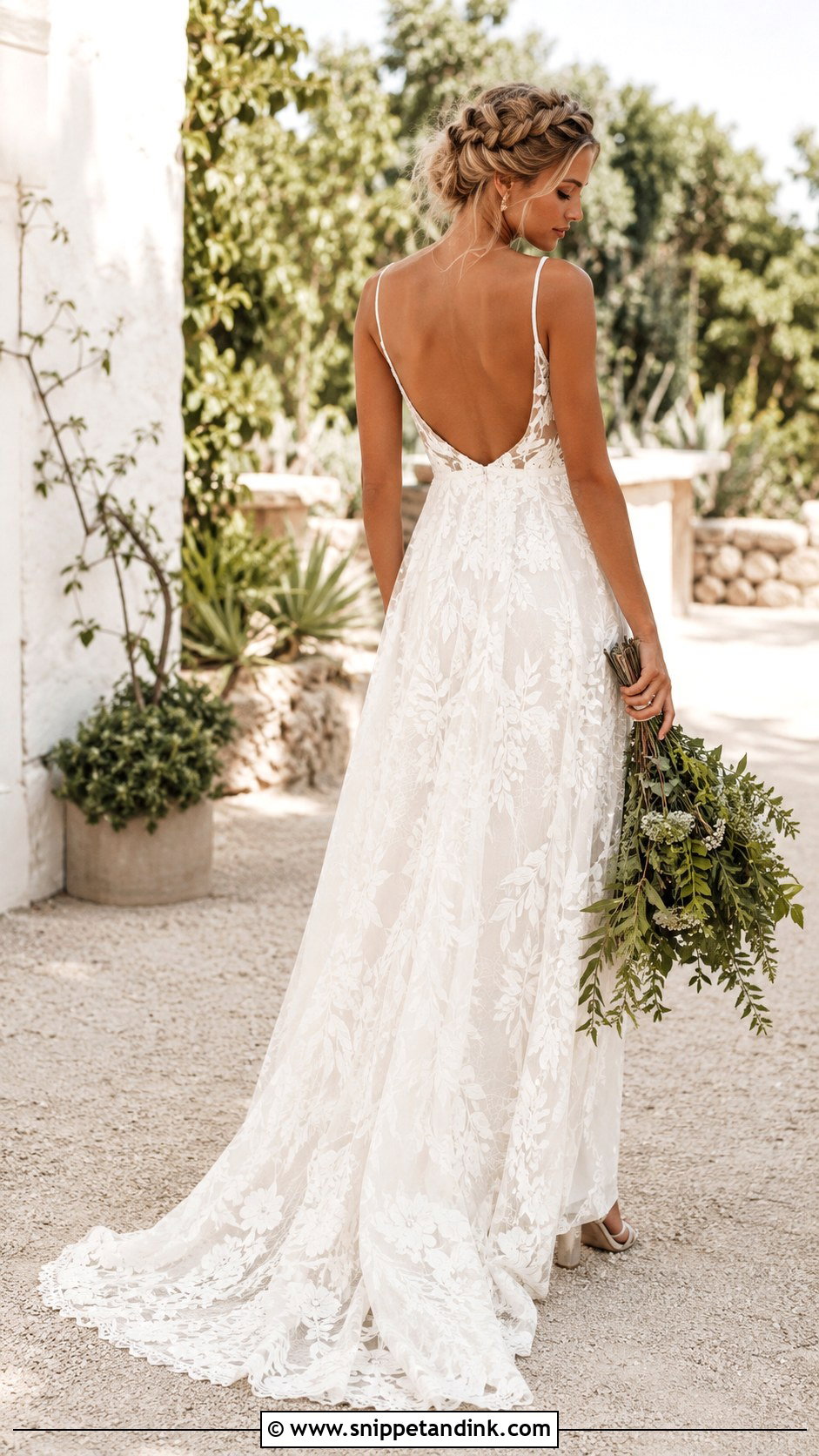
A boho open back is about light fabric that moves and lace with a hand-made feel. Look for an A-line or sheath with a deep V, narrow straps and a sweeping train. Crochet-inspired trim or raised floral appliqués add texture without formality. Block-heel sandals (grass swallows stilettos), small gold earrings and a loose bouquet of white flowers and greenery suit it, along with a textured braid. Outdoors, plan to take the veil off after photos. And check the lining: unlined lace against a sweaty back is uncomfortable within an hour, and a breathable cotton or silk lining solves it.
13. Minimalist Backless Wedding Gown
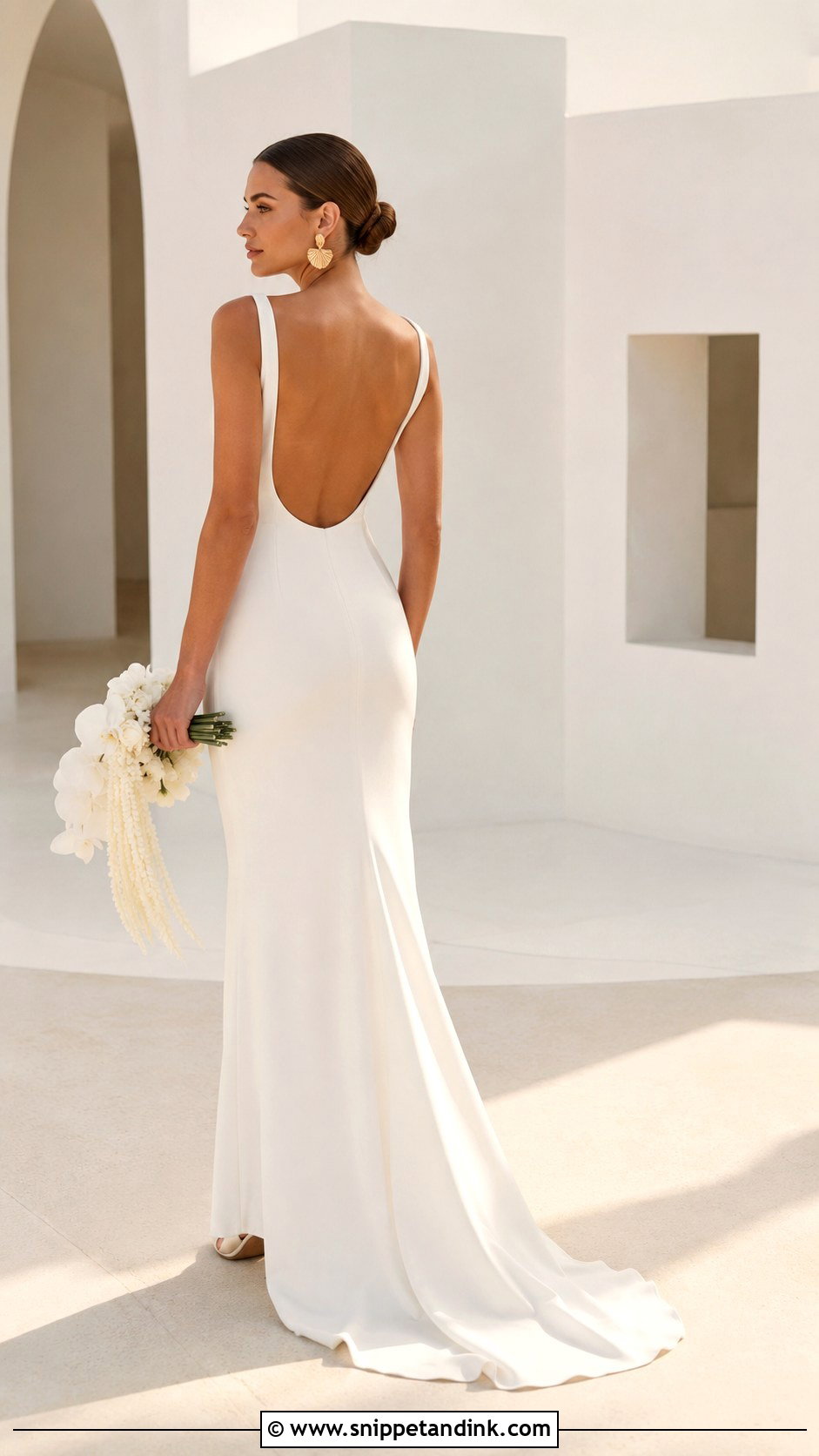
With no lace or crystals to hide behind, a minimalist dress is all cut and construction. Structured crepe or matte satin in a column, sheath or soft flare, with a deep square or rounded back, gives you the interest. Architectural earrings, pointed ivory pumps, a smooth clutch and a centre-parted bun or sleek ponytail keep the line clean, with a single-colour bouquet. When I fit a plain dress I walk all the way around the bride, because a dart sewn slightly off or a lumpy bustle shows instantly on bare fabric. Internal support has to be truly invisible, so ask to see the inside of the bodice before you commit.
14. Beaded Backless Wedding Gown
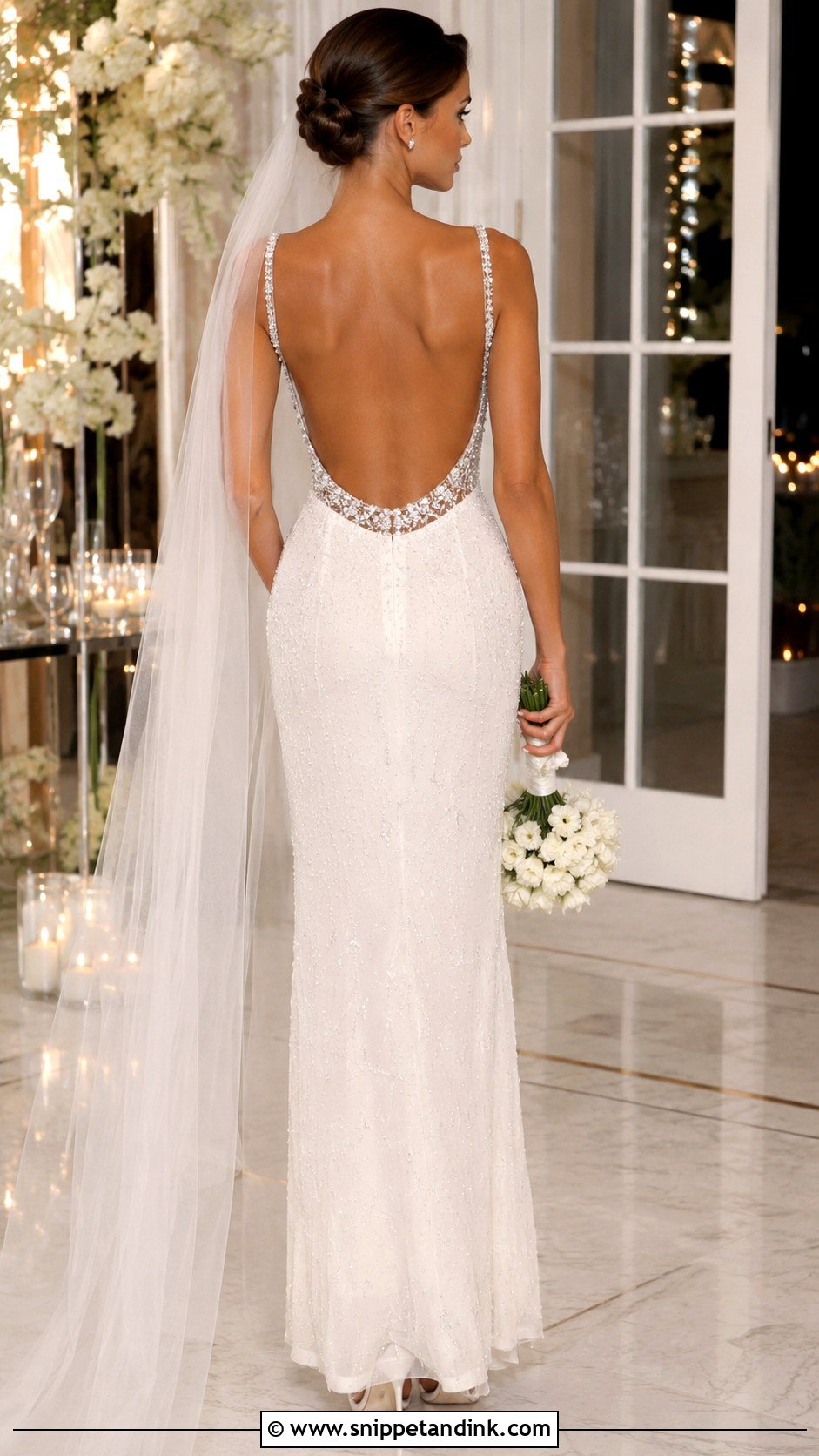
Beading belongs in the evening, when low light catches it. A fitted sheath with crystal straps, a beaded edge around the opening and a lightly worked skirt is plenty; put the weight of the decoration at the bodice so the whole dress doesn’t drag. Wear plain satin heels, small sparkling studs and an unadorned fingertip veil, and keep your hair in a polished bun so loose strands can’t tangle in the beads. The two practical checks are your inner arms and your veil: beads at the side seams scratch, and tulle catches on every crystal. A soft lining under the heaviest areas is a must.
15. Floral Appliqué Backless Wedding Gown
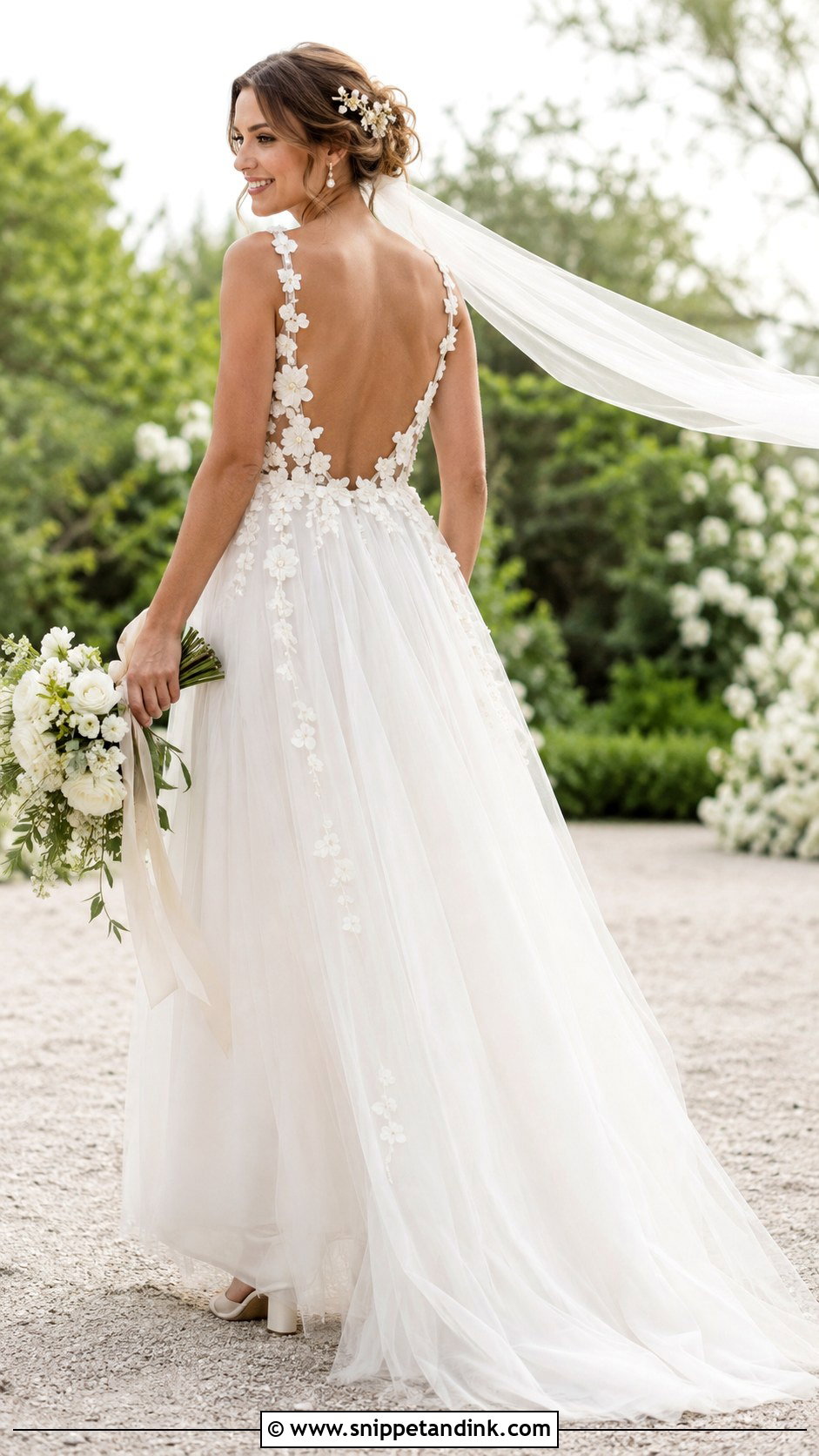
Raised flowers along the straps, the waist and the edges of a deep V make a garden dress, and they read best when a few blooms drift down onto a tulle skirt so the decoration feels connected. Pearl earrings, low block heels, a barely-there veil and a soft updo with a small matching flower comb are all it needs. Keep the bouquet simple. Three-dimensional petals are glued and tacked by hand, and they do come loose, so before the wedding I go over each one and re-stitch anything that lifts. Watch where the flowers sit near your arms; a raised bloom at the underarm rubs every time you move.
16. Square Back Wedding Gown
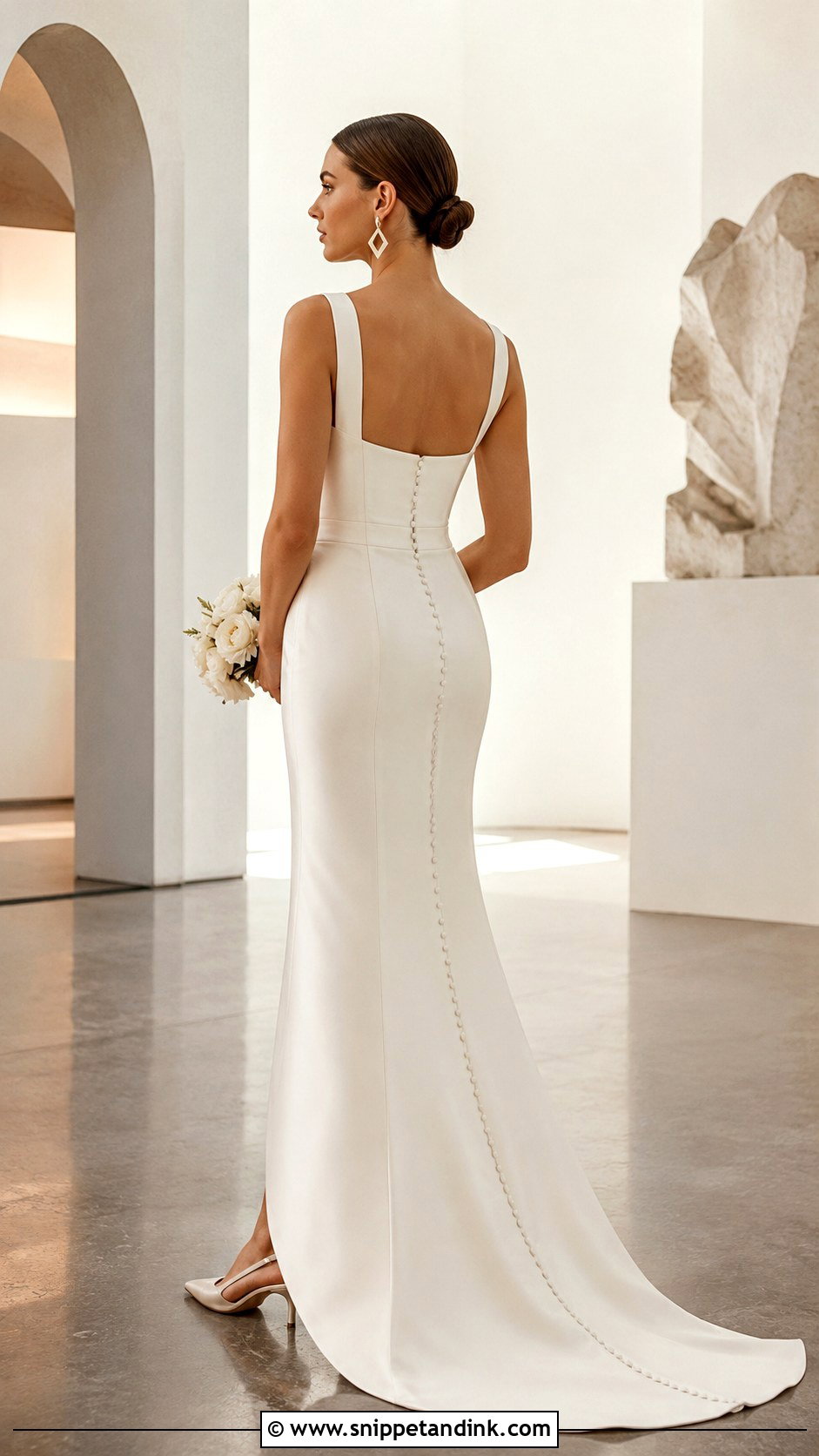
A square back is the most architectural cut on this list. The straight line across reads especially sharp on a satin or crepe column with wide straps; for a softer take, edge the opening in lace and covered buttons. Geometric earrings, slingbacks and a compact bouquet suit it, and a low centre-parted bun echoes the symmetry. Corners are the weak point. On a square opening they tend to pull outward as you move, so I ask for the straps and waist seam to be reinforced and for the bride to stand, hug and sit at the fitting while I watch whether the corners stay flat.
17. Keyhole Back Wedding Gown
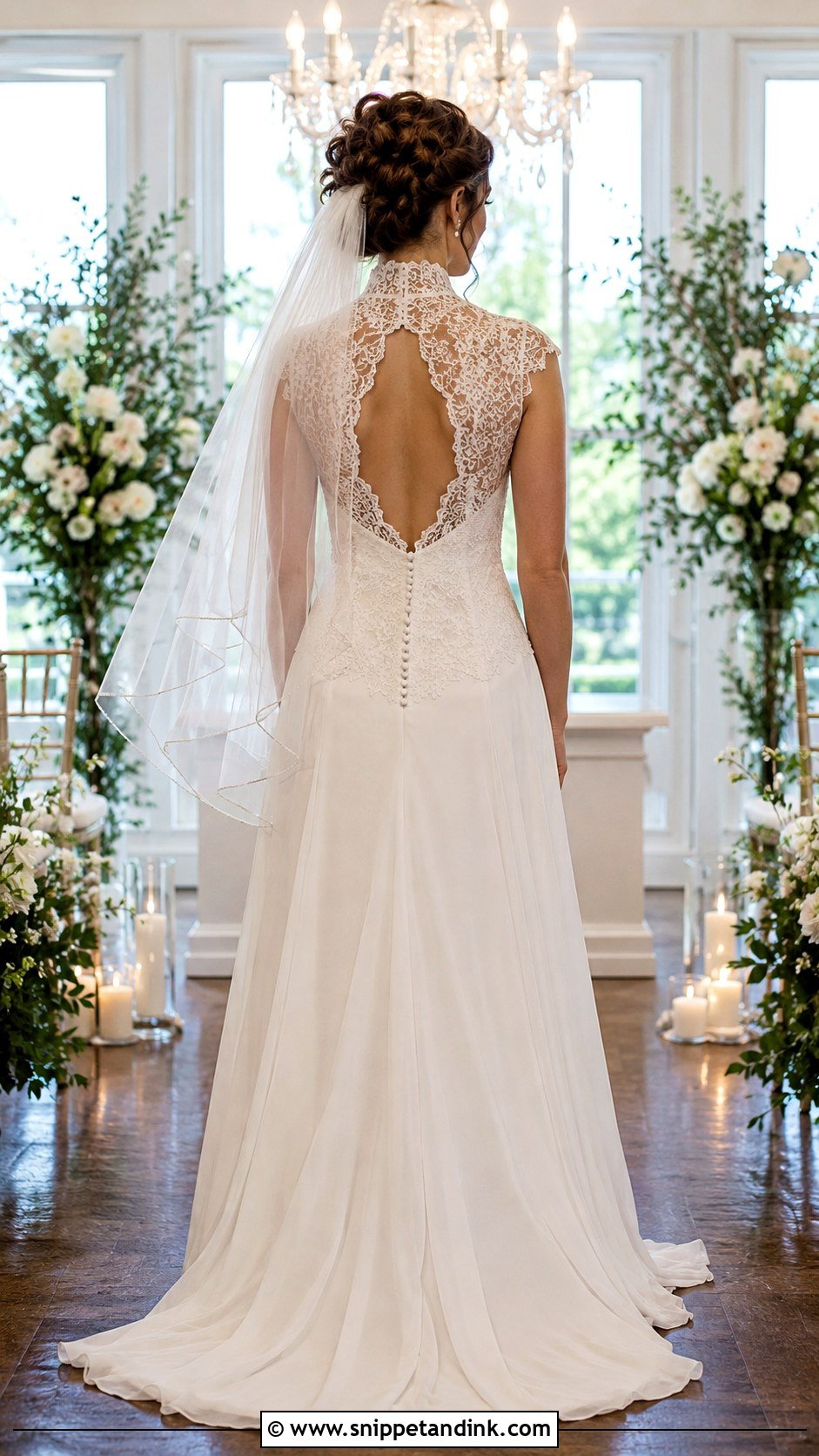
Not everyone wants their whole back on show, and a keyhole gives you an open detail inside a mostly covered dress. It can be a narrow teardrop or a wider opening closed with a button at the neck. Cap sleeves, a high lace neckline and a chiffon or tulle skirt keep it soft, with pearl studs, comfortable pumps and a fingertip veil under a textured updo. The keyhole also frames lace edging or light beading nicely. The top closure carries all the tension, so I add a hidden hook next to the button, and I check that the opening stays centred instead of twisting toward one shoulder when you turn.
18. Backless Wedding Gown With Detachable Sleeves
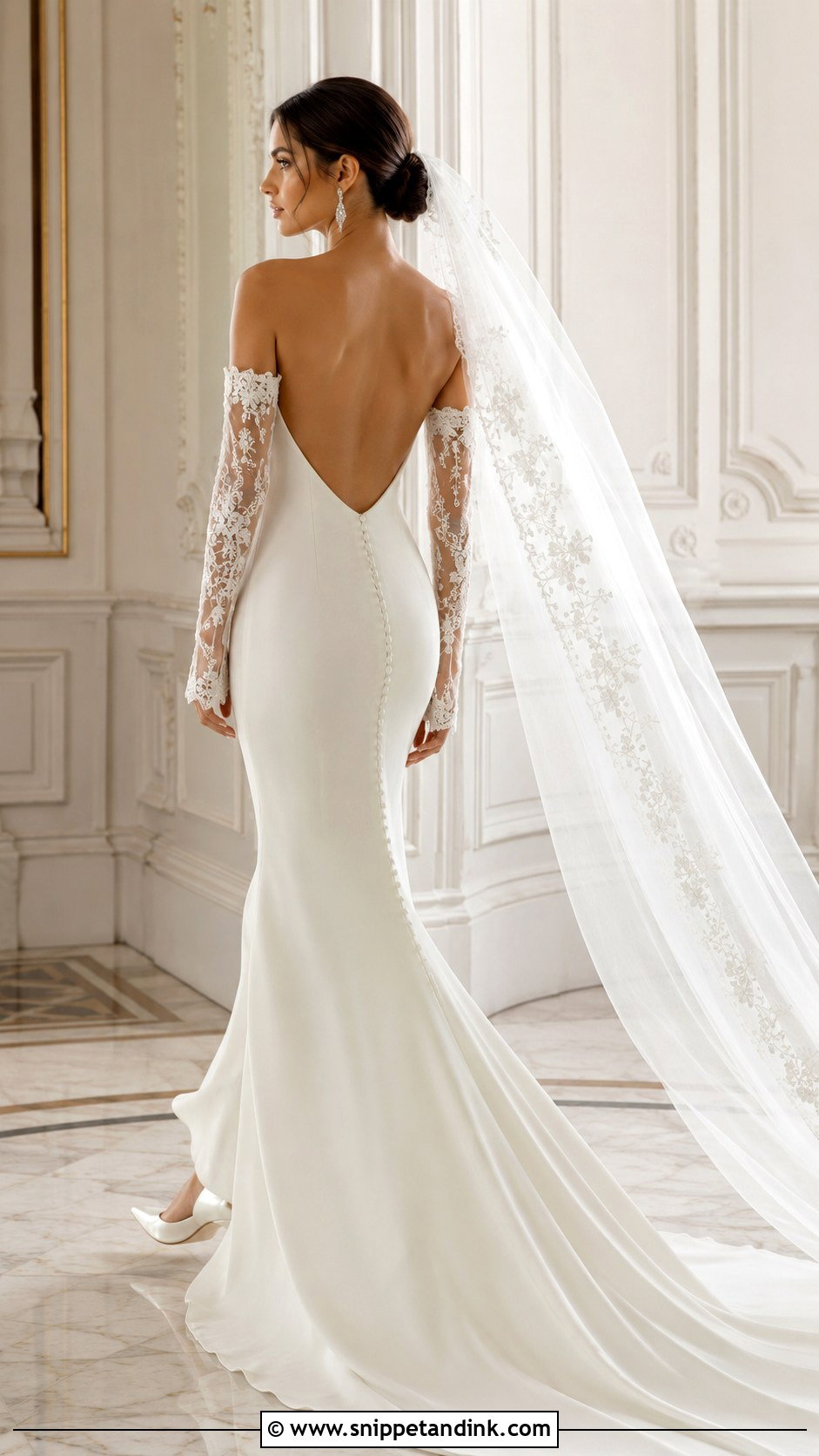
Detachable sleeves give you two dresses for the price of one. Start with a strapless or narrow-strap fitted gown and a low scoop back, add sheer lace, tulle or satin sleeves for the ceremony, then take them off for the party. Drop earrings, pointed pumps and a veil that matches the sleeve fabric complete it, and a low updo shows the back and the attachment points. Practise the change before the day, ideally with the person who will do it, because tiny snaps and hooks are fiddly in a crowded room. Put the sleeves straight into a labelled garment bag so they come home.
19. Beach Backless Wedding Gown
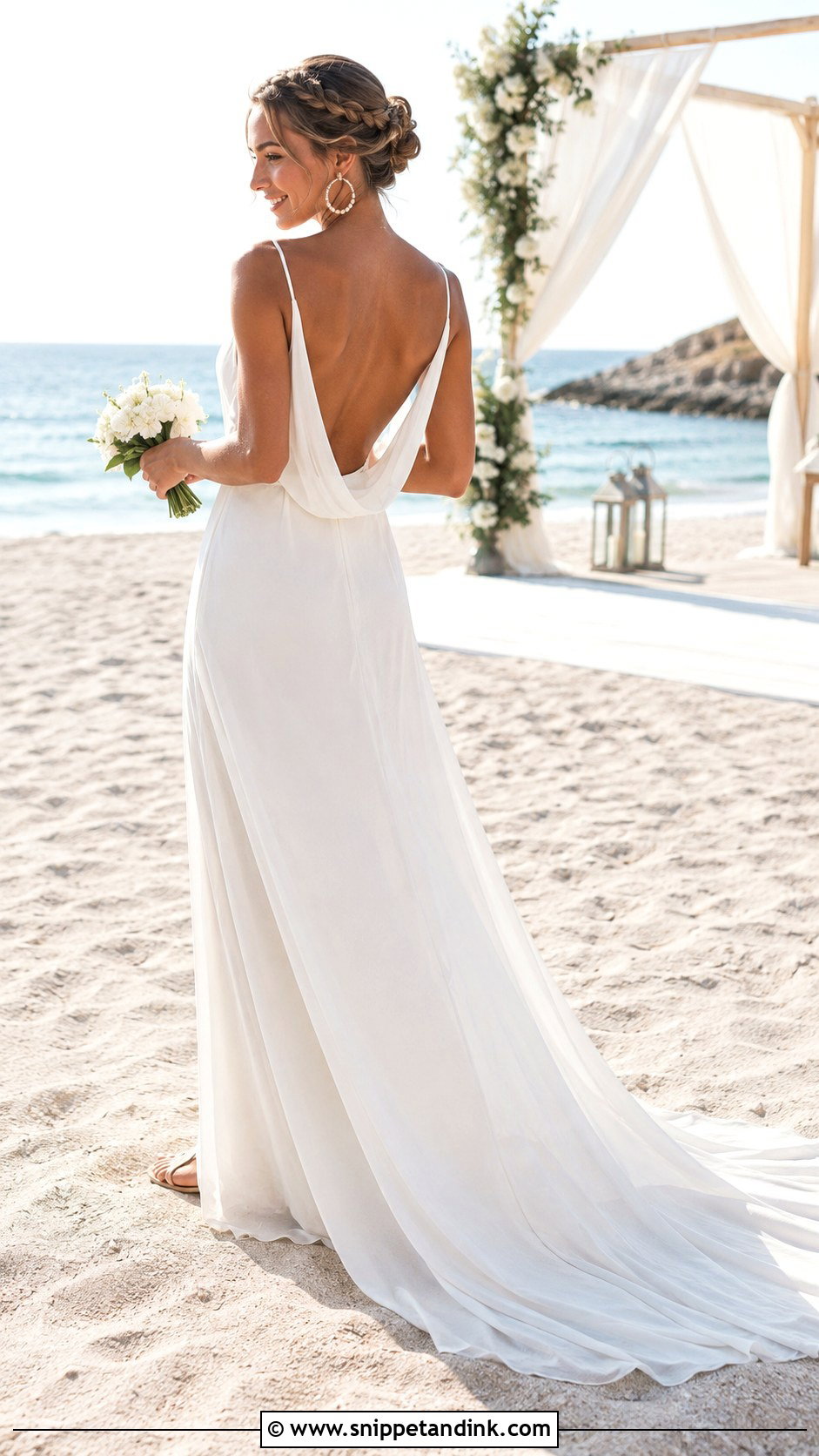
Breezy fabric and a plain shape are what make an open back practical on sand. Chiffon A-lines, lace sheaths and satin slips with narrow straps and a softly draped back all travel well. Skip the long train; it collects sand and wet seaweed and turns into a sail in wind. Flat embellished sandals, pearl hoops and a small bouquet are easy to manage, and a braided updo stays put. If it’s breezy, swap the veil for a comb. Have the final hem set with the exact shoes you’ll wear on the beach, since even a slight heel change can make chiffon drag.
20. Plus Size Backless Wedding Gown
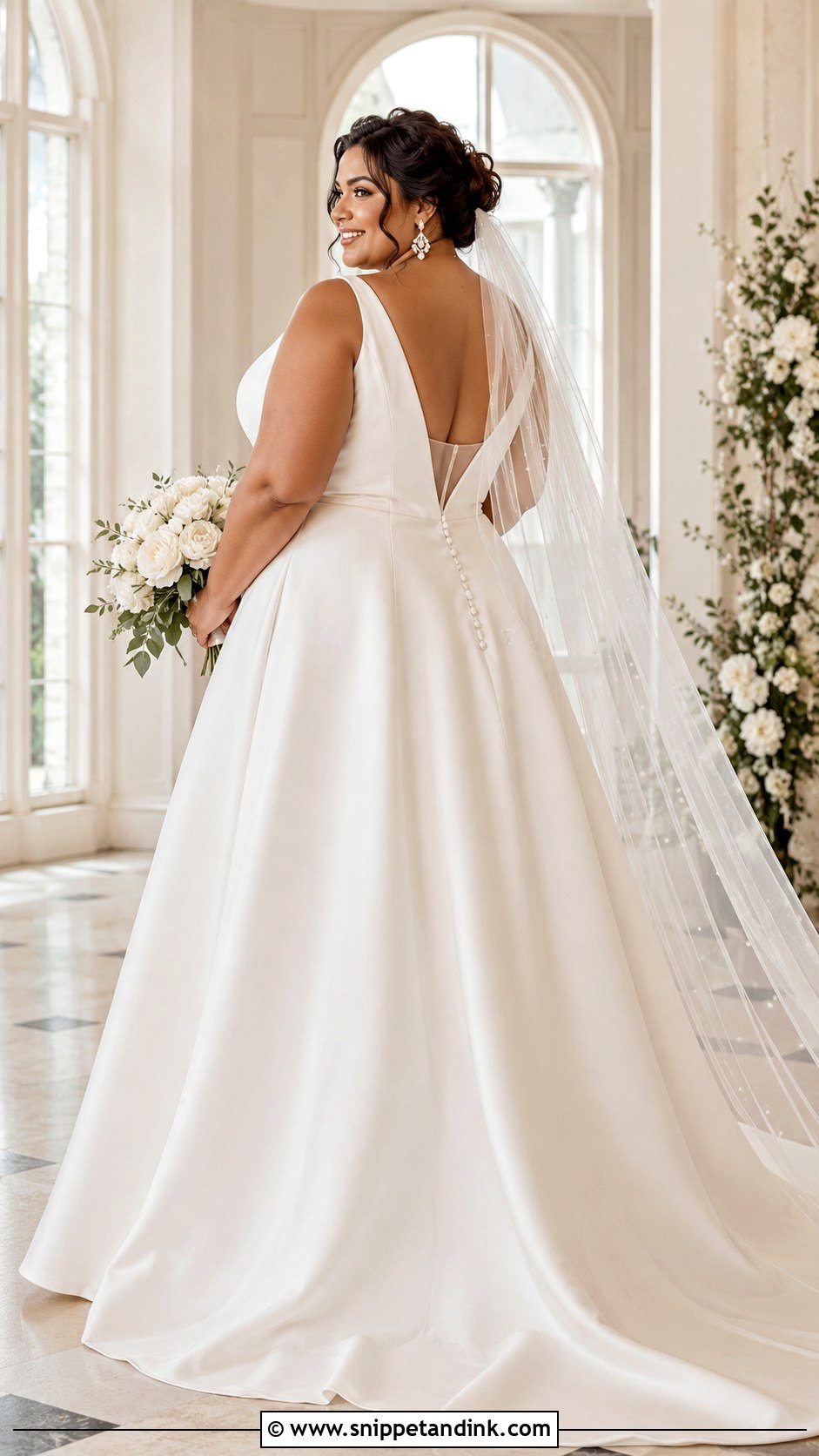
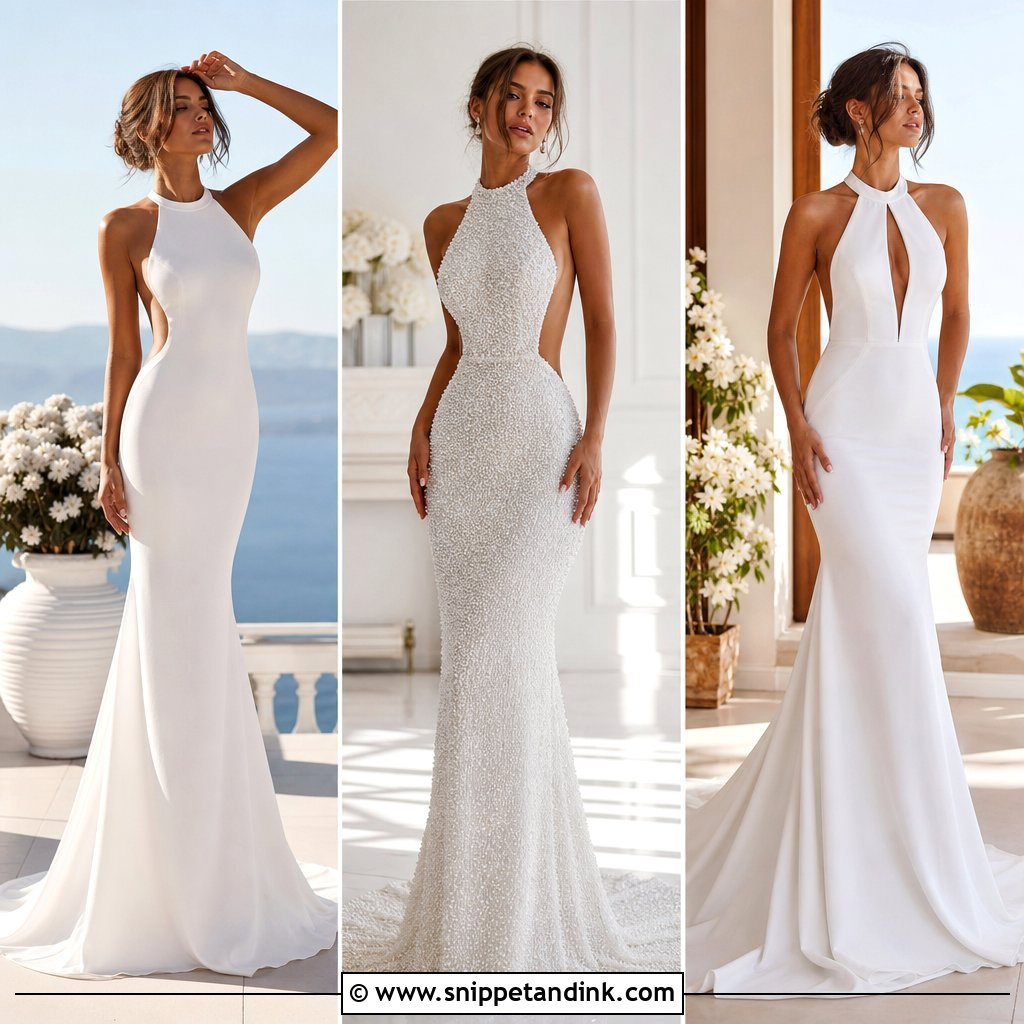
Support is the first conversation I have with a plus-size bride choosing an open back, because the dress has to do all of it. A-line, ball gown and fit-and-flare shapes can all carry internal boning, sewn-in cups and a waist stay. A slightly higher V, an illusion panel or a low corset adds stability while still reading as backless. Supportive block heels, statement earrings and a veil fixed above a polished updo finish it. Try several back shapes; the one you expect to like is often not the one that sits best. At fittings walk, sit, raise your arms and dance, and let the tailor adjust straps, cups and back edges until nothing digs or slips.
Your Back Is Part of the Dress Now
Once you pick an open back, your skin and hair become part of the outfit, and they need a little planning that most brides don’t think of until the photos come back.
Skin and tan lines
Strap marks from a summer of swimsuits show sharply against ivory. Either protect your back from the sun for the months before the wedding or book a professional spray tan a couple of days out, and test it first. Fresh tan rubs onto a white lining, so dress only once it has fully developed and been rinsed. If breakouts on the back worry you, start a gentle exfoliating routine early rather than trying something new the week before.
Veil and hair placement
A veil comb sitting high on the crown lets sheer tulle fall over the back without hiding it; set low in a bun, a heavy veil covers the very detail you paid for. Loose waves are fine on a satin or crepe edge but tend to snag on beading and lace. Ask your hairstylist and your seamstress to see each other’s plans, or at least show each of them a photo of the other, so the hair, the veil and the opening all sit at the right height.
On the morning
Put on the dress before any body shimmer or lotion goes on your back, keep a strip of fashion tape in your emergency kit for a strap that starts to wander, and have whoever bustles you practise once at the final fitting.
What to Wear to Your First Backless Fitting
A good backless bridal look is a balance of impact, support and the setting you’re marrying in. Satin columns are sleek, lace softens, a full skirt brings drama, and bows, cowls, illusion mesh, lacing and appliqués change the view from behind. Take your actual wedding shoes and the undergarments you plan to use to that first appointment, because hem length and cup height are set against them. Ask about cups, boning, strap placement and the bustle before you fall for the shape. Then judge every dress while walking, sitting and hugging, not just standing still in front of the mirror.
You'll Like These Ideas:



Leave a Reply