
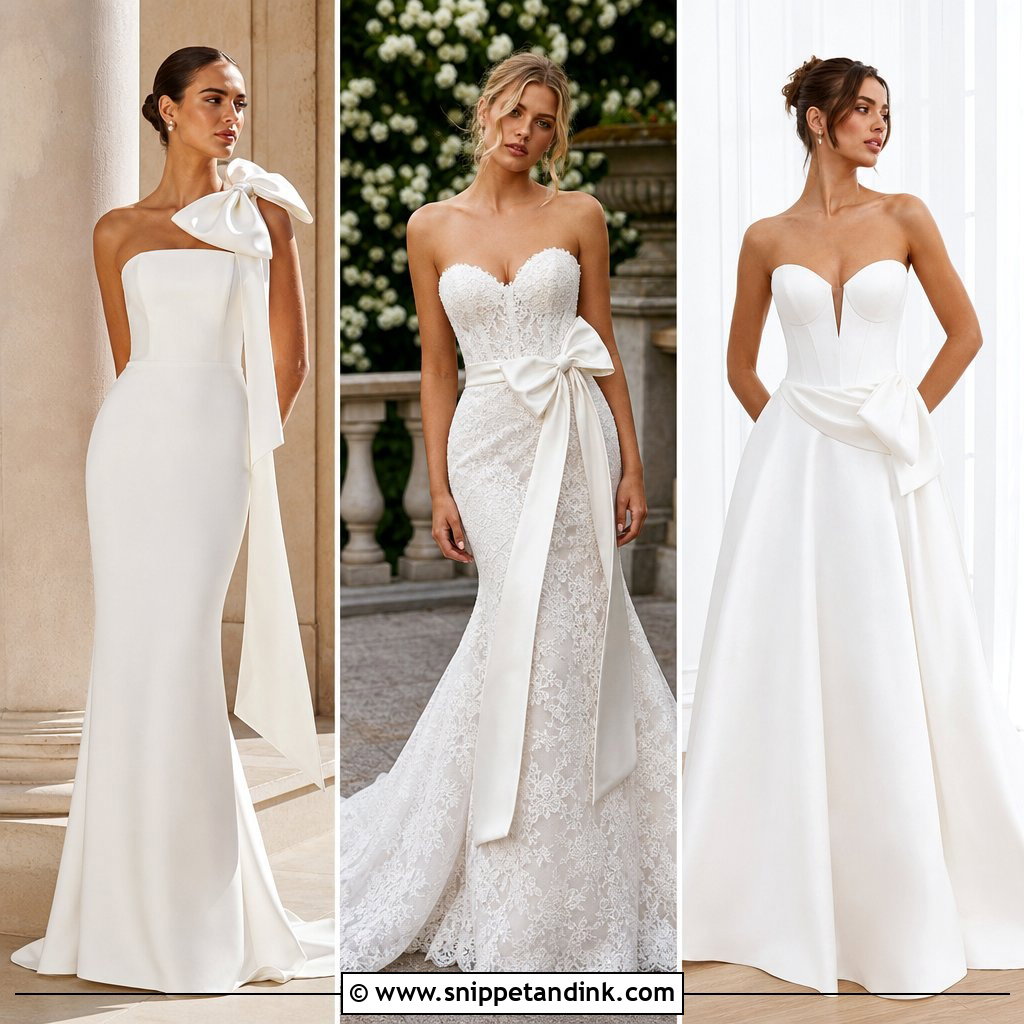
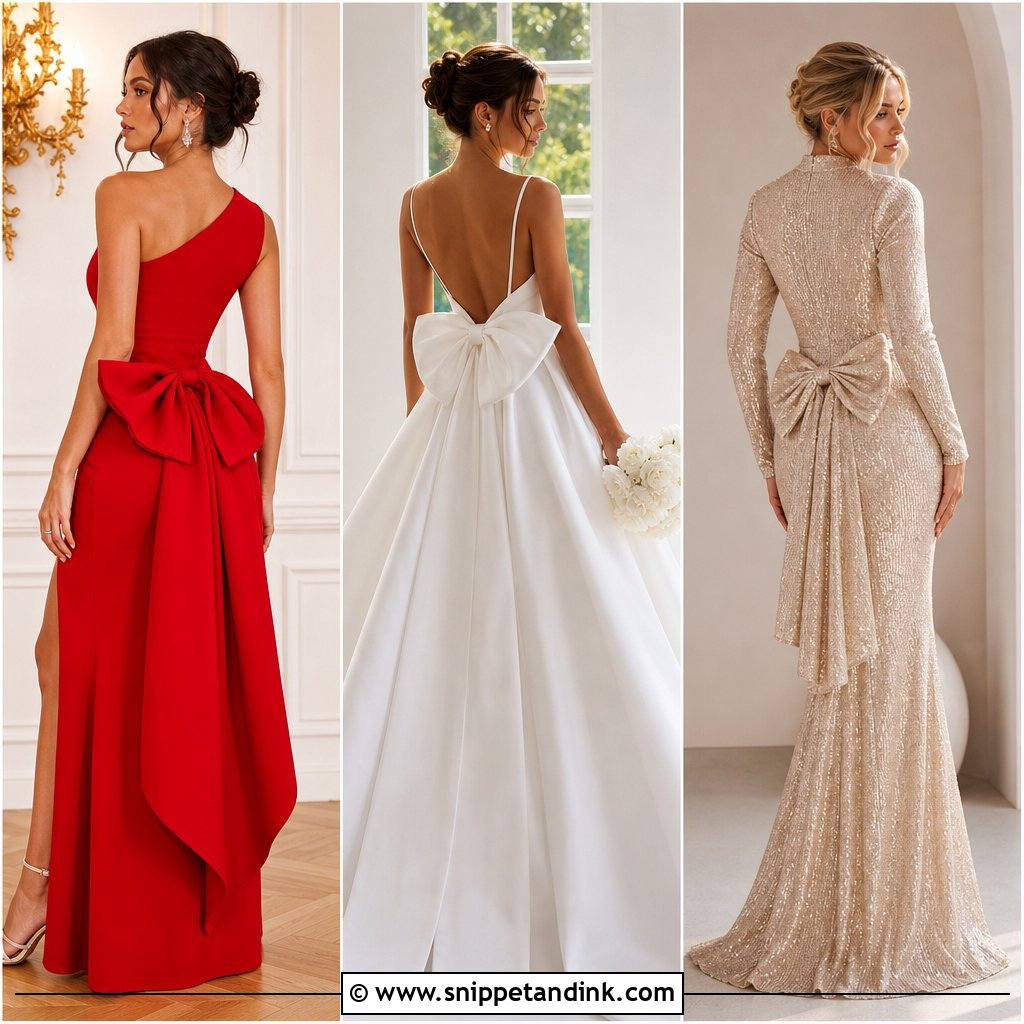
Your guests spend most of the ceremony looking at your back, which is exactly why a bow there earns its place. A good one can make a wedding gown feel unforgettable from the moment you pass the last row. Below are twenty ways to wear it, in satin, lace, crepe, tulle and Mikado, from sculpted bows on ball gowns to soft ribbon ties on slip dresses and removable pieces you can lose before dinner. I’ve judged each one on the same things I look at in a fitting room: how heavy the fabric is, where the bow sits against the waist, how it gets along with the train and veil, and whether it suits the venue. A bow should belong to the dress, not sit on it.
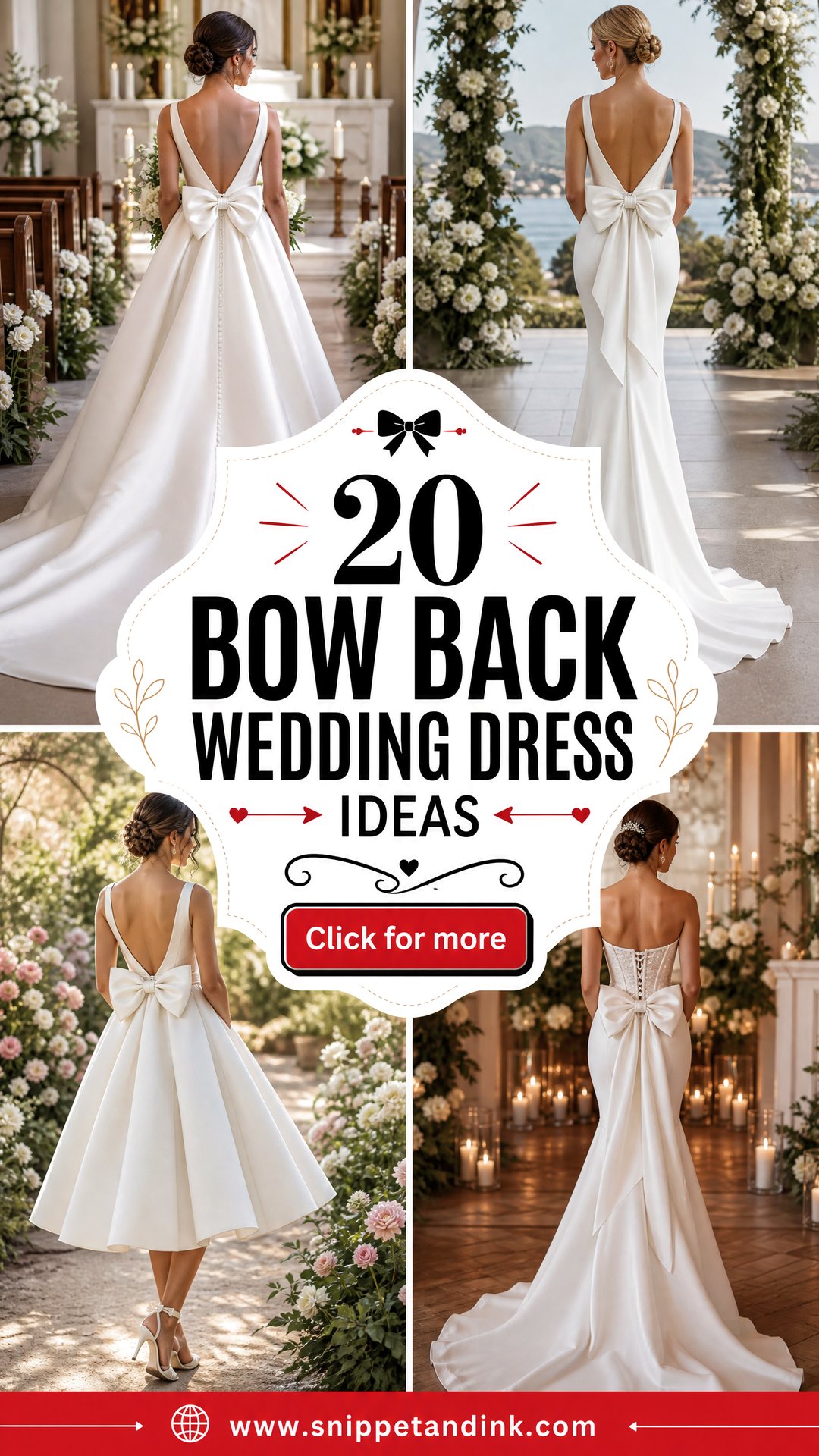
Sizing the Bow Against Your Back Width and Skirt
Most bows that look wrong are the wrong size or in the wrong place, not the wrong style. I work through three measurements with every bride.
Width
Stand straight and look at where your side seams sit from behind. A bow that stays within them reads as a detail. One that spills past them reads as a statement, which suits a full ball gown and overwhelms a slim column.
Height
A bow at the natural waist defines it. A little higher lengthens the legs, useful for shorter brides. Lower, at the top of the hips, makes the eye travel down into the train. If the dress has an open back, the bow usually looks best at its lowest point.
Structure
Ask how the loops are held up. Interfacing, a light crinoline or a stitched inner tube keeps a satin or Mikado bow round all day. Tulle and organza hold themselves. Silk charmeuse should only be used for a soft tie, since it can’t support a sculpted shape.
1. Satin Ball Gown Bow Back Wedding Dress
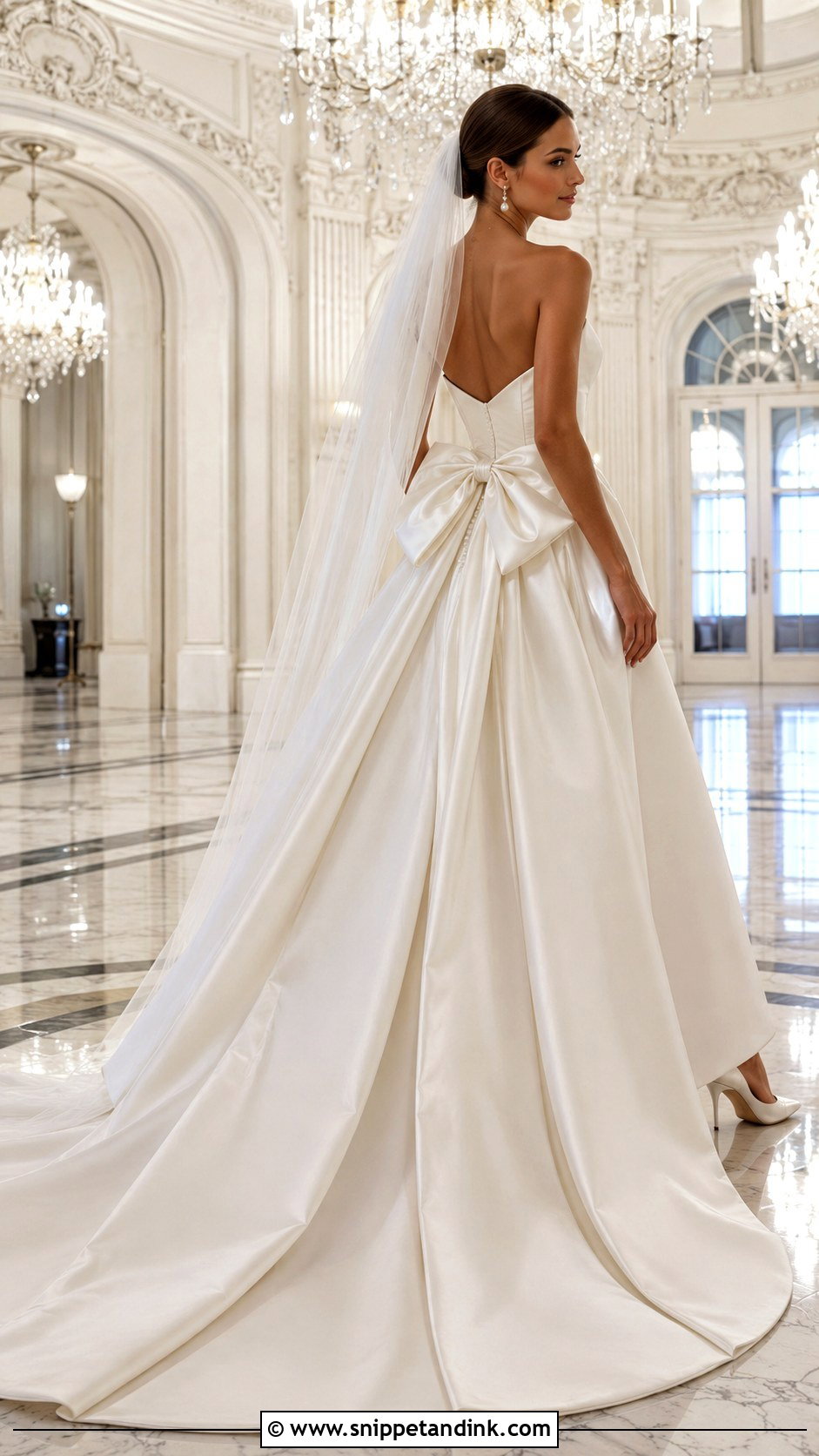
Satin and a full skirt can carry the biggest bow on this list. Choose a structured bodice with a straight, sweetheart or softly curved neckline, then a wide bow at the natural waist whose long tails melt into a chapel train. The bow has to be built, not just tied: I look for interfacing inside the loops so they stay round after you’ve sat through dinner, because unsupported satin loops fold flat by evening. With that much luminous fabric, keep accessories to pearl drops, a simple veil and pointed ivory pumps, and wear a neat low bun so the bow stays in view. It belongs in a ballroom, grand hotel or estate with room for the skirt.
2. Mikado A-Line Bow Back Wedding Dress
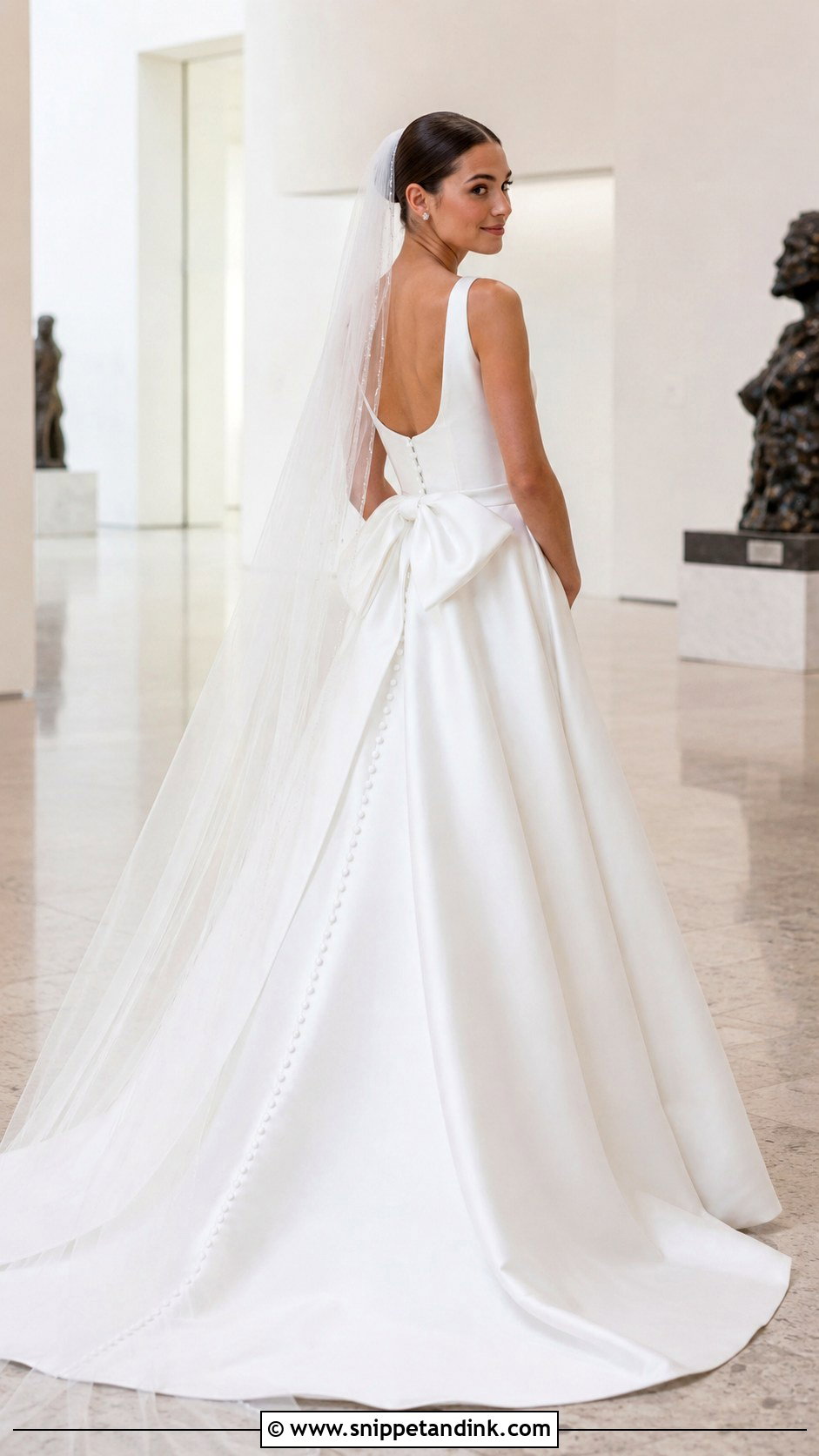
Mikado holds a crisp fold, so an A-line in it keeps its shape without the bulk of a ball gown. Look for a fitted bodice, a defined waist and a gently flared skirt you can walk in, finished with a medium bow in the same Mikado and a row of covered buttons beneath. Crystal studs, a smooth cathedral veil and block-heel pumps complete it. I’d ask for the bow to be detachable from the start, since adding fastenings later means unpicking finished seams. It suits country clubs, museums, formal gardens and modern ceremony spaces.
3. Crepe Sheath Bow Back Wedding Dress
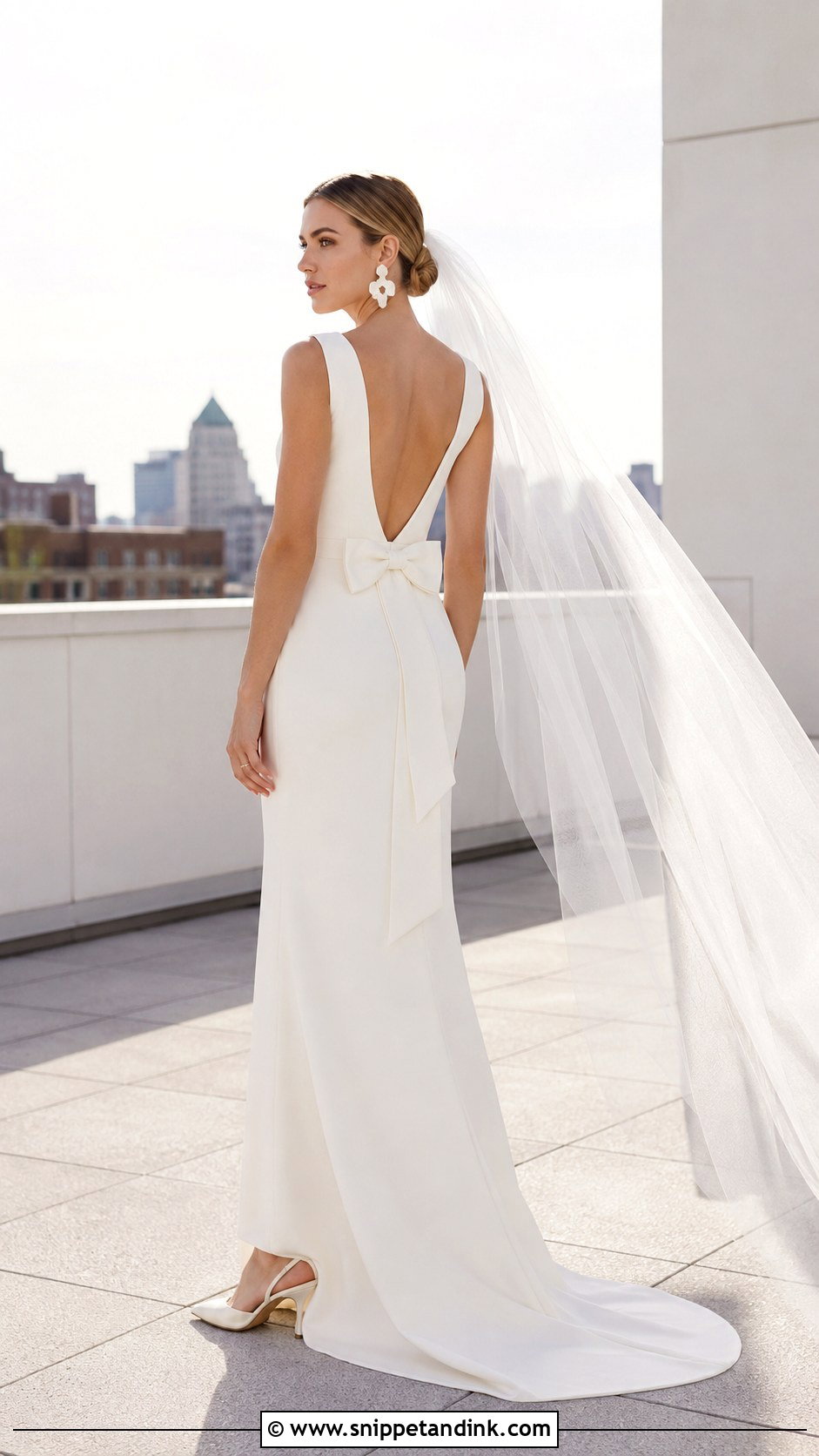
On a plain crepe sheath, the bow is the only decoration, so its shape has to be precise. Choose a low V-back or rounded open back with a slim, structured bow at the waist and short tails that stop before the train. Crepe shows every lump, so I check that the bow’s attachment point doesn’t create a ridge through the fabric; a flat stitched base is better than a bulky knot. Sculptural earrings, pointed slingbacks and a narrow fingertip veil suit it, with a twisted bun so nothing covers the back. It’s my pick for rooftops, galleries, courthouse ceremonies and small venues where tailoring matters more than volume.
4. Lace Mermaid Bow Back Wedding Dress
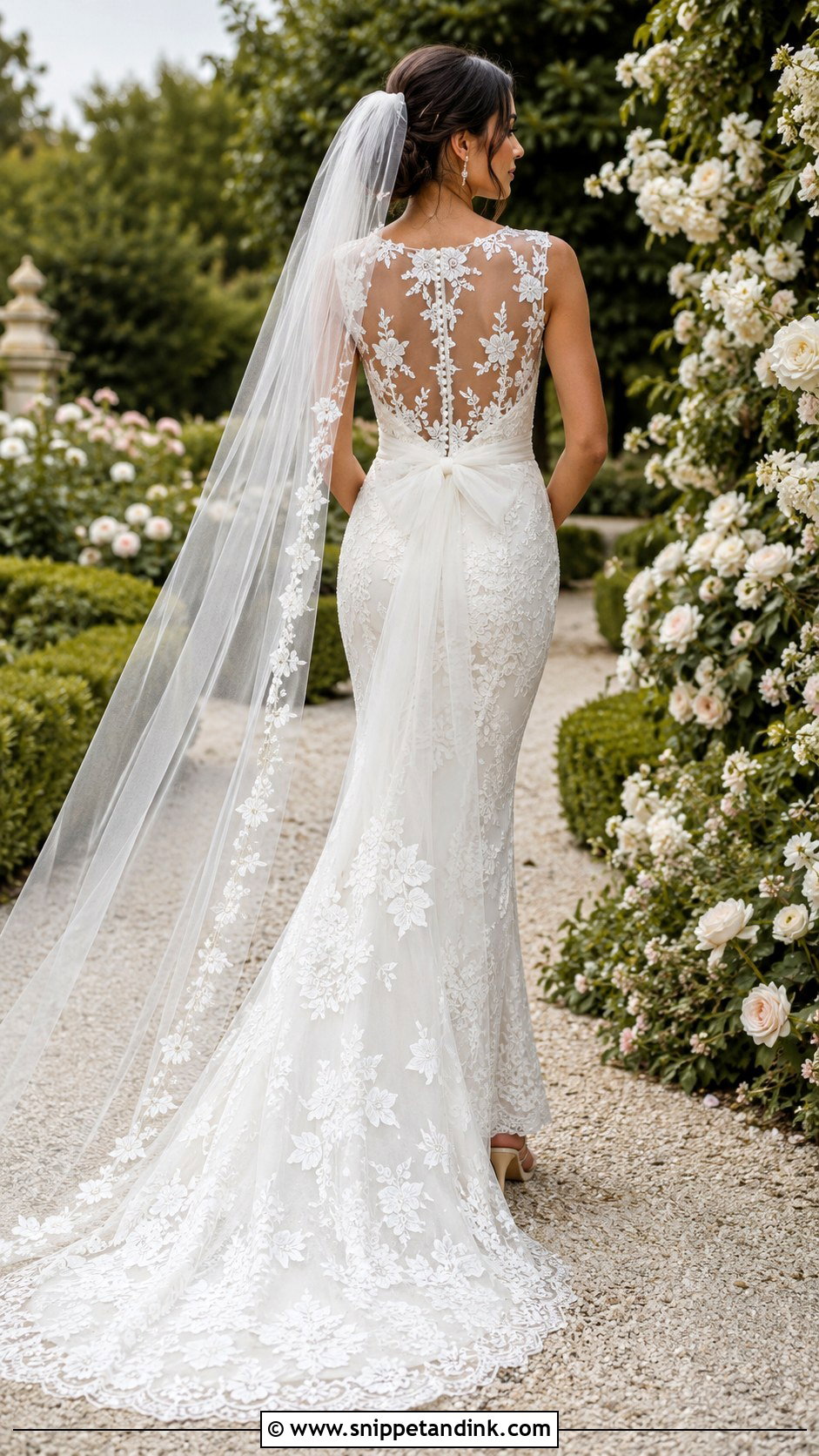
A mermaid in lace is fitted and serious; a soft bow loosens it up. Choose lace with a clear floral pattern and a supportive bodice that follows the waist and hips before flaring near the knee, ideally with A sheer illusion back for coverage that still reads as open. Pick a light tulle bow rather than heavy satin, which flattens lace texture and tugs on the illusion mesh. Delicate drop earrings, a scalloped veil and ivory heels with ankle support finish it, and a half-up style keeps the back visible. A mermaid flare limits your stride, so I have brides practice the walk and a few stairs before the hem is final. It’s at home in gardens and historic estates.
5. Square Neck Bow Back Wedding Dress
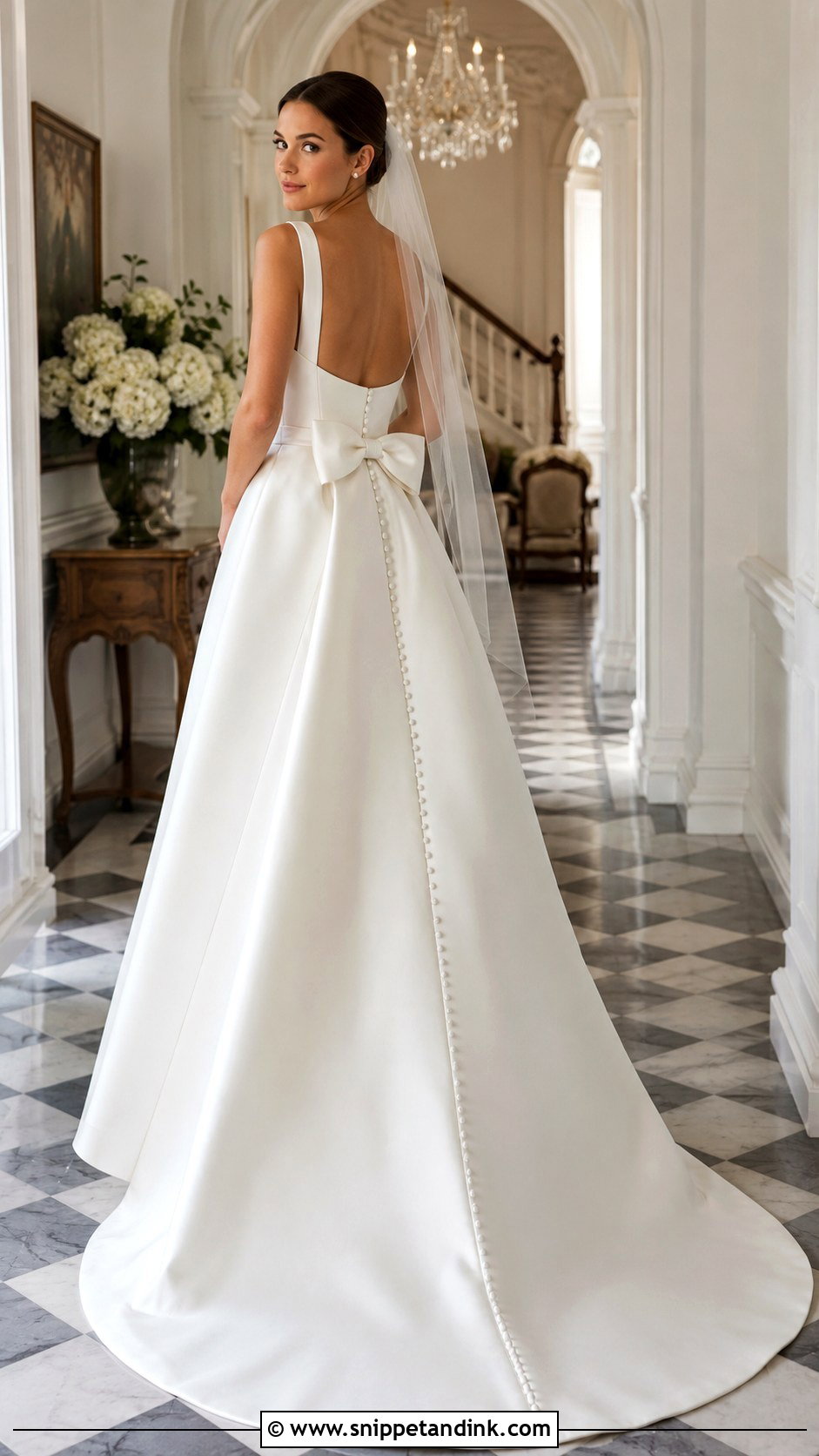
Wide straps and a square neck give the front of this dress strong lines, which means the back can carry a neat bow without the whole thing looking busy. Choose satin or Mikado with a fitted waist and a softly flared skirt, then a square back opening leading to a tied bow just above a row of covered buttons. Pearl studs, a single-layer veil and almond-toe heels suit it, with a low chignon or polished ponytail. I check the strap width against the bride’s shoulders at the first fitting; too narrow and the square neck looks pinched, too wide and the straps slide off. It works indoors and outdoors, from estates to clean modern rooms.
6. Off-Shoulder Bow Back Wedding Dress
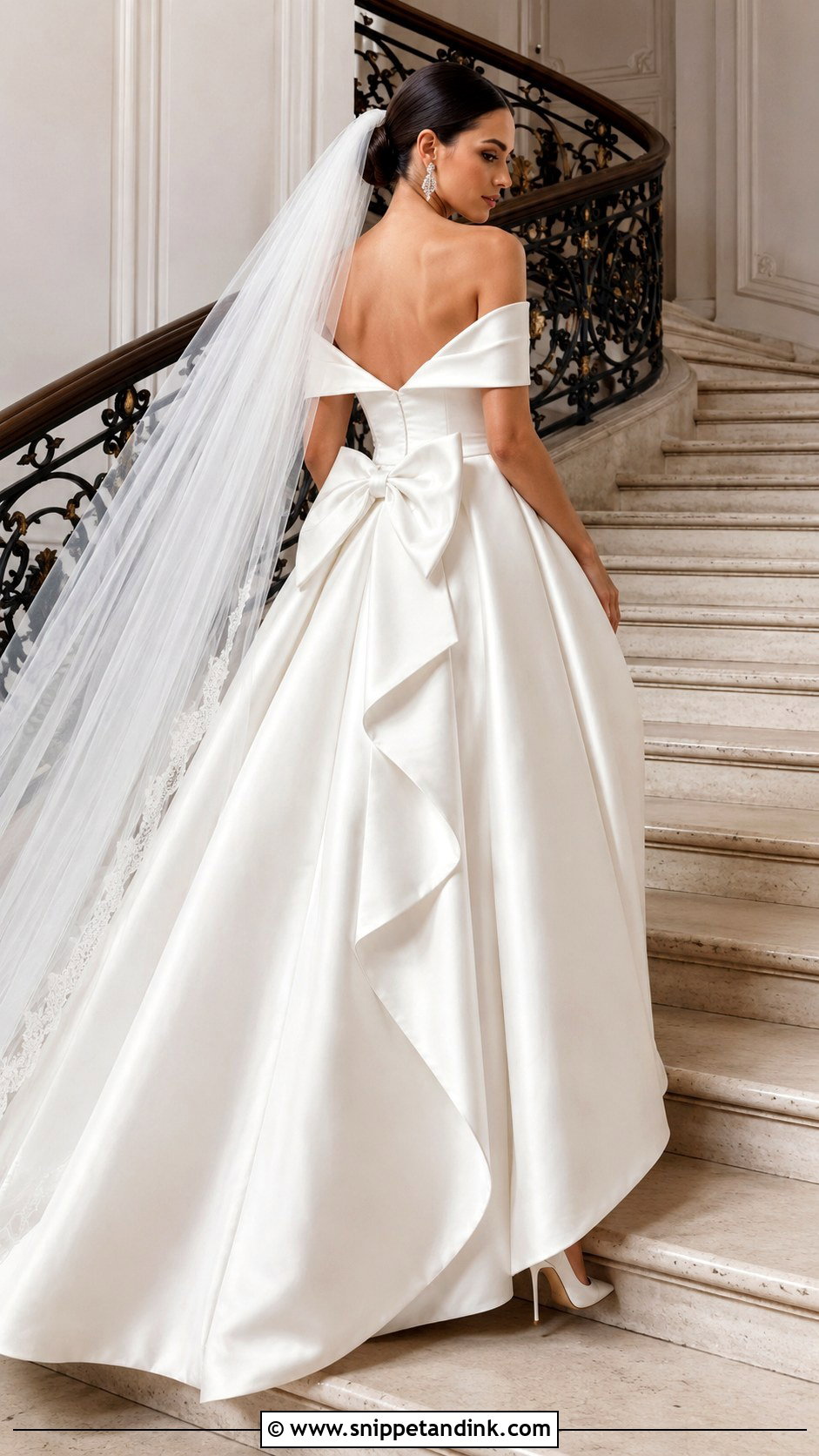
An off-shoulder neckline frames the collarbones from the front, and a broad back bow gives people something to look at as you pass. Choose a structured bodice that stays put on its own, a full A-line or ball gown skirt to balance the neckline, and bow tails that extend into the train but can be bustled or removed. Sparkling drop earrings, satin pumps and a lightweight veil under a smooth updo finish it; leave the neck bare. Off-shoulder bands rely on grip, so I fit them with the bride’s arms raised and add silicone tape inside if they slip. Evening ceremonies, ballrooms and grand staircases suit it.
7. Low Back Slip Bow Wedding Dress
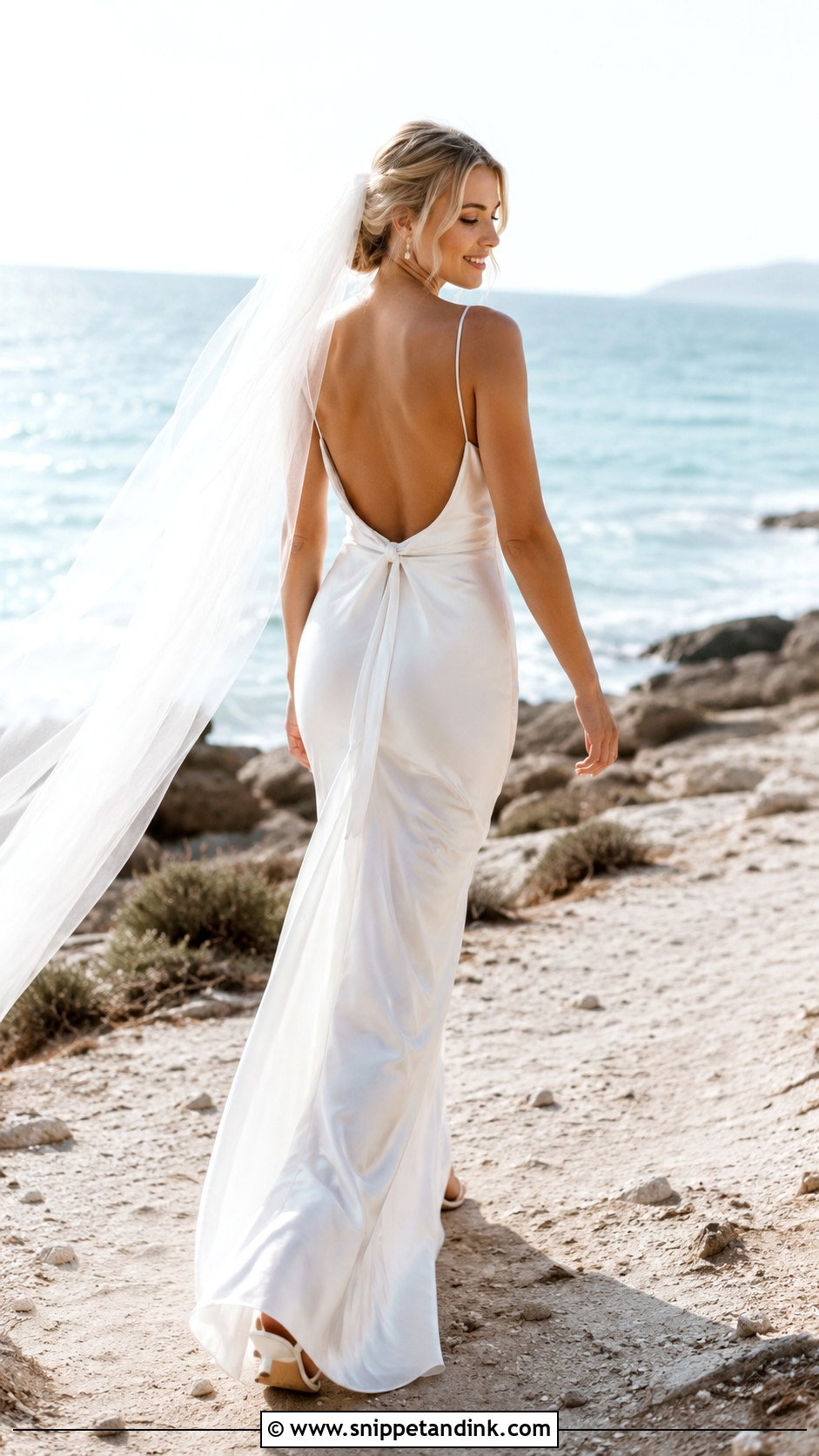
Silk charmeuse is too light to hold a structured bow, so this one should be a soft ribbon. Place a small bow at the lowest point of the open back with narrow tails falling over the skirt, and keep it small; a large bow on bias-cut silk drags the back neckline down and pulls the fabric off grain. Narrow straps and a gently draped neckline keep the slip simple. Delicate earrings, barely visible ivory sandals and a sheer chapel veil are all it needs, with a loose bun or softly waved bob. Silk satin shows sweat and water marks, so on a beach I’d carry blotting tissues and keep drinks away from the front. It suits destination weddings and summer lofts.
8. Long Sleeve Bow Back Wedding Dress
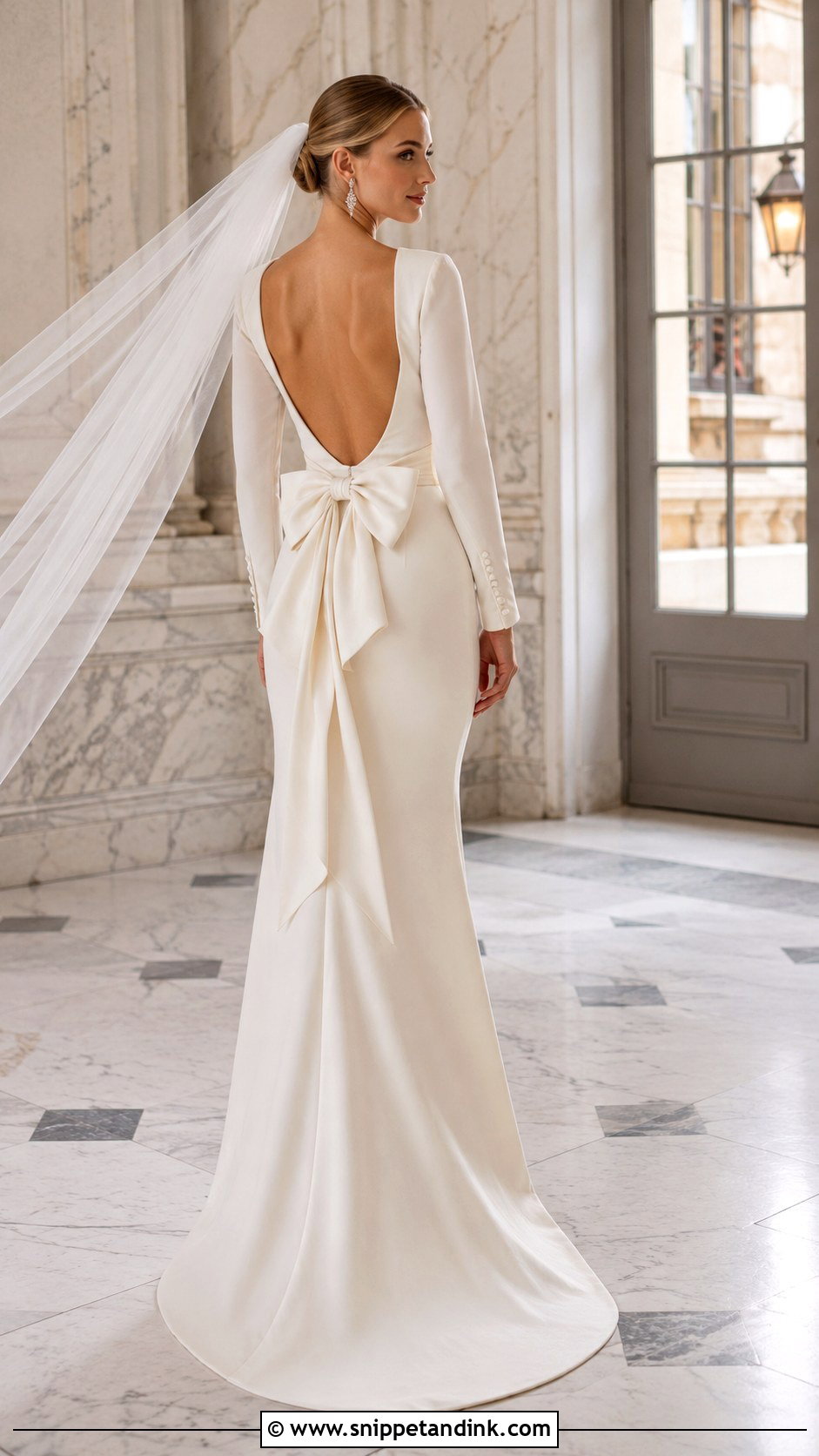
Long sleeves and a boat neck give coverage at the front; an open back ending at the waist gives the bow its stage. Choose fitted crepe with slim sleeves and a structured satin bow for a gentle contrast of sheen against matte, or matching crepe for something quieter. Crystal earrings, closed-toe pumps and a removable veil complete it, with a polished bun. Fitted sleeves with an open back can feel tight across the shoulder blades when you reach forward, so I test that movement before the bodice is finalized. It suits cooler seasons, formal indoor venues and historic buildings.
9. Basque Waist Bow Back Wedding Dress
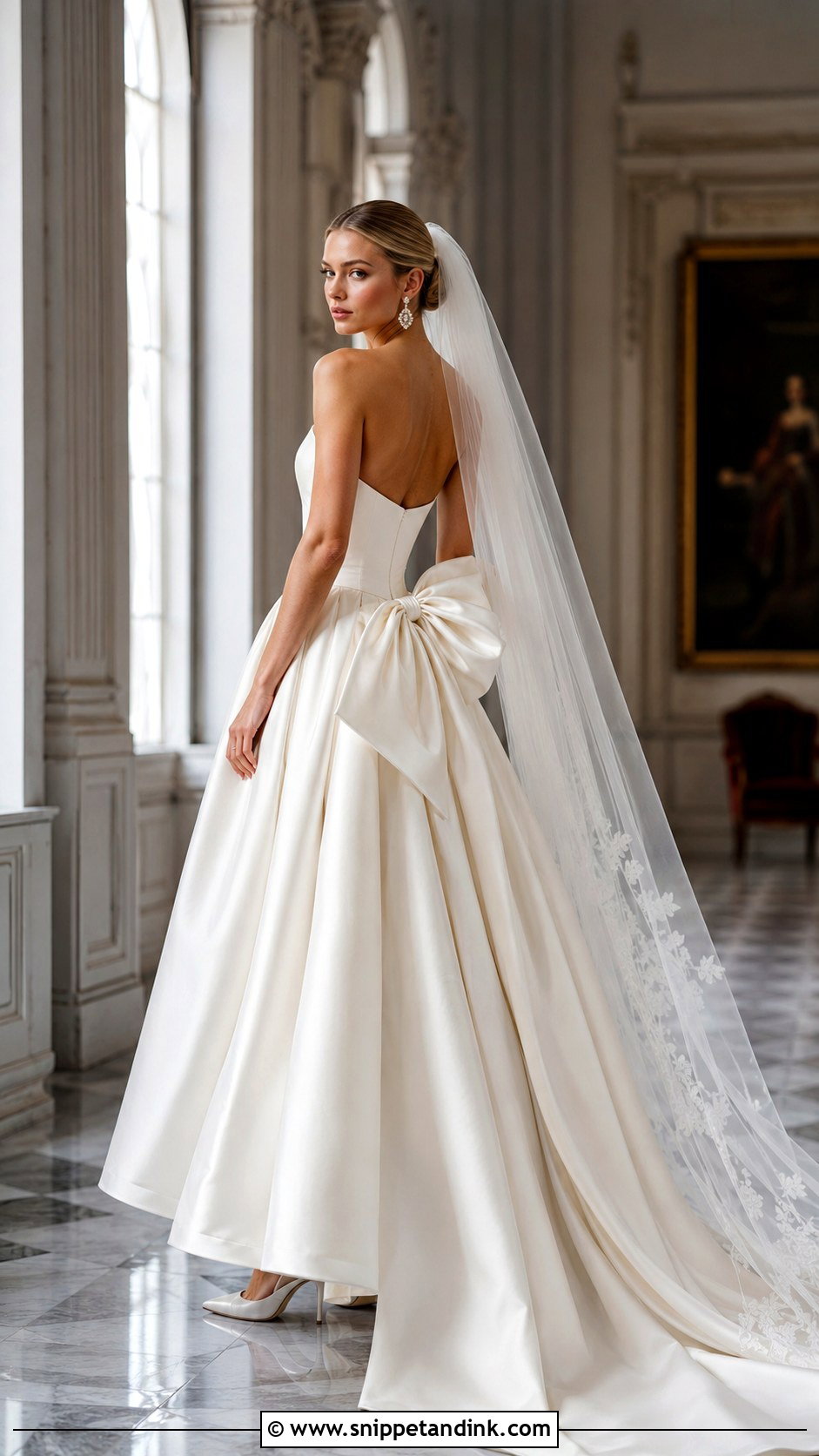
A basque waist dips into a V at the front, and the back bow should echo that structure. The dropped V-shaped waist defines the bodice before it opens into a full satin or Mikado skirt. Place the bow at center back where the waistline meets the skirt, and scale it to the gown: on a very full skirt a small bow looks like an afterthought. A strapless or softly scooped neckline keeps the balance, and a cathedral veil, pearl-and-crystal earrings and ivory pumps complete it. Wear a sleek bun so the bodice seams show. Large halls, formal hotels and traditional estates suit its scale.
10. Tea-Length Bow Back Wedding Dress
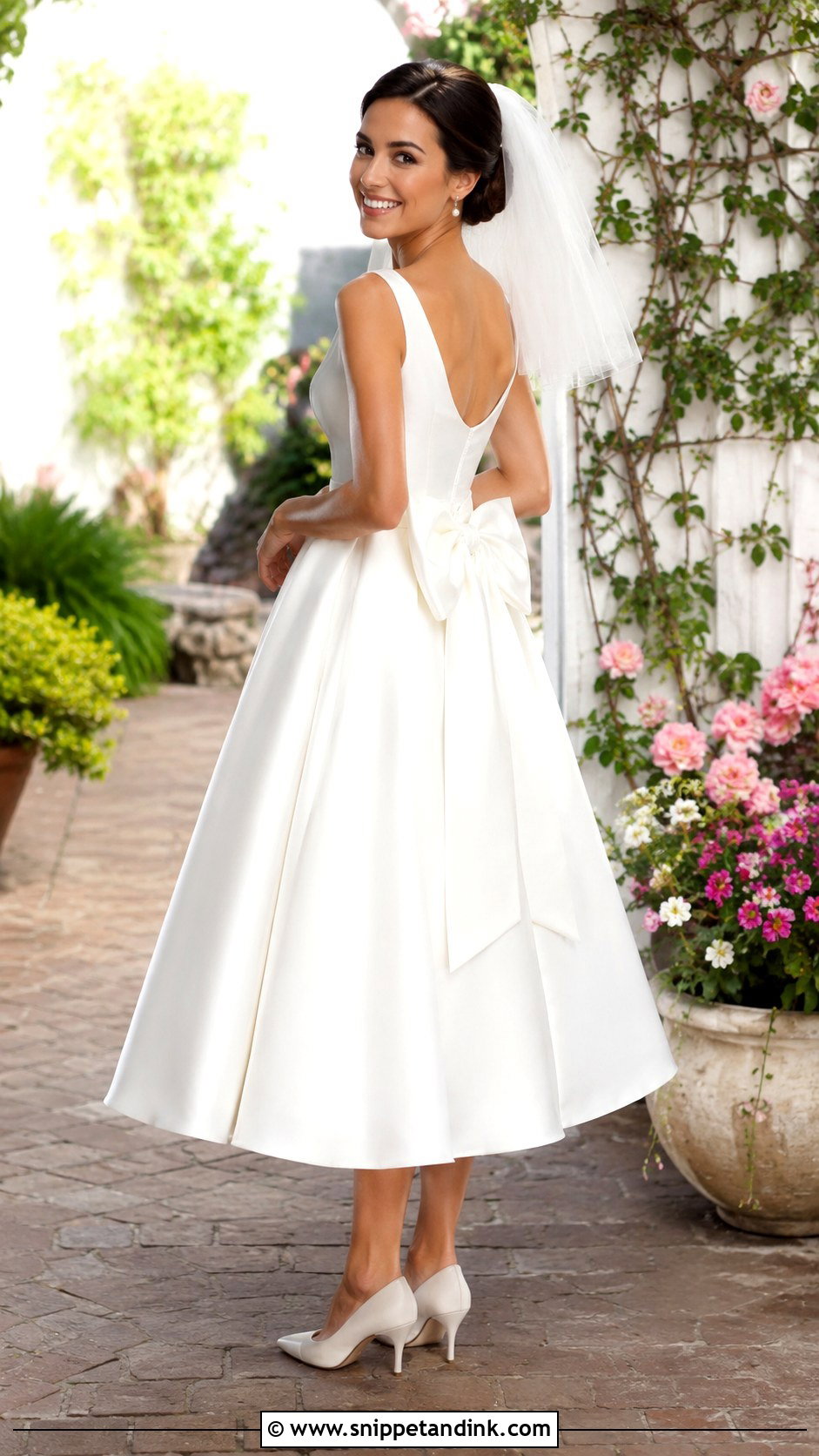
Tea length means your shoes are on show, so choose them as carefully as the dress. A fitted bodice and full skirt ending between the knee and ankle, with a medium bow at the back waist, keep the proportions balanced. Pointed satin pumps, pearl earrings and a short veil give a classic finish; sleek slingbacks and a structured mini bag modernize it for the reception. A neat bun, soft waves or a shoulder-length bob works if it stays clear of the bow. The hem on a full tea-length skirt should be marked while you stand in your actual shoes, because a centimeter changes the whole look. Courthouses, restaurants and small daytime weddings suit it.
11. Bridal Mini Bow Back Wedding Dress
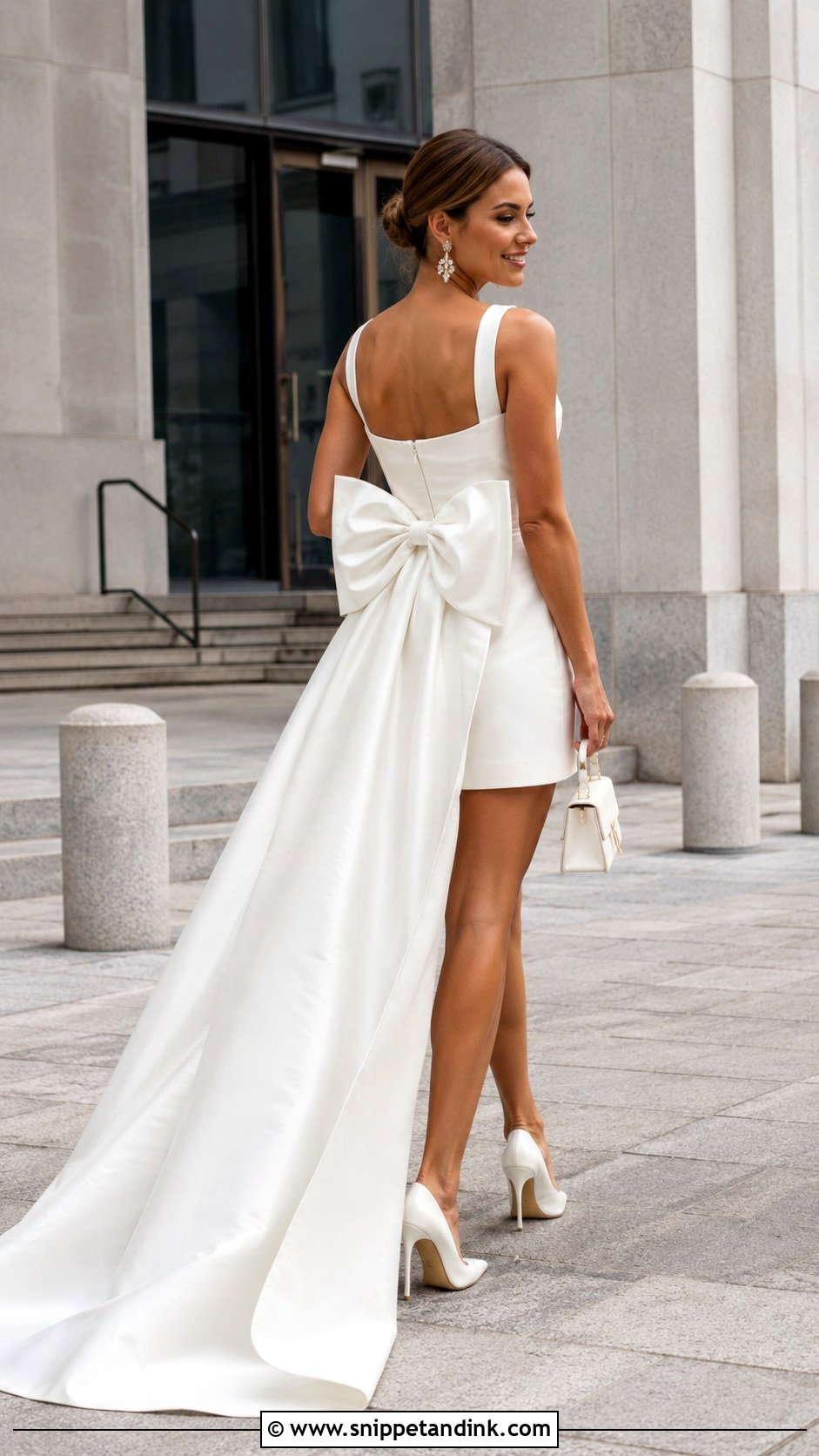
An oversized bow with floor-length tails on a mini gives you a train without the long skirt. Choose a clean strapless, square-neck or high-neck bodice with a tailored skirt you can move in. I insist on removable tails here, because floor-length ribbons on a short dress get stepped on the moment dancing starts. Pointed pumps, statement earrings and a small structured handbag finish it, with a sleek ponytail or bun to keep the line sharp. It’s a confident pick for a civil ceremony or a reception change, at city halls, modern hotels and rooftops.
12. High Neck Organza Bow Back Wedding Dress
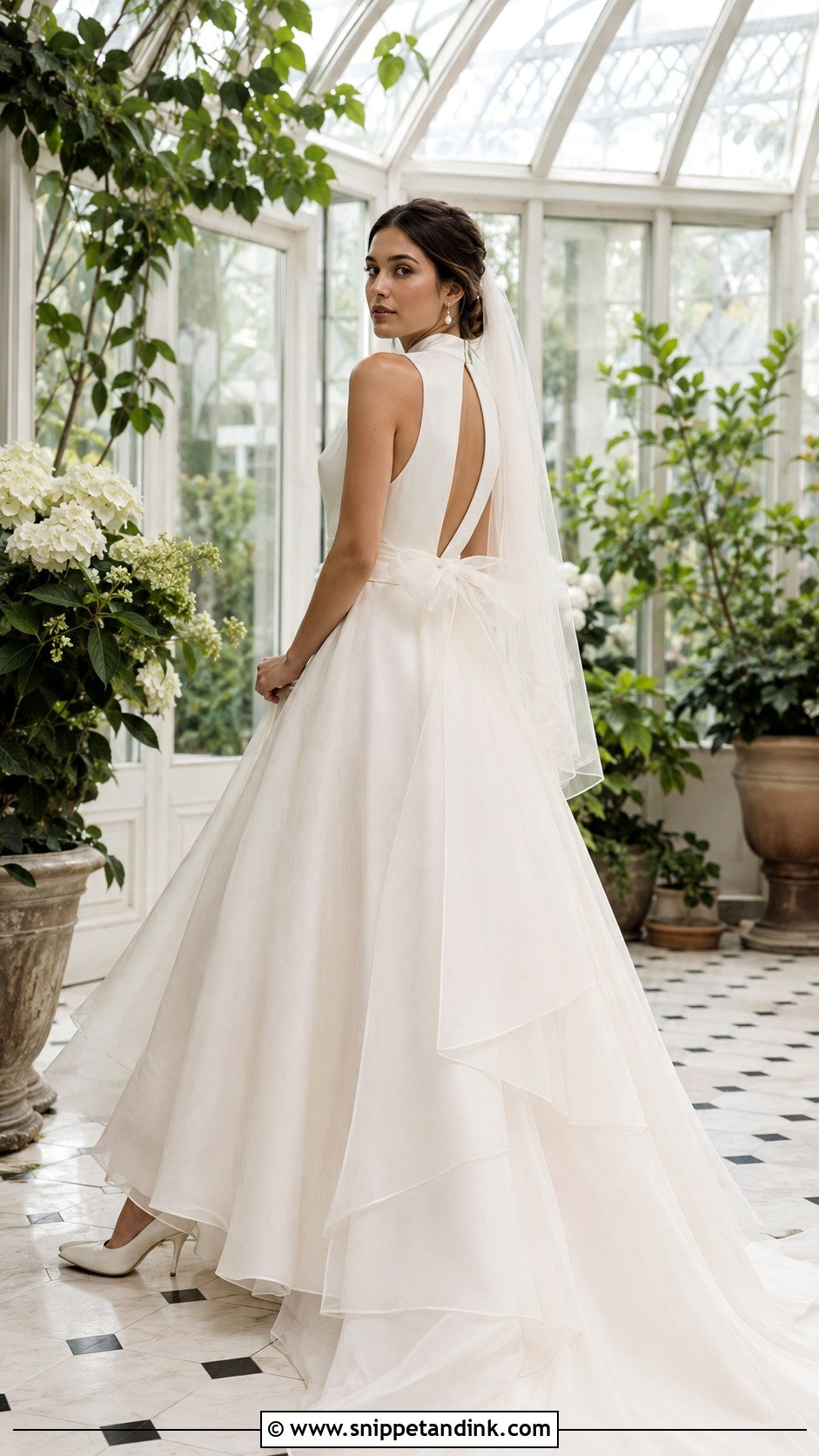
Organza is translucent and stiff at once, which makes it ideal for a bow with volume and almost no weight. Select a high-neck bodice with a keyhole or open back, add a sheer organza bow at the waist, and let a softly layered A-line skirt carry the same floating feel to the hem. Small pearl earrings and pointed ivory shoes suit it. The veil should end above or below the bow, not across it, or the two layers of sheer fabric blur together in photos. Wear your hair up to show the neckline and opening. I like it for spring, conservatories and rooms with plenty of daylight.
13. Corset Bow Back Wedding Dress
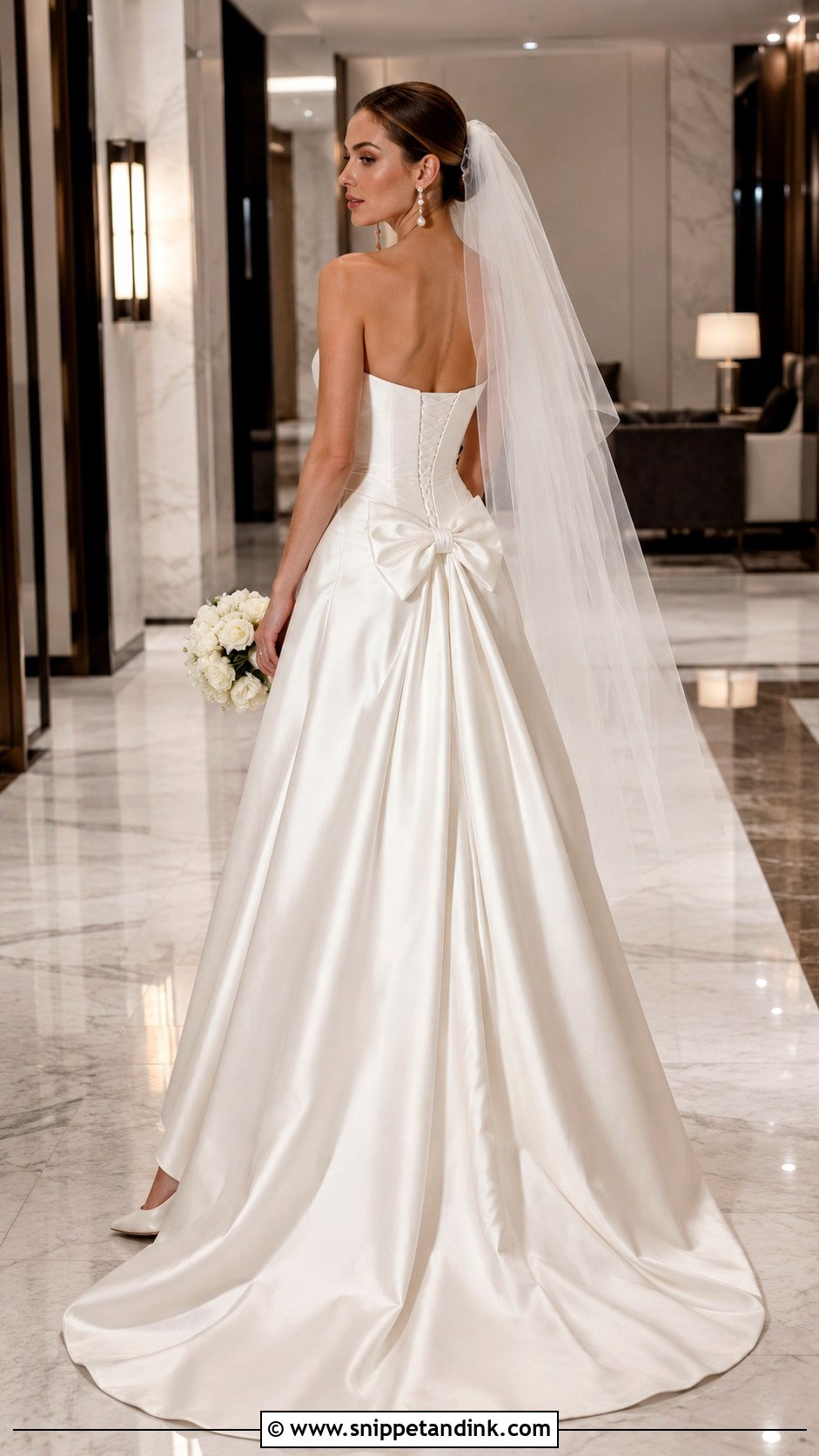
A corset bodice and a bow can share the back if each has a job. Choose supportive boning, a softly curved neckline and a defined waist moving into an A-line or full skirt. Place the bow below the corset closure, never over it: a bow stitched across lacing makes it impossible to tighten the corset on the day and makes alterations much harder. A detachable satin bow can come off when the gown is bustled. Drop earrings, a plain veil and closed-toe pumps keep it refined, with a clean updo. It suits formal venues, luxury hotels and converted industrial spaces.
14. Pearl Bow Back Wedding Dress
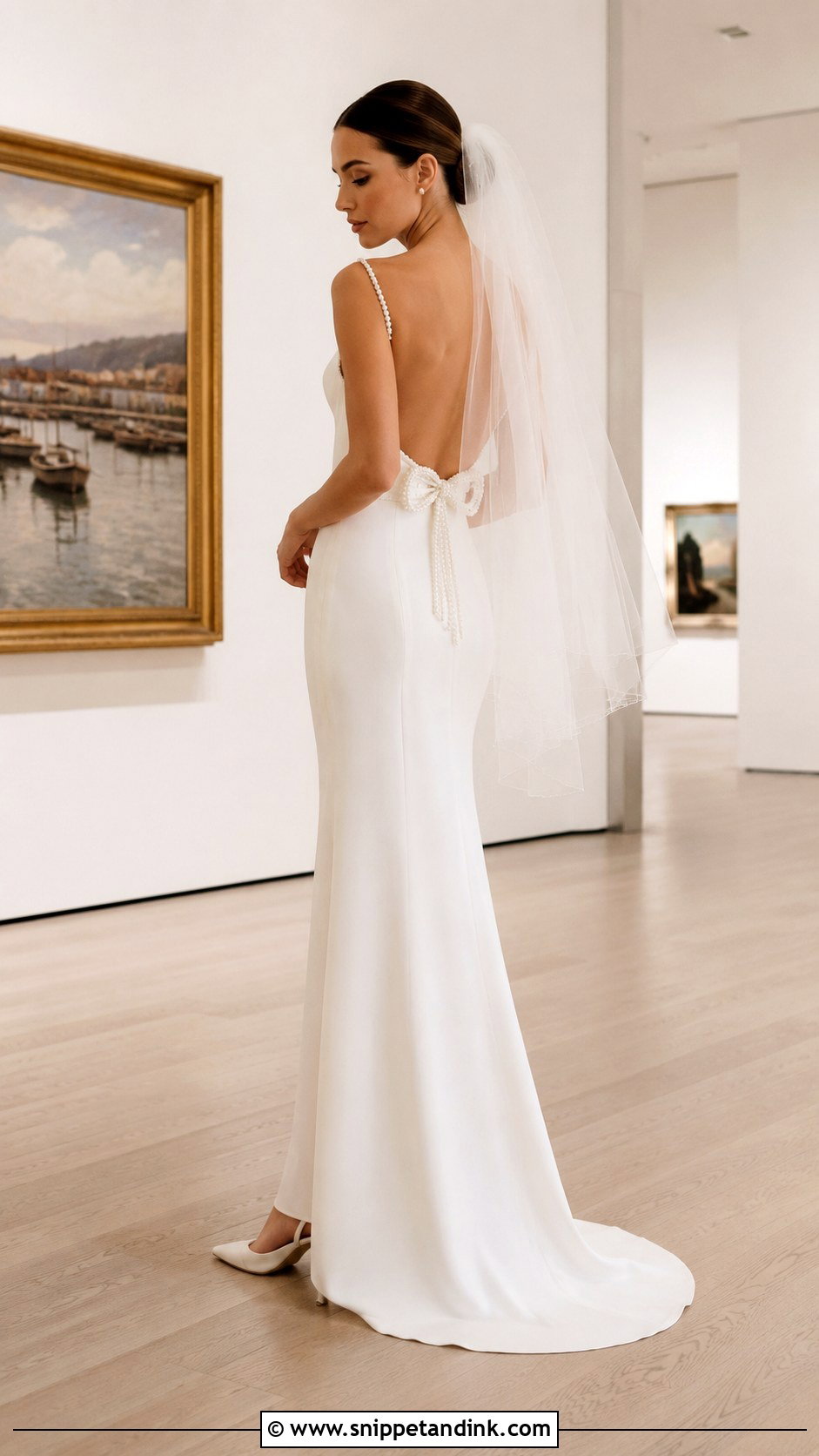
Small pearls add texture to a bow without changing the color of the dress. Consider smooth crepe or satin with pearls concentrated on the bow, the straps or the back neckline, and only there. A slim A-line or column silhouette makes a quiet background. Pearl studs, satin slingbacks and a plain tulle veil keep the decoration in one place, with a low bun and a few soft face-framing pieces. Beaded bows are heavier than plain ones, so I check that this one is anchored at two or three points rather than one, or it tips down by the reception. It suits museums, classic estates and bright, simple rooms.
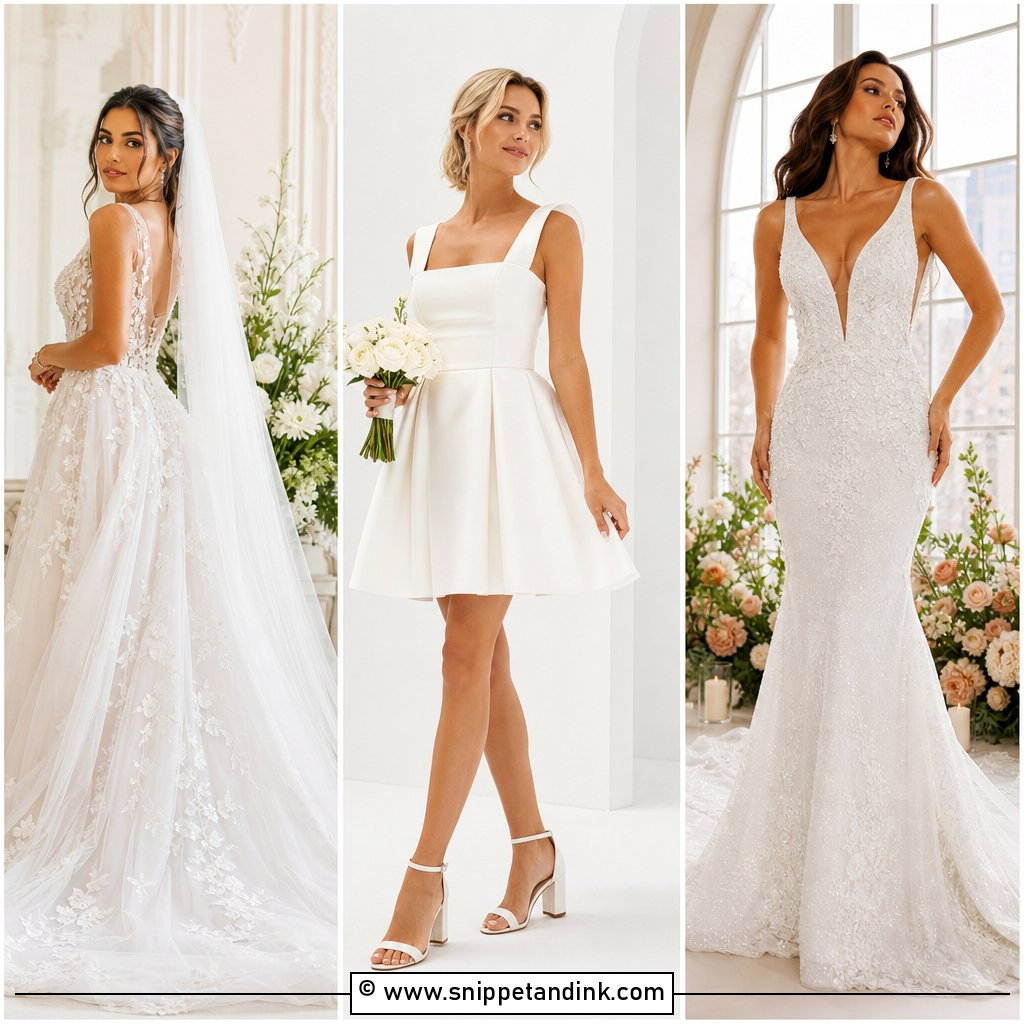

15. Floral Tulle Bow Back Wedding Dress
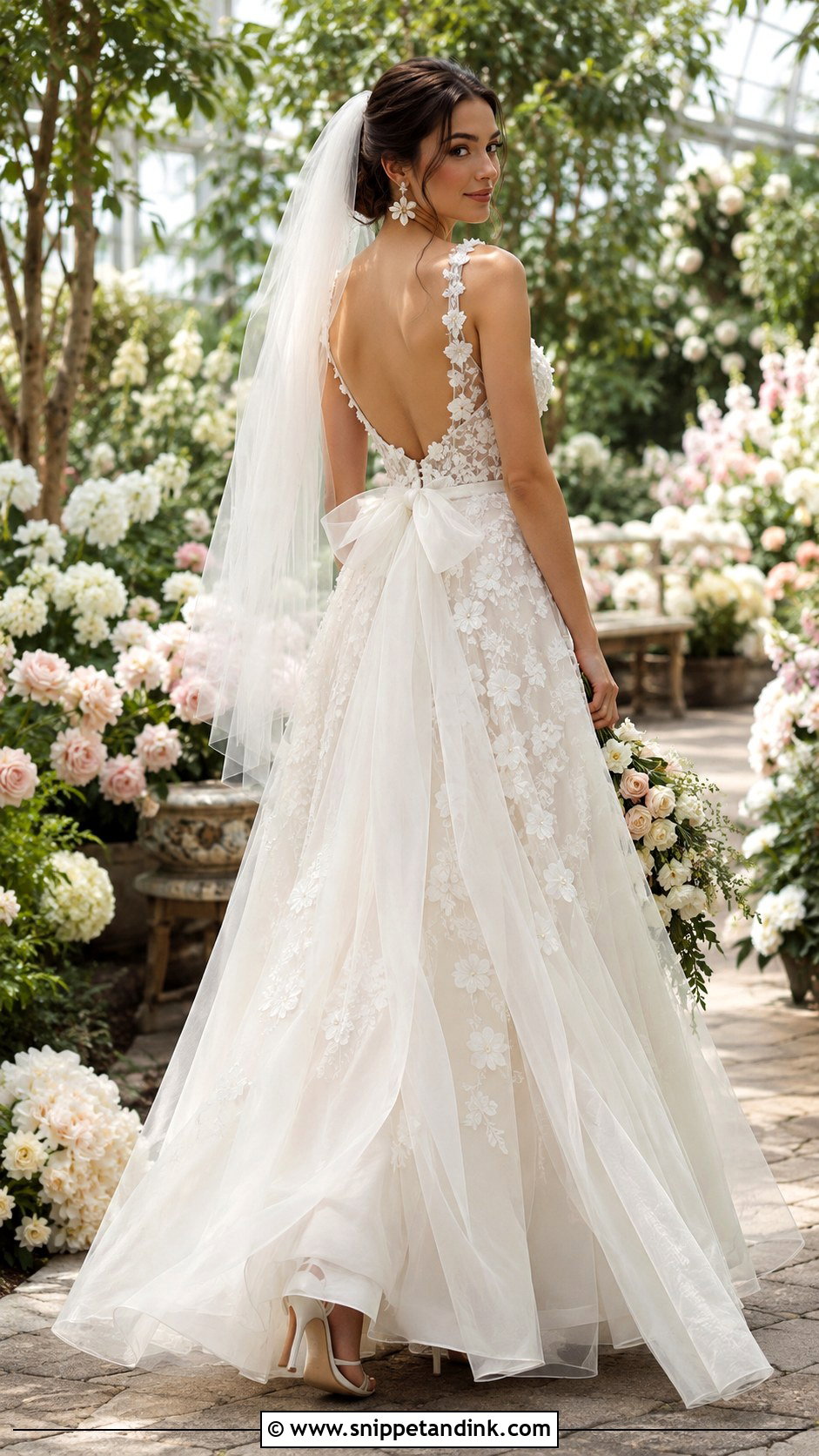
Floral appliqués and a sheer tulle bow make a dimensional dress for a garden setting. Start with an A-line gown with embroidered flowers across the bodice and spaced more widely through the skirt, then a light, slightly translucent tulle bow at the back waist so the flowers underneath still show. Long tails suit a chapel train; shorter ones are wiser outdoors, where long tulle picks up grass and twigs. Floral earrings, comfortable ivory heels and a plain veil with a fine edge finish it, with a loose low bun. Tulle snags on bracelets and cufflinks, so I’d check your partner’s sleeves too. Botanical gardens and flower-filled estates suit it.
16. Black Bow Back Wedding Dress
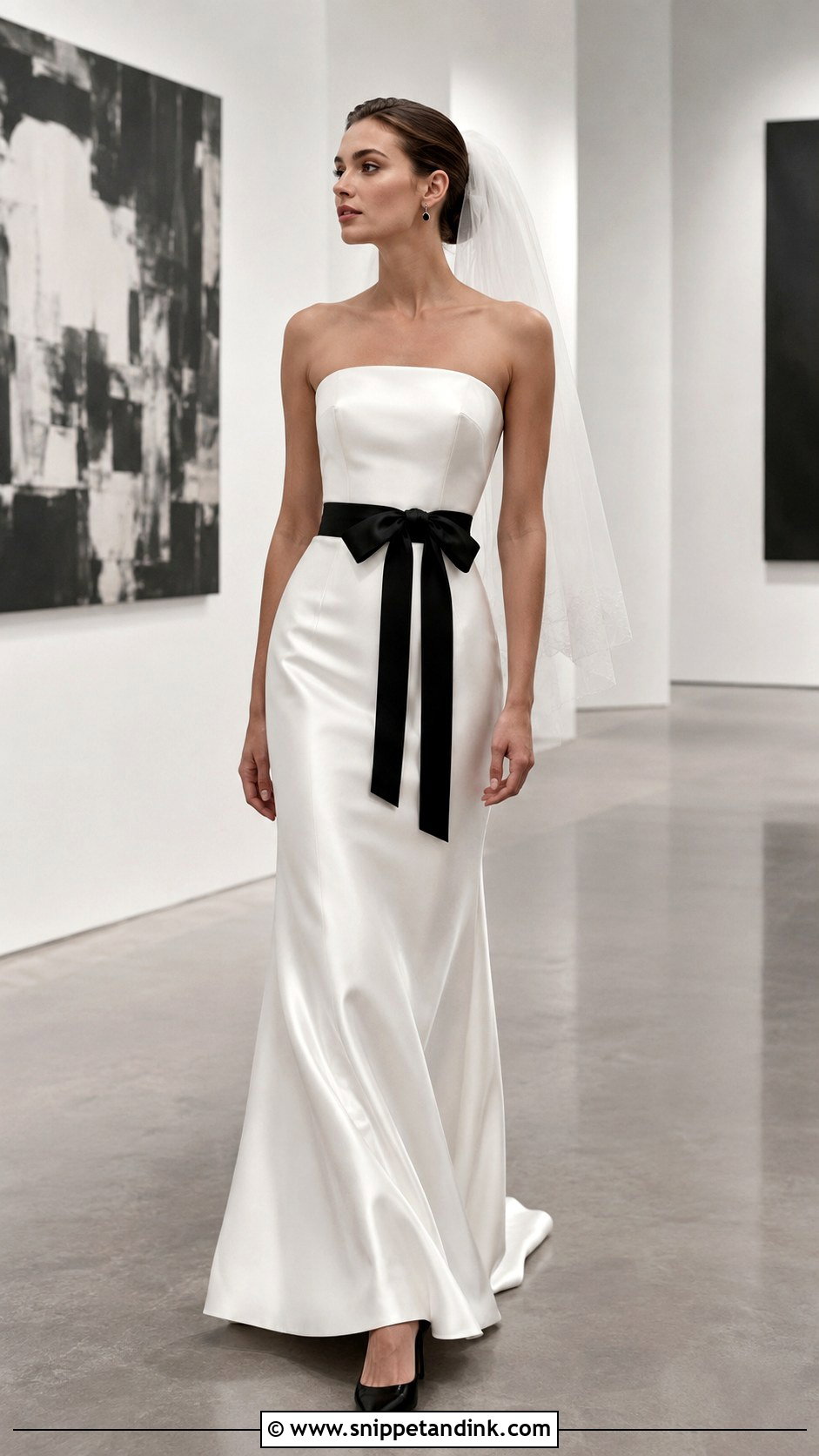
A black bow on a white dress is graphic, and it works best when the dress itself is plain. Choose a simple strapless or square-neck satin gown with minimal embellishment, then a neatly structured black bow at the back waist with narrow tails running partway down the skirt. Repeat the black once, with pointed pumps or small onyx earrings, not both. A plain veil and smooth updo keep it bridal. Black dye can transfer onto ivory satin when damp, so I ask whether the bow fabric is colorfast before ordering. It suits modern hotels, galleries and city venues with a monochrome scheme.
17. Blush Bow Back Wedding Dress
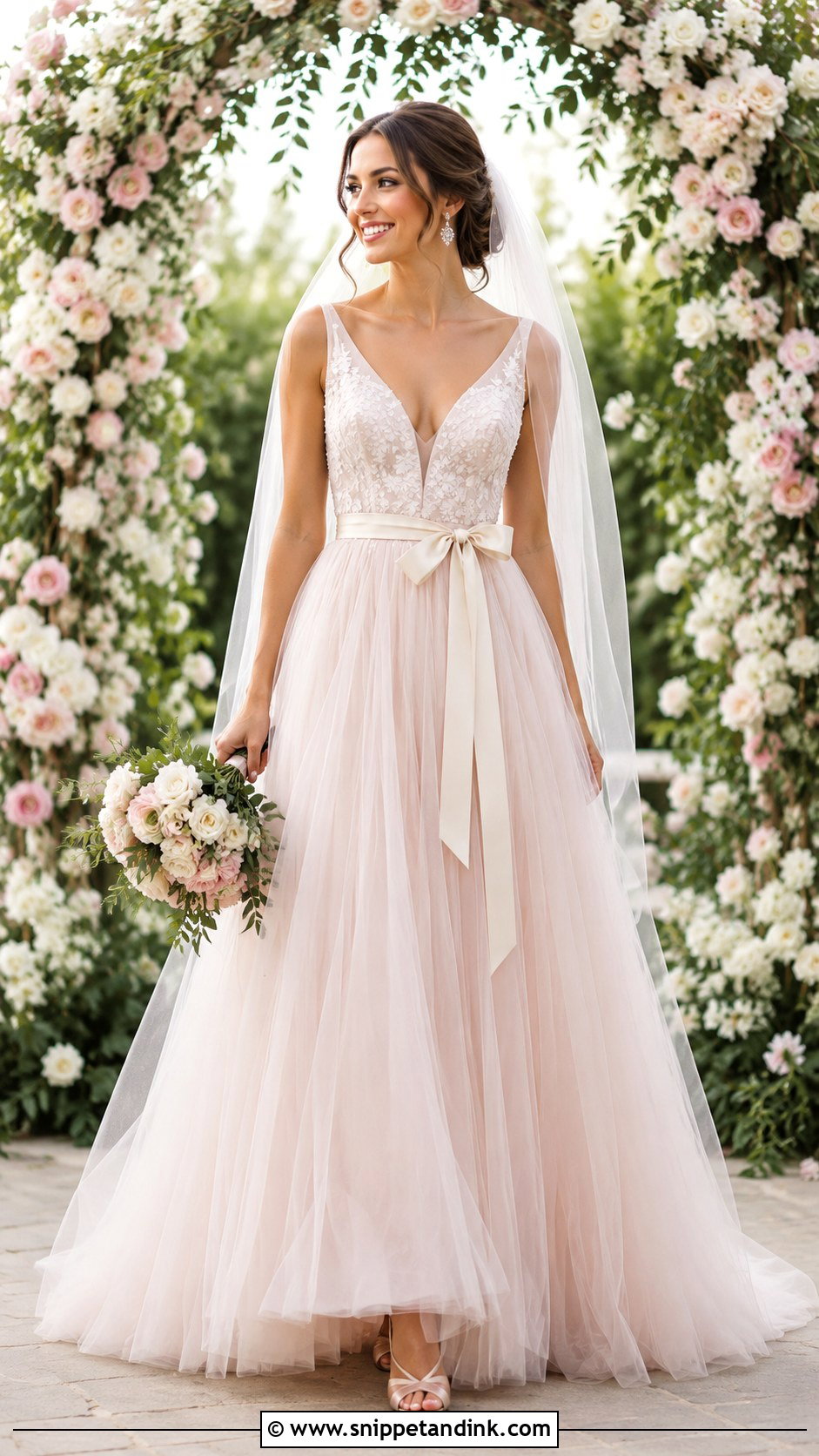
Blush is a quiet alternative to ivory, and the bow decides how quiet. A pale blush tulle or satin dress with an ivory bow gives soft contrast; matching the bow to the dress keeps it all one tone. A fitted bodice and flowing A-line skirt keep it romantic rather than decorative. Champagne heels, crystal earrings and a light ivory veil suit it, with makeup in neutral pinks to link the dress to your face. I always hold blush fabric at the bride’s collarbone in daylight, because on some skin tones it can read as bare skin from a distance. Wear your hair up or swept to one side for gardens, estates and spring celebrations.
18. Plus Size A-Line Bow Back Wedding Dress
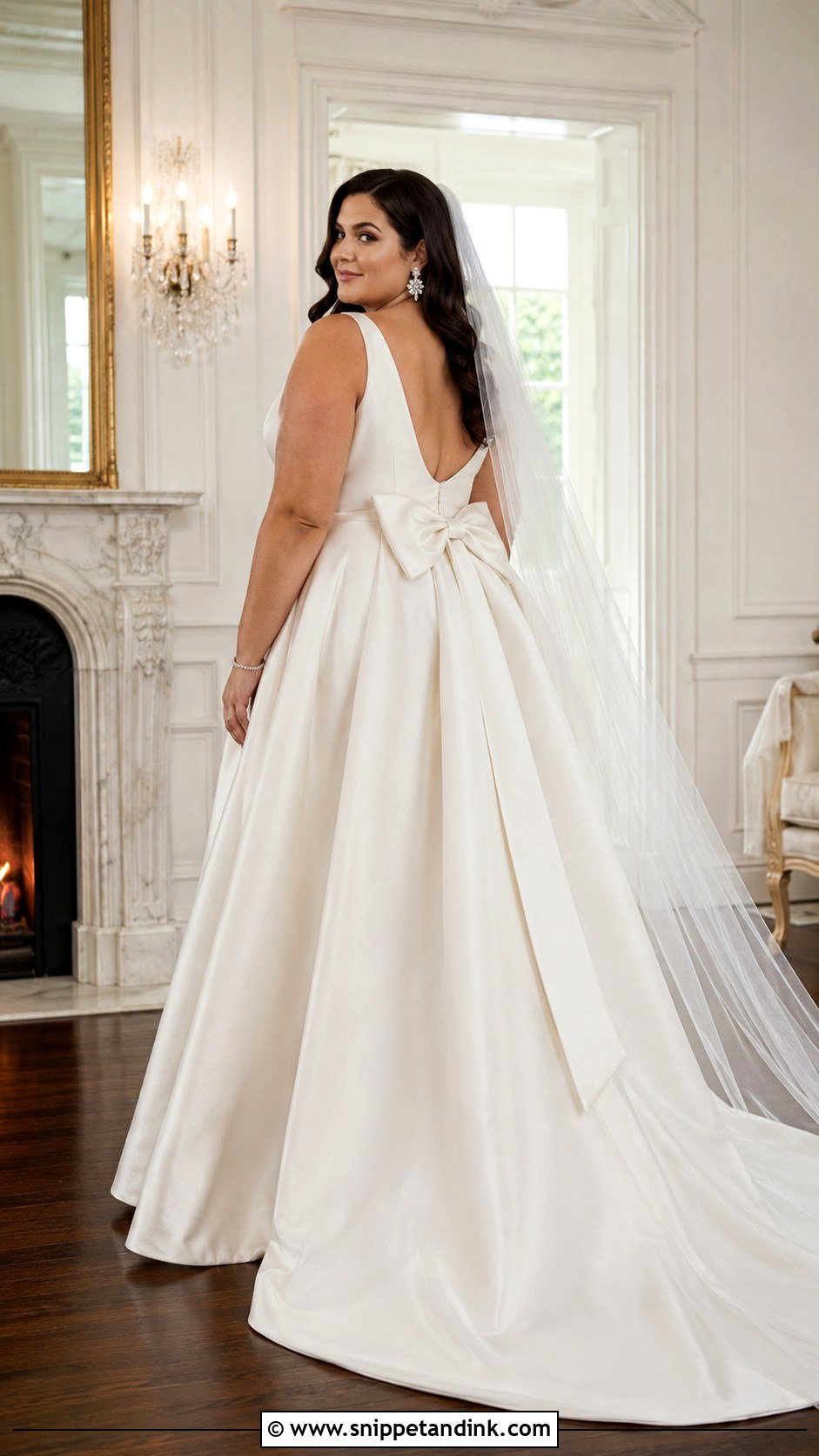
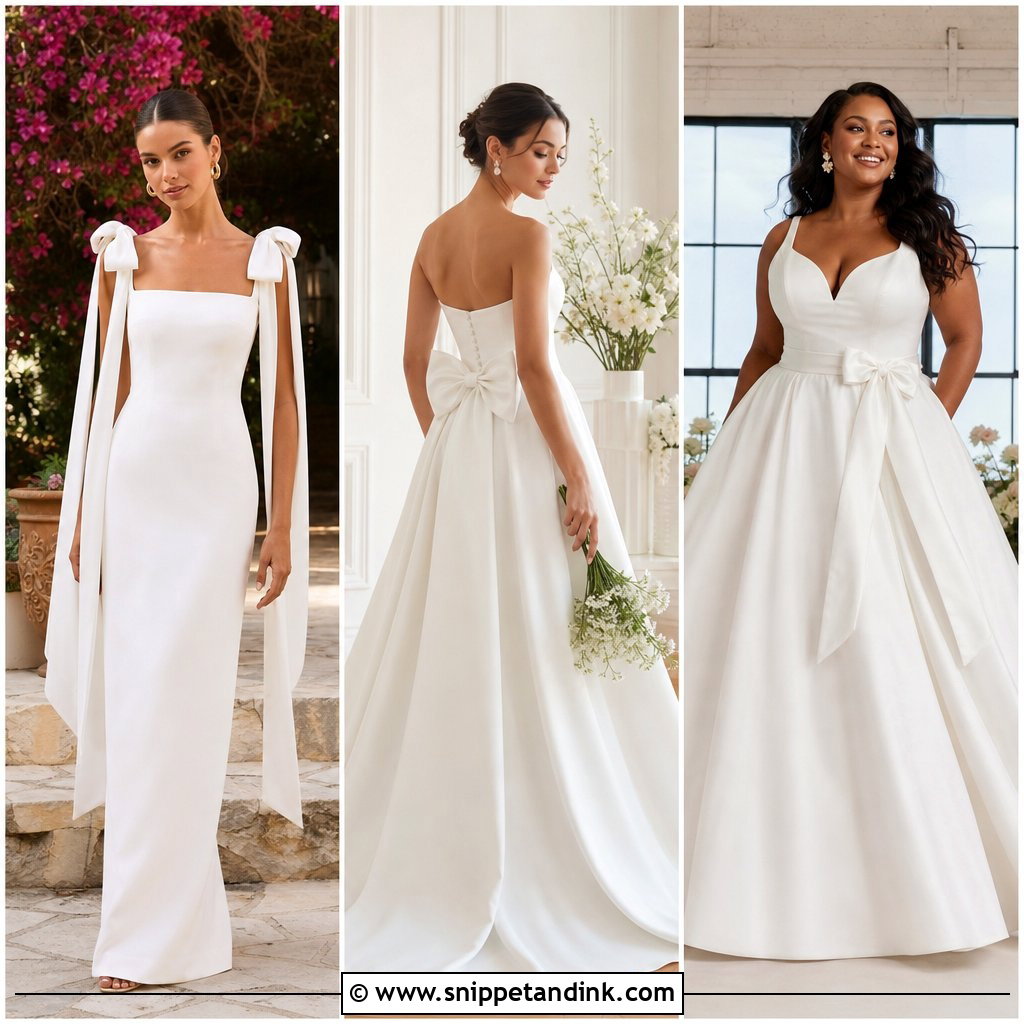
On a plus-size A-line, the bow’s job is to define the back waist, and the construction behind it matters more than its size. Look for secure straps, internal bodice structure and a waistline set where it’s comfortable, not where the sample put it. A medium or oversized bow is fine as long as it’s stitched to the bodice, not the zip; a heavy bow on a closure pulls it open. Soft Mikado, satin and crepe keep the line smooth. Cushioned block heels, statement earrings and a veil that falls past the bow finish it, with an updo. Alterations should shape the gown to you rather than the other way round.
19. Petite Column Bow Back Wedding Dress
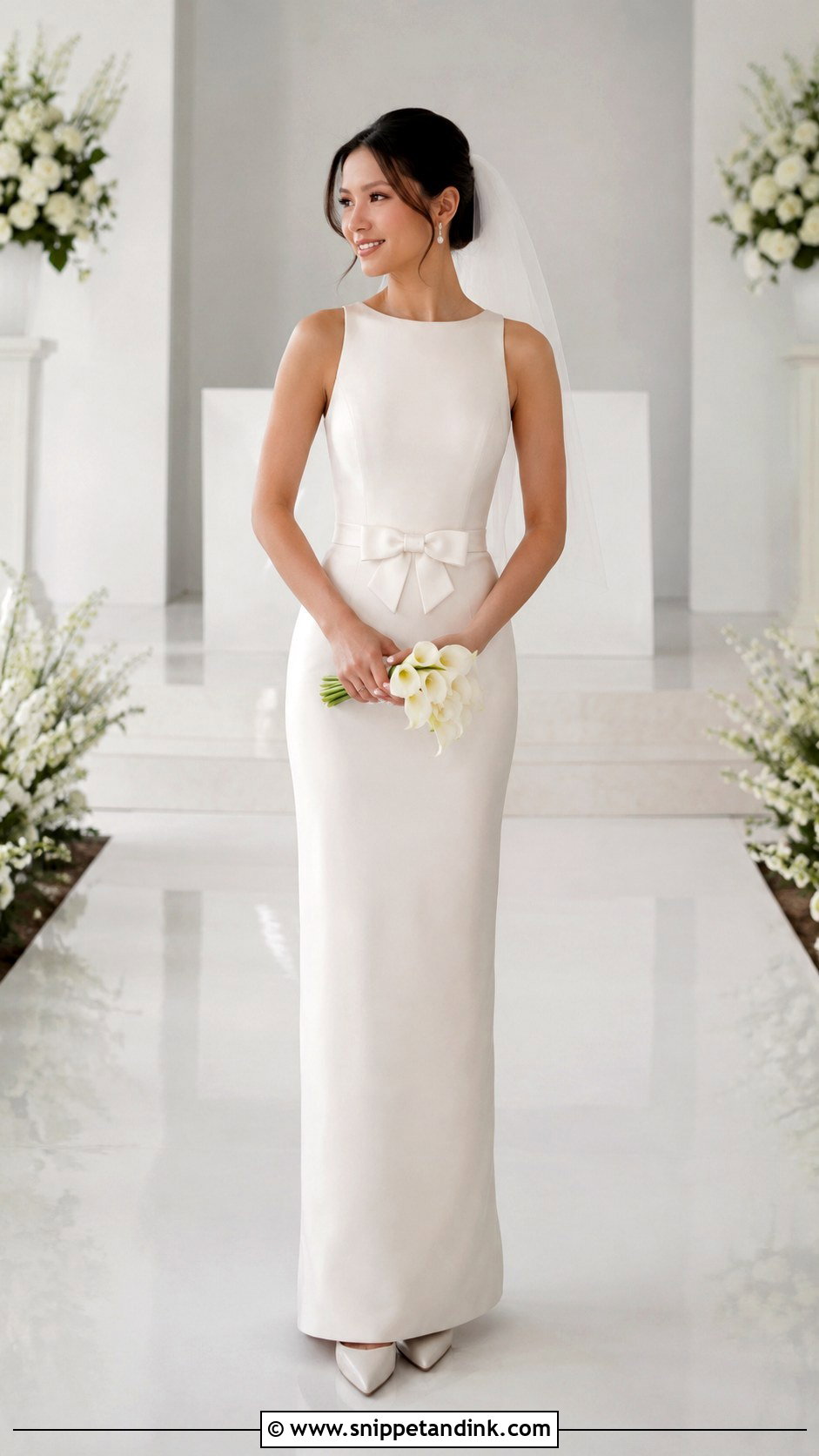
Scale is everything on a petite frame. A column or narrow A-line gives a long line, and a small structured bow adds definition without swallowing the back. Place it at the natural waist or a little higher, depending on your torso, and keep the tails short and narrow. I measure the bow against the bride’s back width at the fitting: if the loops reach past the side seams, it’s too big. Pointed pumps, delicate drop earrings and a narrow veil finish it, and a high bun adds a little height while showing the back. City ceremonies, modern venues and small formal weddings suit it.
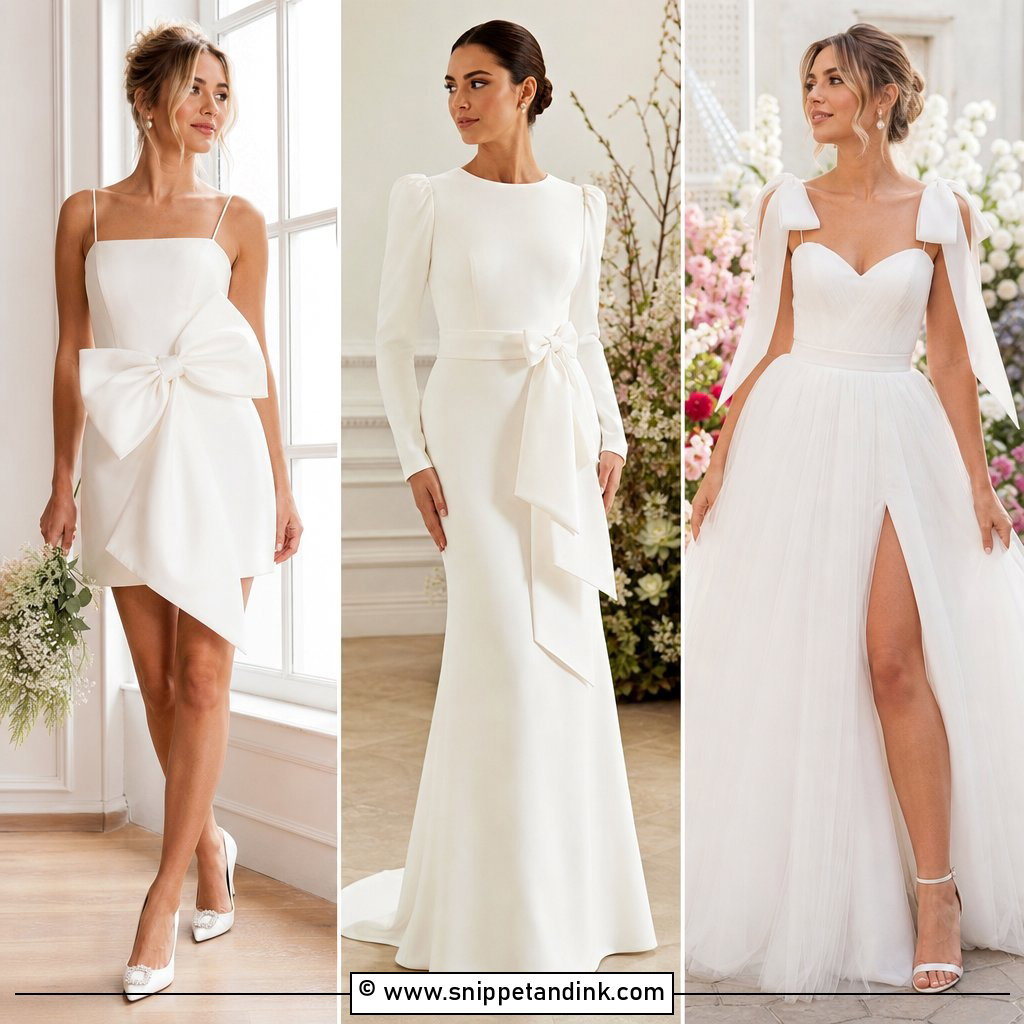
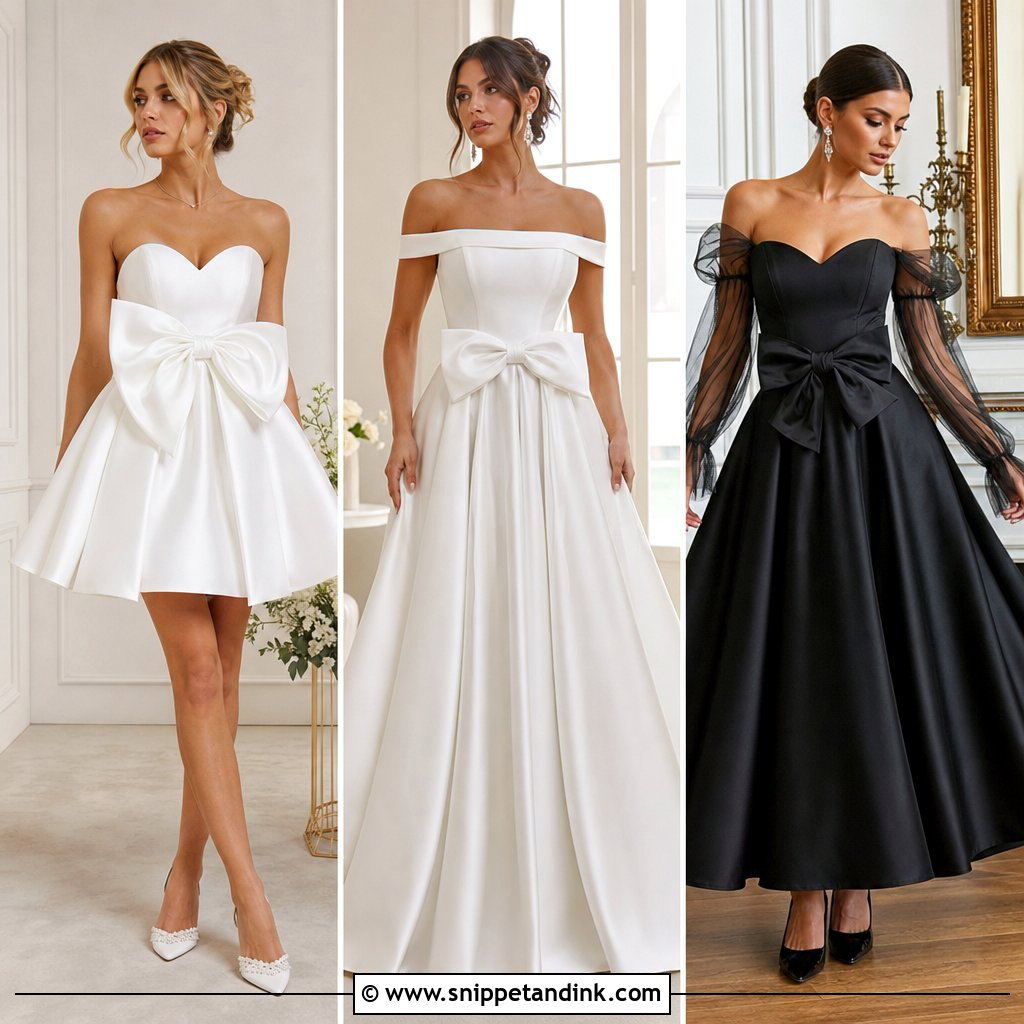
20. Detachable Bow Back Wedding Dress
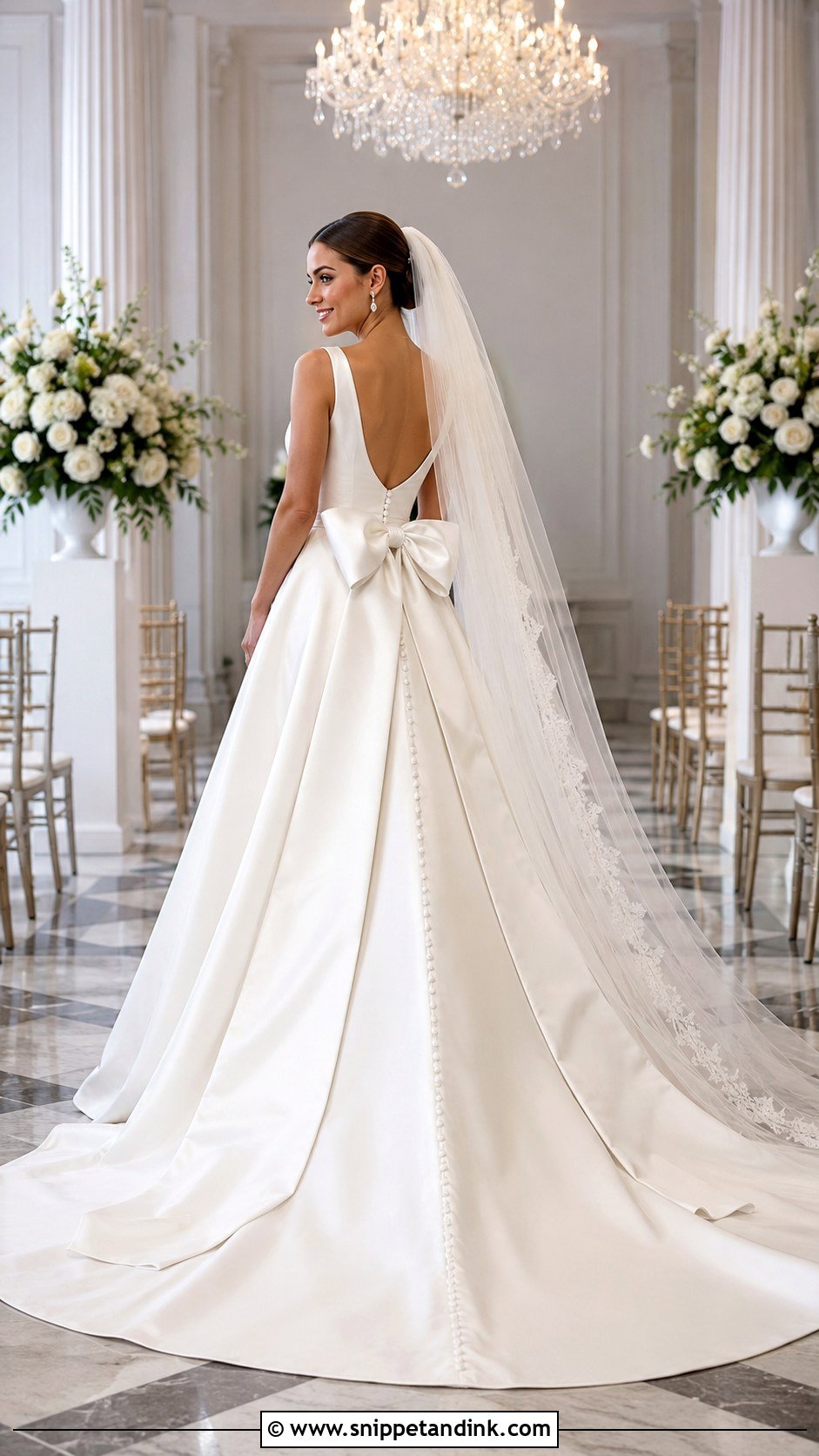
One dress, two backs. For the ceremony, attach a structured bow with long tails to a satin, Mikado or crepe gown for the processional and portraits. Before the reception, take it off to reveal covered buttons, a low back or a clean waist seam. The attachment is the part to get right, and I prefer hidden hooks or snaps that a helper can undo in a minute without unpinning the veil. Wear the veil, classic heels and elegant earrings for the ceremony, then swap to a sparkling hair accessory later. It gives you a change of look without buying a second dress.
The Veil, the Bustle and the Dinner Chair
A bow has three enemies on the day, and you can plan for all of them at the fittings.
- The veil. A veil falling straight over a structured bow flattens it and hides it. Choose a veil that ends above the bow, set the comb lower so the veil drapes to one side, or take the veil off right after the ceremony.
- The bustle. Long bow tails tangle with bustle points. Ask your seamstress to bustle the train under the tails, so the tails stay on top and hang free when the train is lifted.
- The chair. Sitting back against a dinner chair crushes the loops. Sit forward for the meal, or plan the detachable bow to come off before you sit down.
I also tell photographers when the dress has a bow back, so they shoot the processional from behind as well as from the front. Otherwise the detail you chose the dress for can end up in only one or two frames.
Look at the Front Again Before You Commit
A bow back has to work from behind and still look balanced from the front, which is easy to forget when you’re twisting to see it in a mirror. Ball gowns, fitted shapes, minis, lace and minimal dresses can all carry one. Start with the silhouette that suits your body and setting, then decide on the bow: small or large, sheer or structured, matching or contrasting, fixed or removable. I’d bring your veil and shoes to every fitting so you see the whole outfit at once, and leave room in the alterations budget, because a bow only looks right when it sits level and stays put.
You'll Like These Ideas:


Leave a Reply