
For a South Asian bride, the juda is more than a bun. It carries tradition, frames the face and gives the maang tikka, matha patti and flowers somewhere to sit. I style them sleek and high, soft at the nape, braided into crowns and wrapped in gajra, and the right one depends on the face, the outfit and which function it’s for. Below are twenty I’d suggest to brides, bridesmaids and guests, with the practical detail behind each: where it sits, what it needs underneath and who it doesn’t suit.
Pacing Your Hair Through a Week of Functions
A South Asian wedding rarely means one hairstyle. Mehndi, haldi, sangeet, the wedding and the reception can each call for a different juda, sometimes two on the same day, and the same head of hair has to cope with all of it.
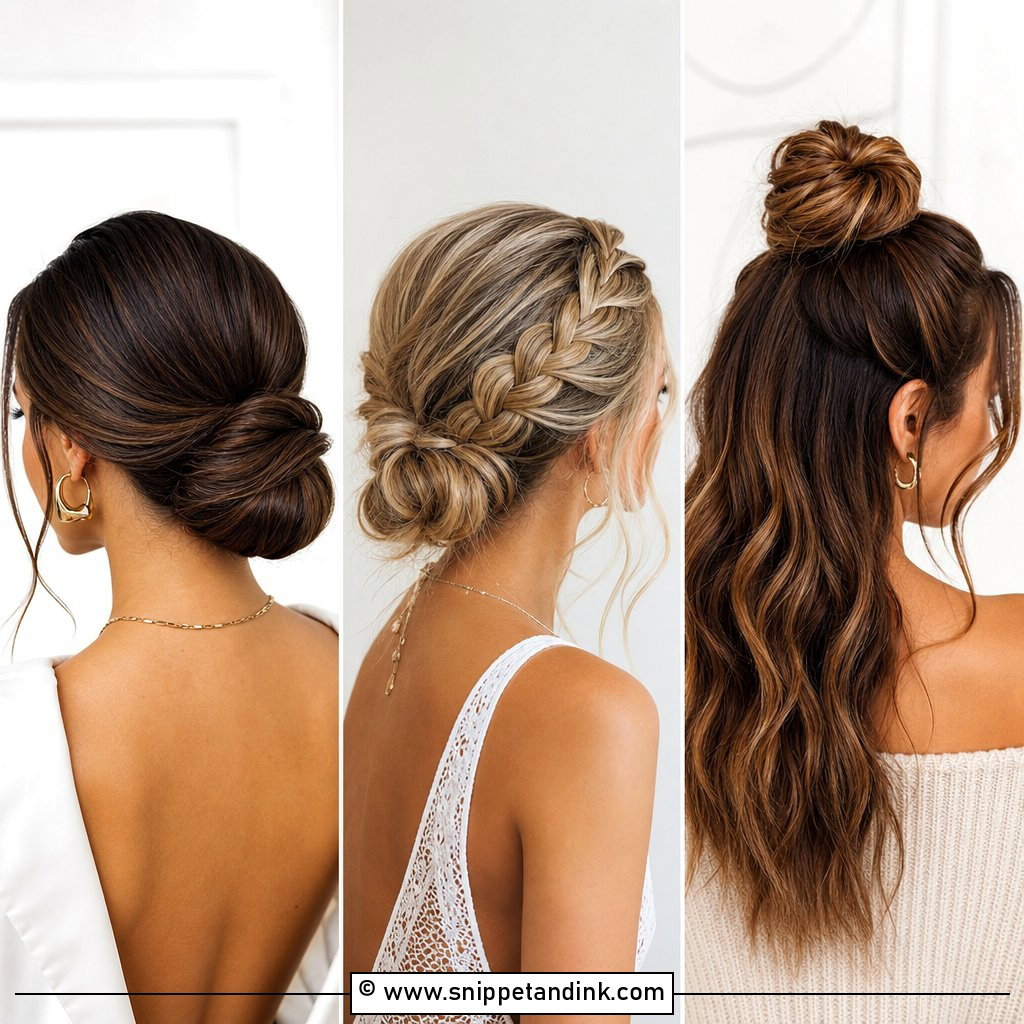
Put the gentle styles early
I put the softest, least-pinned looks on the early functions, a messy bun for mehndi or a loose braid for haldi, and save the most structured, heavily pinned juda for the wedding itself. Teasing, tight pulling and heat every day for a week leave hair dry and the scalp tender just when it matters most.
Wash on the right mornings
Day-old hair holds a juda better than freshly washed hair, so I plan washes before a lighter function rather than on the wedding morning. After haldi, wash the turmeric out the same day. Left overnight, it can tint light or highlighted hair yellow.
Oil early, not the night before
Many families oil a bride’s hair before the wedding, and that’s good for it. Oil left in on the day, though, makes pins slip and a sleek bun look greasy. Oil two or three days ahead and wash it out thoroughly.
1. Classic Bridal High Bun Juda
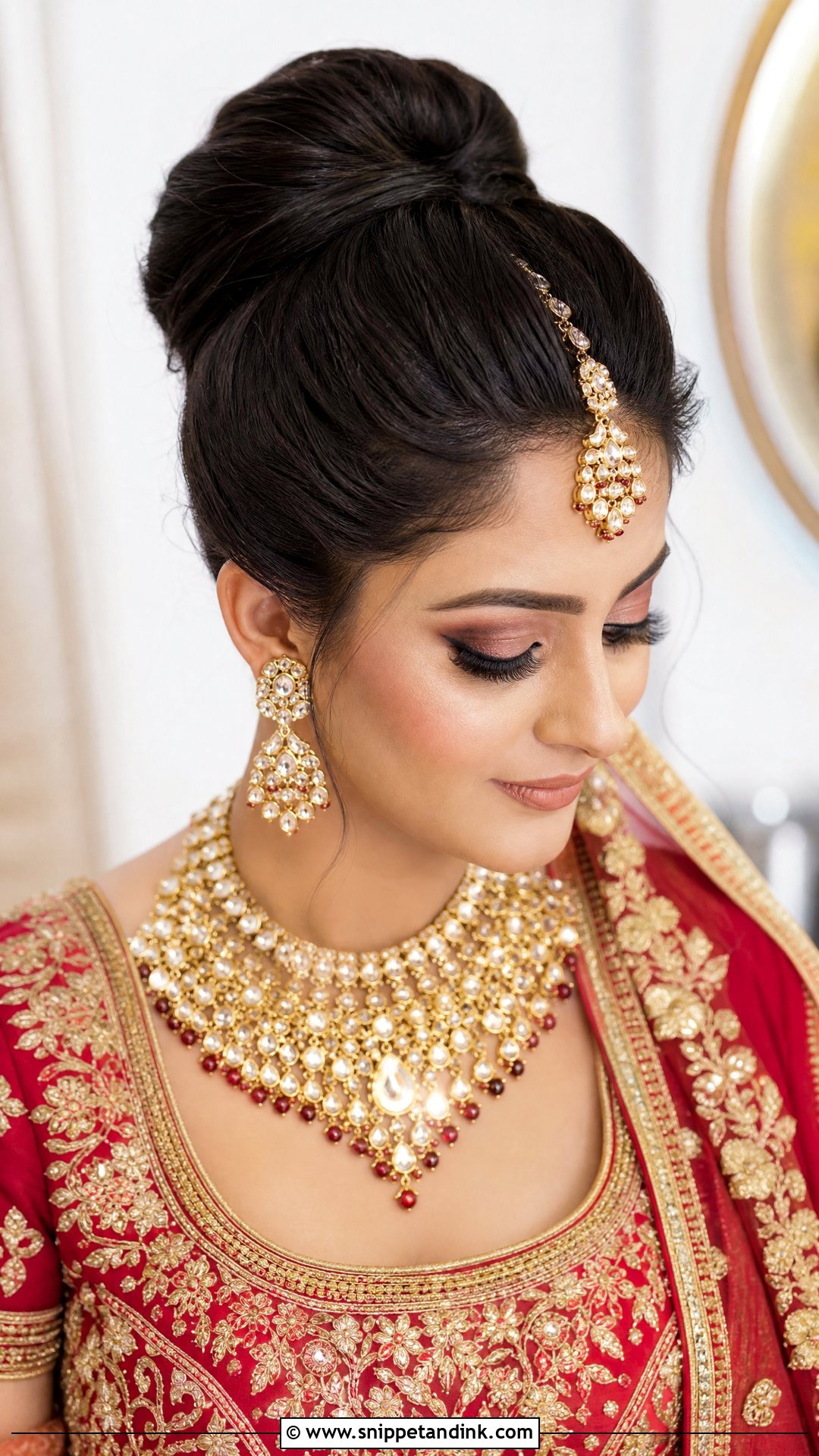
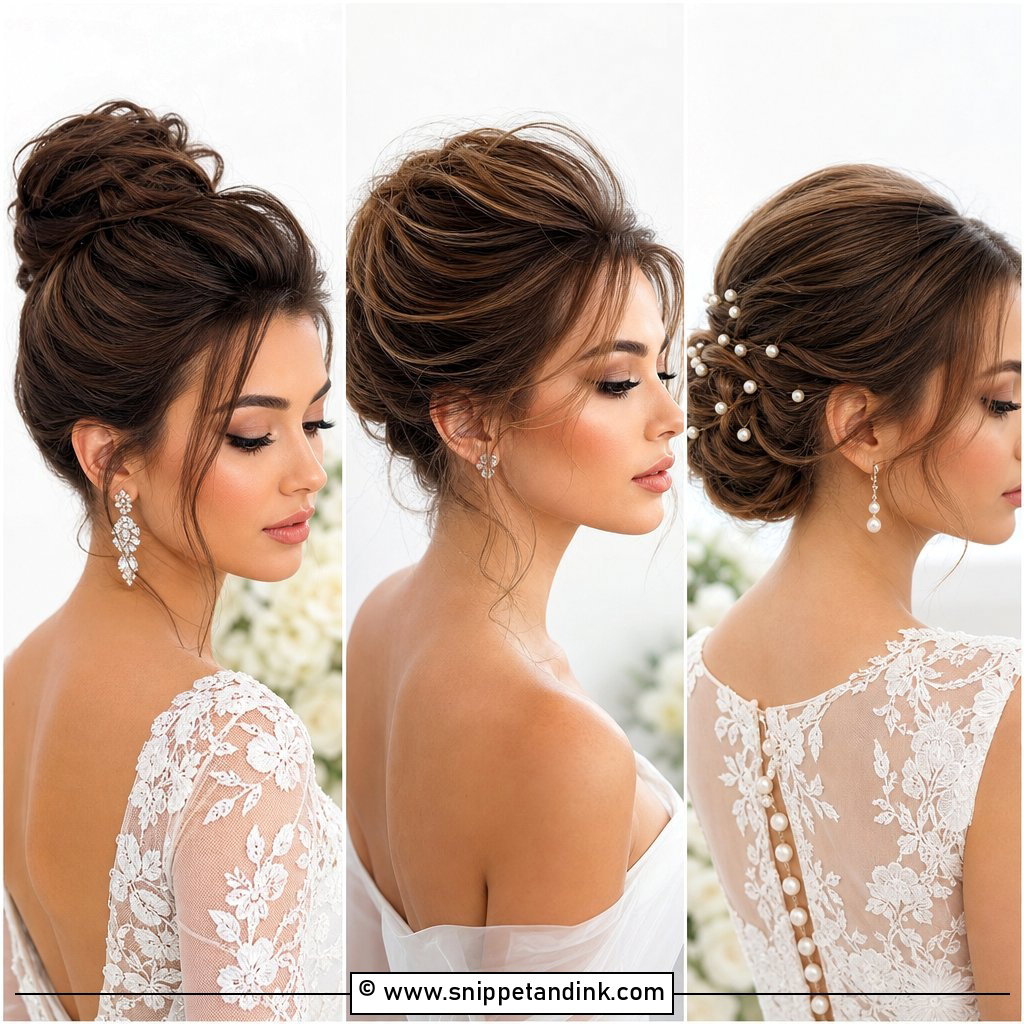
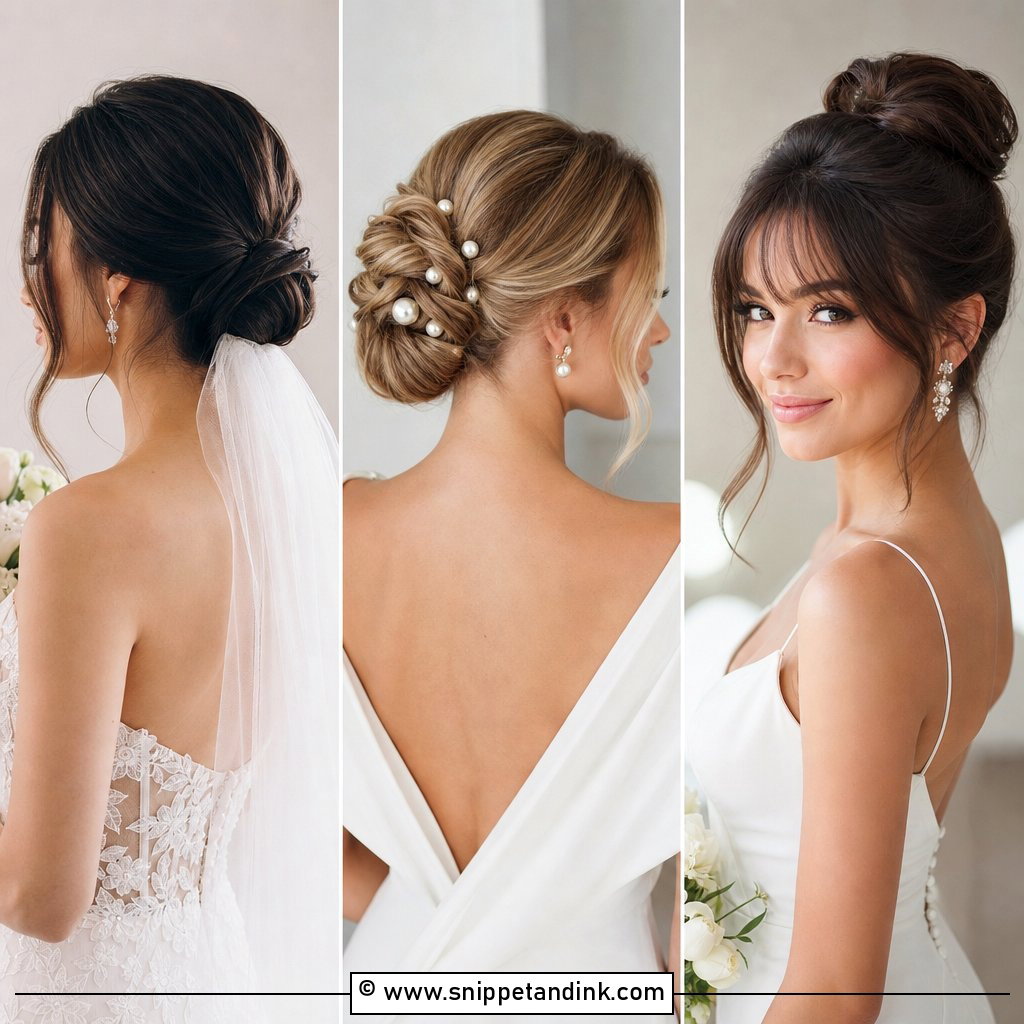
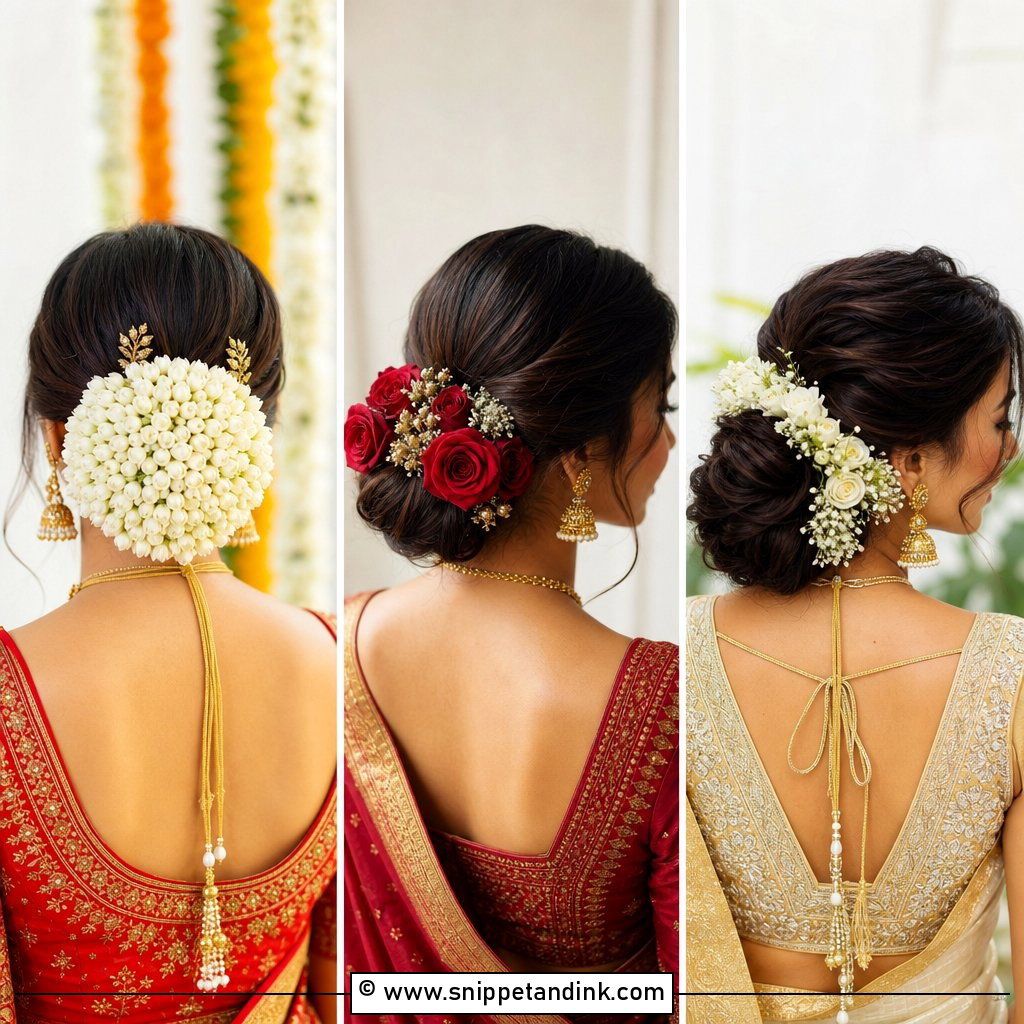
Nothing pulls focus to the face and jewelry like a bun set high on the crown. This polished juda pairs naturally with a maang tikka or matha patti, and on a round face the added height balances the cheeks. To find the placement, I lay a comb along the line from the chin past the cheekbone and up the back of the head; where it meets the crown is where the bun goes. Keep it shiny for the ceremony or add a little texture for softness, then finish with a gold pin or a few flowers along the base.
2. Low Floral Juda for Brides
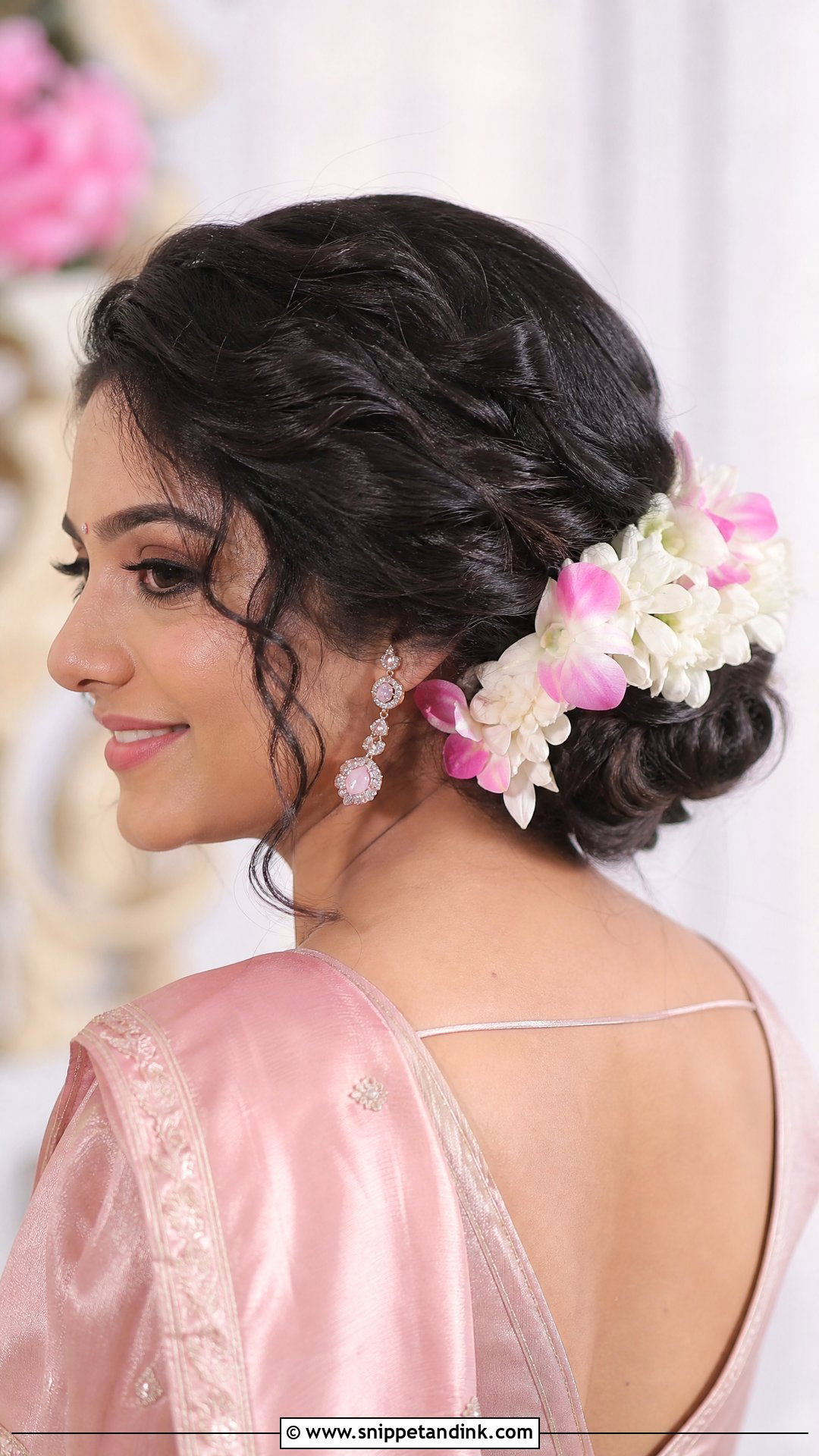
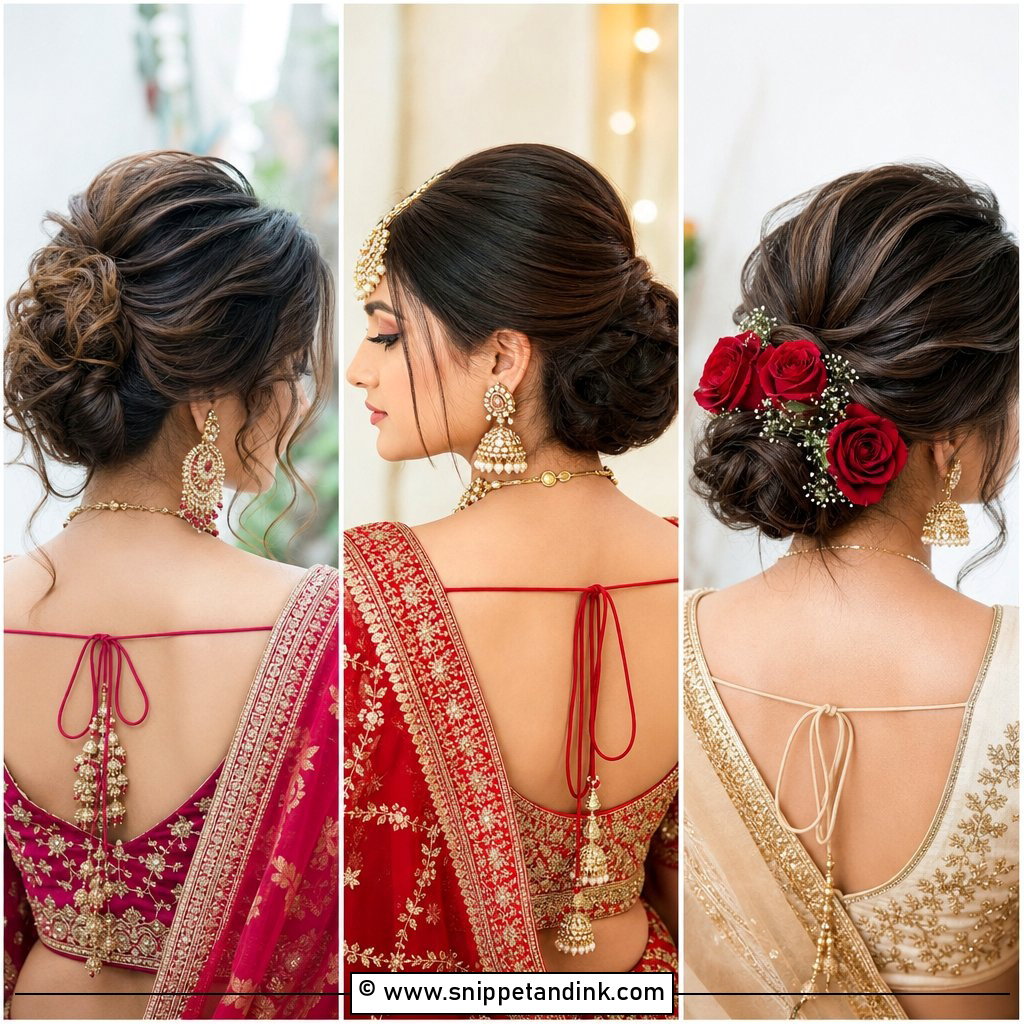
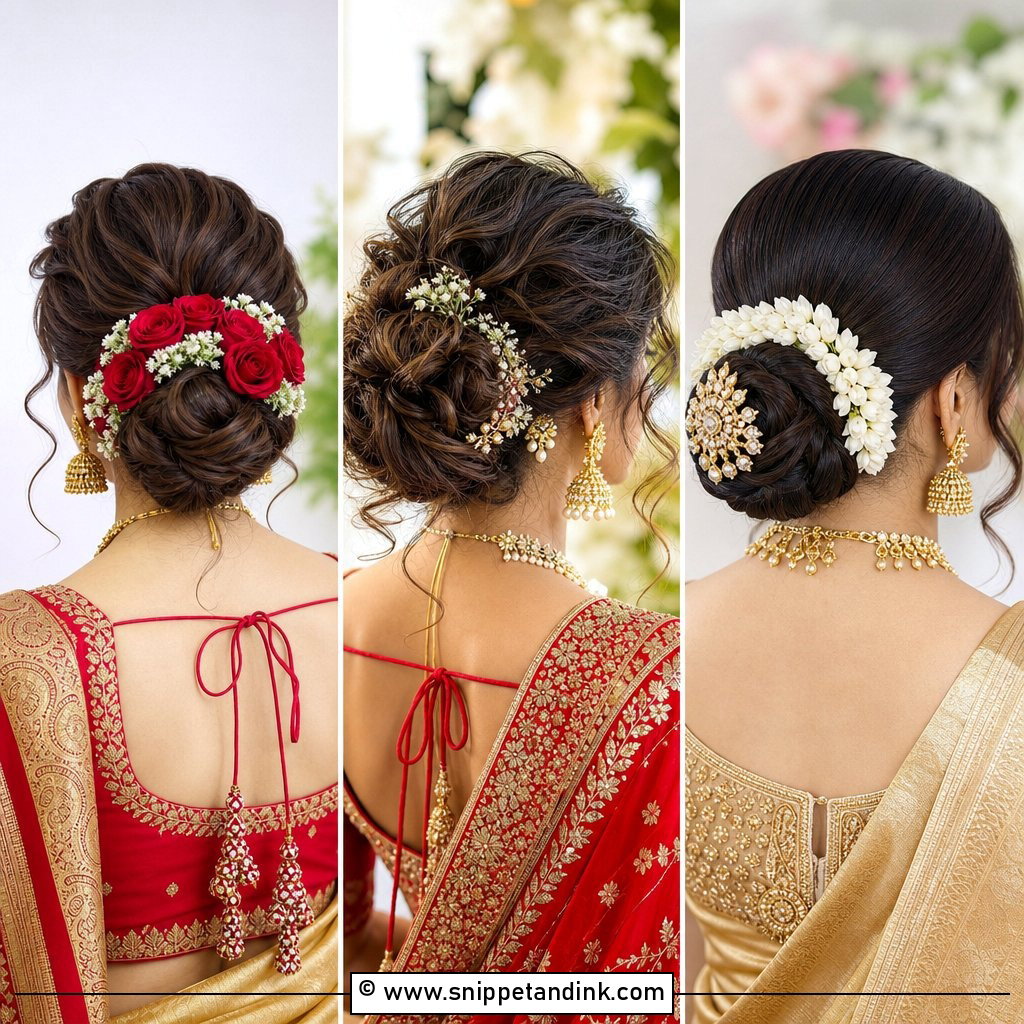
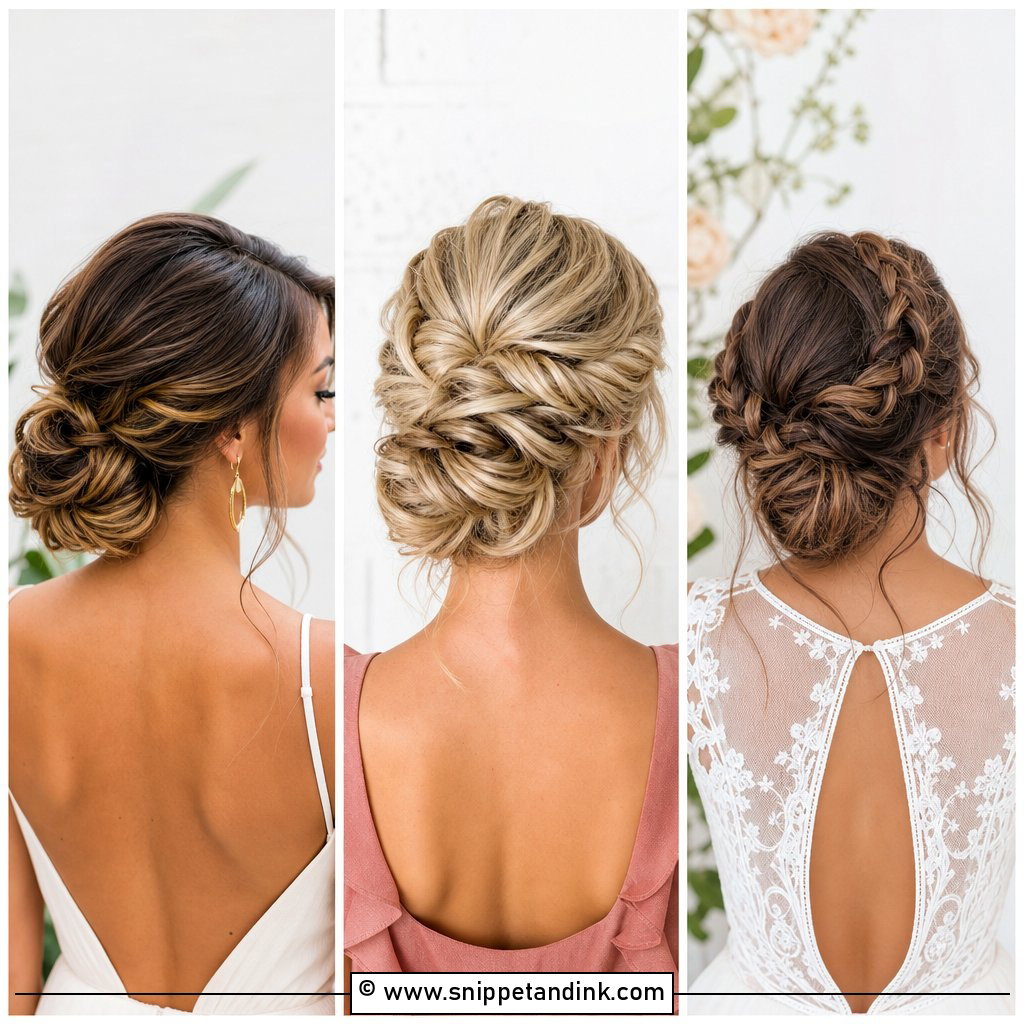
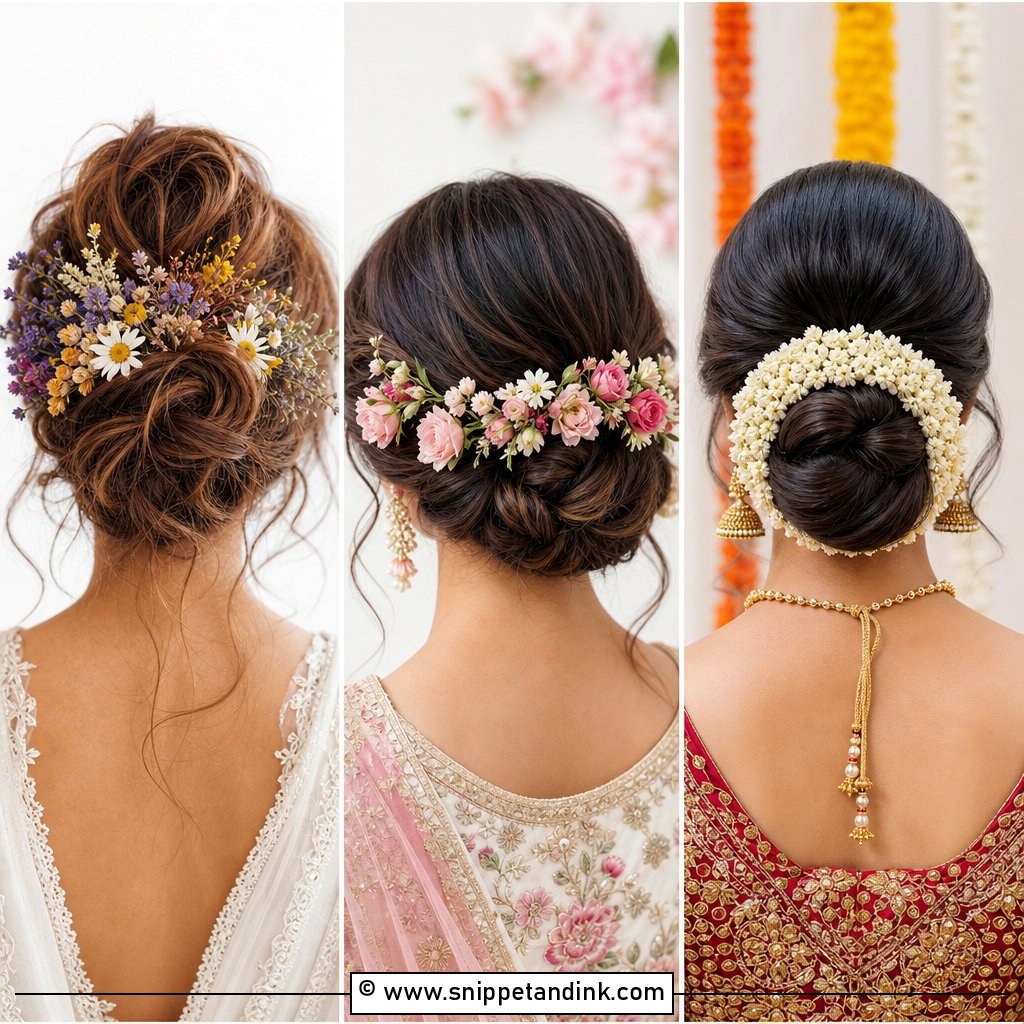
A low bun resting at the nape is quiet and romantic, and it suits brides who’d rather look understated. Jasmine, orchids or roses tucked around it add scent and a little color. The low placement shows off a long neckline and leaves room for statement earrings. One thing I always check is the necklace: long chains and back clasps sit right where this bun does and can tangle in it, so I pin the bun slightly higher if the jewelry hangs at the nape. It’s comfortable for hours, which is why I like it for daytime weddings and small ceremonies.
3. Braided Crown Juda Hairstyle
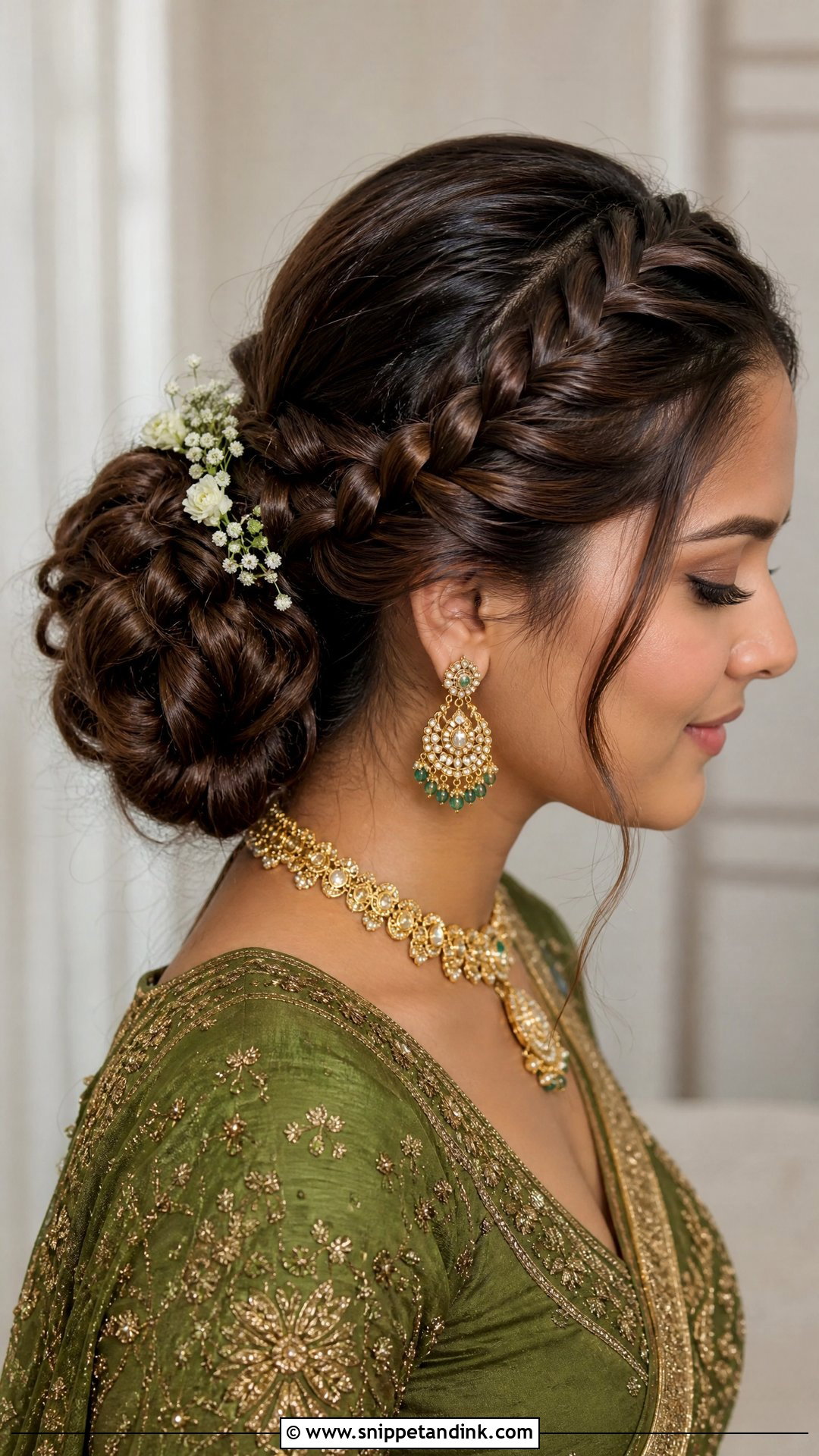
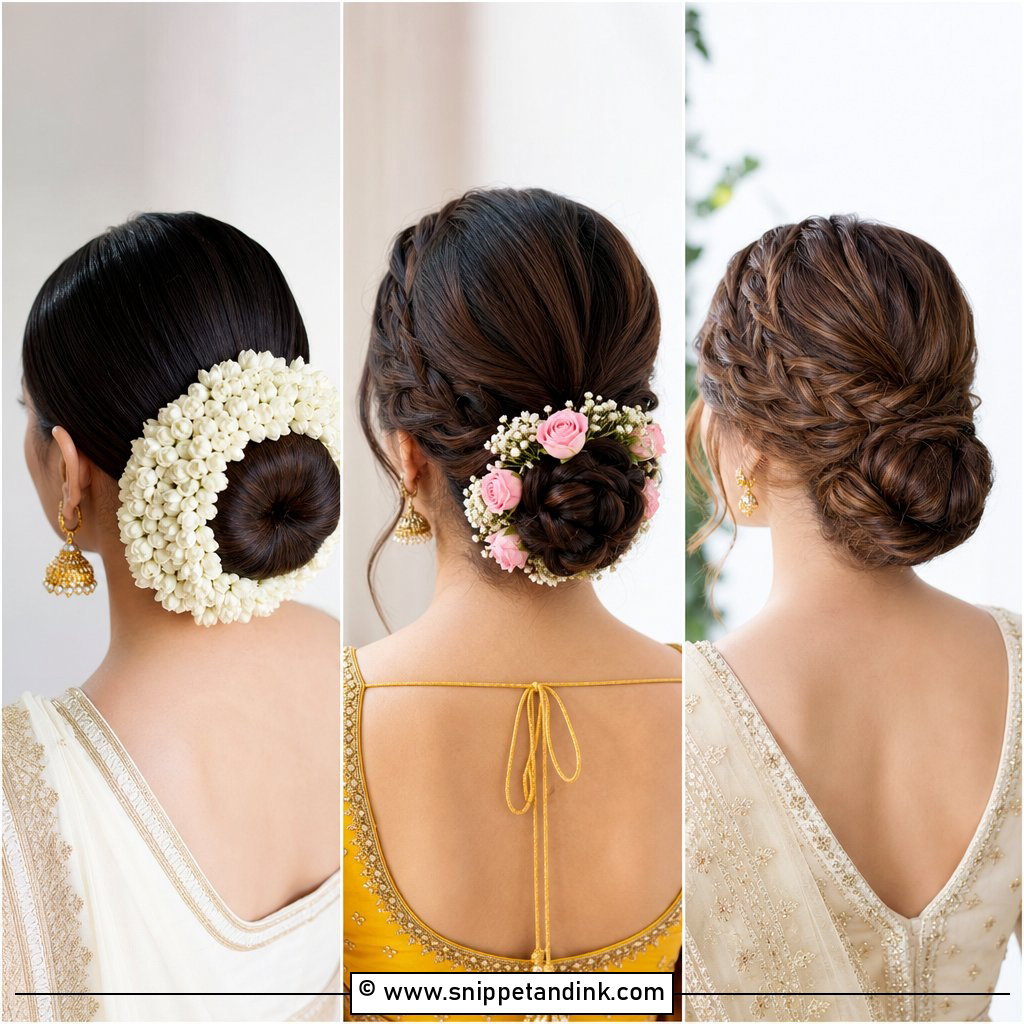
A braid frames the head like a crown, then flows into a full bun at the back. I use a Dutch braid here because it sits on top of the hair and shows clearly from a distance, then pull the loops gently wider so it looks fuller. It suits sangeet nights and mehndi, and the braid keeps every strand locked in through dancing. Tiny flowers, pearls or gold accents can be woven along it. With a backless blouse the whole back view becomes part of the outfit, so I make sure the bun’s underside is as tidy as its face.
4. Side-Swept Juda for Wedding
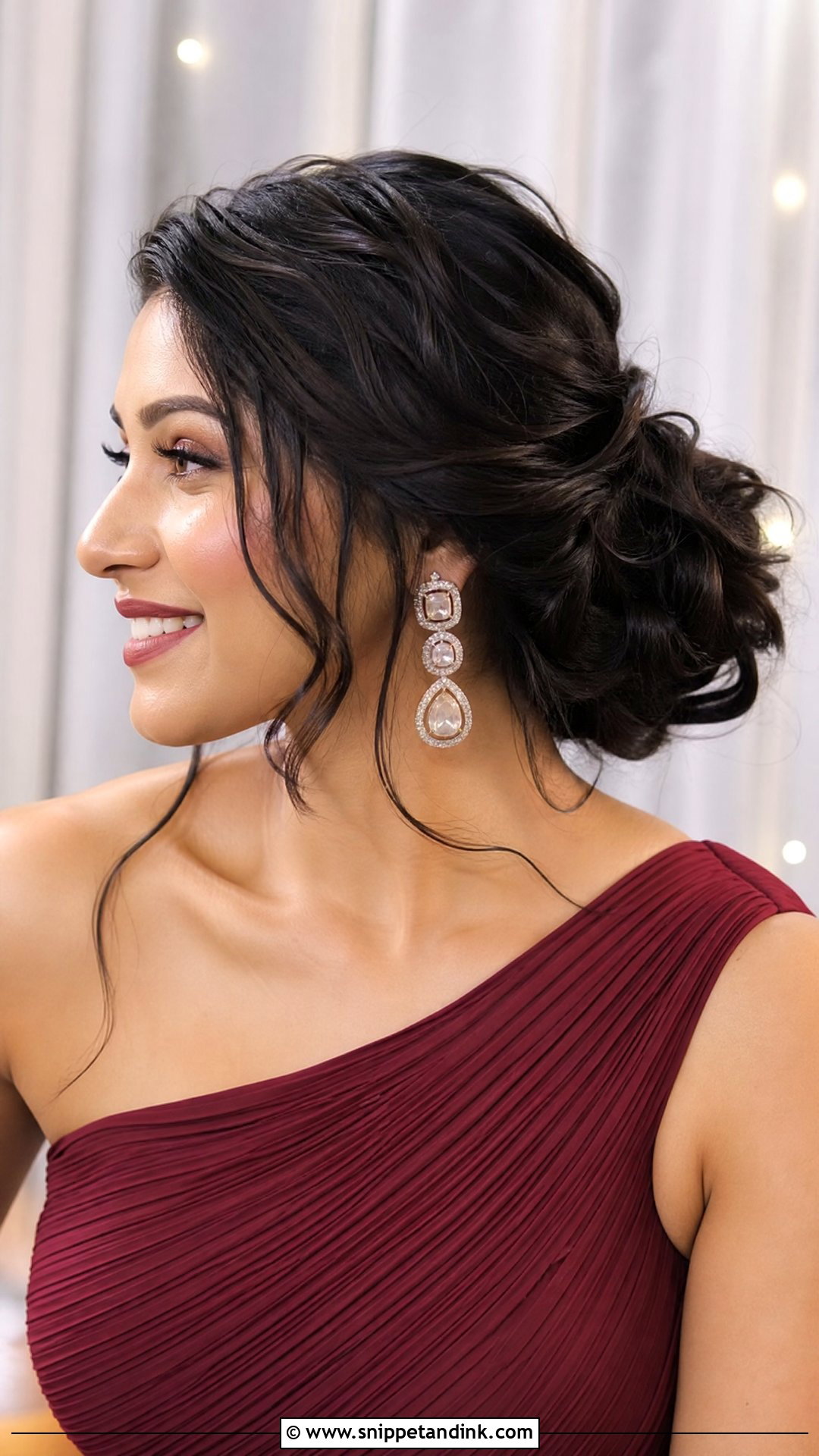
Shifting the juda off-center gives a more current look, and it shows up well in candid photos. It suits cocktail evenings, receptions and sangeet, with soft waves or a few loose tendrils near the face. With a saree, I put the bun on the right side, opposite the pallu. The pallu usually drapes over the left shoulder and would otherwise crush the bun every time it’s adjusted. A small flower cluster or jeweled pin on the fuller side finishes it, and it suits one-shoulder blouses well.
5. Gajra Adorned Bridal Juda
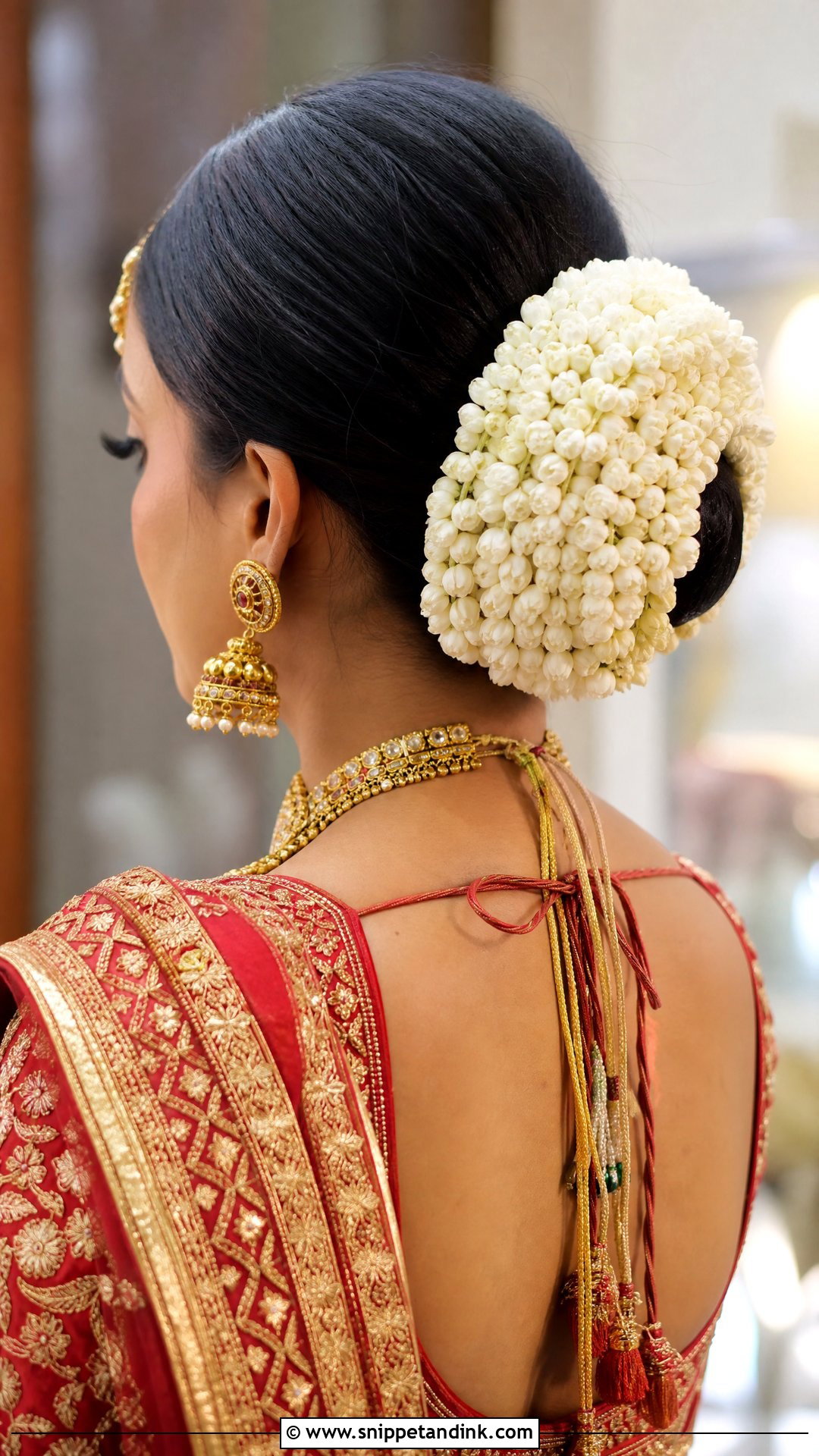
A juda wrapped in fragrant gajra is about as classic as Indian bridal hair gets. Strands of mogra or jasmine loop around the bun, white against dark hair, and they sit well with red or gold lehengas. It’s especially common at South Indian and Maharashtrian weddings. I wrap the gajra in a spiral starting at the base and tuck the end underneath, then secure it with U-pins, which grip flower string far better than bobby pins. The flowers stay fresh for hours and add scent you’ll remember long after the day.
6. Messy Juda with Face-Framing Tendrils
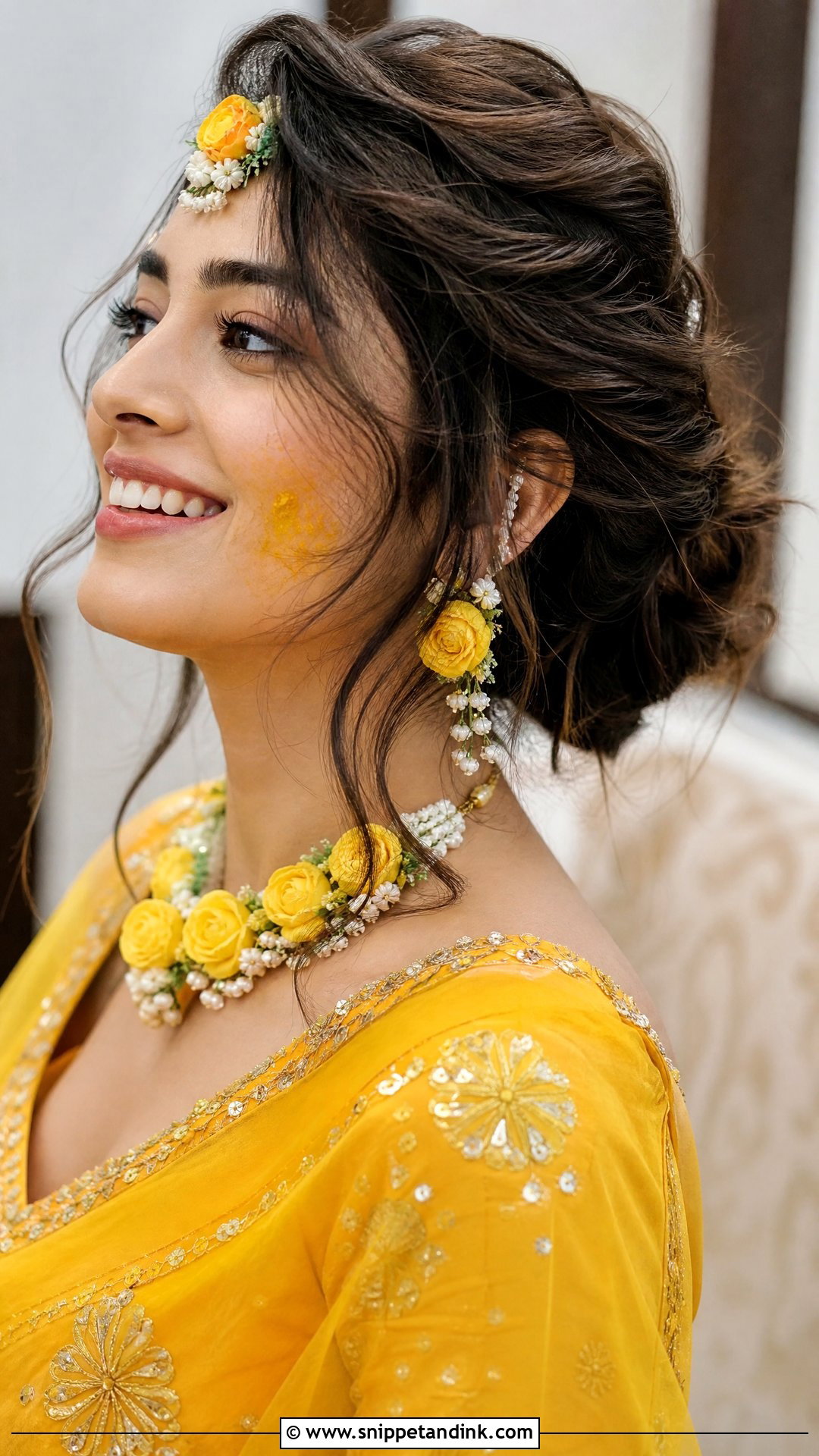
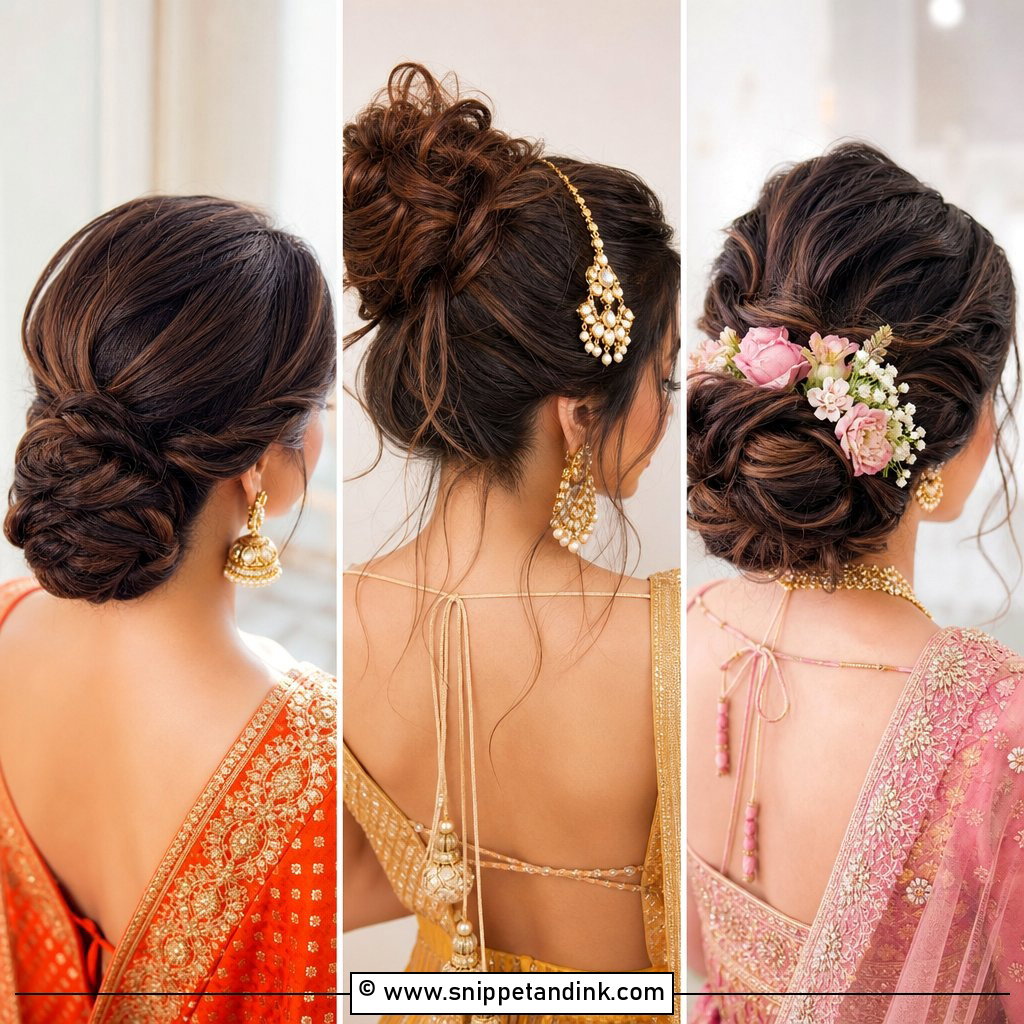
Loose and textured, with soft tendrils around the face, a messy juda suits the more relaxed functions. Wispy strands soften a square or angular jaw. It’s my favorite for mehndi in particular: you’ll sit for hours with wet henna on your hands and can’t touch your hair, so a style that’s meant to look a little undone forgives every flyaway. Small flowers or a sparkling pin dress it up. It reads naturally in candid photos at mehndi and haldi.
7. Pearl Net Juda Hairstyle
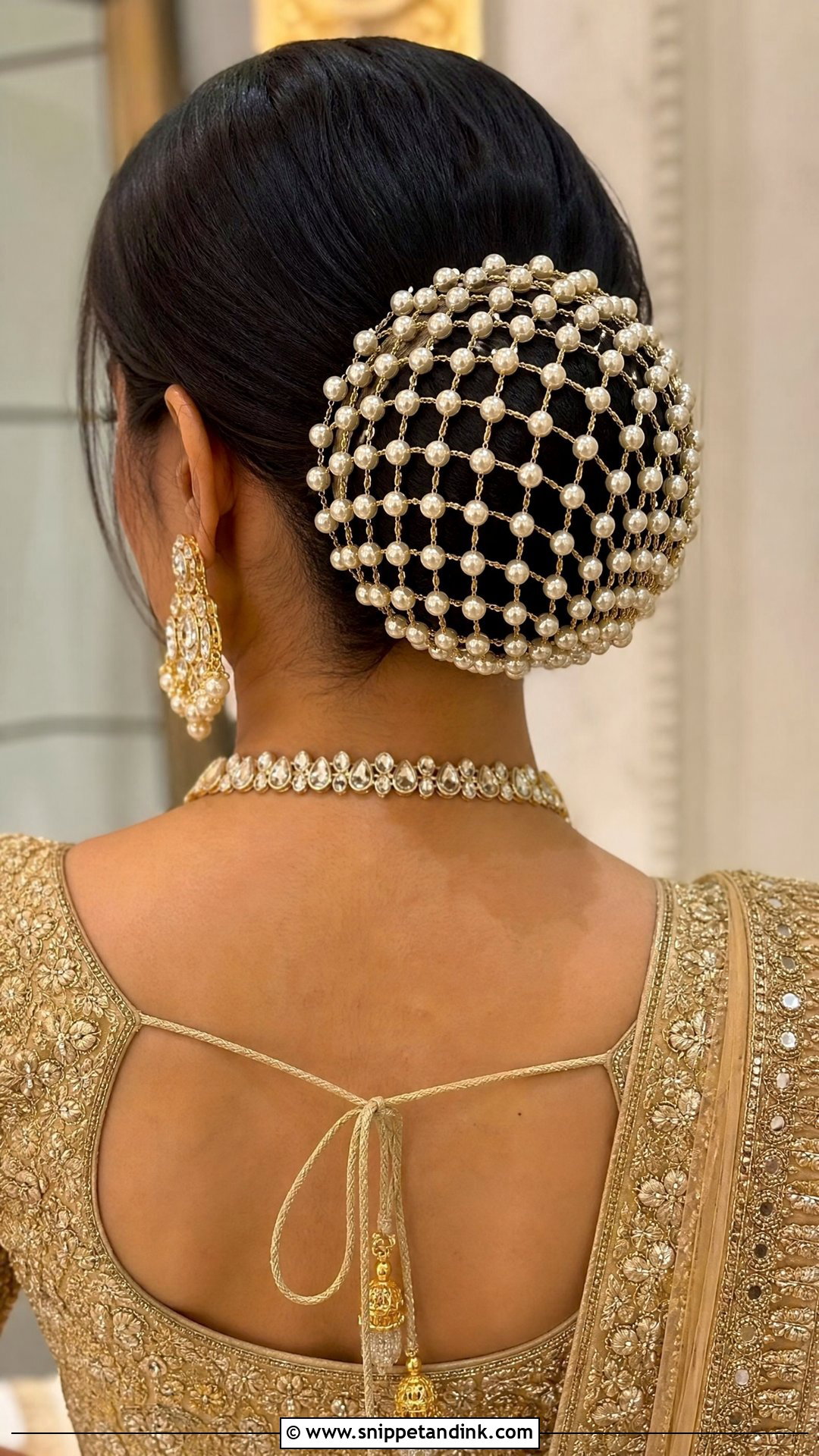
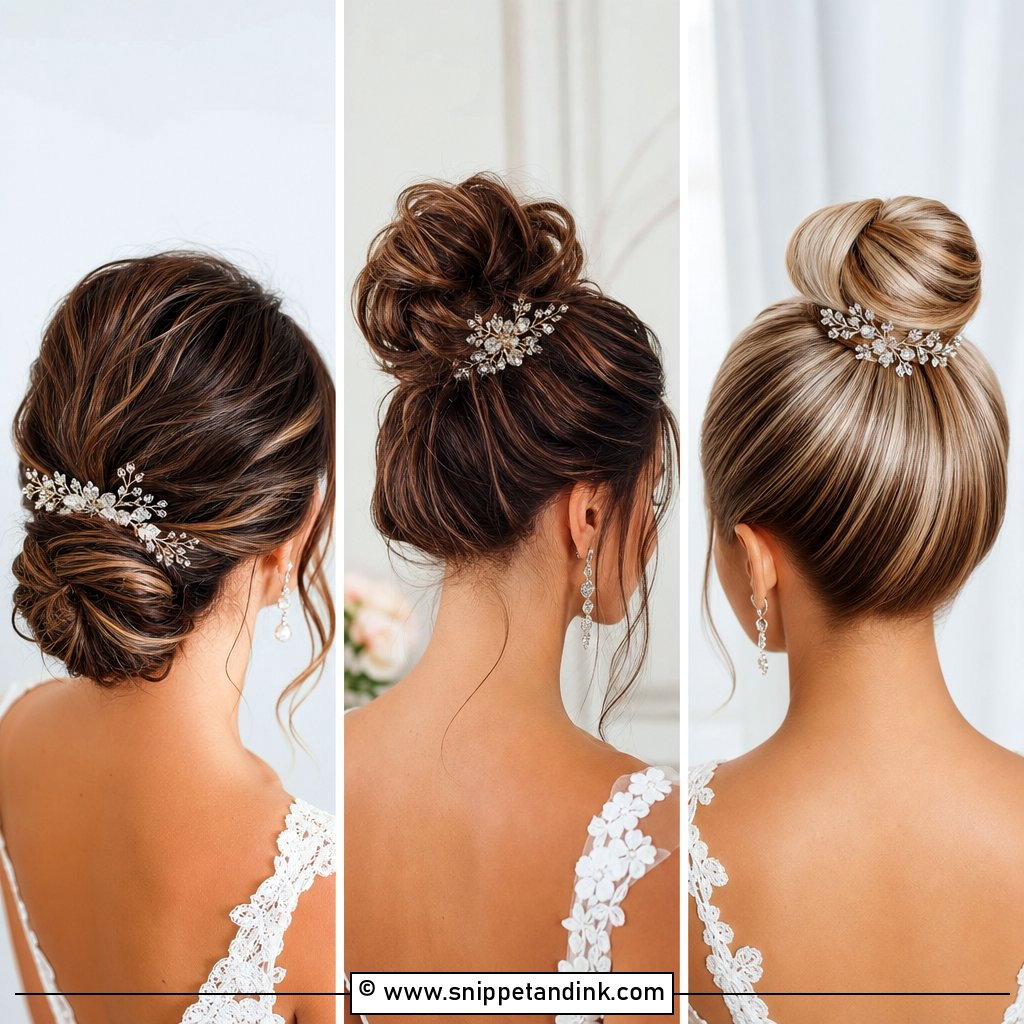
A net of pearls or fine gold chains over the whole bun recalls Mughal-era court jewelry, and it needs almost no upkeep through the day. It suits brides who want an ornate look without fresh flowers, and it pairs well with heavy lehengas and traditional gold. The net is only as good as the bun beneath it. It needs a firm, evenly round shape, padded if necessary, or the net sags into the gaps. I match the net size to the bun at the trial. Done right, it stays polished through the longest ceremony and catches light in every photograph.
8. Donut Bun Juda for Wedding
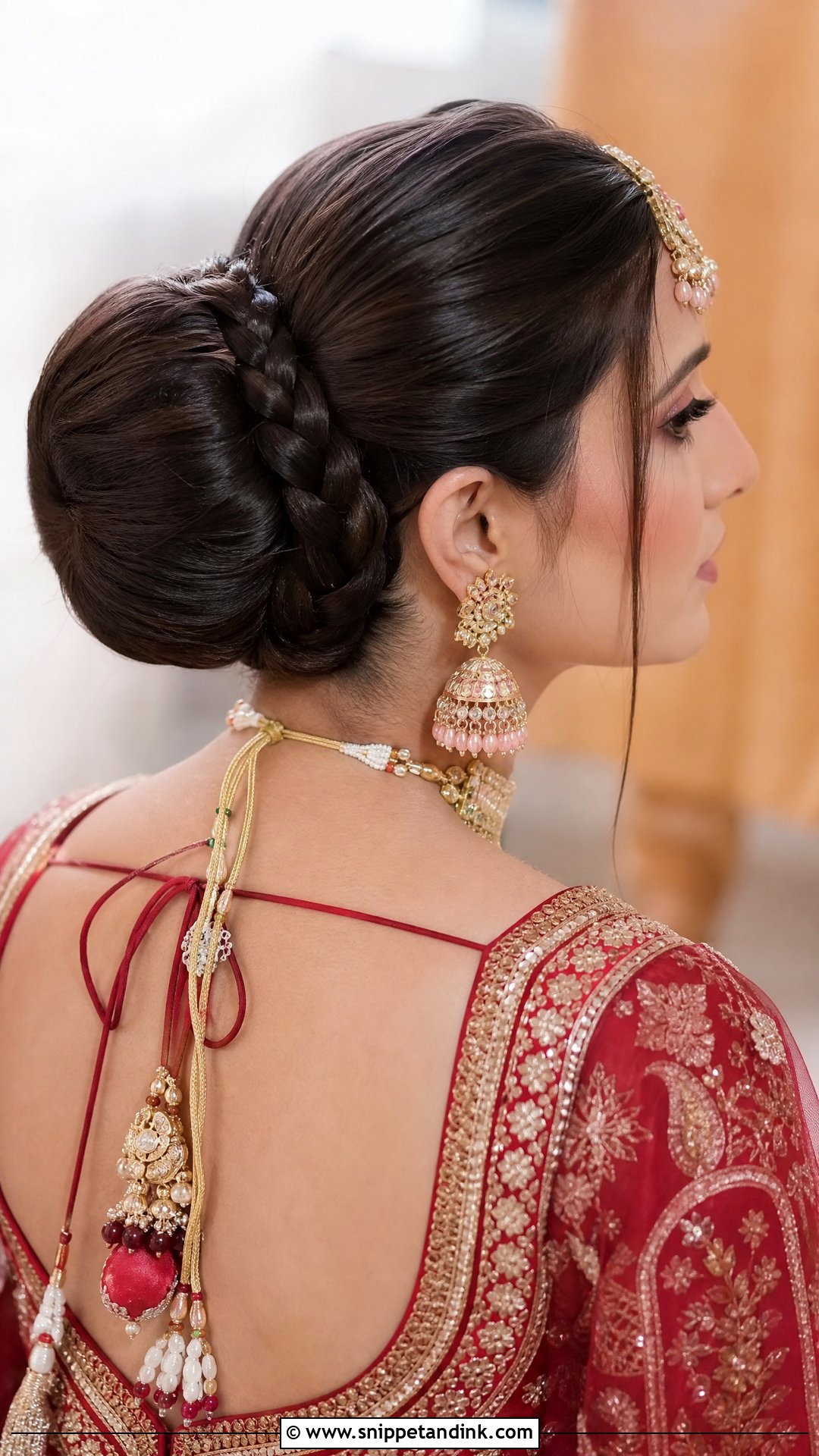
A donut bun gives a smooth, round juda that looks neat from every side. The donut adds structure and fullness, which is why I use it for brides with thinner hair. Pick a donut smaller than you think you need; an oversized one stretches fine hair too thin and shows through. Keep it sleek for the ceremony, or wrap a braid around the base for detail. Fresh flowers, pearls or a jeweled brooch dress it, and it holds its shape for hours at engagements, receptions and ceremonies alike.
9. Twisted Rope Juda Hairstyle
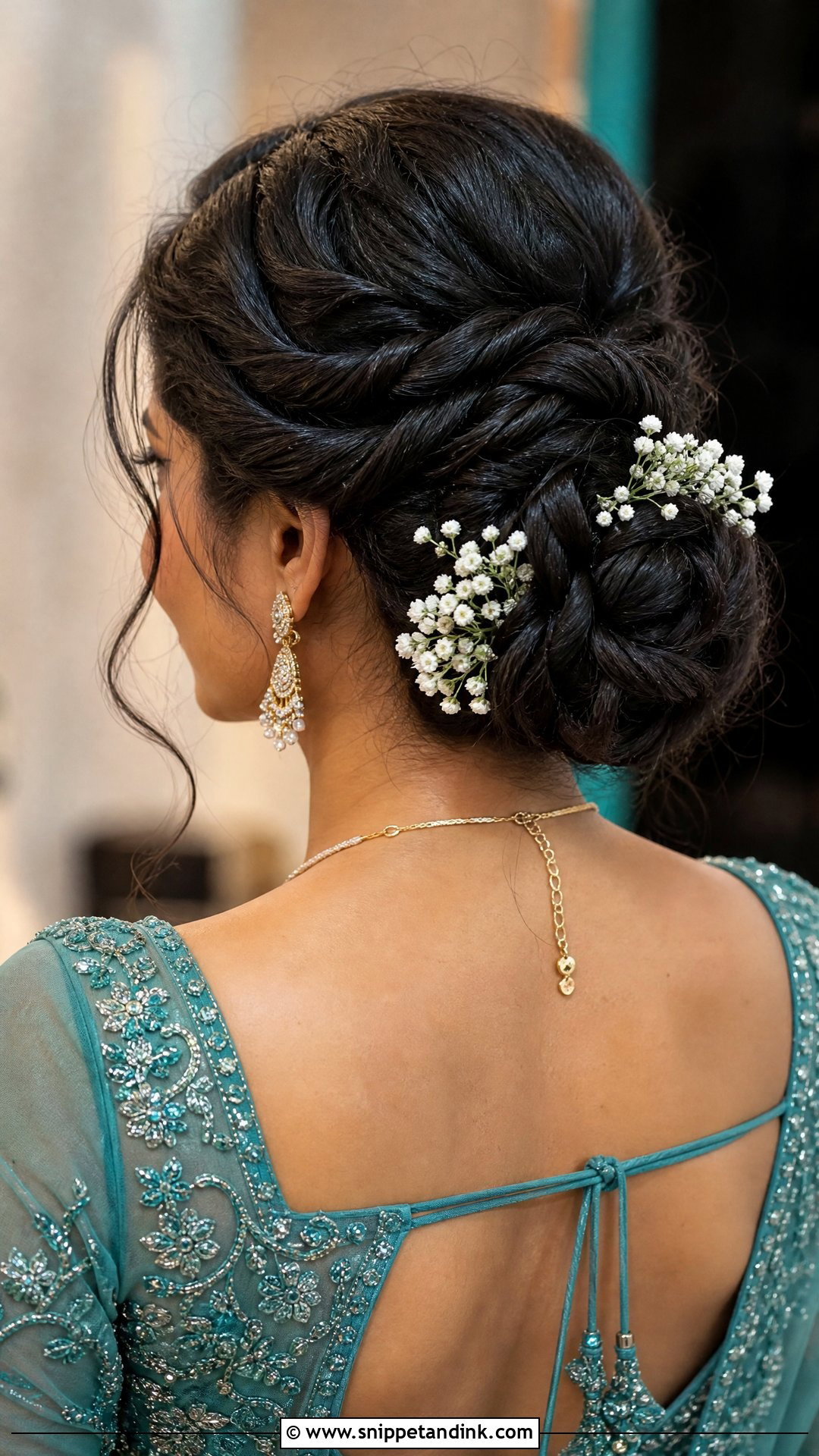
Two sections twisted together like a rope, then wrapped into a bun, give real texture without any braiding. The trick is twisting each section one way and wrapping them around each other the other way, so the tension locks them. I finish the ends with a clear elastic before coiling. The twists hold through long nights of dancing. Soften it with face-framing tendrils or dress it with flowers and pins for sangeet evenings and receptions.
10. Rose Adorned Bridal Juda
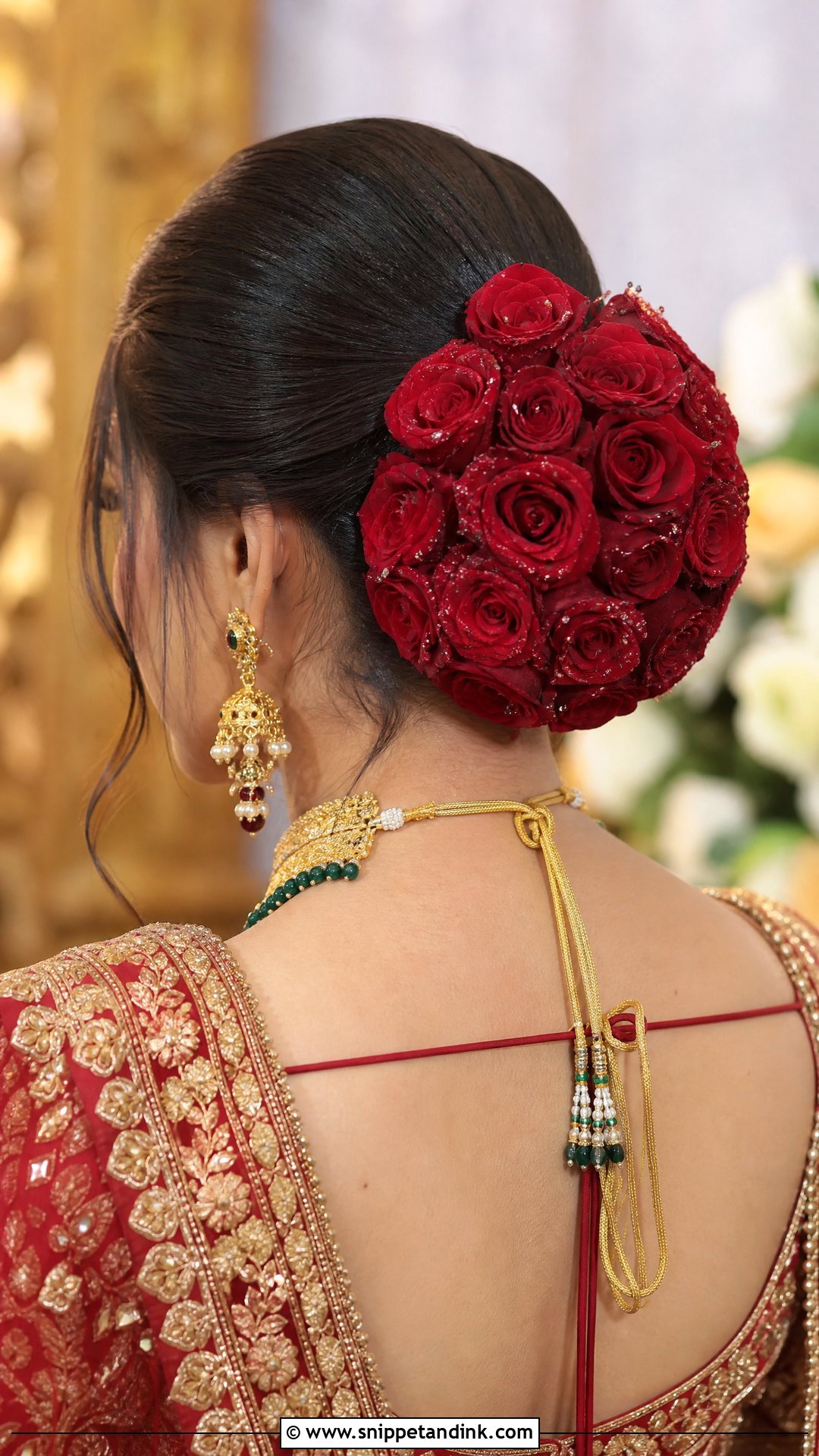
Red or pink roses wrapped around the whole bun make a lush floral statement next to a rich bridal lehenga. A light mist of glitter can add sparkle, though I keep it to a whisper so it doesn’t shed onto the outfit. Against sleek hair the petals look soft and full in close-ups. I ask the florist to wire and tape each rose so the cut stems don’t press into the scalp, and to send half-open blooms, which keep their shape longer than fully open ones. It suits grand ceremonies and receptions.
11. Jasmine Cascading Juda
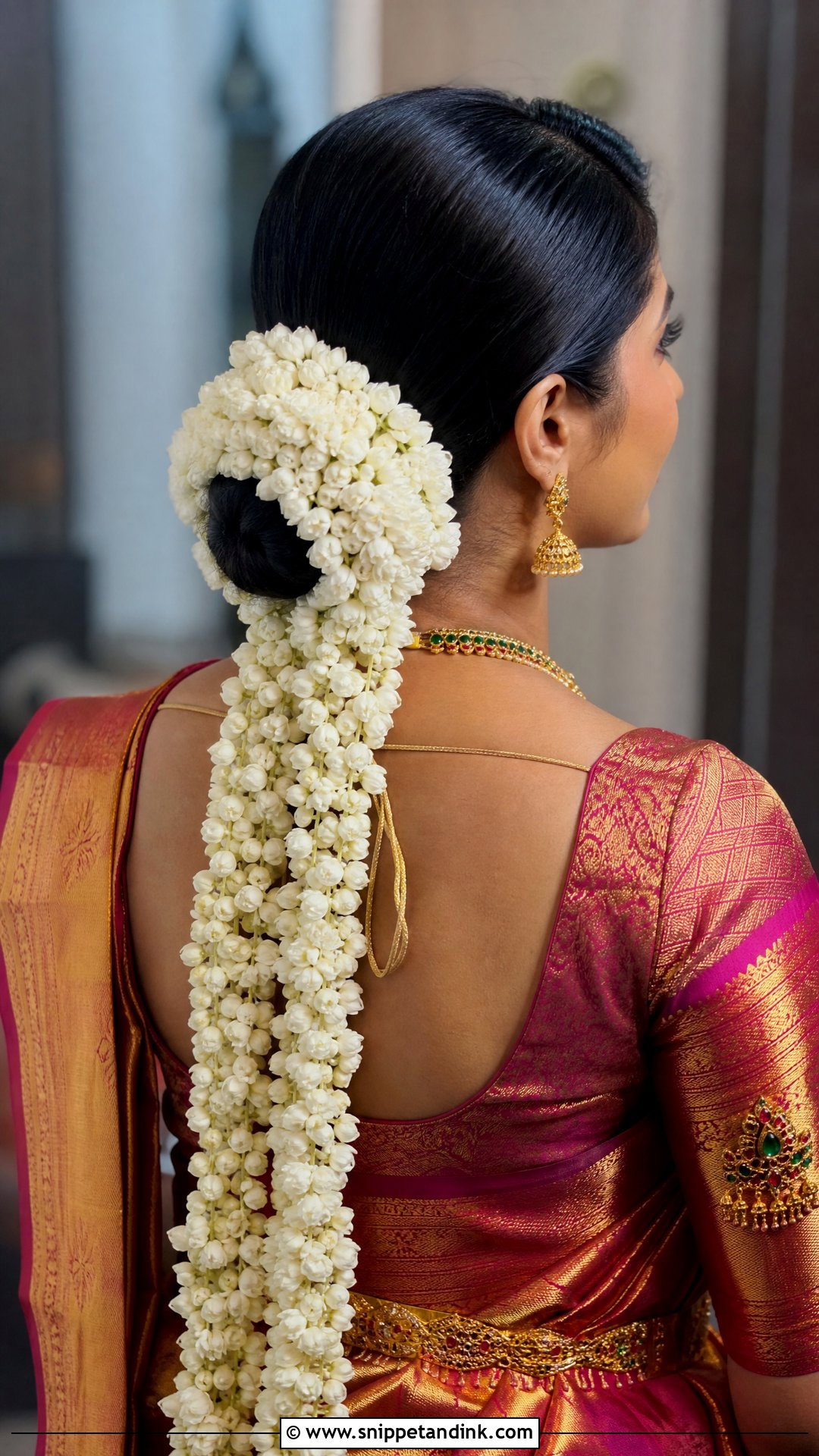
For an ornate traditional look, the cascading jasmine juda sends strands of fresh jasmine draping down the back from the bun. It’s especially popular at South Indian weddings, where flowing flowers are seen as a sign of beauty and good fortune, and it pairs with silk sarees and temple jewelry. The white blossoms contrast with dark hair and scent the air around you. Long ceremonies are mostly seated, though, and the strands get crushed against a chair back. I lay them over one shoulder for seated rituals and let them fall behind again for walking and portraits.
12. Sleek Sophisticated Low Juda
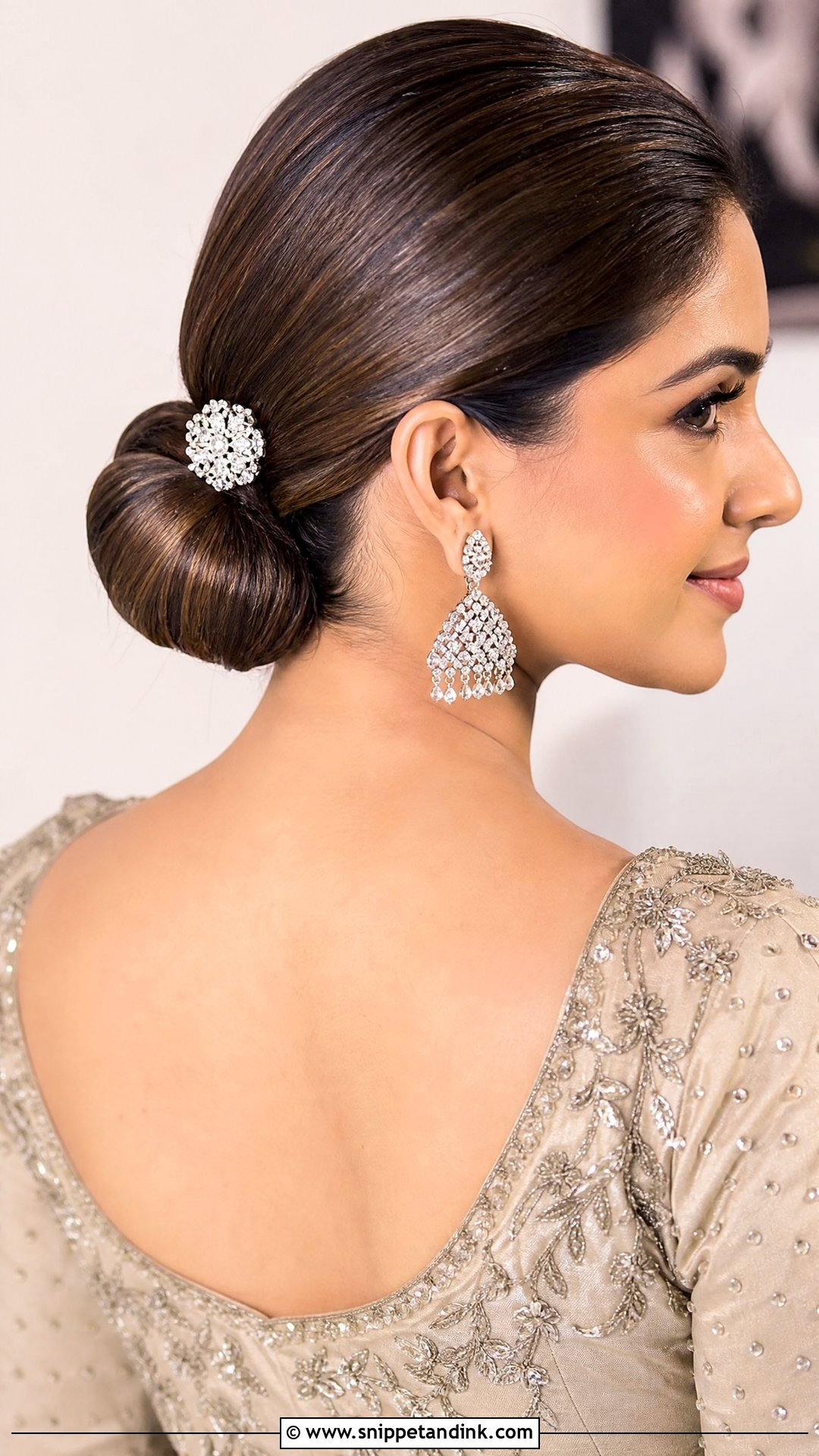
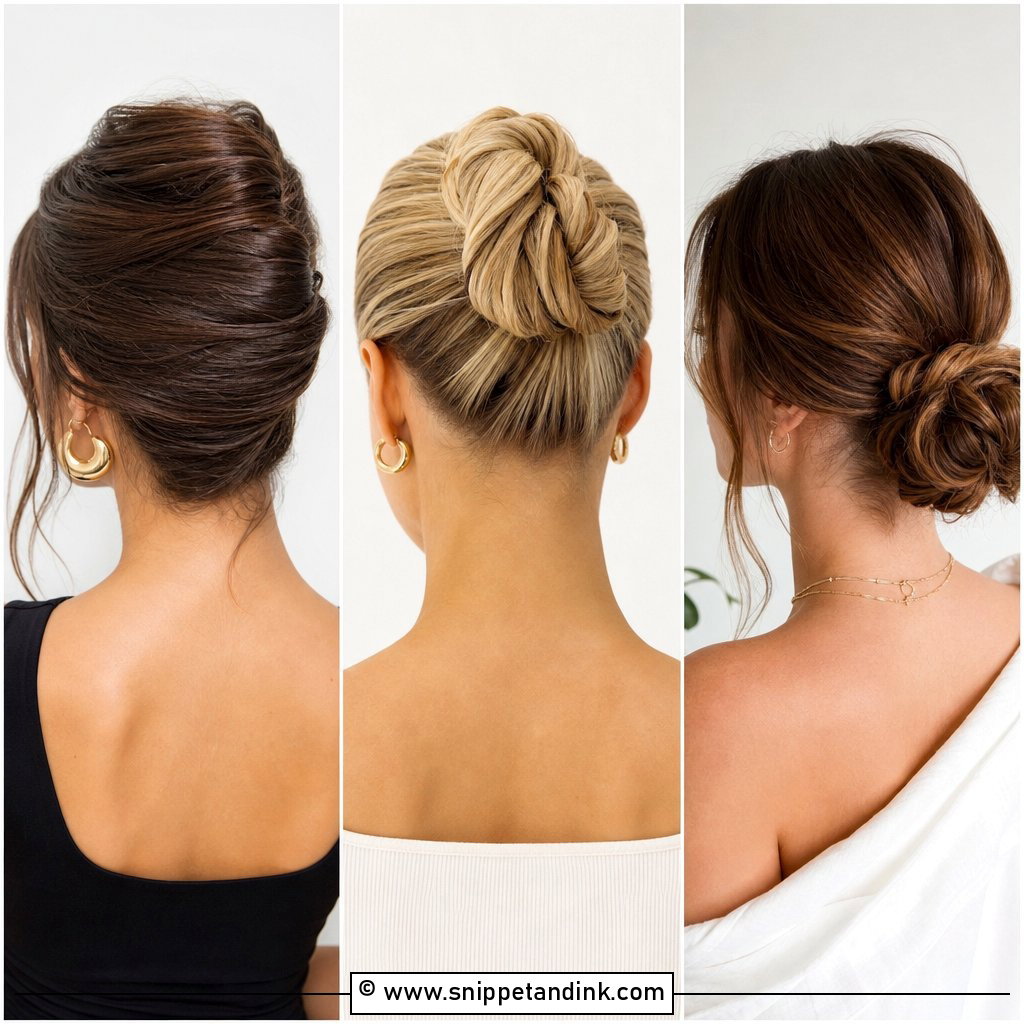
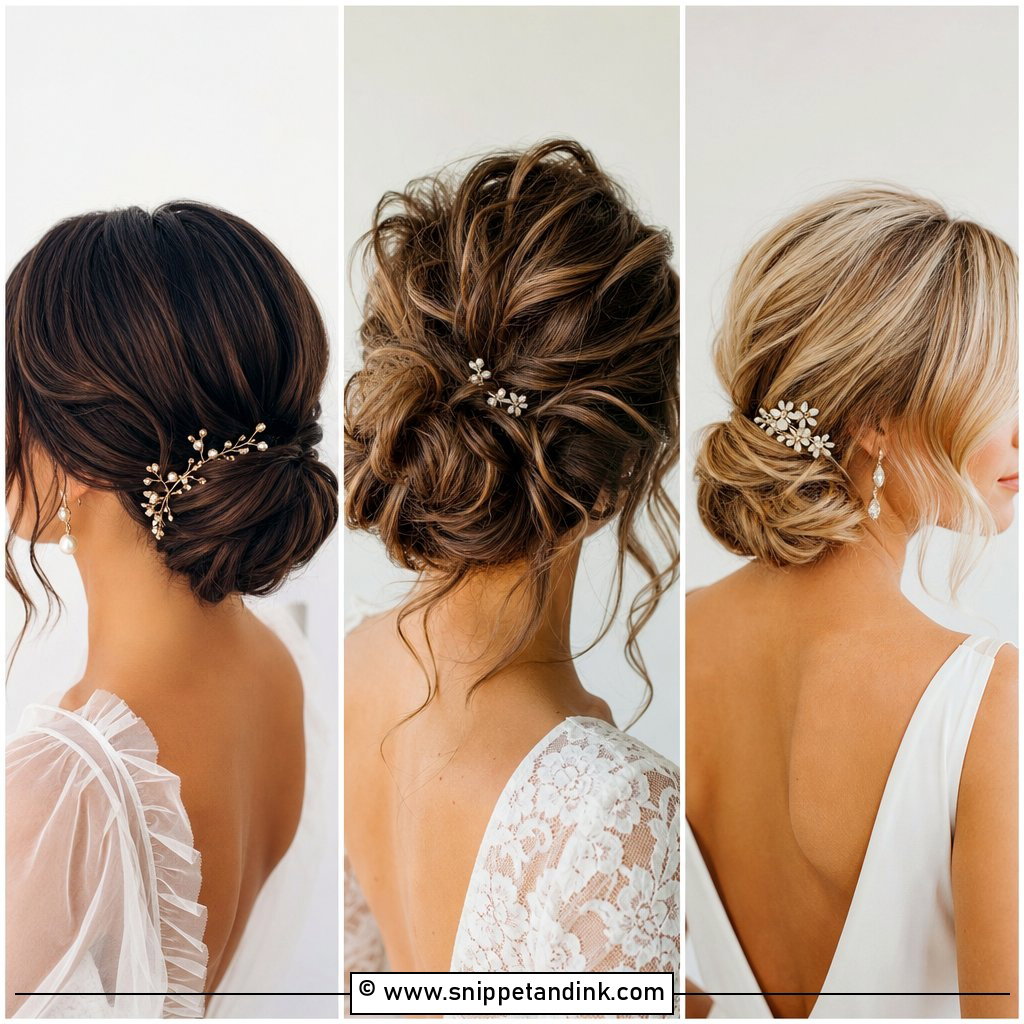
Smoothed back and gathered at the nape, a sleek low juda gives a clean outline that suits minimalist brides. It shows off the face and jewelry without distraction, and the gloss looks good next to statement earrings, chokers and reception gowns. It’s also light to wear through long events. The hairline is where it lives or dies: baby hairs and humidity frizz show instantly, so I smooth the edges with a small brush and a touch of gel. A single flower or jeweled pin is all the accent it needs.
13. Voluminous Puff Juda Hairstyle
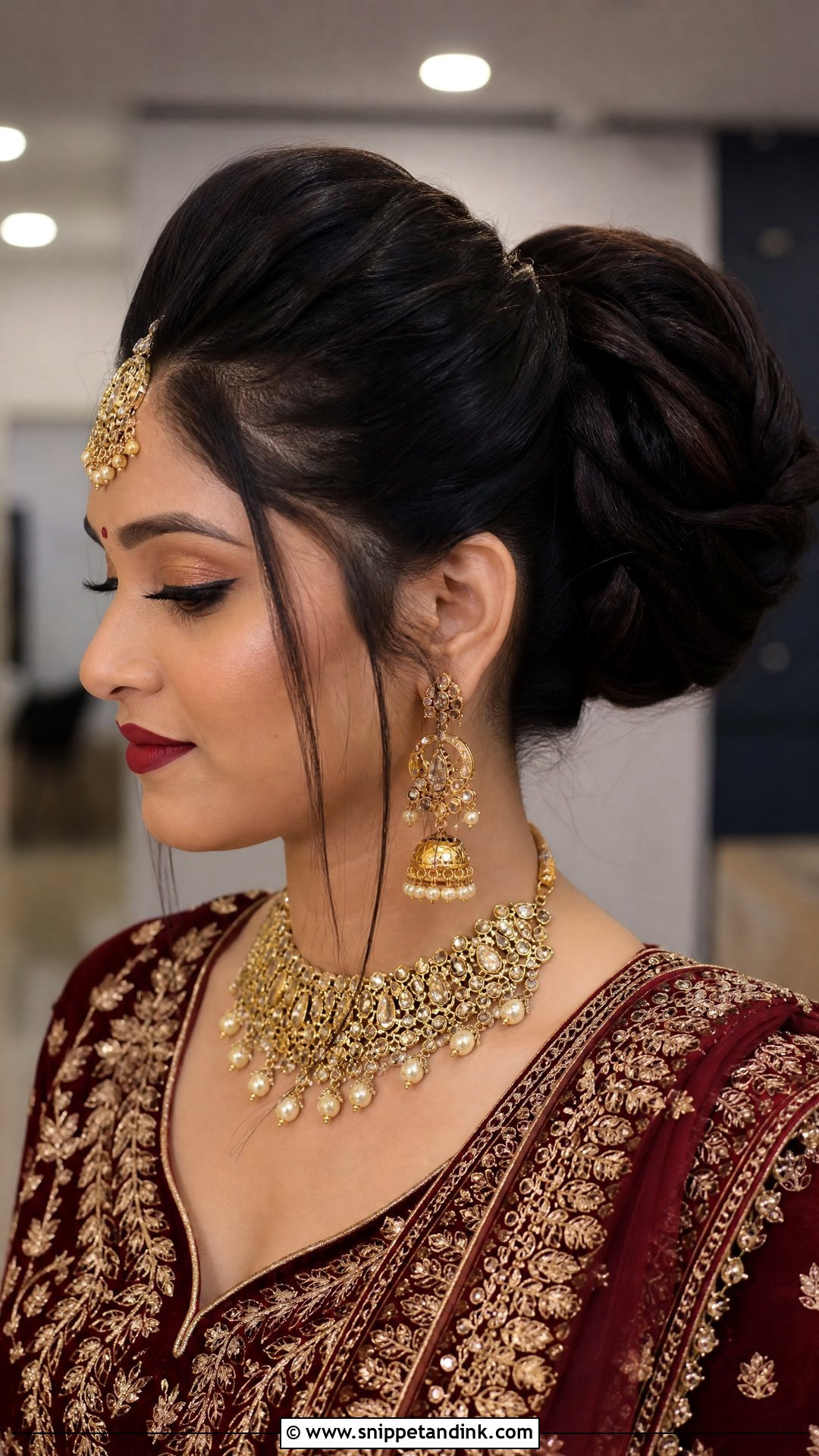
A teased puff at the crown leads into a large, structured bun, giving height and drama. It balances round and oval faces and makes thin hair look much thicker, and it pairs with maang tikkas and heavy traditional jewelry. I tease from underneath and smooth the top layer over it with a bristle brush so no backcombing shows. Under a heavy dupatta I keep the puff modest, because the fabric flattens a tall one within minutes. Save the full height for the reception. Flowers, pearls or a brooch add grandeur.
14. Baby’s Breath Juda for Brides
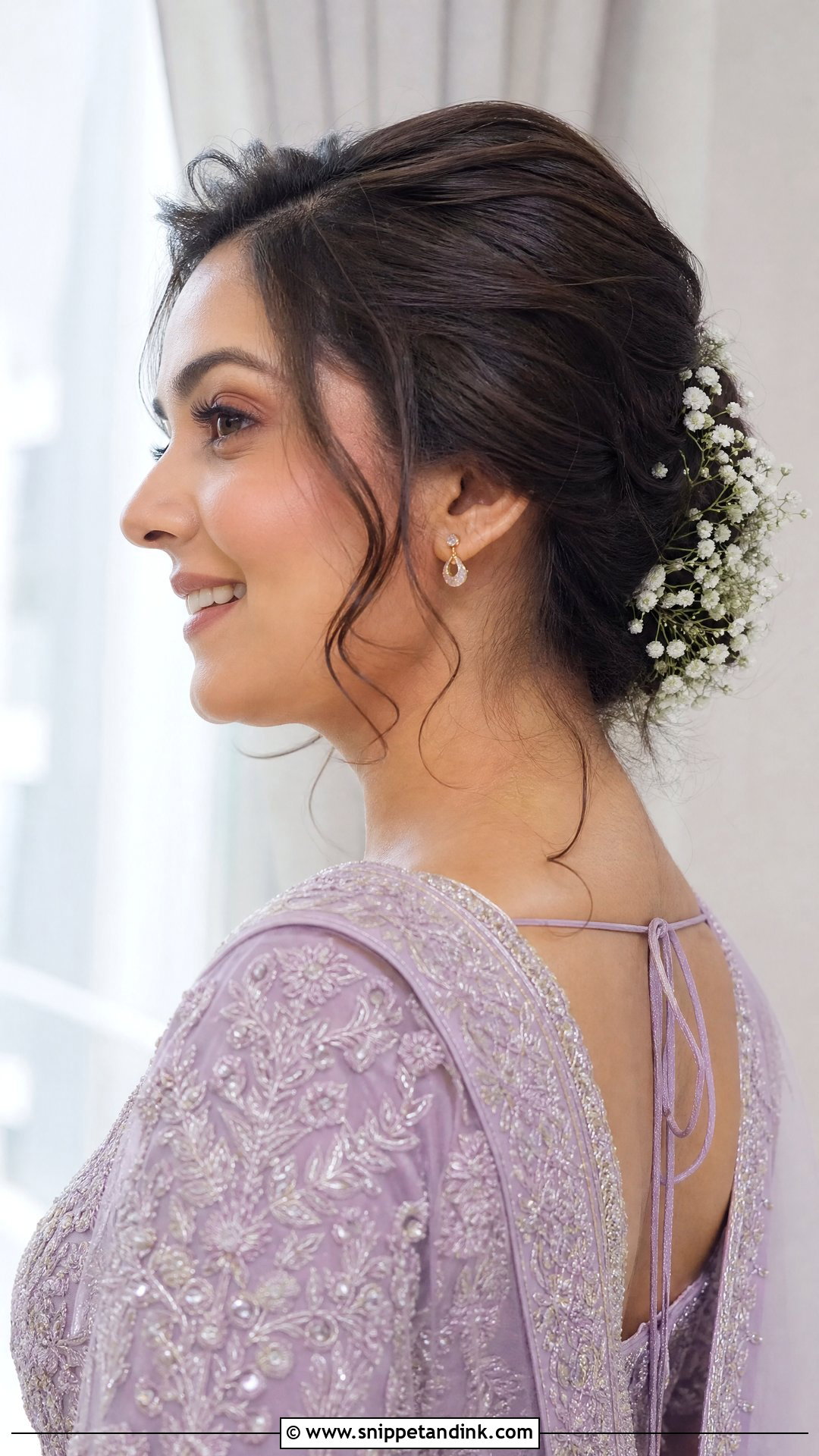
Baby’s breath scattered around the bun gives a soft, airy look that suits outdoor and daytime weddings. The tiny white blossoms sit well on sleek and messy buns, pastel lehengas and minimal jewelry. I often use dried or preserved baby’s breath here. It looks almost the same in photos, won’t wilt by evening and is lighter to pin. Small sprigs stay put far better than big bunches, which tend to slide. It’s a fresh take on the classic floral juda.
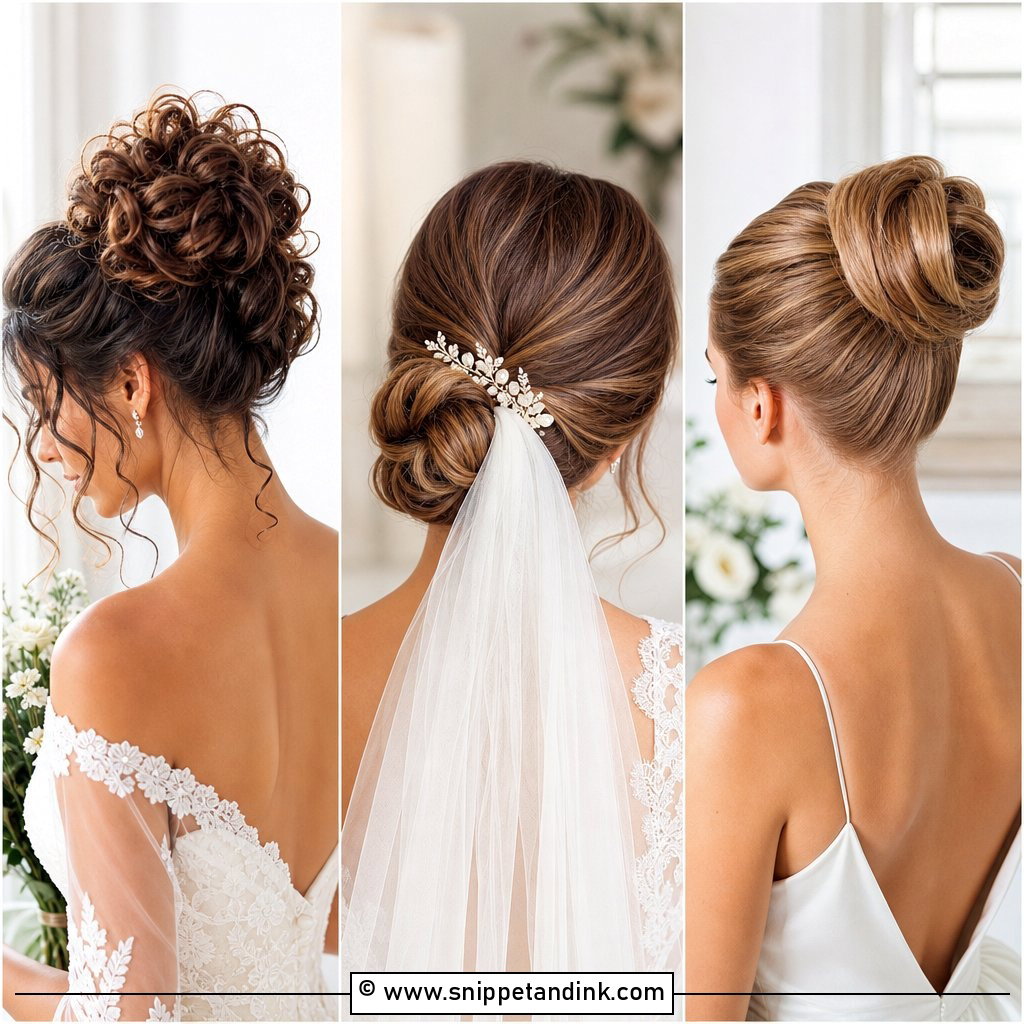
15. Juda with Maang Tikka Styling
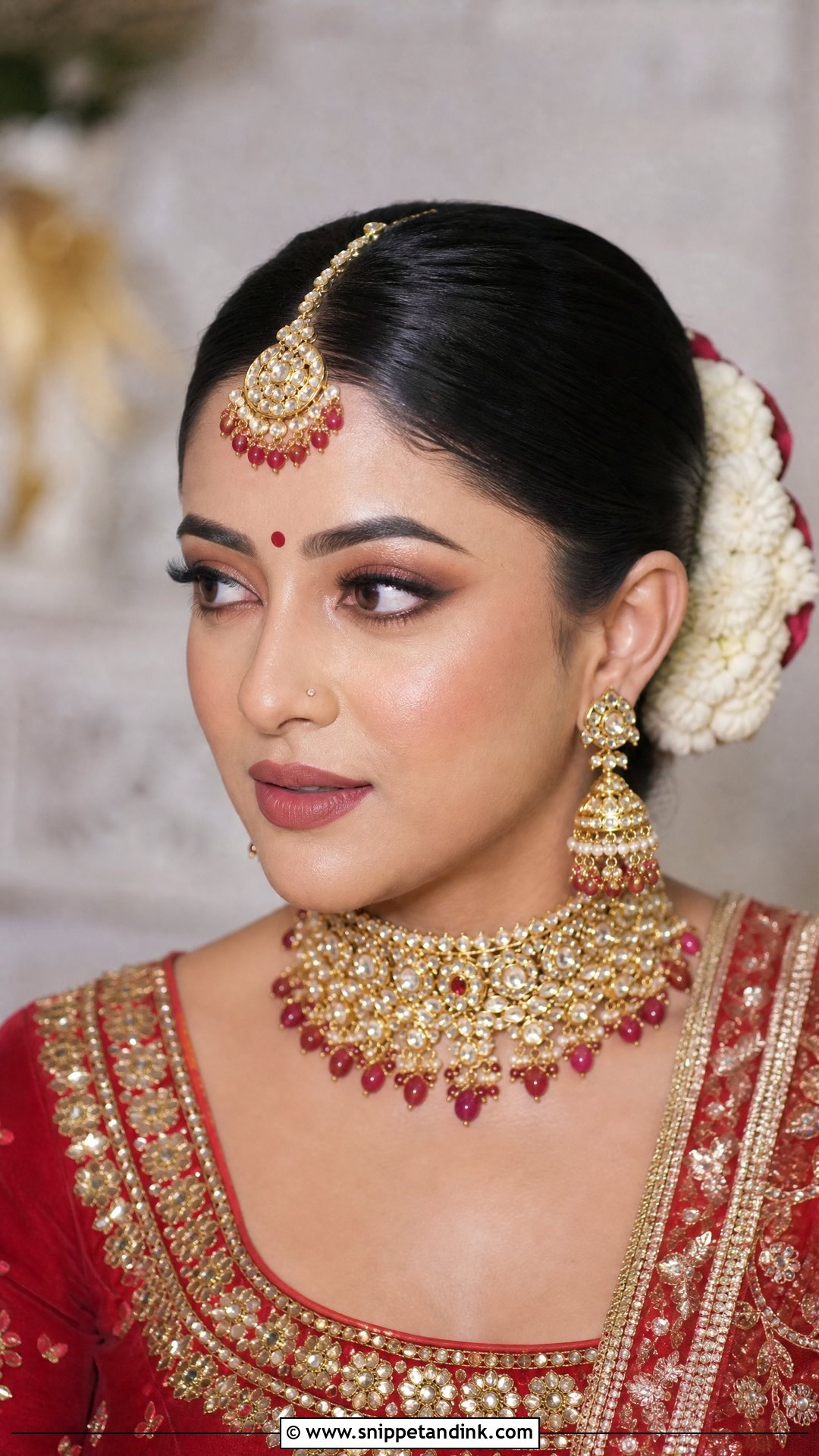
With hair pulled back neatly, the maang tikka sits clearly across the forehead along the center parting. The bun can be sleek or textured; either gives the tikka a clean background. The parting has to be exact, so I draw it with a tail comb lined up with the bridge of the nose before anything else. If you’re wearing a side passa or jhoomar as well, the hair on that side needs to be smooth and flat so it rests properly. Matching jhumkas and a choker complete the set, and for heritage glamour this juda and tikka pairing is hard to beat.
16. Curly Bun Juda Hairstyle
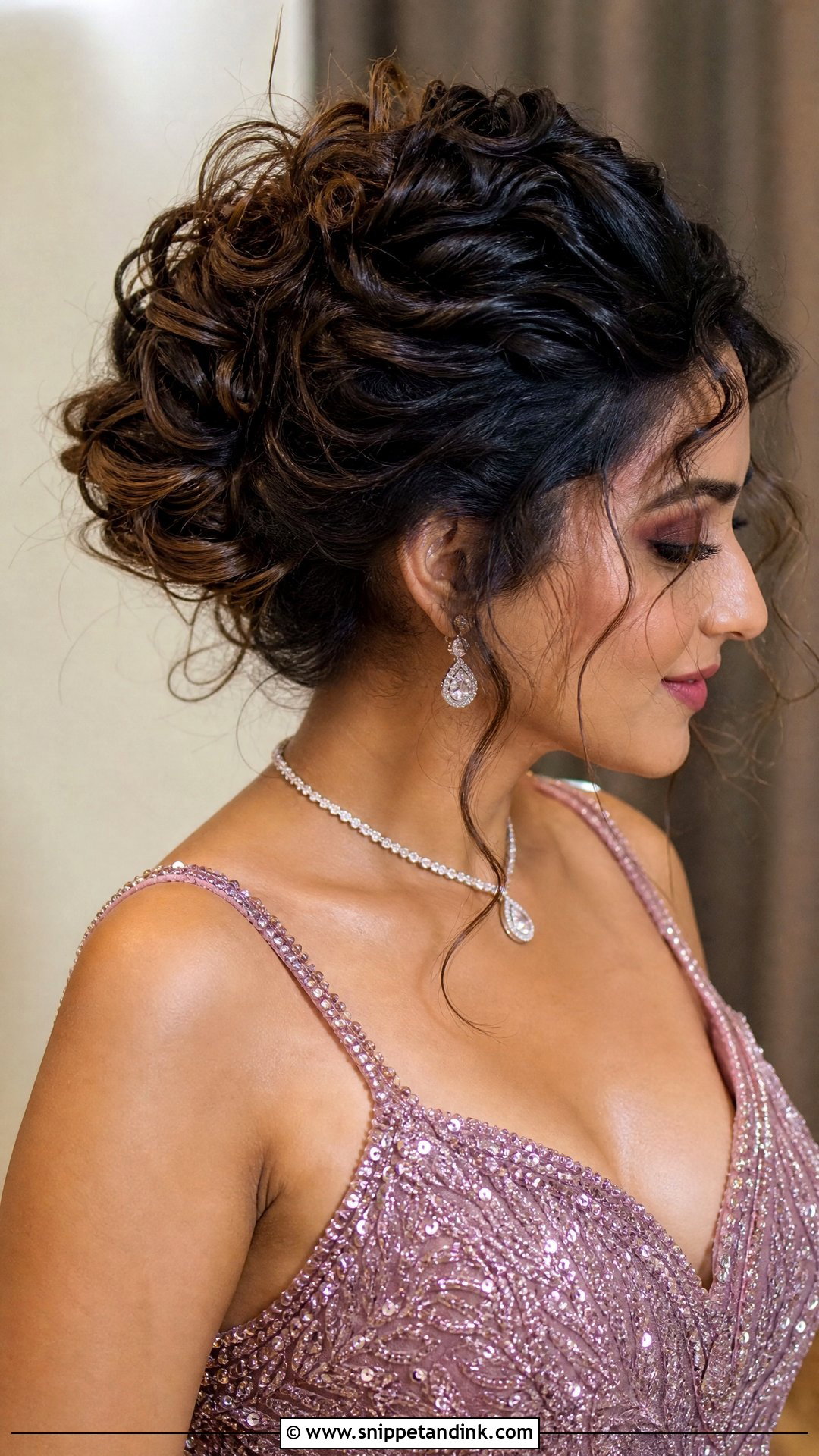
Curls gathered into a loose, dimensional bun keep their bounce and movement, so this suits brides with naturally wavy or curly hair who’d rather show texture than hide it. I define the curls while damp, let them dry fully, then pin them in small clusters rather than single strands, which keeps the pattern intact. A few curls left around the face soften it, and flowers or pearls can be tucked in. Sangeet nights and receptions suit its livelier mood.
17. South Indian Temple Juda
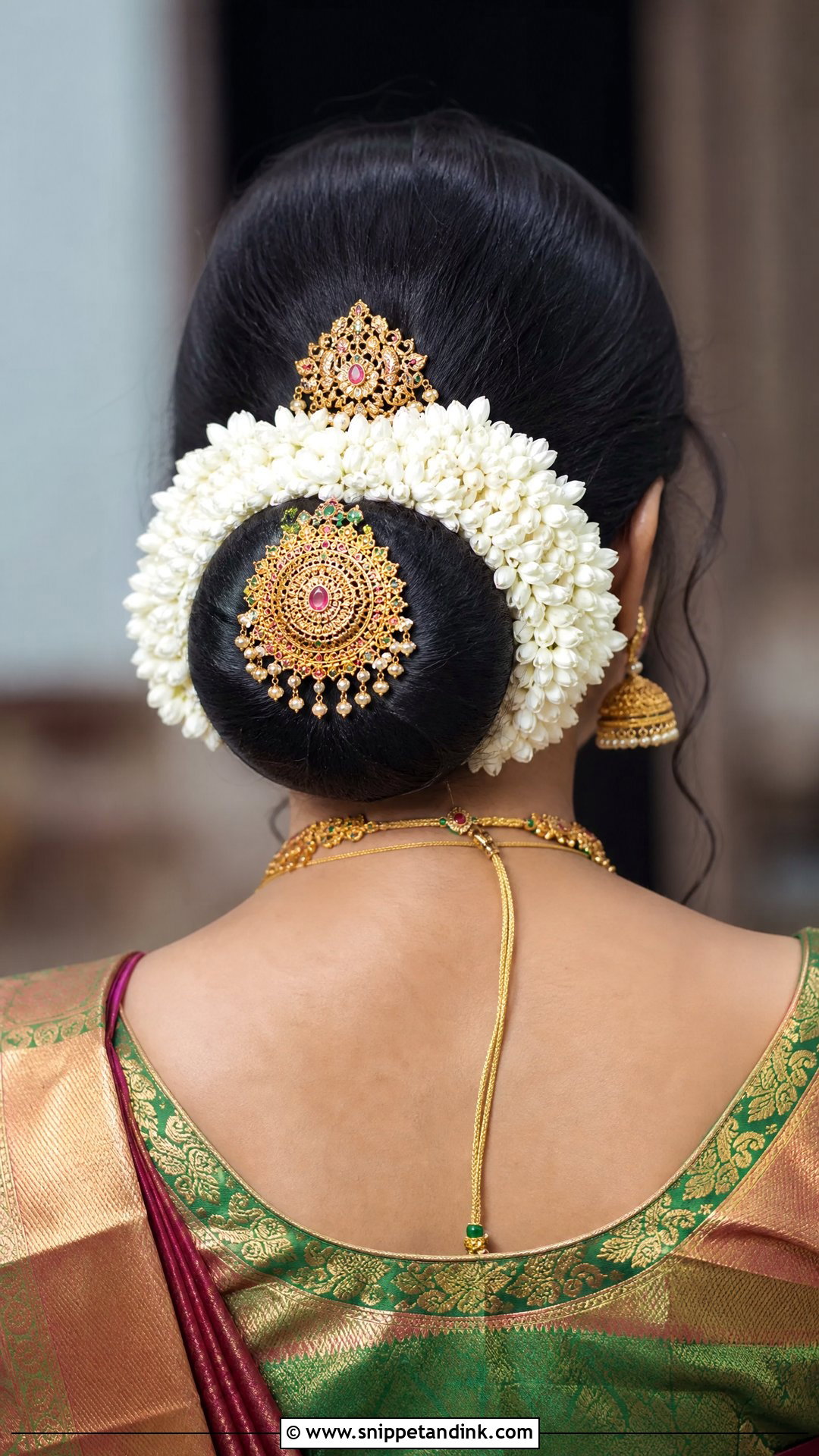
The South Indian temple juda is wrapped generously with jasmine or mogra strands and decorated with traditional hair ornaments like jadai billai, often with a long flowered braid flowing down the back. It belongs with silk Kanjeevaram sarees and gold temple jewelry. Those ornaments are heavy gold, so they need a firm, tightly pinned base, and many brides add an artificial braid extension to carry the full length. I attach each ornament to the base, never to loose hair. For a bride who wants a deeply traditional South Indian look, this is the one.
18. Fishtail Braided Juda
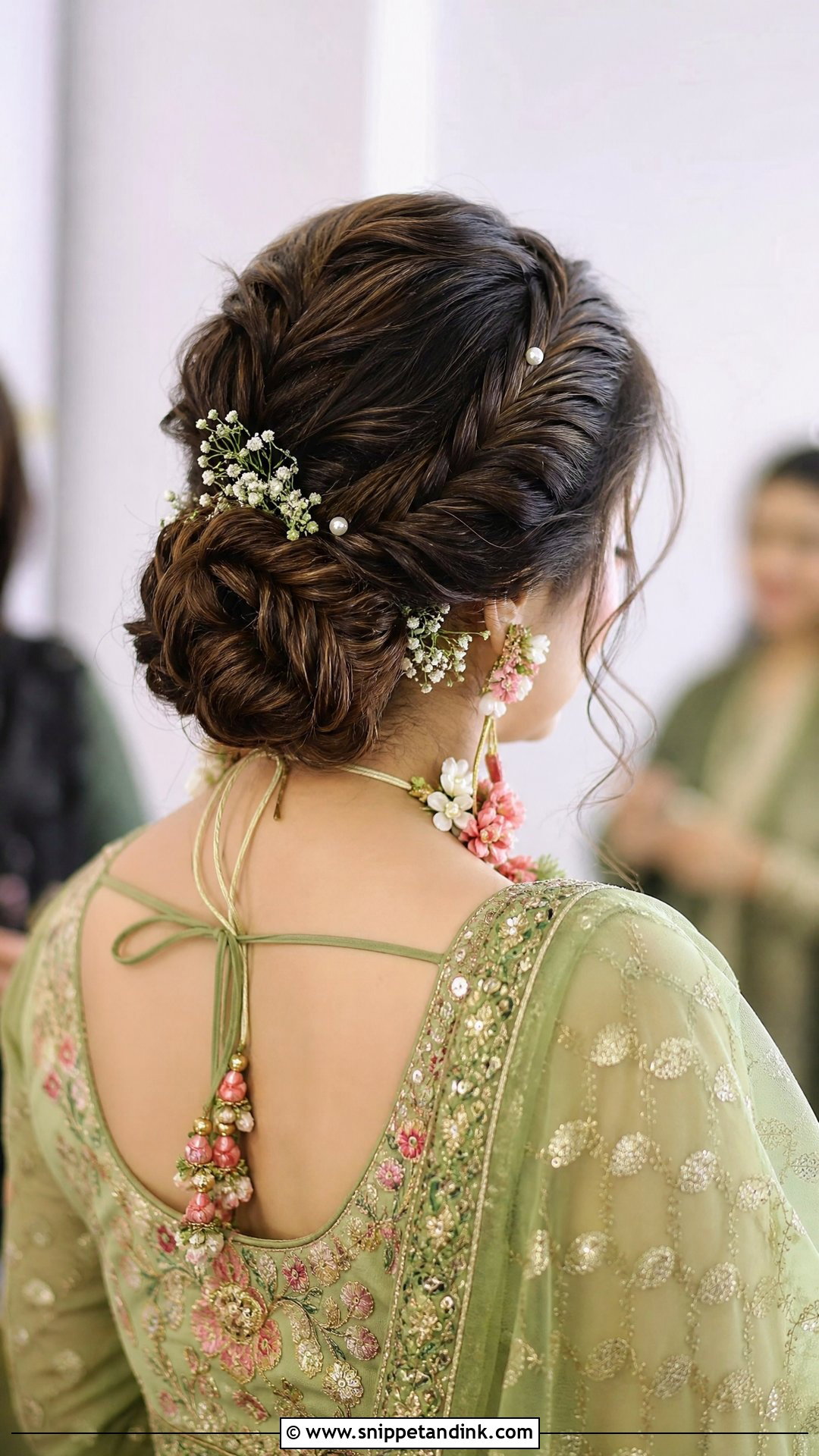
A fishtail braid wrapping around or leading into the bun gives fine woven texture, especially from behind. It looks complex but stays secure, and suits brides who like an artistic touch, with tiny flowers or pearls woven in for sparkle. Layered hair is its weak point: short layers poke out of a fishtail along its length, so I smooth a little wax over each section as I braid. It suits mehndi, haldi and sangeet.
19. Side Braid Juda with Flowers
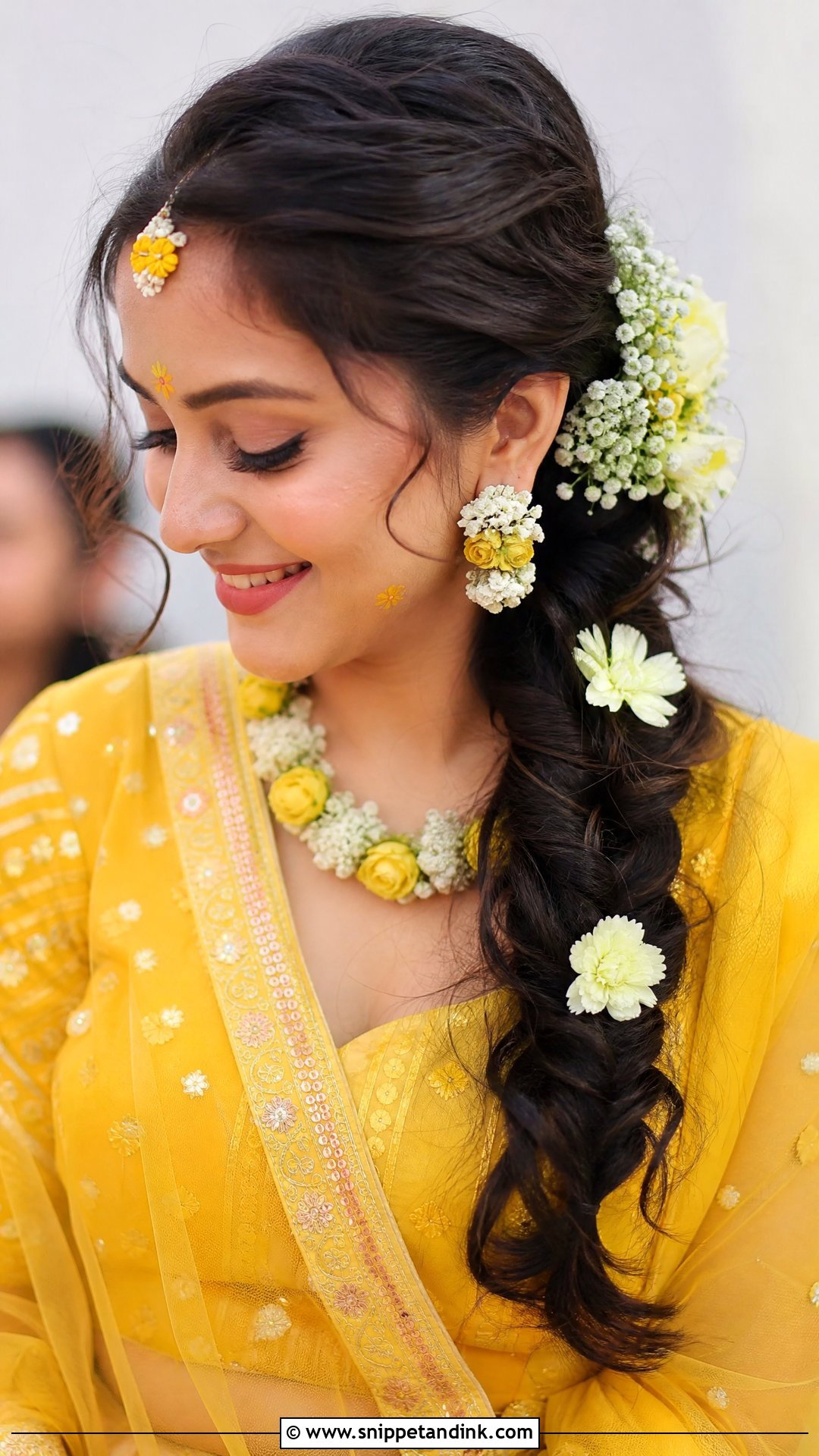
A braid draped over one shoulder, gathering into a bun decorated with fresh blooms, gives a soft outline for outdoor and daytime ceremonies. It shows off a long neckline and pairs well with one-shoulder blouses, and the flowers add scent and gentle color against the braid. Watch the embroidery, though. A braid resting on heavy zari or sequin work rubs and frizzes, and loose hairs catch in the threads, so with a heavily embellished blouse I’d pin the braid slightly behind the shoulder. It suits mehndi and haldi especially.
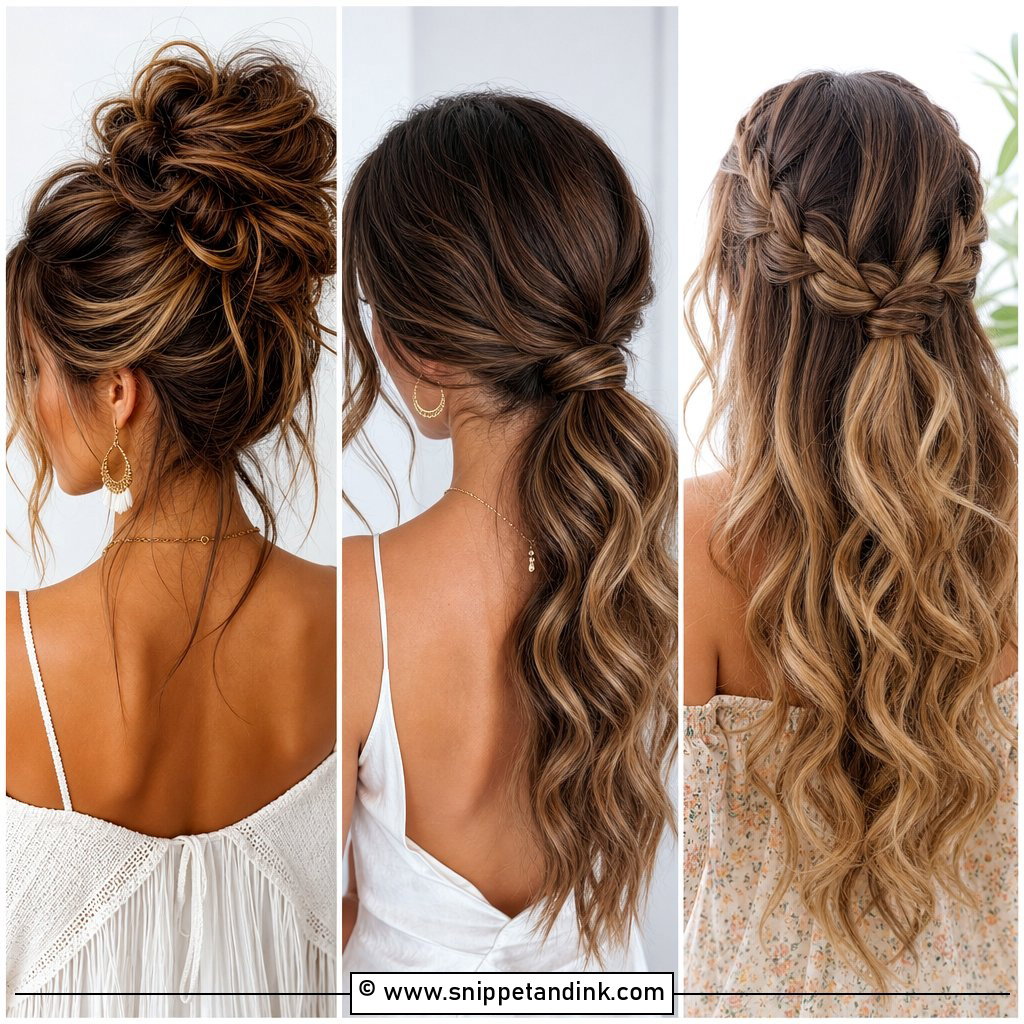
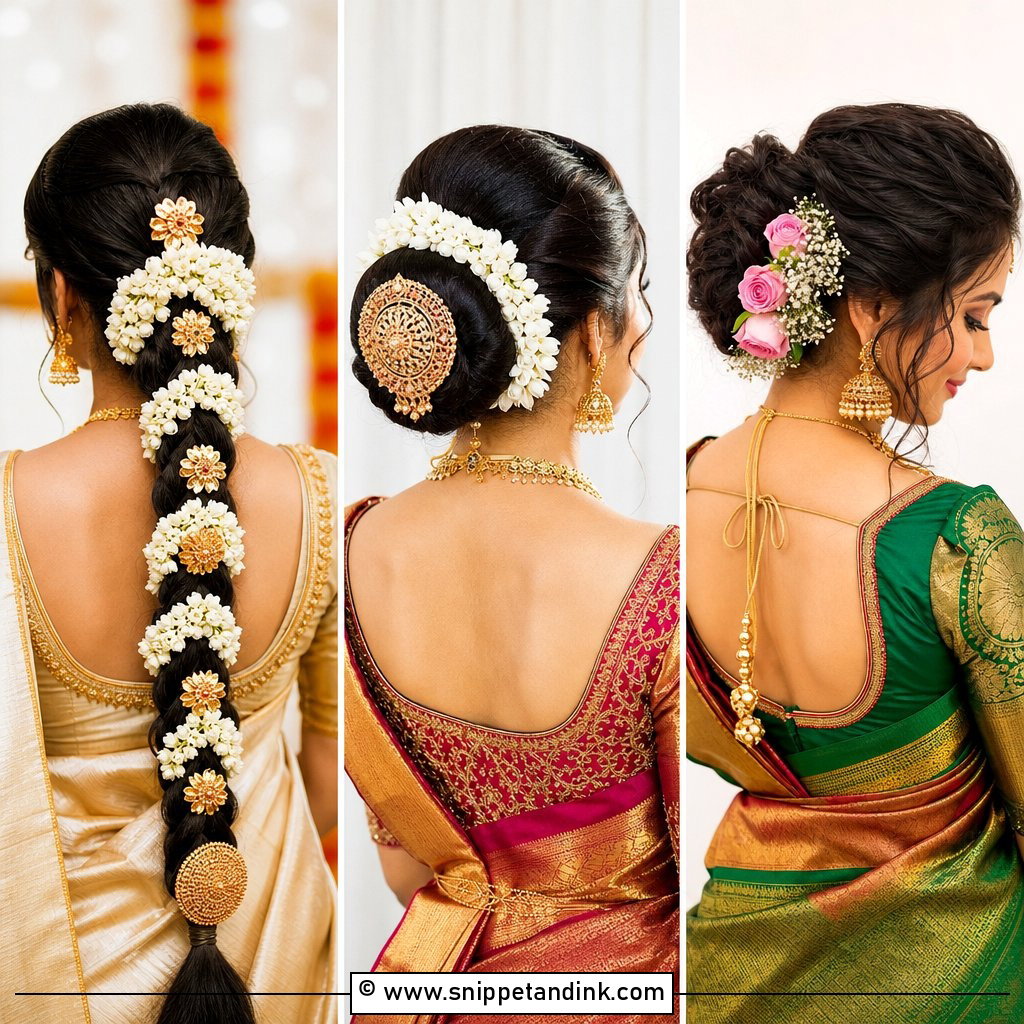
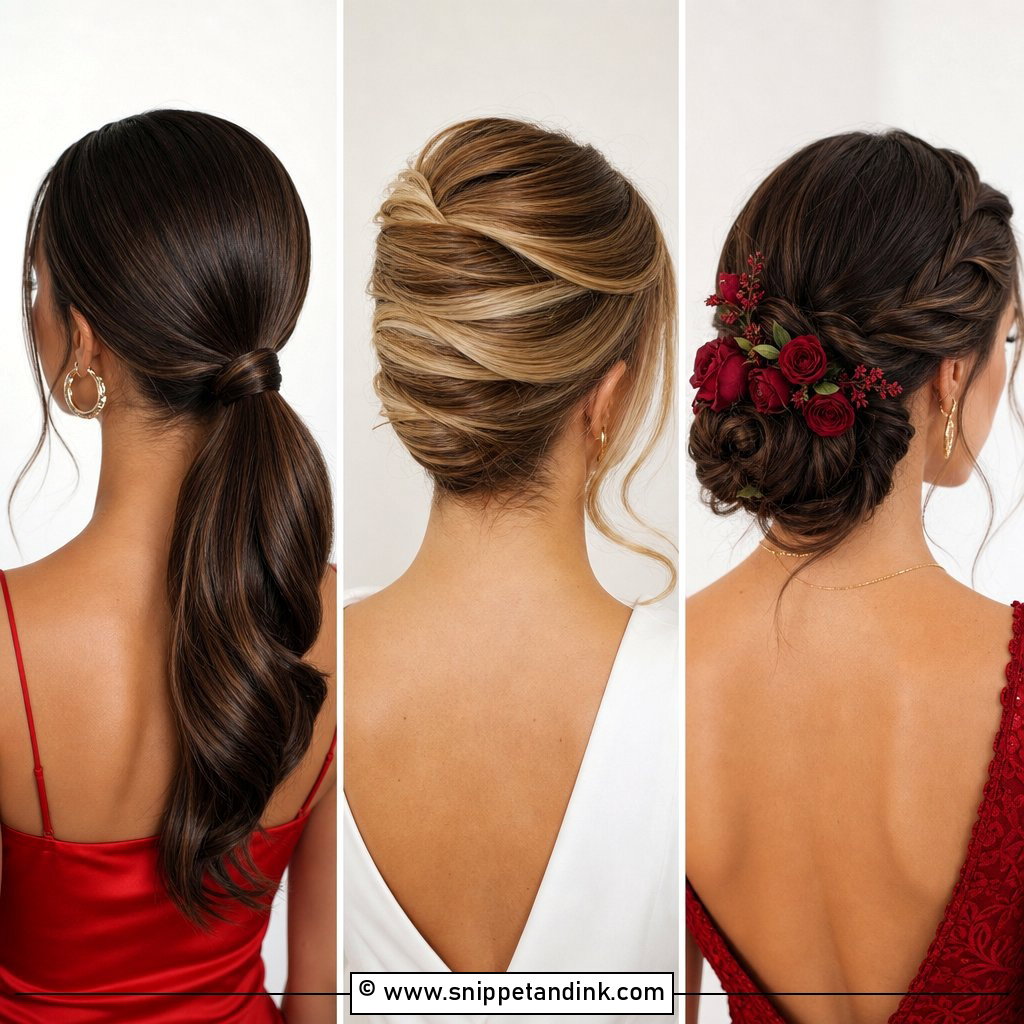
20. Modern Glam Reception Juda
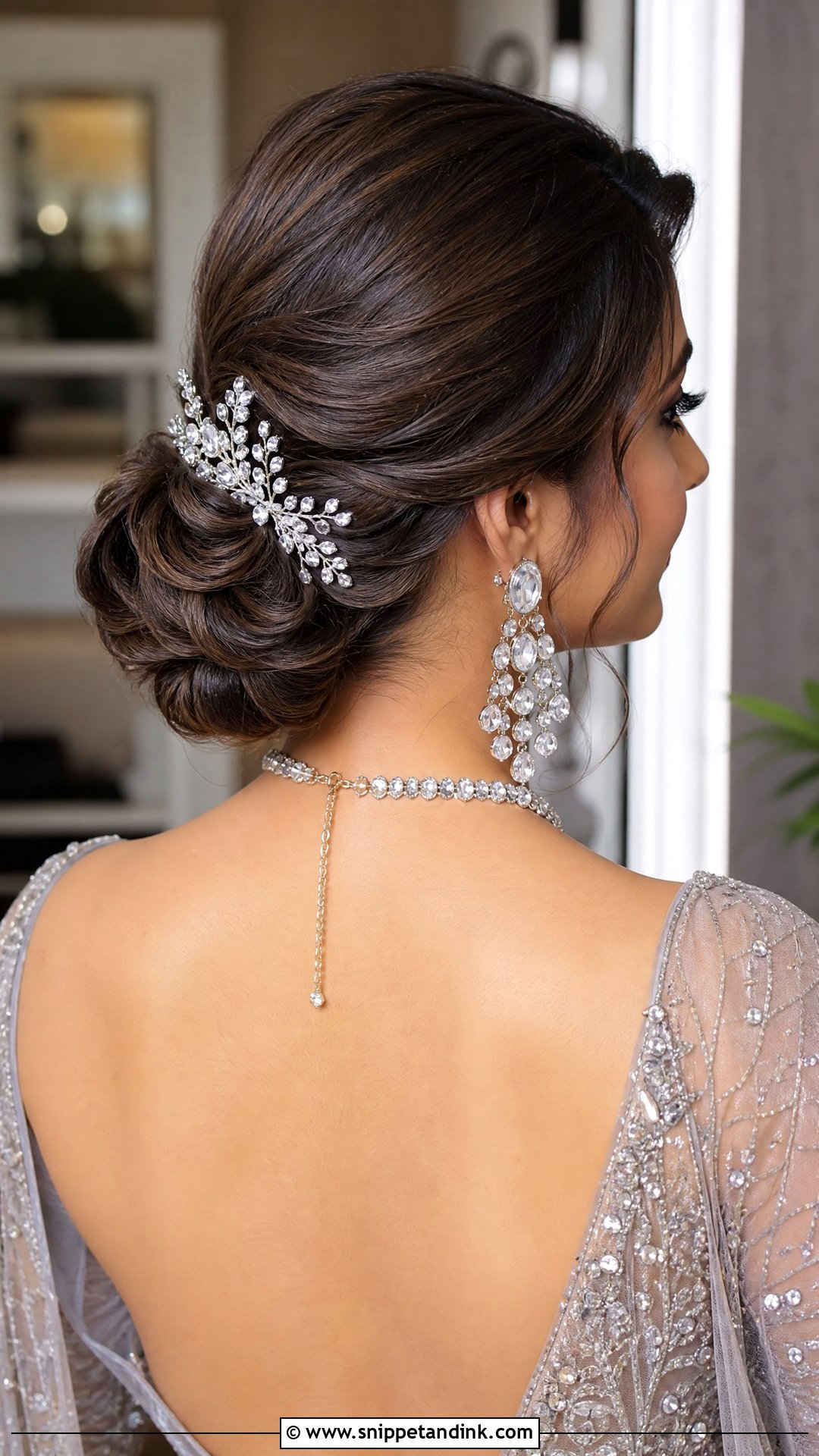
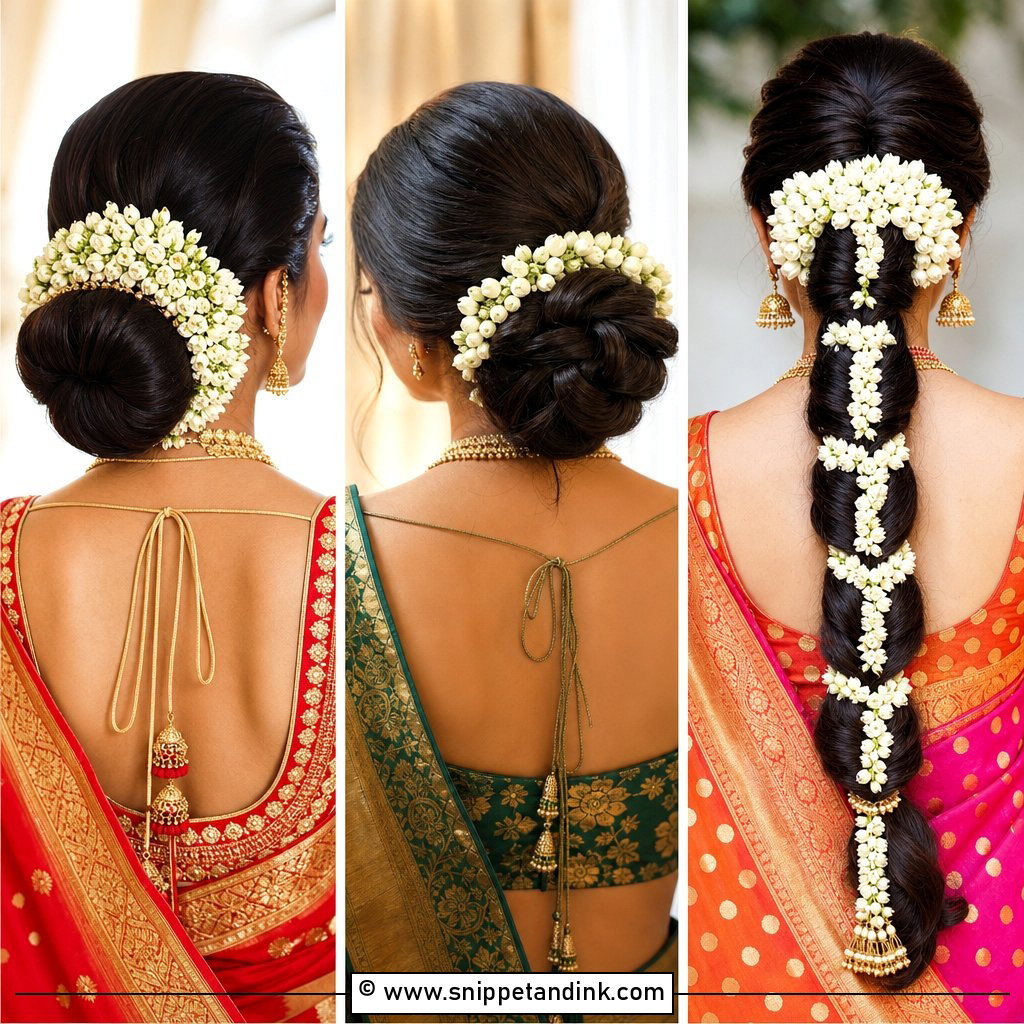
For the reception, a sleek, sculpted bun suits contemporary gowns and statement jewelry. Placed low or to the side, with smooth finishes or soft waves and no traditional flowers, it reads modern and still bridal. A sparkling pin, jeweled comb or slim hairband is enough. If you’re switching from a ceremony juda, it’s faster to take the flowers and pins out, brush through and rebuild than to adapt the old shape, and I plan that changeover time into the evening. Bold makeup sits well with it at cocktail evenings and receptions.
Clip-On Buns, Jadai and Nets When Your Own Hair Won’t Do It
Plenty of brides don’t have the length or density for the full juda they’ve pictured, and there’s no shame in borrowing. Bridal hair in this tradition has long relied on added hair and ornaments.
- A ready-made clip-on juda sits over a small bun of your own hair. Match it in daylight and have it blended at your trial, since synthetic shine looks different from real hair under flash.
- Artificial braid extensions are common for South Indian brides who want a long braid down the back, attached to a firm base braid near the nape.
- A pearl or gold net over a padded bun hides thin patches completely and holds its shape with almost no upkeep.
If your head starts aching
Gold hair ornaments, a heavy dupatta and dozens of pins add up. If you feel pressure at your trial, say so, because it only gets worse over a long day. A stylist can spread the weight across more anchor points, or you can swap a solid gold piece for a lighter one during the longest ritual and bring the heavy one back for portraits.
A Juda for the Pheras, Another for the Party
The right juda comes from matching the style to the outfit, the face and the function. A pearl net bun gives regal structure, while a soft floral knot at the nape stays gentle and romantic. Sleek or flower-filled, choose the one that makes you feel most like yourself. Think about comfort, how the jewelry will sit and how long the celebration runs before you settle on a style, and try it at your trial with your real tikka and dupatta. Most brides end up with more than one, and that’s how it should be.
You'll Like These Ideas:


Leave a Reply