
The tea ceremony is the most intimate stretch of a Chinese wedding day. You’re close to your elders, serving cups with both hands, kneeling, bowing, having jewellery fastened on you and posing for one family group after another. Hair for that hour has to stay put and keep your face open. A qipao, cheongsam, kua or a simple red dress looks best when the collar, embroidery and earrings aren’t buried, which is why buns, chignons, half-up shapes, smooth waves and a well-placed hairpin keep coming up below. I’ve picked every one of these with that kneeling, bowing hour in mind.
Leaving Room for the Gold Your Elders Put On You
In many families, tea ceremony gifts come as jewellery, and it goes on you right there: gold bangles slid onto your wrists, a necklace clasped at the back of your neck, sometimes earrings or a pendant from your new mother-in-law. Brides often end the hour wearing far more gold than they started with. I plan hair around that moment, not just the opening photo.
Loose waves at the nape are the classic snag. An aunt fumbling with a tiny clasp through a curtain of curls is sweet for about ten seconds, then it’s a tangle. If you love hair down, choose a half-up or side-swept version that leaves the back of the neck reachable, or ask a bridesmaid to lift the hair aside before each necklace goes on.
Treat your own accessories as a supporting cast. If you know a heavy dragon-and-phoenix bangle set or a big gold pendant is coming, keep your hairpins smaller and maybe in pearl or jade, so the gifts are what people notice in the photos. Gold on gold can look crowded once everything is on.
Earrings are the other thing to check. If a relative will be putting a pair on you, skip your own or wear simple studs, and avoid face-framing tendrils that need holding back while they’re fastened.
1. Chinese Tea Ceremony Low Chignon
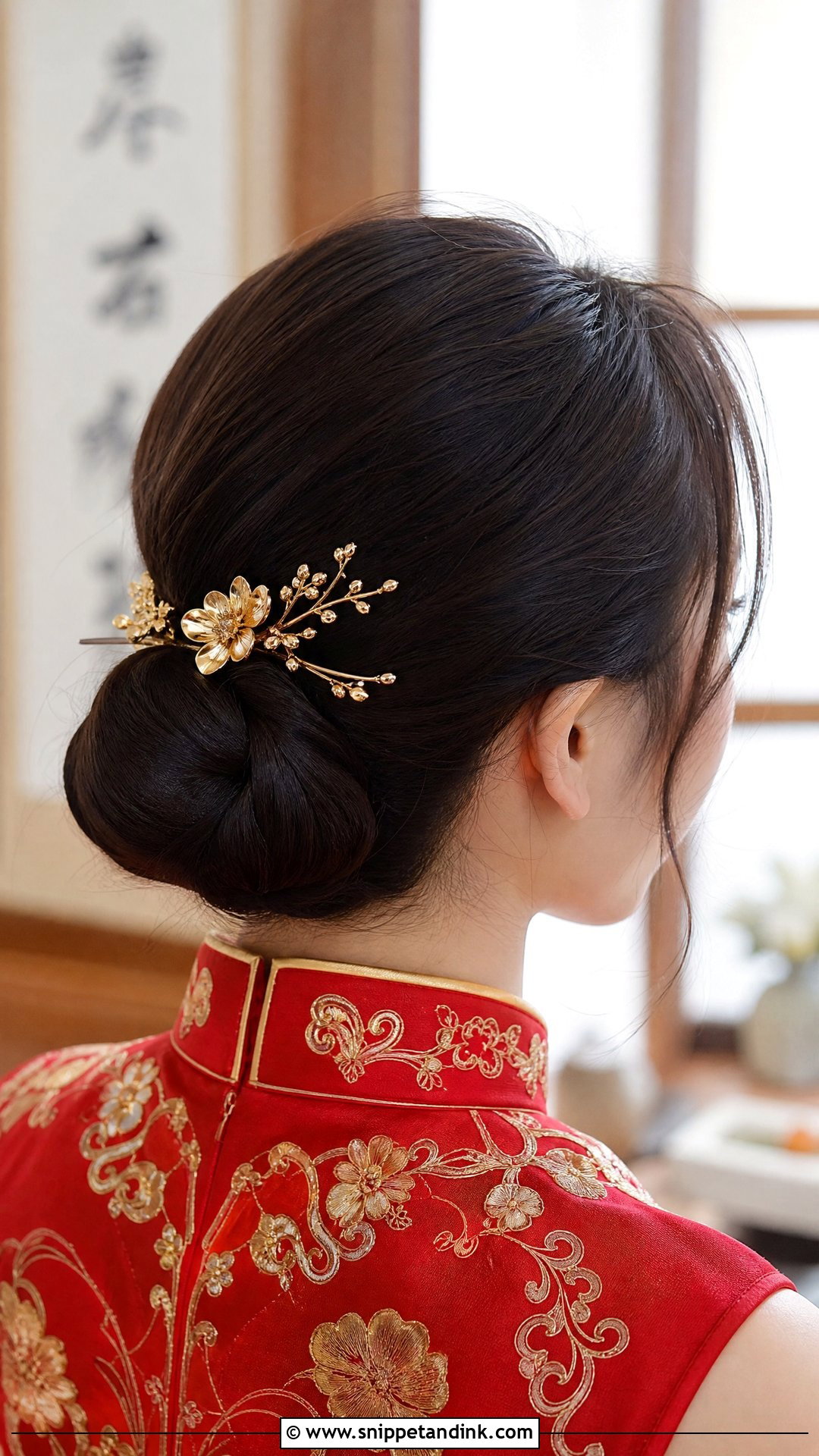
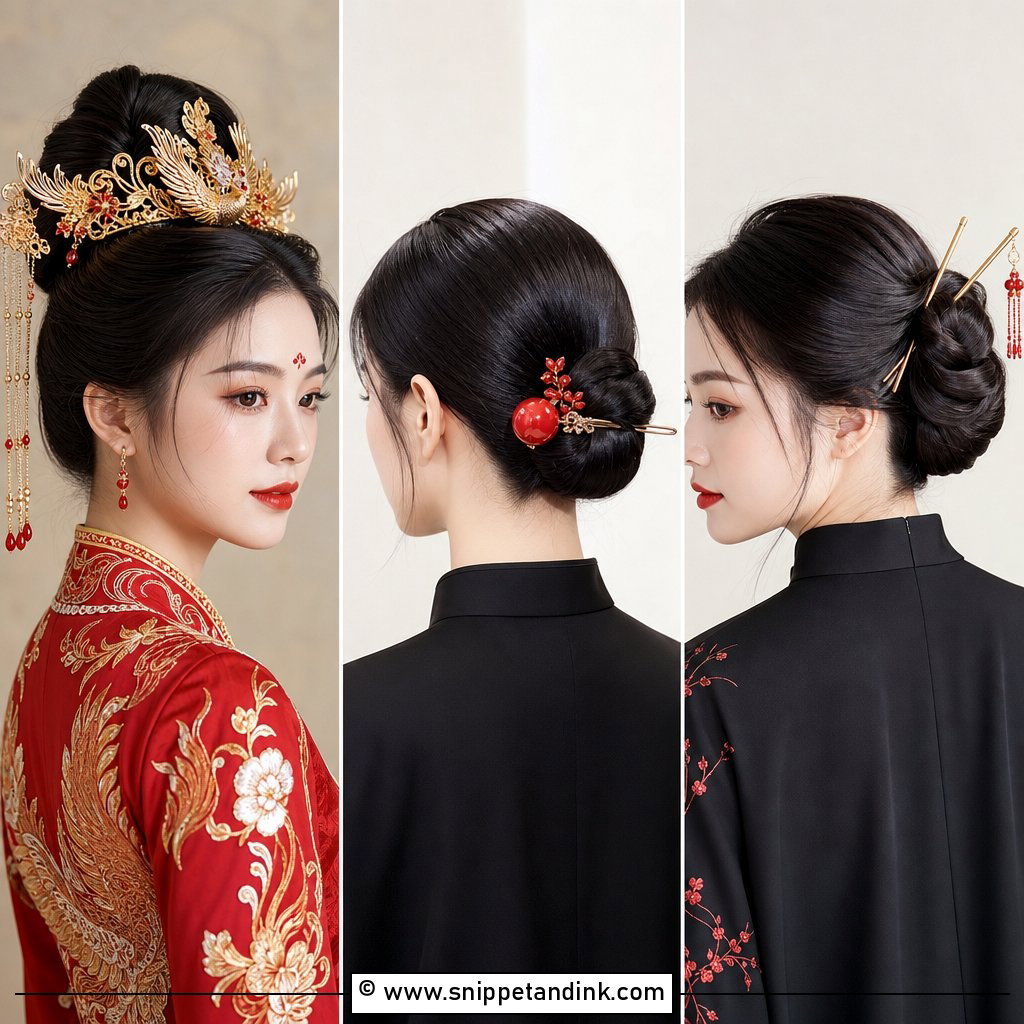
Mandarin collars and low chignons were made for each other. The bun sits just above the collar line, so the embroidery stays visible and nothing rubs against it when you turn. It also survives bowing, serving and hugging without shifting. I smooth the crown with a little soft volume and keep the bun neat but not tight. One thing I check is the collar height: if the collar is very tall, I lift the chignon a finger’s width higher so the hair doesn’t crush against the silk when you look down at the cup. A gold hairpin, jade comb or small flower set slightly to one side finishes it.
2. Chinese Tea Ceremony Sleek Bun
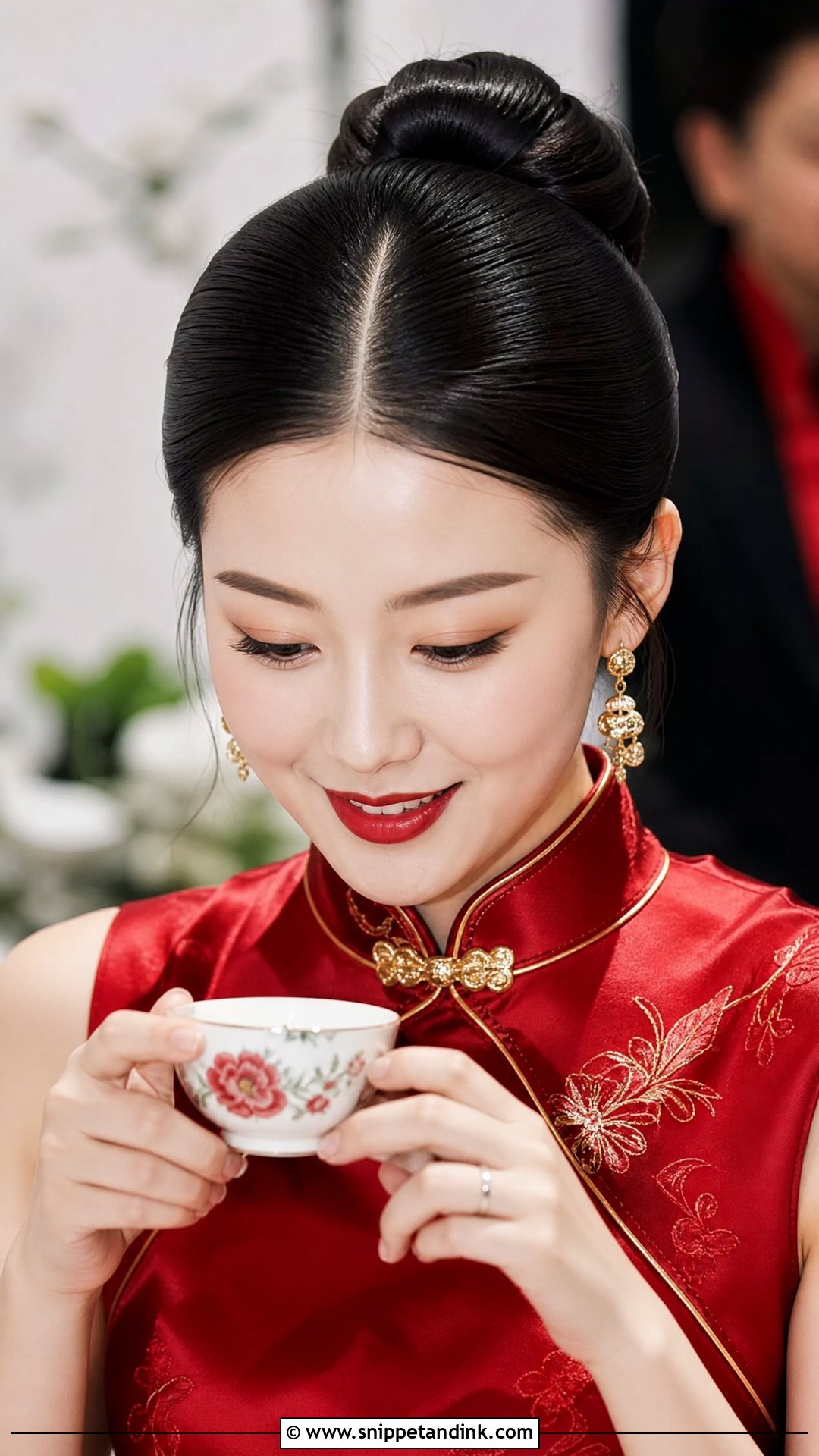
Sleek and glossy, this bun keeps every bit of attention on your face and on the gold your family gives you. It suits a red qipao, a structured kua or a plain satin dress. I set it low or mid-height depending on face shape and headpiece. The hold needs to be strong yet still flexible, glossy rather than crunchy. A centre part reads classic; a side part softer. Over a long morning, the hairline is where a sleek style fails first, as sweat lifts the baby hairs, so I finish the edges with a tiny amount of wax on a toothbrush rather than more spray. One statement pin is plenty.
3. Chinese Tea Ceremony Half Up Hair
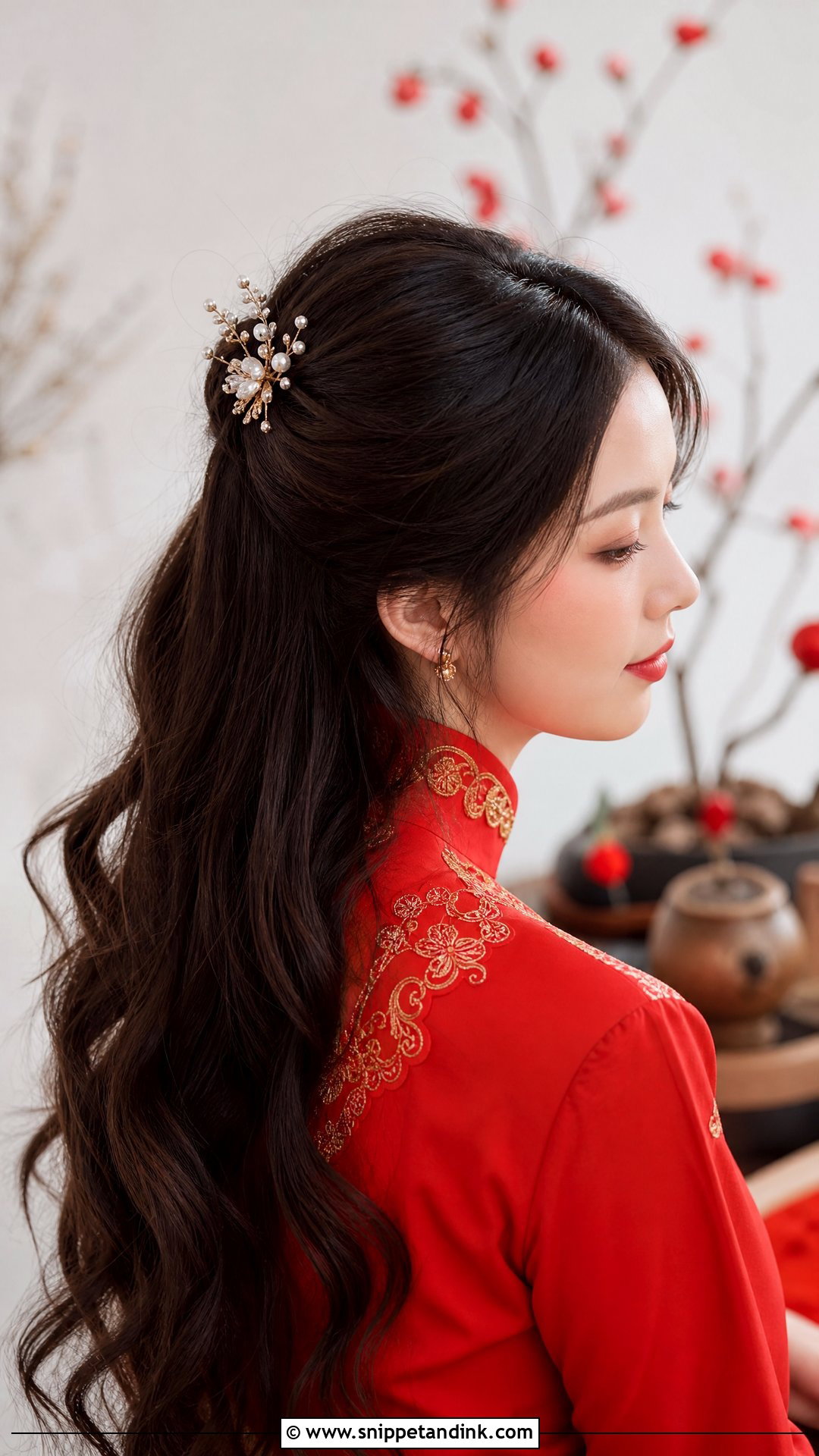
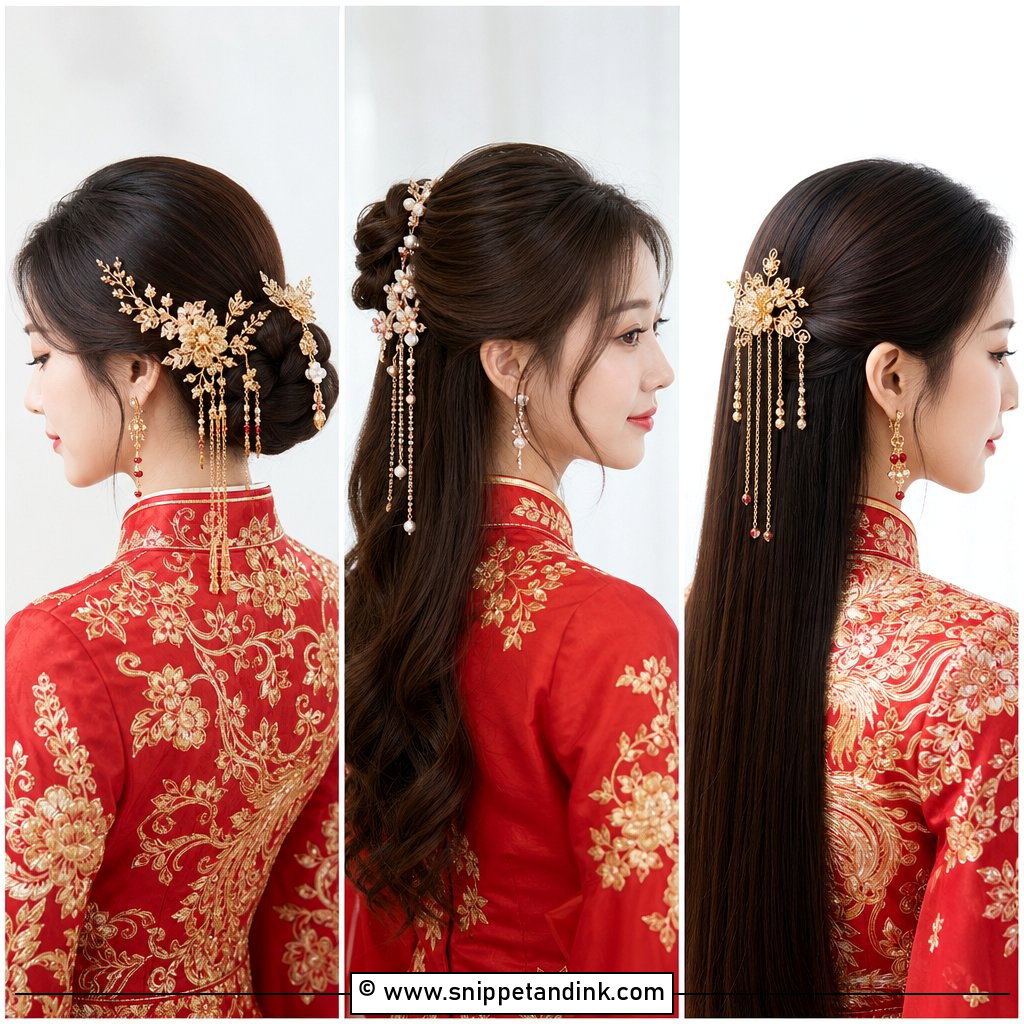
Half up keeps loose hair at the back while the top section stays pinned well away from the teacups. Below, I’ll style smooth waves, soft curls or polished bends. It suits modern qipaos, tea-length dresses and softer makeup, and it carries over easily if you change into a Western gown later. A small gold comb, pearl barrette or floral clip sits where the hair is secured. The one adjustment I make for a tea ceremony: I keep the loose length behind the shoulders, because lengths that fall forward will swing into the tray every time you lean.
4. Chinese Tea Ceremony Side Swept Waves
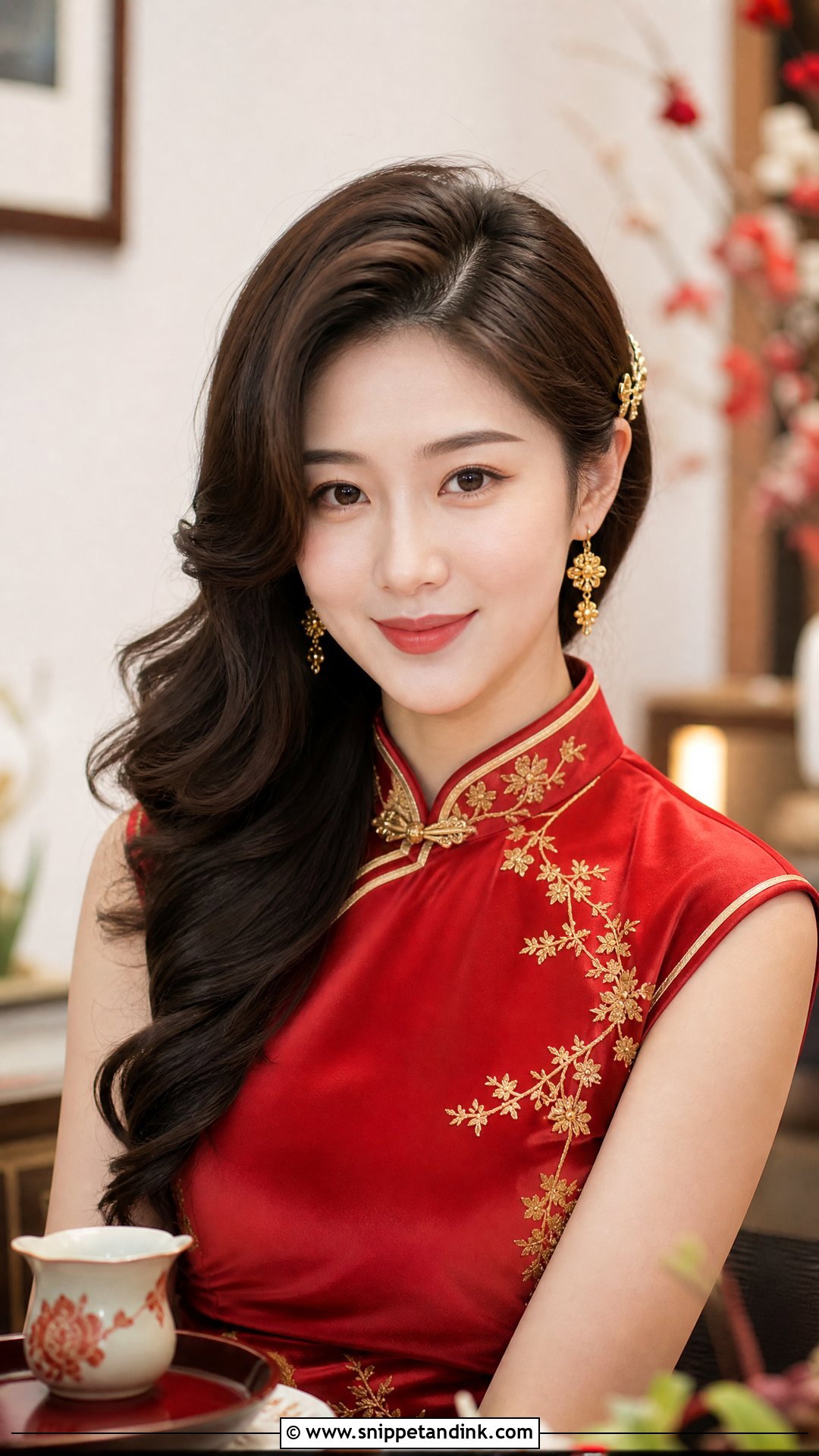
Sweeping waves over one shoulder leaves the other side open for earrings, a gold necklace and the line of the collar. It’s movement without a full updo, still formal enough for elders as long as the waves are smooth and defined, never beachy. A deep side part adds drama; a few face-framing pieces keep it gentle. The hidden work is behind the ear on the tucked side, where I lock the sweep with crossed bobby pins before any decorative comb goes over it. Pick the shoulder carefully. If relatives will be fastening a necklace, the swept side can get in their way.
5. Chinese Tea Ceremony Braided Low Bun
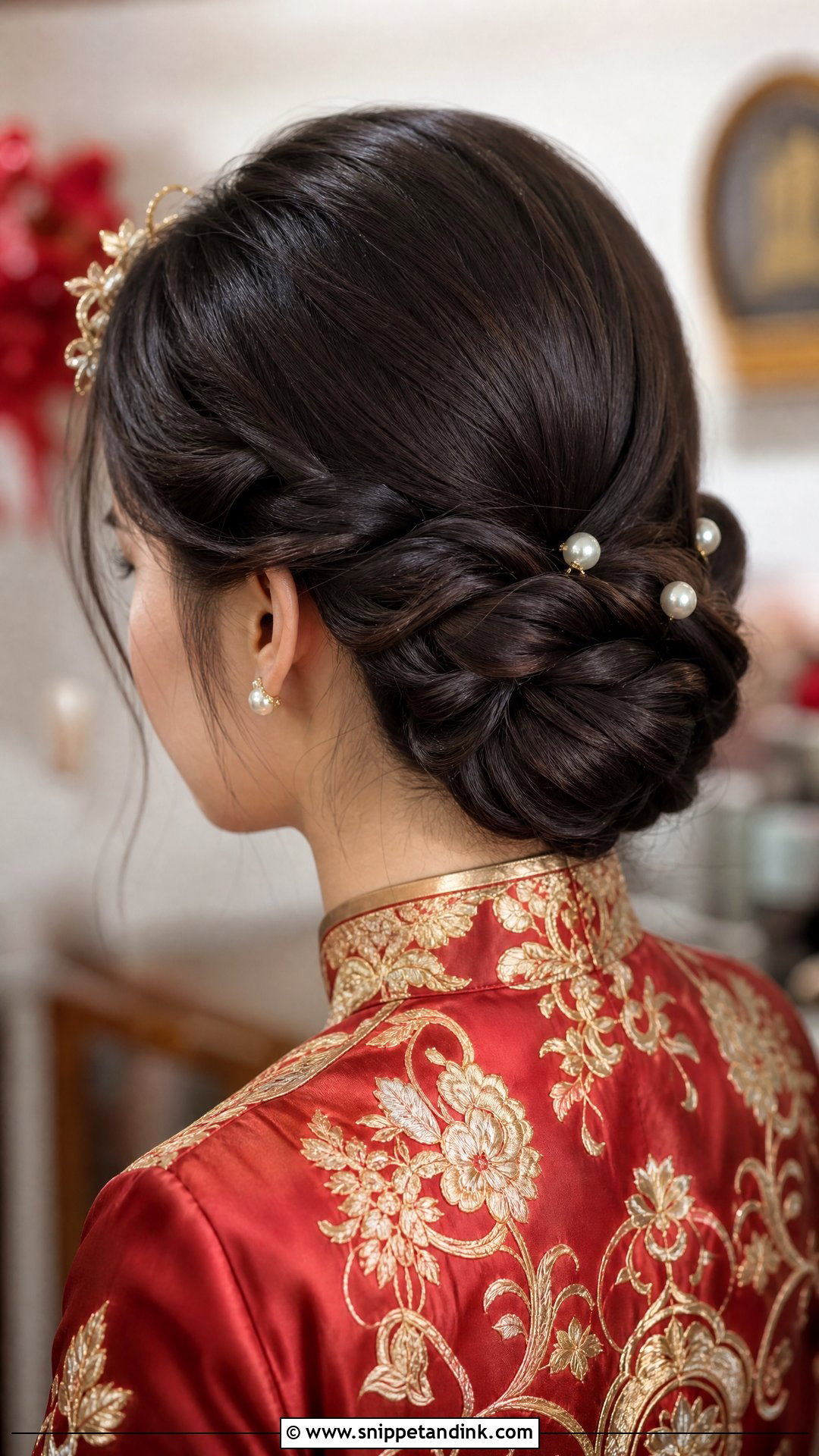
A braided low bun gives you more detail than a chignon with the same reliability. The braid can circle the bun, cross the crown or blend into the back. Embroidered collars, red silk and traditional gold all suit it. I keep the braid smooth and gently widened so it reads in photos without looking loose. Because the bun is low, it sits behind you when you kneel, which means it shows clearly in the shots taken from the side. That’s the spot for a phoenix-inspired pin, a pearl comb or a jade accent.
6. Chinese Tea Ceremony High Bun
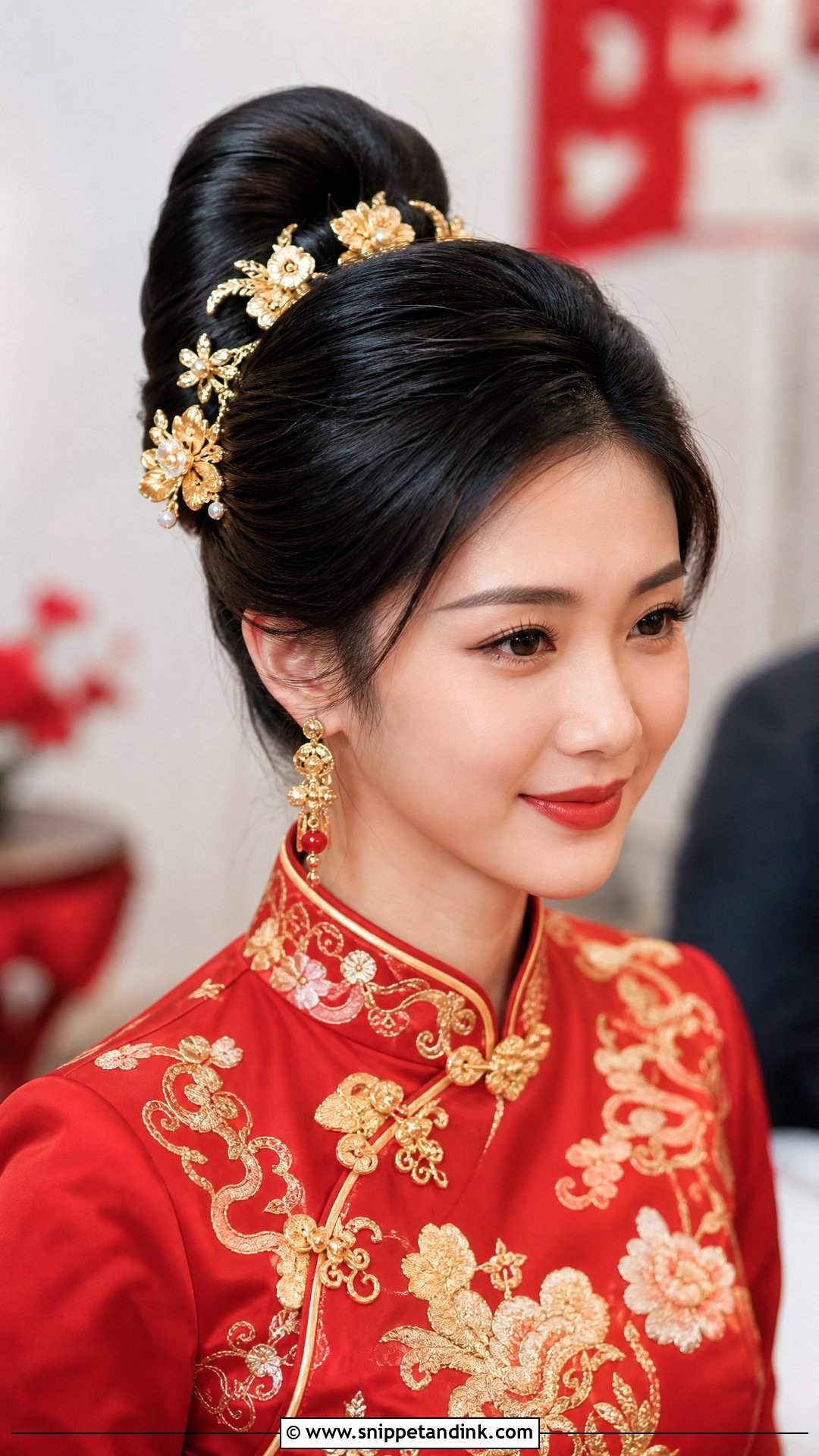
A high bun lifts the face and gives a regal line, with statement earrings and structured collars as natural partners. Keep it polished but balanced so it never feels severe. A touch of height at the crown helps in front-facing family photos. It keeps hair completely off the shoulders and neckline, which makes jewellery-fastening easy. My caution: a high bun shows from every angle while you bow, so the underside must be as neat as the top, and very heavy hair set high can tug by noon. A gold comb, red flower or pearl pins around the base complete it.
7. Chinese Tea Ceremony Hair With Gold Hairpin
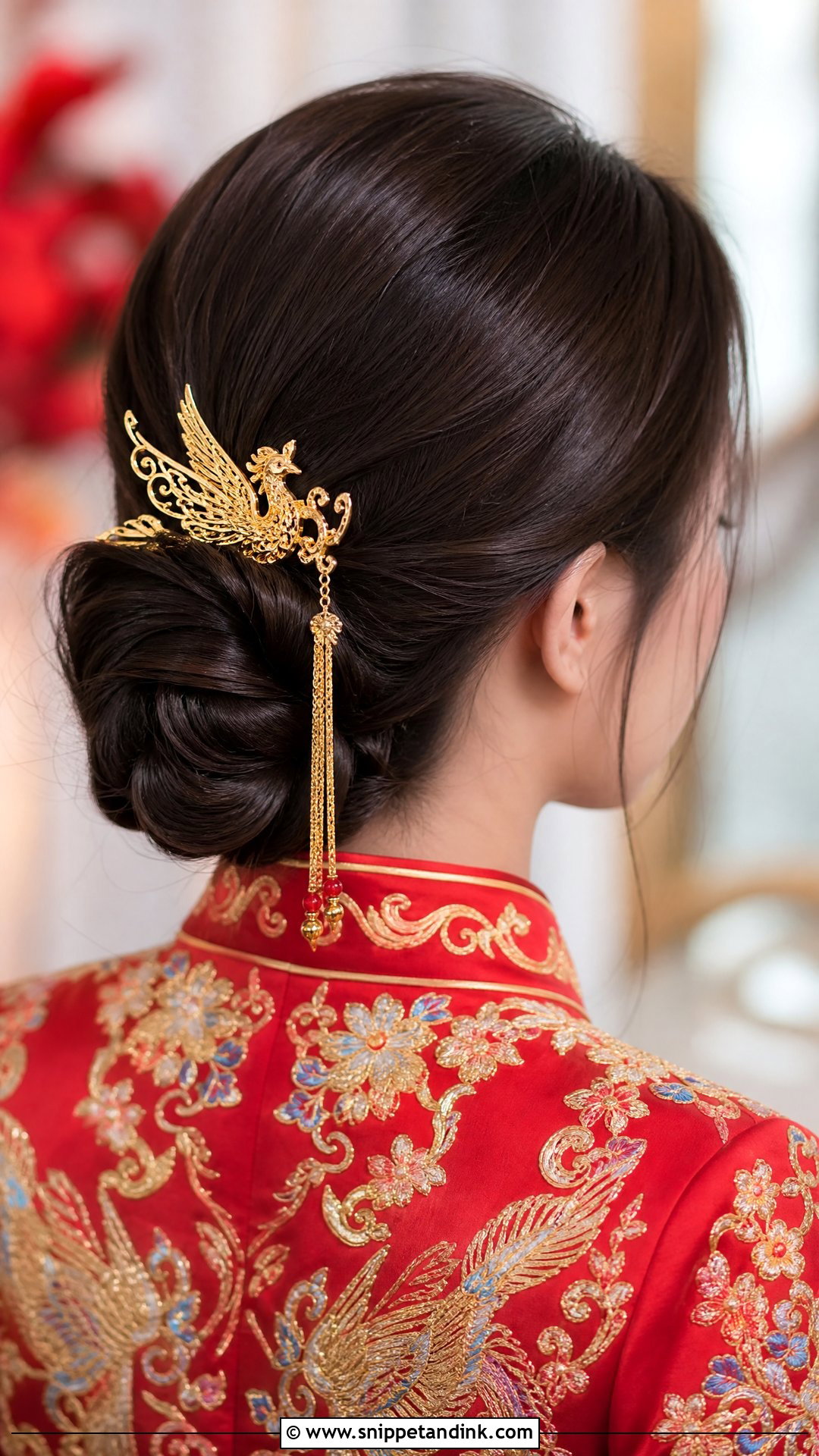
One good pin says more than a handful. Gold hairpins bring cultural detail into a Chinese tea ceremony hairstyle, whether that’s a low bun, a sleek chignon, a half-up style or a soft updo. A single gold piece echoes red fabric, gold embroidery and wedding jewellery. Phoenix, floral, tassel and auspicious motifs lean traditional; a slim gold stick or a sculptural comb leans modern. I place it where it reads in side and back photos, since the front is busy with your face and the gifts. Weighted stick pins need a firm bun to push into, so I test them before the day.
8. Chinese Tea Ceremony Hair With Jade Comb
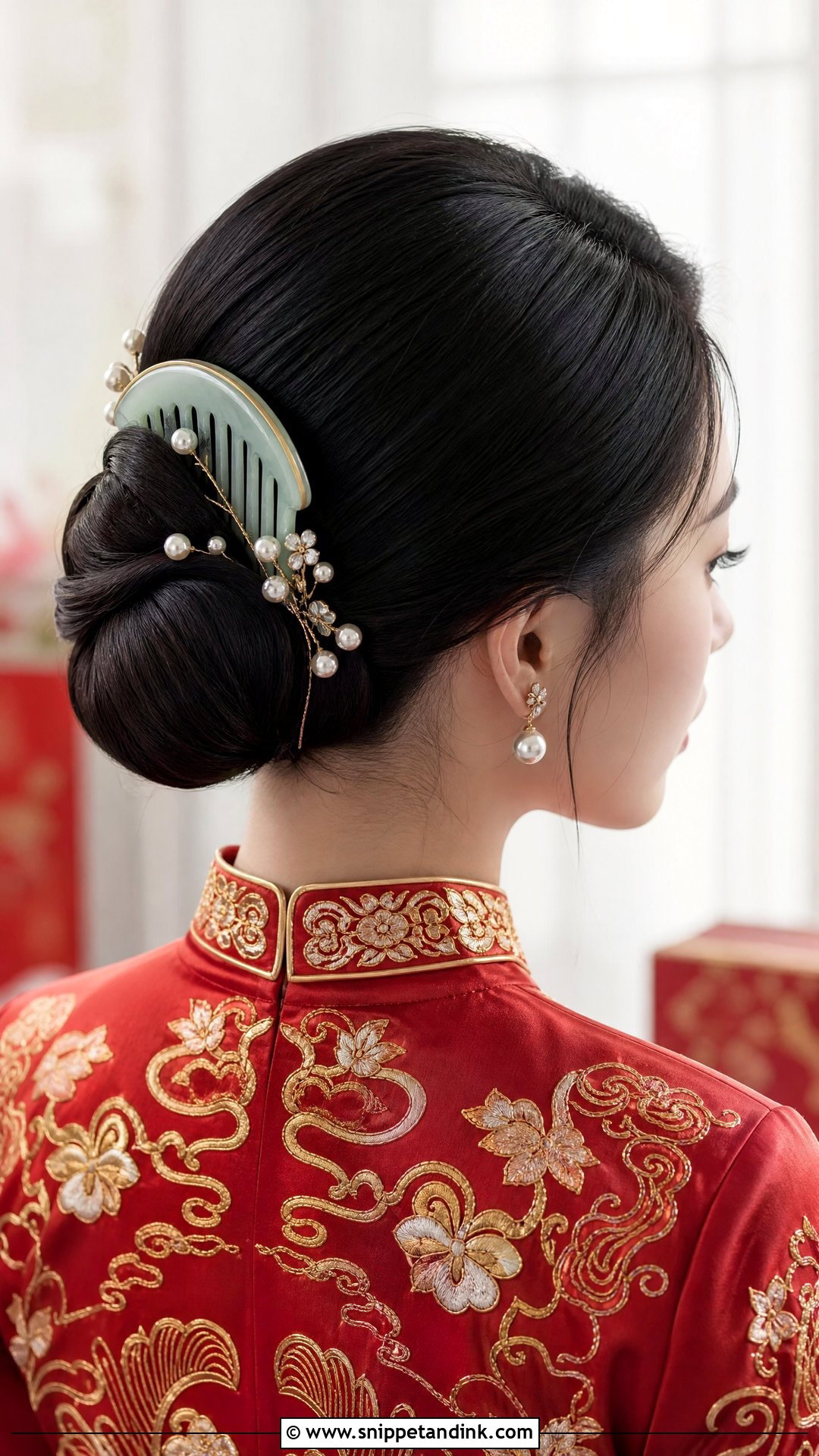
A jade comb is understated and meaningful, and its green sits well against red, ivory, champagne and gold. It needs a firm base, so low buns, rolled chignons and half-up styles suit it best. If your outfit already has heavy embroidery or bold jewellery, jade adds detail without crowding it. Keep the hair smooth so the comb becomes the focus. Real jade teeth can be thick and smooth, which means they grip less than metal; I slide the comb in against the direction of the hair, then flip it back so the teeth lock under a section. A few small pearl pins beside it work well.
9. Chinese Tea Ceremony Soft Updo
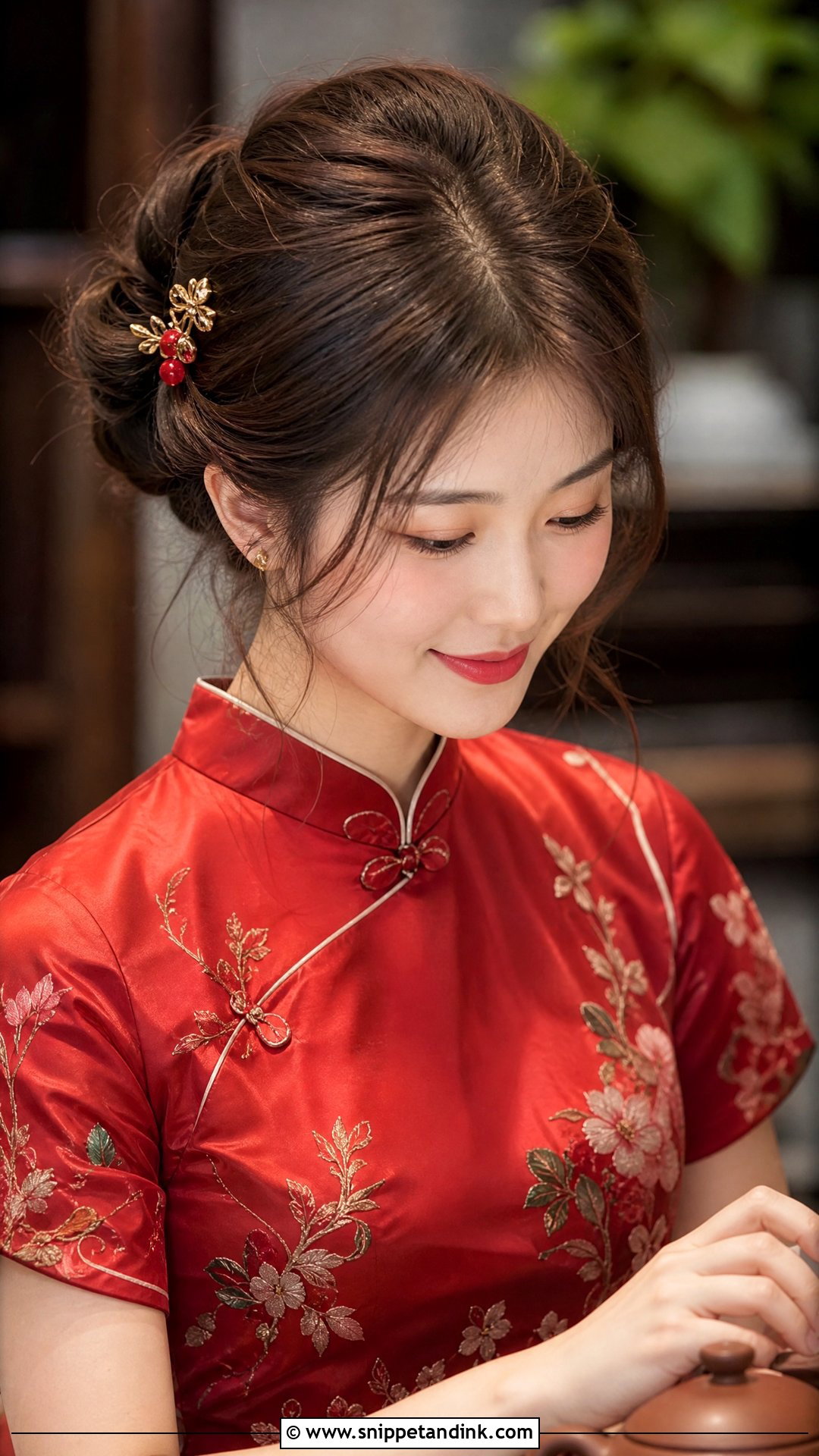
Not every bride wants a tight, formal finish in front of her grandparents. A soft updo uses gentle volume, loose bends and lightly pinned sections, so it flatters the face and suits natural makeup. It can sit at the nape or a little higher depending on the neckline. The pieces at the front are the risk: in a warm room, leaning toward a teapot, they drift forward. I keep them short and set them with a light spray so they stay back. A small comb, a pearl cluster or a delicate gold clip is all it needs.
10. Chinese Tea Ceremony Modern Qipao Hair
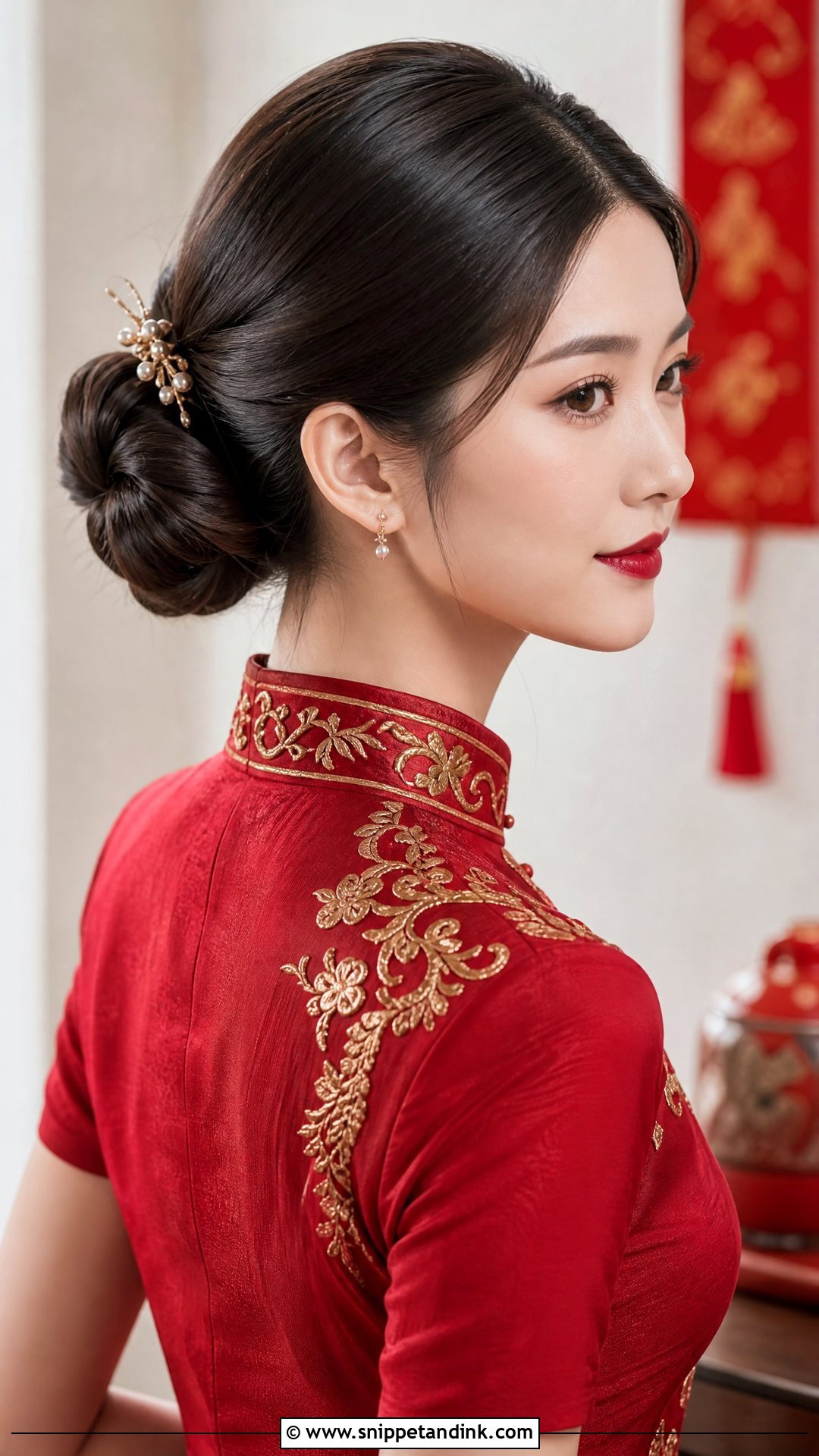
Fitted modern qipaos rely on clean lines, and the hair should follow suit. A polished low bun, a sleek half-up or smooth waves can all work; the neckline makes the decision. With a high collar, I lift the hair to show the shape. With a softer neckline, waves or half-up hair sit comfortably. Keep the finish smooth and deliberate, and choose one accessory, such as a gold pin or a pearl clip. Two accessories on a modern qipao usually starts to fight the minimal cut.
11. Chinese Tea Ceremony Short Hair
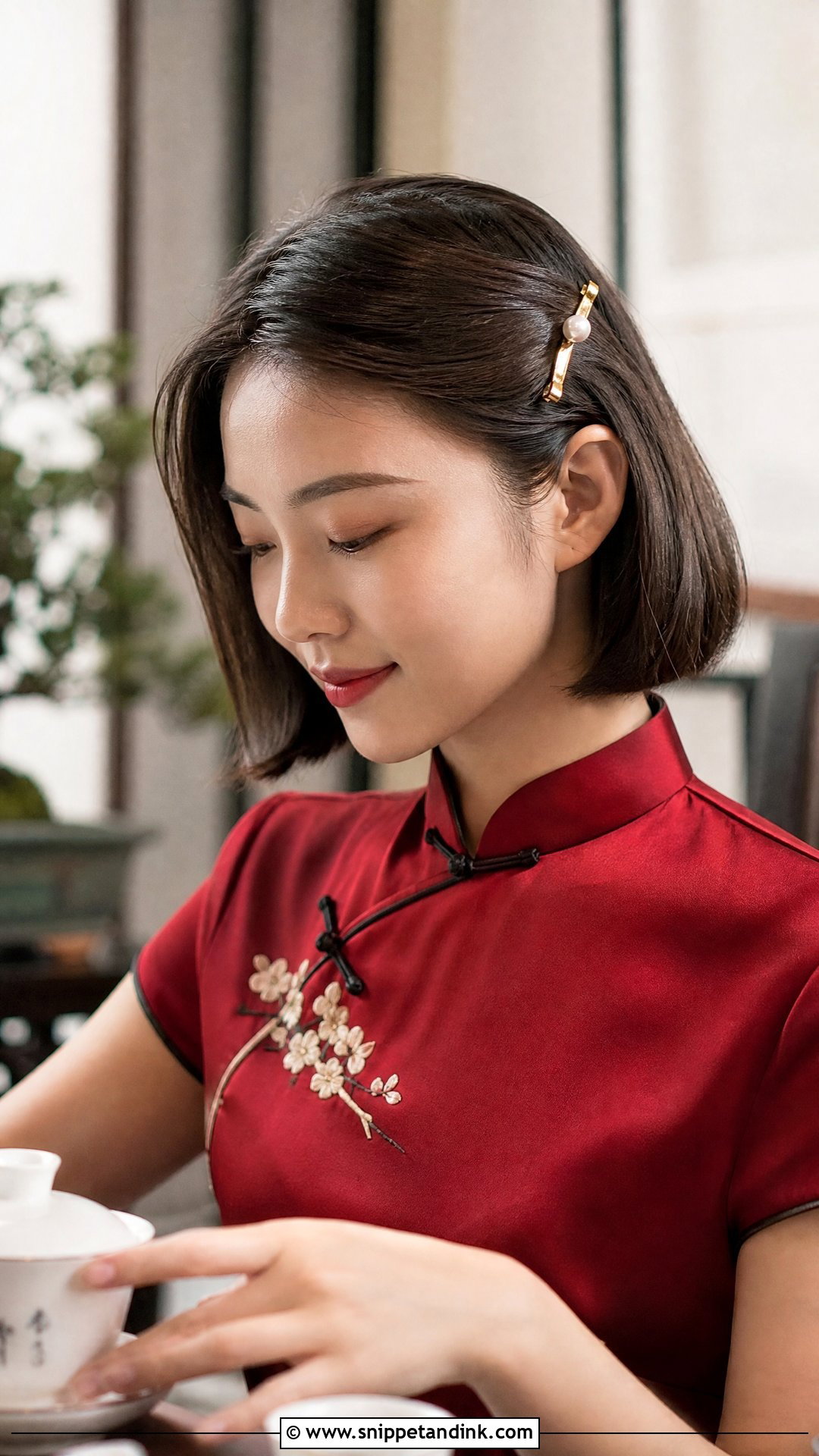
Short hair can look every bit as ceremonial as an updo when it’s shaped carefully. A sleek bob, a tucked pixie or a softly waved lob all hold up, as long as the parting is clean, the finish glossy and the hold around the face firm. With chin-length hair, I’d go with a side part and one side tucked behind the ear to show off earrings. With a pixie, smooth the sides and add a little lift at the crown. A small gold clip, pearl barrette or jade pin brings in the ceremony detail. Short hair and a modern qipao are a particularly sharp pairing.
12. Chinese Tea Ceremony Long Hair
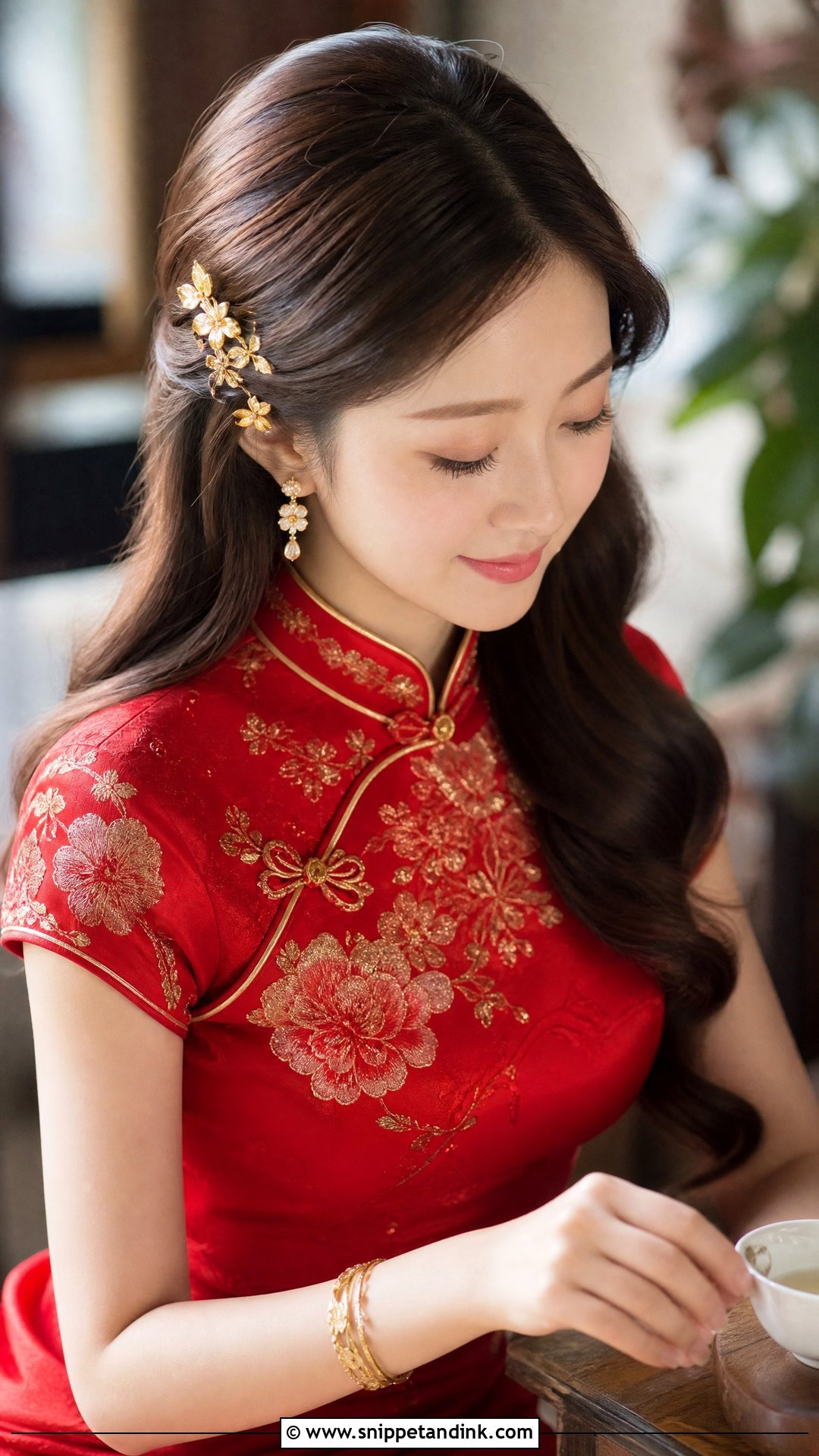
Long hair opens up the most options, from low buns to waves and half-up styles. Worn down, it needs smooth, controlled waves rather than casual texture to look formal. Worn up, it builds a fuller chignon or a braided bun with real shape. Comfort is worth thinking about when the ceremony comes early in a long day: very long hair worn down gets warm and heavy, and it tangles with bangles and necklaces as they go on. A secure style handles outfit changes and family greetings far better. Choose a hairpin or comb that matches the dress, and nothing heavy if your hair already weighs a lot.
13. Chinese Tea Ceremony Hair With Pearl Pins
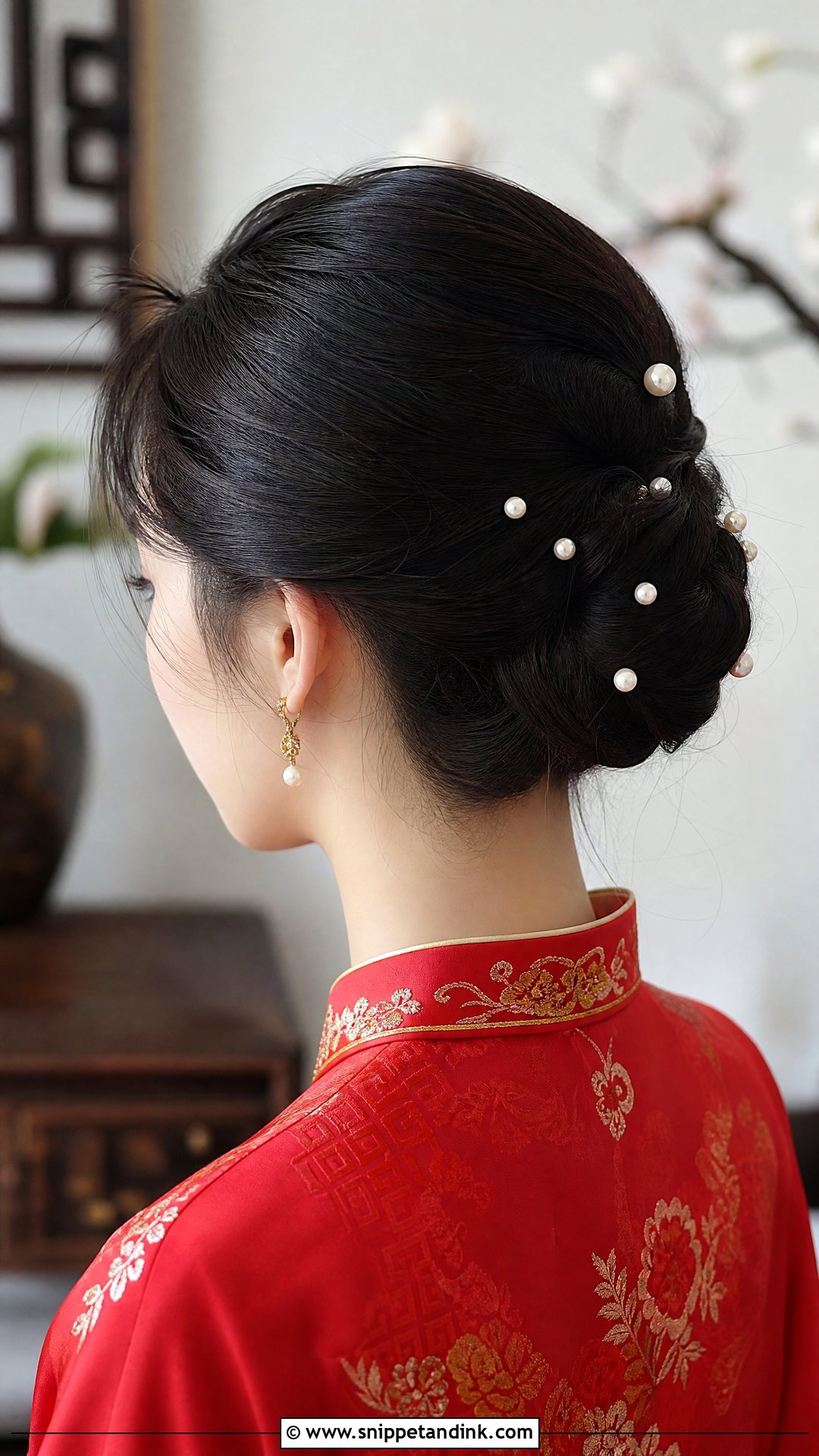
Pearl pins soften the look without overpowering the outfit, and they work with buns, chignons, braided updos and half-up waves. Scatter single pins for an understated finish or use a clustered comb for polish. Ivory, gold, blush and champagne details pick them up naturally. Against a red qipao or kua, pearls give a gentle contrast that brightens the hair. Don’t cover the whole bun. When I scatter pins, I place them in an uneven triangle around the back and side, which reads as balanced in close-up family photos without looking planted in rows.
14. Chinese Tea Ceremony Hair With Phoenix Crown
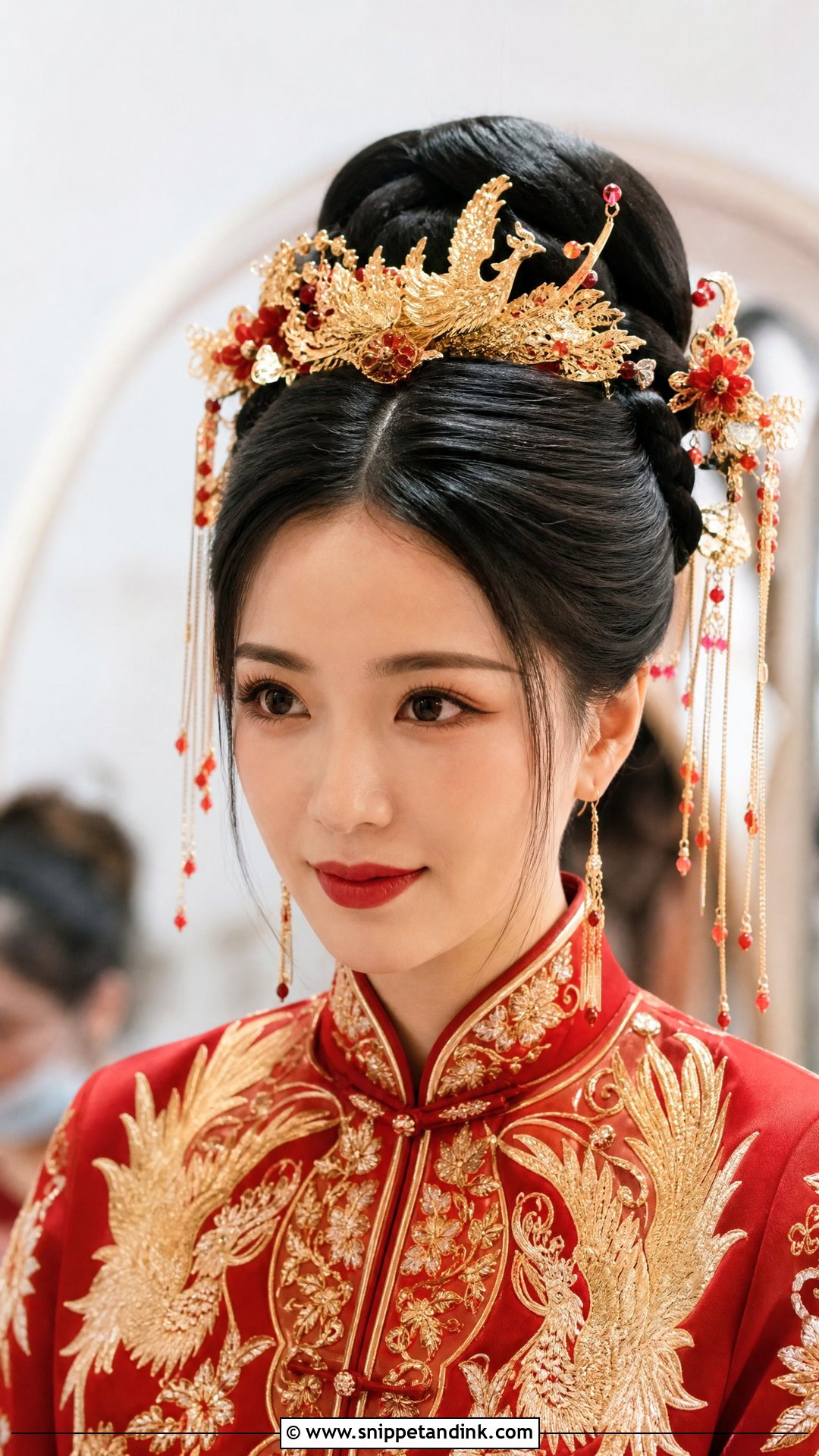
The phoenix crown is the most dramatic option, and the hair underneath has one job: support it. That means a structured updo, firm and smooth, built so the crown sits level through the ceremony. Keep the front clean and skip extra clips, since the headpiece is detail enough. A traditional red kua, embroidered wedding robe or formal tea dress completes it. Do a trial wearing the crown, and kneel and bow in it. If it shifts forward even slightly when you lean, I add support pins through the crown’s frame into the base or suggest a lighter crown.
15. Chinese Tea Ceremony Low Ponytail
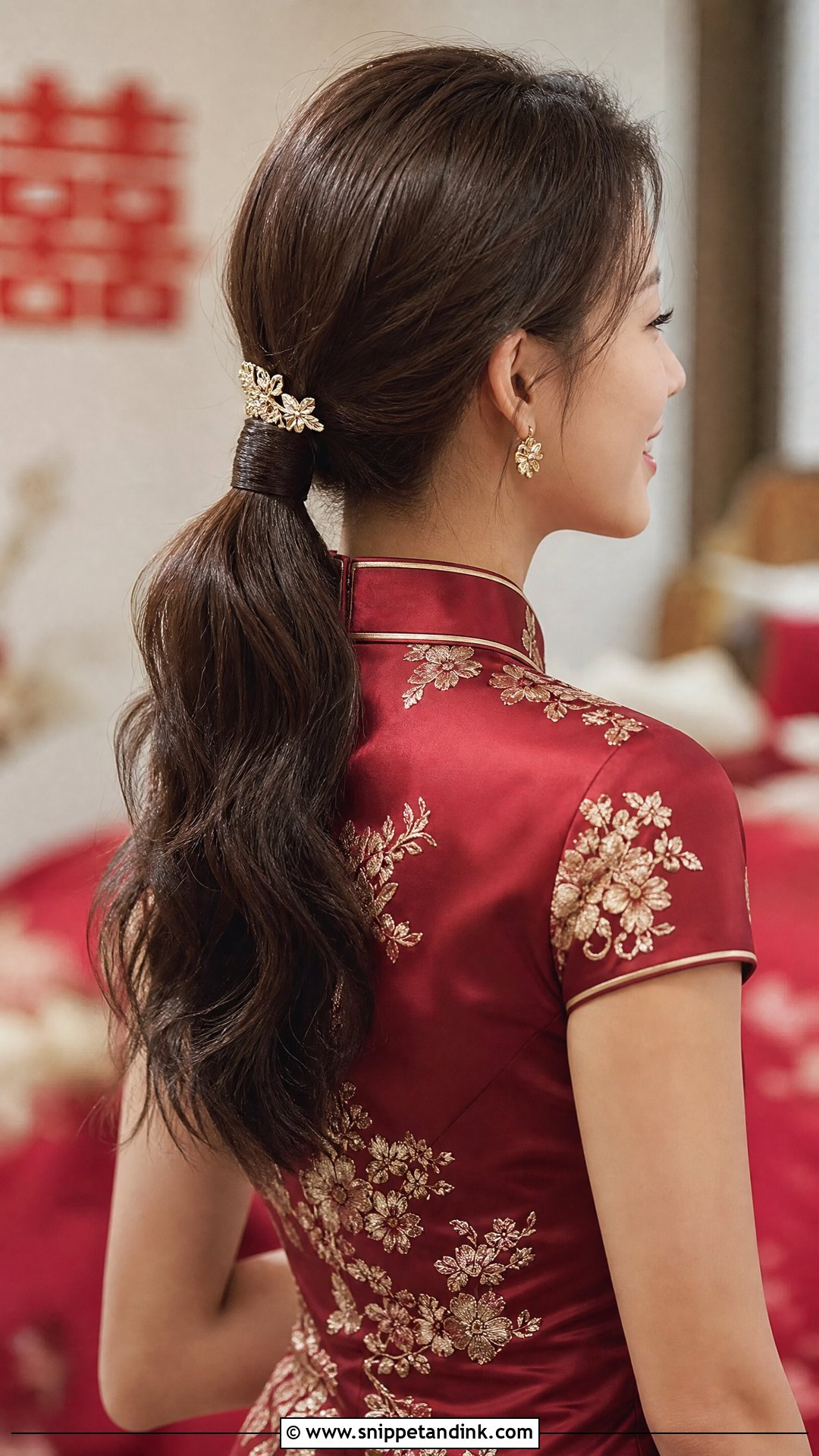
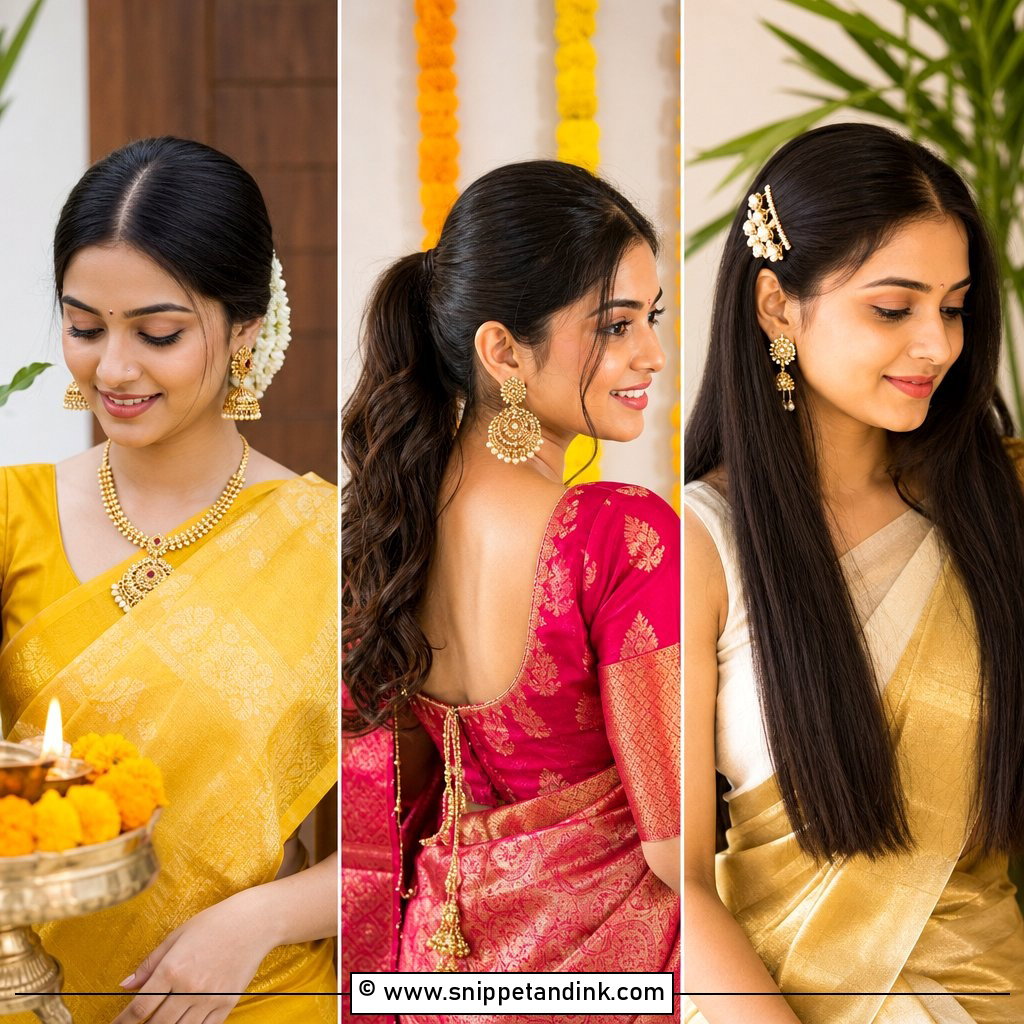
A low ponytail is the relaxed end of the list, but with a smooth crown and a wrapped base it still looks polished. Style the length in soft waves or sleek and straight. Modern qipaos, simple red dresses and minimal jewellery suit it. A gold clip, ribbon or pearl comb near the base adds the ceremony accent. It’s also the easiest style to change if you’re restyling for a second outfit. I’d just keep it at the nape rather than higher, because a mid-height pony swings forward over your shoulder each time you bow.
How Your Hair Looks From the Kneeling Cushion
Most bridal hair is planned for standing portraits. The tea ceremony photographs you from angles you never rehearse: kneeling below seated elders, bowing forward, glancing down at the cup. A few things become very visible.
The top of your head
When you bow, the camera sees your parting and crown straight on. A wobbly part line, gaps where pins show, or a flat patch at the crown suddenly matter. I finish the top as neatly as the front, and at the trial I’ll have someone photograph you mid-bow on a phone.
Anything that hangs forward
Dangling ornaments, long tassels and loose front pieces swing toward the teacups every time you lean in. Pin tassels so they fall behind the ear, keep face-framing strands short enough to clear your chin, and spray them lightly so they don’t drift into the tea.
The early start
Tea ceremonies often happen in the morning, sometimes twice, once for each side of the family, so hair and makeup can begin around dawn. Hair set at six has to look fresh at noon and survive the banquet. I build the style a little firmer than you’d choose at first; it relaxes over the day, and a style that starts slightly soft tends to look tired by the afternoon.
Quiet Hair for a Loud, Happy Room
A tea ceremony is crowded, warm and full of people you love, and the hair’s job is simply not to get in the way. Low chignons and sleek buns stay the most dependable; half-up hair, side-swept waves and a low ponytail feel a bit softer and more current. Gold hairpins, jade combs, pearl pins and phoenix crowns bring in the cultural detail, as long as they don’t fight the jewellery your family is about to give you. Do a trial with your outfit on, kneel and bow in it, and keep the style that lets you forget your hair and pay attention to the people in front of you.
You'll Like These Ideas:


Leave a Reply